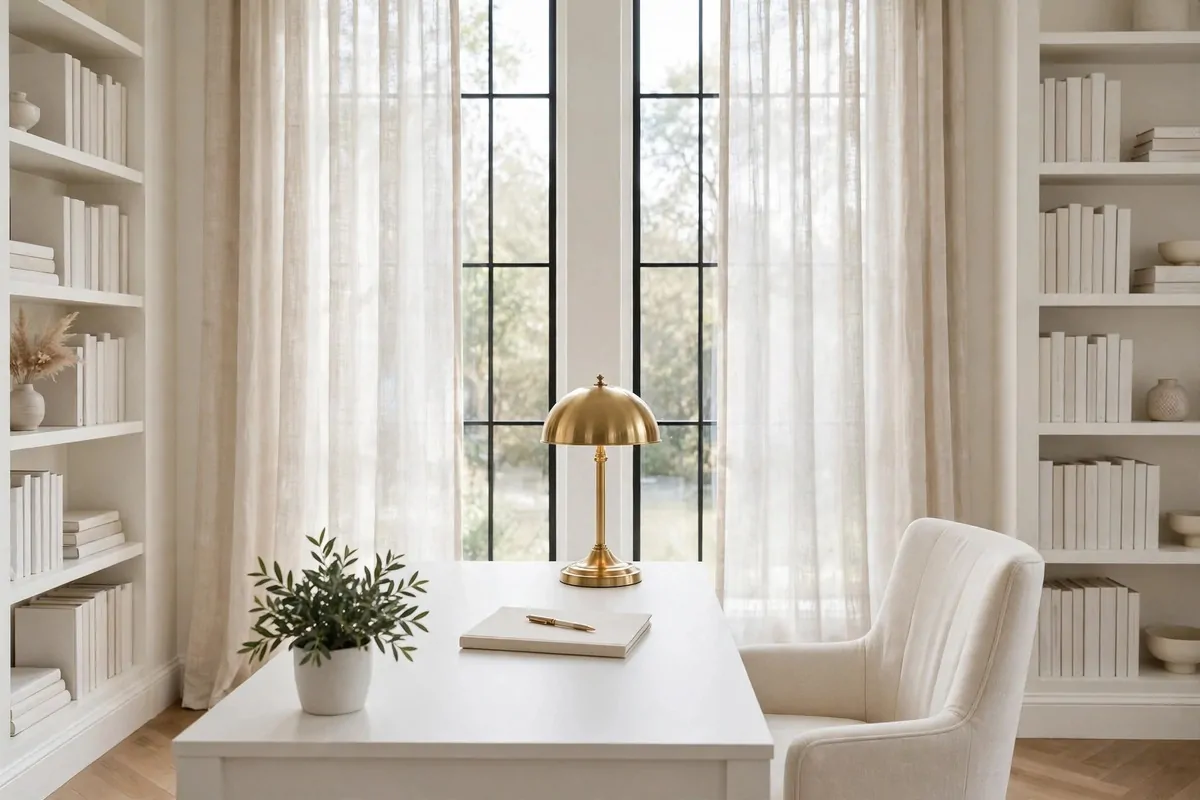
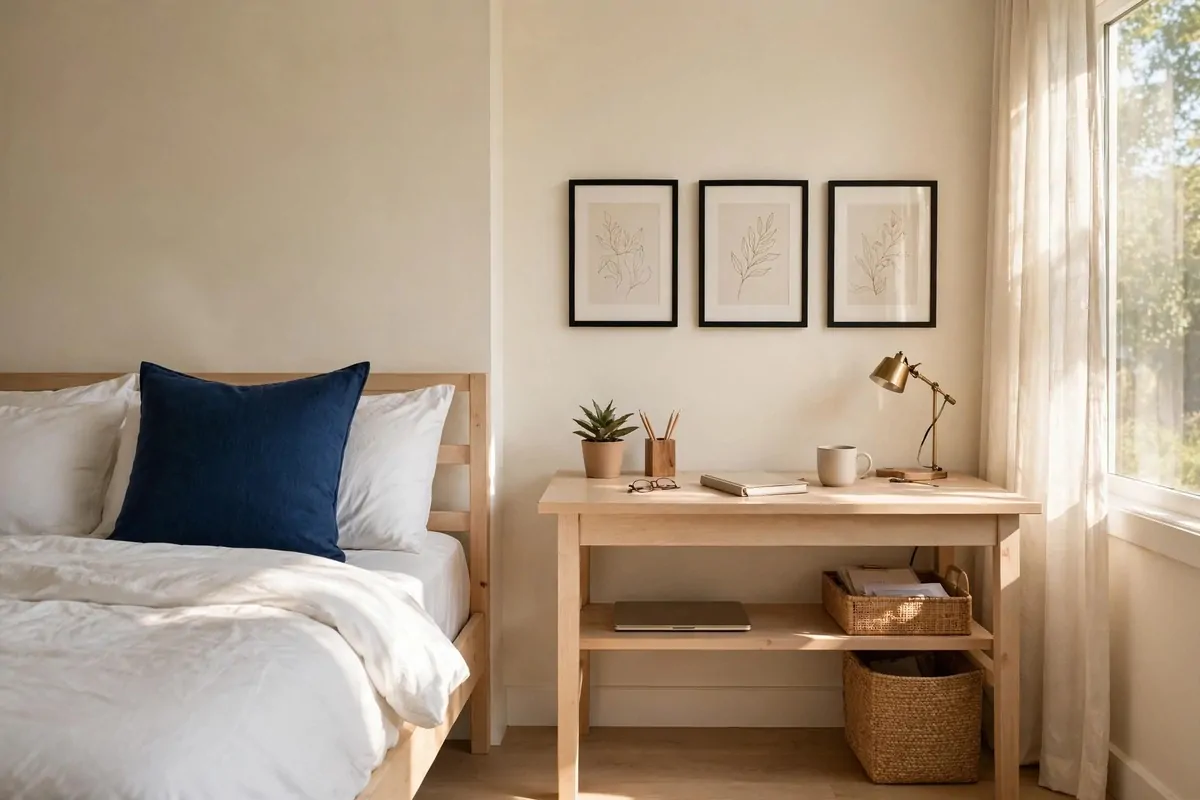
20 Cozy Bedroom Office Ideas for a Soft, Snug Workspace

My bed and my desk are three steps apart. Three small steps, and that is the whole problem.
For months I worked with my laptop on the bed. My back hurt. My sleep got worse. The bed stopped feeling like rest and started feeling like another chair.
Then I made one small change. I put a tiny desk in the corner by the window, just big enough for my laptop and a mug. I kept it soft. Warm light. A rug under my feet. A blanket on the chair.
Now the room does two jobs and both of them feel good. I work in a snug little spot, and when I close the laptop, the bedroom turns back into a bedroom. That is what these ideas are about. Twenty cozy bedroom office ideas that make a small room feel soft and warm, without turning your sleep space into a cold office.
You do not need a big room or new furniture. Pick three ideas and try them this weekend. Start with the one that sounds coziest.
The Desk That Fits Beside the Bed
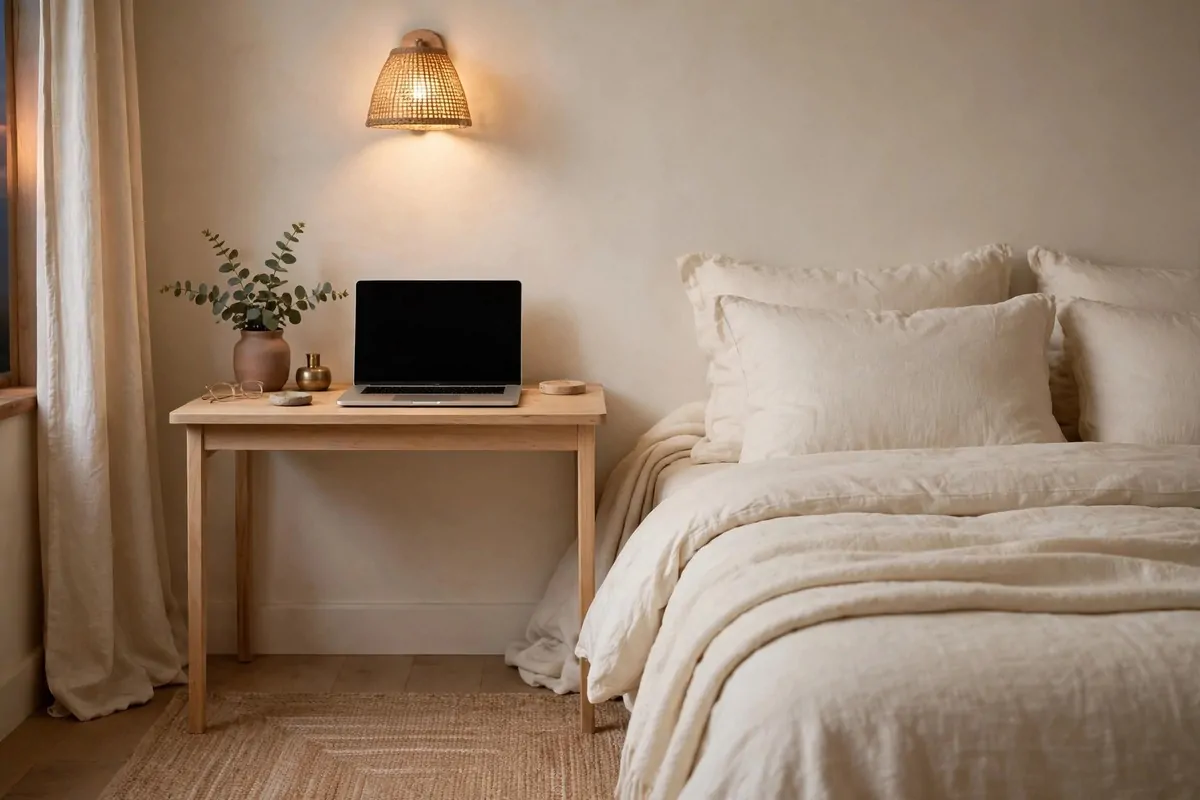
A bedroom desk should be small. Really small. Just wide enough for your laptop and a notebook, and nothing more.
My desk sits in the corner beside my bed. It is barely wider than my pillow. That sounds too small, but it works because a bedroom desk only needs to hold the work, not the whole house.
Measure the gap beside your bed before you buy anything. Hold your hands out at your sides and see how much space you really have. Most bedrooms have one quiet corner that fits a small desk perfectly.
Pick a desk with slim legs and a plain top. Heavy desks make a bedroom feel crowded. A light little desk disappears into the room, and the bed stays the star.
Keep the desk top clear of everything except the work in front of you. A clear top makes a small desk feel bigger, and a small desk in a bedroom needs all the help it can get.
Put the desk near the window if you can. Morning light on your work feels gentle, and the room wakes up with you. A desk in a dark corner feels like a chore.
Tuck the chair under the desk when you finish. A chair sticking out into the room trips you at night. A chair tucked away says the workday is done and the bedroom is yours again.
Try this one first if your bed has become your office. One small desk beside the bed, and your back will thank you by the end of the week.
A Lamp That Glows Like Bedtime

A bedroom office needs a lamp that feels like bedtime, not like an office.
My lamp has a soft yellow glow, the same warm light as the one on my bedside table. When I switch it on, the whole corner turns golden. It feels like evening, even at ten in the morning.
Pick a lamp with a fabric shade. Fabric softens the light and spreads it gently across the desk. A bare bulb shines hard and makes a small room feel stark.
Set the lamp on the side of the desk away from the bed. That way the light falls on your work, not on the pillow. Your sleep spot stays dark and calm.
Use a bulb that glows warm, never the bright white kind. Bright white light wakes your brain up in the wrong way, and it makes a cozy room feel like a shop.
Turn the lamp on before you open the laptop. One small click, and the corner changes from a bedroom corner into a work spot. One small click at the end of the day, and it changes back.
Keep a spare bulb in the drawer so the glow never goes out on a busy morning. A lamp with no bulb is just a pretty shape on a desk.
Try this one tonight. Switch on a warm lamp, sit down, and notice how the room feels softer in one minute.
The Soft Rug Under Your Feet
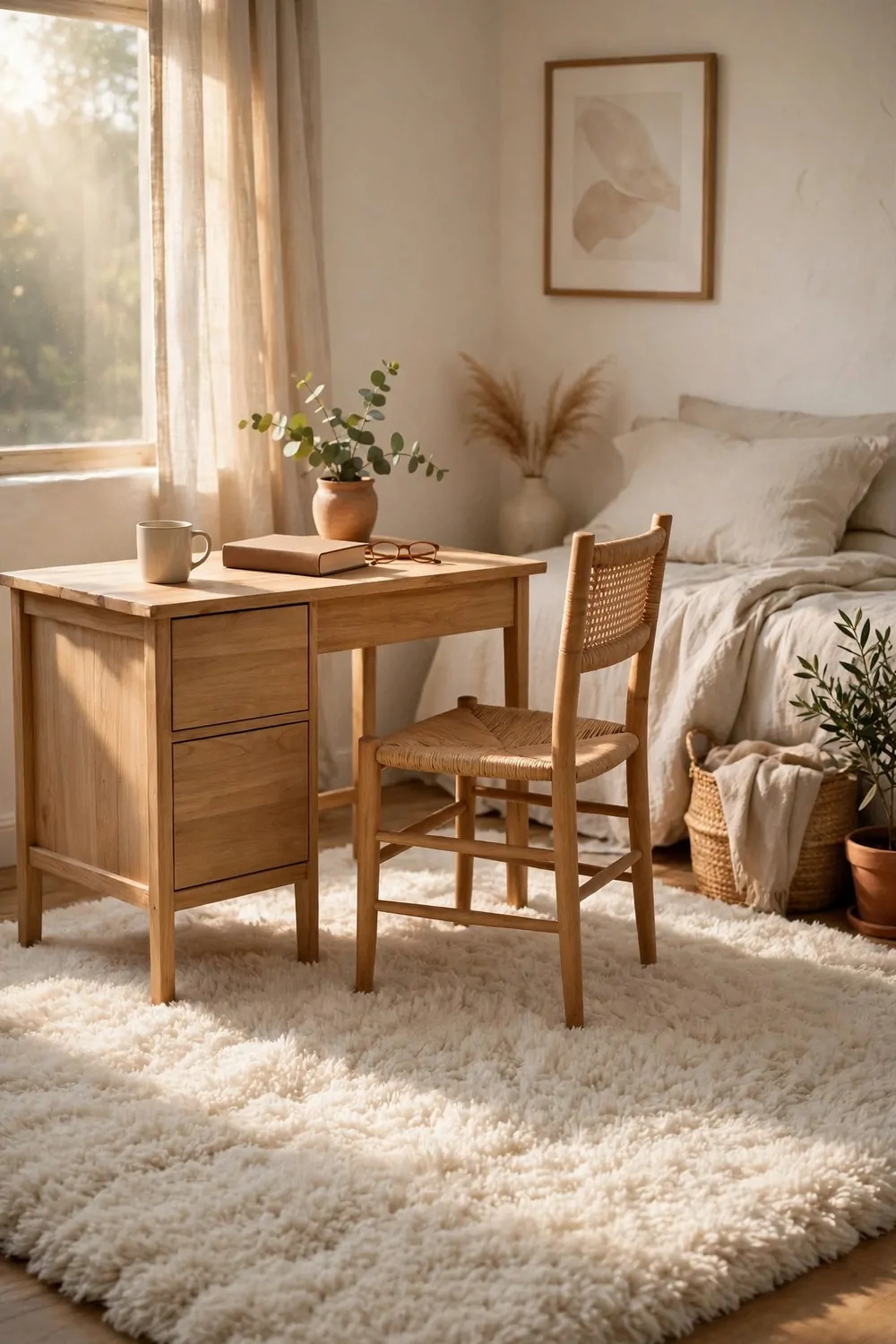
Cold floors wake you up in the wrong way. A soft rug under your desk fixes that before your feet even touch the ground.
My rug is thick and pale, big enough for the desk and the chair together. My feet land on it every morning, and the day starts warm instead of cold.
Pick a rug that feels soft under bare feet. Wool feels warm. Cotton feels light. Either one is better than cold wood or hard tiles first thing in the morning.
Make the rug bigger than you think you need. The chair should still sit on the rug when you push it back. A rug that is too small looks like a mat, and a mat does not warm a room.
Choose a calm colour for the rug. Cream, soft grey, or a pale blush. A loud rug in a bedroom fights with the bed and the curtains. A calm rug lets everything else in the room breathe.
Vacuum the rug once a week and shake it outside when the sun is out. A clean rug smells fresh, and a fresh rug makes the whole bedroom feel cared for.
If the rug slides on a smooth floor, put a thin grip mat under it. A rug that stays put is one you forget about, and that is exactly the point.
Try this one if your mornings start with cold feet and a grumpy mood. One soft rug, and the floor stops being the enemy.
Warm Colours on One Wall
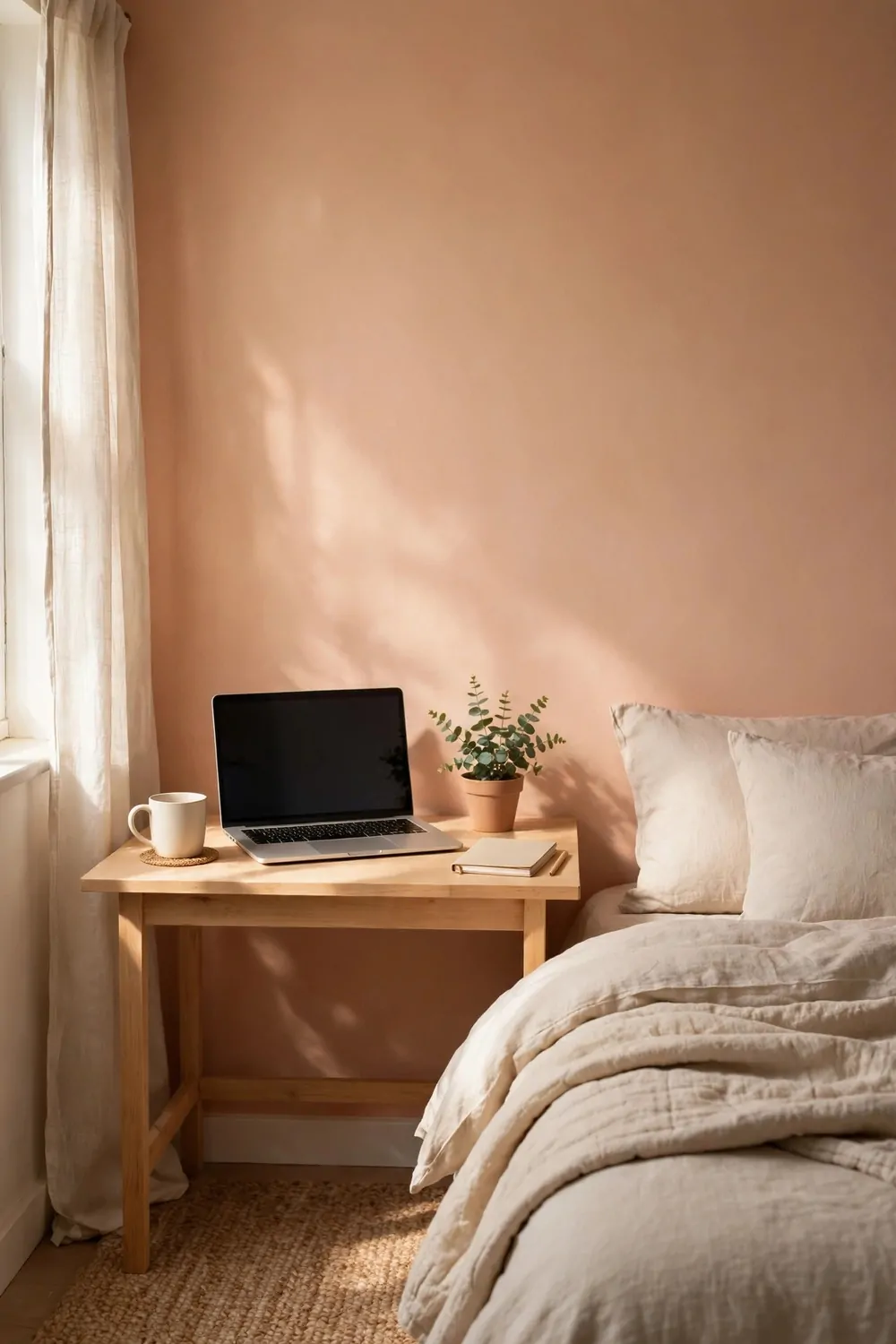
A bedroom office should feel warm, and the wall colour does most of that work.
I painted one wall behind my desk a soft warm peach. Not bright. Not orange. Just a gentle warm colour that catches the morning light and glows.
Paint only one wall. The wall behind the desk is the best one. One warm wall makes the corner feel snug. Four warm walls make the room feel small and heavy.
Here is a table for warm colours that suit a bedroom office.
| Colour | Feeling | Best wall |
|---|---|---|
| Soft peach | Warm and gentle, like morning sun | Behind the desk |
| Pale honey | Calm and sunny, never loud | The wall by the window |
| Warm blush | Soft and quiet, easy to rest beside | The wall behind the bed |
| Light caramel | Cozy and rich, like warm bread | One short wall in the corner |
Pick a colour that already lives in your bedding. A cushion colour. A blanket colour. That way the wall ties the room together instead of shouting at it.
Test the colour on a small patch first and watch it through the day. Morning light, afternoon light, evening lamp light. A colour that looks warm at noon can look muddy at night.
Paint with a roller for a smooth finish, and let each coat dry fully before the next one. Two thin coats look far better than one thick coat that drips.
Keep the other walls pale and plain. The warm wall is the star. The pale walls give it room to shine.
Try this one if your bedroom office feels cold and plain. One warm wall, and the whole corner feels like a hug.
The Curtain That Hides the Desk at Night

A bedroom office has one big problem. The desk stares at you all night, and your brain keeps thinking about work.
My fix is a curtain. A simple fabric panel on a rail, hung in front of the desk corner. At night I pull it across, and the desk disappears. The bedroom looks like a bedroom again.
Hang the rail from the ceiling, not just above the desk. A long curtain makes the wall look taller, and the desk hides completely behind it.
Pick a curtain in a soft colour that matches the bedding. A curtain that matches the room looks like part of the bedroom, not like a cover-up.
Here is what the curtain hides when you pull it shut.
- The laptop and its glowing screen
- The papers and notebooks from the day
- The charger cables and the tangled wires
- The mug and the pen cup and the small mess
Pull the curtain open in the morning and the desk is back, ready for work. Pull it shut at night and the workday is over, even if the laptop is still there.
Wash the curtain once a season so it stays fresh. A dusty curtain in a bedroom collects smells, and a fresh one keeps the corner feeling clean.
This trick costs very little and takes half an hour to hang. One rail, one curtain, and your bedroom gets its evenings back.
Try this one if you lie awake thinking about the emails on your desk. One curtain, and the work hides until morning.
A Blanket on the Chair Back
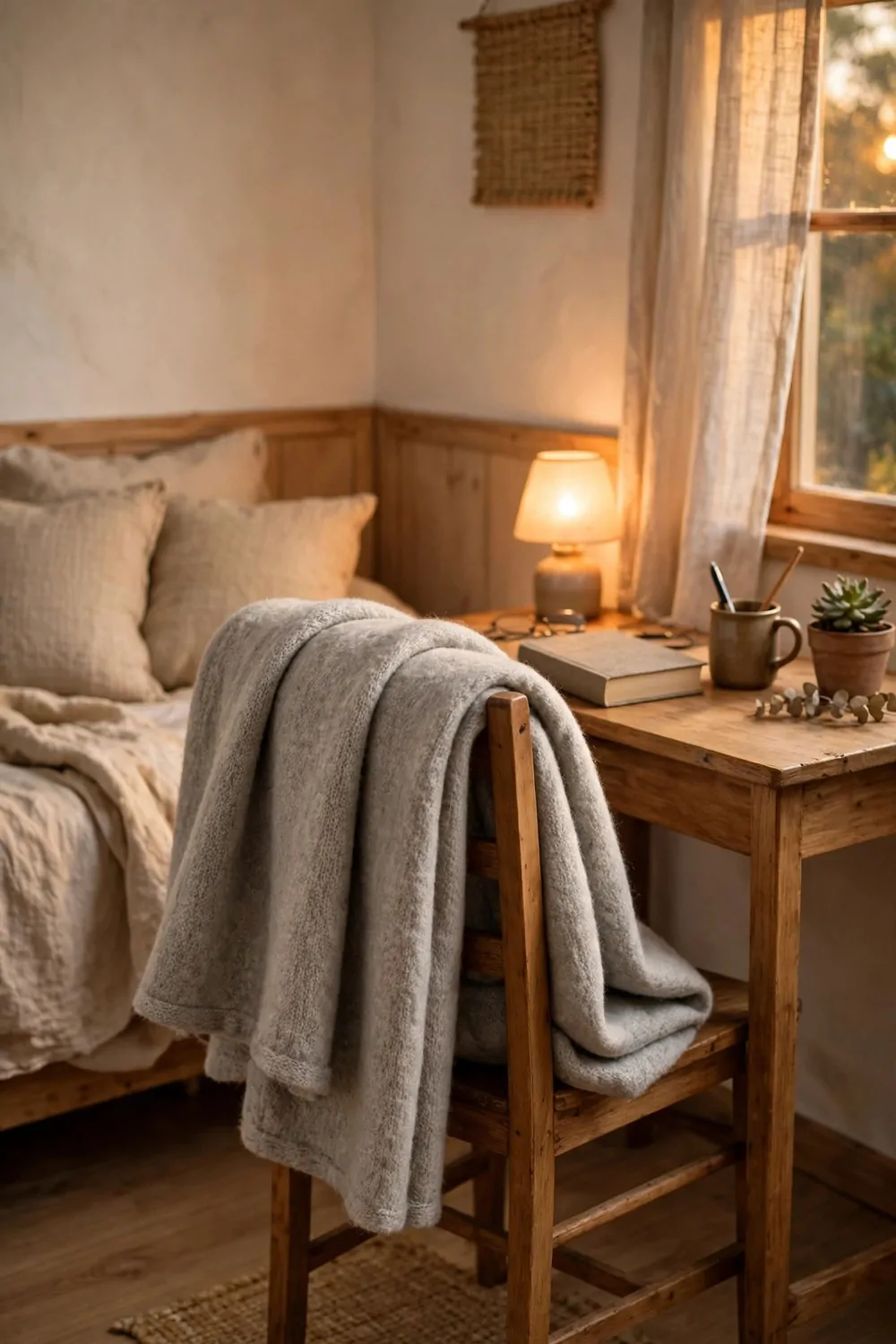
A bedroom office should have a blanket within reach. Not for decoration. For cold mornings when the room has not warmed up yet.
My blanket lives folded over the back of my chair. It is soft grey wool, and it has been there so long it has a little dent where my shoulders rest.
Pick a blanket that feels heavy enough to warm you but light enough to fold small. A thick wool throw works well. A thin cotton one is better in summer.
Fold it neatly over the chair back every evening. A folded blanket looks tidy. A blanket in a heap on the floor looks like laundry that gave up.
Use the blanket on your knees when the mornings are cold. Warm knees make the whole body feel warm, and warm hands type faster than cold ones.
Wash the blanket once a month so it stays soft and smells fresh. A blanket that smells like sleep and work mixed together is not a cozy blanket.
Keep the blanket colour calm. Cream, grey, or a soft dusty pink. A loud blanket in a small bedroom fights the bed for attention.
Try this one if your office corner feels chilly before lunch. One blanket on the chair back, and the cold mornings get kinder.
The Bedside Table That Doubles as a Shelf
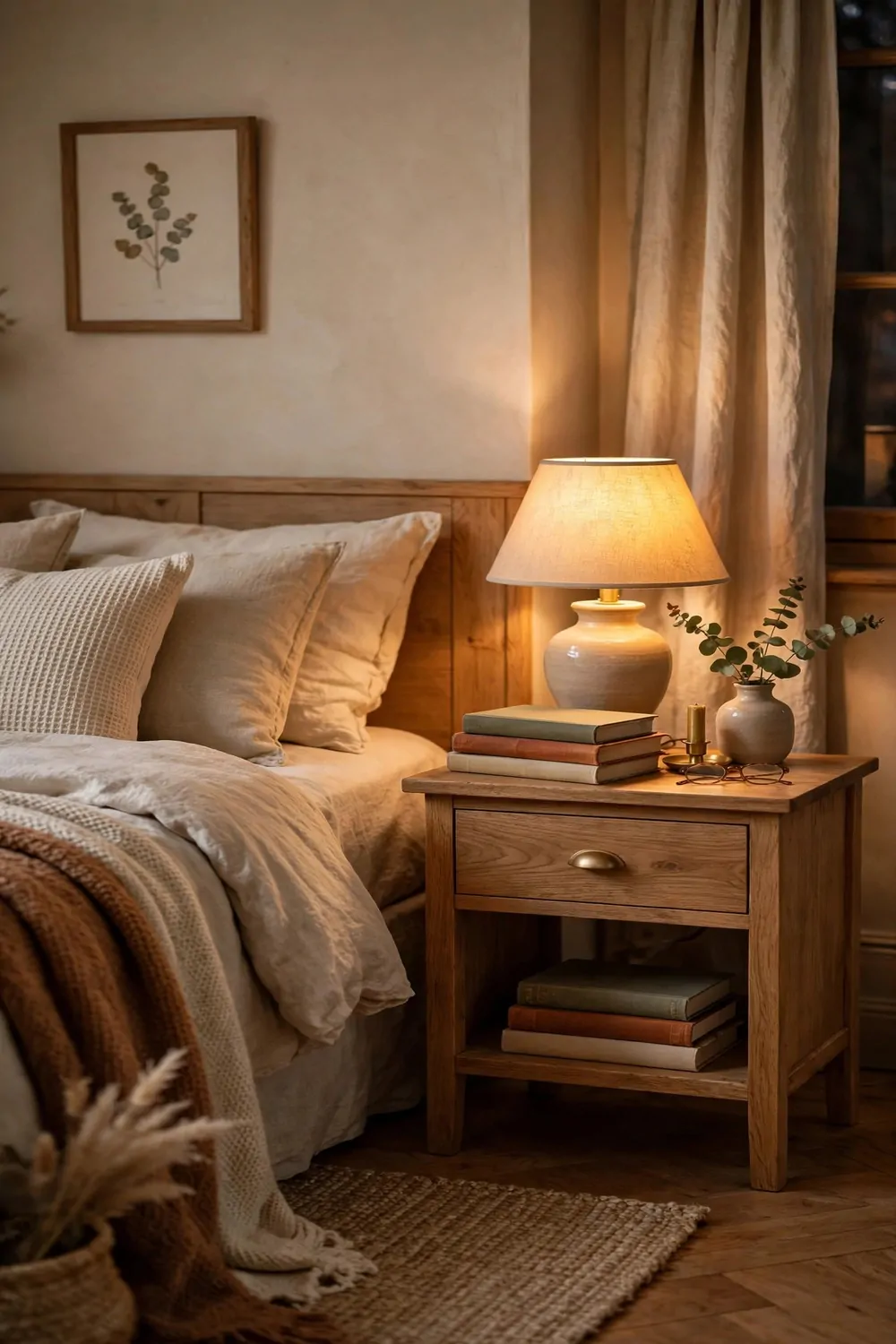
A bedroom office rarely has room for a bookcase. The bedside table has to do that job instead.
My bedside table holds my lamp, my book, and a small stack of notebooks. One little table, three jobs, and the room stays tidy.
Pick a bedside table with a drawer and a shelf below. The drawer hides the bits you do not want to see. The shelf holds the books you reach for every day.
Keep the top of the table clear except for the lamp and one book. A crowded bedside table looks like a desk that spilled over, and the bedroom loses its calm.
Put your work notebook on the shelf, not on the top. The top is for sleep things. The shelf is for work things. That little line keeps the two parts of the room separate.
Add a small basket on the shelf for pens and chargers. One basket keeps the small things together, and the shelf still looks tidy from the bed.
Wipe the table once a week with a damp cloth. Bedside tables collect dust fast, and a dusty table makes the whole corner look tired.
Try this one if your books and papers have nowhere to live. One bedside table, doing two jobs, and the room stays calm.
Quiet Colours That Help You Focus
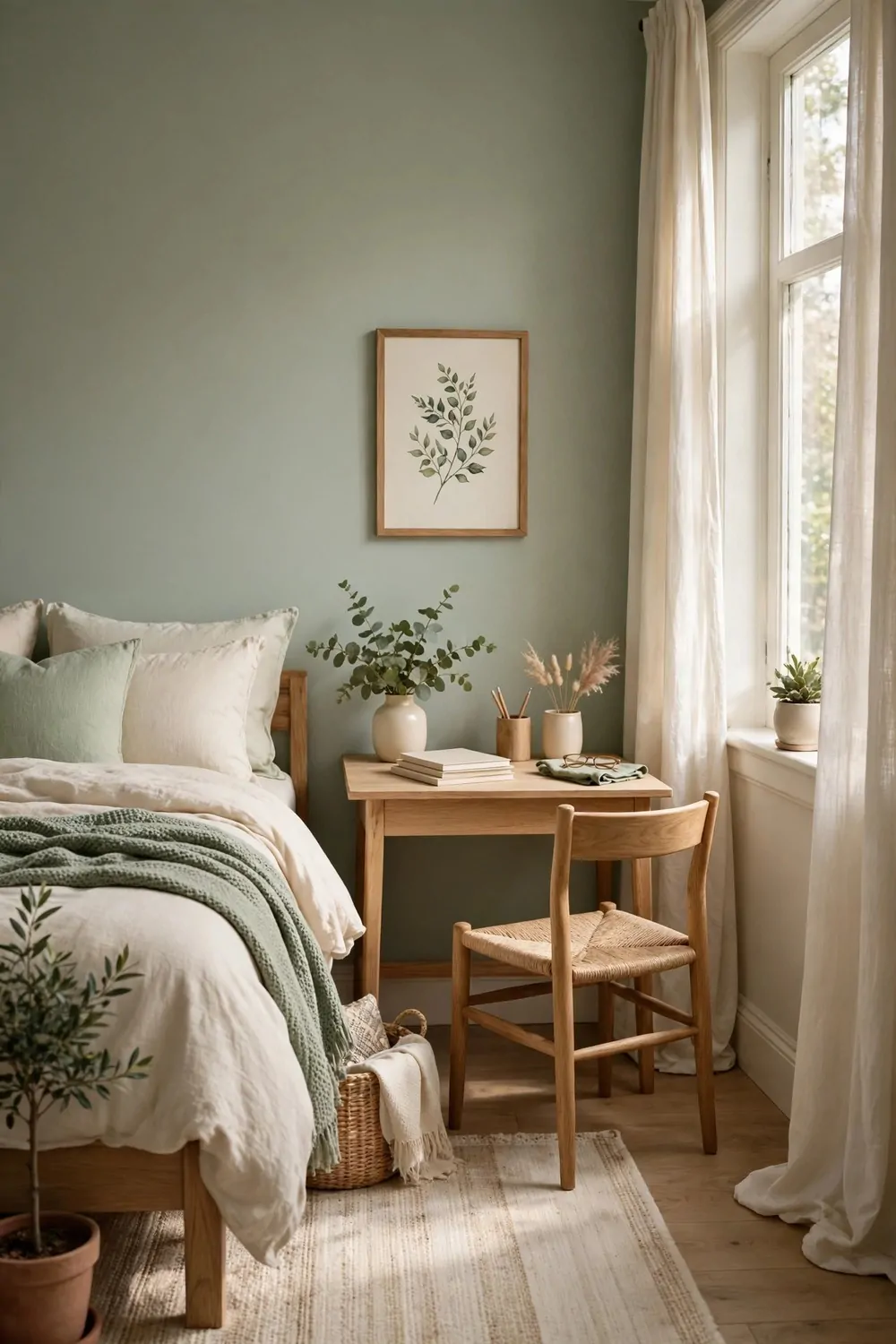
Bright colours shout. A bedroom office needs colours that whisper.
My desk corner uses soft sage, pale cream, and one warm wood tone. Nothing bright. Nothing loud. The room feels quiet, and quiet rooms help me focus.
Pick three calm colours and use them everywhere. One for the walls. One for the desk things. One warm wood tone for the furniture. Three colours are enough.
Avoid bright red and bright yellow in a bedroom office. They wake your brain up too much, and they make it hard to wind down at night. Save the bright colours for the living room.
Match the notebook, the pen cup, and the desk tray to the same calm colour. Matching things look planned, and a planned desk feels peaceful to sit at.
Let the bed keep its own soft colours too. When the bed and the desk share the same calm palette, the whole room feels like one gentle place instead of two rooms fighting.
Change the colours with the seasons if you like. A soft sage cushion in spring, a warm rust one in autumn. Small swaps keep the room fresh without repainting anything.
Try this one if your office corner feels noisy even when it is silent. Quiet colours, and the room calms down with you.
The Scent That Says Work Is Over

A bedroom office needs a smell that tells your brain the workday is done.
Mine is lavender. One small candle on the desk, lit at the end of the day. The smell drifts across the room, and my brain knows it is time to stop.
Light the candle only when work ends, never during work. That way the smell means rest, not more typing. Your brain learns the signal fast.
Pick a scent that feels calm to you. Lavender, vanilla, or a soft wood smell. Avoid strong sharp scents in a bedroom. They wake you up when you want to wind down.
Here is what a good evening scent does for a bedroom office.
- It covers the smell of a long workday
- It marks the line between work and rest
- It makes the room feel like a bedroom again
- It helps you sleep better when the day ends
Blow the candle out before you get into bed, every single night. A lit candle in a bedroom is never worth the risk, no matter how cozy it smells.
Keep the candle on a small tray so the wax never touches the desk. A tray also makes the candle look like part of the room, not an afterthought.
Try this one tonight. Light a candle when work ends, and let the smell close the day for you.
A Small Plant by the Window

A bedroom office with no green in it feels flat. One small plant fixes that in a day.
My plant sits on the windowsill beside my desk. A little green thing in a plain clay pot, catching the morning light. It is the first thing I see when I sit down.
Pick a plant that forgives a forgetful owner. A small snake plant. A pothos that trails down the sill. A succulent that is happy to be ignored for days. These tough little plants keep going even when you skip a week of watering.
Water the plant once a week, on the same day every week. Sunday morning works well. Just a small drink, never a flood. Too much water kills more plants than too little does.
Keep the plant where the daylight reaches it but the harsh sun cannot burn the leaves. A bright spot near the window suits it best. A dark corner is where green things slowly give up.
Give the leaves a wipe with a damp cloth once a month. Dust settles on the leaves and keeps the light out. One quick wipe keeps the plant bright, and the desk feels looked after.
If the plant starts to droop, move it closer to the window for a week. Plants show you what they need, and more daylight is nearly always the fix.
Try this one if your bedroom office feels cold and flat. One plant in one plain pot, and the whole corner wakes up.
The Notebook That Lives on the Pillow Side

Ideas come at night. They always do. A notebook by the pillow catches them before they vanish.
My notebook lives on the bedside table, on the pillow side of the bed. It holds the thoughts that arrive at midnight, written in the dark in wobbly handwriting I can barely read in the morning.
Keep the notebook open at a blank page before you sleep. A closed notebook is a notebook you will not open at two in the morning. An open one waits for you.
Put the date at the top of every page. Dates turn a messy notebook into a little diary of your nights. You can flip back and see what kept you awake last Tuesday.
Use the notebook for small thoughts only. A line for tomorrow. A name you must not forget. A worry you want to let go of. Big plans live on the computer, not in the night notebook.
Lay a pen across the open pages so it works like a bookmark. A pen that lives on the notebook never goes missing in the dark. A pen in a drawer is a pen you will hunt for by torchlight.
Read the page in the morning and move the useful lines to your work list. The rest you can cross out. A crossed-out worry feels smaller than a worry still sitting in your head.
Try this one if your best ideas arrive after lights out. One notebook by the pillow, and the night stops stealing your thoughts.
Soft Light in the Evening
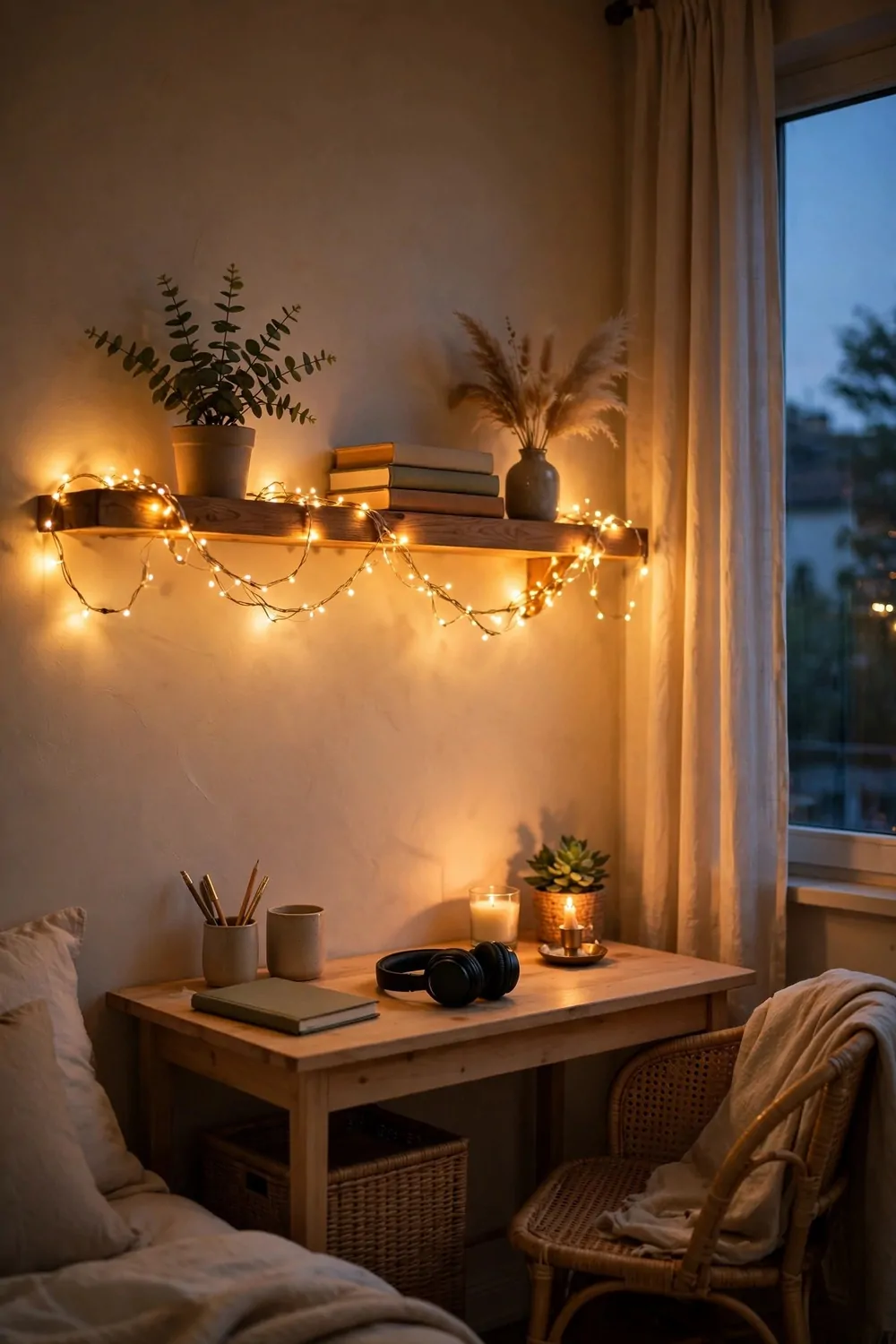
Evening light in a bedroom office should feel like a hug, not like a shop window.
My evening light is a small string of warm fairy lights along the shelf above my desk. They glow soft gold, and the whole corner feels like a quiet evening in a cabin.
Hang the lights where they cannot fall on your work. Along a shelf edge, or around the window frame. Lights on the desk itself get in the way of the laptop.
Here is a table for evening lights that suit a bedroom office.
| Light | When to use | How it feels |
|---|---|---|
| Warm fairy lights | After dinner, while you read | Soft and golden, like a cabin |
| Small salt lamp | Late evening, before sleep | Gentle pink glow, very calm |
| Dim bedside lamp | Last hour before bed | Low and warm, easy on the eyes |
Use warm bulbs in every evening light. Cold white light at night keeps your brain awake, and a bedroom office should help you wind down, not wind up.
Switch the big ceiling light off in the evening. One ceiling light washes the whole room flat and kills the cozy feeling. Soft small lights do a better job after dark.
Keep the lights on a timer if you can. Lights that switch off by themselves mean you never fall asleep with the room still glowing.
Try this one tonight. Soft lights on, ceiling light off, and watch the bedroom turn gentle in one minute.
The Screen That Faces Away From the Bed
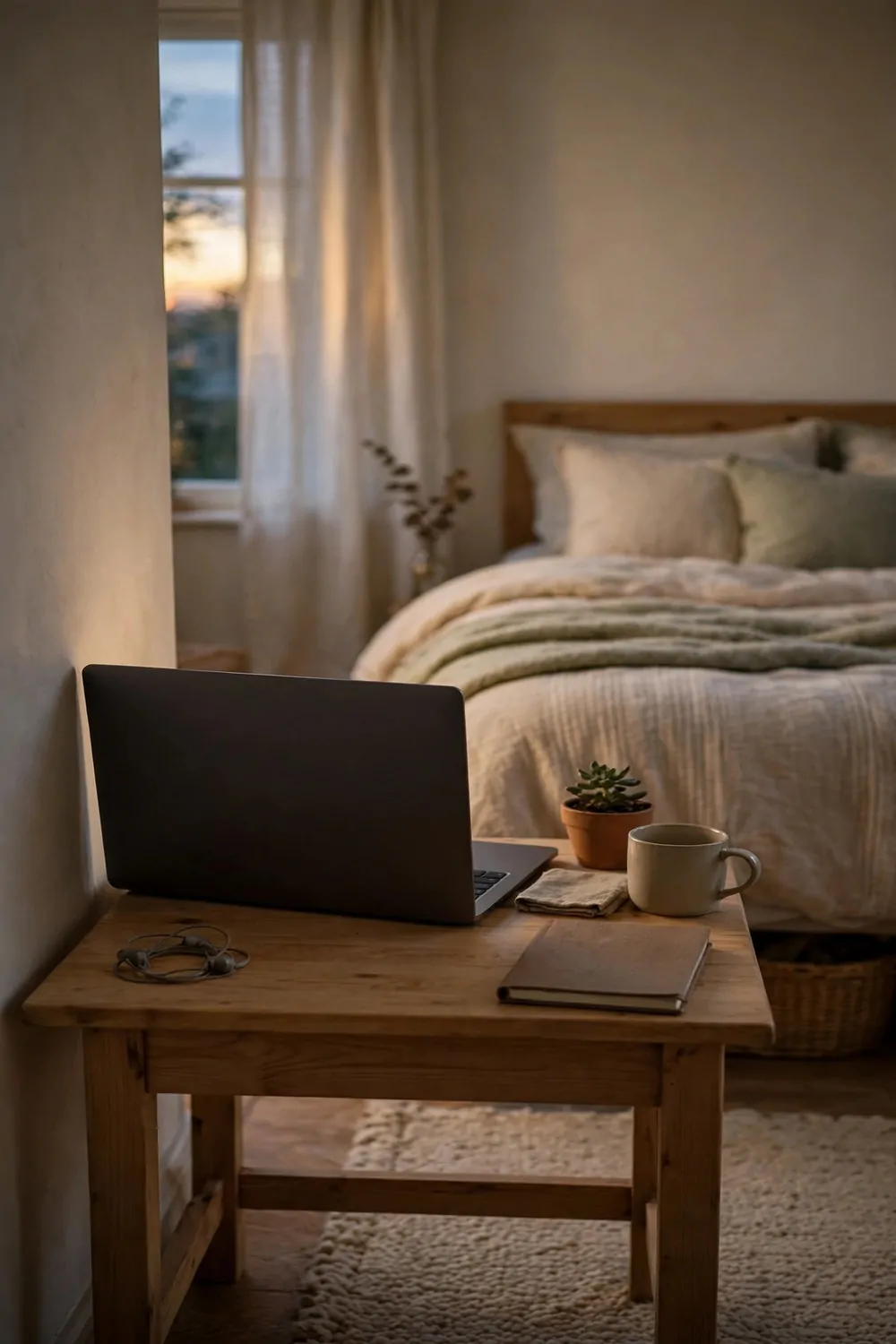
A laptop screen glowing at your pillow all night is the enemy of good sleep.
My screen faces away from the bed. The desk sits in the corner, and the laptop looks toward the wall, not toward the mattress. At night the bed sees only the back of the screen.
Turn your desk so the screen faces the wall or the window, never the bed. A screen facing the bed shines its light right where you sleep, and your brain reads that light as daytime.
Close the laptop lid every night, even if you will open it again in the morning. A closed laptop is a closed office. An open one glows and hums and waits for you.
Put a small cloth over the screen if the lid stays open for some reason. A cloth blocks the glow, and the desk looks tidy from the bed.
Keep the charger plugged in behind the desk, not across the room. Cables trailing to the bed are a trip hazard in the dark, and a bedroom should be safe to walk through at night.
Keep the desk lamp low and warm in the evening. A low warm light on the desk makes the corner feel calm, and the bed stays dark behind you.
Try this one if your sleep has gotten worse since the desk moved in. Turn the screen away, close the lid, and let the bed be dark again.
A Mug Warmer for Slow Mornings

Slow mornings need a warm mug that stays warm. A mug warmer on a bedroom desk does exactly that.
My mug warmer is a small flat pad beside my laptop. I set my mug on it, and the tea stays warm through the whole slow morning. No cold tea. No trips to the kitchen.
Pick a mug warmer with a simple switch and a warm setting, not a hot one. Warm keeps the drink cozy. Hot burns the tea and warps the mug.
Keep the warmer on the side of the desk away from the bed. A warm pad near the pillow is a fire risk nobody needs in a bedroom. Safety first, cozy second.
Use a plain ceramic mug on the warmer. Thin glass mugs crack with heat, and metal mugs get too hot to hold. Ceramic holds the warmth gently.
Switch the warmer off when you leave the desk, every single time. A pad left on all day wastes power and warms nothing but the air. Off means off.
Wipe the warmer once a week with a dry cloth. Tea drips and dust build up fast on a warm pad, and a clean pad works better.
Try this one if your mornings crawl and your tea goes cold. One small warmer, and the slow morning stays warm.
The Throw Pillow That Marks the Work Spot

A bedroom office needs a line between work and rest. A throw pillow on the chair draws that line.
My work pillow is soft mustard yellow, and it lives on my desk chair all day. When I put it on the bed at night, the chair is just a chair again. The pillow moves, and the workday moves with it.
Pick a pillow that feels soft against your lower back. Not too big. Not too flat. Just enough to fill the gap between your back and the chair.
Choose a colour that matches the bedding, so the pillow looks at home on the bed too. A pillow that clashes with the bed looks like an office thing that wandered in.
Fluff the pillow every morning before you sit down. A flat pillow supports nothing, and a fluffed one hugs your back the way it should.
Swap the pillow cover with the seasons if you like. A soft sage cover in spring, a warm rust one in autumn. Small swaps keep the chair feeling fresh without buying anything new.
Wash the pillow cover once a month so it stays fresh. A pillow that smells like work and sleep mixed together is not a cozy pillow.
Try this one if your work and your rest keep blending into one long tired day. One pillow that moves, and the line between them comes back.
Sound Softening With Fabric
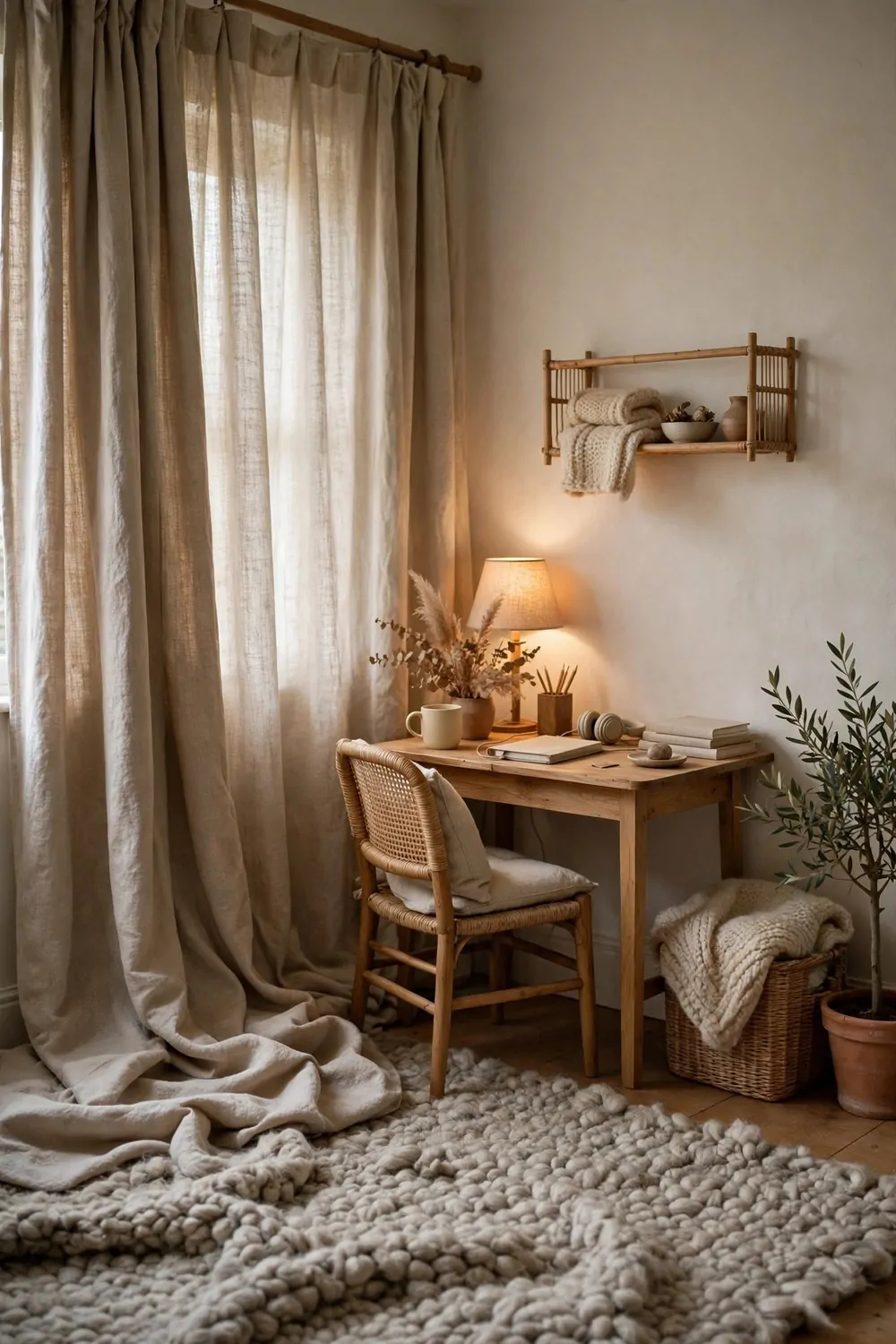
A bedroom office can feel echoey. Hard walls, bare floors, and a small room make every sound bounce.
My fix is fabric. Curtains on the window. A rug on the floor. A blanket on the chair. Soft things drink up the sound, and the room goes quiet.
Hang curtains even if the window is small. Fabric on a window softens the clatter of typing and the hum of the laptop fan. A bare window bounces every sound back at you.
Here is a table for fabrics that soften a bedroom office.
| Fabric | Where it goes | What it softens |
|---|---|---|
| Thick curtains | On the window | Typing sounds and street noise |
| Wool rug | Under the desk and chair | Footsteps and chair scrapes |
| Soft blanket | On the chair back | The empty echo of a small room |
Add a fabric pin board on the wall behind the desk. It holds notes and photos, and it soaks up sound better than a bare wall ever will.
Add a soft wall hanging above the desk if the room still echoes. A woven hanging or a fabric panel soaks up sound and looks pretty at the same time.
Keep the fabrics clean so they keep working. Dusty curtains and rugs stop softening sound and start smelling stale. A weekly shake and a monthly wash keep them fresh.
Try this one if your bedroom office sounds hollow and loud. Soft fabric, and the room goes quiet enough to think.
The Tray That Carries Work to Bed

Some nights you want to read in bed, not at the desk. A tray carries the work to you.
My tray is a plain wood board with handles, big enough for a book and a mug. I carry it from the desk to the bed, and the work comes with me without a mess.
Pick a tray with low edges and two handles. Low edges let you see the book. Handles let you carry it with one hand while the other holds the mug.
Keep the tray on the desk during the day. It holds the notebook and the pen, and the desk stays tidy. At night it moves to the bed, and the reading moves with it.
Put the tray back on the desk every morning. A tray left on the bed all day makes the bed look like a desk, and the bedroom loses its rest.
Use the tray for breakfast in bed on slow weekends too. A tray that only carries work feels like a chore. A tray that sometimes carries pancakes feels like a treat.
Wipe the tray once a week with a damp cloth. Tea rings and crumbs build up fast on a tray that carries food and books.
Try this one if you love reading in bed but hate the mess it makes. One tray, and the work travels without spilling.
A Clock That Ticks Softly
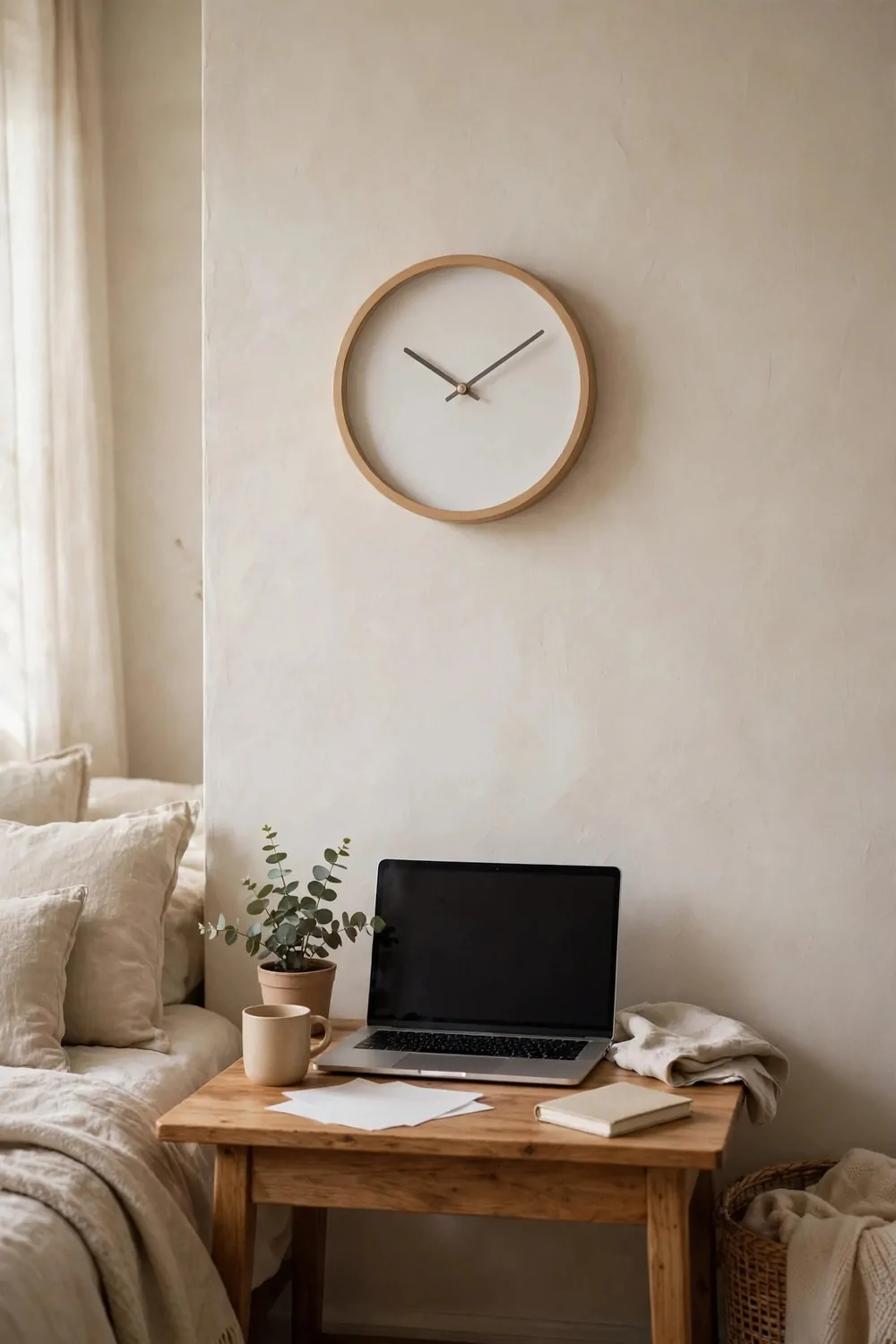
A bedroom office needs a clock you can hear without it keeping you awake.
My clock hangs on the wall above the desk. It ticks so softly I only notice it when the room goes quiet. That soft tick tells me the day is passing, gently, without rushing me.
Pick a clock with a silent sweep hand, not a loud ticking one. A loud tick in a small bedroom is the kind of small annoyance that grows bigger every hour.
Hang the clock where you can see it from the chair. A clock behind you is a clock you will never use. A clock in front of you becomes part of the day.
Use the clock to mark the workday in soft blocks. One hour of work, then a stretch by the window. The clock marks the end for you, so your brain can let go.
Set a gentle alarm for the end of the workday, not a loud one. A soft chime that says it is time to close the laptop. A loud alarm makes your heart race, and a racing heart does not rest well.
Wind the clock or change the battery on the first day of every month. A clock that stops is worse than no clock at all, because it tells you the wrong time with confidence.
Try this one if your workdays stretch into the night without you noticing. A soft clock, a gentle alarm, and the day gets its edges back.
The Window View That Rests Your Eyes

A bedroom office needs a window view that rests your eyes, not a blank wall that tires them.
My desk faces the window, and beyond it there is a tree. A plain green tree that moves in the wind. I look at it for one minute every hour, and my eyes feel new again.
Keep the sill free of clutter. A sill full of boxes blocks the view and the light. A single small plant is plenty. The view needs a clear path to your eyes.
Put a small cushion on the windowsill if it is wide enough. A cushion turns the sill into a perch for slow mornings, and the view feels like it belongs to you.
Open the window for ten minutes in the morning, even on cold days. Cool morning air wakes your mind up faster than coffee, and the room smells new again.
Watch the sky change while you work. Clouds moving. Sun shifting across the floor. A desk by a window gives you a view that is never the same twice.
Clean the inside of the window once a month. A grimy window steals half the daylight, while a clean one makes the whole corner glow without changing a thing.
Try this one if every workday feels like the same long blur. One minute at the window every hour, and the day breaks into pieces you can enjoy.
The Night Routine That Closes the Desk
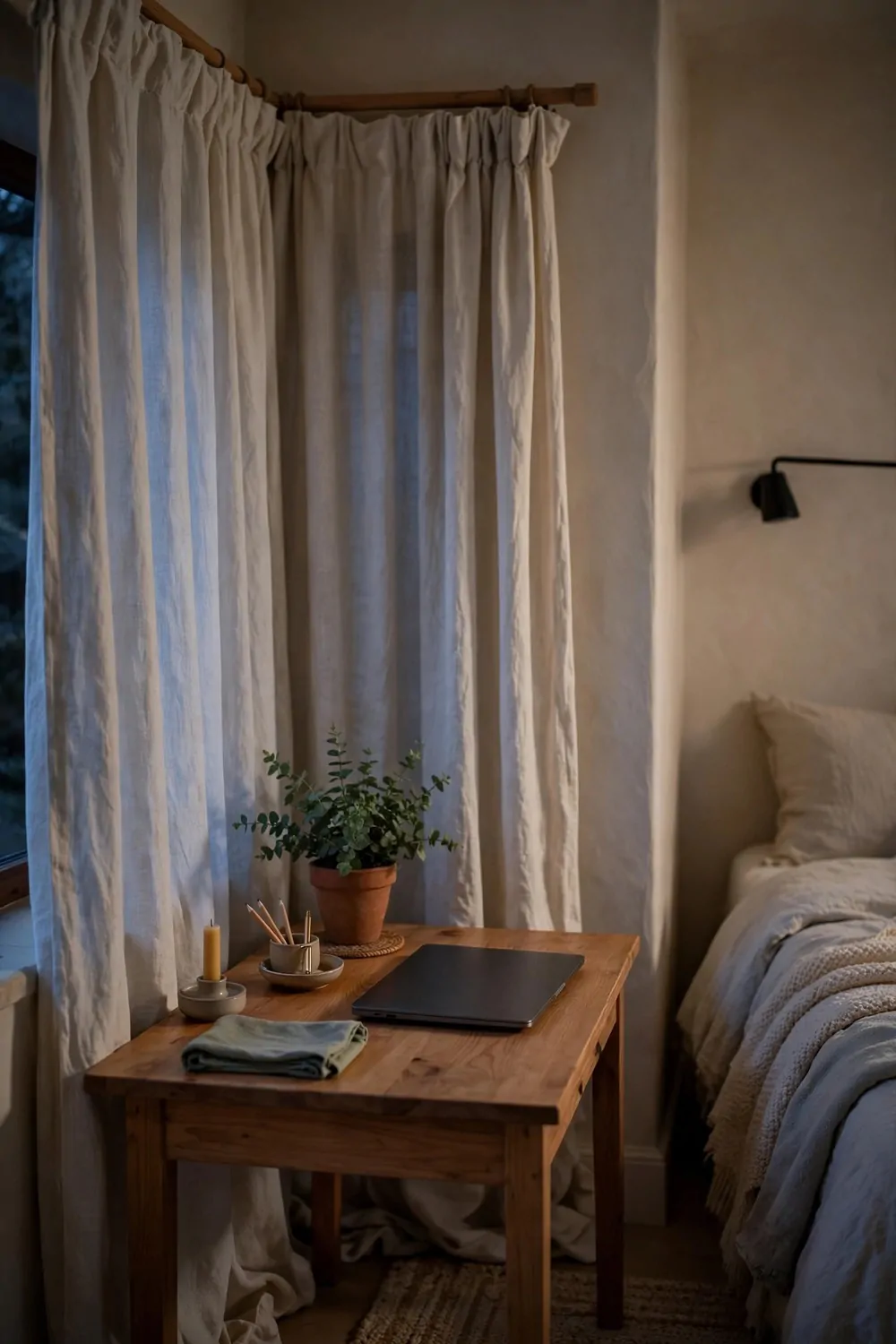
A bedroom office only works if it closes properly at night. A little routine does that.
My routine takes three minutes. Close the laptop. Put the notebook on the shelf. Pull the curtain across the desk. Switch the lamp off last. Three minutes, and the bedroom is a bedroom again.
Do the routine at the same time every evening. A routine that runs daily becomes automatic. A routine that runs only on tidy days never sticks.
Here is what belongs in a good night routine.
- Close the laptop lid and put the mug in the kitchen
- Put the notebook on the shelf and the pen in the cup
- Pull the curtain across the desk corner
- Switch the lamp off and fluff the pillow on the bed
Say goodnight to the desk in your head, even if that sounds silly. A little goodbye tells your brain the work is done. Without it, the work follows you into bed.
Write tomorrow’s first task on a sticky note and leave it on the notebook. One line, in plain words. Morning you will be glad night you bothered.
Keep the routine short. Three minutes is enough. A long routine is a routine you will skip, and a skipped routine is no routine at all.
Try this one tonight. Three minutes, every evening, and tomorrow morning your bedroom will feel like a place to sleep again.
Keep Reading
If you liked these Cozy Bedroom Office Ideas, these workspace, hacks and industrial office ideas will give you even more ways to make a small space work hard.
- 20 Ikea Workspace Ideas for a Desk You’ll Actually Use
- 21 Ikea Home Office Hacks That Look Way More Expensive
- 16 Ikea Office Ideas Workspaces Industrial Fans Will Love
A cozy bedroom office is not about the desk at all. It is about the small soft things around it. A warm lamp. A rug under your feet. A blanket on the chair. A curtain that hides the work at night. Pick your favourite three ideas from this list, try them this weekend, and let your smallest room surprise you.