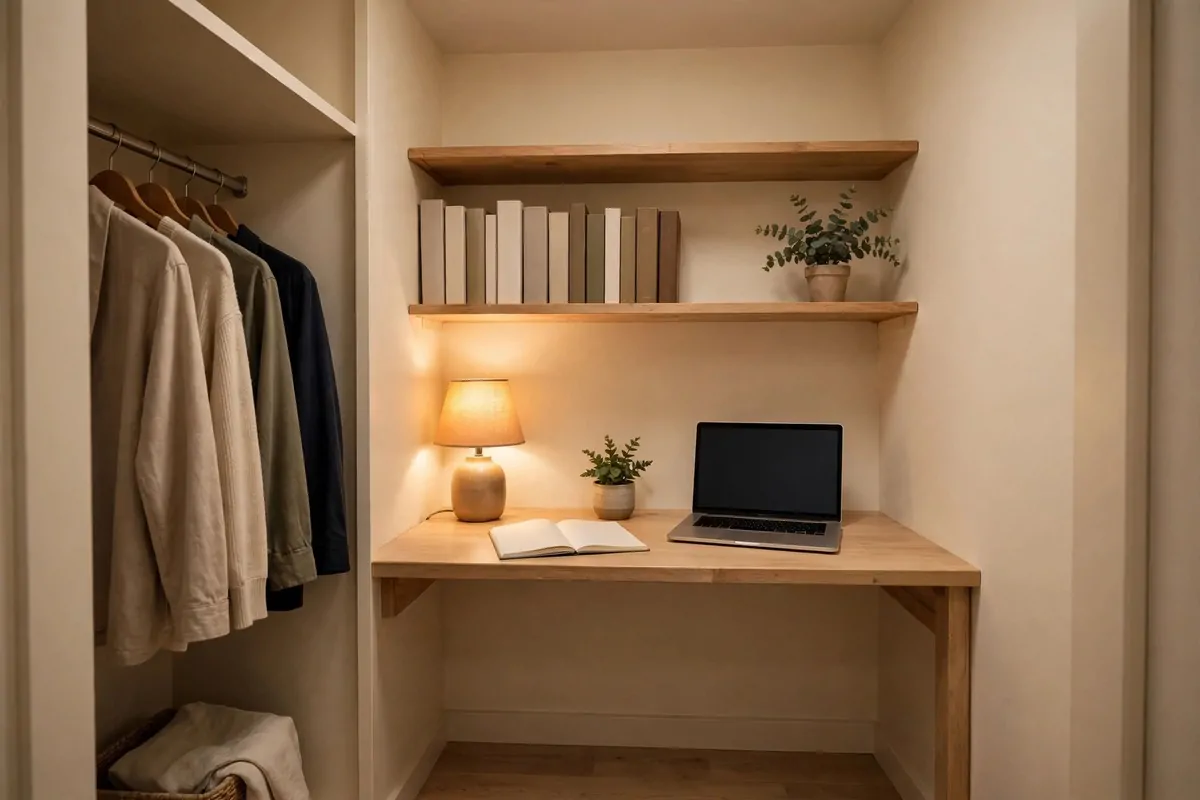
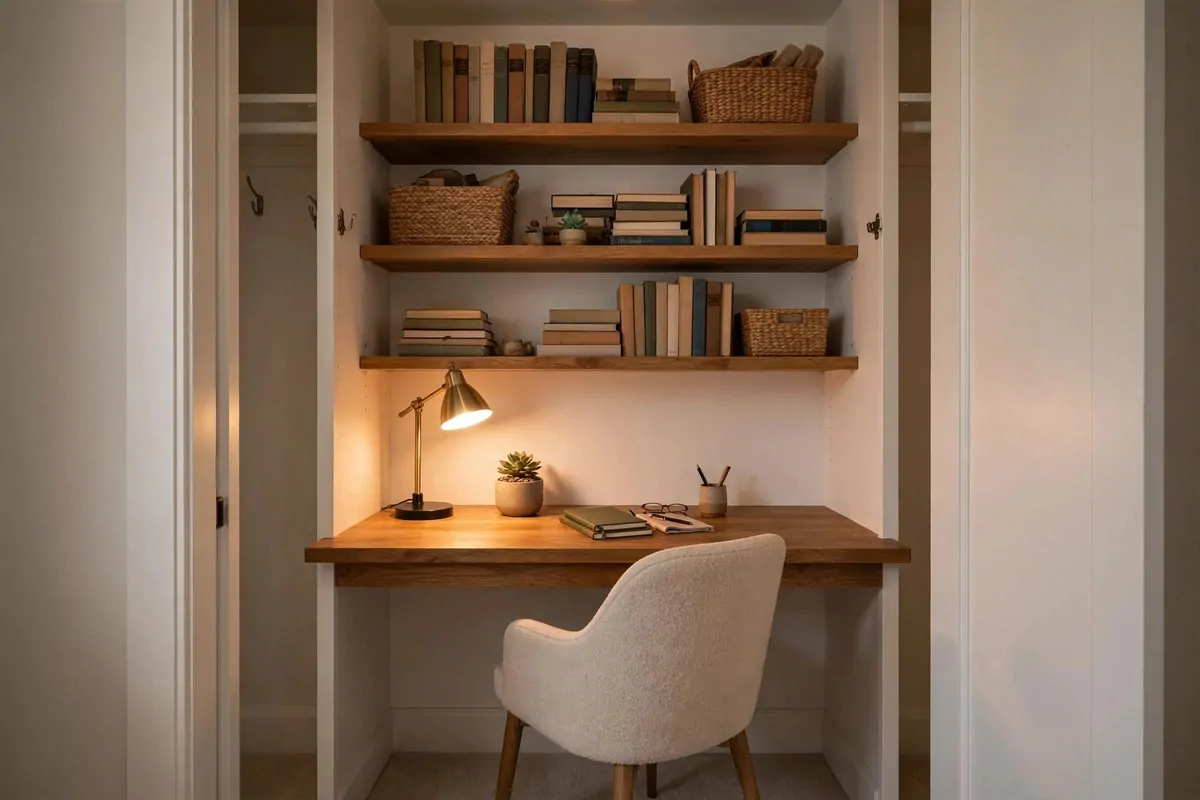
20 Ikea Workspace Ideas for a Desk You’ll Actually Use

A desk you never use is just a shelf with legs.
I know that sounds harsh. But look around your home and count how many hours you really spend at your desk this week. Not the hours you planned to spend there. The real ones.
Most of us have a desk that looks lovely in photos and sits empty all day. We work from the sofa. We answer emails at the kitchen table. The desk holds a stack of papers we never touch and a lamp we never switch on.
Before we get going, one honest note. These rooms take their cue from the flat-pack, build-it-yourself style. They are not the brand’s own rooms, and this site has no link to the brand at all. What follows is my own take on that simple, plain, put-it-together-yourself style, with ideas that make a desk part of your real day.
These 20 Ikea Workspace Ideas are not about how the desk looks. They are about how the desk gets used. Where your mug lives. Where your charger stays. What you touch first in the morning and what you put away last at night.
A desk earns its place when it fits your day, not when it fits a photo. Pick the ideas that match the way you really work, and your desk will stop being furniture. It will become the spot you sit down without thinking.
The Chair That Lets You Sit All Day
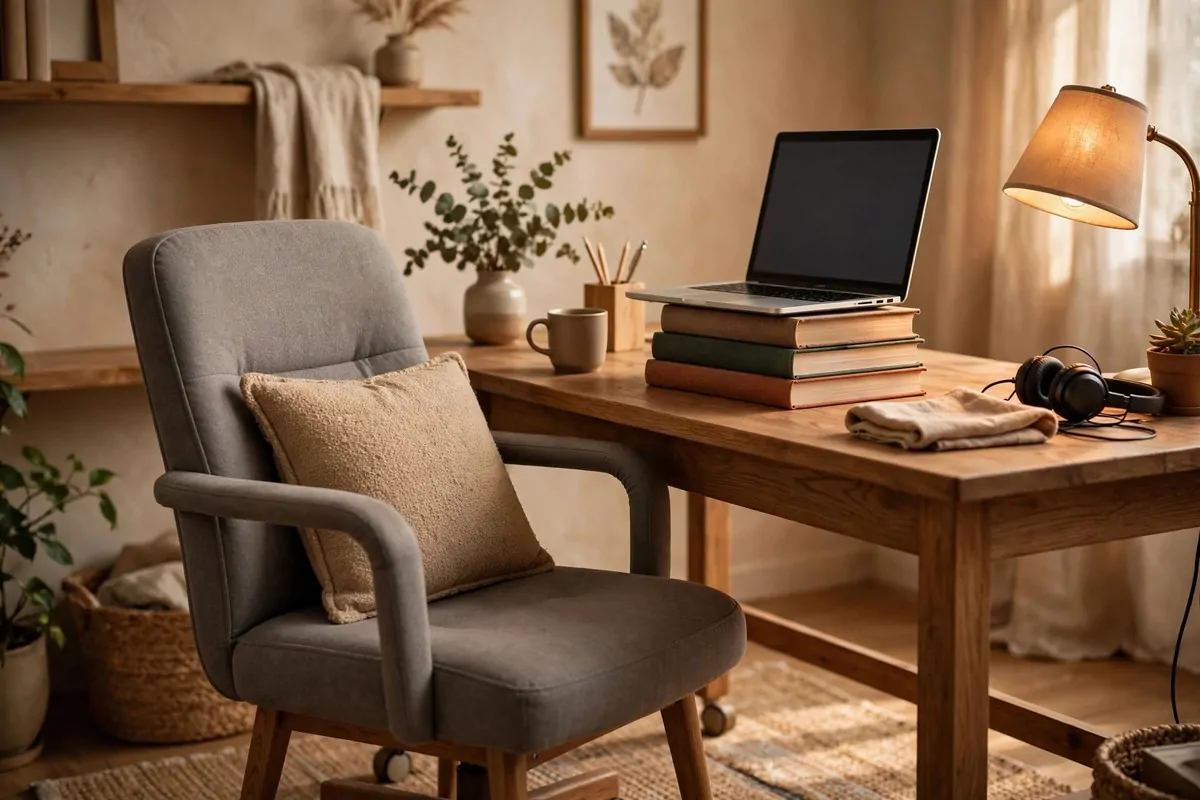
A desk you actually use starts with a chair you can sit in for hours without thinking about it.
Not a pretty chair. A kind chair. One that holds your back up when the afternoon gets long and your shoulders start to creep up toward your ears.
Sit in the chair for a full workday before you decide it is the right one. A chair that feels fine for ten minutes in a shop can feel like a wooden bench by three in the afternoon. Your back will tell you the truth by lunchtime.
Set the chair height so your feet rest flat on the floor. Your knees should bend at a soft right angle, not dangle and not push up high. If your feet swing, the chair is too tall for you.
Put a small cushion behind your lower back if the chair back feels too straight. A flat cushion, not a fat one. It should fill the gap between your back and the chair, nothing more.
Move the chair away from the desk and back again a few times. It should roll or slide easy, without a fight. A chair that sticks makes you twist your body every time you stand up.
Keep a light throw over the chair back for cold mornings. You will reach for it at nine and fold it away by eleven. That is the chair doing its job.
Try this one first if you keep working from the sofa. A kind chair is the whole reason you will choose the desk tomorrow.
Your Screen at the Right Height
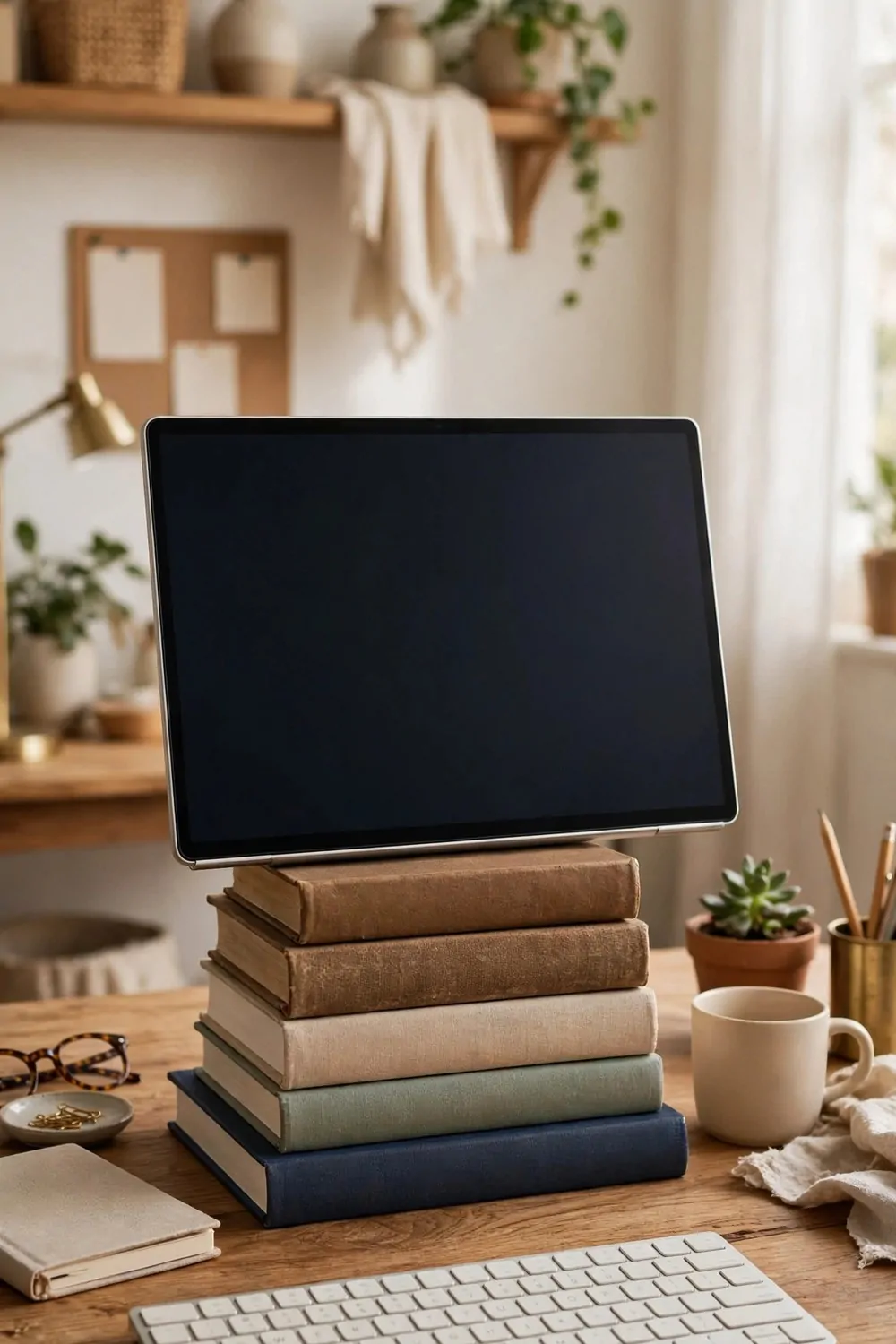
A screen that sits too low will steal your whole day, one stiff neck at a time.
Look at your screen right now. Is your chin tucked down toward your chest? That is the sign. Your screen is too low and your neck is doing the extra work.
Raise the screen until the top of it sits level with your eyes. You should look straight ahead, not down and not up. A stack of books under the monitor works fine for a test.
Laptops are the worst for this. The screen and the keyboard are stuck together, so one of them is always in the wrong place. A separate keyboard fixes it in one move.
Put the screen about an arm’s length away from your face. Stretch your arm out and your fingertips should just touch the glass. Closer than that and your eyes get tired fast.
Keep the screen out of direct sun. A bright window behind you turns the screen into a mirror, and a bright window in front of you makes you squint all morning.
Tilt the screen back just a little, the way a book rests open on a stand. A small tilt takes the glare off and your eyes relax.
Try this one tonight before your next workday. Raise the screen, move the keyboard, and your neck will thank you by lunch.
The Mug Spot That Never Moves
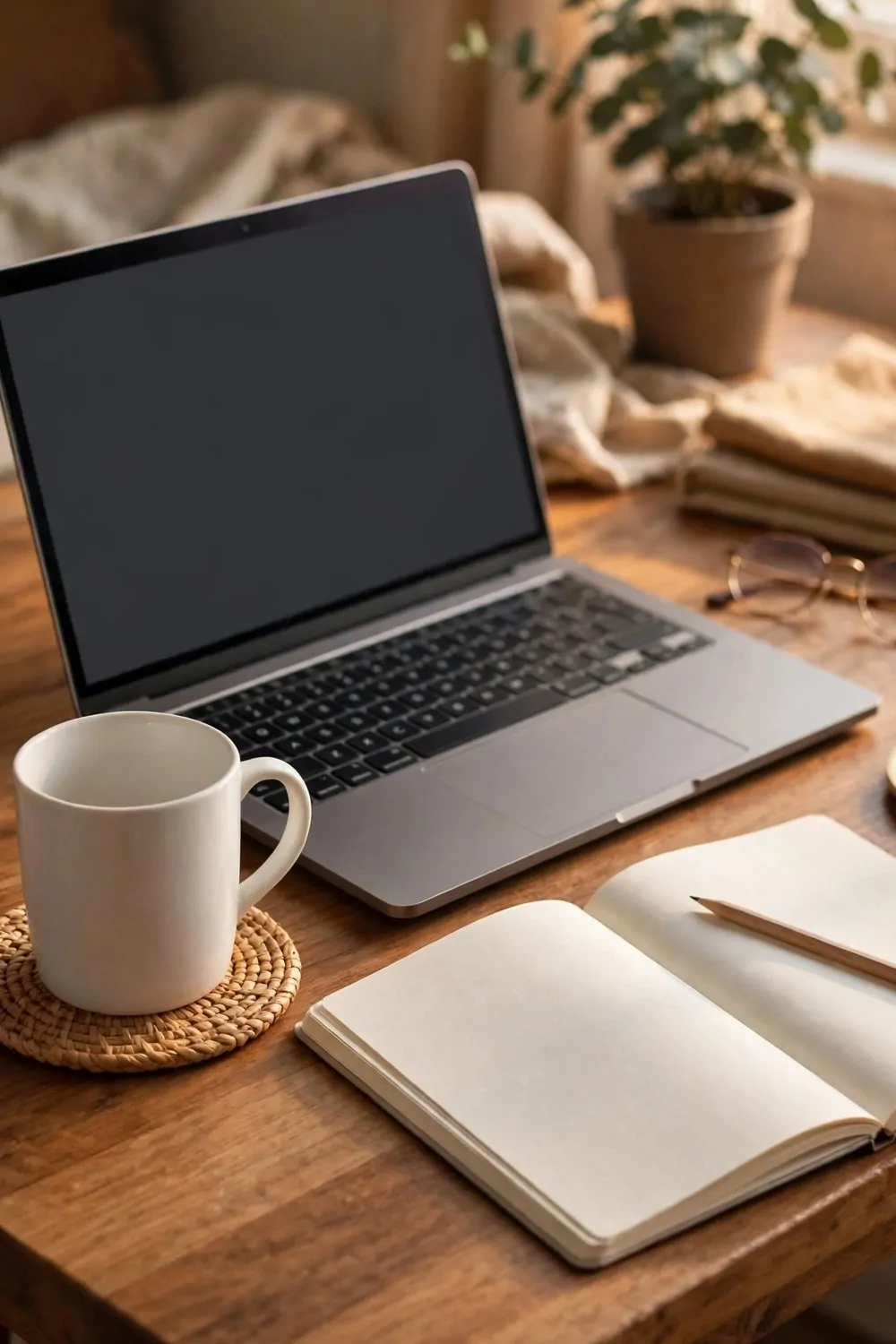
Every desk that gets used has one spot that never changes. For me, it is the mug spot.
My mug sits on the left corner of the desk, every single day. Same corner. Same mug. I reach for it without looking, and my hand always finds it.
Pick a spot for your mug and keep it there. The left corner if you are right-handed, so your arm never sweeps across the laptop. The right corner if you are left-handed.
Put a small coaster under the mug, even if the desk top is tough. The coaster marks the spot. It tells your hand where home is, and it saves the wood from rings.
Keep the mug spot clear of papers. Papers creep toward the mug like they want to get wet. One wet page ruins a whole morning of notes.
Wash the mug at the end of the day and put it back on the same spot before you leave the desk. Tomorrow morning you will sit down and everything will already be where it belongs.
If you share the desk with someone else, give each person their own mug spot. Two mugs, two corners, no mix-ups. A shared desk still needs its own little rules.
Try this one if your desk always feels a bit messy. One fixed mug spot, and the rest of the desk starts to fall into place around it.
The Notebook That Stays Open
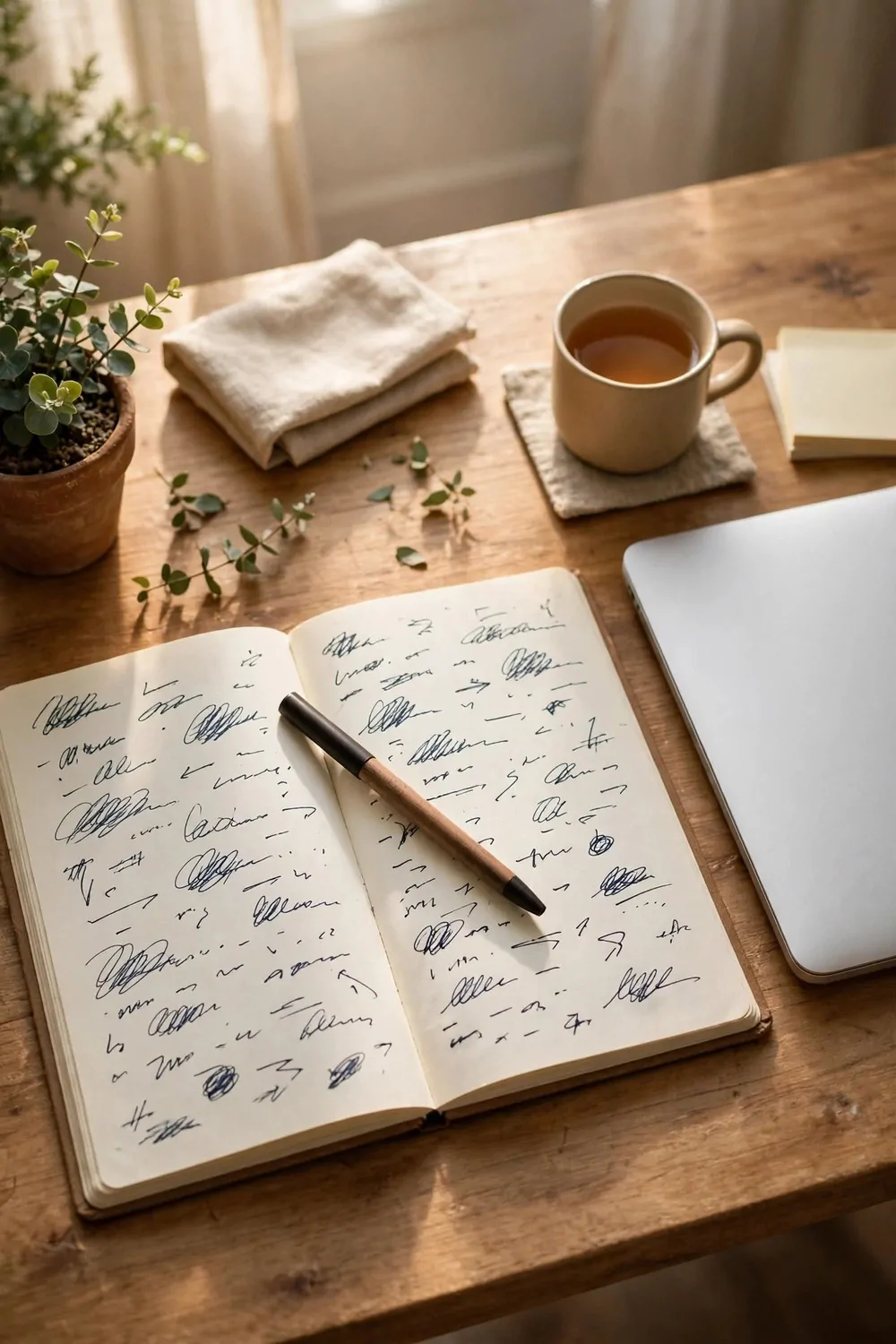
A desk that gets used always has one notebook lying open on it. Not a stack of notebooks. One.
Mine sits to the right of my laptop, open at today’s page. It holds the three things I need to do before lunch, written in my own handwriting.
Keep the notebook open at the page you are working on. A closed notebook is a notebook you forget. An open one stares at you until you finish the line.
Write the date at the top of each page. Dates turn a messy notebook into a diary of your work. You can flip back and see exactly what you did last Tuesday.
Use the notebook for the small stuff only. Phone numbers. Little reminders. The name of the person you need to call back. Big plans live on the computer.
Put a pen on the notebook, across the pages, like a bookmark. A pen that lives on the notebook never goes missing. A pen in a drawer is a pen you will hunt for.
Cross things off with a big line when they are done. A crossed-off line feels better than a tick. It shows the day moving, and it makes the next task look smaller.
Try this one if your to-do list lives in five places at once. One open notebook, and your day has a single place to land.
The Five-Minute Morning Start
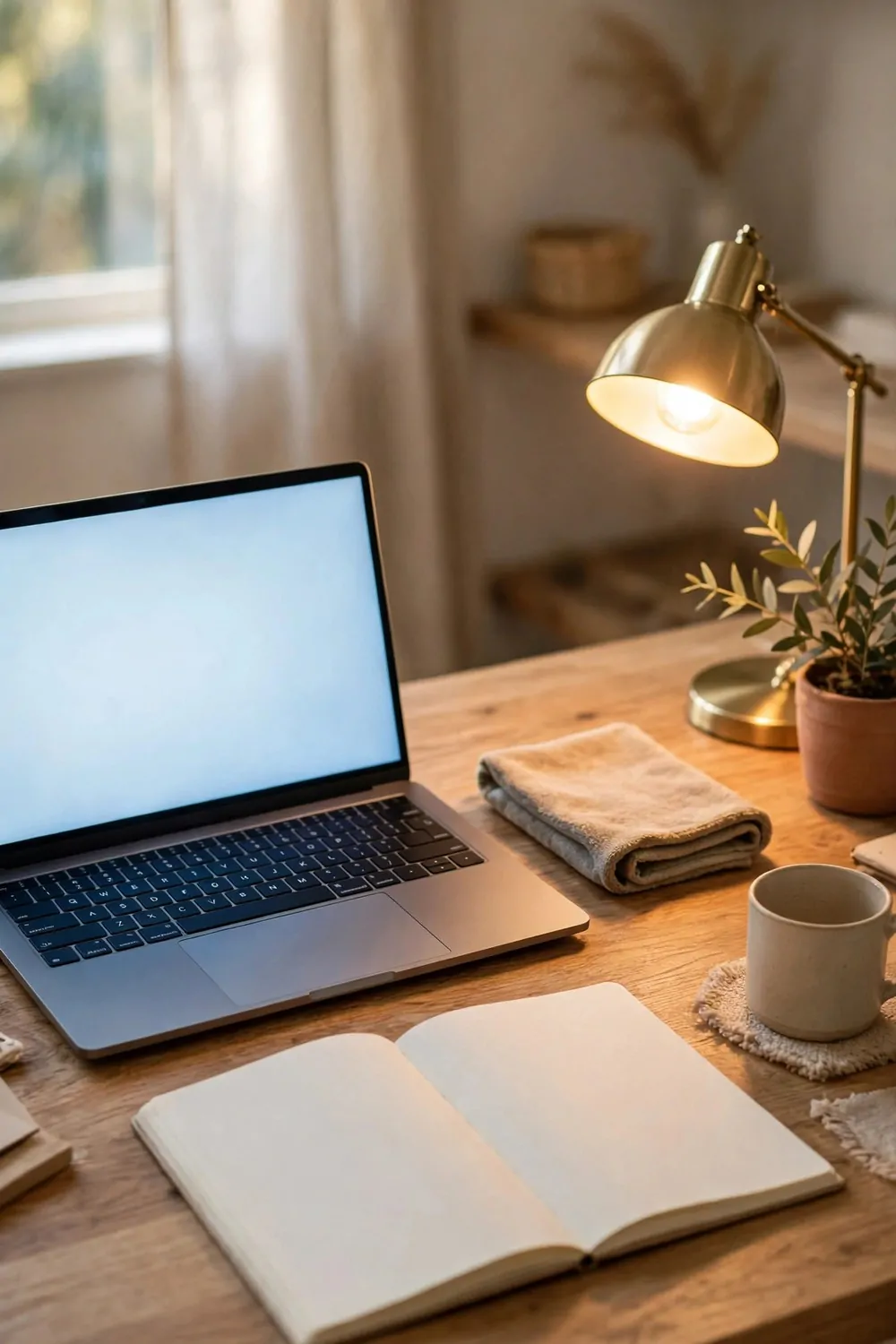
The first five minutes at your desk decide the whole day. Rush them and the day feels rushed. Spend them well and the day behaves.
Sit down and do nothing for one whole minute. Just sit. Look at the desk. Breathe. Your brain needs a minute to arrive, even if your body got there first.
Wipe the desk with a dry cloth while the computer wakes up. Yesterday’s crumbs and dust go away, and your hands learn that the desk is a clean place to work.
Here is the order that works best for the first five minutes.
| Minute | What to do | Why it helps |
|---|---|---|
| One | Sit down and breathe | Your brain catches up with your body |
| Two | Wipe the desk clean | A clean surface tells your brain to focus |
| Three | Open the notebook | Today has a plan before the screen wakes up |
| Four | Pick the first task | One task, not five, so the day starts small |
| Five | Start the first task | Starting is the whole trick |
Open only the one thing you need for the first task. Not the email. Not the news. Just the one document, the one page, the one job.
Start the first task before you check anything else. A small win in the first five minutes makes the rest of the morning feel easy.
If the first task feels too big, shrink it. Write the first line. Open the file. Find the phone number. A tiny start still counts as a start.
Keep the same five minutes every day, even on slow days. A routine that only works on good days is not a routine. It is a wish.
Try this one tomorrow morning. Five minutes, in order, and watch how different the day feels by ten o’clock.
The Lunch Break That Clears Your Head
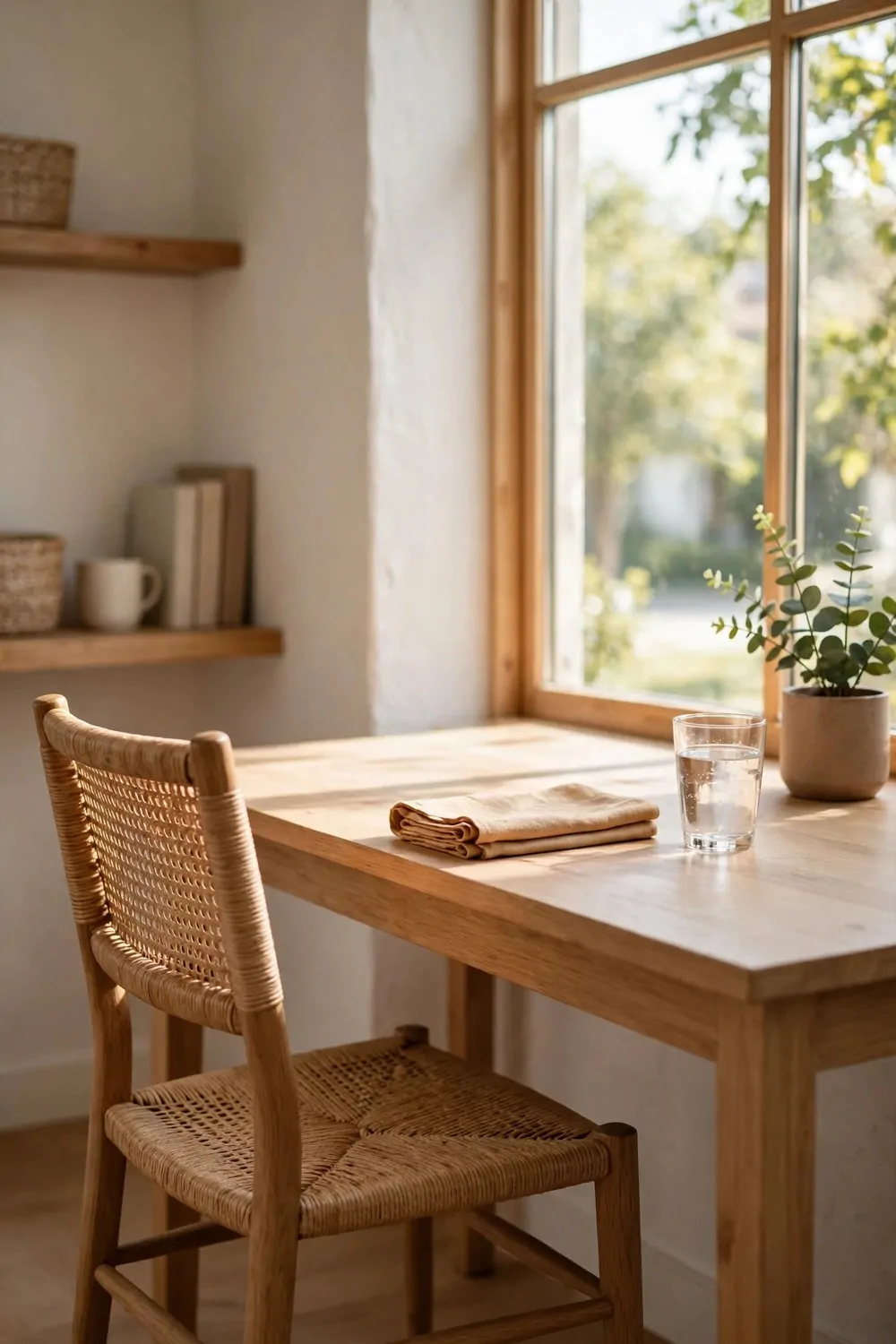
A desk you use all day needs a break in the middle, or your brain stops working by two o’clock.
Stand up at lunch and walk away from the desk. Not to the kitchen and straight back. A real walk, even if it is only to the front door and back again.
Eat lunch somewhere that is not your desk. The kitchen table. A chair by the window. Anywhere your eyes can rest on something that is not a screen.
Leave your phone on the desk while you eat. The messages will wait. Your brain needs twenty minutes without a screen more than it needs the news.
Drink a full glass of water with your lunch. Most afternoon tiredness is just thirst wearing a disguise. Water first, coffee second, and the afternoon feels lighter.
Stretch your arms up high before you sit back down. Reach for the ceiling, bend side to side, and roll your shoulders once. Thirty seconds of stretching wakes your body up better than a second coffee.
Come back to the desk and wipe it down again, the same as the morning. A clean desk after lunch feels like a fresh start, and the afternoon gets its own beginning.
Look out of the window for one minute before you start again. Let your eyes rest on something far away. Screens make your eyes tired, and a faraway view is the cheapest rest there is.
Try this one if your afternoons always drag. A real lunch break, away from the desk, and the second half of the day stops feeling like a punishment.
The Last Five Minutes of Work
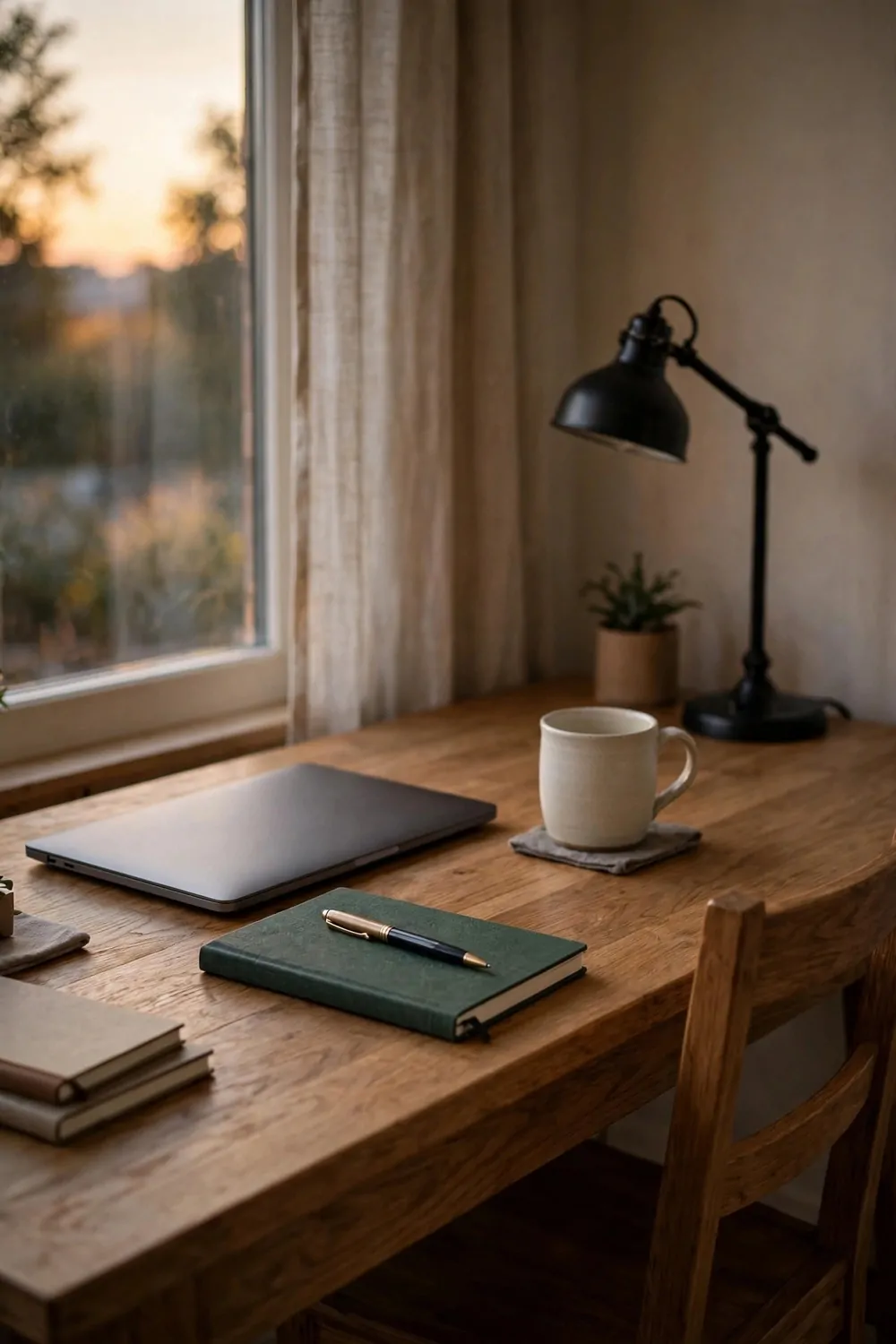
The way you leave your desk matters as much as the way you arrive at it.
Give yourself five minutes at the end of the day to close things down properly. Not a mad rush. A calm little routine that tells your brain the workday is over.
Save everything first, then close the tabs one by one. A screen full of open tabs is a brain full of open loops. Close them and the loops close too.
Write tomorrow’s first task on the notebook page before you shut it. One line. Just the first thing. Tomorrow morning you will sit down and already know where to start.
Put the pen back on the notebook and the mug back on its spot. Everything in its home place. A desk that is tidy at night is a desk you want to sit at in the morning.
Push the chair in under the desk. A chair left out in the middle of the room looks like work that never ended. A chair tucked away says the day is done.
Switch the lamp off last, after everything else is put away. The click of the lamp is the full stop at the end of the day.
Try this one tonight. Five minutes of closing down, and your evening will feel like your own again, not like work that followed you home.
The Drawer That Holds Only Today
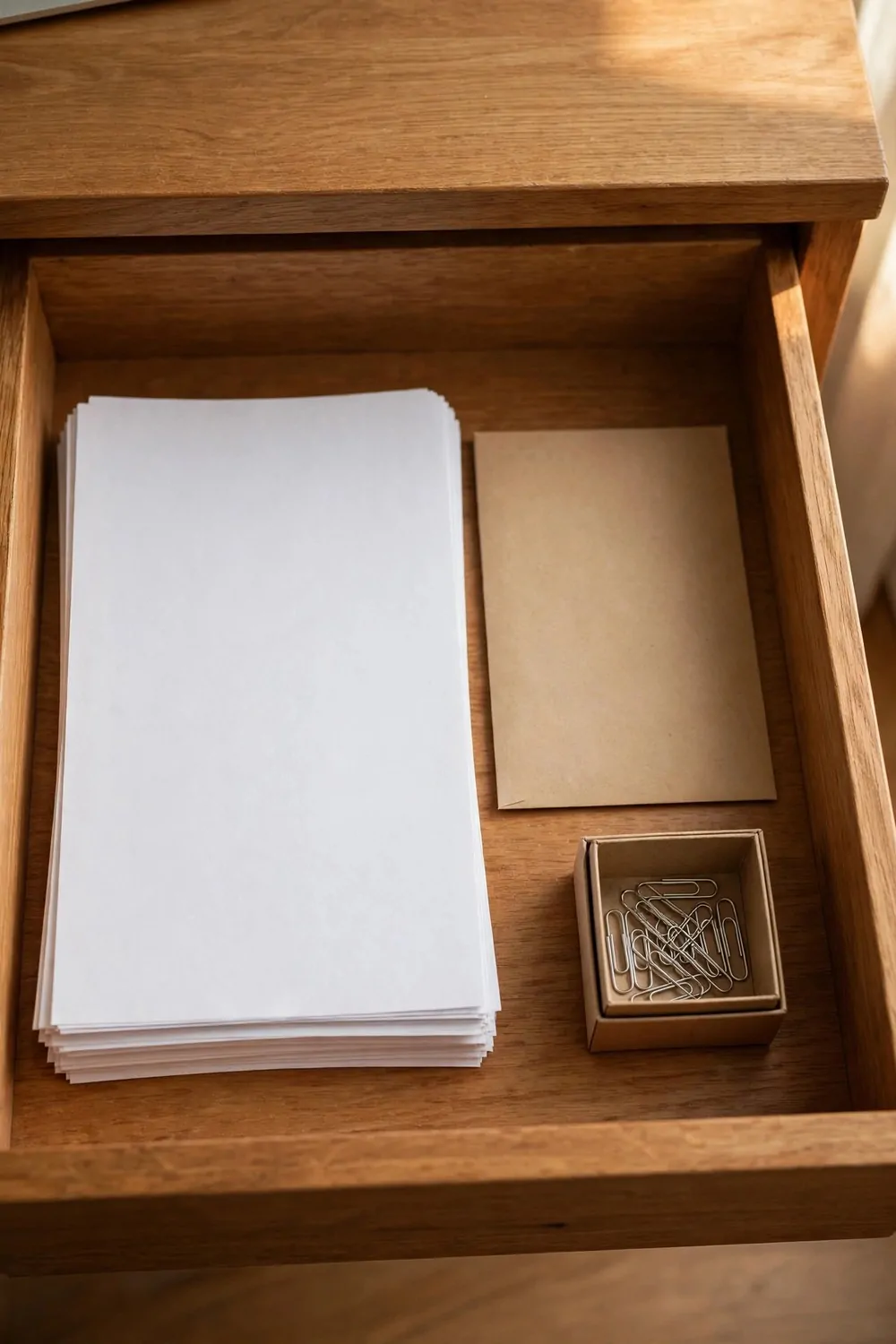
A desk drawer turns into a junk drawer the moment you let it hold things for someday.
Give one drawer a strict rule. It holds only today’s stuff. Nothing else. Not last week’s papers. Not the spare cables. Just today.
Put today’s papers in it in the morning. The letter you need to answer. The form you need to fill in. When the drawer closes, today is in there, safe and out of sight.
Take everything out of the drawer at the end of the day. Papers you finished go in the tray. Papers you still need go back in the notebook. The drawer goes to sleep empty.
Here is what belongs in the today drawer, and what does not.
- Today’s papers, the ones you will touch before lunch.
- The one form you need to fill in today.
- The envelope you need to post before five.
- The receipt you need to file today, not someday.
Keep a small box in the drawer for the bits that belong to today only. A paperclip. A sticky note. The key you need this afternoon. Small things, in one box, easy to find.
If something sits in the today drawer for three days, it does not belong there. Move it to the tray, file it, or throw it away. The drawer stays honest only if you keep it strict.
Try this one if your drawers are full of things you never use. One drawer for today only, and the rest of the desk stays honest.
The Charger That Lives in One Place
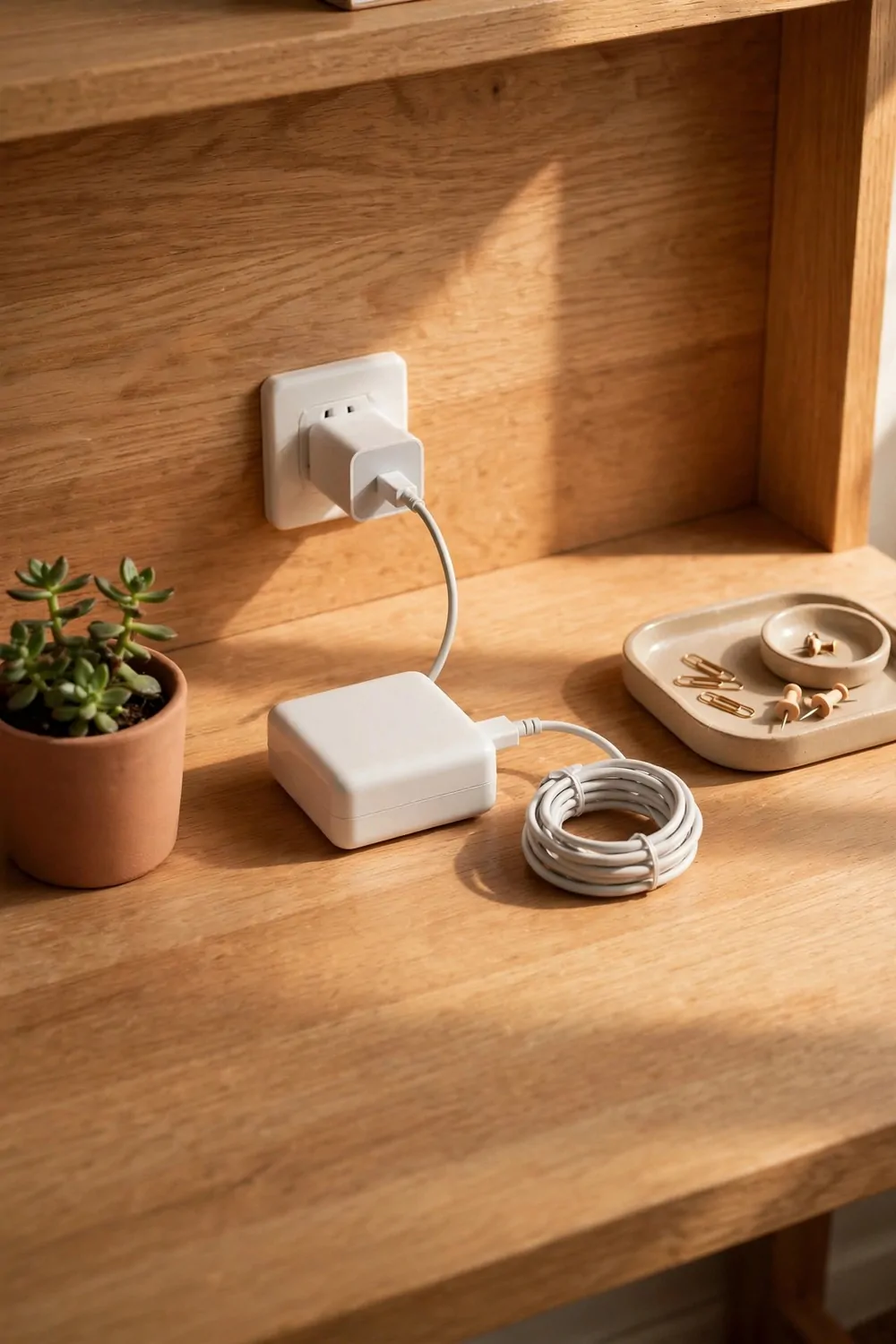
A charger that moves around the house is a charger you will hunt for every single morning.
Pick one spot for your charger and never move it. A small tray on the desk. A hook on the wall beside it. One home, always the same.
Plug the charger in once and leave it plugged in. Unplugging it every night is how chargers end up in the kitchen, the bedroom, and the car, all in the same week.
Use a short cable, not a long one. A long cable falls off the desk and tangles under the chair. A short cable stays where you put it.
Label the charger with a tiny tag if you share the desk. One word is enough. Laptop. Phone. That way you never pull out the wrong plug by accident.
Keep the spare charger in a box in the closet, not on the desk. The desk holds the one charger you use. The spare lives somewhere else until the day you need it.
Check the cable once a month for frays near the plug. A frayed cable charges slowly and can get hot. Swap it out the day you spot the damage, not the day it stops working.
Try this one if you start every morning by looking for a cable. One charger, one spot, and the hunt is over for good.
The First Light You Switch On
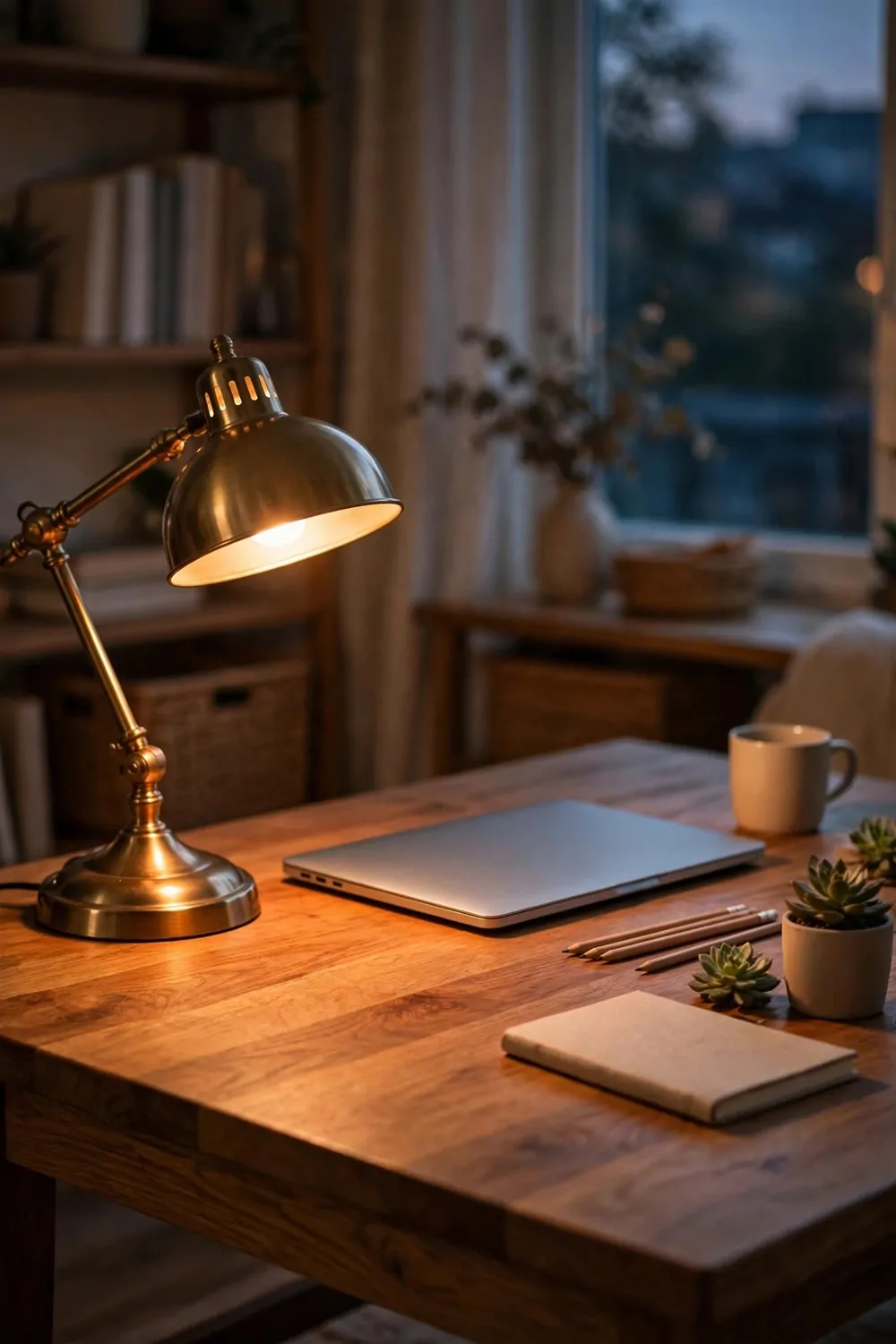
A desk you use every day has a light you switch on first, before anything else.
Mine is a small desk lamp on the left side. I click it on the moment I sit down, even on bright mornings. The warm pool of light tells my brain that work has started.
Put your lamp on the side your writing hand does not use. Right-handed people put it on the left. That way your hand never casts a shadow over your words.
Use a warm bulb, the kind that glows amber, not a cold white one. Warm light makes the wood look rich and the room feel like evening, even at nine in the morning.
Keep the lamp low on the desk, close to your work. A lamp that shines across the whole room lights nothing in particular. A lamp that shines on your papers lights exactly what matters.
Turn the overhead light off when the lamp is on. One warm lamp is enough for real work, and the room keeps its soft shadows. Shadows are what make a room feel calm.
Dust the lamp shade once a month with a dry cloth. Dust on a shade cuts the light in half, and a dusty lamp makes the whole desk look tired.
Try this one tomorrow morning. Click the lamp on first, before the computer, and watch how the desk feels like yours in one second.
The Plant You Water on Mondays
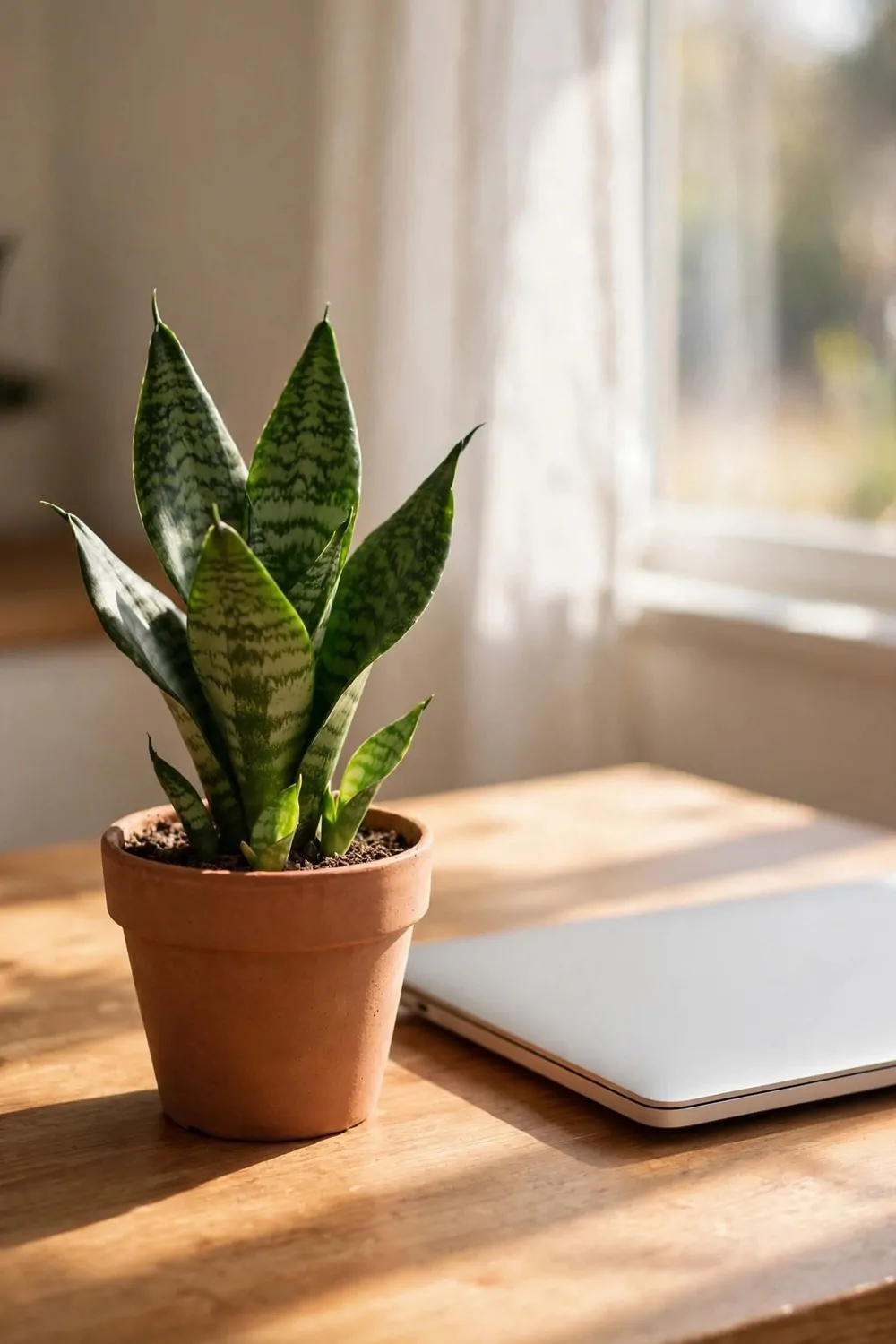
A desk with no living thing on it feels like a desk in a shop window. Clean, tidy, and a little bit dead.
One small plant changes that. Green against the wood. A bit of green life among all the flat wood and plain walls. The plant quietly makes the desk look cared for, and you barely have to think about it.
Choose a plant that puts up with a bit of neglect. A small snake plant. A trailing pothos. A succulent that is happy to be ignored. These green friends keep going even if you skip a week of care.
Give it a drink weekly, on the same day each week. Monday morning works well. Just a little drink, not a flood. Too much watering kills more plants than too little does.
Set the pot where daylight can reach it but harsh sun cannot scorch the leaves. A bright spot close to the window suits it best. A gloomy corner is where green things slowly give up.
Wipe the leaves with a damp cloth once a month. Dust sits on leaves and blocks the light. A quick wipe keeps the plant looking fresh, and the desk feels cared for.
When the leaves start to droop, shift the pot nearer the window for a week. A plant shows you what it needs, and more daylight is nearly always the fix.
Try this one if your workspace feels chilly and bare. One plant, one plain pot, one Monday watering, and the room starts to feel alive.
The Window Break for Thinking
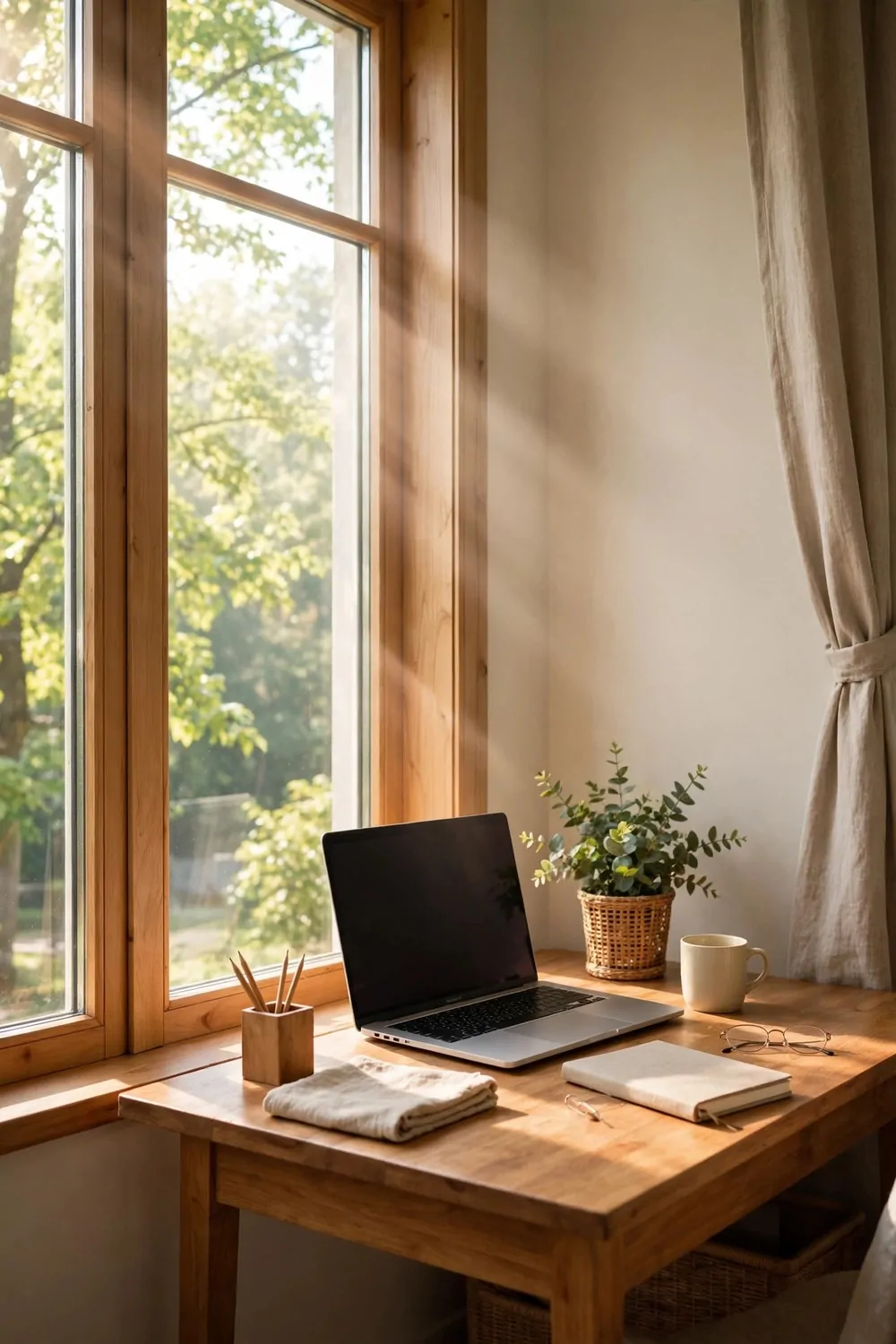
A desk you use all day needs a window nearby, or your brain runs out of places to rest.
Stand up once an hour and look out of the window for one minute. Not at your phone. Out of the window, at the street, the trees, the sky. Your eyes need something far away after an hour of looking at something close.
Keep the desk near the window if you can, but not pressed right against it. A small gap lets the light in without the sun hitting your screen. Light on your work, not glare in your eyes.
Open the window for ten minutes in the morning, even in cold weather. Fresh air wakes your brain up faster than coffee does, and the room smells new again.
Watch the weather change while you work. Rain on the glass. Sun moving across the floor. A desk by a window is a desk with a view that never repeats itself.
Put a small plant on the windowsill if the sill is wide enough. The plant gets the light it wants, and you get a green thing to look at when your eyes need a rest.
Keep the window clean on the inside, one wipe a month. A dusty window steals half the light, and a clean one makes the whole room feel brighter without changing a thing.
Try this one if your workdays feel like one long blur. One minute at the window every hour, and the day breaks into pieces you can actually enjoy.
The Footrest Under Your Desk
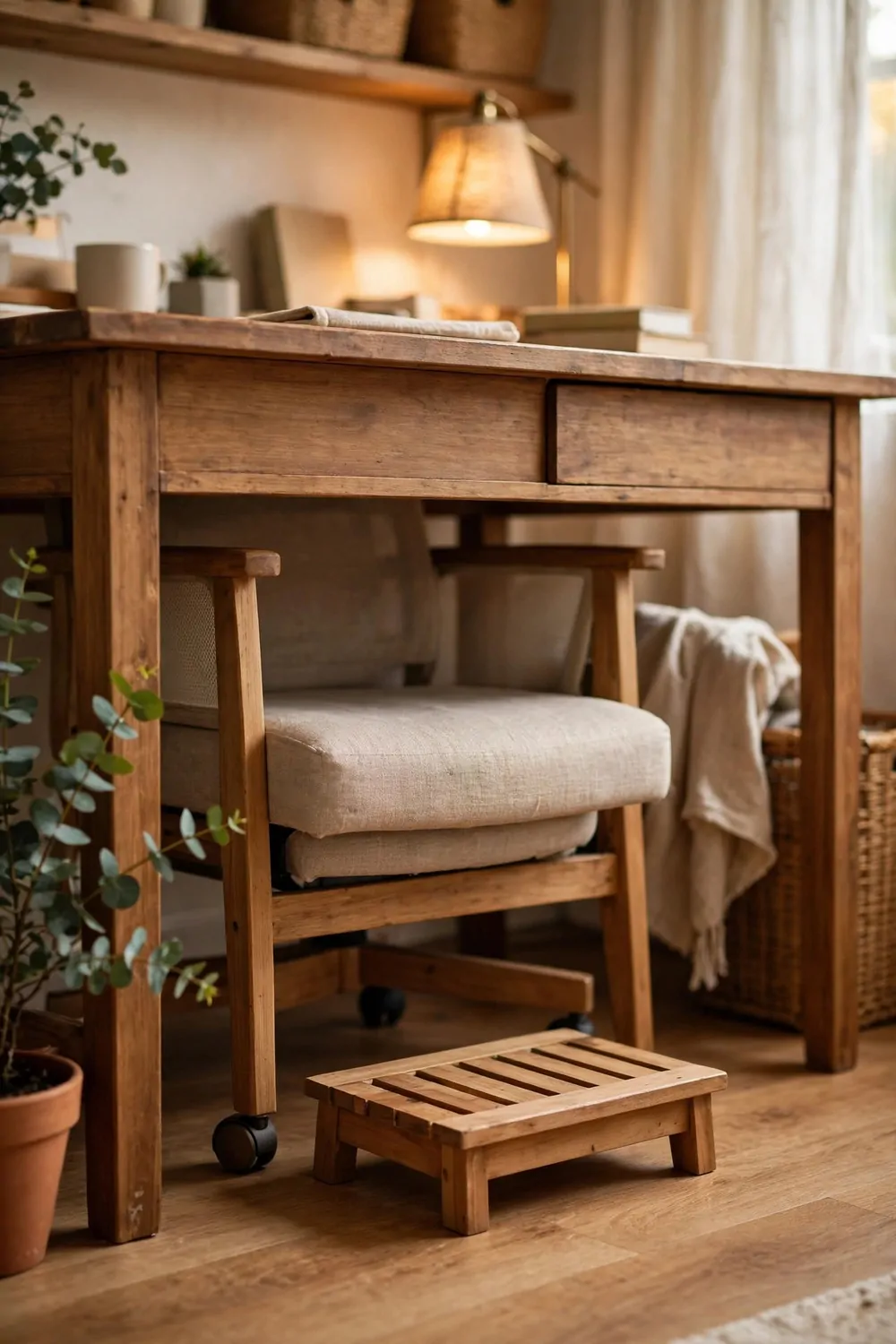
Your feet spend the whole day hanging, and nobody thinks about them until they start to ache.
A footrest under the desk is the cheapest comfort you can buy for your workday. A small slanted board, a low box, even a thick book wrapped in a cloth. Anything that lifts your feet a little off the floor.
Set the footrest so your knees bend at a soft angle and your feet rest flat on it. Not tiptoes, not dangling heels. Flat feet, relaxed ankles, and your legs stop fidgeting.
Move your feet on the footrest through the day. Rock them gently, back and forth. Small movements keep the blood moving in your legs, and your afternoon energy stays up.
Keep the footrest in the same spot every day. It becomes part of the desk, like the lamp and the mug. Your feet find it without you looking down.
If your feet still dangle even with the footrest, the chair is too tall for you. Lower the chair a notch and try again. Feet flat, knees soft, shoulders down.
Wipe the footrest once a week when you clean the desk. Dust and crumbs collect under desks fast, and a clean footrest feels better under bare feet or socks.
Try this one if your legs feel restless by three in the afternoon. A footrest is a small thing, and it changes the whole way the chair feels.
The Clock That Keeps You Honest
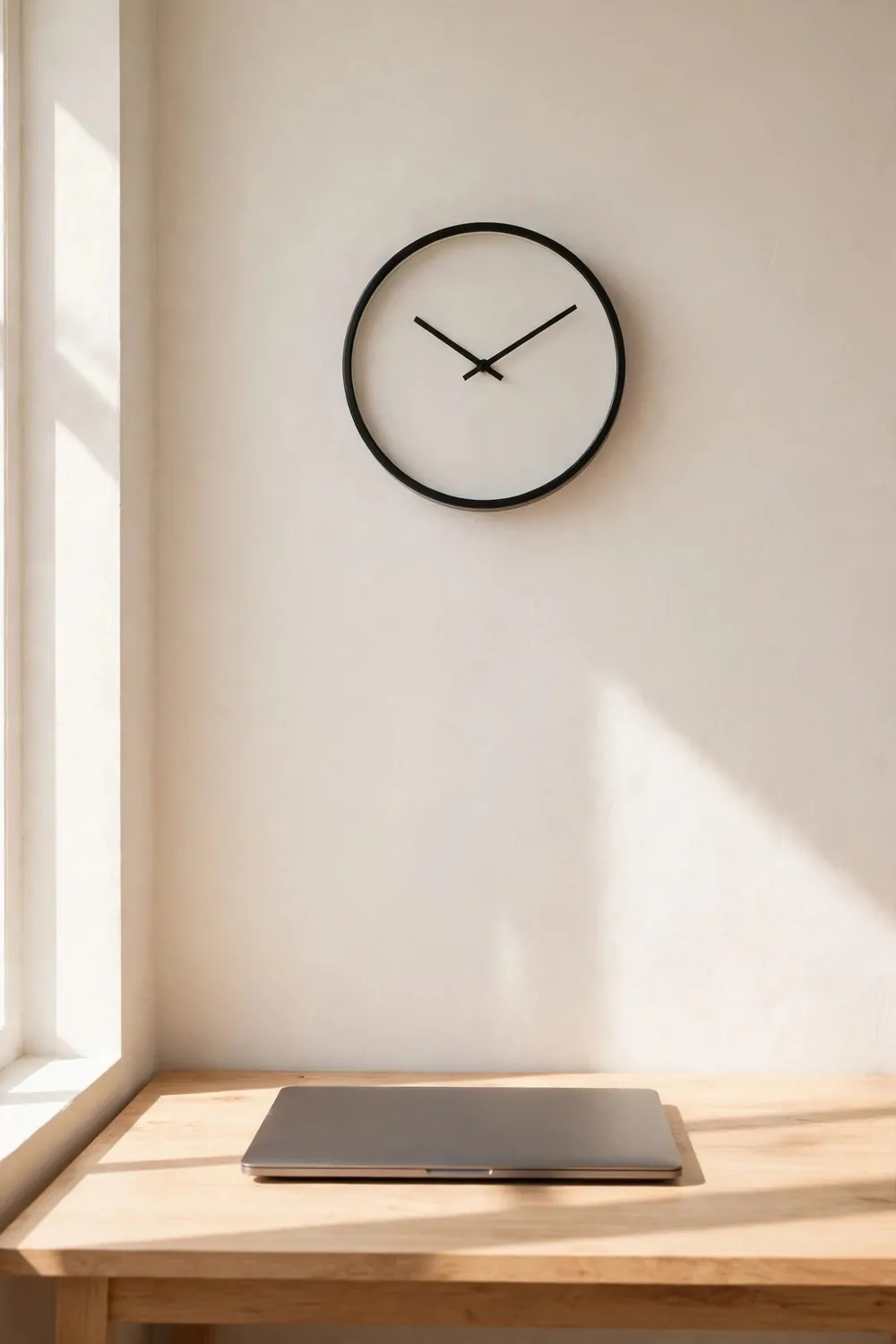
A desk without a clock lets the hours run away with your day.
Hang a simple wall clock where you can see it from your chair. Not on your phone, not on the computer. A real clock on the wall, with hands you can read in one glance.
Use the clock to mark your work in blocks. One hour of work, then a five-minute break. The clock tells you when to stop, so your brain does not have to guess.
Set a soft alarm for lunch, not a loud one. A gentle chime that says it is time to stand up. Loud alarms make your heart jump, and a jumped heart does not rest well.
Look at the clock when you finish a task and notice how long it really took. Most tasks take half the time we fear they will. The clock proves it, and the next task feels smaller.
Put the clock on the wall you face, not behind you. A clock you have to turn around to see is a clock you will never use. Face it, and it becomes part of your day.
Pick a clock with a quiet tick, or no tick at all. A loud tick in a quiet room is the kind of small annoyance that grows bigger every hour.
Try this one if your days feel like they vanish. A wall clock, an hourly glance, and the day starts to feel like yours again.
The Tray That Catches the Paper
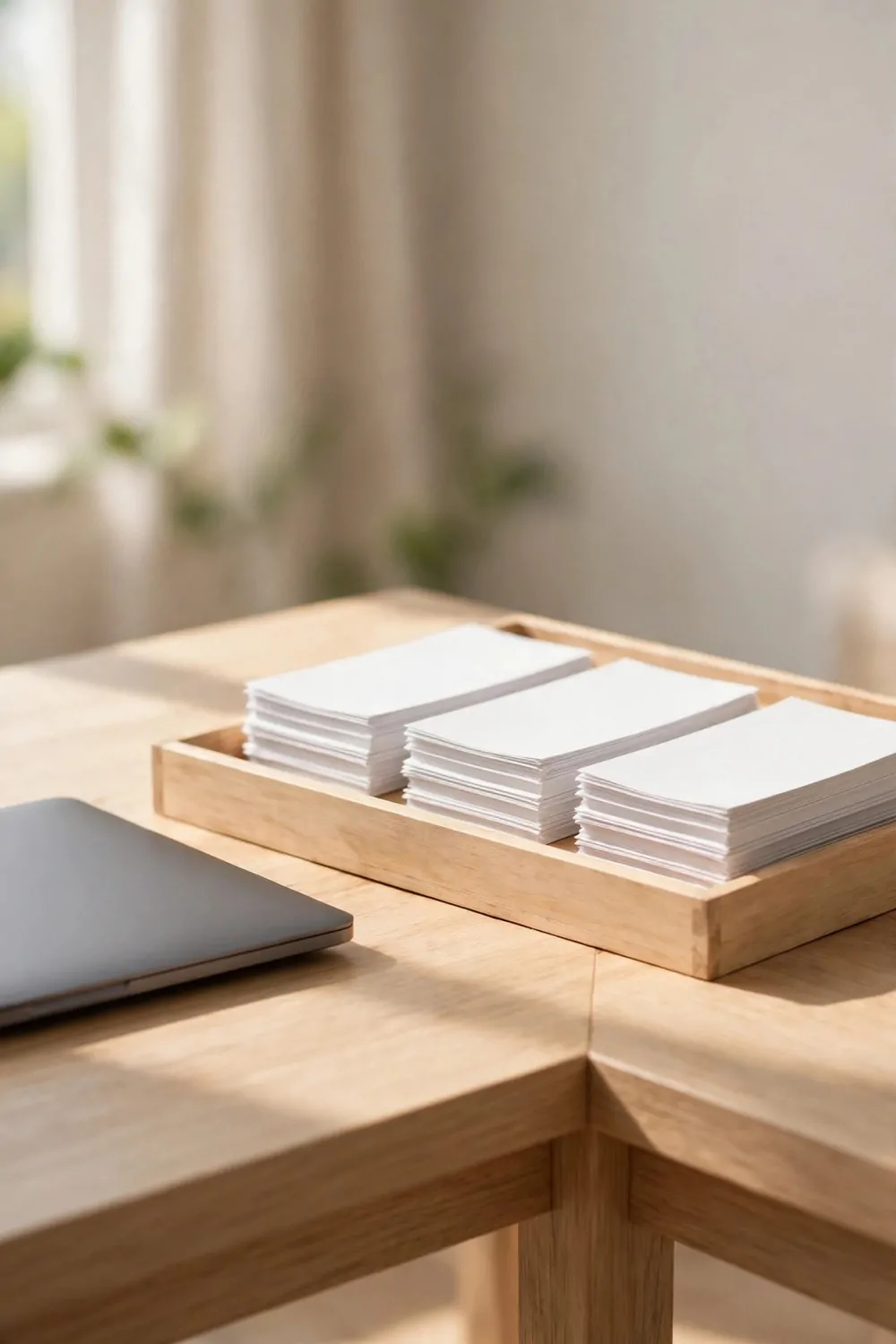
Paper is the fastest way to lose a desk. One pile becomes two, two become a mountain, and suddenly you cannot find the one page you need.
Put a letter tray on the corner of the desk and let it catch everything. Incoming papers go in the tray. Outgoing papers go in the tray. The tray is the only place paper is allowed to land.
Here is how to sort the paper that lands in the tray.
| Pile | What goes there | When to clear it |
|---|---|---|
| Top | Today’s papers | Every evening before you stop |
| Middle | This week’s papers | Every Friday afternoon |
| Bottom | Papers to file away | Once a month, on the first day |
Empty the top pile every evening. File what is done, throw away what is junk, and move what is left to the notebook. A tray that is emptied daily never becomes a mountain.
Keep the tray small. A tray the size of a book is plenty. A big tray invites big piles, and big piles are how desks disappear.
Label the tray with one word if you share the desk. In. One word, one tray, no confusion. Everyone in the house knows where the paper goes.
Keep a little bin next to the desk leg, not tucked underneath it. Papers you do not need go straight in the bin, and the tray stays short.
Try this one if your desk vanishes under paper by Wednesday. One tray, one daily empty, and the paper stays where it belongs.
The Headphones Hook by Your Elbow
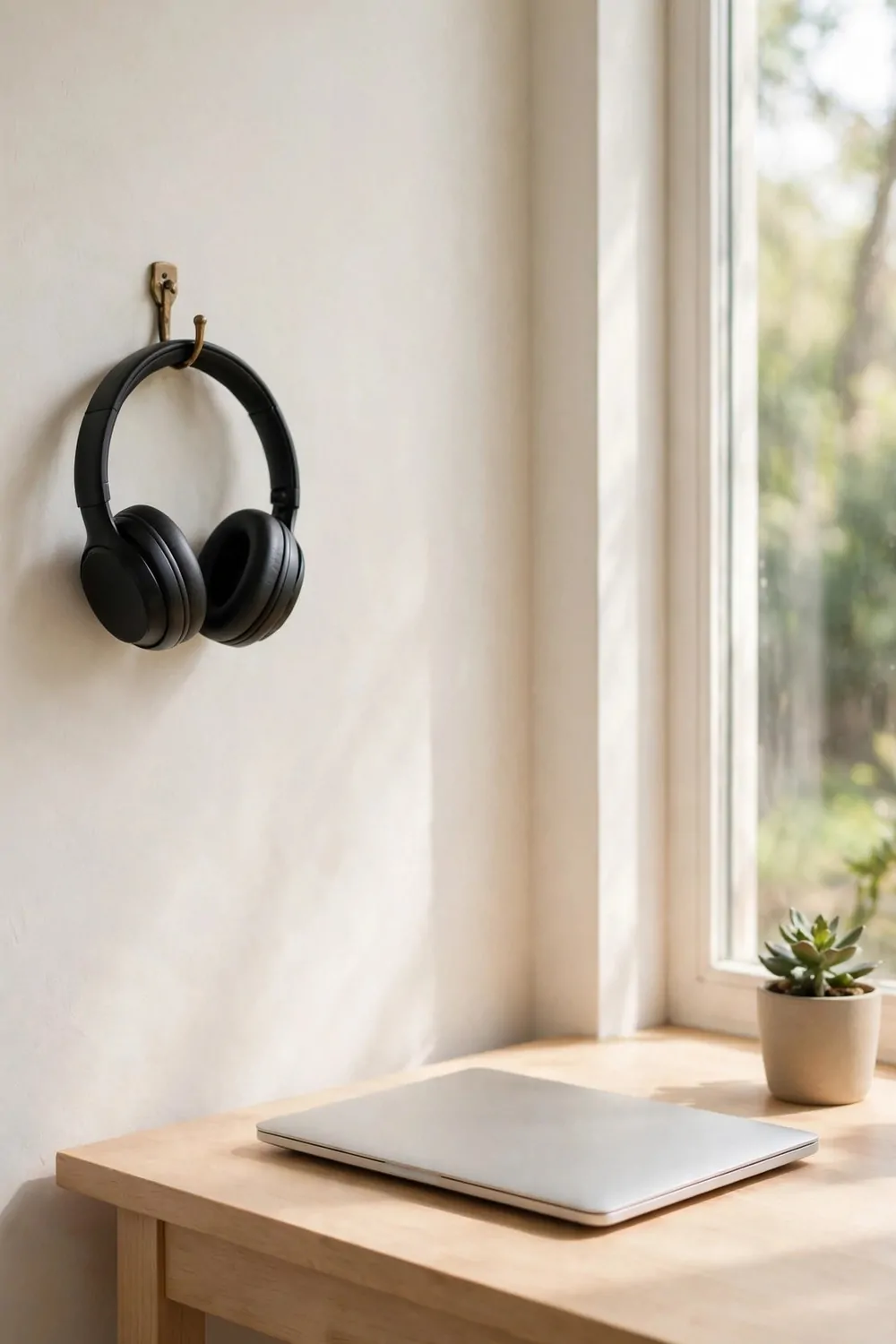
Headphones on a desk are always in the way. On the keyboard. Under the papers. Tangled with the charger cable.
Hang them on a hook right beside your elbow and the problem disappears. One hook on the side of the desk, or on the wall next to it. The headphones hang there, ready, out of the way.
Pick a hook that is wide enough for the headphone band to rest on without bending. A bent band is a broken band, and a broken band is a pair of headphones you have to replace.
Keep the cable wrapped loosely around the hook, not tight. A tight wrap pulls the wire inside the cable, and one day the sound cuts out in one ear. Loose loops last longer.
Put the headphones on the hook every time you take them off, even for a minute. A habit that works every time is a habit that sticks. A habit that works sometimes is just a nice idea.
Share the desk with someone else and give each person their own hook. Two hooks, side by side, no mix-ups. Your headphones are yours, and theirs are theirs.
Wipe the headphones with a dry cloth once a week. Dust and skin oils build up on the ear pads, and a quick wipe keeps them fresh and comfortable.
Try this one if your headphones live in a tangle on the desk. One hook, one habit, and the tangle is gone for good.
The Little Snack Drawer
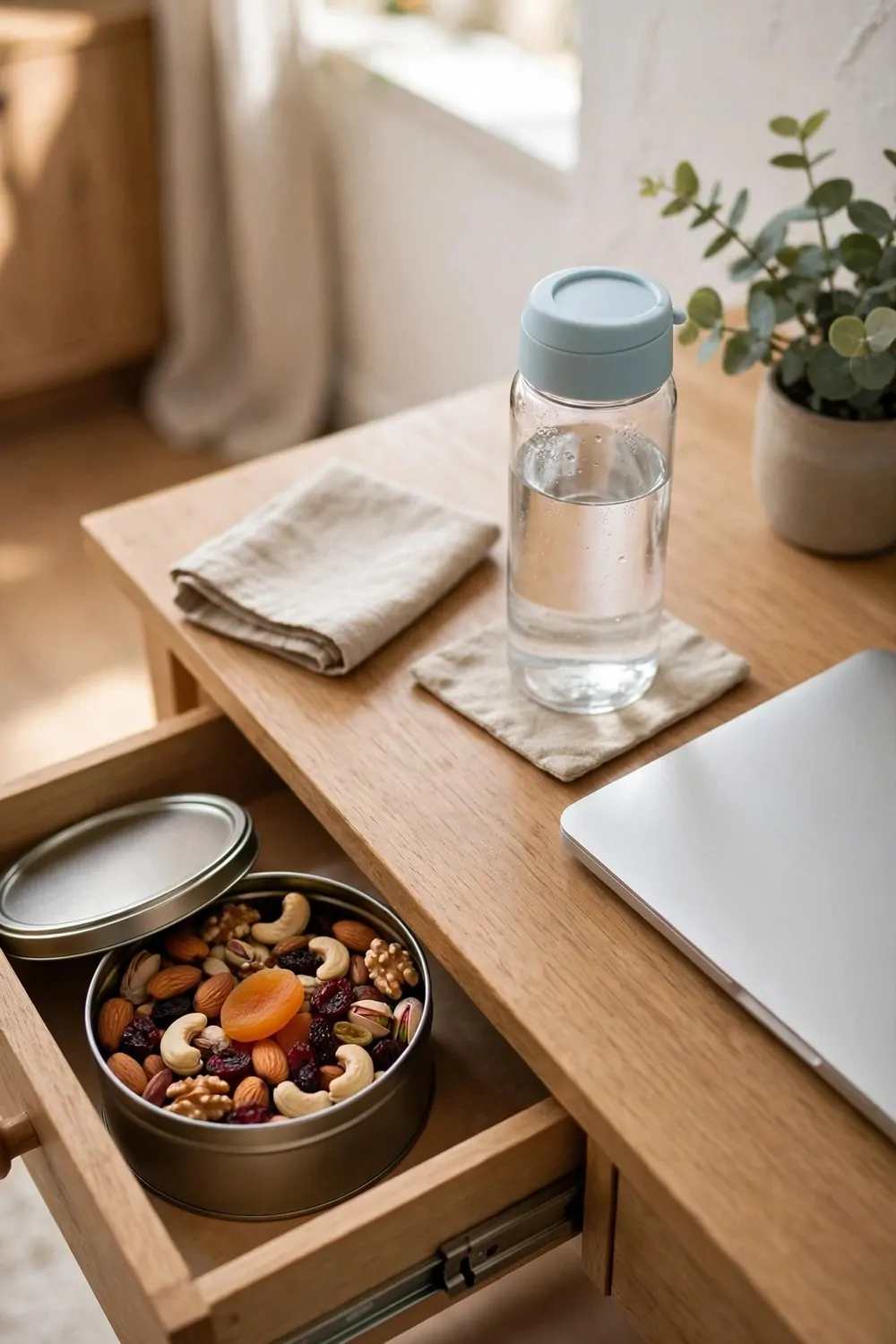
A desk you sit at all day needs a snack drawer, or you will keep walking to the kitchen and losing your train of thought.
Keep the snack drawer small. One little drawer, or one small box in a bigger drawer. A whole drawer full of snacks is a drawer that becomes a pantry, and a pantry at your desk is a bad idea.
Fill it with things that do not crumble. Nuts. A small bag of dried fruit. A couple of plain biscuits in a tin. Crumbs in a keyboard are a pain to clean, and sticky fingers on a laptop are worse.
Refill the snack drawer once a week, on the same day you water the plant. A weekly refill keeps the drawer fresh, and it stops you from buying a whole shop’s worth of snacks at once.
Keep water on the desk too, in a bottle with a lid. A bottle with a lid cannot spill on the laptop. A glass without a lid can, and it will, on the worst possible day.
Keep the snack drawer away from the papers. Crumbs and important letters do not mix. One drawer for snacks, one tray for papers, and never the two shall meet.
Empty the snack drawer once a month and wipe it out. Old crumbs and stale bits build up fast in a drawer you open every day. A clean drawer keeps the snacks fresh.
Try this one if you lose your focus every time you get hungry. One small snack drawer, and the kitchen stops calling you every hour.
The Two-Minute Evening Clear
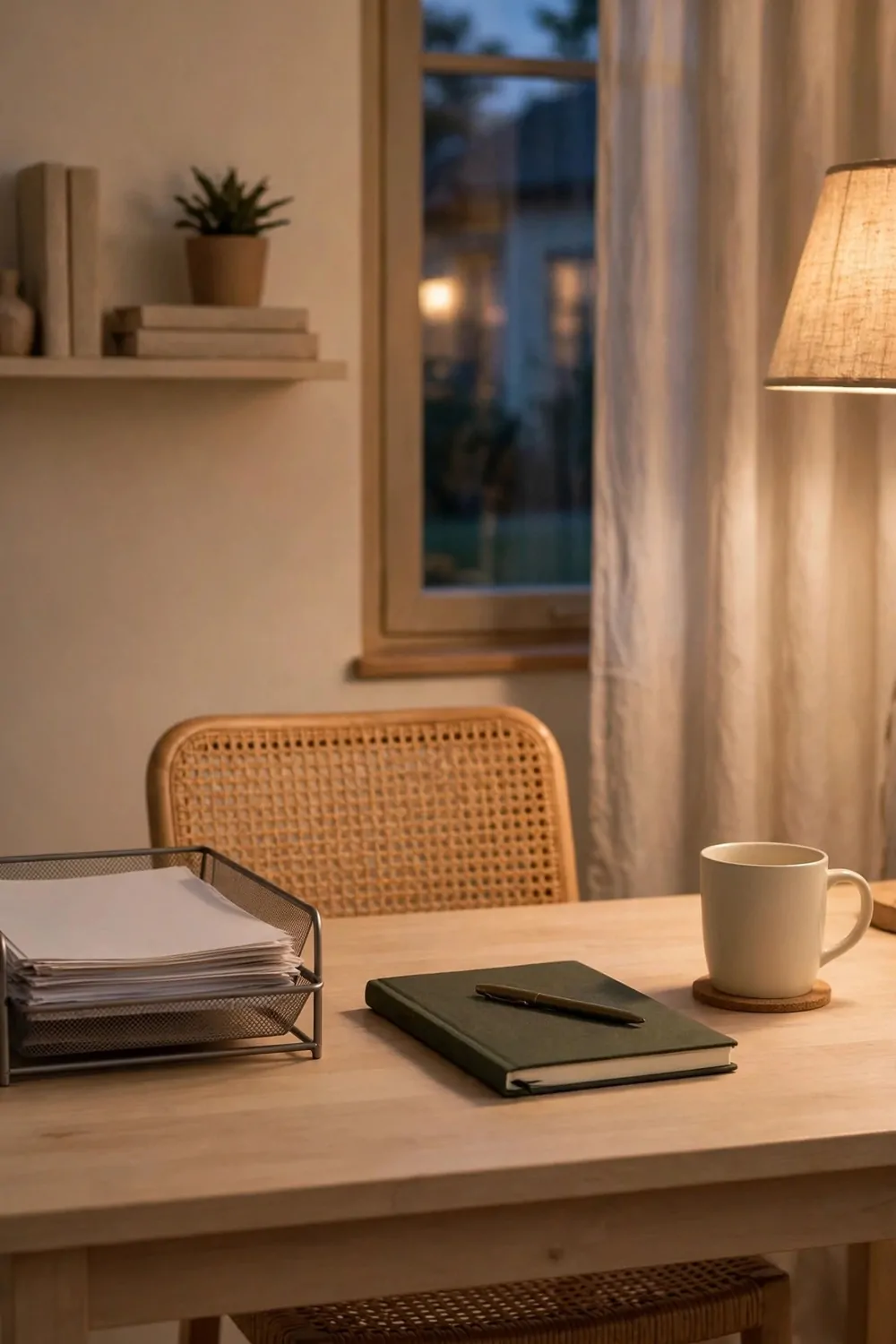
A desk that is messy at night is a desk you do not want to sit at in the morning.
Give yourself two minutes at the end of every day to clear the desk. Not a big clean. Just two minutes, the same two minutes, every single evening.
Put the papers in the tray. Put the pen on the notebook. Put the mug on its spot. Put the headphones on their hook. Everything goes home.
Wipe the desk with a dry cloth while you are at it. Two minutes is enough for a quick wipe, and a clean desk in the morning feels like a gift from yesterday’s you.
Push the chair in under the desk when you are done. A chair tucked away says the day is finished. A chair left out says the work is still waiting.
Do the two-minute clear even on days when the desk looks fine already. A habit that only runs on messy days never becomes a habit. A habit that runs every day becomes automatic.
Set a soft alarm for the evening clear if you keep forgetting it. A gentle chime at five, or whenever your workday ends. The chime is the reminder, and the two minutes do the rest.
Try this one tonight. Two minutes, every evening, and tomorrow morning you will sit down to a desk that is ready for you.
The Desk That Changes With Your Day
A desk that only works one way will only get used one way, and most days are not the same.
Move the lamp to the other side of the desk in the afternoon, when the sun moves around the room. The light follows the day, and your eyes stay happy.
Clear a bigger space on the desk when you need to spread papers out. Push the notebook aside, move the plant to the windowsill, and the desk becomes a workbench for an hour.
Bring the plant back when the big job is done. Put the notebook back open. The desk returns to its normal shape, and your brain knows the big job is over.
Here is how the desk changes through a normal day.
| Time of day | Desk setup | What it is for |
|---|---|---|
| Morning | Lamp on, notebook open, mug on its spot | Starting slow and starting right |
| Midday | Papers in the tray, screen at eye level | The deep work hours |
| Afternoon | Plant back, papers spread out | The messy jobs that need space |
| Evening | Desk cleared, lamp off, chair pushed in | The day is done |
Keep a small box under the desk for the things that move on and off it. The spare notebook. The extra pens. The things you need sometimes, not every day.
Ask yourself once a month if the desk still fits your day. Days change. New jobs start. Old routines fade. A desk that fits last month might need one small move this month.
Try this one if your desk feels stiff and fixed. A desk that changes with your day is a desk that gets used all day.
The First Thing You Touch Each Morning
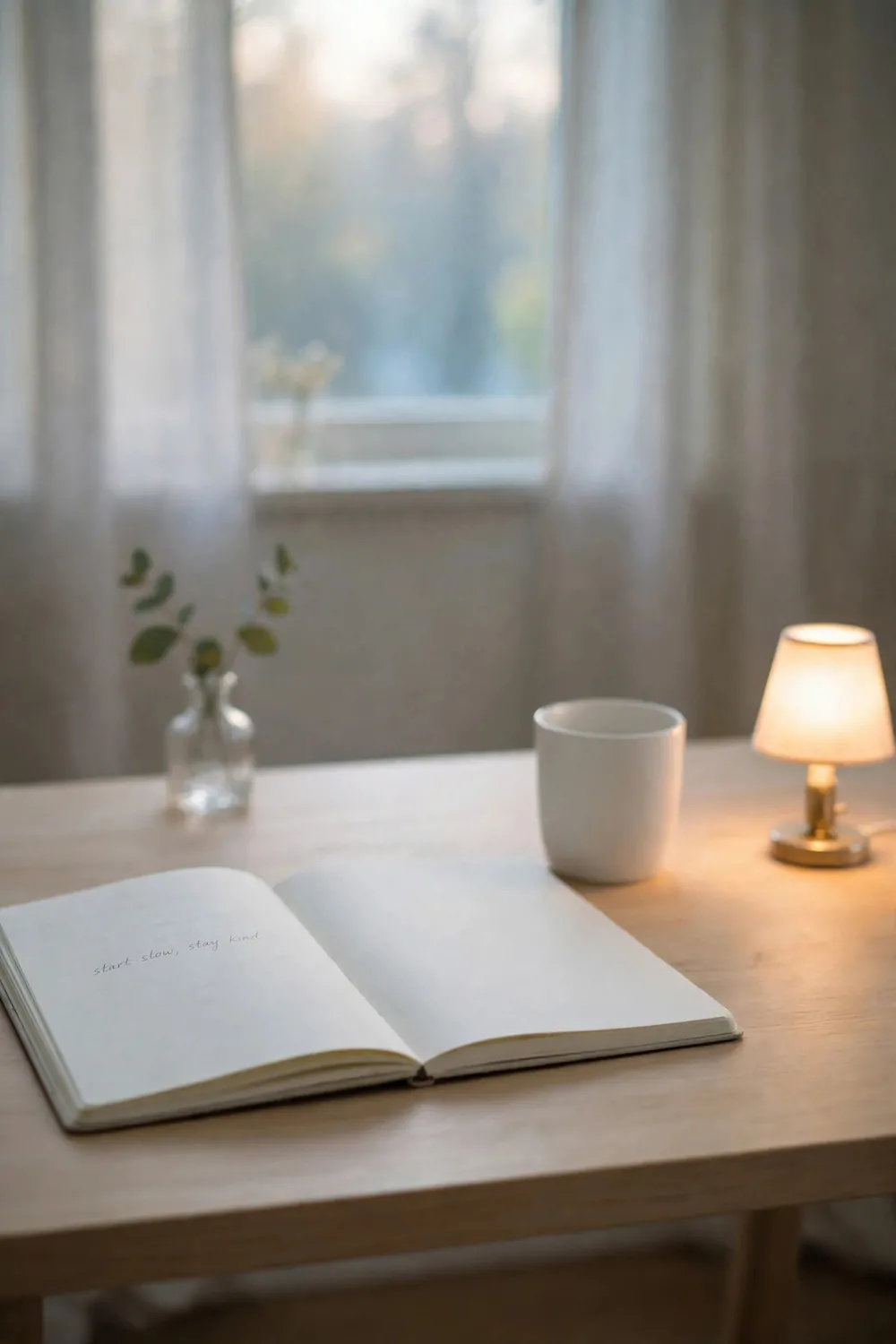
Every desk that gets used has one thing you touch first, before anything else.
Mine is the notebook. I open it before I touch the computer. I read the one line I wrote last night, the first task of the day, and my brain knows exactly where to start.
Pick your first thing and make it the same every day. The notebook. The mug. The lamp switch. One touch, always first, and the day has a starting point.
Keep the first thing in the same place every night. The notebook on the right. The mug on its spot. The lamp switch where your hand can find it in the dark.
Do not check your phone before the first thing. The phone is a whole world of other people’s urgencies. Your desk is yours. Touch your thing first, and the phone can wait five minutes.
Write the first thing down on a sticky note if you keep forgetting it. One word on a note, stuck to the screen edge. Notebook. Mug. Lamp. The note reminds you until the habit does it for you.
Keep the sticky note small and plain. A big bright note on your screen is a distraction, not a reminder. One small word, in the corner, is enough.
Try this one tomorrow morning. One touch, before anything else, and the whole day starts on your terms.
Keep Reading
If you liked these Ikea Workspace Ideas, these industrial, business and budget office ideas will give you even more ways to make a small space work hard.
- 16 Ikea Office Ideas Workspaces Industrial Fans Will Love
- 17 Ikea Office Ideas Business Owners Can Set Up Fast
- 20 Ikea Office Ideas Workspaces You Can Build on a Budget
A desk you actually use is not about the desk at all. It is about the small things around it. A chair that lets you stay. A mug in the same spot. A notebook that stays open. A lamp you click on first. Pick your favourite three ideas from this list, try them this week, and let your desk earn its place in your day.