20 Ikea Office Ideas Workspaces You Can Build on a Budget

The box sat on my hallway floor for three days. It was taller than my knee, flat as a pancake, and it held a whole desk inside it.
I kept walking past it and thinking I would build it tomorrow. On the fourth day I opened it, spread the parts on the floor, and had a desk by dinner. That box taught me the whole secret of a budget office. You do not need a big room or a big spend. You need a plan, a flat box, and one free evening.
One thing before we start. These rooms are inspired by the flat-pack, build-it-yourself look. They are not the brand’s own rooms, and this site is not connected to the brand in any way. What follows is my own take on that simple, plain, build-it-yourself style, with pieces you can put together yourself.
These 20 Ikea Office Ideas are all about building a workspace on a budget. Each one uses simple flat-pack pieces, shelves, and small tricks that keep the total low. No big desk, no big bill, no fancy room needed.
Pick one idea, start with the piece you already own, and build from there. A good office grows one small piece at a time, and the cheapest piece is usually the one already in your house.
The Flat-Pack First Rule
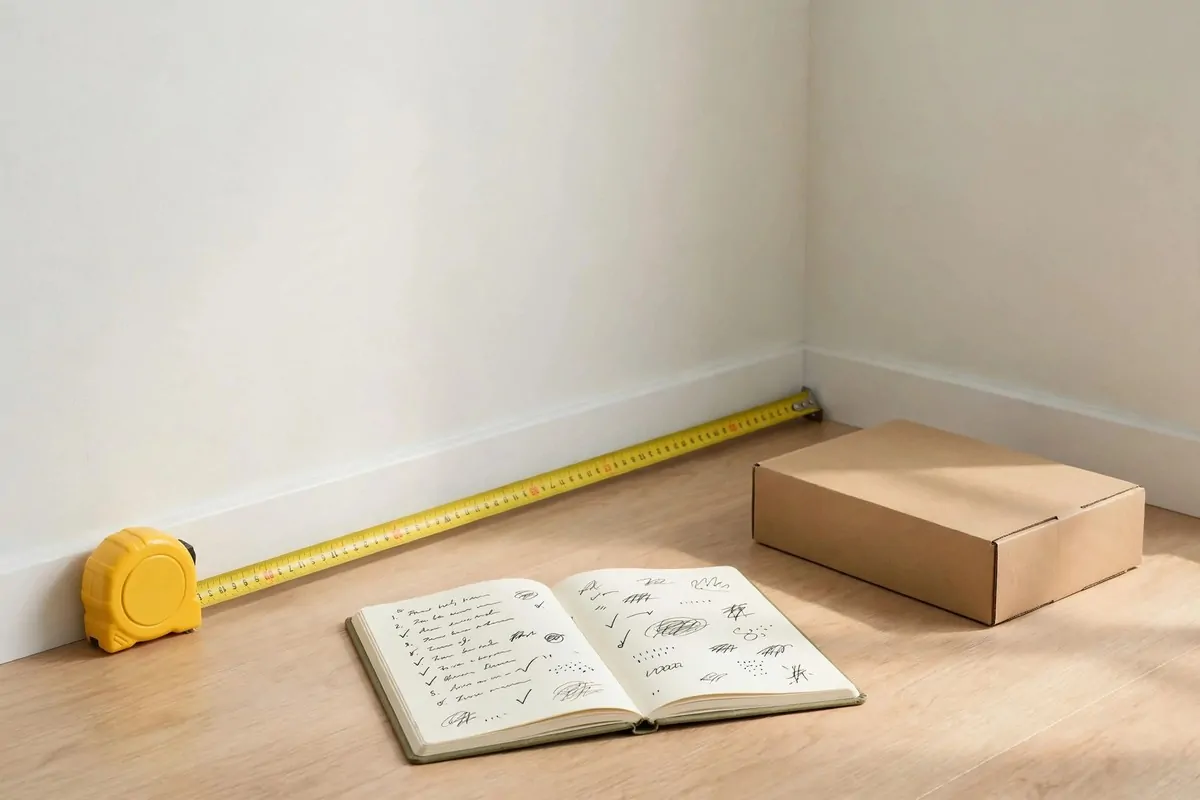
The first rule of a budget office is simple. Plan before you buy anything. A plan costs nothing, and it saves you from buying the wrong piece twice.
Measure your wall before you shop. Write the numbers on a card and keep the card in your pocket. A desk that is two inches too wide is a desk that lives in the hallway forever, and nobody wants that.
Here is a table for what to buy first and what to skip for now, so your money goes to the pieces that matter most.
| Buy first | Why it matters | Skip for now |
|---|---|---|
| Desk top and legs | You cannot work without a surface | A second monitor arm |
| A chair that fits you | Your back will thank you every day | A fancy desk lamp |
| One shelf for storage | Keeps the desk clear from day one | Matching boxes and baskets |
| A small lamp | Good light makes a small room feel bigger | Wall art and frames |
Count your plugs before you buy a desk. One plug for the laptop, one for the lamp, and one spare. A desk with no plug nearby is a desk with cables trailing across the floor, and cables across the floor trip everyone.
Sit in the spot first. Put a folding chair where the desk will go and sit there for ten minutes. If your knees hit the wall, the spot is wrong. If the light hits your eyes, the spot is wrong. Ten minutes of sitting beats a whole afternoon of building in the wrong place.
Write your list on paper, not in your head. A paper list stops you from buying the pretty thing and forgetting the useful thing. Cross each piece off as it goes into the trolley, and stop when the list is done.
Keep the receipt in one envelope for every piece you buy. Flat-pack parts sometimes come with a missing screw or a cracked board. A receipt in one place means one quick trip back, not a whole hunt through drawers.
This is the setup for people who have never built a room before. The plan is the whole job. Measure, list, sit, buy, build. Do it in that order and the budget stays low.
The Two-Leg Desk
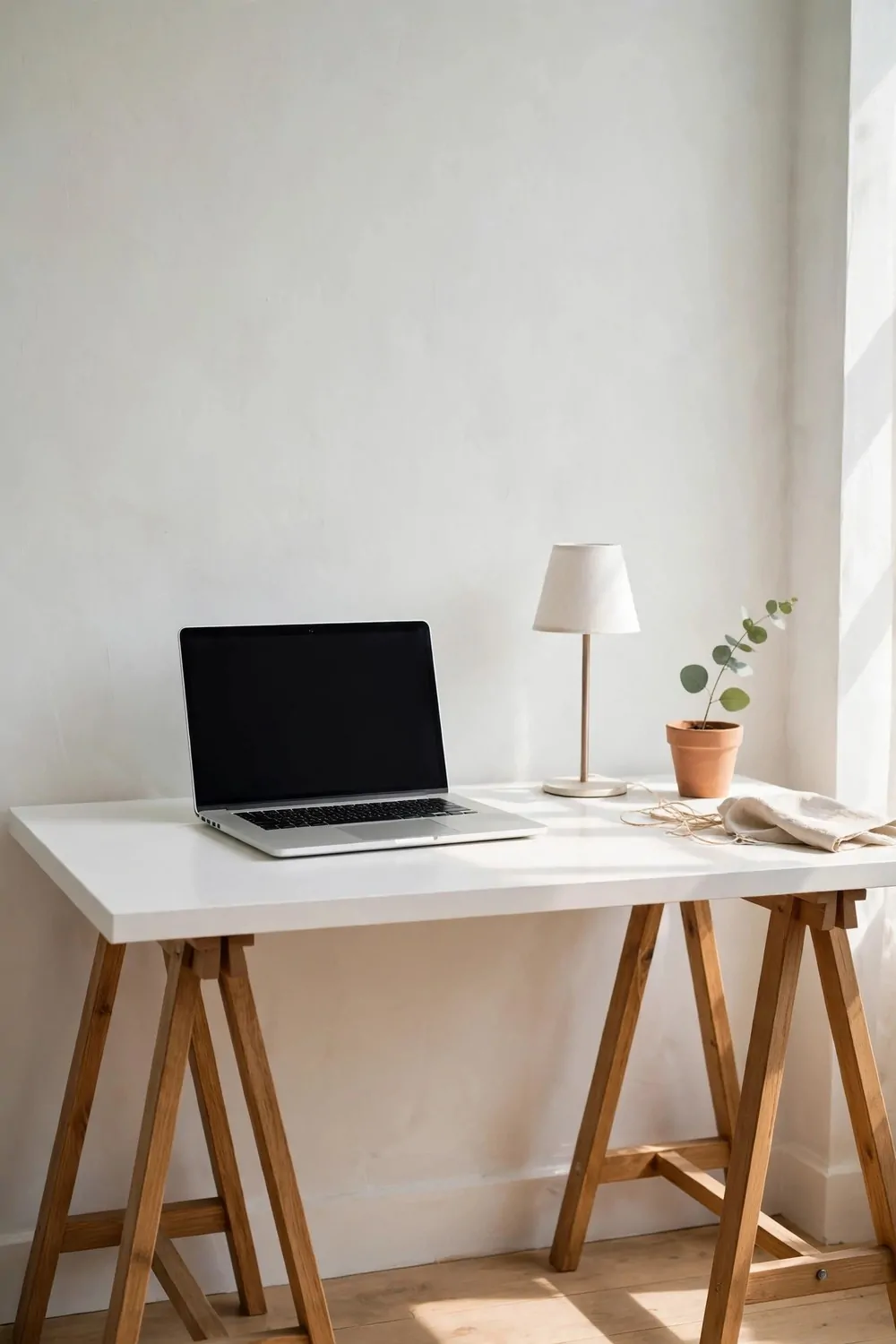
A desk does not need four legs. Two legs and a wall can hold a whole workday, and the two-leg desk is the cheapest real desk you will ever own.
Take a plain board, about as deep as your forearm and as wide as your shoulders. Fix one long edge to the wall with two strong brackets. Put two simple legs under the front edge. That is the whole desk.
The wall does half the work here. A board fixed to the wall cannot wobble sideways, and it cannot slide away when you lean on it. The two legs only hold the front up, so they can be plain and light.
Pick a board with a smooth top. Your wrists will rest on it for hours, and a rough board will scratch them by lunch. Run your hand across the board in the shop. If it feels smooth, it is right. If it catches your skin, pick another one.
Set the height to your elbows. Sit in your chair, let your arms hang loose, and bend your elbows to a right angle. That is your desk height. Most people end up near 29 inches, but your body is the ruler here, not a number on a box.
Keep the space under the desk empty. No boxes, no bags, no piles of paper. Your legs need that space, and a desk with no room for legs is a desk you stop using by the second week.
Add a small shelf above the desk when the board is working well. One shelf, two brackets, and your notebooks move off the desk and onto the wall. The desk stays clear, and the shelf costs less than a takeaway dinner.
This is the desk for a first office. Two legs, one board, one wall. It takes an hour to build, it holds a laptop and a lamp, and it leaves your budget free for a good chair.
The Shelf That Became a Desk
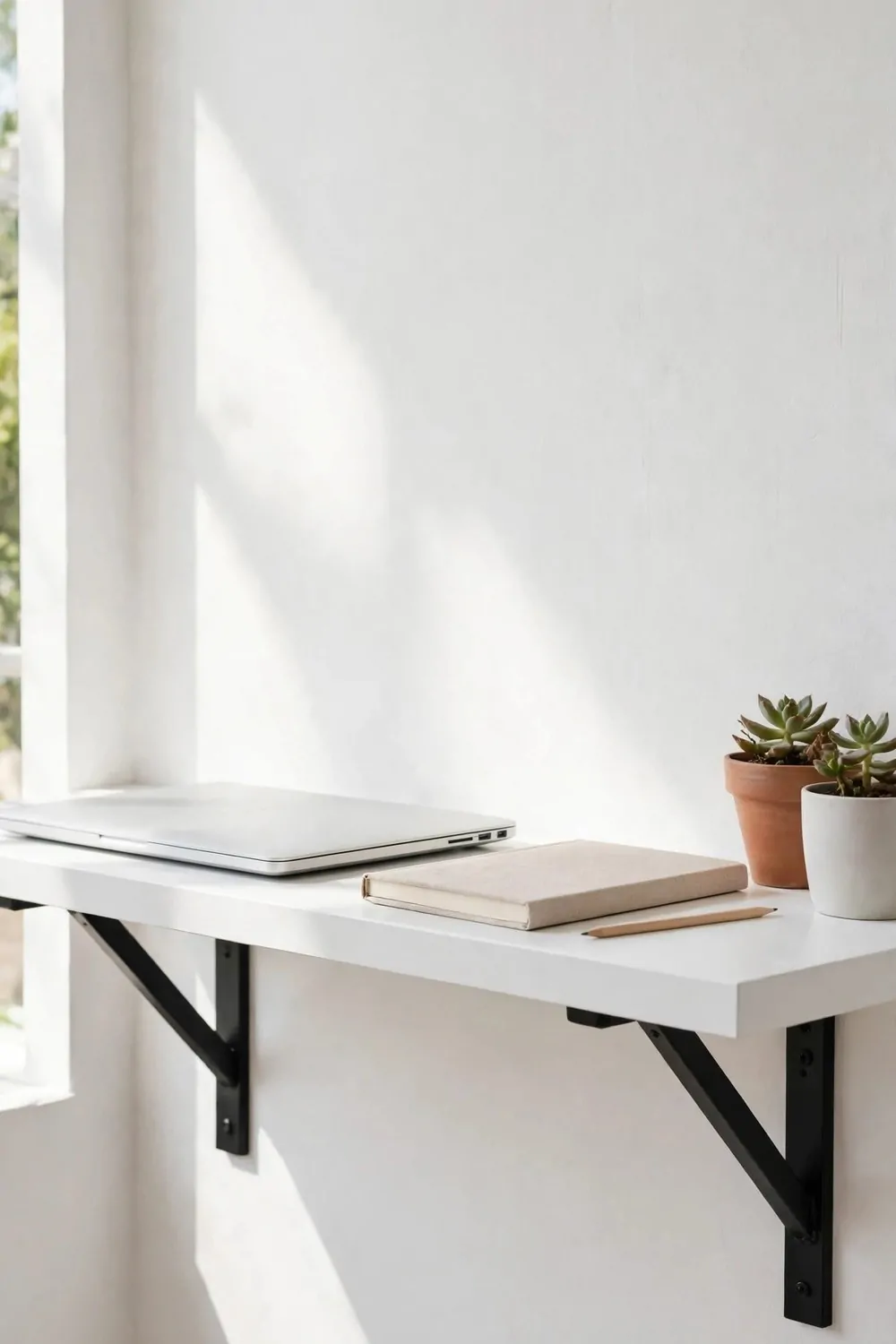
Some of the best desks in the world started life as shelves. A wall shelf at the right height is a desk that was hiding in plain sight.
Fix a deep shelf to the wall at elbow height, with two strong brackets underneath. The shelf is your desk top. The wall holds it up. The floor stays clear underneath, and your legs stretch out with nothing in the way.
A shelf desk works best in a room with no floor space to spare. A hallway corner, the wall beside a bed, the strip of wall next to a wardrobe. The shelf sticks out less than a normal desk, so the room still feels open.
Put your laptop on the shelf and your notebook beside it. That is all a shelf desk can hold, and that is enough for most workdays. A shelf desk teaches you to keep only what you use, because there is simply no room for the rest.
Hang a second shelf above the first one for the things you need once a day. The charger, the spare notebook, the small plant. The top shelf is your storage, and the bottom shelf is your work. Two shelves, one wall, one whole office.
Keep the brackets strong and short. Long brackets stick out and catch your knees. Short brackets sit tight under the shelf, and your legs never notice them. Two short brackets hold more weight than four long ones ever will.
Paint the shelf the same colour as the wall if you want it to disappear. A matching shelf blends in, and the room looks calm. Paint it a different colour if you want it to stand out, and the shelf becomes the prettiest thing in the room.
This is the desk for renters and small rooms. Two brackets, one shelf, no legs on the floor. When you move out, you fill two small holes and the wall is like new.
The Bookcase That Works Overtime
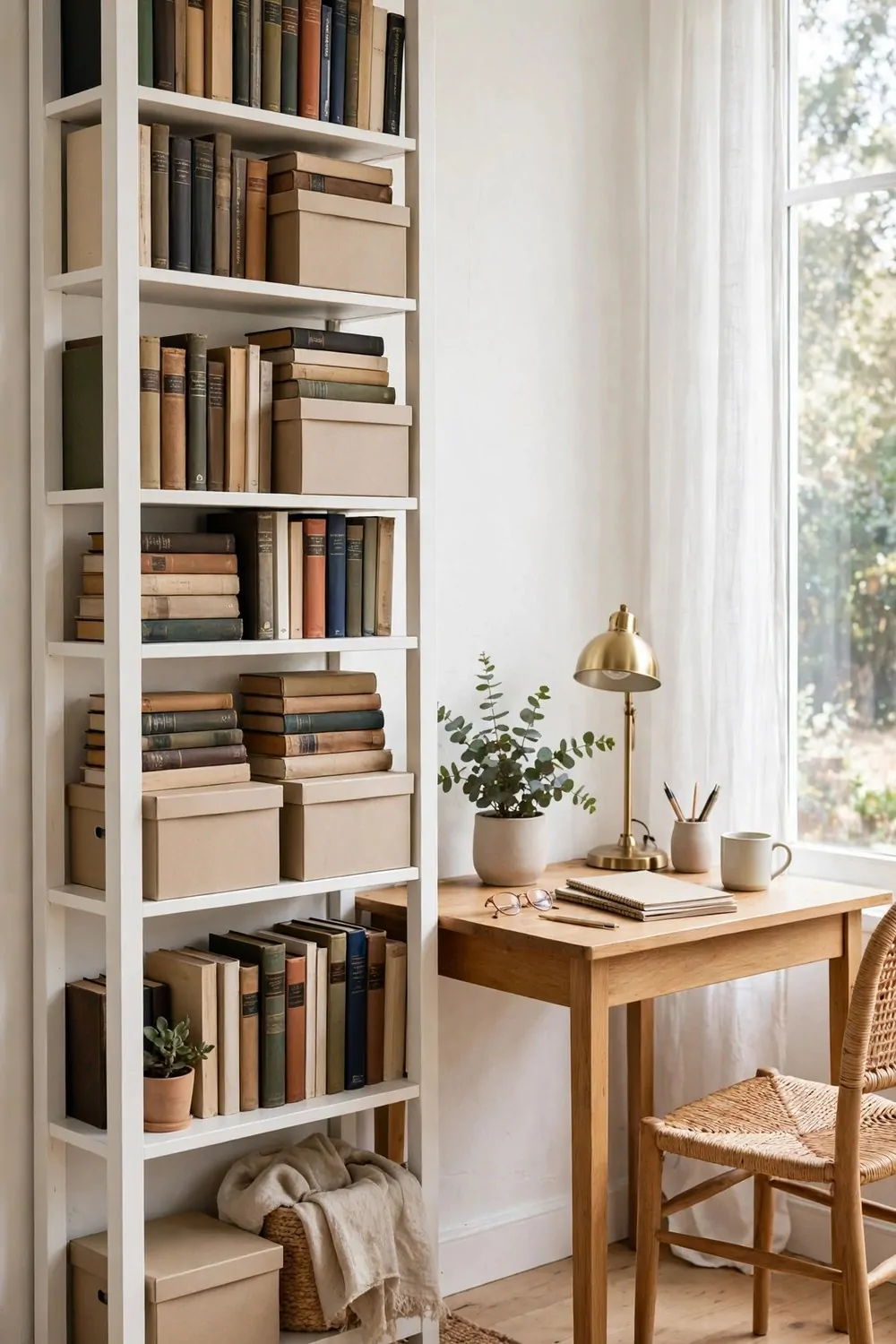
A tall, narrow bookcase beside your desk is the hardest-working piece in a budget office. It holds your books, your boxes, and your whole work life, and it takes up less floor than a chair.
Stand the bookcase right beside the desk, close enough to reach without standing up. The bottom shelf holds the heavy things. Books, files, the big box of cables. The top shelf holds the light things. The plant, the framed photo, the notebook you reach for first.
Keep one shelf empty on purpose. That empty shelf is where tomorrow’s papers go, where the parcel sits when it arrives, where the laptop rests when you clear the desk. A bookcase with no free shelf has no room for real life.
Put the things you use every day at eye level. The notebook, the pen pot, the headphones. The things you use once a month go on the bottom shelf, where you have to bend down. Your knees will remind you which shelf is which.
Use plain boxes on the shelves to hide the messy stuff. One box for cables, one box for papers, one box for the bits and bobs that have no home. Boxes with lids hide everything, and the bookcase looks tidy even when it is full.
Fix the bookcase to the wall with one small strap at the top. A tall bookcase full of books can tip forward if a child pulls it or a pet bumps it. One strap, two screws, and the bookcase stays put for years.
Dust the shelves once a month when you change the sheets. Dusty books in a bedroom office look tired, and a quick wipe keeps the whole bookcase looking loved. It takes five minutes with a dry cloth, and the room feels fresh again.
This is the piece for people whose desk is always covered in stuff. The stuff moves to the bookcase, the desk gets its surface back, and the room looks bigger the same day.
The Drawer Unit Desk
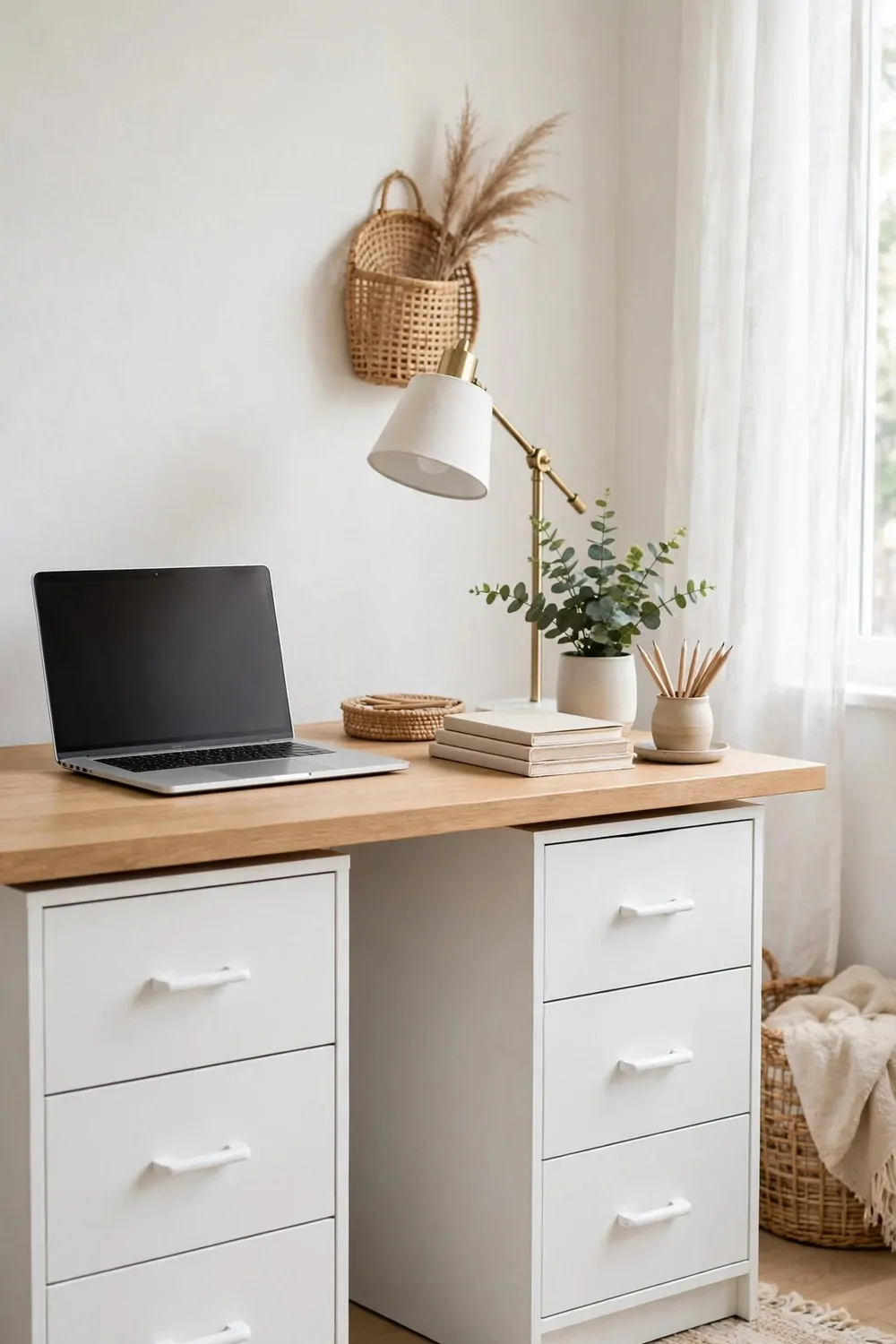
A drawer unit can be a desk leg, a storage tower, and a filing cabinet all at once. That is three jobs for the price of one piece, and that is why it is the best value in a budget office.
Set a plain desk top across two drawer units, one at each end. The units hold the top up, and the drawers hold everything else. No separate legs needed, and no separate storage to buy.
Give each drawer a job and write it on a small card inside the drawer. Top drawer for pens and chargers. Middle drawer for notebooks and spare paper. Bottom drawer for cables and spare bits. A drawer with a job never becomes a junk drawer.
Keep the top of the desk clear by putting everything in the drawers at the end of the day. A drawer unit desk only works if the drawers do the holding. The desk top is for working, and the drawers are for keeping.
Put the drawer unit on the side of your writing hand. Right-handed people want the drawers on the right. Left-handed people want them on the left. One small choice, and you stop reaching across your body fifty times a day.
Lock the wheels if your drawer unit has them. A drawer unit that rolls away when you lean on the desk is a desk that falls down. Most units have a little foot pedal on the wheels. Press it once and the unit stays put.
Try this setup if you work with a lot of paper. Forms, files, notebooks, envelopes. The drawers swallow all of it, and the desk top stays clear for the laptop and the lamp.
This is the desk for people who like things put away. The drawers hide the mess, the top holds the work, and the whole office fits in the space of one desk.
The Wall Rail Office
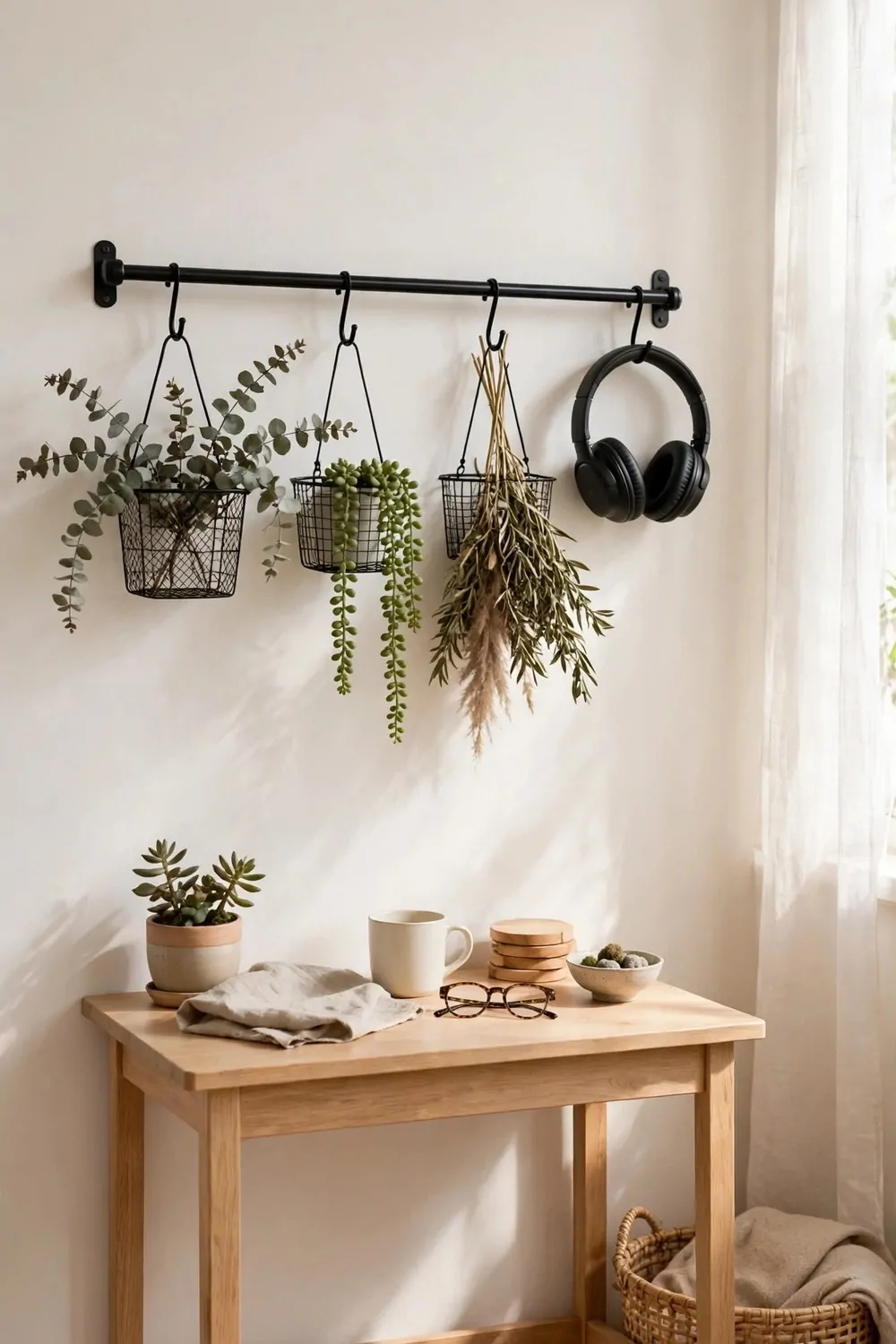
A wall rail is a long metal bar with hooks, and it is the cheapest storage you will ever hang. One rail, a few hooks, and your whole desk kit hangs on the wall instead of piling up on the desk.
Fix the rail to the wall above your desk, at a height you can reach without standing on tiptoe. Hang a small basket from it for pens. Hang a hook for your headphones. Hang a little shelf for your phone. The desk top stays clear because the wall does the holding.
Rails work best in a kitchen corner or a hallway office, where the desk is small and the wall is big. The rail turns a bare wall into a whole storage system, and it costs less than a pizza.
Keep the heaviest thing closest to the wall brackets. A basket full of pens hangs best near a bracket, where the rail is strongest. A light hook for keys can hang anywhere. Weight in the middle of a rail makes it sag, and a sagging rail looks tired.
Wipe the rail once a month with a damp cloth. Kitchen steam and bedroom dust both settle on metal, and a quick wipe keeps it shiny. A shiny rail makes the whole desk look new, and it takes thirty seconds.
Add one hook at a time, only when you need it. A rail full of empty hooks looks like a shop display. A rail with three hooks you actually use looks like a working office. Buy the hooks when the need shows up, not before.
Try this one if your desk is tiny and your stuff has nowhere to go. The rail takes the stuff off the desk, the desk gets its surface back, and the wall finally earns its keep.
This is the storage for people who hate drawers. Everything hangs where you can see it, nothing hides at the back of a drawer, and you grab what you need without opening anything.
The Pegboard That Holds Your Tools
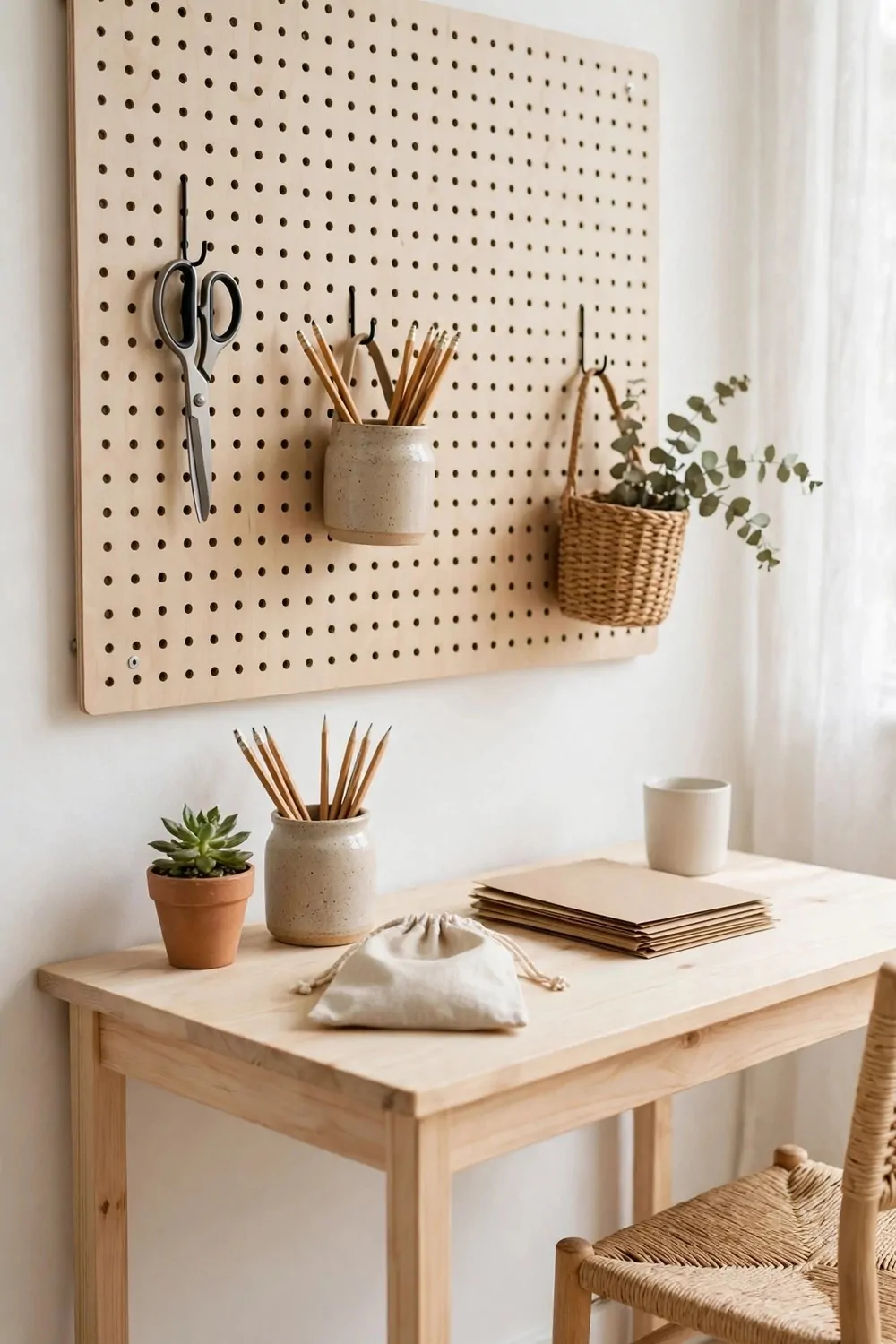
A pegboard is a board full of little holes, and it holds more tools than a drawer three times its size. Hooks go in the holes, baskets hang from the hooks, and your whole work kit hangs on the wall in plain sight.
Hang the pegboard above your desk, on two strong screws. Load it with the bits you reach for most. A pair of scissors, a pencil pot, a little basket for odds and ends, and one hook for the headset. Everything hangs where your fingers find it without you looking up.
Keep the board light. Hooks and baskets are plenty. A pegboard loaded with heavy tools pulls on its screws and starts to lean. If the board feels heavy when you tap it, take something off and put it in a drawer.
Paint the pegboard before you hang it. A pale colour makes the wall feel bright, and the tools stand out against it. A dark colour makes the board look smart, but it hides small tools in the shadows. Pale is the safer pick for a small room.
Keep one peg free on purpose. That spare peg is the home of the next gadget you buy, and a board with no spare peg has nowhere for new ideas to live. One empty peg is not waste. It is room to grow.
Group the tools by job. All the writing tools on the left, all the cutting tools on the right, the headphones on their own hook in the middle. Your hand learns where things live, and you stop hunting for scissors every single morning.
Try this one if your desk drawer is a mess of tangled cables and lost pens. The pegboard puts everything on the wall, the drawer gets to breathe, and your mornings start faster.
This is the board for people who make things. Writers, crafters, students, planners. The tools hang where you can see them, and a tool you can see is a tool you actually use.
The Fold-Down Desk for Tiny Rooms
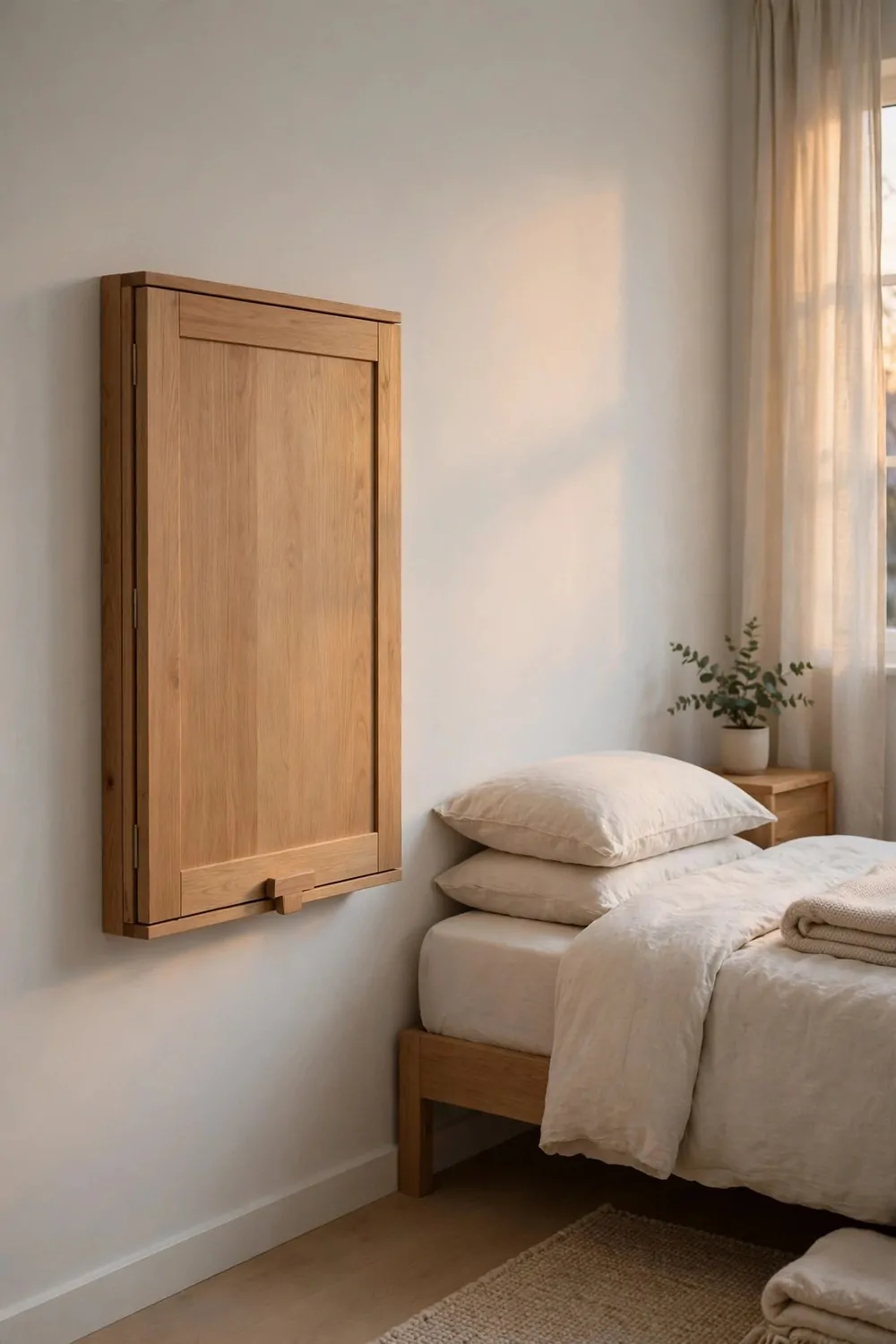
A fold-down desk is a desk that disappears. Pull it down in the morning, fold it up at night, and the room goes back to being a room with no desk in it at all.
Mount a board on the wall with two strong hinges along the bottom edge. In the morning you pull the board down and it rests on two small folding brackets. At night you lift the brackets, fold the board up, and the wall looks bare again.
The board should be just big enough for a laptop and a notebook. A board that is too deep will not fold flat against the wall. A board that is too wide will hit the furniture beside it. Check the width with a tape, then cut, and the fold will run smooth.
Take everything off the board before you fold it away. A bare board folds in one second. A board with a laptop and a mug on it will not fold at all. Park the laptop on the shelf above, and carry the mug back to the kitchen.
Paint the back of the board the same colour as the wall. Folded up, that back is all the room sees, and a matching colour lets it blend in. A board in a clashing shade jumps out at you, and the hiding trick stops working.
Check the hinges once a year with a screwdriver. Hinges loosen a little over time, and a loose hinge makes the board droop on one side. One turn of the screw tightens them up, and the desk swings like new again.
Try this one if your room has to do two jobs. Sleep at night, work in the day, and a plain wall in between. A guest who walks in sees a wall, not a desk, and that is the whole trick.
This is the desk for the smallest rooms in the house. It gives you a full workspace and then takes it away again, every single night, in five seconds flat.
The Corner Desk from Two Boards
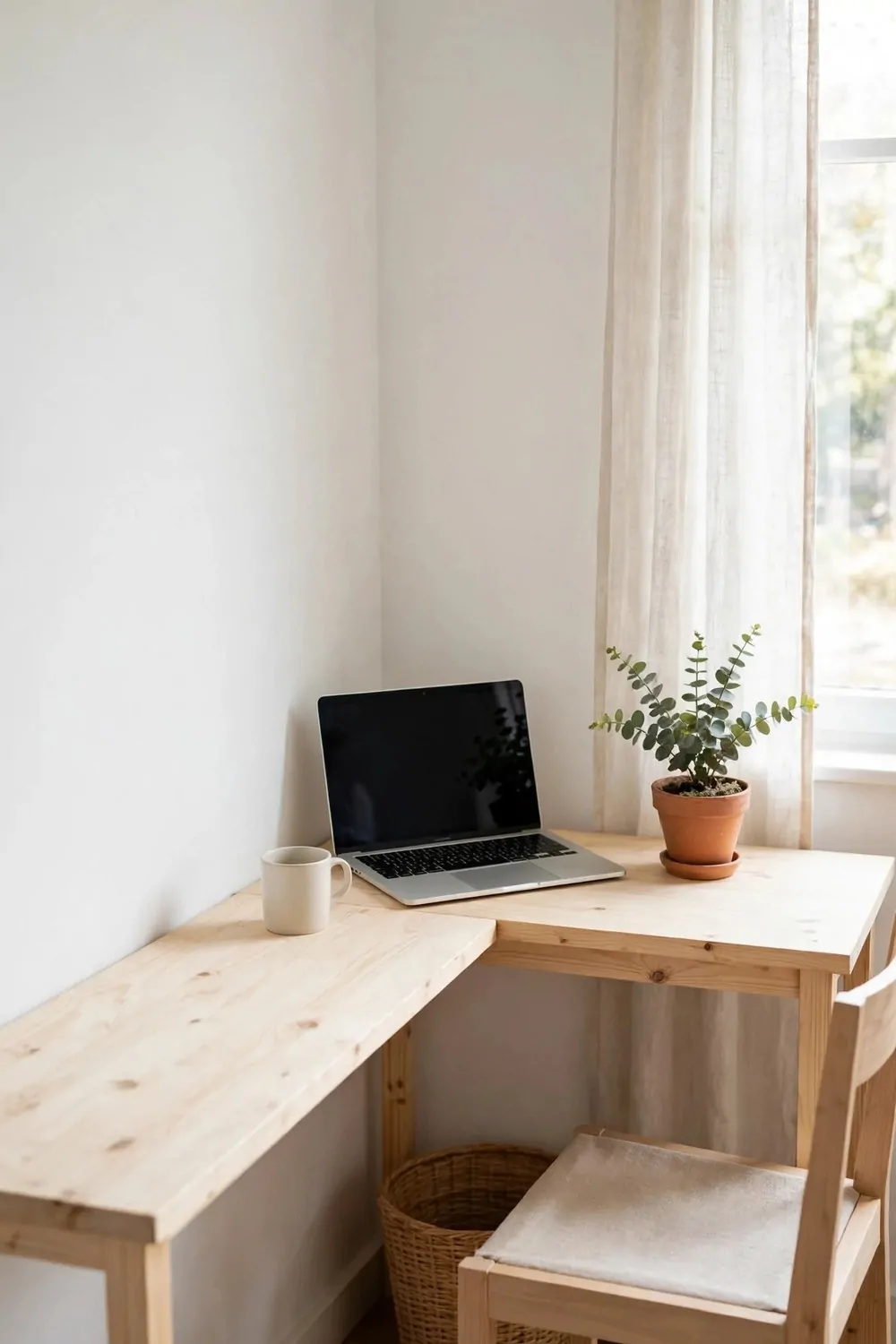
A corner is the most wasted space in most rooms. Two boards joined in an L shape turn that dead corner into the biggest desk in the house, for the price of one small one.
Take two plain boards and join them at a right angle in the corner of your room. One board runs along the left wall, one along the right wall. The corner where they meet is your main work spot, and the two arms give you room to spread out.
Put your laptop in the corner where the boards meet. That spot is the deepest part of the desk, and it holds the laptop, the lamp, and a notebook all at once. The arms on either side hold the papers, the phone, and the mug.
Sit in the corner and face into the room. You can see the whole room from the corner, and nothing is behind you. A corner desk feels safe in a small room, because the walls are at your back and the room is in front of you.
Support the outer ends with one leg each, or fix them to the wall with brackets. The corner itself needs no support, because the two walls hold it. Two legs and two walls hold a desk twice the size of a normal one.
Keep the corner clear of tall piles. A tall pile in the corner blocks the light and makes the desk feel like a cave. Low piles, flat papers, and a small lamp keep the corner bright and open.
Try this one if you have a spare corner and a lot of work to spread out. Homework on one arm, laptop on the other, and the corner in the middle holding it all together.
This is the desk for people who need space but have no spare room. The corner was doing nothing. Now it is the biggest desk in the house.
The Rolling Cart Office
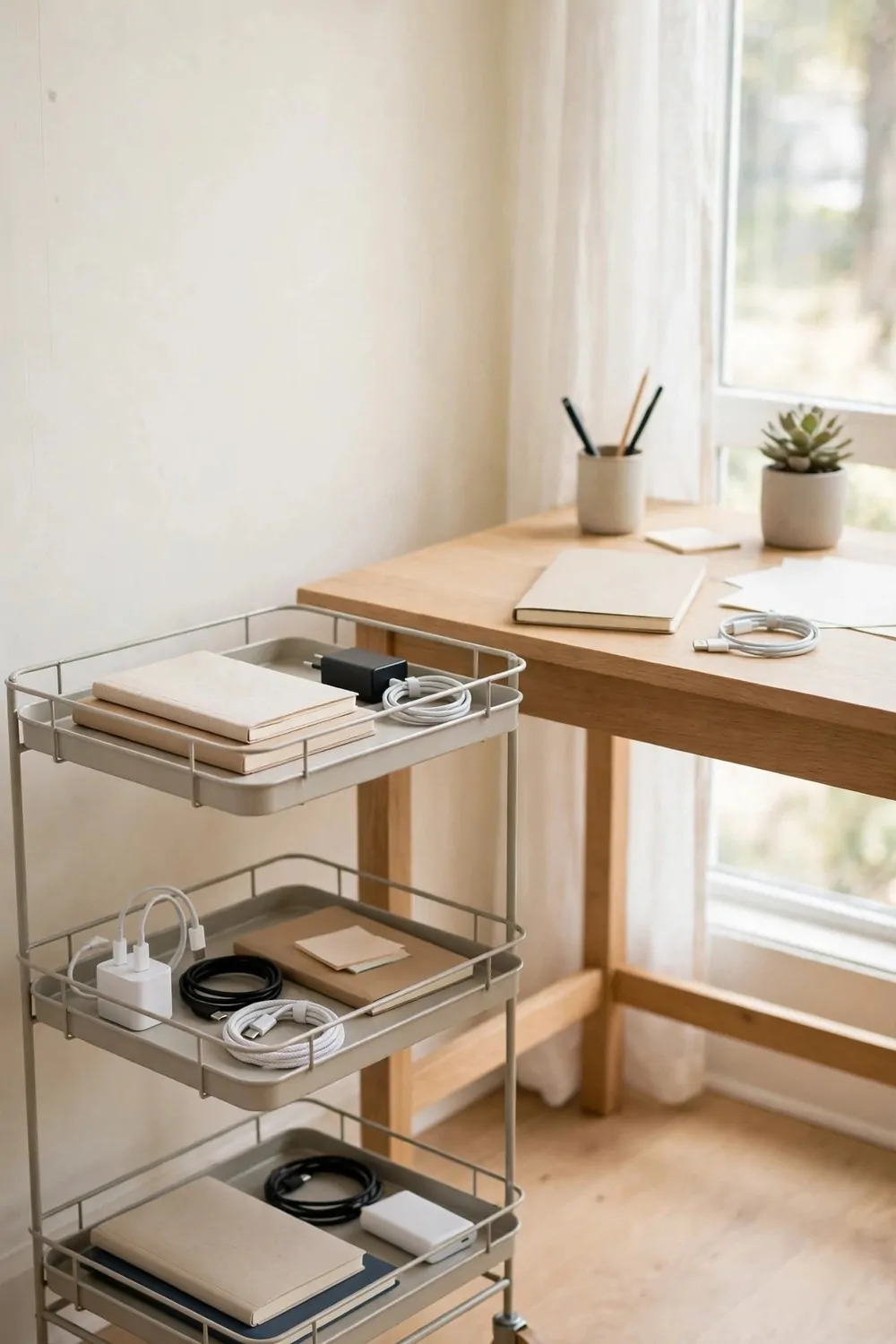
A rolling cart is a small tower of trays on wheels, and it is the best friend a budget office ever had. It holds your supplies, it rolls where you need it, and it tucks away under the desk when the day is done.
Load the cart with the things you use every day. Here is what goes on each tray.
- Top tray for the laptop charger, the phone charger, and the headphones.
- Middle tray for notebooks, pens, and the papers you are working on right now.
- Bottom tray for spare paper, envelopes, and the bits you only need once a week.
Roll the cart to the desk in the morning and park it beside your chair. Everything you need is one arm away. Roll it back under the desk at night, and the room looks tidy without you lifting a thing.
Lock the wheels when you sit down to work. A cart that rolls away when you bump it is a cart that spills pens across the floor. Most carts have a little pedal on two of the wheels. Press it once and the cart stays put.
Keep the cart light on top and heavy at the bottom. Heavy things on the top tray make the cart tip over when it rolls. Light things up top, heavy things down low, and the cart rolls smooth over any floor.
Wipe the trays once a week when you clear the desk. Carts collect dust and crumbs fast, because everything lands on them. A quick wipe keeps the trays clean, and clean trays make the whole office feel fresh.
Try this one if you work in different rooms. The cart rolls from the bedroom to the living room to the kitchen table, and your office travels with it. One cart, three rooms, no packing.
This is the storage for people who share their home with others. The cart is your office on wheels, and it parks out of the way when the room belongs to everyone else.
The Chair You Already Own
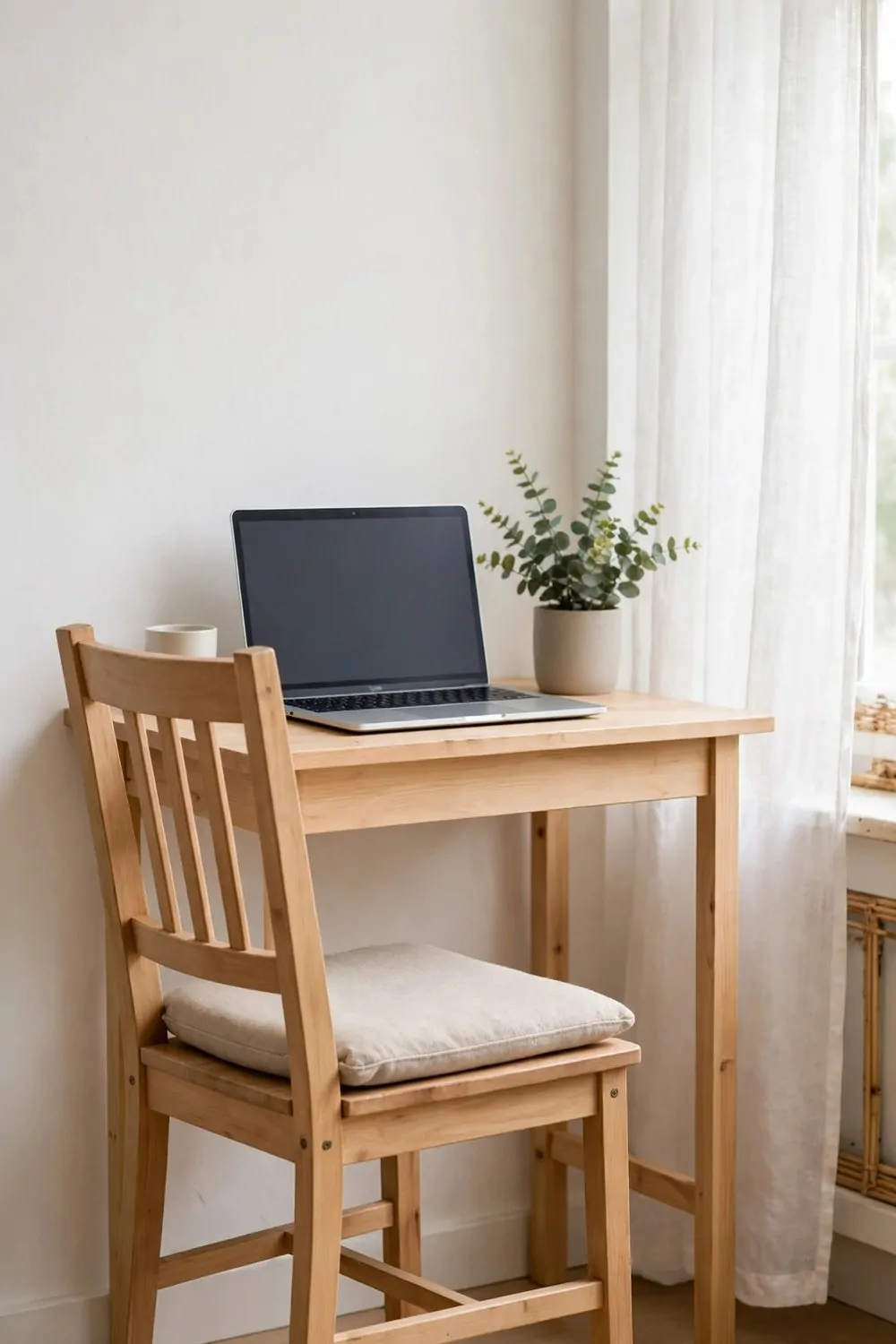
The best chair for a budget office is the one already in your house. A dining chair, a spare chair from the bedroom, a chair from the kitchen table. It just needs a little help to become a work chair.
Test the chair for one full workday before you change anything. Sit in it for two hours and notice what hurts. Your lower back, your neck, your wrists. The ache tells you what to fix, and the fix is usually small.
Add a flat cushion to the seat if the chair is too hard. A cushion the thickness of a book is enough. Too thick and you sit too high for the desk. Too thin and it does nothing. One firm cushion, and the chair feels new.
Roll a small towel into a sausage shape and put it behind your lower back. That little roll supports the curve of your spine, and it costs nothing. A chair with a back roll beats an expensive chair with no support at all.
Put the chair on a flat rug or a hard floor, not on thick carpet. A chair on thick carpet wobbles and sinks, and your legs get tired from holding it steady. A flat surface under the chair keeps you level all day.
Keep the chair close to the desk. Your elbows should rest on the desk without you leaning forward. If you have to stretch to reach the keyboard, pull the chair in. If your knees hit the desk, push it back a little. Small moves make a big difference.
Try this one first if the budget is nearly gone. A chair, a cushion, and a rolled towel is the whole shopping list. The chair was already there, waiting for someone to notice it could work twice as hard.
This is the chair for people who spent the whole budget on the desk. The desk holds the work, the chair holds you, and a little cushion makes the whole day easier.
The Cable Basket Fix
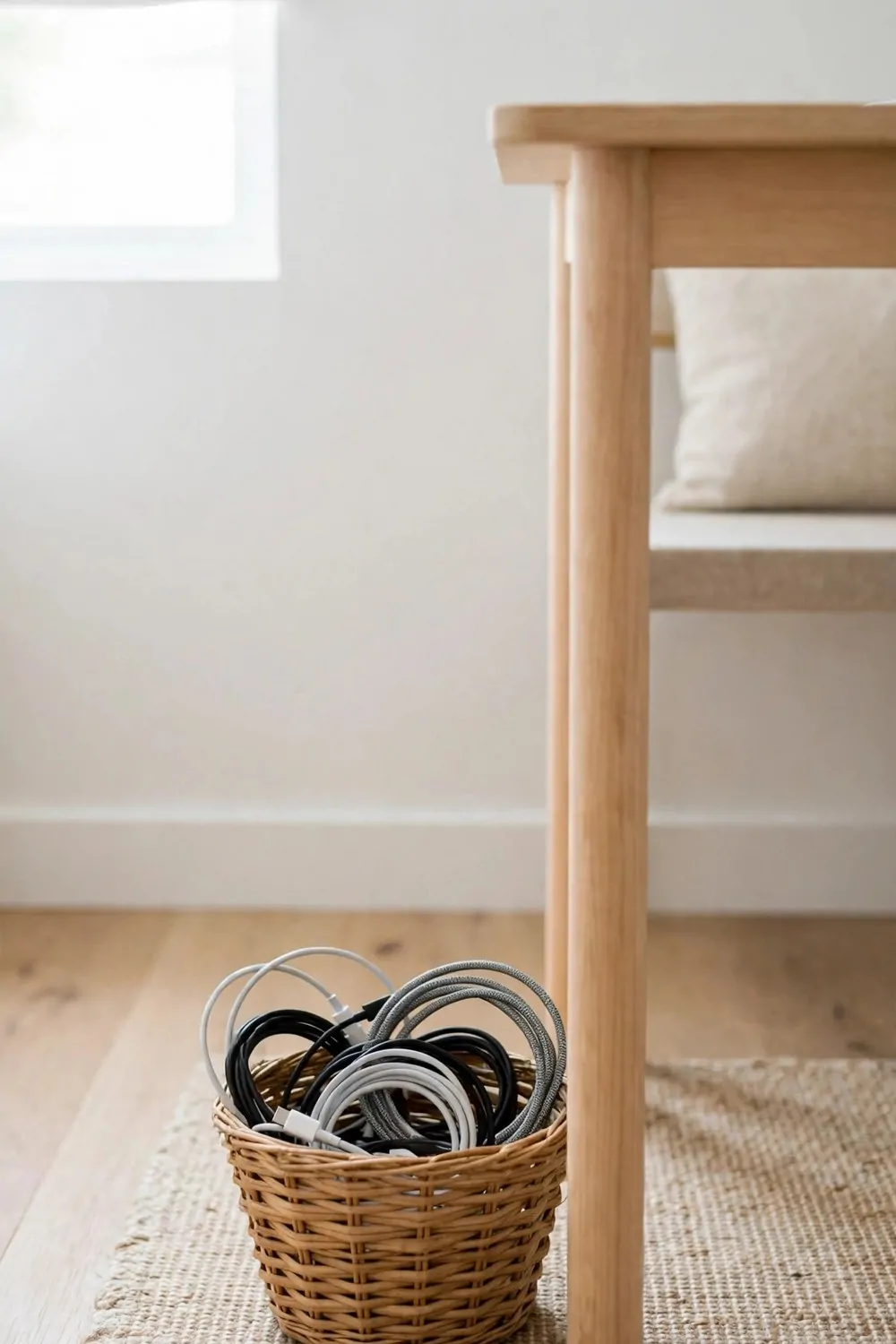
Cables are the messiest thing in any office. They tangle, they trail across the floor, and they make a tidy desk look like a nest. One basket fixes all of it.
Put a small basket on the floor beside the desk, under the plug. Coil each cable loosely and drop it in the basket. The laptop charger, the lamp lead, the spare cable. The basket holds them all, and the floor stays clear.
Label each cable with a little tag of masking tape. Write one word on the tape. Laptop. Lamp. Phone. A labelled cable is a cable you can find in the dark, and an unlabelled cable is a mystery you solve by pulling the wrong one.
Keep one spare cable in the basket, not five. Five spare cables tangle into one big knot, and a knot of cables is worse than no spare at all. One spare of each kind is enough for any home office.
Run the cables from the basket to the desk in one neat bundle. A strip of tape around the bundle keeps them together, and the bundle runs up the back leg of the desk where nobody sees it. One bundle, one line, no mess.
Check the basket once a month and throw out any cable you cannot name. Old phone chargers, cables for gadgets you no longer own, leads with no plug on the end. A basket full of dead cables is just a bin with extra steps.
Try this one if your desk looks tidy but the floor looks like a jungle. The basket takes the jungle off the floor, the cables stop tangling, and your feet finally have room to stretch.
This is the fix for people who hate cable clips and fancy trunking. One basket, a few tape labels, and the cables behave themselves from now on.
The Lamp That Costs Less Than Lunch
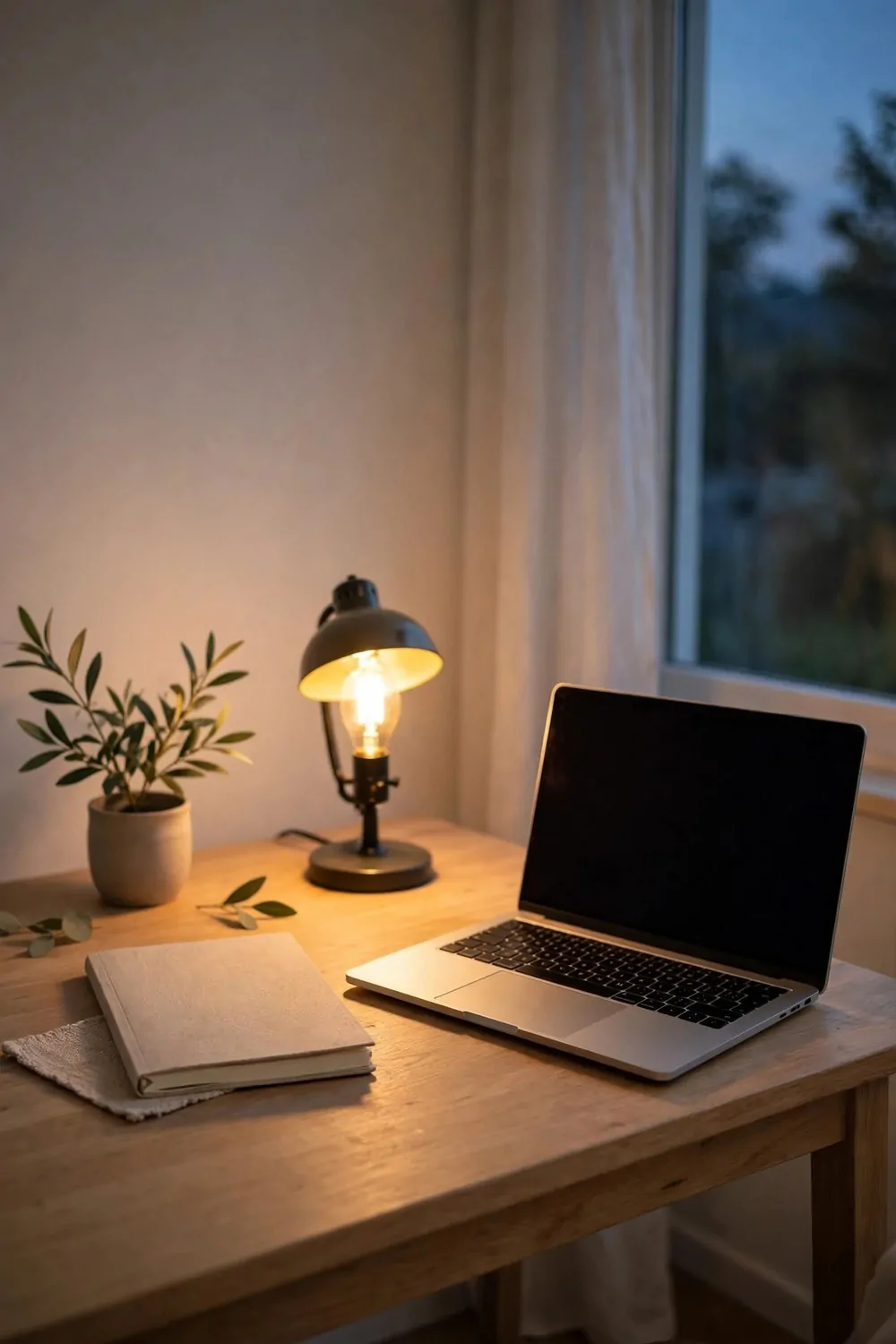
Good light changes a room more than any furniture ever will. A small lamp on your desk makes a dark corner feel bright, and it costs less than lunch out.
Pick a lamp with a warm bulb, not a cold white one. Warm light makes a small room feel cozy, and it is kind to tired eyes at the end of the day. Cold white light feels like an office at midnight, and nobody works well under it.
Put the lamp on the opposite side from your writing hand. Right-handed people put the lamp on the left. Left-handed people put it on the right. The light falls across your work without your hand casting a shadow over it.
Keep the lamp low and close to the desk. A lamp that shines up at the ceiling lights the room but not your notebook. A lamp that shines down at the desk lights your work and nothing else. Low and close is the rule.
Use a bulb you can dim if you can find one. Bright light for the morning, soft light for the evening. A lamp with a dimmer is two lamps in one, and your eyes will thank you at nine o’clock at night.
Clean the shade once a month with a dry cloth. Dust on a lampshade dims the light by half, and a dusty lamp makes the whole room look tired. A clean shade and a warm bulb make a budget desk look like a designer desk.
Try this one if your desk sits in a dark corner. One small lamp, one warm bulb, and the corner stops being a cave. Light is the cheapest makeover there is.
This is the lamp for people who think they need a new room. You do not need a new room. You need a little warm light in the corner you already have.
The Plant Shelf Office
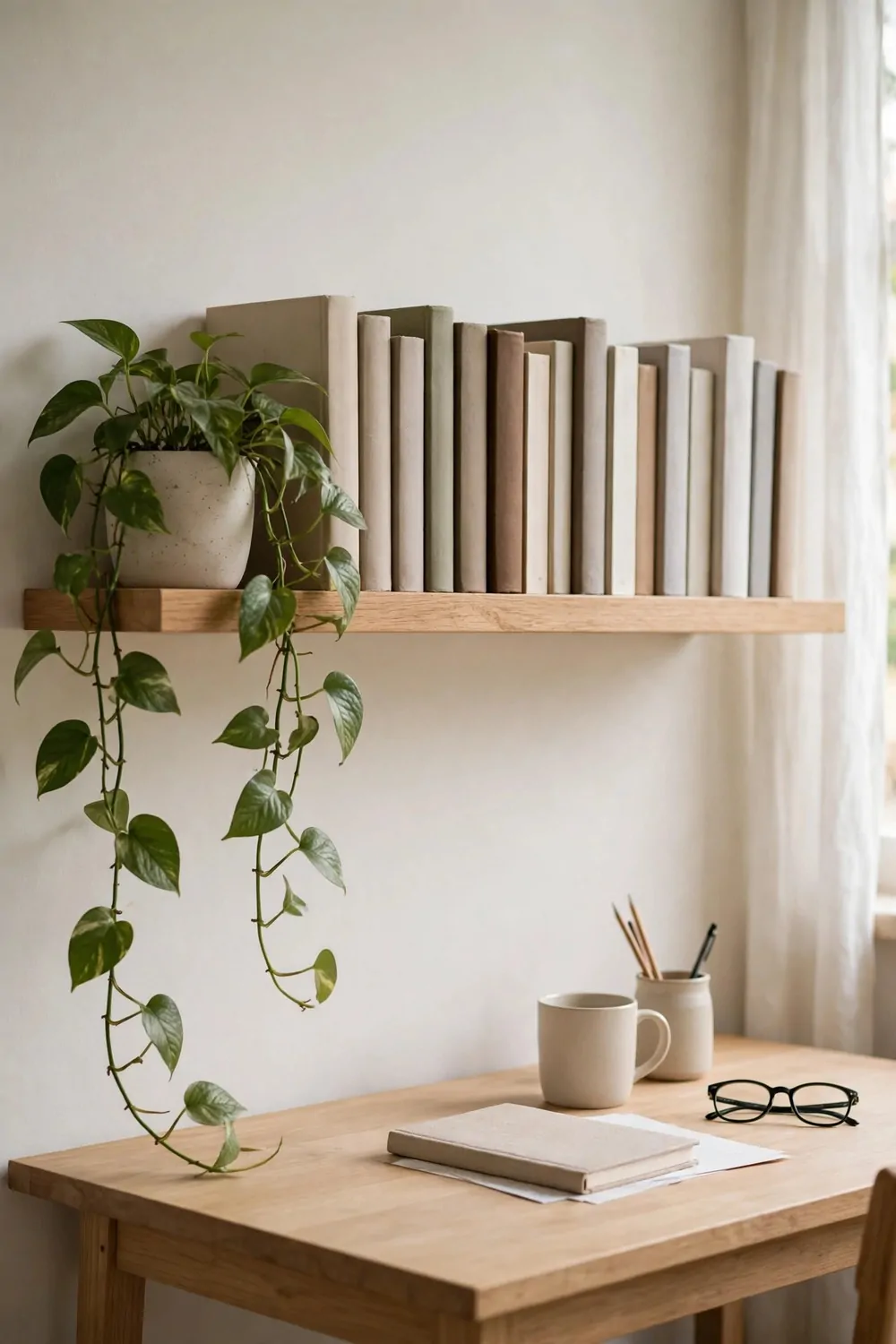
A shelf with a plant on it is the cheapest way to make a desk feel alive. The plant softens the hard edges, the shelf holds your books, and the whole corner feels calm.
Fix a shelf above your desk and put one plant on the end of it. A trailing plant works best, with vines that spill over the edge like a little green waterfall. The vines fall beside the desk, and the desk looks like part of a garden.
Pick a plant that copes with indoor light. A pothos or a spider plant will grow in almost any room, even a shady one. A plant that needs full sun will droop in a bedroom office, and a drooping plant is worse than no plant at all.
Give the plant a drink on the same day each week. Sunday works well, right after you clear the desk. One small jug, one plant, two minutes. A plant on a routine stays green, and a green plant makes the desk feel fresh.
Keep the plant pot on a small tray. Water spills when you are in a hurry, and a tray catches the drips before they reach your papers. A tray the size of a saucer is enough, and it keeps the shelf dry all week.
Put your books on the other end of the shelf, away from the plant. Books and water do not mix, and a wet book is a ruined book. Plant on the left, books on the right, and the shelf stays tidy.
Try this one if your desk feels bare and hard. One plant, one shelf, and the room softens up the same day. When your eyes get tired of the screen, a look at the green leaves rests them, and the next hour goes easier.
This is the shelf for people who want a divider but hate the idea of a wall. A plant divides the room gently, it grows a little taller every year, and it asks for almost nothing in return.
The Pinboard Planning Wall
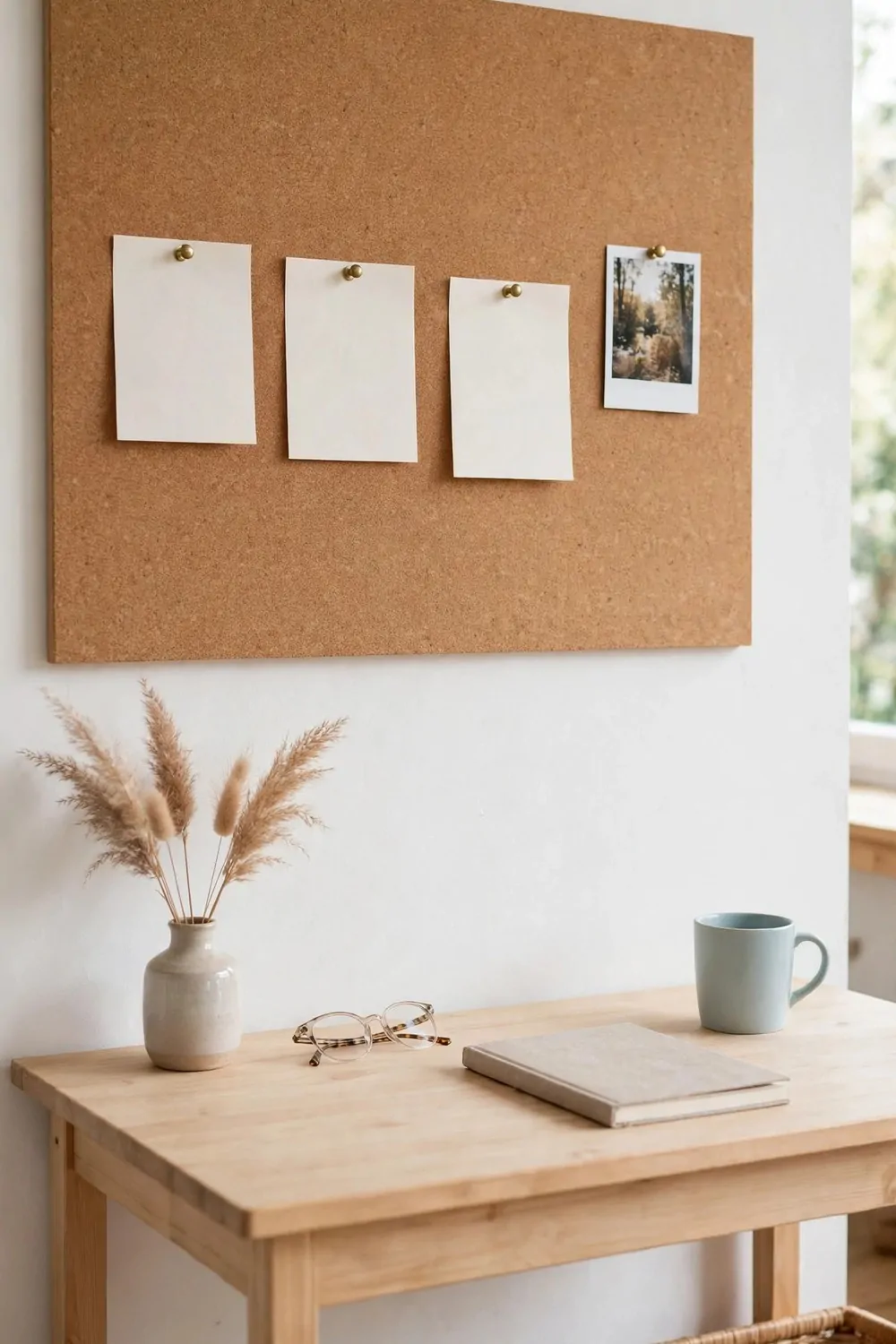
A pinboard on the wall above your desk is a planning tool, a memory aid, and a mood board all in one. Pin the week to it, and your brain gets to stop remembering everything.
Hang the pinboard where you can see it without turning your head. Right above the desk, at eye level when you sit down. A board you have to turn around to see is a board you never look at.
Pin three things to it and no more. Today’s three jobs, this week’s one big deadline, and one picture that makes you smile. A board full of twenty notes is just a wall of worry. A board with three things is a plan.
Use plain pins, not fancy ones. A pin is a pin, and it holds paper to a board. Fancy pins cost more and do the same job. Save the money for a good notebook instead.
Change the board every Monday morning. Take last week’s notes down, file the ones that matter, and pin the new week’s three jobs up. A fresh board on Monday feels like a fresh start, and a board full of last week’s jobs feels like homework.
Keep a small dish of pins on the desk, not on the board. Pins on the board fall off and land on the floor, and a pin on the floor finds your bare foot in the dark. A dish on the desk keeps them safe and easy to grab.
Try this one if you keep forgetting the small jobs. The board holds the week, the desk holds the work, and your brain gets to do the thinking instead of the remembering.
This is the wall for people who think on paper. One board, three pins, and the whole week sits where you can see it every single morning.
The Storage Box Desk
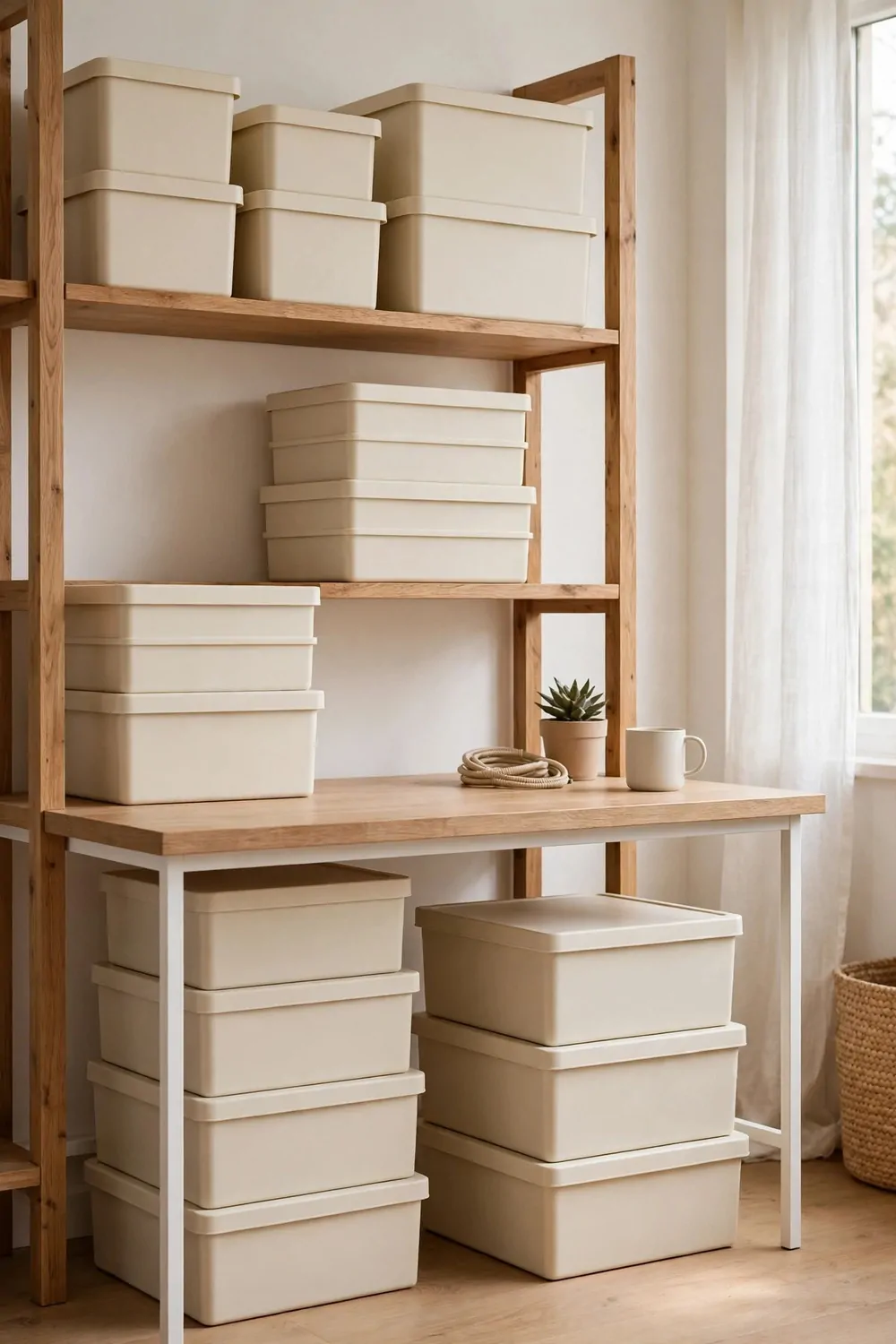
Some offices fit in boxes, not drawers. Plain boxes on shelves and under the desk hold your whole work life, and they cost less than one drawer unit.
Pick sturdy boxes with lids, all the same size. Same-size boxes stack neatly, and a stack of matching boxes looks tidy even when it is full. Boxes in five different sizes look like a jumble, no matter how neat they are.
Here is what goes in each box.
- One box for papers and notebooks, standing upright like files.
- One box for cables and chargers, coiled loose so they never tangle.
- One box for the bits and bobs, the tape, the scissors, the spare pens.
- One box for the archive, the papers you keep but never need to touch.
Label each box on the side you can see. One word, in big plain letters. Papers. Cables. Bits. Archive. A label you can read from the doorway saves you from opening three boxes to find one notebook.
Keep the boxes you use every day at waist height. The archive box goes on the top shelf, where you have to reach for it. Your body will remind you which box is which, and you will stop opening the wrong one.
Put a box under the desk for the things you need mid-day. The spare notebook, the envelope, the folder for today’s work. The box slides out when you need it and slides back when you are done. The desk stays clear, and the box does the holding.
Try this one if you have no drawers and no budget for them. Boxes are the cheapest drawers in the world, and a stack of matching boxes looks better than a drawer unit twice the price.
This is the storage for people who move house a lot. The boxes pack up in ten minutes, they stack in the car, and the office unpacks in the new room the same day.
The Room Divider Shelf
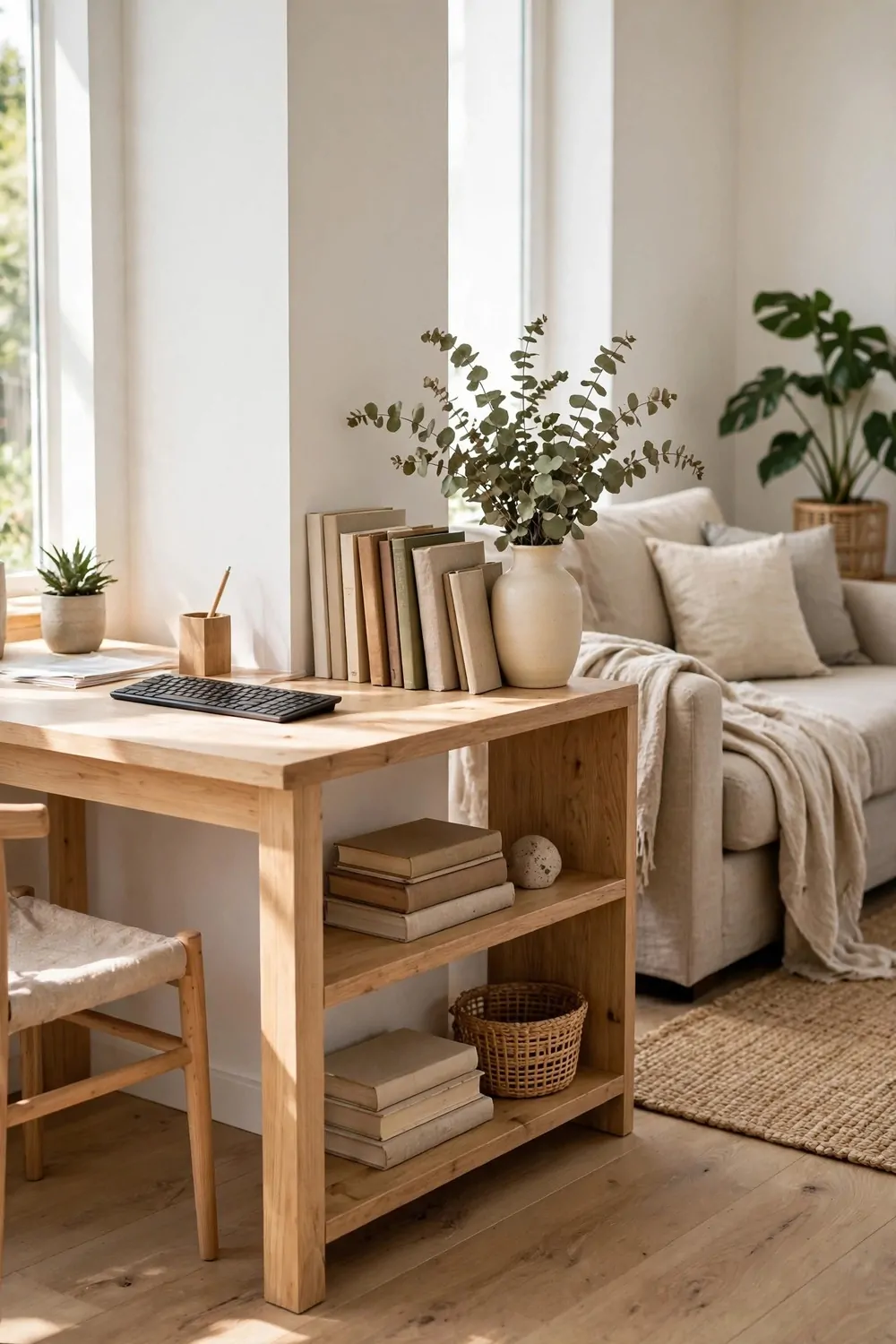
An open shelf standing between two parts of a room is a wall that lets light through. It splits the room without blocking it, and it holds your office on one side and your living room on the other.
Stand a low, open shelf with its back to the living room and its front to your desk. The shelf is the border. Step behind it and you are at work. Step around it and you are home again. Your feet find the line before your head does.
Keep the shelf low, about waist height. A tall shelf blocks the light and makes the room feel small. A low shelf lets the light over the top, and the room still feels like one big room with two jobs.
Put books and boxes on the lower shelves, and leave the top shelf mostly clear. A clear top shelf is a clean line your eyes can follow across the room. A cluttered top shelf is a wall of mess, and it blocks the light you are trying to keep.
Use the shelf side facing the desk for work things. Notebooks, the pen pot, the small plant. Use the side facing the room for pretty things. A vase, a photo frame, a stack of books. Each side has its own job, and neither side sees the other’s mess.
Fix the shelf to the floor or the wall if it is taller than your waist. A freestanding shelf full of books can tip if someone leans on it. One small bracket at the top keeps it steady, and steady is safe.
Try this one if your office shares a room with your living room. The shelf draws the line, the line makes the room feel organised, and the light still reaches both sides.
This is the divider for people who hate folding screens. A shelf divides the room gently, it holds your whole office, and it never needs folding away.
The Secondhand Makeover
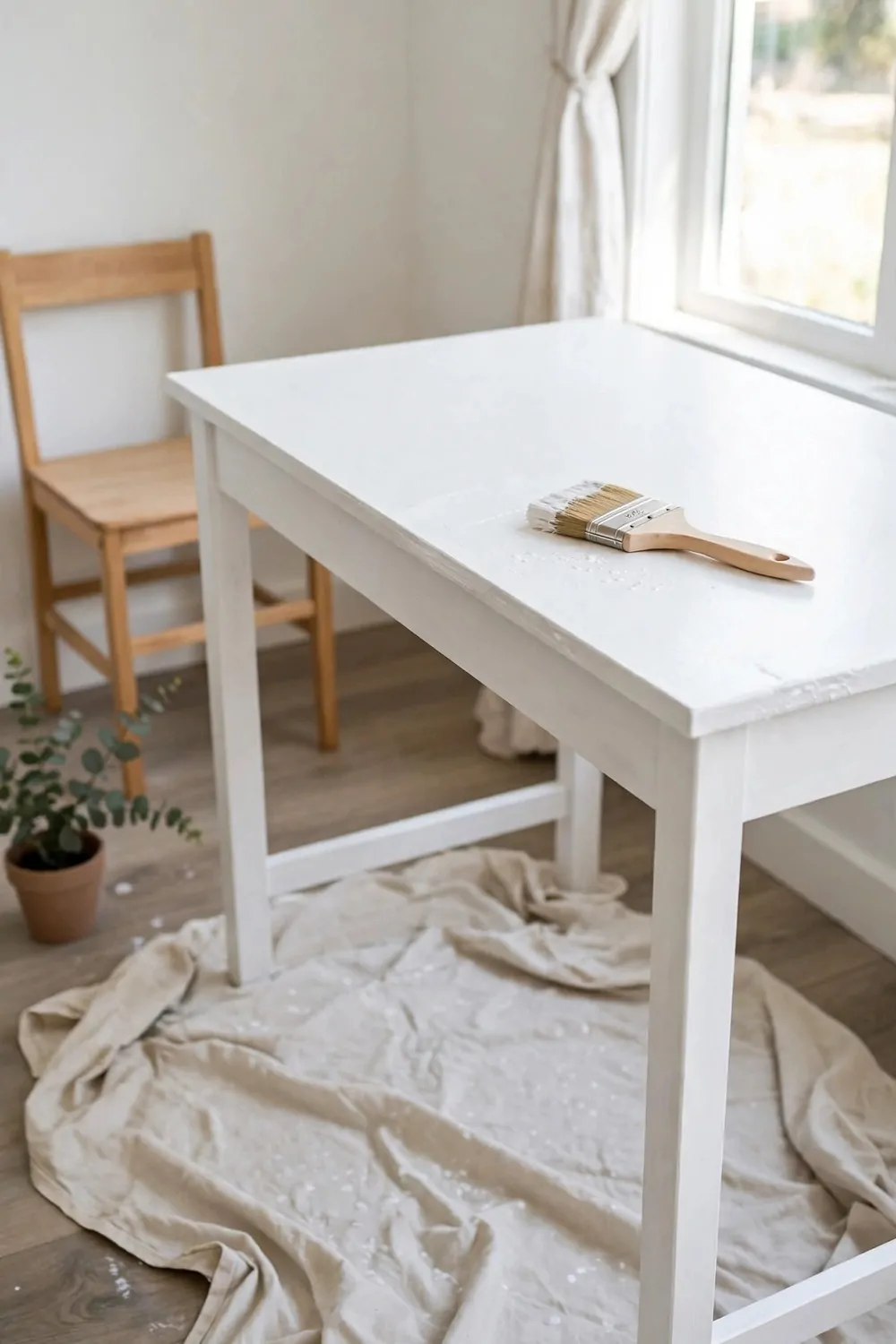
A secondhand desk is the cheapest good desk you will ever own. Someone else’s old desk, a coat of paint, and one free afternoon. That is a whole office for less than a new chair.
Look for a solid desk with a sturdy frame. Wobbly legs can be fixed with a screwdriver. A cracked top can be covered with a board. But a desk with a broken frame is a desk that will never stand straight, no matter what you do to it.
Sand the top lightly before you paint it. A quick sand takes the shine off the old paint, and the new paint sticks properly. Skip the sanding and the new paint peels off in a month, and you have to do the whole job again.
Paint the desk one plain colour that matches your room. White for a bright room, pale wood for a warm room, soft grey for a calm room. One colour, two coats, and the desk looks new. A desk painted five colours looks like a craft project gone wrong.
Change the handles if the desk has drawers. New handles cost very little, and they change the whole look of the desk. Old handles make a desk look old. New handles make the same desk look fresh.
Let the paint dry a full day before you put anything on the desk. Paint that feels dry to the touch is still soft underneath. A laptop on soft paint leaves a mark that never comes out. One day of patience saves the whole makeover.
Try this one if your budget is nearly gone and you still need a desk. A secondhand desk, one tin of paint, and a free afternoon. The desk looks new, the room looks planned, and nobody will ever guess where it came from.
This is the desk for people who like a bargain and a little elbow grease. The makeover is the fun part, and the desk you saved is the desk you will love the most.
The One-Weekend Build Plan
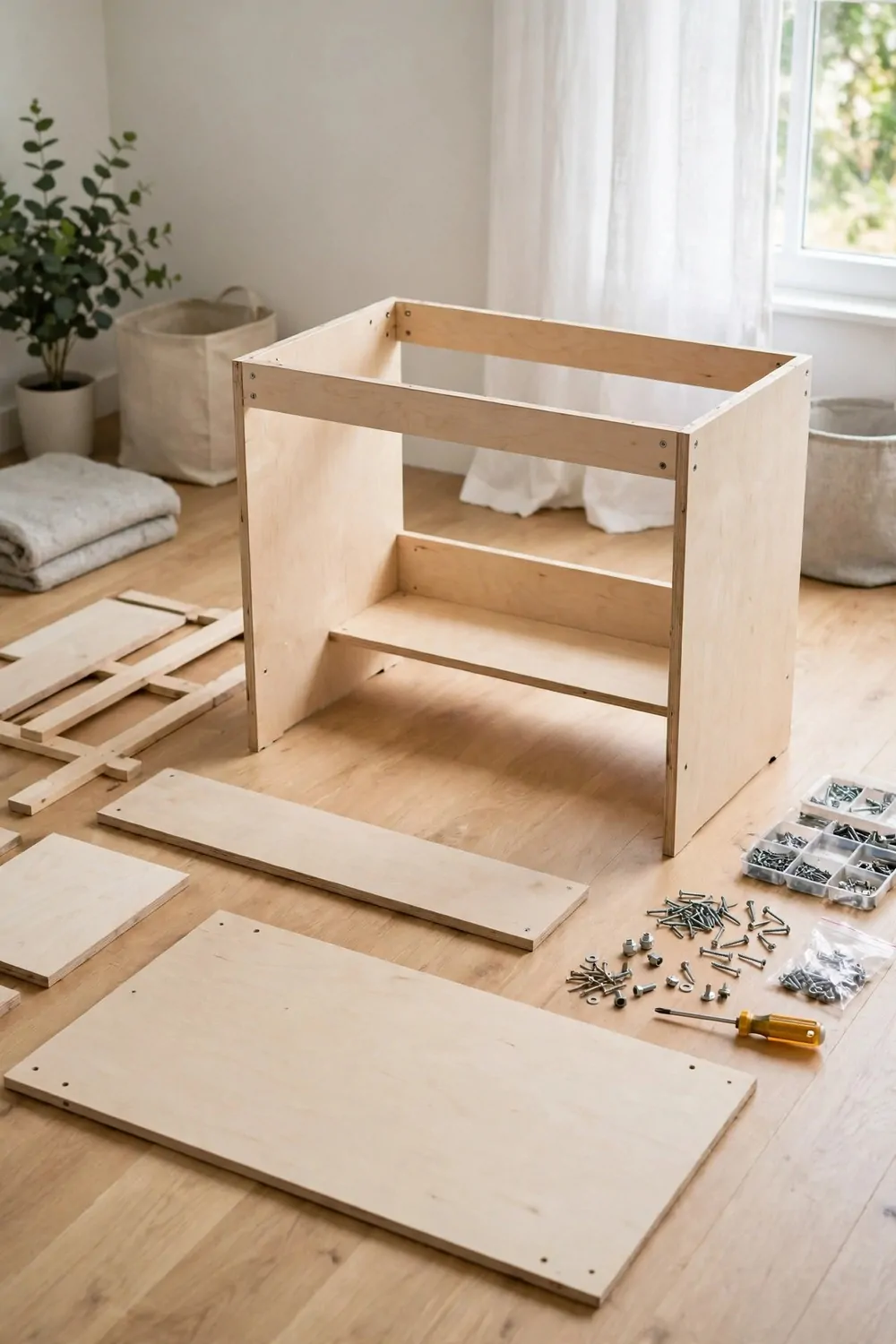
A whole office can be built in one weekend. Not a month, not a season. One Saturday and one Sunday, with a plan that tells you what to do first.
Saturday morning is for measuring and shopping. Measure the wall, write the list, and buy the pieces. Saturday afternoon is for building the desk and the shelf. One build at a time, and the desk is standing by dinner.
Here is the weekend in one place, so you can pin it to the wall while you work.
| When | What you do | How long it takes |
|---|---|---|
| Saturday morning | Measure the wall and buy the pieces | About 2 hours |
| Saturday afternoon | Build the desk and fix it to the wall | About 3 hours |
| Sunday morning | Build the shelf and the storage boxes | About 2 hours |
| Sunday afternoon | Set up the lamp, the chair, and the cables | About 1 hour |
Sunday morning is for the shelf and the storage. The shelf goes up, the boxes go on it, and the cables go in the basket. By lunch the office looks like an office, and the tools go back in their box.
Sunday afternoon is for the finishing touches. The lamp goes on the desk, the chair slides under it, and the cables get their labels. One hour, and the room is ready for Monday morning.
Keep the receipts together in one envelope all weekend. If a piece is missing a screw or a board is cracked, one quick trip back fixes it. A receipt you cannot find is a piece you have to buy twice.
Stop building when the plan says stop. A weekend build that runs into Monday is a build that never feels finished. The plan ends on Sunday afternoon, and Monday starts with a working desk.
Try this plan if you have been putting the office off for months. One weekend, one plan, and Monday morning you sit down at a desk you built yourself.
This is the plan for people who work best with a deadline. Saturday builds the desk, Sunday builds the rest, and Monday you work at a desk that did not exist on Friday.
The Ten-Minute Tidy
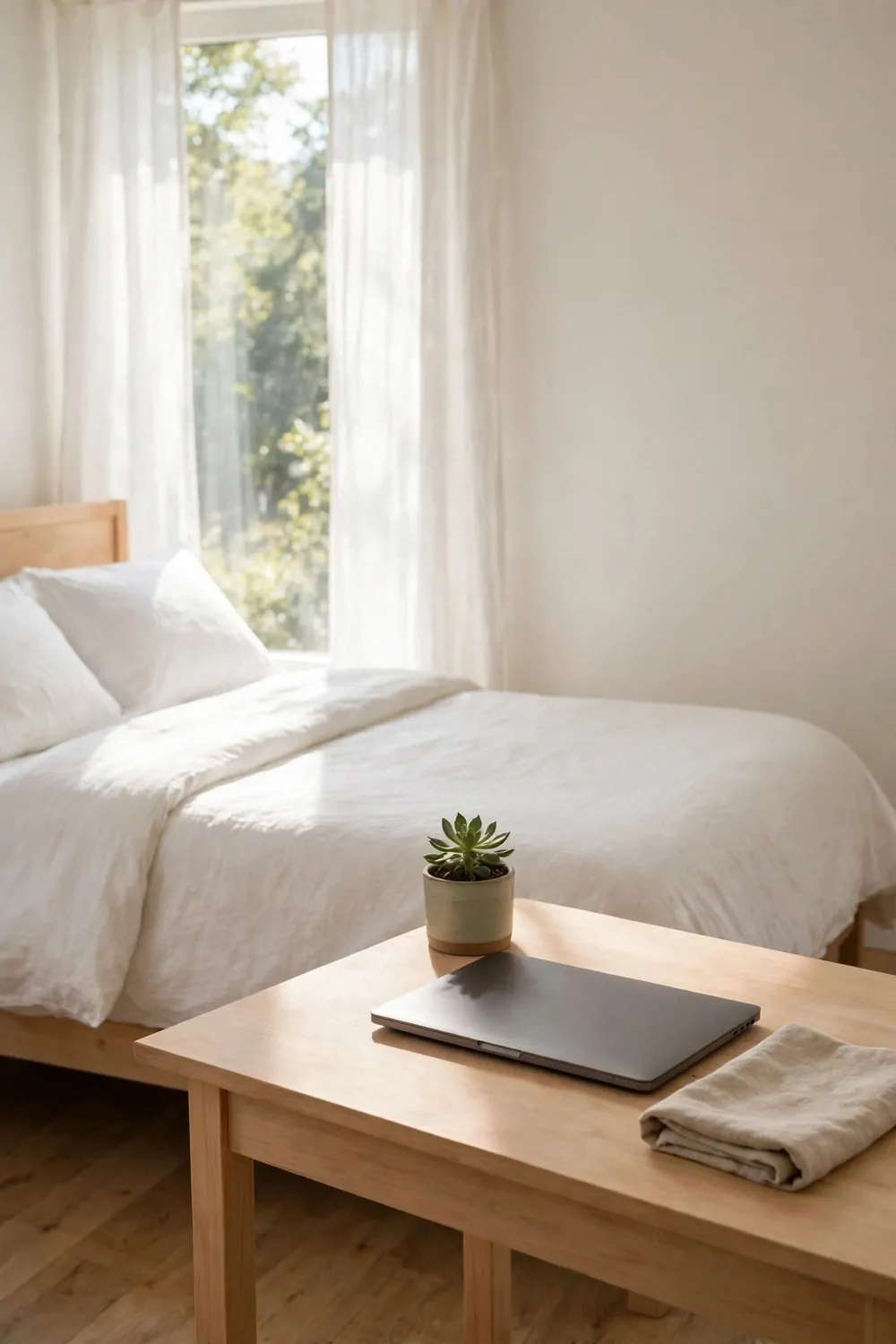
A budget office stays cheap only if it stays tidy. A tidy desk needs no new storage, no new boxes, and no new furniture. Ten minutes at the end of the day keeps it that way.
Minute one is the clear-out. Laptop shut, papers into the box, mug into the kitchen. A desk with three things on it tidies in seconds. A desk with thirty things on it tidies never.
Minutes two and three are the sort. Papers into the paper box, cables into the cable basket, pens into the pen pot. Everything has a home, and the sort is just putting things back where they live.
Minutes four and five are the wipe. One damp cloth across the desk, one across the lamp shade. Dust makes a room feel tired, and a quick wipe makes the desk look new again.
Here is the tidy in one place, so you can pin it inside the cupboard door.
| Minute | Job | What it fixes |
|---|---|---|
| One | Clear the desk top | Laptop, papers, mug |
| Two to three | Sort everything into its box | Papers, cables, pens |
| Four to five | Wipe the desk and the lamp | Dust that makes the room feel tired |
| Six to ten | Plan tomorrow’s three jobs | A clear start for the morning |
Minutes six to ten are the plan. Write tomorrow’s three jobs on a small card and leave it on the desk. Three jobs, no more. Monday starts with a plan you can see, and the day feels smaller already.
Do the tidy at the same time every day. Same time, same steps, same ten minutes. A tidy you do every day becomes automatic, and an automatic tidy never gets skipped. A tidy you do when you remember gets skipped most days.
Keep the cloth and the card on the desk, not in a drawer. A tidy kit you have to hunt for is a tidy you skip. A cloth on the desk and a card on the desk make the tidy easy to start.
Try this one if your desk is buried under stuff with no name. Ten minutes, same steps, every evening. The desk stays clear, the budget stays low, and Monday starts with a desk you actually want to sit at.
This is the tidy for people who do not want to buy more storage. The desk is here already. The boxes are here already. The tidy is just ten minutes and a few small steps, and the office stays cheap forever.
Keep Reading
If you liked these budget workspace ideas, these closet office ideas will give you even more ways to make a small space work hard.
- 18 Desk in Closet Ideas for a Hidden Workspace
- 20 Walk in Closet Office Setups With Serious Wow Factor
- 16 Cloffice Ideas Small Spaces Will Love
A budget office is the kindest thing you can build for yourself. It works all day, it costs very little, and it grows one small piece at a time. Pick your favourite build from this list, start this weekend, and let your smallest room surprise you.