24 Built-In Drawer Organizer Ideas for a Clutter-Free Home

I opened my junk drawer this morning looking for one pen, and I found three dead batteries, a key I do not know, and a rubber band ball I never made. The pen was right there under it all, but I had to dig for it like I was looking for treasure. That is when I knew my drawers needed a real plan, not just a quick tidy up.
You know that feeling when you open a drawer and everything is mixed up together. Spoons sit on top of batteries. Pens roll under chargers. It makes a small job take five minutes instead of five seconds, and it drives me a little bit crazy every single day.
Built in drawer organizers fix that mess for good. They give every little thing its own spot, so you stop digging and start finding. I put together 24 ideas here, and you can steal as many as you like for your own home.
Some of these ideas cost almost nothing. Some take a weekend and a bit of wood. All of them make your drawers work harder for you, so let us start with the simple ones first.
Wooden Drawer Dividers That Fit Like a Glove
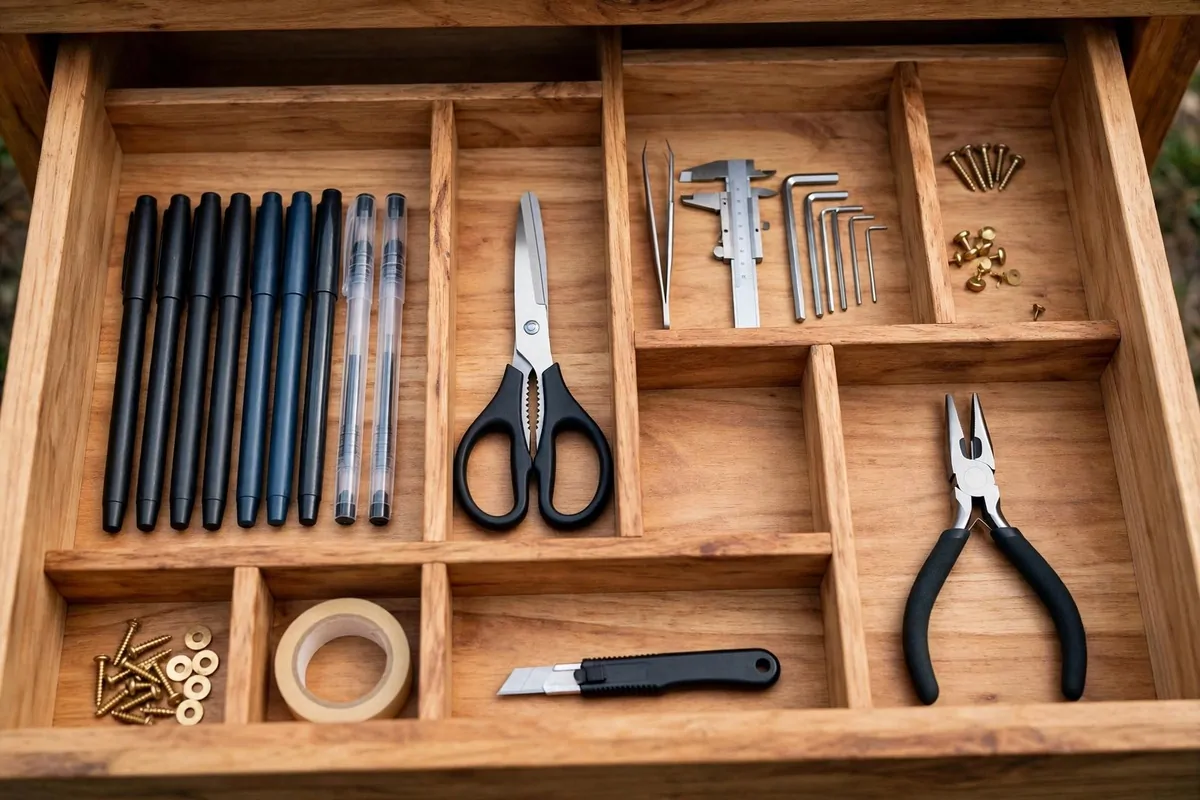
I love how a wooden divider sits in a drawer. It feels solid when you slide the drawer shut, and nothing wobbles around.
You can buy them ready made, or you can cut thin wood strips to fit your drawer exactly. I measured mine twice before I cut anything, and I am glad I did.
The trick is to measure the inside of the drawer, not the outside. The inside is always a bit smaller, and that little bit matters a lot.
Wood looks warm and calm next to your things. It suits a kitchen drawer just as well as a bedroom one.
I put one long divider down the middle of my cutlery drawer first. Then I added short ones across it to make little boxes for spoons and forks.
If the wood is a bit loose, a tiny wedge of felt on the end holds it still. You will not hear it rattle when you open the drawer.
Sand the edges smooth so nothing snags your fingers. A rough edge can scratch a spoon handle, and it just feels unfinished.
You can leave the wood plain or rub a little oil on it. I used a food safe oil in the kitchen, and it still looks good months later.
Start with one drawer. Once you see how neat it looks, you will want to do the rest of the house too.
Adjustable Dividers You Can Move Around
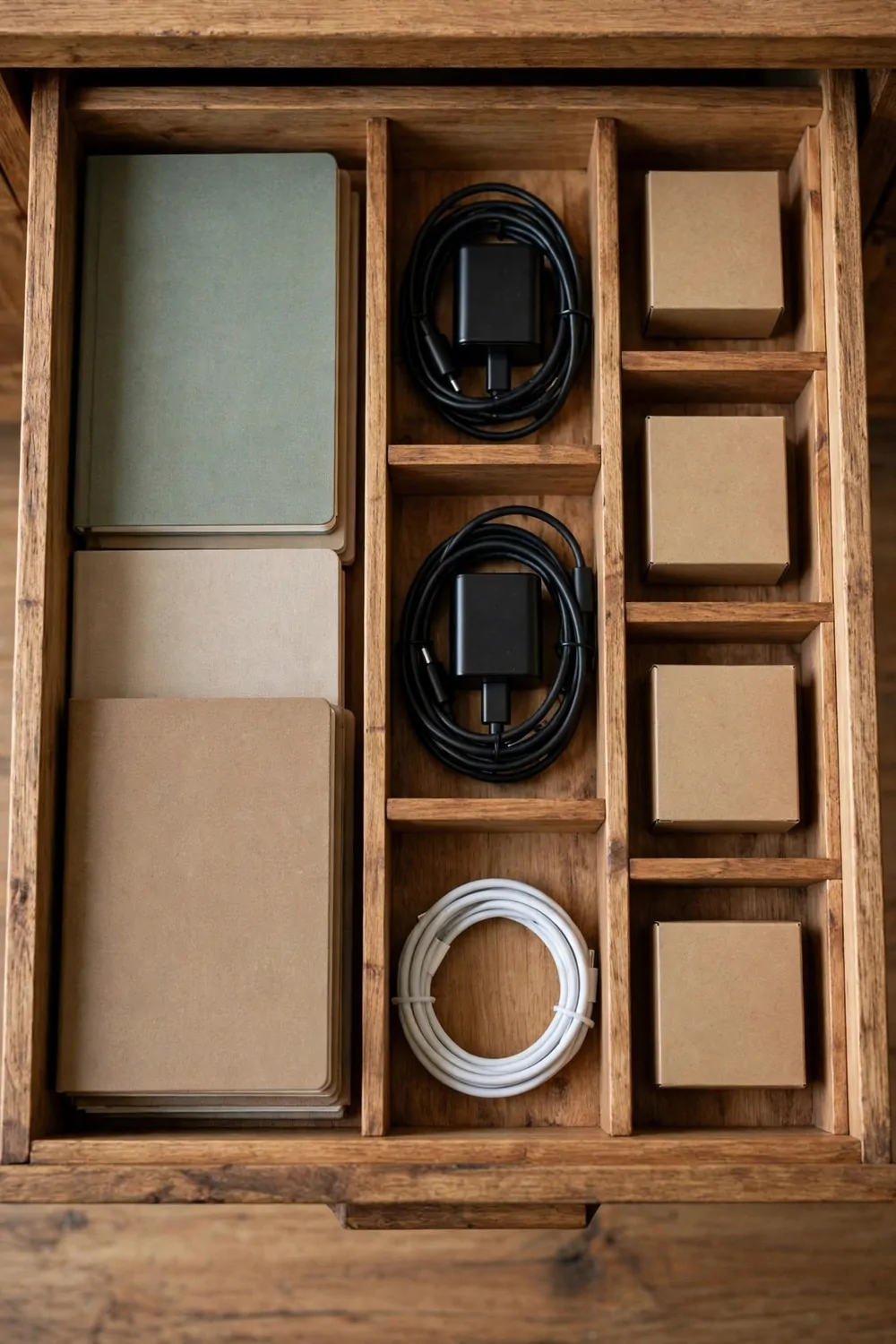
Some weeks I need big spaces in my drawer. Other weeks I need lots of little ones. Adjustable dividers let me change my mind.
These are spring loaded rods or sliding panels that press against the drawer sides. You push them in, they grip, and they stay put.
I like them because my stuff changes with the seasons. In summer I keep sunglasses in the top drawer. In winter it is gloves and scarves.
You do not need any tools to move them. Just squeeze, slide, and let go. My kids can even do it, which says a lot.
They work best in drawers that are a normal square shape. A very odd shaped drawer can make them slip, so check the fit first.
Try two dividers across and one down the middle. That gives you six neat boxes, and you can shift them any time you want.
They are great for rented homes too. You take them with you when you move, and they leave no marks behind.
I keep a spare set in the cupboard for when a drawer changes jobs. A sock drawer can turn into a craft drawer in one afternoon.
If a divider feels loose, check that the drawer is fully dry inside. A damp drawer can make the grip slip a little.
Shallow Trays for the Top Drawer
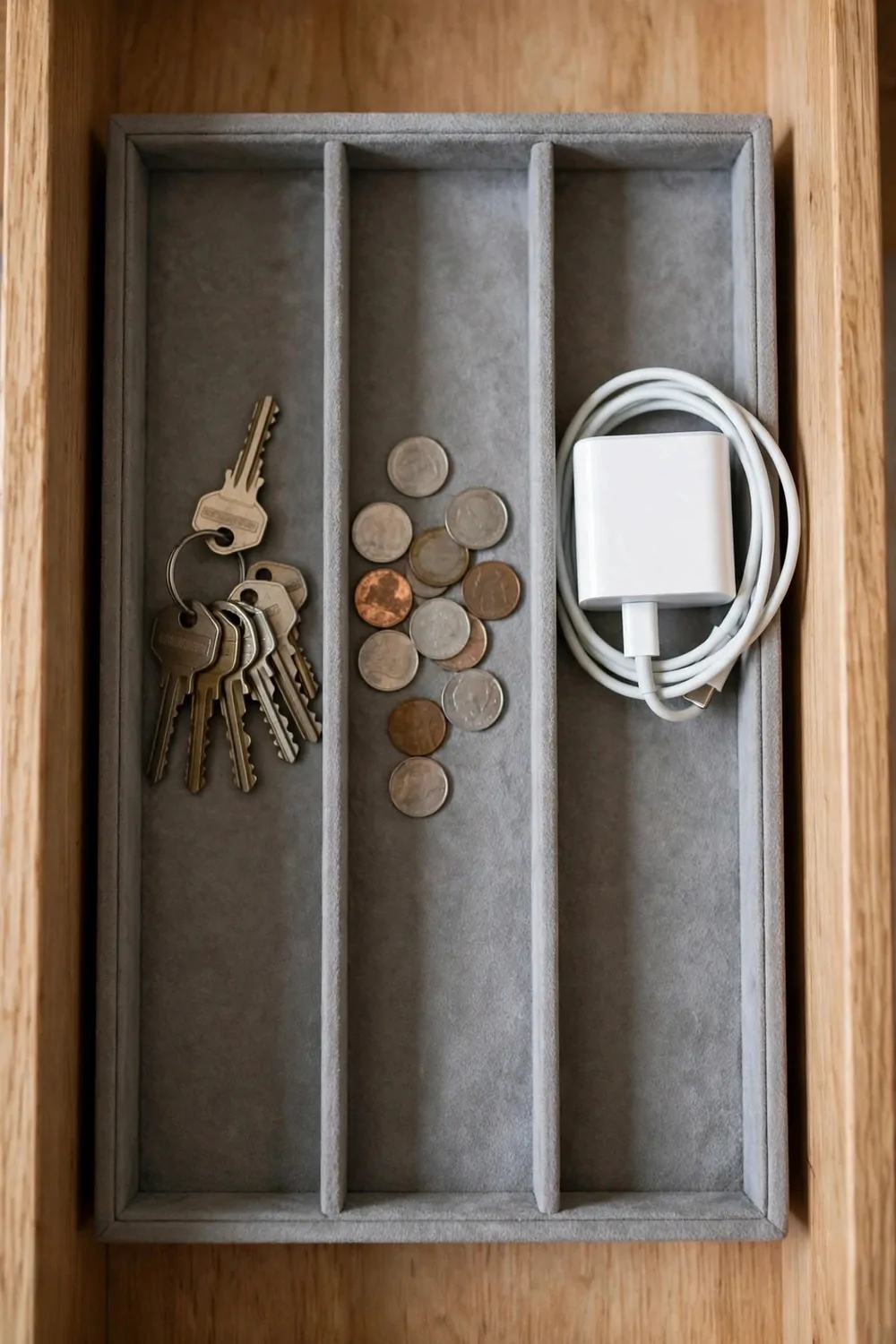
The top drawer is where the small stuff lives. Pens, coins, hair clips, and all those bits you grab every day.
A shallow tray sits inside it and stops everything rolling into one big pile. I can see all my pens at a glance now.
Pick a tray that leaves a little gap around the edges. You need room to lift it out when you want to clean under it.
I have one tray for pens and pencils, and a smaller one next to it for coins and keys. It sounds simple, but it changed my mornings.
Look for trays with low walls. High walls make it hard to reach in and grab a paperclip in a hurry.
You can stack two shallow trays if the drawer is deep enough. The top one slides, and the bottom one holds the stuff you use less.
Wipe the tray out once a week. Crumbs and dust collect fast in a top drawer, and a quick wipe keeps it fresh.
Kids love having their own tray in the top drawer. My daughter keeps her hair ties in one little box, and she actually puts them back now.
If the tray slides around, a small piece of non slip mat under it fixes the problem. It costs almost nothing and it works.
Deep Bins for the Bottom Drawer
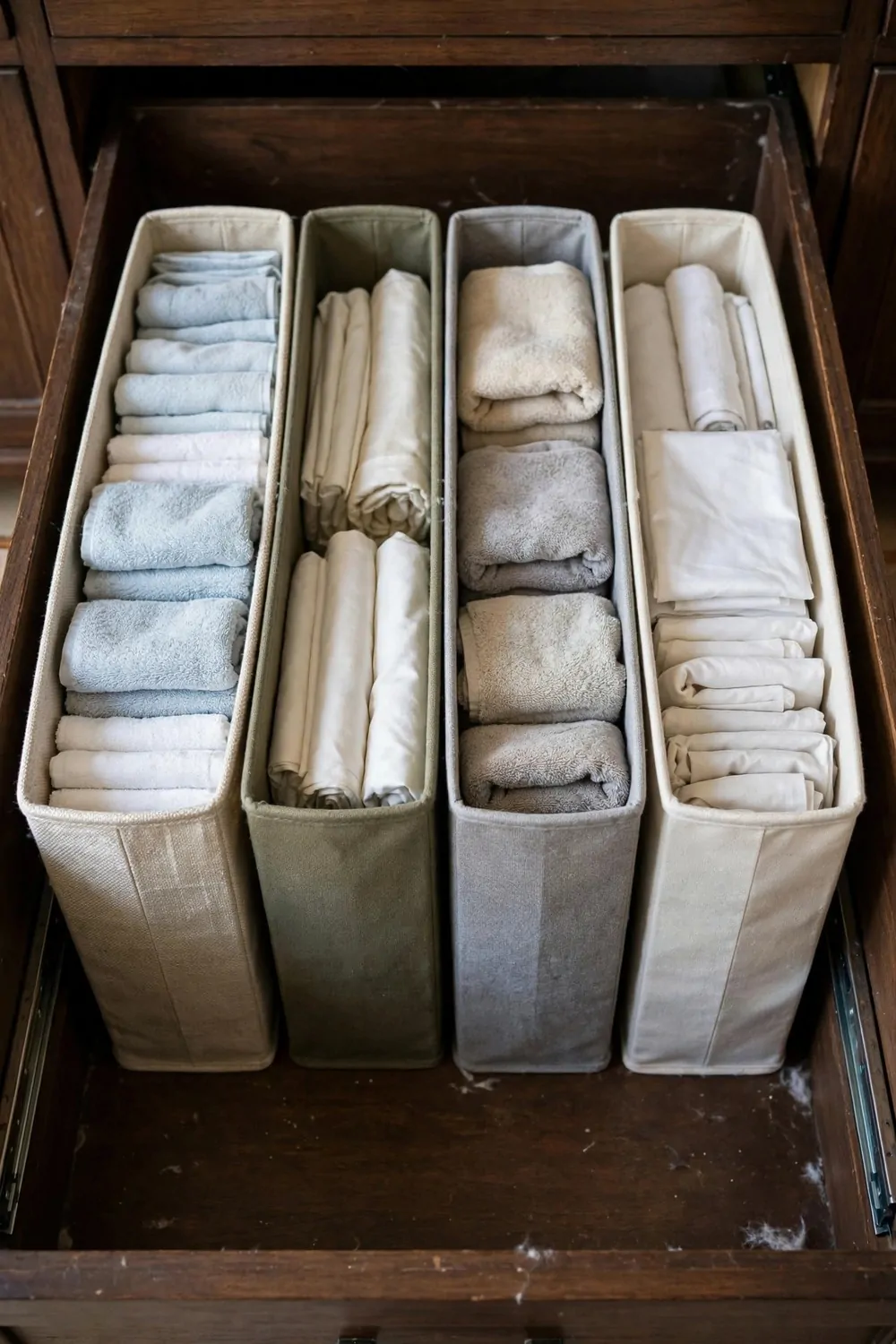
Bottom drawers are big and deep, and that is the problem. Things sink to the bottom and you forget they exist.
Deep bins fix that. They stand tall, so you can see what is inside from the top without digging.
I use one bin for cleaning cloths and one for spare light bulbs. They stand side by side like little soldiers.
Pick bins that are a bit shorter than the drawer is deep. You need the drawer to close without squashing the tops.
Clear bins are my favorite for the bottom drawer. I can spot the batteries without pulling every bin out.
Label the front of each bin if you share the drawer with family. It stops the guessing and the mess coming back.
Heavy stuff goes in the bottom drawer, and bins keep it from sliding to the back. A sliding bottle of cleaner can leak, and nobody wants that.
Once a month I pull the bins out and wipe the drawer floor. Dust hides under bins, and it builds up fast.
Try one bin first and see how it feels. If you like it, add more until the whole drawer is full of neat little zones.
A Drawer Just for Cutlery and Cooking Tools
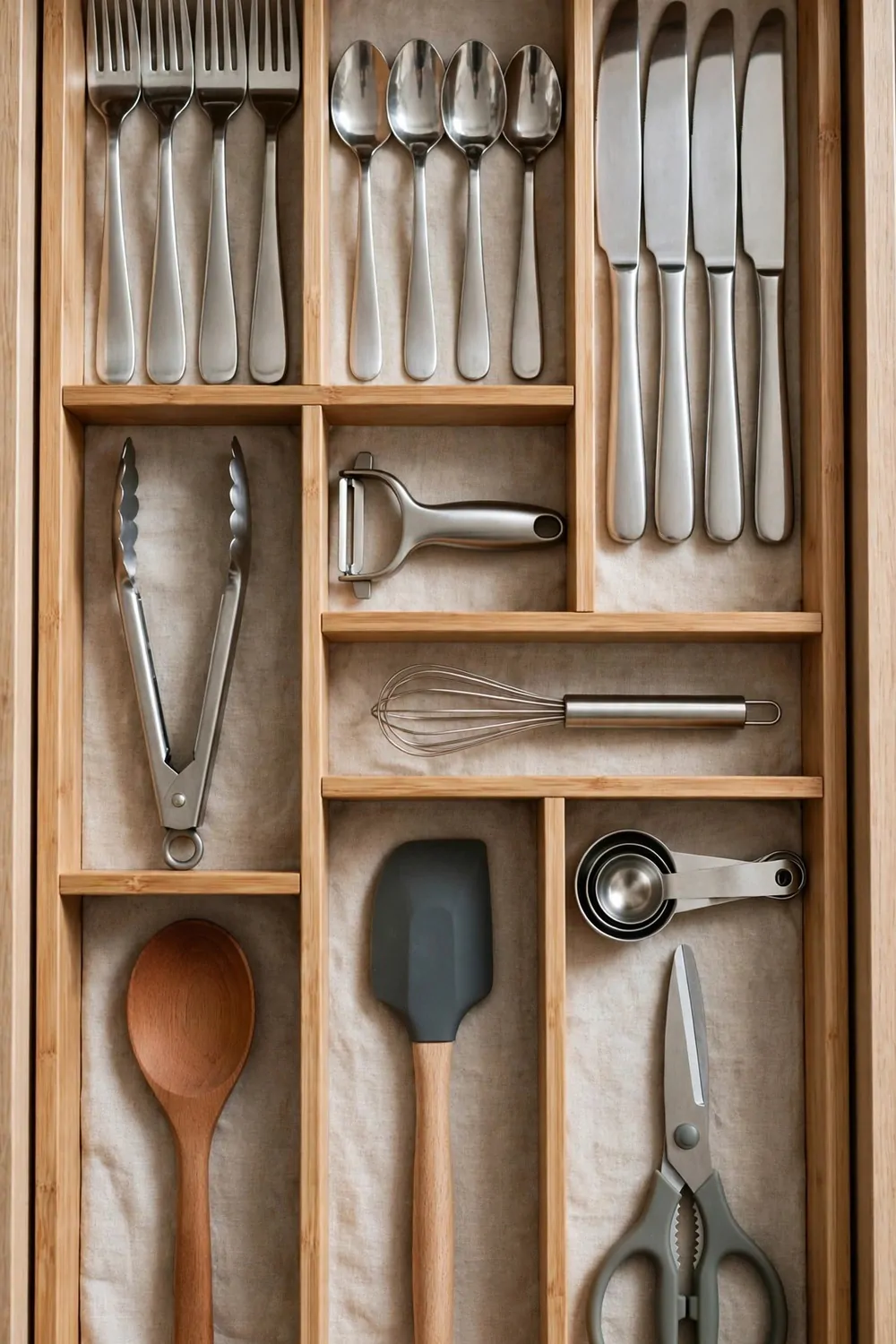
My cutlery drawer used to be a jumble of forks, spoons, and one potato peeler I could never find. Now every piece has its own slot.
A built in cutlery tray is the easiest win in the whole kitchen. It drops right in, and your spoons stop fighting the knives.
Give the big cooking tools their own drawer if you can. Spatulas and tongs are too long for a cutlery tray, and they need space.
I keep my everyday forks and spoons in the front slots. The back slots hold the fancy cutlery I only use on Sundays.
Keep knives in a slot with a cover, or in a separate block inside the drawer. Loose knives are not safe for little hands.
Wipe the tray out when you clean the kitchen. Crumbs fall in there all the time, and they hide under the forks.
If your drawer is wide, add a second small tray beside the cutlery one. Mine holds tea towels folded flat, and it fits perfectly.
Count your cutlery before you buy a tray. I bought one that was too small once, and half my spoons had to live somewhere else.
A tidy cutlery drawer makes setting the table faster. I grab what I need in seconds now, and dinner feels a bit calmer.
A Drawer That Holds Your Makeup and Brushes
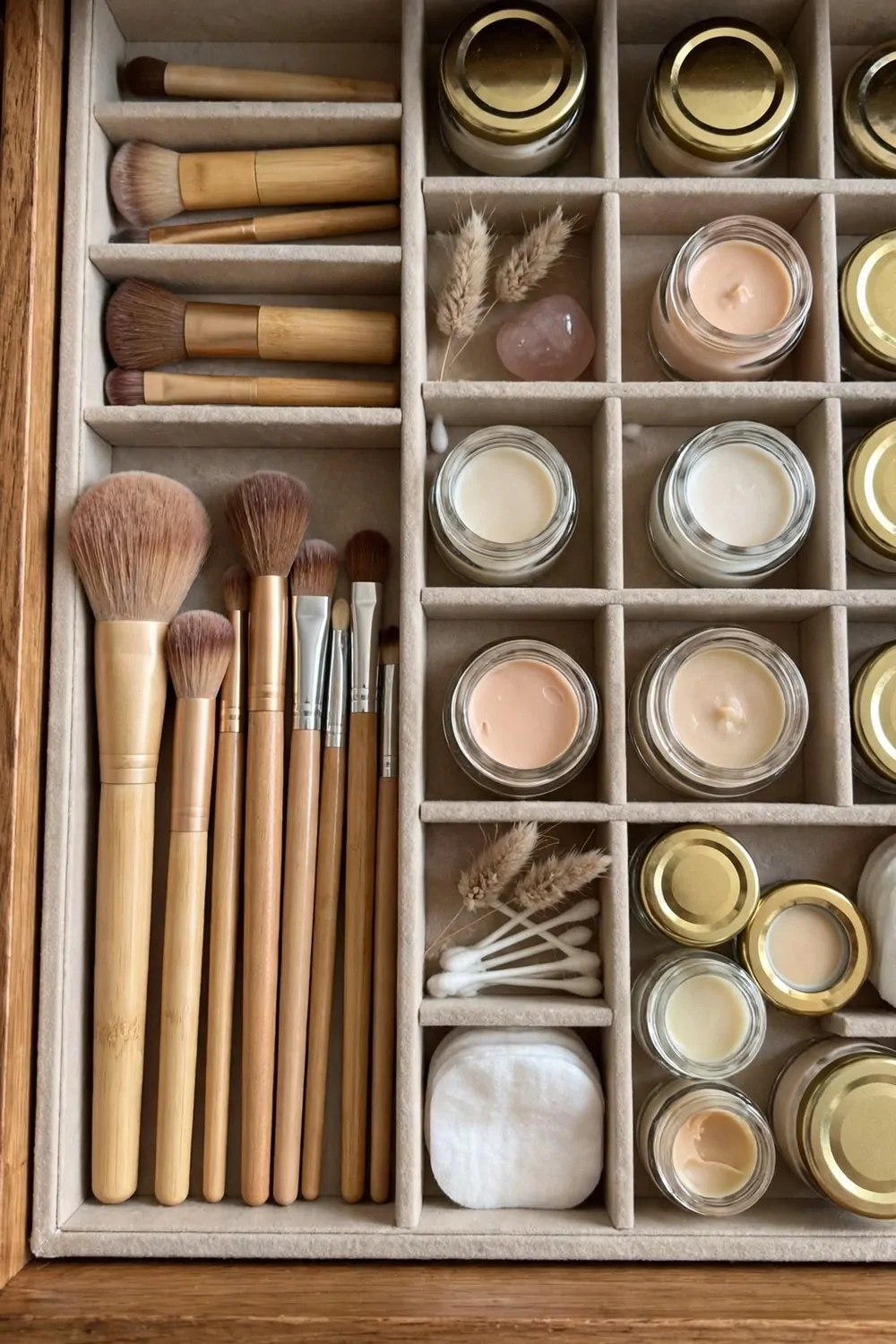
Makeup brushes roll everywhere if you let them. One minute they are neat, the next they are under a pile of lipsticks.
A drawer with small compartments keeps each brush standing up or lying flat in its own lane. I can find my favorite brush in the dark now.
Use a tray with lots of little squares for lipsticks and small pots. They stand up straight and you can read the labels.
I keep my everyday makeup in the front of the drawer. The party stuff lives at the back, where I only reach on weekends.
Line the tray with a soft cloth or felt. It stops pots sliding and it keeps the drawer quiet when you open it.
Clean your brushes over the sink once a week, then put them straight back in their slots. A clean brush lasts longer and feels better on your skin.
Throw out anything dried up or broken. Old mascara does not get better with age, and it just takes up a good spot.
If you share the drawer, give each person their own side. It ends the morning hunt for a missing eyeliner.
A neat makeup drawer makes getting ready feel calm. I sit down, open the drawer, and everything I need is right there waiting.
| Material | Look | Best for | Typical cost |
|---|---|---|---|
| Bamboo | Warm and natural | Kitchen and bathroom drawers | 10 to 30 dollars |
| Plastic | Clean and light | Kids rooms and craft drawers | 5 to 20 dollars |
| Metal | Slim and modern | Office and tool drawers | 15 to 40 dollars |
| Fabric | Soft and cosy | Clothes and sock drawers | 8 to 25 dollars |
| Wood | Rich and classic | Bedroom and living room drawers | 15 to 50 dollars |
Charging Drawers With Built-In Power
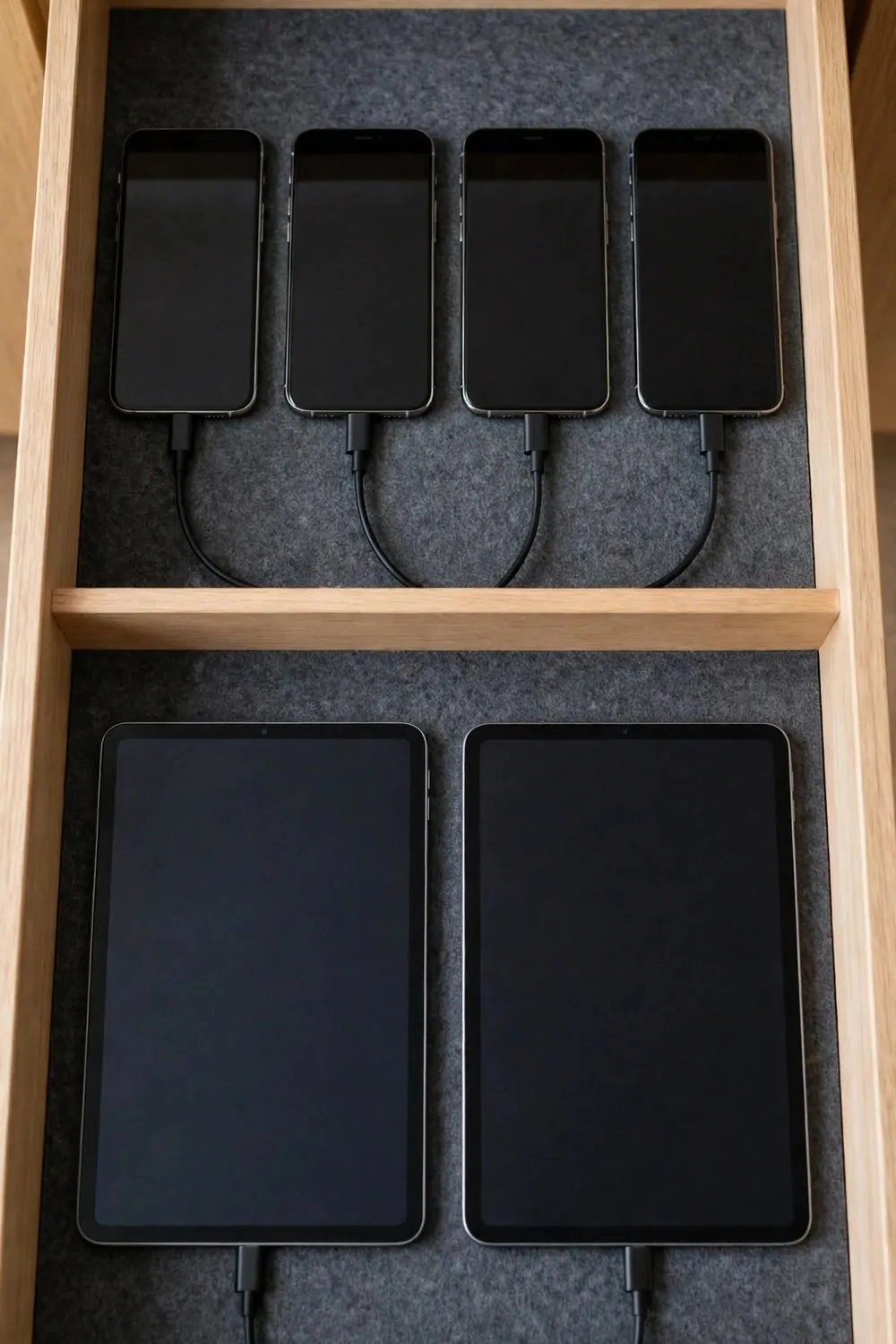
Chargers used to live all over my house. One on the kitchen counter, one by the bed, one lost behind the sofa.
A charging drawer puts them all in one place. You plug a power strip inside the drawer, and your phones charge out of sight.
Ask an electrician to fit the outlet safely if you are not sure how. Power inside a drawer needs to be done right, and it is worth paying for.
Drill a small hole at the back of the drawer for the cables to pass through. A rubber grommet keeps the edges smooth so cables do not fray.
I keep a short cable for each family member in my charging drawer. No more fights over who took the good charger.
Add a divider to keep phones apart while they charge. A phone lying on top of another phone gets hot, and that is not good.
Charge overnight and close the drawer in the morning. The counter stays clear, and your phone is full when you wake up.
Do not pile papers or cloth on top of charging phones. They need a little air around them to stay cool.
This drawer is my favorite upgrade in the whole house. It looks like nothing from the outside, and it hides all the cable mess.
Lined Drawers That Stop Things Sliding
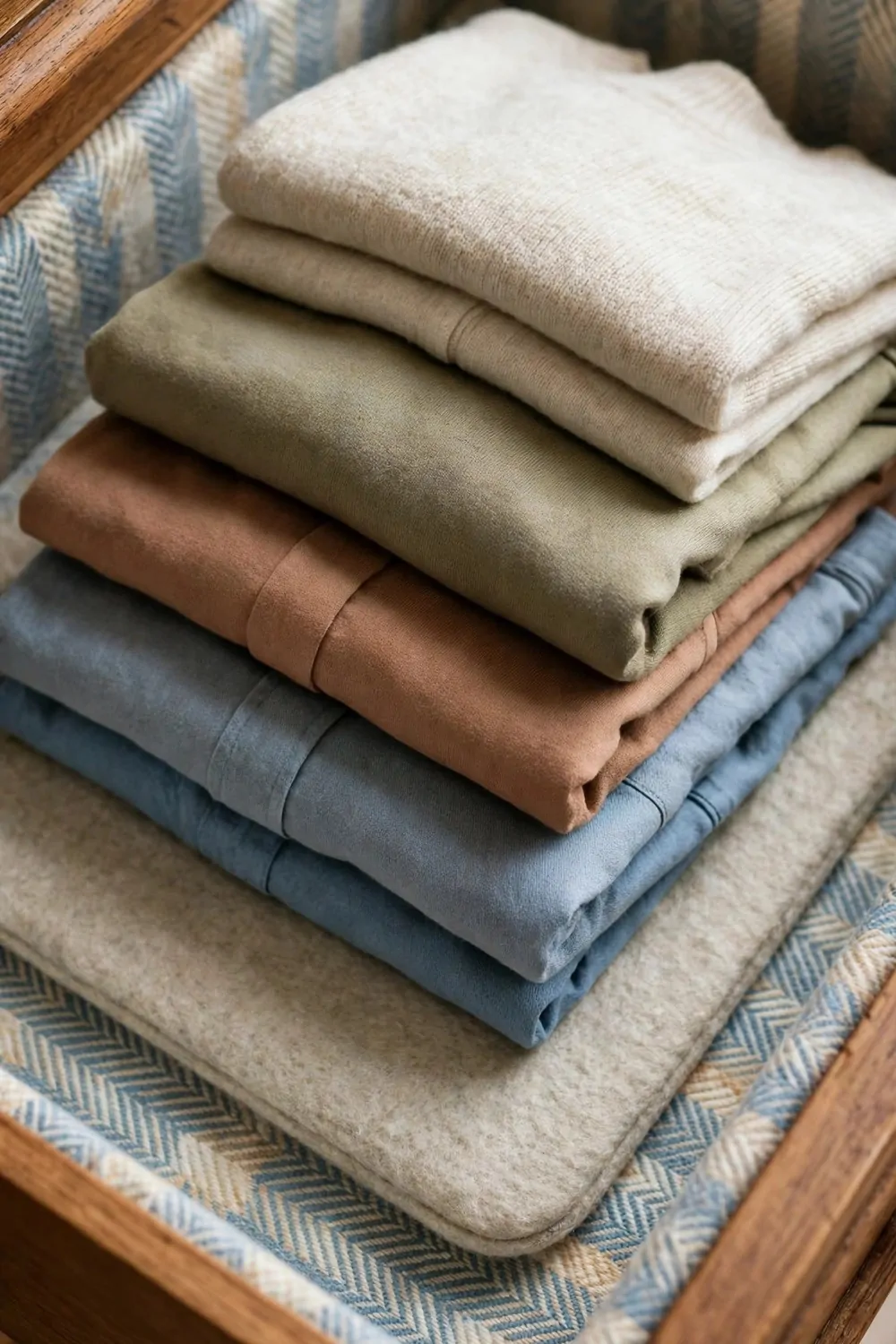
Every time I opened my drawer, the little boxes had slid to one side. It drove me mad, because I had just put them straight.
Drawer liner fixed it in five minutes. It is a thin grippy sheet that sits on the drawer floor and holds everything still.
You can buy it in rolls and cut it to fit with plain scissors. Measure once, cut once, and it drops right in.
I use the rubbery kind in the kitchen, where jars and bottles slide the most. It grips even when the drawer is a bit damp.
Felt liner is nicer for a bedroom drawer. It is soft, quiet, and it makes the drawer feel a bit fancy when you open it.
Wipe the liner clean when you wipe the drawer. Crumbs and dust stick to it, but a damp cloth lifts them off fast.
If the liner bubbles up, smooth it flat from the middle outwards. Air trapped under it makes bumps, and bumps make things wobble.
Replace the liner once a year or when it starts to curl at the edges. A curled edge catches on the drawer and pulls everything with it.
This is the cheapest idea in this whole list, and it makes every other organizer work better. Start here if you are on a tight budget.
Labelled Drawers So Everyone Knows Where Things Go
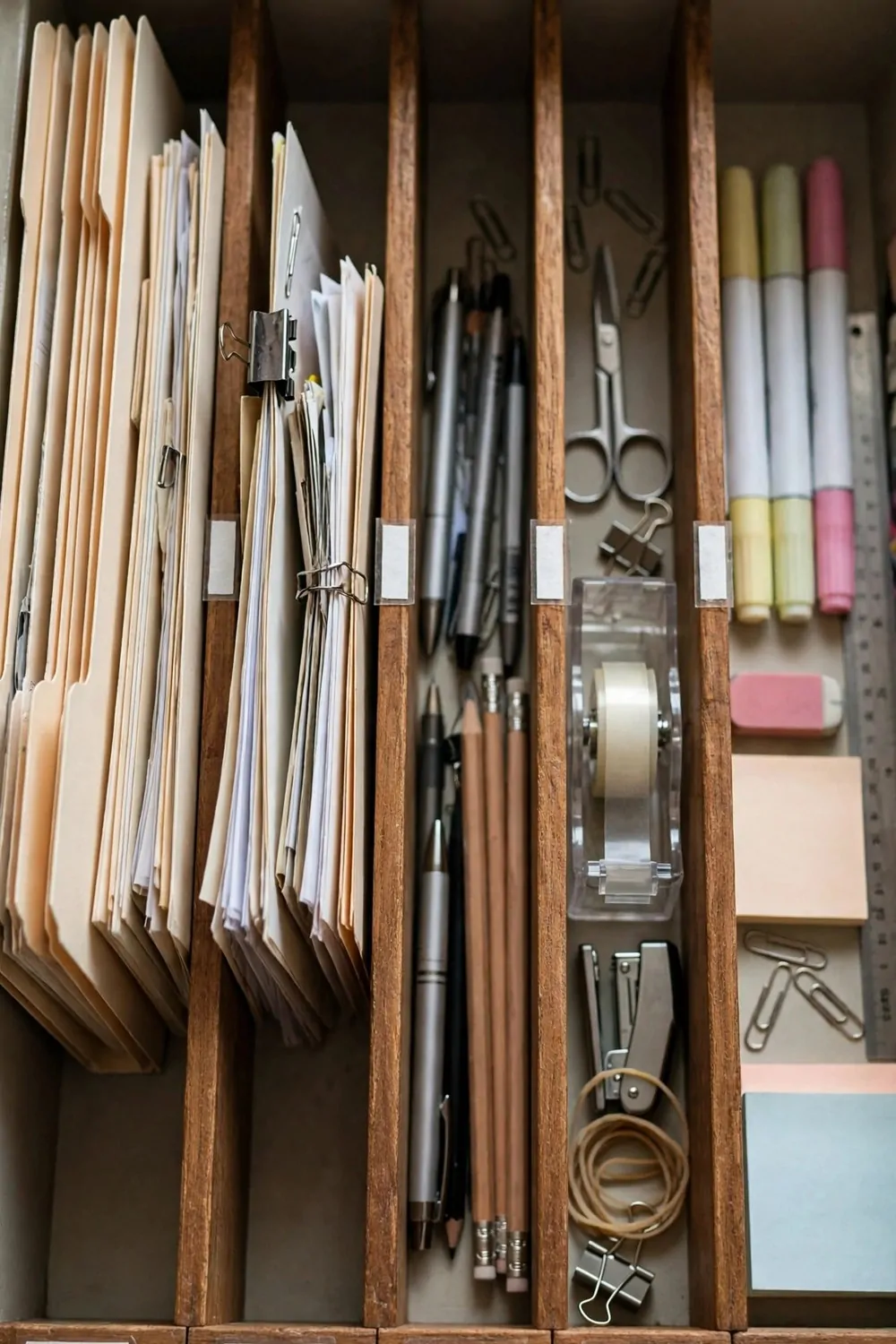
My family kept asking me where things lived. I answered the same question ten times a week, and I was tired of it.
Labels ended that. Now the drawer says what is inside, and nobody needs to ask me anything.
You can use a label maker, or just write on a small card with a pen. Both work fine, and the handwritten ones feel friendly.
Stick the label on the front of the drawer where you can see it at a glance. A label hidden inside the drawer does not help anyone.
Keep the words short and plain. “Batteries” is better than “household power supplies and spares” every single time.
Kids can read labels too, and that means they can put things back in the right spot. My son puts his socks away without being asked now.
Use pictures for little kids who cannot read yet. A drawing of a sock on the sock drawer works like magic.
Update the label when the drawer changes jobs. An old label on a new drawer just causes confusion all over again.
Labels make tidying a family job instead of one person’s job. Everyone knows where things go, so everyone can help.
A Junk Drawer That Finally Has Rules
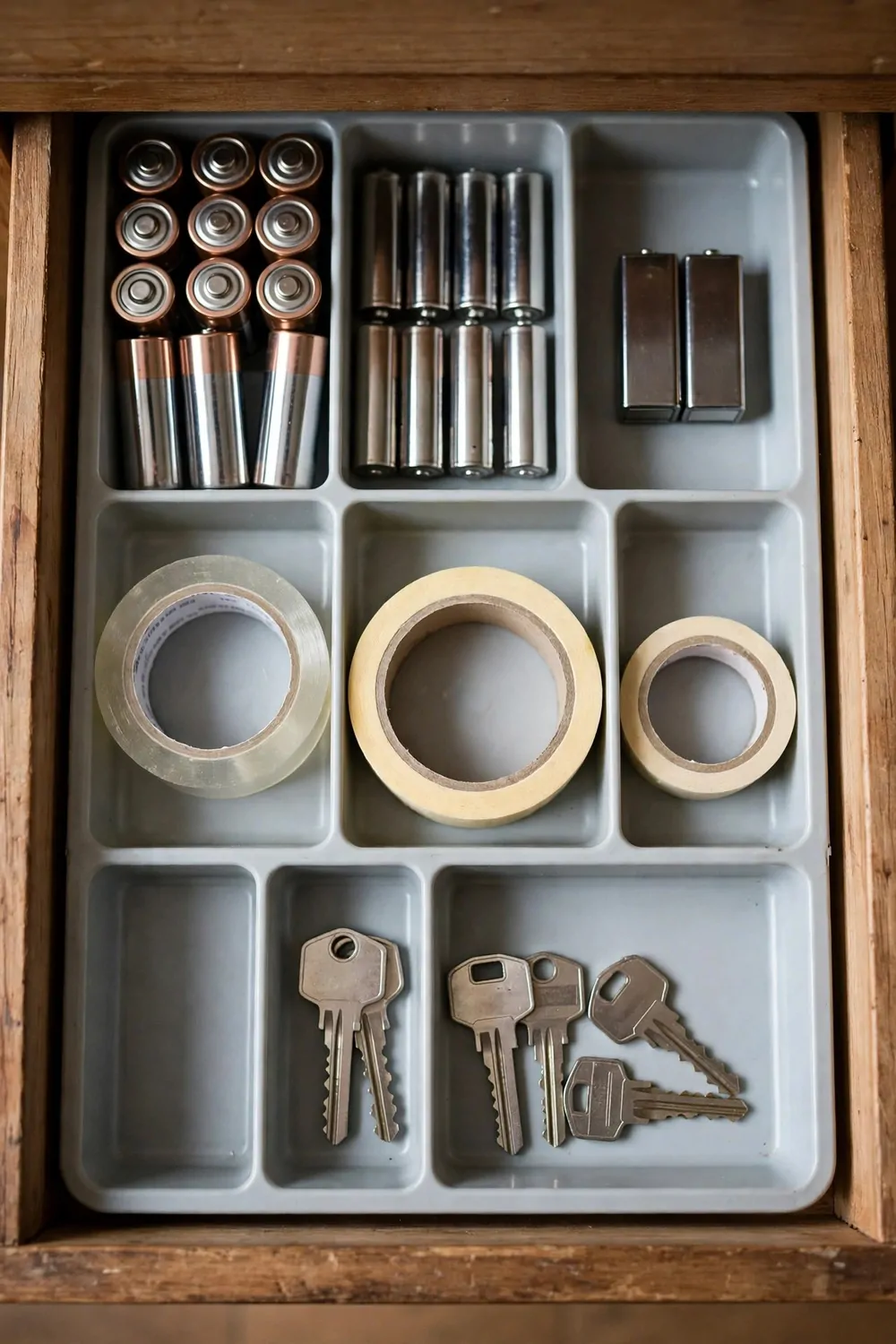
Every home has a junk drawer. Mine had batteries, tape, screws, and three chargers for phones I no longer own.
The first rule is that the junk drawer gets a size limit. If it does not fit in the tray, it does not live in the drawer.
I emptied mine onto the table and sorted everything into piles. Keep, move, and throw away. The throw away pile was the biggest.
Give the drawer small boxes for the things that stay. One box for batteries, one for tape, one for screws and nails.
The second rule is that nothing new goes in without a home. If it has no box, it goes somewhere else in the house.
I check the junk drawer once a month and take out anything that crept in. Five minutes keeps it from turning wild again.
Keep a little notepad in the junk drawer for shopping lists. I write down batteries and tape the moment I notice we are low.
The junk drawer is not a rubbish bin. If it is broken and you will never fix it, it belongs in the bin, not the drawer.
A junk drawer with rules is actually useful. I open it, find the tape, and close it again in ten seconds flat.
Spice Drawers That Keep Jars in Order
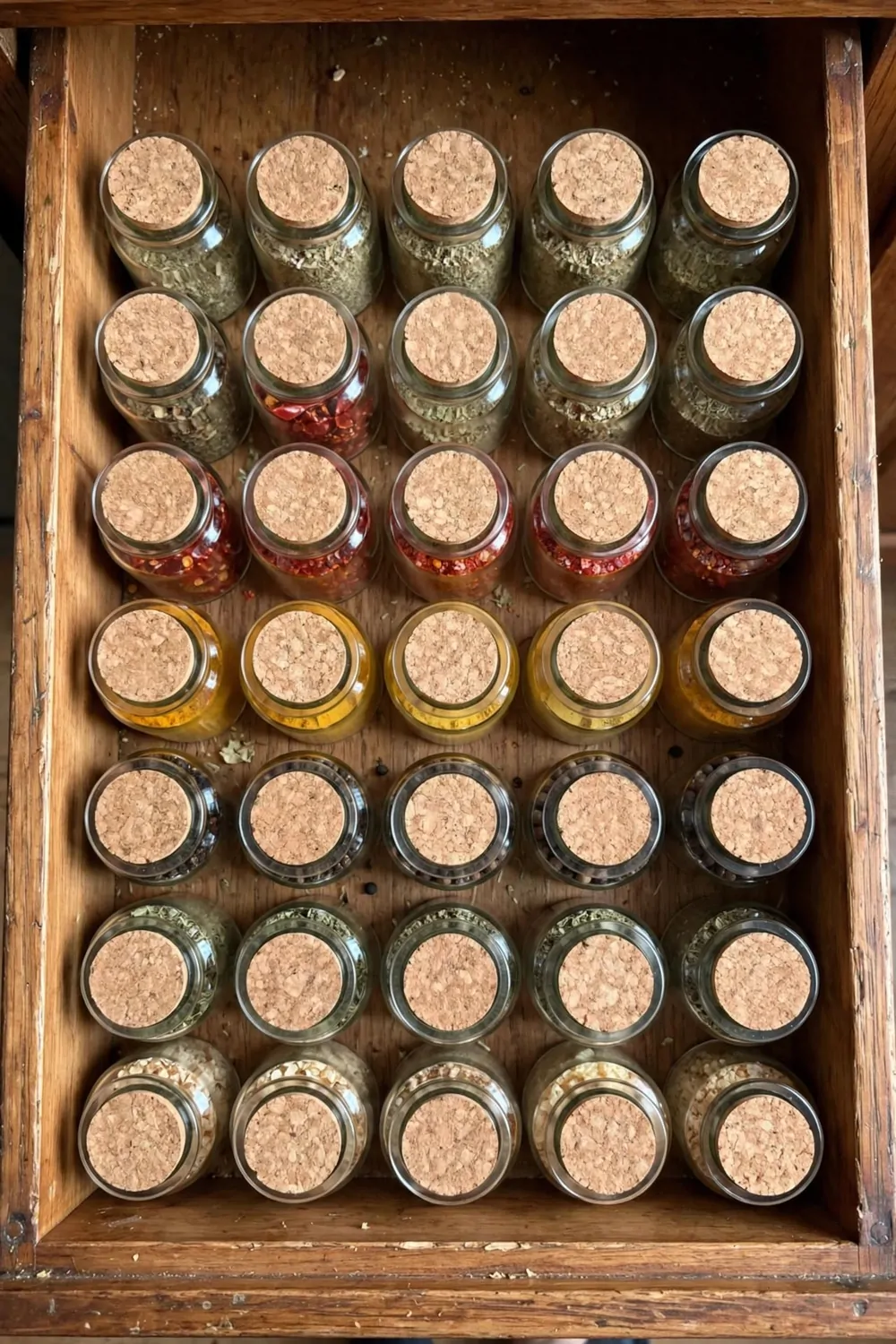
My spice jars used to live in a cupboard where I could only see the front row. The back row was a mystery, and I bought cumin three times.
A spice drawer fixes that. The jars lie flat in a tilted tray, and you can read every label at a glance.
Use a stepped insert that lifts the back jars a little higher. It works like stairs, so nothing hides behind anything else.
Put your most used spices at the front. Salt, pepper, and paprika live where my hand lands first when I am cooking.
Write the spice name on the lid as well as the side. When jars lie flat, the lid is what you see, and it saves a lot of turning.
Keep the drawer near the stove if you can. I reach for spices while food is cooking, and I do not want to walk across the kitchen.
Wipe the drawer out often. Spice dust escapes every time you open a jar, and it sticks to the drawer floor.
Throw out spices that smell like nothing. Old spices lose their taste, and they take up space a fresh jar could use.
Once your spices are in a drawer, the cupboard shelf is free for bigger things. My oils and sauces moved up there, and the kitchen feels bigger.
File Drawers With Hanging Folders Inside
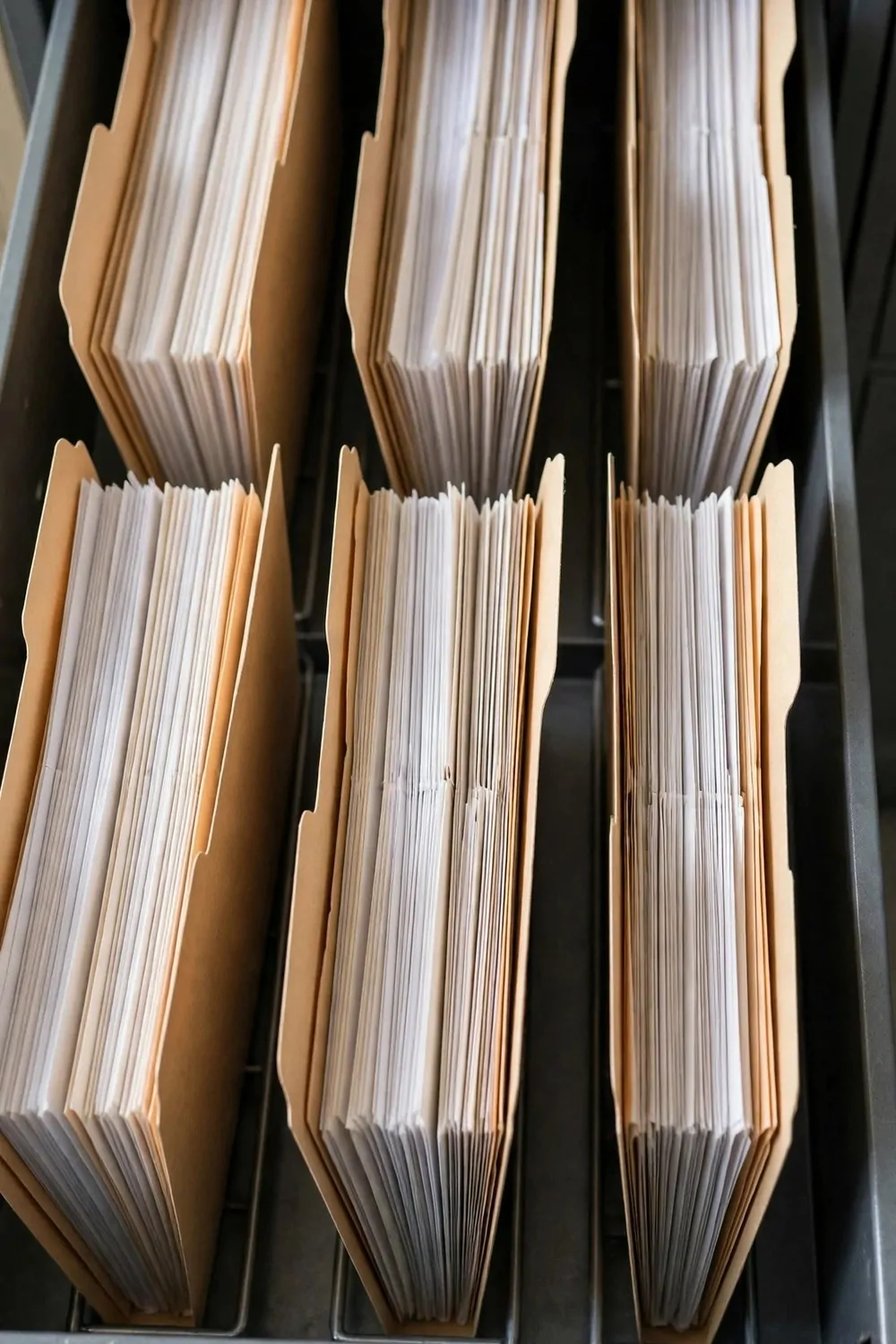
Paper piles up fast in a home. Bills, school letters, and forms all need a spot, or they take over the kitchen table.
A file drawer with hanging folders gives every paper a home. The folders hang from rails, and they slide along like clothes on a rail.
Give each folder a clear name. Bills, school, medical, and house papers each get their own folder, and nothing gets mixed up.
I keep a folder at the front for things I need to deal with this week. When it is empty, I know I am caught up.
File papers the day they arrive if you can. A letter that sits on the table for a week has a way of getting lost.
Use different colors for different kinds of paper. Green for money, blue for school, red for anything urgent. It makes finding things faster.
Once a year, go through the folders and shred what you no longer need. Old bills from years ago just take up room.
Keep the drawer near where you open the mail. Mine is by the front door, so letters go straight into the right folder.
A tidy file drawer takes the worry out of paper. When I need a document, I open the drawer and it is right there.
| Room | What lives there | Divider type | Typical cost |
|---|---|---|---|
| Kitchen | Cutlery, spices, and cooking tools | Bamboo trays and deep bins | 15 to 50 dollars |
| Bedroom | Socks, clothes, and jewelry | Fabric boxes and wooden dividers | 10 to 40 dollars |
| Bathroom | Makeup, brushes, and toiletries | Shallow trays and small bins | 10 to 30 dollars |
| Office | Files, pens, and cables | Hanging folders and metal dividers | 15 to 45 dollars |
| Kids room | Toys, crafts, and school stuff | Plastic bins and labelled trays | 5 to 25 dollars |
Craft Drawers With Tiny Compartments
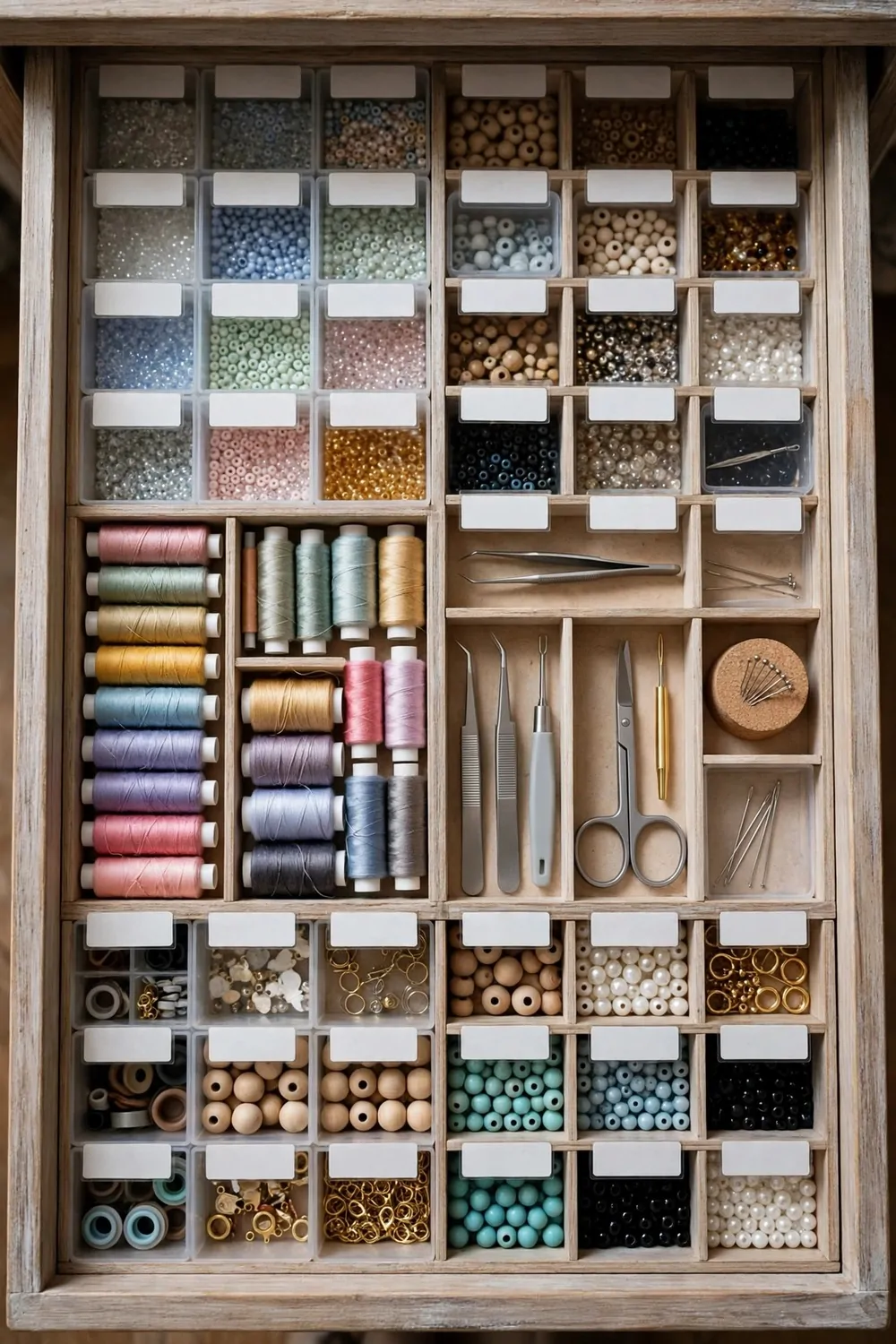
I love craft drawers that have lots of tiny spots.
Beads, buttons, thread, and stickers each get their own little home. When everything has a place, I stop losing the small stuff I need most.
Start with one drawer and a set of small trays or little boxes. You can even use an ice cube tray if you want a cheap fix.
I sort my supplies by how often I use them. The things I reach for every day sit right at the front.
Label each compartment if you can. A little sticker with a word or a drawing makes it so easy to put things back.
Keep the messiest supplies in the bottom drawer. Glitter and glue can live down there where a spill will not ruin your best paper.
I clean out my craft drawer once a month. Dried pens and tangled string go straight in the bin.
Small compartments also help kids craft on their own. They can see what is there and pick what they need without dumping the whole drawer out.
Try it this week and see how it feels. A tidy craft drawer makes starting a project so much more fun.
Tool Drawers With a Spot for Everything
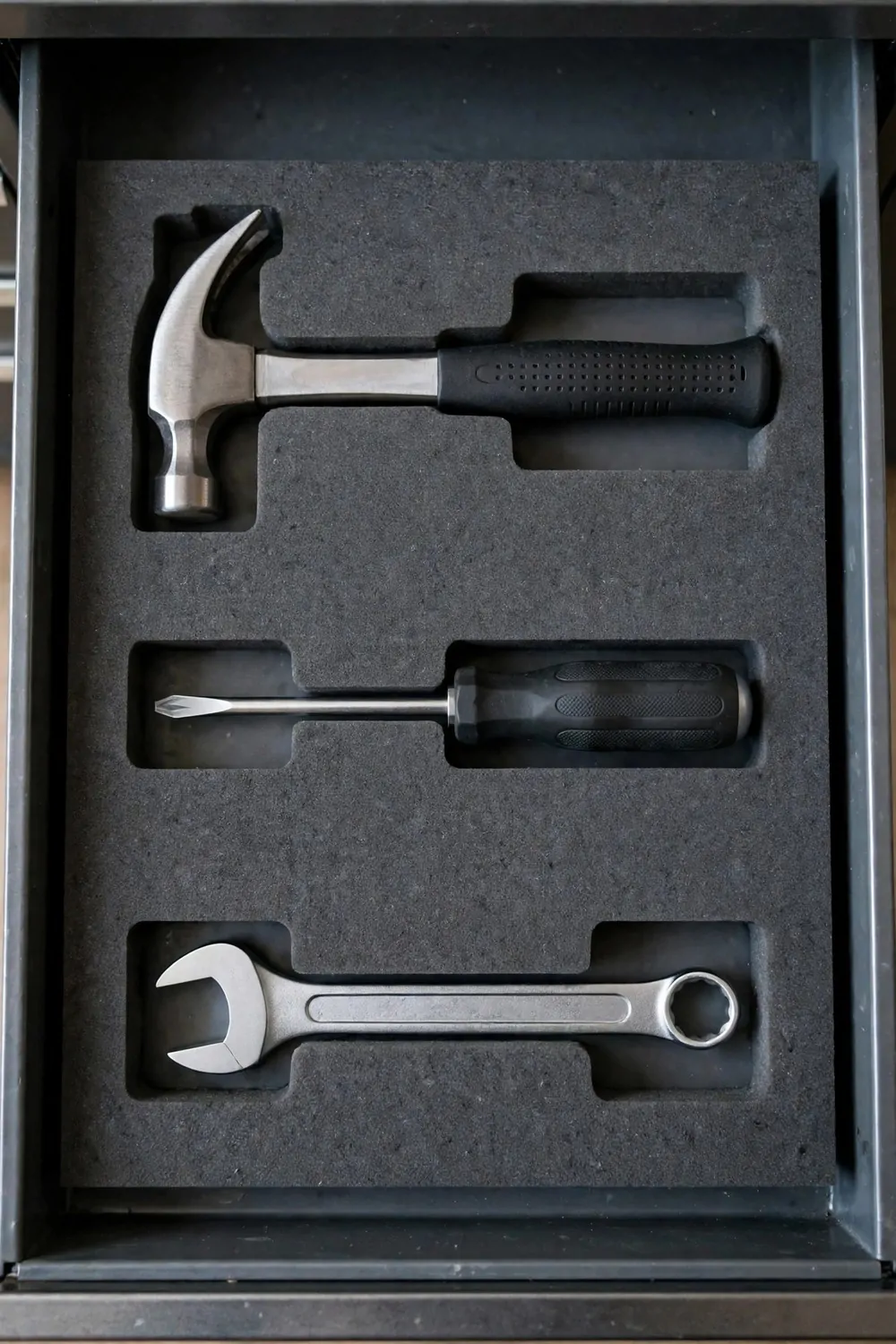
A tool drawer works best when every tool has its own spot.
I used to throw screwdrivers and tape measures in one big pile. Then I spent ten minutes looking for one small screwdriver every single time.
Foam cutouts are my favorite fix here. You lay the tool on the foam, trace around it, and cut the shape out.
It sounds like a lot of work, but it is worth it. You can see at a glance if something is missing.
Keep the tools you use most in the top drawer. Hammers, screwdrivers, and pliers should be easy to grab.
Small parts like screws and nails need their own boxes. Little jars or divided boxes stop them from rolling all over the place.
I also keep a small notepad in my tool drawer. When I run low on something, I write it down right away.
Wipe the drawer out now and then. Dust and metal bits build up fast in a tool drawer.
A tidy tool drawer saves time on every job. You will wonder why you did not do it sooner.
Sock and Underwear Drawers With Soft Dividers
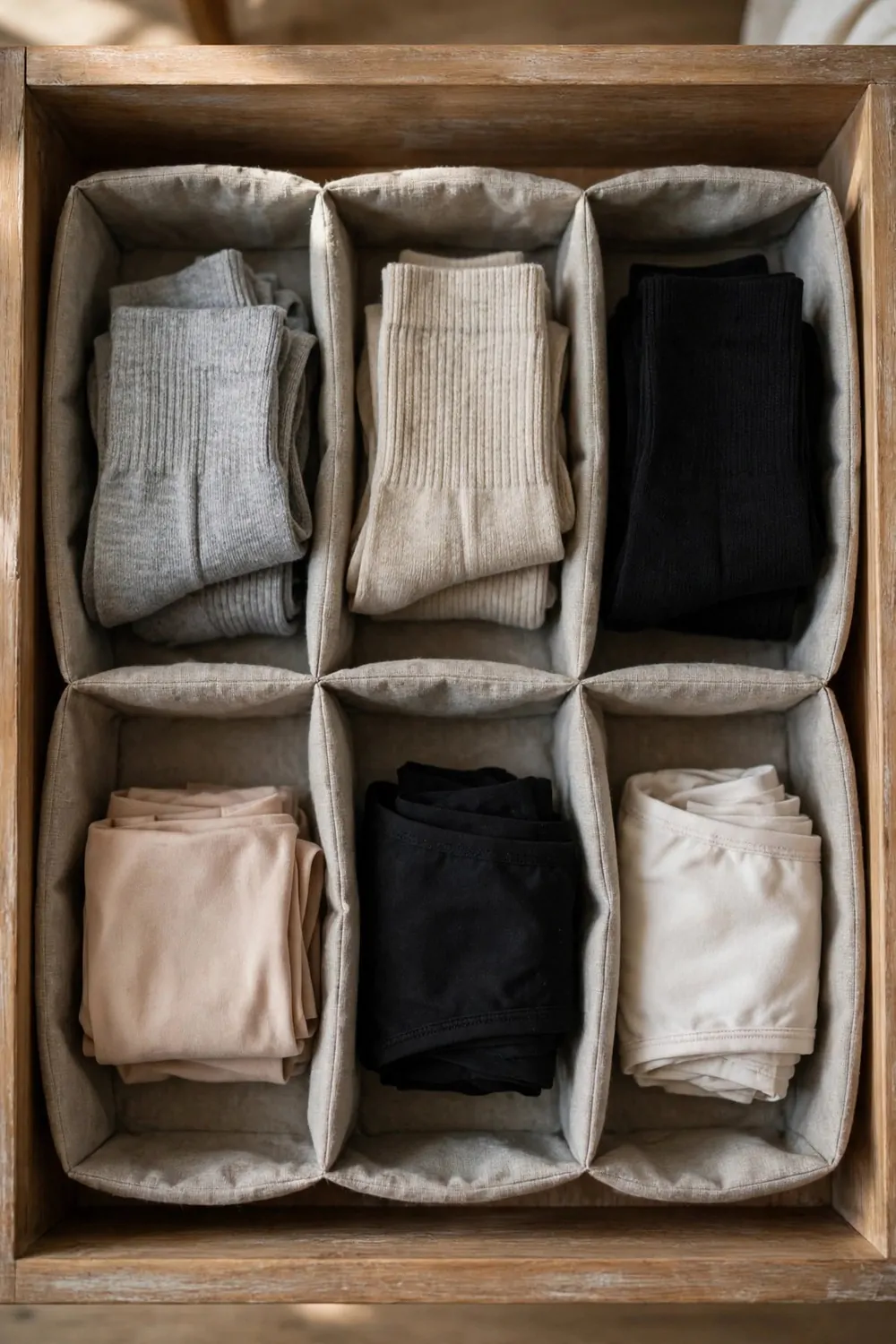
Soft dividers turn a messy sock drawer into a calm little space.
I used to just toss socks in and hope for the best. Then every morning felt like a treasure hunt for a matching pair.
Fabric dividers are soft on your clothes and easy to move around. You can fold them flat if you change your mind.
Pair your socks before you put them away. Roll each pair together so they stay matched.
I keep my everyday socks in the front rows and the fancy ones in the back. It makes busy mornings a lot easier.
Underwear fits well in the same kind of divider. Fold each piece small and stand it up so you can see it all.
Give the drawer a quick sort every week or two. One stray sock can start a whole mess again.
Kids love these dividers too. They can find their own socks without asking you for help.
A soft, tidy drawer feels so much nicer to open. It is a small change that makes mornings feel calmer.
Desk Drawers With a Pen and Paper Station
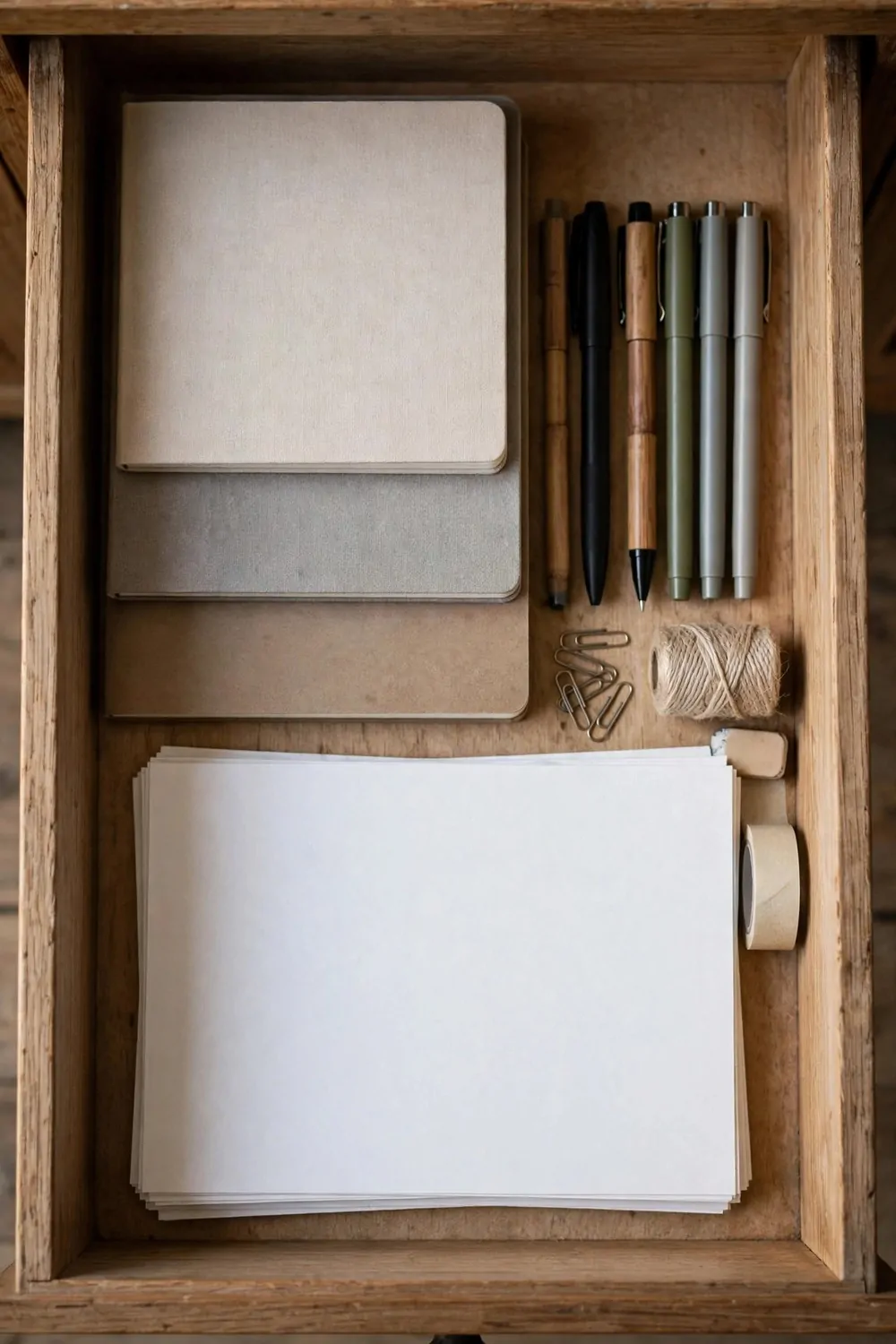
Your desk drawer can hold a little pen and paper station that is always ready.
I keep my best pens, a small notepad, and a few sticky notes in one shallow tray. When an idea pops up, I can grab a pen and write it down fast.
Pick a tray that fits your drawer with a little room to spare. It should slide out easily when you need it.
Keep only the pens that actually work. I test each one and throw out the dry ones, because a dead pen is just clutter.
Add a spot for paper clips and rubber bands too. A tiny cup or a small box keeps them from wandering.
I also keep stamps and envelopes in the back of the drawer. It is nice to have them ready when I need to mail something.
Charge cables can live in a small pouch at the side. That way they do not tangle up with your pens.
Clear the drawer once a month and take out anything you have not used. Old receipts and broken pencils tend to pile up in there.
A neat desk drawer helps you think more clearly. When your tools are ready, your work starts faster.
Bathroom Drawers With Divided Trays
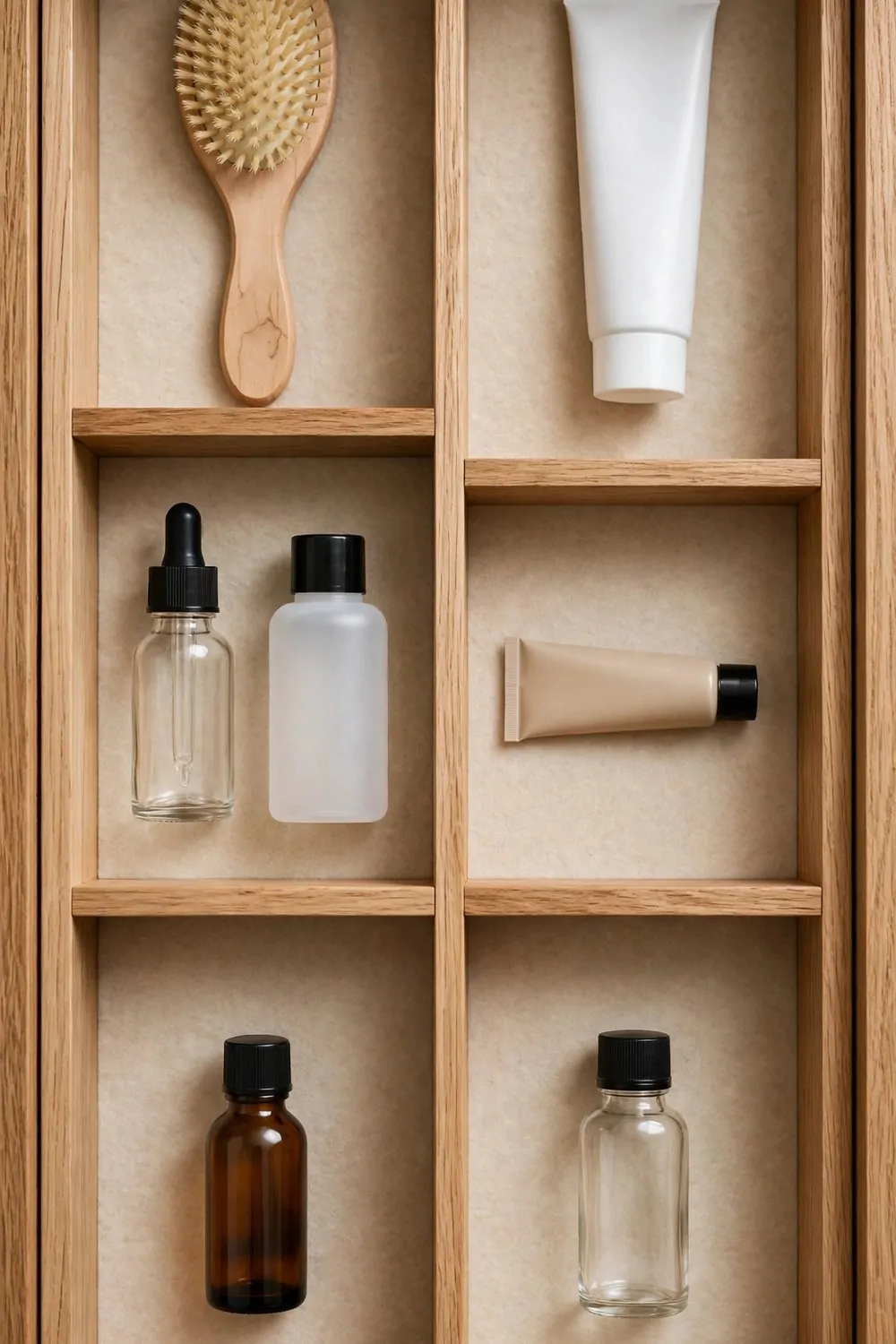
Bathroom drawers stay tidy when each thing has its own divided tray.
I put my toothbrush, toothpaste, and floss in one section. My makeup and brushes go in another section next to it.
Shallow trays work best in bathroom drawers. They keep things from sliding around when you open and close the drawer.
Keep the stuff you use every morning right at the front. Your night time things can sit a little further back.
I wipe my trays out once a week because toothpaste and lotion spill more than I expect. A damp cloth does the trick.
Small jars are great for cotton balls and hair ties. You can see what is inside without opening anything.
Share the drawer fairly if you live with someone. Give each person their own tray so nothing gets mixed up.
Toss old products when they run out or go bad. A drawer full of half empty bottles is hard to use.
A tidy bathroom drawer makes getting ready feel smooth. You will find what you need without digging around.
Linen Drawers With Folded Stacks
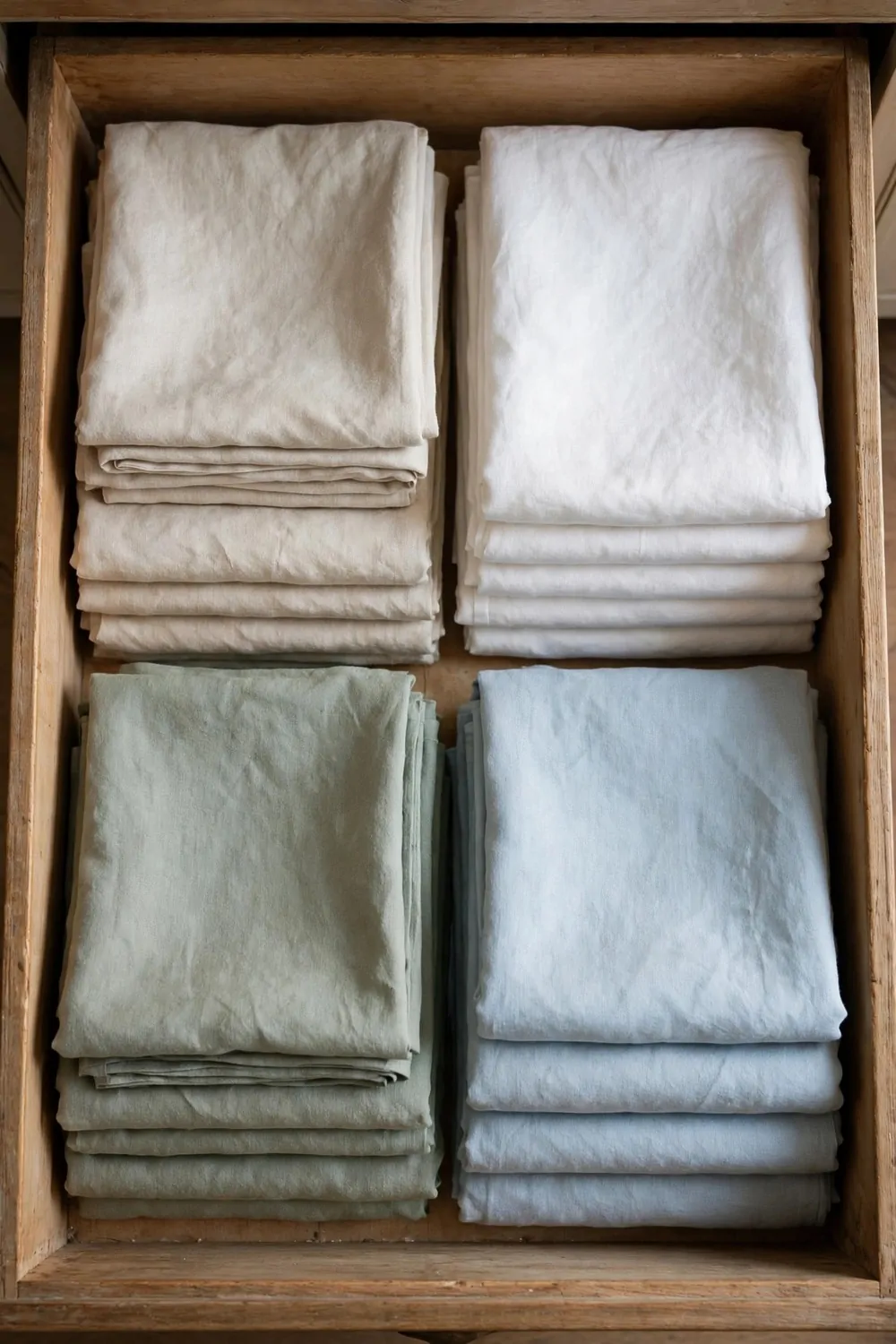
Folded stacks make linen drawers look neat and feel calm.
I fold my sheets and pillowcases into neat rectangles and stack them by set. Then I tuck the pillowcases on top of the matching sheet so nothing gets lost.
Stand the stacks up like books if your drawer is deep enough. You can see every set at a glance and pull one out without messing up the rest.
Keep the linens you use most near the front of the drawer. Guest bedding can live further back where it stays fresh.
I slip a small bag of lavender in with my linens. It keeps them smelling sweet and fresh for weeks.
Label the stacks if you have a lot of sizes. A little tag that says queen or twin saves you from unfolding three sets to find the right one.
Wash and fold your linens right away when they come out of the dryer. Warm sheets fold so much easier than cold wrinkled ones.
Do not overstuff the drawer. If you have to push hard to close it, take one set out and store it somewhere else.
A drawer full of neat folded stacks feels like a small win every time you open it. Your bed will thank you too.
Kids’ Drawers With Picture Labels
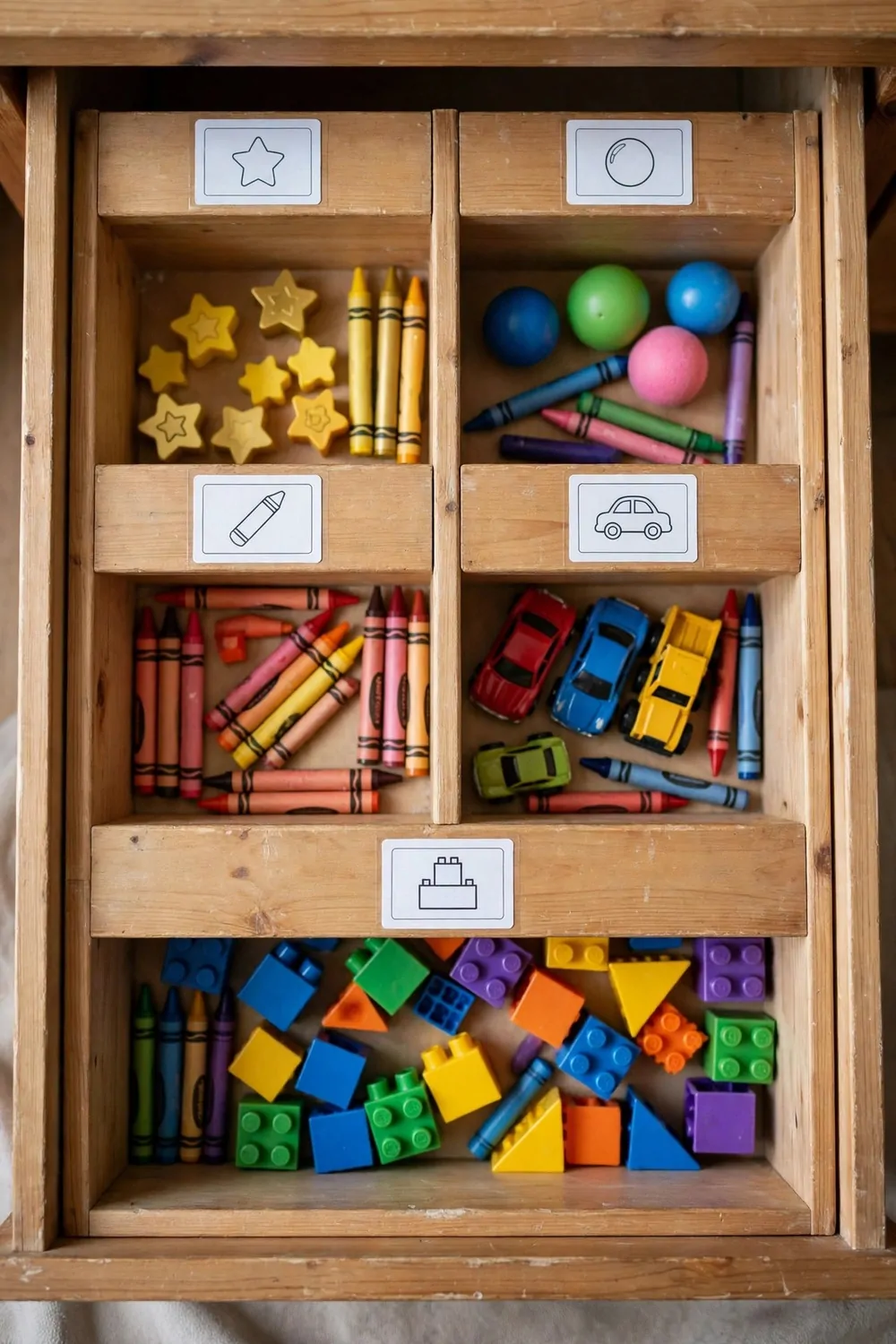
Picture labels help kids put their own clothes away without any fuss.
I stick a little drawing of a shirt on one drawer and a drawing of pants on another. My kids can read the pictures even before they can read words.
Let your child help make the labels. They can draw the pictures themselves and stick them on with tape.
Keep the labels simple and bright. A big sock picture beats a long word every time for a little kid.
I sort clothes by type first, then by drawer. Shirts in one, pants in another, and pajamas in the last one.
Fold clothes small so kids can see what is in each drawer. Big piles hide things and kids just pull everything out.
Give each child their own drawer if you can. Sharing a drawer with a sibling is a recipe for a daily mix up.
Do a quick tidy together each night before bed. It only takes two minutes and it teaches a good habit.
Picture labels make clean up feel like a game. Kids love finding the right picture and matching their clothes to it.
Jewelry Drawers With Velvet-Lined Trays
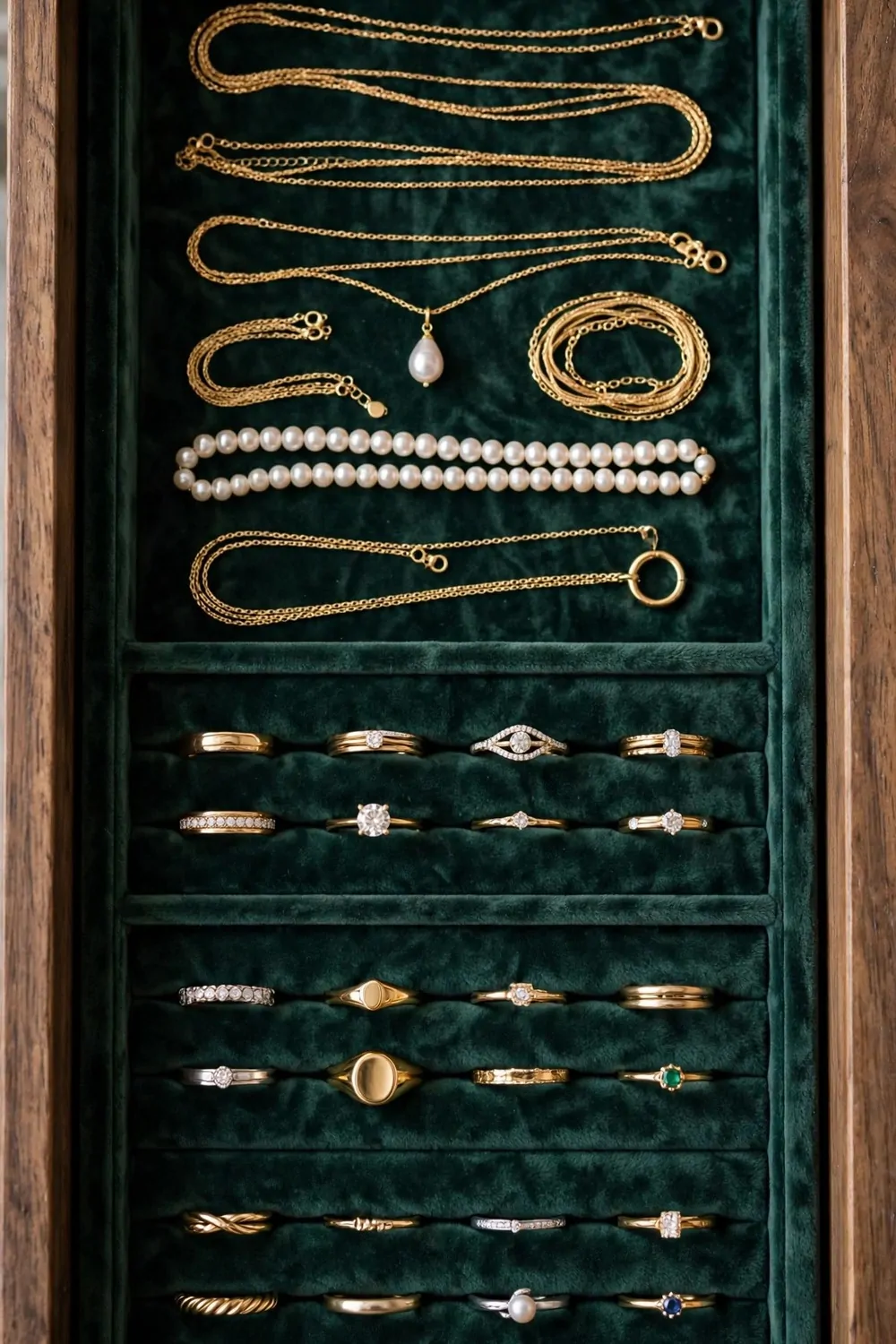
Velvet lined trays make a jewelry drawer feel special and keep pieces safe.
I love how soft the velvet feels under my rings and necklaces. Nothing scratches, and nothing tangles up in a big knot.
Pick a tray with small slots for rings and longer spots for necklaces. Each piece gets its own little home.
Keep the jewelry you wear every day at the front of the tray. Your special occasion pieces can live in the back rows.
I lay necklaces flat in their own slots so the chains do not tangle. It takes a few extra seconds, but it saves a lot of untangling later.
Earrings stay neat in pairs when they have their own tiny holes or cups. I check that each pair stays together when I put them away.
Wipe your jewelry with a soft cloth before you store it. A little care keeps it shiny for a long time.
Keep the tray in a drawer that stays dry and cool. Heat and damp can dull metal and loosen stones over time.
A velvet lined drawer turns getting dressed into a treat. You will reach for your favorite pieces more often when you can actually see them.
| Project | Size | Typical cost | Time |
|---|---|---|---|
| Add ready-made dividers to one drawer | Small | 10 to 40 dollars | An afternoon |
| Fit custom dividers in a whole dresser | Medium | 100 to 300 dollars | A weekend |
| Build a full built-in drawer wall | Large | 500 dollars and up | One to two weeks |
Pantry Drawers With Clear Bins
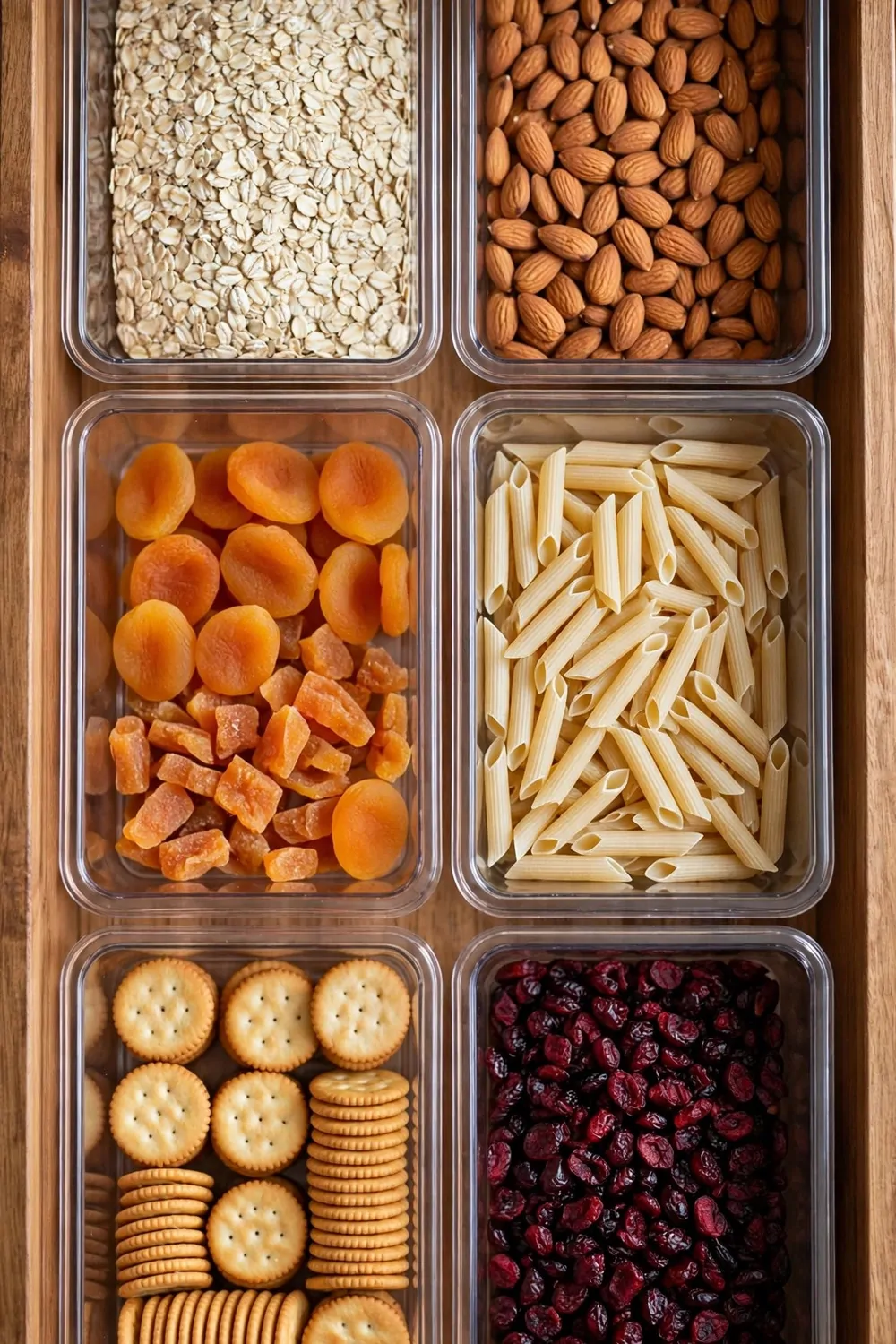
Clear bins turn pantry drawers into a place where you can see everything.
I love that I can spot the rice or the pasta without pulling every bin out. Clear plastic makes that possible.
Pick bins that fit your drawer with a little space on each side. You want them to slide out without catching.
Group food by type in each bin. Snacks in one, baking stuff in another, and sauces in a third.
I label the front of each bin with a small sticker. Even clear bins look better when you know what goes where.
Keep heavy items like cans in the lower drawers. Lighter things like packets can live up higher.
Check dates once a month and toss anything that is out of date. A tidy pantry starts with fresh food only.
Use small bins inside big bins for tiny packets. Tea bags and spice packets love their own little homes.
A clear bin pantry saves you money too. When you can see what you have, you stop buying the same thing twice.
Drawer Organizers Made From Scrap Wood
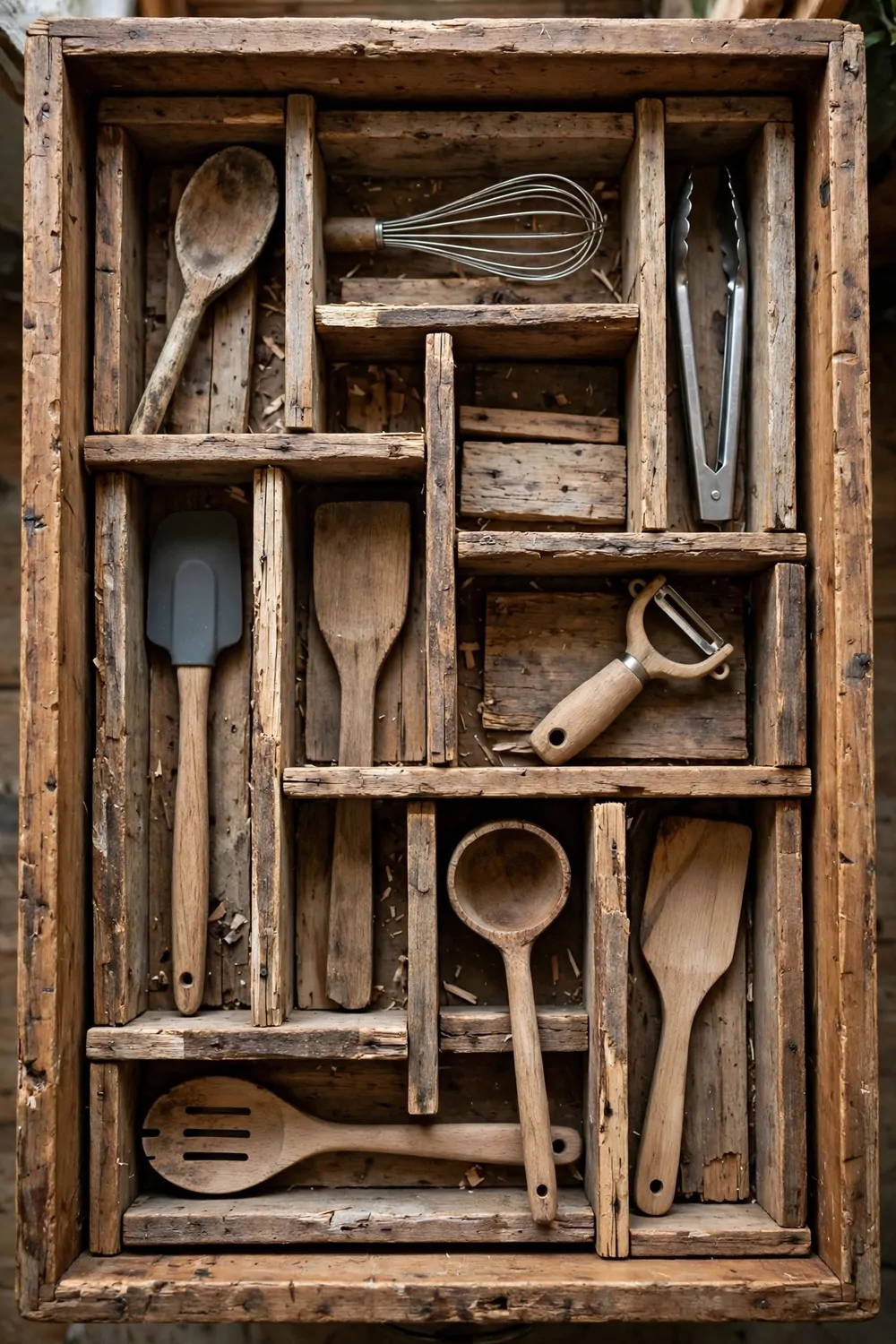
Scrap wood makes great drawer organizers and costs almost nothing.
I save leftover pieces from other projects in a box in the garage. Most of them are just the right size for a small divider.
Measure your drawer first and cut the wood to fit snugly. A tight fit keeps the dividers from sliding around.
Sand the edges smooth before you put the pieces in. Rough edges can snag your clothes or scratch your hands.
I glue the corners together for a simple box shape. You can also use small nails if you want it extra strong.
Paint or stain the wood if you like a finished look. A coat of white paint makes even rough scrap look clean and fresh.
Mix wood dividers with small boxes for the best result. Wood gives structure and boxes hold the tiny bits.
Ask a friend or a local shop for scrap pieces if you have none at home. Most people are happy to give away offcuts.
Building your own organizers feels good. You save money and end up with dividers that fit your drawer just right.
Pull-Out Drawers Inside Deep Cabinets
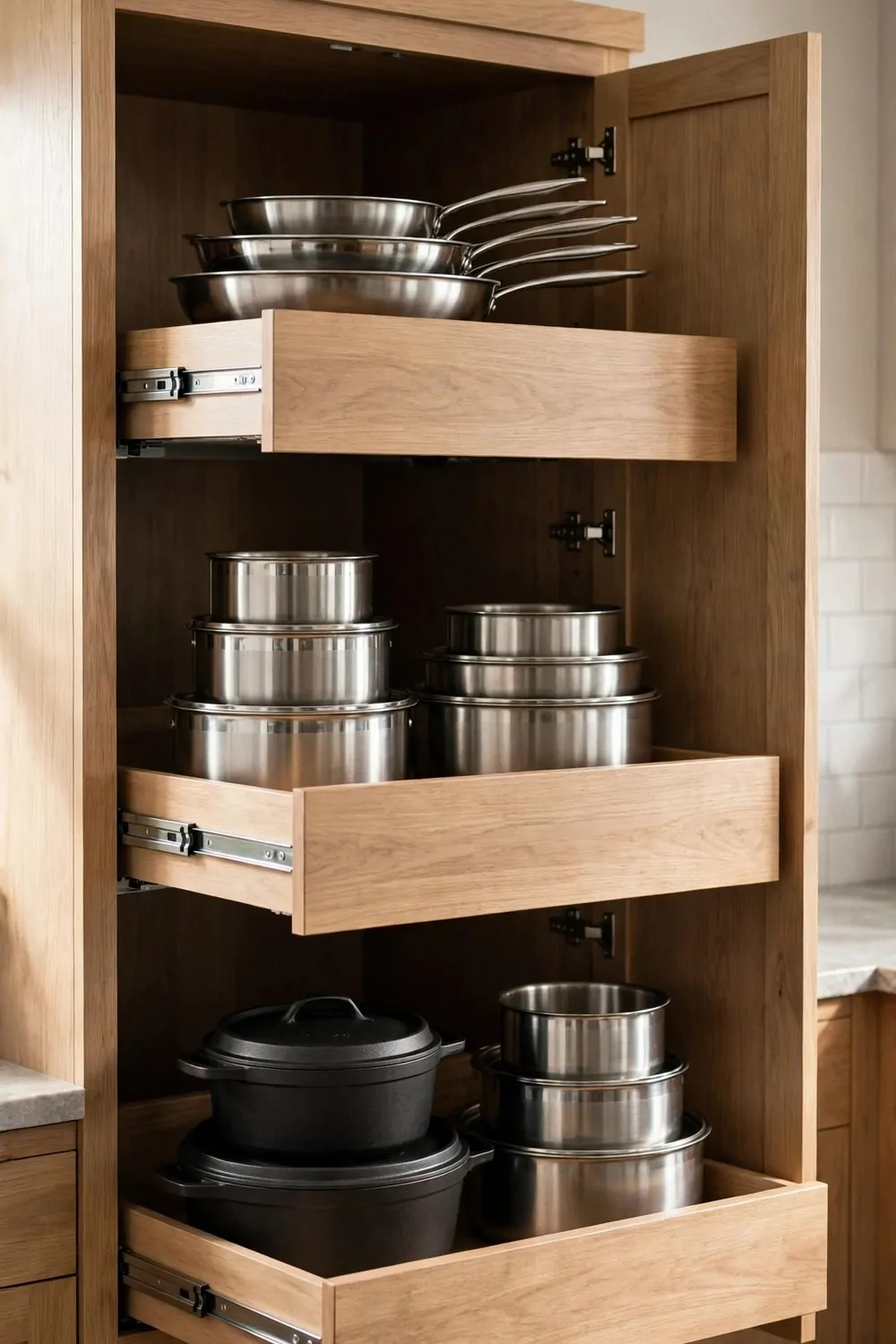
Pull out drawers fix the biggest problem with deep cabinets, the stuff lost at the back.
I used to kneel down and reach into the dark back of my cabinet for a pot. Now I just pull the drawer out and everything comes to me.
Install one pull out shelf in the cabinet you use most. Pots, pans, or cleaning supplies all work well on these shelves.
Pick strong slides that can hold heavy items. Cheap slides bend under the weight of a full pot drawer.
I keep tall items like bottles on the lower pull outs. Short items like lids and small bowls go on the upper ones.
Add a small lip or rail at the front of each drawer. It stops things from sliding off when you pull the drawer out fast.
Measure twice before you order the slides and the drawer box. Deep cabinets vary a lot, and a wrong size wastes a whole weekend.
Clean the slides now and then so they glide smooth. A little wipe keeps dust from making them stick.
Pull out drawers change how you use your kitchen. You will use the stuff at the back again because it is finally easy to reach.
A Weekly Reset Routine That Keeps Drawers Tidy
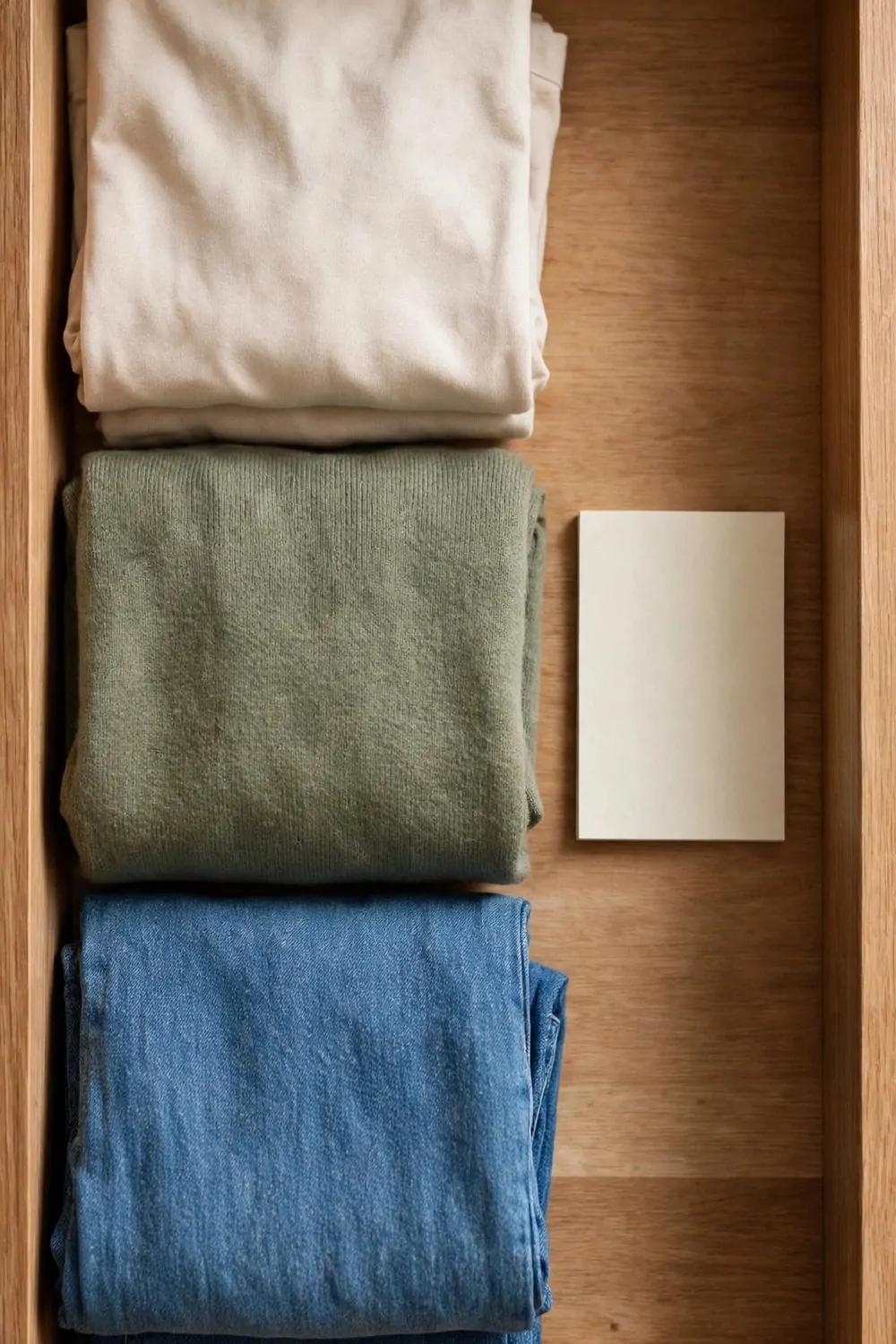
A weekly reset is the secret that keeps every drawer tidy for good.
I pick one day each week, usually Sunday evening, and spend ten minutes on my drawers. That is all it takes when you do it often.
Start with the drawer that bothers you most. Pull it out, take out anything that does not belong, and put it back where it goes.
I keep a small bag nearby for things to toss or donate. If I have not used something in months, it leaves the drawer.
Check the dividers and trays while you reset. Straighten any that have shifted and wipe out crumbs or dust.
Let the whole family join in for a few minutes. Everyone resets their own drawer and the house feels fresh fast.
I write my reset day on the fridge so I do not forget it. A little reminder keeps the habit alive.
Do not aim for perfect. A drawer that is mostly tidy and easy to use is a win.
Stick with the routine for a month and it becomes easy. Tidy drawers stop being a project and start being just how your home feels.
Keep Reading
If you liked these drawer ideas, you will love our other storage posts too. Each one is full of simple tips you can try in your own home.
We have ideas for closets, wardrobes, linen shelves, and hidden storage spots. You can mix and match them to fit your rooms and your budget.
Take a look at the posts below and pick one to read next. Your home will feel calmer with every small change you make.
- 35 Hidden Closet Storage Ideas That Maximize Every Inch
- 27 Reach-In Closet Ideas With Professional-Looking Storage Systems
- 23 Linen Closet Organization Ideas That Look Professionally Designed
- 29 Built-In Wardrobe Ideas for Small and Large Bedrooms
Come back any time you need a fresh idea for your home. I am always sharing new ways to keep things neat and simple.