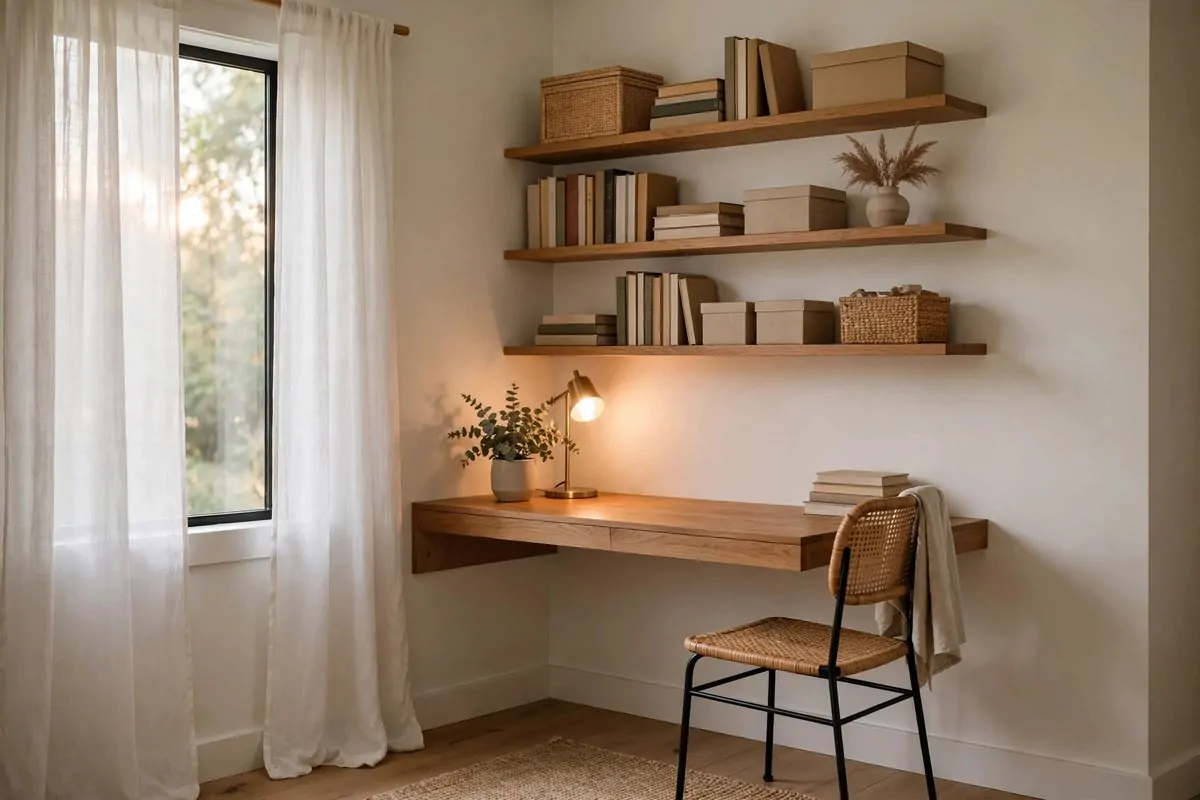
31 Custom Closet Organizer Ideas That Look Better Than Standard Shelving

Most closets in new homes come with the same sad setup. One wire shelf runs along the top, one lonely rod hangs below it, and that is the whole plan.
That single rod was never meant to hold a real wardrobe. Your shirts slide to one end and crowd together. Your folded sweaters pile up on the wire shelf until the stack leans like a tower that is about to fall. Shoes end up in a heap on the floor, and the things you wear least get buried at the very back where you cannot even see them.
A custom closet organizer changes all of that because it is built around your clothes, not around the builder’s cheapest option. Every rod sits at the right height for what hangs on it. Every drawer has a job. Nothing is wasted, and nothing is hidden behind something else.
Here are 31 custom closet organizer ideas that look better than standard shelving, and I hope one of them fits your closet too.
Double Hanging Rods That Double Your Shirts
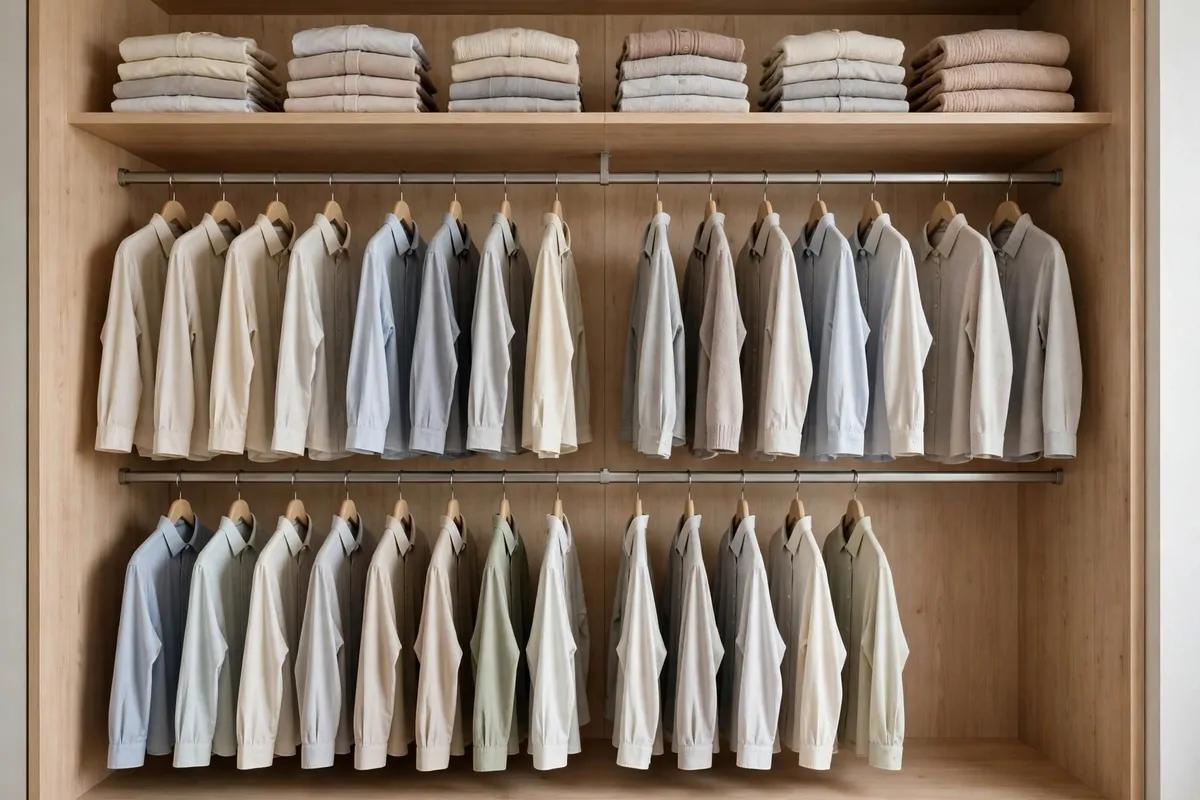
One rod wastes the whole bottom half of your closet.
Two rods stacked on the same wall use that empty air instead. Your short shirts hang on the top rod, and your short shirts hang on the bottom rod too, so one wall suddenly holds twice as much.
I love how this looks when you do it right. Matching hangers in one color make the whole wall look calm, like a small shop, and you can see every shirt at once instead of digging through a crowded row.
Keep the rods about forty inches apart if you can.
That gives your shirts room to hang straight without brushing the ones below. If the rods sit too close together, the hems touch and everything looks squashed.
This works best for shirts, blouses, and folded pants. Long dresses and coats need their own taller spot, so save one section of the closet for those.
The cost stays friendly too.
A second rod is just a rod and two brackets, and most closets can take one in an afternoon. You get double the hanging space for very little money, and that is hard to beat.
Start with one wall and see how it feels.
A Shelf Above Every Hang Rod
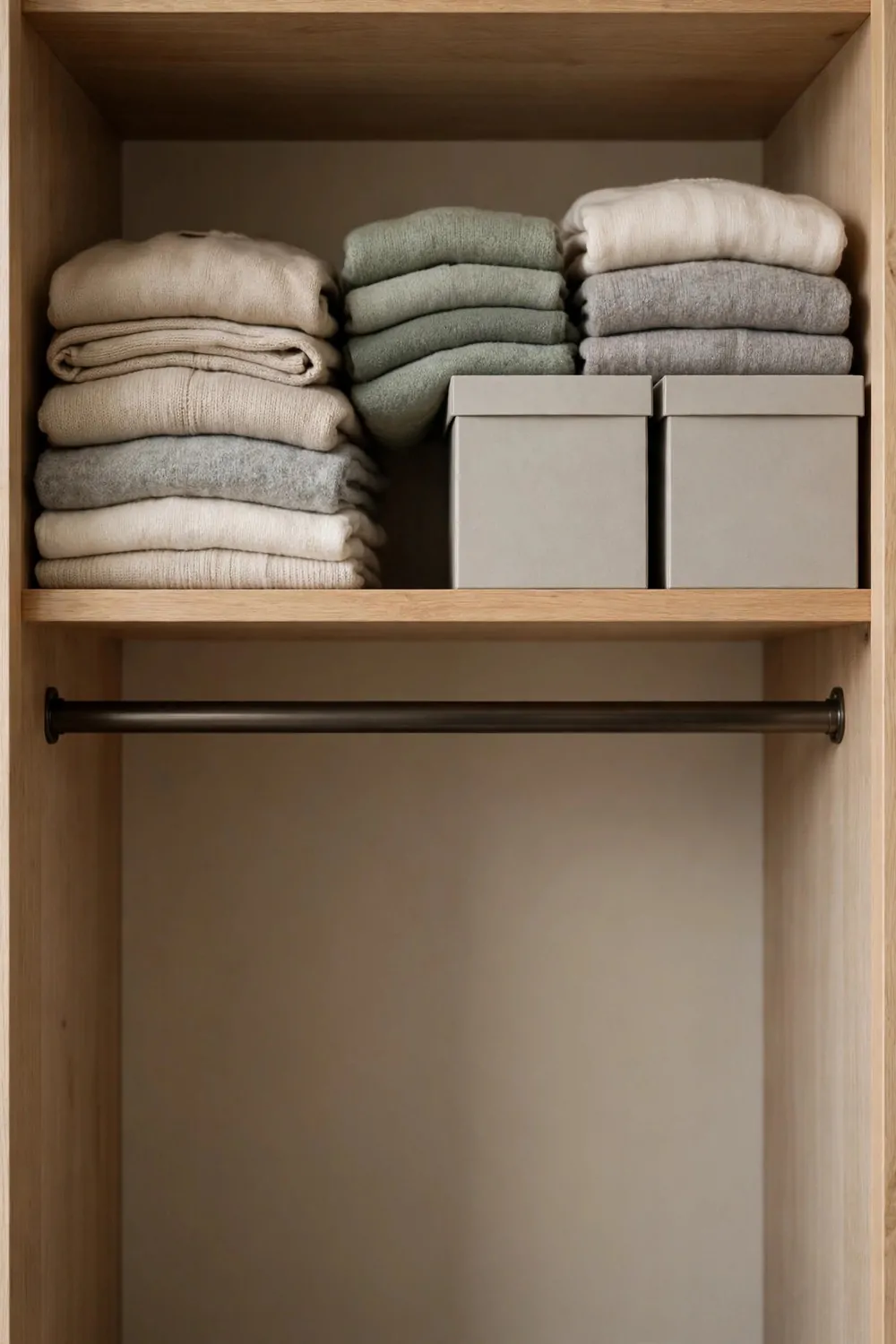
The space above a hanging rod is easy to forget.
Most people hang their clothes and never look up. But that strip of wall above the rod is perfect for one more shelf, and it holds the things you reach for often but do not want to hang.
Folded sweaters live happily up there. So do jeans, plain boxes, and the bags you grab on a regular day. Keep the shelf close enough to reach without a step stool, and it becomes part of your daily routine instead of dead space.
Do not stack things too high on it.
A tall wobbly pile of sweaters falls over the second you pull one out. Two or three folded items per stack is plenty, and you can still see what is there.
Matching boxes help a lot here.
Pick one color and one size, and the shelf looks neat even when the boxes hold messy things. Label the fronts if you like, but keep the labels simple so the shelf stays calm.
Leave the front edge of the shelf clear.
A shelf packed right to the edge looks crowded and makes it hard to pull anything down. A small gap at the front keeps it looking tidy and stops things from sliding off onto your clothes below.
Drawers Instead of More Shelves
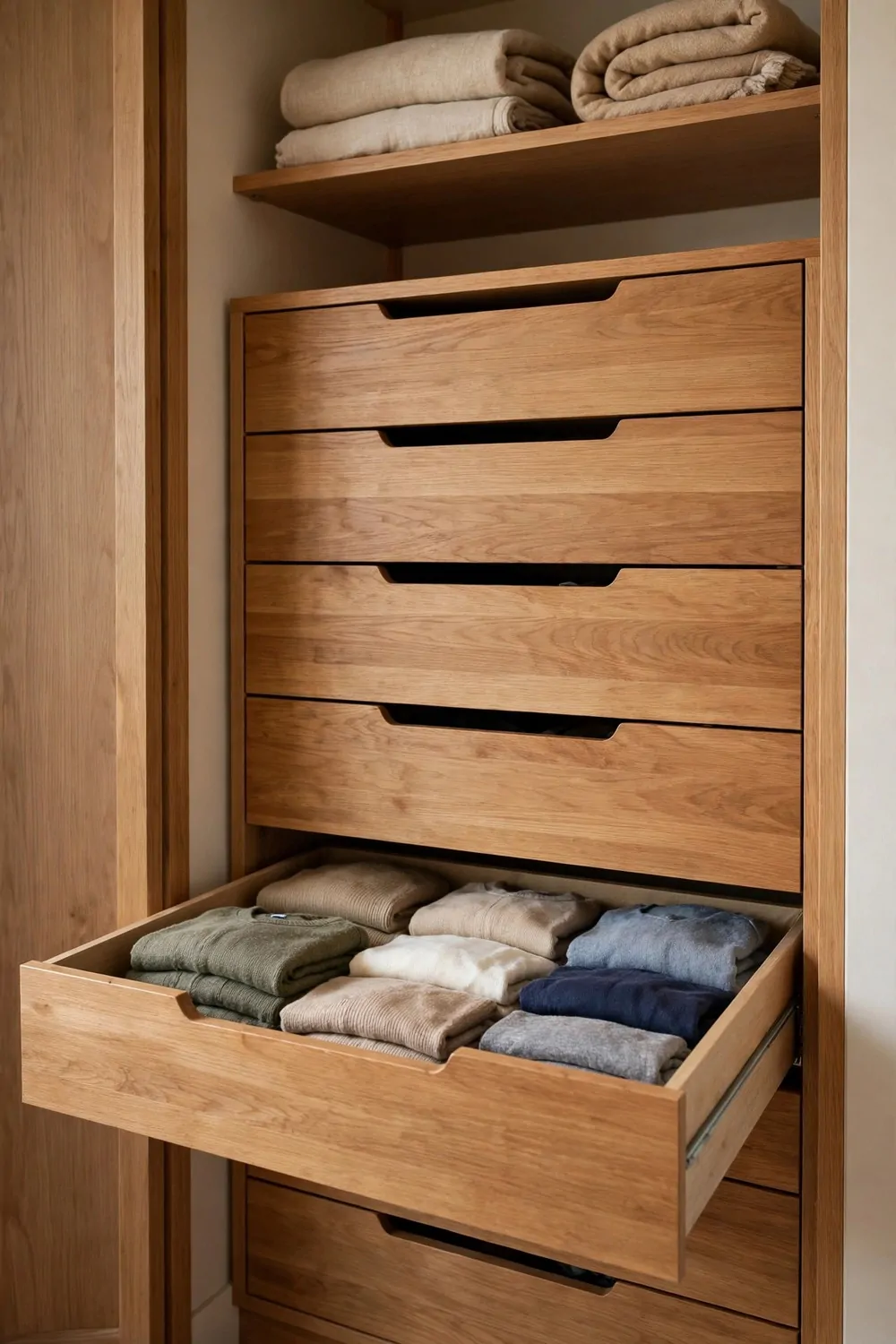
Shelves are fine for things you want to see.
Drawers are better for everything else. A drawer hides the mess, keeps dust off your clothes, and lets you pull the whole thing out to see what is inside in one quick look.
I think of drawers as the quiet workers of a closet. They hold underwear, socks, t-shirts, and all the small stuff that slides off a shelf or ends up in a pile on the floor.
A bank of three or four drawers fits most closets.
Put the shallow ones on top for small things, and the deep ones at the bottom for bulky sweaters or jeans. That way you never have to dig to the bottom of a deep drawer for a pair of socks.
Soft-close drawers are worth the little extra money.
They shut with a gentle push and never slam, which matters more than you think when you are getting dressed early and the rest of the house is still asleep.
Give every drawer one job.
One drawer for socks, one for t-shirts, one for gym clothes, and nothing else mixed in. When a drawer has one job, you open it and find what you need in seconds.
Adjustable Shelves That Move With Your Wardrobe
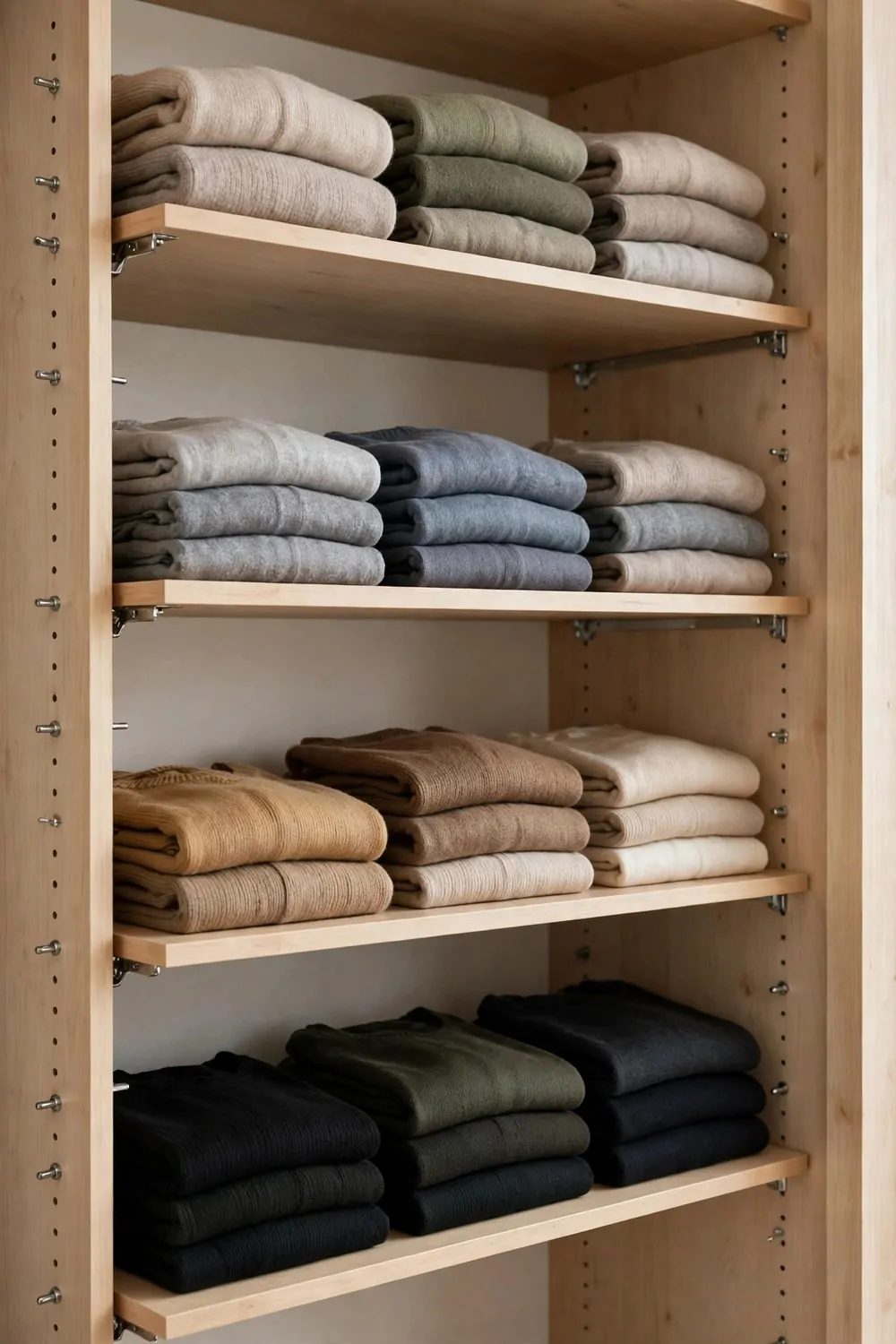
Your wardrobe changes over time.
One year you own ten sweaters and two dresses. The next year it is the other way around. Fixed shelves cannot keep up with that, but adjustable shelves can, because you just move the pins and the shelf moves with you.
I like shelves with holes drilled every inch or so down the sides. That gives you plenty of choices for where each shelf sits, and you are never stuck with a gap that is too tall or too short for what you own.
Think about what you actually fold before you set the heights.
Thin t-shirts need a short gap. Thick winter sweaters need a tall one. Set each shelf for the thing that lives on it, and nothing wastes space.
Move them when the seasons change too.
Summer clothes are thin and light, so you can squeeze more shelves in. Winter clothes are thick, so give them room to breathe and pull two shelves out if you need to.
Keep a few spare shelf pins in a small bag inside the closet.
Pins are tiny and easy to lose, and you will want them the day you decide to move a shelf. A little bag taped inside a door keeps them right where you need them.
A Shoe Wall With Slanted Shelves
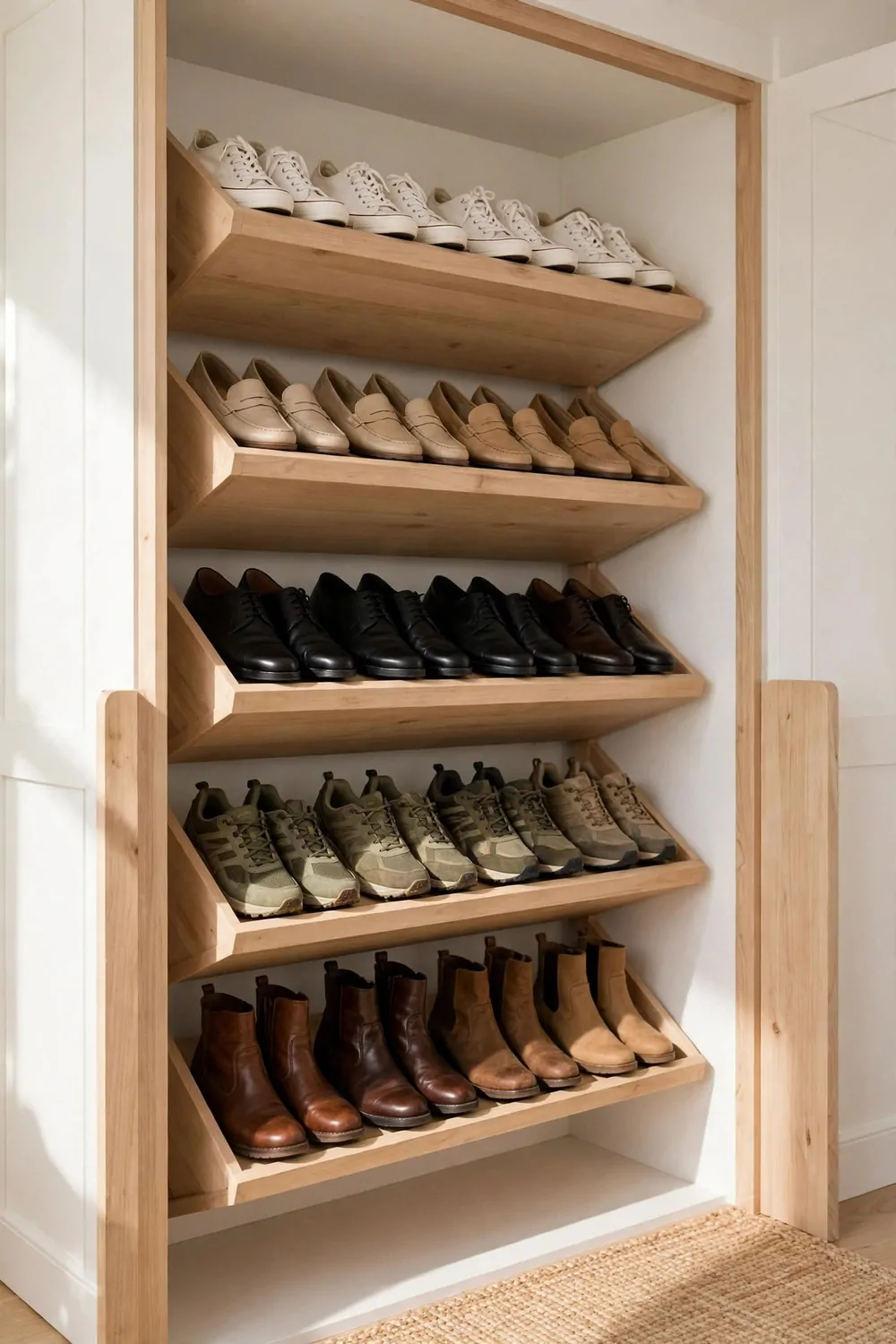
Shoes on the floor are a mess waiting to happen.
A shoe wall fixes that by giving every pair its own slanted shelf. The slant tips the shoes forward just enough that you can see them all, and the wall turns into a little display instead of a pile.
I love how a shoe wall looks in the morning. You walk in, you see your options, and you pick a pair without digging through a heap or finding one shoe under the bed.
Slanted shelves work best for flat shoes and heels.
Boots are too tall for the slant, so give them their own cubbies or a flat shelf at the bottom. That keeps the wall tidy and the boots upright.
Leave a little gap between the shelves.
Your shoes need air around them or they start to look crowded. A small gap also stops dust from settling on the pair below, and it makes the whole wall feel lighter.
Put your most worn pairs at eye level.
The shoes you grab every day should be the easiest to reach. Save the high shelves for special occasion pairs and the low shelves for the ones you wear less often.
Pull-Out Drawers for Shoes
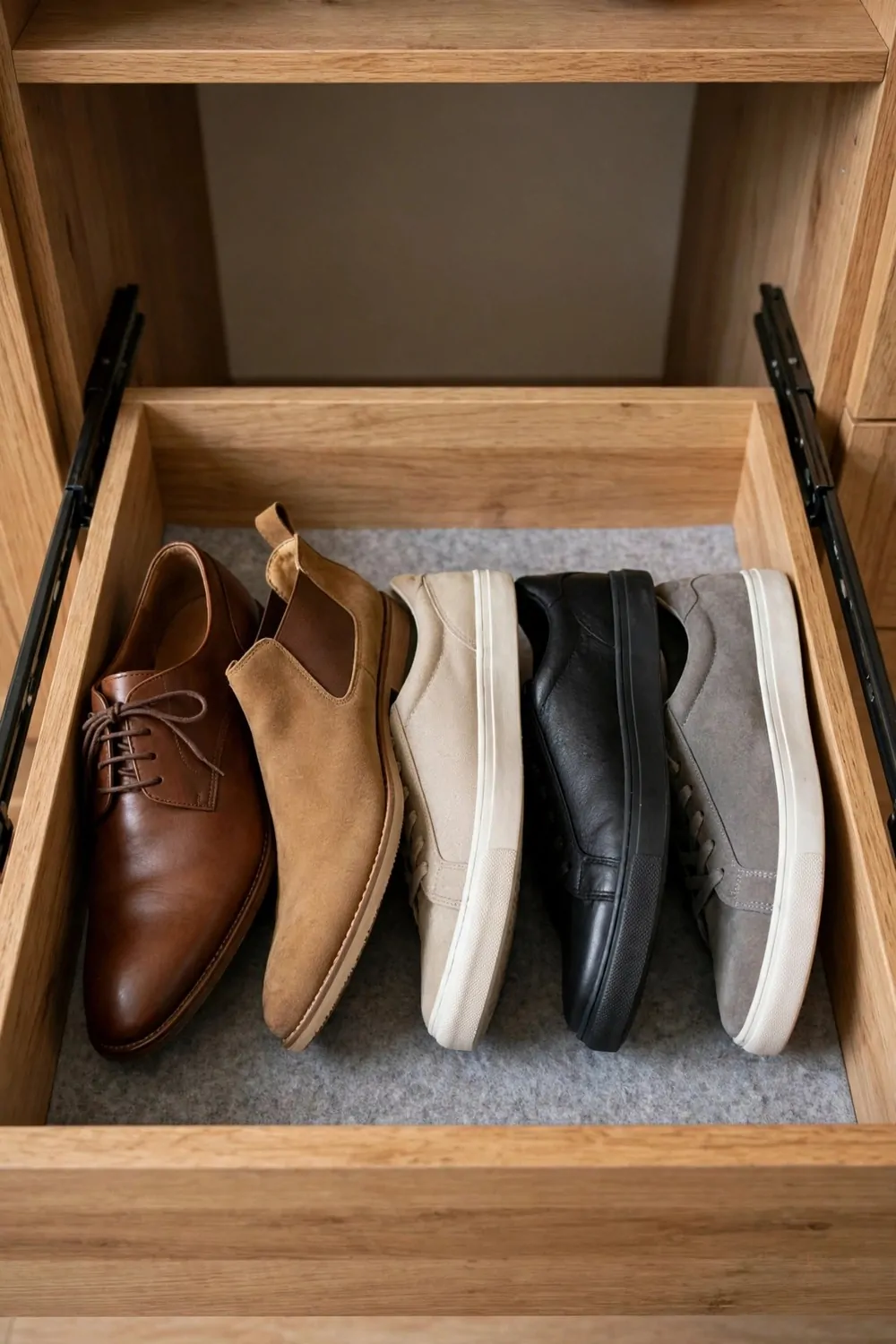
Some shoes do not belong on display.
Your everyday trainers, your garden shoes, the pair you wear to walk the dog. Pull-out drawers hide those pairs away but keep them easy to grab, because the drawer slides out and shows you everything at once.
I think pull-out shoe drawers are one of the smartest ideas in a small closet. They use the low space near the floor, which is often wasted, and they keep the messy pairs out of sight when guests open the closet door.
Line the drawers with something easy to clean.
Shoes bring in dirt, and a wipeable liner saves you from scrubbing the wood later. A thin rubber mat works well, and it stops the shoes from sliding around when you pull the drawer open.
One pair per slot is the rule.
Two pairs crammed into one slot means you cannot find either of them. Give each pair its own space, and the drawer stays useful instead of turning into a jumble.
Keep the drawers low and the shelves high.
Low drawers are easy to pull open without bending far, and they keep heavy shoes near the floor where they belong. Save the high spots for light things you rarely need.
A Centre Island for Folding and Getting Dressed
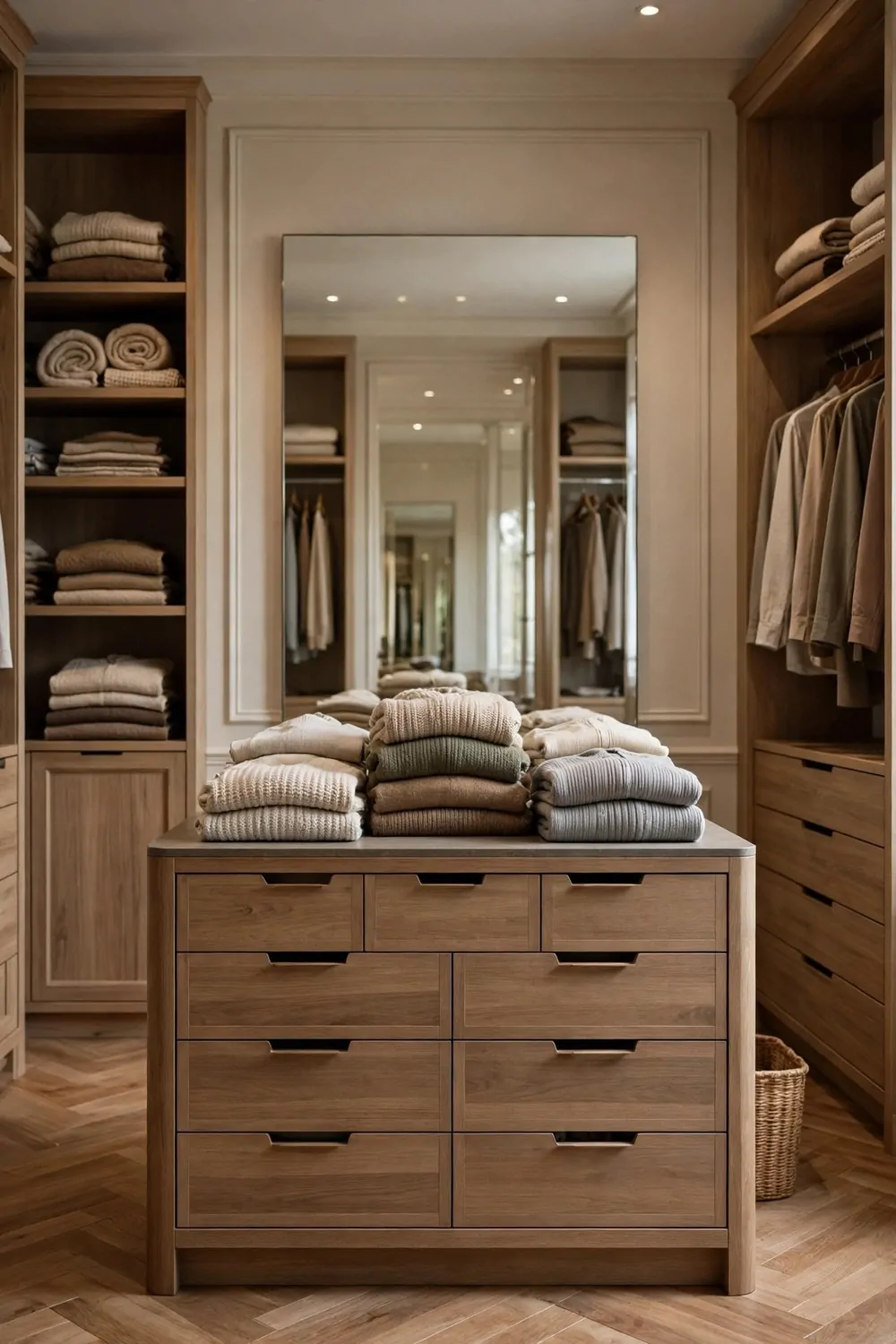
A walk-in closet with an island in the middle feels like a real dressing room.
The island gives you a flat top for folding clothes, drawers underneath for the things you use every day, and a place to lay out tomorrow’s outfit before you go to bed.
I think the island is the piece that makes a closet feel finished. Without it, a walk-in is just a big empty room with clothes around the edges. With it, the room has a heart.
Keep the top clear most of the time.
An island covered in clutter is just a table in the way. Use it for folding and laying things out, then clear it off, and it stays beautiful.
The drawers in an island are perfect for jewelry, watches, and small things.
Put a soft lining inside, and your favorite pieces stay safe and easy to find. A mirror on the wall behind the island turns the whole setup into a proper getting-ready spot.
Measure the walking space before you buy one.
You need room to walk all the way around the island without turning sideways. If the closet is too narrow, a slim island or a small bench works better and still gives you that dressed-up feeling.
| Organizer | What it holds | Best for | Typical cost |
|---|---|---|---|
| Double hanging rods | Shirts, blouses, and short tops | Small closets that need more hanging space | 50 to 150 dollars in total |
| Drawer bank | Underwear, socks, t-shirts, and folded clothes | Hiding small things and keeping dust away | 200 to 600 dollars in total |
| Shoe wall | Flats, heels, and everyday shoes | Seeing every pair at a glance | 150 to 500 dollars in total |
| Centre island | Jewelry, folded clothes, and daily items | Walk-in closets with room in the middle | 400 to 1,500 dollars in total |
| Adjustable shelves | Folded clothes, boxes, and seasonal items | Wardrobes that change with the seasons | 100 to 400 dollars in total |
Built-In Jewelry Drawers With Soft Linings
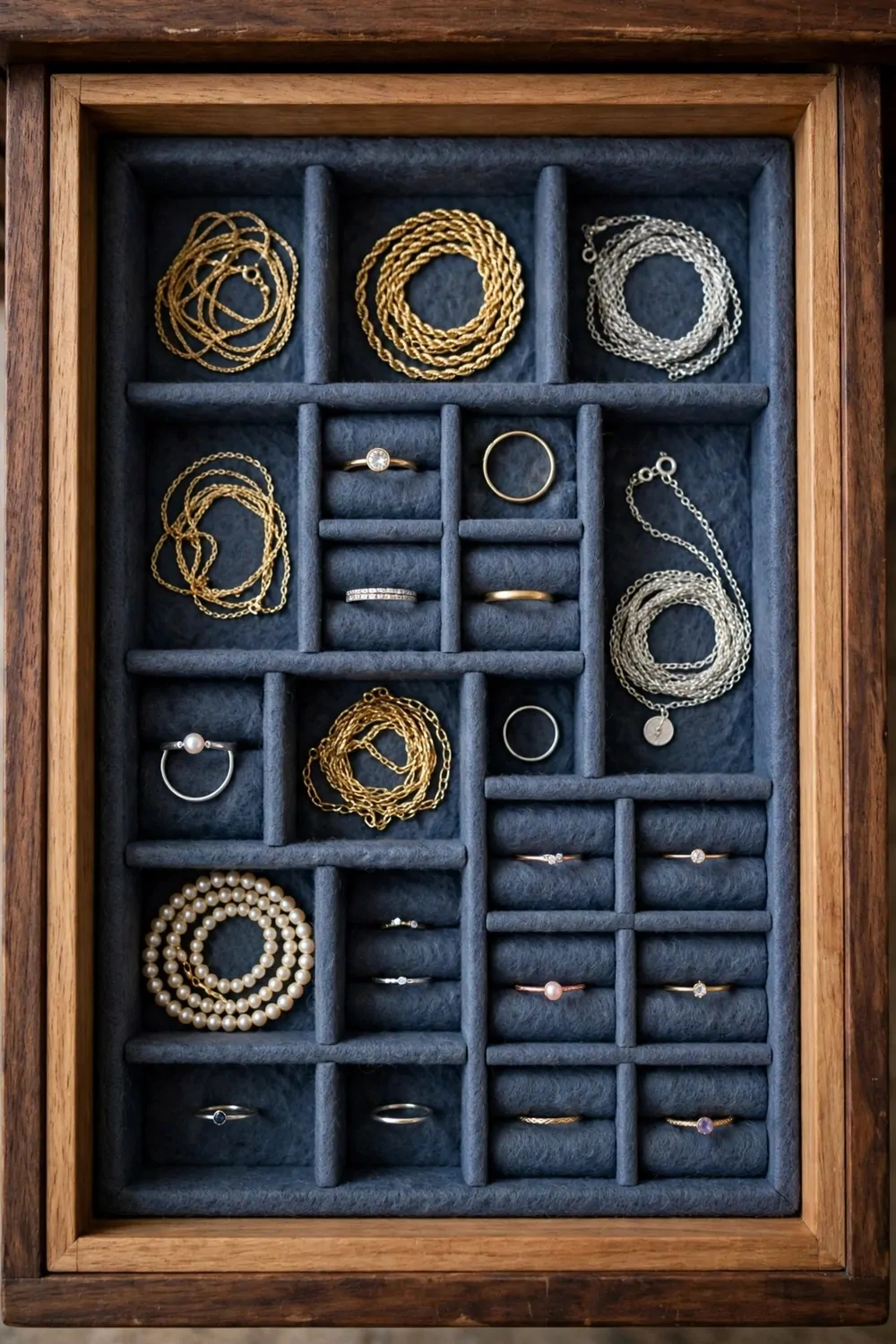
Jewelry gets lost in a big open drawer.
Necklaces tangle into knots, earrings lose their partners, and rings roll into the corners where you never find them again. A built-in jewelry drawer with small compartments fixes all of that in one move.
The soft lining is the part that matters most. Felt or velvet keeps metal from scratching, stops earrings from sliding around, and makes the drawer feel lovely every time you open it.
Give each type of jewelry its own little home.
One row for necklaces, one square for rings, one long slot for bracelets, and a small tray for earrings. When everything has a spot, you stop losing pieces and you stop buying the same thing twice.
Put the jewelry drawer near the top of your drawer bank.
You reach for jewelry last when you get dressed, so it should sit at a comfortable height. A drawer at waist level is easy to open and easy to see into without bending down.
Keep a small mirror nearby if you can.
Trying on earrings next to the drawer saves you a trip across the room, and it turns a plain drawer into a little getting-ready station.
Pull-Out Racks for Belts, Ties and Scarves
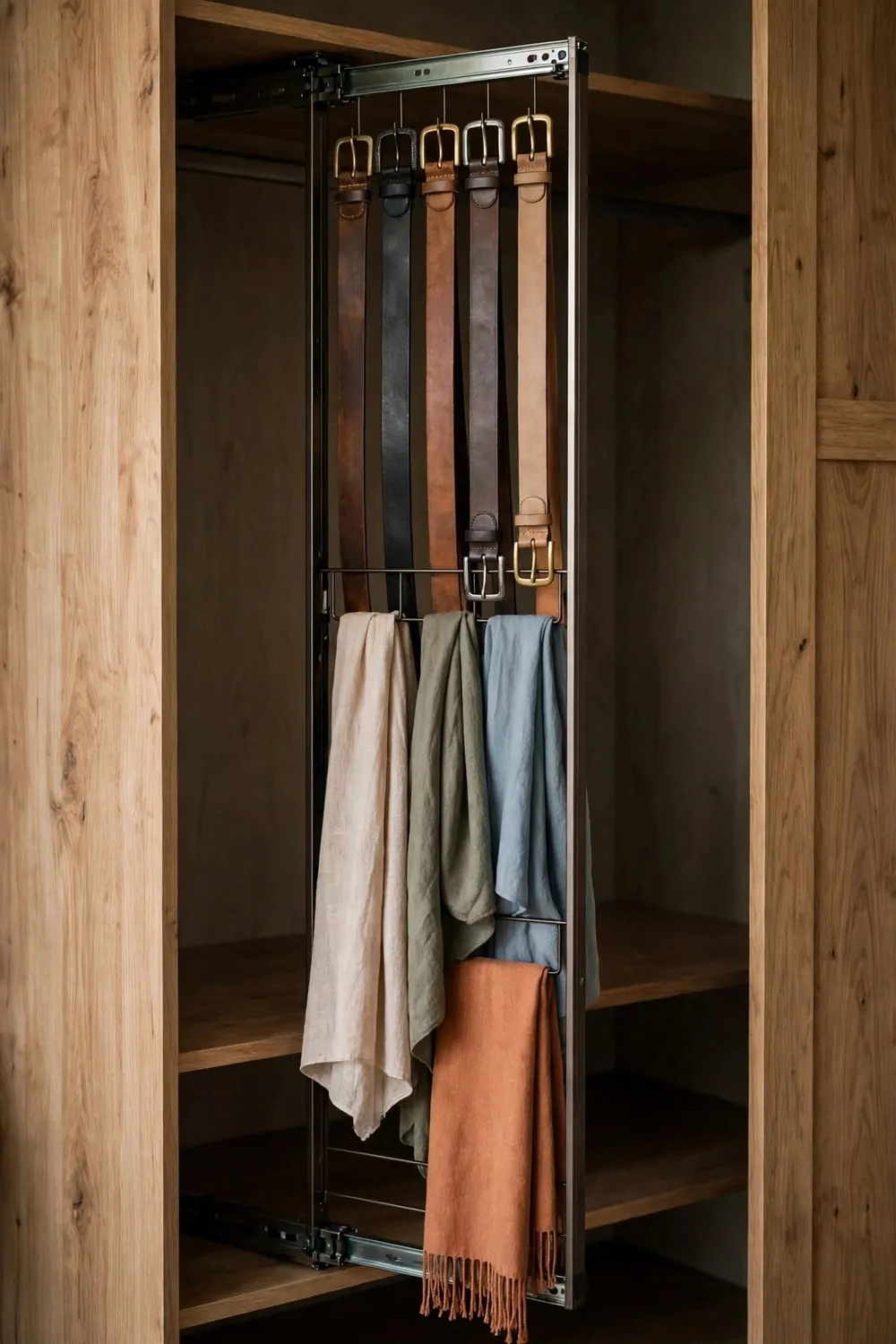
Belts, ties, and scarves are the hardest things to store neatly.
They are long, thin, and floppy, so they slide off shelves and end up in a tangled pile at the bottom of the closet. A pull-out rack gives each one its own hook or slot, and they hang straight and stay separate.
I like racks that slide out like a drawer and then slide back in flat against the wall. They take up almost no space when they are closed, and they show you everything when they are open.
Sort them by color if you can.
A row of belts in dark to light order looks tidy, and it helps you grab the right one fast. The same trick works for ties and scarves, and the whole rack starts to look like a little shop display.
Keep the rack near your hanging clothes.
Belts and ties go with your outfits, so they should live right next to the shirts and pants they match. Walking across the closet for a belt is a small annoyance, but it adds up every single morning.
Do not overload the hooks.
Two belts on one hook will slide off and tangle, and three scarves on one peg will wrinkle. One item per hook keeps the rack working the way it should.
A Seasonal Rotation Cabinet Up High
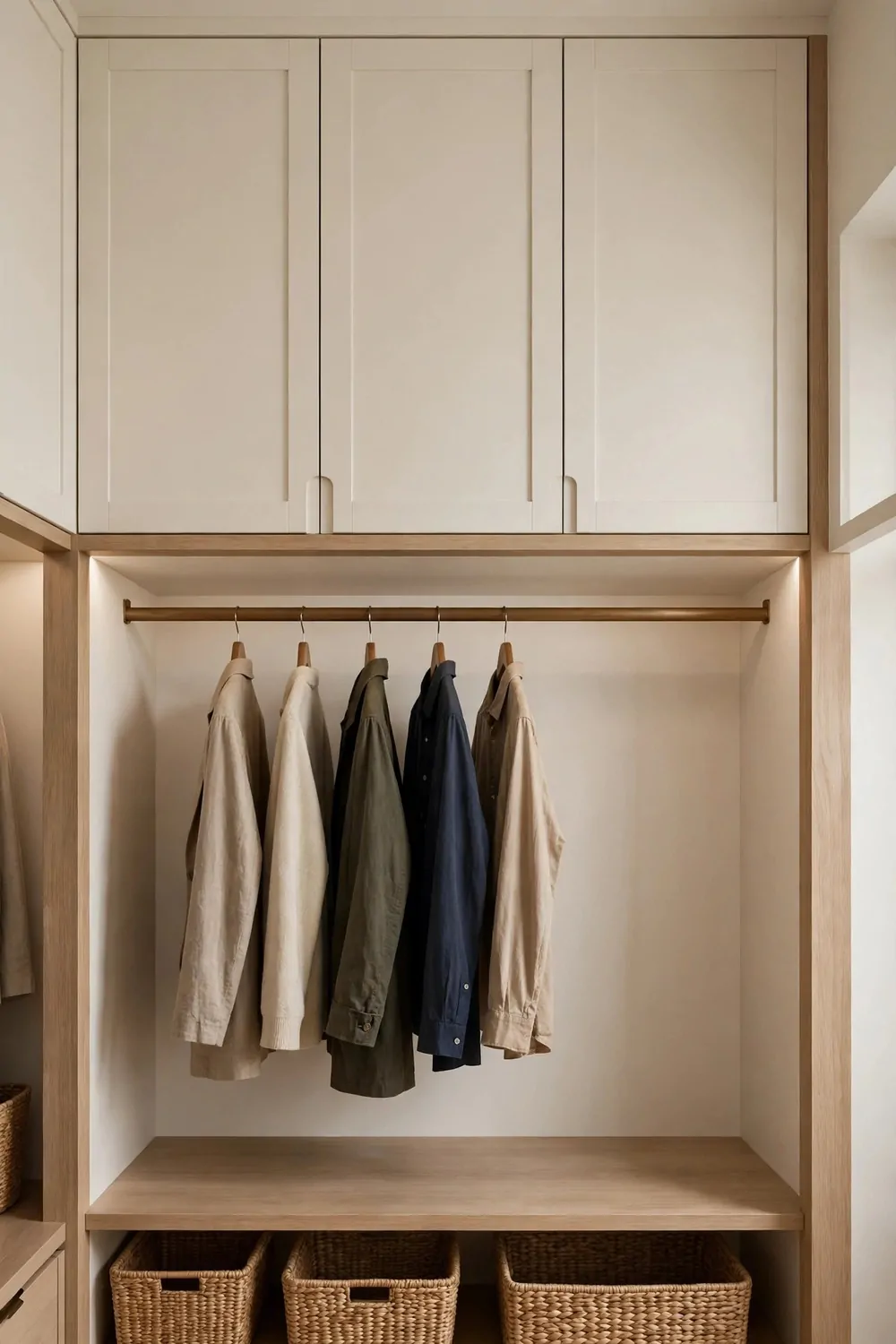
Out-of-season clothes take up space you need right now.
Your thick winter coats crowd your summer shirts in July, and your light dresses get in the way of your sweaters in January. A seasonal rotation cabinet up high solves this by giving the off-season clothes their own home.
I like enclosed cabinets with doors for this job. The doors keep dust off your clothes, and they hide the bulky stuff so the rest of the closet looks calm and tidy all year.
Swap the contents twice a year.
When the weather changes, pull the current season down and put the old season up. It takes an hour, and your closet feels brand new every time you do it.
Label the inside of the doors if you share the closet.
A small note that says winter coats or summer dresses stops the guessing. Everyone in the house knows what lives up there, and nobody has to climb up to check.
Use the cabinet for more than clothes too.
Beach bags, heavy blankets, and holiday outfits fit up there as well. Anything you only need for part of the year belongs in the high cabinet, not in your daily way.
Tall Boot Storage That Keeps Its Shape
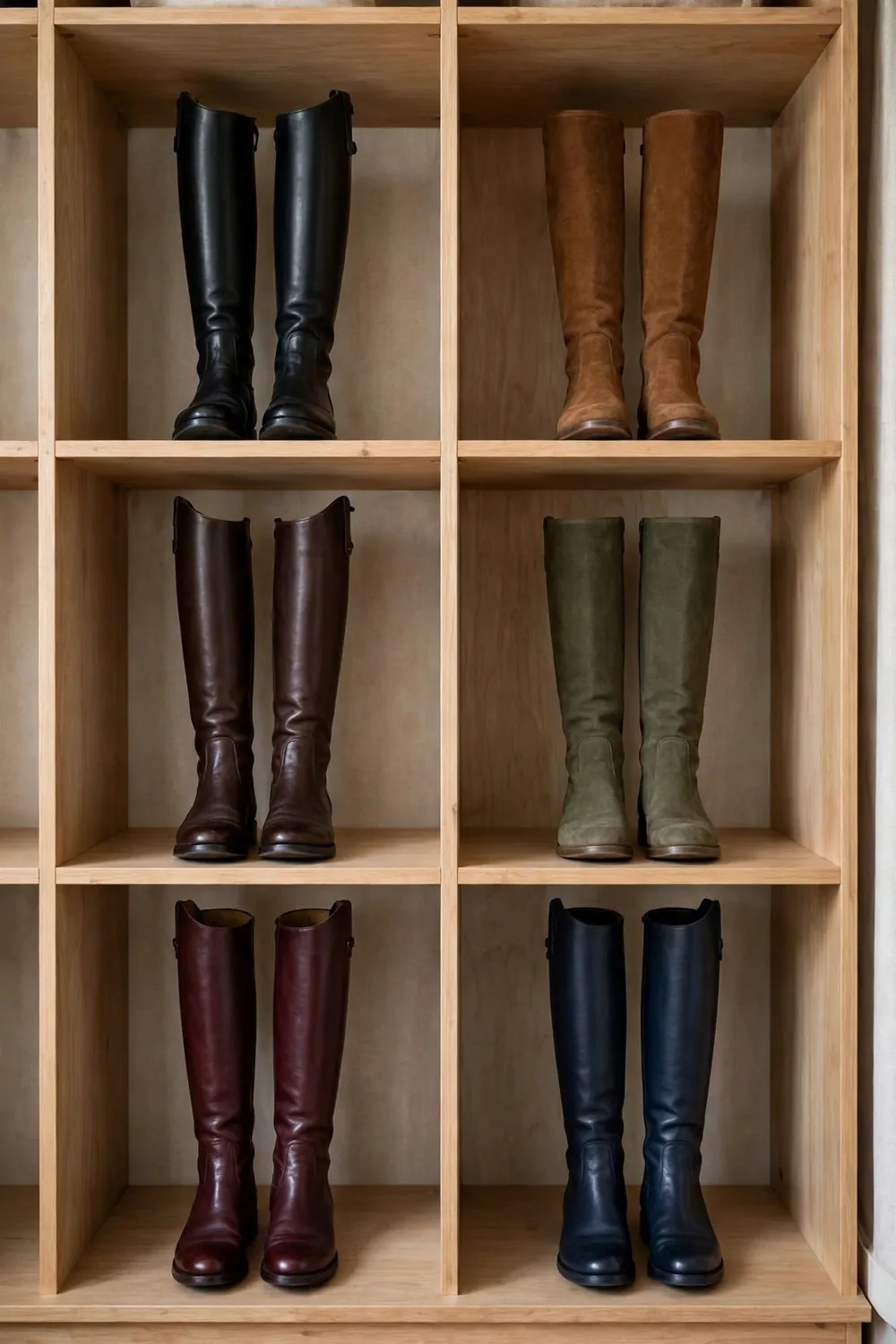
Tall boots flop over when they have no support.
The tops fold in half, the leather creases, and the pair that cost real money ends up looking tired after one season. Tall boot storage keeps them standing straight so they hold their shape for years.
Cubbies work well for this. Each boot gets its own tall slot, the boot stands upright on its own, and you can see every pair at once without digging through a pile on the floor.
Boot shapers are a cheap little helper.
They slide inside the boot and hold the top open, which stops the flop and keeps the leather smooth. You can buy them ready made, or roll up an old magazine and pop it inside.
Keep boots near the floor but off the ground.
A low shelf or a raised cubby keeps them away from dust and damp, and it stops them from getting kicked when you walk past. Your boots last longer, and your closet floor stays clear.
Pair them up neatly every time.
One boot facing forward and one facing back fits in a narrower slot, and it keeps the pair together so you never hunt for the missing boot in the morning.
Hooks on the Inside of the Doors
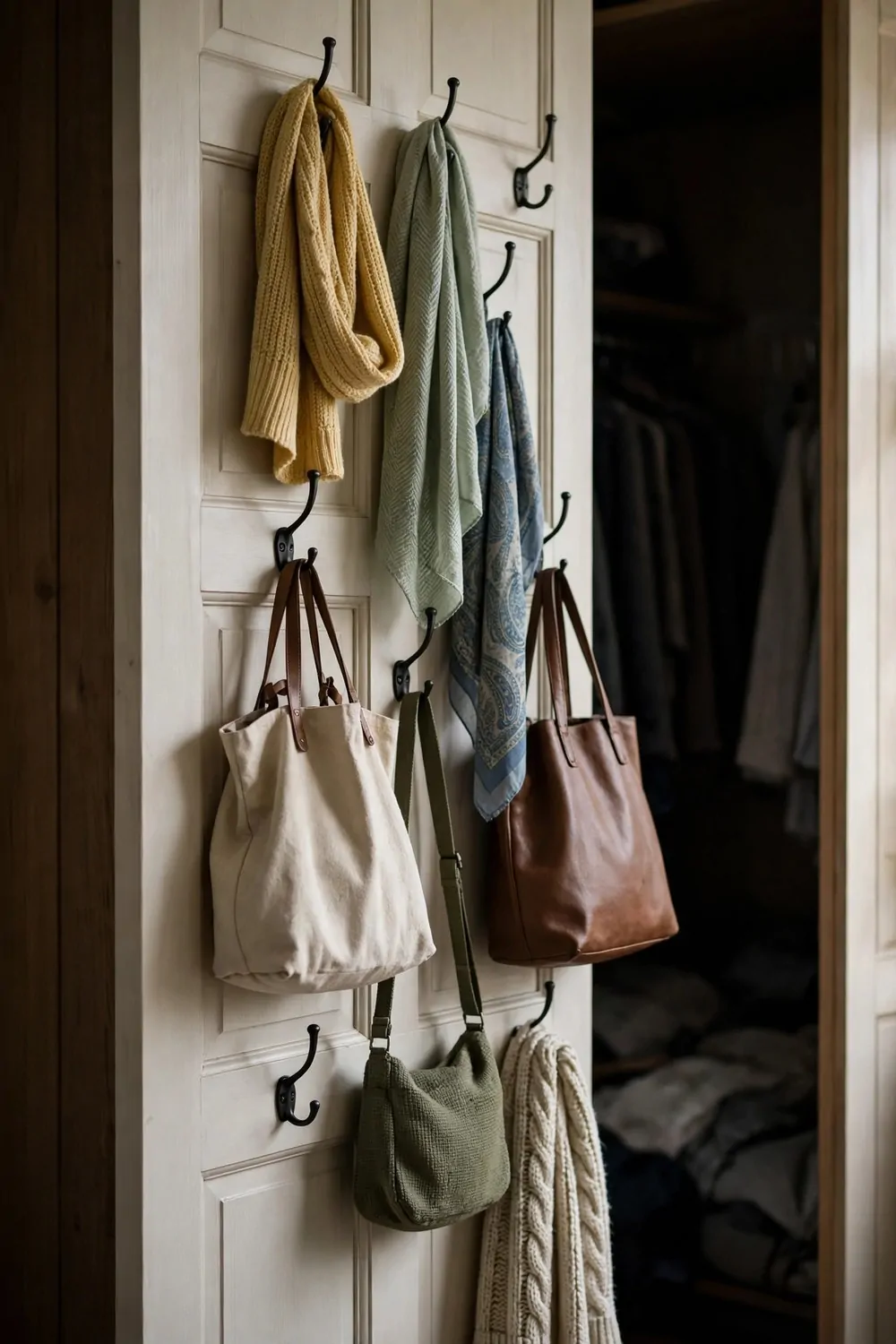
The inside of a closet door is free storage.
Most people never use it, but a few strong hooks on that flat surface can hold bags, scarves, hats, and tomorrow’s outfit without taking up a single inch of shelf or rod space.
I love this idea because it costs almost nothing and changes how the closet feels. The things you grab most often hang right at the door, ready the second you open it.
Use hooks that match your closet finish.
Plain metal hooks blend in and look tidy, while big chunky hooks can look messy on a small door. Pick hooks that suit the door, and the whole thing looks like it was planned.
Do not hang heavy things on a weak door.
A heavy bag can pull a hook loose or warp a light door over time. Keep the heavy bags on a shelf, and use the door hooks for scarves, hats, and light bags only.
Leave one hook empty on purpose.
That empty hook is for the jacket you just wore or the bag you are about to grab. It keeps the door useful instead of crowded, and you always have a spot for the thing in your hand.
A Valet Rod for Tomorrow’s Outfit
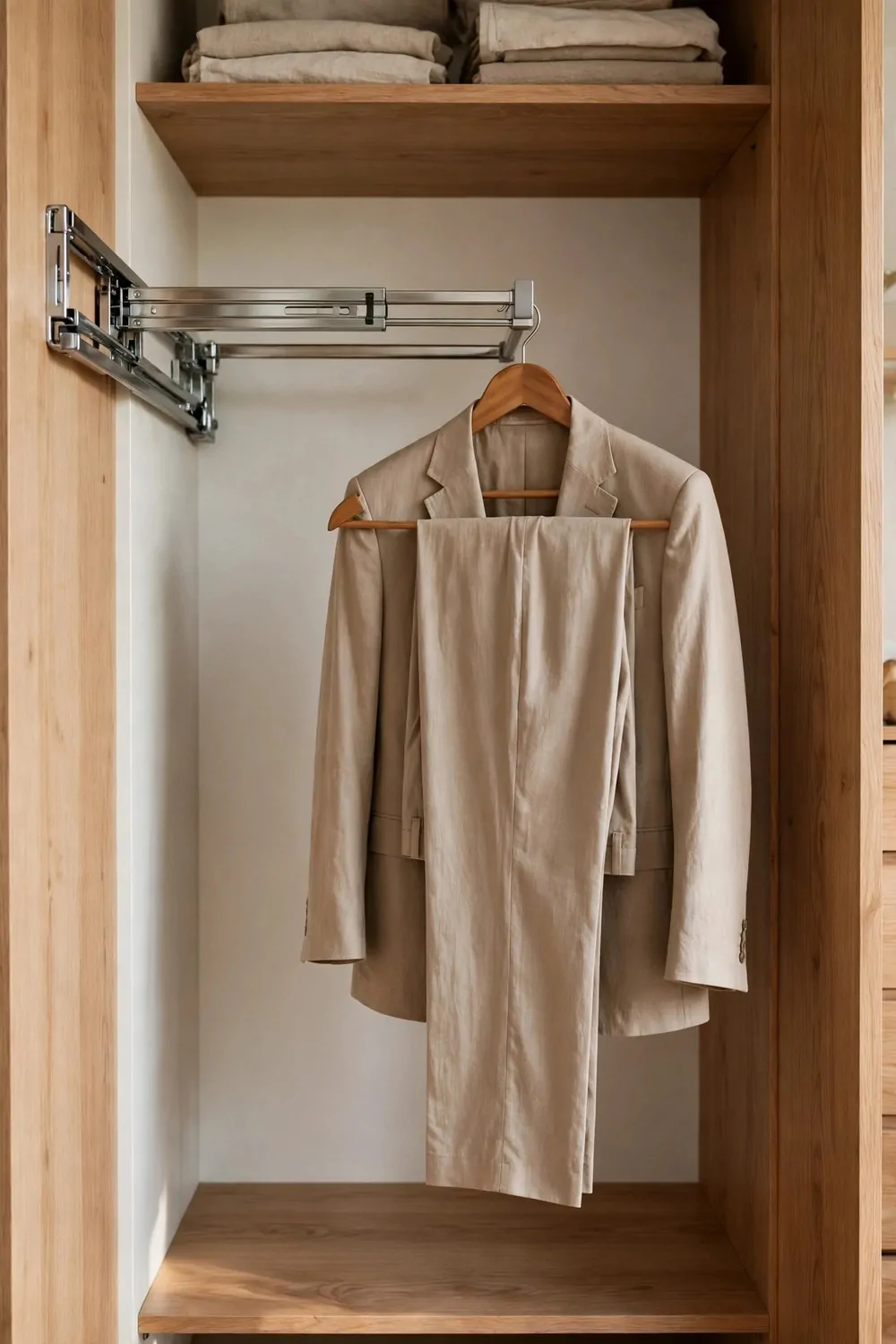
A valet rod is a small pull-out rod that hides in your closet.
You pull it out, hang tomorrow’s outfit on it, and push it back in when you are done. It is a tiny thing, but it changes your mornings in a big way.
I started laying out my clothes the night before because of a valet rod. Picking an outfit when you are calm is so much easier than picking one when you are half awake and already late.
Use it for more than outfits too.
A valet rod is handy for holding a jacket while you steam it, or a shirt while you check it for wrinkles. It is a little extra hand right when you need one.
Put it near the front of the closet.
You want to reach it without digging past your hanging clothes. A spot near the door or at the end of a rod works best, and it stays out of the way when it is pushed in.
One outfit at a time is the rule.
The rod is small and strong, but it is not a second hanging rod. Hang one full outfit on it, and it does its job well. Hang three, and it sags.
Baskets With Blank Labels on Low Shelves
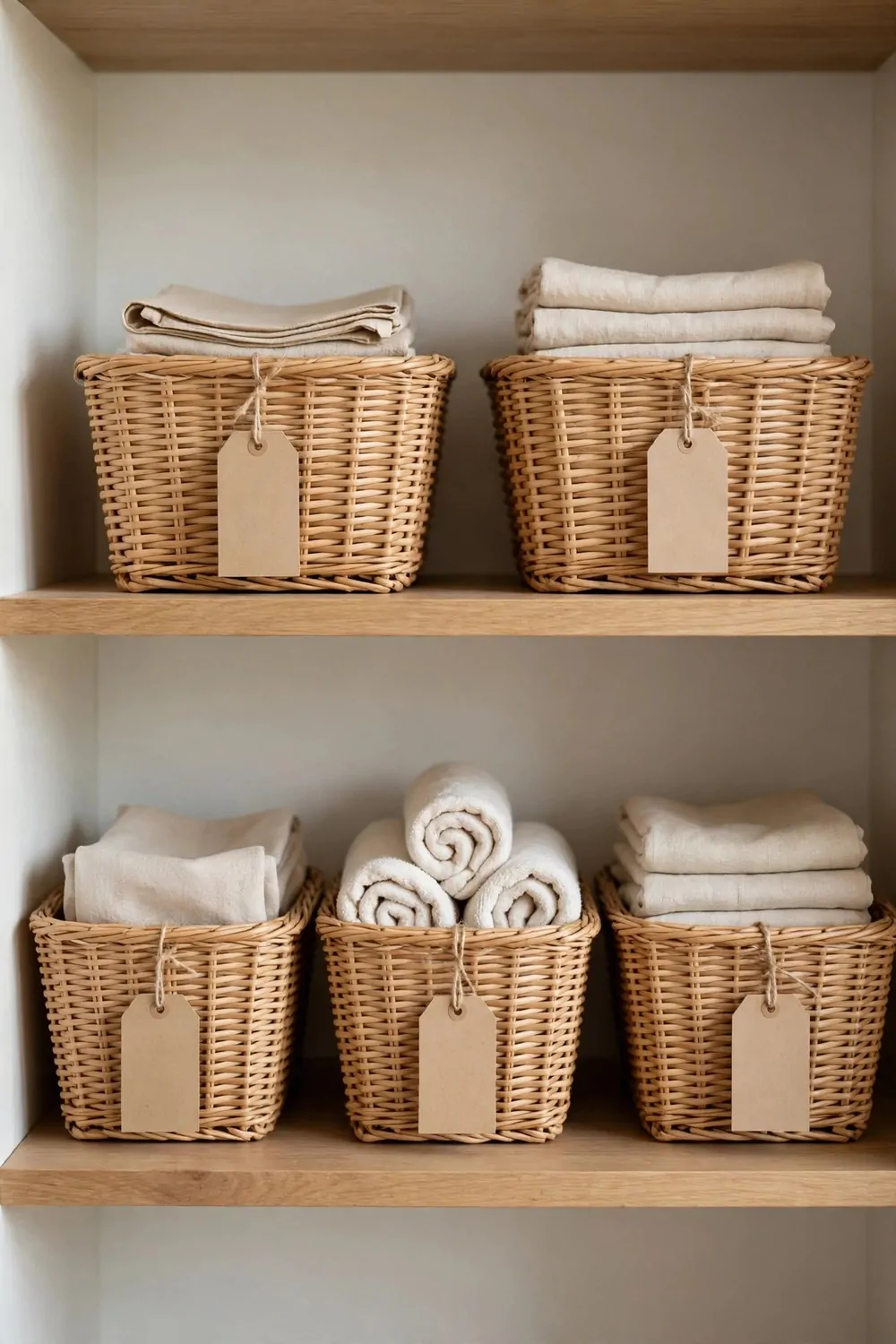
Low shelves are hard to reach and easy to forget.
Baskets fix that because you can pull the whole basket out, see what is inside, and slide it back without bending down and digging through a dark shelf. Blank labels keep them looking calm and tidy.
I like woven baskets for low shelves. They look warm and soft, they hide the messy stuff inside, and they are light enough to pull out with one hand.
Blank labels are better than printed ones.
A plain tag lets you change your mind about what lives in the basket without buying new labels. Write on it in pencil, or leave it blank, and the basket still looks neat.
Keep one basket for each kind of thing.
One for gym clothes, one for scarves, one for the odds and ends that do not fit anywhere else. When a basket has one job, you always know where to look.
Measure the shelf before you buy baskets.
A basket that is too tall will not slide in, and one that is too small wastes the shelf. Take a tape measure to the shop, or check the size online before you order.
A Mirror on the End Panel
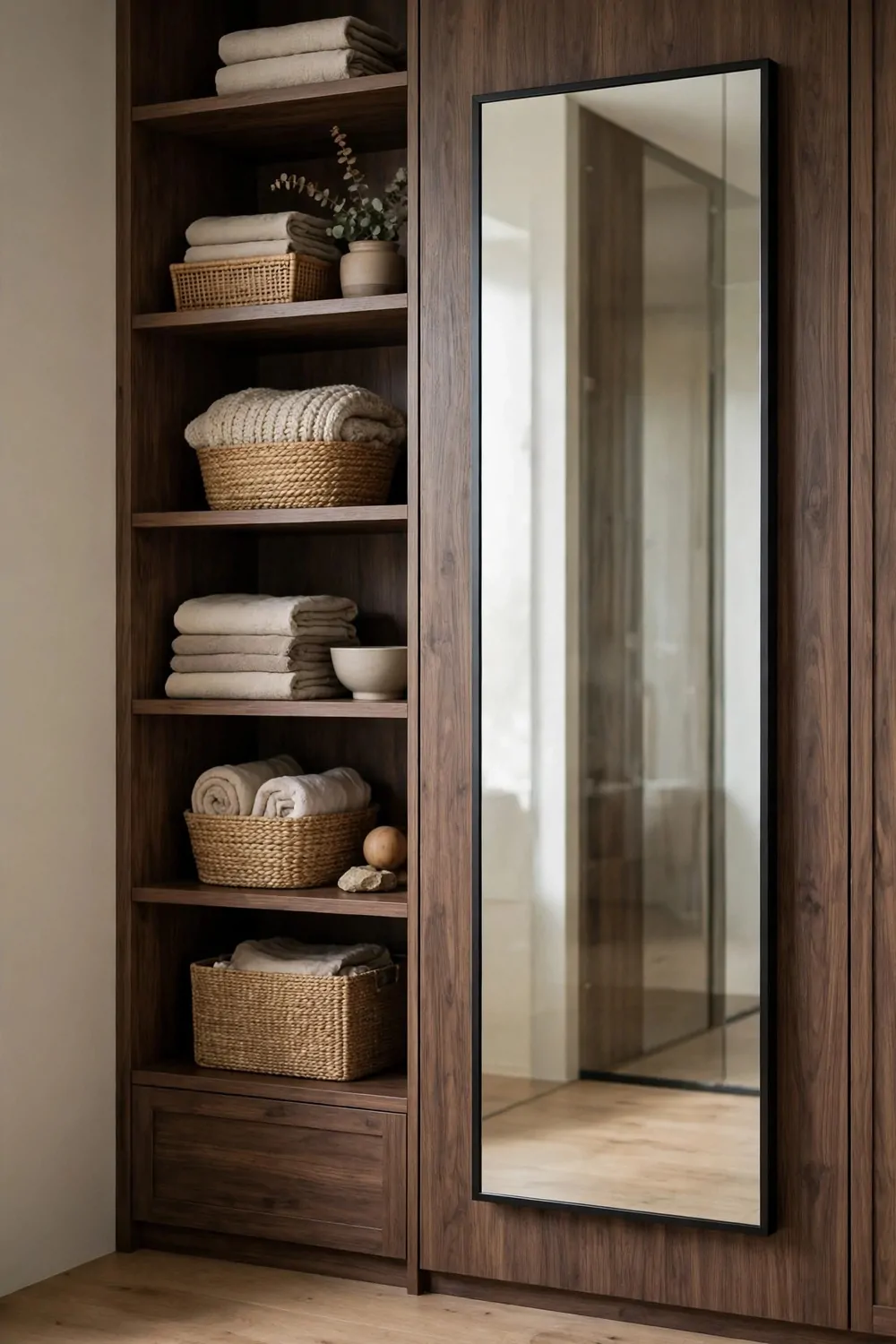
A full-length mirror on the end panel of your closet saves you a trip.
You get dressed, you turn, and you see the whole outfit right there. No walking to the bedroom mirror, no guessing whether the back looks right.
I think a mirror also makes a small closet feel bigger. It bounces the light around, and the room looks wider than it really is, which is a nice bonus on top of being useful.
Mount it flat against the panel.
A mirror that sticks out catches on sleeves and bags as you walk past. A flat mount stays out of the way, and it looks like it was built into the closet from the start.
Keep the mirror clean and the light good.
A dusty mirror in a dark corner does nobody any favors. Wipe it once a week, and make sure a light shines on it, so you can actually see what you are wearing.
Pick a spot that faces your hanging clothes.
That way you can pull a shirt off the rod, hold it up, and check it in the mirror without walking anywhere. It turns choosing an outfit into one smooth little step.
| Spot in the closet | Idea | What it fixes | Cost level |
|---|---|---|---|
| Inside the doors | Hooks for bags, scarves, and hats | Wasted space on the door that holds nothing | Low |
| Up high | Seasonal rotation cabinet | Off-season clothes crowding daily clothes | Medium |
| Centre of the room | Island with drawers and a folding top | No flat surface for folding or getting dressed | High |
| Low shelves | Baskets with blank labels | Low shelves that are hard to reach and easy to forget | Low |
| End panel | Full-length mirror | No way to check your outfit without leaving the closet | Low |
Divided Drawers for Socks and Small Things
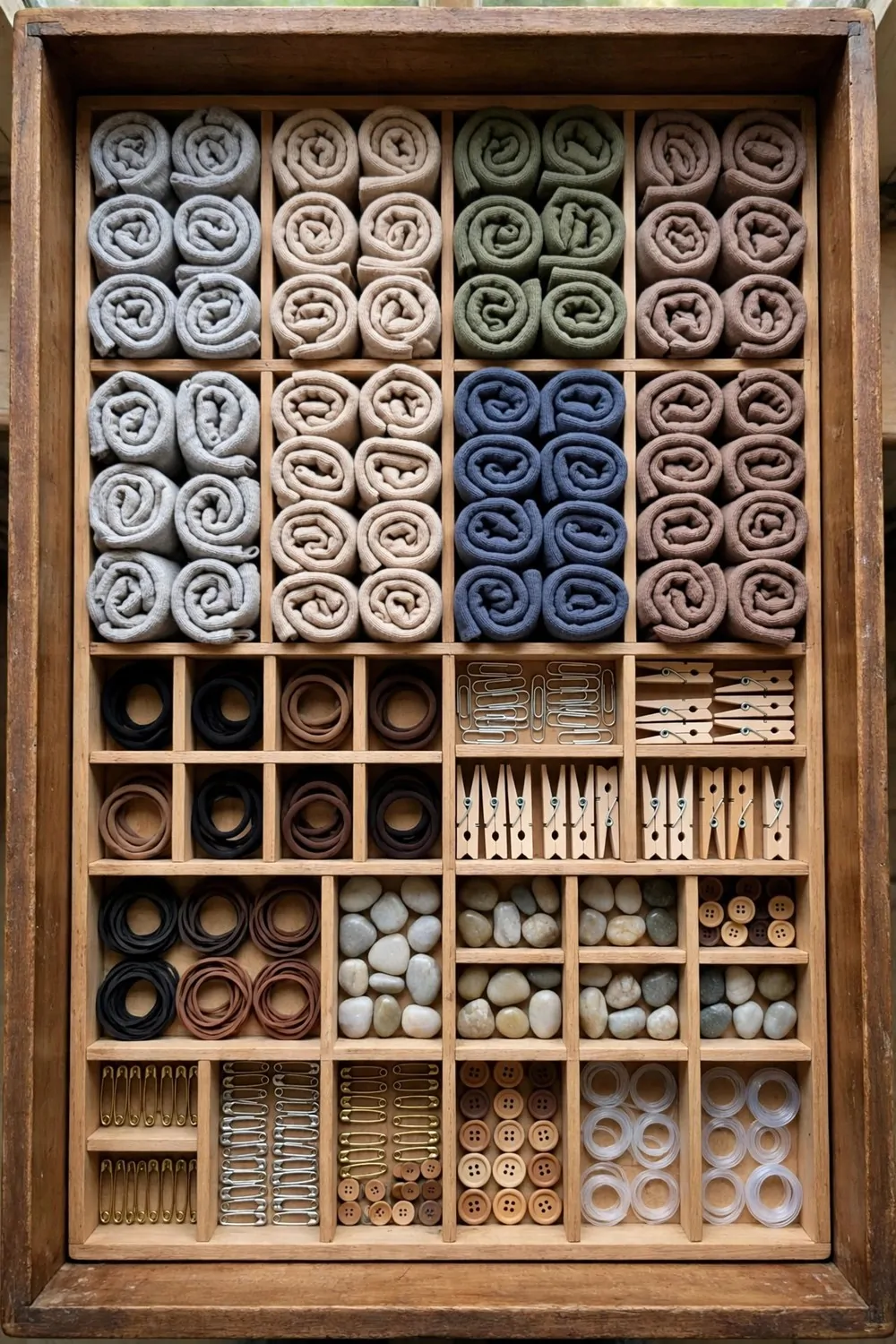
Socks vanish in a big open drawer.
They slide under the t-shirts, they roll into the back corners, and you end up with a drawer full of single socks that match nothing. Divided drawers stop that by giving every pair its own little box.
I like simple dividers you can move around. A few thin boards or fabric boxes split the drawer into neat squares, and you can change the layout when your needs change.
Roll your socks instead of folding them.
A rolled sock fits neatly into one small square, and you can see every pair at once when you open the drawer. Folded socks stack up and hide each other, so rolling wins.
Use the dividers for more than socks.
Small squares are perfect for underwear, hair ties, belts you roll up, and all the tiny things that usually end up loose at the bottom of a drawer. One drawer with dividers can hold a surprising amount.
Keep the dividers snug but not tight.
A divider that fits well stays in place when you pull the drawer open. One that is too loose slides around and lets socks escape into the next square, which defeats the whole point.
A Laundry Hamper That Slides Away
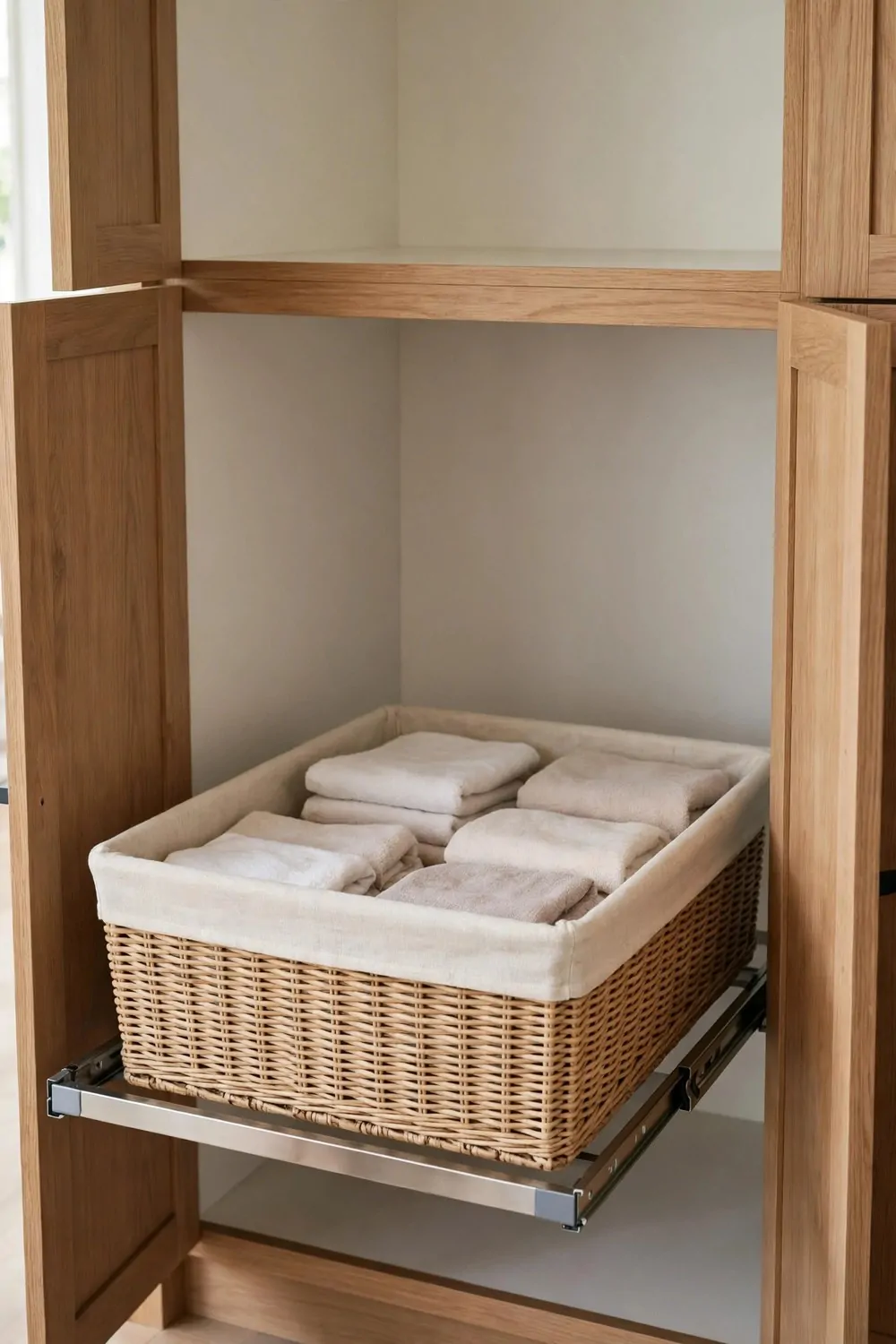
A laundry hamper on the floor always gets in my way. I trip over it at night and it eats up space I need for shoes.
A hamper that slides away fixes all of that. It hides inside a low cabinet and pulls out on a smooth track when you need it.
You toss your dirty clothes in and push it back. The closet looks neat again in one second.
I love that the hamper stays out of sight but never far away. You do not have to carry a basket across the house to sort clothes.
A tilt-out front works well in a narrow closet. A pull-out drawer style works better if you have a wider space to spare.
Pick a hamper with air holes or a fabric bag inside. Clothes need air, or they start to smell fast.
Some people put two hampers side by side. One holds lights and one holds darks, so sorting is done before wash day.
Measure the space before you order anything. A hamper that is one inch too wide will never slide right.
This small change makes laundry feel less like a chore. Your closet stays calm and your dirty clothes stay out of sight.
A Small Dressing Bench With Storage Inside
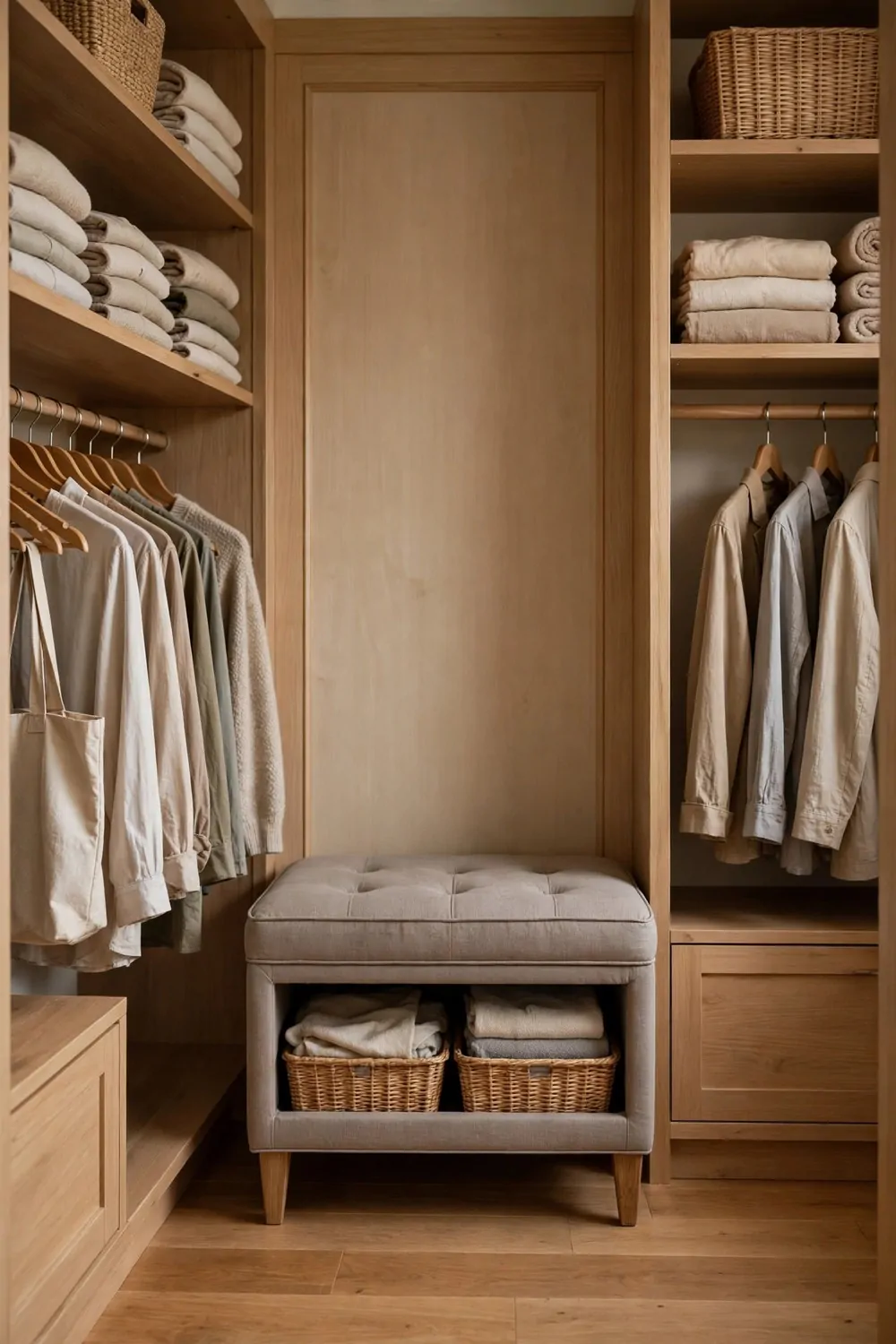
Sitting down to put on shoes is a small joy I never knew I needed. A bench in the closet makes mornings feel slower and kinder.
A bench with storage inside does two jobs at once. You sit on top and store things below.
I keep off-season shoes and extra bags in mine. The lid lifts up and everything stays hidden but easy to reach.
Pick a bench that fits your closet without blocking the door. Even a short one gives you a place to sit and rest your feet.
A soft cushion on top makes it feel like a real seat. A plain wood top works too if you like a cleaner look.
Kids love a bench in their closet too. They can sit and put on socks by themselves, which feels like a big win for them.
You can match the bench to your closet colour so it blends in. White, wood, or a soft grey all look calm and tidy.
Keep a small basket under the bench if there is room. It holds slippers or shoe care bits without adding clutter.
This bench turns a plain closet into a little dressing room. You will wonder how you lived without a seat there.
Open Cubbies for Bags and Hats
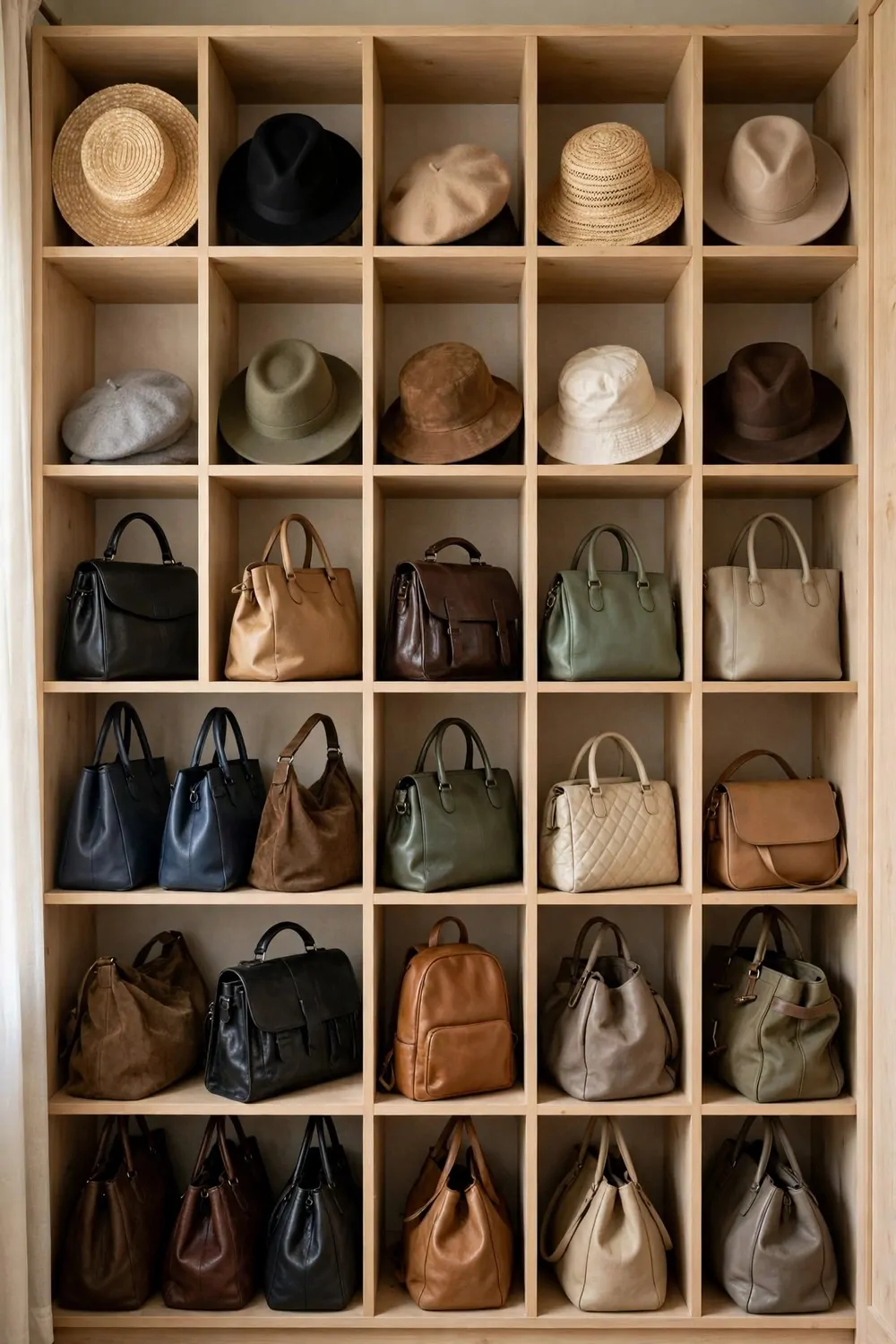
Bags and hats are hard to store. They flop over, lose their shape, and end up piled on a shelf.
Open cubbies give each bag its own little home. You can see them all at a glance and grab the one you want.
I like cubbies near the top of the closet. They keep bags off the floor and away from dust.
Hats fit well in cubbies too. One hat per cubby keeps the brim from bending and the shape stays nice.
Square cubbies work for most bags. Taller cubbies work better for big tote bags and wide hats.
You can line the back of each cubby with a soft fabric. It stops bags from sliding and adds a nice touch of colour.
Do not overfill a cubby. If you squeeze two bags in one spot, both will look messy and lose their shape.
Rotate your bags by season. The ones you use now stay at eye level and the rest move up high.
Open cubbies make your closet feel like a small shop. Everything looks neat and you can find your favourite bag fast.
A Tie and Belt Drawer With Slim Dividers
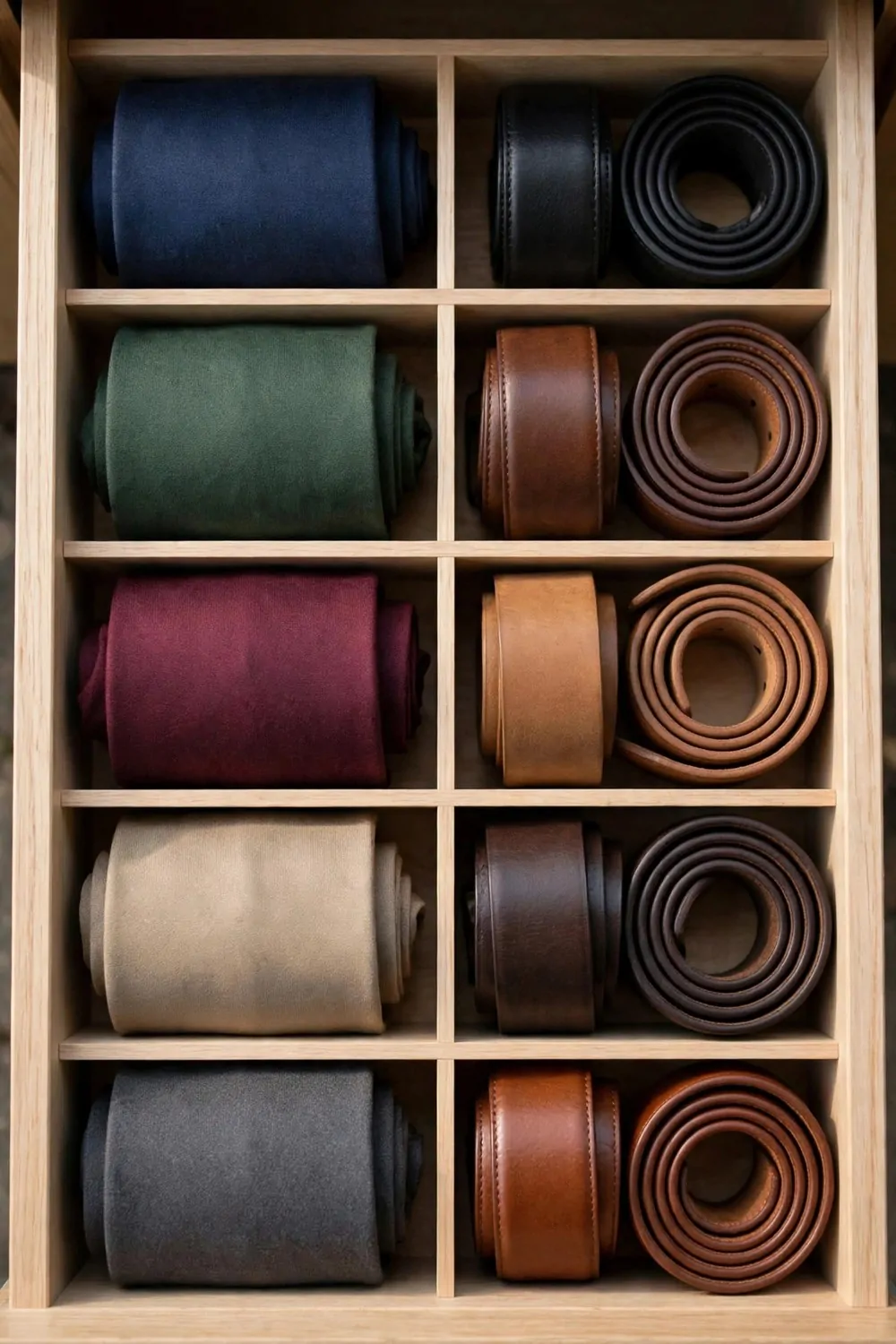
Ties and belts tangle into a knot if they have no home. I used to dig through a pile every morning and still pick the wrong tie.
A slim drawer with dividers changes all of that. Each tie gets its own slot and each belt rolls into its own space.
You can see everything in one look. No more pulling out five ties to find the blue one.
Roll your ties instead of folding them. They stay smooth and the dividers keep them from unrolling.
Belts roll up just as well. A loose roll in a small slot stays neat and does not crease.
Shallow drawers work best for this. A deep drawer wastes space and lets small things slide around.
Some dividers slide so you can change the size of each slot. That helps if your collection grows over time.
Keep the drawer near your shirts. Getting dressed is faster when everything you need is close together.
This one drawer makes mornings feel calmer. You pick, you dress, and you walk out the door without a fuss.
Slanted Shelves for Handbags
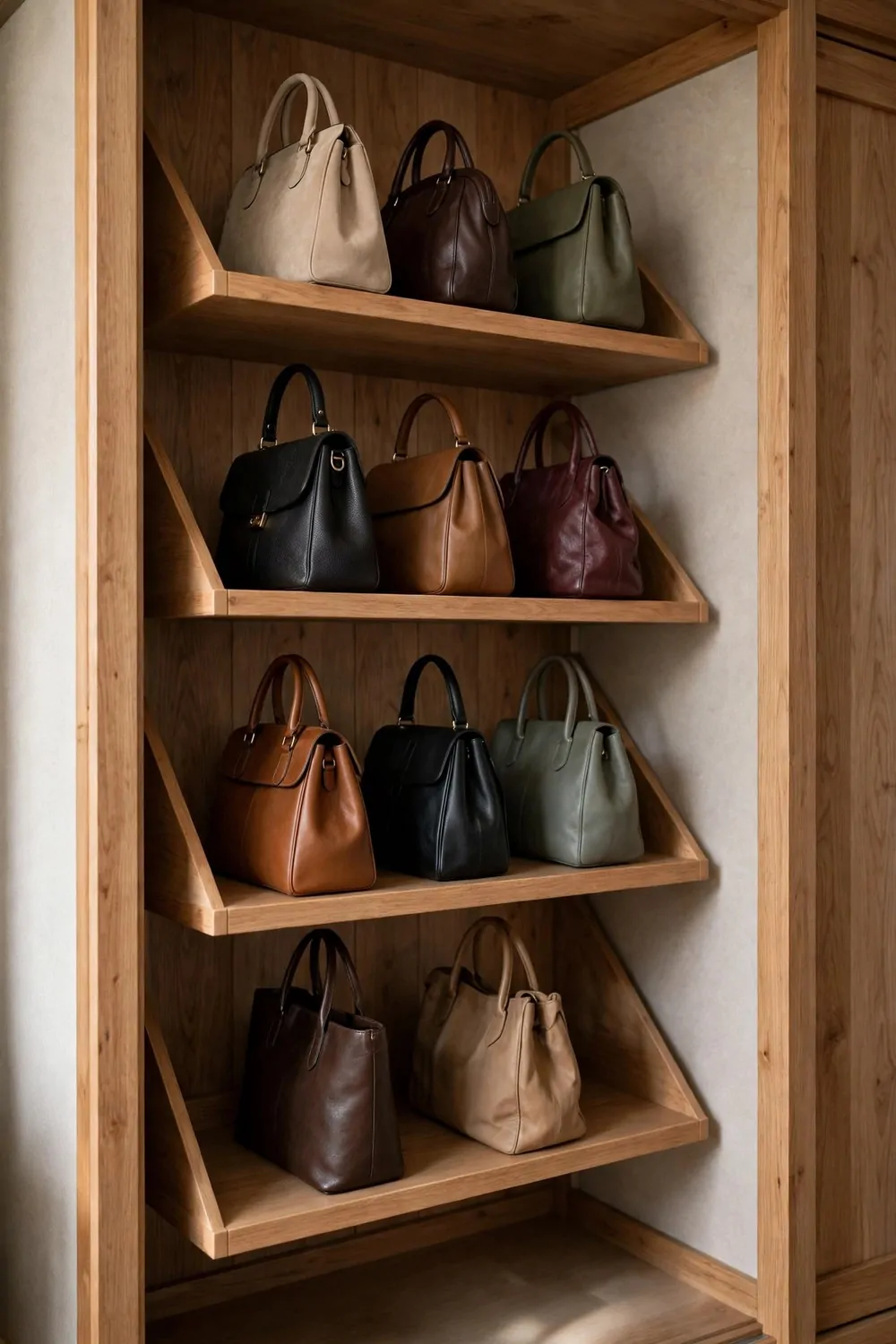
Handbags look sad when they slump on a flat shelf. They fall over and the handles bend in odd ways.
Slanted shelves hold bags upright like books on a shelf. The tilt keeps them standing tall and easy to see.
I love how this looks in a closet. Each bag shows its front, like a little display in a shop.
A small lip at the front edge stops bags from sliding off. It is a tiny detail but it makes the shelf work.
Put your most used bags at eye level. The special ones you save for parties can sit higher up.
Slanted shelves work for clutches and small purses too. Just make the shelf shallow so small bags do not get lost.
Wipe the shelves now and then. Dust shows fast on a slanted surface, but a quick wipe keeps it fresh.
You can mix bag sizes on one shelf. A big tote next to a small crossbody still looks neat when both stand upright.
This is one of my favourite closet upgrades. Your bags stay pretty and you actually use the ones you forgot you owned.
A Hidden Safe Shelf for Valuables
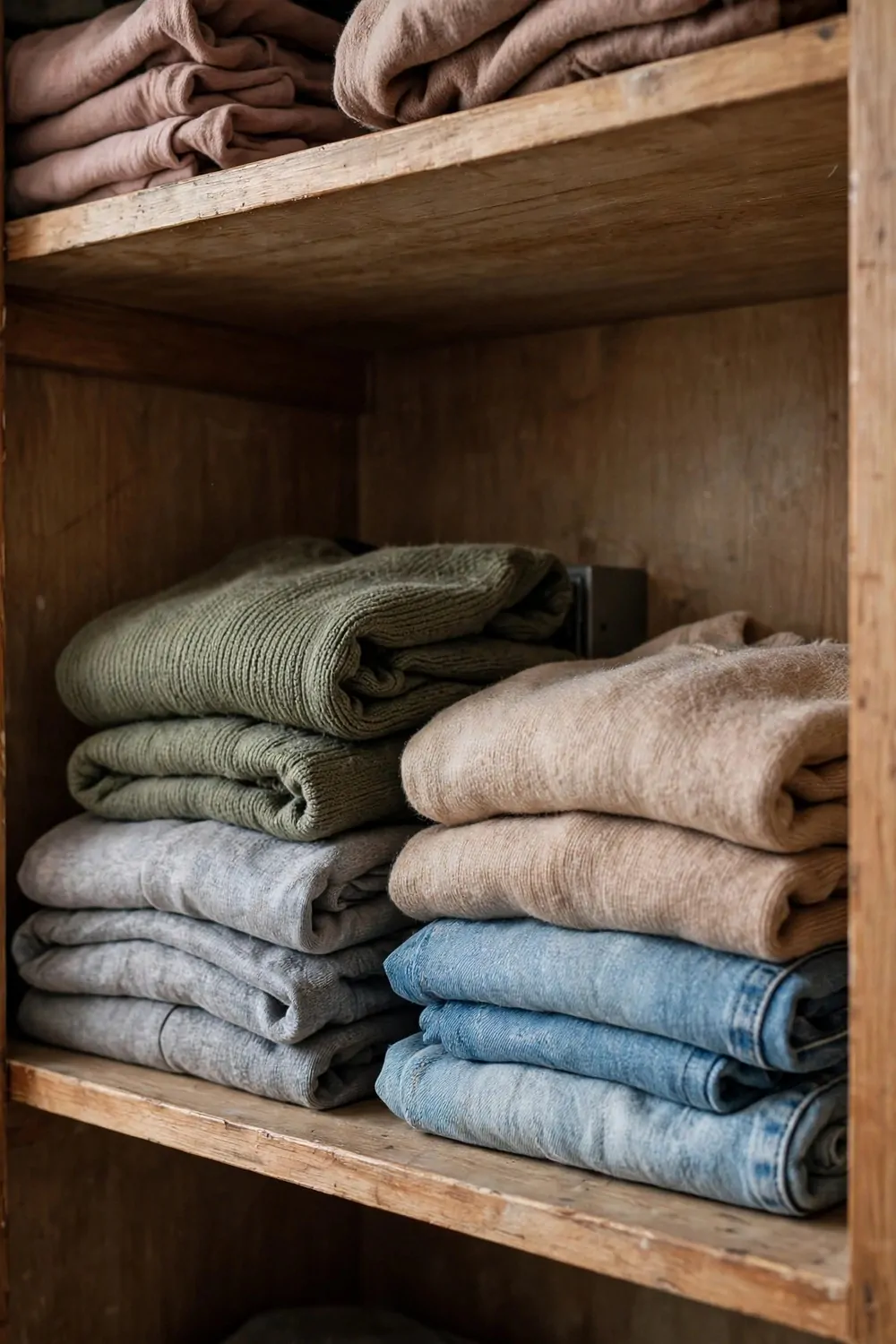
Some things need a safe spot that no one notices. A hidden shelf in your closet is just right for that.
I keep a small lockbox tucked behind folded clothes. It holds a few special pieces and some papers I want to keep safe.
The best hiding spot looks boring from the outside. A plain shelf with plain boxes draws no attention at all.
You can build the shelf high up where guests never look. Or hide it behind a row of long coats.
A false back panel works too. It looks like the back of the closet but opens to a small secret space.
Do not hide things so well that you forget them yourself. Pick a spot you will remember but others will not check.
Keep the lockbox light enough to lift. You want to reach it without a struggle when you need something from it.
Tell one trusted person where it is. If anything happens, someone you trust should know where your valuables sit.
A hidden shelf gives you peace of mind. Your closet stays normal on the outside and your special things stay safe inside.
LED Strip Lights Under Each Shelf
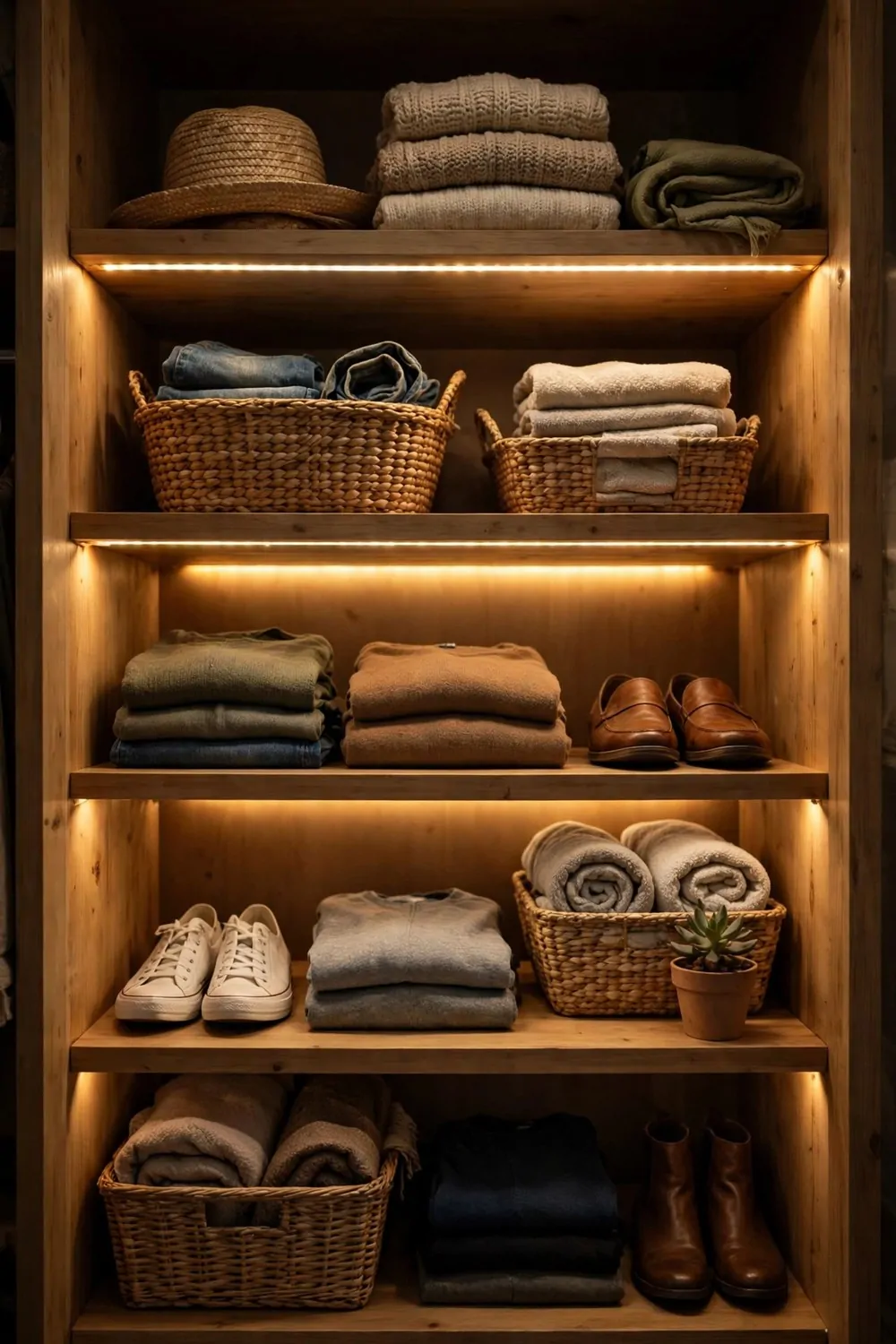
A dark closet hides half of your clothes. I used to hold shirts up to the light just to tell navy from black.
LED strip lights under each shelf fix that in one go. They wash the shelf below with soft light so you can see every colour.
Warm white light looks best in a closet. It feels cosy and shows the true colour of your clothes.
Stick-on strips are easy to add to any shelf. You do not need an electrician for most of them.
A motion sensor is a nice extra. The lights turn on when you open the door and switch off when you leave.
Keep the wires tucked behind the shelf edge. Neat wires look better and you will not snag them when you pull out a box.
LED strips use very little power. You can leave them on while you pick an outfit without worry.
Put lights in the dark corners too. A small strip in a deep corner stops things from getting lost there.
Good light makes your whole closet feel new. You see what you own and getting dressed becomes fun again.
A Folding Station at Waist Height
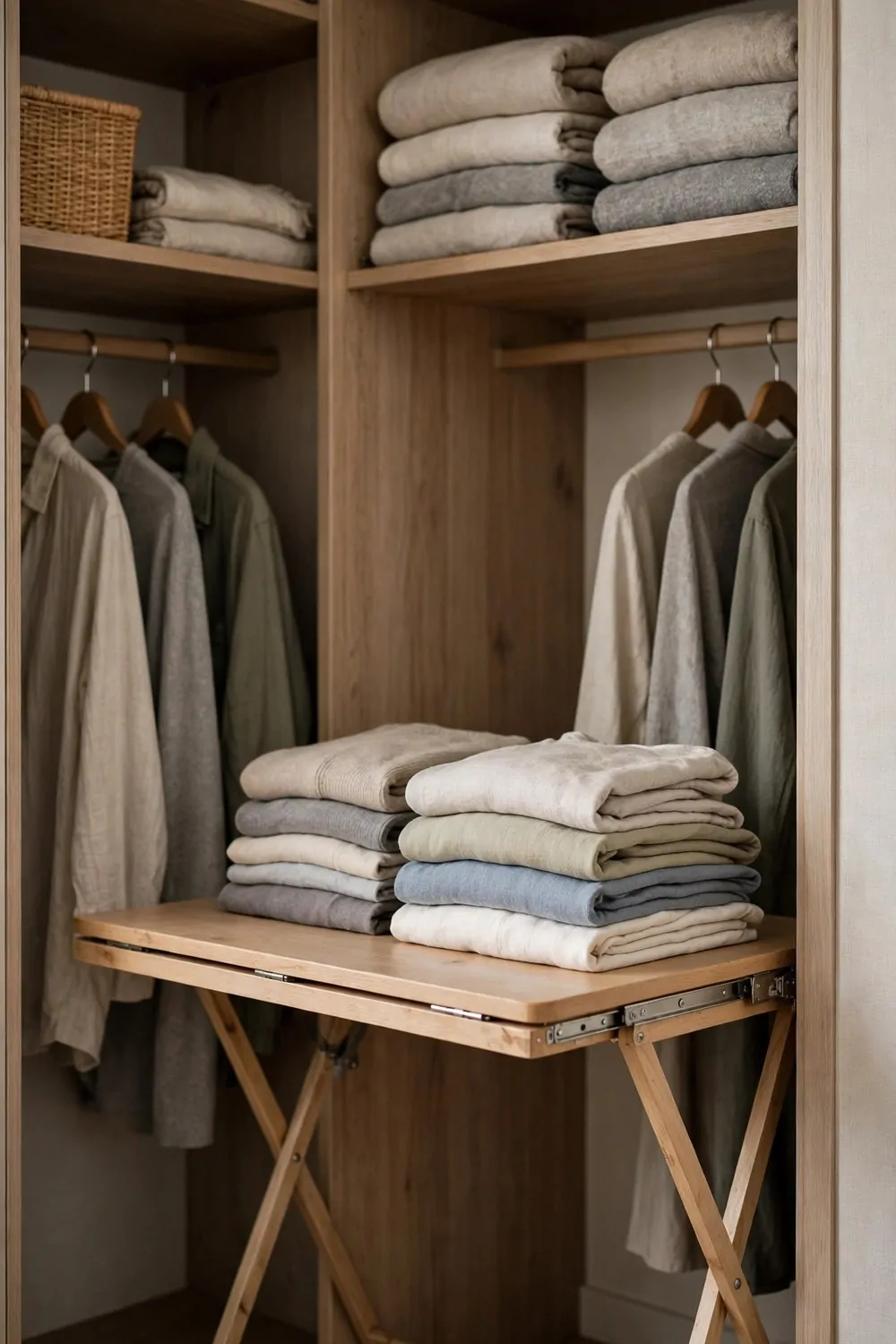
Folding clothes on the bed means clean laundry sits in a pile for days. I know this habit too well.
A folding station at waist height gives you a spot to fold right in the closet. You fold and put away in the same place.
Your back will thank you. No more bending over a bed or kneeling on the floor to fold shirts.
The counter only needs to be as wide as a folded shirt. Even a small space can hold a folding station.
Keep the surface clear. A folding station covered in stuff is just another shelf, and it will not help you.
Put a basket for fresh laundry beside the counter. You pull clothes out, fold them, and slide them onto a shelf.
Some people add a small shelf above the counter for folding supplies. A spray bottle and a lint roller fit there nicely.
This station works well in a laundry closet too. If your washer is near, you can fold the moment clothes come out of the dryer.
A folding station turns a boring chore into a quick job. Your clothes get put away the same day and your room stays tidy.
| Feature | What it does | Best for | Typical cost |
|---|---|---|---|
| LED strip lights | Light each shelf so you can see colours and find things fast | Dark closets and deep shelves | Low to moderate |
| Folding station | Gives you a waist-height counter to fold clothes in the closet | Walk-in closets and laundry closets | Moderate |
| Hidden safe shelf | Hides a lockbox or valuables behind ordinary shelves | Jewellery, papers, and small valuables | Low to moderate |
| Dressing bench | A seat for dressing with storage hidden inside | Walk-in closets with floor space to spare | Moderate |
| Slanted handbag shelves | Hold bags upright so they keep their shape and stay visible | Handbag collections of any size | Moderate to higher |
Deep Drawers for Bulky Sweaters
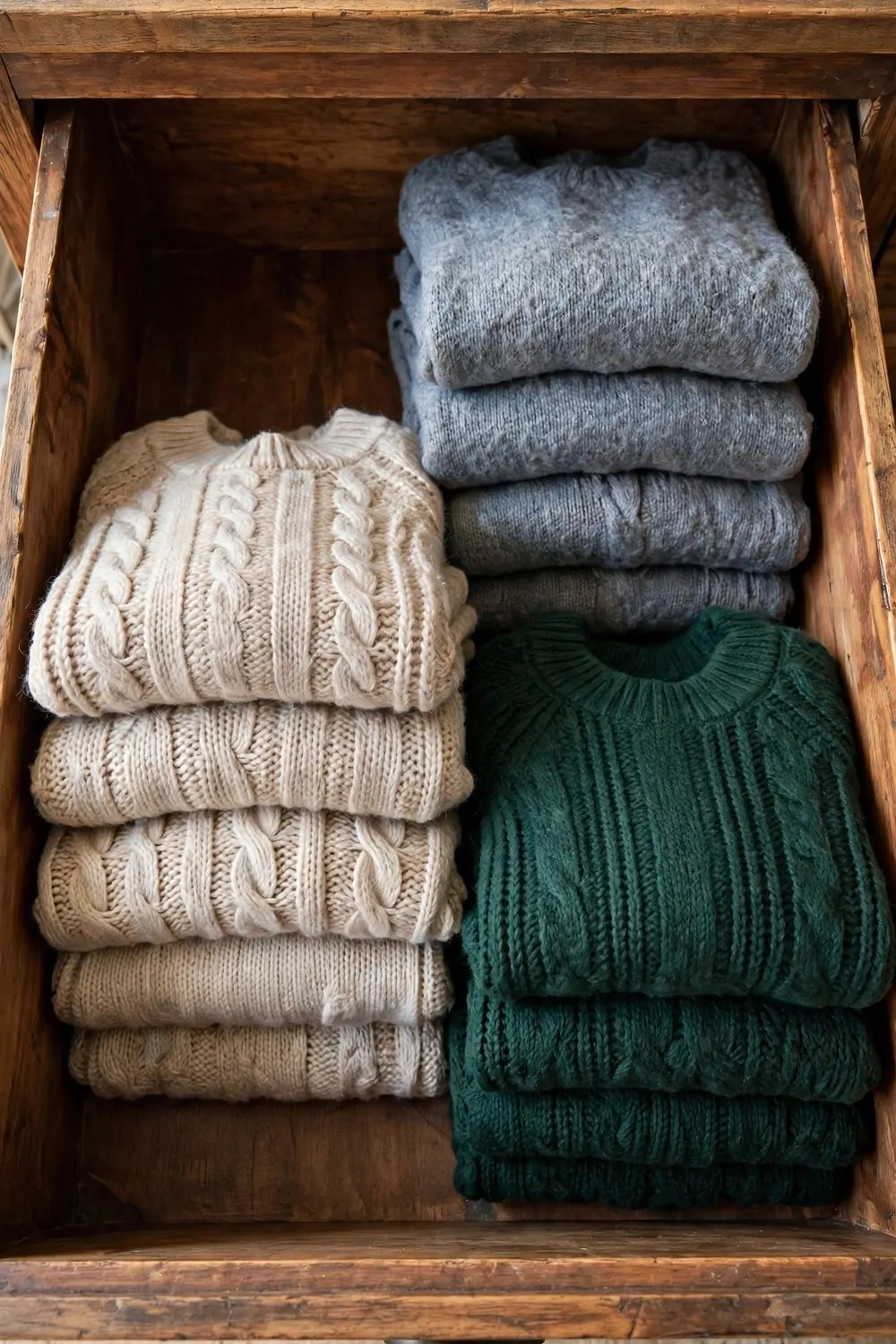
Bulky sweaters fall off shelves in a soft avalanche. I have watched a neat stack slide down more times than I can count.
Deep drawers stop the avalanche. You fold sweaters inside and they stay put behind the drawer front.
One deep drawer can hold a whole season of sweaters. They stack in two neat rows and you can still see each one.
Fold sweaters the same size every time. Even stacks look tidier and you fit more in one drawer.
Put your favourite sweaters on top. The ones you wear every week should be the easiest to grab.
Cedar blocks in the drawer keep moths away and smell lovely. I drop one in each drawer at the start of winter.
Deep drawers work for jeans and thick hoodies too. Anything bulky that slips off a shelf belongs in a drawer.
Label the drawer if you share the closet. A small tag helps everyone put things back in the right spot.
This drawer keeps winter clothes calm and tidy. Your sweaters stay soft, folded, and ready when cold days come back.
A Kids’ Closet Zone They Can Reach
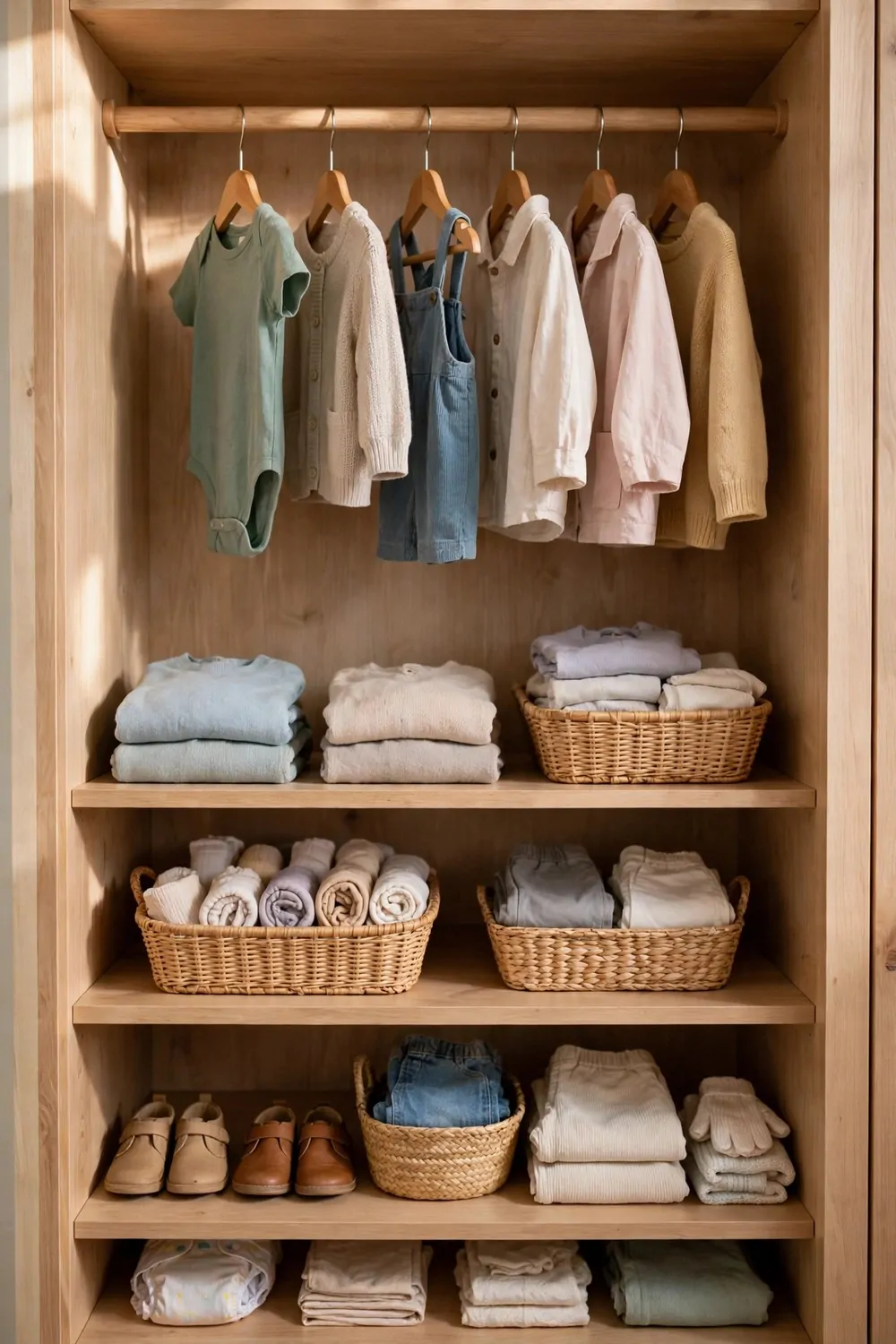
Kids cannot use a closet built for adults. The rod is too high and the shelves are out of reach.
A kids’ zone puts the rod and shelves at their height. They can hang up their own clothes and feel proud of it.
I like low hooks for jackets and bags. A child can hang a coat by themselves and it builds a good habit.
Use open bins for socks and small clothes. Kids can toss things in and find them again without help.
Pictures on the bins help little ones who cannot read yet. A sock picture means socks go there.
Keep the floor clear so they can stand and choose. A small stool helps if they want to reach one shelf higher.
Let your child pick a colour for their zone. When it feels like theirs, they care more about keeping it neat.
Adjust the rod as they grow. A rod that moves up means the closet grows with your child.
A kid-sized closet zone teaches order without nagging. Your child learns to care for their clothes, one small hook at a time.
A Travel Shelf for Luggage and Bags
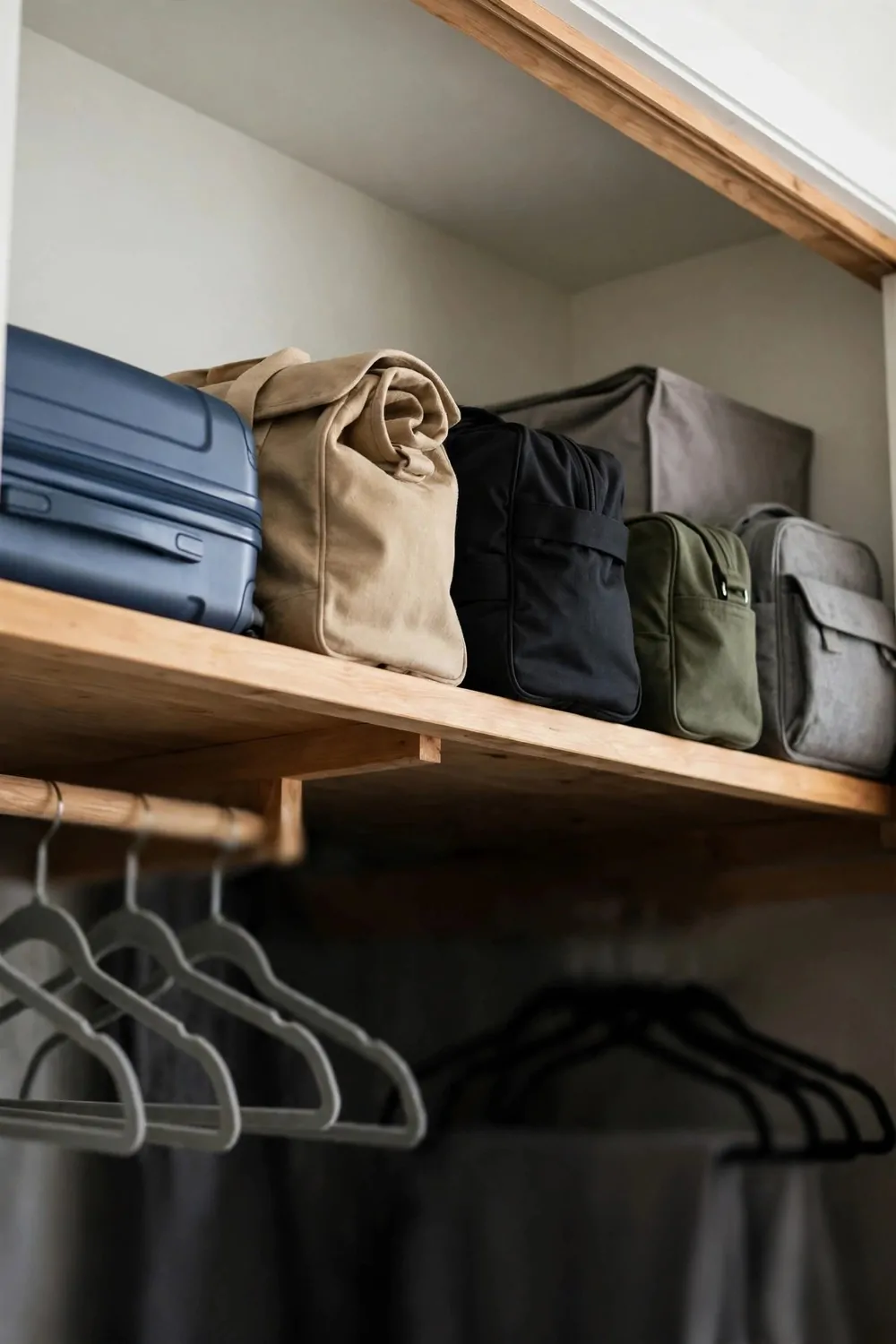
Luggage takes up floor space in every home. Big suitcases lean in corners and collect dust.
A high travel shelf gives your bags a proper home. They sit up high, out of the way, until trip day comes.
I keep my biggest suitcase on the top shelf. Smaller bags nest inside it so no space goes to waste.
Measure your largest suitcase before you build the shelf. A shelf that is too short will leave your bag homeless again.
Put travel bits on the same shelf. Packing cubes, toiletry bags, and neck pillows stay together with the luggage.
A sturdy shelf matters here. Suitcases are heavy, so the shelf needs strong brackets and solid wood.
Keep a small step stool nearby. You need it to lift a suitcase down safely without hurting your back.
Store out-of-season bags up there too. Beach bags and ski bags wait on the high shelf until their season comes.
A travel shelf clears your floor and your mind. Your bags are ready when you are, and your closet stays calm between trips.
Crown Moulding and Trim That Make It Look Built-In
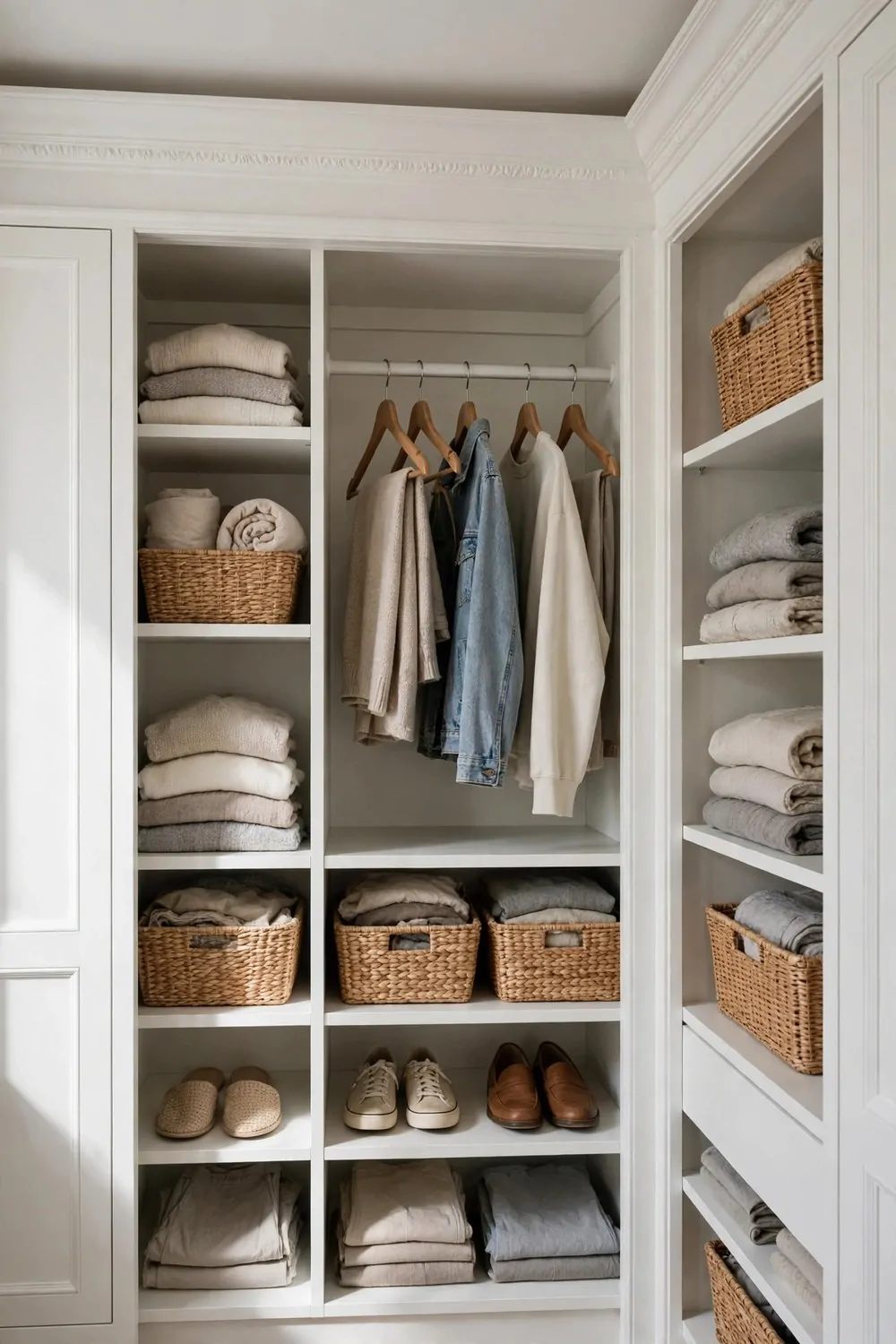
Plain shelves can look like a flat pack kit. Crown moulding changes that in one afternoon.
Trim along the top edge makes the closet look built into the wall. It hides the gap between the shelf and the ceiling.
I love how a simple white trim finishes a closet. It hides the gap between the shelf and the ceiling.
Match the trim to your room’s style. A plain flat trim suits a modern room and a curved trim suits a classic one.
Paint the trim the same colour as the shelves. One colour all over makes everything look like one piece.
Add a small base trim at the floor too. It ties the bottom together and hides scuffs from shoes.
Trim is not hard to fit if you measure twice. Cut once, check the fit, and then fix it in place.
You can add trim to an old closet as well. It freshens up tired shelves without a full rebuild.
This small detail makes a big difference. Your closet looks custom and costly, even if the shelves were simple.
A Slim Cabinet for the Awkward Corner
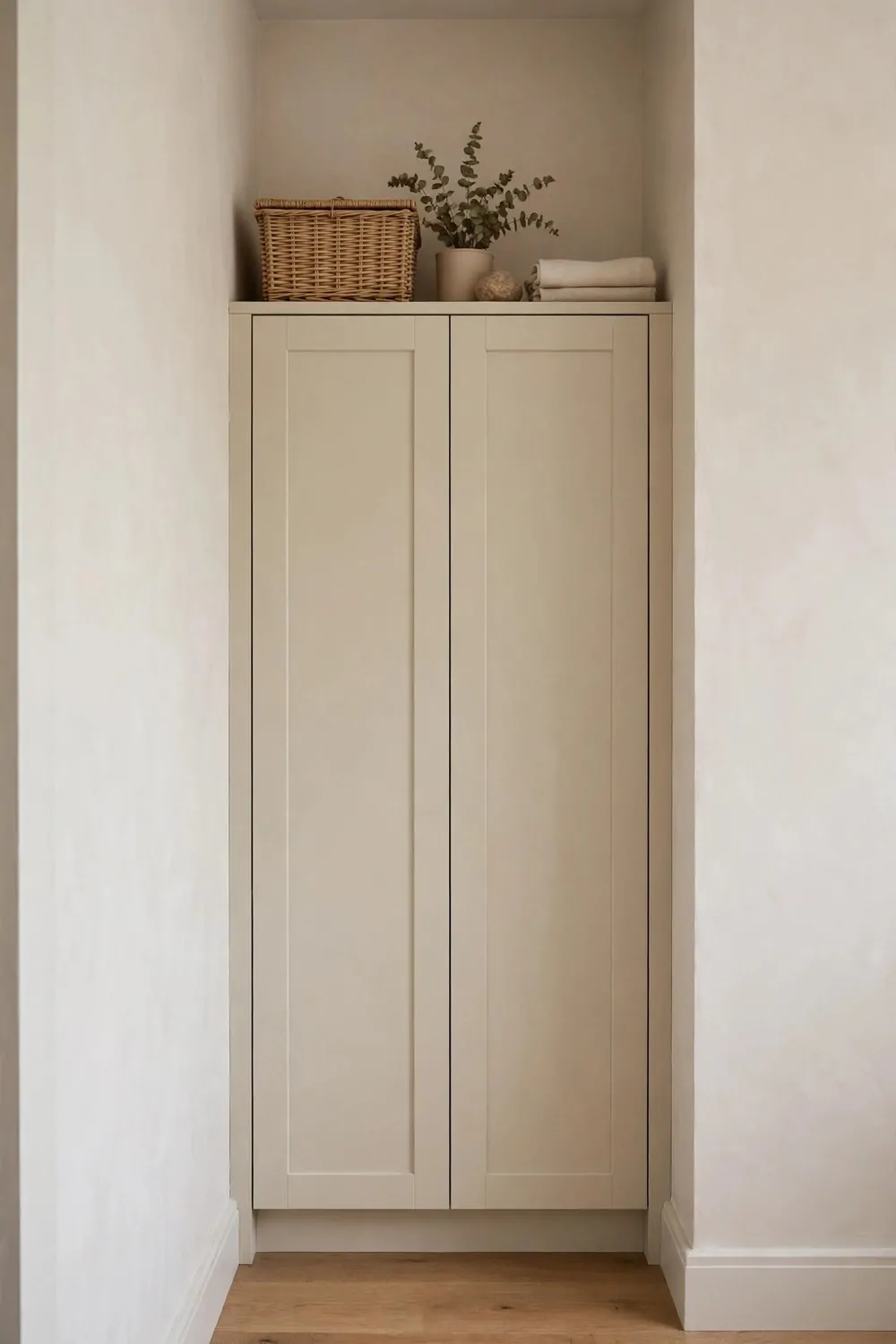
Every closet has one awkward corner. It is too narrow for a shelf and too deep to reach.
A slim cabinet fits that corner like it was made for it. It turns dead space into useful storage.
I use mine for shoes I wear less often. They sit in a tall narrow stack and stay out of the way.
Pull-out shelves inside make the corner easy to use. You slide the shelf out instead of reaching into the dark.
Measure the corner from both walls. Corners are rarely square, so check twice before you order.
A slim cabinet can hold cleaning bits too. A small vacuum or a lint roller fits well in a tall narrow space.
Keep the doors plain and matching. A cabinet that blends in looks like part of the closet, not an afterthought.
Label the inside shelves if the cabinet is deep. You will forget what is at the back without a small note.
This cabinet proves no space is wasted space. Even the oddest corner can hold something useful.
Matching Hangers and One Colour Scheme
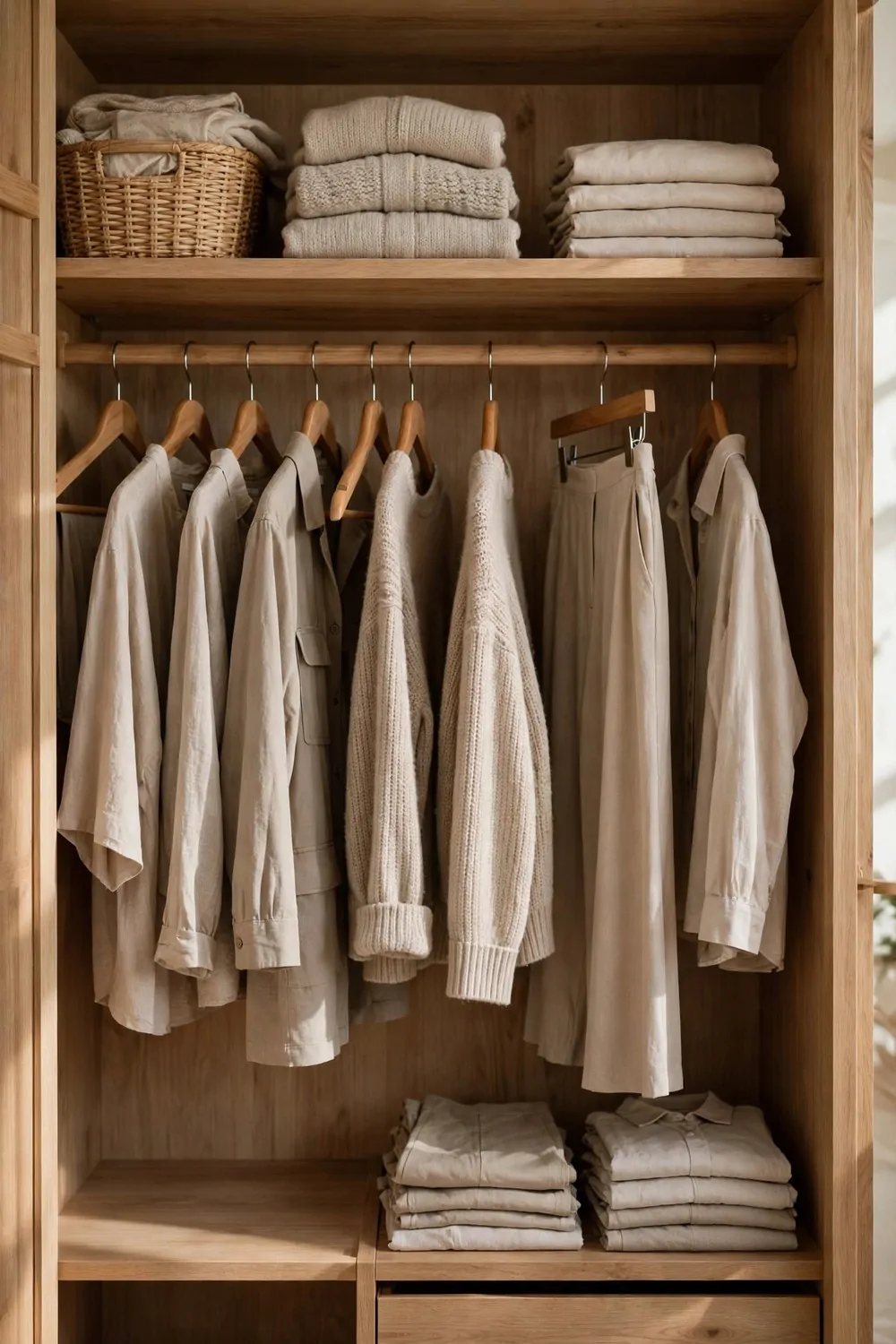
A mix of hangers makes a closet look messy even when it is clean. Wire, plastic, and wood all jumbled together catch the eye.
Matching hangers fix the look in one step. One type, one colour, and the whole closet feels calm at once.
I switched to slim wooden hangers and never looked back. They hold shirts well and take up less room than chunky ones.
Pick one colour scheme for your clothes too. When your clothes sit in one calm range of colours, the closet looks like a shop.
You do not need to buy all new clothes. Just group what you own by colour and the change shows right away.
Keep the hangers facing the same way. This tiny habit makes the rod look neat every single day.
Velvet hangers stop slippery tops from sliding off. They are thin and they grip fabric well.
Retire bent and broken hangers. One bad hanger can pull a whole row out of line.
Matching hangers and one colour scheme cost very little. Yet they make the biggest visual change of any idea in this list.
A Weekly Reset Spot by the Door
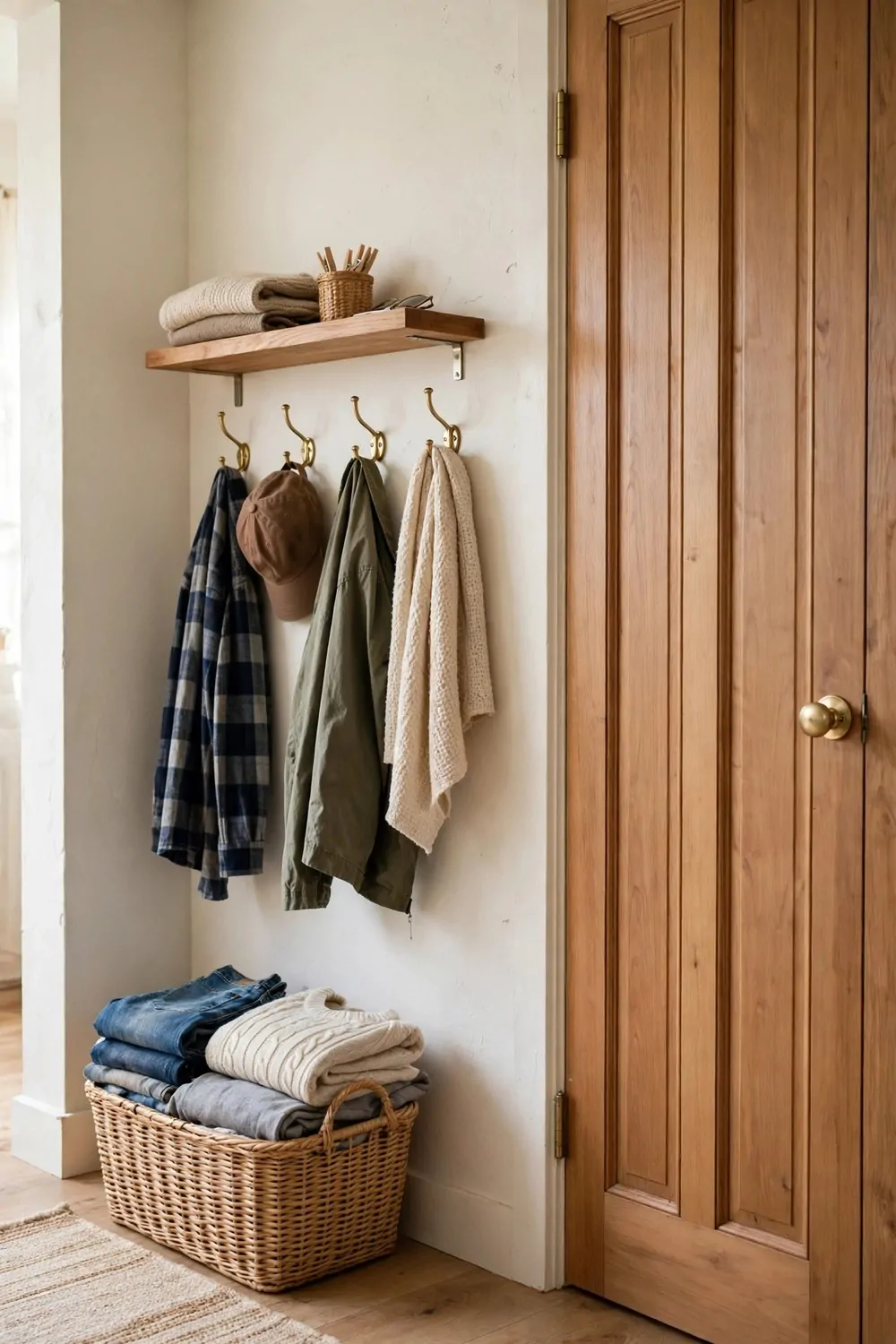
Closets drift into mess during the week. A shirt lands on a chair and a bag ends up on the floor.
A reset spot by the door stops the drift. It is one small shelf and a few hooks where tomorrow’s outfit waits.
I lay out my clothes there the night before. Mornings feel easy because the choice is already made.
Put a small basket on the shelf for bits and bobs. Keys, a watch, and a belt sit there ready to grab.
Use the spot once a week for a quick reset. Hang up strays, fold what fell, and clear the shelf in five minutes.
Keep the spot small on purpose. A big spot becomes a dumping ground, but a small one stays useful.
Kids can have a reset spot too. Their school clothes wait by the door and mornings run smoother.
A little tray for shoes under the shelf helps. Shoes stay paired and the floor stays clear.
This spot is my favourite habit in the whole closet. One small reset each week keeps the whole room calm.
Keep Reading
If you liked these closet ideas, I have more storage ideas waiting for you. I love finding smart ways to hide clutter and keep a home feeling calm.
Take your time and look through the posts below. One of them might hold the exact fix your closet or bedroom needs right now.
I always come back to these ideas when my own rooms start to feel messy again. A fresh look can spark a simple change that makes a big difference.
- 35 Hidden Closet Storage Ideas That Maximize Every Inch
- 41 Custom Closet Lighting Ideas That Transform Your Wardrobe
- 27 Reach-In Closet Ideas With Professional-Looking Storage Systems
- 30 Custom Built-In Shelving Ideas for Every Room
Pick one idea today and try it in your own space. Your future self will thank you for the calmer room.