19 Library at Home Room Ideas for Every Budget

For three years I carried a number in my head. Eight thousand dollars. That is what a designer at a home expo told me a real library room would cost. Built-in shelves, a reading chair, the works. I walked away from her little booth and told myself a home library was a rich-people thing.
Then last spring my sister built hers for one hundred and eighty dollars. Two secondhand bookcases. A chair from a yard sale. A floor lamp she already owned. I sat in that corner last month and read ninety pages in one go, and I did not want to leave.
The number in my head was wrong. A library is not a price tag. It is a chair, a light, and books you love. These 19 Library at Home Room Ideas prove it, one budget at a time. Start with whatever you can spend, even if that is nothing at all.
1. The Closet You Never Open
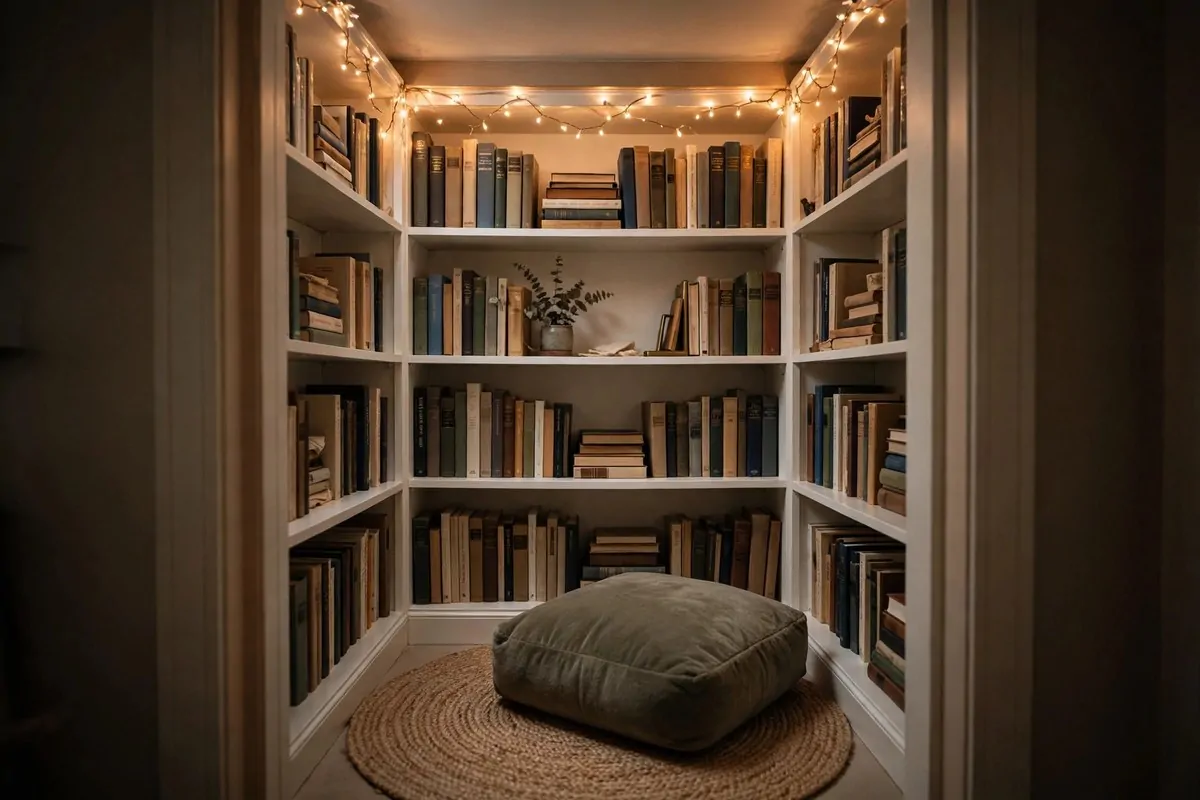
You have a closet in your house that holds nothing important. Be honest. You know the one.
Take the doors off and it stops being a closet.
Put two or three shelves inside at book height. Paint the back wall a color you love, because now you will see it every day. Add a cushion on the floor or a small stool.
String lights along the top shelf make it glow like a secret room. The total cost can stay under forty dollars if the shelves come from a discount store.
I did this in my hallway closet last year.
The doors went to the garage. I used plain white shelves and a little round rug from a sale bin. Now it is the first place I show guests, which is funny for a closet.
Keep the books you are reading right now at eye level. The rest can live higher up.
Close the bedroom door, open this one, and you have a library.
Small spaces feel special when every inch has a job. This closet finally has one.
2. Cinder Blocks and Pine Boards
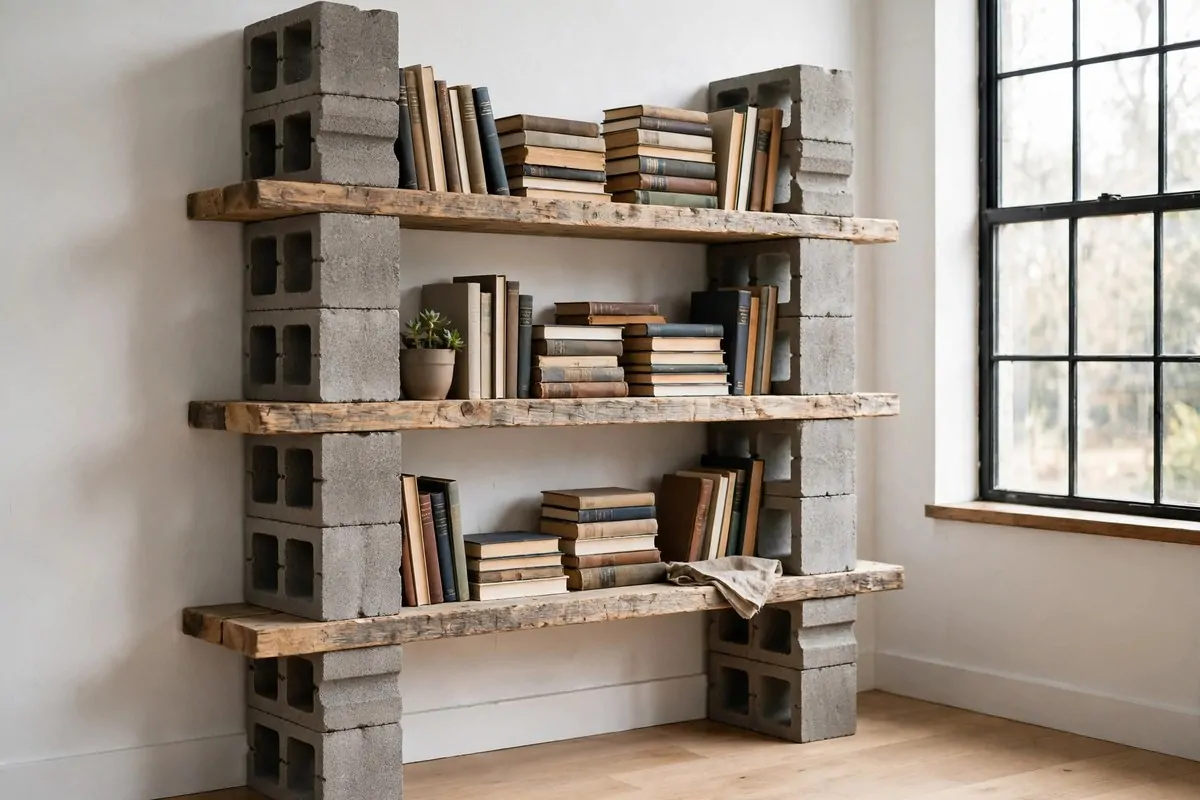
This is the cheapest real bookshelf I know. You buy gray cinder blocks and plain pine boards from a hardware store. You stack them like building blocks.
Two blocks, one board, two blocks, one board. That is the whole plan.
It looks industrial and cool, not cheap.
A stack four shelves high holds a shocking number of books. Cinder blocks are heavy, so the whole thing stays put. You can paint the blocks white if gray feels too rough.
My first apartment library was exactly this. It survived three moves and still looked good.
The boards cost the most, and even those are cheap.
Sand the edges so you do not get splinters. Stain them if you want a warmer look.
When you move, you unstack it in ten minutes. No screws in the wall. No sad holes to fill.
For under sixty dollars you get a full wall of shelves. Try finding that in a furniture store.
3. The Under-Stairs Hideout
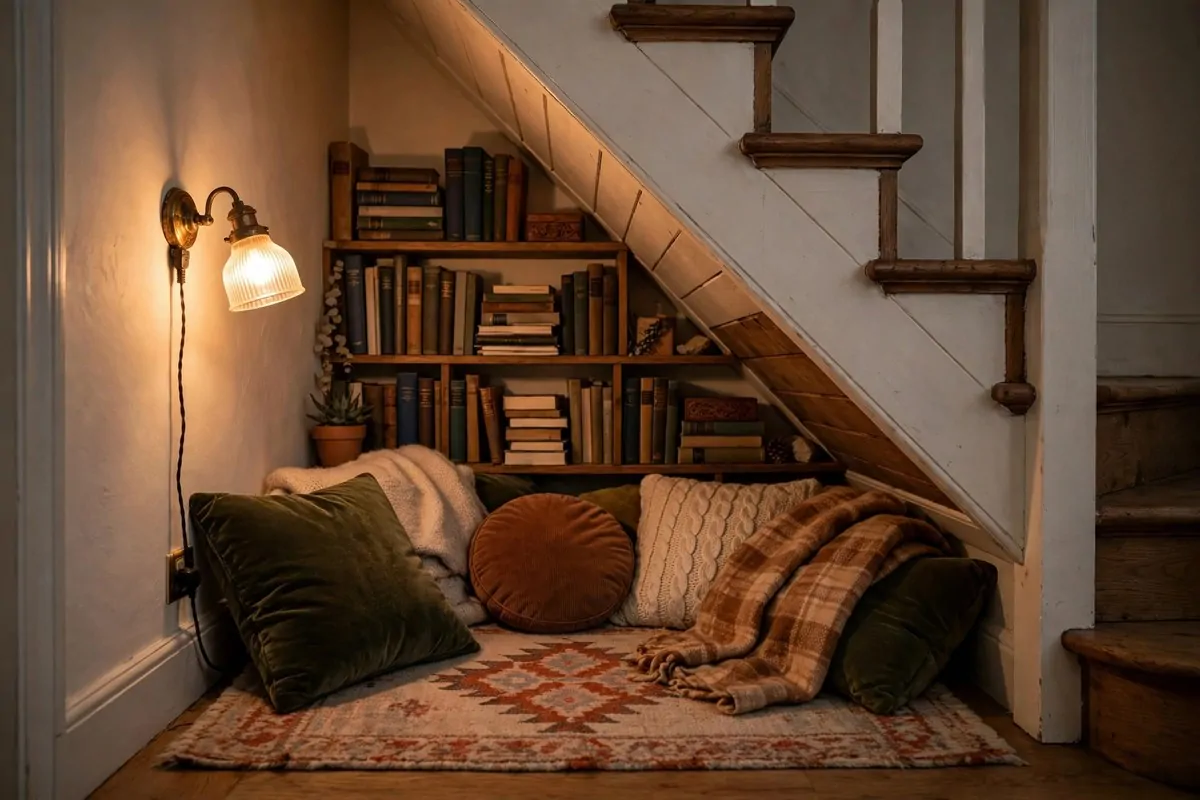
The space under your stairs is doing nothing right now. Maybe it holds a vacuum and some old shoes.
Clear it out. Measure the tallest point and the lowest point. That triangle shape is actually perfect for books.
Short shelves fit under the low side.
Tall shelves go where the ceiling rises. A floor cushion and a plug-in wall light finish it.
It feels like a secret clubhouse, even for grown-ups. Kids will fight you for it, fair warning. Let them have it sometimes.
You do not need to build anything fancy.
A couple of small bookcases pushed into the triangle work fine. Leave a gap in the middle for sitting.
Add a rug so the floor feels soft. Cold tile kills the cozy fast.
Free space, almost free library.
4. A Leaning Ladder Shelf
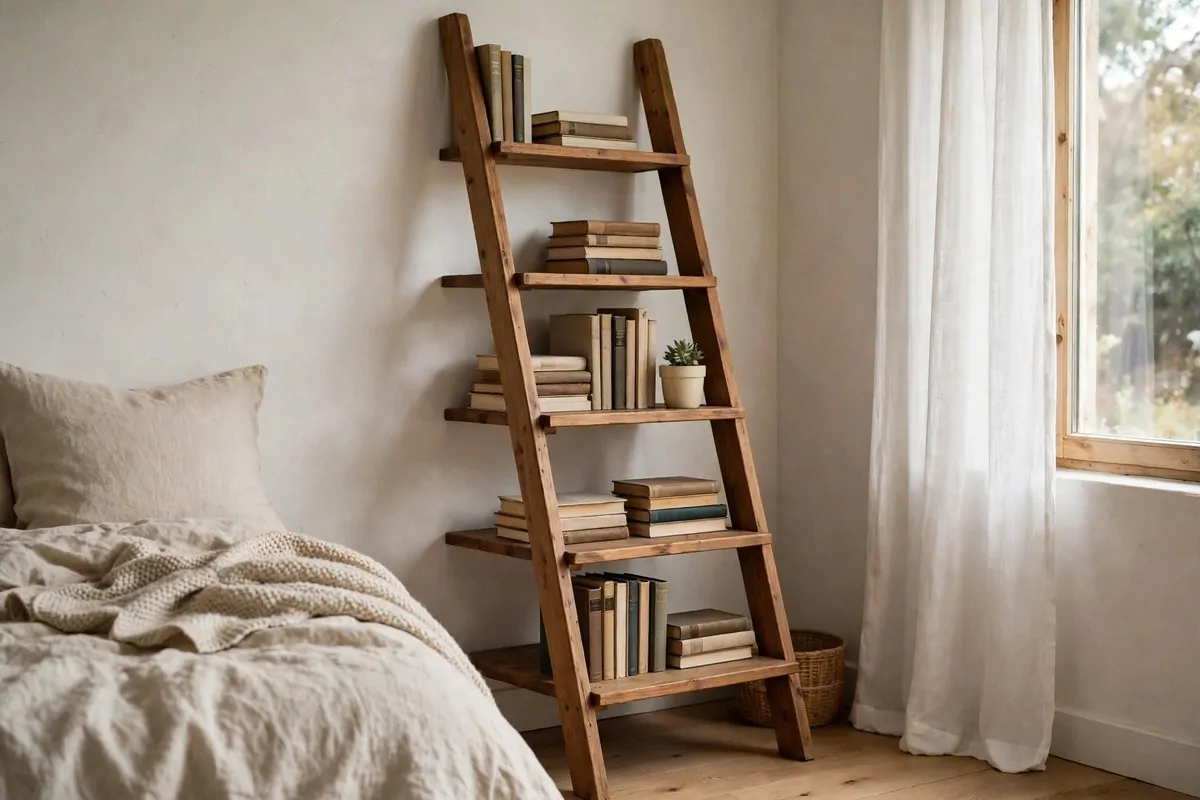
A leaning ladder shelf is exactly what it sounds like. It is a ladder that leans on your wall, with wide steps that hold books. You can buy one or build one from two boards and some dowels.
The lean means no wall anchors in most cases. It just stands there, doing its job.
Put your prettiest books on it.
The top steps hold small plants or a candle. The bottom steps hold the big heavy books that need a wide base.
It takes up almost no floor space, which renters love. Move it in seconds when you clean. It fits in hallways, bedrooms, even bathrooms if you are that kind of reader.
I keep cookbooks on mine in the kitchen.
It wipes clean with one swipe. Dust does not stand a chance on open steps.
Under fifty dollars new, under twenty secondhand. Check local listings first.
Simple, tall, and good-looking.
5. The Thrift-Store Bookcase Wall
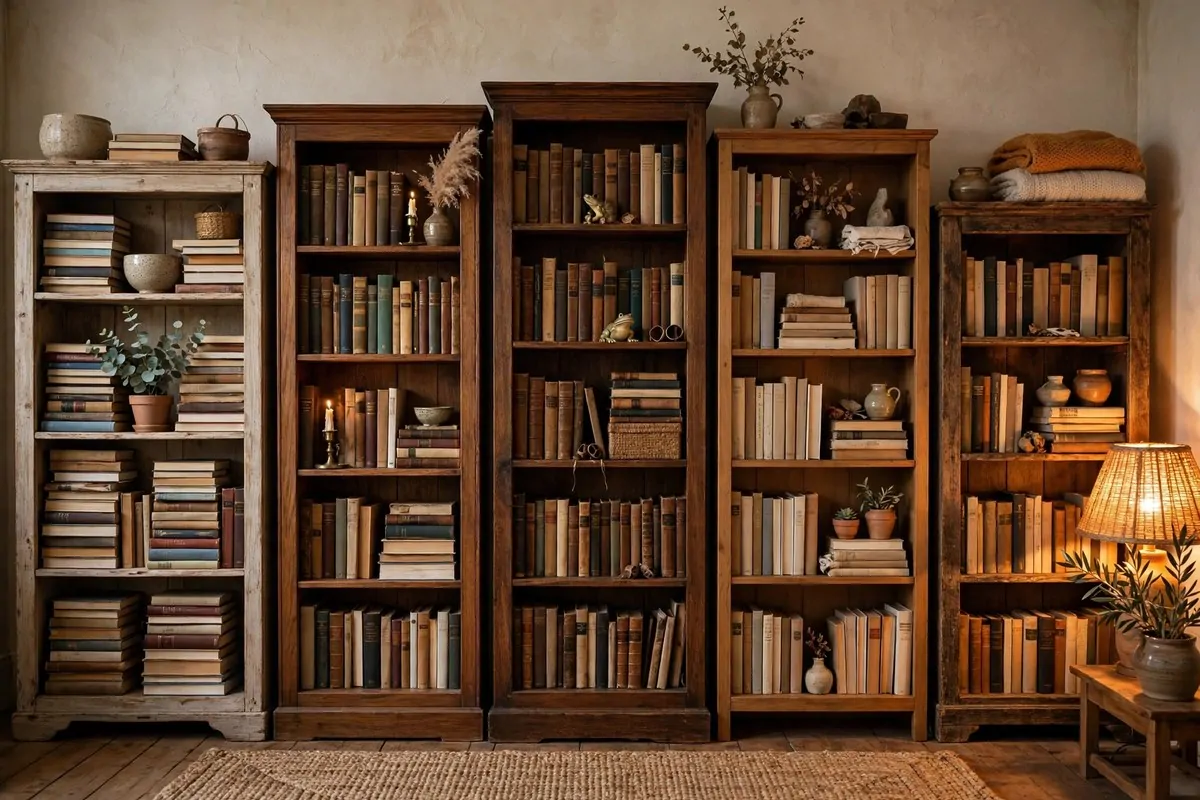
Secondhand bookcases are everywhere if you look. Thrift stores, yard sales, online listings from people who are moving.
They never match, and that is the charm. One oak, one white, one dark wood. Line them up along one wall and they start to look like they belong together.
Paint them all one color if the mix bothers you.
White paint makes five different bookcases look like one built-in unit. It is the oldest trick in the book, and it works every time.
Check the shelves for wobble before you pay. A wobbly bookcase full of books is a sad story waiting to happen. Tighten the screws at home and it will stand straight.
I found two matching ones on a curb once.
Free is the best price. A quick wipe and they looked brand new.
Fill the bottom shelves with heavy books. It keeps the whole row steady and looks right.
Five bookcases, maybe eighty dollars total. That is a library wall for less than one fancy shelf from a catalog. Your wallet will thank you.
6. Floating Shelves to the Ceiling
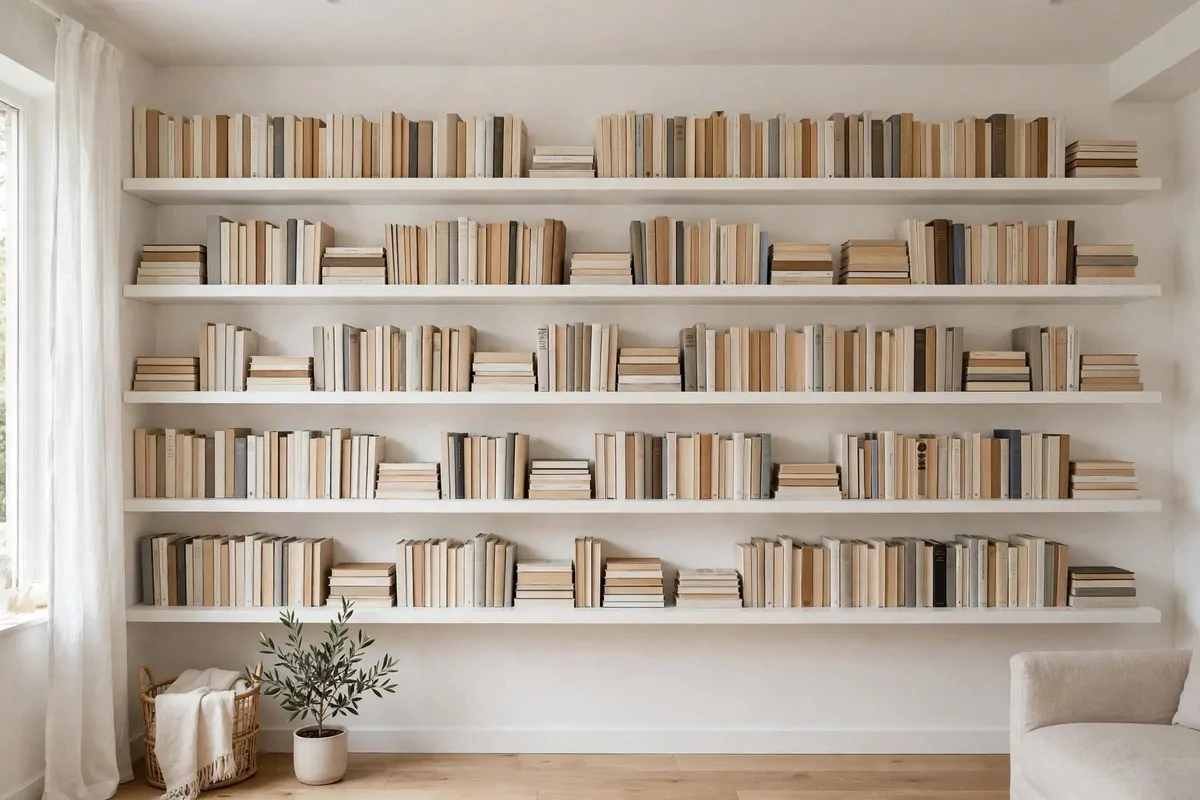
Walls are free real estate. Floating shelves let you use all the way up to the ceiling. Start at eye level and keep going.
You need a drill, wall anchors, and a level. That is the whole toolkit.
The high shelves are for books you rarely touch.
Keep a little step stool nearby. Reaching up for a book feels oddly satisfying, like picking fruit.
Space the shelves to fit your tallest books plus a finger of room. Nothing is sadder than a shelf that almost fits. Measure twice, drill once.
Stagger them for a playful look, or line them straight for calm.
Straight lines look bigger. Staggered lines look more fun. Pick the mood you want.
One wall of floating shelves costs less than eighty dollars in boards and brackets. It also makes the room feel taller. Two wins for the price of one.
Dust the top shelf once in a while. It collects dust the way attics collect boxes.
7. The One-Corner Library
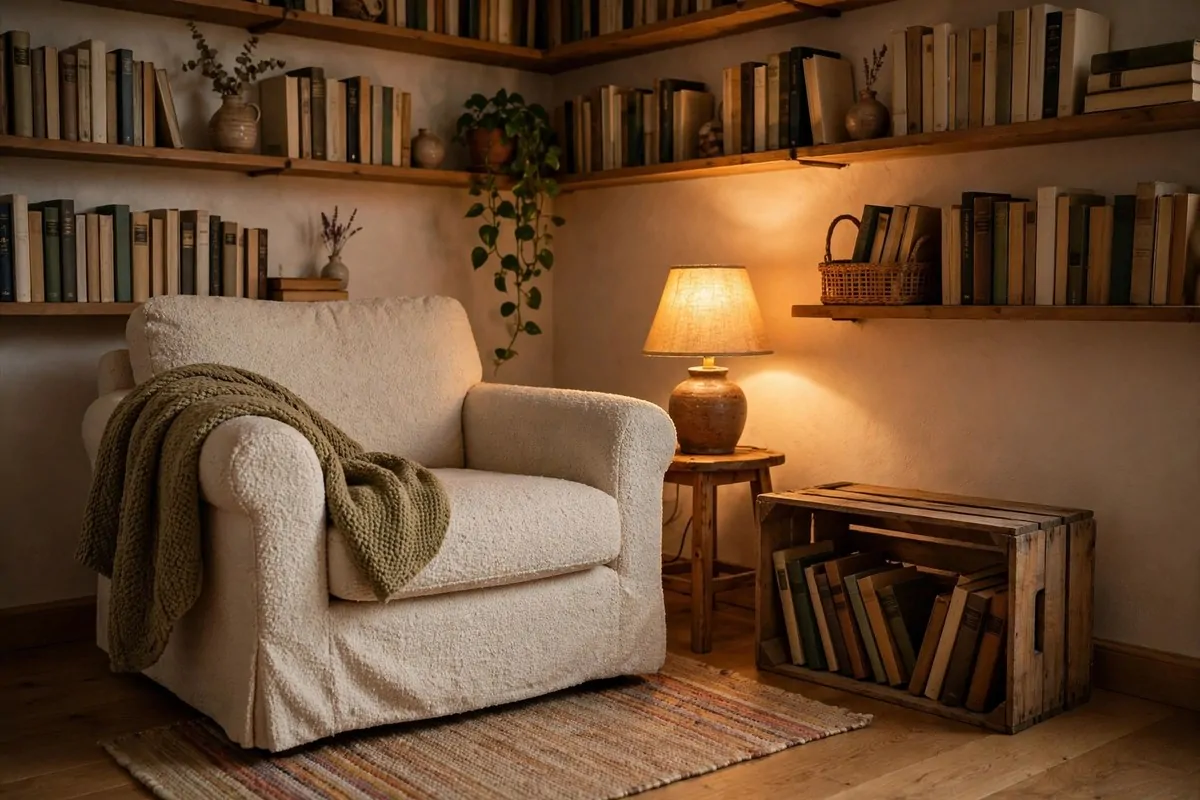
You do not need a room. You need a corner. One corner is enough.
Pick the corner with the best light. Drag in the most comfortable chair you own. Add a small table for tea and a lamp you can read by.
That is a library now.
A wooden crate on its side makes a perfect little bookcase. It holds twenty books easy and costs almost nothing.
This is how most real home libraries start. Not with a grand plan. With a chair that ended up in the right spot and a pile of books that kept growing.
Give the corner a rug to mark its territory.
A rug says this spot is special. It also keeps your feet warm, which matters more than you think.
When friends visit, this corner will be the most fought-over seat in the house. You will end up reading on the couch while they take your chair. It happens to me every time.
Total cost: whatever the lamp bulb costs.
8. Wine Crates on the Wall
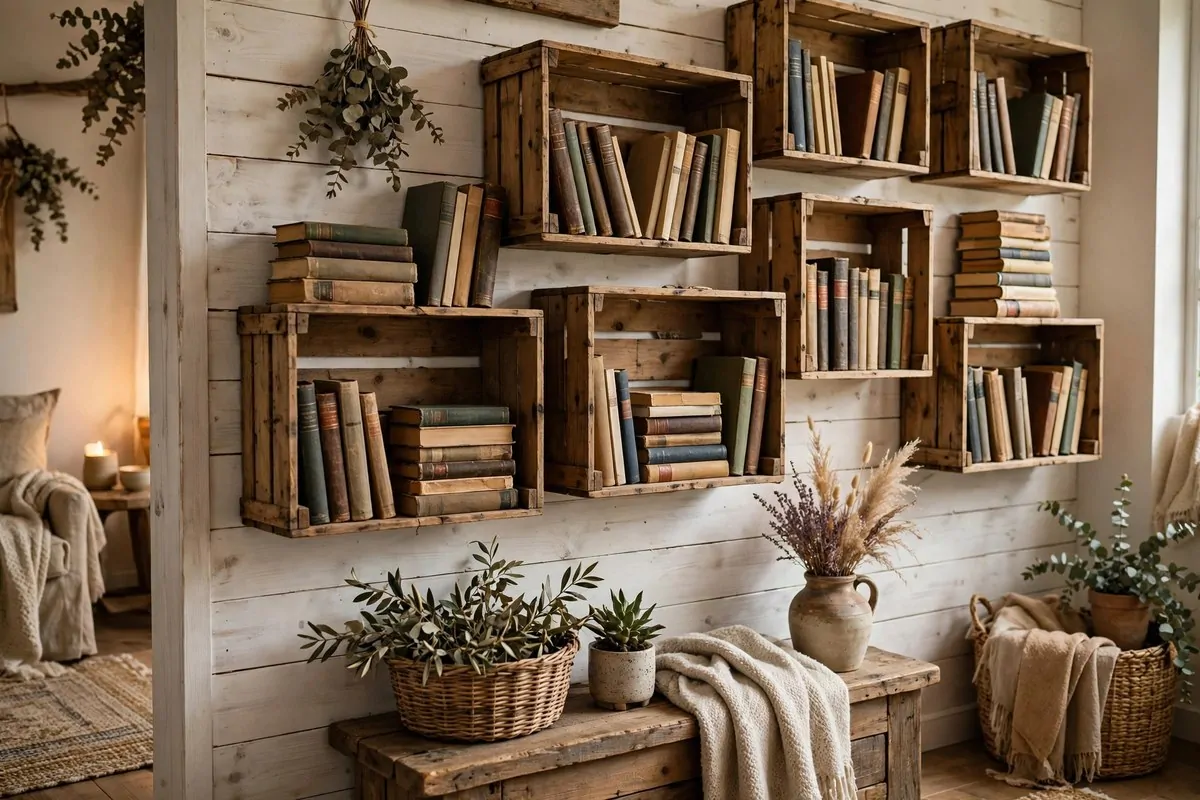
Wine shops throw away wooden crates, or sell them for a few dollars. They are strong, they look rustic, and they are exactly book-sized. This is not a coincidence. It is a gift.
Screw them to the wall in a pattern you like. A grid looks tidy. A scattered pattern looks artsy.
Sand them first so no splinters attack your books.
Stain them dark for a moody look, or leave them raw for farmhouse charm. Line the inside with wrapping paper for a pop of color. Nobody will believe they held wine bottles.
Each crate holds a full row of paperbacks. Four crates make a real little library wall.
Ask at the shop before you take them.
Most places are happy to give them away. It saves them a trip to the recycling bin.
Mount them into wall studs if you can. Books are heavy, and drywall alone is not their friend. A stud finder costs less than lunch.
Under forty dollars for the whole wall. Rustic, sturdy, and a great story when guests ask.
9. The Window-Seat Reading Spot
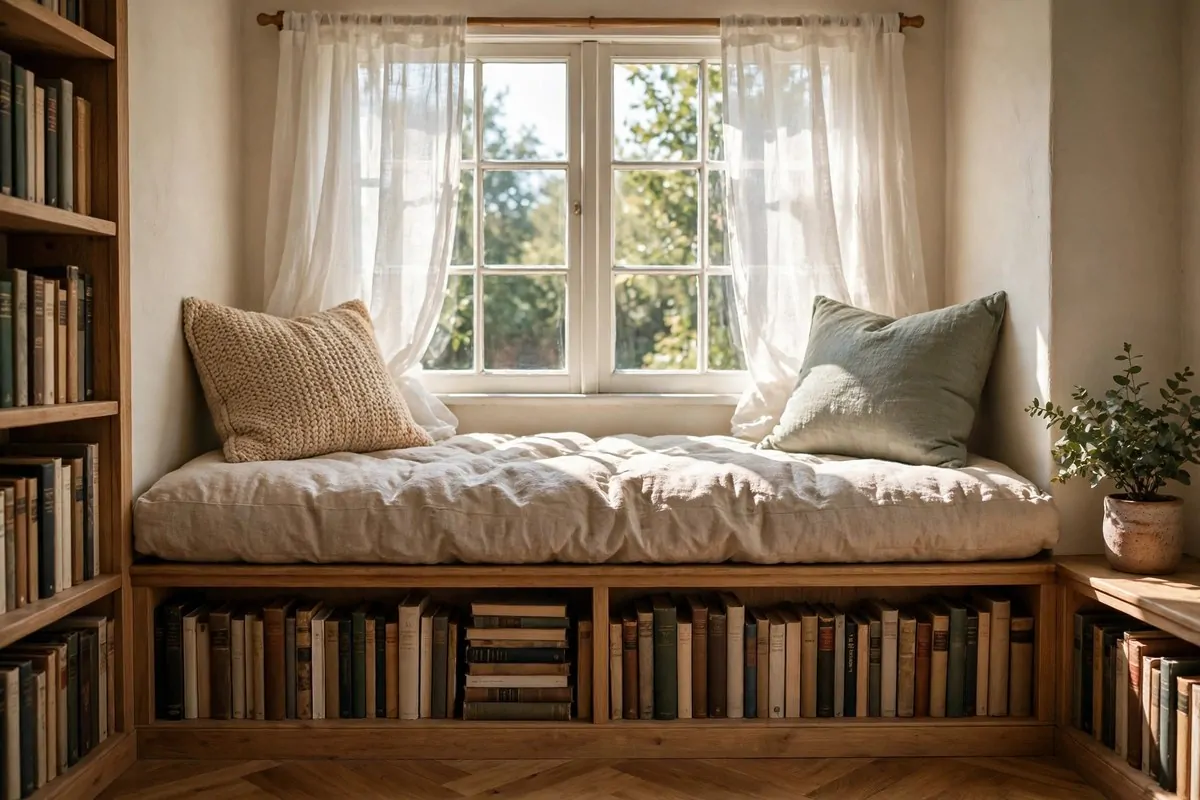
A window is the best reading light ever made. It is free and it never needs new bulbs.
Build shelves under the window, low and wide. Put a thick cushion on top. Now the window has a job besides looking outside.
This works in bedrooms, living rooms, even wide hallways.
The low shelves hold the books you reach for most. Kids can grab their own books here without climbing anything.
Add a throw pillow or two, the squishier the better. A small basket beside the seat holds the book you are reading now and the one you will read next. Keep a coaster there too, because tea and books go together.
Curtains on that window should be light and breezy.
Heavy curtains block the whole point. Sheer ones soften the glare and keep the view.
In winter this spot gets the warm afternoon sun. You will fight the cat for it. The cat usually wins.
Cost: one cushion and some low shelves.
10. The Curtain-Divided Reading Corner
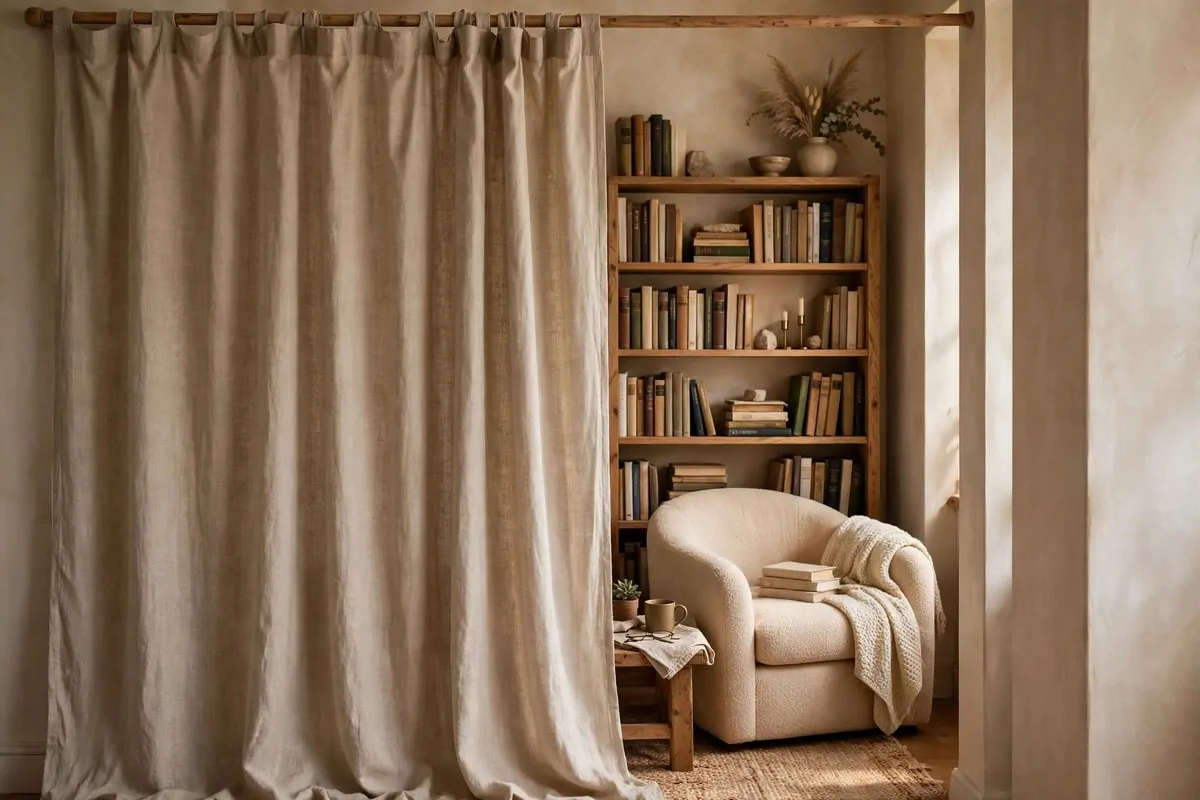
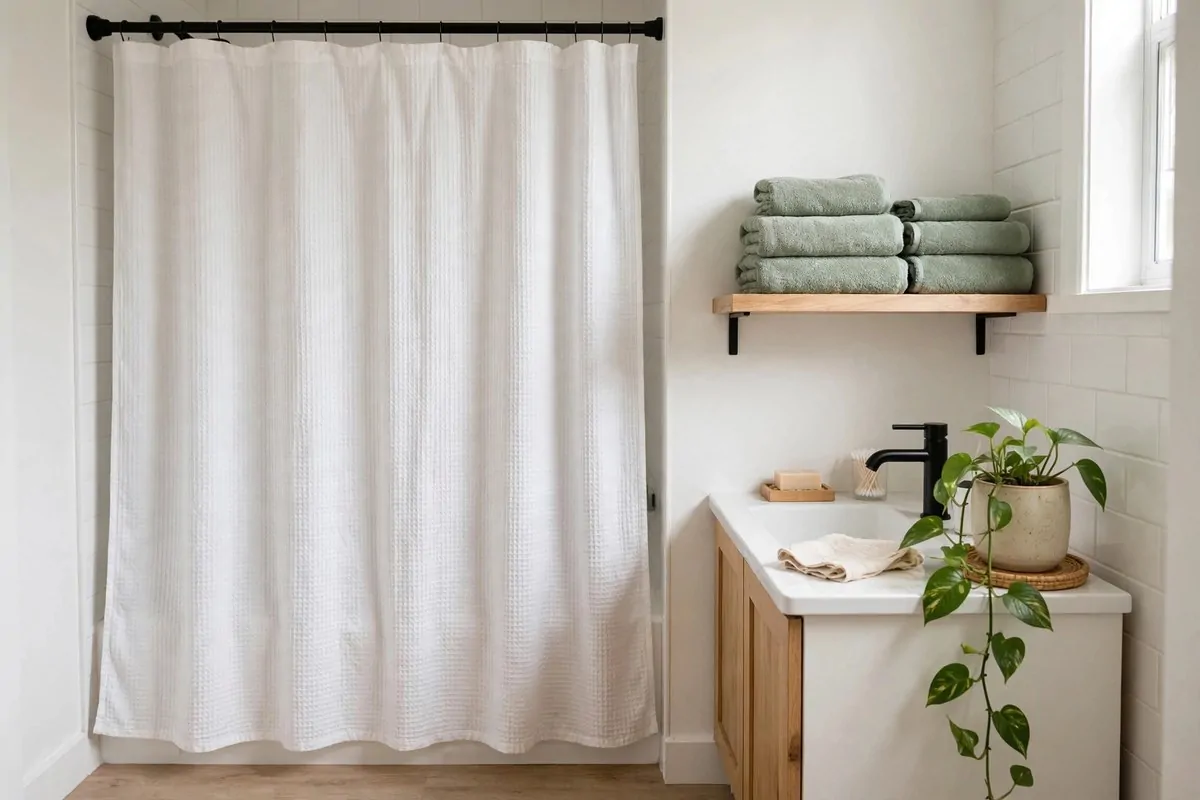
Open-plan homes are great until you want one quiet corner. A curtain fixes that in ten minutes. Hang a rod from the ceiling and let fabric do the work.
Behind the curtain: your chair, your lamp, your books. In front: the rest of the noisy house.
It is the cheapest room divider ever invented.
Pick a curtain that lets a little light through. You want cozy, not a cave.
Linen looks calm. Velvet feels fancy. A fun print makes kids love the space. The curtain also hides the mess when guests come over, which is a bonus I did not expect but deeply enjoy.
This trick works in studios and shared bedrooms too.
Your roommate gets their space, you get yours. Everybody reads happier.
A tension rod works if you cannot drill. Just wedge it between two walls. Add a bookshelf behind the curtain and the corner feels like its own tiny room.
Under fifty dollars, including the rod. Privacy has never been this cheap.
11. The Attic Book Corner
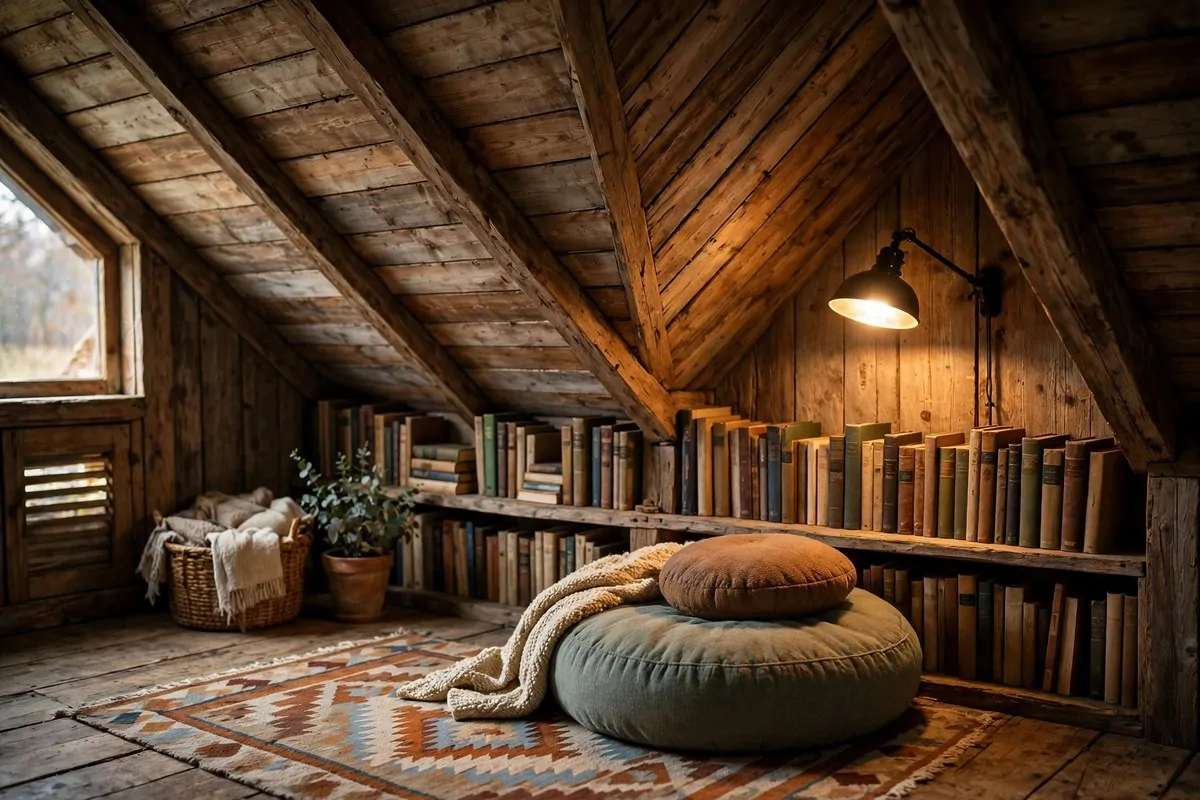
Attics have the best light in the house and nobody uses them. Sloped ceilings feel like a hug.
Low bookshelves fit perfectly under the slope. A floor cushion or a low chair keeps your head clear of the beams. One good reading lamp is all the wiring you need.
It is quiet up there in a way no other room can match.
No street noise. No kitchen sounds. Just you and the pages.
Watch out for heat in summer, attics get warm. A small fan fixes it. In winter it is the coziest room in the house, because heat rises and so do readers.
Keep the floor clear so you can actually reach the shelves.
A rug makes the wood floor warm underfoot. Boxes go somewhere else, this corner is for books now.
Swing-arm wall lamps are perfect here. They mount on the sloped wall and swing right over your shoulder. No floor space lost at all.
An attic library feels like a secret. Because it kind of is.
12. Secondhand Books First

The shelves are only half the library. The books are the other half, and new books are expensive. Secondhand books are not.
Library sales sell hardcovers for a dollar or two. Thrift stores price paperbacks at pocket change.
Used bookstores are treasure hunts with better lighting.
Make a wishlist and carry it in your phone. When you spot a title at a sale, you will know it is one you actually want. This stops the random pile problem.
The random pile problem is real. I once owned four copies of the same novel. Four.
Book swaps with friends cost nothing at all.
Trade the ones you will not reread. Somebody else’s finished book is your new favorite waiting to happen.
Little free libraries on your street work the same way. Take a book, leave a book. It is the friendliest system ever invented.
A full shelf of secondhand books often costs less than three new hardcovers. Read more, spend less.
13. Sort by Color Day
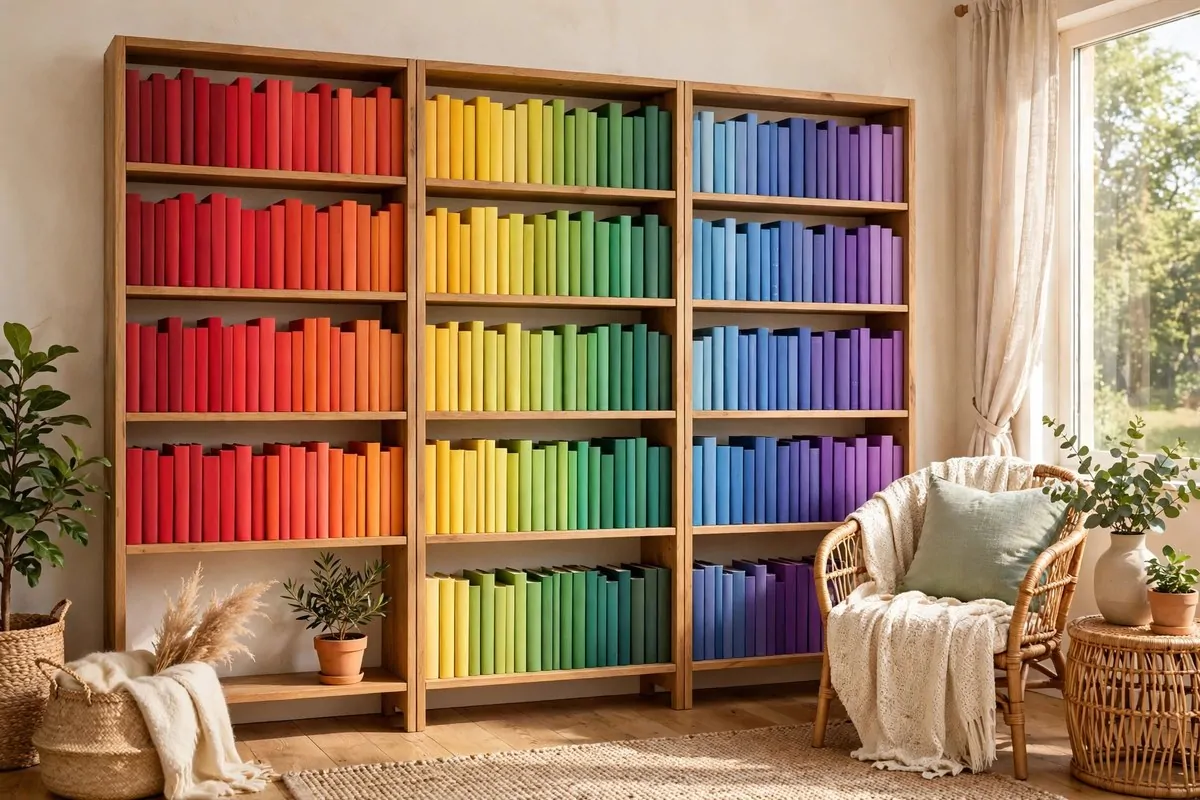
This one costs zero dollars and changes everything. Take every book off one shelf.
Sort them by color. Red with red, blue with blue, all the way across. Put them back in rainbow order.
Stand back and look.
It looks like a different shelf. Guests will ask if you bought new books. You did not. You just rearranged them.
The trick works best on shelves you see every day. Your eyes love the gradient. It also makes a small collection look bigger and more loved.
Finding a book gets a little harder, I will not lie.
You remember the color, not the spot. But you get used to it fast.
Take a photo before and after. The after photo always wins. Post it if you want, people love a good shelf glow-up.
Free makeover, one afternoon, huge payoff. Do it on a rainy Sunday.
14. The Kids’ Teepee Corner
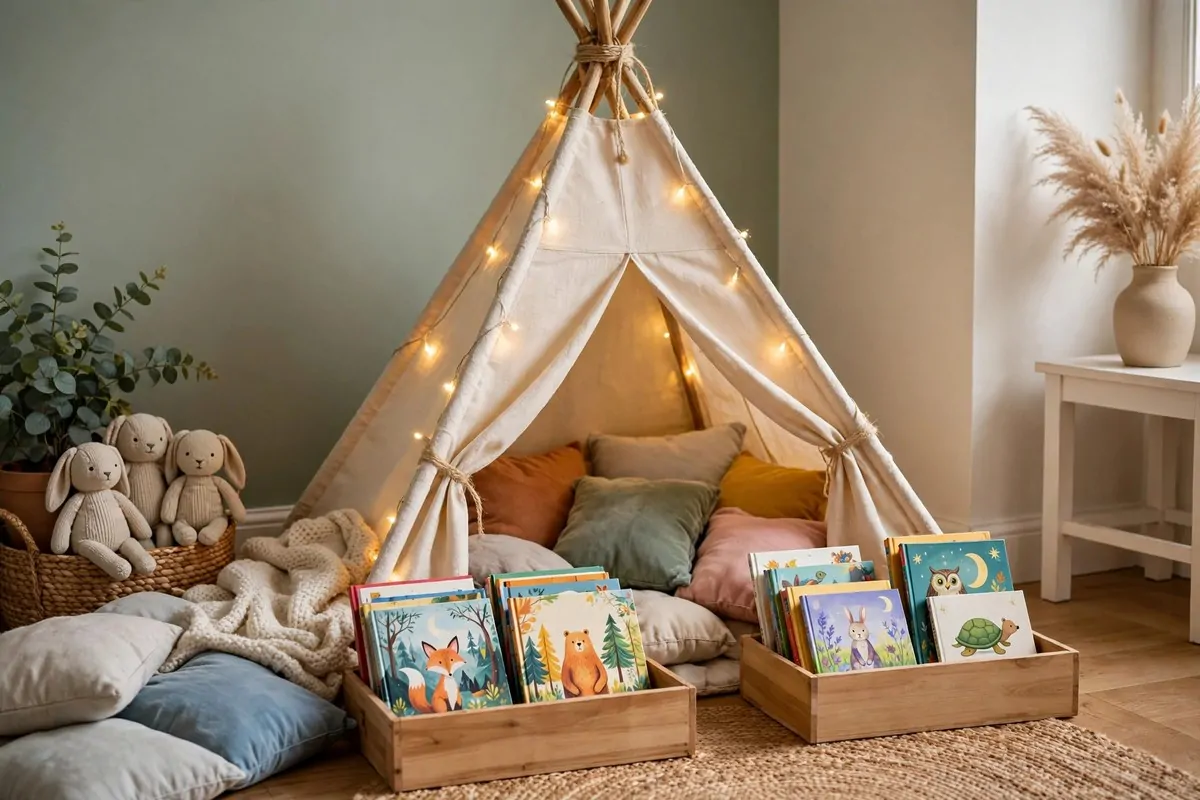
Kids do not need a full library. They need a tent. A fabric teepee in the corner with cushions inside becomes their favorite place in the house.
Fill it with picture books in low bins they can reach. If they can see the covers, they will pick them up.
Face-out display beats spines for little readers.
Add a string of battery lights inside for magic. Keep a small basket for the current favorites. Rotate the books every few weeks so it feels new again.
This corner costs under sixty dollars all in. The teepee is the big piece, and sales happen all year.
Put it where you can see it but they feel hidden.
Kids read longer when they feel tucked away. A corner of the living room works perfectly.
My niece reads in hers every single visit. She calls it her book house. I am not allowed inside without knocking, which is fair.
Start them young and the habit sticks.
15. A Floor Lamp and String Lights
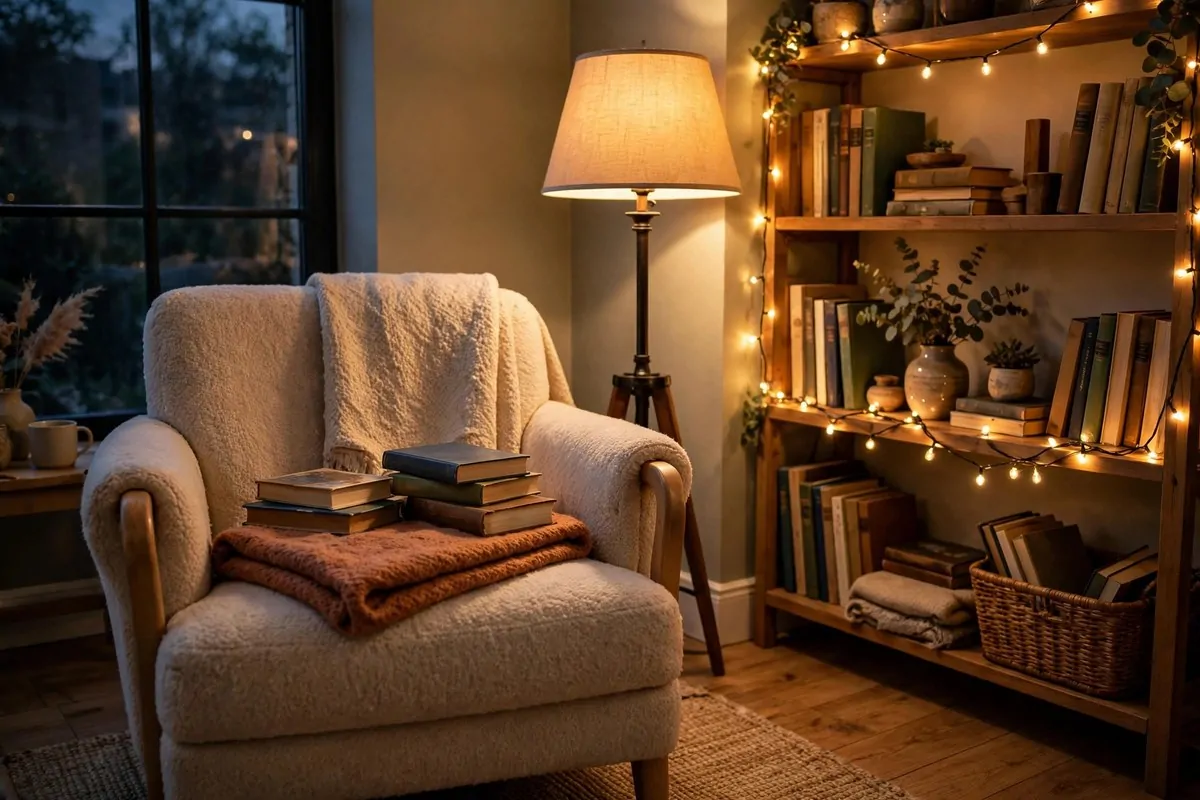
Bad light kills a library faster than empty shelves. Your eyes get tired and you stop reading.
You do not need fancy fixtures. One warm floor lamp beside your chair does most of the work. String lights along the shelves do the rest.
Warm light, not white light.
White light feels like an office. Warm light feels like evening, even at noon.
Here is a quick cheat sheet for library lighting:
| Spot | Best light | Rough cost |
|---|---|---|
| Reading chair | Warm floor lamp | $25 |
| Shelves | String lights | $8 |
| Dark corners | Plug-in wall sconce | $15 |
Put the lamp behind your shoulder, not in front of your eyes. Light should fall on the page, not in your face. This one small move fixes most reading headaches.
String lights cost less than ten dollars a strand. Drape them, do not stretch them tight.
Loose swags look cozy. Tight lines look like a store display. You want cozy. Plug them into a timer so they glow every evening without you thinking about it.
Under forty dollars, and your library finally feels like evening.
16. Plants Between the Books
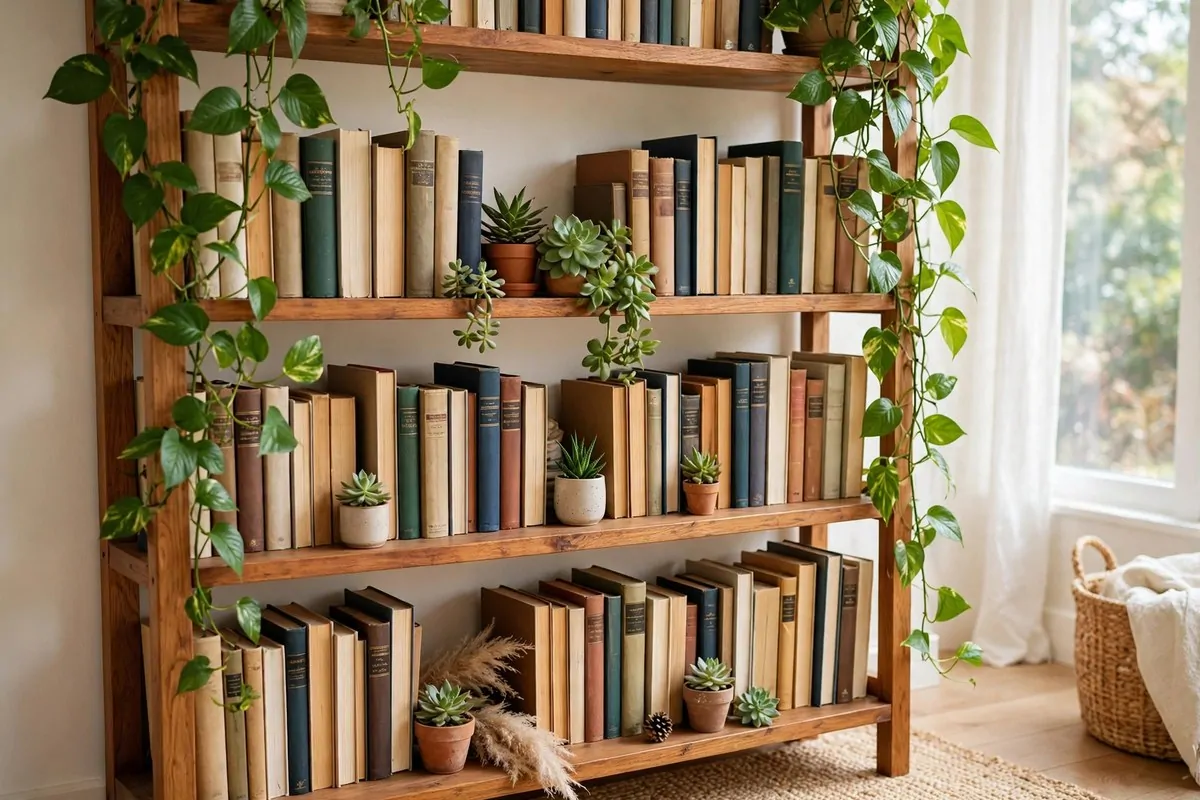
Books are rectangles. Rooms full of rectangles feel stiff. Plants fix that in one move.
A trailing pothos on the top shelf softens the whole wall. A tiny succulent between book rows adds life.
Green and book spines just look right together.
Pick plants that forgive you. Pothos, snake plants, and succulents survive forgetful owners.
I water mine when I remember, which is not often, and they still thrive. Put a small saucer under each pot. Water rings on shelves are forever.
Hanging plants work on high shelves you cannot reach easily.
They trail down where you can see them. No ladder needed for watering if you use a long-spout can.
Plants also tell you when the room needs air. Droopy leaves mean open a window. Your books like fresh air too, just not direct sun on the spines.
Under twenty dollars for three plants. The shelf looks alive now.
17. Framed Quotes Gallery
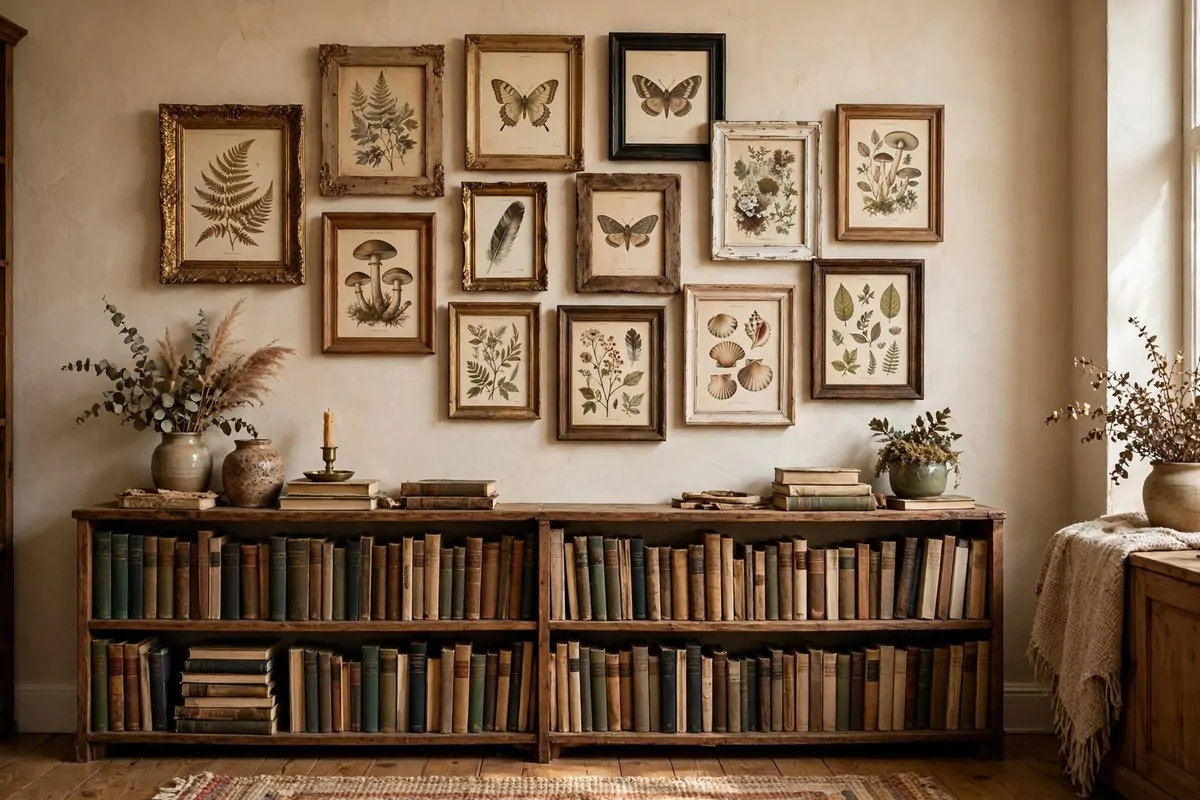
Bare walls make a library feel unfinished. You do not need expensive art to fix that. Frame pages you love.
Old books with pretty illustrations cost a dollar at sales. A favorite quote printed at home looks great in a simple frame.
Thrift stores sell frames for almost nothing.
Hang them in a loose cluster above the bookshelf. Crooked is fine, perfect grids feel stiff. Mix sizes and mix frame colors for a collected-over-time look.
I framed the first page of my favorite childhood book. Guests always stop to read it.
Bookmarks, postcards, and old maps work too.
Anything flat and loved belongs on this wall. It is your story, told in paper.
Keep the frames at eye level where you sit. Art you cannot see is just storage. This wall should make you smile mid-chapter.
Under thirty dollars for a full gallery. Your walls finally match your shelves.
18. The Swap Shelf
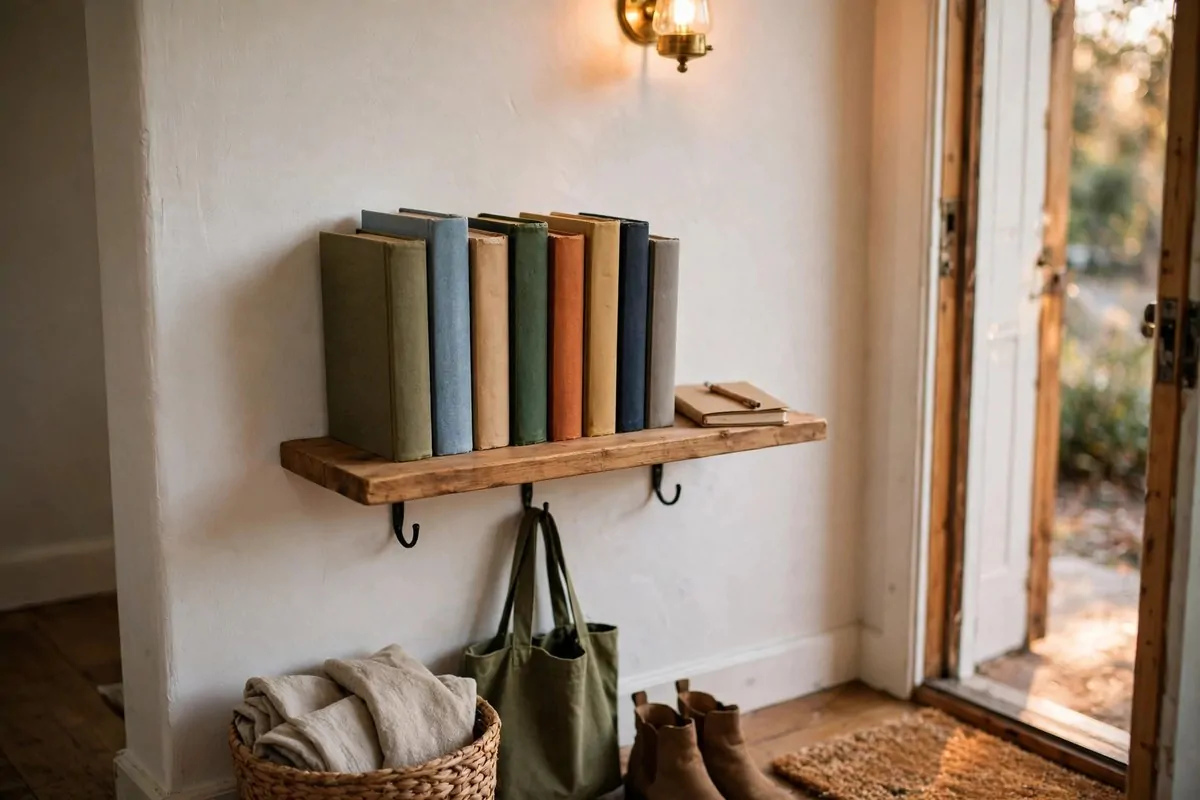
A swap shelf is a tiny free library inside your home. One shelf, near the door.
Put books you have finished and will not reread. Tell friends to take one and leave one. The shelf restocks itself like magic.
It costs nothing after the first books.
I keep mine by the front door. Visitors browse while they wait for tea.
Kids love trading their books here too. It teaches sharing without a lecture. The shelf has introduced me to three new favorite authors this year alone.
Add a little notebook for notes.
People write what they thought of the book they took. It is like reviews from friends you trust.
Keep it tidy or it becomes a dumping ground. One shelf, not three. When it overflows, donate the extras and start fresh.
Free books in, free books out. The cheapest library upgrade there is.
19. The Slow-Grow Plan
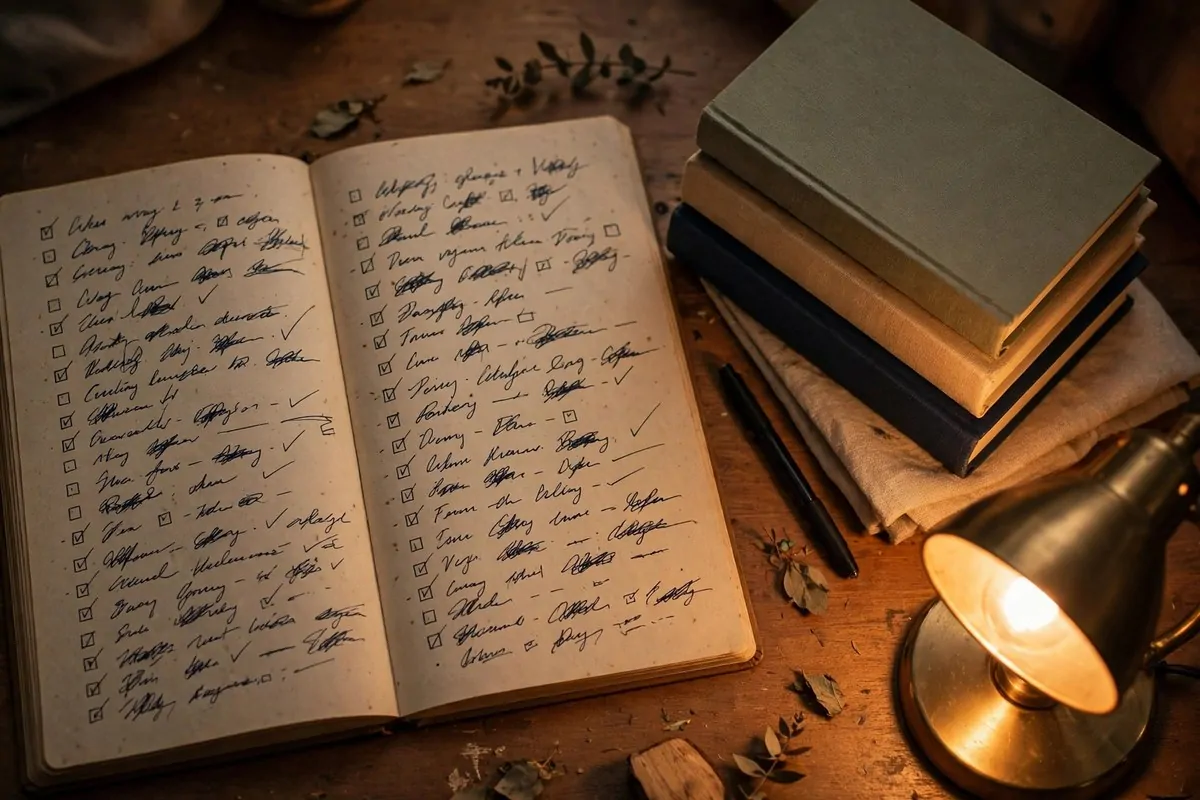
Here is the truth nobody tells you. Great libraries are not bought in one weekend. They grow, one book at a time, over years.
Give yourself a tiny monthly book budget. Ten or twenty dollars is plenty.
Small money goes far with used books.
Keep a wishlist in your phone or a notebook. Buy only from the list. This stops impulse buys that sit unread for years.
I allow myself two books a month. Some months I buy none and save it up.
Watch how the numbers add up:
| Monthly budget | Books per month (used) | After 2 years |
|---|---|---|
| $10 | 3 to 4 | 80+ books |
| $20 | 6 to 8 | 160+ books |
| $0 (swaps only) | 2 to 3 | 50+ books |
In two years that is a real collection. Almost one hundred books, and you barely felt the spending. Slow and steady beats one big splurge every time.
Your library should grow with your life. Let it take its time.
You do not need eight thousand dollars. You need a corner, a light, and a shelf that holds the books you love. Pick one idea from this list and start this weekend. Your future self, the one reading at midnight with tea going cold, will thank you.