16 Ikea Office Ideas Workspaces Industrial Fans Will Love

The first time I walked into a real workshop, I did not want to leave. It was not pretty. The floor was concrete, the shelves were bare metal, and a big lamp hung down on a chain like it meant business.
But it felt honest. Everything in that room had a job. Nothing was there just to look nice, and somehow that made the whole place look better than any pretty room I had ever seen.
Before we get going, one honest note. These rooms take their cue from the flat-pack, build-it-yourself style. They are not the brand’s own rooms, and this site has no link to the brand at all. What follows is my own take on that simple, plain, put-it-together-yourself style, with pieces you can set up in an industrial style.
These 16 Ikea Office Ideas are all about that factory feeling. Dark metal, warm wood, brick walls, and lamps that look like they came from a workshop. A workspace that feels strong and a little bit rough around the edges.
Pick the ideas that fit your room and start with one wall. Industrial style does not need a big budget. It needs a few strong pieces and the courage to go dark.
The Black Metal and Warm Wood Rule
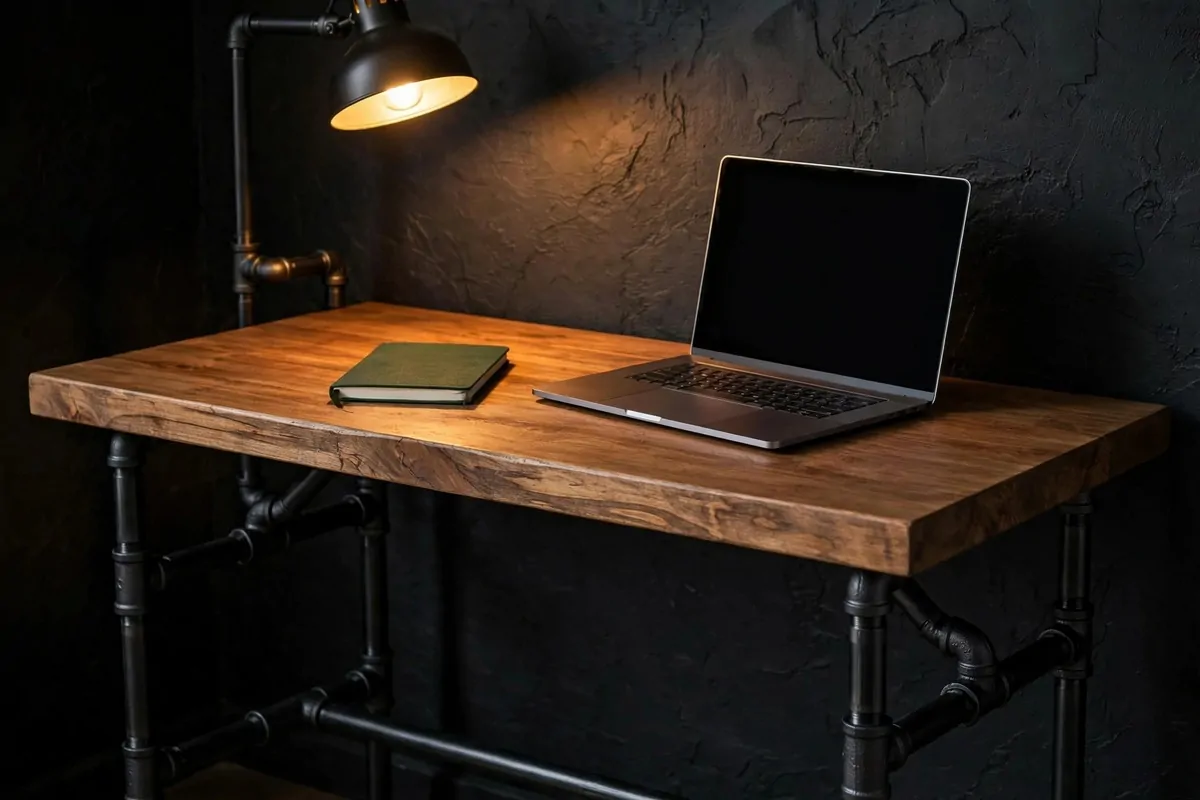
Industrial style has one simple rule. Black metal and warm wood, together, every time. One without the other looks wrong.
Black metal alone feels cold. It looks like a warehouse with no heart in it. Warm wood alone feels soft. It looks like a farmhouse kitchen, not a workshop. Put them side by side and they fix each other. The metal makes the wood look strong. The wood makes the metal look warm.
Here is a table for how the two materials work together in an office.
| Piece | Black metal part | Warm wood part |
|---|---|---|
| Desk | Iron frame and legs | Thick wood top |
| Shelves | Dark metal brackets | Plain wood boards |
| Lamp | Black cage shade | Wooden base |
| Chair | Steel legs | Wooden seat |
Start with the desk. A wood top on a black metal frame is the heart of the whole look. Everything else in the room just follows that one piece.
Keep the wood warm, not pale. Honey, walnut, or a rich brown works best. Pale wood next to black metal looks washed out, and the contrast disappears. A warm brown top against black legs is the whole trick in one glance.
Keep the metal matte, not shiny. Shiny chrome looks like a kitchen. Matte black iron looks like a workshop. The dull finish catches the light softly, and it hides fingerprints and dust better too.
Do not add a third material yet. No white plastic, no bright chrome, no glass. Let the black metal and the warm wood do all the talking first. When the room feels right, you can add one small thing later.
This is the rule for people who love the industrial look but keep buying pieces that do not match. Black metal. Warm wood. Every piece. That is the whole rule in one line.
Try it on one corner first if you are not sure. A black metal shelf with a wood board on it. If that corner feels right, the rest of the room will follow.
The Pipe Leg Desk

A desk built on pipes looks like it came straight from a factory floor. Thick black pipes for legs, a wood top, and joints you can see. It is the most industrial desk you can build without a welder.
Take a plain wood board for the top. A thick one, at least two inches, with the grain showing. The board is the warm part. The pipes are the strong part. Together they look like they were made for each other.
The pipes screw together with flanges, the flat round plates that bolt to the floor and to the desk top. You can see every joint. That is the point. Industrial style does not hide how things are made. It shows off the bolts and the threads.
Set the height to your elbows, the same as any desk. Sit down, let your arms hang by your sides, and bend your elbows square. That height is where your desk top should sit. The pipes make it easy to get right, because you can add or take away a short section to change the height.
Keep the floor under the desk clear. Pipes look best when you can see them all the way down to the floor. Boxes and bags piled around the legs hide the best part of the desk.
Wipe the pipes once a month with a dry cloth. Black metal shows dust faster than wood does, and a quick wipe keeps the legs looking new. It takes two minutes and it makes the whole desk look cared for.
Do not paint the pipes a bright colour. Black is the colour that makes this desk work. A red or yellow pipe desk looks like a playground. A black pipe desk looks like a workshop.
This is the desk for people who want their office to feel strong. It holds a laptop, a lamp, and a stack of notebooks without a wobble. And every time you sit down, the pipes remind you that this desk was built, not bought as a pretty thing.
Try this one if your room feels too soft and you want it to feel tougher. One pipe desk, and the whole room changes its mind about what it is.
The Brick Wall That Does the Talking

One brick wall can carry a whole office. You do not need art. You do not need shelves full of stuff. The wall itself is the decoration.
If your room has a real brick wall, leave it bare. Do not paint it white. Do not cover it with boards. A bare brick wall behind your desk is the best backdrop an industrial office can have.
If your room has no brick, fake it with one panel of brick-look wallpaper on a single wall. One wall only. A whole room of fake brick looks like a film set. One wall looks like a feature, and nobody will stare long enough to tell the difference.
Put the desk against the brick wall, not across the room from it. The desk and the wall work together. The wood top picks up the warm tones in the brick. The black metal frame stands out against the rough surface. The wall makes the desk look better, and the desk makes the wall look like it was always meant to be there.
Keep the brick wall free of clutter. One small shelf, maybe. A lamp, maybe. But a brick wall covered in stuff stops being a feature and starts being a storage wall. Let the bricks breathe.
Hang one thing on the brick wall and no more. A clock with a metal rim. A framed photo in a black frame. One thing is a statement. Five things are a mess.
Wipe the brick once a year with a stiff brush to keep the dust out of the cracks. Brick collects dust in every little groove, and a dusty brick wall looks tired. A clean one looks like it was built yesterday.
This is the wall for people who think their office needs art to look finished. It does not. It needs one good wall, and the brick does the rest.
Try this one if your room has a plain wall that bores you. One brick panel, one desk against it, and the room feels like a loft in the city.
The Factory Lamp on a Chain

A factory lamp is a big metal shade hanging down on a chain or a cord. It looks like it came from a workshop ceiling, and it is the fastest way to make any office feel industrial.
Hang the lamp low over the desk, about two feet above the surface. A lamp that hangs high lights the whole room and nothing in particular. A lamp that hangs low lights your work and makes a warm pool of light right where your hands are.
Pick a shade in black or dark green metal. The outside is dark. The inside is white or silver, so it bounces the light down onto the desk. A shade that is dark on the inside swallows the light, and your desk stays dim.
Use a warm bulb, the kind that glows amber, not white. A cold white bulb under a factory shade feels like a hospital. A warm bulb feels like evening in a workshop, and your eyes stay relaxed for hours.
Keep the chain short and straight. A chain that swings makes the light swing too, and a moving light is the worst thing for reading. Fix the chain tight, and the lamp stays still.
Put the lamp on a dimmer if you can. Strong light for the morning, soft light for the evening. One lamp with a dimmer does the job of two lamps, and your desk feels different at every hour of the day.
Clean the shade once a month with a damp cloth. Factory shades collect dust on top, and dusty shades dim the light by half. A clean shade and a warm bulb make a plain desk look like a proper workshop bench.
This is the lamp for people whose office feels too bright and too plain at the same time. One factory lamp on a chain, and the whole room gets a centre.
Try this one if your ceiling light is a flat white disc that makes everything look dull. Swap it for a factory lamp, and watch the room wake up.
The Steel Frame Open Shelves
Open shelves on a steel frame are the storage of every industrial office. No doors, no drawers hiding things away. Everything sits out in the open, on wood boards held up by black metal.
Build the frame from black steel tubes or flat metal bars. The frame is the skeleton. The wood boards are the shelves. You can see how it all fits together, and that is the whole point of the look.
Put the shelves on the wall beside your desk, at a height you can reach without a chair. The lowest shelf takes the heavy stuff. Books, files, and the big box of spare cables. The highest shelf takes the light things. A plant, a framed photo, the notebook you reach for first.
Leave one shelf empty on purpose. That empty shelf is where tomorrow’s papers land, where the new parcel sits, and where the laptop rests after a clear-out. A shelf unit with no free shelf has no room for real life.
Use plain boxes on the shelves to hide the scruffy stuff. One box for cables, one for papers, and one for the odds and ends with no home. Boxes with lids hide everything, and the shelves look tidy even when they are full.
Fix the frame to the wall with two strong screws at the top. A tall shelf full of books can tip forward if someone leans on it. Two screws and the frame stays put for years.
Do not fill every shelf to the brim. A shelf packed tight looks like a warehouse. A shelf with a little air between things looks like a workshop that knows what it is doing. Leave a gap here and there, and the room can breathe.
This is the storage for people whose desk is always covered in stuff. The stuff moves to the shelves, the desk gets its surface back, and the room looks bigger the same day.
Try this one if your office has a bare wall and a messy desk. One steel frame, three wood boards, and the wall starts working for you.
The Concrete-Look Desk Top
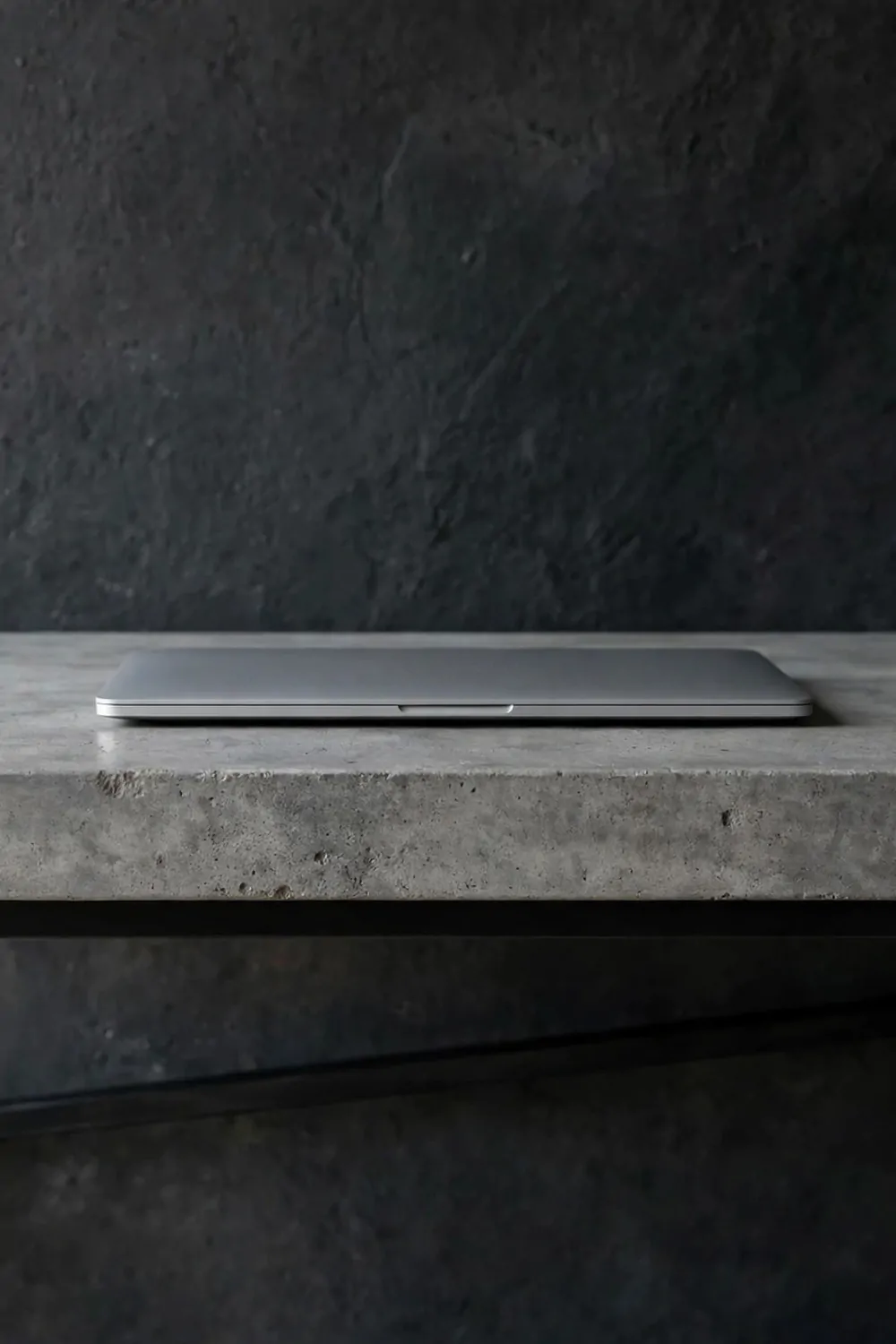
Concrete looks cold and hard, and that is exactly why it works in an industrial office. A desk top that looks like concrete brings the factory floor right onto your desk.
You do not need real concrete. Real concrete is heavy, and it cracks. A desk top with a concrete-look finish does the same job at a tenth of the weight. Grey, a little bit rough, with soft marks and swirls in the surface.
Here is a table for desk top finishes that fit the industrial look.
| Finish | How it looks | What to watch |
|---|---|---|
| Concrete-look | Grey, rough, cool | Needs a warm lamp nearby |
| Raw wood slab | Warm, grainy, natural | Needs oil once a year |
| Dark stained wood | Deep brown, rich | Shows dust fast |
| Black metal top | Flat, dark, tough | Can feel cold on wrists |
Pair a concrete-look top with black metal legs. The grey top and the black frame look like they came from the same factory. Add a wood shelf above the desk, and the warm wood softens the grey just enough.
Keep the top clear of clutter. A concrete-look surface shows every paper and every mug. That is a good thing. It forces you to keep only what you are using, and a clear grey desk looks calm and strong.
Wipe the top with a damp cloth once a week. Grey surfaces show dust and coffee rings more than wood does. A quick wipe keeps the concrete look fresh, and the desk feels new again.
Do not put a bright coloured mat on a concrete-look desk. A bright mat fights the grey. A dark leather pad or a plain black mat fits the look and protects the surface from scratches.
This is the desk top for people who love the factory look but find plain wood too soft. Grey, rough, and strong. It makes the whole office feel like it means business.
Try this one if your wood desk feels too cosy and you want the room to feel tougher. One grey top, and the office gets a backbone.
The Rivets and Bolts You Can See

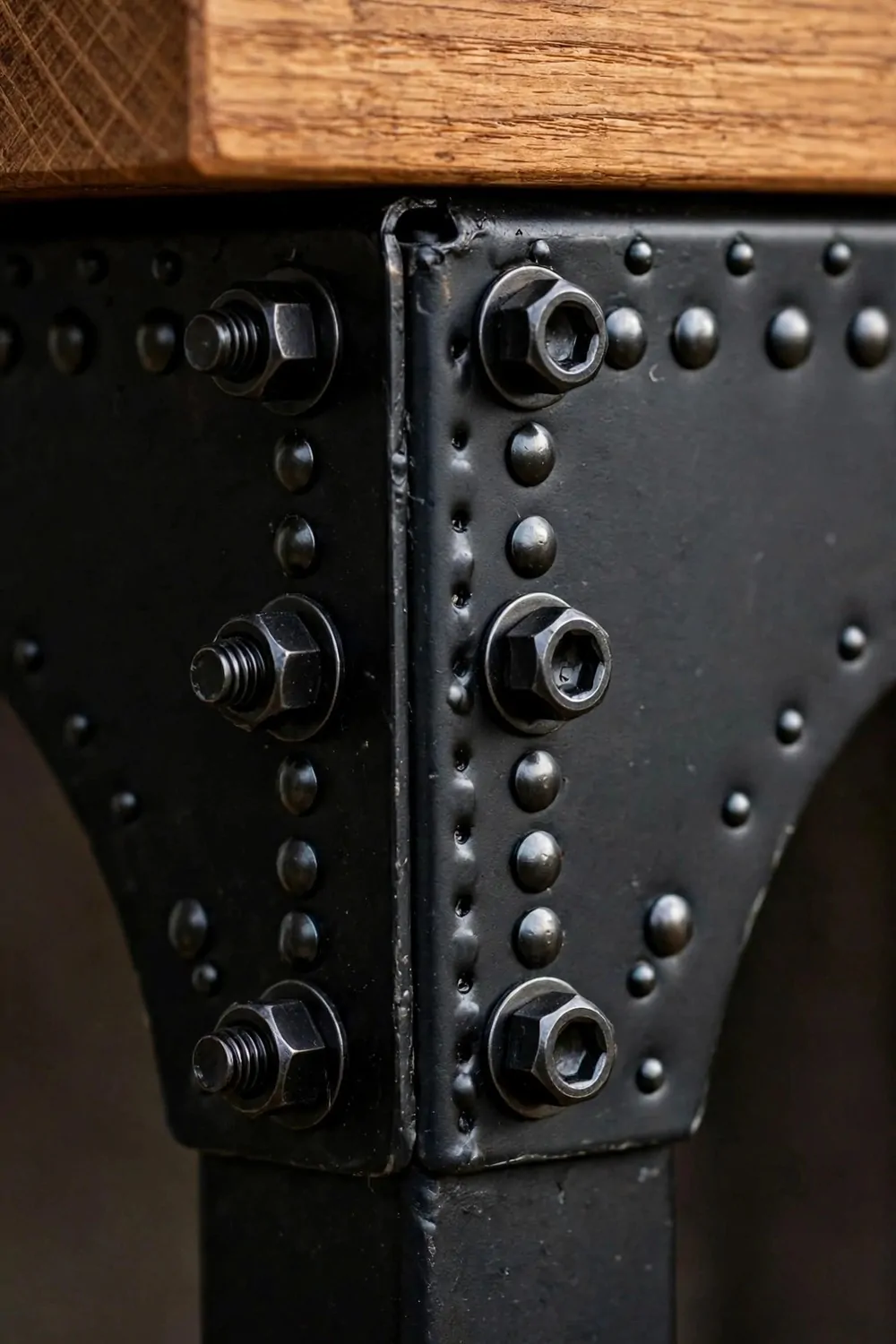
Industrial style does not hide how things are made. It shows the rivets, the bolts, and the screws, and it is proud of them.
Look at your desk and your shelves. If the screws are hidden under caps, take the caps off. If the bolts are painted over, let them show. A visible bolt is a detail that tells the truth about how the piece was built.
Add rivets to a plain wood board and it changes completely. A row of small metal studs along the edge of a shelf makes it look like it came from a workshop bench. You can buy a bag of them for very little, and a hammer does the rest.
Use hex bolts on the desk frame, the ones with six sides that need a spanner. They look tougher than round screws, and they hold better too. One hex bolt at each corner of the frame is enough to change the whole feel of the desk.
Keep the metal bits the same colour. All black, or all dark steel. Mixed metals look like a repair job. One colour of bolt, one colour of rivet, and the room looks planned.
Do not overdo it. A desk with fifty rivets looks like a costume. A desk with a neat row along the front edge looks like a workshop piece. The details should whisper, not shout.
Check the bolts once a year with a spanner. Bolts loosen a little over time, and a loose bolt makes a desk wobble. One turn tightens them up, and the desk feels solid again.
This is the detail for people who love the industrial look but cannot put their finger on what is missing. It is the bolts. It is always the bolts.
Try this one if your furniture looks a bit too neat and a bit too new. A few visible rivets, and the room starts to feel like it has a history.
The Dark Wall That Makes You Focus
A dark wall behind your desk does something strange to your brain. It shuts out the rest of the room, and your eyes stay on your work.
Paint one wall a deep colour. Charcoal, dark green, or a near-black blue. One wall only. A whole room of dark walls feels like a cave. One dark wall feels like a stage, and your desk is the star.
Put the desk against the dark wall. The screen glows brighter against the dark paint. The lamp light pools on the desk instead of bouncing around the room. Your eyes stop wandering, and the work gets easier.
Keep the desk top light against the dark wall. A warm wood top or a grey concrete-look top stands out against charcoal paint. A black desk against a black wall disappears, and you lose the desk in the dark.
Add one warm light to the dark wall. A factory lamp with an amber bulb, or a small wall light with a brass shade. Warm light on a dark wall is the whole trick. Cold light on a dark wall feels like a basement.
Do not hang a lot of pictures on the dark wall. One framed print in a black frame is enough. A dark wall full of pictures looks busy, and busy is the opposite of focus.
Paint the wall with matte paint, not gloss. Gloss paint shines and shows every mark. Matte paint drinks the light and looks soft, even in a dark colour. Two coats, and the wall is done.
This is the wall for people who get distracted easily. The dark paint does the job of closing the door, even when the door is wide open.
Try this one if your office faces a busy room and you cannot focus. One dark wall, and the rest of the house disappears.
The Leather Chair That Ages Well
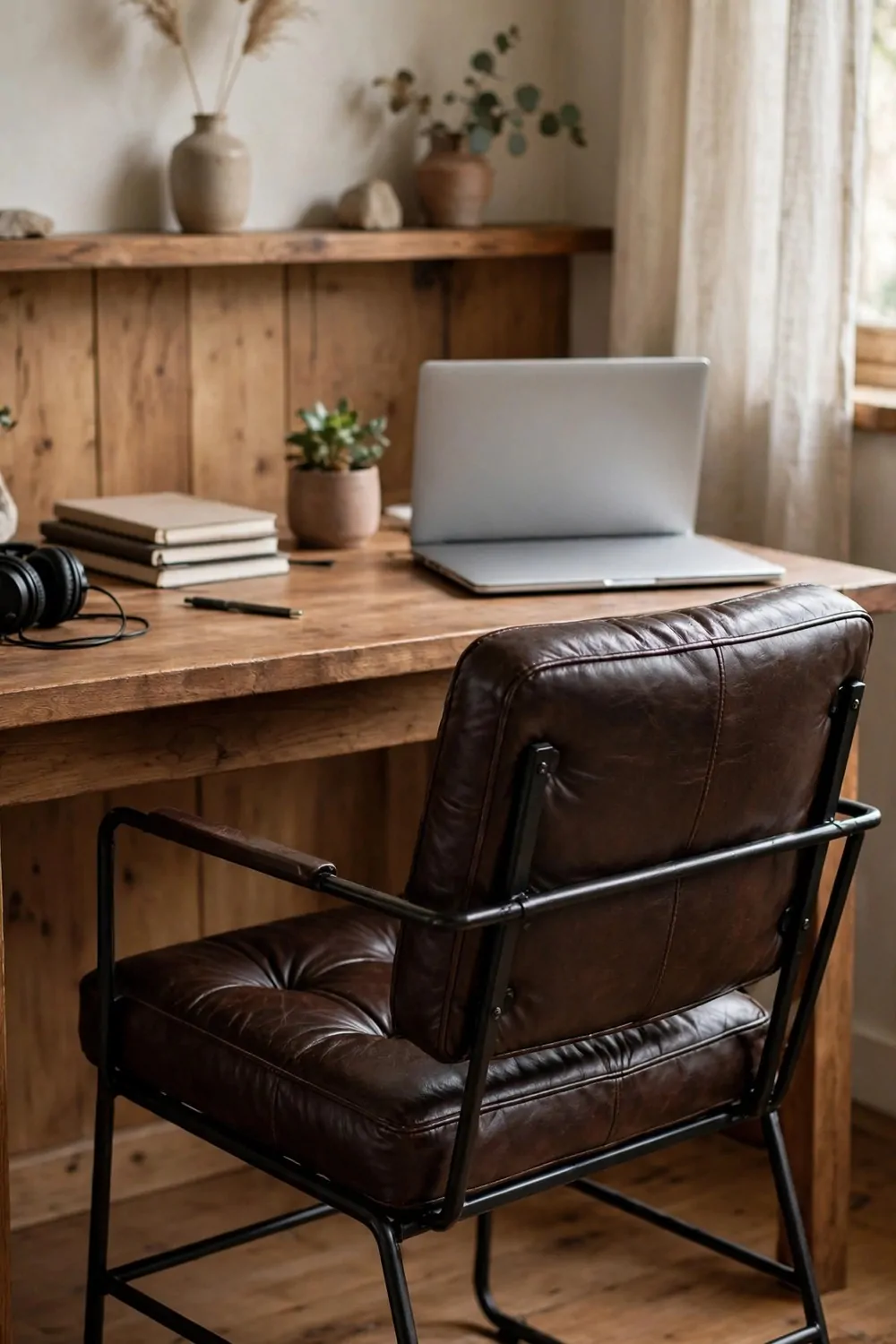
A leather chair in an industrial office is like a good pair of boots. It looks better after a year of use than it did on the day you bought it.
Pick a chair in dark brown or black leather, with a simple steel frame. No bright colours, no shiny plastic. Leather and steel are the two materials that belong together in this room, and the chair should follow the same rule as the desk.
Sit in the chair for a full workday before you decide it is right. Leather feels stiff at first. It softens over weeks, and it shapes itself to the way you sit. A chair that feels hard on day one can feel perfect by the end of the month.
Feed the leather once every few months with a little leather cream on a soft cloth. Dry leather cracks, and cracked leather looks old in the wrong way. A little cream keeps it soft, and the colour stays deep and rich.
Keep the chair away from the heater. Heat dries leather out fast, and a chair parked next to a radiator will crack by winter. A chair in the cool part of the room lasts for years.
Do not cover the chair with a throw to protect it. A leather chair is meant to be used, scratched, and sat on. The small marks it picks up are the whole point. They are the story of the chair, and an industrial room loves a story.
Wipe the chair down once a week with a dry cloth. Dust sits on leather and dulls the shine. A quick wipe keeps it looking rich, and the room feels cared for.
This is the chair for people who buy cheap chairs and replace them every year. One good leather chair, looked after properly, will outlast three cheap ones.
Try this one if your office chair squeaks and wobbles and hurts your back by lunch. A solid leather chair on a steel frame changes the whole workday.
The Old Metal Locker
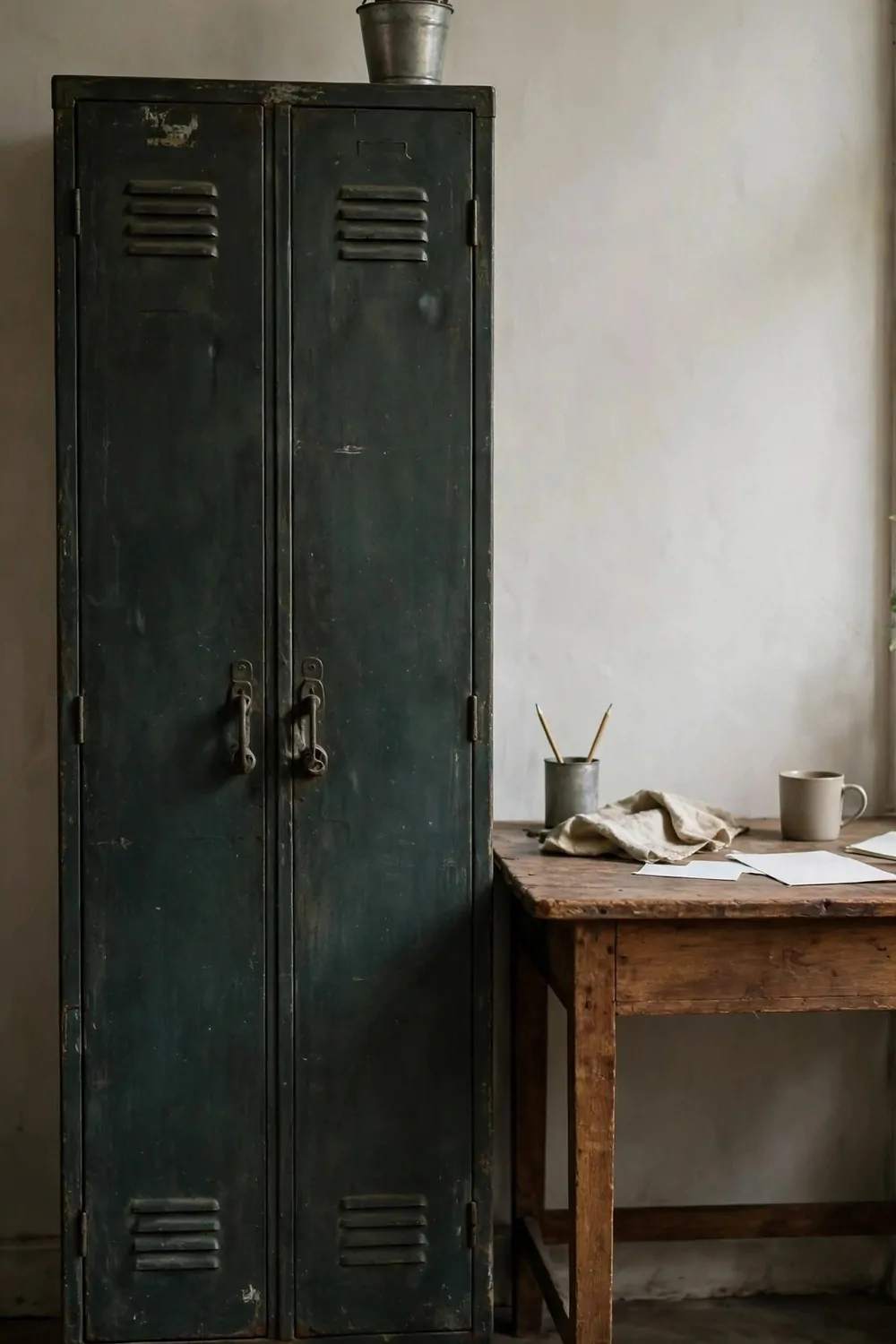
An old metal locker is the best storage an industrial office can have. It is tall, it is tough, and it looks like it came straight from a factory changing room.
Stand a locker beside your desk, against the wall. One locker, not a whole row. A row of lockers looks like a gym. One locker looks like a piece of furniture with a past.
Here is what goes in the locker.
- Top shelf for the papers you need once a week, stacked flat.
- Middle shelf for chargers, cables, and the headphones.
- Bottom shelf for the bag, the spare shoes, and the bits you grab on the way out.
- Door hook for the jacket and the work bag.
Paint the locker if it looks tired. One coat of matte black or dark green paint, and it looks new again. Leave the handle and the hinges in bare metal. The mix of paint and bare metal is what makes it look real.
Keep the locker door shut when you are not using it. An open locker door swings into the chair and blocks the walkway. A shut locker is a clean black rectangle on the wall, and the room stays tidy.
Put a small plant on top of the locker. One plant, in a plain metal pot. The green softens the black metal, and the top of the locker stops being dead space. One plant is enough. A locker top full of stuff looks like a shelf that gave up.
Oil the hinges once a year with a drop of plain oil on a cloth. Old locker doors squeak, and a squeaky door in a quiet office is a small annoyance you do not need. One drop, and the door swings smooth again.
This is the storage for people whose office has no closet and no drawers. One locker holds the whole work life, and it looks like it belongs in the room.
Try this one if your papers live in piles on the floor. One locker, three shelves, and the floor is clear by dinner.
The Cage Bulb Corner

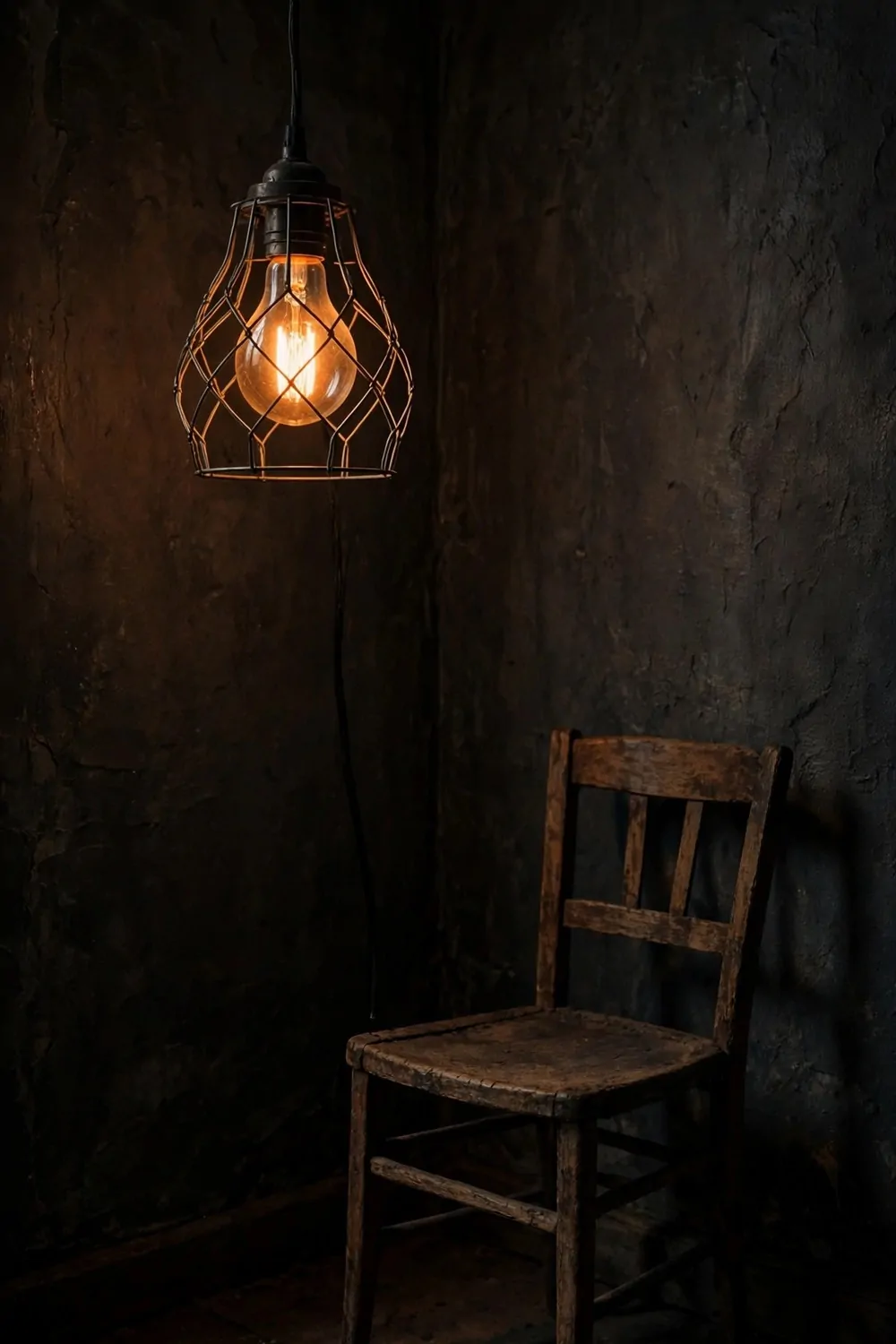
A cage bulb is a bare bulb inside a wire cage. It is the cheapest industrial light you can buy, and it changes a dark corner completely.
Hang one cage bulb in the corner of your office, on a black cord from the ceiling. The bulb glows through the wire cage, and the cage throws soft shadows on the wall. It looks like a workshop light, and it feels warm and honest.
Use an Edison-style bulb, the kind with the visible filament that glows amber. A plain white bulb in a cage looks like a garage. An amber filament bulb looks like evening in a factory, and the corner feels alive.
Keep the cord short enough that the bulb hangs at head height, not down by the desk. A cage bulb is a corner light, not a desk light. It lights the corner, and the desk lamp does the close work.
Do not put a cage bulb where you can bump your head on it. A wire cage at forehead height is a headache waiting to happen. Hang it in a corner you walk past, not a corner you stand in.
Put a dimmer on the cage bulb if you can. Bright for working, dim for the evening. One bulb with a dimmer does the job of two lights, and the corner feels different at every hour.
Dust the cage once a month with a dry cloth. Wire cages collect dust in every little joint, and a dusty cage dims the light. A quick wipe keeps the bulb bright and the shadows sharp.
This is the light for people who have one dark corner that no lamp seems to fix. One cage bulb, and the corner stops being a dead spot.
Try this one if your office has a corner that feels cold and empty. A cage bulb turns it into the warmest spot in the room.
The Raw Wood Slab With a Live Edge
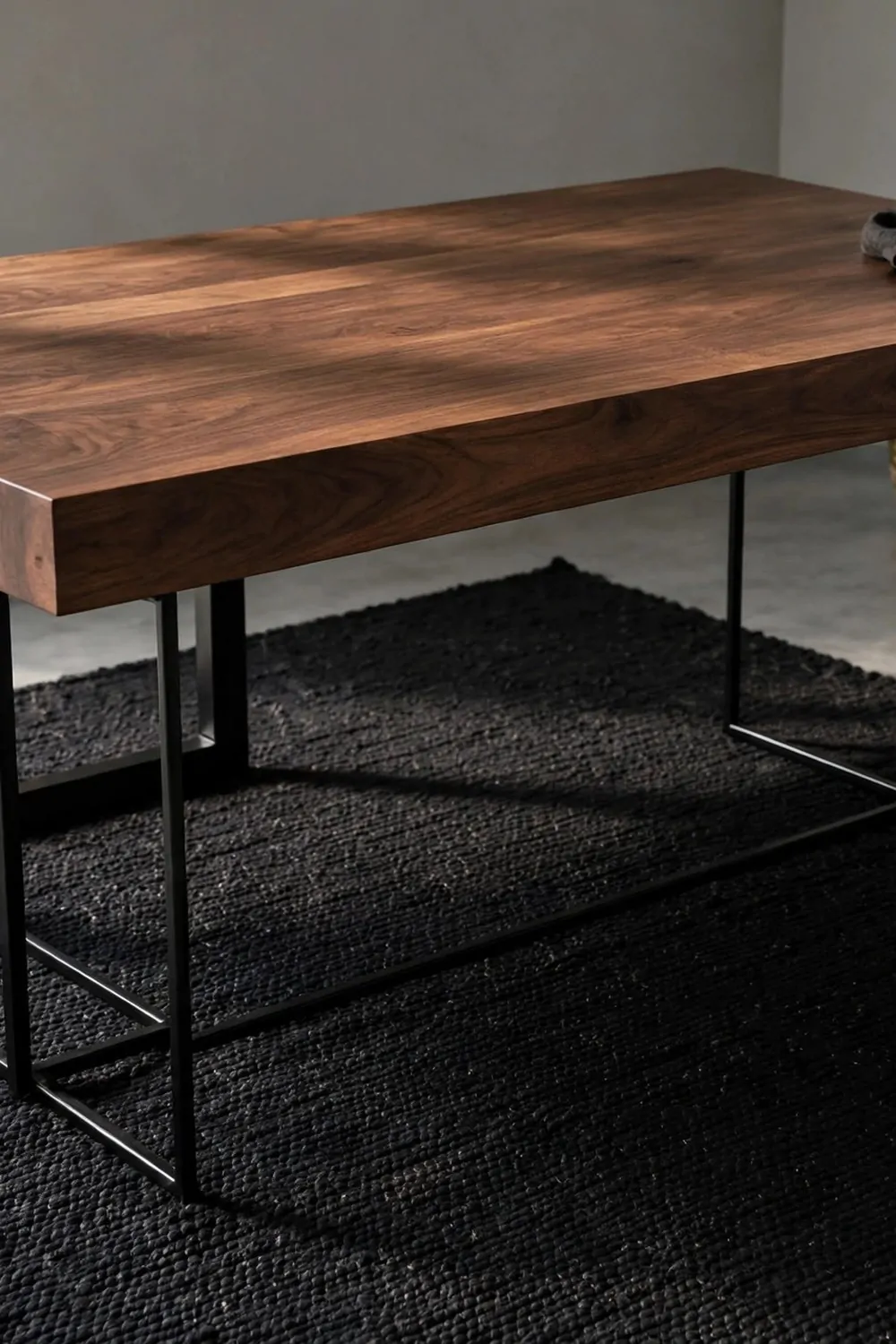
A live edge slab is a wood board with one natural edge left rough, the way the tree grew it. It is the most honest desk top in the industrial world, and no two are ever the same.
Pick a slab thick enough to hold a laptop without bending. Two inches is the minimum. A thin slab looks like a shelf. A thick slab looks like a workbench, and it feels solid under your hands.
Sand the top smooth and oil it. The oil brings out the grain and protects the wood from coffee rings. A slab that is oiled once a year keeps its colour for decades. A slab that is never oiled goes grey and dry.
Leave the live edge alone. Do not cut it straight. Do not sand it flat. The rough edge is the whole point of the slab. It is the part that tells you this wood came from a tree, not a factory line.
Set the slab on black metal legs or pipe legs. The rough wood and the dark metal are the two halves of the industrial look, and a live edge slab shows both at their best.
Keep the slab clear of clutter. A live edge desk is a beautiful thing, and a pile of papers hides the grain. Laptop, lamp, notebook. That is all a slab desk needs, and the wood does the rest.
Wipe the slab with a damp cloth once a week. Wood shows dust and crumbs, and a quick wipe keeps the grain looking rich. A clean slab looks like it was cut yesterday.
This is the desk top for people who want one piece of furniture that does all the talking. A live edge slab is not just a desk. It is the room.
Try this one if your desk feels like it came from a flat box and you want it to feel like it came from a forest. One slab, and the office gets a soul.
The Tool Wall That Works
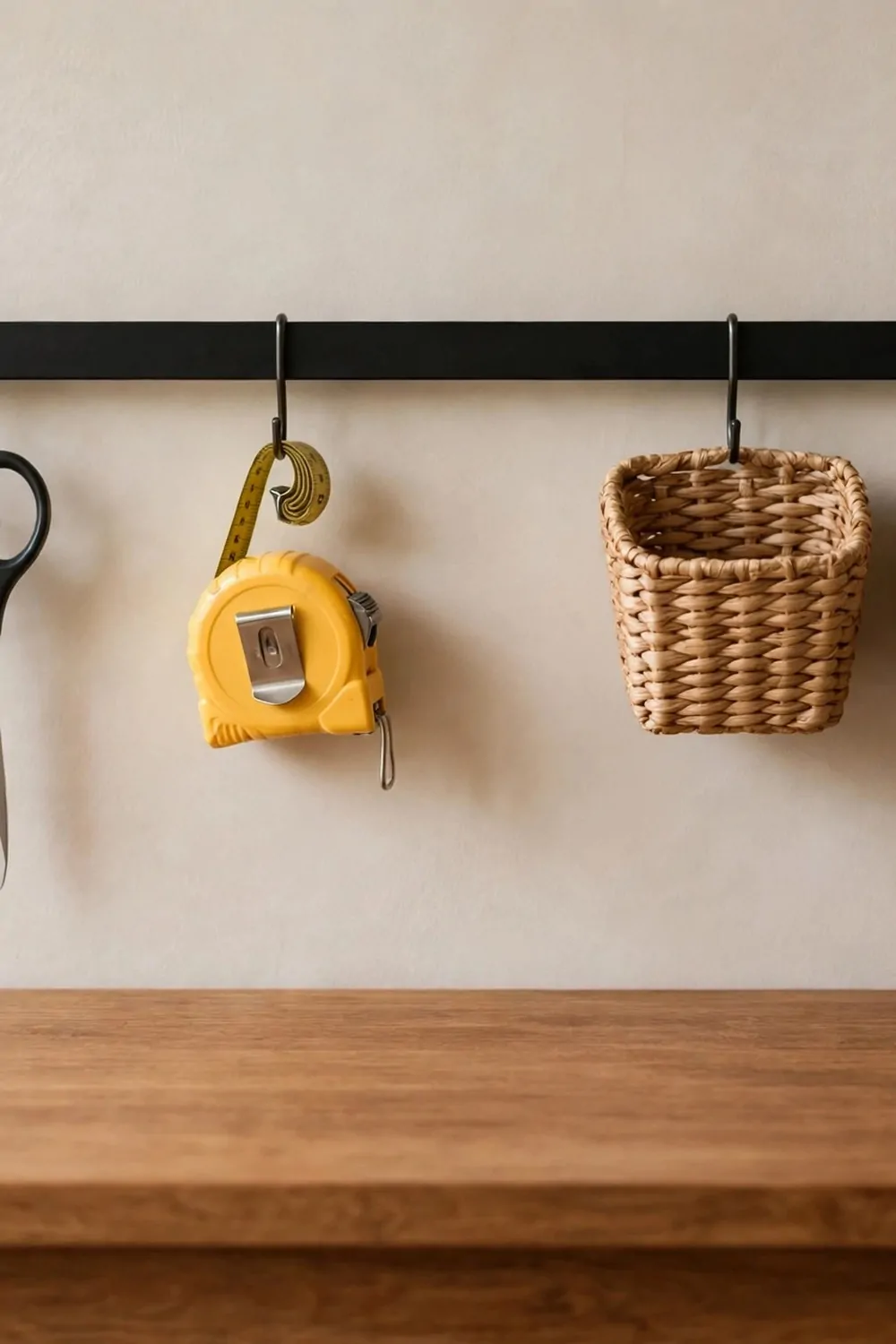
A tool wall is a wall of hooks, rails, and small baskets that holds your work tools where you can see them. It looks like a workshop, and it works like one too.
Fix a long metal rail to the wall above your desk. Hang hooks from it for the things you grab every day. Scissors, a ruler, a tape measure, a small basket for pens. Everything hangs where your hand finds it without you looking up.
Keep the heaviest thing closest to the rail brackets. A basket full of tools hangs best near a bracket, where the rail is strongest. A small hook for keys can go anywhere on the rail. Weight in the middle makes the rail droop, and a drooping rail looks worn out.
Here is what hangs on a good tool wall.
- A pair of scissors on a hook, always in the same spot.
- A small basket for pens, pencils, and the ruler.
- A hook for the headphones, so they never tangle on the desk.
- A little shelf for the phone and the charger.
- One empty hook, saved for the next tool you buy.
Sort the tools by the job they do. All the cutting tools on the left, all the writing tools on the right, the headphones on their own hook in the middle. Your hand learns where things live, and you stop hunting for scissors every morning.
Do not fill the rail with empty hooks. A rail full of hooks you never use looks like a shop display. A rail with five hooks you actually use looks like a working office. Add a hook when the need shows up, not before.
Give the rail a wipe once a month with a damp cloth. Metal rails collect dust, and a dusty rail makes the whole desk look tired. A quick wipe keeps it shiny, and the tools stand out against it.
This is the wall for people whose desk drawer is a mess of tangled cables and lost pens. The tool wall puts everything on the wall, the drawer gets to breathe, and your mornings start faster.
Try this one if you lose the same three tools every single day. One rail, five hooks, and the hunting stops.
The Black and Wood Balance
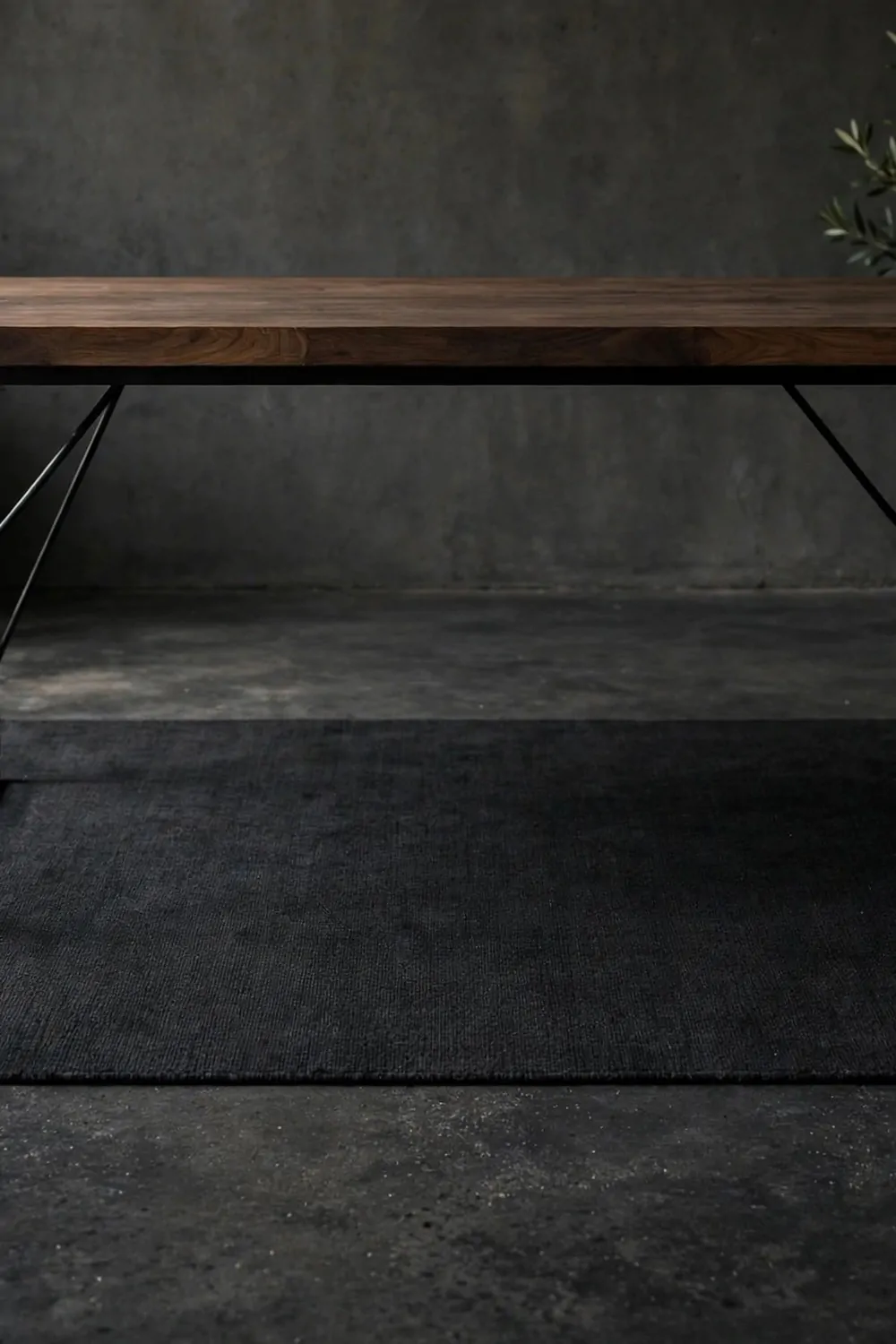
Industrial rooms go wrong in two ways. Too much black and the room feels like a cave. Too much wood and the room feels like a farmhouse. The balance is the whole skill.
Count the black and the wood in your room. If everything is black, add wood. A wood shelf, a wood chair seat, a wood desk top. If everything is wood, add black. A black lamp, a black frame, a black shelf bracket.
Here is a table for keeping the balance right in an industrial office.
| What you see | Too much black | Too much wood | Just right |
|---|---|---|---|
| Walls | All four dark | All four pale wood | One dark, three pale |
| Desk | Black top and legs | All wood, no metal | Wood top, black legs |
| Shelves | Black boards, black frame | Wood boards, wood frame | Wood boards, black frame |
| Light | Black shade, black cord | Wood lamp, wood base | Black shade, warm bulb |
Aim for about half black and half wood, by eye, not by measuring. Stand in the doorway and look. If your eye sees mostly black, add a wood piece. If it sees mostly wood, add a black piece. Your eye knows the balance before your brain does.
Keep the floor out of the count. A dark floor or a wood floor both work, as long as the furniture balances. The floor is the background, not part of the mix.
Add one soft thing to the balance. A dark rug, a leather cushion, a wool throw over the chair. Industrial rooms need one soft thing, or they feel like a garage. One soft thing is enough. Two soft things start to look cosy, and cosy is not the goal here.
Do not add a bright colour to fix the balance. A red cushion in a black and wood room looks like a mistake. If the room feels off, change the amount of black or wood, not the colour.
This is the balance for people who love industrial style but keep ending up with a room that feels either too dark or too soft. Half black, half wood. That is the whole answer.
Try this one if your office feels close but not quite right. Stand in the doorway, count the black and the wood, and fix the side that is winning.
The Floor That Sets the Mood

The floor is the biggest surface in your office, and it sets the mood before you notice anything else. Get the floor right and the rest of the room follows.
Concrete is the classic industrial floor. Grey, a little bit rough, and cool underfoot. If your room has a concrete floor, leave it bare. Do not cover it with carpet. A bare concrete floor is the factory look in its purest form.
If your floor is wood, go dark. A dark stained wood floor under a black metal desk looks like a workshop that has been there for fifty years. A pale wood floor under the same desk looks like a new flat, and the industrial feeling fades.
Put a dark rug under the desk and the chair. The rug marks the office floor, and it stops the chair from scraping the concrete or the wood. A rug about the size of a doormat does the job. It marks the edge, it is not a carpet.
Pick a rug that lies flat and low. A thick rug under a chair makes it rock, and a rocking chair is one you stop sitting in. A flat rug stays put, the chair rolls smooth, and the floor stays honest.
The rug catches the mess too. Crumbs, pencil shavings, and the small bits of paper that drop off the desk. They land on the rug, not on the floor, and you shake the rug out once a week. The floor stays clean because the rug does the catching.
Sweep the floor once a week, even if it looks clean. Concrete and dark wood both hide dust until the light hits them at the right angle. A quick sweep keeps the floor looking like it was just laid.
This is the floor for people who stare at their walls and wonder why the room still feels wrong. Look down. The floor is the biggest piece of the room, and it sets the mood for everything above it.
Try this one if your office feels like a spare bedroom with a desk in it. Change the floor feeling with one dark rug, and the room starts to feel like a workshop.
The Warm Light Fix
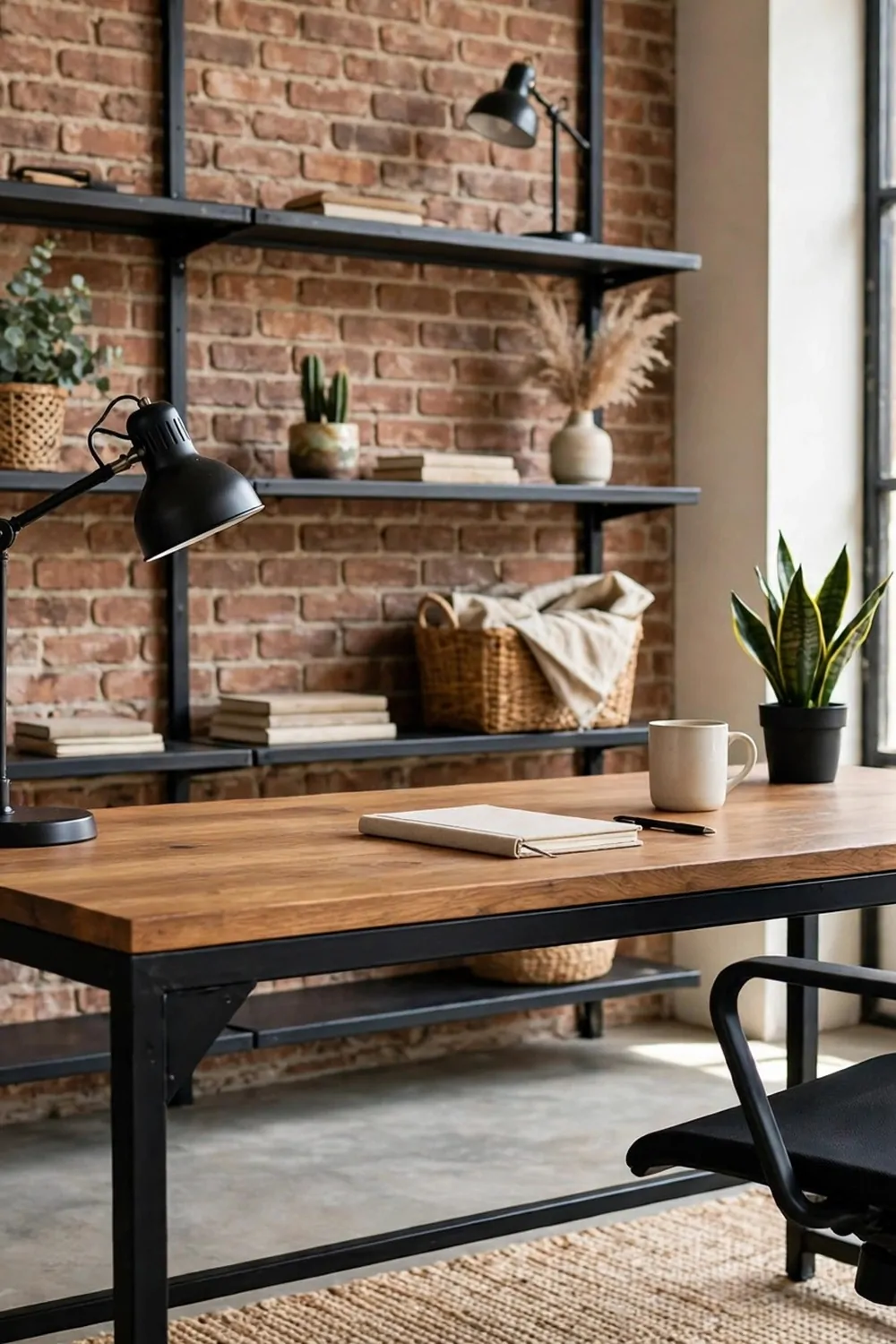
Industrial rooms have one big problem. All that dark metal, all that grey concrete, all that black paint. It can feel cold. Warm light is the fix.
Swap every cold white bulb in your office for a warm one. Warm light is the amber kind, the colour of evening sun. Cold light is the blue-white kind, the colour of a hospital corridor. The difference is one bulb, and it changes the whole room.
Put the warm light low, not high. A warm lamp on the desk, a warm bulb in the cage light, a warm glow from the factory lamp. Low warm light makes the dark metal look rich. High cold light makes it look like a warehouse.
Keep the overhead light off when you work. The overhead light washes the whole room flat and kills the mood. One desk lamp and one corner light are enough for real work, and the room keeps its shadows.
Use bulbs you can dim if you can find them. Strong light in the morning, soft light in the evening. A dimmer turns one lamp into two, and your eyes will be glad of it by nine at night.
Clean the shades once a month with a dry cloth. Dust on a shade cuts the light in half, and a dusty lamp makes the whole room look worn out. A clean shade and a warm bulb make a dark office look like a designer workshop.
Do not add more lamps to fix a cold room. One warm lamp beats three cold ones. The fix is the colour of the light, not the amount of it.
This is the fix for people who built a beautiful industrial office and then felt cold sitting in it. The room is not wrong. The light is. Warm it up, and the office feels like home.
Try this one tonight. Swap one bulb, switch off the overhead light, and sit at your desk. The room will feel different in one minute.
Keep Reading
If you liked these industrial workspace ideas, these budget and bedroom office ideas will give you even more ways to make a small space work hard.
- 20 Ikea Office Ideas Workspaces You Can Build on a Budget
- 21 Office Space in Bedroom Setups That Don’t Feel Cramped
- 18 Desk in Closet Ideas for a Hidden Workspace
An industrial office is the kindest thing you can build for yourself when you like things strong and honest. Dark metal, warm wood, and a lamp that glows amber. Pick your favourite idea from this list, build it this weekend, and let your smallest room surprise you.