22 Library Nook Designs Tucked Into Tiny Corners

I found a spare room in my house last spring. It was hiding behind my bedroom door, and it was only four feet wide.
Okay, it was not really a room. It was the little dead patch of wall that the door swings past. You know the spot. Every home has one. It holds nothing but dust and the faint hope that one day it might be useful.
Last spring I finally made it useful. I screwed three slim shelves onto that wall, parked a folding stool in front of them, and now it holds forty books. It took me one Saturday morning and less money than a takeaway dinner.
That is what a Library Nook really is. Not a room. Not a big project. Just a corner that stopped being empty and started holding your stories. I have gathered 22 designs that do exactly that, each one tucked into a tiny corner you already own. Pick the one that fits your home and start this weekend.
1. The Spin-Around Corner Tower
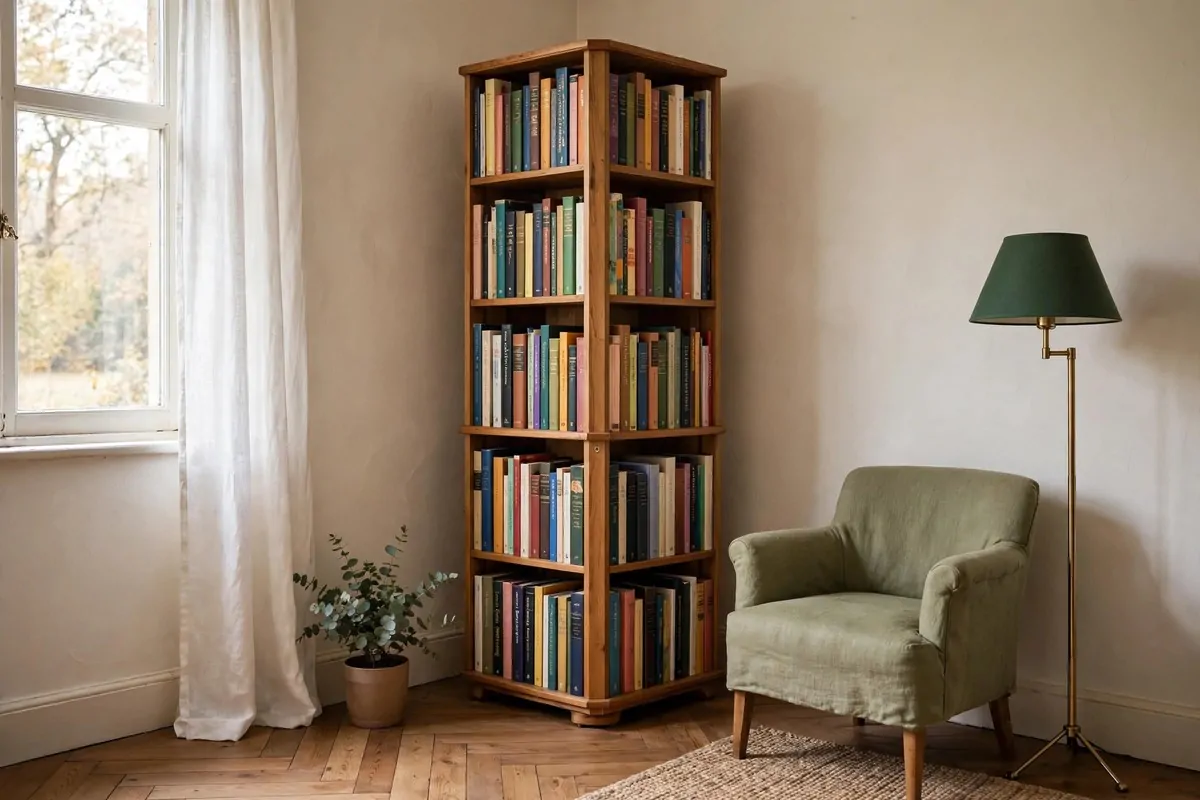
A rotating bookcase tower is the closest thing to magic that fits in a corner.
The whole thing spins. You stand in one spot and turn the tower to find your book. Kids love it, honestly. Grown ups love it too, they just pretend they bought it for the kids.
It needs about two feet of floor on each side. That is it. The tower holds four times more books than a flat shelf of the same size because it uses all four faces.
Put a small chair beside it and the corner becomes a full Library Nook. Add a floor lamp and you are done. Nothing needs to touch the wall, so renters can join in too.
The best part is the browsing. Spinning the tower feels like flipping through a bookshop. You find books you forgot you owned. That never happens with a normal shelf.
Look for one with a solid base. Cheap towers wobble when they are full of hardbacks. A steady base matters more than a pretty finish.
I keep my poetry on one face and my novels on the others. It makes the whole tower feel like four little bookshops in one corner. Try it and see.
One last thing. Spin it slowly the first week, because a full tower has real weight behind it. Once you learn the feel, it turns like a dream.
2. Stair-Step Shelves That Climb the Corner
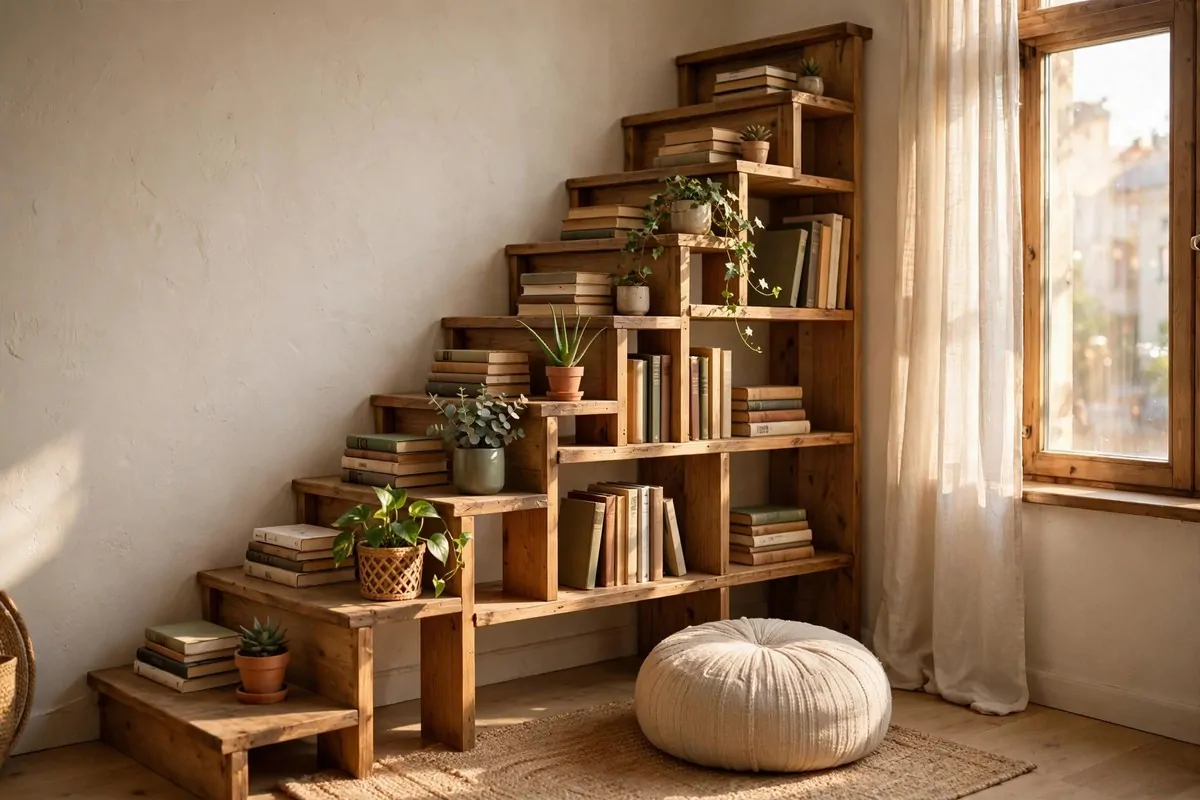
These shelves look like a little staircase running up your wall.
Each step is a shelf. The bottom step is wide and low, so it doubles as a seat or a plant stand. The top step reaches high enough to hold the books you touch the least.
The shape fits a corner perfectly. Square shelves leave dead triangles in corners. These do not. Every inch gets used, and the stepped shape looks friendly instead of bulky.
You can buy them as a ready-made unit or build them from three or four wooden boxes. Honestly, the box version is easier. Stack the boxes, screw them together, and you are done in an hour.
Put your heavy books on the lower steps. The unit stays steady that way. Save the top steps for light paperbacks and a small plant.
A pouf in front turns it into a reading spot. You pull a book from the steps, sink onto the pouf, and the whole thing feels planned. It was not planned. But nobody needs to know that.
The plants help too. A trailing plant on the top step softens the whole shape. It makes the corner feel alive, like the books are growing there.
If you build it from boxes, paint the insides a lighter color than the outsides. The books pop against the light paint and the unit looks twice as deep.
3. The Behind-the-Door Book Strip
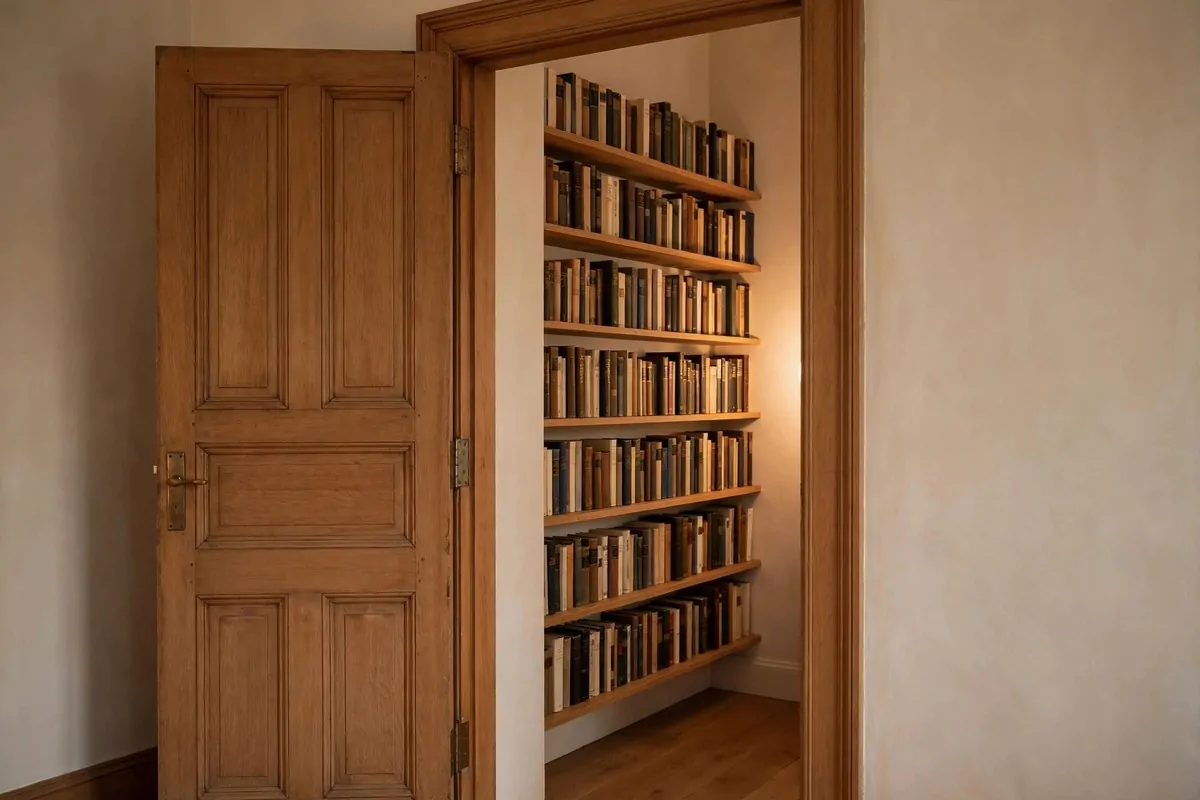
Every door in your home hides a secret strip of wall.
When the door swings open, it covers a patch of wall that nobody ever sees. That patch is doing nothing all day. It can hold books.
Slim shelves, about four inches deep, fit right there. They hold paperbacks and small hardbacks perfectly. The door still opens and closes without hitting them, as long as you measure the swing first.
This is my favorite kind of Library Nook because it is invisible. Guests walk past it. You open the door and suddenly there are forty books. It feels like a little secret.
Measure twice before you drill. Check the door handle clearance and the full swing arc. A pencil mark on the wall saves you from a shelf that blocks the door.
Bedroom doors work best for this. The books stay private and close to where you read at night. Bathroom doors work too, if the wall stays dry.
Start with two shelves, not five. Live with it for a week. Then add more when you know the door still swings free and the books make you happy.
Honestly, this is the nook I recommend to every renter I know. Two screws, zero floor space, and a secret library. What is not to love.
4. The Radiator-Cover Library
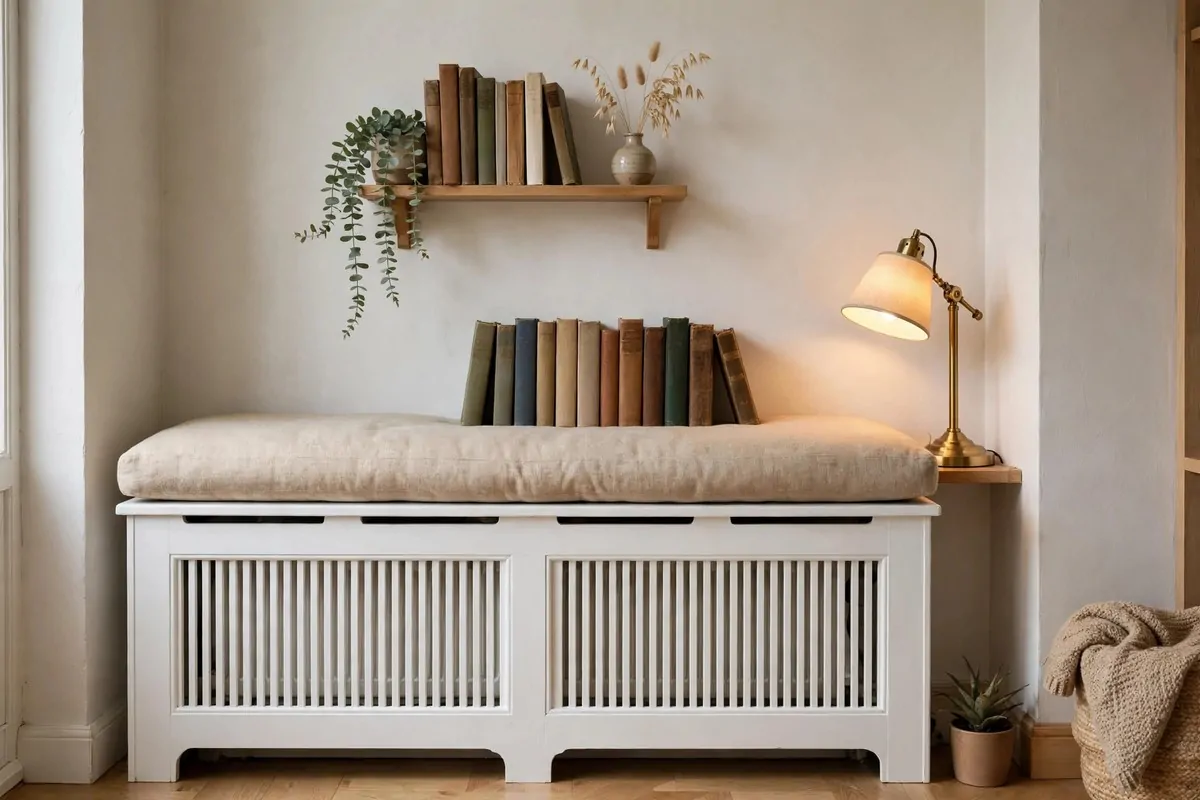
Your radiator already takes up wall space. It might as well work harder.
A flat radiator cover turns the top into a long shelf. Line your paperbacks along it in a row. Put a thick cushion on top and it becomes a warm seat in winter, which is honestly the best seat in the house.
Add one shelf above on the wall for the overflow. Now the whole wall is a library that also heats your home. Two jobs, one corner.
Before you build this, check the quick safety list. Heat and books can live together, but only if you set it up right.
| Check this | Why it matters |
|---|---|
| Leave a 2 inch gap above the radiator | Heat needs to escape or the room stays cold |
| Keep books 3 inches from the hot surface | Direct heat dries out pages and glue over time |
| Use a cushion with a removable cover | Warm seats collect dust faster than cold ones |
| Skip this spot for rare or old books | Heat ages paper, so keep the treasures elsewhere |
The reading lamp is the finishing touch. A small clip lamp on the wall shelf throws light right onto the page. No floor space needed.
In summer the seat is just a seat. In winter it is the warmest reading spot you own. I read three whole novels on mine last January and barely noticed the cold outside.
This nook costs almost nothing if you already own the radiator cover. A cushion, a shelf, and your books do the rest. Small money, big cozy.
My only regret is not doing it sooner. I walked past that radiator for three years before I saw the library hiding in it.
5. The Crate-Stack Corner
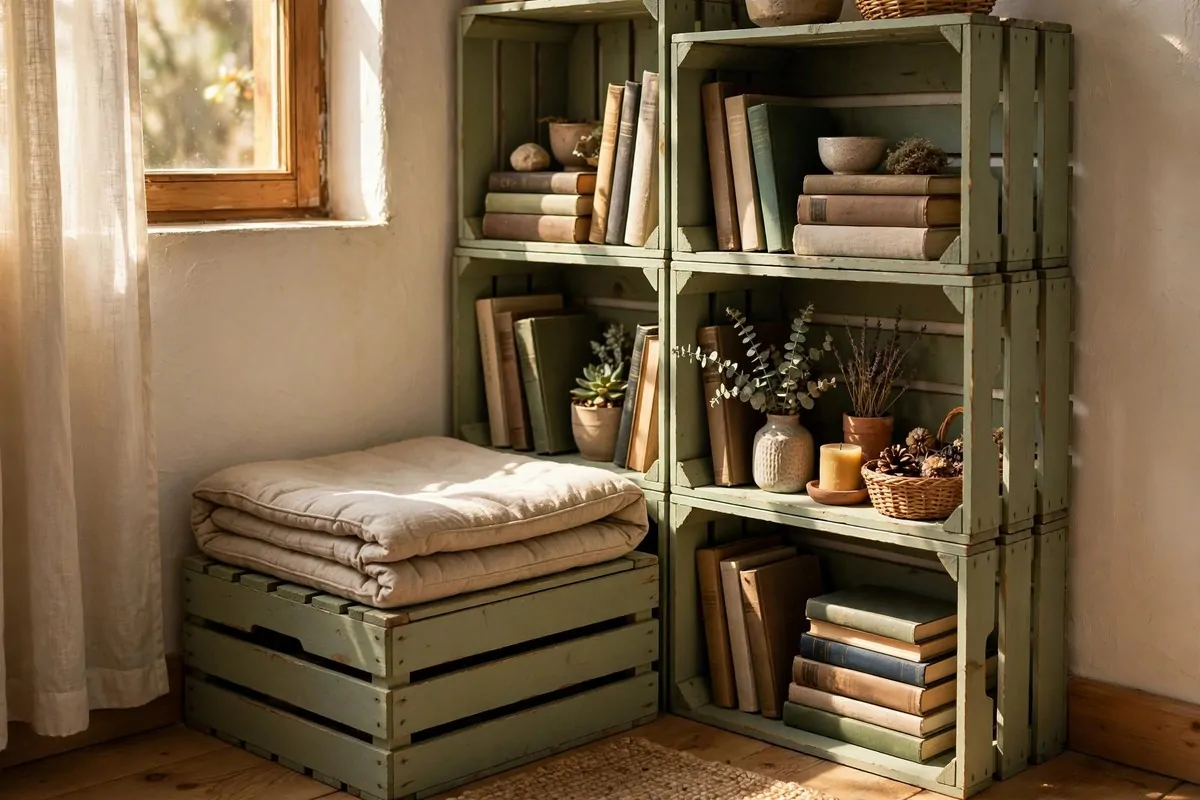
Wooden crates are the cheapest bookshelves ever made.
You can find them at craft shops, markets, and sometimes stacked behind grocery stores. A coat of paint makes them look like real furniture. I painted mine a soft green and people ask where I bought the shelf.
Stack them two or three high in the corner. Turn some sideways so the openings face out like cubbies. Books slide in and stand up just fine.
The lowest crate gets a cushion on top. Now it is a seat and a shelf at once. That is the whole trick of a great tiny Library Nook. Everything does two jobs.
Crates move easily, which renters will love. Nothing is drilled into the wall. When you move house, you just unstack them and carry them out like boxes.
Mix the sizes if you can. A tall crate beside a short one looks more interesting than a perfect grid. It feels collected, not bought.
Leave one cubby empty on purpose. It holds your current book, your glasses, and a bookmark. An empty cubby is the difference between storage and a reading nook.
Dust the tops once a month. Crate shelves collect dust faster than closed bookcases. A quick wipe keeps the whole corner looking fresh.
6. The Fabric Canopy Corner
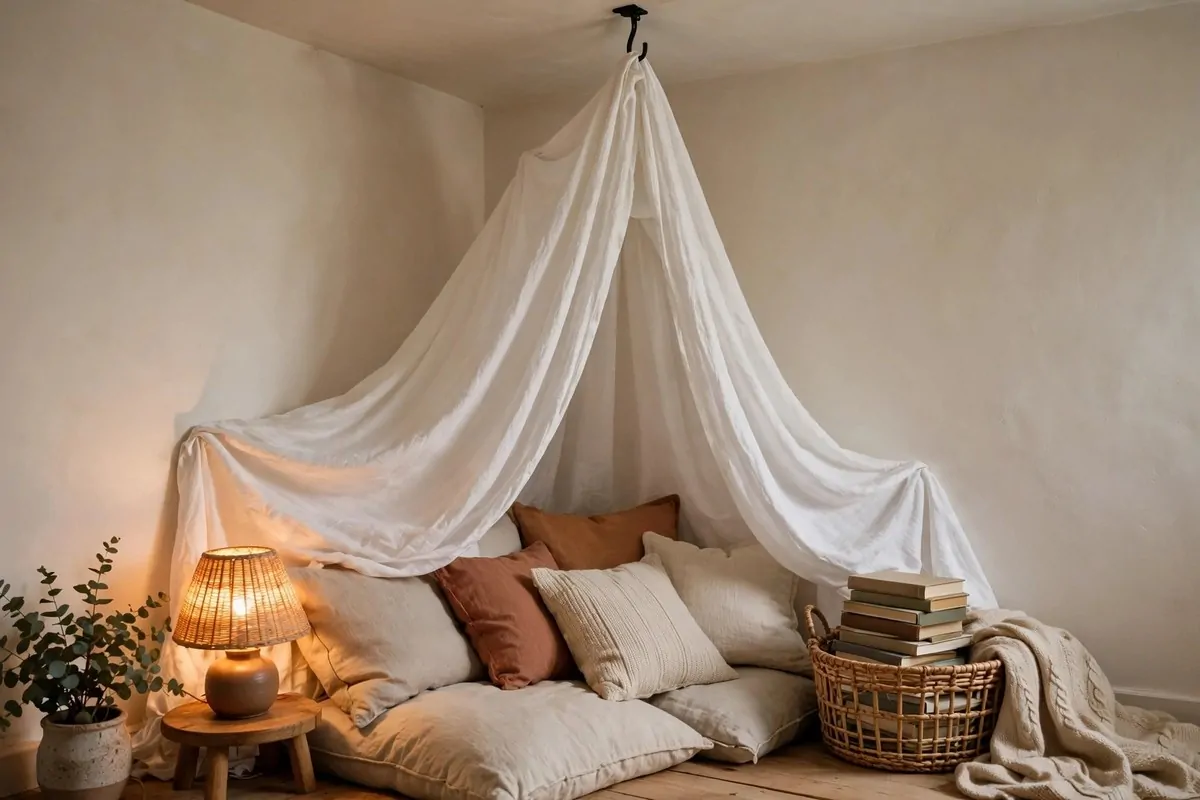
A canopy turns any corner into a different world.
You hang one piece of light fabric from a single ceiling hook. It drapes down around your cushions like a soft tent. Step inside and the rest of the house disappears.
This is the cheapest room divider you can buy. The fabric costs little, the hook costs less, and the feeling is worth ten times more. It is perfect for kids, but honestly adults need hiding spots too.
Use LED lights only near fabric. They stay cool and safe. A little string of warm LEDs along the top edge makes the whole tent glow at night.
Floor cushions are the seat here. Big ones. The kind you sink into and do not want to leave. A basket of books sits beside them so everything you need is within arm’s reach.
Pick a fabric you can wash. Canopies catch dust, and little hands touch them. A quick wash twice a year keeps it fresh.
The best part is how fast it comes down. Guests coming over? Unhook it, fold the fabric, stack the cushions. Ten minutes and the corner is a corner again.
I read in mine on rainy afternoons. The rain hits the window, the fabric glows from the little lights, and the book feels like a secret. It is my favorite kind of quiet.
7. The Chair That Stores Your Books
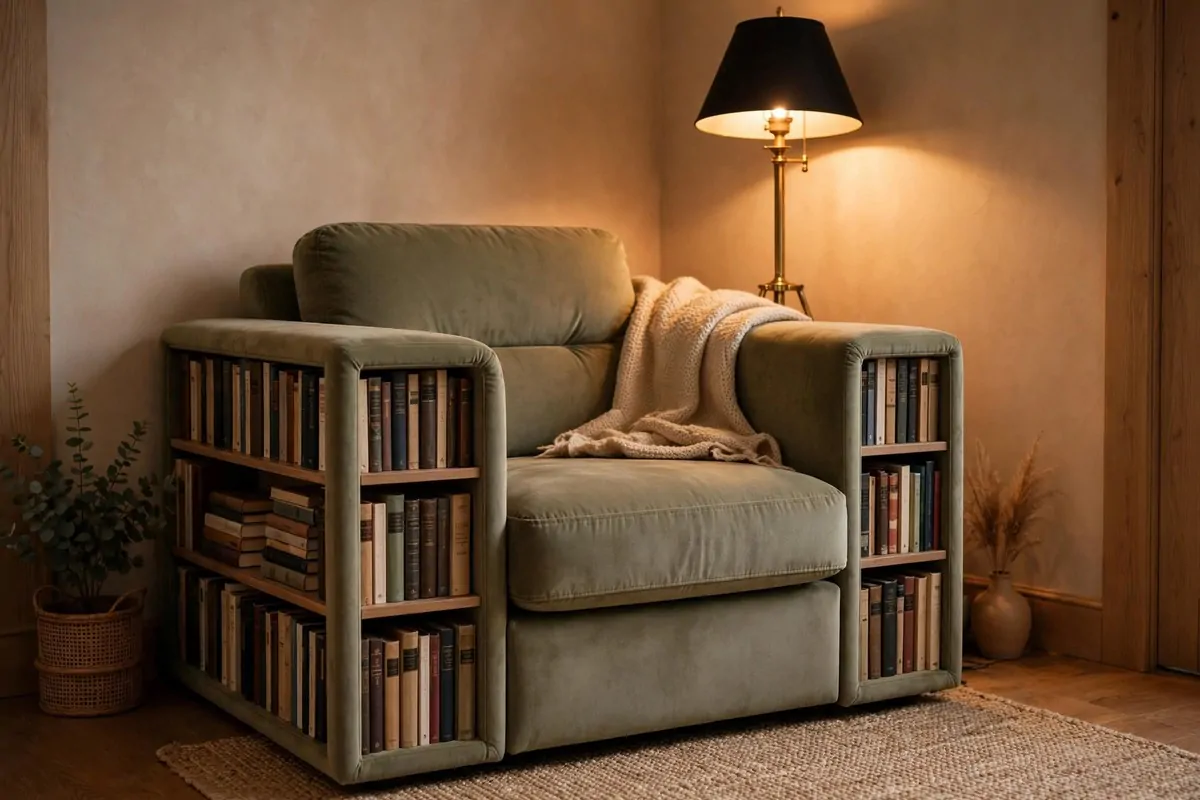
Some chairs carry your books for you.
These armchairs have wide arms with shelves built right in. Books stand upright in the armrests, within reach of your reading hand. You never have to get up to grab the next chapter.
This is the ultimate tiny Library Nook because the furniture IS the library. One piece does it all. Chair, shelf, and side table in a single footprint.
They come in wood, fabric, and rattan styles. The wooden ones look like little library thrones. The fabric ones look like normal armchairs with a smart secret.
Keep the shelves in the arms for your current reads only. Five or six books per side is plenty. If you stuff them full, the chair looks cluttered instead of clever.
A floor lamp behind the chair finishes it. The light falls over your shoulder onto the page. That is the classic reading setup, and it works every time.
These chairs cost more than a normal armchair. But they replace a chair AND a bookcase AND a side table. Add it up and the price starts to make sense.
I tried one at a friend’s house and finished my whole book in one sitting. When the next book is six inches from your hand, you just keep reading. That is the power of this chair.
8. The Audiobook Corner
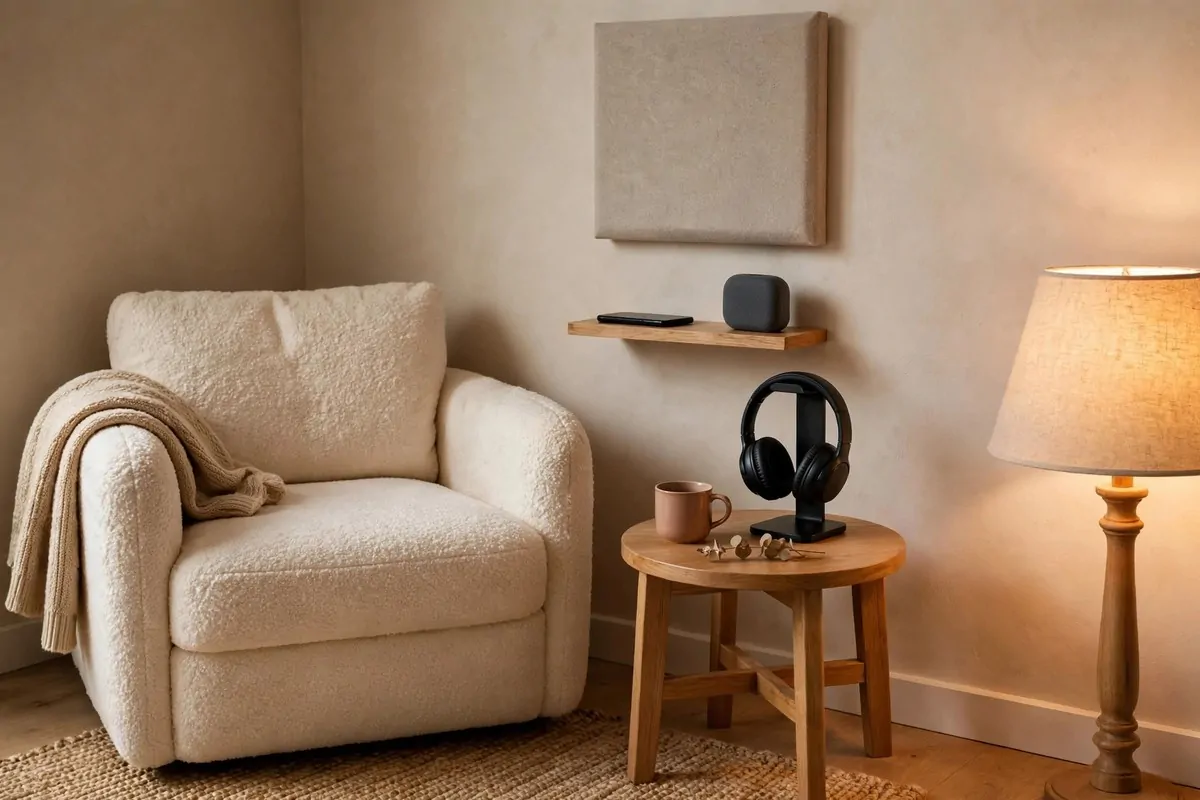
Not every library is made of paper.
If you listen to more books than you read with your eyes, you still deserve a Library Nook. It just looks a little different. The chair is the same. The shelves hold a speaker instead of spines.
A plush chair in a quiet corner is the heart of it. Add a small side table for your phone and a pair of good headphones. That is the whole setup, and it fits anywhere.
A single fabric wall panel cuts the echo. You do not need a full studio. One soft panel behind the chair makes voices sound warmer and keeps the room feeling calm.
Here is the simple gear list that makes it work:
- A comfortable chair you can sit in for an hour without fidgeting
- Headphones or one small speaker, whichever you like better
- A phone stand or shelf so your device is not lost in the cushions
- A charger within reach, because long books eat batteries
- A soft light you can dim for evening listening
Keep a paper notebook in the chair’s pocket or on the table. Audiobook listeners always hear a quote they want to keep. A notebook catches those.
This nook is perfect for people who share a home. Headphones mean your midnight thriller does not wake anyone up. Everyone wins.
My sister built one of these in her hallway corner. It is barely three feet wide. She has listened to forty books there this year. Forty. The corner did all the work.
9. The Front-Door Grab-and-Go Bench
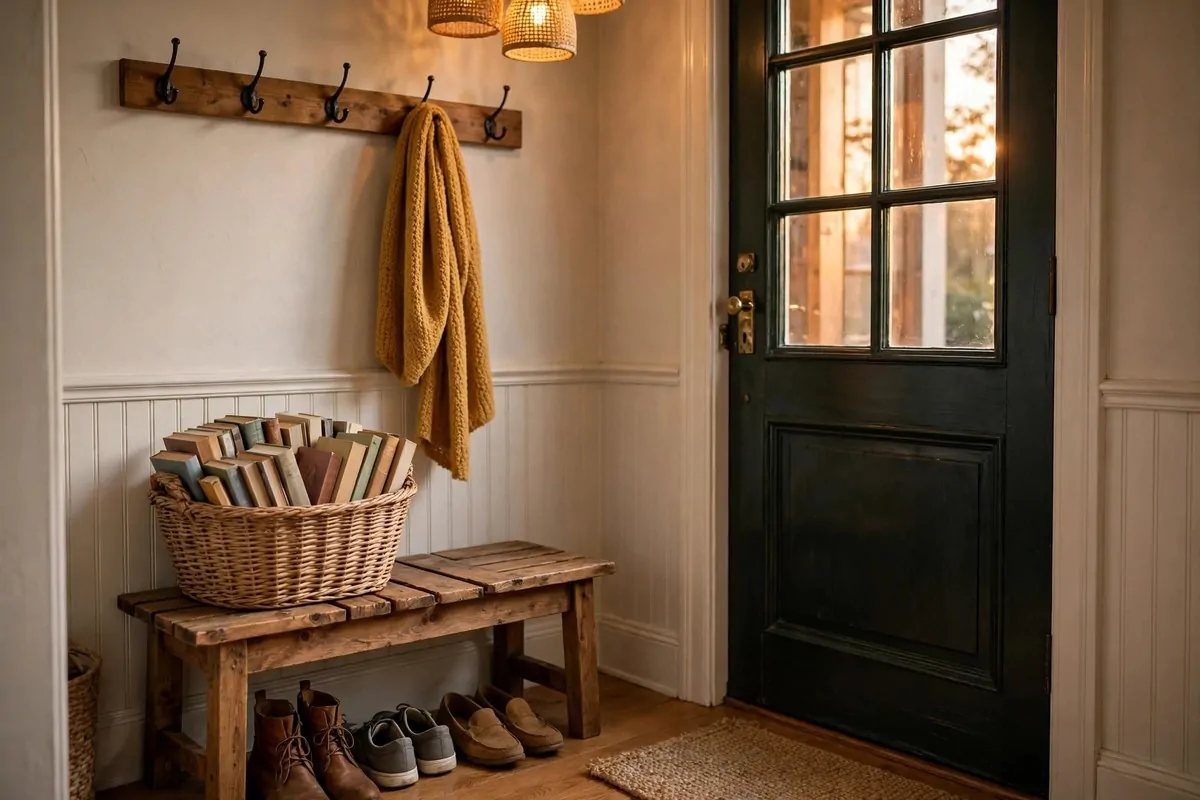
The best Library Nook might be the one you never sit in.
A bench by the front door with a basket of books changes how your whole house reads. You grab a book on the way out. You drop one off on the way in. The books stay in motion.
This works because of one simple truth. Books you can see get read. Books hidden in a spare room get forgotten. The front door is the most-seen spot in your home.
Use a basket, not a shelf. Baskets forgive messy stacking. Family members toss books in without thinking, and the pile stays charming instead of chaotic.
Put your finished books in the basket too. They wait there for a friend to borrow or for you to pass along. The bench becomes a tiny lending library for your own street.
Keep a mix in the basket. A thriller, a cookbook, a kids’ book, something funny. Different people grab different books. A mixed basket gets emptied faster.
The bench still does its normal job. Shoes go below, bags go on top, keys live in a little dish. The books just join the team.
I started this last year and my reading doubled. Not because I had more time. Because the book was already in my hand when I left the house.
10. The Coffee-and-Cookbooks Kitchen Corner
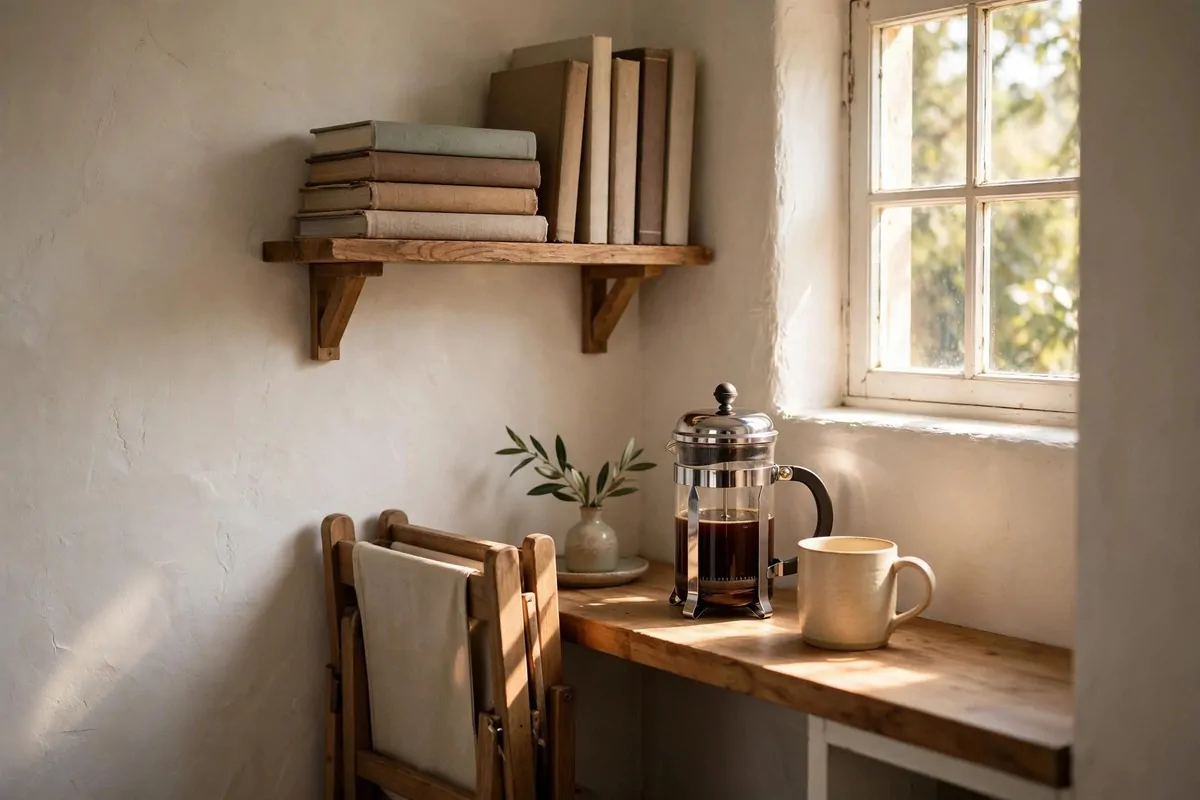
Kitchens have the best reading light in the house.
Morning sun hits the kitchen first. So why not read there? A tiny corner with your cookbooks, a chair, and your coffee becomes the calmest fifteen minutes of your day.
One small wall shelf holds the cookbooks you actually open. Not the fancy ones you never touch. The stained, loved ones with your notes in the margins.
A folding chair tucks beside the counter when you are done. It takes up no space during cooking time. You pull it out for your morning pages and fold it away after.
The coffee is part of the design here, not just a drink. A french press and a mug on the counter say this corner is for slow mornings. It gives you permission to sit down.
Read recipes like stories. The best cookbooks read like travel books anyway. Fifteen minutes with a cookbook and a coffee can plan your whole week of dinners.
Keep a pencil in the cookbook shelf. Morning readers always spot a recipe worth trying. A pencil mark on the page saves it better than any app.
This nook costs nothing if you own a chair and a shelf. The kitchen was already there. The morning light was already there. You just finally sat down in it.
11. The Bathtub Book Ledge
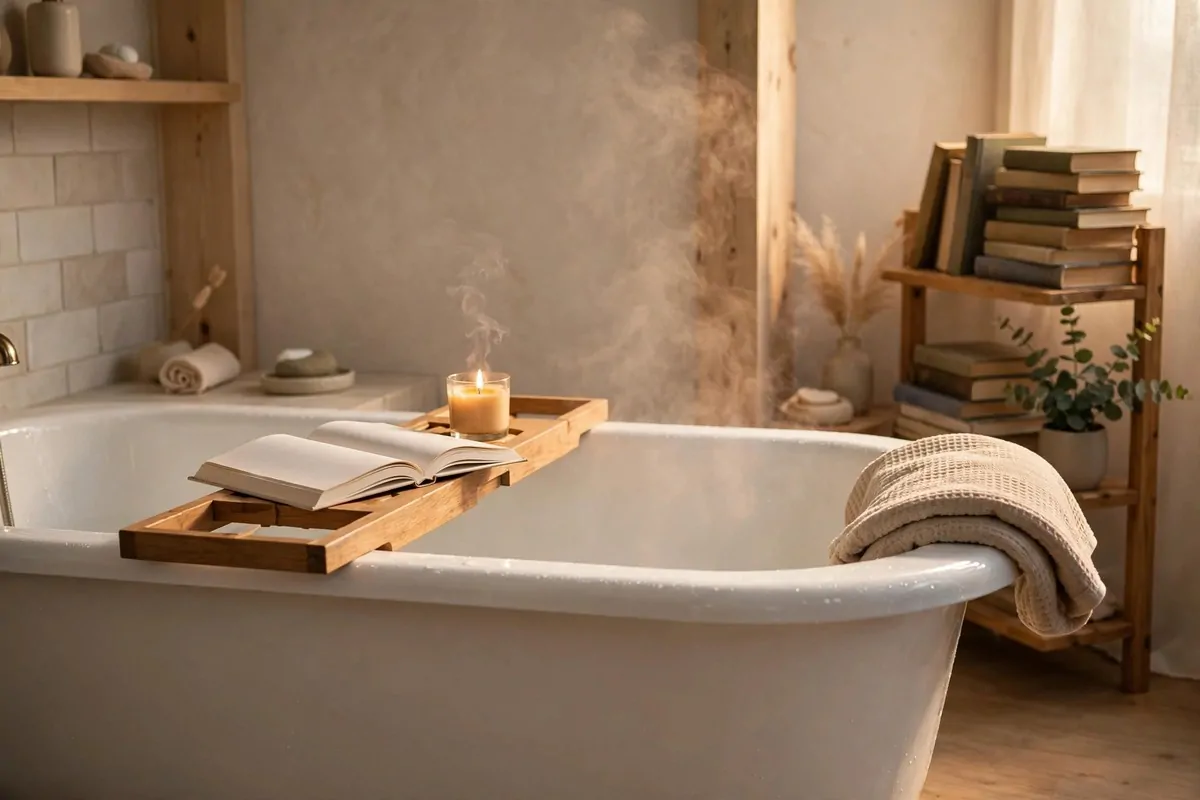
The bathroom is the most underrated library in your home.
Think about it. The door locks. Nobody bothers you. The water is warm. It is the only room where solitude is guaranteed. A book belongs there.
A wooden bath caddy stretches across the tub and holds your book open at the perfect angle. Your hands stay dry. The pages stay dry. Everyone stays happy.
Add a small shelf on the bathroom wall for a stack of bath reads. Paperbacks only here. Save the hardbacks for dry rooms, because steam and glue are not friends.
Pick books you can dip in and out of. Short stories, essays, poetry. Bath reading gets interrupted by cooling water and wrinkly fingers. Short pieces fit the rhythm.
A candle on the caddy makes it feel like a ritual. Not every night. Just the hard ones. The nights when you need twenty minutes of warm water and someone else’s story.
Keep a towel within reach of the caddy. Wet hands and pages are the only real danger here. One towel solves it completely.
I read half a novel in the bath last winter. One chapter per soak. It took three weeks and it was wonderful. The tub is a reading nook with plumbing.
12. The Little Reader’s Corner
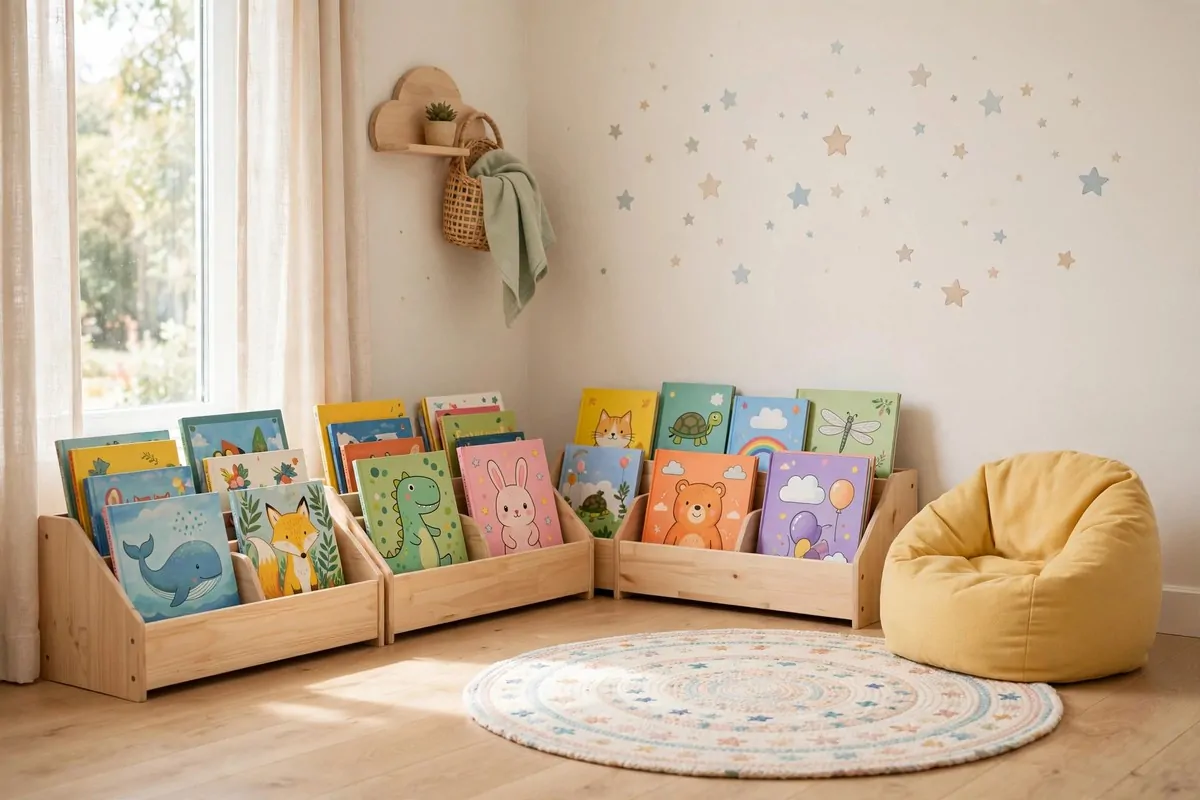
Kids read more when they can see the covers.
Grown ups browse by spine. Kids browse by picture. Forward-facing book bins show the covers like a little bookshop, and kids pull books out constantly. It really works.
A low wooden bin unit fits any corner. No drilling, no mounting, nothing to fall over. The books face forward at kid height and the whole thing is sturdy enough to survive climbing.
Add a bean bag or a big floor cushion. Kids rarely sit in real chairs to read anyway. They sprawl. Let them sprawl. The corner just needs to be soft and close to the books.
Here is what makes a kids’ corner actually get used:
- Books at their eye level, never higher than their shoulders
- A soft seat they can flop onto without asking permission
- Good light, because squinting kills the mood fast
- A small rug that marks this spot as the reading spot
- Rotate the books monthly so old favorites feel new again
Let them organize it their way. By color, by size, by favorite character. It will look chaotic to you and perfect to them. Their system is the right system.
Keep a few of your own books nearby too. Kids copy what they see. A parent reading in the same corner teaches more than any lecture about reading.
My nephew’s corner is two feet wide. It holds twelve books and one very flat bean bag. He reads there every single day. Small corner, big reader.
13. The Under-Loft Reading Fort
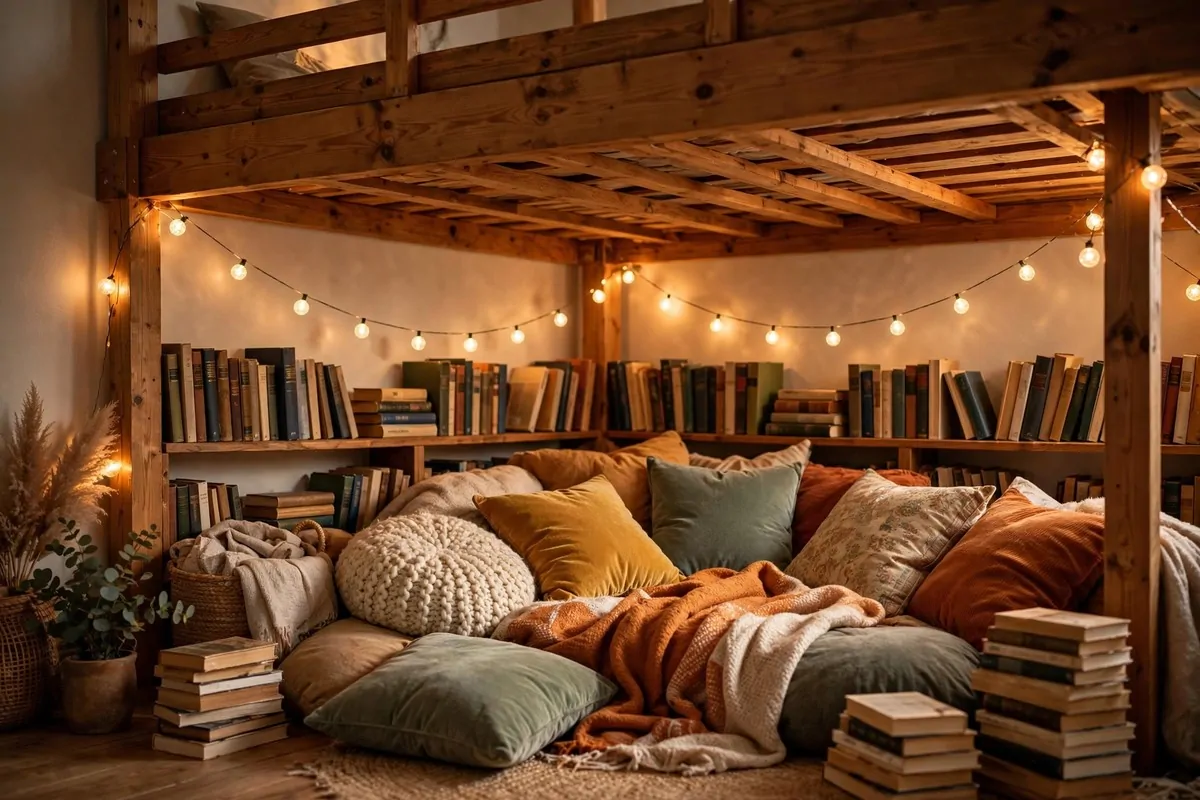
The space under a loft bed is a fort waiting to happen.
It is low, it is enclosed, and it already has walls on three sides. Add cushions and it becomes the coziest reading spot in the house. Kids think it is a secret base. Adults think it is genius.
Low shelves along the back wall hold the books. They need to be short enough to reach from a sitting position. Anything taller wastes the space above, which you cannot stand in anyway.
Pile the floor with cushions and one soft rug. This is a shoes-off zone. The softness is the whole point. Hard floors ruin the fort feeling fast.
Warm string lights along the bed frame make it glow. They are cool to touch and cheap to run. At night the fort lights up like a lantern, and it is honestly magical.
This setup grows with the kid. Toddlers use it for picture books. Teenagers use it for novels and headphones. The fort just keeps working.
| Loft height | What fits underneath |
|---|---|
| Under 4 feet | Floor cushions and low bins only, best for small kids |
| 4 to 5 feet | Bean bags and short shelves, great for reading teens |
| Over 5 feet | A small armchair fits, adults can use it too |
Check the bed frame is steady before you build under it. A wobbly loft and a reading fort do not mix. Tighten every bolt first.
I wish I had one of these as a kid. I had a closet with a flashlight. This is better in every way.
14. The Painted Library Wall
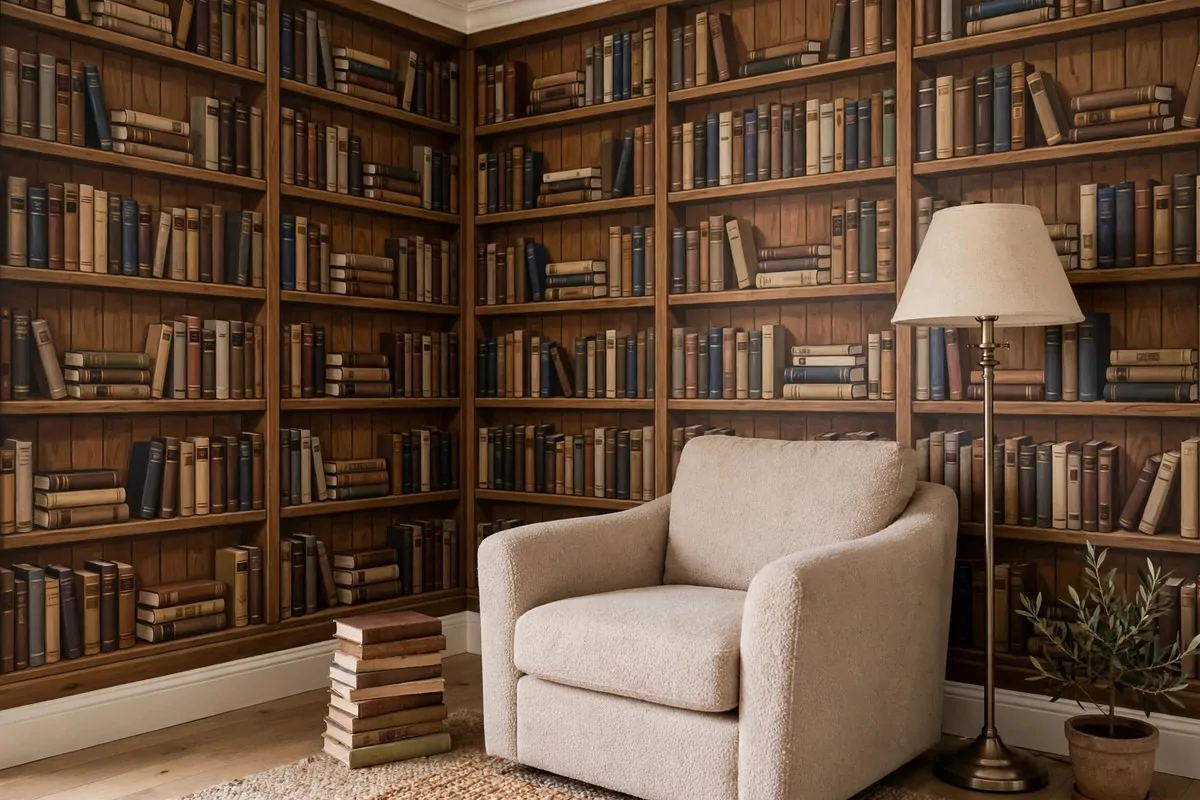
You do not need real shelves to feel surrounded by books.
A painted bookshelf mural gives you the look of a grand library for the price of paint. An artist, or a steady hand with a projector, paints tall shelves full of book spines right on your wall.
It sounds like a trick, but it works on your brain. You sit in front of that wall and you feel like you are in an old library. The feeling is real even though the shelves are flat.
This is perfect for renters who cannot drill. It is also perfect for tiny budgets. Paint costs little and the impact is huge. One weekend and the wall is done.
Put a real armchair in front of it. The mix of real furniture and painted shelves is what sells the illusion. Add a real floor lamp and a small stack of actual books on the floor.
Pick warm colors for the painted spines. Deep reds, greens, and browns feel like old leather bindings. Cool grays look modern but less cozy.
You can even paint in your own favorite titles. Tiny painted spines with the names of books you love. Guests lean in close to read them, and that starts the best conversations.
My friend painted one in her studio flat. Her whole living room feels like a library now. Visitors always touch the wall because they cannot believe it is flat.
It will not hold a single real book. But it holds the feeling of a thousand of them. Sometimes the feeling is enough.
15. The Flanked Chair
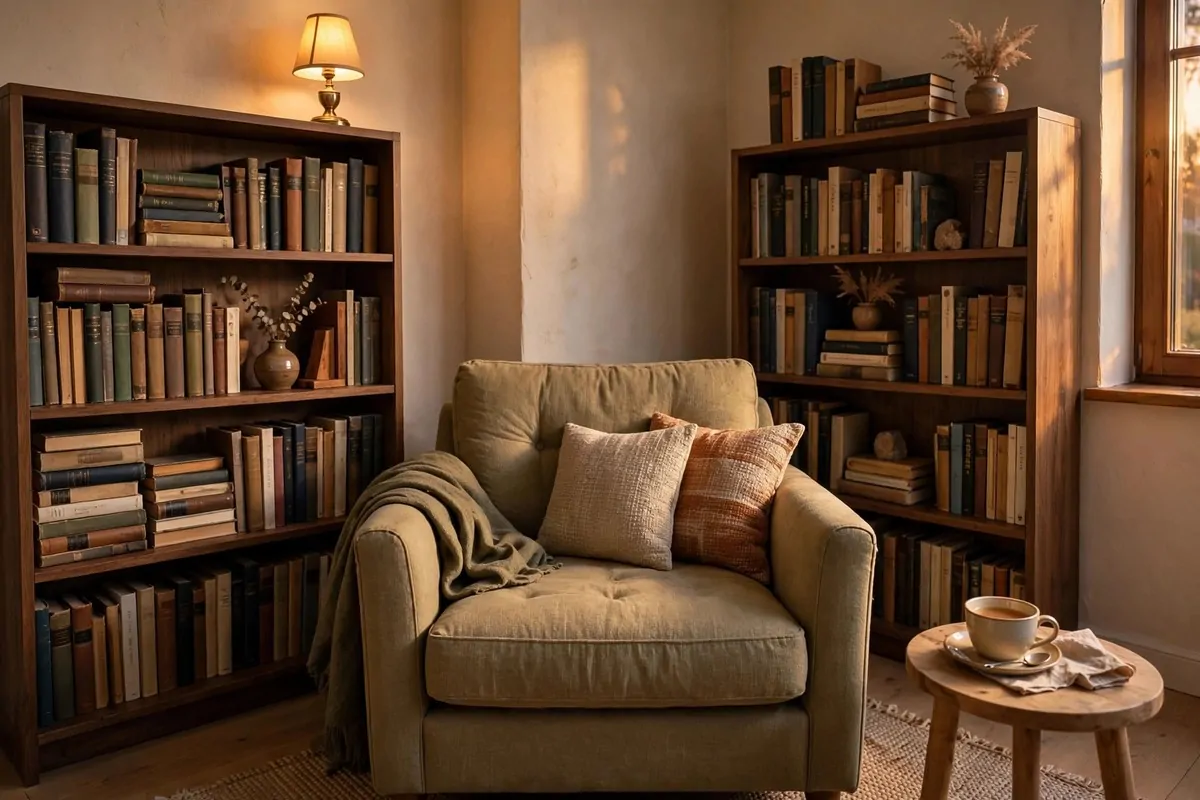
Put a bookcase on each side of your chair and the chair becomes a library.
This is the simplest Library Nook on this whole list. One chair, two slim bookcases, one corner. No building, no painting, no drilling. Just furniture placed with intention.
The bookcases should be slim, about a foot deep. They hug the chair without crowding it. You sit between walls of books and the rest of the room fades away.
Use the tops of the bookcases as tables. A lamp on one side, your tea on the other. The shelves work as furniture and storage at the same time.
Leave six inches between the chair arms and the shelves. You need room to slide in and out without scraping your elbows. Comfort first, always.
Style the shelves simply. Books in rows, a few stacked sideways, one small object per shelf. When the shelves sit this close to your face, clutter feels loud.
This setup moves with you. Nothing is attached to the wall. If you rearrange the room next year, the nook moves in an afternoon.
I love how this one photographs, but I love how it feels even more. Sitting between two walls of your own books feels like being hugged by your own taste.
16. The Balcony-Door Daylight Corner
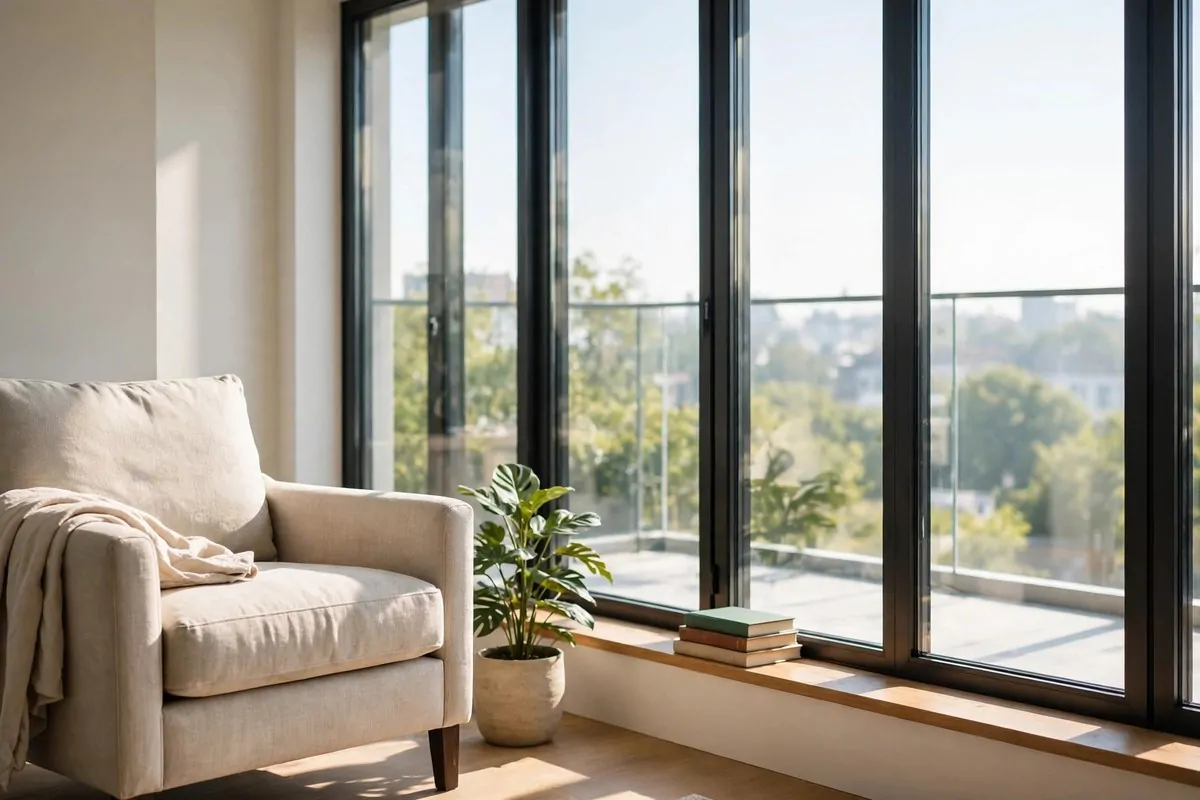
Daylight is the best reading lamp ever made, and it is free.
A chair beside glass balcony doors gets hours of natural light. Your eyes stay fresh longer. The pages look brighter. Everything about reading feels easier in daylight.
Face the chair slightly toward the glass, not straight at it. You want the light falling over your shoulder onto the page. Staring into bright glass gives you a headache by chapter three.
A narrow shelf or a stack of books on the windowsill keeps your reads close. The sill is wasted space in most homes. Books love it there.
This corner changes with the weather, and that is part of the charm. Sunny mornings are bright and warm. Gray afternoons are soft and moody. The same chair feels different every day.
Keep a light blanket on the chair. Glass doors leak a little cold air, even good ones. A blanket fixes it and adds to the cozy.
Plants thrive in this spot too. The same light that helps you read helps them grow. A reading corner that doubles as a little jungle is a happy corner.
I do my best reading here before ten in the morning. The light is gold, the house is quiet, and the book always feels more alive. Try it once and you will understand.
17. The Curved Loveseat Corner
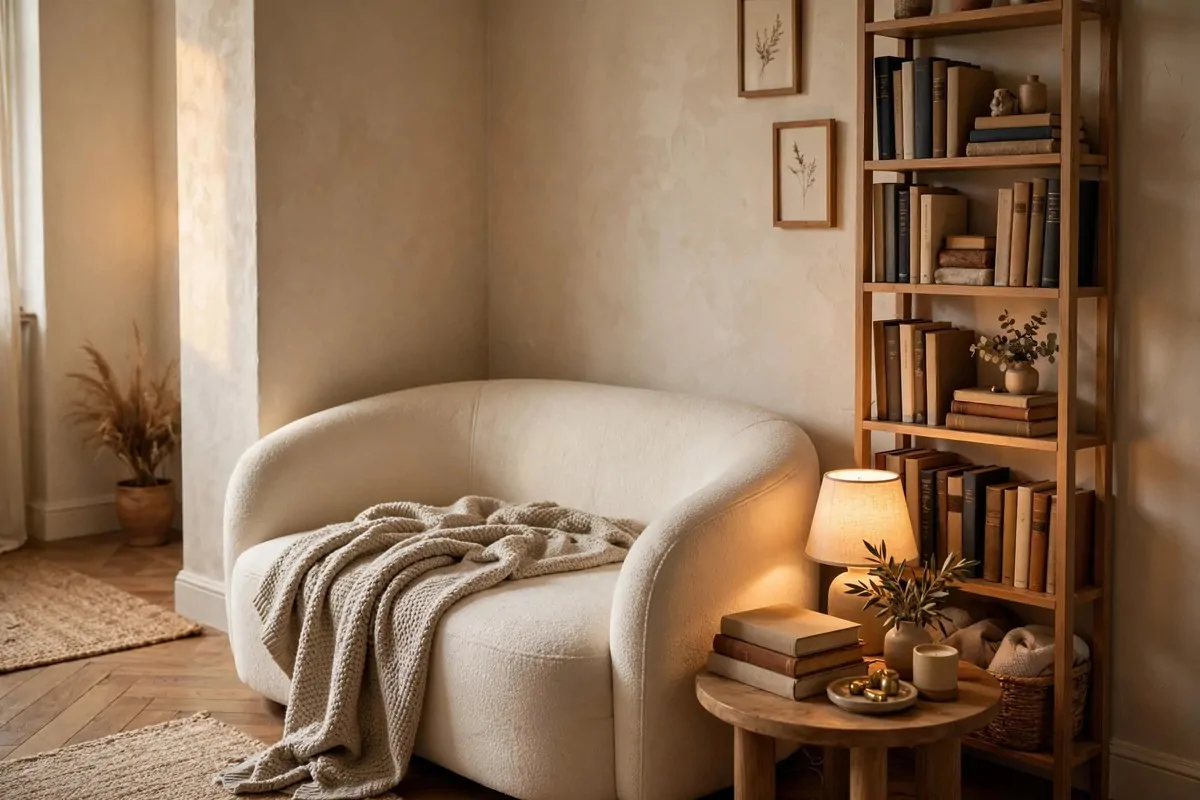
Curved furniture was made for corners.
A curved loveseat fits into a corner like it grew there. No sharp angles fighting the walls. It softens the whole room and gives you space to curl up sideways with a book.
The curve holds you differently than a straight sofa. You tuck your feet up, lean into the bend, and the book rests naturally in your lap. It is built for long reading sessions.
One tall bookshelf beside it completes the nook. The shelf stands straight, the seat curves, and the contrast looks intentional. Like you planned it for months.
Pick a fabric you can clean. Loveseats in reading corners collect tea drips and snack crumbs. A washable cover or a dark fabric saves you stress.
A round side table matches the curve better than a square one. It echoes the soft shape and gives you a landing spot for your mug.
Throw one good blanket over the back, not three. A single beautiful throw looks styled. Three throws look like laundry day.
This is the nook for people who read for hours. It is less upright than a chair and more supportive than a bean bag. Your back will thank you by chapter ten.
18. The Single-Shelf Nook
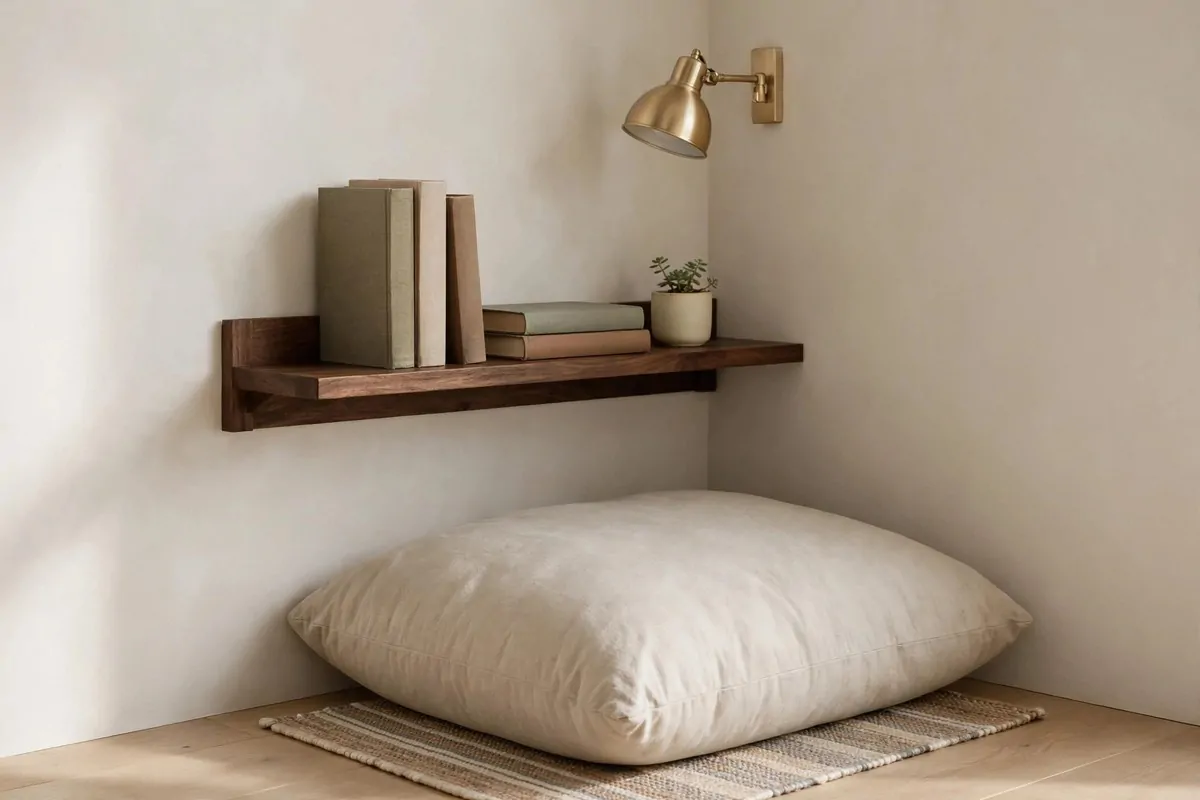
One shelf can be a whole library.
This is the smallest Library Nook in this list. One deep shelf on the wall. One cushion on the floor below it. Five books on the shelf. That is the entire design, and it works beautifully.
The rule is simple. The shelf holds only what you are reading now. When you finish a book, it leaves the shelf and a new one arrives. The nook stays fresh forever.
A deep shelf matters here. Twelve inches deep holds books plus a tiny plant and a candle. A shallow shelf holds books and nothing else. Go deep.
The cushion should be big and firm. You sit on the floor for this one, so comfort comes from thickness. A folded duvet under a cushion cover works in a pinch.
Mount the shelf at sitting eye level. You reach up slightly to grab a book, which feels natural. Too high and it becomes storage. Too low and it becomes a trip hazard.
Here is the five-book rule that keeps it perfect:
- One book you are reading right now
- One book you will read next
- One book of short pieces for tired evenings
- One beautiful book just for looking at
- One wild card that surprises you
A wall-mounted reading light above the shelf finishes it. One light, one shelf, one cushion. Minimal, calm, and completely yours.
This nook taught me something. A library is not about how many books you own. It is about having the right book within reach.
19. The Rocking Chair Revival Corner
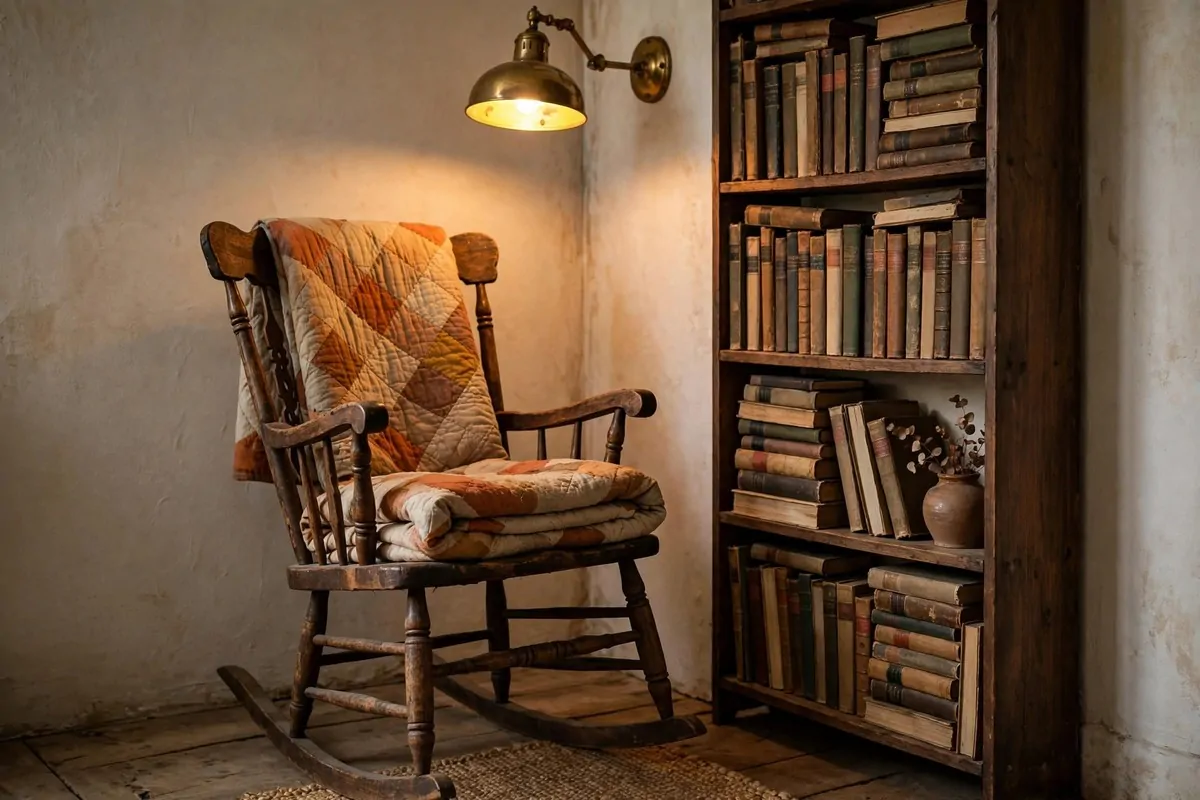
The rocking chair is back, and readers never really let it go.
There is a reason people rock babies to sleep in these chairs. The motion calms your whole body. That same calm makes pages turn slower and stories sink deeper. It is science you can feel.
A vintage wooden rocker costs little at secondhand shops. Look for one with solid joints and smooth runners. A little creak is charming. A big wobble is not.
Pair it with a tall, narrow bookshelf. The vertical shape balances the chair’s wide rocking base. Old books look best here. The whole corner starts to feel like another century.
A wall-mounted lamp above the chair is the classic setup. It throws warm light down onto your lap and leaves the floor clear for rocking. No lamp base to bump into.
Drape a quilt over the chair back. It softens the wood and keeps your shoulders warm. Quilts and rocking chairs belong together like tea and rain.
This corner reads best in the evening. The rock, the lamplight, the old wood. It slows you down on purpose. Modern life rarely does that for you.
My grandmother read in a chair like this every night. I thought it was old-fashioned. Now I know she had figured out the perfect reading setup before I was born.
20. The Swivel Chair Spin Spot
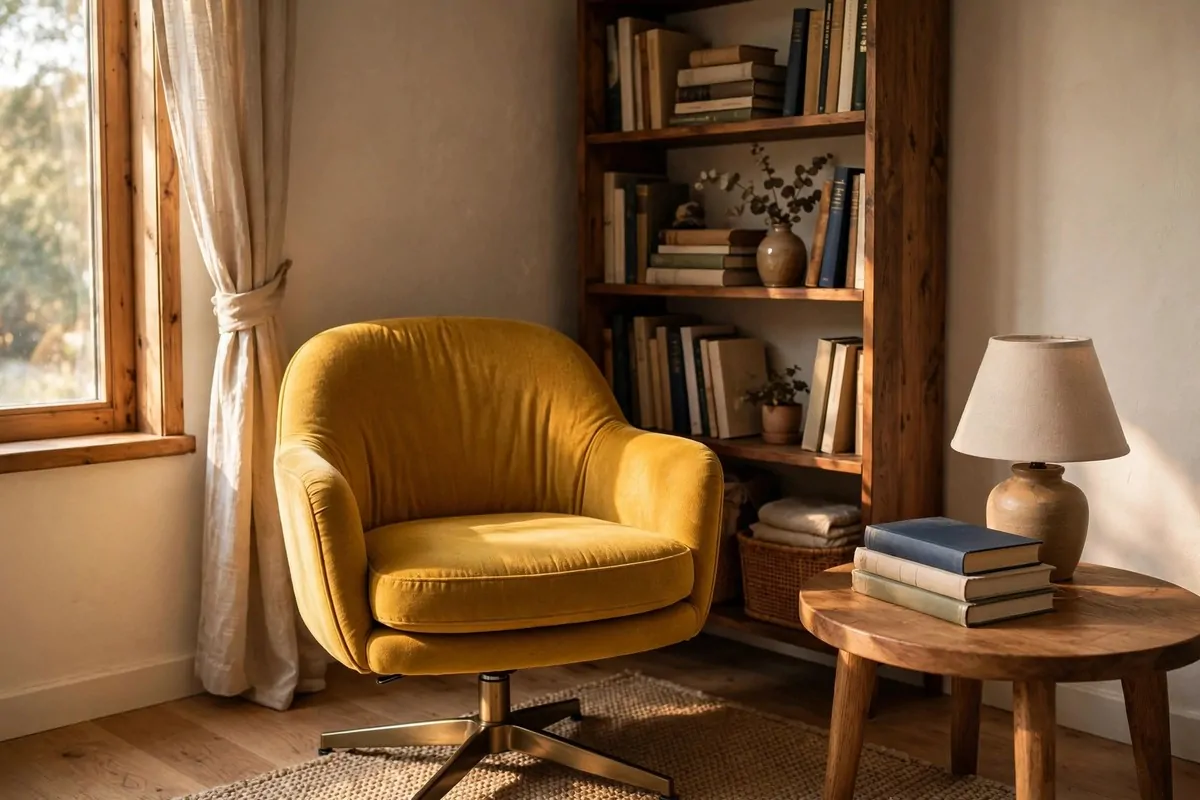
A swivel chair makes a small corner feel twice as big.
You spin toward the bookshelf to choose. You spin toward the window for light. You spin toward the room when someone talks to you. The chair does the moving so the corner can stay tiny.
Pick a swivel chair with a low back. High backs block the light and make small corners feel caged. A low, open chair keeps the sight lines clear.
A round side table is the perfect partner. It has no corners to bump into when you spin. Books, tea, and glasses all fit on top.
Put the bookshelf behind the chair, not beside it. Spinning around to face the shelf is half the fun. It turns choosing a book into a little ceremony.
Bold color works great here. A mustard or teal chair becomes the star of the corner. The books are the supporting cast. Small spaces can handle one loud piece.
Check the swivel base is smooth and quiet. A squeaky spin ruins the magic fast. A drop of oil on the mechanism fixes most squeaks in seconds.
This is the playful nook on the list. It does not take itself too seriously. Reading should be fun, and a chair that spins reminds you of that every time you sit down.
21. Follow the Sun
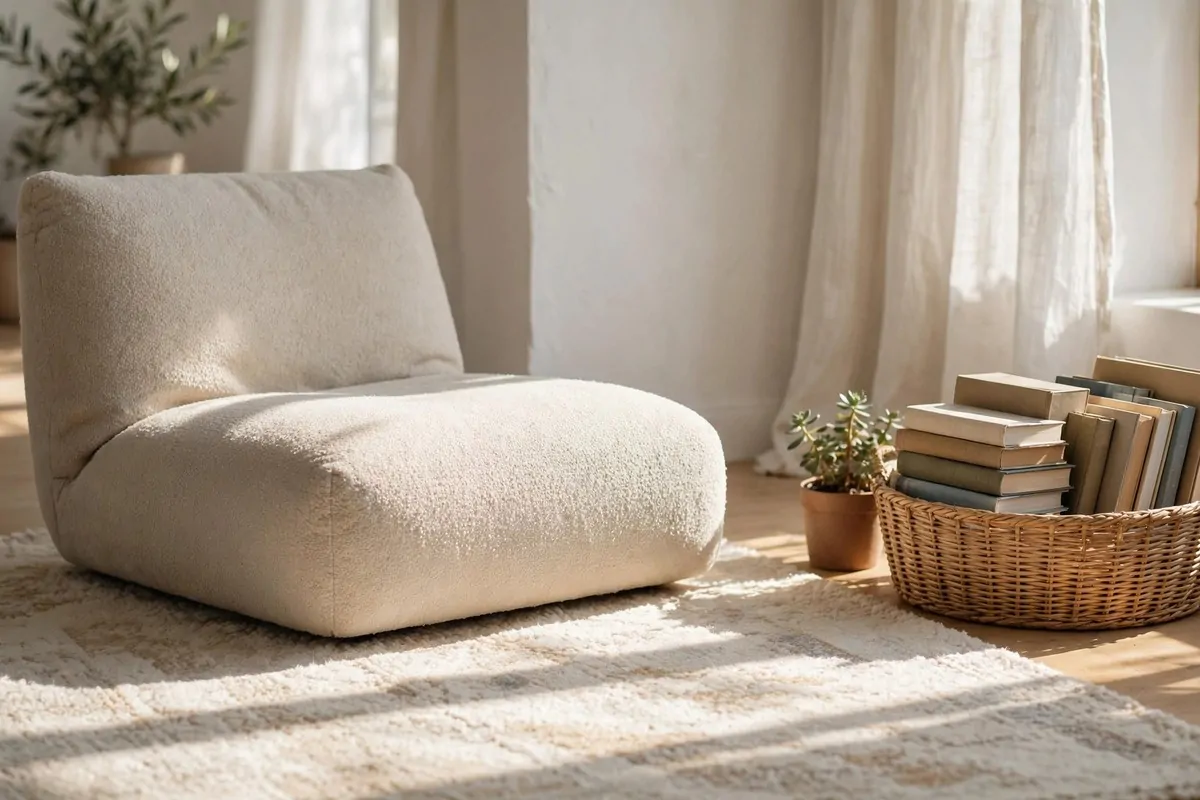
The sunniest spot in your home moves during the day. Your reading nook can move with it.
This is not a fixed corner at all. It is a low floor chair, a soft rug, and a basket of books that travel to wherever the sunlight lands. Morning spot, afternoon spot, evening spot. The nook follows the light.
It works because the pieces are light. A floor chair weighs little. A basket carries easily. The rug rolls up. Moving the whole nook takes two minutes.
Watch your home for one day and map the sun. Note where the bright patches land at nine, at two, at five. Those patches are your nook’s three addresses.
The basket is the library here. It holds six or seven books and moves with you. Everything you need travels in one trip. No forgotten bookmarks.
This suits people who get restless sitting in one place. The change of view keeps reading fresh. Same book, new light, new mood.
A plant can travel too, if it is small. Plants love sun-chasing as much as readers do. Just remember where you left it at night.
I did this for a whole summer in my old flat. The nook lived by the east window at breakfast and the west wall by dinner. It felt like the house was reading along with me.
22. The Balcony Book Basket
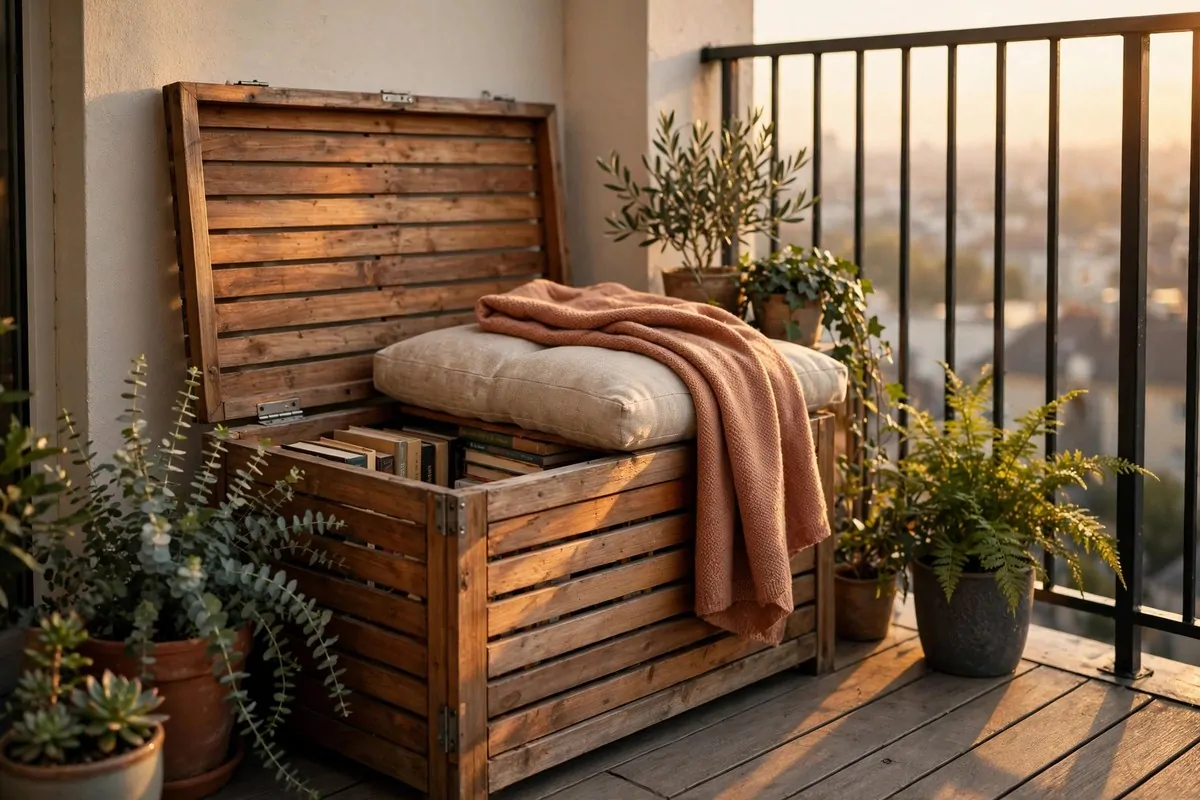
Your smallest outdoor space can be a library too.
A weatherproof storage box on the balcony holds a rotating stack of books. A thick outdoor cushion on top turns it into a seat. Add plants around it and you have an open-air reading nook.
The box is the key piece. It must seal against rain. Books and weather are enemies, so the box does the protecting. Only bring out the books you are reading now.
Choose outdoor fabrics for the cushion. They dry fast and survive sun. A folded throw for chilly evenings lives inside the box with the books.
Morning is the best time for this nook. The air is cool, the light is soft, and the street is still quiet. Coffee plus a book plus fresh air is hard to beat.
Keep the book stack small out here. Five books maximum. The balcony box is a reading station, not storage. The real library stays safely indoors.
Anchor the box if your balcony is windy. A full book box is heavy enough to stay put, but an empty one can slide. A little weight at the bottom fixes it.
In winter this nook sleeps. Bring the cushion inside, close the box, and wait for spring. The books go back to their indoor shelves. Every library needs a season of rest.
Keep Reading
If these tiny corners got you dreaming of bigger book spaces, keep going. Read 30 Library Ideas That Make Every Book Lover Swoon for the full grand-library treatment, then browse 28 Cozy Home Library Ideas You’ll Never Want to Leave for rooms you will never want to leave. Short on space? 21 Small Library Room Ideas That Make Every Inch Count squeezes a library into any footprint, and 23 Bedroom Library Ideas for a Dreamy Reading Retreat brings the books right to your bedside.