22 Spare Bedroom Office Ideas Worth Stealing

I used to get my spare room wrong for years. When nobody visited, it was a sad corner with a wobbly desk and a chair that hurt my back. When someone did visit, they had to sleep next to my printer and a stack of folders. It was neither a good office nor a good guest room.
One day I sat down and really looked at that room. And I realized I did not need more space. I needed a better plan. That is what these Spare Bedroom Office Ideas are all about.
Your spare room can do both jobs well. It can be a proper office Monday to Friday, and a cozy guest room on the weekend. You just have to give each job its own corner, or its own piece of furniture that changes shape.
I tried a lot of these myself, and I asked friends what worked in their homes too. Some ideas cost almost nothing. Some cost a bit more, but they pay you back every single day you work from home.
Below are 22 ideas you can steal for your own spare room. Start with the one that fits your room and your budget. Then keep going if you like. Small changes here make a really big difference.
1. The Fold-Down Wall Desk That Disappears After Work
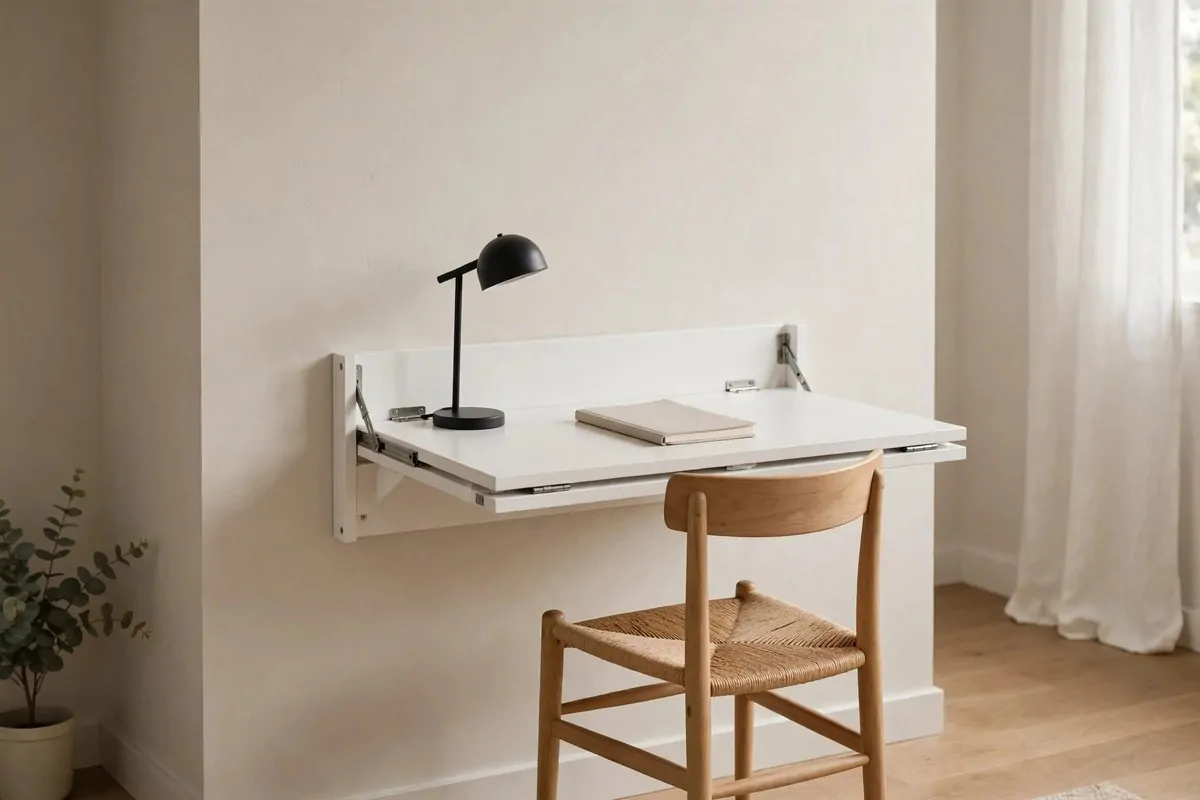
A fold-down desk is just a shelf on hinges. You pull it down in the morning. You push it back up when you are done.
I love this one because my brain sees the room differently when the desk is gone. Work is over. The room feels like a guest room again.
You need a strong wall for this. A hollow drywall panel will not hold your laptop. Find the studs first, or ask someone handy to help you.
Before you buy one, check these things:
- The wall has solid studs where you want to mount it
- The desk is wide enough for your laptop, about 80 cm is plenty
- It is deep enough that your wrists rest on it, not hang off the edge
- There is room for a chair to pull up close
- There is a small hole or gap for your charger cable
It costs less than most people think. You can find simple ones online for the price of a dinner out. A nicer wood one costs more, but it looks like real furniture.
The only rule I have: keep it small. This desk is for a laptop and a notebook, not for spreading out papers like a newsroom. Small keeps it tidy.
When guests come, fold it up and hang a picture over it, or just leave it closed. Nobody will guess there is an office on that wall.
I fold mine up every evening. It takes five seconds. And I swear my shoulders relax the moment it clicks shut.
Pair it with a light chair you can move easily. A heavy office chair will fight you in a small room. Light is better here.
If your room is tiny, this might be the whole answer. One desk, no floor space lost, done.
2. The Daybed and Desk Duo
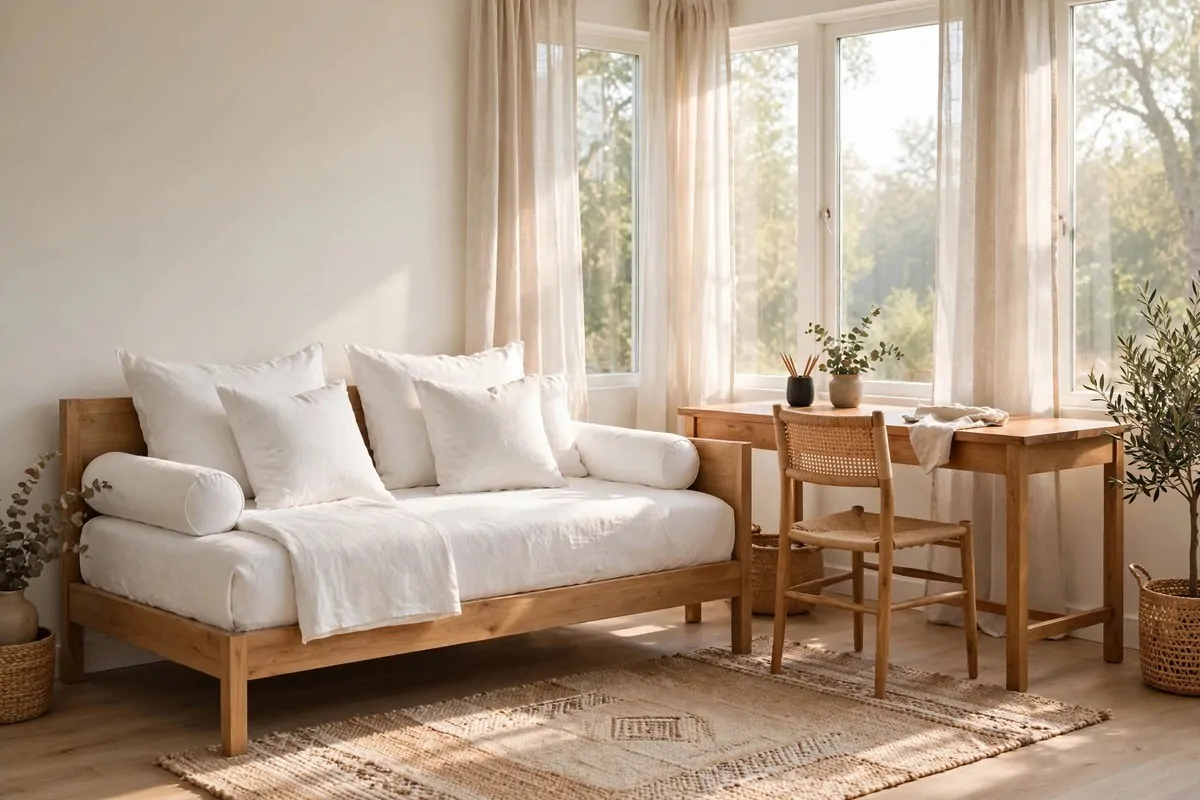
A daybed is a bed that looks like a couch. You sleep on it at night and sit on it during the day. It is the oldest trick for small rooms, and it still works.
Put the daybed against one wall and a desk against the other. The room now has two sides. One side works, one side rests.
I put lots of cushions on my daybed. When it is covered in pillows, nobody calls it a bed. They call it a couch. That is the whole point.
Keep the desk simple here. The daybed is the big piece of furniture, so the desk should not shout for attention. A plain wood top is enough.
One thing to watch: do not let work stuff crawl onto the daybed. Papers, chargers, coffee mugs. They will take over if you let them. I keep a small basket by the desk for the spillover.
Guests love a daybed. It feels more welcoming than a pull-out couch. Add a clean set of sheets and a folded blanket at the foot, and it looks like a small boutique hotel bed.
This pair works great in a square room. A daybed fits along a short wall. The desk takes the long wall. Nothing blocks the door.
If you nap on the daybed at lunch, I will not judge. That is one of the perks of working from a spare room. Just set an alarm.
Match the wood of the desk to the frame of the daybed if you can. It makes the room feel planned, even when it is not really.
This is one of my favorite Spare Bedroom Office Ideas because it costs you nothing extra. You already own a bed and a desk. You just move them closer.
3. A Corner Desk Nook That Costs Almost Nothing
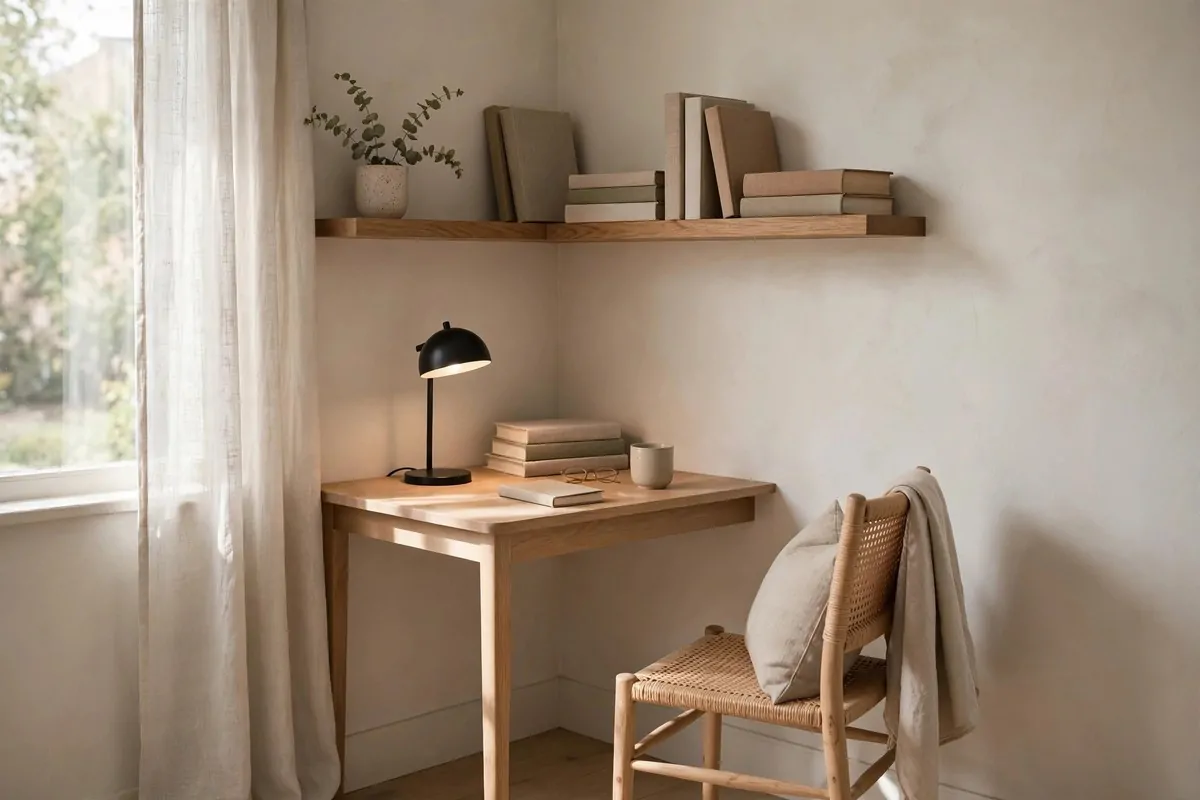
Corners are the most wasted space in any room. We all ignore them. Then we complain the room is too small. A corner desk fixes that in one afternoon.
You need a small tabletop, two brackets, and a chair you already own. That is the whole shopping list. Some people use a board from a hardware store and skip the fancy desk entirely.
I built mine on a Saturday afternoon. I am not handy at all. If I can do it, you can do it. Two brackets, four screws, done.
Here is what to grab and where to look for it cheap:
| What you need | Where to find it cheap | My tip |
|---|---|---|
| Wood board for the top | Hardware store offcuts bin | Ask them to cut it to size, most do it free |
| Two strong brackets | Hardware store or online | Get ones rated for more weight than you need |
| Screws and wall plugs | Often sold with the brackets | Use plugs made for your wall type |
| A chair | Another room in your house | Comfort beats looks here, steal the good one |
| A small lamp | Secondhand shops | Clip lamps save desk space |
A corner desk makes the work zone feel separate. You turn your face to the corner and the rest of the room disappears. It is like a little office inside the office.
Add a shelf above it if the wall is empty. Shelves hold the stuff that would clutter your desk. Books, a plant, a box for cables.
The chair matters more than the desk here. A bad chair in a corner nook will make you hate the whole setup. Steal a good chair from another room if you must.
Light the corner well. Corners are dark. A small clip lamp or a cheap desk lamp changes everything. You should not squint at your screen at 3 pm.
This idea is proof that you do not need a big budget. You need a corner, a board, and a Saturday. The rest is details.
4. A Desk Built Into a Wall Recess
Some rooms have a strange little dent in the wall. An old closet, a niche, a spot where a chimney used to be. Do not ignore it. That dent is a free office.
A desk that fits inside the recess uses space you could not use for anything else. A bed would not fit there. A dresser would stick out. A desk fits like it was made for the spot.
Measure twice. Recesses are never straight. Walls in old houses lean and curve. Measure the top, the middle, and the bottom, and use the smallest number.
A simple painted board works as the desktop. You can paint it the same color as the wall so it blends in. When it blends in, the room looks bigger.
Add power before you build. Nothing is worse than a perfect desk with no outlet nearby. A small power strip inside the recess keeps cables out of sight.
I like a recess desk with no legs. Brackets or cleats hold it up. No legs means your knees have space, and your feet can move around. It also makes cleaning easy.
The walls of the recess give you privacy. You sit inside your own little cave of work. Some people find it cozy. If you get claustrophobic, keep the paint light.
When guests visit, the recess desk just sits there quietly. It does not look like an office took over the room. It looks like a shelf. You can even put a pretty bowl on it for the weekend.
Put a small lamp in the back corner of the recess. It lights your work and makes the niche look intentional at night. It is a small touch with a big effect.
This is my favorite idea for old apartments with weird layouts. The weird layout becomes the best feature. Funny how that works.
5. A Futon and a Desk That Get Along
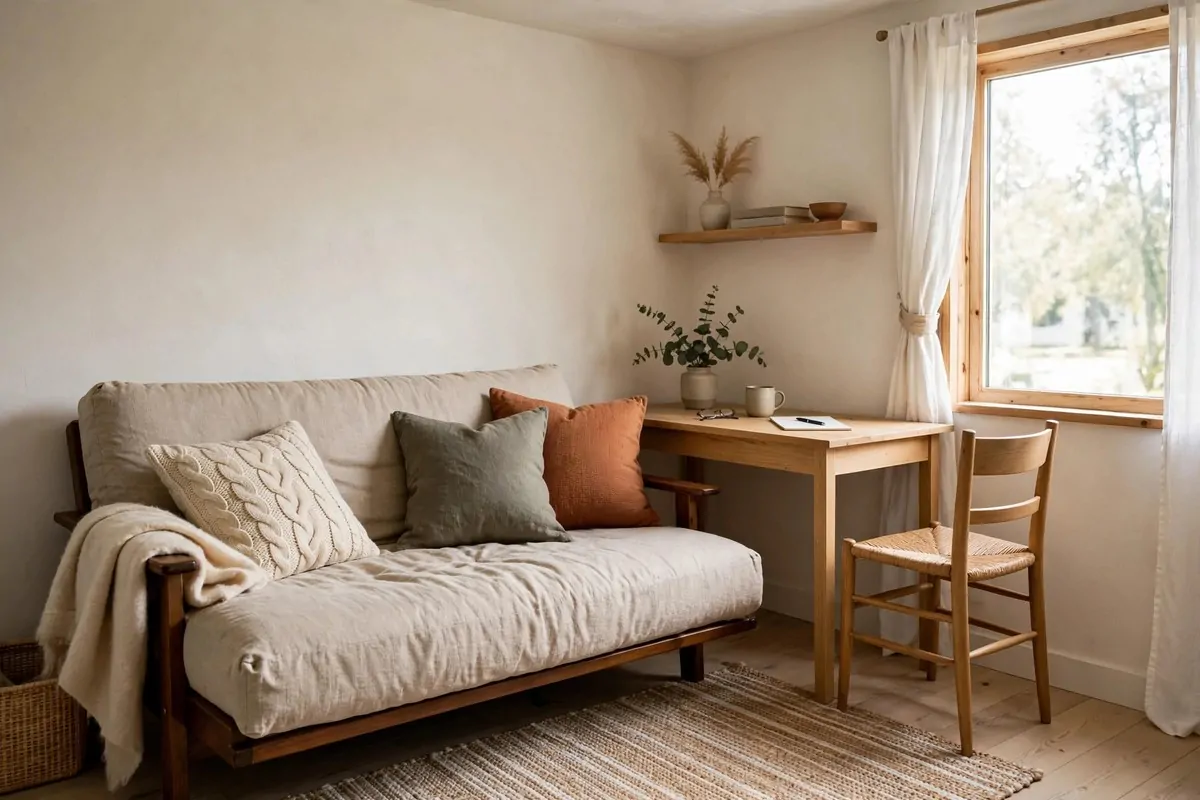
A futon is the budget hero of guest rooms. It folds flat into a bed and sits up as a couch. It is not fancy, but it works hard.
The trick is placement. Put the futon where a bed would go, against the longest wall. Then the desk gets the opposite side, or a quiet corner.
During the day the futon is your thinking couch. Stuck on a problem? Sit on the futon with your notebook. New ideas come faster on a couch. I do not know why, but they do.
A few rules keep this combo working well:
- Keep a fitted sheet on the futon so it always looks like a bed, not a couch you crashed on
- Add a throw blanket in a solid color to hide wrinkles and make it look pulled together
- Never let work papers, chargers, or mugs live on the futon, give them a basket by the desk
- Fold the cushions neatly each morning, it takes one minute and changes the whole room
- Vacuum under the futon now and then, things disappear under there
Get a futon with a decent mattress, not the thinnest one. Your guests will sleep on it. A thin futon mattress is a one-night friendship test. Do not test your friends.
The desk next to a futon should be small. The futon already takes up room when it is flat. A slim desk keeps the walkway clear.
I keep a small side table between the futon and the desk. It holds my coffee during the day and becomes a nightstand for guests. One table, two jobs.
Color helps a futon look better. A nice cover in a solid color hides the fact that it is a futon. Stripes and patterns show every wrinkle. Solid colors are kinder.
If your futon squeaks, fix it. A squeaky futon in a home office will drive you mad on calls. Tighten the bolts, add a drop of oil, and enjoy the silence.
This combo is honest and cheap. It will not win design awards. But your guests will sleep well, and you will work well, and that is the whole job.
6. The Murphy Bed and Real Desk Combo
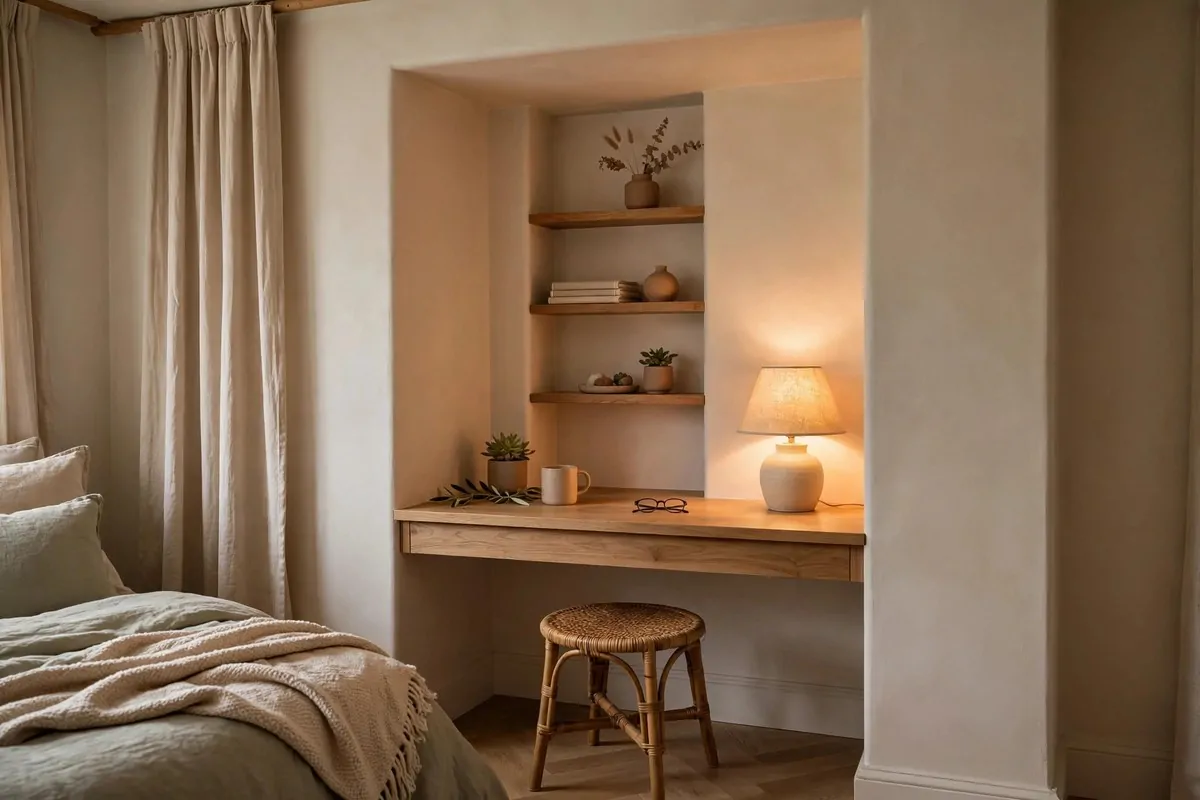
A murphy bed folds up into the wall. During the day it is a cabinet. At night it is a real bed. It is the closest thing to magic in furniture form.
With the bed folded up, you get a full office in front of it. A real desk, a real chair, no compromises. This is the best setup for someone who works from home every single day.
Yes, it costs more than a futon. A good murphy bed is an investment. But think about what it buys you. A real bed for guests and a real office for you, in one room, every day.
Measure your ceiling height before you shop. Murphy beds need room to swing up and down. A low ceiling or a ceiling fan in the wrong spot can ruin the plan.
Get one with a locking mechanism that feels solid. You will fold this bed up and down a lot. It should feel safe and easy, not wobbly and scary.
Keep bedding simple. A fitted sheet and a light duvet that can stay on when the bed folds up. If you have to strip the bed every time, you will stop folding it. Then it is just a bed.
Tell your guests how it works before bedtime. Show them once. People are nervous about beds that move. One demo and they are fine.
Some murphy beds come with a desk attached that stays level when the bed folds down. If yours does not, place a proper desk right in front of the folded bed. Either way, you get a real workspace.
I have seen people try to skip the real desk and work from the folded bed frame. Do not. Your back will send you a bill. Get the real desk.
This is the heavy-duty answer. If your spare room is your office most days of the year and a guest room only sometimes, build for the office days. The murphy bed handles the guest nights.
7. A Glass Partition for a Modern Look
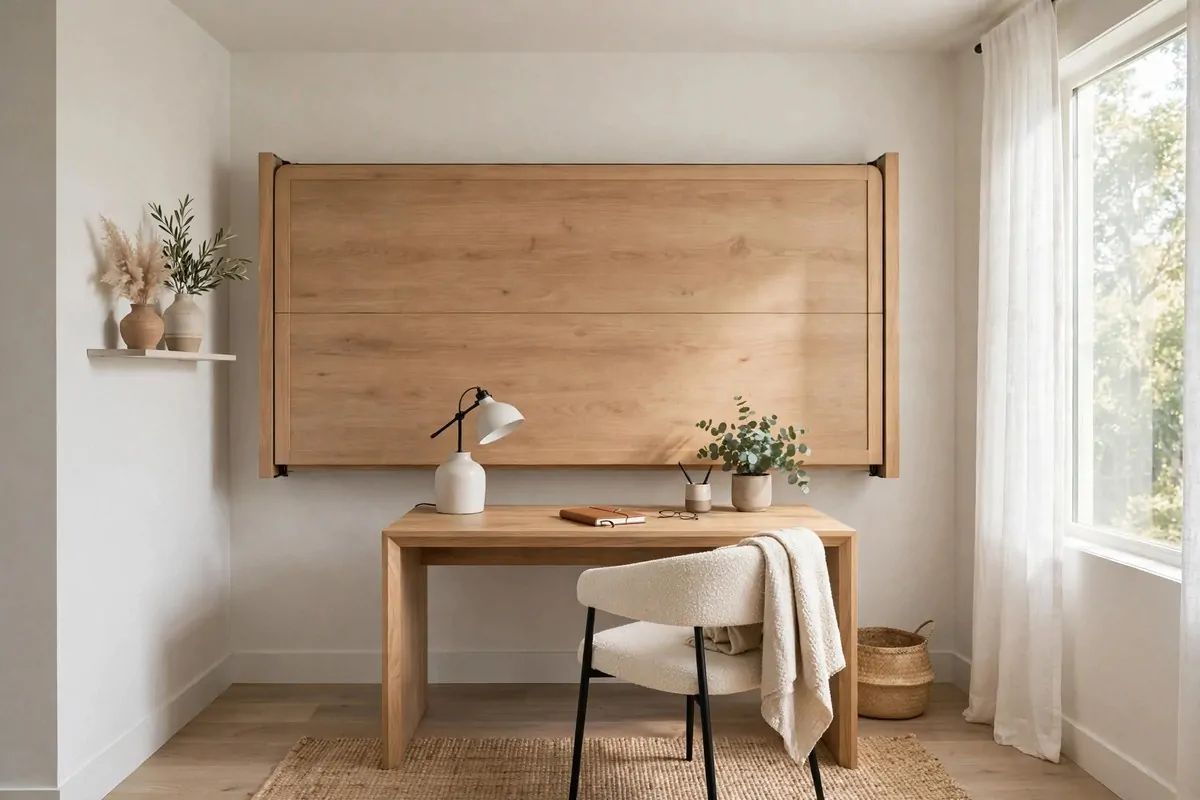
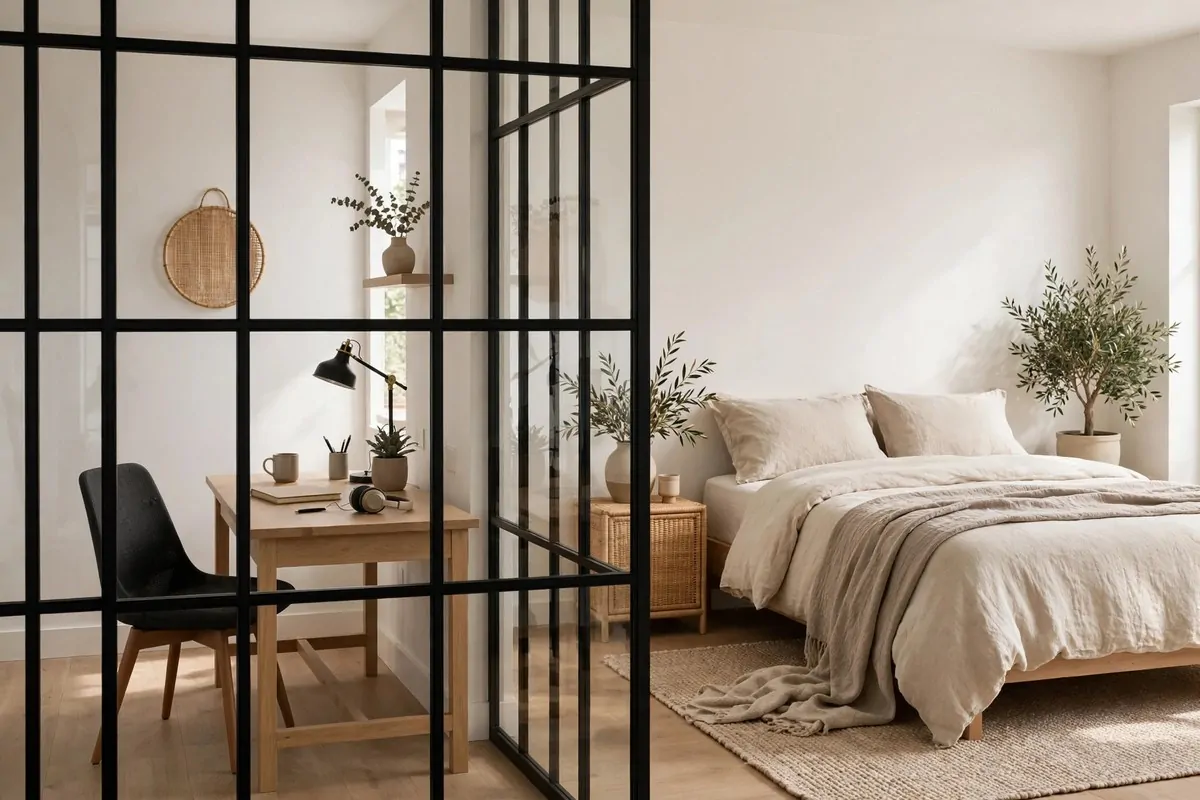
A glass partition is a wall made of glass with a dark frame. It splits the room in two without blocking light. The office side and the bed side each get their own zone.
This looks very modern. Black frames, clear glass, clean lines. It makes a spare room look like a small studio apartment. Guests will be impressed.
Light is the big win. A solid wall would make each half dark. Glass lets the window light reach both sides. The room still feels like one bright room.
You do not need a full wall of glass. Even a half partition works. A panel that goes halfway across the room tells your brain where work ends and rest begins.
Keep the glass clean. Fingerprints show. A quick wipe once a week keeps it looking sharp. Put the spray and cloth in the desk drawer so you actually do it.
Frosted glass is an option if you want more privacy. It still lets light through, but you cannot see the unmade bed behind it. Very useful on Monday mornings.
The frame color matters. Black frames look modern. White frames look soft. Wood frames look warm. Pick the one that matches the rest of your house.
Sound is the one thing glass does not block well. If you take loud calls, the guest side will hear them. A rug and soft furniture help more than you would think.
This idea works best in a bigger spare room. You need enough space for two real zones. In a tiny room, glass just gets in the way.
It is a bold choice, I know. But if you like modern style, nothing else divides a room this cleanly while keeping it bright.
8. A Chalkboard Wall That Plans Your Week
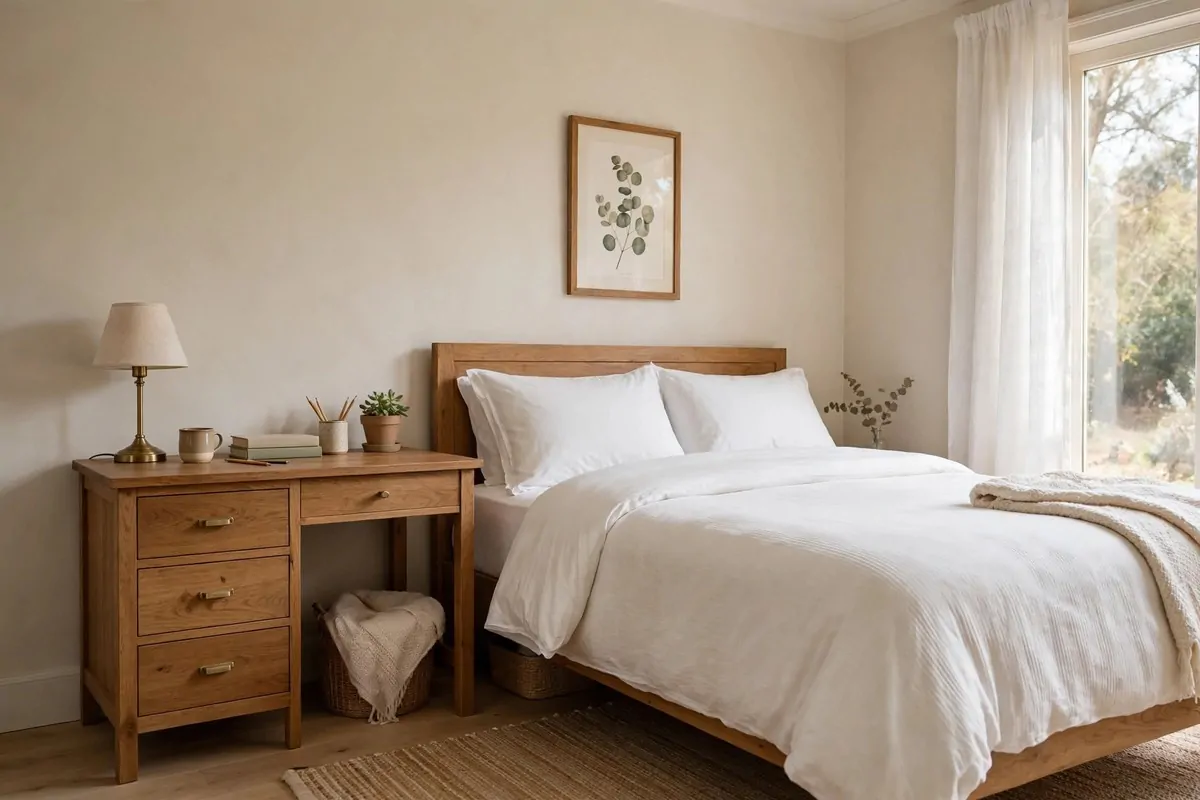
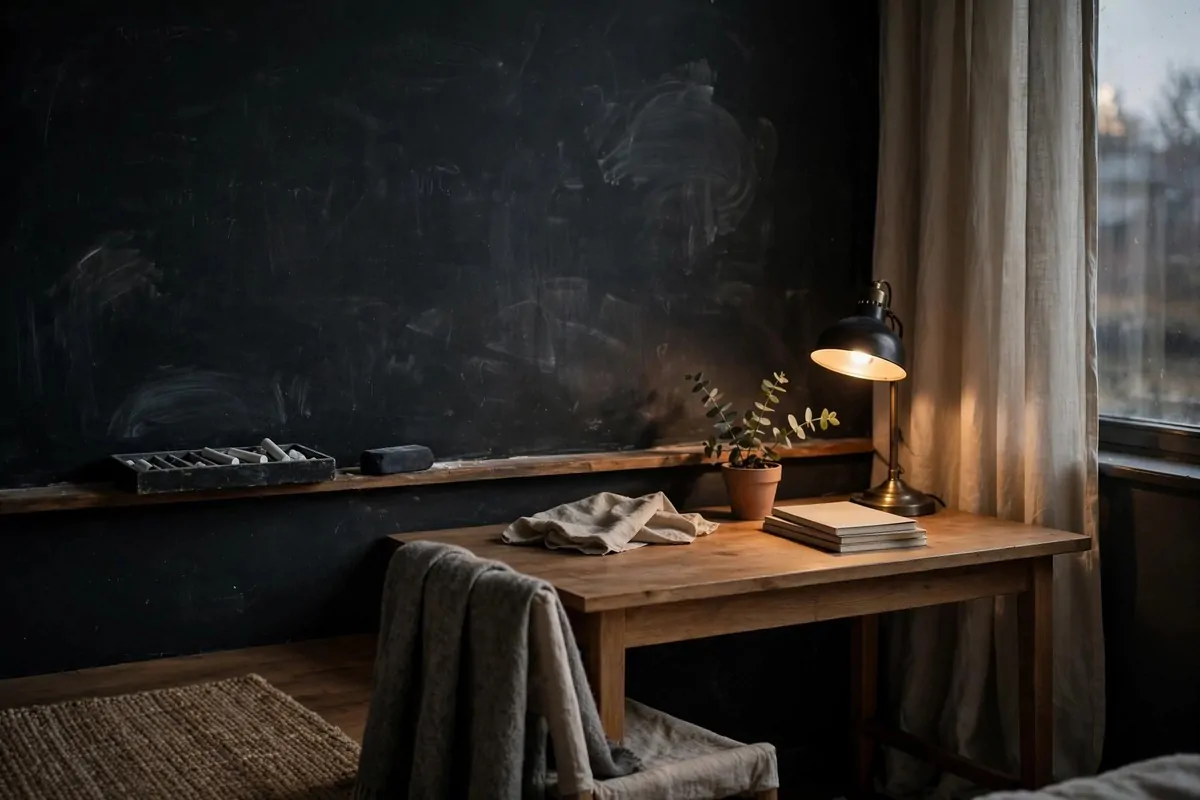
A chalkboard wall is a wall painted with chalkboard paint. You can write on it, erase it, and write again. It turns your office wall into a giant planner.
I use mine for the week ahead. Meetings on the left, tasks in the middle, ideas on the right. One look and I know my whole week. No app needed.
Guests find it fun too. Leave a piece of chalk and a note that says write something. People draw little pictures and leave messages. It makes the room feel alive.
Before guests arrive, wipe it clean or write a welcome note. Something like welcome, the WiFi password is on the nightstand. That is a nice touch. Erase your work stuff first, obviously.
Chalkboard paint comes in more than black now. Dark green and dark blue work well. They look softer than pure black in a bedroom.
Chalk dust is real. It gets on the floor and on your clothes. A small tray under the board catches most of it. A quick sweep once a week handles the rest.
If you do not want a whole wall, paint just a big rectangle and frame it with thin wood trim. It looks like a giant framed board. Same function, less commitment.
Use real chalk, not chalk markers, if you want easy erasing. Markers look brighter, but some of them never come off. Read the label before you buy.
Keep a small eraser and chalk in a cup on your desk. If the tools are right there, you will use the board. If they are in a drawer somewhere, you will not.
This wall makes your office feel personal. No two chalkboard walls look the same. Yours will have your handwriting, your lists, your doodles. That is the charm.
9. A Desk Right Under the Window
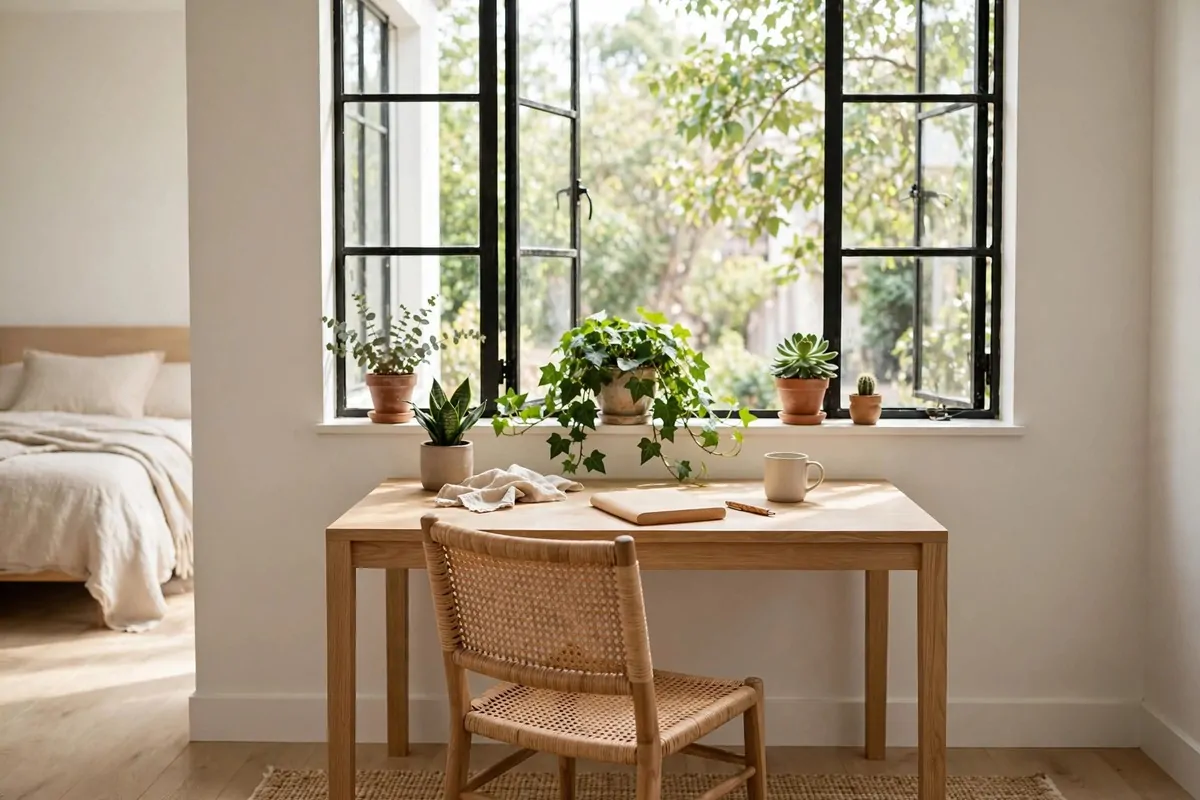
Natural light is the best office upgrade, and it is free. A desk under the window gives you daylight all day. Your eyes will thank you.
Face the window or sit sideways to it. Facing it gives you the view. Sitting sideways avoids glare on your screen. Try both and see what you like.
Plants love a window desk. They get the light they need, and you get something green to look at during long calls. Start with one easy plant. You can add more later.
A few window desk rules I learned the hard way:
- Check where the glare lands at different times of day before you commit the desk spot
- Keep the windowsill clear of clutter, one plant and maybe a small frame is enough
- Hang a sheer curtain to soften harsh midday sun without darkening the room
- If there is a radiator under the window, leave space so heat can rise past the desk
- Make sure you can still open the window for fresh air without moving everything
A sheer curtain is your friend here. It softens harsh sun without making the room dark. On video calls you will look better too. Bright backlight makes you look like a shadow.
Keep the windowsill clear of clutter. It is tempting to pile things there. A clear sill with one plant looks calm. A cluttered sill looks like a storage shelf.
In winter the window can be cold. If you feel a draft, a small draft stopper or a heavy curtain at night helps. Do not freeze for the sake of a view.
The view matters less than you think. Even a view of a brick wall or a parking lot beats staring at a blank wall. Your brain likes distance. Give it some.
When guests come, the window desk becomes their spot. They can sit there with coffee in the morning. A chair by the window is always the best seat in the house.
I moved my desk to the window last spring and my afternoons got better. Less yawning, more done. Light is powerful stuff.
10. A Desk With Drawers Beside the Guest Bed
Drawers are where office clutter goes to hide. A desk with drawers next to the guest bed keeps your work life tidy and your guest space calm.
Guests need the top of the desk too. They need a spot for their phone, a book, a glass of water. If your drawers hold the clutter, the top stays free for them.
Give guests the top drawer. Put a phone charger, a small notebook, and a pen in it. It is like a tiny hotel welcome kit. People remember small kindnesses.
Keep it simple inside. If a guest opens a drawer and finds chargers and a spare toothbrush, they will smile. If they find your tax papers, they will feel awkward.
A desk with drawers is heavier and bigger than a simple table. Measure the space beside the bed first. You need room to open the drawers fully and still walk past.
Wood desks with drawers age well. They look better in five years than they do today. Cheap flat-pack desks do the opposite. Buy the best you can afford.
Keep one drawer just for work stuff. Laptop, notebook, pens. When work ends, everything goes in the drawer. Out of sight, out of mind, as they say.
The bed beside the desk should have a proper headboard if you can. It makes the pair look like they belong together. A desk floating next to a bare mattress looks temporary.
This setup shines in a long narrow room. Bed on one side, desk on the other, walkway in the middle. Everything has a place.
It is not the flashiest of these Spare Bedroom Office Ideas, but it might be the most practical. Drawers solve problems quietly, every single day.
11. A Standing Desk With a Sleeper Sofa
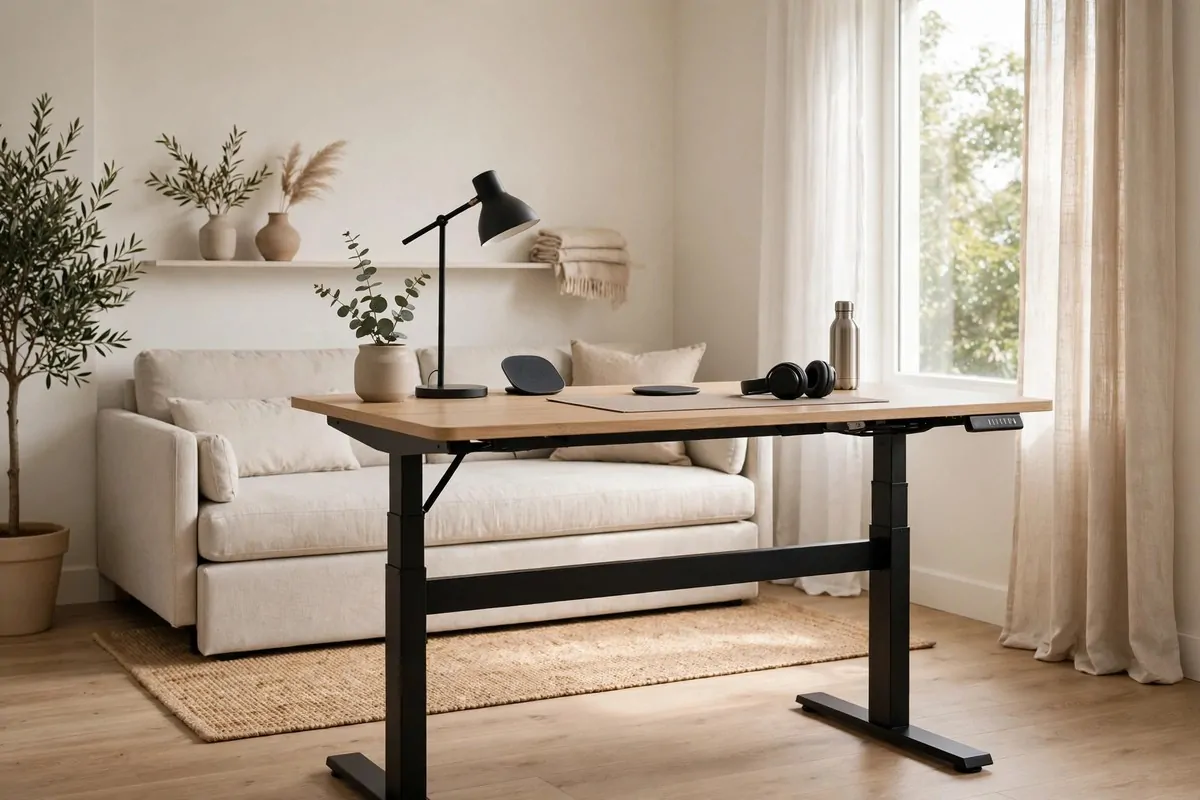
A standing desk goes up and down. You sit for a while, then you stand for a while. Your body likes the change. Mine certainly does.
Pair it with a sleeper sofa and you have the full package. Work standing or sitting by day. Pull out a real bed for guests by night.
The desk needs floor space to move. When it goes up, nothing should block it. Keep the area around it clear. A plant on the floor right next to it will get crushed. Ask me how I know.
Start slow with standing. Ten minutes at a time is fine. Your feet and legs need to learn. A soft mat under your feet helps a lot.
The sleeper sofa should be easy to open. If it takes ten minutes and three people, you will dread guest night. Test it in the store if you can.
Cable management matters more with a moving desk. Cables need slack to go up and down. A cable spine or a simple hook under the desk keeps them tidy.
Keep a small stool nearby. Sometimes you want to perch, not fully sit or stand. A stool is the in-between option. It is also handy for guests.
When the sofa is open as a bed, push the desk to its lowest setting. It gives the room more air. Small moves like this make the room feel bigger.
This combo costs more than a basic setup. The desk motor and the sofa bed both add up. But if you work from home full time, your body is worth it.
I stand for my morning emails and sit for deep work. That rhythm works for me. Find your own rhythm. There is no wrong answer here.
12. Color Zoning: Paint the Work Corner a New Shade
Paint is the cheapest way to divide a room. One wall, one corner, one new color. Suddenly the office has its own zone, no furniture moved.
Pick a color that says work to you. Deep green feels calm and serious. Navy feels smart. Warm terracotta feels creative. There is no wrong pick, only your pick.
Keep the rest of the room neutral. White, cream, soft gray. The neutral part stays restful for guests. The colored part holds your work energy.
Here are some colors that work well for a work corner:
| Color | Mood it gives | Best for |
|---|---|---|
| Deep green | Calm and focused | Long work days |
| Navy blue | Sharp and tidy | Video call backgrounds |
| Warm clay | Creative and cozy | Writers and makers |
| Creative and cozy | Writers and makers | Writers and makers |
Test the color first. Paint a big piece of cardboard and lean it against the wall for two days. Look at it morning and evening. Colors change with light.
One wall is enough. Two walls can work in a big room. Painting the whole room a dark color will make guests feel like they are sleeping in a cave. Do not do that.
The desk should sit against the colored wall. That is the whole point. The color frames your workspace like a picture frame.
If you rent, use peel-and-stick options or ask your landlord. Some landlords say yes to one accent wall. It never hurts to ask. The worst they say is no.
Paint the inside of a bookshelf the same color for a pulled-together look. It is a small detail. Guests will think you hired someone.
This is one of the fastest Spare Bedroom Office Ideas on this list. A Saturday, a can of paint, and the room feels brand new.
13. The Hideaway Cabinet Office Behind Closed Doors
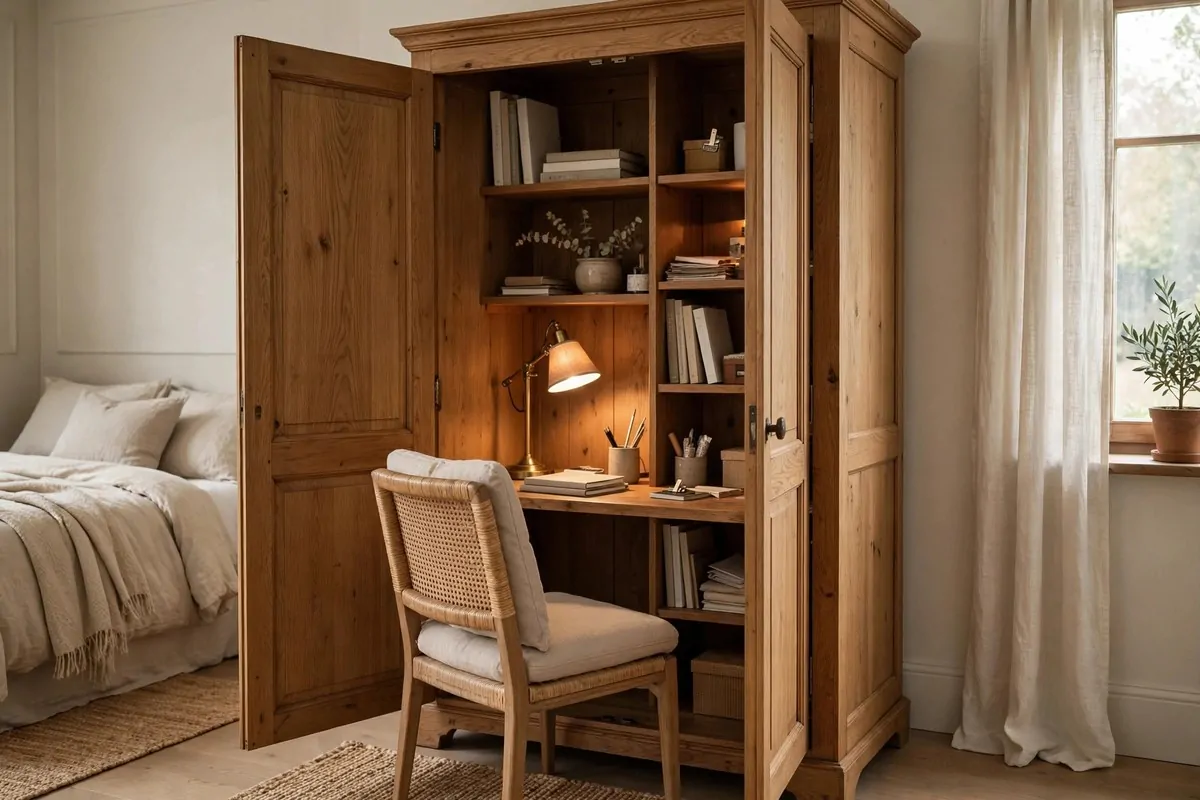
An armoire or a big cabinet can hide a whole office. Desk inside, shelves inside, doors that close. When work ends, you shut the doors and the office is gone.
This is perfect if your spare room hosts guests often. Nobody wants to sleep next to your to-do list. Closed doors keep work out of sight and out of mind.
The cabinet needs depth. A laptop needs a decent amount of depth to sit comfortably. Measure the inside before you buy. A beautiful cabinet that is too shallow is just a wardrobe.
Cut a hole in the back for cables. It sounds scary, but it is easy. A small hole saw, two minutes, done. Cables go out the back, and the inside stays clean.
Light inside matters. A small battery puck light stuck under the top shelf lights your work. Without it, the inside of the cabinet is a cave.
Ventilation is worth thinking about. A laptop in a closed cabinet gets warm. Leave the doors open while you work. Close them only when you are done.
The top of the cabinet is free real estate. A plant, a pretty box, a small lamp. When the doors are closed, the cabinet looks like nice bedroom furniture.
Secondhand stores are full of big cabinets. People give them away when they move. A coat of paint makes an old armoire look new. This can be a very cheap project.
Tell guests the cabinet is an office before they open it by accident. A little note works. My office lives in here. It gets a laugh and avoids confusion.
I love the ritual of closing the doors at 6 pm. It is a clear line between work and evening. Your brain learns the signal fast.
14. Floating Shelves Above the Desk
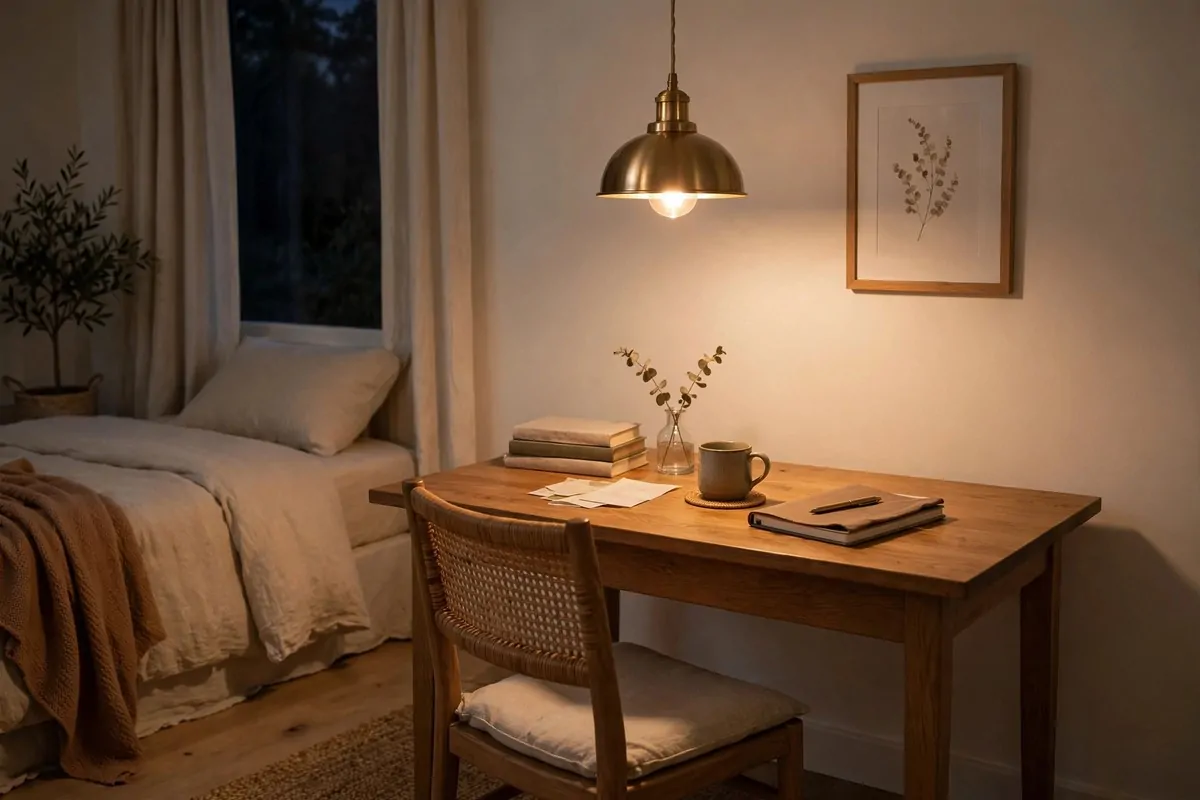
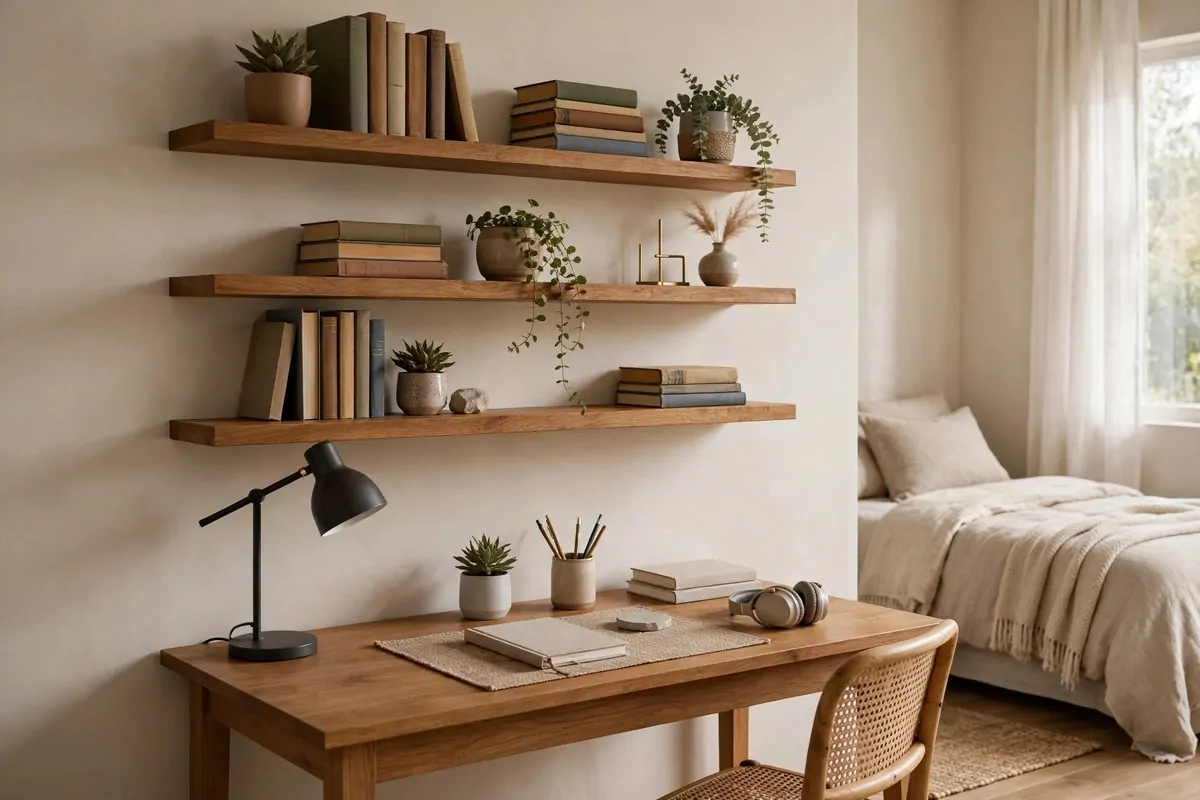
Floating shelves are shelves with no visible brackets. They look clean and modern. Above a desk, they turn dead wall space into storage.
They keep your desk clear. Books, plants, boxes go up on the wall. Your actual work surface stays empty for actual work. That is the goal.
Style them with a simple plan:
- Heavy books go on the lowest shelf, close to the desk where they are easy to grab
- Let one trailing plant hang down, it softens the hard lines of the shelves
- Use a small lidded box for ugly things like spare cables and old chargers
- Leave some empty space, a packed shelf looks stressed and a breathing shelf looks calm
- Keep the things you use every day within arm’s reach, not on the top shelf
Do not overload them. Floating shelves have weight limits. Books are heavy. Spread them out, and use proper wall anchors. A shelf of books crashing down at midnight is not fun.
Two shelves are usually enough. Three can work on a tall wall. More than three starts to look like a library, which is fine if that is what you want.
Mix useful and pretty. A shelf that is all storage looks like an office supply closet. A shelf that is all decor wastes space. Half and half is the sweet spot.
Guests will look at your shelves. It is human nature. Keep the weird stuff in a closed box. Put the nice books and the plant where eyes land.
A small clock on the shelf helps you track time without checking your phone. Phones lead to scrolling. Scrolling leads to lost afternoons. A clock is safer.
Paint the shelves the same color as the wall for a built-in look. Or use wood for warmth. Both work. Pick the one your room needs more of.
Shelves are one of the easiest upgrades here. An hour with a drill, and your desk area looks twice as organized.
15. One Statement Pendant Over the Desk
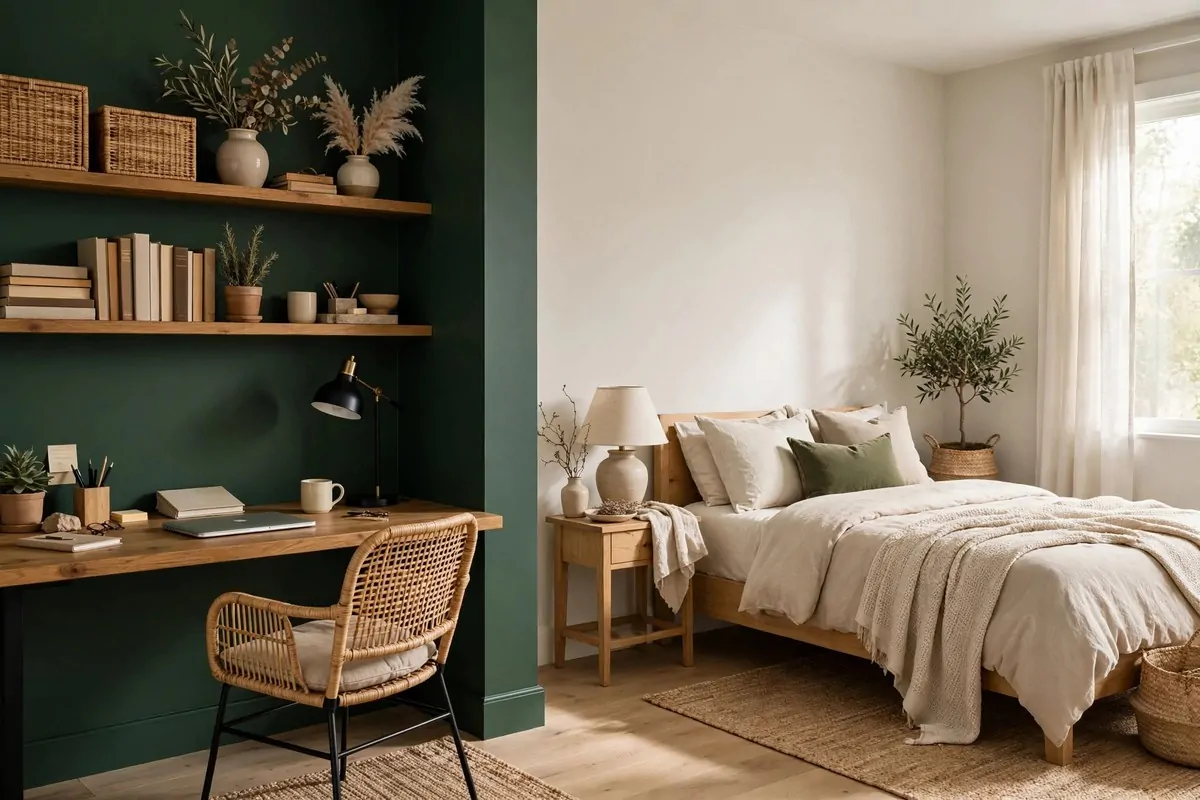
A pendant light hangs from the ceiling on a cord. One good pendant over your desk does two jobs. It lights your work, and it looks beautiful doing it.
Overhead room lights are usually terrible for desk work. They are too bright, too flat, or behind you so your body blocks them. A pendant puts light exactly where you need it.
Brass and warm metals look great here, and for good reason. A brass pendant glows warmly and makes even a plain desk look expensive. It is jewelry for the room.
Hang it low enough to light the desk, high enough to see under it. About 70 to 80 cm above the desk surface is a good start. Adjust to your height.
Use a warm bulb. Cool white bulbs make a bedroom feel like a hospital. Warm light keeps the room cozy for guests at night. This matters more than people think.
A dimmer switch is worth every penny. Bright for work, soft for evening. If your rental does not allow rewiring, a plug-in pendant with a dimmer cord works too.
The pendant becomes the visual center of the work zone. It says this is the office without any walls or dividers. Light can zone a room all by itself.
When guests visit, the pendant becomes their reading light. A chair under a warm pendant with a good book is a lovely evening. Your guests will fight over that spot.
Pick a shade that hides the bulb from your eyes. You want light on the desk, not in your face. An open bottom with a closed top works well.
One pendant, not three. This is a desk, not a kitchen island. One strong choice beats a row of small ones here.
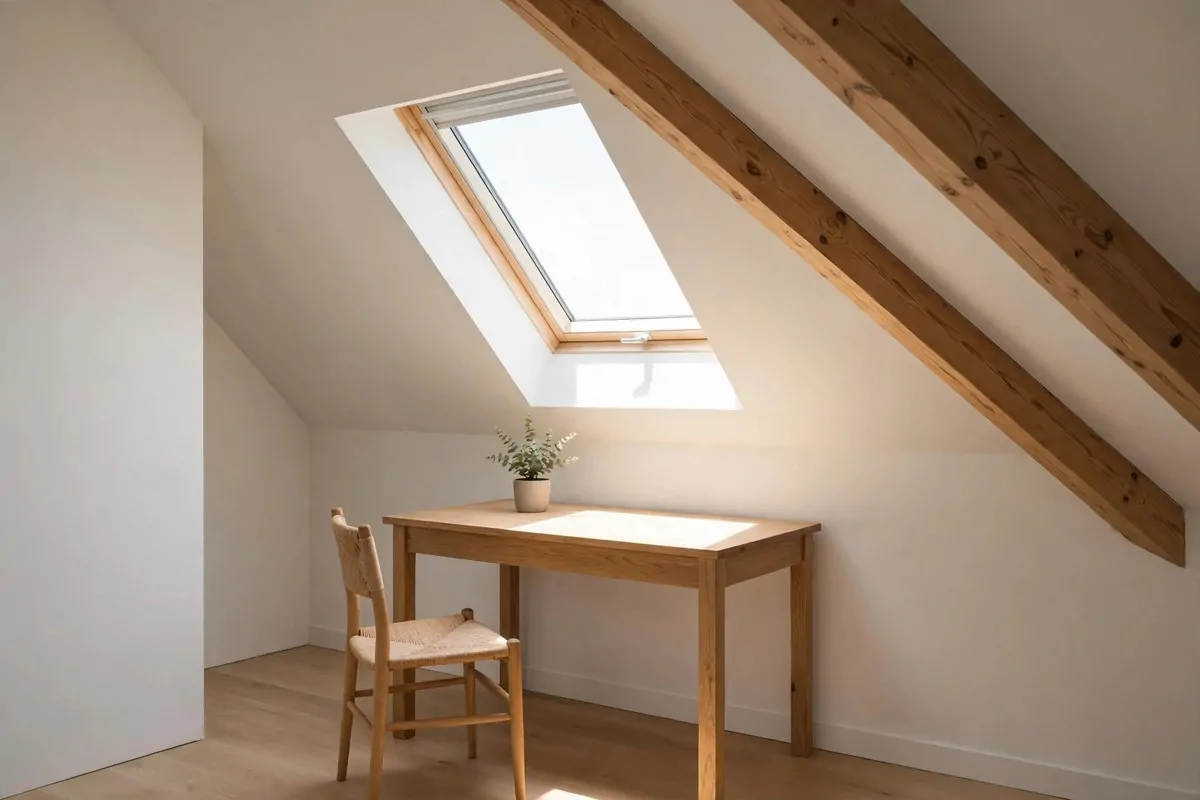
16. A Desk Under the Skylight
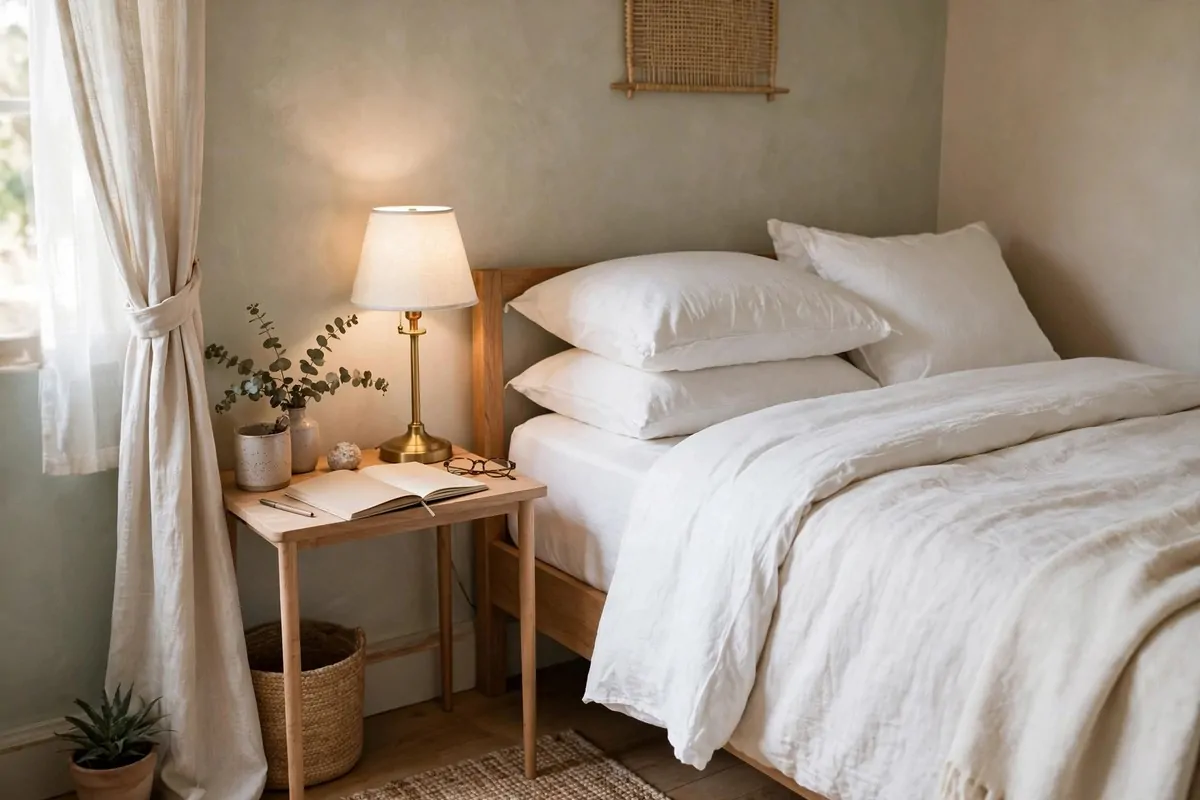
A skylight is a window in the roof. If your spare room has one, you have the best desk spot in the house. Put the desk right under it.
Light from above is different from light from a window. It spreads evenly. No harsh side shadows. Your face looks good on video calls. Your plants grow straight up.
Watch the sun’s path first. A skylight can turn into a spotlight at noon. Sit at the desk at different times for a few days before you commit. You want light, not a sunburn.
A blind or shade for the skylight is almost a must. For bright afternoons and for hot days. Get one you can open and close easily, even if it needs a long handle.
Rain on a skylight is the best work soundtrack. I am serious. Gentle rain above you while you type is deeply calming. This is the perk nobody talks about.
Keep the desk simple under a skylight. The sky is the decoration here. A clean desk lets the light be the star. Clutter under a skylight just casts shadows.
At night a skylight shows the stars. If you work late, look up once in a while. It puts a long day in perspective. Cheesy, but true.
Guests love sleeping under a skylight. Warn them about the morning sun, though. A sleep mask on the nightstand is a thoughtful touch.
Sloped ceilings can make the room feel small. Light paint and the skylight fix that. The eye goes up to the sky, and the room feels taller than it is.
Not every room has a skylight, I know. But if yours does, do not waste it on storage boxes. Give the best light to the person who works there all day. That is you.
17. A Travel Gallery Wall Above the Desk
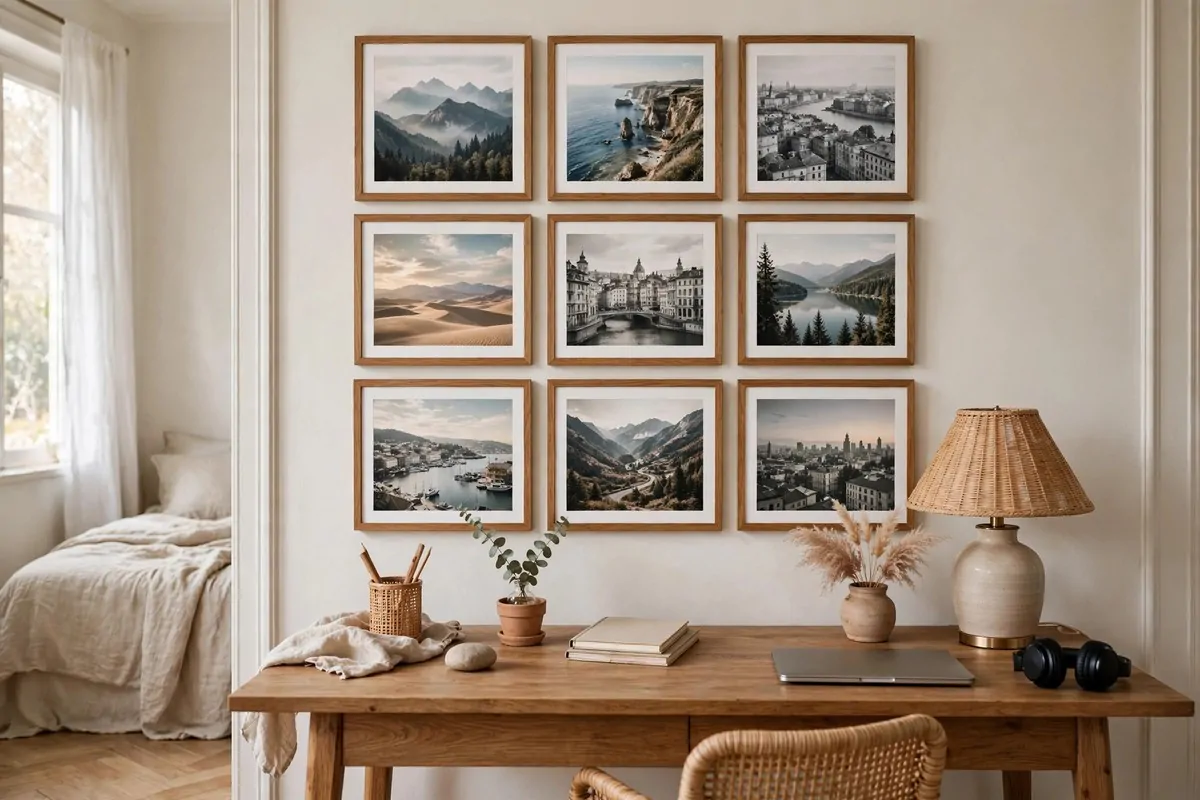
A gallery wall is a group of framed pictures hung together. Above a desk, travel photos and prints make the work zone feel personal and inspiring.
Use your own photos if you have them. A trip you loved, a city that changed you, a beach where you rested. Looking up at a good memory beats looking at a blank wall.
Mix frame sizes. Big ones in the middle, small ones around the edges. It looks relaxed and collected over time, not bought in one afternoon.
Keep the frames simple. Thin black, white, or wood frames let the pictures do the talking. Fancy frames fight with each other. Simple frames get along.
Pictures without words stay timeless. Landscapes, streets, old doors, skies. Art with big text on it gets old fast. Let the images speak.
Plan the layout on the floor first. Lay the frames out, move them around, take a photo. Then hang them. This saves you from extra holes in the wall.
Paper templates help a lot. Cut paper the size of each frame, tape them to the wall, and live with it for a day. Move the papers until it feels right.
The gallery wall hides a multitude of sins. A crooked shelf, a cable, a patch of rough wall. Eyes go to the pictures, not the flaws.
When guests stay, they will study your wall. It starts conversations. Where was this taken. It makes the room feel like a home, not a hotel.
This wall grows with you. Add a frame after each trip. In a few years you will have a map of your life above your desk. That is worth more than any decor.
18. A Desk That Doubles as a Bedside Table
In a small spare room, every piece of furniture should do two jobs. A slim desk beside the bed works as your office by day and a nightstand by night.
Keep it narrow. A deep desk will eat the walkway beside the bed. Something slim, just wide enough for a laptop, is perfect.
Here is how to make one piece serve both jobs:
- Pick a lamp that works for late work sessions and for bedtime reading
- Keep one drawer or a small box for guest bits like chargers and earplugs
- Leave a coaster there permanently, both you and your guests will use it
- Pack your work into a tray each evening so the top can go back to nightstand mode
- On guest night, clear it fully, no laptop, no notebooks, just the welcome basics
The lamp is the shared hero. A good bedside lamp lights your evening work and the guest’s bedtime reading. One lamp, two happy people.
On guest night, pack your work into a tray or a box. Slide it under the bed or into the closet. The desk should look like a nightstand, not an office.
Leave a little welcome kit on it. Water glass, phone charger, a small chocolate. It takes two minutes and guests talk about it for months.
A stool that tucks fully under the desk is the best seat here. It disappears when guests need the space. A big chair would block the bed.
This is the ultimate small-room solution. One piece of furniture, two jobs, zero extra floor space. Small rooms demand this kind of thinking.
If the bed is high, match the desk height to it. A nightstand that is much lower than the mattress is annoying to use. Level-ish is comfortable.
I used this setup in my first apartment. Desk by day, nightstand by night, and nobody ever guessed. Small rooms make you clever.
19. A Rolling Cart Office You Can Move Anywhere
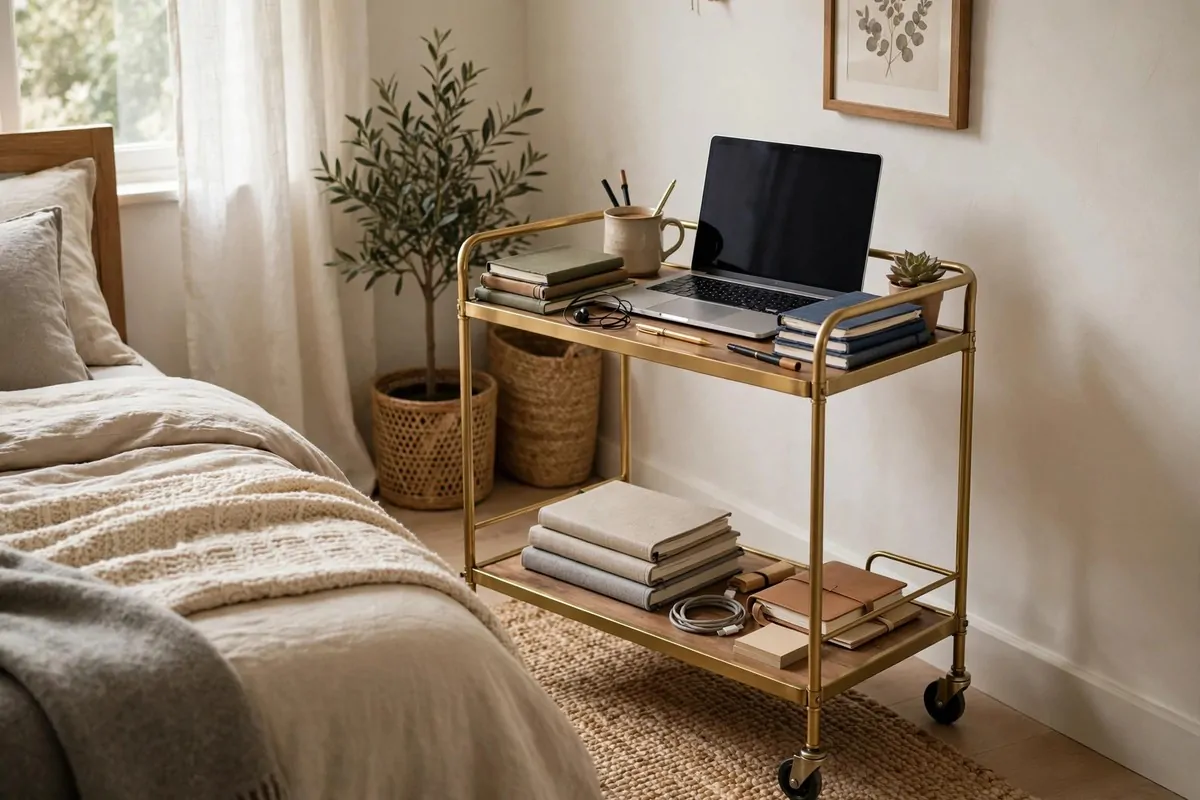
A rolling cart is a small shelf unit on wheels. Load it with your office supplies, and you can roll your whole office anywhere in the room.
This is freedom. Work by the window in the morning. Roll to the cooler corner in the afternoon. Roll it into the closet when guests arrive. The office goes where you want.
Get a sturdy cart with a brake on the wheels. A cart that rolls away on its own is not charming. Lock the wheels when you work.
Three tiers are the sweet spot. Top for the laptop or notebook you use now. Middle for supplies. Bottom for the heavy stuff like paper and books.
A small power strip on the cart keeps one cable going to the wall. Everything else plugs into the cart. One cable to manage instead of five.
Style it a little. A small plant, a nice mug, a pretty notebook. A cart that looks good gets used. A cart that looks like a toolbox gets ignored.
When guests come, roll the cart into a closet or behind a curtain. The room becomes a pure guest room in thirty seconds. That is faster than any other idea here.
The cart also works as a side table for guests. Roll it beside the bed, put a lamp on top, and it is a nightstand. Then roll it back on Monday.
Do not overload the top. A laptop and a notebook is plenty. Carts are tippy when top-heavy. Heavy things live on the bottom tier. Always.
This is the lowest-commitment office on this list. No holes in walls, no heavy furniture. Just a cart, your laptop, and wherever the light is best today.
20. A Curtain Nook Office in the Spare Room
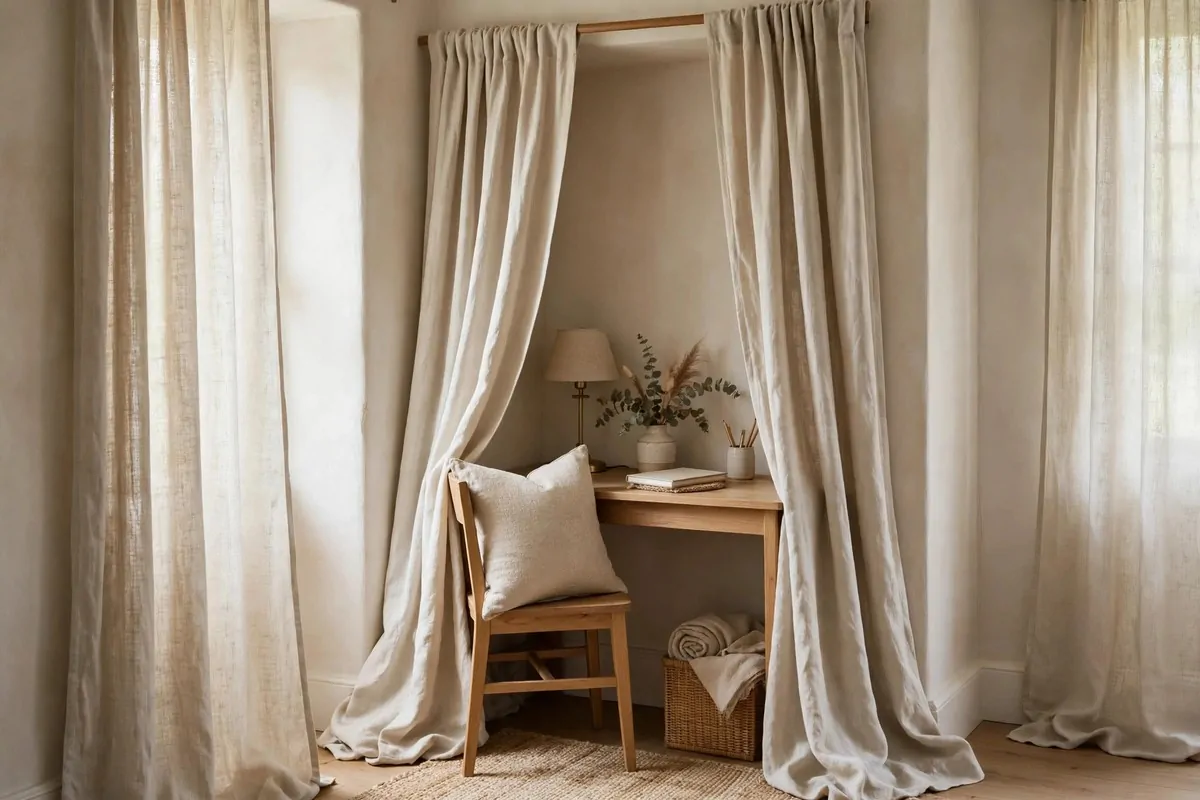
A curtain can make a room inside a room. Hang a curtain across a corner or an alcove, put a desk behind it, and you have a hidden office nook.
Linen curtains work best. They let some light through and they look soft. Heavy curtains make the nook dark. Sheer curtains show everything. Linen is the middle path.
Your nook needs a few basics to work well:
- A tension rod or a ceiling track to hang the curtain, pick what your walls allow
- A small desk that fits the space with room to pull the chair in
- A clip-on lamp or a small desk lamp, nooks are darker than you expect
- A rug under the desk to mark the nook’s patch of floor
- A tieback or a hook so you can hold the curtain open during the day
Tie the curtain back during the day. An open nook feels airy and shows off your pretty desk. Close it when work ends or when guests arrive.
The curtain also hides mess. On a bad week, close the curtain and the mess is gone. Out of sight really does help your brain rest.
Guests love the drama of it. Pulling back a curtain to reveal a cozy nook feels special. It is like a little secret in the room.
A rug under the desk marks the nook’s floor. It says this square meter is the office. Rugs are great at drawing invisible lines.
Make sure air can move. A closed curtain in a warm room gets stuffy. Leave a gap at the bottom, or open it often. Fresh air keeps you sharp.
This nook costs very little. A rod, a curtain panel, and a desk you already own. It is one of the cheapest transformations here.
I think of it as a blanket fort for adults. A small private world where work happens. Then you close the curtain, and the world goes away.
21. A Dresser Top Turned Into a Desk
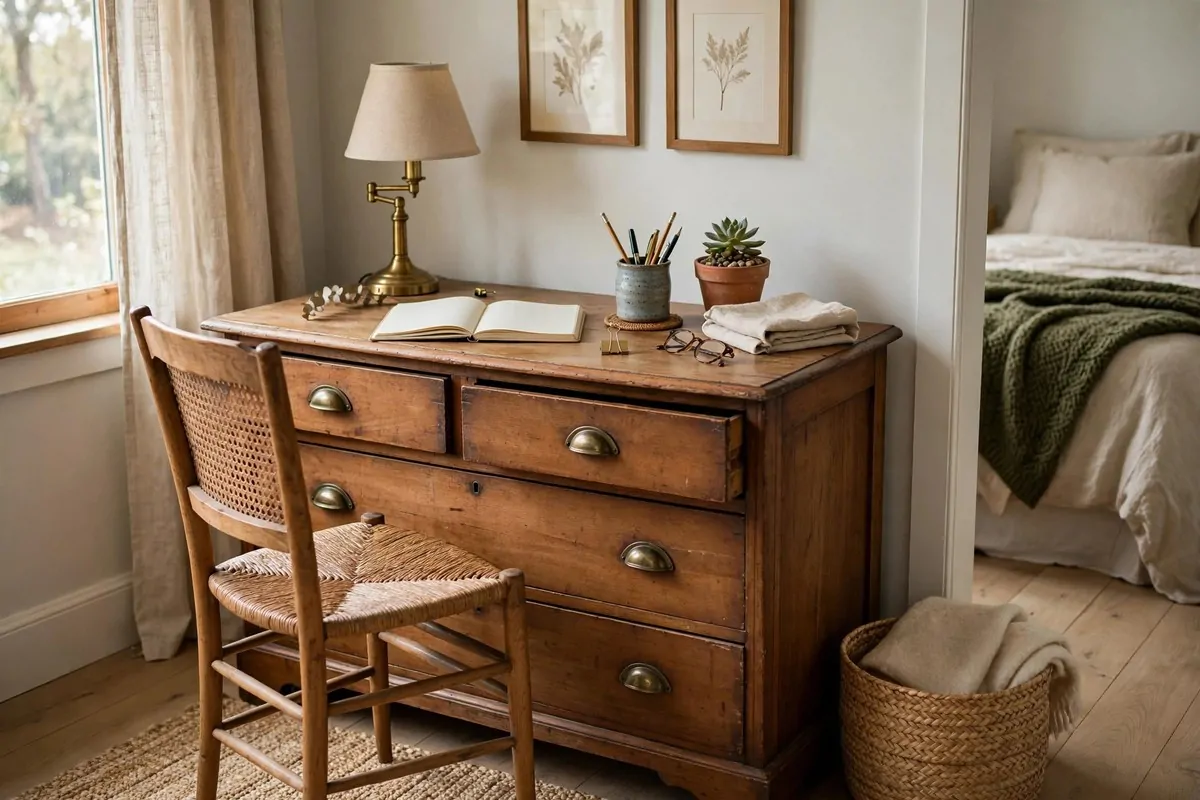
A dresser is already the right height for a desk. Clear the top, add a chair, and you have a workspace that also stores your clothes. Two jobs, one piece of furniture.
This is great for very small spare rooms. A separate desk and a separate dresser would fill the room. One piece doing both leaves space to breathe.
Use a desk organizer or a tray on top. It keeps work stuff in one zone. When guests come, lift the whole tray into a drawer. Desk becomes dresser again in one move.
The mirror question comes up a lot. Many dressers have a mirror. A mirror behind your laptop is actually handy. Check your hair before calls. Just angle it so it does not reflect your screen.
Keep the top tidy. A dresser desk only works if it stays organized. A lamp, a tray, a small plant. That is enough. More than that and it feels crowded.
The drawers below hold office supplies in one drawer and clothes in the rest. Guests get the top drawers for their things. Everyone has a place.
A chair that matches the dresser wood looks intentional. Mismatched can work too, if the styles get along. Trust your eye on this one.
This idea shines in a room that is mostly a bedroom. The room keeps its bedroom soul. The office part is quiet and polite about it.
If the dresser is an antique or a family piece, even better. Old wood has character. Working at a piece with history feels different from working at flat-pack.
No new furniture to buy. No holes in the wall. Just a clear top and a good chair. Sometimes the simplest answer is sitting right in front of you.
22. The Warm Minimalist Finish: Wood, Wool and Soft Light
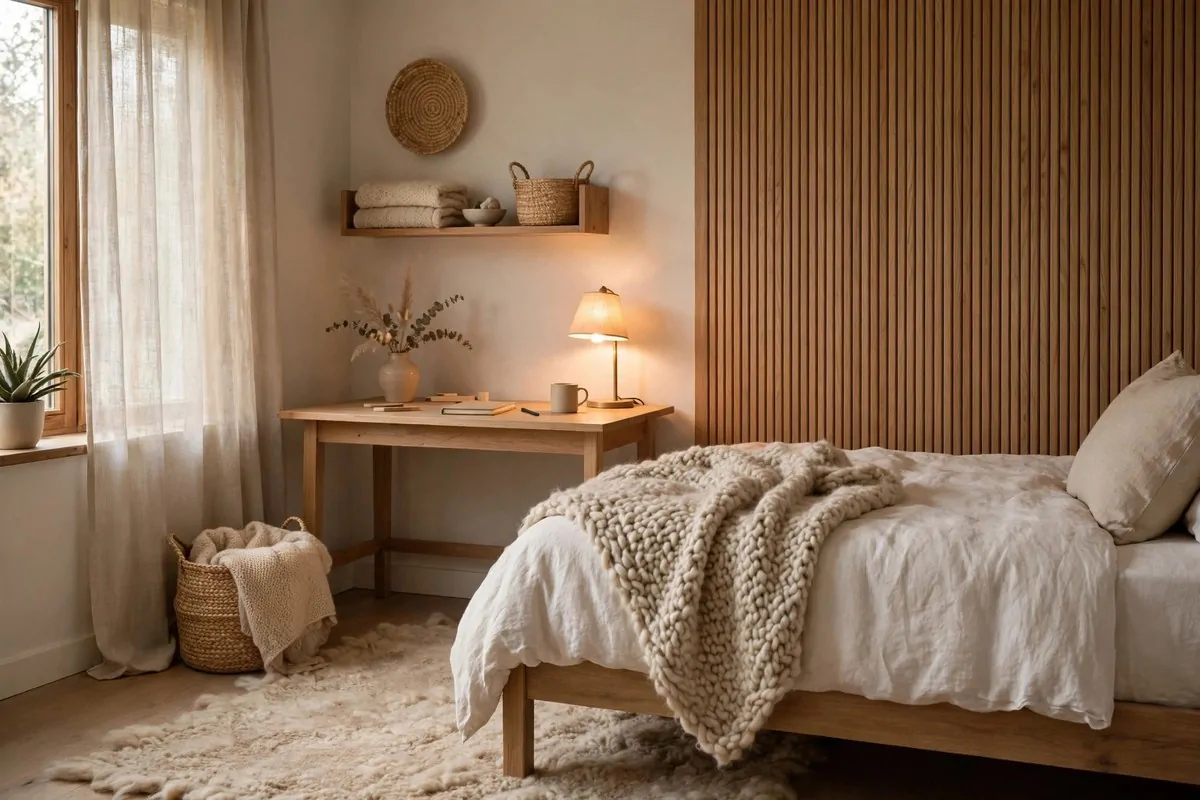
After all these ideas, here is how to finish the room. Warm wood, soft wool, gentle light. These three things make any spare room office feel calm and expensive.
Wood brings warmth. A wooden desk, wooden frames, a wooden bed frame. Wood never looks cold. Even cheap pine looks friendly with the right finish.
Wool brings softness. A wool rug under the desk, a wool throw on the guest bed. Wool feels good and it lasts for years. It is quiet comfort without a big price tag.
Soft light brings the mood. Warm bulbs, a lamp with a fabric shade, maybe a candle for guest nights. Harsh light ruins a calm room. Soft light makes it.
Minimalist does not mean empty. It means everything in the room earns its place. If you do not use it or love it, it goes. The room breathes.
Keep colors close together. Creams, beiges, warm browns, soft whites. When colors get along, the room feels bigger and calmer. Loud color mixes do the opposite.
Hide the cables. This is the final boss of a calm room. A cable box, a few clips, five minutes of work. Visible cables shout. Hidden cables whisper.
One plant is enough in a minimal room. A big healthy one beats five small struggling ones. Pick something easy and let it be the green star.
When guests walk in, they should feel the calm before they notice any single thing. That is the test. If the room feels peaceful, you did it right.
This finish works with every idea above. Whatever desk setup you stole, wrap it in wood, wool, and soft light. It is the bow on the package.