25 Home Office Ideas for Small Spaces That Feel Big

Dear little corner of my living room,
I am sorry I called you too small for an office. For months I looked right past you. You were the spot where the laundry basket sat. Then the plant I kept forgetting to water. Then a box of chargers I never unpacked.
Then one Saturday I put a small desk in you, and everything changed. Not the room. The feeling.
Here is what I learned that weekend. A small office feels big when everything has a place. Not when the room is huge. Not when you spend a fortune. Just when the desk fits, the light is right, and the clutter has nowhere to hide.
This list has 25 home office ideas for small spaces that all follow that one rule. Pick three that fit your home. You do not need all of them. Your little corner is about to feel much bigger.
1. Float Your Desk on the Wall
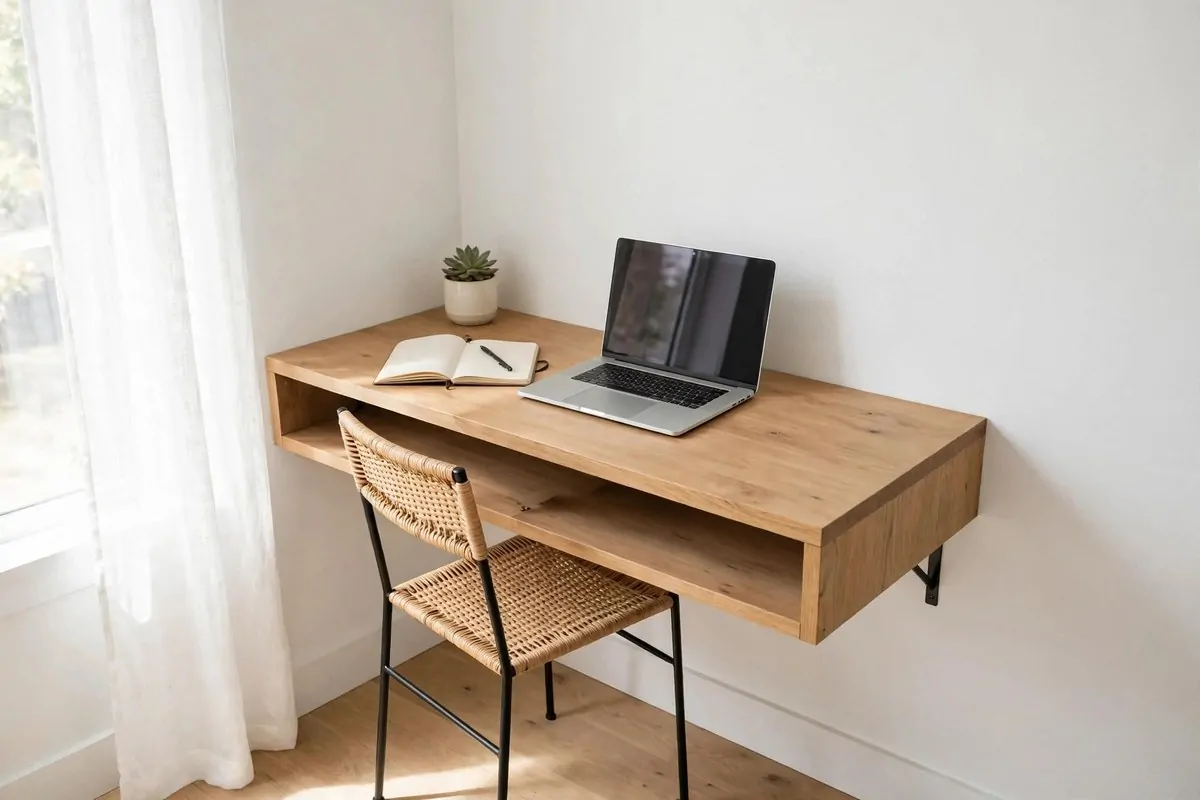
A floating desk does not touch the floor. It bolts straight to the wall, and that one trick changes the whole room.
Why does it work? Your eyes see the floor running under it. That is the whole magic. No legs chopping up the view.
I love how easy this one is. A wooden slab, two sturdy brackets, and done. You can make one in an afternoon.
Pick the right height. Around 28 to 30 inches works for most people. Sit in your chair and test it before you drill.
The desk can be small. Really small. Just wide enough for your laptop and a notebook.
Keep the wall color light behind it. White or soft cream makes the floating desk look even airier.
A stool or a slim chair slides right under when you are done. Zero clutter. Zero fuss.
The cables can hang down, so hide them. A small cord clip under the slab keeps them tidy.
If you rent, use heavy duty adhesive brackets or a narrow leaning shelf instead. No holes needed.
The best part? When you stand back, the corner looks twice as deep. I am not kidding.
2. Turn the Closet Into a Cloffice
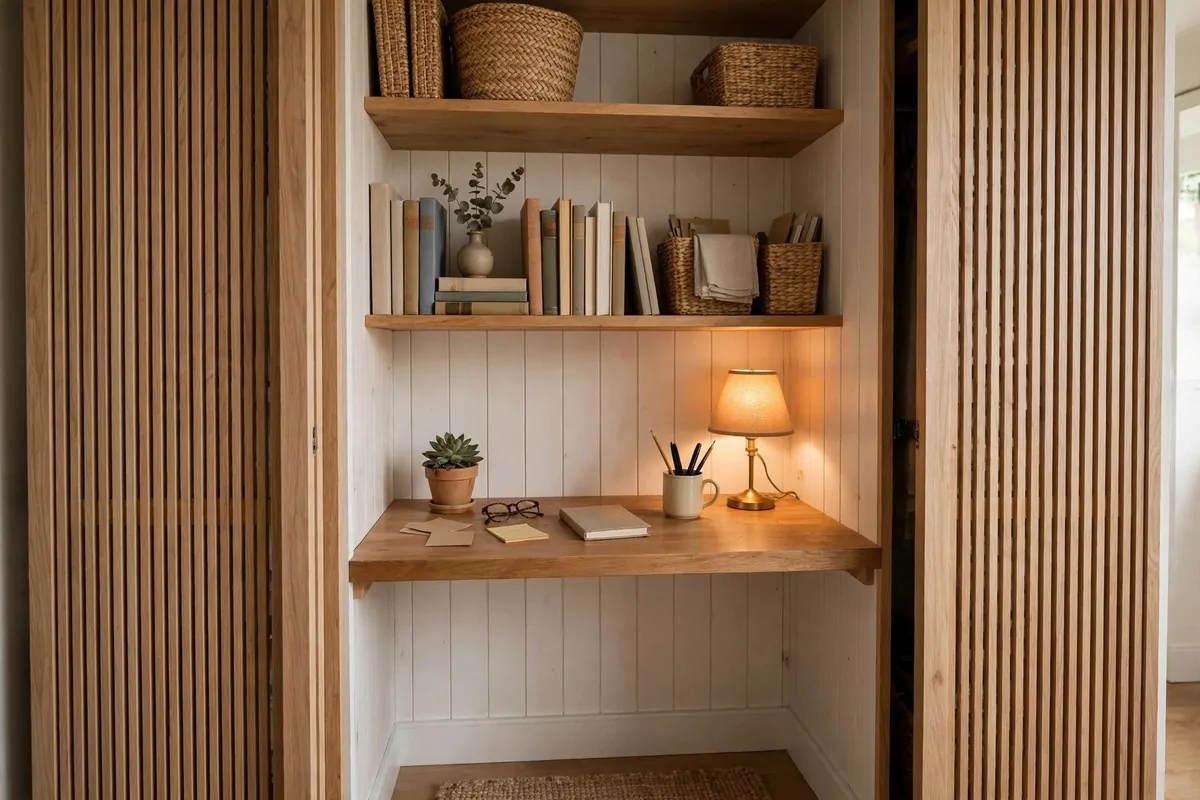
A cloffice is just a closet that got a job. It sounds funny. It works great.
Most of us have a closet we barely use. Open it. Look at the shelf. That is your desk height waiting to happen.
Pull the doors off or slide them open. Light is everything in a closet, so add a plug in light or a battery puck lamp.
A board across the inside becomes your desk. The shelf above becomes your storage. Done.
Hang a small curtain if you want it to disappear after hours. One pull and the office is gone.
Paint the inside a pale color. Closets are dark boxes, and light paint bounces every bit of light back at you.
Add a cushion to your chair. You will sit closer to the wall than normal, so comfort matters more.
Label your bins. A closet office has no room for mystery piles.
This is my favorite idea on the list for renters. When you move, you just take the board out.
3. Use a Fold-Down Wall Desk
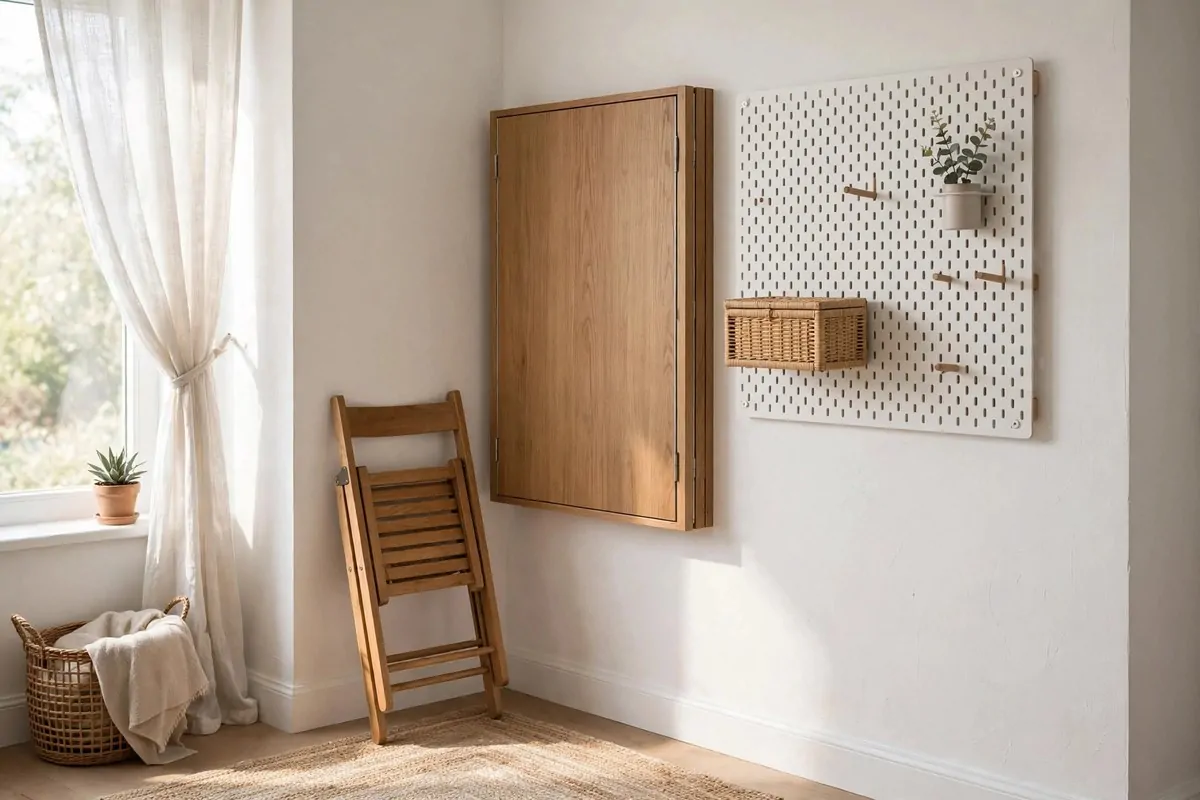
Some desks fold flat against the wall. When you are done, the office vanishes.
This is the trick for rooms that do double duty. Bedroom by night, office by day. Living room always, office sometimes.
Mount it at the right height and add a small lip at the back. Your laptop will not slide off when you fold it up.
Keep one small box beside it for your work things. Papers, chargers, notebook. Everything goes in the box at 5 pm.
Fold it up and the wall looks plain again. Guests would never guess.
Choose a desk with a soft close hinge if you can. A slamming desk wakes the whole house.
The wall behind it is a great spot for a pegboard or a corkboard. Your notes stay up even when the desk is down.
Pair it with a folding chair. Both fold, both hide, and the room breathes again.
My friend has one in her kitchen. She works at breakfast, folds it away, and cooks dinner in the same spot.
4. Claim the Corner
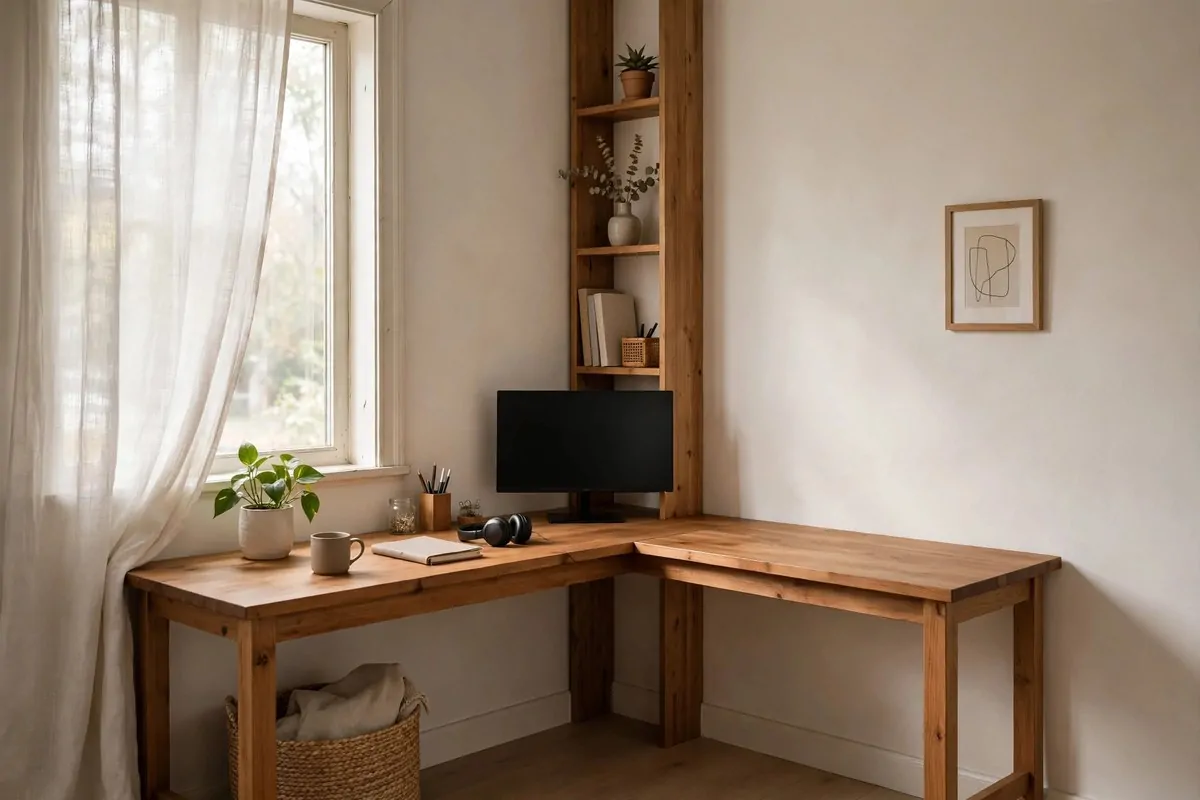
Corners are the most wasted space in any home. They sit there doing nothing. Give one to your office.
A corner desk uses two walls instead of one. That means more desk and less floor.
An L shape fits snug. You get a work zone and a storage zone without moving your chair.
Tuck the monitor in the corner itself. Your eyes get the widest view, and the room feels open behind the screen.
Add a tall shelf in the very corner above the desk. Dead space becomes prime storage.
Corners get great light if a window is near. Angle the desk so the light comes from the side, not straight on.
Use the corner for cables too. A power strip tucked right in the back corner stays out of sight.
This works in bedrooms, living rooms, even hallways. If a corner exists, an office can live there.
5. Try a Ladder Desk With Built-In Shelves
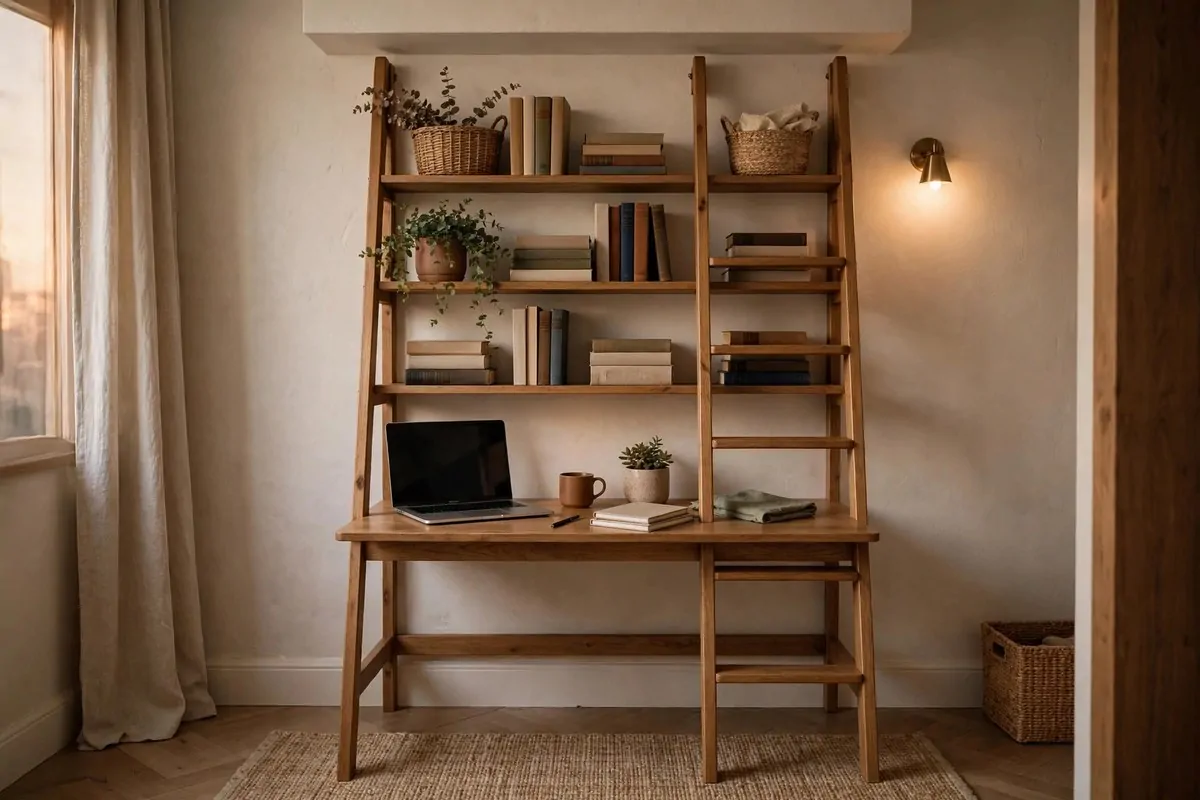
A ladder desk leans against the wall like a ladder. Shelves on top, desk on the bottom.
It is one piece of furniture doing two jobs. Desk plus storage. Small rooms love that.
The footprint is tiny. Most ladder desks are only about two feet deep.
The shelves above are perfect for books, baskets, and a small plant. Keep them tidy though. Messy shelves shout.
Choose one with a deep bottom shelf. That is your actual desk, so it needs elbow room.
The leaning design looks light. It does not block the wall, so the room still feels open.
You can find these everywhere now. They cost less than a big desk and a separate bookcase.
Put a small rug under it. It marks the office zone without adding walls.
If you paint yours, pick a light color. Dark wood in a small room can feel heavy.
6. Slide the Desk Under the Stairs
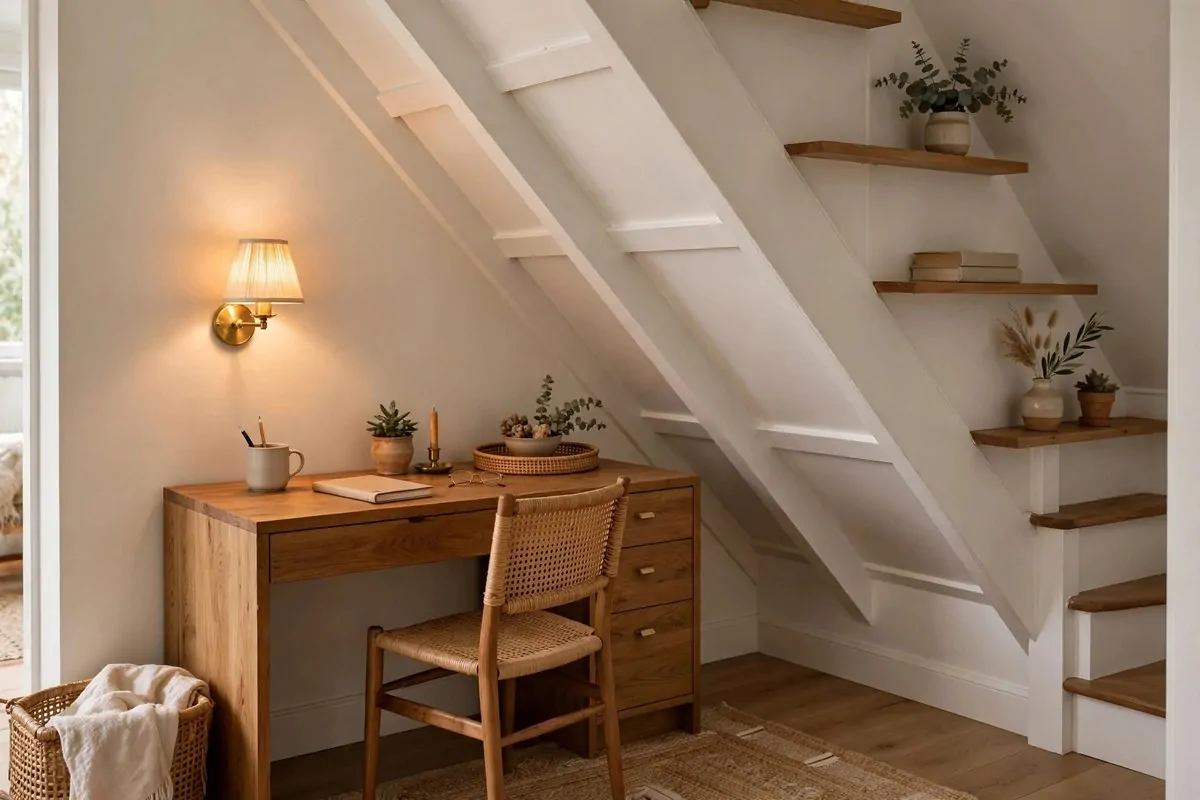
The space under the stairs is a gift. It is quiet, tucked away, and usually empty.
Measure first. You need enough headroom to sit up straight. Most under stair spots have it near the taller end.
Push the desk against the tallest wall. Your chair goes on the lower side where you do not need headroom.
Add a plug in wall sconce. Under stair spots are dim, and a warm light makes them cozy instead of gloomy.
Use the sloped ceiling for shallow shelves. Books and baskets fit fine where tall things cannot.
A small rug softens the floor. These spots often have hard flooring that echoes.
This feels like a secret office. A little hideaway. Some people focus better there.
Keep the palette warm. Wood tones and a soft lamp make the low ceiling feel like a hug, not a lid.
Paint the stair underside white to bounce light. It makes a huge difference for almost no money.
7. Park the Desk Beside the Window
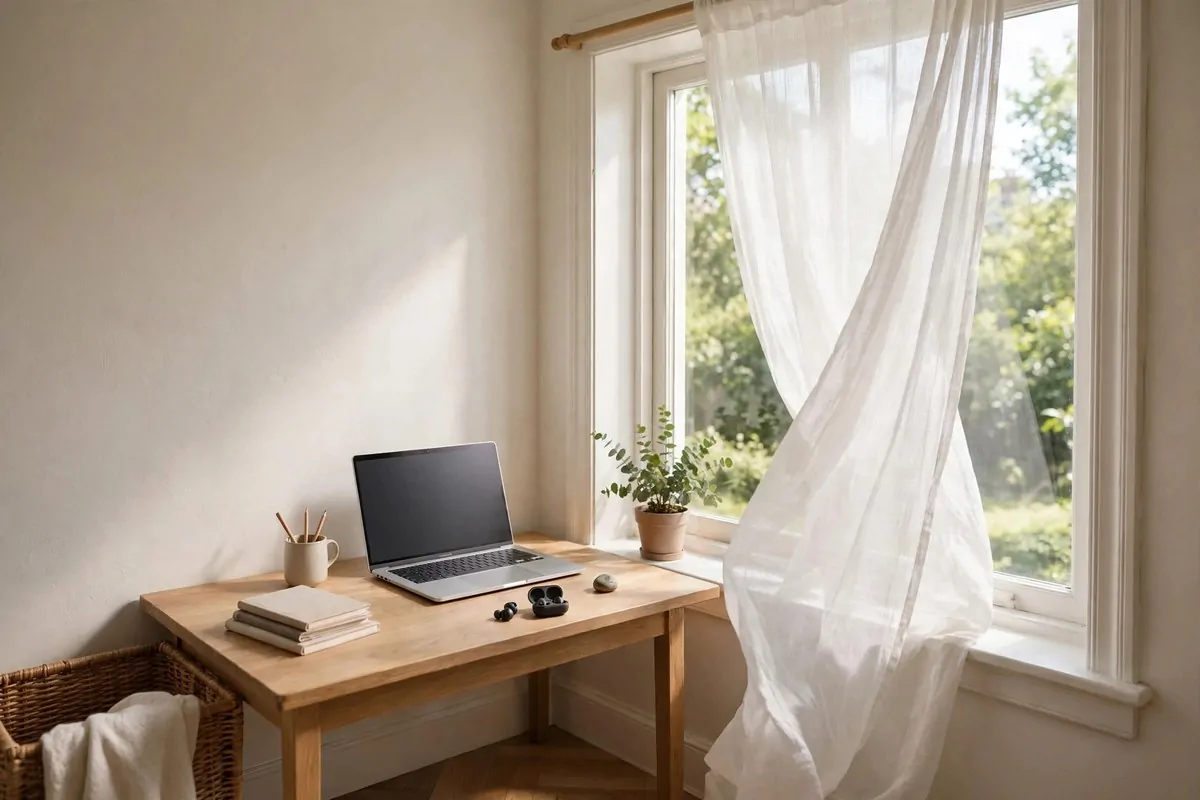
Natural light is free office decor. It makes any tiny desk feel bigger.
Put the desk near the window, but not facing it straight on. Side light is the sweet spot.
Why sideways? You get the daylight without the glare on your screen. Your eyes will thank you by 3 pm.
If the sun is too strong, hang a light filtering shade. It softens the light without killing it.
The windowsill becomes free shelf space. A small plant there gets the best seat in the house.
Watch the view. If the street is busy, a sheer curtain keeps the light and cuts the distraction.
Winter desks near windows can get cold. Keep a throw on your chair for chilly mornings.
This is the cheapest upgrade on the whole list. You already own the window. Just move the desk.
Morning people love this setup. The daylight wakes you up better than coffee does. Almost.
8. Build a Pegboard Command Wall
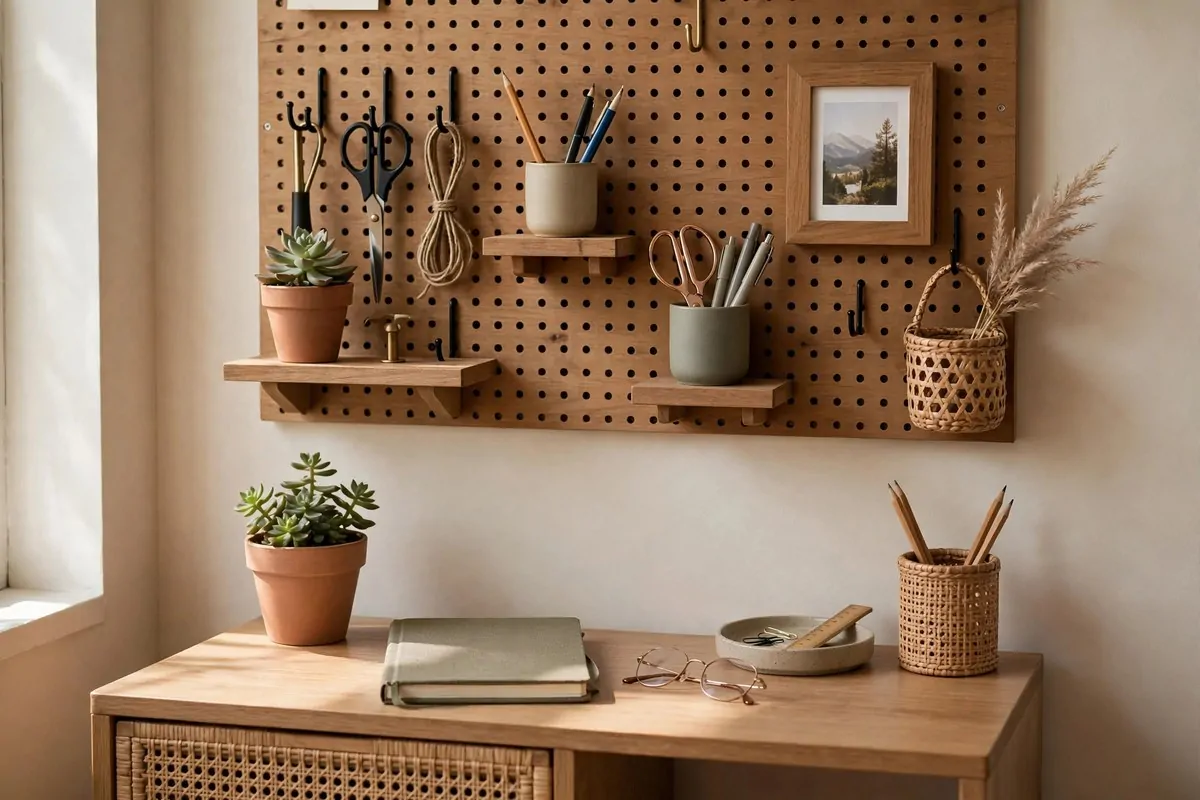
A pegboard turns a plain wall into storage. Hooks, shelves, little cups. Everything hangs.
This is vertical storage at its best. Your desk stays clear because the wall holds the stuff.
Hang it right above your desk at arm’s reach. Scissors, pens, tape. All visible. All grabbable.
Paint the pegboard the same color as the wall. It blends in and looks calm instead of busy.
Use small hooks and little baskets. Big hooks hold too much and the board gets heavy looking.
Swap things around when your work changes. Pegboards are meant to move. Nothing is permanent.
Add one pretty thing. A small framed photo or a dried flower bunch keeps it from looking like a hardware store.
Label the spots if you share the office. Then things come back to the right hook.
Cable clips on the pegboard can hold your chargers too. One wall, every tool, zero desk clutter.
9. Roll With a Desk on Wheels
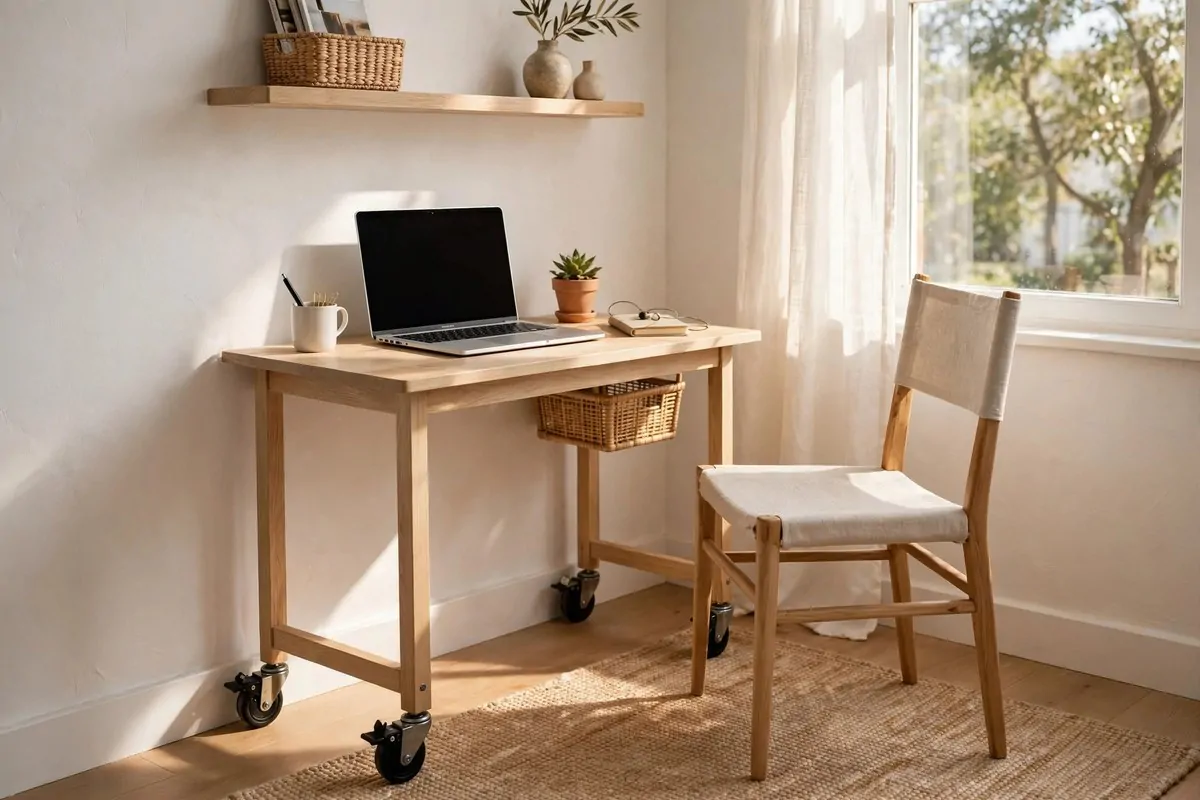
A desk on wheels moves. That sounds silly until you need the space back.
Roll it to the window for morning light. Roll it to the corner for video calls. Roll it away when guests come.
Locking casters are a must. You do not want your desk drifting mid typing. Lock them when you sit down.
Pick a narrow desk. Rolling desks work best when they are slim enough to fit anywhere.
The wheels add a little height, so check your chair still fits. Measure before you buy.
Use this in shared rooms. When dinner time comes, the office rolls into a closet or a hallway corner.
Cordless is your friend here. A laptop and a battery lamp mean no wires to trip over when you roll.
It feels a bit playful. A moving office. Kids love it, and honestly so do adults.
10. Split the Room With a Bookshelf
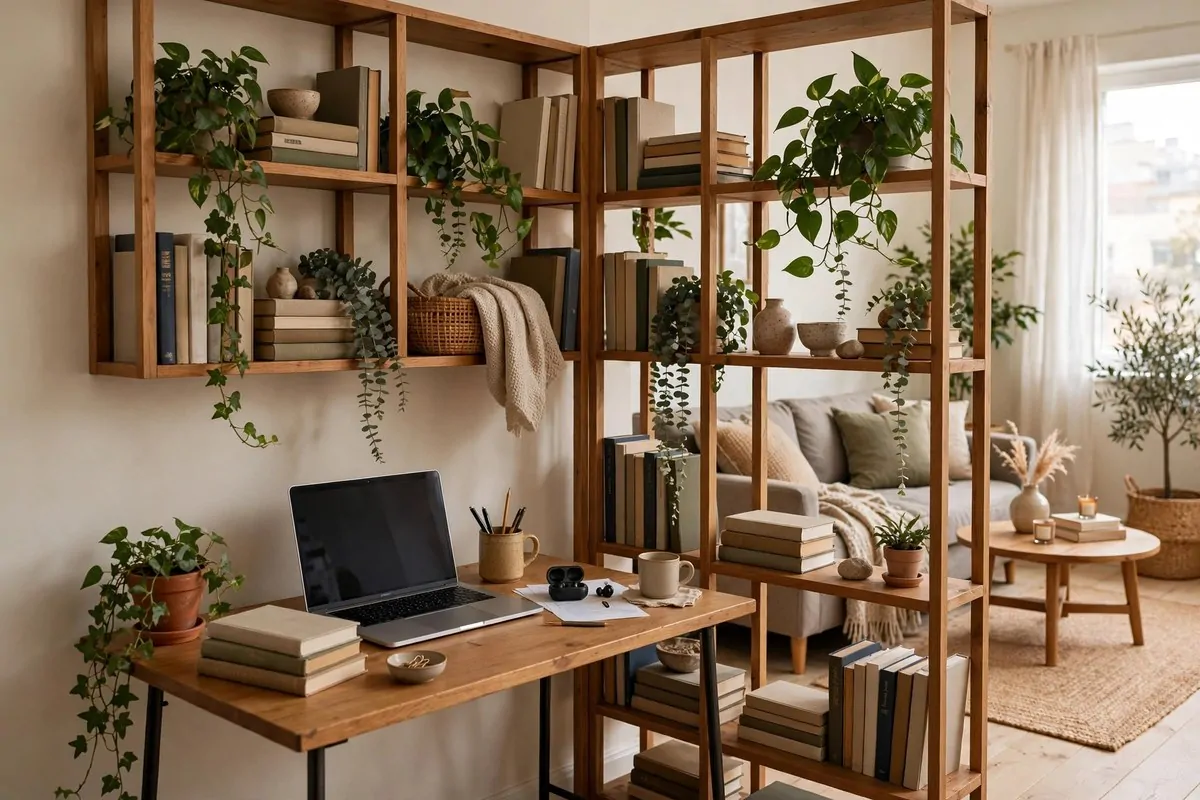
No spare room? Make one with a bookshelf. It is a wall that also stores things.
Place a low, open bookshelf at a right angle to your desk. One side is the office. The other side is the rest of the room.
Open shelves are better than closed ones here. Light passes through, so both sides stay bright.
Face the pretty books outward. The office side can hold the boring binders and boxes.
This trick works great for two people. Two desks, one shelf between them, and way fewer fights.
Keep the shelf tidy. A divider shelf is always in view, so clutter shows twice as much.
Add a trailing plant on top. It softens the hard line of the shelf and makes the divide feel friendly.
A bookshelf wall costs less than building a real wall. And you can move it next year.
11. Hide It All in an Armoire
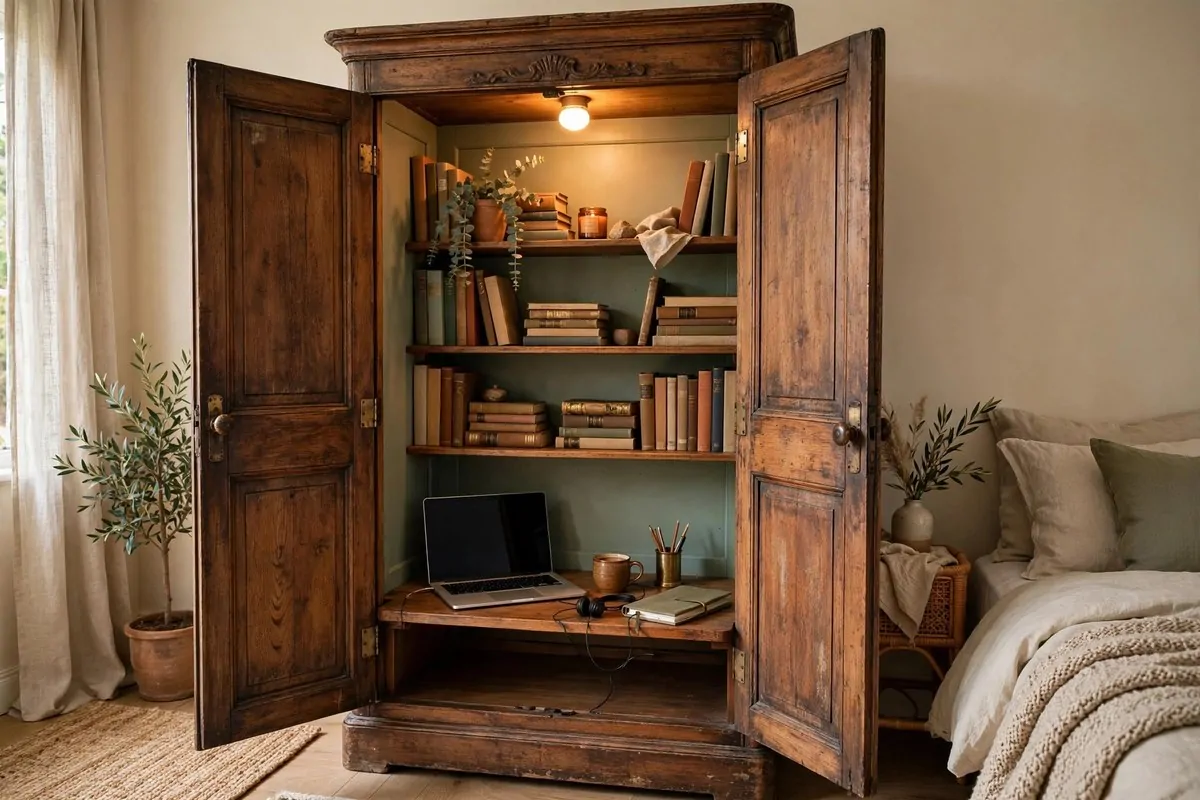
An armoire office is a magic trick. Open the doors, and there is your desk. Close them, and it is just furniture.
This is perfect for bedrooms. At night, the office disappears. Your brain stops seeing work.
Look for an old wardrobe or a big cabinet. The inside needs to be deep enough for a laptop and your elbows.
Add a small light inside. Battery puck lights are cheap and take five minutes to stick up.
The doors can hold corkboards or pockets. The inside of a door is free storage most people forget.
Pull out a chair when you work, push it back when you stop. The ritual helps you switch off.
Sand and paint an old piece. A thrift store armoire in fresh white paint looks brand new.
Keep the top of the armoire styled. A plant or a basket up there makes it look like decor, not a secret office.
Nobody believes the office was in there. That is the whole point.
12. Repurpose a Slim Console Table
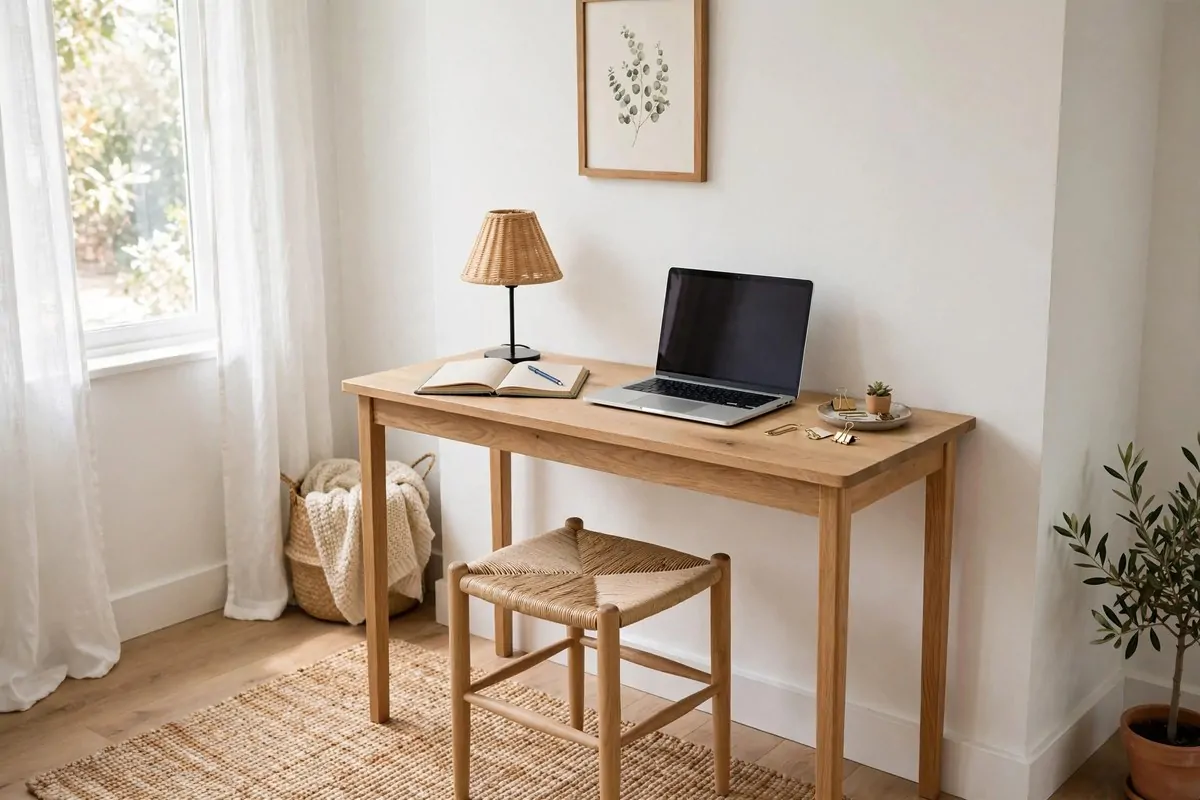
A console table is narrow by design. That is exactly what a small office needs.
Most console tables are only about 12 inches deep. That fits a laptop perfectly.
You already might own one. Check your hallway. That table with the keys bowl could be your new desk.
The slim shape hugs the wall. It takes almost no floor space, so the room stays open.
Add a stool that tucks fully underneath. When work ends, everything slides away flat.
Use the lower shelf for a printer or paper trays. Consoles often have that bonus level.
Style the top like a desk, not a hallway. A lamp, a small clock, your notebook. It should feel like work lives here.
The downside? No drawers usually. Add a small basket under the top for pens and chargers.
This is the fastest office setup in this list. Move the table, add a chair, and you are working.
13. Go Slim With a Compact Standing Desk
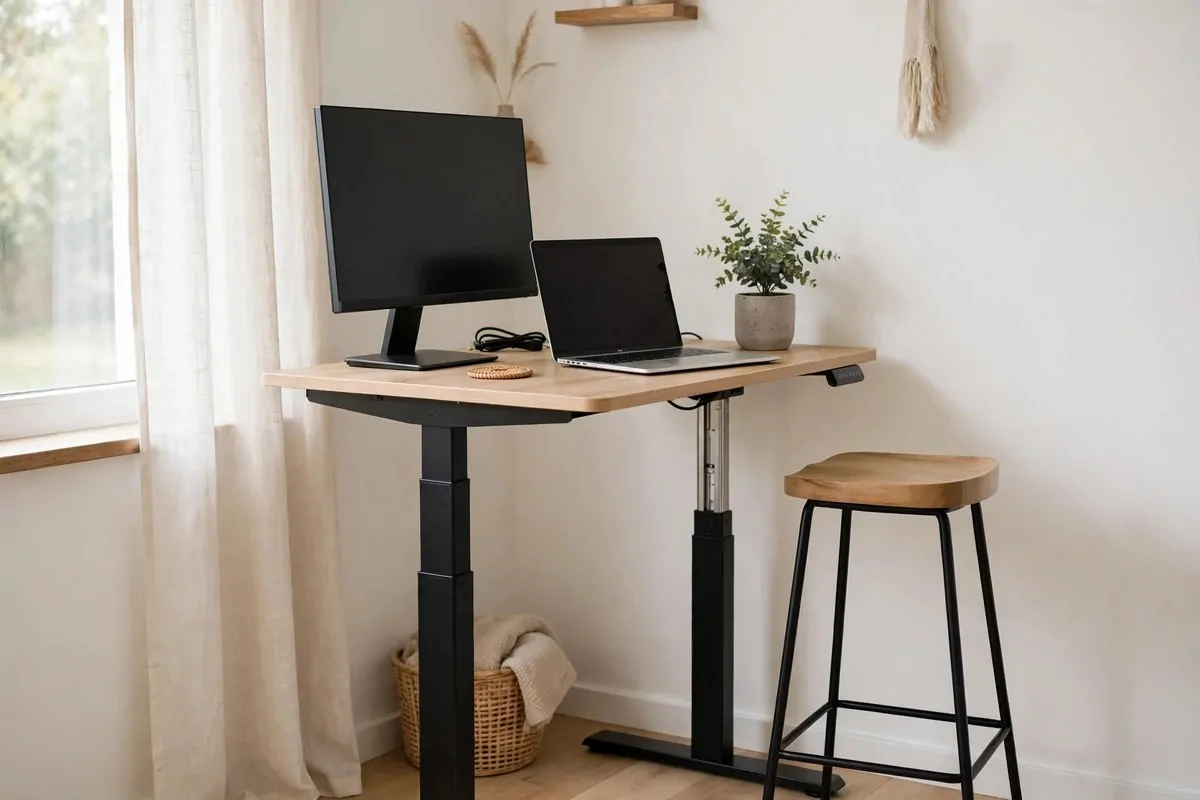
Standing desks come in tiny sizes now. Some are only three feet wide.
You get the health perk without the bulk. Stand for calls, sit for deep work.
Look for a manual crank model. They are cheaper than electric ones and just as sturdy.
The small top forces you to keep it clean. No room for piles. That is a feature, not a bug.
Pair it with a tall stool. Then you can half sit, half stand, and switch whenever you want.
Keep the controls simple. One lever. The fewer buttons, the more you will actually use it.
Place it where you can see the room. Standing and facing a wall feels like a time out.
Add an anti fatigue mat. Your feet will thank you by week two.
This desk proves a point. Ergonomic does not have to mean enormous.
14. Make the Room Bigger With Mirrors
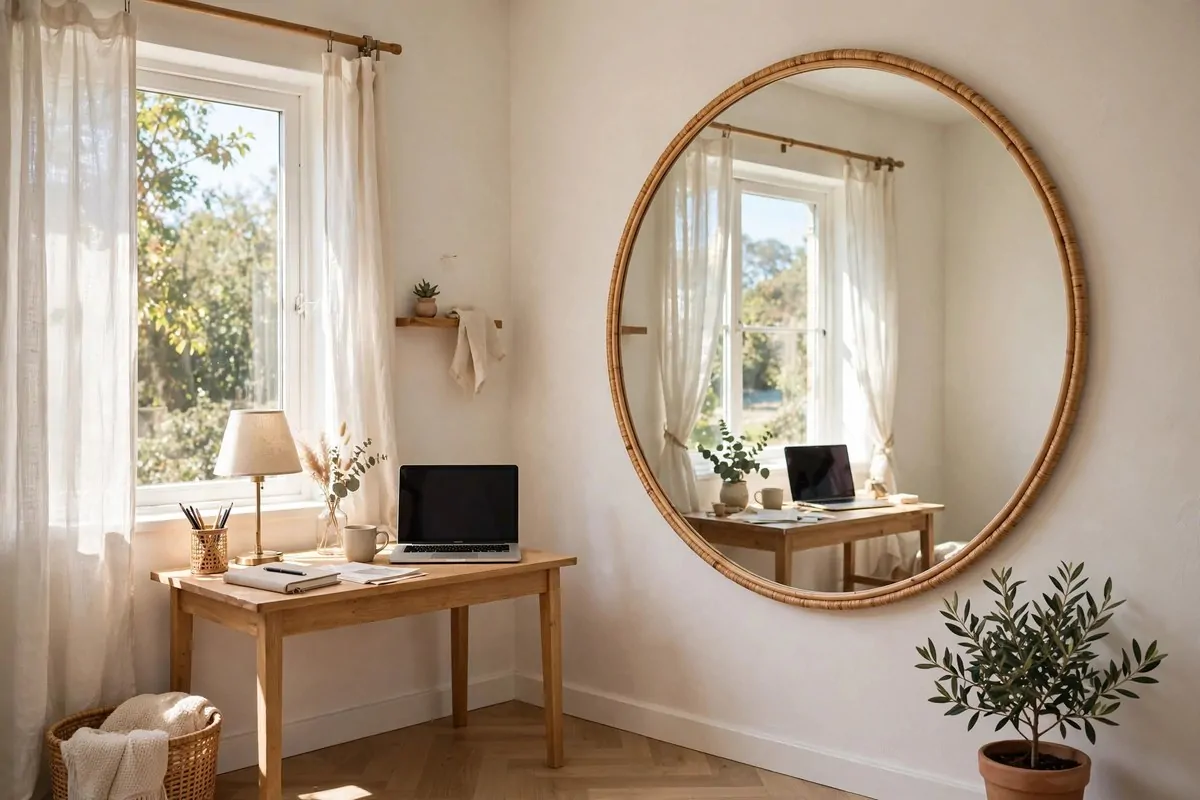
A mirror doubles your light and fakes extra space. It is the oldest trick in design.
Hang a big mirror opposite your window. It bounces daylight deep into the room.
Round mirrors feel softer in small offices. Square ones feel sharper. Pick the mood you want.
Do not hang it behind your monitor. You will watch yourself blink all day. Put it on a side wall.
A leaning floor mirror works too. Lean it in a corner and the corner looks twice as deep.
Mirrors also bounce your lamp light at night. One lamp can light two spots with a mirror helping.
Keep the frame slim. A thin frame or no frame keeps the mirror light and modern.
Wipe it once a week. A dusty mirror just shows dust twice.
This costs less than new furniture and changes the room more than almost anything else.
15. Paint It Light and Bright
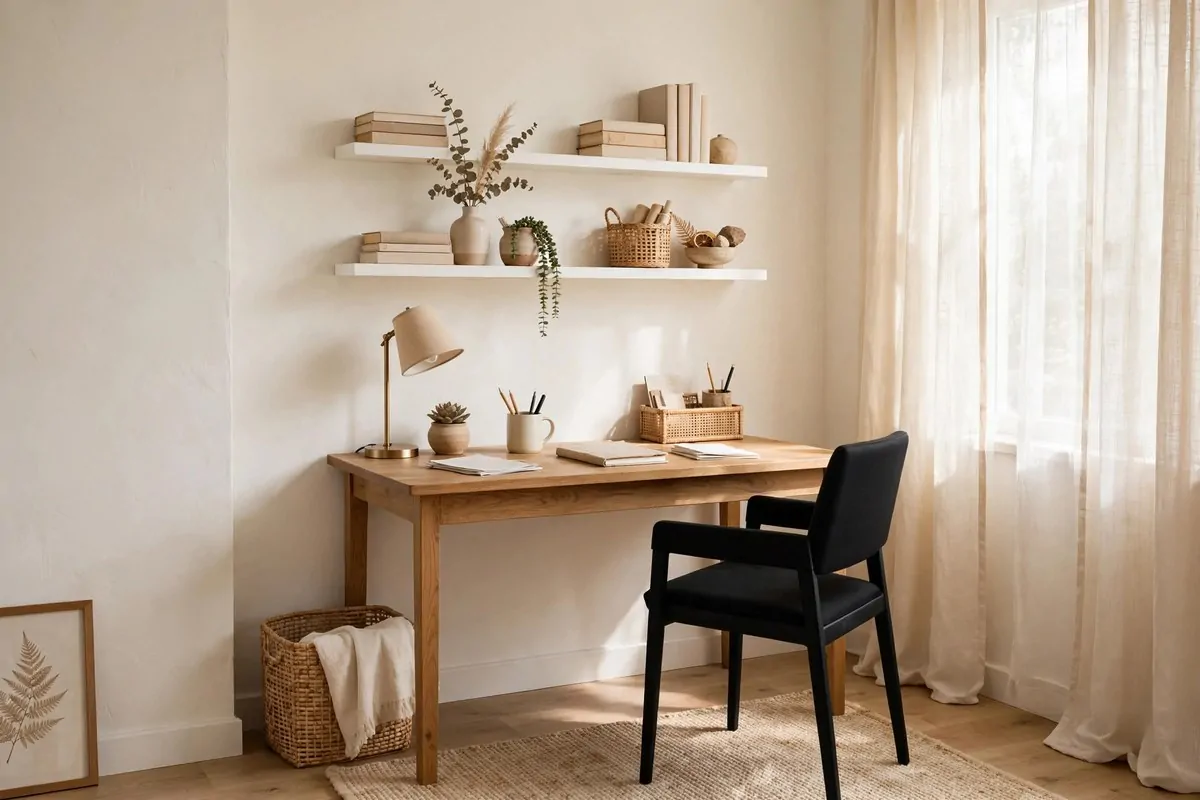
Light paint makes walls step back. Dark paint makes them step forward. Small rooms need walls that step back.
Whites, creams, pale grays. These colors reflect light and make a tiny office feel open.
Paint the ceiling the same white as the trim. One unbroken light color lifts the whole room.
Add contrast with small dark things. A black chair, dark shelf brackets, a navy notebook. Little pops, not big walls.
If white feels cold, pick a warm white. It has a tiny bit of yellow in it. Cozy but still bright.
Renters can do this too. Ask your landlord, or use removable wallpaper in a pale pattern.
One accent wall is fine. Keep it soft. A pale sage or light blue adds color without closing the room in.
Test paint in your actual light. Morning light and lamp light change colors a lot.
Paint is the cheapest square foot upgrade there is. One weekend, one tin, a whole new room.
16. Tidy Every Wire
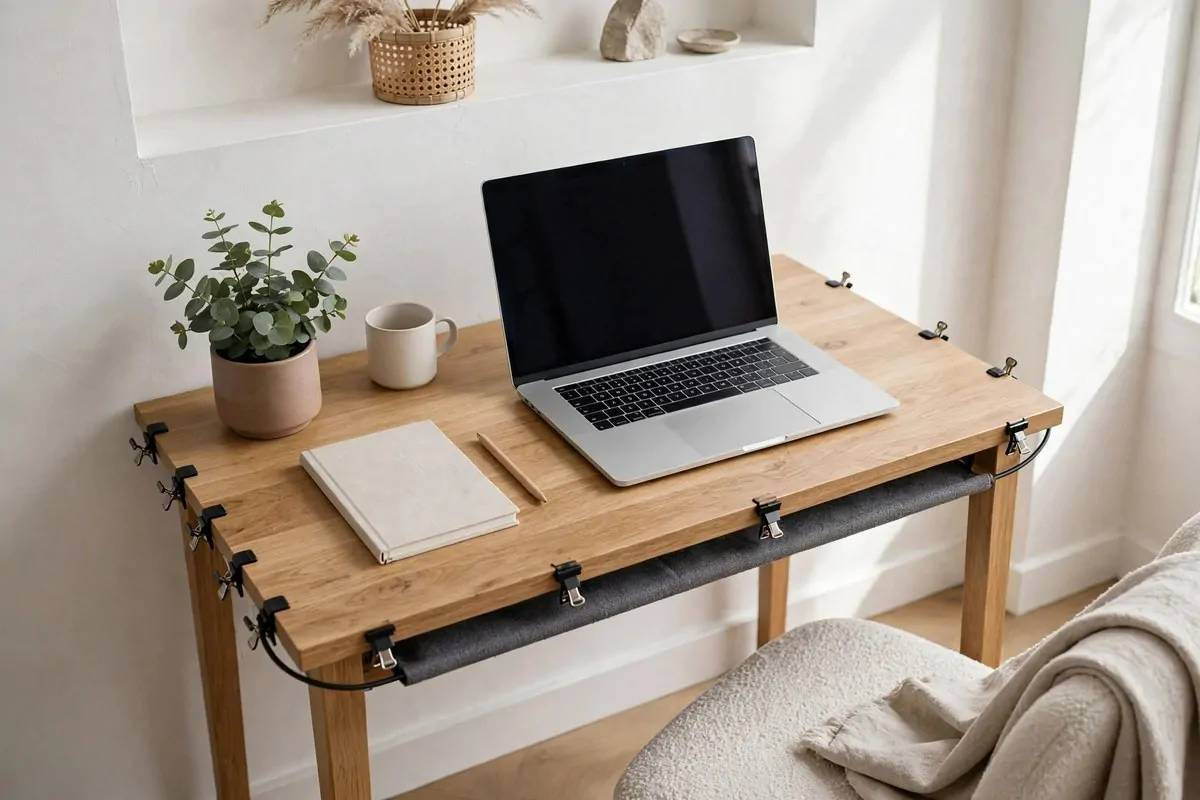
In a small office, every cable shows. Two messy cords can make the whole room feel chaotic.
Start under the desk. Mount a power strip to the underside with screws or strong adhesive strips.
Run cables through a spiral wrap or a fabric sleeve. Five loose cords become one neat tube.
Label both ends of each cable. A tiny piece of tape with “monitor” on it saves future you a headache.
Use adhesive clips along the desk edge. They guide the charger cord right where your hand lands.
Go wireless where you can. A wireless mouse and keyboard cut two cords instantly.
Hide the floor cable with a flat cord cover. It sits under the rug and nobody trips.
Unplug what you do not use daily. That old printer cable has been there since spring. Let it go.
Here is a quick starter kit:
| Item | What it does | Cost |
|---|---|---|
| Cable clips | Stick cords along the desk edge | Very cheap |
| Spiral wrap | Bundles loose cords into one tube | Cheap |
| Under desk tray | Holds the power strip off the floor | Affordable |
| Cord cover | Hides floor cables under rugs | Affordable |
A tidy desk is a calm brain. You will feel it the first morning.
17. Add One Good Plant
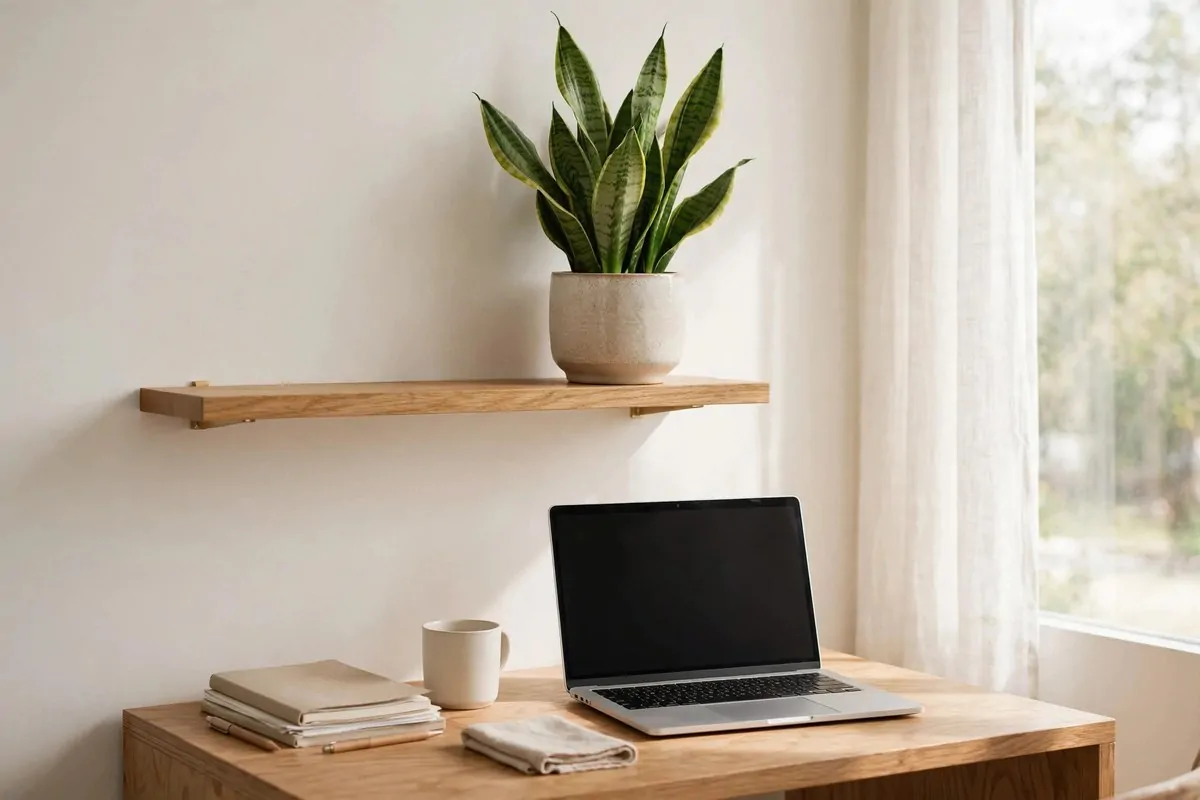
One plant changes a room. It adds life, color, and something soft to look at.
Pick a tough one. Snake plants and ZZ plants survive low light and forgetful watering.
Keep it off the desk if space is tight. A shelf at eye level gives you the green without the clutter.
A hanging plant works too. It uses zero desk and zero floor. Just a hook in the ceiling.
Water on a schedule. Sunday morning, one cup. Plants die from love more than neglect, so do not overdo it.
Fake plants are fine if your room is truly dark. Get a good one though. Cheap fakes look sad up close.
The pot matters. A pretty pot makes a ten dollar plant look like fifty.
One plant is enough in a small office. Two is fine. Five is a jungle, and jungles need floor space.
18. Shelve the Wall Above the Desk
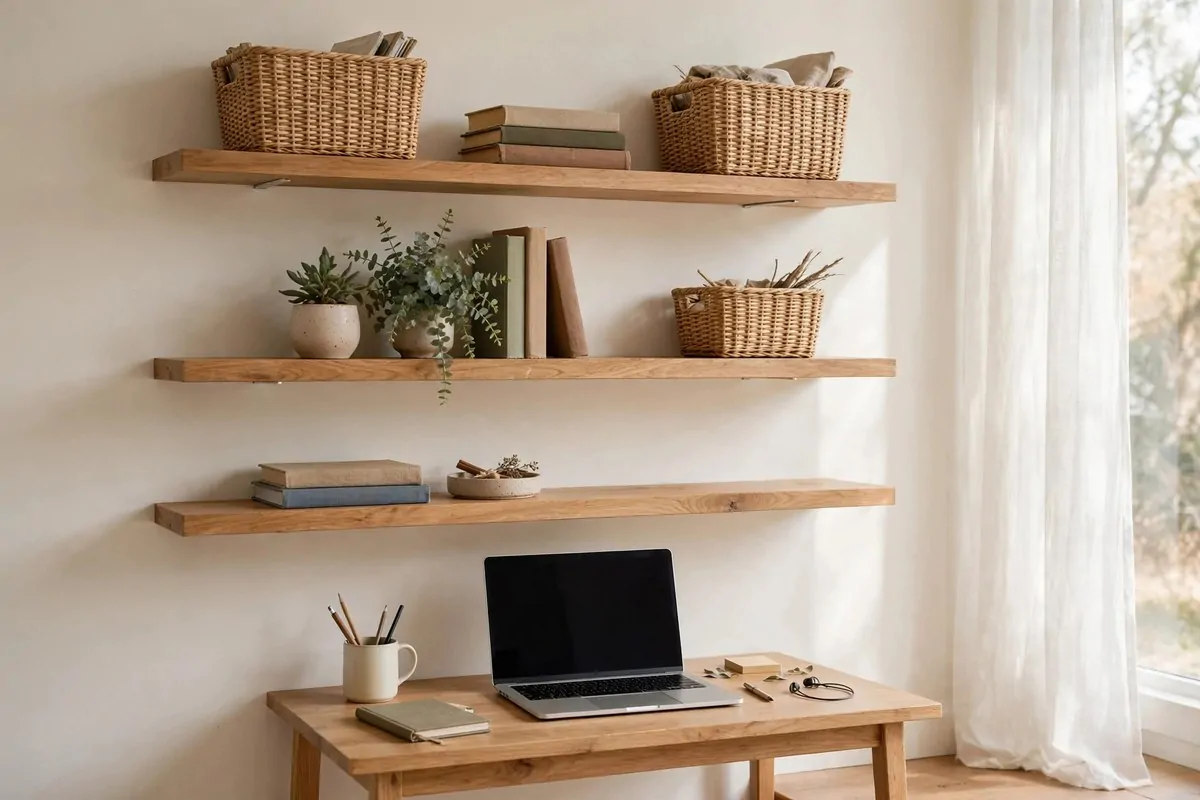
The wall above your desk is free real estate. Use it.
Two or three floating shelves hold books, baskets, and pretty things. The desk stays clear.
Mount them at a height you can reach while sitting. If you have to stand, you will never use them.
Keep the heaviest items on the lowest shelf. Brackets are strong, but physics still wins.
Mix storage and decor. One shelf for files, one for books, one for a plant and a photo.
Use matching baskets. They hide the messy stuff and make the shelves look calm.
Do not stack shelves all the way to the ceiling. Leave some breathing room at the top.
White brackets on a white wall disappear. The shelves look like they float.
This is the number one fix for a desk buried in stuff. Move it up. The wall was waiting.
19. Use a Storage Ottoman
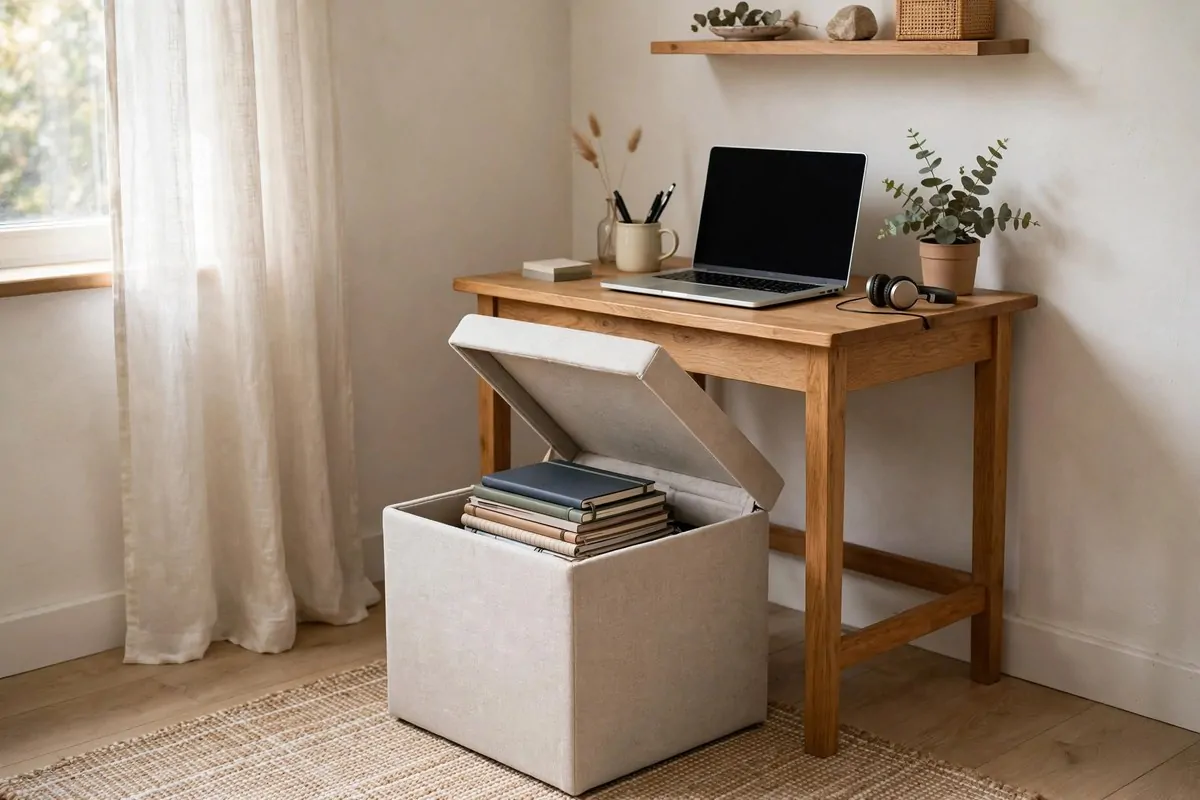
An ottoman with storage is three things at once. A seat, a footrest, and a hiding spot.
Slide it under the desk when you are not using it. It vanishes completely.
Inside goes the stuff you need but do not want to see. Spare chargers, notebooks, the stapler.
Pick one with a flat top. It doubles as a side table for your coffee.
The fabric should be easy to clean. Coffee happens. Life happens.
Match it to your chair or your rug. It should look like it belongs, not like an afterthought.
This is a great pick for shared rooms. Guests sit on it, you work on it, nobody knows your secrets.
Measure your desk clearance first. The ottoman has to actually fit underneath.
Small rooms need furniture with secret jobs. This one has three.
20. Zone It With a Rug
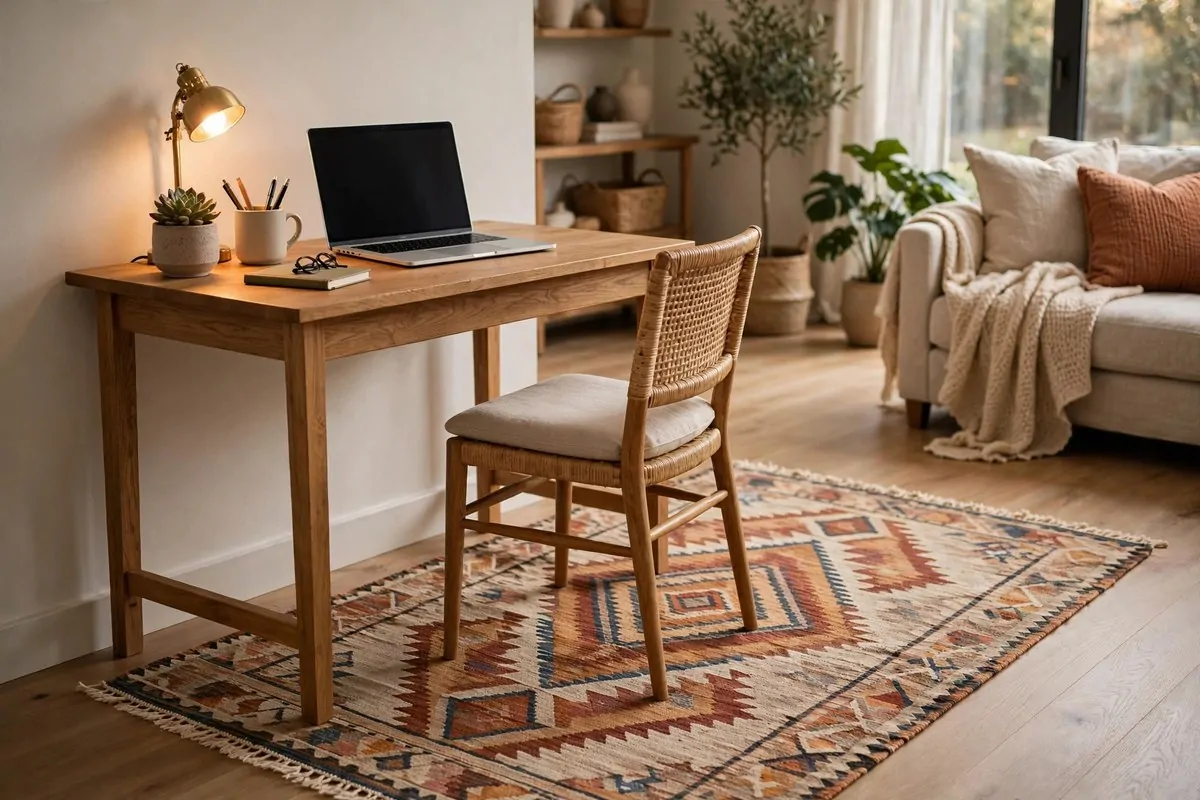
A rug draws a line on the floor. Inside the line is the office. Outside is the rest of the room.
This works magic in open rooms. Your brain reads the rug as a separate space.
Pick a size that fits under the desk and your chair. A 4 by 6 rug works for most small setups.
Choose a flat weave. Chair wheels roll better on low pile, and it is easier to clean.
The pattern can be bold. A rug is a safe place for color because it is easy to swap later.
Layer it over carpet if you want. A thin rug on top of wall to wall carpet still defines the zone.
Keep the rug edges clear of doors. A bunching rug corner is a tripping hazard.
Wash it or shake it out monthly. Office rugs collect crumbs and dust fast.
It is funny how a flat piece of fabric can make a room feel twice as organized.
21. Clamp a Lamp to the Desk
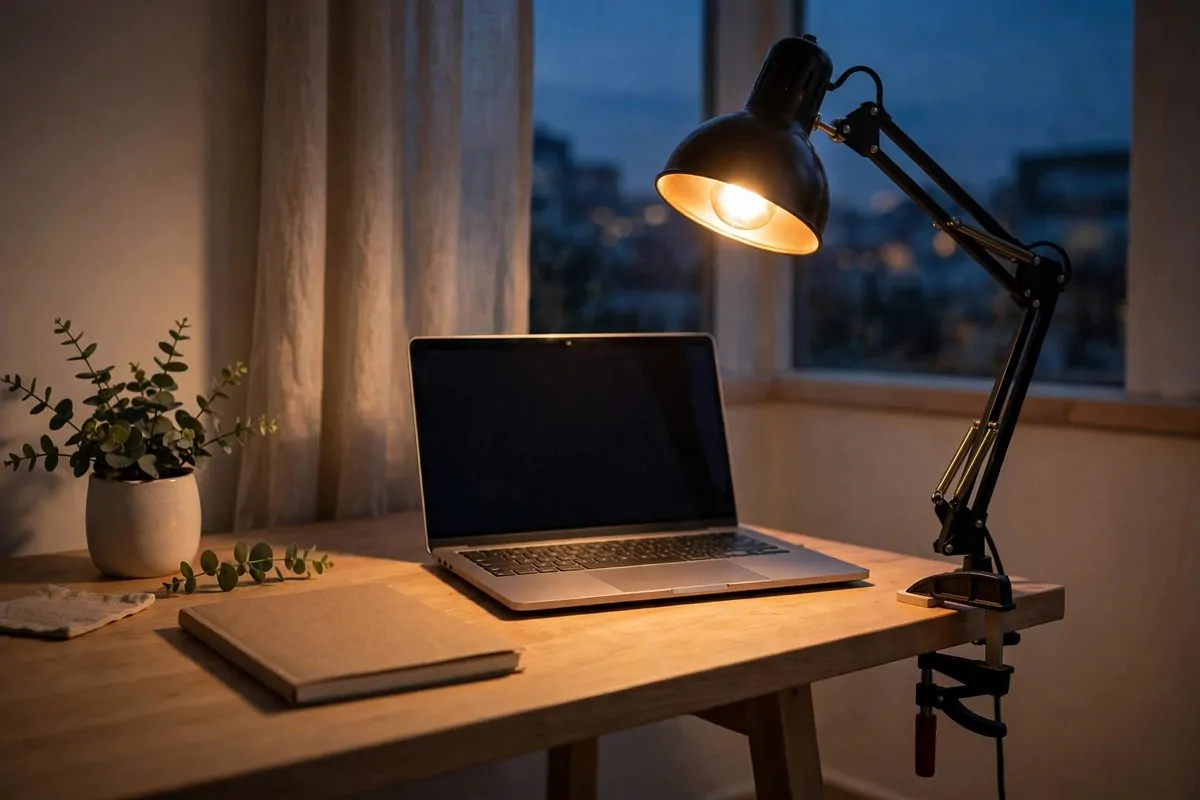
Desk lamps eat desk space. A clamp lamp gives it back.
It grips the edge of your desk and hovers over your work. No base. No footprint.
Point it at your notebook, not your screen. Side light beats screen glare every time.
Pick a warm bulb. Around 2700K feels cozy. Cool white feels like a hospital.
A swing arm lets you move it. Pull it close for reading, push it back for typing.
If your desk edge is too thick, use a wall mounted sconce instead. Same idea, zero desk used.
Good light in the evening keeps you working longer without the headache.
Clamp lamps cost little and install in one minute. It is the easiest lighting upgrade there is.
Your desk just gained a square foot. For free.
22. Mount the Monitor on an Arm
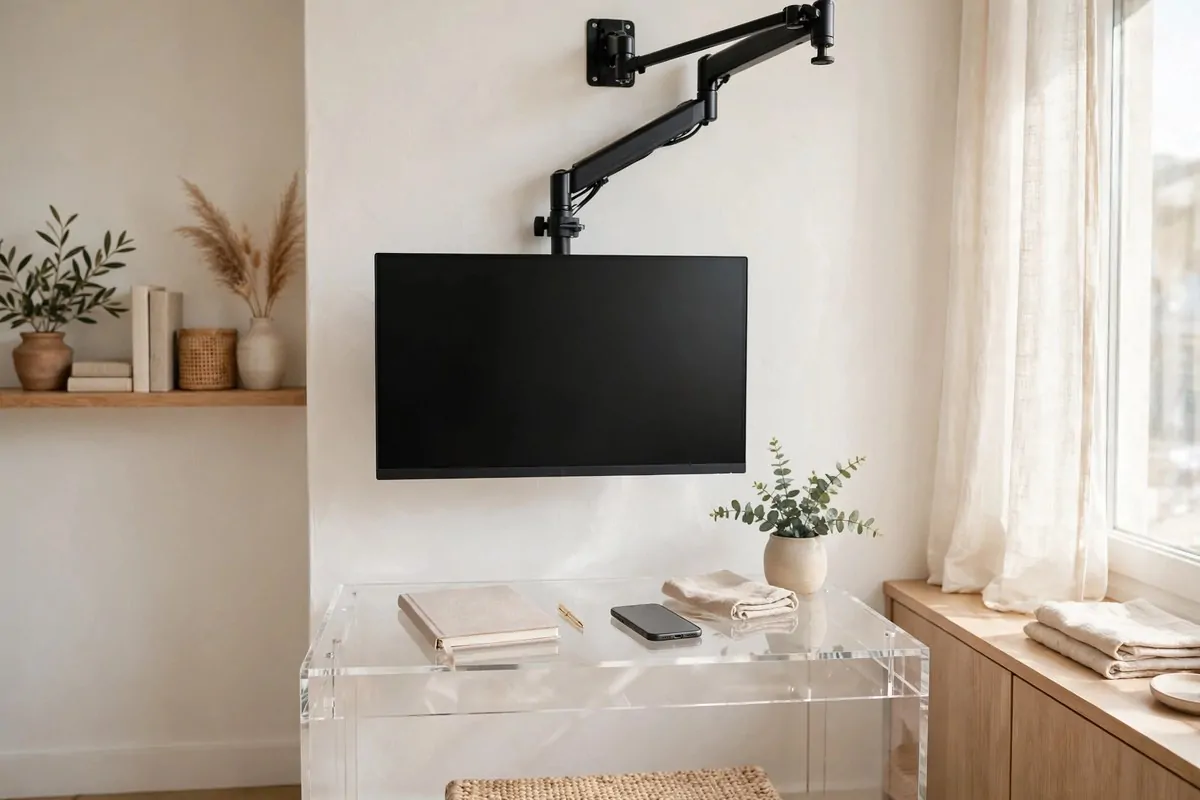
A monitor on a stand eats a big chunk of your desk. An arm gives that chunk back.
The arm clamps to the back edge and holds the screen in the air. The desk underneath is free.
You can push the screen back when you need to write. Pull it close for video calls.
Set the top of the screen at eye level. Your neck will stop aching by Friday.
The space under the monitor becomes a shelf. Notebook, phone, small tray. All fit now.
Hide the arm cables with the clips that come in the box. One tidy line down the arm.
Check your monitor has mounting holes on the back. Most do. Look for the four hole pattern.
This is a favorite of tiny desk owners. The desk feels twice as deep the day you install it.
It takes twenty minutes and one screwdriver. Then you wonder why you waited so long.
23. Try a Glass or Acrylic Desk
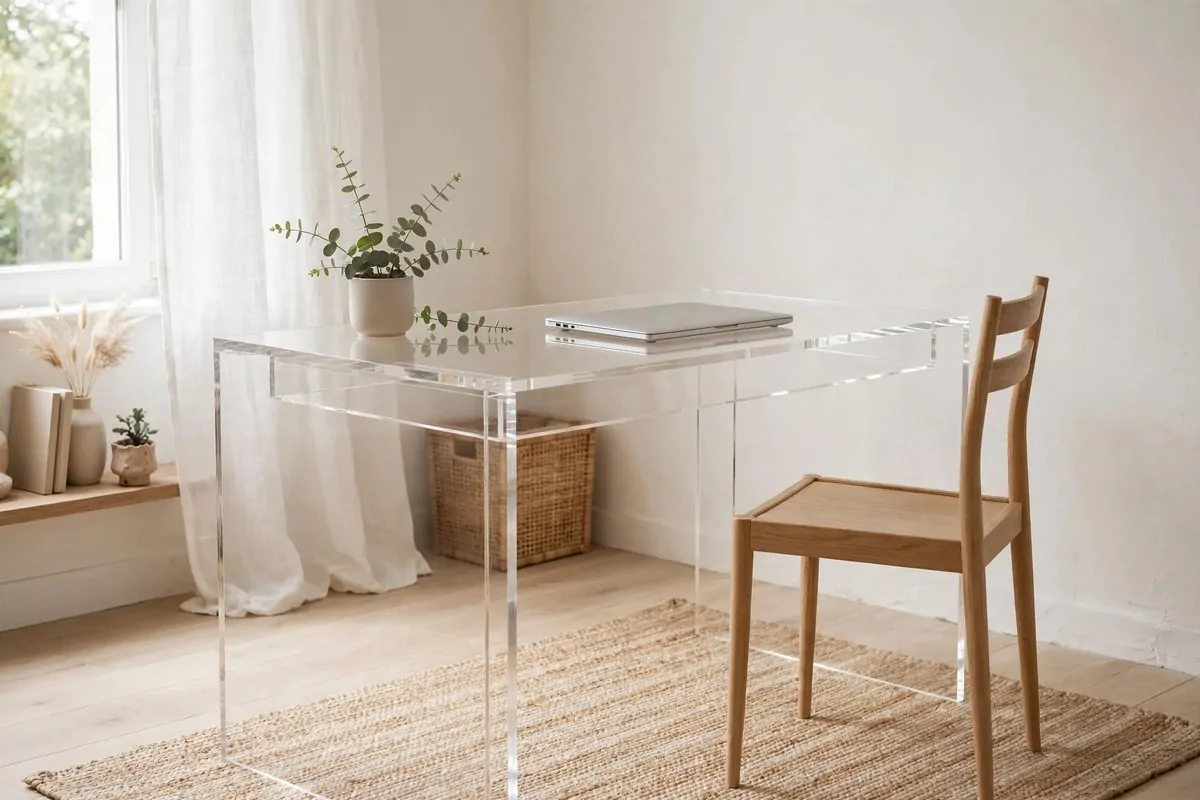
You cannot see through wood. You can see through glass. That matters in a small room.
A clear desk almost disappears. Your eyes travel past it, and the room feels bigger.
Acrylic is lighter than glass and safer if you bump it. Both look modern and clean.
Keep the top minimal. A clear desk shows everything, so clutter has nowhere to hide.
Pair it with a simple chair. A ghost chair or a slim wooden one keeps the airy feeling.
Wipe it weekly. Fingerprints show on clear surfaces. A microfiber cloth does the job.
Cables show more on clear desks. Run them tight and neat along the back edge.
This is not for paper pile people. If your desk is always covered, pick a solid top instead.
For minimalists, it is perfect. The office is there, but your eyes say the room is empty.
24. Share It With a Two-Person Wall Desk
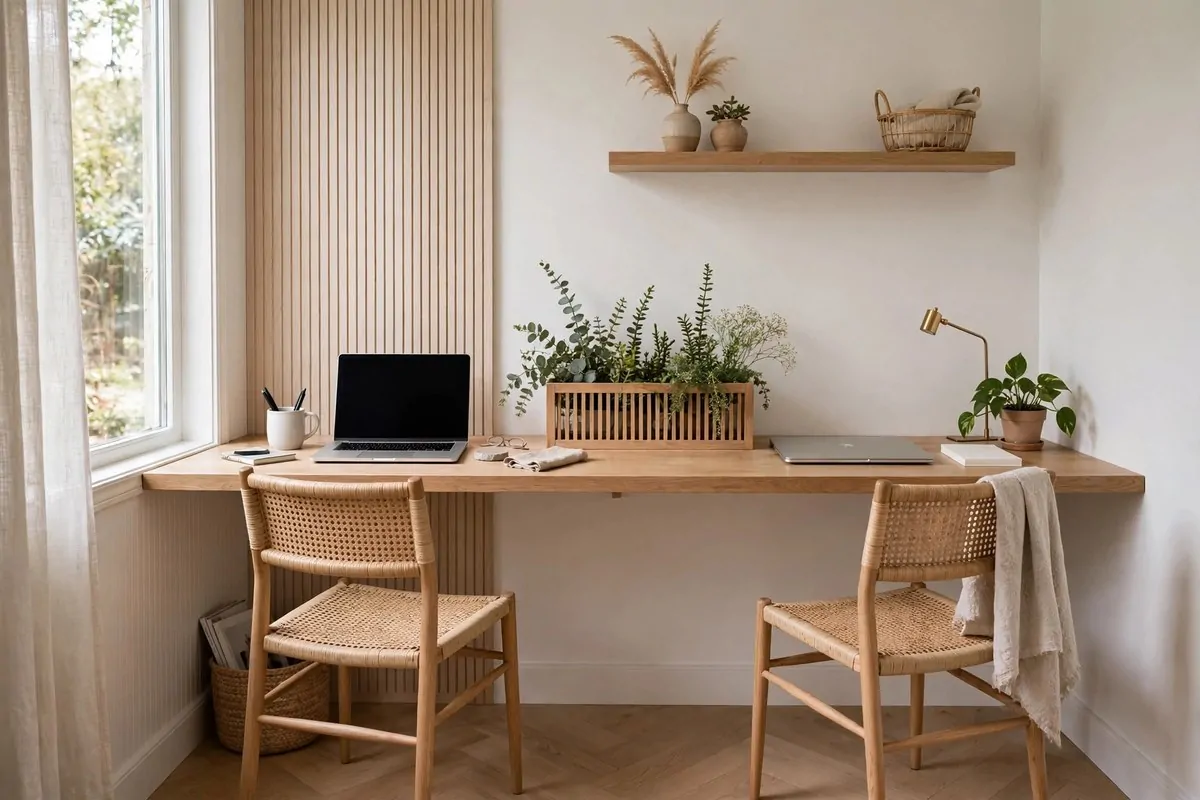
Two people, one room, no problem. A long narrow desk along one wall gives you both a spot.
The desk only needs to be about 20 inches deep. That is enough for a laptop and a notebook each.
Divide the middle with a small shelf or a plant. A soft border stops the elbow wars.
Match the chairs if you can. Two different giant chairs look messy. Two slim ones look planned.
Rules help. Here are the ones that work:
- Headphones on means do not talk.
- Keep your half of the desk clear.
- Calls happen in the other room.
- Clean up at the end of the day.
Give each person their own lamp. Shared light causes more fights than you would think.
Storage goes on the wall, not the desk. Two people means double the stuff, so go vertical.
A long desk against the wall uses less floor than two separate desks. Way less.
Couples, roommates, kids doing homework. This setup keeps everyone working and still friends.
25. Wallpaper the Nook
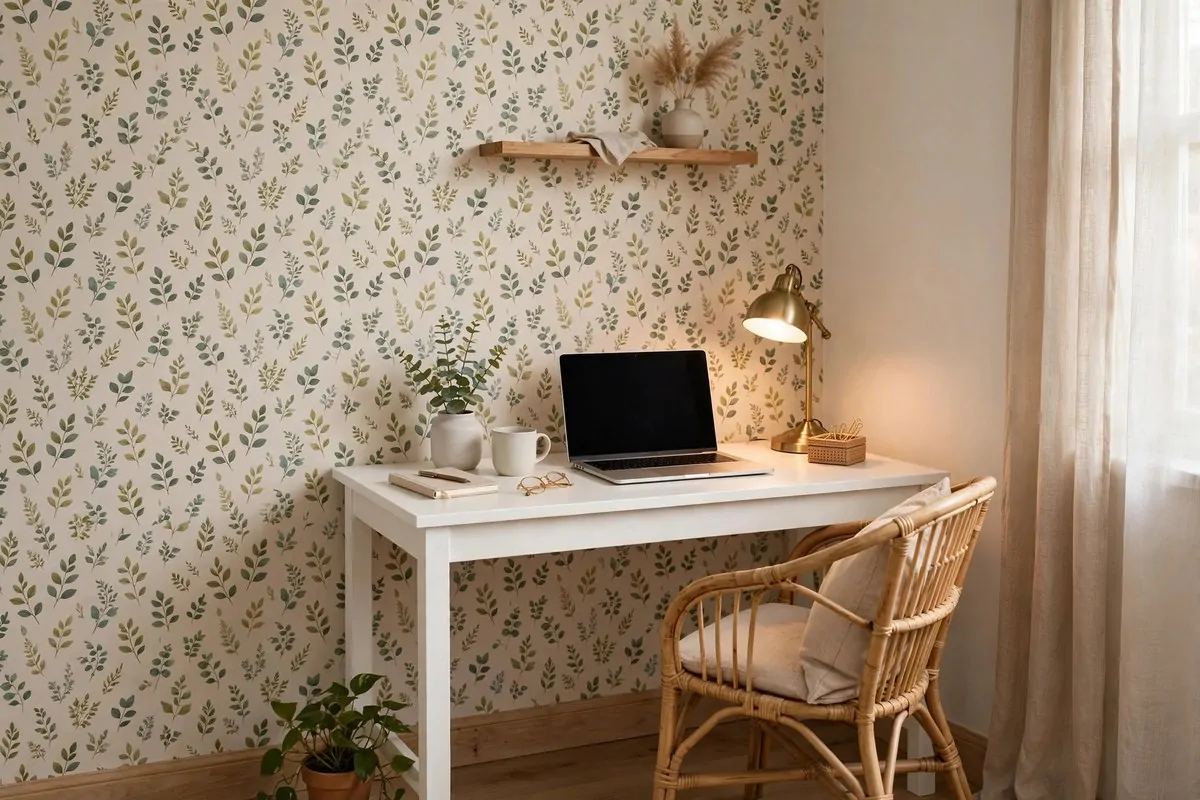
A tiny office nook with plain walls looks like an afterthought. Patterned wallpaper makes it look planned.
One wall is enough. The wall behind your desk gets the pattern. The rest stays calm.
Pick a small scale pattern. Big flowers can overwhelm a nook. Small prints feel just right.
Removable wallpaper is renter friendly. It peels off clean when you leave.
Botanical prints are popular for offices. They feel fresh without being loud.
The wallpaper becomes your art. You do not need frames or pictures on that wall.
Match one color from the paper in your chair or rug. It ties the nook together.
Video calls look better instantly. Your background goes from blank wall to something with style.
This is the finishing touch. Do it last, after the desk and shelves are in. It pulls everything together.