22 Small Classroom Ideas That Make Every Inch Work

It is the first morning of school. Twenty four backpacks hit the floor at once. The door bumps a desk. Somewhere a chair scrapes, and you are thinking one thing. Where does everything go?
I have stood in that exact doorway. Small rooms ask big questions. But here is what I learned after years of tiny classrooms. A small room is not a problem to fix. It is a puzzle to solve. And small puzzles have the best solutions.
These 22 Small Classroom Ideas are the ones that actually work when every inch counts. Tall shelves. Rolling carts. Corners that do two jobs. Nothing fancy. Nothing that needs a big budget. Just smart little moves that make a small classroom feel calm, tidy, and twice its size.
Let us walk through them together, one idea at a time.
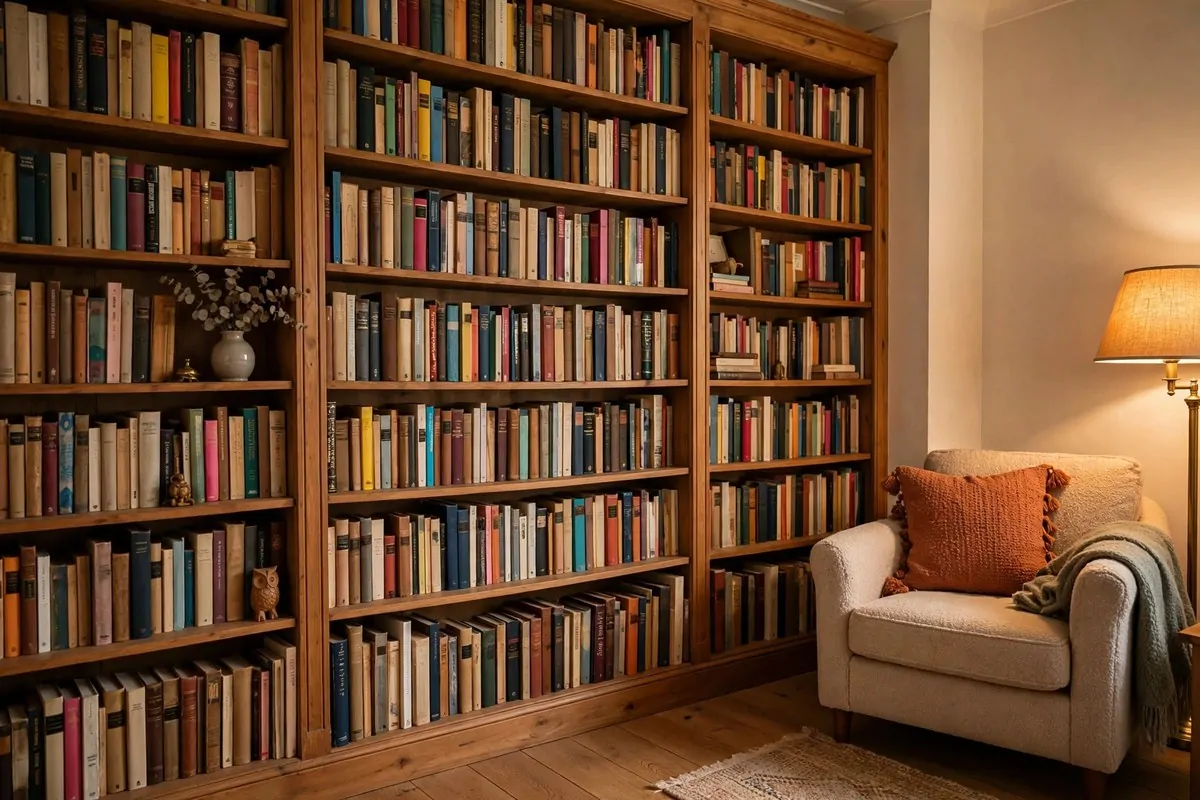
1. The Tall Skinny Shelf Wall
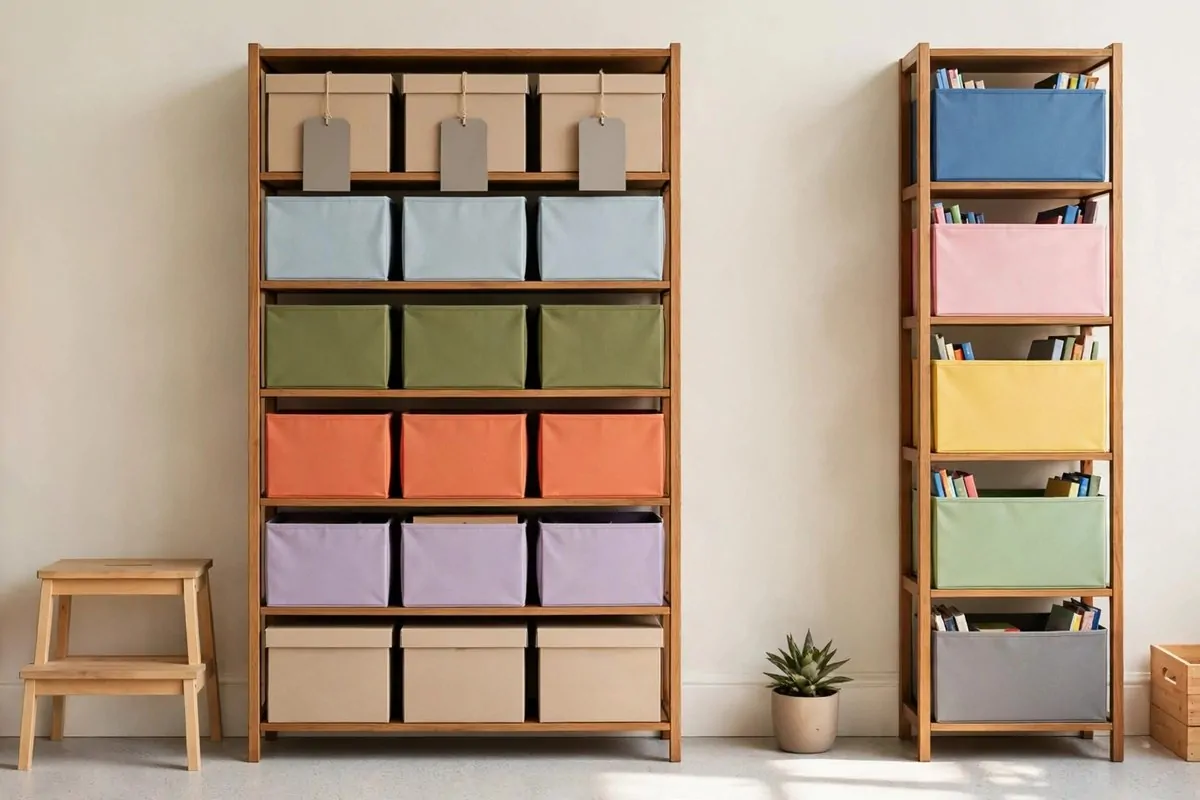
When floor space is gone, look up. Walls are free storage waiting to happen.
Swap one wide bookcase for two tall skinny shelves. Same storage. Half the footprint. It feels like magic, but it is just math.
Put the heavy stuff low. Books and big bins live on the bottom shelves. Light things go up high where little hands cannot reach.
Anchor every tall shelf to the wall. This is not optional. A wobbly shelf in a room full of kids is a bad idea.
Use the tops for things you rarely need. Seasonal crafts. Extra paper. The stuff you touch once a month.
Label every shelf edge. When kids can see where things live, they put them back. Most of the time, anyway.
I once replaced a bulky cabinet with two narrow towers. The room felt two feet wider overnight. Nobody could believe it.
Tall shelves also draw the eye up. The room feels taller. Taller feels bigger. It is a lovely trick.
Go vertical first. It is the single biggest win for a small classroom.
2. The Rolling Teacher Cart
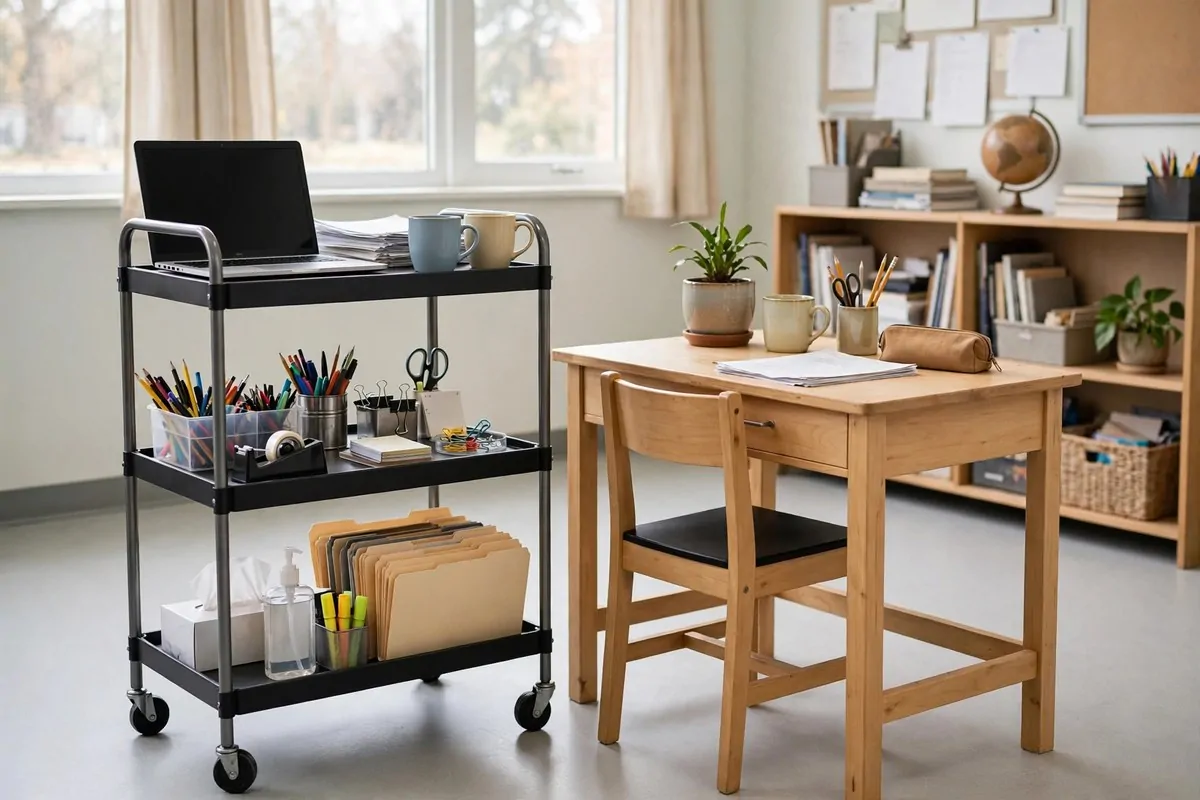
A teacher desk eats a whole corner. A rolling cart eats almost nothing.
Load a three tier cart with your daily essentials. Laptop. Papers. Pens. Sticky notes. Your coffee, of course.
Wheel it where you need it. Reading group table. Front of the room. Beside a struggling student. It goes everywhere.
At the end of the day, park it in a corner. Your whole desk disappears into two square feet.
The top tier is for right now stuff. The middle for today stuff. The bottom for just in case stuff.
Add small cups and trays on each tier. Loose items slide around when you roll. Little containers stop the chaos.
I stopped hunting for my stapler the week I got my cart. Everything had one home, and the home had wheels.
It also teaches kids something nice. You come to them. You are not stuck behind a big desk all day.
Small, mobile, and always within reach. The cart is the hardest working piece of furniture you will own.
3. The Milk Crate Towers
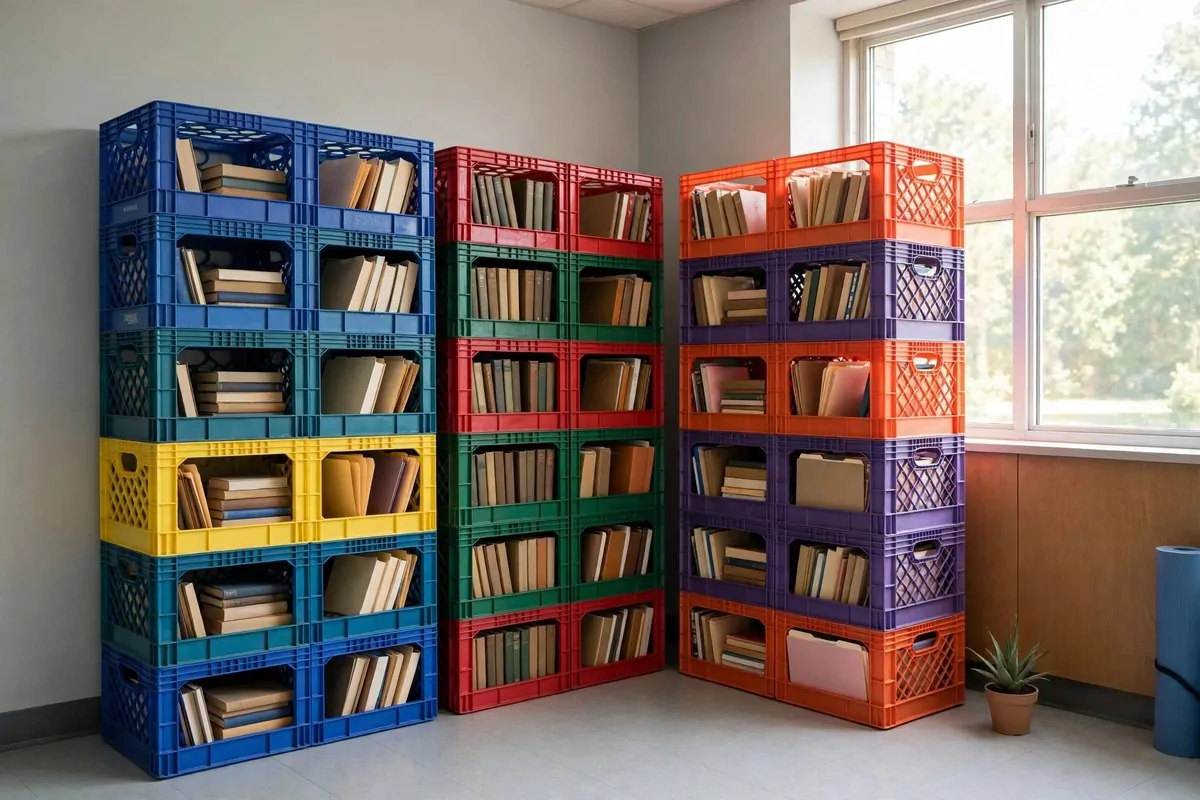
Milk crates are ugly. I know. But stacked into towers, they become brilliant storage.
Zip tie four crates together into a column. Now you have four cubbies in one square foot of floor.
Use them for books, folders, and art supplies. Each tower can hold one subject or one table group.
They are light enough for kids to manage. Strong enough to survive a school year. Cheap enough to replace.
Put the heaviest items at the bottom. Books low, paper high. Same rule as shelves, always.
Line them with fabric bins if the holes bother you. It takes ten minutes and looks much tidier.
I color coded mine once. Blue tower for reading. Green for math. Kids learned the system in one day.
When summer comes, unstack them and nest them. They shrink to almost nothing in storage.
Not pretty, but practical. And with a little styling, even crates can look charming.
4. The Corner Reading Nook
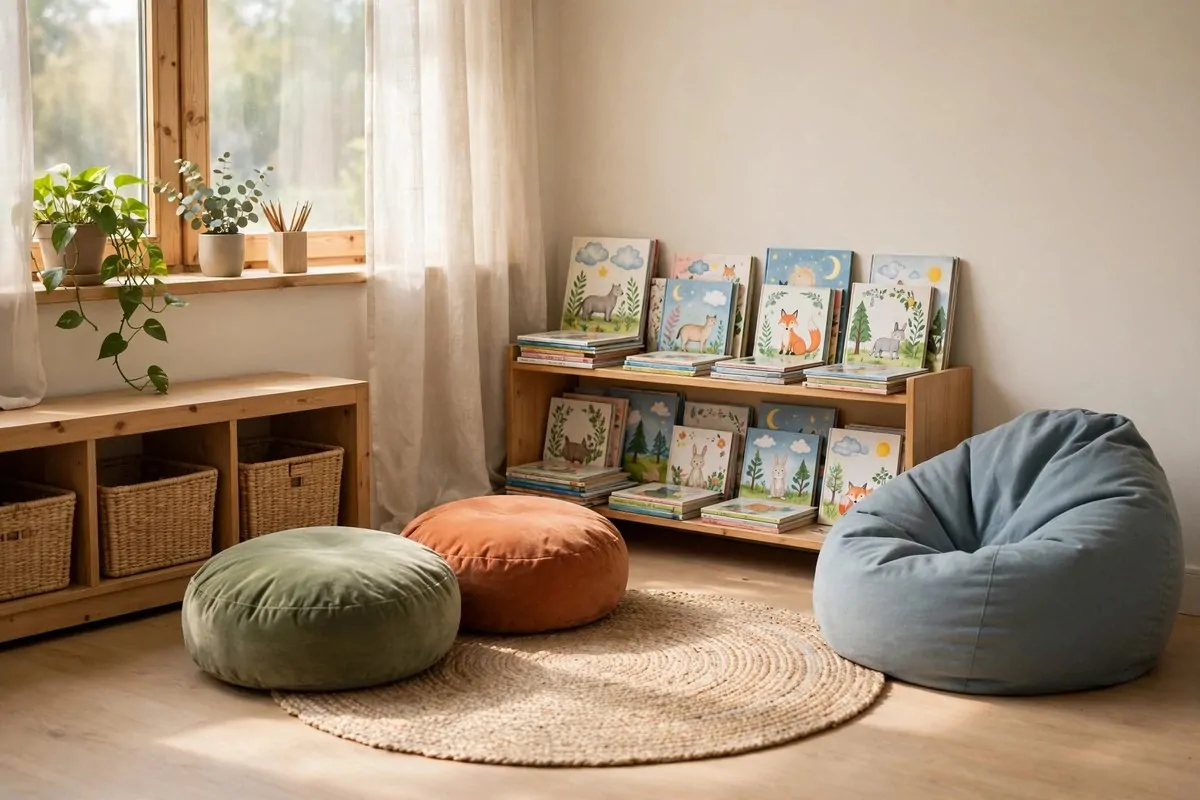
Every classroom has a dead corner. Turn yours into the most loved spot in the room.
Lay down a small round rug. Add two or three floor cushions. Tuck a low bookshelf into the corner.
That is it. Three things. You just built a reading nook.
Kids need a soft place to land. Hard chairs all day is a lot for little bodies. A cushion corner feels like a hug.
Keep the book selection small and fresh. Ten great books beat fifty dusty ones. Rotate them every few weeks.
Face the nook away from the door if you can. Less foot traffic means calmer reading.
I added a tiny lamp to mine once. The warm glow made it feel separate from the busy classroom. Kids whispered in there without being asked.
Set a simple rule. Two or three kids at a time. Small space, small group, big calm.
The corner nobody wanted becomes the corner everybody fights over. In a good way.
5. The Over-the-Door Pocket Organizer
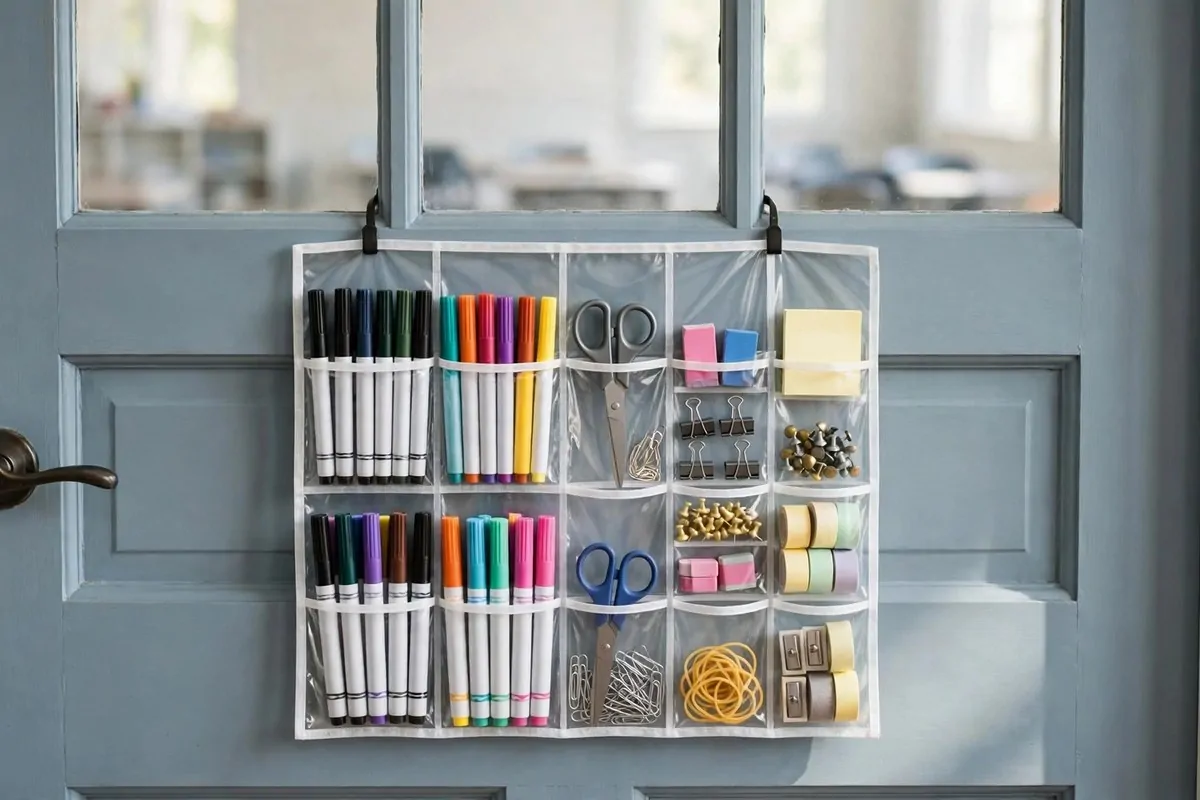
The back of your door is storage space you are not using. Fix that today.
Hang a clear pocket organizer over the door. The shoe kind with lots of little pockets.
Fill it with markers, scissors, glue sticks, and tape. All the small things that vanish into drawers.
Clear pockets mean you can see everything. No digging. No dumping a drawer to find one glue stick.
Put the most used items at kid height. Your stuff goes up top where little hands cannot reach.
It swings a little when the door moves. That is fine. Just do not put anything breakable in there.
I keep a few spare pencils and erasers in mine. Kids grab what they need without asking me. It saves a hundred interruptions a week.
One door. Twenty pockets. Zero floor space used.
It is the easiest win on this whole list. Hang it and you are done.
6. The Magnetic Strip Supply Wall
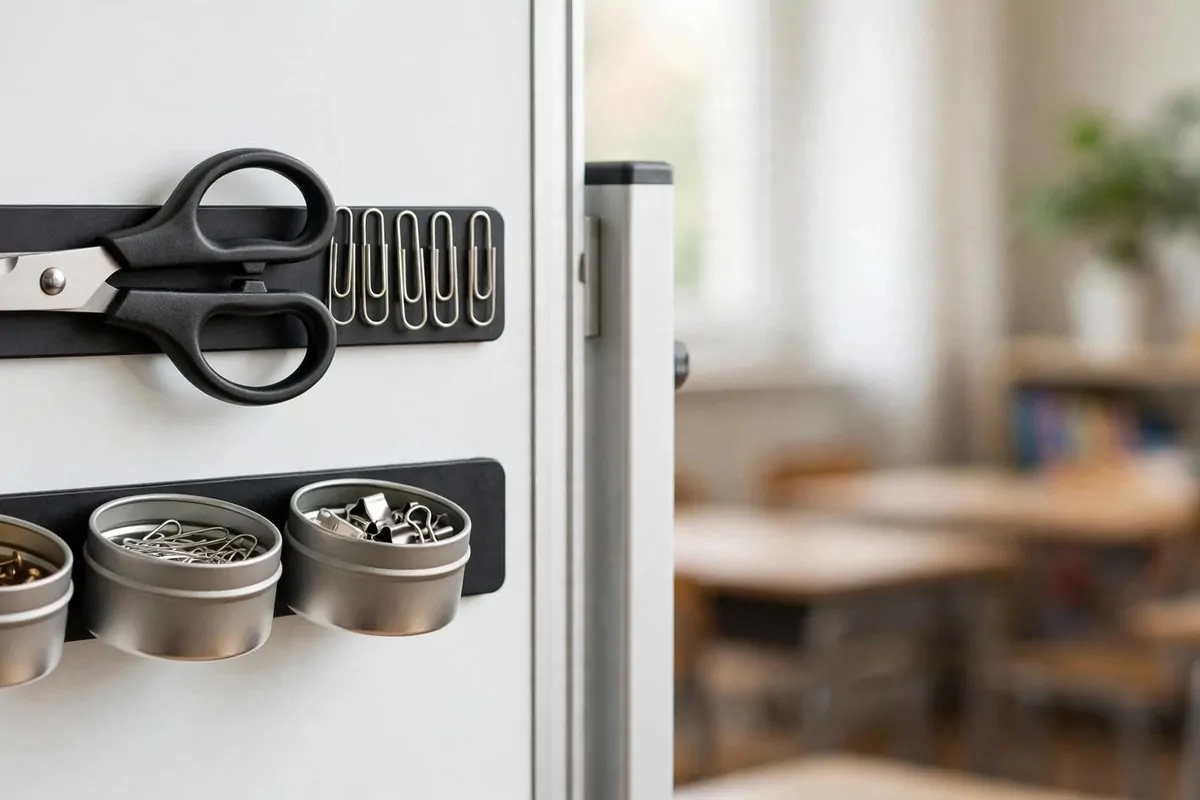
Scissors and paper clips love to disappear. Magnetic strips make them stay put.
Stick strong magnetic strips on the side of your whiteboard or a filing cabinet. Hang the metal things right on them.
Scissors click on. Paper clips line up. Small tins of pins stick fast. Everything visible, everything reachable.
Kids can see what is there and what is missing. If the scissors spot is empty, someone knows to look for them.
It keeps sharp things off desks and out of pencil boxes. Safer and tidier at the same time.
Use the heavy duty strips, not the weak craft ones. Scissors are heavier than they look.
I put mine at the end of my whiteboard tray. It took five minutes. I have not lost a pair of scissors since.
This also works inside a cabinet door. Hidden storage that is still easy to grab.
Small strips. Big difference. The little things stop eating your time.
7. The Fold-Flat Tables
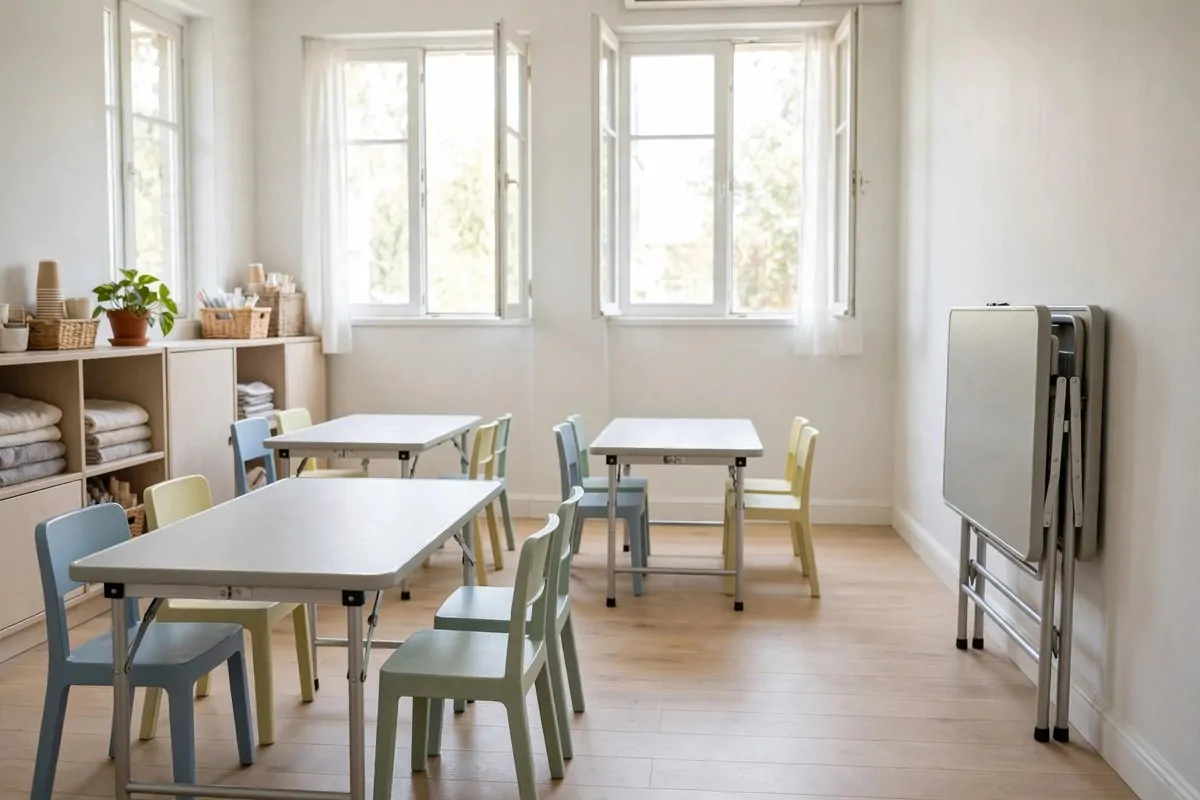
Some days you need tables. Some days you need floor space. Folding tables give you both.
Swap one heavy table for two light folding ones. They set up in seconds and vanish just as fast.
Use them for art projects, group work, or testing days. Then fold them flat against the wall.
A folded table is only a few inches deep. It leans in a corner like it is not even there.
Let the kids help fold them. They love it. It becomes a two minute end of day routine instead of a chore.
Check the locks before kids lean on them. A table that folds mid project is no fun for anyone.
I keep two folded behind my bookshelf. Nobody knows they are there until art time. Then, like magic, we have tables.
Flexibility is the real luxury in a small room. Not space. The ability to change the space.
Fold flat, stand tall, fold flat again. Your room shape shifts with your day.
8. The Tablecloth Hideaway
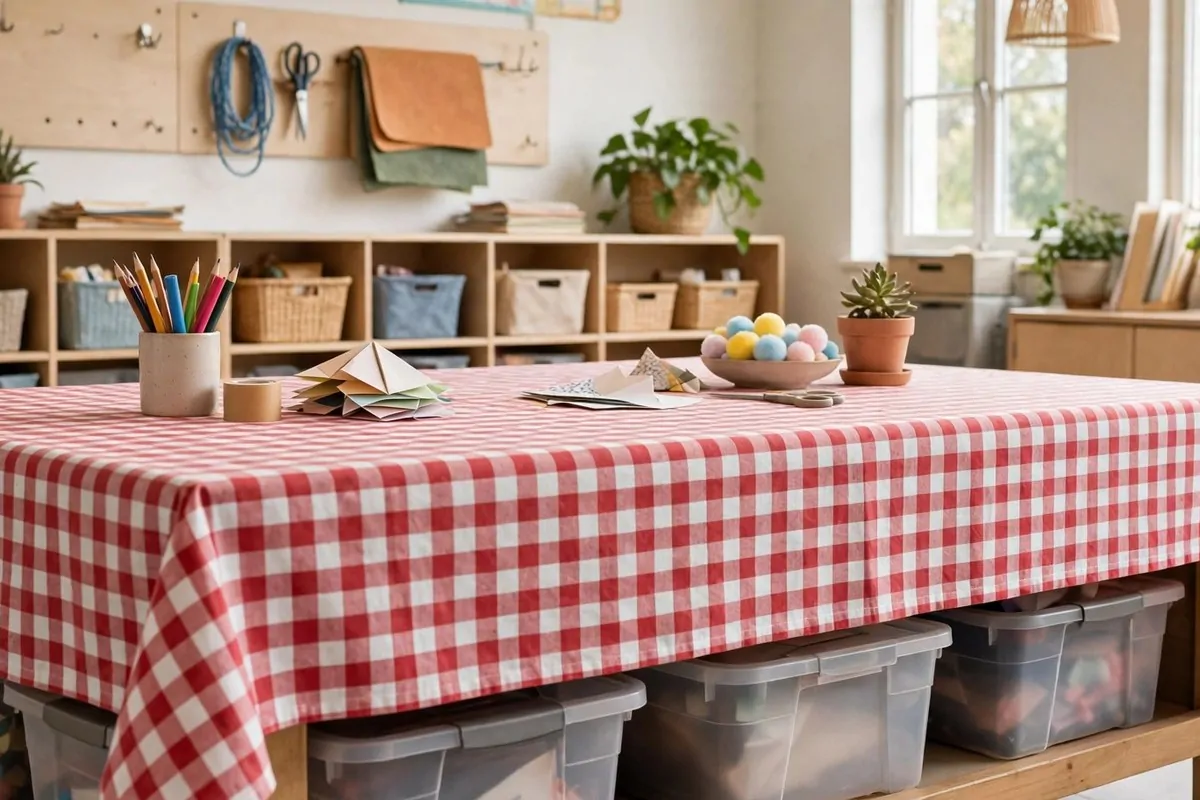
Under every table is secret storage. A tablecloth keeps the secret.
Drape a cheerful cloth over an activity table, all the way to the floor. Slide labeled bins underneath.
Seasonal supplies live there now. Extra paper. Craft kits. The things you need sometimes, not daily.
Kids see a pretty table. You see six cubic feet of hidden storage. Everybody wins.
Use a cloth you can wash. Classrooms are messy places. A wipeable or washable fabric saves headaches.
Put a small label on the cloth edge for each hidden bin. Lift the cloth, read the label, grab the bin.
I hide my winter craft supplies under there all autumn. When December comes, I just lift the cloth like a curtain.
It also makes the room feel softer. Hard table legs everywhere looks stark. Fabric softens the whole space.
Storage you cannot see is storage that does not clutter your mind. Out of sight, calm of mind.
9. The Pegboard Tool Wall
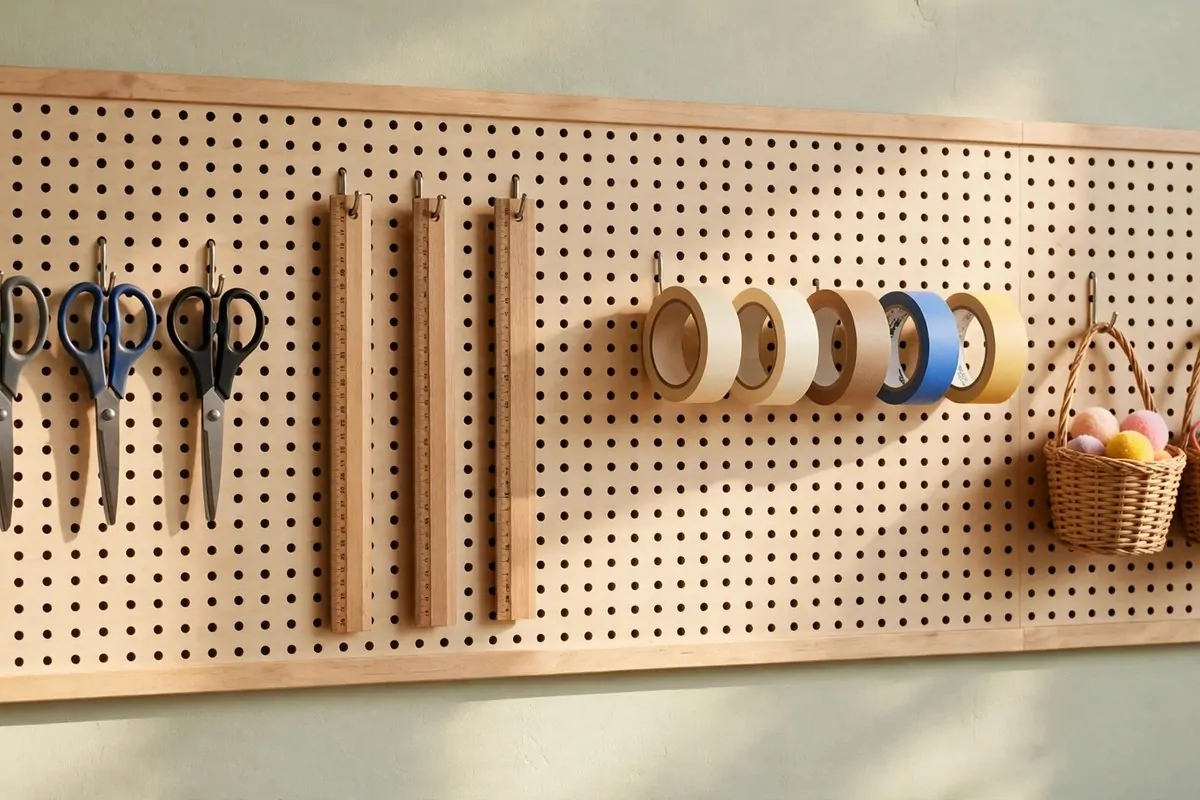
Pegboards are not just for garages. On a classroom wall, they are pure gold.
Hang one panel where kids can reach it. Add hooks, small baskets, and cups.
Scissors hang in a row. Rulers stand in a cup. Tape rolls sit on pegs. Everything has a hook.
When every tool is visible, kids stop asking where things are. They just look at the wall.
Rearrange the hooks anytime. New project needs new tools up front? Move the hooks in one minute.
Outline each tool spot with a marker. A drawn scissors shape shows exactly where the scissors live.
I did this behind my art table. Cleanup time dropped by half. Kids match the tool to its outline like a puzzle.
Paint the pegboard a fun color first. It turns a hardware store item into classroom decor.
One panel. Endless arrangements. The wall works as hard as you do.
10. The Clear Labelled Bins
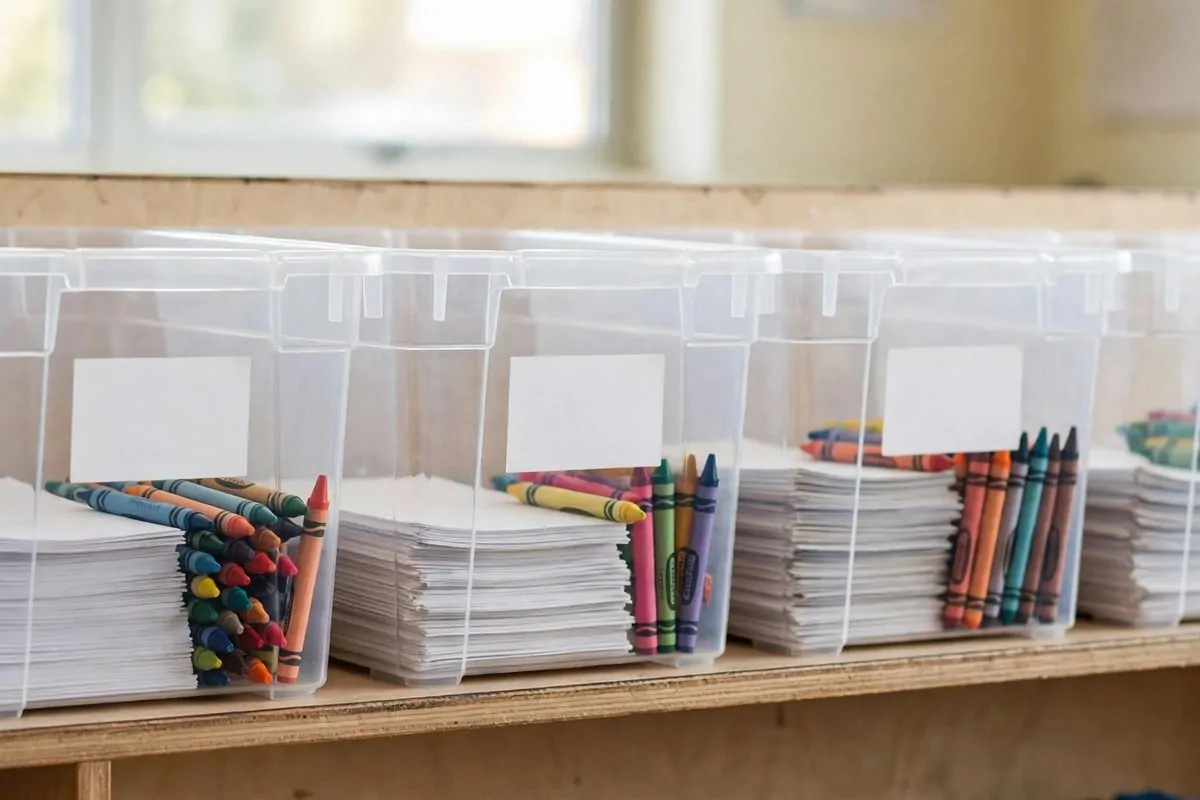
If you cannot see it, you will forget it. Clear bins fix that completely.
Use see through bins for everything. Crayons, paper, counters, glue. What you see is what you get.
Add a simple label to each one. A picture label for young kids. A word label for older ones.
Labels do two jobs. They tell kids where things go. And they remind you when a bin is in the wrong spot.
Keep the bins small. Big bins become junk drawers. Small bins force you to stay sorted.
Stack them on low shelves where kids can reach. If only you can reach them, you become the bin butler all day.
I switched to clear bins three years ago. The number of “where is the…” questions fell off a cliff.
Wipe them out once a month. Crumbs and dried glue collect in corners. A quick rinse keeps them fresh.
Clear, labeled, and kid height. Three rules that keep supplies under control all year.
11. The Book-Box Desks
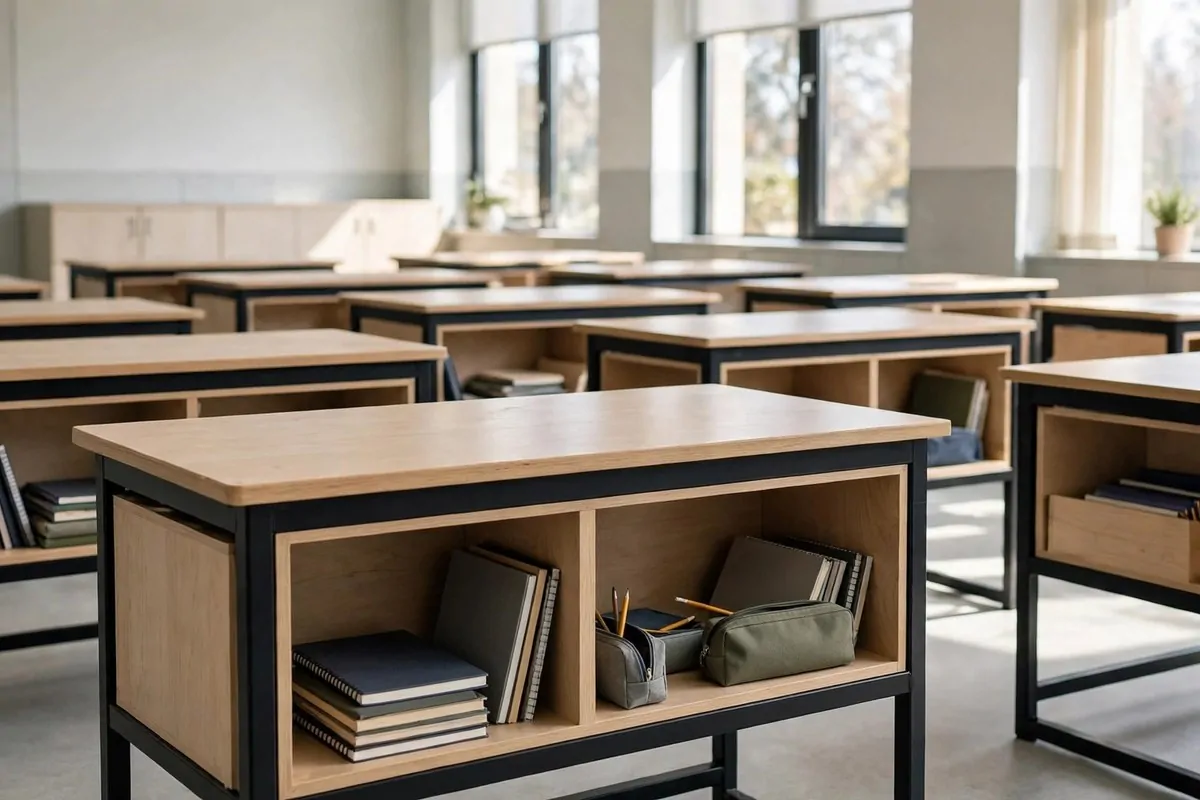
Desks with built in storage kill two birds with one stone. Seat and shelf in one.
Book box desks have an open cubby under the top. Notebooks, folders, and pencil cases live right there.
No separate cubbies needed. No locker wall eating your room. Each kid carries their world in their desk.
Teach a five minute desk check routine. Everything in the box, nothing on the floor. Do it daily for two weeks.
It becomes a habit. Kids tidy without thinking. You stop nagging. Mornings run smoother.
The boxes have limits, which is good. If it does not fit, it does not belong. Natural decluttering.
I put a small name tag on each box. Ownership matters. Kids take better care of their own space.
Choose desks with sturdy boxes. Thin ones crack by winter. Solid ones last for years.
One piece of furniture. Two jobs. That is how small rooms win.
12. The Flip-Use Corner
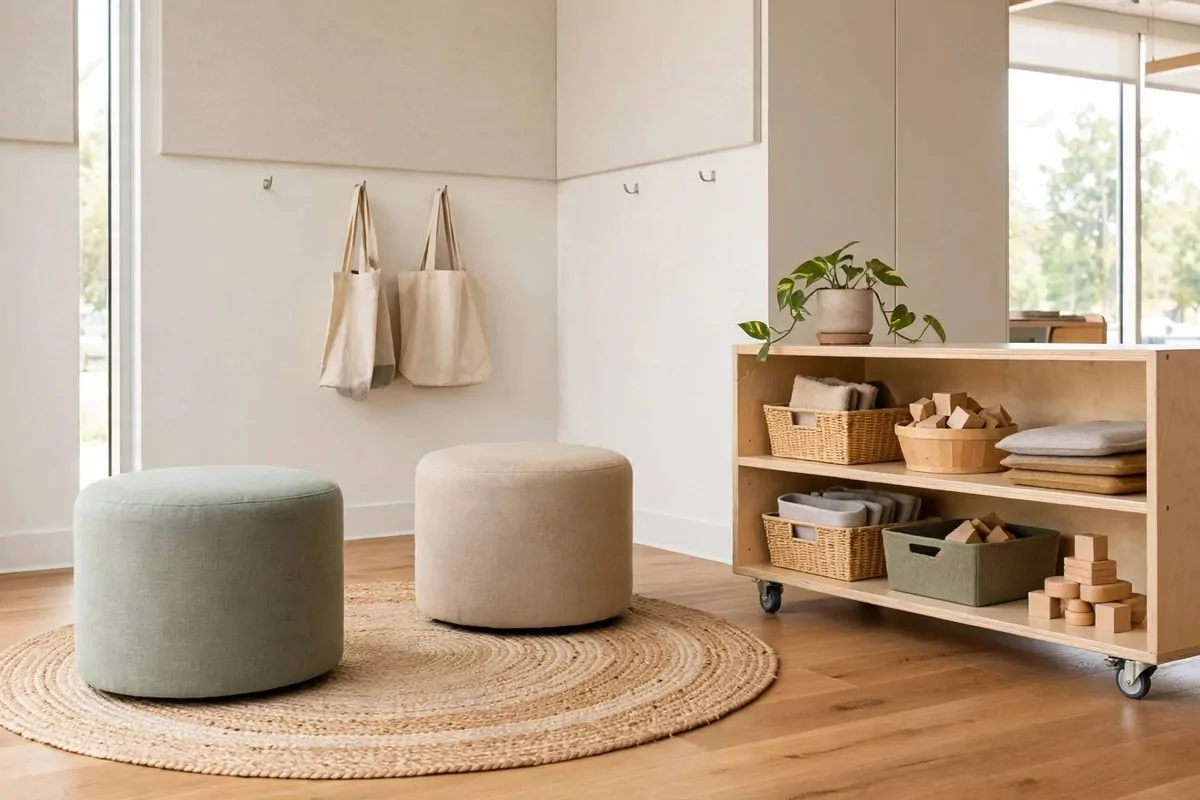
In a small room, every corner needs two jobs. Maybe three.
Pick one corner and give it a schedule. Morning it is one thing. Afternoon it is another.
| Time of day | Corner job | What moves |
|---|---|---|
| Morning | Reading nook | Cushions out, rug down |
| Midday | Small group table | Cushions stacked, tray table in |
| Afternoon | Quiet work spot | One chair, privacy screen up |
Use light furniture that one person can move. Ottomans, a small rug, a rolling shelf.
Teach kids the flip routine. It takes two minutes once they know it. They actually enjoy the change.
Post the schedule on the wall. When the corner has a posted job, kids respect it more.
I flip my corner twice a day. It feels like getting a new room each time. The kids never get bored of it.
The secret is keeping the pieces few. Three or four movable items. More than that and flipping feels like work.
A corner with a schedule is worth three corners without one. Time becomes your extra square footage.
13. The Stack-and-Go Chairs
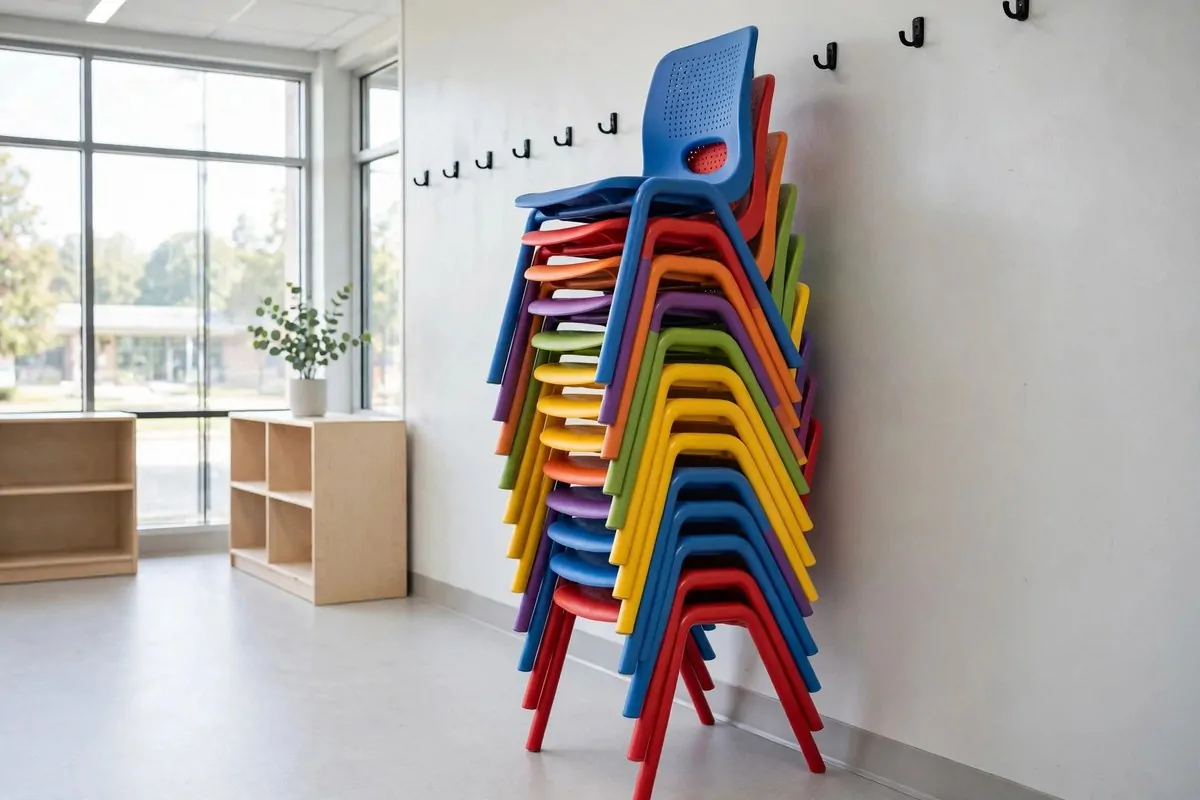
Chairs take up shocking amounts of floor. Stackable ones give it all back.
When you need open floor, stack the chairs against one wall. Ten chairs become one tall tower.
Choose chairs made to stack. They nest neatly and safely. Regular chairs stacked are just a wobbly hazard.
Kids can stack their own chair in seconds. Make it part of the cleanup song. Up it goes.
The freed floor becomes a meeting circle, a game space, or a dance floor on rainy days.
I stack half my chairs most afternoons. The room breathes. Kids spread out. Everybody relaxes a little.
Check the stack height. Too tall and it tips. Six to eight chairs is usually the safe max.
Lightweight chairs matter here. If kids cannot lift them, you will do all the stacking yourself.
Chairs that disappear on demand. Floor space that appears on demand. Everybody wins.
14. The Wall Hook Row
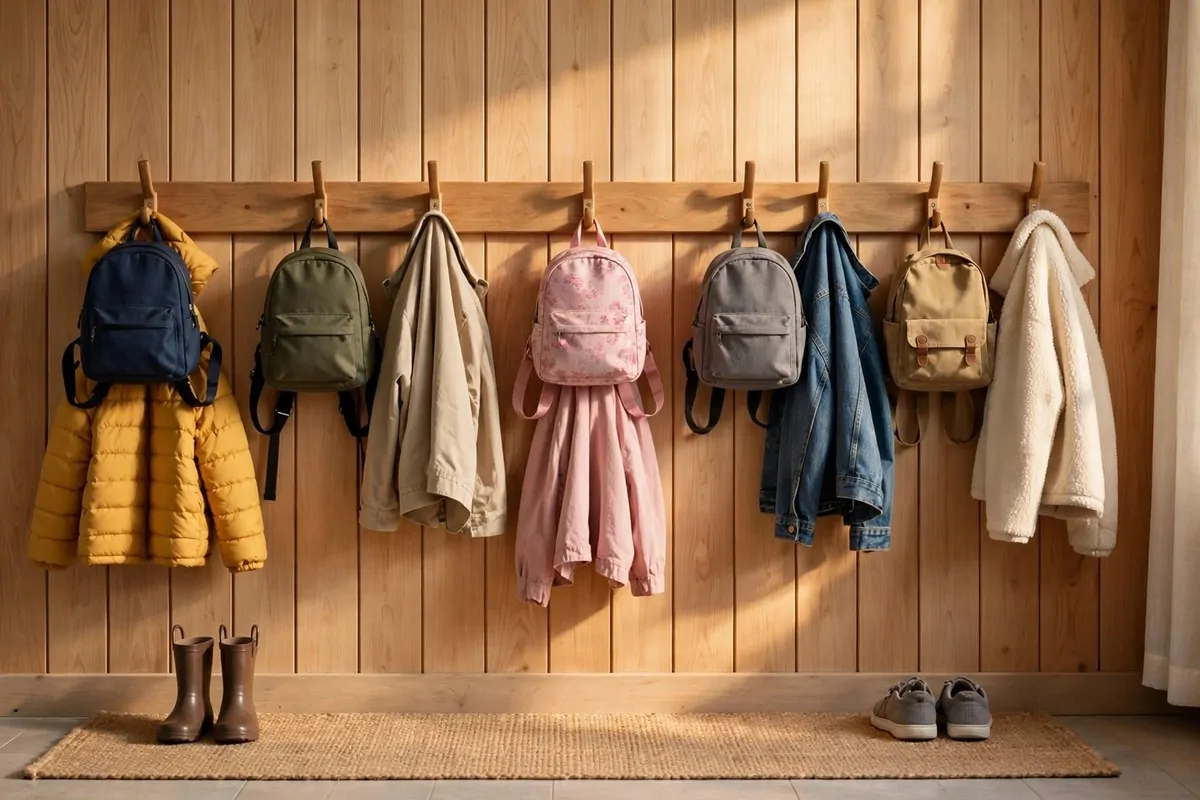
Backpacks on the floor are trip hazards and clutter. Hooks lift the whole mess off the ground.
Mount a row of sturdy hooks along one wall, at kid height. One hook per child.
Bags hang. Jackets hang. The floor stays clear. The room instantly looks twice as tidy.
Give each hook a number or a name tag. Kids learn their hook on day one and never forget.
Space the hooks wide enough. Crammed hooks mean tangled straps. A little elbow room keeps mornings smooth.
Put a small shelf above the hooks for lunch boxes. Now the whole arrival mess lives in one neat strip of wall.
I added hooks three years ago and my floor has been clear ever since. It is a small change with a huge daily payoff.
Choose hooks that fold up when empty if you want. They tuck flat and look very neat.
One wall. One row. Zero backpacks on the floor.
15. The Calm Corner
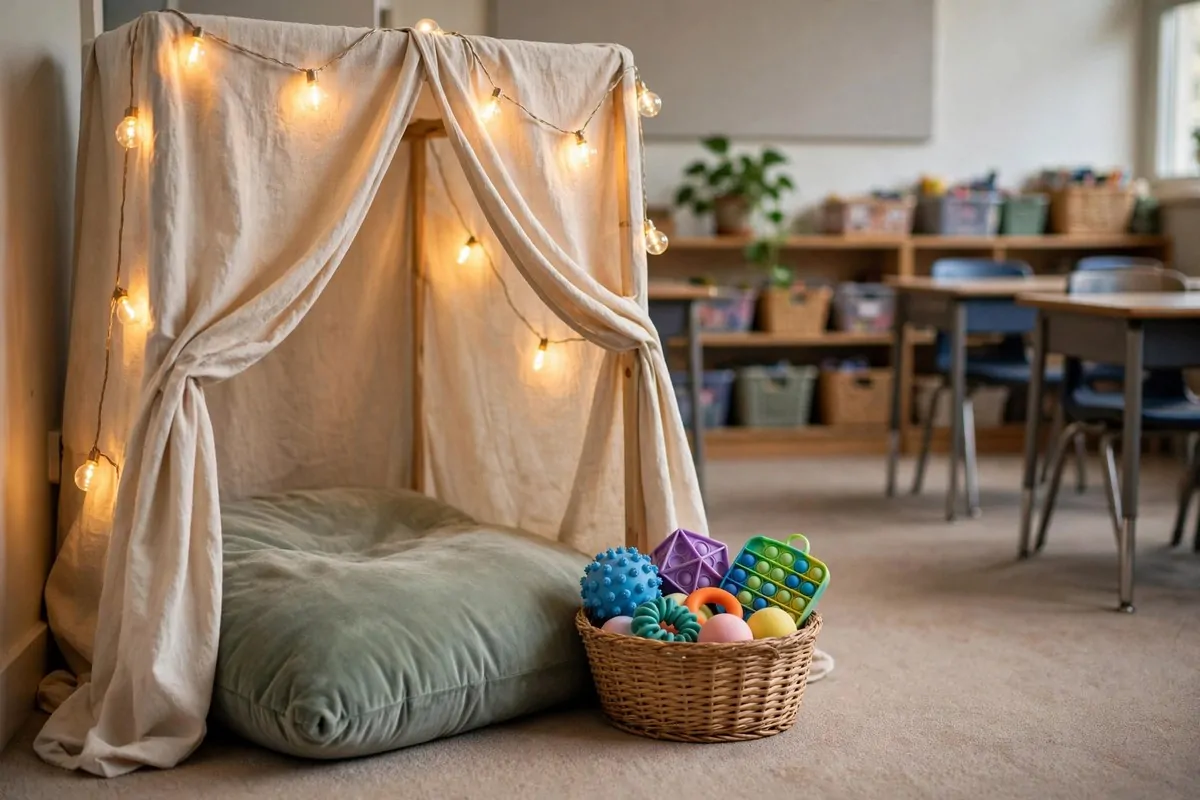
Every kid has big feelings sometimes. A calm corner gives those feelings a soft place to go.
Tuck it in the quietest part of the room. Away from the door. Away from the busy tables.
Add a small canopy or tent fabric. A cushion. A basket of fidgets. Maybe warm string lights.
Keep it small on purpose. Cozy feels safe. Big and open does not calm anyone down.
Introduce it during a calm moment. Show kids how it works when everyone is happy. Then it is a tool, not a punishment.
Set a gentle time limit. Five minutes, then check in. Most kids come back ready on their own.
I keep a feelings chart on the wall nearby. Kids point to their feeling before they sit down. It builds emotional words fast.
Never force a child to use it. Invite, do not send. The corner only works if it feels kind.
A tiny corner that teaches big emotional skills. Worth every inch it takes.
16. The Charging Tower
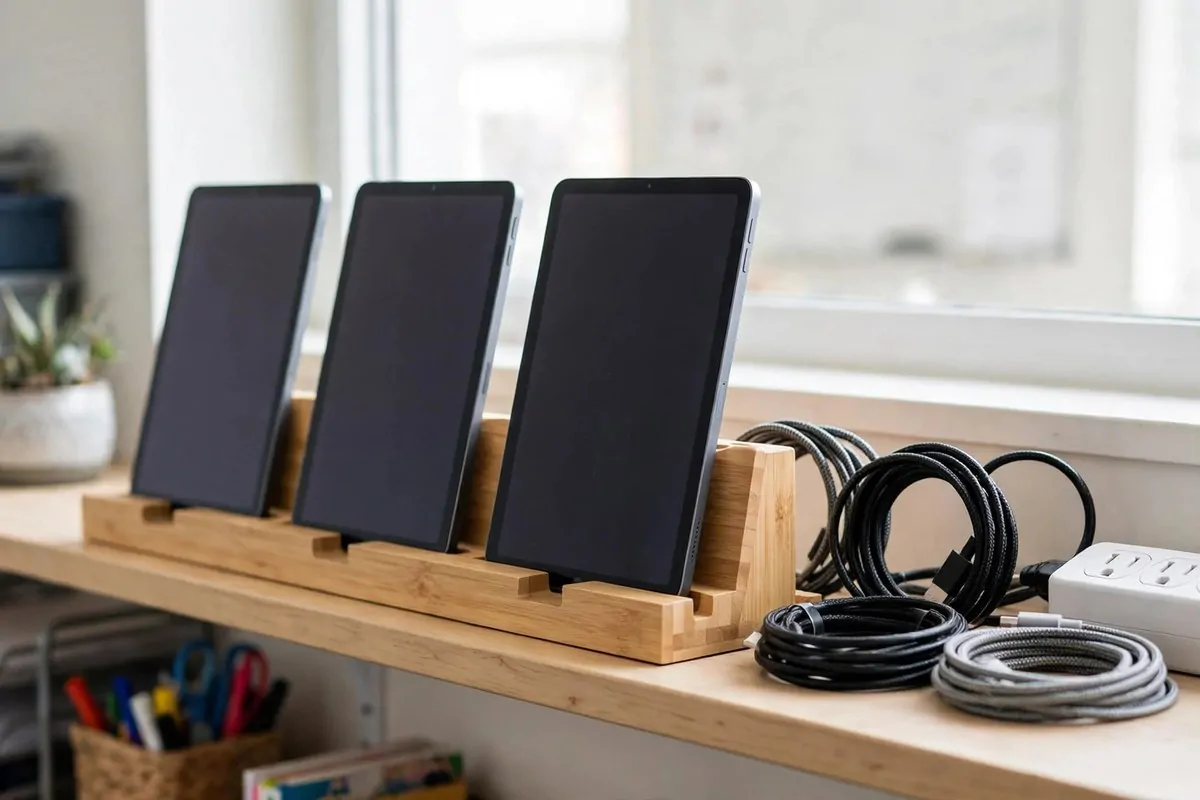
Tablets with dead batteries derail a lesson fast. One charging hub prevents the chaos.
Set up a single station on a shelf. Tablets stand in slots. Cords coil neatly beside them.
Label every cord with a number. Label every tablet to match. Cord three goes to tablet three. No more cord fights.
Use one power strip with a switch. Flip it on at arrival, off at dismissal. Simple and safe.
Keep it away from the sink and the art table. Water and charging tablets are a bad mix.
Assign a weekly charging helper. One kid plugs everything in at the end of the day. They take the job very seriously.
I mounted a small shelf just for charging. It freed my desk and ended the daily battery panic.
Count your outlets before you buy anything. One strip, enough plugs, no daisy chains.
Charged tablets, calm teacher, smooth lessons. All from one tidy corner.
17. The Rolling Supply Carts for Groups
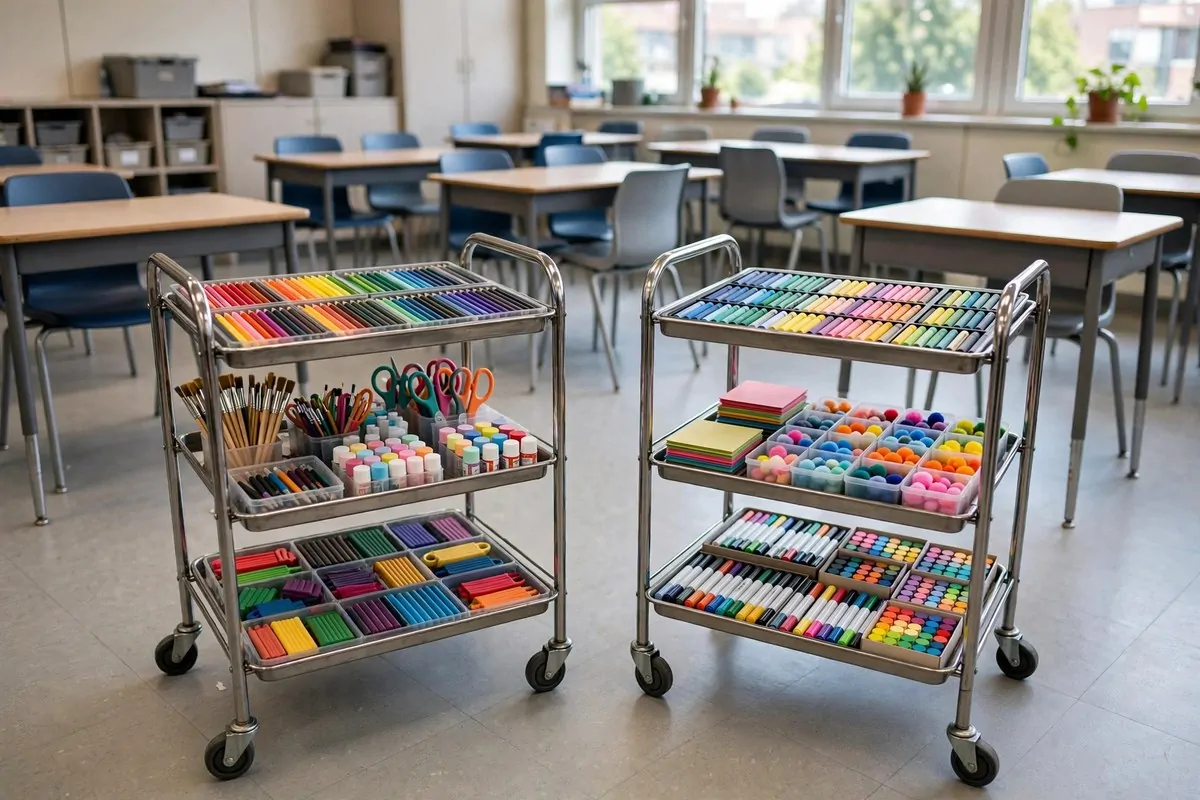
Group work means supply chaos. Unless each group gets its own rolling cart.
Load a small cart per table group. Paper, crayons, scissors, glue. Everything that group needs for the week.
Roll the cart to the group when work starts. Roll it back when work ends. No crowding around one supply shelf.
Kids stop wandering the room mid lesson. Everything they need is within arm’s reach.
Restock the carts on Friday. Ten minutes. Fresh supplies for Monday, and you can see what ran out.
Color code the carts to match the table groups. The blue table gets the blue cart. Even young kids get it.
I use three tier carts with trays. Top tray for daily tools. Middle for paper. Bottom for extras.
It also ends supply hogging. Each group has its own set. Nobody guards the good markers anymore.
Mobile, fair, and tidy. Group work finally feels calm instead of chaotic.
18. The Rotating Wall Displays
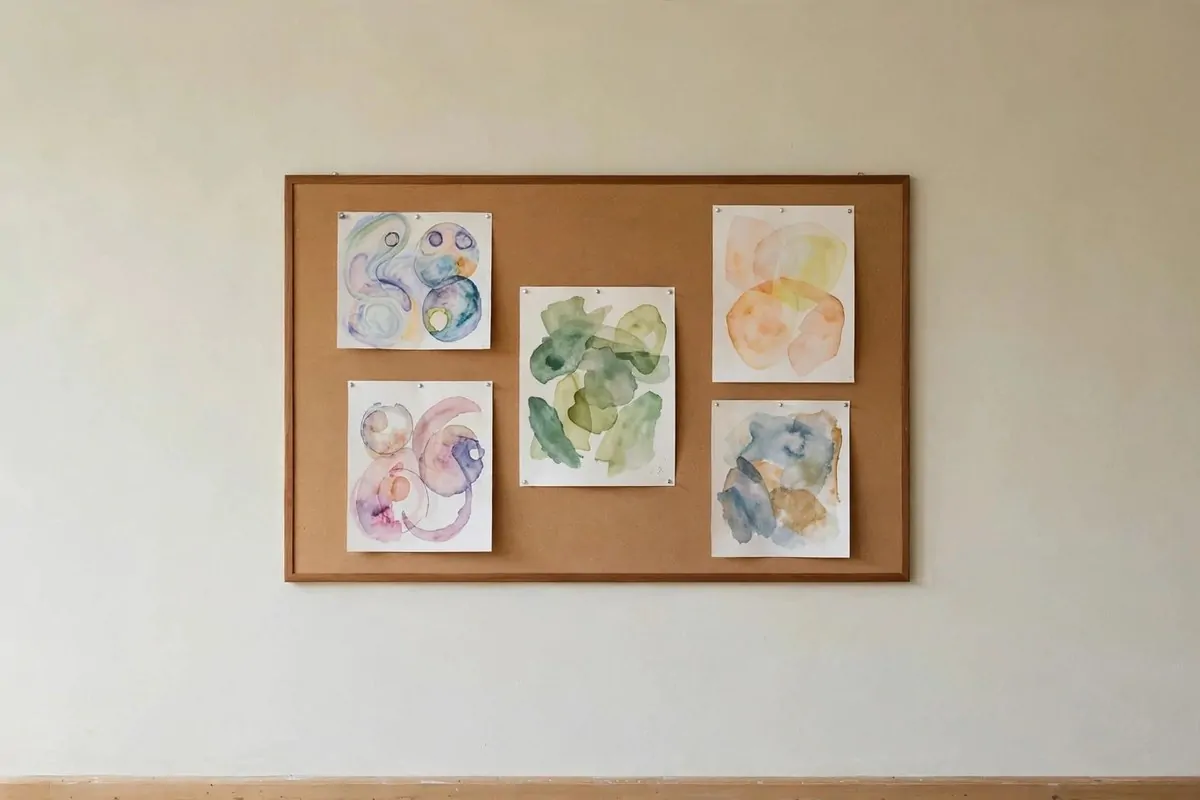
Small rooms feel smaller when every wall is covered. Less on the walls means more room to breathe.
Pick one or two display spots. Keep the rest of the walls calm and clear.
Rotate what you show. New student work every few weeks. Old work comes down, new work goes up.
Kids actually look at rotating displays. The same poster from September becomes invisible by October.
Use the freed wall space wisely. A hook row. A narrow shelf. Breathing room is useful room.
I take photos of old displays before I take them down. Kids love looking back at the album. Nothing is truly lost.
Keep colors calm on the permanent stuff. Save the bright colors for the rotating student work.
A calm wall is not an empty wall. It is a wall that lets the important things shine.
Less visual noise, more focus, calmer kids. And your room looks bigger overnight.
19. The Wobble Stool Row
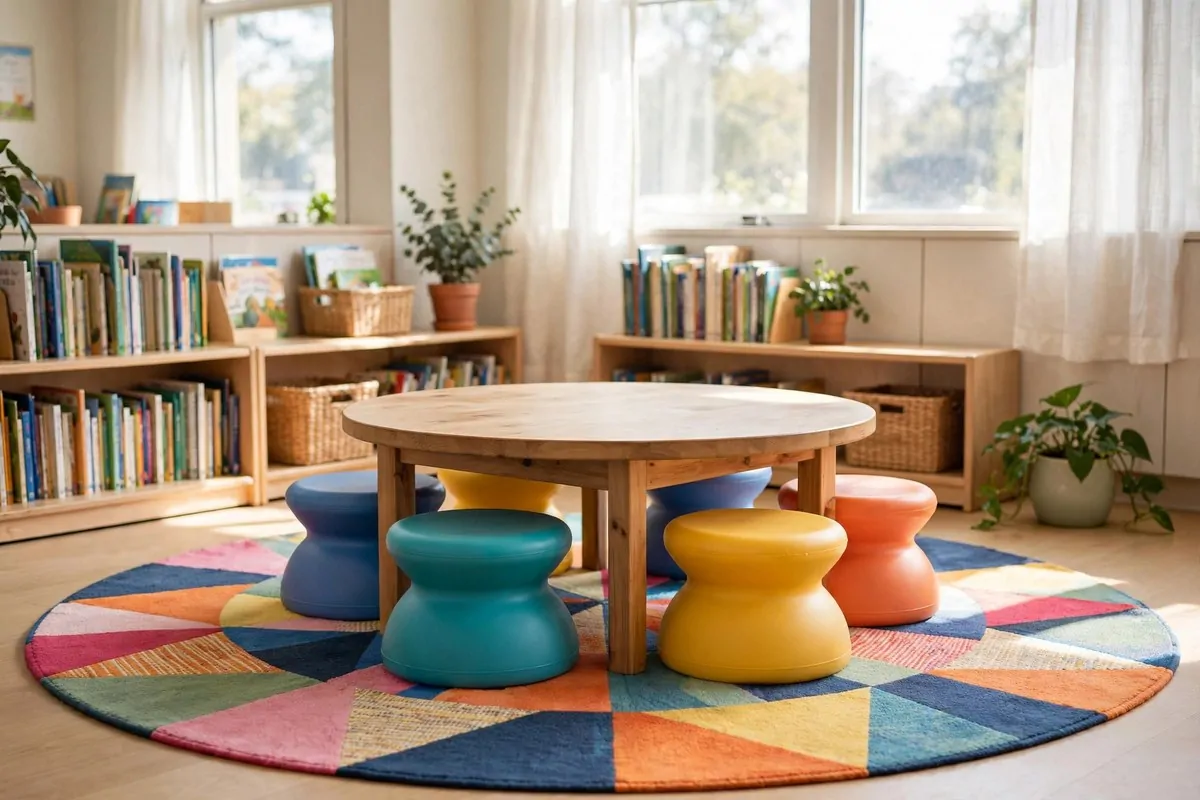
Wiggly kids and still chairs are a bad match. Wobble stools let them move without leaving their seat.
They are small, round, and slightly tippy on purpose. Kids can rock and sway while they work.
Tuck them completely under a low table when not in use. They take up half the space of regular chairs.
They are perfect for a reading corner or a small group table. Anywhere kids need to focus but cannot sit still.
Set clear rules on day one. Bottoms stay on the stool. No tipping contests. Model it with a smile.
Start with a few, not a full set. See which kids love them. Some kids prefer still seats, and that is fine.
I keep four at my round table. They are the most fought over seats in the room. In the best way.
They are light enough for kids to carry. Heavy enough not to slide across the floor.
Small seats for wiggly bodies. Movement stays, chaos goes.
20. The Fast-Finisher Basket Station
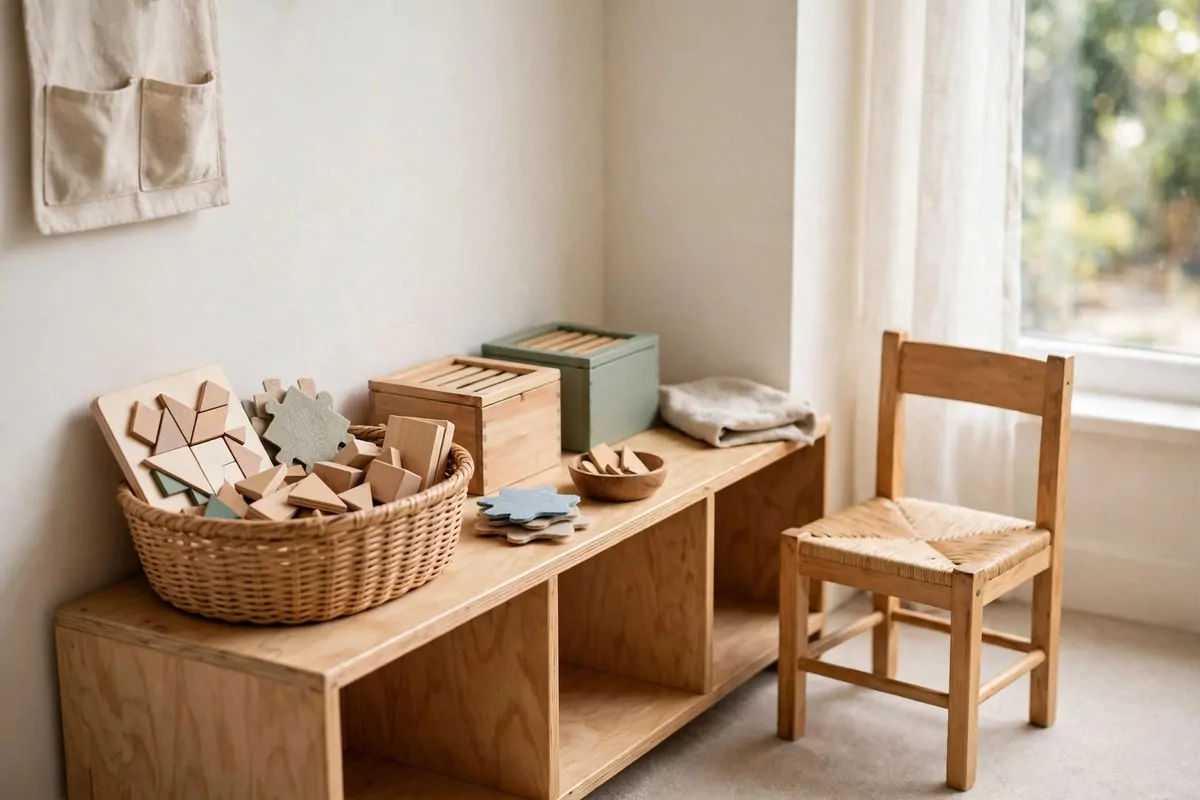
Fast finishers need somewhere to go. Otherwise they become the classroom entertainment committee.
Set up one small station. A basket on a low shelf. Puzzles, drawing prompts, quiet brain games.
One chair. One basket. That is the whole station. It fits in two square feet.
Teach the rule early. Finish your work, check it, then choose the basket. No wandering first.
Rotate the basket contents monthly. Old puzzles get boring. New ones feel like a treat.
Keep it quiet only. Noisy toys ruin the calm for kids still working. Quiet hands, quiet station.
I add a few challenge cards each month. Riddles, drawing challenges, tiny research missions. Kids beg for them.
It also buys you time. While fast finishers are busy, you can help the kids who need you most.
A tiny station that solves a huge daily problem. Every small classroom needs one.
21. The Job Chart Board
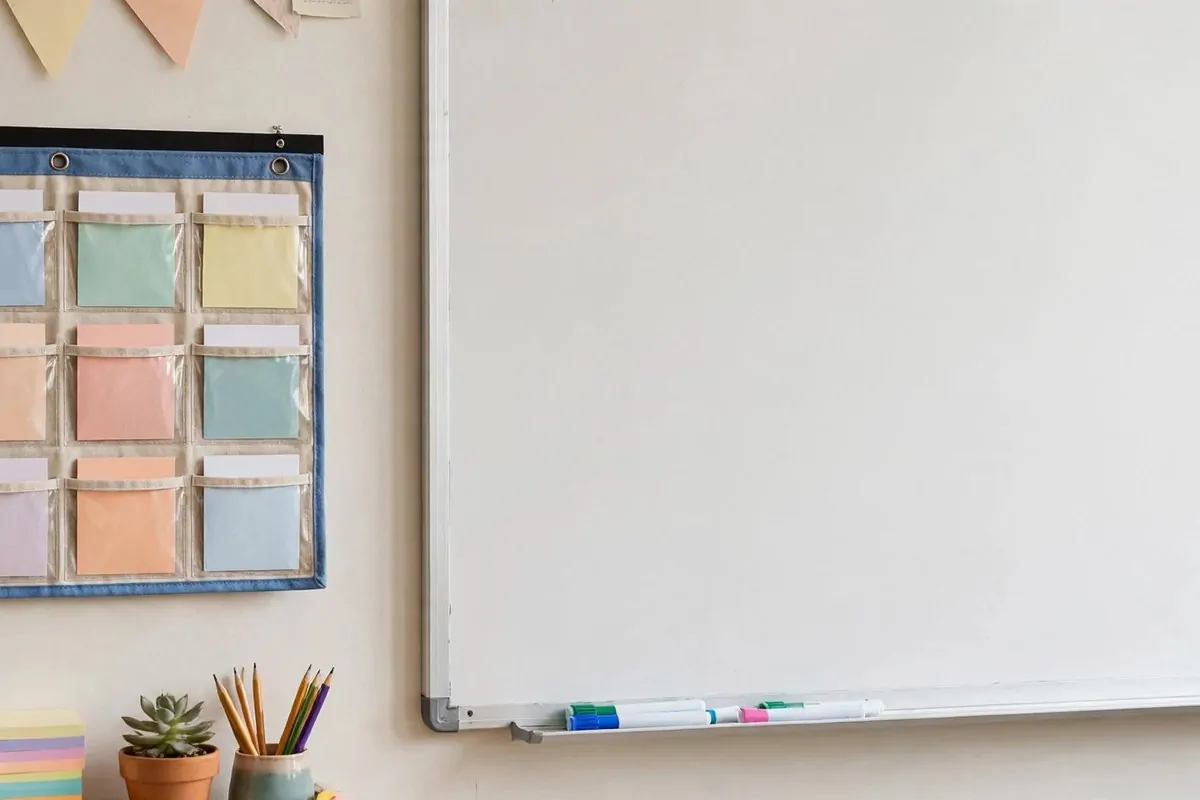
Classroom jobs teach responsibility. A tiny wall chart runs the whole system.
Hang a small pocket chart near your whiteboard. Each pocket holds a job card with a kid’s name.
Rotate jobs weekly. Paper passer, line leader, plant waterer, cart captain. Everyone gets a turn.
Kids check the chart themselves each morning. No announcements needed. The wall does the talking.
Keep the chart small. One pocket per job. If it sprawls across the wall, it becomes wallpaper.
Add pictures for young kids. A watering can picture means plant waterer. No reading required.
I let kids apply for favorite jobs with a short note. It practices writing and makes the jobs feel earned.
When kids own the room’s jobs, they own the room’s tidiness too. Pride does the cleaning for you.
Small chart, big ownership, tidy classroom. Jobs are magic.
22. The No-Name Tray Shelf
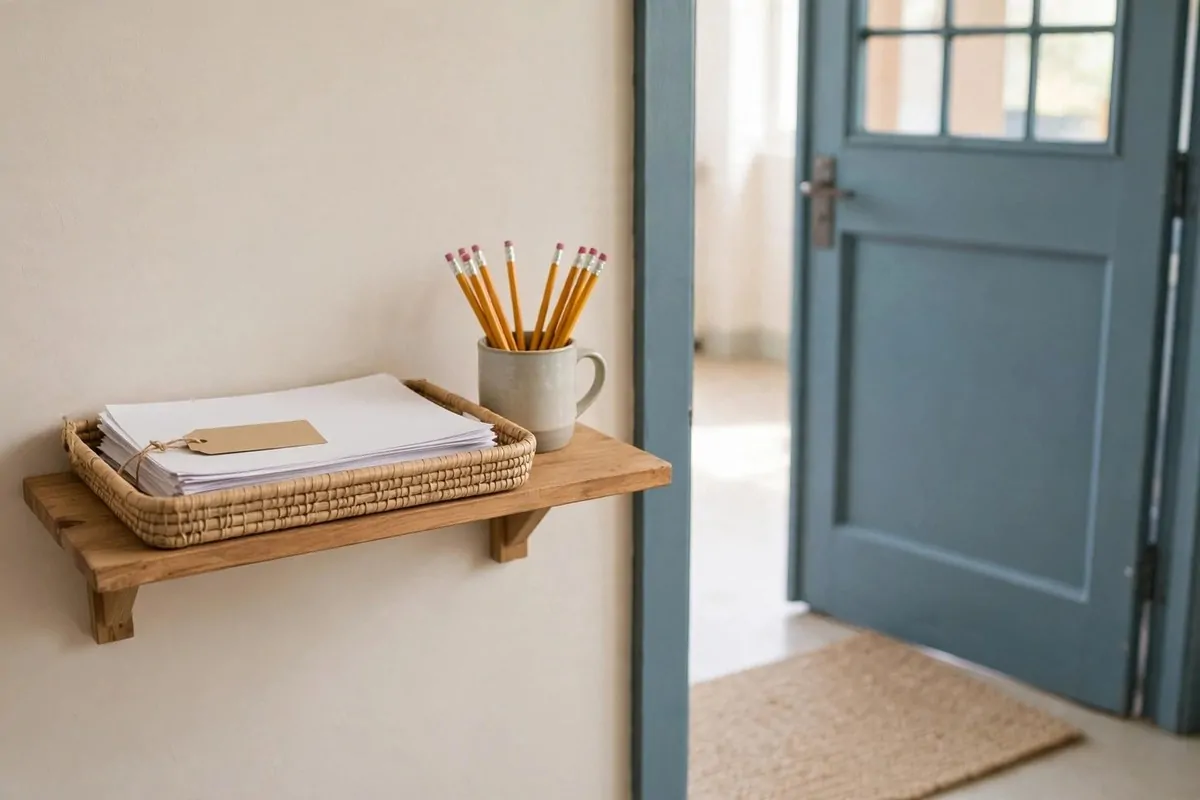
Every classroom has mystery papers. No name. No owner. They pile up and haunt your desk.
Give them one home. A single tray on a small shelf near the door. The no name tray.
Teach kids to check it daily. Lost work lives there for one week. Then it gets recycled.
One tray, not five. If the tray overflows, that tells you something. Time to remind everyone about names.
Put a pencil cup beside it. Kids can add their name on the spot and rescue their paper.
I empty mine every Friday. Most weeks it holds three or four papers. Every one finds its owner.
Label the tray clearly. Big letters. Even visitors understand the system in one glance.
It also saves your sanity during grading. No more mystery papers mixed into the neat stacks.
One tray ends the paper pile problem forever. Small fix, daily relief.