23 Library Display Ideas That Make Readers Stop and Look

Want to make a small bet? I bet the best book you own is invisible right now.
It is sitting on your shelf with its spine facing out, squished between ten other spines, doing absolutely nothing to catch your eye. You walk past it every day. You have stopped seeing it.
Bookshops know this. They never just line books up and walk away. They tilt a cover toward the light. They stack three books by the door. They wrap one in brown paper and call it a blind date. And suddenly people stop, pick things up, and buy books they did not plan to buy.
You can do the same thing at home. These Library Display Ideas borrow the little tricks real bookshops and libraries use to make readers slow down. Nothing here costs much. Most of it is just books you already own, shown a new way.
Here are the 23 ideas I keep coming back to.
1. Face the Covers Out, Not the Spines
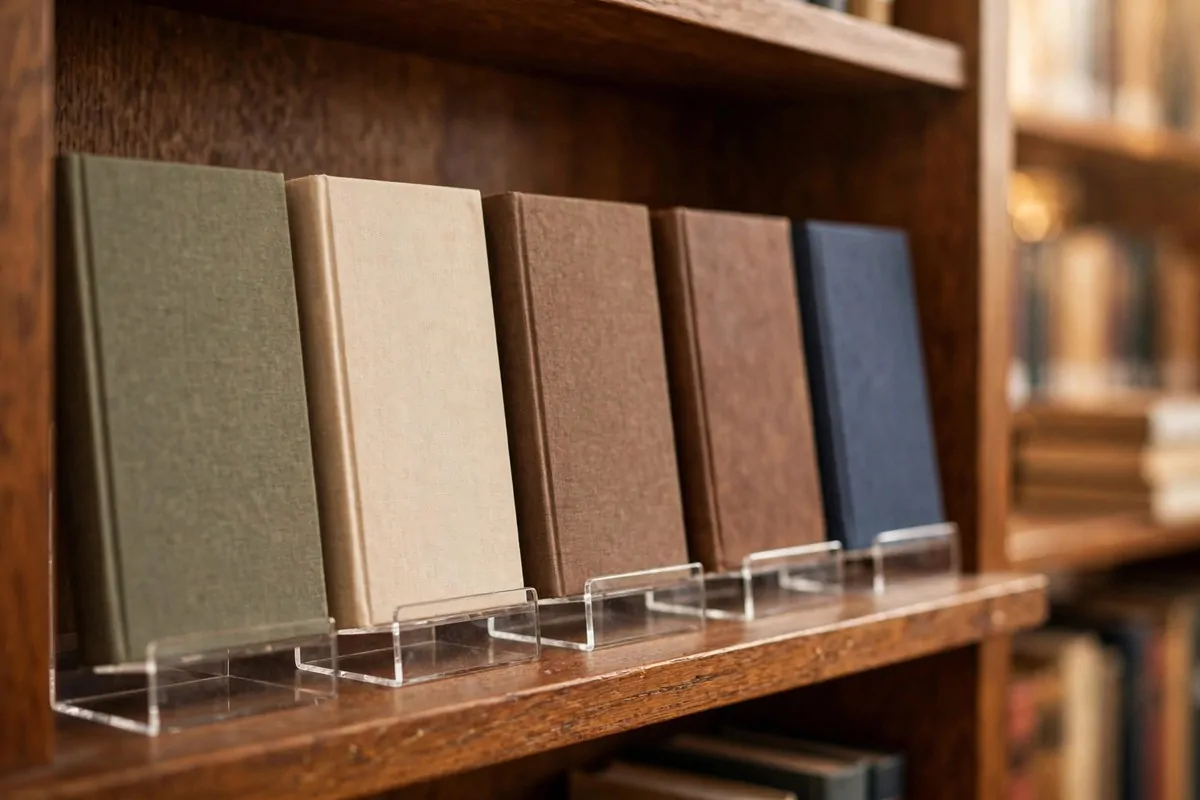
This is the single biggest trick in this whole list. A spine is just a narrow strip of color with tiny letters. A cover is art. It has a face, colors, a mood. It pulls you in.
Think about how you pick a book at a shop. You grab the one with the cover that caught your eye from across the room. Nobody falls in love with a spine.
You do not need to face every book out. That would take ten shelves. Just pick five or six favorites per shelf and turn them around.
A cheap plate stand or a small photo frame holds a book upright on a shelf. You can find these at the dollar store. I use the little wooden easels from the craft aisle.
Lean one book against the bookends at the end of a row. That one turned-out cover changes the whole shelf. It breaks the straight line of spines and your eye lands right on it.
This works best on the shelves at your eye level. Face-out books up high get ignored. Put them where you actually look.
I redo mine every month or so. I pull a few new favorites forward and push the old ones back. It makes the shelf feel fresh without buying a single new book.
Honestly, this one idea will change your library more than any other. Try it on one shelf tonight and see how different it looks in the morning.
- Use small plate stands, photo frames, or mini easels to hold books upright
- Turn five or six books per shelf, no more, so the display stays calm
- Place face-out books at eye level where they get noticed first
- Rotate the picks monthly to keep the shelf feeling new
One more tip. Put a face-out book right next to a tall stack of books on a table. The pair works like a little spotlight.
2. Build a “Staff Picks” Shelf Like a Bookstore

Bookshops put little handwritten cards on their favorite books. Staff picks. You read them because a real person loved that book enough to say so. It feels like a friend whispering a secret.
You can do this with your own books. You are the staff. Pick the books you would press into a friend’s hands.
All you need is a small section of one shelf and a stack of little cards. Index cards cut in half work great. Slip one into the pages of each pick.
Write two lines on each card. What the book is about in your own words, and why you loved it. Keep it short. “Made me cry on the train. In a good way.” That is enough.
Kids love this one. Give them their own little staff picks row. My friend’s daughter runs her shelf like a tiny shop, and her friends actually borrow from it.
Put the picks shelf somewhere people pass by. The end of a hallway bookcase. The shelf by the reading chair. Hidden picks help nobody.
Change the picks when your mood changes. That is the fun of it. Your shelf tells people what you are into right now.
You know what makes this even better? Asking guests to add their own pick. Leave a few blank cards and a pen in a little cup. Your shelf becomes a conversation.
I keep a small stack of blank cards in my nightstand now. When I finish a book I love, I write the card right away before the feeling fades.
3. Put a New Arrivals Table Near the Door
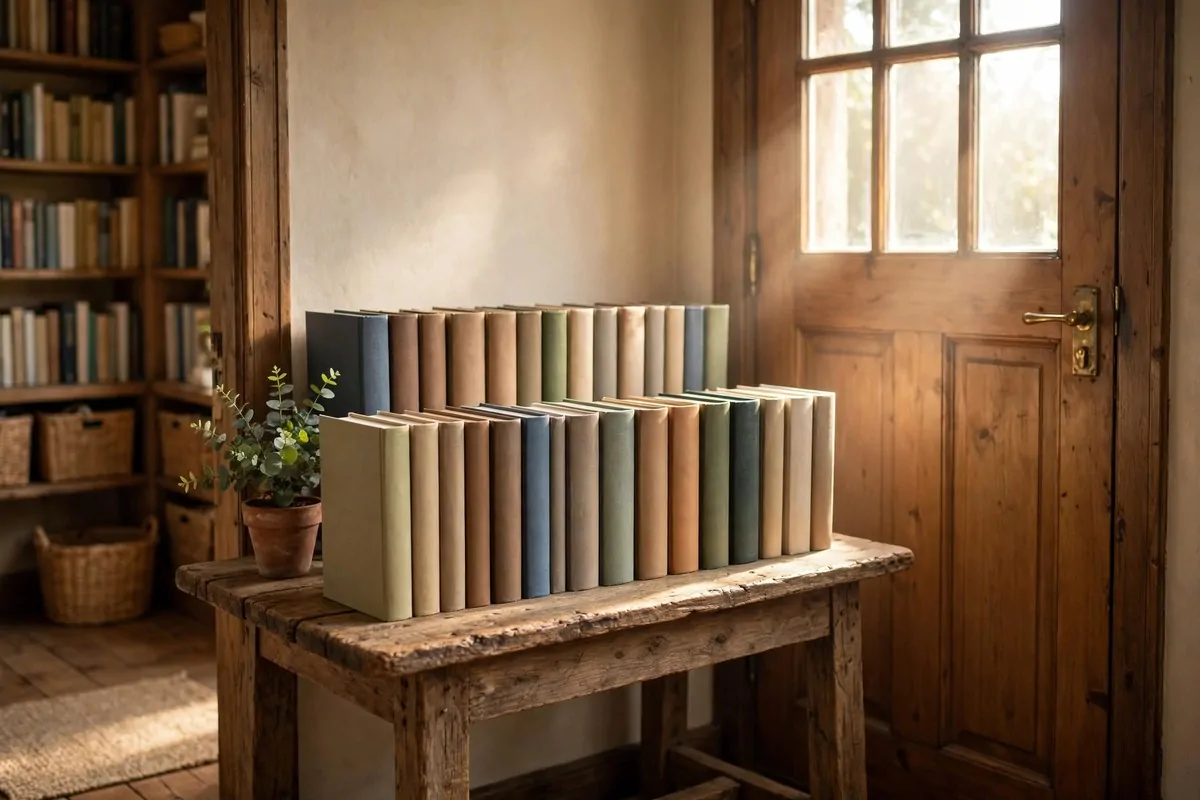
Every library has a new books table. There is a reason it sits right where you walk in. New things pull us like magnets. Our eyes go to them before anything else.
At home, “new” just means new to the house. A thrift store find. A gift. A library book you brought home. They all count.
Pick the closest table or shelf to your front door. That is your arrivals table. Even a small side table works.
Lay the new books face up in a neat row. Not stacked in a pile. Laid flat so every cover shows. Leave a little space between them so each one gets its own moment.
Add one small thing that is not a book. A little plant. A candle. Something alive or warm. It makes the table feel styled, not dumped.
Keep this display small. Three to five books. If you pile twenty books there it stops being a display and becomes a mess again.
When a book gets old news, move it to its real shelf. Then the table has room for the next new thing. The cycle keeps your home feeling like new books are always arriving.
Here is a trick I learned from a librarian friend. Put the arrivals table where the morning light hits it. A book in a sunbeam looks twice as tempting.
Honestly, my arrivals table is just a stool by the door. Nobody cares about the furniture. They care that there is something new to look at.
4. Change Your Theme Table Every Month

This is my favorite display to plan. Once a month, you pick a theme and gather every book in the house that fits it. Suddenly old books feel brand new.
October is easy. Ghost stories. Mysteries. Anything with a dark cover. I add a little pumpkin and some dried leaves and the whole table looks like fall.
December gets travel books and snowy novels. March gets gardening books and anything green. Summer gets beach reads and books set in hot places.
The theme does not have to be a season. It can be a color. A country. A mood like “books that make you laugh.” One month I did “books with blue covers” and it looked amazing.
Pull the books from all over the house. That is the fun part. You will find books you forgot you owned. Half the time I end up re-reading one.
Lay them out on a table or a wide shelf. Face the best covers out. Add two or three props that match the theme. Keep it simple.
Here is a year of themes to steal:
| Month | Theme idea | Props to add |
|---|---|---|
| January | New beginnings and fresh starts | A new notebook, a white candle |
| April | Gardens and growing things | Seed packets, a small potted herb |
| July | Journeys and faraway places | Postcards, a tiny globe |
| October | Mysteries and ghost stories | Dried leaves, a lantern |
| December | Cozy winter reads | Fairy lights, pinecones |
When the month ends, the books go back to their shelves. The table goes quiet for a day. Then you start the next theme, and it feels like Christmas morning again.
Take a photo of each theme table before you take it down. I have a whole folder of mine. It is like a little diary of my reading year.
5. Wrap Books for a Blind Date With a Book
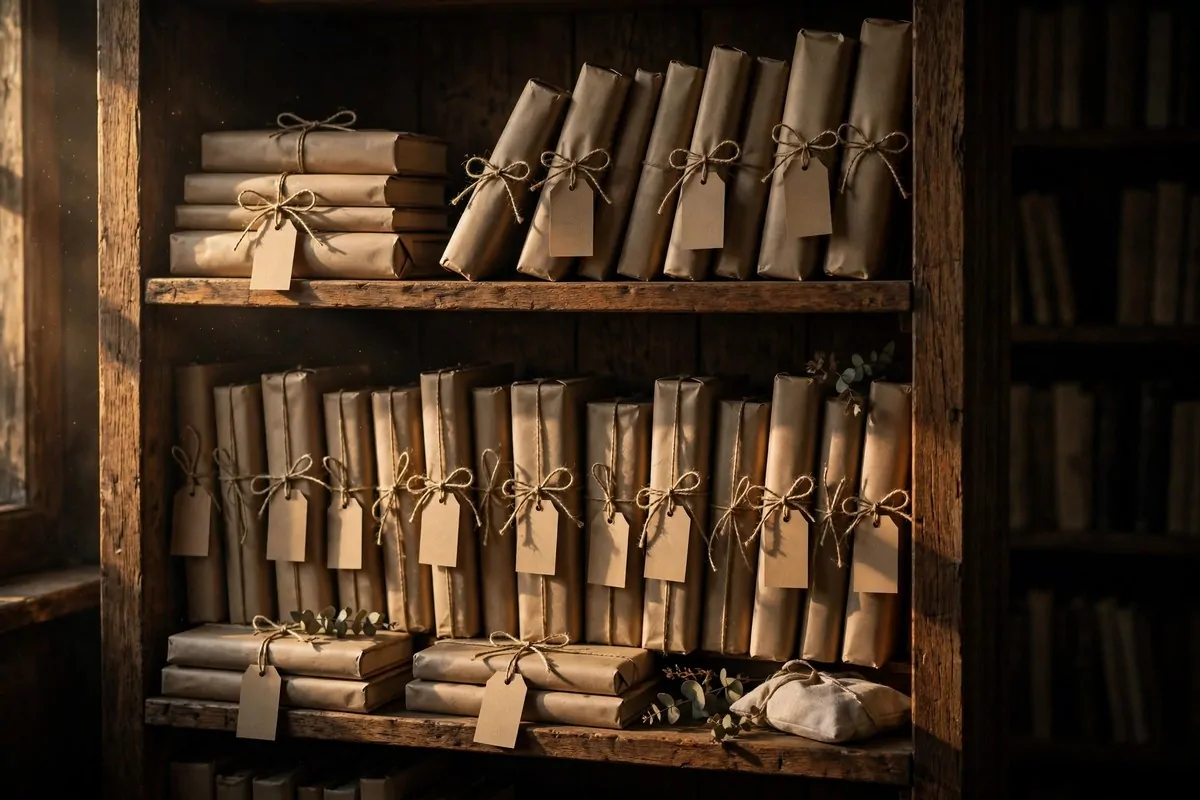
This one always gets a gasp. You wrap a book in plain brown paper, tie it with string, and stick a little tag on it with three clues. Nobody can see the cover. They have to pick by the clues alone.
Bookshops do this around Valentine’s Day and it sells out every time. People love a mystery. The not-knowing is the whole fun.
Use kraft paper or even a brown paper grocery bag. Wrap it like a present. Tie twine or ribbon around it in a bow.
The tag is the important part. Write three short clues. The mood, the setting, one tiny plot hint. “A stormy island. A missing sister. You will not sleep.” That sells a book better than any cover.
Do not wrap your favorite book in a way that hides it forever. Put a tiny mark on the back of the tag so you know which book is which. I write the title in pencil where nobody looks.
Make a small basket of these. Five or six wrapped books in a basket on the coffee table. Guests cannot resist picking one up and reading the clues.
Kids go wild for this. Wrap a few of their books and watch them trade clues like little detectives. It works on grown-ups too, trust me.
This is also a sweet gift idea. Wrap a book for a friend with clues instead of a card. It takes ten minutes and it feels so personal.
The best part? You end up re-reading the book yourself, because wrapping it reminded you how good it was.
One warning. Do not wrap library books you have to return. Only your own books. The librarian will not love the tape.
6. Give Each Genre Its Own Little Zone
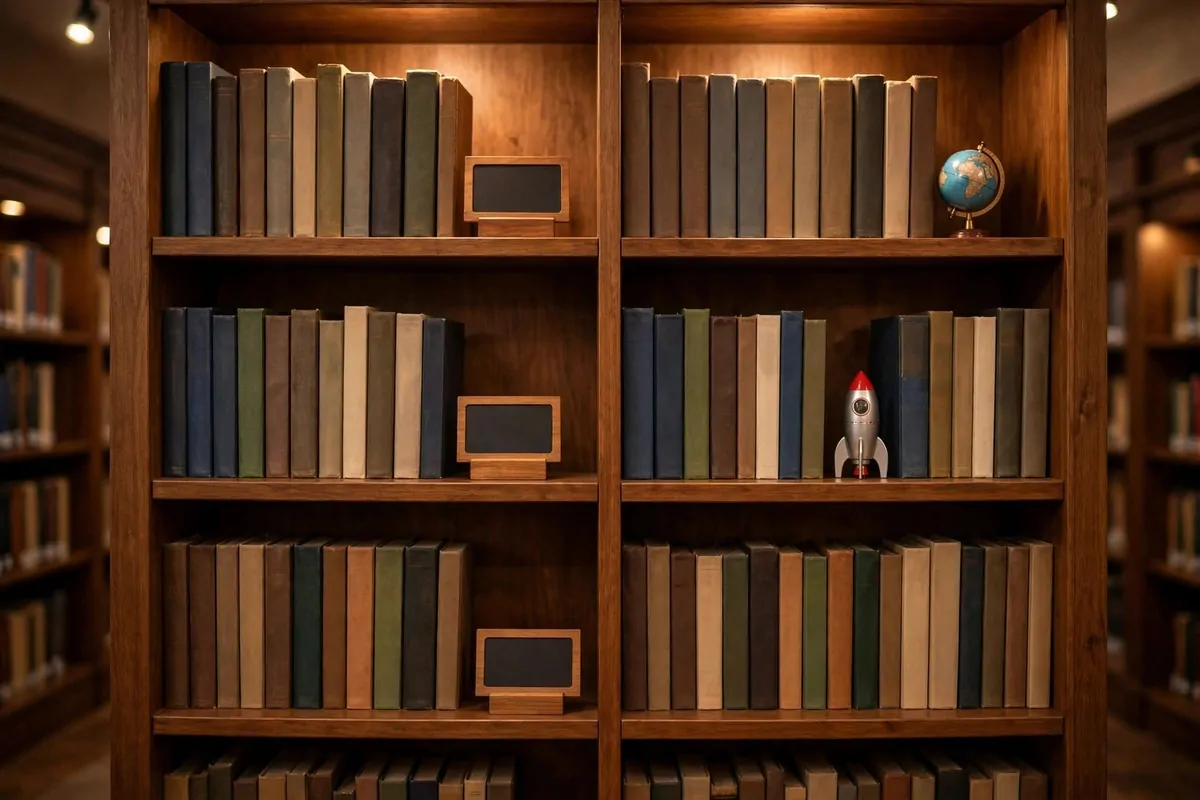
Bookshops do not mix everything together. They have zones. Mystery over here. Cookbooks over there. You find what you love fast, and you browse longer because everything around you is your thing.
At home, a genre zone can be as small as one shelf. Mysteries get a shelf. Cookbooks get a shelf. Poetry gets a shelf. That is it. That is the whole system.
Make a tiny sign for each zone. A folded index card works. “Mysteries,” “Cookbooks,” “Books That Make Me Cry.” Funny signs make people smile and they make the zones feel real.
Add one little object that matches the genre. A tiny globe on the travel shelf. A wooden spoon on the cookbook shelf. A toy dinosaur on the kids’ shelf. These little markers act like landmarks.
This helps guests too. When a friend visits, they drift to the zone that matches their taste. They always find something. Your books get borrowed more.
Kids’ zones work best at their height. Put the picture books on the low shelves with the covers facing out. Sit on the floor and check what they see. That is the view that matters.
Do not stress about perfect sorting. A book can live in the wrong zone for a month. Nobody is grading you. The zones are for browsing, not for rules.
- Start with three zones: the three kinds of books you own most
- Use folded cards or small chalk signs as zone markers
- Place one matching object per zone as a visual landmark
- Keep kids’ zones low, at their eye level
I put my cookbooks in the kitchen once, in their own little zone by the stove. I cooked from them twice as much that month. Out of sight really is out of mind.
Once a year I walk my zones and fix the strays. It takes twenty minutes and feels like visiting old friends.
7. Spotlight One Book of the Week
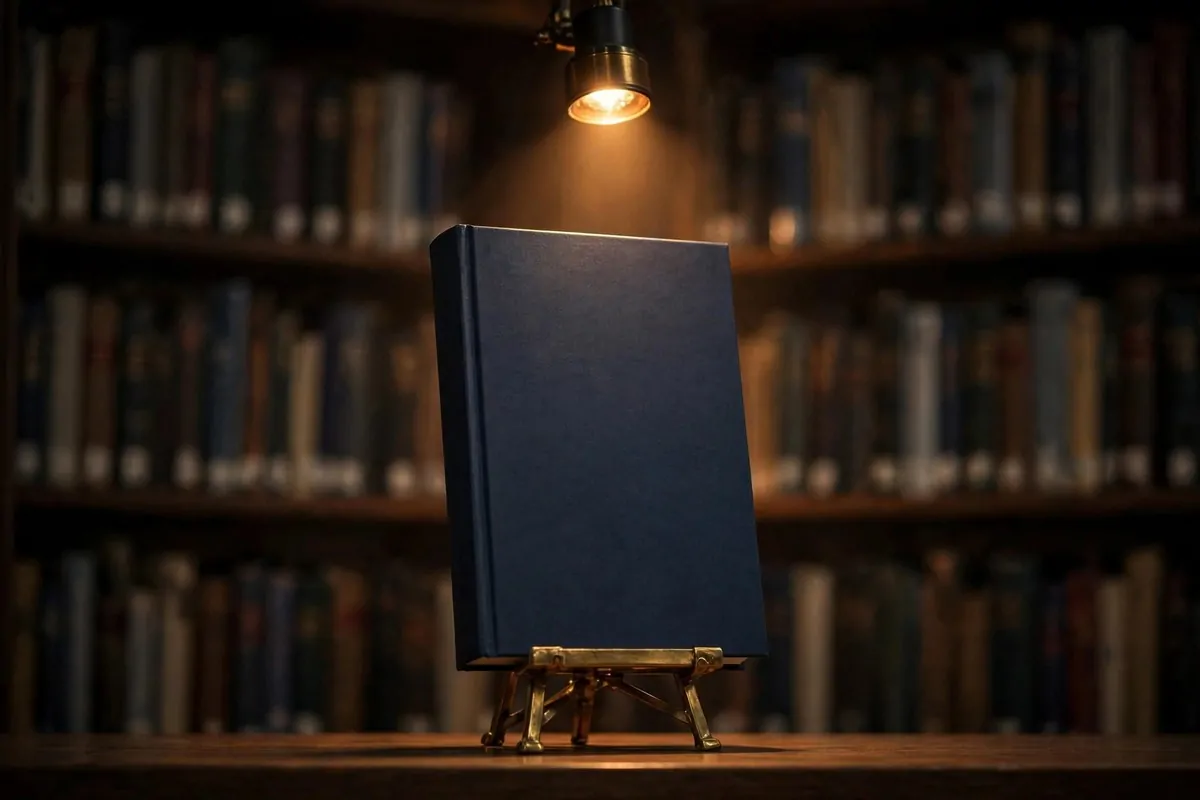
Pick one book. Just one. Give it a pedestal, a little light, and the whole stage. It feels silly at first. Then you see how powerful it looks, and you get it.
Bookshops do this with a single copy on a stand by the register. That one book gets more attention than a whole wall of spines. Our brains love a chosen one.
A small easel or plate stand is your pedestal. Put the book of the week on it, cover facing out. Set it on the shelf where everyone looks, or on the hall table.
If you have a little lamp or even a candle nearby, aim it at the book. Light is a magnet. A book in a pool of warm light looks like it is waiting for you.
Write a tiny card that says why this book won the week. “Because it rained all weekend and this was perfect.” One line. Tape it to the easel or lean it against the book.
Change the book every Sunday night. Make it a little ritual. I pick mine while I drink my Sunday tea. It is a nice way to close the week.
Let the kids pick the family book of the week sometimes. They take it very seriously. My nephew once guarded his pick like it was a trophy.
This also works as a reading nudge. Put the book you have been meaning to read on the pedestal. You will feel guilty walking past it, and guilt works.
My current book of the week sat on my shelf for two years. On the pedestal, it lasted four days before I finished it.
8. Set Up a Welcome Shelf in the Entryway
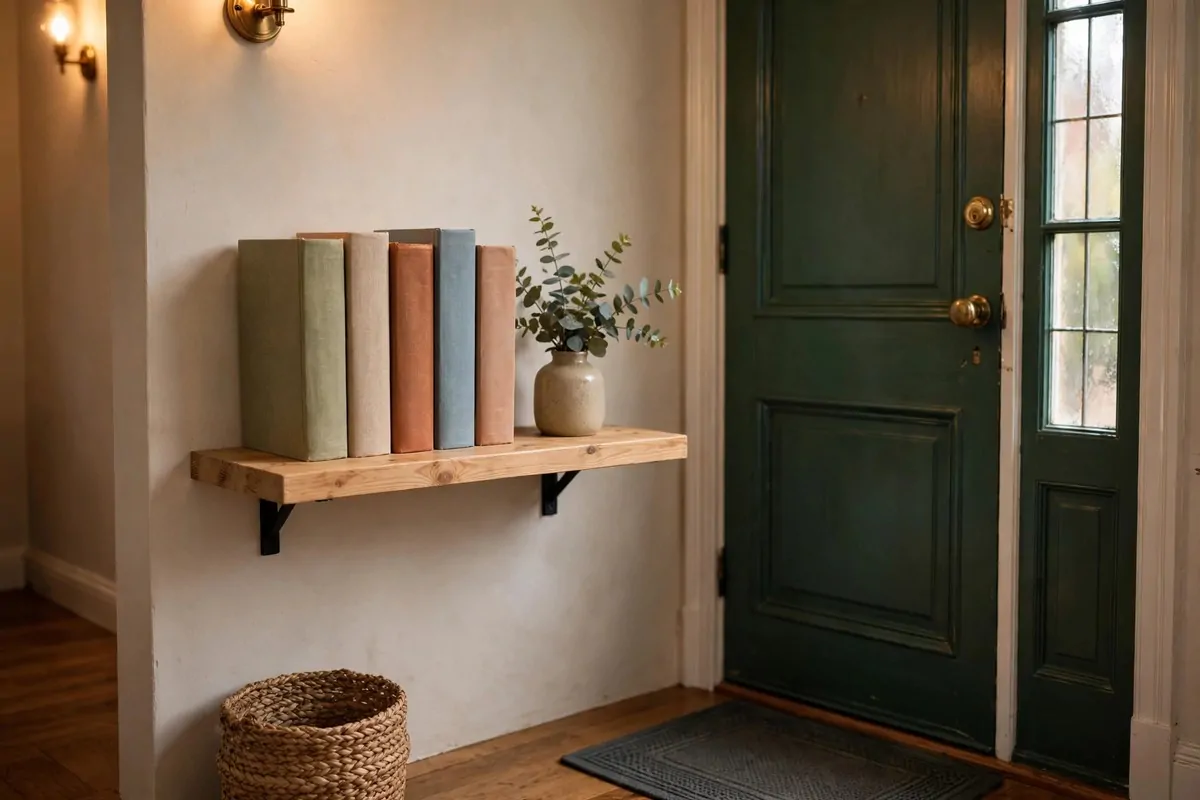
The first thing guests see in your home sets the mood. A little shelf of books by the door says “readers live here” better than anything else.
You do not need a big bookcase. A small wall shelf or even a stack of two crates works. The entryway just needs a taste of books, not the whole library.
Pick books that say something about you. Your favorites. The beautiful ones. The funny ones. Think of it as your home’s little handshake.
Face the covers out. This shelf is all about first impressions, so every book should show its best face. Three or four covers is plenty.
Add one living thing. A small plant. Fresh flowers. It keeps the shelf from feeling like a museum. Books plus something alive always looks good.
This shelf is also perfect for the “take one” books. If you have books to give away, put them here with a little sign. They disappear fast, and it starts conversations.
Keep it dusted. The entryway shelf gets dusty faster than other shelves because of the door traffic. A quick wipe when you come home keeps it pretty.
Change the books with the seasons, or whenever you finish a great one. A stale welcome shelf is worse than no shelf at all.
I keep a guest book on my welcome shelf too. Not for signatures. It is a notebook where visitors write down a book they loved. I have found some of my favorites that way.
9. Pair Books With “If You Loved This, Try This”
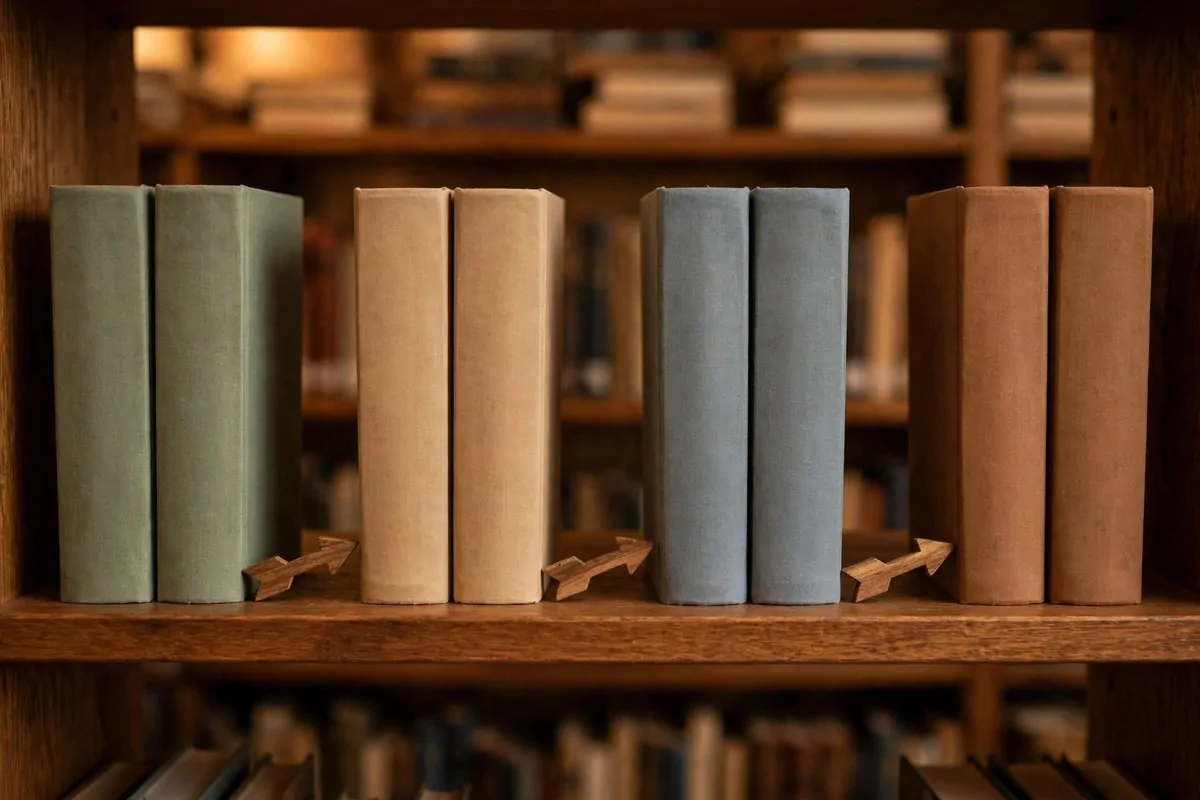
Libraries put little signs on shelves that say “If you like this author, try these.” It works because it removes the scary part of picking a new book. Someone already did the guessing for you.
At home, you are the expert on your own shelf. You know which books feel alike. Pair them up. Put them side by side.
Take your favorite book and put the book that felt most like it right next to it. Lean a little arrow card between them. That is the whole display.
This is magic for series lovers. Finished a series and feel empty inside? Your pair shelf says “here is what fills that hole.” Past-you helps future-you.
It also helps guests. A friend loved one of your books? Point at the pair shelf. You look like a genius librarian and your friend leaves happy.
Kids love pair shelves too. “If you loved the dragon book, try the wizard book.” They feel like the shelf understands them.
You can make the pairs funny. Pair a cookbook with a travel book and call it “dinner in Italy.” Pair a scary book with a funny one and call it “scare yourself, then laugh it off.”
Keep the pairs to one shelf so it stays a fun game, not a whole system. Five or six pairs is perfect.
I paired a book about baking bread with a novel set in a bakery. A friend saw it, laughed, and borrowed both. She returned them with flour on the covers. Best review ever.
10. Make an Award Winners Shelf With Gold Stars
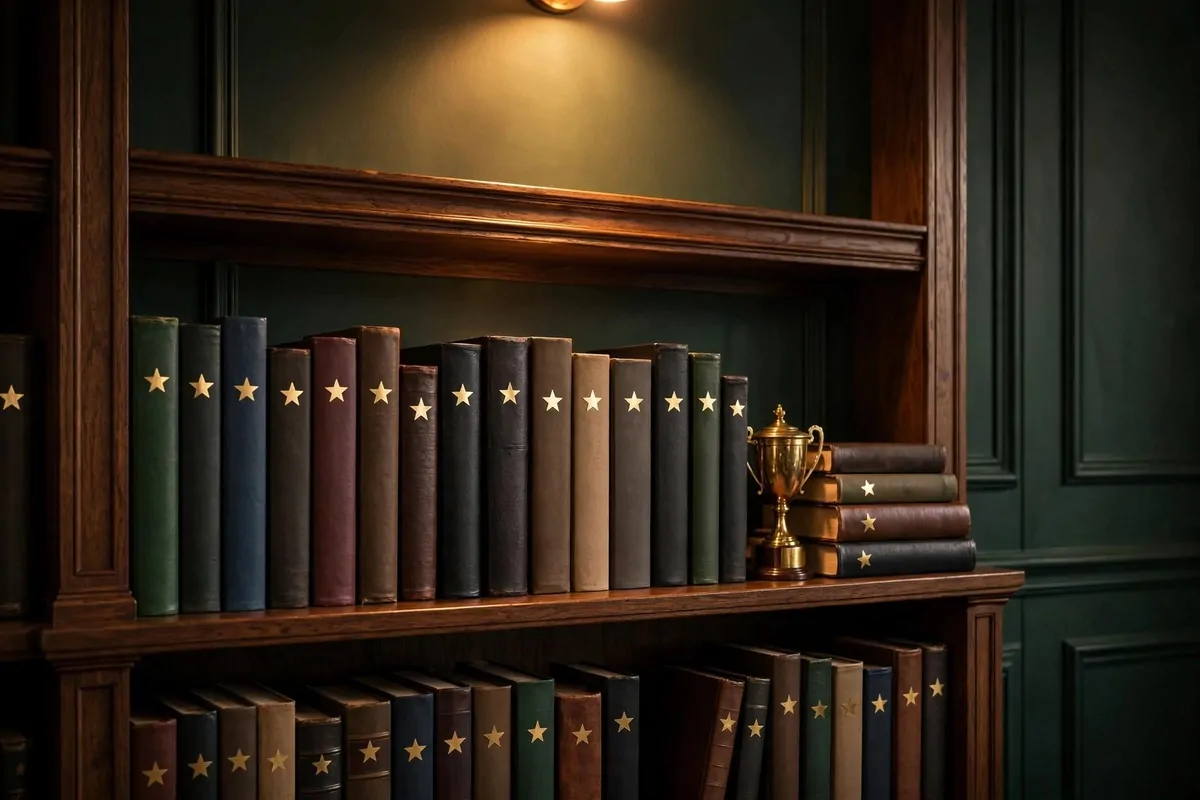
Gold stars make everything feel special. Stick one on a book and suddenly it looks important. That is why libraries mark their prize winners, and you should too.
Gather every award-winning book you own. Pulitzer, Booker, Newbery, whatever you have. They get their own shelf. The shelf of honor.
Put a little gold star sticker on the cover of each one. You can buy a whole sheet for almost nothing. The stickers catch the light and the eye.
Add one small trophy-ish thing. A little brass cup. A gold candle holder. It does not have to be real. It just has to say “these books won something.”
Face the covers out on this shelf. These books earned it. Let people see what all the fuss was about.
This shelf has a side benefit. It reminds you to actually read the fancy books you bought and never opened. A gold star is a gentle guilt trip.
Write the award name on a little card and tuck it in. “Won the big prize in 2019.” It gives the book a story beyond its story.
If you have kids, make them their own medal shelf. Sticker stars on their favorite books. They will show it to every visitor with huge pride.
- Collect all your prize-winning books onto one shelf of honor
- Add gold star stickers to each cover for instant importance
- Face every cover out and add one small trophy-like object
- Note the award name on a tucked-in card for extra story
Honestly, I bought half my award winners because the sticker made them look smart on the shelf. No shame. The display did its job on me first.
11. Save a Corner for Local Authors
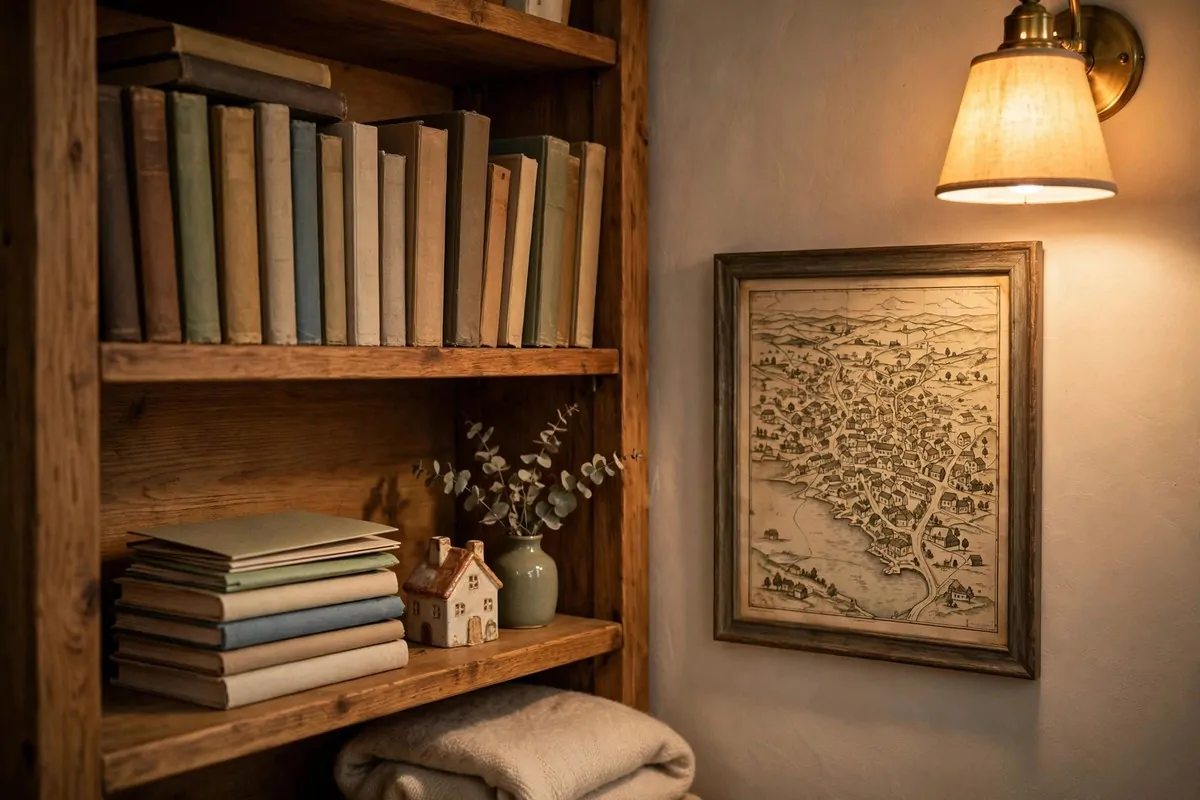
Every town has writers. Most of us own their books and have no idea. A local authors corner fixes that, and it feels so personal.
This can be a small shelf or even a stack on a side table. It does not need to be big. Two or three local books is enough to start.
Put a little map or a photo of your town beside the books. It connects the books to the place. People pick them up just to see if they recognize the streets in the story.
If you know the author, add a note. “She lives three streets over.” That one line makes the book ten times more interesting. A book by a neighbor hits different.
This corner is great for gifts from local shops. Bookshops often have a local section. Next time you visit, ask. You will find treasures.
Kids’ local books are wonderful here. A picture book set in your town makes a child light up. They point at the pages and say “I have been there!”
Rotate this corner when you find new local books. It grows slowly, like a garden. That is part of the charm.
I found out my neighbor wrote a cookbook. It sat in my kitchen for a year before I knew. Now it has its own spot, and I have tried half the recipes.
Ask at your library about local authors too. Librarians love this question. They will hand you a list with a big smile.
12. Put Out a Guess-the-Book Jar
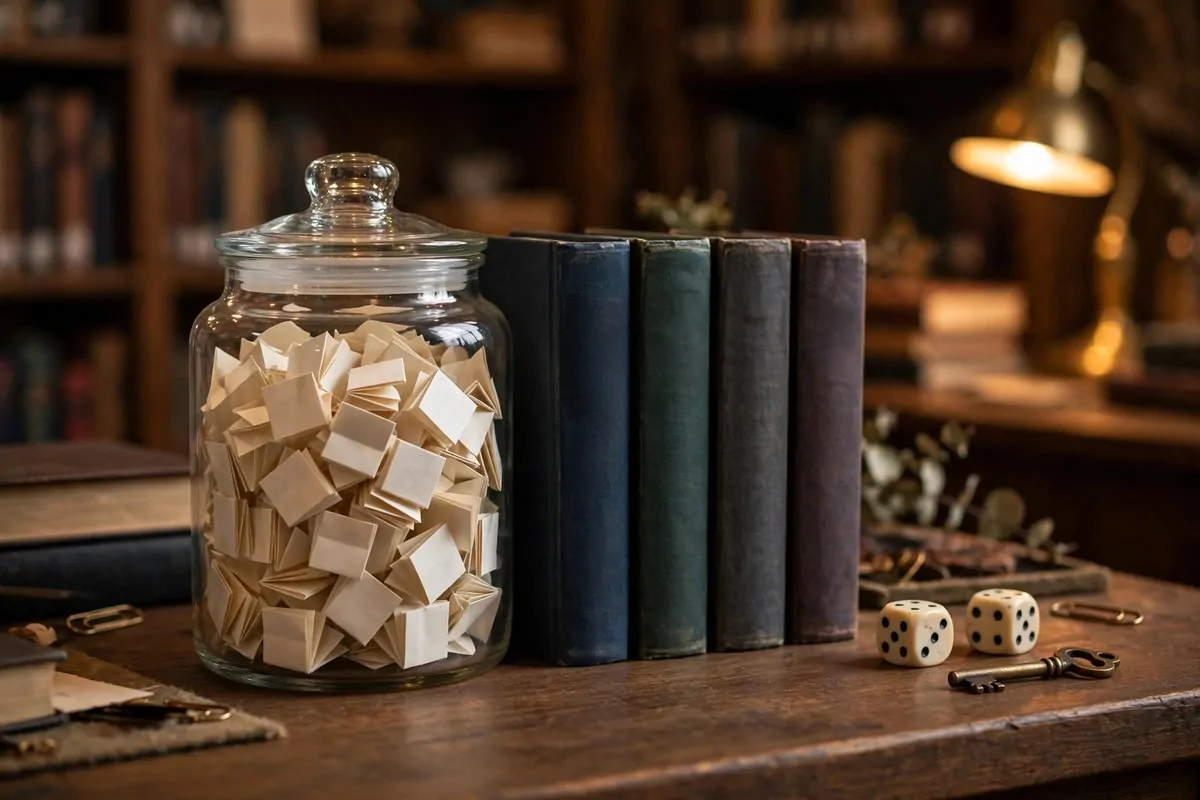
This one turns your display into a game. A glass jar. Some folded slips of paper. A question about books. Everyone who walks past has to play.
The classic version is “guess how many.” Fill the jar with something bookish. Bookmarks. Tiny pencils. Chocolate coins wrapped like gold. People guess the number and write it on a slip.
Or make it a quiz jar. “Which book has a character named…?” Drop the question in, and the answer slips go in the jar. Pull a winner at the end of the week.
Put the jar right next to the books the game is about. The display and the game feed each other. People read the clues, then pick up the books.
Kids are obsessed with jars. They will shake it, count it, argue about it. A guess-the-book jar in a kid’s reading corner is basically a reading program in disguise.
Change the game monthly. New jar, new question, new prize. A used bookstore gift card. A fancy bookmark. The prize does not need to be big. Winning is the fun.
This works at parties too. Put the jar on the snack table with a bookish question. It gives shy guests something to do with their hands and starts conversations.
Keep the slips and a pen right there. If people have to hunt for a pen, they will not play. Make it easy.
My jar once held dried beans and the question was “how many pages in my favorite book.” Three guests actually looked it up. That is engagement you cannot buy.
13. Add Props That Match the Story

This is the oldest trick in the bookstore window. You do not just show the book. You show the world inside the book. A mystery gets a magnifying glass. A travel book gets postcards. A cookbook gets a wooden spoon.
Props tell the story before anyone reads a word. They turn a stack of books into a little scene. People stop because the scene is interesting, and then they notice the books.
Raid your own house first. You already own the props. A lantern. A map. A teacup. A shell from the beach. Look at your books, then look around your rooms. The matches are everywhere.
Keep it to two or three props per display. More than that and it becomes clutter. The books should still be the stars. Props are the backup singers.
Mystery corner? Magnifying glass, an old key, a little lantern. Travel shelf? Postcards, a tiny globe, a camera. Garden books? Seed packets and a small terracotta pot.
Change the props when you change the theme. This keeps your displays feeling alive. A display that never changes becomes wallpaper. Your eyes slide right past it.
Thrift stores are prop gold mines. Old cameras, brass things, little boxes. I have a whole drawer of display props that cost me almost nothing.
This is also how you use the weird gifts you do not know what to do with. That little ceramic owl? It is now the guardian of the fantasy shelf.
The rule I follow: if the prop does not make someone want to pick up the book, it does not belong there. Props work for the books, not the other way around.
14. Use the Top of Your Shelves as a Stage
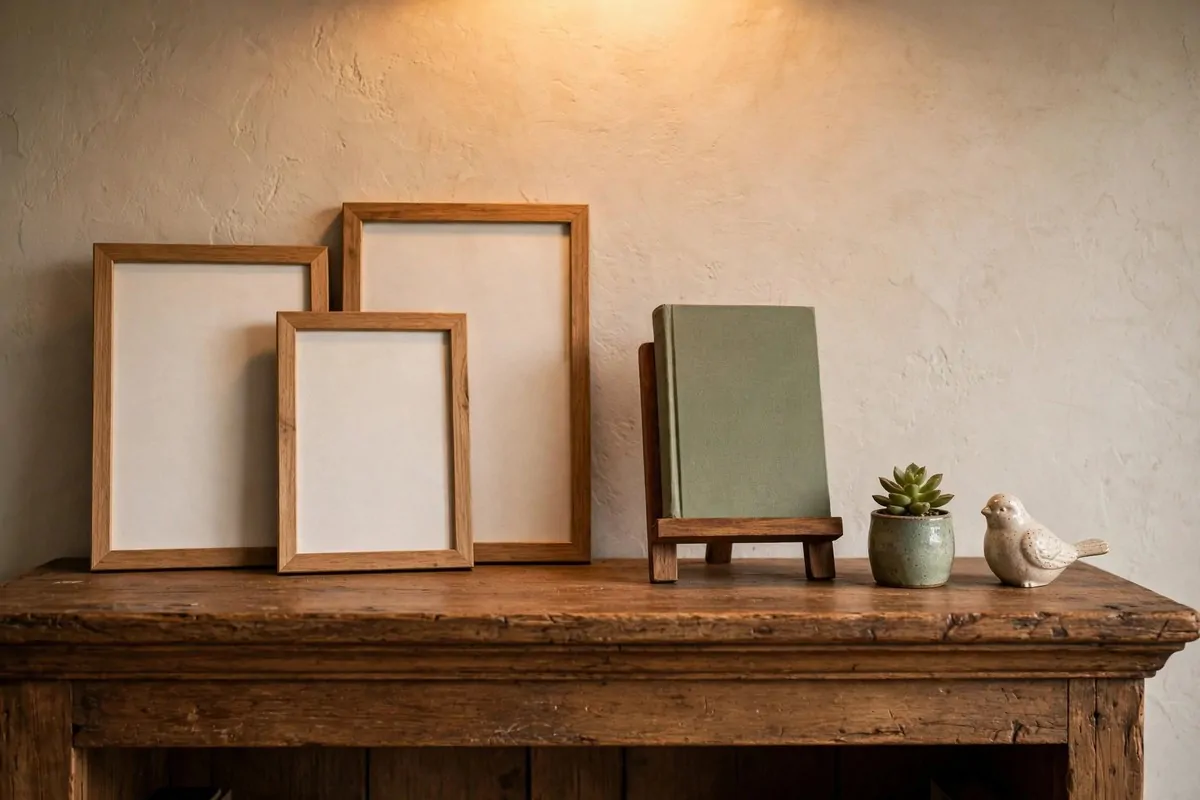
The top of a bookcase is free display space that most people waste. It collects dust and one sad plant. But it is at the perfect height to catch the eye across the room.
Think of it as a stage. A few face-out books on little stands. A framed print leaning against the wall. Something small and alive, like a succulent.
Keep the arrangement low and wide. Tall things on top of tall shelves look tippy. Low things look calm. You want calm up there.
Lean art against the wall instead of hanging it. A print leaning on top of a bookcase feels casual and easy. You can swap it in seconds when you get bored.
This is a great spot for the big beautiful books. The art books. The photo books. They are too pretty to hide spine-out on a shelf, and too big for most displays.
Leave some empty space. A crowded top looks messy from across the room. Three or four things with breathing room between them looks styled.
Dust it when you dust the shelves. The top is a dust magnet. A quick wipe keeps it looking fresh. I do mine when I water the plant up there, so I never forget.
If your shelves are built-in and go to the ceiling, use the top of a low bookcase instead. Any flat surface at eye level or above works as a stage.
- Arrange books and objects low and wide, never tall and tippy
- Lean framed prints against the wall for an easy casual look
- Show off oversized art and photo books that do not fit elsewhere
- Leave breathing room between items and dust the surface monthly
My top-of-shelf stage currently holds a book about lighthouses, a little brass lighthouse, and a print of the sea. Guests always ask about it. It is my favorite three feet in the house.
15. Try a Spinning Rack in the Corner
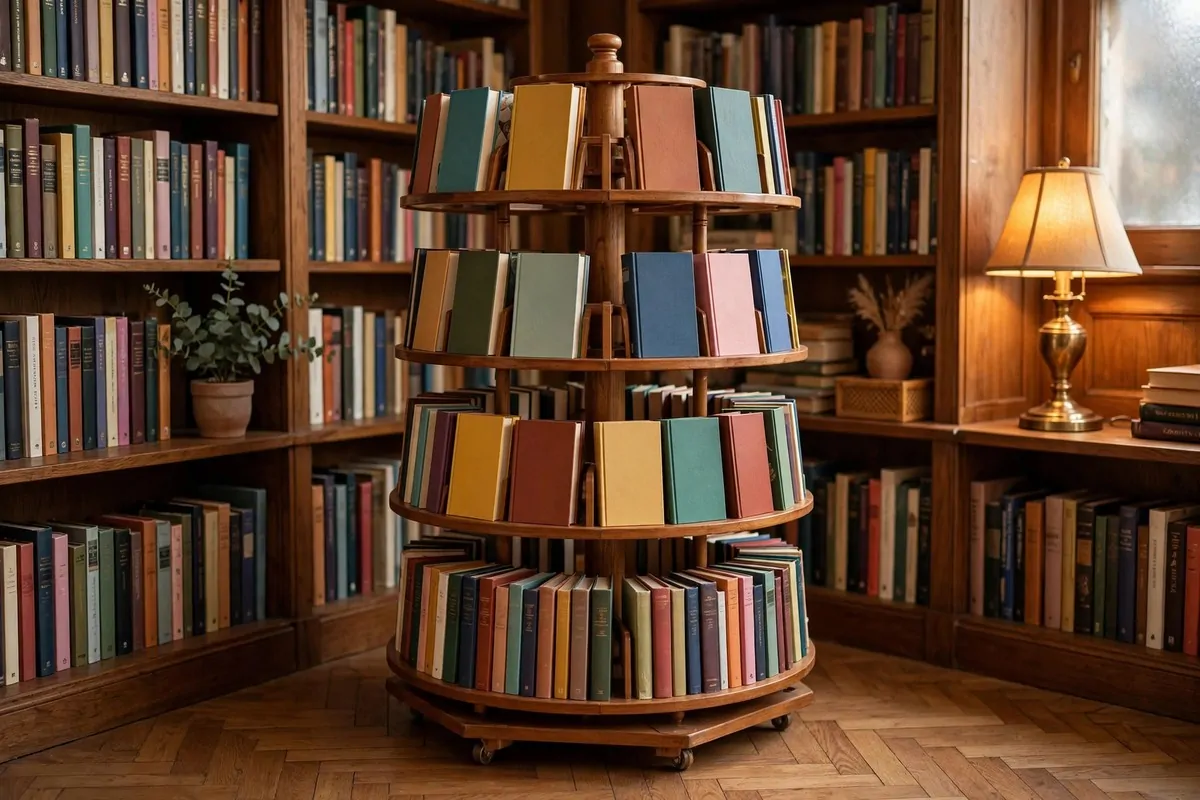
A spinning book rack is pure joy. You spin it, the books whirl past, and you grab the one that catches your eye. It turns browsing into a game.
You have seen these in bookshops. The little rotating towers near the register. They work because movement catches the eye. A still shelf is easy to ignore. A spinning one is not.
At home, a small tabletop spinner fits on a side table or a wide shelf. They hold twenty or thirty books. Perfect for paperbacks.
Fill it with the books you want to read next. Your to-be-read pile, but pretty. Every spin reminds you of the good stuff waiting for you.
Kids’ rooms love these. Picture books spin past like a merry-go-round. My niece spins hers every morning to pick her bedtime story. It is her favorite ritual.
Put the spinner in a corner that feels dead. That awkward corner by the door. The dark end of the hallway. A spinner brings it to life because people walk over to touch it.
You can find these racks secondhand all the time. Bookshops and libraries get rid of them. Check thrift stores and online marketplaces. A little wood polish makes an old one look new.
If you cannot find a spinner, a lazy susan from the kitchen works the same way. Put a ring of books on it and spin. Same joy, zero cost.
Warning: guests will spin your rack. Every single one. It is irresistible. Put your most interesting covers facing out and enjoy the show.
16. Build a Window Display That Stops Walkers
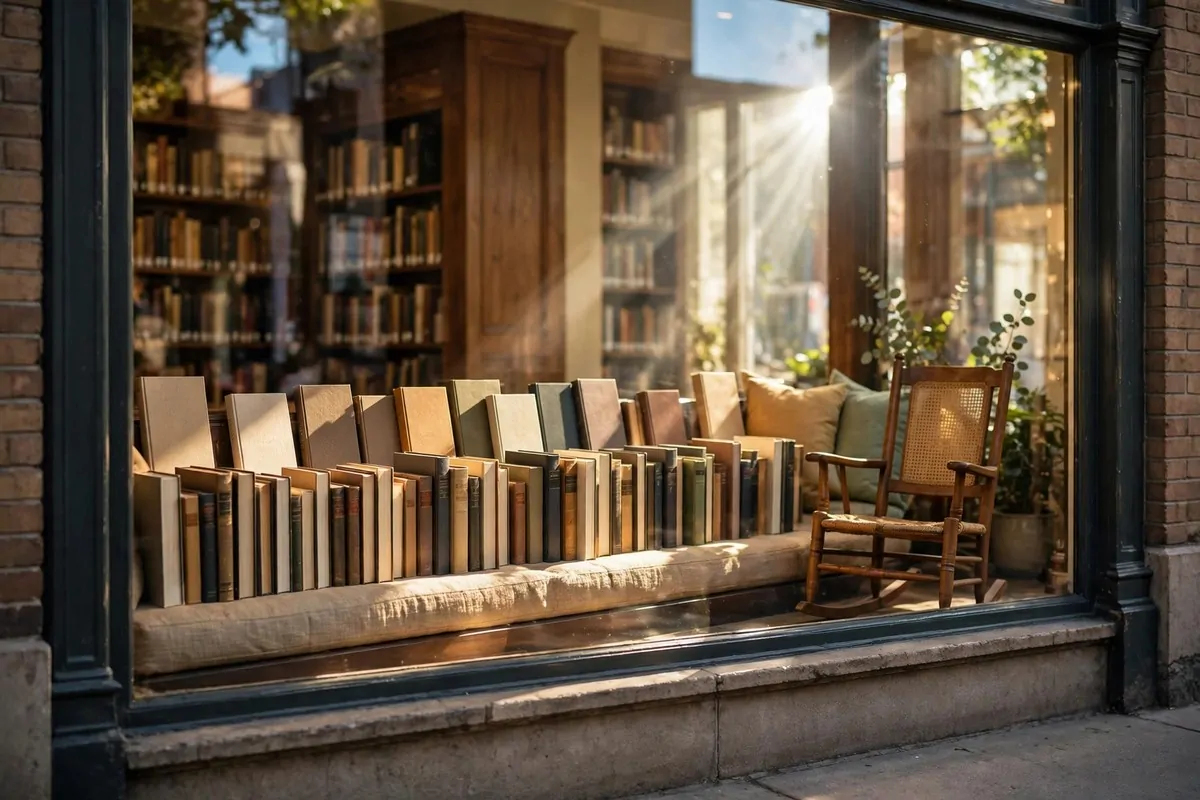
Shops spend a fortune on window displays because they work. People walking past cannot help looking. Your home windows can do the same thing on a tiny scale.
If you have a street-facing window, put books in it. Face the covers toward the glass. From the sidewalk, your window looks like a tiny bookshop. Neighbors will slow down.
A deep windowsill is perfect. Line up five or six books cover-out. Add a small plant. That is a whole display in twelve inches of space.
A window seat works even better. Arrange books along the back of the seat like a little shop shelf. Sit there with tea and you are literally inside your own display.
Change the window books with the seasons. Bright covers in summer. Cozy dark covers in winter. Your window becomes a little calendar that the whole street enjoys.
Watch out for sun damage. Direct sun fades book covers fast. If your window gets harsh afternoon sun, use books you do not mind fading, or pull a sheer curtain across.
This also works from the inside. A window display looks just as good when you are sitting in the room looking at it. The daylight behind the books makes the colors glow.
At night, a small lamp near the window display turns it into a glowing little scene. From outside it looks like a bookshop after hours. I love walking home to that.
My neighbor knocked once to ask about a book in my window. We talked for twenty minutes. A window display is a conversation starter with the whole street.
17. Hang a Chalkboard Wall of Reader Quotes
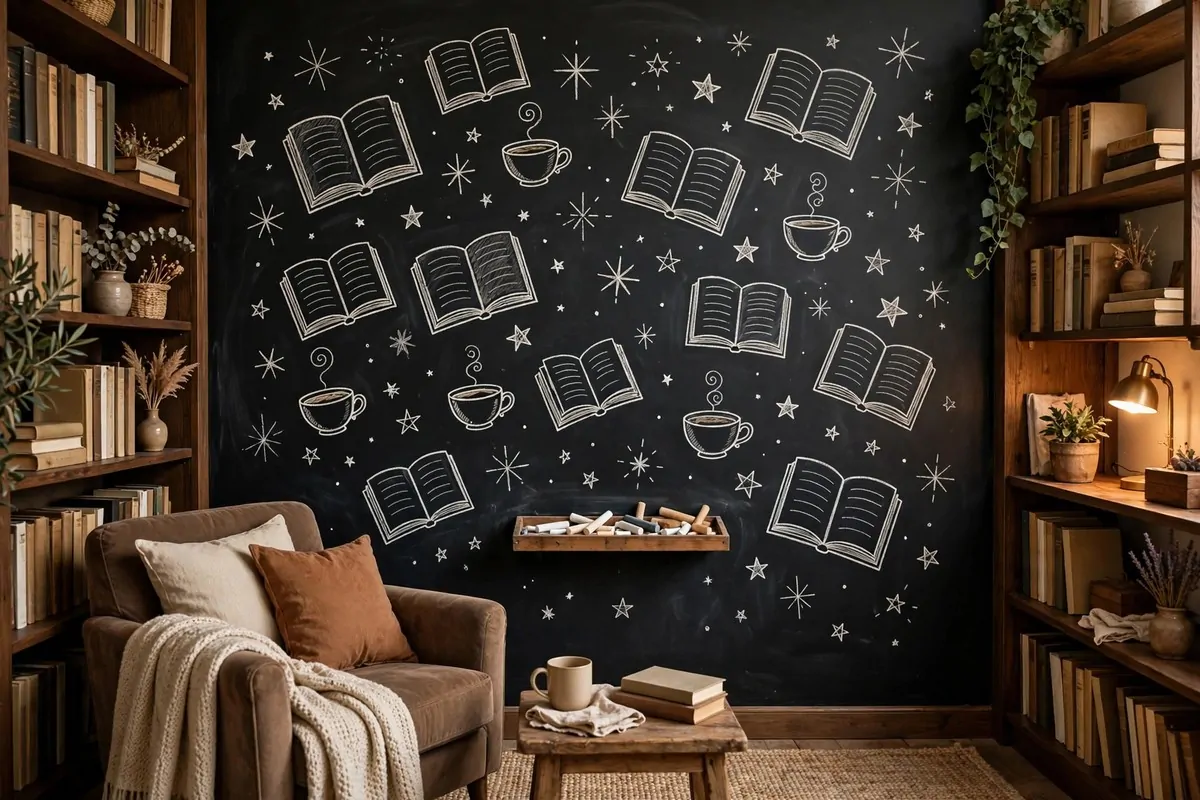
Words on a wall make people stop and read. A chalkboard full of book quotes does double duty. It decorates the room and it advertises the books.
You do not need a whole wall. A framed chalkboard hung beside the shelves works. Even a small tabletop chalkboard leaning on a shelf does the job.
Write your favorite line from whatever you are reading. Just one quote at a time, big and clear. One perfect line beats a wall of tiny writing.
Change the quote when you finish the book. It becomes a little record of your reading life. I wish I had photographed all of mine. Start taking photos now.
Let guests add their own. Keep chalk in a little cup below the board. Visitors love leaving a favorite line. Your board becomes a collection of many readers’ hearts.
If chalk dust bothers you, use chalk markers on a framed board. They look the same and they wipe off clean. No dust on your books.
Kids’ quotes are the best ones. My friend’s son wrote “dragons are real if you believe” on her board. It stayed up for a year. Nobody had the heart to erase it.
Put the board where the light hits it. A dark board in a dark corner gets ignored. Near a lamp or a window, the white chalk glows and pulls the eye.
Pair the quote with the book it came from. Lean the book against the board or put it on the shelf right below. Quote plus book is a display that sells itself.
18. Give Banned Books Their Own Brave Corner

Nothing makes people pick up a book faster than being told they should not read it. A banned books display uses that curiosity. It is bold, and it starts conversations.
Gather the challenged classics you own. There are more than you think. So many beloved books have been banned somewhere. That fact alone surprises people.
Give them their own little shelf or corner. A small sign that says “banned books” is enough. You do not need to preach. The label does the work.
Style it a little dramatically. Dark background. One warm light. A strip of red tape across the shelf front. It should feel a little rebellious, because it is.
This display teaches without lecturing. Kids ask why a book was banned, and suddenly you are talking about ideas and freedom. That is a pretty good bookshelf.
Add a tiny card with one line about each book’s story. “Banned for talking about real life.” Keep it simple. Let the books speak.
Libraries do big banned book displays every fall. Borrow their energy. You can even print the yearly list and tuck it behind the books as a reference.
This corner also reminds you to read bravely. Pick one banned book a year from your own shelf. You will be surprised how many you own and never opened.
- Collect challenged classics you already own onto one small shelf
- Style it with drama: dark background, warm spotlight, red tape accent
- Add one-line cards explaining each book’s banning story
- Read one banned book a year from your own collection
Honestly, this shelf gets more comments than any other display in my house. Everyone has an opinion, and everyone wants to look at the books.
19. Fill a First-Chapter Taste Test Basket

Bookshops know a secret. If you read the first chapter, you buy the book. The first pages do the selling. A taste test basket brings that trick home.
Take a basket. Any basket. Fill it with books you have been meaning to start. The pile of good intentions from your shelf.
The rule of the basket: you may read the first chapter of anything in it. No commitment. Just a taste. Like samples at the bakery.
Put the basket where you actually sit. By your reading chair. On the coffee table. A basket in the wrong room is just storage. A basket by your chair is an invitation.
Keep a little notebook in the basket. When a first chapter grabs you, write the title down. That is your real reading list, built by tasting, not by guilt.
This is wonderful for book clubs. Everyone brings a book, everyone tastes a chapter, everyone goes home with a new favorite. Way more fun than just talking about one book.
Kids love taste tests too. Fill a small basket with picture books and let them flip through first pages. They choose with their eyes, and they always choose right.
Empty the basket when it gets stale. Books that sat through three tastings without being picked go back to the shelf. Fresh books come in. The basket stays exciting.
I keep my basket on the ottoman by my chair. Some evenings I taste three first chapters and read none of them fully. Those are still good evenings.
20. Track a Reading Challenge on the Wall
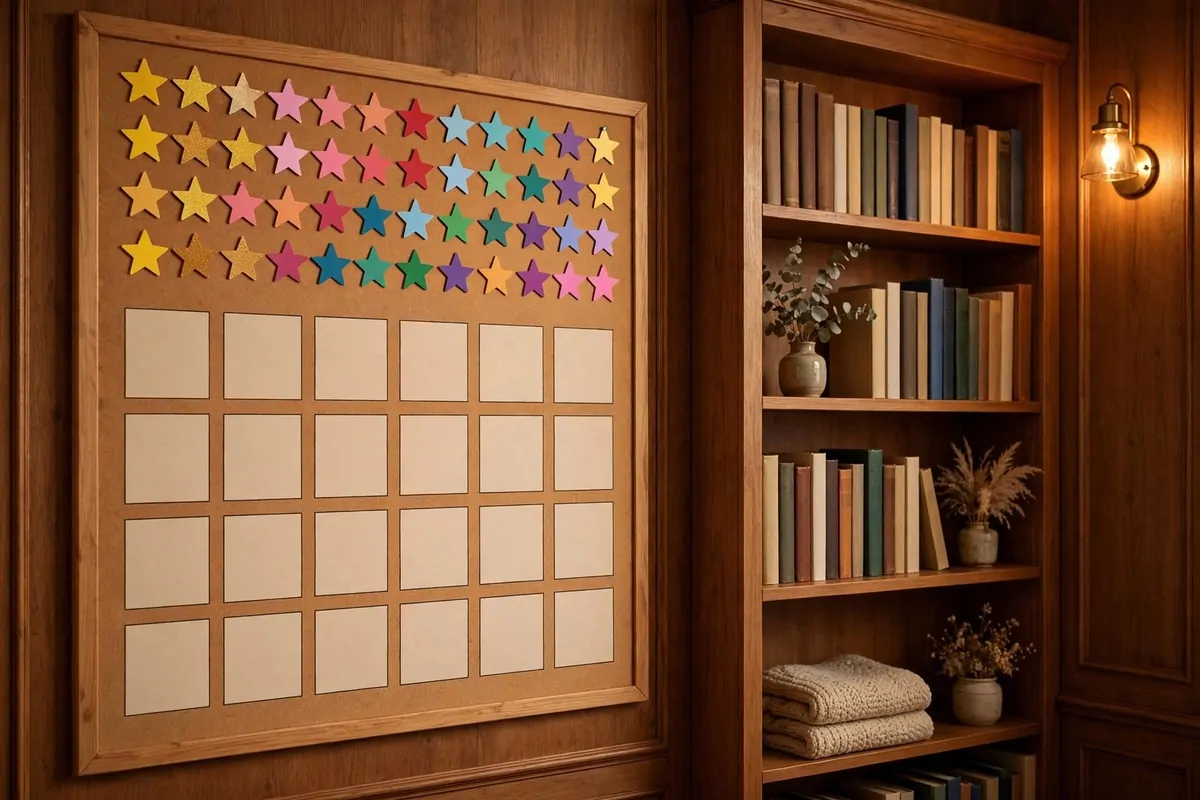
A chart on the wall turns reading into a game you can see. Every sticker is a book finished. It is simple, it is visual, and it works on kids and grown-ups alike.
Get a big piece of paper or a poster board. Draw a grid. Twelve squares for twelve months, or fifty-two for a book a week. Whatever goal feels fun, not scary.
Every time you finish a book, you add a sticker. Gold stars are classic. Kids like the puffy ones. I use little round color dots and it still feels like a party.
Hang the chart right by your books. The books and the chart cheer each other on. You see the books, you want a sticker. You see the stickers, you want a book.
Make it a family chart with a column per person. A little friendly competition does wonders. My family once raced to twenty books and the house went quiet for a month. Best month ever.
Add tiny drawings or notes in the squares. The title. One star for loved it, two stars for amazing. Years later the chart is a diary of your reading.
Celebrate milestones on the chart itself. Circle number ten. Draw a cake at twenty-five. The chart should feel like a party, not homework.
If stickers feel childish, use a beautiful notebook instead. Same idea, fancier package. The point is making your progress visible.
| Challenge size | Grid to draw | Good for |
|---|---|---|
| 12 books a year | One square per month | Busy readers, beginners |
| 24 books a year | Two squares per month | Steady readers |
| 52 books a year | One square per week | Book lovers with time |
| 100 books a year | 10 by 10 grid | Kids with picture books |
Put the new books you want to read for the challenge on the shelf right under the chart. Chart plus books is a display with a mission.
21. Stack Books in Store-Style Pyramids

Walk into any bookshop and you will see pyramids of books on the tables. Wide base, smaller on top, one hero copy standing at the peak. It looks abundant and it looks intentional.
Pyramids work because of shape. Our eyes love triangles. A pyramid says “this is important” without saying a word. A flat pile just says “mess.”
Build yours on any table. Start with four or five books flat on the bottom. Then three. Then two. Then one book standing upright on top like a little flag.
You can pyramid a single title if you have doubles, but mixed pyramids look great too. Group by theme or color. A pyramid of blue-covered books is a whole mood.
Keep the pyramid stable. Big heavy books on the bottom, light ones on top. Nothing ruins a display like a book avalanche at midnight. I learned that the loud way.
Put the pyramid where people can reach it. The top book is an invitation to touch. If the display is too precious to touch, it stops being a display and becomes a sculpture.
Pyramids are perfect for the theme table. Build your monthly theme as a pyramid instead of a flat row. Same books, twice the drama.
Take the pyramid apart when the theme changes. Rebuild it with new books. It takes five minutes and it never gets old.
My pyramid rule: if I would not feel good taking the top book, the pyramid is too tall. Three or four layers is the sweet spot.
22. Keep One Tiny Seasonal Mini Display
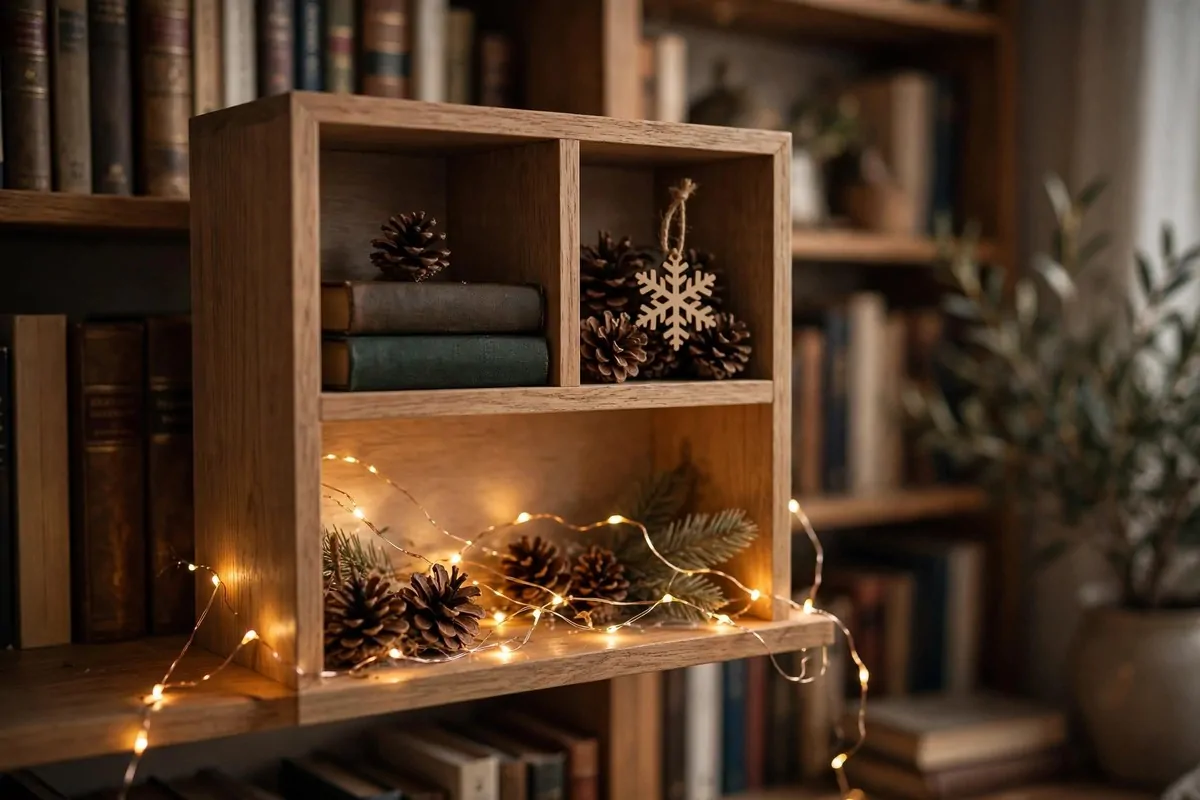
Big displays are fun, but a tiny one has its own magic. One little shelf. Three books. A few seasonal bits. Small enough to change in ten minutes, cute enough to make you smile every day.
Pick the smallest shelf you have. A cube shelf. A windowsill corner. The top of a stack of boxes. Tiny spaces force you to choose only the best.
Three books is the magic number for a mini display. One standing up, two stacked flat. That little arrangement looks styled no matter what the books are.
Match the books to the season in a loose way. Winter gets snowy covers and fairy lights. Spring gets green covers and a tiny vase of flowers. It does not need to be exact.
Add one seasonal object. Pinecones in winter. A shell in summer. A dried leaf in fall. One object, not five. Tiny displays drown in clutter fast.
Fairy lights make every mini display better. A five-dollar string of warm lights turns three books into a glowing little scene. I am not exaggerating. Try it.
This is the display to put where only you see it. Your nightstand. Your desk. A mini display just for you is a small daily gift.
Change it when the season changes, or when you just feel like it. Ten minutes, three books, one object. The easiest refresh in your whole home.
- Choose the smallest shelf or corner you have for maximum charm
- Use the magic trio: one book standing, two stacked flat
- Add one seasonal object and a short string of fairy lights
- Refresh it in ten minutes whenever the mood strikes
My nightstand mini display right now is two poetry books, one novel, and a little jar of dried lavender. It makes me happy every single night.
23. Write Poetry With Book Spines

This one is pure play. You stack books so their titles read as a poem when you look at the spines. It is silly, it is creative, and everyone who sees it tries to make their own.
Start with a stack of books on a table or a wide shelf. Read the titles on the spines. Now reorder them so they say something. Anything. “The night / the light / we found / home.”
There are no rules. Funny is good. Sweet is good. Nonsense is the best. The worse the poem, the more people laugh, and laughing people pick up books.
Photograph your poems. They are temporary art. I have a whole album of spine poems from my shelves. Some of them are accidentally beautiful.
Do this with kids and watch their brains light up. It is poetry, puzzles, and reading all in one game. Teachers do this in classrooms for a reason.
Make it seasonal. A spooky spine poem for October. A love poem stack for February. It pairs perfectly with the theme table idea from earlier in this list.
Leave a finished spine poem where guests will find it. On the coffee table. By the guest bed. It is like leaving a little joke for someone to discover.
The best part is what happens after. To build the poem, you handled twenty books. You remembered stories. You will pull at least one off the stack to re-read.
My favorite spine poem ever was an accident. I stacked returns on the hall table and it read “gone girl / the help / everything, everything.” I laughed for a full minute.
So that is the list. Twenty-three ways to make your books impossible to ignore. Start with just one tonight. Face a few covers out, or build a tiny pyramid on the coffee table. Your books have been waiting patiently on those shelves. Time to let them show off a little.
Keep Reading
If you loved these Library Display Ideas, you will enjoy these posts too. 30 Library Ideas That Make Every Book Lover Swoon is full of room-sized inspiration, 28 Cozy Home Library Ideas You’ll Never Want to Leave will make you want to move into your reading corner, 16 Office Reading Room Ideas Cozy Enough to Linger In blends books with workspace, and 19 Vintage Library Aesthetic Looks With Old-World Charm brings the old-world book magic.