19 Vintage Library Aesthetic Looks With Old-World Charm

Step into the right room and your phone feels like an intruder from the future. That is exactly how it felt the first time I walked into a real old library. I do not mean a modern one with glass walls and self-checkout screens. I mean the kind with creaky wooden floors, shelves that climb all the way up to the ceiling, and a smell in the air that seems to have been sitting there for a hundred years. My phone buzzed in my pocket and I felt a little bit guilty, like I had carried something from the wrong century through the door with me.
I did not want to leave that room. The dark wood, the warm lamps, the quiet weight of all those books made time feel slower in the best way. I went home that day and looked at my own little bookshelf in the corner. It just sat there looking tired. And I thought, why does my home feel so fast and loud when rooms like that still exist?
That one question started everything. Over the past year I have been quietly stealing ideas from those old, beautiful libraries and bringing them home with me. No, I do not live in a castle. I live in a normal house with a normal budget and a cat who scratches furniture. But the vintage library aesthetic does not ask you for a castle. It asks for dark wood, warm light, books with stories written right into their spines, and little old things that feel like someone loved them long before you found them.
So here they are. My 19 favorite vintage library aesthetic looks, full of old-world charm. Some are big weekend projects and some take ten minutes. All of them will make your home feel like a quieter, kinder time.
1. Floor-to-Ceiling Dark Wood Bookshelves
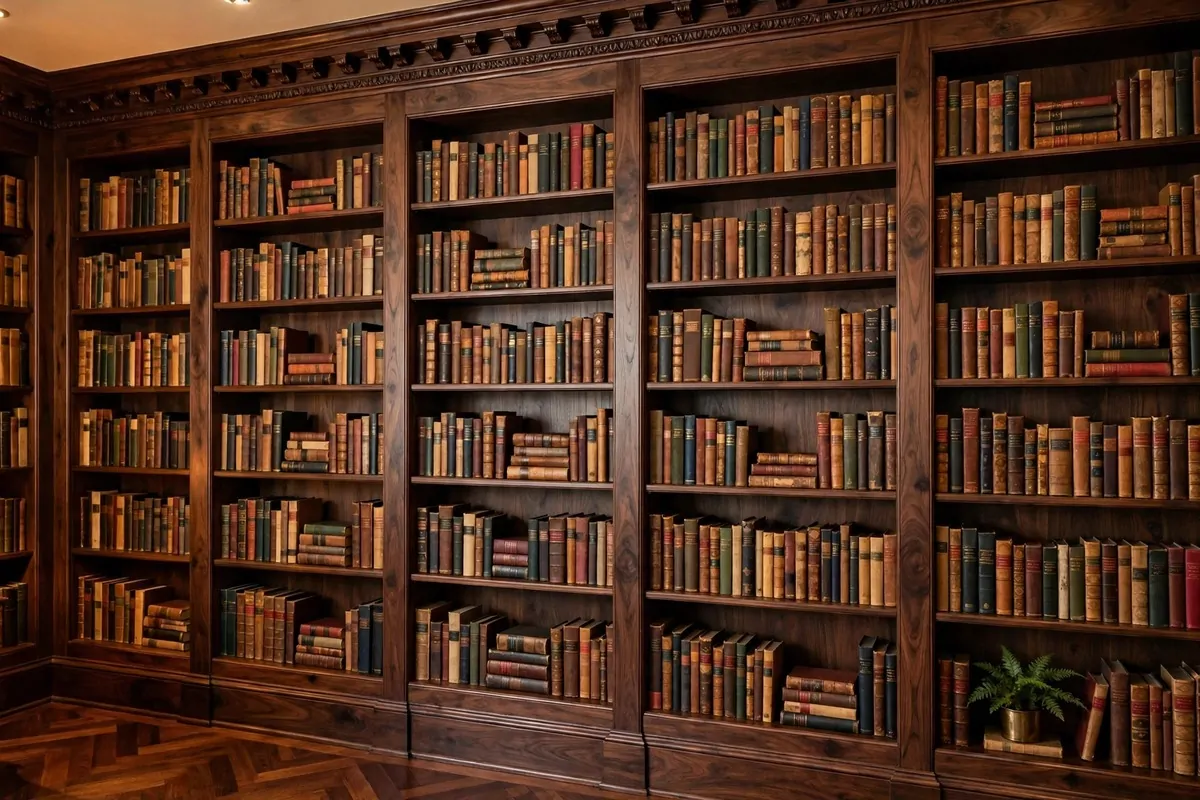
Nothing says vintage library quite like shelves that climb from the floor all the way to the ceiling. It is the first thing your eyes land on, and it tells the whole room what it wants to be.
You do not need a huge room to pull this off. One good wall is enough. I have seen small bedrooms look grand with just a single tall wall of dark shelves.
Pick a dark wood if you can. Mahogany, walnut, or a deep cherry stain all work. Dark wood is what gives old libraries that serious, settled feeling. Light wood looks pretty in a kitchen, but for this look, you want the deep tones.
Adjustable shelves are your best friend here. Books come in all sizes, and old books are never the same height twice. A shelf that moves up and down saves you so much trouble.
Do not fill every inch with books standing straight like soldiers. Mix it up. Some books standing, some lying flat in little stacks. Leave a few gaps for small treasures.
That crown molding at the top is not just decoration. It makes the shelves look built in and finished, like they grew out of the wall. A simple strip of trim costs little and changes everything.
I also like to add deeper shelves here and there for bigger pieces. A large atlas, a stack of art books, or a little framed print all need more room than a paperback.
Paint the wall behind the shelves a deep color before you install them. A dark green or warm brown makes the wood look even richer. This is a small step most people skip, and it shows.
Here is a quick guide to the woods that work best:
| Wood | Feel | Budget tip |
|---|---|---|
| Mahogany | Rich and formal, the classic library wood | Look for secondhand pieces first |
| Walnut | Warm and smooth, slightly modern edge | Stain pine to match walnut |
| Dark cherry | Reddish glow that deepens with age | Cherry veneer costs much less |
| Dark oak | Sturdy and traditional | Stain budget oak shelves dark |
Thrift stores are full of tall bookcases waiting for a second life. I found one of mine for less than a dinner out. A fresh coat of dark stain and new knobs, and it looks like it has been in the family for years.
Start with one wall and see how it feels. You can always add more later.
2. A Rolling Library Ladder
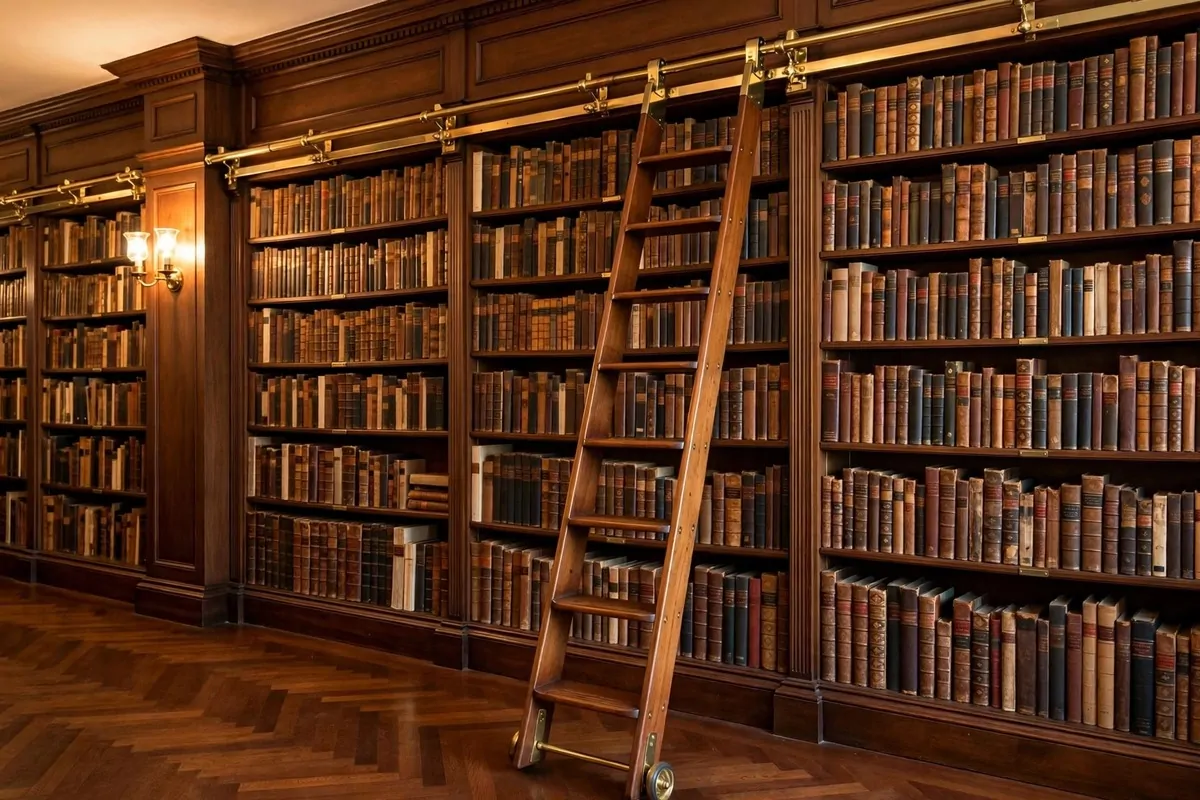
A rolling library ladder is pure magic. It is useful, yes, but honestly it is mostly there to make your heart skip a beat every time you walk in. I smile every time I see mine.
The good news is you do not need a custom installed rail system to get this look. A simple wooden rolling ladder leaning on your shelves works just as well.
Old wooden ladders show up at flea markets and estate sales all the time. People sell them cheap because nobody knows what to do with them. We know what to do with them.
If your shelves are not built for a rail, just lean the ladder in place. It still gives you the old-world feel. The look is what matters here, not the engineering.
A small wooden step stool works for lower shelves. It has the same charm in a smaller package. I keep one near my poetry shelf and use it every single week.
Check that the ladder feels solid before you climb it. Vintage is beautiful, but a wobbly ladder is just scary. Tighten the joints, sand any splinters, and give it a coat of wax.
Stain it to match your shelves if the color is off. One afternoon of work makes a ten-dollar ladder look like it cost two hundred.
Hook it over the shelf edge or just lean it gently. Either way it reads as old-world library instantly. Your guests will ask about it before they ask about anything else in the room.
3. A Vintage Brass Banker’s Lamp
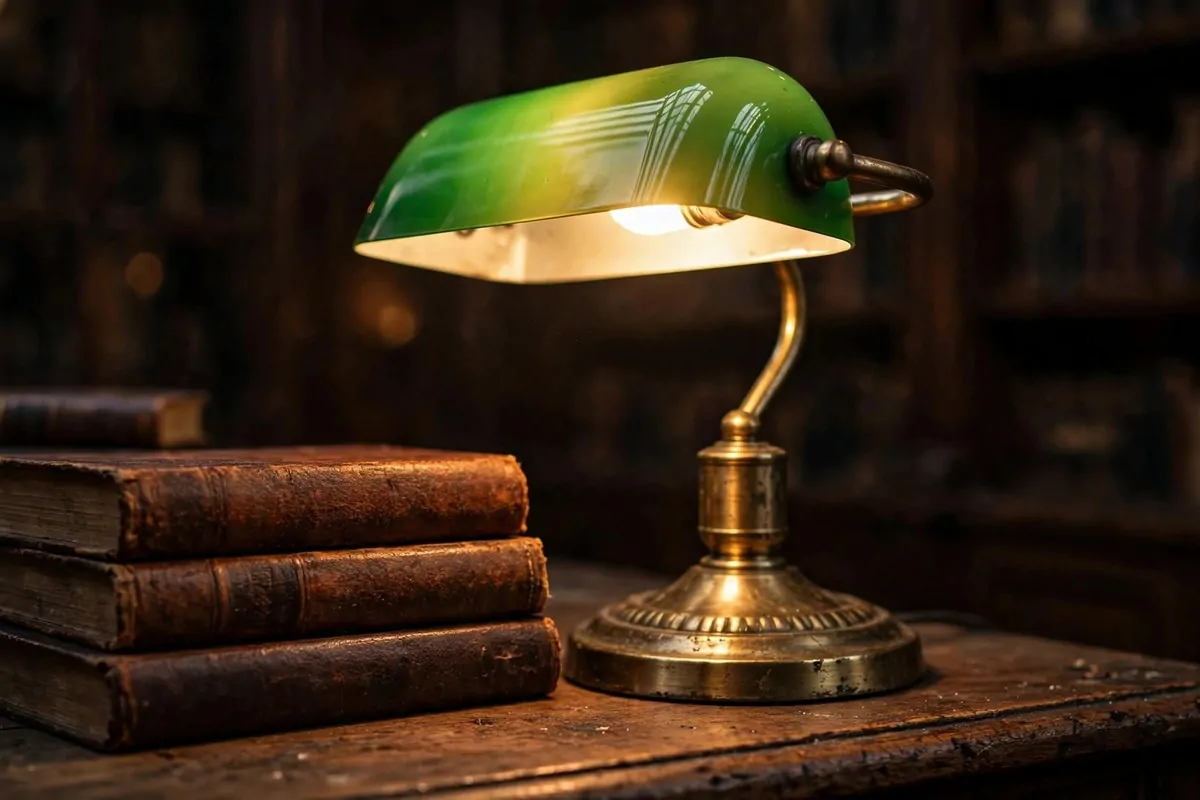
That little brass lamp with the green glass shade is probably the most famous library object in the world. One look at it and your brain says library, even before you see a single book.
The green shade does real work, not just pretty work. It throws a warm pool of light right onto your page and cuts the glare. Your eyes stay happy for hours.
Real vintage ones are easy to find. Antique shops, online marketplaces, even your grandma’s attic might have one. They were mass made for decades, so they are not rare or pricey.
Use warm bulbs, nothing blue or bright white. A soft warm glow is what makes the brass shine and the room feel old. Cool light would kill the whole mood in one second.
Put one on your writing desk first. That is its natural home. Then think about a second one on a side table or bookshelf for evening reading.
Brass gets dull over the years. A little polish brings it back in minutes. I do mine twice a year while listening to a podcast, and it is weirdly relaxing.
There are good reproductions too if you cannot find an old one. Pick solid brass over plastic. It feels right in your hand, and it will outlast all of us.
This one small lamp can start your whole vintage library look. It is cheap, it is small, and it is unmistakable. Start here if the big projects feel scary.
4. A Worn Leather Reading Chair
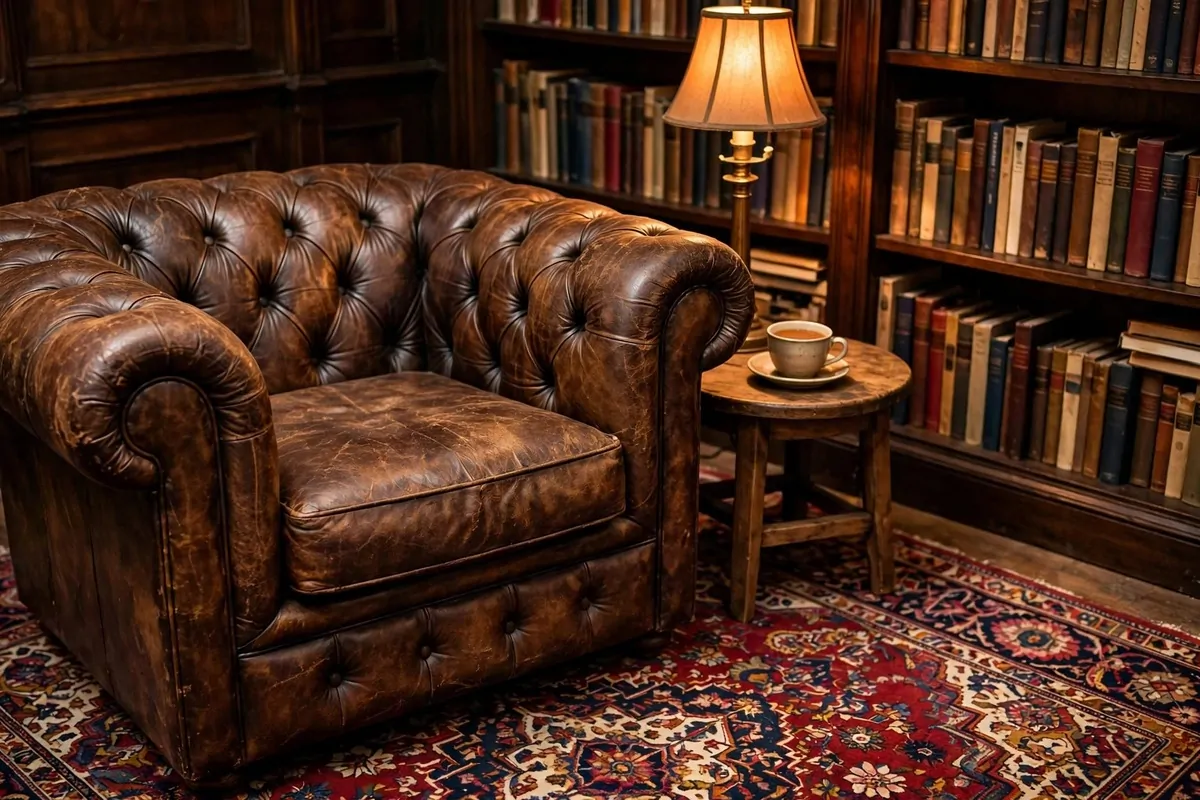
Every great library has one chair that belongs to someone. Not a chair for guests. A chair for reading. For you.
Leather is the right material for this. A good leather chair gets better with age. The creases, the soft spots, the places where the color changed from years of use, all of that is the whole point.
Deep browns, dark burgundy, or forest green all look right. Bright colors and light tan feel too new. You want a chair that looks like it has heard a thousand stories.
A wingback chair hugs you a little while you read. A Chesterfield with its deep buttons looks fancier and feels like a throne. Both are perfect for this look.
Check the secondhand market before you buy new. Old leather chairs are built like tanks. A little conditioner on the leather and they wake right back up.
Add a small footstool or ottoman if you have space. Your legs will thank you on long reading nights. Matching leather is nice but not required.
Place the chair near a window or under a good lamp. Light is everything for reading. A beautiful chair in a dark corner will just sit there looking sad.
Drape a wool throw over the arm. It looks cozy and it saves you from getting up when the evening turns cool. I have three throws and I use them all.
This chair will become your favorite seat in the whole house. Give it a little side table for your tea, and your reading corner is done.
5. Leather-Bound and Antique Books
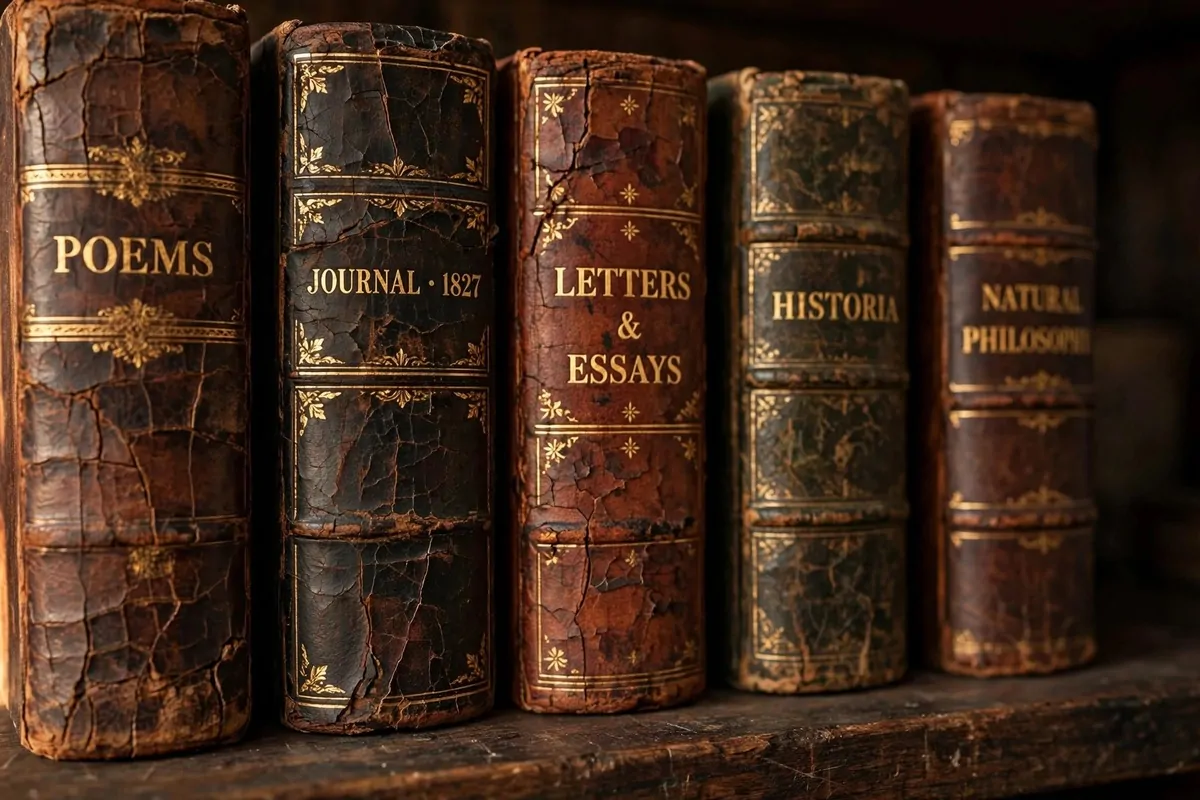
The books themselves are the real decoration. Old books with leather spines and gold letters are like jewelry for your shelves. Even people who do not read notice them.
You do not need rare first editions. Decorative sets of old books sell cheap at estate sales because most people want the new paperback. Lucky for us.
Look for interesting spines. Deep reds, dark greens, and brown leather with gold tooling. Faded cloth covers in soft blues and grays are beautiful too.
Mix them with your regular books. A shelf of all-new books next to a shelf of all-old books looks like a store display. Blend them and the room feels real.
Turn a few books face out. A beautiful old cover propped on a small stand becomes art. I rotate mine every month like a tiny museum.
Stack some books flat in piles. Horizontal stacks break up the rows of standing books and give your eyes a place to rest. Put a small object on top of a stack for charm.
Do not worry about what is inside every book. Many old library books are pretty but unreadable. They are there for the feeling, and the feeling is real.
Smell them before you buy them. I know that sounds odd. But that old paper smell is half the vintage library magic, and you want it in your home.
6. A Vintage Writing Desk
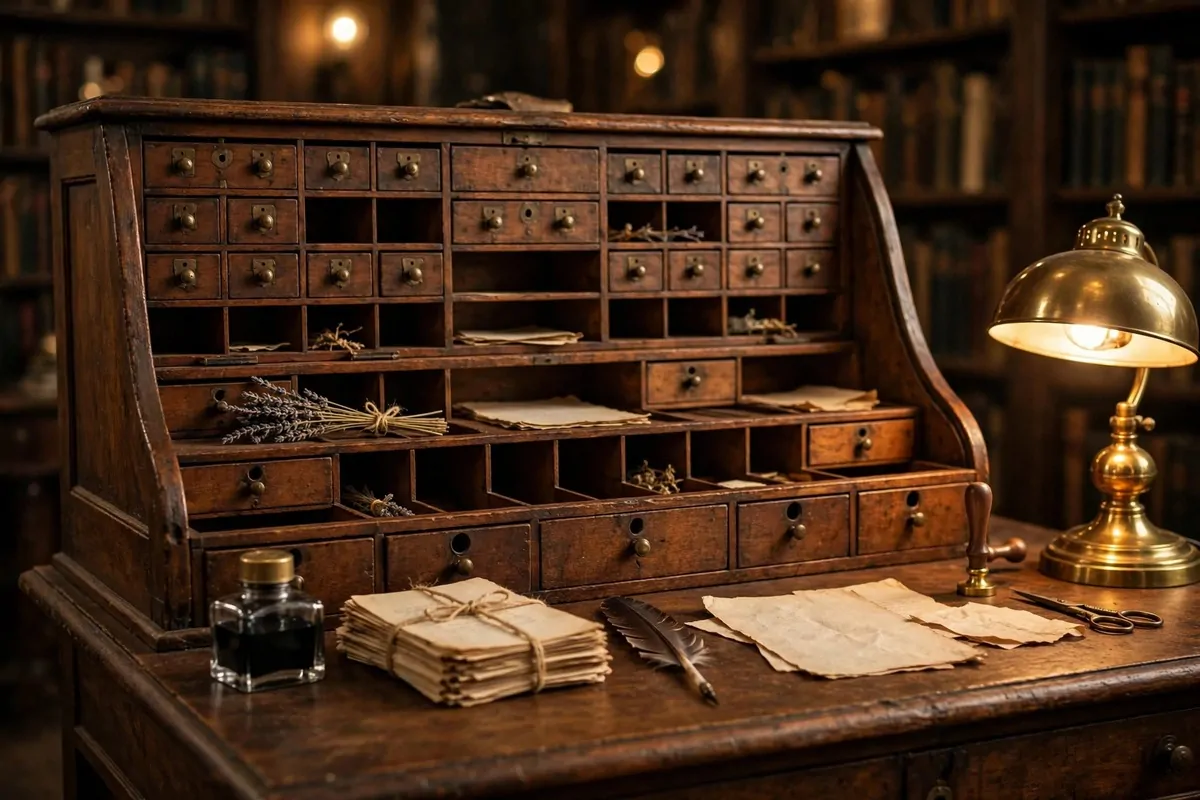
A vintage writing desk is where the romance lives. Somebody once wrote real letters at this desk, with ink and paper and a mind full of thoughts. That feeling stays in the wood.
A roll-top desk is the classic choice. All those little compartments and secret drawers make even your bills feel important. A secretary desk that folds closed works too, and it hides your mess in one move.
Solid wood matters more than the style. Heavy oak, mahogany, or walnut desks last forever. The cheap ones feel light and wobbly, and your hands will know the difference.
Set it near a window if you can. Old writers sat near natural light, and there is a reason. The afternoon sun across a wooden desk is one of the prettiest things in a home.
Keep a few old tools on top. An inkwell, a letter opener, a stack of nice paper. They tell a story even when you are not using them. That is the whole trick of this aesthetic.
The chair matters as much as the desk. A wooden chair with a worn seat fits better than a plastic office chair. Comfort still counts, so add a cushion if the wood gets hard.
Do not be afraid of scratches and dents. On a vintage desk, every mark is a story. I have one deep scratch I do not know the origin of, and I like it more than the perfect parts.
This desk becomes the heart of the room. Put it where you can see it from the door, and your library feels like a place where things happen.
7. A Persian Rug Underfoot
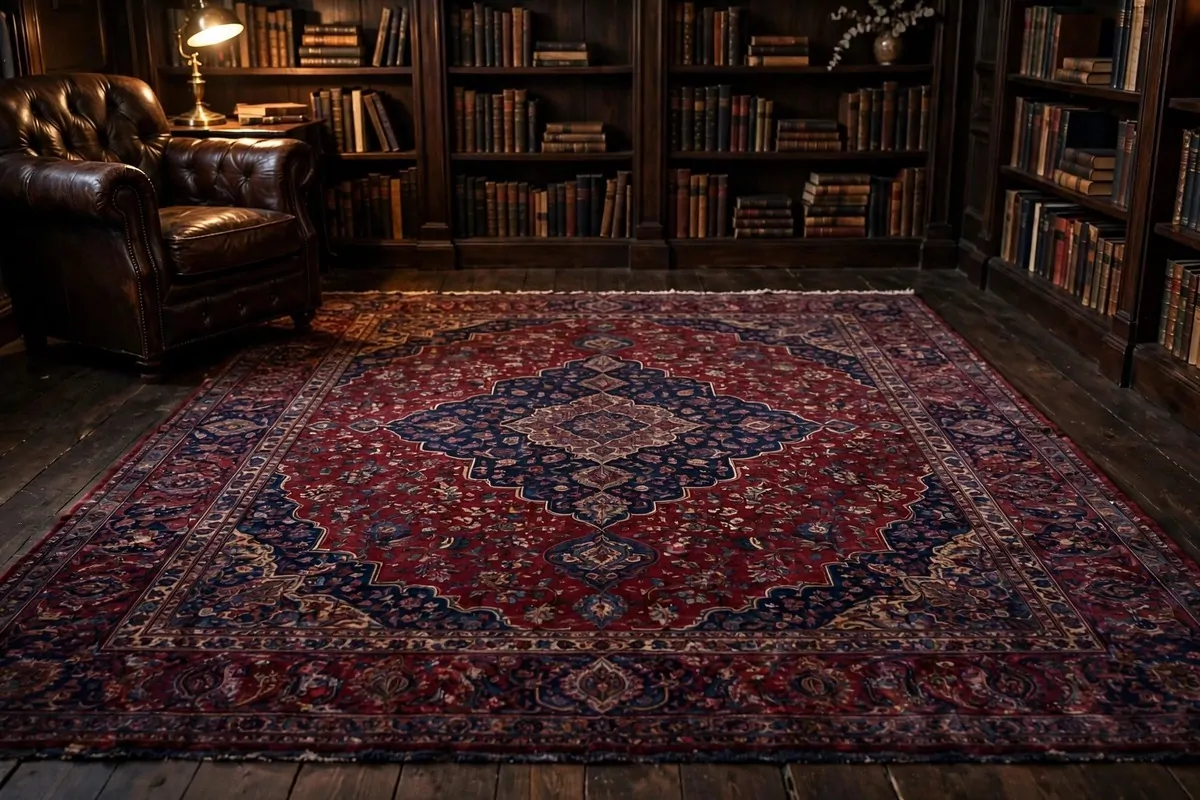
A Persian rug is like a warm hug for your floor. It pulls the whole room together and makes dark wood and leather feel soft instead of heavy.
The pattern does half the decorating for you. Those swirls and medallions in burgundy, navy, and gold are so rich that a plain room suddenly looks planned. One rug, and the room has a point of view.
Size matters more than price here. A rug that is too small looks lost under your chair. You want the front legs of your reading chair and your side table to sit on it. Bigger is almost always better.
Do not fear a worn rug. A little wear is the whole idea. Old rugs with faded spots have a softness new rugs cannot fake. Patina is just another word for character.
Layering works beautifully too. A small worn rug over a bigger plain one adds depth and looks collected over time. It is a trick I learned from old photos of real libraries.
Place it to define your reading zone. The rug becomes the room inside the room. Everything on the rug belongs to reading time, and that feels special.
Vacuum gently and rotate it once a year. Real wool rugs last decades with almost no care. Mine has survived a cat, two moves, and a spilled pot of tea. It still looks better than the day I bought it.
If real antique rugs are too pricey, good reproductions exist. Choose ones with real wool and slightly muted colors. Your eyes cannot tell the difference once it is on the floor.
8. Vintage Globes and Old Maps
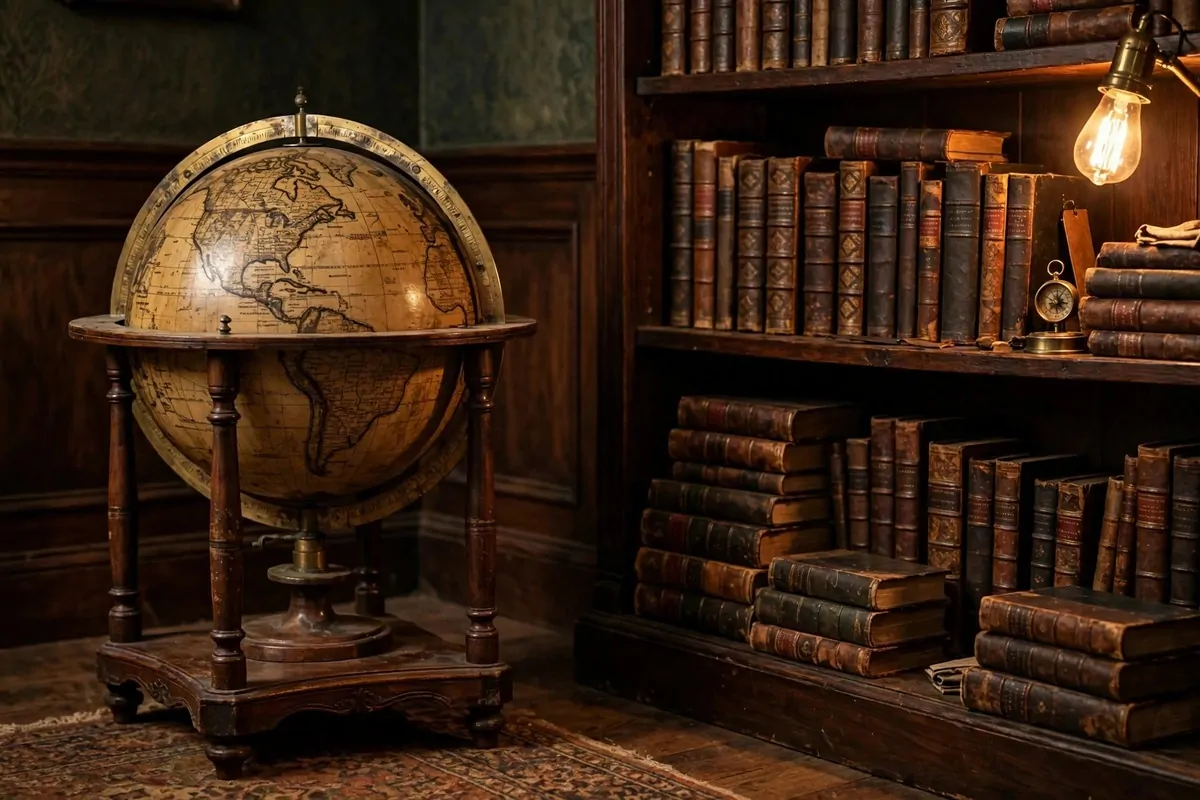
Nothing says a scholar lives here quite like a globe and a few old maps. They whisper that the person who reads here also wonders about the world. I love that.
A floor globe on a wooden stand is the dream piece. The old ones show countries with borders that no longer exist, and that is exactly what makes them magical. History you can spin with your finger.
Desk globes are cheaper and easier to find. A small brass one on your writing desk looks perfect. I spin mine when I am thinking, and I am not ashamed to admit it.
Old maps on the wall are just as good. Frame a reproduction of an antique map of your city, or somewhere you dream of visiting. A gallery wall of three or four maps looks rich and curious.
Check the back of old maps for the date. Some reproductions look old but say nothing about being new. For your own home, honestly, a pretty map is a pretty map. Nobody is grading you.
Place a globe near your reading chair. It becomes a fidget friend and a conversation starter. Guests always spin it and ask where you found it.
Celestial globes and star charts are a lovely twist if you already have an earth globe. Old libraries loved the stars too. A framed star map on a dark wall looks stunning.
Keep the colors muted. Sepia, faded ink, aged paper tones. Bright modern maps clash with everything else in a vintage library. Old-looking colors keep the spell going.
9. Wood-Paneled Walls
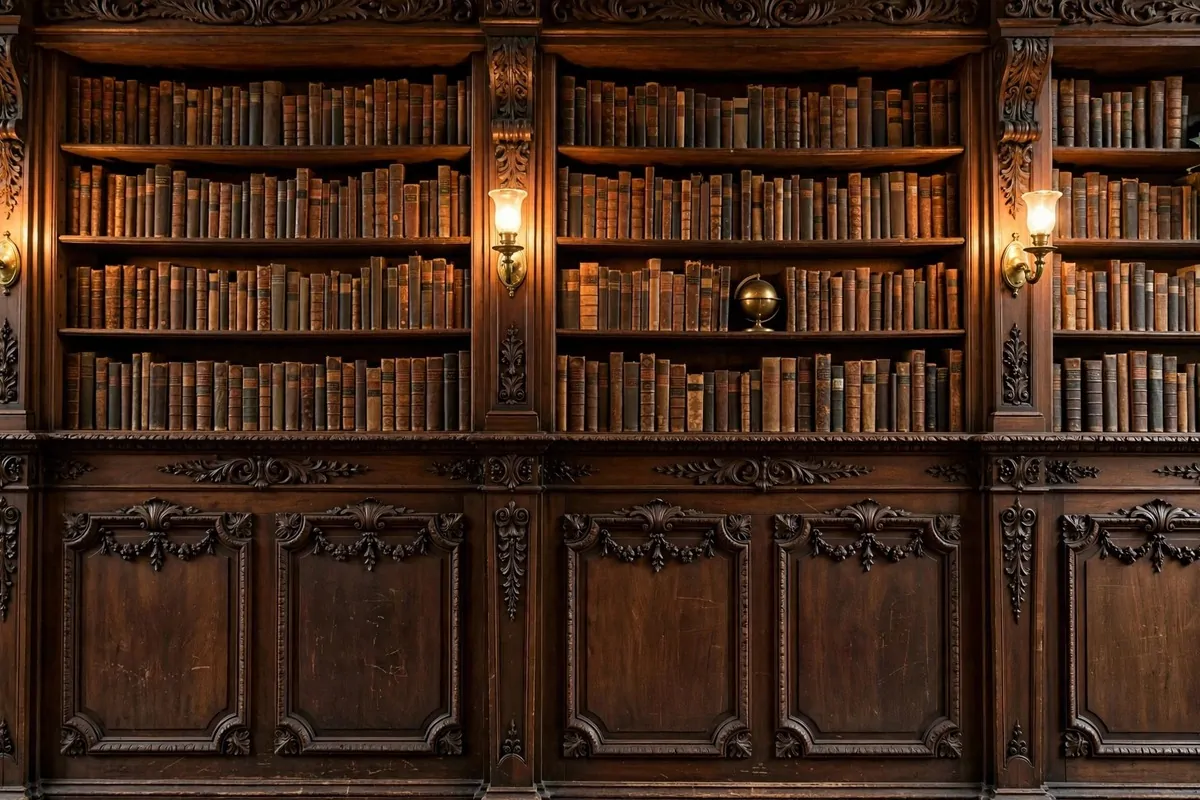
Wood paneling is what separates a room full of books from a real old-world library. It wraps the room in wood and makes everything feel older and richer.
Wainscoting is the friendliest place to start. That is the paneling that covers the lower half of the wall. It looks proper and old-fashioned, and it is much easier than full wall panels.
Dark stain is the way to go. A deep walnut or espresso stain on the panels turns a plain white room into something with weight. Paint the upper wall a deep green or warm cream to go with it.
Add a chair rail on top of the wainscoting. That thin strip of trim is a small detail that makes the whole thing look finished and professional. It hides the rough top edge beautifully.
Crown molding where the wall meets the ceiling completes the frame. When all three pieces are in place, molding top, panel middle, baseboard bottom, the room looks like it was built a hundred years ago.
Behind your bookshelves you can skip the panels. Nobody will see them. Save your money and your weekends for the walls that actually show.
This project scares people, but panels are just boards and nails. Measure twice, cut once, and work slowly. One wall per weekend is a good pace that does not burn you out.
If paneling feels like too much, try a dark accent wall with simple trim boxes. Painted squares of molding on a deep colored wall give a similar old-world feeling for much less work.
10. A Fireplace With a Mantel
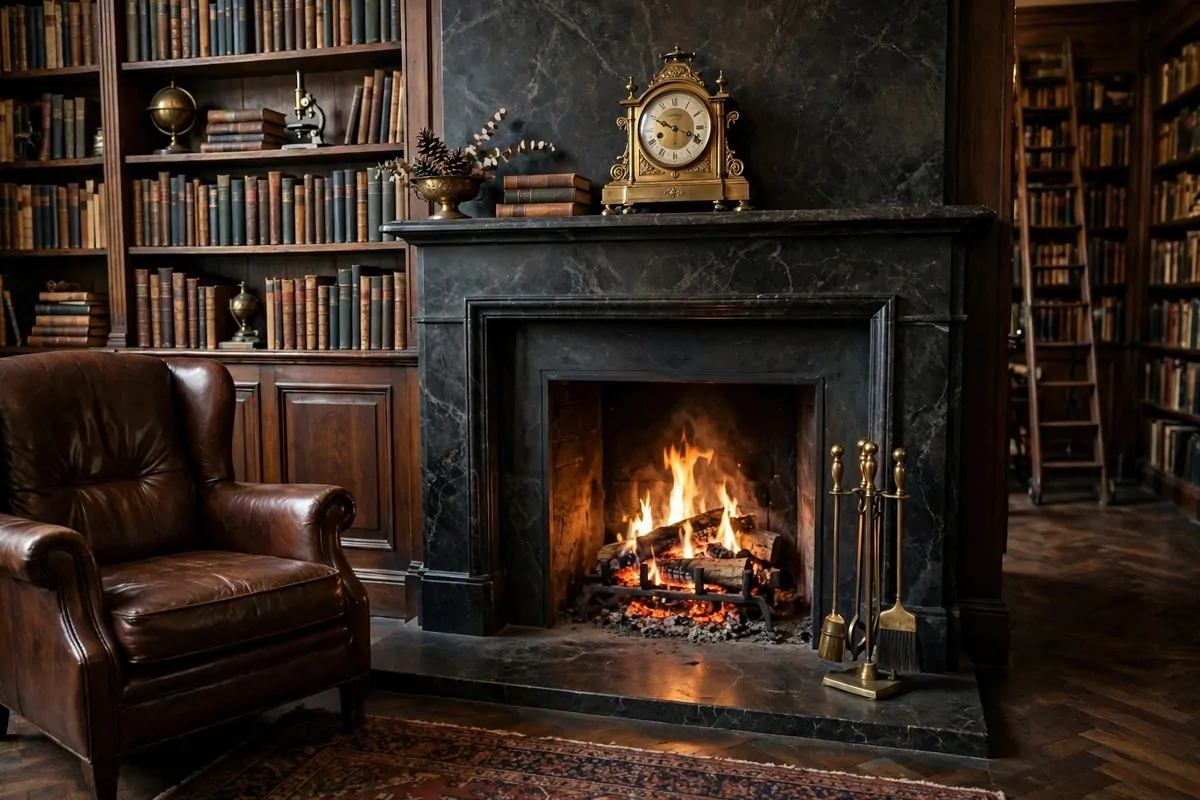
A fireplace is the beating heart of a vintage library. Books and fire just belong together. Something about a crackling fire makes people reach for a book without even thinking about it.
A cast-iron fireplace gives a rustic old-world feeling. A marble mantel feels grander and more formal. Both are right for this look, so pick whichever matches your room better.
The mantel is free decorating space. Antique clocks, framed art, heirloom candlesticks, this is where they live. Old libraries always had mantels full of treasures, and yours should too.
No chimney? No problem. Electric fireplaces have gotten shockingly good. The flame effect looks real from a few feet away, and they give real warmth. Nobody will know unless you tell them.
Surround the fireplace with seating. Two chairs angled toward the fire create the classic reading spot. Add a small table between them for tea, and the scene is complete.
A fire screen in black iron or brass adds safety and style. The old patterned ones are prettiest. Look for them at antique shops, they are easy to find and cheap.
Keep a little basket of firewood nearby even if your fire is electric. The basket itself looks the part. Pine cones work too, and they smell amazing when real flames touch them.
Light the fire on cold evenings and turn off the main lights. Just firelight, lamplight, and books. Tell me that is not the best room in the world.
11. Heavy Velvet Curtains
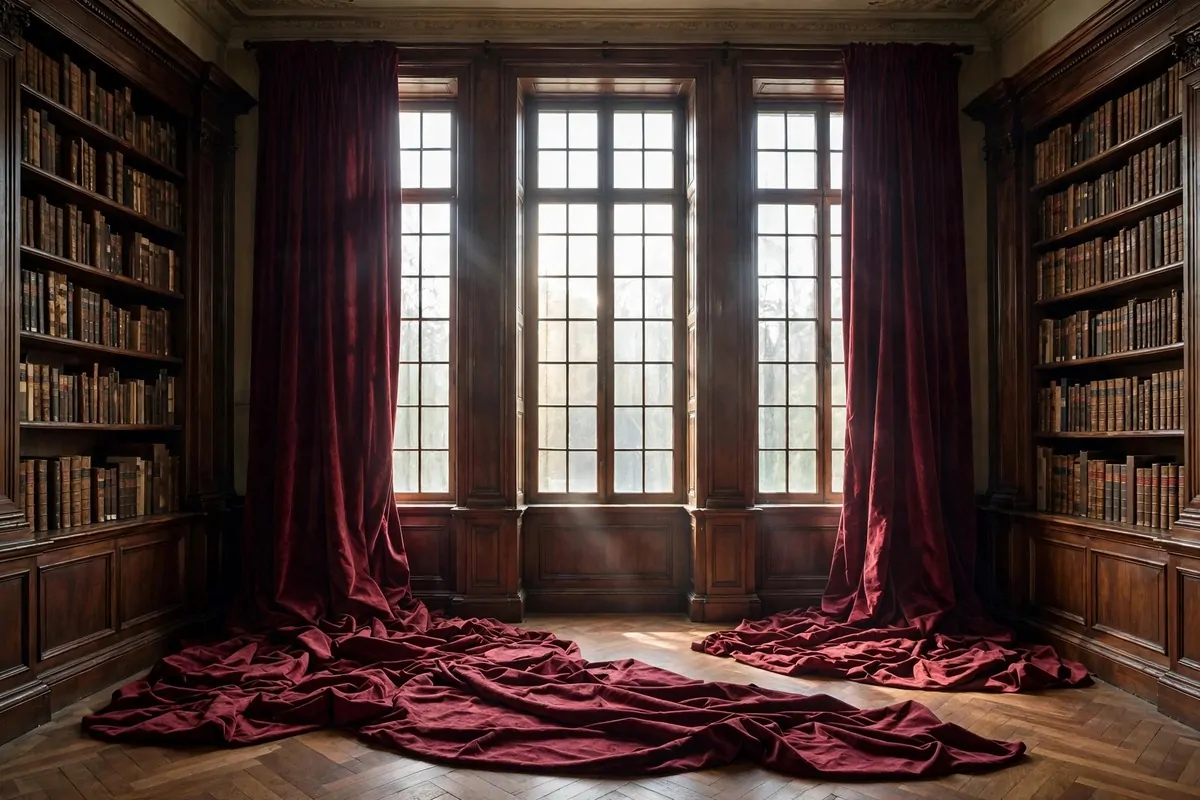
Heavy velvet curtains are the jewelry of the window. They add drama, softness, and that unmistakable old-world luxury. Thin blinds could never.
Burgundy, deep green, and navy are the classic library colors. They match the dark wood and the old books perfectly. Floral or damask patterns are lovely too if you want more.
Hang the rod high and wide. This makes your windows look taller and grander than they are. It is the oldest trick in decorating, and it still works every time.
Let them puddle a little on the floor. Curtains that just kiss the floor look neat. Curtains that pool slightly look romantic and old-world. I vote for romantic.
Tiebacks in rope or braided cord keep them open during the day. Gold looks rich against dark velvet. It is a small detail that feels very proper and historic.
Heavy curtains also quiet the room. Velvet eats sound, which is exactly what you want in a reading space. The room feels calmer the moment they go up.
Layer sheer panels underneath for daytime privacy. You get soft light without showing the street your business. Two layers always look more expensive than one.
Wash velvet carefully or not at all. A gentle shake and a brush keep it fresh. Velvet likes to be admired, not scrubbed.
12. Brass Candlesticks and Candles
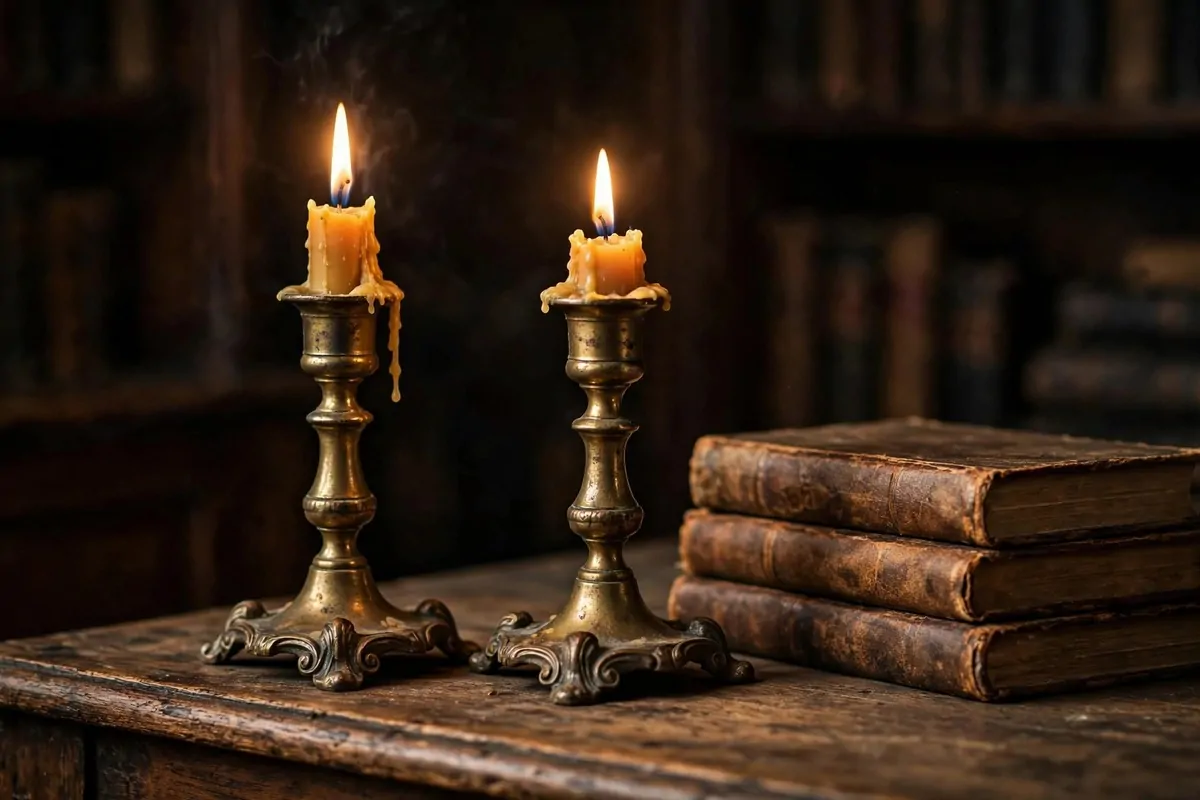
Candlesticks are instant old world. One flickering candle on a desk changes the whole mood of a room faster than almost anything else. Electricity is great, but candlelight is magic.
Brass candlesticks are everywhere secondhand. Church sales, estate sales, dusty antique shops. They tarnish, they dent, and they are perfect anyway. A little polish makes them glow.
Mix heights and styles for a collected look. A tall thin one next to a short chunky one looks like you gathered them over years. Because maybe you did.
Real candles give real flames, and real flames give real feeling. Use good ones that do not drip everywhere. Beeswax candles burn cleaner and smell like honey.
If open flames worry you, LED candles are fine too. The flickering ones look surprisingly real in a brass holder at night. Safety first, mood second, but both matter.
Cluster three or five together on a tray. Odd numbers look natural. A little brass tray catches the wax and keeps the whole group tidy.
Put them on the mantel, the desk, and the bookshelves. Small groups of candles scattered around the room make the whole library glow at night. It is like the room is lit by a hundred years ago.
Blow them out before bed. Old-world charm is wonderful, but fire safety is forever. This is the one rule nobody gets to skip.
13. A Window Reading Nook
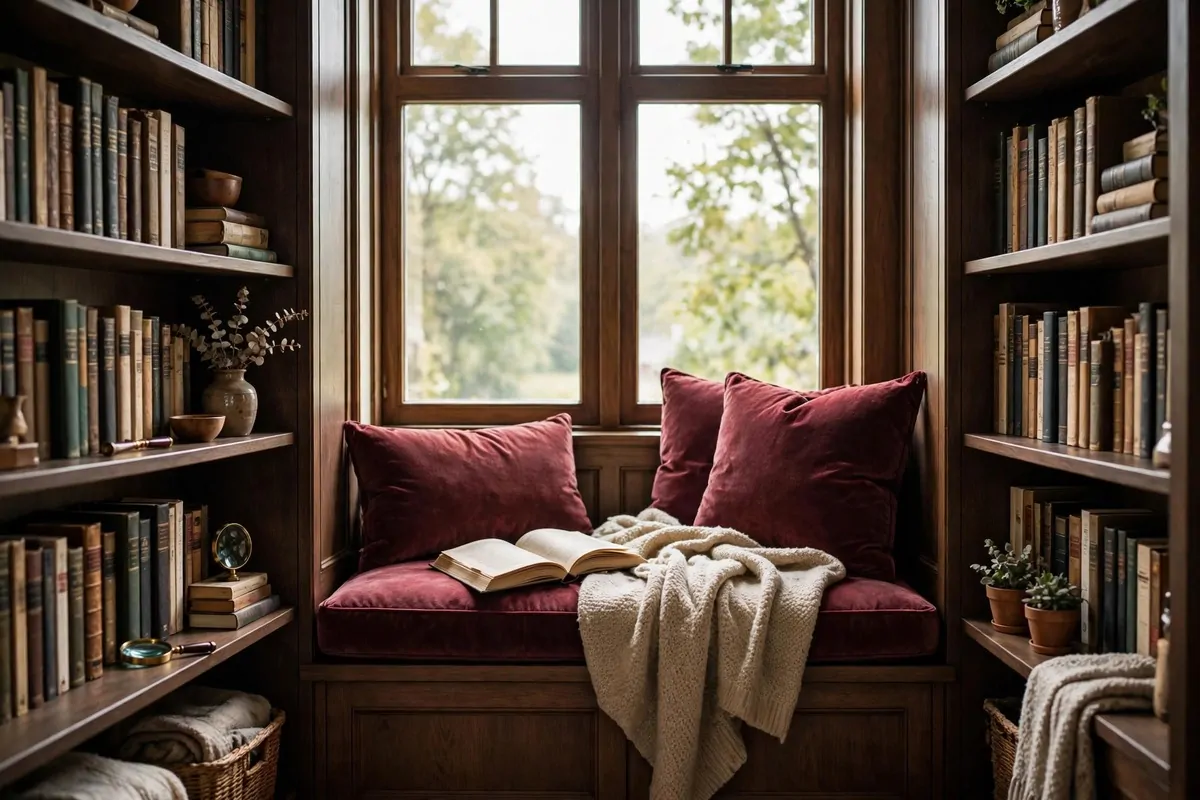
A window nook tucked between bookshelves is the coziest spot in any library. It is part chair, part hideout, and all happiness. Every home library needs one.
If you have a real window seat, you are halfway there. Add a thick cushion and some pillows and it is done. If not, build one into an alcove between two bookcases.
Deep burgundy or forest green velvet cushions look the part. Plump ones you can sink into, not flat ones that feel like a bench. Comfort is the whole reason the nook exists.
Drape a soft wool throw over one side. It looks inviting and it keeps you warm when the window gets chilly. Throws in cream or warm gray go with everything.
Keep a small basket of current reads beside the nook. Current reads, not the whole library. Three or four books waiting their turn is perfect. It feels personal.
A small side table or even a stack of books works as a landing spot for your tea. You will not want to get up once you are settled, so plan ahead.
Daylight is your lamp here. Morning sun through the window onto your pages is a simple joy that costs nothing. I do my best reading before lunch in mine.
Leave one pillow crooked and the throw a little messy. A nook that looks used is a nook that gets used. Perfect styling is the enemy of real comfort.
14. A Vintage Typewriter
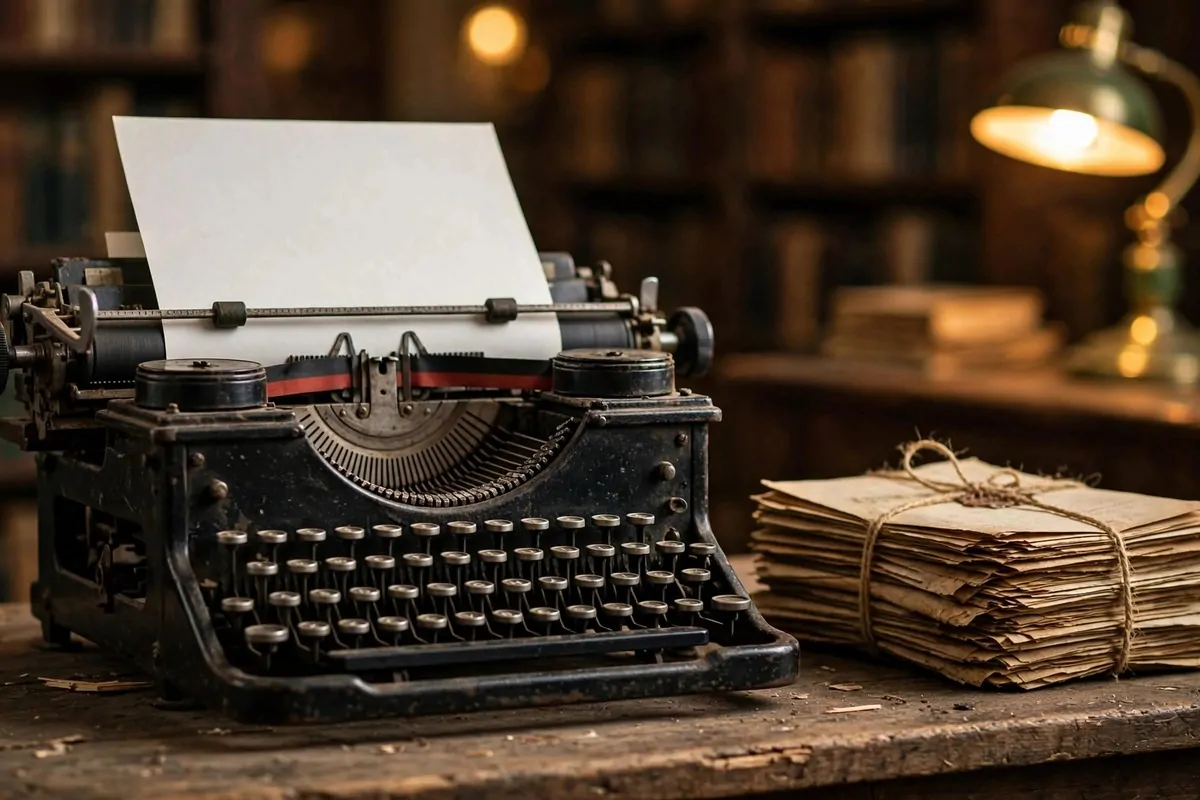
A vintage typewriter on a desk is pure old-world storytelling. It says someone here thinks deep thoughts and writes them down slowly. Even if you never type a word, it belongs.
Black iron typewriters from the early 1900s are the most beautiful. The round keys, the curved metal, the little bell. They are sculpture that happens to also type.
You do not need a working one for decoration. But a working one is so much more fun. Typing one slow page feels like meditation with a bell at the end of every line.
Slide a sheet of thick cream paper into it. Half-typed or blank, it looks right. A stack of old letters tied with string beside it tells a story nobody needs to finish.
Place it on your writing desk or a side table. Somewhere visible but not in your way. It is a treasure, not a tool, unless you make it one.
Dust it gently now and then. Typewriters collect dust in all their little corners. A soft brush keeps the keys clean and the machine happy.
If the ribbon is dry, replacements are still sold. Ten minutes of work and a hundred-year-old machine types again. There is something deeply satisfying about that.
Press one key just to hear the sound. Go on. That solid thunk is the sound of a slower, better time. That is the sound this whole room is trying to make.
15. Oil Paintings and Botanical Prints in Gold Frames
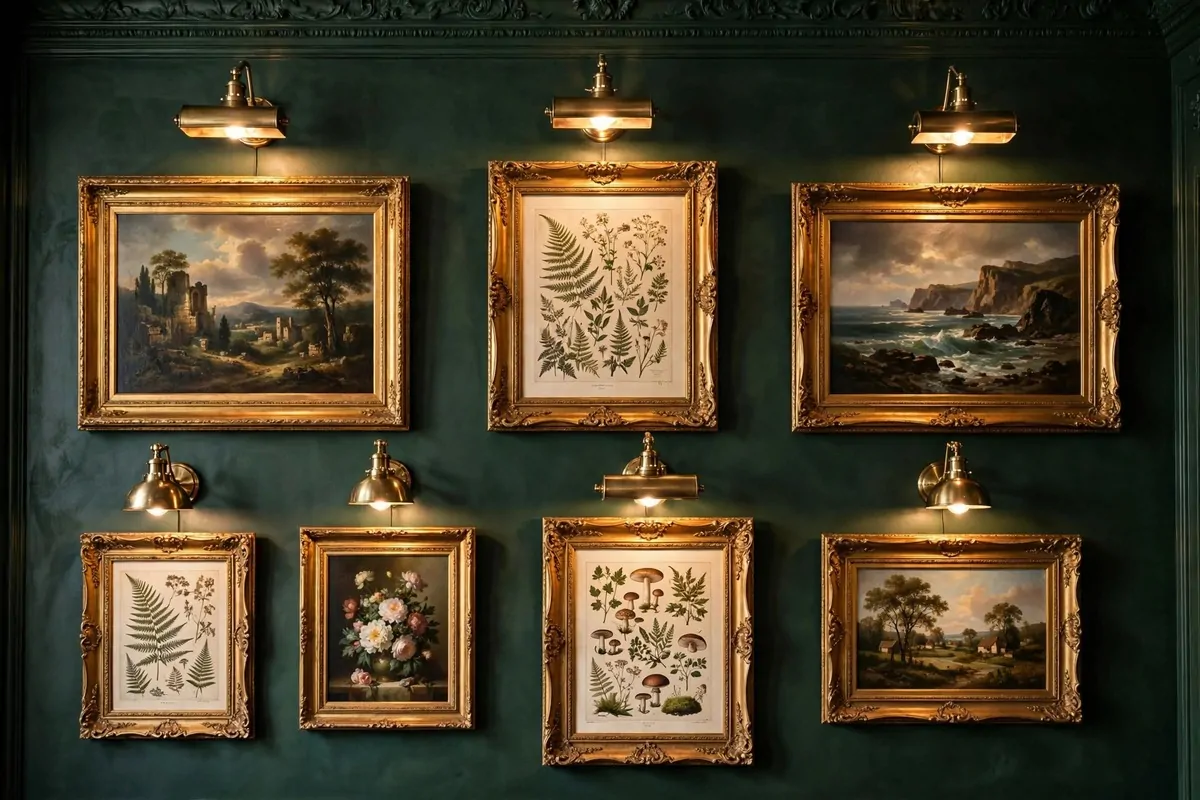
Bare walls are the enemy of a vintage library. Old libraries hung art everywhere, in heavy gold frames, and the frames mattered as much as the art. Yours should too.
Oil paintings of landscapes, old portraits, and quiet country scenes are the classics. You do not need real antiques. Good prints in the right frames fool every eye.
Botanical prints are my favorite library art. Old drawings of plants and flowers in soft colors look scholarly and beautiful. They have been hanging in libraries for centuries for a reason.
Black and white photographs in ornate frames add a historic feeling. Family photos work beautifully here, the older the better. A great-grandparent in a gold frame belongs in a library.
Gold frames do not have to cost a fortune. Thrift stores are full of them. A little gold paint on a plain frame works too. The ornate look is what counts, not the price tag.
Hang art in clusters, not in lonely singles. Old libraries crowded their walls. A tight group of five small frames looks richer than one big painting in the middle of a wall.
Brass picture lights above the art add the finishing touch. That little warm glow on a painting at night is pure old-world luxury. Battery ones exist if wiring scares you.
Match the frame colors to your other brass pieces. Brass lamps, brass frames, brass clock. Repeating the same metal ties the whole room together without you even trying.
16. A Crystal Decanter Set
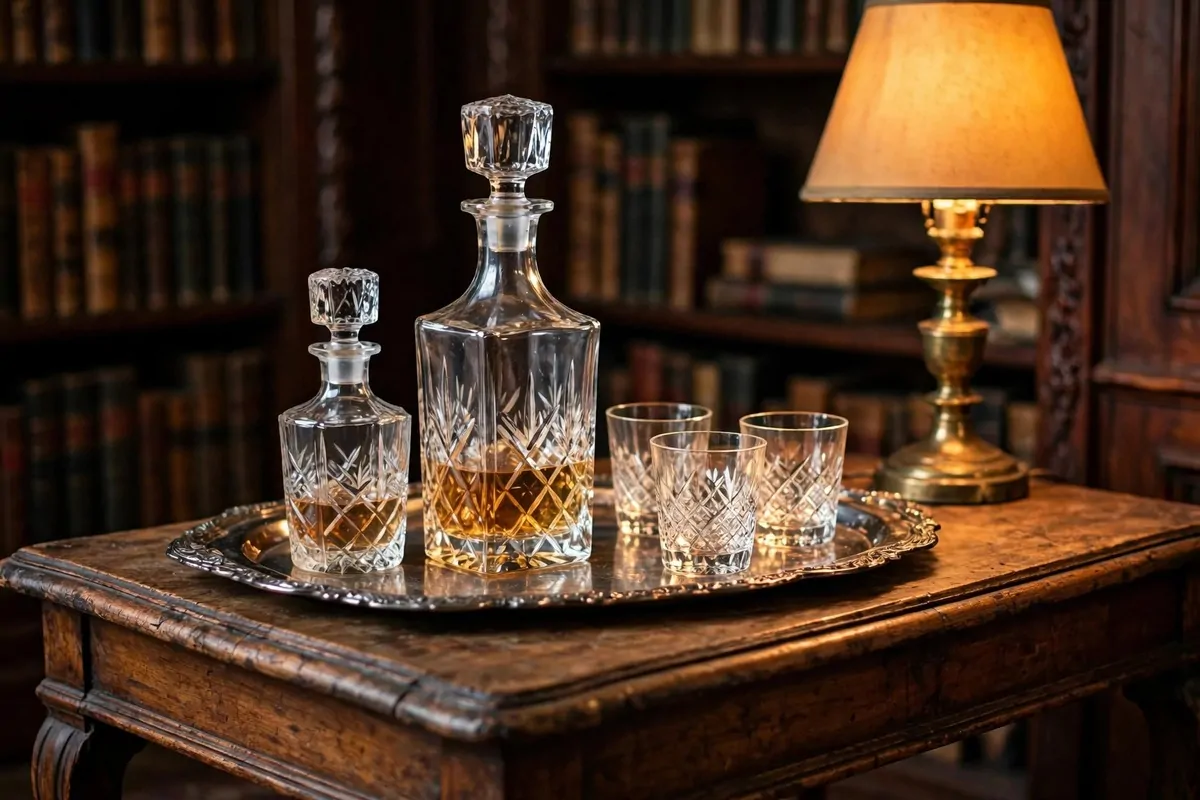
A crystal decanter set on a silver tray is the most gentlemanly thing you can put in a library. It gleams in the lamplight and makes the whole room feel grown up and storied.
Cut crystal catches light like nothing else. Even empty decanters sparkle on a dark wood table. Filled with amber liquid, they glow like little lanterns.
You do not have to drink from them. Plenty of people display decanters just for the look. Iced tea, juice, or even colored water works if you want them full for a party.
A small bar cart in the corner of your library is a lovely home for the set. Brass or dark wood carts roll right into the old-world look. Style the lower shelf with books.
Thrift stores are full of crystal decanters. People donate whole sets without knowing what they have. Wash them well and they shine like new.
Add two or three small glasses to complete the set. Matching glasses look formal. Mixed vintage glasses look collected and charming. Either way works.
Place the tray where the light hits it. Near a lamp or a window. Crystal needs light to do its magic, and a dark corner wastes the whole point.
Polish the silver tray now and then. Tarnish dulls the shine. Ten minutes with a soft cloth brings it back, and the ritual feels appropriately old-fashioned.
17. An Antique Mantel Clock
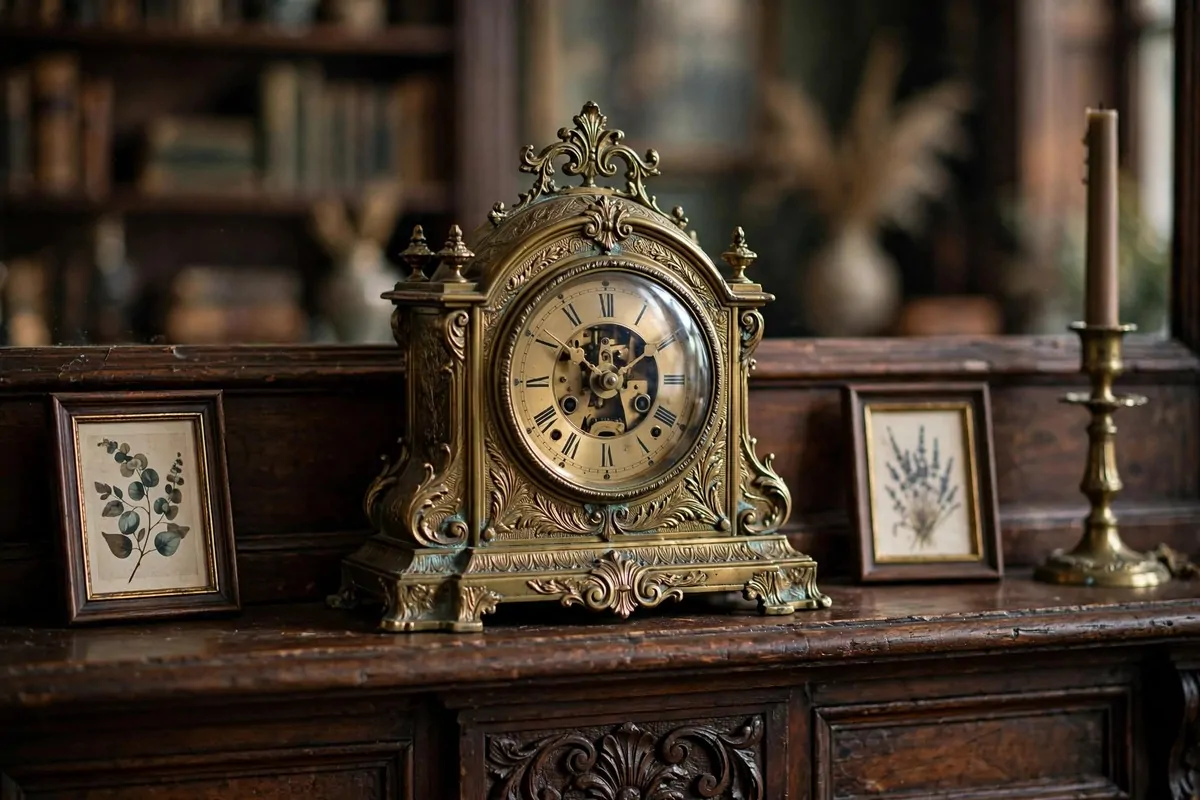
An antique clock ticking softly in a library is one of the most comforting sounds in the world. It is the heartbeat of the room. Digital clocks just blink at you. Old clocks breathe.
Brass mantel clocks with a visible pendulum are the prettiest. The swinging pendulum is hypnotic. I have caught myself watching mine instead of reading, and I have zero regrets.
Wind-up clocks need winding, usually once a week. That little ritual connects you to the room. It is a small act of care, like watering a plant, and it feels good.
Place it on the mantel if you have one. That is its traditional throne. No mantel? The top of a tall bookcase or a side table works just as well.
Match it with two smaller objects on either side. Candlesticks are the classic partners. The clock in the middle with matching pieces on the sides looks balanced and intentional.
The ticking might bug you at first if you are used to silence. Give it a week. Soon you will not notice it until it stops, and then the room will feel strangely empty.
Battery movements can be fitted inside old clock cases if winding feels like too much. You get the old look with modern ease. Nobody can tell the difference but you.
Listen for the chime. Some old clocks ring the hour with a soft bell sound. Hearing it across the house while you read is a small luxury I would not trade for anything.
18. A Glowing Chandelier and Wall Sconces
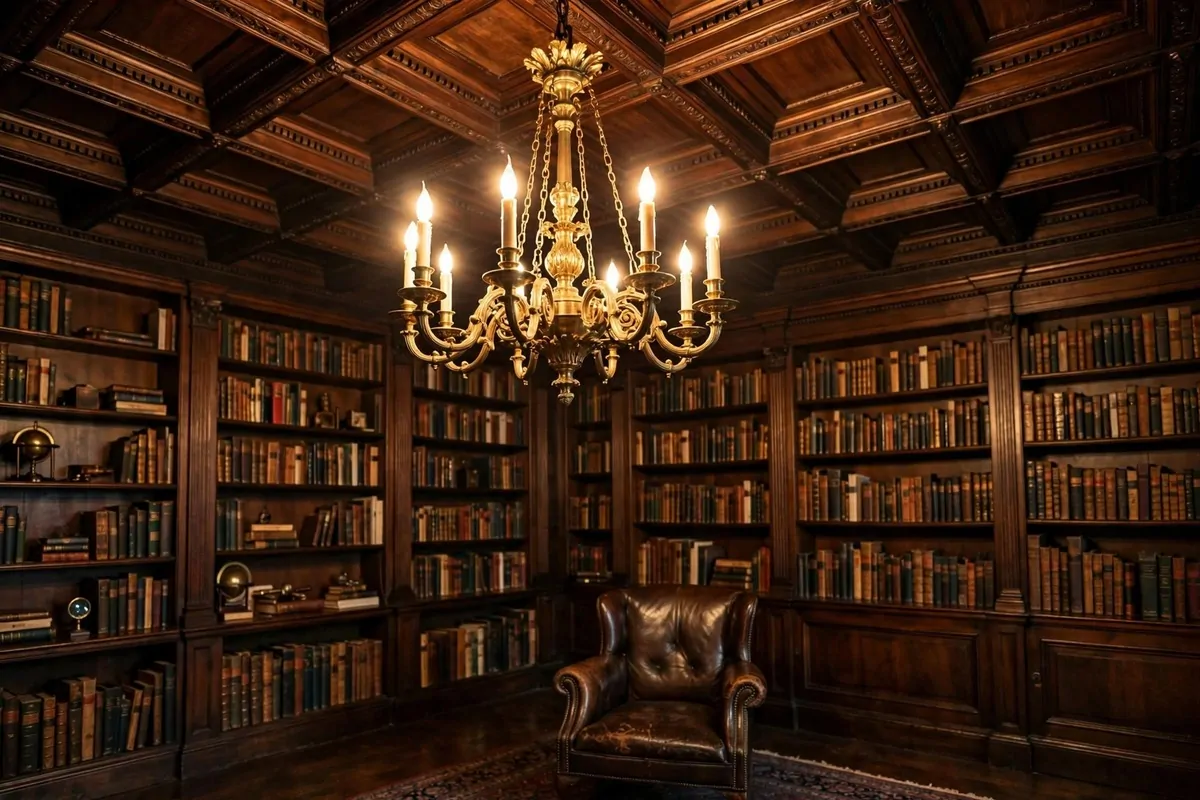
Overhead light in an old library should feel like candlelight, not a hospital. A warm chandelier with brass or bronze details turns the whole ceiling into part of the story.
Crystal chandeliers with brass arms are the grandest choice. They throw little sparkles of light around the room. Wrought iron with candle-style bulbs feels rustier and cozier.
Wall sconces are the secret weapon. They wash the bookshelves in warm light and make the spines glow. A pair flanking a painting or a mirror looks especially rich.
Use warm bulbs everywhere, the kind that glow golden. Cool white light in a vintage library is like wearing sneakers with a ball gown. Technically possible, spiritually wrong.
Put the lights on dimmers if you can. Full brightness for cleaning, low glow for reading. That control is the difference between a room and a mood.
Layer your lights like old libraries did. Chandelier for the room, sconces for the walls, a lamp for your chair. Three layers of warm light and the room feels alive.
Hang the chandelier at the right height. Too high and it floats away. Too low and tall guests duck. Over a central table or in the middle of the room is usually perfect.
Turn everything on at dusk and stand in the doorway. That first look at your glowing library never gets old. I still do it every evening, and I built the thing.
Quick lighting layer guide:
| Layer | Fixture | Job it does |
|---|---|---|
| Overhead | Brass or crystal chandelier | Fills the room with warm light |
| Walls | Brass wall sconces | Makes bookshelves glow |
| Task | Banker’s lamp or table lamp | Lights your book page |
| Accent | Candles and picture lights | Adds flicker and focus |
19. Antique Curiosities and Little Treasures
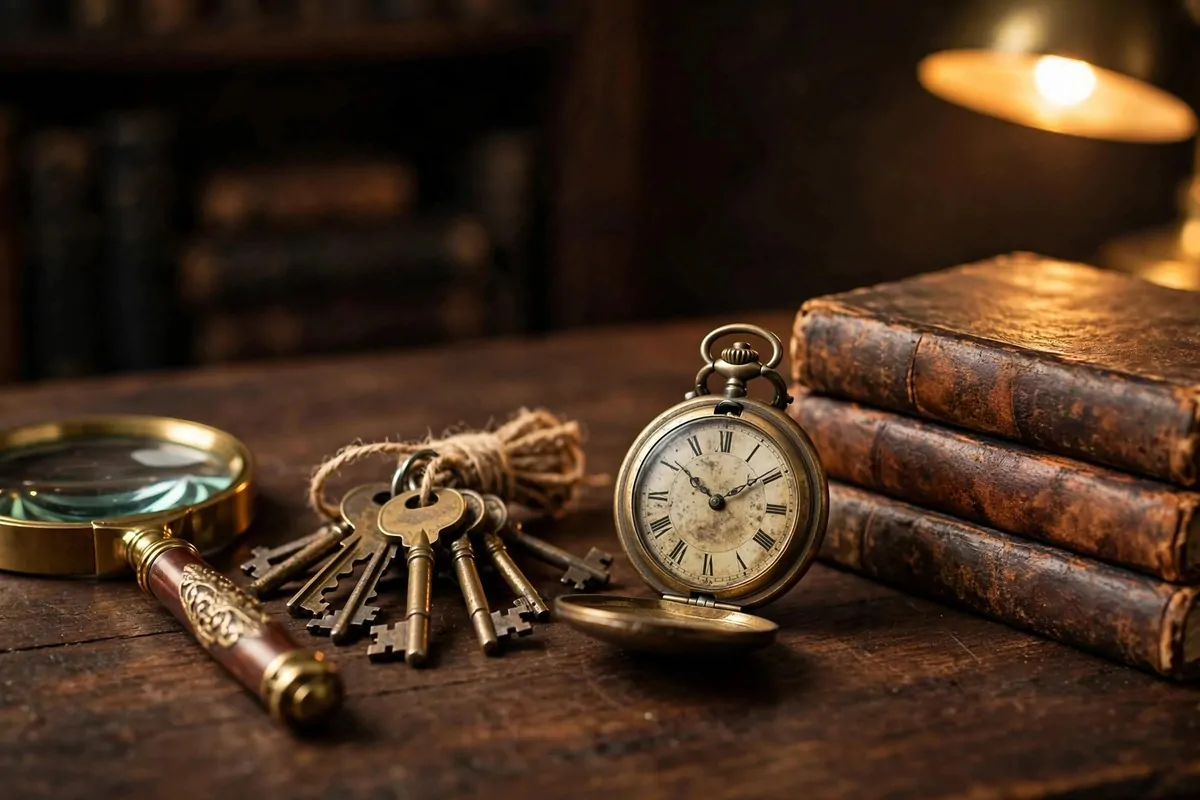
The last layer of a vintage library is the smallest one. The little treasures. A brass magnifying glass. A bundle of old keys. A pocket watch that no longer ticks. These tiny things whisper stories.
A magnifying glass on your desk is both useful and beautiful. Brass ones with a little heft feel wonderful in your hand. Use it for real, for maps and small print, and it earns its place.
Old keys are pure mystery. Keys to what? Nobody knows, and that is the fun. Hang a bundle on a wall hook or lay them on a stack of books. Guests will always ask about them.
A pocket watch on a little stand looks like it belongs to a professor. Open or closed, it adds weight to a shelf. The chain draped beside it is half the charm.
Bronze bookends shaped like owls or lions hold your books and your theme together. Cast iron ones are cheaper and just as handsome. Every shelf needs at least one pair.
Fountain pens in a wooden box, a letter opener with a brass handle, an old pair of spectacles. Desk treasures like these make the room feel lived in and loved.
Arrange them in small groups, not scattered everywhere. Three objects together on a tray or a book stack reads as a collection. One object alone in a corner reads as clutter.
Let these treasures grow slowly. The best collections are gathered over years, one flea market at a time. Every piece with a story makes the room feel more like yours.