18 Room Studio Ideas That Turn a Bedroom Into a Workspace

Your bed is the laziest piece of furniture you own. It works about eight hours a day. The other sixteen hours it just lies there, taking up the best spot in the room.
That is not a complaint. Beds earn their rest. But when you need a workspace and you only have a bedroom, that big lazy rectangle is the first thing standing in your way. It takes the light. It takes the wall. It takes the floor.
Here is the good news. You do not need a spare room to have a real office. You need a corner, a wall, or a closet that is doing a bad job right now. A bedroom can hold both jobs, sleep and work, if you draw a clear line between them.
That line is what these 18 Room Studio Ideas are all about. Desks that fold away. Dividers that cost almost nothing. Closets that grow up and get a job. And one simple routine at the end of the day that keeps your brain from working all night.
You do not need all 18. Pick the one that fits your room and your work. Start there. Your bedroom is already bigger than you think.
1. The Window Desk
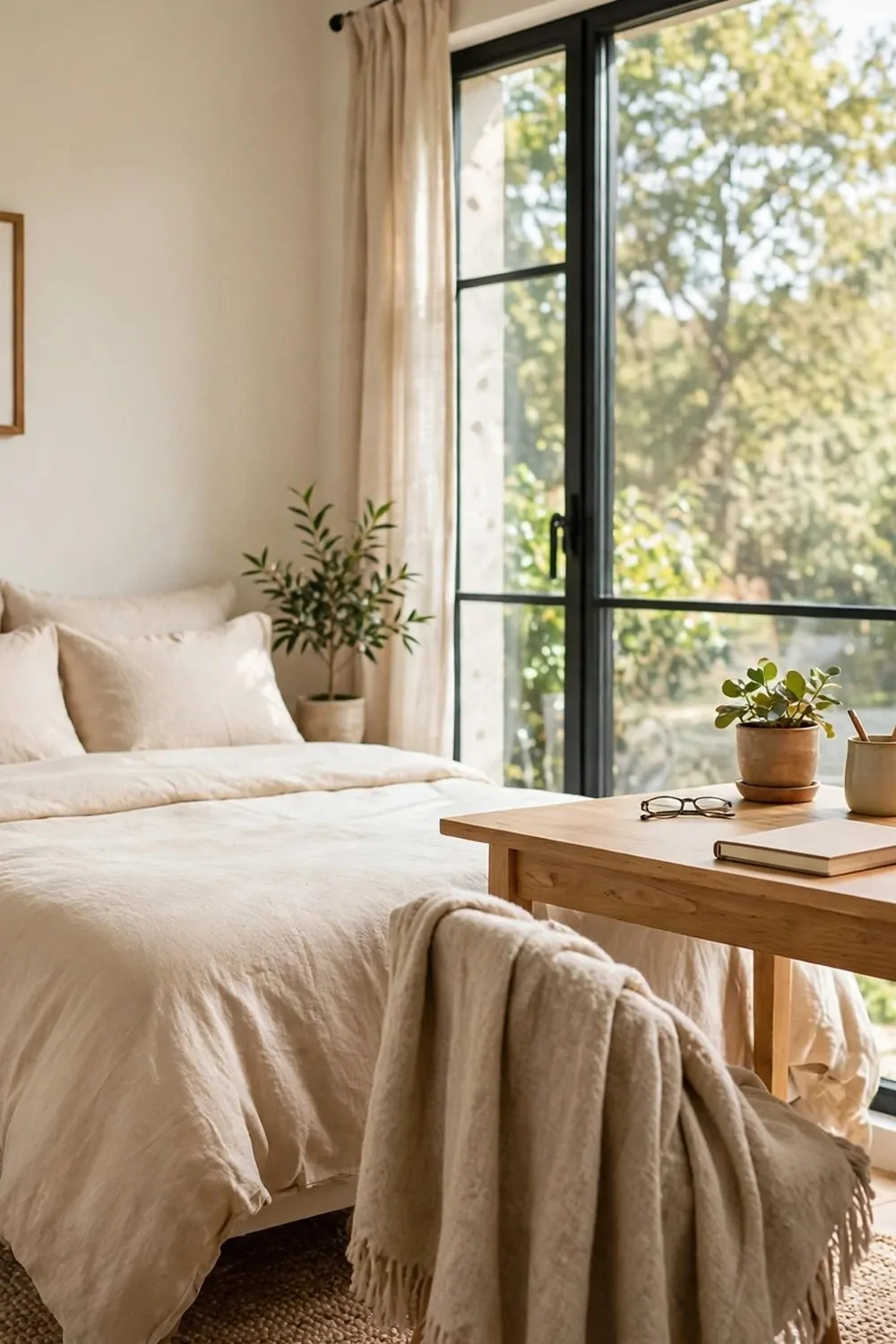
The window is the best desk spot in almost every bedroom. Daylight is free, the view rests your eyes, and work feels less like sitting in a box.
Put the desk right against the window wall. Face it sideways to the glass if you can. Sideways gives you daylight without the sun shining straight onto your screen. Your eyes will thank you by three in the afternoon.
Keep the desk small and the top clear. A window desk that collects clutter blocks the light, and that defeats the whole point. Laptop, lamp, notebook, mug. Everything else lives on a shelf nearby.
A sheer curtain softens harsh sun without killing the light. If the afternoon sun hits your screen, the sheer curtain is the cheapest fix there is. It also makes the window look finished and soft.
Put the bed as far from the window desk as the room allows. Work and sleep need distance, even in one room. If the bed is right beside the desk, your brain never quite clocks off.
I worked from a window desk for two years. On hard days I would look up at the sky for ten seconds, and it honestly helped. A window is the cheapest wellness upgrade a bedroom can have.
At the end of the workday, close the laptop and clear the desk. That little closing ritual tells your brain work is done. The window desk becomes just a window again.
If your bedroom has two windows, lucky you. Put the desk at one and a reading chair at the other. Two window zones, two moods, one small room.
A window desk costs one small desk and a sheer curtain. It pays you back every single morning with light.
2. The Closet Office
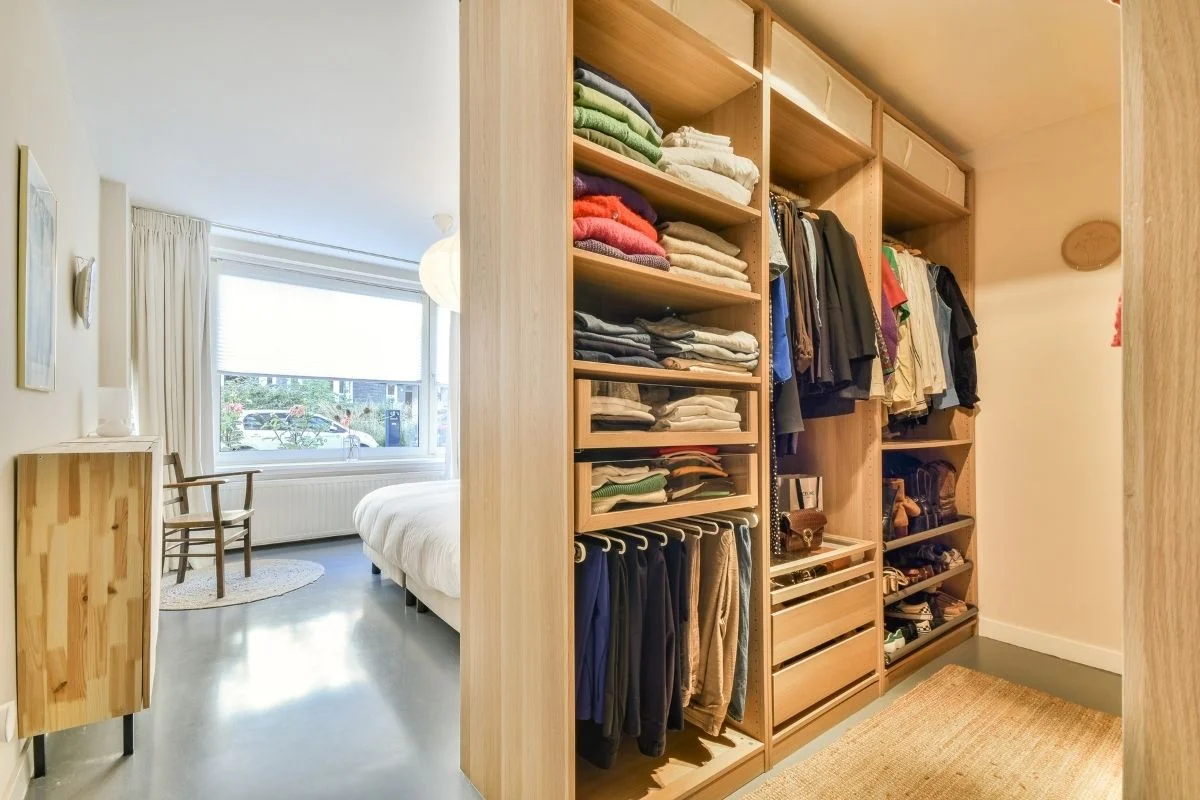
Every bedroom has a closet that is doing a bad job. It holds stuff you have not touched in a year, behind a door you barely open. That closet is a whole office waiting to happen.
Clear it completely. Every single thing out. Then put a desk surface across the closet at sitting height. A board, a shelf, or a small desk that fits the width. That is your office.
Shelves above the desk hold the work things. Books, files, a small printer if it fits. The closet walls become office walls, and everything work-related lives behind one door.
A small lamp inside the closet is essential. Closet lights are usually dead or scary. A warm desk lamp makes the little office feel intentional instead of hidden away.
When work ends, close the closet doors. The office disappears. Your bedroom becomes a bedroom again, and your brain gets the message that the workday is done.
I have a friend who works from a closet office, and she calls it her cloffice. She says closing the doors at six in the evening is the best part of her whole workday. I believe her.
Ventilation matters in a closet. Leave the doors open while you work, or the little space gets stuffy fast. Fresh air is not optional, even in a closet.
This idea is perfect for renters. A board, a lamp, and a few shelves, all removable. When you move out, the closet goes back to being a closet in one afternoon.
One closet, one board, one lamp. That is a whole office for the price of lunch.
3. The Fold-Down Desk That Vanishes
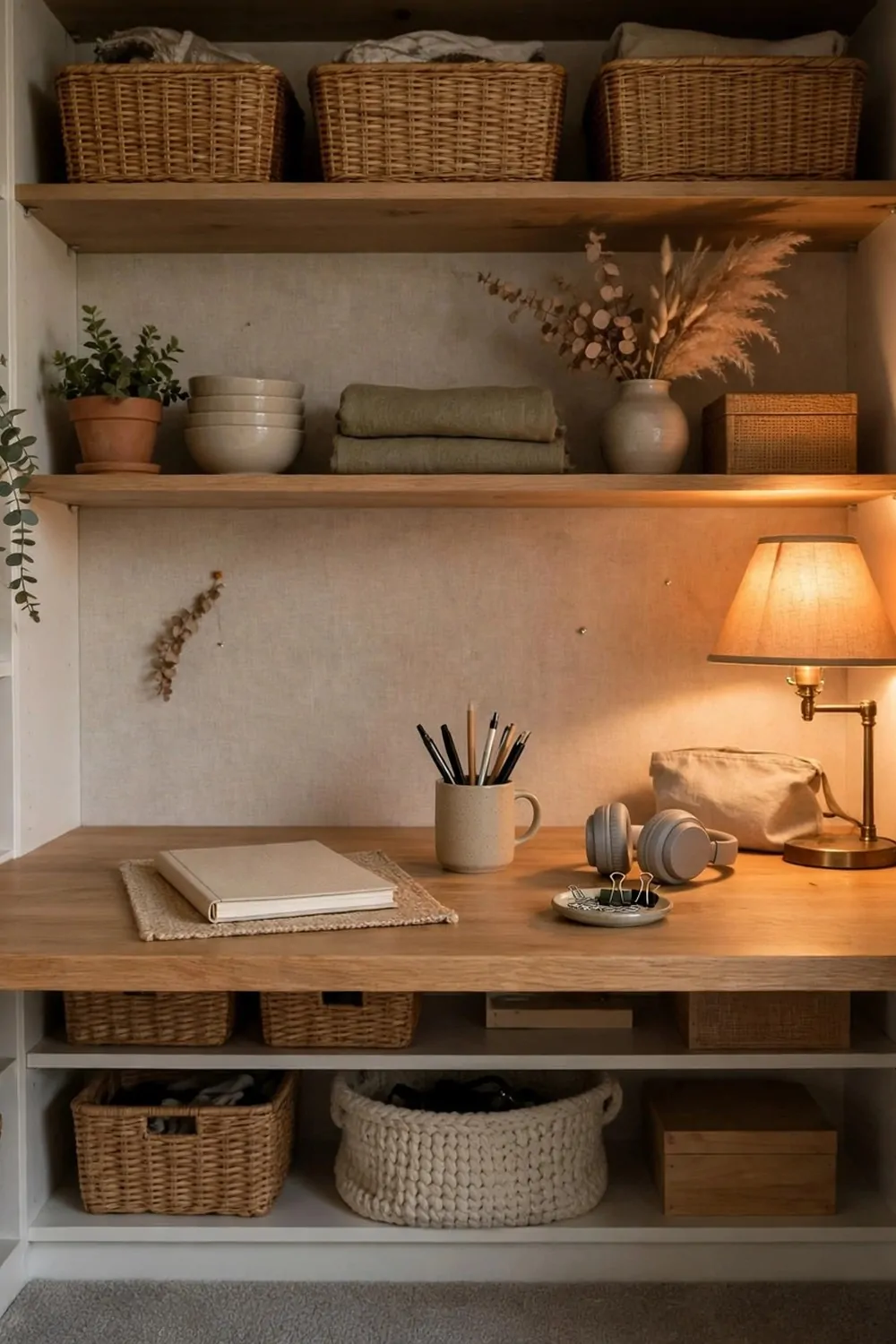
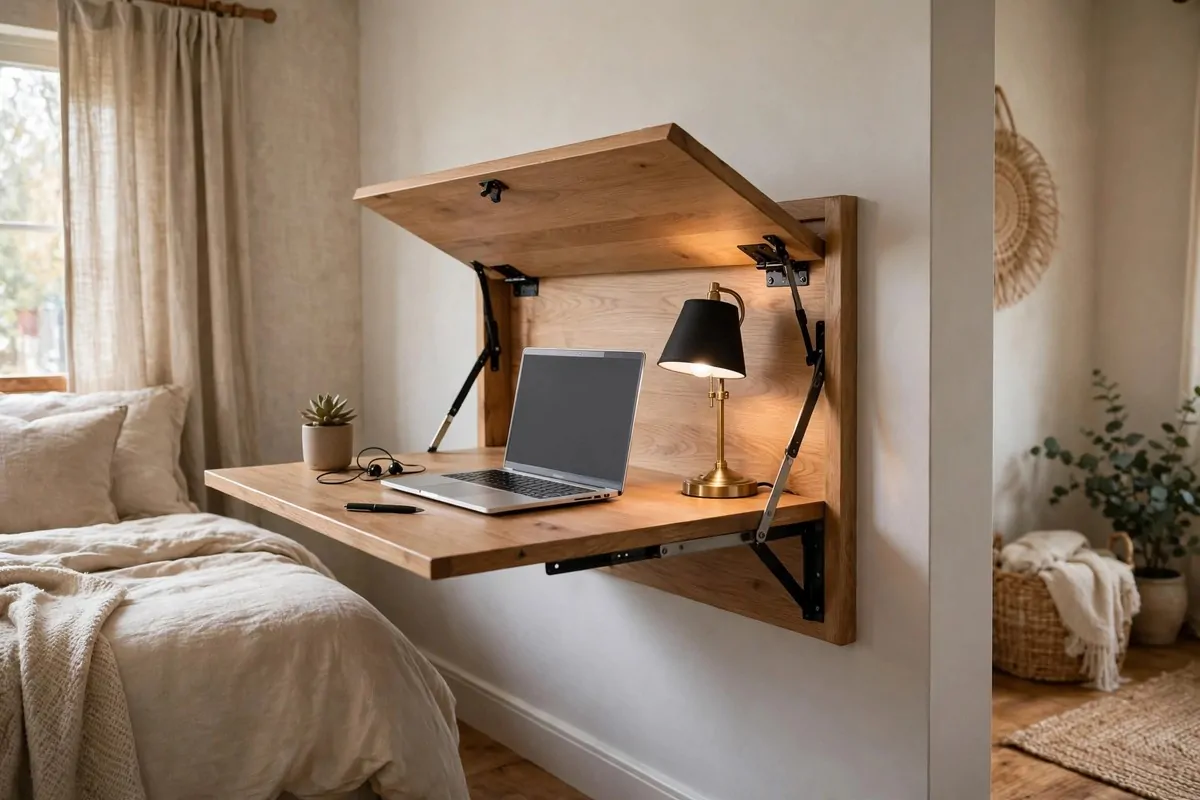
A wall-mounted fold-down desk gives you an office that disappears. Work hours, the desk is down and the laptop is out. After work, it folds up flat and the wall is just a wall again.
This is the trick for bedrooms where the desk would stare at you all night. A desk that folds away cannot stare at anyone. It is gone. Your bedroom gets its evening back.
Choose a desk that locks flat against the wall. A desk that sags or wobbles will annoy you every single day. Solid hinges and a good latch are worth paying a little extra for.
Keep only work things on the desk when it is down. Laptop, lamp, notebook, mug. When work ends, everything goes in one box on the shelf and the desk folds up empty.
Here is how the main small-desk options compare for a bedroom:
| Desk type | Floor space used | How it disappears |
|---|---|---|
| Fold-down wall desk | None when folded up | Folds flat against the wall |
| Floating desk shelf | None, it is wall mounted | It stays out, but stays slim |
| Console table desk | A slim strip along the wall | Chair tucks under, top stays clear |
| Rolling cart desk | Wheels away into a closet | Rolls out of sight at night |
The chair matters too. A folding chair that hangs on a hook by the desk keeps the floor clear when work is done. No chair sitting around reminding you of emails all evening.
This setup is perfect for renters. A few screws, a small patch of wall, and it comes down clean when you move. Much kinder to a deposit than a full desk.
Close the desk at the end of every workday. That click is the sound of work ending. Your bedroom becomes a bedroom again.
4. The Curtain That Draws the Line
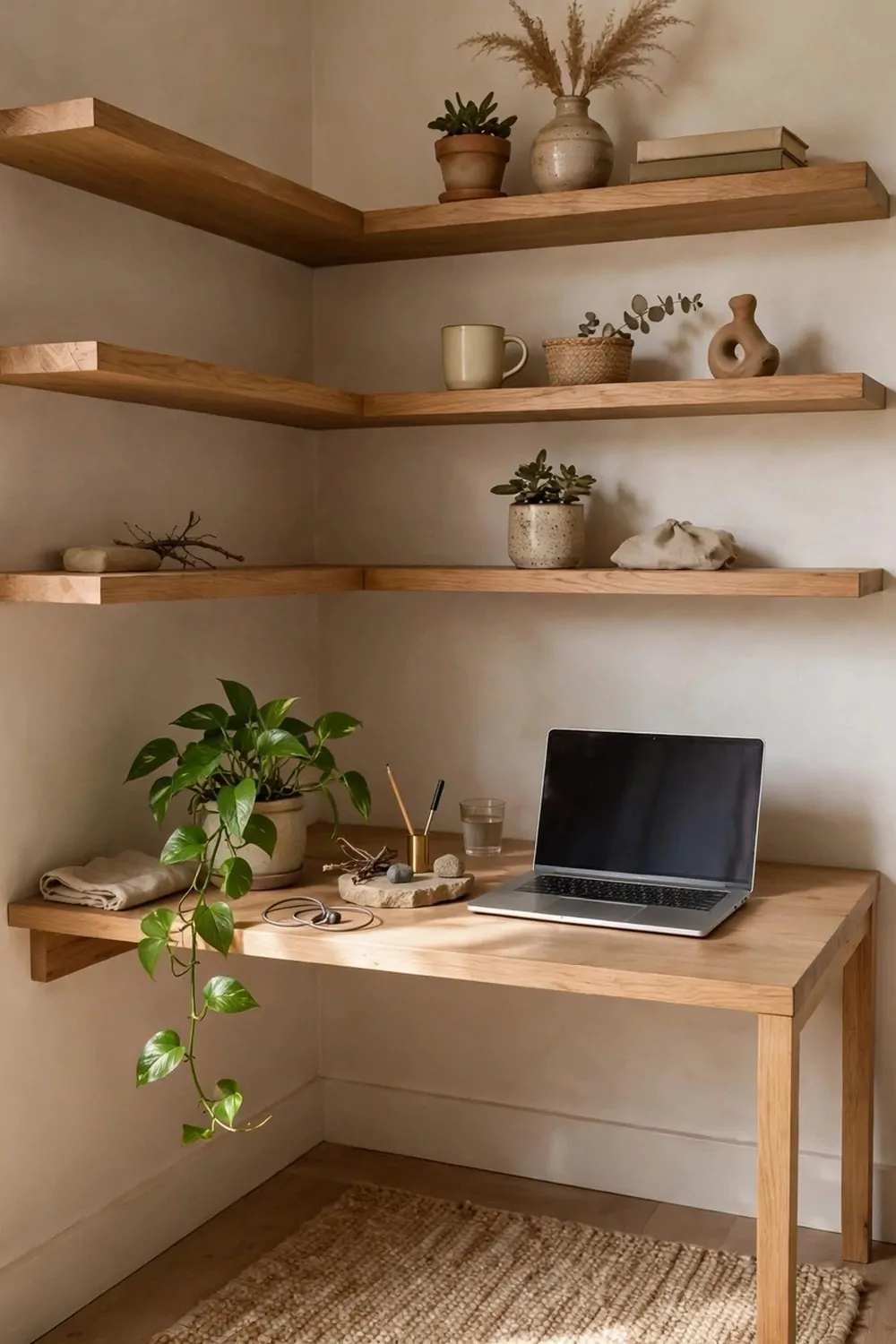
A curtain is the cheapest wall you can buy. Hang one from the ceiling between the bed and the desk, and your bedroom suddenly has two rooms.
Hang the curtain from the ceiling, not from the wall. A ceiling track or a simple rod mounted high makes the divide feel tall and intentional, like a little room inside the room.
Sheer curtains are the best starting point. They soften the sight of the desk without blocking the light. Your bedroom still feels bright, and the work zone still feels separate.
If you need a stronger boundary for sleep, use a double layer. Sheer on the inside, heavier fabric on the outside. Daytime gets the sheer layer. Nighttime gets both, and the desk disappears.
Keep the curtain hem just off the floor. A hem that drags collects dust and trips you in the dark. A finger-width gap is perfect.
This trick is renter friendly. A tension rod or a ceiling track with small hooks comes down clean when you move. No big holes, no lost deposit.
I love the little ritual of it too. Pulling the curtain closed at night tells my brain the day is over. It is the smallest shutdown routine, and it works.
Your desk does not need a wall around it. It just needs a curtain and a little ceremony.
5. The Desk Behind the Headboard
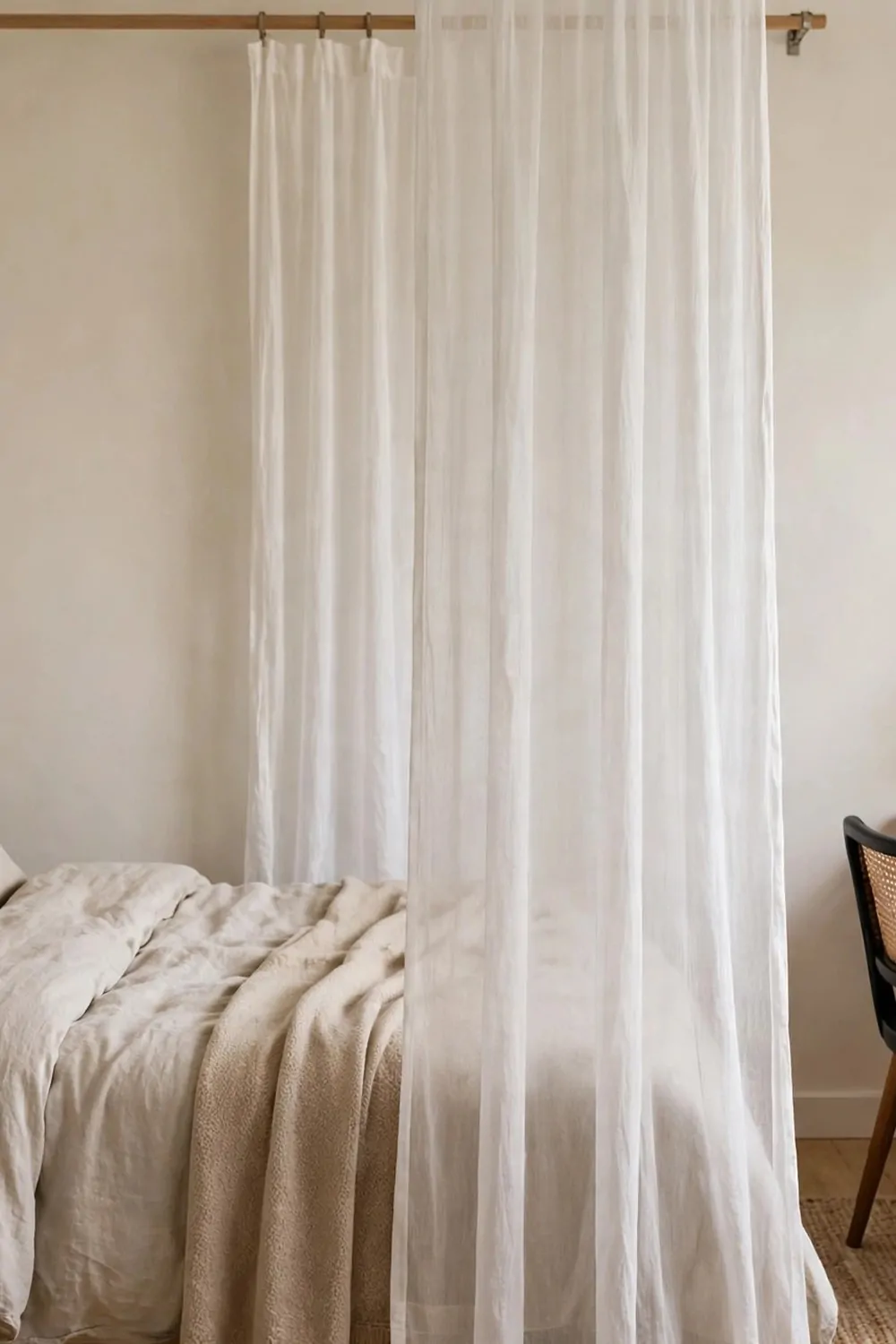
The space behind your headboard is almost always wasted. A narrow console table tucked behind the bed turns that dead strip into a desk nobody sees from the doorway.
Push the bed a few inches out from the wall. Slide a slim console table into the gap. It only needs to be deep enough for a laptop and a lamp. That is the whole desk.
From the door, all you see is a bed. The desk hides behind it like a secret. From the desk chair, you see the room, the window, and nothing that reminds you it is bedtime.
This works best with a low headboard or no headboard at all. A tall headboard blocks the desk and makes the gap feel like a cave. Low and simple wins here.
Keep the console top clear except for work things. If it collects books, chargers, and spare change, it stops being a desk and becomes a junk shelf behind your bed.
A small stool that slides under the console finishes the setup. It tucks away completely when work ends. No chair sitting in the middle of the room all night.
This is a lovely trick for light laptop work. Emails, writing, video calls with the camera facing the wall. For heavy all-day work, a bigger desk in another spot will serve you better.
One console table, one stool, one lamp. A hidden office in the gap behind your bed.
6. The Foot-of-Bed Work Zone
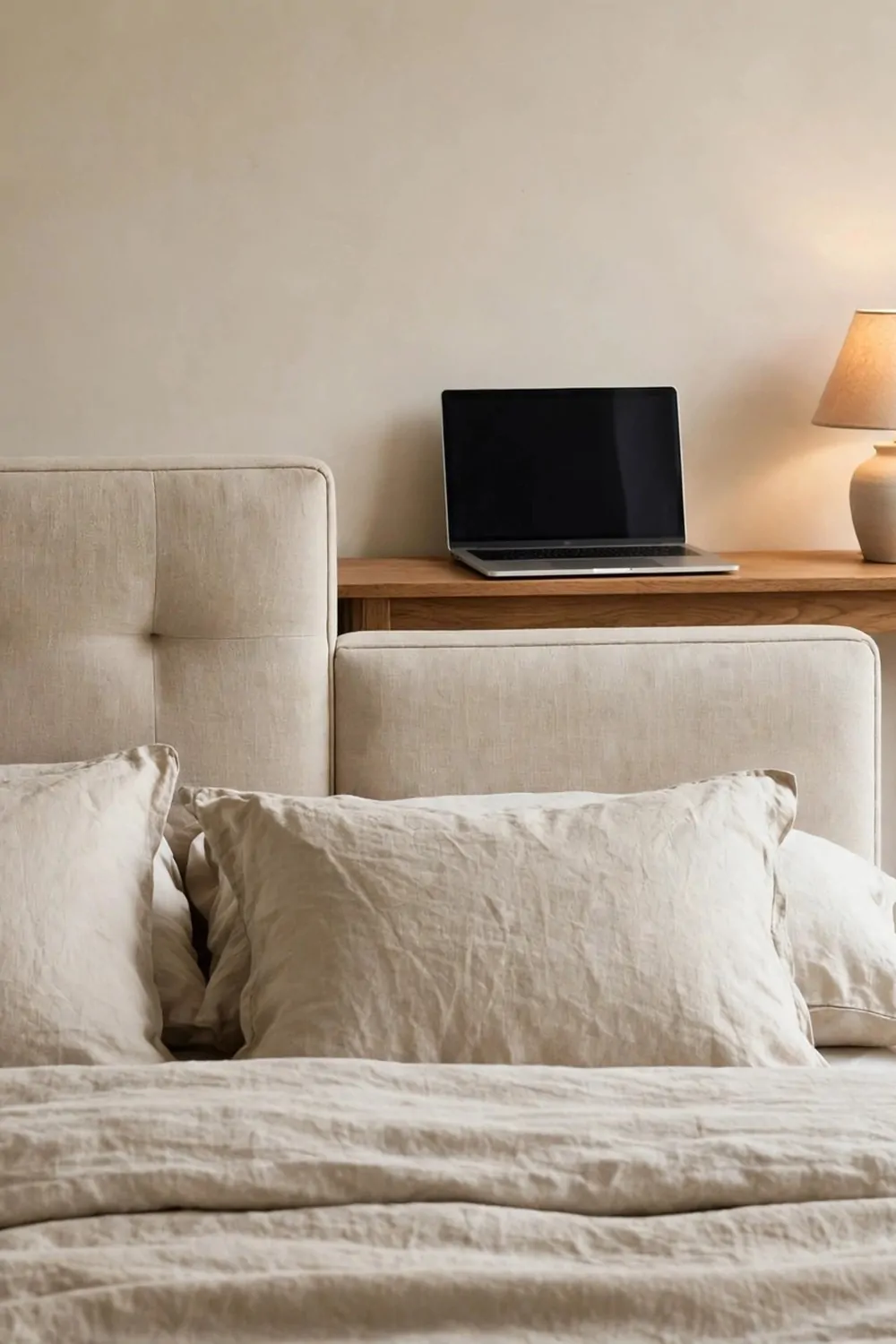
The space at the foot of your bed is often dead space. A slim console desk fits neatly there and creates a natural boundary. Sleep happens on one side, work on the other.
A desk about as deep as a paperback book is enough. It holds a laptop, a lamp, and a notebook. A low chair slides underneath, and a rug under the desk area marks the work zone even more clearly.
The rug is doing real work here. It tells your eye where the office starts. Without the rug, the desk just floats at the end of the bed. With it, the zone feels planned.
Face the desk away from the bed if you can. When you sit down to work, you should see the room, not the pillows. Seeing the pillows at nine in the morning is a fast way to want a nap.
Keep the walkway around the desk clear. If you have to climb over things to get into bed at night, the zone becomes an obstacle course. A clear path keeps both jobs friendly.
This setup shines in bedrooms where the bed sits in the middle of the room. The foot of the bed becomes the office wall. Two zones, one rectangle, no building work.
I tried this in a guest room once, and the best part was the shutdown. At night I just pushed the chair under the desk and walked around the other side of the bed. The office was behind me. Sleep was in front of me.
A slim desk, a small rug, a chair that tucks away. The foot of your bed just got a job.
7. The Corner Office Nook
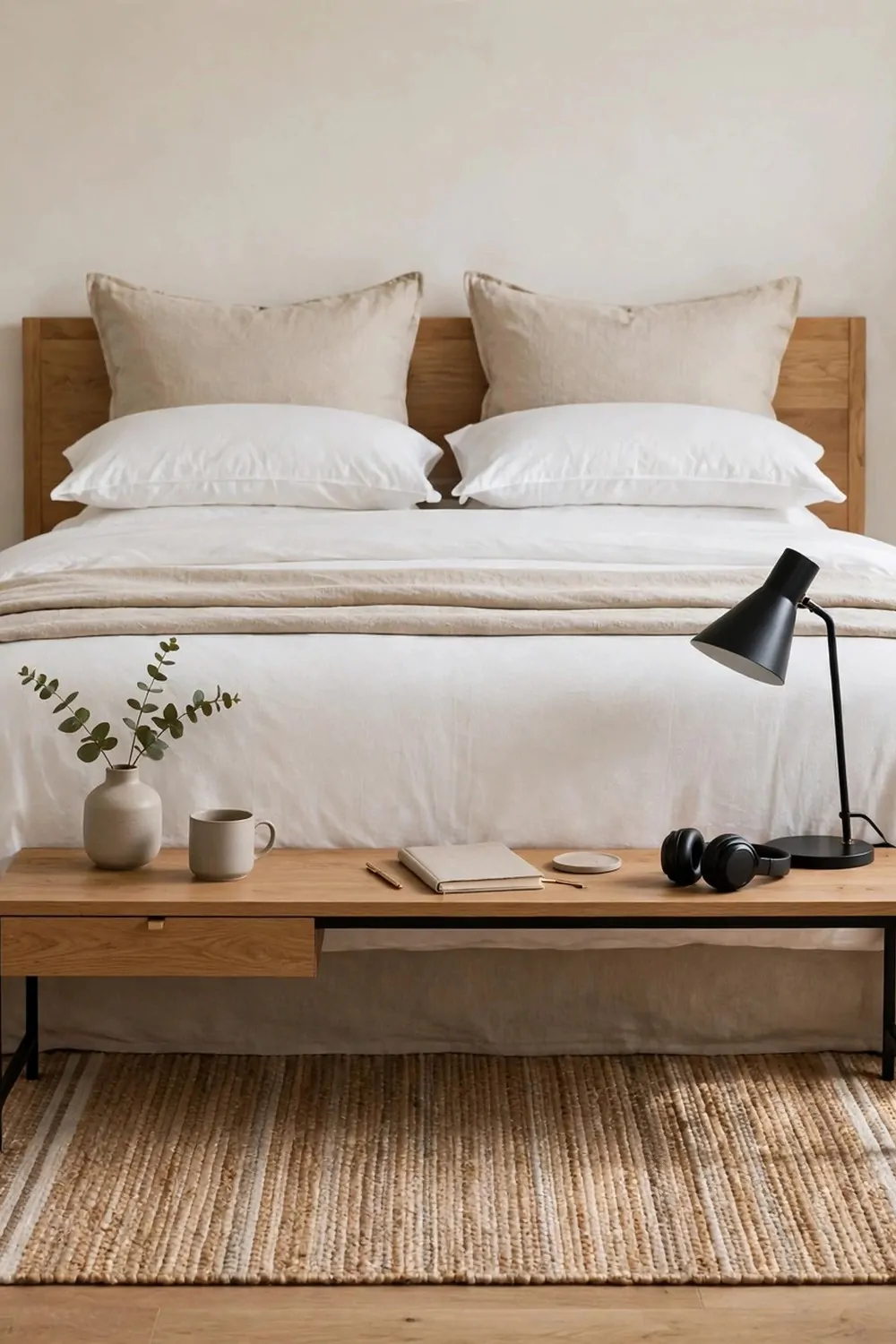
Every bedroom has a corner that does nothing. It holds a plant nobody waters, or a pile of magazines, or absolutely nothing at all. That corner is a whole office waiting to happen.
A corner desk fits where no straight desk will go. It uses two walls at once, which means it needs almost no floor. The chair tucks into the angle, and the whole setup reads as intentional instead of squeezed in.
Floating shelves above the corner desk do the storage work. One shelf for books, one for a plant, one for the things you reach for every day. The walls hold the office so the floor stays free.
Light the corner well. Dark corners look like holes in the room, and holes make a place feel smaller. A small lamp or a clip light turns a dead corner into a spot your eye actually wants to visit.
Put the corner to work for one job only. A corner that tries to be a desk and a dressing table and a plant stand becomes a cluttered corner. One job per corner keeps it calm.
A triangular corner shelf is a lovely extra. It mounts in the angle where two walls meet and holds a book or a candle without sticking out into the room at all.
A small rug under the chair finishes the nook. It marks the work spot the way a rug marks a living zone, and your feet learn the boundary fast. Even a tiny mat, just big enough for the chair legs, does the job.
Walk your bedroom and count the corners. Each one is a little room waiting for a job. Give the quietest one to your work, and the middle of your floor gets to breathe again.
8. The Loft Bed Workspace
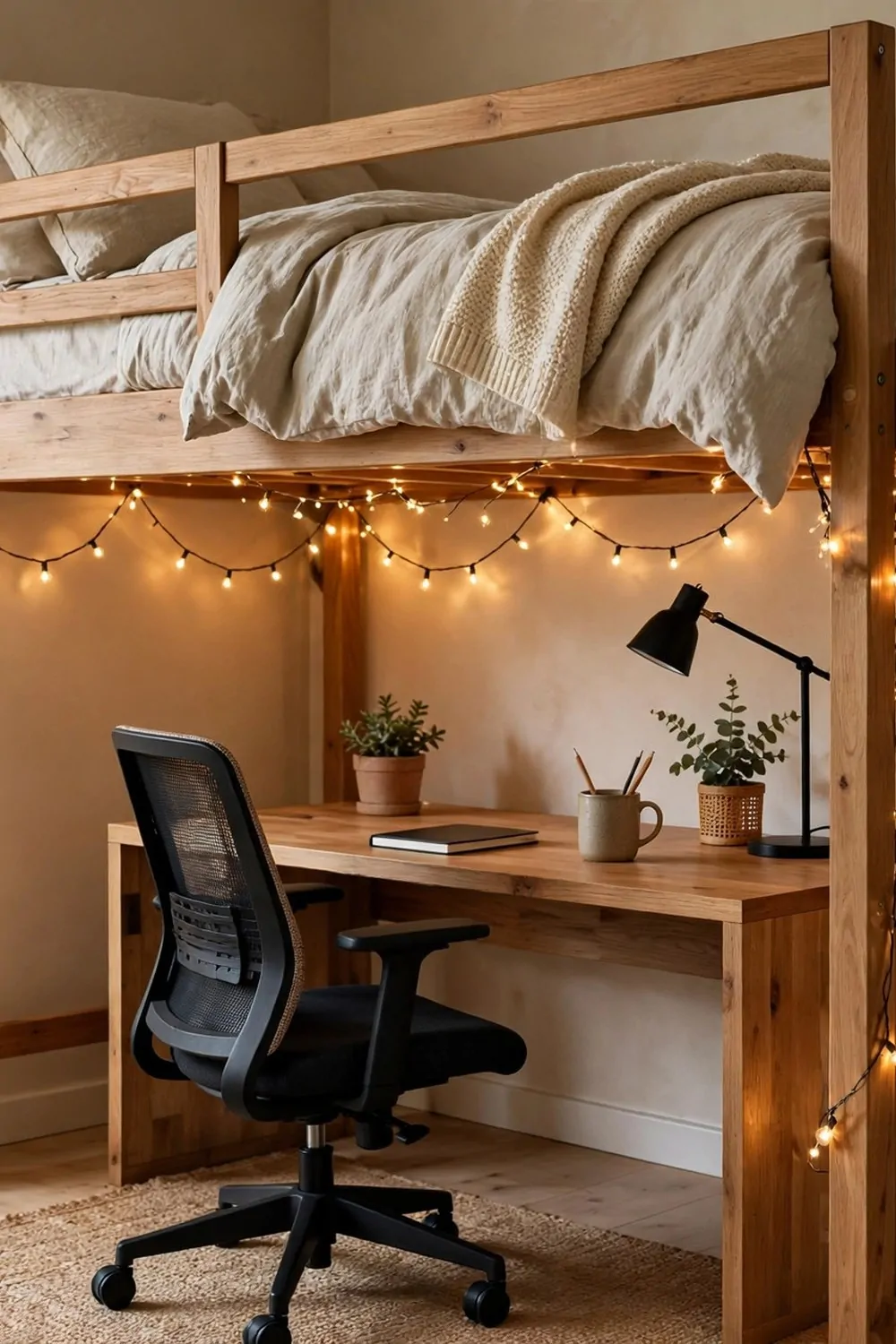
When the ceiling is high enough, a loft bed stacks your life vertically. The bed goes up top. The desk goes underneath. One patch of floor does two jobs.
Check your ceiling height first. You need to sit up in bed without hitting your head, and sit at the desk without ducking. If you cannot do both, pick a lower platform bed instead.
Make the space under the loft a real work zone. A desk, a lamp, a small shelf. Not a storage cave. If the underneath feels like a cave, you will never want to work there.
A solid ladder matters more than a clever one. You climb it half asleep every night. Wide steps and a good handhold beat a skinny ladder every single time.
Guard rails are not optional. Even adults roll in their sleep. A rail on the open side is the difference between a loft bed and a bad night.
Keep the bedding simple up top. Fewer pillows means less stuff tumbling off the edge. A fitted sheet, a duvet, one good pillow. That is plenty when the bed is up high.
String lights or a small clip lamp under the loft make the desk zone feel cozy instead of shadowy. Light is what turns the underneath from a gap into a room.
I love this setup for students and anyone who works from home. Your office is always set up, your bed is always made, and they never fight over the same floor.
9. The Rolling Cart Office
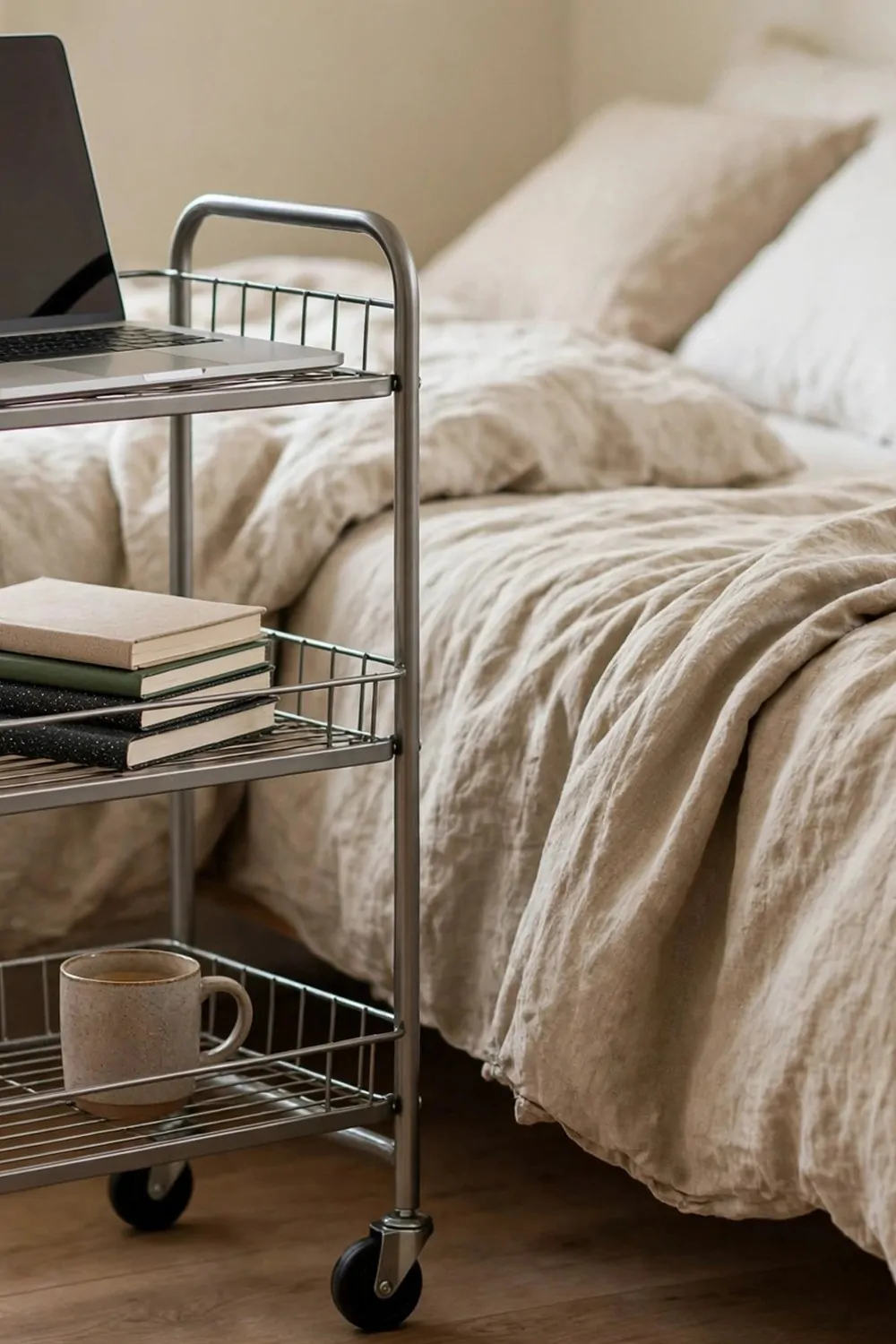
Not ready to commit to a permanent desk? A sturdy rolling cart holds a laptop, notebooks, and supplies, and wheels to wherever you want to work. The bed, a chair by the window, the kitchen table.
When work ends, roll it into the closet. The bedroom goes back to being just a bedroom. This is ideal for renters and anyone whose bedroom layout changes often.
Wheels are the whole trick. A cart without wheels is just a small table. A cart with good wheels goes where the need is, and parks out of the way when the need is gone.
Stock it for its main job first. Laptop on top, notebooks and pens on the middle shelf, chargers and the spare cable on the bottom. A cart with a clear job gets used. A cart with random stuff becomes a junk shelf on wheels.
Keep the top clear enough to actually work on. A cart piled high with clutter cannot hold a laptop. Leave half the top surface empty on purpose.
Lock the wheels when it is parked. A cart that rolls away when you lean on it is funny exactly once. Most good carts have a little brake on two of the wheels.
At night, roll it against the wall or into the closet. It becomes invisible. Morning comes, and it rolls right back to the window.
One cart replaces a desk, a shelf, and a filing box. That is the bedroom math that matters.
10. The Bookshelf Divider Office
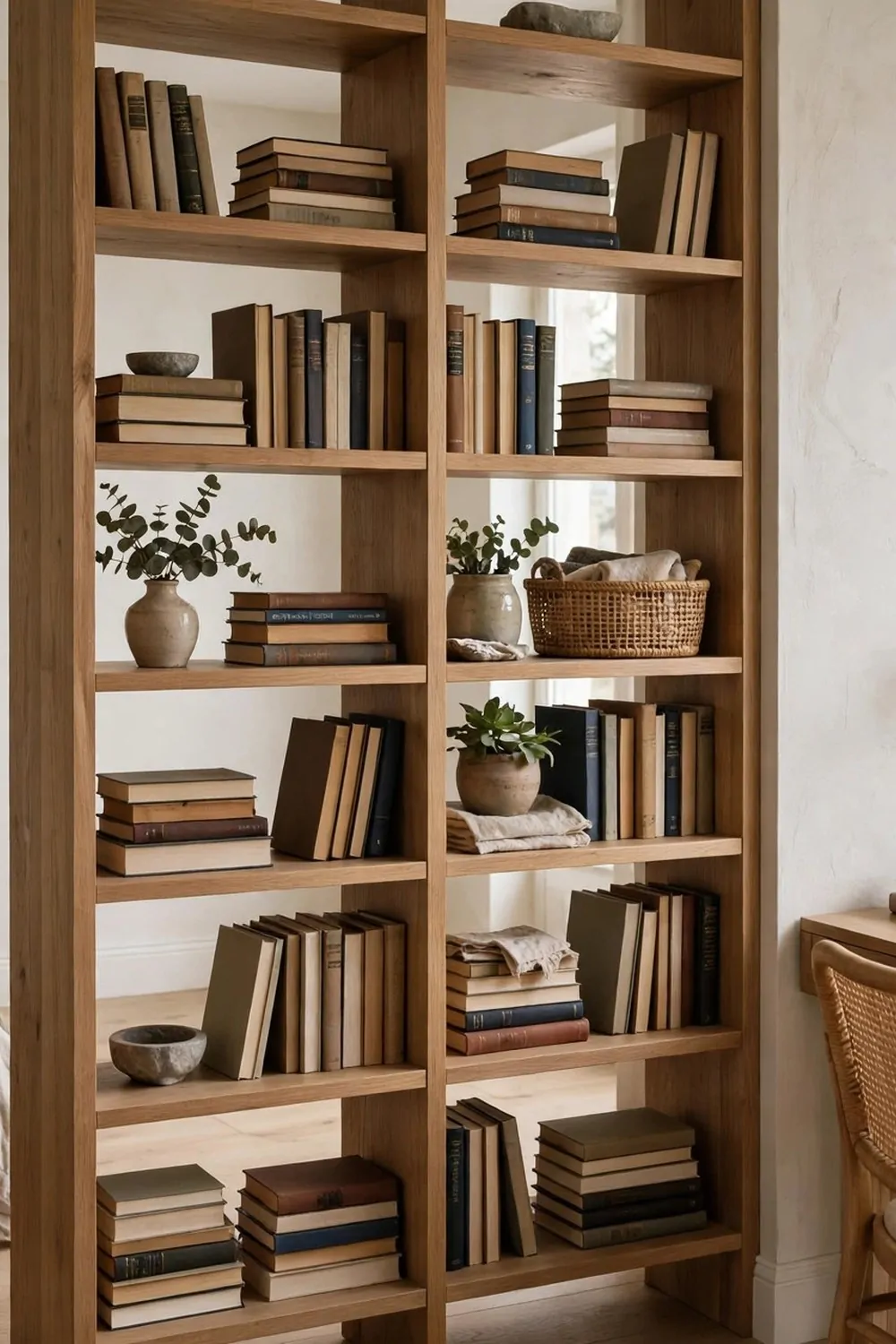
An open-backed bookshelf placed perpendicular to the wall creates a soft partition between bed and desk without blocking light. It splits the room, stores your stuff, and still lets daylight through.
Place it perpendicular to the wall, not flat against it. That is what turns a shelf into a divider. The shelf becomes a soft boundary line between the sleeping side and the working side.
Open backs matter here. A solid bookcase blocks light and makes the far side feel dark. An open shelf keeps both zones bright, and you can reach things from either side.
Style the bedroom-facing side with books and plants. Use the office-facing side for files, notebooks, and tech. Each side gets its own job, and the shelf serves both without taking sides.
Fill the lower shelves with heavy things. Books, baskets, storage boxes. Heavy low and light high keeps the shelf steady and stops it feeling top heavy.
Leave some shelves a little empty. A shelf packed to the brim reads as a wall. A shelf with breathing room reads as a divider. Air is part of the design.
Anchor it to the wall if you can. A tall shelf in a small room needs to be steady. A small bracket at the top is cheap insurance and keeps the whole thing safe.
This divider also solves the storage problem at the same time. Every shelf is a home for something that used to live on your floor. That is two bedroom problems fixed with one purchase.
11. The Daybed Office
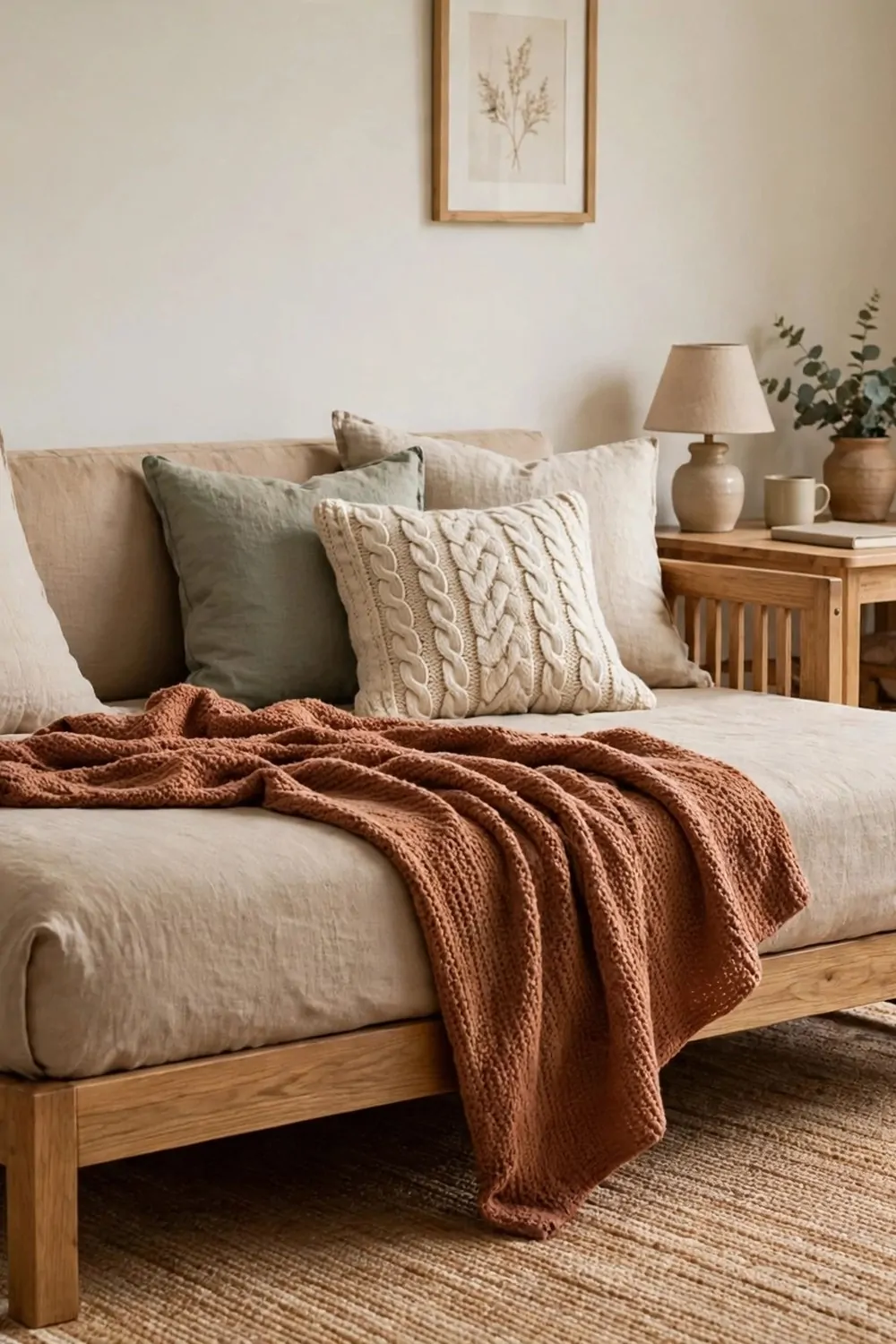
A daybed is a sofa by day and a bed by night, and it never pretends to be anything else. It does both jobs honestly, which is why it works so well in a bedroom office.
Style it like a sofa during the day. Cushions along the back, a folded throw over one arm, a small side table beside it. Your work zone sits opposite it, and the whole room reads as a studio, not a bedroom.
At night, move the cushions and pull the bedding out of its drawer or basket. The changeover takes two minutes once you have the routine down. Keep the bedding close by, or the routine falls apart.
A daybed with storage underneath is the best version of this idea. Drawers or a trundle hold the bedding, the spare pillows, and the winter blankets. Everything for both jobs lives inside the one piece of furniture.
Pick a firm mattress for a daybed. A soft one sags when people sit on it all day and feels lumpy at night. Firm works for sitting and sleeping both.
Put the daybed against the longest wall you have. It reads as a sofa against a wall, not a bed in the middle of the room. The wall anchors it and keeps the floor open.
Add a reading lamp and a little shelf at one end. Now the daybed corner is a reading nook by day and a sleep nook by night. Same corner, two lives.
One piece of furniture, two jobs, zero compromise. That is bedroom furniture done right, and the whole office follows from it.
12. The Wall of Shelves Office
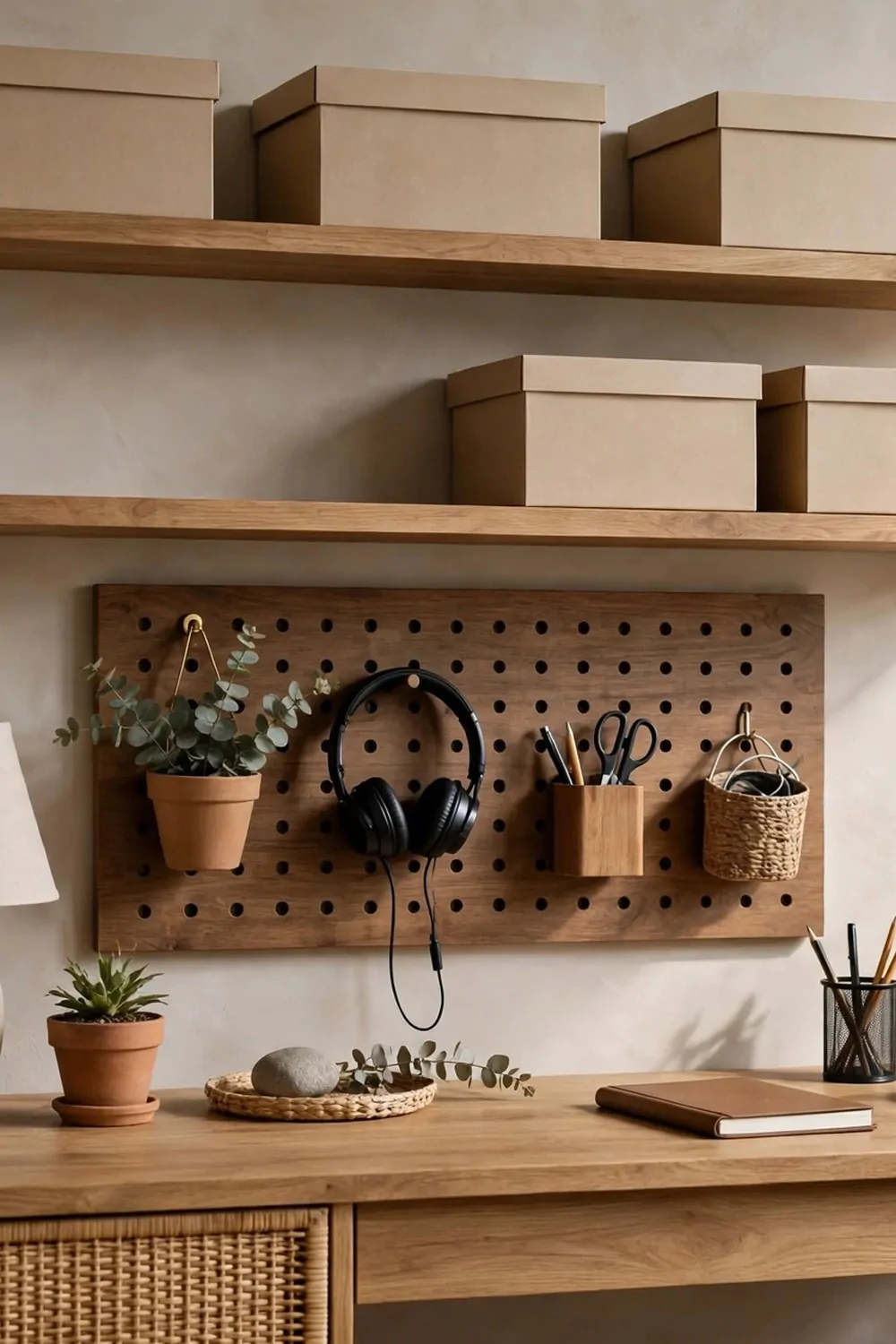
When floor space is gone, the walls are still there. A wall of floating shelves above and around the desk turns dead wall space into an office that holds everything without touching the floor.
Start with the wall above the desk. One long shelf for books, one for boxes, one for the plant. The desk stays clear because everything has a home above it.
Use matching boxes and baskets on the shelves. Uniform containers read as tidy even when the stuff inside is not. Mixed bags and open piles read as clutter from across the room.
A pegboard beside the desk is the hardest working panel in a small office. Hooks hold scissors, cables, headphones, and the little tools that always roll away. Everything hangs at eye level.
Here is a simple plan for what goes where on a desk wall:
| Height on the wall | What lives there | Why it works |
|---|---|---|
| Top shelf, near the ceiling | Spare paper, archives, keepsakes | Touched rarely, out of the eyeline |
| Eye level shelves | Books, plant, things that inspire you | Seen all day, so keep it pretty |
| Arm’s reach, pegboard | Pens, cables, headphones, scissors | Grabbed without standing up |
| Under the desk | Footrest, cable tray, small bin | Hidden, but still earning its keep |
Keep the shelves shallow. Deep shelves swallow things and turn into caves. A shelf about as deep as a book is deep enough for most office storage and keeps everything visible.
Leave one shelf mostly empty. It gives the eye a resting place and stops the wall from feeling like a warehouse. Air is storage too, in a way.
Anchor every shelf to the wall properly. Shelves full of books are heavy. A bracket into a stud is the difference between a tidy wall and a very bad evening.
13. The Nightstand Desk
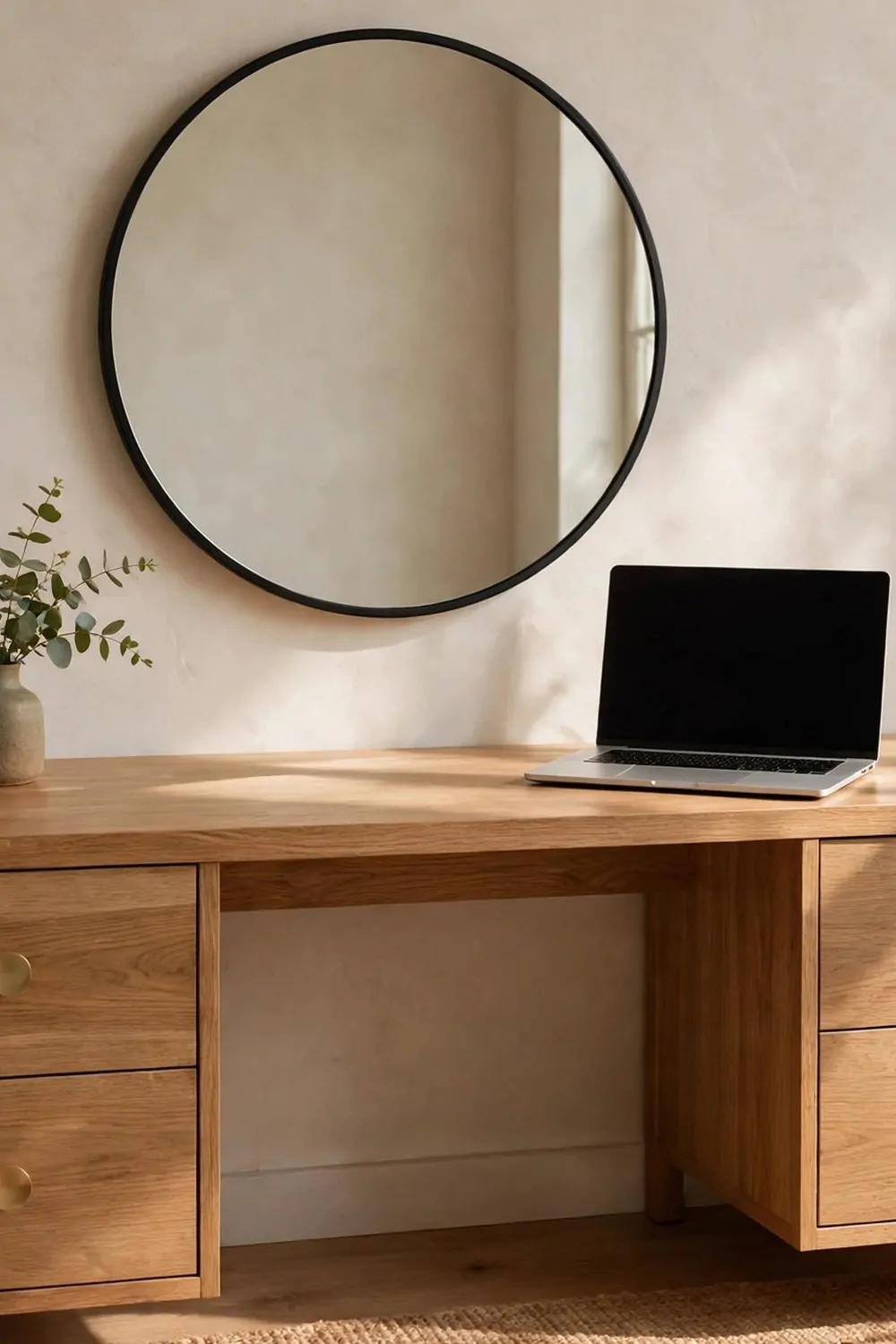
A nightstand is a small table beside a bed that holds a lamp, a book, and a glass of water. A nightstand desk holds all of that plus a laptop. Same footprint, twice the jobs.
Pick a nightstand with a flat top big enough for a laptop and a drawer underneath. The drawer holds the charger, the notebook, and the pens. When work ends, everything goes in the drawer and the top goes back to being a nightstand.
This is the setup for light work. Emails in the morning, a bit of writing, planning the day. It is not built for eight hours of spreadsheets with two monitors. Know what your work needs before you pick this one.
The chair matters more here than anywhere. A small stool or a folding chair that slides under the nightstand keeps the bedroom looking like a bedroom. A big office chair parked beside the bed ruins the illusion completely.
Keep a small lamp on the nightstand that works for both jobs. Warm light for reading at night, bright enough for work in the morning. One lamp, two moods, no extra clutter.
Put the nightstand desk on the side of the bed you do not sleep on, if you share the room. Your work stays on your side. Your partner’s side stays calm and lamp-free.
I used a nightstand desk in my smallest bedroom for a whole year. It held my laptop, my book, and my water glass, and nobody visiting ever guessed it was my office. That is the point.
Small top, one drawer, one lamp. The nightstand just got promoted.
14. The Vanity Desk That Works Twice
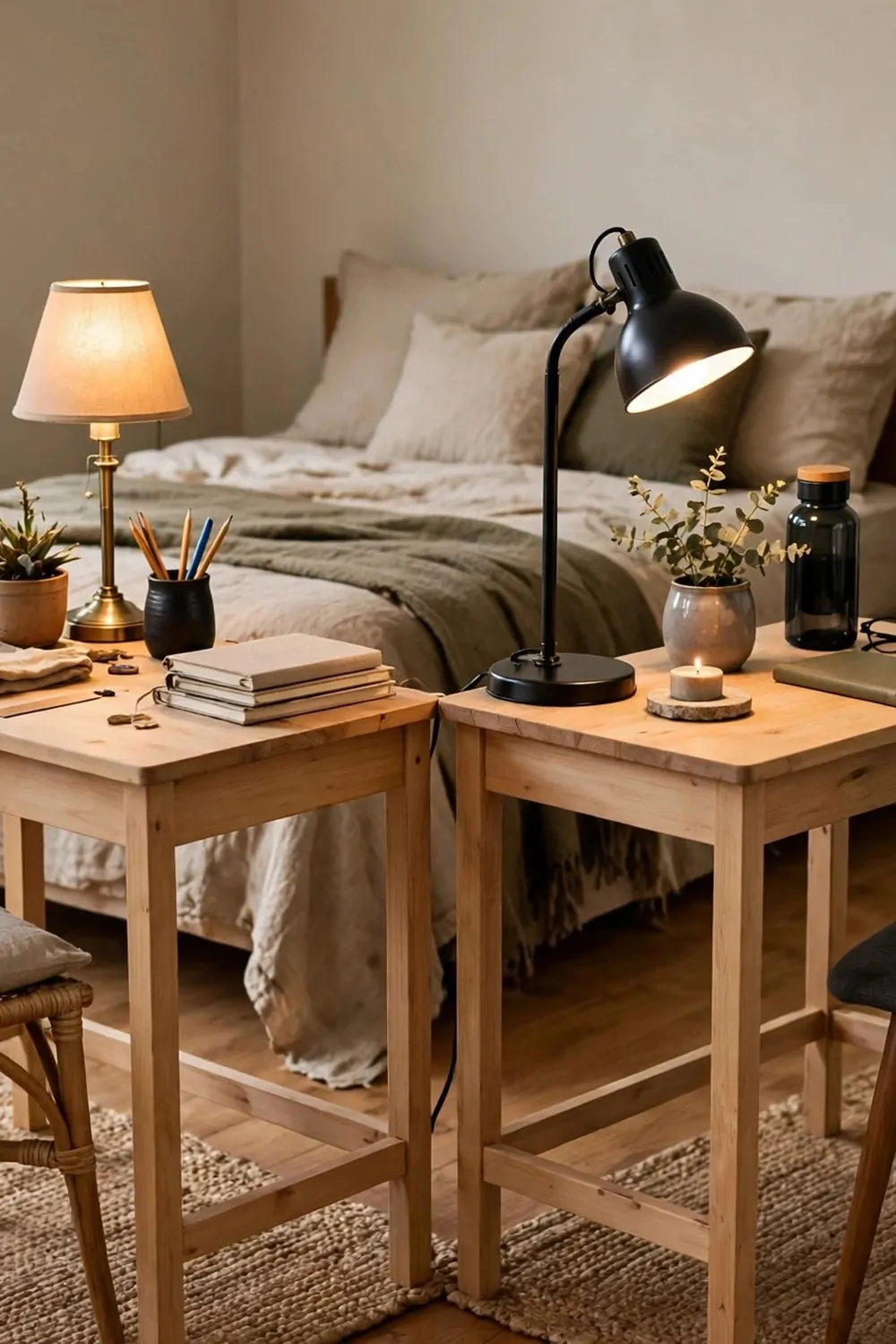
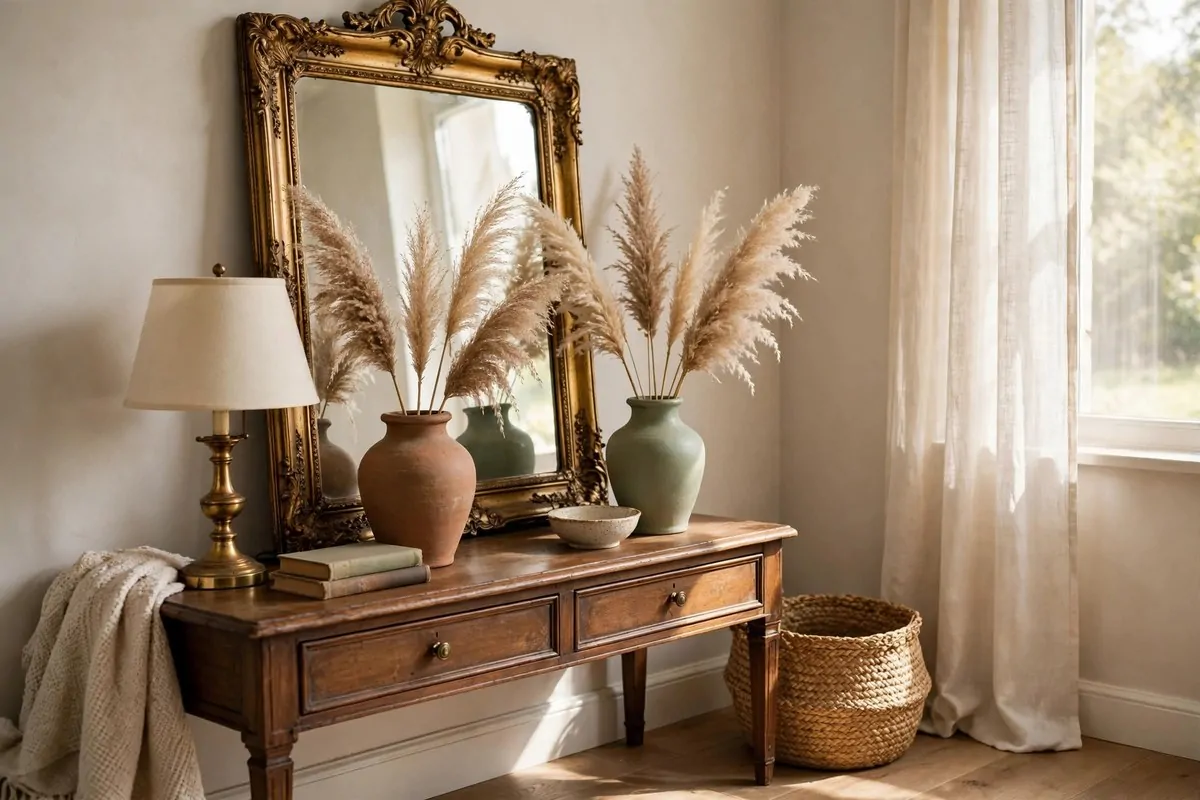
A dressing table with a mirror is already a desk in disguise. It has a flat top, a chair, and good light from the mirror. Add a laptop and it becomes a workspace that still looks like a bedroom.
The mirror is the secret weapon here. It bounces light around the corner and makes the desk spot feel bright and open, even in a bedroom with one small window.
Keep the vanity top split in two. One side holds the mirror-side things, a small vase, a hairbrush, a little tray. The other side holds the laptop and a notebook. When work ends, the laptop goes away and the vanity is just a vanity again.
A stool that tucks fully under the vanity keeps the setup tidy. If the stool sticks out all day, the corner reads as an office that never closes. Tucked away, it reads as a dressing table that minds its own business.
Lighting matters double at a vanity desk. A pair of small warm lights on either side of the mirror stops shadows on video calls and makes morning routines easier. One purchase, two jobs.
Store work things in the vanity drawers, separated from the beauty things. One drawer for chargers and pens. One drawer for everything else. Mixing them turns both jobs into a mess.
This idea suits bedrooms where a dressing table already lives in the corner doing nothing most of the day. Give it a second job. It will not mind.
One mirror, one flat top, one tuck-away stool. The vanity desk works twice and complains never.
15. The Two-Person Bedroom Office
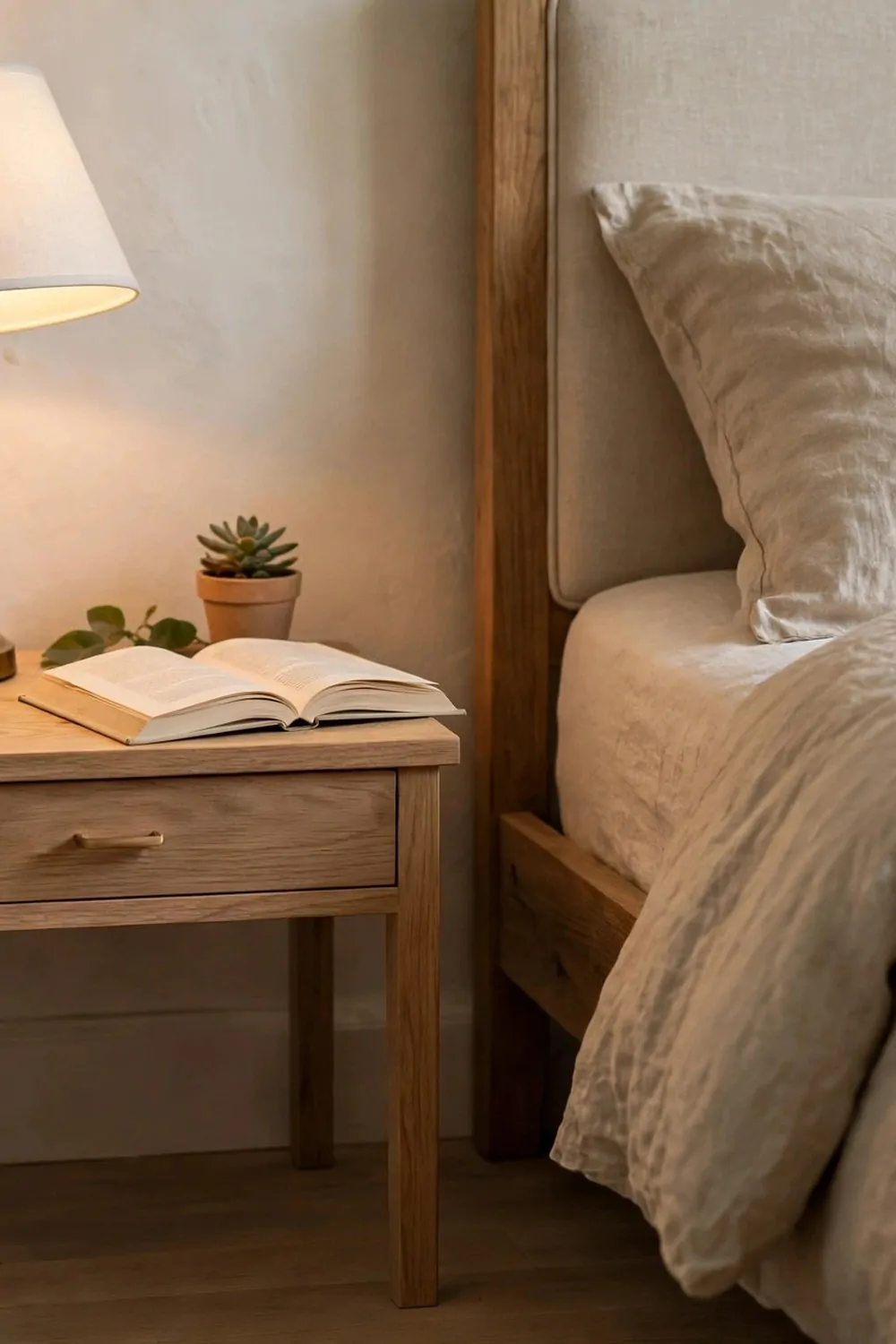
Two people, one bedroom, two jobs. It can be wonderful or it can be war. The difference is zones. Each person needs their own defined spot.
Face the desks away from each other if you can. Back to back or side by side works better than face to face. You need to forget the other person is there when you are both on calls.
Each zone gets its own lamp. Sharing a lamp means negotiating every evening about who needs the light. Two lamps, zero arguments.
Agree on the noise rules early. Headphones for music. No speakerphone calls. Cameras off when the other person is on a call, or a little signal you both understand. These small rules save friendships and marriages.
Shared supplies live in the middle. Things you both use, like scissors and tape, go in a shared box between the desks. Personal tools stay in personal zones. Nobody borrows a charger without asking.
Clean your own zone. This is the big one. Nothing kills a shared office faster than one person’s mess creeping into the other’s space. Your side, your mess, your job.
It helps to have slightly different schedules. If one of you works mornings and the other works evenings, the room feels bigger than it is. The desks take turns being the busy one.
My favorite shared offices feel like two little worlds with a friendly border between them. Build that, and the bedroom works for both of you.
16. The Video-Call-Ready Corner
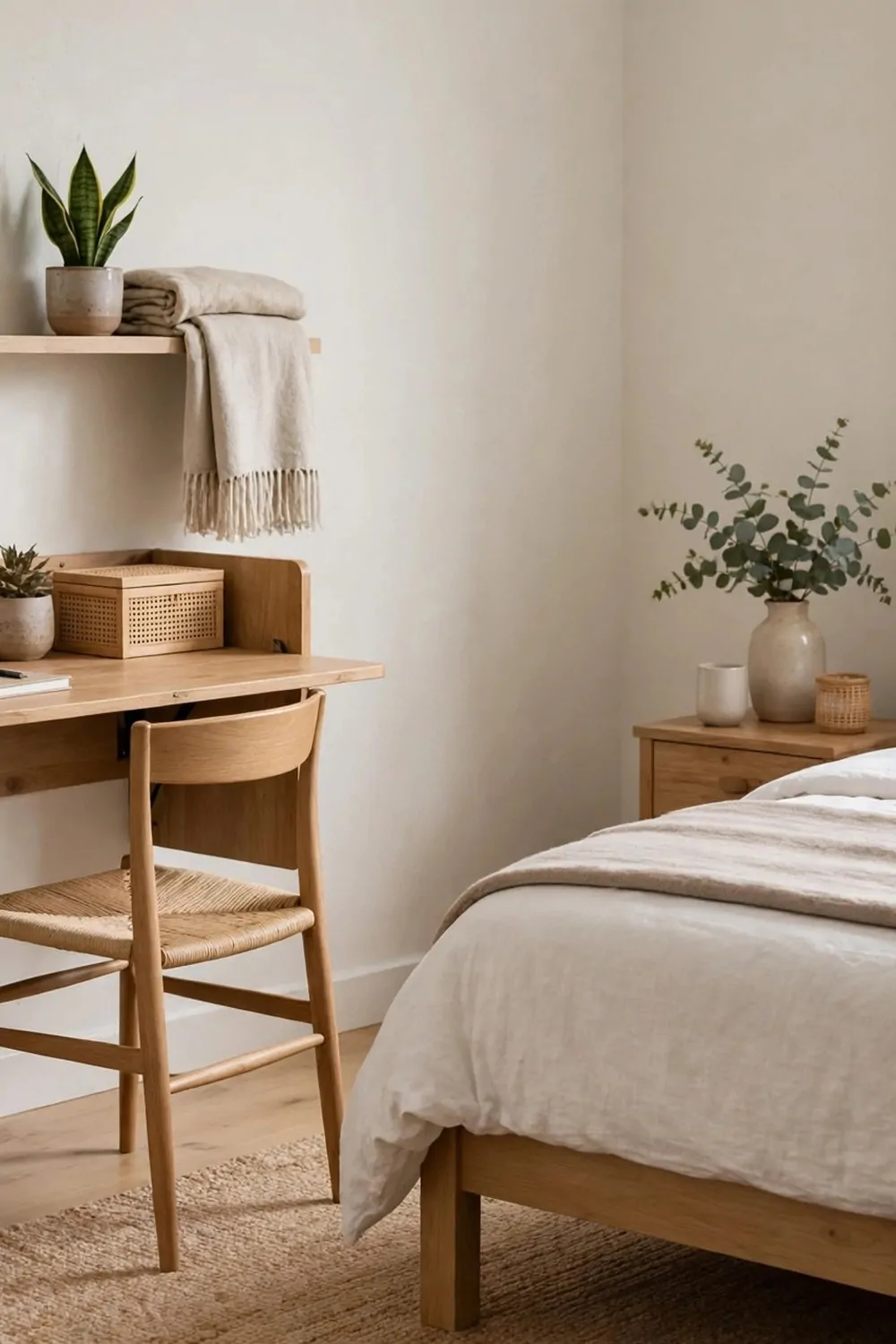
Video calls changed the bedroom office forever. Your desk is not just a desk anymore. It is a background. And the camera sees everything behind you, including the unmade bed.
The fix is simple. Point the desk at a plain wall. The camera then sees a calm wall, a plant, and you. Nobody sees the bed, the laundry chair, or the pile of books you meant to shelve.
Keep the wall behind you simple and pale. One framed print or one small shelf is plenty. A busy wall behind you distracts everyone on the call. A calm wall makes you look calm too.
Light your face, not the wall. A small ring light or a desk lamp aimed at your face stops the webcam from turning you into a shadow. Put the light in front of you, slightly to one side, never behind you.
A plant beside the desk softens the frame without stealing attention. One plant. Not a jungle. The plant says you are a real person in a real home, which is exactly the right amount of personality.
Test the background before your first call of the day. Open the camera, look at the frame, and move anything embarrassing out of shot. Ten seconds of checking saves a whole meeting of quiet judgment.
Keep a plain top or a light jacket on the back of your chair. If a call starts suddenly, you can look put together in five seconds. Bedroom-office life is full of sudden calls.
One plain wall, one light, one plant. Your bedroom just became camera-ready.
17. The Shutdown Ritual That Protects Your Sleep
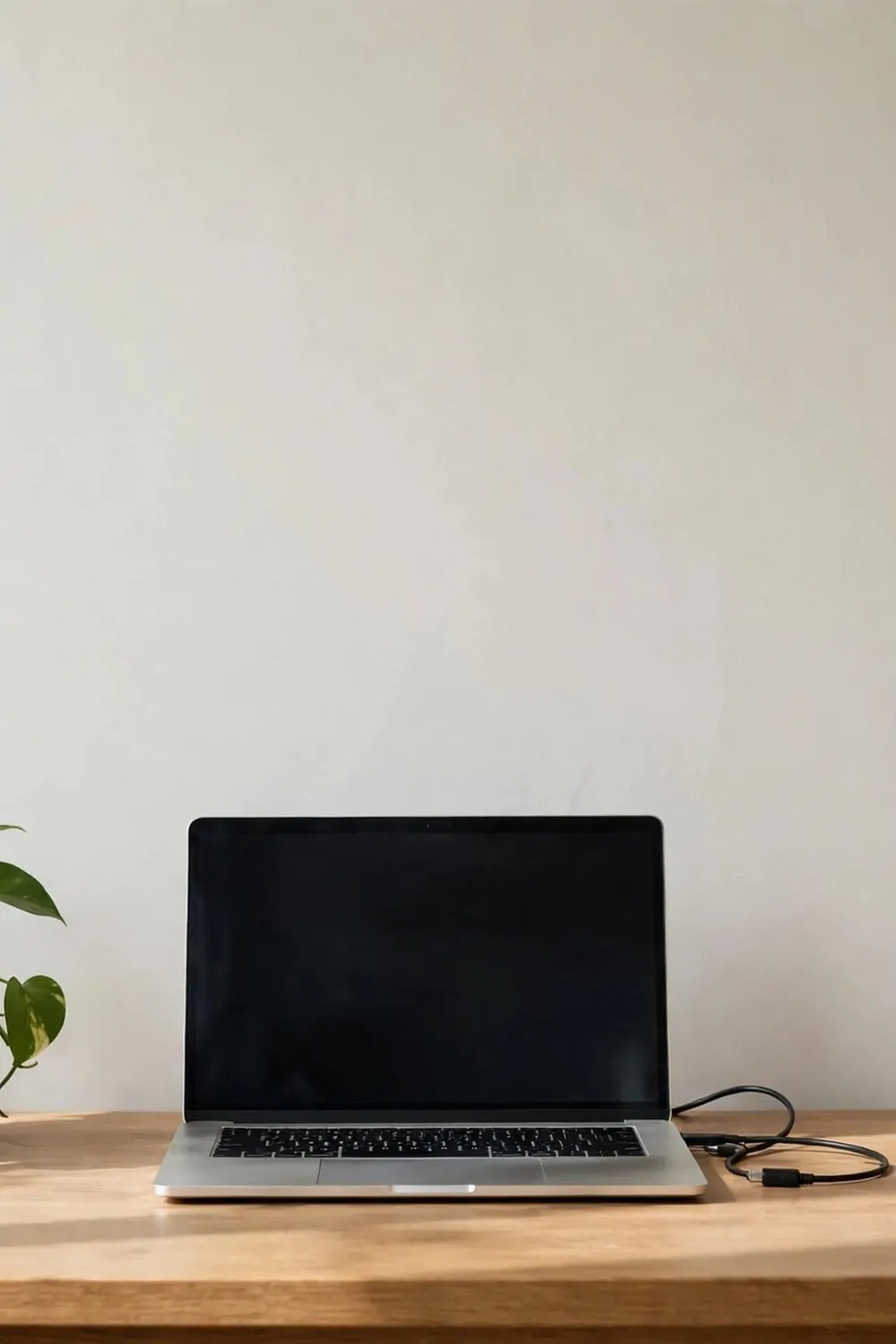
Here is the hardest part of working where you sleep. When your desk stares at you all night, your brain keeps working. You see the laptop and you think about emails. You see the papers and you think about tomorrow. Sleep gets harder. Evenings feel shorter.
The fix is a shutdown ritual. A short list of small moves, done in the same order every evening, that tells your brain the workday is done. It takes about three minutes.
Close the laptop. Put the notebook in the drawer. Turn off the desk lamp. Turn on the bedroom lamp. Pull the curtain across the work zone, or close the closet doors. Four or five small moves, always in the same order.
Make the bed every morning too, even if it is just pulling the duvet straight. A made bed reads as a calm room. An unmade bed reads as a mess from every corner, and your work brain picks up on that mess all day.
Keep evening things on the bedroom side. The book, the tea mug, the blanket. When everything for the evening lives on the sleep side, you never need to cross into the work zone after dark.
No phone on the desk overnight. Charge it on the bedroom side, face down. The desk is closed. The phone lives somewhere else. Your best sleep comes from the nights the desk stays dark.
Write the ritual on a little card and stick it inside a cupboard door until it sticks. After two weeks you will not need the card. Your hands will know the shutdown by heart.
Close the office. Open the evening. That is the bedroom rhythm, and it protects your sleep better than any blackout curtain.
18. The Guest-Ready Flip
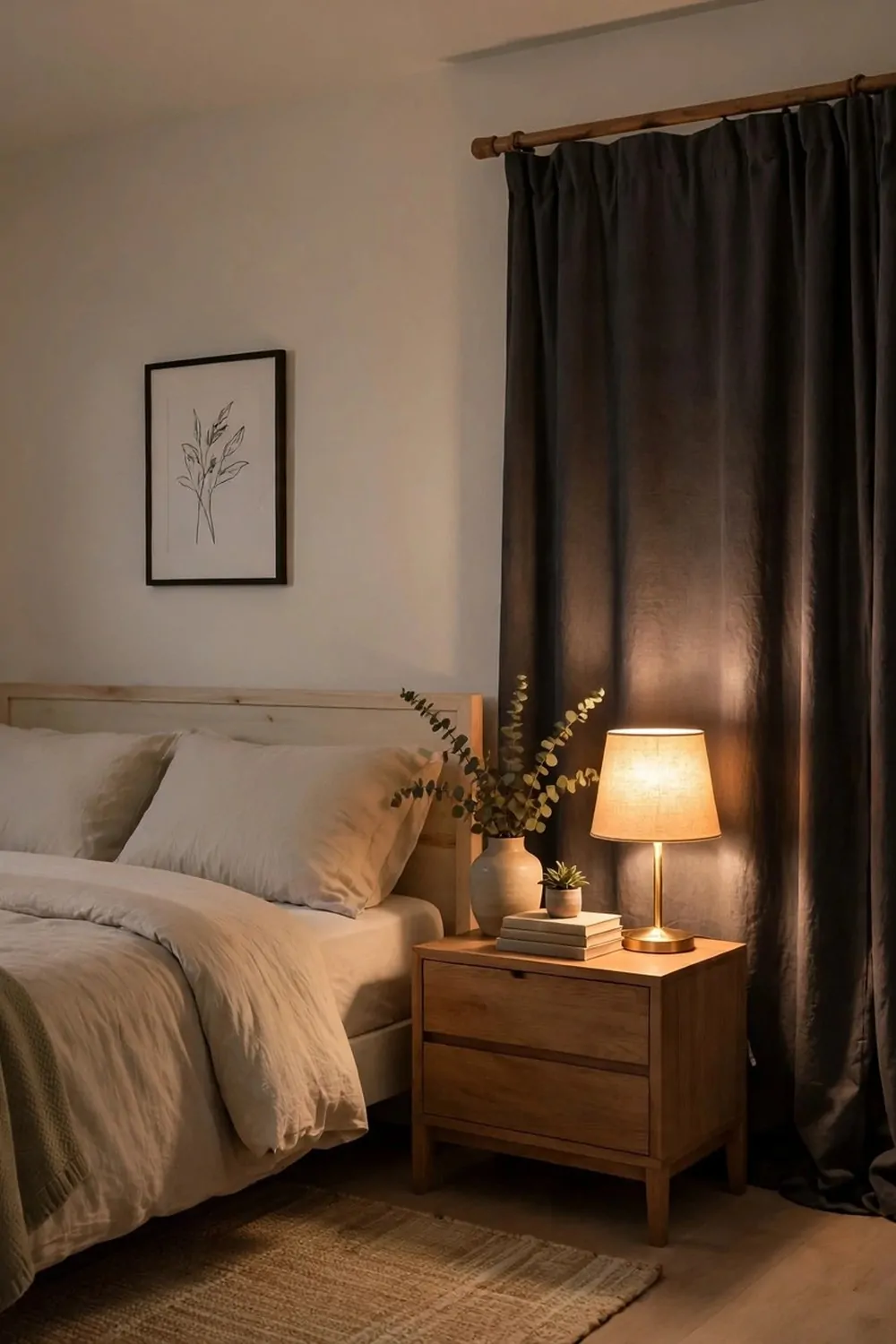
A bedroom office has one more job to do. Sometimes a guest needs the room. The flip is how the office becomes a guest room in under fifteen minutes, without a single argument.
Start with furniture that moves. A fold-down desk folds up. A rolling cart rolls into the closet. A folding screen folds flat behind the door. The office parts leave, and the bedroom parts stay.
Keep guest bedding in one box, ready to go. Sheets, a spare pillow, a clean towel. One box on a high shelf or under the bed. When a guest calls, you are not hunting through closets. You are just making the bed.
Clear one surface completely for the guest. An empty nightstand top, one empty drawer, two empty hangers. Guests do not need much. They need one clear spot that says, this is yours for the night.
Hide the work things, do not just tidy them. Chargers in the drawer. Papers in the box. Laptop in its bag. A guest should see a bedroom, not an office that someone tidied in a hurry.
Put a small welcome touch on the nightstand. A glass, a little vase, a folded towel. It takes thirty seconds and it turns a spare bed into a welcome.
After the guest leaves, flip it back. Desk down, cart out, lamp on. Fifteen minutes each way, and the room earns its keep twice over.
One room, two lives, one quick flip. That is the most grown-up trick in this whole list.
Your bedroom does not need to be bigger. It needs a plan. One room, two jobs, and a clear line between them.
Start with the window desk or the fold-down desk. Those two cost the least and you can try them this weekend. Then add the shutdown ritual, because a bedroom office without a shutdown is just an office you sleep in.
The bed will keep being lazy. That is fine. It earned it. Your job is to give the other hours of the day a proper home in the same room.
Pick one idea. Try it tonight. Move one desk, hang one curtain, clear one closet. Your bedroom is waiting to work as hard as you do.