21 Mini Studio Apartment Ideas That Feel Bigger Than They Are

The first night I slept in my new studio, I woke up thirsty at 3 a.m. and realized I could reach the kettle from my pillow without getting out of bed. I laughed in the dark. Then I lay there thinking, this is either the smallest home I have ever lived in, or the cleverest one.
It turned out to be both. A mini studio apartment is small, that part is true. But small does not have to feel small. That was the lesson my little place taught me, one inch at a time.
Here is the thing nobody tells you before you move into a studio. Your eyes decide how big a room feels, not the floor plan. Light, color, empty floor, and a few smart choices can make 250 square feet feel like 400. And the wrong choices can make 400 square feet feel like a closet.
These 21 Mini Studio Apartment Ideas are the ones that actually made my place feel bigger. Not bigger on paper. Bigger to live in. Bigger when you walk through the door after a long day and your shoulders drop instead of tensing up.
You do not need all 21. Start with the ones that cost nothing. Then try one or two more each month. Your studio will start to feel like it grew, even though not a single wall moved.
1. Hang the Curtains High and Wide
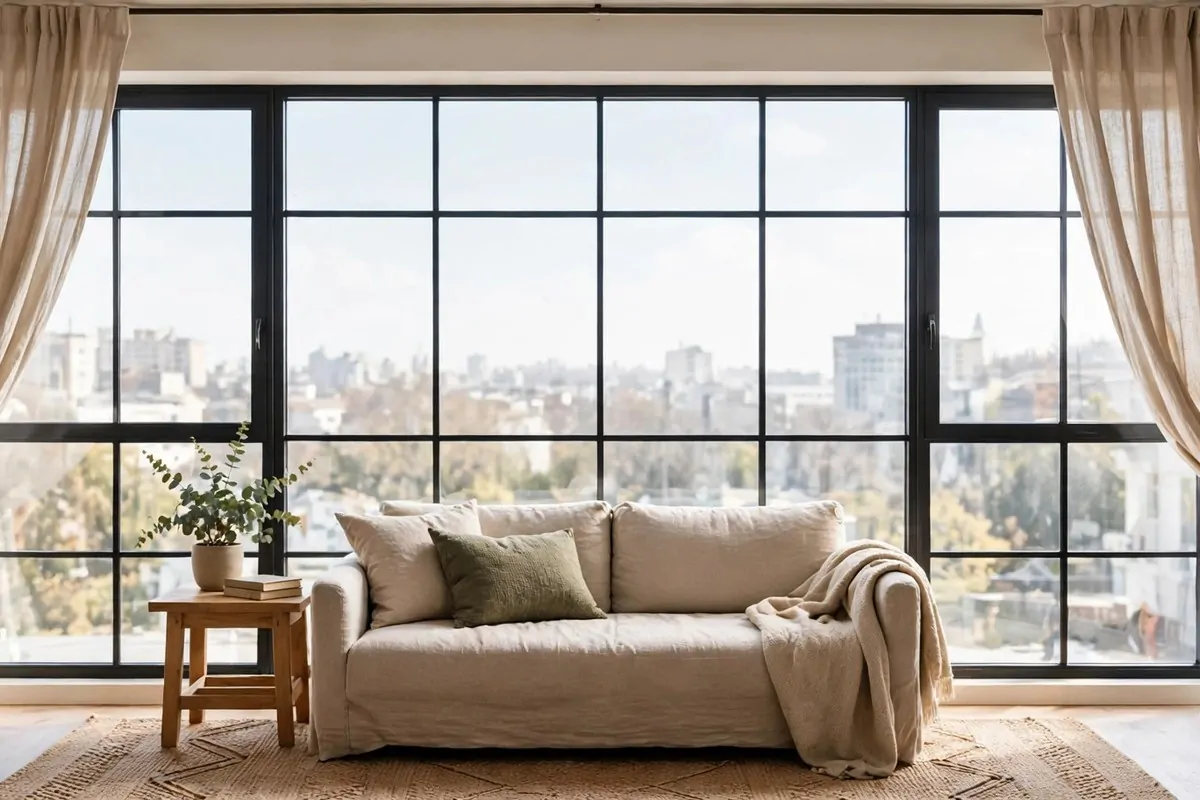
Curtains hung right at the top of the window frame make the window look exactly as tall as it is. Curtains hung near the ceiling make the window look like it goes on forever.
That is the whole trick. You move the rod up, close to the ceiling, and you make it wider than the window on both sides. When the curtains are open, they sit over the wall, not over the glass. All the daylight comes in, and the window looks huge.
I did this on a Saturday morning with a cheap rod and a drill. It took me less than an hour, and I stood back and could not believe the difference. The same window. The same room. It just looked taller.
Use curtains that fall all the way to the floor. Short curtains cut the wall in half and the eye stops there. Long curtains pull the eye from the ceiling down to the floor in one smooth line.
Pick a light fabric in a color close to your walls. Heavy dark curtains close a small room in like a lid on a box. Light ones let the room breathe.
If you rent and cannot drill, use a tension rod inside the window frame and hang the curtains as high as the frame allows. It is not as dramatic, but it still helps a lot.
Keep the curtains simple. No big patterns, no heavy pelmets, no fussy tiebacks. In a mini studio, simple wins every time.
One rod, one pair of long light curtains, hung high and wide. It is the cheapest tall ceiling you will ever buy.
2. Paint the Ceiling the Same Color as the Walls
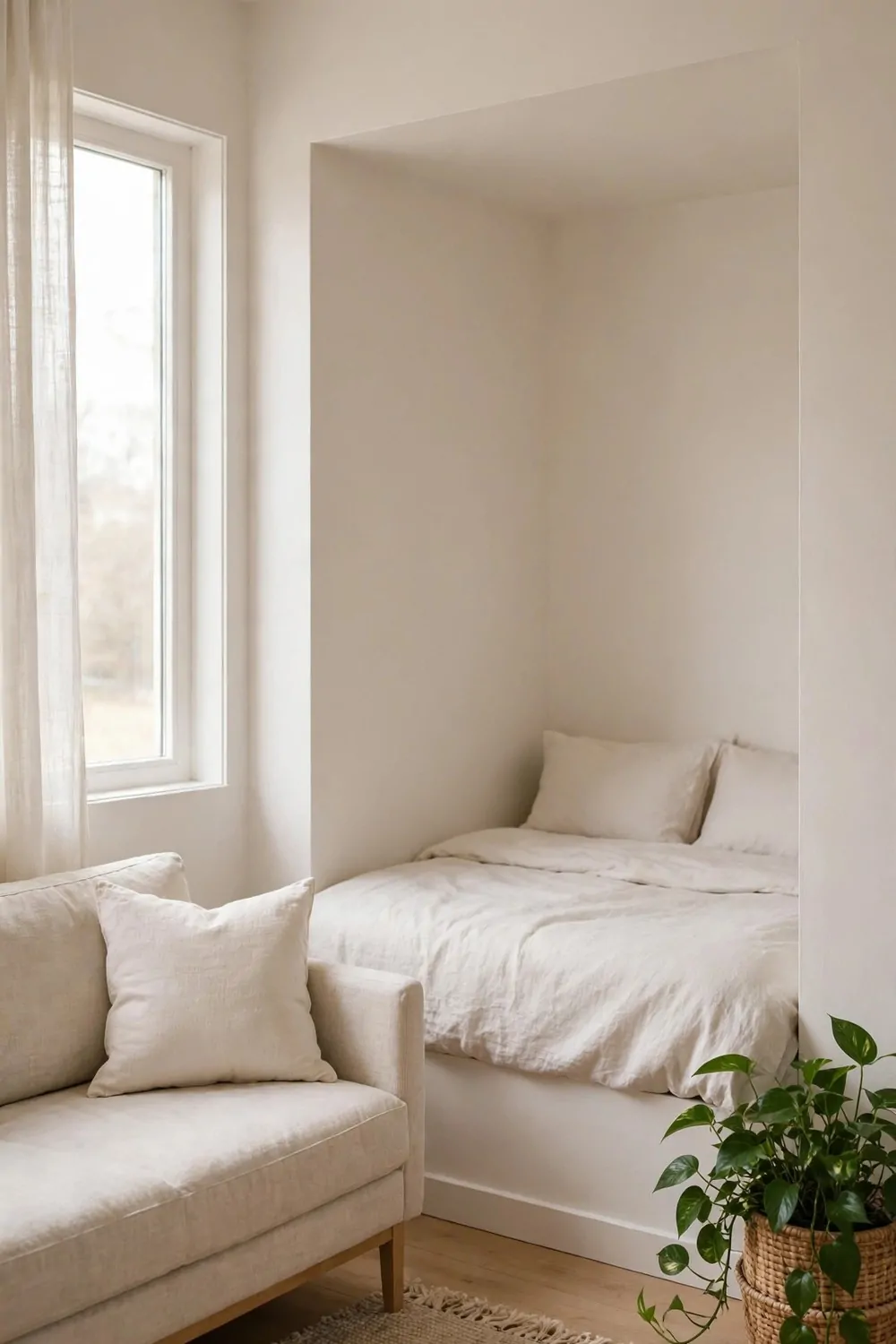
Most people paint the ceiling white and the walls something else. That white line where the wall meets the ceiling is a hard stop. Your eye hits it and the room ends right there.
Paint the ceiling the same soft color as the walls, and that hard line disappears. The eye slides up the wall and keeps going. The ceiling feels higher because nothing tells your brain where the wall stops.
You do not need a dark or bold color for this. A soft warm white, a pale cream, or a very light gray works best. The color just needs to match. Same tin of paint, walls and ceiling both.
I was nervous the first time I tried it. I thought the room would feel like a box with no lid. It did the opposite. The corners softened, the light bounced around more evenly, and the whole place felt calmer.
Use a flat or matte finish on the ceiling. Shiny paint shows every bump and patch. Flat paint hides them and makes the surface look smooth and far away.
If you rent and cannot paint, you can fake a little of this effect. Hang a long curtain in the wall color near the ceiling line, or put a tall plant in the corner to blur where the wall ends. It is not the same, but it softens the line.
One tin of paint, one weekend, no new furniture. And your ceiling quietly moves up a few inches in your head.
3. Cover the Closet Doors in Mirror
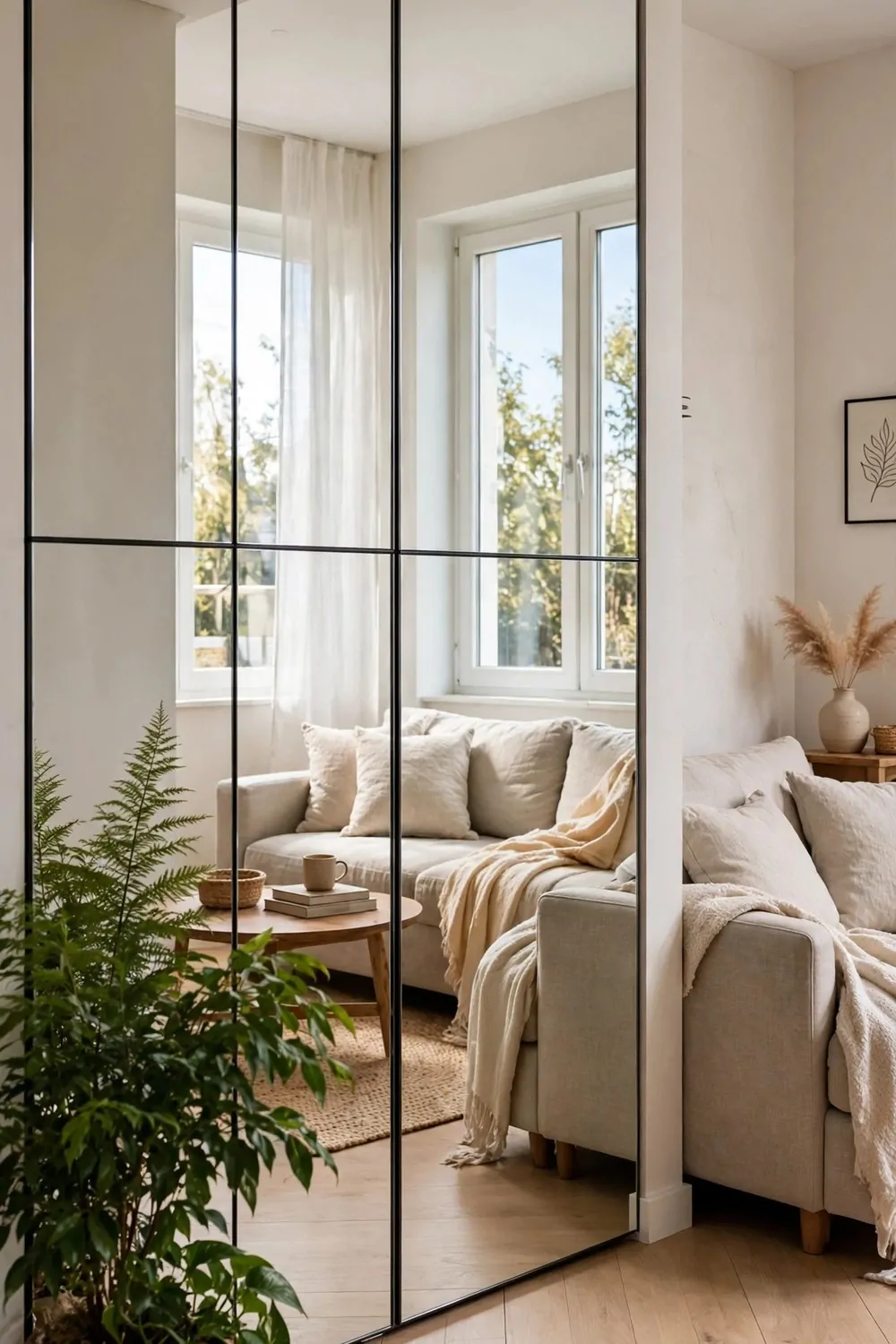
A mirror on the wall is nice. A whole closet door covered in mirror is a different thing entirely. It doubles the room in your eyes, and it does it without taking up a single inch of floor.
Mirrored closet doors bounce the window light all the way across the room. The far wall shows up in the mirror, and your brain reads that reflection as more space. It is a trick, and it works every single time.
You can buy stick-on mirror panels or a mirrored sliding door kit. If you rent, try leaning a big mirror against the closet wall instead. Same idea, no screws, and it comes with you when you move.
Keep the mirror clean. A dusty mirror looks gray and dull, and a gray dull mirror just looks like a strange wall. A quick wipe once a week keeps the magic working.
Do not point the mirror at clutter. It doubles the mess too, and a doubled mess is worse than a single one. Point it at the window, the plants, or the prettiest corner you own.
If a full mirrored door feels too much, try mirror panels on just the top half of the closet doors. You still get the light bounce, and the room still feels wider.
I have a friend who covered her closet doors in mirror and her guests keep asking if she knocked a wall down. She did not. She just gave the room a reflection to play with.
4. Pick Furniture With Legs You Can See Under
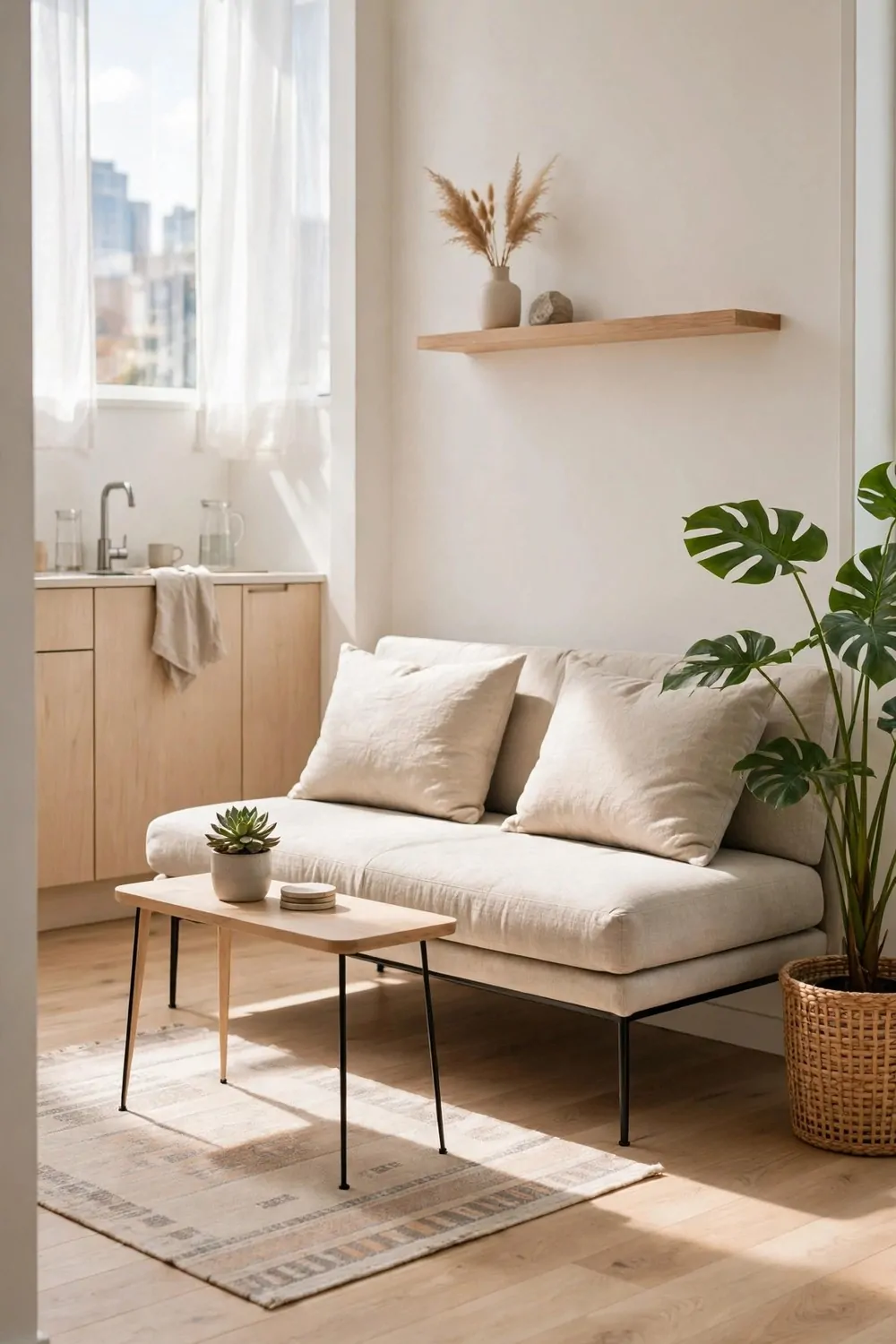
Furniture that sits flat on the floor eats the floor visually. A big sofa with no legs reads like a wall of fabric. Your eye stops at it, and the room shrinks around it.
Furniture on legs is different. You can see the floor running underneath it. Your eye travels under the sofa, under the table, under the bed, and the room feels deeper than it really is.
Look for slim legs, the kind you can see through. Tapered wood legs, thin metal legs, anything that lifts the piece a few inches off the ground. The more floor you can see, the bigger the room feels.
This works for almost everything. Sofas, beds, dressers, TV stands, even the kitchen table. Lift it up a little and the floor comes back.
I swapped my old blocky sofa for one on slim legs and the same room suddenly had a hallway I had never noticed. Nothing else changed. The floor was just visible again.
Keep the space under the furniture clean. Dust gathers there fast, and a dusty gap under the sofa ruins the airy feeling. A quick sweep once a week does it.
Avoid skirts and valances on furniture in a mini studio. They hide the legs and put the floor back in hiding. Let the legs show. They are doing real work.
5. Stick to One Calm Color All Through the Room
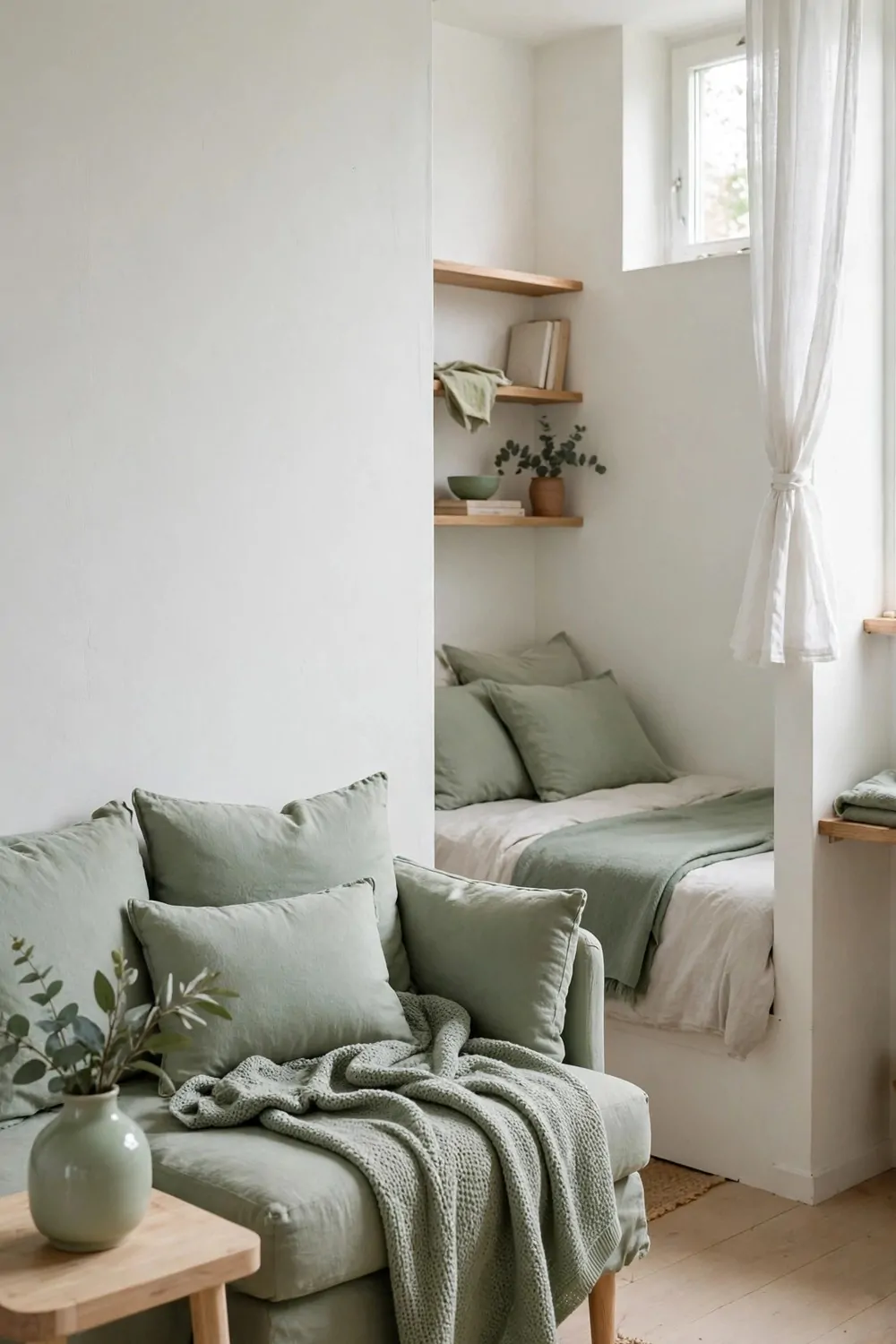
Too many colors in a small room chop it into little pieces. Red cushions here, blue curtains there, a green rug in the middle. Each color is a border, and your eye stops at every single one.
One calm color family, repeated in small doses all through the room, does the opposite. The eye glides from the sofa to the bed to the desk without stopping. The room reads as one calm space instead of four noisy corners.
Pick a base color you love and keep the big things neutral. Walls, sofa, bed frame, rug. Then repeat your one accent color in small things. Cushions, a throw, a vase, a plant pot, a picture frame.
Three to five repeats is the sweet spot. Fewer than three and the eye misses the pattern. More than five and it starts to feel like a theme.
Here are a few calm pairings that work well in small studios:
| Wall color | Accent color to repeat | The feeling it gives |
|---|---|---|
| Warm white | Sage green | Calm and leafy |
| Soft gray | Mustard yellow | Warm and cheerful |
| Pale cream | Terracotta | Cozy and earthy |
| Light beige | Soft blue | Airy and fresh |
Let the accent show up in things you can swap cheaply. Cushion covers, throws, a plant pot. Seasons change and moods change, and a small swap refreshes the whole room for very little money.
This trick also makes shopping easier. When you see something in your color, you know it belongs. When it is not in your color, you walk past it. Fewer random buys, calmer room, bigger feeling.
One color, many small repeats. That is the thread that sews a mini studio together.
6. Use Clear Furniture That Almost Disappears
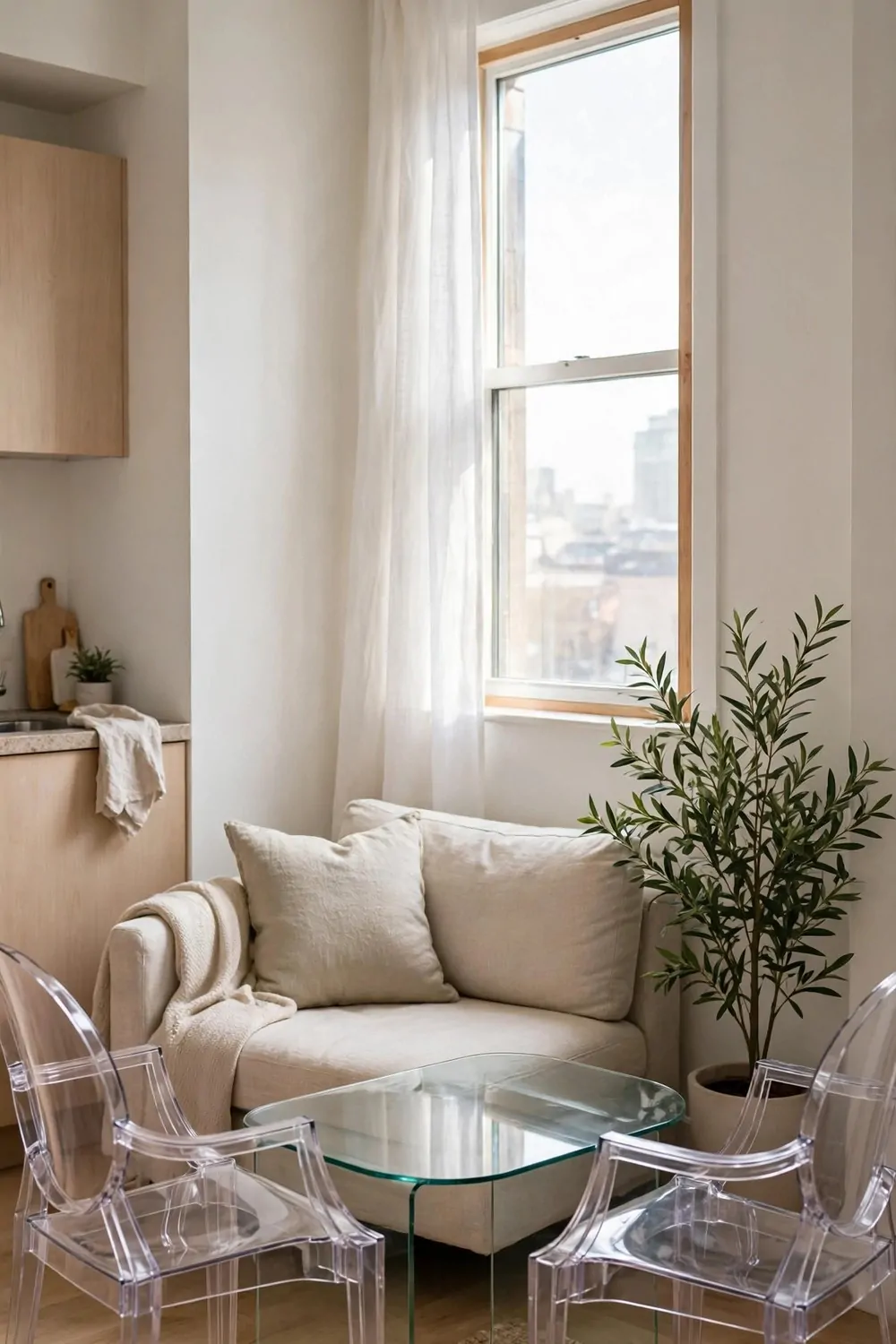
Clear furniture is the closest thing to invisible furniture. A glass coffee table, a clear acrylic chair, a glass shelf. Your eye passes right through it, so the room keeps all of its visual space.
A solid wood coffee table in the middle of a mini studio is a big block. It stops the eye and eats the middle of the room. A glass table in the same spot lets the eye travel straight across. The floor shows through. The rug shows through. The room stays open.
Start with one clear piece. A coffee table is the easiest win, because it sits in the middle of the room where the eye goes first. A pair of clear dining chairs is another good one.
Keep clear furniture clean, because fingerprints and dust show up fast on glass and acrylic. A quick wipe with a damp cloth every couple of days keeps it looking invisible instead of smudgy.
Mix clear pieces with one or two solid ones. A room full of glass can feel cold and a bit strange, like living in a shop window. One glass table plus a soft sofa and a warm rug is the right balance.
Watch the edges if you have kids or pets visiting. Clear furniture is easy to walk into. A small plant or a book on the glass table marks the edge and stops the bumped shins.
I borrowed a glass coffee table from a friend for a month to test this. My studio felt bigger within an hour. I bought my own the next week and never gave hers back without buying her a new one first.
7. Put the TV on the Wall and Lose the Stand
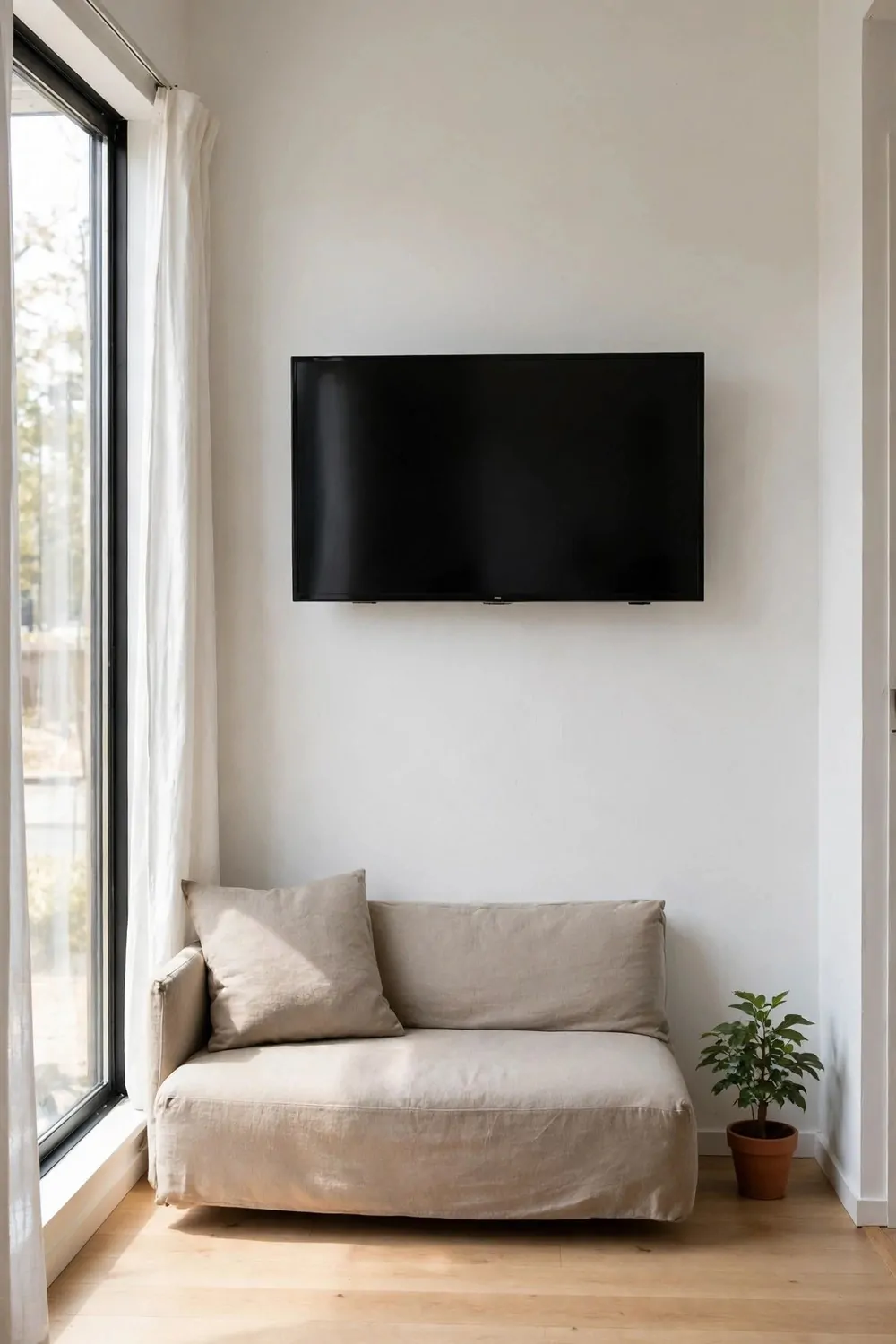
A TV stand is a big box that does one job. It holds the TV. The rest of it is usually a mess of cables, old game cases, and dust. And it takes up a whole stretch of floor.
Put the TV on the wall and the stand disappears. The floor underneath comes back. The room gains a patch of open floor, and the TV looks like it belongs to the wall instead of squatting in the room.
A wall mount costs very little and most TVs fit a standard one. If you rent, use a no-drill TV mount or a tall narrow stand that holds the TV up high with almost no footprint. Both beat a big low cabinet.
Hide the cables. A simple cord cover painted the wall color makes them vanish. Dangling cables undo half the clean feeling, so take the ten minutes to tuck them away.
Keep nothing under the TV. No boxes, no shoes, no pile of magazines. The empty wall under a mounted TV is part of the trick. It reads as open space.
Put a small plant or a low lamp a little way to one side, not directly underneath. The TV wall stays clean, and the plant softens the hard rectangle of the screen.
I mounted my TV on a Tuesday night and woke up the next morning thinking someone had moved my sofa back. Nobody had. The floor was just free again, and my eyes could finally see it.
8. Run One Long Shelf Around the Whole Room
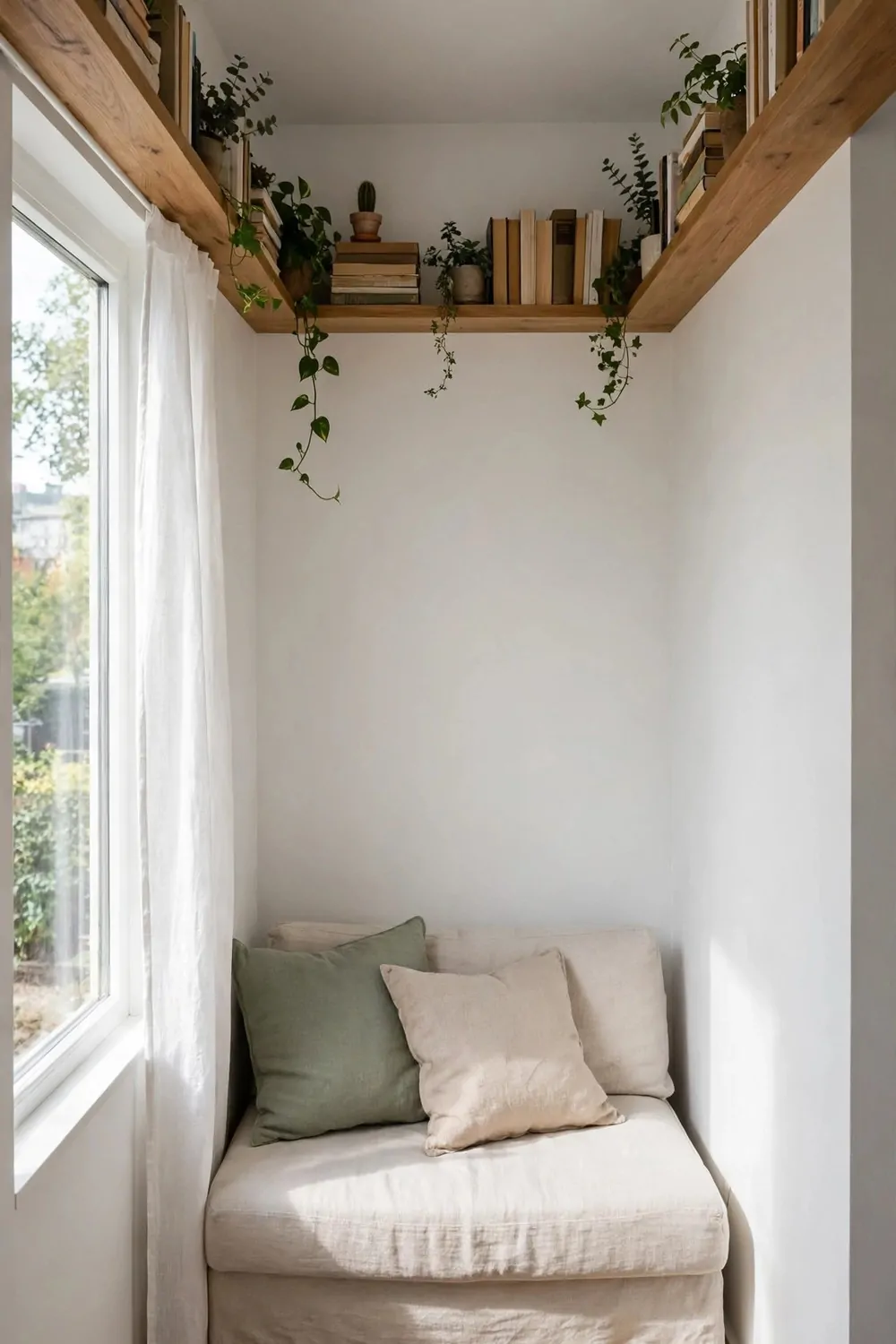
Most people put up one shelf, then another, then a small bookcase, and the walls end up looking spotty. Bits of storage everywhere, none of it connected. The eye stops at every gap.
One long shelf running around the room near the ceiling is different. It is one clean line. It holds books, plants, baskets, and the things you love, and it pulls the eye all the way around the room in one smooth trip.
The shelf should sit high, about a foot below the ceiling. That keeps it out of the way of daily life and makes the walls feel tall. The things on it are display and storage for stuff you do not grab every day.
Keep the shelf shallow, about as deep as a book. Deep shelves swallow things and turn into dark caves. A shallow shelf keeps everything visible and tidy from below.
Use matching baskets or boxes on parts of the shelf for the less pretty stuff. Spare cables, old photos, the things you keep but do not need to look at. The baskets read as tidy even when the stuff inside is not.
A small step stool lives in the studio now. A folding one that tucks behind the door is perfect. If getting to the shelf is a big production, you will never use it.
Leave a few gaps on the shelf. A shelf packed end to end reads as clutter. A shelf with breathing room reads as a gallery. Air is part of the design, even up high.
9. Ditch the Bulky Headboard
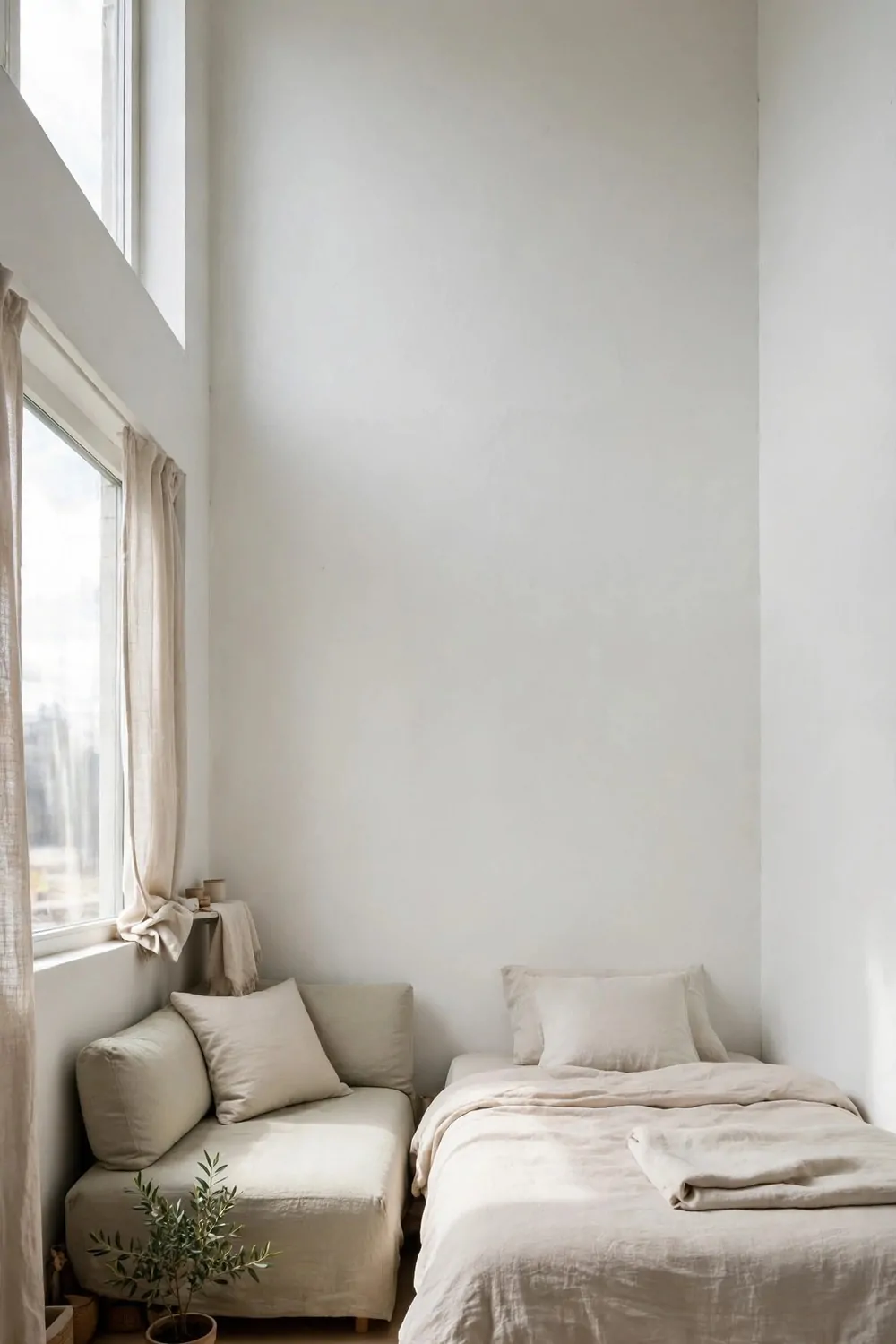
A big tall headboard eats the wall behind the bed and makes the sleeping corner feel heavy. It is a lot of furniture for a job that a pillow can do.
Losing the headboard gives the wall back. The bed sits lower and simpler, the wall above it stays open, and the whole corner feels lighter. Your eye travels up the wall instead of stopping at a big wooden slab.
Try a low platform bed with no headboard at all. Or keep the bed you have and just remove the headboard. Push the bed against the wall and add two good pillows. That is honestly enough for most people.
If you miss the look of a headboard, paint a soft rectangle on the wall behind the bed, or hang one long piece of fabric. Both give the bed a backdrop without any bulk at all.
Keep the bedding simple on a no-headboard bed. A fitted sheet, a duvet, one or two pillows. A mountain of pillows with no headboard behind them slides around and looks messy by morning.
A small wall-mounted shelf or a slim ledge above the bed holds a book, a glass of water, and a phone charger. It replaces the nightstand and the headboard in one thin line.
I took the headboard off my bed two years ago and I have never missed it. The corner feels twice as calm, and making the bed takes about thirty seconds now.
10. Let Daylight In With Sheer Window Coverings
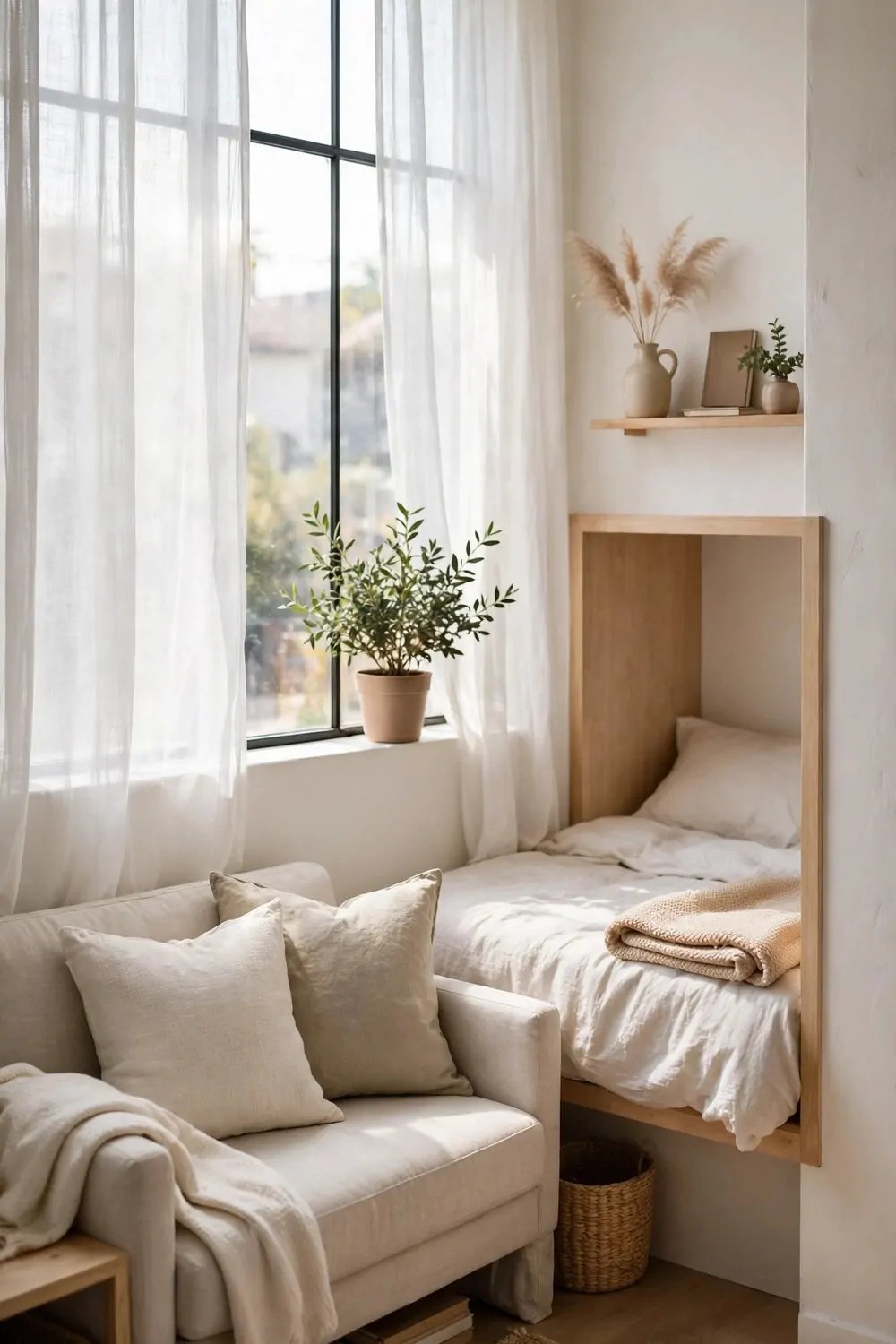
Heavy curtains block light even when they are open. They hang over the edges of the window and steal the brightest inches of glass. In a mini studio, those inches matter a lot.
Sheer window coverings let the daylight pour in while still giving you privacy. From outside, the room is a soft blur. From inside, the light comes through like the window is barely dressed at all.
Use sheers on their own in summer, or layer them under a light curtain you only close at night. Daytime gets the sheer layer and all the light. Nighttime gets the heavier layer and all the privacy.
Keep the sheers clean. Dusty sheers turn gray and block more light than you think. A wash every couple of months keeps them bright and the light coming through.
If your window faces a brick wall or a busy street, sheers are even better. They soften an ugly view into a glow. You get the light without having to stare at the wall across the alley.
White or very pale sheers work best. Colored sheers tint the whole room, and a pink or yellow tint gets tiring fast. Pale and plain is the way.
I swapped my heavy curtains for sheers in my old studio and the room felt like it had gained a second window. Same glass, same sun. Just nothing standing in its way anymore.
11. Swap Swinging Doors for Sliding Ones
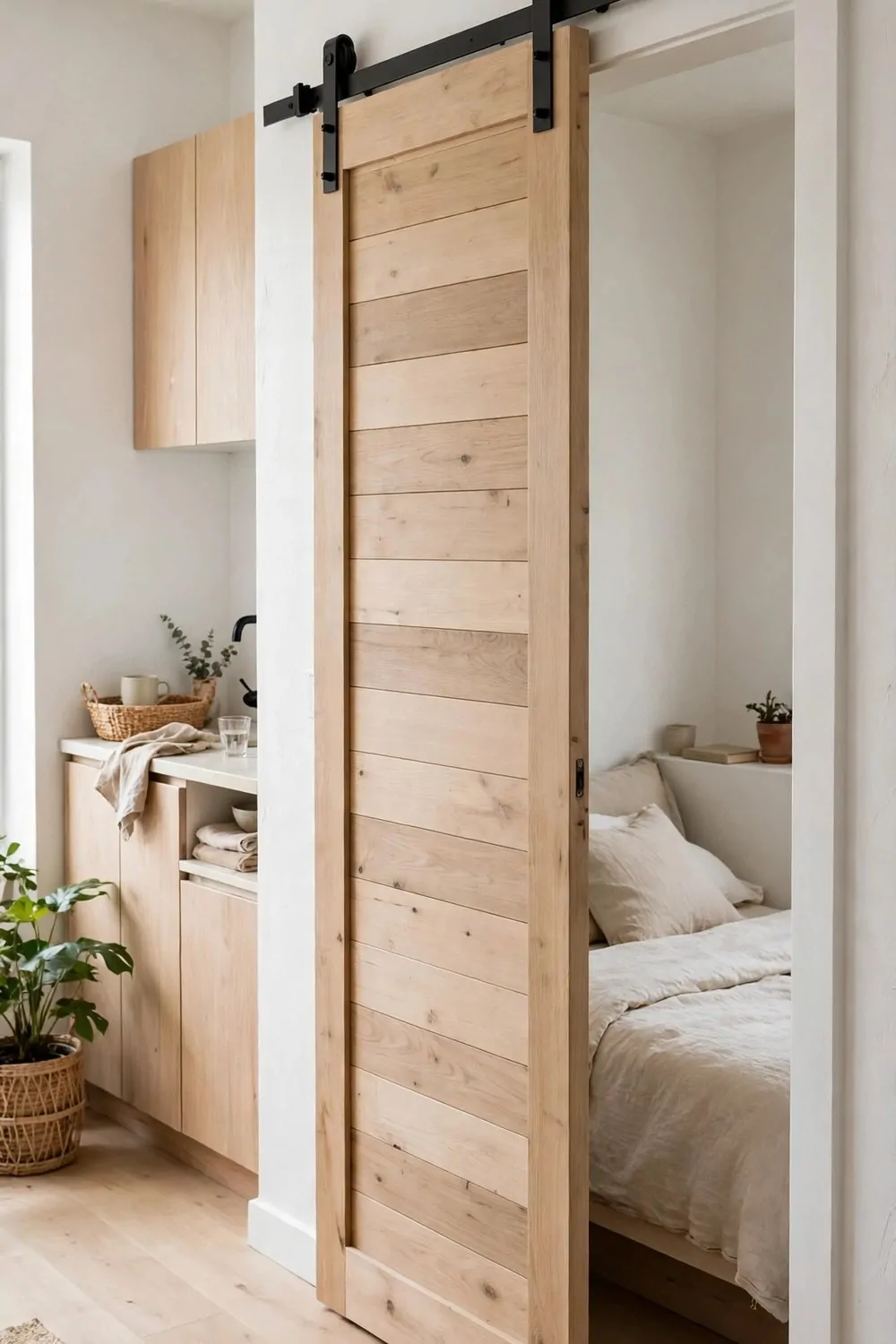
A swinging door needs a clear arc of floor to open. In a mini studio, that arc is a big chunk of your floor that you can never put anything on. It is dead space, and you pay rent on it.
A sliding door needs no arc at all. It glides along the wall or into the wall, and the floor it used to need stays free. You gain a whole corner back, just by changing how the door moves.
A barn-style sliding door on a rail is the easiest version. The rail mounts above the door, the door hangs on it, and it slides to one side. It looks good too, like a feature instead of a fix.
If you rent, try a sliding curtain or a folding screen in the doorway instead. Same idea, no rail, no screws. It comes down clean when you move out.
Check what the door is hiding before you swap it. A sliding door that covers a closet is perfect. A sliding door on a bathroom needs a lock that actually works, so pick the hardware with care.
Keep the sliding track clean and the wheels oiled. A sticky sliding door is worse than a swinging one. A drop of oil twice a year keeps it gliding like new.
I put a sliding door on my closet and gained enough floor for a reading chair I had given up on owning. One door, one chair, one very happy corner.
12. Steal the Space Above the Door
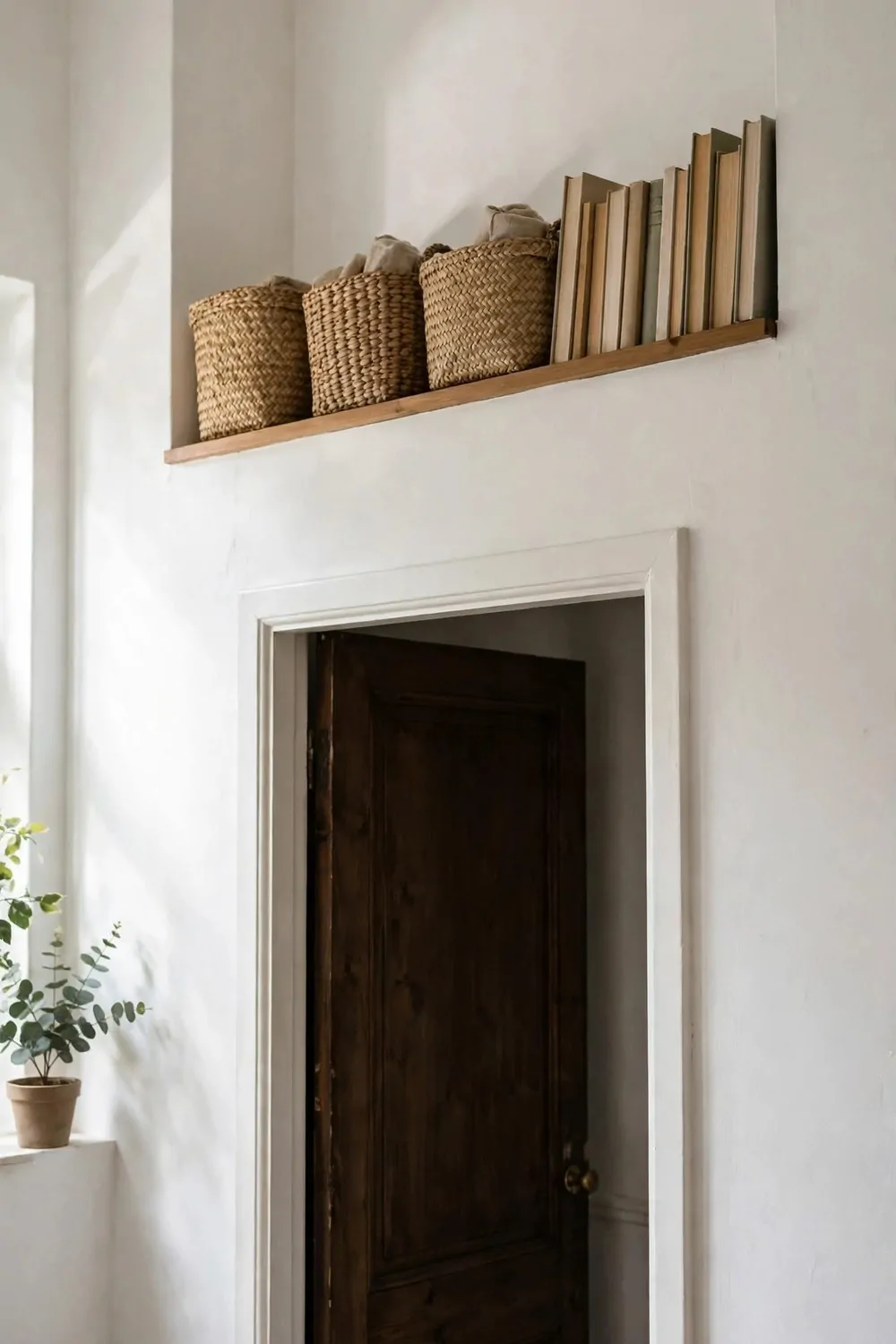
The space above a door is almost always empty. It is a strip of wall, a foot or two tall, running the width of the doorway, doing absolutely nothing. In a mini studio, that is free storage going to waste.
Put a shallow shelf above the door. It holds baskets, books, or the things you only touch twice a year. Spare bedding, gift wrap, the photo albums, the board games. All of it lives up there, out of the way, and the floor stays clear.
Keep the shelf shallow and the baskets light. Heavy boxes above a door are a safety worry, and a deep shelf up high is hard to reach and easy to forget. Shallow and light is the rule.
Label the baskets on the end you can see from below. When every basket is labeled, you find things in seconds. When none of them are, the shelf becomes a mystery attic and you stop using it.
A small folding step stool makes the shelf usable. Keep it behind the door or flat against the wall nearby. If reaching the shelf is a big production, the stuff up there might as well not exist.
Do not put daily things above a door. Daily things belong at arm height, where you can grab them without thinking. The above-door shelf is for seasonal and seldom-used things only.
I put a shelf above my bathroom door and it swallowed all the spare towels and the first aid box. Two whole shelves of a cabinet came free, and I had never once looked at that strip of wall before.
13. Buy Furniture That Hides Storage Inside
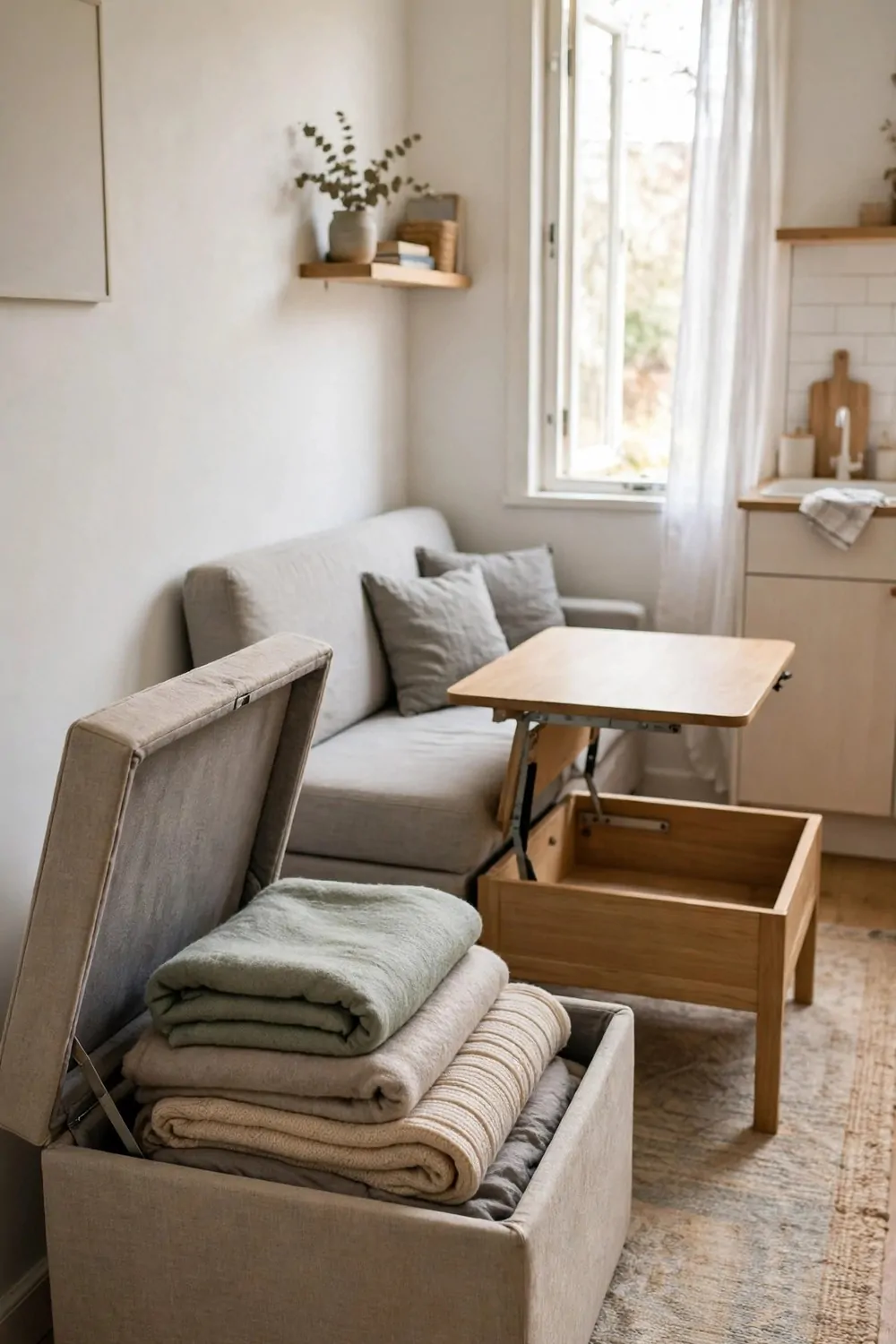
Every piece of furniture in a mini studio should work two jobs. Sit on it and store in it. Sleep on it and store under it. Eat at it and store inside it. That is the rule that keeps a small place calm.
A storage ottoman holds blankets and board games and gives you a footrest and an extra seat. A lift-top coffee table holds remotes and chargers and gives you a dinner table for one. A bed with drawers holds a whole dresser worth of clothes.
Here is how the best double-duty pieces compare:
| Piece of furniture | What it hides inside | Best spot in a studio |
|---|---|---|
| Storage ottoman | Blankets, games, spare pillows | By the sofa, as a footrest |
| Lift-top coffee table | Remotes, chargers, notebooks | In front of the sofa |
| Bed with drawers | Clothes, bedding, shoes | The sleeping corner |
| Bench with a lift-up seat | Table linens, tools, bags | By the door or the table |
Buy the storage piece before you buy the plain one. When you are shopping for a coffee table, look at the lift-top ones first. When you are shopping for a bed, look at the drawer ones first. The habit saves you a whole extra piece of furniture every time.
Keep the hidden storage tidy, or it becomes a junk drawer you sit on. Once a month, open every hidden spot and pull out the things that crept in. Five minutes keeps the trick working.
Do not overfill them. A storage ottoman stuffed to bursting will not close right, and a bed drawer that sticks is worse than no drawer at all. Leave a little air in every hidden spot.
One room, every piece working twice. That is how a mini studio holds a whole life without looking stuffed.
14. Use Nesting Tables and Stacking Stools
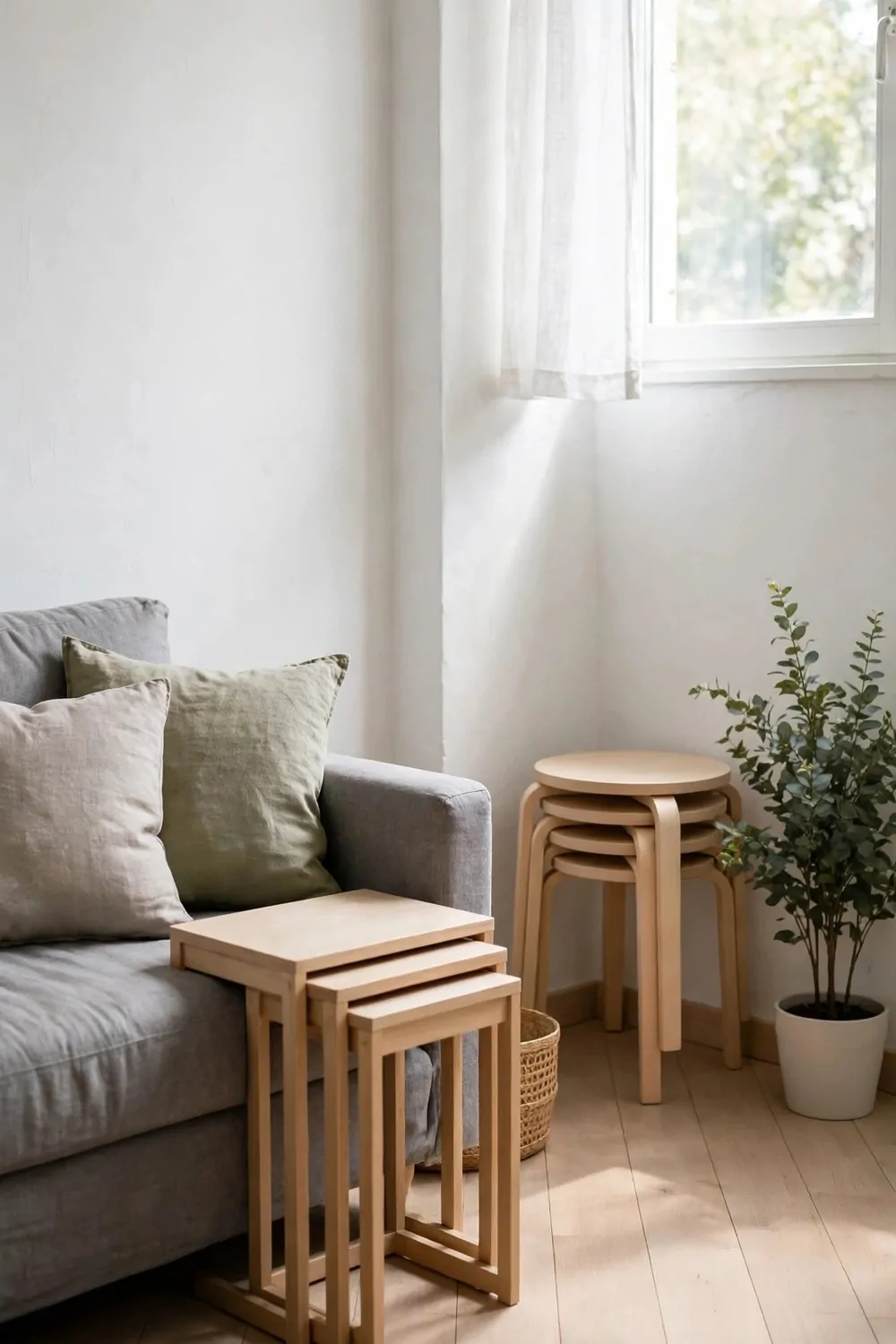
A big coffee table sits in the middle of the room all day, even when nobody is using it. It holds a mug for twenty minutes and takes up floor for the other twenty-three hours. That is a bad deal in a mini studio.
Nesting tables fix it. A set of two or three tables that slide under each other takes up the space of one small table when you do not need them. Pull one out when a friend visits, slide it back when they leave.
Stacking stools work the same way. Four stools stacked in a corner take up the floor space of one. Unstack them for dinner, stack them again after. Extra seats without a permanent crowd of chairs.
Keep the nesting set light enough to move with one hand. If pulling a table out is a chore, you will never do it, and the set becomes one lumpy table that never splits apart.
Use the smallest table for daily life and keep the bigger ones tucked away. The daily table holds your mug and your book. The rest wait quietly for the day they are needed.
A tray on top of the smallest nesting table makes it a proper surface. It stops mugs sliding off and gives the little table a finished look, like it meant to be that size all along.
I keep three nesting tables by my sofa and most days you would swear I own one small table. Then four friends come over and suddenly there are tables everywhere. That is the magic of furniture that folds away into itself.
15. Work the Corners, Not Just the Walls
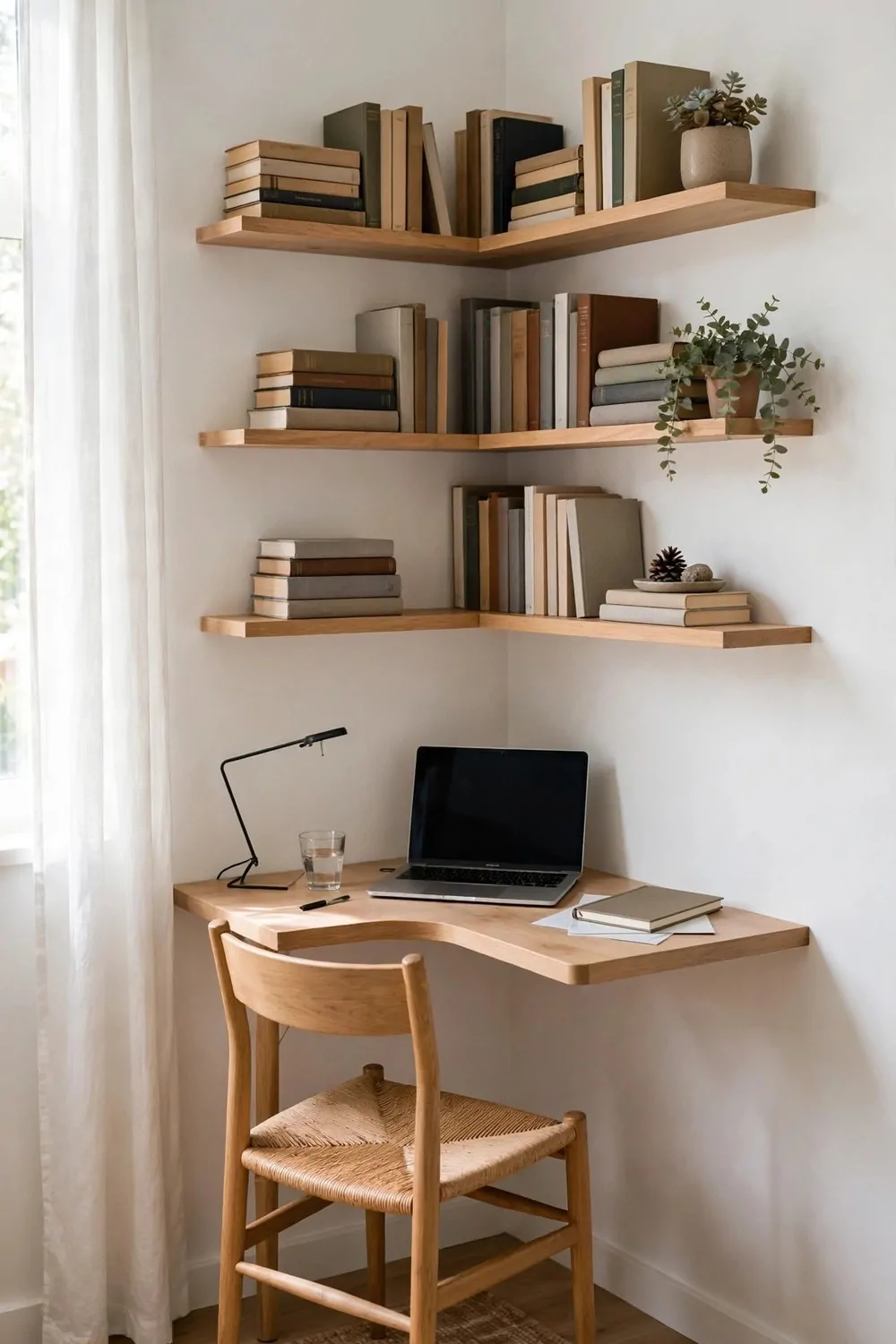
Corners are the most wasted spots in a mini studio. They collect a plant nobody waters, a pile of magazines, or absolutely nothing at all. Meanwhile the middle of the room is crowded and the corners sit empty.
Corners can hold a lot if you let them. A corner desk fits where no straight desk will go. Corner shelves turn a dead angle into a little library. A corner chair with a lamp becomes a reading nook that takes up almost no floor.
A triangular corner shelf is the easiest start. It mounts in the angle where two walls meet, and it holds books, a plant, or a candle without sticking out into the room at all.
Put the corner to work for one job only. A corner that tries to be a desk and a pantry and a plant stand becomes a cluttered corner, and cluttered corners shrink a room fast. One job per corner.
Light the corner. Dark corners look like holes in the room, and holes make a place feel smaller. A small lamp or a clip light turns a dark corner into a cozy spot your eye actually wants to visit.
I turned the dead corner by my window into a tiny desk with a shelf above it. It holds my laptop, my notebook, and one plant. It is the smallest office I have ever had, and I use it more than any big desk I ever owned.
Walk your studio and count the corners. Each one is a little room waiting for a job. Give them one, and the middle of your floor gets to breathe again.
16. Draw the Eye Up With One Tall Thing
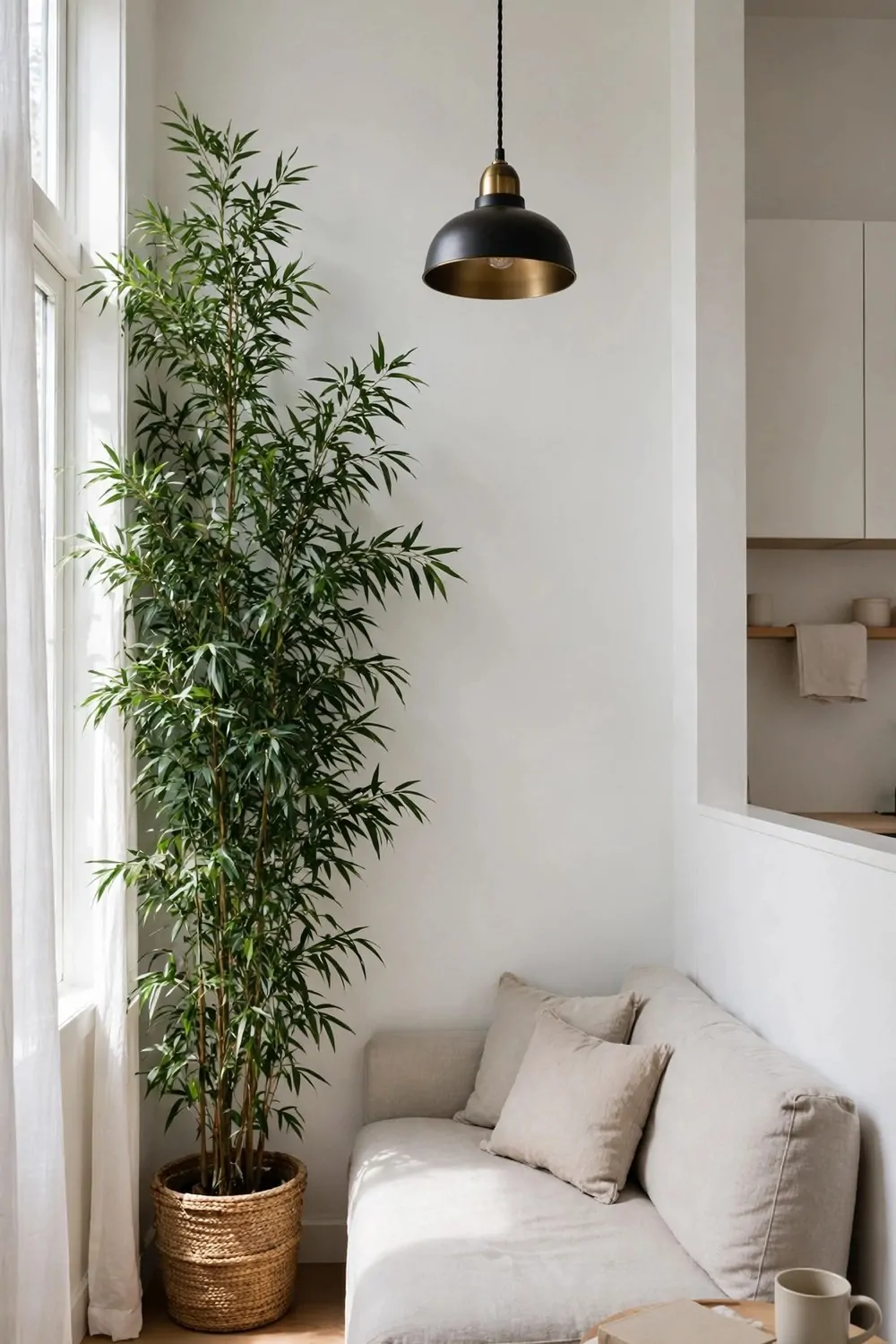
When everything in a room is low, the eye stays low, and the room feels squat. One tall thing changes that. It pulls the eye up to the ceiling, and the whole room feels taller in an instant.
A tall leafy plant is the easiest tall thing. A fiddle leaf or a tall snake plant in the corner reaches up and makes the ceiling feel higher than it is. It also adds life, which no piece of furniture can do.
A tall floor lamp does the same job. A slim arc lamp that curves up over the sofa draws the eye along its line, all the way up. Light plus height is a double win.
A tall narrow bookshelf works too. One slim tower of shelves in a corner, running floor to ceiling, gives the room a vertical line to follow. Keep it tidy, because a tall messy shelf is a tall mess.
Pick one tall thing, not five. One tall plant, one tall lamp, or one tall shelf. Five tall things compete with each other and the eye does not know where to go. One tall thing is a statement. Five is a forest.
Keep the tall thing near a corner or against a wall, not in the middle of the room. A tall thing in the middle blocks the view across the room and chops the space in half.
My tall plant sits in the corner by the window and I swear my ceiling grew the week I brought it home. It did not, of course. My eyes just finally started looking up.
17. One Big Piece of Art Beats Ten Small Ones
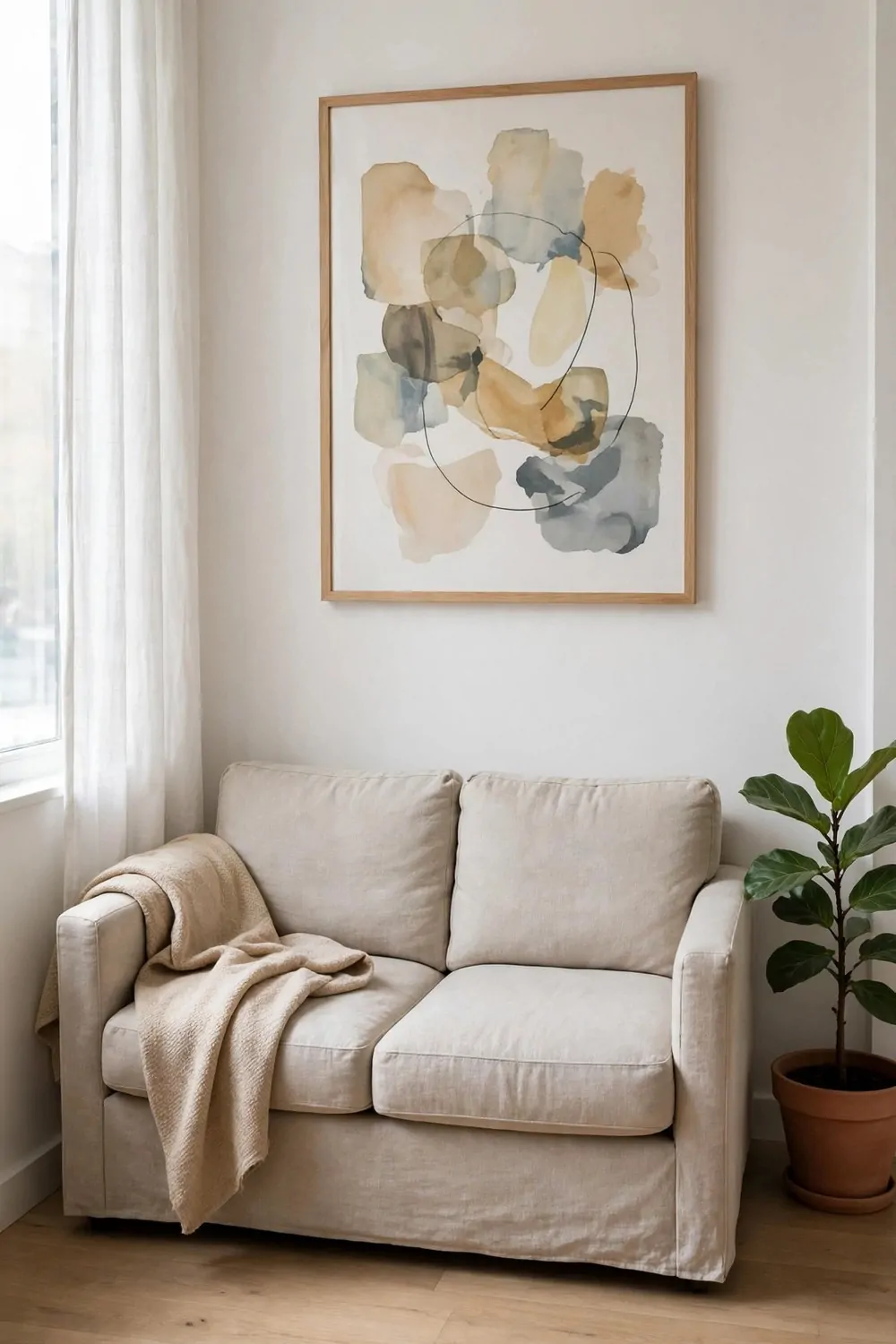
Ten small frames on one wall look busy. Each one is a little stop for the eye. The wall feels crowded, and the room feels smaller, because your brain reads all those edges as clutter.
One big piece of art on the same wall does the opposite. The eye lands once, rests there, and moves on. The wall feels calm and the room feels bigger, because there is only one thing to look at.
Go as big as the wall allows. One large framed print, one big canvas, or one oversized photo. It should fill a good part of the wall without touching the edges. That size is what makes the trick work.
Hang it at eye level, with the center of the art about as high as your eyes when you stand. Too high and it floats away from the room. Too low and it crowds the furniture below it.
Keep the frame simple. A thin frame in black, white, or natural wood lets the art do the talking. A big ornate frame fights the art and adds visual noise right back.
If big art feels too expensive, blow up one of your own photos. A favorite travel photo printed large and framed simply looks like a gallery piece, and it costs a fraction of a bought canvas.
I replaced a wall of nine small frames with one big print of a misty forest. Guests keep telling me the room looks bigger now. It is the same wall. It just has one thing to say instead of nine.
18. Keep the Floor One Surface With No Breaks
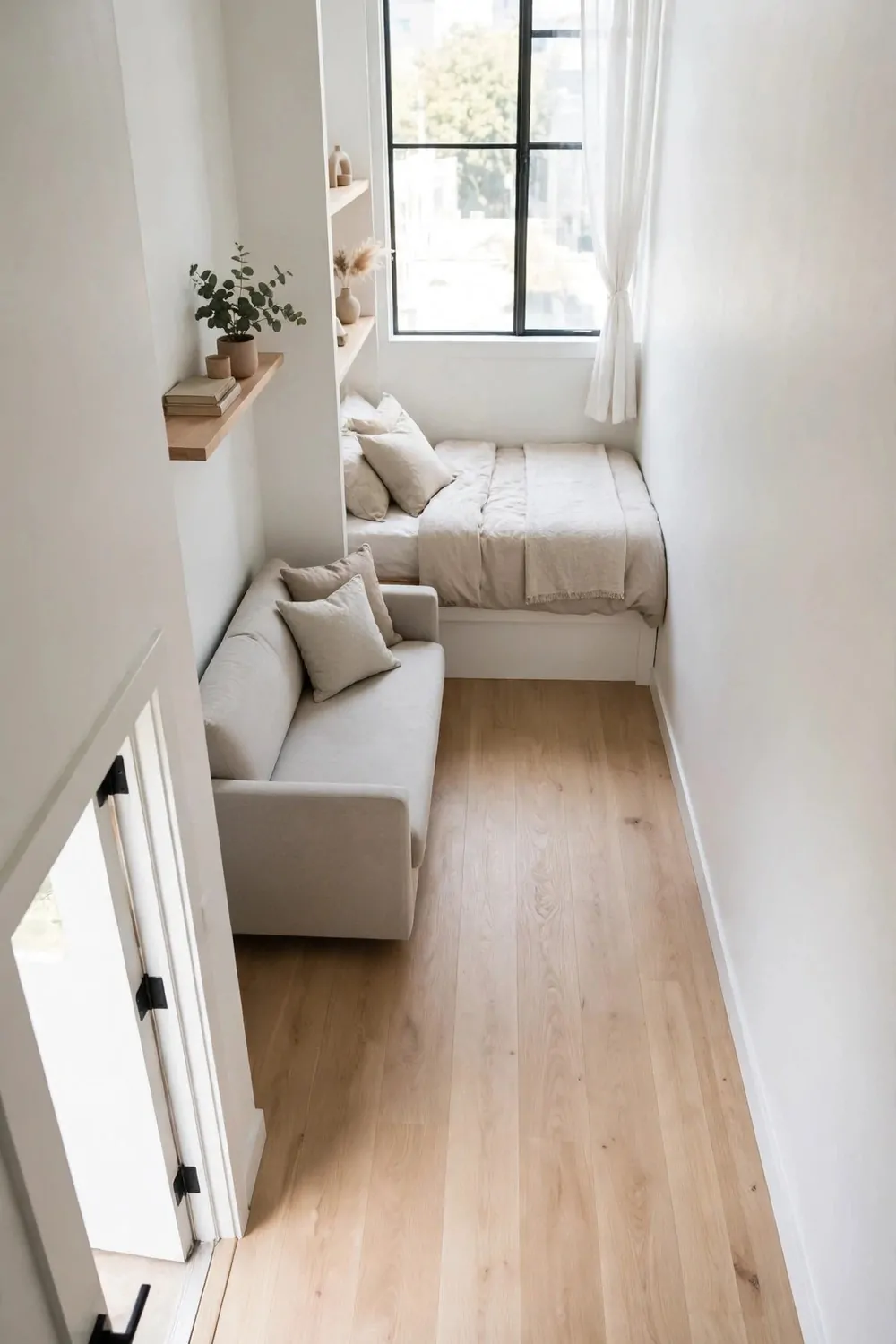
Every time the floor changes, your eye stops. Wood to tile, tile to carpet, carpet to a different carpet. Each change is a border, and borders make a room feel chopped up.
One floor surface running all the way through a mini studio makes the room read as one big space. The eye slides from the door to the window without a single stop. The square footage never changes, but the feeling does.
If your floors already change between zones, you can soften the breaks. Use one large rug that spans the change, or lay the same light wood-look flooring over the whole space if your landlord allows it.
Avoid lots of small rugs. One big rug is better than four little ones. Four little rugs chop the floor into islands. One big rug ties the room together and gives the eye a calm path to follow.
Keep the floor color light. Light floors bounce light around and make the room feel airy. Dark floors can look rich, but in a tiny space they can also feel like the room is wearing heavy boots.
If you use a rug, pick one in a light color close to the floor color. A rug that matches the floor almost disappears, and the room keeps its one-surface feeling. A rug that contrasts hard becomes a border again.
I pulled up three small rugs in my studio and put down one big flat one in a pale color. The room did not get bigger. It just stopped telling my eyes it was small.
19. Hide the Clutter Behind Closed Doors
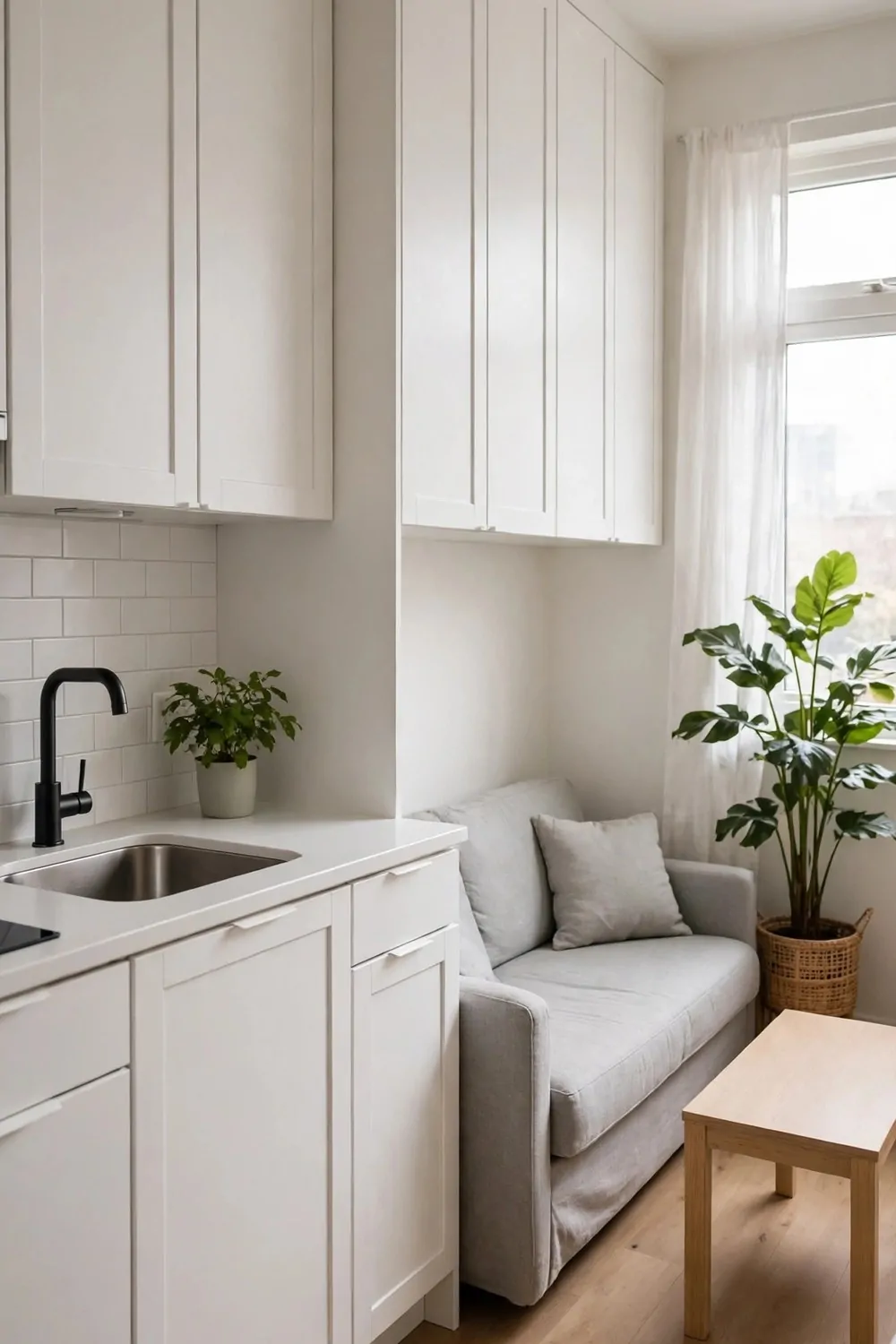
Open shelves look lovely in photos. In real life, they show every mug, every tangled cable, every box you meant to sort. In a mini studio, all of that sits right in your eyeline, all day long.
Closed storage hides it. Cabinets with doors, boxes with lids, baskets with covers. The clutter still exists, but your eyes do not have to live with it. And a calm room always feels bigger than a busy one.
This does not mean you can never have open shelves. It means the open shelves hold the pretty things, and the closed storage holds the rest. One open shelf with three nice objects. Everything else behind a door.
Use matching closed boxes on any open shelving you keep. Uniform boxes read as tidy even when the stuff inside is not. Mixed bags and open piles read as clutter from across the room.
Do a ten minute tidy every night. Put the day’s stuff behind its door. Keys in the box, mail in the tray, clothes in the basket. Ten minutes keeps the closed-door calm working, and the morning feels like a fresh start.
Be honest about what you keep. A mini studio punishes every item that does not earn its place. If you have not used it in a year, it is probably just renting space in your closet. Let it go and enjoy the empty shelf.
I switched my open kitchen shelves to closed cabinets and my studio felt like it exhaled. Nothing left the apartment. It just went behind doors, and my eyes finally got to rest.
20. Make the Bed Look Like a Sofa Every Morning
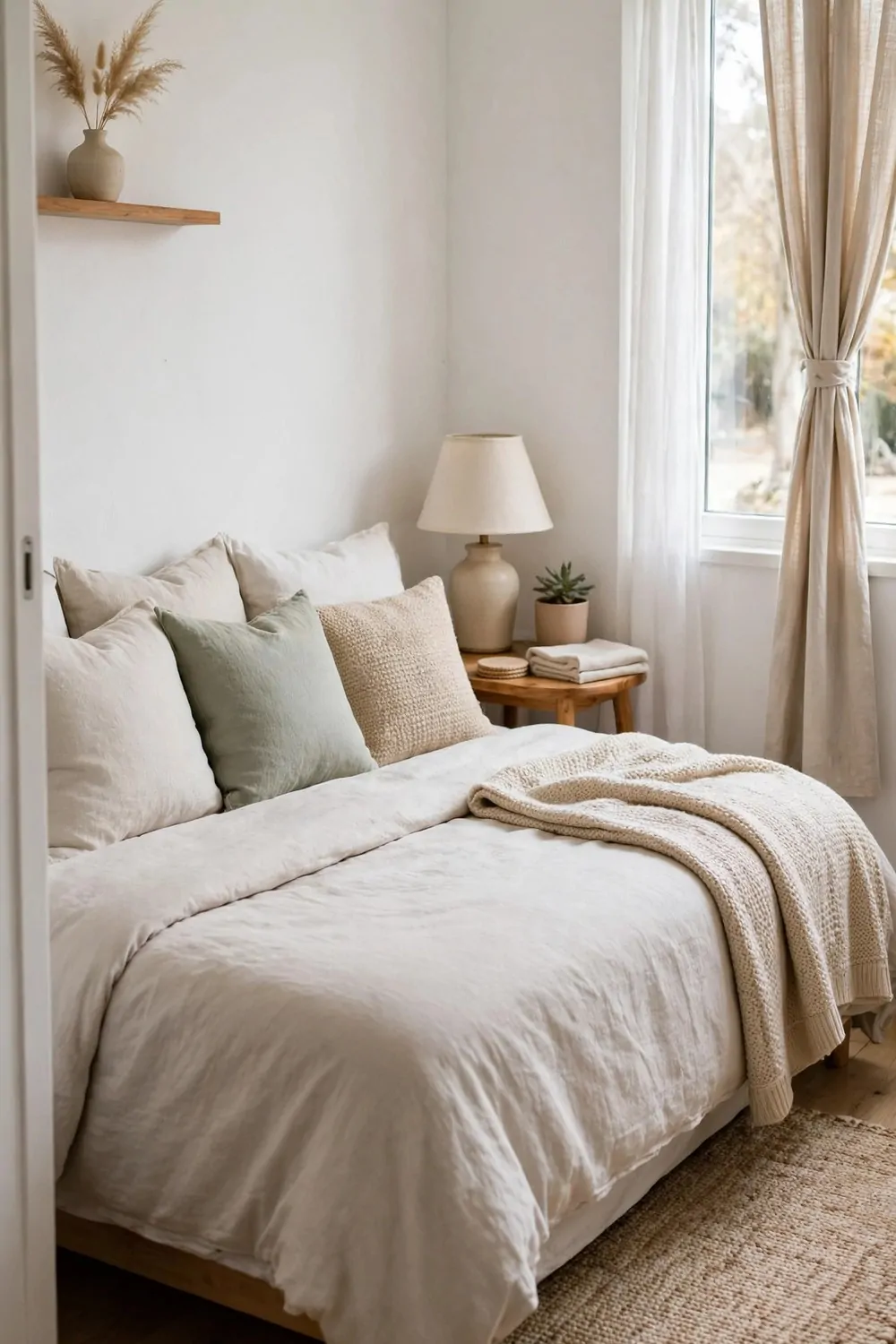
An unmade bed is the biggest mess in a mini studio, and you see it from everywhere. It is right there in the middle of your living room, your office, and your dining room, all at once. No wonder the whole place feels messy.
Making the bed like a sofa changes that. Pull the duvet smooth, add two or three cushions along the wall side, fold a throw over one end. The bed stops looking like a bed and starts looking like a daybed, which is really just a deep sofa.
Keep the bedding light colored. Pale bedding blends with the room and the bed fades into the background. Dark heavy bedding sits there like a big dark block and pulls the eye all day.
Use cushions that match your sofa cushions. When the bed cushions and the sofa cushions share a color, the two pieces feel like they belong to the same family. The room reads as one living space, not a bedroom crashing into a living room.
This takes about three minutes every morning. Three minutes buys you a living room all day. It is the best trade in this whole list, and it costs nothing at all.
Keep the night things in a basket under the bed or in the drawer. The book, the sleep mask, the charger. When they are put away, the sofa illusion holds. When they are scattered on the bed, it falls apart.
I have done this every morning for two years now. Guests sit on my bed thinking it is a sofa, and I never correct them. That is how well the trick works.
21. Borrow Space From the Balcony or the Window Ledge
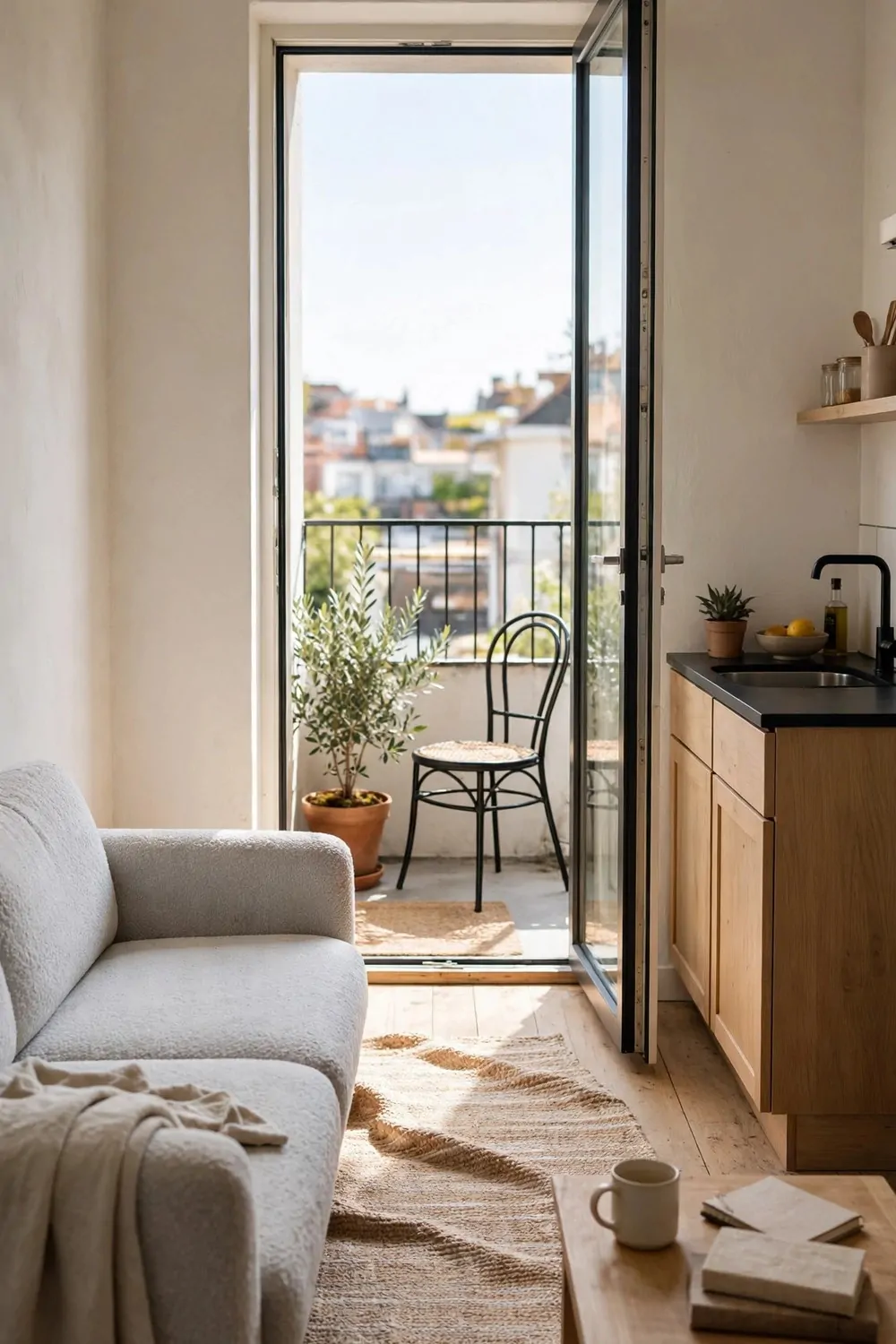
A balcony is a whole extra room, if you treat it like one. Even a tiny balcony, barely big enough for one chair, can hold your morning coffee, your plants, or your reading hour. That is space your studio does not have to provide.
Put one small chair and one small table out there. That is all it takes. Morning coffee moves outside. Evening air moves outside. Your indoor floor gets to breathe, because one of its jobs just moved outdoors.
If you have no balcony, borrow the window ledge instead. A deep windowsill holds a row of plants, a candle, or a little reading spot with a cushion. It is not a room, but it is a destination, and destinations make a small home feel bigger.
Use the balcony in all seasons you can. A warm throw and a hot drink make a cold morning balcony lovely. A little outdoor light makes a summer evening out there feel like a second living room.
Keep the balcony tidy, because you see it through the glass all day. A tidy balcony reads as an extra room. A cluttered one reads as a storage yard, and it drags the indoor room down with it.
Grow something out there, even if it is just herbs in pots. Plants on the balcony pull the eye outward, past the glass, and the room feels like it keeps going. Green is the cheapest extension you can buy.
My balcony is barely wider than my shoulders, but it holds my coffee, my herbs, and my best thinking. Some mornings it feels like the biggest room in the house, because it has the sky for a ceiling.
Your mini studio does not need to be bigger. It needs to be smarter. One room, many jobs, and a little plan for each one.
Start with the free tricks. Make the bed like a sofa tomorrow morning. Hang the curtains higher this weekend. Pull one small rug up and see how the floor feels. Layer the rest slowly, one idea a week, and let the room teach you what it needs next.
The first night in my studio, I could reach the kettle from my pillow. I thought that meant the place was too small. Now I think it meant everything I need is close at hand. That is not a small home. That is a clever one.
One room can feel like many. You just have to give your eyes a reason to believe it. Start tonight, with ten minutes and a clear floor. Your studio is waiting to feel bigger than it is.