13 French vs Spanish Would You Rather Questions for Language Learners

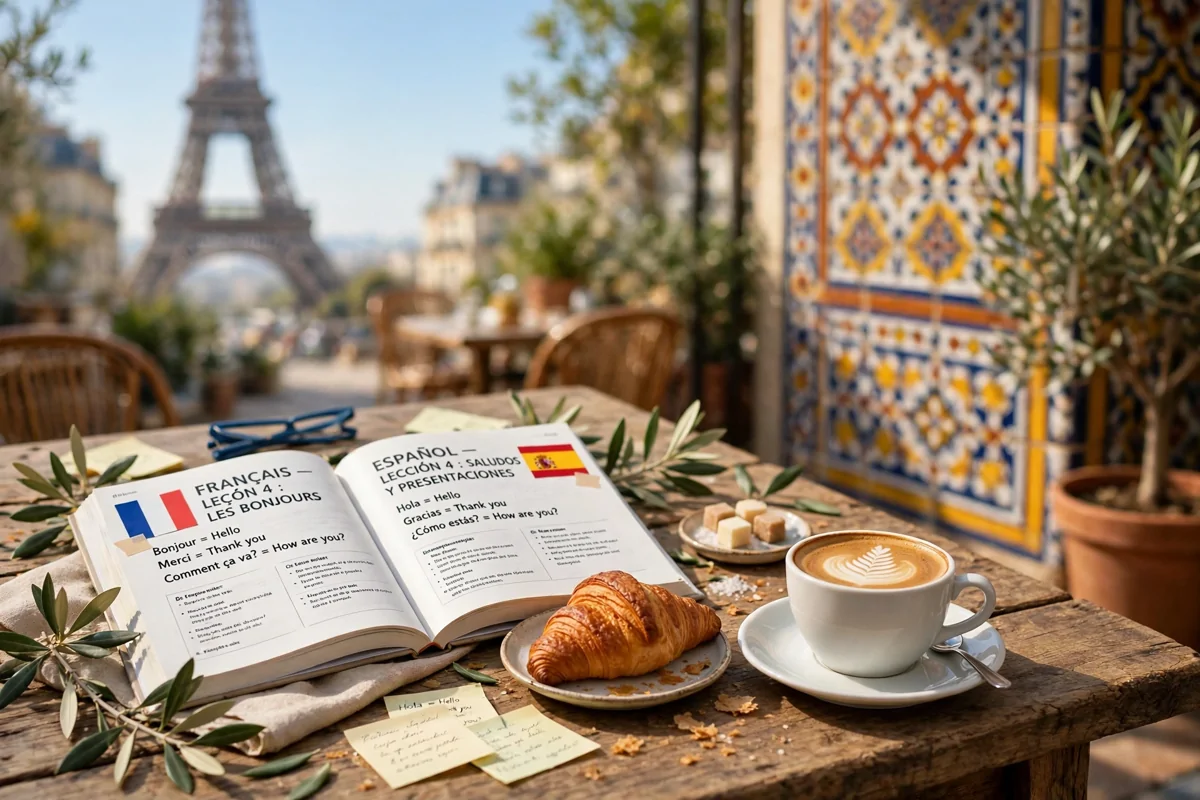
French and Spanish are two of the most loved languages in the world. Both come from Latin, so they are cousins in the big Romance language family. French has soft sounds and silent letters, and Spanish has clear sounds where most letters are read just as they look. One takes you to Paris, with cafes, croissants, and long words that sound like art. The other takes you to Madrid, with warm streets, tasty food, and words that roll off the tongue.
Many learners stand at the same crossroads. Should you start with French or Spanish? Should you focus on speaking, reading, or food words first? Every choice opens a new door, and every choice asks you to wait on the other one. This list of 13 fun questions will help you think about both languages, compare their sounds, words, and trips, and pick the path that fits your life best.
1. Would you rather learn French first or learn Spanish first?
Would you rather...
French first means soft sounds, silent letters, and words that look long but sound short. It feels fancy from day one, and it opens the door to Paris, Quebec, and many parts of Africa. Spanish first means clear spelling, steady sounds, and a language used in more than 20 countries. It feels friendly and fast to start.
Think about your goal. If you dream of French cafes and French books, start there. If you want quick talks with many people around the world, Spanish may feel easier at the start. There is no wrong pick here, only a first step.
| Option | What You Gain | What You Give Up |
|---|---|---|
| Learn French first | A soft, elegant sound and a strong start for French books, trips, and culture | The quick early wins that Spanish spelling gives new learners |
| Learn Spanish first | Clear spelling, fast early progress, and talks with people in many countries | The charm of French sounds and the early joy of French words |
2. Would you rather speak French with a perfect accent or speak Spanish with a perfect accent?
Would you rather...
A perfect French accent means the nasal sounds, the soft R, and the smooth flow that makes people stop and listen. It takes time and a lot of listening, but it feels like magic when it clicks. A perfect Spanish accent means rolled Rs, clear vowels, and a lively rhythm that fits every Spanish-speaking place from Madrid to Mexico City.
An accent is not just sound. It shows respect for the people you talk with, and it makes your words easy to understand. Which sound would you love to hear come out of your own mouth?
Things to think about:
- French accents need soft sounds and quiet letters, so listening practice matters a lot.
- Spanish accents need strong Rs and clear vowels, so speaking practice matters a lot.
- A good accent helps people understand you fast, even when your words are simple.
- Your first language shapes which accent feels easier for your mouth.
3. Would you rather read French books or read Spanish books?
Would you rather...
French books open a world of short stories, poems, and novels from Paris and beyond. The words look long on the page, but the stories pull you in. Spanish books open a world of tales from Spain and Latin America, with clear spelling that helps you read aloud and follow the story.
Reading builds your word bank fast. It teaches you how sentences work, and it gives you new words every page. The best book is the one you finish, so pick the language that keeps you turning pages.
Pro Tip: Start with a short story book for children or a simple novel you already know in English. Known stories make new words much easier to guess.
4. Would you rather learn French food words first or learn Spanish food words first?
Would you rather...
French food words are a treat by themselves. Croissant, baguette, fromage, dessert. Just saying them feels like a small trip to a Paris bakery. Spanish food words are just as tasty. Paella, tapas, arroz, chocolate. They open the door to markets and family meals across the Spanish-speaking world.
Food words are useful from day one because you use them at every meal. You can order food, ask what is in a dish, and share a meal with new friends. Which menu would you love to read first?
5. Would you rather travel to Paris or travel to Madrid?
Would you rather...
Paris gives you the Eiffel Tower, small cafes, and streets full of French words on every sign. You can test your French at a bakery in the morning and at a bookshop in the afternoon. Madrid gives you sunny plazas, busy markets, and Spanish words everywhere you look. You can order tapas, ask for directions, and chat with shopkeepers all day.
- Paris is best for French sounds, French food, and French art on every corner.
- Madrid is best for Spanish talks, Spanish food, and long warm evenings outside.
- Both cities reward learners who try, even with just a few words.
| Option | What You Gain | What You Give Up |
|---|---|---|
| Travel to Paris | Real French talks in cafes, shops, and streets, plus famous sights at every turn | The sunny plazas and easy Spanish chats of Madrid |
| Travel to Madrid | Warm Spanish talks all day, tasty tapas, and lively plazas to practice in | The French cafes and famous sights of Paris |
6. Would you rather greet people in French or greet people in Spanish?
Would you rather...
Greetings are the first words you use in a new language, and they set the tone for the whole talk. In French, you say bonjour in the day and bonsoir in the evening, and a warm smile goes with both. In Spanish, you say hola, buenos dias, and buenas tardes, and the words feel bright and open.
Your quick checklist for greetings:
- Learn how to say hello, good morning, and good evening first.
- Learn how to ask how someone is, and how to answer that question back.
- Practice the greeting out loud three times before you use it with a real person.
- Use the greeting every day, even if it is just with yourself in the mirror.
Which greeting would you love to say first each morning?
7. Would you rather master French verbs or master Spanish verbs?
Would you rather...
Verbs are the engine of every sentence. French verbs have many forms, and the spelling changes a lot even when the sound stays the same. That makes them tricky to write but fun to crack like a puzzle. Spanish verbs also change a lot, but the patterns are clear, and once you learn one group, many more follow the same path.
When you master verbs, you stop pointing and start talking. You can say what you want, what you did, and what you will do. That is real freedom in a new language.
Important Note: Do not try to learn every verb form at once. Learn the present tense well first, then add the past, then the future. Slow and steady wins with verbs.
8. Would you rather learn French in Paris for one year or learn Spanish in Madrid for one year?
Would you rather...
One full year in Paris means French all day, every day. You hear it on the bus, read it on menus, and use it to buy bread each morning. Your ear grows sharp, and your words grow fast. One full year in Madrid means the same deep dive in Spanish. You hear it in markets, read it on street signs, and use it to order food and make friends.
Living in the language is the fastest way to learn it, but it also asks a lot from you. New food, new streets, new rules, and a new daily life. Which city would you call home for a year?
Things to think about:
- Life in Paris gives you French at the bakery, the bookshop, and the bus stop.
- Life in Madrid gives you Spanish at the market, the plaza, and the cafe.
- A full year in one place builds deep skill, but you miss the other language for a while.
- Your budget, your work, and your family plans all shape this big choice.
9. Would you rather speak French at a cafe or speak Spanish at a market?
Would you rather...
A French cafe is a calm place to practice. You sit with a coffee, order a croissant, and talk with the waiter in slow, polite French. The words are few, but the moment feels special. A Spanish market is loud, bright, and full of life. You ask prices, taste fruit, and chat with sellers who love a learner who tries.
Both places test your real skill, not your book skill. At the cafe, you learn polite words and quiet talks. At the market, you learn fast words, numbers, and quick answers.
| Option | What You Gain | What You Give Up |
|---|---|---|
| Speak French at a cafe | Calm, polite French practice with real orders and quiet talks | The loud, fast Spanish practice of a busy market |
| Speak Spanish at a market | Fast Spanish practice with numbers, prices, and friendly sellers | The calm, polite French practice of a quiet cafe |
10. Would you rather learn French numbers or learn Spanish numbers?
Would you rather...
Numbers are small words with big power. French numbers have a fun twist, like saying sixty-ten for seventy and four-twenties for eighty. It feels like a riddle at first, then it clicks and feels clever. Spanish numbers follow a clear path, and once you learn one to ten, the rest fall into place fast.
With numbers, you can tell the time, pay for food, give your phone number, and count your steps. Which number path sounds more fun to learn?
11. Would you rather write short notes in French or write short notes in Spanish?
Would you rather...
Short notes are a great way to practice writing. In French, you write little notes with soft sounds and careful spelling, and each note teaches you a new word order. In Spanish, you write notes with clear spelling, and you can read back what you wrote with ease.
Writing makes your learning stick. When you write a note, you slow down, pick the right words, and fix your own mistakes. Over time, those small notes turn into real skill.
Warning: Do not copy whole notes from a translation tool and call it practice. Write your own short lines first, then check them. Real learning comes from your own effort.
12. Would you rather practice French every morning or practice Spanish every evening?
Would you rather...
Morning practice starts the day with French. Your mind is fresh, the house is quiet, and ten minutes with French words sets a bright tone for the day. Evening practice ends the day with Spanish. You relax, review what you learned, and let the words settle in your mind before sleep.
The best time is the time you will keep. A short daily habit beats a long session once a week, so pick the time that fits your real life.
Things to think about:
- Morning practice works well if you wake up early and like quiet time.
- Evening practice works well if your days are busy and your nights are free.
- Ten minutes every day beats two hours once a week.
- A fixed time and a fixed place make the habit stick.
13. Would you rather learn French words for animals or learn Spanish words for animals?
Would you rather...
Animal words are pure fun. In French, a dog is un chien, a cat is un chat, and a bird is un oiseau. The words sound soft and sweet. In Spanish, a dog is un perro, a cat is un gato, and a bird is un pajaro. The words sound bright and clear.
Animal words help you learn fast because you can picture each one. You can name the pets at home, the birds in the park, and the animals in a storybook. Which set of animal words would you learn first?
Pro Tip: Put small labels on things at home with the new words. Seeing the word every day makes it stick without extra study time.
More Would You Rather Questions
- 15 American vs British English Would You Rather Questions
- 20 Spanish vs Portuguese Would You Rather Questions for Language Fans
- 10 Hebrew vs Arabic Would You Rather Questions About Language Differences
- 39 Igbo Language Would You Rather Questions for Curious Learners
- 33 Yoruba Language Would You Rather Questions for African Language Fans
- 37 Amharic Language Would You Rather Questions From Ethiopia
- 29 Zulu Language Would You Rather Questions for Curious Learners
- 31 African Languages Would You Rather Questions From Across the Continent
- 17 Swahili Would You Rather Questions for African Language Enthusiasts
- 24 Mongolian Language Would You Rather Questions From the Steppes