20 Spanish vs Portuguese Would You Rather Questions for Language Fans

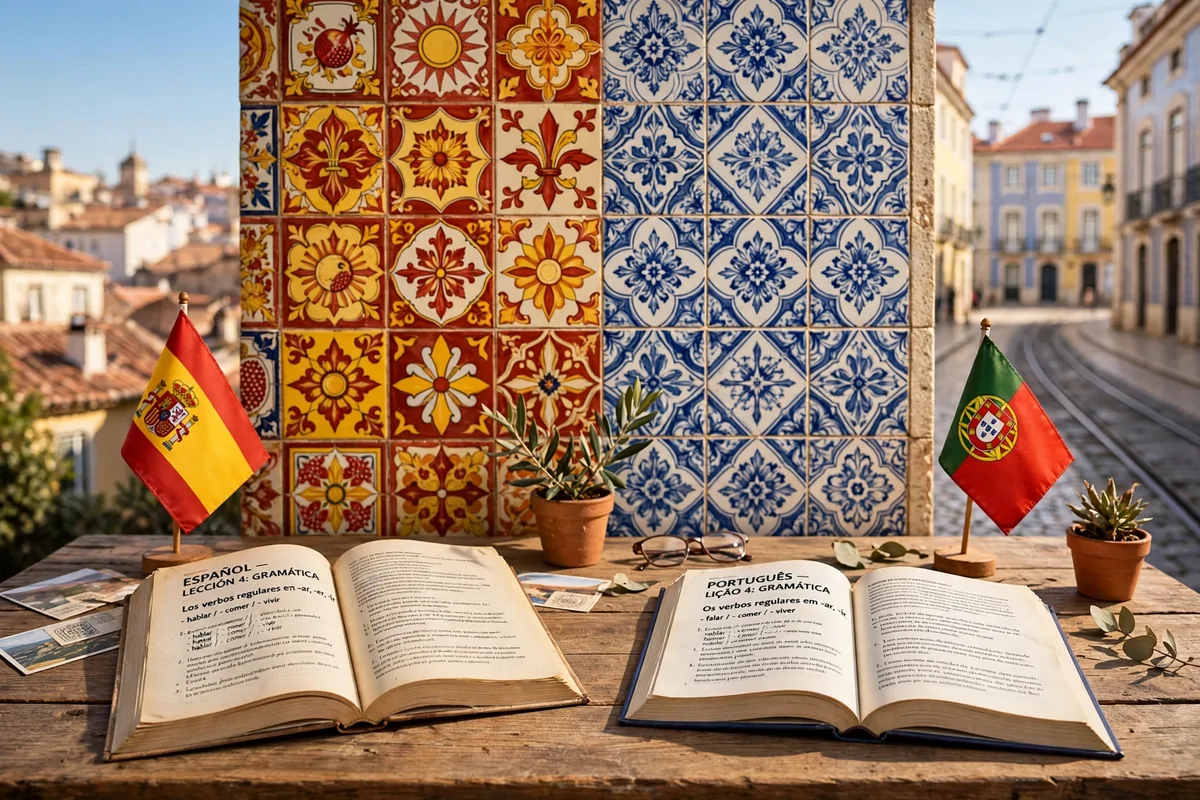
Spanish and Portuguese are like two close cousins in one big family. They both come from Latin, so many words look almost the same, but they sound very different when you hear them. One word can be soft and smooth in Portuguese, and sharp and clear in Spanish. That is what makes learning them so much fun.
Spanish opens the door to Spain and to many countries in Latin America, while Portuguese takes you to Portugal and to Brazil, a huge country full of colour and life. Both languages are useful for travel, for work, and for meeting new people. The hard part is picking where to start, and that is where these questions come in. Each one asks you to choose between Spanish and Portuguese in a fun, everyday way.
1. Would you rather learn Spanish first or learn Portuguese first?
Would you rather...
Most people start with Spanish because more people speak it around the world, and you can use it in many countries. Spanish words are often easy to read, and the sounds follow clear rules. If you learn Spanish first, you can later use much of what you know to understand Portuguese too.
But some people pick Portuguese first because they love the sound of it, or because they plan a trip to Portugal or Brazil. Portuguese has soft sounds and a gentle rhythm, and it feels special to speak a language that fewer learners choose. Starting with Portuguese can also make Spanish feel easier later, because so many words are close cousins.
| Option | What You Gain | What You Give Up |
|---|---|---|
| Learn Spanish first | A language you can use in many countries, with clear sounds and easy reading | The soft, gentle sound of Portuguese and a head start in Brazil or Portugal |
| Learn Portuguese first | A beautiful sound, a strong start for Portugal and Brazil, and a fun challenge | The wide reach of Spanish and the chance to use it in more places at first |
2. Would you rather speak Spanish with a Madrid accent or speak Portuguese with a Lisbon accent?
Would you rather...
A Madrid accent is clear and strong, with a crisp sound that many learners love. It is the accent you hear in much of Spain, and it gives Spanish a proud, classic feel. When you speak with this accent, people often know right away that you learned your Spanish in Spain.
A Lisbon accent is softer and more relaxed, with gentle sounds that flow like a quiet river. It is the accent of the capital of Portugal, and it has a warm, old-world charm. Many learners say it sounds like a secret code, smooth and full of small surprises.
Things to think about:
- Which city would you like to visit first, Madrid or Lisbon?
- Do you like clear, strong sounds, or soft, gentle sounds?
- Which accent would make you feel more confident when you speak?
3. Would you rather learn Spanish from a teacher or learn Portuguese from a friend?
Would you rather...
A teacher gives you clear steps, good books, and honest feedback. You learn the rules in order, and you always know what to study next. A good teacher can fix your mistakes early, before they become habits.
A friend gives you real talk, funny stories, and everyday words that no book can teach. You learn how people really speak at home, at work, and on the street. The lessons feel like a good chat, not like school.
- A teacher brings order, rules, and a clear plan.
- A friend brings real words, jokes, and natural speech.
- Both ways work, but they feel very different day to day.
4. Would you rather read a Spanish story book or read a Portuguese story book?
Would you rather...
A Spanish story book pulls you into tales from Spain and Latin America, full of warm towns, brave heroes, and clever twists. The words are often simple to sound out, so you can read page after page and feel your skill grow fast.
A Portuguese story book takes you to Portugal and Brazil, where the stories feel rich and full of feeling. The language has a soft rhythm that makes even a short tale feel like a poem. Reading it slowly teaches you how the words link together in real sentences.
Pro Tip: Pick a story you already know well, like a folk tale or a simple adventure. When you know the plot, you can guess new words from the story, and reading feels much easier.
5. Would you rather travel to Spain to practise Spanish or travel to Brazil to practise Portuguese?
Would you rather...
Spain is full of old streets, sunny squares, and busy markets where you can practise Spanish all day. You can order food, ask for directions, and chat with shop owners. Every small talk is a free lesson, and every new town brings new words.
Brazil is huge and full of life, with beaches, forests, and big cities where Portuguese fills the air. People are often warm and happy to help a learner, and you can hear the language in every cafe, bus, and park. It is a big adventure for your ears and your tongue.
| Option | What You Gain | What You Give Up |
|---|---|---|
| Travel to Spain to practise Spanish | Daily practice in markets and cafes, plus the history and streets of Spain | The beaches, forests, and warm welcome of Brazil |
| Travel to Brazil to practise Portuguese | A huge country to explore, friendly chats, and Portuguese everywhere you go | The old towns and sunny squares of Spain |
6. Would you rather learn Spanish words for food or learn Portuguese words for food?
Would you rather...
Food words are the fastest way to feel at home in a new language. Learn the Spanish words for bread, rice, beans, and soup, and you can order a meal with a smile on your very first day. Spanish food words are short, clear, and fun to say.
Portuguese food words open the door to dishes from Portugal and Brazil, from fresh fish to sweet cakes and rich stews. The words sound soft and warm, and they make every meal feel like a small party.
- Learn how to say bread, water, rice, and soup first.
- Then add your favourite dish in each language.
- Practise by reading a real menu, line by line.
7. Would you rather speak Spanish all day for a week or speak Portuguese all day for a week?
Would you rather...
A full week of Spanish means you think, ask, and answer in Spanish from morning to night. By day three, the words start to come faster, and by day seven, you catch yourself thinking in Spanish without trying.
A full week of Portuguese is a deep dive into soft sounds and new rhythms. At first it feels slow, but soon your mouth learns the shapes of the words, and your ears start to catch whole sentences. It is hard work, but the progress feels amazing.
Things to think about:
- Which language would tire you out faster, and which would keep you going?
- Do you have someone to talk with every day for a full week?
- Would you keep a small notebook of new words you hear each day?
8. Would you rather learn Spanish greetings first or learn Portuguese greetings first?
Would you rather...
Greetings are the first words you use in any language. Spanish greetings are short and friendly, and you can use them with almost anyone, anywhere. Learn “hello”, “good morning”, and “how are you”, and you can start a chat in seconds.
Portuguese greetings are warm and gentle, and they show respect in a lovely way. They sound polite and kind, and people often smile when a learner greets them well. A good greeting can turn a stranger into a friend in one moment.
9. Would you rather write a letter in Spanish or write a letter in Portuguese?
Would you rather...
Writing a letter in Spanish is a great test of what you know. You need the right words, the right order, and a clear message. When you finish, you have something real to keep, and you can see how far you have come.
Writing a letter in Portuguese is a slower, softer task. The words flow in a gentle way, and you have to think hard about each sound and each ending. It is a quiet challenge, and finishing the letter feels like a small win.
Important Note: Keep your first letter short, just five or six lines. Write about your day, your town, or your favourite food. Short and correct beats long and messy every time.
10. Would you rather learn Spanish through short stories or learn Portuguese through short stories?
Would you rather...
Short stories in Spanish give you a full tale in just a few pages. You meet new words in a real setting, and you see how verbs change in action. Each story ends with a small sense of victory, and you want to start the next one right away.
Short stories in Portuguese teach you patience and rhythm. The sentences are often longer and softer, and they show you how the language really flows. Each story is like a short poem in words, and it stays in your mind long after you finish.
| Option | What You Gain | What You Give Up |
|---|---|---|
| Learn Spanish through short stories | Quick wins, clear words, and a new story every few pages | The soft rhythm and gentle flow of Portuguese tales |
| Learn Portuguese through short stories | A rich rhythm, longer sentences, and stories that stay in your mind | The fast, clear progress of short Spanish tales |
11. Would you rather know Spanish numbers by heart or know Portuguese numbers by heart?
Would you rather...
Numbers are small words with big power. Know your Spanish numbers by heart, and you can ask prices, tell the time, and count change without a pause. They are clear and steady, and they build your confidence fast.
Know your Portuguese numbers by heart, and you can do the same in Portugal and Brazil, with a soft sound that makes even counting feel pleasant. The numbers take a bit more practice, but once you know them, they stick like glue.
- Count from one to ten every morning in your chosen language.
- Then learn twenty, fifty, and one hundred.
- Test yourself at a market stall, real or pretend.
12. Would you rather learn Spanish for work or learn Portuguese for work?
Would you rather...
Spanish for work opens many doors. It helps in offices, shops, hotels, and hospitals across a wide map of countries. You can write emails, talk to customers, and join meetings in a language that millions use every day.
Portuguese for work is a rarer skill, and that can make it very valuable. It helps with trade, travel, and new markets in Portugal and Brazil. When fewer people have a skill, the people who do have it stand out.
Things to think about:
- Which language would help more in the job you want?
- Do you work with people from Spain, Latin America, Portugal, or Brazil?
- Would you enjoy writing work emails in Spanish or in Portuguese?
13. Would you rather speak Spanish with perfect pronunciation or speak Portuguese with perfect pronunciation?
Would you rather...
Perfect Spanish pronunciation means every word is clear and easy to understand. People hear you and smile, because your Spanish sounds clean and strong. It takes practice, but each correct sound is a small triumph.
Perfect Portuguese pronunciation is a harder prize, because the sounds are softer and trickier. But when you get them right, your Portuguese sounds beautiful, and people often ask how you learned so well. It is a skill that turns heads.
Warning: Do not chase perfect sounds on day one. If you wait for perfect, you may never speak at all. Speak first, fix the sounds little by little, and let perfect come with time.
14. Would you rather learn Spanish in six months or learn Portuguese in six months?
Would you rather...
Six months of Spanish is a fair goal for many learners. The words are clear, the rules are steady, and with daily practice you can hold real chats, read simple texts, and travel with ease. It is a strong, doable plan.
Six months of Portuguese is a bolder goal, because the sounds take more time to master. But with the same daily practice, you can still reach a level where you chat, read, and travel with joy. The challenge makes the win taste sweeter.
| Option | What You Gain | What You Give Up |
|---|---|---|
| Learn Spanish in six months | A clear, doable plan with steady rules and fast progress | The bold challenge and sweet win of Portuguese |
| Learn Portuguese in six months | A bold goal, a beautiful sound, and a win that feels extra sweet | The faster, steadier progress of Spanish |
15. Would you rather use Spanish to order food in a cafe or use Portuguese to order food in a cafe?
Would you rather...
Ordering in Spanish at a cafe is a lovely first win. You ask for coffee, bread, and juice with clear words, and the waiter understands you right away. It feels like a small test you pass with a smile.
Ordering in Portuguese at a cafe feels like a warm secret. The words are softer, and the waiter may smile at your effort and help you with the next word. It is a gentle test, and it makes the coffee taste even better.
16. Would you rather read Spanish books for children or read Portuguese books for children?
Would you rather...
Spanish books for children are bright, simple, and full of fun. The sentences are short, the pictures help you guess the words, and each page brings a new word you can use right away. They are perfect for a quick daily read.
Portuguese books for children are warm and gentle, with soft sounds and kind stories. They teach you how the language feels, not just how it looks on the page. Reading them aloud is a great way to train your mouth and your ears together.
Things to think about:
- Which language has more easy books you can find near you?
- Do you like to read aloud, or read quietly in your head?
- Would you read one page a day, or one whole book each week?
17. Would you rather learn Spanish verbs first or learn Portuguese verbs first?
Would you rather...
Verbs are the engine of a language. Learn Spanish verbs first, and you can say what you do, what you want, and where you go. The patterns are clear, and once you learn a few, many more follow the same shape.
Learn Portuguese verbs first, and you get the same power with a softer sound. The patterns are close to Spanish, but with small twists that keep you on your toes. Master them, and you can build almost any sentence you need.
- Start with five everyday verbs: to be, to have, to go, to eat, and to like.
- Learn them in the present tense first.
- Use each verb in a real sentence about your day.
Pro Tip: Learn verbs in pairs, one Spanish and one Portuguese, side by side. Seeing how they match helps both languages stick in your mind at once.
18. Would you rather speak Spanish with friends in Spain or speak Portuguese with friends in Brazil?
Would you rather...
Chatting in Spanish with friends in Spain means long talks over coffee, walks through old towns, and jokes in a clear, lively tongue. You learn slang, stories, and the way people really talk when they relax.
Chatting in Portuguese with friends in Brazil means warm laughs, big smiles, and a language that feels like a hug. You learn the soft sounds of everyday life, and every chat teaches you something new about the culture.
| Option | What You Gain | What You Give Up |
|---|---|---|
| Speak Spanish with friends in Spain | Lively chats, real slang, and long talks in old Spanish towns | The warm laughs and soft sounds of Brazil |
| Speak Portuguese with friends in Brazil | Warm laughs, kind chats, and the soft sounds of everyday Brazil | The lively slang and old towns of Spain |
19. Would you rather learn Spanish through travel phrases or learn Portuguese through travel phrases?
Would you rather...
Travel phrases in Spanish are your ticket to a smooth trip. Learn how to ask where the station is, how much a ticket costs, and where to find a good meal, and you can travel with ease across many countries.
Travel phrases in Portuguese do the same for Portugal and Brazil, with a warm, polite tone that locals love. A few kind phrases can open doors, bring smiles, and turn a simple trip into a string of good memories.
Things to think about:
- Which trip are you more likely to take in the next year?
- Do you like to plan every phrase in advance, or learn as you go?
- Which set of phrases would you use more than once?
20. Would you rather learn Spanish and Portuguese at the same time or learn Spanish first and Portuguese later?
Would you rather...
Learning both at the same time is a bold and exciting plan. You see how the two languages match and differ every day, and each one helps you understand the other. It is hard, but it feels like a grand adventure, and the progress in both languages is fun to watch.
Learning Spanish first and Portuguese later is the slower, steadier road. You build one strong base, and then you add the second language on top of it. Many learners find this way easier, because the first language becomes a bridge to the second.
| Option | What You Gain | What You Give Up |
|---|---|---|
| Learn Spanish and Portuguese at the same time | Fast progress in both languages and a fun daily comparison | The calm, steady focus of learning one language well first |
| Learn Spanish first and Portuguese later | A strong base in Spanish that becomes a bridge to Portuguese | The excitement of learning both languages together from day one |
More Would You Rather Questions
- 10 Hebrew vs Arabic Would You Rather Questions About Language Differences
- 39 Igbo Language Would You Rather Questions for Curious Learners
- 33 Yoruba Language Would You Rather Questions for African Language Fans
- 37 Amharic Language Would You Rather Questions From Ethiopia
- 29 Zulu Language Would You Rather Questions for Curious Learners
- 31 African Languages Would You Rather Questions From Across the Continent
- 17 Swahili Would You Rather Questions for African Language Enthusiasts
- 24 Mongolian Language Would You Rather Questions From the Steppes
- 36 Korean Language Would You Rather Questions for Global Language Fans
- 19 Japanese Language Would You Rather Questions for Curious Learners