21 Small Library Room Ideas That Make Every Inch Count

You do not need a library room. I mean that.
What you need is one shelf that behaves like a library. One shelf that you walk past and think, those are my books, that is my corner, this little part of the house is mine.
I kept my whole book life on one short shelf for years. It sat in my hallway, right above the shoe rack. I passed it every morning with my coffee. It made me happy every single time. It was not a room. It barely counted as furniture. But it felt like a library, because it was mine.
Then one day I realized something. If one shelf could make me feel that way, a whole small room could do it a hundred times better. And that is where these Small Library Room Ideas come in.
You do not need a big spare room. Most of the ideas below work in a corner, a closet, a hallway, or a tiny bedroom. Some need a weekend. Some need an hour. A few need nothing but moving books around.
Here is the full list. Twenty one ideas, each one built for small spaces, each one tested in real homes. Pick the ones that fit your house, and make every inch count.
1. Give One Wall to Floor-to-Ceiling Shelves

Small rooms do not grow sideways. They grow up.
That is why one wall of shelves from the floor to the ceiling is the fastest way to build a library in a tiny room. You are not using floor space you need for walking. You are using the air.
I did this on the longest wall of my spare room. The shelves went up, and the room suddenly felt like it had a job. Before that, the wall was just blank paint. After, it was a library.
Keep the shelves about ten to twelve inches deep. That fits hardcovers and paperbacks without wasting space. Anything deeper just eats into your room.
Leave the bottom row for closed storage if you can. Boxes or doors at the base hide chargers, board games, and photo albums. Your books stay on display. The clutter stays out of sight.
You will want a small step stool. The top shelf is always out of reach, and you will fill it with the books you love but rarely open. A folding stool that slides behind a chair works fine.
Paint the shelves the same color as the wall. This trick makes the whole wall read as one piece. The room feels bigger, not busier.
Do not rush to fill every shelf on day one. Leave a few gaps. The gaps are where plants, framed photos, and little souvenirs go. A library that is all books feels heavy. A few open spots let it breathe.
This is the idea most people start with, and it never fails. One wall, top to bottom, all books.
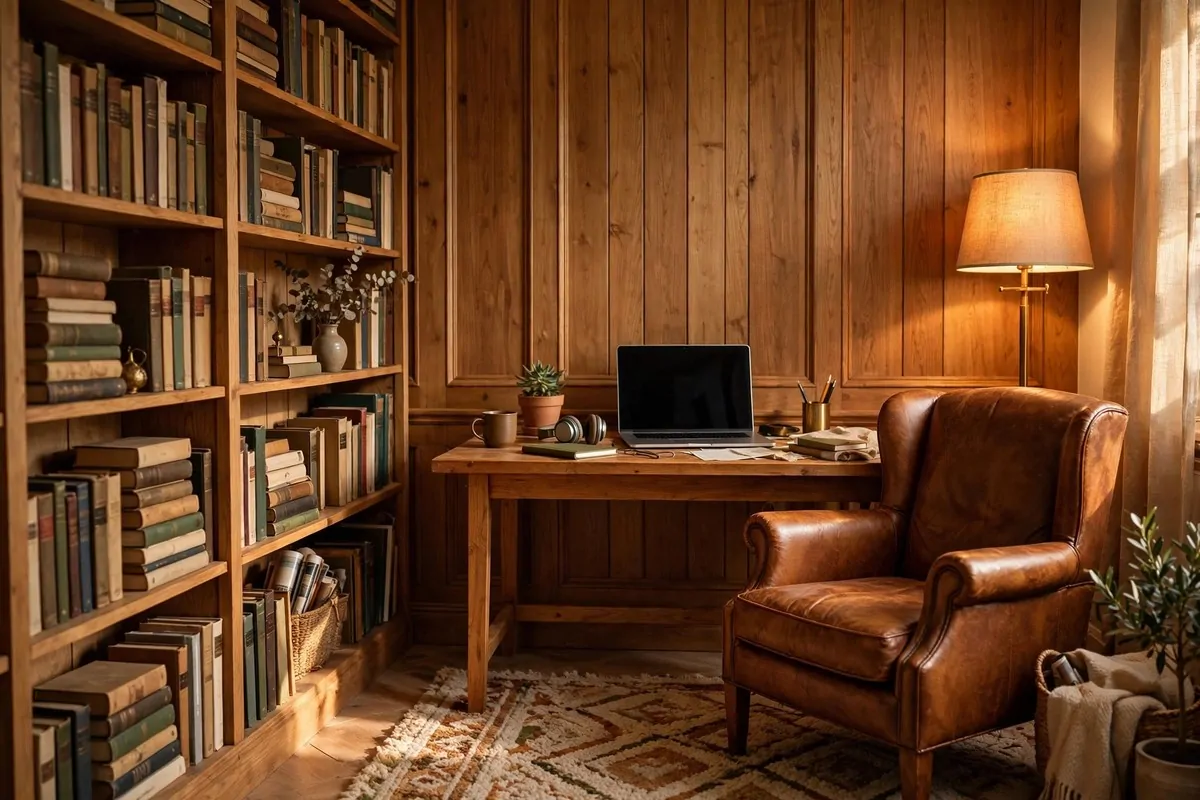
2. Wrap the Corner With an L of Shelves

Corners are the most wasted space in any small room.
An L of shelves fixes that. You run shelves along two walls that meet in a corner, and suddenly the dead spot becomes the best seat in the house.
I love this one because it builds a little cocoon. The books come around you on two sides. You sit in the corner, and the room feels like it is leaning in to listen.
Put your chair in the corner where the two walls meet. Face it out toward the room. Now the shelves are right at your shoulders, and your favorite reads are one arm away.
The corner shelves themselves are the tricky part. A regular bookcase does not sit flush in a corner. Look for corner shelf units, or have two simple bookcases meet at a right angle and add a corner filler board.
Use the highest shelves for books you rarely touch. The eye-level shelves hold your current reads and your prettiest spines. Your knees and below can hold boxes.
Light this corner well. Two walls of shelves can drink up light fast. A wall-mounted lamp on one shelf arm, or a slim floor lamp in the corner, keeps it warm.
This setup feels private even in a shared house. Two walls of books are better than a door for saying, this is my quiet time.
3. Turn the Reach-In Closet Into a Reading Cave

Your least exciting closet is about to become your favorite room.
Take the doors off a reach-in closet. Add shelves on the back wall and the side walls. Put a soft cushion on the floor. You now own a reading cave.
I wish I had done this sooner. The closet I converted was the one in my hallway that held old coats and a broken vacuum. Now it holds four hundred books and a pillow.
The trick is light. Closets are dark boxes. Stick-on LED puck lights under each shelf change everything. They are cheap, they need no wiring, and they make the books glow.
A curtain can replace the doors. Hang a simple curtain rod and a piece of fabric you love. Pull it closed when you are not reading, and the cave disappears. Pull it open, and the whole hallway smiles.
Measure your shelves before you buy anything. Closets are rarely square. Take the tape measure twice, because cutting a shelf twice is not possible.
Keep one small basket in the cave for your current book, your bookmark, and a little notebook. Everything you need in one reach.
This idea is perfect for renters too. The shelves can be freestanding, the lights are stick-on, and the doors can go right back on when you leave.
4. Build a Window-Seat Stack

Reading loves daylight. Books love shelves. So marry the two.
A window-seat stack means shelves on both sides of a window, a shelf across the top, and a bench below. You sit in the sun and your books stand guard around you.
My sister built one in her tiny apartment. Her whole library lives around a window that is barely four feet wide. She reads there every morning with her tea. She says it is the best seat in her whole home.
The bench is the secret weapon. Build it with a hinged lid, and you get storage for blankets, pillows, and overflow books. One piece of furniture, three jobs.
Cushion the bench well. Two inches of foam and a washable cover turn hard wood into a nap spot. Add two throw pillows. Done.
Watch the sun on your book spines. Direct sunlight fades covers over time. A sheer curtain softens the light and protects the books. Your books will thank you.
The space under the bench stays cool and dry, which makes it a good home for your heavier books. Hardcovers go low. Paperbacks go high.
This idea needs a window and a little building skill. Or a friend with a saw. But the result looks custom and expensive, even when it is not.
5. Slide the Library Under the Stairs

The space under your stairs is doing nothing right now.
It is dark. It is awkward. It has a sloped ceiling that makes normal furniture look silly. And that is exactly why it makes a perfect tiny library.
I have seen under-stair libraries in small cottages, and they always make me stop and stare. The shelves follow the slope of the stairs, so tall books go where the ceiling is tall and small books go where it dips. It looks like it grew there.
Custom shelves are best here, because no two staircases have the same slope. But you can cheat. A row of short bookcases, each a different height, stepped along the wall, gives the same effect.
Add a picture light or small spotlights above the shelves. The under-stair corner is naturally dark, and books need light to be found. Warm light, not cold white. You want a cave, not a fridge.
Put your armchair at the tall end. Sit where the ceiling is high. Keep the low end for storage boxes or a basket of magazines.
This space stays quiet, too. The stairs absorb sound, and the corner feels tucked away. It is the closest thing to a secret room in most houses.
6. Float Shelves All the Way to the Ceiling

Floating shelves are the magic trick of small libraries.
They hold books without a frame, without sides, without taking up a single inch of floor. The wall does all the work.
I put five rows above my desk in a room that had no floor space left at all. People thought I had added a whole bookcase. I had added zero square feet.
Space them about twelve inches apart for most books. Art books and big hardcovers need fifteen. Measure your tallest book before you drill.
Anchor them into studs. Books are heavy, and a floating shelf full of hardcovers is a serious load. Drywall anchors alone will not cut it. Find the wood behind the wall.
Here is a simple way to plan the rows:
| Shelf row | What goes there |
|---|---|
| Top row | Art books and boxes, rarely touched |
| Middle rows | Your favorite reads, eye level first |
| Bottom row | Current reads and one book displayed face-out |
Face one book out per shelf, like a gallery piece. It breaks the row of spines and shows off the covers you love. It takes five seconds and looks like styling.
Floating shelves also work above doorways, above the bed, and in the dead wall space between windows. Any wall can be a library wall.
7. Lean a Ladder Shelf Into the Tight Corner

Some corners are too small for a bookcase. This one is not.
A ladder shelf is tall, narrow, and leans against the wall. It holds a surprising number of books and asks for almost no floor space in return.
I keep one in the corner between my dresser and the window. It holds my cookbooks, my journals, and a small plant. It is maybe sixteen inches deep. That is it.
The tiers get deeper toward the bottom, which is perfect. Big heavy books sit low where the shelf is wide. Small paperbacks sit high where it narrows. Physics and design in one piece.
Because it leans, you must anchor the top to the wall. One small bracket stops it from tipping forward. Do not skip this, especially if kids or pets visit your room.
The top tier is your display spot. One beautiful book face-out, a candle, a small frame. Let the bottom tiers do the hard work of holding everything.
Ladder shelves come in wood, metal, and bamboo. Pick the material that matches your other furniture, and the whole room will feel planned.
This is the smallest-footprint book storage I know. If your corner is only two feet wide, a ladder shelf still fits.
8. Park One Good Chair and Call It the Library

A library is not a room full of shelves. A library is where you sit down and read.
So here is the smallest idea on this list. Put one comfortable chair next to your books. Add a lamp. Add a tiny table. Call it the library. Done.
I read this way for a whole year before I owned any shelves at all. My chair faced a stack of books on the floor. I called it my reading spot, and guests treated it like a little shrine.
The chair matters more than you think. Pick one with arms you can rest a book on. A cushion that supports your back. If you fall asleep in it, you picked right.
The lamp is the second most important piece. An adjustable reading lamp with a small base fits tight corners. Warm light, not daylight white. Your eyes will read longer without getting tired.
The side table holds three things. Your tea. Your current book. Your phone, face down. Nothing else needs to live there.
Add a throw blanket. Not for warmth, though that helps. A blanket tells your brain that this chair is for rest. When you sit down and pull it over your knees, the day ends and the book begins.
This setup costs almost nothing. Most of us already own a chair and a lamp. All you are doing is giving them a job.
9. Hide Overflow Books in a Storage Ottoman

Every small library hits the same problem. More books arrive than shelves can hold.
A storage ottoman solves it quietly. The lid lifts, the books go in, the lid closes. Guests see a footrest. You see a secret shelf.
I own two. One holds paperbacks I have read and love. The other holds books I bought but have not started yet. My shelf stays clean because the overflow has a home.
Pick an ottoman that is wide and firm. It should double as a seat when a friend visits your library. A flimsy one that collapses under weight is worse than useless.
Stack a few books on top as decoration. It looks intentional, and it keeps your current reads close. Lift the lid and the rest of the stash is right there.
Ventilate it sometimes. Closed boxes can get musty. Open the lid for an hour every few weeks, especially in damp weather. Your books will stay fresh.
The ottoman also doubles as a footrest while you read. Feet up, book open, tea on the side table. That is a whole library experience in four square feet.
10. Roll Your Books Where You Read

Some days you read at the window. Some days you read in bed. Some days you read at the kitchen table.
A rolling book cart keeps up with you. It is a small shelf on wheels, and it holds your current books wherever you go.
Mine has three tiers. The top holds the book I am reading now. The middle holds the next two. The bottom holds my notebook and pens. I wheel it to whichever spot I feel like sitting in.
This is perfect for small homes where the library and the reading spot are not in the same room. The books live on the cart. The cart lives wherever you are.
Lock the wheels when you park it. Most carts have little brakes on two wheels. Without them, your books will slowly roll away from you mid-chapter.
Keep the cart light. Ten to fifteen books is plenty. If you load every shelf, it gets hard to push and the wheels suffer. The cart is for current reads, not storage.
It also makes a great bedside library. Roll it next to the bed at night. Roll it back to the corner in the morning. One piece of furniture, many rooms.
11. Paint It Dark and Let the Room Hug You

Light walls make small rooms feel bigger. That is true.
But dark walls make small rooms feel like a hug. And for a library, a hug beats bigger every time.
I painted my reading corner a deep, moody green, and something changed. The books looked richer. The lamp glowed warmer. The room felt private, like it had closed a door around me.
Dark paint hides a lot of sins. Uneven walls, mismatched shelves, scuff marks from old furniture. All of it disappears into the color. The room looks intentional even when it is not fancy.
Pick a color with some depth. Deep green, navy, warm charcoal, or a rich plum. Paint all four walls, or start with just the wall behind the shelves.
You must add good lighting. Dark walls drink light, so you need more of it. A warm floor lamp, a table lamp, and the glow from shelf lights will balance the darkness.
Keep the ceiling light. White or a lighter shade bounces light back down. A dark ceiling in a small room is a cave too far, unless you really want that.
Books against dark shelves look like jewels. The colors pop. Gold letters shine. I cannot explain it better than that. Try it and see.
12. Dress the Backs of Your Shelves

Look at the back of your bookshelf. It is probably plain wood or white board. Boring, right?
Now imagine it in a deep blue, or covered in a leaf pattern, or in the wallpaper you fell in love with but could not afford for a whole room. That is what dressing the shelf backs does.
I used peel-and-stick wallpaper on the backs of my white bookcases. It took one afternoon and about thirty dollars. The shelves went from plain to personal, and every book on them looked better.
Pick a pattern that is calm behind busy book spines. Small prints and soft colors work best. A loud pattern plus colorful spines equals visual noise.
Peel-and-stick is renter friendly. It comes off clean when you move. Cut it a hair smaller than the back panel so the edges stay neat.
You can also just paint the backs. One bold color behind white shelves is a classic look. Remove the shelves, paint the back board, let it dry, put the shelves back. Done in a day.
This is the kind of detail guests notice without knowing why. They say the room feels finished. The secret is two inches of color hiding behind your books.
13. Add Warm Strip Light Under Each Shelf

Books look best in warm light. And shelf shadows are the enemy of a small library.
LED strip lights fix both. You stick them under each shelf, and suddenly every book is lit like a shop display. The whole room glows.
I added these to my hallway shelves last winter. The strips cost less than a pizza. The change felt like a renovation. My husband kept walking past and staring.
Choose warm white, around 2700K. Cool white makes a library feel like an office. You want candlelight warmth, not dentist-office brightness.
Most strips come with a sticky back. Clean the shelf underside first, then press the strip along the front edge. The light should wash back across the books, not shine into your eyes.
Battery-powered strips work fine and need no wiring. Rechargeable ones last weeks on a charge. Plug-in ones are brighter, but you need an outlet nearby.
Here is a quick setup checklist:
- Measure each shelf length before you buy, so you cut the strip once
- Test the light at night before you stick it down for good
- Hide the little controller box behind a book or a plant
- Set a timer if your strip has one, so the shelves glow every evening
Light the shelf, and people will come. It works for bookstores. It works in your home too.
14. Sort the Spines by Color

This one is about joy, not efficiency.
Sort your books by spine color, light to dark or in a rainbow. Step back. Watch what happens. Your shelves turn into art.
I did this on a rainy Sunday, and my whole family came to look. The reds melted into oranges, the blues into greens. It looked like a sunset made of books.
Yes, finding a specific book gets harder. You will learn to remember colors instead of titles. Most people who do this say they adapt in a week.
Group the weird ones together. White, black, and gray spines can live in one calm section. It keeps the rainbow clean.
This trick works best when your shelves are visible from the main living space. A color-sorted library becomes a feature wall. Guests photograph it.
Keep one shelf practical. Your cookbooks, your reference books, your kids books. Sort those by use, not color. The rest can be beautiful.
Rainbow shelves are not for everyone. Some people need their books in subject order, and that is fine. But if you want your small library to make people gasp, color is the fastest way.
15. Add a Rolling Ladder for the High Shelves

Nothing says library like a ladder. And nothing solves tall shelves like one that rolls.
When your shelves reach the ceiling, the top rows are useless without a way up. A rolling library ladder turns them into real storage and adds instant charm.
You do not need the fancy brass-rail kind. A sturdy wooden step ladder on a rolling base works in a small room. It tucks against the shelves when you are done.
Anchor a horizontal rail to the wall above the shelves. The ladder hooks onto it and rolls side to side. The rail must be screwed into studs. Books are heavy, and so is a person on a ladder.
Measure your reach before you buy. A ladder that is too short leaves the top shelf stranded. A ladder that is too tall bumps the ceiling. Your height plus the ladder height should clear the top shelf by a comfortable reach.
Store rarely touched books up top. Old favorites, complete sets, the books you keep for love rather than use. The ladder makes them reachable, but you will not climb for them daily.
This is partly about function and partly about feeling. Climbing a ladder to pick a book makes you feel like you live in a story. Kids especially love it. Adults pretend they do not, but they do.
16. Cover the Shelves With Sliding Doors

Sometimes a library should disappear.
Sliding doors over your shelves do that. Push them closed, and the room is a tidy guest room or office. Slide them open, and the library appears.
This is perfect for rooms with two jobs. A bedroom that is also a library. A living room wall that sometimes hosts visitors. The doors give your books a clean face.
Barn-style doors on a top rail are the easiest version. The rail mounts above the shelves. The doors hang and slide. No floor track to trip over.
Glass-front sliding doors are another option. They keep dust off the books while showing them off. Your library stays visible but protected.
Match the door color to your walls for a hidden look. Match it to your shelves for a furniture look. Both work. The hidden look makes the room feel bigger.
The doors need clearance to slide. Do not put furniture right in front of them. Leave the sliding path clear, even if it tempts you to park a chair there.
Dust is the quiet killer of open shelves. Doors cut cleaning time in half. If you live somewhere dusty, this is not just a style choice. It is a kindness to your books.
17. Merge the Desk and the Library

A small room can be a library and an office. It just needs one good desk between the shelves.
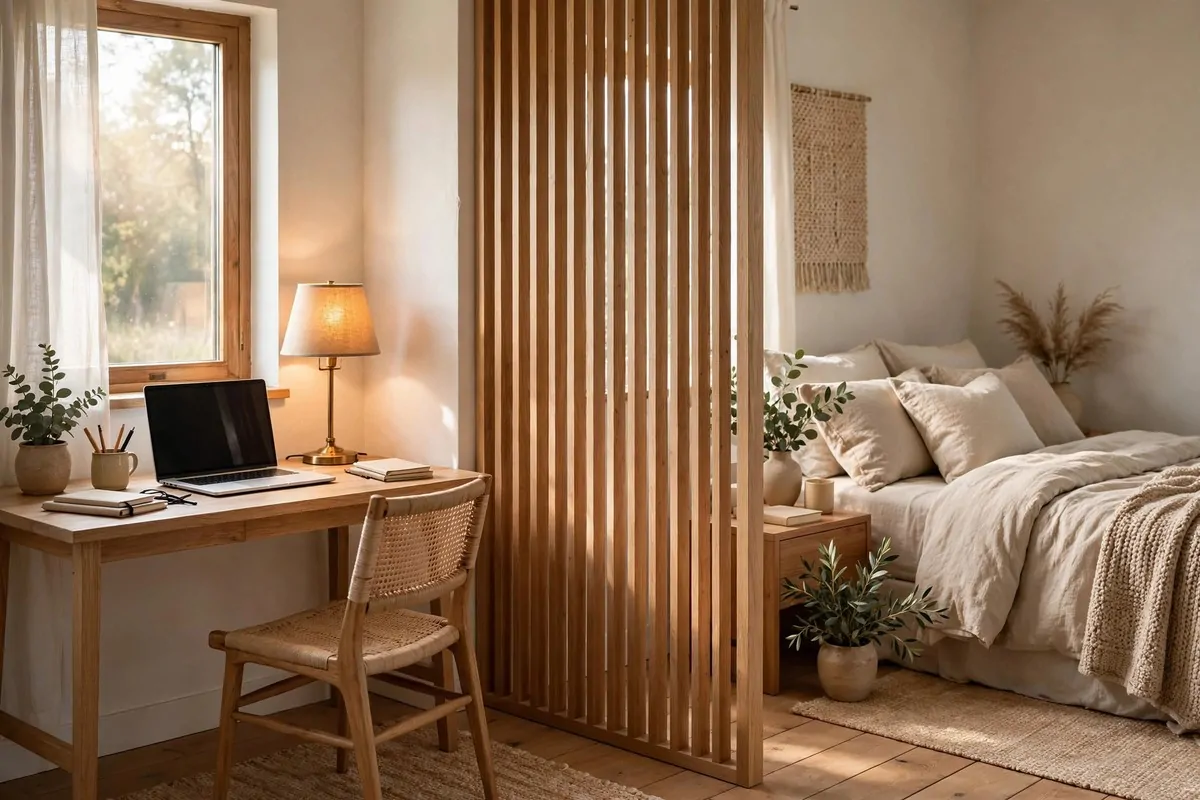
Float a slim desk in front of the bookcases, or tuck it between two shelves. Your work tools live there. Your books live around it. The room does both jobs.
I worked from a setup like this for two years. The desk was four feet wide. On each side, shelves went up to the ceiling. I never felt like I was in an office. I felt like I was in a study.
Keep the desk shallow, about twenty inches. You need room for a laptop and a notebook, not a whole command center. The books are the decoration. The desk is just the tool.
Hide office clutter in the shelf bases. Pens, chargers, and paper go in boxes on the lowest shelves. From the doorway, the room reads as a library. Only you know it works for a living.
Light the desk separately from the shelves. A small desk lamp for work. Warm shelf lights for the books. Two lighting jobs, two solutions.
Here is a simple desk setup that fits most small rooms:
| Piece | Size tip |
|---|---|
| Desk | 4 feet wide, 20 inches deep, slim legs |
| Chair | Armless, tucks fully under the desk |
| Lamp | Clamp-on or small base, warm light |
| Storage | Two boxes in the shelf base, nothing on the desk |
When the workday ends, close the laptop and turn on the shelf lights. The office leaves. The library stays.
18. Claim the Hallway Wall

Your hallway is a room too. It just happens to be long and thin.
A wall of slim shelves turns it into a library you walk through every day. Every trip to the kitchen becomes a browse.
Use shallow shelves here, six to eight inches deep. A hallway cannot spare more. Paperbacks fit fine. Hardcovers need the deeper end of that range.
Keep one side clear. You still need to walk. Shelves on one wall only, with a clear path of at least three feet. Your hallway stays a hallway.
Good lighting matters more here than anywhere. Hallways are often dark. Wall sconces or picture lights above the shelves make the books visible and the walk inviting.
Anchor everything well. Hallway shelves get bumped by shoulders, bags, and kids. Every shelf unit should be screwed to the wall. No exceptions.
I love this idea for people who say they have no room for a library. You do not need a room. You need a wall you already walk past fifty times a day.
19. Let a Daybed Do Double Duty

A library needs a place to lie down with a book. A daybed is that place.
Build or buy a daybed with a bookshelf headboard. Your books stand behind your pillows. You reach back, grab one, and sink in.
This turns a small room into a library, a reading nook, and a guest bed. One piece of furniture, three lives. Small rooms love furniture like this.
The headboard shelves should be shallow, about eight inches. Deep shelves behind pillows collect dust and lost bookmarks. Shallow shelves keep books close and visible.
Use the space under the daybed for storage. Bins for blankets, or a pull-out drawer for board games. The library stays tidy because everything has a drawer.
Pick washable covers. Daybeds get sat on, napped on, and spilled on. A cover you can throw in the wash saves the daybed from looking tired.
Guests love sleeping in a library. Tell them to pick any book from the headboard before bed. It is the nicest guest-room trick I know, and it costs nothing.
20. Keep One Shelf on Rotation

Small libraries have a big advantage. They force you to choose.
Keep one shelf for your current reads and rotate it every month or season. The rest of your collection lives elsewhere. This shelf is alive. It changes.
I do this with the shelf beside my chair. Every month I swap in the next books from my pile. The shelf never holds more than twelve books. It always feels fresh.
The rule is simple. One book in, one book out. When a new book joins the shelf, a finished one leaves it. The shelf never overflows.
Seasonal rotation is fun too. Light, happy books for summer. Thick, serious books for winter. Poetry for spring. It sounds silly, but it makes you reach for the shelf more.
Display one book face-out each month, like a shop window. The cover art catches your eye. You read more when the book looks at you.
Here is a simple rotation rhythm:
| Month | Shelf mood |
|---|---|
| January to March | Big cozy reads for cold evenings |
| April to June | Light books, new releases, fresh starts |
| July to September | Fun page-turners for long days |
| October to December | Classics and gift-worthy favorites |
A rotating shelf keeps your library small on purpose. And small on purpose is the whole point of this list.
21. Put Your Favorites Behind Glass

Every reader has a few books that matter more than the rest.
Put them behind glass. A glass-front bookcase protects your favorites from dust and sunlight, and it turns them into a display. The shelf becomes a little museum.
I keep my signed books and the old ones from my grandmother in a small glass cabinet. I open it maybe twice a year. The rest of the time, I just look at them. That looking is part of the joy.
Glass doors cut dust to almost nothing. Open shelves need dusting every few weeks. Glass-front shelves need it every few months. Your books stay cleaner, and you clean less.
Add a small light inside the cabinet. A battery puck light on the top shelf makes the spines glow. It looks expensive. It costs almost nothing.
Do not overfill a glass cabinet. Half full looks curated. Stuffed full looks like storage. Leave air between the books and let each one show.
This is the perfect ending for a small library. Most of your books work hard on open shelves. Your favorites rest easy behind glass.
Keep Reading
If you liked these Small Library Room Ideas, you will love these posts too. They are all about making small spaces work harder.