23 Kids Closet Organization Ideas That Make Mornings Easy

Last Tuesday my little boy stood in front of his closet wearing one sock. The other sock was gone. We looked under the bed, behind the door, and inside a shoe, and the school bus was coming in ten minutes.
That morning was not the first one like that. Most school mornings felt the same in our house. Shirts went missing, pants ended up in the wrong pile, and shoes hid in strange places.
I used to think my kids were just messy. Then I looked at their closet with fresh eyes. Everything hung too high for them, and nothing had a clear home.
Kids cannot put things away if they cannot reach them. They cannot find a shirt if every shirt looks the same in a dark pile. The closet was built for grown ups, not for small hands.
So I changed it, one small step at a time. I lowered a rod, added bins, and put pictures on the shelves. It took one weekend and a few cheap bits from the shop.
Now mornings feel calm in our house. My kids pick their own clothes, dress alone, and walk out the door on time. I drink my tea while it is still warm, and that feels like a small win.
In this post you will find all 23 kids closet organization ideas in one place. Every idea is simple, cheap, and easy to try this weekend, and you can pick the ones that fit your home.
1. Hang Outfits by Day of the Week
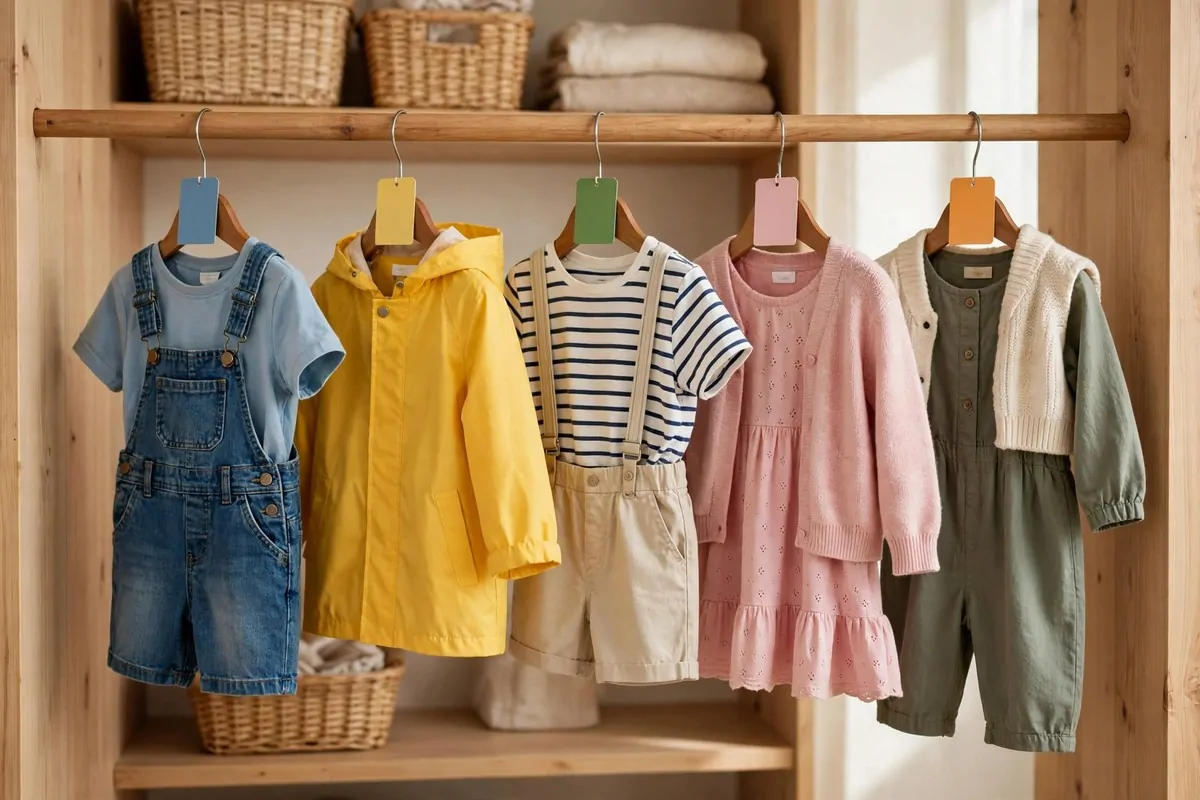
Pick five outfits on Sunday night, one for each school day. Hang them in order from Monday to Friday, and your mornings get so much easier.
Your child just takes the next outfit off the rail. No hunting, no arguing, no pile of clothes on the floor by seven in the morning.
I use small tags on the hangers for each day. Monday is blue, Tuesday is green, and the rest have their own colours too. My youngest cannot read the days yet, but she knows her colours.
Let your child help pick the outfits on Sunday. They feel proud of their choice, and they are much more likely to wear it without a fuss the next day.
Keep the outfits simple. A top, bottoms, and clean socks is all you need for each day. Fancy extras just slow things down.
If the weather turns cold, add a jumper to the hanger. If it turns warm, swap in a short sleeve top. The plan still works, you just tweak it a bit.
Hang the five outfits at the front of the closet. Push the rest of the clothes to the back so little hands grab the right thing first.
This trick also shows you when the wash needs doing. If Friday has no clean outfit, you know the laundry pile needs your help on Thursday night.
Try it for one week and see how it feels. Most mums I know never go back to picking clothes in the morning.
2. A Low Rod Kids Can Reach Alone
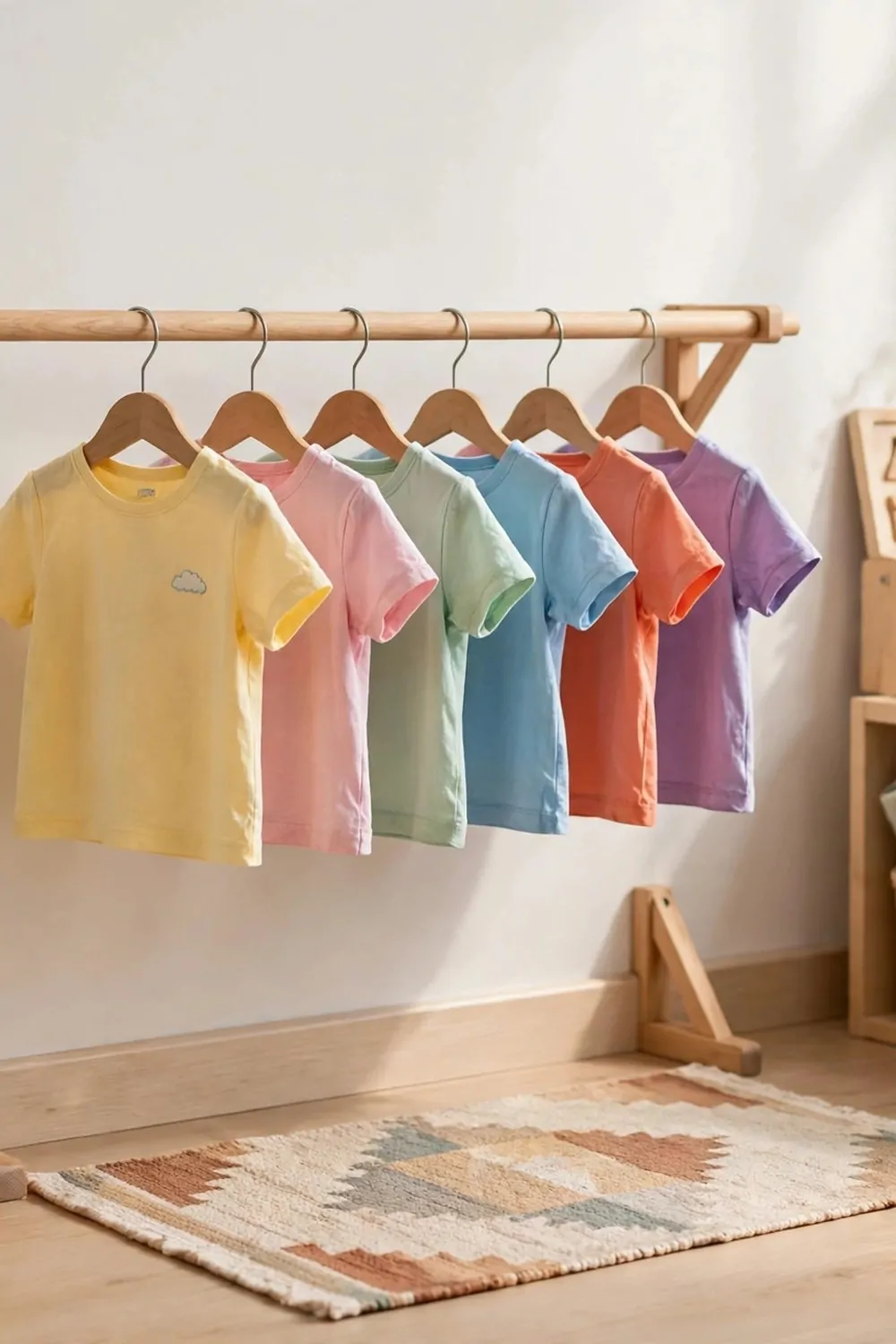
Most closet rods sit too high for kids. Your child has to climb or ask you for help every single morning, and that slows everything down.
A low rod changes all of that. Your child can reach their own clothes, hang them back up, and pick what to wear without calling you.
You can buy a short rod that fits below the main one, and it costs about $15 to $30 in most shops. That is a small price for calm mornings.
Put the rod at your child’s shoulder height. They should reach it with flat feet on the floor, no tiptoes and no chair.
Hang the clothes they wear most on this low rod. School shirts, everyday tops, and soft trousers all belong here, within easy reach.
A set of small hangers helps too, and a pack of kid hangers costs about $8 to $15. Small hangers hold small clothes much better than big ones.
You can also add a small shelf under the rod for shoes or folded jumpers, and a small shelf costs about $20 to $40. It gives you one more handy spot in the closet.
| Item | What it does | Typical cost |
|---|---|---|
| Low closet rod | Gives kids a rail they can reach | $15 to $30 |
| Set of kid hangers | Holds small clothes in shape | $8 to $15 |
| Small closet shelf | Holds shoes or folded clothes | $20 to $40 |
As your child grows, you can move the rod up a little. Most rods fix to the wall with two small brackets, so a move takes ten minutes.
Watch your child’s face the first time they hang up their own shirt. That proud smile is worth every cent you spent.
3. Color-Coded Hangers for Each Child
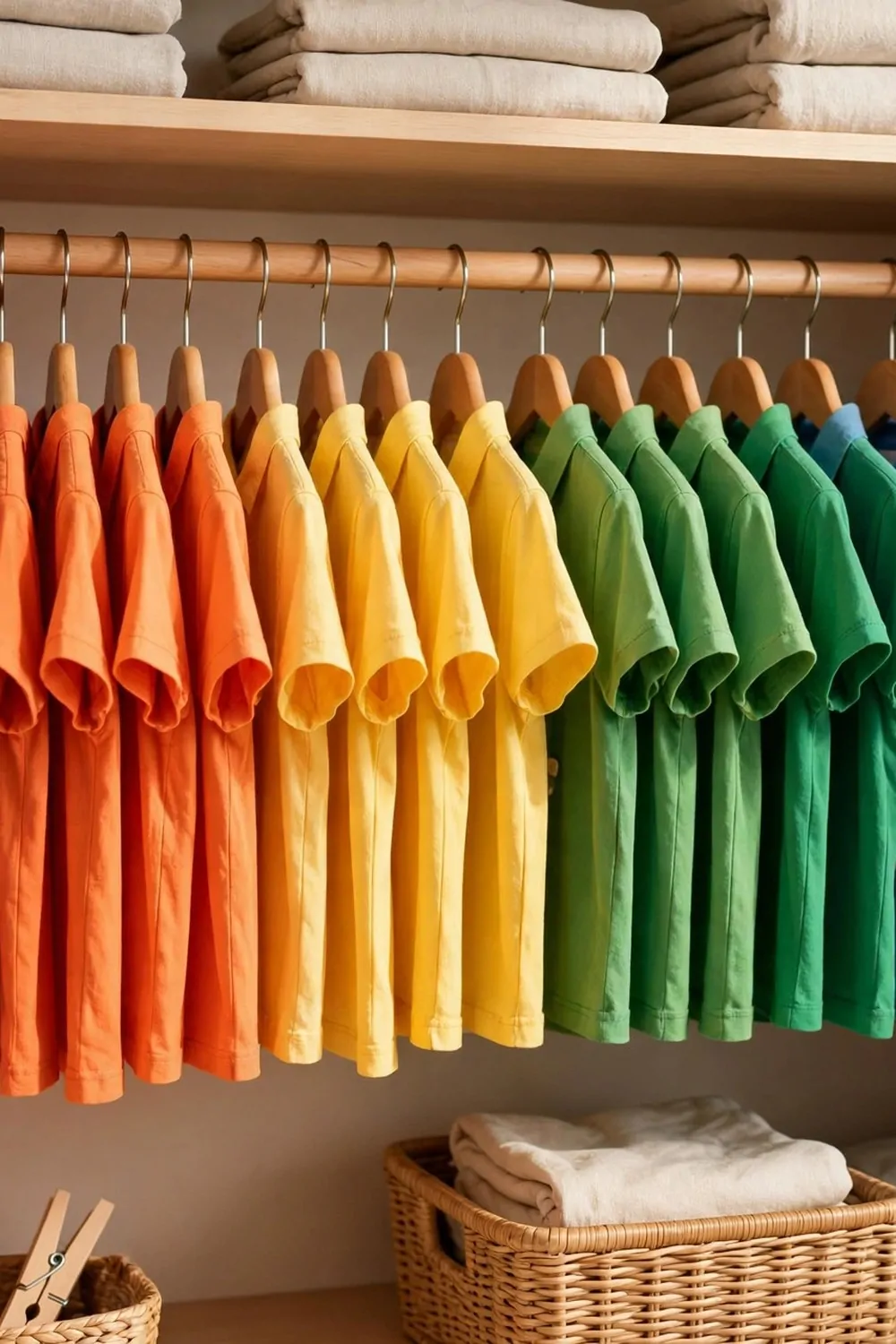
When two kids share one closet, clothes get mixed up fast. One child’s shirts end up on the other’s side, and nobody knows what belongs to who.
Colour coded hangers fix that in one step. Give each child their own colour, and the closet sorts itself.
My son has blue hangers and my daughter has pink ones. Even my little one, who cannot read yet, knows which hangers are hers.
You can buy packs of coloured hangers for very little money. Or you can wrap a bit of coloured tape round plain hangers you already own.
Match the hanger colour to the child’s bins and labels too. The whole closet starts to make sense at a glance, even to a four year old.
This trick also helps with the wash. When clean clothes come out of the dryer, you hang each one on the right colour and the job is half done.
If you have three kids sharing, add a third colour like green or yellow. The rule stays the same, one colour for each child.
Keep a few spare hangers of each colour in a small bag on the shelf. New clothes get the right hanger straight away, and the system never breaks.
Kids love having their own colour. It feels like their own little corner of the closet, and they take more care of their things.
4. Labeled Bins on the Closet Shelves
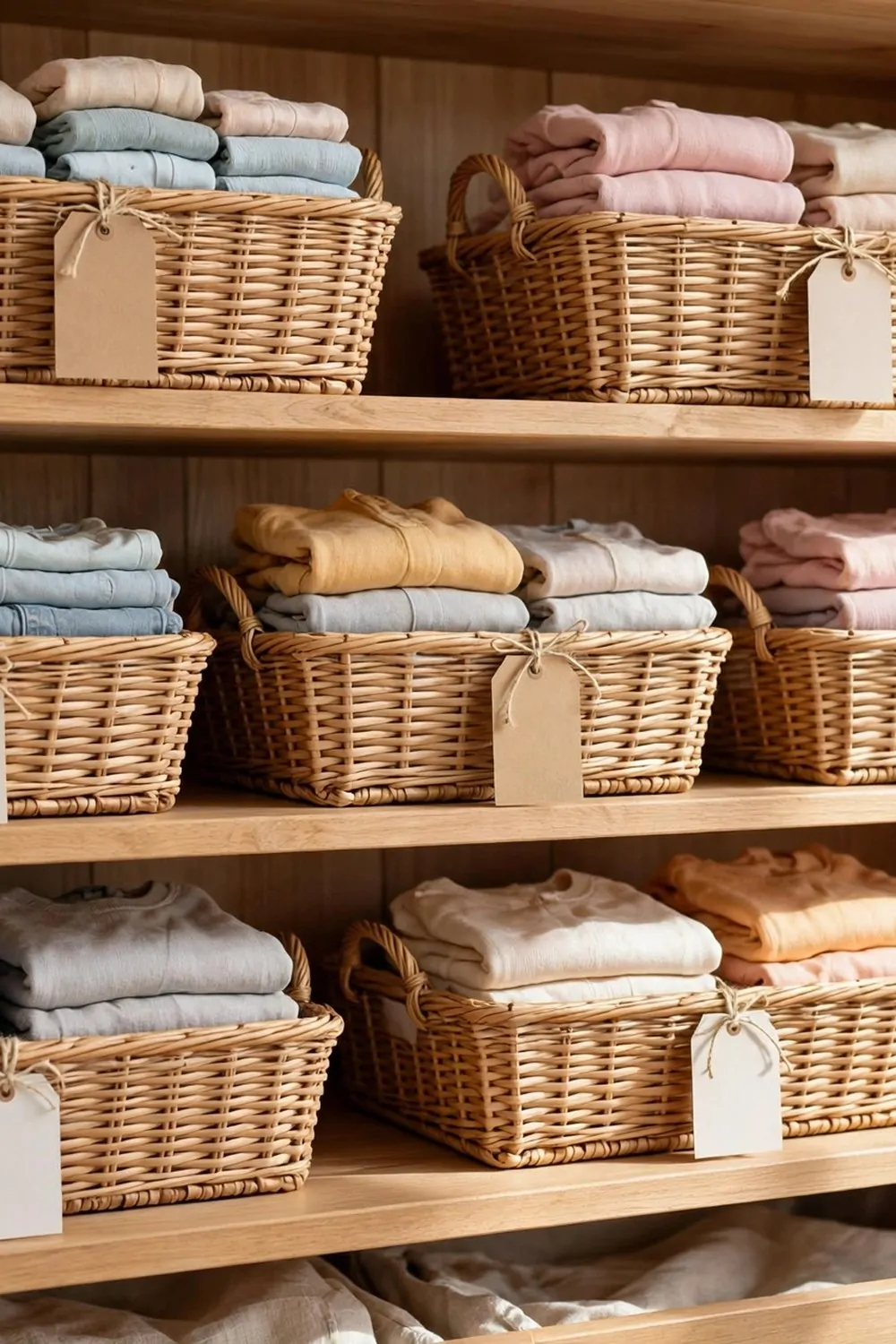
Shelves hold a lot, but they turn into a mess fast. Folded clothes slide, small things vanish, and soon the shelf is just a pile.
Bins give every shelf a clear job. One bin for tops, one for bottoms, one for pyjamas, and the shelf stays neat for weeks.
Label each bin in big clear letters. Your child can read the label or match the picture, and they know where each thing goes.
Pick bins that fit your shelves with a little room to spare. A bin that is too big will not slide out, and a bin that is too small wastes space.
Here are the bins that work best in our closet:
- Tops and t-shirts
- Bottoms and leggings
- Pyjamas and night clothes
- Swim things and spare hats
Put the bins your child uses most at their eye level. Heavy or spare things can go up high where only you reach them.
Clear bins work well because you can see what is inside. Fabric bins look soft and pretty, but you need a good label on the front.
Once a month, pull each bin out and check it. Take out clothes that no longer fit, and fold the rest back in a neat stack.
Bins also make tidy up time quick. Your child grabs the right bin, drops the clothes in, and the shelf is tidy again in two minutes.
5. A Low Shoe Shelf by the Closet Door
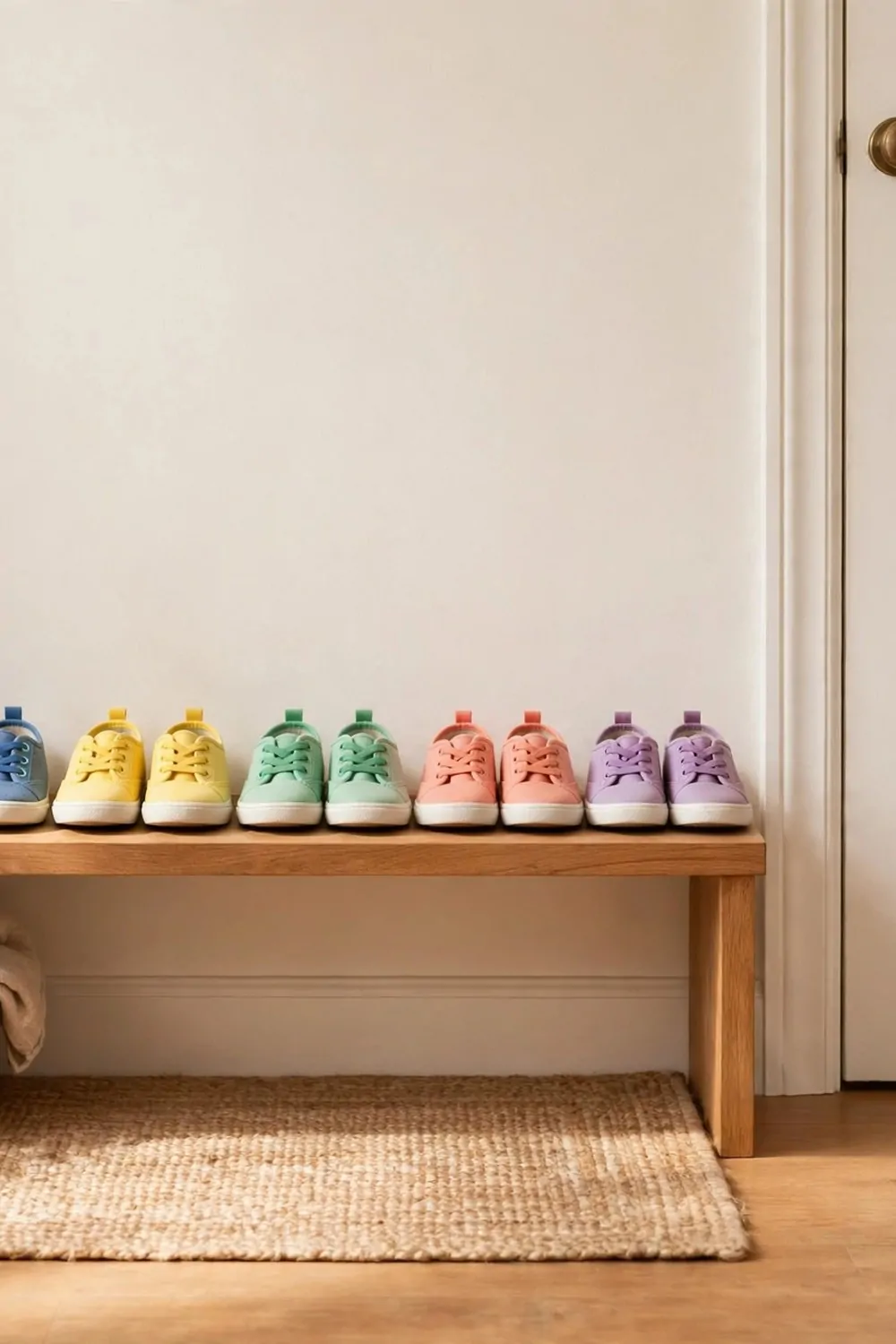
Shoes end up all over the house if they have no home. One shoe by the door, one under the bed, and one more in the garden.
A low shoe shelf by the closet door fixes that. Your child kicks their shoes off and slides them straight onto the shelf.
Put the shelf low enough for small hands. Two or three rows is plenty for school shoes, trainers, and a pair of sandals.
Give each child their own row or their own side. They learn fast which spot is theirs, and shoes stop going missing.
Keep school shoes on the top row so they are easy to grab in the morning. Play shoes can live on the bottom row.
A small tray under the shelf catches mud and dirt. You can wipe it clean in seconds, and the closet floor stays clean too.
If space is tight, a narrow shelf still works. Even two rows of shoes by the door beats a pile on the floor.
Ask your child to line their shoes up in pairs. It sounds small, but paired shoes are much easier to find at half past seven in the morning.
Shoes with a home mean no more morning hunts. Your child walks to the shelf, puts their shoes on, and you are out the door on time.
6. A Night-Before Outfit Station
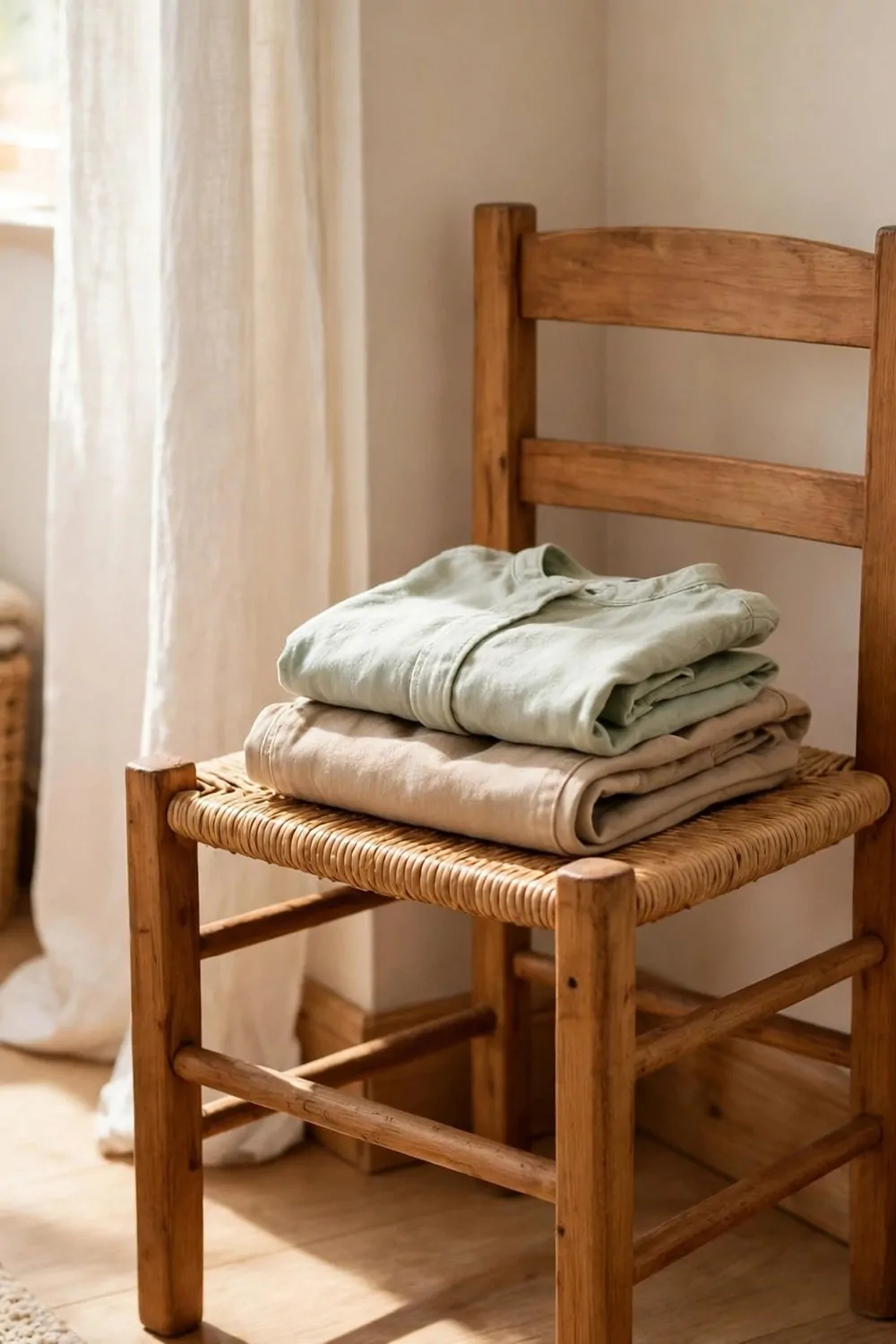
The best morning trick I know takes five minutes the night before. Lay out the next day’s outfit before bed, and the morning runs itself.
Pick one small spot for the outfit station. A chair, a low hook, or a shelf near the closet all work well.
Lay the whole outfit out together. Top, bottoms, socks, and undies in one neat pile, so nothing gets left behind in the morning.
Let your child choose the outfit each night. They get to decide, and you get a calm morning, so everyone wins.
In winter, add a warm jumper to the pile. In summer, add a sun hat. The station holds whatever the day needs.
Keep the station in the same place every night. Kids love a habit they can count on, and soon they will lay the clothes out without being asked.
This trick also helps you spot problems early. If the socks have a hole or the shirt needs a wash, you find out at night, not at school time.
For little kids, lay the clothes out in the order they go on. Undies first, then top, then bottoms, and they can dress all by themselves.
Five minutes at night saves fifteen minutes in the morning. That is the best deal in this whole post, and it costs nothing at all.
7. Picture Labels for Little Kids
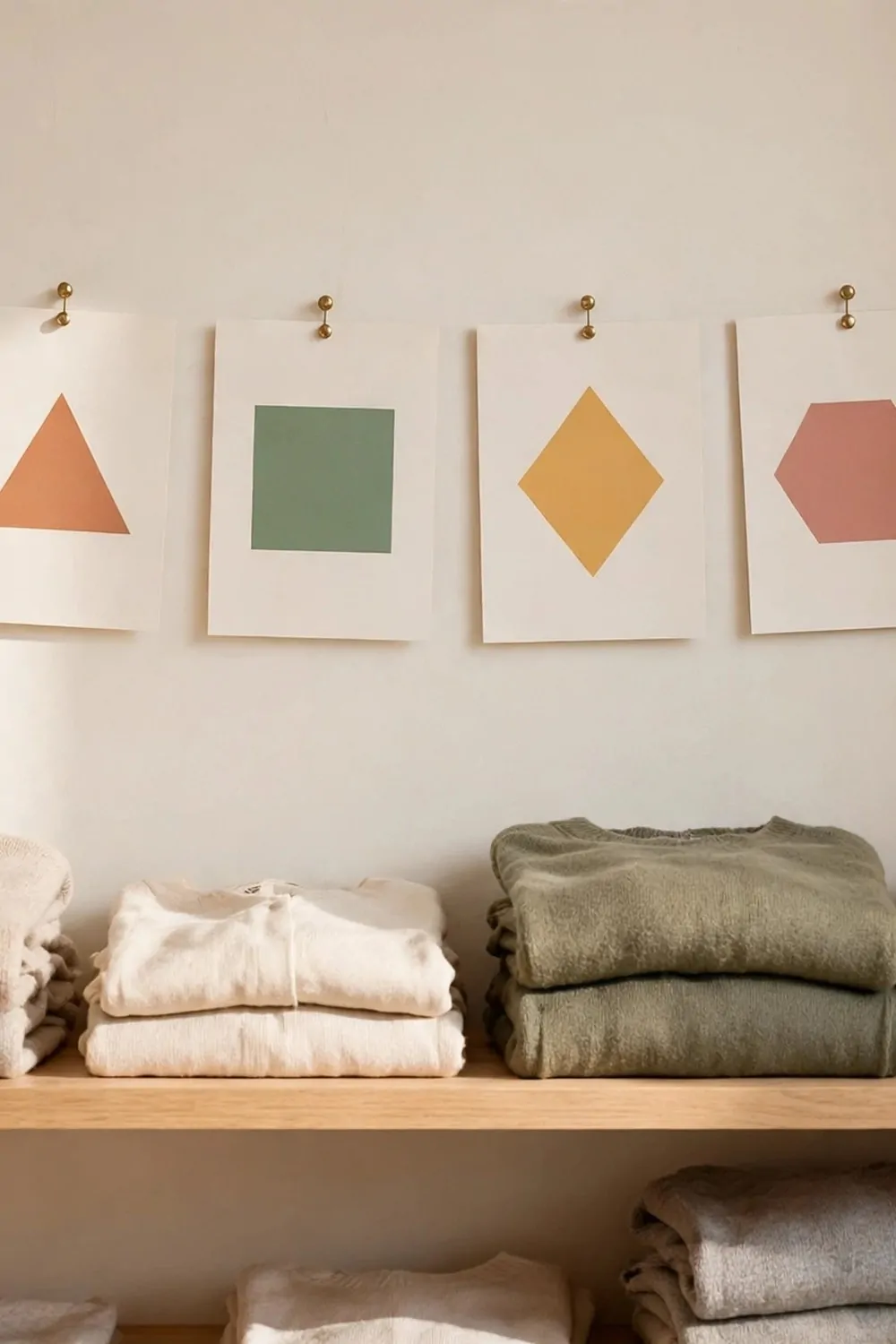
Little kids cannot read words yet, but they can read pictures. A small drawing on a bin tells them just what goes inside.
Draw a shirt on the shirt bin and a pair of trousers on the trousers bin. Your child will match the picture to the clothes without any help.
You can draw the pictures yourself with a thick pen. They do not need to be perfect, and kids love wonky drawings made by mum or dad.
Printed pictures work too. Cut a picture from a shop flyer or print one from your phone, and stick it on with clear tape.
Put the picture at your child’s eye level. A label they cannot see is no use at all, so keep it low and clear.
Use the same pictures on the bins and on the shelf edge. When the picture matches in both places, your child knows just where things go.
Picture labels help with tidy up time as well. Your child looks at the picture, finds the matching clothes, and drops them in the right bin.
As your child learns to read, add the word next to the picture. The picture stays for now, and the word helps them learn their letters.
This small trick gives little kids real freedom. They can dress and tidy up alone, and that makes them feel so grown up.
8. Folded Clothes in Cubbies by Type
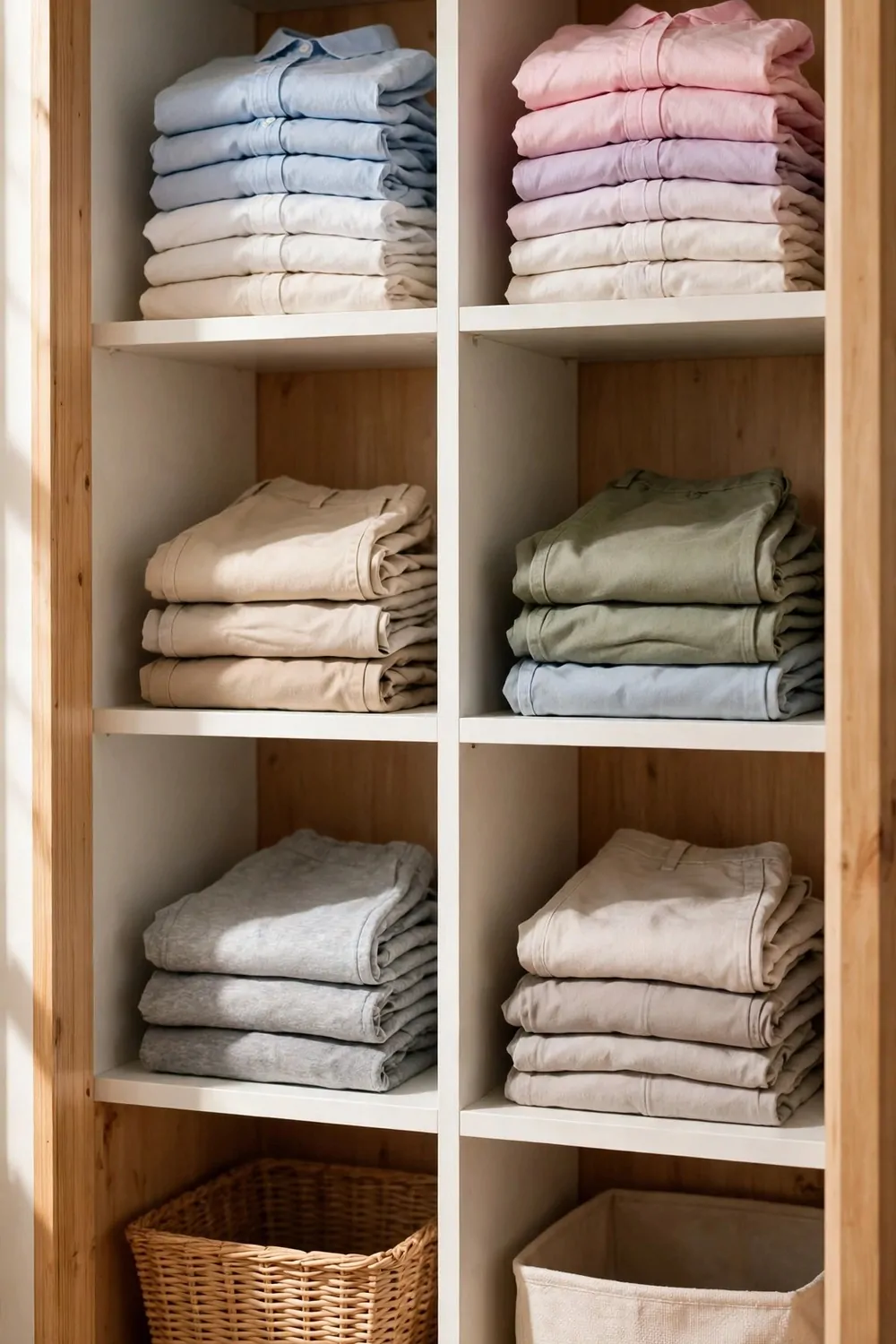
Cubbies are small square shelves that hold one kind of clothing each. One cubby for t-shirts, one for shorts, and one for jumpers.
Folded clothes sit flat in a cubby, so your child can see every pile at a glance. No more digging through a tall stack to find one shirt.
Keep each cubby to one type of clothing only. When tops and bottoms share a cubby, the whole thing turns into a mess in one day.
Fold the clothes small so they fit the cubby well. A neat fold takes ten seconds, and it keeps the pile tidy for much longer.
Put the clothes your child wears most in the middle cubbies. The top cubbies can hold spare or out of season clothes that you reach for less.
Label the front edge of each cubby if it helps. A small word or picture on the edge shows your child where each pile lives.
Cubbies also stop clothes from falling off the shelf. The sides hold the pile in place, even when little hands pull one shirt out.
You can buy a cubby unit cheap, or build one from small boxes. Old shoe boxes lined up on a shelf make fine cubbies too.
Teach your child the fold and put away routine once. After that, they can keep their own cubbies tidy with very little help from you.
9. A Small Drawer for Socks and Underwear
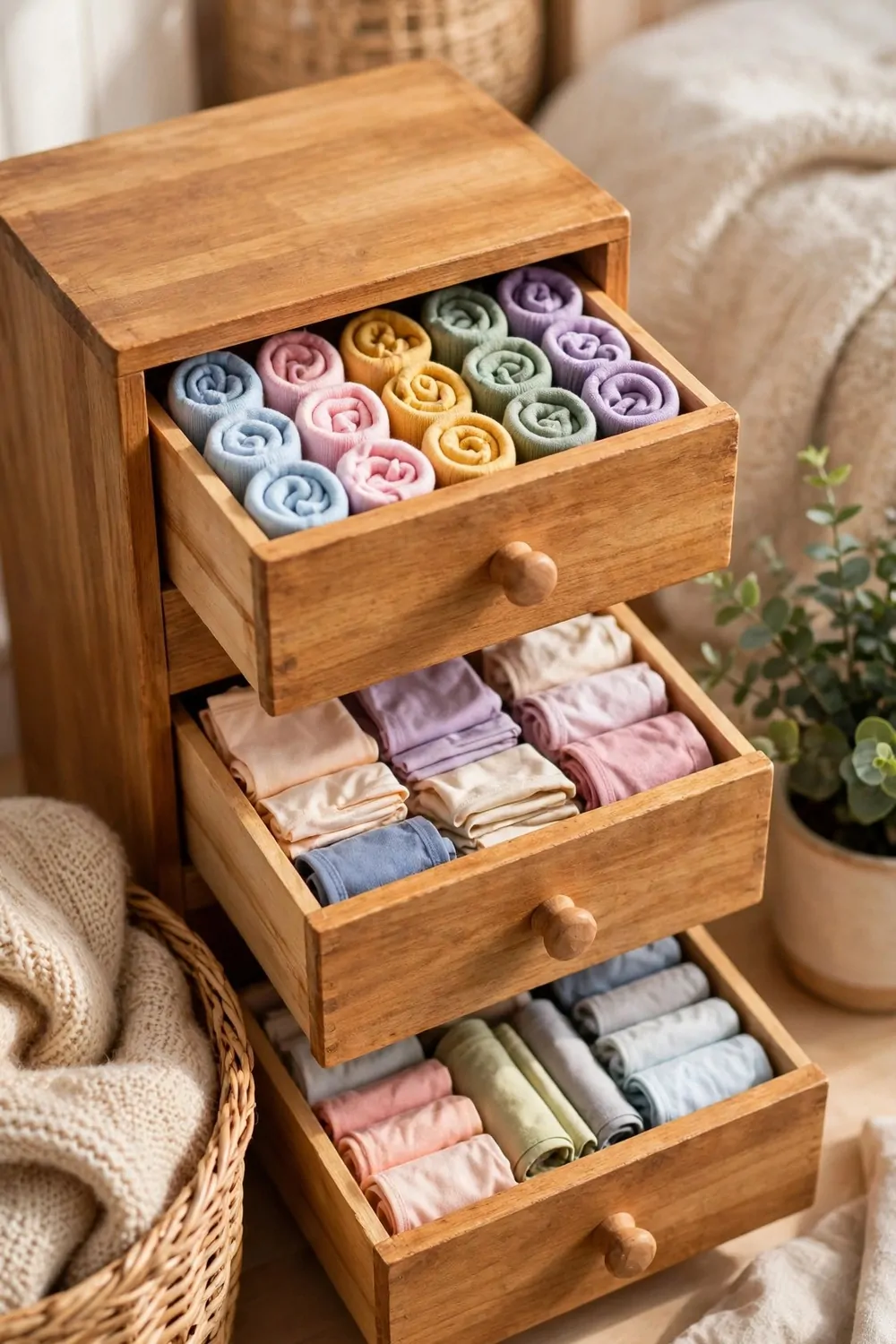
Socks and undies are the smallest clothes in the closet, and they are the hardest to keep tidy. They slip off shelves and hide in corners.
A small drawer gives them a safe home. Your child pulls it open, grabs what they need, and pushes it shut again.
Put the drawer low, where small hands can reach it. A drawer up high is no use to a child who cannot open it alone.
One side of the drawer can hold socks and the other side undies. A small box inside the drawer keeps the two sides apart.
Roll socks into pairs before they go in the drawer. Rolled socks stay together, and your child will not end up with two odd socks again.
Keep only a week’s worth in the drawer. The rest can stay in a bigger box up high, and you top the drawer up on wash day.
Check the drawer once a week for odd socks and worn out undies. Toss the worn ones and match the odd socks back into pairs.
If you have no spare drawer, a small basket on a low shelf works just as well. The key is one small spot, low down, just for socks and undies.
Kids love a drawer of their own. It feels like a secret little shop, and they learn to dress themselves one small step at a time.
10. Hooks for Jackets and Backpacks
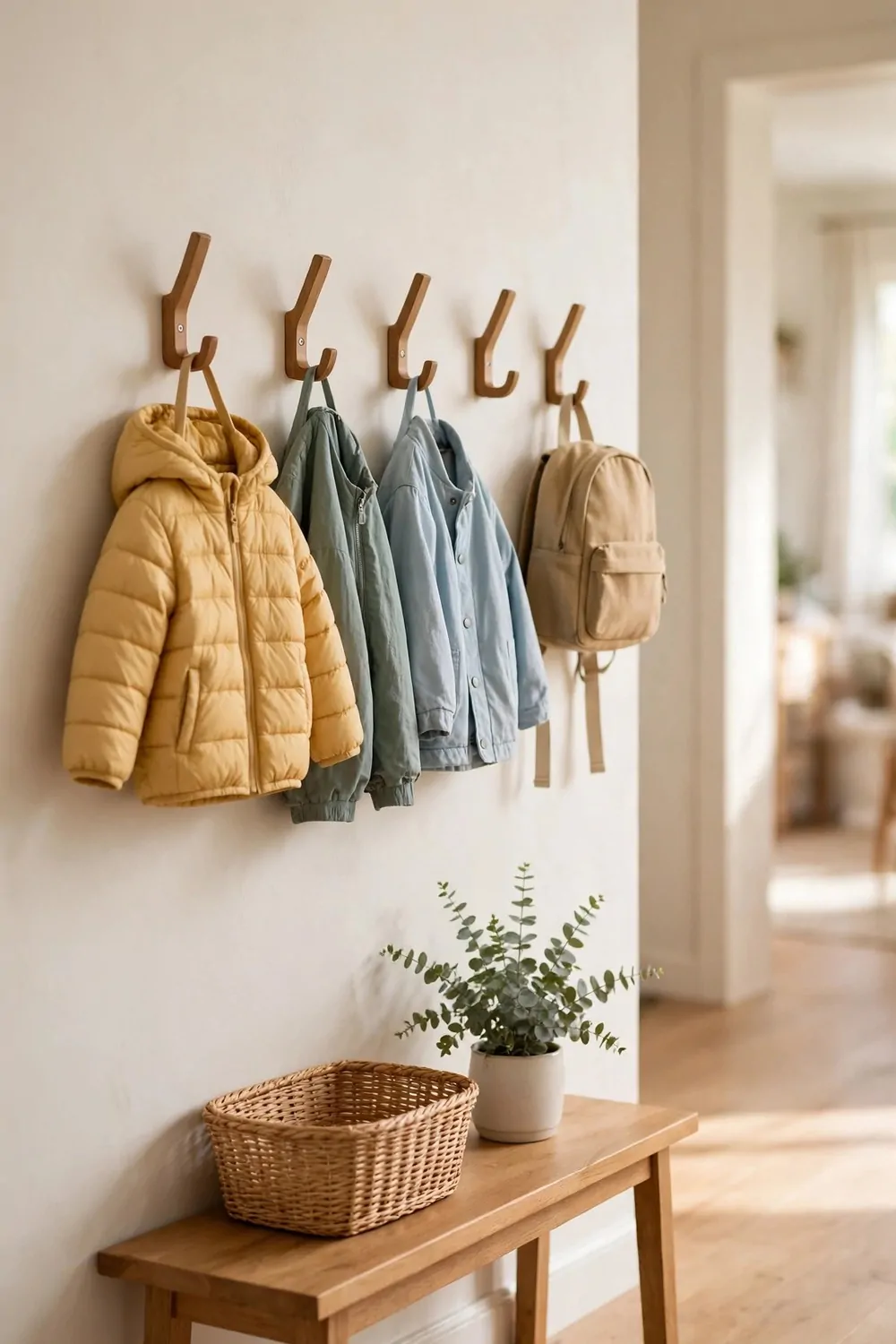
Jackets and backpacks need a home by the closet door. Without hooks, they land on the floor, on chairs, and on top of clean clothes.
A row of hooks at your child’s height fixes that. Your child hangs their jacket up the moment they walk in, and the floor stays clear.
Single wall hooks are cheap and strong, and a set of single hooks costs about $10 to $18. You can screw them into the wall in a few minutes.
A rail with hooks gives you more spots in less space, and a hook rail costs about $20 to $35. It holds jackets, bags, and hats all in one neat row.
Over door hooks need no screws at all, and a set of over door hooks costs about $12 to $22. They hang over the closet door and come off just as fast.
| Hook type | Best for | Typical cost |
|---|---|---|
| Single wall hooks | One jacket or bag each | $10 to $18 |
| Hook rail | Jackets, bags and hats in a row | $20 to $35 |
| Over-door hooks | No screws, easy to move | $12 to $22 |
Give each child two hooks, one for a jacket and one for a backpack. Two hooks each means nothing ends up on the floor.
Hang the hooks low enough for your child to reach. If they have to jump or climb, they will just drop the jacket on the floor instead.
Check the hooks once a month to make sure they are still tight. Loose hooks pull out of the wall, and a falling backpack makes a big mess.
Hooks teach kids a good habit for life. Hang it up now, find it fast later, and mornings start with no hunting at all.
11. A Growing Bin for Outgrown Clothes
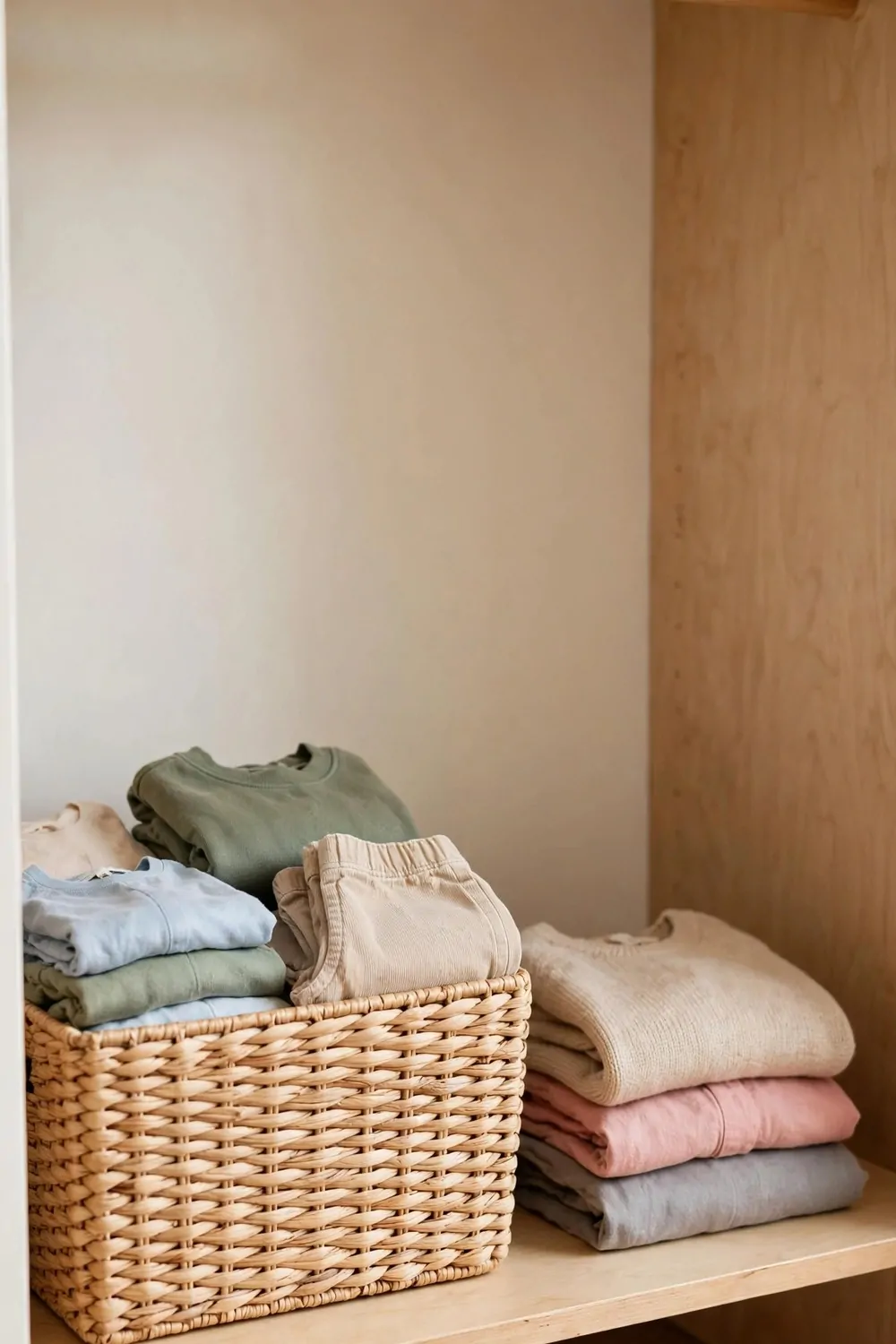
Kids grow fast, and clothes stop fitting before you know it. A shirt that fit in spring can be too small by autumn.
Keep a growing bin in the closet for clothes that no longer fit. When you spot a tight shirt, it goes straight in the bin.
Put the bin on a high shelf or at the back of the closet. It stays out of the way until you need it, and it keeps small clothes out of the daily mix.
Check the bin once a month. Fold the clothes inside, and decide what to keep, pass on, or store for a younger child.
Passing clothes on to family or friends feels good. Your child’s old clothes get a second life, and someone else saves money too.
Keep a few favourite outfits if you like. A small bag of keepsakes is sweet, but the whole bin should not turn into a memory box.
Label the bin clearly so no one puts clean clothes in it by mistake. A big label on the front does the job.
Empty the bin before it overflows. A full bin is hard to close, and clothes start to spill back onto the closet floor.
This one bin stops the closet from bursting. Old clothes leave the rail, new clothes get room, and your child always has things that fit.
12. A Seasonal Swap Box in the Closet
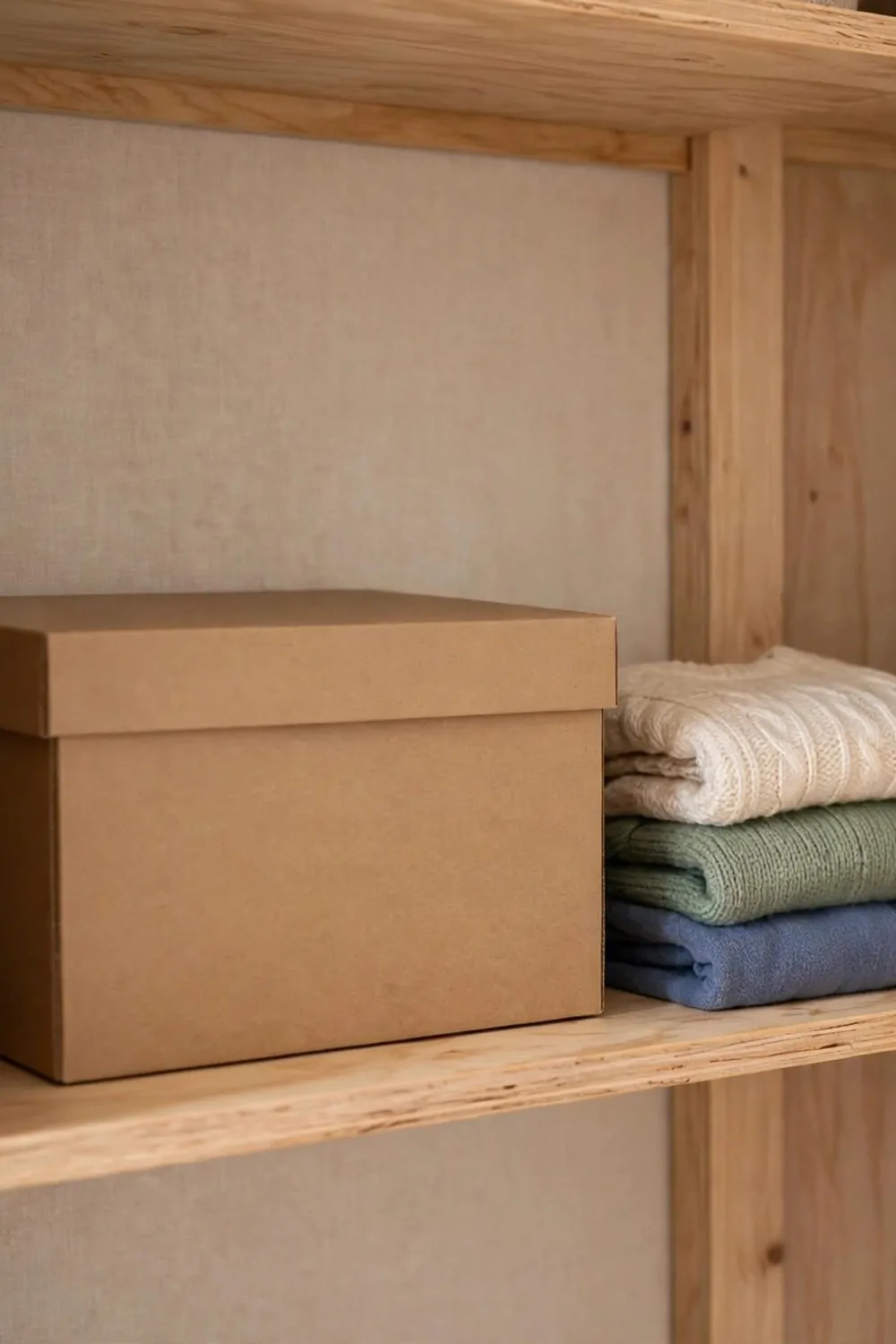
Winter coats and summer shorts should not share the same rail. When both seasons crowd the closet, your child cannot find anything.
A seasonal swap box holds the clothes for the season that is not here yet. Warm coats go in the box in spring, and shorts go in when autumn comes.
Put the box on the top shelf of the closet. It stays out of the way while its season waits, and you can reach it when the weather turns.
When the season changes, swap the box with the clothes on the rail. Take the warm clothes down, put the light clothes in the box, and the closet is ready again.
Wash the clothes before they go in the box. Clean clothes stay fresh in storage, and they smell nice when you take them out again.
Add a small label with the season on the box. A box marked winter is easy to find when the cold days come back.
Check the sizes as you swap the seasons. A coat that fit last winter may be too small this year, and it can go straight in the growing bin.
A clear box works best because you can see what is inside. You will know at a glance if the box holds coats, swim things, or warm hats.
One swap each season keeps the closet calm all year. Your child sees only the clothes they can wear right now, and mornings stay easy.
13. A Laundry Basket Inside the Closet
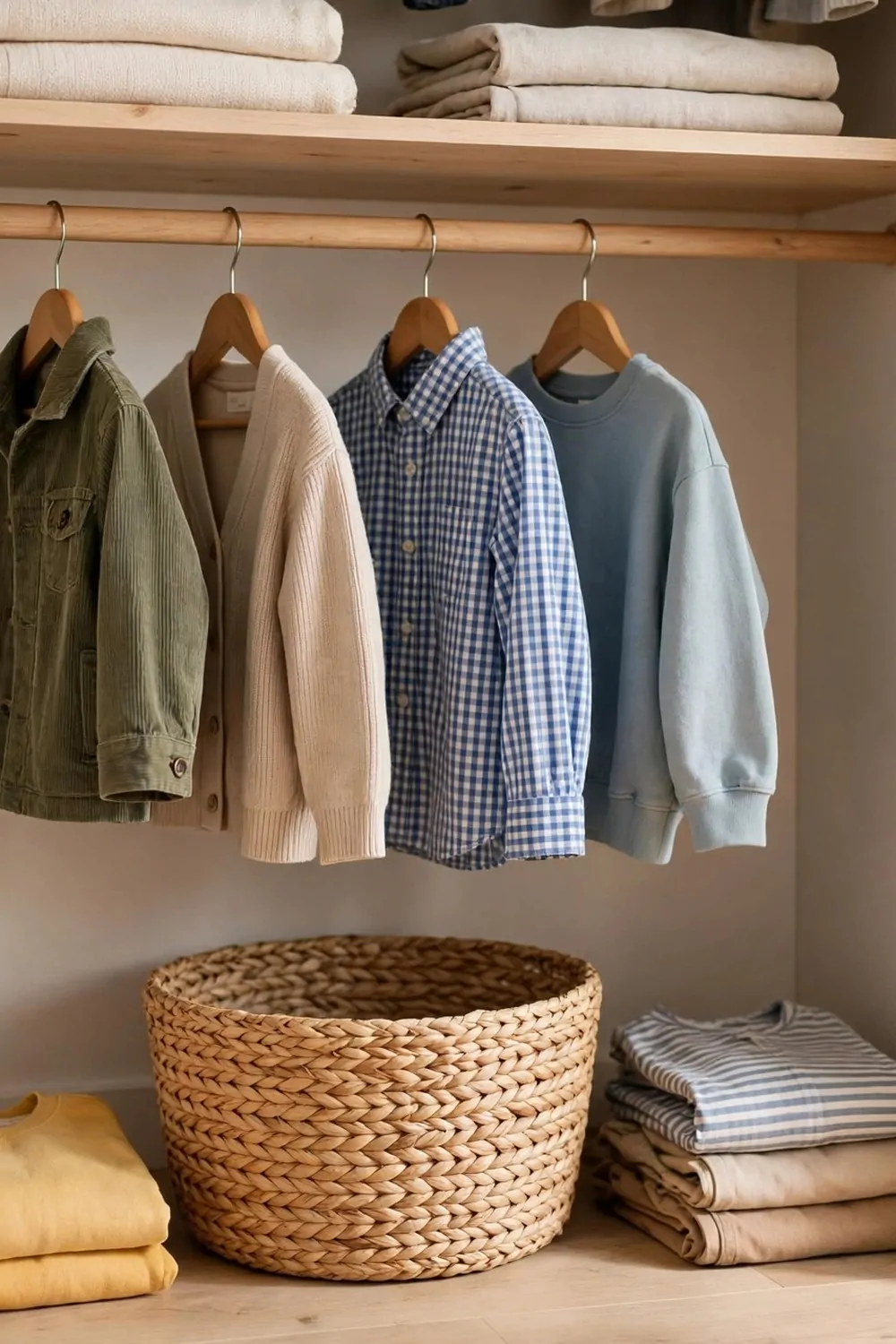
I used to find dirty socks on the floor every single day. It drove me a bit crazy, to be honest.
Then I put a small laundry basket right inside the closet.
That one little change fixed so much. Now my kid tosses dirty clothes in the basket the second they come off. No more piles on the floor.
You can use any basket you like. A plain plastic one works great and costs almost nothing.
Pick a size that fits your closet floor without blocking the door.
It should sit in a corner, out of the way. I like the ones with handles because my kid can carry it to the wash all by herself when it gets full.
If the basket is too big, clothes pile up and start to smell. A small one means you wash it more often, and that is a good thing.
Put a little label on it if you want.
My kid loves the label because it makes the basket feel like hers. Try it this week and see what happens. I bet your floor stays clean for the first time in ages.
14. Clear Bins for Hats and Accessories
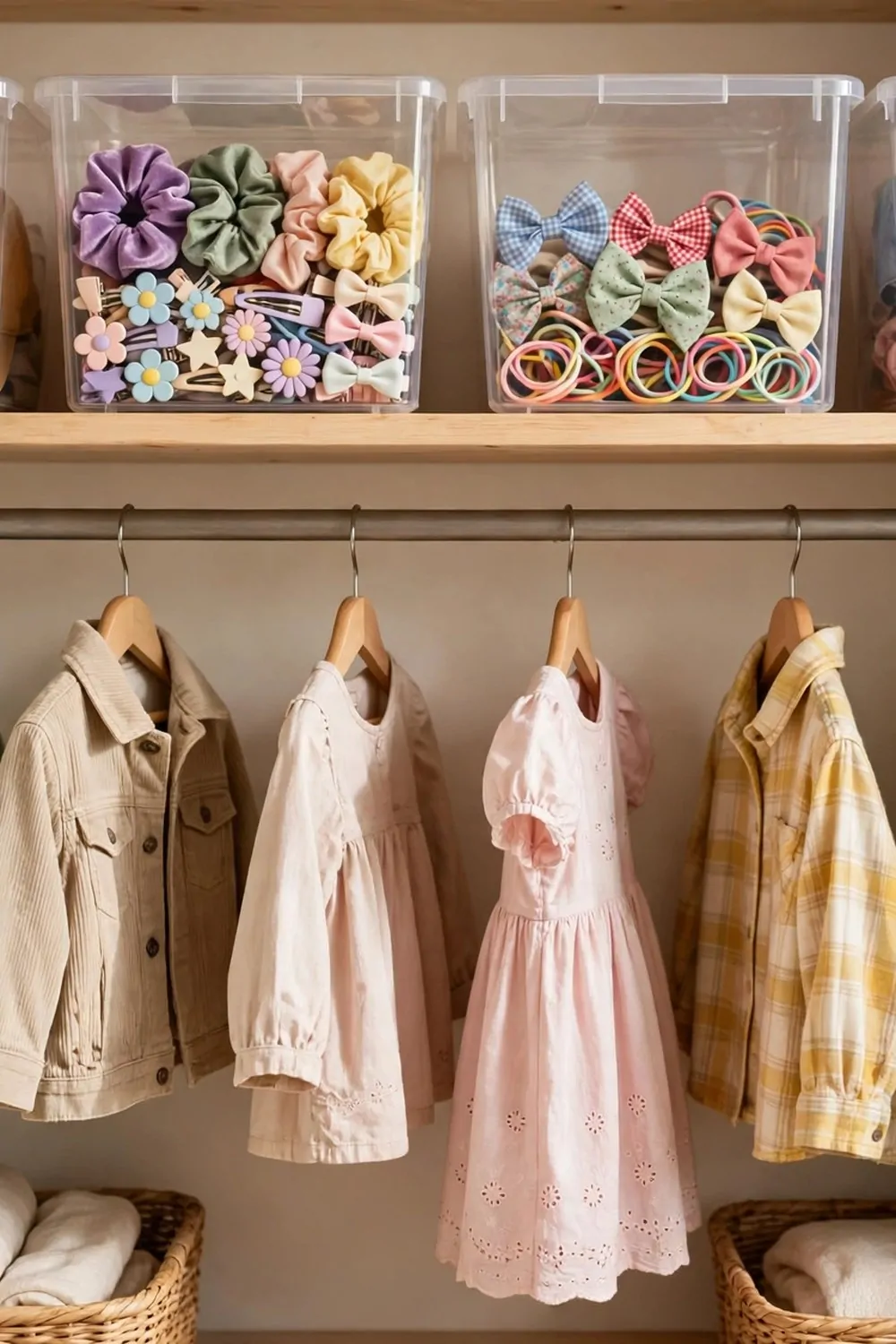
Hats and gloves used to vanish in our house. I would find one glove in the closet and the other one under the bed.
Clear bins fixed that for us. I can see everything inside without opening a single lid.
My kid can see everything too. She grabs her own hat now and I do not have to dig around for it.
Use small bins, one for hats and one for gloves. A third one can hold hair bands and clips.
Stack them on a low shelf so little hands can reach them.
Label each bin with a picture if your kid is still learning to read. A drawing of a hat works just as well as a word.
I keep the bins near the front of the closet. That way my kid sees them first thing in the morning.
Do not overfill them. When a bin gets too full, stuff falls out and the mess starts all over again.
Clear bins are cheap and they last for years. I bought ours a long time ago and they still look fine. Start with two bins and add more only if you need them.
15. A Small Mirror at Kid Height
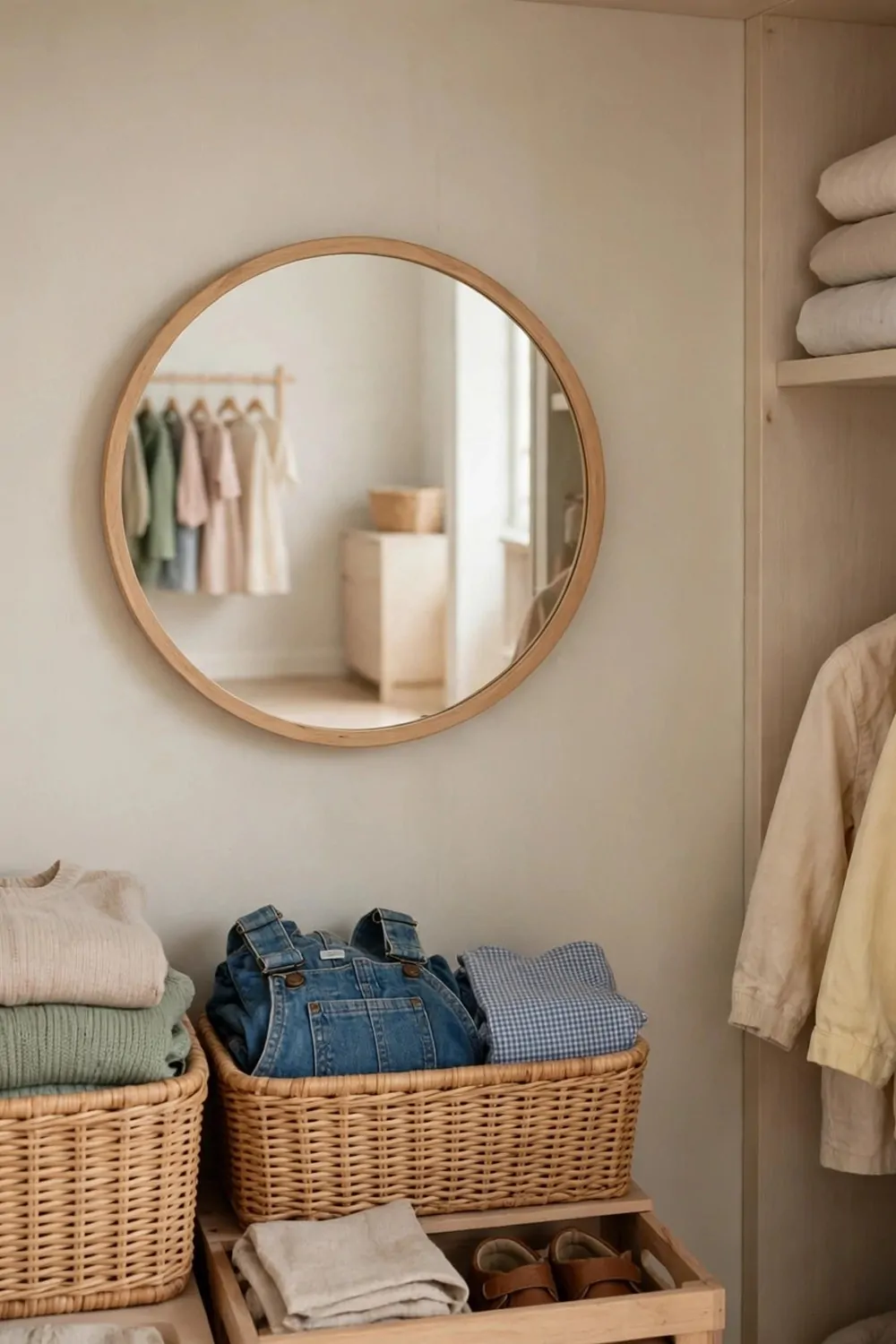
My kid used to come out of her room with her shirt on backwards. I would only notice it at the front door.
A small mirror at her height changed all that.
Now she checks herself before she leaves the room. She fixes her collar, she straightens her shirt, and she feels proud doing it.
Hang the mirror low on the closet door or on the wall beside it. It should be right at your kid’s eye level.
You do not need a big fancy mirror. A small one from a discount shop works just fine.
Make sure it is fixed tight to the wall. You do not want it wobbling when little hands touch it.
I put a little frame around ours. It makes the mirror feel special, like it belongs in her room.
My kid spends a minute in front of it every morning. She picks her outfit, she checks it, and then she is ready to go.
It sounds like a tiny thing, I know. But that tiny mirror gave my kid so much confidence, and our mornings got a whole lot calmer.
16. A Five-Minute Sunday Closet Reset
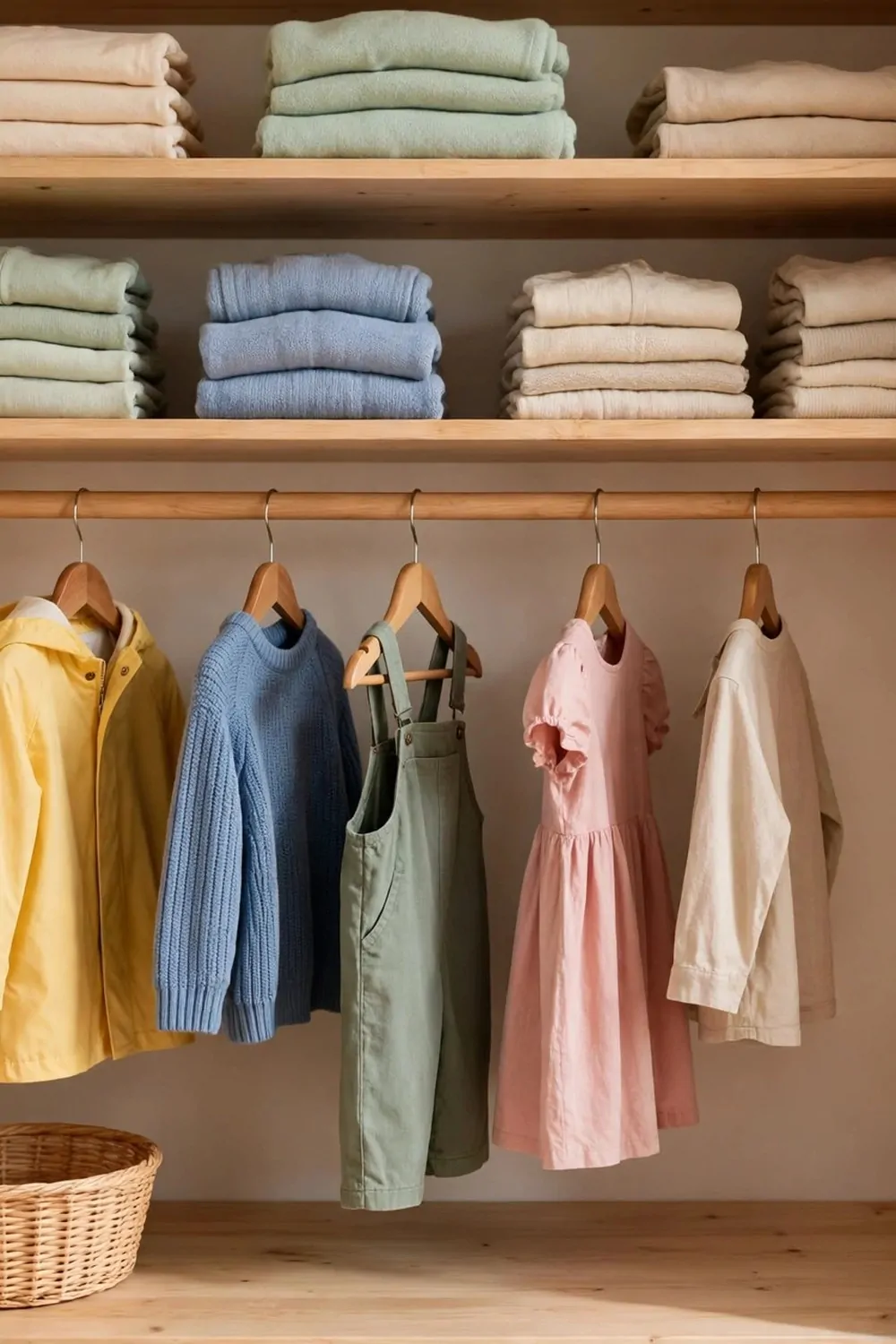
Sunday night used to scare me a little. The closet would be a mess after a whole week of rushed mornings.
Then I started a five minute reset every Sunday. It takes almost no time at all.
I set a timer on my phone for five minutes. My kid and I race the clock together.
We hang up anything that fell off a hanger. We fold the shirts that got tossed in a pile. We toss the dirty clothes in the basket.
That is it. Five minutes, and the closet looks tidy again.
My kid actually likes it now. She treats it like a game and tries to beat her time from last week.
We do it right before bath time on Sunday. It has become part of our routine, just like brushing teeth.
The best part is Monday morning. Everything is in its place, and we do not waste time hunting for a clean shirt.
You can start this Sunday. Five minutes is all it takes, and your Monday self will thank you for it.
17. The One In, One Out Rule for Clothes
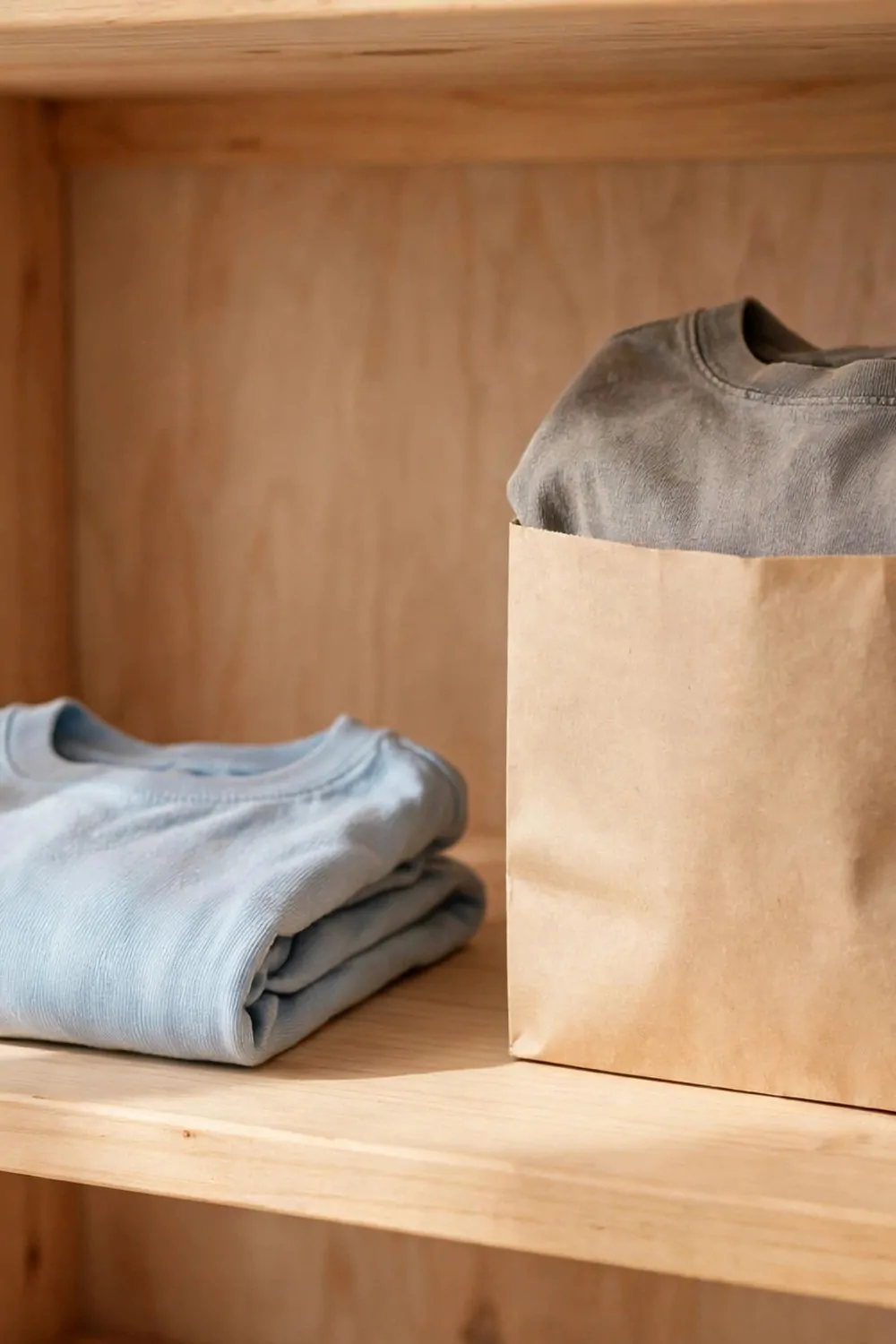
Kids grow fast. New clothes come in all the time, and the old ones never seem to leave.
That is why I made a simple rule in our house. When one new thing comes in, one old thing goes out.
My kid got a new hoodie last month. She picked an old one she had outgrown and put it in the donation bag herself.
It teaches her that the closet has limits. It cannot hold everything forever.
Make it easy for her to follow the rule. Keep a bag ready in the closet so she always has a place to put the old clothes.
Do not force it when she is upset about giving something away. Let her pick the item herself, and praise her when she does.
I tell my kid that her old clothes will make another kid happy. She likes that idea a lot.
Some weeks nothing new comes in, and that is fine. The rule only kicks in when something new arrives.
After a few months of this rule, our closet stopped bursting at the seams. It feels calm now, and getting dressed is so much easier.
18. A Donation Bag Always Ready
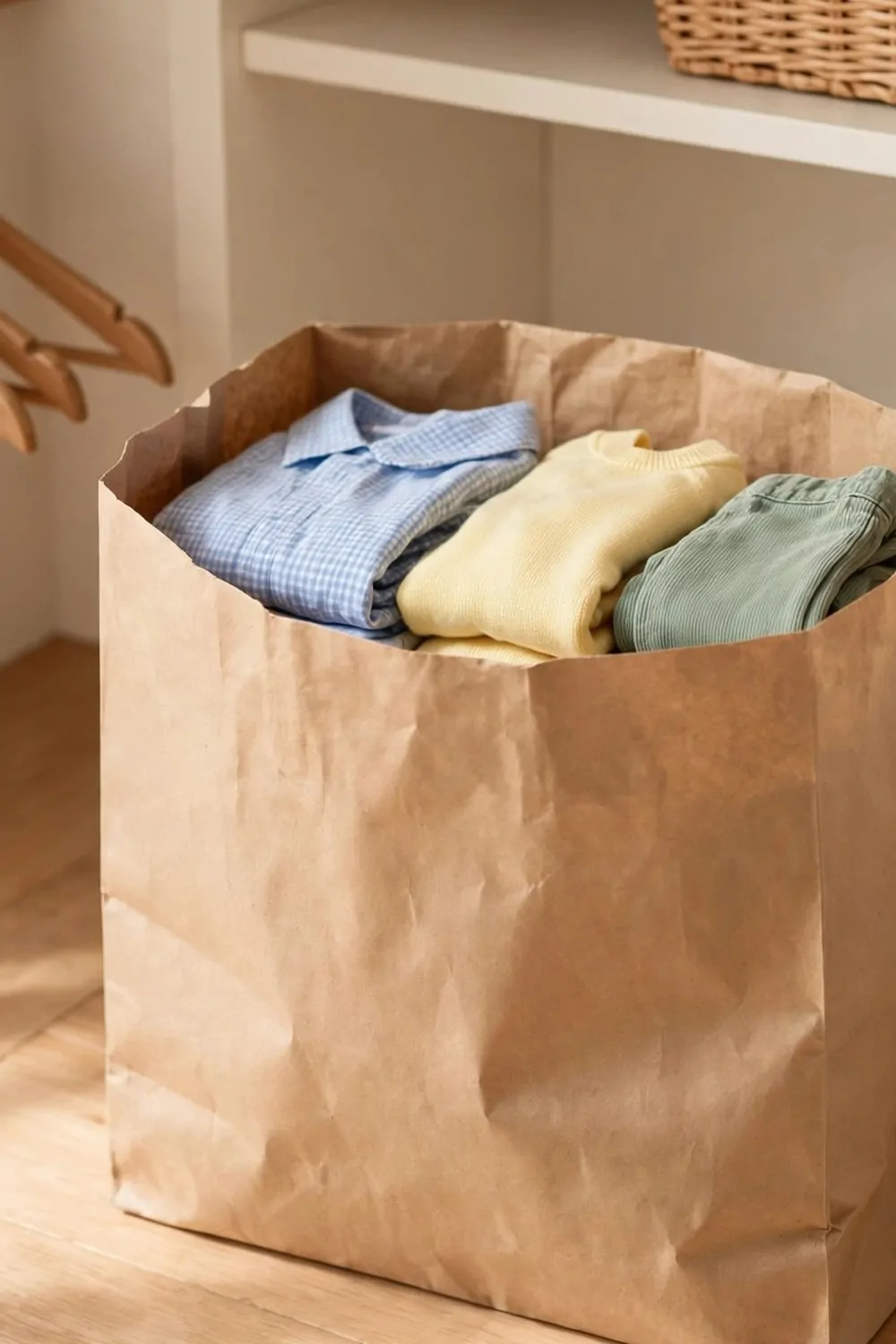
Outgrown clothes pile up fast when you have no plan for them. I used to find them stuffed in the back of the closet for months.
Now I keep a donation bag hanging right inside the closet door. It is always there, always ready.
When my kid tries on a shirt that is too small, it goes straight in the bag. No thinking, no waiting, no pile.
You can use almost anything for the bag. A plain paper bag costs about $2 to $5 and works fine for a quick clear out. A fabric donation bag costs $5 to $15 and lasts much longer. A small storage box costs $8 to $20 and keeps things neat until drop off day.
Pick the one that fits your closet and your budget. There is no wrong choice here.
| Donation Bag Type | Typical cost | Best For |
|---|---|---|
| Plain paper bag | $2 to $5 | Quick clear outs |
| Fabric donation bag | $5 to $15 | Long term use |
| Small storage box | $8 to $20 | Keeping clothes neat until drop off |
When the bag gets full, I tie it up and put it by the front door. The next time we go out, we drop it off.
My kid helps me carry the bag sometimes. She feels good knowing her old clothes will help someone else.
Do not let the bag sit for months. A full bag that never leaves the house is just another pile with a different name.
Try hanging a bag in the closet this week. You will be surprised how fast it fills up, and how light the closet feels after.
19. Matching Sets Hung Together
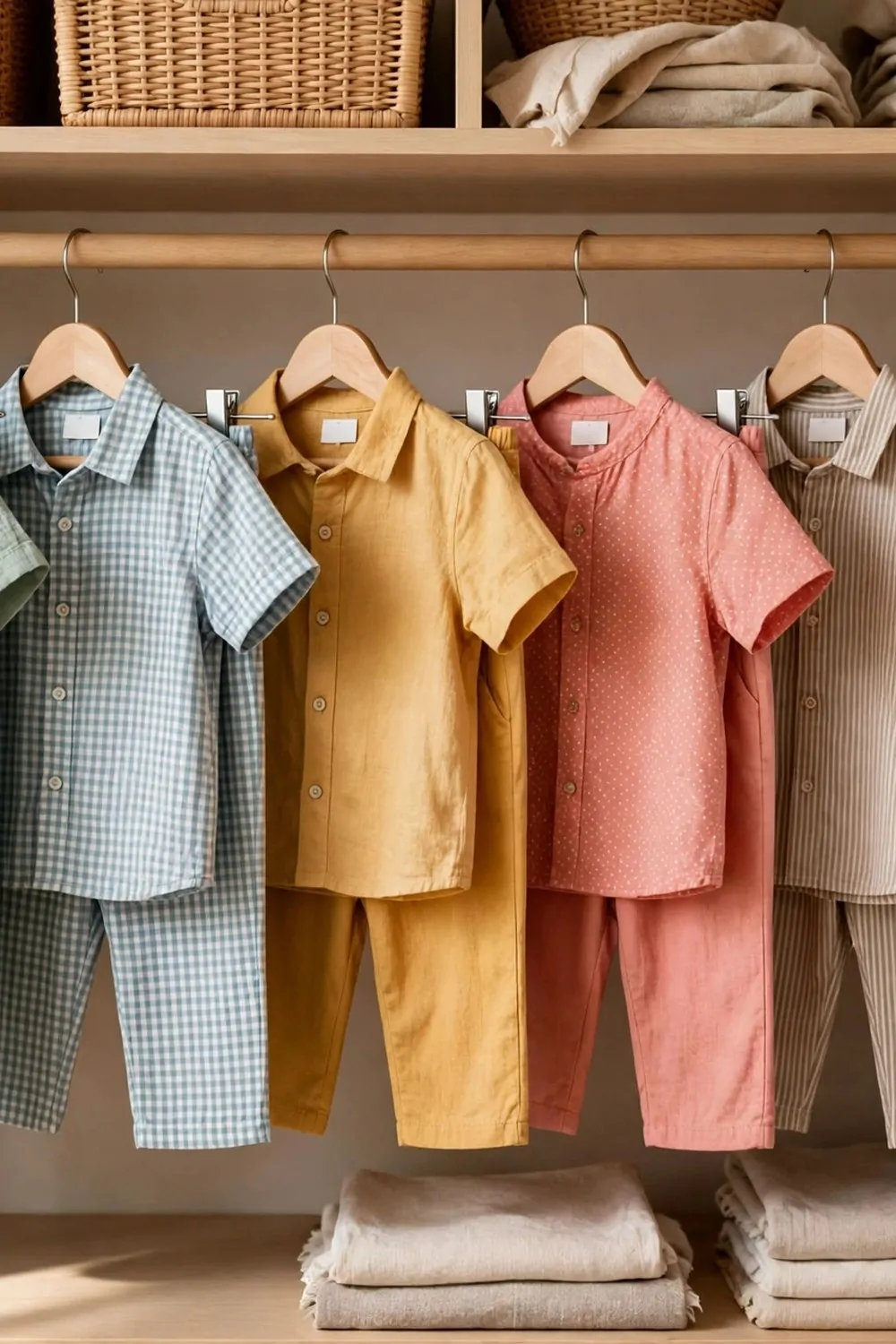
Picking an outfit used to take my kid ten minutes every morning. She would hold up a shirt, then hunt for the bottoms that went with it.
Now I hang matching sets together on one hanger. Shirt and shorts, top and skirt, all in one place.
It sounds so simple. It saves us so much time.
My kid just grabs one hanger and she is dressed. No more standing in front of the closet wondering what goes with what.
I put the sets together on Sunday when I do the weekly reset. It takes a few extra minutes then, and it saves us time all week long.
Use hangers with clips for the bottoms if you can. They hold the pants in place and keep the set neat.
Let your kid help you match the sets. She knows what she likes to wear together, and she will wear it more if she picked it.
Some outfits do not have a match, and that is okay. Hang those on their own and let your kid mix them when she feels like it.
Matching sets made our mornings so much smoother. My kid feels grown up picking her own hanger, and I get to drink my tea while it is still warm.
20. A School Uniform Shelf
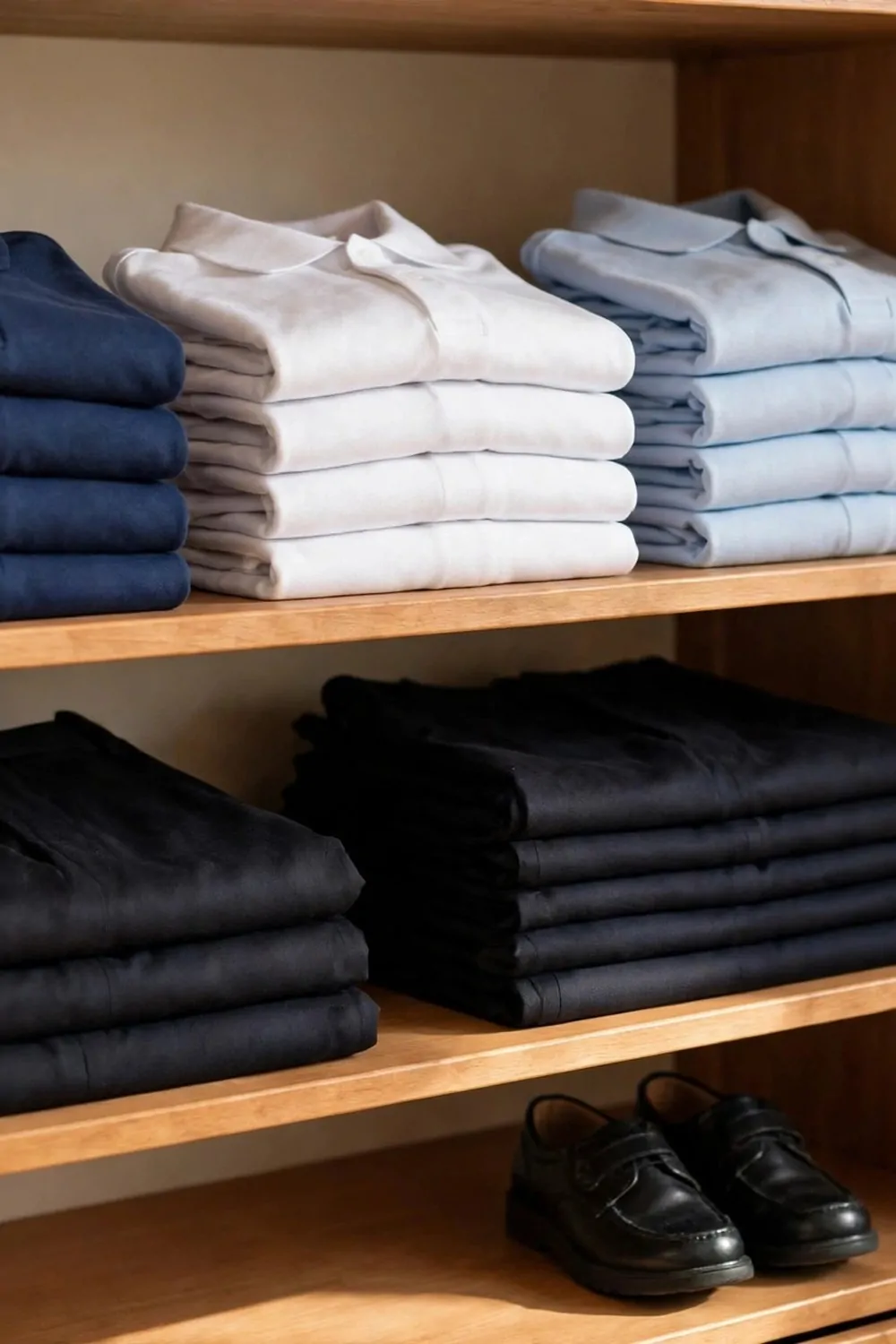
School mornings are hard enough without hunting for a uniform. I lost count of how many times we found the school shirt in the wash at the last minute.
So I gave the uniform its own shelf in the closet. Just the uniform, nothing else.
Every school night, my kid lays out the next day uniform on that shelf. Shirt, bottoms, socks, all in one neat stack.
The next morning she just grabs the stack and gets dressed. It takes two minutes.
Keep the shelf at her height so she can reach it herself. She should not need a grown up to get her own clothes.
Wash the uniform as soon as it comes off if you can. Then it is clean and dry and ready to go back on the shelf.
I keep one spare uniform on the shelf too. If one is in the wash, the spare is right there waiting.
Label the shelf if your kid shares a closet with a sibling. A little name tag stops the mix ups.
This one shelf made school mornings so much calmer in our house. No more panic, no more searching, just grab and go.
21. A Dress-Up Corner Away from Everyday Clothes
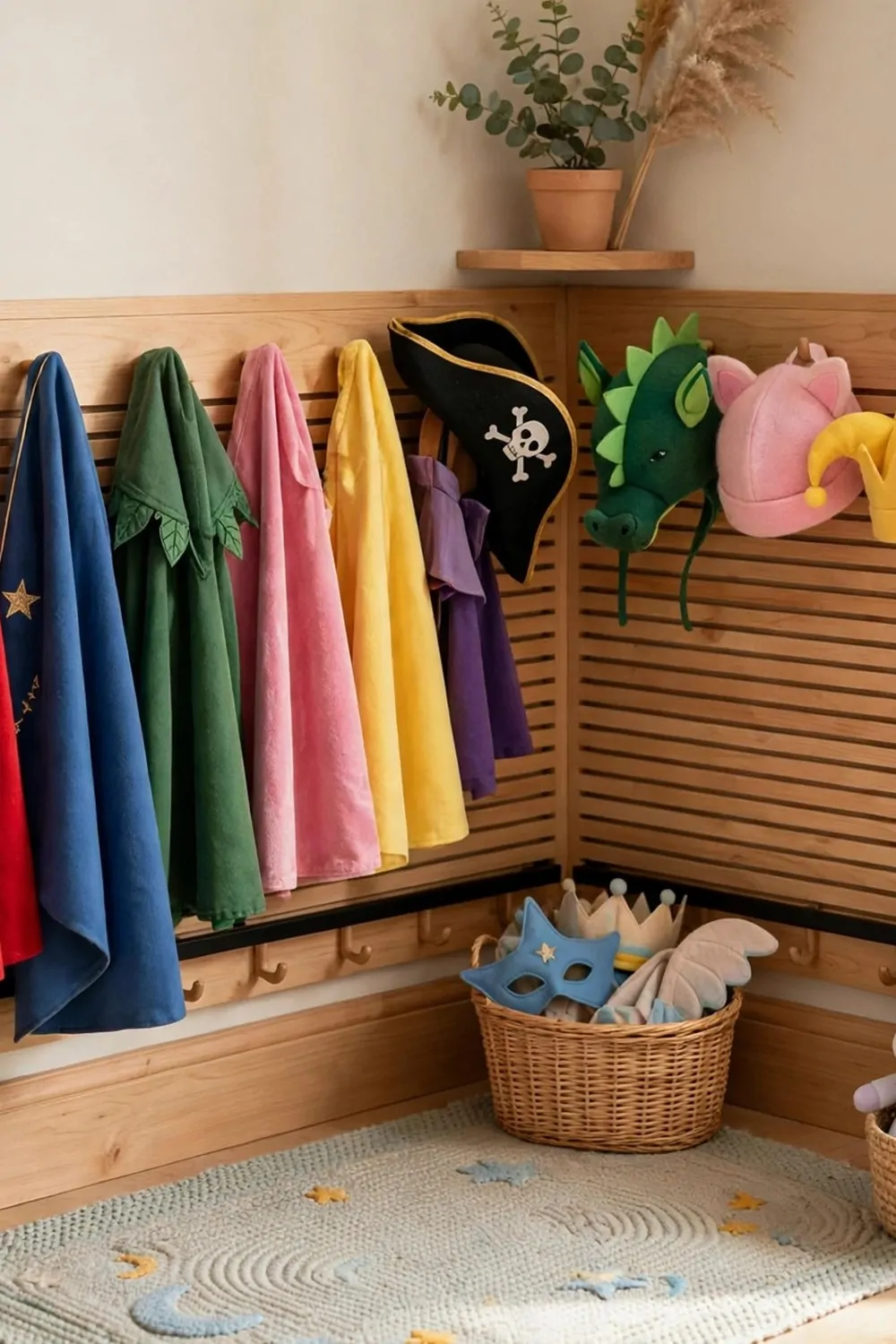
My kid loves dress up clothes. Capes, crowns, sparkly dresses, the whole lot.
For a long time, all of it was mixed in with her everyday clothes. Getting dressed in the morning meant digging past a cape to find a school shirt.
So I made a dress up corner at the far end of the closet. All the fun clothes live there now, far away from the school clothes.
I hung a little curtain rod low on the wall for the capes and dresses. My kid can reach everything herself.
A small basket on the floor holds the crowns and wands. She knows exactly where to find them when play time starts.
Having a special corner makes dress up feel even more fun. It is her own little world inside the closet.
Set a simple rule with your kid. Dress up clothes stay in their corner until play time. School mornings are for school clothes only.
My kid follows the rule most days. Some days she still tries to wear a crown to school, and honestly, I let it slide sometimes.
This corner keeps the everyday clothes easy to find and the fun clothes easy to enjoy. Everybody wins, and the closet stays tidy too.
22. A Tiny Step Stool for the Top Shelf
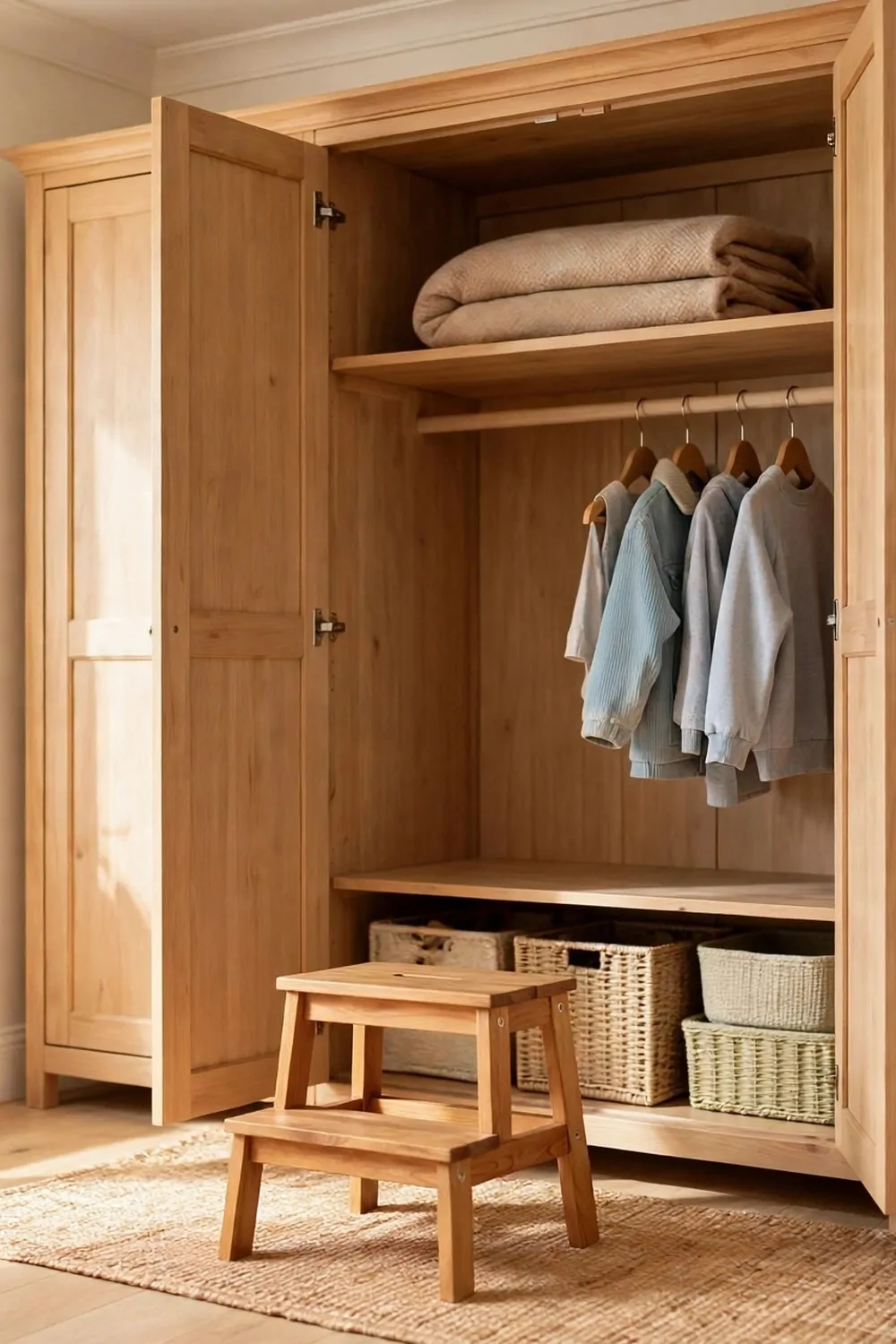
The top shelf of my kid closet was a dead zone for years. I put things up there and forgot about them.
Then I bought a tiny step stool. Now my kid can reach the top shelf all by herself.
She uses it to get her winter hats down. She uses it to put her out of season clothes away.
Pick a stool that is light enough for your kid to move. It should be steady and wide, with no wobble at all.
Keep the stool right next to the closet so it is always there when she needs it. If it lives in another room, she will not use it.
Teach her how to use it safely. Both feet on the stool, hold the shelf, and never stand on the very top step.
I put the things she uses least on the top shelf. Extra blankets, next size clothes, and the spare school bag live up there.
The stool also helps me a lot. I am not the tallest person, and reaching that shelf used to be a stretch for me too.
A tiny step stool costs very little and it opens up a whole shelf of space. It is one of the best little buys I ever made for that closet.
23. A Morning Checklist on the Closet Door
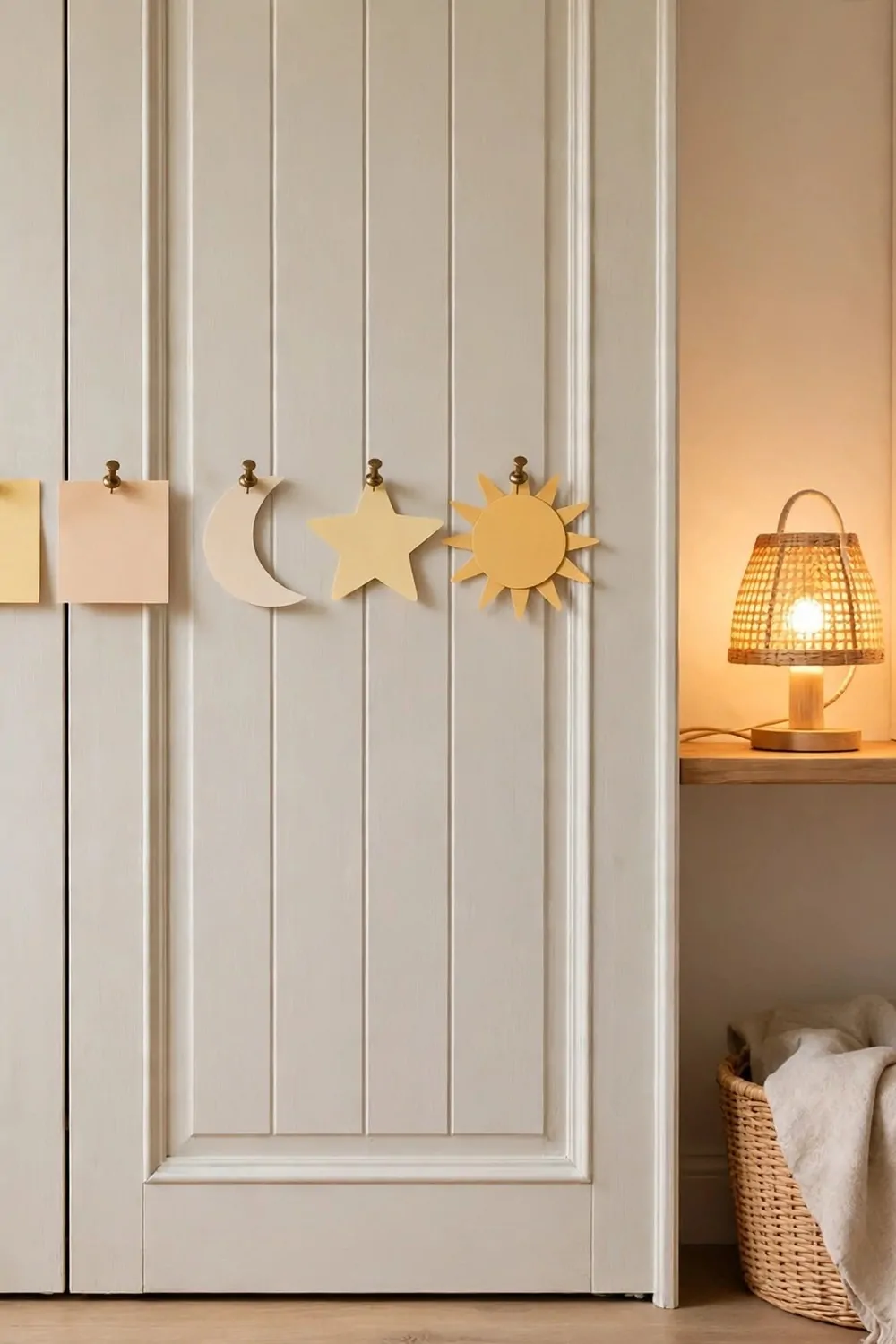
Mornings used to be a race against the clock in our house. I would remind my kid about her shoes, then her lunch bag, then her hair, one thing after another.
Then I stuck a morning checklist on the closet door. Now she checks it herself.
The list is short and simple. She reads it while she gets dressed, and she ticks each thing off as she goes.
- Shirt and bottoms on
- Socks and shoes on
- Hair brushed
- School bag packed
- Lunch bag in hand
I made the list with pictures as well as words. My kid could follow it even before she could read properly.
She loves ticking things off. It makes her feel like she did a great job all by herself.
Keep the list where she can see it every morning. The inside of the closet door works best because she looks at it while she picks her clothes.
Change the list when the season changes. In winter we add a coat, in summer we add a sun hat.
Let your kid help you make the list. She will follow it much better if she had a say in what goes on it.
Our mornings are not perfect, but they are so much calmer now. That little checklist on the door does more than any shouting ever did.
Keep Reading
If you liked these ideas, you will love these posts too.
- 27 Playroom Organization Ideas That Keep Toys in Check
- 34 Toy Storage Ideas That Make Clean-Up Fast and Fun
- 24 Entryway Rug Ideas That Handle Mud and Look Good
- 28 Coat Closet Organization Ideas That End the Pile
- 21 Hallway Storage Ideas That Use Narrow Walls Well
- 35 Dining Room Rug Ideas That Define the Space
Pick just one idea from this list and try it this week. Small changes add up fast, and your mornings will feel easier before you know it.