27 Playroom Organization Ideas That Keep Toys in Check

I walked into the playroom on a Saturday morning and I could not see the floor at all.
Blocks were under the chair. Books were on the rug. Crayons were near the door, and I stepped on one before I even had my coffee.
I felt tired just looking at it. I love that my kids play a lot, but I did not love how the room looked after one hour of play.
I tried small fixes first. I moved things to one side. I put a few toys in a pile by the wall. I told myself I would sort it later, and later never came.
The next day it was worse. The pile grew, the rug was gone again, and I could not find the red car my son asked for. I knew I needed a real plan, not just a quick pile.
So I stopped buying more things to hold toys. I started to look at how the room was used, and I made small spots for each kind of play. That one change made the room feel calmer.
In this one post I share all 27 ideas that helped me. You will find zones, layouts, and easy routines that keep toys in check, and you do not need to read a second part to get them all.
1. Start with Zones, Not Boxes
I used to think more storage would fix the mess. I bought things, I filled them, and the room still looked full.
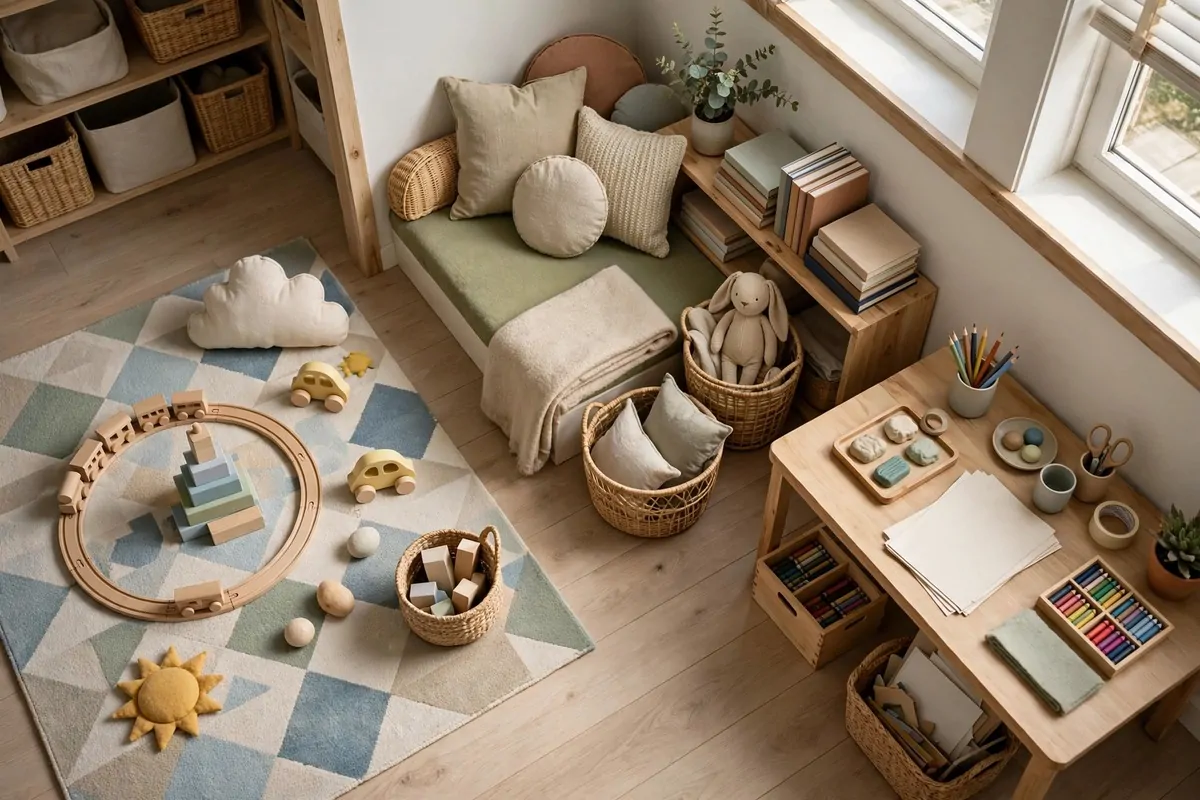
Then I tried zones. I picked one spot for building, one spot for reading, and one spot for art. The room felt different right away.
A zone is just a small area with one job. Kids know what to do there, and they know where to stop.
I did not move the whole room in one day. I started with the rug, then I added the reading spot, then I added the art spot.
It helped to say the zone names out loud. I said, this is the building spot, and this is the reading spot. My kids learned the names fast.
Zones also make clean up faster. A block in the art spot is easy to spot. A book on the building mat is easy to spot too.
I keep the zones small. A big zone feels like the whole room again, and that does not help at all.
I use the rug, a small table, and a floor cushion to mark the spots. I do not need tape or paint on the floor.
When a zone stops working, I move it. I tried the art spot near the window first, then I moved it near the wall, and the second spot worked much better.
2. A Clear Play Zone on the Rug
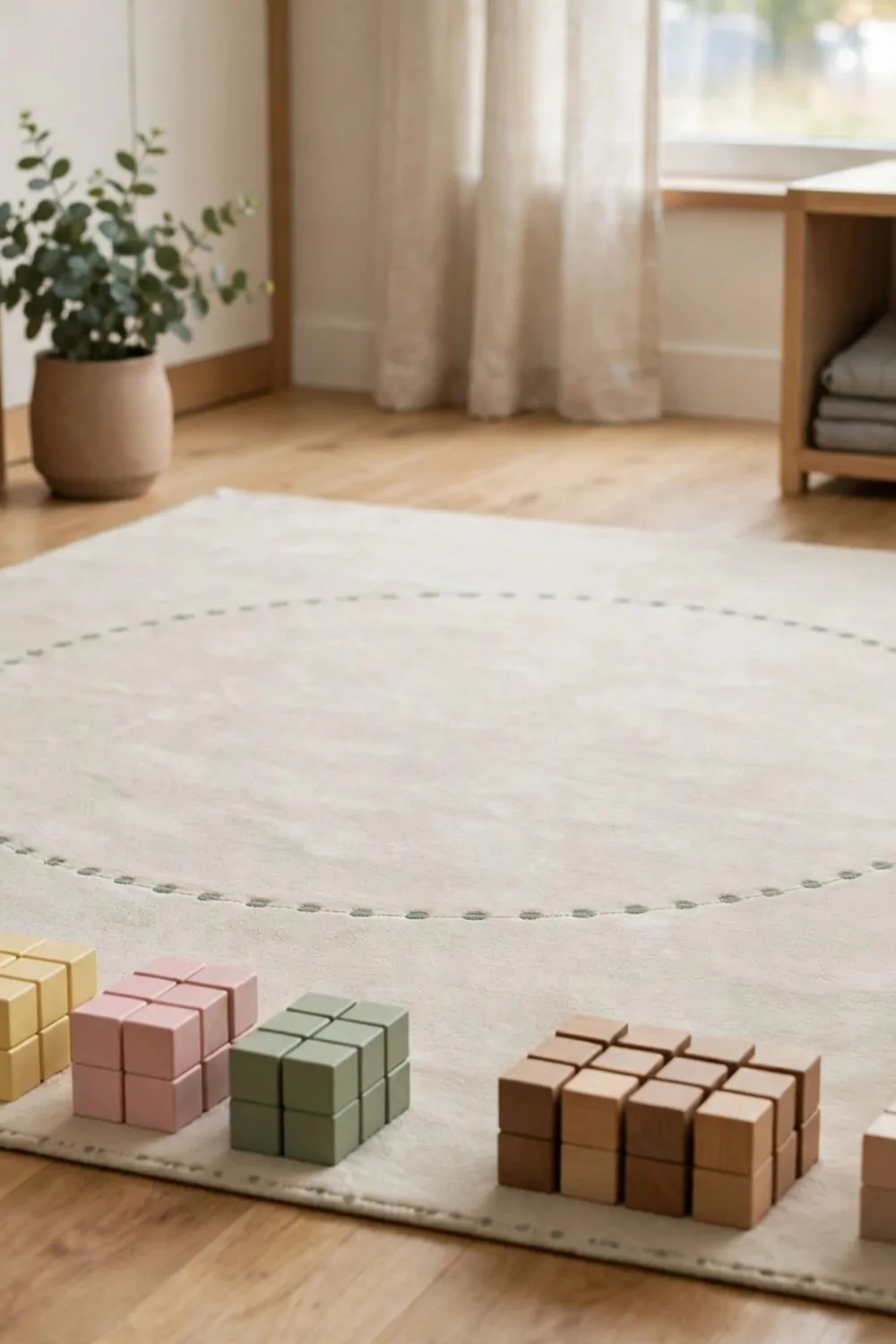
The rug is the heart of our playroom. Most of the loud play happens there, so I keep it clear on purpose.
I pick one kind of play for the rug at a time. The play zone holds blocks and cars when my kids build roads and towers.
When the rug is clear, my kids play longer. They spread out, they build more, and they do not trip over things from yesterday.
The reading corner holds books and a cushion, and it sits away from the rug. Quiet time feels calm and easy when books stay in their own spot.
The art zone holds paper, crayons, and paint, and it sits near the table. Mess stays in one spot, and I can wipe it fast.
| Zone | What Goes There | Why It Helps |
|---|---|---|
| Play zone | Blocks and cars | Kids know where to play and where to stop |
| Reading corner | Books and a cushion | Quiet time feels calm and easy |
| Art zone | Paper, crayons, and paint | Mess stays in one spot |
I do not let food or drinks on the rug. That one rule keeps the rug clean, and it keeps crumbs out of the toys.
I shake the rug once a week. I also check under it, because small cars love to hide there.
If the rug gets too full, I stop the play and we clear it together. It takes two minutes, and then we start again.
A clear rug makes the whole room look tidy, even if one small spot still needs work. That little win keeps me going.
3. A Quiet Reading Corner with a Floor Cushion
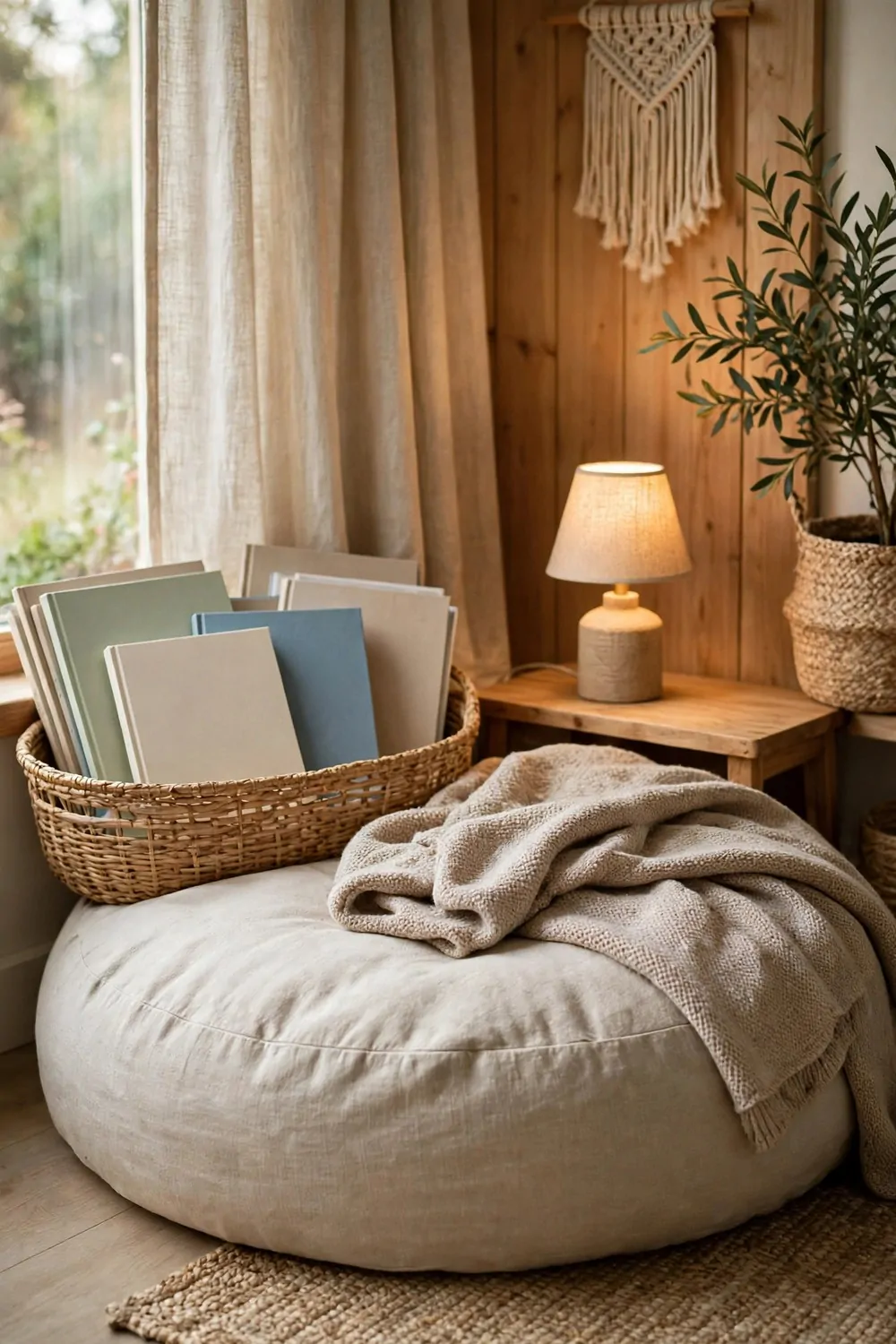
Every playroom needs a soft, quiet spot. Ours is in the corner by the wall, far from the loud toys.
I put a big floor cushion there. It is soft, it is low, and my kids can flop on it with a book.
I keep only a few books there at a time. Too many books make the corner look messy, and my kids cannot pick one.
We read there in the morning and before bed. It is our calm spot, and my kids know it is not for building or racing cars.
I added a small lamp next to the cushion. The warm light makes the corner feel cozy, and my kids stay there longer.
Sometimes I sit there too. I read one page, then my daughter reads one page, and we take turns.
I keep the cushion clean with a quick shake outside. I also wash the cover when it gets marks on it.
If the corner starts to fill with toys, I move them back to their own zones. The corner stays for books only.
A quiet corner does not need much. A cushion, a few books, and a little light are enough to make it work.
4. An Art Zone with a Washable Table
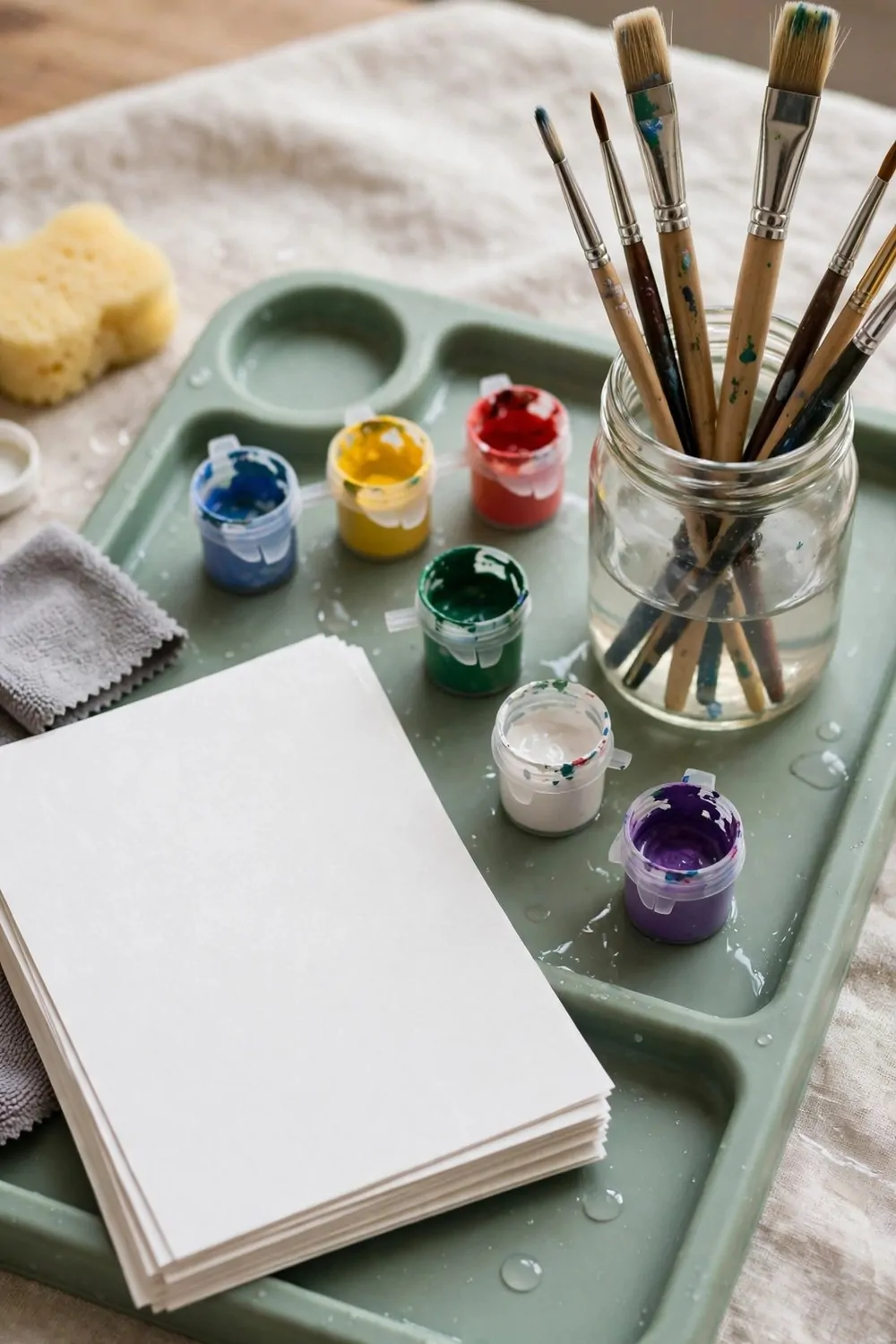
Art used to scare me a little. Paint on the table, crayon on the wall, and paper all over the floor.
A washable table fixed most of that fear. I wipe it with a damp cloth, and the paint comes right off.
I keep the art zone near the wall, away from the rug. That way paint stays near the table and not on the soft rug.
I put paper, crayons, and paint on the table before my kids sit down. When it is all there, they do not run around looking for things.
I use old shirts as art aprons. My kids put them on, they paint, and their good clothes stay clean.
We keep one small tray for wet art. Paint brushes and wet paper stay on the tray until they dry.
When art time is done, we wipe the table together. It takes one minute, and my kids like to help with the cloth.
I hang a few of their best pictures on the wall near the table. They feel proud, and the wall looks happy.
The art zone is small, but it holds a lot of fun. My kids know where to go when they want to draw, and I know where the mess will be.
5. A Building Zone on a Low Table
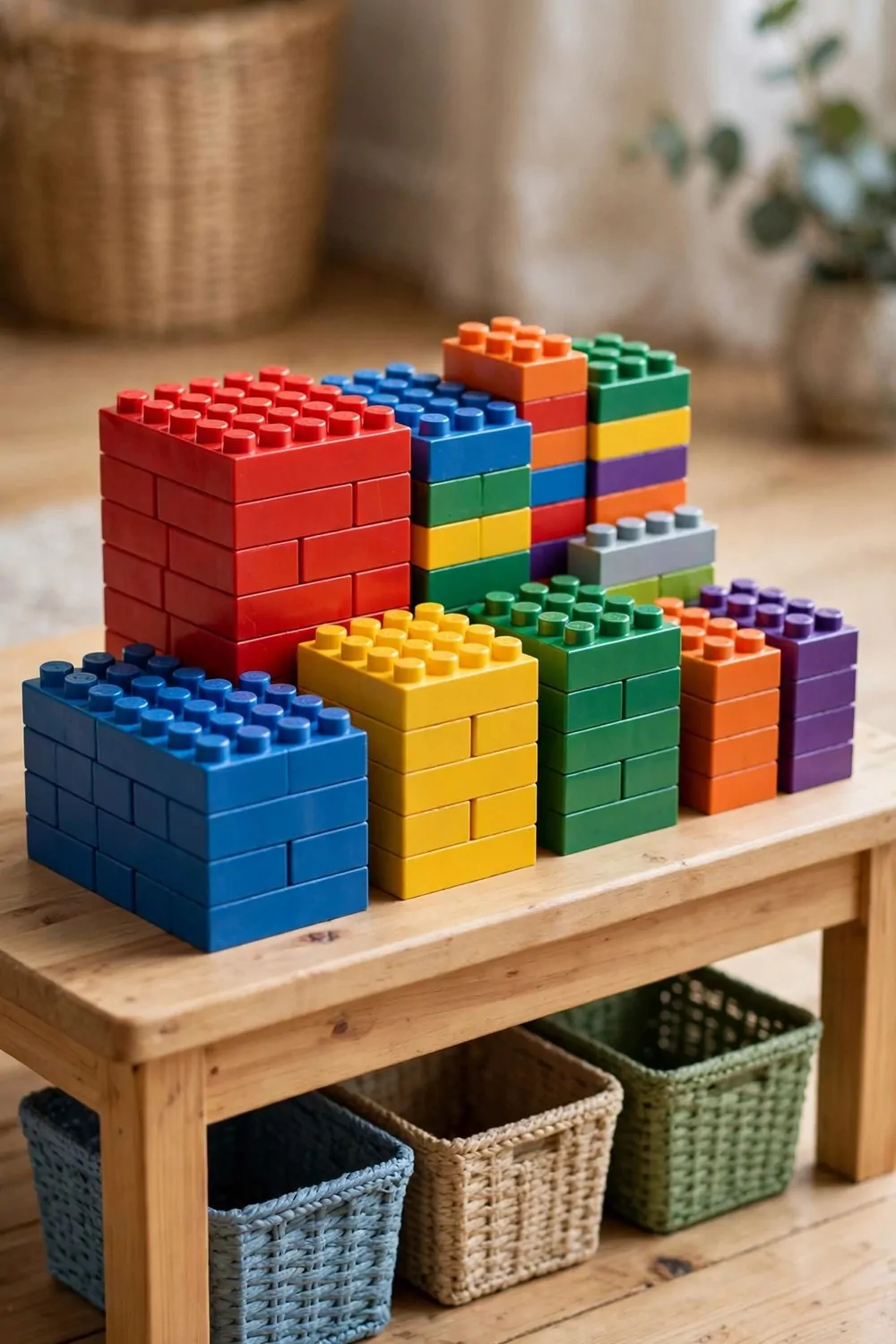
Building on the floor is fun, but it hurts my knees and it takes up the whole rug. A low table changed that for us.
The table is low enough for my kids to reach it from their chairs. They sit, they build, and their backs stay straight.
I keep the building pieces on the table only. When the table is full, we stop adding more and we finish what we started.
My son builds towers on it. My daughter builds small houses. They both like that the table has clear edges.
I like that I can see the whole build at once. I can praise it, I can take a photo, and then we can take it apart together.
We take a photo before we knock a tower down. That way my kids keep the memory, and the table is free for the next build.
I wipe the table after building. Dust and small bits of paper come off fast with one cloth.
If a piece falls on the floor, we pick it up right away. One piece on the floor turns into ten pieces fast.
A low table makes building feel special. It has its own place, and it does not spill into the reading corner or the art zone.
6. A Dress-Up Corner with a Small Mirror
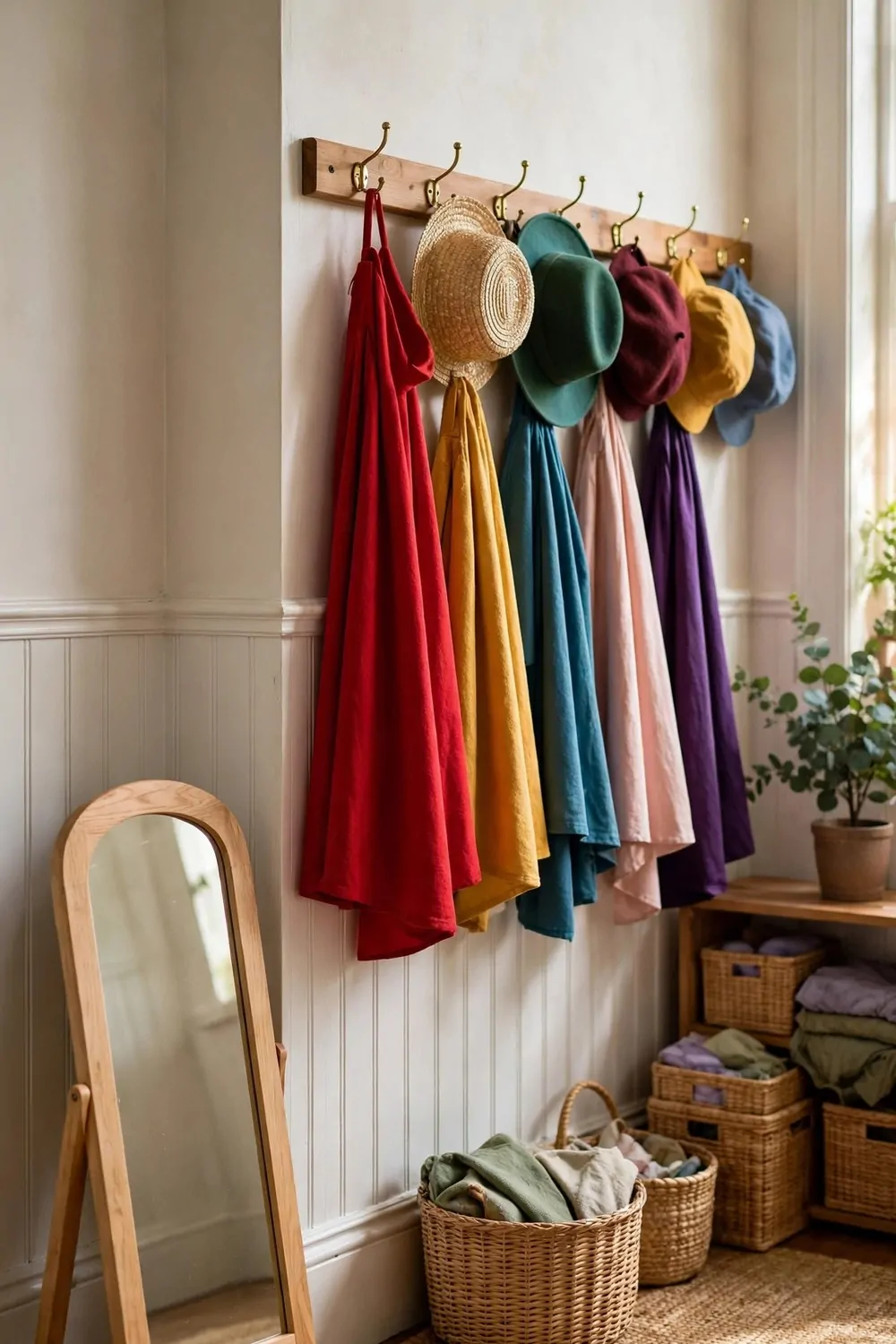
My kids love to dress up. They try on hats, scarves, and capes, and then they want to see how they look.
A small mirror in the corner made dress up time so much better. They stand in front of it, they smile, and they spin around.
I keep the mirror low on the wall. It is at their height, so they can see their full outfit without standing on a chair.
I hang a few dress up clothes on low hooks next to the mirror. My kids can reach them, try them on, and hang them back.
I keep the dress up corner small. Three or four outfits are enough, and more than that turns into a pile on the floor.
We play a simple game there. My kids pick an outfit, they look in the mirror, and they tell me who they are today.
When dress up time ends, the clothes go back on the hooks. I help at first, and now my kids do most of it alone.
I check the mirror once a week for smudges. A quick wipe keeps it clear, and my kids like to help with that too.
This corner is pure fun. It has its own spot, its own mirror, and its own small set of clothes, and that keeps the rest of the room tidy.
7. A Music Corner with a Low Shelf
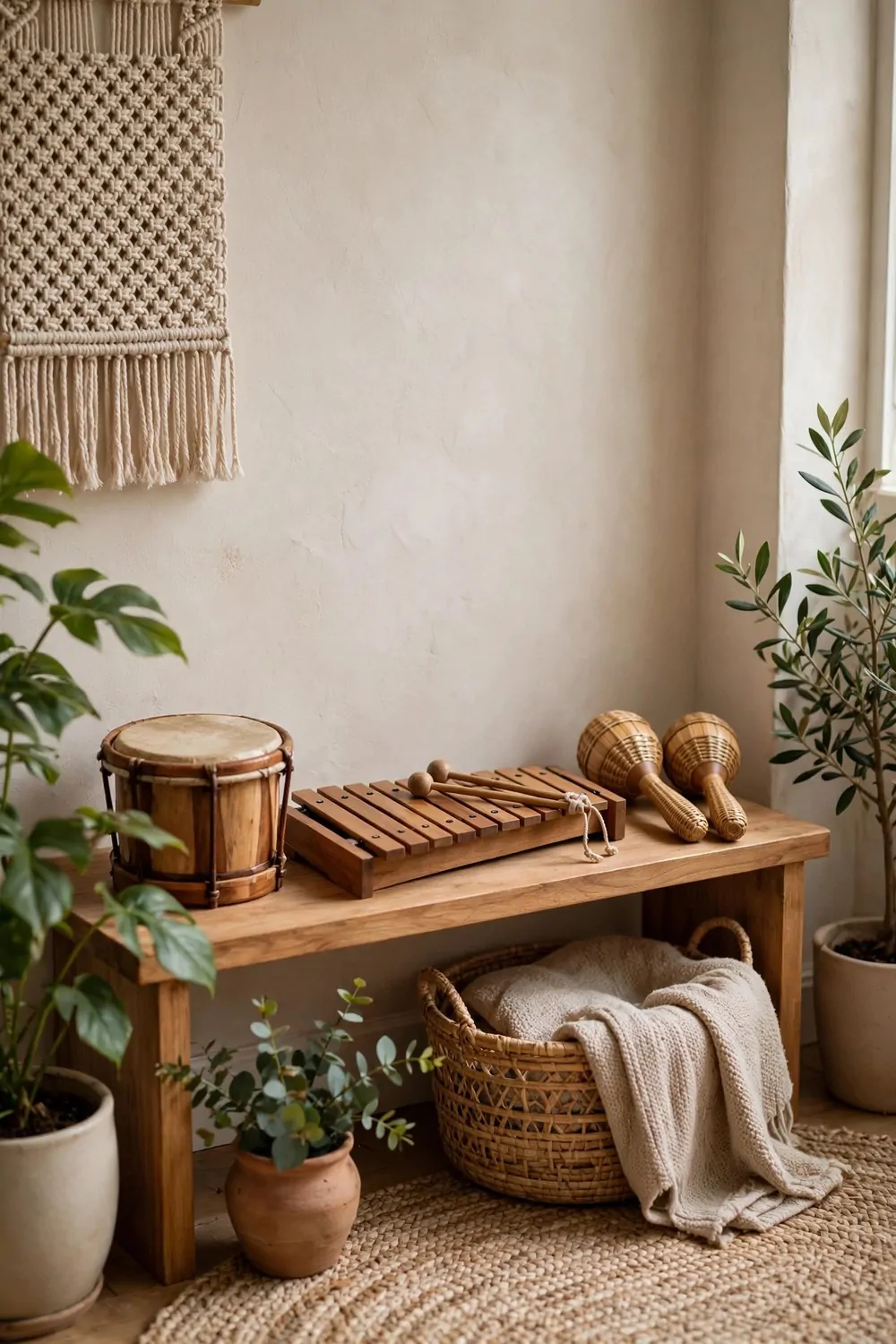
Music time used to be loud and messy. Instruments were all over the room, and I could not find the small drum when my kids wanted it.
A low shelf in one corner fixed that. I put the instruments on the shelf, and my kids know where to find them.
I keep only a few instruments there. A drum, a shaker, and a small xylophone are enough for a fun music time.
My kids pick one instrument at a time. They play it, they put it back, and then they pick the next one.
We have music time after lunch. It is short, it is fun, and it gives my kids a way to use up their energy.
I sit on the floor near the shelf and clap along. My kids laugh, they play louder, and we all have a good time.
When music time ends, the instruments go back on the shelf in the same order. My kids learned the order in one week.
I keep the shelf low so no one climbs to reach a drum. Safe reach means less mess and fewer falls.
A music corner does not need a lot of space. One low shelf, a few instruments, and a small spot to sit are all you need.
8. A Puzzle and Game Shelf by the Wall
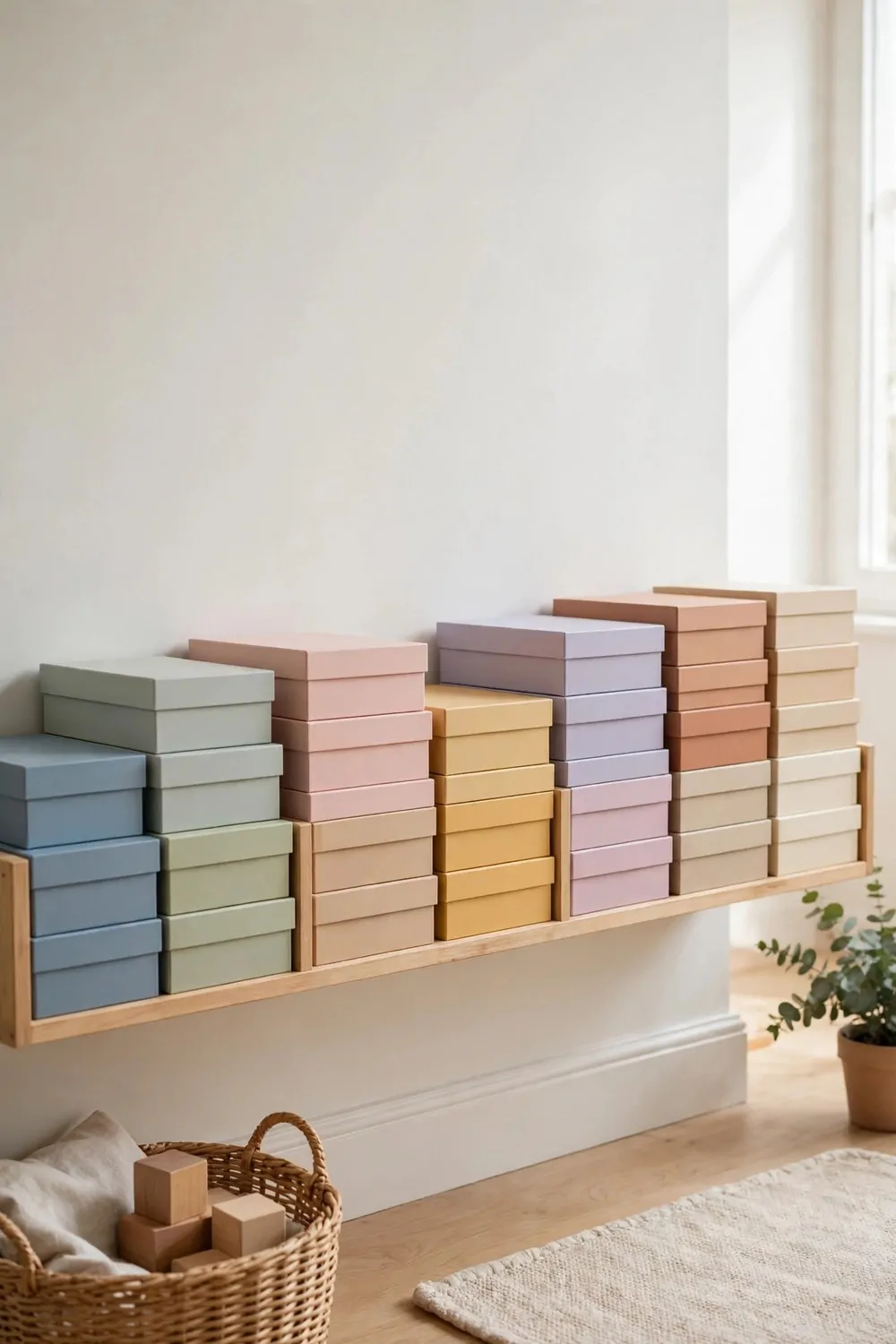
Puzzles and games used to live in a big pile. Pieces went missing, boxes broke, and my kids gave up on them fast.
I moved them to a shelf by the wall. Now each game has its own spot, and my kids can see what to pick.
I keep the shelf at my kids height. They can pull a game out, play it, and slide it back without my help.
I put the easy puzzles on the lower part of the shelf. My younger child can reach them, and she feels proud to pick her own.
I put the harder games higher up. My older child can reach those, and he likes that they feel a bit more grown up.
We play one game at a time. When we finish, we count the pieces together before we put the game back.
Counting pieces sounds slow, but it saves time later. A puzzle with all its pieces is fun, and one with missing pieces is not.
I check the shelf once a month. I fix torn boxes with tape, and I move games my kids no longer play to the closet.
A shelf by the wall keeps games safe and easy to find. My kids play more, and I lose fewer pieces.
9. A Daily Clean-Up Song Routine
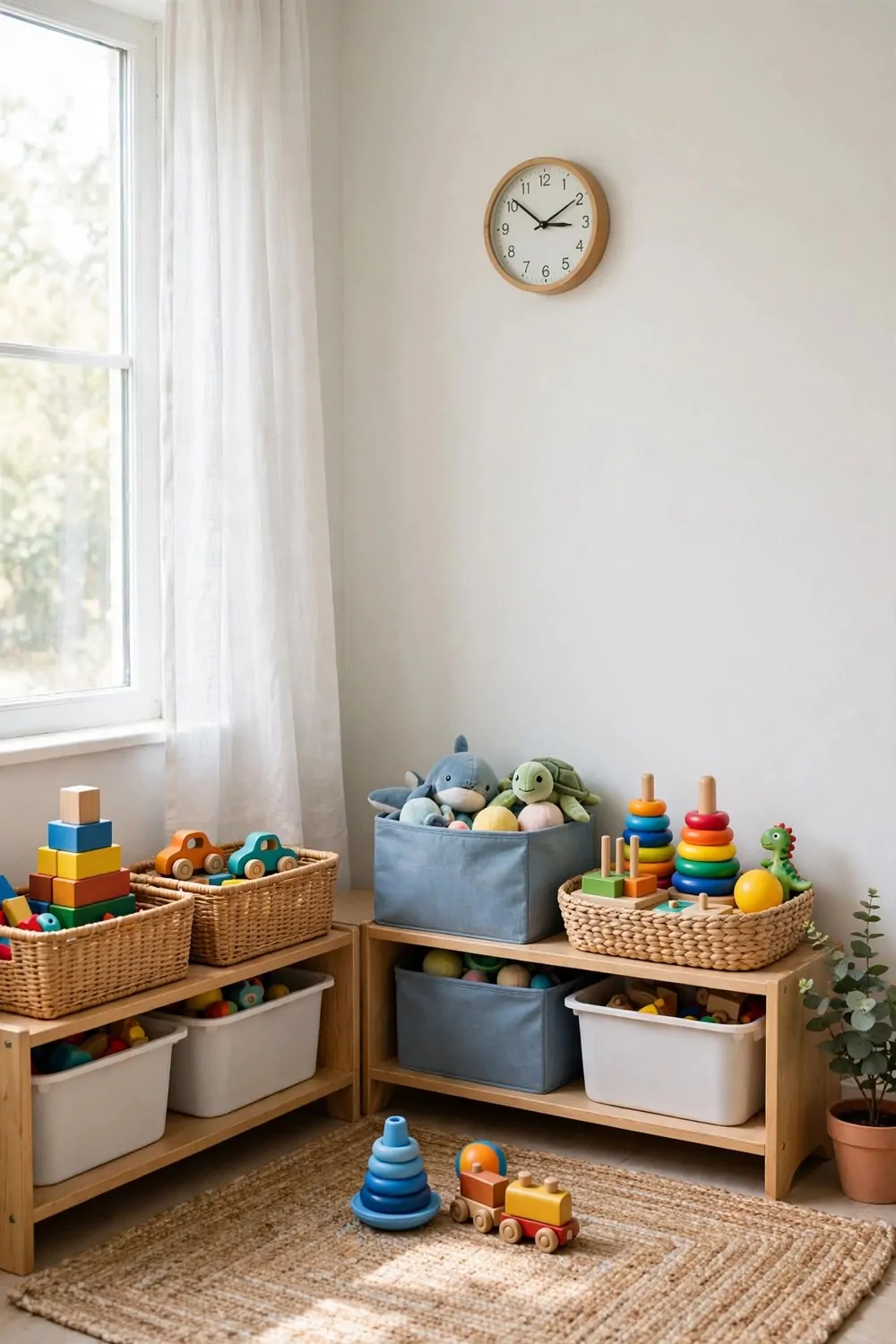
Clean up used to end in tears. I asked, my kids said no, and I ended up doing it alone.
A song changed that for us. I play the same short song every day at clean up time, and my kids know what it means.
We sing while we work. We pick up blocks, we stack books, and we move fast because the song is fun.
I keep the song short, about two minutes long. My kids can finish a small job before the song ends.
I praise them while they work. I say, great job, you found three cars, and they smile and look for more.
We do the song routine at the same time each day. My kids expect it now, and they do not argue as much.
Sometimes I let my kids pick the song. They pick a fast one, they dance a little, and the room still gets tidy.
If the room is very messy, I sing the song twice. Two rounds are still faster than one long fight about clean up.
A song will not make the room perfect, but it makes clean up feel like play. That is why we use it every single day.
10. A Five-Minute Tidy Before Dinner
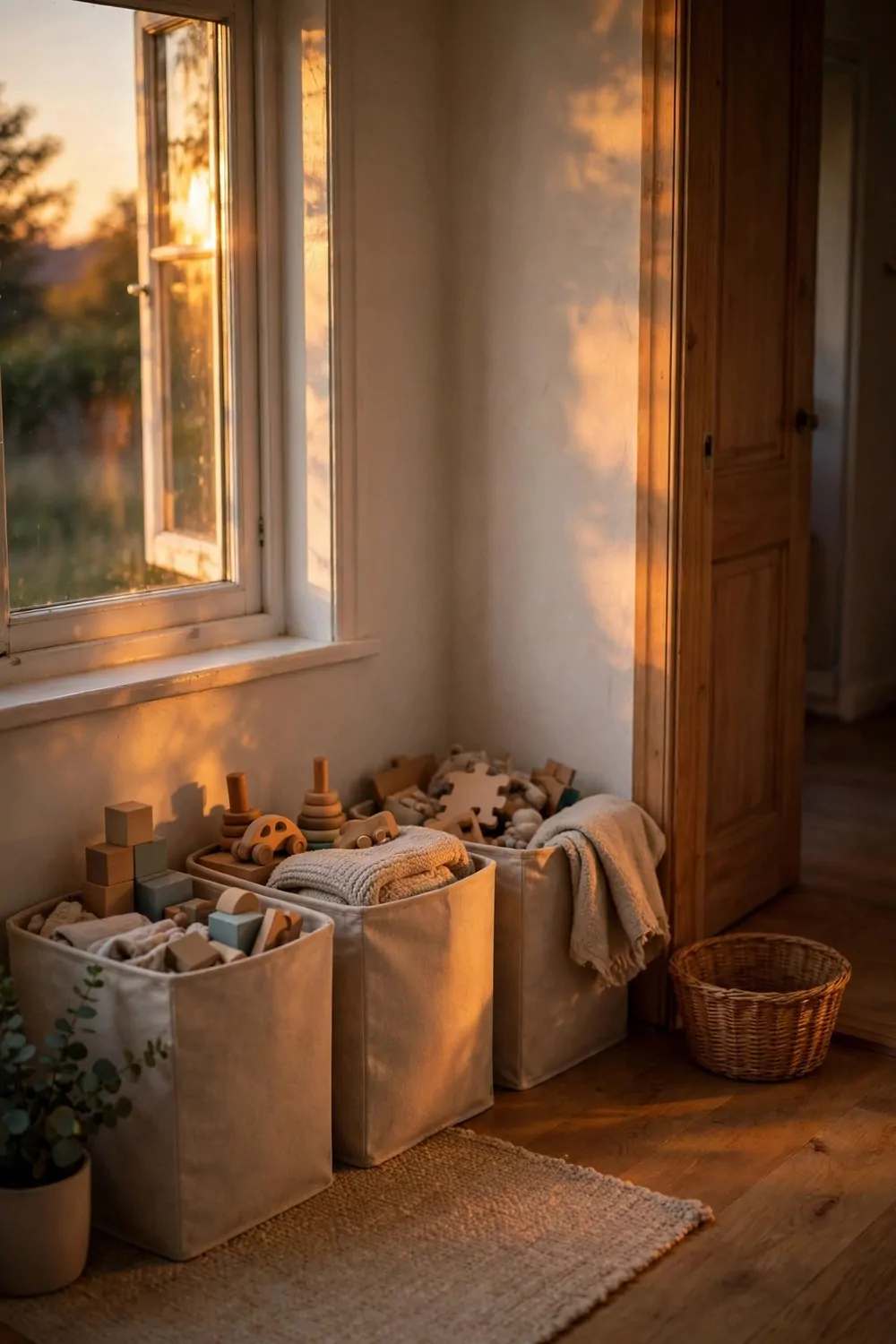
Dinner time used to start with a messy playroom. I cooked, my kids played, and the mess waited for me after we ate.
A five minute tidy before dinner fixed that. We stop play, we tidy fast, and then we eat in a calm house.
At 5:00, kids pick up blocks. They walk around the rug, they grab the blocks, and they put them back in their spot.
At 5:02, kids put books back. They stack the books in the reading corner, and the cushion is clear again.
At 5:04, Mom wipes the table. I wipe the art table and the building table, and both look clean in one minute.
| Time | Job | Who Does It |
|---|---|---|
| 5:00 | Pick up blocks | Kids |
| 5:02 | Put books back | Kids |
| 5:04 | Wipe the table | Mom |
I set a timer on my phone. Five minutes feels short, and my kids race the timer with a smile.
I do not ask for perfect. I ask for clear floors, clear tables, and books back in their spot.
After dinner, the room is ready for the next morning. I do not wake up to a mess, and that feels so good.
Five minutes a day is all it takes. It is small, it is fast, and it keeps the whole evening calm.
11. A Weekly Toy Swap from the Closet
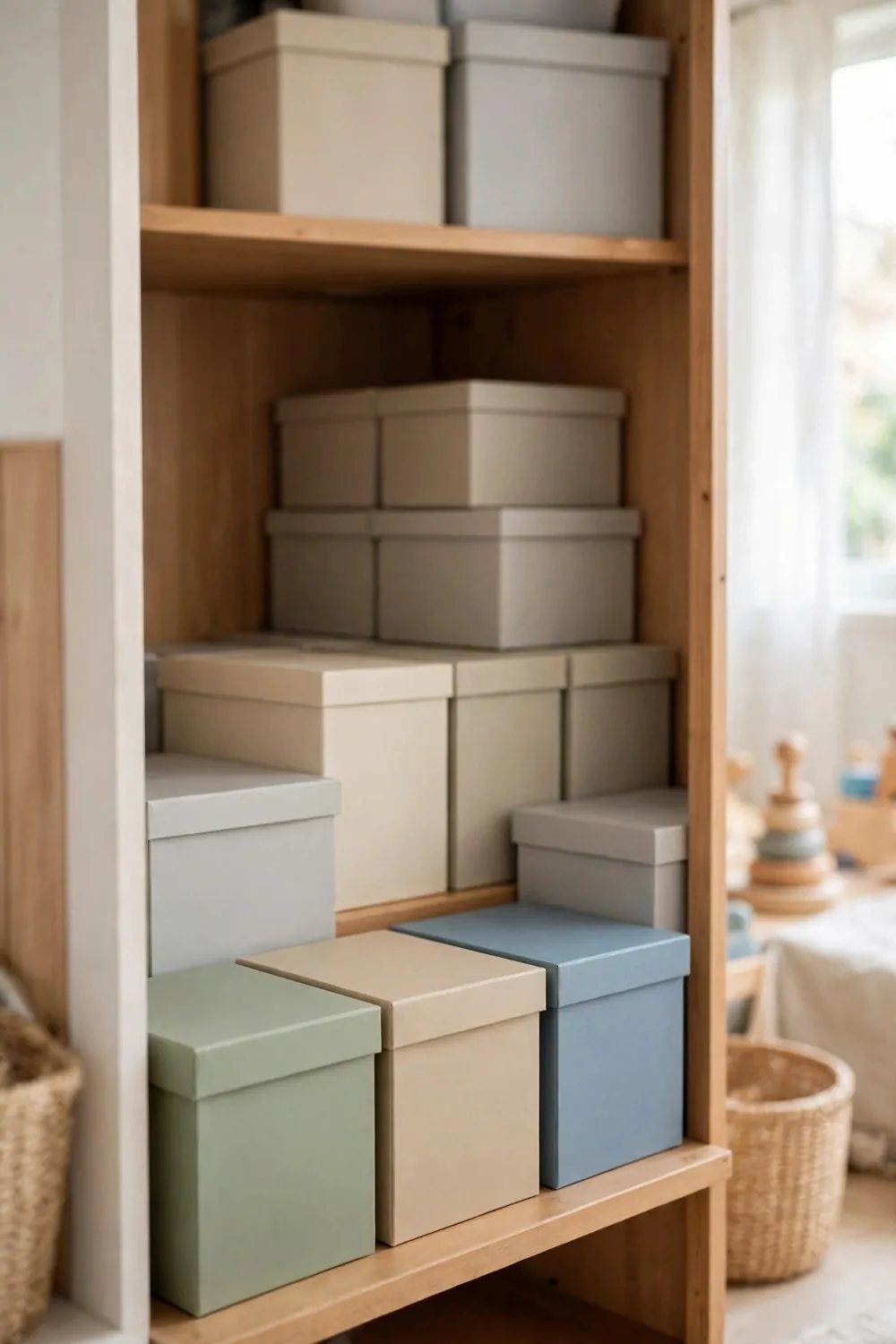
My kids get bored with the same toys every day. I used to think they needed new toys, but they just needed a change.
Once a week, I swap a few toys from the closet. I take out a few old favorites and I put a few current ones away.
I keep the closet toys in a small stack. I do not keep too many there, because a full closet is hard to sort.
On swap day, my kids help me pick. They choose what goes back to the closet, and they choose what comes out.
The swapped toys feel new again. My kids play with them for hours, even though they have had them for months.
I do the swap on the same day each week. Sunday works for us, because we have time and the week feels fresh after.
I check each toy before it goes back out. I look for broken parts, I wipe it clean, and I make sure it still works.
If a toy is broken, I let it go. Keeping a broken toy only adds clutter, and my kids do not miss it.
A weekly swap keeps play fresh without new toys. It also keeps the playroom light, because only some toys are out at once.
12. A Toy Library Shelf That Rotates
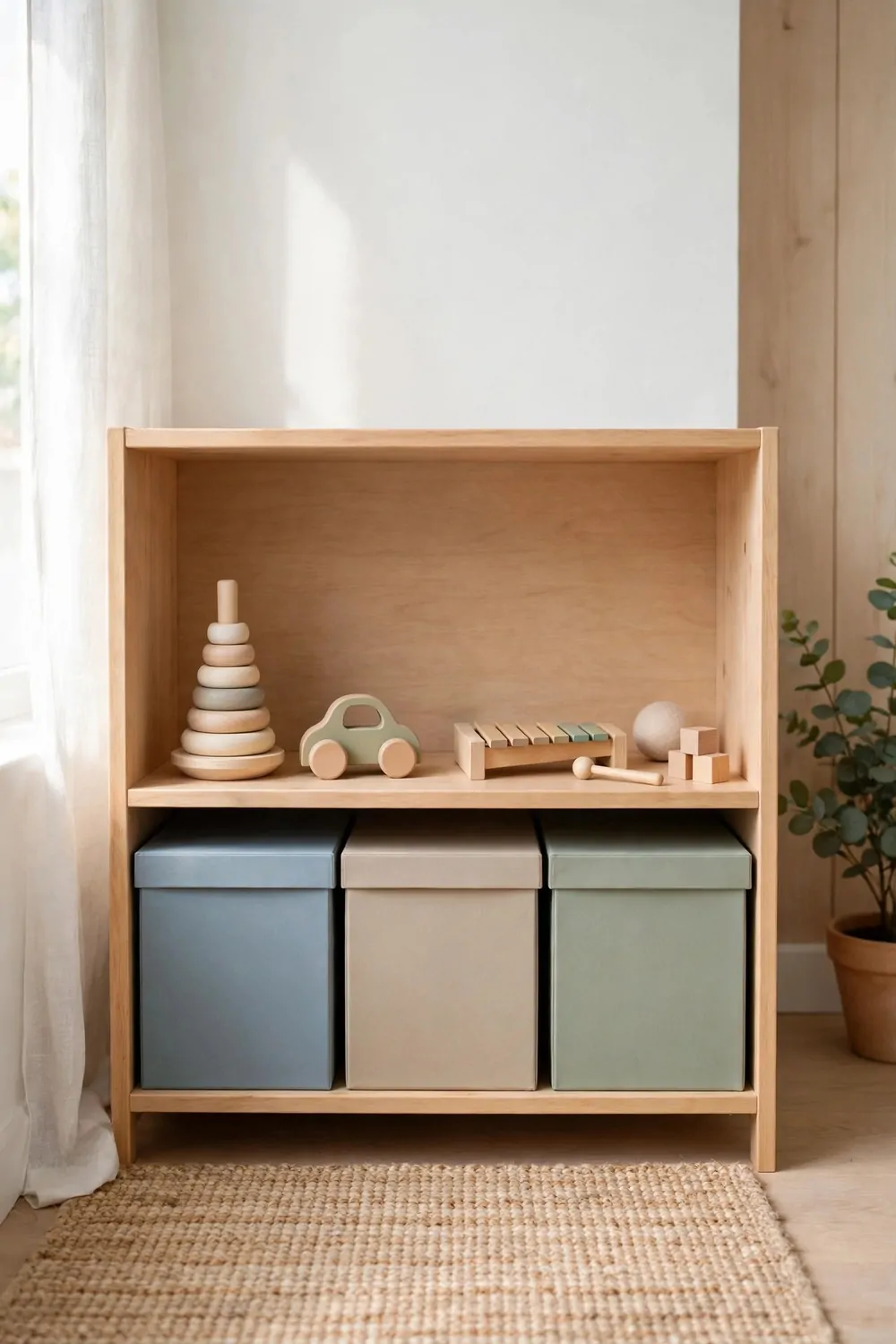
A toy library shelf sounds fancy, but ours is simple. It is one shelf where toys change every week or two.
I put a small set of toys on the shelf. My kids can borrow them, play with them, and return them to the same shelf.
I rotate the set when my kids stop playing with it. I move those toys to the closet, and I bring a fresh set to the shelf.
I keep a little card on the shelf with the date. It tells me when I last changed the set, so I do not forget.
My kids like the library idea. They say they are borrowing toys, and they take more care with them.
I keep the shelf near the door. It is easy to reach, and it is the first thing my kids see when they walk in.
I do not put too many toys on the shelf at once. Five or six toys are enough, and more than that feels crowded.
When a toy comes back broken, we talk about it. I show my kids how to be gentle, and we fix it if we can.
A rotating shelf keeps the room fresh and the toys loved. It is one of my favorite ideas in this whole post.
13. A Picture Chart for Clean-Up Jobs
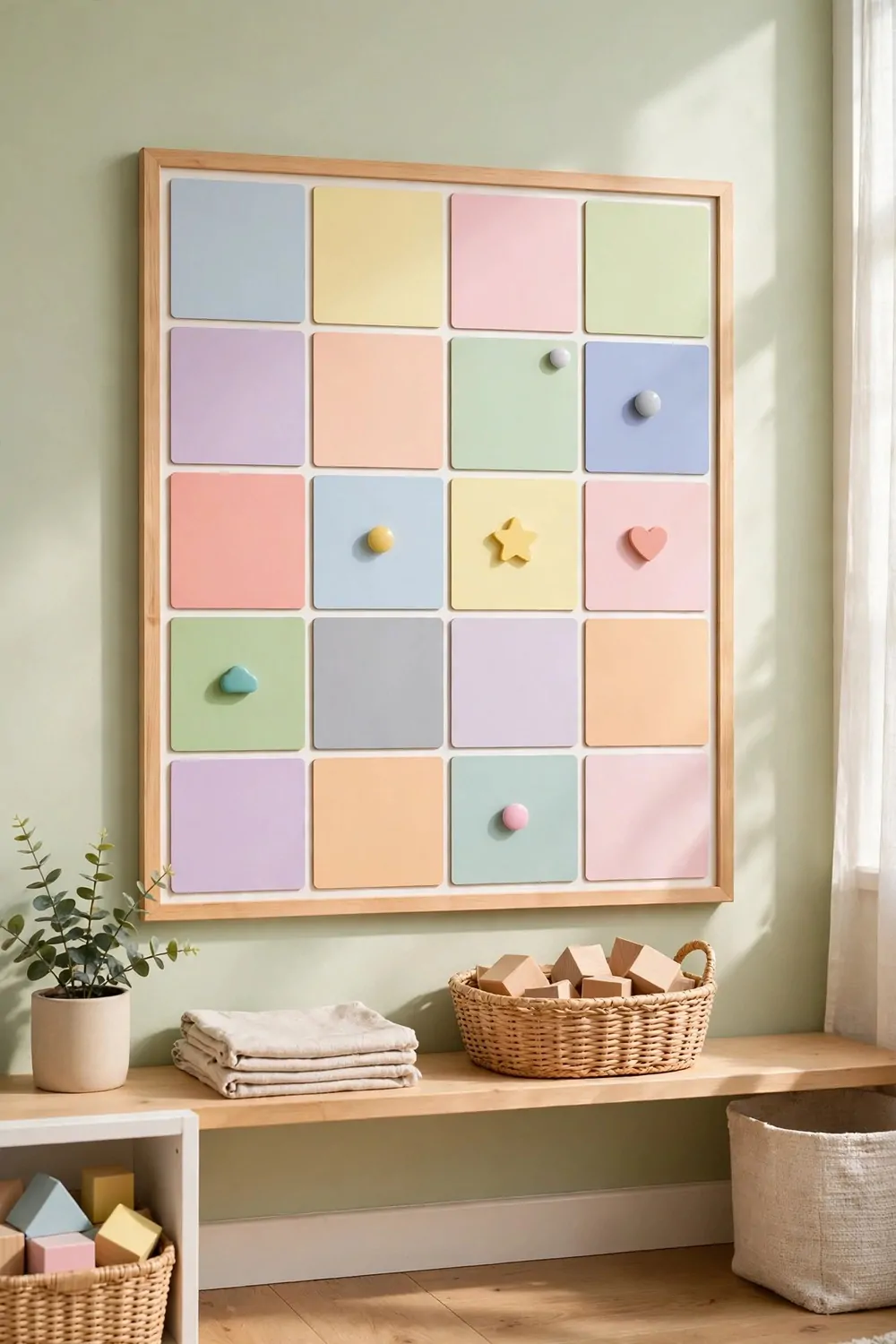
Young kids cannot read a long list. They can read pictures, though, and that is why our chart works.
I made a simple chart with pictures for each job. One picture shows blocks, one shows books, and one shows the table.
I put the chart on the wall at my kids height. They can see it, point at it, and pick their job.
Each morning, my kids pick one picture. They do that job first, and then they can pick another one if they want.
I use simple drawings, not fancy art. A block, a book, and a cloth are easy to draw, and my kids know what they mean.
We tick off each job with a small mark. My kids love to mark it done, and they feel proud of their work.
I change the pictures when a job changes. If we add a new job, I draw a new picture and add it to the chart.
The chart stays in the same place. My kids know where to look, and I do not have to repeat the jobs all day.
A picture chart makes clean up clear for little kids. They see it, they do it, and the room gets tidy step by step.
14. Low Shelves Kids Can Reach Alone
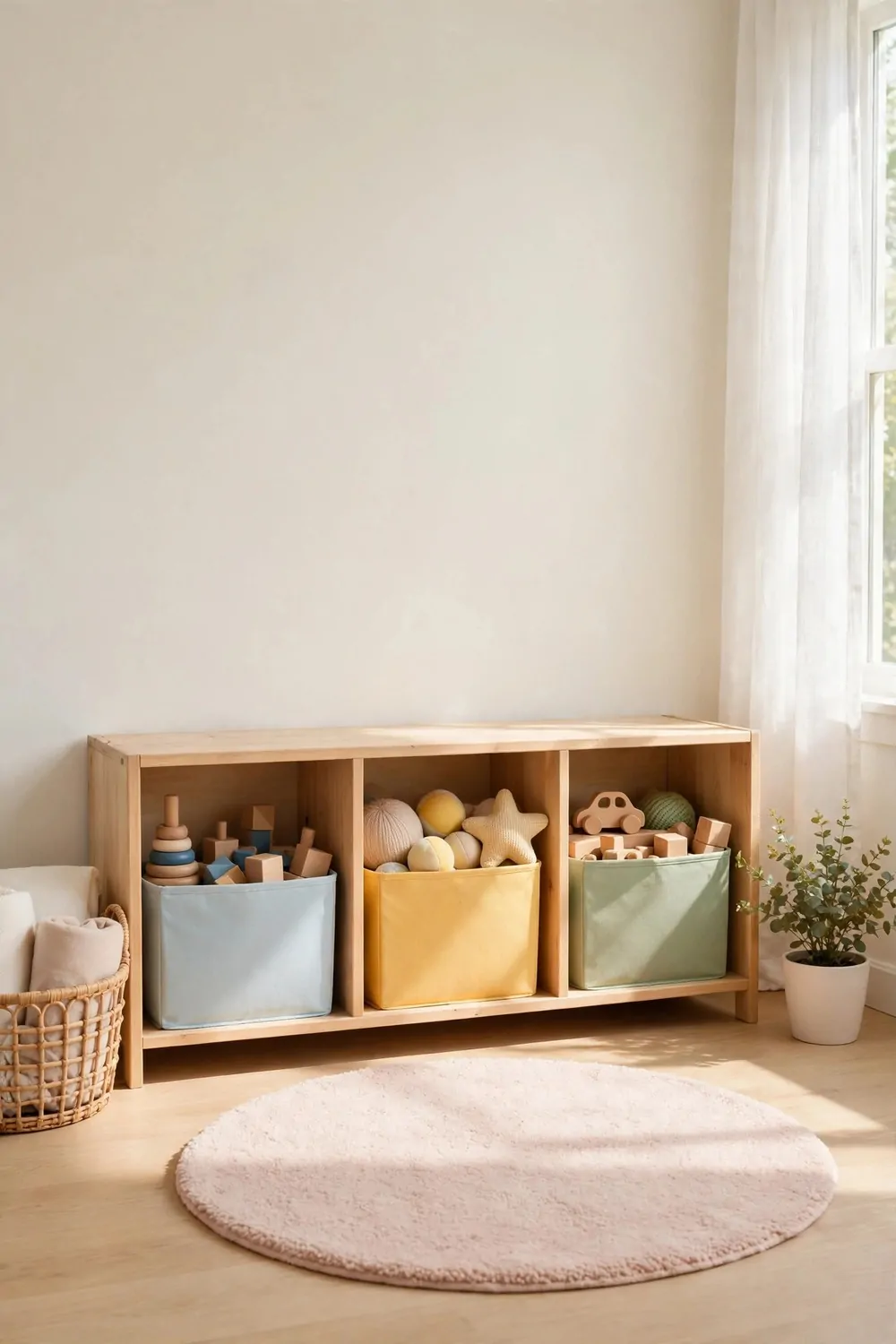
High shelves look neat, but my kids could not reach them. I had to hand them toys all day, and that tired me out.
Low shelves changed that. My kids can reach the toys alone, play with them, and put them back alone too.
I keep the shelves low and wide. They sit against the wall, and they do not wobble when my kids pull a toy out.
I put the most loved toys at eye level. My kids see them first, and they pick them without digging through a pile.
I keep the top of the low shelf clear. It is not for toys, it is for one small plant or one framed picture.
My kids learned to put things back on the shelf in the right spot. I showed them once, then twice, and now they do it on their own.
I check the shelf each night. I straighten a few toys, I move one that is in the wrong spot, and it takes one minute.
Low shelves also make the room feel bigger. The wall is not full of tall furniture, and light moves through the room better.
When kids can reach their own toys, they play more and ask less. That is a win for them, and a win for me too.
15. A Shoe Tray by the Playroom Door
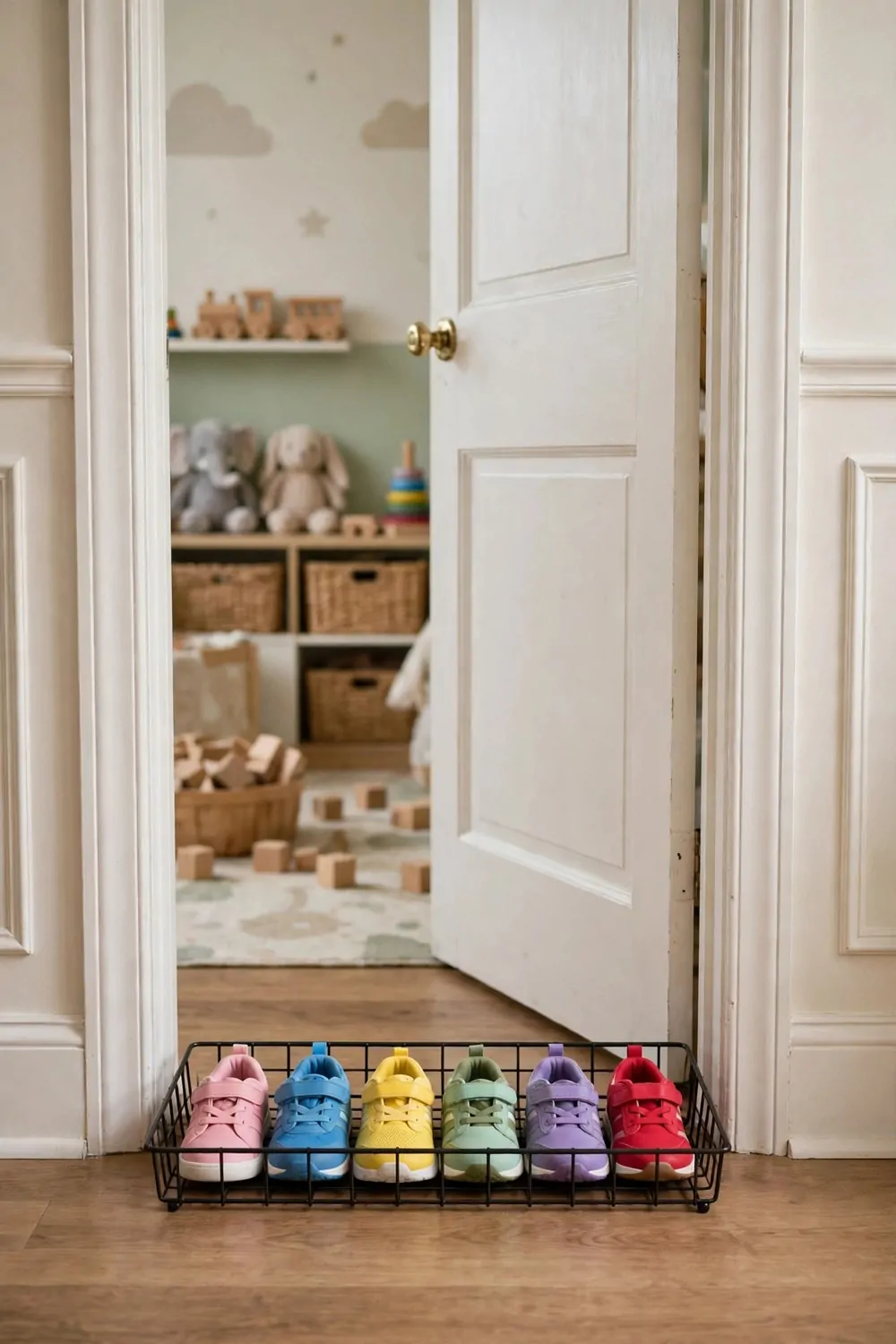
I used to find shoes all over the playroom floor.
They were under the toy shelf, behind the bean bag, and sometimes right in the middle of the room. I got tired of tripping over them every single day.
So I put a small tray by the door.
Now the shoes have a home of their own, and the kids know just where to put them when they walk in. It is such a small change, but it makes the whole room feel tidier.
I picked a tray with low sides so little feet can step in and out with no fuss.
You can use a boot tray, a baking tray, or even a shallow basket.
The tray also catches dirt and crumbs before they spread across the floor, which means I sweep a lot less than I used to.
I let each child pick a spot on the tray, and that tiny bit of choice made them want to use it.
Try it this week and see how fast the floor stays clear.
16. A Snack Spot Away from the Toys
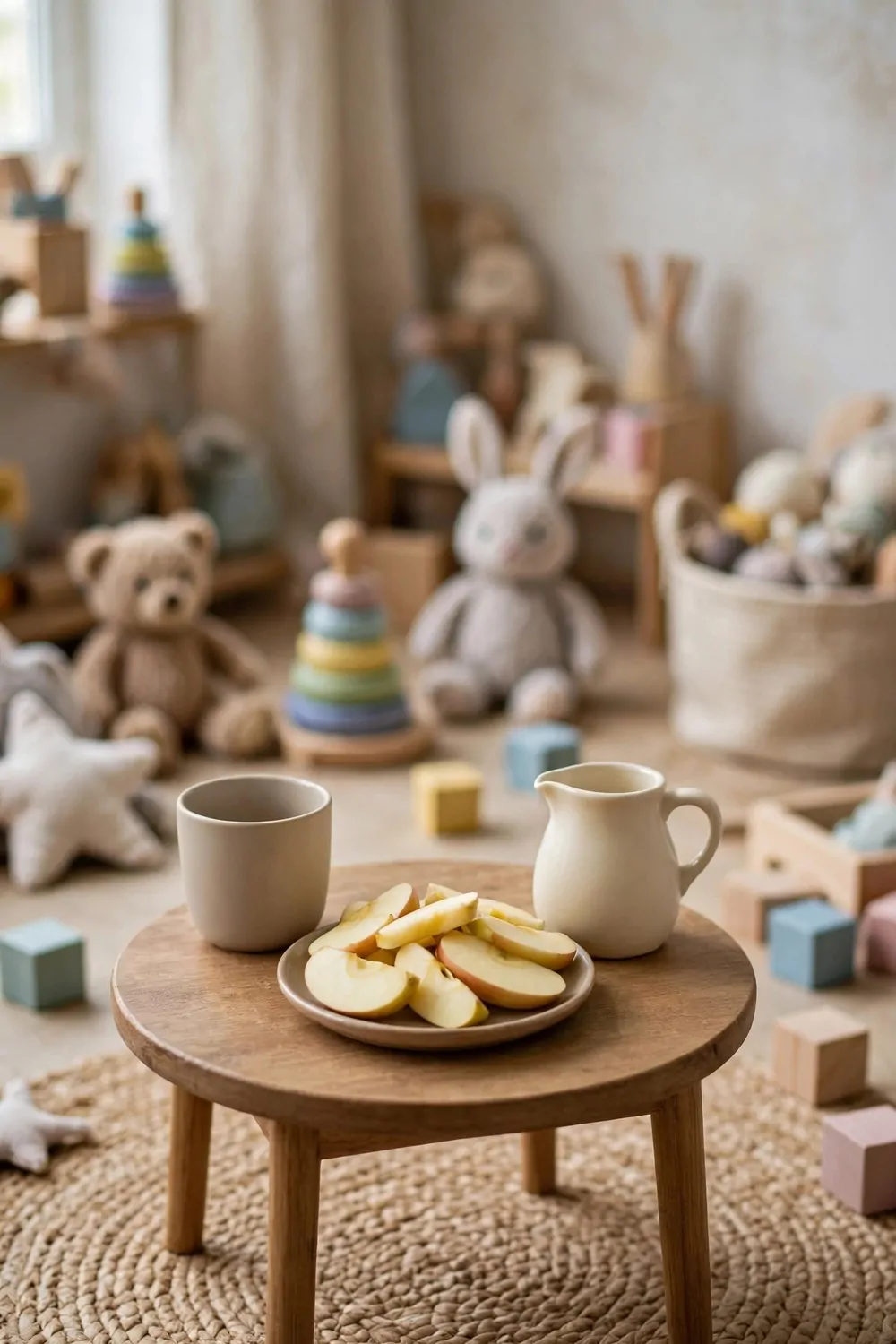
Snacks and toys do not mix well in my house.
Crumbs got into the building blocks and sticky fingers touched every doll and car. I knew I had to move the snacks somewhere else.
So I made a small snack spot at the little table by the window.
The rule is simple, food stays at the table and toys stay on the rug. My kids got used to it in about two days.
I keep a few cups and small plates right there so no one has to run to the kitchen mid snack.
You can use a tray on the table to mark the snack zone, it makes the line clear for little ones.
The best part is the toys stay clean, and I do not find cracker bits inside the toy boxes anymore.
When snack time ends we wipe the table and the kids go back to play with clean hands.
Give your snacks their own spot and your toys will thank you.
17. A Small Desk for Drawing and Homework
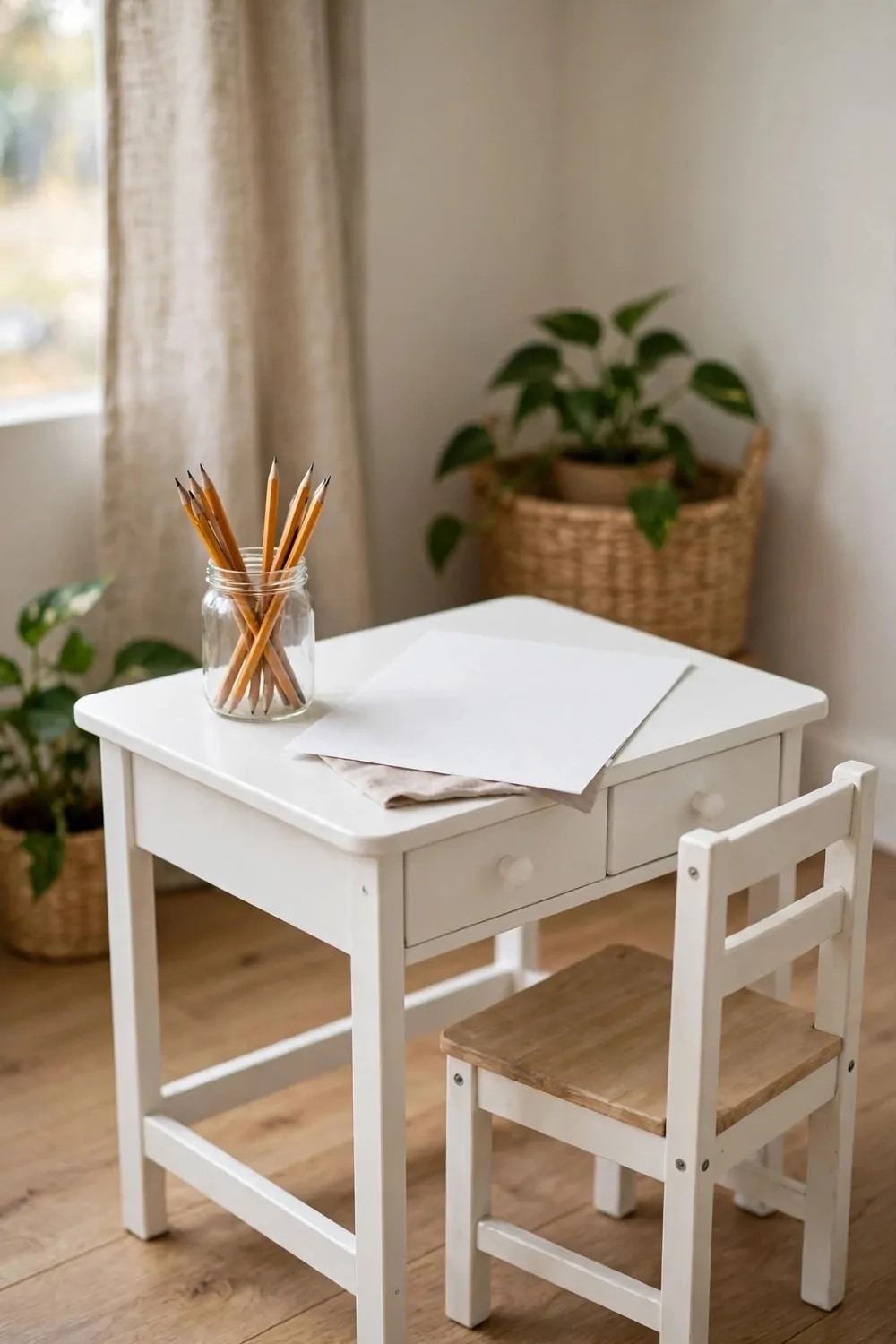
Every playroom needs a spot where kids can sit and make things.
I put a small desk in the corner by the window, and it changed how my kids play. They sit down, they focus, and they make the loveliest drawings.
The desk does not need to be big or fancy.
A simple table with a chair that fits your child is enough, and you can find one for $25 to $40 at most stores. I added a small lamp for $10 to $15 so the desk is bright even on dull days.
Here is a quick look at what a small desk setup can cost:
| Desk Item | Typical Cost | Why It Helps |
|---|---|---|
| Small desk and chair | $25 to $40 | Gives kids their own work spot |
| Small desk lamp | $10 to $15 | Keeps the desk bright for drawing |
| Pencil holder | $5 to $10 | Stops crayons rolling away |
I keep crayons and paper in a cup on the desk so everything is right there when ideas strike.
A pencil holder costs about $5 to $10 and keeps the crayons from rolling all over the floor.
The desk is also a great spot for school work when the kids get a bit older.
I love seeing their drawings pile up on that little desk, it feels like the heart of the playroom.
18. A Display Wall for Kids’ Art
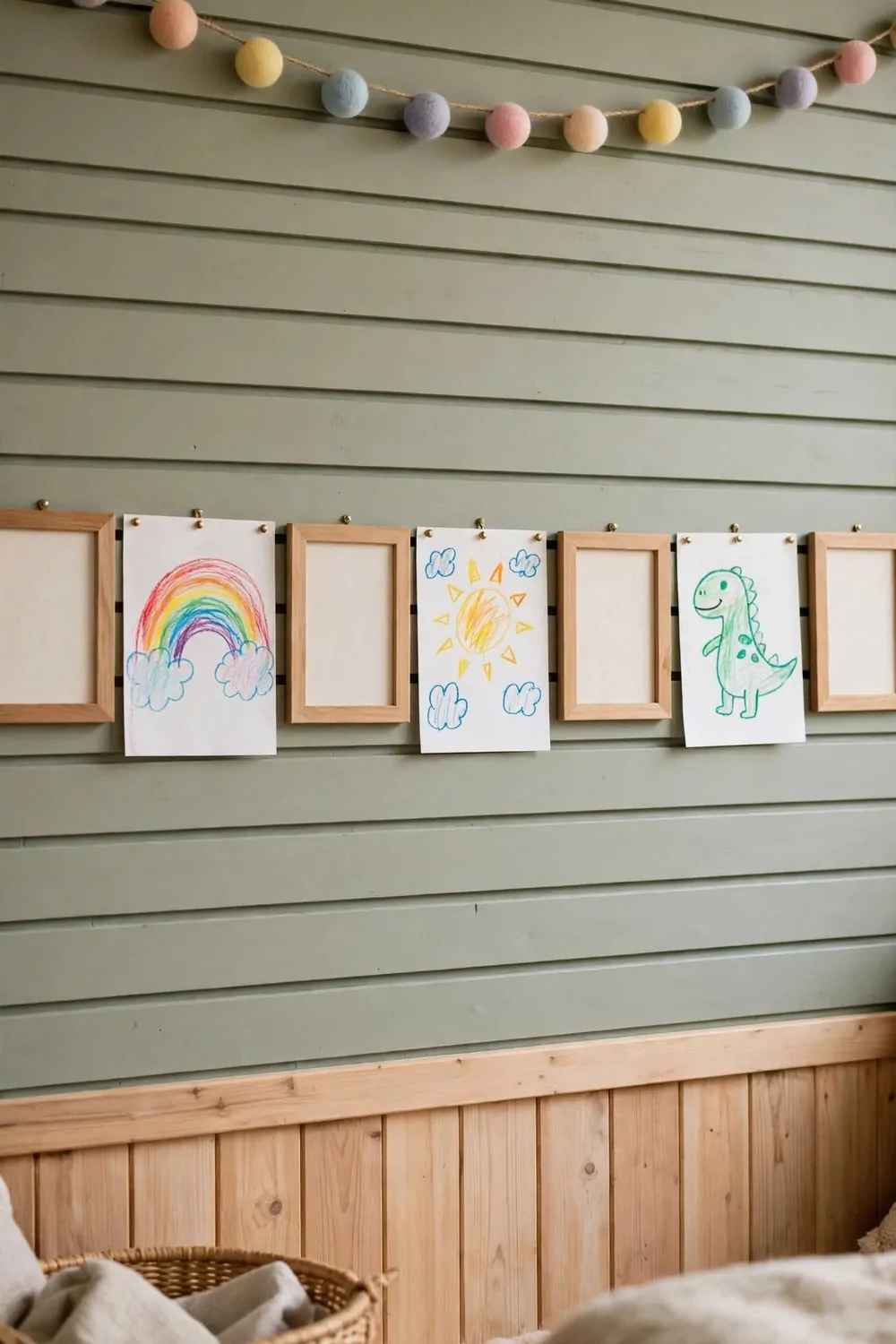
My fridge was covered in drawings and I ran out of room.
So I turned one playroom wall into a display wall just for my kids art. Now every new picture has a place to go.
I used a simple string with small clips, but you can use frames or tape too.
The kids love picking which drawing goes up next, and they feel so proud when friends see their work on the wall.
When the wall gets full we take the oldest ones down and put them in a folder to keep.
You can change the art every week or every month, whatever works for your family.
The display wall also keeps paper piles off the floor, because the art has a home now instead of landing on the table or the sofa.
I put the wall low enough that the kids can hang their own pictures with no help from me.
Try one wall and watch how proud your little artists feel.
19. A Rolling Bin for Balls and Big Toys
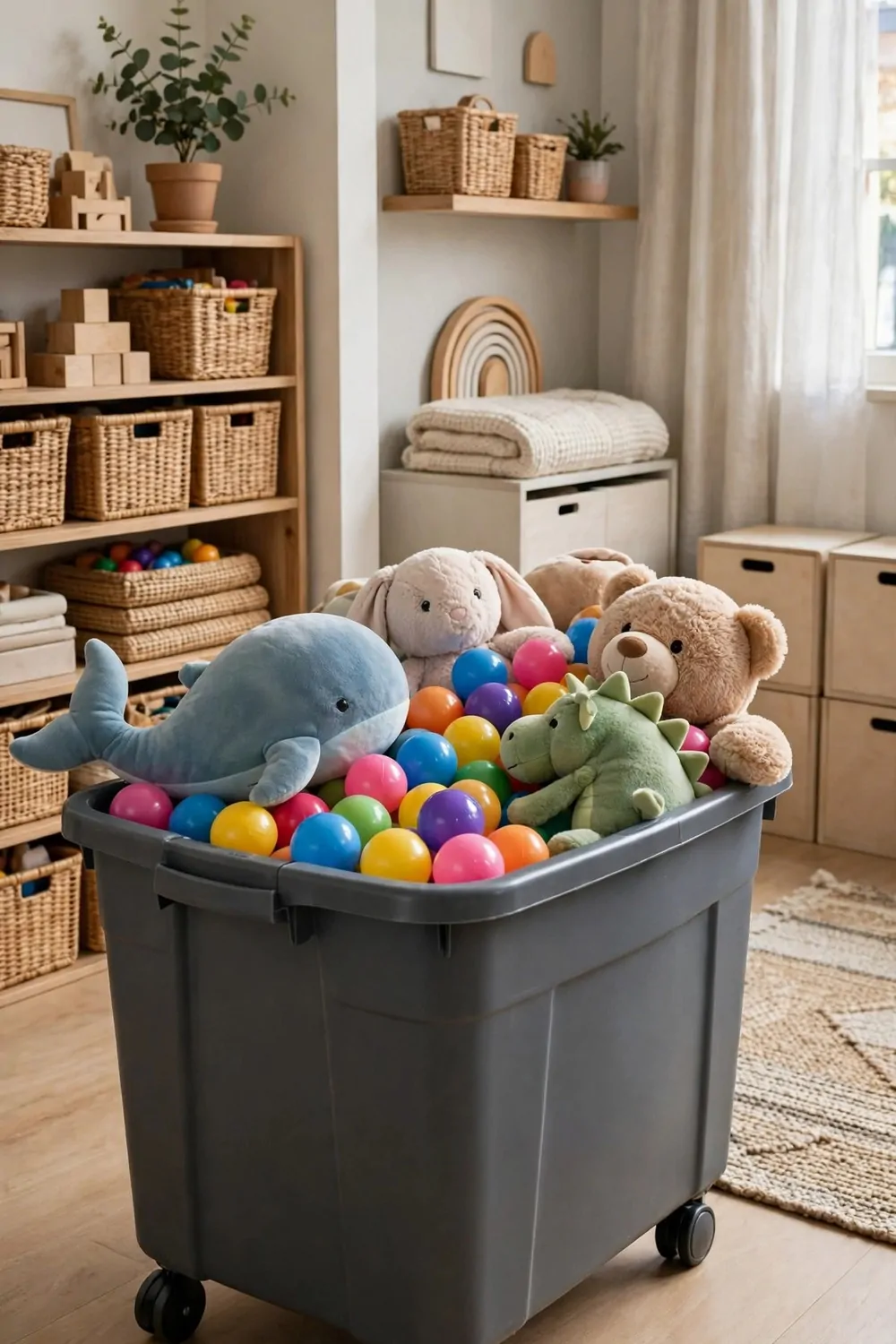
Big toys are the hardest to keep tidy.
Balls roll under the sofa, large trucks end up in the hallway, and I was always chasing them around the house. I needed something that could hold them all in one spot.
A rolling bin fixed it for us.
The bin has wheels so the kids can roll it to the middle of the room to play, then roll it back to its corner when they are done. It feels like a game to them.
I picked a bin with no lid so the kids can toss balls in fast.
You can find one at most home stores, or use a laundry basket with wheels added underneath.
The best part is clean up takes about two minutes now, because everything big goes in the same bin.
I put a small picture of a ball on the front so even my youngest knows what goes inside.
Roll it out, play, roll it back, that is the whole trick.
20. A Cozy Nap and Rest Nook
Kids get tired fast when they play hard.
I noticed my little ones would flop on the floor right in the middle of their toys when they ran out of energy. They needed a soft spot to rest.
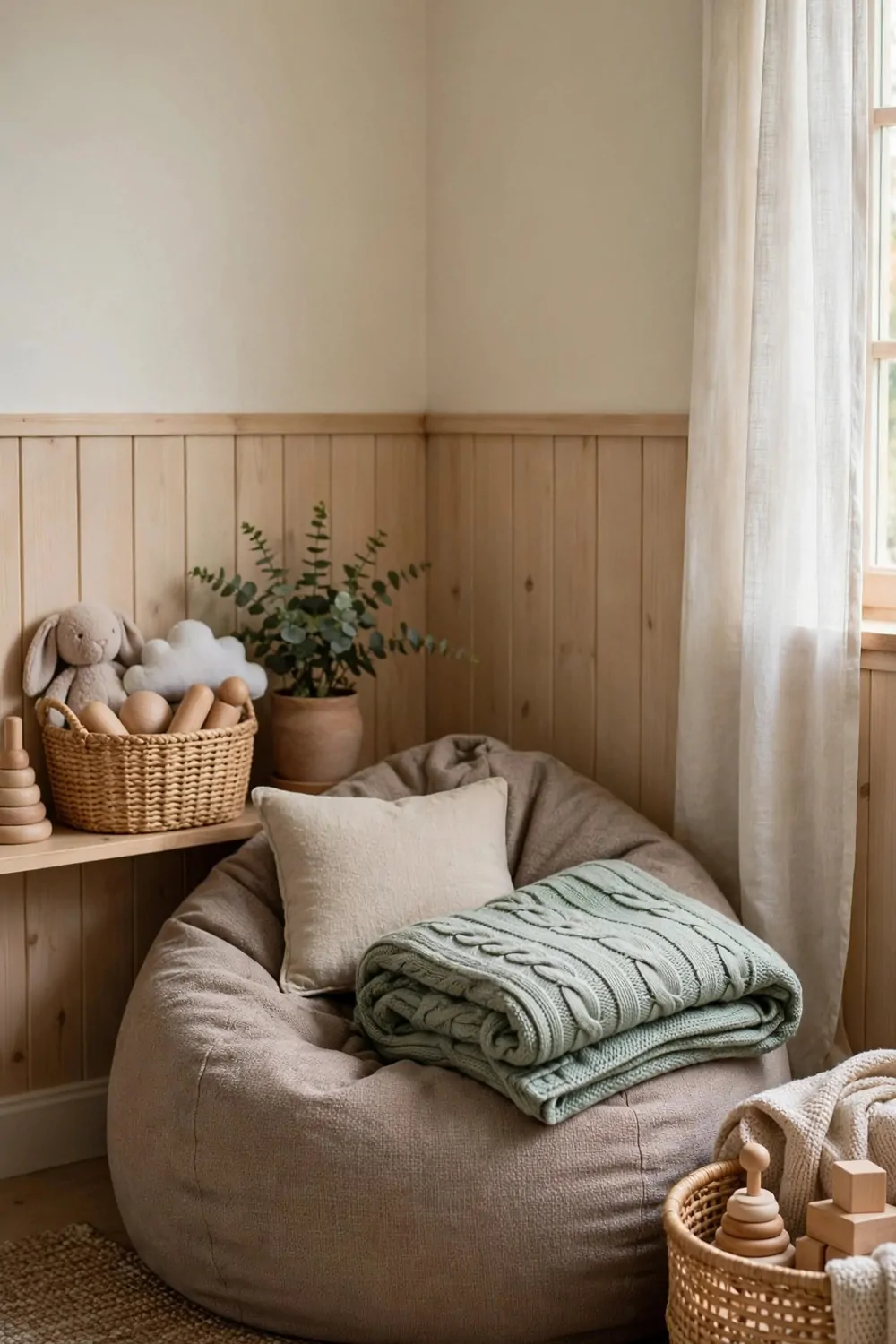
So I made a small rest nook in the quiet corner of the playroom.
A few soft cushions, a folded blanket, and a small pillow turned that corner into the coziest spot in the room. The kids curl up there with a book when they need a break.
I keep the nook away from the noisy toys so it stays calm.
You can use a bean bag or a floor cushion, whatever fits your space and your budget.
The nook also helps on busy days when the kids need a few quiet minutes before they play again.
I love that they go there on their own now, no one has to tell them to rest.
A soft corner makes the whole playroom feel warm and safe.
21. A Seasonal Toy Box in the Closet
Some toys only come out at certain times of the year.
Beach toys, winter craft kits, and outdoor games do not need to sit in the playroom all year long. They just take up room.
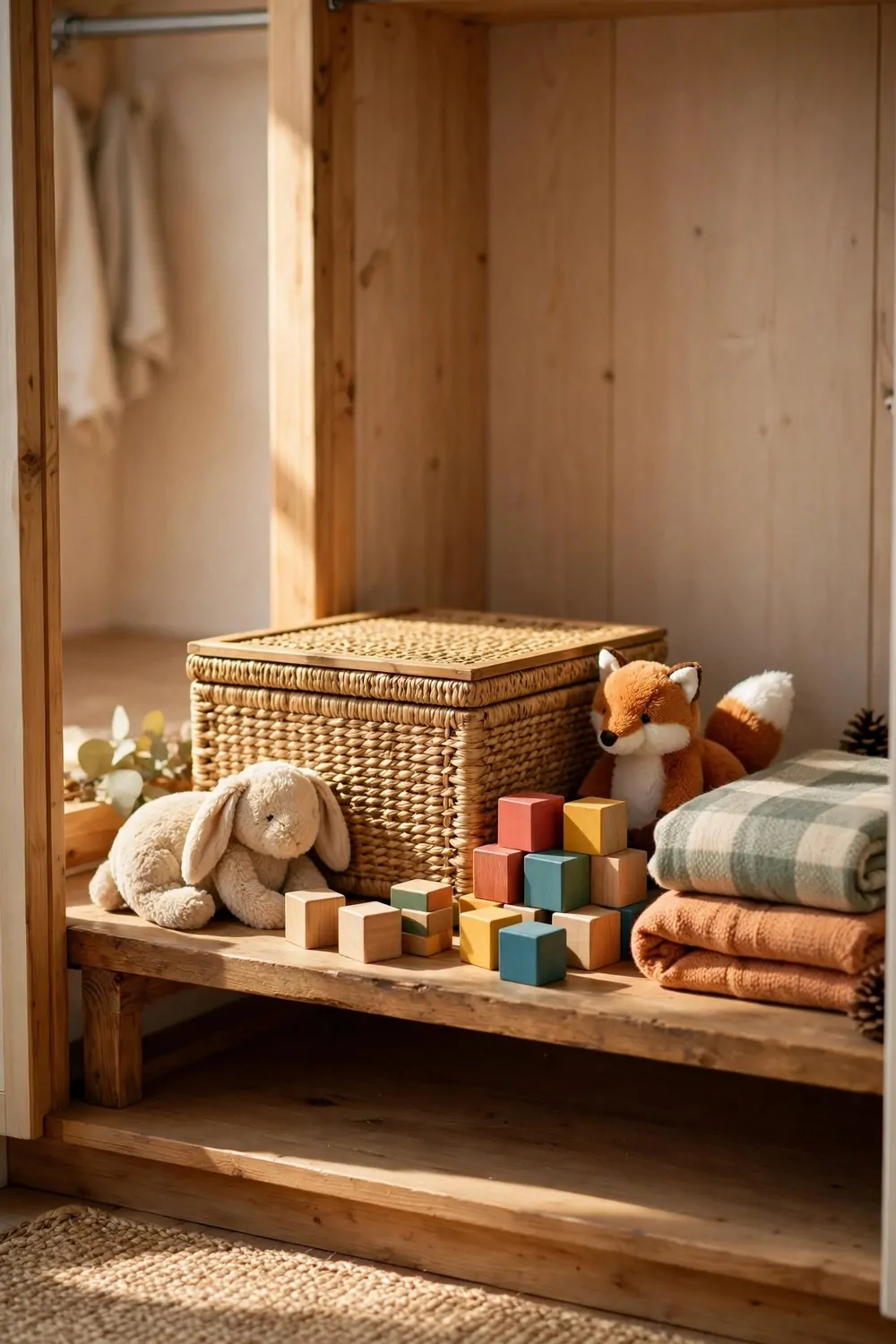
So I keep one box in the closet for toys that are out of season.
When the season changes we swap the box, and the kids feel like they got brand new toys even though they are old favorites.
I label the box with a picture so I know what is inside without opening it.
You can use any sturdy box that fits your closet shelf, it does not need to be fancy.
This one box keeps the playroom from getting crowded with things no one is using right now.
The swap day has become a fun little event in our house, and the kids look forward to it.
Put the out of season toys away and your playroom will breathe again.
22. A Sharing Shelf for Brothers and Sisters
Sharing is hard when every toy belongs to one child.
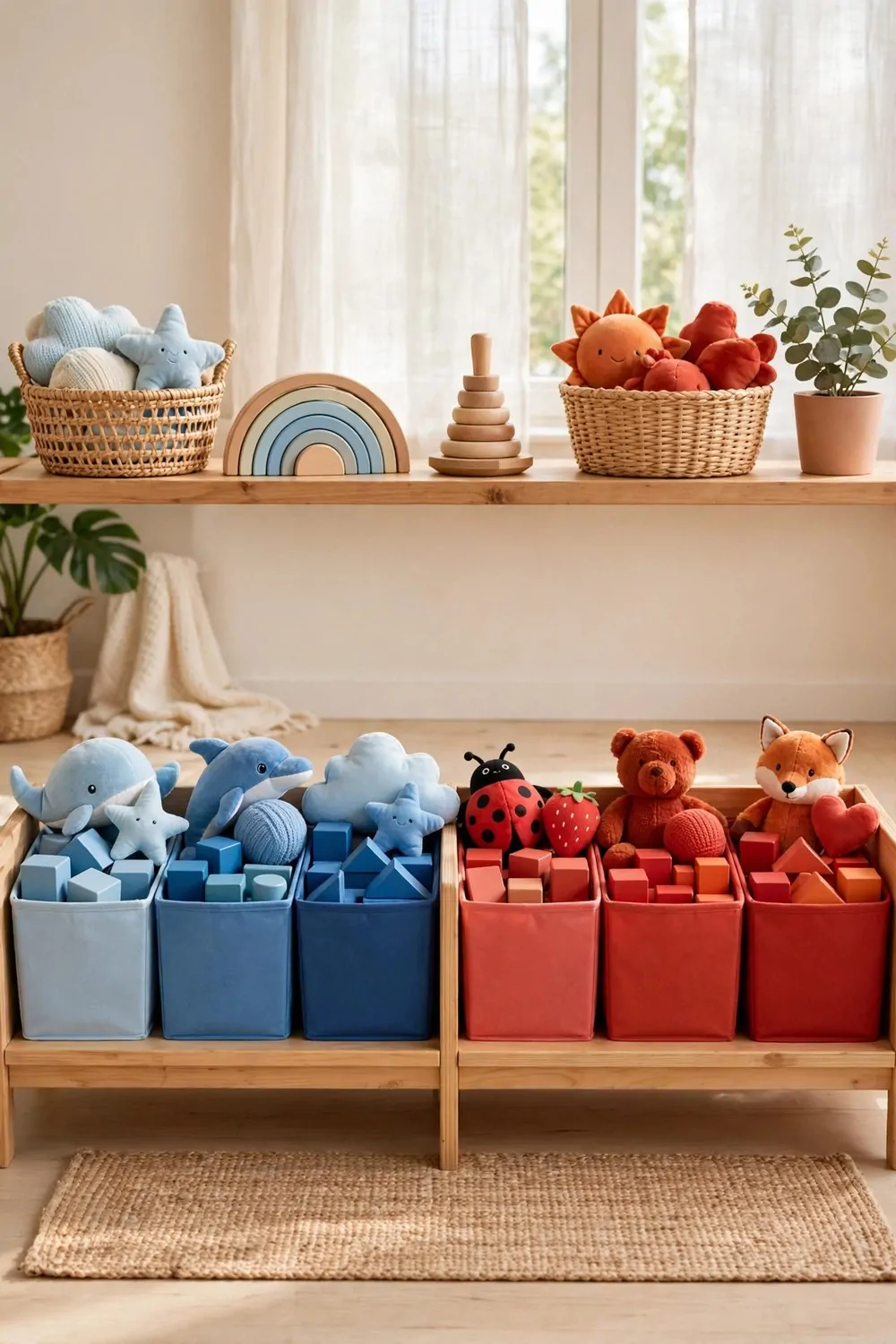
My kids argued over toys every day until I made one shelf just for sharing. Now the toys on that shelf belong to everyone.
I picked toys they both like, like blocks, puzzles, and board games.
The rule is simple, if it sits on the sharing shelf, anyone can play with it. That one rule cut the fights in half.
I let each child pick one toy to add to the shelf, so they both feel it is theirs.
You can use any low shelf in the playroom, just mark it with a small sign or a colored ribbon.
The sharing shelf also teaches the kids to take turns without me stepping in all the time.
When a toy on the shelf breaks or gets old we pick a new one together to replace it.
One shared shelf can make the whole playroom a kinder place.
23. A Clean-Up Race with a Timer
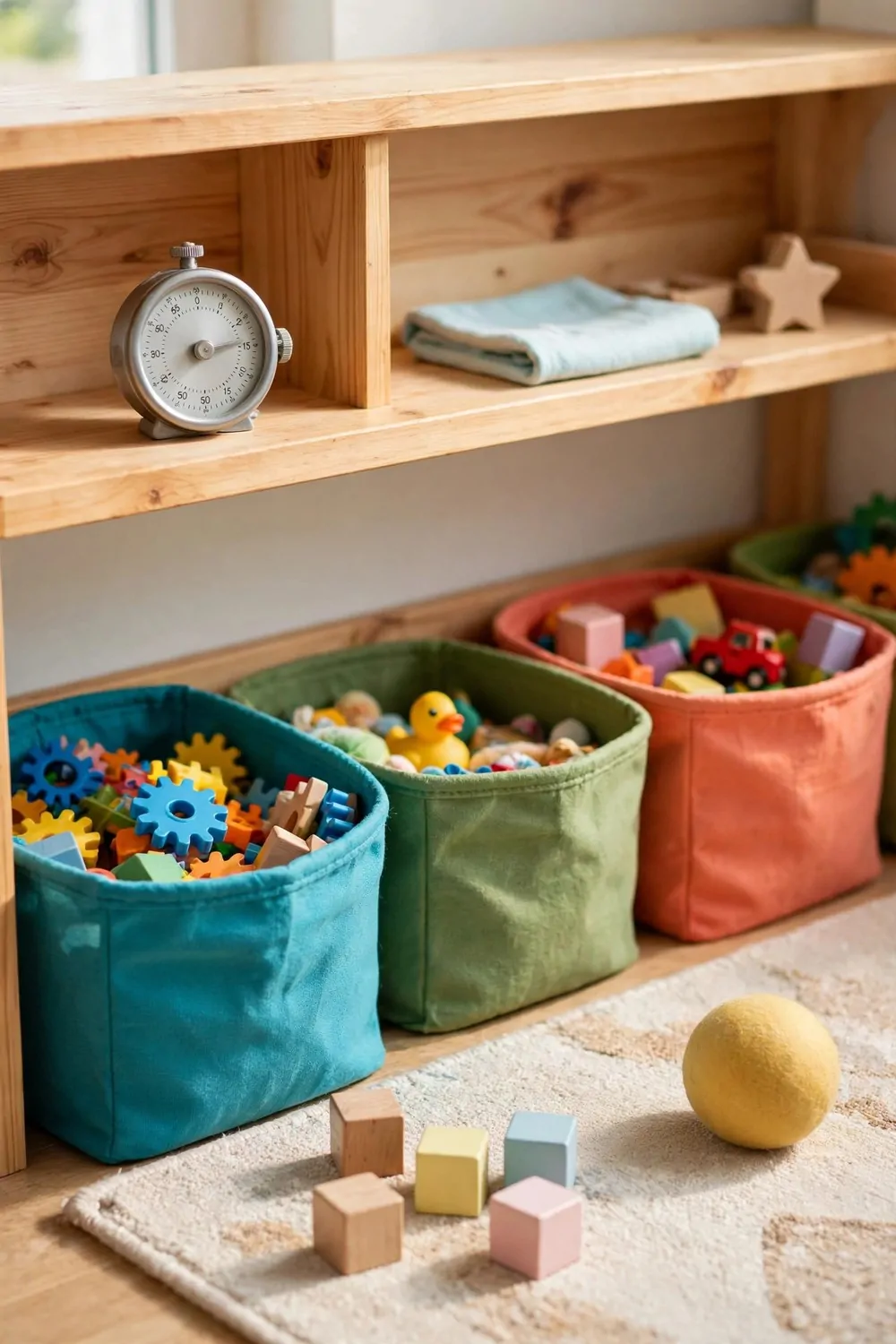
Clean up used to be the worst part of the day in our house.
The kids would groan, drag their feet, and somehow the mess looked the same an hour later. I knew I had to make it fun.
So I started a clean up race with a kitchen timer.
I set the timer for five minutes and we race to see how much we can put away before it rings. The kids run around like it is a real game.
I cheer them on and count down the last ten seconds, and they laugh the whole time.
You can use a phone timer or a sand timer, whatever your kids like best.
The race works because it gives clean up an end point, and kids love beating the clock.
Some days we beat the timer, some days we do not, but the room always looks better after.
Try a five minute race tonight and see how fast your playroom clears.
24. A Picture List to Check Before Bed
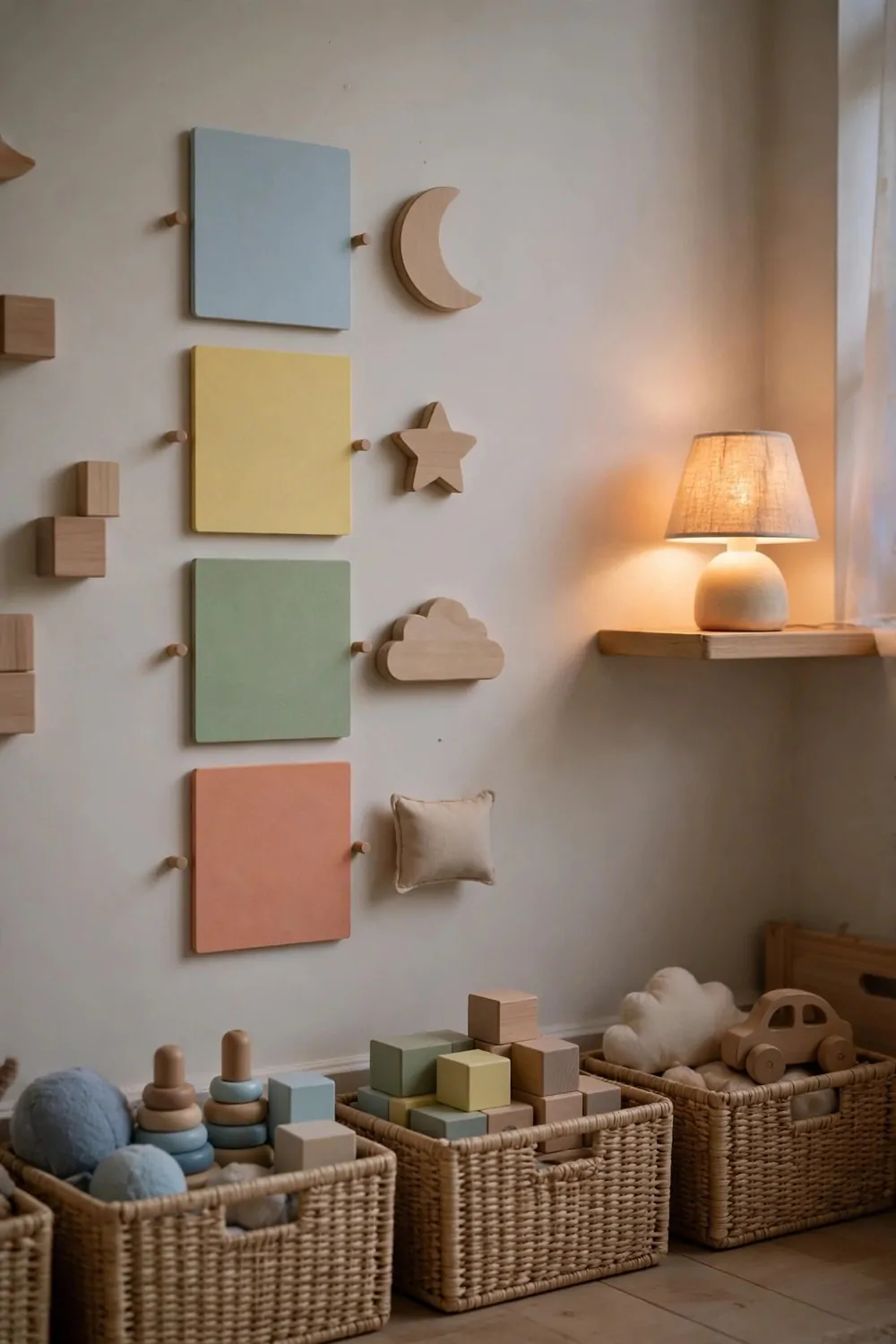
Bedtime was messy because the playroom was messy.
The kids would leave toys everywhere and then complain they could not find things in the morning. I needed a bedtime routine that worked.
So I made a picture list for the wall by the door.
The list has simple pictures, blocks away, books on the shelf, soft toys in their basket, and shoes on the tray. The kids point to each picture as they finish it.
I drew the pictures myself, but you can print them or cut them from old magazines.
You do not need words on the list, the pictures do all the talking for little kids who cannot read yet.
The list takes about five minutes each night, and the morning starts so much calmer now.
My kids love checking off each picture, it makes them feel grown up and proud.
Hang a picture list by the door and bedtime gets a whole lot easier.
25. A Small Basket for Soft Toys
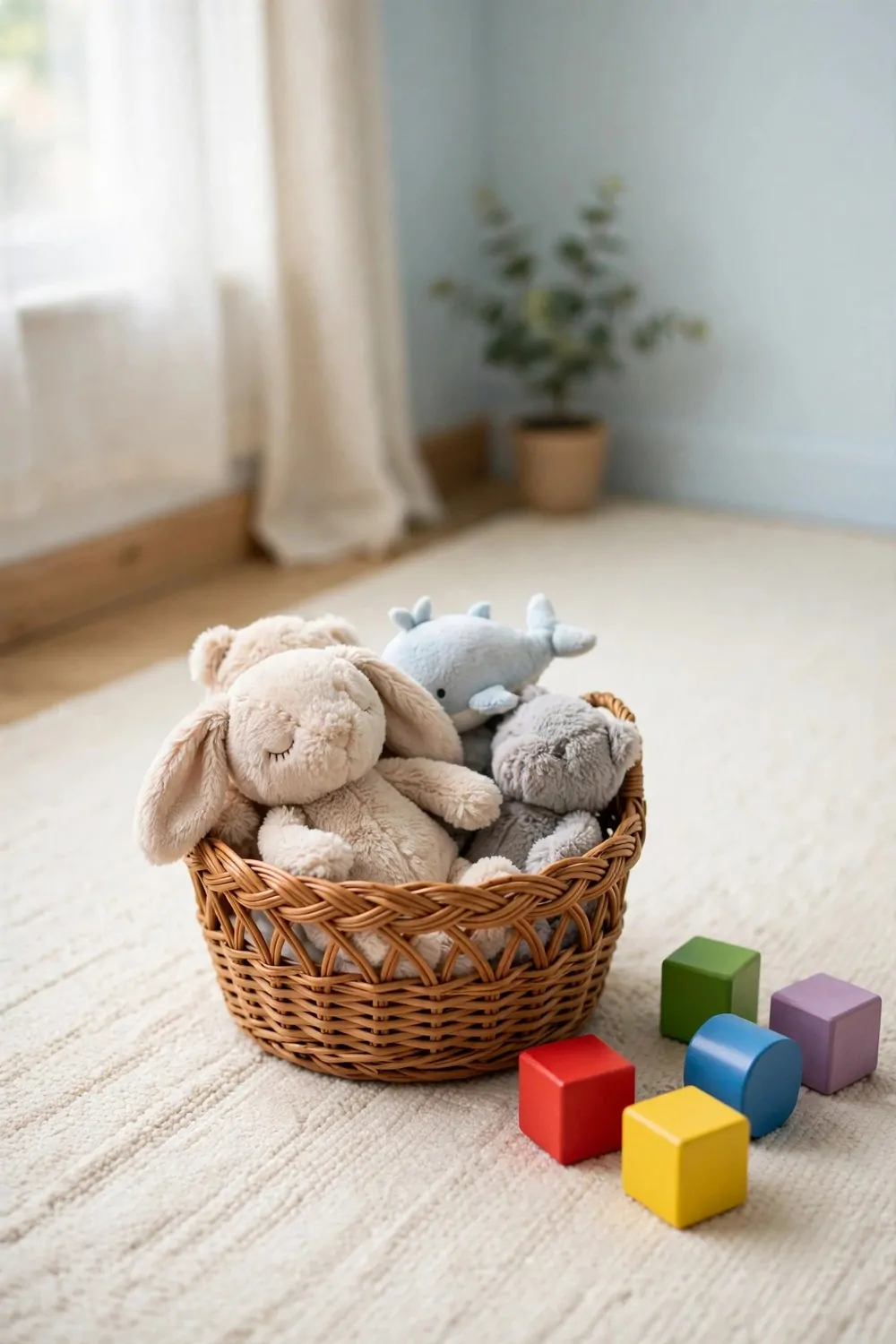
Soft toys multiply faster than any other toy in our house.
They were on the sofa, on the beds, and piled in the corners of the playroom. I could not keep up with them.
So I gave them one small basket and one rule, if it does not fit, it does not stay.
The basket sits next to the reading corner, and the kids know every soft toy sleeps there at night.
I picked a basket with handles so the kids can carry it to the sofa for cuddle time and back again.
You can use a woven basket or a fabric one, just make sure it is small enough that it fills up fast.
The size limit is the secret, because it stops the pile from growing without anyone noticing.
When the basket gets too full we pick favorites together and the rest go to a new home.
One small basket keeps the soft toy crowd under control.
26. A Toy Count at the End of the Day
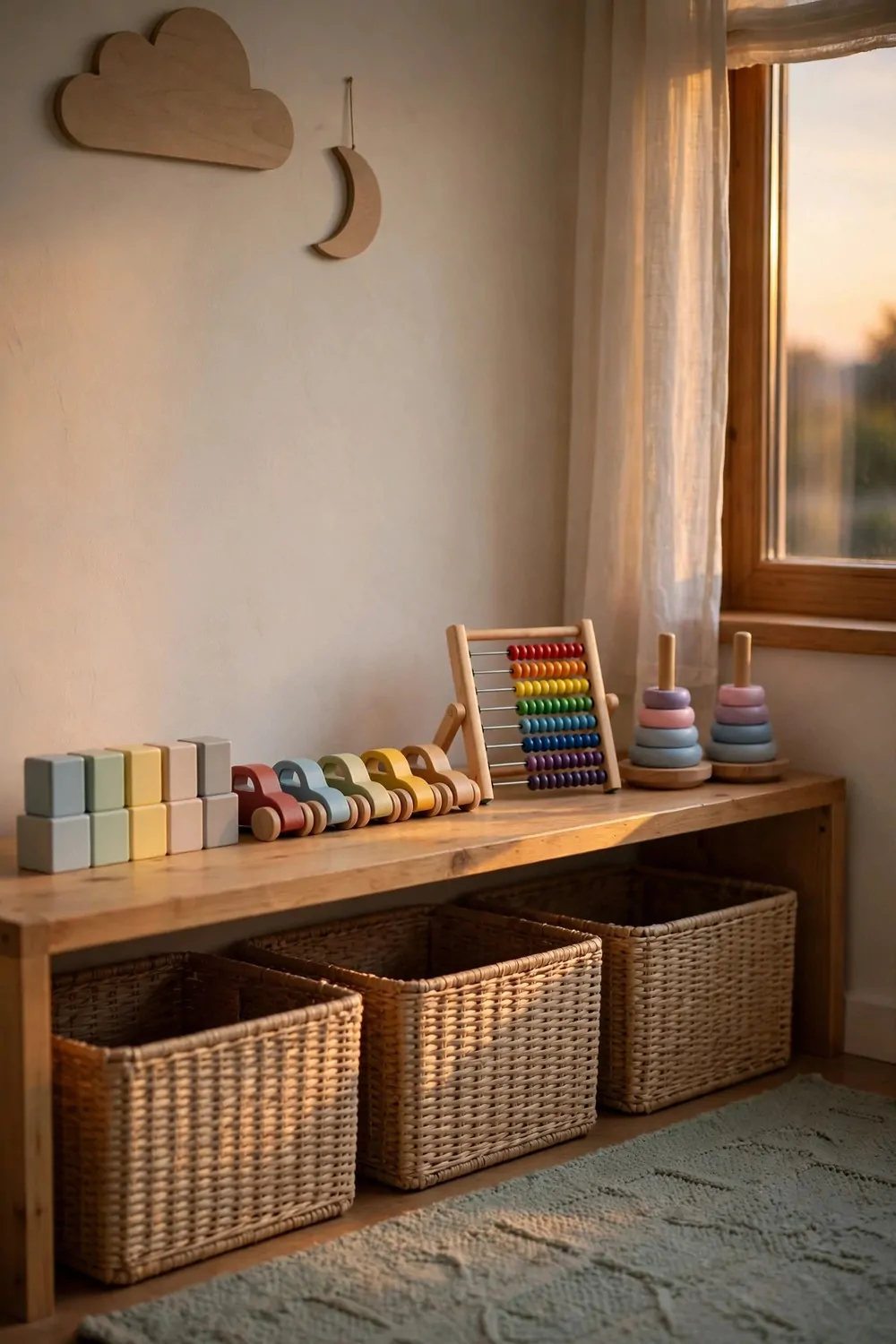
I never knew how many toys were out until I started counting them.
At the end of each day I ask the kids to count the toys left on the floor. It sounds simple, but it works like magic.
We count out loud together, one, two, three, and the kids start racing to put toys away so the number goes down.
The count turns clean up into a number game, and my kids love numbers.
I keep a little notebook on the shelf where we write down the count each night.
You can use a whiteboard or a scrap of paper, whatever is handy in your playroom.
When the count hits zero we do a little cheer, and the kids run off to bed happy.
The notebook also shows me which days are the messiest, so I know when to plan a bigger tidy up.
Count the toys tonight and watch clean up turn into play.
27. A Fresh Start Each Morning
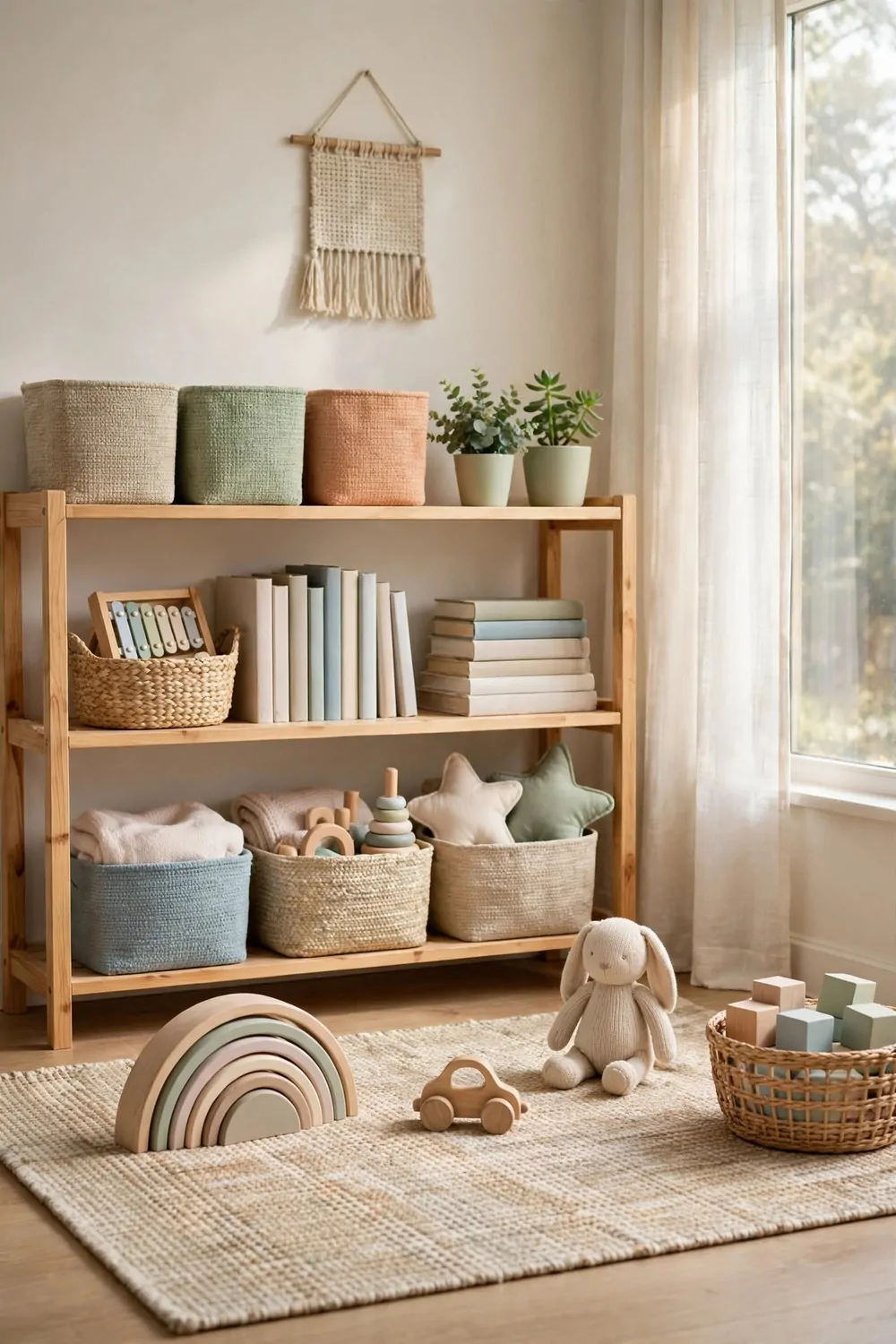
Mornings feel so much better when the playroom is already tidy.
I used to wake up to yesterday mess and the whole day felt behind before it started. That had to change.
So now we reset the room every night, and each morning starts fresh.
The kids walk in to a clean rug, neat shelves, and toys waiting in their spots. Their faces light up every time.
I do the reset with them, it only takes ten minutes and it has become our quiet time together.
You can start small, just clear the floor and straighten the shelves, that is enough for a fresh feel.
A fresh room in the morning means the kids play better and fight less over lost toys.
I keep a small plant on the shelf as our fresh start symbol, and the kids water it each morning.
End each day tidy and every morning feels like a brand new playroom.
Keep Reading
If you liked these ideas, you will love these posts too.
- 34 Toy Storage Ideas That Make Clean-Up Fast and Fun
- 24 Entryway Rug Ideas That Handle Mud and Look Good
- 28 Coat Closet Organization Ideas That End the Pile
- 21 Hallway Storage Ideas That Use Narrow Walls Well
- 33 Entryway Table Decor Ideas That Welcome Guests
- 35 Dining Room Rug Ideas That Define the Space
Pick just one idea from this list and try it this week, you will be amazed at how much calmer your playroom feels.