20 Small Home Library Design Tricks for Tight Spaces

The bookshelves were beautiful. Solid wood. A very good price. I measured the wall twice and felt very proud of myself for being so careful.
Then they arrived. And I realized I had measured the wrong thing entirely.
The shelves were fourteen inches deep. The room they were meant for was so narrow that I had to turn sideways a little to pass them. Those shelves stuck out like a boat dock. My small library plan died before a single book touched the wood.
I had to start over. I sold those shelves online at a small loss. I bought new ones. And in the process, I learned what a Small Home Library Design is actually built on. It is not about cramming more furniture into less space. It is about picking the right moves and skipping everything else.
Here are the 20 tricks I wish someone had handed me before I bought a single thing. Every one of them works in a tight space. None of them need a big room or a big budget.
1. Pick Shelves 10 Inches Deep, Not 14
This is the lesson I paid for with those fourteen-inch shelves, so it earns the first spot.
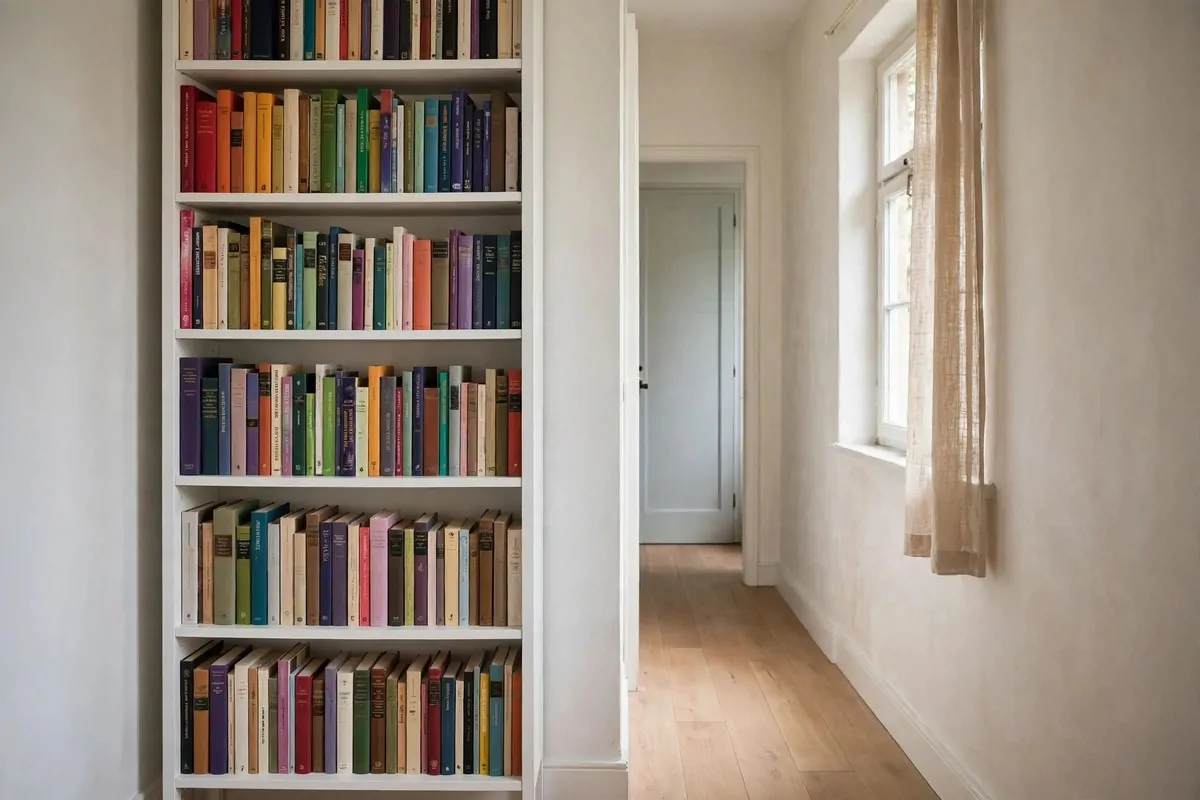
Most hardcover books are about nine inches tall and less than two inches thick. They do not need deep shelves. A ten-inch-deep shelf holds them perfectly, with room to breathe in front. Paperbacks need even less.
Deep shelves steal walking space you do not have. In a narrow room, four inches of extra depth is the difference between comfortable and constantly bumping into things. It does not sound like much on paper. In a real hallway it is huge.
Measure your walkway before you shop, not just the wall. Walk the path a book would never walk. If a bookcase forces you to squeeze, it is too deep. That is the whole test.
IKEA BILLY bookcases come in an eleven-inch depth, and there is a reason people love them for small rooms. Many other brands sell slim eleven-inch versions too. Look for the word slim or shallow in the product name.
You can also mix depths in one room. Put the slim ones where you walk. Save deeper ones for a wall you never cross. Nobody will notice the difference except your elbows.
One more thing I learned the hard way. Check the depth of the baseboard too. That little strip of trim eats an inch or two, and your bookcase will lean if you forget it. Pull the case an inch off the wall or cut a notch in the back.
Here is a quick guide I wish I had taped to my wall before shopping.
| Book type | Shelf depth you need | Notes |
|---|---|---|
| Paperbacks | 6 to 8 inches | Shallow ledges work great |
| Standard hardcovers | 10 to 11 inches | The sweet spot for most books |
| Big art and coffee table books | 12 to 14 inches | Keep these on low shelves only |
Get this one right and half your tight-space problems disappear. The rest of this list builds on it.
2. Let Your Shelves Touch the Ceiling
The cheapest way to double your storage is straight up.
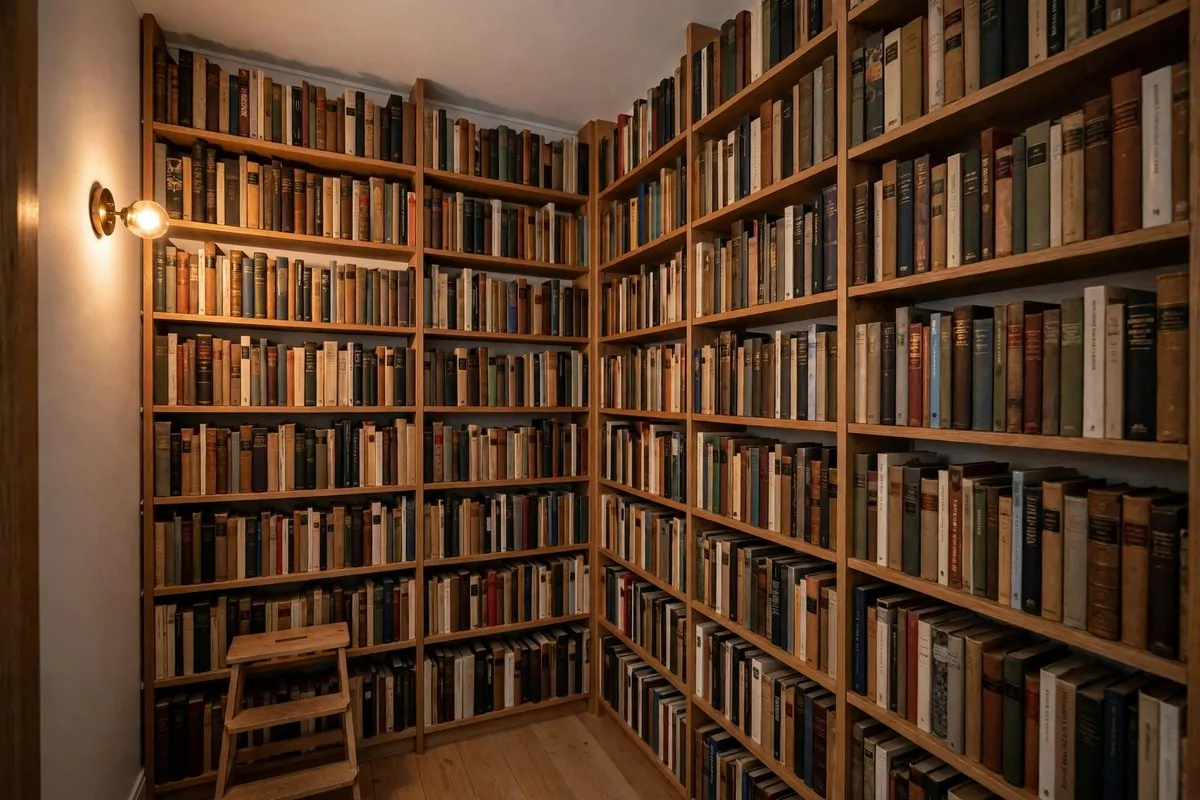
Floor-to-ceiling shelves make a small room look taller the second they go up. Your eyes travel up the rows of books and your brain reads the room as bigger. It is the oldest visual trick in decorating, and it always works.
Tall slim cases fit where nothing else fits. A twenty-four-inch-wide tower against a door frame holds more books than a wide bookcase takes in floor space. Corners love these. So do the dead walls beside windows.
Keep the top shelves for things you rarely touch. Seasonal books. The big art volumes. A few pretty boxes. Use a small step stool to reach them, and yes, it will make you feel like a proper librarian.
Anchor tall shelves to the wall. This is not optional. A loaded bookcase can tip forward if it gets bumped, especially on carpet. Two brackets into a stud take ten minutes and keep everything safe.
Paint the shelves the same color as your walls. When bookcase and wall match, the whole unit reads as built-in. It melts into the room instead of standing in front of it. That visual quietness makes small rooms feel calm.
If buying new, look for cases you can stack. Many modular systems sell single add-on units that stack on the base case. You can start short and grow taller as your collection grows.
The top of the shelf needs a purpose too. A small plant. A framed photo. A row of thin books lying flat. Treat that top line like a display shelf and the whole wall looks finished.
What I love most is that this trick costs nothing extra. A tall bookcase costs the same as a short one of the same width. You just point it upward instead of outward.
3. Frame the Doorway With Shelves
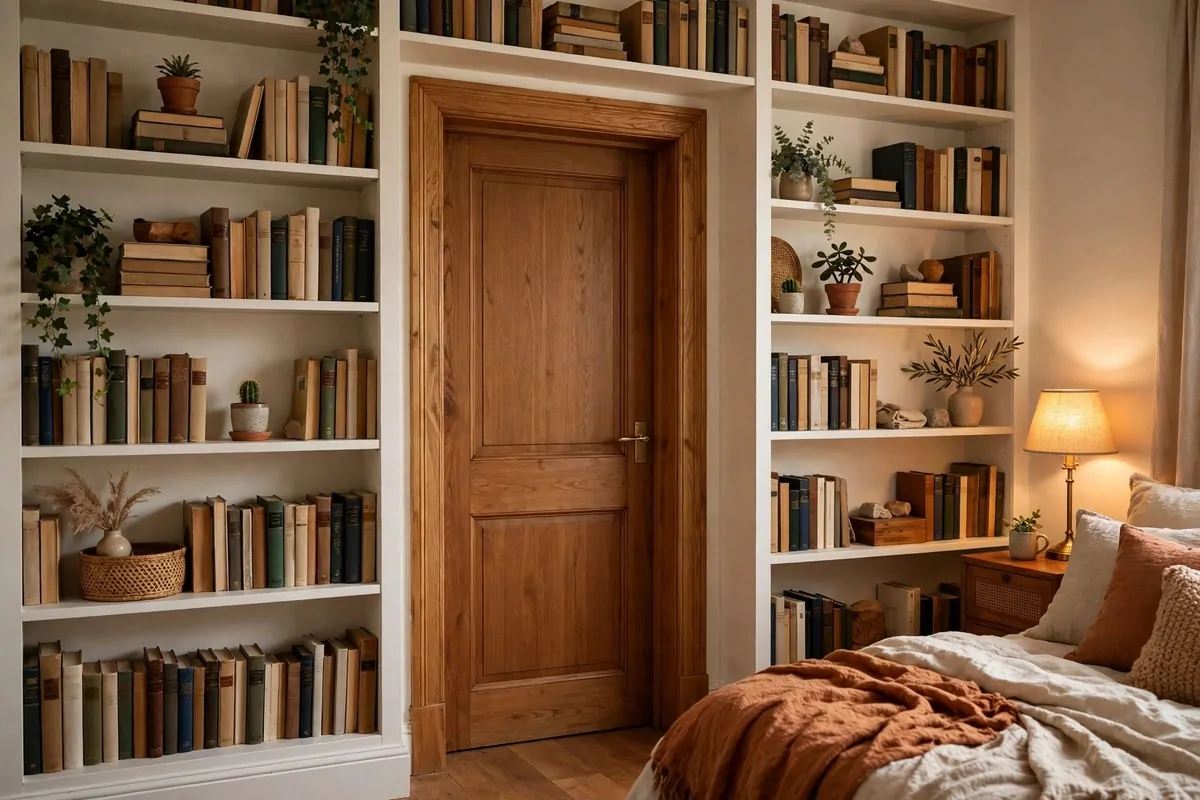
Every room has a strip of wall around the door that does absolutely nothing.
That frame of empty space is prime real estate for books. Shelves built around a doorway hold hundreds of books and use zero floor space. They also make a plain doorway look like it belongs in a fancy old house.
The simplest version uses two narrow towers on either side of the door plus one bridge shelf across the top. You can build this in a weekend with basic tools. It looks far harder than it is.
Leave enough clearance so the door opens fully. Measure the swing of the door, then add two inches. There is nothing worse than a beautiful shelf you have to step around every time you enter.
Style the top bridge shelf with lighter items. Small plants. A few framed prints. Save the heavy hardcovers for the towers where the weight sits low and solid.
This trick works best in bedrooms and small living rooms. Hallway doors work too, if the shelves stay shallow. Keep twelve inches of walking width as your hard minimum.
Paint the whole frame one color for a custom look. White or a soft cream disappears into most rooms. A dark color like deep green turns the doorway into a feature wall.
Guests always ask about this one first. It reads as architecture, not furniture. And it cost you the wall space you were ignoring anyway.
One warning from experience. Do not block the light switch. Sketch the plan on paper first and mark the switch, the vents, and the door swing. Five minutes of planning saves a weekend of regret.
4. Build Your Library Around the Window
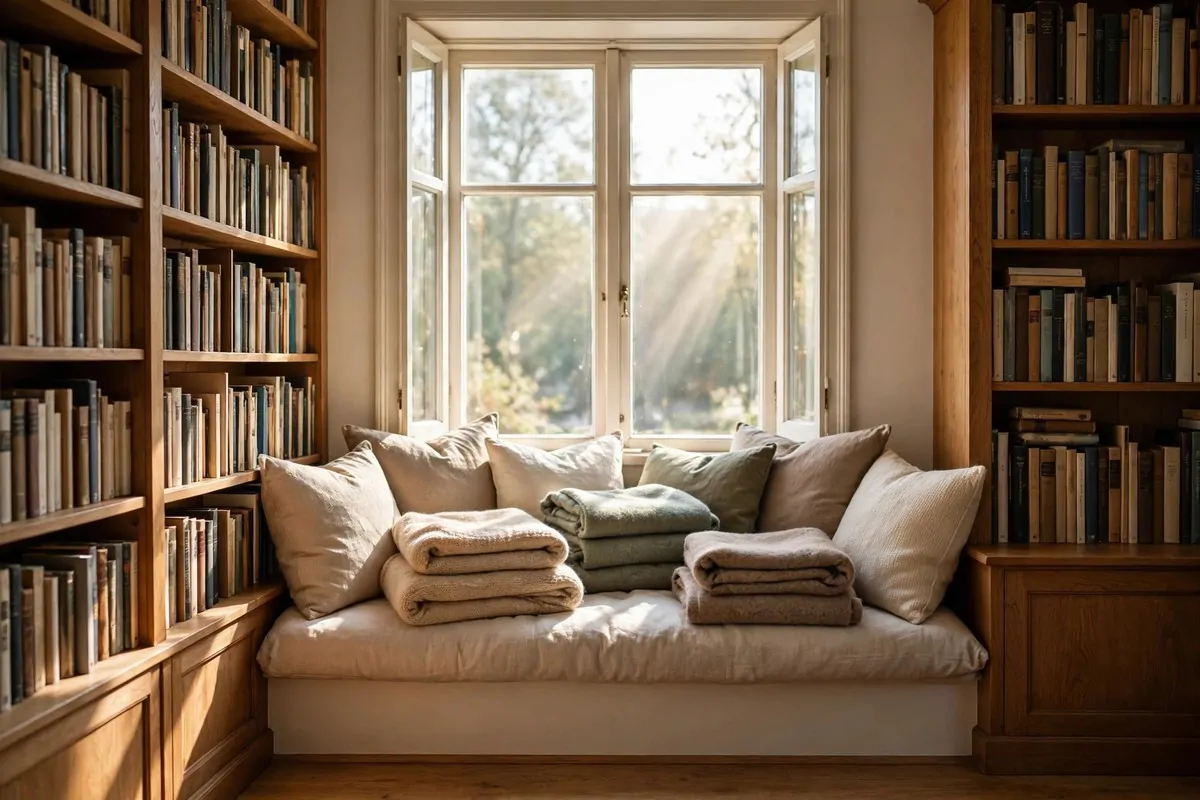
Windows are the best reading light ever invented, and they are free.
Put your library around the window and you get three wins at once. Natural light for reading. A view to rest your eyes on between chapters. And shelves that would otherwise waste a whole wall.
The classic setup is simple. Two short bookcases flanking the window. One shelf across the top. A bench or a deep cushion under the window for sitting. That is a complete library in about six feet of wall.
Add a cushion to the bench and it becomes your reading spot. Add storage baskets under the cushion and it becomes your hidden storage too. I keep blankets in mine and I reach for them every cold evening.
Protect your books from direct sun. Strong sunlight fades spines over a year or two. Use light curtains or a UV window film. Both are cheap, and the film is nearly invisible once it is on.
This setup loves a small bedroom. The wall under most bedroom windows is wasted space. A bench turns it into the coziest corner in the house.
Keep the seat deep enough to curl up on. Twenty inches is the sweet spot. Anything shallower and you will slide off your own cushion, and that gets old fast.
Side the shelves with plants if you can. Window light keeps them alive with almost no effort. A trailing plant spilling over the top of one shelf makes the whole wall feel alive.
Morning readers, this is your trick. Coffee in the window seat, books within arm’s reach, daylight doing all the work. I cannot think of a better way to start the day.
5. Turn a Closet Into a Reading Cave
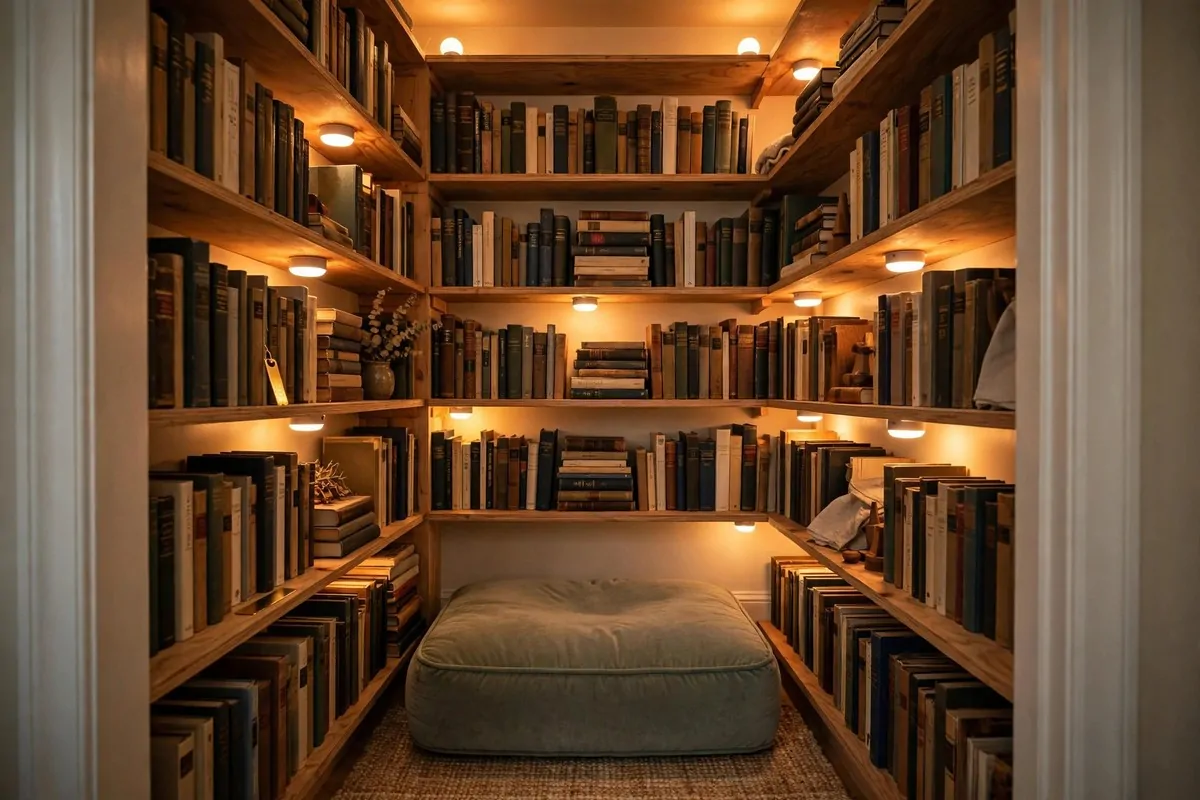
A standard reach-in closet is about two feet deep and six feet wide. That is a library waiting to happen.
Take the doors off. That single move turns a dark storage hole into an open nook. You can lean the doors against a wall for now, or donate them. The room instantly feels bigger without the door swing.
Line the back and side walls with shelves. Cut simple boards to fit, or use the closet’s own wire shelves if it already has some. A few brackets and a level are all you need. Paint everything one light color first.
Add a light. Closets are dark by design, which is the opposite of what books need. Battery puck lights under each shelf are easy and need no wiring. A small plug-in lamp works too if there is an outlet nearby.
Put something soft on the floor. A low ottoman. A thick rug. A floor cushion. Now the closet is not just storage. It is a hideaway. Pull a curtain across the front and you have a reading cave.
I have seen people do this in rentals with tension rods and command strips. Nothing permanent. Everything comes down clean on moving day. Landlords never know it was a library.
Kids love this one the most. A closet library feels like a secret clubhouse. Put their books at their height and they will climb in on their own.
The best part is the cost. A few boards, some brackets, a string of lights. You can finish the whole project in one Saturday for less than a nice dinner out.
Your closet is not too small for a library. It is the perfect size. Small spaces make the coziest reading spots, and this one was hiding in your wall all along.
6. Use the Space Under the Stairs
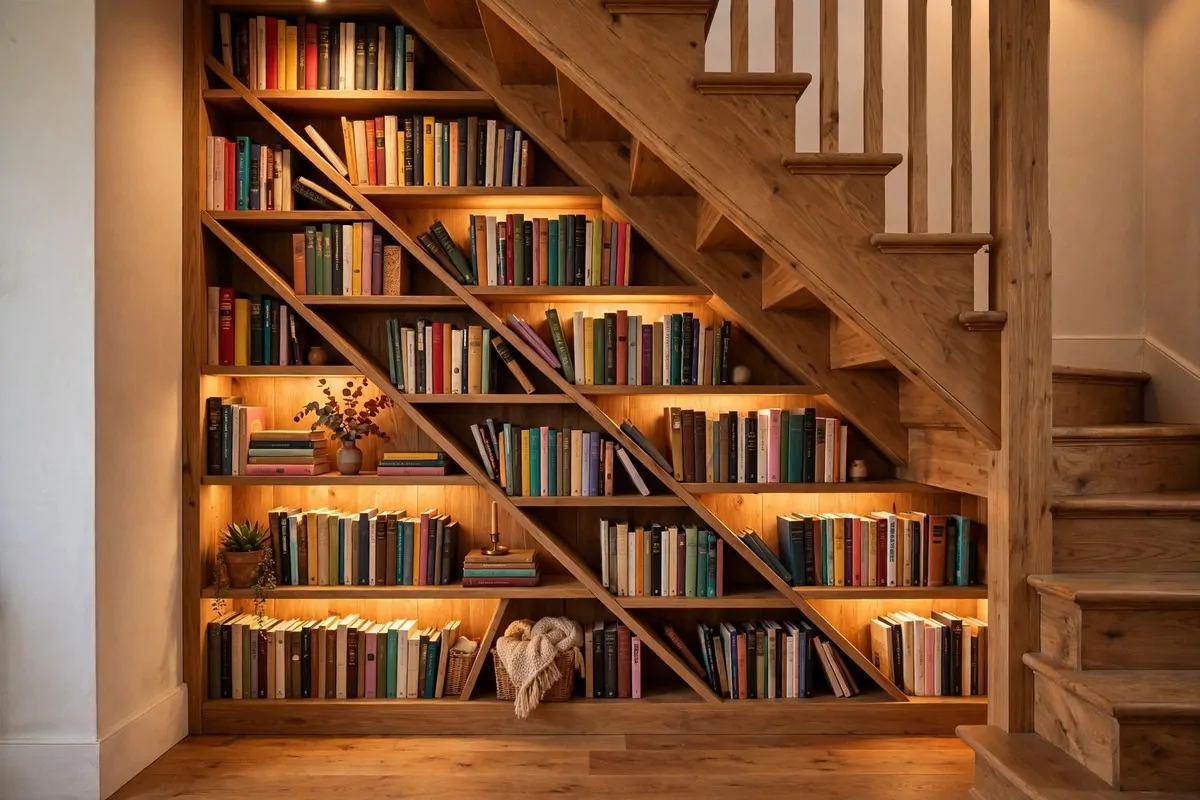
The triangle under the stairs is the most wasted space in most homes.
It collects dust. It hides the vacuum cleaner. It does nothing useful for years. And it is shaped exactly like a bookshelf if you look at it right.
The trick is to follow the slope. Cut your shelves to match the angle of the stairs, tallest on one end and shortest on the other. It looks custom because it is. Your house gave you the shape.
If cutting angled shelves sounds hard, use a different trick. Put a short bookcase at the tall end. Add floating shelves that step down along the slope. Stack a few crates at the low end. Same idea, much easier.
The low end is perfect for kids’ books or storage baskets. Little hands reach it easily. Baskets hide the clutter that always gathers in these spots.
Add a light strip under each stair tread. It makes the nook glow at night and turns the whole staircase into a feature. Battery lights with a remote are the easiest option.
Watch out for the depth. Under-stair space gets shallow fast as it slopes down. Measure at the point where the ceiling is at least three feet high. Anything lower is better for baskets than books.
This spot stays cool in summer, which books like. Keep it dry though. If the area feels damp, fix that before the books move in. A small dehumidifier or better ventilation solves most cases.
I think of this space as free square footage. You already own it. You just never used it. Give it shelves and it pays you back every single day.
7. Wrap Two Walls Into a Corner Nook
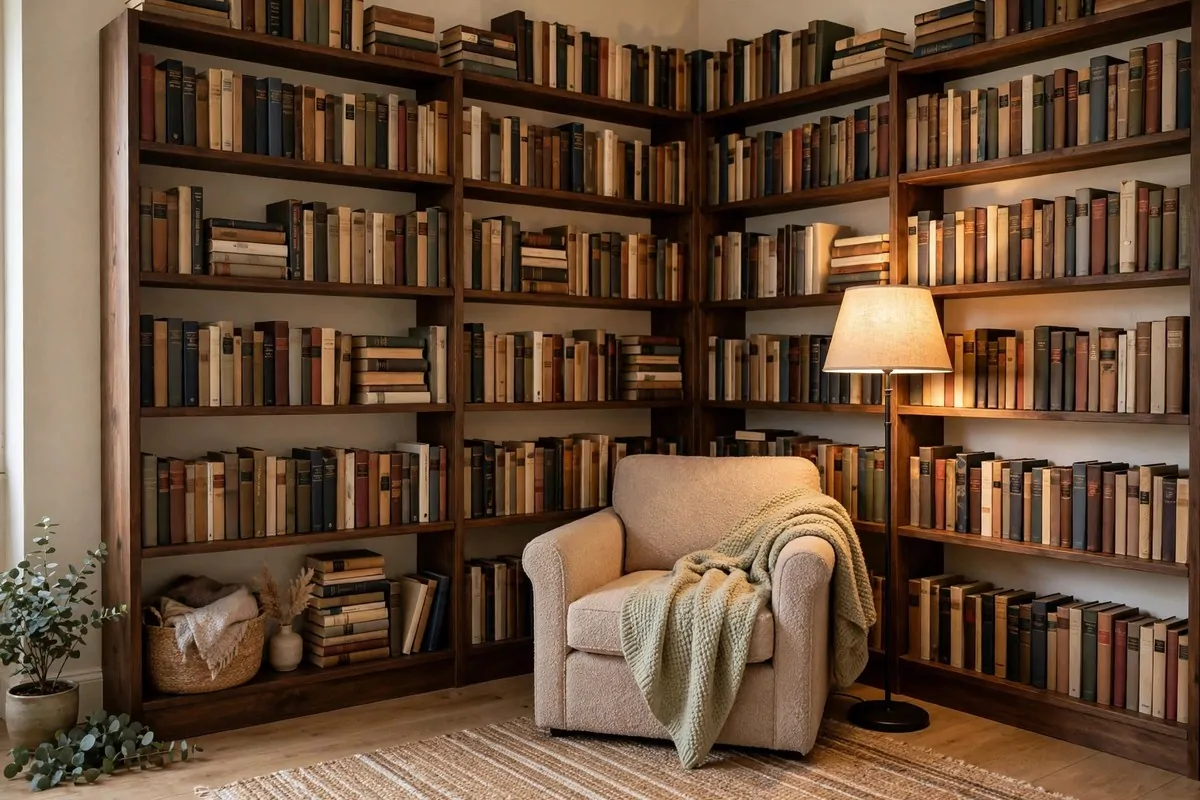
Corners are the hardest-working spots in a tight room, and most people waste them.
Two bookshelves meeting at a right angle wrap you in books. Sit a chair in the diagonal spot facing in, and you have a cocoon. The open center of the room stays clear, so the whole space still breathes.
You do not need custom corner furniture. Two ordinary bookcases pushed together do the job. Put a small end table where they meet to hide the gap and hold your drink.
The corner chair should be low and small. A slipper chair. A big floor cushion. Something you can curl into. A huge armchair will eat the space you just saved.
Light the corner from the side. A floor lamp arched over the chair gives perfect reading light without a harsh overhead. The lamp also makes the nook look intentional, like it was always meant to be there.
Leave the shelves near the chair for your current reads. The books you are actually reading belong within arm’s reach. The rest can live further out. This tiny habit makes the nook feel personal fast.
Add a throw blanket and one small pillow. That is all the decor this corner needs. Anything more crowds it. The books are the decoration here.
This layout works in living rooms, bedrooms, and even wide hallways. Anywhere two walls meet, a library can grow. Corners are free. Use them like you mean it.
8. Hang Floating Shelves Instead of Bookcases
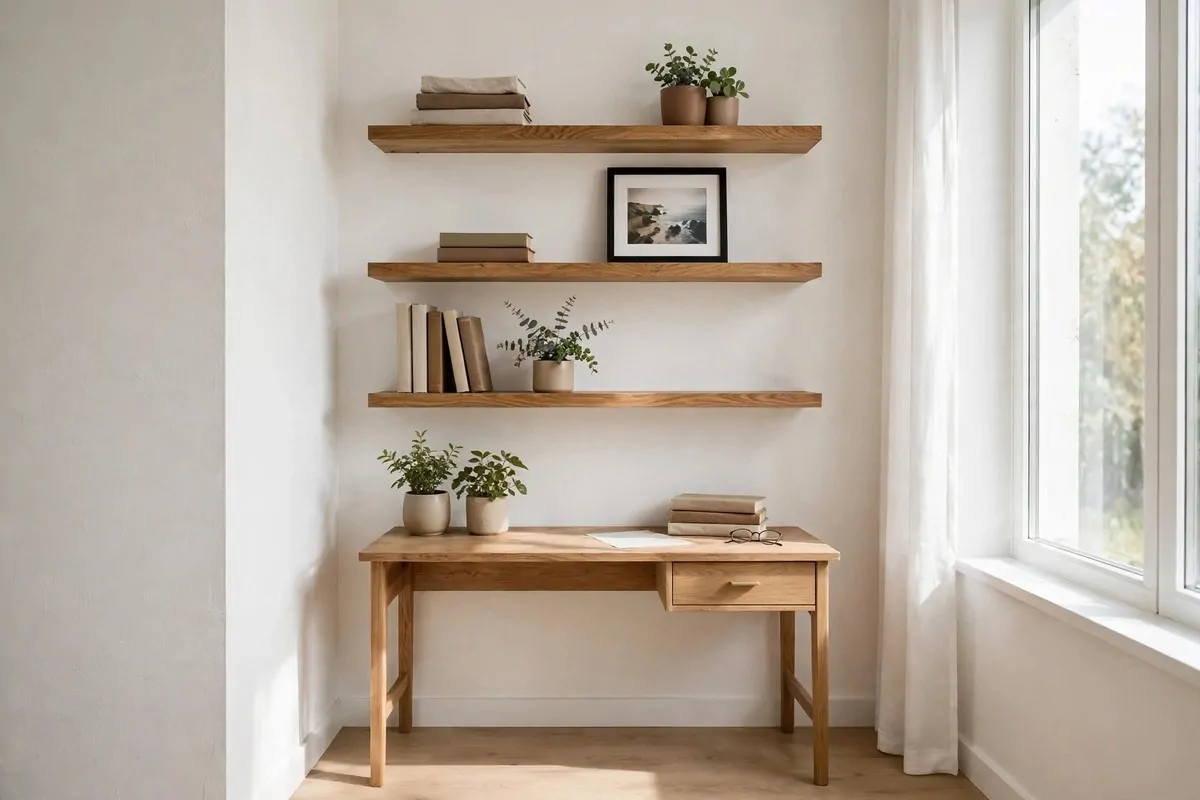
Floating shelves keep your floor completely clear, and clear floors make rooms feel twice as big.
No legs. No base. No heavy box blocking the wall. The books seem to hover, and underneath them you see floor. Your eye reads that floor and thinks space. It is simple physics for your brain.
These work best above things that already exist. Above a desk. Above a sofa. Above a radiator you cannot move. Dead wall space becomes a library without adding a single piece of furniture.
Use real wood or thick MDF boards, at least an inch and a half thick. Thin boards sag under books. Books are heavy. A sagging shelf looks sad and can fail. Spend a little more on thickness and sleep easy.
The brackets matter more than the board. Hide them inside the shelf for the floating look, or use strong L-brackets painted the wall color. Either way, screw into studs. Drywall anchors alone will not hold a shelf of books.
Stagger the shelves for a modern look. One long, one short, one long. It keeps the wall from feeling like a ladder. Or line them up in a tight grid for a calmer, classic feel.
Style every third shelf with something that is not a book. A small plant. A framed photo. A candle. The breathing room makes the books look better, which sounds backwards but is true.
Floating shelves also fix rental problems. Fewer holes than a bookcase’s bulk, and they come down in minutes. Patch the holes with filler and you are done.
Start with one wall. Most people get hooked and do a second wall the next weekend. I am not saying that is what happened to me. It is exactly what happened to me.
9. Carve Shelves Into the Wall Itself
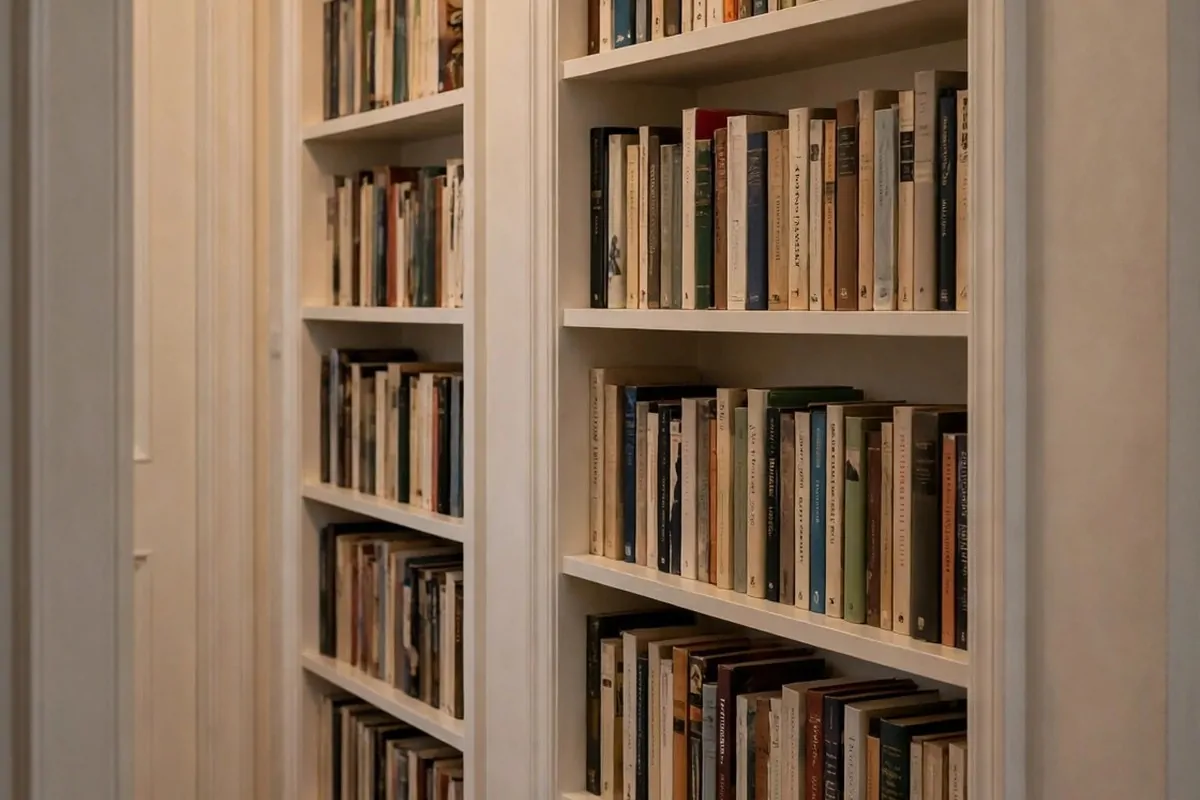
Recessed shelves are the sneakiest trick on this list. They store books inside the wall instead of in front of it.
The wall between studs is about three and a half inches deep. That is enough for paperbacks and small hardcovers. Cut out the drywall between two studs, add shelves, trim the edges, and you have a bookcase that takes zero floor space. Zero.
This works best in hallways and tight landings. Those walls are usually too narrow for any furniture. A recessed shelf turns a blank wall into a tiny library nobody has to squeeze past.
Never cut into a wall without checking what is inside. Wires and pipes hide in there. A cheap stud finder with wire detection is worth every penny. If you are unsure, ask someone who knows.
Renters can fake this look. Hang a shallow picture-ledge shelf and paint it the wall color. From across the room it reads almost the same. Almost is enough sometimes.
The trim makes it look built-in. A simple frame of casing around the opening costs little and makes the whole thing look like it was always there. Caulk the edges and paint it all one color.
Line the back of the niche with a contrasting color or wallpaper for a custom touch. Dark green or navy behind pale books looks expensive. It is the cheapest wow in this article.
Keep the shelves short. Each section between studs is about fourteen inches wide. A run of three or four sections holds a surprising number of books in a very small footprint.
If the idea of cutting drywall scares you, hire it out. A handyman does this in an afternoon. The cost is small compared to the space you gain, and you get to skip the dust.
10. Split the Room With a Bookcase
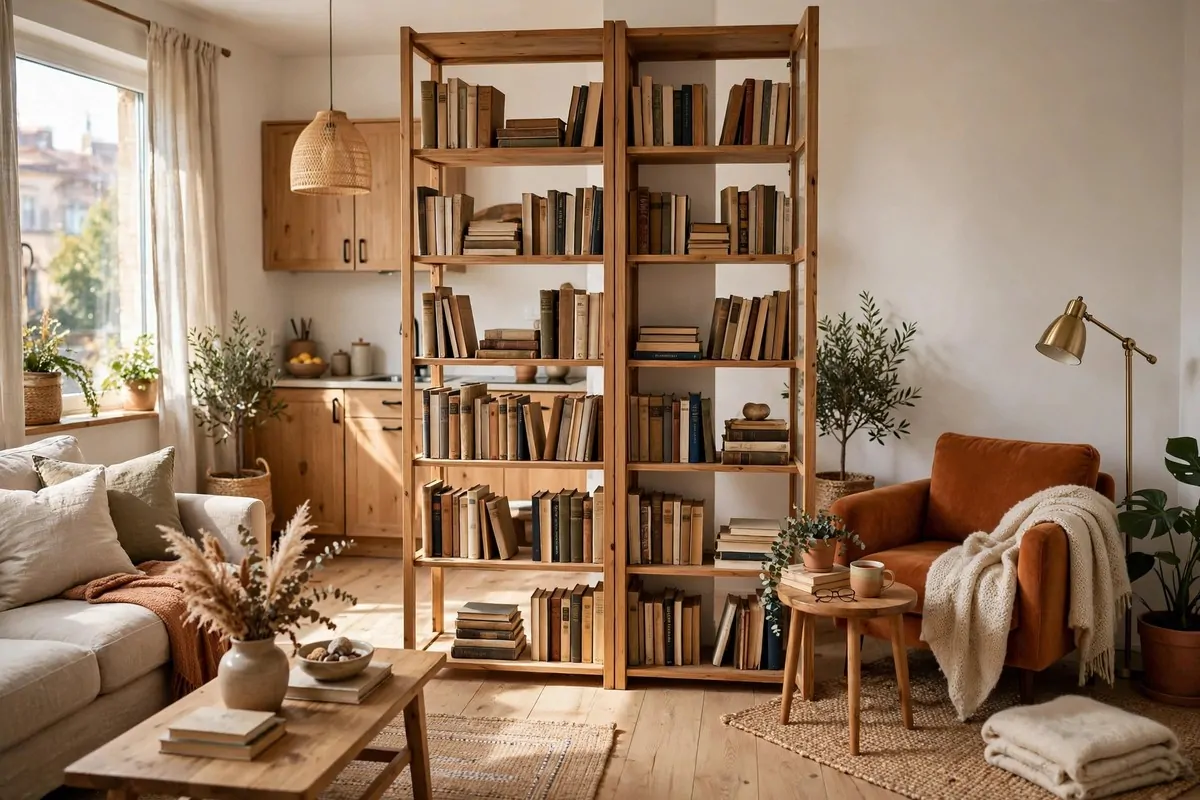
A backless bookcase is a wall that holds books. Use one and a single room becomes two.
In a studio or a shared living room, a low bookcase marks the reading zone without closing it off. Light passes through. Air passes through. You get privacy for reading without building anything permanent.
Pick a backless or open-back design. The books show from both sides, which looks great from every angle. Solid backs make the room feel cut in half. Open backs keep it breathing.
Height matters. Waist-high dividers keep sightlines open and rooms feel connected. Tall dividers give real privacy but can darken a small space. For most rooms, four to five feet is the sweet spot.
Anchor it. A bookcase standing in the middle of a room has nothing to lean on. Bracket it to the floor or use furniture straps to the wall nearby. A wobbling divider is a falling divider waiting to happen.
Style both sides. This bookcase has two faces now. Put books and a plant on each side. The reading side gets the lamp. The living side gets the pretty objects. Both sides look finished.
This trick is gold for renters. No construction. No landlord fights. When you move, the divider becomes a regular bookcase against a new wall. It works twice.
Measure your walkways around it. You need at least thirty inches of path on each side. Less than that and the divider becomes an obstacle course instead of a room feature.
I used this in my old apartment to carve a reading corner out of the living room. It took one afternoon. My roommate stopped complaining about my reading lamp. We both won.
11. Add a Small Rolling Ladder
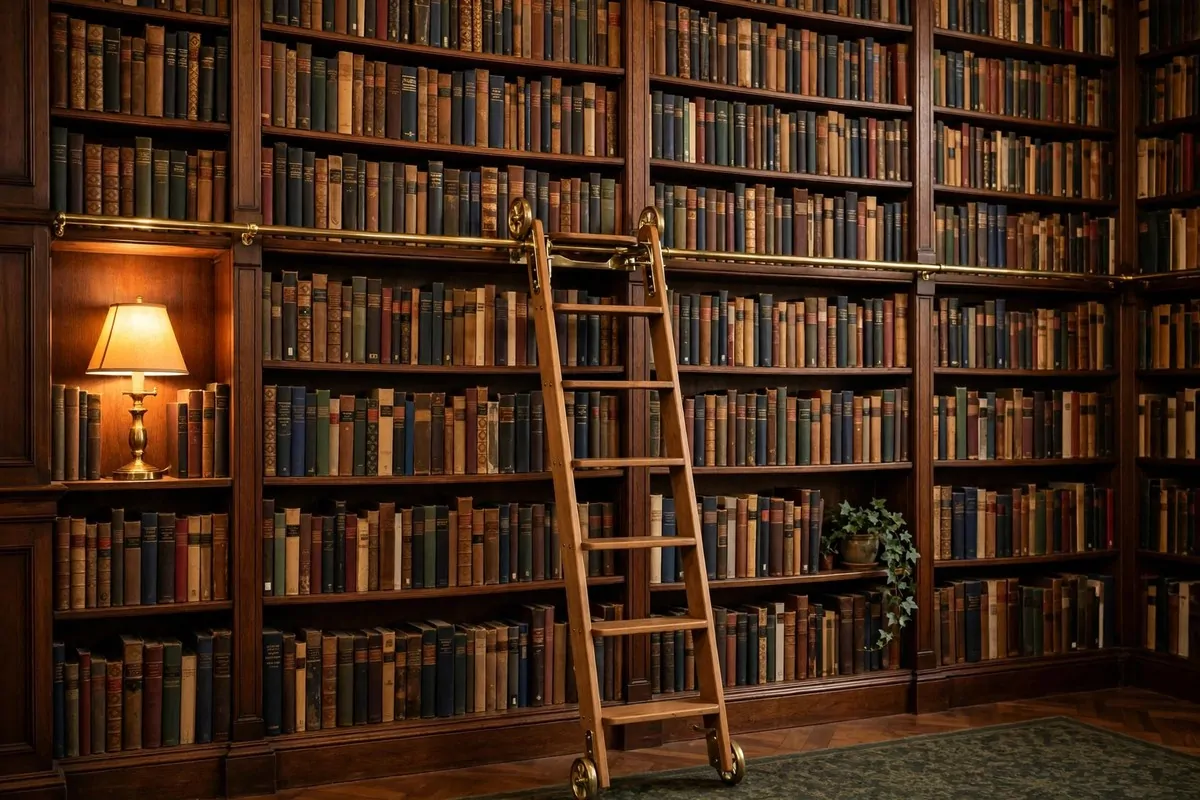
Nothing says library like a rolling ladder, and it is not just for show.
Tall shelves are useless if you cannot reach the top. A ladder turns the highest shelf from decoration into real storage. That is roughly a third more usable space on a floor-to-ceiling wall.
You do not need the big brass kind from old movies. Small rolling ladders for home libraries mount on a rail and roll side to side. They are slim, light, and much cheaper than you would guess.
Measure twice. The ladder needs a rail the full width of the shelves, mounted solidly into studs. The ladder itself hooks over the rail. When not in use, roll it to the end. It becomes part of the look.
If a rolling ladder is too much, use a folding step stool. The two-step kind folds flat and hides behind a curtain or in a gap. It is not as charming, but it reaches the same shelf.
Keep heavy books low either way. Ladders are for grabbing, not for hauling. Put the big coffee-table books on the middle shelves where you can lift them safely with both feet on the floor.
Kids should not use the ladder unsupervised. This sounds obvious, but ladders are fun and kids notice fun. Store the rolling ladder horizontally or in another room if little ones visit.
The ladder also forces good habits. When reaching is easy, you actually use your whole collection. When it is hard, the top shelf becomes a graveyard of books you forgot you owned.
Even a fake decorative ladder adds charm. Lean a small wooden step ladder against the shelves. It reads as library instantly. Just do not climb the decorative one.
12. Hide the Books Behind Sliding Panels
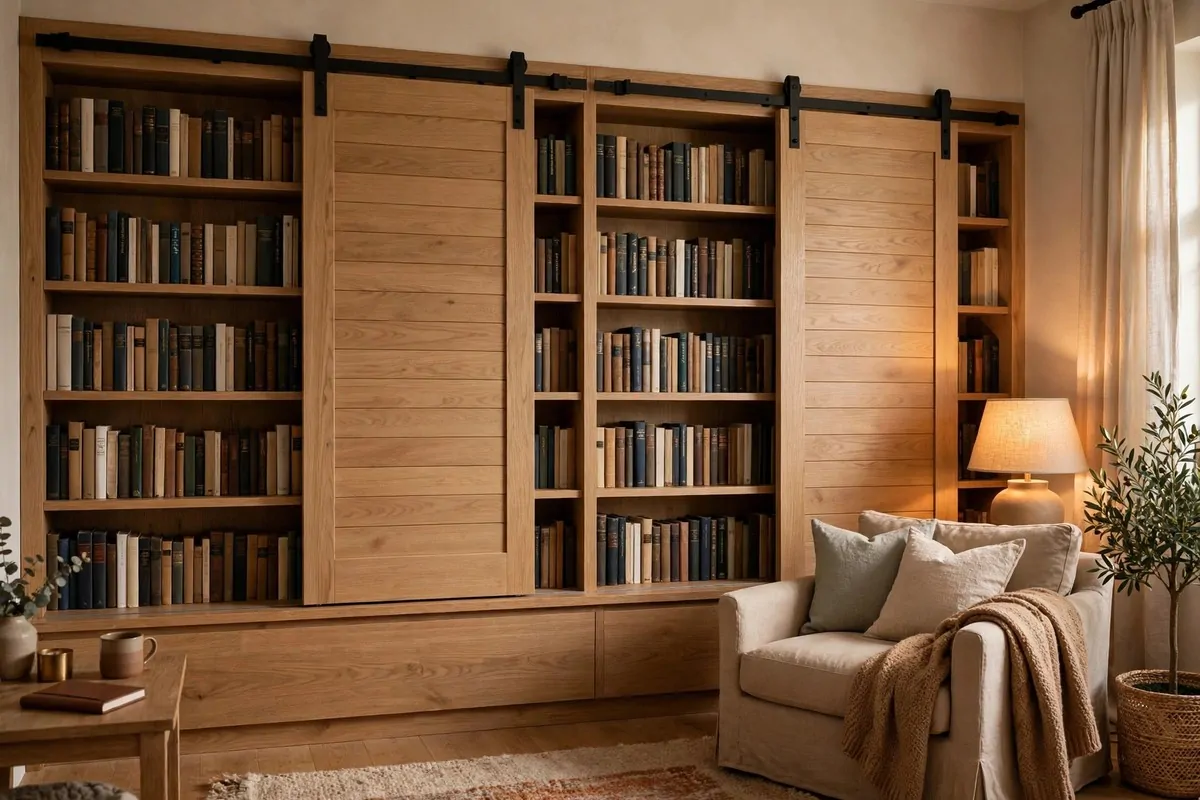
Sometimes the tidiest library is one you can close.
Sliding panels in front of bookshelves hide visual clutter in one motion. They protect books from dust and sun. And when you slide them open, the reveal feels like a magic trick. Guests love it.
You can build these with barn-door hardware and flat panels of plywood or MDF. The hardware kits are standard and cheap. The panels just need to be flat, light, and painted nicely.
Use two panels on one track so they slide past each other. One open, one closed, and you always have access to half the shelf. Or hang them on double tracks for full access.
This is perfect for rooms that do double duty. A bedroom library that becomes a clean bedroom. A living room library that hides before guests arrive. The panels give you a tidy facade on demand.
Pick panel materials that match your style. Painted wood for classic. Cane webbing for airy. Mirrored panels for tiny rooms that need more light. Fabric panels for soft texture.
The hardware needs solid mounting. Sliding panels pull sideways on their track, so the track must hit studs. Check the level twice. A track that is off by a little makes panels that stick every time.
Leave a finger gap. Panels need a small pull or a cutout to grab. A round hole drilled near the edge works and looks clean. Or add small cup pulls like on old drawers.
I did not expect to love this one as much as I do. There is something deeply satisfying about sliding the books away at the end of the day. The room exhales. So do I.
13. Try a Rotating Book Tower
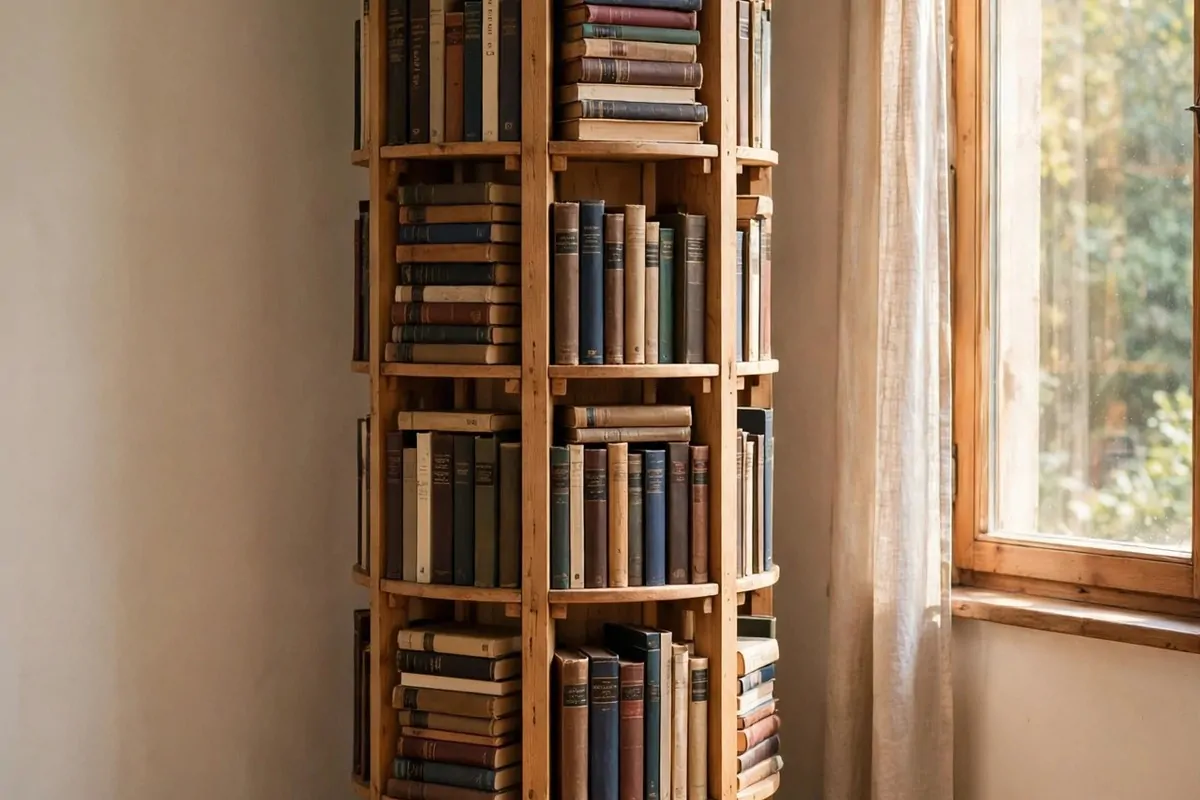
A rotating book tower spins on a lazy-Susan base and holds books on all four sides. It fits in two square feet of floor.
Spin it and you get a whole bookcase worth of storage in a corner. Corners are dead space anyway. A tower turns one into the hardest-working spot in the room.
These hold more than they look like. Four sides of shelves, five or six levels high. That is hundreds of books in a footprint smaller than a dining chair.
Buy one ready-made or build one. The DIY version is a square column on a heavy-duty lazy Susan bearing. Plans are all over the internet, and it is a satisfying weekend build if you like that kind of thing.
Weight is the thing to watch. Books are heavy, and a tall tower is top-heavy. Keep the heaviest books on the bottom two levels. A wide base keeps it stable. Test the spin before you fill it completely.
Kids adore these. Spinning shelves make choosing a book feel like a game. Put their books on the tower and watch what happens. Reading time gets easier without any nagging.
They also work in odd spots. The gap between a sofa and a wall. The corner of a home office. The end of a hallway. Anywhere a flat bookcase would stick out too far.
Style one side with pretty books and objects. When guests come, spin that side forward. It becomes a display piece. The messy study guides can hide in the back.
I measured mine once out of curiosity. Forty books per side, four sides, five levels. That is eight hundred books in two square feet. Numbers like that make my storage-loving heart very happy.
14. Sit on Your Storage
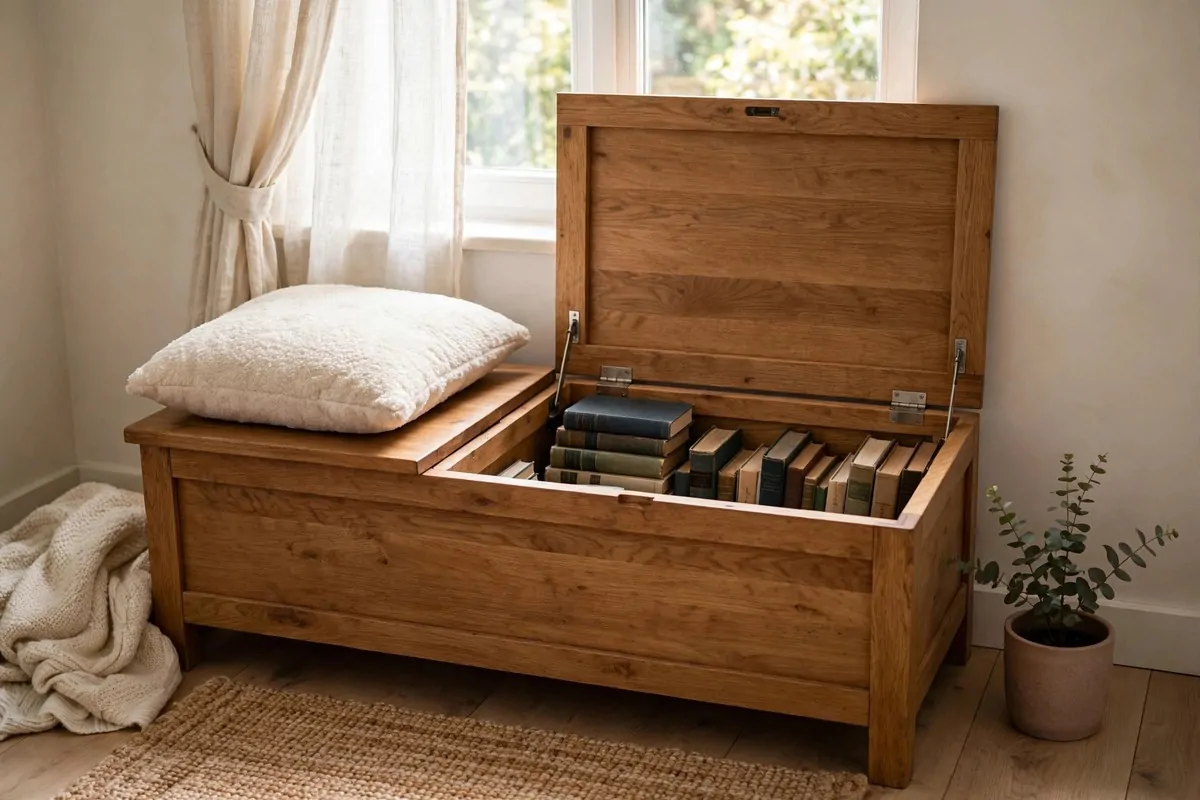
Furniture that does two jobs is the whole secret of tight spaces. A storage bench is a seat and a bookcase wearing one disguise.
Lift the lid and there is room for dozens of books. Sit on it and it is a window seat, an extra chair, or a footrest. One footprint, two jobs, zero waste.
Put one under a window for the classic look. Against a wall for extra seating. At the foot of a bed for a bedroom library. In an entryway to hold shoes below and novels above. It fits anywhere a bench fits.
Build it simple. A plywood box with a hinged lid and a cushion on top. Add dividers inside so books stand upright. Paint it the wall color and it reads as built-in.
Or buy a storage ottoman. The cube kind with a lift-off lid holds a surprising number of books. It also works as a side table and a footrest. Three jobs from one cube.
Keep the heaviest books at the bottom of deep storage. Lighter paperbacks and magazines on top. You will lift this lid a lot, so keep it easy to reach and not too heavy.
The cushion matters. A bench you cannot sit on comfortably is just a box. Four inches of foam with a washable cover is enough. Pick a fabric that hides crumbs and cat hair if your house has either.
This is also the best trick for hiding book clutter fast. Guests at the door. Lift the lid. Sweep the pile in. Close the lid. Sit down and look calm. I have done this more times than I will admit.
Two benches in an L-shape make a whole reading nook with storage under every seat. Add a corner cushion and it becomes the best spot in the house. Ask anyone who has one.
15. Bridge a Shelf Over the Door
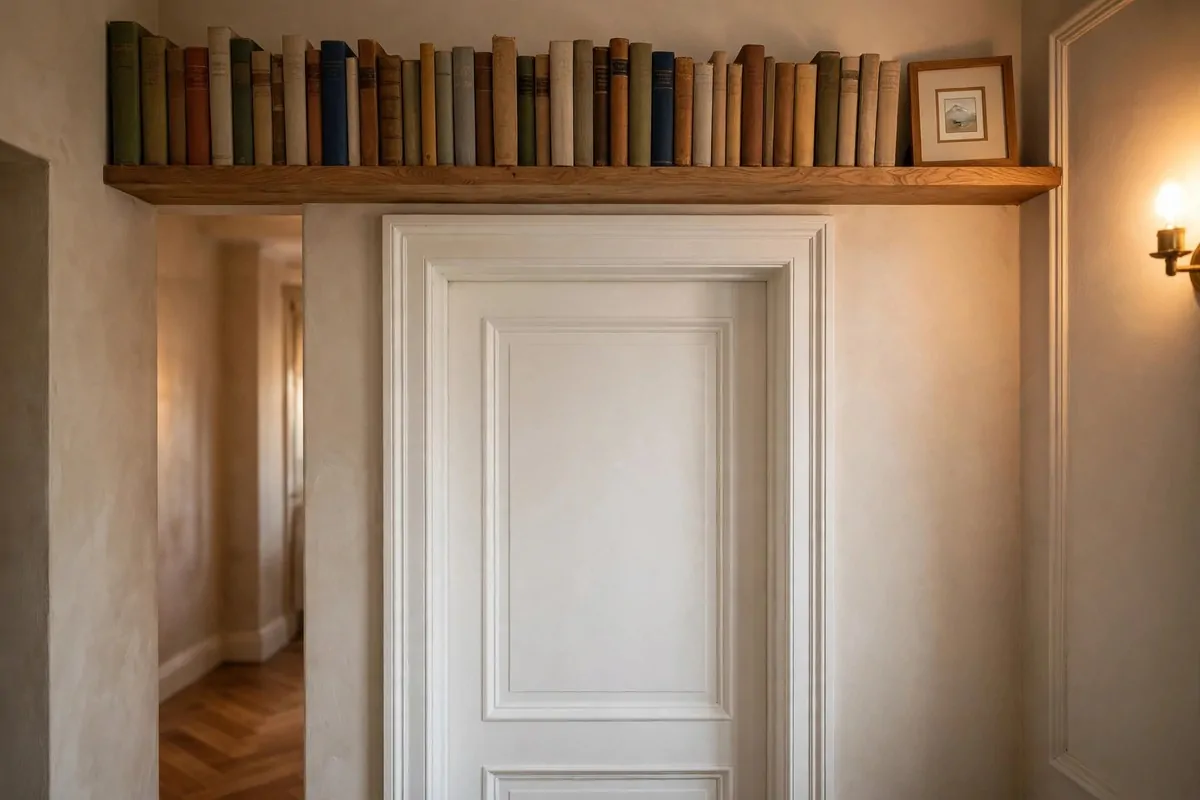
The space above a door is invisible to most people. Your books do not care about the view.
A single long shelf across the top of a doorframe holds a full row of books and uses space that was doing nothing. It is the easiest shelf in this whole list. One board, two brackets, done.
Mount it high enough to clear the door swing plus a few inches. Standard doors are about eighty inches tall. A shelf at eighty-eight inches clears everything and stays reachable with a small stool.
This is the perfect home for books you love but rarely read. The classics you will reread someday. The series you finished and cannot give away. They stay visible and loved instead of boxed in a closet.
Use deep enough brackets to hold real weight. A full shelf of books is heavy. Twelve-inch brackets into studs hold a nine-inch-deep shelf safely. Do not trust this job to small decorative brackets.
Style the ends with small objects. A tiny plant. A framed quote. It keeps the long row from looking like a storage unit. Little breaks in the row make it look designed instead of stuffed.
Repeat it on every door in a hallway. A row of above-door shelves turns a boring corridor into a library walk. Visitors slow down and read the spines. It is the cheapest gallery you will ever hang.
Paint the shelf the trim color for a built-in look. White on white disappears. The books float and the shelf vanishes. It looks like the books are part of the architecture.
Check the door casing first. Some frames are thin and will not hold brackets. Mount the brackets into the wall beside the casing, into studs. The shelf can bridge across the whole frame.
This trick works in every room of the house. Bedrooms, offices, hallways. If it has a door, it has a shelf waiting to happen. Start with the door you walk through most.
16. Light the Shelves, Not the Ceiling
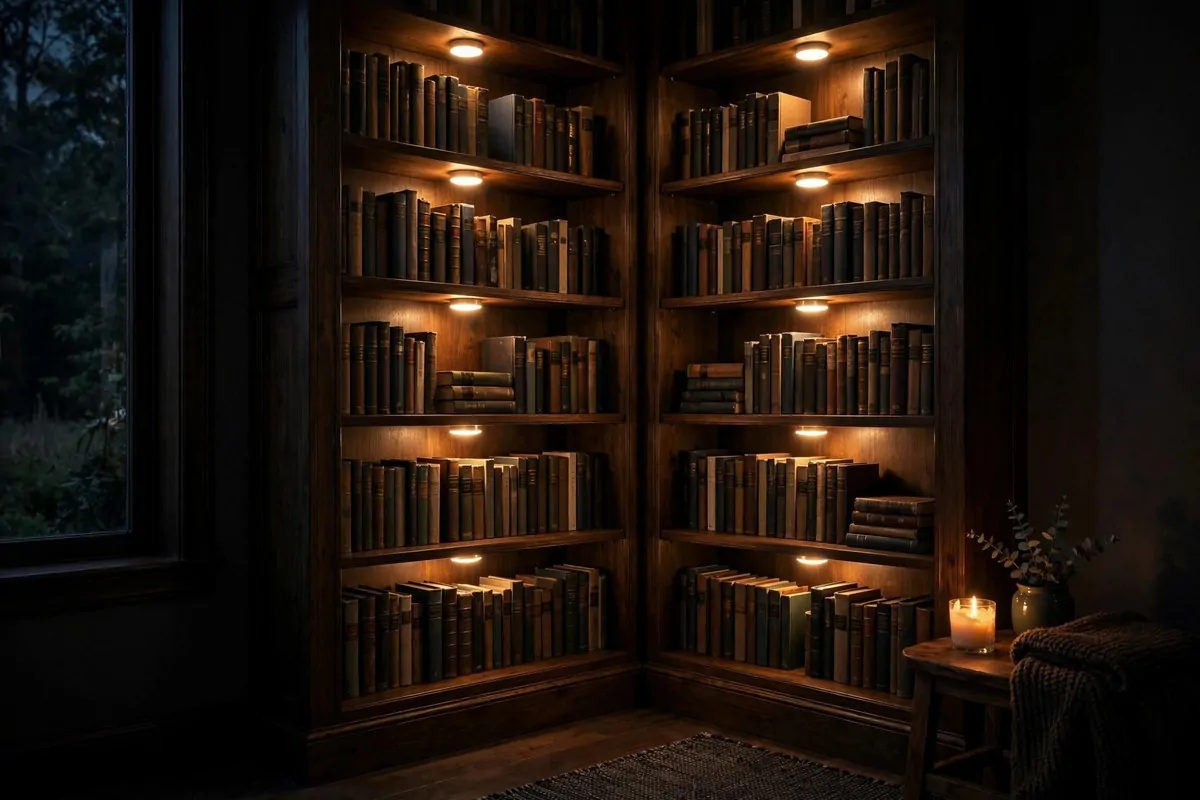
Overhead lights make small libraries feel like offices. Shelf lights make them feel like magic.
A strip of warm LED lights under each shelf does two jobs. It lights the books so you can read spines without squinting. And it makes the whole wall glow like a bookstore window at night. The room feels bigger and warmer at the same time.
Battery puck lights are the easiest start. Stick them under the shelf, tap to turn on. No wires, no electrician. A pack of six costs less than one hardcover and lights a whole bookcase.
For a permanent look, use adhesive LED strips. They run on a small plug and hide under the front lip of each shelf. The light washes down the books. It looks professionally installed because the trick is that simple.
Pick warm white, around 2700K. Cool white makes books look like a grocery store. Warm white makes them look like treasure. This one choice changes the whole mood of the room.
Add a reading lamp beside your chair for actual reading. Shelf lights are for atmosphere and finding books. A warm table lamp or a floor lamp with a shade does the close-up work.
Put the lights on a timer or a remote. Tapping six puck lights every night gets old. A remote or a smart plug means one click lights the whole library. Small luxury, big difference.
Light the top of the bookcase too. A small uplight or a strip along the top edge washes the ceiling with warm light. The room feels taller. The shelves look like they go on forever.
Avoid fairy lights as your only light. They are pretty and I love them, but they do not help you find anything. Use them as decoration on top of real lighting, not instead of it.
Good lighting is what separates a storage wall from a library. Books deserve to be seen. Light them like you mean it, and the smallest corner becomes the room everyone wants to sit in.
17. Line Your Hallway With Books
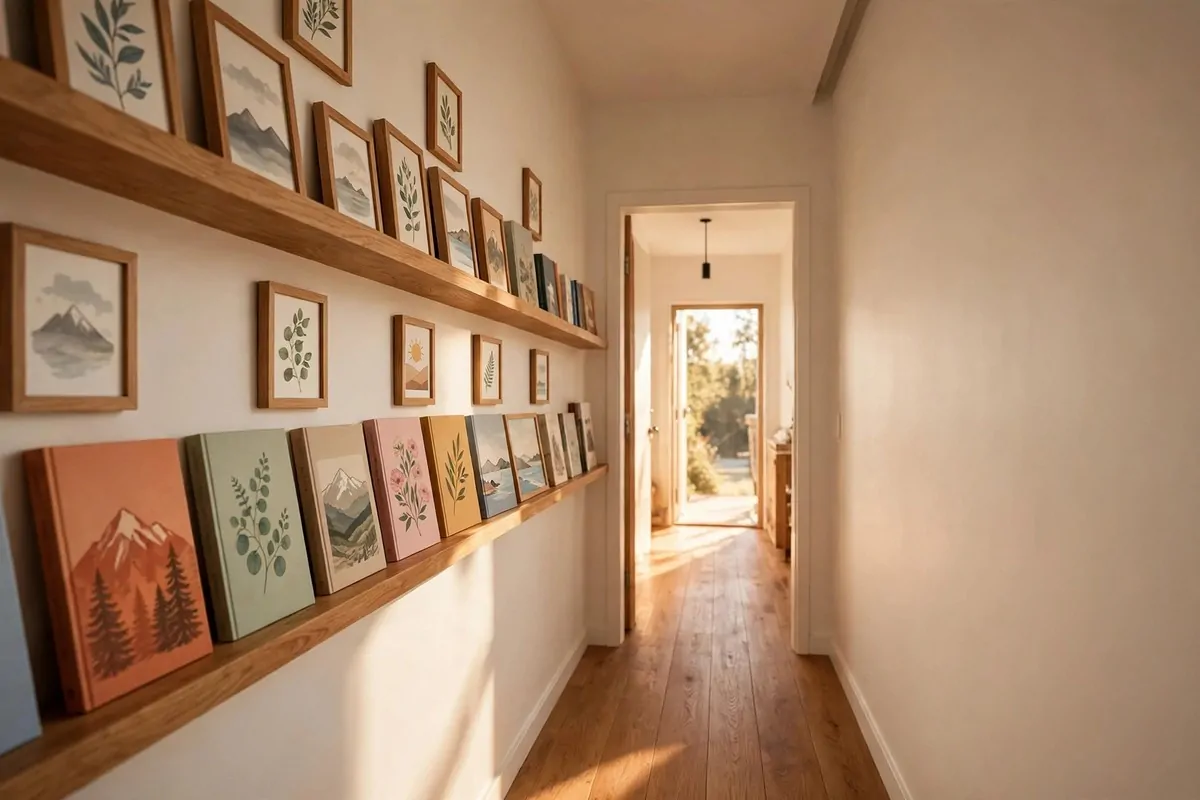
Hallways are just rooms that forgot to have furniture. Give yours books.
A hallway is usually three to four feet wide. That sounds too narrow for shelves. It is not, if the shelves are shallow. Six to eight inch picture-ledge shelves hold paperbacks and small books while leaving plenty of walking room.
Line one wall from end to end. The repetition of book spines turns a boring passage into a gallery. You will find yourself walking slower, reading titles as you go. Guests always stop.
Keep the walking path clear. Measure your hallway first. You need at least twenty-eight inches of clear walkway after the shelves go up. If the math does not work, use the other wall or skip this trick.
Picture ledges are perfect here. They are shallow, cheap, and easy to hang. Books face forward on ledges, which looks beautiful and lets you see covers. Kids love picking books by their covers.
Alternate books with small art. A ledge with books, then a ledge with a framed print, then books again. The rhythm keeps the hallway from feeling like a tunnel of spines.
Light the hallway well. A dark corridor of books feels like a cave. A bright one feels like a library. If the hall has no window, add wall sconces or a runner of ceiling lights.
This trick shines in apartments. Hallways in rentals are long and blank and begging for personality. Ledges come down with a few holes to patch. The landlord gets a clean wall back.
End the hallway with a small chair if there is room. Even a tiny stool and a wall lamp make a reading spot. It turns the end of the hall from a dead end into a destination.
Your hallway walks you to your books now. Every trip to the bedroom passes the library. I bet you will read more. I know I did when I tried it.
18. Tuck a Folding Desk Between the Shelves
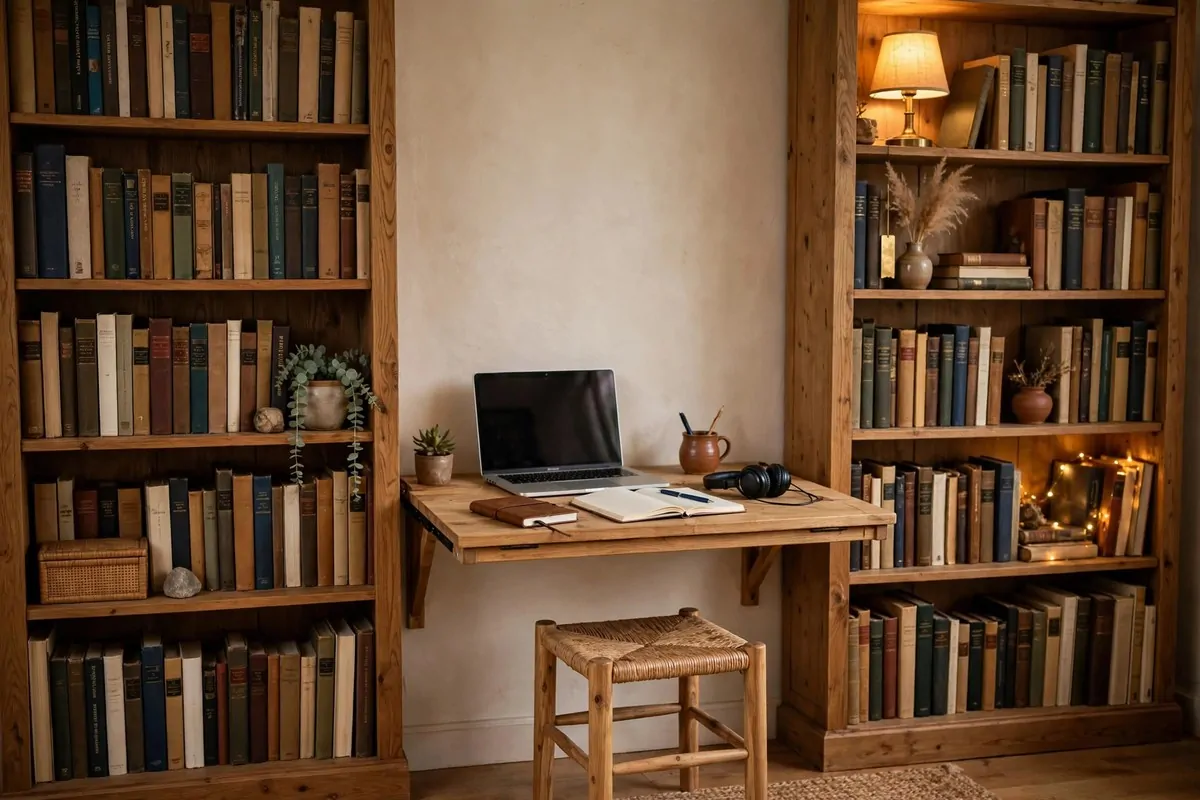
A library and a desk want the same wall. Let them share it.
Mount a folding desk between two bookcases and you get a study that disappears. Fold it down to work. Fold it up when you are done. The library stays a library, and the office hides in plain sight.
Wall-mounted drop-leaf tables are made for this. They fold flat against the wall, only a few inches deep. Open, they hold a laptop, a notebook, and a cup of coffee. That is a full workday in two square feet.
Match the desk to the shelves. Same wood, same paint, same height as a shelf line. When it is folded up, it reads as part of the bookcase. The trick only works if the desk does not look like a visitor.
Add a chair that tucks away too. A folding chair hangs on a hook beside the shelf. A small stool slides under the desk. When work ends, the whole office vanishes in thirty seconds.
Run a power strip inside one shelf. Charge the laptop there. Keep the cables hidden behind books. A floating cable ruins the clean look, so plan the power before you hang the desk.
This setup is perfect for students and remote workers in small homes. The books you need for work live on the shelves above the desk. Everything is within reach. Nothing is in the way.
Keep the desk surface clear when folded up. That is the rule. If stuff piles on it, the trick fails and the room feels cluttered. A small tray on the shelf holds the pens and bits.
Light it with a clip lamp on the shelf above. Clip it to the shelf edge and aim it down at the desk. It lights the work without taking any surface. Unclip it when the desk folds away.
One wall, two jobs, zero extra floor space. That is the whole philosophy of this list in a single project. Your tight room just got a library and an office.
19. Build Around the TV You Already Have
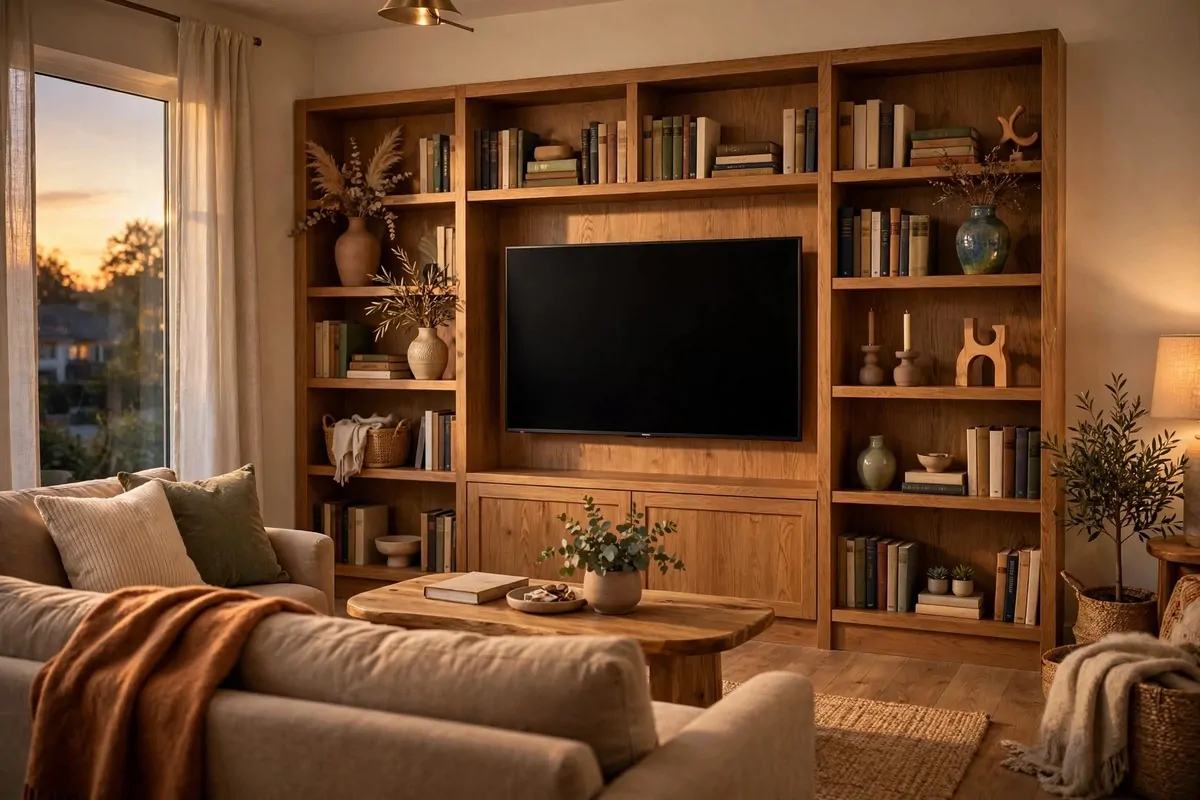
The TV wall is the biggest wall in most living rooms, and books make it better.
Shelves around the TV turn a black rectangle into a library wall. The books soften the screen. The screen gives the shelves a center. Together they look designed instead of accidental.
Flank the TV with two narrow towers. Add a shelf above it. A low console below holds the boxes and remotes. That is a full media library in the wall you were already staring at.
Keep the shelves near the TV shallow. You sit close to this wall, so depth matters. Ten inches is plenty. The TV mounts on the wall or sits on the console, not inside the shelving.
Hide the cables. This is the one place where messy wires ruin everything. Run them behind the shelves or through a cable channel painted the wall color. Ten minutes of cable work pays off every evening.
Leave breathing room around the screen. Do not crowd books right against the TV edge. A few inches of frame on each side lets your eyes rest. It also keeps heat from the screen away from the spines.
Use the low shelves for things you grab while watching. The remote basket. A throw blanket. The books you read during slow shows. This wall works hard, so let it work for real life.
Style the top shelf with taller items. Vases. A clock. A row of big art books standing up. Height at the top balances the wide dark screen in the middle.
If you hate how the TV looks, add doors or a sliding panel over just the screen section. Open for movie night, closed for reading time. Trick twelve meets trick nineteen. They work beautifully together.
Your living room was already a media room. Now it is a library too. Same wall, same TV, twice the purpose. That is small-space thinking at its best.
20. Keep It Light and Bounce the Room Back
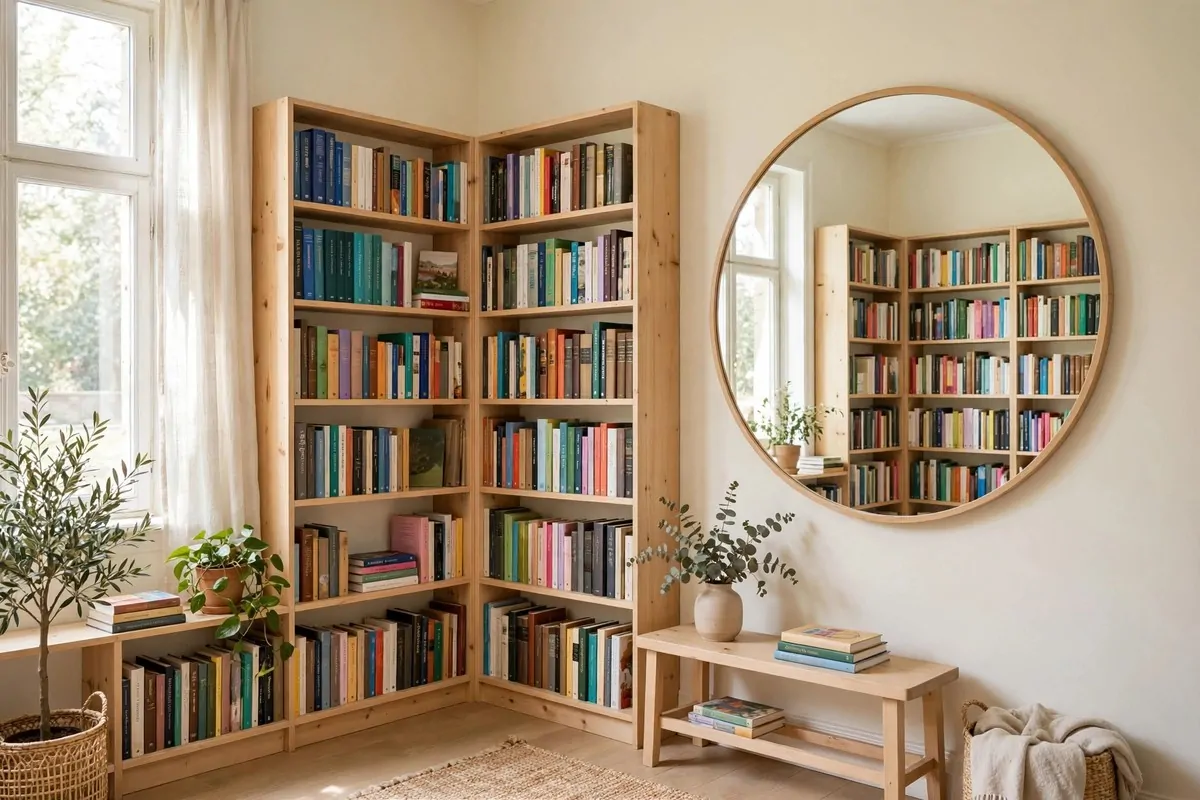
Dark rooms feel smaller. Light rooms feel bigger. Your library should feel bigger.
Paint the walls a pale color and the whole room opens up. Soft white. Warm cream. Pale gray. These colors bounce light around instead of eating it. Books pop against light walls like art in a gallery.
This does not mean boring. Pale walls make your books the color in the room. A rainbow of spines against cream walls is gorgeous. The books become the decoration, and you already own them.
Add a mirror opposite the shelves. It doubles the visual books and doubles the light. A big mirror in a small library is like adding a window you did not have. Lean a full-length one or hang a round one.
Choose light wood for new shelves. Birch, maple, pale oak. Dark wood is beautiful but heavy in a small space. If your shelves are already dark, a coat of light paint transforms them in a day.
Keep the floor visible and light too. A pale rug under the reading chair. Light flooring if you are redoing it. Dark floors close a room in from the bottom, the same way dark walls close it from the sides.
Let in every bit of natural light. Sheer curtains instead of heavy drapes. Clean the windows. Trim the bush outside if it blocks the sun. Free light is the best light, so take all of it.
Use glass-front cabinet doors on some shelves. They reflect light and protect books from dust at the same time. A wall of glass fronts glows in daylight. It looks far more expensive than it is.
This last trick is really a rule for all the others. Every shelf you add, every corner you fill, ask one question. Did the room stay light? If yes, you did it right.
Twenty tricks. One small room. Zero excuses left. Your tight space was never the problem. It was just waiting for the right moves.