24 Entryway Rug Ideas That Handle Mud and Look Good

I came home on a rainy day and muddy footprints ran all the way from the front door to the kitchen.
I stood there with my wet shoes in my hand and I just looked at the floor. I had mopped that floor in the morning and now it looked worse than before.
That day taught me one simple thing and I still remember it now.
A good rug by the door does more than look nice. It catches the mud first. It gives your shoes a place to stop before the rest of the house gets dirty.
I have tried rugs that were too thin and rugs that slid all over the place. I have also tried rugs that looked pretty but were so hard to clean that I gave up on them fast.
You do not need a big budget or a fancy home to fix this one small spot.
I put all 24 ideas in this one post for you, so you can read them all here in one place with no part split and no second post to chase.
1. A Washable Runner by the Door
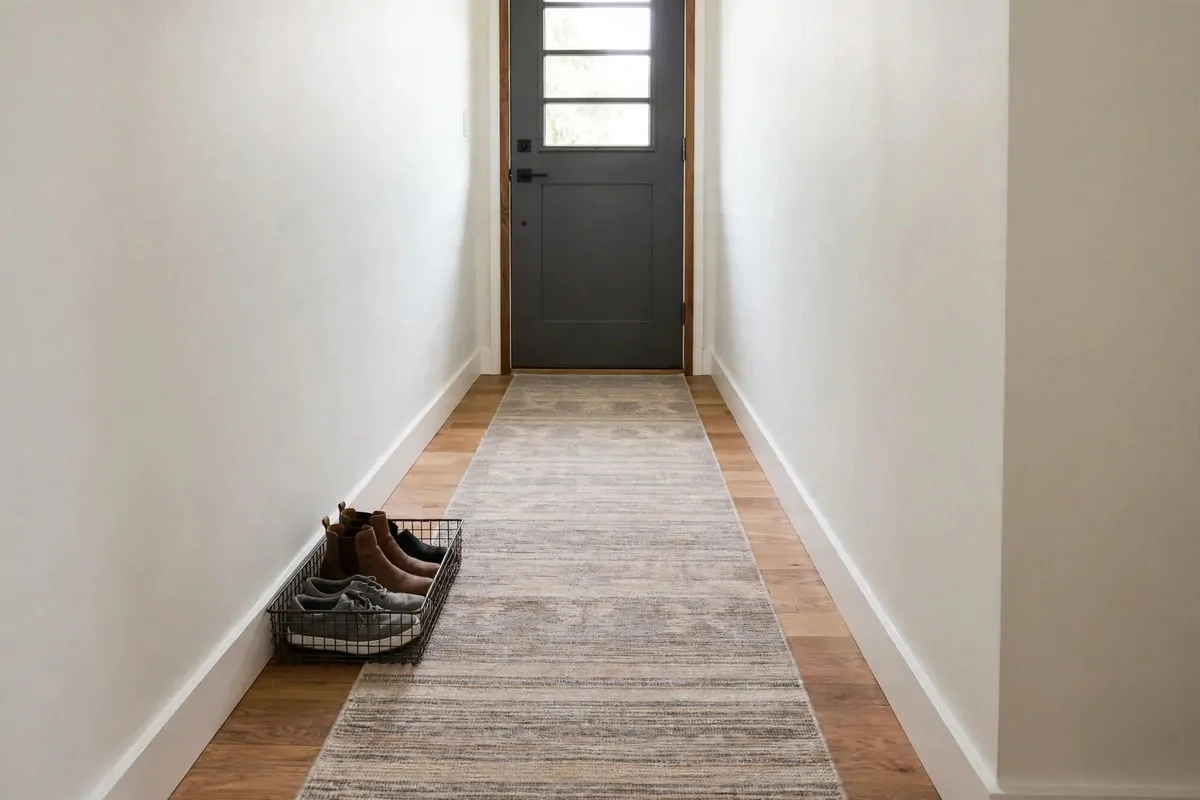
I put a washable runner right by my front door and it changed my whole routine.
It is long and narrow, so it fits the walk from the door to the hall. My shoes land on it first, not on my clean floor.
I pick one I can toss in the wash when it gets muddy.
Mud dries on it and I just shake it outside first. Then I wash it on a gentle cycle and let it dry flat. It comes back soft and clean, and I put it right back where it was.
You want a runner that is not too thick for your door to open over it. I learned that the hard way when my door kept catching on the edge.
A light color shows mud fast, so I pick a mid tone for this spot.
I keep a small basket near the runner for shoes too. That way wet shoes stay off the floor and off the rug edge. It keeps the whole entry neat, and I do not have to think about it much.
If your entry is small, a short runner still helps a lot. Even two steps of rug can catch most of the dirt.
Start here if you only change one thing by your door.
2. A Dark Rug That Hides Mud
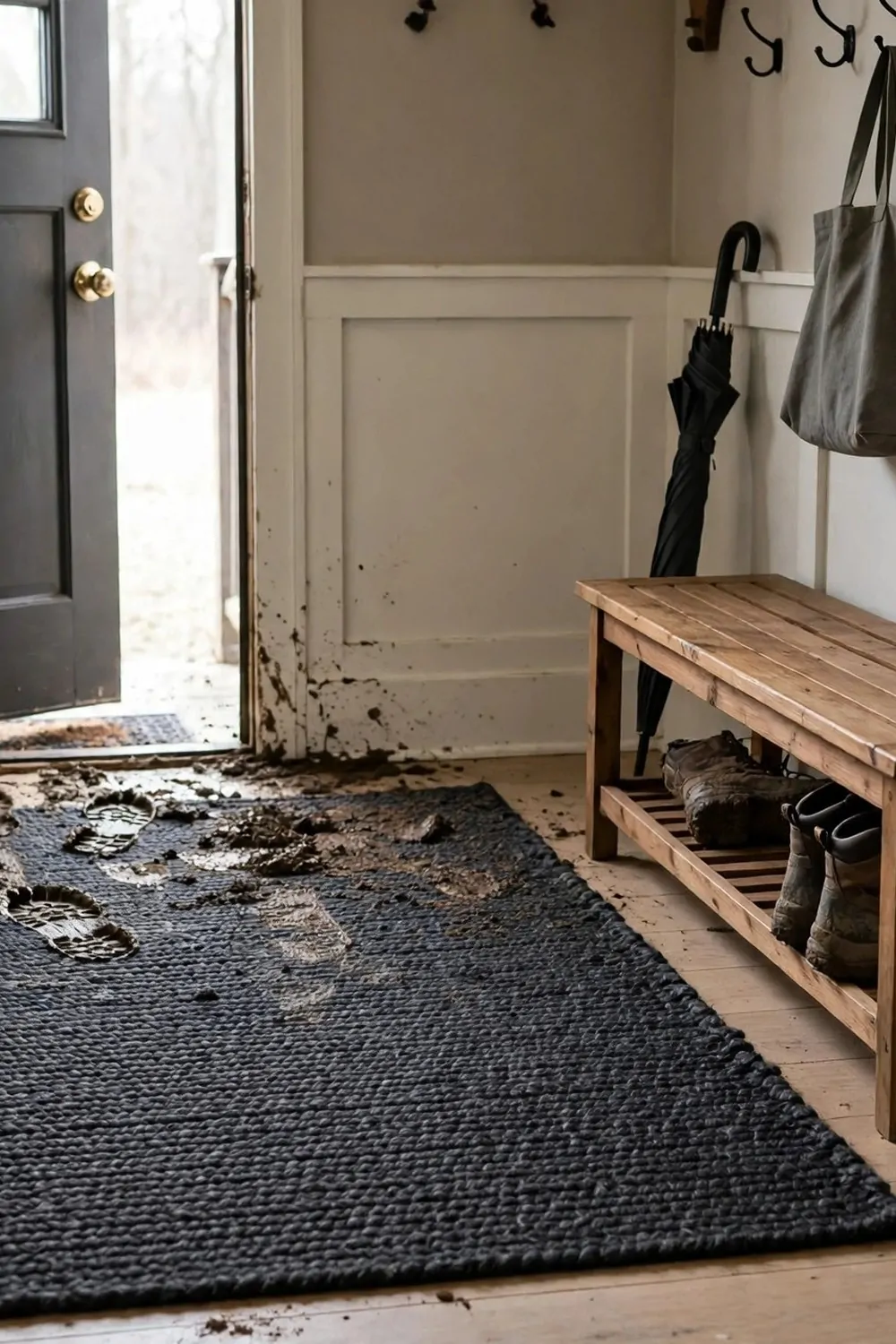
A dark rug is my quiet trick for muddy days.
Mud shows up fast on a pale rug and it makes me feel like I have to clean all the time. A dark rug hides the marks until I have time to clean it right.
I pick a deep brown or a dark gray for this spot. It still looks warm and it goes with most doors and walls. You would not guess how much dirt it hides on a rainy week.
I still clean it, I just do not have to rush to clean it.
A dark rug with a little pattern works even better than a plain one. The pattern breaks up the marks and my eye does not catch every spot.
I vacuum it twice a week when the rain is bad. I shake it outside when I can. That small habit keeps it fresh and it does not start to smell.
You can use a dark rug even if the rest of your hall is light.
It makes a nice contrast by the door and it frames the entry well. I like how it pulls the whole space together without much work.
If you have kids who run in with muddy shoes, this one saves your nerves. You will not see every print the second they walk in. You can breathe, make tea, and clean it later when you have a free minute.
3. A Layered Rug Look
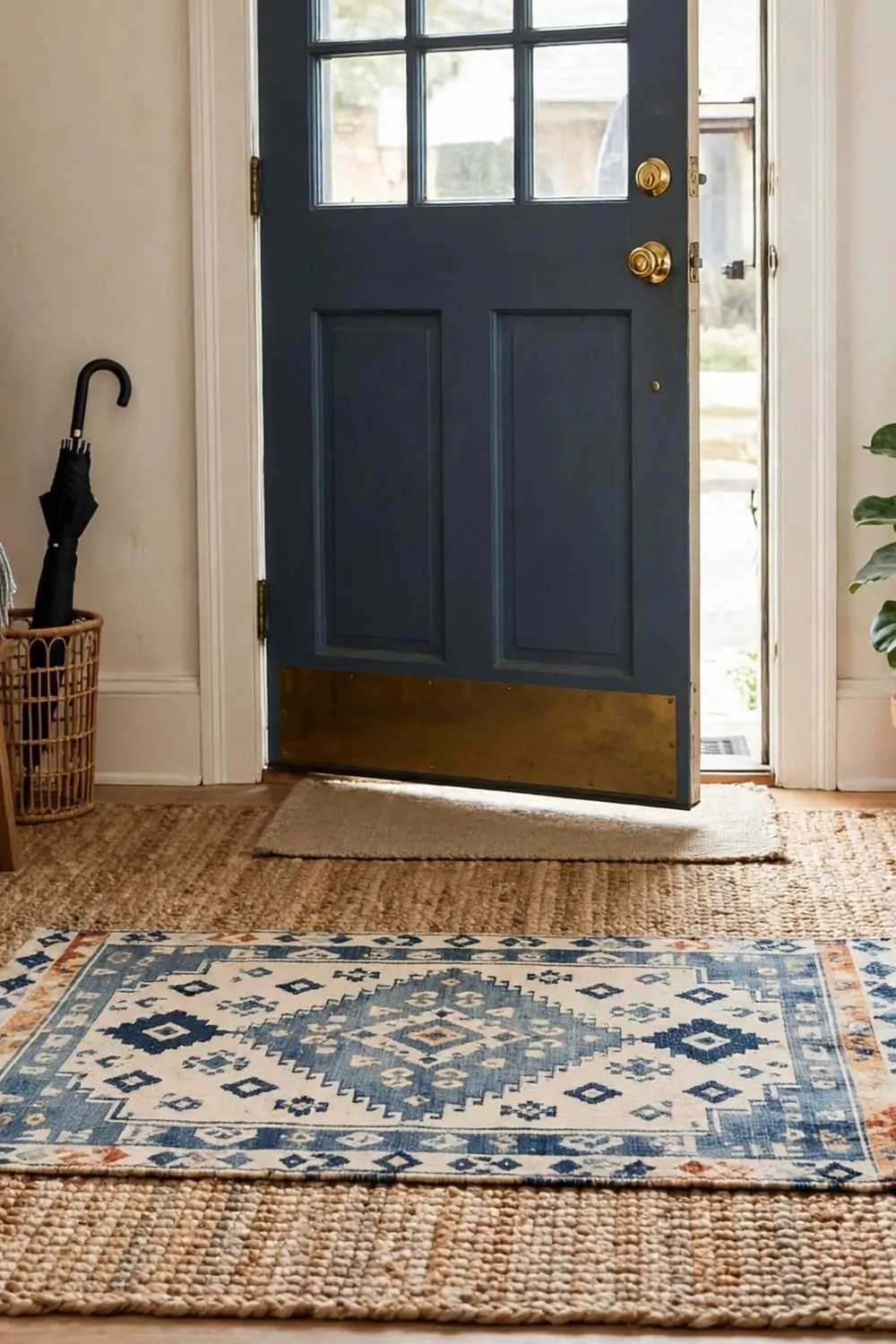
I layer two rugs by my door and it looks soft and lived in.
The bottom rug is a bit bigger and flat. The top rug is smaller and adds color.
It sounds fancy, but it is really just two rugs on top of each other.
I start with a plain base that can take mud and wear. Then I add a top rug that I love to look at. If the top one gets dirty, I can wash it while the base stays put.
| Type | Typical cost |
|---|---|
| Flatweave rug | $30 to $60 |
| Cotton rug | $45 to $90 |
| Woven layer rug | $25 to $50 |
A flatweave rug often costs $30 to $60, and a cotton rug often costs $45 to $90. A woven layer rug often costs $25 to $50, so you can mix them without spending a lot.
I keep the top rug a little smaller so the base shows around the edges.
You want both rugs to stay flat, so I use a thin pad under the base. I check the corners each week and smooth them down. That stops trips and it keeps the layers looking neat.
Layering also helps when one rug is too thin on its own. Two thin rugs feel softer under your feet and they catch more dirt.
Try it if your entry feels bare and cold.
4. A Coir Doormat Outside
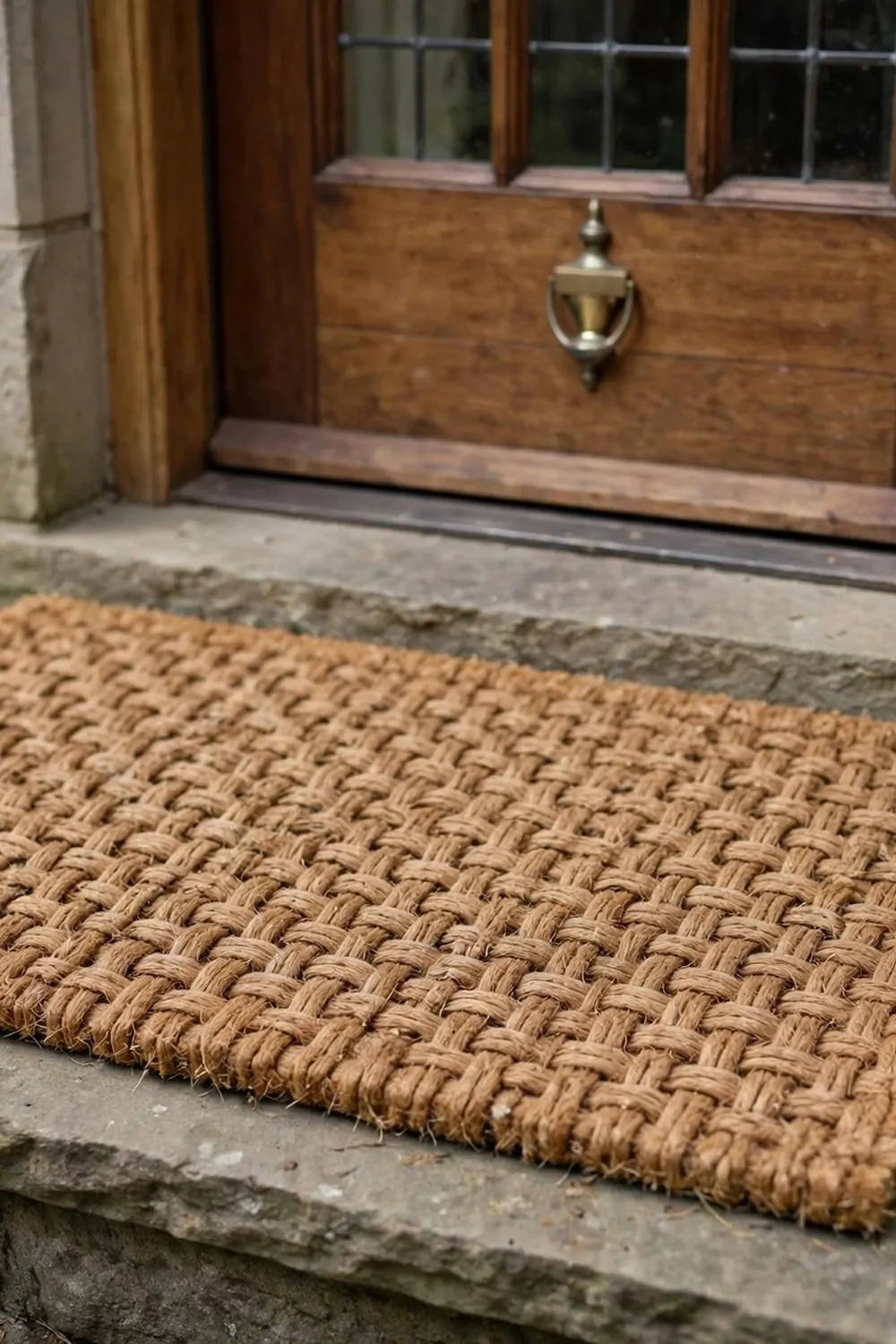
I keep a coir doormat outside my front door and it does the hard work first.
Coir is made from rough fibers and it scrapes mud off shoes well. You can see the dirt stay on the mat instead of coming inside.
I tell everyone to wipe their feet twice on it before they step in. It sounds strict, but it works. Most of the mud stays outside where it belongs.
A coir mat can take rain and sun without falling apart fast.
I shake it out every few days and I sweep under it too. Dirt builds up under a mat if you leave it there for weeks.
Pick a mat that fits your door width and leaves room to step. If it is too small, people miss it and walk right past. If it is too big, it can block the step and feel awkward.
I like a plain coir mat with no words on it. It looks calm and it goes with any door color.
You can pair it with a soft rug just inside the door.
That pair works like a team for me. The outside mat takes the worst mud off. The inside rug catches what is left, and my floor stays clean for longer.
5. A Low-Pile Rug for Easy Cleaning
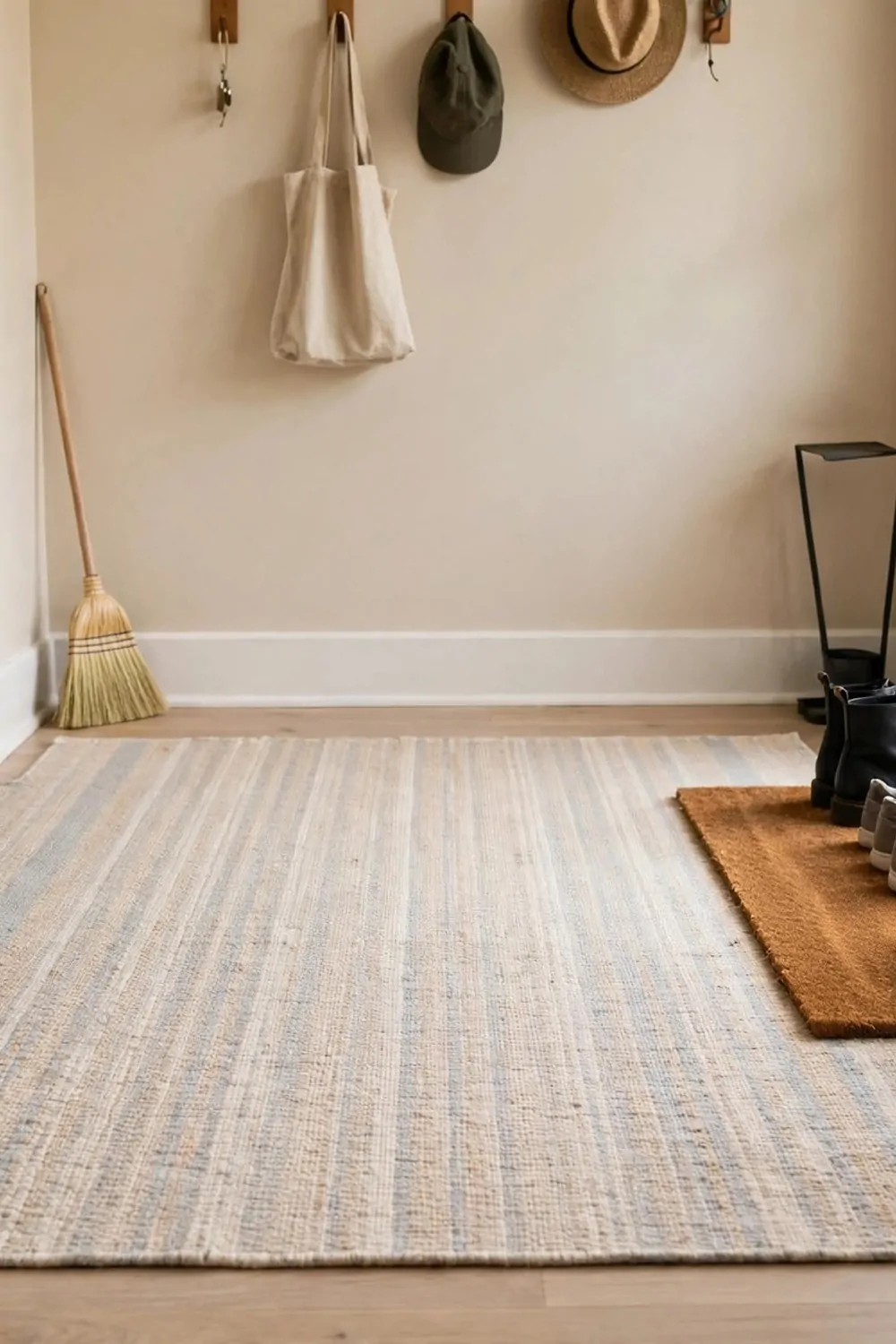
A low-pile rug is flat and short, and that is why I love it by the door.
Dirt sits on top of it instead of sinking deep inside. I can vacuum it fast and see the dirt come off right away.
High rugs look soft, but they trap mud in a way that is hard to clean.
I run the vacuum over a low-pile rug in one pass most days. I do not have to push hard or go over the same spot again and again. It saves me time when I am in a rush in the morning.
A low-pile rug also lets my door open and close with no drag. I do not have to lift the door or trim the rug to make it fit.
You can still find low-pile rugs in warm colors and soft patterns.
I pick one with a tight weave so mud does not stick in the gaps. I test it with my hand in the shop if I can. If it feels smooth and firm, I know it will clean well at home.
Spills wipe up fast from a low-pile rug too. I blot them right away and they do not sink in deep.
This is the easy choice if you hate deep cleaning.
6. A Patterned Rug That Hides Dirt
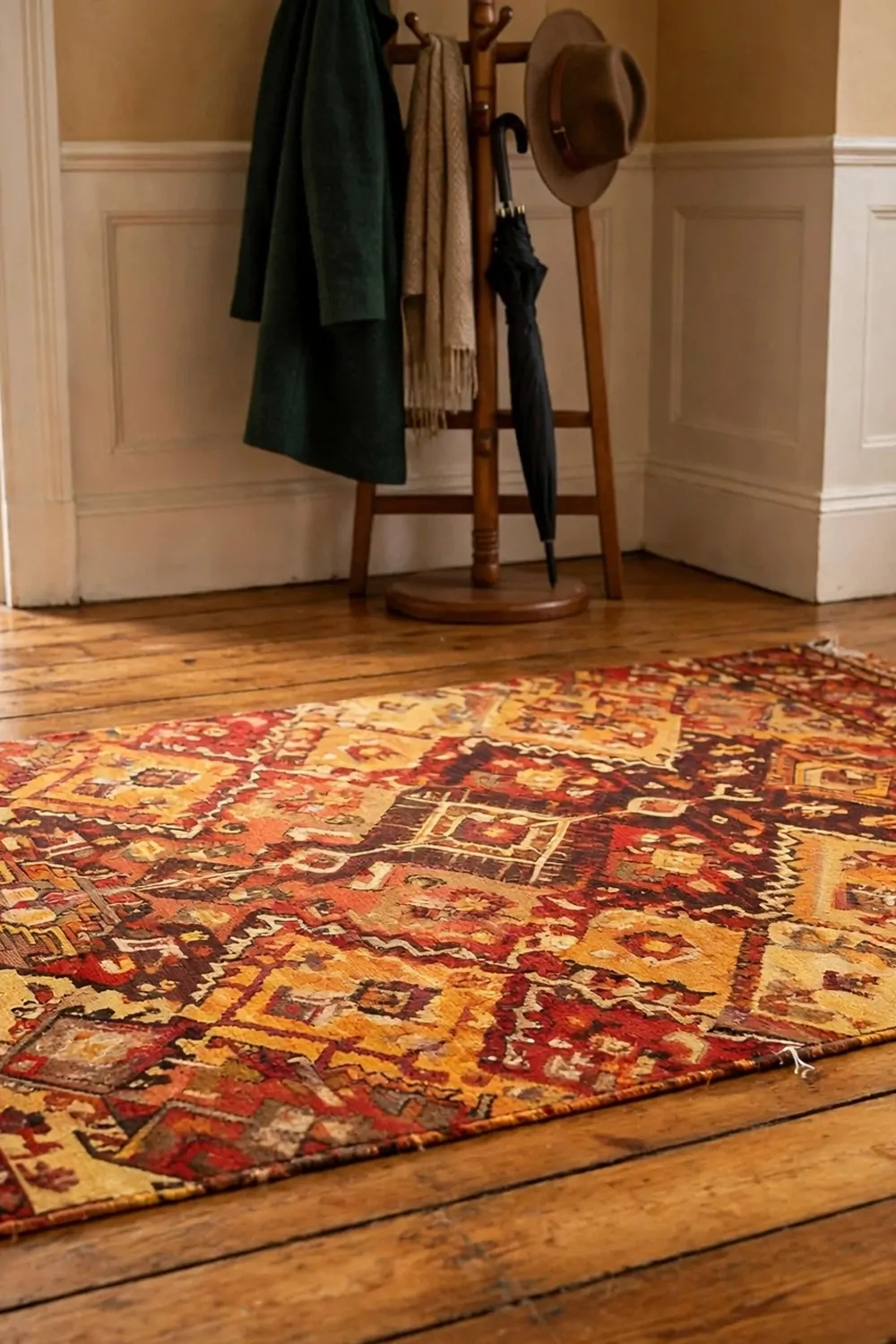
A busy pattern is my friend when mud is part of daily life.
A plain rug shows every mark and every speck. A patterned rug breaks up the marks so my eye skips over them. It buys me time until I can clean it well.
I pick small shapes or a soft mix of colors for this spot. Big blank spaces show dirt fast, so I avoid them here.
You do not need a loud pattern to get this trick to work.
A soft check or a small flower print hides dirt just as well. It still looks calm and it fits a small entry without shouting.
I match the pattern colors to my door and my wall if I can. That way the rug looks like it belongs there. It does not look like I picked it just to hide mud, even though I did.
I vacuum a patterned rug the same way I vacuum any rug.
The pattern just makes the days between cleans look better. I feel less stressed when guests drop by without warning.
If you love light colors, a light pattern can still work for you. Pick one with a mix of light and mid tones. The mix hides marks better than one flat light color.
7. A Round Rug in a Square Entry
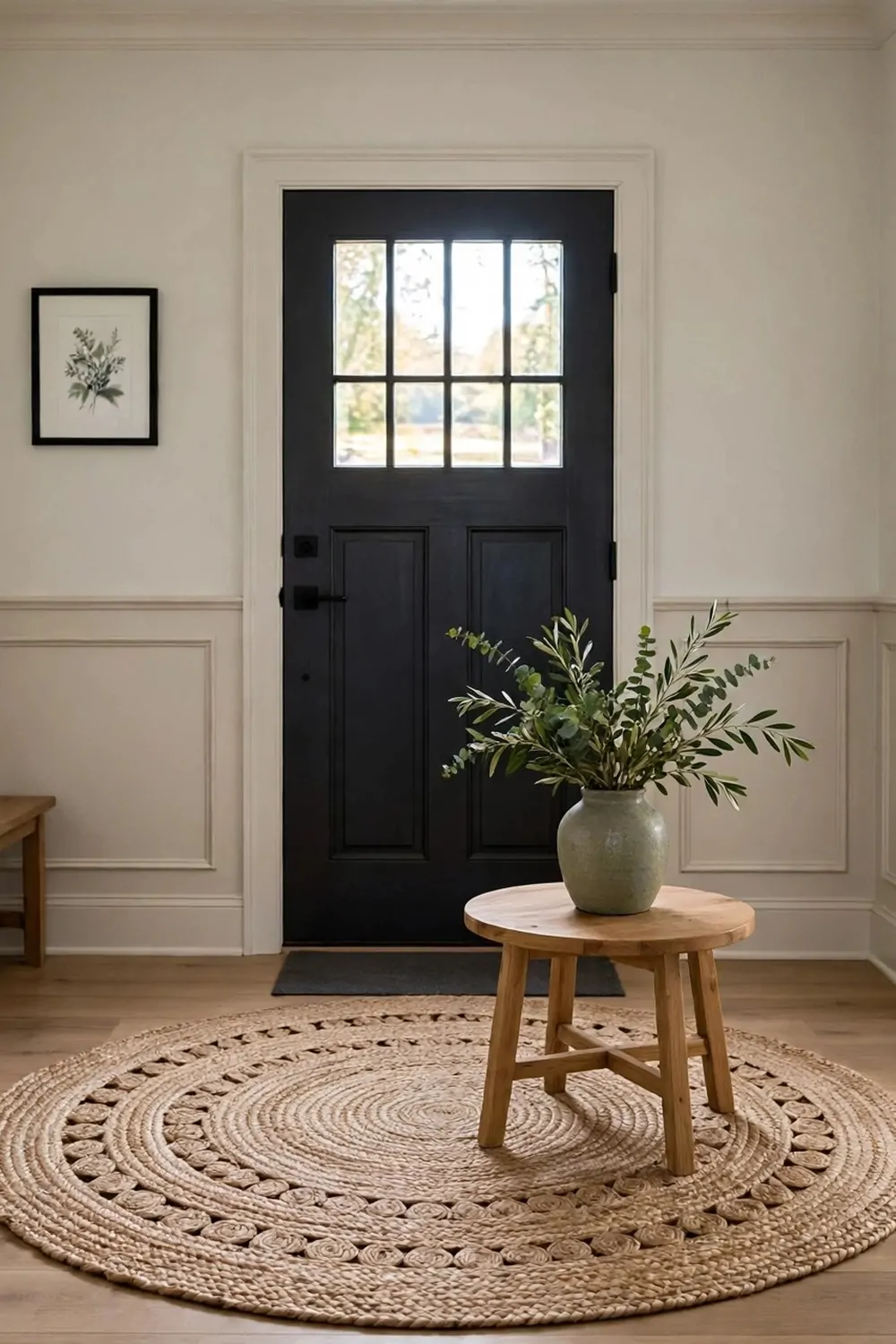
A round rug in a square entry sounds odd, but it works so well.
It softens the sharp corners of the hall and it makes the space feel warm. My entry felt boxy before, and the round shape changed that fast.
I pick a round rug that leaves floor showing on all sides. That frame of bare floor makes the rug look placed on purpose. It does not look like I ran out of rug or picked the wrong size.
A round rug also gives shoes a clear spot to land.
People step onto it without thinking, and their feet land in the middle. That helps catch mud right where it matters most.
You can use a round rug even if your door opens right onto it.
Just make sure the door clears the rug edge when it swings. I measure that gap before I buy. A rug that blocks the door will bunch up and wear out fast.
I like a round rug with a simple border for this spot. It looks neat and it does not fight with the shape of the hall.
Try a round rug if your entry feels too stiff and square.
8. A Rug Pad That Stops Slips
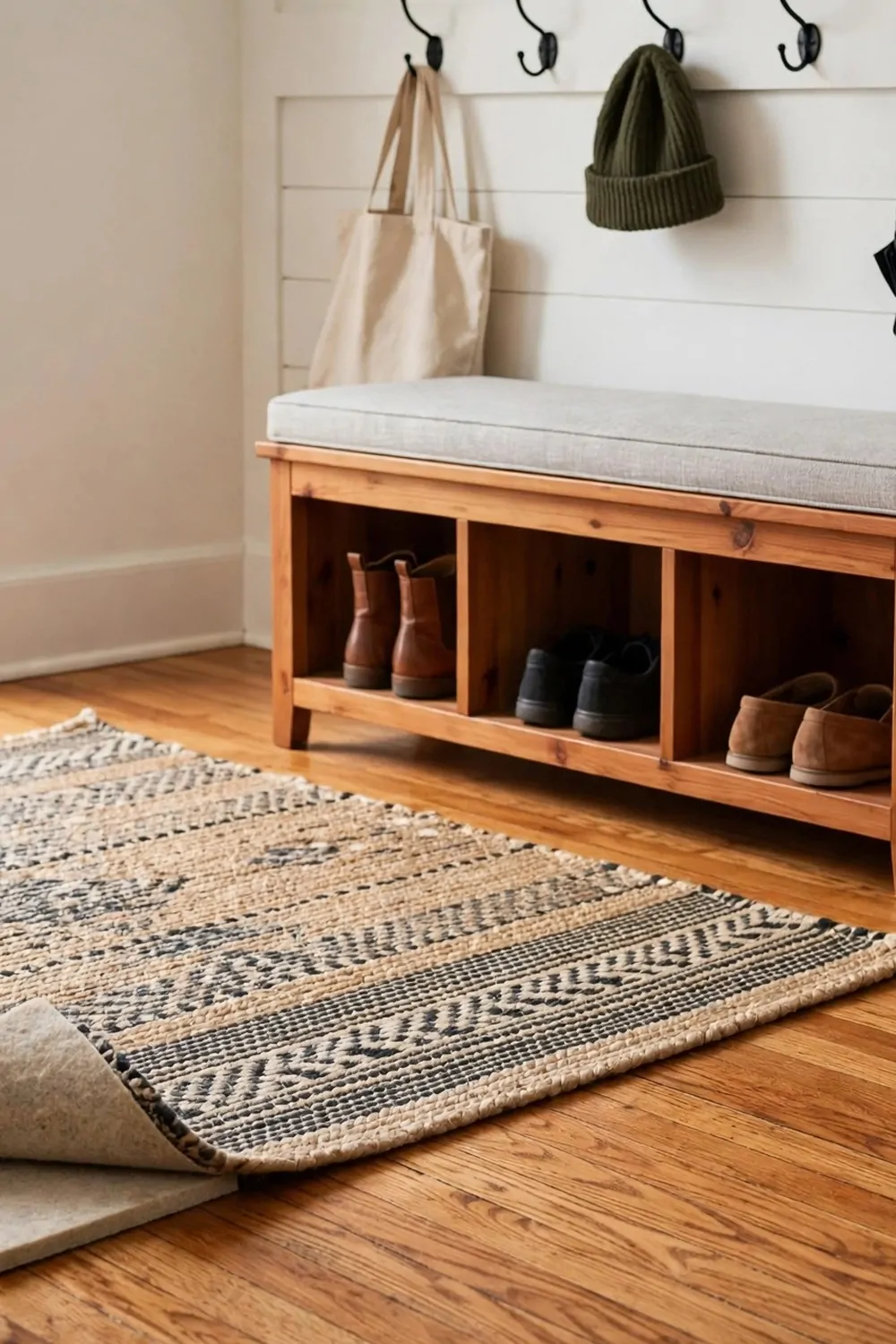
A rug pad is the quiet helper under my entry rug.
It keeps the rug from sliding when wet shoes step on it. I used to chase my rug across the floor, and the pad stopped that.
A pad also adds a soft feel under your feet. It makes a thin rug feel thicker and kinder. You notice it most on cold mornings when you step out in socks.
I cut my pad a little smaller than the rug so it does not peek out.
You want the pad to grip the floor and the rug at the same time. A good pad does both, and it stays flat without bunching up.
I lift the rug once a month and clean under the pad too.
Dust and grit can build up under there if you forget it. I shake the pad outside and sweep the floor under it. Then I put it all back, and the rug feels fresh again.
A pad helps on wood floors and on tile floors. It stops scratches and it stops slips, and that matters when the floor is wet.
Do not skip the pad, even if your rug looks fine without it.
9. A Runner That Fits the Hall Length
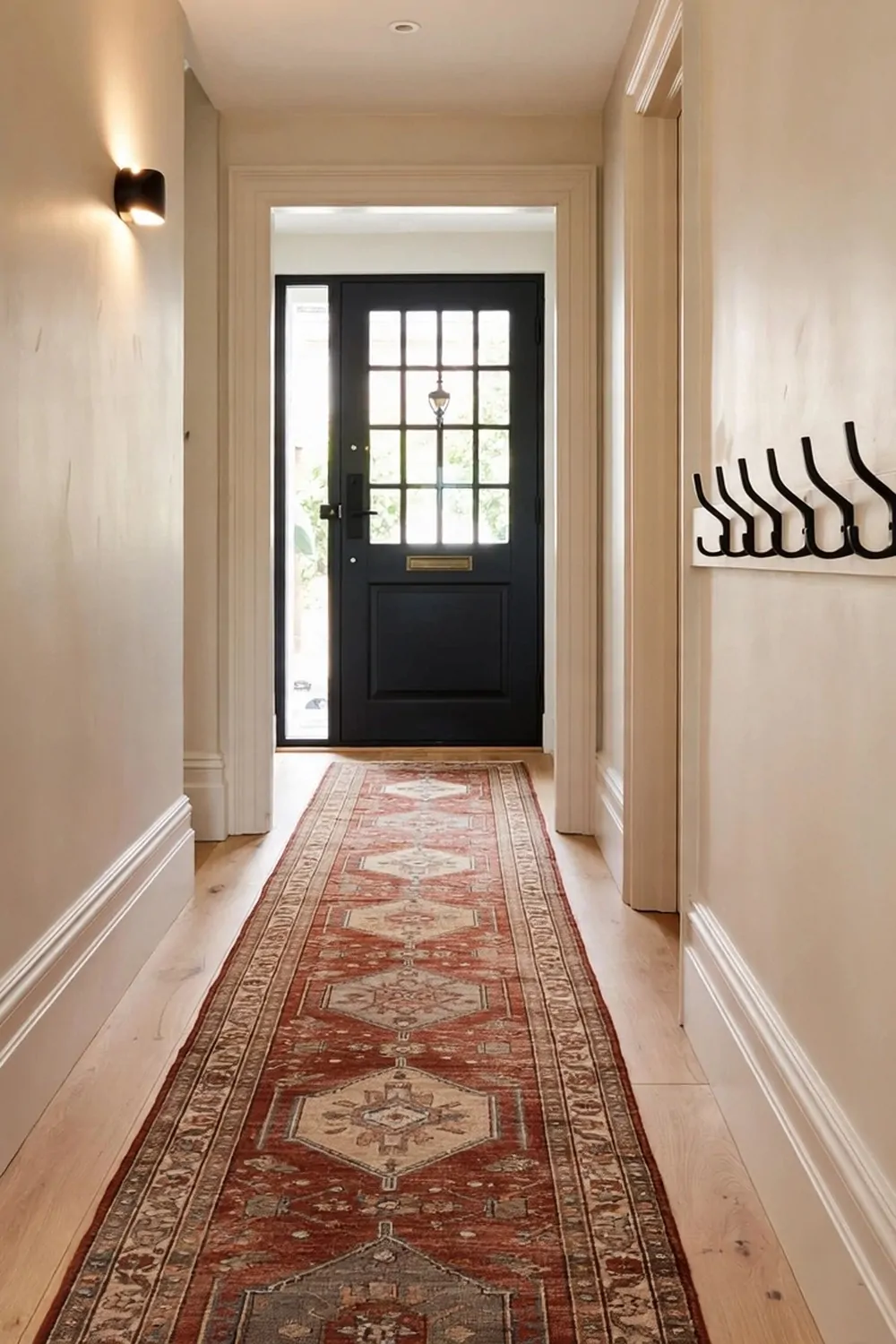
A runner that fits your hall length looks calm and right.
If it is too short, the hall looks cut in half. If it is too long, it bunches at the end and trips people.
I measure my hall from the door to the end of the walkway first. I write the number down before I shop. That one step saves me from buying the wrong size twice.
I leave a little bare floor at both ends of the runner.
| Length | Typical cost |
|---|---|
| 6 feet | $40 to $70 |
| 8 feet | $55 to $95 |
| 10 feet | $70 to $120 |
A 6 feet runner often costs $40 to $70, and an 8 feet runner often costs $55 to $95. A 10 feet runner often costs $70 to $120, so I pick the length that fits my hall and my budget.
You want the runner to guide feet from the door to the next room. It should feel like a path, not a rug dropped in the middle. When it fits, people walk on it without thinking about it.
I check that doors along the hall still open over the runner.
A runner that is too thick can catch a door edge. A low, flat runner works best when doors open onto the hall.
Measure twice if your hall has a turn in it. A straight runner still works, but you may want it to stop before the turn. That keeps the corner clear and the walk feels easy.
10. A Jute Rug for Warm Texture
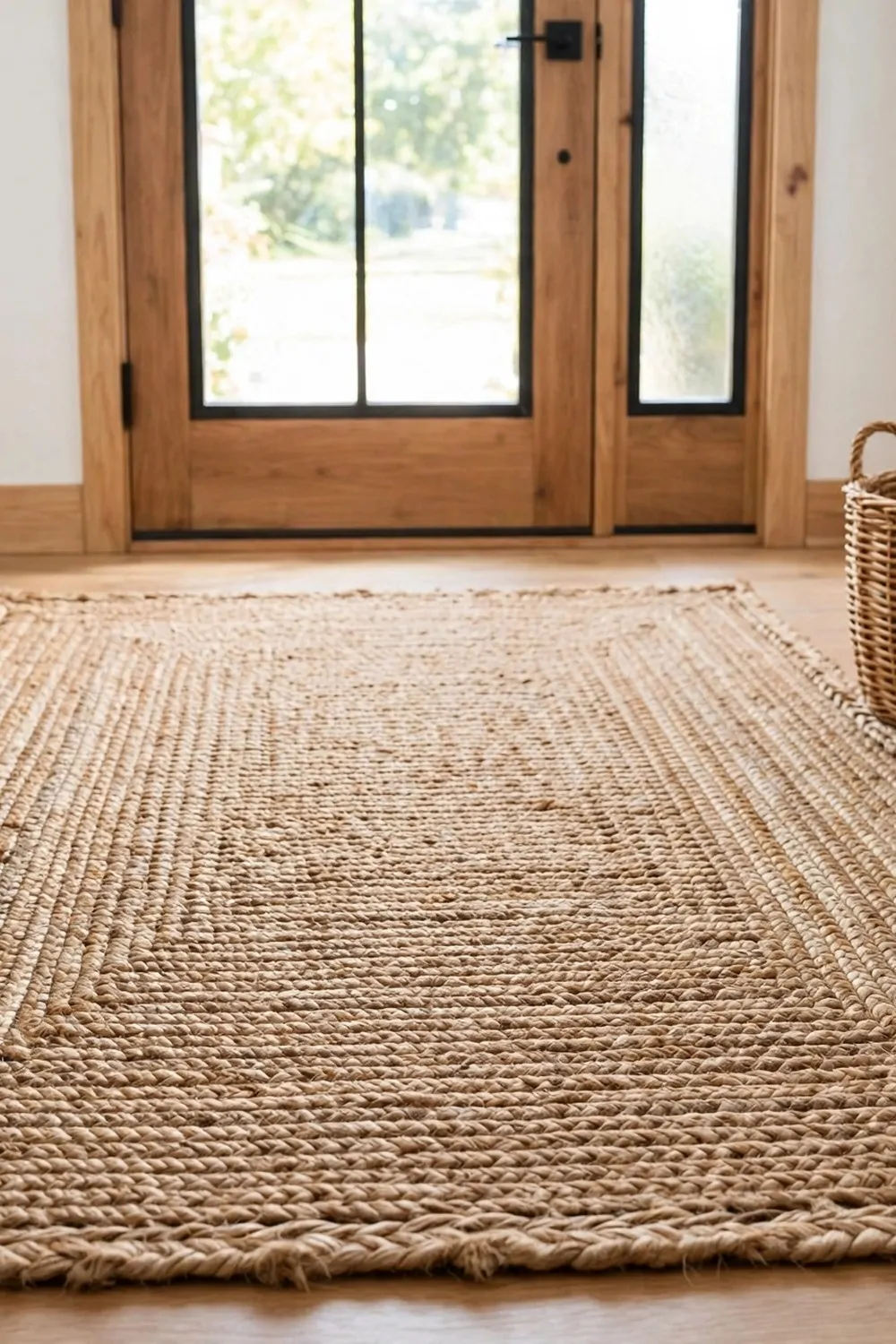
A jute rug brings warm texture to a cold entry.
It feels natural under bare feet and it looks soft even when it is firm. My entry felt plain before, and jute made it feel like home.
Jute has a rough weave that catches dirt well. Mud dries on it and I can brush it off outside. It does not hold stains the way a soft pile rug can.
I keep my jute rug in a dry spot just inside the door.
Jute does not love standing water, so I wipe wet shoes on the outside mat first. That keeps the jute dry and it lasts much longer.
You can layer jute under a smaller soft rug if you want both looks.
The jute gives warmth and the top rug gives soft color. I like that mix in a small hall. It feels put together without much fuss.
I vacuum jute with a plain suction head and no spinning brush. The brush can pull at the fibers and make it look worn too fast.
Pick jute if you want a warm, natural feel by your door.
11. A Machine-Washable Rug
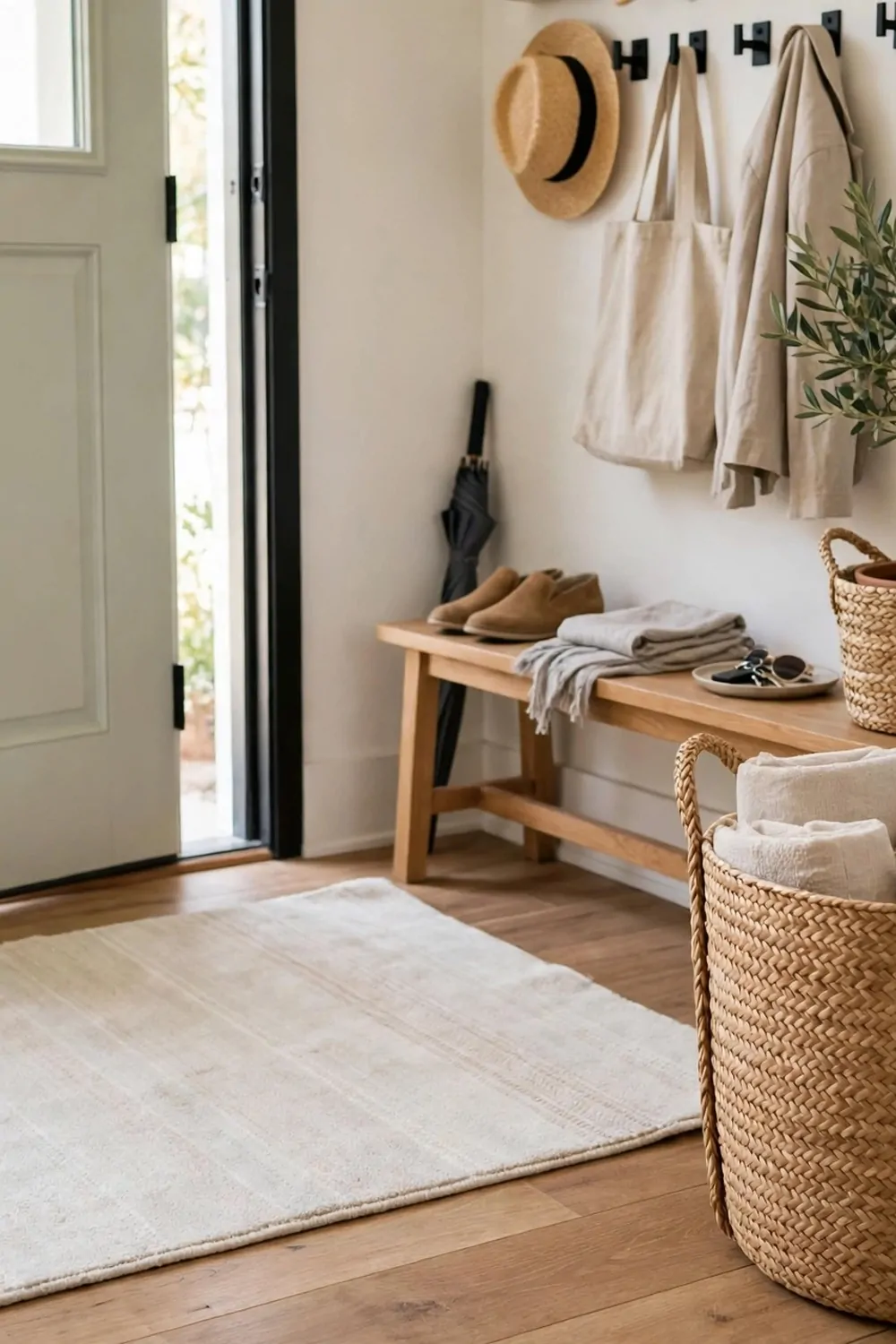
A machine-washable rug is the one I reach for after a muddy week.
I can wash the whole rug in my machine and it comes out clean. I do not have to scrub it on my hands and knees.
I shake it outside first to get the loose mud off. Then I wash it on cold and let it air dry. It keeps its shape well if I do not rush the drying.
You want a washable rug that is light enough to lift when it is wet.
A heavy rug is hard to carry to the machine and hard to hang up. I pick a light one for the entry, and I save heavy rugs for other rooms.
I wash my entry rug every two weeks when the rain is bad. In dry weeks I wash it once a month. That rhythm keeps it fresh and I do not have to think about it much.
Check the wash label before you buy, so you know it is truly washable.
Some rugs say washable but need a big machine or a special wash. I want one that fits my own machine at home.
If you have muddy shoes every day, this rug will save you time and stress. You will not dread the clean up after a rainy walk. You can just wash it, dry it, and put it back by the door.
12. A Rug with a Dark Border
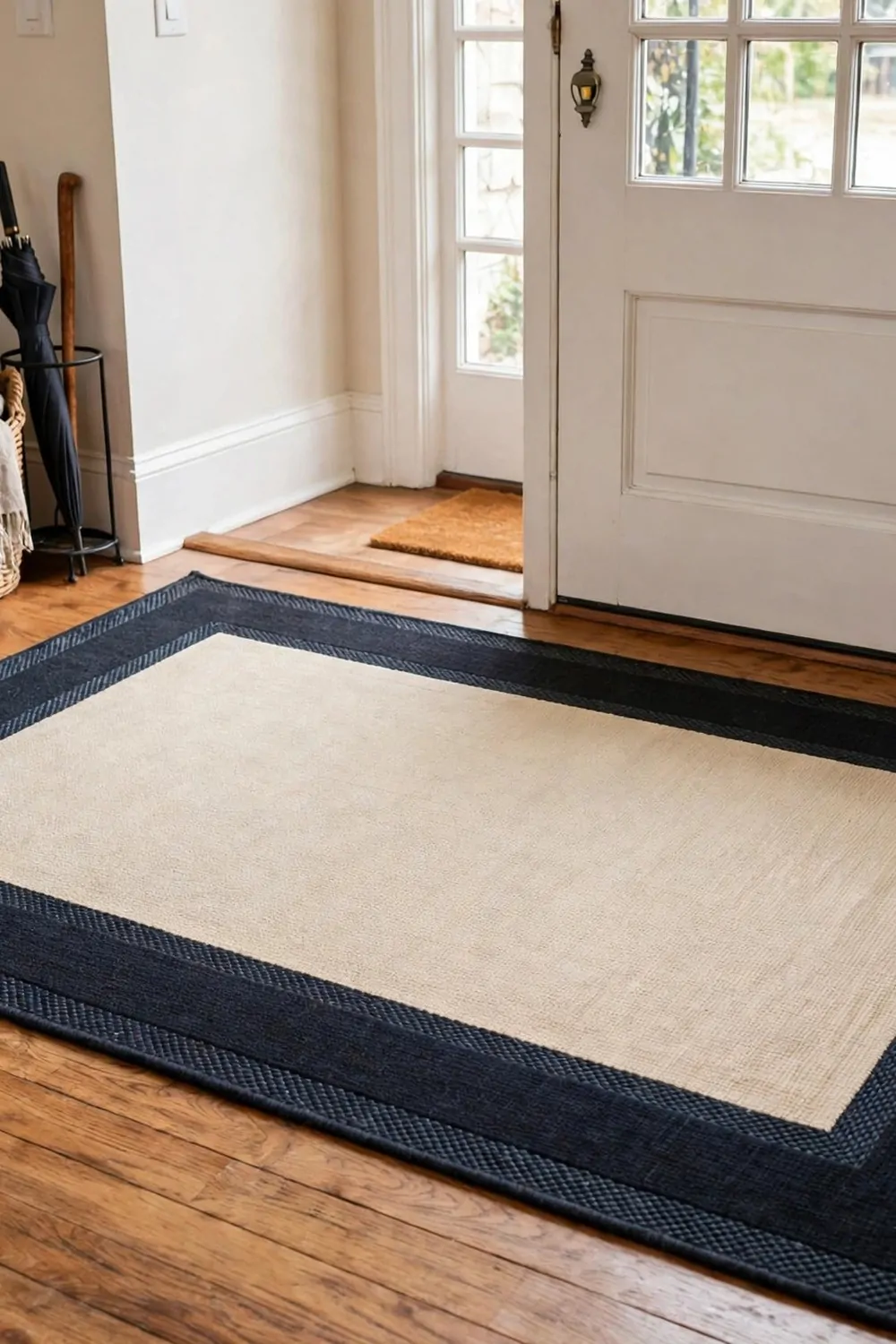
A rug with a dark border looks neat and hides dirt at the edges.
The edges get the most wear and the most mud from shoes. A dark border hides those marks while the middle stays light and bright.
I like this trick because I get a light rug without the stress. The middle feels fresh and open. The dark edge does the hard work where feet land most.
A dark border also frames the rug and makes it look finished.
It pulls the eye to the center and it makes a small entry look tidy. You do not need much else in the hall when the rug looks this neat.
I pick a border color that matches my door or my shoe rack.
That match makes the whole entry feel planned. It does not look random, even if I picked the rug fast. Small matches like that make a big difference to how a room feels.
I clean the border with a damp cloth when I see mud on it. It wipes clean fast and I do not have to wash the whole rug each time.
If you love light rugs but fear mud, start with this one. You get the light look you want. You also get a dark edge that hides the worst marks, and that balance works well for daily life.
13. Two Rugs, One Inside One Outside
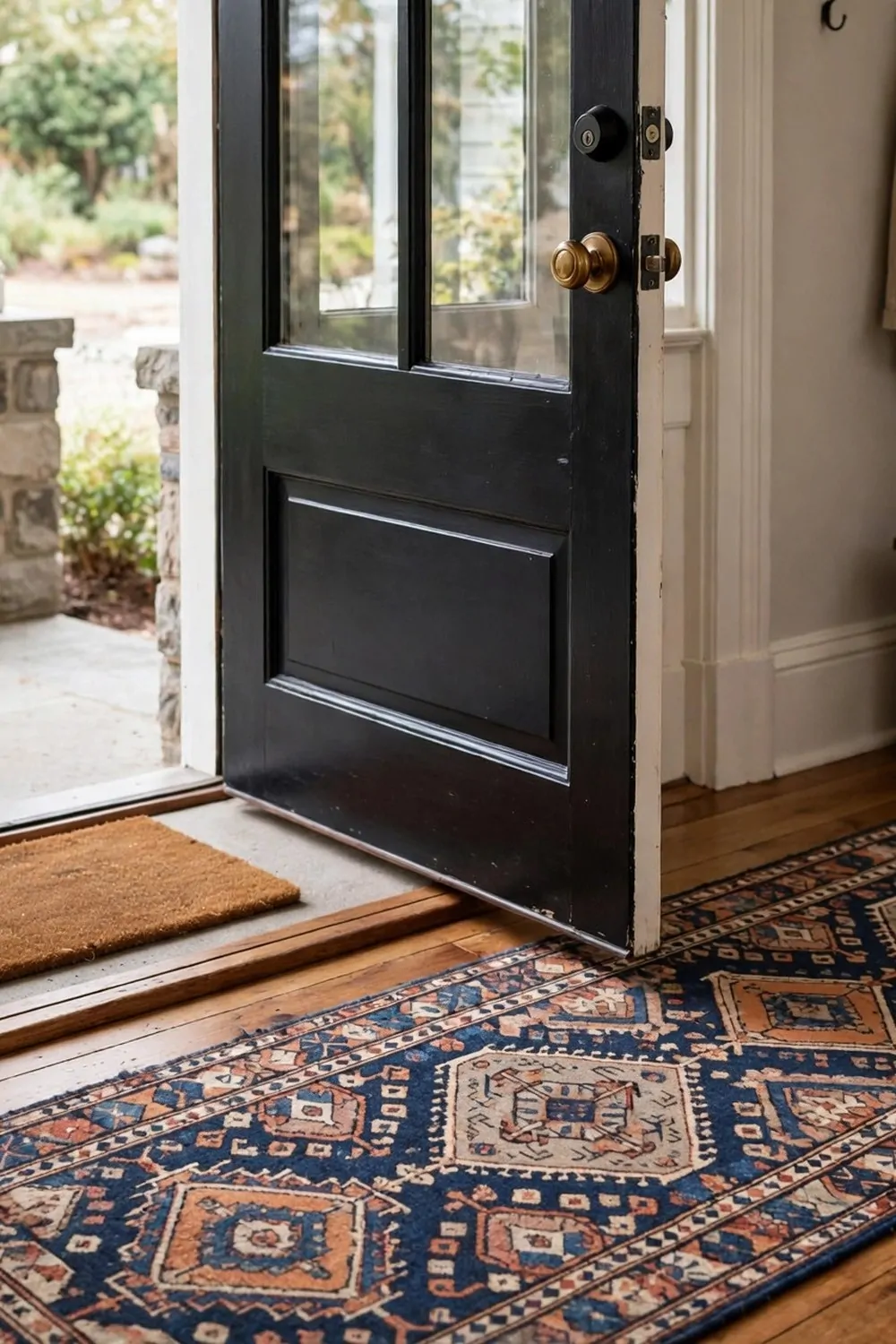
I keep one rug outside and one rug inside.
The outside one catches most of the dirt first. The inside one catches what is left on your shoes.
It sounds like a lot, but it really works.
My floor stays cleaner for longer now. I do not have to sweep every day. You will notice the change too.
Pick a tough mat for outside. It should handle rain and mud without falling apart.
Pick a soft rug for inside.
I shake the outside mat every few days. I vacuum the inside rug once a week. That small habit keeps both rugs fresh.
Make sure the two rugs look nice together. They do not have to match, but the colors should feel calm.
Two rugs cost a bit more, but they save your floor.
14. A Waterproof Rug for Rainy Days
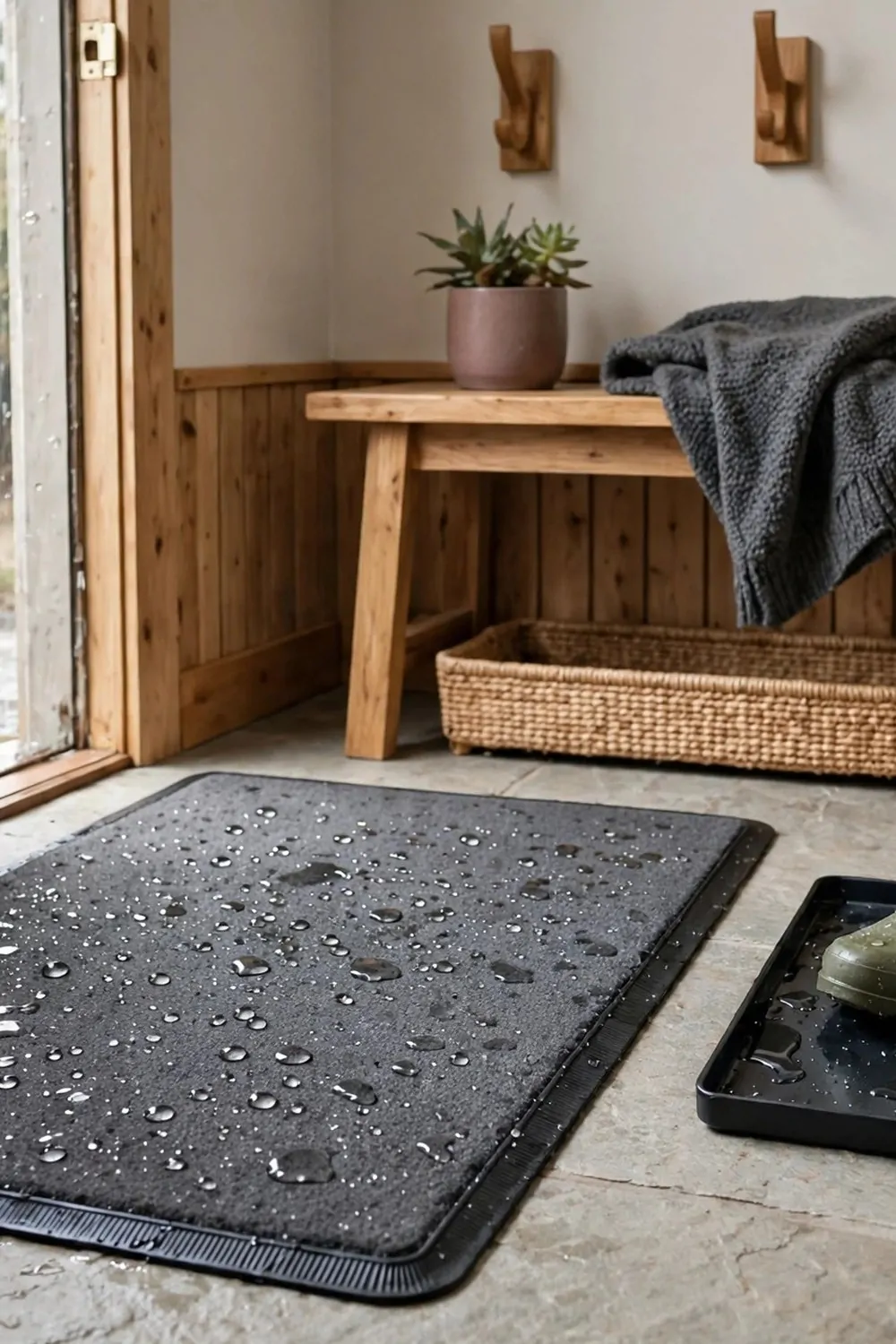
Rainy days can make your entry a mess.
A waterproof rug helps a lot on those days. Water sits on top instead of soaking in.
I wipe the mat down with a damp cloth and it looks fresh again.
You do not need soap most of the time. A quick wipe is often enough. Your rug dries fast and looks fine again.
Look for a rug that feels smooth on top. It should not feel sticky under your feet.
I keep mine by the door all year.
It works well in winter too. Wet shoes dry off on it. The floor under it stays dry and safe.
Pick a dark color if you can. It hides mud marks until you clean it.
A waterproof rug makes rainy days much easier.
15. A Striped Rug That Guides the Eye
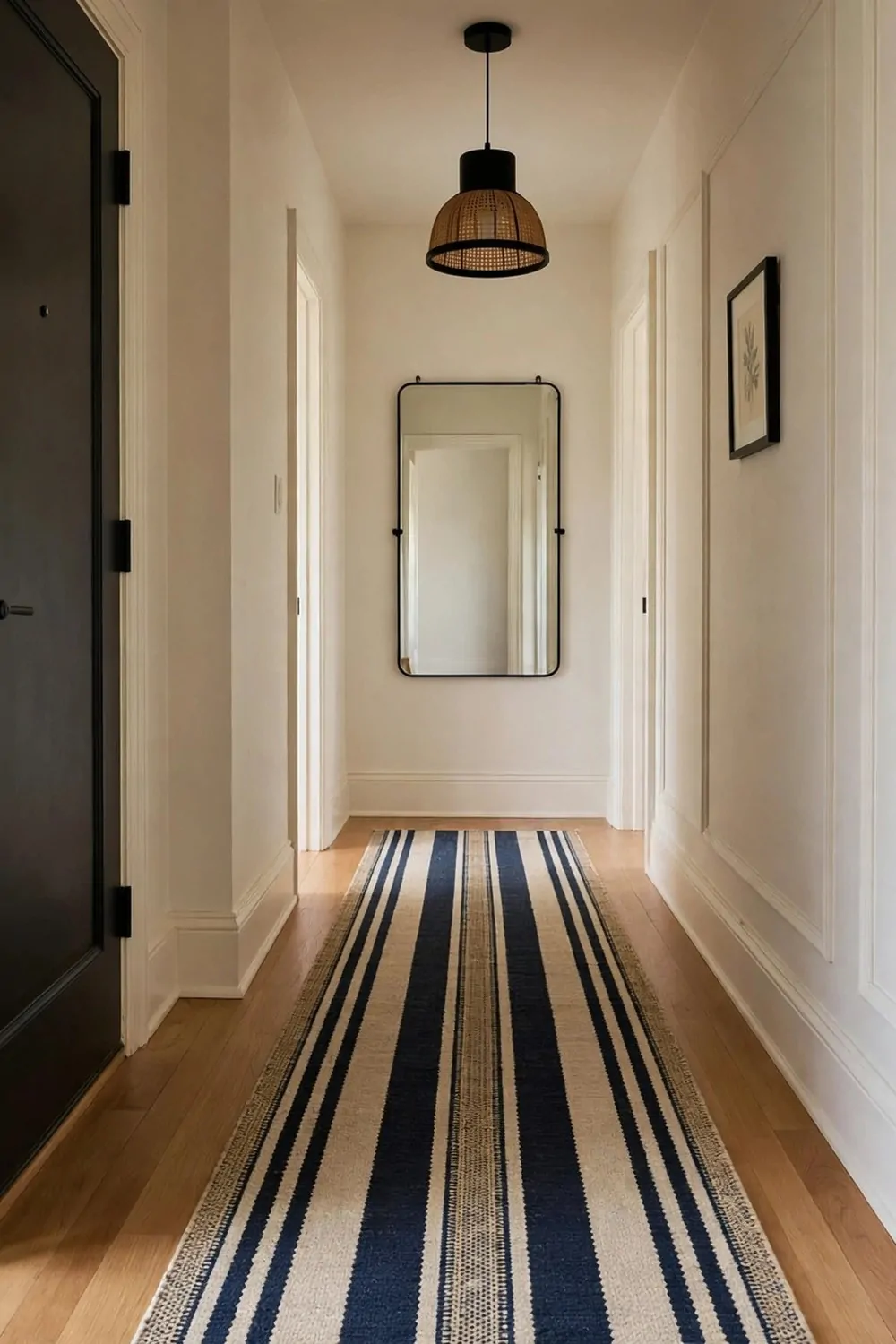
A striped rug can make a small entry look longer.
The lines pull your eyes toward the next room. It feels like the hall is bigger than it is.
I like thin stripes best.
Thin stripes look neat and calm. Thick stripes can feel too loud. You can pick the one that fits your home.
Stripes work with plain walls. They add a little pattern without too much fuss.
I chose soft colors for mine.
You can match the stripes to your door or your bench. A small link like that ties the space together. It makes the entry feel planned.
Keep the rest of the entry simple. Let the rug do the talking.
A striped rug is a small change with a big feel.
16. A Wool Rug for Cold Mornings
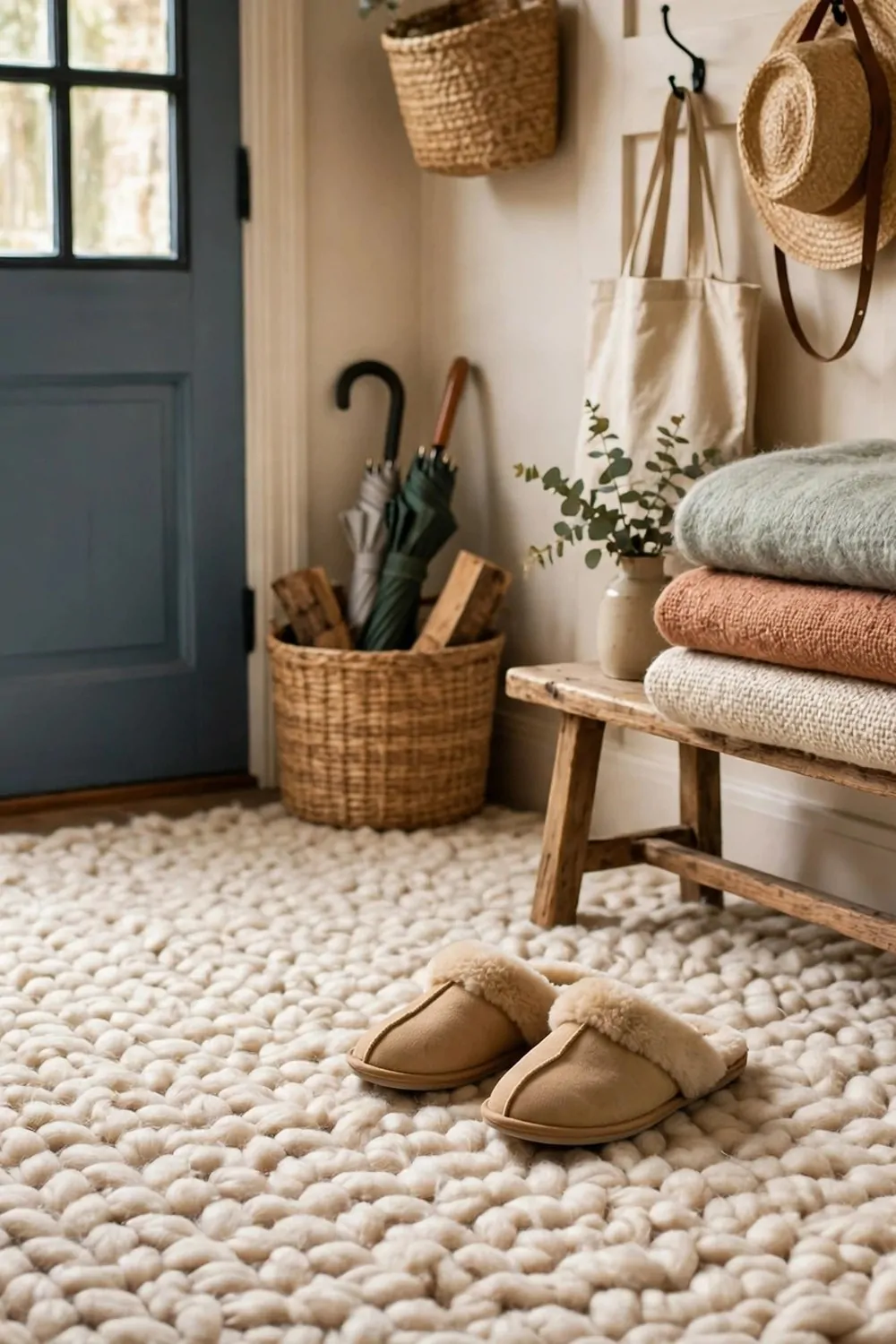
Cold mornings feel better with a wool rug.
Your feet land on something warm and soft. It is a nice start to the day.
Wool feels thick and cozy underfoot.
I love how it holds heat. It does not feel cold like a hard floor. You can stand on it while you put on your shoes.
Wool also lasts a long time. It can handle lots of feet walking over it.
I vacuum mine gently each week.
Shake it outside when the sun is out. Let it air for a bit. It smells fresh again after that.
Pick a color that hides dust. A soft grey or warm brown works well.
A wool rug makes cold mornings feel kind.
17. A Small Rug Just for Shoes
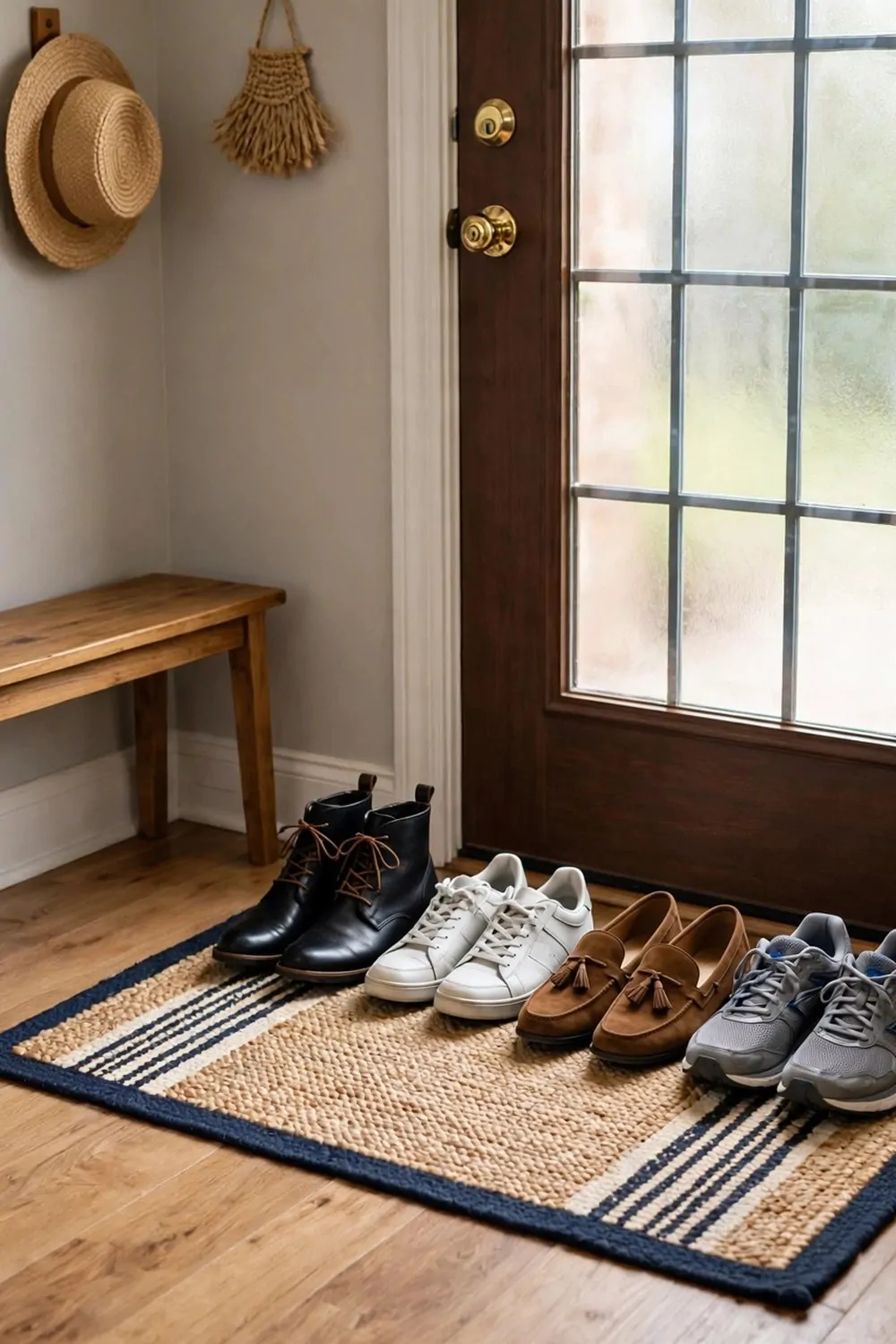
A small rug just for shoes keeps things neat.
Your shoes have one clear spot. They do not spread across the whole entry.
I put mine right by the door.
It is easy to see where shoes go. Guests know what to do too. You do not have to ask them twice.
Pick a rug that is easy to wash. Mud and dust will land on it a lot.
I shake mine out every day.
A small rug costs less than a big one. You can swap it out when it looks worn. It is a simple fix that works.
Leave space around it for walking. You still need room to step past it.
One small rug can tidy the whole entry.
18. A Rug That Matches the Wood Floor
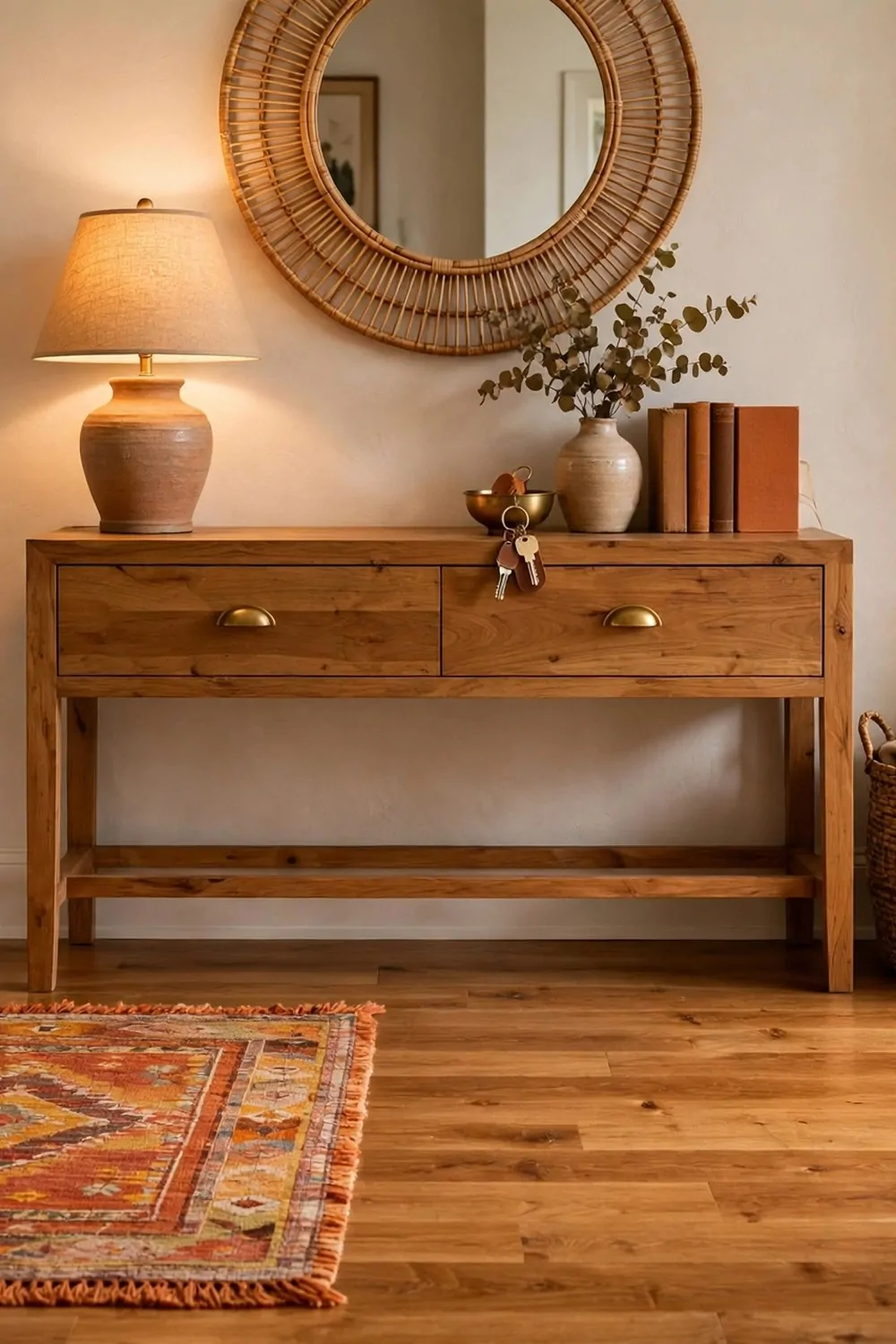
A rug that matches your wood floor looks calm and neat.
The colors do not fight each other. Your entry feels like one smooth space.
I look at my floor first, then I pick the rug.
| Wood tone | Typical cost |
|---|---|
| Light oak | $40 to $80 |
| Medium brown | $50 to $90 |
| Dark walnut | $60 to $110 |
A light rug for light oak often costs $40 to $80. It keeps the room bright and soft.
A rug for medium brown wood often costs $50 to $90. It adds warmth without looking dark.
A rug for dark walnut often costs $60 to $110.
You can test the color with a small sample first. Lay it on the floor in daylight. See how it looks before you buy the full size.
I like a rug that is a little lighter than my floor. It gives a soft contrast and still feels warm.
When the rug matches the wood, the whole entry feels easy.
19. A Vintage-Look Rug with Faded Colors
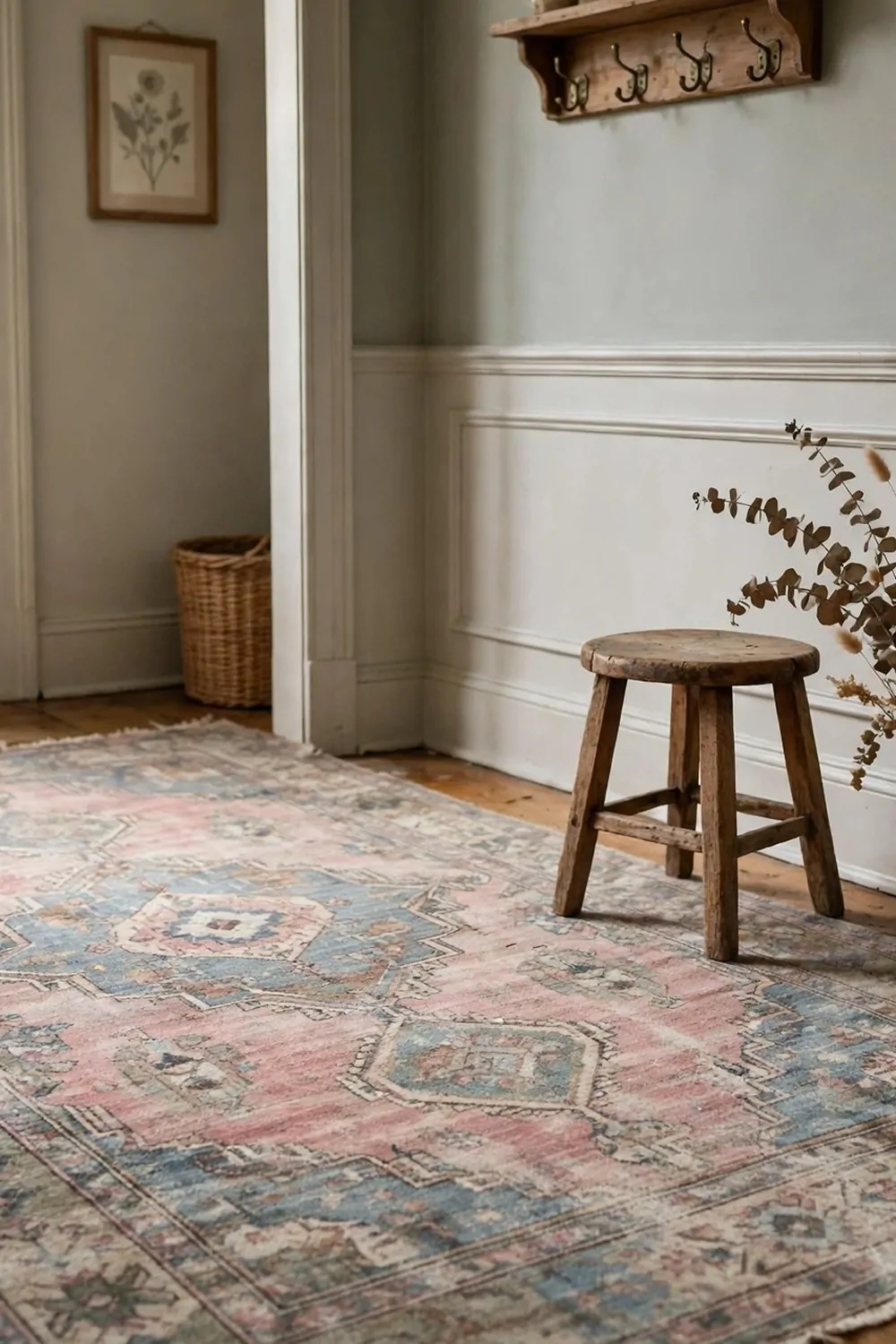
A vintage-look rug has soft, faded colors.
It does not look new and bright. It looks like it has a story.
I love that worn feel.
Faded colors hide dirt well. A little dust does not show up fast. You can relax a bit more about muddy shoes.
It works with old wood and plain walls. The rug adds charm without trying too hard.
I picked one with soft red and blue.
You can pair it with a simple bench. Add a small plant if you like. The rug will still be the star.
Look for a low pile so the door opens easy. Thick rugs can catch on the door.
A faded rug makes your entry feel warm and lived in.
20. A Rug You Can Shake Outside
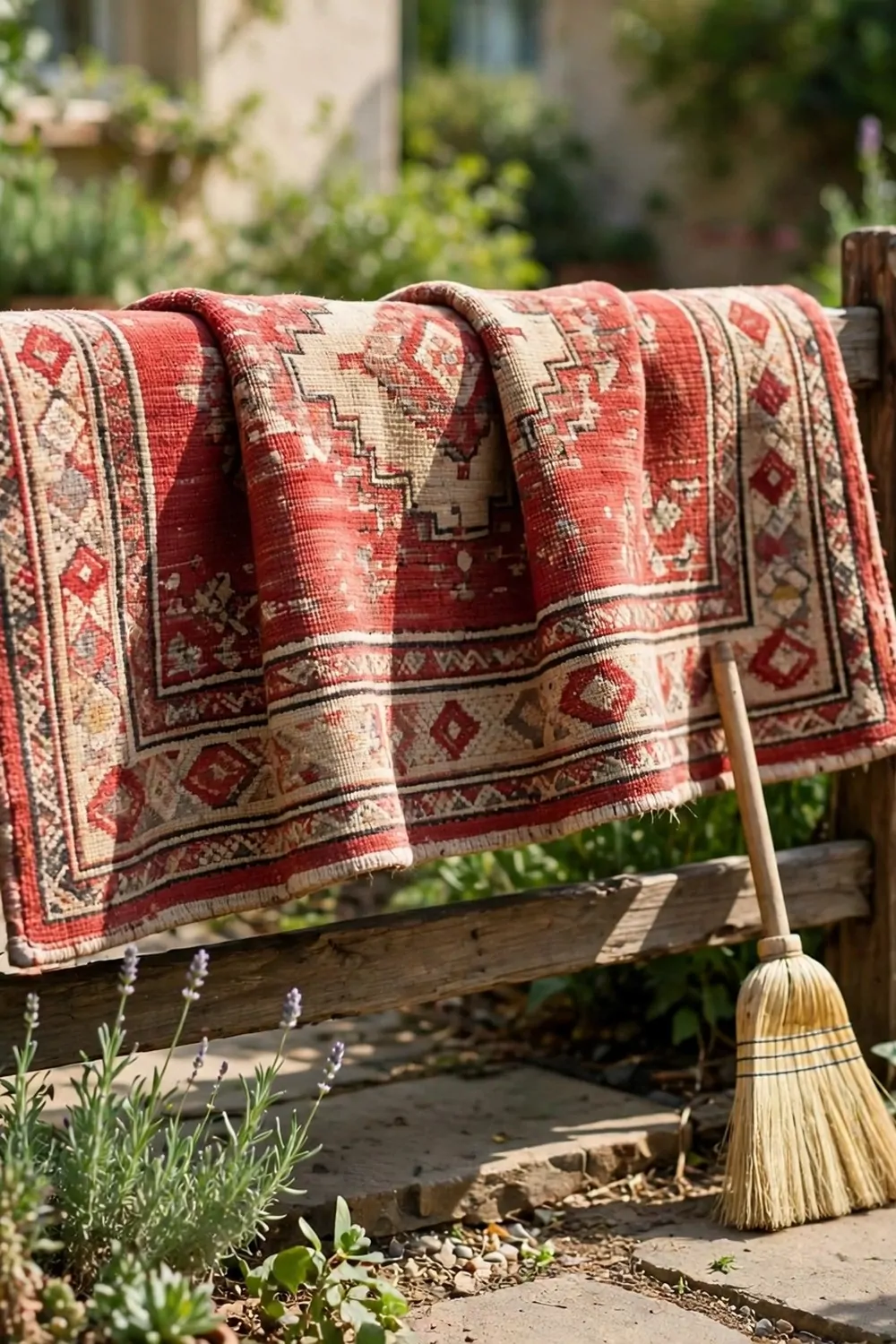
Some rugs are made to shake outside.
You pick it up and give it a good shake. The dust falls out fast.
I do this on my step each week.
It is much quicker than vacuuming. You do not need to plug anything in. Your rug feels light and fresh after.
Pick a rug that is not too heavy. You need to lift it with ease.
I like a thin rug for this job.
Shake it on a dry day if you can. Let the wind help you. Hang it over a rail for a few minutes too.
Check the corners after you shake it. Dirt can hide there.
A shake-out rug is easy care for a busy home.
21. A Colorful Rug for a Plain Entry
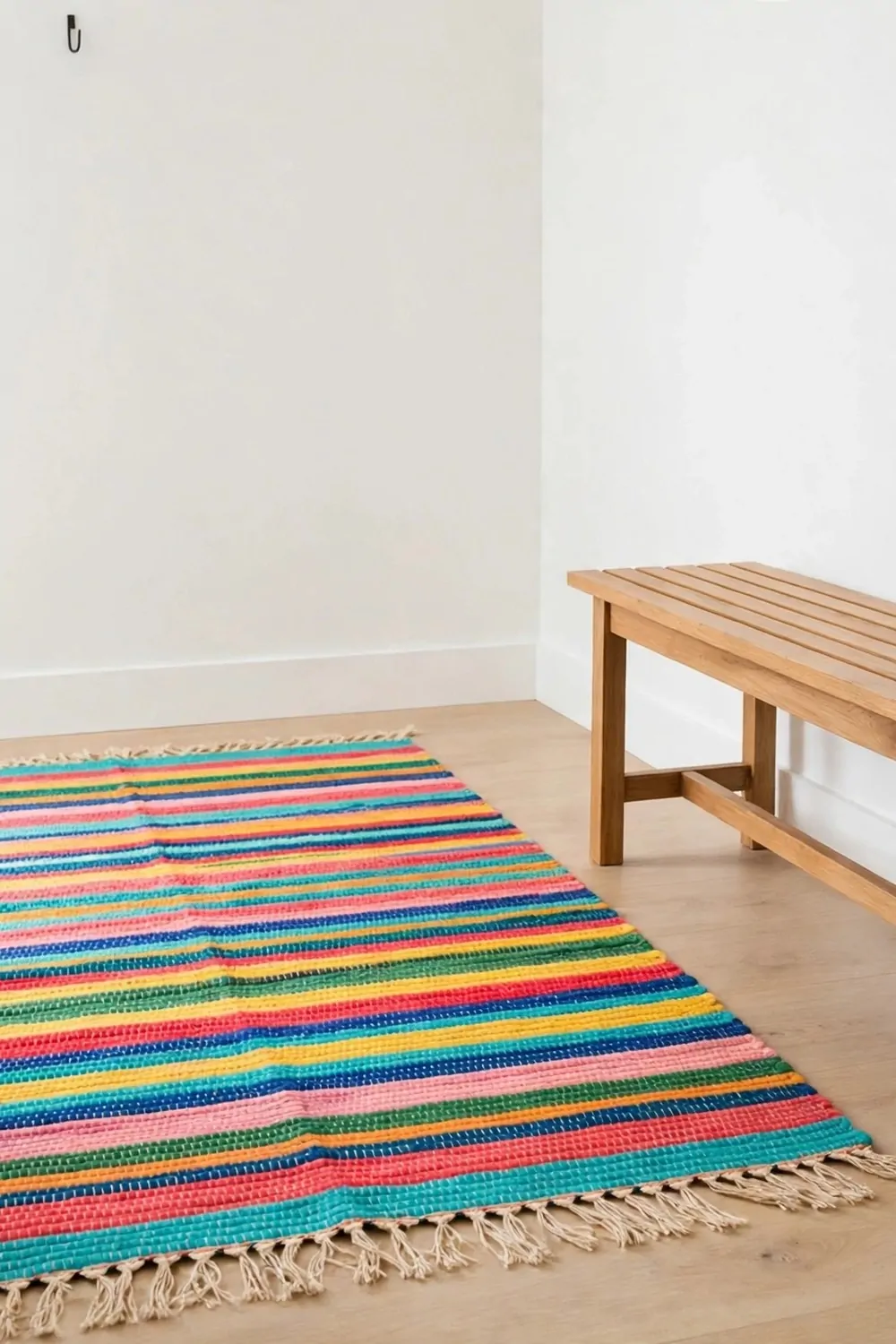
A colorful rug can wake up a plain entry.
White walls and plain wood can feel flat. A bright rug adds life right away.
I went bold with mine.
You do not need to paint the walls. One rug can change the mood. It is a cheap way to add color.
Pick two or three colors you love. They should feel happy to you.
I matched mine to a small vase.
Keep the other bits simple. A plain hook and a plain bench work well. The rug gets all the attention.
Bright colors can hide small marks too. That helps when kids run in and out.
A colorful rug makes coming home feel fun.
22. A Rug with a Non-Slip Back
A rug that slips is not safe.
I have seen rugs slide on hard floors. It is easy to trip when that happens.
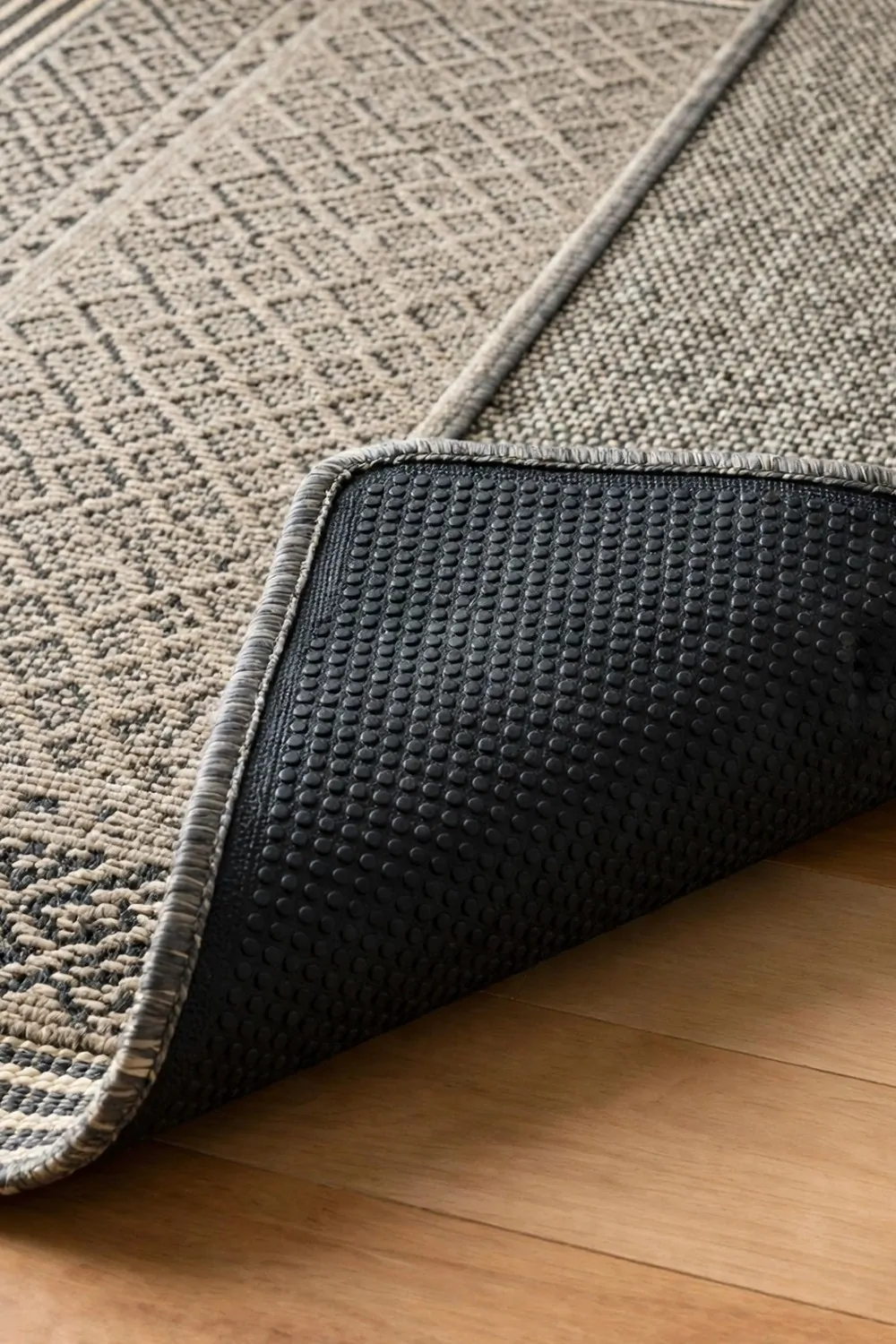
A non-slip back fixes that.
The rug stays where you put it. You can step on it without worry. Kids and older folks stay safer too.
Check the back before you buy. It should feel grippy to touch.
I test mine with a small push.
If it still moves, add a thin pad under it. That extra grip helps a lot. Wash the back now and then so it stays grippy.
Non-slip rugs work well on wood and tile. They hold firm on smooth floors.
Safety first, then style, that is my rule.
23. A Seasonal Rug Swap
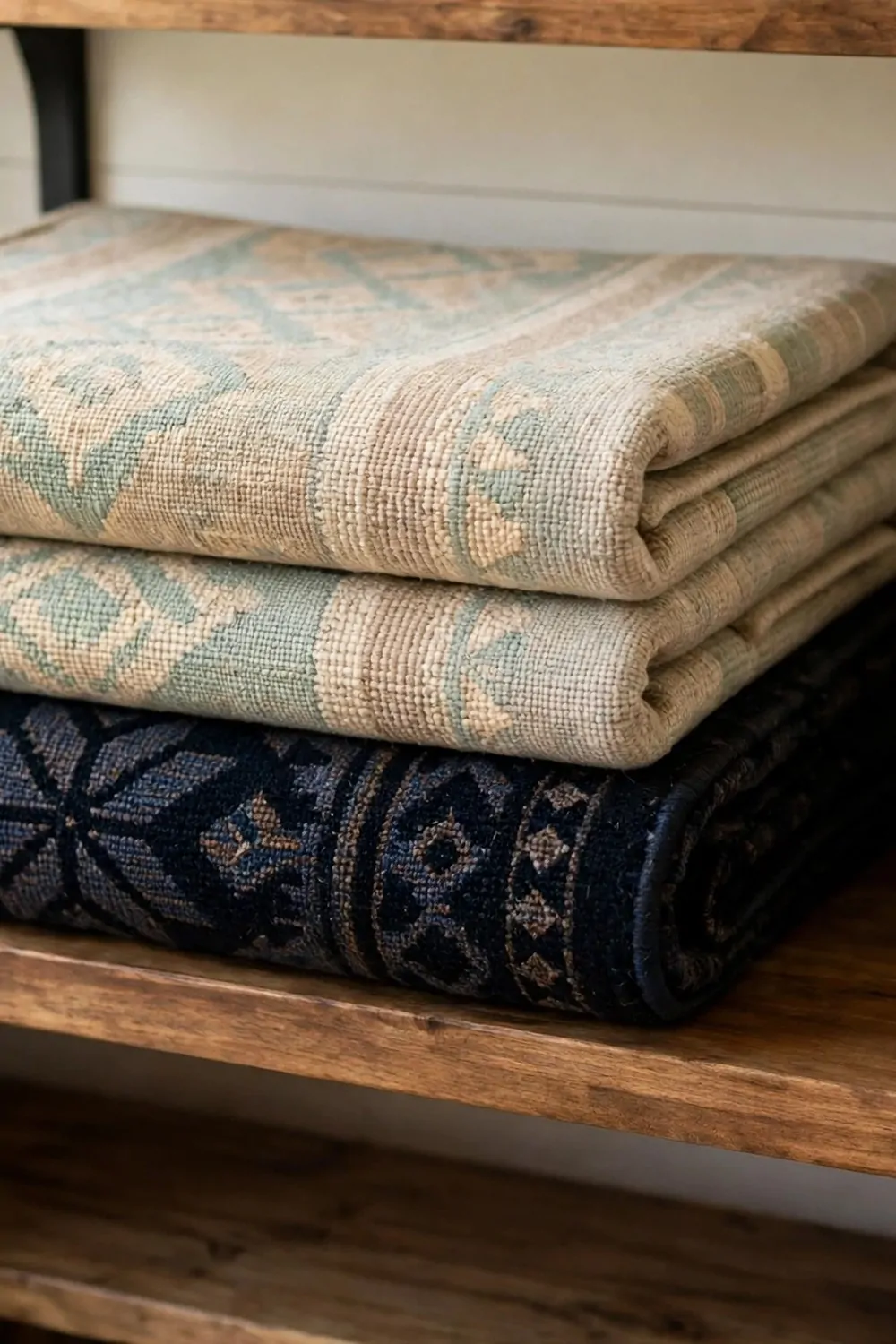
I swap my entry rug with the seasons.
A light rug feels right in warm months. A thick rug feels right when it gets cold.
It keeps the entry feeling fresh.
You do not need to buy a new rug each time. Just store the other one clean and dry. Swap it back when the weather turns.
Pick colors that fit the season. Soft greens work in spring.
I keep mine in a clean bag.
Wash the rug before you store it. Let it dry fully in the sun. That way it smells nice next time you use it.
A swap is a small joy through the year. It makes the entry feel new again.
Try one swap and see how it feels.
24. A Rug and a Boot Tray Together
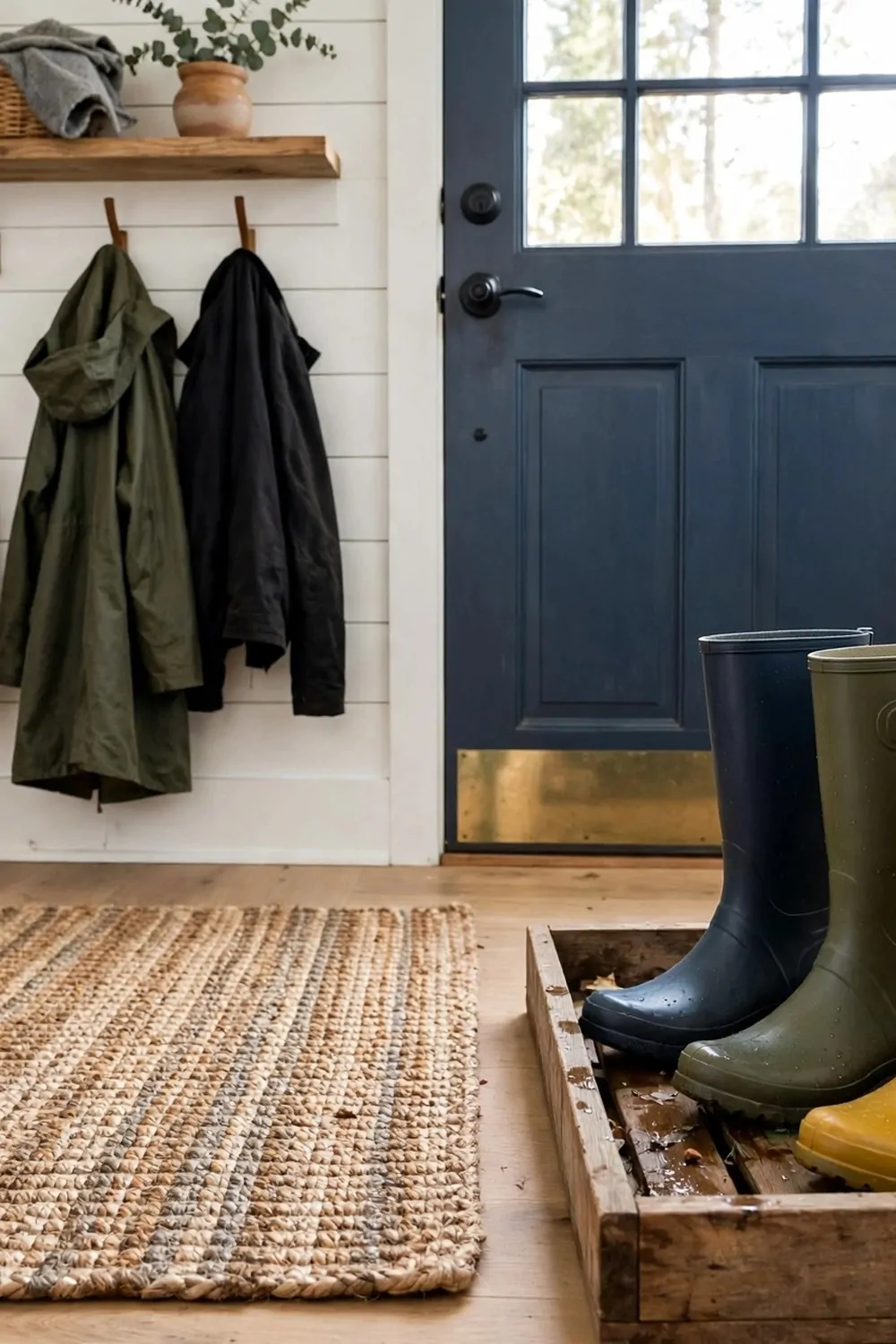
A rug and a boot tray work well as a pair.
The tray holds wet boots in one spot. The rug keeps the rest of the floor clean.
I put the tray on the rug.
It looks neat and tidy. Water stays in the tray, not on the floor. You can wipe the tray in seconds.
Pick a tray that fits your rug. It should not hang over the edge.
I use a low tray with a rim.
Put your most used shoes in the tray. Keep the rest in a closet. The entry stays clear and easy to walk through.
Clean the tray once a week. Rinse it and let it dry.
Together, the rug and tray keep mud where it belongs.
Keep Reading
- 28 Coat Closet Organization Ideas That End the Pile
- 21 Hallway Storage Ideas That Use Narrow Walls Well
- 33 Entryway Table Decor Ideas That Welcome Guests
- 25 Entryway Mirror Ideas That Make Small Entries Feel Bigger
- 30 Entryway Storage Ideas That Keep Shoes and Coats Tidy
- 35 Dining Room Rug Ideas That Define the Space
Pick one rug idea from this list and try it by your front door this week. Start small, see how it handles the mud, and enjoy a warmer entry every time you come home.