30 Entryway Storage Ideas That Keep Shoes and Coats Tidy

I came home with grocery bags in both hands and tripped over a pair of shoes right inside the front door. The bags wobbled and I caught myself on the wall, and I thought, why does this small spot always feel so messy.
My entryway is not big at all, it is just a small space by the door. But shoes pile up there fast, coats fall off hooks, and keys hide in the mess. It used to make me sigh every single day.
I tried to fix it one small step at a time and I did not buy a lot of new stuff all at once. I just looked at what made the mess worse and then I changed that one thing. It helped more than I thought it would.
A good entryway does not need to look fancy, it just needs a place for each thing. Shoes need a home, coats need a hook, and keys need a spot you can see. When each thing has a place, you waste less time in the morning.
I also learned that small spaces can hold a lot. A bench can hide shoes inside it, a thin cabinet can fit behind a door, and a few hooks on the wall can hold a whole week of coats. You just need to pick the right fit for your space.
In this post I share ideas that are easy and cheap to try. Some cost very little and some take ten minutes to set up. All of them help your entry feel calm when you walk in.
You will find all 30 ideas in this one post, from shoe storage to coat hooks to small tables and rugs. Read through them all and pick the ones that fit your home best.
1. A Shoe Bench with Storage Inside
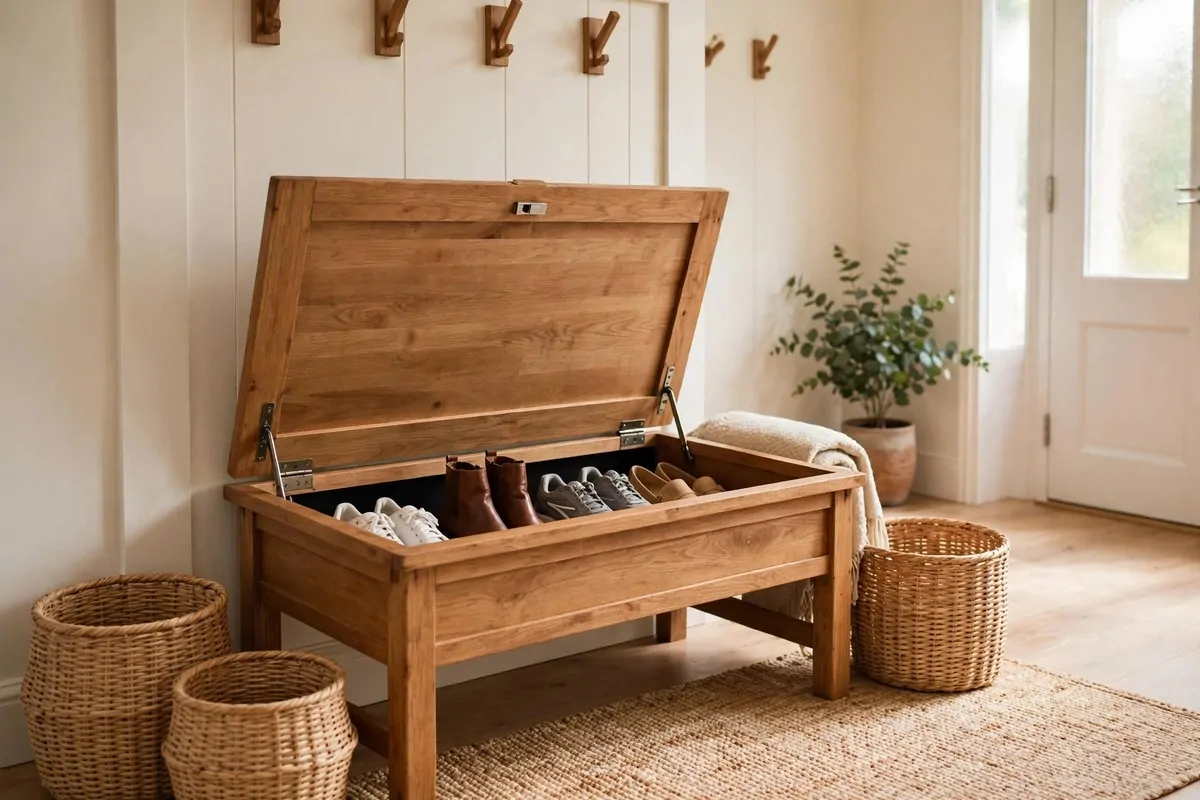
A shoe bench is one of my favorite entryway storage ideas. You can sit on it to put your shoes on. And you can hide shoes inside it at the same time.
I like it because it does two jobs at once. You do not need a chair and a shoe box, the bench is both. It saves space in a small entry.
Look for a bench with a lift up seat or open cubbies below. The lift up seat hides the mess best. The open cubbies make it easy to grab shoes fast.
Keep only the shoes you wear a lot in the bench. Put the rest in a closet. If the bench is full, it stops working well.
I put my everyday shoes in the front cubbies. My nice shoes go in the back. That way I can find what I need in seconds.
Pick a bench that fits your wall and measure first. A bench that is too long will block the door. A bench that is too short will not hold much.
You can add a small cushion on top. It makes the bench soft to sit on. It also makes the entry feel warm and homey.
Wipe the bench once a week. Dust builds up fast near a door. A quick wipe keeps it looking clean.
This one piece can change how your whole entry feels. Try it for a week. You will see the floor stay clear.
2. A Slim Shoe Cabinet by the Door
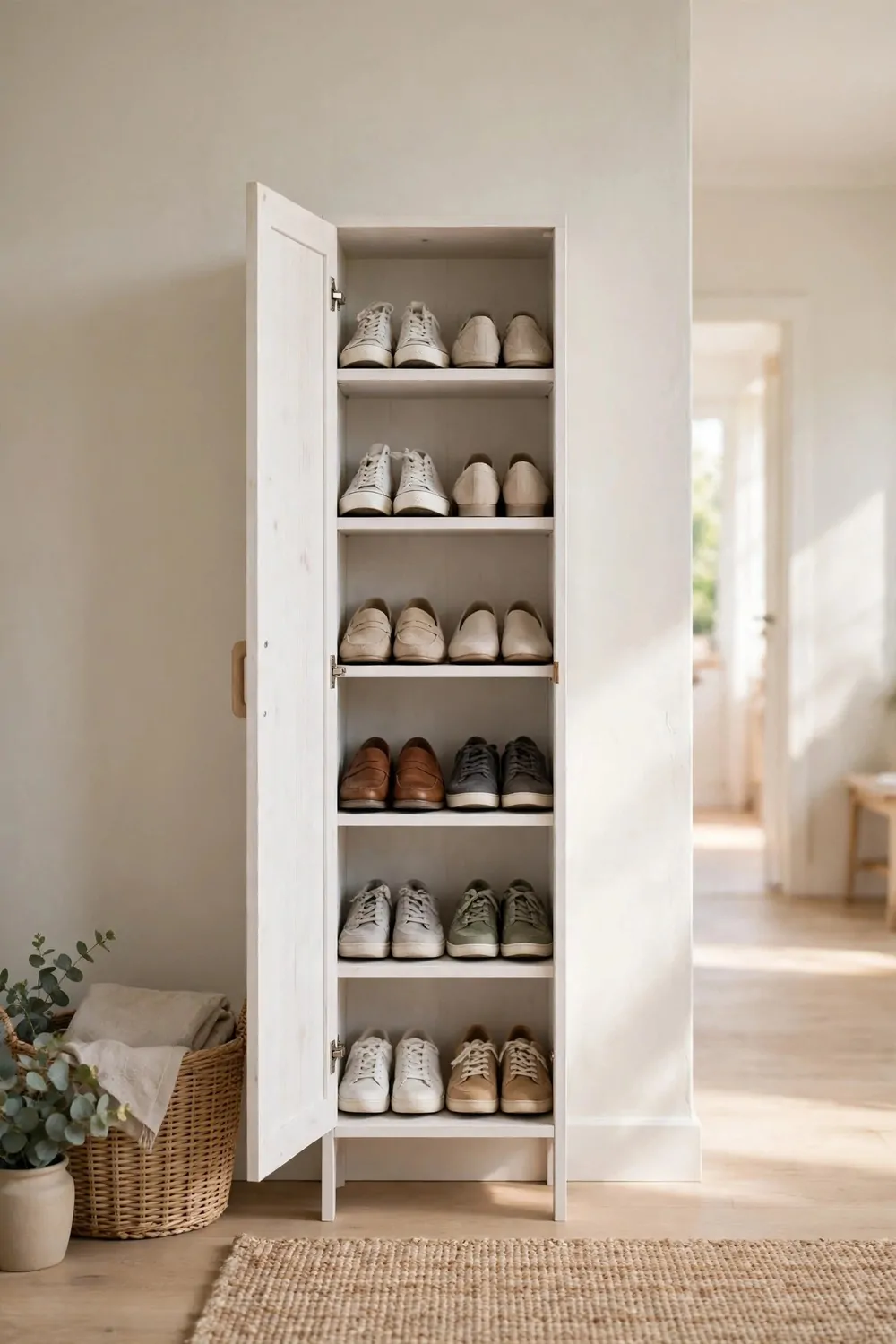
A slim shoe cabinet is made for tight spots, it is thin and it hugs the wall. And it still holds a lot of shoes.
I love this one for small flats and narrow halls. A normal shoe rack sticks out too far. A slim cabinet does not trip you up.
Most slim cabinets have tilt out doors, you pull the front down a little. The shoes sit in rows inside. It is neat and easy.
You can fit two or three pairs in each row. That adds up fast. A cabinet with three rows can hold six to nine pairs.
Put the shoes you wear most in the top row. It is the easiest to reach. Put the ones you wear less in the bottom row.
Keep the top of the cabinet clear, or put one small thing on it. A tiny plant or a small tray works well. Too much stuff on top looks messy.
Pick a color that matches your wall. White or light wood blends in well. It makes the entry feel bigger, not crowded.
Make sure the cabinet is fixed to the wall if it is tall. That keeps it safe. It will not tip over if someone bumps it.
If your entry is very small, this might be your best pick. It gives you storage without taking your walking space.
3. Wall Hooks at Different Heights
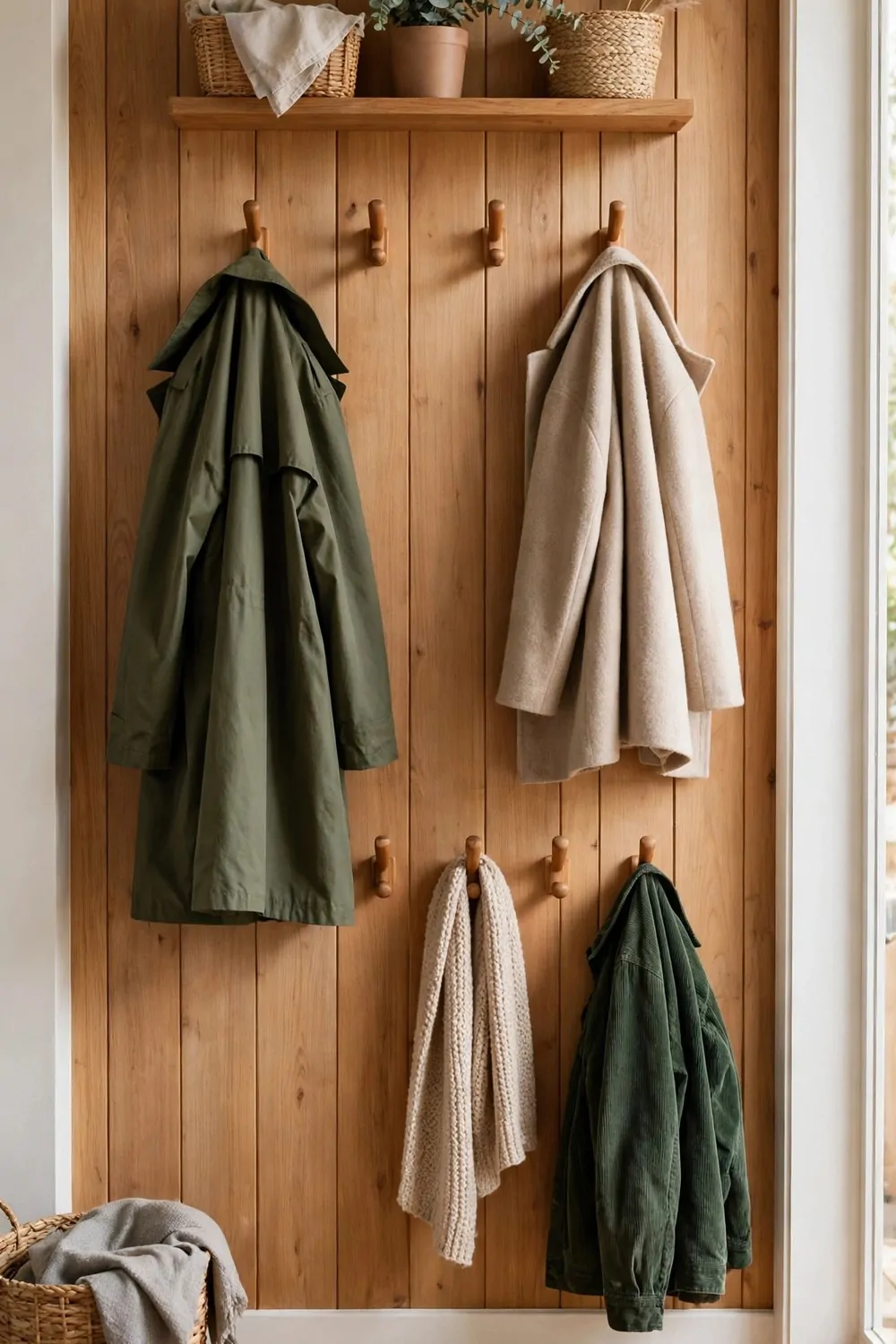
Wall hooks are simple. They are cheap. And they work really well for coats and bags.
I like hooks at different heights. Tall hooks are for grown ups and low hooks are for kids. Everyone can reach their own coat.
Put the hooks on a strong wall board first. Then fix the board to the wall. That holds more weight than hooks on plain plaster alone.
Give each person one or two hooks. That stops coats from piling on one hook. When one hook holds five coats, they all fall down.
Leave a little space between hooks. Coats need room to hang flat. If they are too close, they bunch up and look messy.
You can use hooks for more than coats. Hang a bag, a hat, or a scarf. Just keep it to things you use every day.
Pick hooks that look nice. Wood hooks feel warm, and black metal hooks look clean and simple. Both work well.
I put a small hook near the door just for keys. I hang my keys there every time I come in. I never lose them now.
This is a ten minute job in most homes. And it can clear a whole pile of coats off your chairs and floor.
4. A Coat Rack That Holds Everything
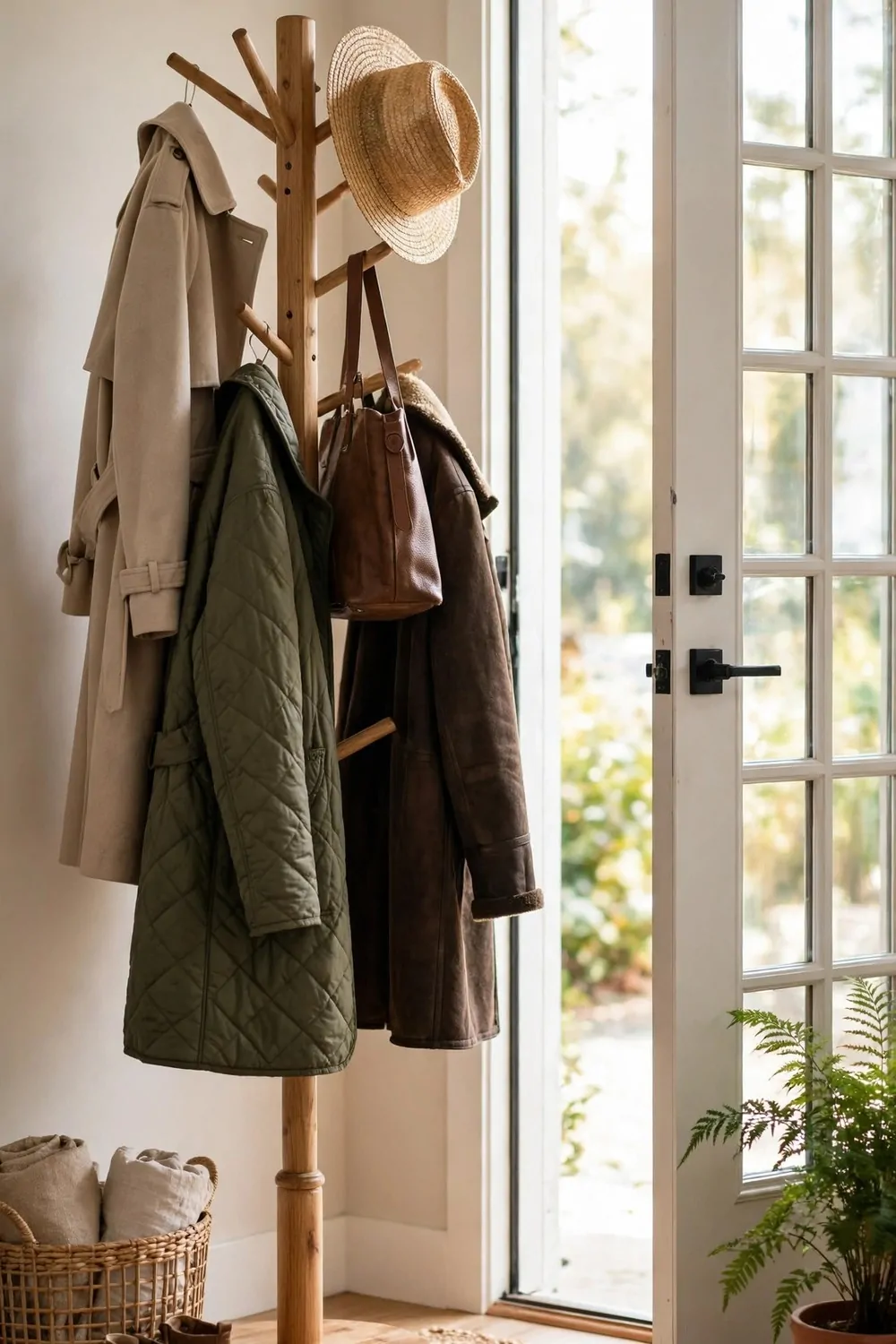
A coat rack is a classic for a reason, it stands in a corner. It holds coats, hats, and bags. And you can move it when you need to.
I use a freestanding coat rack in my entry, it cost me between $40 and $90. It was easy to put together. And it holds a lot for its size.
If you want a cheaper pick, a wall mounted hook rail is a good choice. It usually costs between $25 and $60. It does not take floor space at all.
A coat tree with a bench is another good pick, it usually costs between $60 and $120. You get hooks on top and a seat below. That is handy when the whole family comes in at once.
For a big family, a hall tree with bench and storage is the strongest pick. It usually costs between $150 and $350. It holds coats, shoes, and bags all in one spot.
Think about how many coats you need to hang each day. A rack with four hooks works for one or two people. A big family needs eight or more hooks.
Do not overload your rack. If it leans, take some coats off. Heavy coats on one side can tip a light rack over.
Keep a small tray under the rack for wet shoes. It catches drips. It also keeps the floor dry on rainy days.
| Coat rack type | Typical cost |
|---|---|
| Freestanding coat rack | $40 to $90 |
| Wall-mounted hook rail | $25 to $60 |
| Coat tree with bench | $60 to $120 |
| Hall tree with bench and storage | $150 to $350 |
Pick the type that fits your space and your budget. Any of these four can keep coats off the floor and make your entry feel tidy.
5. Woven Baskets for Shoes by the Door
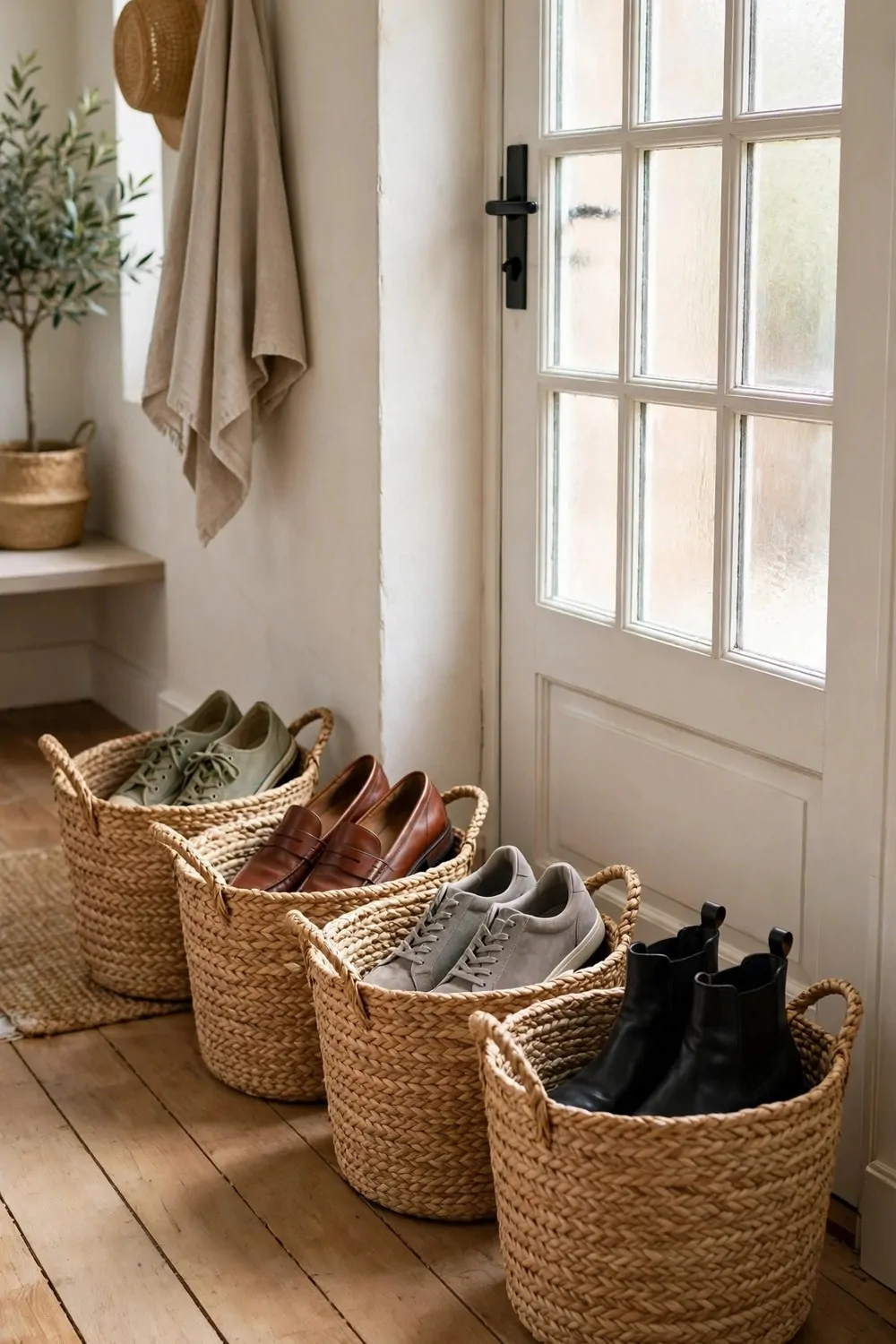
Woven baskets are soft, light, and easy to move. They look nice by a door. And they hide shoes in a sweet way.
I keep one big basket by my door for shoes. When guests come, I just slide it to the side. It is that simple.
Give each person a small basket if you have room. That way shoes do not mix up. Kids love having their own basket too.
Pick baskets with a tight weave. Loose weave lets dirt fall through. Tight weave holds the dirt inside until you clean it.
Put a small mat under the basket. It catches sand and dust. You can shake the mat outside once a week.
Do not fill a basket too high. Shoes will spill out. Two or three pairs per basket is just right.
Baskets work well for slippers and sandals too. Keep your indoor shoes in one basket. Keep outdoor shoes in another.
You can label baskets with a small tag. It helps kids know where their shoes go. It also helps guests feel at ease.
This is one of the cheapest storage ideas here. And it makes a plain entry feel warm and lived in.
6. A Boot Tray That Catches Mud and Rain
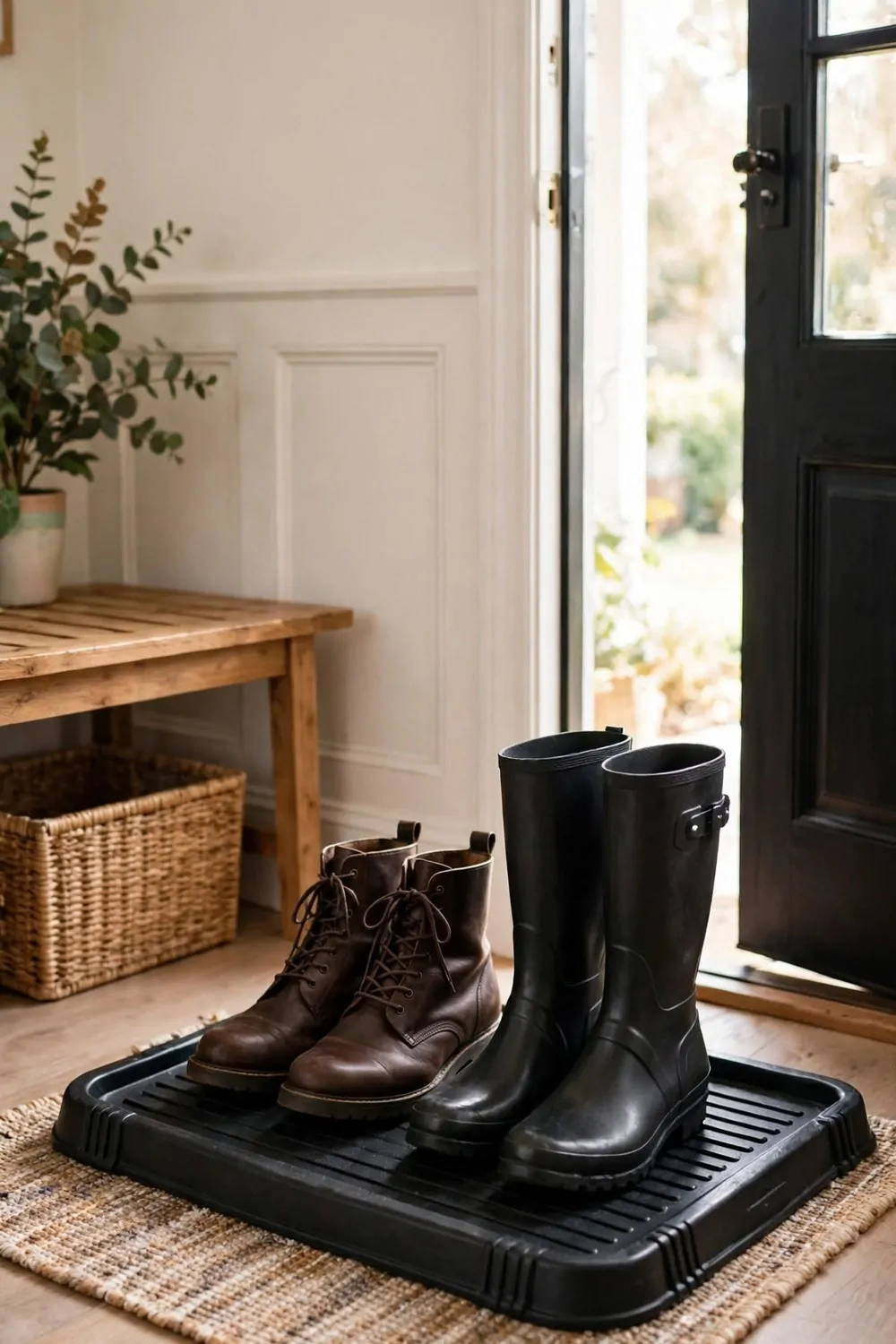
A boot tray sits on the floor by the door. You step out of wet shoes right onto it. The mud and rain stay in the tray, not on your floor.
I wish I had bought one sooner. My floor used to get wet every rainy day. Now the tray catches it all.
Pick a tray with a raised edge. The edge holds water in. A flat tray lets water run off onto the floor.
A tray with small ridges works best, the ridges lift shoes up a little. Air can move under them. That helps shoes dry faster.
Keep the tray close to the door. You want to step onto it right away. If it is too far, wet feet will cross the floor first.
Empty the tray when it fills with water, just tip it into a sink. Then wipe it dry. It takes less than a minute.
You can fit two pairs of boots on a normal tray. For a big family, use two trays side by side. That gives everyone space.
Pick a tray in a dark color if you can. Mud shows less on dark colors. It looks clean for longer.
This small tray saves a lot of cleaning time. It is a tiny buy with a big payoff.
7. A Small Console Table with Drawers
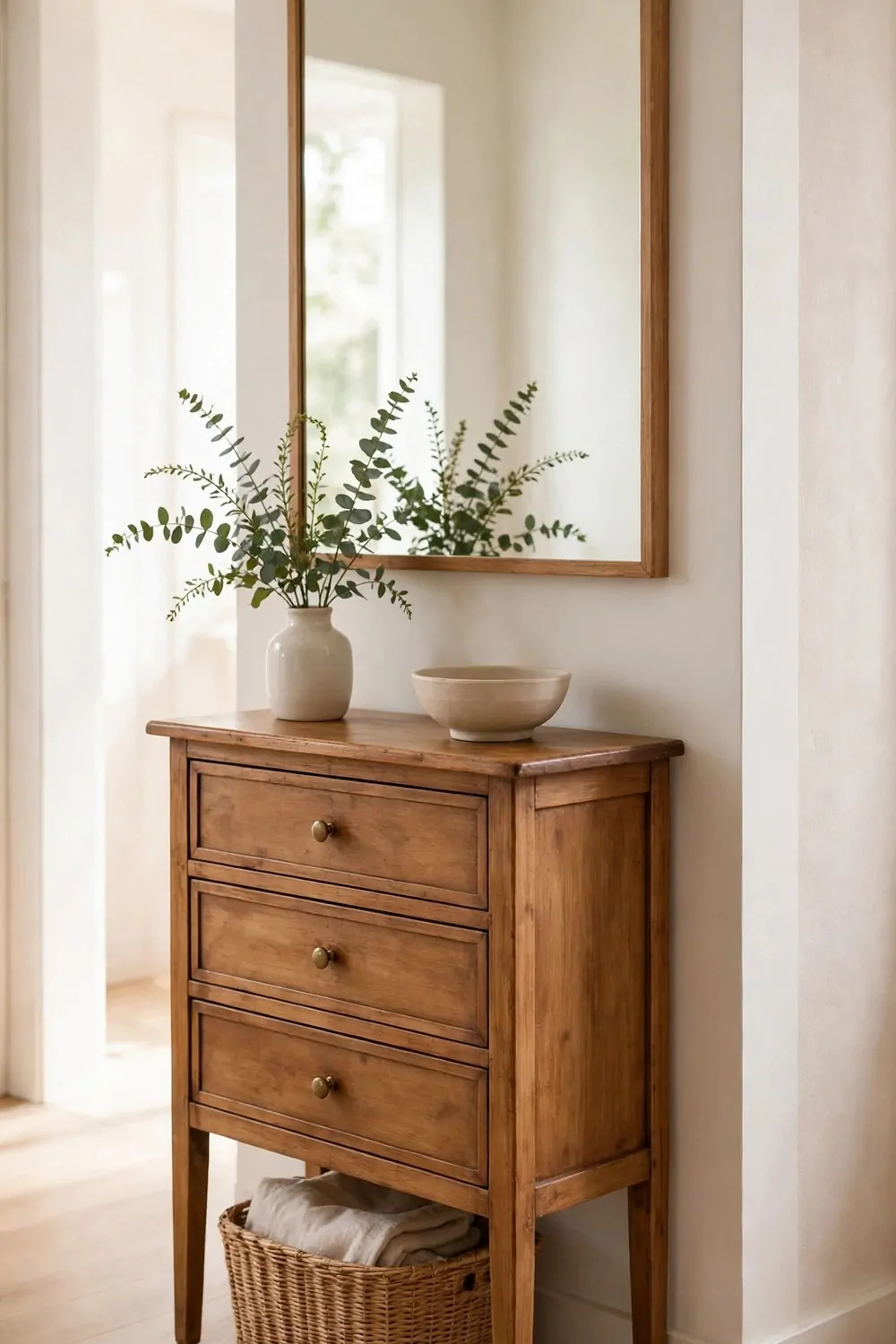
A small console table is slim and neat. It stands against the wall. And its drawers hide all the little things.
I keep my console table right by the door. The top holds a lamp and a small tray. The drawers hold things I do not want to see.
Use the top drawer for keys and mail. Use the next drawer for gloves and scarves. That way you know where each thing lives.
Do not let drawers turn into junk drawers. Clean them out once a month. Take out what you do not use.
A console table with two drawers is enough for most entries. Three drawers help if you have a lot of small stuff. More than that can feel bulky.
Pick a table that is not too deep. A deep table blocks the walkway. A slim table leaves room to pass by with bags.
Put a mirror or a small picture above the table. It makes the spot feel finished. It also draws your eye up, not down at the clutter.
Keep the table top mostly clear. One tray, one small plant, and a lamp is plenty. A clear top looks calm when you walk in.
This table is great if you like hidden storage. It looks like a pretty piece of furniture. But it works hard every day.
8. A Wall-Mounted Shelf for Keys and Mail
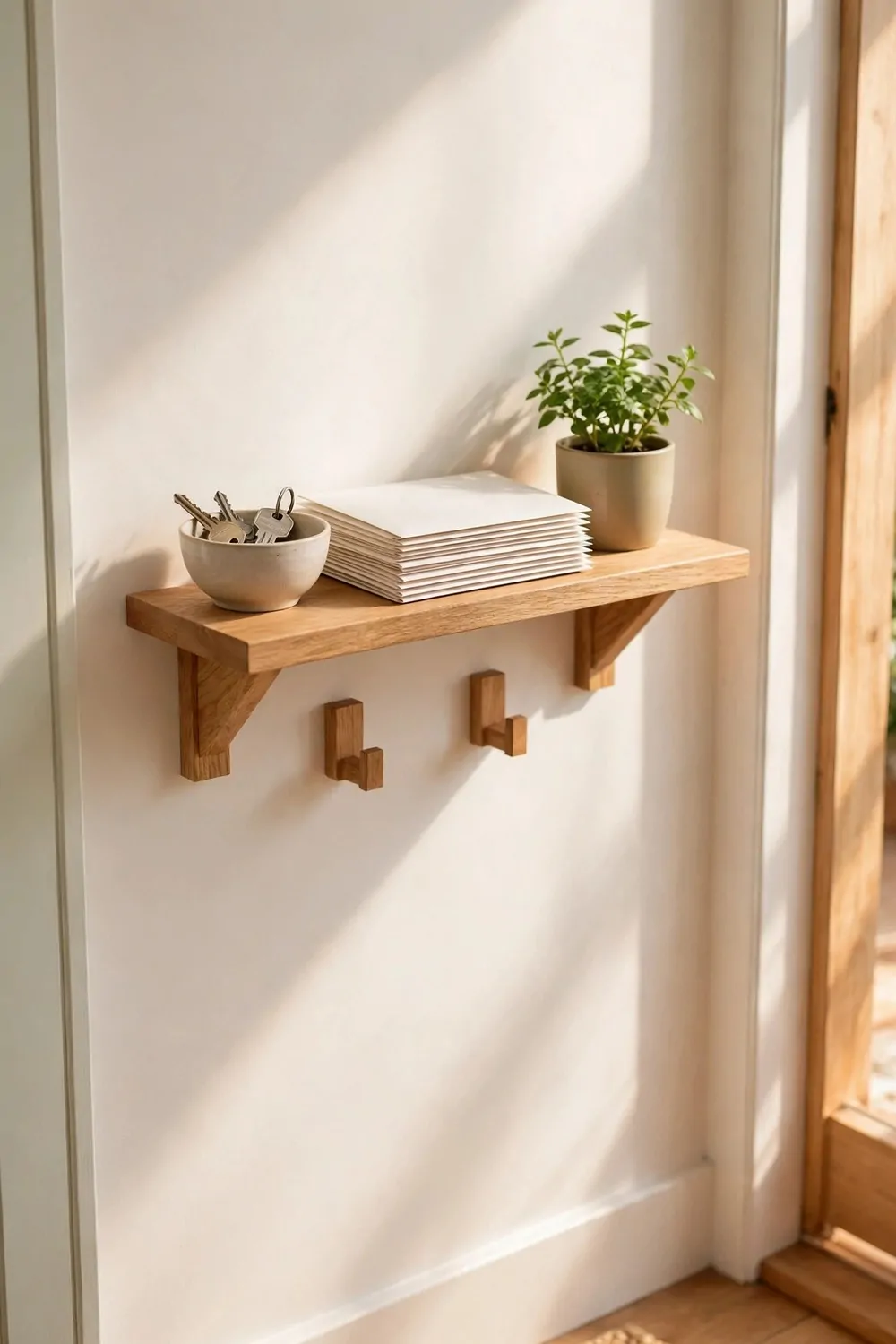
A wall shelf for keys and mail is a small fix with a big win. You always know where your keys are. And mail stops piling on the floor.
I put my shelf at eye level by the door. I can see it the second I walk in. I hang my keys there without even thinking.
Pick a shelf with small hooks under it, the hooks hold keys. The top holds mail and small bits. It is one spot for all of it.
Sort mail as soon as you bring it in, put bills in one slot. Put junk mail straight in the bin. It takes ten seconds and saves a big pile later.
Keep only this week mail on the shelf. Old mail goes in a file or in the bin. A full shelf looks messy fast.
You can add a small basket on the shelf for sunglasses. Or a tiny dish for coins. Just keep it to things you grab on your way out.
Fix the shelf well to the wall. Use the right plugs for your wall type. A shelf that falls down is worse than no shelf.
Pick a shelf that matches your hooks or your bench. Same wood tone or same black metal ties the entry together. It looks planned, not random.
This one shelf can end the daily key hunt. Try it for a week. You will wonder how you lived without it.
9. A Mirror That Makes the Entry Feel Bigger
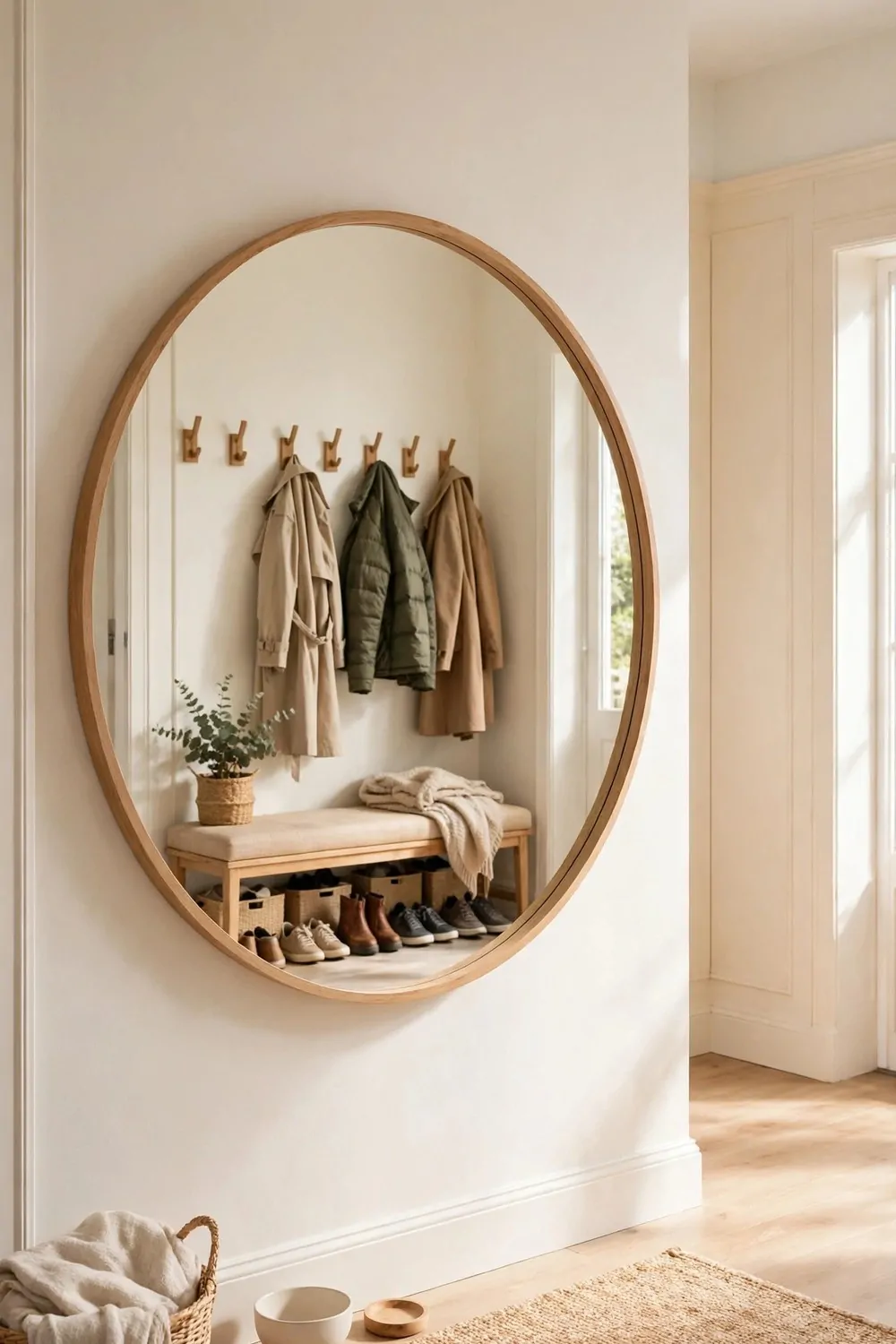
A mirror can make a small entry feel twice as big. It bounces light around. It makes the space feel open and bright.
I hung a medium rectangular mirror in my entry, it is 30 by 40 inches. It usually costs between $60 and $130. It fits just right above my small table.
If your entry is very small, a small round mirror is a good pick. A 24 inch round mirror usually costs between $35 and $70. It adds light without taking much wall space.
For a tall wall, a large arched mirror looks lovely. A 36 by 48 inch arched mirror usually costs between $120 and $250. It makes the entry feel grand.
A full length mirror is great for a last look before you leave. An 18 by 60 inch full length mirror usually costs between $80 and $180. You can check your whole outfit in it.
Hang the mirror where it catches light from a window or a lamp. That is how it makes the room feel bigger. A mirror in a dark corner does less.
Keep the mirror clean. Finger marks show up fast near a door. A quick wipe with a cloth once a week keeps it bright.
Do not hang a mirror facing a messy spot. It will double the mess in the glass. Face it toward a clean wall or a window instead.
| Mirror size | Typical cost |
|---|---|
| Small round, 24 inch | $35 to $70 |
| Medium rectangular, 30 by 40 inch | $60 to $130 |
| Large arched, 36 by 48 inch | $120 to $250 |
| Full-length, 18 by 60 inch | $80 to $180 |
Pick the size that fits your wall and your budget. Any of these four mirrors can open up your entry and help you feel ready to leave the house.
10. A Rug That Marks the Entry Spot
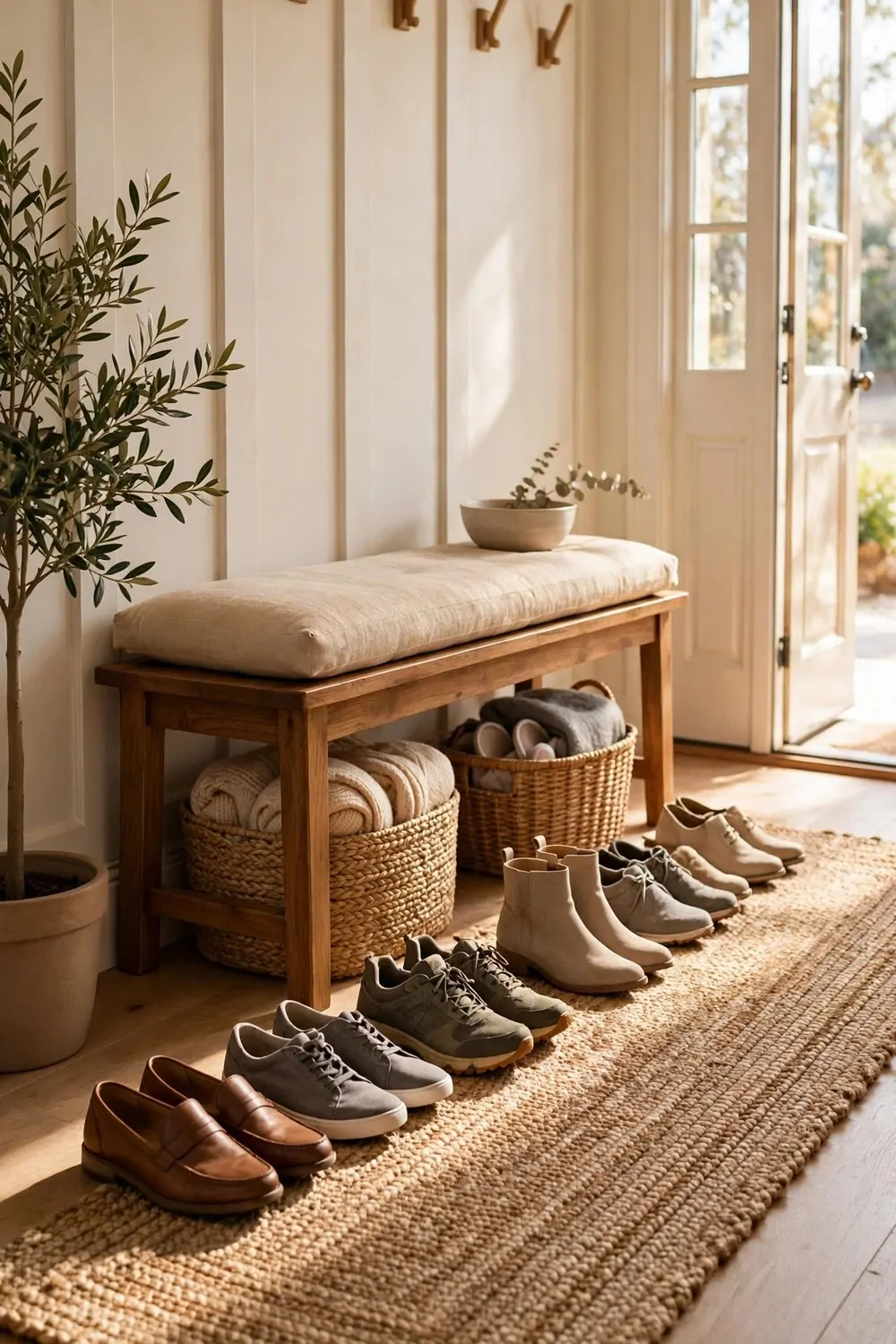
A rug marks where the entry starts. It tells your feet, this is the door zone. It also tells guests where to stand and take shoes off.
I love a rug by the door. It catches dirt before it spreads. It also adds color to a plain floor.
Pick a rug that is easy to clean. A flat weave rug shakes out well. A thick rug holds dirt and is hard to wash.
Make sure the rug is big enough for two feet and a door swing. Too small and it looks lost. Too big and it blocks the door.
Use a rug pad under it. The pad stops the rug from sliding. That is safer, and it keeps the rug flat.
Pick a dark pattern if you have muddy shoes a lot. Dirt hides in a busy pattern. A plain light rug shows every mark.
Shake the rug outside once a week. Vacuum it too. A clean rug makes the whole entry smell and look fresh.
You can layer a small rug over a bigger one. It looks cozy. Just make sure the top rug does not curl up and trip you.
This is a simple way to make your entry feel like its own room. Even in an open plan home, a rug draws the line.
11. Cubbies for Each Person in the House
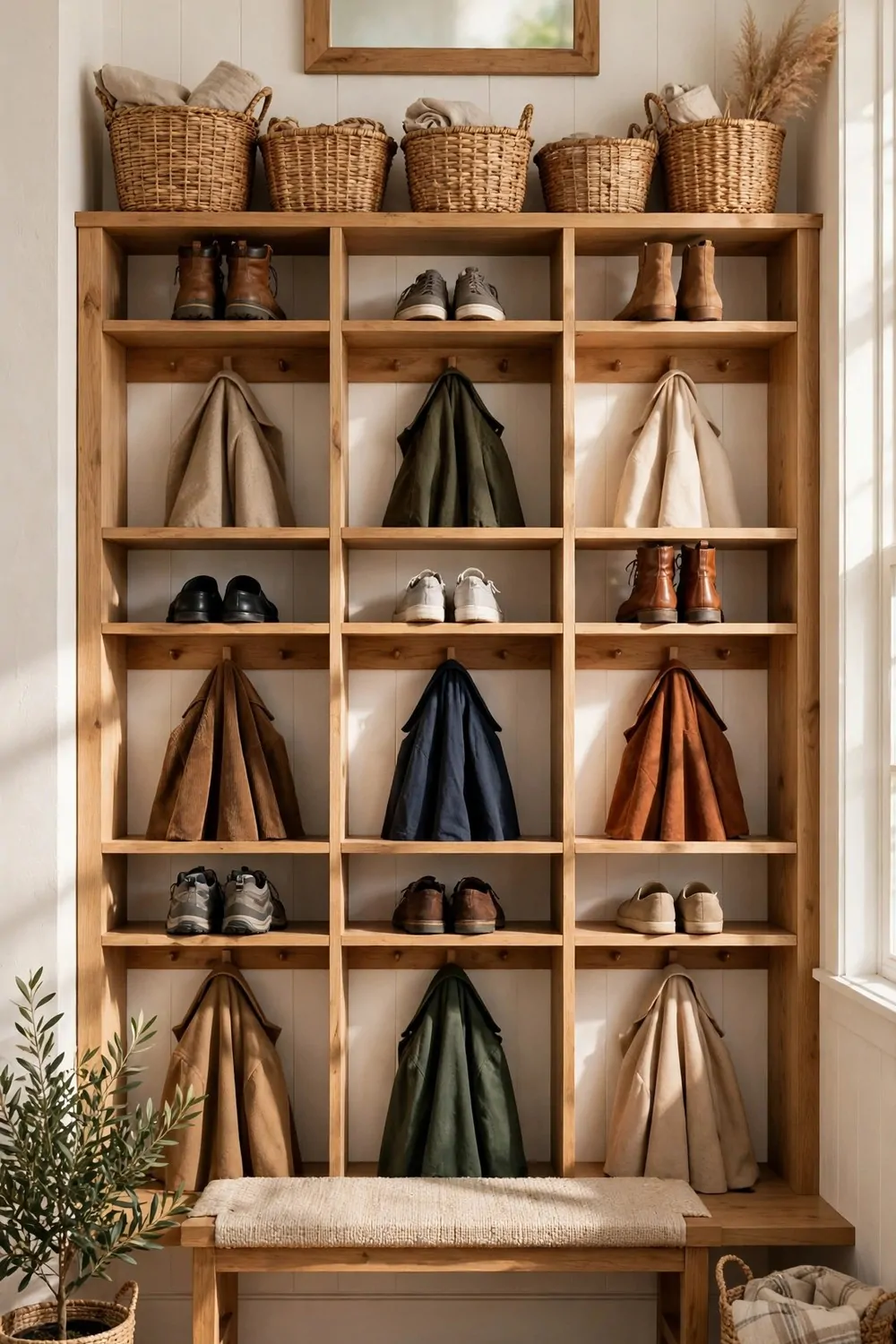
I love cubbies because everyone gets their own little spot. No more piles of shoes by the door. No more coats on the floor.
Give each person in your house one cubby, and put a name tag on it if you like. Kids love seeing their name on their own space.
You can buy a cubby unit at most home stores. Or you can build one from simple wood boxes. Paint it a color that fits your hall.
Each cubby holds shoes at the bottom and a coat hook above. A small shelf on top works for hats and gloves too. It keeps everything in one place.
I put a basket in each cubby for the small stuff, so keys, sunglasses, and spare change stay neat. A small basket keeps the tiny things from getting lost.
Teach your kids to use their cubby every day when they come home. Shoes go in first, then the coat goes on the hook. It takes two minutes.
Cubbies work best near the front door. Put them where you walk in. That way no one has an excuse to drop things in the living room.
If you have a big family, you might need two cubby units side by side, and a row of cubbies looks tidy and smart.
Once everyone has their own cubby, the entryway stays calm. Mornings get easier too. You can find your shoes fast and walk out the door happy.
12. A Hanging Organizer on the Back of the Door
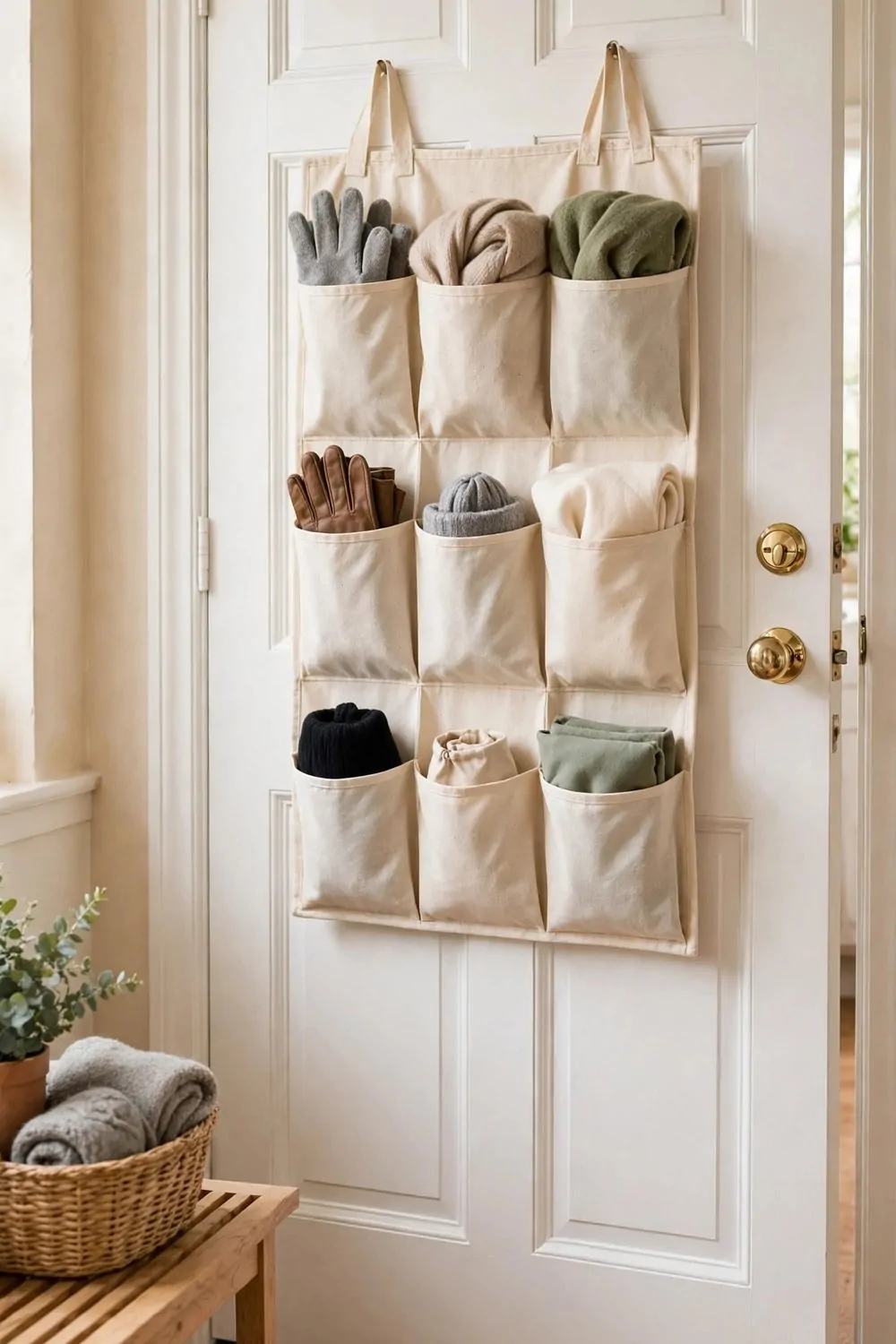
The back of the door is empty space most people forget about. A hanging organizer turns it into useful storage. You just hook it over the top of the door.
These organizers have clear pockets in rows. You can see what is inside each pocket. That makes it easy to grab what you need.
I use mine for gloves, hats, and scarves. One pocket for each thing. No more digging through a big basket to find one glove.
You can also keep sunscreen, lip balm, and small umbrellas in the pockets. It is perfect for the little things that always get lost.
Kids can reach the lower pockets on their own. Put their gloves and hats down low. Put grown up stuff up high.
The best part is it costs very little, and most hanging organizers cost less than a family dinner out. And you do not need any tools to set it up.
Make sure the organizer hangs flat against the door. If it swings when you open the door, tighten the hooks at the top. A flat organizer stays quiet and neat.
You can pick a fabric organizer or a clear plastic one, and I like the clear kind because I can see everything.
Try this idea if your entryway is small. It adds storage without taking up any floor space. Your door does the work for you.
13. A Tall Narrow Cabinet for Coats and Bags
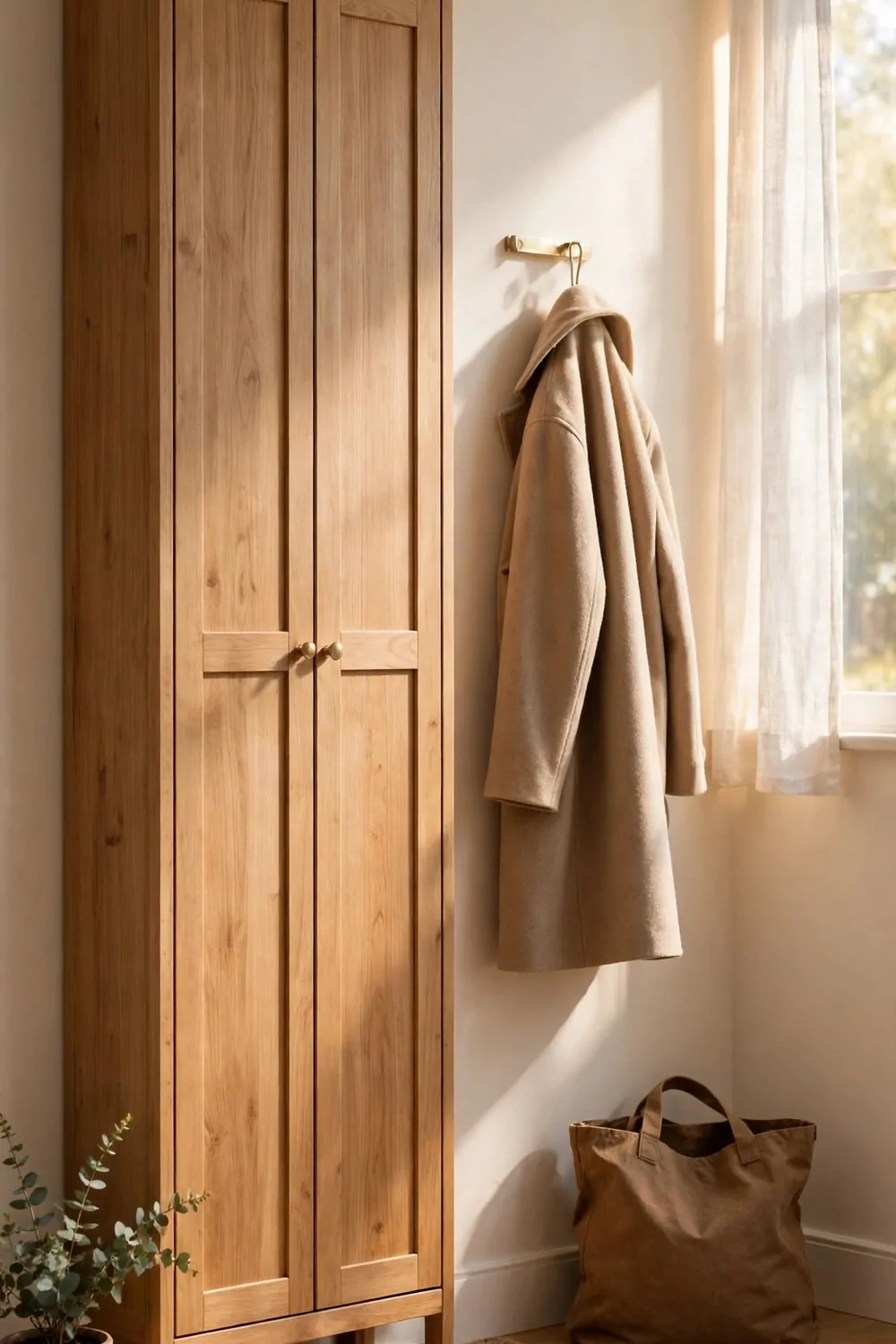
A tall narrow cabinet fits in spots where a big wardrobe cannot. It slides into a thin gap by the door. It holds a lot more than it looks like it can.
Inside you can hang coats on hooks or a short rail. Bags can sit on a shelf at the top. Shoes fit on the bottom shelf.
I like cabinets with doors because they hide the mess. Close the door and the hall looks clean. Open it when you need your coat.
Pick a cabinet that matches your wall color if you want it to blend in, or pick a bold color to make it a feature. Both ways look good.
Measure your space before you buy one. Check the height and the width. A cabinet that is too tall for the spot will not fit, so measure twice.
You can add small hooks inside the door too. That gives you a spot for keys and a small bag. Every inch inside counts.
If you rent your home, a free standing cabinet is a smart pick because you can take it with you when you move. No holes in the wall needed.
Put a small basket on top of the cabinet for hats and scarves. Or leave the top empty for a plant. A little green plant makes the hall feel fresh.
A tall narrow cabinet is one of my favorite entryway fixes because it gives coats and bags a real home and keeps your hall tidy every single day.
14. Hooks with Labels for Kids
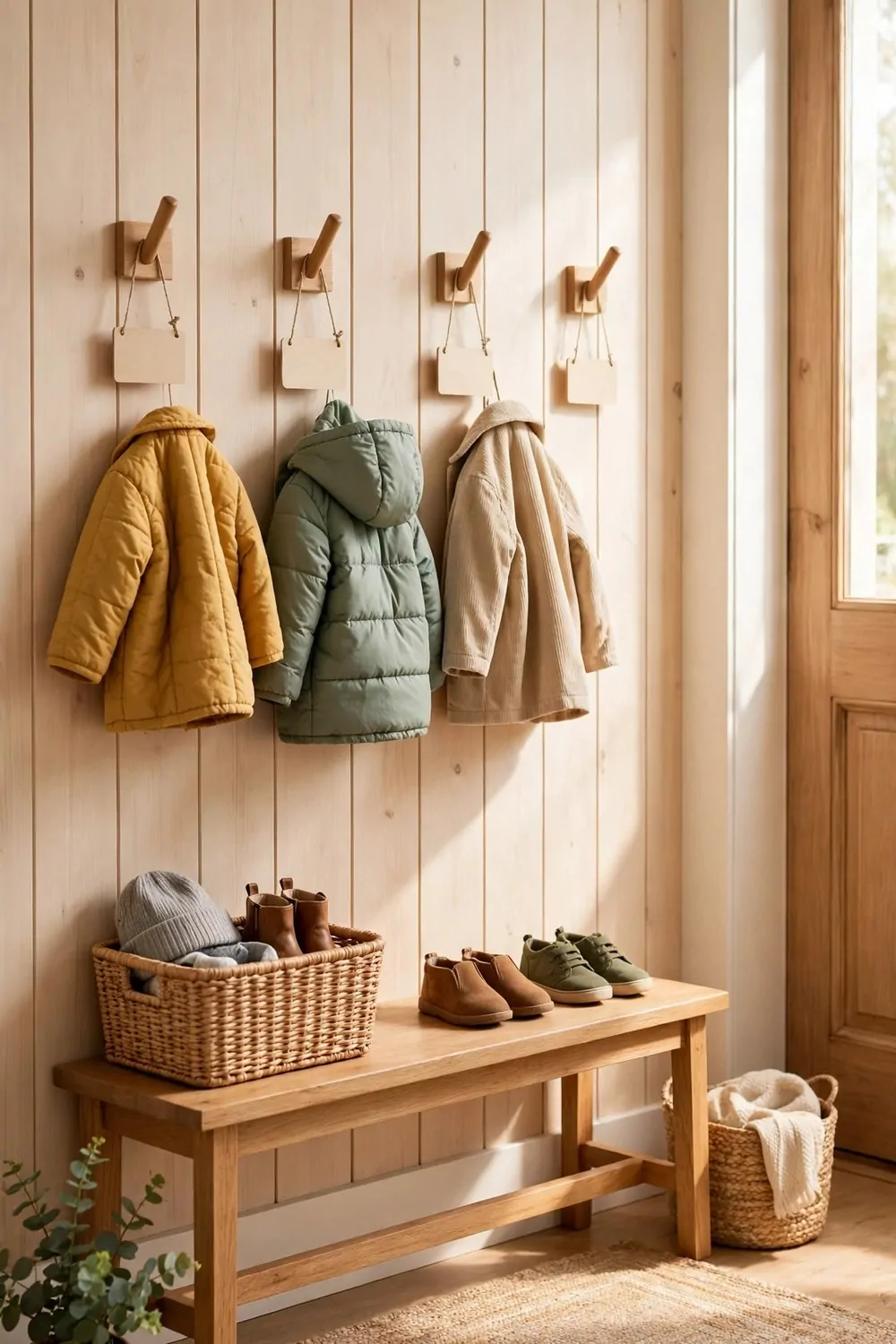
Kids will not hang up their coats if they do not know where to put them. A hook with their name on it changes that. It makes it their job and their spot.
Put the hooks low enough for kids to reach. If the hook is too high, they will just drop the coat on the floor. Low hooks mean no excuses.
You can use small wooden name tags or fun chalk labels, and let your kids pick the color of their tag. They will feel proud of their own hook.
One hook per child works best. Two hooks is fine if they have a coat and a bag. More than that gets messy fast.
I also add a small basket under each hook for shoes. The coat goes up, the shoes go down. It is a simple routine kids can learn in a week.
Praise your kids when they use their hook, because a quick “great job” goes a long way and soon they will do it without being asked.
If you have more than one child, keep the hooks in a row in age order. The youngest gets the lowest hook. It keeps things fair and easy to remember.
You can buy a row of hooks already on a board, or you can screw single hooks into the wall yourself. Either way works fine.
Labeled hooks turn a messy pile into a tidy row. Your hall looks better. And your kids learn a good habit that lasts for years.
15. A Bench with Baskets Underneath
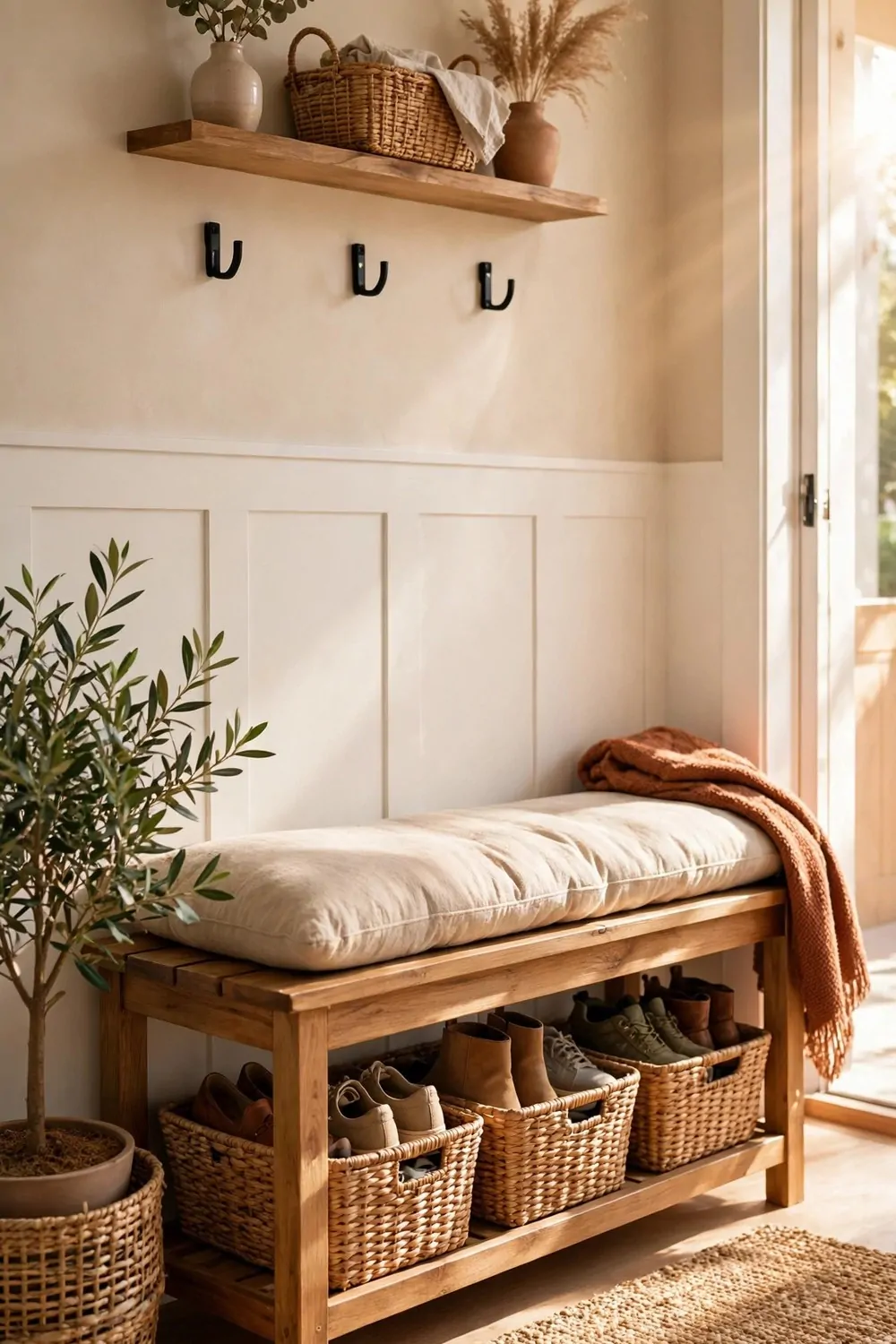
A bench in the entryway gives you a place to sit while you put on your shoes. It sounds small, but it makes a big difference. No more hopping on one foot by the door.
The real magic is under the bench, where you can slide baskets under it for shoes, hats, and bags. Each basket holds one type of thing.
I like woven baskets because they look warm and natural. Fabric baskets work well too and come in lots of colors. Pick what fits your style.
Label each basket so everyone knows what goes where, with shoes in one and hats in another. Labels stop the baskets from turning into junk boxes.
Choose a bench that fits your hall. A short bench works in a small space. A long bench gives more seats and more baskets.
You can buy a bench with built in cubbies underneath. Or you can buy a plain bench and add your own baskets. Both ways look great.
Put a soft washable cushion on top of the bench to make sitting comfy, because shoes and dirt will touch it.
Keep the top of the bench clear most of the time. A small tray for keys is fine. But a clear bench invites people to sit and use it.
A bench with baskets is one of the best entryway ideas I know. It gives you a seat, it hides the clutter, and it makes your hall feel like a real room.
16. A Peg Rail for Hats and Scarves
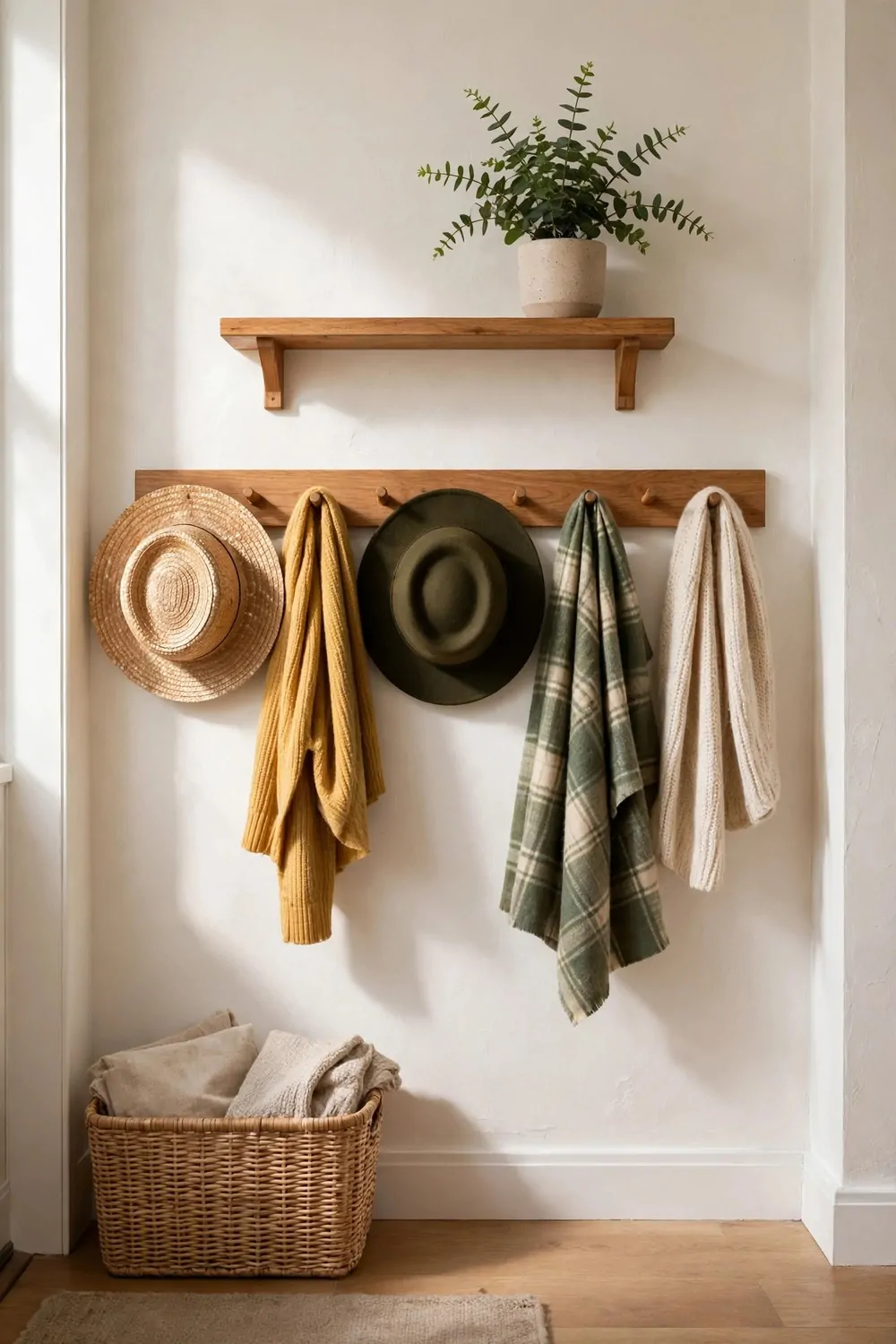
A peg rail is a simple strip of wood with pegs sticking out. You screw it to the wall. Then you hang hats, scarves, and light coats on it.
I love peg rails because they are so easy to use. You just hook a hat on a peg, with no clips, no hangers, and no fuss.
Hang the rail at a height everyone can reach. If it is too high, the hats will never get hung up. About shoulder height works well for most families.
You can paint the rail to match your wall. Or paint it a fun color that pops. A white rail on a colored wall looks fresh and clean.
Give each person one or two pegs, one for a hat and one for a scarf, so the rail never gets crowded.
Peg rails also work great for bags and umbrellas. Hang a small bag on a peg by the door. It is ready to grab when you leave.
If you have a long empty wall in your hall, a peg rail fills it nicely. It adds storage and it looks charming too. Old farmhouse homes used peg rails all the time.
Keep heavy coats off the peg rail, because they can bend the pegs or pull the rail off the wall. Save the rail for light stuff only.
A peg rail costs very little and takes minutes to put up. It is a small change that makes your entryway feel organized and warm.
17. A Shoe Rack That Stacks Up High
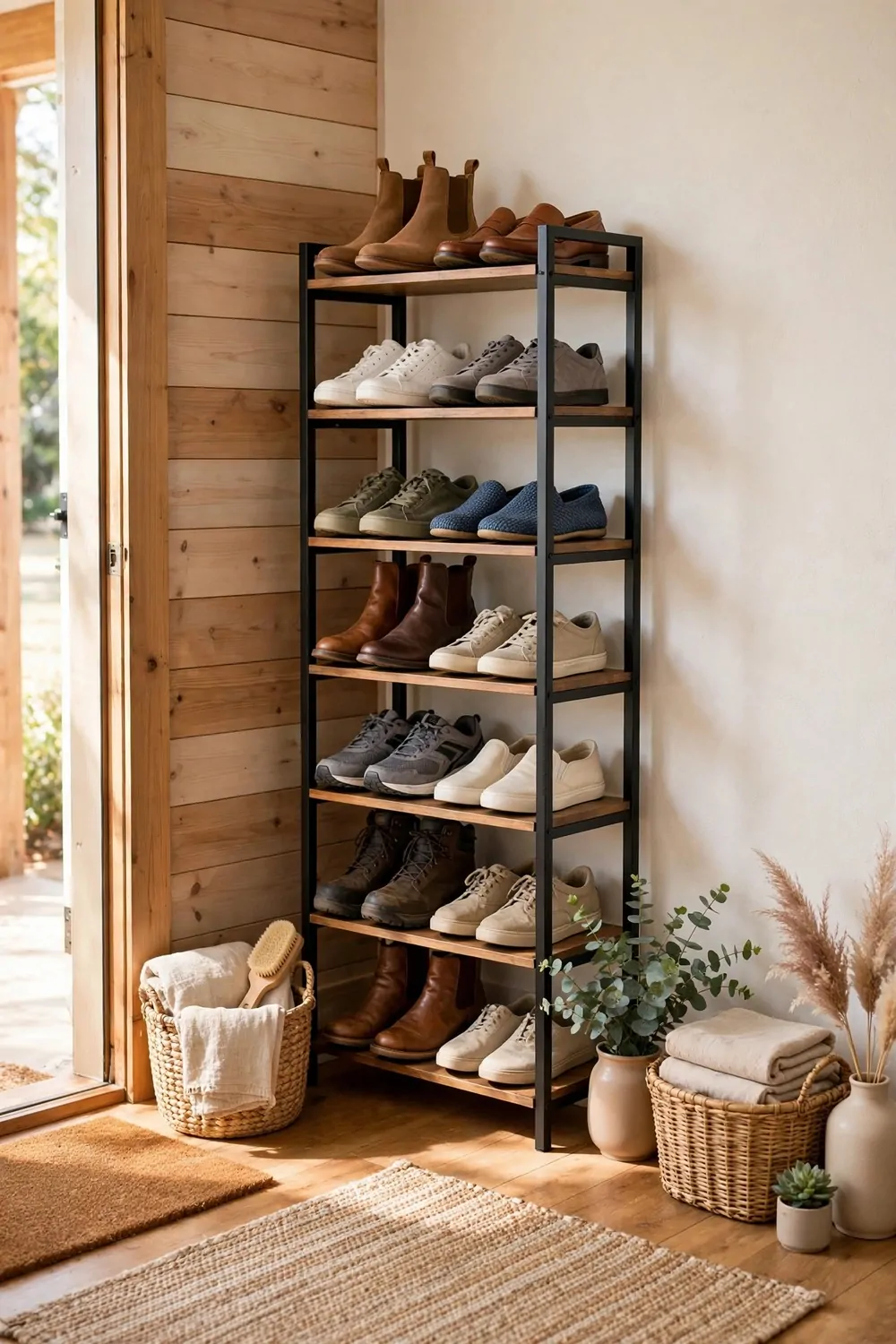
A shoe rack that stacks up high uses your wall space instead of your floor space and holds lots of shoes in a small footprint. That is perfect for a tight entryway.
You can buy stacking racks that let you add more tiers as your shoe collection grows. Start with three tiers. Add a fourth later if you need it.
I keep my everyday shoes on the bottom tier so I can grab them fast, and the shoes I wear less often go up top. That way the easy shoes are always in reach.
Most stacking shoe racks cost between 20 and 80 dollars. A simple two tier rack costs about 20 to 30 dollars, and a slim wall mounted rack costs about 30 to 60 dollars. A tall five tier rack costs about 50 to 80 dollars, and a wooden rack with a bench top can cost 80 to 150 dollars.
Here is a quick look at the main types of shoe racks and what they usually cost.
| Shoe rack type | Best for | Typical cost |
|---|---|---|
| Two tier rack | Small halls, few pairs | 20 to 30 dollars |
| Five tier rack | Big families, many pairs | 50 to 80 dollars |
| Wooden rack with bench top | Sitting and storage together | 80 to 150 dollars |
| Slim wall mounted rack | Very narrow entryways | 30 to 60 dollars |
Make sure the rack is steady before you load it with shoes, because a wobbly rack will tip over, so push it against the wall or fix it with a small bracket.
Keep one pair of shoes per slot, because if you cram two pairs in one slot the shoes get squashed and the rack looks messy. One pair per slot keeps it neat.
Clean the rack once a week with a quick wipe. Dust and dirt from shoes build up fast. A clean rack makes the whole hall feel fresh.
A tall stacking shoe rack is a smart buy for any entryway. It holds a lot, it costs little, and it keeps every pair easy to find.
18. A Small Stool to Sit and Put Shoes On
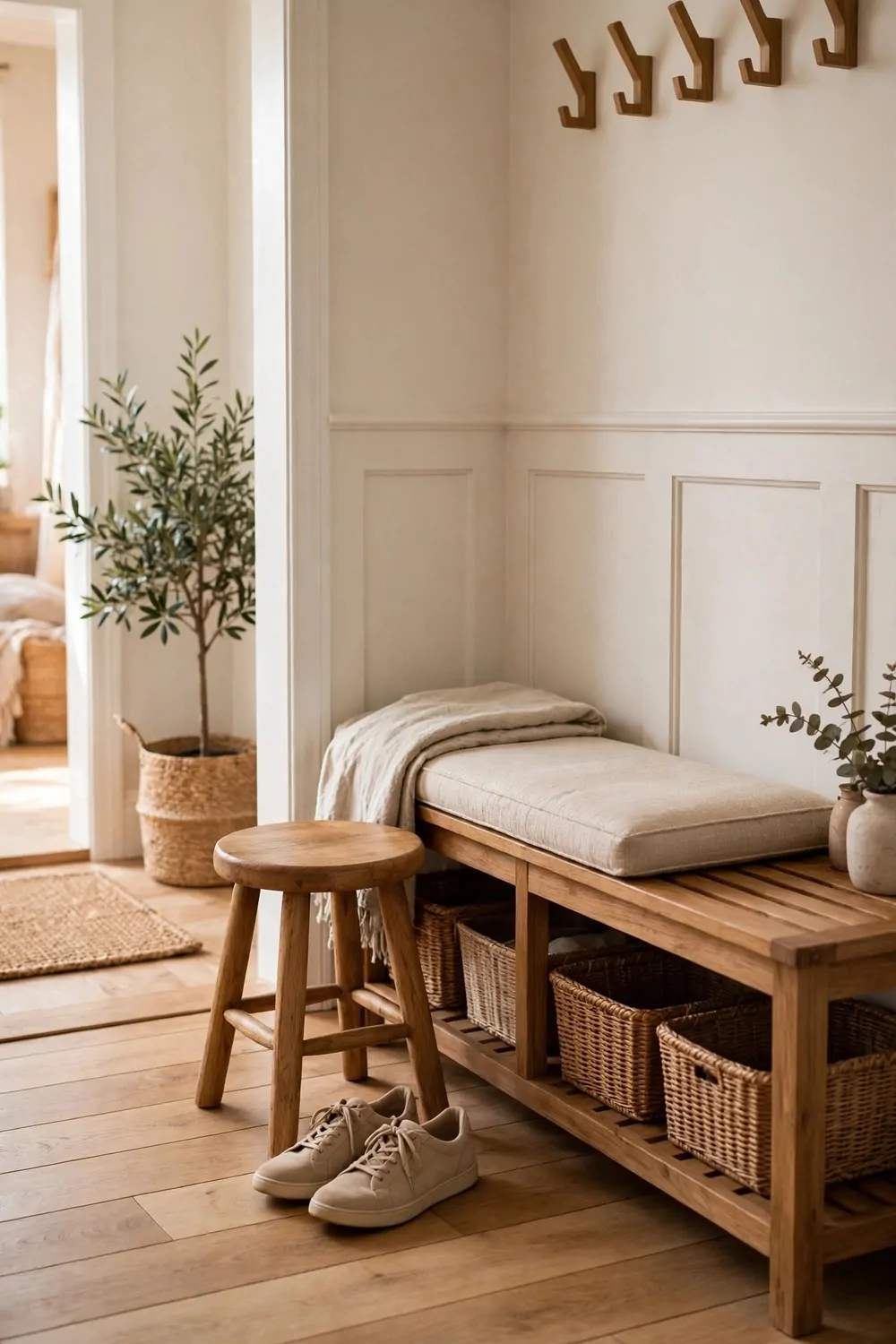
A small stool by the door is a simple comfort. You sit down, you put your shoes on, you stand up and go. It takes the rush out of leaving the house.
Kids love a stool too, because little legs cannot balance on one foot to pull on shoes. A stool lets them sit and do it themselves.
Pick a stool that is light enough to move. You can slide it out of the way when guests come. Or tuck it under a bench when you do not need it.
A wooden stool looks warm and fits most halls, while a metal stool looks modern and wipes clean fast, so pick the one that matches your home.
Keep the stool near the shoe rack or the bench. That way you sit, reach your shoes, and put them on in one spot. No walking across the hall with one shoe on.
You can add a small cushion to the top of the stool to make sitting nicer. Pick a cushion with a washable cover, because shoes and dirt will get near it.
Do not pile bags or coats on the stool. If it becomes a dumping spot, no one can sit on it. Keep it clear so it is always ready to use.
A stool also helps older family members. Bending down to put shoes on is hard for many people. A seat makes it easy and safe.
A small stool costs little and does a lot. It makes your entryway kinder to everyone who walks through the door.
19. A Basket for Gloves and Hats
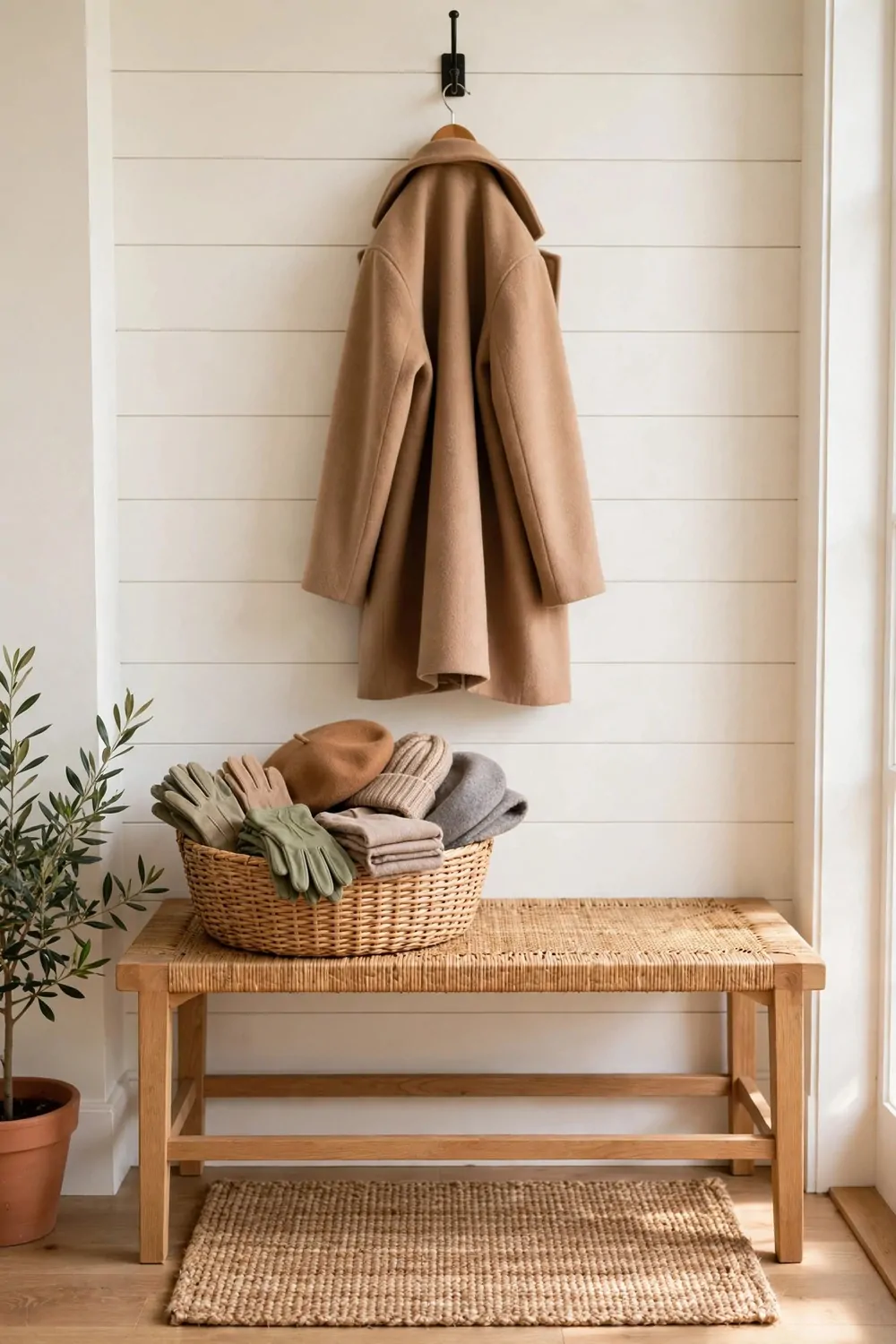
Gloves and hats are small and easy to lose. One basket by the door solves the whole problem. Everything goes in the basket when you come home.
Pick a basket big enough for the whole family. A small basket fills up fast and overflows. A medium basket with a wide opening works best.
I keep one basket for gloves and one for hats, because two baskets stop the pile from turning into a mixed up mess. You can find what you need in seconds.
Put the basket on a shelf, on the bench, or under the bench. Any spot near the door works. The key is that it is easy to reach.
Label the baskets if you have more than one. A simple tag that says “gloves” or “hats” helps kids put things in the right place. It also helps guests.
At the start of the cold season, check the basket and pull out gloves with holes and hats that no longer fit, then replace what is worn out before the cold days arrive.
Kids lose gloves all the time, so keep a few spare pairs in the basket. That way a lost glove never means cold hands on the way to school.
A woven basket looks cozy in a hall. A fabric basket is soft and easy to wash. Pick the one you like best and stick with it.
A simple basket for gloves and hats keeps your entryway tidy. No more hunting for one glove on a cold morning. Everything is right where you left it.
20. A Wall Pocket for Letters and Notes
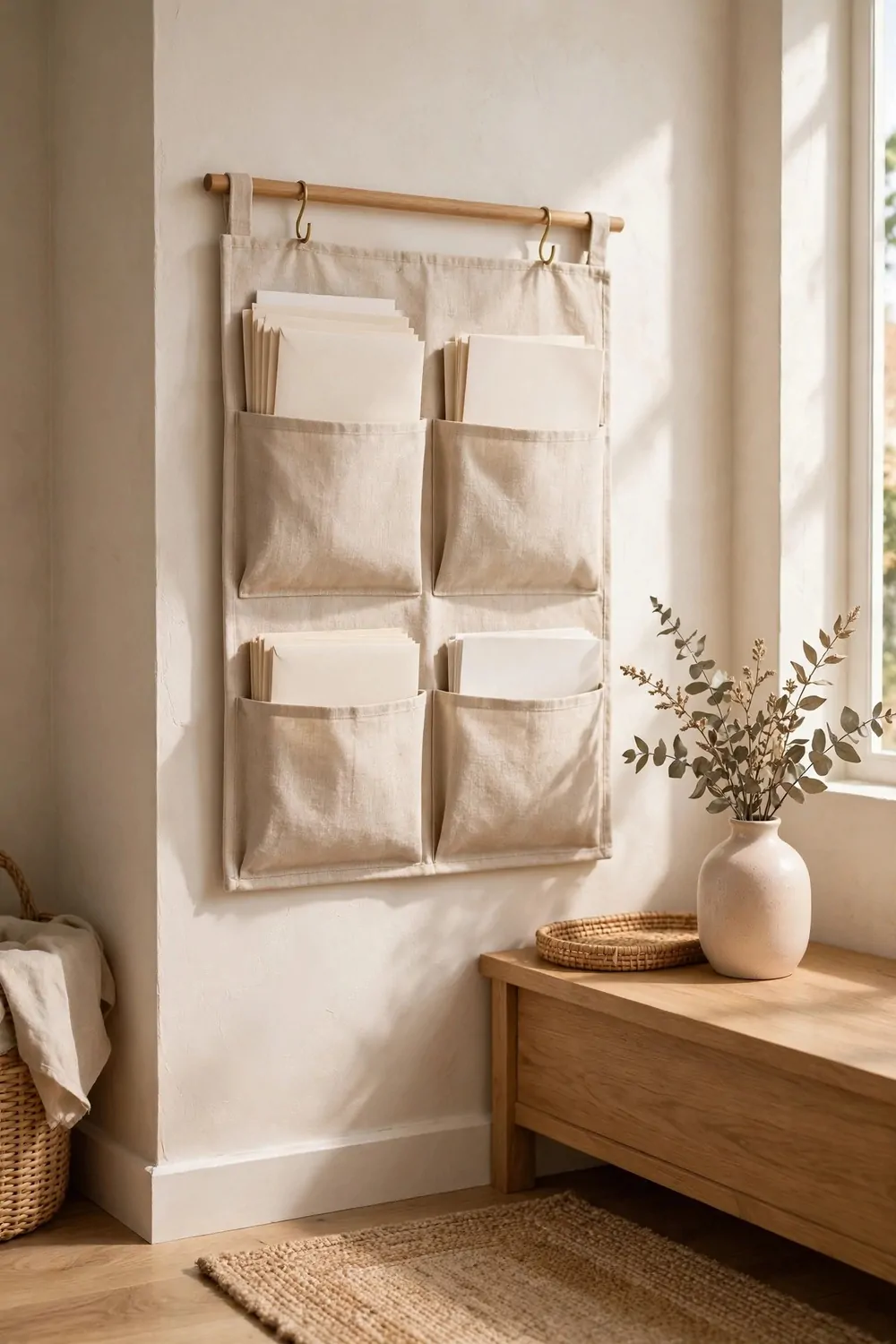
Letters and notes pile up fast by the front door. A wall pocket gives them a home. Mail goes in, and the hall stays clear.
You can buy a wall pocket made of wood, metal, or fabric, and hang it near the door at a height you can reach. One pocket is enough for most homes.
I sort my mail the moment I walk in. Bills go in the front slot and letters to answer go in the back slot. Junk mail goes straight in the recycling bin.
A wall pocket also holds school notes and reminders, so put permission slips and party invites in the pocket. They will not get lost under a pile of coats.
Keep a pen and a small notepad near the pocket. You can jot down a quick note before you leave. It is a handy spot for last minute reminders.
Clean out the pocket once a week, because old letters and done notes should go and a pocket that is stuffed full does not help anyone.
Kids can use the pocket too. Let them put their school letters in it. It teaches them to keep track of their own papers.
Pick a wall pocket that matches your hall style. A wooden one looks classic and a metal one looks modern. A fabric one feels soft and warm.
A wall pocket for letters and notes is a small idea with a big payoff. Your mail stays in one place, your hall stays tidy, and nothing important gets lost.
21. A Fold-Down Shelf for Small Spaces
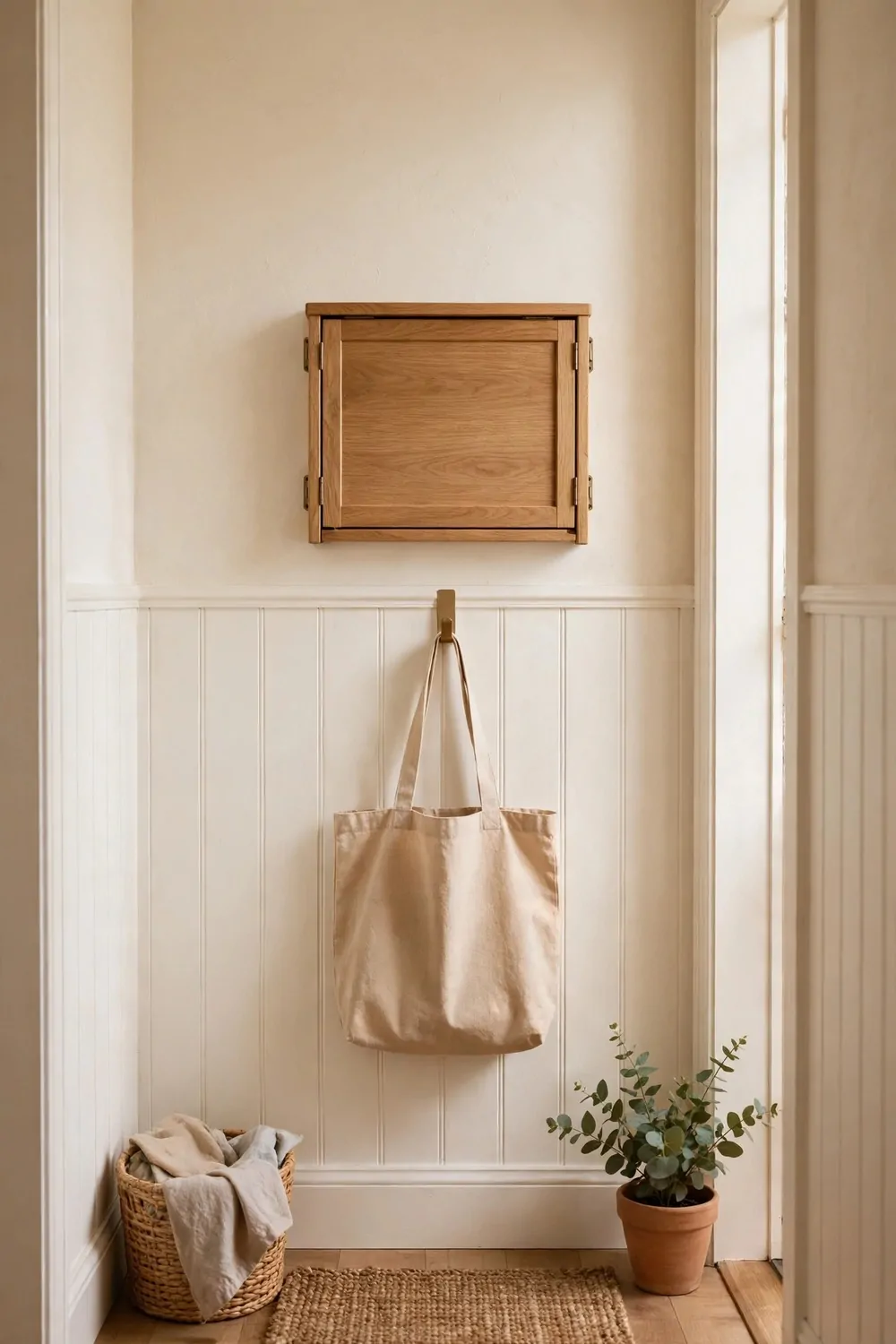
I love a shelf that folds away when I do not need it. It saves space and it keeps my wall clean.
You can fold it down when you come home with bags. You can fold it up when you leave.
I put my keys on it. I put a small bag on it too.
It works well in a tiny hall. You do not need a big table.
Pick a strong shelf. It should hold your daily stuff without wobble.
I like wood for this spot. It feels warm and it looks neat.
Put it at waist height. That way you can reach it fast.
You can add two small hooks under it. That gives you more room for a coat or a hat.
Try it for one week. I think you will like how free your floor feels.
22. A Coat Tree in the Corner
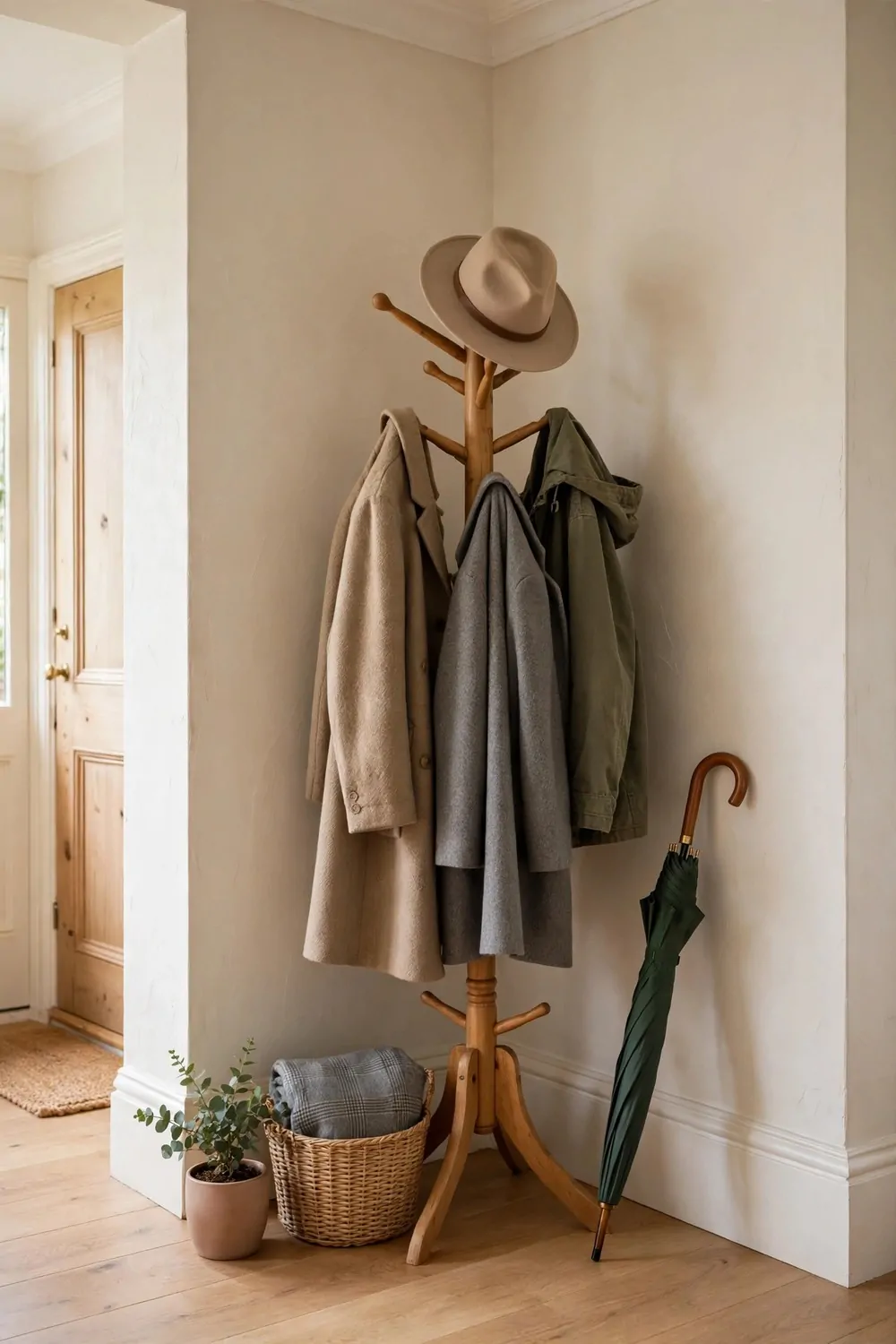
A coat tree stands in the corner and holds a lot.
I use mine for coats, scarves, and a hat.
You do not need to drill holes in the wall. You just set it down and use it.
Pick a spot in the corner where no one walks. That keeps the path clear.
A heavy base is best. It stops the tree from tipping over.
I hang my coat on the top hook. I hang my scarf on a lower one.
Kids can use it too. Put their hook low so they can reach it.
If it gets full, take one coat off. A crowded tree looks messy fast.
It is a simple fix. And it keeps coats off chairs and off the floor.
23. A Tray for Wet Umbrellas
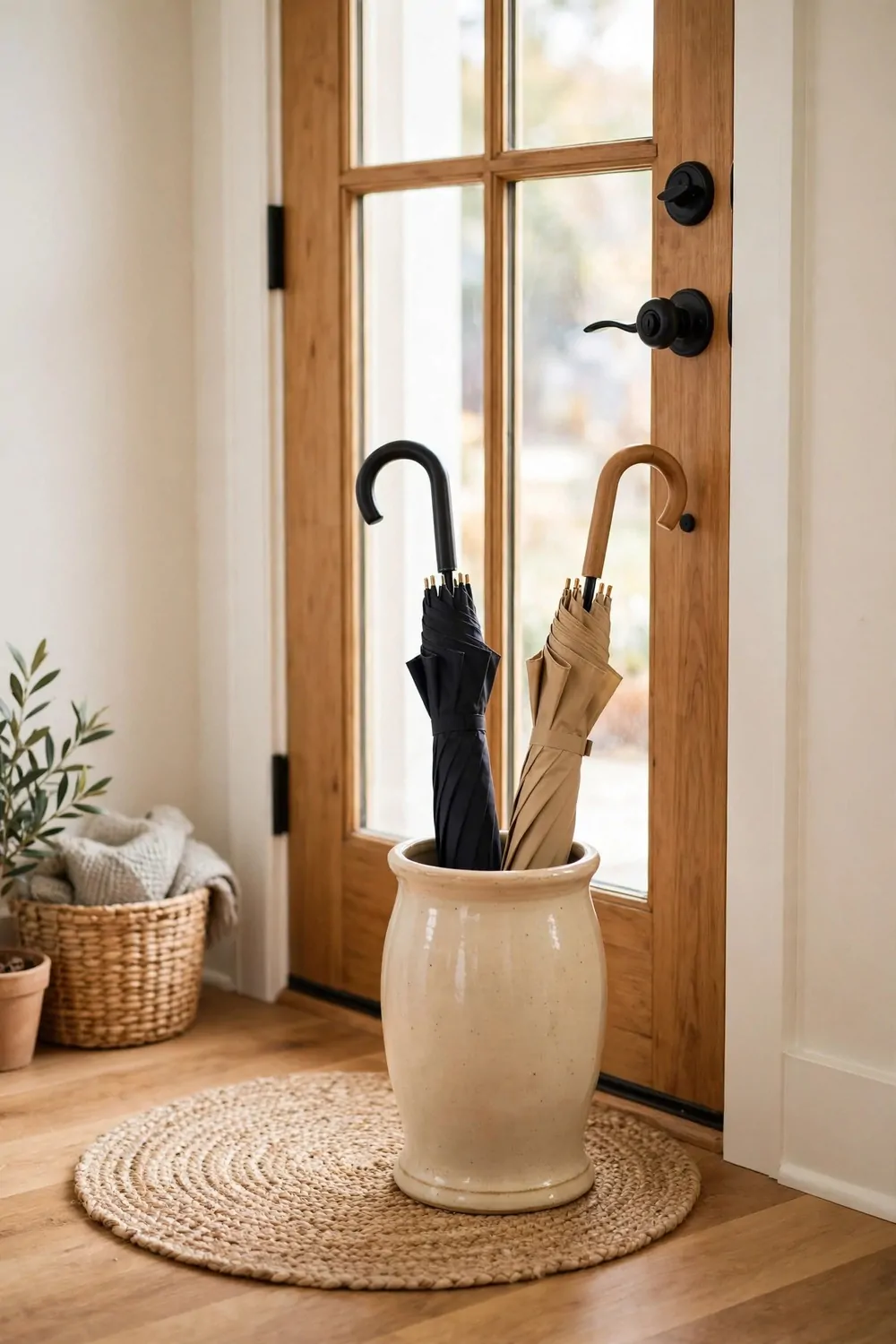
Rainy days make a mess at the door. A tray fixes that.
I put a tray by the door for wet umbrellas. The water stays in the tray.
You can pick a tray with low sides. It catches drips and it is easy to clean.
Put the tray on the floor near the wall. Do not block the door.
I empty mine at night. It takes ten seconds.
A tray with small stones looks nice. The stones hold the umbrella up and let air move.
You can use one tray for two umbrellas. That is enough for most homes.
Wipe it once a week. That stops dust and marks from building up.
It is a small thing. But it keeps your floor dry and safe.
24. Clear Boxes for Out-of-Season Shoes
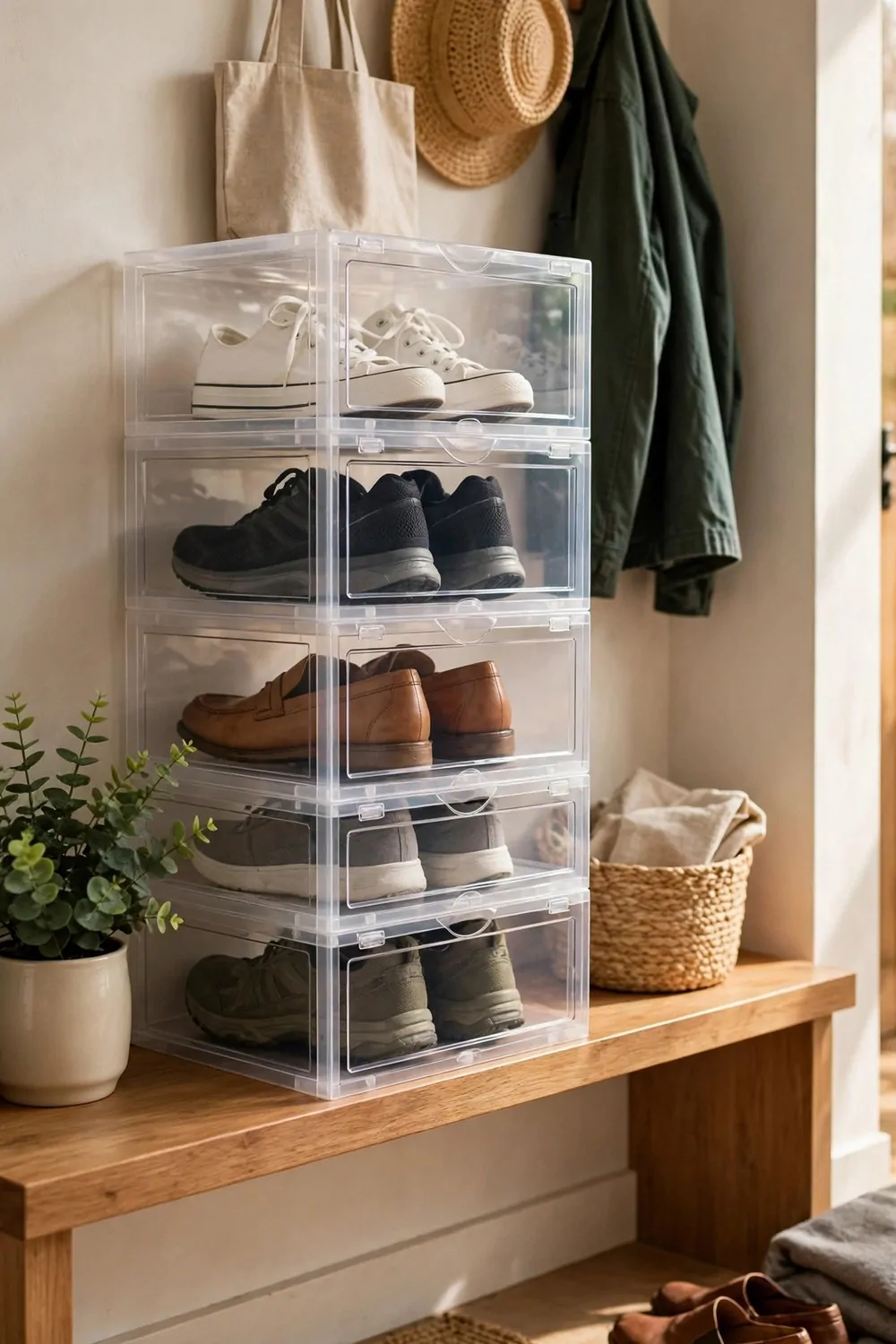
Clear boxes help me see my shoes at once. I do not need to open each box to find a pair.
I keep out-of-season shoes in clear boxes on a high shelf. They stay clean and dry there.
Stackable boxes save space. I stack two or three and they stay steady.
Most clear stackable boxes cost $8 to $15 each. That is a fair price for a strong box.
Fabric boxes with lids cost $12 to $20 each. I use them for soft shoes and sandals.
Under-bed flat boxes cost $10 to $18 each. They slide under the bed and hold out-of-season pairs well.
Labelled shoe bins cost $6 to $12 each. I use them for kids shoes and daily pairs.
| Storage box type | Best for | Typical cost |
|---|---|---|
| Clear stackable boxes | Boots and bulky shoes | $8 to $15 each |
| Fabric boxes with lids | Soft shoes and sandals | $12 to $20 each |
| Under-bed flat boxes | Out-of-season pairs | $10 to $18 each |
| Labelled shoe bins | Kids shoes and daily pairs | $6 to $12 each |
Add a small label on the front. Write the shoe name or the season on it.
Check the boxes twice a year. Swap the shoes when the season changes.
25. A Narrow Shoe Shelf Above the Door
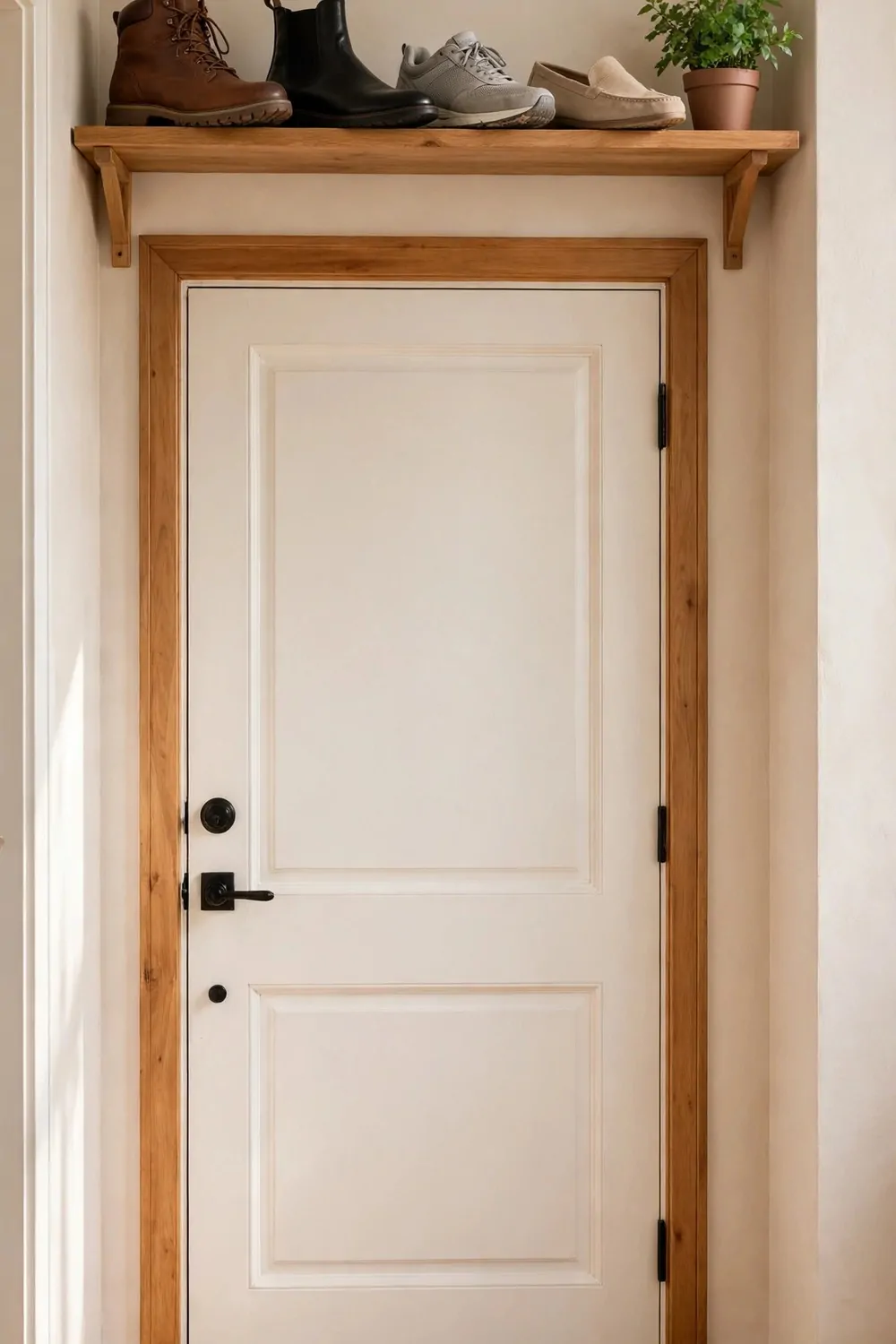
The space above the door is often empty. I use it for shoes.
A narrow shelf fits there well. It does not stick out too far.
You can keep shoes you wear less often up there. That frees space below.
Make sure the shelf is strong. Shoes are heavier than they look.
I keep mine tidy with pairs side by side. Heels face out so I can see them.
Use a small step stool to reach it. Do not climb on a chair.
Keep only clean shoes up there. Dust falls down if you are not careful.
One shelf is enough for most homes. Two can feel crowded.
It is a smart use of empty space. And your floor stays clear.
26. A Chalkboard for Notes and Reminders
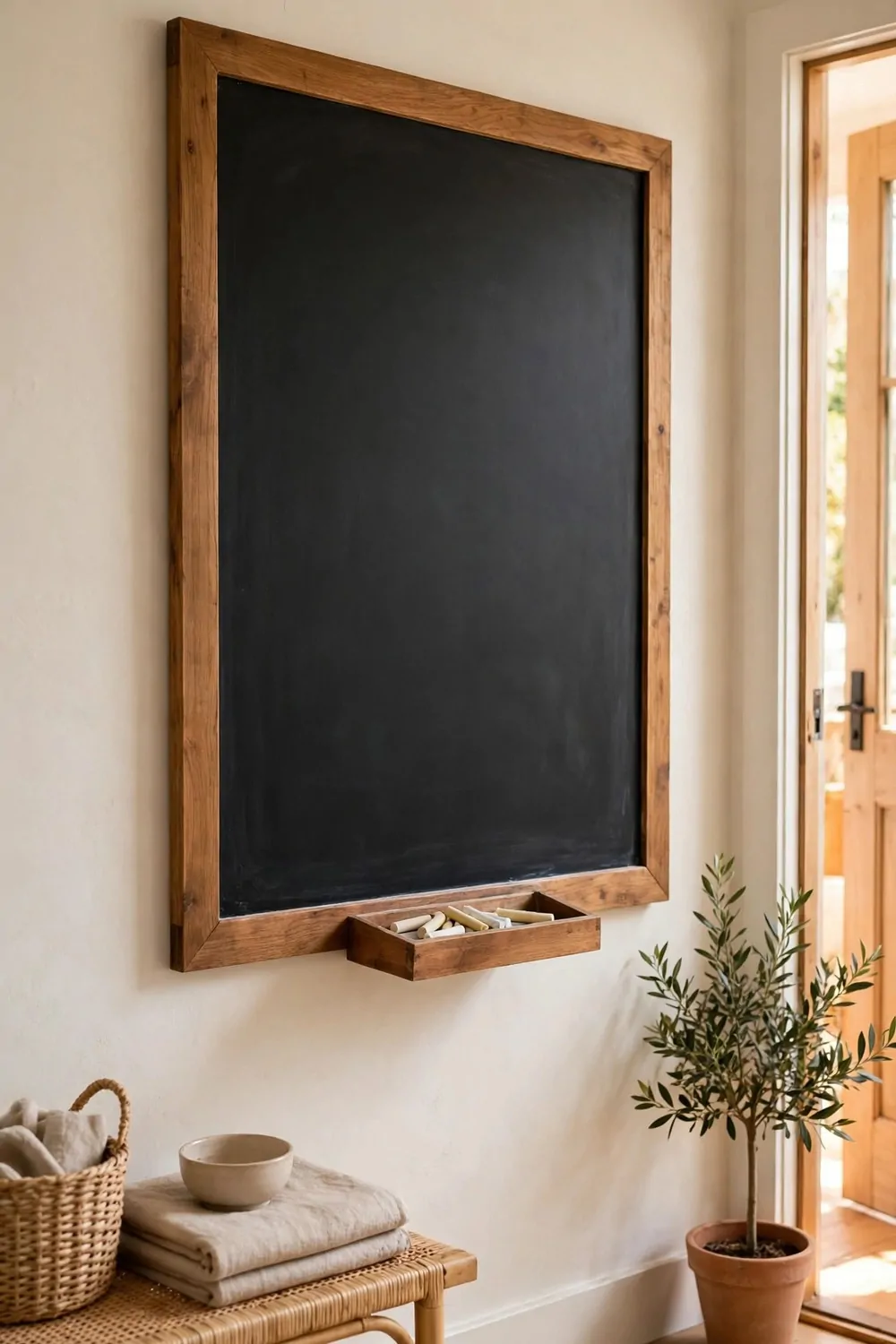
A chalkboard can look nice even when it is blank. Mine is blank right now and I like it that way.
The dark board adds a calm spot on the wall. It breaks up the white paint.
I hang mine near the door at eye level. It is easy to see when I walk past.
Some people write notes on theirs. I keep mine blank on purpose, with no writing on it at all.
A blank board feels clean and quiet. It does not shout at you when you come home.
You can lean a small plant next to it. That softens the dark edge.
Pick a light wood frame. It warms up the board and fits most halls.
Wipe it with a dry cloth once in a while. That keeps the surface smooth and dust free.
If you want notes later, you can add them then. For now, blank works just fine for me.
27. A Small Plant to Warm Up the Entry
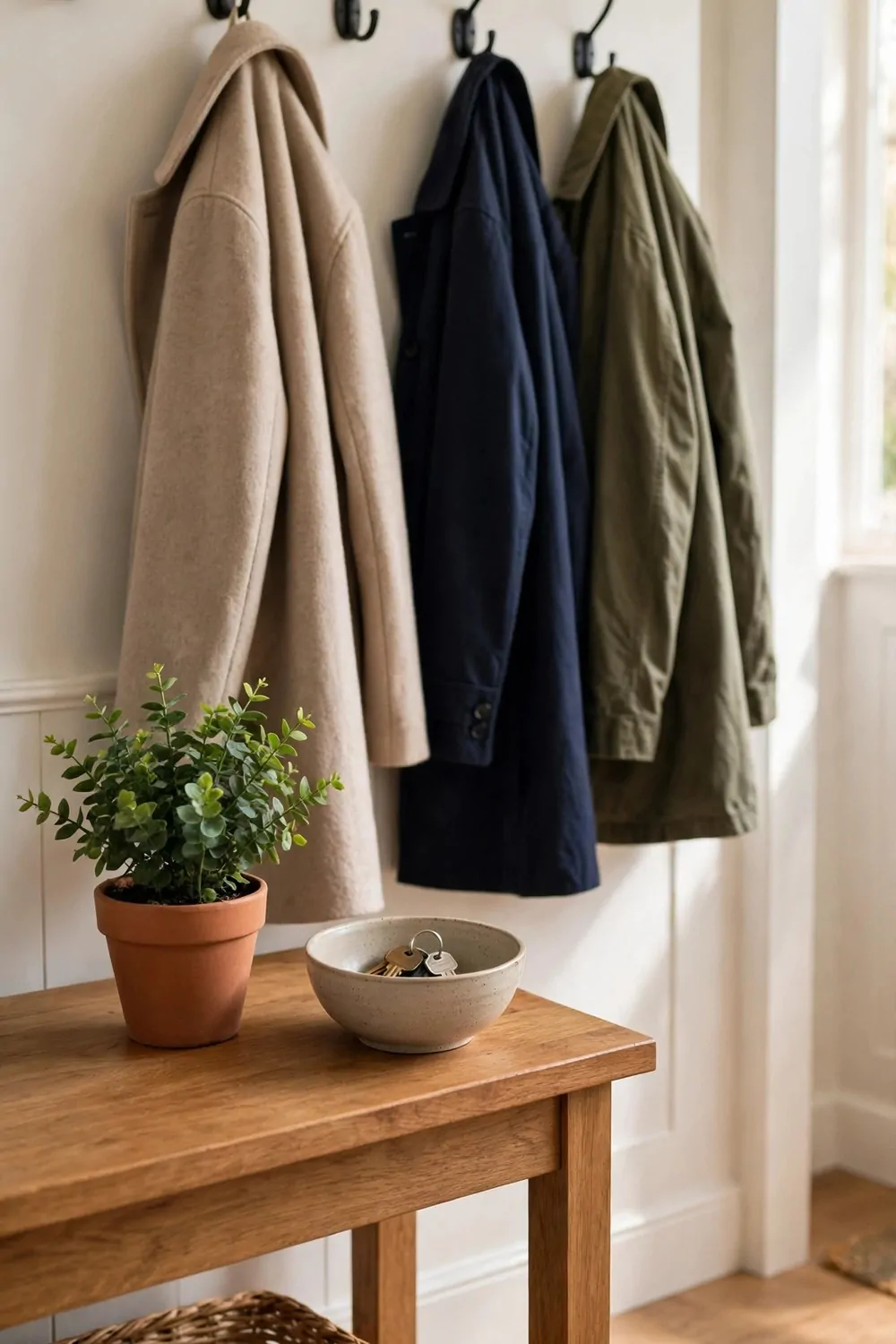
A small plant makes my entry feel warm. It is the first green thing I see when I come home.
You do not need a big plant. A small pot on a shelf is enough.
I pick plants that need little water. That way I do not worry if I forget a day.
Put it near light if you can. A spot by the door or a small window works well.
A tiny pot on a shoe shelf looks sweet. It adds life without taking space.
Water it once a week. Check the soil with your finger first.
If a leaf turns brown, snip it off. The plant will grow new leaves soon.
You can use a simple clay pot. It looks neat and it is cheap.
Try one plant first. I think you will smile each time you walk in.
28. A Basket for Bags and Backpacks
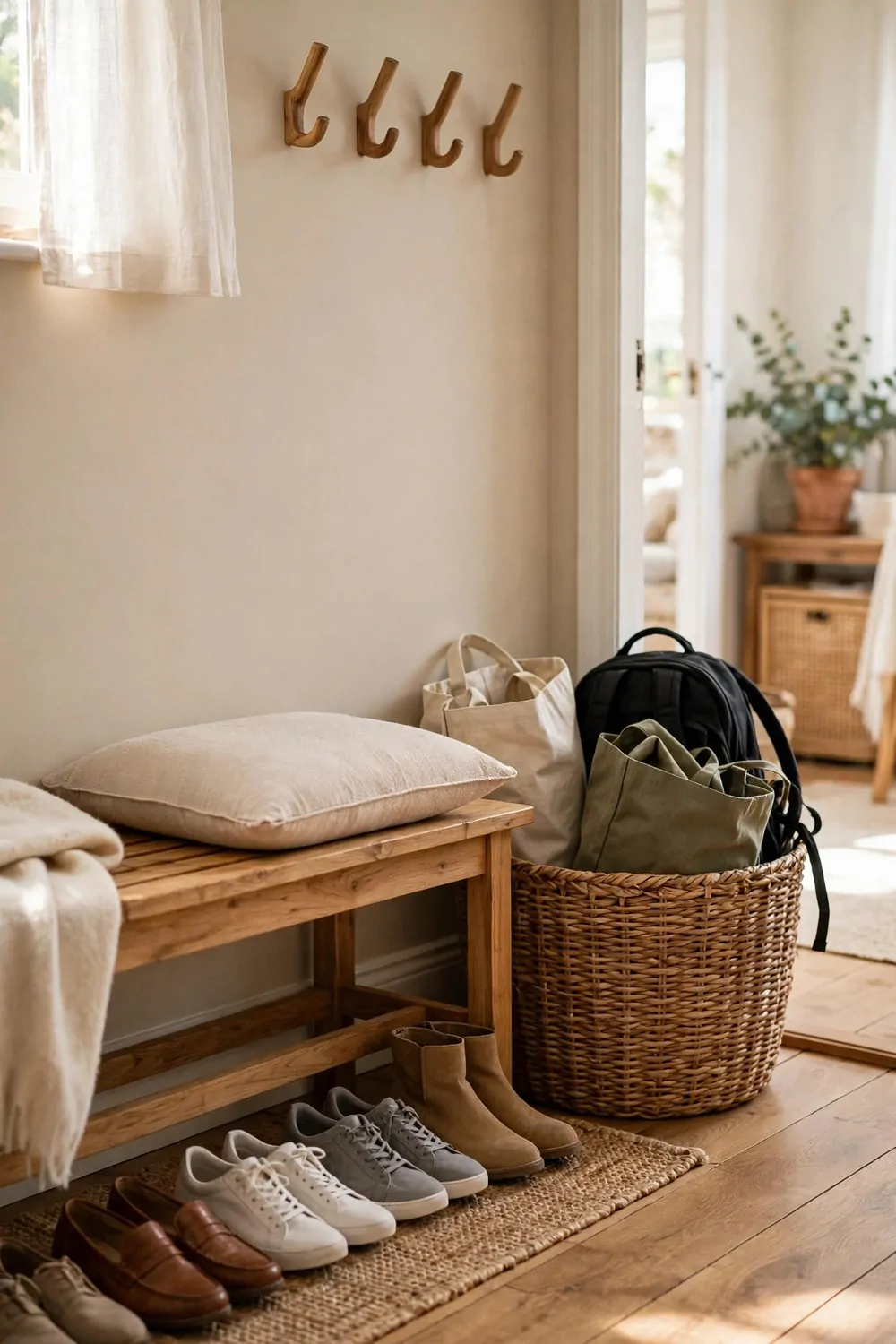
Bags pile up fast at the door. A basket keeps them in one place.
I use a big basket for bags and backpacks. Everything goes in there.
You can pick a basket with handles. It is easy to move when you clean.
Put the basket in a corner or under a bench. That keeps the walkway clear.
Each person can have their own spot in the basket. That stops mix ups.
I empty mine once a week. I take out old papers and things I do not need.
A woven basket looks warm and soft. It fits most entry styles.
Make sure it is big enough. A small basket fills up in one day.
It is a simple habit. Drop the bag in, and the hall stays tidy.
29. A Shoe Storage Ottoman
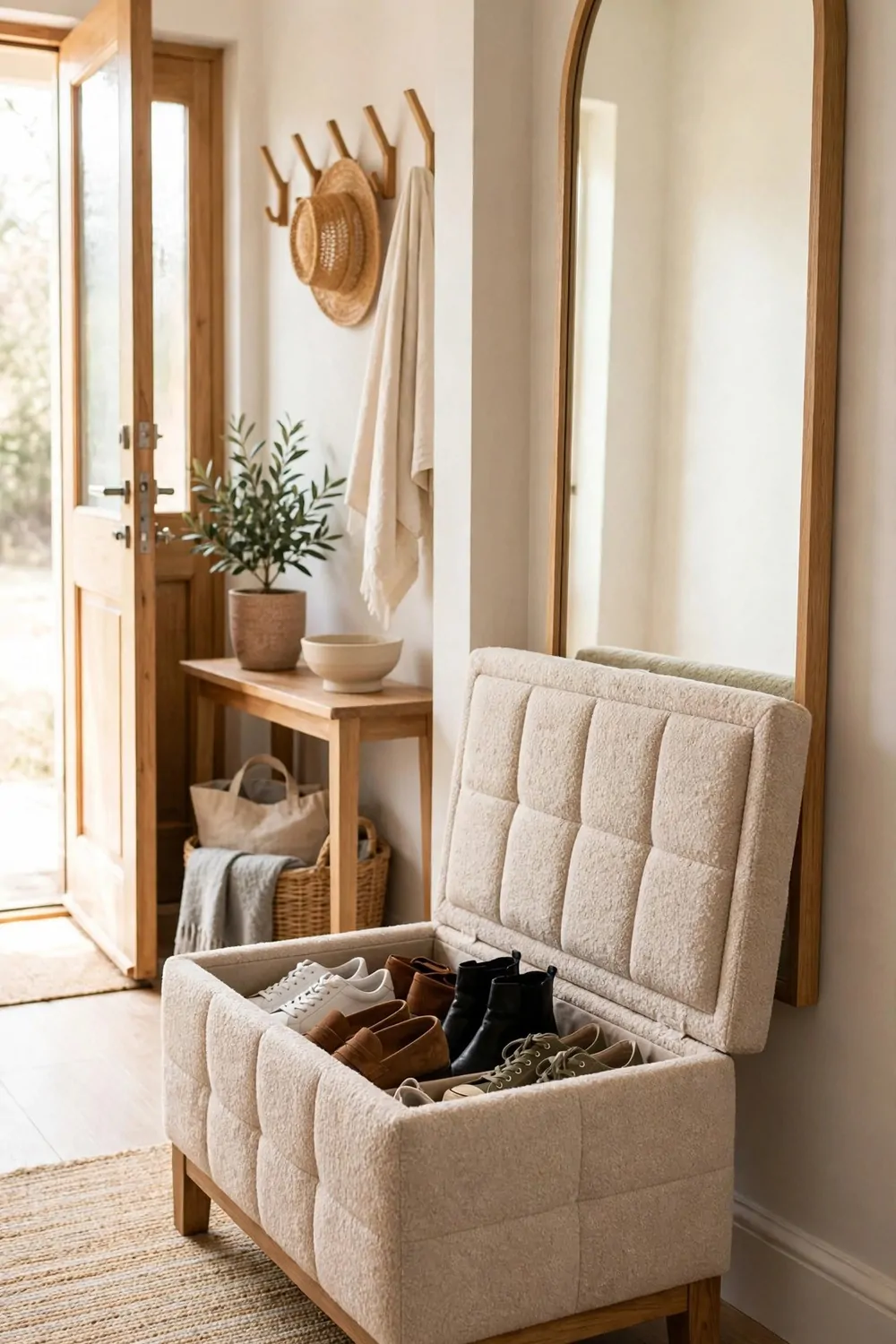
An ottoman that holds shoes is a clever piece. It is a seat and storage in one.
I sit on mine to put my shoes on. It is much easier than bending down.
You can lift the top and put shoes inside. They stay hidden and neat.
Pick one with a soft top. It feels good to sit on.
Keep two or three pairs inside. Do not stuff it full or the lid will not close.
I keep my daily shoes there. My other shoes live in the closet.
Wipe the top once a week. It picks up dust fast near the door.
A plain color works best. It goes with most walls and floors.
Try it if you have a little space. It makes mornings feel calm and easy.
30. A Five-Minute Nightly Tidy Routine
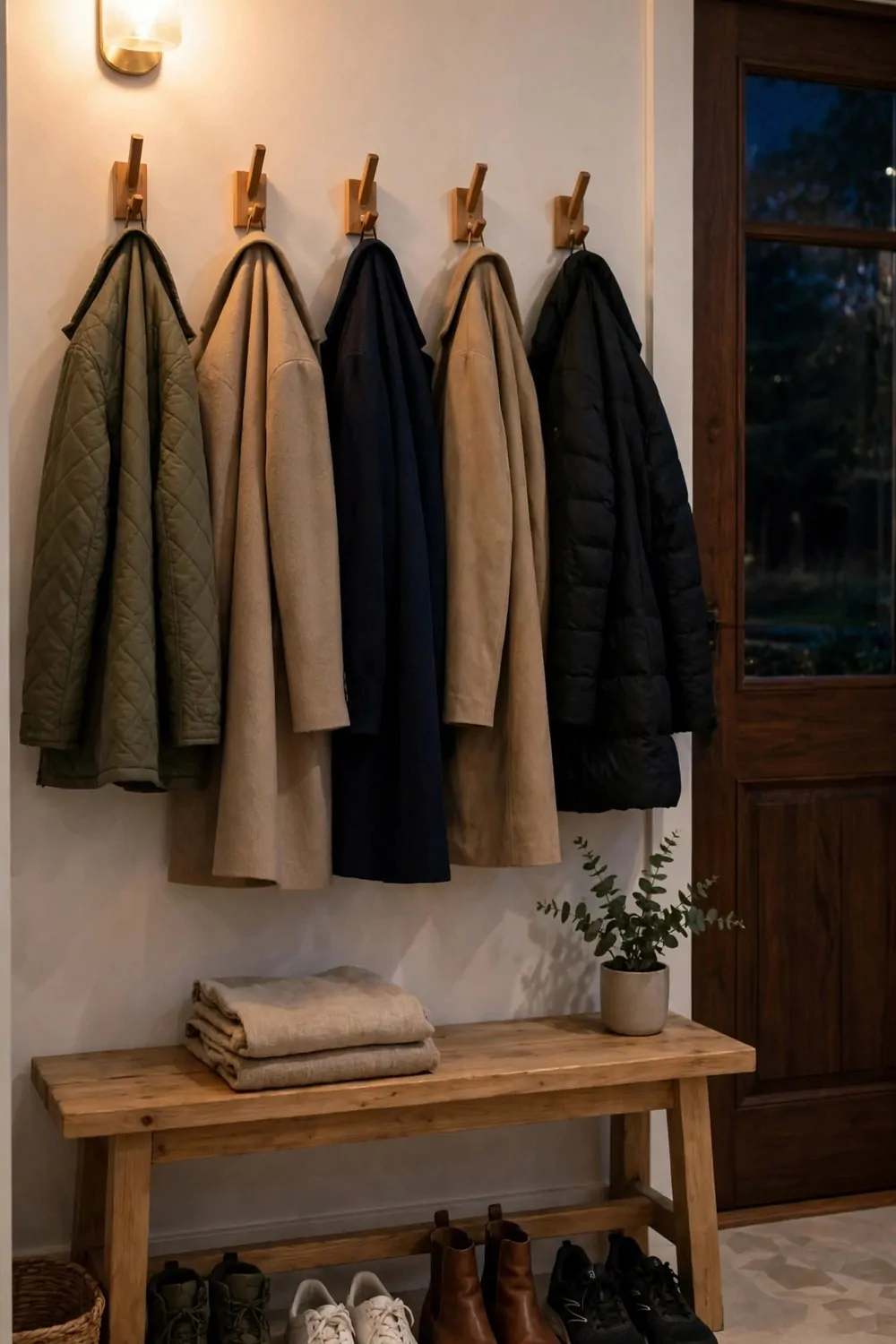
I tidy my entry for five minutes each night. It makes mornings so much better.
First, I put shoes in pairs. I line them up by the wall.
Then I hang coats on their hooks. I do not leave them on chairs.
I put keys and small things back in their spot. That saves time in the morning.
I take out trash and old papers. A clear floor feels good to walk on.
You can set a timer for five minutes. When it rings, you stop.
Kids can help too. Give each child one small job.
Do it at the same time each night. Soon it feels like a habit, not a chore.
Wake up to a tidy entry. I promise it is worth the five minutes.
Keep Reading
- 35 Dining Room Rug Ideas That Define the Space
- 27 Dining Room Wall Decor Ideas That Fill the Room
- 22 Small Dining Room Ideas That Make Tiny Spaces Work
- 31 Dining Room Centerpiece Ideas for Everyday and Guests
- 29 Kitchen Rug Ideas That Add Warmth Without the Mess
- 25 Tiny Home Ideas to Maximize Space and Style
Pick one idea from this list and try it this week. I think your entry will feel calmer, and you will smile each time you walk in the door.