22 Home Library Ideas Cozy Enough to Get Lost In

I will be honest with you. My books were everywhere. Stacks on the nightstand. Piles on the kitchen counter. A whole tower next to the couch that leaned a little to the left, and I just pretended not to see it. Every room in my house had books in it, and none of them had a home.
One Sunday morning I tripped over a hardcover on my way to the kitchen. I sat down right there on the floor, surrounded by all those books, and I thought, this is silly. These are my favorite things in the world. They deserve a real home.
That day I started building my home library. It was not a big project. I did not have a spare room or a big budget. I just started with one wall and worked from there.
And you know what I learned? A cozy home library is not about size or money. It is about making a corner of your home that pulls you in and makes you forget what time it is. A chair you love. Warm light. Books within reach. That is really the whole recipe.
These 22 home library ideas are the ones I would try first. Some are big and dreamy. Some fit in the tiniest corner of your home. All of them are real ideas that real people actually did. Pick the one that makes your heart say yes.
1. The Hallway Library
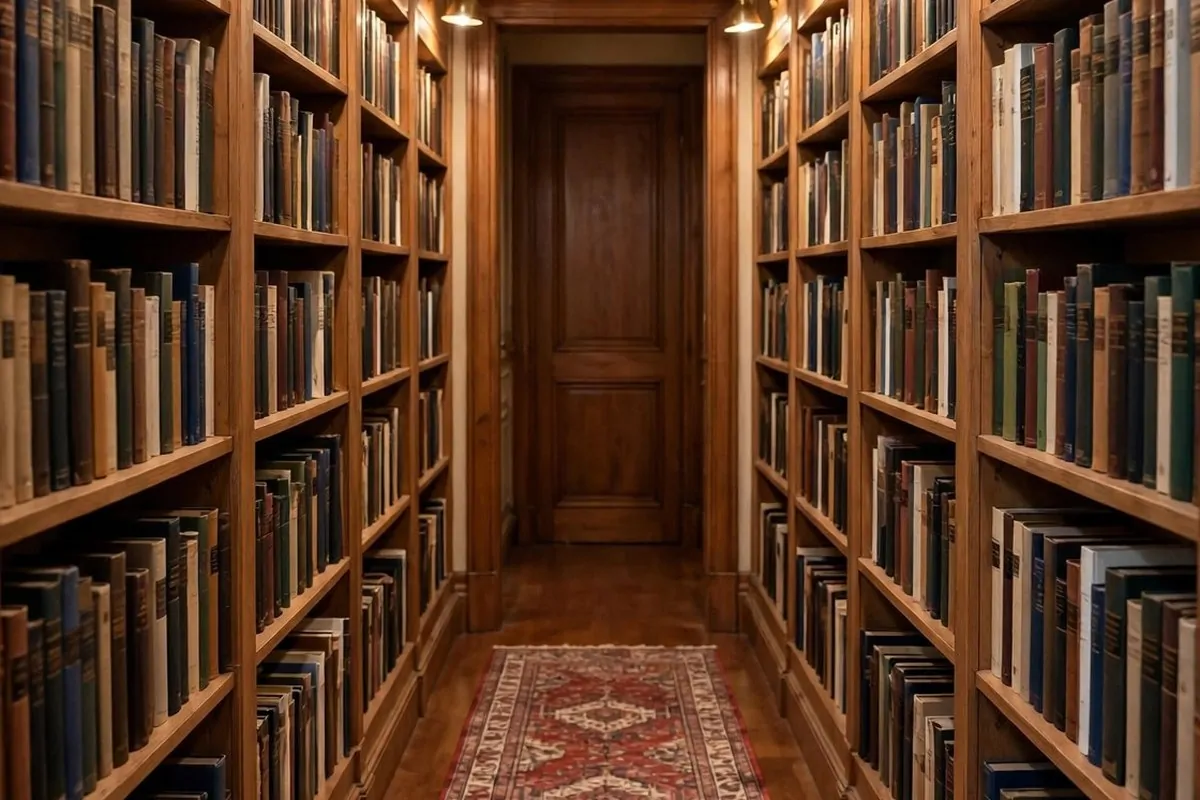
Most people walk past their hallway a hundred times a day and never really see it. It is just the space between rooms. But a hallway is a secret library waiting to happen.
Think about it. A hallway has two long walls and almost nothing on them. That is a lot of empty space doing nothing. Shallow bookshelves fit perfectly there because the shelves only need to be about eight to ten inches deep. Books do not stick out far.
I tried this in my own home last year. I put one row of narrow shelves along our upstairs hallway. Now every trip to the bedroom turns into a little browse. I stop. I pull a book out. I read the back cover. Then I remember I was supposed to be doing laundry.
Picture lights above the shelves make a huge difference. Those little lights that shine down on the books do two jobs at once. They help you see the titles, and they make the whole hallway glow warm in the evening. It feels like a bookshop at night.
The trick is to keep the shelves narrow enough that two people can still walk past each other. Measure your hallway first. If it is less than three feet wide, put shelves on one side only. You still get tons of storage.
My neighbor did this on just one wall of her hallway and fit over two hundred books there. She counted. I believe her because I saw the shelves bend a little in the middle and had to help her add a bracket.
One more thing I love about a hallway library. Guests always stop and look. It turns a boring walk to the bathroom into a little moment of joy. Books on the wall tell people who you are before you even say hello.
One more idea. Put a small bench or a pouf at one end of the hallway if you have the room. It gives you a place to sit and read without blocking the walkway, and it makes the hallway feel like a real room instead of just a passage.
2. The Under-the-Stairs Nook
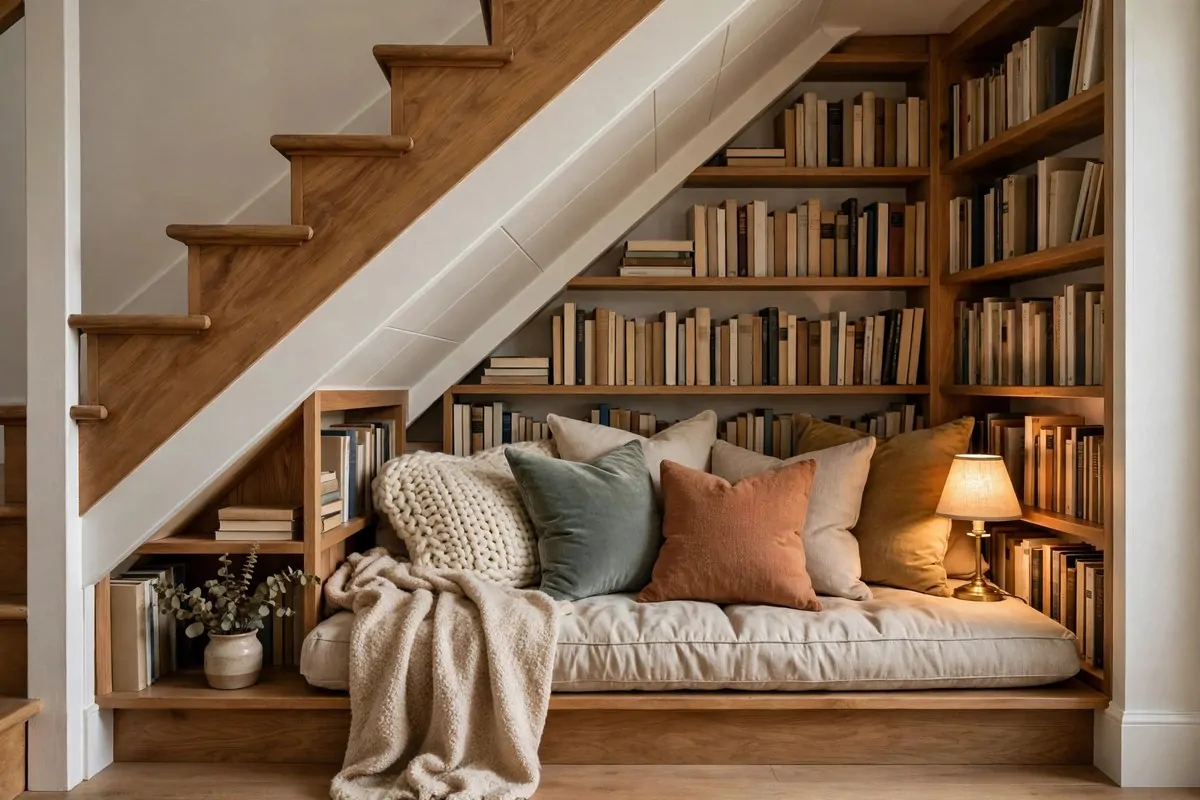
The space under the stairs is the most wasted spot in most homes. It collects boxes, old shoes, and things you forgot you owned. But look at it with fresh eyes and you see something else. A ready-made cozy cave.
That slanted ceiling is actually a gift. Low, sloped ceilings make a space feel wrapped up and safe. It is the same reason kids love building blanket forts. Your brain reads a small enclosed space as cozy, not cramped.
Start by clearing it out completely. I mean everything. You will probably find things you have not seen in years. I found a waffle maker I forgot I owned. Once it is empty, add shelves along the back wall. The shelves do not need to be deep. The slanted shape means you can fit taller books where the ceiling is high and paperbacks where it dips down.
Then comes the fun part. A thick cushion or a small mattress on the floor. Lots of pillows. A soft throw blanket. Suddenly the weird triangle under your stairs is the best seat in the house.
Lighting matters a lot here because under-stair spaces are dark. A small wall-mounted light or a battery-powered lamp on the shelf works great. Warm light, not bright white. You want it to feel like candlelight, not like an office.
My friend turned her under-stairs space into a nook for her kids, and now she has to drag them out for dinner. Fair warning. Once you build a cozy nook, people will fight over it.
Add a small rug at the entrance of the nook. It marks the doorway of your little cave and keeps the floor warm under your feet.
If the space feels too dark even with a lamp, paint the inside walls white before you add the shelves. White paint bounces the lamp light around and makes the whole nook glow.
3. The Window Seat Corner
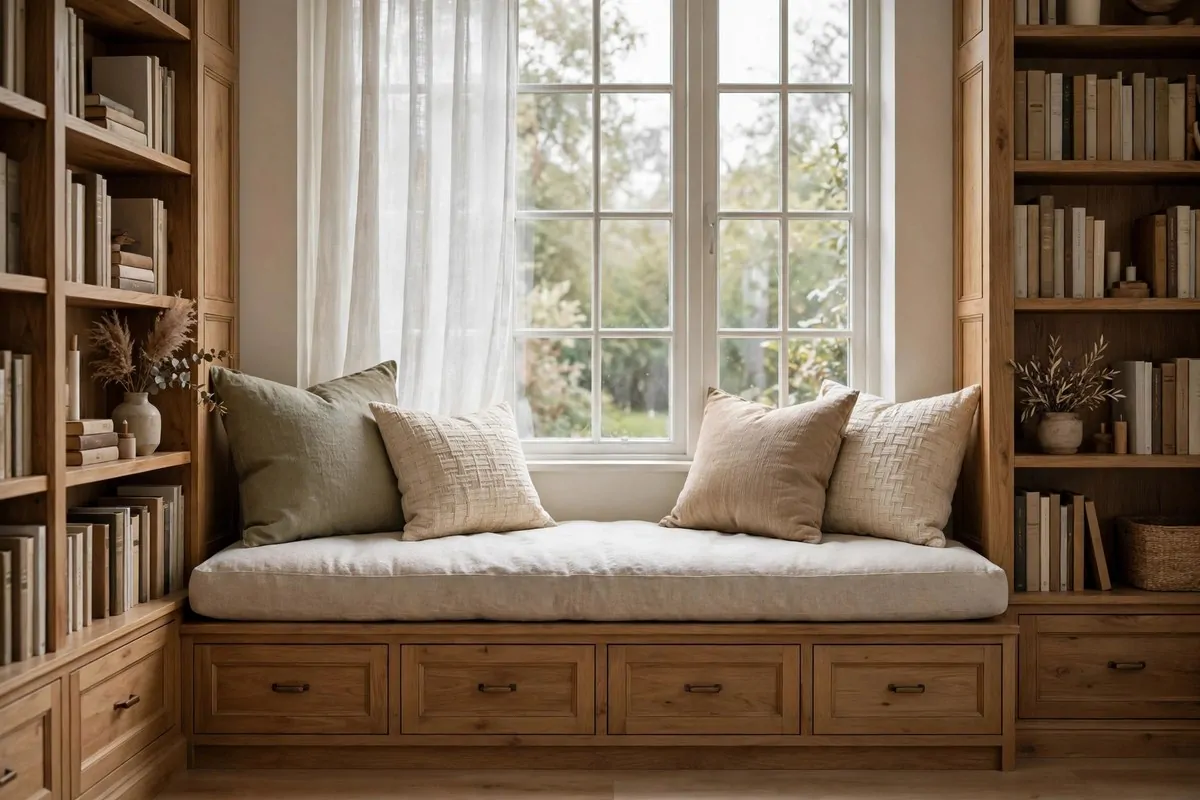
If your home has a window with empty wall space around it, you are sitting on gold. A window seat surrounded by bookshelves might be the single coziest library idea on this whole list.
There is something about reading in natural light that a lamp can never copy. The light changes through the day. Morning is soft and gold. Afternoon is bright and clear. Rainy days turn the whole seat into a gray-blue cocoon that makes you want to stay forever.
The basic setup is simple. Build or buy a bench under the window. Make sure it is deep enough to sit on comfortably, at least eighteen inches. Add a thick cushion on top, the kind that is at least four inches thick. Thin cushions look nice but hurt after twenty minutes.
Then put bookshelves on both sides of the window. Tall ones if you have the height. The shelves frame the window like a picture, and they keep your current reads right at arm level. I keep my to-be-read pile on the left shelf and finished favorites on the right.
The secret weapon of a window seat is the storage underneath. Lift-up lids or drawers under the bench swallow blankets, magazines, and all those bookmarks you keep losing. My window seat hides three throws and a heating pad, and nobody would ever guess.
On a sunny afternoon, there is no better reading spot in the whole house. I have fallen asleep there more times than I can count. The book slides off my lap, the sun moves across my face, and I wake up an hour later feeling like I had the best nap of my life.
Keep a small basket beside the seat for the books you are in the middle of. It stops the cushion from getting buried under a pile.
In winter, add a thick blanket you only use for the window seat. Having a special reading blanket makes the spot feel like an occasion, not just a seat.
4. The Glossy Black Library
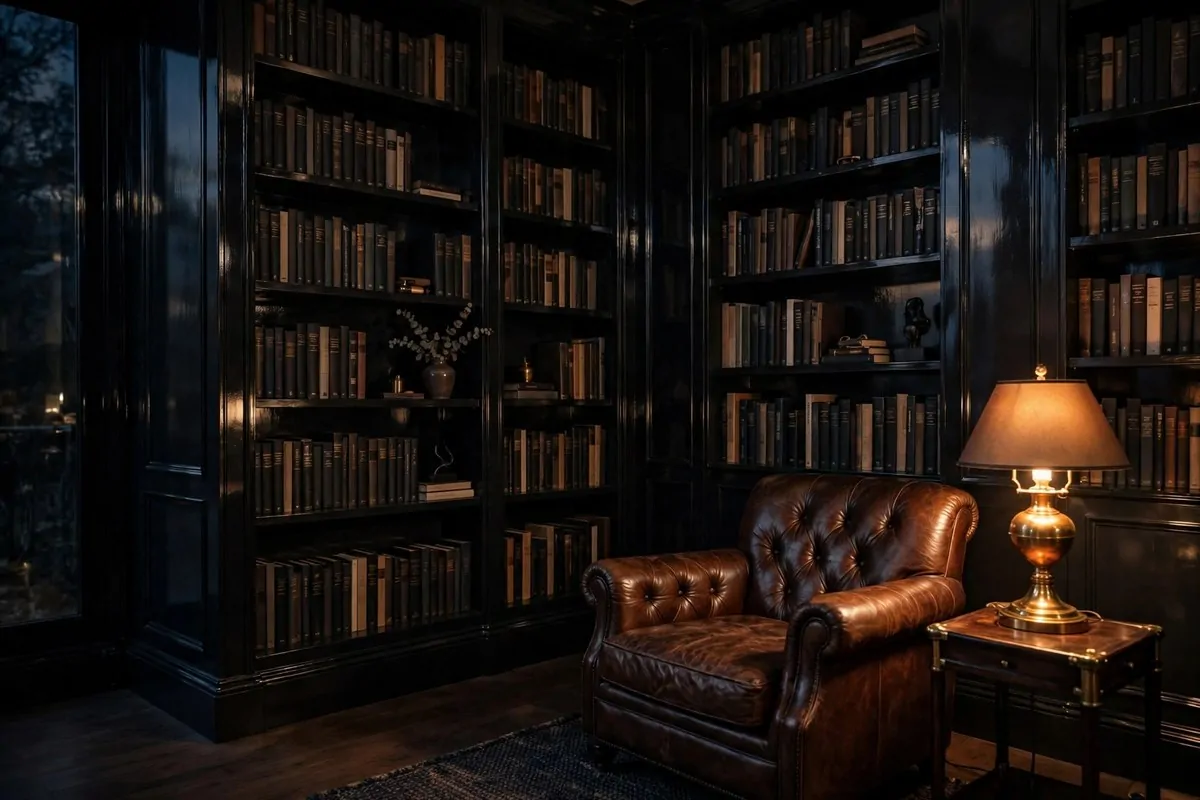
This one sounds crazy until you see it. A library with black walls. It feels like stepping into a movie scene. Dark, dramatic, and somehow the coziest room you have ever sat in.
Here is why it works. Dark walls make a room feel smaller in the best way. The edges disappear. The shelves and the books and the warm lamplight become the whole world. It is like the room is giving you a hug and shutting the door on everything else.
You do not need to paint the whole house black. Just one room, or even one wall. A deep, glossy black or a very dark charcoal both work. Glossy paint bounces a little light around, which keeps the room from feeling flat.
The key to a black library is lighting. You need warm lamps, not bright overhead lights. A brass table lamp with a fabric shade. Maybe a small picture light over the shelves. The contrast between the dark walls and the warm pools of light is what makes it magical.
I was scared to try this, I will admit it. Black walls felt like a big risk. Then I painted one wall of my reading corner dark green-black and stood back. It looked like the most expensive room in my house. Paint is cheap. The feeling is priceless.
Keep the furniture simple in a dark library. A leather chair or a velvet armchair in a warm color. Dark green, rust, or cognac brown all glow against black walls. Avoid too many small decorations. Let the books and the light do the talking.
One warning. A black library at night, with one lamp on and rain on the windows, will ruin all other rooms for you. You will never want to read anywhere else again.
Start with one wall if the whole room feels like too much. You can always paint the rest later once you fall in love with the look, and most people do.
5. Floating Shelves, Zero Floor Space
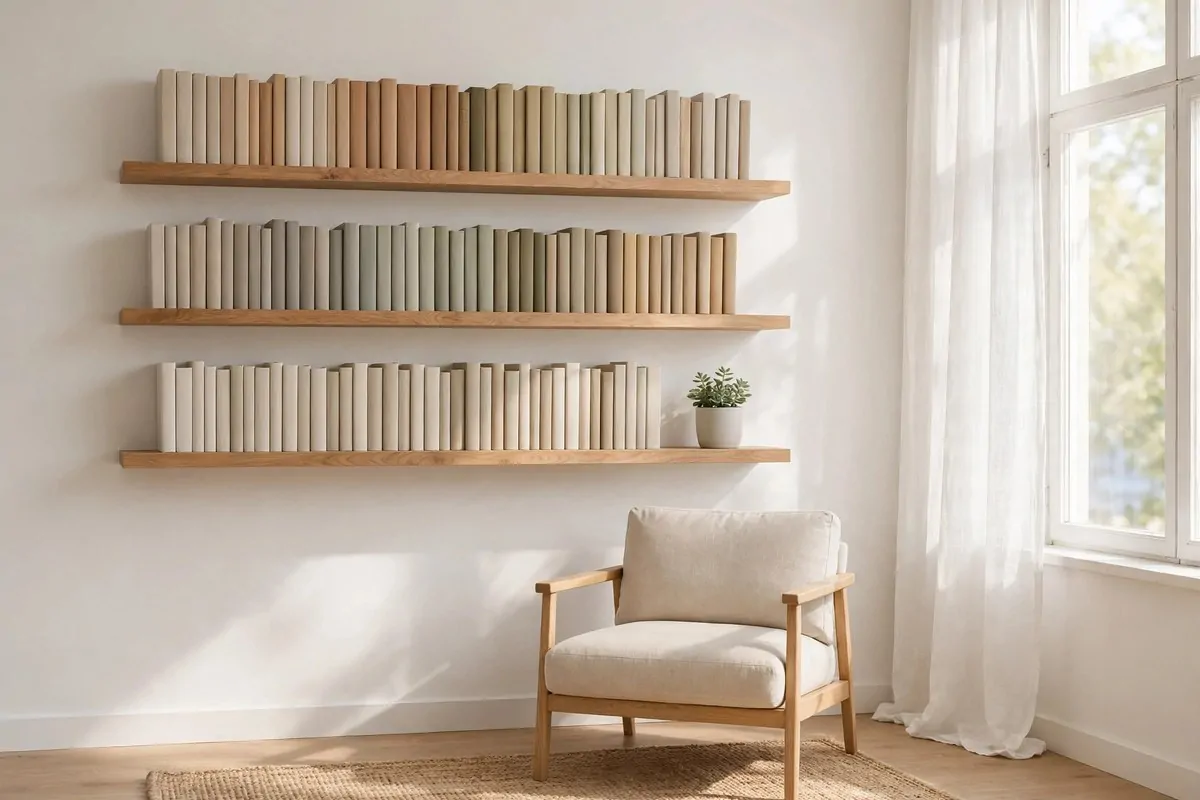
No room for a bookcase? No problem. Floating shelves give you a library without giving up a single inch of floor space. This is the idea for tiny apartments, rented rooms, and anyone who has more books than square feet.
Floating shelves are just boards attached to the wall with hidden brackets. They look clean and modern, and they hold more books than you would think. A good bracket screwed into a wall stud can hold a surprising amount of weight.
The trick is to spread the load. Do not put all your heavy hardcovers on one long shelf. Mix it up. Paperbacks here, hardcovers there. And always find the studs in your wall. A shelf full of books pulling out of drywall is a disaster you only want to read about, not live through.
I love how floating shelves let you build a library one shelf at a time. Start with two shelves above your desk. Add a third next month. By next year you have a whole wall of books and it never felt like a big project.
Arrange the books with some breathing room. Leave a little space between groups, and put a small plant or a framed photo on one shelf. It stops the wall from looking like a warehouse and makes it look like a home.
This idea works best when you pick a wall you look at a lot. Above the couch. Beside your bed. Across from your kitchen table. Your books become part of the view, and the room feels smarter and warmer without any new furniture at all.
Stagger the shelves instead of lining them up in straight rows. A staggered pattern looks more relaxed and lets you fit shelves around doors and windows.
Leave one shelf just for books you have not read yet. Seeing your unread pile on the wall is motivating, and it looks great too.
6. The Closet Library
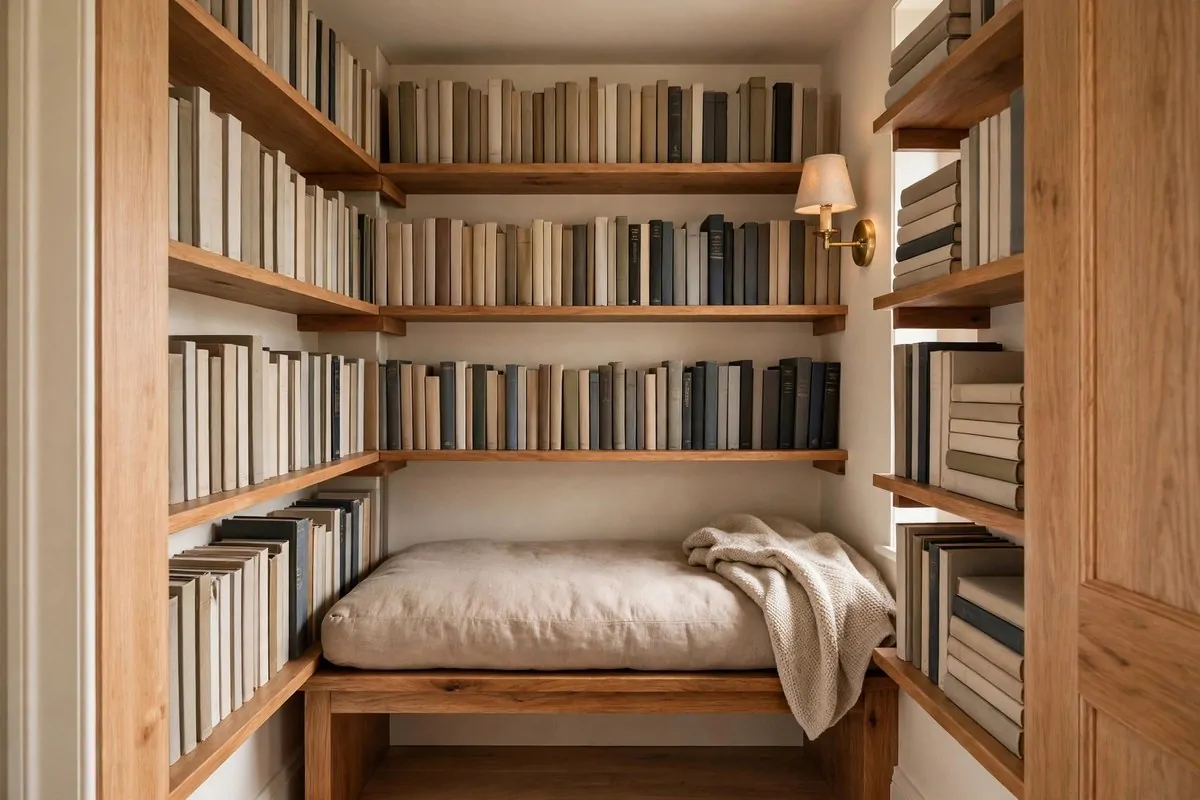
You have a closet you never use properly. We all do. The one with the broken light and the boxes you keep meaning to sort. Take the doors off that closet and you have a tiny library room waiting to be born.
This idea is sometimes called a cloffice, but for books instead of a desk. The concept is the same. A small, forgotten space becomes a whole little world. Remove the doors, and suddenly the dark box opens up into the room.
Start with a bench at the bottom. It can be a simple wooden box with a cushion on top. Make it sturdy enough to sit on, and put storage inside for blankets or magazines. The bench fills the bottom half of the closet and gives you a place to sit.
Then add shelves above the bench, up the whole back wall. Because the space is so small, even three or four shelves hold a lot of books. Paint the inside of the closet a warm color. A soft cream or a warm sage green makes the tiny space glow instead of feeling like a cave.
Lighting is the make-or-break detail. Closets are dark by nature. A small wall-mounted reading light or even a string of warm fairy lights along the top shelf changes everything. I used a battery puck light in mine for months before I got around to wiring a real one, and it worked fine.
The best part about a closet library is the feeling of escape. You step in, pull a curtain across the opening if you want, and the rest of the house disappears. It is your own private reading cave. My kids think it is a secret hideout, and honestly, they are not wrong.
Hang a small curtain instead of putting the doors back on. A curtain is softer, cheaper, and you can tie it back when you want the nook open to the room.
Put a tiny rug on the closet floor. Closet floors are usually cold and plain, and a rug makes the nook feel finished.
7. Shelves Around the Doorway
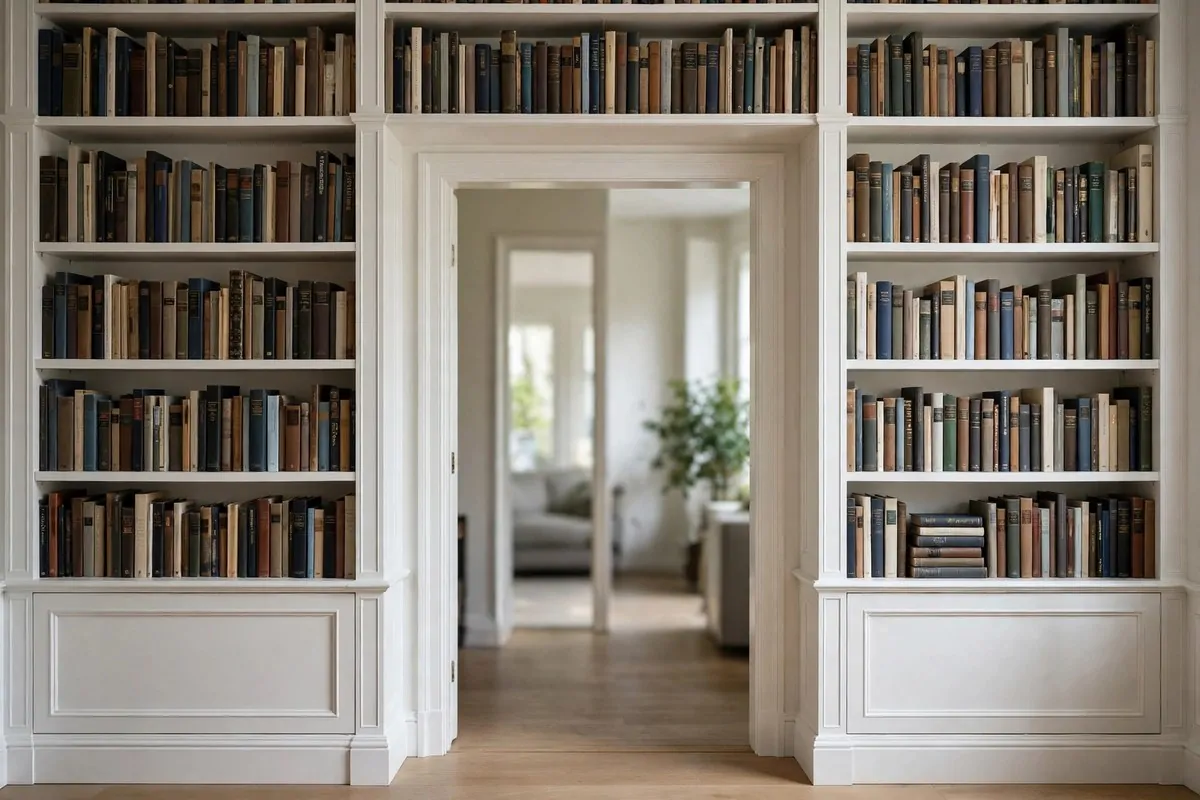
This idea turns a boring doorway into the grand entrance of your personal library. Bookshelves frame the door on both sides and run across the top, like a bookish archway you walk through every day.
It looks custom and expensive, but it is really just shelves arranged in a smart shape. Two tall bookcases on either side of the door, plus one wide shelf or a row of short shelves above the door frame. The whole thing reads as one built-in unit.
Measure carefully before you start. You need enough wall on both sides of the door for the bookcases to sit flat. Most interior doors have at least a foot or two of wall beside them, and that is enough for a narrow bookcase.
Anchor everything to the wall. This is not optional. Tall bookcases near a doorway get bumped, and a shelf full of books tipping over is dangerous. A few L-brackets into the wall studs keep the whole thing rock solid.
I love this idea because it uses space that is always wasted. The wall above a door is dead space in almost every home. Now it holds books you do not grab every day, like old favorites or big art books. They look beautiful up there and stay out of the way.
Walk through a doorway framed in books every morning and tell me it does not change how you feel about your home. It is a small daily joy. Like living in a bookshop, except you never have to pay for the books because they are already yours.
Style the top shelf with a few decorative items mixed in with the books. A small clock. A framed photo. A plant that trails down a little. It keeps the high shelves from looking like pure storage and makes the whole doorway feel decorated, not just stuffed.
Dust the top shelf with a long-handled duster once a month. High shelves collect dust fast, and clean shelves make the whole doorway look sharper.
8. Floor-to-Ceiling Book Wall With a Step Ladder

Every book lover has dreamed about this one. A wall of books that goes all the way up to the ceiling, with a little ladder to reach the top. It is the classic library look, and it works in a normal home better than you would think.
Going all the way up is actually the smart move in a small room. Floor space is limited, but wall height is free. Most homes have eight or nine foot ceilings, and a standard bookcase only uses six of those feet. That top stretch of wall is just sitting there empty.
You do not need a fancy rolling ladder on a brass rail, though that does look amazing. A simple wooden step ladder or even a sturdy step stool works just as well. I keep a small two-step stool tucked beside my tall shelves, and it takes five seconds to grab.
Organize by how often you reach for things. Eye-level shelves hold your current favorites and to-be-read pile. The top shelves are for books you love but do not reread often, plus pretty items like vases or framed photos. The bottom shelves can hold oversized books laid flat.
Dust the top shelves twice a year and call it done. Yes, high shelves collect dust. A quick swipe with a microfiber cloth on a stick takes ten minutes. Do not let dust stop you from having the library wall of your dreams.
When friends walk into my living room, their eyes go straight up that wall of books. It is the first thing everyone comments on. A floor-to-ceiling book wall makes even a plain room feel important, like it has a purpose beyond just holding a couch.
Store a small step stool behind the lowest shelf if you do not want a ladder always leaning there. It slides out when you need it and hides when you do not.
Group the top shelves by color if you like the look. From across the room, color-blocked high shelves look like art.
9. The Dark Academia Corner
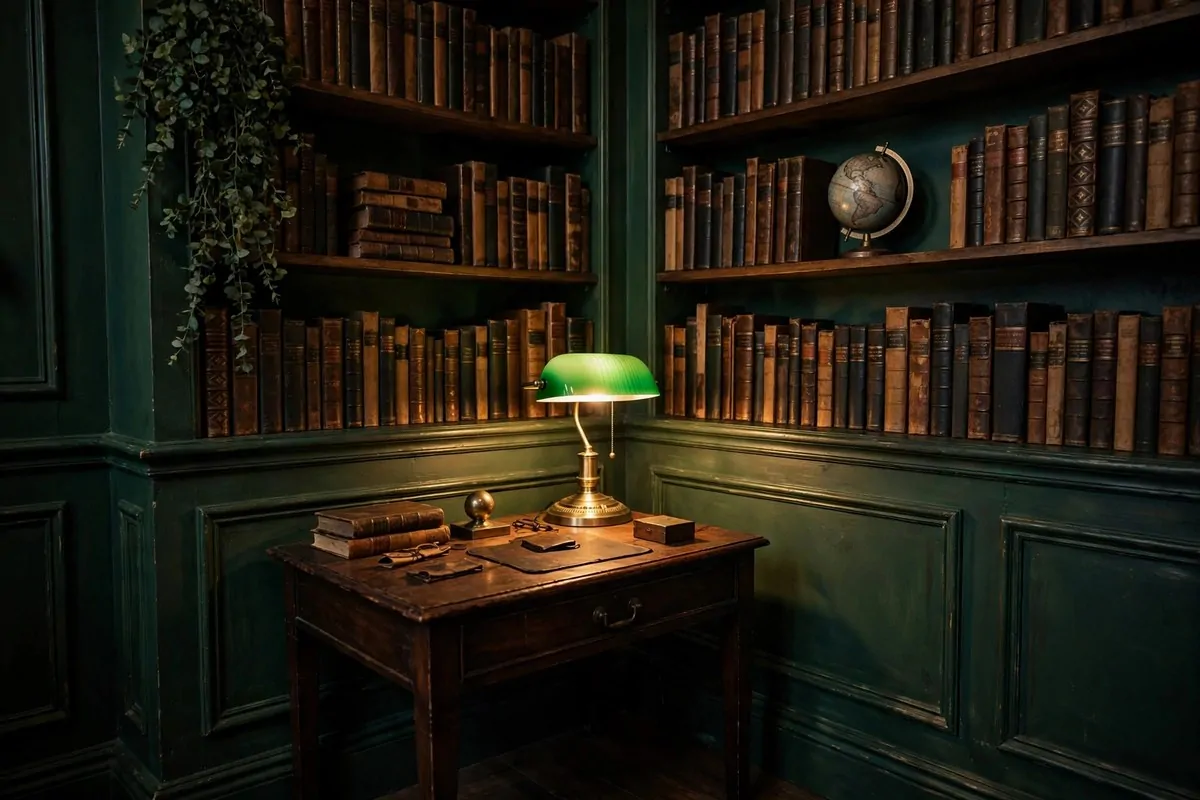
Dark academia is a whole style built around the love of old books, candlelight, and quiet study. Think deep green walls, brass lamps, leather-bound classics, and the feeling that you might be in an old university library. It is dramatic, moody, and deeply cozy.
You do not need a whole room for this. One corner can do it. Start with the wall color. A deep forest green or a rich charcoal brown sets the mood instantly. If painting feels like too much, even a dark green curtain or a large dark poster behind the shelves helps.
The lamp is the soul of a dark academia corner. A vintage-style lamp with a green glass shade is the classic choice, and you can find them cheap at thrift stores. That green glow on old book spines is pure magic. It makes even paperbacks look mysterious.
Add a few old-looking objects to the shelves. A small globe. A brass candle holder. A stack of books tied with twine. A framed black-and-white photo. These little props tell a story and make the corner feel like it has a history, even if you bought everything last month.
This style loves leather and wood. A worn leather chair, a wooden side table, a wool throw. Avoid bright plastic or neon colors. Everything should look like it could have sat in that corner for fifty years.
I will warn you, though. Dark academia corners are dangerously comfortable. You sit down to read one chapter and look up to find two hours gone. The moody light messes with your sense of time in the best possible way.
A secondhand wooden desk or a small writing table completes the corner. Dark academia is about studying and writing as much as reading.
Burn a candle with a woody or old-paper scent when you read there. Smell is the fastest way to make a corner feel like a different century.
10. The Canopy Curtain Corner
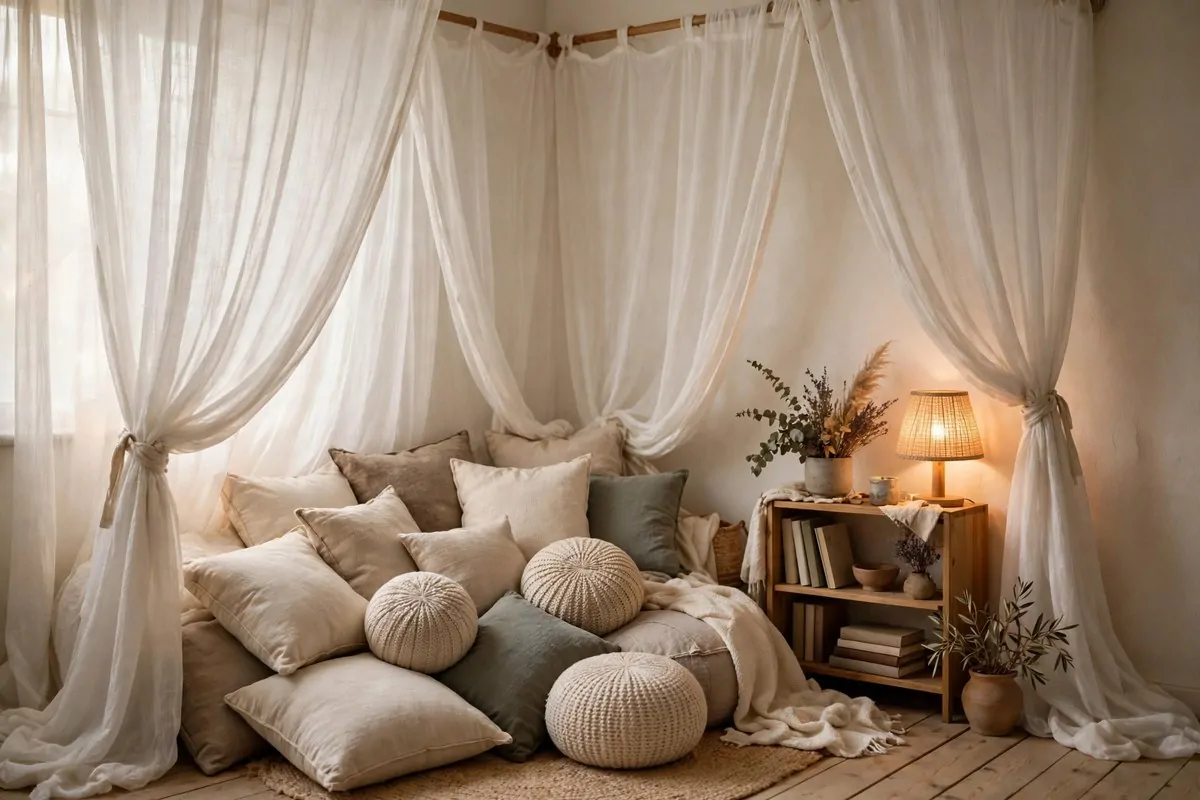
Remember how magical a blanket fort felt when you were a kid? This idea brings that feeling back, but prettier. Sheer curtains hung around a corner create a soft, tent-like reading spot that feels like your own private world.
The setup is simple. Hang a curtain rod in an L shape in a corner, or hang a circular hoop from the ceiling. Drape sheer white or cream curtains from it. They do not block light, they just soften it. The whole corner glows like the inside of a cloud.
Under the canopy, pile up floor cushions or a thick rug with lots of pillows. Add a small bookshelf or even just a basket of books within arm’s reach. A warm lamp or a string of fairy lights finishes the cocoon.
This works beautifully in a bedroom corner. It turns dead space into a reading retreat without any construction. Renters love this one because everything comes down with no damage. Curtain rods, cushions, lights. Nothing permanent.
The fabric you choose changes the whole feeling. White linen feels airy and calm. A soft blush or cream feels warm and romantic. Avoid heavy dark fabrics. The point is a light, dreamy tent, not a cave.
My niece has one of these in her room and calls it her reading castle. She is nine. But I sat in it once with a novel and I understood completely. There is something about fabric walls that makes the outside world go quiet.
Wash the sheer curtains twice a year. They collect dust and lose their glow, and clean sheers make the whole canopy look new again.
Add a small bookshelf just outside the canopy for overflow. Your to-be-read pile can live right at the entrance, ready to be carried inside.
11. Fairy Lights Over the Shelves
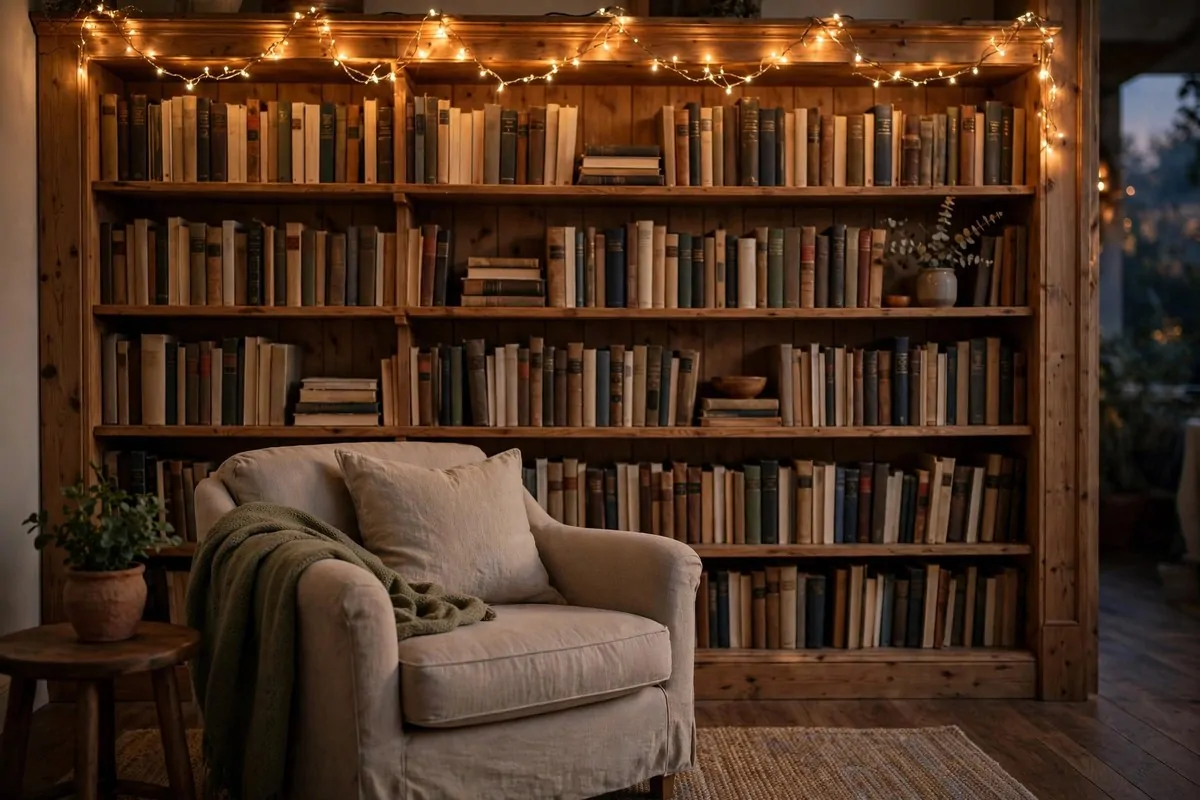
Sometimes the coziest upgrade costs less than ten dollars. A string of warm fairy lights draped over your bookshelves turns an ordinary bookcase into something out of a storybook. It is the cheapest magic I know.
The trick is warm white lights, not cool blue-white. Warm lights glow like candlelight. Cool lights make your books look like a convenience store. Check the box before you buy. Look for the words warm white.
Drape the lights along the top of the shelves and let them fall a little down the sides. Or weave them through the shelves between the books. Both look great. I like them tucked just behind the front edge of each shelf, so the light spills out softly over the book spines.
Battery-powered lights are the easiest option. No cords to hide, no outlet needed. A good set lasts for weeks on one set of batteries, especially if you use the timer function. Most sets have a little switch with a six-hour timer. Set it and forget it.
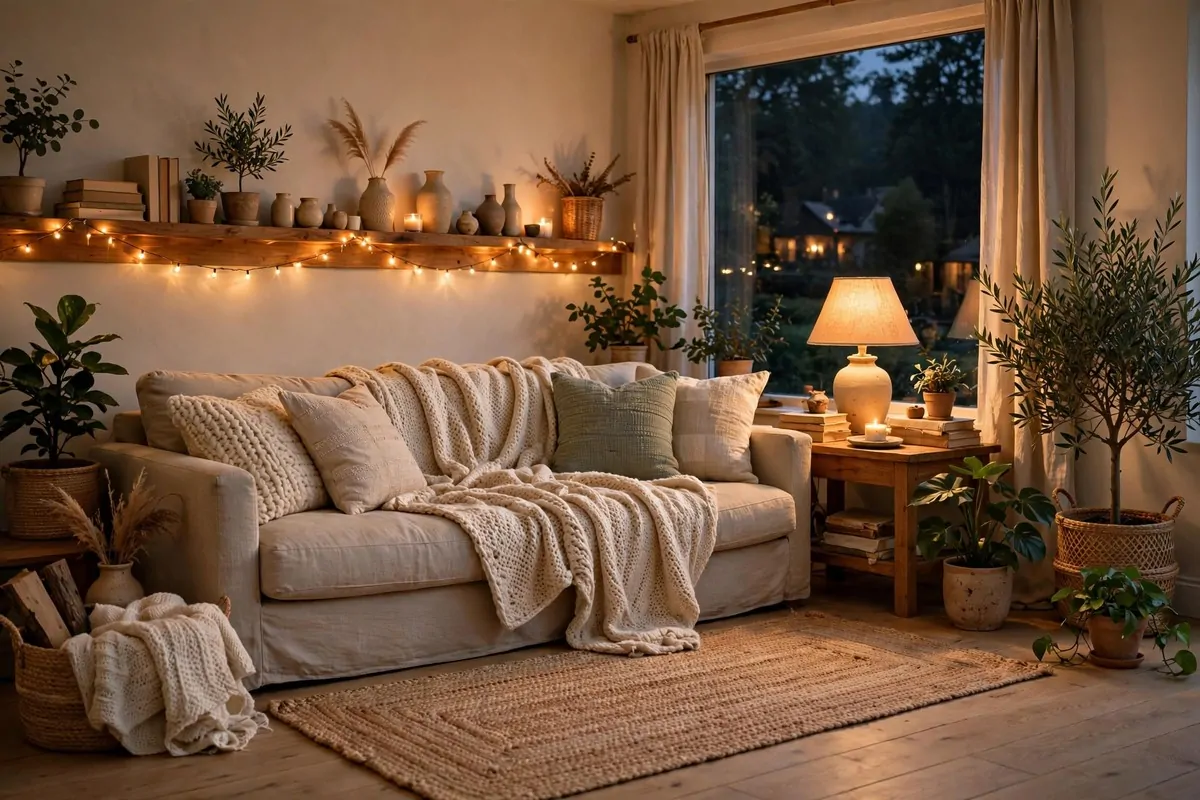
This idea shines, literally, in the evening. When the main lights go off and just the fairy lights are glowing over the books, the whole room changes. It feels like the library is alive and waiting for you. I read more in winter evenings than any other time, and I am convinced the fairy lights are half the reason.
Combine fairy lights with a comfortable chair nearby and you have a reading spot that costs almost nothing. Some of the coziest libraries I have seen are just an old bookcase, a thrift-store chair, and twenty dollars of warm lights.
Replace the batteries on the first day of every month so the lights never die mid-chapter. A dead string of lights is just sad.
Try draping the lights behind the books instead of in front. The glow sneaking out between the spines looks magical and hides the wire completely.
12. The Boucle Chair Nook
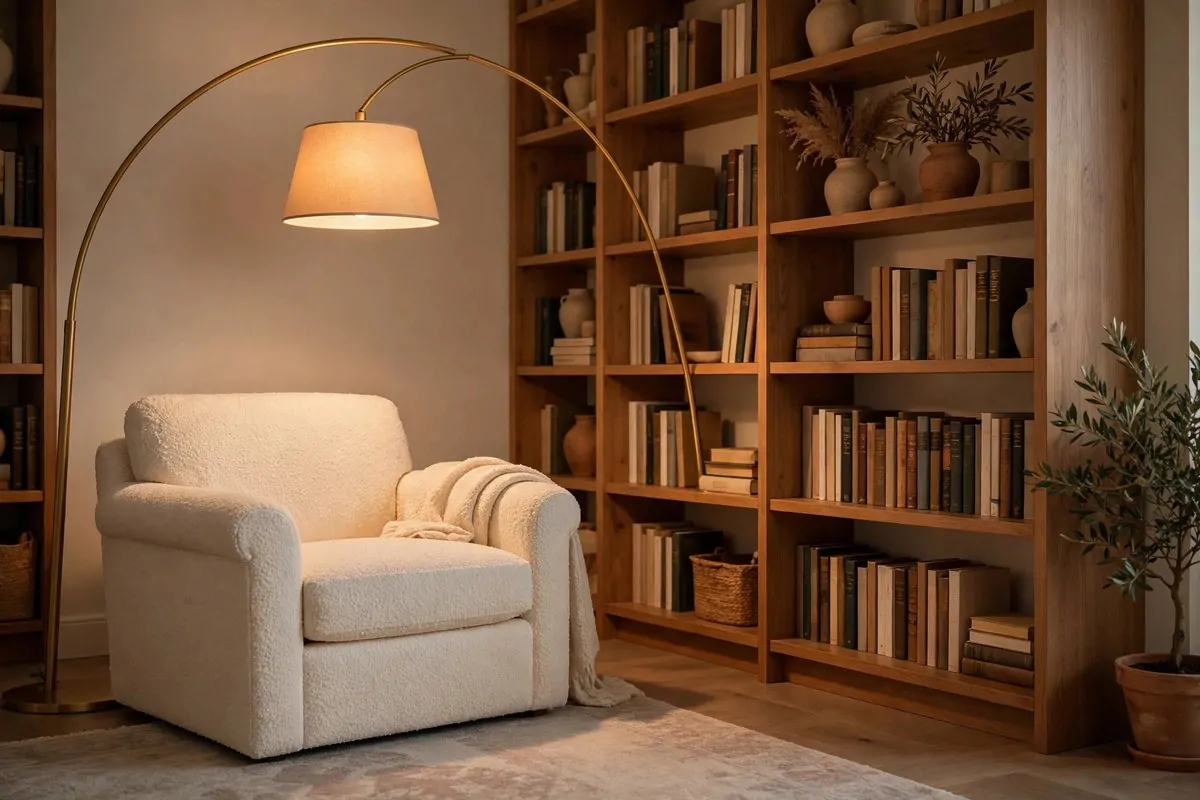
A boucle chair is one of those trends that actually deserves the hype. That nubby, soft, cloud-like fabric makes you want to sink in and never get up. Put one next to a bookshelf and you have an instant reading nook.
The chair does most of the work in this setup. A beautiful, comfortable chair turns any corner into a destination. You do not need a lot of decoration around it. The chair plus books plus light is the whole formula.
Place the chair at a slight angle to the shelves, not flat against the wall. Angled furniture feels more relaxed and inviting. Leave enough room to pull the chair out and curl your legs up. A reading chair you cannot curl up in is just a sitting chair.
An arched floor lamp that curves over the chair is the perfect partner. It puts light exactly where your book is without taking up table space. If an arched lamp is too pricey, a simple floor lamp placed just behind the chair’s shoulder works too.
Add a small side table within arm’s reach for tea. This is non-negotiable in my book. A reading nook without a tea spot is incomplete. It does not need to be fancy. A little wooden stool or a stack of big books works as a table in a pinch.
Cream and white boucle shows dirt, I will be honest about that. If you have kids or pets, look for a boucle chair in a slightly darker oatmeal or gray color. Or keep a throw blanket over the seat. It protects the fabric and adds another layer of cozy anyway.
Rotate the chair to face the window during the day and the lamp at night. One chair, two completely different reading moods.
Keep a small basket for bookmarks and reading glasses beside the chair. Little things get lost fast in a nubby boucle chair.
13. The Slim-Shelf Library
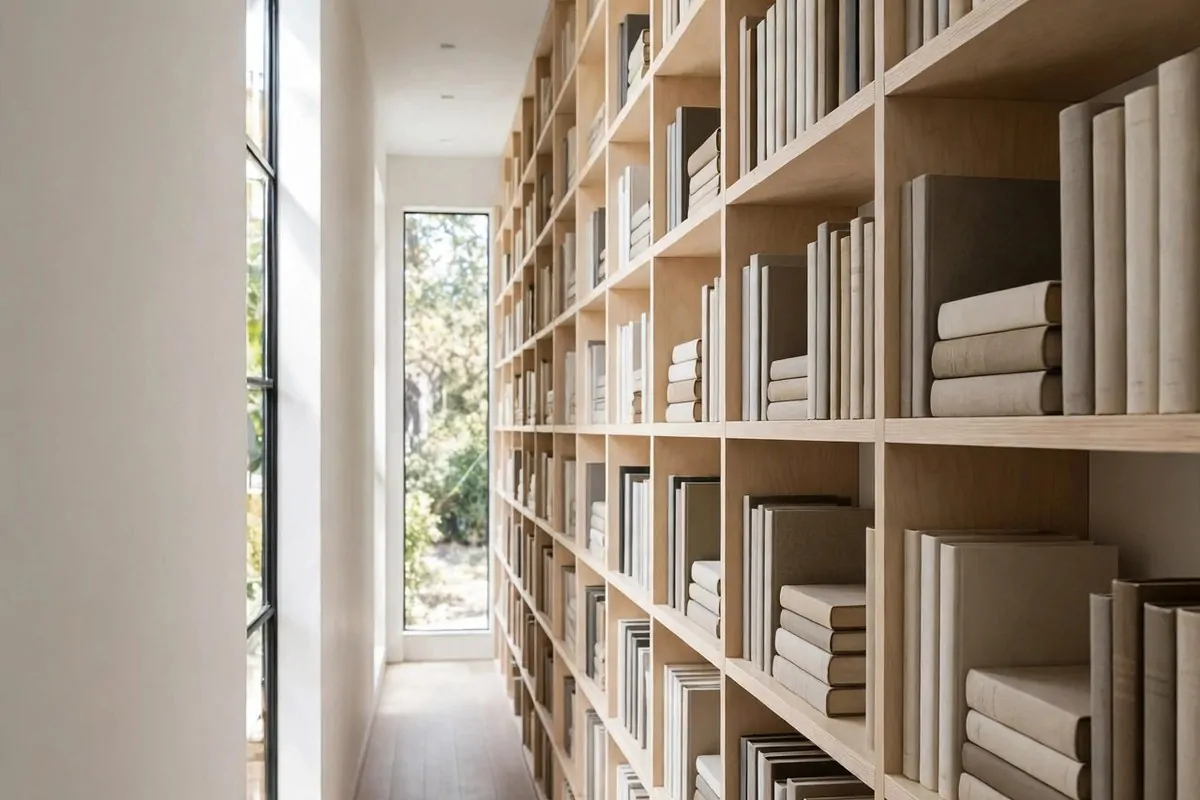
Here is a secret most people do not know. Standard bookcases are deeper than your books need. Most novels are only five to seven inches deep, but bookcases are usually ten to twelve inches deep. That extra depth eats floor space for no reason.
Slim shelves, just eight inches deep, hold almost every normal book perfectly. They stick out less from the wall, which makes a huge difference in a narrow room or hallway. Two inches here and there adds up fast when you are working with tight space.
This idea is perfect for rooms where a full bookcase would block the walkway. A bedroom with a narrow wall. A small office. The wall beside a door. Slim shelves turn those awkward spots into real book storage.
You can buy slim bookcases, or you can build them cheaply from pine boards and brackets. Because the shelves are shallow, they are lighter and easier to mount. Just make sure they are level and anchored well. Even shallow shelves get heavy when they are full of books.
Here is a quick guide to picking the right shelf depth for your books:
| Book type | Depth you need | My advice |
|---|---|---|
| Paperbacks | 6 to 8 inches | Slim shelves are perfect |
| Hardcover novels | 8 to 10 inches | 8-inch shelves still work |
| Big art and coffee table books | 10 to 12 inches | Keep these on deeper shelves |
| Magazines | 8 to 9 inches | Store upright in slim shelves |
Paint slim shelves the same color as your wall and they almost disappear. The books look like they are floating on the wall. It is a clean, modern look that makes a small room feel bigger, not more crowded.
I put slim shelves in a hallway that is barely three feet wide. A normal bookcase would have blocked it completely. The slim shelves hold over a hundred paperbacks and the hallway still feels open. It is one of my favorite things in my home.
Label the shelf edges with tiny stickers if you organize by genre. It sounds fussy, but it makes finding books so much faster when the shelves are shallow and packed.
14. The Centered Bookshelf Vignette
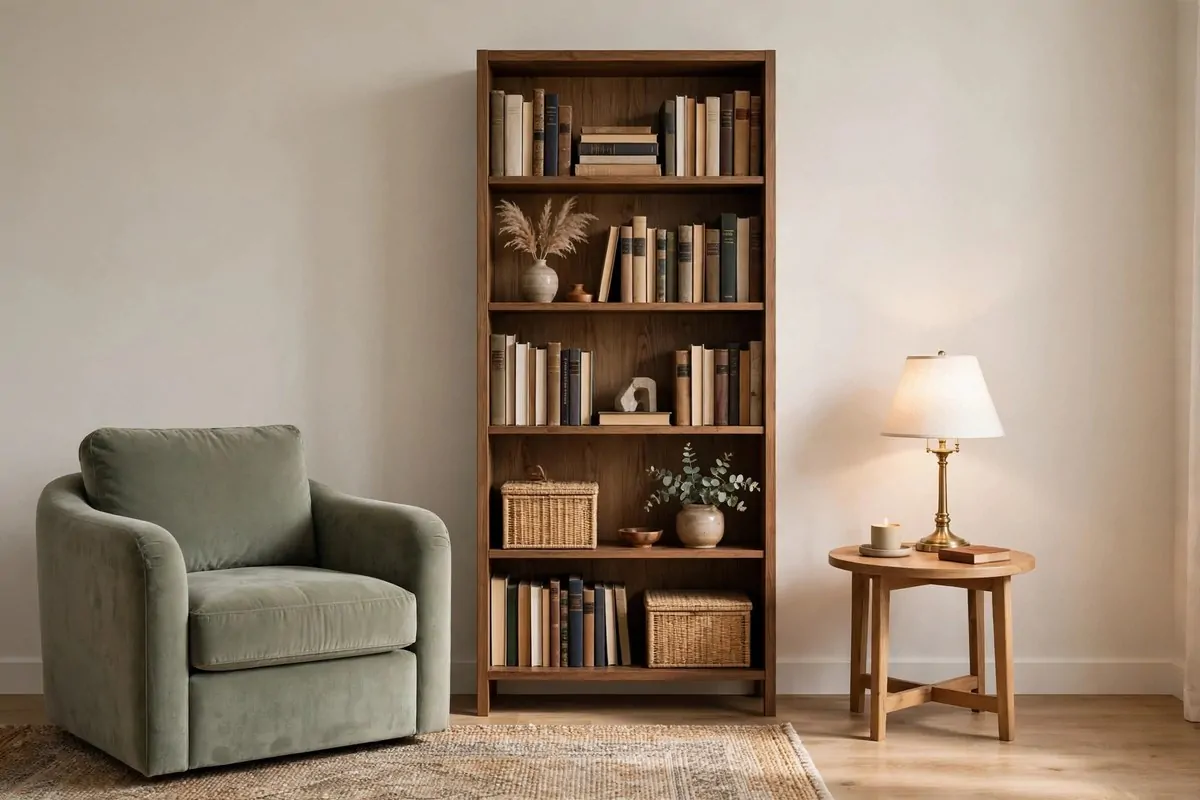
You do not need a wall of shelves to have a library. Sometimes one beautiful bookcase, placed with care, does the whole job. This idea is about making a single bookshelf the star of the room.
Start by centering one tall bookcase on a wall. Not pushed into a corner, not squeezed beside the TV. Centered, like a piece of art. This one move makes the shelf feel intentional instead of accidental.
Then build a little scene around it. A comfortable chair on one side, angled toward the shelf. A small side table on the other side with a lamp. A rug under the chair to mark the spot. Now it is not just a bookcase. It is a reading corner with a purpose.
Style the shelves like you mean it. Group books by size or color. Leave some space on a few shelves for a plant, a framed photo, or a small sculpture. A shelf that is packed edge to edge with books looks like storage. A shelf with breathing room looks like decor.
Keep your current reads on the middle shelves, right at eye level. I keep a little tray on my middle shelf for my glasses, a bookmark, and the pen I use to underline passages. It makes the vignette feel personal, like the shelf belongs to a real reader.
This is the perfect starter library. One bookcase, one chair, one lamp. You can build it in a weekend for very little money, especially if you find the bookcase secondhand. And when your collection grows, you just add another bookcase beside the first one.
Change one decorative object on the shelves every month. A new frame, a different plant. It keeps the vignette feeling fresh without any real effort.
Keep a small notebook on the middle shelf for book notes. Writing down a favorite line takes ten seconds and you will thank yourself later.
15. The Open Metal Bookshelf Look
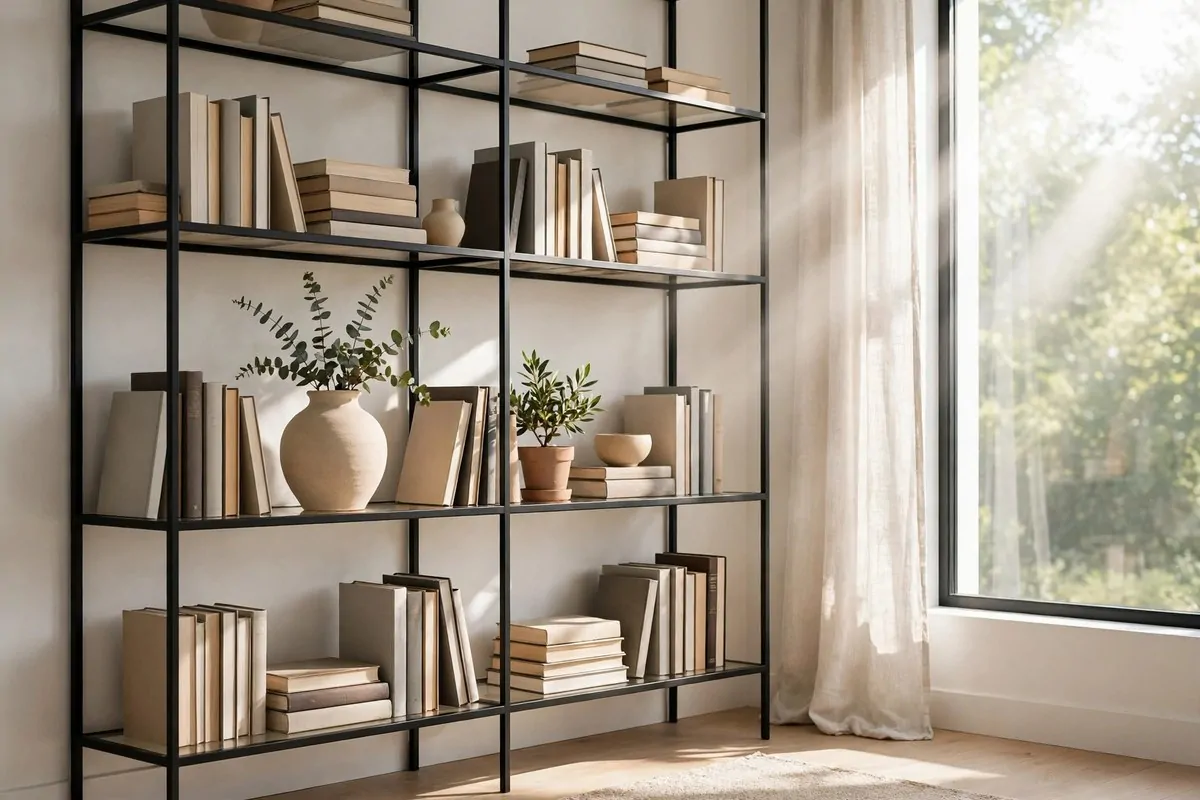
Heavy wooden bookcases can make a small room feel closed in. Open metal bookshelves do the opposite. Their thin frames let light and air pass through, so the room stays bright even with a lot of books in it.
The look is modern and a little bit industrial. Black metal frames with wooden shelves are the classic combo. They suit almost any style, from modern apartments to cozy farmhouse rooms. The metal keeps it sleek, the wood keeps it warm.
Because you can see through the shelves, styling matters more here. Mix your books with open space and a few decorative objects. A vase here, a small plant there, a stack of books laid flat instead of standing up. The see-through design means every shelf is visible from both sides.
These shelves are also easy to move. Most metal bookcases are lighter than solid wood ones, and many come apart with just a few bolts. If you rearrange your room a lot, or if you rent and move often, that matters.
I like open metal shelves in rooms with good natural light. The sunlight passes through the shelves and makes pretty shadows on the wall behind. In the afternoon, my metal bookshelf throws striped shadows across the floor, and it is honestly one of my favorite things to look at.
One tip. Dust shows more on open shelves because there is no back panel hiding it. A quick dusting every couple of weeks keeps them looking sharp. I keep a microfiber cloth on the top shelf so I never have an excuse to skip it.
Tighten the bolts once a year. Metal shelves loosen a tiny bit over time, and a quick tighten keeps everything solid and silent.
Put felt pads under the feet. Metal frames can scratch wood floors, and the pads cost almost nothing.
16. The Bean Bag Library
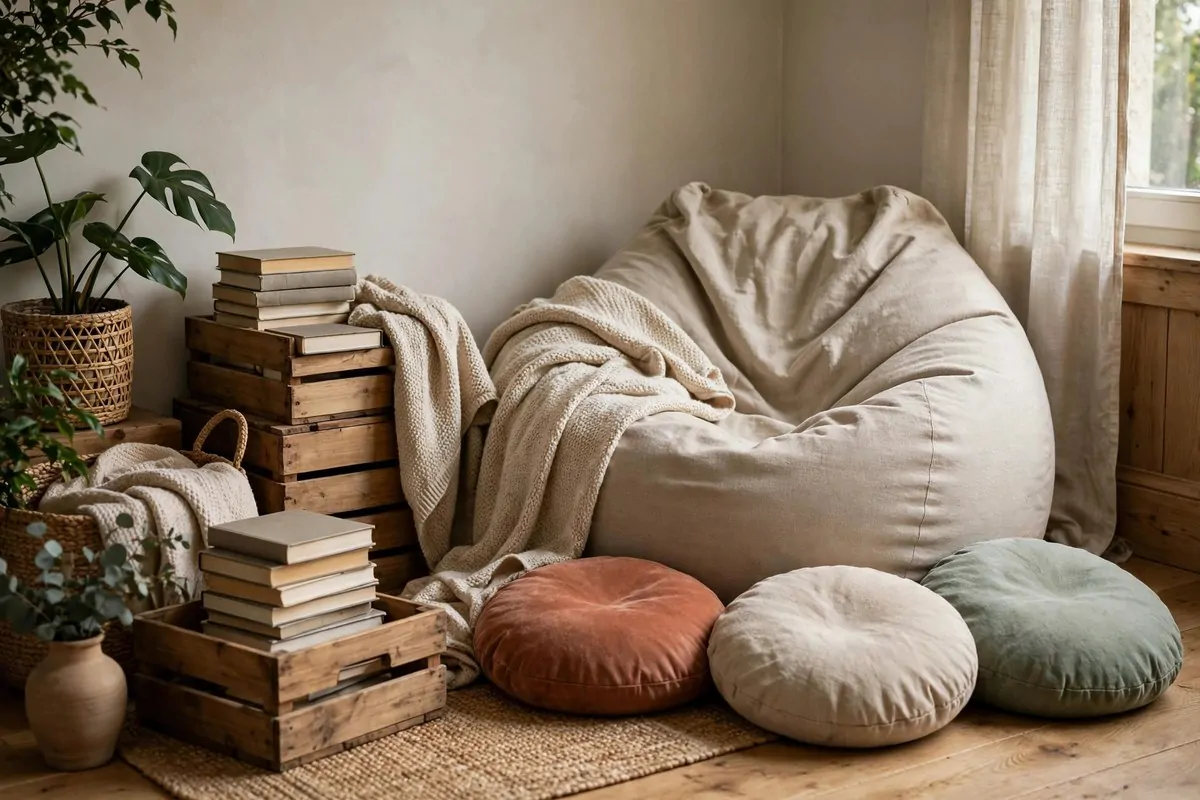
Not every library needs to look serious. Some of the coziest reading spots are the most casual ones. A big bean bag chair, some floor cushions, and books in crates. Done. It is relaxed, fun, and incredibly comfortable.
Bean bags have grown up a lot. The good ones now are big, supportive, and covered in soft fabric that actually looks nice. Get the biggest one you can fit. A small bean bag is just a lumpy pillow. A big one is a reading throne.
This setup is perfect for a corner of a bedroom, a playroom, or any room where formality is not the goal. Kids love it. Teens love it. And adults who are honest with themselves love it too. There is no wrong way to sit in a bean bag.
Store the books in low wooden crates or baskets around the seating. Keep them at floor level so you can grab a new book without getting up. When you are sunk into a bean bag, getting up feels like a major life decision. Plan accordingly.
Add a soft rug underneath everything. It defines the space and makes the floor comfortable for the inevitable moment when someone slides off the bean bag and ends up reading on the floor anyway. It happens. Every time.
A floor lamp with a warm bulb, arched over the bean bag area, gives you light without a table. Or use a clip-on book light for a truly minimal setup. The whole point of this library is ease. Nothing fussy, nothing precious, just comfort.
Fluff the bean bag once a week by shaking it out. The filling settles flat with use, and a good shake brings the comfort back.
Keep a lightweight throw on the bean bag. It protects the fabric and gives you something to pull over your legs on chilly evenings.
17. Layers of Soft Texture
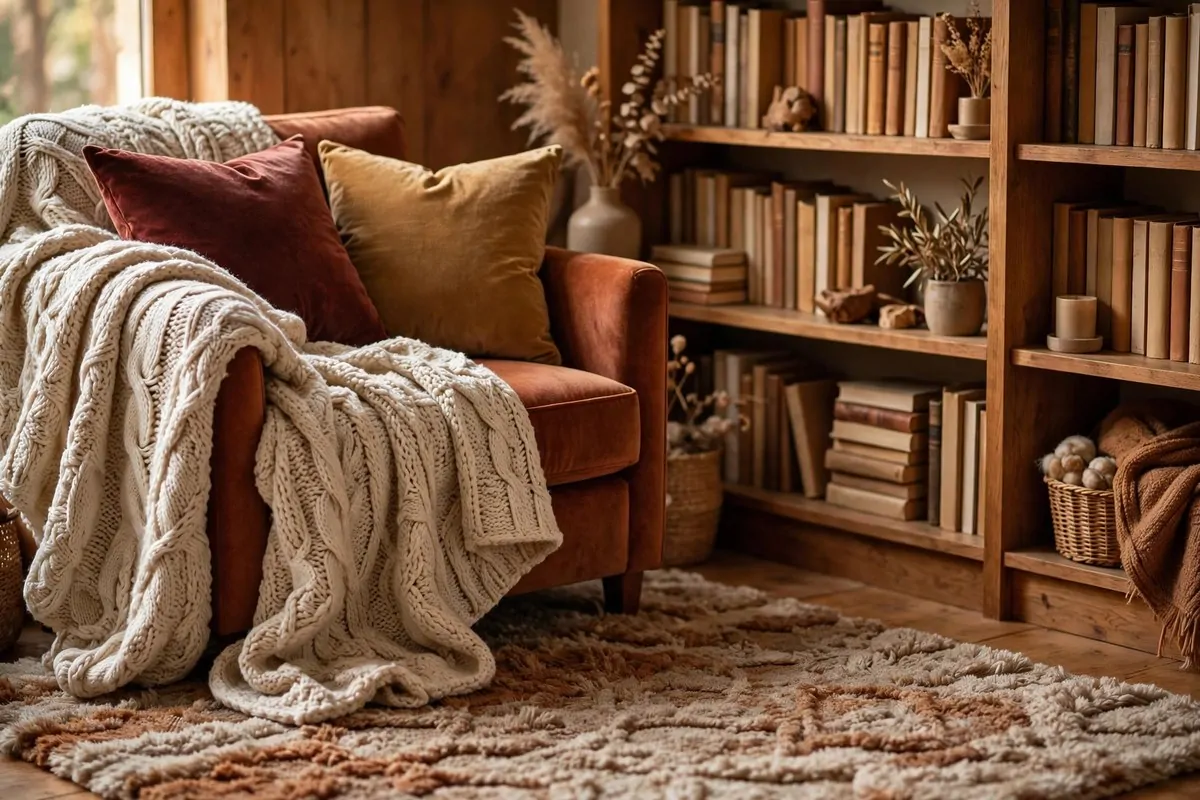
Here is the real secret of cozy. It is not the shelves or the books. It is texture. Soft things layered on soft things. A library with hard surfaces feels like a shop. A library with soft layers feels like a hug.
Start from the floor up. A thick rug under your reading chair does more for coziness than almost anything else. It warms your feet, softens the sound of the room, and marks the reading spot as special. Shaggy, woven, or thick wool all work. Pick what feels good under bare feet.
Then the chair. A throw blanket draped over the arm or the back. Not folded perfectly. Draped, like someone was just using it. A pillow or two in different fabrics. Velvet against linen. Knit against cotton. Your hands notice the variety even if your eyes do not.
Mixing textures is the key. If everything is the same soft fleece, it feels flat. But a chunky knit throw next to a smooth velvet pillow next to a nubby wool rug? That is interesting. Your fingers want to touch everything.
I change my throws with the seasons. Heavy wool in winter, light cotton in summer. It takes five minutes and makes the whole library feel fresh. The winter throw is thick and dark red. The summer one is thin and cream colored. Same chair, totally different mood.
Do not forget the small soft things. A cushion on a wooden bench. A folded blanket on an ottoman. A soft cover on a hard side table. Every hard surface in your library is a chance to add one more layer of soft.
This is also the cheapest way to make a library cozier. You probably already own blankets and pillows. Just move them to your reading spot. Cozy does not have to cost a thing.
Smell matters too. A linen spray on your throws or a small sachet tucked behind a pillow adds one more layer of cozy that you feel more than see.
18. Warm Light in Three Layers
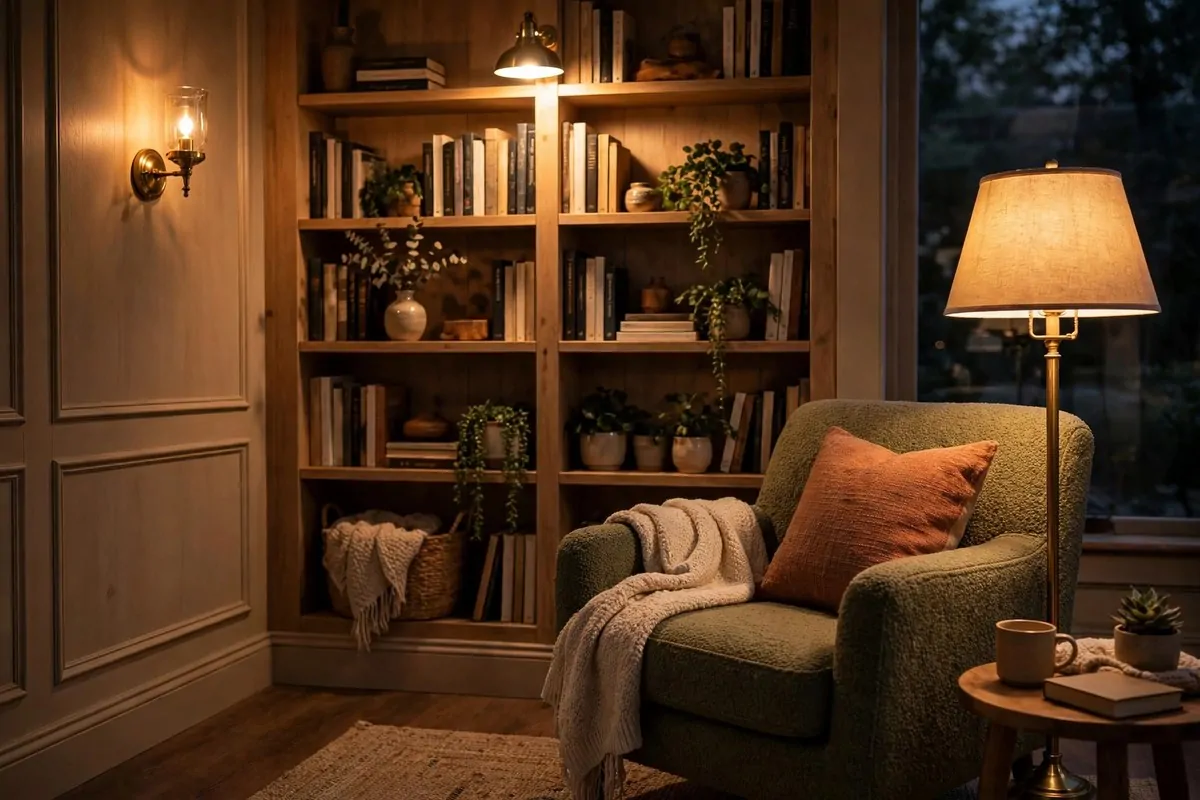
Ask any designer what makes a room cozy and they will say the same thing. Lighting. Not the furniture, not the colors. The light. And the secret is layers. One light source feels flat. Three feels like magic.
Layer one is general light. This is the soft background glow that keeps the room from being dark. A ceiling light on a dimmer switch is ideal. Keep it low in the evening. Bright overhead light kills cozy faster than anything else I know.
Layer two is task light. This is the light you actually read by. A floor lamp beside your chair, or a table lamp on the side table. It should be warm and bright enough to read comfortably without squinting. Adjustable lamps are great because you can aim the light right at your pages.
Layer three is accent light. This is the pretty light that makes the room glow. Picture lights over the shelves. A small lamp on top of the bookcase. Fairy lights along a shelf. This layer is not for reading. It is for atmosphere. It is what makes the room feel alive in the evening.
Use warm bulbs everywhere. Look for bulbs labeled warm white or 2700K on the box. That number is the color temperature, and 2700K glows like old lamplight. Anything above 4000K looks blue and cold, like a hospital hallway.
Dimmer switches are worth every penny. Being able to lower the lights as the evening goes on changes how a room feels. Bright for finding a book, dim for reading it, nearly off for that last chapter before sleep.
I learned this the hard way. My first reading corner had one bright ceiling light and nothing else. It felt like a waiting room. Then I added a floor lamp and a little shelf light, turned the ceiling light off, and the same corner felt like a different planet.
Put all your library lamps on one power strip with a single switch. One click turns the whole cozy scene on, and one click turns it off at bedtime.
19. The Basket Library
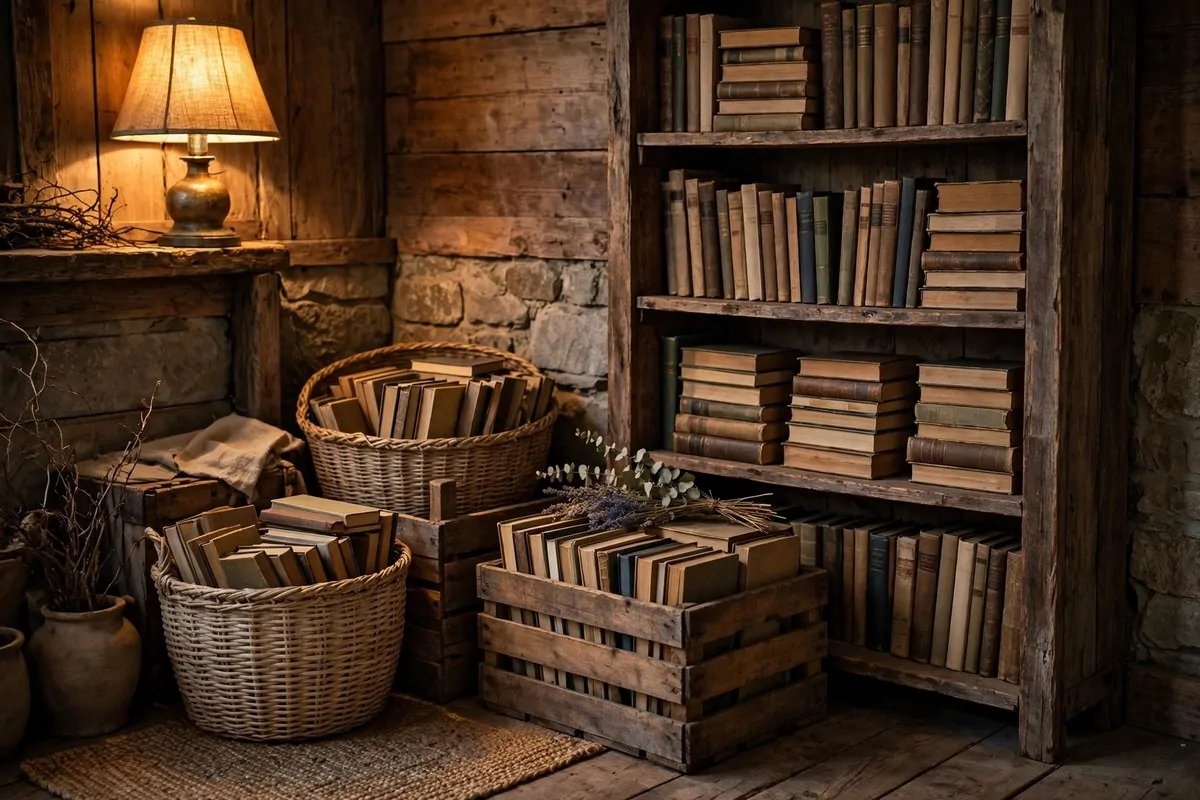
Books do not have to live on shelves. Baskets and wooden crates make wonderful, casual book storage, and they bring a warm, rustic feeling that formal bookcases cannot match. This is the laid-back library.
Woven baskets are perfect for the books you are reading right now. Keep one beside your chair, one beside the couch, one beside the bed. They hold a small stack each, and they look like decor instead of clutter. Seagrass, wicker, and rattan all work beautifully.
Wooden crates are the bigger version of the same idea. Stack two or three crates on their sides and you have instant cubby shelves. Turn them upright and they hold tall stacks of books. Old wine crates and apple crates look the best, and you can often find them cheap at flea markets.
The beauty of basket storage is that it moves. Rearrange your room? Just pick up the basket and carry it. Want to read on the porch? Take the basket with you. Your library becomes portable, which is a strange and wonderful thing.
This idea suits homes with a relaxed, natural style. Farmhouse, coastal, bohemian, rustic. If your home has a lot of wood, plants, and soft natural fabrics, baskets will fit right in. They look odd next to ultra-modern chrome furniture, so match the vibe.
I keep a basket of cookbooks in my kitchen and a basket of novels beside my reading chair. Neither basket cost more than fifteen dollars. Both make me happy every single day. Sometimes the simplest ideas are the ones that stick.
One practical tip. Baskets with handles are easier to carry when full of books, and books get heavy fast. Also, line the bottom of a rough basket with a cloth so it does not scratch your floors when you drag it.
Write the genre on a little tag tied to each basket handle. Mystery, cookbooks, kids books. It turns a pile of baskets into an organized little library.
20. Words on the Walls
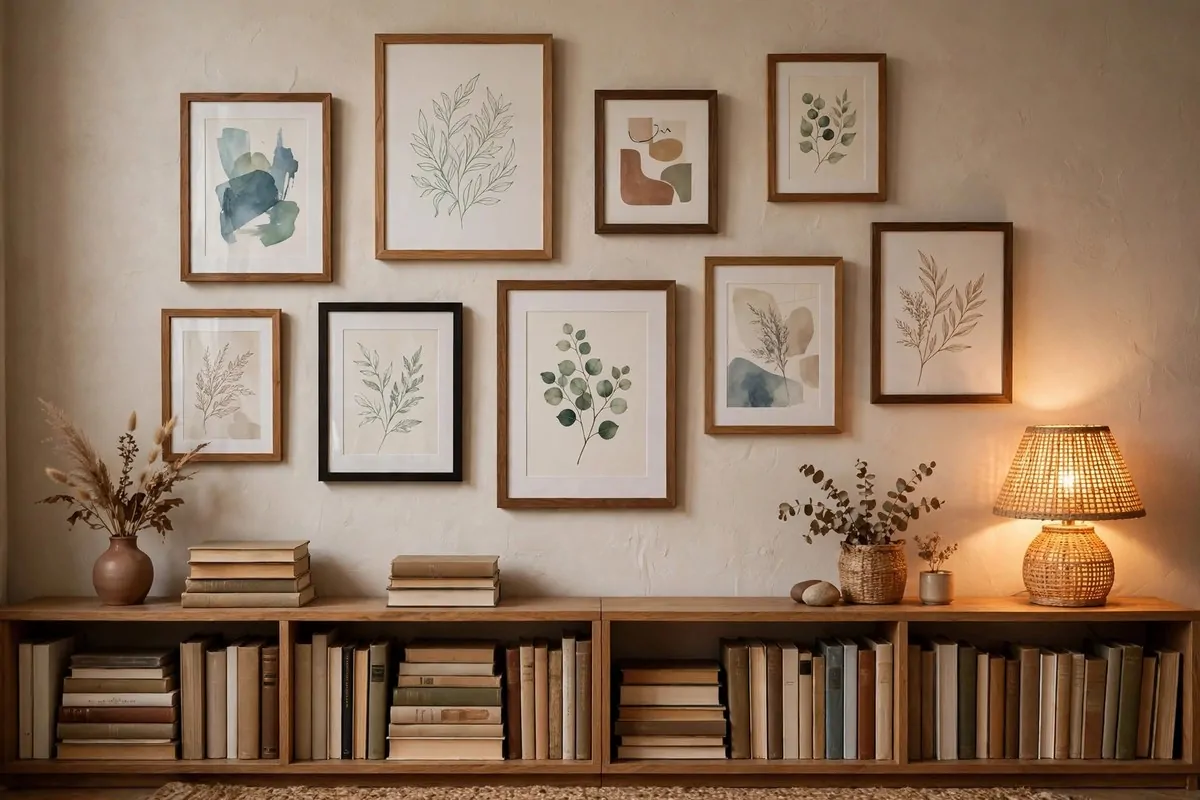
A library should celebrate words, not just store them. Framed quotes, literary art, and bookish prints on the walls turn your shelves into a shrine for reading. It is the difference between a storage room and a sanctuary.
Pick quotes that actually mean something to you. Not the most famous ones, unless you truly love them. The line from the book that made you cry on page 200. The sentence you underlined three times. Those personal quotes make the room feel like yours.
You do not need to buy expensive art. Print quotes at home on nice paper and put them in simple frames. Thrift stores are full of frames for a dollar or two. A wall of mismatched frames with beautiful words looks charming and personal, not cheap.
Mix the word art with other bookish decor. A framed map from a fantasy novel. A vintage book cover you love. A black-and-white photo of an old library. These pieces tell visitors what kind of reader you are before they even look at your shelves.
Hang the art at eye level where you will actually see it. Above the reading chair is perfect. You glance up from your book and there is a line that reminds you why you love reading. It is a small thing that adds up over hundreds of reading hours.
I have one framed quote above my chair. It says, "A reader lives a thousand lives before he dies." I have read it a thousand times and it still gives me a little shiver. Your walls should hold words that do that to you.
Keep the frames simple so the words stand out. Thin black or natural wood frames work with everything. Avoid busy, ornate frames that fight with the text. The quote is the star. The frame is just the stage.
Leave one frame empty on purpose and fill it with your next favorite quote. An empty frame is a promise to keep reading.
21. The Bench With Hidden Storage
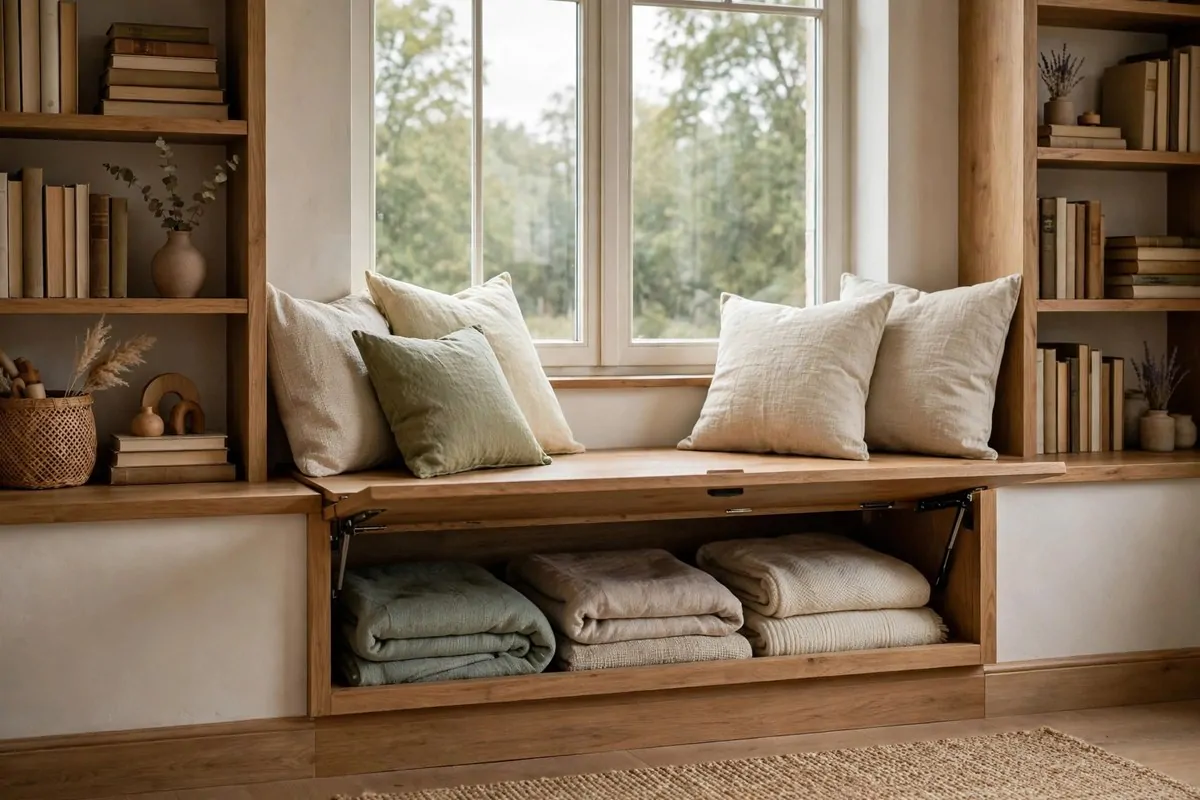
Every library needs a bench with secret storage. It is seating, it is storage, and it hides all the messy stuff that a pretty library is not supposed to show. Blankets, magazines, chargers, the novel you are embarrassed to display. All gone with one closed lid.
The classic version sits under a window. A long wooden bench, deep enough to sit on comfortably, with a hinged top that lifts up. Inside is a big empty box. It swallows an amazing amount of stuff. I fit four throw blankets, two board games, and a tangle of chargers in mine.
If you are handy, you can build one in a weekend from plywood and a piano hinge. If you are not handy, storage benches are sold everywhere, from budget stores to fancy furniture shops. Just check that the lid stays open on its own and closes softly. A lid that slams on your fingers will make you hate the bench.
Cushions make or break a storage bench. A thin cushion looks tidy but feels like sitting on a box, because you are. Get a cushion at least three or four inches thick, or pile on folded blankets. Comfort first, looks second.
Here is what I keep in my bench, in case you need ideas:
- The throw blankets I am not using this season
- Magazines I have not finished yet
- My e-reader charger and a spare reading light
- A notebook and pen for book notes
- The books I am giving away next time I see friends
A storage bench works in almost any library layout. Under a window, at the foot of a book wall, in the middle of the room as an ottoman. Wherever it sits, it does double duty, and double-duty furniture is the heart of a smart home.
22. The Room-Divider Library
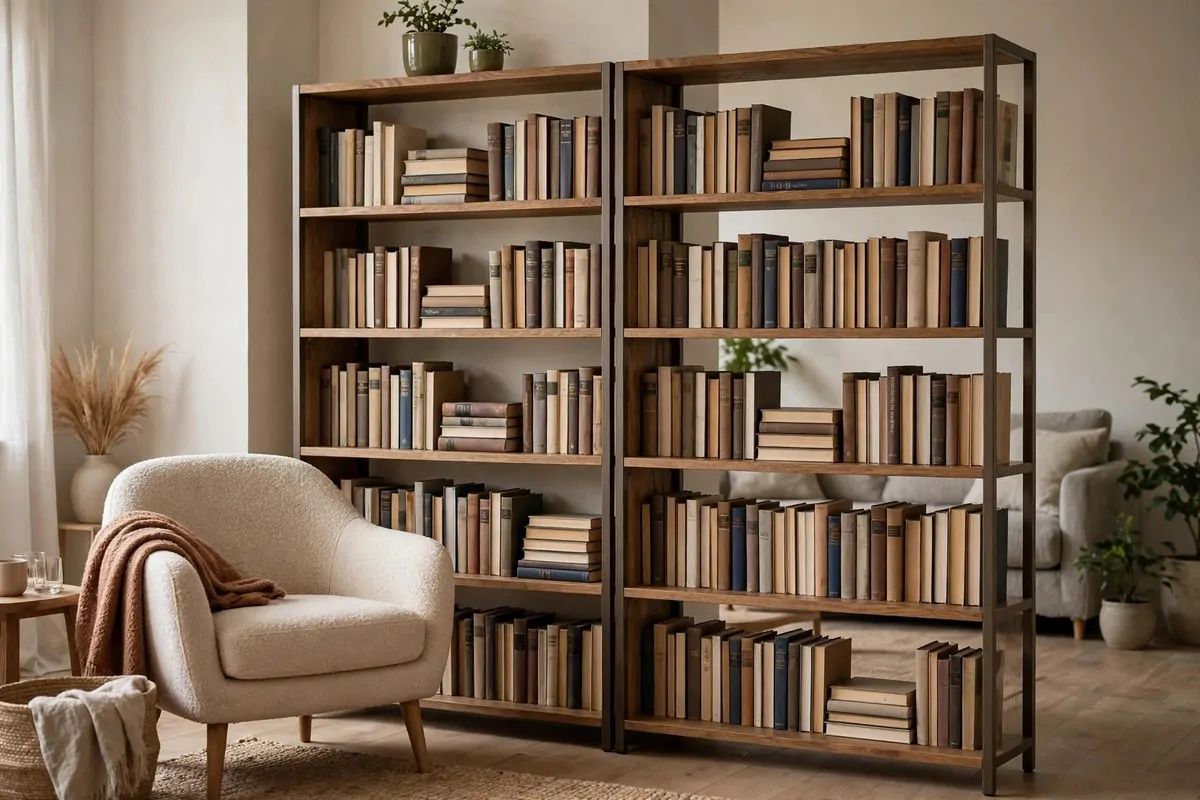
A double-sided bookshelf standing in the middle of a room does something wonderful. It splits one big space into two cozy zones, and both sides get books. It is a wall, a library, and a piece of furniture all at once.
This works best in open-plan homes where the living room flows into everything else. The bookshelf creates a sense of separation without blocking light or making the space feel closed off. You still see over and around it. It divides without dividing, if that makes sense.
Use a shelf unit that is finished on both sides, or put two bookcases back to back. Cube-style shelving units are perfect for this because they look the same from every angle. Fill some cubes with books and leave others for plants, baskets, or decor.
Anchor it well. A freestanding shelf in the middle of a room gets bumped more than one against a wall. If you have kids or big dogs, attach the top to the ceiling with a discreet bracket or choose a low, wide unit that cannot tip.
I used a double-sided shelf to carve a reading corner out of my living room. One side faces the couch and holds novels and art books. The other side faces my chair and holds my current reads and a little lamp. Walking around it feels like entering a different room.
Style the top of the divider with trailing plants or a row of small objects. It softens the line of the shelf and makes it feel like a garden wall instead of a barrier. My pothos plant has grown so long it nearly reaches the floor on one side, and I love it.
And that is the whole list. Twenty two home library ideas, from hallways to closets to black walls to baskets. Your books have waited long enough for a real home.
Start with just one idea this weekend. Move a bookcase. Hang a shelf. Drape some fairy lights. You do not need to do everything at once. A library grows the same way a book collection grows, one good choice at a time.
Before long, you will have that corner. The chair, the light, the books within reach. And one evening you will look up from your book, realize an hour has passed, and smile. That is when you know. You built a library cozy enough to get lost in.