28 Cozy Home Library Ideas You’ll Never Want to Leave

Every night at nine, my reading chair and my couch have a little fight. Not a loud fight. A quiet one. The kind where nobody moves but everybody knows what is at stake.
The couch spreads out its cushions and says, look at all this room I have. You could stretch out, put your feet up, scroll your phone for an hour. The reading chair does not argue. It just sits there in the lamplight, one soft blanket folded on its arm, and waits.
By nine fifteen I am in the reading chair. Every single night. The couch has not won once in three years. It is not even close anymore. The reading chair wins because it is not just a chair. It is a whole little world. A lamp that knows my name. A shelf of books close enough to touch. A rug that is warm under my feet.
That is the secret nobody tells you. A cozy home library is not about owning a lot of books. It is about building one spot that feels so good you forget the rest of the house exists. A spot where one more chapter turns into five.
So here are my 28 favorite cozy home library ideas. Every one of them is simple enough to try at home. Every one of them makes a room harder to leave. Pick the ones that make your heart say yes, and start with just one.
1. Floor-to-Ceiling Dark Wood Built-Ins

There is something about tall dark shelves that changes a whole room. The moment you look at a wall of wood full of books, your brain slows down. It is like the room is telling you to sit and stay a while.
Dark wood works best. Walnut, mahogany, or even painted shelves in a deep brown. The color wraps around you. It feels rich. It feels like the kind of room where good stories live.
Start with one wall. You do not need a whole room of shelves on day one. One tall wall of bookshelves is enough to make a corner feel like a real library. The rest can come later.
Fill the shelves all the way to the top. Empty shelves look sad and cold. Books stacked sideways on top of the vertical rows add a nice lived-in feel. Leave a few small gaps for candles or a plant.
Add a brass picture light on top of each shelf section. These little lights make the books glow at night. They are cheap, easy to stick up, and they change everything after dark.
Put your favorite books at eye level. The ones you reach for most. Heavy coffee table books can go low, where they are easy to grab. The top shelves are for books you rarely touch.
Here is a list of small extras that make built-ins feel finished:
- A small step stool in the corner, so the top shelves are not just for show
- Matching bookends in brass or wood
- One framed photo or small art print between the books
The bottom shelves are the hardest to use. Books get heavy down there. Use baskets on the lowest shelf instead. They hold magazines, blankets, or the books you are halfway through.
Dust the shelves once a month. Tall shelves collect dust fast. A quick wipe with a dry cloth keeps the whole wall looking rich instead of tired.
Dark shelves love warm light. A floor lamp with a warm bulb next to the shelves makes the wood glow. Cool white light will kill the mood, so check your bulb color before you buy.
One wall of tall shelves can hold more books than you think. Hundreds. It is the fastest way to turn a plain room into a home library. Start with one wall, and I promise the room will start pulling you in.
2. The Rolling Library Ladder

A rolling ladder is the most fun part of any tall library. You slide along the shelves, grab a book from the top row, and feel like you live in a movie. Kids love it. Guests always ask about it.
You need tall shelves for this one. At least nine feet of height. If your ceilings are lower, a rolling ladder will look silly and get in the way. This idea is for rooms with real height.
The ladder runs on a brass or black metal rail. The rail mounts to the front of the shelves. The ladder hooks onto the rail and rolls side to side. It is sturdy. It is safe. It just looks like magic.
You can buy a rolling ladder kit online. They cost less than most people think. A friend of mine got one for under two hundred dollars. The install took one Saturday afternoon.
Here is what to check before you buy:
- Your ceiling height, measured twice
- That the shelves are bolted to the wall, since the rail hangs on them
- That you have three feet of clear floor in front of the shelves
Paint the ladder to match the shelves. A ladder that matches looks built-in. A ladder that clashes looks like an afterthought. Same wood tone, same finish.
Keep the top shelves for display books. Books you love the look of but rarely read. The ladder makes them reachable, but you will not climb up there every day. Be honest with yourself about that.
A rolling ladder also gives the room a shape. It is a vertical line that draws your eyes up. The whole library feels taller and grander, even if the room is small.
Tell your guests to try it. Everyone wants a turn. It breaks the ice in a new room better than anything I know. Just show them how to hold the side rails first.
Oil the rail once a year. A tiny bit of furniture oil on a cloth, wiped along the rail. The ladder will glide like it is new for years.
If a full rolling ladder is too much, get a folding step ladder in wood. Lean it against the shelves. It gives the same look for a fraction of the price. Nobody will know the difference in a photo.
A rolling ladder turns bookshelves into furniture you play with. And a library you play with is a library you never want to leave.
3. A Window Seat Wrapped in Shelves

A window seat with shelves on both sides is my favorite reading spot in the world. Soft daylight on the pages. Cushions under you. Books within arm’s reach on both sides. It is perfect.
Start with the window. The seat should sit right under it. If you have a wide window, you are lucky. If not, a small window works too. The books will frame it either way.
Build or buy shelves for both sides of the window. They do not need to be deep. Ten inches is plenty for most books. Floor to ceiling is the dream, but even shelves to the top of the window look great.
The seat itself needs a thick cushion. Four inches at least. Thin cushions hurt after twenty minutes. Thick cushions keep you there for two hours. That is the whole point.
Layer pillows along the back. Big ones in the back, small ones in front. Mix the fabrics. A knit pillow, a velvet one, a linen one. Your back will thank you on long reading days.
Here is what lives on my window seat:
- A small throw blanket folded at one end
- A tray for my tea mug, so it never tips on the cushions
- A little basket under the seat for the books I am reading now
Add storage under the seat if you can. A hinged top turns the whole seat into a deep box. Store spare blankets, board games, or books you are saving for later.
Curtains make the seat cozier. Hang them high and wide, past the shelves. When you pull them closed at night, the window seat becomes a little cave. The best kind of cave.
Watch the sun on your books. Strong sun fades book spines fast. A sheer curtain or a UV window film protects them. Your books will look new for years.
The window seat library is the one spot every guest fights over. It is warm in winter when the sun hits it. It is cool in summer with the window cracked. There is always a reason to sit there.
Build the shelves, get the cushion, and pick your first book. The room will do the rest.
4. Moody Dark Green Walls

Dark green walls make books look like treasure. I am not sure why. Maybe it is the contrast. The warm book spines pop against the deep green like jewels in a box.
Forest green, hunter green, or a deep olive all work. The trick is to go darker than you think. A timid green just looks gray. A bold green makes a statement and wraps the room in calm.
Paint the shelves the same green as the walls. This is the move that makes the room look custom. When shelves and walls match, the books become the star. Nothing else competes.
Add brass or gold touches. Picture lights over the shelves. A brass floor lamp. Gold bookends. The warm metal against the dark green feels old and rich, like a library in an old hotel.
You need warm light in a dark room. Lots of it. One lamp is not enough. Aim for three light sources. A floor lamp, a table lamp, and the shelf lights. The room should glow, not cave in.
Here is a simple plan for the lighting:
- Warm white bulbs only, around 2700K, never cool white
- A lamp behind the reading chair so the light falls over your shoulder
- Shelf lights that make the book spines glow at night
Dark walls show dust less than white walls. That is a small gift. But they do show smudges, so keep a damp cloth handy for little fingerprints near the light switches.
Pair the green with a worn leather chair. Brown leather and dark green are made for each other. Add a plaid throw and the room feels like a country house, even if you live in a city flat.
Hang one big piece of art on the green. A landscape, a map, a portrait. The dark wall makes art look like it is in a gallery. One big piece beats five small ones here.
The ceiling can stay white or go creamy. A dark ceiling is too much for most rooms. Keep the ceiling light so the room still feels open above you.
People will walk into your green library and go quiet for a second. That pause is the best review a room can get. It means the room is working.
Paint one wall first if you are nervous. Live with it for a week. Then paint the rest. I have never met anyone who regretted going dark green.
5. The Leather Chesterfield Corner

A worn leather chair is the heart of every great library. Not a new leather chair. A worn one. The kind with creases in the arms and a seat that knows your shape. That chair has stories in it before you even open a book.
The Chesterfield style is the classic pick. Deep buttoned back. Rolled arms. Nailhead trim along the edges. It looks like it belongs in an old English study, and honestly it kind of does. It has been around forever for a reason.
Cognac brown is the warmest leather color. It glows in lamplight. Black leather looks sharp but a little cold for a cozy library. Brown is the hug. Tan is the sunny cousin. Pick the shade that makes you want to touch it.
Break the chair in fast. New leather can feel stiff. Sit in it every day with a book and it softens in a month. A leather conditioner once a year keeps it from cracking. That is all the care it needs.
Place it at an angle to the shelves. Not straight on. An angled chair feels relaxed. Straight-on feels like a waiting room. Angle it toward a lamp and a small side table and you have a reading corner.
The side table matters more than you think. It holds your tea, your glasses, and the book you are reading next. Round tables work best in small corners. Wood or brass, not glass. Glass feels cold.
Put a Persian or Turkish rug under the chair. The pattern hides wear. The wool feels warm under bare feet. A rug also makes the corner feel like its own little room inside the bigger room.
Add one wool throw over the arm. Not folded neat. Draped like someone just got up. A plaid or a solid camel color works. The throw says this chair is used and loved, which is exactly the vibe you want.
Keep a small stack of books on the side table. Three or four. Your current read on top. It is a promise to yourself that you will come back tomorrow. I always keep mine there, and it works.
A leather Chesterfield corner does not need much else. The chair does the talking. Everything around it just needs to stay warm and quiet.
6. Cabin-Style Wood Panel Library

Wood panel walls make a library feel like a cabin in the woods. Even if your house is in the middle of a city. Close the door, and the pine walls tell a different story. A quieter one.
You do not need real log walls. Tongue and groove pine boards work great. They go up over drywall in a weekend. Stain them warm, not orange. A honey or walnut stain keeps the wood rich without looking like a 1970s basement.
Pair the wood with a stone or brick fireplace. Nothing beats a real fire for coziness, but an electric fireplace with a good flame effect is fine too. The glow on the wood walls is what matters. Flicker beats brightness here.
Keep the shelves chunky. Thick wood shelves with visible brackets. Books look at home on rough wood. They belong there. Delicate glass shelves would feel wrong in this room, and your gut already knows it.
Add a big soft rug. Wool or faux fur. The wood floor is beautiful but cold underfoot. A rug the size of the seating area grounds the room. Layer a smaller rug on top if you are feeling fancy.
Here is the cabin library checklist:
- Warm wood walls or wood-look panels
- A fireplace or fire glow, real or electric
- Chunky shelves with brackets you can see
- At least one big soft rug
- Plaid or knit throws, the chunkier the better
Lighting should be low and warm. Table lamps with fabric shades. Maybe a lantern-style lamp on the mantel. Skip the ceiling light entirely if you can. This room lives by firelight and lamplight.
Hang antlers or a simple wreath if that is your style. Not everyone loves cabin decor, and that is fine. The wood does most of the work. A few nature touches just finish the story.
Keep the book collection mixed. Old hardcovers with worn spines fit best here. New glossy paperbacks look fine too, but the old books make the room feel like it has been loved for a hundred years.
Open the window a crack on a cold night. The contrast of cold air and warm room is magic. You will read longer. You will not want to get up. That is the whole idea.
A cabin library is not about being fancy. It is about being warm. Wood, fire, wool, books. That is the whole recipe, and it has never failed.
7. The Botanical Green Library

Books and plants are best friends. They just are. The green leaves soften the hard lines of the shelves. The shelves give the plants a home. Together they make a library feel alive.
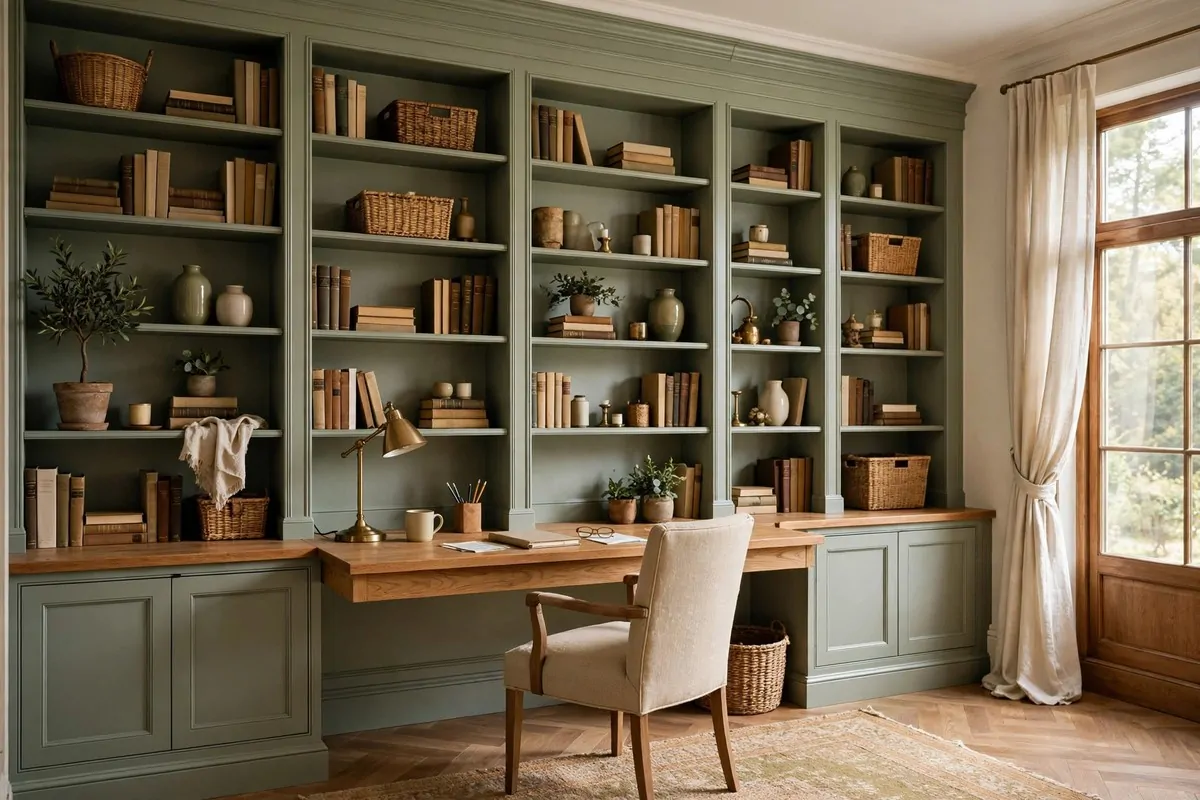
Paint your shelves sage green. It is the perfect middle ground. Not too dark, not too bright. Books of every color look good against sage. And the green makes the plants look like they grew right out of the shelves.
Tuck plants between the books. Trailing pothos on the top shelf, spilling down. A snake plant in the empty corner. A small fern on the side table. The plants break up the rows of books so the shelves feel styled, not stuffed.
Pick plants that forgive you. Libraries are often dim. Pothos, snake plants, and ZZ plants handle low light and missed waterings. A fiddle leaf fig is beautiful but needy. Start with the easy ones.
| Plant | Light needs | How fussy |
|---|---|---|
| Pothos | Low to bright | Almost impossible to kill |
| Snake plant | Low light is fine | Water once a month |
| ZZ plant | Low to medium | Forgets to be thirsty |
| Spider plant | Bright, indirect | Easy, loves hanging pots |
Use terracotta or cream pots. They blend with the sage shelves. Bright plastic pots fight the calm. Natural materials keep the whole look soft and earthy.
Let one plant trail down the side of a shelf. This is the money shot. A long pothos vine hanging beside the books is the most photographed detail in plant libraries. It takes a year to grow long, and it is worth the wait.
Mist the leaves sometimes. Books and paper hate damp, so mist lightly and only the plants. Or wipe leaves with a damp cloth. Dusty leaves look sad. Clean leaves shine.
The chair in a botanical library should be light. Rattan, light wood, or cream fabric. Heavy dark furniture fights the fresh feeling. Keep it airy, like a garden room with books.
Open the curtains wide. Plants and readers both want daylight. This is a daytime library. Morning sun through green leaves is the best reading light there is.
A botanical library smells good too. Soil, leaves, paper. It is a calm smell. Sit down with a book and a cup of tea, and the whole busy world feels very far away.
8. Velvet Reading Chair Nook

Velvet is the fabric of staying put. You sit down in a velvet chair and your body just sinks. It is soft. It is warm. It whispers, do not get up yet, there are three more chapters.
Pick a deep color. Emerald, navy, burgundy, or mustard. Pale velvet shows every mark. Deep velvet hides everything and looks rich. The color should feel like evening.
A club chair or a wingback both work. The wingback hugs you a little more. The high sides block drafts and distractions. It is the closest thing to a reading cocoon you can buy.
Hang heavy curtains behind the chair. Velvet curtains if you can. The fabric on the walls echoes the fabric on the chair. The nook feels wrapped, like a gift. Light curtains would ruin the effect.
Add a brass banker lamp on the side table. The green glass shade and brass base are a classic library look. The light pools right on your book. Everything else stays soft and dark.
Layer the floor under the chair. A small round rug works great under one chair. It defines the nook. It warms your feet. Pick a pattern with one color that matches the chair.
Keep a footstool or ottoman nearby. Feet up is the whole point of a velvet nook. A matching velvet ottoman is perfect. A plain one in a close color is fine too.
Here is what makes a velvet nook feel finished:
- The chair, in a deep rich color
- Heavy curtains behind it, floor to ceiling
- One good reading lamp with warm light
- A small side table for tea and books
- A footstool, because comfort is the job here
Velvet collects dust and pet hair. A lint roller lives on my side table. Ten seconds before I sit down, quick roll. It is a small price for all that softness.
Do not put velvet in direct sun. The color fades fast. This nook wants a shady corner or an evening room. Velvet is a night fabric. Let it be one.
Sit down at nine. Get up at midnight. That is what a velvet nook does to people. The chair wins, every time.
9. The Under-the-Stairs Library

The space under your stairs is wasted. Admit it. It holds boxes you never open and a vacuum cleaner. That little triangle of space could be the coziest library in your house.
Custom shelves that follow the slope of the stairs fit perfectly. Deep shelves where the ceiling is tall. Shallow shelves where it gets low. Every inch gets used. Nothing feels cramped because the shelves were made for the space.
Add a low bench or a big floor cushion. The ceiling is low, so sitting on the floor is actually the right move. A thick cushion, a few pillows against the wall, and you have a reading cave.
Fairy lights make this space magic. String them along the lowest stair tread or around the shelf edges. The warm dots of light turn a dark under-stair hole into a glowing hideaway. Kids go crazy for this.
Paint the inside a warm color. Cream, soft yellow, or a light warm gray. Dark colors make small spaces feel smaller. Light colors bounce the little light you have around.
Here is how to plan it:
- Measure the space at three points, since the ceiling slopes
- Shelves get shallower as the ceiling drops
- Leave the tallest part for sitting, the lowest part for storage
- One warm light source is enough, two is perfect
Store kids books here if you have little ones. The low shelves are at their height. The small space feels like it was made for them. Reading time becomes hiding time, and hiding is fun.
Add a curtain or a little door. A curtain on a tension rod closes the nook off from the hall. Behind the curtain it is quiet. It is your secret. Everyone needs a secret reading spot.
Keep it tidy. Small spaces show mess fast. A basket for the books in progress. Everything else on the shelves. Five minutes of tidying keeps the nook inviting.
The under-stairs library costs less than almost any other idea on this list. Some shelves, a cushion, some lights. That is it. And it might be the spot you love most.
10. A Library Wall in the Bedroom

Put the library where you actually read. For most of us, that is the bedroom. The last twenty minutes before sleep. A bookshelf wall beside the bed turns those minutes into the best part of the day.
Use the wall opposite the bed or the wall beside it. Floor-to-ceiling shelves work great here. They hold a lot without taking floor space. Your bedroom stays walkable. The books just live on the walls.
Keep the top shelves light. Do not stack heavy books above your head where you sleep. Decor, plants, or a few light paperbacks up top. The heavy hardcovers live at arm level.
A good bedside lamp is non-negotiable. You need light that is bright enough to read by but warm enough to wind down. A lamp with a fabric shade on each side of the bed, or one great reading lamp on your side.
Here is my bedroom library setup:
- Shelves on one wall, full of books I actually want to read
- A small basket on the nightstand for the current book and the next one
- A warm lamp I can reach without getting up
- A throw blanket at the foot of the bed for cold nights
Organize the shelves loosely. By mood, not by author. Exciting books on one shelf. Calm books on another. Before bed, you want calm. In the morning, you want exciting. Your shelves can match your day.
Leave some breathing room. A bedroom should feel restful, not like a bookstore. Leave one shelf half empty. Put a candle or a small plant there. The empty space is part of the calm.
Dust more often in the bedroom. Bedrooms are dusty rooms. Sheets, clothes, all of it. A quick shelf dust every two weeks keeps the books clean and your allergies happy.
The best part of a bedroom library is the ritual. Lights low. Book open. The house goes quiet around you. Twenty minutes becomes an hour. You fall asleep with a good story in your head. There is no better way to end a day.
11. The White and Cream Library

Not every library has to be dark. A white and cream library feels like morning. Clean. Bright. Calm. The colorful book spines become the art on the walls. Everything else stays quiet.
Paint the shelves warm white. Not stark white. Stark white feels like a hospital. Warm white, like fresh cream, feels like a home. The difference is small on the paint chip and huge on the wall.
Let the books bring the color. A white shelf full of colorful spines is beautiful. It is like a rainbow you did not have to plan. Every book you add makes the wall prettier. That is a fun way to collect.
Choose cream and ivory furniture. A cream armchair. An ivory throw. A natural jute rug. Keep it all in the same warm family. The room will feel soft, like everything is wrapped in morning light.
Natural light is the star here. Big windows. Sheer curtains that glow. This is a daytime library. Read here in the morning with coffee. The white walls bounce the light around and the whole room shines.
Add one dark piece for balance. A dark wood side table. A black picture frame. One dark thing keeps the white room from floating away. It grounds everything.
Here is the white library formula:
- Warm white shelves, floor to ceiling if you can
- Cream chair, cream throw, natural rug
- Sheer curtains, lots of daylight
- One dark accent piece for balance
- Colorful books as the main decoration
Keep it clean. White shows everything. A quick tidy each evening keeps the room feeling fresh. It is a small habit. It takes five minutes.
This style works great in small rooms. White walls push the walls out. A tiny white library feels twice as big as a tiny dark one. If your space is small, go light.
A white and cream library feels like a deep breath. Sit down with a book and the day feels simpler. Sometimes simple is exactly what you need.
12. Scandinavian Light Wood Library

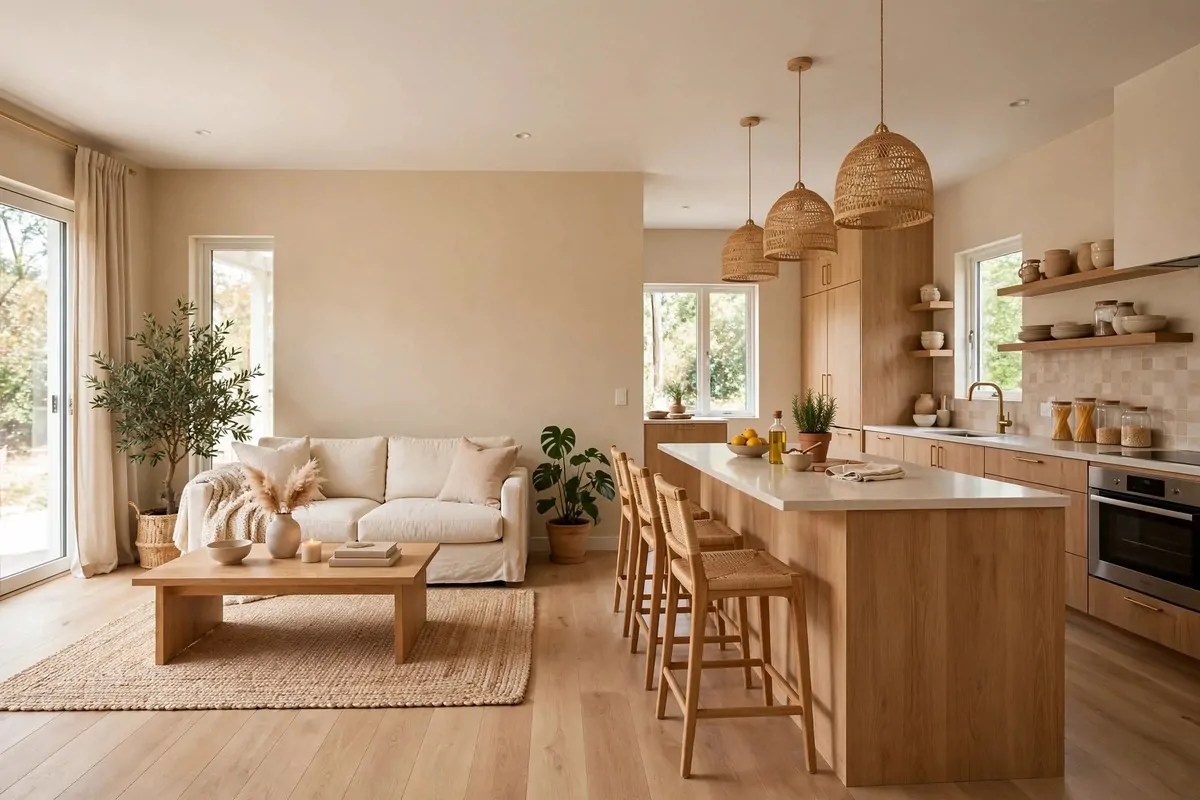
Scandinavian style is cozy without clutter. Light wood. Soft fabrics. Nothing extra. A Scandinavian library feels like a deep breath in a pine forest. Clean air, warm wood, quiet.
Use light oak or birch for the shelves. The pale wood keeps the room bright. It is warm without being heavy. Dark wood is beautiful, but light wood is calmer. Pick your mood.
Keep the shelves a little empty. This is the Scandinavian secret. Do not fill every inch. Leave gaps. Put one beautiful object in a gap. A vase. A small sculpture. The empty space is part of the design.
A cream bouclé chair is perfect here. The nubby fabric is soft and interesting. It looks like a cloud you can sit in. Add a light gray or oatmeal throw. Nothing dark. Nothing loud.
The rug should be simple too. A flat weave in cream or light gray. Maybe a subtle pattern. The rug warms the floor without shouting. In a Scandinavian room, the floor is part of the calm.
Lighting stays soft and low. A paper lantern pendant. A simple wooden floor lamp. Candles on the shelves in the evening. The light should feel like late afternoon, even at night.
Here is what to skip in a Scandinavian library:
- Heavy dark furniture, it fights the lightness
- Bright colors, they break the calm
- Too many decorations, one or two is enough
- Glossy finishes, matte is warmer
Plants fit beautifully. One big plant in the corner. A monstera or a tall olive tree. Green leaves against pale wood is the prettiest combination. It is nature inside, which is the whole Scandinavian idea.
This library is for slow mornings. Tea. A novel. Sunlight on pale wood. Nothing rushed. Nothing loud. Just a quiet room that makes you feel like everything is okay.
Build it simple. Keep it simple. That is the whole philosophy, and it works.
13. Rainbow Color-Coordinated Shelves

Organizing books by color is pure joy. Red spines together. Then orange. Then yellow. All the way to blue and black. The shelf becomes a rainbow. It is the prettiest wall in your house, and you did not buy a single decoration.
This works best on open shelves. Closed cabinets hide the effect. A big open bookcase, floor to ceiling, is the perfect canvas. The taller the shelf, the more dramatic the rainbow.
Sort the books on the floor first. Pull them all out. Yes, all of them. Make piles by color. This takes an afternoon. Put on music. It is actually fun, like a puzzle.
Some books will not fit the rainbow. That is fine. Keep a separate shelf for the odd ones. Reference books, textbooks, the weird ones. Or tuck them behind the rainbow shelf. Nobody has to know.
Purists will say you cannot find anything. They are half right. You learn where books live by color and shape. Your brain remembers. After a month you will find books faster than before. Muscle memory is real.
Keep the rainbow loose. Do not stress about perfect gradients. A red book with an orange tint can go either way. The charm is in the handmade look. Perfect rainbows look like a store. Loose rainbows look like home.
Here is a tip for mixed-color spines. Pick the color that takes up the most space. A book that is mostly blue with a little yellow goes in the blue section. Do not overthink it. Your eye already knows.
Photograph it when you are done. The rainbow shelf is the most shared library look for a reason. It makes people happy. Send the photo to a friend who loves books. They will want to come see it.
New books need a home too. When you buy a new book, find its color spot. Slide it in. The rainbow grows. It is a living wall. That is what makes it special. It changes with you.
A rainbow shelf turns your book collection into art. And art you can read is the best kind.
14. The Fairy Light Floor Nook

Skip the chair. Sit on the floor. Pile up poufs and pillows in front of dark shelves, string fairy lights everywhere, and you have the most magical reading spot in the house. It feels like a blanket fort for grown-ups.
Start with the shelves. Dark wood looks best with fairy lights. The lights glow against the dark like stars. Light shelves work too, but dark shelves make the magic stronger.
String the lights along the shelf edges. Warm white fairy lights, never cool white. Cool white looks like an office. Warm white looks like candlelight. Battery-powered strings are easiest. No cords to trip on.
Pile the floor with softness. Chunky knit poufs. Big floor pillows. A thick rug underneath it all. You want layers. Sit down and sink a little. That sink is the whole point.
Add blankets. Two or three. Different textures. A knit one, a faux fur one, a quilt. Drape them over the poufs. When you sit down, pull one over your legs. Instant cozy.
Here is the floor nook recipe:
- Dark shelves behind you, full of books
- Warm fairy lights on the shelves and maybe the ceiling
- A thick rug as the base layer
- Two poufs or big floor pillows
- Two or three blankets in different textures
- A small tray for tea, since there is no side table
Candles add to the glow. Real candles or LED ones. Put them on the shelves between the books. The flicker plus the fairy lights is unbeatable. Just keep real flames away from the blankets.
This nook is perfect for kids and teens. They love floor sitting. They love fairy lights. A floor nook in the family room gets used every single day. The fancy chair sits empty. The floor wins.
Lie back sometimes. The floor nook is great for reading on your back, book held up. The lights twinkle above you. It is the closest thing to reading under the stars indoors.
The fairy light floor nook is cheap, easy, and ridiculously cozy. Try it for one weekend. You will not want to take it down.
15. Two Chairs and a Tea Tray

A library for two is twice as cozy. Two chairs facing each other. A small table between them. A tray with a teapot and two cups. Now reading is something you share, not something you do alone.
Angle the chairs toward each other, not straight across. A slight angle feels friendly. Straight across feels like an interview. You want conversation, not interrogation.
The table should be small and round. Big enough for a tray, small enough to reach across. Wood or brass. Something warm. This table will hold a lot of tea over the years.
Keep a real tea setup on the tray. A small teapot. Two cups. A little jar of honey. When the tray is always ready, tea happens more often. And tea makes every book better. That is just science.
| Reading for two | What you need |
|---|---|
| Quiet reading together | Two good lamps, one per chair |
| Reading aloud to each other | Chairs close enough to hear a soft voice |
| Book club of two | A shared notebook for thoughts and quotes |
| Tea and talk breaks | The always-ready tray, plus biscuits |
Give each chair its own lamp. Sharing one lamp means someone is always in shadow. Two small table lamps or one floor lamp behind each chair. Everyone gets good light. No fights.
Read aloud sometimes. Take turns. One chapter each. Hearing a story in someone else’s voice is a different experience. It slows you down. You notice things you would skim past alone.
Keep a shared reading journal on the table. Write down quotes you love. Rate the books. Argue in the margins. Years later that notebook will be a treasure. I wish I had started mine sooner.
Match the chairs or mix them. Matching chairs look tidy. Mixed chairs look collected. Both work. The only rule is both chairs must be comfortable. An uncomfortable chair ends the evening early.
This setup is perfect for couples, best friends, or a parent and a teen. Two people, two books, one pot of tea. The room holds you both. It is the warmest kind of quiet.
Some nights you will talk more than you read. That is fine. The books do not mind waiting. They are patient like that.
16. The Fireplace-Centered Library

Put the fireplace in the middle and build the library around it. Chairs angled toward the fire. Shelves on the walls around them. The fire is the heart. The books are the walls. You are in the middle of the best of both.
Angle two chairs toward the fireplace, not the TV. There is no TV here. The fire is the entertainment. Flames move. They hypnotize. You will read slower and enjoy it more.
Keep the chairs close enough to feel the warmth. Six to eight feet from the fire is perfect. Close enough for warmth. Far enough that your book does not get too hot. Your feet will tell you the right spot.
Shelves flank the fireplace. Built-ins on both sides look amazing. The fire in the middle, books on both sides. It is symmetrical. It is classic. It never goes out of style.
The mantel is prime real estate. A row of small framed photos. A clock. Candles for when the fire is out. Do not clutter it. The mantel should breathe. Three to five objects is plenty.
Here is the fireside reading checklist:
- Chairs angled at the fire, six to eight feet back
- A small table between the chairs for drinks
- A basket of blankets within arm’s reach
- A fire screen if you have a real wood fire
- Bookshelves on the walls around the seating
Real wood fire beats gas beats electric. But any fire beats no fire. An electric fireplace with a good flame still gives you the glow and the focal point. Do not let perfect be the enemy of cozy.
Keep a basket of firewood nearby if you burn real wood. A pretty basket, not a plastic tub. The wood is part of the look. Stack it neat. It smells good too.
The rug in front of the fire gets the most use. Make it soft. Make it big enough for feet and maybe a dog. Fireside rugs take a beating, so pick one you can clean.
Read by firelight when you can. Turn off the lamps. Let the flames be the only light. The pages glow orange. The room goes gold. It is the oldest reading light in the world, and still the best.
A fireplace library is the room everyone remembers. Guests will talk about it for years. You will live in it every winter night.
17. Loft Library With Brick Walls

Exposed brick and tall bookshelves are a perfect pair. The brick is rough and warm. The books are soft and colorful. Together they make a library that feels like a converted warehouse loft, even if it is just your spare room.
Keep the brick bare. Do not paint it. Painted brick loses all its character. If your brick is ugly, cover that wall and expose a different one. Real texture is the whole point of this look.
Use black metal shelves. Industrial style. The black frames disappear against the books and let the brick shine. Wood shelves work too, but black steel is the classic loft move. It is strong enough for heavy books, which matters.
Big windows are the loft signature. If you have them, let them be the star. No heavy curtains. Maybe a simple roller blind for glare. The daylight on the brick is gorgeous. It changes all day long.
Add leather for warmth. A brown leather chair. A leather ottoman. The industrial shell needs soft things inside it. Without leather and wool, a brick room feels like a garage. With them, it feels like a home.
Layer a big rug. Brick and concrete floors are cold. A large vintage-style rug warms the whole space. Patterned is better than plain here. The pattern plays off the brick texture. They are friends.
Here is the loft library mix:
- One exposed brick wall, kept bare and natural
- Tall black metal bookshelves against it
- Brown leather seating, at least one great chair
- A big patterned rug over hard floors
- Industrial lighting, like Edison bulb pendants
Edison bulbs fit this style perfectly. Hang two or three pendants over the reading area. The warm filaments glow against the brick. It is the right kind of old-meets-new.
Keep the book collection a little wild. Art books. Big photography books. Novels with cool covers. A loft library should feel like someone interesting lives here. Let the shelves show your taste.
This look is bold. It is not for everyone. But if you love it, you will love it hard. A brick loft library has more personality than any beige room ever will.
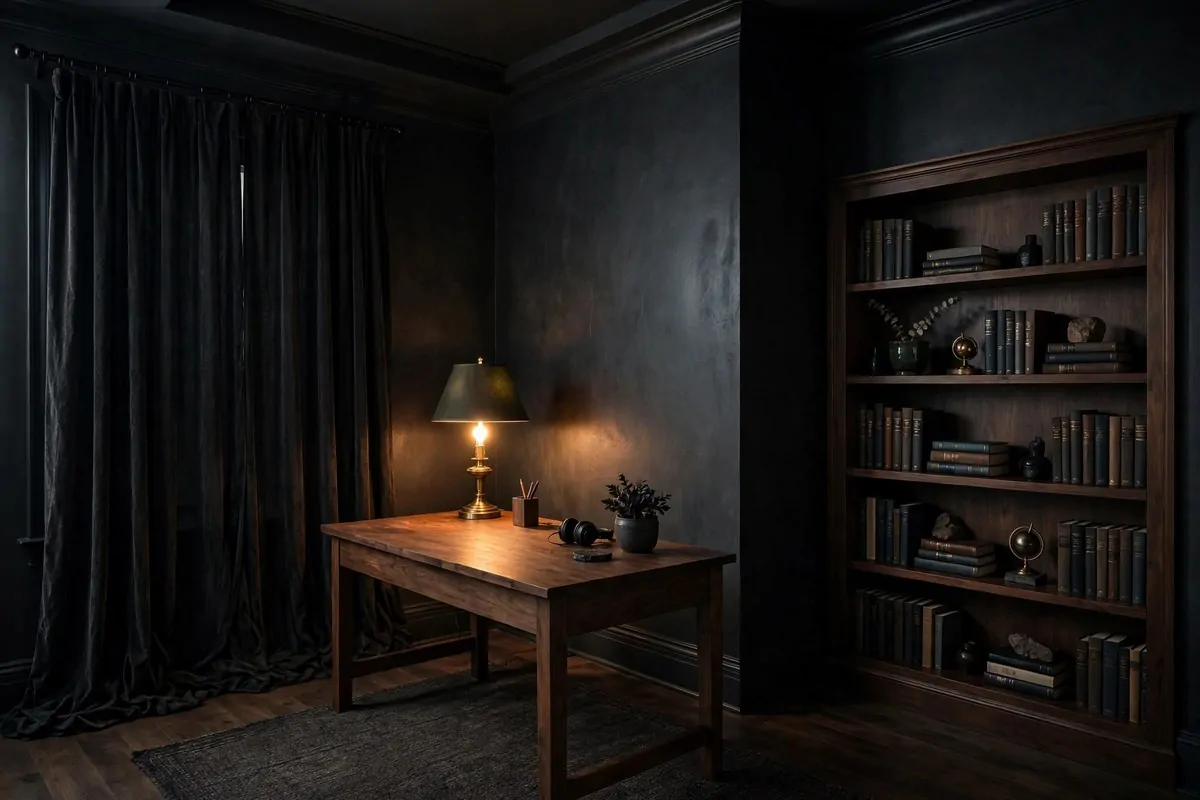
18. The Banker’s Desk Corner

Every library needs a desk. Not a big office desk. A small writing desk. A place to write in your journal, pay a bill, or just sit with a notebook. The banker’s desk corner is the classic version.
The star is the banker’s lamp. Green glass shade. Brass base. Pull chain. It is the most library-looking lamp ever made. The green shade throws a pool of warm light right on the desk. Everything around it stays dim and moody.
Find a small wooden desk. An old writing desk from a thrift store is perfect. It does not need to be fancy. It needs a flat top, a drawer or two, and good bones. Sand it, oil it, love it.
Put shelves above the desk. Two or three shelves on the wall. Reference books. Notebooks. A plant. The shelves make the desk feel built-in. They also keep supplies close.
Keep the desktop mostly clear. A library desk is for thinking, not for piling. The lamp. A notebook. A pen cup. Maybe a small stack of letters. Clear space is calm space.
Here is what lives on my library desk:
- The banker’s lamp, always
- One nice notebook, open to today’s page
- A cup with three good pens, not thirty bad ones
- A small dish for paper clips and little things
- One framed photo, because it is my desk
The chair should be comfortable but not too comfortable. A wooden chair with a cushion. You want to sit and write, not fall asleep. Save the napping for the reading chair across the room.
Face the desk toward the room, not the wall, if you can. Looking out over your library while you write is inspiring. Looking at a blank wall is not. Your books are better company.
This corner is for slow work. Journaling. Letters. Planning. The kind of work that feels good. In a world of screens, a little wooden desk with a green lamp is a quiet rebellion. And it is wonderful.
19. Reclaimed Wood Floating Shelves

Reclaimed wood shelves tell a story. The nail holes. The rough grain. The color that only comes from age. New wood is fine. Old wood has a soul. Your books deserve the soulful kind.
Find the wood at salvage yards, old barns, or online marketplaces. Look for boards at least eight inches deep and two inches thick. Books are heavy. Thin boards sag. Thick boards hold strong for decades.
Use visible brackets. Black iron pipe brackets are the classic choice. They are strong, cheap, and they look great against old wood. The industrial brackets plus the rustic wood is a perfect mix.
Mount them into studs. This is not optional. A shelf of books can weigh a hundred pounds. Drywall anchors will fail. Find the studs with a stud finder. Screw deep. Sleep well.
Stagger the shelves. Do not line them up in perfect rows. A long shelf here, a short one there, different heights. The casual layout suits the rustic wood. Perfect rows would look too stiff.
Mix books and objects. A stack of books lying flat. A small plant. A framed photo. A candle. The shelves should look collected over time, not styled in one afternoon. Add things slowly.
| Shelf depth | Best for |
|---|---|
| 8 inches | Paperbacks and small hardcovers |
| 10 inches | Most hardcovers, the sweet spot |
| 12 inches | Oversized art and coffee table books |
Sand lightly, seal lightly. You want to keep the character. A light sanding takes off splinters. A coat of matte sealant protects the wood. Do not sand away the history. The rough spots are the point.
These shelves work anywhere. Above a desk. In a hallway. Flanking a window. They are the most flexible library idea on this list. Start with two shelves. Add more when you run out of room.
Old wood, good books, strong brackets. It is simple. It is beautiful. It gets better every year.
20. Rental-Friendly Freestanding Shelves

Renters can have libraries too. You do not need built-ins. You do not need to drill a single hole. A row of matching freestanding bookcases makes a library wall that moves with you.
Buy matching units. Same height, same color, same style. Three or four tall bookcases in a row look like one big built-in. Mixed units look like a yard sale. Matching is the whole trick.
Line them up tight. No gaps between units. Push them together so they read as one piece. If the backs show through gaps, hang a curtain behind them or paint the wall a rich color first.
Anchor them safely. Tall bookcases can tip. Use removable adhesive strips or furniture straps that do not damage walls. Safety first, deposit second. Both matter.
Style the tops. The tops of freestanding shelves are bonus display space. A trailing plant. A stack of art books. A small lamp. The tops make the row feel finished, not flat.
Here is the renter’s library plan:
- Three to four matching tall bookcases
- Pushed tight together on one wall
- Anchored with damage-free straps
- Books organized your favorite way
- Tops styled with plants and lights
Add LED strip lights under each shelf. Battery-powered strips with a remote. They make the books glow at night. They peel off clean when you move. No landlord will ever know.
Use the bookcases as a room divider. In a studio, a row of shelves splits sleeping from living. Books on both sides. It is storage and a wall in one. Brilliant for small spaces.
Take them with you when you move. That is the beauty of freestanding. Your library is portable. Set it up in the new place in an afternoon. The books go right back where they were.
Renting does not mean waiting to have a beautiful home. Your library can start today, drill-free. And when you finally buy a place, you will already know exactly what you want.
21. The Hidden Bookcase Door

A bookcase that swings open to reveal a secret room. It is the dream from every childhood book. And you can actually build one. Your library gets a hidden door. Your guests get the best surprise of their lives.
The bookcase sits on a pivot hinge or a sliding track. Push the right book, or just push the shelf, and it swings open. Behind it: your reading room, your office, or just a cozy closet nook. The secret is yours to keep.
Weight is the big challenge. Books are heavy. A loaded bookcase can weigh hundreds of pounds. You need heavy-duty pivot hinges or a floor track that carries the weight. Do not cheap out on the hardware. This is the one place to buy the best.
Keep some books off the moving shelf. Lighter is easier to swing. Use the moving bookcase for display books and paperbacks. Keep the heavy hardcovers on the fixed shelves beside it. Your hinges will last longer.
| Hardware option | How it works | Best for |
|---|---|---|
| Pivot hinge kit | Bookcase rotates on a central pin | Full swing, dramatic reveal |
| Sliding track | Bookcase glides sideways on a rail | Narrow hallways, less swing space |
| Murphy-style hinge | Bookcase pulls out and pivots | Existing doorways you want to hide |
Hide the seam. The bookcase should blend with the fixed shelves around it. Same wood. Same trim. Same books. If it looks like a door, the magic is gone. It should look like just another bookcase.
Add a secret trigger if you want. A book that tilts. A hidden button. Or just push. Simple is more reliable. Fancy triggers break. A well-balanced bookcase opens with one hand.
Tell the kids. Do not tell the adults. Kids deserve the magic. Adults will find out eventually, and their faces will be worth it. Film the first reveal. You will watch it forever.
The room behind can be small. It does not need to be a full library. A tiny reading nook. A home office. Even a storage closet feels special behind a secret door. The door is the star.
A hidden bookcase door is the most fun project on this list. It takes planning. It takes good hardware. But the day it swings open for the first time, you will feel like a kid again.
22. Sunlit Bay Window Alcove

A bay window is a reading spot waiting to happen. The window pushes out. The light pours in. All you need is a deep seat, shelves around it, and a free afternoon. Nature built the frame. You just fill it in.
Build the seat deep. Twenty inches at least. You want to curl up sideways with your back against one side. Shallow seats are for perching. Deep seats are for staying. Staying is the goal.
Wrap shelves around the bay. Short shelves under the window. Tall shelves on the walls beside it. The books frame the view like a picture. You sit in the middle of your collection, looking out at the world.
Cushions, cushions, cushions. The seat cushion. Back pillows. A lumbar pillow. A throw. The bay window should feel like a nest. When someone sits down, they should not want to get up. Ever.
Plants love bay windows. The light is perfect. A tall plant on one side. A trailing plant on the shelf. The green against the view outside doubles the nature. It feels like reading in a garden.
Here is the bay window formula:
- A deep built-in seat with a thick cushion
- Shelves under the window and on both sides
- Pillows in layers, back to front
- Plants that love bright light
- A sheer curtain for glare control
Watch the glare on your pages. Bright sun can wash out the page. A sheer curtain fixes it. You still get the light. You lose the squint. Your eyes will thank you by page fifty.
This is a morning spot. Coffee. Sun. A good book. The day starts slow and sweet. By the time you leave the bay window, the whole day feels easier. It is the best morning routine I know.
In winter, the bay window is the warmest seat in the house. Sun through glass heats the cushions. Sit there on a cold bright day and you will understand. It is like a personal greenhouse.
A bay window alcove turns the best seat in the house into the best library in the house. If you have a bay window, this is your sign.
23. The Evening Lamp-Lit Lounge

Turn off the ceiling light. Forever. A library lit only by lamps is a different world. Pools of warm light. Soft shadows between them. The books glow on the shelves. It feels like evening, even at noon.
You need at least three lamps. One by the reading chair. One on a shelf or side table. One in the far corner. Three pools of light make a room. One lamp makes a spotlight. Two lamps make a hallway.
Mix the lamp types. A floor lamp with a fabric shade. A small table lamp with a colored base. A picture light over the art. Different lamps at different heights make the light feel natural, like it grew there.
Warm bulbs only. 2700K or lower. This is the most important rule of the lamp-lit library. Cool white light kills cozy instantly. Check every bulb. Replace the traitors. Your evenings will change.
Put the lamps on dimmers or smart plugs. Bright for cleaning. Low for reading. One tap and the room shifts mood. It is the cheapest luxury in home decor. A ten dollar plug changes everything.
Here is a lamp plan for a medium library:
- Floor lamp behind the reading chair, aimed over your shoulder
- Table lamp on the side table, low and warm
- Shelf lights or a small lamp on the bookshelves
- One lamp in the far corner so no corner goes dark
- Candles on the mantel or shelves for extra flicker
Shadows are good. Do not try to light every inch. The dark corners make the lit spots feel warmer. A library should have mystery. Light the places you sit. Let the rest go soft.
The books look best in lamplight. The spines glow. The pages turn golden. Reading under a lamp feels like the books were made for this moment. Because they were. People read by lamplight for centuries.
This is a night owl’s library. After dinner. After the house goes quiet. The lamps click on one by one. The day ends here, in the warm pools of light, with a book. There is no better ending.
24. The Symmetrical Study

Symmetry is calming. Two matching bookshelves. A desk in the middle. Everything balanced. Your brain relaxes the second you walk in. There is order here. The world makes sense.
Start with the desk in the center. A good wooden desk, facing into the room or facing the wall. Facing the room feels powerful. Facing the wall feels focused. Pick the one that matches how you work.
Flank it with matching bookshelves. Same height. Same width. Same books, more or less. The shelves frame the desk like a picture frame. The whole wall becomes one composition.
Hang one piece of art above the desk. Centered. A map. A painting. A framed quote. The art is the top of the triangle. Shelves on the sides, desk below, art above. Balanced. Done.
Keep the desktop tidy. A symmetrical room with a messy desk feels wrong. The order of the room asks for order on the desk. A tray for papers. A pen cup. The lamp. That is enough.
Match the lamps too. Two identical table lamps, one on each shelf top. Or two matching sconces on the wall. Pairs are the language of symmetry. Speak it fluently.
Here is the symmetry checklist:
- Centered desk, the anchor of the wall
- Two matching bookshelves, one on each side
- One centered art piece above the desk
- Matching lamps or objects in pairs
- A rug centered under the desk and chair
The chair should be good. You will sit here to read, write, and think. A comfortable desk chair that looks nice. Leather or upholstered. This is not the place for a plastic office chair.
This style suits people who like order. If messy rooms stress you out, a symmetrical study will feel like a deep breath. Everything has a place. Every place has a thing.
A symmetrical study is the most photogenic library on this list. It always looks good. Morning, noon, night. It is the room you show guests first. And the room you sneak into when you need to think.
25. The Hallway Library

Hallways are wasted space. You walk through them. That is all they do. Turn the end of a hallway into a library wall and suddenly the most boring part of your house has a job.
Use slim shelves. Hallways are narrow. Six to eight inches deep is enough for most books. The shelves hug the wall. You can still walk past. The hallway becomes a gallery of books.
The dead end of the hallway is the best spot. The wall you face when you walk down the hall. Cover it floor to ceiling with books. Every trip down the hall ends at your library. It is a happy ending, every time.
Add a small stool or a narrow bench. Somewhere to sit and browse. It does not need to be big. Just a perch. You will stop here more than you think. One book leads to another.
Light it well. Hallways are often dark. A picture light over the shelves. A small wall sconce. The books need light to look their best. And you need light to read the spines.
Here is the hallway library plan:
- Slim shelves, six to eight inches deep
- On the dead-end wall, floor to ceiling
- A small stool for browsing
- Good lighting, since halls run dark
- A runner rug to warm the floor
Organize by size or color here. Hallway shelves are seen in passing. They should look good at a glance. A tidy, colorful wall of books beats a messy one. This is the display shelf of your collection.
Keep the floor clear. Hallways need to stay walkable. No baskets on the floor. No leaning stacks. Everything on the shelves. The hallway is a path first, a library second.
A runner rug makes it cozy. A long soft runner down the hall. It quiets footsteps. It warms the walk. It turns a corridor into a room. Pick one with a pattern you love looking at every day.
Guests will stop in your hallway. They will browse. They will ask about books. The hallway library starts conversations. It is the hardest working wall in your house.
26. The Attic Library

Attics are made for libraries. Sloped ceilings. Quiet. Far from the noise of the house. It feels like a secret, even though it is just upstairs. Climb the stairs and leave the world behind.
Low shelves fit under the slopes. Custom or freestanding, keep them short. The low shelves follow the roofline. Books line the walls where the ceiling is too low to stand. Every inch works.
Sit on the floor. The ceiling is low, so floor seating is natural. Big cushions. A thick rug. Bean bags. The attic library is the most relaxed room in the house. Shoes off. Socks on. Book open.
A round window or a skylight is perfect. Attics often have small windows. Put the reading spot under it. Natural light from above is beautiful. Rain on a skylight while you read is pure magic.
Keep it warm. Attics can be cold in winter and hot in summer. A small heater for winter. A fan for summer. An electric fireplace gives heat and glow. Comfort is everything up here.
Here is the attic library checklist:
- Low bookshelves under the sloped ceilings
- Floor cushions and a thick rug for seating
- Reading spot under the window or skylight
- A small heater or fireplace for cold months
- Warm string lights along the roof beams
String lights along the beams. Attics have great beams. Wrap them in warm fairy lights. The sloped ceiling glows. It feels like a cabin in the clouds. Kids will never want to come down.
Watch the temperature on your books. Extreme heat and damp hurt paper. A dehumidifier in summer helps. Do not store rare books in a rough attic. Keep the good stuff downstairs.
This is the hideaway library. When the house is loud, go up. When you need to think, go up. The attic is far from the doorbell, the TV, and the chores. It is your tower. Every reader deserves a tower.
An attic library takes work. Insulation. Flooring. Light. But the result is the most special room in the house. The room with the sloped ceiling and the books and the quiet. You will never want to leave.
27. The Library-Office Combo

Work and reading can share a room. A desk between two bookshelf towers. Work on one side. Books on the other. When work ends, you turn your chair and the library begins. No commute. No excuses.
Put the desk between the shelves. Two tall bookcases with a desk in the middle. It looks built-in. It feels intentional. The books watch over your work. They make the office feel smarter.
Close the laptop when work ends. This is the ritual. Laptop shut. Notebook out. Or just a novel. The same desk becomes a reading desk. The room changes jobs with you.
Keep work stuff contained. One drawer. One tray. When work is over, the work disappears. The desk should look like a library desk in the evening, not an office. Boundaries matter, even in one room.
A good desk lamp serves both jobs. Bright enough for work. Warm enough for reading. A lamp with adjustable brightness is perfect. Or two lamps, one for each mood. Light sets the shift.
Here is the combo room setup:
- Desk centered between two bookshelf towers
- Laptop that closes and hides at day’s end
- One drawer or tray for all work supplies
- Adjustable lamp for work light and reading light
- A comfortable chair you can sit in for hours
The books make work better too. A boring video call is nicer with books behind you. A hard day is softer when your favorite novels are in view. The library improves the office. The office funds the library.
Add a reading chair if you have space. Desk for work. Chair for reading. Two zones, one room. Even a small chair in the corner gives you a place to escape the desk without leaving the room.
Keep one shelf for work books. Reference books. Notebooks. The shelf above the desk is perfect. Work books live there. Novels live everywhere else. A little order keeps the combo calm.
The library-office combo is practical. Most of us do not have room for two separate rooms. One room that does both, done well, beats two rooms done badly. Work here. Read here. Love it here.
28. The Book Ledge Wall

Show the covers, not the spines. Shallow picture ledges hold books face-out, like art in a gallery. Your favorite covers become the decoration. The wall changes every time you finish a book.
Use narrow ledges. Three to four inches deep. Just enough to hold a book upright. Mount them in rows up the wall. Three rows, four rows, as many as fit. The ledges are cheap and easy to hang.
Pick your prettiest books. The ones with covers you love. Rotate them. When you finish a book, put its cover on the wall. Take down one you are done admiring. The wall is alive. It tells your reading story.
This is perfect for small rooms. Ledges stick out just a few inches. A full bookcase sticks out a foot. In a tiny bedroom or a narrow hall, ledges give you a library without the bulk.
Mix in small art. A framed print between the books. A tiny plant on one ledge. The ledges are shelves, so style them like shelves. Books plus a few pretty things. Not too many.
Here is how to build it:
- Narrow picture ledges, three to four inches deep
- Mounted in rows, twelve to eighteen inches apart
- Prettiest book covers facing out
- Rotate the display as you finish books
- A little art mixed in for variety
Kids love ledge walls. They pick books by the cover. A wall of covers is irresistible to a young reader. Put the ledges low in a kid’s room. Watch the reading happen on its own.
Secure the ledges well. Books fall. A lip on the front edge keeps them in place. Check the mounts once a year. A wall of books is only pretty if it stays on the wall.
The ledge wall is the most changeable library on this list. New book, new display. New season, new colors. It never gets boring because it never stays the same.
End your library tour here. A wall of beautiful covers. A reminder of every story you have loved. Look at it every day. Then pick the next one and start reading.