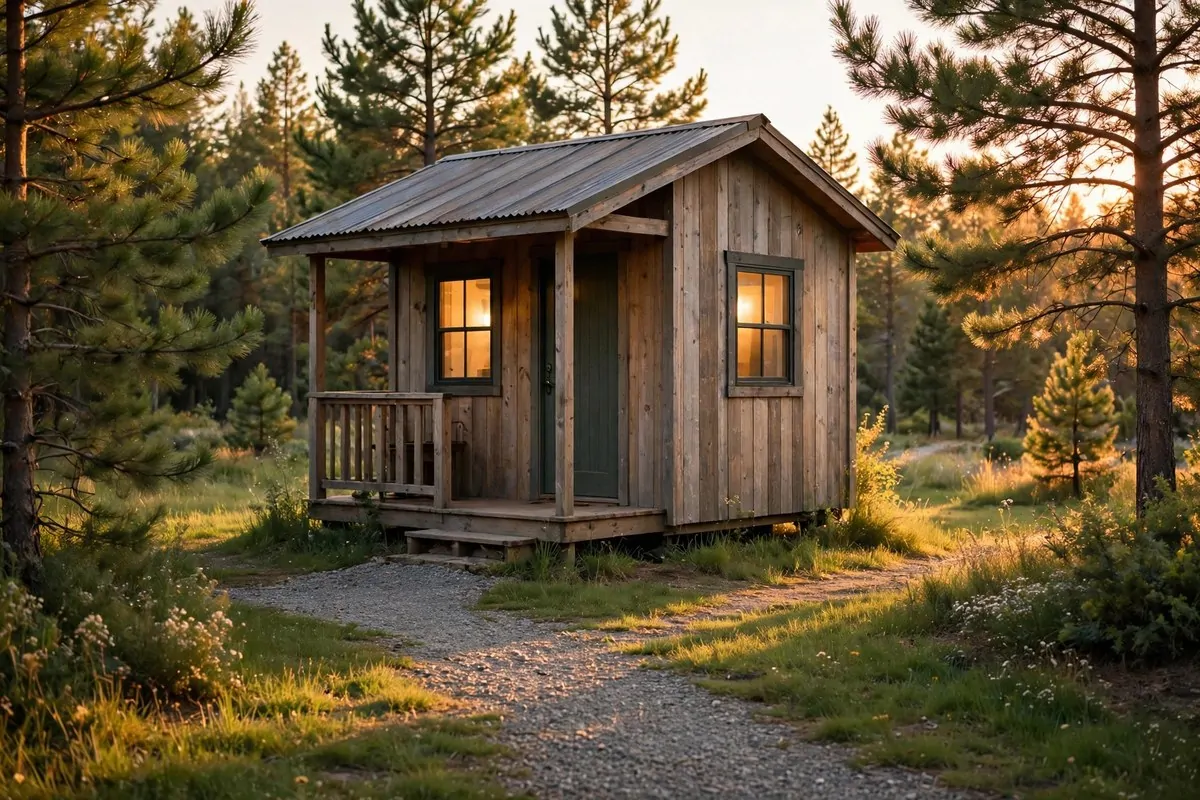
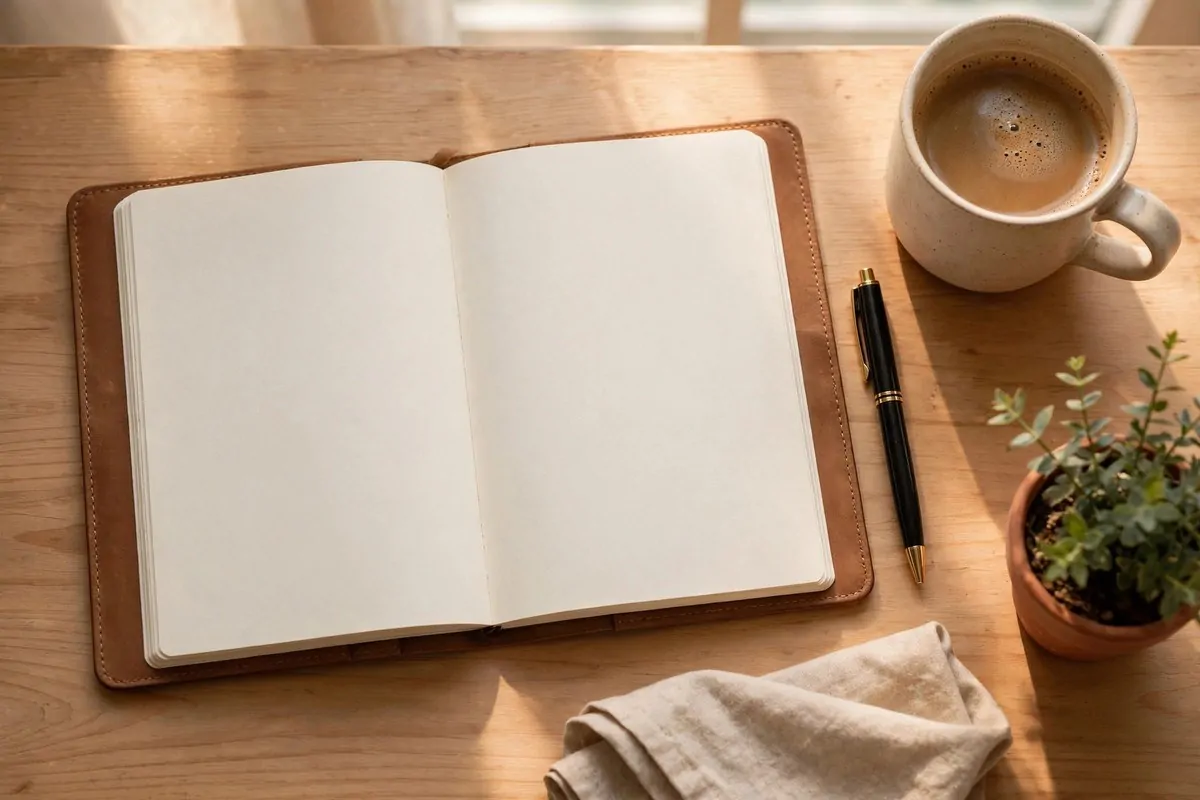
15 Cozy Den Room Ideas Small Office Spaces Can Pull Off

My friend called me during her lunch break last Tuesday. She was sitting in her car, eating a sandwich, and she sounded tired in that specific way that has nothing to do with sleep.
She told me her house has a den. A small one, right off the kitchen. For three years it has been the room where boxes go to wait. Old chargers. Birthday decorations. A chair with a broken leg. She works from her dining table, and her back hates her for it.
She asked me if a room that small could ever be a real office. Or if she should just accept the dining table life forever.
I laughed, because the den is actually the best small office there is. A den is already cozy by nature. It is small, it is quiet, and it usually has a door. That is more than most home offices get. You do not need to make a den feel like an office. You need to make it feel like a den that happens to have a desk in it.
These 15 cozy den room ideas are all built for small office spaces. Warm wood. Books. Soft lamp light. Little rooms that work hard and feel like a hug at the same time.
1. The Library Wall Behind Your Desk
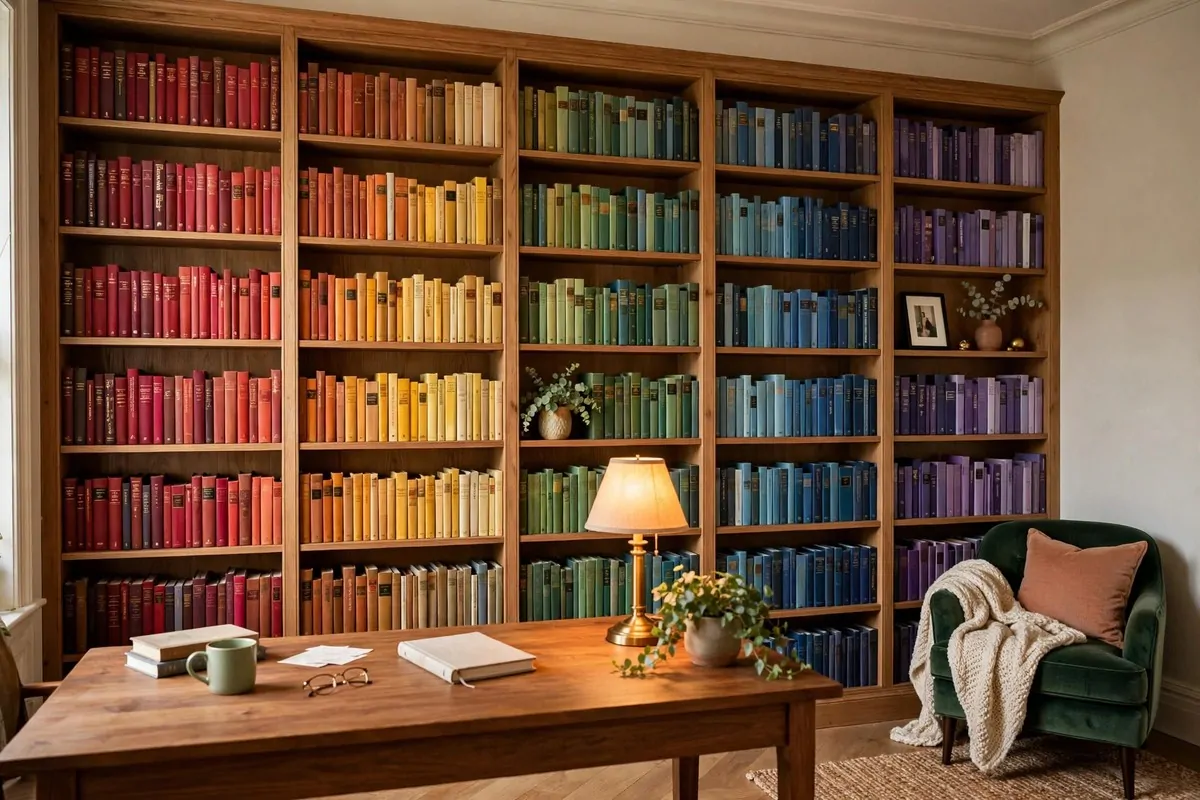
A wall of books is the fastest way to make a den feel like a den. It is warm, it is personal, and it tells everyone who walks in that this room is for thinking.
Fill one whole wall with bookshelves. Floor to ceiling if you can. Billy bookcases, secondhand shelves, whatever you have. The look is about fullness, not fancy furniture.
Organize the books however makes you happy. By color looks stunning. By topic is more useful. I do a mix. Tall books together, small books together, and my favorites at eye level.
Put your desk in front of the shelves. Face the room or face the shelves. Facing the shelves feels like a cocoon. Facing the room feels open. Both work in a den.
Leave some shelf space for pretty things. A small plant. A framed photo. A candle you never light but love to look at. Books plus objects looks like a real home, not a library.
A library wall also hides a multitude of sins. Cords, routers, chargers. Tuck them behind books. Nobody will ever know.
Add a small ladder or a step stool if the shelves go high. It is practical, and honestly it looks adorable. Very storybook.
This is the den office look people save on Pinterest. It never goes out of style. Books make a room feel smart and safe at the same time.
2. A Reading Nook That Works Too
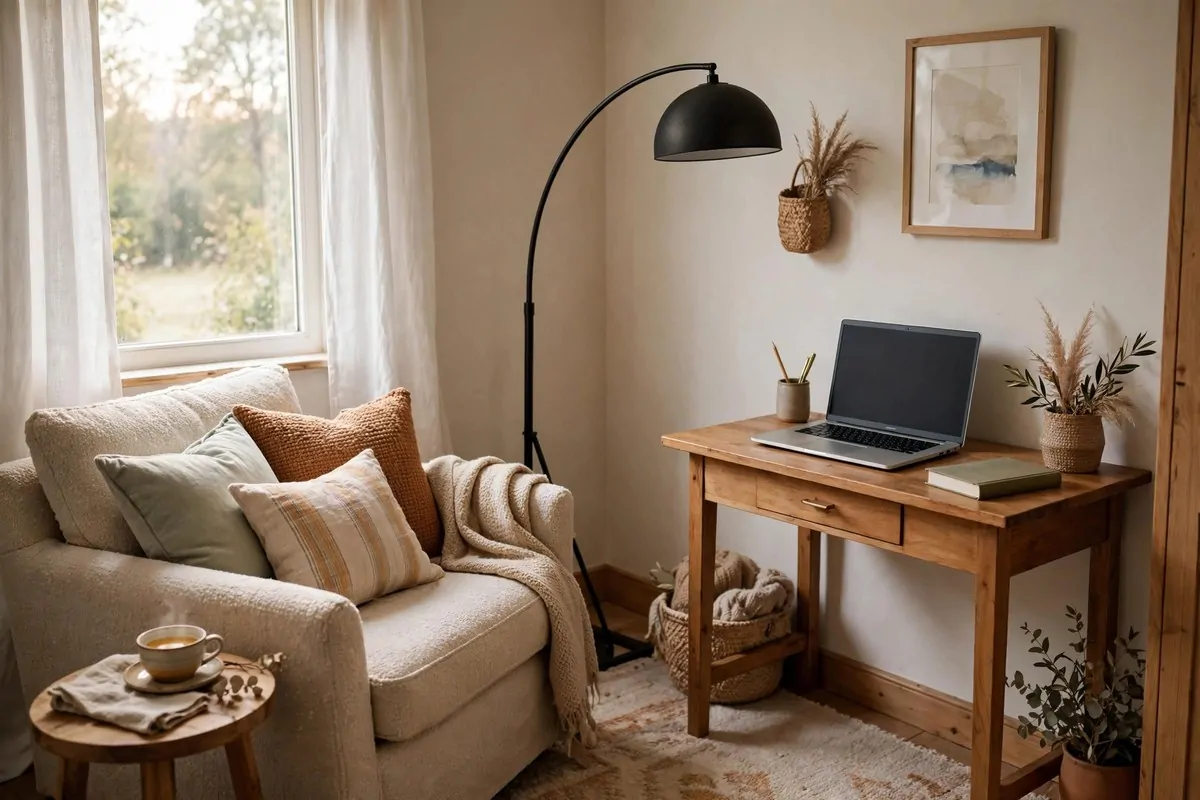
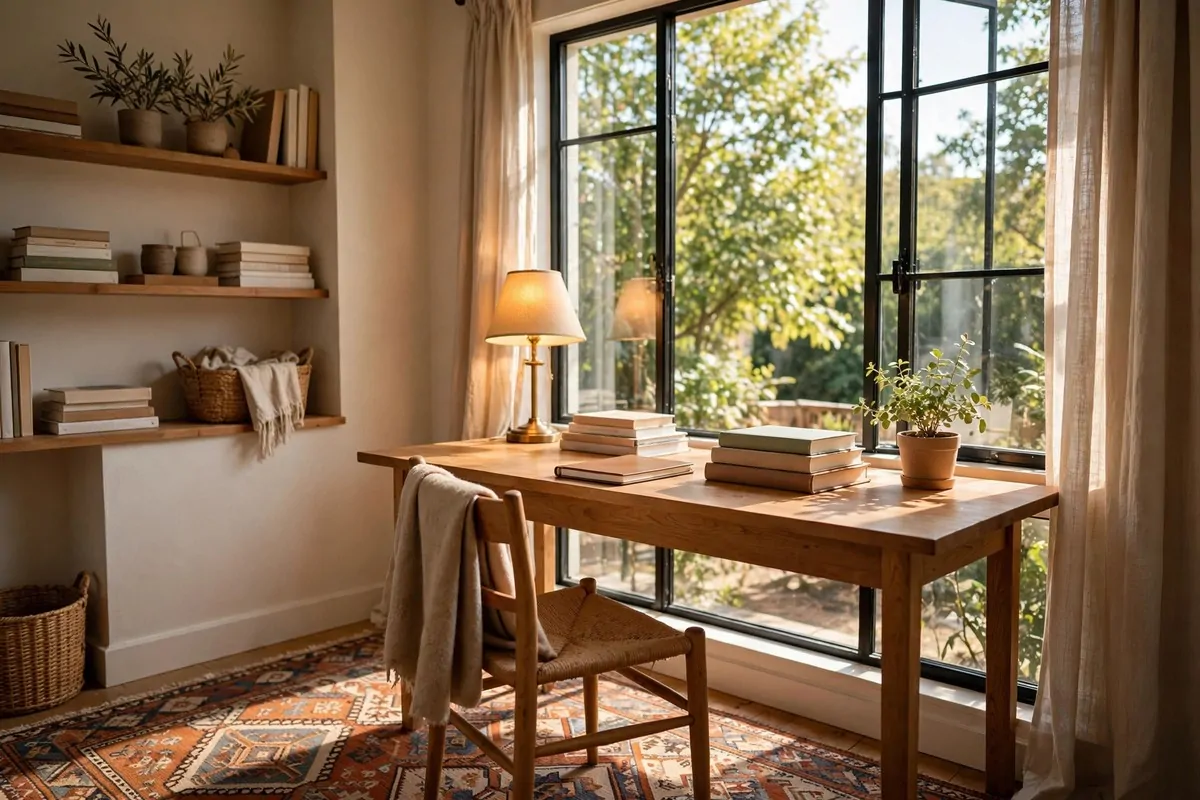
Every den deserves a reading chair. And every small office needs a desk. In a small den, you get both, and they share the room like good friends.
Put the armchair by the window if the den has one. Natural light for reading, and the chair becomes the prettiest spot in the room. A small side table holds the tea.
Place the desk on the opposite wall. Work happens there. Rest happens in the chair. Your brain learns the difference fast. Desk means focus. Chair means pause.
The chair is also your thinking spot. Stuck on a problem? Move to the chair. Read it over. Stare out the window. Half my good ideas arrive in that chair, not at the desk.
Choose a chair you can sit in for an hour. Deep seat, soft arms, good back. A beautiful chair that hurts is just a sculpture. Comfort first, always.
A floor lamp between the chair and the desk can light both. Arc lamps are perfect for this. They reach over the chair and still throw light toward the desk.
Keep a throw blanket on the chair. Dens can be chilly, and a blanket makes the chair irresistible. You will take more real breaks, which makes the work better.
This combo turns the den into two rooms. An office and a retreat. In the space most people use for boxes. Tell that to your friend with the dining table backache.
3. Warm Wood Paneling on One Wall
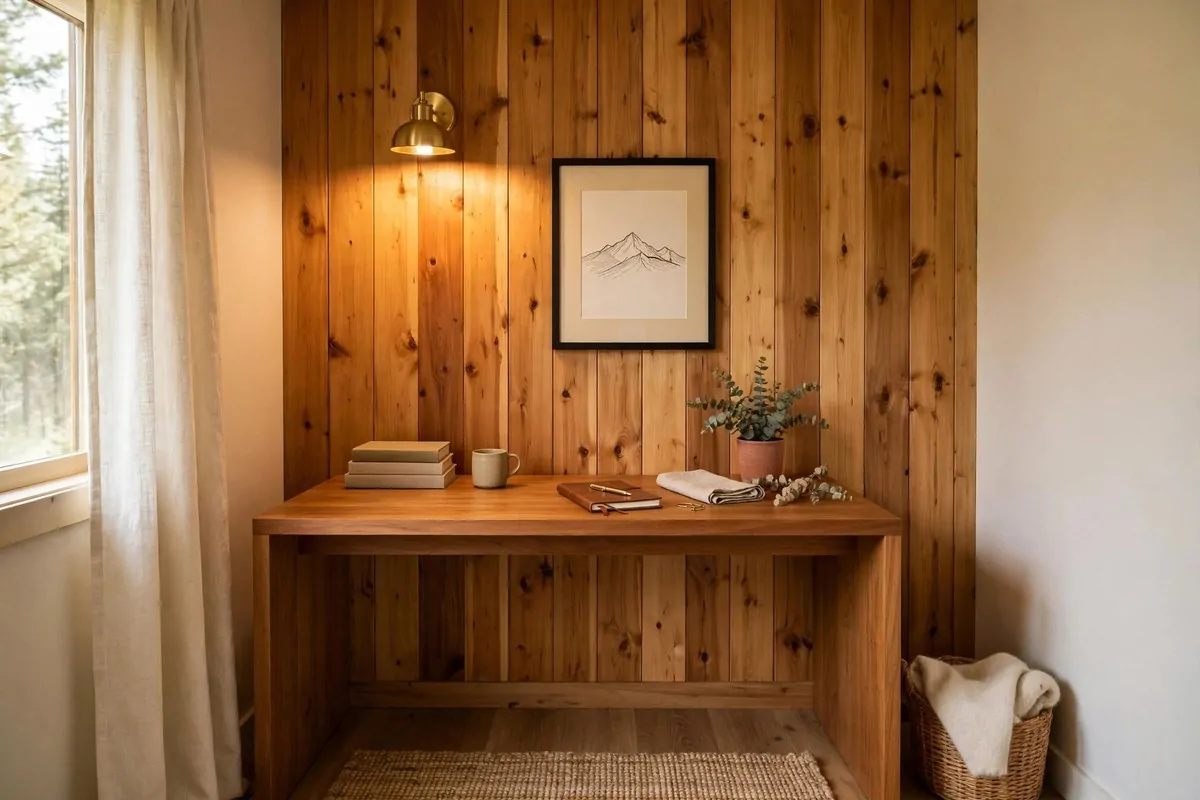
Wood paneling is the den’s best friend. One paneled wall makes a small room feel like a cabin, a library, a place where important thinking happens.
You do not need real wood planks. Peel and stick panels exist now. Thin wood-look boards that go up with adhesive. A weekend project, not a renovation.
Put the paneling on the wall behind your desk. It becomes your video call background. Warm wood on camera looks professional and calm. Much better than a blank wall.
Choose a warm mid-tone wood. Not too dark, not too pale. Think honey, oak, warm walnut. Dark paneling needs lots of light. Pale paneling can look washed out.
Balance the wood with soft white or cream on the other walls. Wood on one wall, light paint on the rest. The room feels warm but not small.
Add a picture light or a small sconce on the paneled wall. Light grazing across wood texture is gorgeous. It shows off every grain and groove.
Hang one piece of art on the wood. A simple frame, a calm print. Wood plus art is a classic combination. It always looks right.
Paneling also hides imperfect walls. Old dens often have dents and marks. Wood covers them all. The wall looks brand new without any plastering.
4. Layers of Soft Things
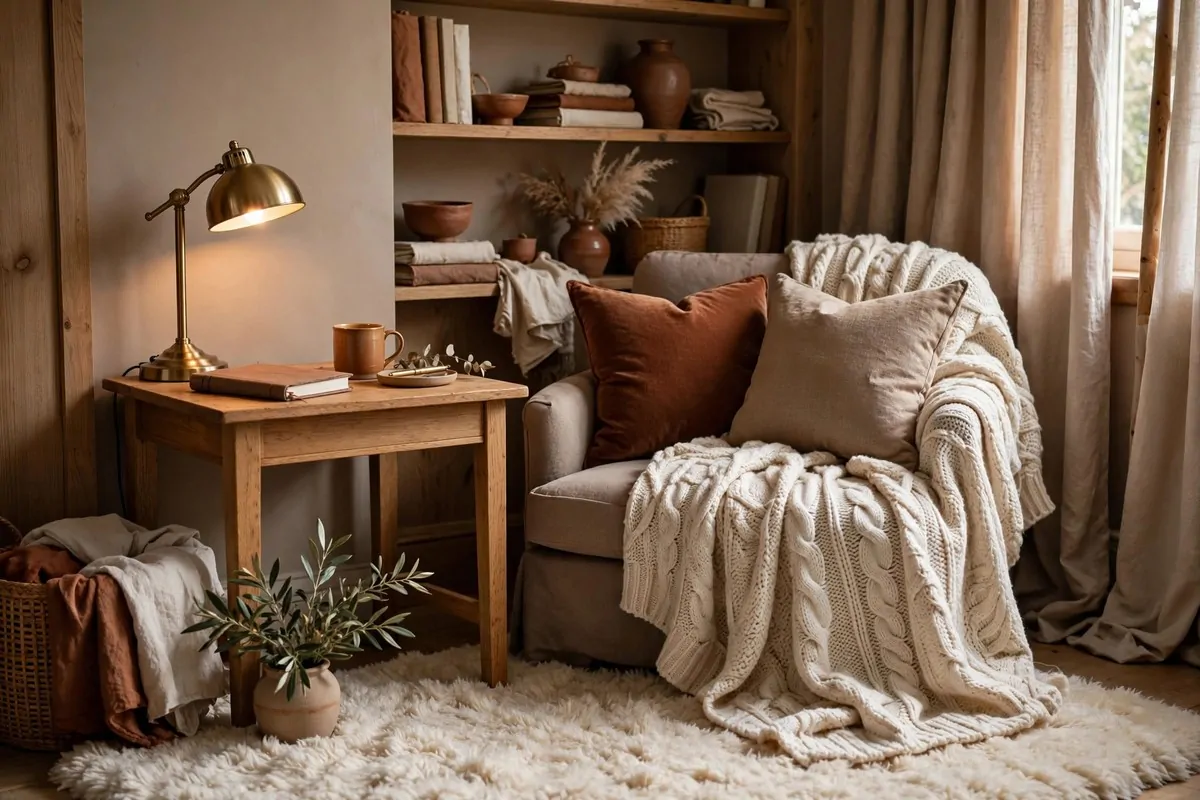
Cozy is not a style. It is a pile of soft things. Rugs, throws, cushions, curtains. Layer them in a den and the room practically hugs you back.
Start with the floor. A plush rug under the desk and chair. Your feet land on softness every morning. It changes the whole feeling of sitting down to work.
Add a throw over the chair back. Not folded perfectly. Draped. The slightly messy drape is what makes it look inviting instead of staged.
Cushions are next. Two or three on the chair or a small sofa. Mix textures. Velvet, knit, linen. Your hands notice the difference even if your eyes do not.
Curtains count as layers too. Soft fabric curtains instead of blinds warm up a den fast. They also soften sound, which helps on calls.
Keep the colors warm and close together. Creams, taupes, soft rusts, warm grays. A tight warm palette feels cozy. Scattered bright colors feel busy.
The desk itself can be softened. A leather desk mat, a fabric pen cup, a wooden tray. Hard edges everywhere feels like an office. Soft touches feel like a den.
I add one new soft thing to my den every season. A heavier throw in winter, a light linen one in summer. The room grows cozier without ever being redecorated.
5. The Vintage Leather Chair Corner
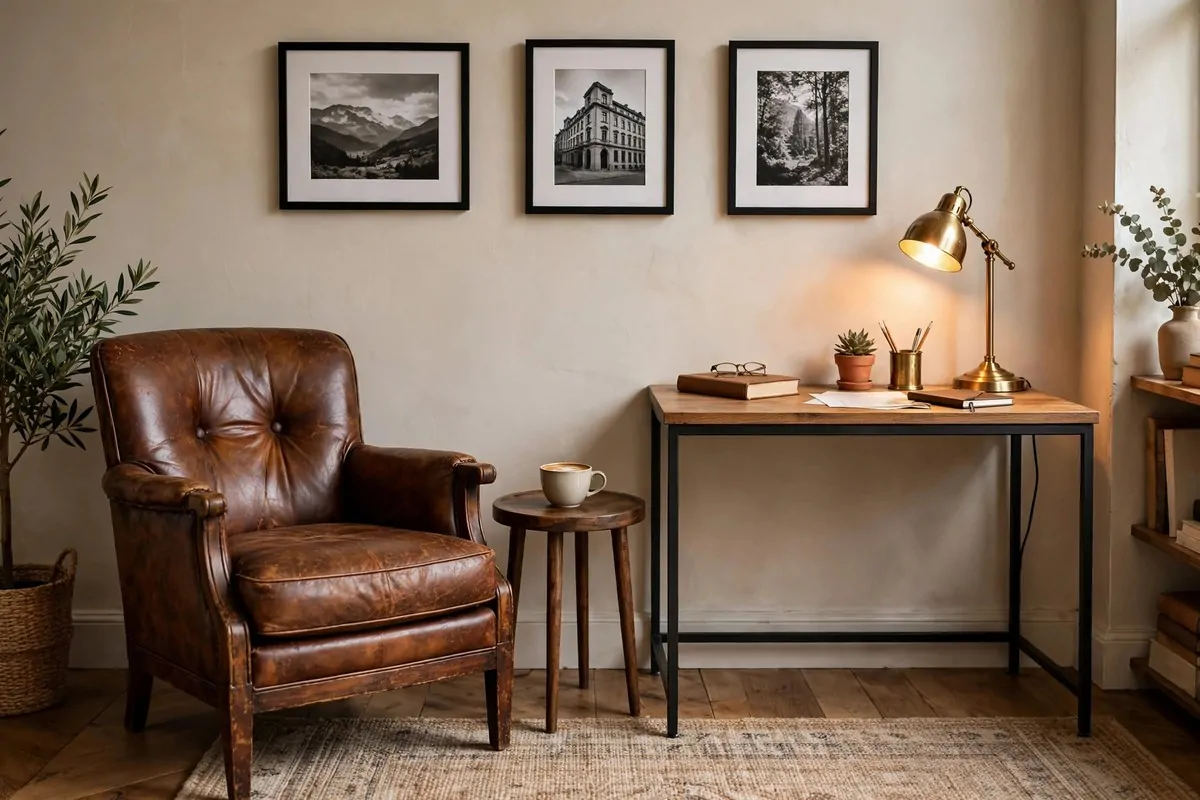
A vintage leather chair makes any den feel like it has a history. It is the kind of chair that looks better with every scratch and crease.
Look for secondhand leather chairs. They cost a fraction of new ones and they already have character. Check the seat and arms for comfort. Looks matter, but sitting matters more.
Pair the leather chair with a small desk. A slim metal or wood desk works. The chair is the star. The desk just needs to hold the laptop.
Leather gets better with age. It softens, it darkens, it molds to you. A new chair is stiff. A five year old leather chair is perfect. Buy the age if you can.
Add a small side table for the coffee. Leather and coffee are old friends. A little round table beside the chair completes the picture.
Hang black and white photos above the desk. They suit the vintage mood. Family photos, travel shots, old prints. The den starts to feel like your story.
A worn leather chair also gives you permission to relax the rest of the room. The den does not need to be perfect. It needs to feel lived in and loved.
This corner is where I would write letters, plan big projects, or just sit with a notebook. Some chairs invite work. This one invites good work.
6. An Exposed Brick Accent Wall
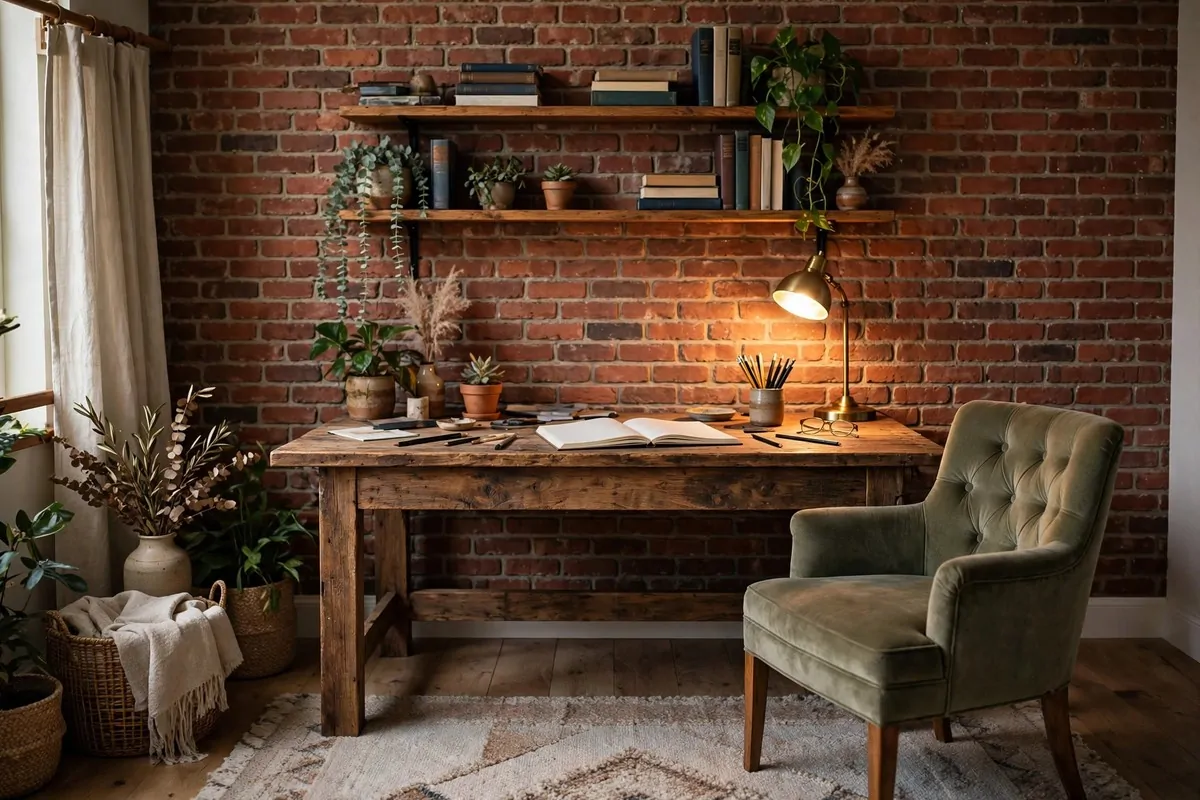
Exposed brick is instant character. One brick wall turns a plain small den into a room with a past, even if the house is only ten years old.
Real exposed brick is rare, so fake it well. Brick veneer panels or brick-look wallpaper have gotten very good. From two meters away, nobody can tell.
Put the brick behind your desk. It becomes the backdrop for your work and your video calls. Brick on camera looks creative and confident.
Soften the brick with warm light. A desk lamp with a warm bulb makes brick glow. Cool white light makes it look cold and industrial. Warmth is the goal.
Balance the rough brick with soft furniture. An upholstered chair, a fabric rug, curtains. Rough plus soft is the whole trick of cozy industrial style.
Add wood shelves on the brick wall. Wood and brick are a perfect pair. The shelves hold books and plants, and the brackets disappear against the texture.
Keep the other walls simple. White or warm gray. Let the brick be the one loud thing in the room. One statement wall is enough in a small den.
I love brick in a den because it never looks like an office. It looks like a studio, a workshop, a creative space. Work feels more interesting against brick.
7. A Gallery Wall for Slow Mornings
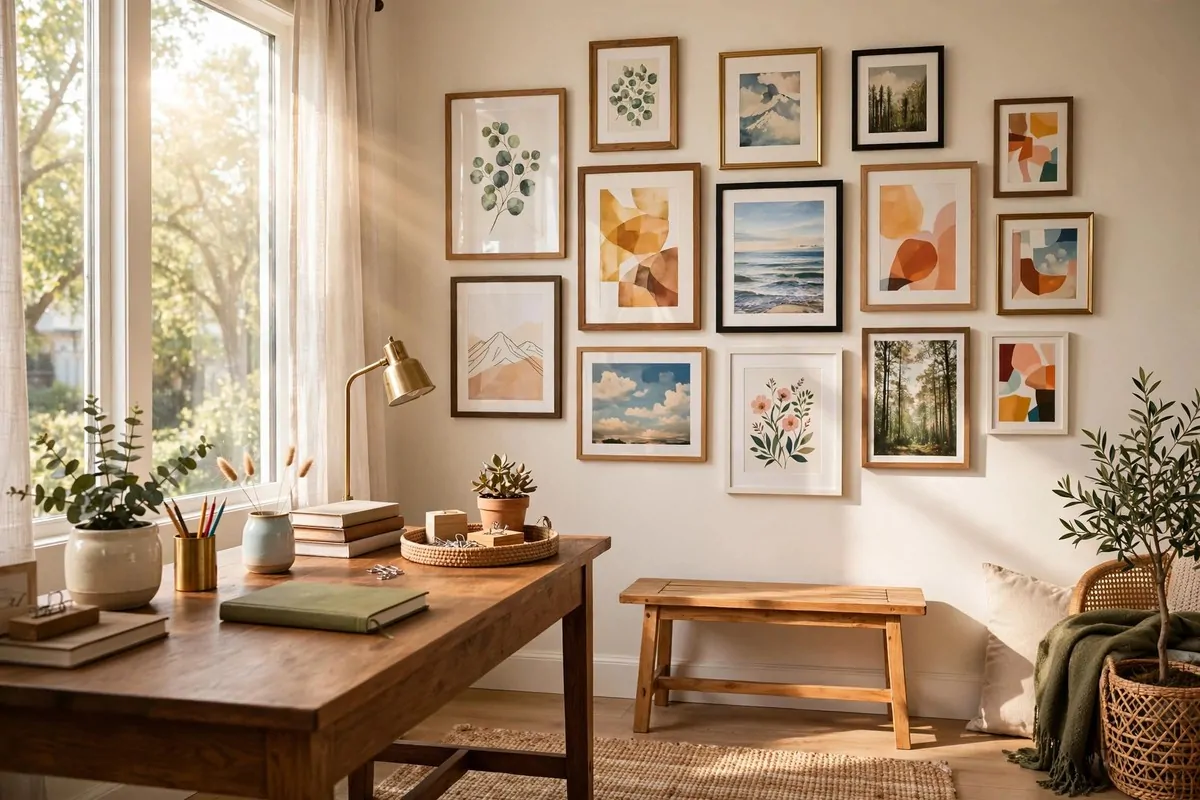
A den office should wake you up gently. A gallery wall of art you love does that better than any alarm. You sit down, you look up, and the day starts kindly.
Collect frames over time. Thrift stores, print shops, your own photos. A gallery wall built slowly looks personal. One bought all at once looks like a hotel.
Mix art and photos. A landscape print next to a family photo next to a silly postcard. The mix is what makes it yours. Perfectly matched sets feel cold.
Hang the gallery where you see it from the desk. Above the desk is classic. On the side wall works too. The point is to look at it while you think.
Include some color. Dens can go too brown and beige. A few colorful pieces wake the room up. Not neon. Just happy colors that make you smile.
Leave a little space for one empty frame. It is a promise to yourself. The gallery is not finished. It grows as your life does. I love that idea.
A small bench or stool under the gallery gives you a spot to sit and just look. Sometimes the best work break is staring at art you love for two minutes.
Morning light on a gallery wall is my favorite thing. If your den gets morning sun, hang the art where the light hits it. The whole wall glows.
8. One Big Textured Rug
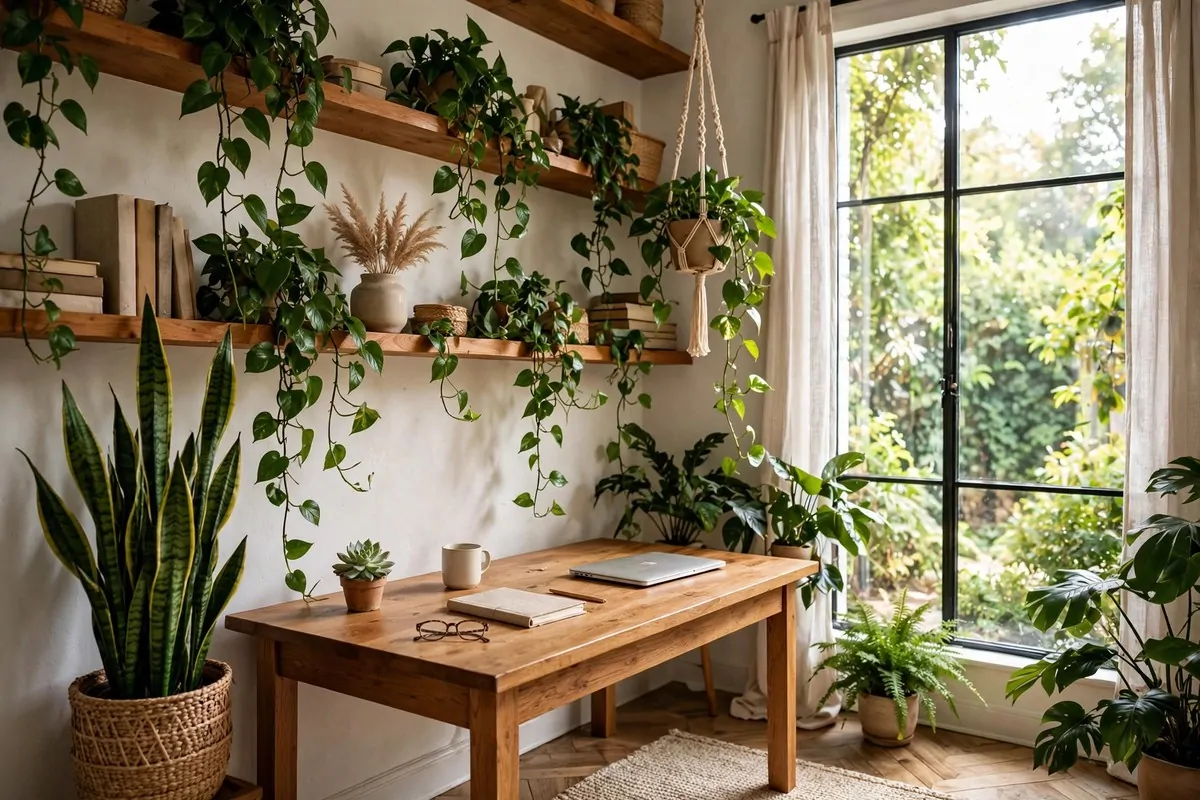
In a small den, the rug is the room. It covers most of the floor, so it sets the mood more than the walls or the furniture do.
Go big. The rug should sit under the desk and the chair, with room to spare. A rug that is too small makes the den feel chopped up. A big one pulls it together.
Texture matters more than pattern. A nubby wool rug, a thick jute, a soft shag. Your feet spend all day on it. Make it something you enjoy touching.
Choose muted colors. Soft blues, warm grays, gentle creams. A calm rug calms the room. A loud rug shouts all day and you will be tired of it by March.
Layer a smaller rug on top if you want extra coziness. A sheepskin or a small flatweave over the big rug, under the chair. It looks styled and feels wonderful.
The rug also quiets the room. Hard floors bounce sound. A thick rug absorbs it. Calls sound better, typing sounds softer, the den feels peaceful.
Vacuum it weekly and it stays fresh for years. A good rug is an investment. It outlives desks and chairs. Buy the best one you can afford.
I think of my den rug as the foundation of the whole room. Everything sits on it. Everything matches it. Get the rug right and the rest is easy.
9. The Plant-Filled Den
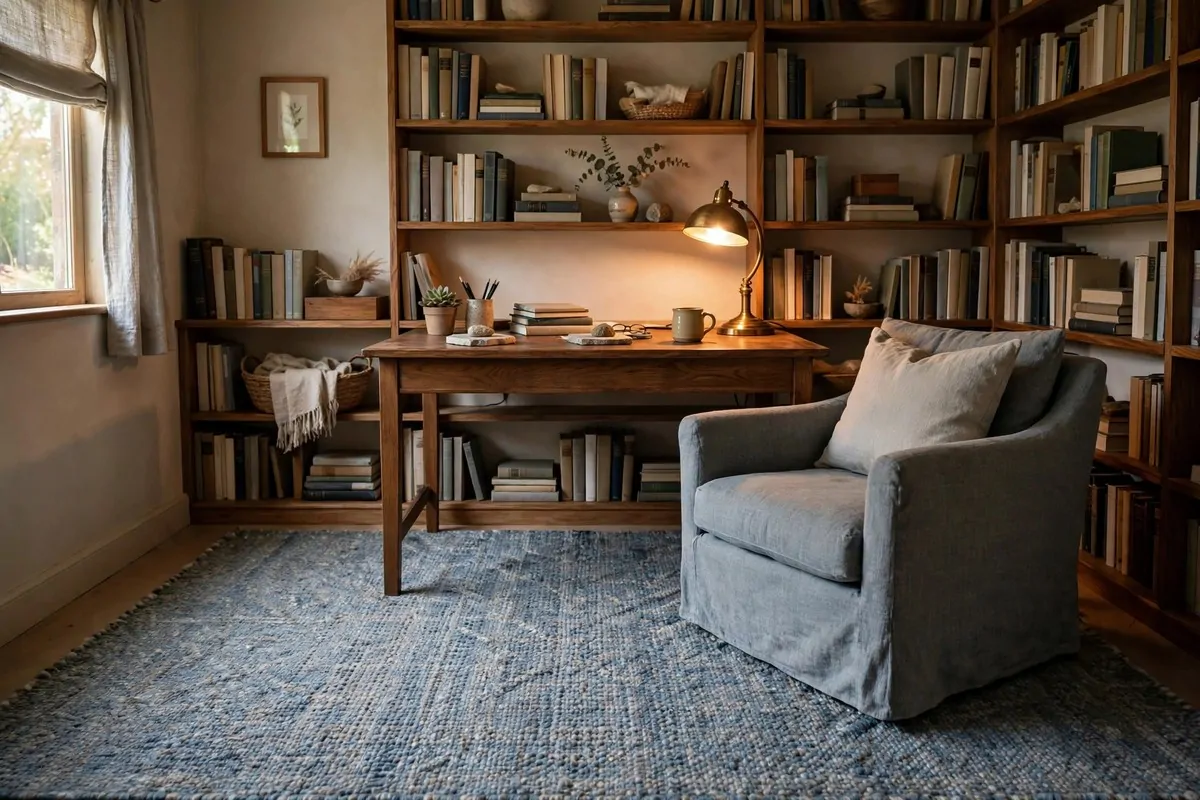
Plants turn a small den from a box into a garden room. Green leaves soften every hard edge. The air feels fresher. Your eyes get somewhere nice to rest.
Start with five plants. That sounds like a lot, but in a den it is just enough. A tall floor plant, two shelf plants, one desk plant, one hanging plant.
Put the tall plant in the darkest corner. Snake plants and ZZ plants handle low light. They also clean the air while they sit there looking sculptural.
Trailing plants belong on high shelves. Pothos and philodendron spill down beautifully. They soften the shelf edges and make the den feel lush.
The desk plant should be small. A succulent, a tiny fern, a little cactus. Something you can see over. Your plant should not block your screen.
Group plants together for impact. Three plants in a cluster look like a little jungle. Three plants spread out look like an afterthought. Cluster them.
Watering day becomes a ritual. I do mine on Sunday mornings. Ten minutes with the watering can, checking leaves, turning pots. It is the calmest part of my week.
A plant-filled den never feels like a corporate office. It feels alive. And on gray days, when the light is flat and the work is dull, the green keeps you company.
10. Rustic Beams and Rough Wood
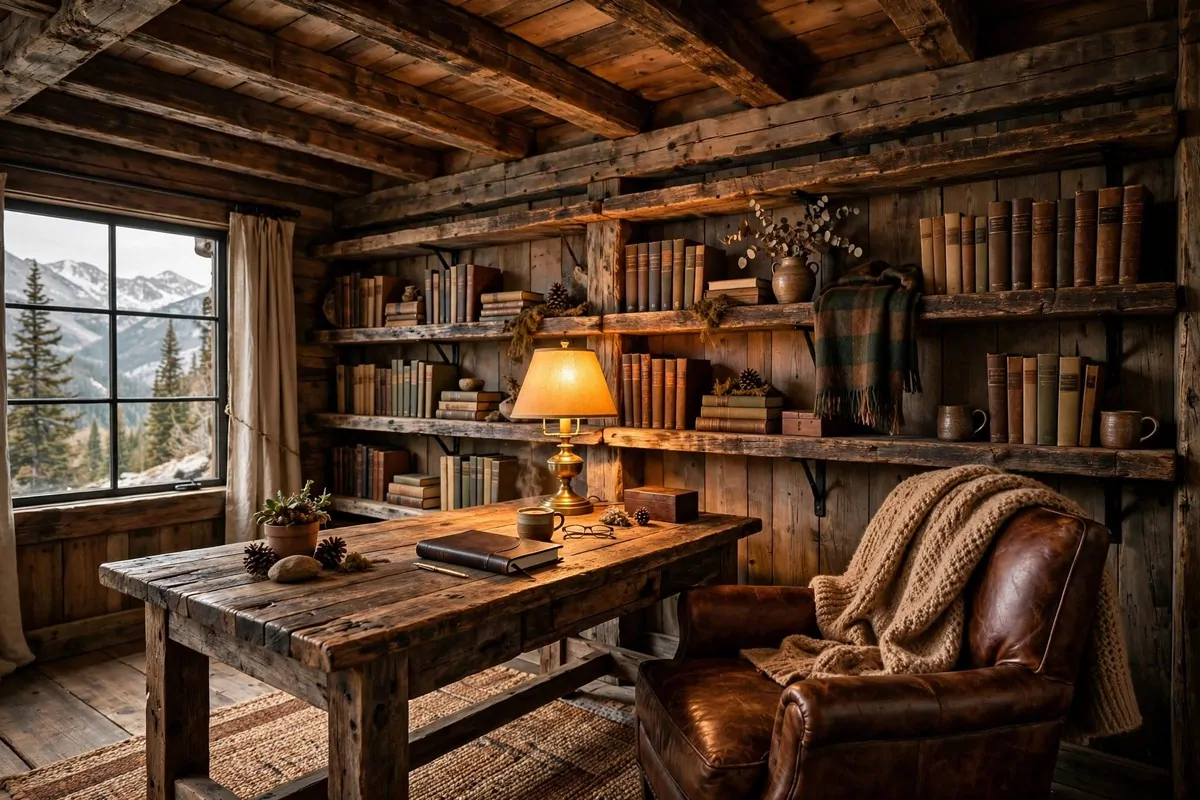
Rustic wood makes a den feel like a retreat. Beams on the ceiling, rough shelves on the walls, a desk with visible grain. It is cabin comfort without leaving home.
Real beams are a big job, so fake them. Hollow wood-look beams are light and go up with brackets. They transform a flat white ceiling in one weekend.
If beams are too much, do the shelves. Thick reclaimed-wood shelves on black brackets. They hold books and plants, and they bring all the rustic feeling with none of the construction.
Pair rough wood with a comfortable leather or fabric chair. Rough plus soft again. The contrast is what makes rustic style cozy instead of just rough.
Keep the lighting warm and low. Rustic wood looks best in golden light. A floor lamp with a fabric shade, a desk lamp with a warm bulb. Avoid cool white completely.
Add one metal accent. A black metal desk lamp, iron brackets, a wire basket. Metal plus wood is the rustic formula. It keeps the wood from feeling too sweet.
Distressed finishes are your friend. Dents, knots, rough edges. In rustic style, imperfections are the point. A perfect shiny desk would look wrong here.
This den feels like a mountain cabin office. Quiet, warm, solid. The kind of room where you could write a book or plan a whole new life.
11. A Daybed That Works Days and Nights
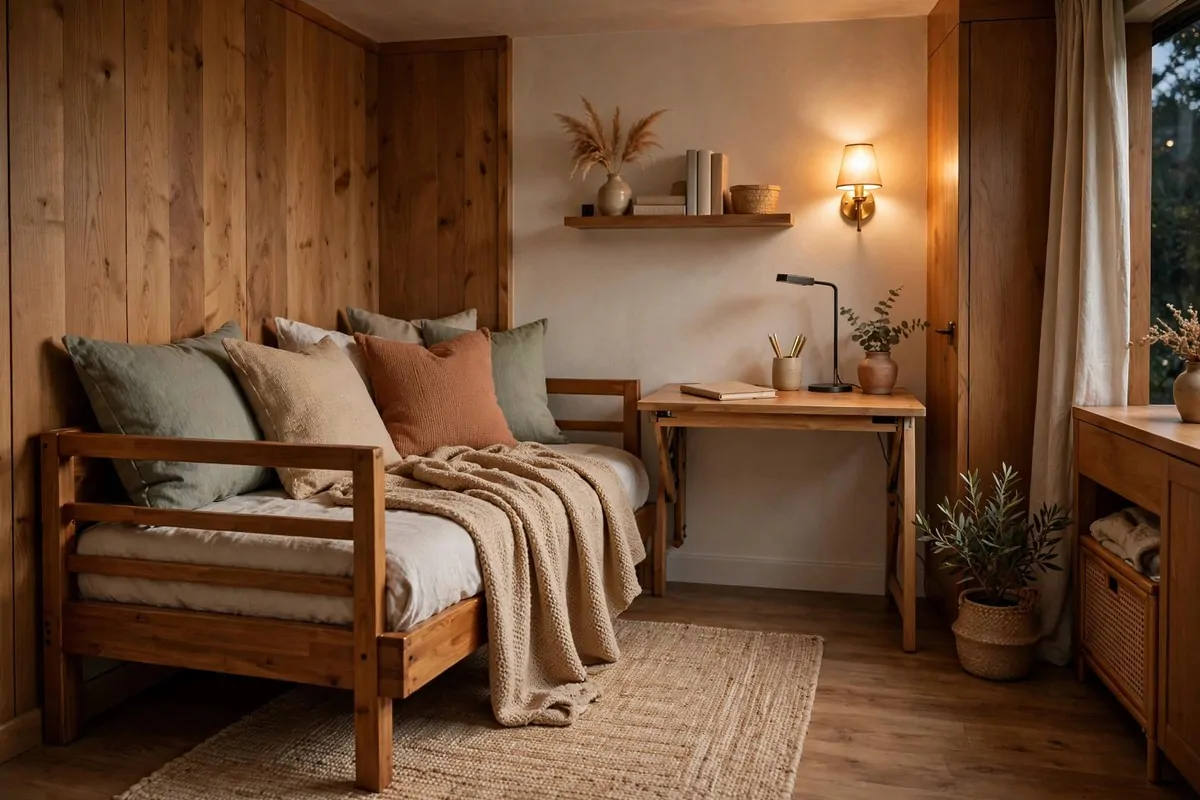
A small den often has to be two rooms. Office by day, guest room by night. A daybed solves it. It is a sofa when you work and a bed when guests come.
Choose a daybed with a simple frame. Wood or metal, clean lines. Dress it like a sofa during the day. Cushions along the back, a throw across the seat. Nobody guesses it is a bed.
Pair it with a foldable desk. A desk that folds flat against the wall when guests arrive. Day mode is office. Night mode is bedroom. The room transforms in minutes.
Keep the bedding in the room. A lidded box under the daybed or in a nearby closet holds sheets and pillows. Guests get real bedding, not a pile of sofa cushions.
The daybed is also your thinking spot. Stuck on a hard problem? Lie down for ten minutes. Stare at the ceiling. Some of my best ideas arrive horizontally.
Add a reading lamp near the daybed. A wall sconce or a clip lamp. Guests can read in bed. You can read during breaks. One lamp, two happy users.
Keep the desk area separate from the daybed corner. Even in a tiny den, a little distance helps. Work zone here, rest zone there. Your brain likes the boundary.
This is the most practical den on the list. It works, it hosts, it rests. Three rooms in one small space. Your friend with the box-filled den needs this one most.
12. The Idea Wall

Every den office needs a place for messy thinking. A wall where ideas can live before they are ready. Chalkboard paint, a cork board, or just a big sheet of paper.
Chalkboard paint is the bold move. One wall, or even half a wall, painted in chalkboard black. It looks dramatic and it is endlessly useful. Lists, sketches, doodles.
Cork boards are warmer. A big framed cork board holds notes, photos, fabric swatches, ticket stubs. It becomes a map of your brain. Messy in the best way.
Whiteboard paint exists too. Clear coating that turns any wall into a dry-erase board. Great if chalk dust bothers you. Wipes clean in seconds.
Keep chalk, markers, and pins in a cup on the desk. If the tools are not within reach, the wall stays empty. Make starting easy and you will actually use it.
Photograph the wall before you erase it. Good ideas vanish with one wipe. A quick phone photo saves them. I have a whole album of old idea walls.
The idea wall also looks great on video calls. It says creative person works here. Much more interesting than a blank wall. Just keep it tidy enough for camera.
Thinking on a wall is different from thinking on paper. Bigger. Braver. Stand up, grab the chalk, and let the den hold your biggest ideas for a while.
13. The Pegboard That Holds Everything
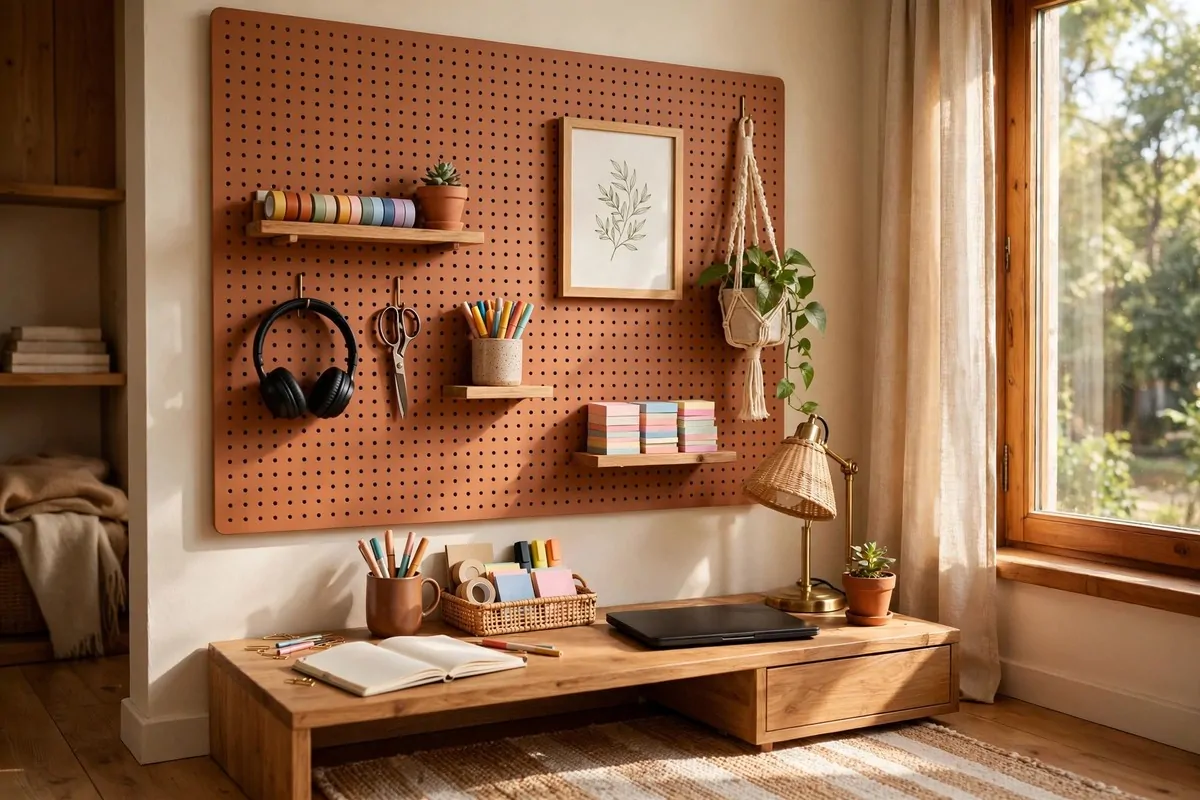
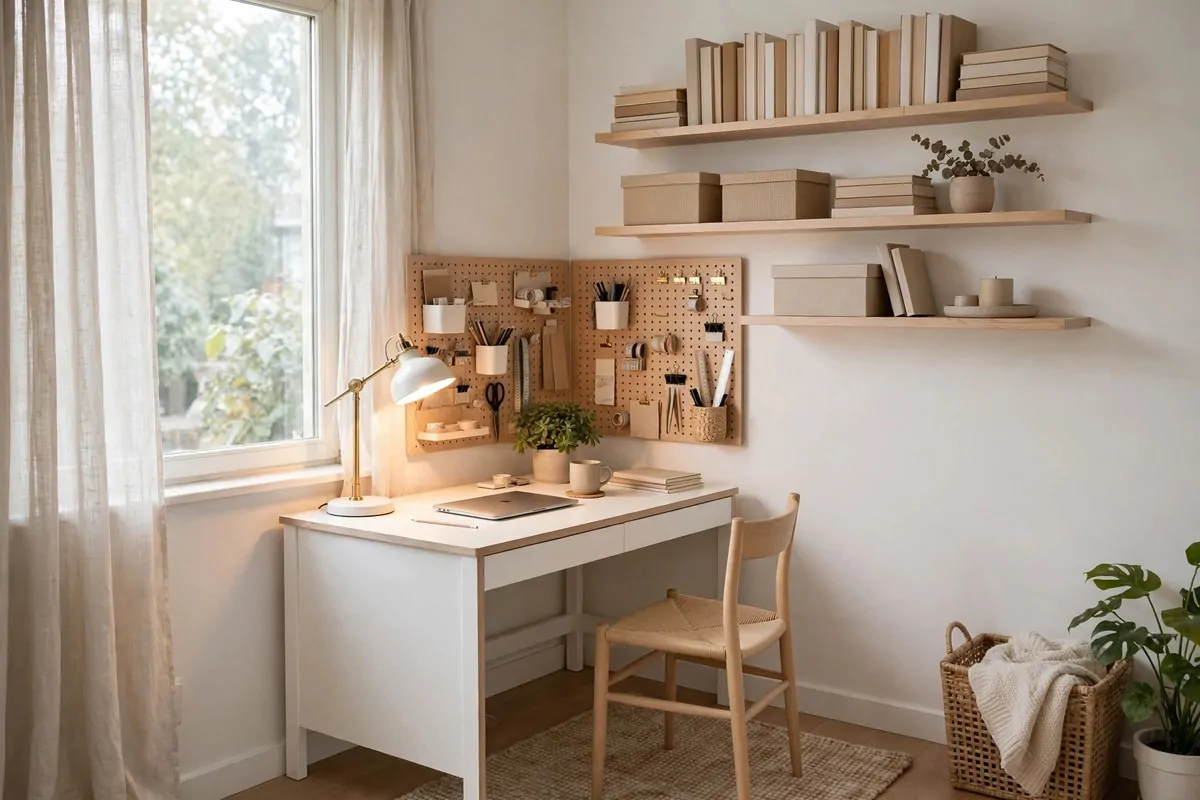
A pegboard wall is a small den’s secret weapon. It stores everything vertically, so the desk and floor stay clear. And it looks fantastic doing it.
Mount the pegboard on the wall above or beside your desk. Go as big as the wall allows. A full pegboard wall is a design feature, not just storage.
Load it with hooks, shelves, and small baskets. Scissors, headphones, chargers, notebooks, plants. Everything you use daily hangs within arm’s reach.
Paint it a warm color. White is clean. Sage green is calming. Warm terracotta is cozy. A colored pegboard looks intentional, like wallpaper that works hard.
Mix work things with pretty things. A small framed print on a hook. A trailing plant in a hanging pot. A little mirror. The pegboard becomes wall art.
Rearrange it whenever your work changes. Hooks lift off in seconds. New project, new layout. Your storage grows with you instead of fighting you.
Keep the desk under the pegboard minimal. Laptop, lamp, done. The wall does the storing now. A clear desk in a small den feels like a luxury.
I reorganize my pegboard every few months. It takes twenty minutes and feels like a fresh start. Small change, big mood lift. Try it on a slow Sunday.
14. Soft Lamp Light, No Overhead Glare
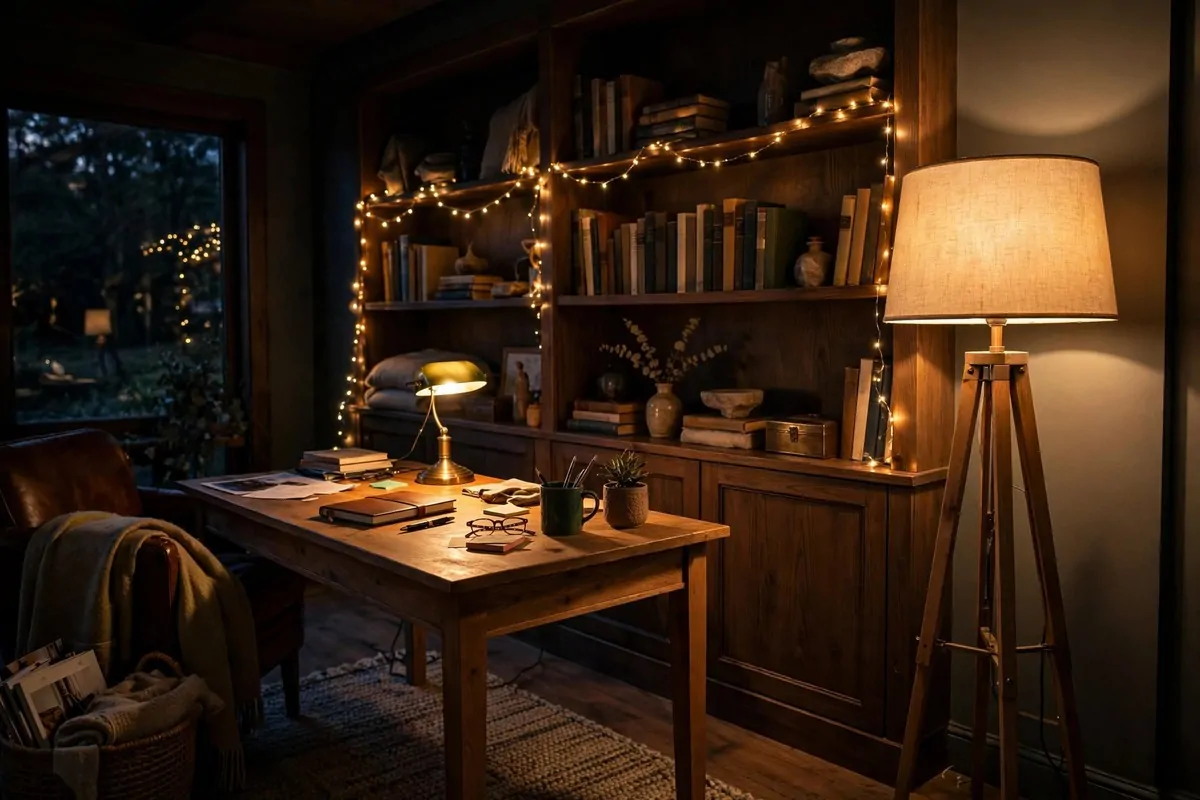
Overhead lights are the enemy of cozy. They are flat, harsh, and they make every room feel like a waiting room. A den office deserves better.
Turn the overhead light off. Forever, if you can. Light the den with lamps instead. Two or three warm lamps beat one ceiling light every single time.
You need three kinds of lamp light. A desk lamp for work. A floor lamp for the room. And one small glow, a candle-style lamp or a string of tiny lights, for mood.
Keep every bulb warm. 2700K or lower. Warm light relaxes your eyes and your brain. Cool light keeps you alert but edgy. Evenings want warmth.
A floor lamp with a fabric shade is the den classic. It throws soft light up and down. The ceiling glows gently. The room feels taller and calmer.
Put the desk lamp on the opposite side from your writing hand. Right-handed? Lamp on the left. No shadows across your work. Small detail, big comfort.
Dimmer switches are worth every penny. Bright for detailed work, low for evening wind-down. One room, many moods, one little slider.
A lamp-lit den at night is the coziest office there is. Golden pools of light, soft shadows, the rest of the house dark and quiet. Work feels almost like a pleasure.
15. Bookshelves as a Room Divider
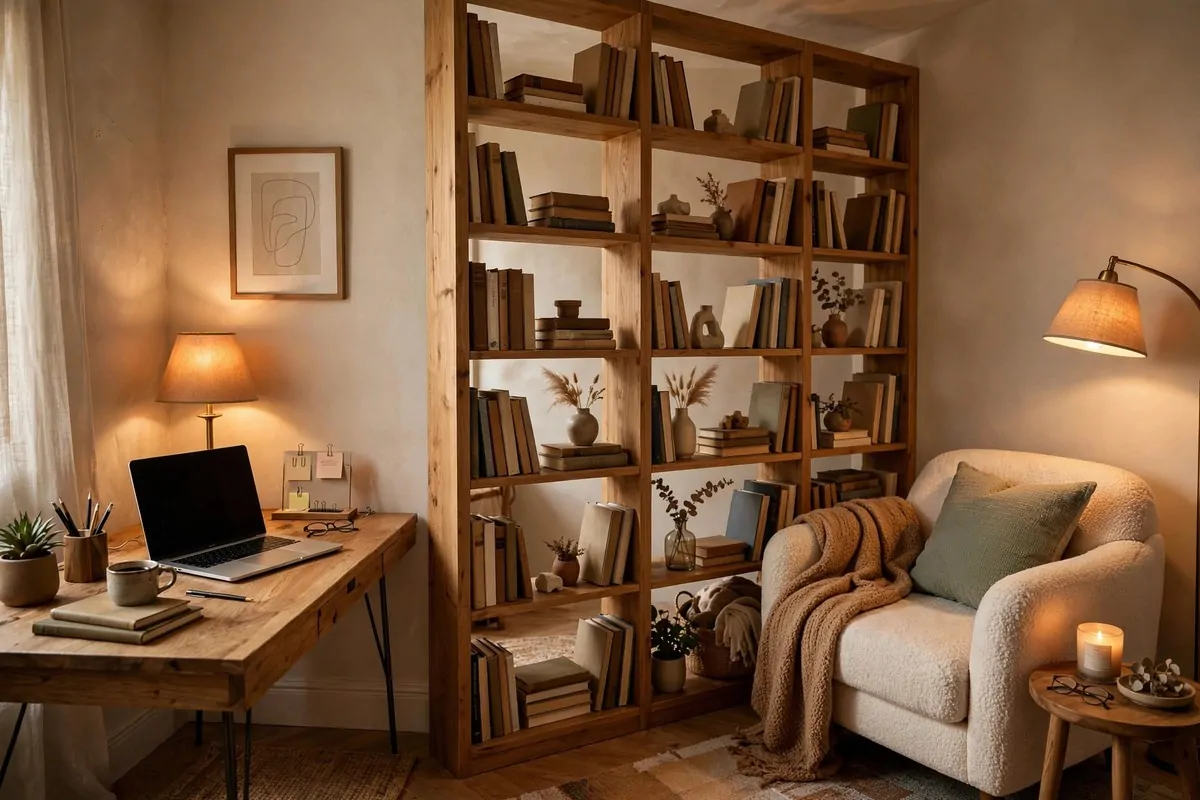
An open bookshelf standing in the middle of a den does something wonderful. It splits one small room into two zones without building a single wall.
Place a backless bookcase across the den. Desk on one side, reading chair on the other. Work zone and rest zone, divided by books. It is the prettiest wall you will ever own.
Backless matters. Light passes through. You can see shapes and colors from both sides. The room stays bright and connected instead of chopped in half.
Style both sides of the shelves. Books face both ways. Pretty objects on both sides. Each zone gets its own view, and both views are good.
Anchor the shelves so they cannot tip. This is important. A tall bookcase in the middle of a room must be fixed to the floor or wall. Safety first, always.
Keep the shelf styling light on top. Heavy things low, light things high. A top-heavy divider feels unstable. Bottom-heavy feels solid and safe.
This trick works in any small room, not just dens. Studio flats, shared bedrooms, big living rooms. Anywhere you need two spaces but only have one room.
Your den just became an office and a library. Two rooms for the price of some shelves. Sit at the desk, glance through the books at your reading chair, and smile. You built this.
A small den is not a problem to solve. It is a gift. Big rooms are impressive, but small rooms are the ones that hold you. Pick the ideas that fit your space, start this weekend, and turn that box-filled room into the coziest office in the house.