19 Cozy Corner Office Ideas That Tuck Into Any Room

A reader emailed me a photo last Sunday. It was a picture of a corner. Just a corner. Two plain walls meeting in her bedroom, with a laundry basket sitting in it like it owned the place.
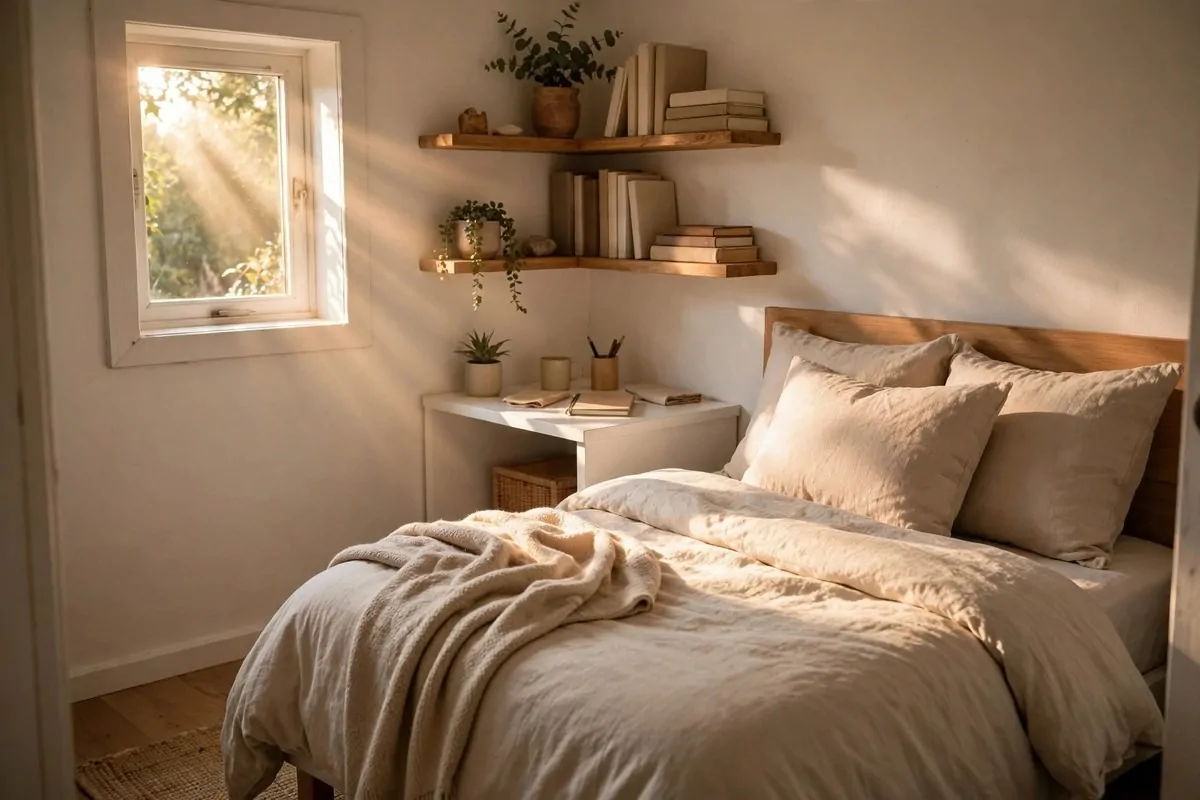
Her question was simple. She works from home three days a week, and she has no spare room. No study. Not even a real office corner. She wanted to know if a corner like that could actually become a place to work, or if she was dreaming.
I told her the truth. Corners are the most underused spots in any home. They hold dust and forgotten plants and boxes you never unpack. But a corner also has two walls, and two walls are all a cozy office really needs. One wall holds your desk. The other holds your shelves, your lamp, your little pile of pretty things.
These 19 cozy corner office ideas prove it. Each one tucks into a corner of a room you already have. Your bedroom. Your living room. Your kitchen. Even your hallway. You do not need a spare room. You just need one corner and a little bit of imagination.
1. The Simple L-Shaped Corner Desk
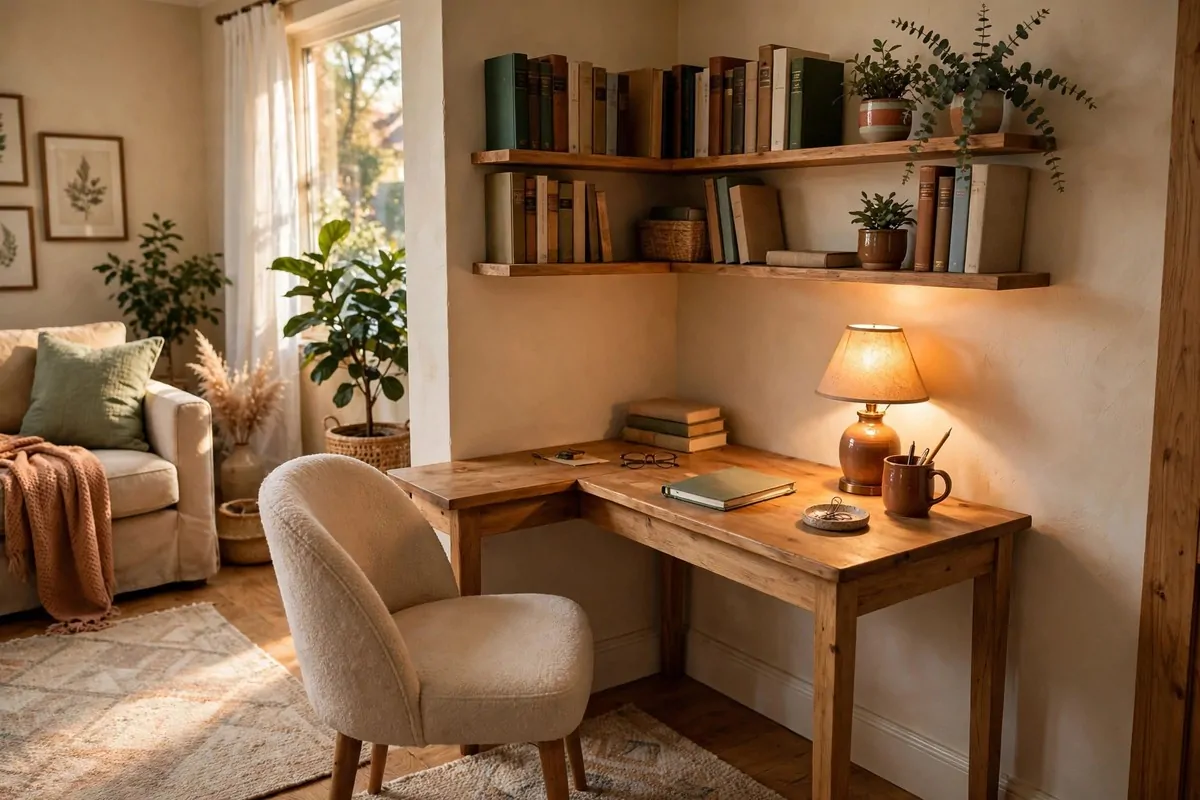
The L-shaped desk is the oldest trick in the book, and it still works better than anything new I have tried. It fits the corner the way the corner wants to be fit. No wasted space. No awkward gaps.
I love how the longer side holds the laptop and the shorter side holds the coffee, the notebook, the little plant. Everything has a spot. Nothing fights for room.
Pick a desk that is not too deep. About 40 to 50 centimeters of depth is plenty for a laptop and a lamp. Deeper desks eat the room and make the corner feel tight.
Put floating shelves on both walls above the desk. They turn dead wall space into storage. Books, boxes, a small clock. It all lives up there now.
Add a warm desk lamp on the short side. Warm light makes the corner feel like an evening cafe. Cold white light makes it feel like a clinic. Big difference.
Your chair matters more than you think. A chair with a soft seat keeps you there longer. A hard dining chair sends you to the couch by three in the afternoon.
Keep the wall color light if the room is small. White or cream walls bounce the light around. The corner feels bigger than it is.
A small rug under the chair ties the corner together. It tells your brain this spot is the office. When you step on the rug, you are at work.
This setup works in almost any room. Bedroom, living room, even a dining room corner. The L-shape adapts. That is its whole magic.
2. A Desk Under the Window Corner
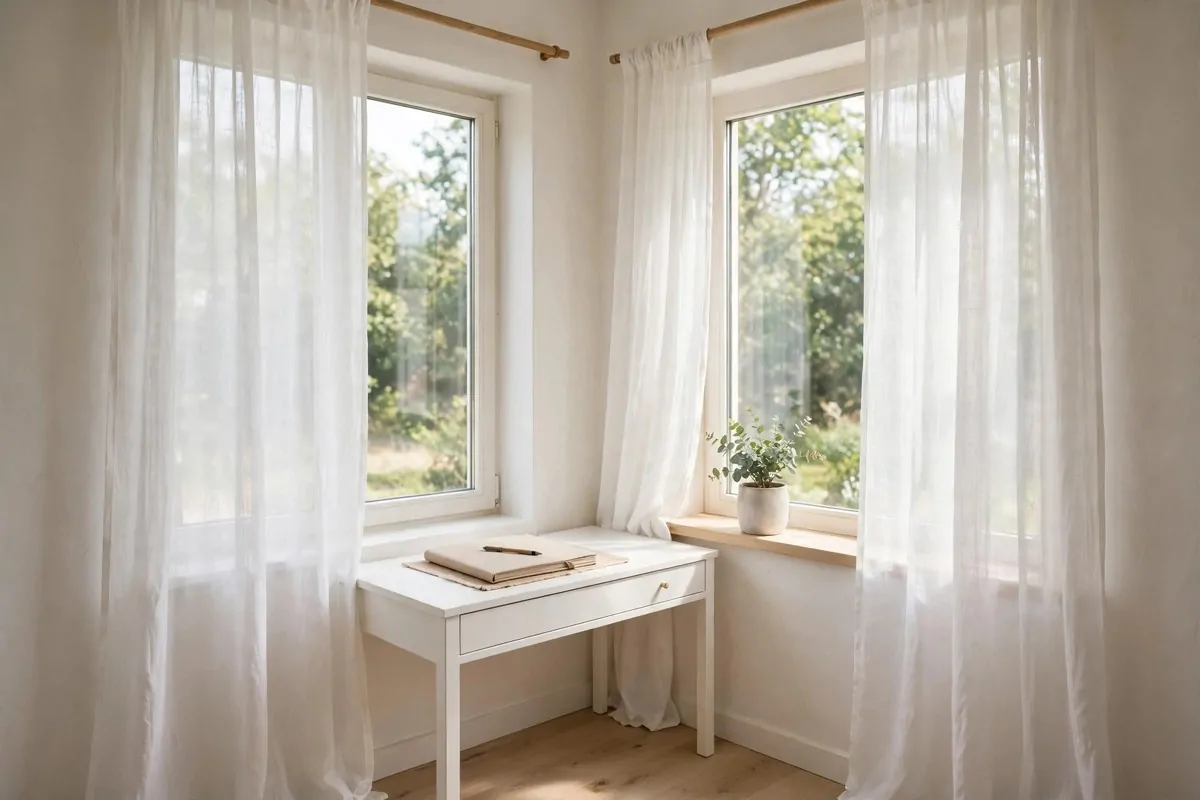
Corners with windows are gold. I mean real gold. Natural light is free, it is kind to your eyes, and it makes even the tiniest desk feel like a nice place to sit.
Push a slim desk right up against the window wall. You want your face toward the light or beside it. Facing the window can be lovely in the morning.
Watch out for screen glare at midday. A sheer curtain fixes it in seconds. It softens the light without killing it. Your screen stays readable and your room stays bright.
Keep the desk surface clear. A window desk wants to breathe. Laptop, one notebook, one plant. That is the whole list. Anything more and the light gets blocked.
A small plant on the windowsill loves this spot too. It gets the light, you get the green. Everyone wins.
In the evening, add a small lamp for the dark hours. A clip-on lamp saves desk space. It grips the desk edge and bends where you need it.
I worked at a window desk for two years. My favorite part was the weather. Rain on the glass, sun through the leaves. Work felt less like work somehow.
If your window corner is in the bedroom, face the desk sideways. That way you do not stare at your bed all day. Your brain needs the break.
3. The Fold-Down Desk That Disappears
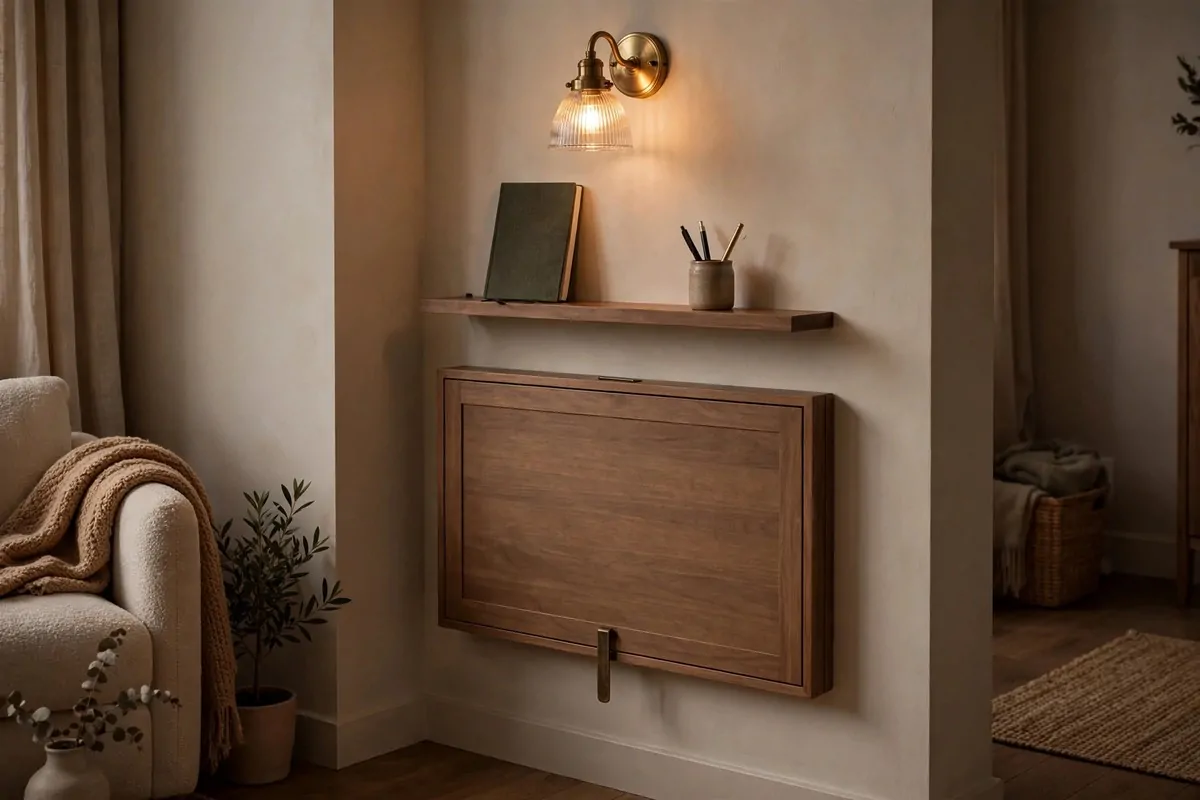
This one is for people who share their rooms. The fold-down desk is a desk when you need it and a flat wall when you do not. It is honestly a little bit of magic.
During the day it folds down into a real work surface. Laptop, mouse, papers, all of it fits. The wall brackets hold the weight. Most of them hold more than you expect.
At five in the evening you lift the front edge and it folds flat against the wall. The room is a living room again. Or a bedroom. The office is gone like it was never there.
Mount it at the right height. Elbows at a right angle when you type. That is the rule. Measure twice before you drill.
Put a small shelf above it for the things you use daily. Your notebook. Your charger. A pen cup. When the desk folds away, the shelf stays pretty.
A wall sconce above the desk lights the work without taking desk space. It also looks lovely when the desk is folded up. Like a little piece of art.
I know someone who put hers in the dining room corner. Her kids eat dinner at the table right next to it. Nobody minds because the desk vanishes at night.
The only downside is storage. A fold-down desk holds the work, not the supplies. Keep a small basket or box nearby for the extras. Tuck it under a chair or in a closet.
4. A Bedroom Corner With a Curtain
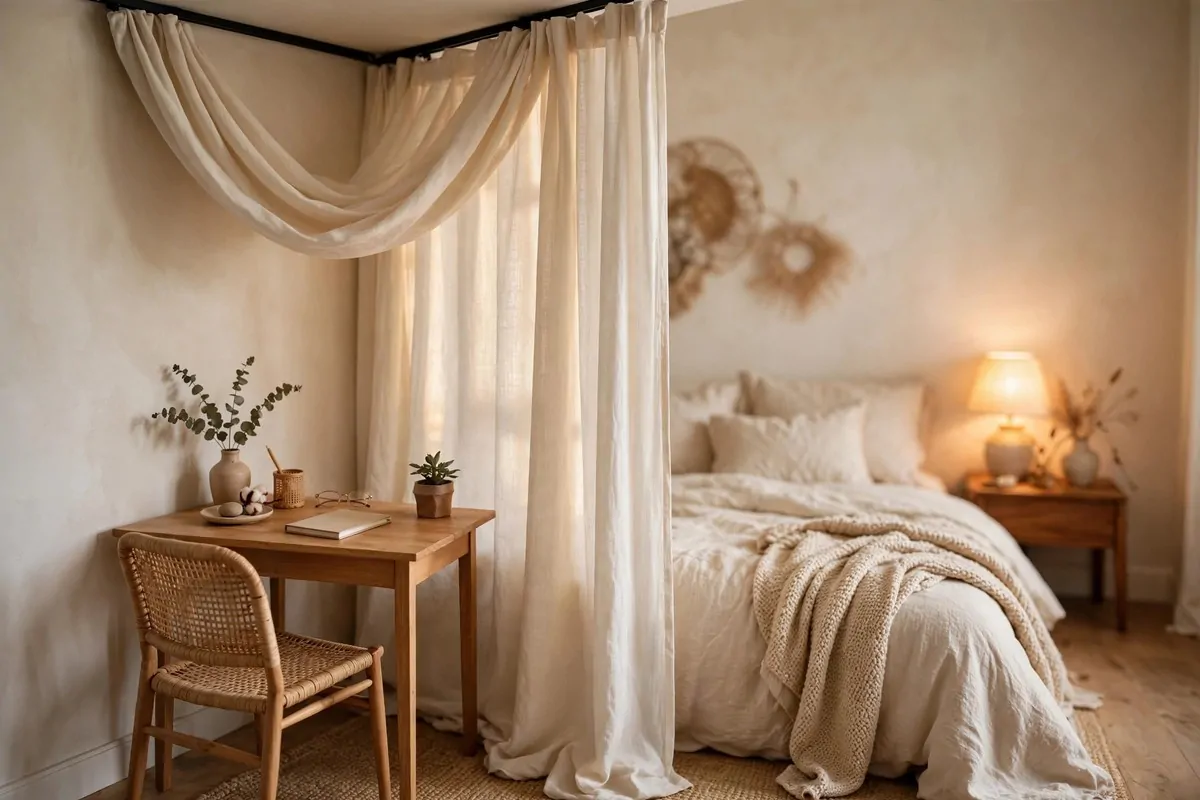
Working in the bedroom has one big problem. The bed. It stares at you all day, and your laptop stares at you all night. A curtain fixes both problems at once.
Hang a ceiling track or a tension rod in the corner. A soft linen curtain in a light color works best. It is cheap, it is pretty, and it takes five minutes to hang.
During work hours, pull the curtain back. Your corner office is open and bright. The desk gets the room light. You get the view of the whole room.
At night, pull the curtain closed. The office disappears behind soft fabric. Your brain sees a bedroom again. Sleep comes easier. I am sure of it.
Choose a curtain that matches your bedding. It looks planned instead of patched. Cream, soft gray, pale blue. Calm colors help the room stay restful.
Keep the desk small in a bedroom corner. A 80 centimeter wide desk is plenty. The bedroom is for rest first. Work is the guest here.
Add a small lamp on the desk for evening work. Warm light only. Cool light in a bedroom feels wrong, like a hospital hallway.
This trick costs almost nothing. A rod, a curtain, and one free afternoon. But it changes how a bedroom office feels completely.
5. The Living Room Corner That Matches the Couch
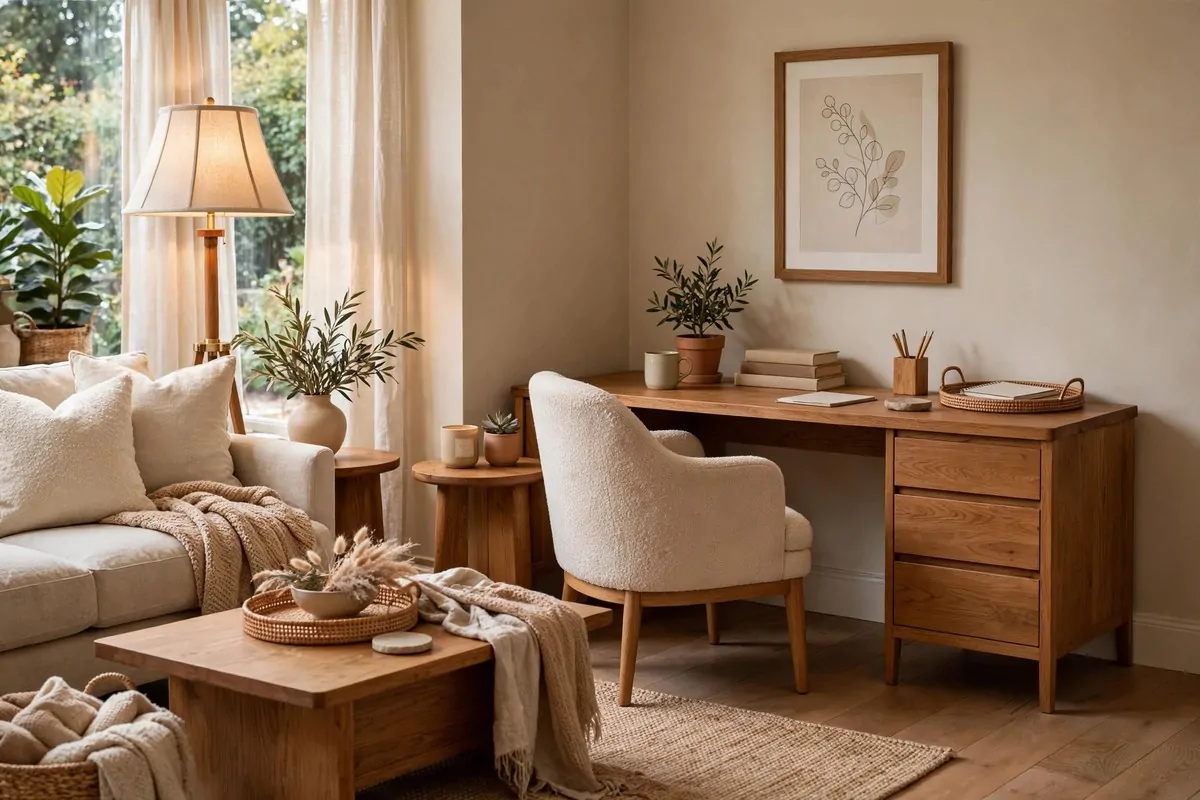
The secret to an office in the living room is camouflage. If the desk looks like it belongs with the sofa, nobody notices it is an office. It just looks like good furniture.
Match the wood tone. If your coffee table is warm oak, get a warm oak desk. If your shelves are dark walnut, find a dark walnut desk. Your eye reads them as a set.
Put the desk in the corner behind or beside the sofa. It becomes part of the seating area. Guests see a reading spot. You see your office.
Use a chair that could pass as a living room chair. A pretty upholstered chair works for short work days. For long days, get an ergonomic chair in a fabric that matches.
Hide the office supplies. A lidded basket under the desk holds papers and chargers. Close the laptop at night. The corner goes back to being a living room corner.
A floor lamp with a fabric shade lights the desk and the sofa at once. One lamp, two jobs. That is smart decorating.
Add one piece of art above the desk. Not a calendar. Art. It makes the corner look like a styled nook, not a workstation.
My friend did this in her flat. Her desk is behind the sofa and her guests always ask where she works. She just points at the pretty corner. They never guessed.
6. A Kitchen Corner Work Spot
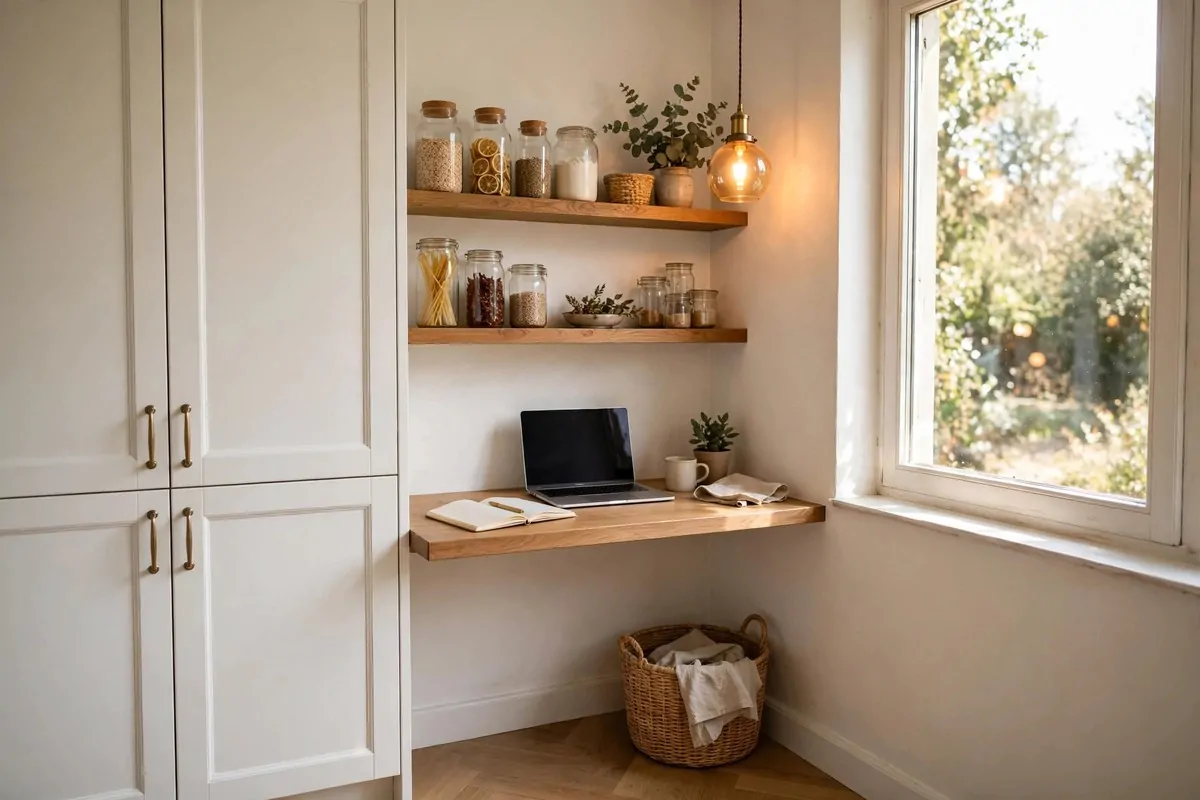
The kitchen corner is the office nobody thinks of. But think about it. The kitchen has the best light in the house. It has the coffee. And the snacks are right there.
A small counter-height desk or a slim table fits in most kitchen corners. Push it against the wall where the counter ends. It becomes an extension of the kitchen.
Use the kitchen shelves for office storage. A couple of pretty jars hold pens and clips. A small tray holds your notebook. It all blends with the kitchen stuff.
A pendant light or a small wall lamp lights the desk. Kitchens often have strong overhead lights. Add something softer for the work corner.
The big win is the routine. Morning coffee, sit down, open the laptop. No commute across the house. The kitchen is already awake when you are.
Keep food and laptop separate. Crumbs and keyboards are not friends. A small desk mat or tray under the laptop catches the mess.
This spot suits short work days best. A few hours of emails and planning. For full days, your back might want a better chair. Bring in a good one if you need it.
I love the kitchen corner for weekend planning. Bills, lists, meal plans. All the little life admin that never feels like real work when the kettle is on.
7. The Under-Stairs Corner
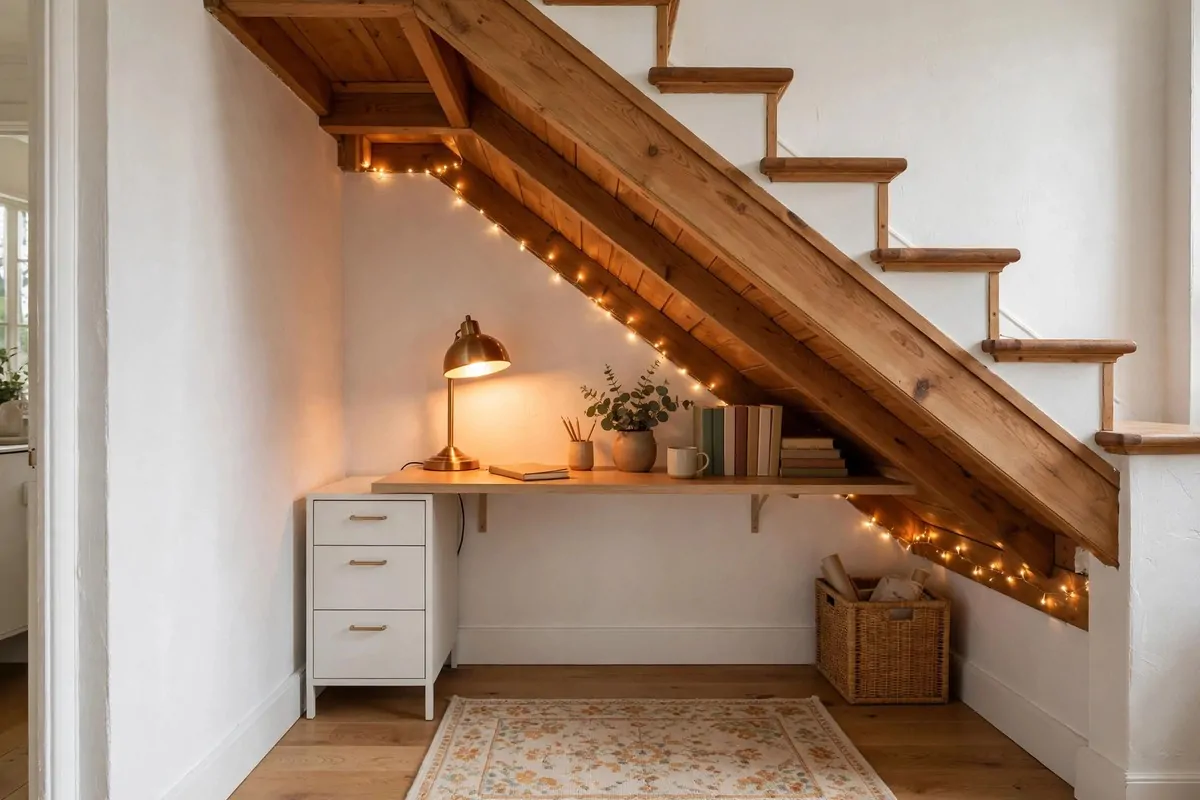
The space under the stairs is the most wasted space in most homes. It holds boxes and old paint cans. It could hold your whole office instead.
Measure the space first. Under-stair corners are slanted, so a normal desk will not fit. You need a desk that follows the slope, or a simple wall-mounted shelf at sitting height.
A wall-mounted shelf desk is the easy answer. One shelf, two brackets, done. It costs very little and fits the exact width of the space.
Light is the big job here. Under-stair corners are dark. Paint the walls white or cream. Add a warm desk lamp and maybe a strip of small lights along the underside of the stairs.
The slanted ceiling is actually cozy. It feels like a little cabin. Lean into it. Add a cushion on the chair, a small rug, a framed print on the low wall.
Storage goes in the tallest part of the space. A slim drawer unit or a stack of boxes fits where the ceiling is highest. Use the low parts for nothing. Let them be.
Keep the walkway clear. The office should not block the stairs. Push everything tight to the wall. You want to slip in and out easily.
I have seen under-stair offices that look like something from a storybook. Small, warm, glowing. People walk past them and stop to stare. Yours can be like that too.
8. A Landing or Hallway Corner
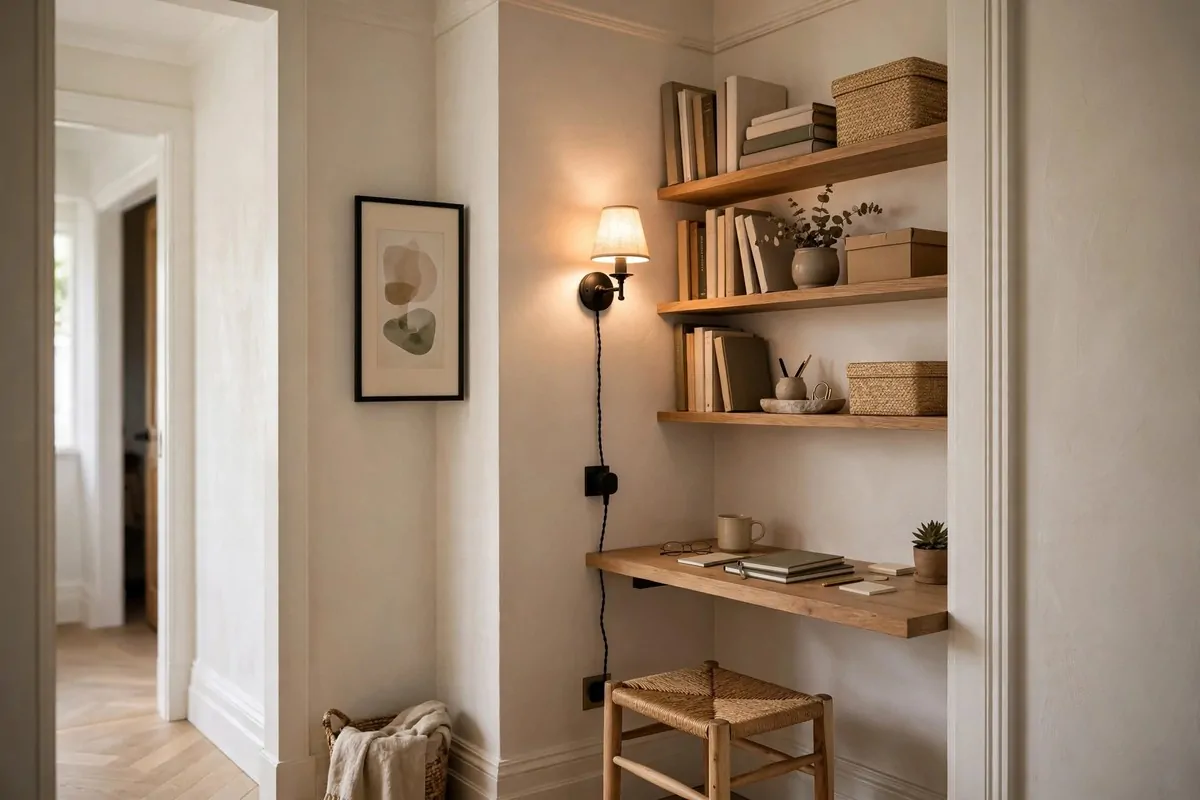
Hallways are just empty space you walk through. A wide landing or a hallway corner can become an office with almost no effort at all.
You need a slim desk here. Nothing deeper than 40 centimeters. A wall-mounted shelf works perfectly. It leaves the floor clear so people can still walk past.
Use a stool or a chair that tucks fully under the desk. When you are done working, push it in. The hallway goes back to being a hallway.
Wall storage is everything in a hallway office. Floating shelves above the desk hold your books and boxes. A pegboard keeps small things off the desk.
Light it well. Hallways are often dim. A plug-in wall sconce or a small lamp on the shelf makes the corner feel like a real workspace.
This is a great spot for a laptop-only setup. Checking email, paying bills, writing lists. The quick jobs of life. It does not need to hold a full desktop computer.
The best part is the separation. You walk to your hallway office. You work. You walk away. Your brain gets the little journey as a signal. Work starts here, home starts there.
Make it pretty. A framed print, a small plant, a nice desk mat. Hallway offices are small, so every detail shows. Make each one count.
9. The Corner Behind the Door
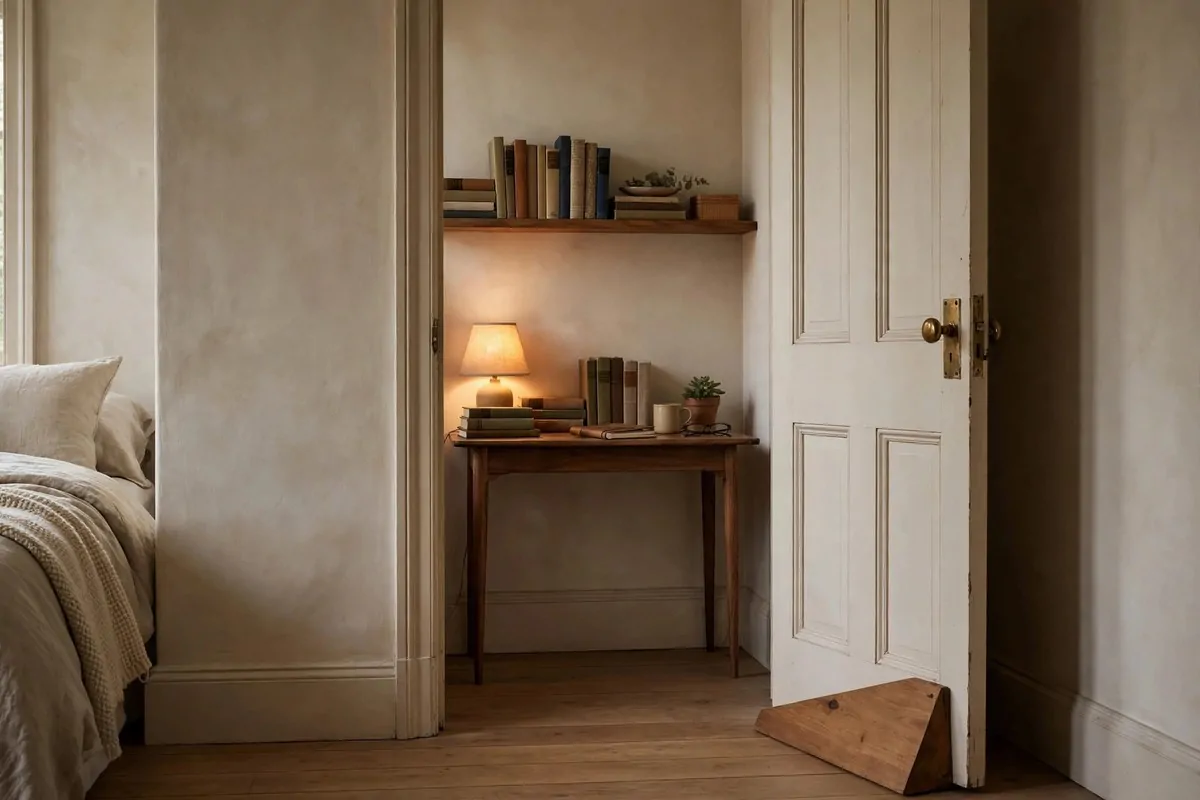
Every room has a corner behind the door. You know the one. The door swings open and hides it. Nothing lives there except dust.
That hidden corner is a perfect tiny office. It is out of sight, out of mind, and out of the way. When the door is open, the office is hidden. When the door is closed, you have privacy.
The space is usually narrow. A small wall-mounted desk or a narrow console table fits best. Measure the door swing first so the desk does not block it.
Mount a shelf on the wall above the desk. It holds everything without touching the floor. In a behind-the-door corner, floor space is precious.
A doorstop is your best friend here. A good heavy doorstop keeps the door open while you work. Your office stays visible and the light comes in.
Add a small lamp. Behind-the-door corners get little natural light. A warm lamp makes it feel like a secret little study instead of a dark hole.
Keep the setup simple. Laptop, lamp, notebook. This is a pocket office. It does the everyday jobs and stays out of the way the rest of the time.
I love how invisible this idea is. Guests never see it. The room looks normal. But you know your little workspace is right there behind the door, waiting.
10. The Pegboard Corner Wall
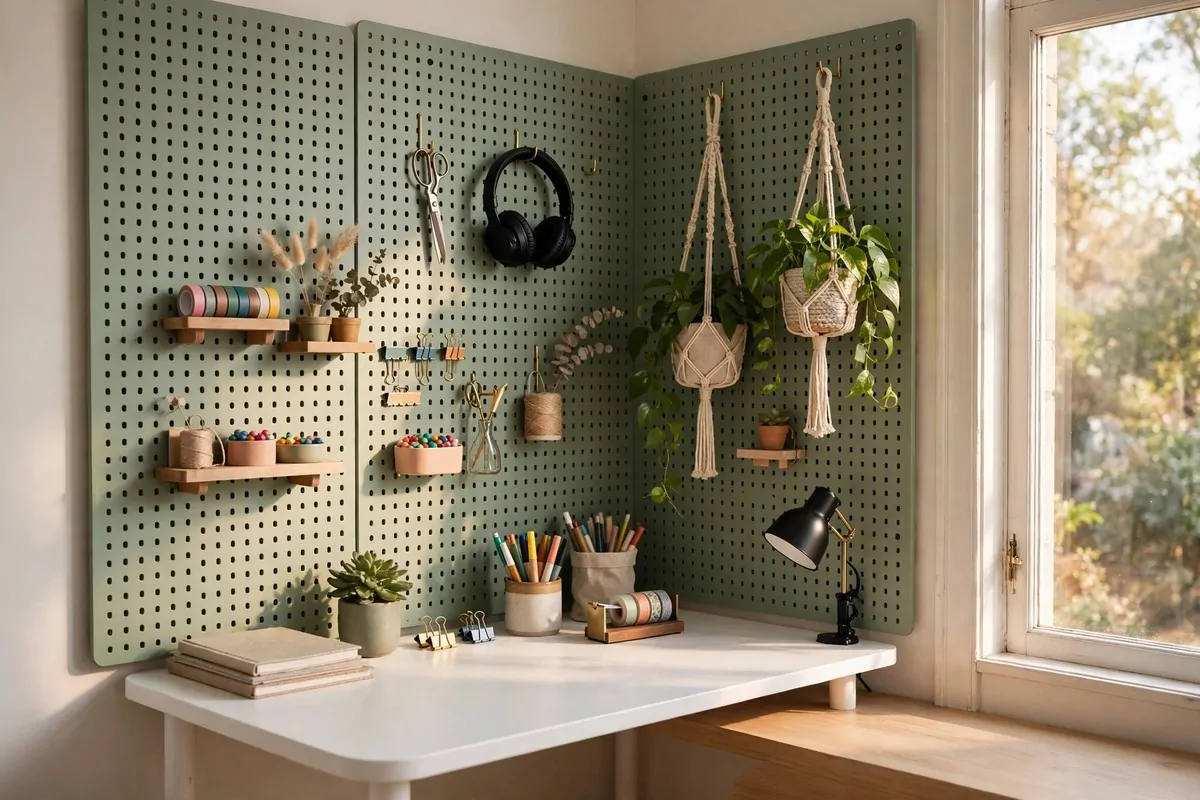
A pegboard turns a plain corner wall into a whole storage system. It is one of the cheapest ways to make a small office feel organized and look great.
Hang the pegboard on one or both walls of the corner. Covering the full corner makes it feel like a designed workspace. It frames the desk beautifully.
Add hooks, small shelves, and little baskets to the board. Scissors, tape, chargers, headphones. Everything hangs within reach. Nothing piles on the desk.
Paint the pegboard to match your room. White on white looks clean. A soft color like sage or dusty blue adds personality. It stops looking like a workshop and starts looking like decor.
Mix useful things with pretty things. A small plant in a hanging pot. A framed photo on a hook. A little clock. The pegboard becomes wall art that also works hard.
The desk under a pegboard can stay tiny. All the storage lives on the wall. A 70 centimeter desk holds a laptop and a lamp easily when the wall does the rest.
Change the layout whenever you want. Hooks lift off and move in seconds. Your office grows and changes with your work. No drilling new holes.
This is my favorite idea for crafters and planners. People who use lots of little tools. Everything visible, everything reachable, nothing lost in a drawer.
11. A Rug That Draws the Line
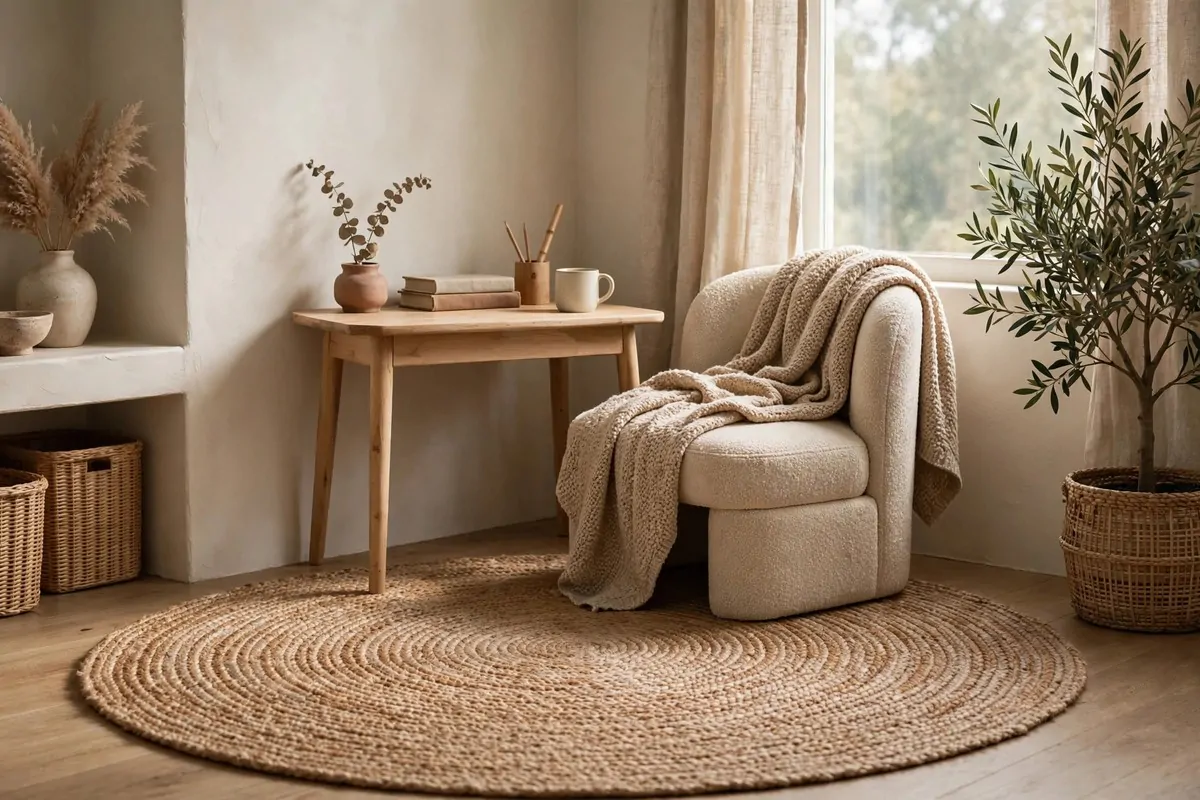
Sometimes a corner office needs no walls at all. Just a rug. A rug draws a line on the floor and says, this part is the office. It is simple and it works.
Pick a rug big enough for the desk and the chair. The chair should stay on the rug when you push back. That is the test. If the chair rolls off the edge, the rug is too small.
Round rugs are lovely for corners. They soften the hard angle where the walls meet. A round jute or wool rug under a small desk looks warm and intentional.
Choose a rug with some texture. Flat rugs disappear. A rug you can feel under your feet makes the corner feel like a real room. Your feet notice the difference.
The rug also protects the floor. Chair wheels and legs scratch wood and dent carpet. A rug takes the damage so your floor does not have to.
Match the rug to the room, not to office furniture. A living room corner office should have a living room rug. It keeps the whole room feeling like one space.
Add a cushion to the chair and a throw over the chair back. Soft things on the rug, soft things on the chair. The corner becomes the coziest seat in the house.
I think of the rug as the office walls. You step onto it and you are at work. You step off it and you are home. No door needed. Just a line on the floor.
12. Two Bookcases Make a Corner
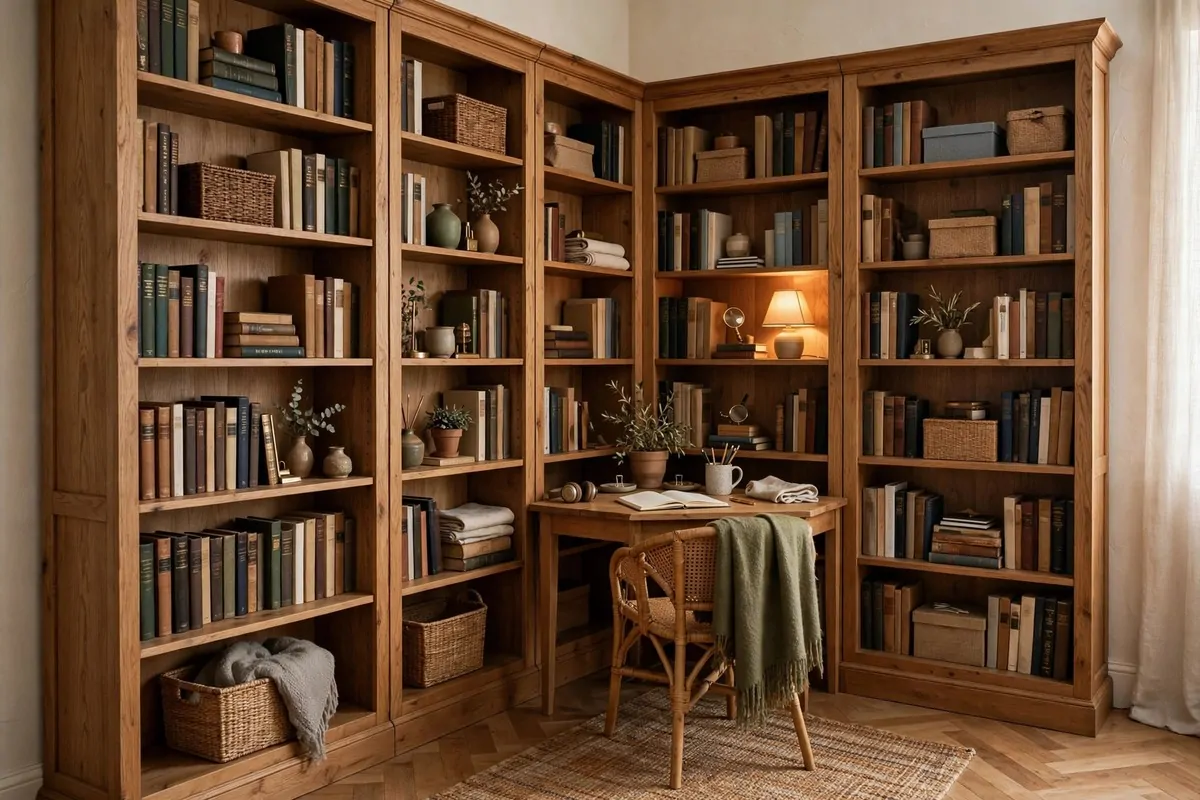
If your room has no free corner, make one. Two tall bookcases pushed together at an angle create a corner out of thin air. And they give you a mountain of storage.
Place the bookcases in an L shape against a wall. The space between them becomes your office nook. A small desk fits right in the middle of it.
Fill the shelves with books, boxes, and pretty things. The shelves become your office walls. They block the view of the rest of the room and give you focus.
Face the desk outward or inward. Facing out gives you the room view. Facing the shelves gives you a cocoon. Try both. See which one your brain likes.
Add a small lamp on one of the shelves. The light falls right on your desk. It feels like a library carrel, quiet and a little bit special.
This works beautifully in a living room. The bookcases look like living room furniture. The desk hides between them. Guests see a reading nook. You see your office.
Use the lowest shelves for office supplies. Boxes with lids keep papers and chargers tidy. Label them if you are the labeling type. I am. It saves so much time.
The bookcase corner is also easy to undo. Move the shelves apart and the office is gone. Renters love this. No holes, no damage, no lost deposit.
13. The Armchair Corner Office
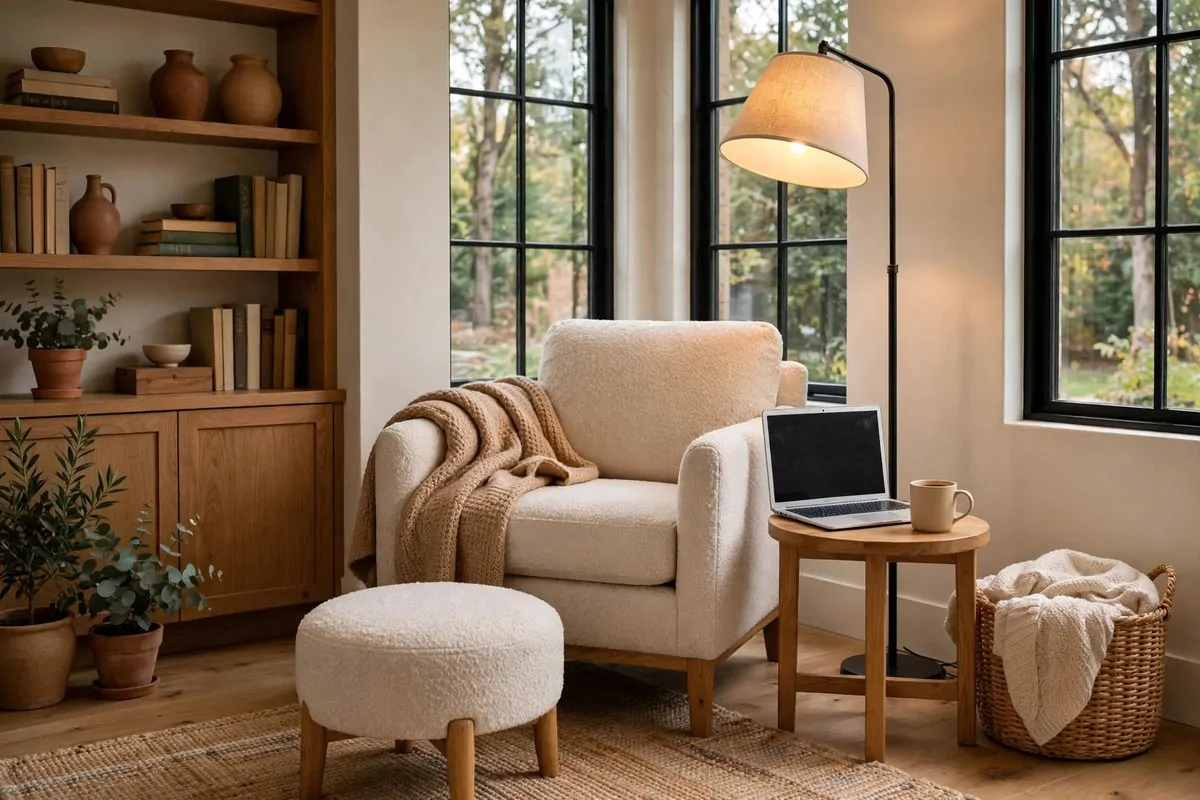
Not every office needs a desk. Some work happens best in an armchair. Reading, planning, calls, thinking. The armchair corner office is for that kind of work.
Pick a comfortable armchair with good back support. Not a dining chair. A real sink-into-it chair. This is your office now, so comfort is the whole point.
Add a small side table within arm’s reach. It holds the laptop when you need both hands, the coffee always, and the notebook for ideas that arrive mid-sip.
A floor lamp with a warm bulb lights the chair perfectly. Position it over your shoulder. No glare, no shadows. Just a pool of warm light around you.
Keep a throw blanket on the chair arm. Corners can be drafty. And a blanket makes the chair feel like a reward, not a workstation.
A small footstool or ottoman completes it. Feet up changes everything. Your body relaxes and your mind somehow works better. I do my best thinking with my feet up.
Store work things in a basket beside the chair. Notebook, pens, charger, headphones. One basket holds the whole office. Carry it away and the corner is just a reading chair.
This is the coziest office on this whole list. It does not suit eight hours of typing. But for the thinking parts of work, nothing beats it.
14. A Warm Wood Corner
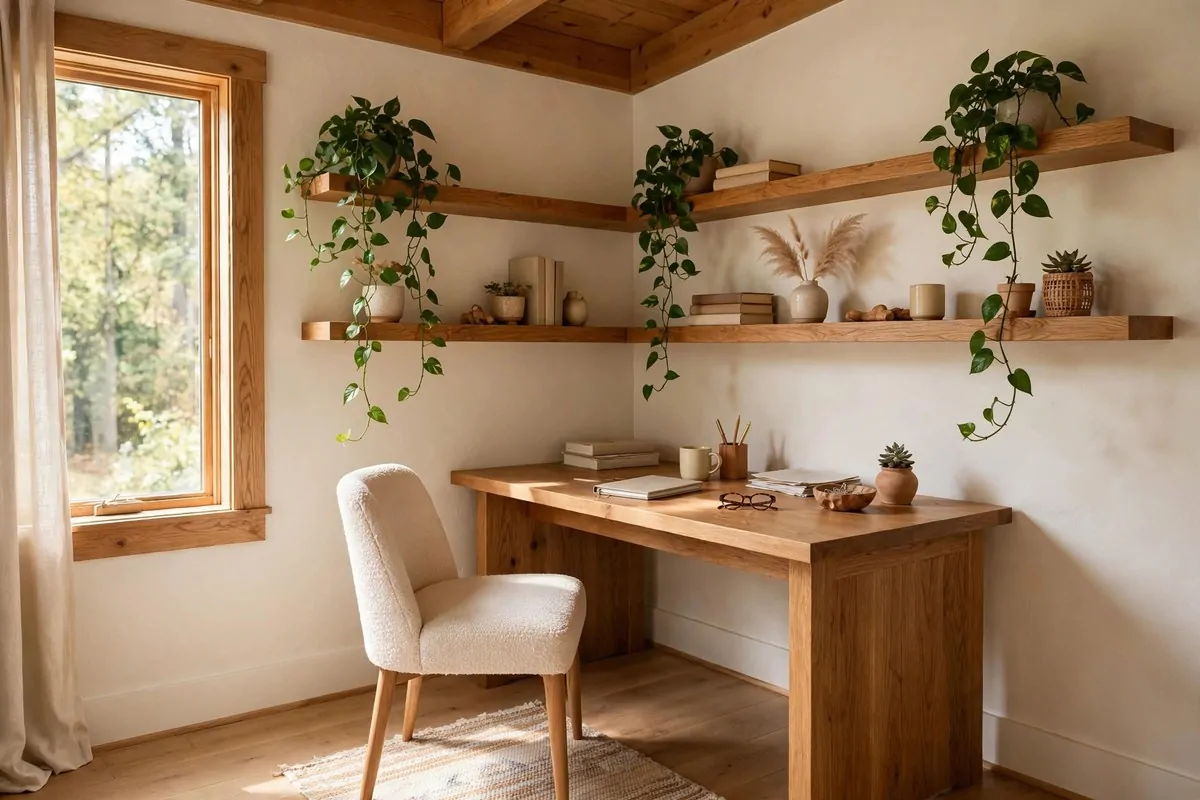
Wood makes a corner feel warm in a way nothing else does. A wooden desk, wooden shelves, maybe a wooden chair. The corner stops feeling like an office and starts feeling like a cabin.
Choose warm wood tones. Oak, pine, walnut. Light woods keep small corners bright. Dark woods feel rich but need more light. Pick based on your room’s daylight.
A solid wood desk top on simple legs is all you need. It does not have to be expensive. A sanded plank on two drawer units looks wonderful and costs little.
Match the shelf wood to the desk wood. Two matching woods look planned. Five different woods look like a junk shop. Keep it to one or two tones.
Add soft things to balance the hard wood. A fabric chair, a small rug, a cushion. Wood plus fabric is the coziest combination there is.
Plants love wood corners. The green against the brown is beautiful. A pothos trailing from a shelf, a small succulent on the desk. Nature and wood belong together.
Keep the walls simple. White or cream lets the wood be the star. A busy wall fights the wood for attention and the corner feels noisy.
I have a pine desk in my own corner. It has scratches and a coffee ring and I love it more every year. Wood ages with you. It gets better, not worse.
15. The Plant Corner Office
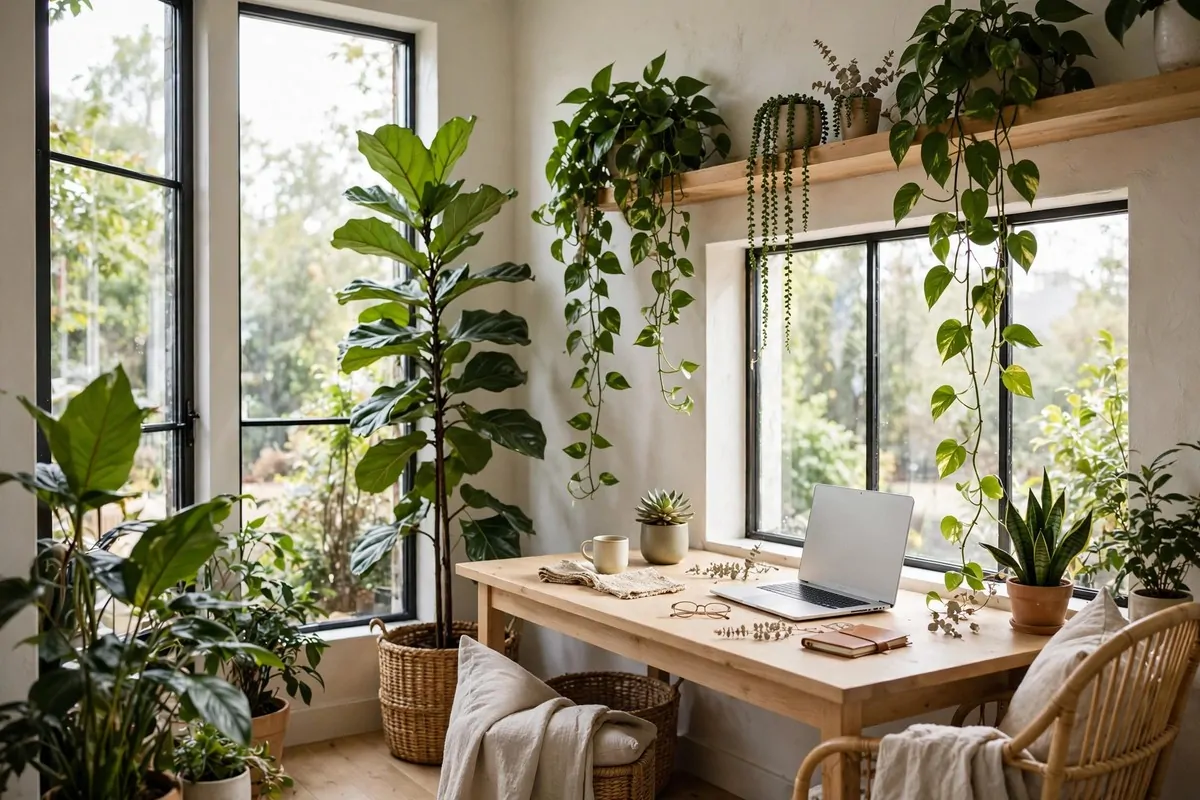
Some offices are built around a desk. This one is built around plants. The desk just happens to be there too. And honestly, it might be the happiest corner in the house.
Start with three plants of different heights. A tall one on the floor, a medium one on a shelf, a small one on the desk. Three levels of green make the corner feel alive.
Pick easy plants. Pothos, snake plants, spider plants. They forgive you when you forget to water. A dead plant in an office corner is just sad.
Hang one plant from the ceiling or a high shelf. Trailing leaves soften the corner’s hard angle. It feels like the room is giving you a little hug.
Keep the desk small and light colored. White or pale wood. The plants are the stars here. The desk should fade into the background.
A plant corner office needs good light. Near a window is best. Most houseplants want bright indirect light, which is exactly what a window corner gives.
Watering becomes part of the work routine. I water mine when I start the day. It is a small ritual. It tells my brain that work has begun.
Studies say plants help focus and mood. I do not need a study to tell me that. I just know my plant corner is where I do my best thinking.
16. A Rolling Cart for Supplies
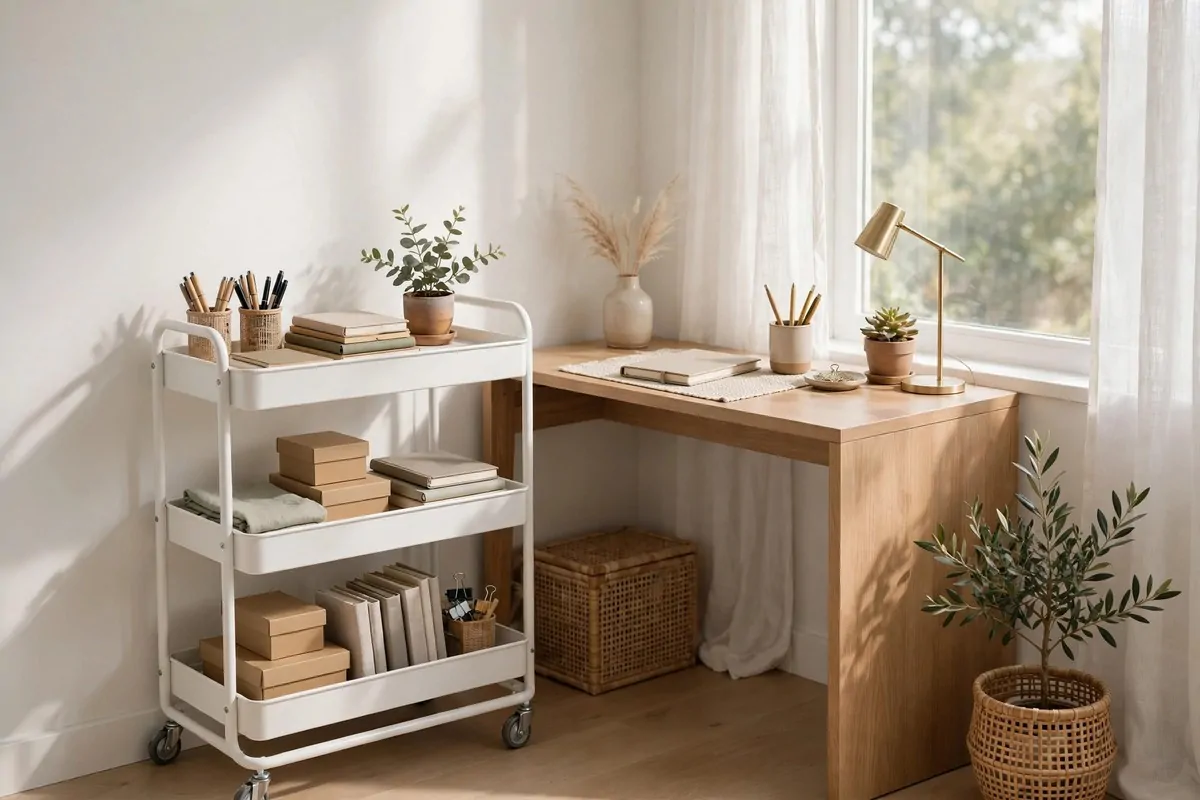
A rolling cart is the hardest working little thing in a small office. It holds your supplies, it moves where you need it, and it tucks into the tiniest gap beside your desk.
The classic three-tier cart fits almost anywhere. About 40 centimeters wide. It slides into the space between the desk and the wall like it was made for it.
Organize it by level. Top level for daily things, pens, notebook, charger. Middle level for paper and files. Bottom level for the stuff you rarely need but want nearby.
Use small boxes or cups on each tier. Without them, the cart becomes a junk pile on wheels. With them, it looks tidy and everything has a home.
Roll it out when you work. Roll it away when you are done. Push it into a closet or behind a chair. The office supplies vanish in seconds.
Pick a cart color that makes you happy. White is clean. A soft color like blush or sage adds cheer. Black looks sharp. It is a small thing, so have fun with it.
This is perfect for shared corners. The desk stays in the corner, but the supplies live on the cart. When someone else needs the space, the cart rolls away.
I keep one beside my desk with tea things on the top tier. Mug, tea bags, little spoon. My office corner is also my tea station. Nobody minds. Everybody wants tea.
17. The Gallery Wall Corner
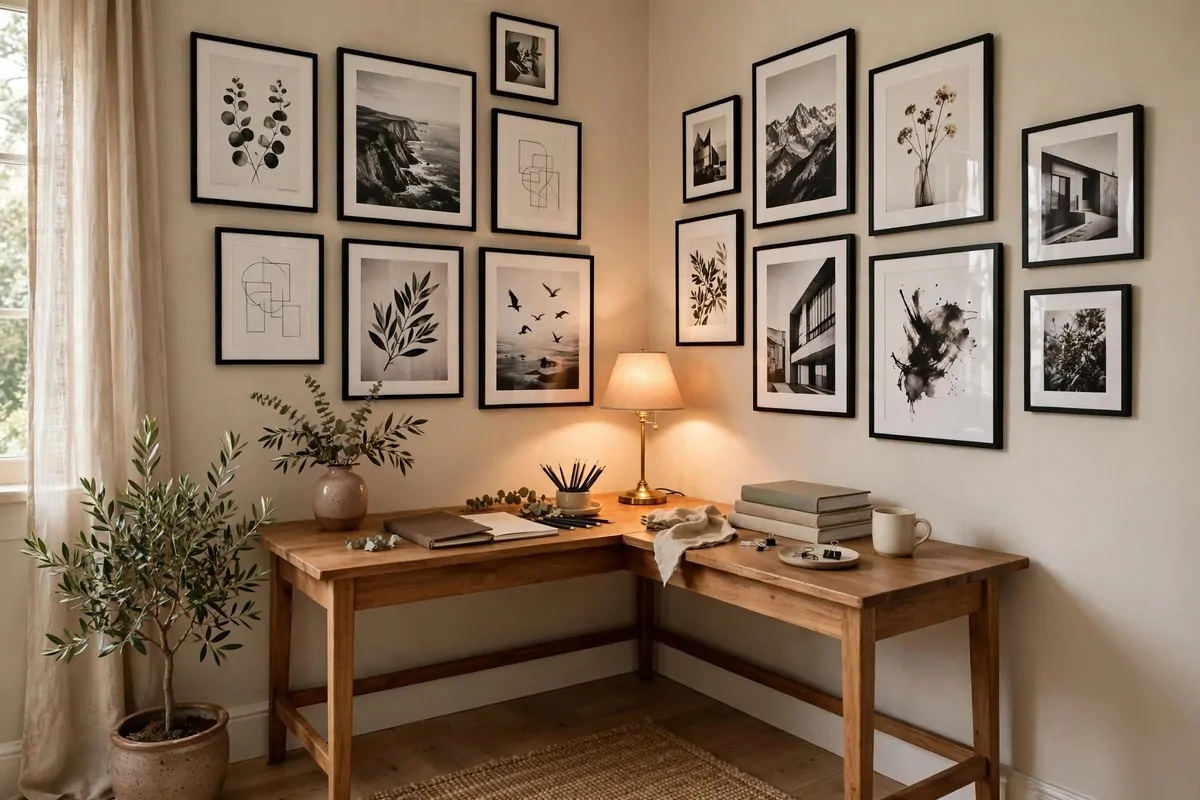
A gallery wall above your desk turns a working corner into a personal one. It is your art, your photos, your taste, right where you see it all day.
Start with one big piece. A print you love, a photo that makes you happy. Hang it at eye level when you sit. Everything else builds around it.
Add smaller frames around the big one. Mix sizes and shapes. Some photos, some art, maybe a small mirror. Galleries look best a little bit messy and personal.
Keep the frames simple. Thin black, white, or wood frames let the art speak. Fancy frames fight each other and the wall feels busy.
Hang the gallery on both corner walls for a wraparound effect. It makes the corner feel designed and intentional, like a little art room that also has a desk.
Use paper templates first. Cut paper the size of each frame and tape them to the wall. Move them around until it feels right. Then hammer. This saves so many holes.
Include one piece that motivates you. A quote, a postcard from a trip, a drawing your kid made. Work days get long. Your wall should cheer you on.
A gallery wall makes the cheapest desk look expensive. It is the art that people see, not the furniture. And it costs whatever old frames and prints you already own.
18. The Curtain-Closed Call Corner
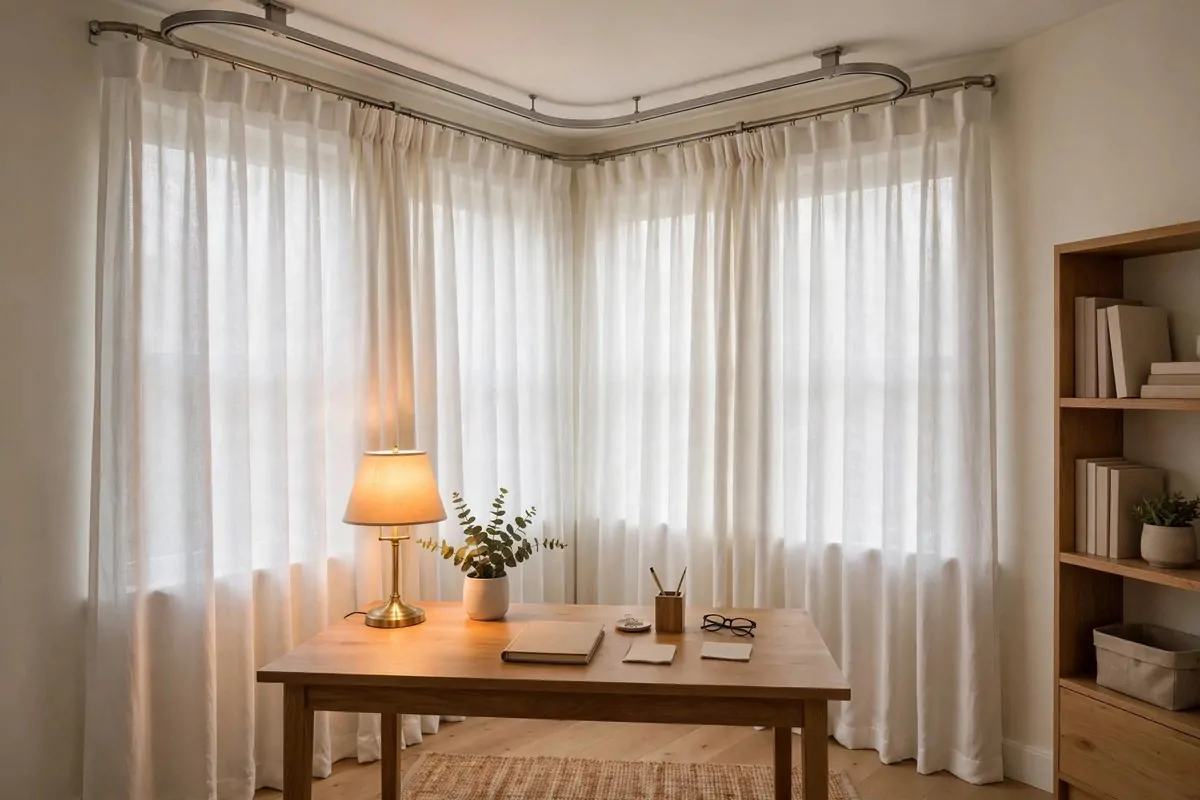
Video calls changed everything. Now your office corner is also a TV studio. The curtain-closed call corner gives you a clean background in seconds.
Hang a curtain on a ceiling track around the corner. Two panels are enough. When a call starts, pull them closed behind you. Instant clean background.
Choose a curtain in a solid calm color. Soft white, warm gray, pale green. Busy patterns distract on camera. Solid colors look professional and calm.
The curtain also blocks household noise a little. Not perfectly. But fabric softens sound. Your calls sound better and the house sounds quieter.
Behind the curtain, keep the desk tidy. You never know when a call comes. A quick rule helps. Clear the desk before you close the laptop. Future you will be grateful.
Add a small lamp behind the desk for calls. Face light matters on camera. A warm lamp in front of you beats an overhead light every time. You look awake and friendly.
This works in any shared room. Living room, bedroom, kitchen corner. The curtain creates a room inside the room whenever you need one.
I pull my curtain for every call now. It is my little ritual. Curtain closed, lamp on, deep breath. Then I am ready. It tells my brain it is showtime.
19. The Sconce-Lit Evening Corner
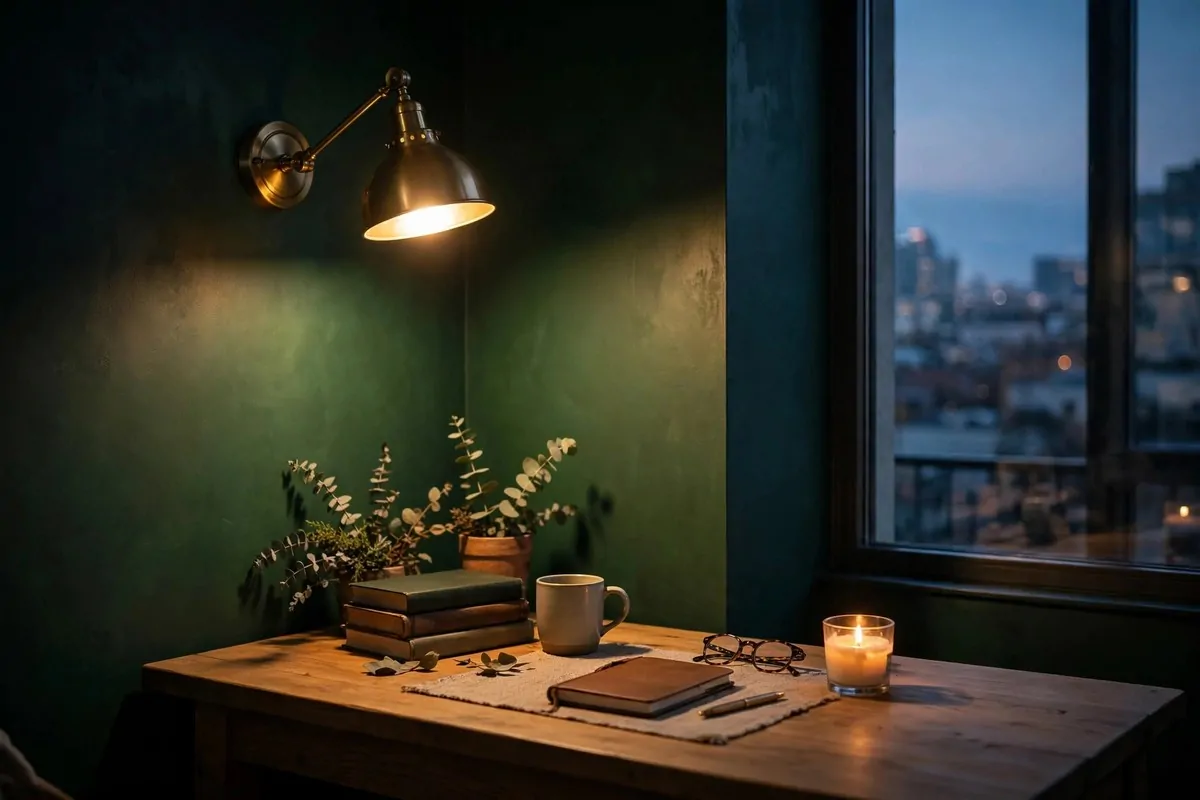
The last idea is about light. A wall sconce above your desk turns an ordinary corner into the coziest spot in the house after dark.
Sconces save desk space. No lamp base eating your work surface. The light comes from the wall, right where you need it. Your whole desk stays free.
Choose a warm bulb. 2700K is the magic number. It glows like candlelight. Your corner feels like an evening cafe, not an office.
A swing-arm sconce is the best kind. Pull it close for detailed work. Push it back for soft ambient light. One fixture, two moods.
Pair the sconce with a dark wall color for drama. Deep green, navy, warm charcoal. Dark walls plus warm sconce light is the coziest combination I know.
If you cannot wire a sconce, use a plug-in one. They hang on two screws and the cord runs down the wall. Cord covers make it look neat. Renters can do this too.
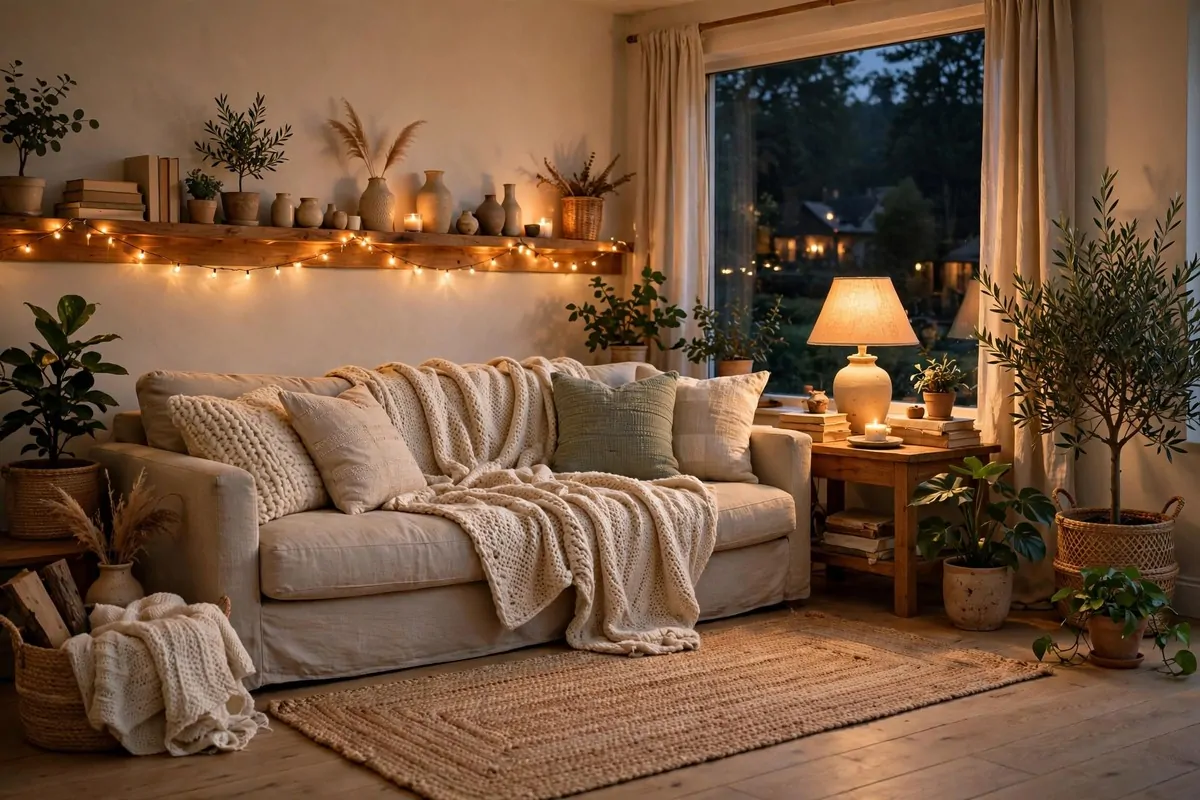
Add a small candle or a string of tiny lights for extra glow. Not for working light. For feeling. The corner should feel like somewhere you want to be.
Evening work does not have to feel lonely. A sconce-lit corner with a warm drink is honestly lovely. Some of my best writing happens in exactly this kind of light.
A corner is never just a corner. It is a waiting room for a good idea. Pick the one that fits your home, set it up this weekend, and watch that empty spot become your favorite place to sit.