28 Home Office Setups That Boost Focus Without Costing a Fortune

I spent a whole year blaming my brain for my bad workdays. I thought I was lazy. I thought I just could not focus like other people.
Then I moved my desk. That was it. One small move, and my workdays felt easier.
The problem was never my brain. It was my setup. And most of the fixes in this post cost little or nothing at all.
Face the Window, Not the Wall
My desk used to face a blank wall. I stared at white paint all day.
It felt dull. My eyes had nowhere to rest. My mind kept drifting off.
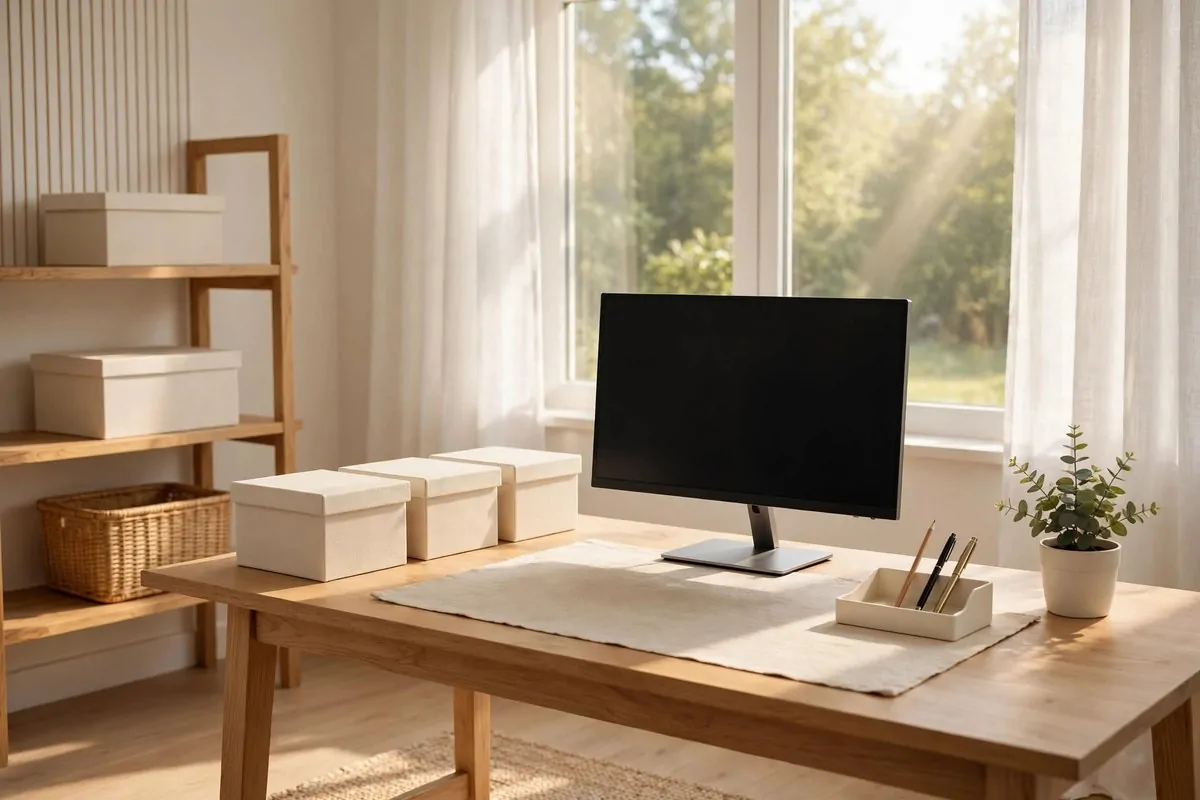
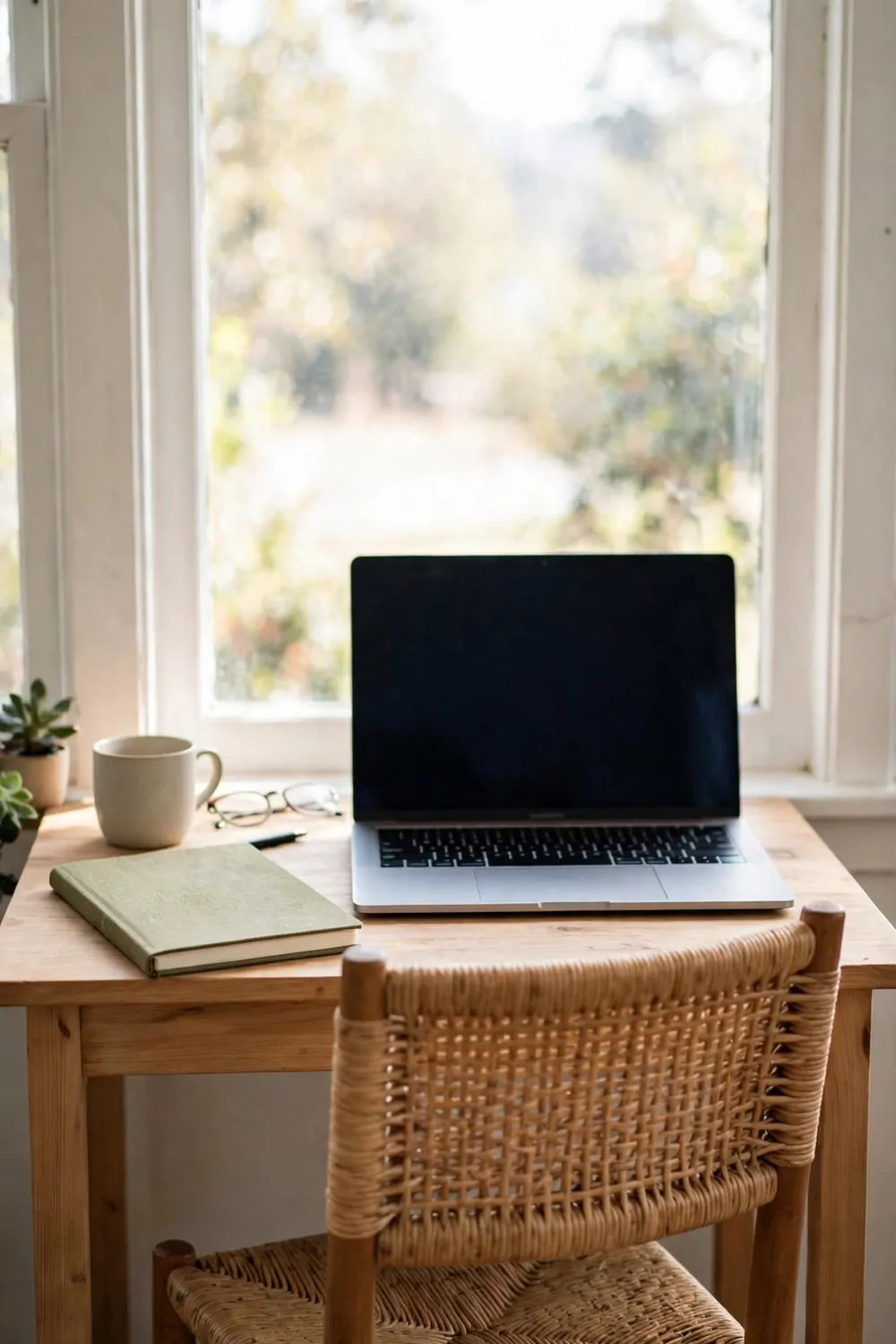
Then I turned the desk around. Now I face the window. The change was free.
Daylight falls on my desk now. The room feels brighter. I feel more awake.
I can see the sky. I can see the trees outside. My eyes get a little break each time I look up.
Glare can be a problem though, if the sun hits your screen it is hard to see. I tilt my screen a bit and that fixes it most days.
A sheer curtain helps too. It softens the light. You can still see out.
Try it for one day. Move your desk so you face the window. You may not want to move it back.
It costs nothing. It takes five minutes. And it makes the whole room feel like a better place to work.
One Clear Surface, Nothing Else
My desk used to hold everything. Papers, cables, old cups, random stuff.
I could not find my pen. I could not find my notes. My head felt as messy as the desk.
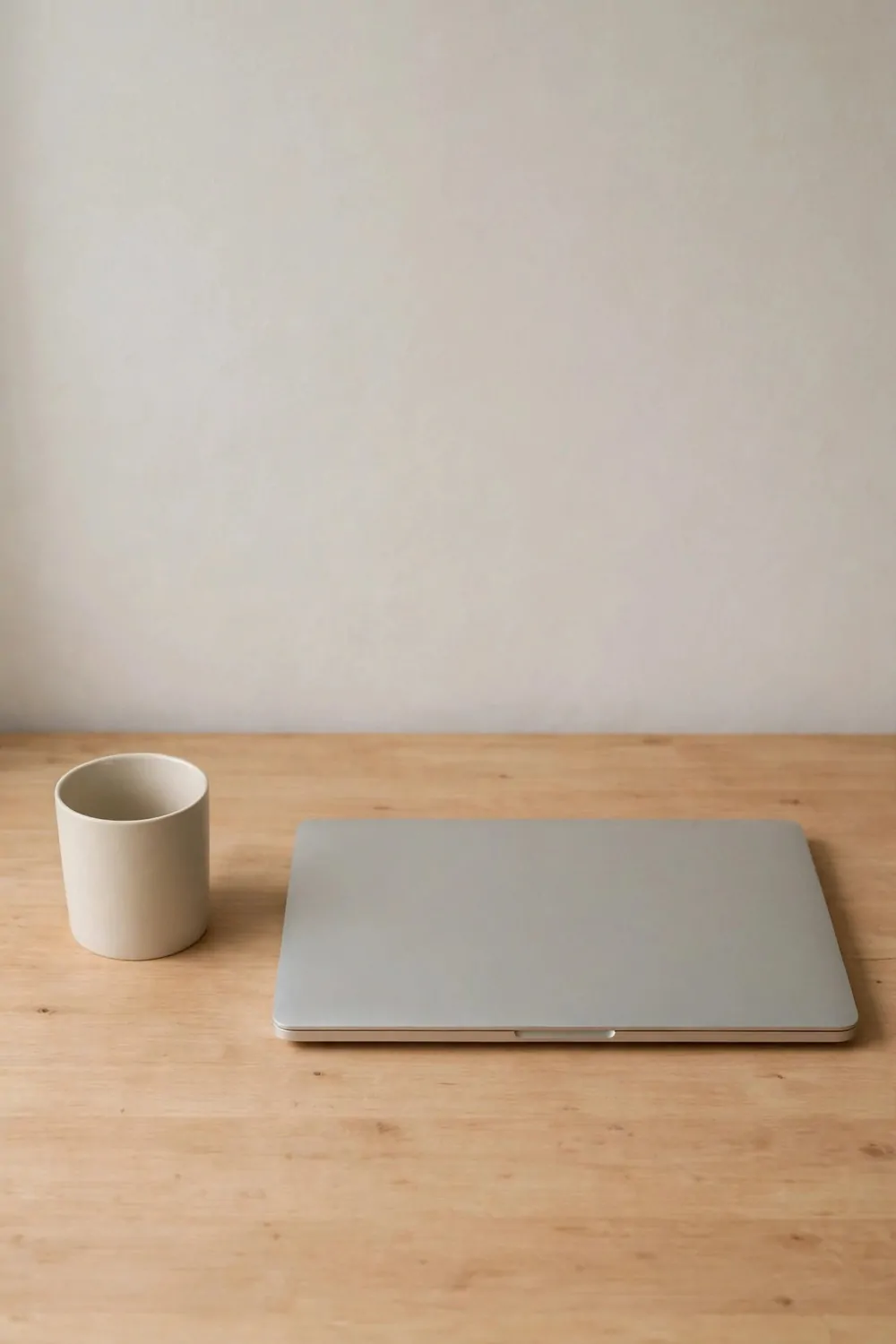
Now I keep one clear surface. Just my laptop and one mug. That is all.
Clutter steals your focus. Every extra thing pulls your eyes away. Your brain keeps noticing it.
A clear desk feels calm. You sit down and you know what to do. There is nothing else calling you.
Try a five minute clear out. Set a timer. Put everything that does not belong in a box.
You do not need to throw it away. Just move it out of sight. Your desk is for work, not storage.
At the end of each day, I clear it again. It takes two minutes. The next morning feels fresh.
One clear surface sounds too simple. But it works. Less stuff means more focus.
The Phone Lives in Another Room
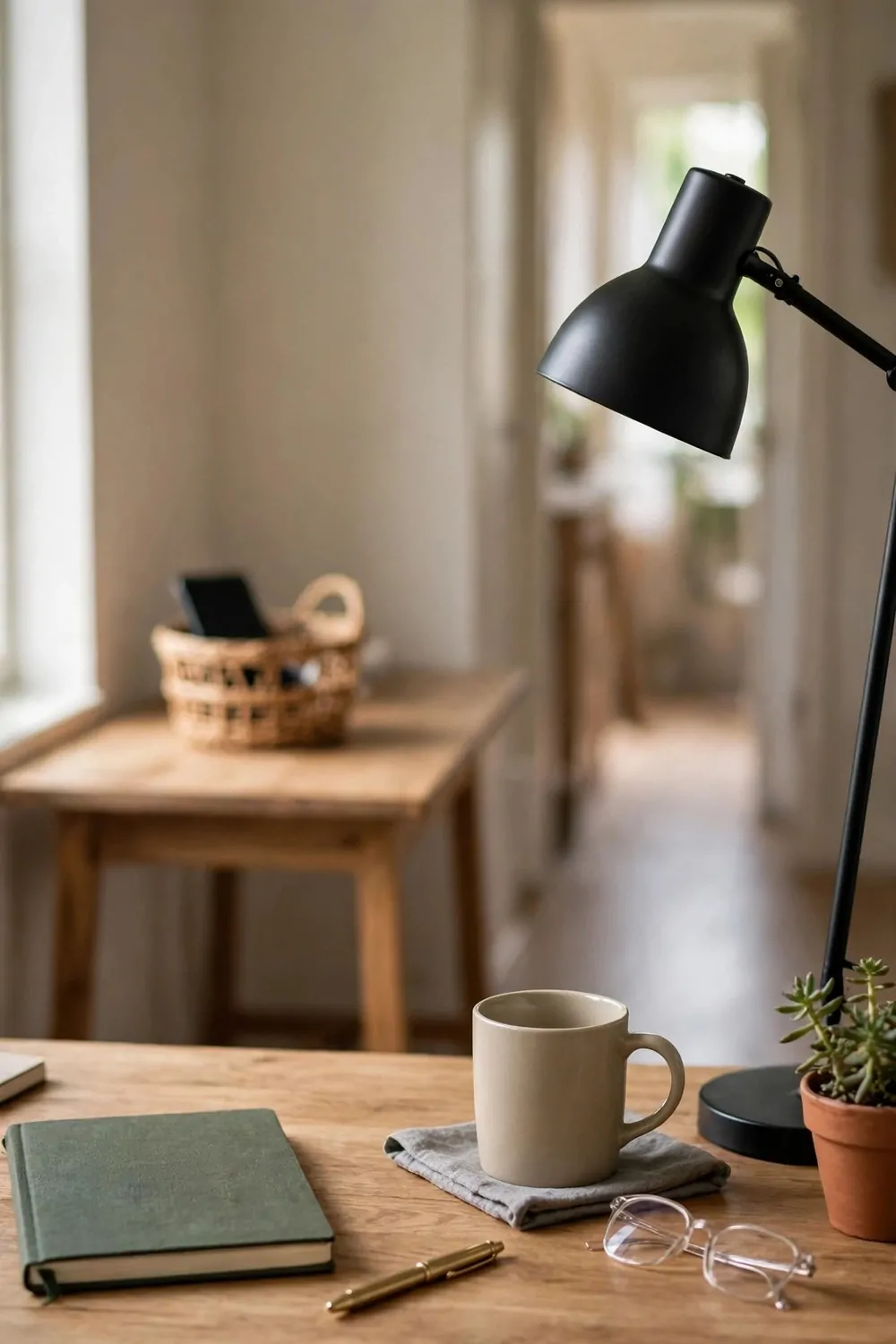
My phone used to sit next to my laptop. It buzzed all day. I checked it without even thinking.
Each check broke my focus. It took me minutes to get back on track. Some days I never really got going.
Now my phone lives in another room. It charges in the kitchen while I work.
Out of sight means out of mind. I do not reach for it. I forget it is even there.
I check it at set times only, once before lunch and once in the afternoon. That is enough.
Nothing urgent has ever passed me by. Real emergencies find a way. The rest can wait an hour.
If you need your phone for work calls, put it face down. Turn off the buzz. Silence helps a lot.
The first day feels strange. Your hand reaches for nothing. That feeling fades fast.
Try it for a week. You will be shocked at how much more you get done. Your phone will still be there when you need it.
A Timer You Can See
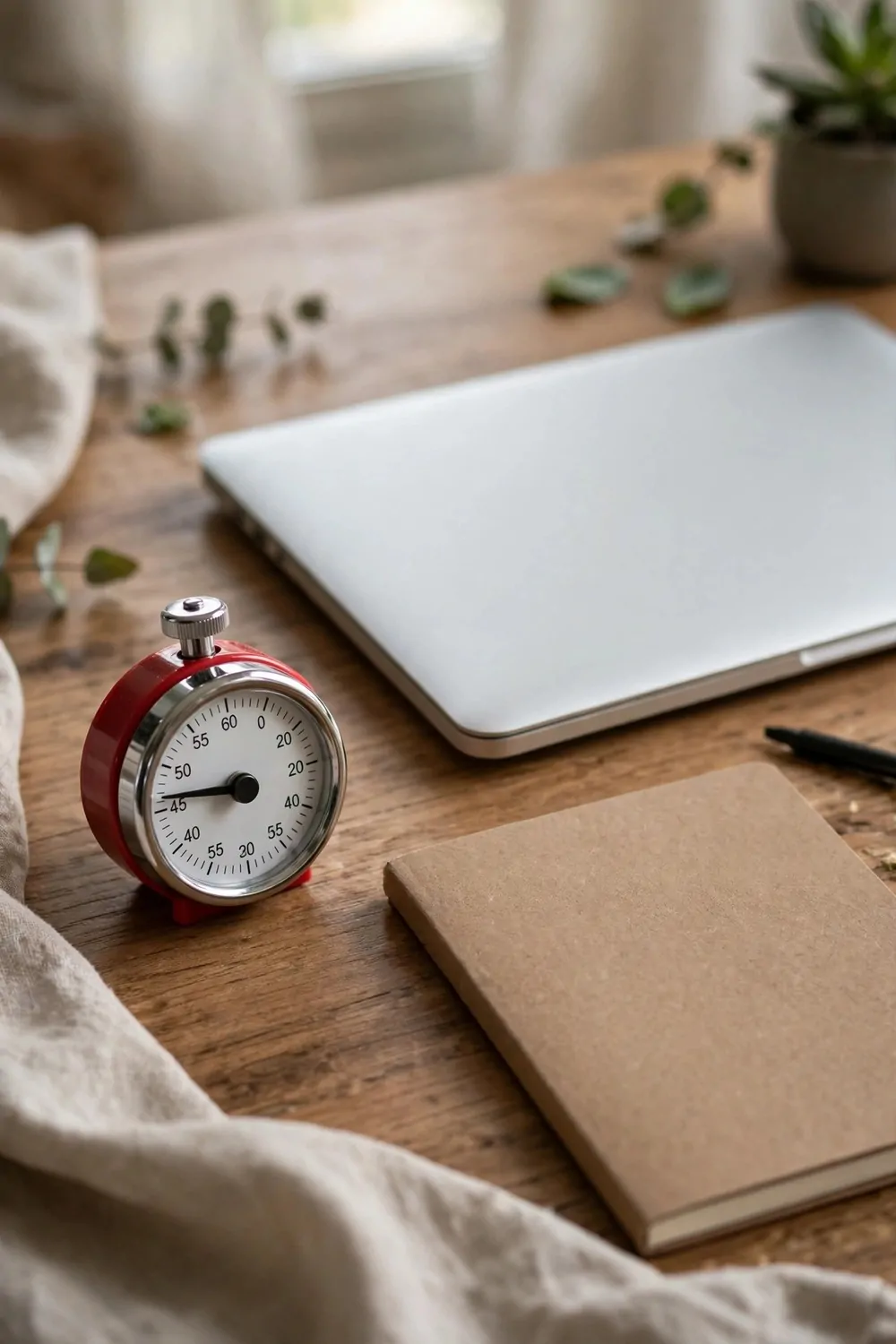
I used to work until I felt tired. Then I would stop. Some days I worked for hours without a break.
That sounds hard working, but it is not. My brain got foggy and my work got sloppy.
Now I use a plain kitchen timer. It sits on my desk where I can see it. It cost me almost nothing.
I set it for 25 minutes. I work until it rings. Then I take a short break.
The timer makes the work feel small. Anyone can focus for 25 minutes. It is just one short burst.
Breaks matter too. A short break is not lazy. It is part of the work.
Here is the simple plan I follow most days.
| Work burst | Break | What to do |
|---|---|---|
| 25 min work | 5 min break | Stretch |
| 25 min work | 5 min break | Water |
| 50 min work | 10 min break | Walk |
Pick the row that fits your day. On busy days I use the 25 minute rows. On calm days I use the 50 minute one.
The timer does the hard part for you. You just follow the ring, work, rest, work, rest. That is all.
The Chair Height Trick
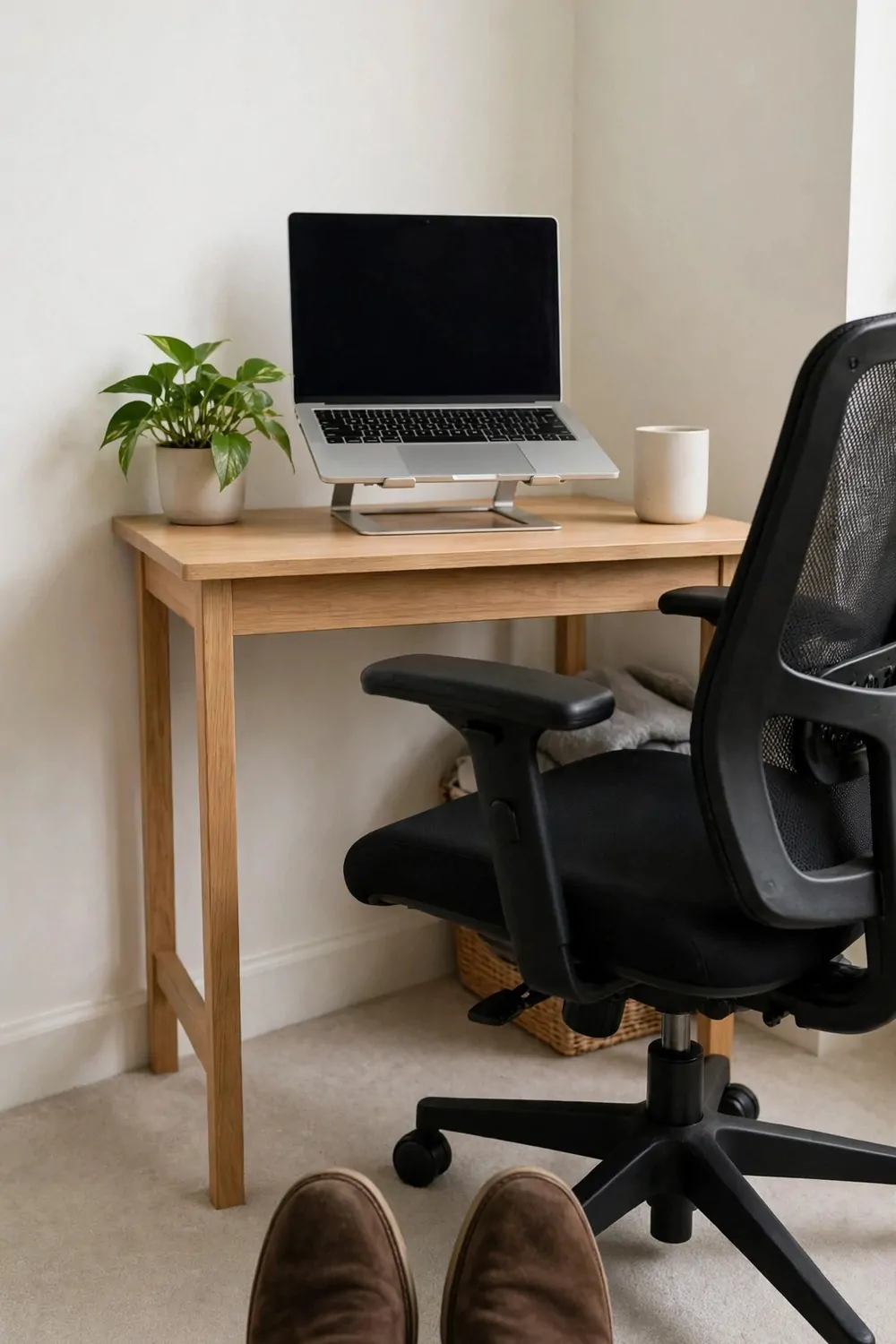
My chair felt fine. Or so I thought. My back ached by lunch every day.
My feet did not touch the floor. My knees sat too high. I did not even notice.
Then I learned the simple trick: feet flat on the floor and screen at eye level. That is the whole secret.
I put a small box under my feet. It was just an old shoe box. It worked.
I stacked two books under my laptop. Now the screen sits at eye level. My neck feels better.
A cushion helps too. It lifts you up a little. It also makes the chair softer.
You do not need a new chair. You need a better height. Books and boxes do the job for free.
My knees feel better now. My back feels better too. I can sit longer without getting stiff.
Try it today. Sit down and check your feet. If they dangle, find a box for a small fix with a big change.
Morning Light Before Screen Light
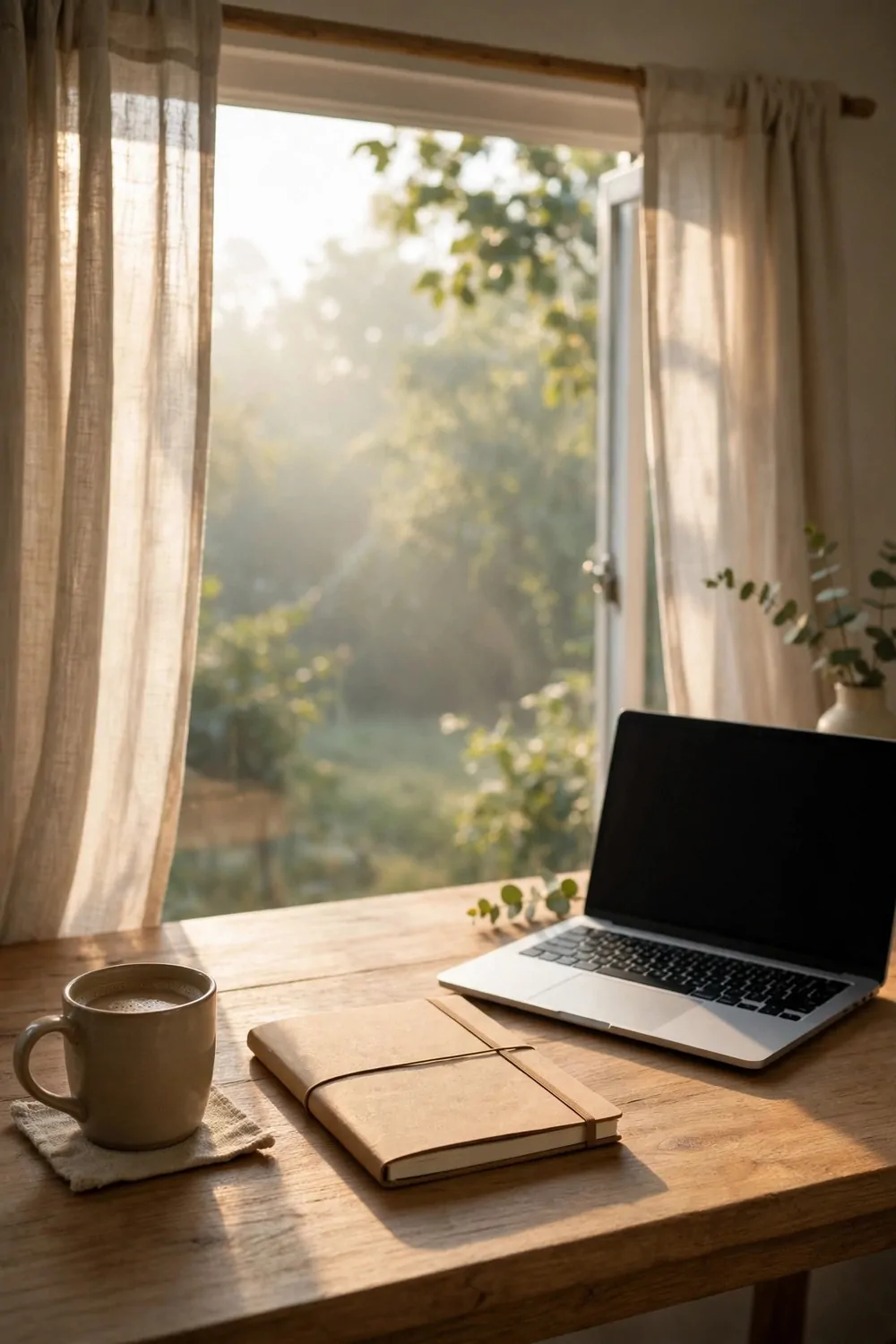
I used to start work in the dark, curtains shut and lamp on, with the screen glowing.
My brain felt half asleep. Coffee did not help. I dragged through the first hour.
Now I open the curtains first. Before I touch my laptop. Before anything else.
Morning light wakes your brain up. It tells your body the day has started. It is free.
I work by daylight for the first hour. No lamp. Just the sun through the window.
It feels different from screen light, softer and warmer. My eyes feel less tired too.
On grey days it still helps. Even a cloudy sky gives you light. Open the curtains anyway.
This costs nothing. It takes ten seconds. And it sets up the whole morning.
Try it tomorrow. Curtains first, screen second. See how your first hour feels.
A Plant With One Job
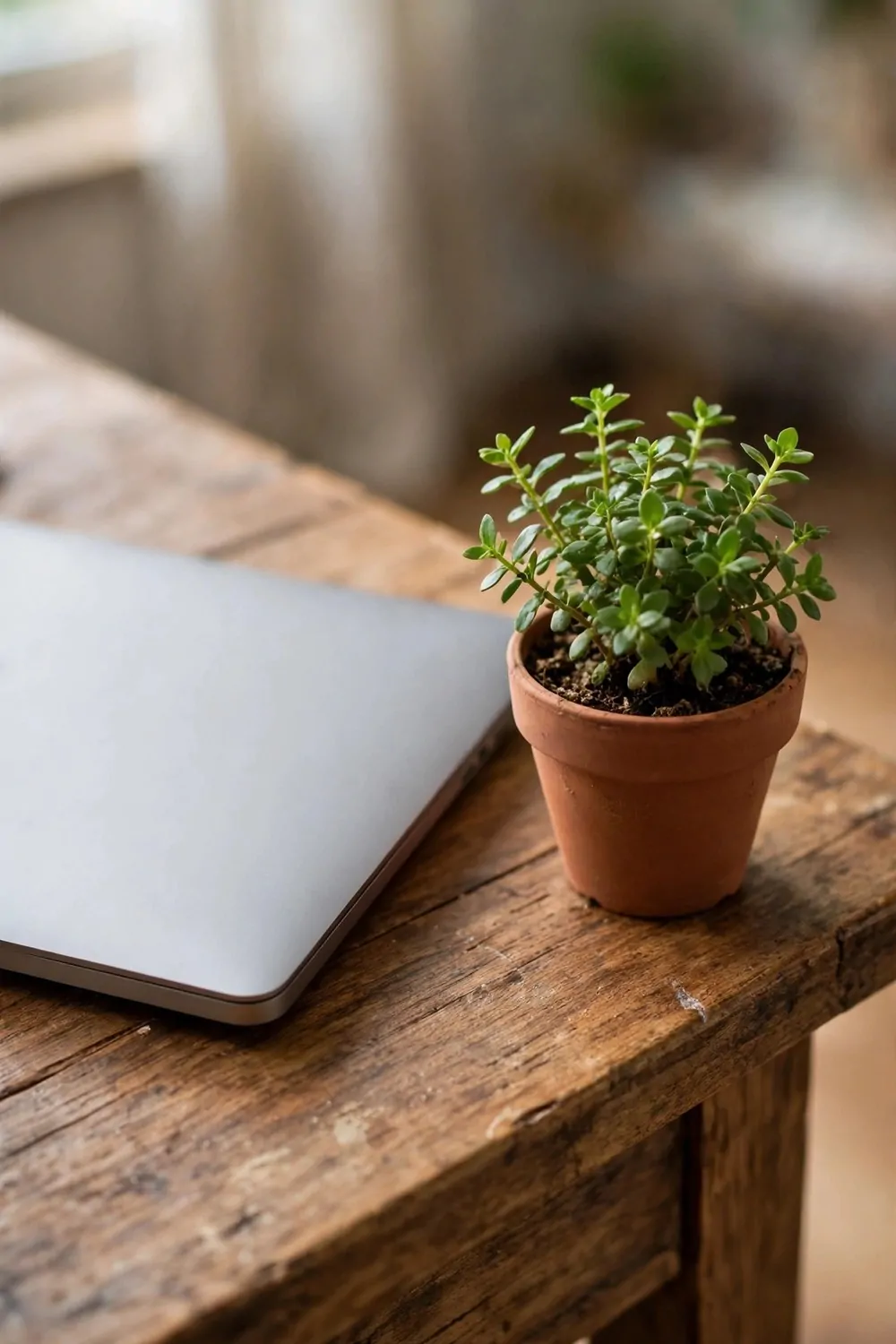
My desk used to feel cold. Just a laptop and a wall. It did not feel like a nice place to sit.
Then I put one small green plant on the desk. A tiny one. It changed the whole feel.
It softens the room. The green breaks up all the grey and white. It makes the desk feel alive.
It also gives my eyes a rest spot. When my eyes get tired, I look at the plant. Just for a few seconds.
That little break helps. My eyes relax. Then I go back to work feeling fresh.
You do not need a big plant. A small one fits on any desk. It does not take up much room.
Water it once a week. That is all it needs. I do it every Monday morning.
It is one small job. But it makes the desk feel like mine. Like a place I want to sit.
One plant, one job. That is the rule. Keep it simple and it will stay alive.
Fresh Air for Ten Minutes
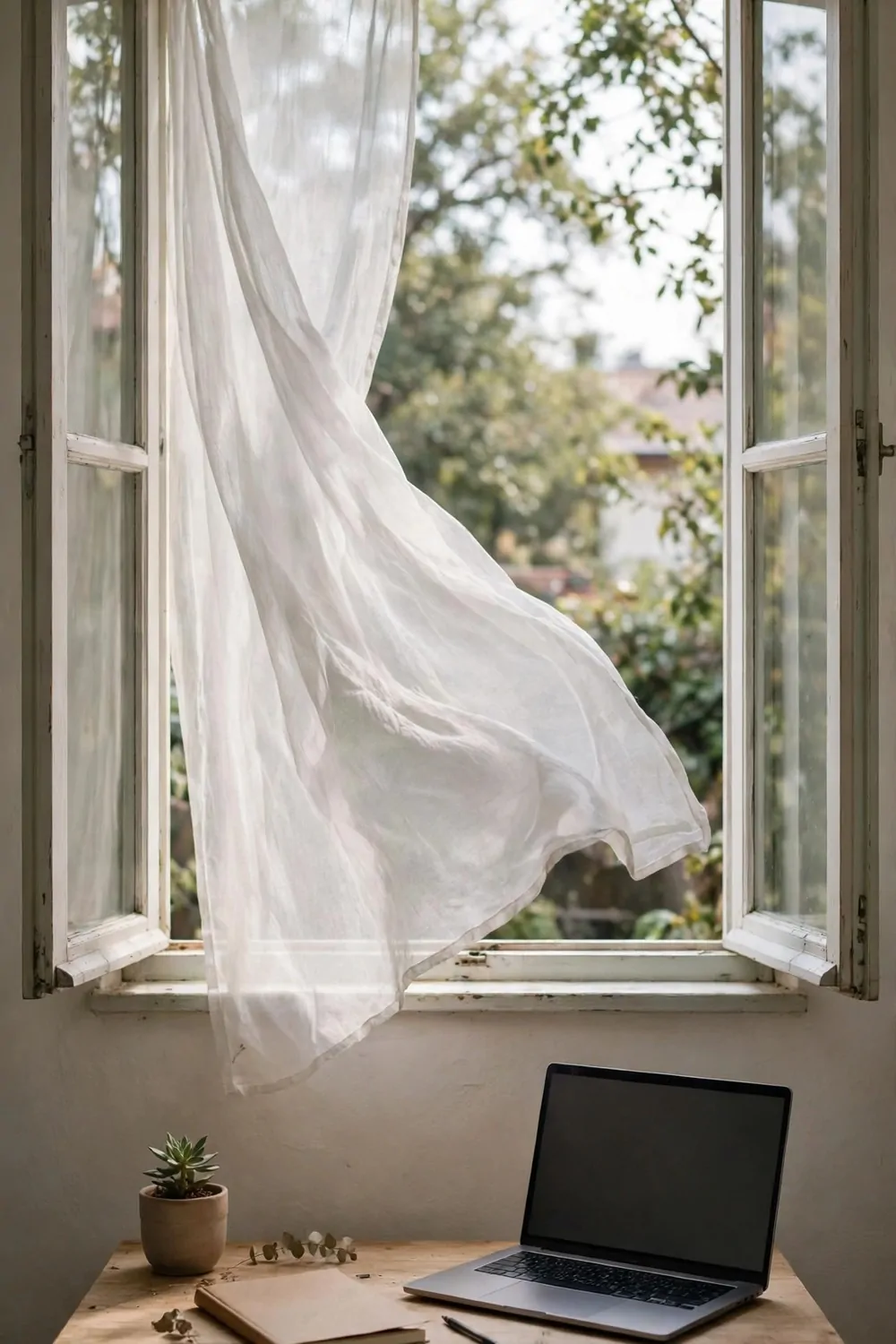
I open my window before I start work.
The room feels stuffy after a night with the door shut. A quick blast of fresh air fixes that in minutes.
You do not need to leave it open all day.
Ten minutes is enough. I set a little timer on my phone so I do not forget to close it. Then the room feels awake.
In winter I still do it. Cold air wakes me up faster than coffee does.
I like to open the window while I make my tea. By the time I sit down, the air feels clean.
A stuffy room makes my head feel slow. Fresh air makes the same work feel easier.
Try it tomorrow morning. Open the window, breathe in, and see how your first hour goes.
It costs nothing. That is my favorite part.
The Notebook Beside the Keyboard
Stray thoughts pop up all day when I work.
I think about a bill I forgot. Then I think about a message I should send. My brain keeps dropping these little things in my lap.
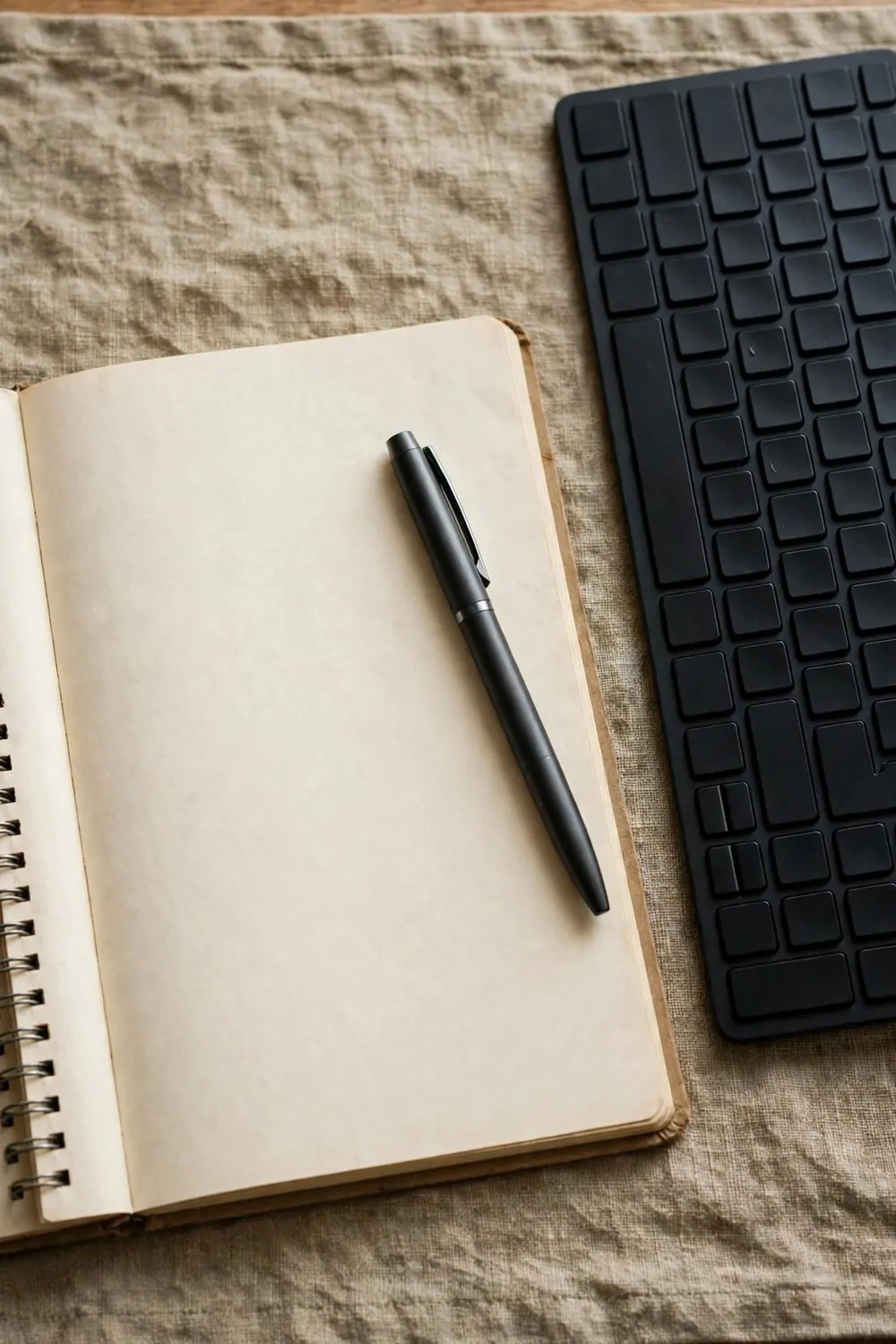
A plain notebook sits beside my keyboard now.
When a thought shows up, I write it down fast. One line is enough. Then I go back to my work.
The notebook catches what my brain would drop.
I check the list at lunch. Most of the things take two minutes. Nothing gets lost now.
You do not need a fancy notebook. Mine cost almost nothing. Any old pad of paper works the same.
I used to stop work to chase every thought. Now the thought waits on paper until I am ready.
Keep the notebook open and a pen on top. If the pen is buried in a drawer, you will not use it.
Two Small Lamps Beat One Big Light
My ceiling light used to hurt my eyes.
It was bright and harsh and it made the whole room feel like a shop. I got a headache by lunch most days.
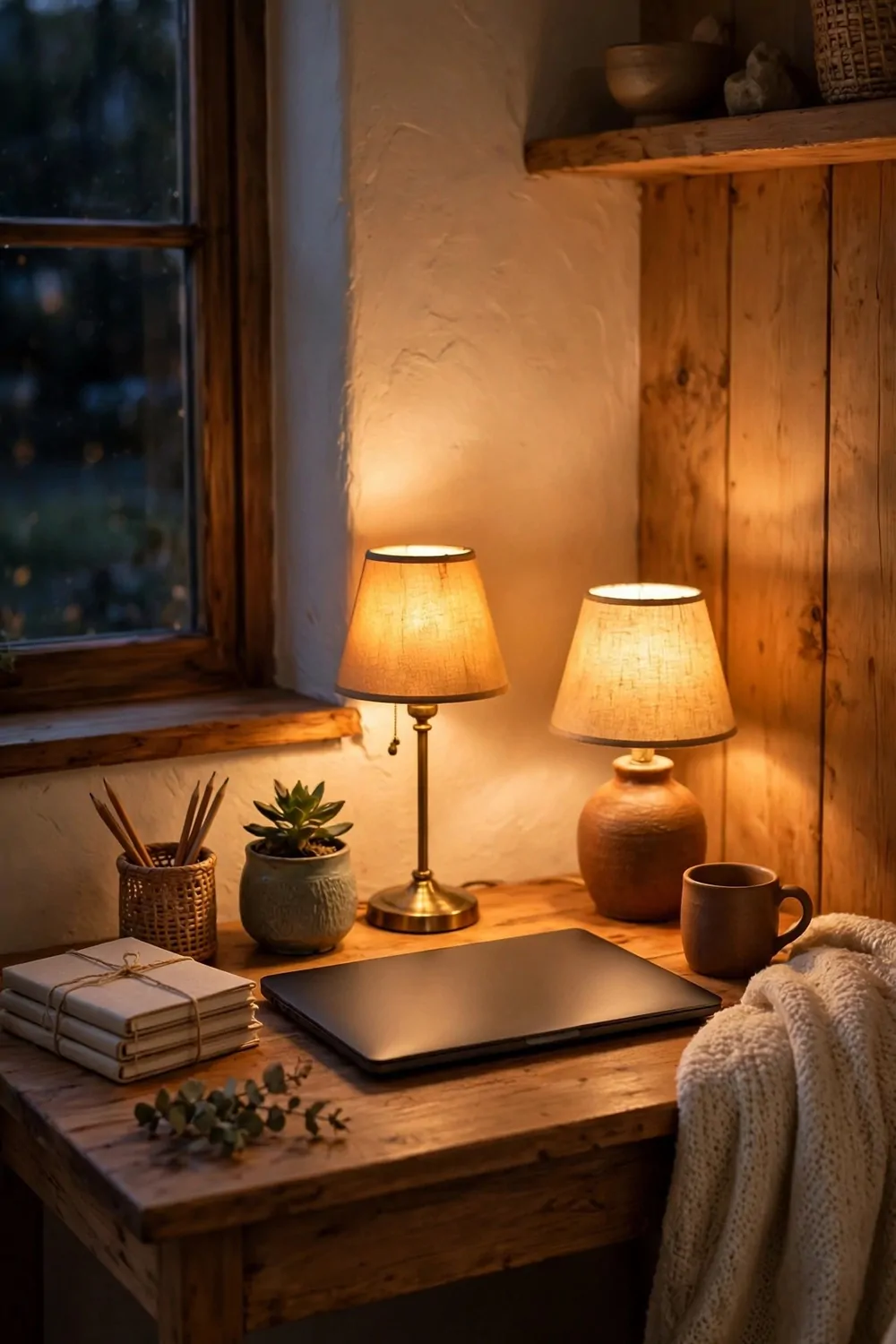
Two small lamps changed that.
I put one on the desk and one on a shelf behind me. The light feels soft now, and warm, and my eyes relax.
You do not need to buy new lamps. Secondhand shops sell them for very little money. I found one of mine at a charity shop.
Warm light feels calmer than white light. It makes the room feel like a place to sit and think.
I turn the lamps on when I start work. That little click has become part of my routine too.
Try one lamp first if two feels like too much. You will notice the difference in one day.
A big bright light shouts at you. Two small ones just keep you company.
The Rug That Marks Work Time
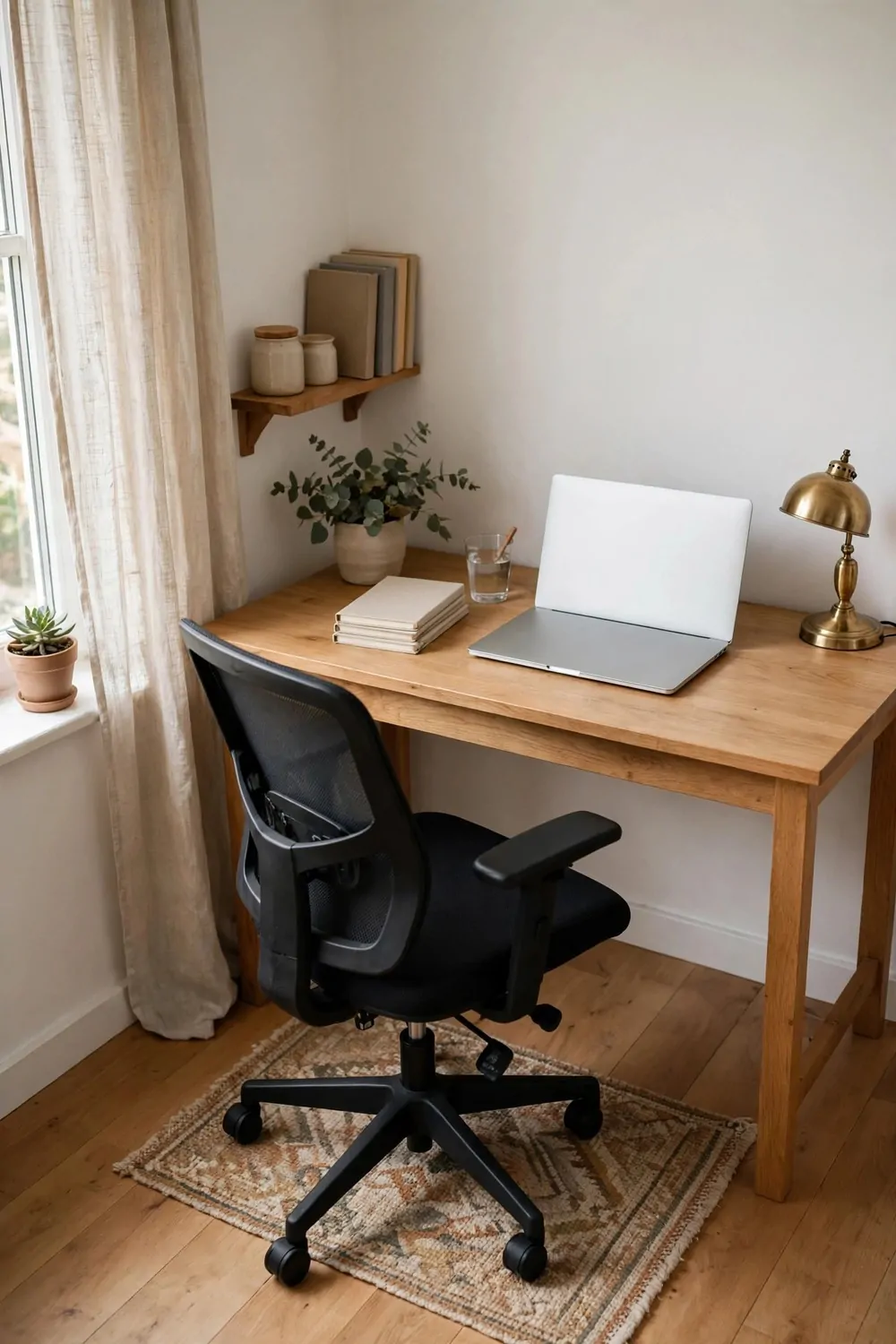
A small rug sits under my desk chair.
It is not a fancy rug. It is just a plain one, big enough for the chair legs and my feet.
That rug marks my work zone.
When I step onto it, my brain knows work starts now. When I step off it, work is done.
It sounds silly, but it works. The rug is like a line on the floor that I drew myself.
I picked a rug I liked looking at. Soft colors help me feel calm when I sit down.
You can use a rug you already own. It does not need to match the room. It just needs to be yours.
At the end of the day I step off the rug and I leave work behind. My evening starts on the other side of it.
A rug costs little and does a lot. It tells your brain where work lives and where home lives.
Water Within Reach
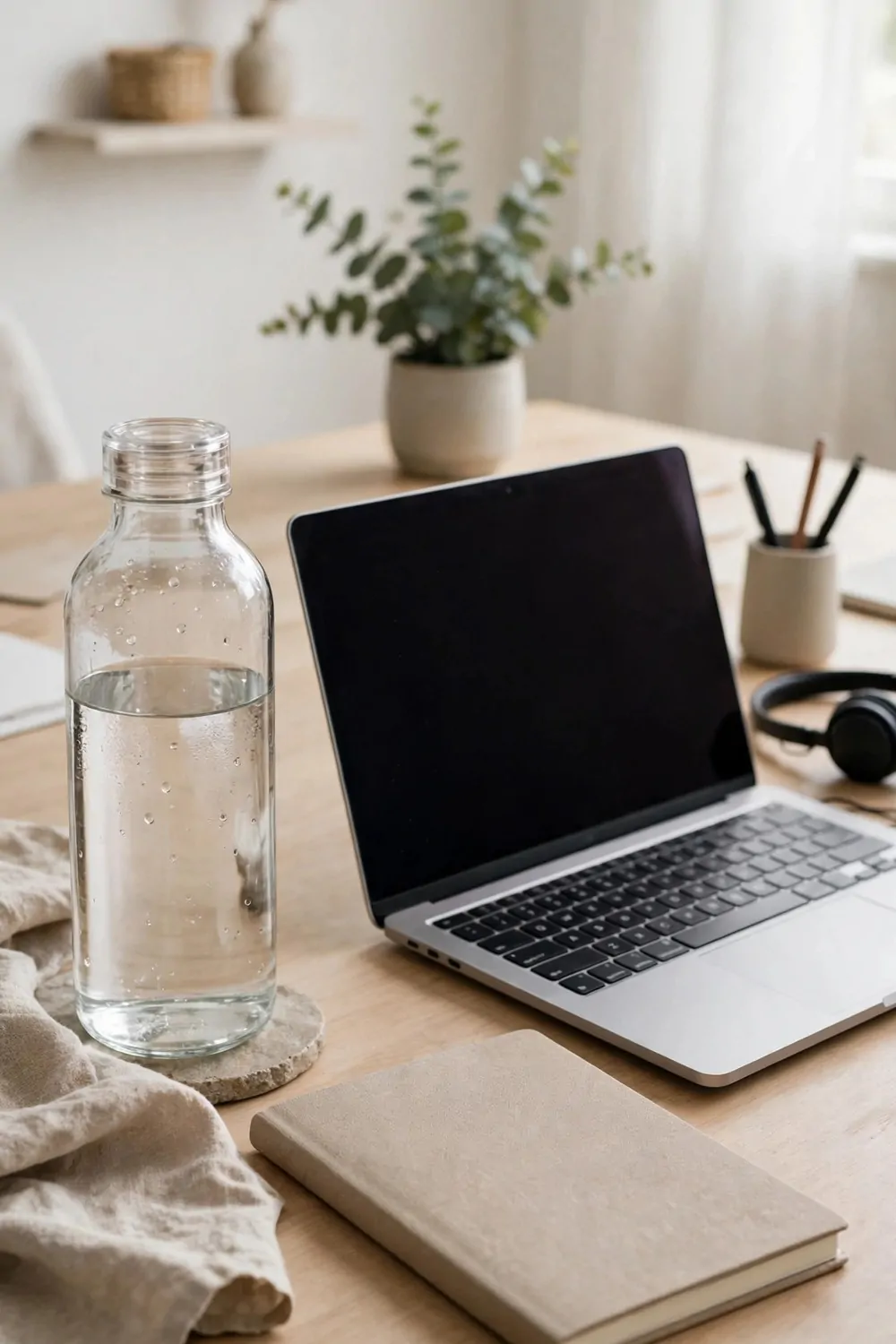
I keep a glass of water on my desk.
Before that, I kept wandering to the kitchen. A sip of water turned into a snack, and the snack turned into a ten minute break.
Now the water sits right next to me.
When I feel dry or slow, I take a sip and keep going. I stay in my chair and my work stays on track.
A bottle works too. I use a bottle with a lid so I never spill it on my papers.
I refill it at breaks. That gives me a reason to stand up and stretch when the timer rings.
Water is the cheapest focus trick I know. It costs nothing and it keeps me at my desk.
Some days I add a slice of lemon. It makes the water feel fresh and I drink more of it.
Put the glass where you can see it. If it is out of sight, you will forget it all morning.
The Same Start Every Morning
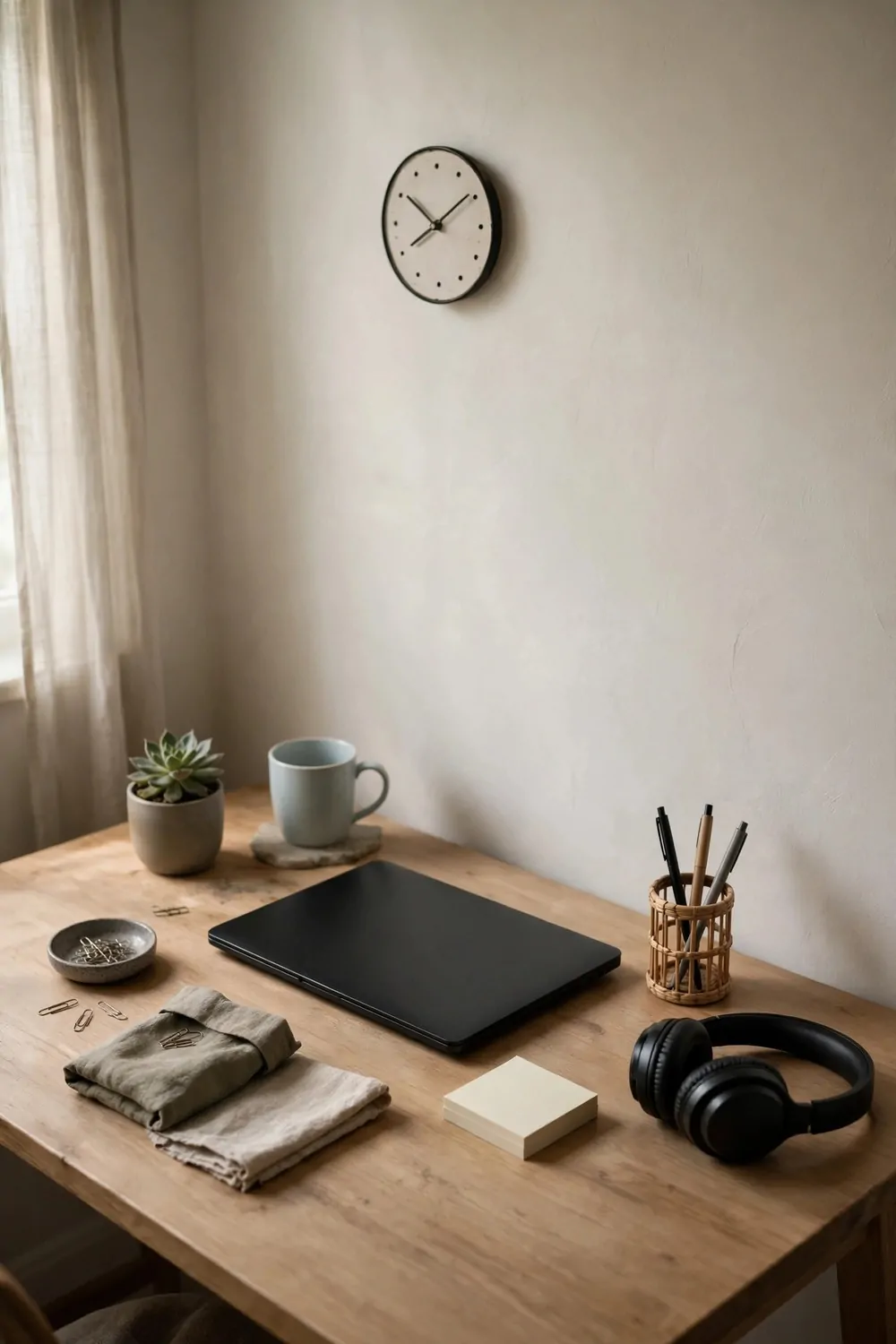
I start every morning the same way.
I open the curtains first. Light comes in and my eyes wake up. Then I clear my desk.
I fill my water glass. Then I write down my first task.
That is the whole routine. It takes about five minutes.
My brain learned the pattern fast. Now it switches on as soon as I open the curtains.
You can make your own little routine. Keep it tiny so you will actually do it. Four small steps is plenty.
On bad mornings the routine saves me. I do not need to think about what to do first. I just follow the steps.
The same start every day feels boring at first. Then it feels like a gift, because your day starts itself.
Try it for one week. Same steps, same order, every morning.
Close the Door, Open the Window
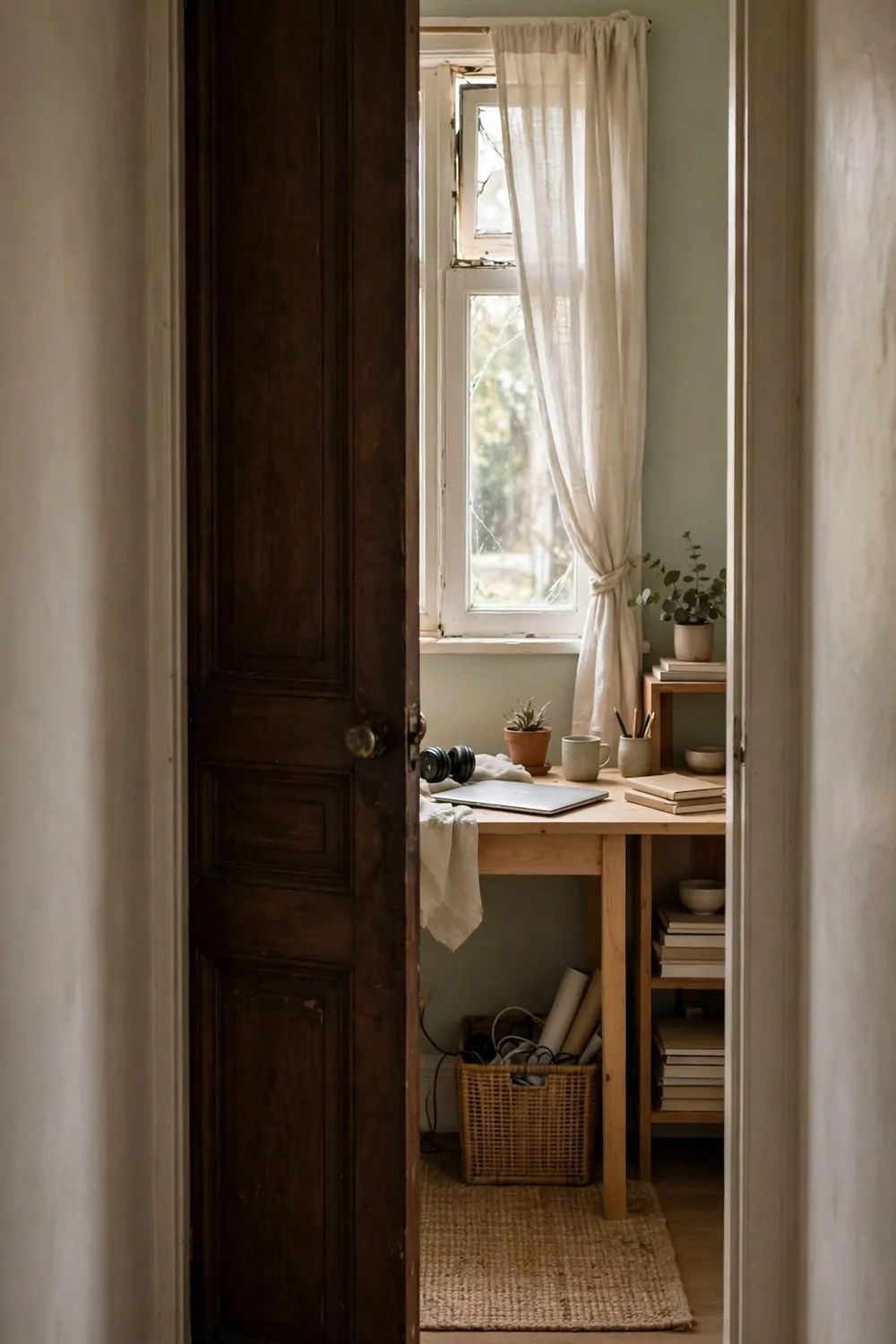
I shut my door when I start work.
The door cuts the noise from the rest of the house. I can finally hear my own thoughts.
A closed door is a free do not disturb sign. Everyone in the house understands it without a word.
I open the window a crack too. Fresh air comes in and the room stays cool.
The door shut and the window open is my favorite mix. Quiet air, fresh air, and no noise.
These things belong outside the closed door:
- laundry
- dishes
- TV noise
- other people’s questions
If a question can wait, it waits. Most of them can wait until my break.
When the door opens again, work is done. The house is there waiting, and I can enjoy it.
A door costs nothing to close. It is the simplest focus trick in this whole list.
A Screen at Eye Level With Books
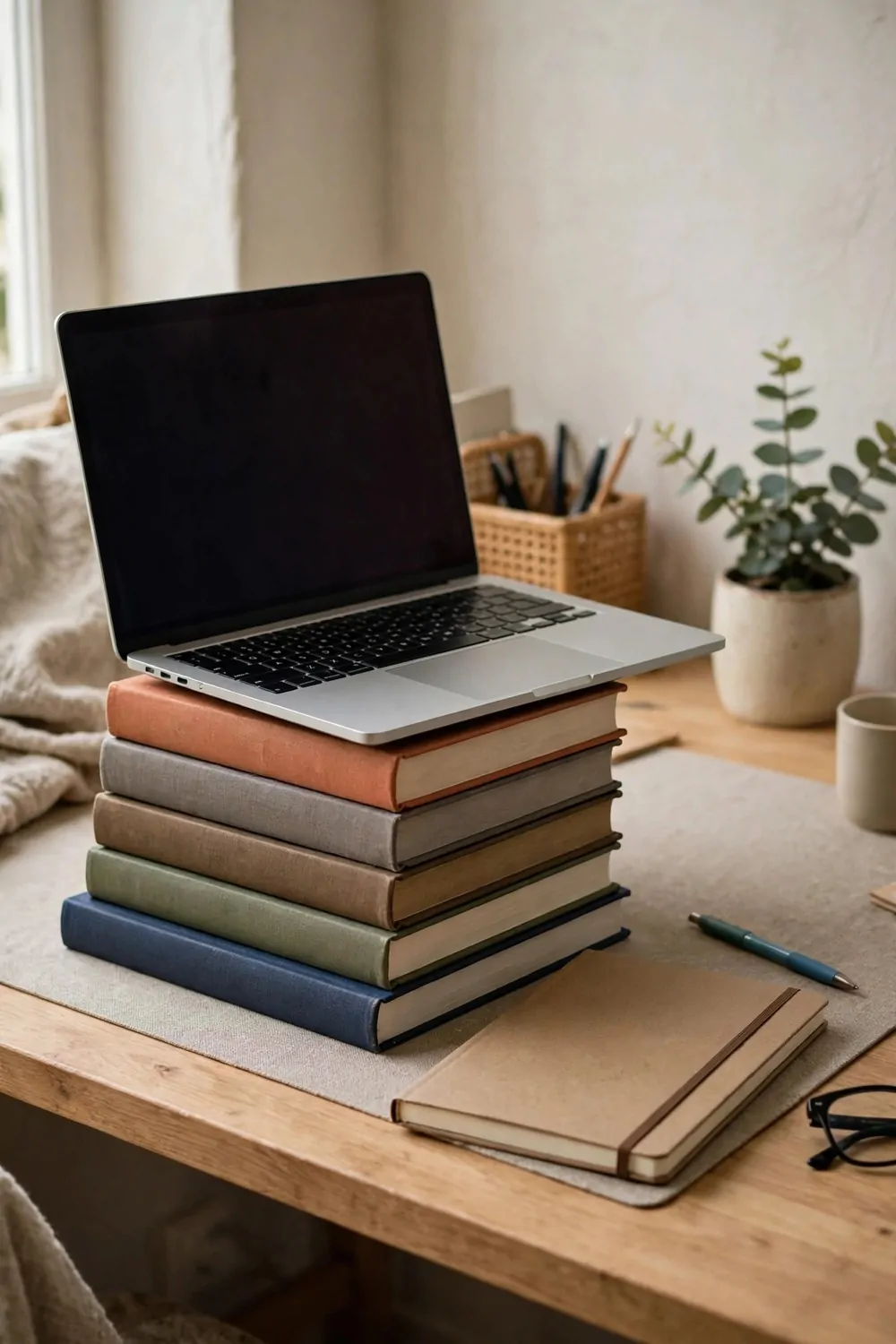
My neck used to hurt by lunch every single day.
I thought I needed a fancy laptop stand. Then I looked at my bookshelf and laughed at myself.
Two hard books fixed the whole problem.
I put my laptop on top of them. The screen came up to my eyes. My shoulders dropped down right away.
You do not need to buy anything for this trick. Books you already own will do the job.
Pick books that are thick and flat.
A small box works too if your books are thin. Put the books inside a shoebox if the stack wobbles. It just needs to sit still while you type.
Aim for the top of the screen to sit near your eye line. If you look down a lot, add one more book.
My neck thanked me within a week.
| What to stack | How high | Cost |
|---|---|---|
| two hardback books | a few inches | free |
| a small box | a hand high | free |
| a shoebox with books inside | to eye level | free |
The Five-Minute Reset
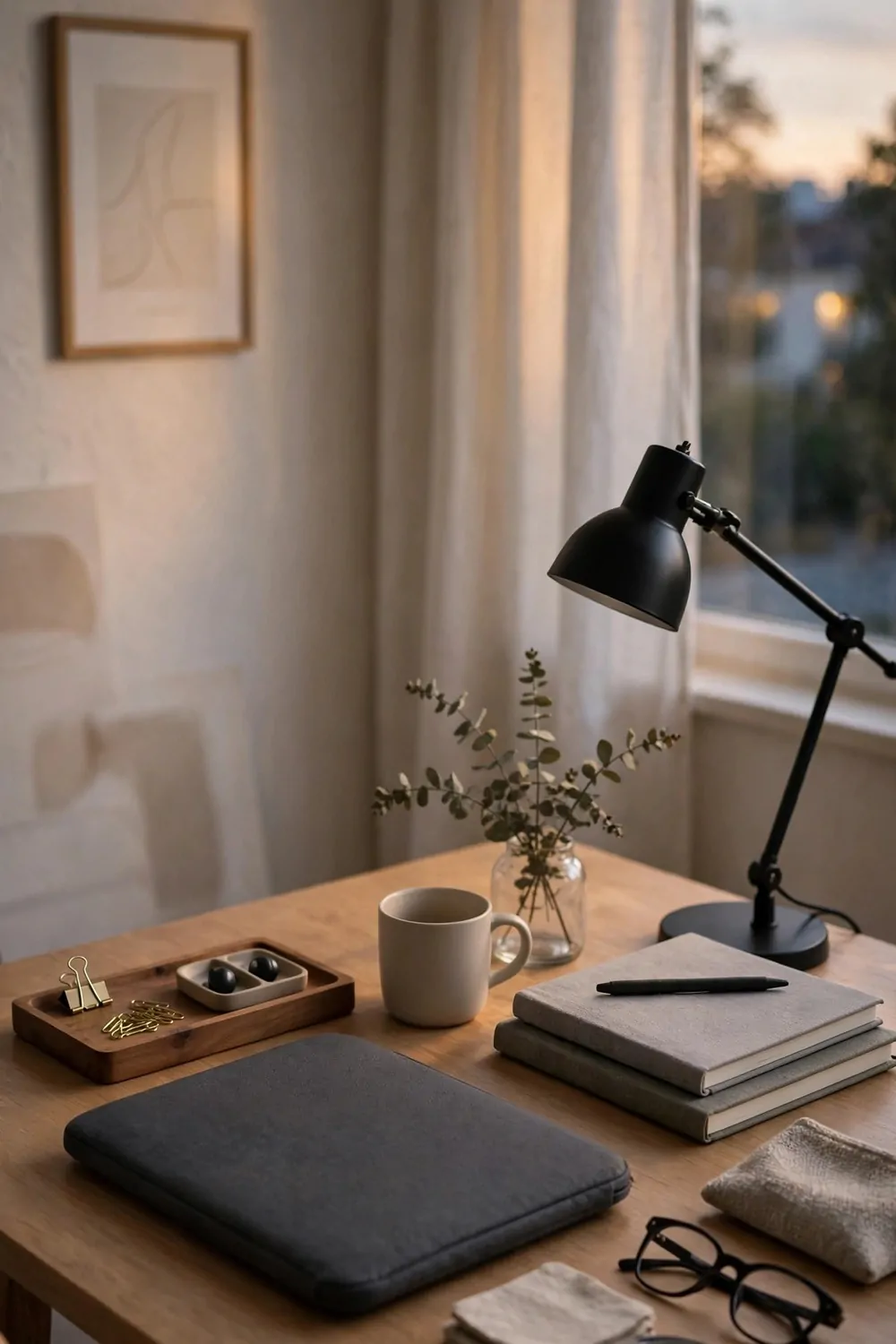
Five minutes is all it takes.
I used to leave my desk in a mess each night. The next morning felt heavy before I even sat down.
Now I reset the desk before I stop work.
I put pens back in the pot. I stack the papers in one pile. I wipe the crumbs off the desk with my hand.
The bin is right there, so rubbish goes straight in. Old notes I do not need get tossed too.
A clean desk in the morning feels like a fresh start.
You do not need a timer for this, but it helps at first. Set one for five minutes. Stop when it rings, even if one thing is left.
The trick is doing it every day, not doing it perfectly. A half tidy desk still beats a messy one.
This is the cheapest habit in the whole list, and it works the best for me.
One Calm Colour on the Desk
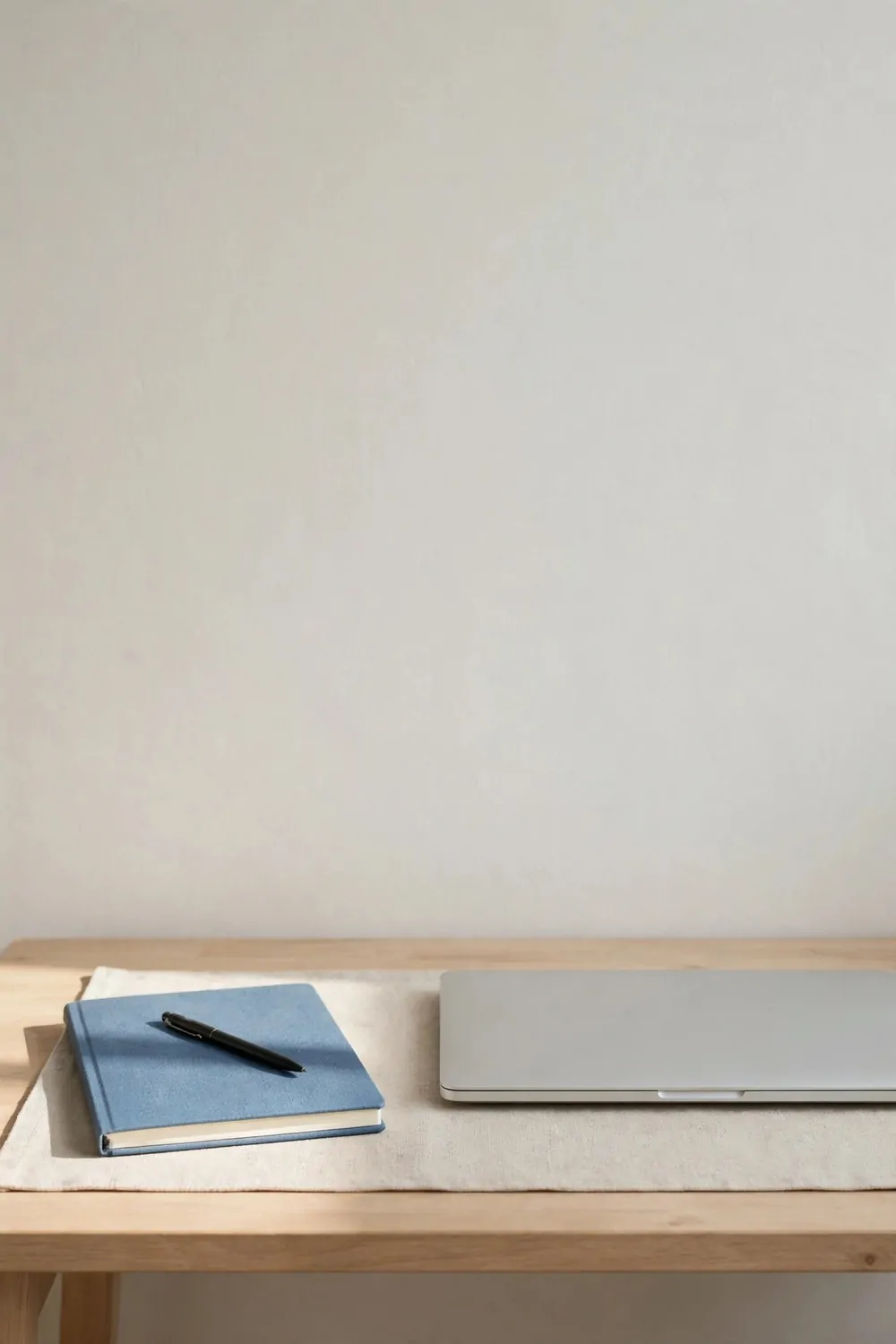
My desk used to look like a toy shop exploded on it.
Bright pens, bright folders, bright sticky notes everywhere. My eyes jumped from one thing to the next all day.
Then I picked one calm colour and stuck to it.
I chose a soft blue notebook. I added a green pen pot that I already had. Everything else went into a drawer.
The desk looked quiet right away. My eyes had one soft place to rest when I looked up.
Colour is free when you use what you already own.
You might like green, or grey, or a pale yellow. Pick the one that makes you feel calm. It does not matter which one it is.
Keep the loud colours off the desk. They can live in a drawer until you need them.
One calm colour is enough, and your brain will thank you for the quiet.
Sound You Choose
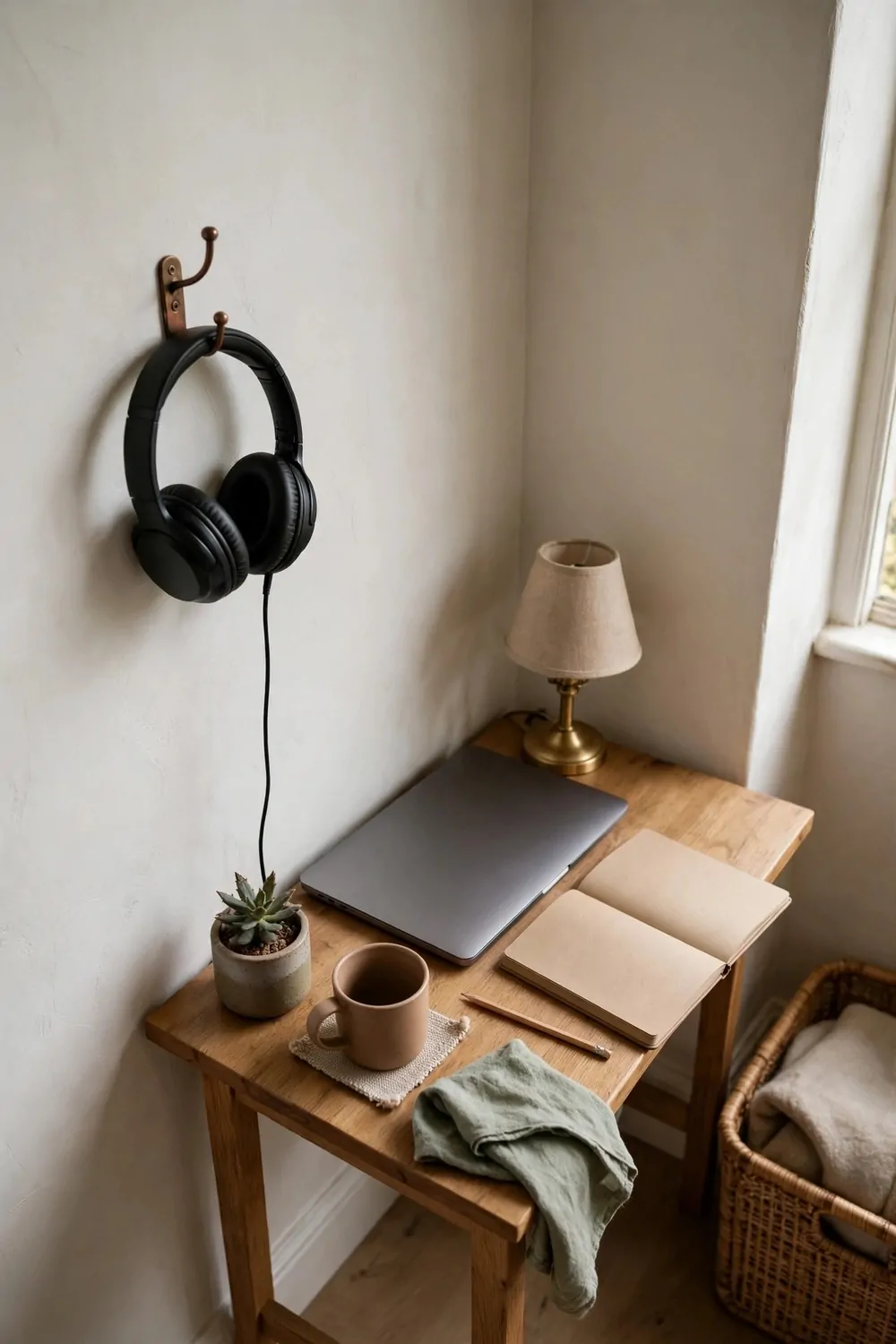
Noise was stealing my focus and I did not even notice.
The TV hummed in the next room. Someone talked on the phone down the hall. My brain kept listening to all of it.
Now I pick my sound on purpose before I start.
Some days I pick soft rain sounds. Some days I pick nothing at all. Plain quiet works just as well as music.
Headphones you already own will do fine. You do not need new ones for this to work.
The point is that you chose the sound, not the house.
Random noise breaks your focus because your brain tries to follow it. A steady sound lets your brain settle. That is why rain sounds help so many people.
If music pulls you into singing along, skip it for work time. Save the fun songs for later.
Try one sound for a whole week and see how it feels.
The Paper Tray That Ends the Pile
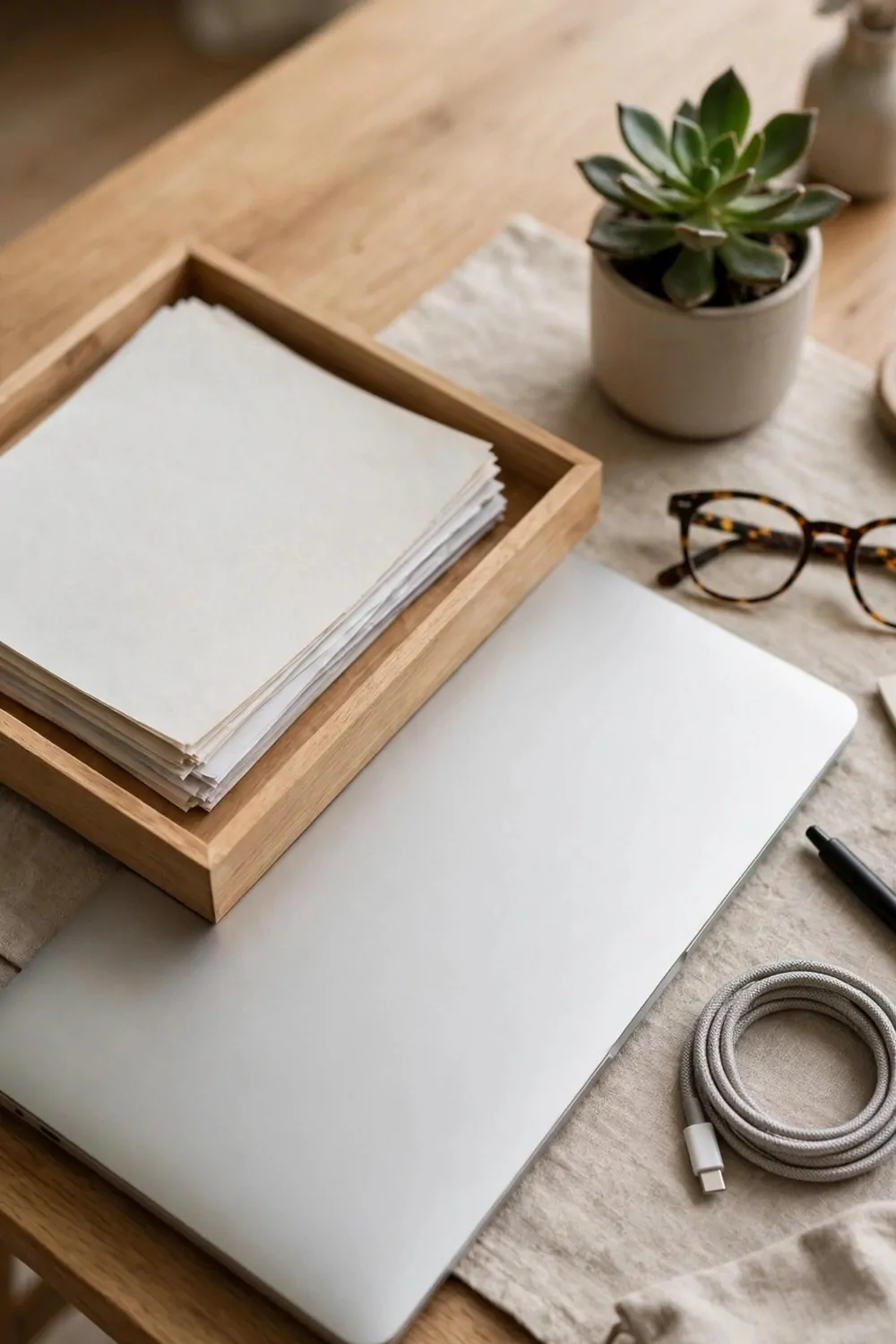
Paper used to live all over my desk.
Bills on the left, school notes on the right, random letters in the middle. I lost things every single week.
One tray changed all of that.
Now every bit of paper goes in the same tray. It has one home. The desk stays clear because the pile has somewhere to live.
The tray does not need to be fancy. A box lid works, or a shallow basket you already own.
I empty it once a week, on the same day each time.
I sort it fast. Bills get paid or filed. Junk gets tossed. The few papers I must keep go in a folder.
A weekly empty stops the tray from turning into a new pile. Five minutes once a week is all it takes.
Your desk will feel bigger the day the paper pile moves into its tray.
Shoes Off, Slippers On
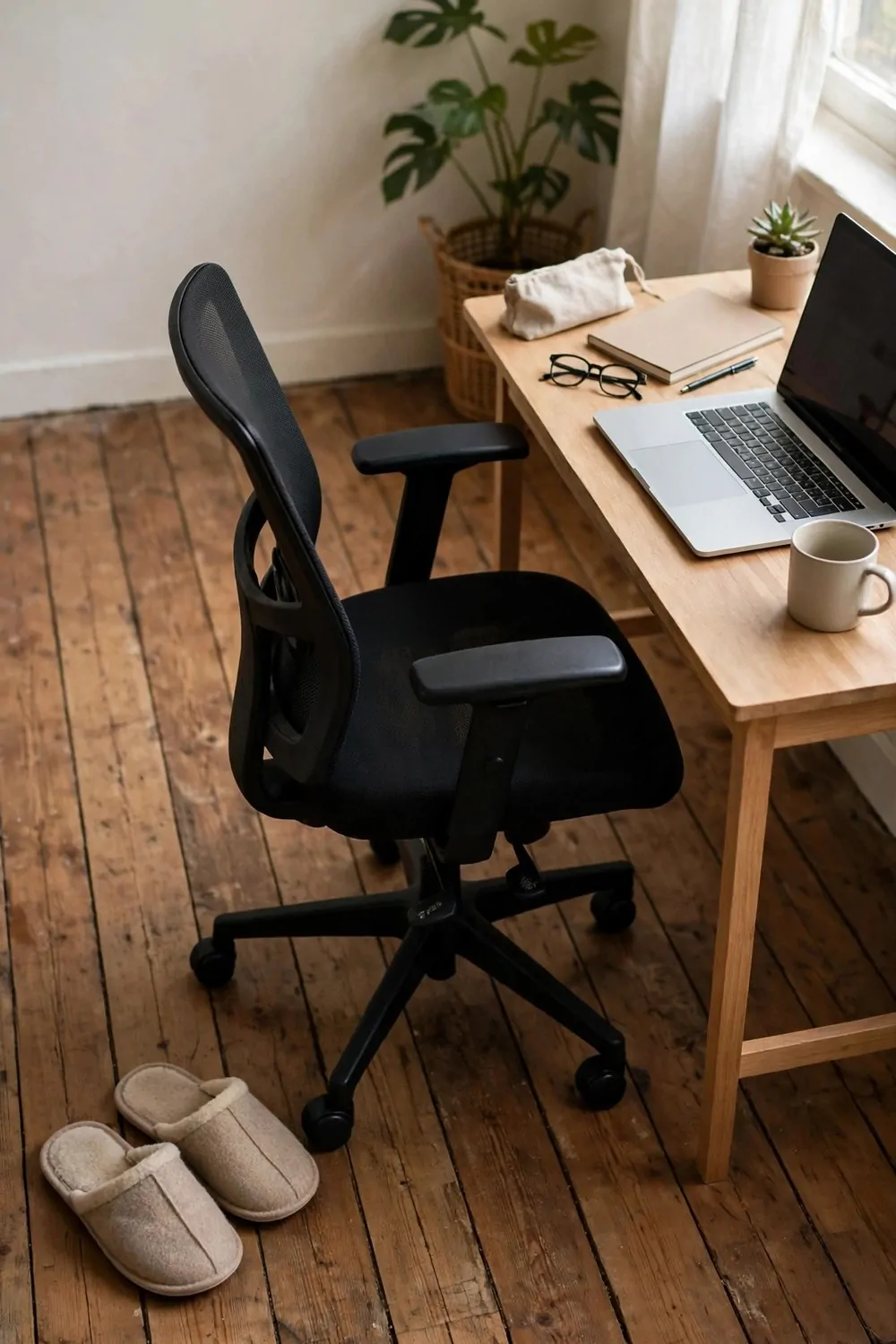
This trick sounds silly, but it works.
I used to sit down to work still wearing my shoes. My brain stayed in outside mode. Work felt slow to start.
Now I change into slippers when work starts.
Shoes off means work mode on. It is a small switch in my brain. My feet know it is time to focus before my head does.
You can pair it with three more tiny habits. Together they make a little start of work routine.
- Slippers on, shoes by the door.
- Water glass filled and on the desk.
- Phone put out of reach in a drawer.
- First task written down on a scrap of paper.
The whole routine takes about one minute.
Do it in the same order each day. Your brain learns the pattern fast. After a week you will slip into work mode without thinking.
End the day the same way, in reverse. Slippers off, shoes on, and work is done for the day.
The Wall Behind the Screen
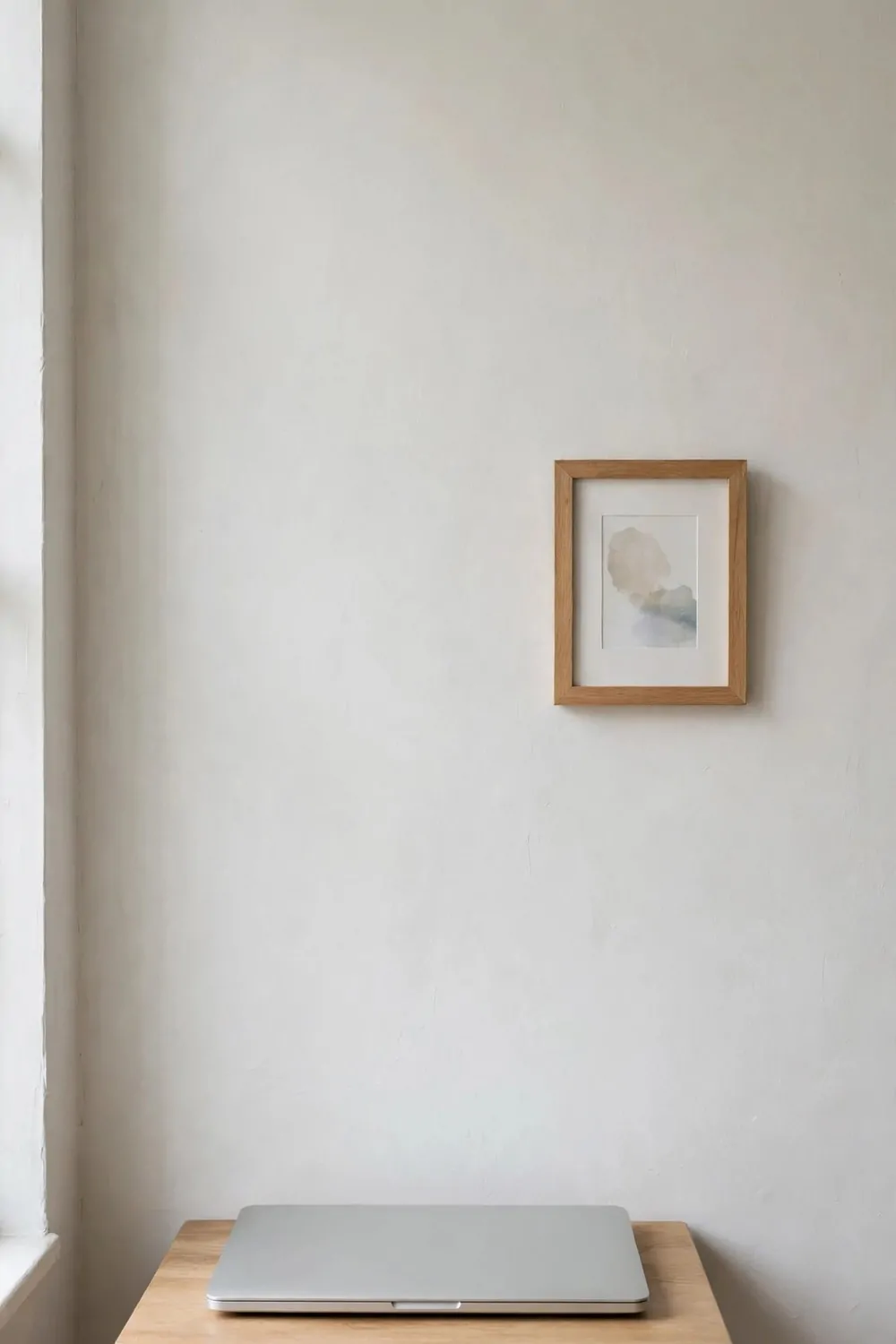
Look up from your screen right now and tell me what you see.
If the wall behind your laptop is busy, your eyes will keep drifting there. Posters, shelves, bright colours, all of it pulls at you.
A blank pale wall is the cheapest focus tool I own.
I cleared the wall behind my desk last year. I took down three posters and a crowded shelf. The room felt bigger right away.
When my eyes lift from the screen, they meet nothing loud. They rest for a second and come back to work.
If a bare wall feels too empty, one small picture is enough.
Pick one calm picture you love. Hang it where you can see it when you look up. One picture warms the wall without stealing your focus.
Pale paint helps too, if the wall is a dark or loud colour. A pale wall bounces soft light around the desk.
Keep the wall quiet, and your mind stays quiet too.
A Clock You Can See
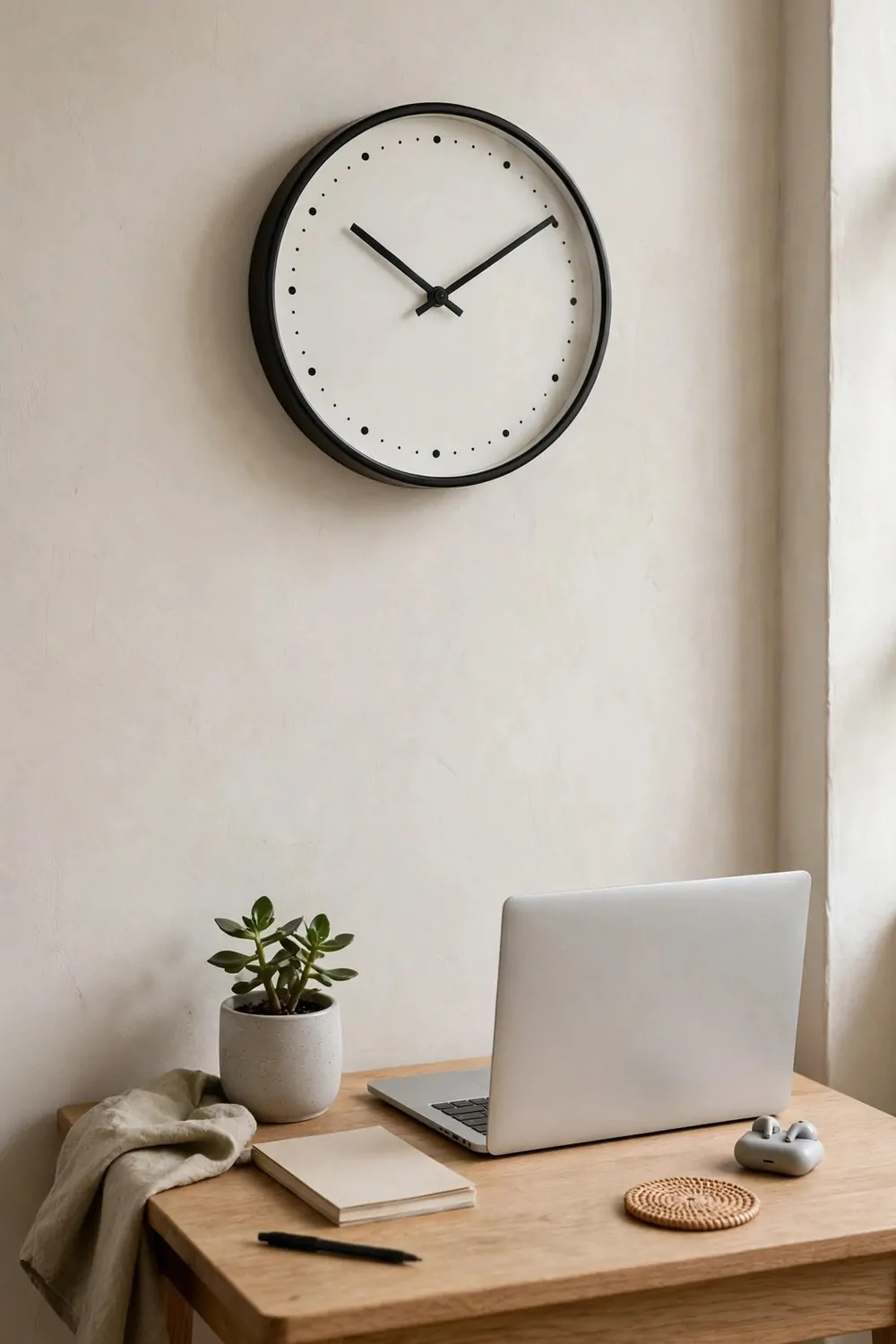
I hung a plain clock on the wall right where I can see it from my chair.
It has dots for the numbers, not big digits. I like it that way, it feels calm and simple.
I glance at it and I know where my morning has gone.
My phone used to be my clock. I would pick it up to check the time and then I would check one more thing. Then another thing, and my work would wait.
The wall clock stops that little trap. I look up, I see the time, and I look back down.
Time you can see is time you use well.
I give each job a small block of time now. I look at the clock when I start. I look again when I think I am done, and most days I am close.
It also tells me when to stop for a drink of water. A short break feels fair when I can see I earned it.
A cheap clock on the wall does more for my focus than any app I ever tried.
The Drawer That Hides the Mess
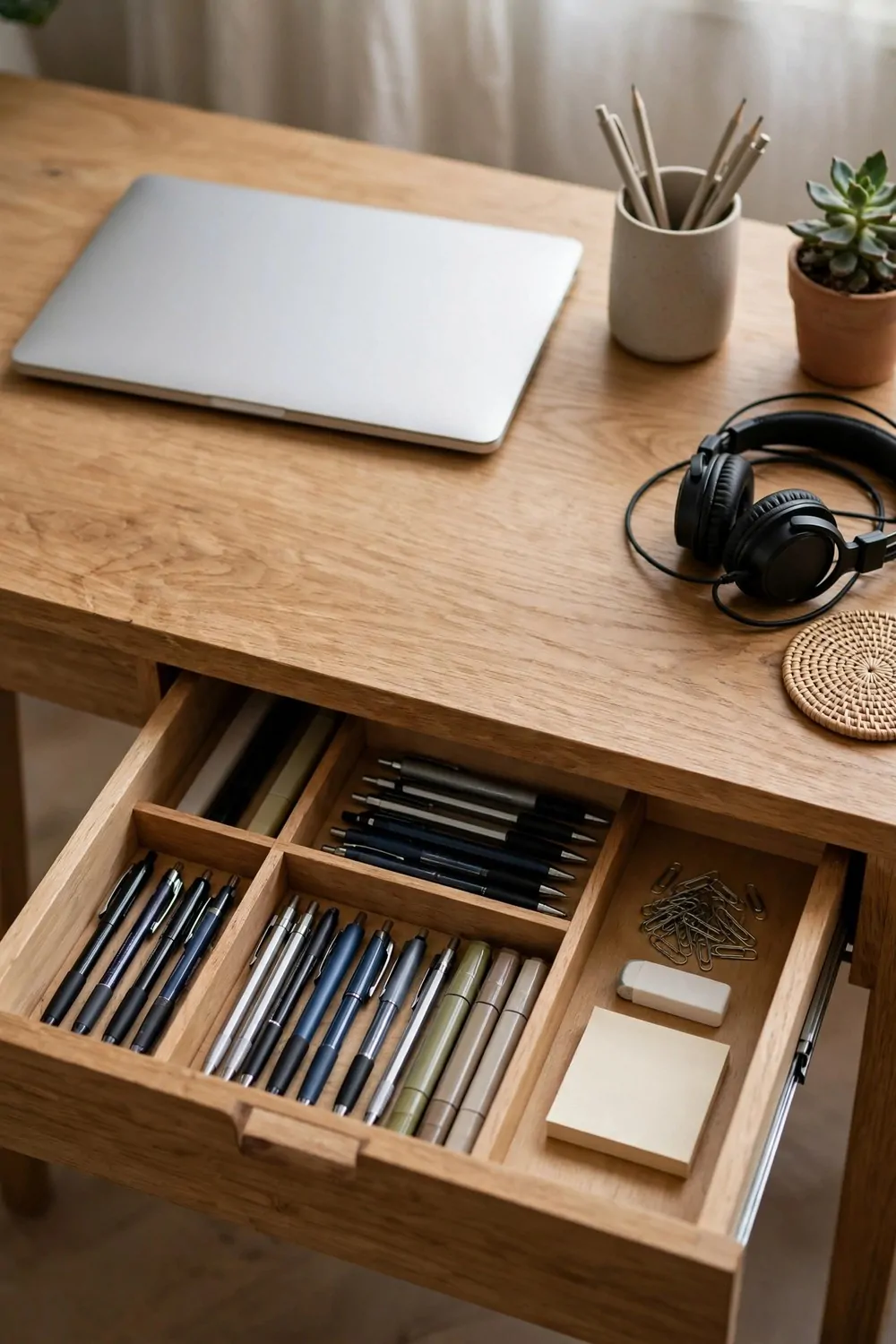
One drawer holds all my messy bits now.
Pens, a charger, spare cables, old notes. They used to live all over my desk.
My desk looked busy even when I was not busy. My eyes kept landing on the mess. My mind did the same, and work felt hard before I even started.
| Drawer spot | What lives there | Why it helps |
|---|---|---|
| top drawer | pens and charger | desk stays clear |
| middle drawer | notebook and papers | one home for paper |
| bottom drawer | cables and spares | nothing dangles |
Now the mess has one home.
I open the drawer when I need a pen. I shut it when I am done, and the mess is gone again.
The top drawer is the one I touch most. It holds the pens and the charger I use each day. Nothing else goes in there, or it gets full too fast.
The middle drawer is for paper.
My notebook and a few loose sheets live there. Paper has one home now, so I stop hunting for it.
The bottom drawer takes the cables and spares. They tangle in the dark where I cannot see them. That is fine, they work the same when I pull one out.
A Daylight Lamp From the Charity Shop
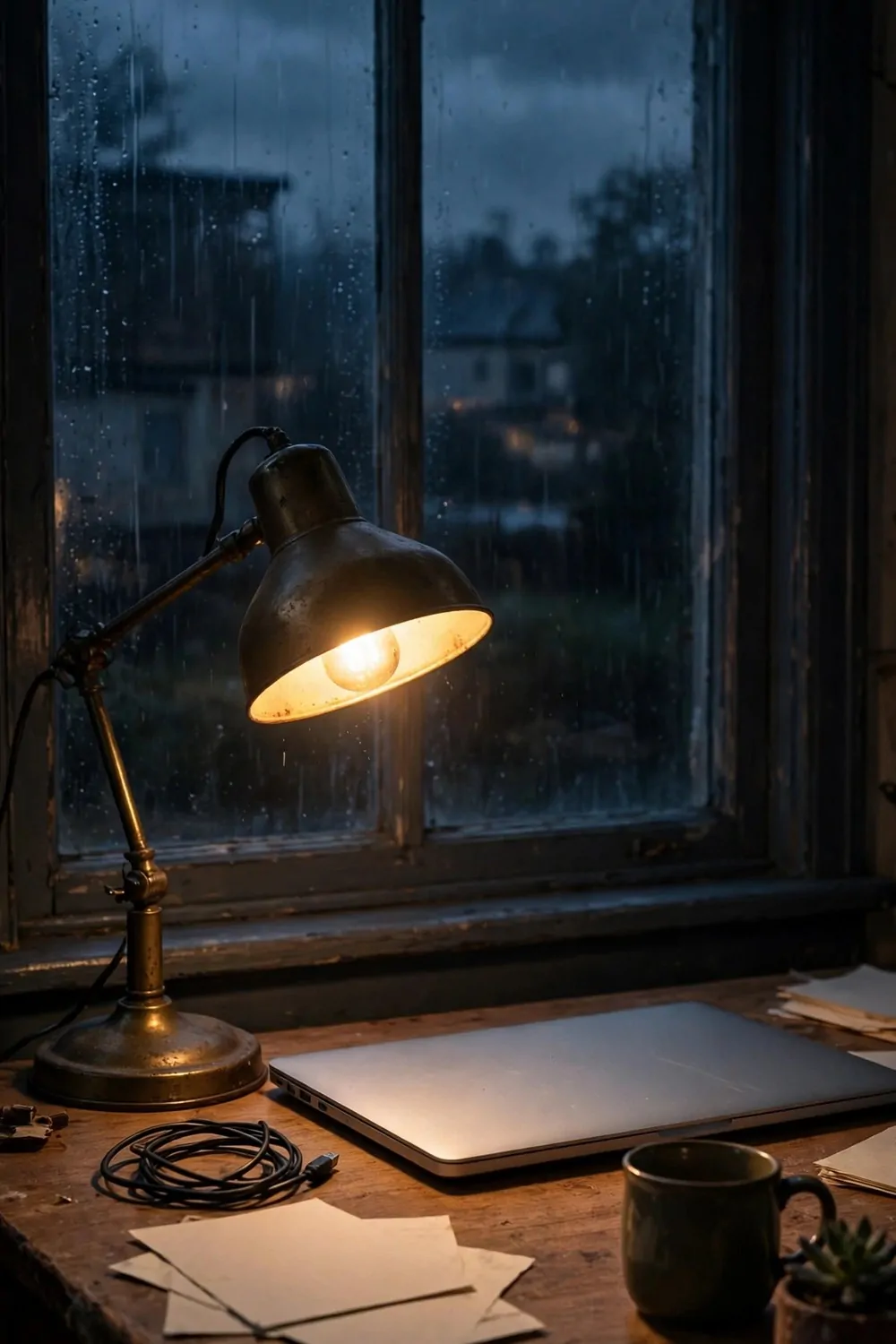
I found my little lamp in a charity shop.
It cost very little, and it still works fine. Secondhand light is still light.
Dark mornings used to slow me down. The big ceiling light felt too bright and too cold. My eyes felt tired before lunch.
The small lamp sits near my desk now.
Its warm light falls right where I work. The rest of the room stays soft and calm.
I switch it on when the sky is grey. I switch it off when the sun comes through the window. It is a small habit, and it helps a lot.
Warm light near the desk beats a bright ceiling light.
My eyes do not sting by the end of the day. I can read for longer without a headache.
If you see one in a charity shop, pick it up and try it.
The Stretch Break Every Hour
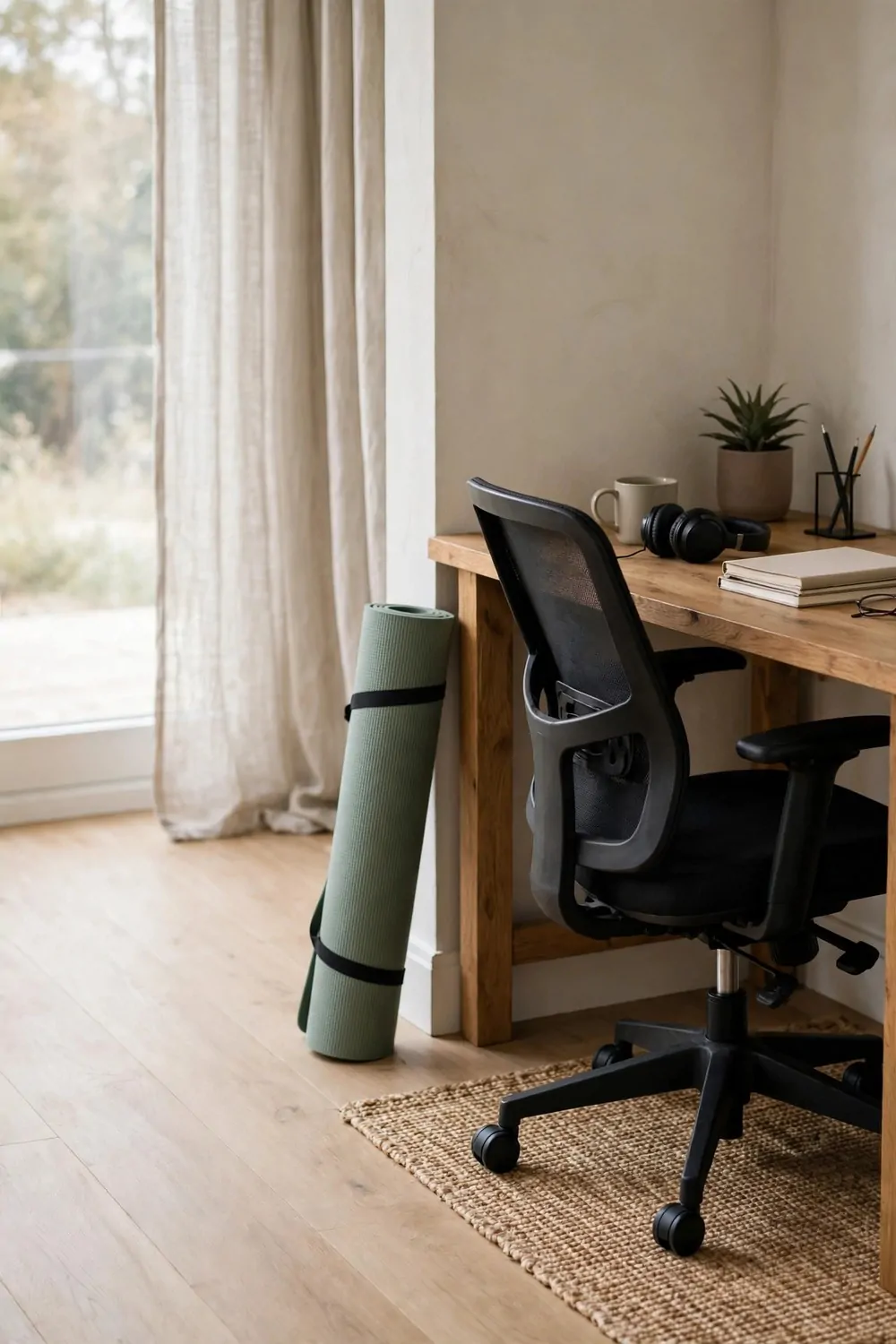
I stand up once every hour.
That is the whole rule. I stand, I stretch, and I walk to the window and back.
Sitting still for hours makes my shoulders stiff. Stiff shoulders steal my focus. I start to fidget and my work gets slow.
The walk is very short, and that is the point.
I look out of the window for a few seconds. The sky and the street remind me the world is still there.
- arms up high
- shoulders back
- neck slow circles
- walk to the window and back
Four small moves, and I feel new again.
I do not check my phone on these breaks. The phone turns a one minute break into ten minutes.
I keep a glass of water by the desk too. I take a sip when I stand up. Water and a stretch together wake me up better than anything else.
Try it for one day and see how your shoulders feel.
One Pen, One Notebook
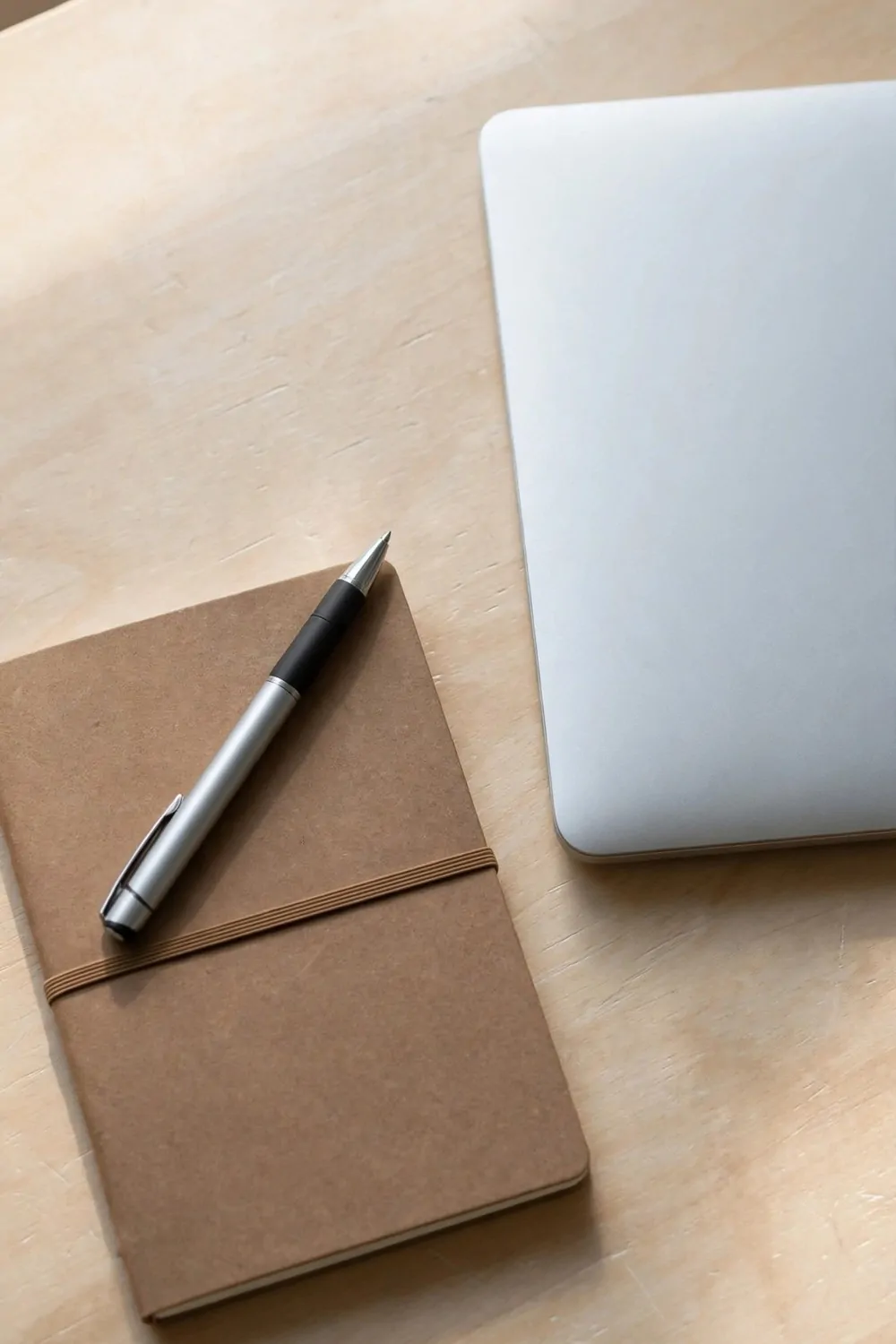
I keep one pen and one notebook on my desk.
That is all. No jar full of pens, no stack of pads I never touch.
Too many tools used to slow me down. I would pick up one pen, then another. I would hunt for the right notebook, and my idea would drift away.
Fewer choices means faster starts.
My pen is always in the same spot. My notebook opens at the same page, and I just begin.
The best tool is the one already in your hand. A plain pen that works beats a fancy one lost in a drawer. I write more now, and I lose less.
I write my tasks in the same notebook each day.
When I need an old note, I know where to look. I flip back a few pages and there it is.
One pen, one notebook, and my work starts in seconds.
The Curtain That Cuts the Glare
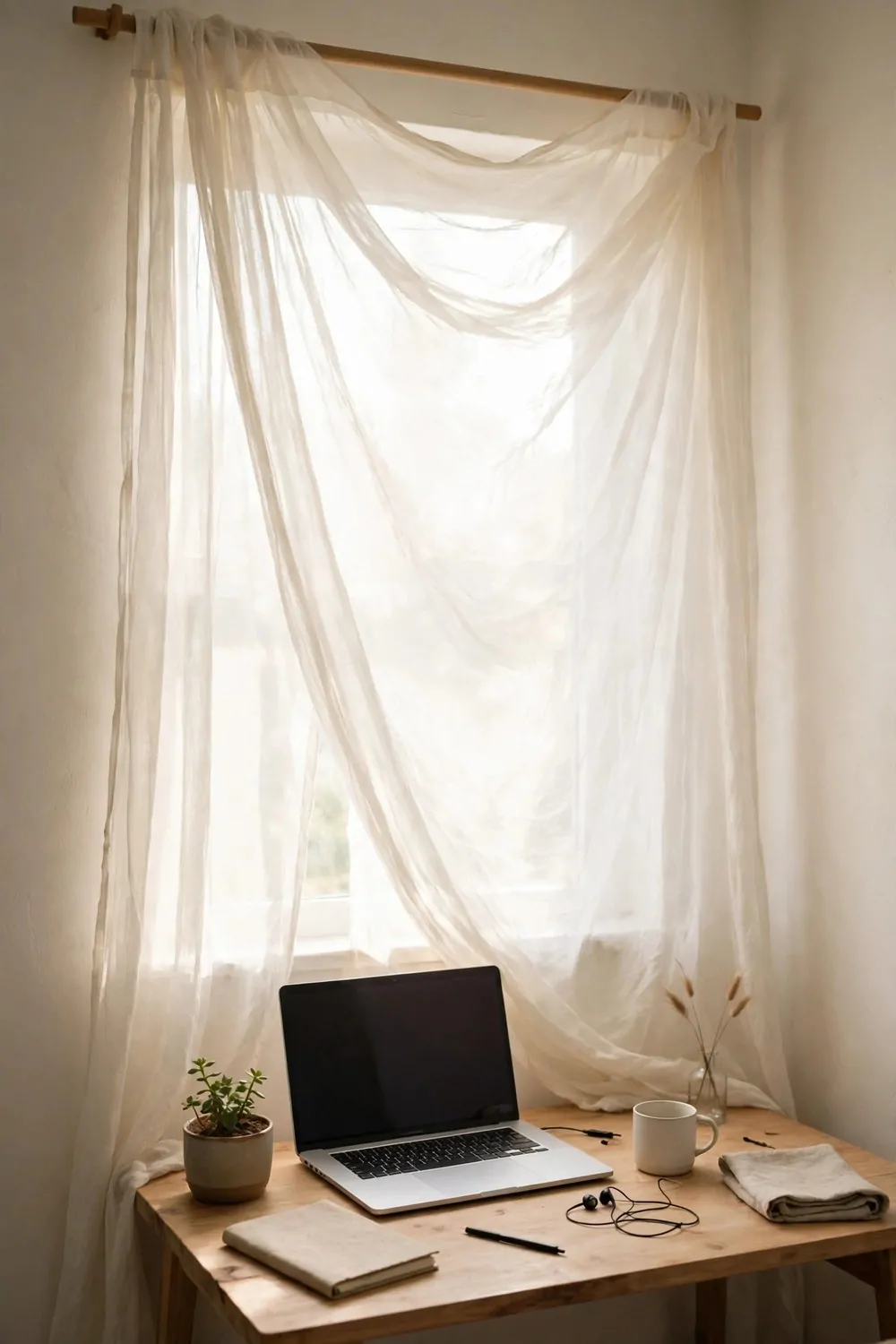
A thin pale curtain hangs over my window now.
It softens the bright sun on my screen. The daylight still comes in, but it comes in gently.
Glare used to make my eyes tired. I would squint at the screen and lean in close. My work got slow, and my head would ache by lunch.
The curtain cost very little.
It is just a light piece of cloth on a plain rod. It does not block the day, it only tames it.
I can read my screen now without fighting the sun. My eyes stay fresh for longer. I get more done in the same hours.
A light curtain costs little and keeps the daylight.
I wash it now and then, and it still looks fine. Pale cloth suits a small room, it makes the space feel airy.
If the sun hits your screen, try a thin curtain before you buy anything else.
End the Day With a List for Tomorrow
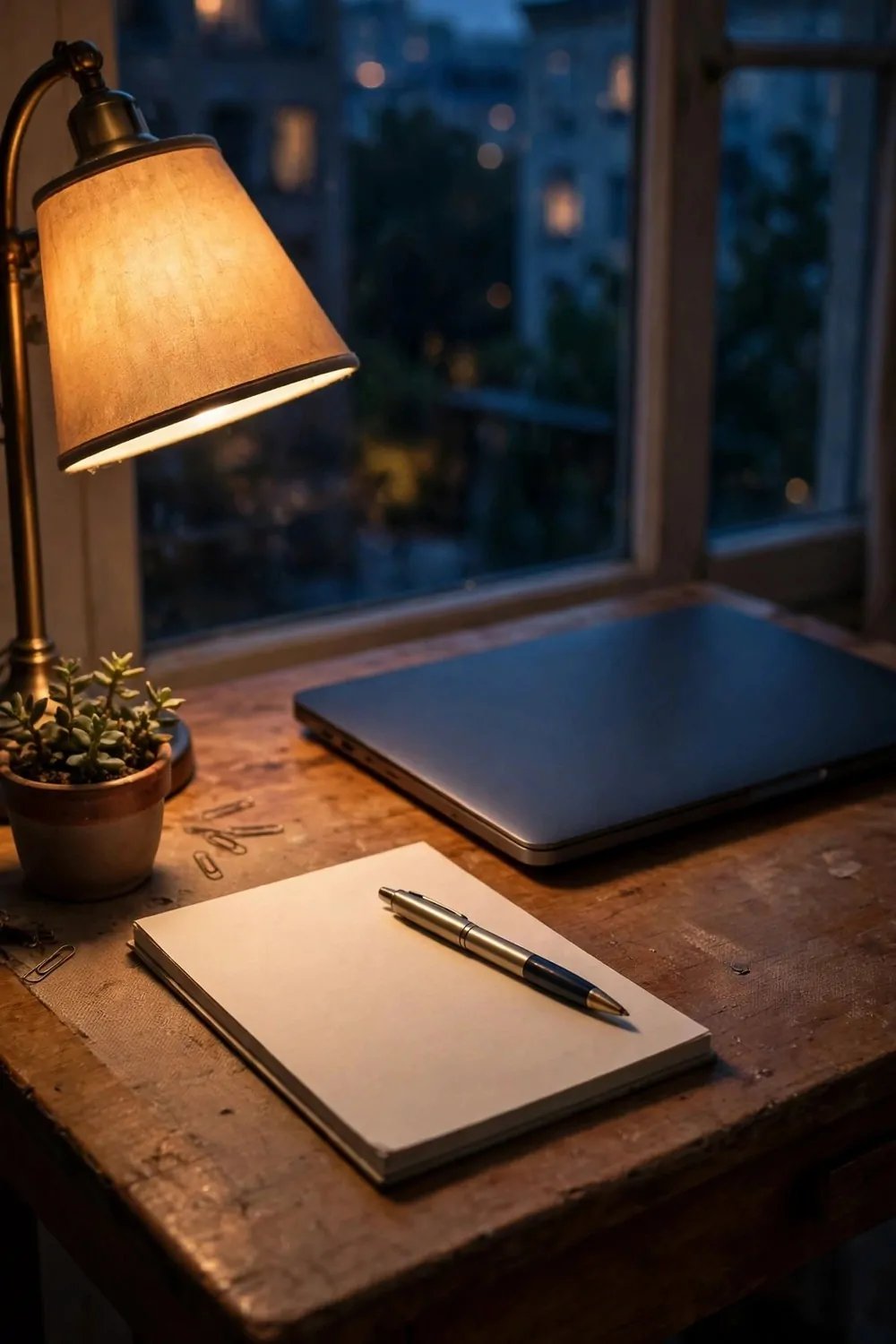
Before I stop work, I write three small tasks for tomorrow.
Just three. Not ten, not a whole page. Three small jobs I can really finish.
Tomorrow starts without thinking then. I sit down and I already know the first job. I do not waste the morning wondering what to do first.
The list is the cheapest focus tool there is.
It costs one pen and one minute. It saves me a slow, foggy start each morning.
I keep the jobs small on purpose. A big job feels heavy at nine in the morning. A small job feels easy, and once I start, the rest follows.
Some days I finish all three by lunch.
That feels good, and I add one more job in the afternoon. The day feels won, not just survived.
Write your three jobs tonight, and thank yourself tomorrow.
Keep Reading
If you liked these focus ideas, these bedroom office ideas will give you even more ways to make one small room do two jobs well.
- 20 Bedroom with Office Space Layouts That Feel Balanced
- 15 Office in Bedroom Master Layouts That Feel Luxe
- 16 Guestroom Home Office Combo Setups That Save Space
Focus costs less than most people think. Pick one cheap trick from this list, try it this week, and let the small changes add up.