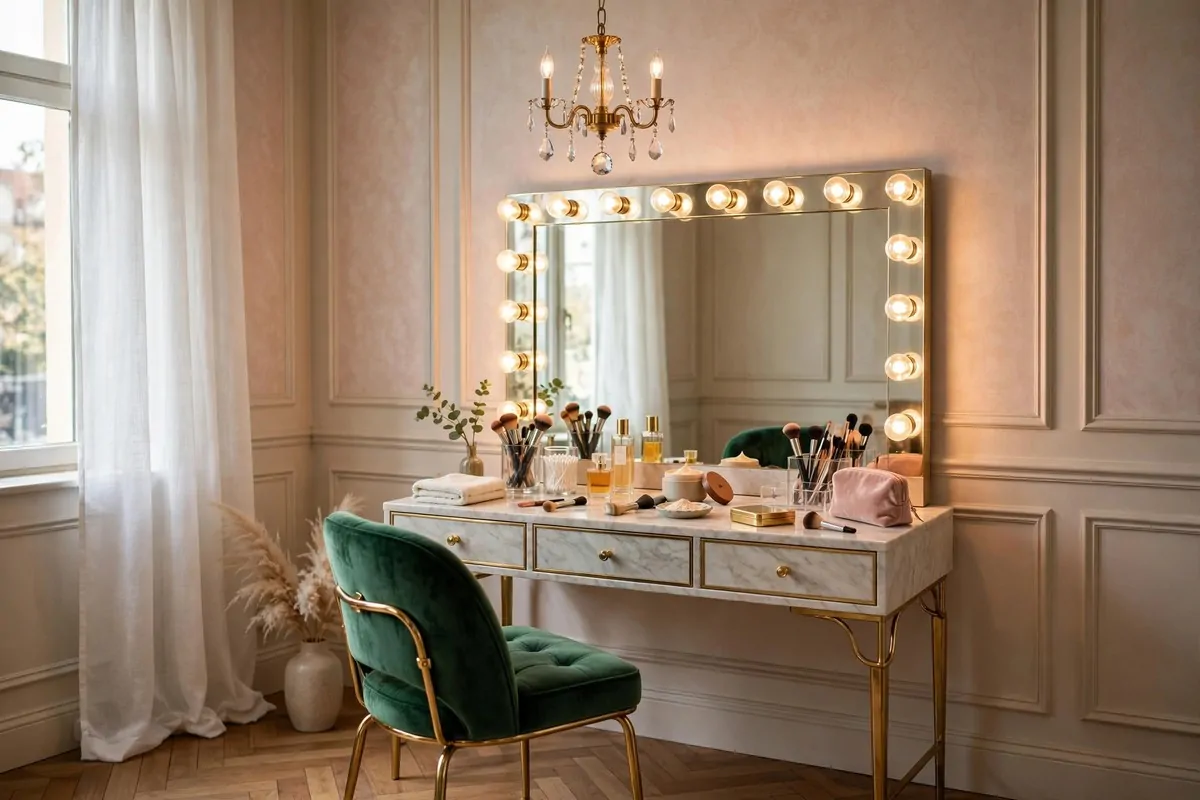
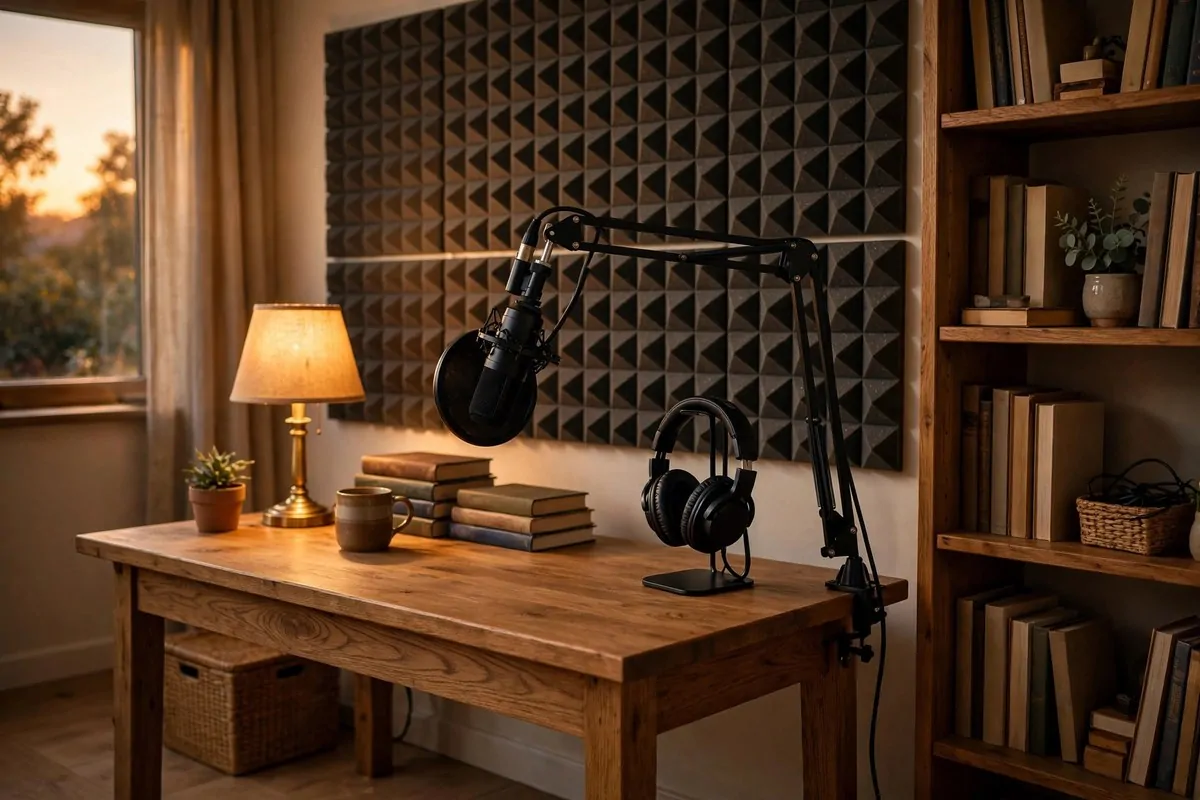
16 Guestroom Home Office Combo Setups That Save Space

The wall above my desk was doing nothing. Not one thing. It was painted, clean, and completely empty, while my desk was so crowded I could not find my own pen.
That wall taught me the whole trick. A small guestroom does not need more floor. It needs more jobs from the same floor. The wall can hold the shelves. The bed can hide the boxes. The desk can fold away. The room stays the same size, and it feels twice as big.
I spent a month fixing my own guestroom this way. I did not buy a bigger room. I bought smarter pieces, and I moved the old single-job ones out. Now the room sleeps a guest on Friday and holds my office on Monday, and nothing in it fights for space.
That is what these 16 guestroom home office combo setups are about. Each one is a way to save space in a small room that has to do two jobs. Pick the ones that fit your room, and start with the wall, because the wall is free.
The Desk That Folds Flat to the Wall
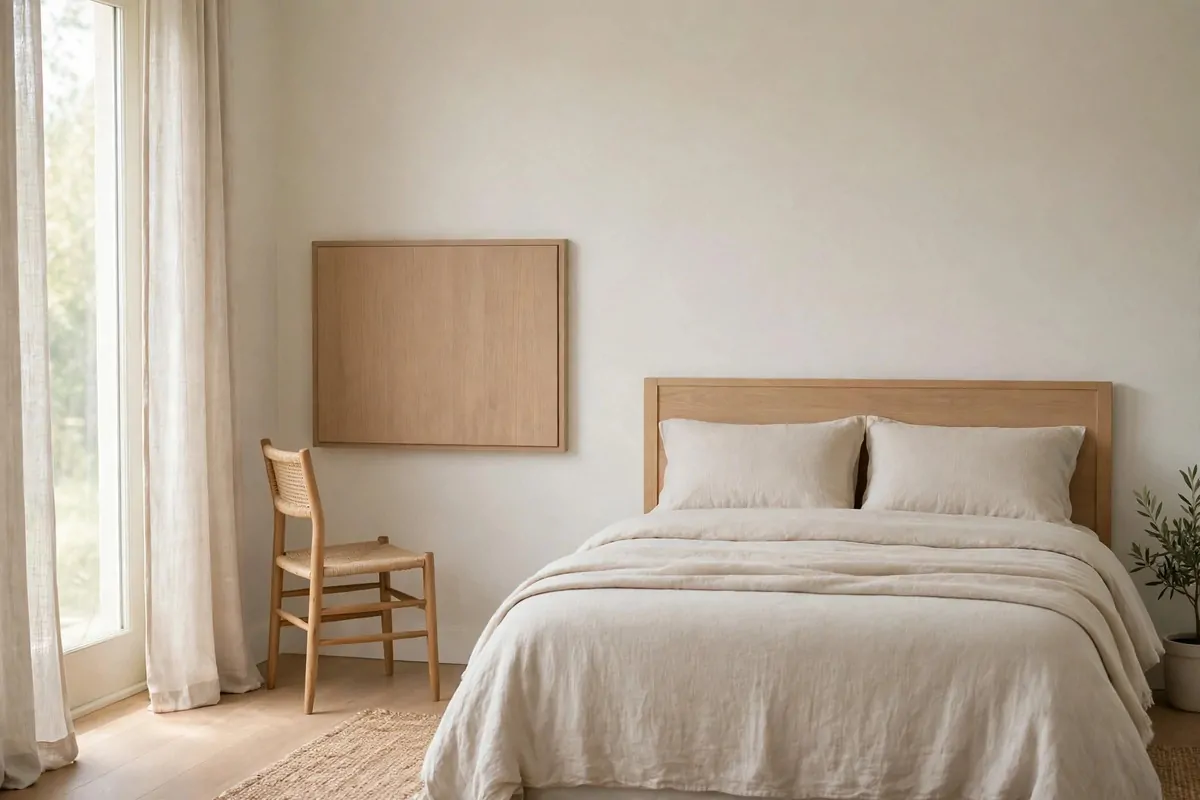
A desk that folds flat to the wall is the best space saver I know. When you fold it up, the floor is free. When you fold it down, you have a desk.
Mine is a plain wooden board, fixed to the wall with two strong hinges. I pull it down when work starts, and I push it back up when work ends. The wall holds it flat, and the floor below stays free.
The hinges have to bite into solid wood inside the wall. Plaster on its own will give way under a laptop. Tap along the wall until you hear the dull thud of a stud, and put the screws there. If tapping tells you nothing, ask a friend who has hung heavy things before.
Keep the desk top clear when you fold it up. Nothing can stay on it, or it will slide off and hit the floor. I keep my laptop on a small shelf beside the desk, and my notebook goes in a drawer.
Pick a board that is wide enough for your laptop and a notebook, and no wider. A board that is too wide sticks out and bumps your knee. A board that is too narrow leaves no room for your hands.
Put a small footrest under the desk, about the size of a shoebox. Your feet need somewhere to go, or your legs will ache by lunch. A footrest costs almost nothing, and it makes a plain board feel like a real desk.
A fold-down desk works best if you work at a laptop and keep your papers in one drawer. If you need two screens and a stack of files, this desk is too small for you.
Try this one if your guestroom feels full before you even sit down. One board on hinges, and the floor comes back to you every night.
A Bed That Lifts Up to Hide the Mess
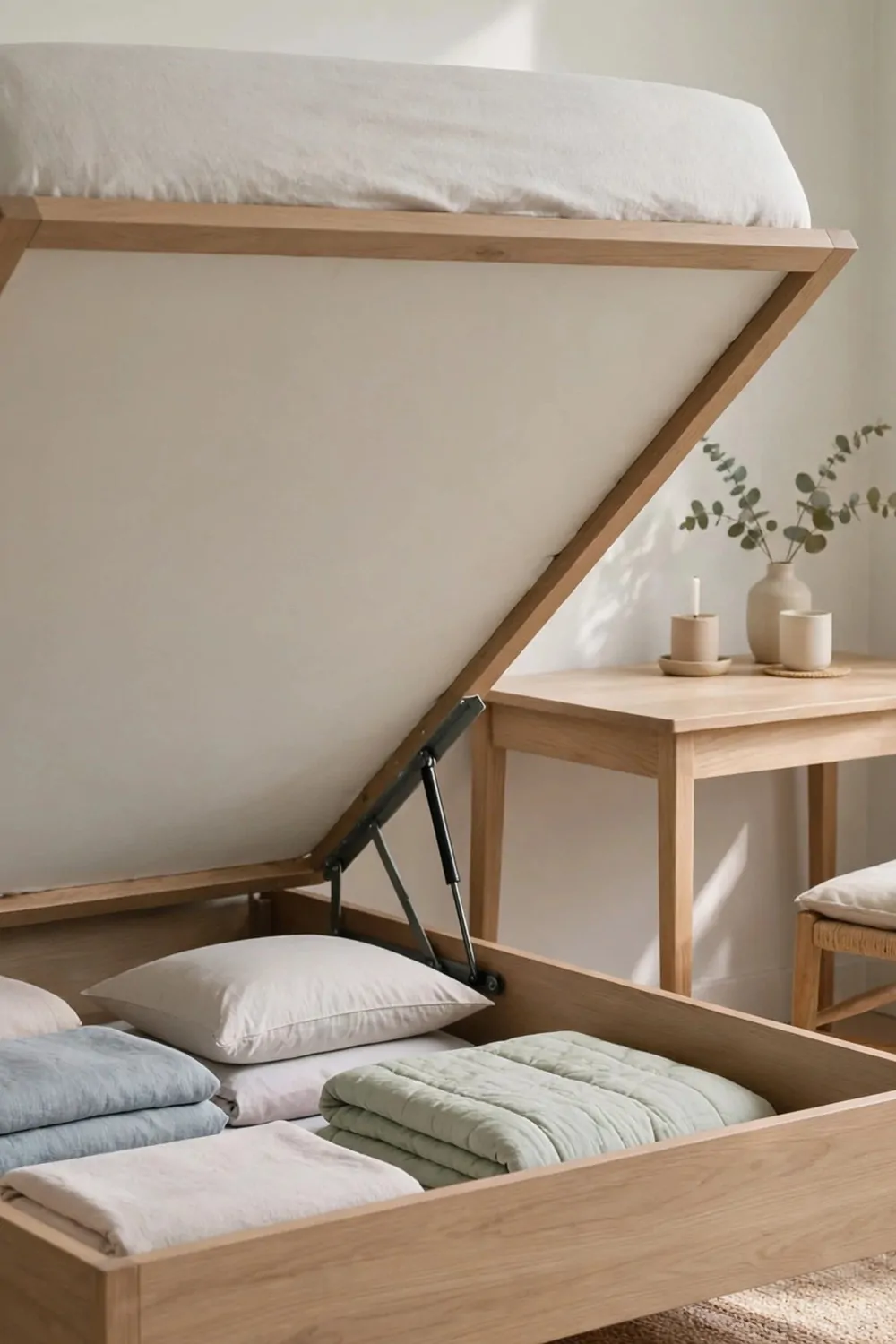
A bed that lifts up is a cupboard in disguise. The mattress lifts on hinges, and underneath is a big empty box.
My storage bed holds all my guest bedding. Sheets, a spare pillow, two towels, and a light blanket. They live under the mattress, out of sight, until a guest arrives.
Lift the base with both hands and let the hinges hold it up. A good storage bed stays open on its own. A cheap one falls back down, and that is no good. Test it in the shop before you buy it.
Put the things you use least at the bottom. Guest bedding goes at the bottom. Spare chargers and old notebooks go on top, where you can reach them fast.
Keep a small step stool by the bed if the base is heavy. You do not need to be strong to use a storage bed. You just need the hinges to do the work for you.
A storage bed is best in a room with no spare cupboard. If your room already has a big cupboard, you may not need the space under the bed at all.
Vacuum under the mattress once a month. Dust gathers in hidden places, and a storage bed is the most hidden place in the room.
Try this one if your guest bedding lives in a pile on a chair. One lift-up bed, and the pile is gone for good.
The Rolling Desk That Parks Under the Bed
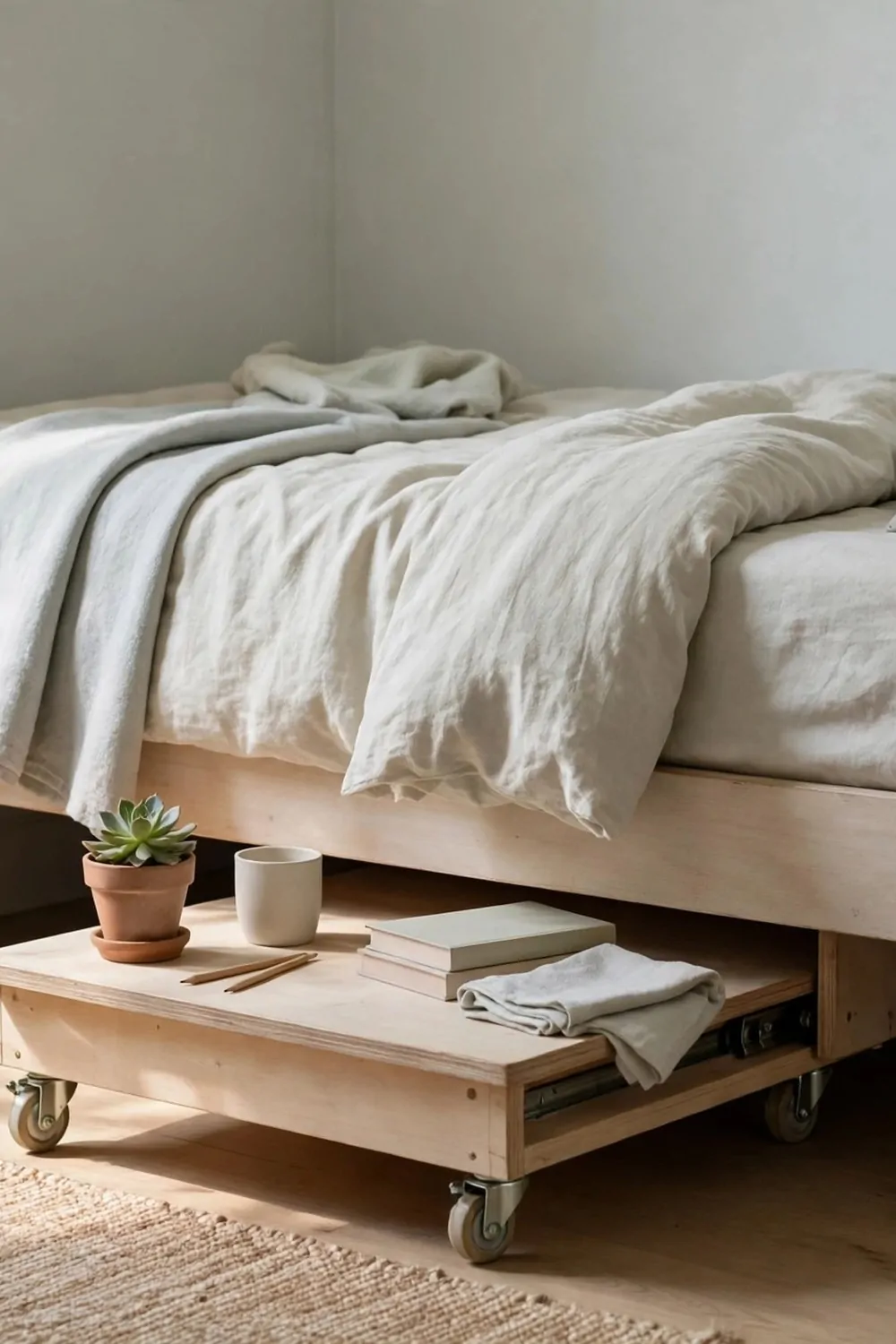
A desk on wheels can park under the bed. That is the whole trick, and it saves more floor than any other move on this list.
My rolling desk is small and light. It has four little wheels and a top just big enough for a laptop. In the day I roll it out and work. At night I roll it under the bed, and the room is clear.
Measure the gap under your bed before you buy or build one. The desk has to be lower than the gap, or it will not fit. Leave a finger of space on top, so it slides in without scraping.
Put locks on two of the wheels. A desk that rolls away while you type is no fun. The locks keep it still when you work, and you flip them off when you park it.
Keep the top clear when you park it. Laptop on the shelf, notebook in the drawer. A desk with stuff on it will not slide under a bed.
A rolling desk is best for a room where the bed sits high enough off the floor. A low bed with no gap underneath cannot hide a desk, and this idea will not work.
Roll the desk out every morning and park it every night. If you leave it out for a week, it becomes a normal desk, and the space saving is gone.
Try this one if your guestroom has a bed with space underneath and a desk that never moves. One set of wheels, and the desk disappears at night.
One Cupboard With Two Halves
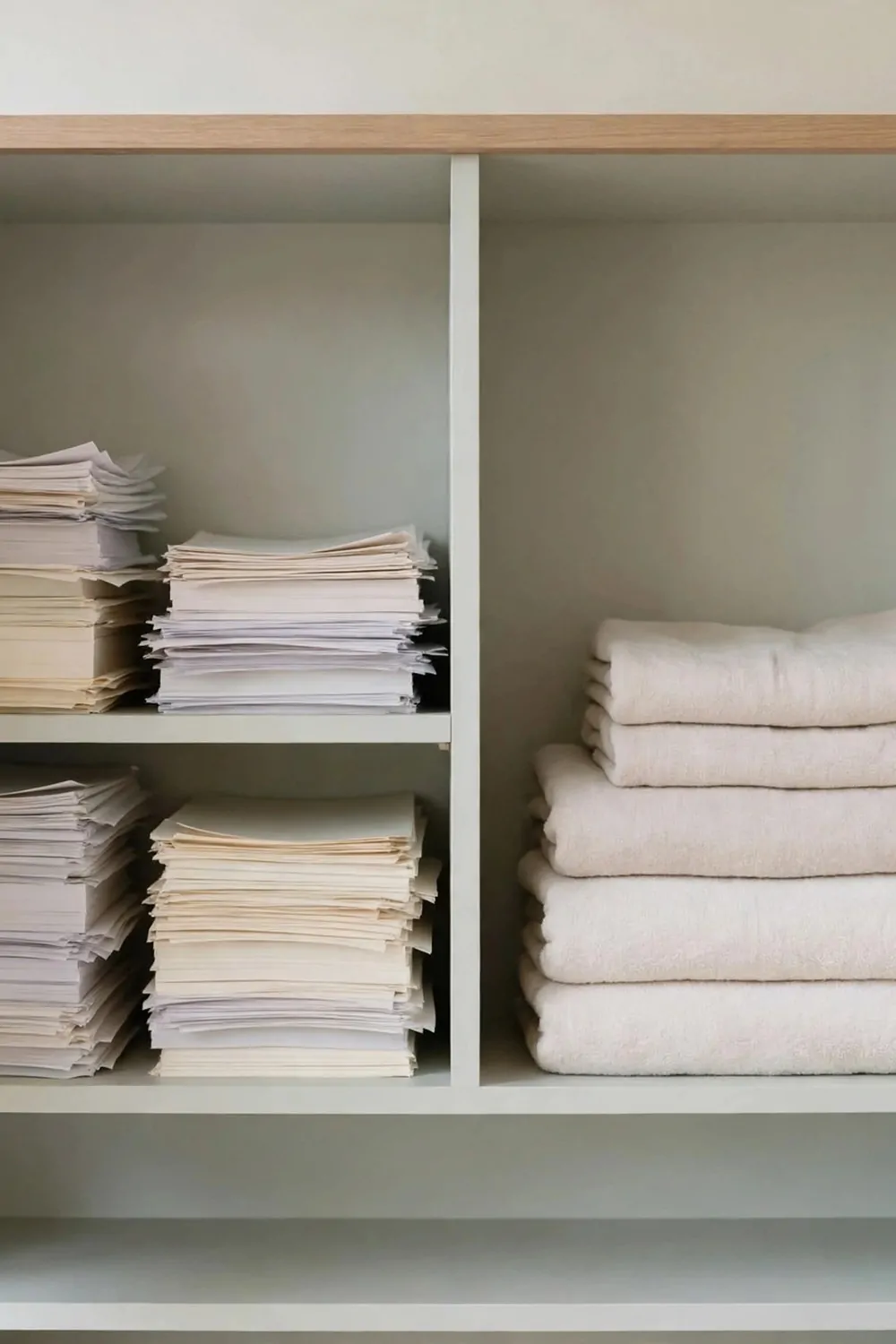
One cupboard can hold two jobs if you split it down the middle. One half for work, one half for guests. No second cupboard needed.
Inside my cupboard, a plain divider runs down the middle. Work lives on the left, guests live on the right. Papers and folders on one side, sheets and towels on the other.
Put the guest things on the side near the bed. Your guest opens the cupboard and finds their shelf first. The work things live on the side near the desk, where you reach them while you work.
Use plain boxes to keep the halves apart. One box for work, one box for guests. Boxes stop small things from sliding across the split and mixing everything up.
Here is the split I use in my own cupboard.
| Shelf | Work half | Guest half |
|---|---|---|
| Top shelf | Spare paper and folders | Spare pillow in a bag |
| Middle shelf | The day’s papers in a tray | Towels and a folded sheet |
| Bottom shelf | Cables and chargers in a box | A spare blanket, folded flat |
Shut the cupboard door when you sit down to work. An open door shows all the shelves at once, and your eyes keep wandering over to them. A closed door hides the clutter, and your brain can focus on the screen.
Label the shelves with small plain tags if more than one person uses the room. One tag that says work, one tag that says guest. Tags stop the mix-ups before they start.
A split cupboard is best when your room has only one cupboard. If you have two cupboards, give one to each job and skip this one.
Try this one if your cupboard is full and your guests still ask where the towels are. One split, two halves, and both questions go away.
Shelves That Climb to the Ceiling
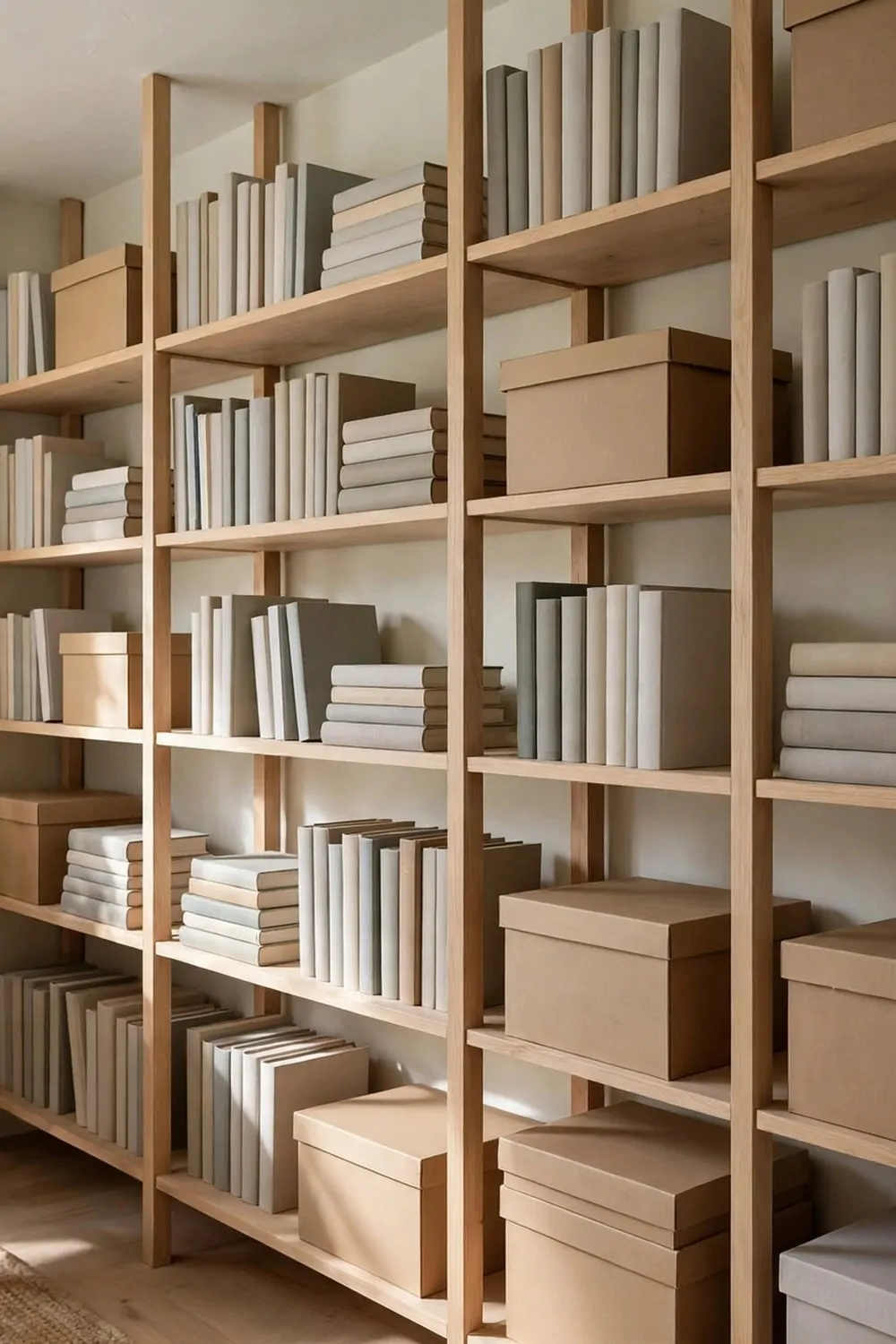
The wall above your desk is free space. Shelves that climb to the ceiling use it, and they take up no floor at all.
My shelves run from my desk all the way up to the ceiling. The bottom shelf holds the books I use every day. The top shelf holds the things I use once a month. The floor below stays clear.
The brackets have to bite into solid wood. A shelf of books is heavier than it looks, and plaster screws will pull out over time. Use long screws into the studs, or get help from someone who has done it before.
Put the heavy things low and the light things high. Books go on the bottom shelves. Empty boxes and light blankets go on the top shelves. A shelf that falls is a mess you do not want.
Keep a small step stool in the room. You need it to reach the top shelf. A stool that folds flat can lean behind the door when you do not need it.
Leave one shelf half empty by choice. That empty space is where the next book goes, and it keeps the shelves from ever looking stuffed.
Shelves that climb are best in a room with high ceilings. If your ceiling is low, two shelves are enough, and a third one will make the room feel short.
Try this one if your desk is covered in books and your floor is covered in boxes. Shelves on the wall, and both piles have a home.
The Back of the Door Is Free Space
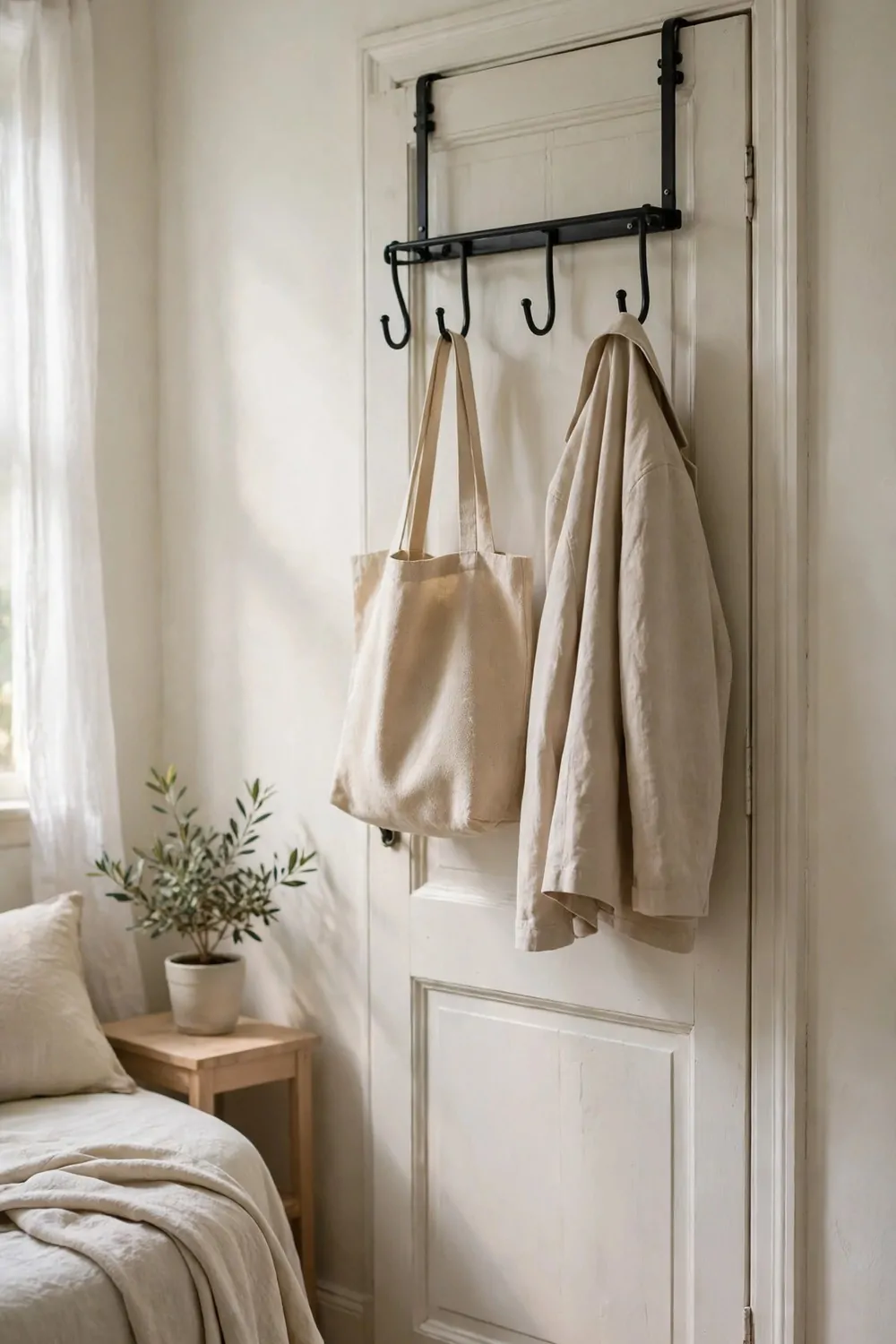
The back of your door is a whole wall nobody uses. Hooks and a small rack on it can hold a bag, a jacket, and a towel, and they cost almost nothing.
I put an over-door rack on my guestroom door. It hooks over the top of the door, so there are no holes in the wall at all. It holds my guest’s jacket, their bag, and a towel for the morning.
Pick a rack that fits your door. Measure the thickness of the door first. A rack made for a thick door will wobble on a thin one, and a rack made for a thin door will not fit a thick one.
Keep the heavy things low on the rack. A bag hangs better on a low hook than a high one. A jacket can go higher, because it weighs almost nothing.
Here is what lives on the back of my door.
- A hook for the guest’s jacket.
- A hook for the guest’s bag.
- A small rail for a towel.
- Nothing else. The door still has to close.
Do not hang more than the rack can hold. A rack full of heavy coats will pull the door out of shape, and the door will not close right.
The back of the door is best in a room with no spare hooks on the wall. If your walls already have hooks, the door rack is one hook too many.
Try this one if your guest’s jacket always ends up on the desk chair. One rack on the door, and the chair is free again.
Chairs That Stack in the Corner
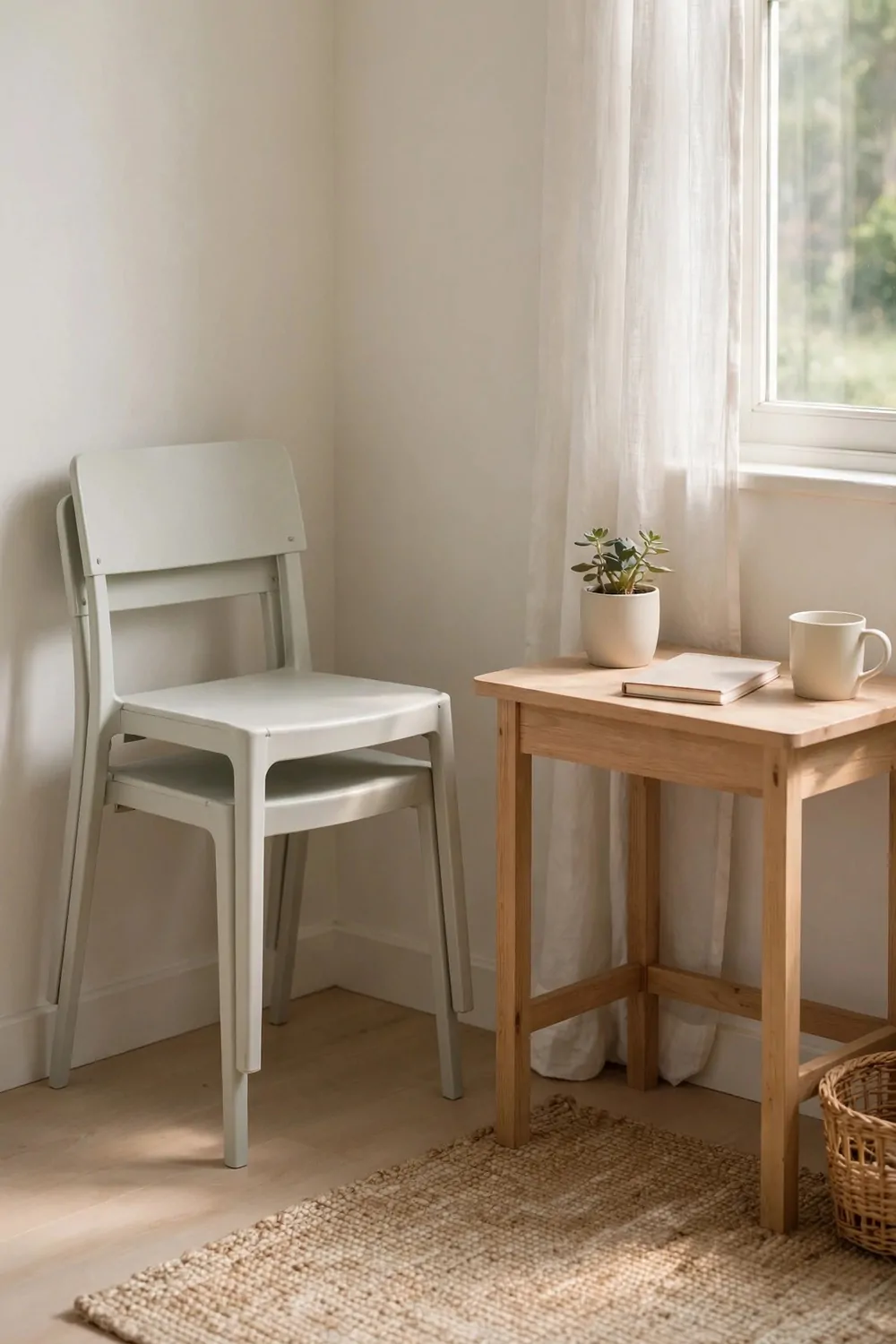
Two chairs take up twice the floor of one chair. Chairs that stack take up the floor of one chair, even when you own two.
My guest chair stacks on top of my work chair when nobody visits. They sit in the corner like one chair. When a guest arrives, I lift the top one down, and the room has two chairs again.
Pick chairs that are made to stack. They have flat seats and straight legs, so one sits neatly on the other. Chairs that were not made to stack will slide off and fall.
Keep the stacked chairs in the corner by the door. That corner is dead space anyway. A stack of chairs there does not block the bed or the desk.
Put a small cushion on the guest chair and keep it on the chair. A cushion that lives on the chair is ready when the guest sits down. A cushion in a cupboard is a cushion nobody uses.
Stacking chairs are best if your guests stay a few nights at a time. If a guest stays for a month, they need a proper chair of their own, not a stackable one.
Wipe the chair legs once a week. Stacked chairs gather dust between the seats, and dust on a guest chair is the first thing a guest notices.
Try this one if your room has two chairs and only one of them gets used most days. Stack them, and the floor comes back.
The Little Cart With Wheels
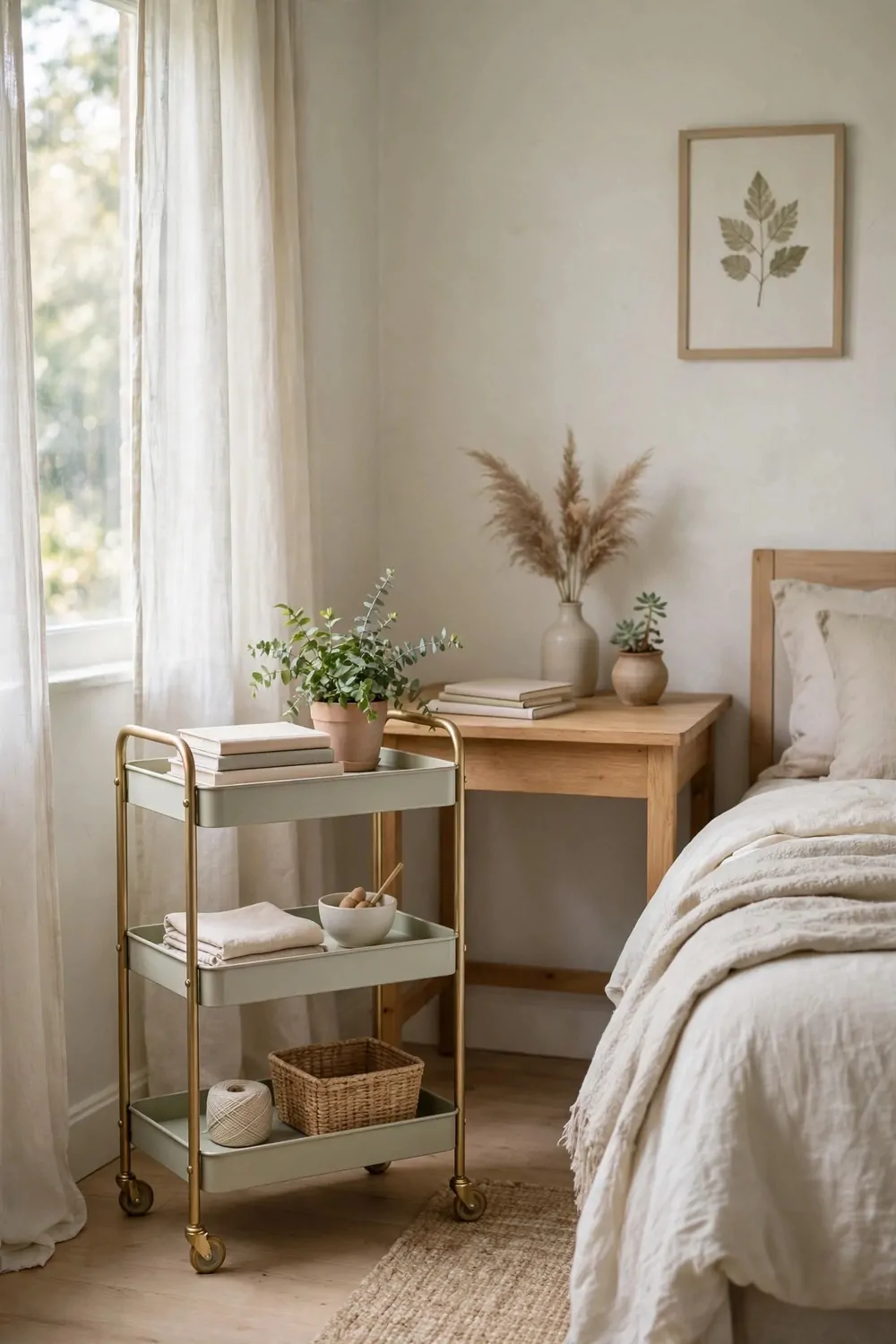
A little cart with wheels is a desk, a shelf, and a bedside table all in one. You roll it where you need it, and you park it where it fits.
My cart has three small shelves. The top shelf holds my notebook and my mug. The middle shelf holds my papers. The bottom shelf holds my chargers and cables. Everything I need for work lives on one cart.
Roll the cart to the desk in the morning. Roll it to the bed at night, and it becomes a bedside table for your guest. One cart, two jobs, and it never stays in the way.
Pick a cart that fits through your door. Measure the door before you buy it. A cart that cannot leave the room is a cart that cannot help you.
Keep the cart light. If it is full of heavy books, it will not roll well, and you will stop moving it. Heavy books belong on a shelf. The cart is for the day’s work only.
Put small locks on the wheels if your floor is smooth. A cart that rolls away on its own is no good. The locks keep it still while you work.
A rolling cart is best in a room where the desk and the bed are close together. If they are far apart, the cart has a long trip, and you will not bother moving it.
Try this one if your desk is covered in things that belong somewhere else. One cart, three shelves, and the desk is clear again.
Boxes That Slide Under the Bed
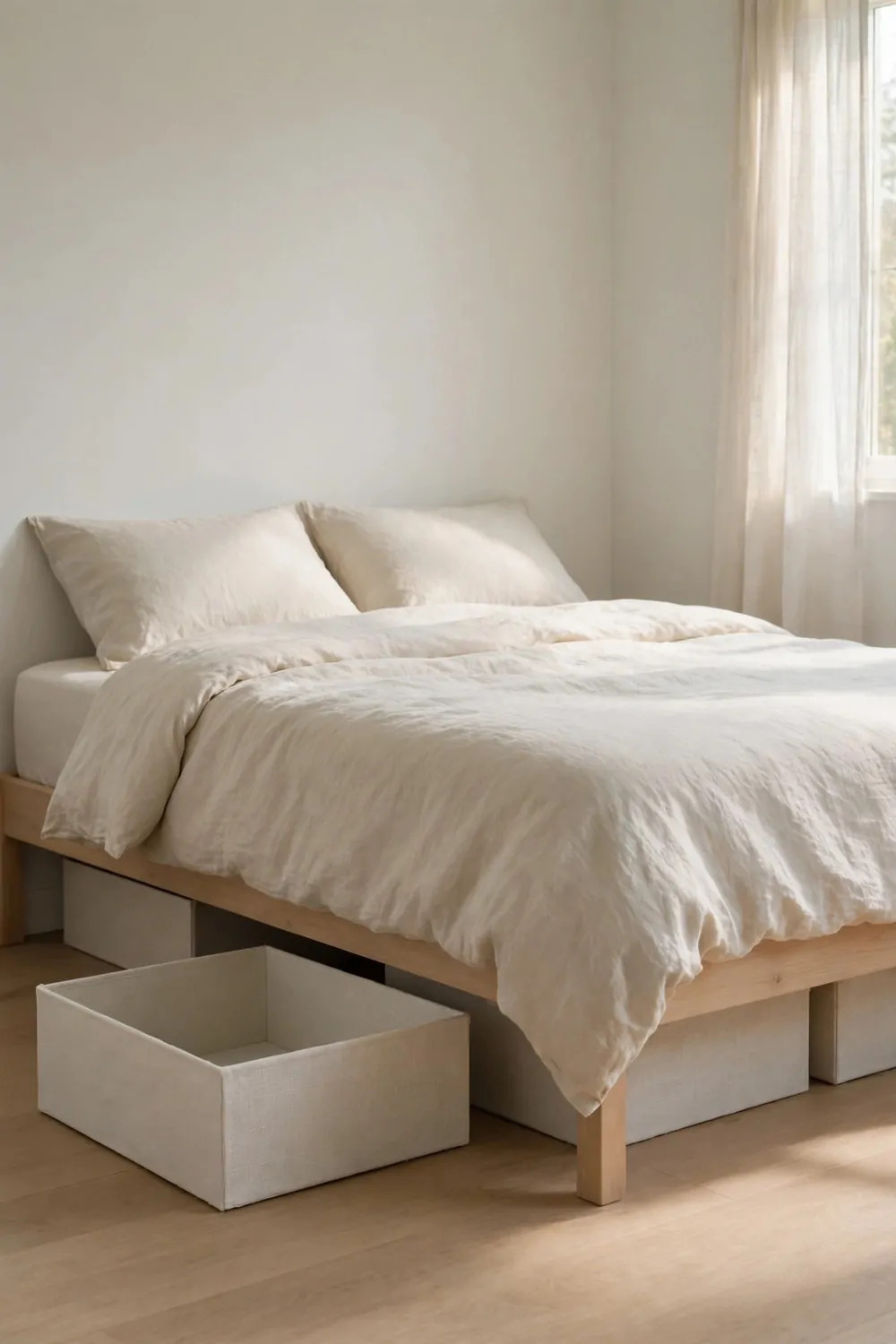
The space under your bed is a whole cupboard you already own. Flat boxes that slide under it can hold guest bedding, spare towels, and out of season clothes.
My under-bed boxes are flat and wide, with small wheels on the bottom. I pull one out like a drawer, take what I need, and slide it back. The room looks the same, but it holds twice as much.
Measure the gap under your bed before you buy the boxes. The box has to be lower than the gap, or it will not slide in. Leave a little space on top, so the box does not scrape the bed frame.
Put the guest things in the box nearest the door. Your guest can pull it out and find clean sheets without digging past your old files.
Here is what lives in my three under-bed boxes.
| Box | What is inside | When I open it |
|---|---|---|
| Box one, by the door | Guest sheets, pillow case, towel | When a guest arrives |
| Box two, in the middle | Spare blankets and a spare pillow | On cold nights |
| Box three, by the wall | Old papers and spare cables | Almost never |
Put lids on the boxes. A box with no lid gathers dust, and dust on clean sheets is the last thing a guest wants to see.
Stick a small plain tag on each box. One tag that says guest, one that says spare, one that says old papers. Tags save you from opening all three boxes every time.
Under-bed boxes are best when your bed sits high enough off the floor. A bed that sits on the floor has no space underneath, and this idea will not work.
Try this one if your cupboard is full and your bed has empty space under it. Three flat boxes, and the cupboard can breathe again.
A Bed That Folds Into the Wall
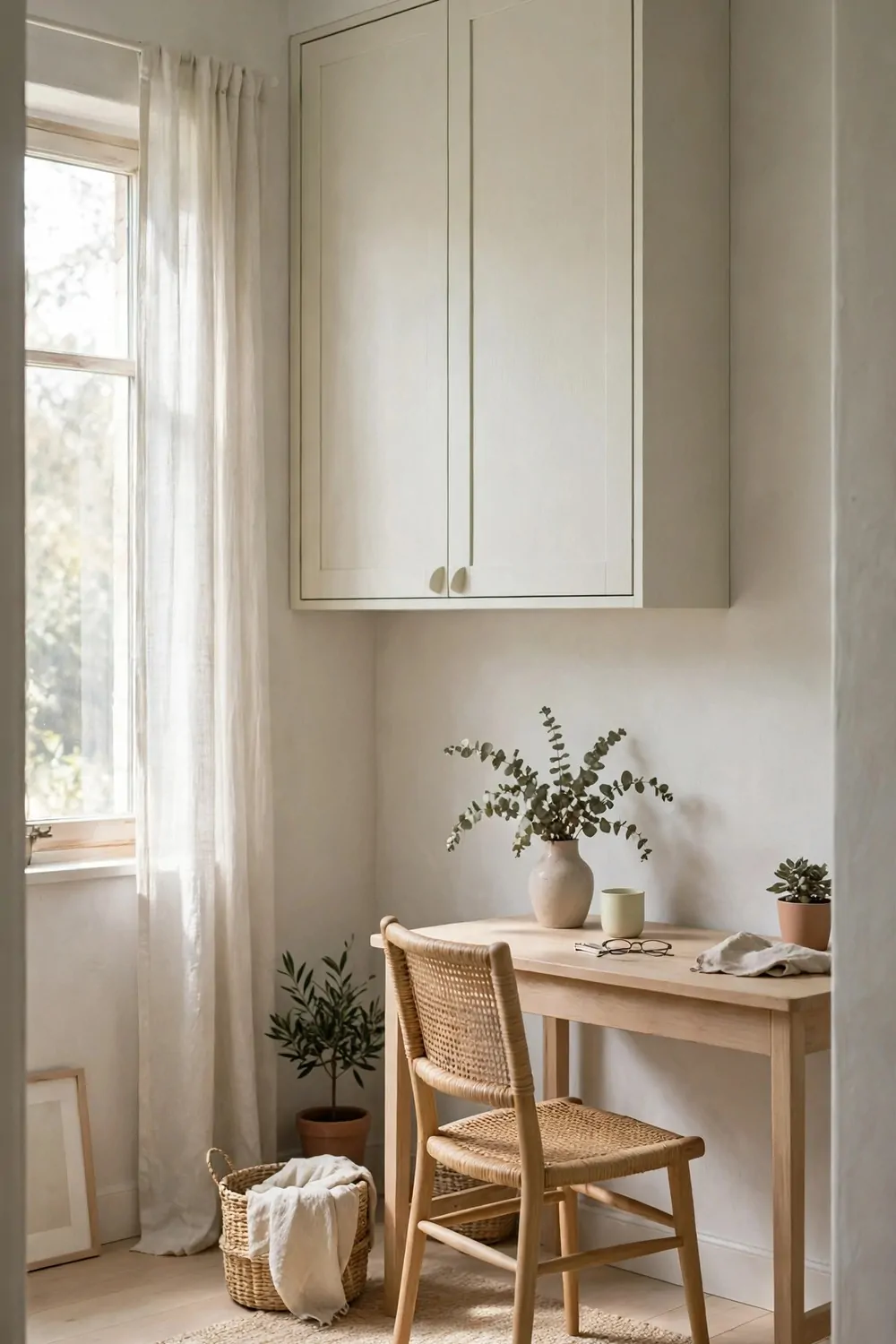
A bed that folds into the wall gives you the whole floor back in the day. You fold it up in the morning, and the room is an office. You fold it down at night, and the room is a bedroom.
My wall bed is fixed to the wall with strong hinges. In the day it looks like a plain cupboard. At night I pull it down, and it is a real bed with a real mattress. Nobody would guess it was a bed in the morning.
Fix the bed frame into wall studs, not just plaster. A bed that folds down is heavy, and it needs a strong fixing. If you are not sure, ask someone who fits them for a living.
Keep the bedding on the bed when you fold it up. Straps hold the pillow and the blanket in place. When you fold it down at night, the bed is already made.
Put your desk on the opposite wall from the wall bed. That way the bed folds down without hitting the desk. Measure the open bed before you place the desk, or the two will fight for the same floor.
A wall bed is best in a room where guests stay often and you work there every day. If guests rarely visit, a normal bed is simpler, and a wall bed is more work than you need.
Oil the hinges once a year. A wall bed that squeaks will wake your guest, and a quiet one will not.
Try this one if your guestroom is also your full-time office. One bed in the wall, and the whole floor is yours all day.
The Corner Nobody Uses
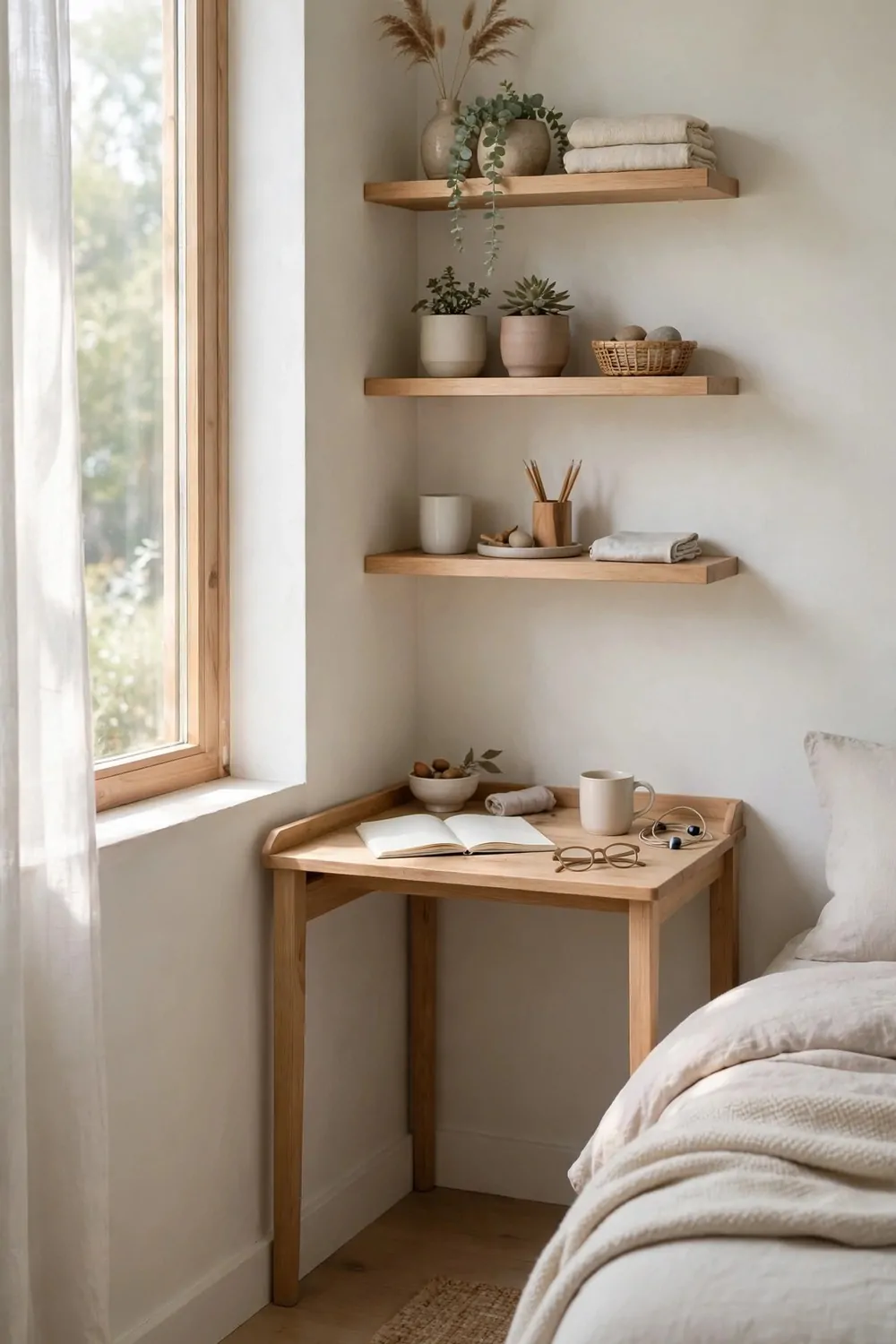
Every small room has a corner that does nothing. It holds dust and a plant you forgot to water. That corner can hold a desk.
My corner desk fits into the corner like it was made for it. Two short sides, one against each wall, and a chair that tucks right under. The middle of the room stays open for the bed.
Measure the corner before you buy a desk. Corners look bigger than they are. A desk that is too wide will stick out into the room, and the corner trick is gone.
Put a shelf above the corner desk for your books and your lamp. The shelf uses the wall, and the desk top stays clear for work. One shelf is enough. Two shelves make the corner feel like a cupboard.
Keep the light in the corner. A small lamp on the desk or a shelf light above it makes the corner bright. A dark corner is a corner nobody wants to sit in.
A corner desk is best if your room is square. In a long narrow room, the corner is too tight, and a desk on the long wall works better.
Run the cables along the wall, not across the floor. A cable on the floor in a corner is a trip hazard you cannot see in the dark.
Try this one if your room has a corner with nothing in it but dust. One small desk, and the dead corner starts working.
Hooks Instead of a Dresser
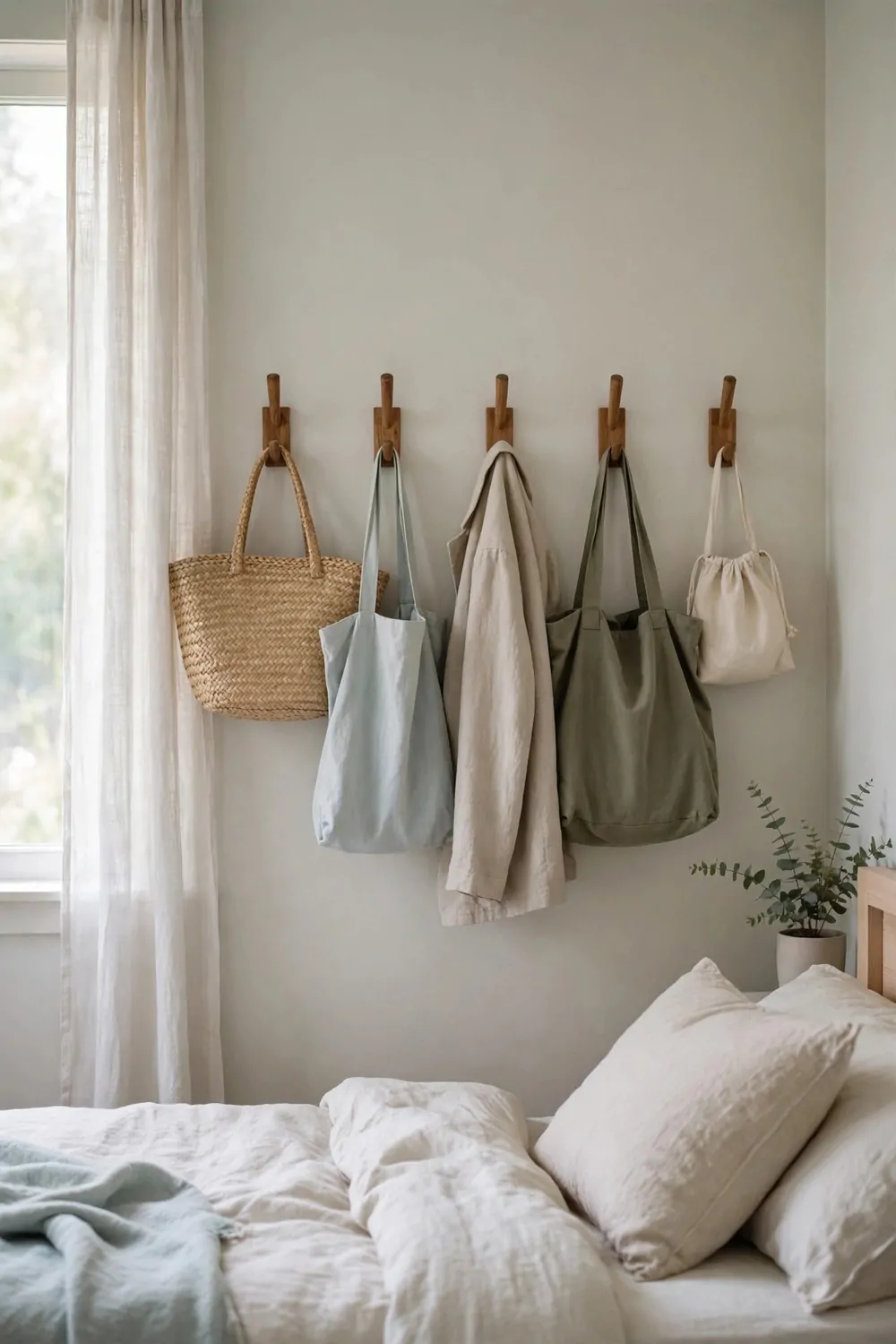
A dresser takes up more floor than any other piece in a guestroom. Hooks on the wall can do the same job, and they take up no floor at all.
I took the dresser out of my guestroom and put a row of wooden hooks on the wall instead. My guest hangs their jacket, their bag, and their hat on the hooks. My work papers live in a drawer, not in a dresser.
Fix the hooks into wall studs. A hook that holds a heavy bag needs a strong fixing. Plaster alone will pull out, and the bag will end up on the floor.
Put the hooks at shoulder height. A hook too high is hard to reach. A hook too low lets the jacket drag on the floor. Shoulder height is right for most people.
Here is what my wall of hooks holds.
- A hook for the guest’s jacket.
- A hook for the guest’s bag.
- A hook for a hat or a scarf.
- A small hook for keys.
- Nothing else. The wall is not a cupboard.
Keep one hook empty. An empty hook is the one your guest will use first, and it tells them the wall is theirs.
Hooks are best in a room where guests stay a few nights. If a guest stays for a month, they need drawers, not hooks, and a small dresser is the kinder choice.
Try this one if your dresser is full of things you never use. Hooks on the wall, and the whole dresser can leave the room.
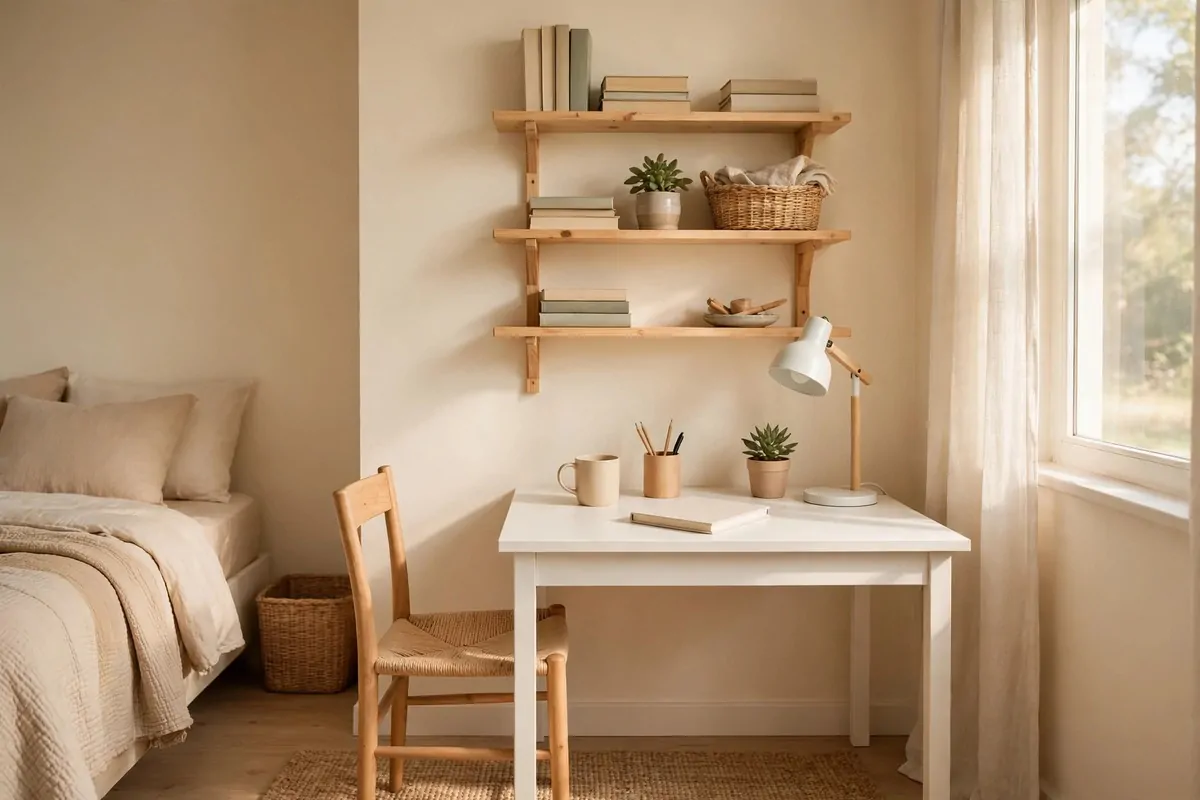
A Desk No Deeper Than a Book
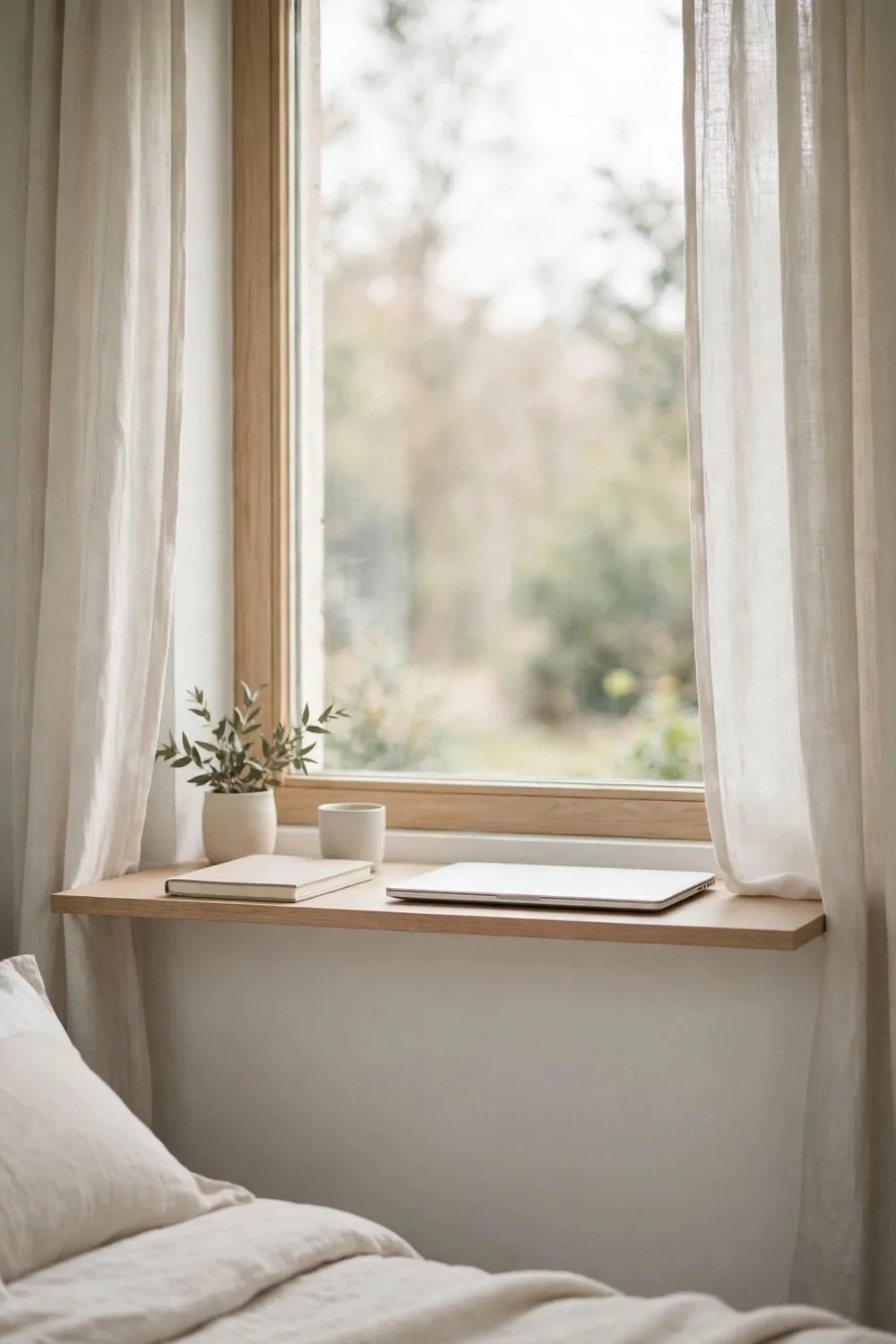
A desk does not need to be deep. A desk no deeper than a book can hold a laptop, a notebook, and a mug, and it leaves the whole floor free.
Mine is a narrow board on brackets, about as deep as a hardback book. It sits under the window, and my laptop fits on it with space for a notebook beside it. The bed is on the far wall, and nothing crowds the middle of the room.
Check how deep your laptop is when the lid is open, then add a hand’s width for your wrists. That is the depth your desk needs. Any deeper, and it eats floor for no reason.
Put a small shelf above the slim desk for a book and a plant. The shelf takes the clutter off the desk top, and the wall looks done. One shelf is plenty.
Leave the sill empty. A plant pot up there steals the light, and light is the best thing a small desk has.
A slim desk is best if you work on a laptop and keep your papers in a drawer. If you need a big screen and two piles of paper, this desk is too small for you.
Screw the desk into wall studs. A slim desk has no legs to hold it up, so the wall does all the work. Use the right screws, or ask someone who knows.
Try this one if your room is so small that a normal desk eats half the floor. One slim board on the wall, and the floor comes back.
The Nightstand That Works Days Too
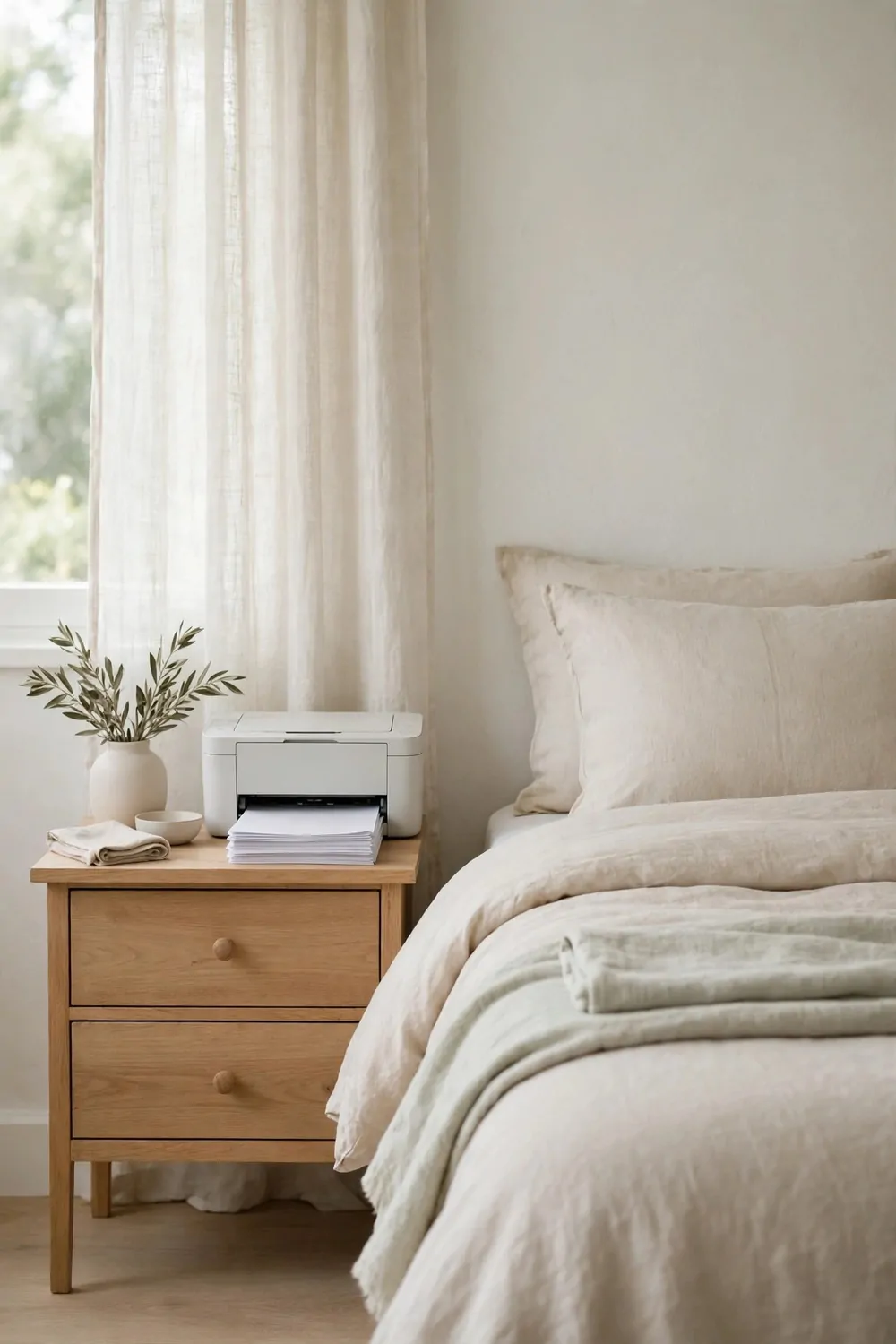
A nightstand sits beside the bed all night and does nothing all day. Give it a day job, and it becomes the most useful piece in the room.
My nightstand holds my printer in the day. It sits beside the bed, plugged in, ready to print. At night the printer goes in the drawer, and the nightstand holds a glass of water and a book for my guest.
Pick a nightstand with a drawer. The drawer hides the printer cables and the spare paper. A nightstand with no drawer leaves everything out in the open, and the room looks messy.
Put the nightstand on the side of the bed away from the door. Your guest reaches it from the bed, and you reach it from the desk. Both jobs can use it without walking around the room.
Keep the top clear when no guest is staying. A printer on top is fine in the day. A printer on top at night is a work thing in a sleep space, and your guest will feel it.
A two-job nightstand is best in a room with no space for a printer stand. If your desk already has room for the printer, the nightstand can stay a nightstand.
Wipe the nightstand every week. A nightstand gathers dust fast, because it sits still and nobody moves it.
Try this one if your printer lives on the floor or on top of a pile of books. One nightstand with a drawer, and the printer has a home.
Measure Twice, Buy Once
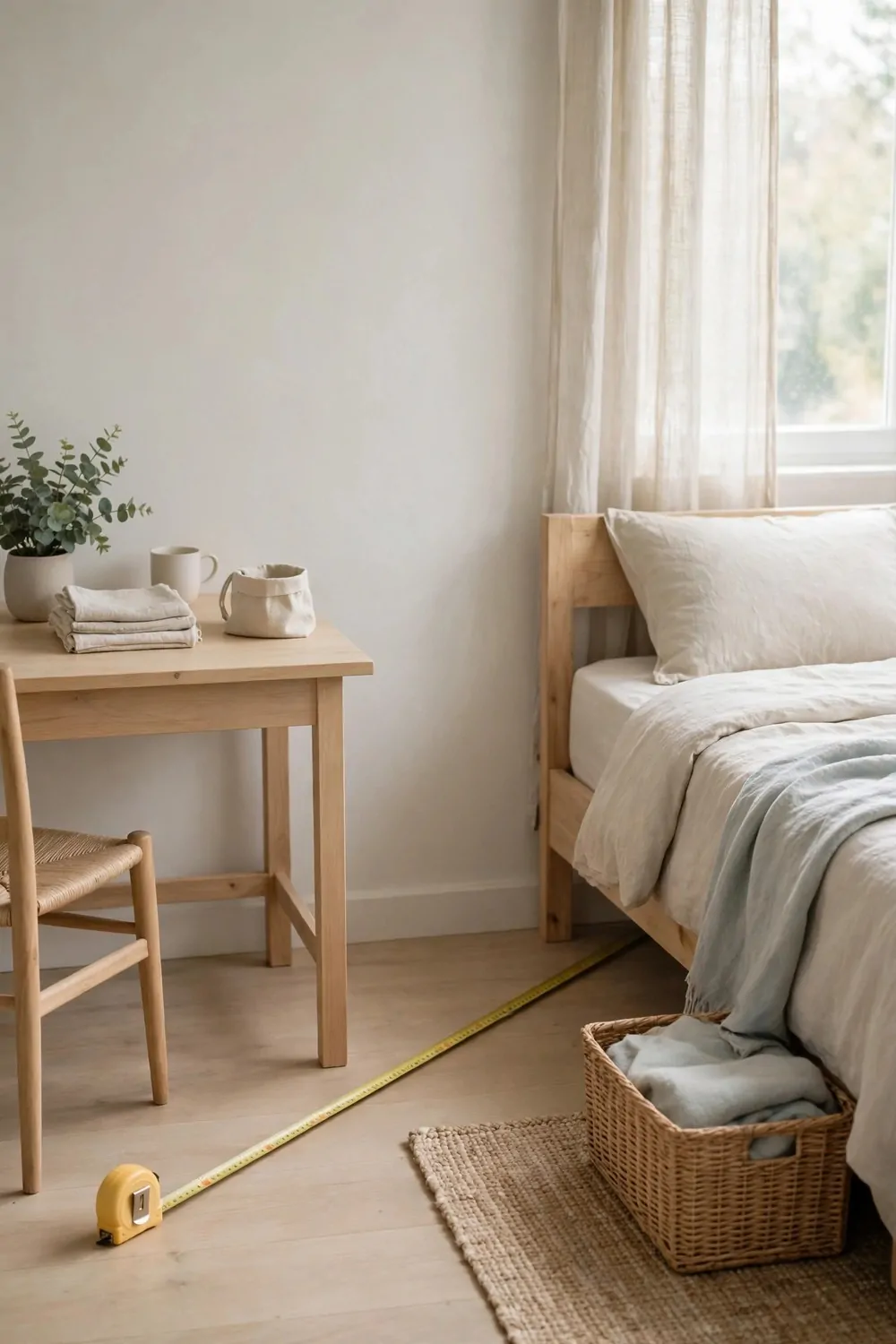
Most space problems in a guestroom start in the shop, not in the room. People buy furniture before they measure, and then the room has to live with the mistake.
I measure everything twice before I buy anything now. The room, the door, the gap under the bed, the wall where the desk will go. Two minutes with a tape saves a month of bumping into a desk that is too big.
Draw the room on one piece of paper. Mark the door, the window, and the bed. Then draw each piece of furniture to scale, one inch on paper for one foot in the room. Move the paper pieces around before you move the real ones.
Measure the door first. A desk that cannot fit through the door cannot live in the room. I learned that one the hard way, with a desk stuck in the hallway for a whole weekend.
Here is the list I measure before I buy anything for my guestroom.
| What to measure | How to measure it | Why it matters |
|---|---|---|
| The door | Tape across the narrowest part | Furniture has to fit through it |
| The gap under the bed | Tape from floor to bed frame | Boxes and desks have to slide under |
| The longest wall | Tape from corner to corner | The bed goes on the longest wall |
| The walkway | Tape from bed to desk | You need two feet to walk past |
Write the numbers on the paper and keep the paper in the room. When a new idea pops up, check the paper first. The numbers will tell you if it fits.
Measure the walkway last. Two feet between the bed and the desk is the smallest gap that works. Less than that, and you will turn sideways every time you walk past.
Measuring is best done before you spend anything. A tape measure costs almost nothing, and it saves you from buying the wrong desk twice.
Try this one before your next furniture trip. One tape, one piece of paper, and no more desks stuck in the hallway.
Keep the Middle of the Floor Empty
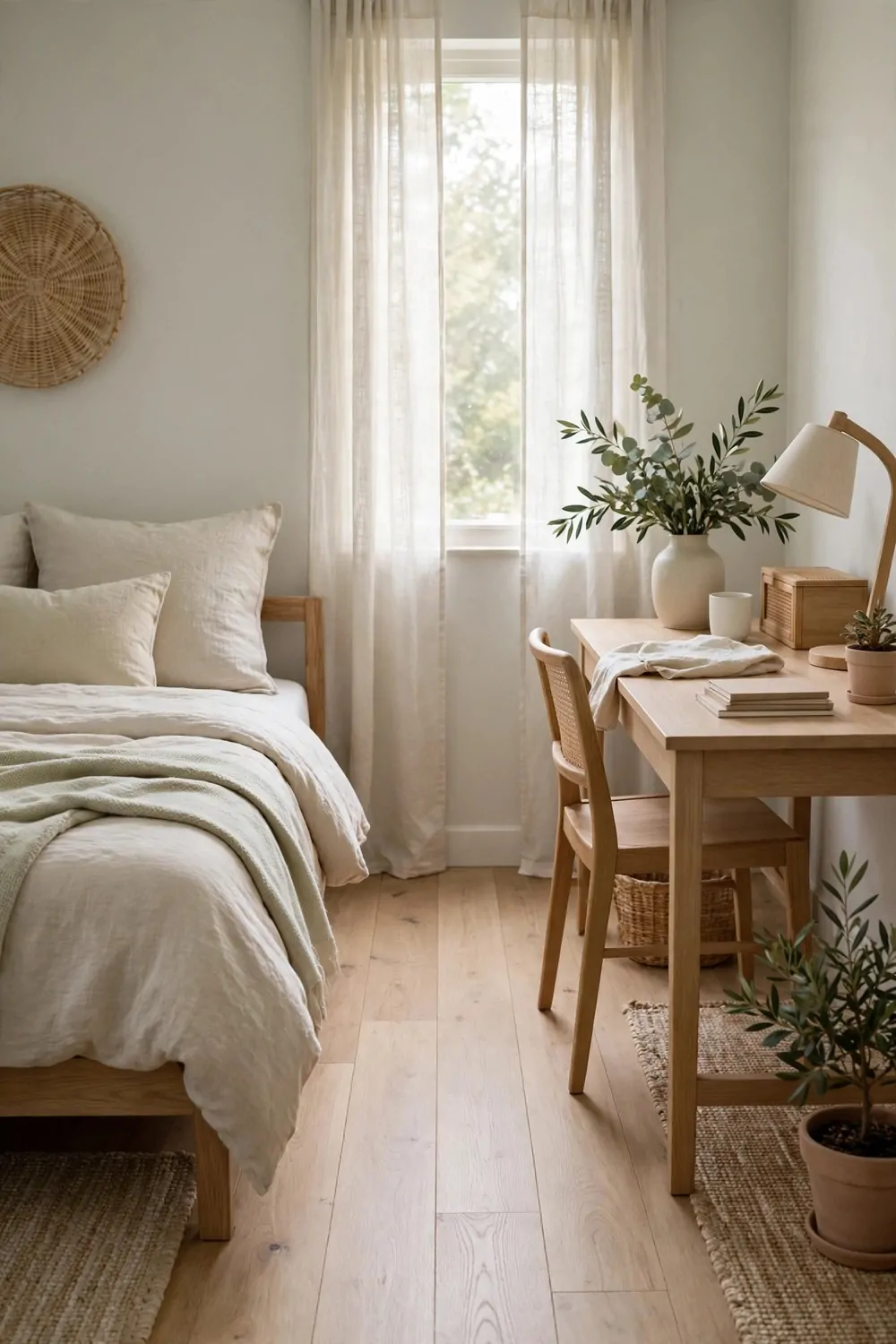
The middle of the floor is the most useful space in a small room. Keep it open, and the whole room feels wider.
My rule is short. Nothing stays in the middle. No bags, no boxes, no shoes, no piles. Each thing gets a shelf, a hook, or a drawer, and the middle stays open for walking.
Slide the big pieces to the edges. Bed on one wall, desk on the next, cupboard on the third. The open middle is for moving, not for storing.
Shoes live on a tray by the door. Two pairs fit, and that is enough for a small room. The rest live somewhere else in the house.
Bags hang on hooks by the door. A bag on a chair steals the chair. A bag on a hook leaves the chair free.
The path from the door to the bed has to stay open. That is the path your guest walks at night. A clear path means no sore toes at two in the morning.
Pick things up every night before bed. Five minutes, and the room is ready for the morning. A tidy floor in the morning makes the whole day feel easier.
Open floors work best when the storage climbs the walls. Shelves and hooks hold the small things, and the floor holds nothing but feet.
Try this one first if your room feels tight even though the furniture fits. Move one thing off the floor tonight, and see how the room changes.
Keep Reading
If you liked these guestroom home office combo setups, these bedroom office ideas will give you even more ways to make one small room do two jobs well.
- 19 Work Space in Bedroom Ideas That Actually Feel Calm
- 21 Office Area in Bedroom Setups That Keep Work Separate
- 18 Ikea Bedroom Office Ideas on a Budget
A small room can do both jobs without feeling packed. Pick one setup from this list, try it this week, and let your guestroom earn its keep every single day.