17 Small Home Office Guest Room Layouts That Work for Both

My aunt came to stay for one night. One night turned into four, and my office turned into a bedroom with a laptop in it. She slept on a thin mattress on the floor, and I worked at a desk pushed against the wall with my knees under my chin. Nobody was happy, not even the cat.
That week taught me the real problem. A small room that does two jobs is not a bedroom with a desk in it, and it is not an office with a bed in it. It is a room that has to change its mind twice a day, and it has to do it fast.
I rebuilt that room twice after she left. The second time, I got it right. Now the same small room is my office every weekday and a proper guest room whenever someone stays over. My guests sleep well, and my work days feel normal.
That is what these 17 small home office guest room layouts are about. Each one is a way to put a bed and a desk in one small room so both jobs work. Pick the layout that fits your room, and your next guest will never sleep on the floor.
The Bed Goes Against the Longest Wall
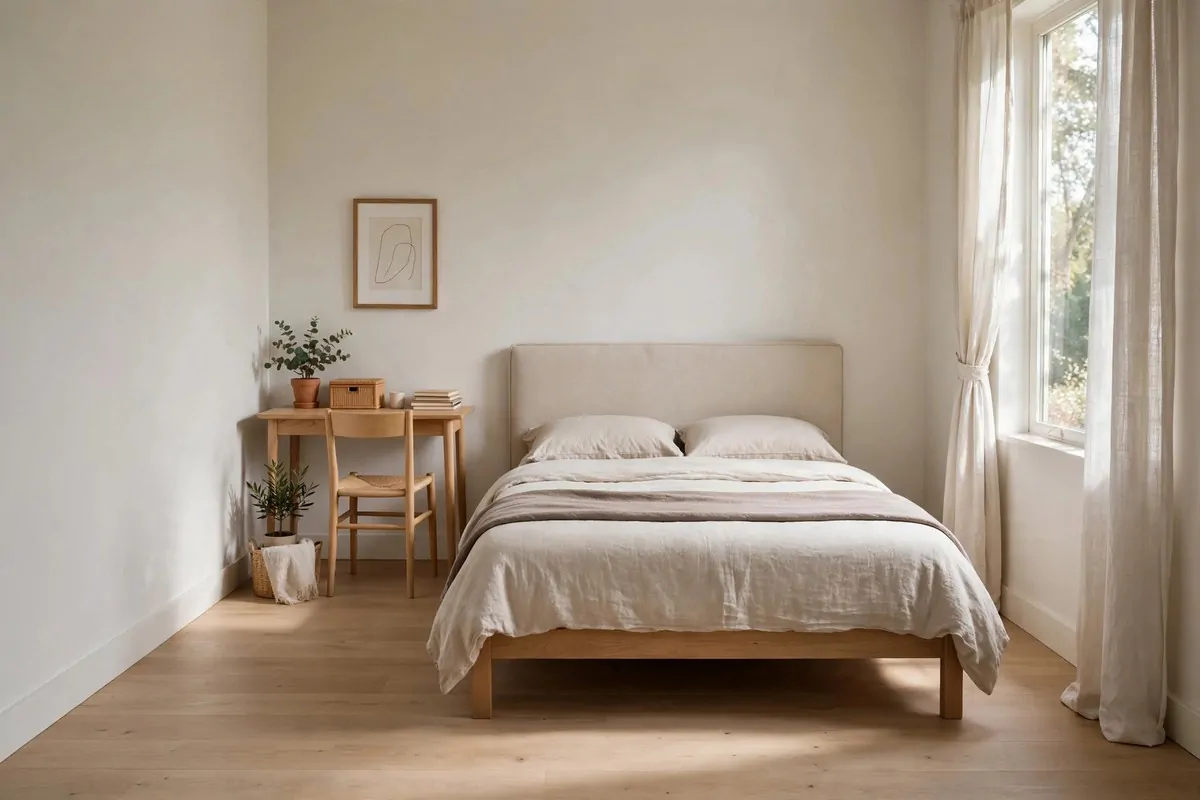
A bed takes up more floor than anything else in the room. Put it against the longest wall first, and the rest of the room falls into place.
I used to push my bed into the corner by the door. It felt neat. But it ate the whole wall, and the desk ended up squashed by the window with no room for my chair. I moved the bed to the longest wall, and the desk suddenly had a whole wall of its own.
Measure the longest wall with a tape before you move anything. A small double bed needs about six feet of wall. A single bed needs about three and a half feet. Write the numbers down, or you will guess wrong and move the bed twice.
Push the bed flat against that wall with the headboard in the middle. Leave a little gap at each end if you can. A bed jammed tight into both corners looks stuck, and your guest will feel stuck too.
The desk goes on the wall across from the bed, or on the short wall by the window. Either spot works. The point is that the desk is not fighting the bed for the same wall.
Keep the walkway between the bed and the desk clear. You need about two feet to walk past without turning sideways. I measured mine with my own feet, heel to toe, and it took four of my feet.
A rug helps here. One small rug by the bed and the desk area feels like two rooms, even though it is one. Pick a plain rug in a soft colour, nothing loud.
Try this layout first if your room is long and narrow. It is the simplest one on this list, and it works in more rooms than any other layout here.
A Daybed That Works Two Jobs
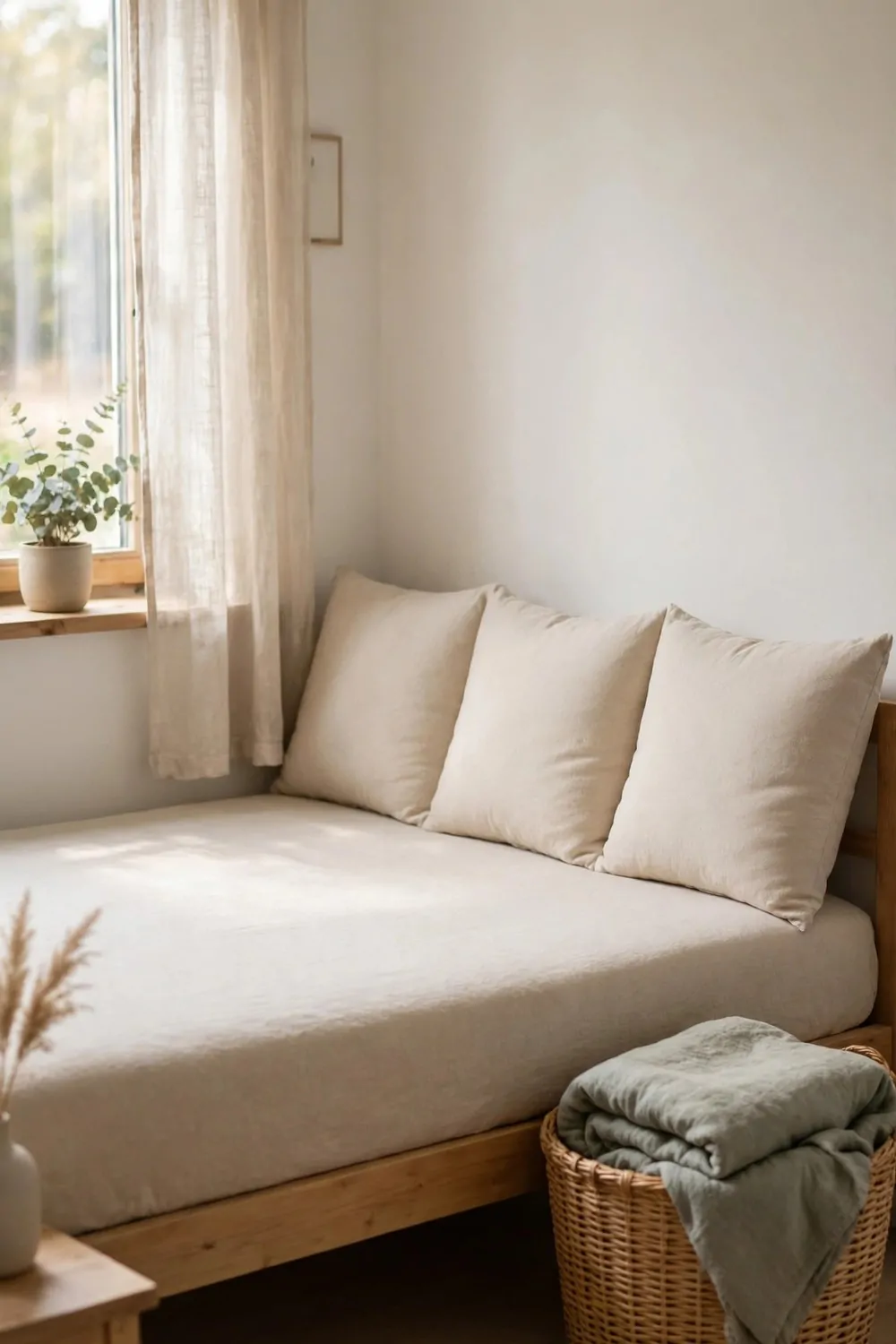
A daybed is a bed that pretends to be a sofa all day. That is exactly what a guest room office needs.
My daybed sits against the wall with three big cushions along the back. In the day it looks like a sofa. My guests sit on it with a cup of tea. At night I pull the cushions off, and it is a bed. Nobody has to fold anything.
Pick a daybed with a plain wooden frame. A frame with a simple shape fits a small room better than a big fancy one. The frame should be low, so the room does not feel full.
Put two or three cushions along the back wall. The cushions make it a sofa in the day and a headboard at night. Use plain cushions in one colour, so the bed looks calm when it is a sofa.
Keep a folded blanket in a basket by the daybed. When a guest stays, the blanket is right there. When they leave, the basket holds it out of the way. A basket on the floor beats a pile on the chair.
The desk goes on the wall across from the daybed. Your guest can sit on the daybed and read while you finish work. That sounds odd, but it works. The room feels shared, not split.
A daybed is best if your guests stay one or two nights at a time. For longer stays, a real bed is kinder on the back. But for short visits, a daybed is hard to beat.
Try this one if your room is small and your guests are light sleepers who like a firm bed. A daybed mattress is firm, and most guests sleep well on it.
The Sofa Bed in the Corner
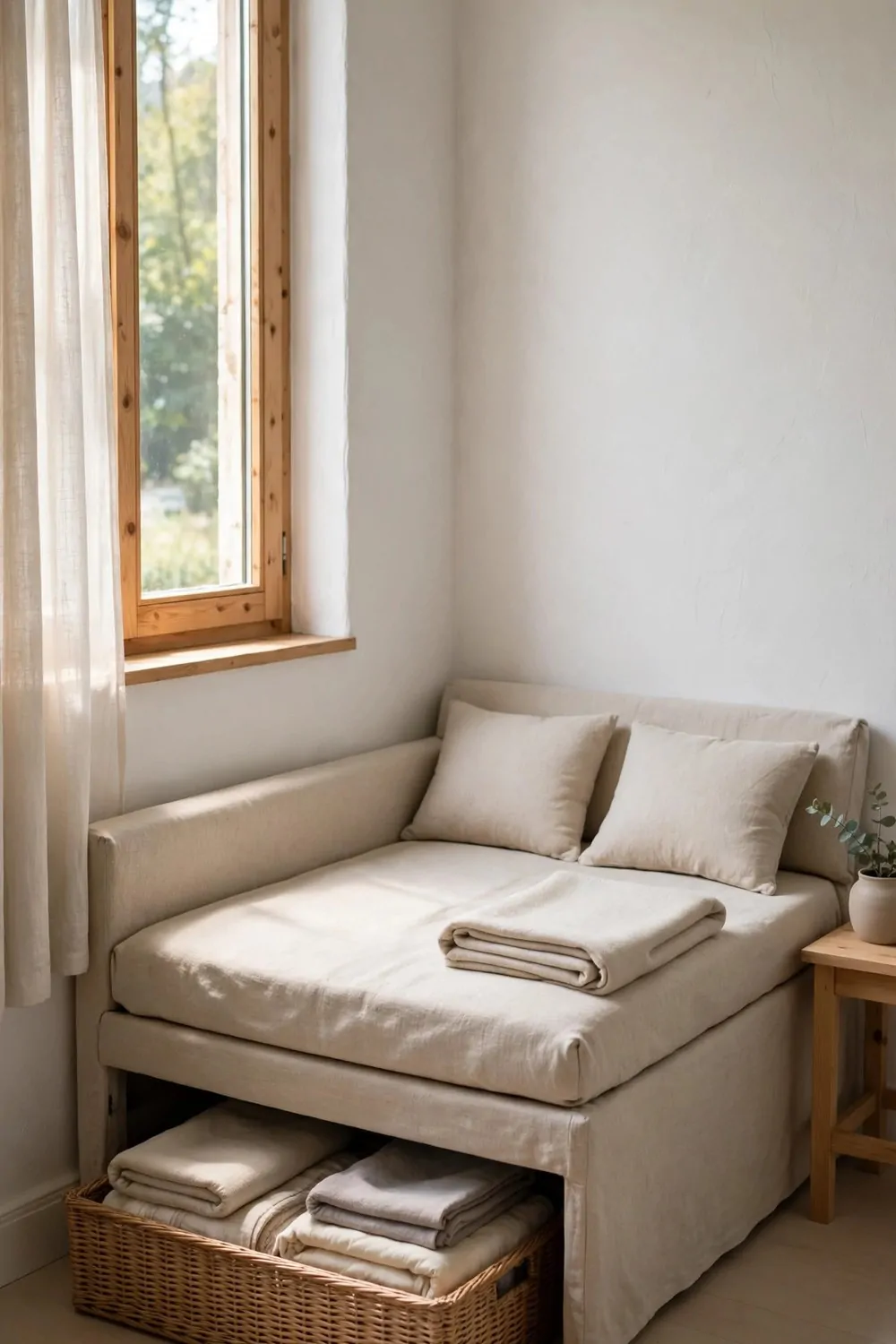
A sofa bed is a sofa in the day and a bed at night. It is the oldest trick for a two job room, and it still works.
I bought a small two seat sofa bed for the corner of my room. It sits in the corner by the window, and it is my reading seat in the day. When my brother stays over, it opens out into a bed in two minutes.
Open the sofa bed once before a guest arrives. Learn how it opens. Some sofa beds pull out, some fold down, and some need a push in just the right spot. Do not learn this at ten at night with a tired guest watching you.
Put a thin mattress topper on the sofa bed mattress. Sofa bed mattresses are thin, and a topper makes a real difference. Roll the topper up and keep it in the cupboard when no guest is staying.
Keep the bedding in a box under the sofa bed, or on the top shelf of the cupboard. Sheets, a pillow, and a light blanket. When a guest comes, you open the box, make the bed, and the room is ready in five minutes.
The desk goes on the opposite wall from the sofa bed. That way the bed opens out without hitting the desk. Measure the open bed before you place the desk, or the bed will open into the desk leg.
A sofa bed suits a room where you work every day and guests stay now and then. It is not the best bed in the world, but it is a real bed, and your guests will thank you for it.
Try this one if your room has a free corner and you want a proper seat in the day. A sofa bed gives you a seat and a bed for the price of one piece of furniture.
A Desk That Folds Away
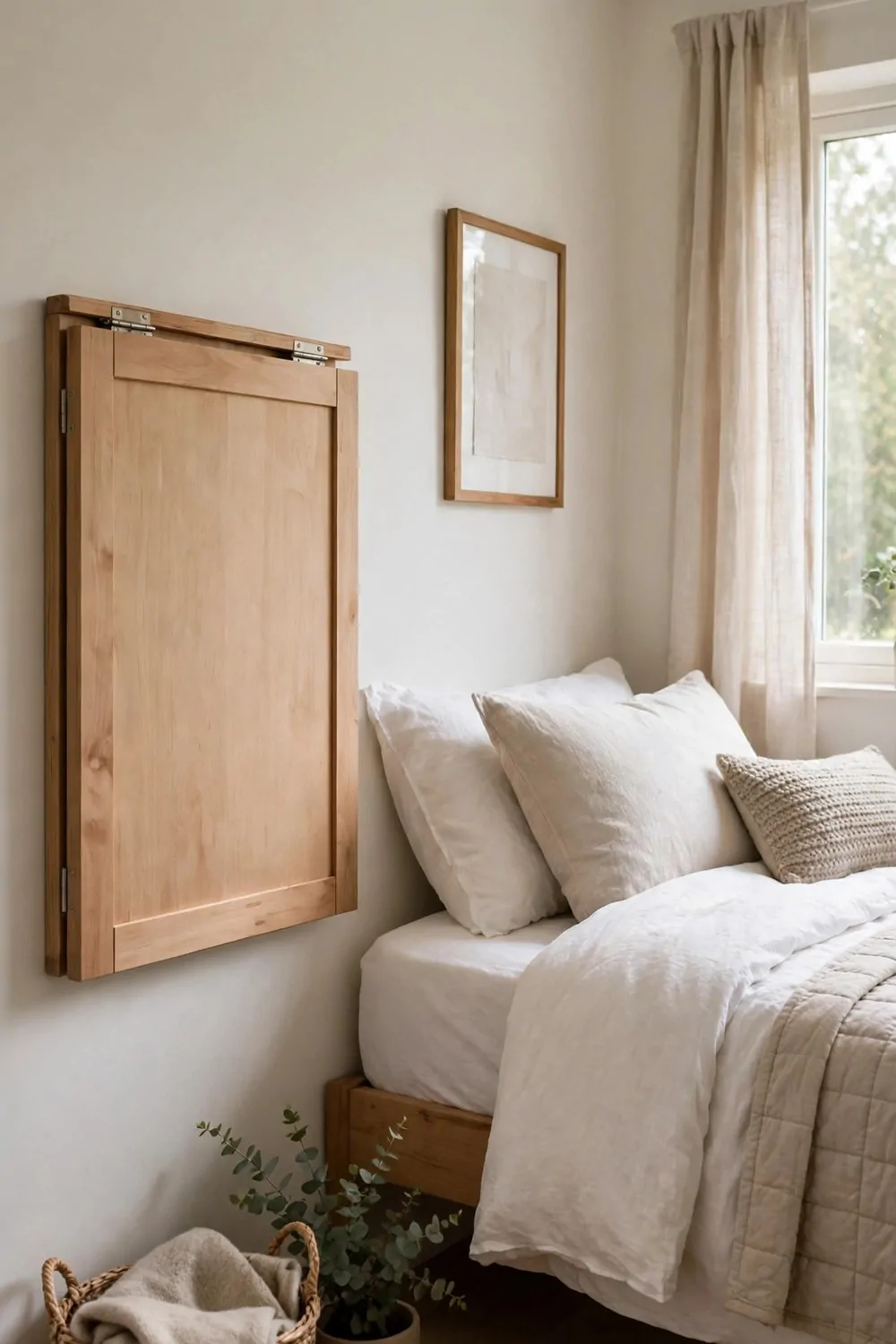
A folding desk is a desk that disappears when the guest arrives. That is the whole idea, and it is a good one.
My folding desk is a plain board on hinges on the wall. In the day it is flat, and I work at it. At night I fold it up, and the wall is bare. The room becomes a bedroom with no desk in it at all.
Screw the hinges into a wall stud, not just into plaster. A desk that holds a laptop needs a strong fixing. If you are not sure where the stud is, knock on the wall and listen for the solid sound, or ask someone who knows.
Put a small shelf under the folding desk for the laptop and the notebook. When the desk folds up, the laptop goes on the shelf. Nothing stays on the desk, or it will slide off when you fold it.
Keep the chair simple. A folding chair or a light chair you can move to another room works best. A heavy office chair in a small guest room gets in the way of the bed.
The bed stays put in this layout. That is the point. The bed is the boss of the room, and the desk is the guest. When a real guest arrives, the desk folds away and the bed takes over.
A folding desk is best for a room where guests stay often, and you work there a few days a week. If you work there every day, folding the desk up and down gets old fast.
Try this one if your room is very small and the bed must win. A folding desk lets the bed win at night and the desk win in the day.
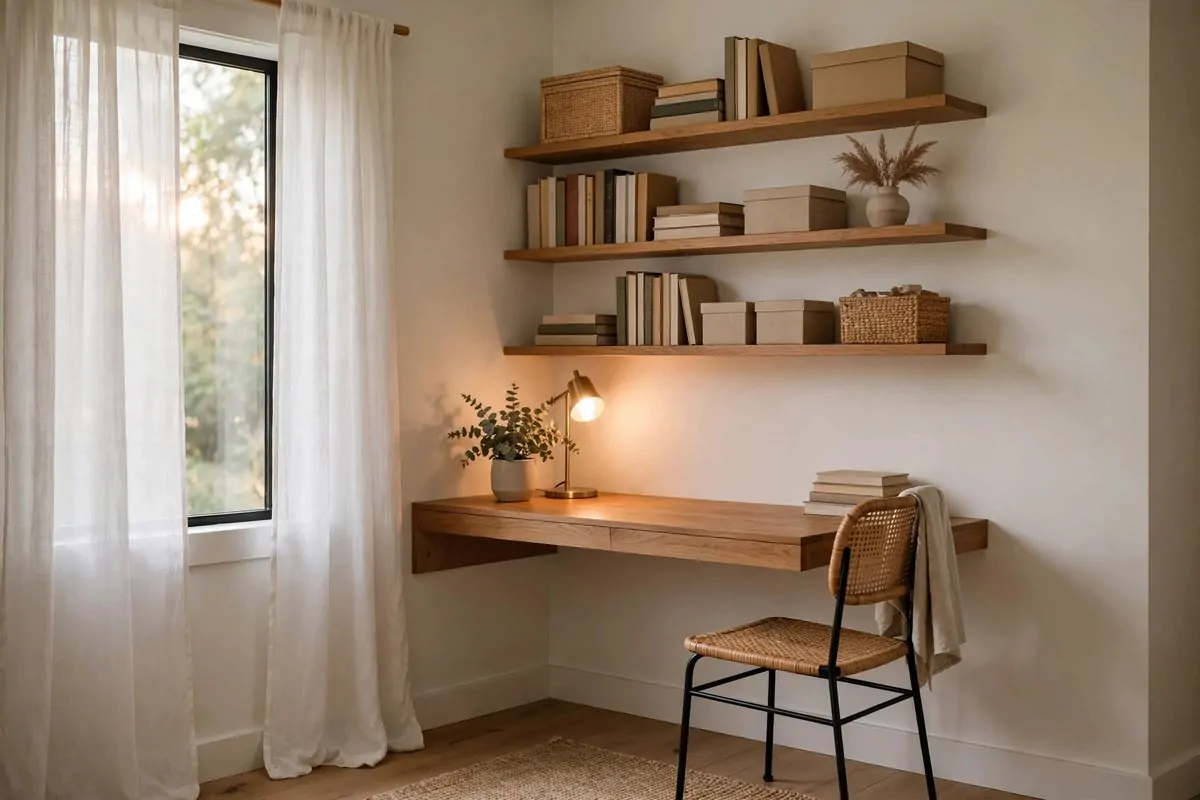
The Wall Desk by the Window
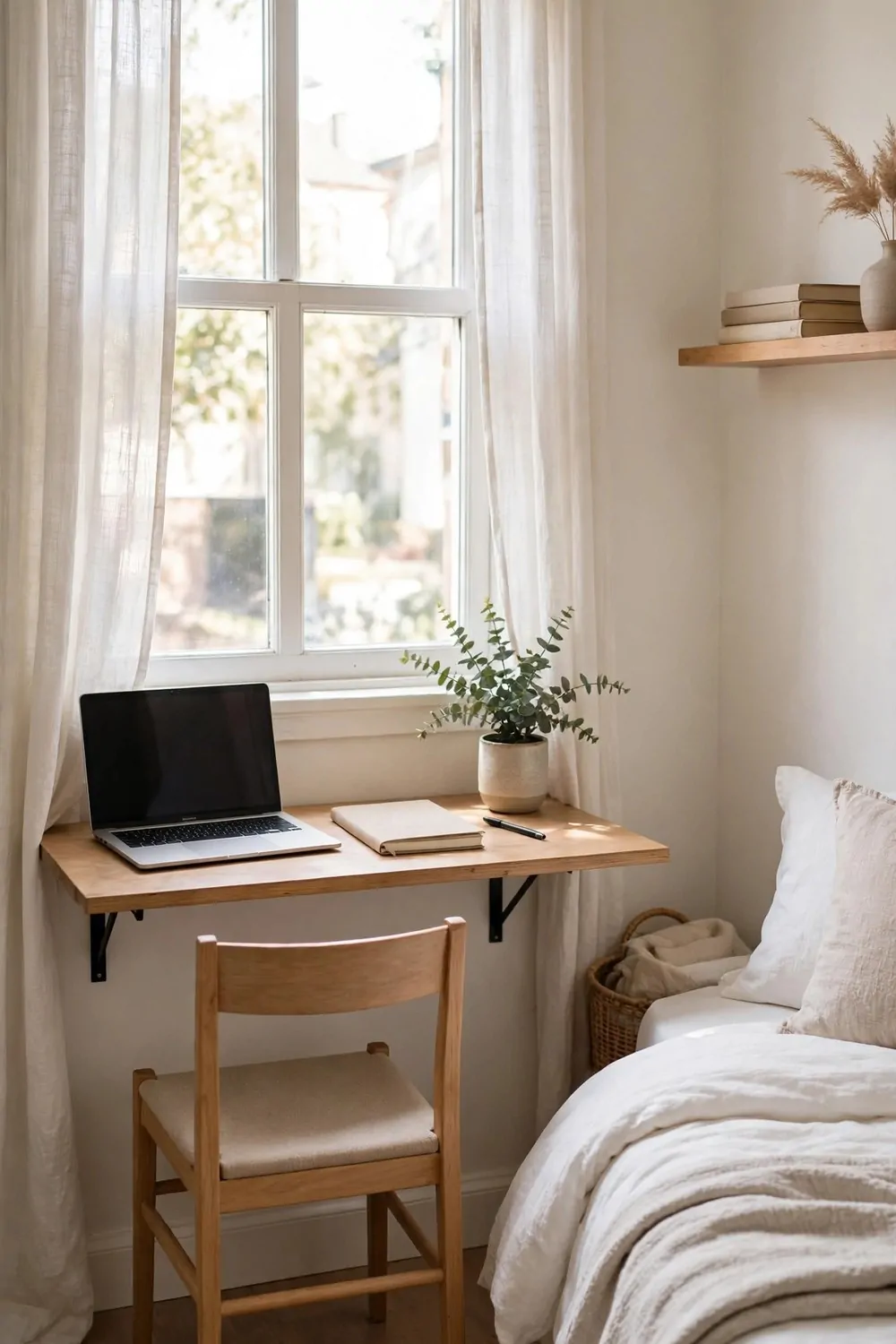
A wall desk by the window gives you light to work by and leaves the floor free for the bed. It is a simple layout that suits small rooms.
I fixed a narrow desk to the wall under the window. It is only a foot deep, so it takes up almost no floor. I sit on a plain chair, and the light comes in over my shoulder. My guest sleeps on the bed across the room, and the desk never gets in their way.
Pick a desk that is as wide as your laptop and a notebook, and no wider. A deep desk eats floor space. A shallow desk gives you a work top and leaves the room open.
Put a small shelf above the desk for books and a plant. The shelf keeps the desk top clear, and it makes the wall look finished. One shelf is enough. Two shelves make the wall feel busy.
Keep the window clear. No tall plant on the sill, no stack of books blocking the light. Light is the best thing a small work corner has, and a blocked window wastes it.
The bed goes on the wall opposite the window, with the headboard against the wall. Your guest wakes up to the window, and you work with your back to the bed. Both jobs get what they need.
A wall desk by the window is best if you work on a laptop and keep your papers in a drawer. If you need a big desk with two screens, this layout is too small for you.
Try this one if your room has one good window and the light is the best thing about it. A desk under the window uses the light twice, once for work and once for the guest in the morning.
One Chair for Work, One Chair for Guests
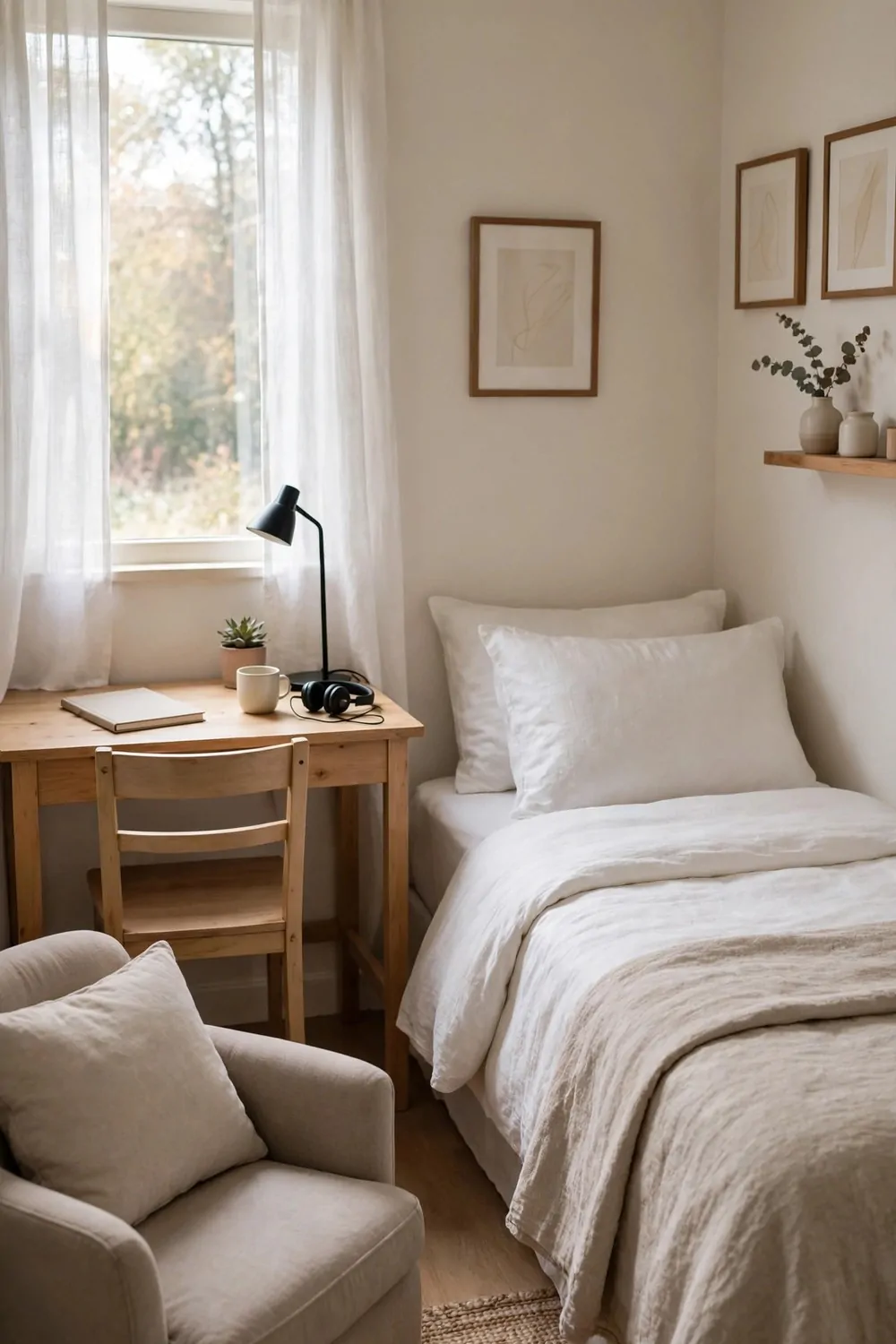
Two chairs in a small room sounds like too much. It is not. One chair for work and one chair for guests makes the room feel like it was planned.
My work chair is a plain chair with a straight back. It sits at the desk all day. My guest chair is a small soft chair by the bed. It is the chair my guests sit in to read, or to put their clothes on at night.
Pick a work chair that fits under the desk. The chair should slide right under, so the room looks tidy when you finish work. A chair that sticks out into the room all night is a trip hazard in the dark.
Pick a guest chair that is light enough to move with one hand. Your guest will move it. They will pull it to the window, or to the bed, or to the door. A heavy chair stays where it is, and that is no good.
Put a small cushion on the guest chair. One cushion, plain and soft. It makes the chair look like it is there for sitting, not for holding bags.
Keep the two chairs apart. The work chair lives at the desk. The guest chair lives by the bed. When the chairs are apart, the room reads as two places, not one crowded room.
Two chairs work best in a room that is a little bigger than tiny. If your room is very small, one good chair that moves between the desk and the bed is better than two chairs that crowd each other.
Try this one if your guests stay for more than one night. A guest who stays three nights needs a chair of their own, and a work chair is not a guest chair.
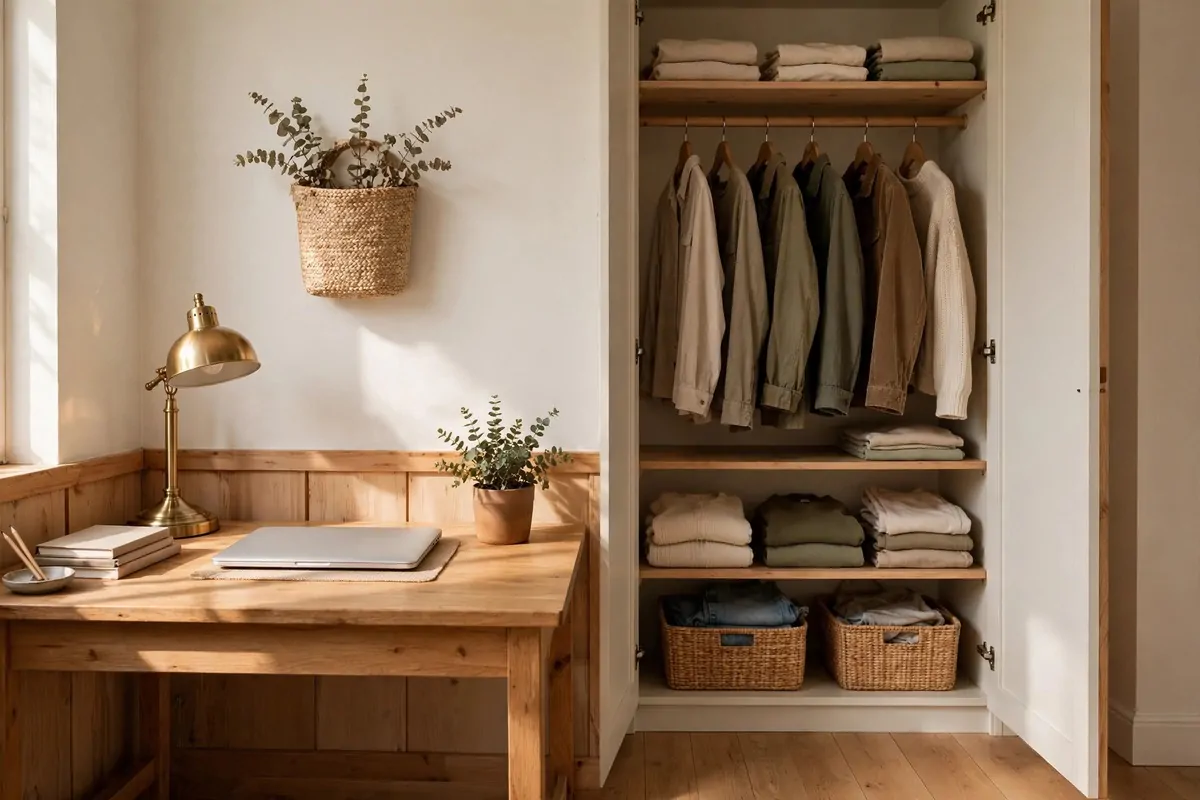
Storage That Serves Both Jobs
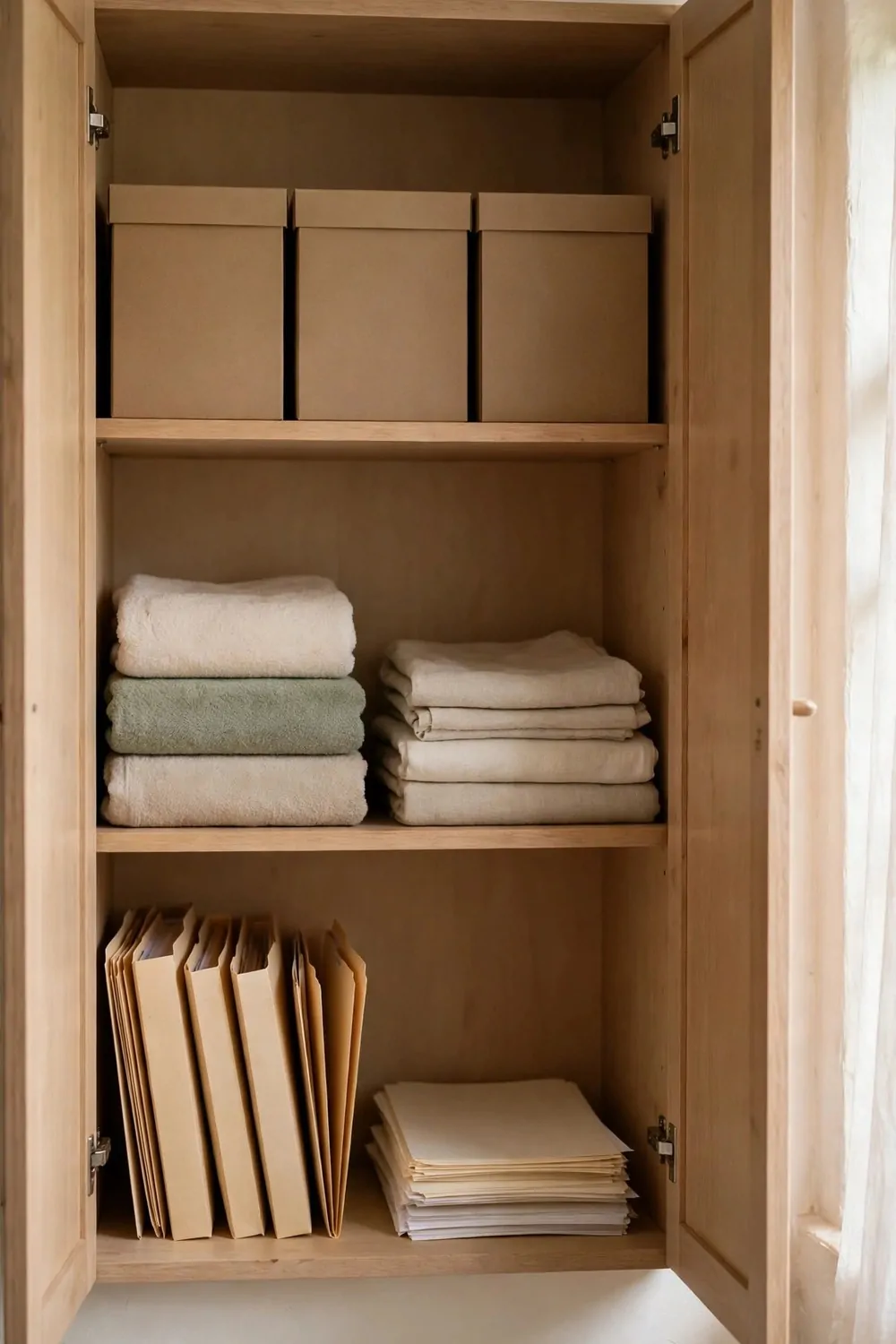
Storage is where a two job room wins or loses. One cupboard that serves both jobs beats two cupboards that fight each other.
My cupboard has two shelves for work and two shelves for guests. The top shelf holds my papers and my spare cables. The bottom shelf holds spare sheets and towels for guests. The middle is empty, and that empty shelf is the guest shelf.
Label nothing. Just keep the guest things together on one shelf, and the work things together on another. When a guest arrives, you point at one shelf and say, that shelf is yours. That is all the label they need.
Use plain boxes on the shelves. One box for work papers, one box for guest towels, one box for chargers and cables. Boxes keep small things from sliding around, and they make a plain shelf look tidy.
Here is how I split my one cupboard between the two jobs.
| Shelf | Work job | Guest job |
|---|---|---|
| Top shelf | Spare paper and folders | Spare pillows in a bag |
| Middle shelf | Empty, for the day’s work | The guest shelf, towels and sheets |
| Bottom shelf | Cables and chargers in a box | A spare blanket, folded flat |
Keep the cupboard door closed when you work. An open cupboard in a small room looks messy, and it pulls your eyes away from your work. Close the door, and the room feels calm.
A small set of drawers by the desk works the same way. Top drawer for work, bottom drawer for guests. Your guest opens one drawer and finds what they need, and your work stays in the other drawer.
Storage that serves both jobs is best for rooms with only one cupboard. If you have two cupboards, give one to work and one to guests, and this layout is not needed.
Try this one if your cupboard is always full and your guests always ask where the towels are. One shared cupboard with a clear split fixes both problems at once.
A Spot for the Guest’s Bag
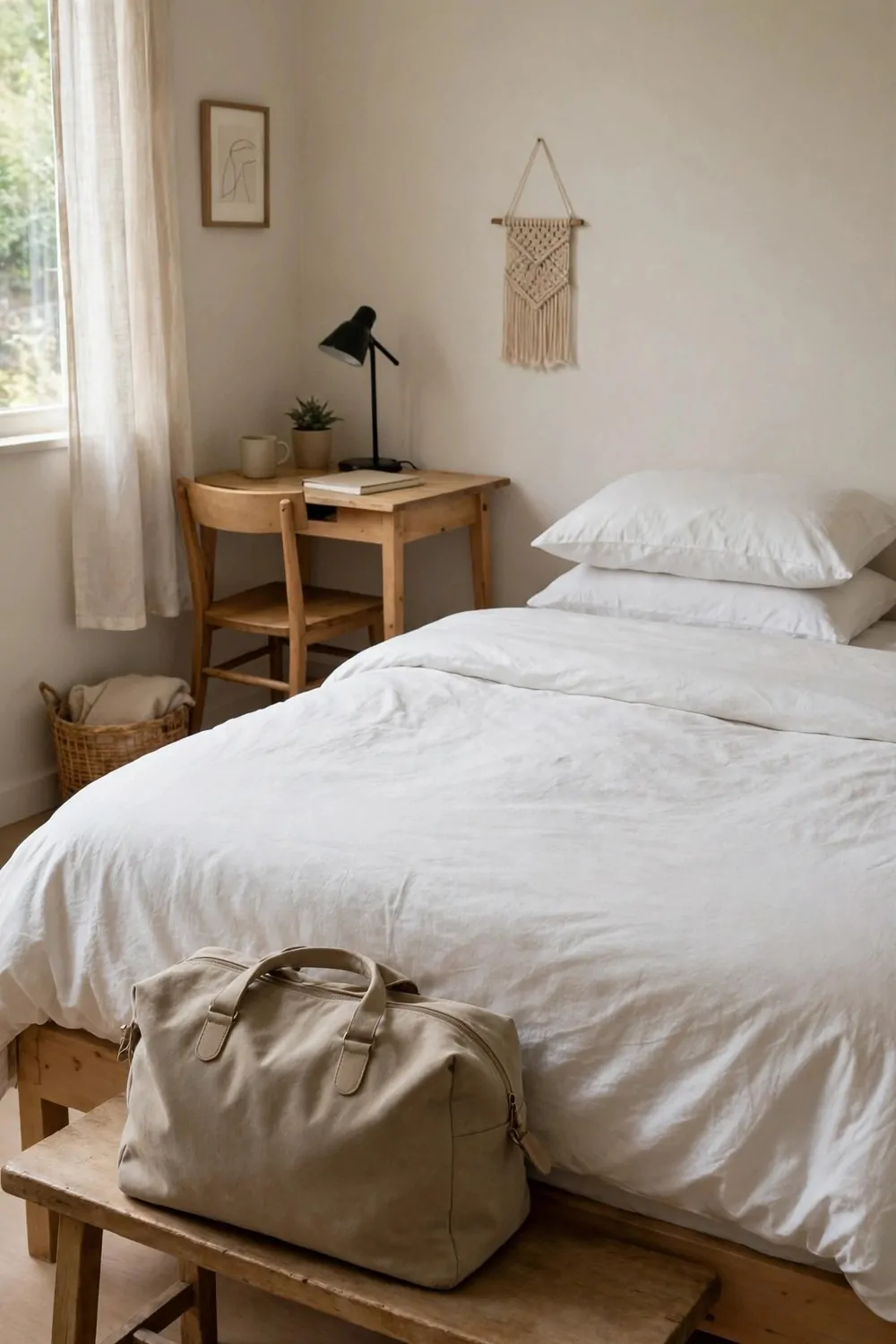
Every guest arrives with a bag. If the room has no spot for it, the bag lands on the bed, on the desk, or on the floor in the middle of the room.
I put a small low bench at the foot of the bed. It is the bag spot. My guests drop their bag on the bench, and the bag stays there. The bed stays clear, the desk stays clear, and the floor stays clear.
Pick a bench that is low and plain. It should be about as high as your knee. A bench that is too high is hard to lift a bag onto, and a bench that is too low is hard to reach.
If there is no room for a bench, a small stool works just as well. A stool by the bed holds a bag, and it holds a book too. One stool, two jobs, same as the room.
Keep the bag spot empty when no guest is staying. Do not pile your own things on it. A bench full of your papers is not a bag spot. It is a shelf, and your guest will put their bag on the floor.
A luggage rack is another good choice. It folds flat against the wall when no guest is staying, and it opens in seconds when one arrives. It looks like a hotel, and your guests will smile when they see it.
The bag spot goes near the door, not near the desk. Your guest walks in, puts the bag down, and the room is theirs. A bag spot by the desk means the guest walks past your work to reach their bag.
Here is the rule for things that arrive with a guest.
- A bag on the bench, not on the bed.
- A jacket on the hook, not on the chair.
- Shoes on the tray by the door, not in the middle of the floor.
Try this one if your guests always put their bag on your desk. One bench at the foot of the bed, and the bag problem is gone for good.
Two Lamps, Two Moods
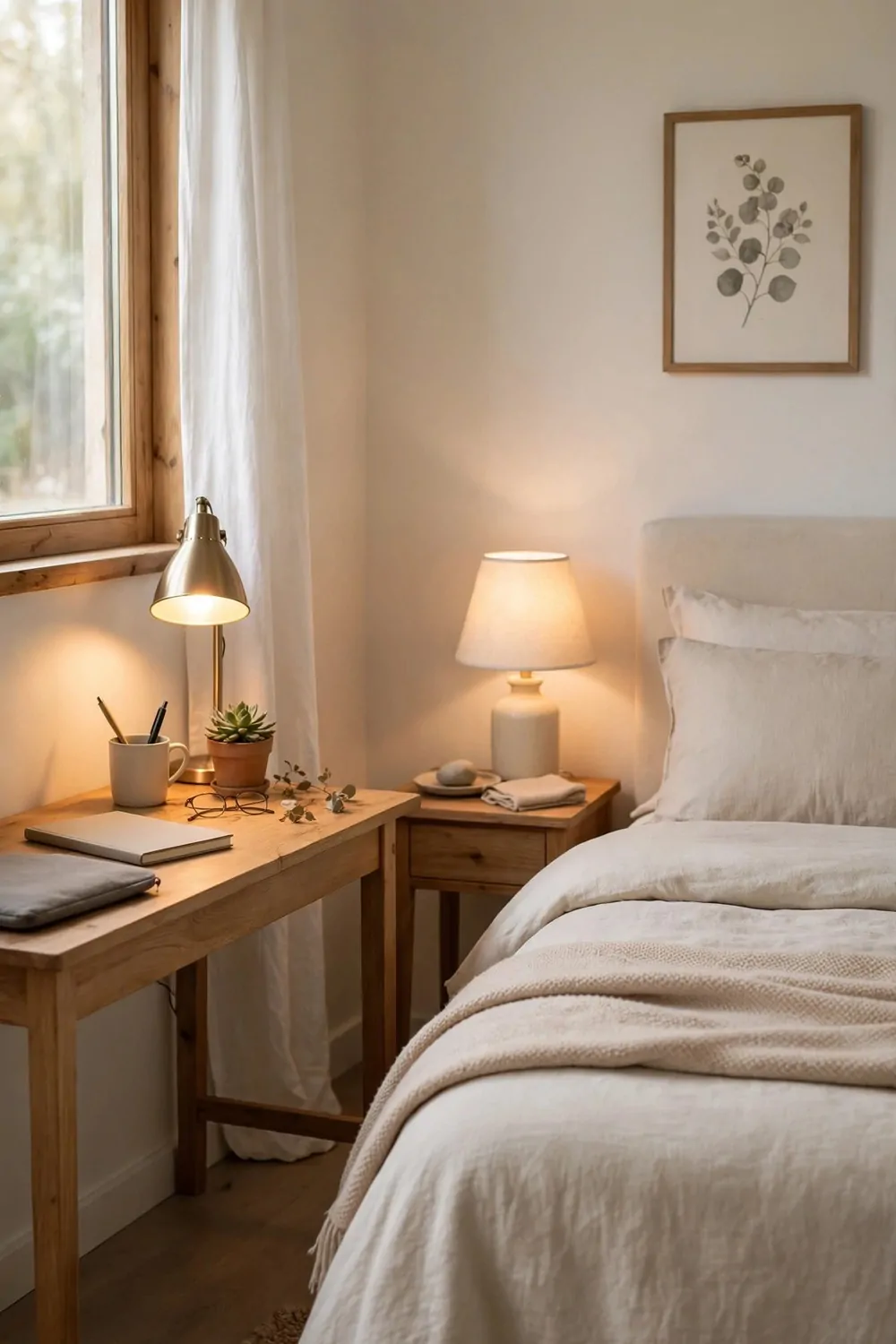
A single lamp cannot cover both jobs in this room.
My desk lamp is a small lamp with a plain shade. It throws light down on my papers and my laptop. It is the lamp I switch on at nine in the morning, and it is the lamp I switch off at five.
My guest lamp sits on the small table by the bed. It is a warm lamp with a soft glow. My guests switch it on at night to read, and it is the last light they see before sleep.
Put the desk lamp on the side of the desk away from your writing hand. The light falls on your work and your hand never makes a shadow. A shadow on your work makes your eyes tired by lunch.
Put the guest lamp where your guest can reach it from the bed. They should not have to get up to switch it off. A lamp you can reach from the bed is a lamp that gets used.
Use warm bulbs in both lamps, but make the desk lamp a little brighter than the guest lamp. Work needs light you can see by. Sleep needs light you can relax by.
Keep both lamps plain. A lamp with a loud shape or a bright colour pulls the eye, and a small room does not need more things pulling the eye.
Two lamps work best in a room where the desk and the bed are on opposite walls. If the desk and the bed are close together, one lamp in the middle can do both jobs, and two lamps will crowd the room.
Try this one if your guest reads in bed and you work late. Two lamps mean the guest can read while you work, and nobody has to sit in the dark.
The Curtain That Splits the Room
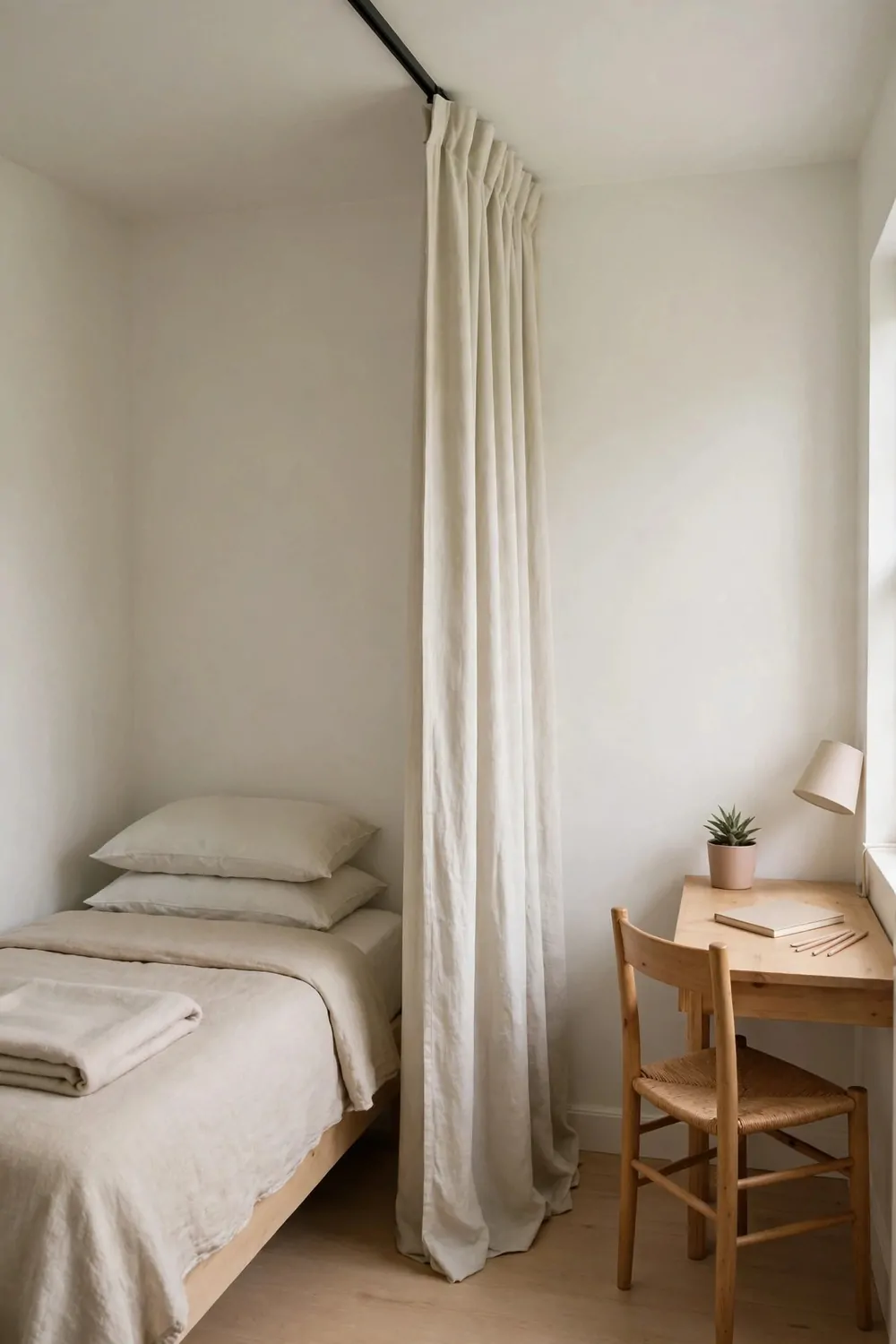
A curtain down the middle of a room sounds strange. It is not. It is the cheapest wall you can buy, and it gives a guest privacy in a room with a desk in it.
I hung a plain curtain from a rail on the ceiling. It runs from one wall to the other, right between the bed and the desk. In the day it is pulled back to the wall. At night my guest pulls it across, and the bed has its own little room.
Pick a curtain in a plain colour that matches the walls. A curtain that matches the walls looks like part of the room. A curtain in a loud colour looks like a tent, and your guest will feel like they are camping.
Hang the rail on the ceiling, not on the wall. A ceiling rail lets the curtain hang straight to the floor. A wall rail leaves a gap at the top, and light and sound slip through the gap.
Keep the curtain light. A thin cotton curtain is enough. A heavy curtain blocks the air, and a small room gets stuffy fast. Light fabric lets the air move and still gives privacy.
Pull the curtain back every morning. A curtain left closed all day makes the room feel small. Open it, and the room is one room again. Close it at night, and the room is two rooms.
A curtain split works best when the bed is on one side of the room and the desk is on the other. If the bed and the desk share a wall, a curtain cannot split them, and this layout will not work.
Try this one if your guest likes privacy and you like to work late. A curtain lets you work on one side while your guest sleeps on the other, and nobody has to whisper.
Plugs Where Both Jobs Need Them
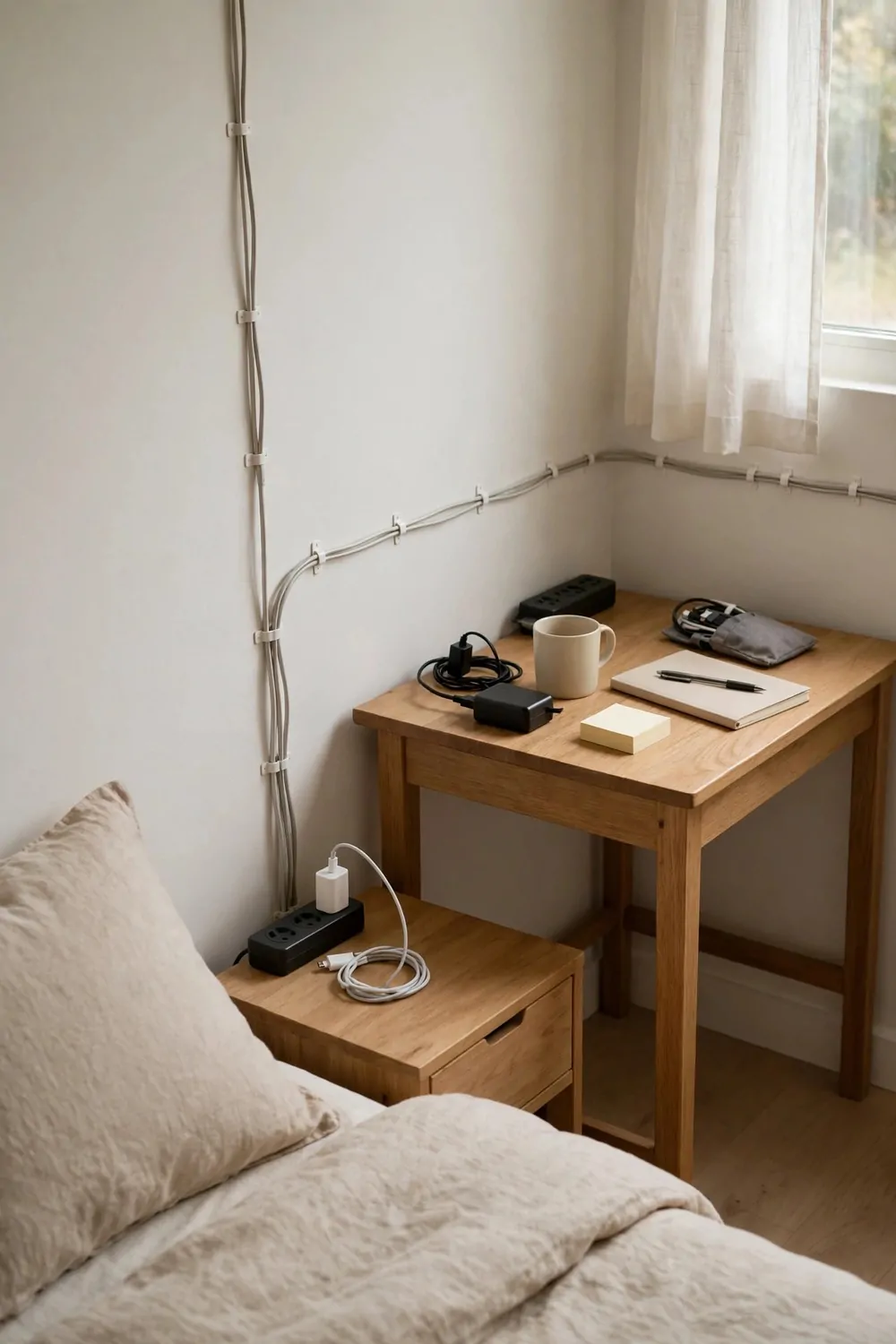
Plugs are the small thing everyone forgets until the night the guest arrives. Then the guest has a phone with no plug, and you have a laptop with no plug, and both of you are unhappy.
Count your plugs before a guest comes. A small room often has only two sockets. One is behind the bed, and one is behind the desk. That is not enough for two jobs.
Put a small power strip by the bed for your guest. It should have room for a phone charger and a lamp. Your guest plugs in their phone, and the phone charges while they sleep. That is all a guest needs.
Put a second power strip at the desk for your work. Laptop, lamp, and one spare socket. The spare socket is for the days you need to charge something else. A desk with no spare socket is a desk that will let you down.
Keep the cables tidy. A cable that runs across the floor is a trip hazard in the dark, and your guest does not know where it is. Run cables along the wall, or behind the furniture, where feet never go.
Here is the plug plan I use in my room, and it has never let me down.
| Spot | What plugs in | Why it matters |
|---|---|---|
| By the bed | Guest phone charger and bedside lamp | The guest charges overnight and reads in bed |
| At the desk | Laptop, desk lamp, one spare | Work never stops for a flat battery |
| By the door | Nothing fixed, one spare socket | A spare for a hair dryer or a second charger |
Do not use one long extension cable for the whole room. One cable for everything is a mess, and it is not safe. Two short strips, one at each job, is the tidy way.
Plugs matter most in older houses with few sockets. If your room has four sockets or more, you may not need this layout at all. But check before the guest arrives, not after.
Try this one if your guest has ever asked where to charge their phone. Two strips, one by the bed and one at the desk, and that question never comes up again.
A Small Table That Moves
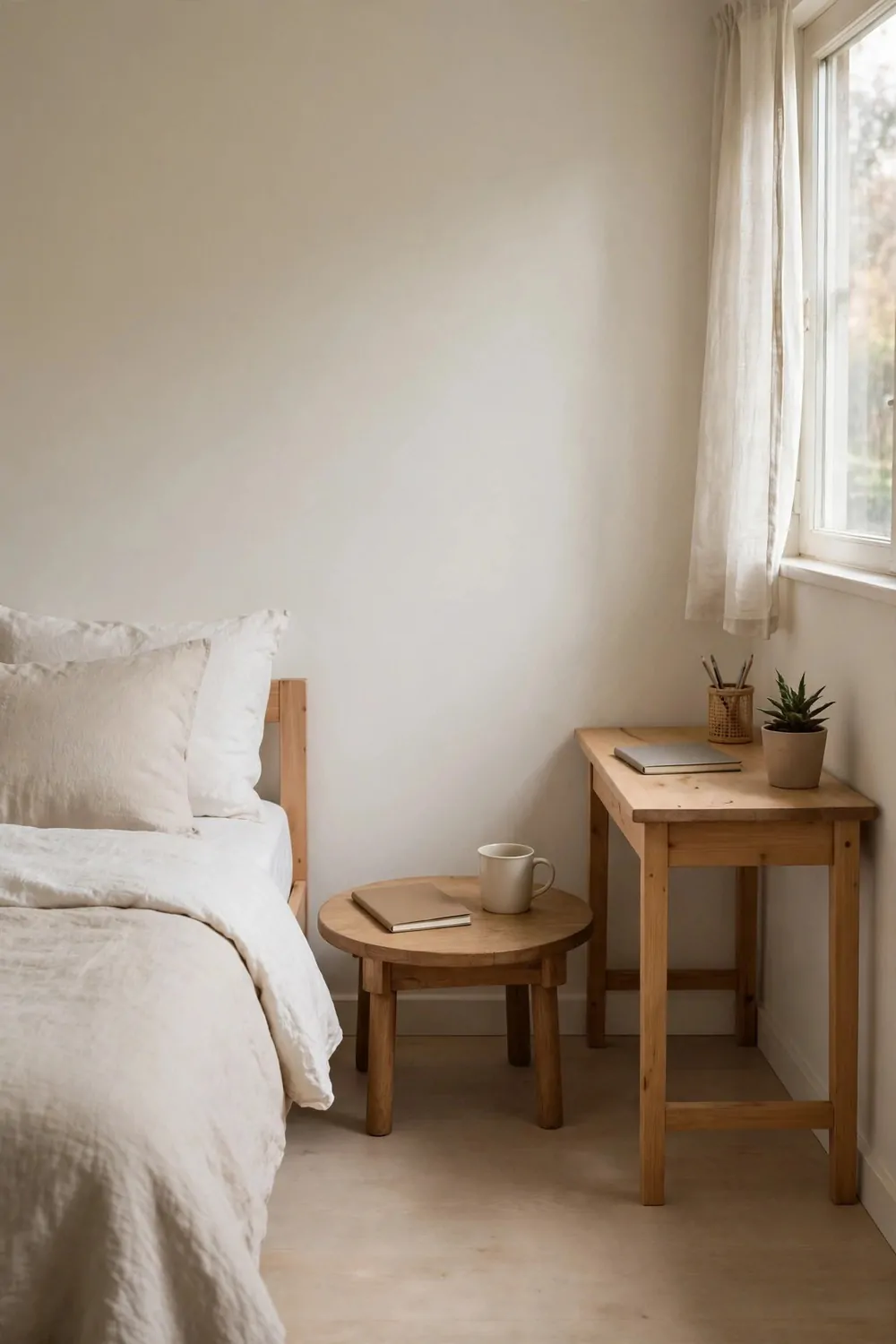
A small table that moves is the most useful piece of furniture in a two job room. It is a bedside table at night and a side table for work in the day.
My moving table is a plain round table on four short legs. In the morning I pull it to the desk, and it holds my notebook and my mug. At night I push it to the bed, and it holds my guest’s book and a glass of water.
Pick a table that one person can lift with one hand. If it is too heavy to move, it will never move, and it is just a table in the wrong place. Light wood is best.
Keep the top clear. A table with a clear top can change jobs in two seconds. A table covered in things has to be cleared first, and that is a job nobody wants to do at ten at night.
Put small wheels on it if you like. Four small wheels make it easy to push across the floor. But wheels can roll when you do not want them to, so pick wheels with a little lock, or skip the wheels and keep it light.
The moving table goes between the bed and the desk, in the middle of the room. That is the spot where both jobs can reach it. A table pushed into a corner can only serve one job.
A moving table is best in a room where the bed and the desk are close together. If they are far apart, the table has to travel too far, and it will end up living at one job and never visiting the other.
Try this one if your room has no space for a bedside table and a side table. One table that moves does the work of two, and it costs less than two.
The Guest Shelf by the Bed
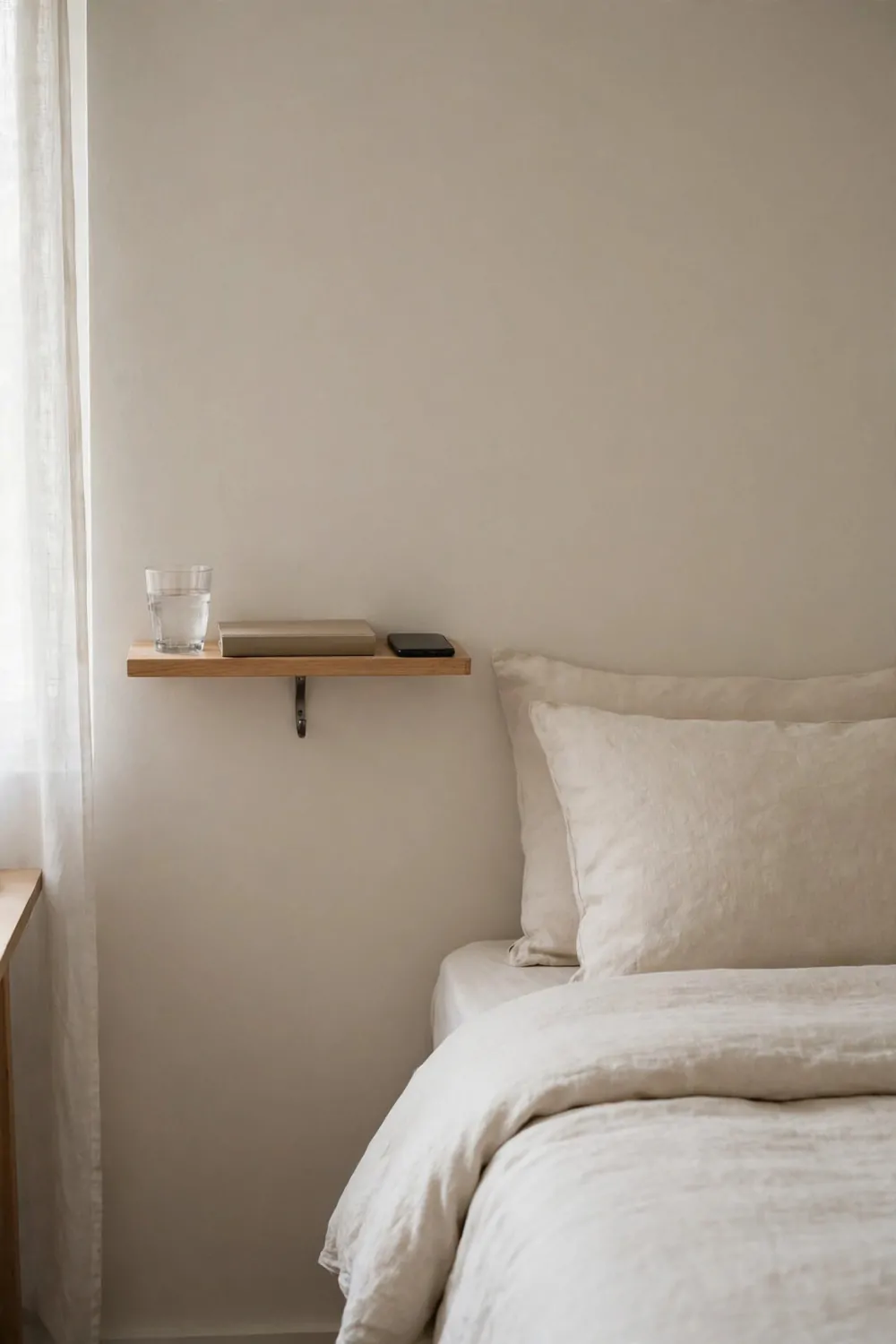
A guest needs a shelf by the bed. Not a big shelf. Just a small one, at the height of their hand, where they can put a book, a glass of water, and their phone.
I fixed a small shelf to the wall by the bed. It is about a foot wide and a foot deep. It holds a glass of water, a book, and a phone. That is all a guest needs in the night, and it is all the shelf holds.
Put the shelf at the height of the mattress, or a little above it. A shelf too high is hard to reach in the dark. A shelf too low is hard to see. The mattress height is the right height.
Keep the shelf clear when no guest is staying. Do not put your own books on it. A shelf full of your things is not a guest shelf. It is your shelf, and your guest will put their glass on the floor.
Add a small hook under the shelf for a bag or a jacket. One hook is enough. Your guest hangs their jacket, and the chair stays free. Two hooks are fine too, but one hook is all most guests use.
A shelf by the bed is better than a bedside table in a very small room. A table takes floor space. A shelf takes wall space, and the floor stays free for walking.
The guest shelf works best when the bed is against a wall. If the bed is in the middle of the room, there is no wall to fix the shelf to, and a small table is the better choice.
Try this one if your guests always put a glass of water on the floor. One small shelf by the bed, and the glass has a home.
Morning Light for Work, Dark for Sleep
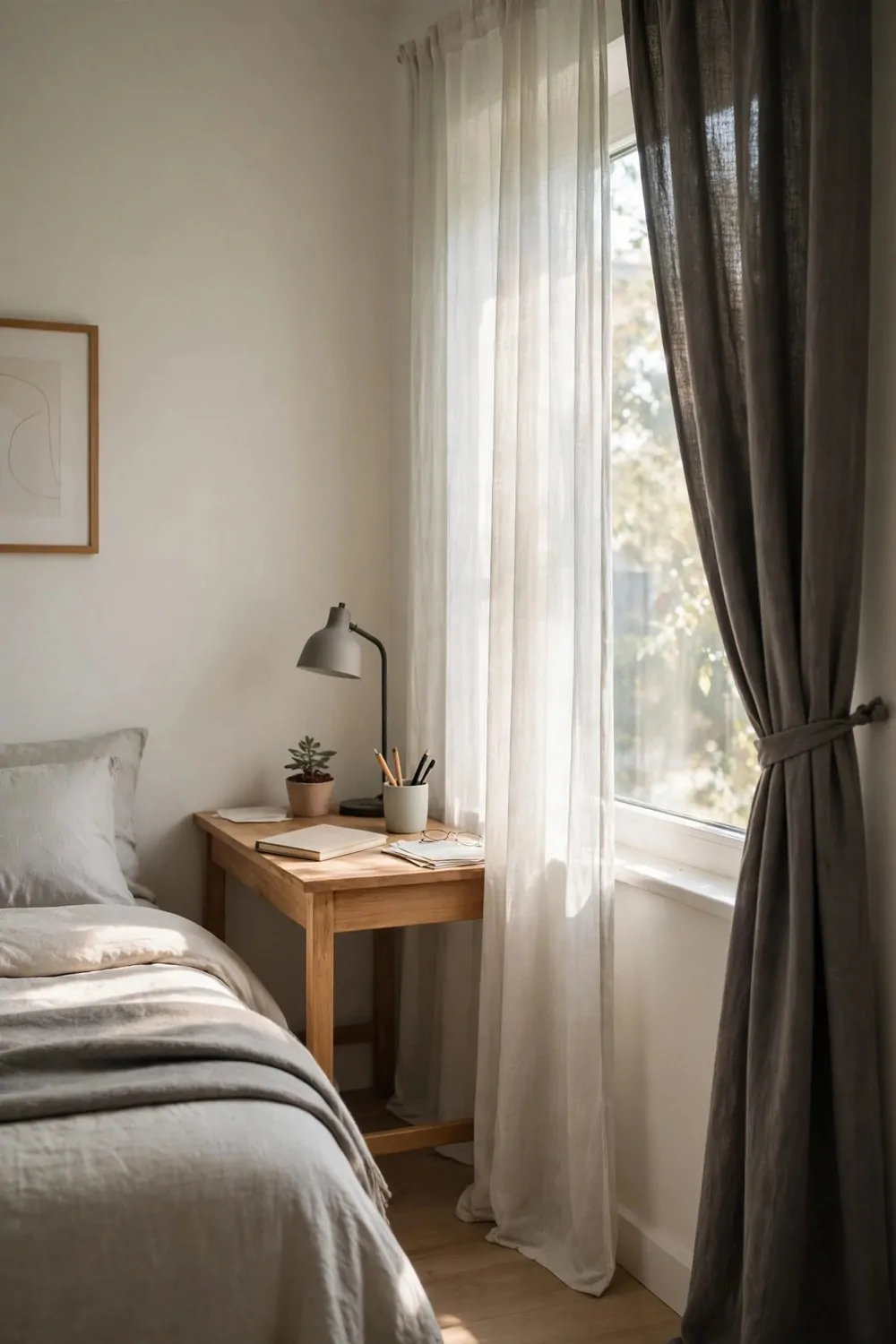
Light is the one thing work and sleep want in opposite ways. Work wants bright morning light. Sleep wants dark. One room has to give both, and the window is where you solve it.
My window has two layers. A thin pale curtain lets the light in for work in the morning. A thick dark curtain pulls across at night and blocks the street light. Two layers, two jobs, one window.
Hang the thin curtain on the inside rail, close to the glass. It stays there all day. It softens the light without blocking it, and your work corner feels bright but not harsh.
Hang the thick curtain on a second rail, a little further into the room. Pull it across at night, and the room goes dark. Your guest sleeps well, even if the street outside is bright.
Keep the desk near the window so the morning light falls on your work. A desk in a dark corner needs a lamp all day, and a lamp all day is tiring on the eyes. Morning light is free, and it is the best light there is.
Keep the bed away from the window if you can. A bed right under the window gets the morning sun in the face, and your guest wakes up too early. A bed on the opposite wall wakes up gently.
Two layers on one window work best in a room with one window. If your room has two windows, give one to work and one to sleep, and the problem solves itself.
Try this one if your guest wakes up at dawn and you work till late. Two curtains, and the window serves both jobs without a fight.
The Ten-Minute Changeover
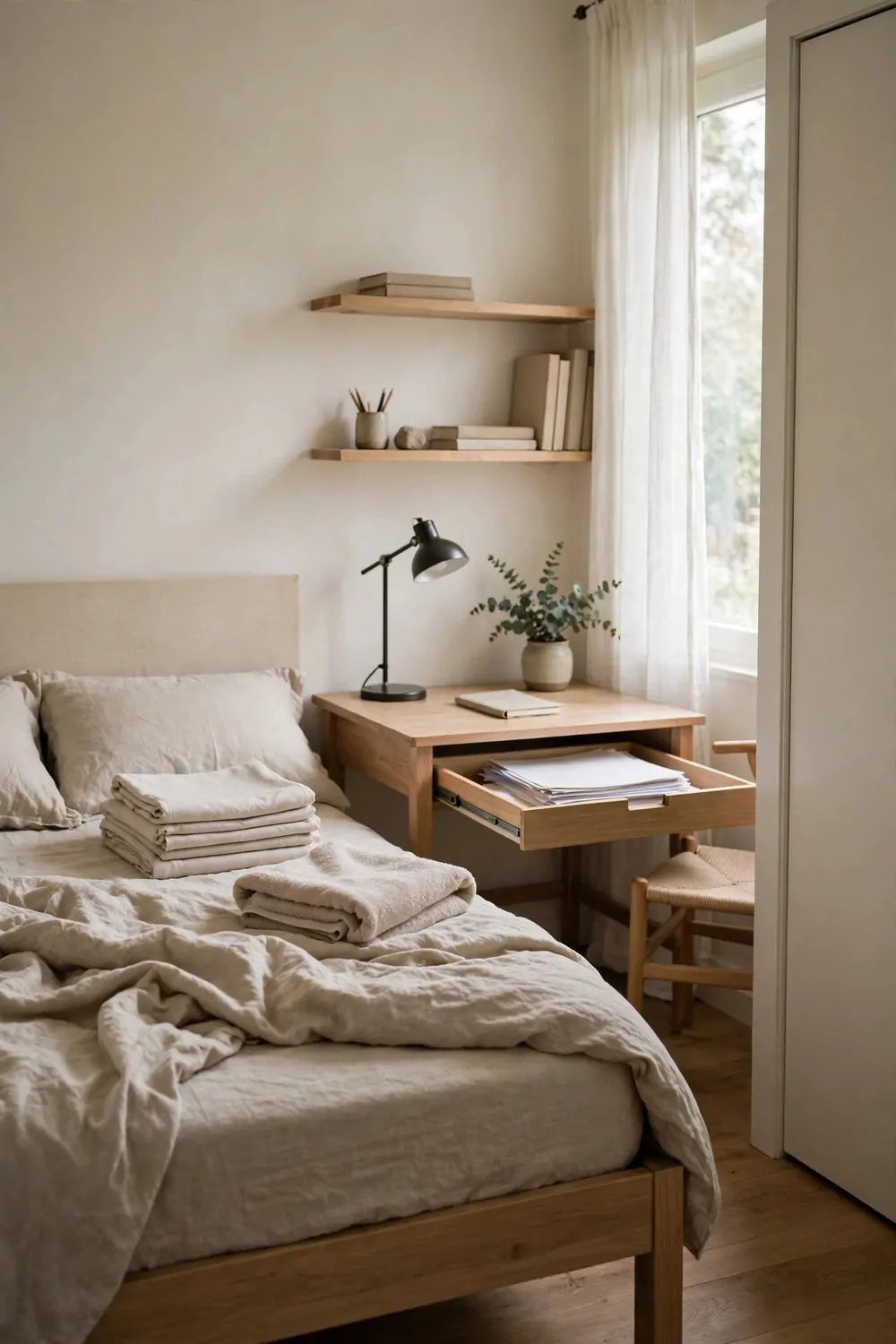
A two job room needs a changeover. That is the ten minutes when the room stops being an office and starts being a guest room. If the changeover is slow, you will hate it. If it is fast, you will not mind it at all.
My changeover takes ten minutes, and I do it the same way every time. I clear the desk, I fold the chair under, I pull the bedding out of the cupboard, and I make the bed. Then I put a glass of water on the guest shelf, and the room is ready.
Write your changeover down on a card and stick it inside the cupboard door. When you are tired, a card tells you what to do. When someone else does the changeover, the card tells them too.
Here is my changeover card, and it fits on one small card.
| Minute | What to do | What it leaves behind |
|---|---|---|
| Minutes one to three | Clear the desk, papers into the drawer | A clear desk top |
| Minutes four to six | Chair under the desk, laptop on the shelf | A tidy work corner |
| Minutes seven to nine | Sheets and pillow from the cupboard, make the bed | A bed that looks slept in by no one yet |
| Minute ten | Glass of water on the guest shelf, towel on the bed | A room that says welcome |
Do the changeover before your guest arrives, not after. A guest who watches you make their bed feels like a burden. A guest who walks into a ready room feels welcome.
Do the changeover back the same way when the guest leaves. Ten minutes, and the room is an office again. If you leave the bed made for a week, the room stays a guest room, and your work suffers.
A fast changeover works best when everything has a home. If the bedding lives in the cupboard and the papers live in the drawer, ten minutes is plenty. If things live in piles, ten minutes is not enough.
Try this one if you put off having guests because the room takes too long to change. A ten minute card on the cupboard door, and the excuse is gone.
Keep the Floor Clear
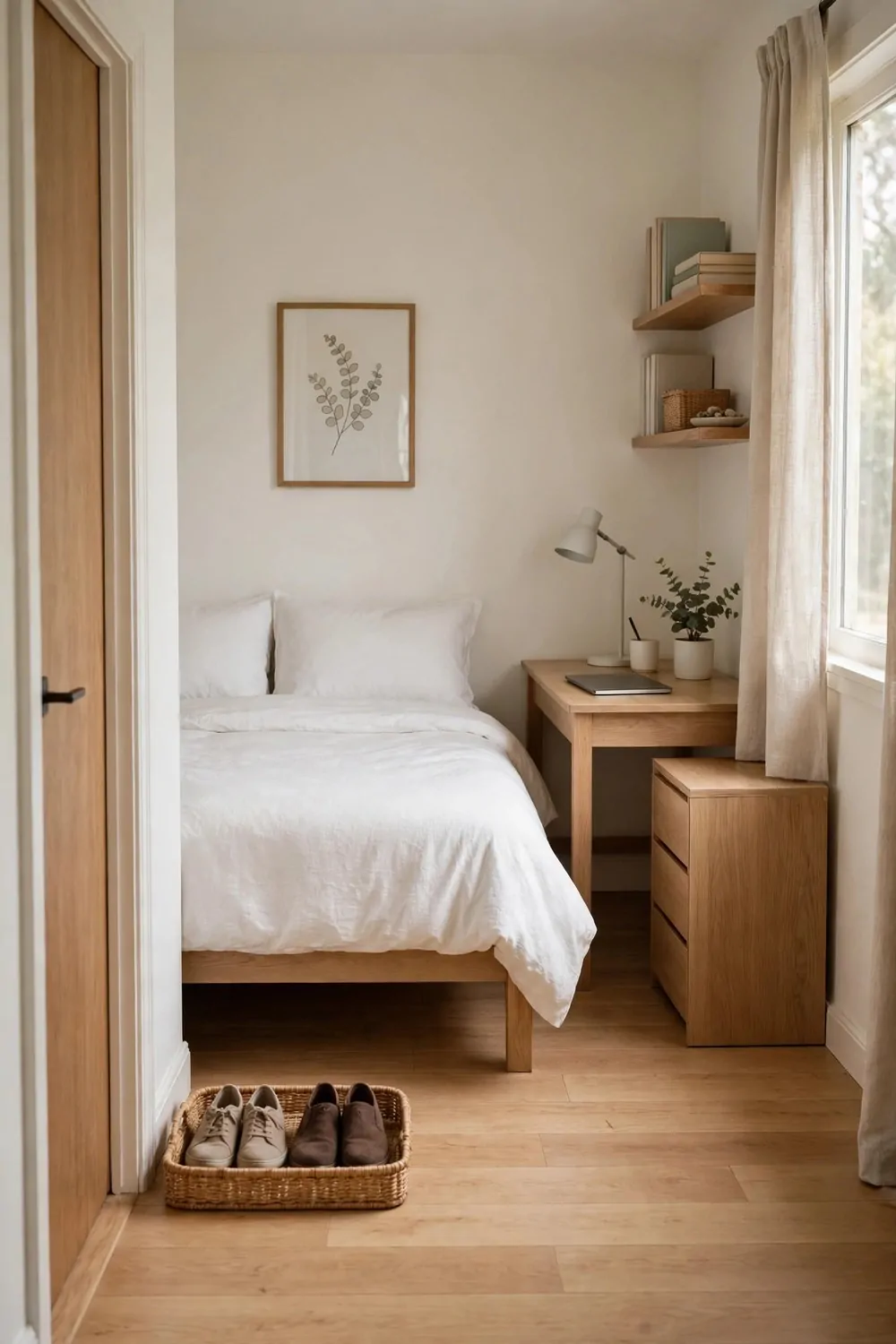
A small room with a clear floor feels twice as big as the same room with a cluttered floor. The floor is the one thing both jobs share, and it has to stay clear.
I have a rule. Nothing lives on the floor except furniture. No bags, no boxes, no piles of paper, no shoes in the middle of the room. Everything has a shelf, a hook, or a drawer.
Put a shoe tray by the door. Shoes go on the tray, not on the floor. A tray by the door holds two pairs of shoes, and that is all a small room needs. More shoes than that live somewhere else.
Hang bags on hooks, not on chairs. A bag on a chair makes the chair useless. A bag on a hook leaves the chair free for sitting. One hook by the door and one hook by the bed is enough.
Keep the walkway from the door to the bed clear. That is the path your guest walks in the dark. A clear path means no stubbed toes at two in the morning. A blocked path means a guest who will not come back.
My floor rule is short, and it fits on a card by the door.
- Bags on hooks.
- Shoes on the tray.
- Papers in the drawer.
- Nothing else on the floor.
Sweep the floor once a week, and pick things up every night. A small room shows dust fast, and a dusty floor makes a small room feel smaller. Five minutes with a broom is all it takes.
A clear floor works best when the furniture is light and the storage is on the walls. Wall shelves and hooks keep things off the floor, and the floor stays open for walking.
Try this one if your room feels small even though the furniture fits. The furniture is not the problem. The floor is. Clear it, and the room feels new.
A Room That Says Welcome Twice
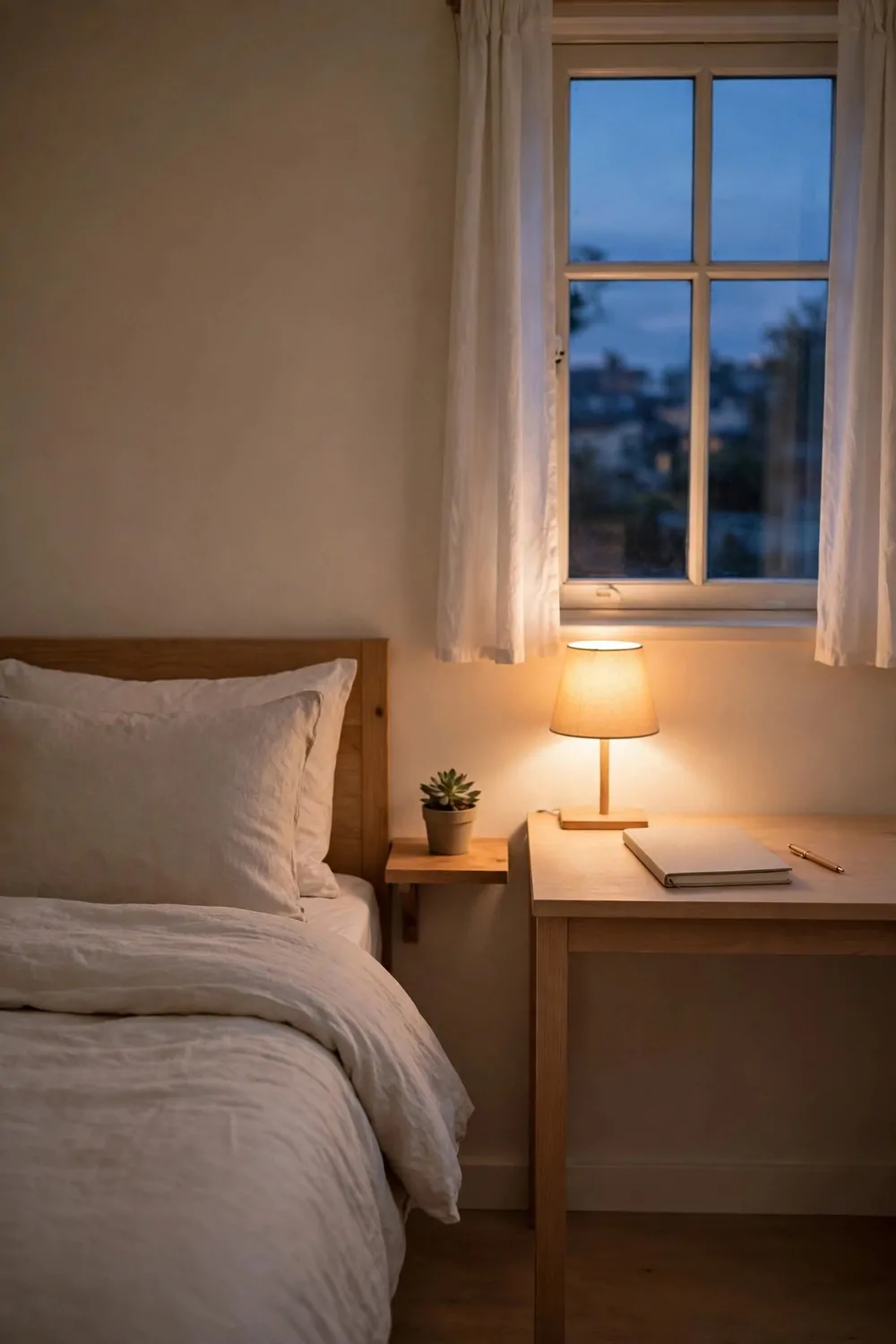
A room that does two jobs has to say welcome twice. Once to you, when you sit down to work. Once to your guest, when they walk in with a bag.
My room says welcome to me with a clear desk and a chair that fits. I sit down, and the room feels like work. It says welcome to my guest with a made bed and a glass of water on the shelf. They walk in, and the room feels like a rest.
Keep one thing in the room that is only for guests. A small plant on the guest shelf. A plain picture on the wall by the bed. One thing that says, this room was ready for you, not just cleaned up for you.
Keep one thing in the room that is only for work. A notebook on the desk. A pen in a jar. One thing that says, this room is a real office, not a spare room with a laptop in it.
Change the bed when the guest leaves, and change it back when the next guest comes. Fresh sheets are the simplest welcome there is. A bed with last week’s sheets is not a welcome. It is a chore you forgot.
Ask your guest what they need, and listen to the answer. My aunt told me she needed a light she could reach from the bed. My brother told me he needed a plug by the bed. Both were small things, and both made the room better.
A room that says welcome twice is the goal of this whole list. Not a perfect room. Just a small room where work gets done in the day and a guest sleeps well at night.
Try one layout from this list this week. Move the bed, or fold the desk, or hang the curtain. One change, and the room will tell you if it is the right one.
Keep Reading
If you liked these small home office guest room layouts, these bedroom office ideas will give you even more ways to make one small room do two jobs well.
- 21 Office Area in Bedroom Setups That Keep Work Separate
- 18 Ikea Bedroom Office Ideas on a Budget
- 16 2nd Bedroom Office Ideas That Feel Like a Real Study
One small room can hold a bed and a desk, and both can work. Pick the layout that fits your room, try it this week, and your next guest will sleep well while your work days stay easy.