20 Extra Bedroom Office Ideas to Use Every Spare Inch

My spare bedroom used to be the room where good intentions went to rest. The old treadmill. The box of cables. The chair with one wobbly leg.
It was not a bad room. It was just a room with no job. Guests slept there twice a year. The rest of the time it held things I did not know what to do with.
Then I needed a place to work, and I had no spare room to give. So I looked at that same bedroom again, inch by inch. The alcove beside the wardrobe. The gap behind the door. The strip of wall between the bed and the window.
That is what this list is about. Twenty Extra Bedroom Office Ideas that use every spare inch of a spare bedroom. Not a bigger room. Not a new room. Just the inches you already own, put to work.
You do not need to do all twenty. Pick three. Start with the inch that bugs you most. Step back when you finish and look at the room. It will feel like a different place.
Ready? Let us start with the alcove, because that is where the best spare inches hide.
The Alcove That Became a Desk
An alcove is a little dent in the wall. Most spare bedrooms have one. Mine sat empty for years, holding nothing but dust.
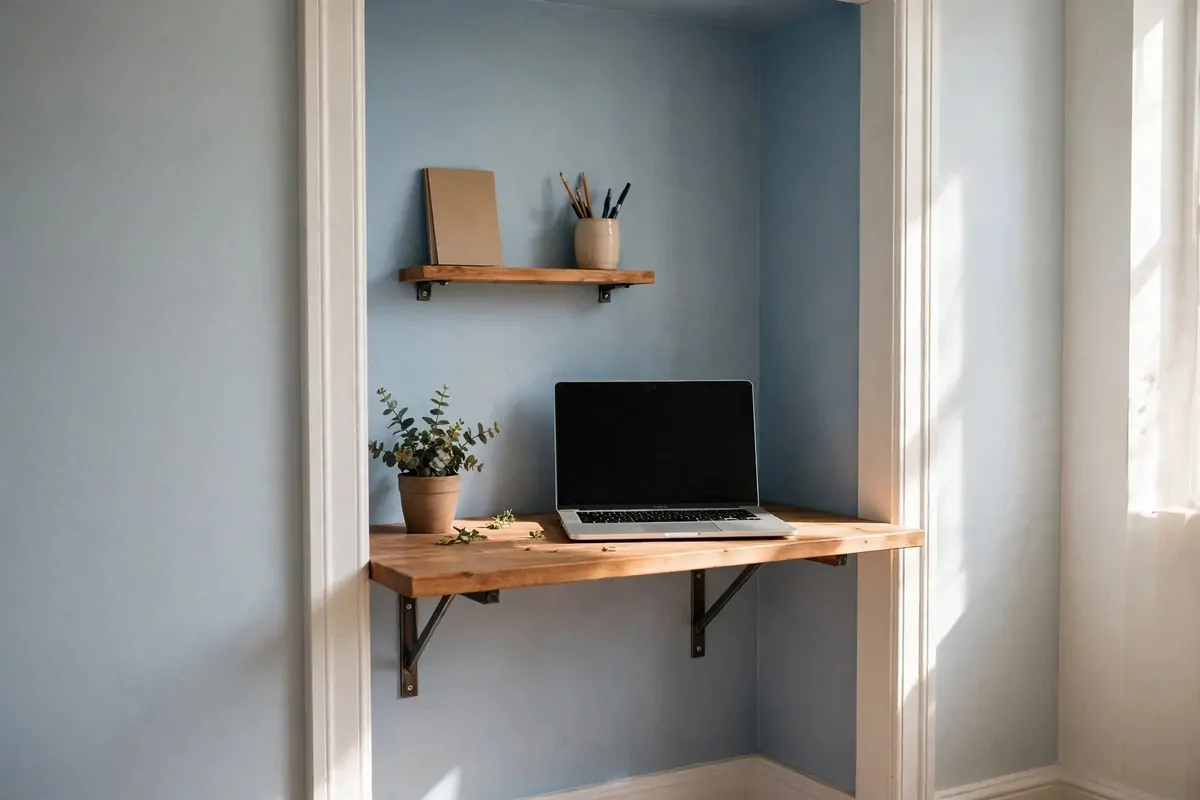
A desk that fits the alcove turns that dent into an office. Measure the width first. Then find a desk top that slides in with a finger of space on each side.
A plain board works fine. Two brackets hold it up. No legs needed. The alcove walls do the holding, and the floor stays clear underneath.
Paint the back wall of the alcove a soft colour. It makes the little office feel like its own room. A pale blue or a warm cream both work well.
Add one small shelf inside the alcove, just above the desk. It holds your notebook and your pen cup. The rest of your things can live in their own spots.
A clip-on lamp fits an alcove better than a big desk lamp. It clips to the shelf edge and leaves the desk top free. Light where you need it, and nothing in the way.
Here is how different alcove sizes work out.
| Alcove width | What fits | Why it works |
|---|---|---|
| Under one metre | A laptop and a notebook | Just enough for focused work |
| One to one and a half metres | Laptop, lamp and a small tray | Room for the whole workday |
| Over one and a half metres | Two screens and a shelf above | A real office in a dent in the wall |
Keep the chair small for an alcove desk. A stool or a slim chair slides right under the board. A big chair with arms will not fit, and it will fight you every day.
This move is for people who say they have no room for a desk. You do. It is hiding in the wall.
The Gap Behind the Door
Open your spare bedroom door all the way. Look at the wall behind it. That strip of wall is doing nothing.
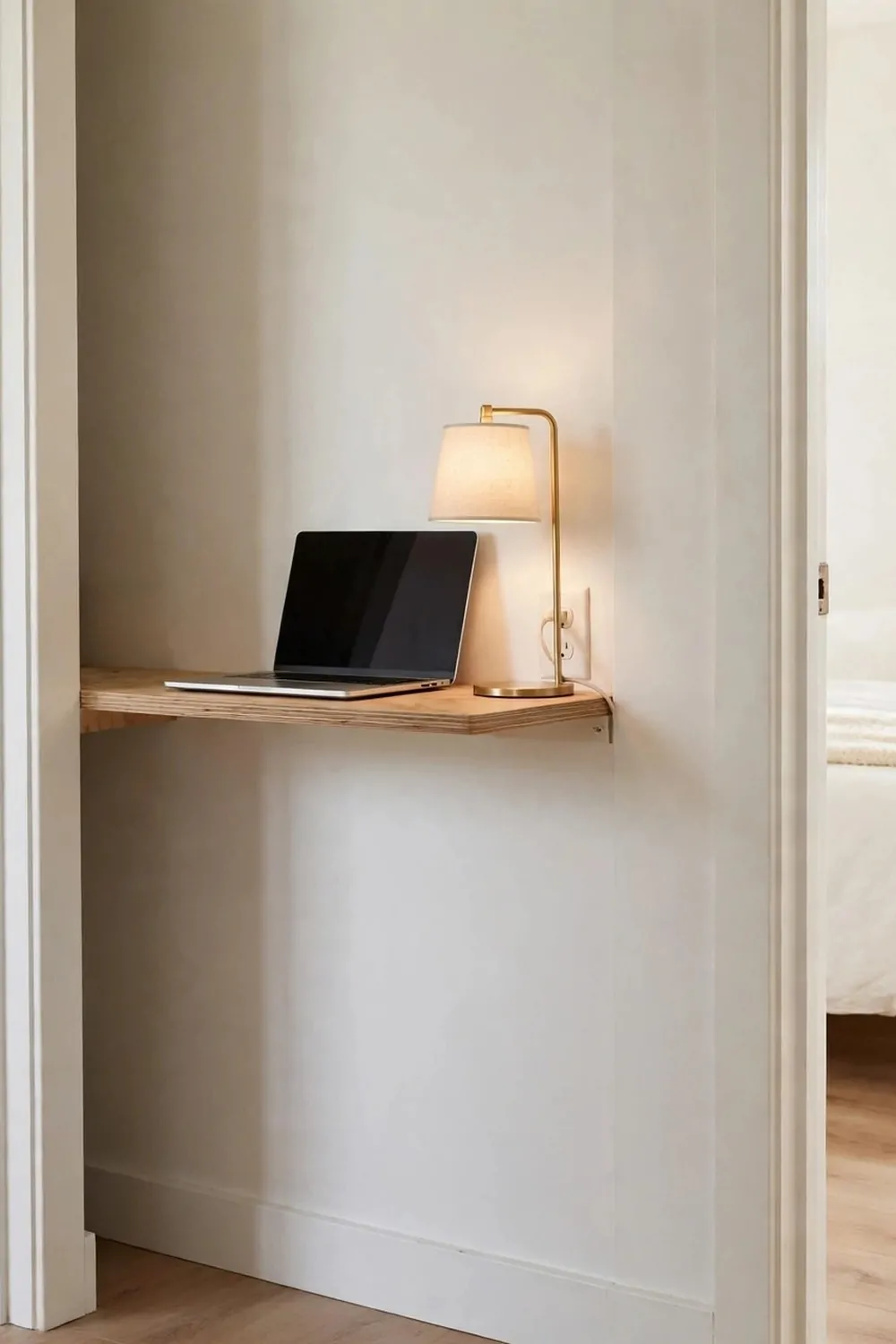
A narrow desk fits in that gap. The door swings open and hides it. The door swings shut and the desk is right there, ready to work.
Pick a desk no deeper than thirty centimetres. A laptop needs less depth than you think. A notebook needs even less.
Fix the desk to the wall with two brackets. No legs. Legs in a gap behind a door get kicked every time someone walks in.
Hang a small shelf above the desk for your papers. One shelf, not three. The gap is narrow, and too many shelves make it feel crowded.
Put a hook on the back of the door for your bag. The bag hangs there while you work. It never lands on the floor, and it never gets in the way.
This spot suits short work sessions best. An hour of emails. A quick call. It is not the desk for an eight-hour day, and that is fine. It was dead space before.
Give that wall a quick wipe each month, because doors swing dust around. Doors swing dust around, and the gap collects it. A quick wipe keeps the little office looking fresh.
Give this a go if your spare bedroom door opens against a blank wall. One board, two brackets, and the gap earns its keep.
The Desk Under the Window
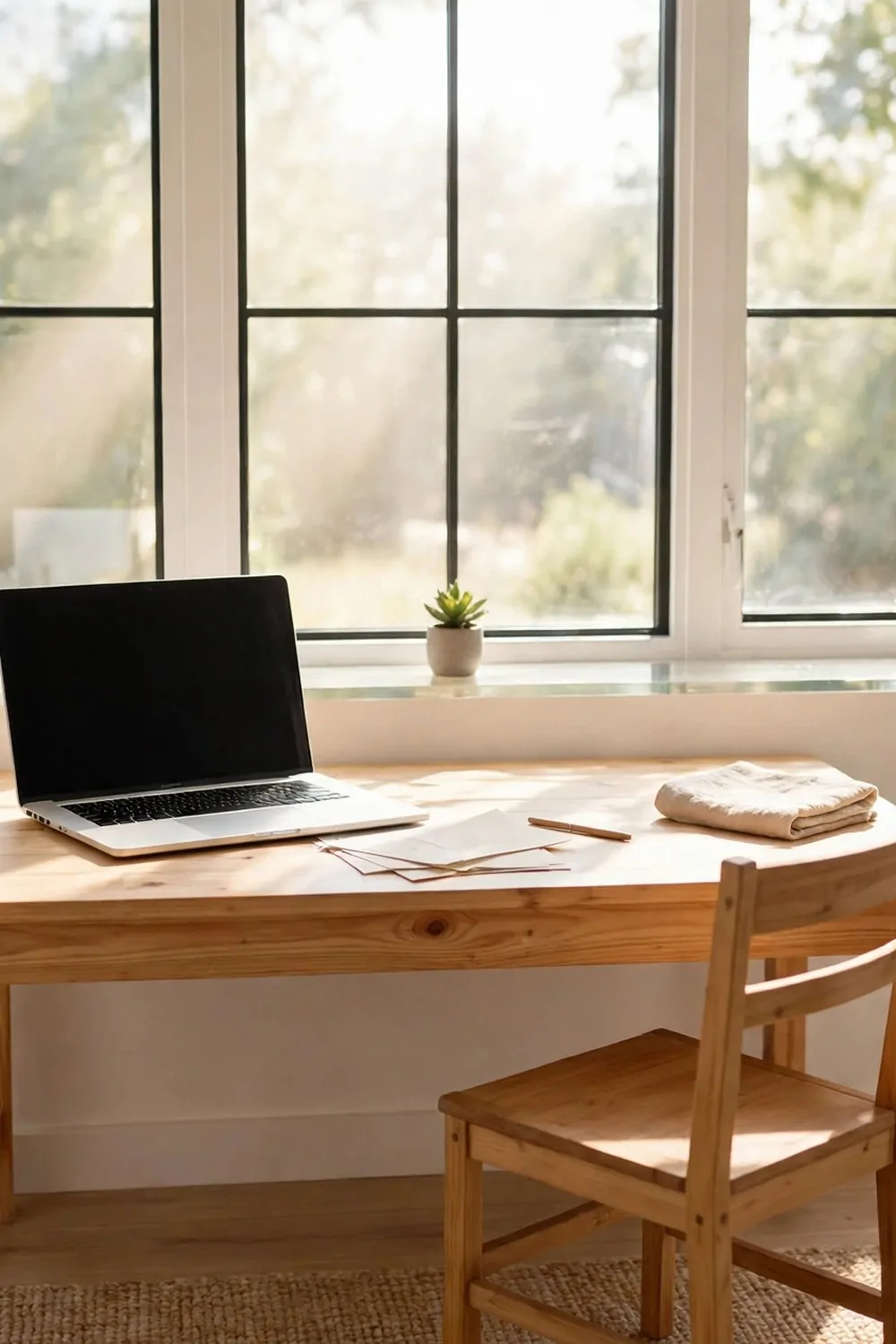
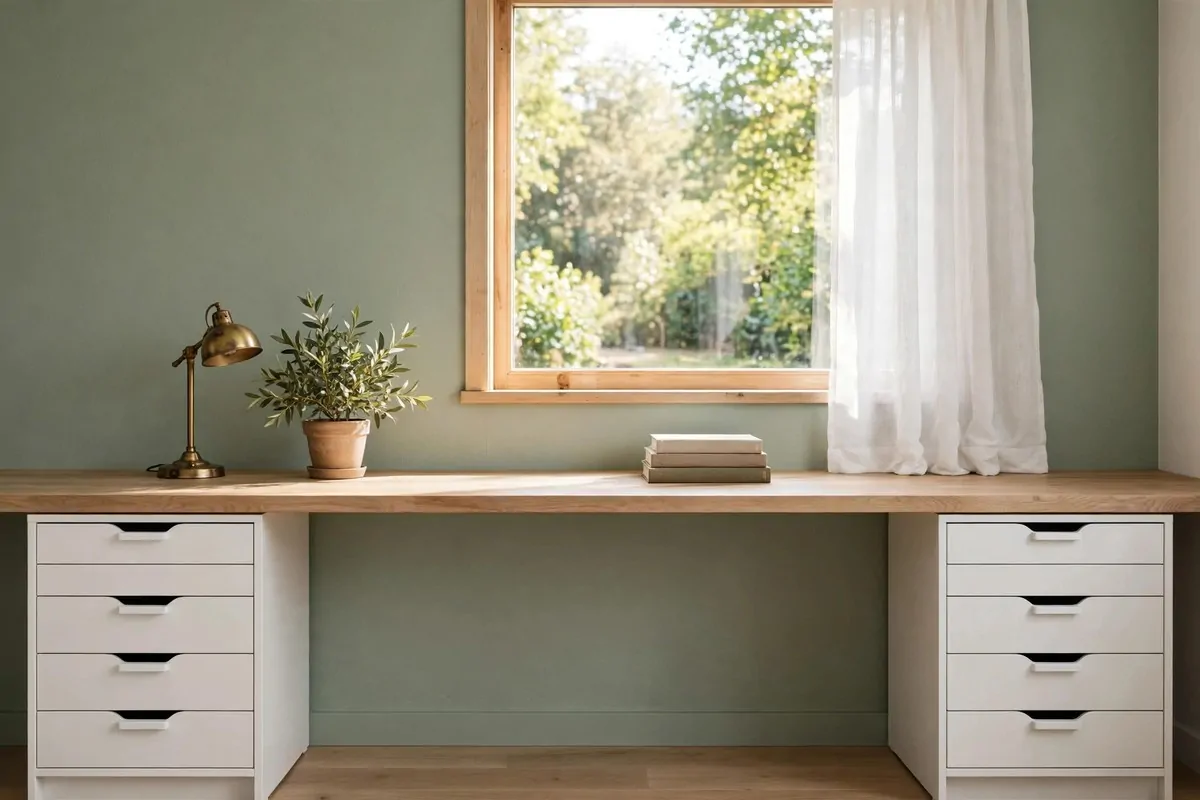
The brightest spot in a spare bedroom is the window. The space under it is often empty.
A low desk under the window gets the best light in the room for free. You work in daylight, and your eyes can rest on the view outside whenever they get tired.
Build the desk to fit the window width. A board that runs from one side of the window to the other looks like it belongs there. A desk that stops short looks like it wandered in.
Keep the windowsill clear. A single little plant does the job. A sill full of clutter blocks the light, and the light is the whole point of this desk.
A chair without arms tucks underneath easiest. Arms catch on the desk edge and leave the chair sticking out into the room. A plain chair keeps that corner looking neat.
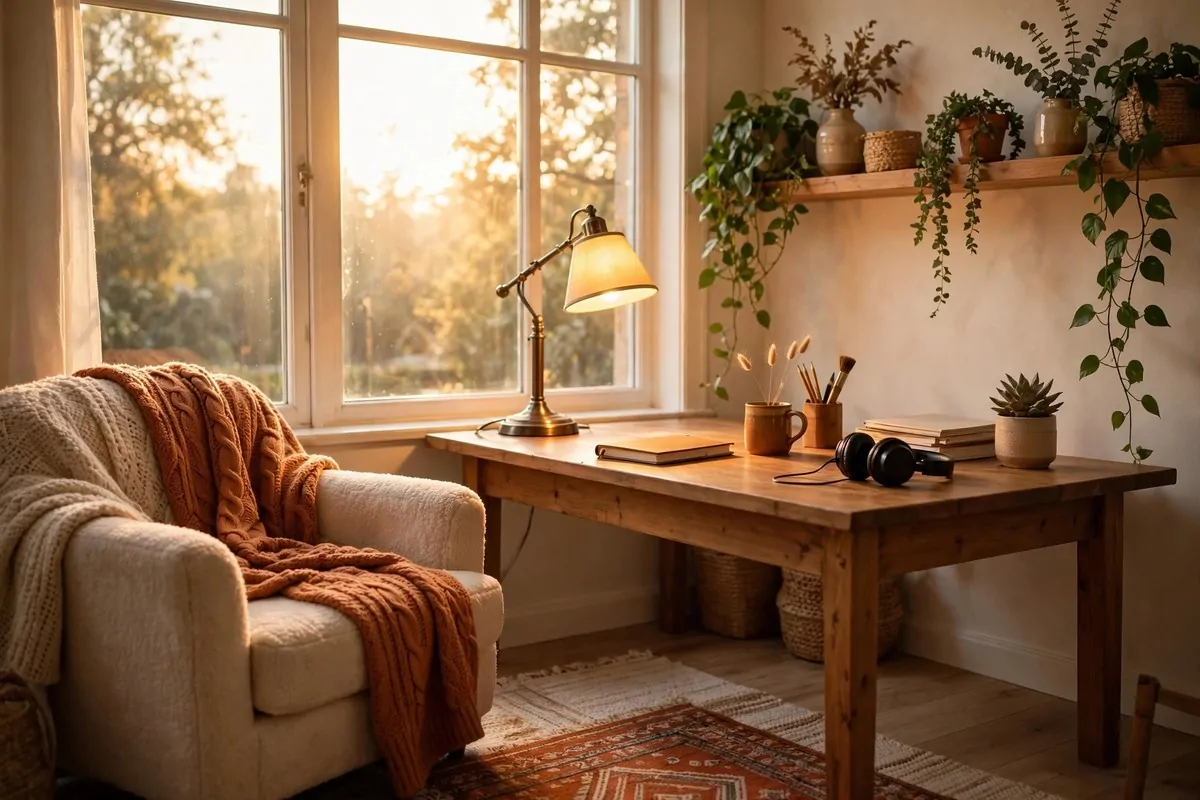
This desk suits morning work best. The low warm sun pours in, and the whole corner glows. By afternoon the light moves on, and you can slide the laptop to another spot if you like.
Put a thin cushion on the chair if you sit there for hours. A thin cushion in a soft shade keeps the seat comfy and still lets the light through. A fat cushion swallows the daylight.
Clean the inside of the glass once a month. A dusty window steals half the daylight. A clean one makes the whole corner feel brighter without changing a thing.
Give this a go if your desk faces a blank wall right now. Shift it over to the window, and suddenly the room has a view.
The Corner That Finally Works
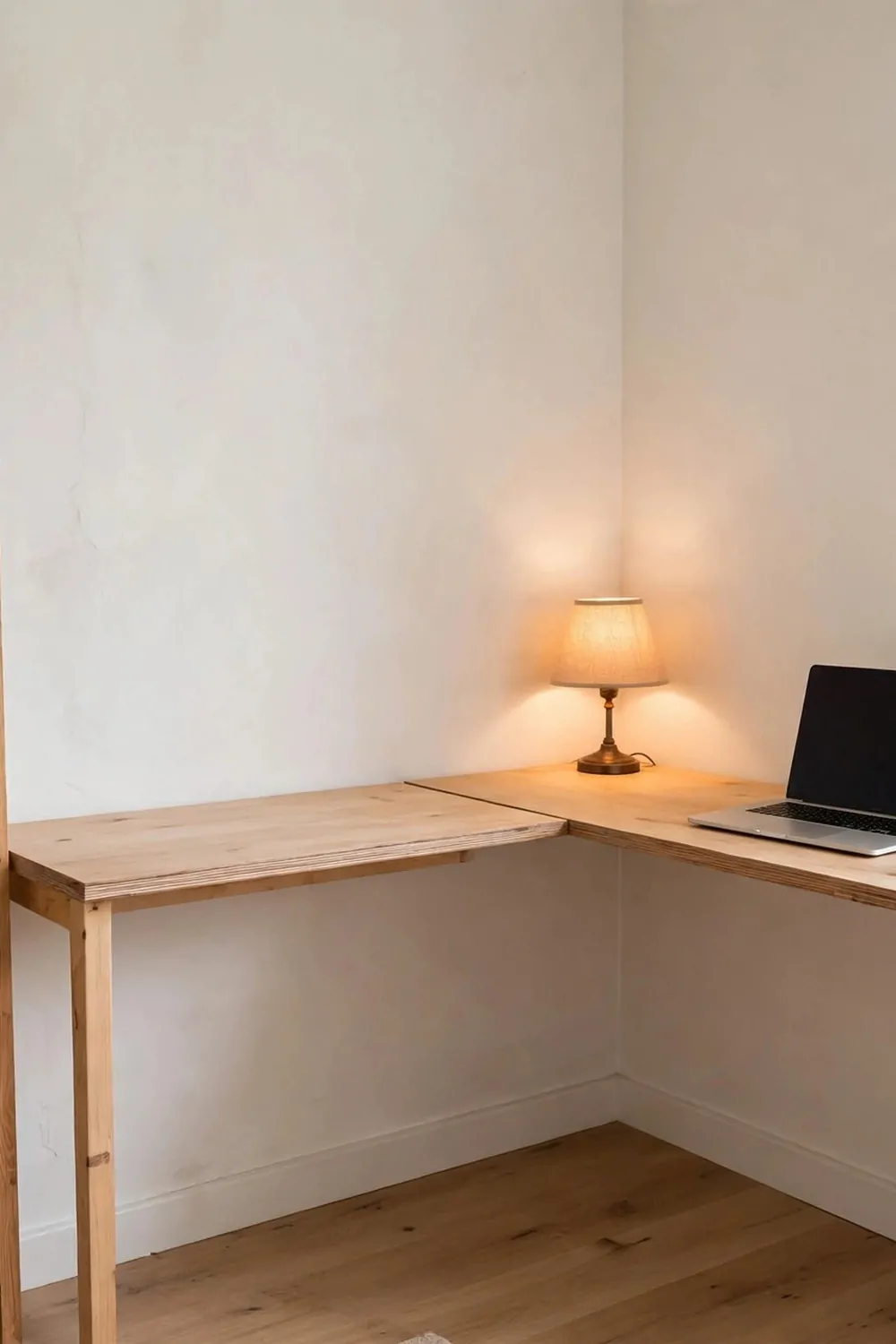
Every spare bedroom has a corner that does nothing. It holds a laundry basket. Or a plant you forgot to water. Or nothing at all.
A corner desk turns that dead corner into the best seat in the room. Two boards meet at a right angle, and you get twice the desk in the same small footprint.
Angle the chair so it faces into the room, not the wall. You sit facing out from the corner, and the room stretches open ahead of you. It stops feeling boxy and starts feeling like a real workspace.
That little triangle behind the desk is just right for hiding cables and the power strip. They hide behind the desk where nobody sees them. The floor stays clear.
Put a tall shelf in one side of the corner. It holds your books and boxes, and the wall does the storing. The desk top stays clear while the floor stays free.
Keep the desk tops slim for this trick. A deep desk in a corner eats the middle of the room. A narrow desk set at an angle makes the corner work without eating the floor.
Add a small lamp on the far end of the desk. One warm light in the corner makes the whole room feel deeper. Dark corners make rooms feel smaller.
Square rooms suit this trick best of all. In a long thin room, a corner desk can look lost. In a square room it turns the dullest corner into the nicest seat in the house.
Try it this weekend. Drag the desk out, swing it round, and push it back in. Ten minutes later, that corner is no longer wasted.
The Shelf Above the Headboard
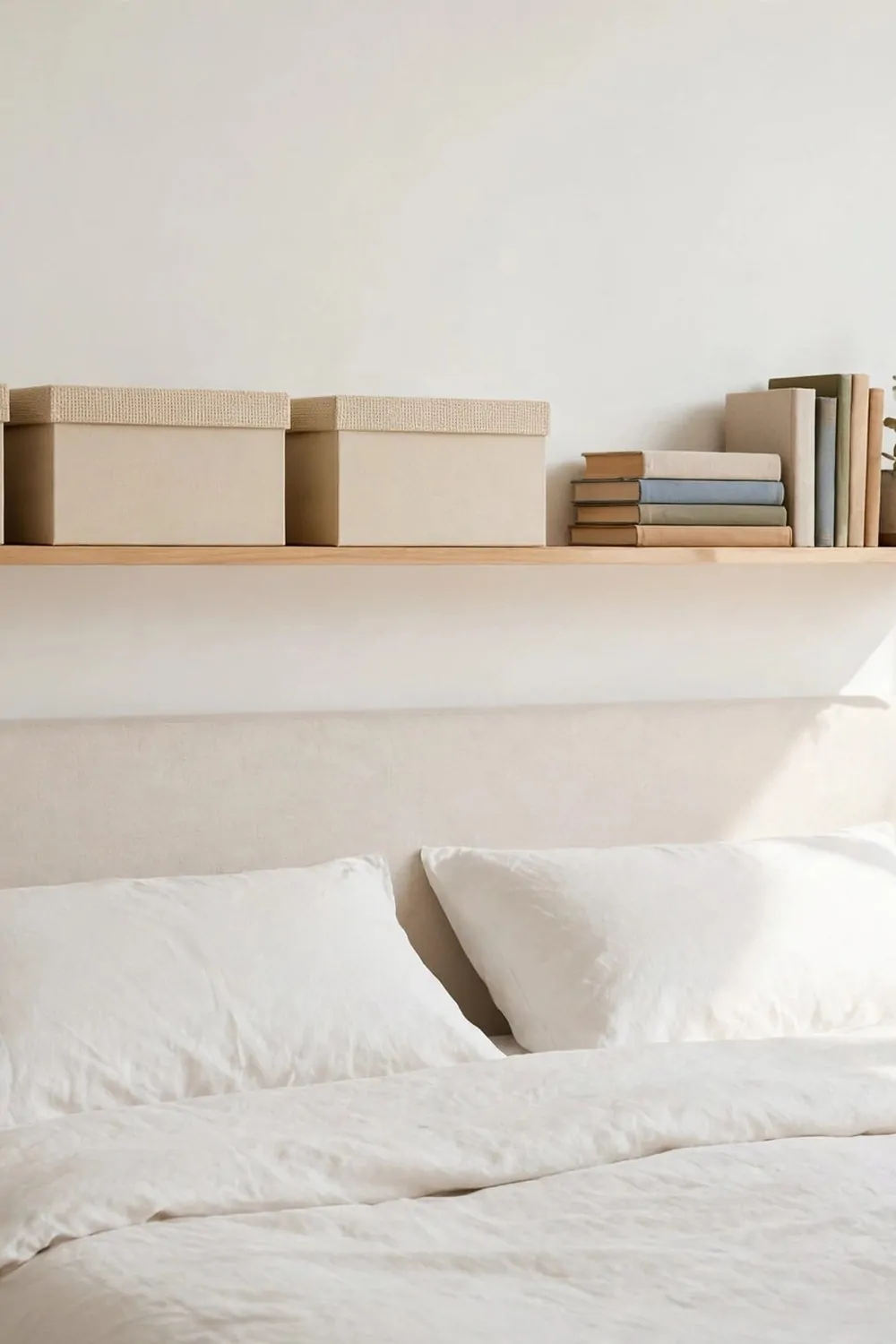
The wall above a bed is the most wasted wall in a spare bedroom. Nobody looks up there. Nobody stores anything there.
Fix one long shelf above the headboard and the office gains a home. Notebooks, a small clock, the books you reach for at night. They all sit up there now, tucked away yet still within reach.
Keep the shelf shallow, about fifteen centimetres deep. A deep shelf above a bed feels heavy. It hangs over your head while you sleep, and nobody likes that feeling.
Choose boxes that match so the shelf looks neat from the floor. Simple boxes in a single shade keep the clutter out of sight. Seen from the floor, the shelf blends right into the wall.
Screw the shelf into the wall studs with solid brackets. A shelf above a bed holds things you reach for every day, and it must never fall. Two screws sunk into studs will hold it safe for years.
Put the things you use most at the ends of the shelf. The middle is hard to reach from the bed. The ends are easy. Small habit, big difference.
Leave one end of the shelf empty on purpose. That empty space is where the next book lands, or the notebook you are reading now. A shelf that is packed full leaves no room for real life.
This trick is for anyone who has run out of wall space. The bed is a wall too, and the space above it was waiting for a job.
Give this a go if your spare bedroom has a bare wall above the bed. One shelf, and the wall starts working.
The Chair That Slides Under the Bed
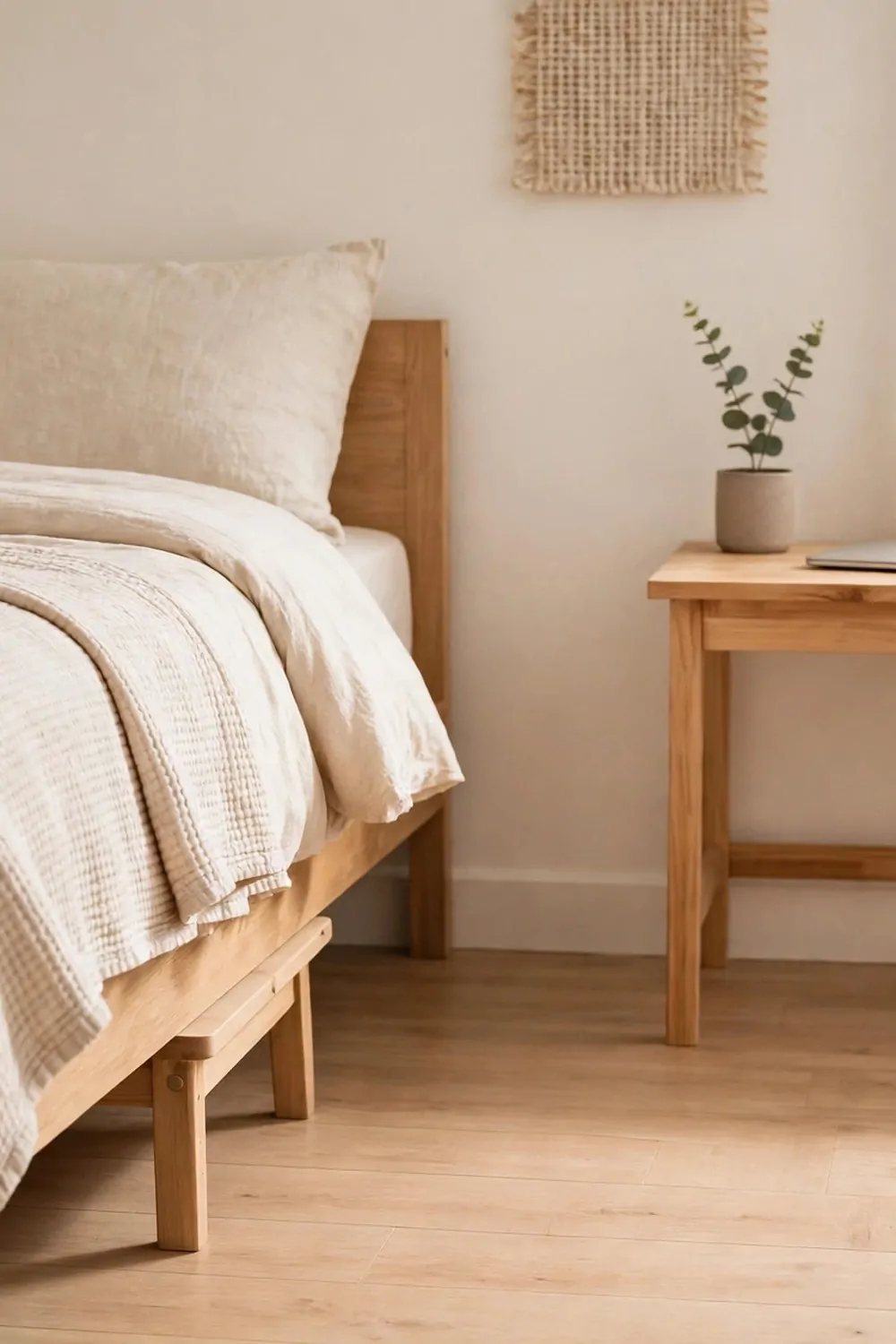
A chair takes up floor space all day, even when nobody sits on it. A chair that slides under the bed takes up none.
Pick a low chair with no arms and no back taller than the bed frame. When work ends, you push it under the bed. The floor is clear again by dinner time.
Measure the gap under the bed first. Most bed frames leave about twenty centimetres. A flat stool or a low bench fits. A normal chair does not.
Keep the chair light. A heavy chair is hard to slide under a bed every day. A light chair goes in and out in two seconds.
Put a small rug under the desk so the chair slides smoothly. Bare floor can scratch, and a rug makes the whole corner look finished. A flat rug works best.
This chair suits people who share the spare bedroom with guests. The office vanishes when the guest arrives. The chair hides under the bed, and the room is a bedroom again.
Give the chair a wipe each week when you tidy the desk. A chair that lives under a bed collects dust on the seat. A quick wipe keeps it fresh.
Keep the space under the bed clear for the chair. One chair, not a pile of boxes. If the boxes live there too, the chair has nowhere to go.
Give this a go if your office chair is the biggest thing in the spare bedroom. One low chair, and the floor is yours again.
The Narrow Wall Between Two Doors
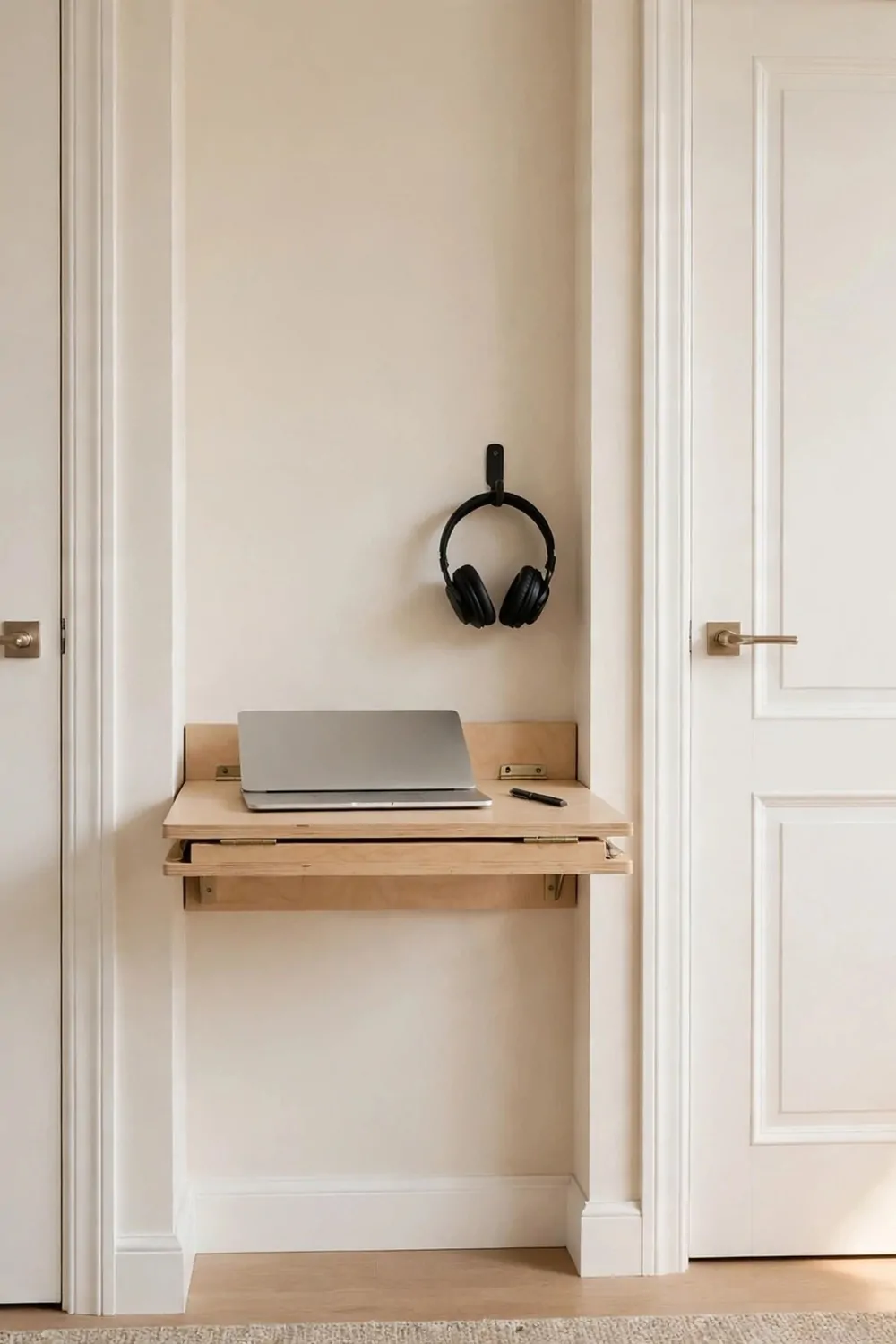
Spare bedrooms often have two doors close together. A closet door and the bedroom door. The strip of wall between them is small, and most people ignore it.
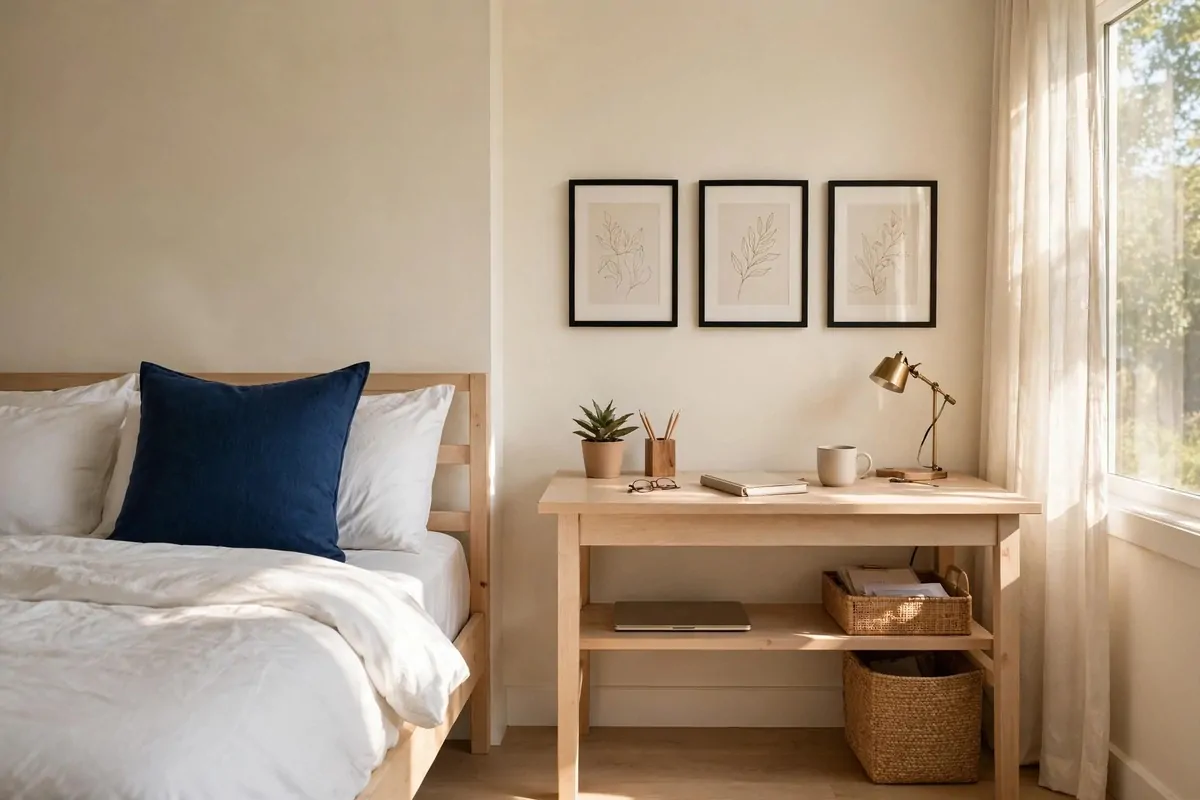
That strip is wide enough for a slim desk. A laptop fits. A notebook fits. A small lamp fits. That is all a work spot needs.
Mount a folding board on that strip. It folds down when you work and folds flat when you finish. The wall goes back to being a wall.
Fix the board to wall studs, not just plaster. A board that holds a laptop and your arms needs solid wood behind it. Two brackets sunk into studs keep it rock steady for years.
Add one hook above the board for your headphones. They hang there while you work. They never land on the desk, and they never get lost in a drawer.
Keep the chair close by, folded up or hanging on its hook. A fold-away desk without a seat nearby is only half the job done. The chair needs its own spot as well.
This is the desk for the tiniest spare bedrooms. One strip of wall, one folding board, and the room gains an office without losing a single inch of floor.
Wipe the board once a week. Folding boards hide dust on the wall behind them, and a quick wipe keeps the whole corner looking fresh.
Give this a go if your spare bedroom has two doors with a strip of wall between them. That strip was waiting for a job.
The Sloped Corner Under the Roof
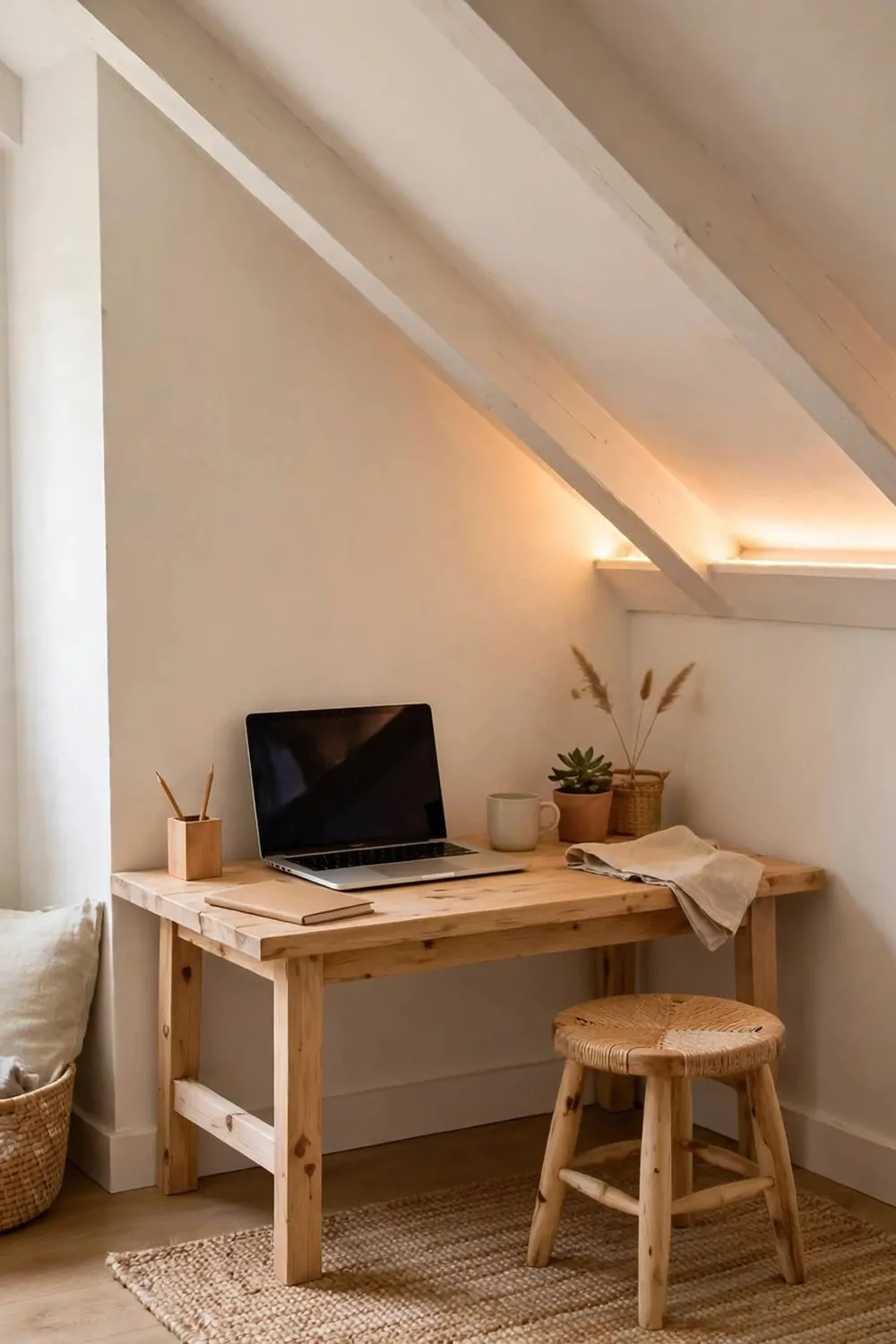
A spare bedroom under the roof has a sloped ceiling. The low corner where the roof meets the floor feels useless. You cannot stand there. You cannot put a wardrobe there.
You can put a desk there. A low desk fits under a slope perfectly. You sit down, and the ceiling is right where you need it.
Build the desk to follow the slope. A board cut to fit the angle slides right into the corner. It looks like it was always meant to be there.
Put the desk against the lowest wall. Your head is low when you sit, so the slope never bothers you. Standing up is the only time you notice it, and you stand up to leave.
Here is what fits under different ceiling heights.
| Ceiling height | What fits | What to skip |
|---|---|---|
| Under one metre | A low cushion and a laptop | Anything tall or upright |
| One to one and a half metres | A low desk and a small stool | Tall shelves and big lamps |
| Over one and a half metres | A full desk and a shelf above | Nothing, it works like a normal wall |
Add a small light under the slope. A stick-on light or a short strip light fits where a lamp cannot. It lights the desk without taking up any space.
Keep the floor in the sloped corner clear. It is tempting to pile boxes there. Boxes in the low corner make the whole room feel cramped.
This move is for spare bedrooms with a roof over their head and a slope in the corner. The lowest inch of the room becomes the best seat in the house.
Try it this weekend. Measure the slope, cut a board, and the corner stops being wasted space.
The Window Ledge That Grew a Shelf
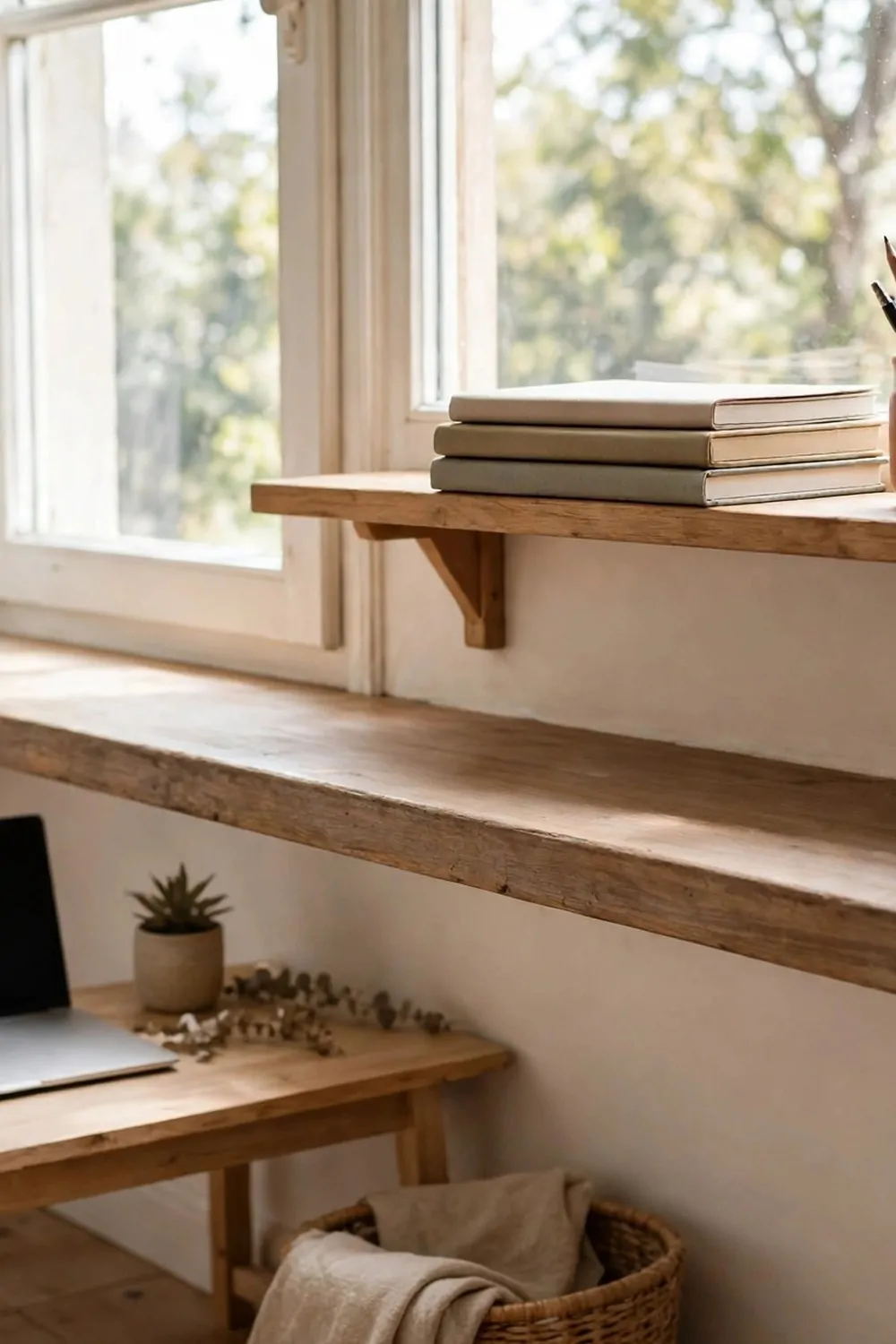
A wide windowsill is a shelf that nobody uses. It holds a dead plant and a dusty candle. That is all.
Add a board above the sill and the ledge grows up. Two small brackets, one board, and you have a shelf that holds your notebooks, your pens, and your little work tray.
Keep the shelf the same length as the window. A shelf that runs past the window looks wrong. A shelf that matches the window looks like it belongs there.
Put the things you reach for most on the lower shelf. The notebook. The pen cup. The phone charger. The top shelf holds the things you touch once a week.
Leave the middle of the windowsill clear for light. The sun needs a clear path into the room. A shelf full of clutter blocks it, and the light is the whole point of a window desk.
Wipe the ledge once a week when you clean the desk. Windowsills collect dust fast because they sit near the glass. One fast wipe keeps the ledge looking smart.
This trick suits spare bedrooms with deep old windowsills. New houses have thin sills. Old houses have deep ones, and deep ones are made for this.
Give this a go if your windowsill is doing nothing but collecting dust. One board, two brackets, and the ledge starts working.
The Boxes on Top of the Wardrobe
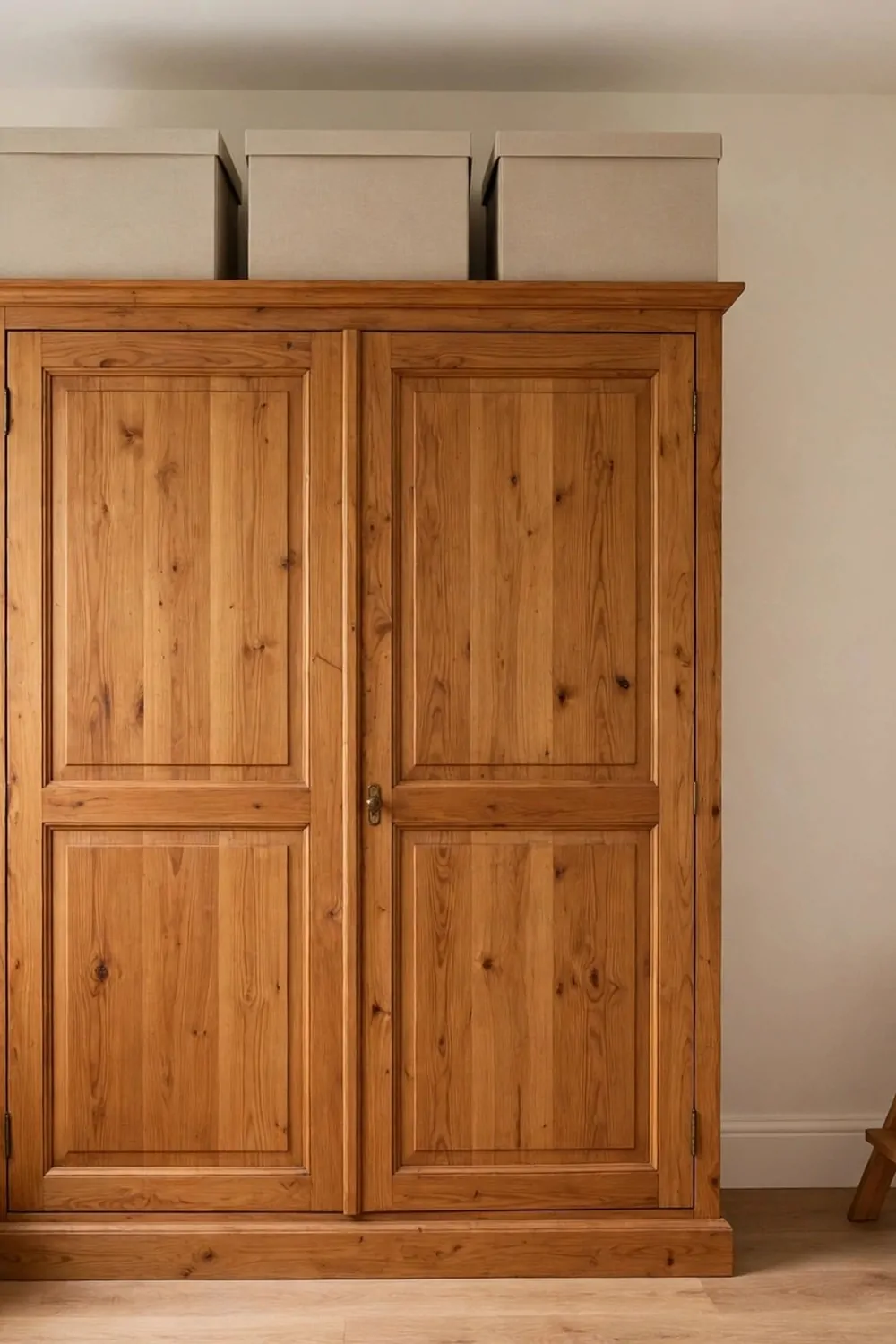
The top of a wardrobe is the highest shelf in the spare bedroom. It is also the most forgotten one. It holds one dusty box and nothing else.
Put matching boxes up there and the wardrobe top becomes real storage. Old files. Spare paper. The things you need twice a year. They live up there now, out of the way but still close.
Use boxes with lids. Open boxes on top of a wardrobe collect dust and look messy from below. Lids keep the dust out and the whole top looking tidy.
Pick boxes in one colour. Plain boxes in a soft grey or warm cream look calm from the floor. Five different colours look like a jumble sale.
Label each box with a small plain tag. One word is enough. Files. Paper. Cables. The tags stop the boxes turning into mystery boxes.
Keep a little step stool in the corner for the days you reach for something up high. A folding stool propped against the wall does the job. You only need it once a month.
Do not put anything heavy on top of the wardrobe that you need every day. A shelf up high suits things you barely ever touch. Everyday things belong at eye height, where your hands reach them easily.
This move is for people who have run out of shelf. The wardrobe is a shelf too, and the space on top of it was waiting for a job.
Start here if your wardrobe top is bare. Three matching boxes, and the whole room feels more organised.
The Wall Pockets That Hold the Papers
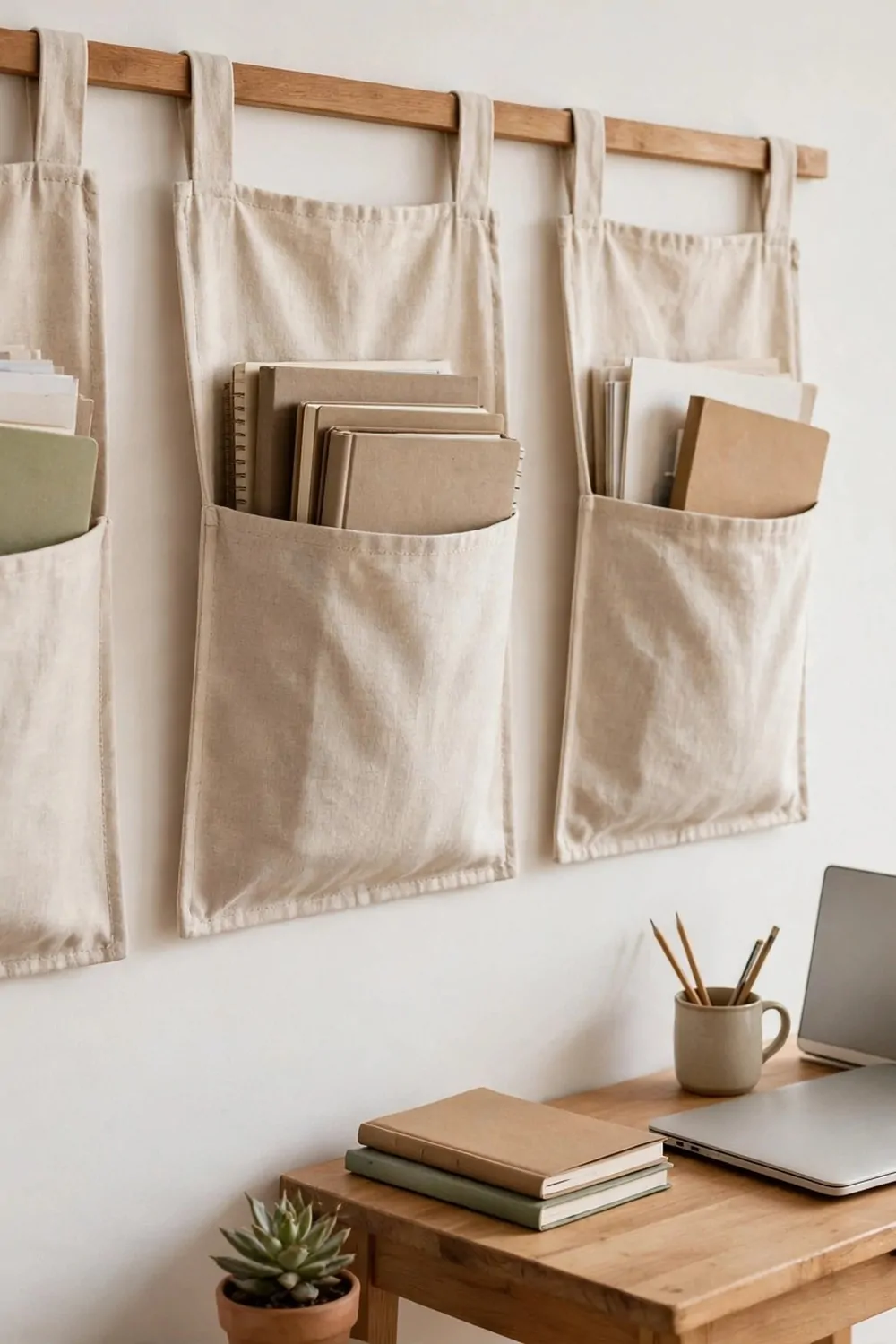
Papers pile up on a desk because they have nowhere else to go. Wall pockets give them a home without taking a single inch of floor.
A wall pocket is a fabric pouch that hangs on the wall. It holds papers, notebooks, and the letters you keep meaning to answer. Everything dangles where your fingers can grab it.
Hang three pockets in a row beside the desk. One for papers to read. One for papers to file. One for papers to send. Three pockets, three jobs, and you always know where things live.
Fix the pockets to the wall with two small hooks each. They are light, so they do not need studs. A hook in plaster holds a fabric pocket just fine.
Keep the pockets short, about as wide as the desk. Pockets that run the whole wall look like a shop display. Three short pockets look like a tidy office.
Empty the pockets once a week. A pocket that never gets emptied turns into a junk drawer on the wall. Friday afternoon, five minutes, and the pockets are fresh again.
Here is what belongs in each pocket.
- To read: the article you printed and the notes from your last call.
- To file: the bills and forms that are done and need a home.
- To send: the letter and the parcel slip that must go out this week.
This move is for people whose desk top is always covered in papers. Move the papers up the wall, and the top of the desk belongs to your work again.
The Mirror That Doubles the Room
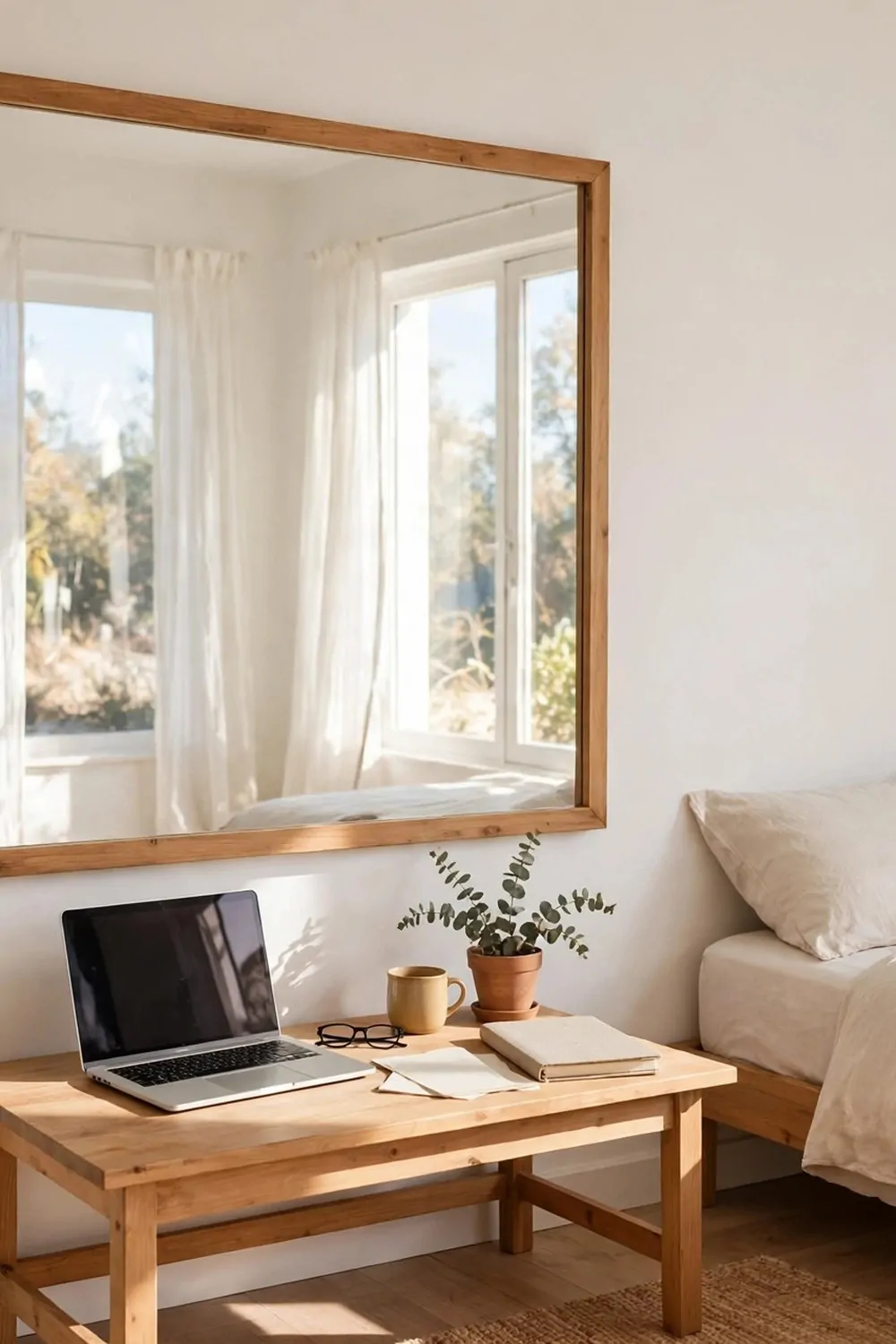
A spare bedroom with one small window can feel dark. A mirror on the wall opposite the window fixes that without a new lamp.
The mirror bounces the daylight back into the room. Your eyes see the window twice, and the office feels like it has two windows instead of one.
Pick a mirror about as wide as the desk. A mirror that matches the desk looks planned. A tiny mirror looks like an afterthought.
Hang it at eye level when you sit down. A mirror hung too high bounces light at the ceiling. A mirror at sitting height bounces light right where you work.
Keep the mirror clean. A dusty mirror bounces no light at all. A quick wipe with a dry cloth once a week keeps it bright.
Do not hang the mirror where it faces the bed. A mirror that faces the bed catches the morning light and throws it at the pillows. Guests hate that. Face it at the desk instead.
One mirror is enough. Two mirrors make the room feel like a dance studio. One mirror, one window, and the light doubles.
Give this a go if your spare bedroom has one dark corner no lamp seems to fix. One mirror, and the corner gets light it never had.
The Rolling Desk That Parks Anywhere
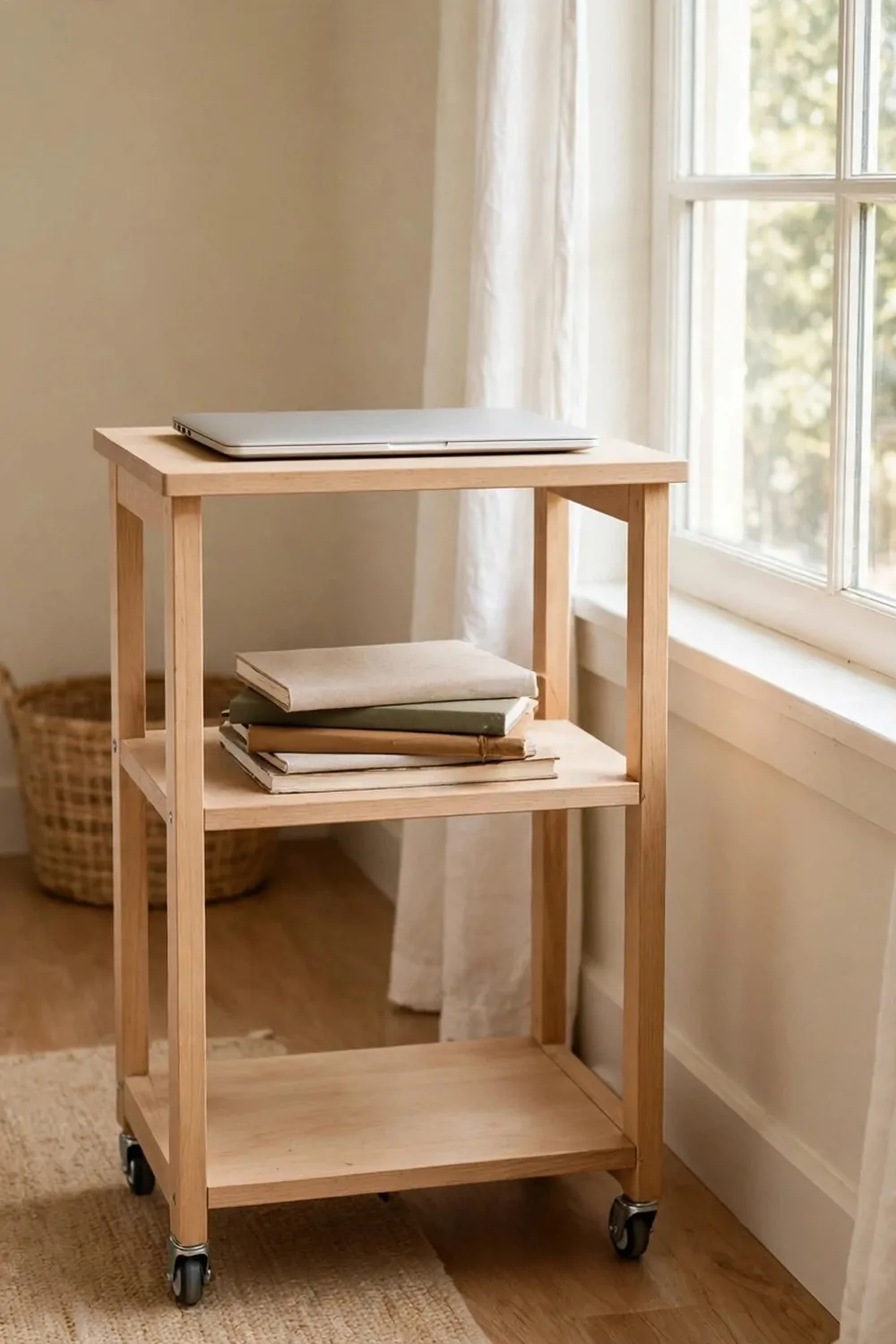
Some spare bedrooms change jobs during the day. A guest room in the morning. An office by lunch. A sewing room by evening.
A rolling desk fits a room like that. It has small wheels, a slim top, and a shelf underneath. You roll it to the window to work, then roll it back to the wall when you finish.
Pick a desk with wheels that lock. A desk that rolls away while you type is a desk that annoys you. Most rolling desks have little brakes on the wheels.
Keep the desk narrow, about fifty centimetres wide. A wide rolling desk is just a normal desk on wheels. A narrow one slips into gaps a normal desk never could.
Use the shelf under the top for the printer or the stack of notebooks. The shelf rides with the desk, so your work moves with you. Nothing gets left behind.
Park the desk against the wall when guests arrive. It looks like a small side table. Nobody knows it is an office until you roll it out again.
Wipe the wheels once a month. Rolling desks collect dust and hair around the wheels. A quick wipe keeps them rolling smooth.
Give this a go if your spare bedroom does more than one job. A desk on wheels moves with the room, and the room never has to choose.
The Shelf That Runs Around the Room
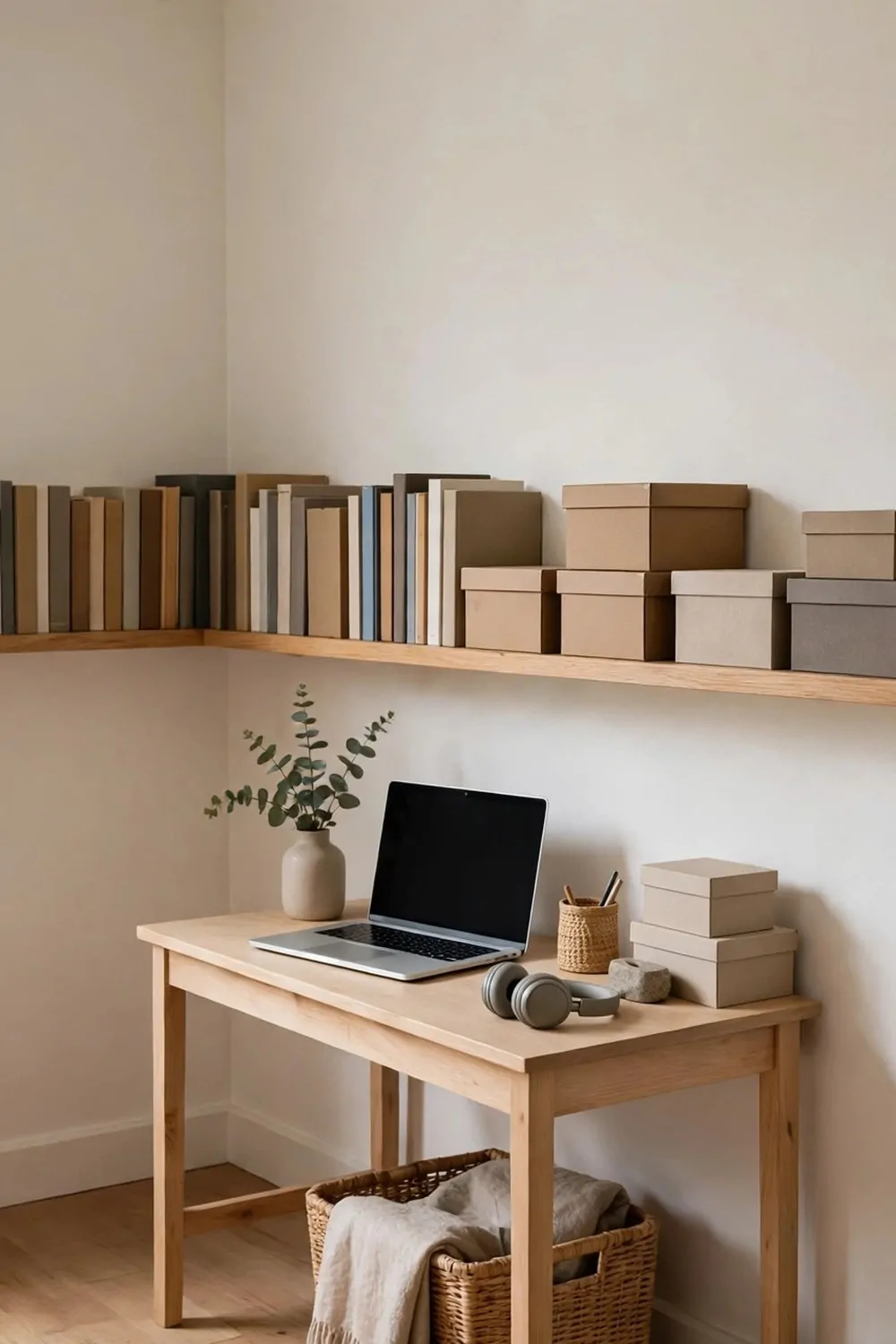
Most shelves stop at the corner. They run along one wall and quit. A shelf that runs around the room keeps going.
Fix a long narrow shelf at picture height all the way around the spare bedroom. It holds books, small boxes, and the things you want to see but never need to touch.
Keep the shelf shallow, about twelve centimetres deep. A deep shelf all the way around a room feels heavy. A shallow shelf feels like a line drawn on the wall.
Put the heavy books near the desk end of the shelf. The books you reach for every day should live close to your chair. The books you rarely touch can live on the far wall.
Leave gaps on the shelf on purpose. A shelf crammed to the edges leaves no room for real life. A gap is where the next book lands, or the small plant you just bought.
This shelf suits spare bedrooms with plain walls and no pictures. The shelf becomes the decoration. Books and boxes in a row look better than a bare wall.
Fix the shelf to wall studs every metre or so. A long shelf full of books is heavy, and it needs solid wood behind it. One screw into a stud every metre keeps it safe for years.
Start here if your spare bedroom walls are bare and your books live in a pile on the floor. One shelf around the room, and the walls start working.
The Door That Became a Pinboard
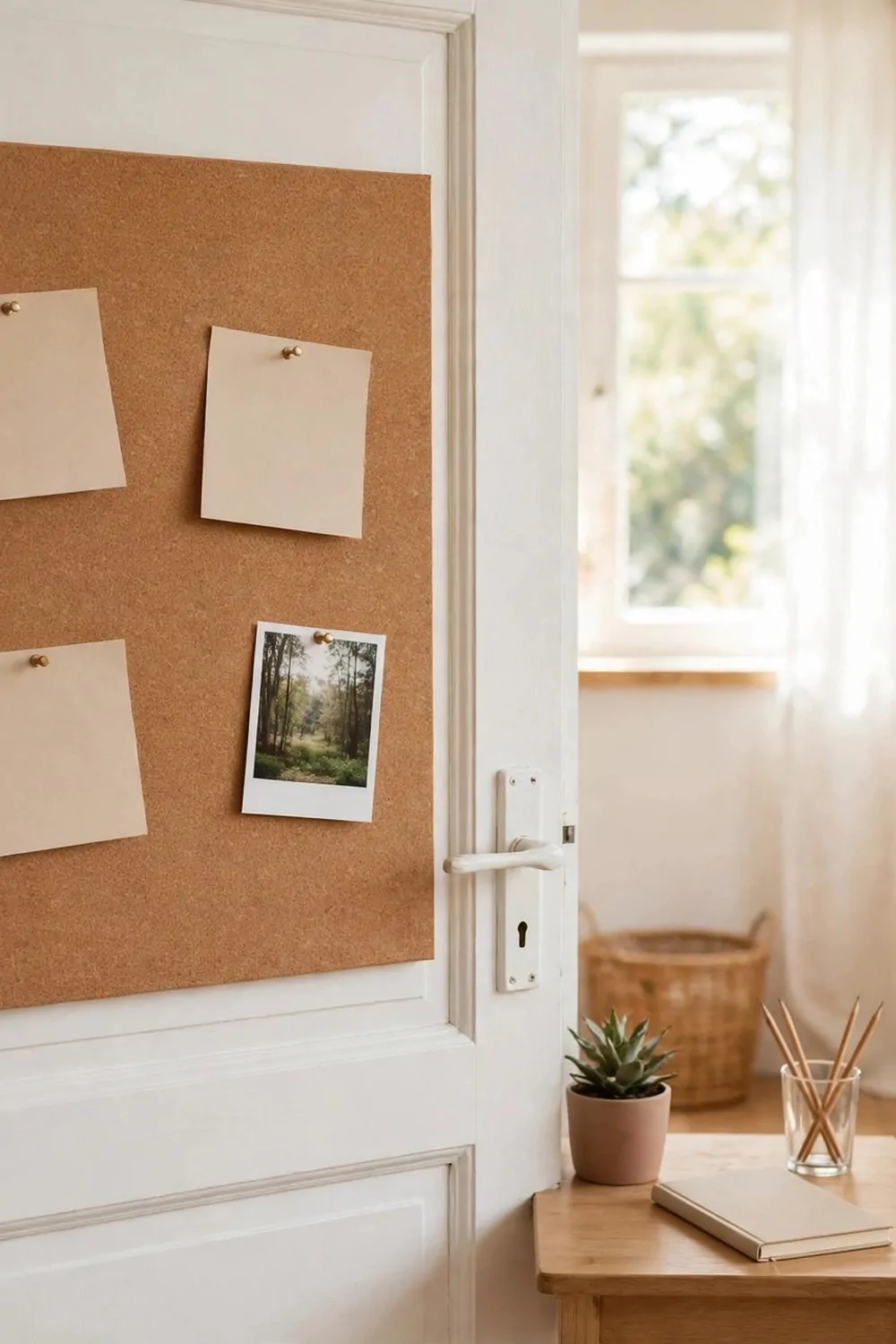
The back of a bedroom door is a blank wall that moves. Most doors have nothing on them. A pinboard turns that blank door into the office wall.
Fix a cork board to the back of the door. It holds your notes, your calendar, and the list of things to do this week. Everything is right there when you walk in.
Keep the board flat against the door. A thick board stops the door from opening all the way. A thin cork board, about one centimetre thick, fits fine.
Pin only this week’s things on the board. Old notes stay pinned for months and turn the board into wallpaper. Friday afternoon, take down what is done, and the board is fresh again.
Here is what belongs on the door board.
- This week’s three big jobs, on one card you can see from the desk.
- The phone numbers you call most, so you never hunt for them.
- One photo that makes you smile, because work days need that too.
Use short pins, not long ones. Long pins poke through the back of a thin board and scratch the door. Short pins hold the paper and stop there.
This move is for people who lose paper notes on their desk. Pin the note to the door, and it stays where you can see it until the job is done.
Give this a go if your spare bedroom door is blank on the back. One cork board, and the door earns its keep.
The Landing Outside the Bedroom
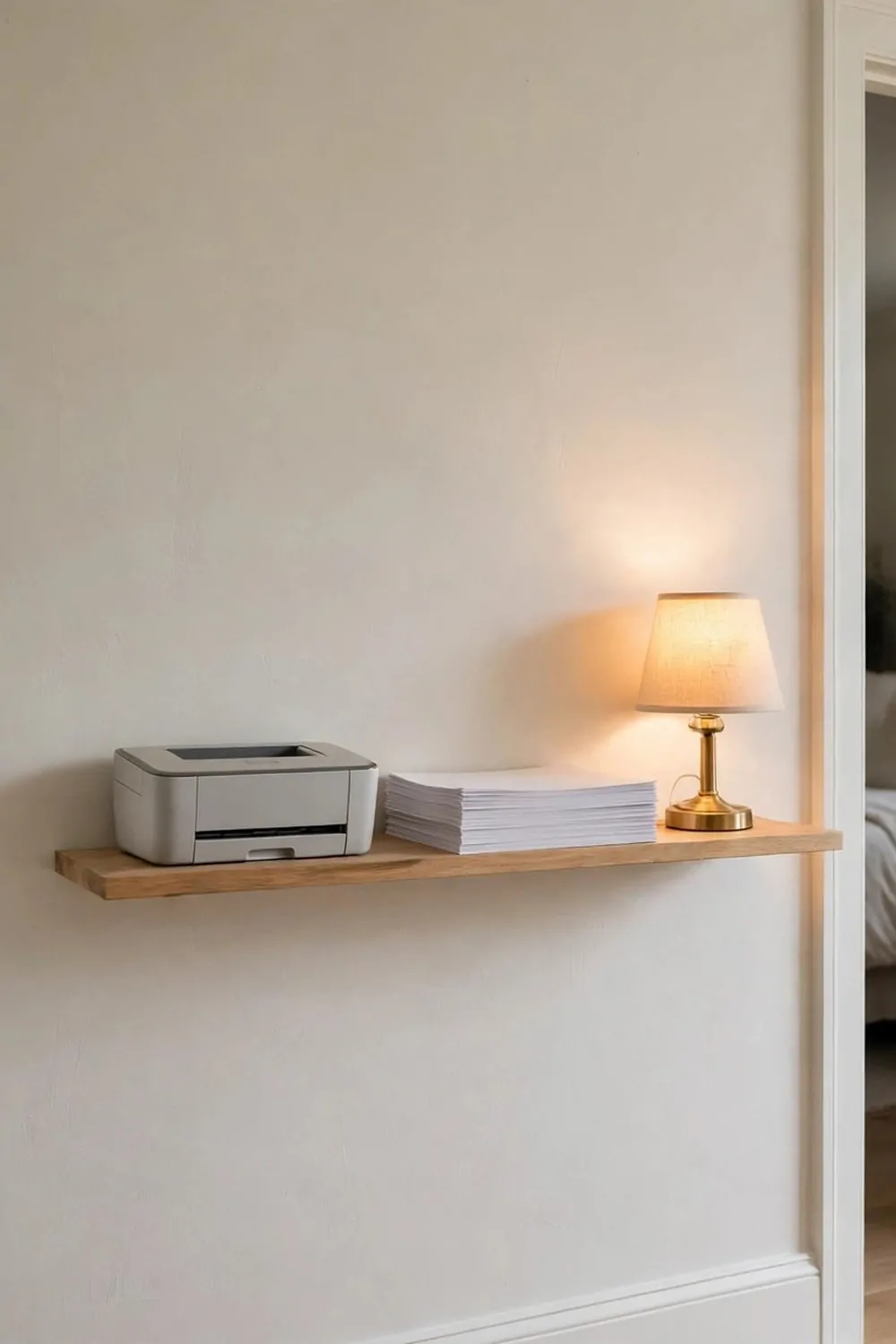
The little landing outside a spare bedroom is not a room. It is a hallway with a door in it. But it has inches too.
A narrow shelf on the landing wall holds the office overflow. The printer. The stack of paper. The box of files. They live outside the bedroom, and the bedroom keeps its floor.
Keep the shelf shallow, about twenty centimetres deep. A deep shelf on a landing blocks the walkway. A shallow shelf lets people pass without turning sideways.
Here is what fits on a landing, and what does not.
| Landing spot | What it holds | When it works |
|---|---|---|
| Wall by the door | Printer and paper stack | When the desk is steps away |
| Corner by the stairs | File box and spare notebooks | When the corner is wide enough |
| Wall under the stairs | Archive boxes you rarely open | When the space is dry and clean |
Put a small lamp on the landing shelf if the hallway is dark. One warm light makes the landing feel like part of the office, not a dark gap between rooms.
Keep the landing clear at floor level. Boxes on the landing floor are a trip hazard, especially at night. Everything lives on the shelf, and the floor stays empty.
This move suits houses where the spare bedroom is too small for a printer. The printer moves out, the desk breathes, and the landing earns its keep.
Try it this week. One shallow shelf on the landing wall, and the spare bedroom gains a whole printer of space.
The Slim Gap Between Bed and Wall
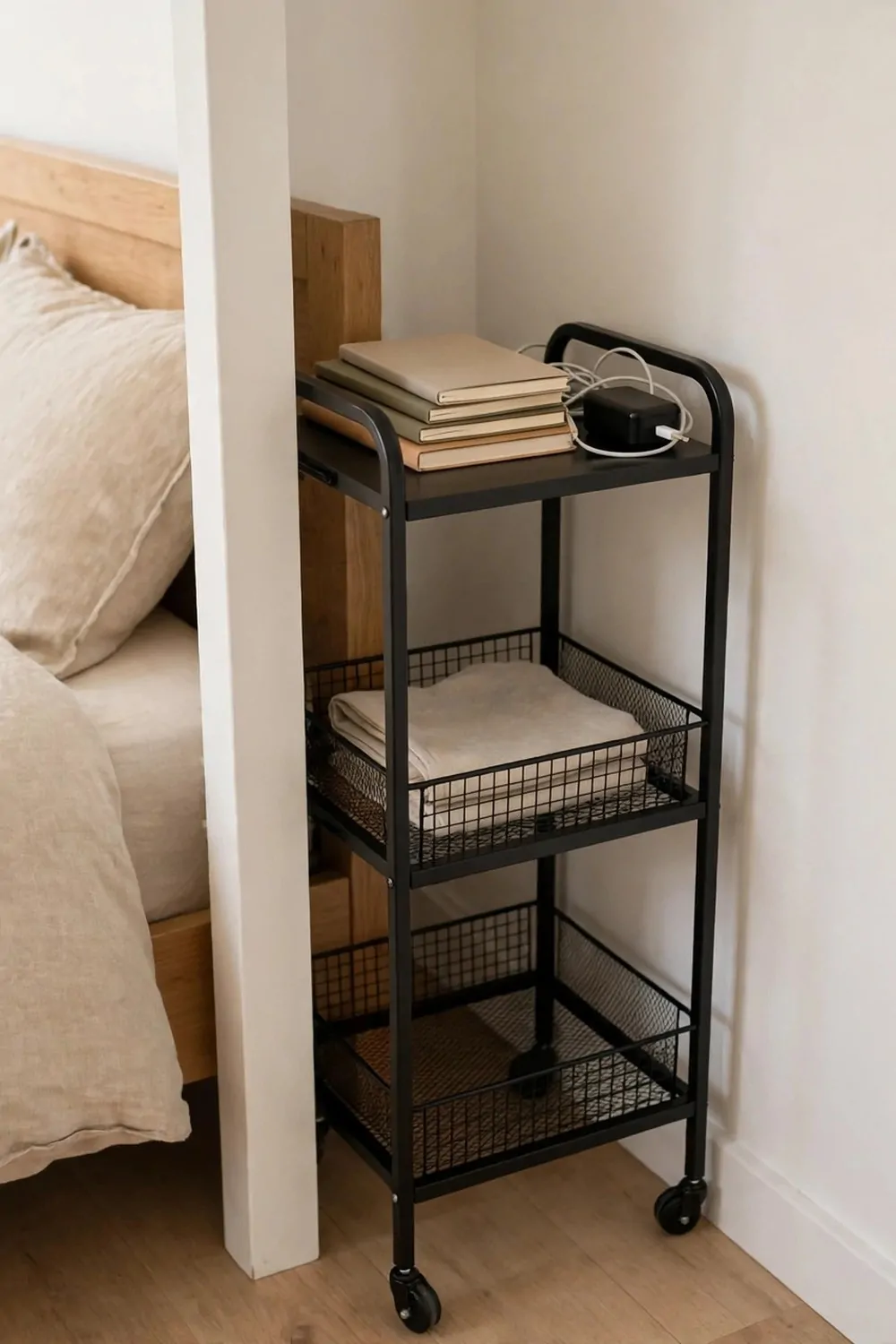
Most beds do not touch the wall. There is a gap of ten or fifteen centimetres between the bed frame and the wall. That gap is doing nothing.
Slide a slim trolley into that gap. It holds notebooks, chargers, and the papers you reach for at night. It rolls out when you need it, and it rolls back when you do not.
Pick a trolley no wider than the gap. Measure the gap first, then buy the trolley. A trolley that is one centimetre too wide is a trolley that lives in the hallway.
Keep the trolley low, about as high as the mattress. A tall trolley sticks up above the bed and looks wrong. A low trolley hides beside the bed like it belongs there.
Put the things you use every day on the top shelf of the trolley. The notebook. The pen. The phone charger. The bottom shelf holds the things you touch once a week.
Roll the trolley out each morning when work starts. Roll it back each evening when work ends. Two seconds, and the gap goes back to being a gap.
This move is for spare bedrooms where the bed sits away from the wall. That slim gap was waiting for a job, and a slim trolley is the job.
Give this a go if you can fit your hand between your bed and the wall. That hand-sized gap is a whole shelf of storage.
The Lamp That Hangs From the Ceiling
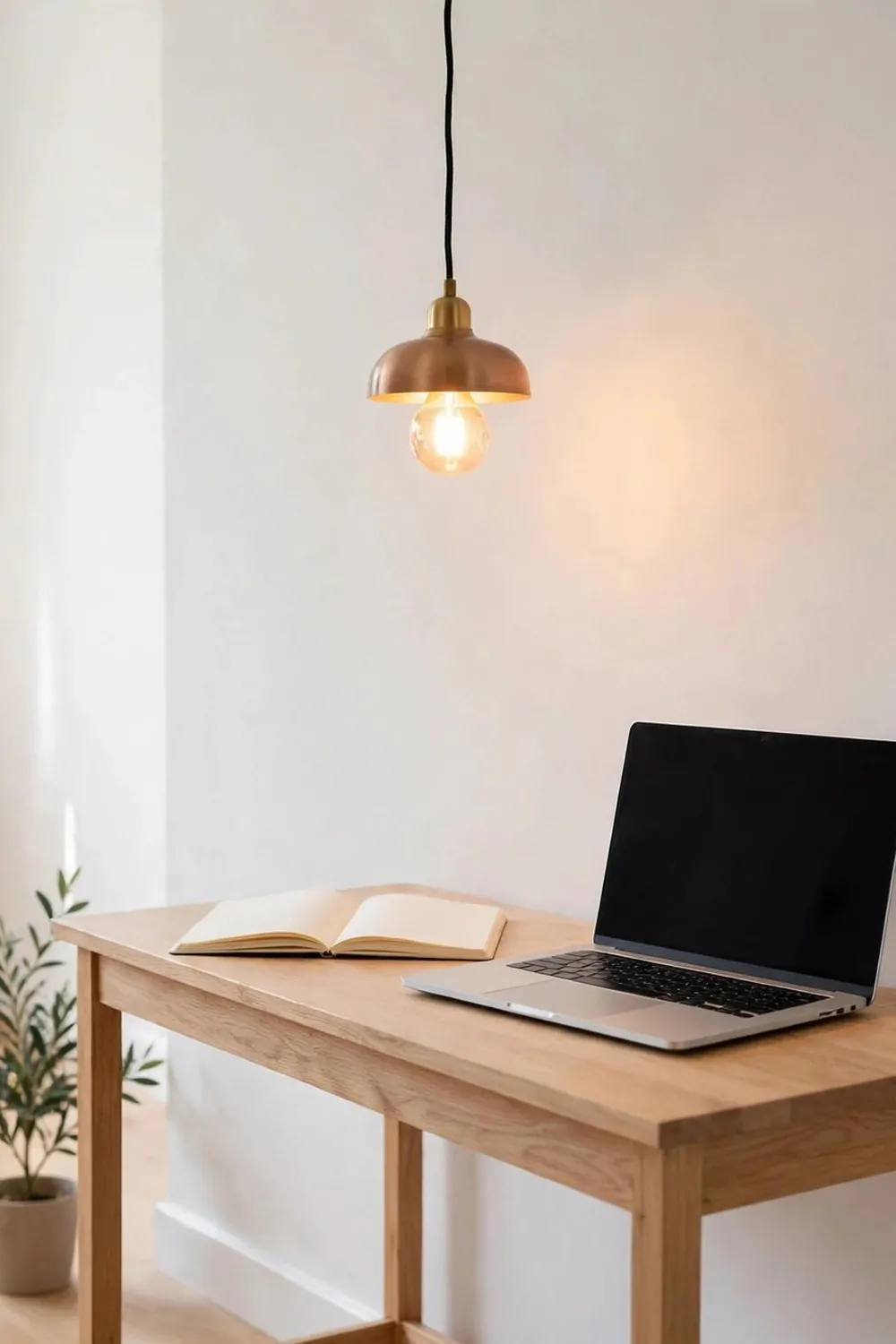
A desk lamp takes up desk space. A floor lamp takes up floor space. A lamp that hangs from the ceiling takes up neither.
Hang a small pendant lamp over the desk. It drops down on a cord, right where your hands work. The desk top stays clear, and the floor stays empty.
Pick a lamp with a warm bulb. Cold white bulbs make a room feel like a waiting area. Warm light feels like the evening sun, and it keeps your eyes easy for hours.
Hang the lamp low enough to light the desk, but high enough that you never bump your head. About forty centimetres above the desk top is right for most people.
Use a cord you can adjust. A lamp that hangs too low gets in the way. A lamp that hangs too high lights the ceiling instead of the desk. An adjustable cord lets you find the sweet spot.
Keep the rest of the room lighting soft. One hanging lamp over the desk and one small light by the bed is enough. Two lights beat one harsh ceiling light every time.
This move suits spare bedrooms with high ceilings and small desks. The light comes from above, the desk stays clear, and the room gains a whole lamp of space.
Give this a go if your desk lamp is always in the way. One cord, one warm bulb, and the desk belongs to your work again.
The Whiteboard on the Wardrobe Door
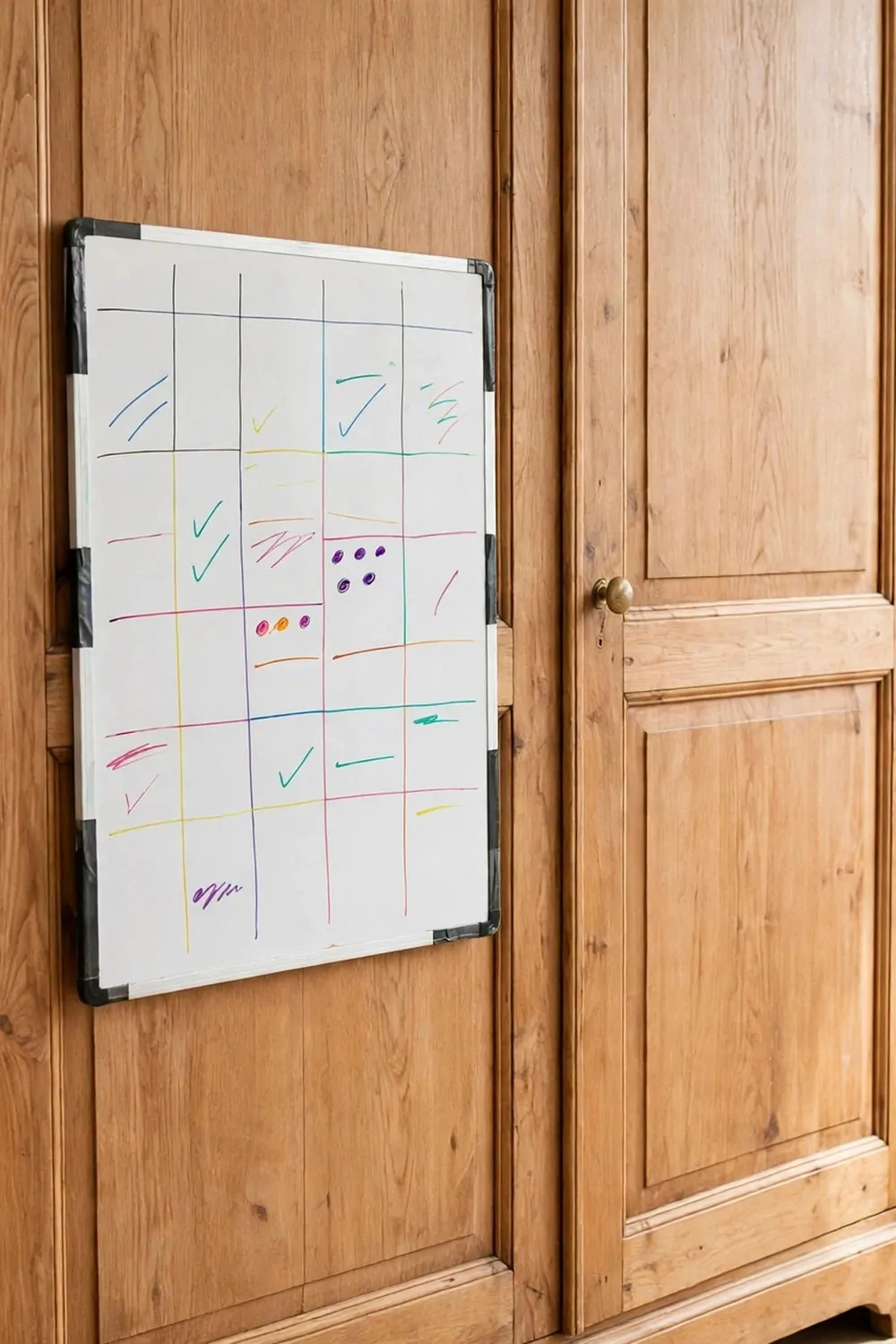
A wardrobe door is a big flat surface that does nothing. A whiteboard turns it into the office wall.
Stick a whiteboard panel on the wardrobe door. It holds your week’s plan, your ideas, and the list of things to do today. Everything is right there when you open the wardrobe in the morning.
Pick a panel that fits the door with a finger of space on each side. A panel that covers the whole door looks heavy. A panel with a small border looks planned.
Use thin markers in two colours. One colour for work. One colour for home. Two colours keep the board easy to read at a glance. Five colours turn it into a rainbow.
Wipe the board clean every Sunday night. A board that never gets wiped turns into a wall of old notes nobody reads. Sunday night, one wipe, and Monday starts fresh.
Keep the markers in a small cup on the shelf beside the wardrobe. Markers that live on the desk roll off and get lost. Markers that live in a cup stay put.
This move is for people who think best when they can see the whole week at once. The wardrobe door becomes the plan, and the plan is always in front of you.
Give this a go if your wardrobe door is blank and your week lives in your head. One whiteboard, and the week gets a home.
The Monitor Arm That Frees the Desk
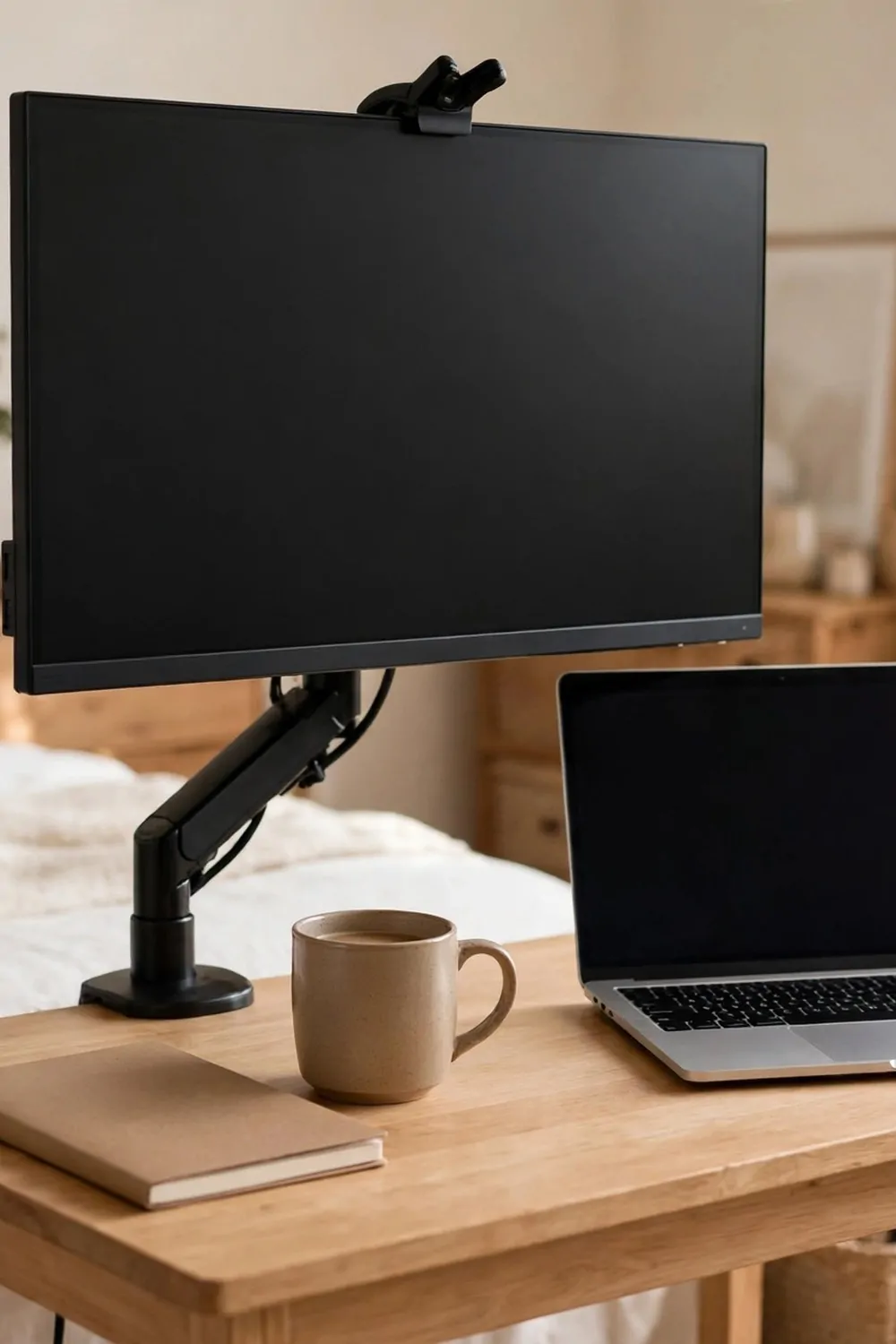
A monitor on its own stand eats a big patch of desk. The stand is wide, the base is heavy, and the screen sits low.
A monitor arm fixes that. It clamps to the back of the desk and holds the screen up in the air. The desk underneath is free again.
Clamp the arm to the back edge of the desk. It holds the screen at eye level, which is better for your neck too. No more looking down all day.
Move the screen up, down, left, and right. A monitor arm lets you slide the screen to the side when you need the desk for paper. A fixed stand never moves.
Put your notebook and your coffee where the monitor stand used to be. That patch of desk was dead space before. Now it holds the things you actually use.
Pick an arm that fits your screen size. Most arms hold screens up to twenty seven inches. A bigger screen needs a stronger arm, so check the box before you buy.
This move suits spare bedrooms with small desks and big screens. The screen floats, the desk breathes, and you gain a whole monitor stand of space.
Give this a go if your monitor stand is the biggest thing on your desk. One arm, and the desk belongs to your work again.
Keep Reading
If you liked these Extra Bedroom Office Ideas, these small-space tricks, desk habits and home office hacks will give you even more ways to make a spare room work hard.
- 24 Small Home Office Design Tricks That Add Space Fast
- 20 Ikea Workspace Ideas for a Desk You’ll Actually Use
- 21 Ikea Home Office Hacks That Look Way More Expensive
A spare bedroom is not a problem to fix. It is a room full of inches that were waiting for a job. An alcove. A gap behind the door. A strip of wall between two doors. Pick your favourite three ideas from this list, try them this weekend, and let your smallest spare room surprise you.