32 Language Facts Would You Rather Questions That Will Surprise You

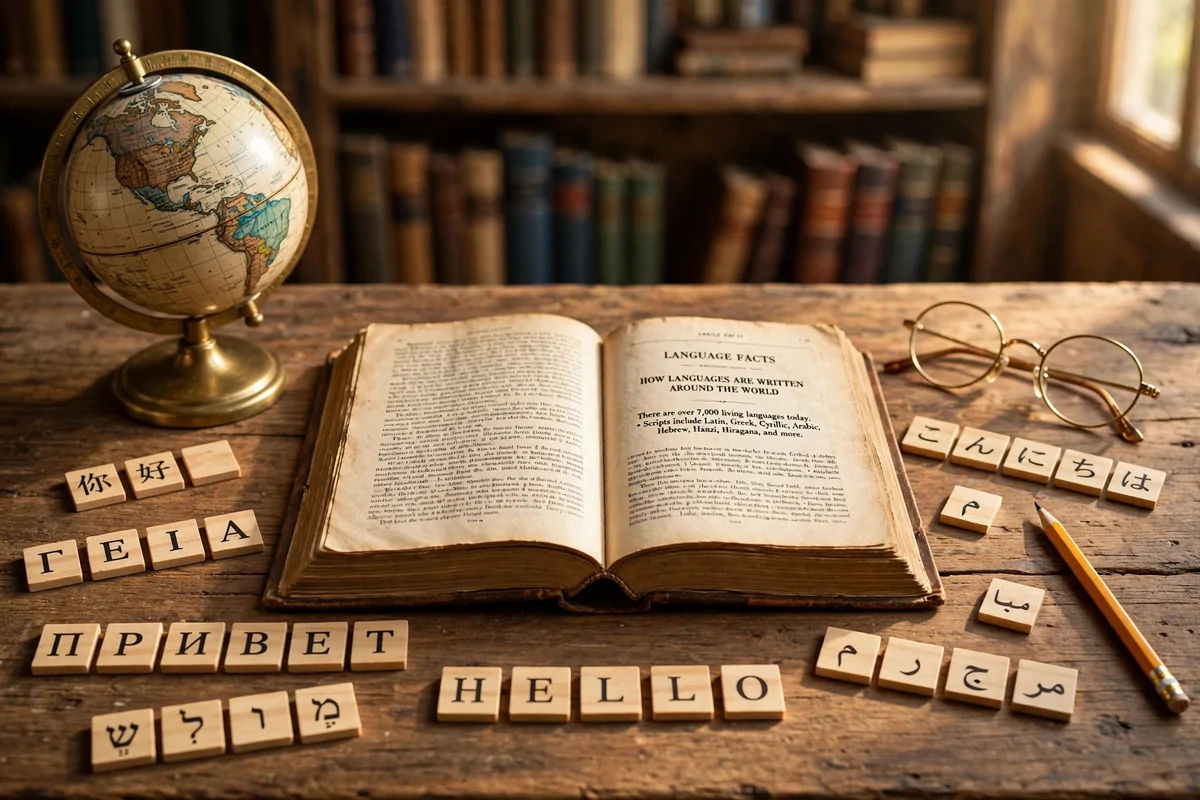
Words are small things with big power. One new word can open a new idea. One old word can carry a story from hundreds of years ago. Every language in the world is full of surprises, from the longest words to the shortest sounds, from silent signs to warm greetings.
In this article you will face 32 fun choices about language facts. Each one makes you think about how we talk, read, write and learn. There is no right answer. Pick the side that feels right for you and see what it says about the way you love words.
1. Would you rather know the meaning of every word in a book or speak five new words perfectly every day?
Would you rather...
Think about a thick book full of hard words. If you knew every meaning at once, no page could stop you. You could read anything, from old stories to new science books, and understand it all the first time.
But five new words every day is a quiet kind of magic. In one year that is more than 1800 words. Slowly your speech grows rich and bright, and people notice the way you talk.
Pro Tip: Learning a few words every day beats learning many words once and forgetting them. Small steps build a big vocabulary.
2. Would you rather learn a new language in one night or remember every word you ever learned?
Would you rather...
One night, one new language. You wake up and a whole new world of words is yours. You can greet people, ask questions and read signs in a place you never visited before.
Or you could keep every word you ever learned. Nothing slips away. Every word from school, every word from books, every word a friend taught you stays in your mind forever.
Things to think about:
- A new language in one night gives you a fresh start, but you may forget it just as fast.
- A perfect memory protects all the words you worked hard to learn.
- Which gift helps you more in real life, a new door or a strong memory?
3. Would you rather understand every accent in the world or speak with no accent at all?
Would you rather...
Accents are like music in speech. Every place has its own sound. If you understood them all, you could talk with anyone, anywhere, and never feel lost in a conversation.
| Option | What You Gain | What You Give Up |
|---|---|---|
| Understand every accent in the world | You can follow any speaker from any place with ease | Your own speech keeps its accent |
| Speak with no accent at all | Your words sound clear and neutral to every listener | You still may not understand strong accents from other places |
4. Would you rather read a book in its first language or hear the story from the writer in person?
Would you rather...
Reading a book in its first language is like tasting food from its own kitchen. Nothing is lost in translation. Every joke, every warm word and every small detail is just as the writer made it.
But hearing the story from the writer in person is a rare gift. You could ask why a character did what they did. You could hear the voice behind the words and learn the secrets that never reached the page.
Ask yourself:
- Do you love the exact words on the page?
- Or do you love the person and the story behind the words?
- Which memory would stay with you longer?
5. Would you rather know how every English word started or know how every English word will change in the future?
Would you rather...
Every word has a past. Some words came from farms and ships. Some came from other lands and other tongues. If you knew how they all started, history would open up in every sentence you speak.
But the future of words is just as exciting. New words are born every year. Old words change their meaning. If you could see that future, you would know how people will talk long after today.
- The past of words shows you where we came from.
- The future of words shows you where we are going.
- Both are full of surprises that make language fun.
6. Would you rather speak the oldest language on earth or speak the newest language on earth?
Would you rather...
The oldest language carries the voices of people from thousands of years ago. Its words have survived wars, winters and long journeys. Speaking it feels like touching history with your own voice.
The newest language is fresh and full of new ideas. It has words for phones, space travel and modern life. Speaking it feels like stepping into tomorrow.
Important Note: Old languages teach us patience and roots. New languages teach us change and hope. A wise learner respects both.
7. Would you rather have a perfect memory for new words or have a perfect ear for new sounds?
Would you rather...
A perfect memory for words means every new word sticks the first time you see it. Your vocabulary grows fast, and you never need to look up the same word twice.
A perfect ear for sounds means you hear every small difference in speech. You can copy tones, catch soft sounds and speak new languages with a clear, natural voice.
Which skill would you pick? Words help you read and write. Sounds help you speak and listen. Both open doors, but in different ways.
8. Would you rather read 1000 books in one language or read 100 books in 10 languages?
Would you rather...
One thousand books in one language would make you a true master of that tongue. You would know its jokes, its poems and its deepest thoughts.
| Option | What You Gain | What You Give Up |
|---|---|---|
| Read 1000 books in one language | Deep knowledge and full mastery of one language | You miss the stories and ideas of nine other languages |
| Read 100 books in 10 languages | A wide view of ten cultures and ten ways of thinking | Less depth in any single language |
Or you could travel through ten languages with one hundred books in each. You would meet ten cultures, ten styles of humour and ten ways of seeing the world. Your view would be wide, even if it is not as deep in one place.
9. Would you rather talk to people from 100 years ago or talk to people from 100 years in the future?
Would you rather...
People from one hundred years ago lived in a world of letters, steam trains and quiet evenings. Their words would show you how life sounded before modern times.
People from one hundred years in the future would use words we have not heard yet. Their speech would be full of new ideas, new tools and new hopes.
Your checklist for this choice:
- Do you love old stories and the wisdom of the past?
- Or do you love new ideas and the promise of tomorrow?
- Which talk would change the way you see your own life?
10. Would you rather know every word for colours in every language or know every word for food in every language?
Would you rather...
Colours have many names around the world. Some languages have one word for blue and green. Some have words for shades that English has never named. Knowing them all would let you see the world in richer light.
Food words are just as rich. Every land has dishes with names that carry history, family and celebration. Knowing them all would turn every meal into a small journey.
Pro Tip: Learning colour words and food words is a fun way to start any new language, because you can use them every single day.
11. Would you rather learn to write in a new alphabet in one week or learn to read a new alphabet in one day?
Would you rather...
Writing a new alphabet in one week is a bold goal. Your hand learns new shapes, your mind learns new sounds, and by the end of the week you can write your own name in a new script.
Reading a new alphabet in one day is faster magic. Street signs, book covers and shop names open up at once. You can read the world around you, even if your hand is still learning to write it.
Things to think about:
- Reading first helps you learn faster, because you see words everywhere.
- Writing first makes the letters stick in your memory.
- Which skill would you use more in a new place?
12. Would you rather speak only in questions for a whole day or speak only in short words for a whole day?
Would you rather...
Speaking only in questions for a whole day would be a funny test. Every answer would be another question. People would smile, and you would learn how much you can say just by asking.
Speaking only in short words is a different test. You must say big ideas with small words. It forces you to think clearly and keep things simple, which is a fine skill for any speaker.
13. Would you rather know the longest word in every language or know the shortest word in every language?
Would you rather...
The longest words are like small stories packed into one word. Some are so long they fill a whole line. Knowing them all would make you the star of every word game.
The shortest words are tiny but strong. Words like yes, no, go and up run our daily lives. Knowing the shortest word in every language would help you speak in any place with just a few sounds.
Warning: Do not try to use the longest words in normal talk. Big words can confuse people. Clear and simple words always win.
14. Would you rather learn sign language first or learn braille first?
Would you rather...
Sign language speaks with hands, face and movement. It is a full language with its own grammar and beauty. Learning it lets you talk with people who cannot hear, and it teaches you to watch and listen with your eyes.
| Option | What You Gain | What You Give Up |
|---|---|---|
| Learn sign language first | You can talk with your hands and connect with deaf people | You still cannot read raised dot writing by touch |
| Learn braille first | You can read by touch and open books for blind people | You still cannot talk with your hands in sign language |
Braille speaks with touch. Small raised dots turn into letters, words and whole books for people who cannot see. Learning it opens the world of reading to everyone.
15. Would you rather speak like people spoke 500 years ago or speak like people will speak 500 years from now?
Would you rather...
Five hundred years ago, people spoke with words that sound old and grand to us now. Their speech was slow, polite and full of phrases we no longer use. Speaking that way would feel like living in a history book.
Five hundred years from now, speech will be full of words we cannot guess today. New tools, new ideas and new ways of life will shape every sentence. Speaking that way would feel like a trip to a far future.
Which voice fits you better, the voice of the past or the voice of tomorrow?
16. Would you rather know every greeting in the world or know every goodbye in the world?
Would you rather...
A greeting opens a door. In some places people shake hands. In others they bow, press palms together or touch noses. Knowing every greeting means you can start a friendship anywhere on earth.
- Greetings make the first moment warm and kind.
- Goodbyes carry wishes for a safe trip and a happy return.
- Both are small words with big heart behind them.
A goodbye closes a meeting with care. Some goodbyes wish you peace. Some wish you a safe road. Knowing them all means you never leave a friend without the right words.
17. Would you rather have a dictionary in your head or have a translator in your head?
Would you rather...
A dictionary in your head means the meaning of every word is always with you. You never feel stuck on a hard word again. Reading becomes smooth and easy.
A translator in your head means every language turns into your own language at once. You can talk with anyone, read any sign and follow any story, no matter where it comes from.
Pro Tip: A good dictionary is a friend for life. Even with a translator, knowing word meanings makes your own speech stronger.
18. Would you rather speak 20 languages badly or speak 2 languages perfectly?
Would you rather...
Twenty languages, even badly, would let you greet people in twenty lands. You could order food, ask the way and make friends almost anywhere.
| Option | What You Gain | What You Give Up |
|---|---|---|
| Speak 20 languages badly | You can start a talk in many countries and many places | Deep talks stay hard because your words are simple and full of mistakes |
| Speak 2 languages perfectly | You can share deep ideas with clear and beautiful words | Most of the world stays closed to you because you know only two tongues |
Two languages perfectly is a different kind of power. You can share deep thoughts, tell fine jokes and read great books without missing a single shade of meaning.
19. Would you rather know why we say hello or know why we say goodbye?
Would you rather...
Hello is a small word with a long story. Long ago it was a call to get attention. Over time it became the warm word we use to start every talk.
Goodbye is short for an old wish, God be with you. People said it when friends went on long and risky trips. Today it still carries that old wish for safety and care.
Your checklist for this choice:
- Do you love the story of beginnings?
- Or do you love the story of partings?
- Which old wish feels warmer to you?
20. Would you rather learn a language from stories or learn a language from talks with friends?
Would you rather...
Stories teach a language gently. You meet new words in exciting tales, and the story helps you remember them. A good tale can teach grammar without a single boring rule.
Talks with friends teach a language fast. You must answer, laugh and ask questions in real time. Friends correct you kindly and cheer you on, and every talk is a small lesson.
Things to think about:
- Stories are calm and you can read them again and again.
- Friends are lively and you learn the words people really use.
- Many good learners use both, but which one would you pick first?
21. Would you rather speak in a whisper that everyone can hear or speak in a loud voice that only one person can hear?
Would you rather...
A whisper that everyone can hear is a strange gift. You speak softly, but your words reach every corner of the room. You never need to shout, and people listen closely to your quiet voice.
A loud voice that only one person can hear is just as strange. You can shout across a field, and only your chosen listener hears a word. Your talks stay private, even in a crowd.
22. Would you rather know every word that has no translation in other languages or know every word that sounds the same in all languages?
Would you rather...
Some words have no translation. They hold a feeling or an idea that only one culture has. Knowing them all would give you a map of how different people see the world.
Other words sound the same almost everywhere. Words for mother, tea and coffee travel across borders with small changes. Knowing them all would show you how close all people really are.
Important Note: Words without translation teach us respect for other cultures. Words that sound the same teach us that we share more than we think.
23. Would you rather write a letter that everyone in the world can read or write a letter that only one special friend can read?
Would you rather...
A letter that everyone can read could change the world. One good idea, written well, could reach millions of people in every land.
| Option | What You Gain | What You Give Up |
|---|---|---|
| Write a letter that everyone in the world can read | Your words can reach and help millions of people | You lose the private warmth of a letter meant for one person only |
| Write a letter that only one special friend can read | A deep and private bond with one friend grows stronger | Your words reach only one person instead of the whole world |
A letter that only one special friend can read is a different treasure. It holds secrets, jokes and warm words that belong to two people only. That kind of letter can be kept for a whole life.
24. Would you rather understand hand signs in every country or understand facial expressions in every country?
Would you rather...
Hand signs change from place to place. A sign that means yes in one country can mean something else in another. Understanding them all would keep you safe from funny mistakes when you travel.
Faces also speak their own language. A smile, a raised eyebrow or a worried look can say more than a sentence. Understanding every face would help you read feelings in any land.
Both are silent languages, and both are worth learning. Which one would you trust more on a trip to a new place?
25. Would you rather speak with no mistakes but very slowly or speak very fast with many mistakes?
Would you rather...
Slow and perfect speech sounds calm and clear. Every word is right, and people trust what you say. But talks move slowly, and you may lose the moment while you search for the right word.
- Slow speech shows care and respect for the language.
- Fast speech shows energy and courage, even with mistakes.
- Most good speakers find a middle path between the two.
Fast speech with mistakes is lively and brave. You jump into talks, you laugh at your own errors and people enjoy your energy. But some of your ideas may get lost in the rush.
26. Would you rather know every word in the dictionary or know every story behind the words?
Would you rather...
Knowing every word in the dictionary is a huge gift. No word could surprise you. You could read any book, any paper and any letter with full understanding.
Knowing every story behind the words is a deeper gift. You would know why we call it a sandwich, why we say break the ice, and how hundreds of common words got their strange meanings.
Pro Tip: Word stories are the best way to remember new words. A word with a story behind it stays in your mind much longer than a word alone.
27. Would you rather talk to a person from every country for one minute or talk to one person from another country for a whole day?
Would you rather...
One minute with a person from every country would be a wild and wonderful day. You would hear greetings in many tongues and collect small facts from all over the world.
| Option | What You Gain | What You Give Up |
|---|---|---|
| Talk to a person from every country for one minute | A quick taste of nearly every culture on earth in a single day | No real friendship can grow in only one minute of talk |
| Talk to one person from another country for a whole day | A deep talk and a true friendship that can last for years | You meet only one culture instead of many |
A whole day with one person from another country is a slower gift. You would share meals, stories and laughter. By evening you would have a true friend and a real feel for their land.
28. Would you rather remember every word you read today or remember every word you hear today?
Would you rather...
Remembering every word you read today would make books and papers stick in your mind like paint on a wall. You could read a lesson once and keep it forever.
Remembering every word you hear today would make every talk a lesson. Jokes, advice and kind words from friends would stay with you, word for word.
Your checklist for this choice:
- Do you learn better from books or from talks?
- Which words matter more to you, written words or spoken words?
- Which memory would help you more at school or at work?
29. Would you rather speak the language of your great grandparents or speak the language of your great grandchildren?
Would you rather...
The language of your great grandparents holds family stories, old songs and the voice of your roots. Speaking it would bring you close to people you never met but carry in your blood.
The language of your great grandchildren is a mystery. It will hold words for a world we cannot see yet. Speaking it would link you to the future of your own family.
Warning: Family languages fade fast when no one speaks them. If you love your roots, speak those words often and teach them to the young ones around you.
30. Would you rather know how to say thank you in 50 languages or know how to say good morning in 50 languages?
Would you rather...
Thank you is a magic phrase. It opens hearts in every land. Knowing it in fifty languages means you can show gratitude anywhere you travel, and people will smile at once.
Good morning is a warm start to every day. Knowing it in fifty languages means you can greet the world each morning like an old friend, no matter where you wake up.
Things to think about:
- Thank you shows kindness and respect for help you got.
- Good morning shows warmth and joy for a new day.
- Which one would you use more often on your travels?
31. Would you rather read a book that teaches you 100 new words or read a book that teaches you 100 new facts about words?
Would you rather...
One hundred new words is a fine prize. Your speech grows richer, your writing grows stronger, and new ideas find new words to live in.
One hundred new facts about words is a different prize. You would learn why some words rhyme, why some words change over time, and how new words are born every year. Facts make words fun, and fun makes words stick.
32. Would you rather have a voice that sounds good in every language or have ears that understand every language?
Would you rather...
A voice that sounds good in every language would make people love to hear you speak. Your words would sound smooth and pleasant, whether you speak English, Arabic, French or any tongue on earth.
| Option | What You Gain | What You Give Up |
|---|---|---|
| Have a voice that sounds good in every language | People enjoy listening to you in any language you speak | You may still not understand what others say back to you |
| Have ears that understand every language | You can follow any talk in any language with ease | Your own voice may still sound plain to other listeners |
Ears that understand every language would let you follow any talk in the world. You could listen to stories, news and jokes in any tongue, and never feel left out.
Language is a gift we use every day, often without thinking about it. These 32 choices show how many small wonders hide inside words. Keep asking questions, keep learning new words, and keep sharing kind words with the people around you. The more we learn about language, the closer we grow to each other.
More Would You Rather Questions
- Cultural Language Would You Rather Questions
- Body Language Would You Rather Questions
- Sign Language Would You Rather Questions
- Secret Languages Would You Rather Questions
- Language Evolution Would You Rather Questions
- Language History Would You Rather Questions
- Language Origins Would You Rather Questions
- 34 Alphabet Would You Rather Questions About Global Writing Systems
- 28 Writing Systems Would You Rather Questions From Around the World
- 23 Dead Languages Would You Rather Questions About Forgotten Speech