28 Writing Systems Would You Rather Questions From Around the World

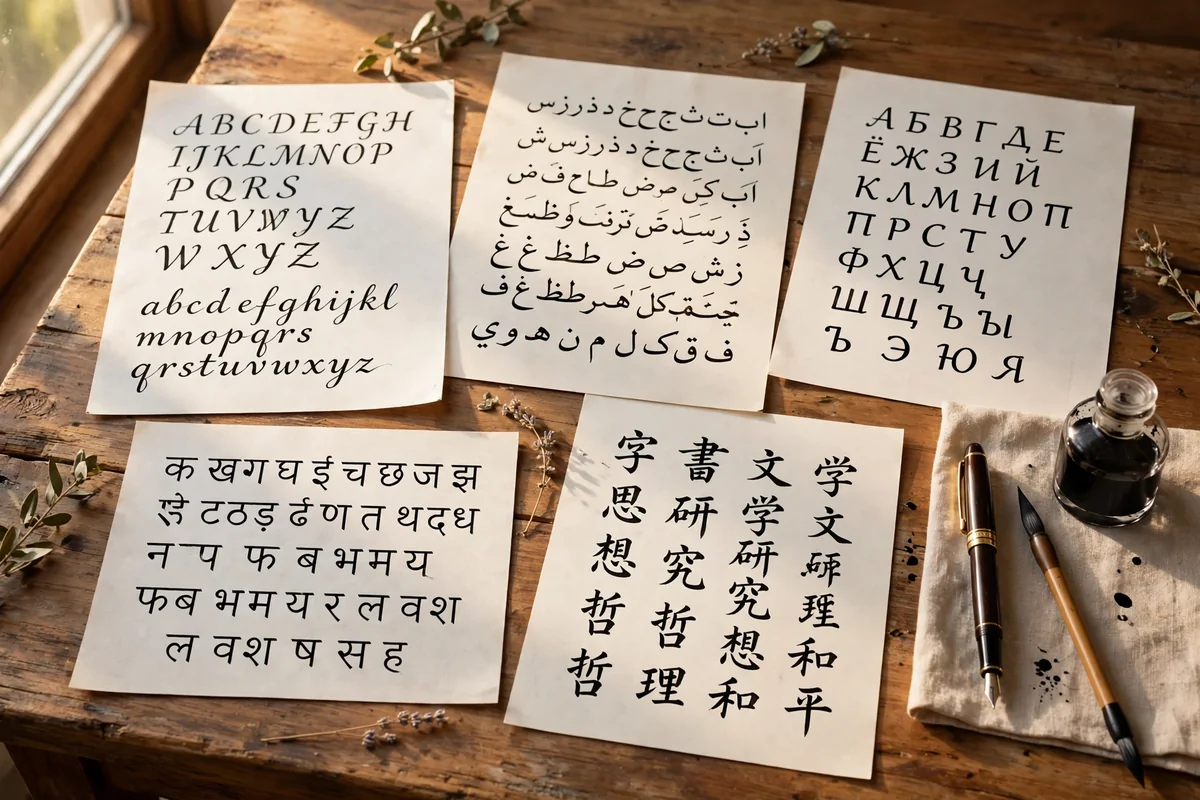
People around the world write in many different ways. Some use the Latin alphabet, some use Arabic script, and some use Chinese characters. Each system has its own letters, shapes, and rules, and each one tells a story about the people who use it every day.
In this list, you will meet old scripts and new alphabets, from hieroglyphs carved on stone to Cyrillic letters and Devanagari signs. Pick your side in each question, think about what each choice would mean for you, and have fun as you travel the world through writing.
1. Would you rather write in Chinese characters or write in the Arabic script?
Would you rather...
Chinese characters are like small pictures with meaning, and each one can hold a whole idea. The Arabic script flows from right to left in smooth, joined letters that look like art on the page. Both take time to learn, but both open a door to a rich world of books, signs, and notes.
Think about your hand, your eye, and your patience. One choice asks you to remember thousands of shapes, and the other asks you to learn a new direction and new letter forms. Which one feels more exciting to you?
2. Would you rather learn the Latin alphabet first or learn the Cyrillic alphabet first?
Would you rather...
The Latin alphabet is the one used in English, French, and Spanish, so it can help you read signs in many places. The Cyrillic alphabet is used in Russian, Bulgarian, and other languages, and it has letters that look familiar and letters that look new.
| Option | What You Gain | What You Give Up |
|---|---|---|
| Learn the Latin alphabet first | A tool for many common languages and travel signs | The chance to start with a less common alphabet |
| Learn the Cyrillic alphabet first | A fresh start and access to new languages and books | The quick help that Latin letters give in many places |
3. Would you rather write with a calligraphy pen or write with a pencil?
Would you rather...
A calligraphy pen makes thick and thin lines, and it can turn a simple word into a piece of art. A pencil is soft, quiet, and easy to fix, so you can try again and again until the letters look right.
Things to think about:
- A calligraphy pen needs care, ink, and a steady hand.
- A pencil is light, cheap, and easy to carry in a bag.
- Calligraphy looks grand on a card or a poster.
- A pencil is best for quick notes and rough drafts.
4. Would you rather read hieroglyphs on a stone wall or read cuneiform on a clay tablet?
Would you rather...
Hieroglyphs are pictures carved in stone, with birds, eyes, and sun signs that hold old secrets. Cuneiform is made of small wedge marks pressed into soft clay, and it is one of the oldest ways people wrote down trade, laws, and stories.
One is big, bold, and easy to see from far away. The other is small, neat, and made to fit in the palm of your hand. Both take you back thousands of years.
Pro Tip: Start with the signs for sun, water, and king. These simple pictures show up again and again in old writing, and they make the rest much easier to guess.
5. Would you rather write right to left or write left to right?
Would you rather...
Most people you know may write from left to right, but millions of people write from right to left, as in Arabic and Hebrew. Your hand, your eye, and your brain would all need to learn a new path across the page.
| Option | What You Gain | What You Give Up |
|---|---|---|
| Write right to left | A new skill and a new way to see a page | The habit you already have from years of practice |
| Write left to right | Speed, comfort, and no need to relearn the basics | The fun of a fresh challenge |
6. Would you rather learn Devanagari script or learn the Greek alphabet?
Would you rather...
Devanagari is the script of Hindi, with neat lines on top of each letter and sounds that match the letters well. The Greek alphabet is short, with only 24 letters, and many of its letters show up in maths, science, and old stories.
One gives you a key to a language spoken by hundreds of millions of people. The other gives you a key to old texts and to words you already see in daily life. Which key would you pick up first?
7. Would you rather write in capital letters only or write in small letters only?
Would you rather...
Capital letters are loud and clear, and they stand out on a sign or a poster. Small letters are soft and quick, and they are the normal way most people write long notes and letters.
Things to think about:
- Capitals can look like you are shouting on a page.
- Small letters are easier on the eyes for long reading.
- Capitals take more space and more time to write.
- Small letters need clear shapes so words stay easy to read.
8. Would you rather use a fountain pen for every letter or use a brush for every letter?
Would you rather...
A fountain pen glides on paper and leaves a smooth, dark line that feels grand. A brush is soft and wild, and it can make thick strokes and thin strokes in one move, like in Chinese and Japanese calligraphy.
Think about your desk, your ink, and your patience. A pen is neat and easy to control, while a brush needs water, ink, and a calm hand. Both can make your writing look like art.
9. Would you rather write your notes by hand or type your notes on a keyboard?
Would you rather...
Handwriting helps many people remember what they write, because the hand moves slowly and the brain follows each letter. Typing is fast, neat, and easy to fix, and it lets you keep long notes in one place.
| Option | What You Gain | What You Give Up |
|---|---|---|
| Write your notes by hand | Better memory and a personal touch on every page | Speed and easy edits |
| Type your notes on a keyboard | Fast, clean notes that are easy to search and share | The slow, calm feel of pen on paper |
10. Would you rather learn Japanese kana or learn Korean Hangul?
Would you rather...
Japanese kana has two sets of signs, hiragana and katakana, and each sign stands for a sound. Korean Hangul is a smart system where letters join into blocks, and many learners say it is one of the easiest alphabets to pick up.
One choice gives you two scripts to learn at once, and the other gives you one clear system that fits together like a puzzle. Both open the door to new books, signs, and friendly words.
Pro Tip: Learn the sounds first, then the signs. When you can hear each sound in your head, the letters start to make sense much faster.
11. Would you rather write in Braille with raised dots or write in large print letters?
Would you rather...
Braille uses raised dots that you read with your fingers, and it gives blind readers a way to read books on their own. Large print letters are big and clear, and they help people with weak eyes read without strain.
Things to think about:
- Braille needs touch, patience, and lots of practice.
- Large print needs big paper and clear spacing.
- Braille can be read in the dark by touch.
- Large print is easy to share with many readers at once.
12. Would you rather carve letters into wood or paint letters on paper?
Would you rather...
Carved letters last for years, and they feel strong and real under your fingers. Painted letters are bright and free, and you can try new colours and shapes on a fresh sheet of paper.
One choice is slow, hard work that stays for a long time. The other is quick, light work that you can change the next day. Which one fits your style more?
13. Would you rather write a letter with a quill pen or write a letter with a modern pen?
Would you rather...
A quill pen is made from a feather, and it takes you back to a time when every letter was written by hand with care. A modern pen is quick, clean, and ready in a second, so you can write a long letter without a mess.
| Option | What You Gain | What You Give Up |
|---|---|---|
| Write a letter with a quill pen | Old charm and a letter that feels like a treasure | Speed and clean hands |
| Write a letter with a modern pen | Fast, neat writing with no ink pot to spill | The old magic of a feather pen |
14. Would you rather learn the Hebrew alphabet or learn the Thai alphabet?
Would you rather...
The Hebrew alphabet has 22 letters and reads from right to left, and it is full of history. The Thai alphabet has many letters and tone marks, and it can write sounds that are new to many learners.
One is short and old, with a clear set of letters to master. The other is long and rich, with many shapes to learn. Which challenge sounds more fun to you?
15. Would you rather write in shorthand or write every word in full?
Shorthand uses quick signs and short lines, so you can keep up with a fast talker and catch every word. Writing in full is slow and clear, and anyone can read your notes later without a key.
Things to think about:
- Shorthand is fast but hard for others to read.
- Full words take more time but stay clear for years.
- Shorthand needs daily practice to stay sharp.
- Full writing is best when you share notes with friends.
16. Would you rather read an old handwritten letter or read a printed book page?
Would you rather...
An old handwritten letter feels close and personal, with ink, cross-outs, and a hand you can almost see on the page. A printed book page is clean and easy to read, with neat lines and clear letters.
One gives you a warm feeling of a real person from long ago. The other gives you comfort and speed when you want to read a lot. Which one would you open first?
Important Note: Old ink can fade and old paper can tear, so handle such letters with clean, dry hands and keep them away from water and bright sun.
17. Would you rather write with ink that never fades or write with a pencil that never breaks?
Would you rather...
Ink that never fades would keep your words bright for a hundred years, and your notes would look fresh even after a long time. A pencil that never breaks would never stop you in the middle of a thought, and you could write for hours without a sharpener.
| Option | What You Gain | What You Give Up |
|---|---|---|
| Write with ink that never fades | Words that last for life and stay dark and clear | The chance to rub out a mistake |
| Write with a pencil that never breaks | Non-stop writing with easy fixes | The bold, lasting look of ink |
18. Would you rather learn the Mongolian script or learn the Georgian alphabet?
Would you rather...
The Mongolian script runs from top to bottom in tall, flowing lines that look like a river on the page. The Georgian alphabet has soft, round letters that look kind and neat, and it has its own charm.
One asks you to turn the page in your mind and read down, not across. The other asks you to learn new round shapes that are easy on the eyes. Both are rare and lovely choices.
19. Would you rather write your name in five alphabets or write five words in one new alphabet?
Would you rather...
Your name in five alphabets is a fun trick to show friends, and it lets you taste five scripts at once. Five words in one new alphabet is a deeper step, and it helps you start to read and write in a real way.
Things to think about:
- Five alphabets give you a wide view but only a little depth.
- One alphabet gives you a strong start for real reading.
- Your name is short, so it is easy to learn in many scripts.
- Five words can be greetings, food, or kind words you use each day.
20. Would you rather use only pictures to tell a story or use only letters to tell a story?
Would you rather...
Pictures can tell a story fast, with faces, places, and action that anyone can see. Letters can tell a story with detail, with thoughts, plans, and quiet feelings that pictures cannot show.
| Option | What You Gain | What You Give Up |
|---|---|---|
| Use only pictures to tell a story | A story anyone can follow, in any language | Fine detail and inner thoughts |
| Use only letters to tell a story | Deep detail, plans, and feelings in words | The quick, clear power of a picture |
21. Would you rather write on a chalkboard or write on a whiteboard?
Would you rather...
A chalkboard has a rough, dusty feel, and chalk makes a soft sound as it moves. A whiteboard is smooth and bright, and a marker glides fast with bold colour.
Think about the room, the light, and the clean-up. Chalk dust can get on your hands, while markers can dry out if you leave the cap off. Which board would you pick for your daily notes?
22. Would you rather learn the Armenian alphabet or learn the Ethiopian Ge’ez script?
Would you rather...
The Armenian alphabet has 39 letters, each with its own shape and sound, and it has a long, proud history. The Ge’ez script is used in Ethiopia and Eritrea, and its signs look like neat, lovely patterns on the page.
One gives you a large set of letters to master, and the other gives you a script with deep roots and a unique look. Both are a joy for a curious learner.
Pro Tip: Write each new letter five times by hand, then say its sound out loud. Hand, eye, and voice together help the shape stay in your memory.
23. Would you rather write in cursive or write in printed block letters?
Would you rather...
Cursive joins letters in a flowing line, and it can look fast and grand. Printed block letters stand apart, and they are clear and easy to read for everyone.
| Option | What You Gain | What You Give Up |
|---|---|---|
| Write in cursive | Fast, flowing writing with a classic look | Clear reading for people who do not know cursive |
| Write in printed block letters | Neat, clear words that anyone can read | The speed and flow of joined letters |
24. Would you rather read road signs in a new script or read a menu in a new script?
Would you rather...
Road signs in a new script test your eyes in a real hurry, as you need to read fast and find your way. A menu in a new script is a calm test, as you can sit, look, and pick your food with time to think.
Things to think about:
- Road signs need quick reading and clear letters.
- A menu lets you guess from pictures and prices.
- Road signs help you travel with confidence.
- A menu helps you try new food and new words.
25. Would you rather write with your left hand or write with your right hand?
Would you rather...
Your strong hand writes with ease, and the letters come out smooth and fast. Your other hand would feel slow and clumsy at first, but it would give your brain a fun new workout.
Think about ink on your hand, the way letters slant, and how long it takes to learn. One choice is comfort, and the other is a fresh challenge that could surprise you.
Warning Box: Go slow if you try your weaker hand. Short practice each day is better than one long, tiring session, and it keeps your hand from getting sore.
26. Would you rather learn the Tamil script or learn the Bengali script?
Would you rather...
The Tamil script is used in Tamil Nadu and Sri Lanka, and it has round, soft letters that flow well on the page. The Bengali script is used in Bangladesh and West Bengal, and it has a neat line on top with lovely curved shapes.
Things to think about:
- Tamil letters are round and easy on the eyes.
- Bengali letters have a clear top line that joins words.
- Both scripts open doors to rich books and kind people.
- Pick the one whose sounds feel easier for you to say.
27. Would you rather write a diary in a secret code alphabet or write a diary in a plain alphabet?
Would you rather...
A secret code alphabet keeps your thoughts safe, and only you can read what you wrote. A plain alphabet is easy to read later, and it lets you look back at old days without a key.
| Option | What You Gain | What You Give Up |
|---|---|---|
| Write a diary in a secret code alphabet | Full privacy and a fun secret to keep | Quick reading and easy sharing later |
| Write a diary in a plain alphabet | Clear pages you can read any time | The safety of a secret code |
28. Would you rather keep one writing system for life or switch to a new writing system every year?
Would you rather...
One writing system for life gives you deep skill, fast writing, and total comfort. A new system every year gives you fresh joy, new friends, and a wide view of how the world writes.
Things to think about:
- One system means you master every letter with ease.
- A new system each year keeps learning fun and fresh.
- One system is best for long books and daily work.
- Many systems are best for travel and curious minds.
More Would You Rather Questions
- 23 Dead Languages Would You Rather Questions About Forgotten Speech
- 25 Ancient Languages Would You Rather Questions From Lost Civilizations
- 35 Endangered Languages Would You Rather Questions About Languages at Risk
- 14 Similar Languages Would You Rather Questions That Test Your Knowledge
- 13 French vs Spanish Would You Rather Questions for Language Learners
- 15 American vs British English Would You Rather Questions
- 20 Spanish vs Portuguese Would You Rather Questions for Language Fans
- 10 Hebrew vs Arabic Would You Rather Questions About Language Differences
- 39 Igbo Language Would You Rather Questions for Curious Learners
- 33 Yoruba Language Would You Rather Questions for African Language Fans