25 Ancient Languages Would You Rather Questions From Lost Civilizations

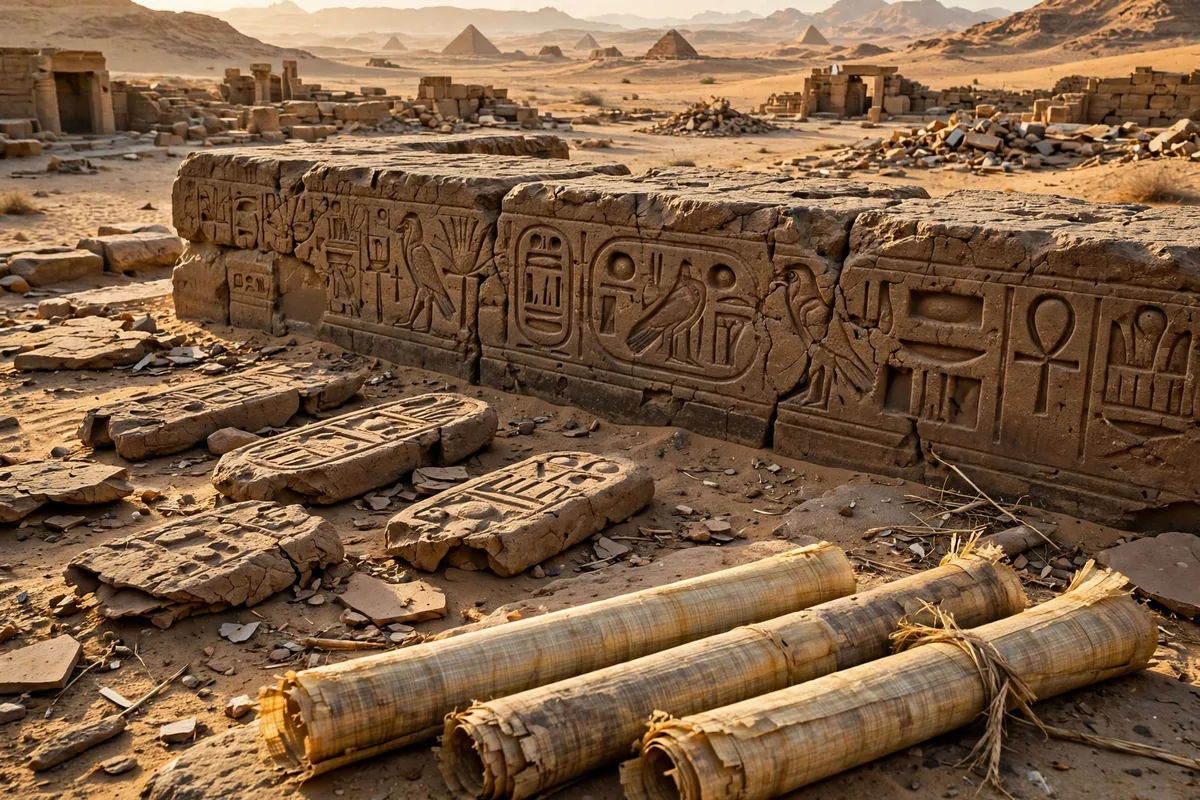
Long ago, people wrote on stone, clay, and papyrus. They used Latin, ancient Greek, Egyptian hieroglyphs, and Sanskrit. Each old language tells us how people lived, worked, and thought in lost civilizations.
In this list, you will pick between fun language choices from the ancient world. Some choices are easy, and some are hard. Read each one slowly and think about which side fits you best.
1. Would you rather speak Latin every day or read Egyptian hieroglyphs?
Would you rather...
Latin was the language of ancient Rome. You can hear it in many modern words today. Hieroglyphs are small pictures that carry meaning, and they cover old walls and stone in Egypt.
One choice lets you speak an old language out loud each day. The other lets you read pictures that are thousands of years old. Both open a door to a lost world.
| Option | What You Gain | What You Give Up |
|---|---|---|
| Speak Latin every day | You can speak a famous old language with ease | You cannot read old picture writing |
| Read Egyptian hieroglyphs | You can read messages from ancient Egypt | You cannot speak Latin each day |
2. Would you rather learn ancient Greek or learn Sanskrit?
Would you rather...
Ancient Greek is the language of old thinkers and writers in Greece. Sanskrit is a very old language from India, and it has a rich set of old texts and rules.
Both languages are hard, but both give you a strong base for learning. One takes you to the old Greek world, and the other takes you to the old world of India.
Things to think about:
- Greek words appear in science, medicine, and everyday English.
- Sanskrit has clear grammar rules that many learners enjoy.
- Think about which old world you want to know more about.
3. Would you rather write on papyrus with a reed pen or carve words into stone?
Would you rather...
Papyrus is a light paper made from a plant, and a reed pen makes soft lines on it. Carving words into stone takes more time, but the words can last for thousands of years.
Writing on papyrus is quick and light, so you can fill many pages in one day. Stone writing is slow and heavy, but your words may outlive whole cities.
Pro Tip: Try writing your name with a simple reed pen and ink at home. It shows you how slow and careful old writing really was.
4. Would you rather live in ancient Rome for one year or live in ancient Egypt for one year?
Would you rather...
Ancient Rome had busy roads, markets, and big public buildings. Ancient Egypt had the Nile river, farms, and great stone works that still stand today.
A year in Rome means city life, laws, and Latin all around you. A year in Egypt means river life, farming, and hieroglyphs on every wall. Both years would change how you see the world.
| Option | What You Gain | What You Give Up |
|---|---|---|
| Live in ancient Rome for one year | You see Roman city life and hear Latin each day | You miss a year by the Nile river |
| Live in ancient Egypt for one year | You see the pyramids, the river, and old stone writing | You miss a year in busy Rome |
5. Would you rather speak only Latin for one week or speak only ancient Greek for one week?
Would you rather...
One week with only one old language sounds fun, but it is also a real test. You would need to ask for food, find your way, and talk to friends in that language alone.
Latin has simple roots that help with many modern words. Ancient Greek has new sounds and a new alphabet, so it feels like a bigger adventure.
Things to think about:
- Which language has more words you already know?
- Would you enjoy a new alphabet or a familiar one?
- Think about how you would ask for help on day one.
6. Would you rather read old stone writing or read old clay tablets?
Would you rather...
Old stone writing stands on walls and tall pillars, and it often tells of kings, workers, and big building plans. Clay tablets are small, and people pressed wedge shapes into soft clay to keep lists, letters, and records.
Stone writing is grand and easy to see from far away. Clay tablets feel personal, like reading notes from people who lived long ago. Both kinds of writing need patience and a good eye.
7. Would you rather learn the old language of the Aztecs or learn the old language of the Maya people?
The Aztecs lived in Mexico, and their language is called Nahuatl. The Maya people built great cities in Central America, and their writing uses signs and pictures carved in stone.
Nahuatl is still spoken today, so you could talk with real people. Maya writing is a puzzle of signs, and reading it feels like solving a code from a lost civilization.
| Option | What You Gain | What You Give Up |
|---|---|---|
| Learn the old language of the Aztecs | You can speak a language that is still alive today | You cannot read Maya stone signs |
| Learn the old language of the Maya people | You can read old stone writing from lost cities | You cannot speak with Nahuatl speakers today |
8. Would you rather decode a lost language or speak a language that only ten people know?
Would you rather...
Decoding a lost language means you study old signs until the meaning clicks into place. It is slow work, but the moment you read the first full line feels like finding treasure.
Speaking a language that only ten people know means you join a tiny group. You can talk with them, share jokes, and keep the language alive together.
Pro Tip: Start with the most common signs first. In any old script, a small set of signs shows up again and again.
9. Would you rather have a library of ancient scrolls or have a museum of old stone tablets?
Would you rather...
A library of ancient scrolls holds long texts on soft rolls of papyrus and paper. You can read old ideas, lists, and letters for hours in a quiet room.
A museum of old stone tablets holds heavy pieces of history that you can walk past and touch with your eyes. Each tablet is a small window into daily life long ago.
Things to think about:
- Scrolls are easy to store, but they can tear with age.
- Stone tablets are heavy, but they last for thousands of years.
- Would you rather read at a desk or walk through a hall of stone?
10. Would you rather study Latin grammar or study ancient Greek writing?
Would you rather...
Latin grammar has clear rules for word endings, and those rules help you build long, exact sentences. Ancient Greek writing has a new alphabet and rich word forms that make reading feel like a puzzle.
Some learners love rules and order, so Latin fits them well. Others love new letters and word play, so Greek writing pulls them in. Both paths build a strong mind for language.
| Option | What You Gain | What You Give Up |
|---|---|---|
| Study Latin grammar | You learn clear rules that help with many languages | You do not learn the Greek alphabet |
| Study ancient Greek writing | You learn a new alphabet and old Greek texts | You do not study Latin grammar rules |
11. Would you rather translate an old Roman letter or translate an old Egyptian wall text?
Would you rather...
An old Roman letter may talk about family, work, travel, or trade. It feels close and human, like a note from a friend who lived two thousand years ago.
An Egyptian wall text is big and public, and it may list names, dates, and building work. Reading it feels like standing in front of history itself. Both jobs need care, and one small word can change the whole meaning.
12. Would you rather speak like a Roman trader or speak like an Egyptian scribe?
Would you rather...
A Roman trader speaks fast, haggles over prices, and talks about goods from far away lands. His words are full of numbers, deals, and plans for the next trip.
An Egyptian scribe writes with care, keeps records, and uses neat signs on papyrus and stone. His words are slow, exact, and made to last. Which way of speaking fits your style more?
Things to think about:
- Traders need quick words and sharp thinking.
- Scribes need patience and neat handwriting.
- Do you like fast talk or slow, careful work?
13. Would you rather learn hieroglyphs in one year or learn cuneiform in one year?
Would you rather...
Hieroglyphs use pictures of birds, snakes, and tools, and each sign can stand for a sound or a whole idea. Cuneiform uses wedge shapes pressed into clay, and it was used for lists, letters, and laws in Mesopotamia.
One year is a short time for either script, so you would need to study a little each day. Hieroglyphs feel visual and artistic, while cuneiform feels like a code of small marks.
| Option | What You Gain | What You Give Up |
|---|---|---|
| Learn hieroglyphs in one year | You can read picture writing from ancient Egypt | You cannot read wedge shaped clay writing |
| Learn cuneiform in one year | You can read old clay tablets from Mesopotamia | You cannot read Egyptian picture writing |
14. Would you rather visit the pyramids of Egypt or visit the old ruins of Greece?
Would you rather...
The pyramids of Egypt are huge stone shapes that rise from the desert sand. Standing next to them makes you feel small, and you can wonder how workers moved such heavy blocks long ago.
The old ruins of Greece hold broken pillars, stone steps, and open spaces where people once met and talked. Walking there feels calm, and each stone has a quiet tale to tell. Both trips would stay in your mind for years.
15. Would you rather keep a diary in Latin or keep a diary in ancient Greek?
Would you rather...
A diary in Latin lets you write about your day with old Roman words. It is a fun secret code, because few people around you can read it.
A diary in ancient Greek lets you write with a new alphabet that looks beautiful on the page. Each entry becomes a small piece of art as well as a record of your day.
Pro Tip: Start with five short lines a day. Small daily writing builds skill faster than one long session each week.
16. Would you rather understand every old Latin word or understand every old Greek word?
Would you rather...
To understand every old Latin word means you can read Roman letters, laws, and lists with no help. No word would stop you, and old texts would open like a clear window.
To understand every old Greek word means you can read old Greek writing with full ease. It is a wide world of thought, and each word would carry its full old meaning for you.
| Option | What You Gain | What You Give Up |
|---|---|---|
| Understand every old Latin word | You can read all Roman texts with no help | Old Greek words stay a mystery |
| Understand every old Greek word | You can read all old Greek writing with ease | Old Latin words stay a mystery |
17. Would you rather learn the language of the Vikings or learn the language of the ancient Persians?
Would you rather...
The Vikings spoke Old Norse, the language of sailors and traders from the cold north. Their words live on in place names and old tales from Scandinavia.
The ancient Persians spoke Old Persian, the language of a great empire with wide roads and rich cities. Their writing appears on stone and clay from long ago. Both languages take you to bold old worlds.
18. Would you rather read a 2000 year old map or read a 2000 year old letter?
Would you rather...
A 2000 year old map shows old roads, rivers, and towns that may not exist today. It lets you trace a journey with your finger and picture how people moved in the ancient world.
A 2000 year old letter shows the thoughts of one real person. It may ask for help, share news, or send warm wishes to family far away. Maps show places, but letters show hearts.
Things to think about:
- A map can reveal a lost town or a forgotten road.
- A letter can reveal how people felt about daily life.
- Which one would you keep safe for future readers?
19. Would you rather learn Old English or learn Old Norse?
Would you rather...
Old English is the early form of English, and it sounds strange to modern ears. Learning it shows you how your own language grew step by step over many years.
Old Norse is the language of the Vikings, full of sea words and travel words. Learning it takes you to cold shores, wooden ships, and old northern tales.
Pro Tip: Learn ten common words first, then read short lines each day. Old languages feel hard at first, but the words start to repeat fast.
20. Would you rather find a lost city with old writing or find a hidden cave with old writing?
Would you rather...
A lost city with old writing holds streets, walls, and signs from a whole community. Finding it would tell the world about how hundreds of people once lived together.
A hidden cave with old writing feels more secret and personal. The marks on the walls may come from a small group, and you would be one of the first people to read them in ages.
| Option | What You Gain | What You Give Up |
|---|---|---|
| Find a lost city with old writing | You uncover the life of a whole old community | You miss a secret cave discovery |
| Find a hidden cave with old writing | You read rare marks that few eyes have seen | You miss a whole lost city |
21. Would you rather teach Latin to children or teach hieroglyphs to children?
Would you rather...
Teaching Latin to children means you share word roots, short lines, and fun old sayings. Children can learn fast, and they enjoy new words that sound grand and old.
Teaching hieroglyphs to children means you share picture signs that feel like a game. Children love to draw birds, snakes, and suns, and each sign has a sound and a meaning to learn.
22. Would you rather write your name in cuneiform or write your name in hieroglyphs?
Would you rather...
Writing your name in cuneiform means you press small wedge shapes into soft clay. The result looks like a neat code, and it can dry hard and last for years.
Writing your name in hieroglyphs means you draw picture signs on paper or stone. The result looks bright and artistic, and each sign tells a small part of who you are.
Things to think about:
- Cuneiform needs a stick and soft clay to press marks.
- Hieroglyphs need a pen and a steady hand to draw signs.
- Which finished name would you frame and keep on your wall?
23. Would you rather spend one day in a Roman market or spend one day in an Egyptian farm village?
Would you rather...
A Roman market is loud and busy, with stalls full of bread, oil, cloth, and goods from far lands. You would hear Latin all day and watch traders deal with buyers from many places.
An Egyptian farm village is calm and close to the river, with fields, animals, and workers who know each other well. You would see how food grows and how village life moves with the seasons.
| Option | What You Gain | What You Give Up |
|---|---|---|
| Spend one day in a Roman market | You see busy trade and hear Latin all day | You miss calm river village life |
| Spend one day in an Egyptian farm village | You see farm work and life by the Nile river | You miss the busy Roman market |
24. Would you rather know the meaning of every hieroglyph or know the meaning of every Latin word?
Would you rather...
To know the meaning of every hieroglyph means no old Egyptian wall can hide its message from you. You could walk through ruins and read each sign like a page from a book.
To know the meaning of every Latin word means no old Roman text can puzzle you. You could read letters, lists, and laws with full ease, and each word would make sense at once.
Pro Tip: Keep a small notebook of signs or words you learn. A personal list makes old languages much easier to remember.
25. Would you rather save one lost language from disappearing or learn five ancient languages a little?
Would you rather...
Saving one lost language from disappearing means you give all your time to one old tongue. You learn it well, teach it to others, and keep it alive for the next generation.
Learning five ancient languages a little means you taste many old worlds at once. You can read a few signs in each one, but you will not master any one language.
Things to think about:
- Depth means you can truly speak and teach one language.
- Breadth means you can explore five lost worlds a little.
- Which gift matters more to you, saving one or tasting five?
More Would You Rather Questions
- 35 Endangered Languages Would You Rather Questions About Languages at Risk
- 14 Similar Languages Would You Rather Questions That Test Your Knowledge
- 13 French vs Spanish Would You Rather Questions for Language Learners
- 15 American vs British English Would You Rather Questions
- 20 Spanish vs Portuguese Would You Rather Questions for Language Fans
- 10 Hebrew vs Arabic Would You Rather Questions About Language Differences
- 39 Igbo Language Would You Rather Questions for Curious Learners
- 33 Yoruba Language Would You Rather Questions for African Language Fans
- 37 Amharic Language Would You Rather Questions From Ethiopia
- 29 Zulu Language Would You Rather Questions for Curious Learners