36 Grammar Would You Rather Questions for Language Learners

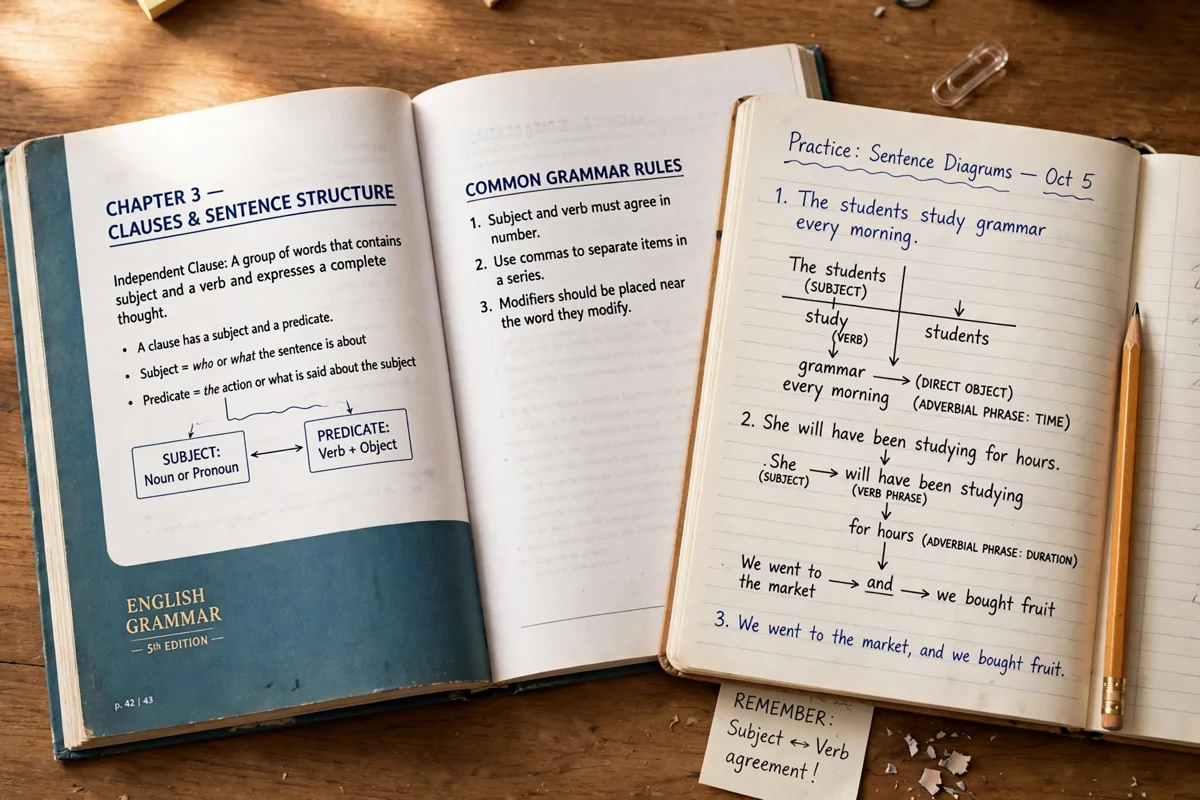
Grammar can feel like a big puzzle. Tenses, commas, plurals, and spelling rules all mix together, and every learner trips over a few of them. But grammar is also a fun game, full of small choices that change how your words sound.
These 36 questions turn grammar into a game of choices. Would you rather master tenses or spelling? Would you rather speak perfectly or write perfectly? Pick your side, and see how much you really know about the rules of English.
1. Would you rather always use the past tense correctly or always spell every word correctly?
Would you rather...
The past tense tells a story about yesterday. When you use it right, people can follow your story from start to finish. A small mistake can change the time of the whole story.
Spelling is the first thing people see in your writing. A word spelled right looks clean and clear. A word spelled wrong can slow the reader down, even when your idea is good.
Which skill would you pick first? Time or spelling? Both matter, but only one can win here.
2. Would you rather know every grammar rule by heart or speak smoothly without thinking about rules?
Would you rather...
Knowing every rule by heart is like carrying a map in your head. You always know the right road for your sentence. Tests feel easy, and writing feels safe.
Speaking smoothly is a different kind of gift. You do not stop to think about rules. Your words flow, and people enjoy listening to you.
| Option | What You Gain | What You Give Up |
|---|---|---|
| know every grammar rule by heart | Every rule is clear in your head | You may still speak slowly while you check each rule |
| speak smoothly without thinking about rules | Fast and natural speech | You may not know why a sentence is right or wrong |
3. Would you rather never mix up their and there or never mix up your and you are?
Would you rather...
Their and there sound the same, but they mean very different things. One shows that something belongs to someone. The other shows a place. Mixing them up can confuse a whole sentence.
Your and you are cause the same kind of trouble. One shows that something belongs to you. The other is a short form of two words. Many good writers still mix them up.
Things to think about:
- Both pairs sound the same when you say them.
- Only one pair can be fixed in this choice.
- Which mistake do you see more in your own writing?
4. Would you rather use commas perfectly or use full stops perfectly?
Would you rather...
Commas are small, but they do a big job. They tell the reader where to pause and where one idea ends. A missing comma can join two ideas that should stay apart.
Full stops are the quiet heroes of writing. They close one thought and open the next. Without them, a sentence can run on and on until the reader feels lost.
- Commas help with lists, pauses, and long sentences.
- Full stops keep your writing neat and easy to read.
- Both marks are small, but both change everything.
5. Would you rather write long beautiful sentences or write short clear sentences?
Would you rather...
Long sentences can paint a big picture. They can hold a whole scene, with color, feeling, and detail. A good long sentence feels like a smooth river.
Short sentences hit fast. They are clear, strong, and easy to follow. A reader never gets lost in a short sentence.
Pro Tip: The best writers mix long and short sentences. A long sentence builds a picture, and a short sentence makes the point land.
6. Would you rather always use the right verb tense or always use the right article a an and the?
Would you rather...
Verb tenses tell us when something happens. Yesterday, today, or tomorrow. One wrong tense, and the whole story moves to the wrong time.
Articles are tiny words with a big job. A, an, and the tell us if we talk about one thing, any thing, or a special thing. They are easy to miss and hard to master.
| Option | What You Gain | What You Give Up |
|---|---|---|
| always use the right verb tense | Your stories always happen at the right time | Small words like a and the may still trip you up |
| always use the right article a an and the | Your small words are always right | Your timing in stories may still feel shaky |
7. Would you rather learn grammar from a fun workbook or learn grammar from a kind teacher?
Would you rather...
A fun workbook turns grammar into a game. You fill in gaps, solve puzzles, and see your score grow. Learning feels like play, not work.
A kind teacher can see what you need. They explain a rule in a new way when the first way does not work. They cheer you on when a rule feels hard.
Things to think about:
- A workbook is always there when you want to study.
- A teacher can answer a question a book cannot.
- Which kind of help keeps you going for longer?
8. Would you rather never make a spelling mistake or never make a punctuation mistake?
Would you rather...
A spelling mistake is easy to spot. The word looks wrong, and the reader stops for a second. Even a small slip can make good writing look careless.
A punctuation mistake is sneakier. A missing comma or a wrong mark can change the meaning of a sentence. The reader may understand the wrong idea, and never know it.
Things to think about:
- Spelling mistakes are easy to see.
- Punctuation mistakes can hide inside a good sentence.
- Which kind of mistake bothers you more when you read?
9. Would you rather know when to use who and whom or know when to use which and that?
Would you rather...
Who and whom are cousins. Who does the action, and whom receives it. Most people use who for both, but the rule is still there waiting.
Which and that both point to things, but they point in different ways. One adds extra detail, and the other picks one thing from a group. The choice is small, but it matters.
Important Note: Many native speakers mix up who and whom too. Knowing the rule puts you ahead of most people, even when they never learn it.
10. Would you rather master English plurals or master English irregular verbs?
Would you rather...
Plurals look simple until they are not. One child becomes children, one foot becomes feet, and one sheep stays sheep. The rules have many surprises.
Irregular verbs are the tricksters of English. Go becomes went, eat becomes ate, and buy becomes bought. You cannot guess them, you must learn them one by one.
11. Would you rather speak with perfect grammar but slowly or speak fast with a few small mistakes?
Would you rather...
Slow and perfect speech sounds calm and clear. Every word is right, and every sentence lands well. People trust a speaker who never slips.
Fast speech with a few mistakes sounds alive. You keep the talk going, and people enjoy the flow. A small mistake here and there does not stop the fun.
| Option | What You Gain | What You Give Up |
|---|---|---|
| speak with perfect grammar but slowly | Every sentence is correct | You may sound slow in a lively talk |
| speak fast with a few small mistakes | You sound natural and full of life | A few small mistakes slip in |
12. Would you rather write a perfect letter or give a perfect talk about grammar rules?
Would you rather...
A perfect letter is a gift that lasts. People keep letters, read them again, and feel close to the writer. Clean grammar makes a letter feel warm and careful.
A perfect talk about grammar is a different gift. You stand up, explain a hard rule in simple words, and help a whole room understand it. That takes courage and clear thinking.
13. Would you rather learn grammar by reading stories or learn grammar by doing fun exercises?
Would you rather...
Stories teach grammar without you noticing. You see tenses change as a story moves. You feel how sentences grow long or short with the mood of the tale.
Fun exercises give you quick wins. You try a rule, check your answer, and try again. Each small win builds your trust in yourself.
Things to think about:
- Stories show grammar in real life.
- Exercises let you practice one rule at a time.
- Many learners need both, but which one first?
14. Would you rather always know where to put an apostrophe or always know where to put a question mark?
Would you rather...
The apostrophe is a tiny mark with two jobs. It shows that something belongs to someone, and it joins two words into one short word. One wrong place, and the meaning changes.
The question mark is the mark of curiosity. It turns a plain sentence into a question. Without it, a question can look like a simple fact.
- Apostrophes show ownership and short forms.
- Question marks show that you want an answer.
- Both marks are small, but both carry big meaning.
15. Would you rather use big fancy words correctly or use simple words perfectly every time?
Would you rather...
Big fancy words can make your writing shine. They show a wide word bank and a sharp mind. But one wrong use can make a sentence feel strange.
Simple words are safe and strong. Everyone understands them, and they never hide your meaning. Clear writing is often the best writing.
Pro Tip: Simple words used well beat fancy words used wrong. A clear sentence always wins over a fancy sentence that no one understands.
16. Would you rather never confuse its and it is or never confuse then and than?
Would you rather...
Its and it is sound the same, but they do very different jobs. Its shows that something belongs to it. It is is a short form of two words. The little mark makes all the difference.
Then and than also sound close, but they live in different worlds. Then talks about time and order. Than compares two things. Mixing them up can flip your meaning around.
| Option | What You Gain | What You Give Up |
|---|---|---|
| never confuse its and it is | Ownership is always clear in your writing | Time words and comparisons may still confuse you |
| never confuse then and than | Your comparisons and time order are always right | Ownership words may still trip you up |
17. Would you rather study grammar for one hour every day or study grammar for one whole day each week?
Would you rather...
One hour every day is a slow and steady road. You learn a little, rest, and come back fresh the next day. The rule stays in your head because you meet it often.
One whole day each week is a deep dive. You live inside grammar for hours, and the rules start to feel natural. But then you wait six days before you touch them again.
18. Would you rather know all the prepositions by heart or know all the conjunctions by heart?
Would you rather...
Prepositions are the small words that show place and time. In, on, at, under, and over. They are tiny, but a wrong one can send your sentence to the wrong place.
Conjunctions join ideas together. And, but, or, and so. They turn short thoughts into full sentences. A good conjunction makes your writing flow like a story.
Things to think about:
- Prepositions point to where and when.
- Conjunctions join one idea to the next.
- Which small words give you more trouble right now?
19. Would you rather write without any grammar mistakes or speak without any grammar mistakes?
Would you rather...
Writing without mistakes is a quiet skill. You have time to think, check, and fix. Your words on paper look clean and careful.
Speaking without mistakes is a live skill. There is no time to check or erase. Your words come out right the first time, in front of real people.
| Option | What You Gain | What You Give Up |
|---|---|---|
| write without any grammar mistakes | Your letters and notes are always perfect | Your spoken words may still slip sometimes |
| speak without any grammar mistakes | Your spoken words are always clear | Your written work may still need a check |
20. Would you rather learn grammar with a friend or learn grammar all by yourself?
Would you rather...
Learning with a friend makes hard rules feel light. You can ask questions, laugh at mistakes, and help each other. A friend can turn a dull rule into a fun talk.
Learning alone gives you full control. You pick your own time, your own pace, and your own books. No one waits for you, and no one rushes you.
21. Would you rather use the present perfect tense well or use the future tense well?
Would you rather...
The present perfect links the past to now. I have finished my work. It tells us something is done, but it still matters today. It is a tense many learners find tricky.
The future tense opens the door to tomorrow. I will learn, I will travel, I will try. It is full of hope and plans. But its forms can also surprise you.
Warning: The present perfect is one of the hardest tenses in English. Many learners mix it up with the simple past, so take your time with it.
22. Would you rather know when to use much and many or know when to use fewer and less?
Would you rather...
Much and many both talk about amount, but they split the world in two. Much goes with things you cannot count, like water and time. Many goes with things you can count, like books and friends.
Fewer and less do the same kind of job. Fewer goes with things you can count. Less goes with things you cannot count. Even shops and signs get this one wrong.
| Option | What You Gain | What You Give Up |
|---|---|---|
| know when to use much and many | You never mix up amounts again | Fewer and less may still confuse you |
| know when to use fewer and less | Your comparisons are always spot on | Much and many may still feel tricky |
23. Would you rather correct the grammar mistakes of other people or never correct anyone and stay quiet?
Would you rather...
Correcting other people can help them learn. A kind fix at the right time can save someone from the same mistake again and again. It shows you care about clear words.
Staying quiet is also a kind choice. Some people feel shy when their mistakes are pointed out. Silence keeps the talk warm and friendly, even when a word goes wrong.
24. Would you rather have a magic book that fixes your grammar or have a magic pen that writes perfect sentences?
Would you rather...
A magic book that fixes your grammar would be a dream for every learner. You write, it fixes, and you learn from each fix. Your writing grows better every day.
A magic pen that writes perfect sentences would do the work for you. You think, and the pen writes it all out in clean, correct words. No stress, no mistakes.
Things to think about:
- A book that fixes teaches you as it helps.
- A pen that writes does the job for you.
- Which kind of magic helps you learn more in the long run?
25. Would you rather learn grammar through fun games or learn grammar through short stories?
Would you rather...
Fun games turn grammar into play. You race, score points, and laugh while you learn. The rules stick because they come with happy memories.
Short stories teach grammar in real sentences. You see how rules work in a tale, not in a dry list. The story pulls you along, and the grammar comes with it.
26. Would you rather always use capital letters correctly or always use quotation marks correctly?
Would you rather...
Capital letters mark the start of a sentence and the names of people and places. They are the first thing a reader sees. A missing capital can make writing look messy.
Quotation marks hold spoken words safe. They show what someone said, word for word. Without them, speech and story blend into one.
Pro Tip: Read your sentence out loud. If it is a question, it needs a question mark. If someone speaks, those words need quotation marks around them.
27. Would you rather understand passive voice easily or understand reported speech easily?
Would you rather...
Passive voice flips a sentence around. The ball was kicked by the boy. It is useful when the action matters more than the person who did it. But it can feel slow and heavy.
Reported speech retells what someone said. She said she was happy. It moves words from one mouth to another, and the tenses shift as they travel. It is a puzzle many learners enjoy solving.
28. Would you rather know every irregular plural or know every irregular past tense?
Would you rather...
Irregular plurals break the simple rule of adding s. Men, women, children, teeth, and feet. Each one must be learned on its own, like a small secret.
Irregular past tenses do the same trick with time. Went, saw, took, and gave. They do not follow the easy ed rule, and that makes them fun to collect.
| Option | What You Gain | What You Give Up |
|---|---|---|
| know every irregular plural | Every plural is always right | Past tenses may still surprise you |
| know every irregular past tense | Every past tense is always right | Plurals may still catch you out |
29. Would you rather write a story with no grammar errors or write a poem with no grammar errors?
Would you rather...
A story with no grammar errors feels smooth from the first line to the last. The reader stays inside the tale, never stopped by a wrong word. That is a real skill.
A poem with no grammar errors is a small work of art. Every word counts, and every line must be right. A poem shows your grammar skill in a few short lines.
30. Would you rather take a grammar test every day or take one big grammar test each month?
Would you rather...
A small test every day keeps grammar fresh. You meet a rule, try it, and see your result at once. Small wins add up fast.
One big test each month is a real challenge. You study for weeks, then show all you know in one go. The wait is long, but the win feels huge.
Things to think about:
- Daily tests build a steady habit.
- Monthly tests build focus and patience.
- Which test style keeps you learning for longer?
31. Would you rather learn grammar in the morning or learn grammar late at night?
Would you rather...
Morning learning starts the day with a win. Your mind is fresh, and a new rule feels easy to take in. You carry it with you all day.
Late night learning has a quiet magic. The house is still, and you can focus without noise. But a tired mind can forget fast.
Important Note: The best time to study is the time you will really use. A short morning session you keep beats a long night session you skip.
32. Would you rather always put the verb in the right place or always put the adjective in the right place?
Would you rather...
Verbs are the engine of a sentence. Put the verb in the wrong place, and the whole sentence wobbles. Put it right, and the sentence runs smooth.
Adjectives add color and detail. A red book, a kind friend, a long road. In the wrong place, they can confuse the reader about what they describe.
- Verbs carry the action of your sentence.
- Adjectives paint the picture around it.
- Both need the right place to do their job well.
33. Would you rather speak English with perfect grammar or write English with perfect grammar?
Would you rather...
Speaking with perfect grammar sounds clear and smart. People listen with trust when your words come out right. It helps in talks, at work, and with new friends.
Writing with perfect grammar looks clean and careful. Your letters, notes, and stories show your skill on the page. People can read them again and again.
| Option | What You Gain | What You Give Up |
|---|---|---|
| speak English with perfect grammar | Every talk sounds clear and correct | Your written work may still need a check |
| write English with perfect grammar | Every page looks clean and careful | Your spoken words may still slip sometimes |
34. Would you rather learn grammar from short lessons on a screen or learn grammar from a thick old book?
Would you rather...
Short lessons on a screen are quick and bright. You watch, you try, you move on. A new rule can fit into a short break in your day.
A thick old book feels serious and deep. It holds years of rules, examples, and wisdom. Turning its pages feels like a real journey into language.
Pro Tip: A short lesson is best for one new rule. A thick book is best when you want to see how all the rules fit together.
35. Would you rather never use a double negative or never use a run-on sentence?
Would you rather...
A double negative sounds like a mistake, even when people understand you. I do not have no time. Two no words fight each other, and the meaning gets lost.
A run-on sentence never stops. It keeps going and going with no full stop in sight, and the reader runs out of breath trying to follow it. One full stop would fix it all.
Things to think about:
- Double negatives hide the real meaning.
- Run-on sentences tire the reader out.
- Which bad habit is harder to break?
36. Would you rather be the best grammar student in your class or be the best grammar teacher in your class?
Would you rather...
The best student in class knows every rule and never misses a question. Tests feel easy, and the teacher smiles. It is a proud place to be.
The best teacher in class helps everyone else learn. You explain rules in simple words, and you see faces light up when they get it. Teaching is learning twice.
So, which seat would you pick? The star student, or the star teacher? Both love grammar, but they love it in very different ways.
More Would You Rather Questions
- 19 Vocabulary Would You Rather Questions That Test Your Word Power
- 26 Language Barrier Would You Rather Questions With Unexpected Challenges
- 11 Interpreter Would You Rather Questions From Around the World
- 38 Translator Would You Rather Questions That Test Your Language Skills
- 21 Translation Would You Rather Questions With Impossible Choices
- 32 Polyglot Would You Rather Questions for Language Enthusiasts
- 16 Bilingual Would You Rather Questions About Speaking Two Languages
- 27 Multilingual Would You Rather Questions for People Who Love Languages
- 12 Foreign Language Would You Rather Questions That Test Your Skills
- 30 Language Learning Would You Rather Questions for Global Learners