19 Vocabulary Would You Rather Questions That Test Your Word Power

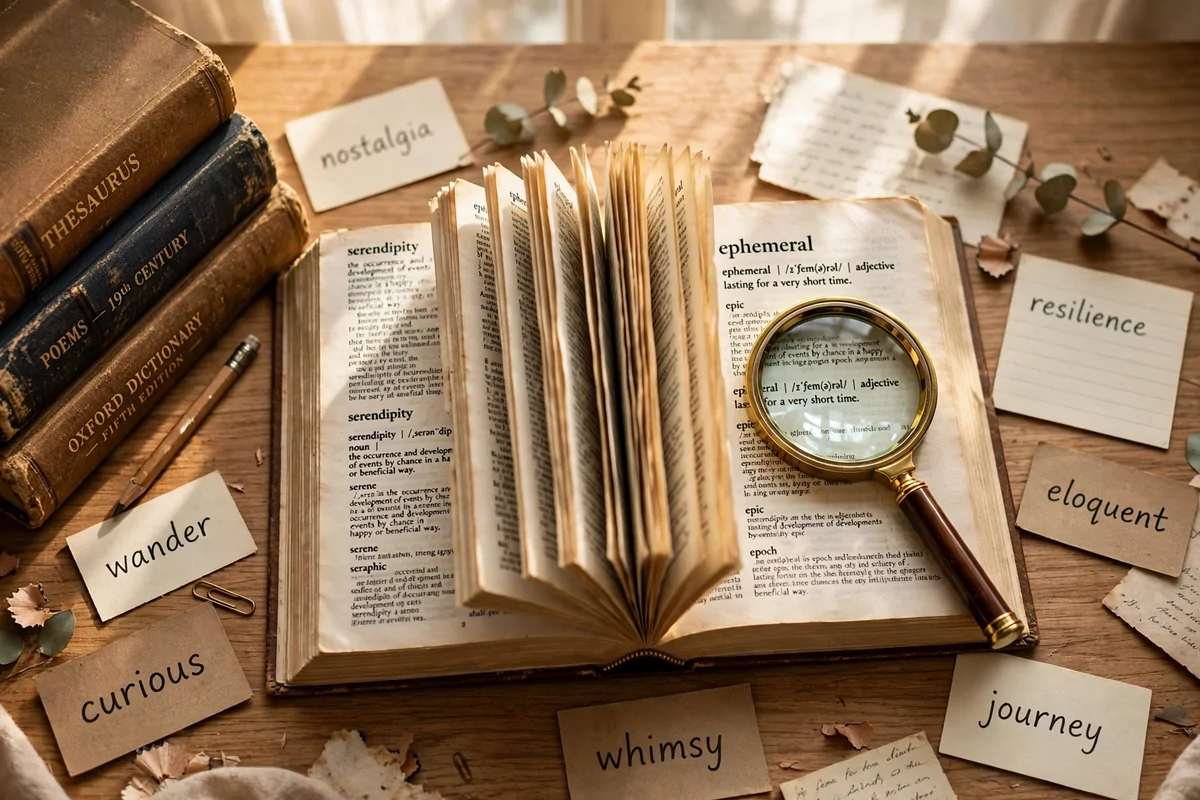
Words are small tools with big power. The right word can make a friend smile, explain a hard idea in one second, or open a door to a new world. The more words you know, the more you can say, learn, and understand.
Now it is your turn to test your word power. Would you rather know every word in the dictionary, or never forget a word you learn? Would you rather win a spelling contest, or invent a brand new word? These 19 questions will stretch your brain and make you think about words in a fun new way.
1. Would you rather learn one new word every day for a year or learn 365 new words in one day and forget half of them?
Would you rather...
Learning one new word every day is slow and steady. By the end of the year, you know 365 new words, and you remember them because you used each one many times. Slow learning builds a strong base.
Learning 365 words in one day sounds fast and bold. You would know a huge pile of words by dinner time. But if you forget half of them, you end up with less than the slow learner, and your head may feel tired from the rush. Which way of learning fits you better?
2. Would you rather know every word in the dictionary or know the meaning of every word people use in daily talk?
Would you rather...
Knowing every word in the dictionary means you hold the whole language in your head. Rare words, old words, hard words, all of them are yours. You can read any book and never need to look a word up.
Knowing every word people use in daily talk is a different kind of power. You understand every joke, every story, and every chat at the market or at work. You never feel lost in a talk with real people.
| Option | What You Gain | What You Give Up |
|---|---|---|
| Know every word in the dictionary | The full language in your head and no word is ever a mystery | Many of those words are never used in daily talk |
| Know the meaning of every word people use in daily talk | You understand every real talk with real people | Rare and old words in books may still puzzle you |
3. Would you rather speak using only big fancy words or speak using only short simple words?
Would you rather...
Big fancy words sound smart and rich. When you use them, people listen closely, because your speech sounds like a book. A big word can say in one breath what a small word needs a whole sentence for.
Short simple words are clear and kind. Everyone understands you, from a small child to a busy shopkeeper. Simple words never confuse people, and they make your ideas easy to share.
Things to think about:
- Big words can impress people, but they can also confuse them.
- Short words reach more people, and fast.
- The best speakers often mix both, and pick the word that fits the moment.
4. Would you rather never forget a word you learn or learn a new word in seconds?
Would you rather...
Never forgetting a word means your vocabulary only grows. Every word you learn stays with you for life. Year after year, your word power builds up like money saved in a box.
Learning a new word in seconds is a different gift. You can pick up words from any book or talk in a flash. You learn fast, even if some words slip away later. Which gift would help you more in school, at work, and in life?
5. Would you rather read a dictionary for fun or read a word puzzle book for fun?
Would you rather...
Reading a dictionary for fun sounds strange to some people, but word lovers know the joy. Each page hides a new word with a new meaning, like a small treasure hunt. You never know what you will find next.
A word puzzle book turns learning into a game. You fill in boxes, guess letters, and solve clues. It is fun, and your brain works hard without feeling like work.
Pro Tip: Try both for one week. Read a few dictionary pages each morning, and solve one puzzle each night. You will be surprised how fast your word power grows when learning feels like play.
6. Would you rather know the longest word in the world or know the shortest word in every language?
Would you rather...
The longest word in the world is a giant. It can take a full breath just to say it. Knowing it is a fun party trick, and it shows how far words can stretch.
Knowing the shortest word in every language is a quieter skill. Short words are the ones people use all the time, like yes, no, go, and come. With them, you can start a talk almost anywhere on Earth.
7. Would you rather use a word correctly the first time you hear it or invent a new word that everyone starts using?
Would you rather...
Using a word correctly the first time you hear it shows a sharp ear and a quick mind. You hear it once, you know its meaning, and you use it right. People think you have known the word for years.
Inventing a new word that everyone starts using is a bigger mark on the world. Your word could live in books, on signs, and in daily talk long after you are gone. That is a rare kind of fame.
| Option | What You Gain | What You Give Up |
|---|---|---|
| Use a word correctly the first time you hear it | A sharp mind that learns words fast and uses them right | You only use words that already exist |
| Invent a new word that everyone starts using | Your word could live on in the language for years | Most new words never catch on, so it is a big risk |
8. Would you rather remember the spelling of every word or remember the meaning of every word?
Would you rather...
Remembering the spelling of every word makes your writing perfect. No red marks, no doubt, no looking words up. Your letters, notes, and lists always look clean and right.
Remembering the meaning of every word makes your understanding perfect. You can read any text and know exactly what it says. You never feel lost in a hard book or a tricky talk.
Things to think about:
- Good spelling helps you when you write to others.
- Good meaning helps you when you read and listen.
- Most of us need both, but one usually feels more useful day to day.
9. Would you rather speak with a huge vocabulary but slow speech or speak fast with a small vocabulary?
Would you rather...
A huge vocabulary with slow speech means every word is the right one. You pause, you think, and then you pick the perfect word. Your talk may be slow, but it is rich and exact.
Fast speech with a small vocabulary means you never get stuck. Words flow out quickly, and you keep up with any talk. Your words are simple, but your speed keeps the talk alive. Would you rather be exact, or be quick?
10. Would you rather learn words from old books or learn words from talking with wise people?
Would you rather...
Old books hold words from long ago. They carry stories, sayings, and ideas that have lasted for years and years. Reading them is like talking with people from the past.
Wise people share words with life in them. They tell you not just what a word means, but when to use it and when to stay silent. Their words come with real stories from real life.
Important Note: Books never get tired and wise people never run out of stories. The best word learners use both, because books give you the words and people give you the wisdom to use them well.
11. Would you rather know a word for every feeling you have or know a word for every thing you see?
Would you rather...
Knowing a word for every feeling means you can always explain your heart. Happy, sad, calm, worried, proud, shy, you can name each feeling in a clear way. People understand you better when you can name what you feel.
Knowing a word for every thing you see means the world is never a mystery. Every tool, every plant, every part of a house has a name you know. You can point at anything and say its exact word.
12. Would you rather win a spelling contest or win a word meaning contest?
Would you rather...
Winning a spelling contest is a test of your eyes and your memory. You stand on a stage, hear a word, and spell it letter by letter. One small mistake can end it all, so the win feels huge.
Winning a word meaning contest is a test of your mind. You hear a hard word and explain what it means, or you pick the right meaning from a list. It shows you truly understand words, not just their letters.
| Option | What You Gain | What You Give Up |
|---|---|---|
| Win a spelling contest | A clear win on stage that proves your memory and focus | Spelling alone does not show that you understand the words |
| Win a word meaning contest | A win that proves you truly understand what words mean | You may still spell some of those words wrong |
13. Would you rather use only words that start with the same letter for a day or use only words with five letters or less for a day?
Would you rather...
Using only words that start with the same letter is a fun word game. Pick the letter S, and suddenly every word must start with S. Your talk sounds silly, and your brain works hard to find the right words.
Using only words with five letters or less is a test of simple speech. Long words are off limits. You must say big ideas with small words, and that is harder than it sounds.
- The same-letter game makes people laugh and think at the same time.
- The short-word rule forces you to be clear and plain.
- Both games teach you how much you lean on long or fancy words.
14. Would you rather learn the words of a language that no one speaks now or learn the newest words that people made this year?
Would you rather...
Words of a language that no one speaks now are like old keys. They open the doors of old books, old poems, and old wisdom. You become one of the few people who can still hear those old voices.
The newest words of this year are fresh and alive. People use them in talks, in chats, and in daily life right now. Knowing them keeps you close to how people speak today.
15. Would you rather have a word for everything in your home or have a word for every place in your town?
Would you rather...
A word for everything in your home means you can name each thing with ease. The small tool in the drawer, the part of the door, the spice in the jar, all of them have a word you know. Your home becomes a book you can read.
A word for every place in your town means you know your town by heart. Every street, every shop, every park and corner has a name. You can guide anyone, anywhere, without ever getting lost.
Warning: Do not try to learn all the words at once. Pick one room of your home, or one street of your town, and learn its words first. Small steps build a big vocabulary, and big rushes often end in forgetting.
16. Would you rather teach new words to a child or learn new words from a child?
Would you rather...
Teaching new words to a child is a gift you give. You watch their eyes light up when a new word clicks. You help them speak, read, and think better for the rest of their life.
Learning new words from a child is a gift you receive. Children make up words, ask bold questions, and see the world in fresh ways. Their words can teach a grown person to think like a child again, full of wonder.
Things to think about:
- Teaching a child builds their future with words.
- Learning from a child keeps your own mind fresh and open.
- Both choices show that words pass from one person to another, like a torch.
17. Would you rather read a book with hard words and a dictionary beside you or read a book with easy words and no help?
Would you rather...
A book with hard words and a dictionary beside you is a slow climb. You stop, you look a word up, you learn it, and you move on. The book is hard, but each page makes your vocabulary bigger.
A book with easy words and no help is a smooth ride. You read fast, you enjoy the story, and you never stop to check a word. It is relaxing, but your vocabulary stays the same size.
18. Would you rather know every synonym for happy or know every opposite word for happy?
Would you rather...
Knowing every synonym for happy means you can paint joy in many shades. Glad, cheerful, joyful, pleased, content, each word has its own small feeling. You can say exactly how happy you are, and why.
Knowing every opposite word for happy means you understand the full range of feelings. Sad, gloomy, low, blue, each one tells a different story. When you know both sides, you can explain any mood with care.
| Option | What You Gain | What You Give Up |
|---|---|---|
| Know every synonym for happy | Many shades of joy to describe your feelings with care | You know less about the words for hard feelings |
| Know every opposite word for happy | A full view of feelings, from joy to sadness | You know fewer words for joy itself |
19. Would you rather speak a language where one word can mean ten things or speak a language where every word means only one thing?
Would you rather...
One word that means ten things is full of fun and risk. The same word can mean a fruit, a feeling, or a place, all based on how you say it and where you use it. Talks stay lively, but mix-ups happen a lot.
A language where every word means only one thing is clear and safe. No guessing, no mix-ups, no jokes lost in double meanings. But some people may miss the fun of wordplay and the clever side of language.
So, which kind of language would you pick? The tricky one that keeps you guessing, or the clear one that never confuses you? Your answer says a lot about how you love words.
More Would You Rather Questions
- 26 Language Barrier Would You Rather Questions With Unexpected Challenges
- 11 Interpreter Would You Rather Questions From Around the World
- 38 Translator Would You Rather Questions That Test Your Language Skills
- 21 Translation Would You Rather Questions With Impossible Choices
- 32 Polyglot Would You Rather Questions for Language Enthusiasts
- 16 Bilingual Would You Rather Questions About Speaking Two Languages
- 27 Multilingual Would You Rather Questions for People Who Love Languages
- 12 Foreign Language Would You Rather Questions That Test Your Skills
- 30 Language Learning Would You Rather Questions for Global Learners
- 22 World Language Would You Rather Questions for Curious Minds