30 Language Learning Would You Rather Questions for Global Learners

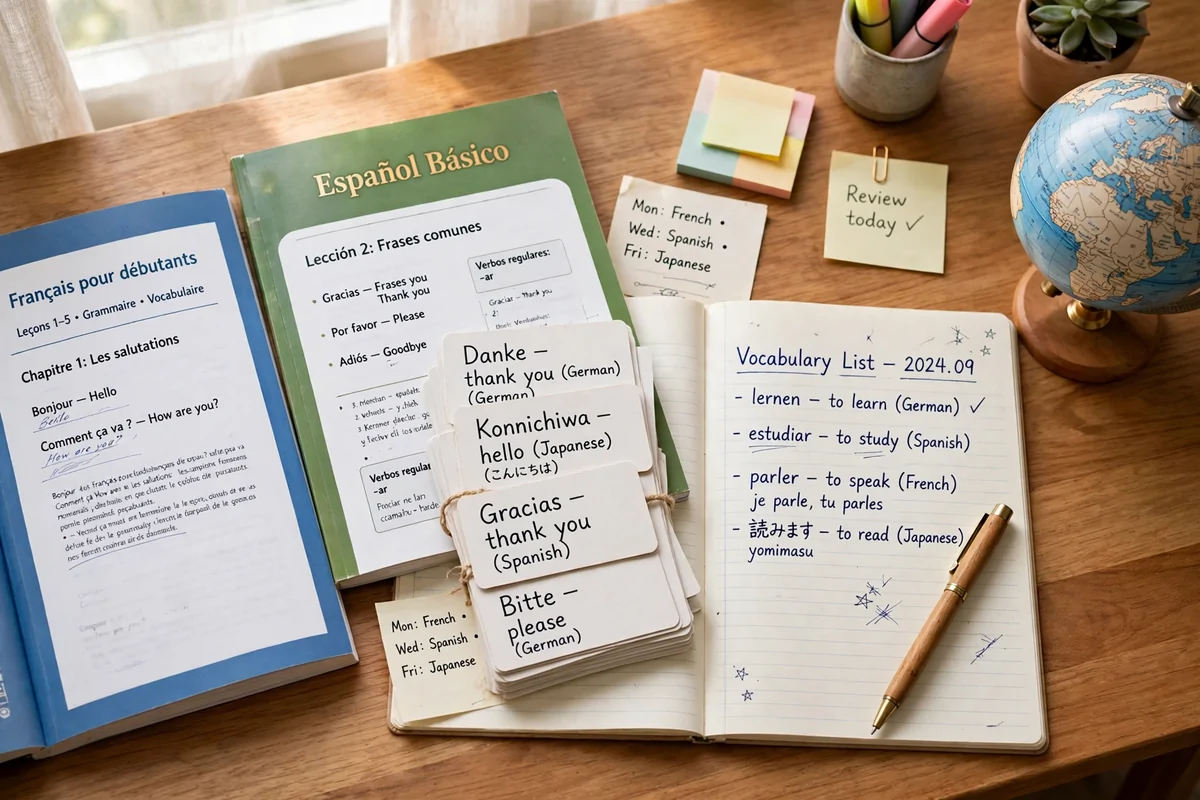
Learning a new language opens a whole new world. You can talk with new people, read new books, and see life from a fresh side. It is hard work, but it is also full of small wins that feel great.
This list gives you 30 fun choices about learning a language. Some are easy, some are tricky, and all of them make you think about how you like to learn. Pick your side for each one and see what kind of learner you are.
1. Would you rather learn one language very well or learn a little bit of five languages?
Would you rather...
One language, deep and strong. You can speak with ease, read books, and feel sure of yourself. Five languages, a little of each, means you can say hello in many places but you may feel lost in a real talk.
| Option | What You Gain | What You Give Up |
|---|---|---|
| Learn one language very well | Real talks, strong reading, and true confidence | The fun of saying a few words in many languages |
| Learn a little bit of five languages | Basic words in many places and a wide view of the world | Deep talks and full ease in any one language |
Think about your goal. If you want to live or work in one place, deep learning wins. If you love travel and meeting people from many lands, a little of each can be a joy.
2. Would you rather learn by speaking with real people or learn by reading books and apps?
Would you rather...
Speaking with real people is fast and lively. You hear real words, you learn how people truly talk, and you get brave quickly. But it can feel scary at first, and mistakes happen in front of others.
Books and apps are calm and safe. You can go at your own speed, repeat a lesson ten times, and no one hears your mistakes. The catch is that real talks feel very different from a book page.
Most good learners mix both. They read a little, then they try to speak a little. The book gives you words, and real people give you courage.
3. Would you rather study 10 minutes every day or study 3 hours once a week?
Would you rather...
Ten minutes a day sounds small, but it adds up fast. Your brain keeps the words fresh, and the habit becomes part of your day, like brushing your teeth.
Three hours once a week sounds strong, but a whole week can pass and the words fade away. By the next week, you may need to start again from the start.
Things to think about:
- Short daily study keeps new words alive in your mind.
- A long weekly study can feel tiring and hard to finish.
- A small daily habit is easier to keep for a whole year.
- Even five minutes a day beats zero minutes for six days.
4. Would you rather learn a language with a new alphabet or learn a language that sounds easy?
Would you rather...
A new alphabet looks like a secret code at first. New letters, new shapes, new sounds. It takes time, but once you crack it, you feel like you unlocked a door to a new world.
A language that sounds easy feels friendly from day one. You can read words, say them out loud, and feel progress fast. But easy at the start does not always mean easy later, because grammar can still surprise you.
5. Would you rather start with speaking or start with writing?
Would you rather...
Speaking first puts you in real talks right away. You learn to think fast, to answer quickly, and to enjoy the sound of the language. Mistakes are part of the fun.
Writing first is slow and careful. You can think before you write, check your words, and build clean sentences. The risk is that speaking later feels harder, because your mouth is not used to the words yet.
Pro Tip: Try to speak a little every day, even if it is only to yourself. Say what you see around you in the new language, like “the door is open” or “I need water.” Small talk with yourself builds big courage.
6. Would you rather learn with a teacher or learn all by yourself?
Would you rather...
A teacher can guide you, fix your mistakes, and answer your questions right away. You have a plan, a schedule, and someone who keeps you on track.
Learning by yourself gives you full freedom. You pick your own lessons, your own time, and your own speed. But it is easy to stop when life gets busy, because no one is waiting for you.
Ask yourself what keeps you going. Some people need a guide. Others love the freedom of their own path.
7. Would you rather learn a language for travel or learn a language for work?
Would you rather...
Learning for travel is full of fun words: food, directions, greetings, and small talk with new people. Every trip becomes richer, and every meal tastes better when you can order it yourself.
| Option | What You Gain | What You Give Up |
|---|---|---|
| Learn a language for travel | Fun trips, easy orders, and warm talks with local people | Formal words you may need at work |
| Learn a language for work | Better jobs, clear emails, and strong meetings | Casual travel words and relaxed small talk |
Learning for work is a smart step for your future. It can open new jobs, new clients, and new chances. The words are more formal, but the reward is real.
8. Would you rather memorize 10 new words a day or learn 10 new sentences a day?
Would you rather...
Ten new words a day builds a big pile of words fast. After a month, you know 300 words. But words alone are like bricks with no house. You still need to know how to put them together.
Ten new sentences a day is slower in count, but each sentence teaches you grammar, word order, and real use. You can speak in full thoughts from the very first week.
- Words help you understand what you hear.
- Sentences help you answer back in full.
- A mix of both is the best plan of all.
9. Would you rather practice with flashcards or practice by writing a daily diary?
Would you rather...
Flashcards are quick and simple. You see a word, you try to recall it, and you flip the card. It is a great way to test your memory in short bursts of time.
A daily diary is slow and deep. You write about your day, your plans, and your thoughts in the new language. It forces you to use real words for real life.
Things to think about:
- Flashcards are perfect for waiting time, like a bus ride or a lunch break.
- A diary shows you your own progress week by week.
- Writing by hand helps your brain hold on to new words.
- Both ways work, so pick the one you will truly do every day.
10. Would you rather learn the language of your grandparents or learn a language that is popular in the world?
Would you rather...
The language of your grandparents is full of heart. It connects you to your family story, to old tales, and to people you love. Every new word feels like a gift from home.
A popular world language opens many doors. You can use it in many countries, in many jobs, and with many new friends. It is useful almost everywhere you go.
There is no wrong pick here. One feeds your heart, the other feeds your future. Some lucky learners do both, one after the other.
11. Would you rather speak from day one even with mistakes or wait until you feel ready to speak?
Would you rather...
Speaking from day one is brave and messy. You will make mistakes, and that is fine. People will still understand you, and each mistake teaches you something new.
Waiting until you feel ready is calm and safe. You study first, you build your words, and you speak when you feel strong. The risk is that “ready” may never come, and months can pass in silence.
Important Note: Mistakes are not a sign of failure. They are proof that you are learning. Every fluent speaker once spoke with mistakes, and they kept going anyway.
12. Would you rather learn with a friend or learn alone in quiet time?
Would you rather...
Learning with a friend is fun and full of energy. You can quiz each other, laugh at mistakes, and keep each other going on hard days. A friend makes the journey lighter.
Learning alone in quiet time is peaceful. You can focus fully, go at your own speed, and think deeply. No one rushes you, and no one distracts you.
Think about your own nature. Some people learn best with a partner. Others learn best in silence. Both ways can lead to the same fine result.
13. Would you rather focus on grammar rules or focus on useful phrases?
Would you rather...
Grammar rules give you the bones of the language. Once you know the rules, you can build any sentence you want. It is slow at first, but it pays off for years.
Useful phrases give you quick wins. You can greet people, order food, and ask for help from the very first day. But without grammar, you may get stuck when you need to say something new.
- Grammar helps you build new sentences on your own.
- Phrases help you survive real talks right away.
- Start with phrases, then add grammar little by little.
14. Would you rather learn a hard language or learn an easy language?
Would you rather...
A hard language is a big mountain to climb. It takes years, but the view from the top is amazing. You feel proud every single day you keep going.
| Option | What You Gain | What You Give Up |
|---|---|---|
| Learn a hard language | A rare skill, deep pride, and a strong brain workout | Fast progress and quick easy wins |
| Learn an easy language | Quick progress, fast talks, and early confidence | The rare challenge of a hard language |
An easy language gives you fast joy. You can talk soon, read soon, and feel the win in weeks, not years. That early joy can keep you learning for life.
15. Would you rather use a paper dictionary or use a phone app for new words?
Would you rather...
A paper dictionary is slow and old-fashioned, but it has a secret power. As you flip pages, your eyes catch other words by chance, and you learn more than you planned.
A phone app is fast and always in your pocket. You can hear the word, see an example, and save it in one tap. The risk is that the phone can pull you away to other things.
Both tools work well. The best learners use the app for speed and the book for deep study time.
16. Would you rather learn by living in another country or learn from home with online lessons?
Would you rather...
Living in another country is the fastest way to learn. You hear the language at the market, on the bus, and at every meal. You must speak to live your day, so you learn fast.
Learning from home with online lessons is calm and safe. You keep your own bed, your own food, and your own routine, while a teacher meets you on screen. Progress is slower, but life stays easy.
Pro Tip: If you cannot move to another country, bring the country to your home. Change your phone language, label things in your house with sticky notes, and talk to yourself in the new language while you cook or clean.
17. Would you rather take a language exam or skip exams and just enjoy learning?
Would you rather...
A language exam gives you a clear goal and a paper that proves your skill. It can help with jobs and study, and it pushes you to work hard before the big day.
Skipping exams means learning stays fun and free. No stress, no test day, no fear of a low score. You learn because you love it, not because a test is waiting.
Things to think about:
- An exam can prove your level to schools and employers.
- No exam means no stress, but also no clear finish line.
- Some learners study better with a test date on the calendar.
- Others learn more when they follow their own joy.
18. Would you rather learn two languages at the same time or learn one language at a time?
Would you rather...
Two languages at once is a bold adventure. Your brain juggles two sets of words, two sounds, and two ways of thinking. It is hard, but some people love the challenge.
One language at a time is calm and focused. All your energy goes to one goal, and progress feels clear and steady. You finish one, then you start the next with fresh energy.
Be honest about your time. Two languages need double the hours. One language done well is better than two languages half done.
19. Would you rather study in the morning or study late at night?
Would you rather...
Morning study starts your day with a win. Your mind is fresh, the house is quiet, and you feel proud before breakfast is even done.
Late night study is peaceful in a different way. The day is over, the noise is gone, and you can sit with your book in calm light. The risk is that a tired brain holds fewer words.
Warning Box: Do not study so late that you lose sleep. A tired brain forgets fast, and good sleep is one of the best tools for memory. Ten fresh minutes beat one sleepy hour.
20. Would you rather learn with short stories or learn with everyday talks?
Would you rather...
Short stories are full of magic. They teach you new words in a fun way, and you want to know what happens next, so you keep reading. Stories also show you how the culture thinks and feels.
Everyday talks teach you the words you truly need: how to greet a neighbour, how to ask for help, how to buy bread. These talks are plain, but they are the words of real life.
- Stories build your reading skill and your word bank.
- Everyday talks build your speaking skill and your courage.
- Try one story a week and one real talk a day.
21. Would you rather repeat the same lesson many times or move to a new lesson every day?
Would you rather...
Repeating the same lesson many times makes the words stick like glue. You hear them again and again until they feel like your own. It can feel boring, but the memory is strong.
| Option | What You Gain | What You Give Up |
|---|---|---|
| Repeat the same lesson many times | Deep memory and words that stay with you for years | New topics and the thrill of fresh lessons |
| Move to a new lesson every day | Fresh words daily and a wide range of topics | Strong memory of the old lessons |
A new lesson every day feels exciting. You always learn something fresh, and the days never feel the same. But old words can slip away if you never look back at them.
22. Would you rather learn a language to read old books or learn a language to talk with new people?
Would you rather...
Reading old books in their first language is a special joy. You meet the thoughts of writers from long ago, word for word, just as they wrote them. It is like a door to the past.
Talking with new people is a joy of the present. Every talk teaches you something, and every new friend opens a new view of life. Language becomes a bridge, not just a book.
Which joy calls to you more: the quiet joy of an old page, or the lively joy of a new friend?
23. Would you rather correct every small mistake or let small mistakes go and keep talking?
Would you rather...
Correcting every small mistake keeps your language clean and exact. You learn the right form fast, and your speech becomes smooth and correct over time.
Letting small mistakes go keeps the talk flowing. You stay brave, you stay relaxed, and people enjoy talking with you. The small errors fade on their own as you hear more good language.
Important Note: The best time to fix a mistake is after the talk, not in the middle of it. Finish your thought first, then ask your teacher or friend how to say it better. Flow first, fixes second.
24. Would you rather learn by listening to short talks or learn by reading short texts?
Would you rather...
Listening to short talks trains your ear. You learn the true sound of words, the speed of real speech, and the way people link their words together. It is the skill you need most in real life.
Reading short texts trains your eye. You can stop, look again, and take your time with hard words. Reading builds your word bank and shows you clean, correct sentences.
Things to think about:
- Listening helps you understand people in real time.
- Reading helps you learn new words at your own speed.
- Listen once, then read the same text to catch what you missed.
- Both skills grow stronger when you use them together.
25. Would you rather keep a notebook of new words or keep everything in your head?
Would you rather...
A notebook of new words is like a treasure box. You can open it any time, look back at old words, and see how far you have come. Writing by hand also helps your memory hold on tight.
Keeping everything in your head is light and free. No books, no pens, just your mind at work. But the brain forgets fast, and words you never wrote down can vanish in a week.
- A notebook never forgets, even when you do.
- Review your notebook once a week to keep words alive.
- Add one example sentence next to each new word.
26. Would you rather learn a language your whole family speaks or learn a language nobody around you speaks?
Would you rather...
A language your whole family speaks is full of warmth. You can practice at the dinner table, ask your family for help, and share jokes in the new words. Learning becomes a family joy.
A language nobody around you speaks is a brave solo trip. You must find your own teachers, your own friends, and your own way. It is harder, but it proves your strong will.
Pro Tip: If no one around you speaks the language, find a study partner online or join a language group in your town. Even one talk a week with a real person can change your whole progress.
27. Would you rather pay for a good course or use only free lessons?
Would you rather...
Paying for a good course gives you a clear plan, a real teacher, and lessons made in the right order. When you pay, you also take it more seriously, because your money is on the line.
| Option | What You Gain | What You Give Up |
|---|---|---|
| Pay for a good course | A clear plan, a real teacher, and strong push to finish | Money and the freedom to pick any free lesson |
| Use only free lessons | Zero cost and endless lessons to pick from | A clear plan and a teacher who guides you |
Free lessons are everywhere today, and many of them are very good. You can learn a lot without paying a single coin. The hard part is staying on track with no plan and no teacher waiting for you.
28. Would you rather learn fast in one year or learn slowly over five years?
Would you rather...
Learning fast in one year is a bold race. You study hard every day, you push yourself, and after twelve months you can speak with real ease. It takes strong will and a lot of time.
Learning slowly over five years is a calm walk. You enjoy each small step, you never feel rushed, and the language becomes a quiet part of your life. Slow learners often keep the language for life, because they never burn out.
Fast or slow, the best pace is the one you can keep without quitting. A steady walk beats a fast run that stops halfway.
29. Would you rather learn a language with a friend as a teacher or learn a language with a professional teacher?
Would you rather...
A friend as a teacher is warm and easy. You feel safe, you laugh a lot, and you can ask silly questions with no fear. A friend knows your life and can teach you the words you truly need.
A professional teacher is trained to teach. They know the right order of lessons, they spot your weak points fast, and they can explain hard grammar in a simple way.
Things to think about:
- A friend gives you comfort and real everyday words.
- A professional teacher gives you a plan and clear fixes.
- Many learners use both: a teacher for lessons, a friend for practice.
- The best teacher is the one who keeps you coming back.
30. Would you rather speak only the new language for one whole day each week or speak your own language and study the new one for one hour a day?
Would you rather...
One whole day in the new language is a brave test. From morning to night, every word must come from your new tongue. It is hard, funny, and unforgettable, and it shows you how far you have truly come.
One hour a day in your own language plus study time is calm and steady. You learn a little each day, you never feel lost, and the habit fits easily into a busy life.
Try the full day once, just for fun. You may surprise yourself with how much you can say when you have no other choice.
More Would You Rather Questions
- 22 World Language Would You Rather Questions for Curious Minds
- 18 Food Bucket List Would You Rather Questions Every Foodie Should Try
- 40 Movie Night Snacks Would You Rather Questions for Snack Lovers
- 34 Party Food Would You Rather Questions for Hosts and Foodies
- 28 Picnic Food Would You Rather Questions for Outdoor Food Lovers
- 23 Grilling Would You Rather Questions for Backyard Foodies
- 25 Slow Cooker Food Would You Rather Questions for Easy Dinner Lovers
- 35 Air Fryer Food Would You Rather Questions for Crispy Food Fans
- 14 Food Storage Would You Rather Questions for Kitchen Organizers
- 13 Cooking Disaster Would You Rather Questions With Hilarious Choices