32 Polyglot Would You Rather Questions for Language Enthusiasts

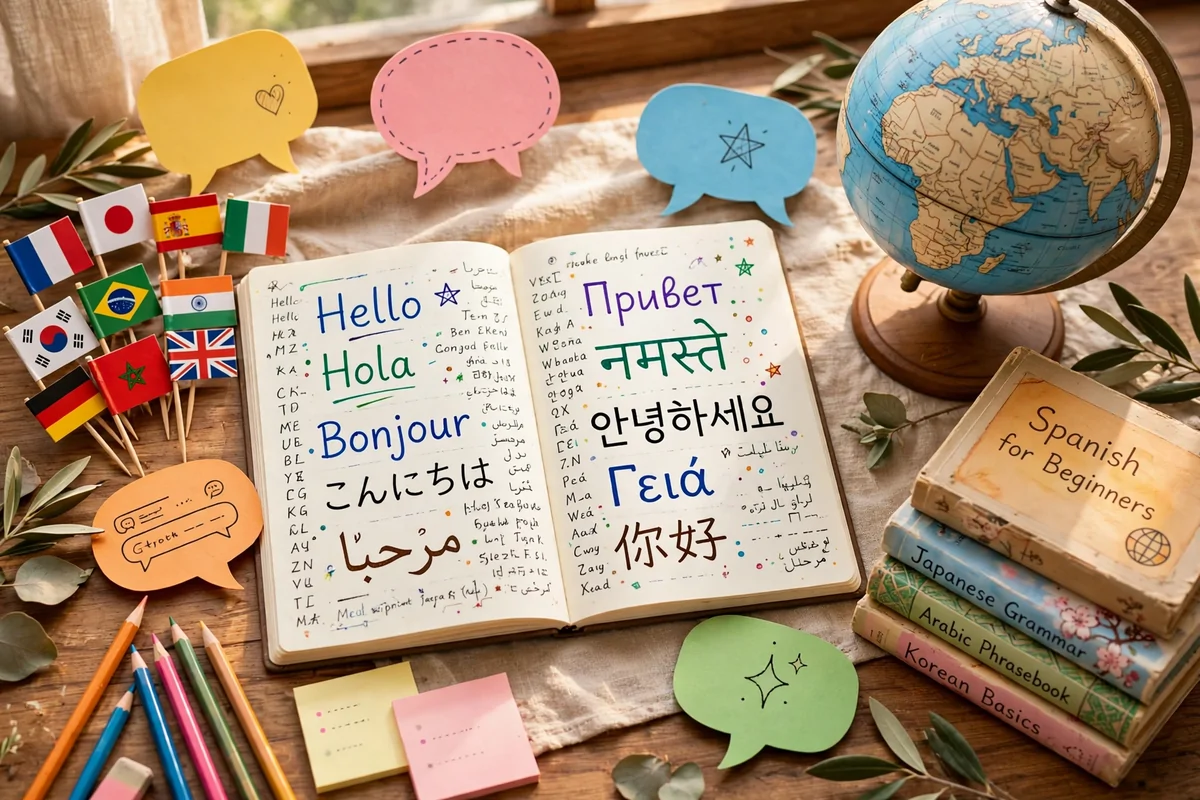
Speaking many languages is like carrying a full set of keys in your pocket. Each key opens a different door, a different group of people, and a different way of seeing the world. Some days the words flow with ease. Other days they get mixed up, and the right word hides in the wrong language.
These 32 polyglot would you rather questions are all about that life. The fun choices, the hard trade-offs, and the small wins that only people who love languages truly understand. Pick your side for each one and see how your answers compare with your friends.
1. Would you rather speak five languages fluently but never learn a sixth one or keep learning new languages but never speak any of them fluently?
Would you rather...
Five fluent languages is a rich gift. You can talk with people in many countries, read their books, and enjoy their stories without help. Your words flow with ease and your mind feels at home in five worlds.
But the door to a sixth language stays shut forever. No matter how much you want to learn it, you can never add one more. Learning new languages all the time is a different kind of joy. Every new language brings new sounds, new words, and new friends.
- Five fluent languages give you deep skill and calm confidence.
- Endless new languages give you fresh starts again and again.
- Think about what matters more to you: mastery or discovery.
2. Would you rather speak ten languages at a basic level or speak three languages perfectly?
Would you rather...
Ten languages at a basic level means you can say hello, ask for help, and order food almost anywhere on earth. You never feel fully lost in a new place. A few simple words can open many doors.
Three perfect languages is a different kind of power. You can joke, debate, and share deep ideas without fear. People trust your words because they sound natural and sure.
| Option | What You Gain | What You Give Up |
|---|---|---|
| Speak ten languages at a basic level | Basic talk in many places and quick help in new countries | Deep talks, jokes, and full confidence in any language |
| Speak three languages perfectly | Full fluency, natural talk, and trust in every word | The freedom to greet and get by in many other places |
3. Would you rather understand every language you hear but never speak any of them or speak five languages fluently but never understand a new one?
Would you rather...
Understanding every language is a quiet superpower. You can sit in a busy market, a train station, or a family gathering and follow every word. Nothing stays secret from you.
But understanding without speaking is lonely. You hear everything and say nothing back. Speaking five languages fluently lets you join the talk, make friends, and share your own ideas.
Which one feels better: to know everything quietly, or to speak with confidence and connect with people?
4. Would you rather always dream in a different language each night or always think in a different language each day?
Would you rather...
Dreaming in a different language each night sounds magical. Your sleep becomes a free lesson every night. You wake up with new words in your head and a smile on your face.
Thinking in a different language each day is more useful while you are awake. You plan, you decide, and you solve problems without translating in your head first. Life moves faster.
Things to think about:
- Would you rather grow while you sleep or while you work?
- Do dreams in a new language excite you or confuse you?
- Which one would help you more in daily life?
5. Would you rather speak many languages with a perfect accent or read and write many languages perfectly but speak with a strong accent?
Would you rather...
A perfect accent in many languages opens doors. People listen to you with ease, and you sound like you belong everywhere you go. It feels smooth and natural.
Perfect reading and writing is a different kind of power. Your letters, your notes, and your work look clean and correct. But your voice gives away that you learned the language later in life.
Pro Tip: A strong accent is not a mistake. It shows that you worked hard to learn another language, and most people respect that.
6. Would you rather learn a new language in one month but forget it in one year or learn it slowly over five years and keep it forever?
Would you rather...
One month to a new language sounds like a dream. You could travel, talk with new people, and enjoy the quick win right away. But the win fades fast, and after a year it is gone.
Five slow years take patience. You study a little each day, you make mistakes, and you keep going. At the end, the language is yours for life. Slow work builds something that lasts.
| Option | What You Gain | What You Give Up |
|---|---|---|
| Learn a new language in one month but forget it in one year | A fast win and quick fun right away | A skill that lasts for life |
| Learn it slowly over five years and keep it forever | A language that stays with you for life | The joy of a fast result right now |
7. Would you rather switch languages in the middle of every sentence or speak only one language each day and change it the next day?
Would you rather...
Switching in the middle of every sentence is fast and fun. You grab the best word from each language, like picking the best fruit from many trees. Friends who speak the same languages will love it.
But people who speak only one of your languages will feel lost. They hear half of your sentence and miss the rest. Whole days in one language are clearer for everyone around you, though your brain must wait a full day to use the other ones.
- Mixing languages feels free and creative.
- One language a day is clear for every listener.
- Which style fits your daily life better?
8. Would you rather forget your first language for one year or forget all your other languages for one year?
Would you rather...
Forgetting your first language for a year would feel strange. It is the language of your childhood, your home, and your earliest memories. Losing it, even for a while, would feel like losing a piece of yourself.
Forgetting all your other languages for a year is easier on the heart but harder in daily life. You would be back to one language only, and all the new friends, books, and trips would have to wait.
Which loss would hurt you more for a full year: your roots or your reach?
9. Would you rather speak many languages but only in a whisper or speak one language loudly and clearly?
Would you rather...
Many languages in a whisper keep your gift, but every talk becomes quiet and slow. People lean in close to hear you. In a noisy room, nobody hears you at all.
One language, loud and clear, is simple and strong. Everyone hears you the first time. But you give up most of your world, most of your voices.
| Option | What You Gain | What You Give Up |
|---|---|---|
| Speak many languages but only in a whisper | You keep all your languages and all your worlds | A strong, clear voice that everyone can hear |
| Speak one language loudly and clearly | A loud, clear voice in every room | All your other languages and the people in them |
10. Would you rather translate for your whole family at every gathering or never translate and let everyone figure it out?
Would you rather...
Being the family translator makes you the hero of every gathering. You help grandparents talk with grandchildren. You help cousins share jokes. Without you, the sides of the family could not talk at all.
But it is also tiring work. You never just sit and enjoy the food. You are always busy turning one language into another, and you miss half the fun yourself.
Important Note: Family translators do real, hard work. If you are the one who translates, it is fair to ask for a break sometimes.
- Translating brings the family together.
- Not translating gives you your own free time back.
- Would your family manage without you, or would the talk fall silent?
11. Would you rather speak many languages at work only or speak many languages at home only?
Would you rather...
Many languages at work can open new jobs, new clients, and better pay. You become the person the team turns to when another language is needed. Your skill shines where it counts.
Many languages at home build a warm, rich family life. Your children hear many languages every day. Your home feels full of stories, jokes, and words from many worlds.
Where do you spend more of your talking time: at work or at home? Your answer tells you which choice fits your life.
12. Would you rather know every word in five languages but never use slang or know slang perfectly in five languages but miss many formal words?
Would you rather...
Knowing every formal word in five languages makes you sound smart and correct. You can read hard books, write clean letters, and talk in serious meetings without fear. But your talk may sound stiff, like a textbook.
Knowing slang perfectly makes you sound like a local. You catch every joke, every teasing word, and every street phrase. But in a formal letter or a serious talk, the right word may escape you.
Things to think about:
- Do you want to sound correct, or do you want to sound natural?
- Do you talk with friends more, or write formal letters more?
- Which skill helps you more at work and in daily life?
13. Would you rather have a perfect memory for words in many languages or have a perfect ear for sounds and accents in many languages?
Would you rather...
A perfect memory for words means you never forget a word you learn. Your vocabulary grows and grows. You can name everything, from kitchen tools to big ideas, in many languages.
A perfect ear means you hear every sound just right. You copy accents with ease, you catch small differences in pronunciation, and people think you grew up speaking all your languages.
| Option | What You Gain | What You Give Up |
|---|---|---|
| Have a perfect memory for words in many languages | A huge vocabulary that never fades | A natural accent and a sharp ear for sounds |
| Have a perfect ear for sounds and accents in many languages | A natural accent that sounds like a native speaker | A large vocabulary that stays in your memory |
14. Would you rather speak many languages but mix them up sometimes or speak one language perfectly and never try another one?
Would you rather...
Mixing up many languages is normal for people who speak them. You start a sentence in one language and finish it in another. It can be funny, and most people understand you anyway.
One perfect language is clean and safe. You never make a mix-up, never feel shy, and never search for a word. But you close the door on whole worlds of people and ideas.
Is a little mess worth a bigger world? Many language lovers would say yes.
15. Would you rather read books in five languages or write stories in five languages?
Would you rather...
Reading books in five languages multiplies your library by five. You can enjoy stories, wisdom, and knowledge from many cultures. Every book teaches you new words without hard study.
Writing stories in five languages is harder but more creative. You build new worlds with words from all sides of your life. Your stories carry a flavor that one language alone could never give.
- Reading fills your mind with words from five cultures.
- Writing turns your words into something new for others.
- Do you love to take in stories, or to create them?
16. Would you rather teach your children five languages from birth or let them choose their languages later in life?
Would you rather...
Teaching five languages from birth is a gift that costs nothing but time and talk. Children learn fast, and all the languages feel natural to them. They grow up with many homes in their mind.
Letting them choose later gives them freedom. They pick the languages that fit their life, their friends, and their dreams. But by then, learning is slower, and the early years of easy learning are gone.
Which gift would you want to give: an early start or a free choice?
17. Would you rather learn a rare language that very few people speak or learn a common language that millions of people speak?
Would you rather...
A rare language is a treasure that few people hold. You can talk with a small community, keep an old culture alive, and enjoy a skill almost nobody else has. Every word feels special.
A common language is useful every single day. Millions of people speak it, so you can use it for travel, work, and friendship almost anywhere. It opens big doors, but it feels less rare.
| Option | What You Gain | What You Give Up |
|---|---|---|
| Learn a rare language that very few people speak | A rare skill and a chance to keep a small culture alive | Daily use with millions of people everywhere |
| Learn a common language that millions of people speak | Useful talk for travel, work, and friendship every day | A rare skill that almost nobody else has |
18. Would you rather speak five languages but lose your first language slowly or keep your first language strong but never learn a new one?
Would you rather...
Speaking five languages while your first language slowly fades is a quiet trade. You gain the world, but you lose the words of your childhood a little more each year. Old songs and family stories start to feel far away.
Keeping your first language strong is safe and warm. Your roots stay deep. But the rest of the world stays behind a wall of words you never learned.
Warning: A first language fades fast when you stop using it. Even a few minutes of talk each week can keep it alive for life.
19. Would you rather study languages from books only or learn languages only by talking with people?
Would you rather...
Books teach you rules, words, and clean grammar. You can study at your own speed, in your own time, with a pencil in your hand. Books never rush you and never judge you.
Talking with people teaches you real life. You learn jokes, quick replies, and the way people truly speak. It is messy and fast, but it sticks in your memory.
- Books give you order, rules, and quiet study time.
- Real talks give you courage, speed, and natural words.
- Which kind of learning fits your life right now?
20. Would you rather speak a new language every time you travel to a new place or speak the same five languages everywhere you go?
Would you rather...
A new language in every new place turns each trip into an adventure. You arrive, you listen, and you start to speak the local words. Every journey makes you a beginner again, and that feels alive.
The same five languages everywhere give you comfort and strength. You land in a new city and you already know how to ask, how to answer, and how to make friends. No fear, no slow start.
Do you travel for the thrill of the new, or for the comfort of the known?
21. Would you rather know how to greet people in fifty languages or hold a full conversation in five languages?
Would you rather...
Greetings in fifty languages make you a friend everywhere in minutes. A simple hello in the local language makes people smile. You can open a door in any country with just one word.
Full talks in five languages go much deeper. You can share stories, ask real questions, and build true friendships. A greeting opens the door, but a full talk invites you inside.
Things to think about:
- Do you meet many new people for a short time, or a few people for a long time?
- Is a warm first hello enough, or do you want deep talks?
- Which skill would you use more in your travels?
22. Would you rather learn languages that use a different alphabet or learn languages that use the same alphabet as yours?
Would you rather...
A different alphabet is a puzzle and a joy. New letters, new shapes, and new ways to write. Reading your first word in a new script feels like cracking a secret code.
The same alphabet as yours is faster and easier. You can read signs, menus, and names from day one. The words may be new, but the letters feel like home.
Would you pick the fun of a fresh puzzle, or the ease of a familiar path?
23. Would you rather speak five languages but never write in any of them or write in five languages but never speak any of them?
Would you rather...
Speaking five languages without writing in any of them is a life of talk. You can chat, joke, and tell stories all day long. But you cannot write a letter, a note, or a message in any of them.
Writing in five languages without speaking is the opposite life. Your words look perfect on paper, but your voice stays silent. You can share ideas in writing, yet never say them out loud.
| Option | What You Gain | What You Give Up |
|---|---|---|
| Speak five languages but never write in any of them | Free, natural talk with people every day | Writing letters, notes, and messages |
| Write in five languages but never speak any of them | Clean, correct writing in five languages | Speaking, joking, and talking out loud with people |
24. Would you rather learn a language from a teacher every day or learn a language by living in a country where people speak it?
Would you rather...
A teacher every day gives you order and clear steps. You learn the rules, you fix your mistakes, and you always know what to study next. A good teacher makes the hard parts feel easy.
Living in a country where people speak the language gives you real life every hour. You hear it in shops, on buses, and at dinner tables. You learn fast because you must use it to live.
Pro Tip: Living abroad works best when you talk with local people every day, not just with other learners. Real talks teach real language.
- A teacher gives you clear lessons and steady progress.
- Living abroad gives you real practice all day long.
- Which way of learning would keep you going for a full year?
25. Would you rather be able to read signs and menus in ten languages or be able to tell jokes in three languages?
Reading signs and menus in ten languages makes travel easy. You never feel lost in a new city. You can find food, find your way, and read every warning without help.
Telling jokes in three languages makes people laugh and feel close to you. Humor builds friendship faster than anything else. A good joke in the local language is worth a hundred polite words.
Would you rather travel with ease, or make friends with laughter?
26. Would you rather learn one new word in five languages every day or learn five new words in one language every day?
Would you rather...
One new word in five languages every day keeps all your languages alive at once. Each language grows a little, day by day. It is a slow, steady habit that never feels heavy.
Five new words in one language every day builds deep power in that language fast. In a year, you know thousands of new words in one tongue. But your other languages wait and grow quiet.
- A little in five languages keeps them all warm.
- A lot in one language builds deep skill fast.
- Do you want balance, or do you want depth?
27. Would you rather speak many languages but always feel shy when you use them or speak two languages with full confidence and never feel shy?
Would you rather...
Many languages with shyness is a strange mix. You know the words, but fear holds your voice back. Every talk takes courage, and you often stay quiet even when you know what to say.
Two languages with full confidence is a free life. You speak without fear, you make mistakes and laugh, and people enjoy talking with you. Confidence turns simple words into real connection.
Skill without courage stays locked inside. Courage with a little skill can open any door.
28. Would you rather help strangers in five languages every day or teach one new language to your friends every week?
Would you rather...
Helping strangers in five languages every day turns your gift into service. You help a lost traveler, a new neighbor, or a confused visitor. Every day brings a small act of kindness in a new tongue.
Teaching one new language to your friends every week spreads the gift further. Your friends learn, they grow, and soon they can help others too. Teaching multiplies your skill.
Important Note: The best way to keep a language strong is to use it to help someone. Teaching and helping both make your words stay in your memory.
29. Would you rather learn the language of your grandparents first or learn the language of a faraway country first?
Would you rather...
The language of your grandparents holds your family story. Their songs, their sayings, and their old words live in it. Learning it keeps your roots alive and honors the people who came before you.
The language of a faraway country holds a new world. New people, new places, and new dreams wait behind it. Learning it opens a door you never knew existed.
Which comes first for you: the words of your past, or the words of a new future?
30. Would you rather speak many languages but forget one old language each year or speak three languages and keep all of them forever?
Would you rather...
Many languages with one fading each year is a race against time. You keep learning new ones, but an old friend slips away every year. Your collection grows and shrinks at the same time.
Three languages kept forever is a calm, steady life. You know them deeply, you use them daily, and they never leave you. No new worlds, but no losses either.
| Option | What You Gain | What You Give Up |
|---|---|---|
| Speak many languages but forget one old language each year | New languages and new worlds again and again | An old language and its memories every year |
| Speak three languages and keep all of them forever | Three deep languages that never leave you | The thrill of learning a brand new language |
31. Would you rather use five languages to help people in need or use five languages to build a business and earn money?
Would you rather...
Five languages used to help people in need is a gift with a clear purpose. You can guide, comfort, and support people who cannot speak the local language. Your words become a bridge for those who need it most.
Five languages used to build a business is a gift with a clear reward. You can trade, serve customers, and grow your work across many countries. Your words open markets and build a better life for your family.
- Helping people gives your gift a warm, kind purpose.
- Building a business gives your gift a strong, practical reward.
- Which use of your languages would make you prouder?
32. Would you rather have a language friend from every continent or have one best friend who speaks five languages with you?
Would you rather...
A language friend from every continent means your world is wide. You can talk with someone from each corner of the earth, learn their stories, and see life through many eyes. Your friendships cover the whole map.
One best friend who speaks five languages with you means your world is deep. You share jokes, secrets, and long talks in many tongues. One close friend can feel like a whole world on their own.
Wide or deep, both kinds of friendship make a language life rich. Which one would you choose first?
More Would You Rather Questions
- 16 Bilingual Would You Rather Questions About Speaking Two Languages
- 27 Multilingual Would You Rather Questions for People Who Love Languages
- 12 Foreign Language Would You Rather Questions That Test Your Skills
- 30 Language Learning Would You Rather Questions for Global Learners
- 22 World Language Would You Rather Questions for Curious Minds
- 18 Food Bucket List Would You Rather Questions Every Foodie Should Try
- 40 Movie Night Snacks Would You Rather Questions for Snack Lovers
- 34 Party Food Would You Rather Questions for Hosts and Foodies
- 28 Picnic Food Would You Rather Questions for Outdoor Food Lovers
- 23 Grilling Would You Rather Questions for Backyard Foodies