16 Cultural Language Would You Rather Questions About Communication Around the World

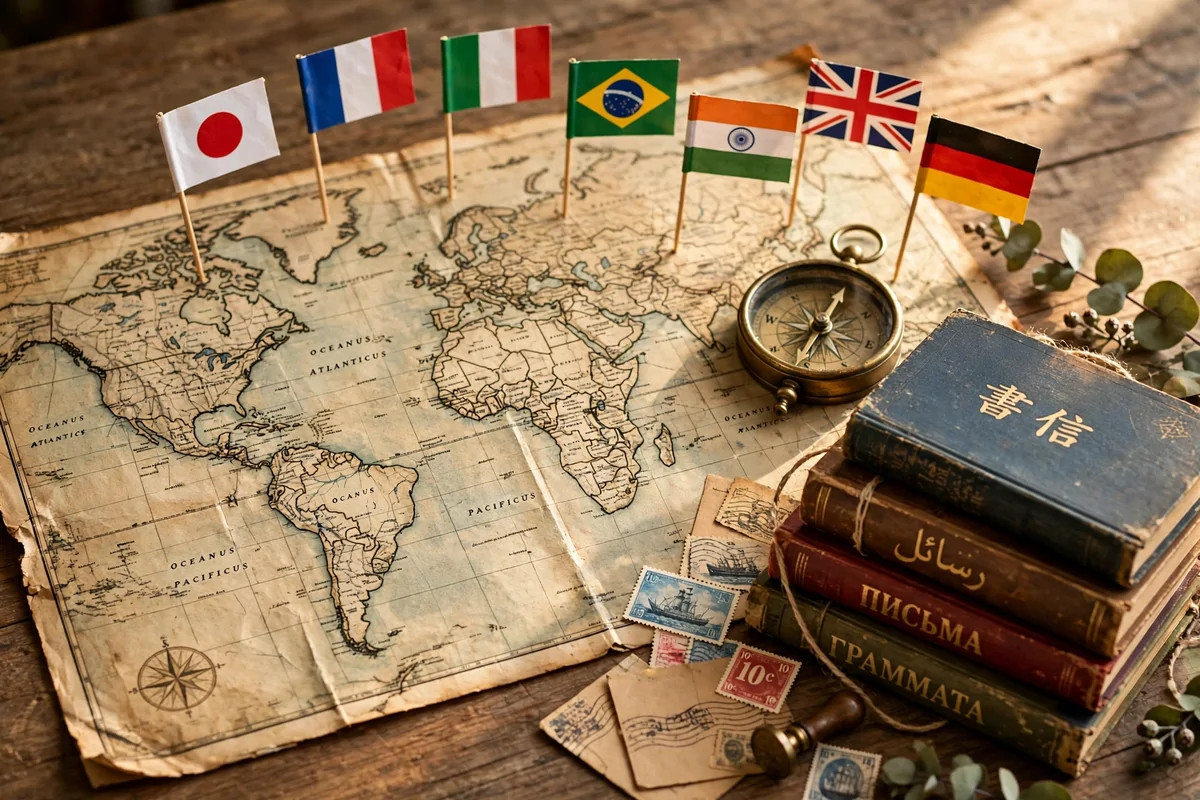
Every country has its own way to say hello, to say thank you, and to share a story. Some people speak with their hands, some speak with soft words, and some speak with loud laughter at the dinner table. Language is more than words on a page. It is how people show respect, how they make friends, and how they keep their old stories alive.
This set of questions takes you on a trip around the world without leaving your chair. You will pick between fast learning and slow learning, between old words and new words, and between quiet villages and busy cities. Each choice shows something about how you like to learn and how you like to connect with people. There is no right answer here, only the answer that feels most like you.
1. Would you rather speak five languages fluently or understand every language in the world but speak only your own?
Would you rather...
Think about it. Five languages means you can talk, joke, and make friends in five different places. You can order food, ask for help, and join a chat at a market in many lands. That is a big gift.
But to understand every language is a quiet superpower of its own. You could sit in any room in the world and know what people mean. You could hear a story in a far village and feel every word of it. The only catch is that you can only answer in your own language, so people must work to understand you too.
Which gift would you pick? The power to speak to many people, or the power to understand all people?
2. Would you rather learn a new language in one month or master one rare language that very few people speak?
Would you rather...
One month to a new language sounds like a dream. In thirty days you could greet people, buy food, and ask simple questions in a whole new tongue. Fast learning opens doors fast.
A rare language is a different kind of treasure. Very few people speak it, so each word you learn feels special. You become one of a small group who keeps those old sounds alive.
| Option | What You Gain | What You Give Up |
|---|---|---|
| Learn a new language in one month | A useful skill very fast and many new people to talk with | Deep practice and the slow joy of learning step by step |
| Master one rare language that very few people speak | A rare skill and a special link to a small culture | Many people to talk with every day in that language |
Fast or rare, both paths teach patience. One gives you speed, the other gives you depth. Which one sounds more like your kind of learning?
3. Would you rather use hand gestures perfectly in any country or use the right words perfectly in any country?
Would you rather...
Hands can say so much without a single word. A wave, a nod, a warm open palm. In some places, a gesture means welcome. In other places, the same gesture means something very different. To use gestures perfectly everywhere would make you a friend in every land.
Words are just as strong. The right word at the right time can open a door, calm a worry, or make a stranger smile. Perfect words mean no mix-ups and no shy silence.
Things to think about:
- Gestures work even when you forget the words
- Words can share deep ideas that hands cannot
- A wrong gesture can cause a big mix-up in a new place
- A wrong word can be fixed with a smile and a second try
4. Would you rather live in a country where you do not speak the language or stay home and never hear a foreign language again?
Would you rather...
Living far from home with a new language all around you is hard at first. Every shop sign looks strange. Every chat feels like a puzzle. But each day you learn a little more, and soon the strange sounds start to feel like home.
Staying home is safe and easy. You know every word, every joke, and every street name. But you would never hear the music of a new language again. No new greetings, no new stories from far lands.
Would you pick the hard road with new sounds every day, or the easy road with only the sounds you already know?
5. Would you rather speak with a perfect accent in another language or speak with perfect grammar but a strong accent?
Would you rather...
A perfect accent makes people think you grew up with the language. Your words sound smooth and natural. People listen with ease and smile at how well you speak.
Perfect grammar with a strong accent is a different kind of win. Your sentences are clear and correct, even if your voice still sounds like home. People may notice your accent, but they will never get lost in your words.
Pro Tip: A warm smile and slow clear words help more than a perfect accent. People love it when you try their language, even if your voice still carries the sound of home.
Sound like a local, or speak like a book? Both are fine. The choice shows what matters more to you: how you sound, or how clear your words are.
6. Would you rather learn the language of your grandparents or learn the language of a faraway land you dream to visit?
Would you rather...
Your grandparents carry old words, old songs, and old family stories. To learn their language is to open a door into your own past. You could sit with them, hear their tales in the words they grew up with, and keep those words alive for the next generation.
A faraway land pulls a different way. Its language is full of new sounds and new dreams. To learn it is to plan a trip, to meet new friends, and to see the world with fresh eyes.
| Option | What You Gain | What You Give Up |
|---|---|---|
| Learn the language of your grandparents | Family stories and a strong link to your own roots | A brand new world and a brand new place to explore |
| Learn the language of a faraway land you dream to visit | A new place to visit and many new friends to meet | A close link to your own family past |
Roots or wings? One keeps the past alive, the other opens a new road. Which one would you start with first?
7. Would you rather read old books in their first language or hear old stories told by people in their own words?
Would you rather...
Old books hold the first words of great thinkers and brave travellers. To read them as they were first written is to touch history with your own hands. Every page feels like a small time trip.
But stories told by people have a warmth that books cannot match. A voice, a pause, a laugh, a hand on your shoulder. When an elder tells a tale in their own words, you do not just hear the story, you feel it.
Important Note: Many old stories were never written down at all. They live only in the voices of the people who tell them. Once those voices go quiet, the stories can be lost for good.
Would you pick the quiet pages of an old book, or the living voice of a storyteller?
8. Would you rather know ten ways to say thank you around the world or know ten ways to say sorry around the world?
Would you rather...
Thank you is a small key that opens many doors. In every land, people light up when they hear thanks in their own words. Ten ways to say it means ten ways to make someone smile.
Sorry is a quiet key, but just as strong. It can fix a small mistake, calm a hurt feeling, and show respect when you do not know the local rules. Ten ways to say it means you can make peace anywhere.
Things to think about:
- Thank you builds new friendships fast
- Sorry fixes mistakes before they grow big
- Some cultures value thanks more than sorry
- Some cultures value a kind sorry more than anything
Which key would you carry in your pocket on a trip around the world?
9. Would you rather speak only through pictures and signs for a day or speak only through written words for a day?
Would you rather...
A day of pictures and signs would feel like a fun game. You would draw, point, wave, and act out your needs. People would laugh, guess, and join in. It is how many travellers get by in a new land.
A day of written words is slower but clearer. You can write a note, pass it over, and wait for a written answer. No voice, no sound, just pen and paper doing all the talking.
- Pictures and signs are fast and fun
- Written words are clear and easy to keep
- Signs can be misunderstood in a funny way
- Writing takes time but leaves no doubt
One day, no voice at all. Would you draw your way through it, or write your way through it?
10. Would you rather talk to people from ten countries at one big table or talk to one wise elder from a far village for a whole day?
Would you rather...
Ten countries at one table is a feast of voices. Ten accents, ten greetings, ten ways to see the world. You would hear ten stories before lunch and still want more.
One wise elder for a whole day is a slow feast of a different kind. You would hear fewer stories, but each one would go deep. You would learn how one village sees the sky, the land, and the people who came before.
Pro Tip: When you meet people from many lands, ask them how they greet a guest in their home. That one question can open a whole evening of warm stories.
Many voices at once, or one deep voice all day? Both teach, but in very different ways.
11. Would you rather learn a language that has no written form or learn a language that has a very old written form?
Would you rather...
A language with no written form lives only in voices. You must listen well, remember well, and speak often. There are no books to help you, only people. That makes every lesson feel alive.
A language with a very old written form has deep roots on paper. Its letters may be hundreds of years old. You can read old poems, old laws, and old letters from people long gone.
| Option | What You Gain | What You Give Up |
|---|---|---|
| Learn a language that has no written form | Strong listening and memory skills from daily talk | Books and written notes to study from |
| Learn a language that has a very old written form | Old books and written history you can read yourself | Simple daily speech practice with living voices |
Voices only, or voices plus very old letters? Which kind of learning sounds more exciting to you?
12. Would you rather eat a meal in silence with a new friend from another land or share stories all evening with a new friend from another land?
Would you rather...
A silent meal can feel strange at first, but it can also feel calm and warm. You share food, you smile, you watch how your friend eats and drinks. No words are needed to show respect and joy.
An evening of stories is loud and full of life. You trade tales about home, about food, about funny mix-ups in new places. By the end of the night, a stranger feels like an old friend.
Warning: In some places, silence at the table is a sign of respect for the food and the cook. In other places, a quiet guest can seem cold or shy. Always watch how your host acts first, then follow their lead.
Quiet food and warm smiles, or a long night of tales? Which meal would you remember more?
13. Would you rather know the meaning of every flag colour in the world or know the meaning of every famous greeting in the world?
Flags carry stories in colour. Red can mean courage, green can mean land and life, white can mean peace. To know every flag is to read the story of each country at a glance.
Greetings carry stories in words and hands. A bow, a handshake, a warm word at the door. To know every famous greeting is to walk into any room and make people feel at home right away.
Things to think about:
- Flag colours teach you history without a single word
- Greetings teach you manners without a single book
- A flag is the same every day in every place
- A greeting changes with the time of day and the people you meet
Would you rather read the colours of the world, or speak the hellos of the world?
14. Would you rather write your name in ten different writing systems or say your name in ten different languages?
Would you rather...
Ten writing systems means ten beautiful ways to draw your name. Some letters flow like water, some stand tall like small towers, some curl like leaves. Your name becomes a small piece of art on paper.
Ten spoken languages means ten new sounds for your name. In each place, people would hear it a little differently and smile at how it fits their tongue. Your name becomes a traveller itself.
Which would you keep: your name on paper in ten lovely scripts, or your name in the air in ten living voices?
15. Would you rather spend a year in a small village where no one speaks your language or spend a year in a big city where everyone speaks many languages?
Would you rather...
A small village is quiet and close. No one speaks your language, so every day is a lesson. You learn fast because you must. The shopkeeper, the farmer, and the children all become your teachers.
A big city is loud and full of chances. You hear many languages on one street. You can practise a new one each day and meet people from every corner of the world.
| Option | What You Gain | What You Give Up |
|---|---|---|
| Spend a year in a small village where no one speaks your language | Deep daily practice and close new friends | Comfort and easy help in your own language |
| Spend a year in a big city where everyone speaks many languages | Many languages and many chances to learn each day | Quiet focus and one clear language to master |
One year, one big choice. The quiet village with one new tongue, or the loud city with many tongues? Where would you grow more?
16. Would you rather teach your language to a child from another country or learn a new language from a child from another country?
Would you rather...
Children learn fast and teach fast too. To teach your language to a child is a gift you give away. You share your words, your jokes, and your way of seeing the world. In time, that child carries a piece of your home with them.
To learn from a child is a gift you take in. Children do not judge your mistakes. They laugh, they repeat, they show you with their hands. With a child as your teacher, learning feels like play.
Would you rather be the teacher who shares, or the student who plays and learns? Either way, two worlds meet in one small friendship, and both sides walk away richer.
More Would You Rather Questions
- Body Language Would You Rather Questions
- Sign Language Would You Rather Questions
- Secret Languages Would You Rather Questions
- Language Evolution Would You Rather Questions
- Language History Would You Rather Questions
- Language Origins Would You Rather Questions
- 34 Alphabet Would You Rather Questions About Global Writing Systems
- 28 Writing Systems Would You Rather Questions From Around the World
- 23 Dead Languages Would You Rather Questions About Forgotten Speech
- 25 Ancient Languages Would You Rather Questions From Lost Civilizations