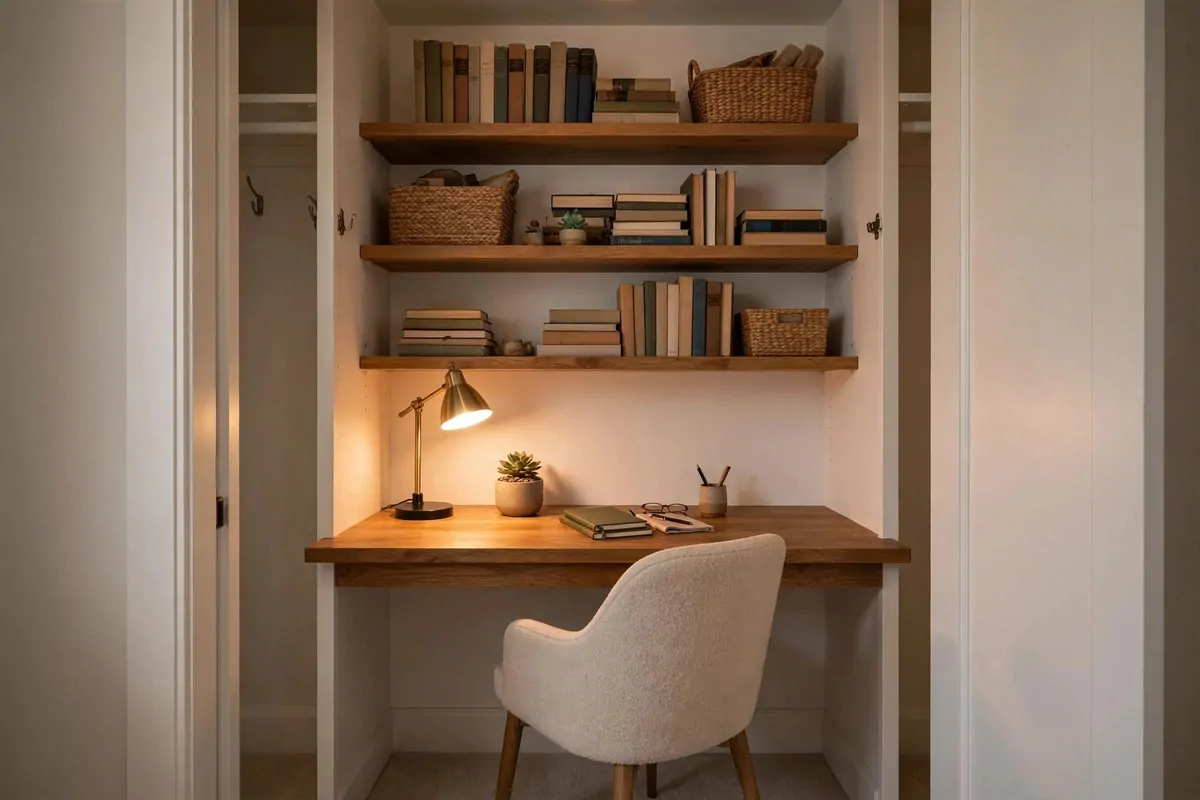
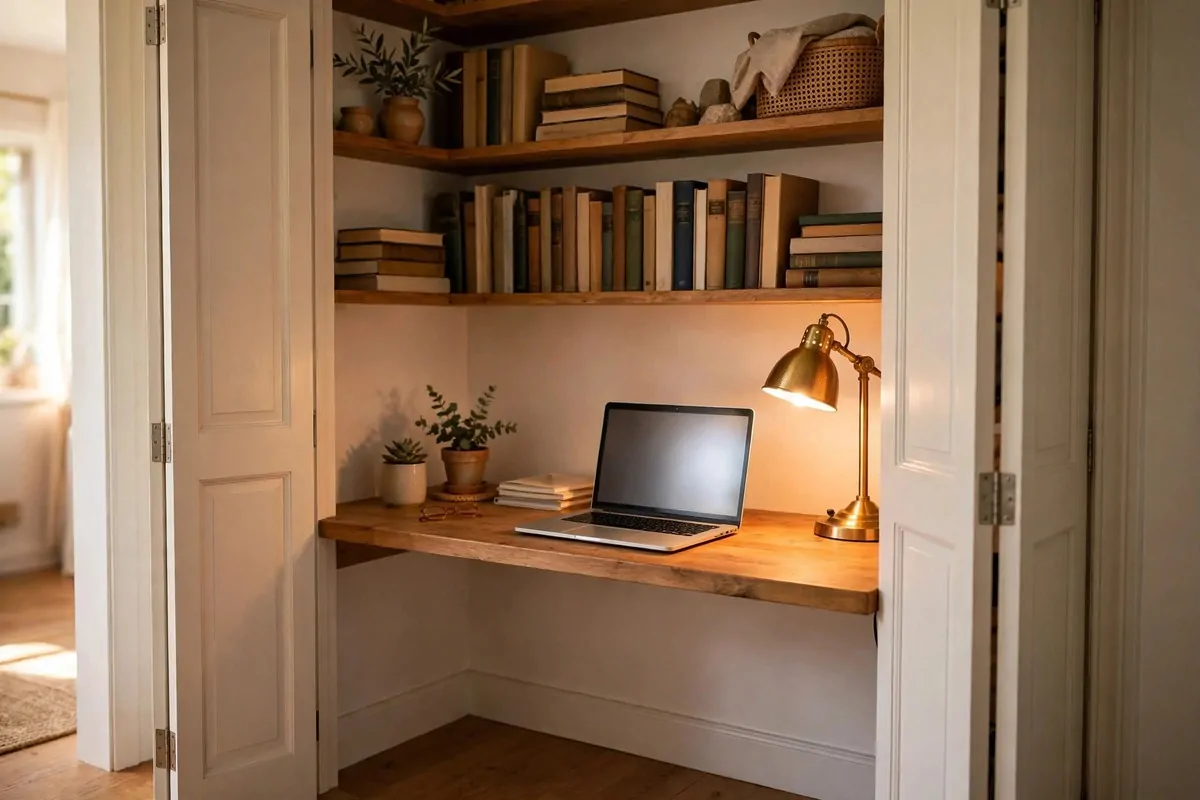
16 Cloffice Ideas Small Spaces Will Love

Cloffice. Say it out loud once and you will smile. It is a silly little word, closet plus office, and it means exactly what it sounds like. An office that lives inside a closet.
My cloffice is the smallest room I own, and it is also the one I use the most. It has a desk, a lamp, a chair that slides away, and a door I can shut when the day is done. That is the whole office. Nothing fancy. Nothing big. Just a closet that got a job.
These 16 Cloffice Ideas are all for small spaces. Each one fits inside a closet you already have, and each one makes that tiny space feel like a real place to work. Pick the one that matches your closet and start there.
The One-Wall Cloffice
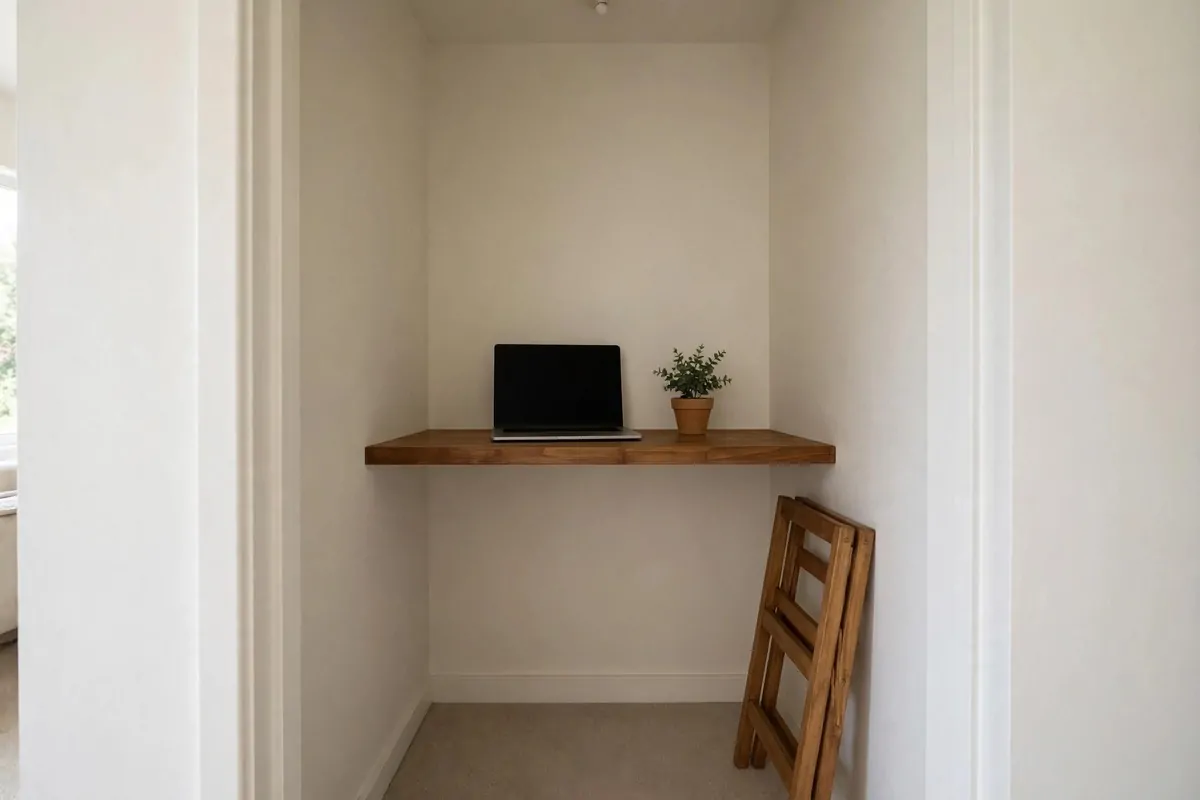
Some closets are too shallow for a full desk setup. The back wall is the only wall that matters, and this idea uses just that one wall.
Put a narrow shelf on the back wall at sitting height. Not a deep board. A shelf about twelve inches deep, just enough for a laptop and a notebook. The rest of the closet stays empty, and that empty space is the point.
Hang one shelf above it for your pens and a small plant. Hang a hook on the same wall for your headphones. Everything lives on one wall, and the other three walls do nothing at all.
I like this idea because it feels light. There is no desk filling the closet. No chair squeezed in. You pull up a stool, you work, and the room still feels like a closet with a secret.
The stool matters here. Pick one that folds flat and leans against the wall when you are done. A stool with legs that splay out will fight you in a narrow closet, and you will trip over it every morning.
Light comes from a small clip light on the top shelf. Clip it on, point it down at the laptop, and the whole wall glows warm. No wires in the wall. No electrician. Just a clip and a plug.
Keep the desk clear of everything except the laptop. One notebook. One pen. That is all a one-wall cloffice can hold, and that is enough for most workdays.
Try this one if your closet is shallow or if you share it with coats. The coats stay on the side walls, the work lives on the back wall, and nobody has to move out.
The Coat Closet Cloffice
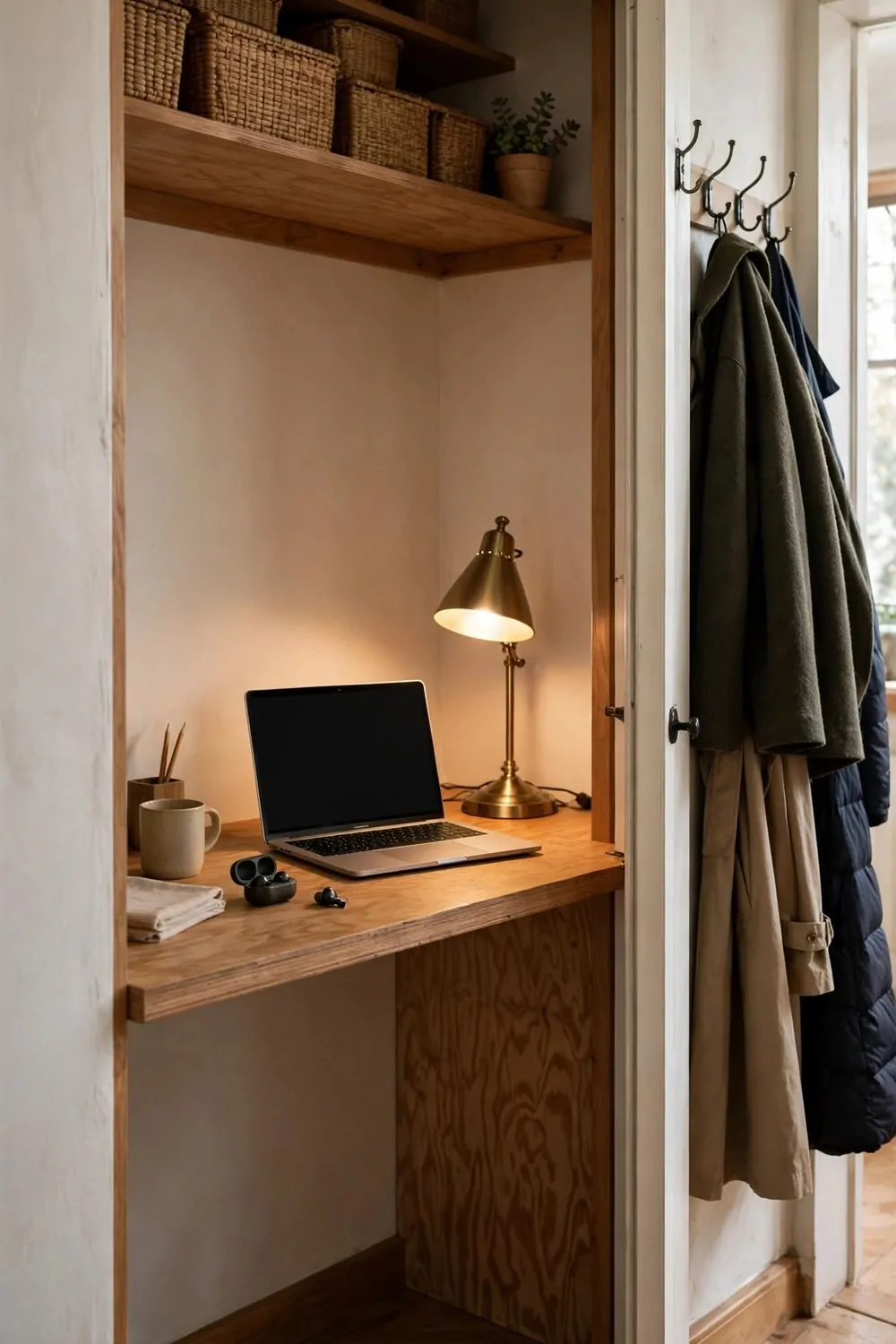
The closet by your front door is usually full of coats you never wear and shoes with no pairs. It is also the perfect size for a cloffice, because it sits right where you come home.
Clear the coats out first. Give the ones you never wear to someone who will. The ones you keep can move to a hook by the door, or into the bedroom closet. The hallway closet is about to get a better job.
Take the rod down and keep it somewhere safe. You might want it back one day, and a rod is easy to lose in a garage. Wrap it in a cloth so it does not scratch anything.
Fit a small desk board across the back wall. The coat closet is often wider than a bedroom closet, so the board can be a little longer. That extra length holds a notebook and a mug next to the laptop.
The best part of a hallway cloffice is the routine. You walk in from work, you hang your coat on the hook by the door, and you sit down at the desk for one more hour. Then you shut the door and the evening starts.
Guests will walk right past it. They see a closet door, not an office. Open the door and there is your whole workday, tidy and waiting.
Keep a basket by the door for shoes. Shoes on the floor of a hallway cloffice end up under the chair, and then you trip on them in the dark. A basket keeps the floor clear and the room calm.
This idea works best if your hallway is quiet in the evening. If the front door slams all night, pick a bedroom closet instead. A cloffice needs a little quiet to feel like an office.
The Linen Closet Cloffice
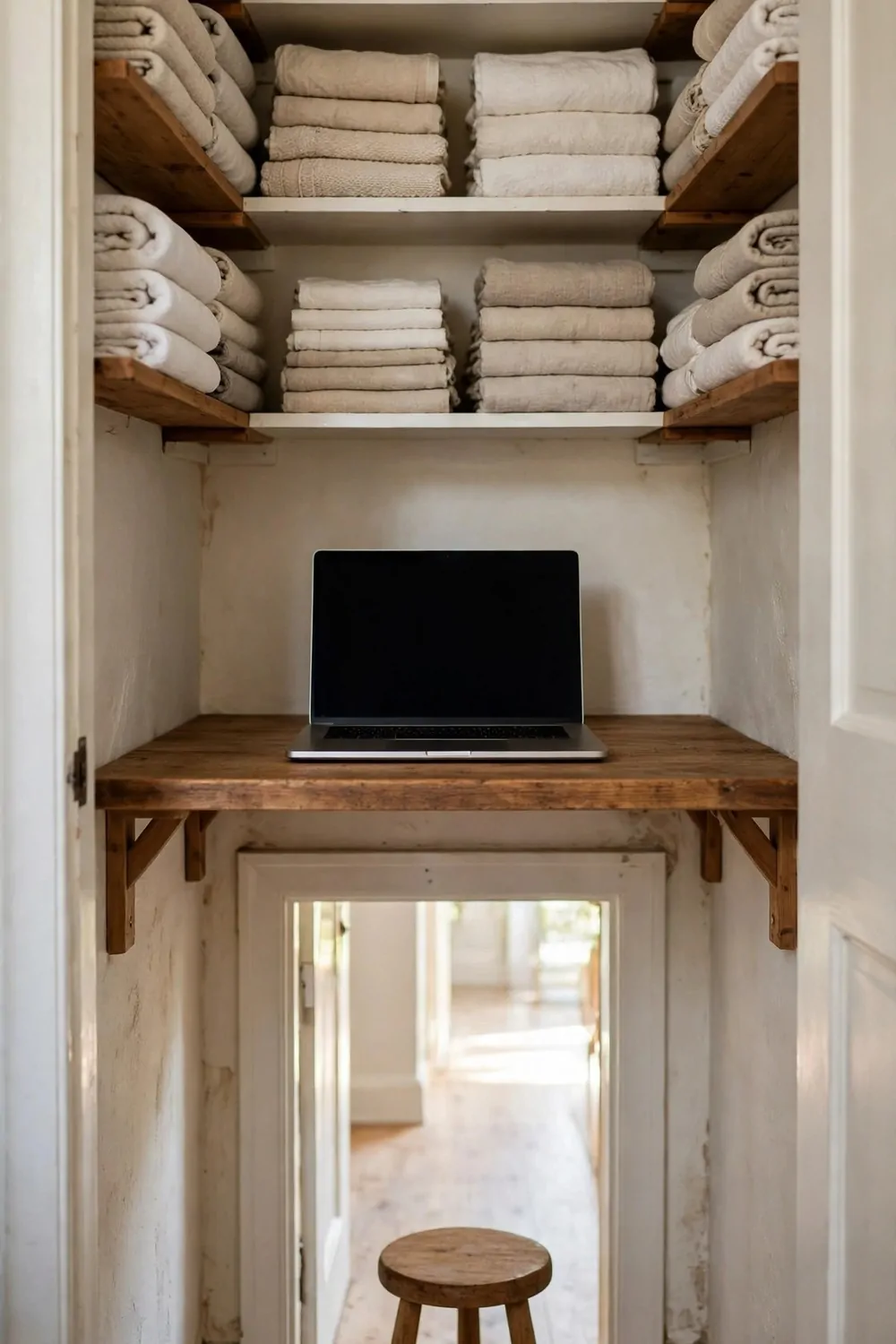
A linen closet is the narrowest closet in most homes. It holds towels and sheets on deep shelves, and it looks far too small for an office. It is not.
Take the shelves out and look at the space. A linen closet is usually about two feet wide and eighteen inches deep. That is small, but it is also just enough for a laptop and a very focused person.
Fit a desk board across the middle, right where the second shelf used to be. The board is short, so it only needs two small brackets. Paint it the same colour as the walls so it looks like it was always there.
Put your laptop on the board and sit on a stool in the doorway. Your knees will be close to the wall, but your screen will be right in front of you. It feels cozy, not cramped, once the light is on.
The shelves above the desk hold the rest. One shelf for notebooks. One shelf for a basket of chargers. The top shelf holds a box of spare paper. Everything is within arm’s reach because the closet is so small.
Light is the trick here. A linen closet has no window and no bulb worth mentioning. Stick a small battery light under the top shelf and the whole nook glows. Change the batteries once a month and forget about it.
Wipe the desk board once a week with a damp cloth. A linen closet collects dust faster than any other closet, and dust in a laptop fan makes it noisy. Ten seconds with a cloth keeps the whole nook fresh.
This is the cloffice for people who say they have no space at all. You have a linen closet. It is two feet wide. That is a desk, a lamp, and a door that shuts. What else does an office need?
The Two-Foot Cloffice
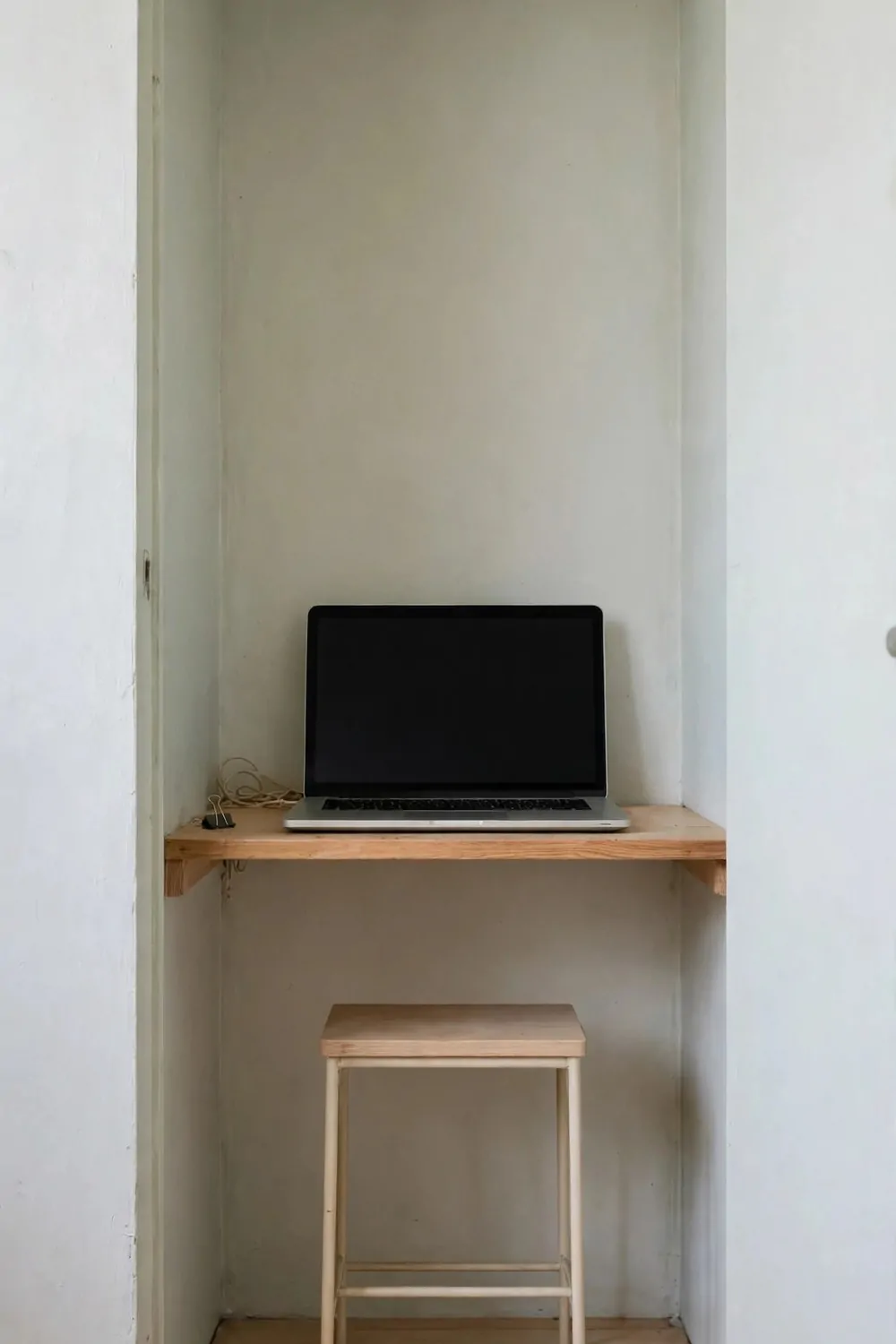
Two feet of width. That is all this cloffice gets, and it is honestly enough.
Measure your closet first. If it is between twenty-two and twenty-six inches wide, you have a two-foot cloffice. The desk board will be short, the chair will be narrow, and the whole setup will feel like a little booth.
Pick a stool that is narrower than the desk. A stool about fourteen inches wide slides all the way in and disappears under the board. A chair with arms will not fit, and it will bump the walls every time you move.
Here is a table for what fits at each width, so you can see what your closet can hold.
| Closet width | Desk that fits | Seat that fits |
|---|---|---|
| About 2 feet | Laptop only, no notebook | Narrow stool |
| About 3 feet | Laptop plus one notebook | Slim chair, no arms |
| About 4 feet | Laptop, notebook and lamp | Small office chair |
Keep the desk top empty except for the laptop. In a two-foot cloffice, one mug on the desk is clutter. Put the mug on a small shelf above, or on the floor beside the stool in a little basket.
Work in short stretches. A two-foot cloffice is perfect for an hour of emails or a morning of writing. It is not the place for an eight-hour day with three monitors. Use it for the work that fits, and do the big work somewhere else.
The door is your friend here. Shut it when you are done and the whole office vanishes. A two-foot closet with a shut door looks like nothing at all, and that is the best trick a small space can pull.
Try this one if every closet in your home feels too small. Two feet is a desk. Two feet is a lamp. Two feet is enough to get the day’s work done.
The Cloffice With Borrowed Light
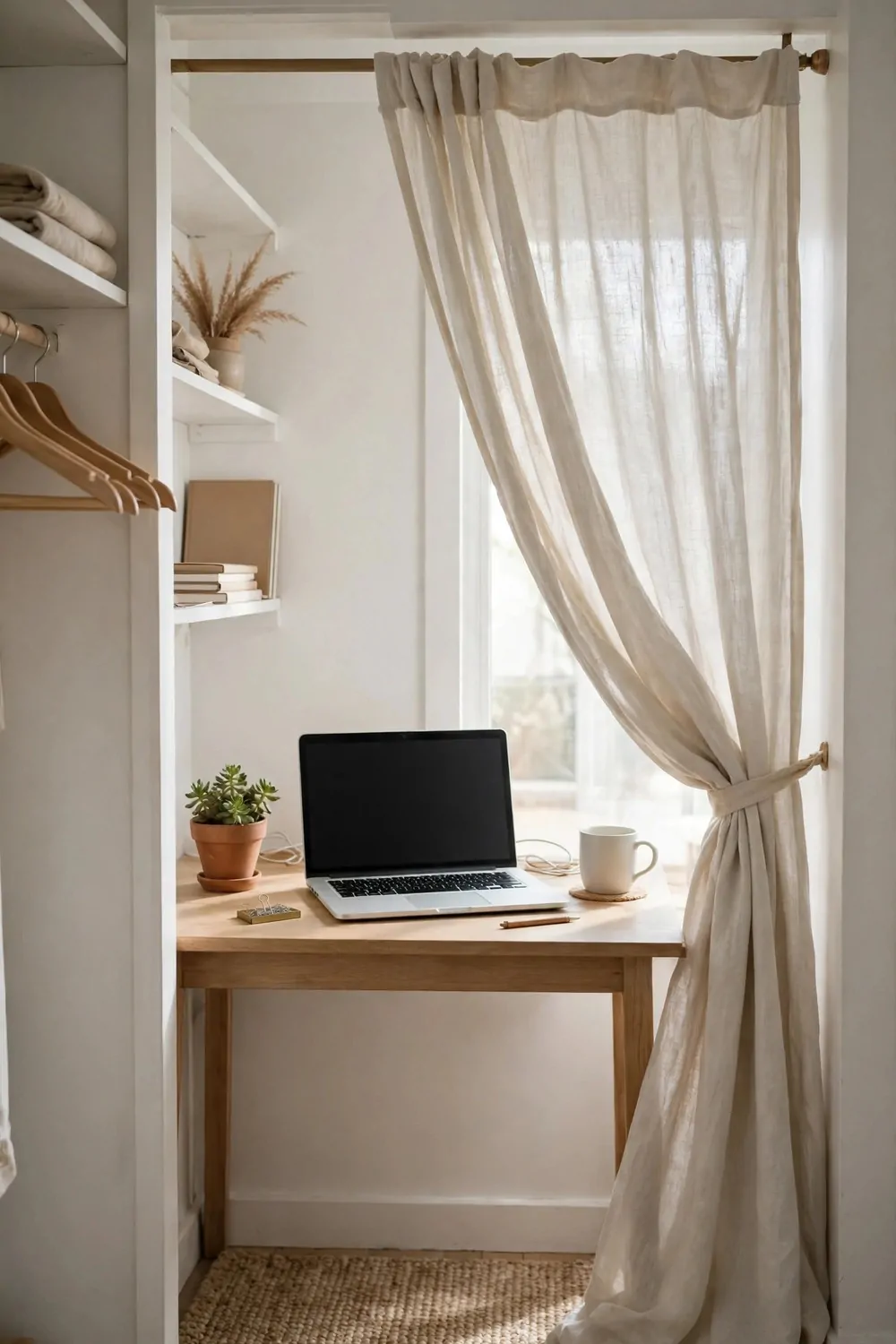
Closets are dark, and a dark office makes your eyes tired by lunch. This idea borrows light from the room outside instead of fighting the dark.
Start with the wall colour. Paint the inside of the closet a bright white, even if the rest of your bedroom is a soft colour. White walls bounce every bit of light that comes through the door, and the closet feels twice as bright.
Take the closet door off its hinges and store it safely. An open closet borrows light from the bedroom window all day. A closed door blocks it, and no lamp can make up for a whole window.
Hang a light fabric panel where the door used to be. A pale curtain in white or cream lets light through and still gives you privacy on a video call. It moves in the breeze a little, which makes the closet feel less like a box.
Put the desk on the side nearest the window. If the bedroom window is on the left wall, the desk goes on the left side of the closet opening. Light falls across the desk from the side, not from behind you, so your screen never glares.
Add a small mirror on the side wall of the closet, across from the opening. It catches the window light and throws it back into the dark corner. A mirror the size of a book is enough. It does not need to be fancy.
Work with the sun, not against it. Mornings are for the bright hours by the window. Afternoons are for the lamp. If the sun hits your screen at three o’clock, pull the curtain across and let the lamp take over.
This idea costs almost nothing. Paint, a curtain, a small mirror, and the courage to take a door off its hinges. The light does the rest, and your eyes will thank you by Friday.
The Video-Call Cloffice
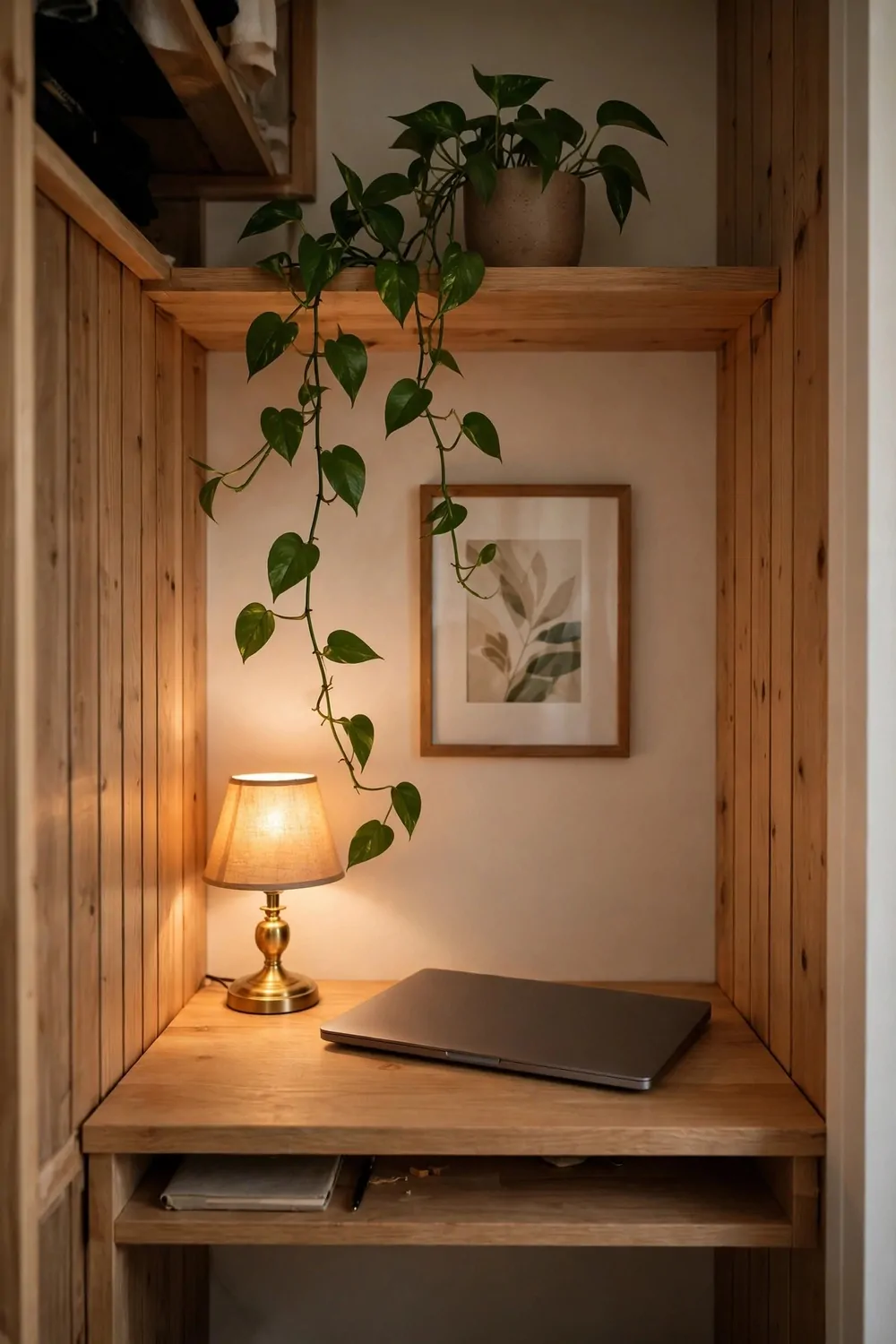
Most of my work happens on video calls now, and my cloffice had to look good on camera. This idea builds the whole closet around the little square of background people see.
Sit at your desk and open your laptop camera. Look at what is behind you in the frame. That small square is the only part of your office anyone ever sees, so make it the prettiest square in the house.
Hang one framed picture on the wall behind you, right in the middle of the frame. A print of hills, or a simple drawing, or a photo you love. One picture beats a wall full of clutter every time.
Put a small plant on the shelf behind your shoulder. A trailing plant in a hanging pot looks soft on camera, and it moves a little when the air moves. People always ask about the plant. Nobody ever asks about the cables.
Keep the desk behind you out of the frame. If the frame shows a messy shelf, move the shelf. If it shows a pile of papers, put the papers in a box. The camera only sees what you let it see.
Light your face, not the wall. A small lamp on the desk, pointed at you from the side, makes your face bright on screen. A lamp behind you makes you a dark shape. Test it with a friend before your next big call.
Dress the top of the desk like a stage. Laptop in the middle, notebook to the left, mug to the right. Everything else lives in a drawer. A tidy desk reads as a tidy mind on camera, even if the drawers are a mess.
This is the cloffice for people who work from home on calls all day. The closet gives you a quiet background, a door that shuts out the house noise, and a little square of calm that looks like a real office.
The Tag-Team Cloffice
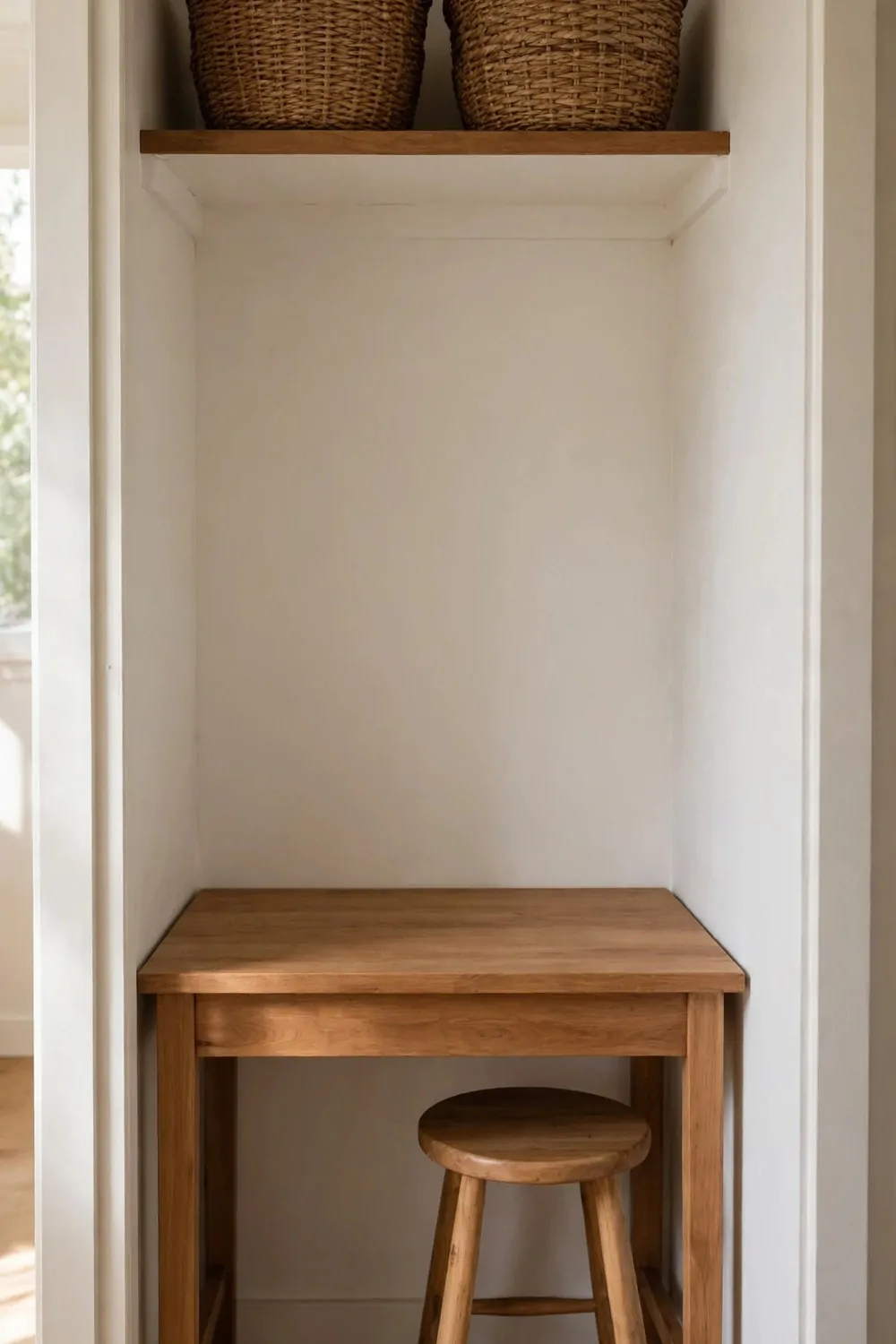
One closet, two workers, different hours. That is the tag-team cloffice, and it runs on a timetable, not on extra space.
My husband works mornings. I work afternoons. We share one closet, one desk, and one chair, and we never sit in it at the same time. The handover takes two minutes.
Each of us has a basket on the top shelf. His basket holds his notebook, his charger, and his mug. My basket holds mine. When your shift starts, you lift your basket down. When it ends, you lift it back up.
The desk stays the same for both of us. Same laptop stand, same lamp, same pen pot. The baskets hold the personal stuff, and the desk holds the shared stuff. That split keeps the peace.
Write the timetable on a small card inside the door. Mornings, his name. Afternoons, mine. Evenings, nobody, because the door stays shut and the room goes back to being a bedroom.
The chair height matters when two people share. A stool with a twist seat adjusts in seconds. A fixed chair means one person is always too high or too low, and that gets old fast.
Leave the desk tidy for the next person. That is the one rule of a tag-team cloffice. Clear the papers, put the mug in the kitchen, and wipe the desk. The next shift starts clean, and nobody starts the day annoyed.
Try this one if you live with another person who works from home and you only have one spare closet. Two shifts, two baskets, one desk. It works better than two desks in one room, because nobody is ever in anybody’s way.
The Pack-It-Away Cloffice
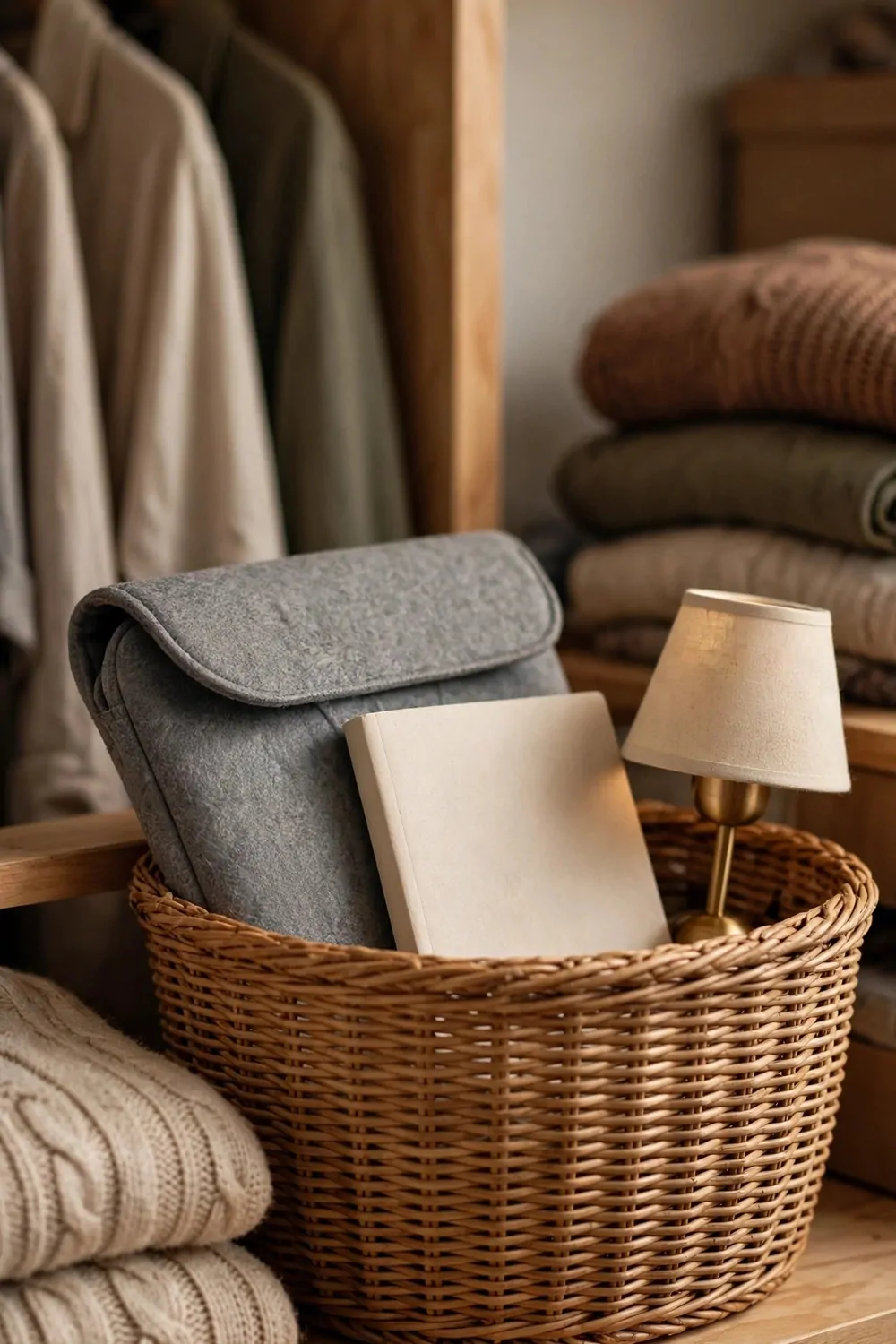
Some closets have to be an office by day and a closet again by night. This idea packs the whole office into one basket every evening, so the closet changes jobs in five minutes.
Pick a basket that fits on the top shelf. A woven basket about the size of a shoebox, with handles. That basket is your office. Everything you need for work lives inside it.
Here is what goes in the basket each evening.
- Laptop in its sleeve, standing on its side.
- Notebook, pens and phone charger in a small pouch.
- The desk lamp, if it is small enough to lift off.
- Any papers you need tomorrow, folded once, on top.
In the morning, you lift the basket down, set the desk up, and work. The closet door stays open while you work, and the basket sits empty on the floor, waiting.
At five o’clock, you run the pack-down. Laptop into the sleeve. Papers into the pouch. Lamp back into the basket. Basket back onto the shelf. Five minutes, and the closet is a closet again.
The desk board stays put. A board on brackets does not need packing away. Only the work on top of it moves. That is what makes the pack-down so fast.
Keep a small hook inside the door for the basket handles. On days when the top shelf is full, the basket hangs on the hook instead. It swings a little when the door moves, and that is fine.
This is the cloffice for people who share their home with guests, kids, or a partner who wants the room back at night. The office packs away, the closet comes back, and nobody has to look at work after dinner.
The Thrifted Cloffice
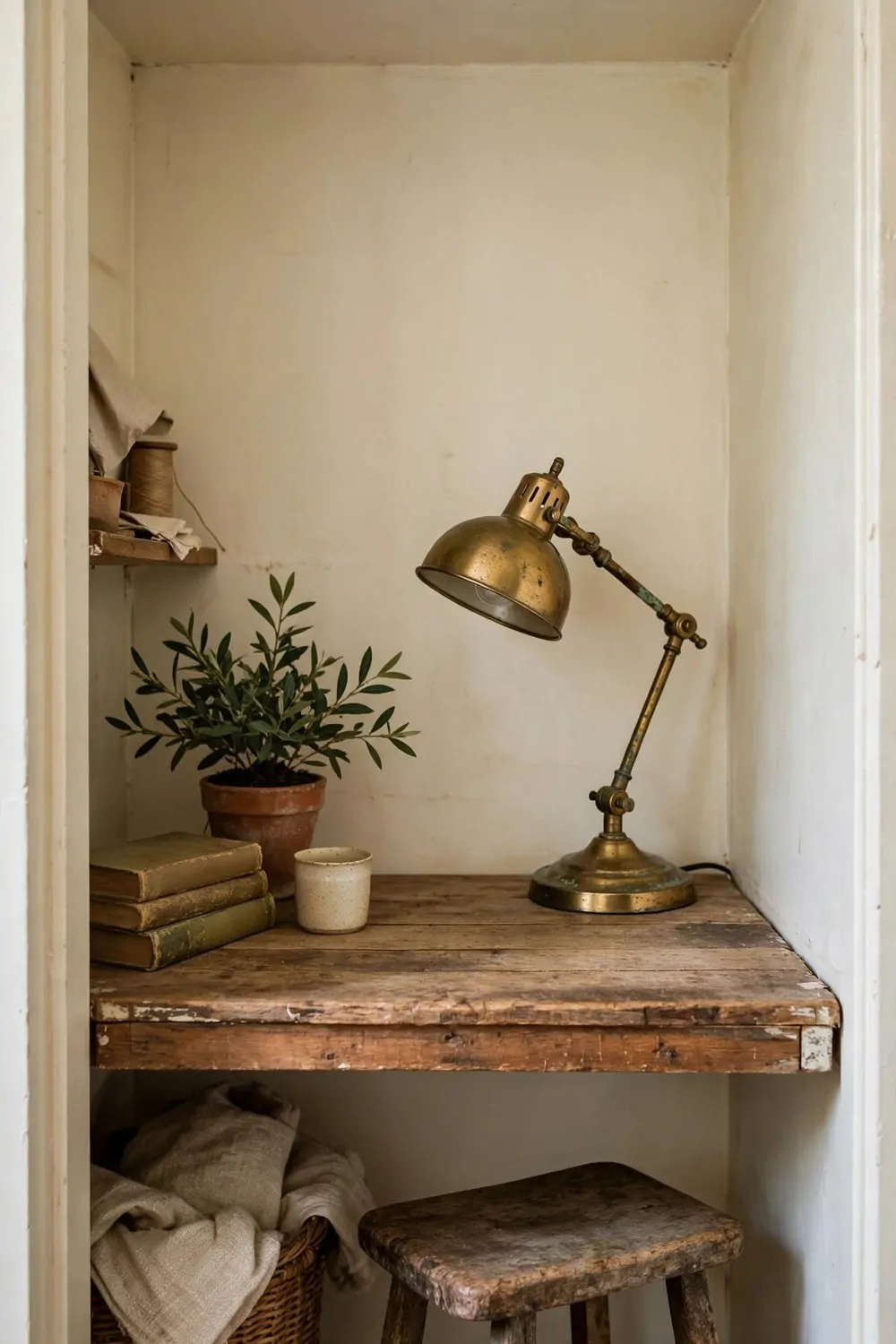
A cloffice does not need new furniture. Mine is built almost entirely from secondhand finds, and it looks better for it.
Start at the thrift shop with a short list, not a wandering eye. A small desk board. A stool. A lamp. A basket. Four things, and you walk out when you have them. A wandering eye buys a vase and forgets the desk.
The desk board is the easiest find. An old shelf, a cupboard door, or a piece of countertop from a kitchen remodel. Ask at the shop if they have any flat wood in the back. They usually do, and it costs less than lunch.
Here is a table for what my thrifted cloffice cost, so you can see how little it takes.
| Piece | Where I found it | What I paid |
|---|---|---|
| Desk board | Old cupboard door | Free, from a neighbour |
| Stool | Thrift shop | A few dollars |
| Lamp | Yard sale | A few dollars |
| Basket and jars | Thrift shop | A few dollars |
| Paint and screws | Hardware shop | A few dollars |
Sand the board before you paint it. Old wood has bumps and sticky spots, and paint over bumps looks worse than no paint at all. Ten minutes with sandpaper and the board feels brand new.
Paint everything one colour. The board, the stool, the basket handles. One colour across the whole closet makes secondhand pieces look like a set. My colour is a soft cream, and it hides every scratch.
Keep one thing old and visible on purpose. My lamp has a little dent on the base, and I left it. A perfect room feels like a shop. One dent feels like a home.
This is the cloffice for a tight budget and a patient shopper. It takes a few weekends of looking, not one big shopping trip. The room grows piece by piece, and every piece has a story.
The Green Cloffice
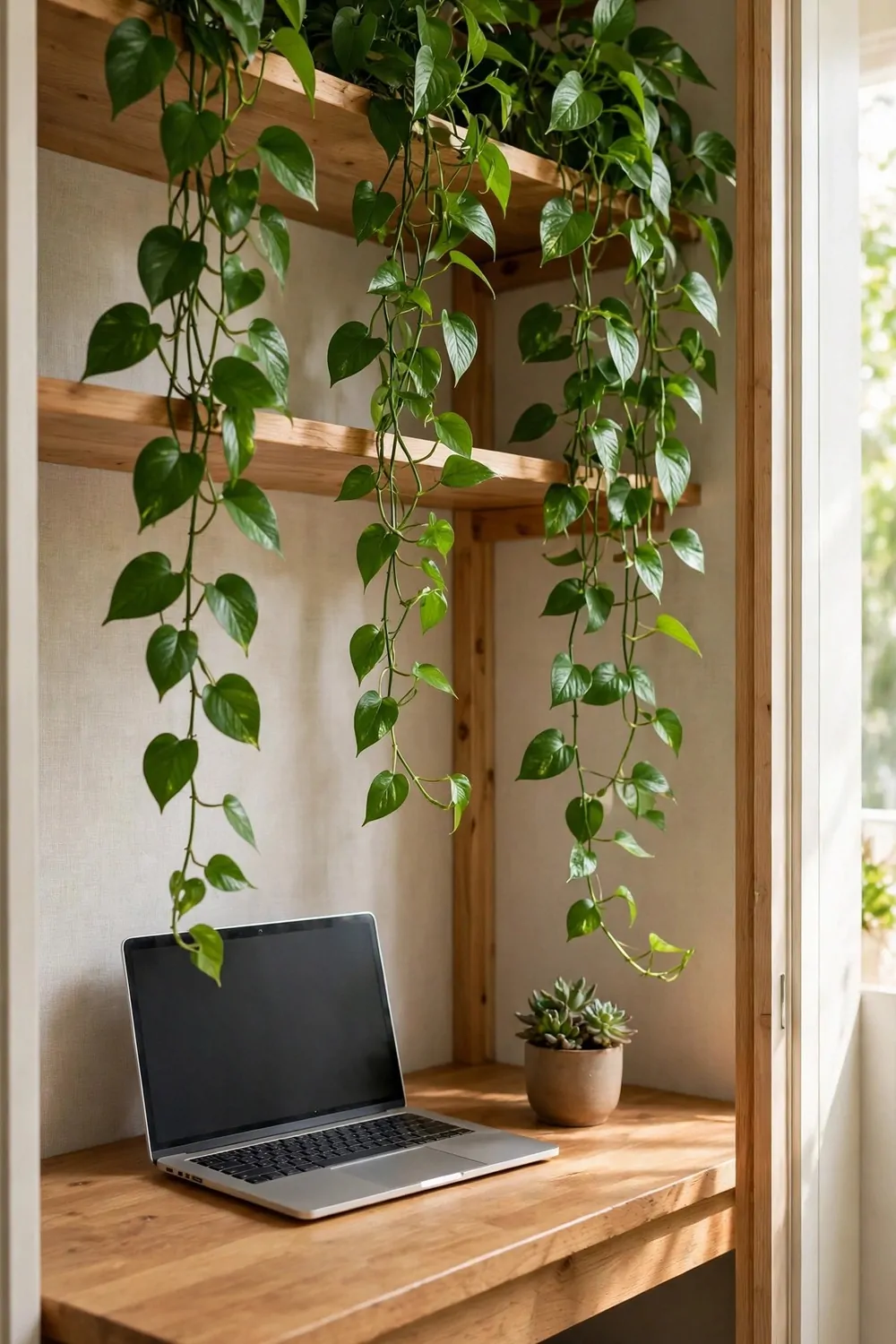
Plants changed my cloffice more than any desk ever did. This idea turns the closet into a little green room, and the work feels easier inside it.
Start with one trailing plant on the top shelf. A pothos or a philodendron, the kind with long vines that hang down like green curtains. It needs almost no care, and it grows fast enough that you notice the change every week.
Add a small plant on the desk itself. A succulent in a tiny pot, right beside the laptop. It is the first thing you see when you look up from the screen, and it rests your eyes in a way a blank wall never does.
Hang a third plant from a hook on the side wall. A hanging pot at eye level fills the empty air in the closet, and the leaves move a little when you open the door. It feels alive in there, not like a cupboard.
Water them all on the same day. I water mine on Sunday evening, while I tidy the desk for Monday. One jug, three plants, two minutes. A routine keeps them alive, and a dead plant in a closet is sadder than no plant at all.
Pick plants that like low light. A closet has no window, so sun-loving plants will sulk and drop leaves. Pothos, snake plants, and small ferns are happy in the shade, and they forgive you when you forget them for a week.
Keep the leaves off the desk. A vine that creeps across the keyboard is charming for one day and annoying by Friday. Trim the vines when they reach the desk edge, and tuck the cuttings into a jar of water on the shelf. They grow roots, and soon you have a fourth plant for free.
This is the cloffice for people who feel tired in small rooms. The green softens the walls, the air feels fresher, and the closet stops feeling like a box. It feels like a little garden with a desk in it.
The Cloffice You Can Take With You
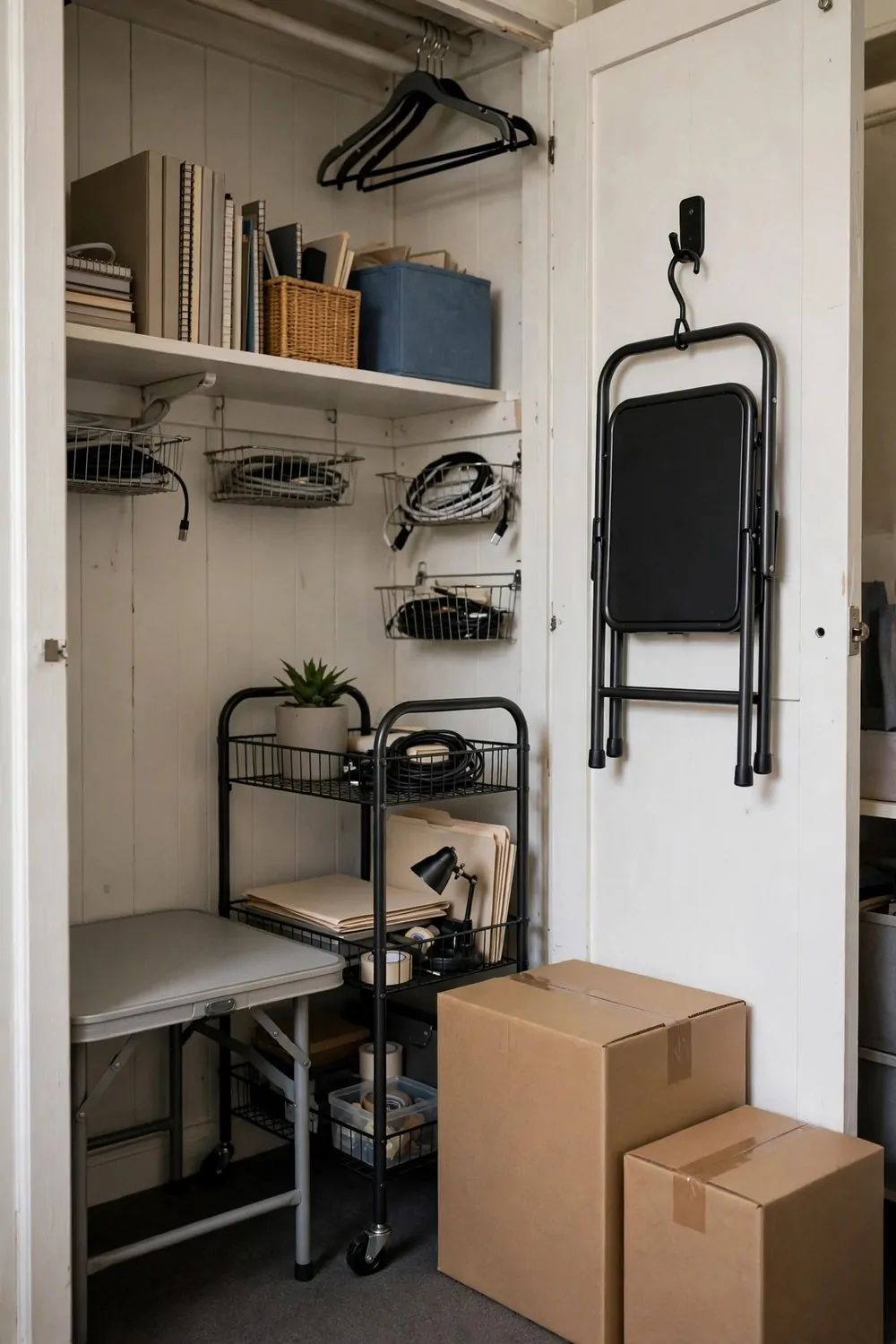
Some of us move a lot. Rented flats, new cities, a spare room that changes every year. This cloffice is a kit, not a build, and it moves house in two boxes.
The kit starts with a folding table. Not a wall-mounted board. A small table that folds flat, stands on its own legs, and slides into any closet. It is your desk, and it has no screws in any wall.
Add a rolling cart for everything else. The cart holds your notebooks, your chargers, and your lamp. It rolls into the closet in the morning and rolls back out at night. When you move, the cart rolls straight into the van.
Your chair is a folding stool that hangs on a hook. It weighs almost nothing, it folds flat, and it hangs on the inside of the closet door when you are not using it. A chair on a hook is the strangest sight in the house, and it works perfectly.
Keep your cables in a zip pouch, not loose in a drawer. One pouch holds the laptop charger, the phone cable, and a spare plug. When you move, the pouch goes into the first box you pack, and your office is running again the same evening.
Take a photo of your setup before you pack it. One photo of the desk, one of the cart, one of the door. In the new home, you copy the photos. The cloffice looks the same in every house, because the kit is the same.
Label the two boxes with tape and a marker. Box one holds the table and the stool. Box two holds the cart and the pouch. Labels save you from opening five boxes to find one charger on moving day.
This is the cloffice for movers, renters, and anyone who hates the idea of building something they cannot keep. Two boxes, one cart, one table. The office goes where you go, and no wall ever knows it was there.
The Night-Owl Cloffice
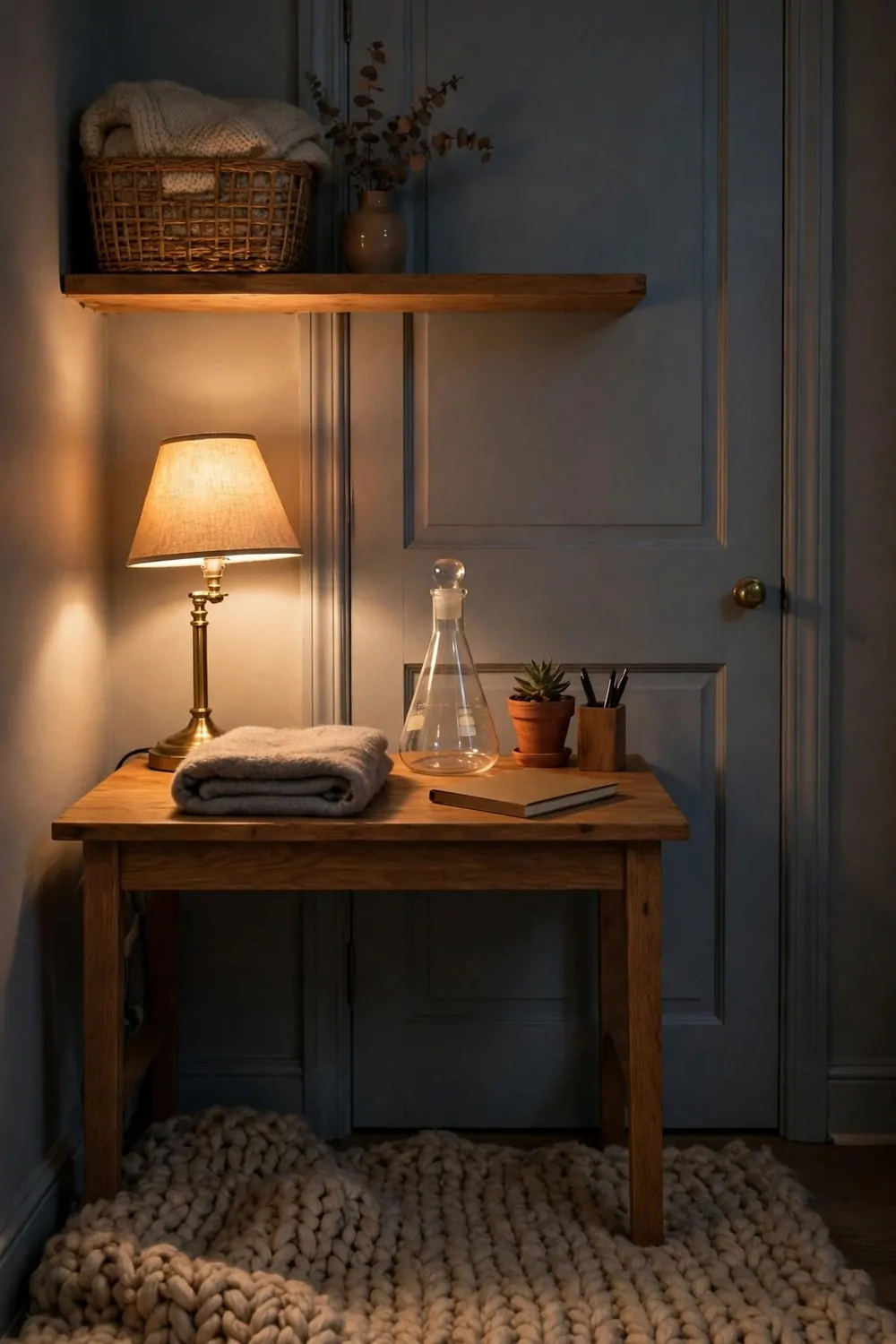
I do my best work after dark, when the house is quiet and nobody needs anything. This cloffice is built for late hours, soft light, and silence.
The first rule is warm light only. A warm bulb on the desk, a soft glow under the shelf, and nothing white or bright. White light at midnight feels like an office at noon, and your brain stays wide awake long after you stop working.
Close the closet door while you work. A shut door keeps the light inside the closet and out of the hallway, so nobody else in the house wakes up. It also keeps the sound in. Your typing stays yours.
Put a thick rug on the closet floor. Bare wood or tile sounds loud at night, and every chair scrape echoes down the hall. A rug swallows the sound, and your feet stay warm while you work.
Keep a small kettle or a flask of tea on the shelf. A night owl needs something warm to sip, and walking to the kitchen at midnight wakes the whole house. A flask on the shelf means you never leave the closet until you are done.
Wear soft socks or slippers in the closet at night. Cold feet pull you out of focus faster than any noise, and a warm pair of socks is the cheapest comfort in the whole room.
Set a hard stop time and write it on a card inside the door. Mine says eleven o’clock. When the time comes, I close the laptop, switch off the lamp, and shut the door. A night cloffice without a stop time will keep you up until three in the morning, and you will regret it at seven.
Work in the dark corners of the house, not the bright ones. A night-owl cloffice is a small, warm, quiet pocket. It is the opposite of a big bright office, and that is exactly why it works so well after dark.
The Hidden-Storage Cloffice
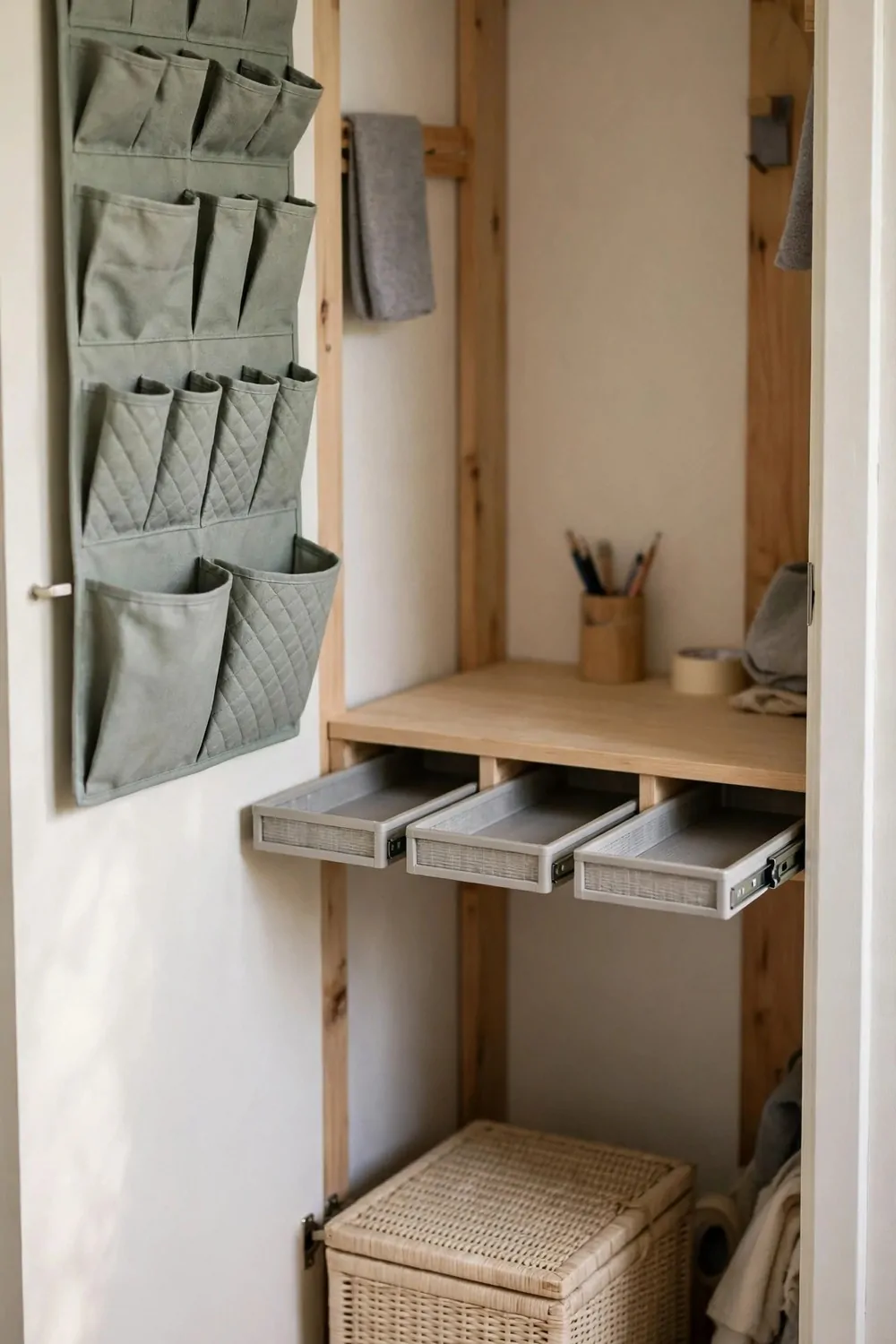
A small office needs more storage than it looks like it has. This idea hides storage everywhere, so the desk stays clear and the closet looks almost empty.
Start under the desk board. Screw two shallow trays to the underside, right where your knees do not reach. The trays hold pens, sticky notes, and spare cables, and nobody can see them from the doorway. They slide out like secret drawers.
Add a false back to one shelf. A thin board, painted the same colour as the wall, stands a few inches in front of the real back wall. The gap behind it holds papers, a spare charger, and the notebook you only use once a month.
Hang a fabric pocket on the inside of the door. A pocket with three rows holds scissors, tape, and a ruler, flat against the door. When the door is open, the pockets face the room. When it shuts, they disappear.
Put a lidded box on the floor under the desk and call it the footrest. It holds the printer paper and the spare notebooks, and your feet rest on the lid while you work. A box that does two jobs is the best kind of storage.
Keep one shelf completely empty on purpose. An empty shelf is a hidden spot for the thing that arrives tomorrow. A cloffice with no spare space falls apart the first time you bring something new home.
Label the hidden spots in pencil, on the inside edge where only you can see it. “Pens” under the desk. “Paper” behind the shelf. A hidden spot you cannot find is just a lost spot, and a label fixes that in seconds.
This is the cloffice for people who own more stuff than their desk shows. From the doorway, it looks like a laptop and a lamp. Open the trays, lift the lid, and the whole office is hiding in plain sight.
The Cloffice That Grows in Stages
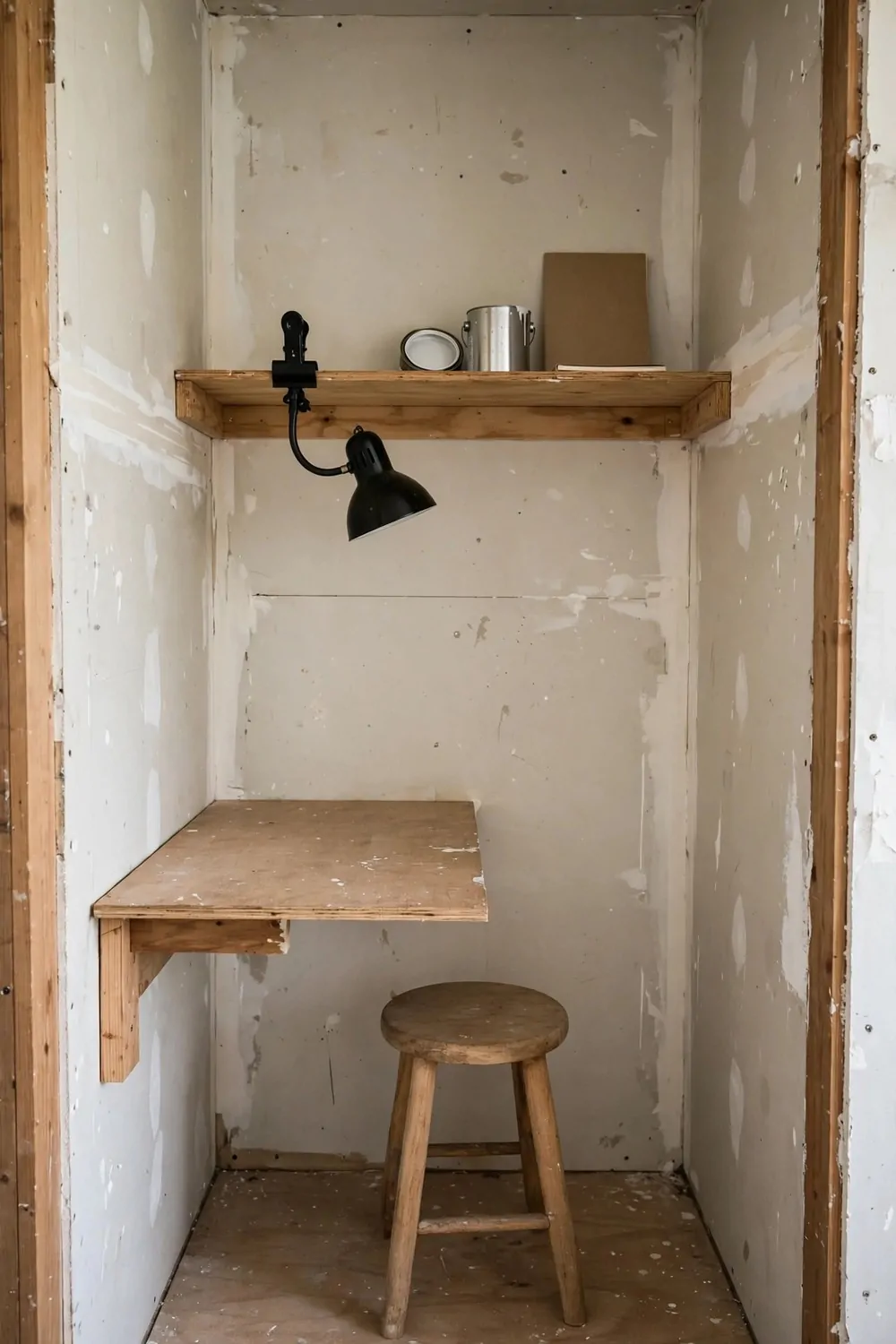
You do not have to build the whole cloffice in one weekend. This idea grows in three stages, and each stage makes the last one better.
Stage one is the starter. A board on brackets, a stool, and a clip light. That is it. You can build it in one afternoon, and you can start working in it the same evening. Most people stop here for a month, and that is fine.
Stage two is the shelves. Two shelves above the desk, a basket for cables, and a small plant. The closet starts to feel like an office instead of a desk in a cupboard. This stage takes one more weekend, and it changes how the room feels.
Stage three is the finish. A curtain on the opening, a rug on the floor, and a picture on the wall behind the desk. The closet looks finished, and the office feels like a room you chose, not a corner you settled for.
Here is a table for the three stages, so you can see what each one adds.
| Stage | What you add | When to do it |
|---|---|---|
| Stage one | Desk board, stool, clip light | First weekend |
| Stage two | Shelves, cable basket, plant | After a month of working in it |
| Stage three | Curtain, rug, picture | When the room feels almost right |
Live with each stage before you build the next one. A month of working in stage one teaches you what you actually need. Maybe you need a shelf more than a curtain. Maybe you need a better stool more than a rug. The room tells you, if you listen.
Do not buy everything at once. A cloffice built in one shopping trip has things you never use. A cloffice built in stages has only the things you reached for, and every piece earns its place.
This is the cloffice for people who feel overwhelmed by a big project. One stage, one weekend, one small change. Three stages later, the closet is an office, and you barely noticed it happening.
The Slide-Out Desk Cloffice
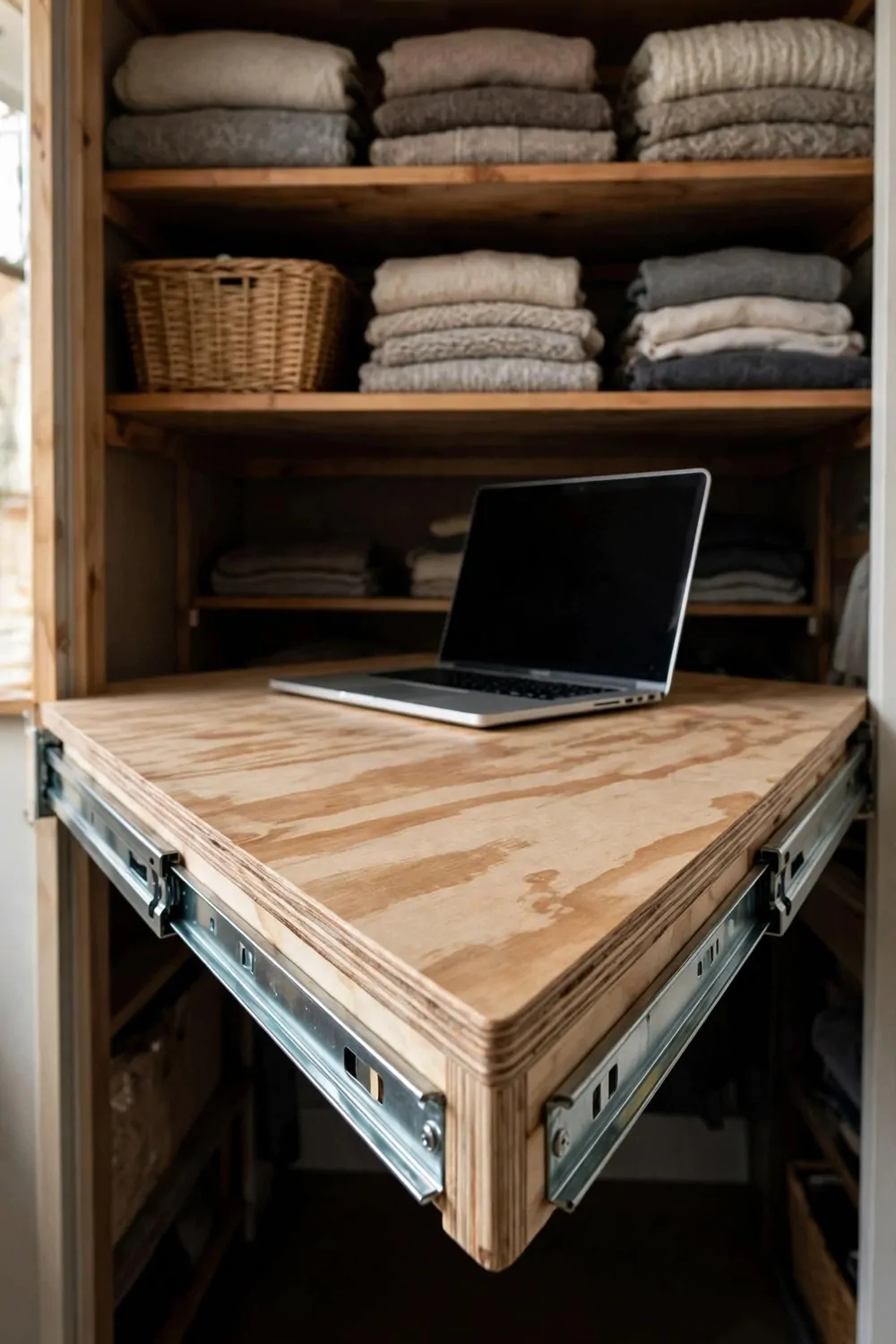
A fold-down desk swings down. A slide-out desk pulls toward you, like a drawer. This idea is for closets where a swinging board would hit the door or the chair.
Mount two drawer slides on the side walls of the closet, at sitting height. The desk board sits on the slides, and it pulls out toward you when you need it, and pushes back in when you are done.
The board is shallow, about sixteen inches deep. It holds a laptop and nothing else, and that is the point. A shallow board pulls out easily, and it slides back in without catching on anything.
Put a small stop block at the back of each slide. The block keeps the board from pulling all the way out and landing on your lap. A board on the floor is a mess. A board that stops where it should is a desk.
Keep the top of the board clear when it is pushed in. No laptop, no mug, no notebook. A slide-out desk only works if it slides, and it only slides if the top is empty.
Oil the slides once a year with a drop of plain oil on a cloth. Dry slides stick and squeak, and a squeaky desk at midnight wakes the house. One drop keeps the board gliding smooth.
The shelves above the desk stay put. They hold the laptop when it is not in use, the notebook, and a small lamp. When you pull the desk out, you lift the laptop down. When you push it in, you lift it back up.
This is the cloffice for narrow closets with doors that open inward, or for rooms where a folding board would hit the bed. The desk slides, the room stays the same, and the office appears with one pull.
The Cloffice That Doubles as a Vanity
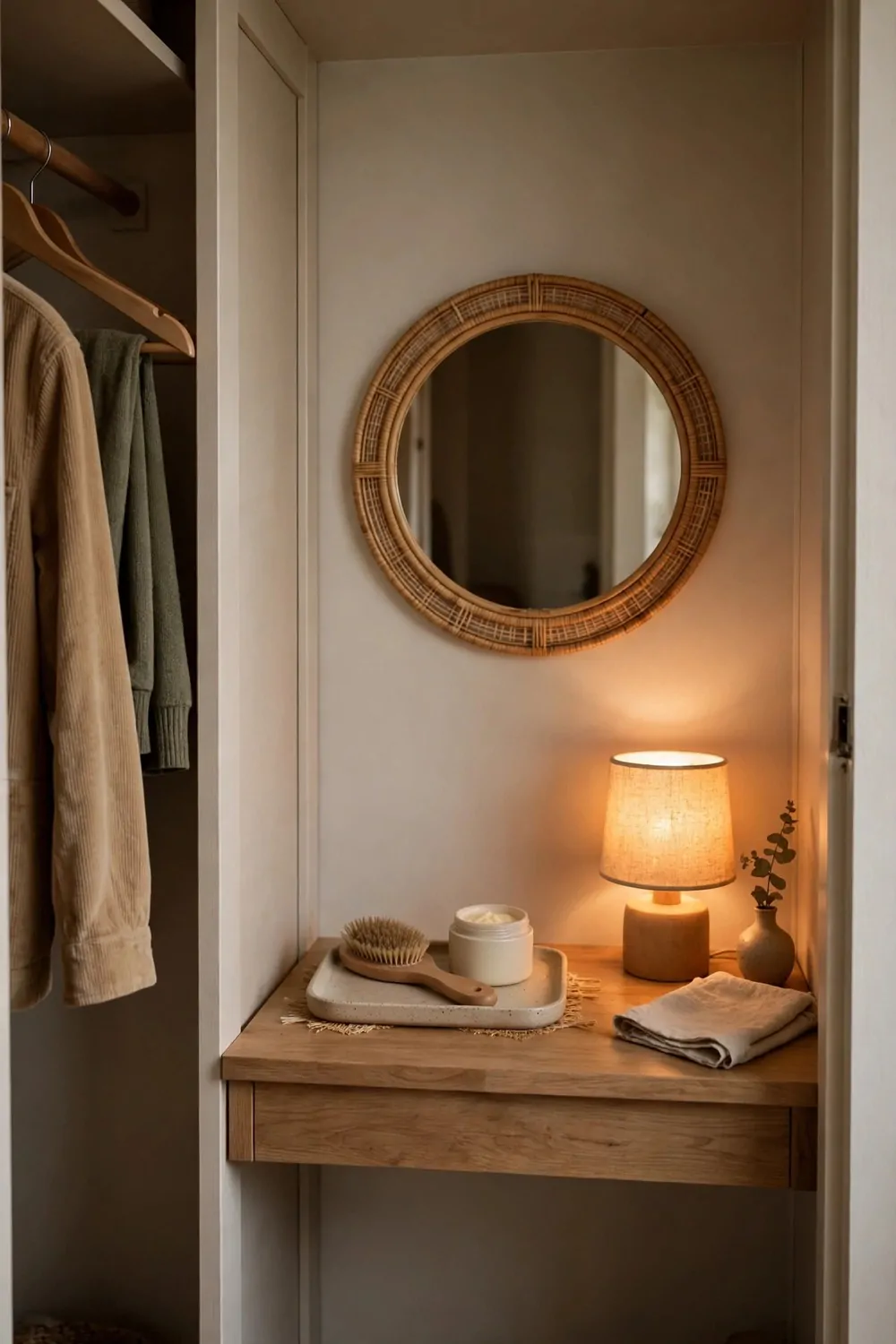
My bedroom closet holds my clothes, my mirror, and my office. This idea makes the desk do two jobs: a dressing table in the morning, and an office by day.
Put a mirror on the back wall of the closet, right above the desk board. A round mirror in a plain frame is enough. In the morning, the mirror is for your hair. By nine o’clock, it is just a bright spot on the wall behind your screen.
Keep a small tray on the desk for morning things. A hairbrush, a little pot of cream, and a pair of earrings. The tray holds them all, and when work starts, the tray slides onto the shelf above. One move, and the vanity becomes a desk.
The lamp does two jobs too. A warm lamp on the desk lights your face in the morning and lights your notebook in the afternoon. One lamp, two jobs, and no second lamp taking up space.
Store the office things in a drawer under the desk and the vanity things in a basket on the shelf. A drawer for work, a basket for mornings. Nothing mixes, and nothing gets lost.
Pick a stool that works for both jobs. A low stool with a soft seat is kind to your back at the desk and just right for morning hair. One stool, two jobs, and no extra chair in the way.
Shut the closet door at night and the whole thing vanishes. The bedroom looks like a bedroom, the vanity is hidden, and the office is hidden too. One door hides two rooms.
This is the cloffice for people who share a bedroom with their office and their wardrobe all at once. One closet, one desk, two jobs, and a mirror that watches over both of them.
Keep Reading
If you liked these cloffice ideas, these closet office ideas will give you even more ways to make a small space work hard.
- 18 Closet Turned Office Makeovers That Look Unbelievable
- 15 Office and Closet Combo Room Setups That Work Twice as Hard
- 17 Tiny Closet Office Ideas for Even the Smallest Spaces
A small space can hold a whole workday. It just needs a desk that fits, a little light, and a door you can shut when the day is done. Pick your favourite cloffice idea from this list, build it this weekend, and let your smallest room surprise you.