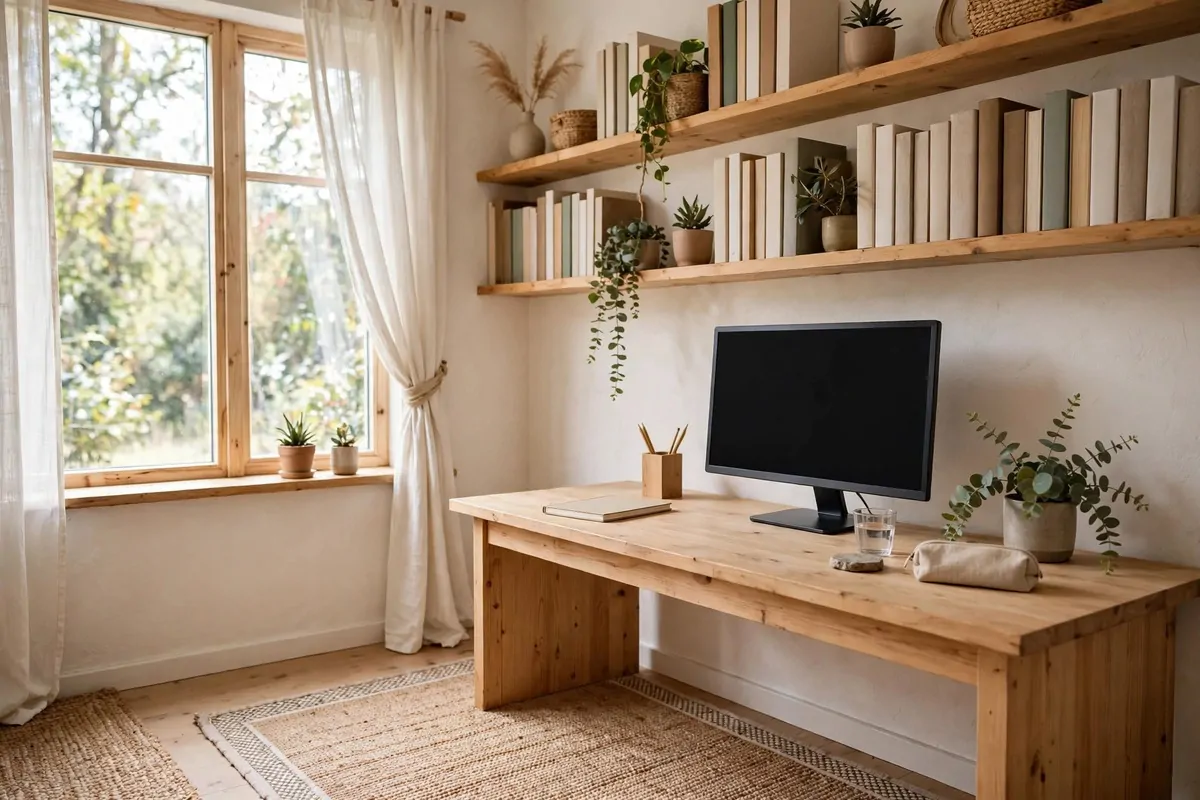
21 Ikea Home Office Hacks That Look Way More Expensive

Run your finger along the front edge of my desk. Feel that thin strip of wood trim? It was not there last month.
My desk used to look like what it is. A plain flat-pack desk that came in a brown box. Nothing wrong with it. It held my laptop. It held my coffee. But it looked cheap, and I knew it every time I sat down.
Then I spent one Sunday on tiny fixes. A strip of trim here. New handles there. One coat of paint on a shelf back. Nothing big. Nothing hard. And the next morning my office looked like it cost three times what I paid for it.
That is what this list is about. Small hacks. Cheap tricks. The kind of moves that make simple flat-pack pieces look like they came from a fancy furniture shop.
Before we get going, one honest note. These rooms take their cue from the flat-pack, build-it-yourself style. They are not the brand’s own rooms, and this site has no link to the brand at all. What follows is my own take on that simple, plain, put-it-together-yourself style, with little tricks anyone can copy at home.
These 21 Ikea Home Office Hacks are all about the finish. The edges. The handles. The light. The way things line up. You do not need new furniture. You need a few small changes that make the furniture you already have look like it was made just for your room.
Pick three hacks from this list and try them this weekend. Start with the one that costs the least. You will see the difference before lunch.
The Thin Strip of Trim That Fools Everyone
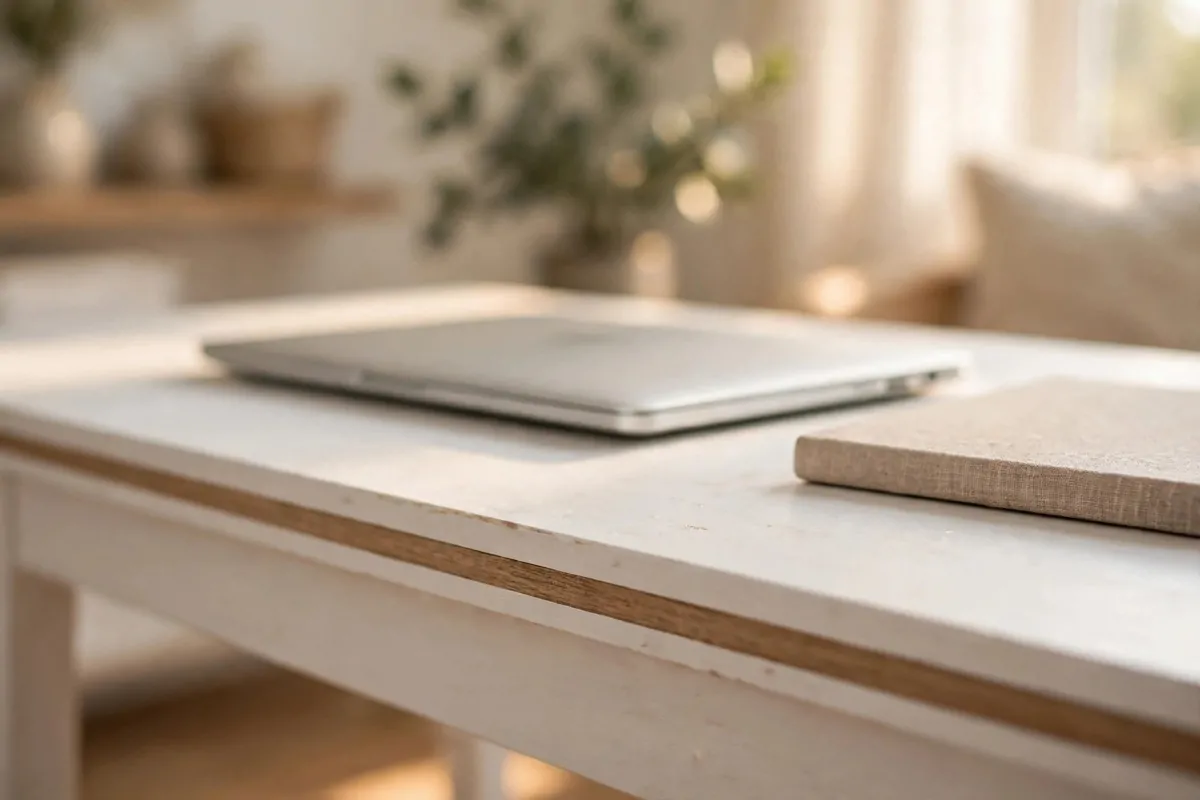
A plain desk edge gives the whole thing away. It is flat. It is sharp. It looks like it came out of a box.
Glue a thin strip of wood trim along the front edge and the desk changes completely. The edge looks thick now. It looks like solid wood. Your eye reads it as a real carpenter-made desk.
You can buy trim strips at any hardware shop. They come in long thin lengths. Pine is the cheapest and the easiest to paint.
Cut the strip to the width of your desk with a small hand saw. Sand the ends smooth so they do not snag your sleeves.
Glue it on with wood glue and hold it in place with painter’s tape while it dries. Leave it overnight if you can.
Paint the trim the same colour as the desk. When the paint dries, the line where the trim meets the desk almost disappears.
Run your hand along the edge when it is done. It feels thick. It feels solid. It feels like a desk that cost far more than yours did.
Try this one first if your desk is the plainest thing in the room. One strip of trim, one coat of paint, and the whole desk gets a new story.
Swap the Handles and Watch the Room Change
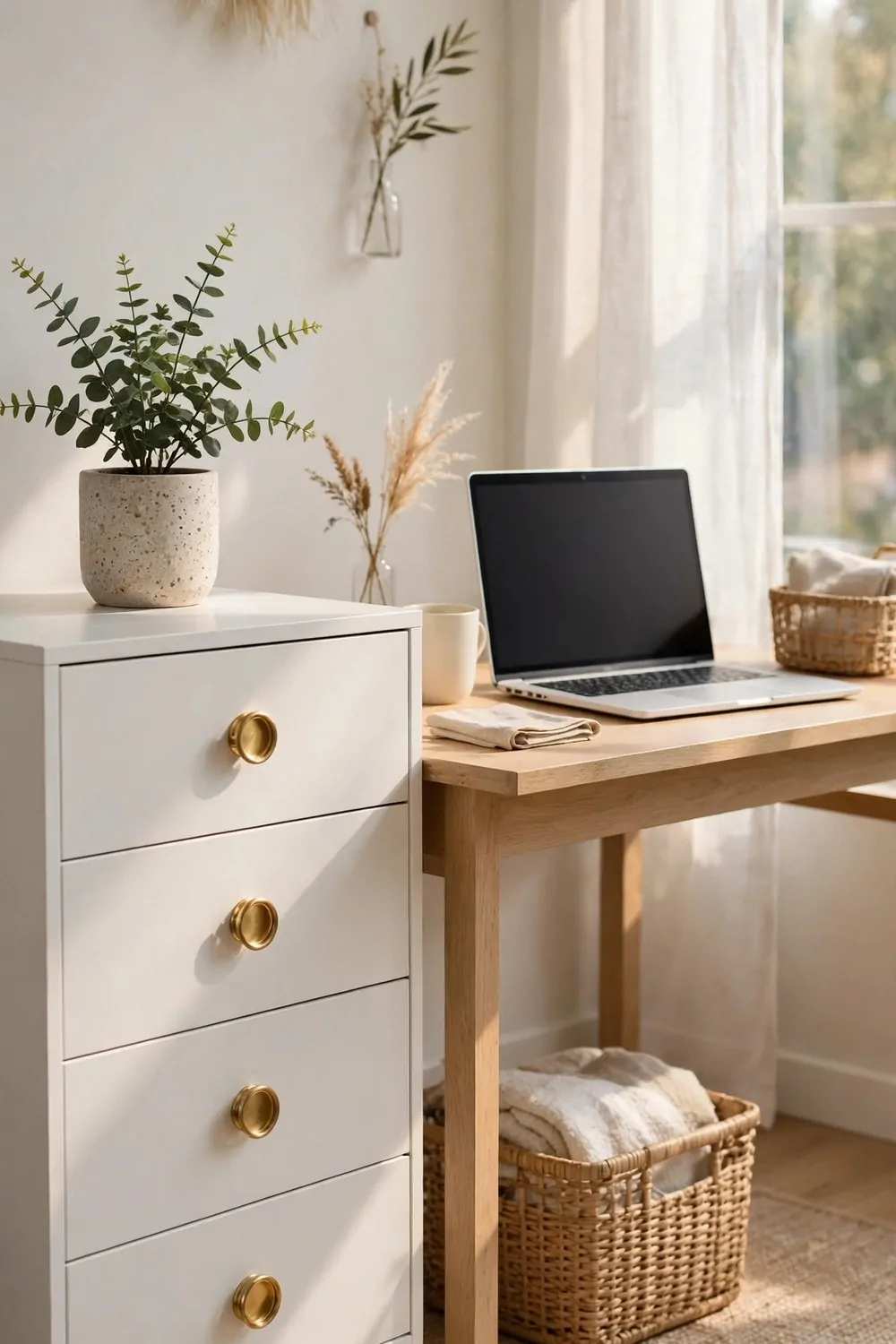
Handles are the jewellery of furniture. Cheap handles make a whole drawer unit look cheap.
Swap the plain knobs on your desk drawers for brass ones and the room feels different the same hour. Brass looks warm. Brass looks old in a good way. Brass makes white drawers look like they belong in a fancy house.
You only need a screwdriver for this hack. Unscrew the old knob. Screw in the new one. That is the whole job.
Pick one finish and use it everywhere. All brass. All black. All wood. Mixed handles look like a repair job, not a plan.
Leather pull handles are another good pick. A little strip of brown leather on a white drawer looks soft and rich. It also feels nice in your hand every morning.
Check the screw size before you buy. Most drawer knobs use the same size screw, but a few do not. Take one old knob with you to the shop.
Keep the old knobs in a bag. If you move house, you can put them back and take your nice handles with you.
This is the fastest hack on this list. Ten minutes, one screwdriver, and your drawers look like they came from a different shop.
Paint Only the Back Panel
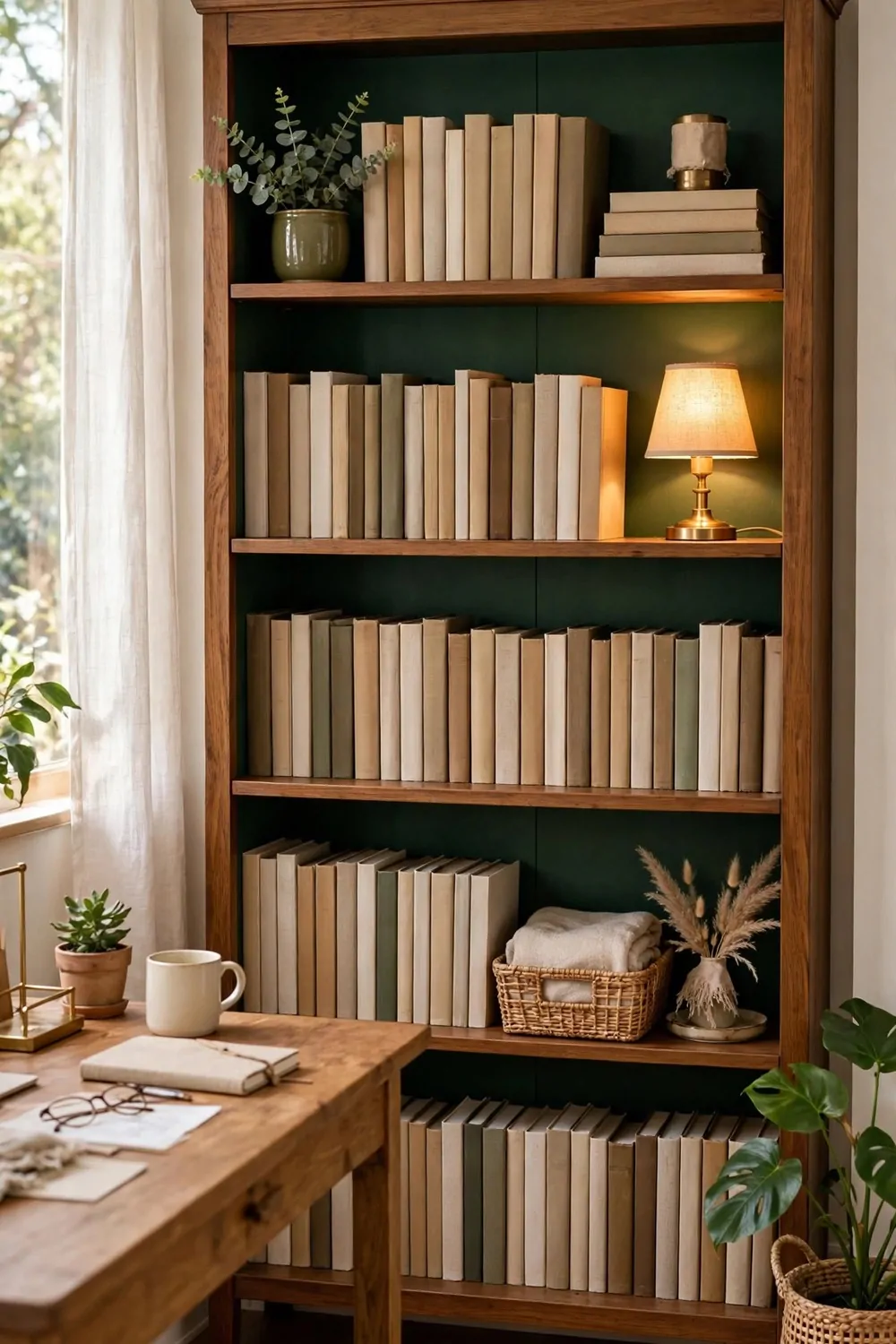
A bookshelf with a white back looks flat. The books sit against white and the whole shelf fades into the wall.
Paint just the back panel a deep colour and the shelf wakes up. Dark green works well. So does navy. Even a soft warm grey changes everything.
You do not need to take the shelf apart. Slide the books out. Tape the edges. Paint the back with a small roller.
Two thin coats are better than one thick coat. Thick paint drips. Thin coats dry smooth and look like they were always there.
Put the books back and stand across the room. The shelf has depth now. The books pop out against the dark back. The whole unit looks like a built-in piece.
This trick works on any shelf with a back panel. A small bookcase. A tall unit. Even a little wall shelf with a board behind it.
Pick a colour that already lives in your room. A cushion colour. A rug colour. That way the shelf ties the room together instead of shouting.
Try this one if your shelves look boring but you do not want to paint the whole unit. One back panel, one small tin of paint, and the shelf looks like it cost twice as much.
One Coat of the Same Paint on Everything
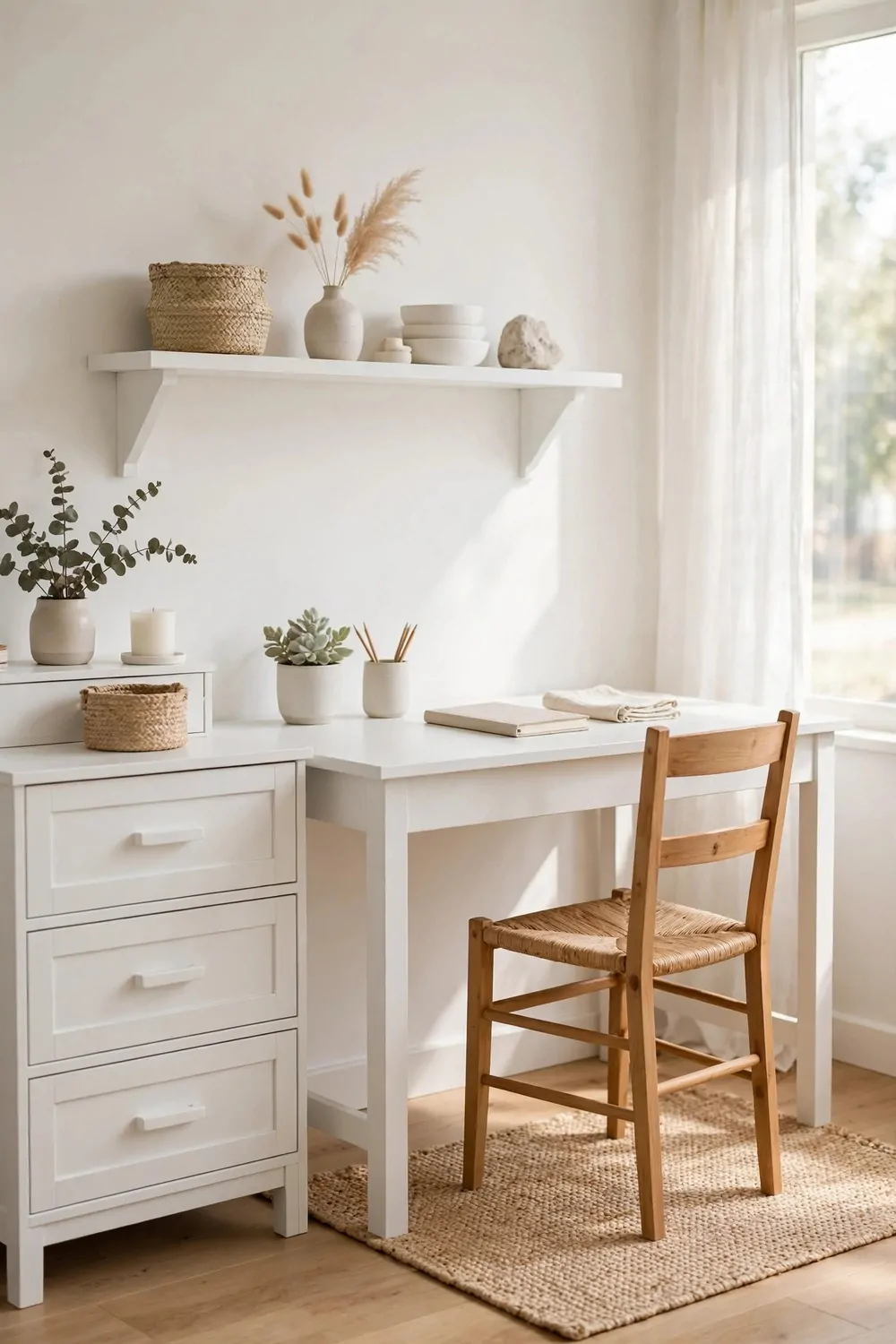
Mismatched furniture is the fastest way to make a room look cheap. A white desk. A wood shelf. A grey drawer unit. Each piece is fine alone. Together they argue.
Paint them all the same colour and they become a set. Suddenly the room looks planned. It looks like someone chose every piece on purpose.
Pick a soft white or a warm grey. White is the safest pick. It bounces light around and makes a small room feel bigger.
Sand each piece lightly first. You do not need to strip the old finish. A quick rough-up with fine sandpaper is enough for the paint to grip.
Use a small foam roller for flat surfaces. It leaves almost no brush marks. A brush is fine for the corners and the edges.
Take the drawers out and paint them on their own. It is much easier than painting around them, and the paint dries smoother.
Put the pieces back together when everything is dry. Step back and look. The desk, the shelf, the drawers. They look like they were bought as one set.
This is the hack for people whose office grew one piece at a time. One tin of paint turns a mixed-up room into a matching room.
The Countertop That Runs Wall to Wall
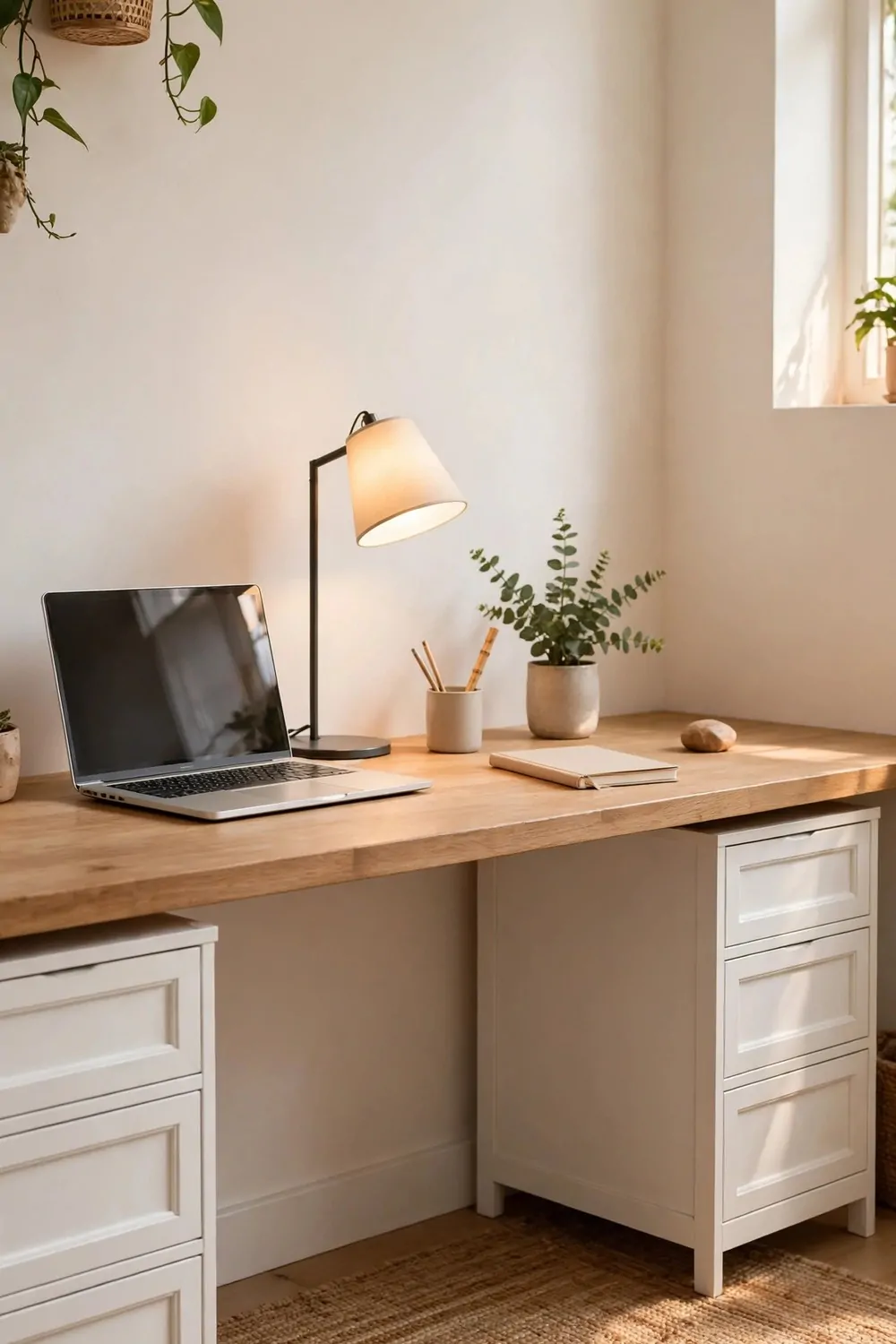
A desk that stops short of the wall looks like it was dropped in the room by accident. There is a gap. Dust collects in it. Papers slide into it.
A desktop that runs from one wall to the other looks built in. Your eye sees one long line of wood and your brain says, somebody made this for this room.
Measure the wall first. Measure twice, because walls are rarely as straight as they look. Write the number down.
A plain wood board from the hardware shop works well as a desktop. Pick one that is thick enough not to bend. Two fingers thick is about right.
Rest the board on two drawer units or two simple legs. Push it tight against the wall on both sides. The gap should be so small you cannot fit a pencil in it.
Fill any tiny gap with a thin line of paintable filler. Smooth it with a wet finger. Paint over it and the line disappears.
Put your laptop on it. Put your lamp on it. The long surface makes even a small room feel like a proper office.
Try this one if your desk feels too small and too lonely in the room. One long board, two supports, and the wall does the rest of the work.
Hide the Legs, Show the Furniture
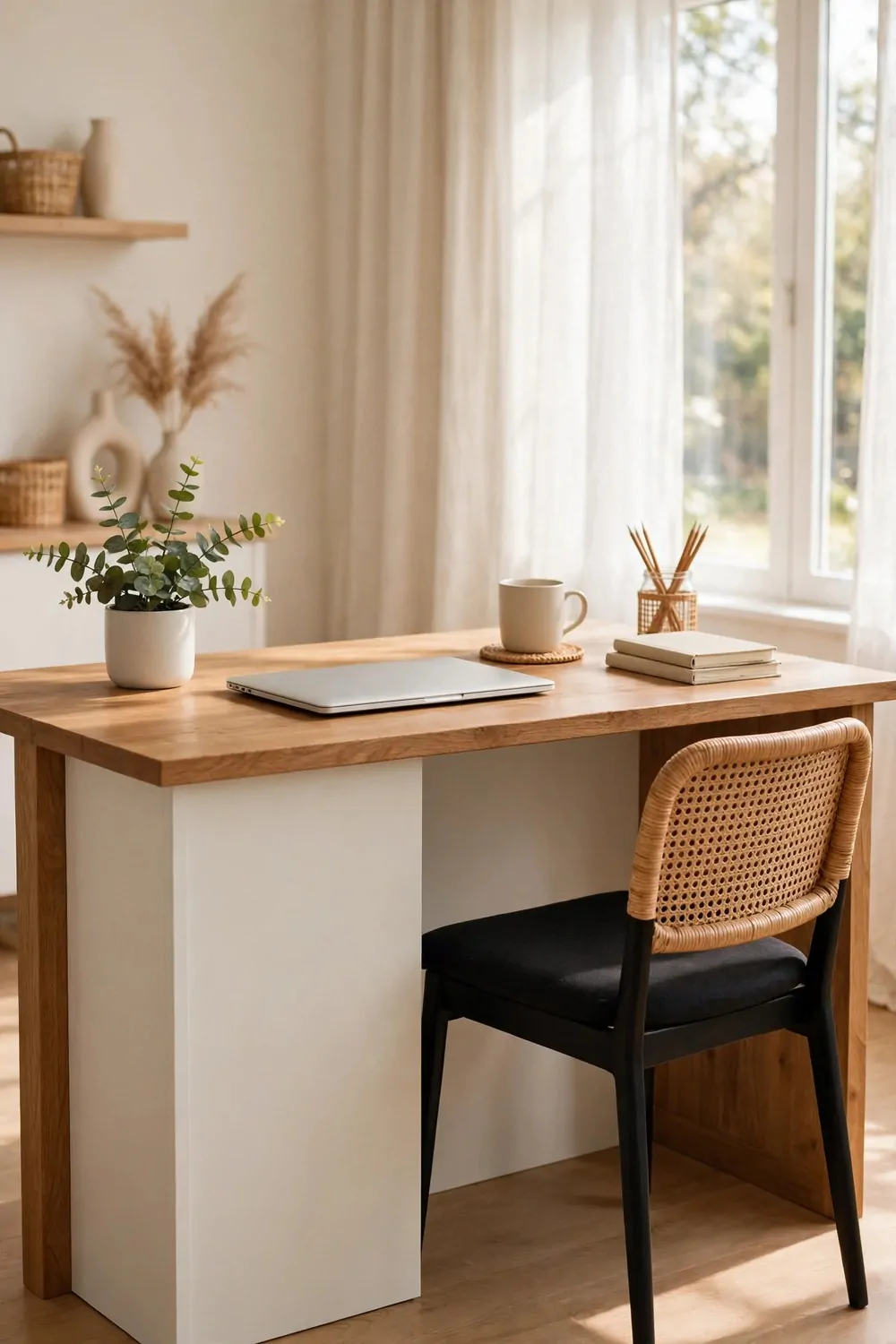
Desk legs are honest. They hold the desk up. But thin metal legs tell everyone the desk came in a flat box.
Hide the legs behind a simple front panel and the desk looks like a solid piece of furniture. A plain board, painted the same colour as the desk, fixed under the front edge.
Cut the board to the width of the desk and about as tall as your knees. It does not need to reach the floor. A gap at the bottom keeps it light.
Fix it with two small brackets on the inside. Nobody sees the brackets. They only see a clean front.
Paint it the same colour as the desktop. When the colours match, the panel and the top read as one piece.
Your feet still fit under the desk. The panel sits far enough forward that your knees have room. Test it before you fix it for good.
This trick also hides the cables under the desk. They sit behind the panel, out of sight, and the floor looks tidy.
Try this one if your desk legs bug you every time you look at them. One board, two brackets, and the legs disappear.
A Picture Ledge Instead of a Shelf
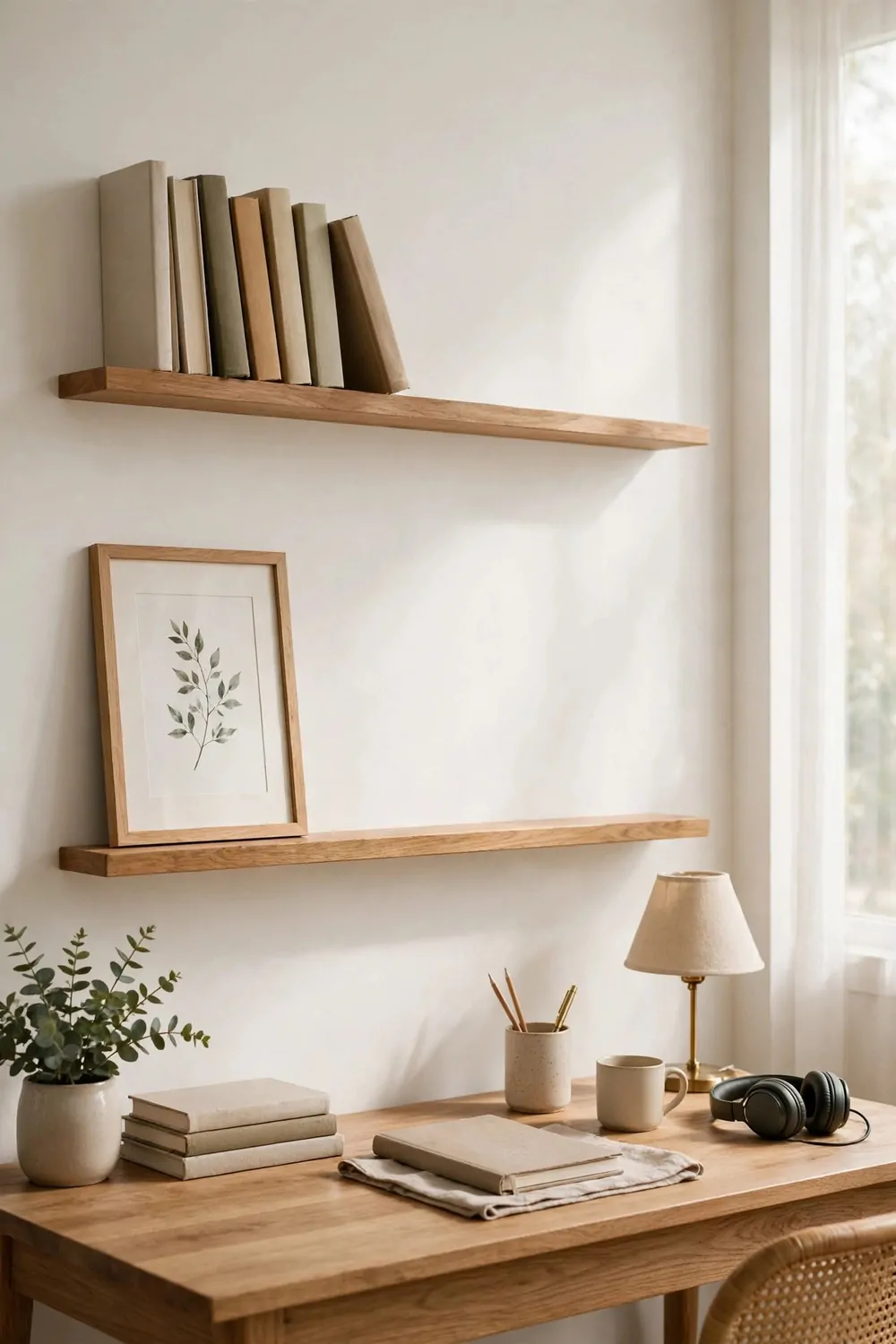
A deep shelf full of books looks heavy. A picture ledge looks light, and it makes the wall look like a gallery.
A picture ledge is just a narrow shelf with a little lip at the front. Books lean on it. Frames lean on it. Nothing falls off because the lip holds it all in place.
Hang two ledges above your desk, one above the other. Keep them the same length. Same colour as the wall or same colour as the desk.
Lean three books on the top ledge. Lean one framed print on the bottom ledge. Leave space between things. Empty space is what makes it look like a gallery.
Swap the books every few months. A new book cover changes the whole wall. It is the cheapest art you own.
A ledge is also kind to renters. Two screws hold the whole thing, and the holes are tiny when you move out.
Do not overload the ledge. Five things is plenty. A ledge packed tight looks like a shelf again, and the gallery feeling is gone.
This is the hack for people who want art on the wall but do not want to hammer in ten nails. Two ledges, a few books, one frame, and the wall looks styled.
The Lamp That Costs Less Than Lunch
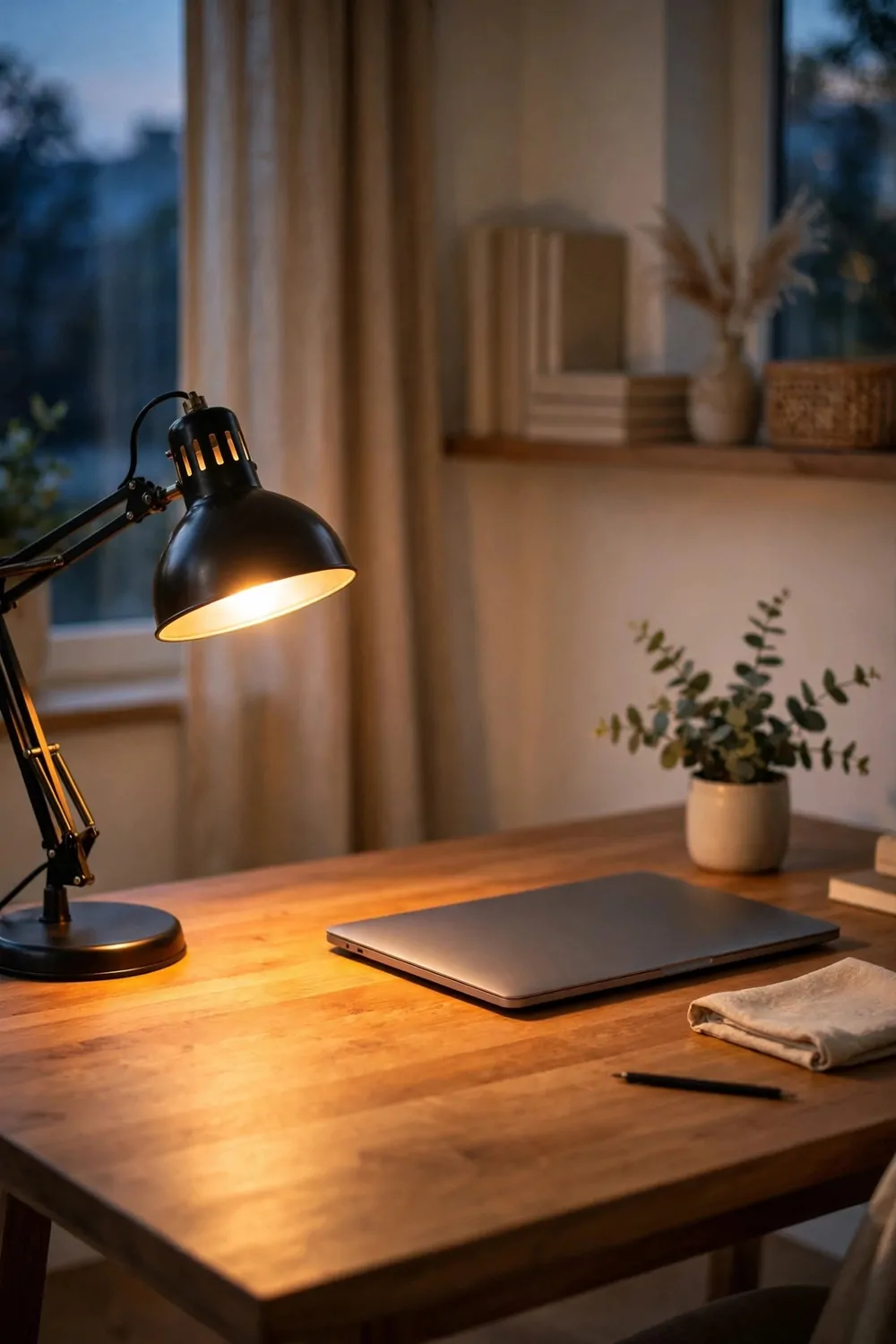
Overhead light is the enemy of an expensive-looking room. It is flat. It is cold. It makes everything look like an office from a waiting room.
One warm desk lamp fixes it. A lamp with a warm amber bulb makes the wood glow. It makes the papers look soft. It makes the whole desk feel like evening, even at ten in the morning.
Pick a lamp with a metal shade in black or brass. The shade should point the light down onto your work, not out into the room.
Put the lamp on the left if you are right-handed. That way your hand never casts a shadow over your writing. Left-handed people do the opposite.
Pick a warm bulb that glows amber, not a cold white one. A cold white bulb under a pretty lamp still feels like a waiting room.
Turn the overhead light off when you work. One lamp is enough for real work, and the room keeps its shadows. Shadows are what make a room look rich.
If your lamp has three brightness levels, use the middle one most days. Full brightness is for dark mornings, and the low setting is for late evenings when your eyes are tired.
Try this one tonight. One lamp, one warm bulb, overhead light off. Sit at your desk and look around. The room feels new already.
Matching Boxes, Mismatched Nothing
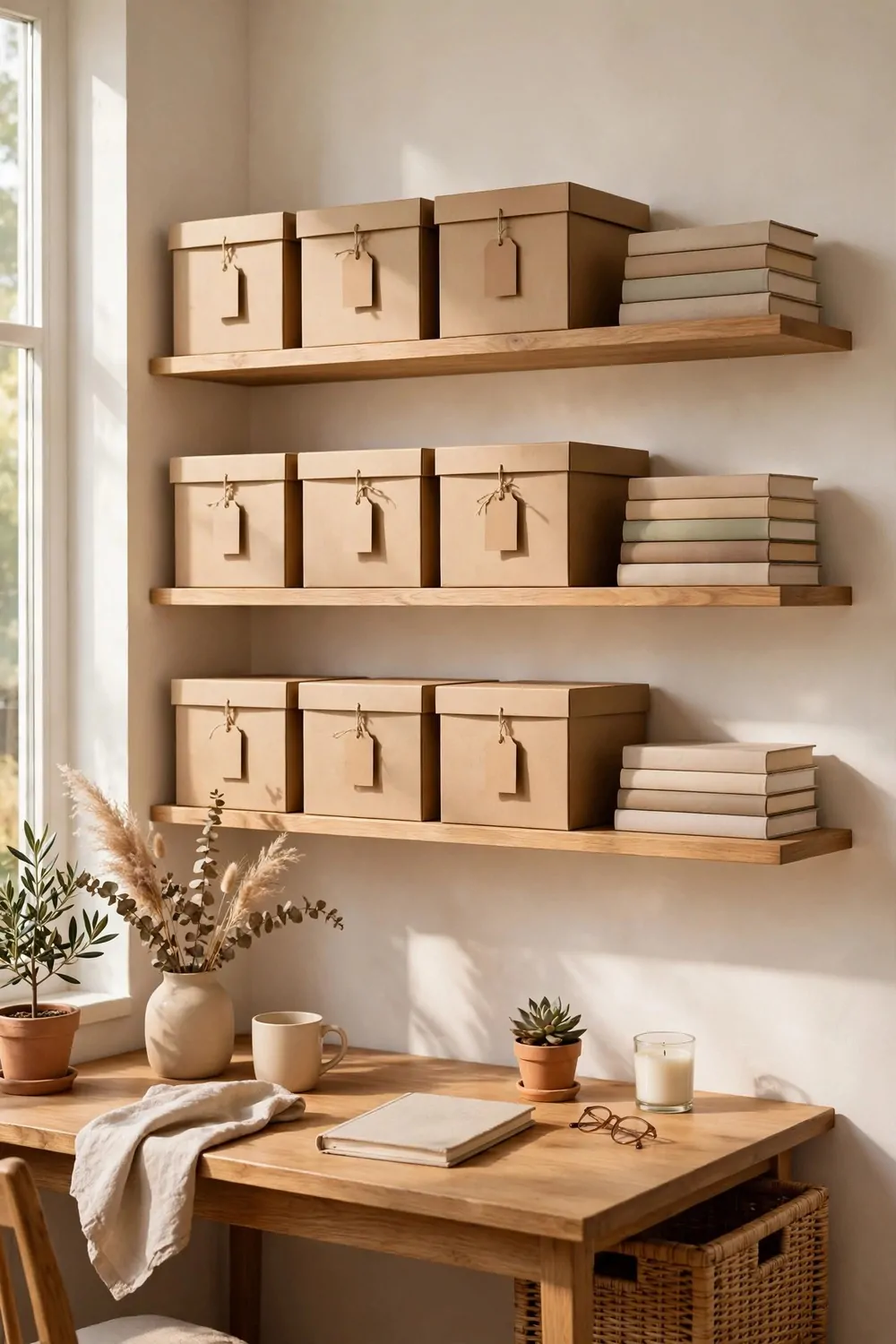
Open shelves look messy when every box is a different colour. A red box. A blue box. A cardboard box with the flaps showing. Your eye jumps from one to the next and the shelf looks like a jumble sale.
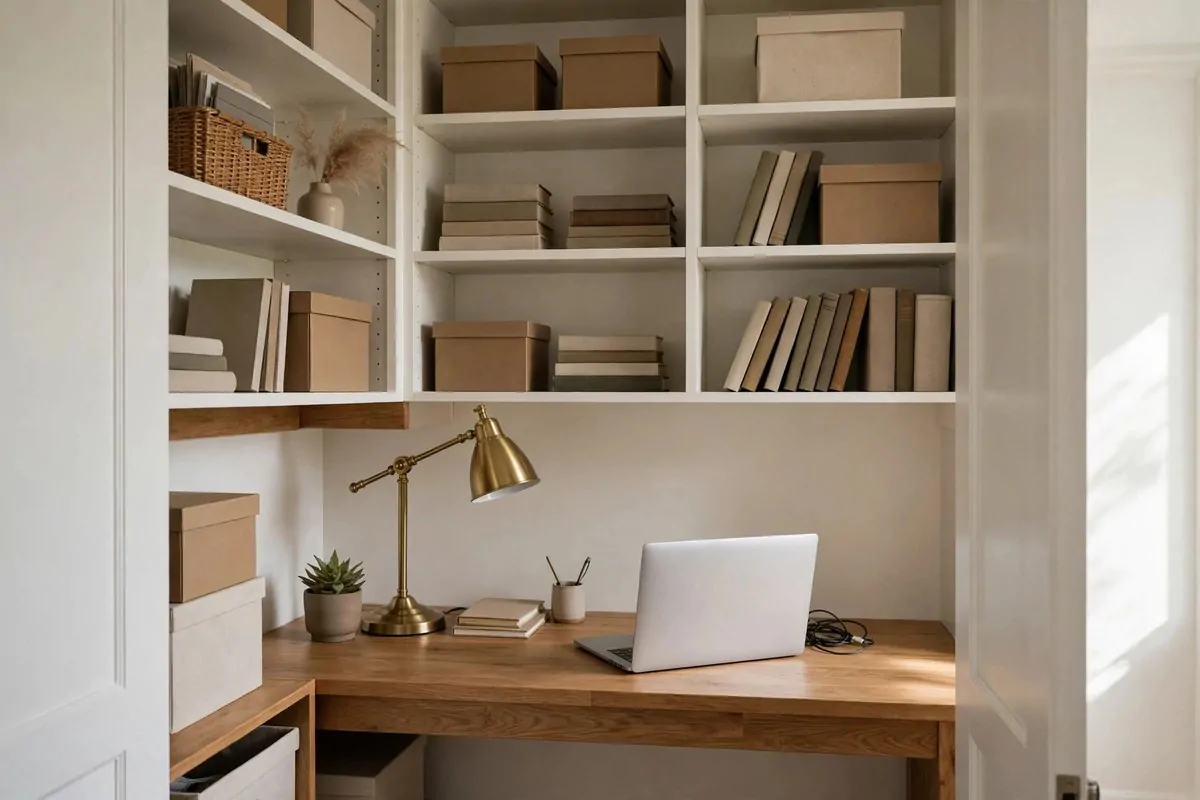
Buy matching boxes and the shelf calms down at once. Same size. Same colour. Same lids. Suddenly the shelf looks like a shop display.
Plain kraft boxes are the cheapest pick and they look warm and natural. White boxes look clean and bright. Pick one and stick with it.
Label each box with a small plain tag. One word is enough. Cables. Papers. Spares. The labels make you look organised even on a messy day.
Put the ugly stuff in the boxes. The cables. The spare chargers. The bits with no home. The shelf shows the pretty boxes, not the mess inside them.
Leave one shelf with only two boxes and some empty space. A shelf that is not full looks like a room that has room to breathe.
Stack the boxes two high on the biggest shelf. Two neat stacks look like a plan, and the shelf still has room to breathe.
This is the hack for people whose shelves always look messy no matter how often they tidy them. Matching boxes hide the mess and show the plan.
The Rug That Makes the Desk Look Rich
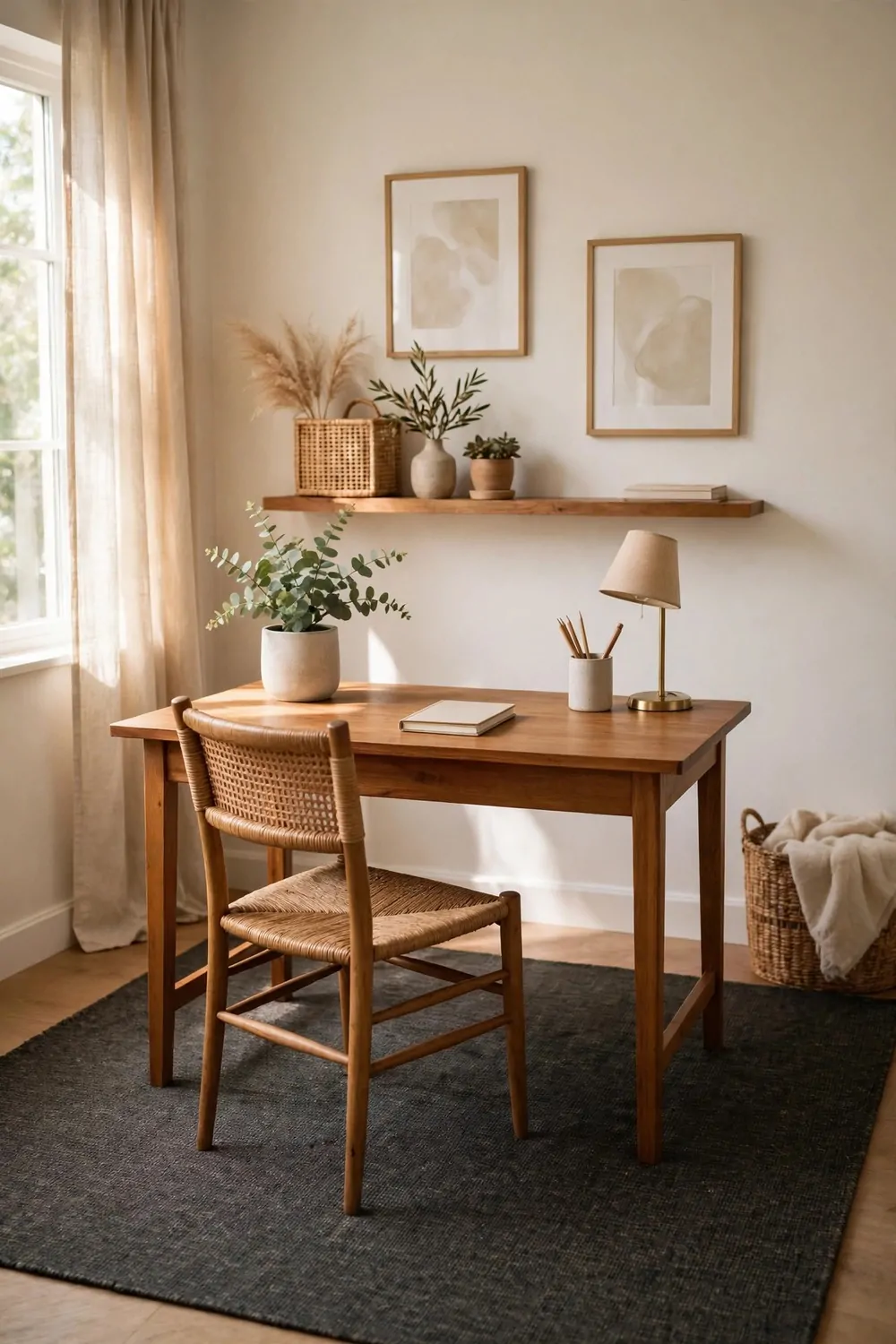
A bare floor under a desk looks unfinished. The chair scrapes. The cables show. The room feels cold under your feet.
A rug under the desk fixes all of it at once. It marks the office corner. It softens the sound. It makes the desk look like it belongs on that spot.
Pick a rug that is bigger than the desk and the chair together. The chair should stay on the rug even when you push it back. A rug that is too small looks like a mistake.
A flat rug works best under a chair. A thick rug makes the chair rock, and a rocking chair is one you stop sitting in. Flat and low is the rule.
Choose a dark colour or a warm pattern. Dark hides the dust. A simple pattern hides the crumbs. Plain pale rugs show every mark by lunchtime.
Vacuum the rug once a week and shake it out once a month. A clean rug makes the whole office feel cared for, and the desk on top of it looks richer.
If the rug slides on a smooth floor, put a thin non-slip mat under it. A rug that stays put is a rug you forget about, and that is the point.
Try this one if your office feels like a desk dropped on a bare floor. One rug, and the corner becomes a room.
Books Turned Backwards
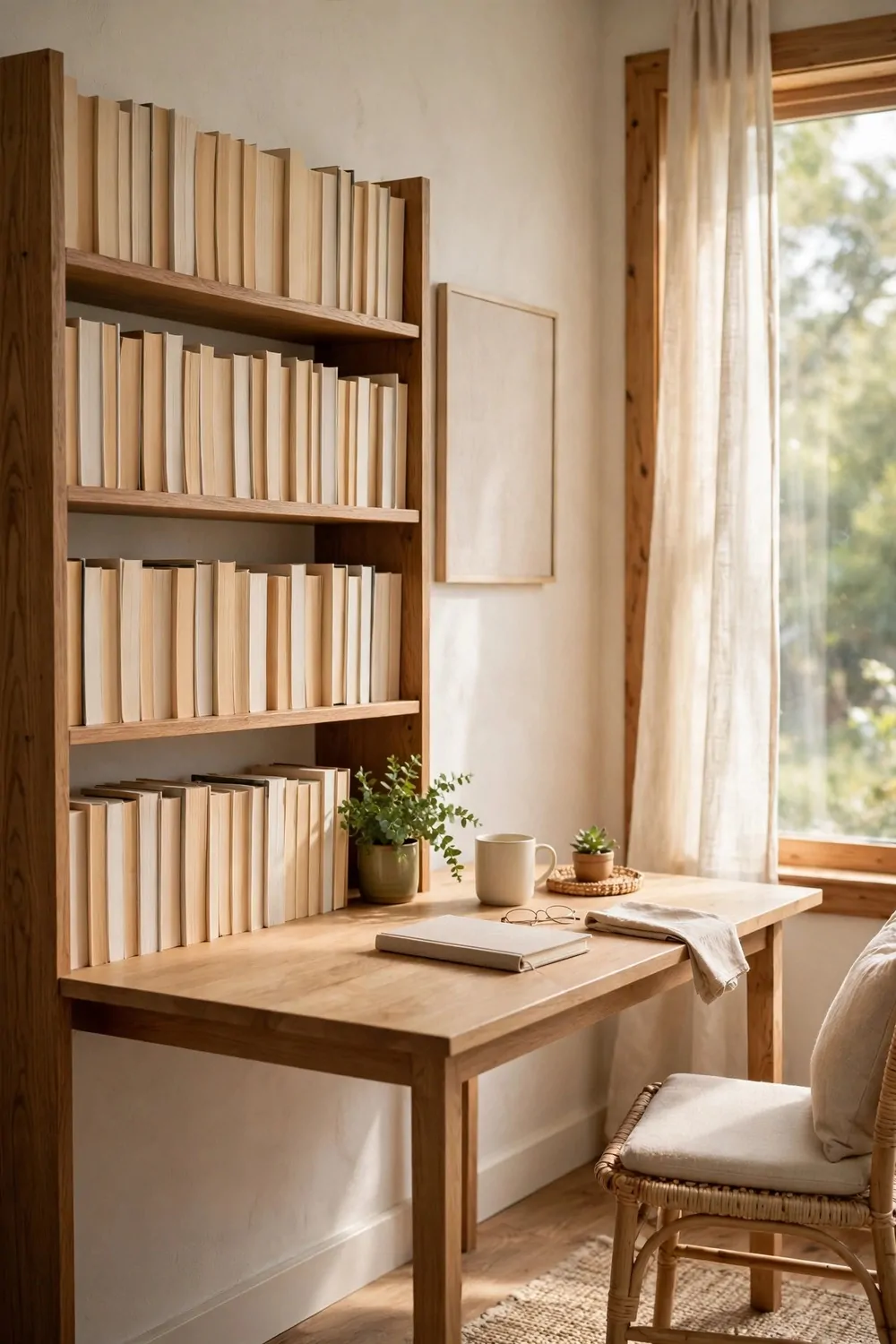
Book spines are loud. Every colour shouts at once. Red. Yellow. Blue. A shelf of spines looks like a box of crayons spilled on the wall.
Turn the books around so the pages face out and the shelf goes quiet. Cream pages. Soft edges. The whole shelf turns into one calm colour, and the room feels expensive at once.
This trick costs nothing. You already own the books. You just turn them around.
Mix in a few books facing the normal way if the plain pages feel too bare. One or two spines add a little colour without bringing back the noise.
Put a small plant or a plain vase at the end of the shelf. The green against the cream pages looks like a photo from a home magazine.
Dust the pages once a month with a dry cloth. Page edges collect dust faster than spines do, and a quick wipe keeps them looking fresh.
Keep your current read facing the normal way on top of the pile. You will find it fast, and the shelf still looks calm.
Try this one if your bookshelf is the loudest thing in the room. Turn the books around and listen to the quiet.
The Cork Board That Looks Like Art
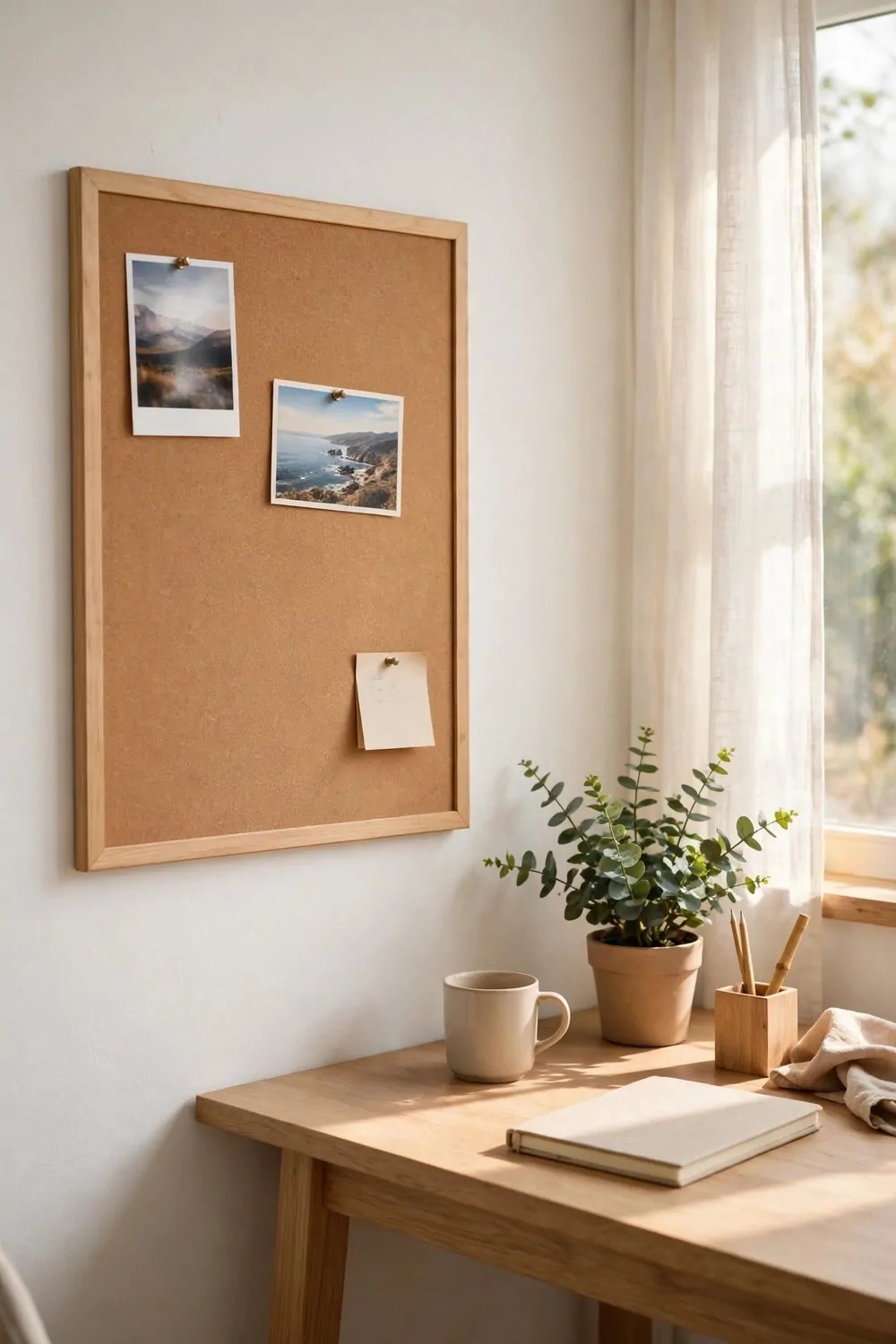
A plain cork board looks like a school classroom. Pins everywhere. Old notes. A photo curling at the corner. It is useful, but it is not pretty.
Frame the cork board and it becomes art. A simple wood frame around the edge changes everything. The board stops looking like a notice board and starts looking like a picture.
Paint the frame black or brass. Black looks smart against a white wall. Brass looks warm against a dark wall. Pick the one that matches your lamp.
Pin only a few things on it. A photo you love. A postcard. One note with a kind word on it. Leave most of the cork empty. Empty cork is the background, not the mess.
Here is what belongs on a good cork board.
- One photo that makes you smile when you look up.
- One postcard from a place you want to go back to.
- One small note with a kind word on it.
- One ticket stub from a good day out.
Swap the things on the board when the seasons change. A new postcard in spring. A new photo in winter. The board stays fresh and you never get bored of it.
Hang the board at eye level beside your desk, not above it. Above the desk it feels like work. Beside the desk it feels like a friend.
This is the hack for people who need a pin board but hate how it looks. One frame, four things pinned, and the board becomes the prettiest thing on the wall.
Cable Chaos, Gone in Ten Minutes
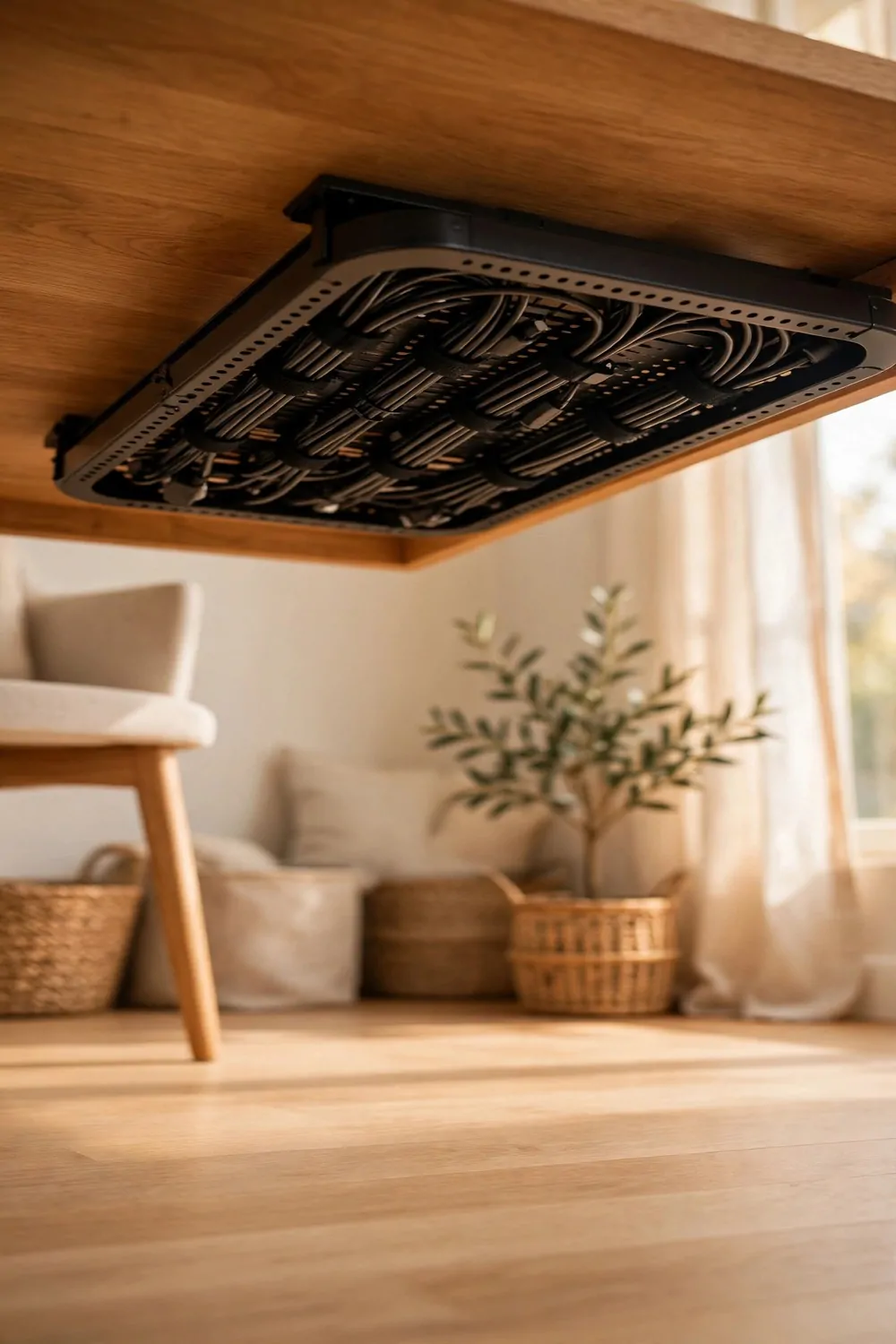
Cables are the fastest way to make an expensive desk look cheap. Black snakes hanging off the back. A tangle under the chair. A charger plugged in across the room.
Fix it in ten minutes with a cable tray under the desk. A simple tray screwed under the desktop holds every cable off the floor and out of sight.
Here is a table for the cable fixes that work best.
| Problem | Quick fix | What it hides |
|---|---|---|
| Cables hanging off the desk | Cable tray under the desktop | Every cable at once |
| One long charger cable | Cable clip on the desk edge | The loose middle part |
| Too many plugs | Small power strip under the desk | The strip and the plugs |
| Cables on the floor | Cable sleeve around the bunch | The whole tangle |
Gather all the cables and drop them into the tray. Plug them in once. Then you never touch them again unless something breaks.
Use cable clips on the desk edge for the one cable you move every day. Your phone charger. Your laptop lead. The clip holds it where your hand can find it.
Label the plugs with a small tag if you share the desk. One tag that says laptop. One that says lamp. No more unplugging the wrong thing by mistake.
Sweep under the desk once a week. A floor with no cables is easy to clean, and a clean floor makes the whole office look cared for.
Try this one if the back of your desk looks like a nest. Ten minutes, one tray, and the snakes are gone.
A Mirror Behind the Desk
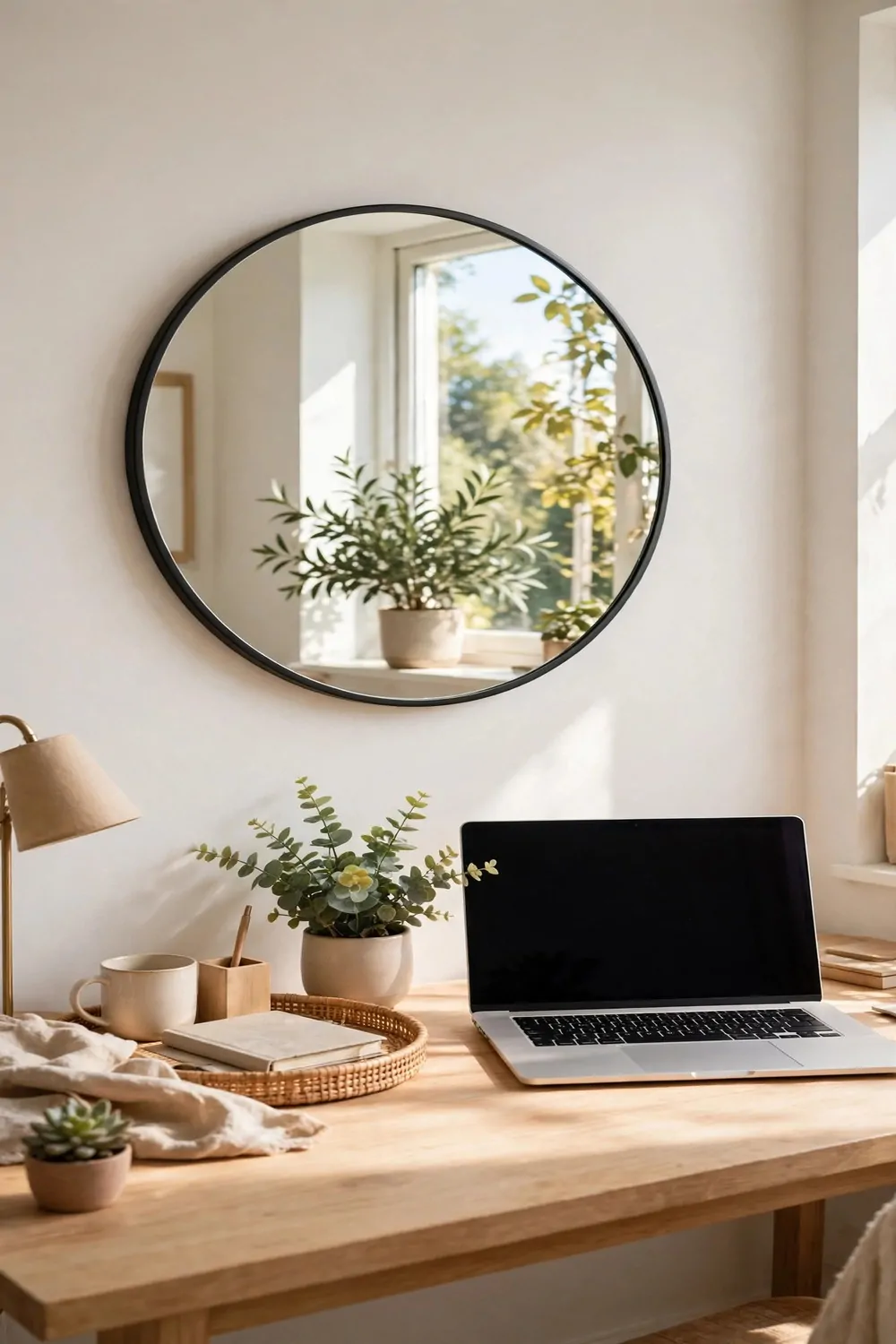
A small room feels smaller when the wall behind your desk is blank. Your eyes hit the wall and stop. The room ends right there.
Hang a mirror on that wall and the room doubles. The mirror bounces the light around. It shows the window behind you. Your eyes travel further, and the room feels twice as big.
Pick a mirror with a thin frame in black or brass. A thick frame eats up the mirror. A thin frame lets the glass do the work.
Hang it so it reflects something pretty. The window. A plant. The bookshelf. A mirror that reflects a bare wall just shows you more bare wall.
Keep the mirror clean. A dusty mirror looks dull and grey. A quick wipe with a dry cloth once a week keeps it bright.
Do not hang the mirror where it reflects your screen. The glare will fight you all day. A mirror to the side of the desk is better than one straight behind it.
A mirror also helps on video calls. The light it bounces makes your face look brighter, and the room behind you looks bigger on screen.
This is the hack for the smallest offices. One mirror, one clean wipe a week, and the room grows without moving a single wall.
The Plant That Does the Styling for You
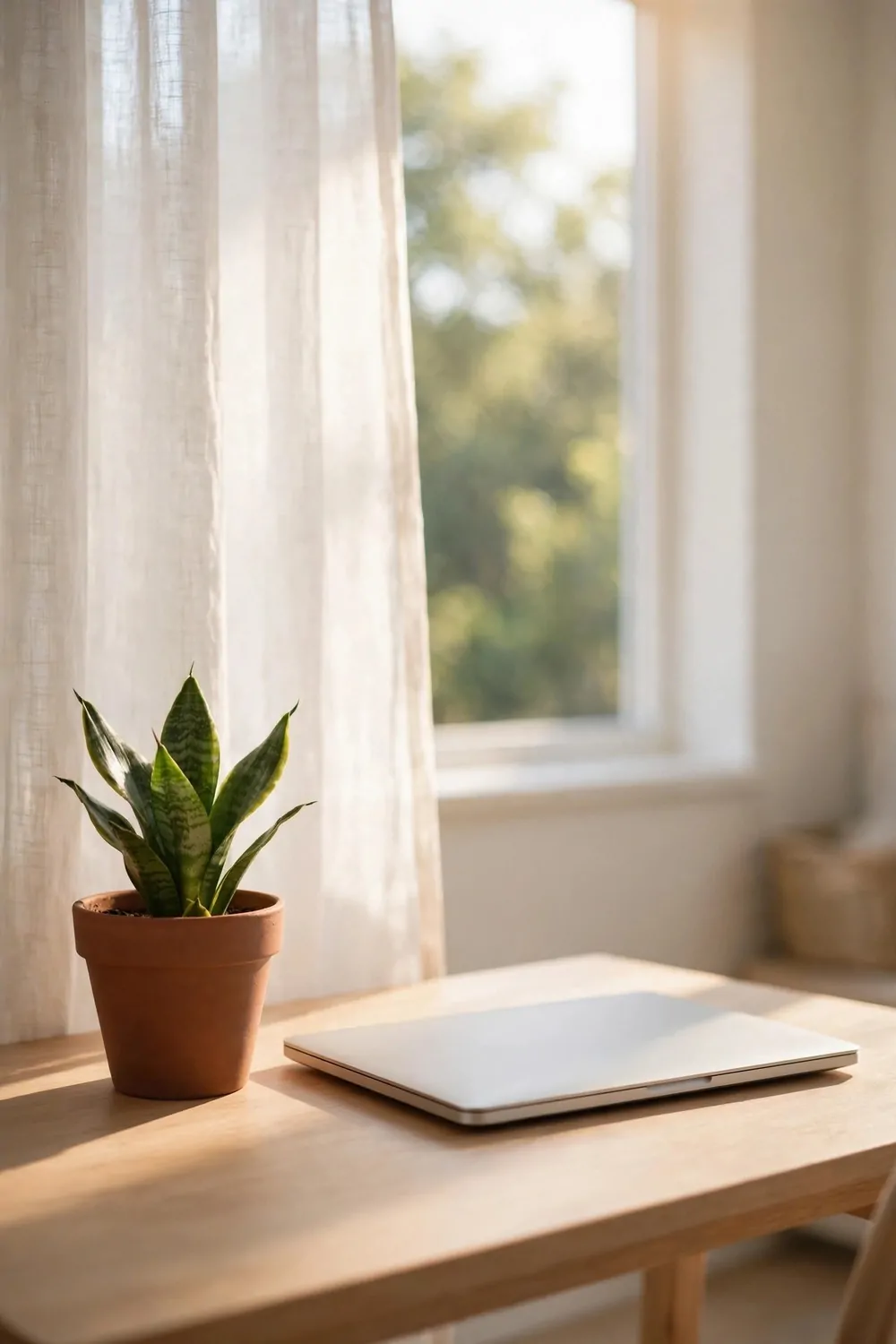
A desk with no plant looks like a desk in a shop window. Clean. Tidy. And a little bit dead.
One plant changes that. Green against wood. A living thing in a room full of flat surfaces. The plant does the styling for you, and you do not have to think about it again.
Pick a plant that forgives you. A small snake plant. A pothos that trails down the shelf. A succulent that likes to be left alone. These plants stay alive even when you forget them for a week.
Put the plant in a plain pot. Terracotta is warm and cheap. A white ceramic pot looks clean. Pick one pot and use the same kind for every plant in the room.
Water it once a week, on the same day every week. Sunday morning works well. A little water, not a flood. Most plants die from too much love, not too little.
Keep the plant where the light reaches it but the sun does not burn it. A bright corner near the window is perfect. A dark corner is where plants go to give up.
If the plant starts to look sad, move it closer to the window for a week. Plants tell you what they need, and light is almost always the answer.
Try this one if your office feels cold and flat. One plant, one plain pot, and the room starts to feel alive.
Spray Paint the Old Lamp Base Gold
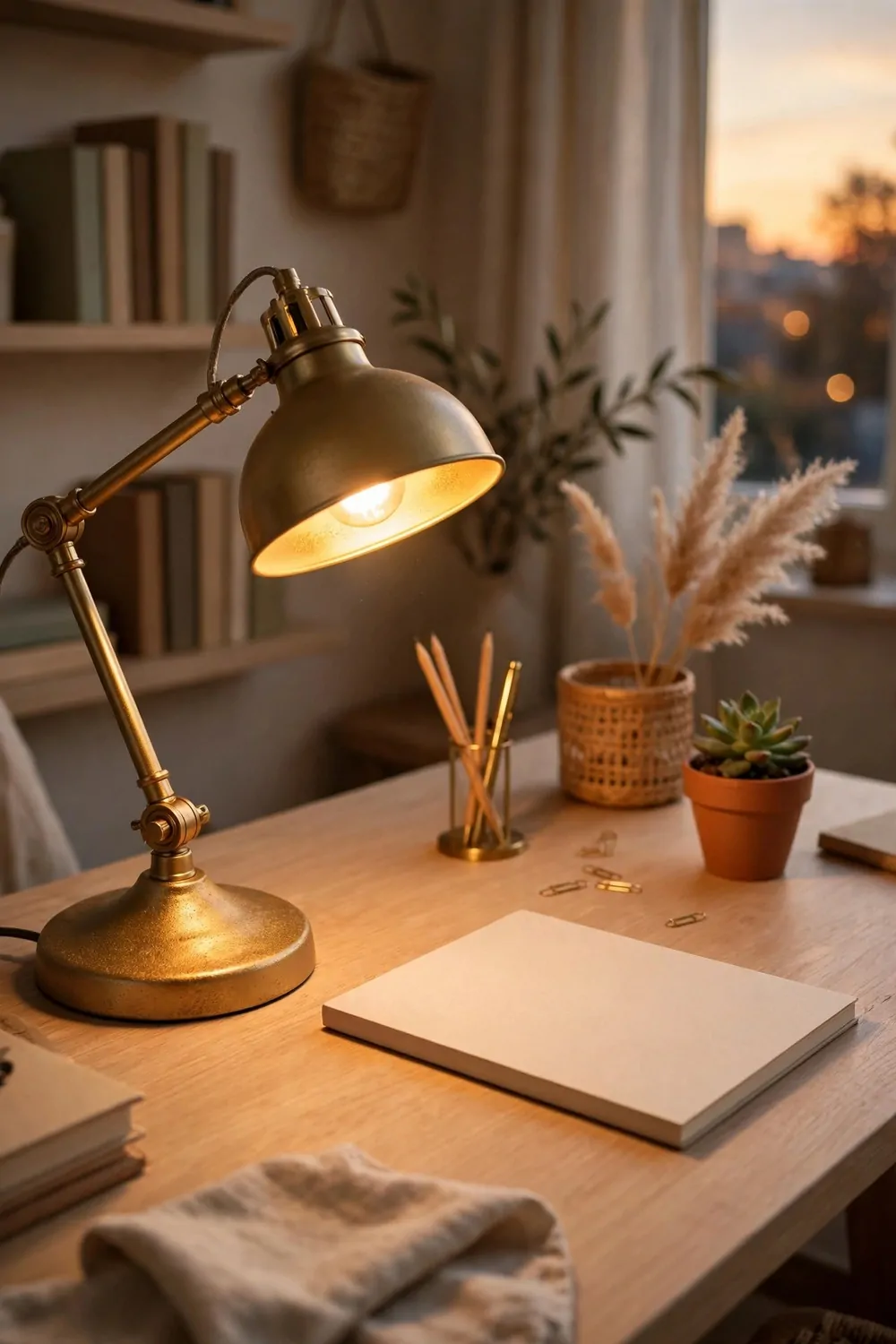
An old lamp with a scratched base looks tired. You were about to throw it away. Do not.
Spray paint the base gold and the lamp becomes the fanciest thing in the room. Gold catches the light. Gold looks warm against a dark wall. Gold makes a plain lamp look like it came from a design shop.
Take the lamp outside or into the garage. Spray paint smells strong and it drifts onto everything nearby.
Here is a table for the spray paint finishes that work best on old lamps and handles.
| Finish | Best on | The look it gives |
|---|---|---|
| Warm gold | Lamp bases and old knobs | Rich and warm, like evening light |
| Matte black | Metal frames and shelf brackets | Smart and modern, hides scratches |
| Soft white | Wood pieces and old trays | Clean and bright, makes rooms feel bigger |
| Brushed brass | Handles and small metal bits | Gentle shine, looks like real brass |
Cover the bulb socket with tape before you spray. Paint in the socket is a problem you do not want.
Spray two thin coats, not one thick coat. Thick paint drips and looks lumpy. Thin coats dry smooth and look like they were always there.
Let it dry overnight before you put the bulb back in. A lamp that is still sticky is a lamp you will regret touching.
Try this one if you have an old lamp you were about to throw away. One can of spray paint, one evening outside, and the lamp gets a second life.
The Drawer That Opens Like a Drawer Should
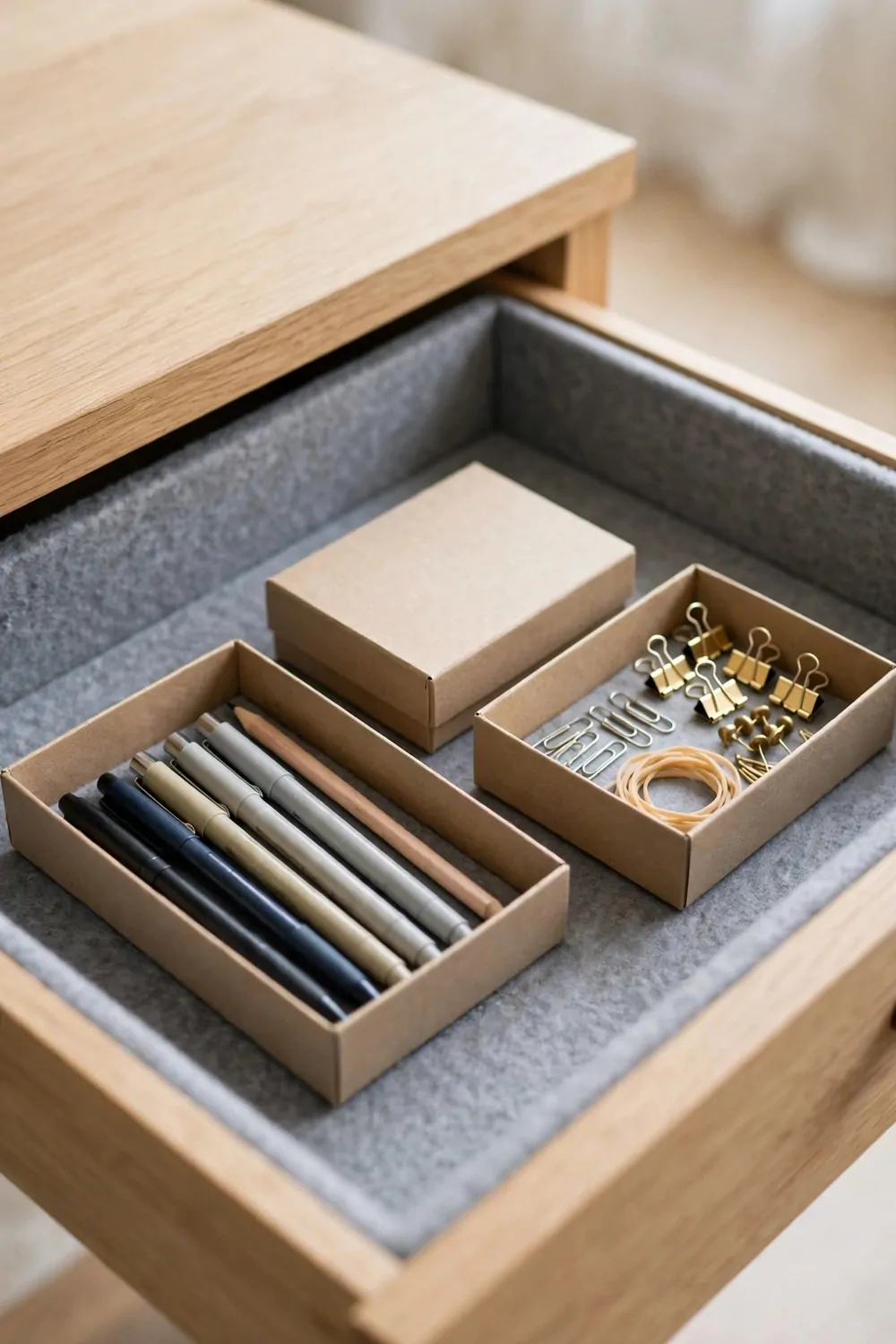
A drawer full of loose stuff is a drawer you avoid. Pens rolling around. Cables tangled with paper clips. You open it, sigh, and shut it again.
Line the drawer with a thin piece of felt or pretty paper and it changes. The drawer feels soft. Things stop sliding. It opens like a drawer in a fancy shop.
Add two small boxes inside the drawer to split it up. One box for pens. One box for the small bits. The boxes do not need to match. They just need to fit.
Put the things you use every day at the front. The pen you like. The notebook. The charger. The things you use once a month go at the back.
Empty the drawer once a season and throw out what you do not need. A drawer that gets a fresh start every few months never turns into a junk drawer again.
Wipe the liner with a damp cloth when you do your Sunday reset. A clean drawer smells fresh, and the felt stays soft for years.
Keep one drawer empty on purpose. That empty drawer is where tomorrow’s papers land. A desk with no free drawer has no room for real life.
This is the hack for people who dread opening their own drawers. One liner, two boxes, and the drawer becomes a pleasure to open.
One Big Piece of Art, Nothing Else
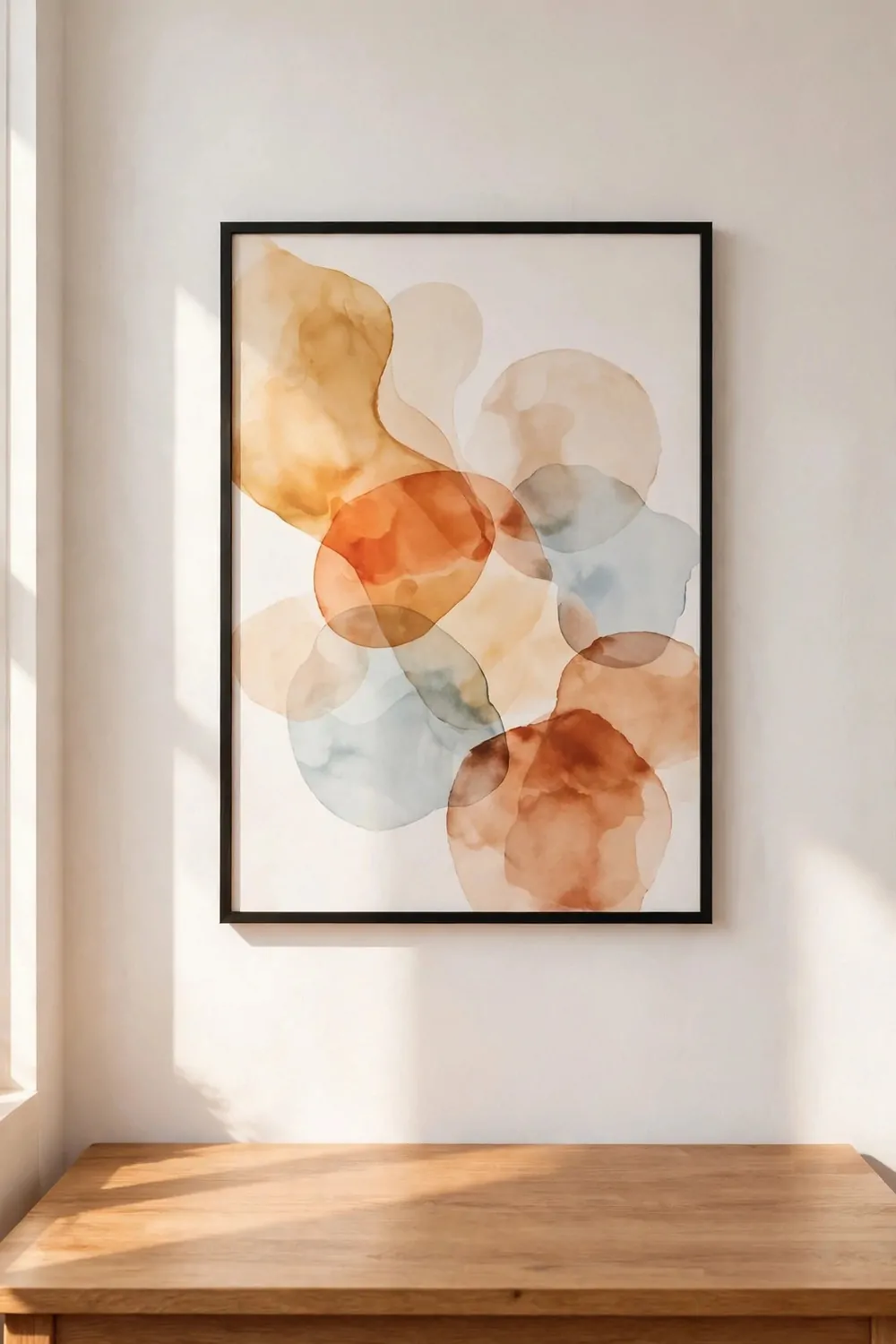
A wall with ten small frames looks busy. Your eye jumps from one to the next and never rests. The wall feels like a charity shop.
One big piece of art changes that. One large print, hung on its own, gives the wall a centre. Your eye goes to it and stays there. The room feels calm and grown up.
Pick a print that is at least as wide as your laptop. Bigger is better here. A small print on a big wall looks lost.
Hang it at eye level when you sit at your desk. That is where your eyes go when you look up from your screen. The art should be there waiting for you.
Keep the frame simple. A thin black frame. A plain wood frame. The frame should disappear and let the picture do the talking.
Do not hang anything else on that wall. No little shelves. No extra frames. One piece of art, alone, is stronger than ten small ones fighting for attention.
If you cannot find a big print you love, frame a piece of plain fabric. A soft linen cloth in a frame looks like art, and nobody will know it cost almost nothing.
Try this one if your walls feel cluttered but bare at the same time. One big print, one nail, and the wall finally has a point.
The Chair That Got a Second Life
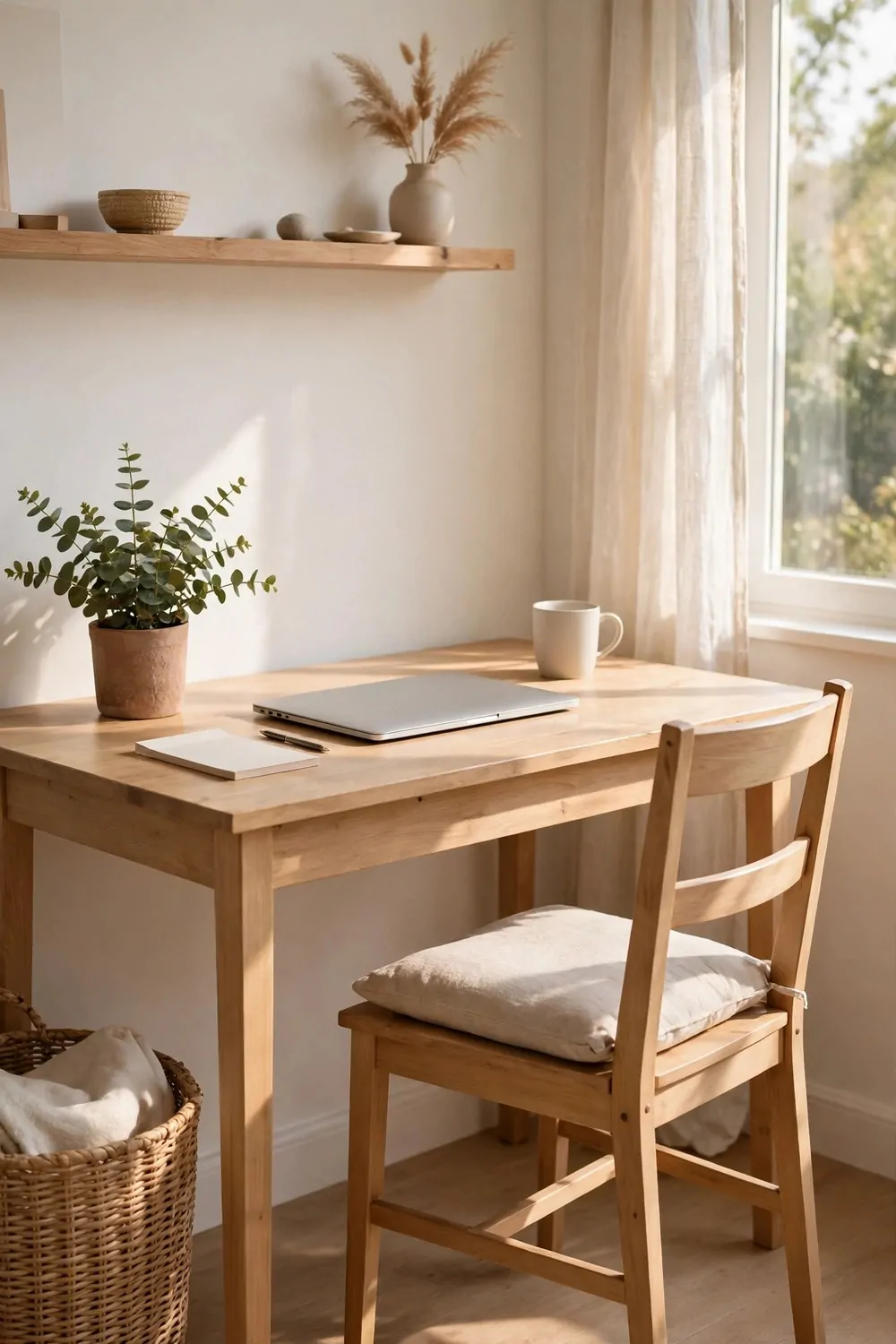
A chair with a torn seat or a wobbly leg feels like rubbish. You sit on it every day and it reminds you the room is not finished.
Fix the seat first. A new cushion in a plain linen cover hides the tear and makes the chair feel new. Pick a colour that matches the rug.
Tighten every screw on the chair with a screwdriver. Chairs loosen a little every year, and a loose screw makes the whole chair wobble. One turn each and the chair feels solid again.
Here is what to check on a tired chair.
- The seat cushion. A fresh cover hides stains and tears.
- The screws under the seat. Tighten them all, one by one.
- The feet. Felt pads stop the scraping and save the floor.
- The back. A small cushion there saves your lower back by lunch.
Oil the moving parts with a drop of plain oil on a cloth. A chair that squeaks is a chair that annoys you all day. One drop and the squeak is gone.
Keep the chair away from the heater. Heat dries out wood and cracks leather. A chair in the cool part of the room lasts for years.
Push the chair in every evening when you stop work. A chair tucked under the desk makes the whole office look tidy, even from the doorway.
This is the hack for people who hate their chair but cannot buy a new one yet. One cushion, one screwdriver, and the chair earns its place again.
Stack It, Don’t Spread It
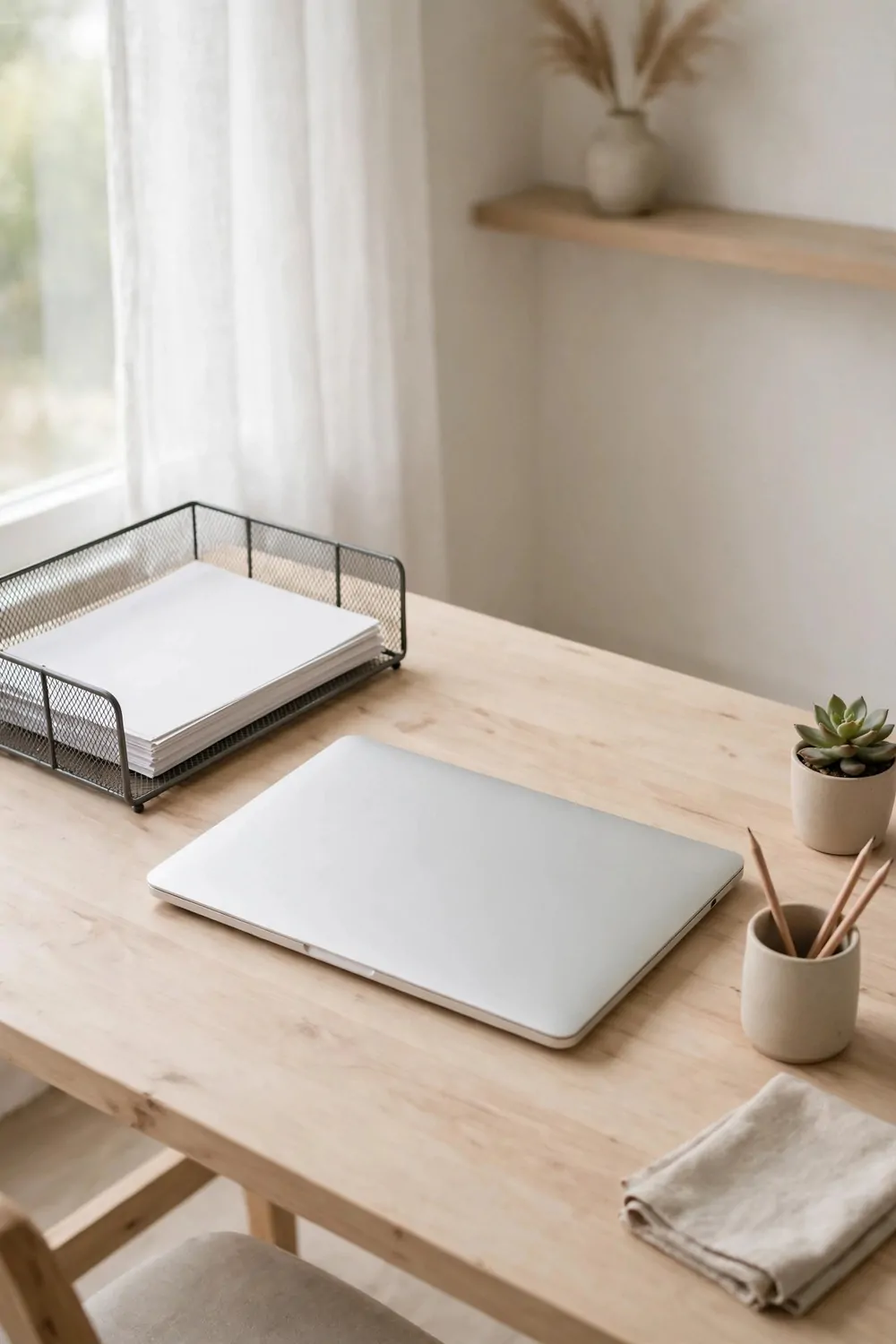
A desk with papers spread everywhere looks like a storm hit it. You cannot find anything. You cannot think straight. The mess spreads to your brain.
Stack things instead. One neat pile for today’s papers. One tray for the bills. One box for the things you need this week. Stacks look tidy. Spreads look like chaos.
Here is a table for the stacking spots that keep a desk clear.
| Spot | What goes there | Why it works |
|---|---|---|
| Desk tray | Today’s papers | One pile, easy to find |
| Wall shelf | Books you use daily | Off the desk, still close |
| Drawer unit | Spare cables and bits | Hidden, but right beside you |
| Top of the drawer unit | The plant and the lamp | Pretty things up high, work space free |
Use a letter tray for the papers you are working on right now. When the tray is full, that is your sign to file things away. A full tray is a to-do list you can see.
Keep the middle of the desk clear. Laptop in the middle. Lamp on one side. Notebook on the other. Everything else lives in a stack somewhere else.
Clear the desk every evening before you stop work. Two minutes of stacking and tomorrow morning starts clean. A clear desk is a clear head.
Keep a small wastepaper basket beside the desk, not under it. Papers you do not need go straight in the basket, and the stacks stay short.
Try this one if your desk disappears under paper by Wednesday. Stack it, do not spread it, and the desk stays yours.
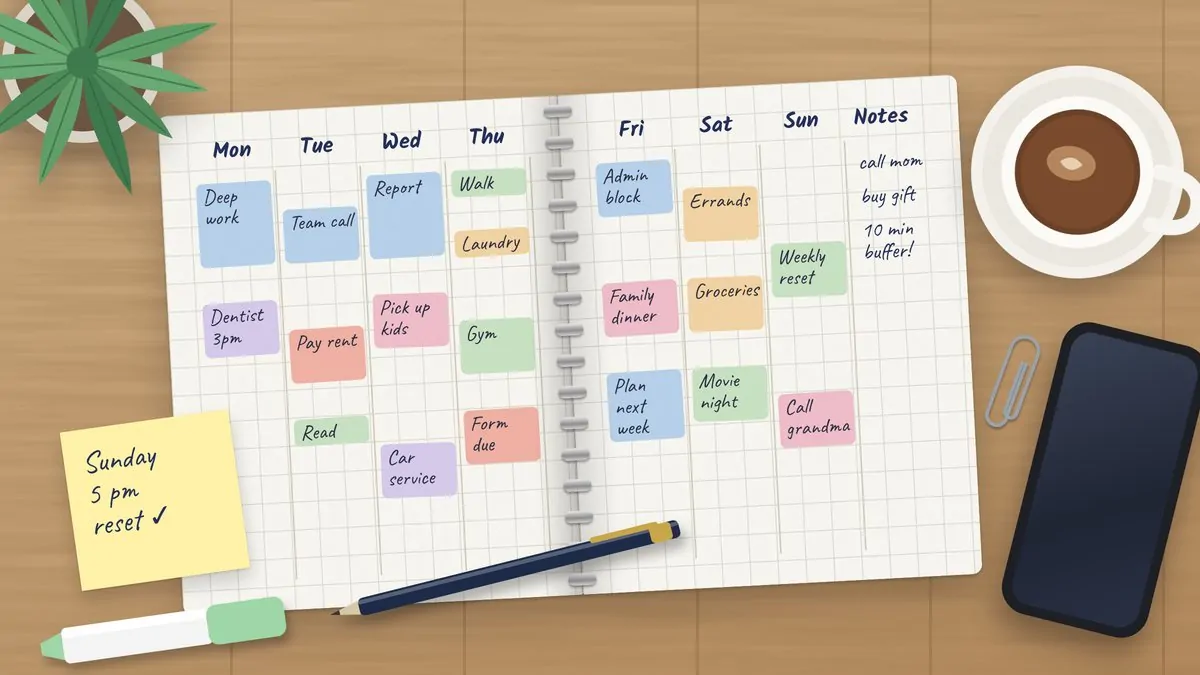
The Sunday Reset That Keeps It Looking Expensive
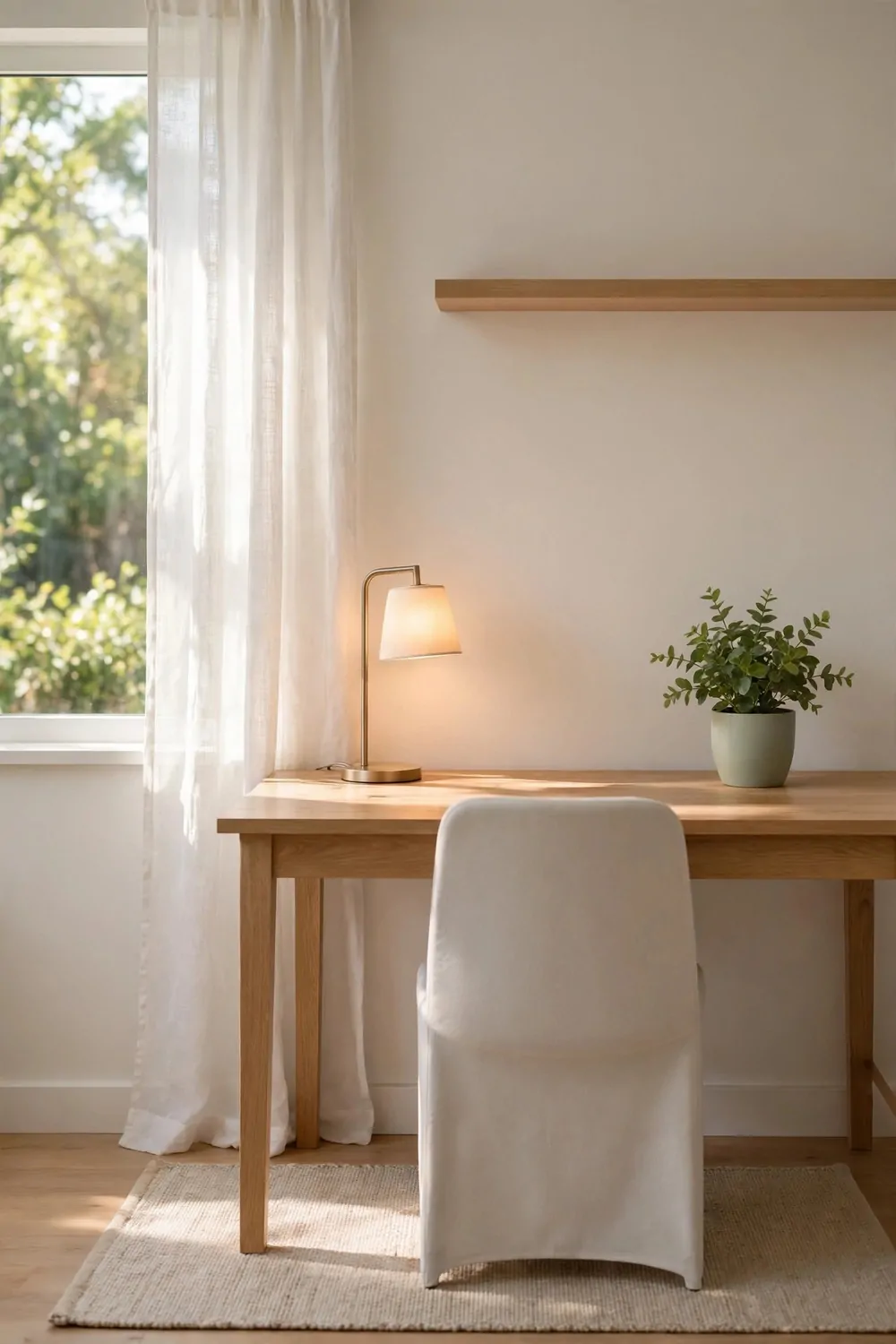
Every hack on this list works. But a room only looks expensive if it stays tidy. One messy week and the trim, the handles, the paint, all of it disappears under the mess.
So here is the last hack. A Sunday reset. Ten minutes, once a week, and the room stays looking like the day you finished it.
Set a timer for ten minutes. Walk around the desk with a small basket. Everything that does not belong on the desk goes in the basket.
Wipe the desktop with a damp cloth. Dust the lamp shade. Straighten the books on the ledge. Put the plant back where the light reaches it.
Empty the basket. Papers go in the tray. Cables go in the drawer. The mug goes to the kitchen. The room is reset.
Do it on the same day every week so it becomes a habit. Sunday evening works well. Monday morning you sit down to a desk that looks expensive again.
Play one song while you reset. Ten minutes goes fast with music, and the room feels fresh by the last note.
This is the hack that protects all the other hacks. Ten minutes a week, and your office keeps looking like it cost far more than it did.
Keep Reading
If you liked these Ikea Home Office Hacks, these business, budget and bedroom office ideas will give you even more ways to make a small space work hard.
- 17 Ikea Office Ideas Business Owners Can Set Up Fast
- 20 Ikea Office Ideas Workspaces You Can Build on a Budget
- 21 Office Space in Bedroom Setups That Don’t Feel Cramped
An expensive-looking office is not about spending more money. It is about the small things. A strip of trim. A new handle. A warm lamp. A rug that fits. Pick your favourite three hacks from this list, try them this weekend, and let your smallest room surprise you.