17 Ikea Office Ideas Business Owners Can Set Up Fast

My first order came in on a Tuesday morning. I had no office. I had a kitchen table, a laptop with a dying battery, and a stack of papers that slid off the edge every time I stood up.
I packed that order on the floor. I wrote the address on the box with a pen that kept running out. And I promised myself I would never run my business from a kitchen table again.
That promise is why this list exists. A business owner does not have a month to plan an office. You have a weekend, maybe one evening, and a business that needs you working again by Monday.
One thing before we start. These rooms are inspired by the flat-pack, build-it-yourself look. They are not the brand’s own rooms, and this site is not connected to the brand in any way. What follows is my own take on that simple, plain, put-it-together-yourself style, with pieces you can set up fast.
These 17 Ikea Office Ideas are all about speed and business. Quick desks, a corner that looks good on calls, paper systems that find themselves, and storage that keeps up with orders. Pick the ones your business needs first, and build them this weekend.
The One-Hour Office
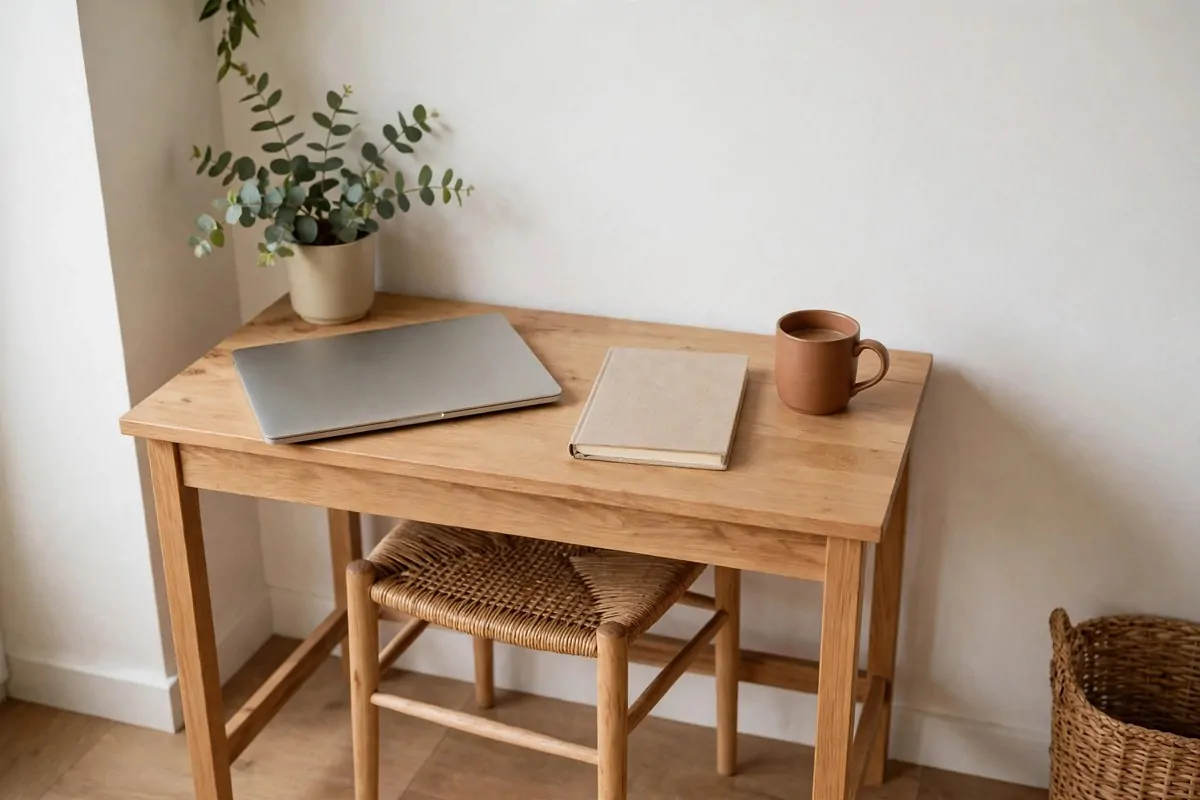
You do not need a whole weekend to start. One hour is enough for a working office, if you know what to do first.
Clear one surface. Any surface. A table, a wide shelf, the top of a low cabinet. Wipe it clean, put your laptop on it, and sit down. That is your office for today. Everything else can wait.
Now add the three things that make it real. A lamp, so you can see your work after dark. A chair that does not hurt your back. And one box for the papers that matter. Laptop, lamp, chair, box. That is the whole first hour.
Here is the first hour in one place, so you can see how fast it really is.
| First hour job | Time it takes | What you need |
|---|---|---|
| Clear one surface | About 10 minutes | A cloth and an empty box |
| Set up laptop and lamp | About 15 minutes | Laptop, lamp, one plug |
| Sort the papers into one box | About 20 minutes | One box and a pen |
| Sit down and test it | About 15 minutes | A chair and one real job |
Do not shop first. Shop after you know what the hour taught you. Sit at the surface for one workday and notice what is missing. A plug too far away. A shelf you keep reaching for. A drawer you wish you had. That list is your shopping list, and it is a short one.
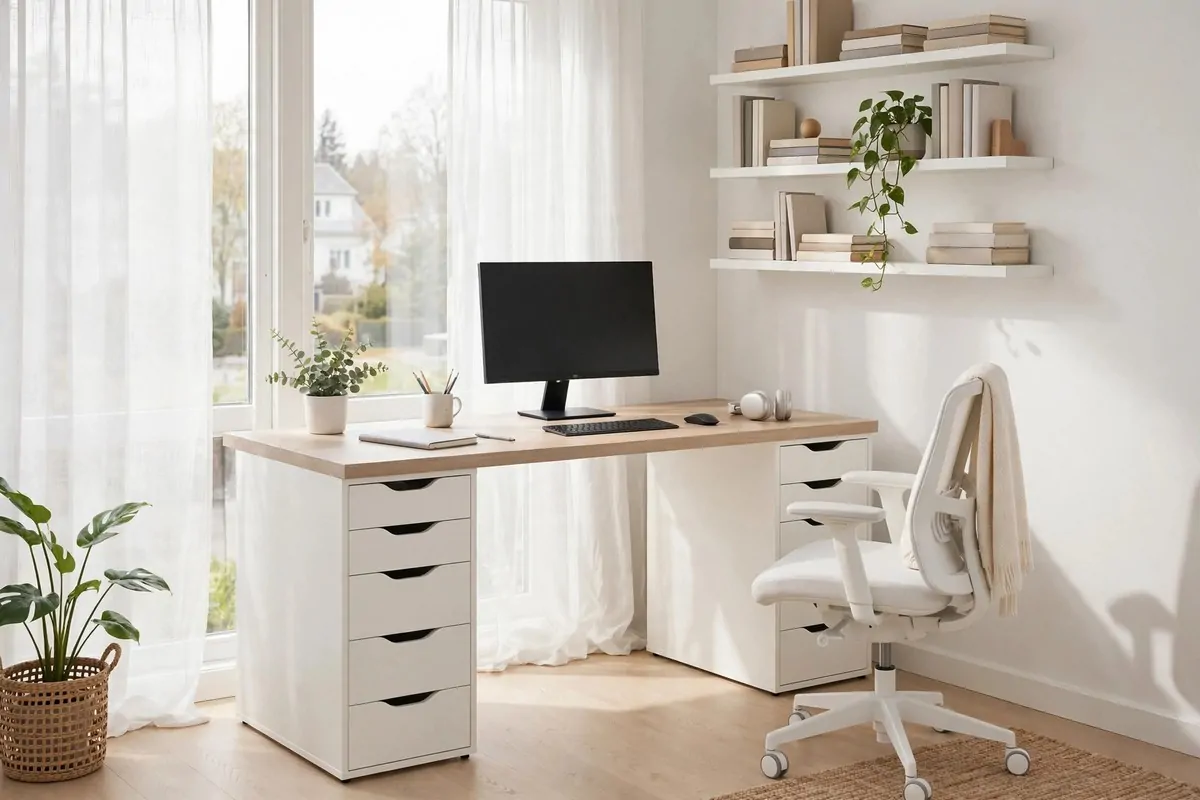
Keep the first build simple on purpose. A plain desk top on two simple supports. No drawers yet, no fancy extras. A business owner needs a desk that works today, not a perfect room next month.
Put the desk where the light already is. Near a window if you can. Near a plug if you must. Light first, plug second, pretty third. A desk in good light with a short cable beats a pretty desk in a dark corner every single time.
When the hour is up, stop. Close the laptop, step back, and look at what you built. It is small. It is plain. And it is yours. Tomorrow you can add a shelf. Next week you can add a drawer. But today you have an office, and your business is open again.
This is the setup for people who keep putting the office off because it feels too big. It is not big. It is one hour, one surface, and three small things. Start the clock and see how far you get.
The Desk That Pays for Itself

A desk is not furniture when you run a business. It is a tool, and a tool should earn its keep.
Think of it this way. Every order you pack on that desk, every email you answer from that chair, every invoice you send from that laptop, they all pass through one surface. That surface is where your money is made. Treat it like it matters.
Keep the desk top clear enough to work on. A laptop, a notebook, a pen, and room for the job in front of you. That is all. If the desk is covered in old papers, you cannot pack an order on it. And an order you cannot pack is money sitting still.
Put a small tray on the desk for today’s money jobs. Invoices to send. Payments to check. Orders to pack. When the tray is empty, the day’s money work is done. When it is full, you know exactly what is left. One tray, no guessing.
Give the desk one job at a time. Packing time is packing time. Email time is email time. When the desk tries to do everything at once, nothing gets finished. Clear it, pick one job, and do that job until it is done.
Keep a notebook on the desk for the numbers that matter. What came in today. What went out. What is owed. Five lines a day, written by hand. That little notebook is the simplest set of books a small business can keep, and it never crashes.
Wipe the desk down every Friday evening. A clean desk on Friday means a fast start on Monday. A messy desk on Friday means Monday starts with tidying, and tidying is not work that pays.
This is the desk for owners who want their workspace to work as hard as they do. It holds the laptop, it holds the orders, and it holds the numbers. And at the end of the week, it tells you the truth about how the business did.
The Client-Ready Corner
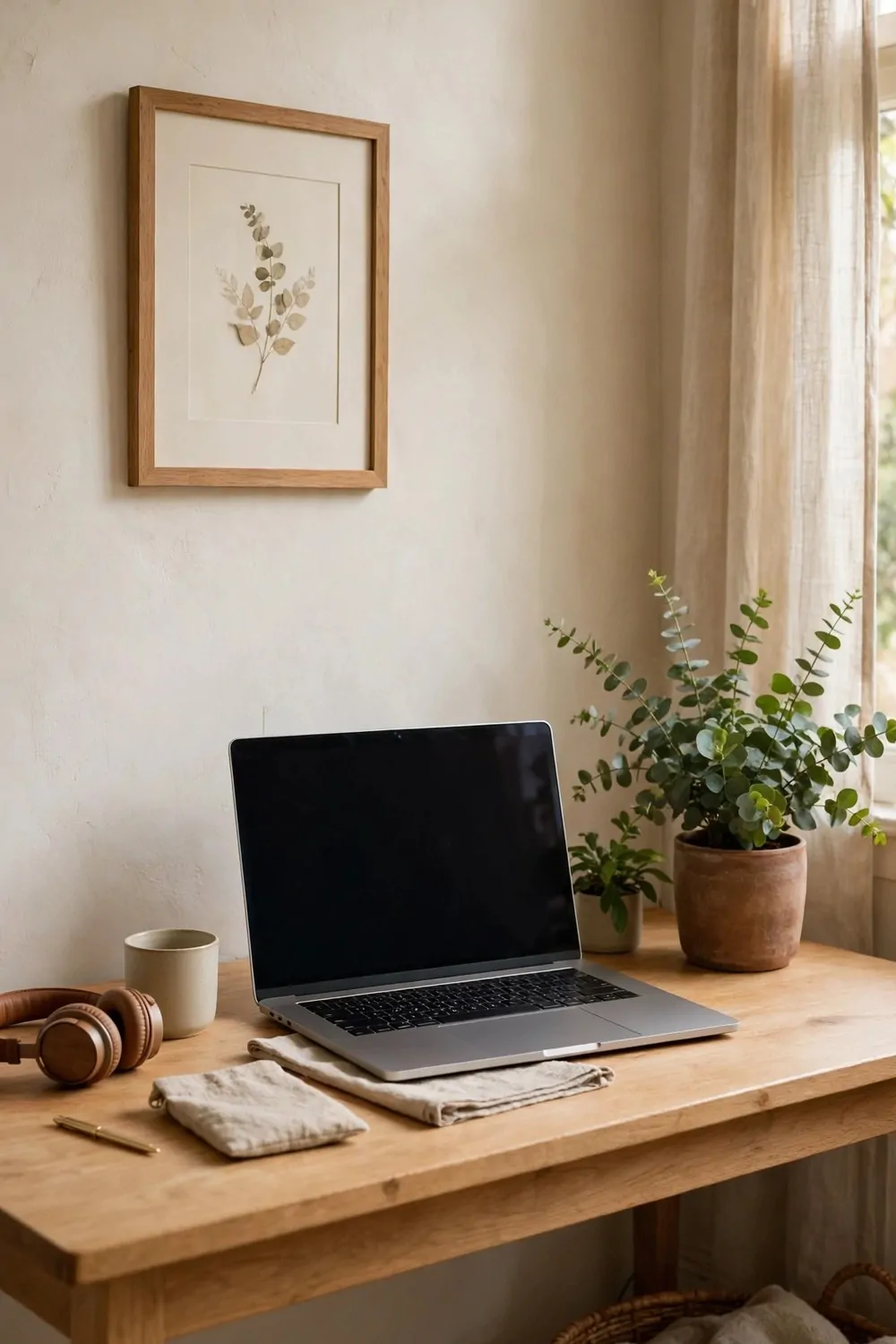
Sooner or later, a client will see your office. On a video call, in a photo, or sitting across from you. That moment decides a lot, so build one corner that is always ready.
Pick the corner with the best light and the plainest wall. That is your client corner. The desk faces the camera, the wall sits behind you, and nothing messy shows in the frame. One corner, always tidy, always ready.
Keep the background simple. A shelf with a few books. A plant that is alive. A framed picture that means something to you. Three things, no more. A background with thirty things looks like a storage room. A background with three things looks like a person who has their life together.
Test the corner before any call. Sit down, turn the camera on, and look at what the client sees. Is the light on your face or behind your head? Is there a pile of laundry in the frame? Fix it now, not five minutes before the call starts.
Keep a spare chair in the corner for real visits. A client who comes to your home should have somewhere to sit that is not your work chair. A simple chair by the desk, a glass of water, and a clear surface. That is a meeting room, even if it is only one corner of a bedroom.
Hide the work mess behind the camera line. The boxes, the packing tape, the stack of orders, they all live just out of frame. The client sees the tidy corner. You see the real business. Both are true, and both have their place.
Put a small clock on the shelf behind you. A clock in the frame tells the client you value time, and it tells you when the call has run long. A call that runs ten minutes over is a call that eats your next job.
This is the corner for owners who meet clients from home. It takes one wall, one shelf, and one chair. And it turns a home office into a place a client trusts.
The Paper Trail That Finds Itself
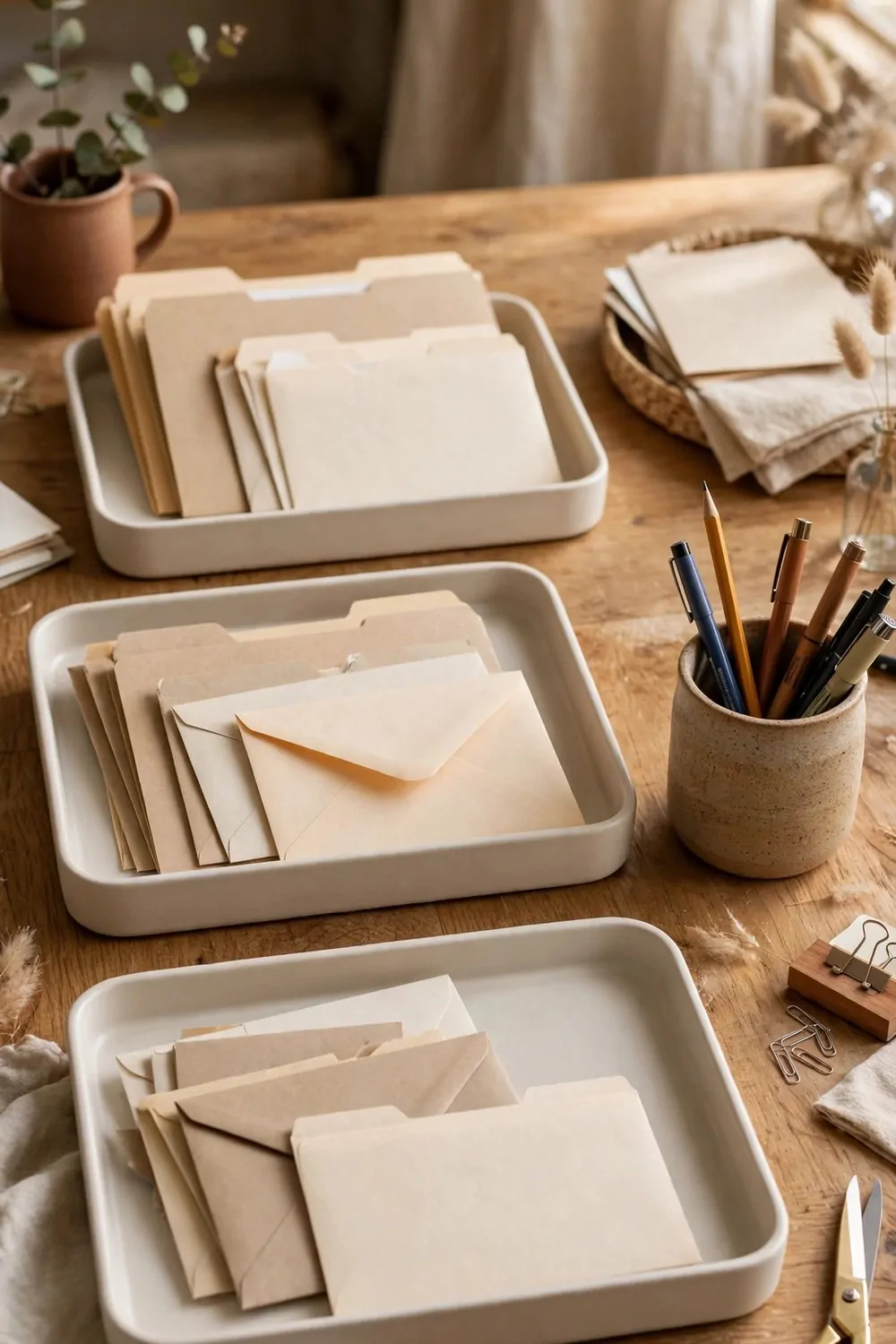
Paper is the quiet enemy of a small business. It piles up, it hides, and it shows up again at the worst time. Usually the day before the tax deadline.
The fix is not more paper. The fix is fewer places for paper to live. Give every kind of paper one home, and never let it live anywhere else.
Start with three trays. One for money coming in. One for money going out. One for papers you must keep. Label them in big plain letters. In. Out. Keep. A tray with a label is a system. A pile with no label is a mess waiting to happen.
Here is what each tray holds and when it gets emptied.
| Tray | What goes in it | When to empty it |
|---|---|---|
| In | Invoices to send and payments to check | Every Friday |
| Out | Bills to pay and supplier letters | Every Friday |
| Keep | Tax papers, the lease, and insurance | Filed once a month |
Empty the In tray every Friday. Every invoice in it gets sent. Every payment in it gets checked. Every order in it gets packed. A tray you empty weekly never overflows. A tray you ignore for a month becomes a mountain.
Keep the Keep tray near the desk, not in another room. Tax papers, supplier letters, the lease, the insurance. They live in one box, on one shelf, and you can find any of them in under a minute. That is the whole point. Fast to find, easy to file.
Shred the paper you do not need. Old flyers, dead offers, notes you already acted on. A shredder by the desk, or a bag you empty once a month. Paper you keep for no reason is just clutter with a past.
This is the system for owners who lose papers and then lose sleep over them. Three trays, one box, and a Friday habit. The paper stops hiding, and your evenings get quieter.
The Packing Station
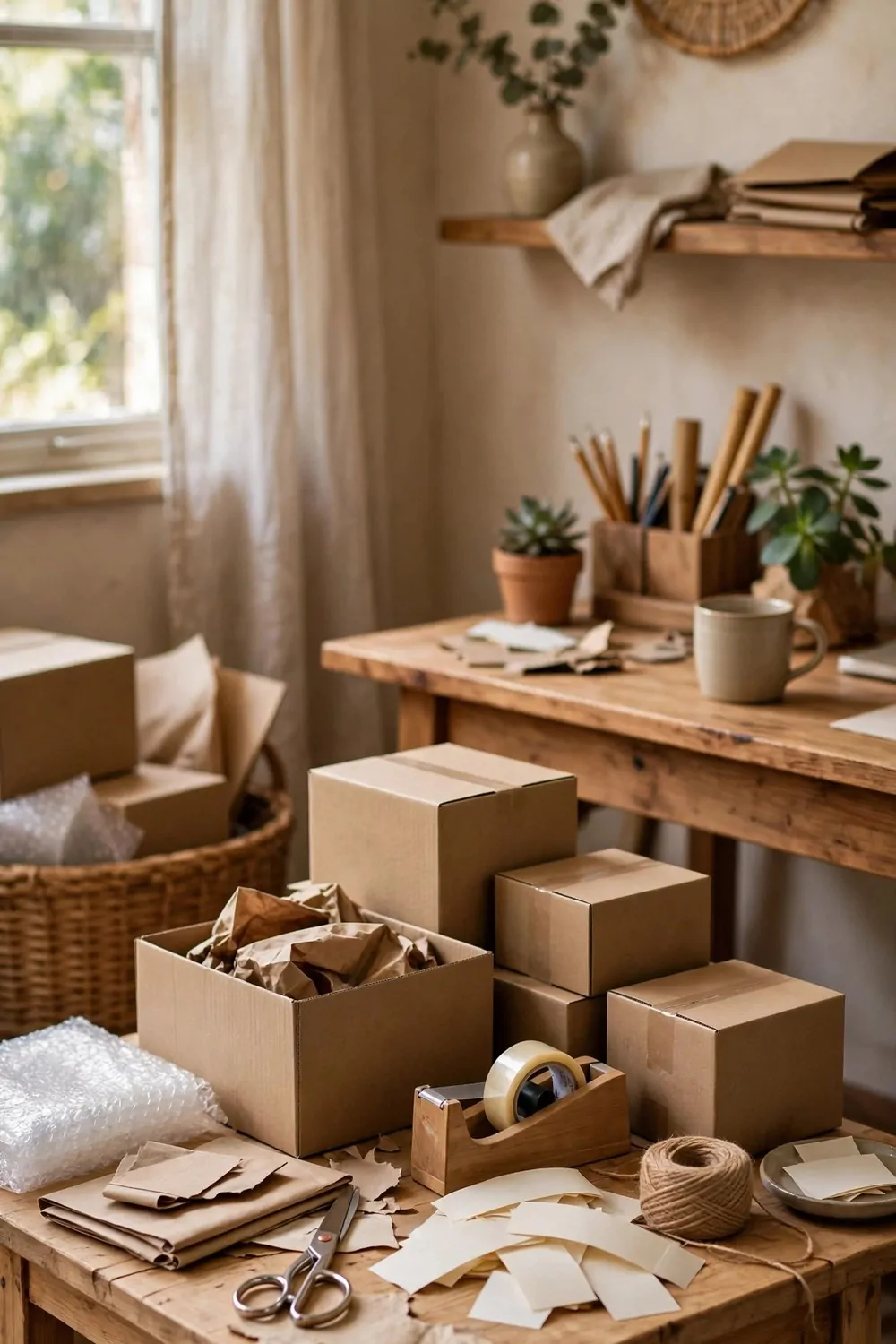
If your business ships things, your desk is also a warehouse. And a warehouse needs a station, not a corner of a table.
Set up the packing station beside the desk, not on it. A small table or a wide shelf where the boxes live. Tape, scissors, labels, and the scale all sit in one spot. When an order comes in, you walk two steps, pack it, and walk back. That is the whole flow.
Keep the boxes in three sizes and no more. Small, medium, and large. Three sizes cover almost every order, and three stacks are easy to keep tidy. Ten sizes means ten stacks, and ten stacks eat the whole room.
Put the tape and the labels at hand height, right where your hands fall when you stand at the station. A roll of tape on the far side of the room is a roll of tape you stop using. Tape you can reach is tape that gets used.
Label the finished parcels the second they are packed. Name, address, order number, all in one go. A parcel with no label is a parcel that sits on the station for a week. A labelled parcel goes out the door the same day.
Clear the station every evening. Empty boxes go back in the stack. Loose tape goes back in its spot. A clear station in the morning means the first order of the day packs in minutes, not in a hunt for scissors.
Keep a spare roll of tape in the drawer under the station. Tape runs out at the worst moment, usually halfway through the last order of the day. A spare roll means the orders never wait for a shop trip.
This is the station for owners who ship from home. One small table, three box sizes, and a habit of labelling fast. Orders go out on time, and the desk stays free for the work that pays.
The Call-Ready Backdrop
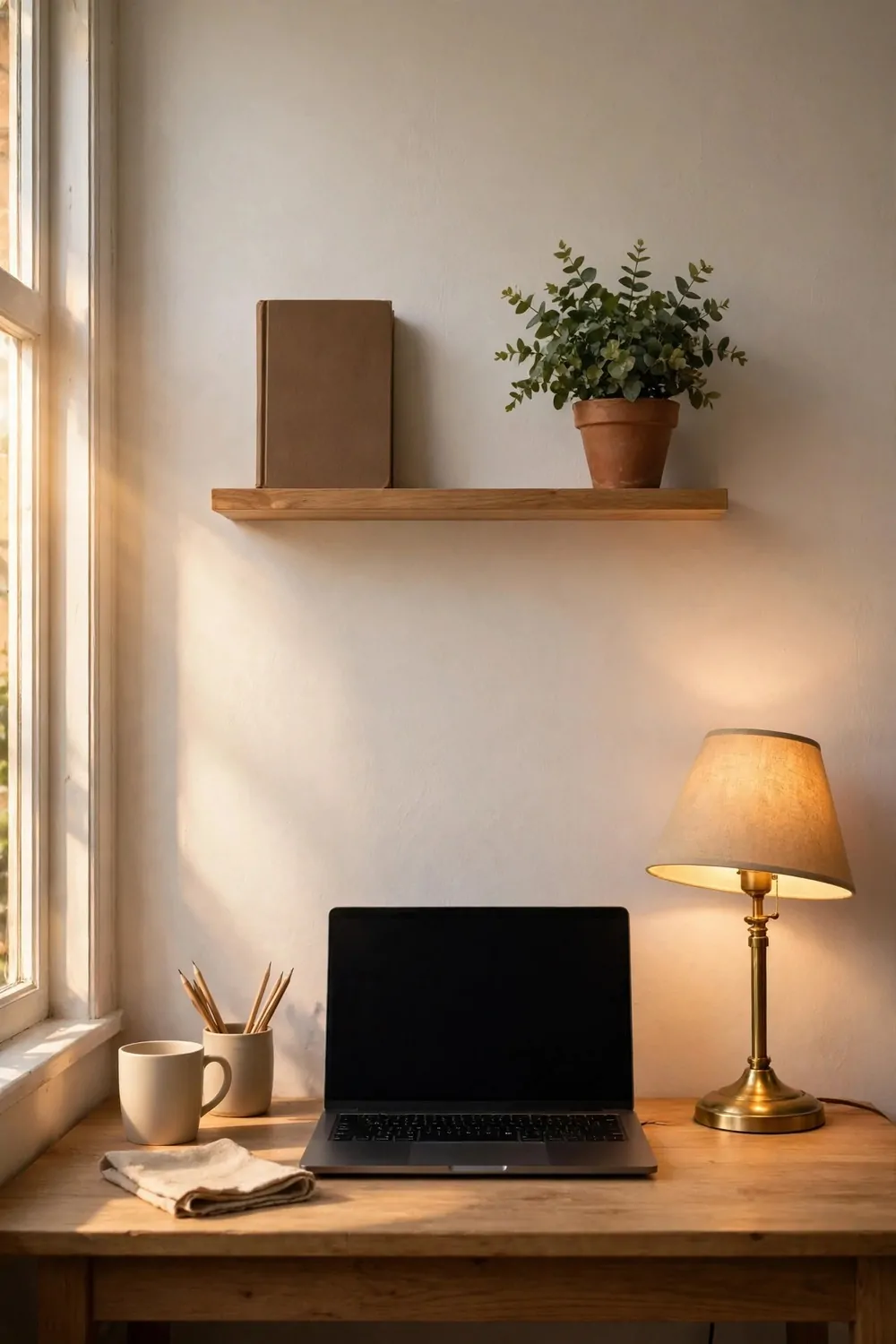
Your video call background is your shop window. Clients judge it in seconds, and you cannot be there to explain it. So build a backdrop that speaks for you.
Stand where you sit for calls and look at what is behind you. A bare wall is fine. A messy shelf is not. A door that swings open mid-call is worse. Pick the wall that gives you the cleanest frame and claim it.
Hang one shelf on that wall. Put three things on it. A book, a plant, and one object that shows what you do. A potter shows a pot. A writer shows a notebook. A maker shows the thing they make. One object tells the client what your business is before you say a word.
Keep the light in front of you, not behind you. A window behind you turns your face into a shadow. A lamp in front of you lights your face like a friendly shop. Light the face, not the wall. That is the whole rule.
Close the door before every call. A closed door keeps the dog out, the kids out, and the washing out of the frame. A sign on the door helps too. “On a call” in plain letters. It costs nothing and saves every meeting.
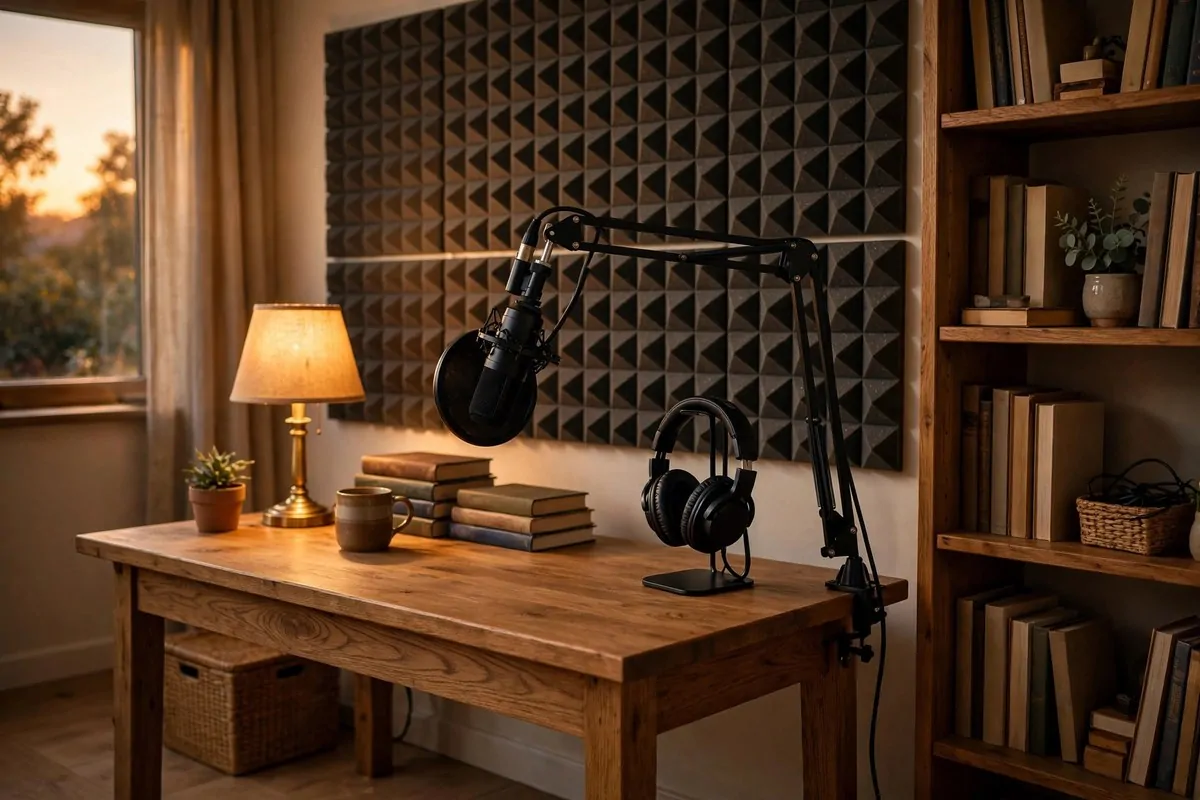
Test the sound once a week. Record ten seconds of yourself talking and play it back. If the room echoes, hang a curtain or put a rug down. Soft things kill echo. Hard walls make it worse. A rug is cheaper than a microphone.
Keep a notebook just out of frame on the desk. Notes you write during the call are notes you remember after it. A call with no notes is a call you forget by lunch.
This is the backdrop for owners who sell over video. One wall, one shelf, one lamp, and a closed door. The client sees a business. You see your home. Both are true at the same time.
The Stock Shelf
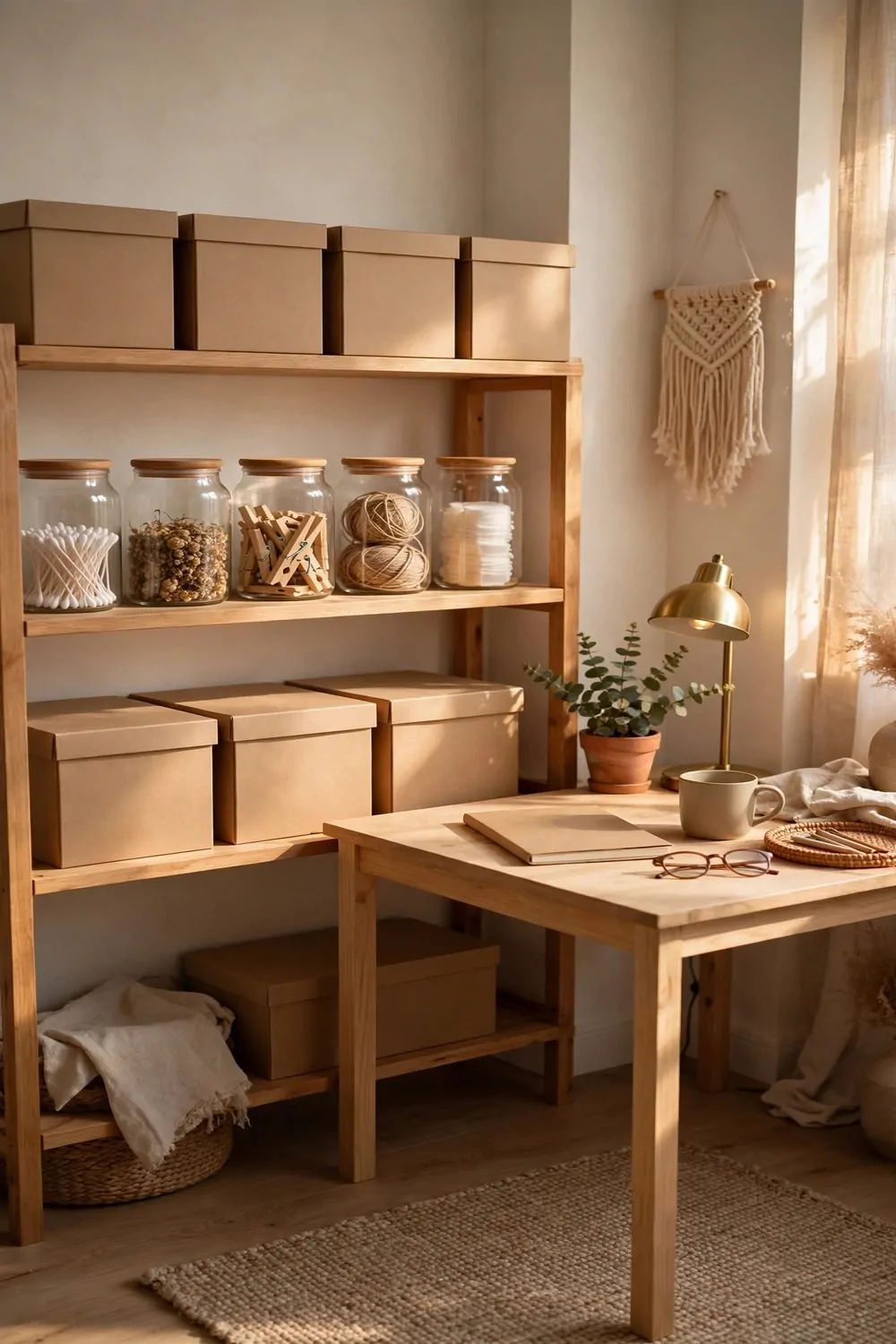
Stock is money sitting on a shelf. If you cannot see it, you cannot sell it. If you cannot count it, you cannot order more in time.
Give your stock one shelf, and only one shelf to start. That shelf is the shop. Everything on it is for sale, and everything for sale is on it. When the shelf is full, you stop buying. When it is empty, you order more. The shelf does the thinking for you.
Sort the shelf by what sells fastest. The best sellers go at eye level, where your hand reaches first. The slow movers go on the bottom. The new lines go on the top, where you can see them and remember to push them. Your hand learns the shelf, and packing gets faster every week.
Count the shelf every Sunday. Not a full stocktake with a spreadsheet. Just a look and a count. What is low. What is gone. What has sat there for a month. Five minutes, one notebook, and you know what to order on Monday.
Keep the shelf near the packing station. Stock beside packing means two steps from shelf to box. Stock in another room means a walk for every order. Short walks add up. A shelf beside the station saves an hour a week without trying.
Put a small label on the front edge of each shelf. The name of the line, and how many should be there. A label that says “twelve” tells you at a glance if you have twelve or four. No counting, no guessing. Just a look.
Dust the shelf once a month when you count it. Dusty stock looks old, even when it is brand new. A quick wipe keeps the shelf looking like a shop, not a cupboard.
This is the shelf for owners who sell physical things from home. One shelf, sorted by speed, counted on Sunday. The stock stops hiding, and the orders stop waiting.
The Quiet Call Corner

Phone calls are the hardest part of a home office. The house is noisy, the street is noisy, and the client can hear all of it.
Pick the quietest corner of your home for calls. Not the biggest corner. The quietest one. Far from the front door, far from the kitchen, far from the telly. A small quiet corner beats a big noisy room every time.
Put a comfortable chair in that corner and nothing else. A chair, a small table for your notebook, and your phone. No desk, no screen, no clutter. A call corner is for talking, and talking needs very little.
Hang a curtain or put a rug in the corner if the sound echoes. Soft fabric soaks up the noise that hard walls bounce back. A thick curtain behind you makes your voice sound closer and warmer. The client hears you, not the room.
Keep a glass of water on the table. Calls run long, voices get dry, and a sip of water buys you a second to think. Water on the table is the cheapest call tool there is, and most people forget it.
Tell the house before a big call. One sentence, said out loud. “I am on a call for twenty minutes.” That sentence is worth more than any door lock. People respect a call they know about. They interrupt a call they never heard of.
Keep a pen and a small pad on the table, even if you take calls on a laptop. Some notes are faster on paper, and a pad never runs out of battery in the middle of a call.
This is the corner for owners who live on the phone. One quiet spot, one chair, one glass of water. The calls get calmer, and the clients hear a business, not a busy house.
The Money Drawer
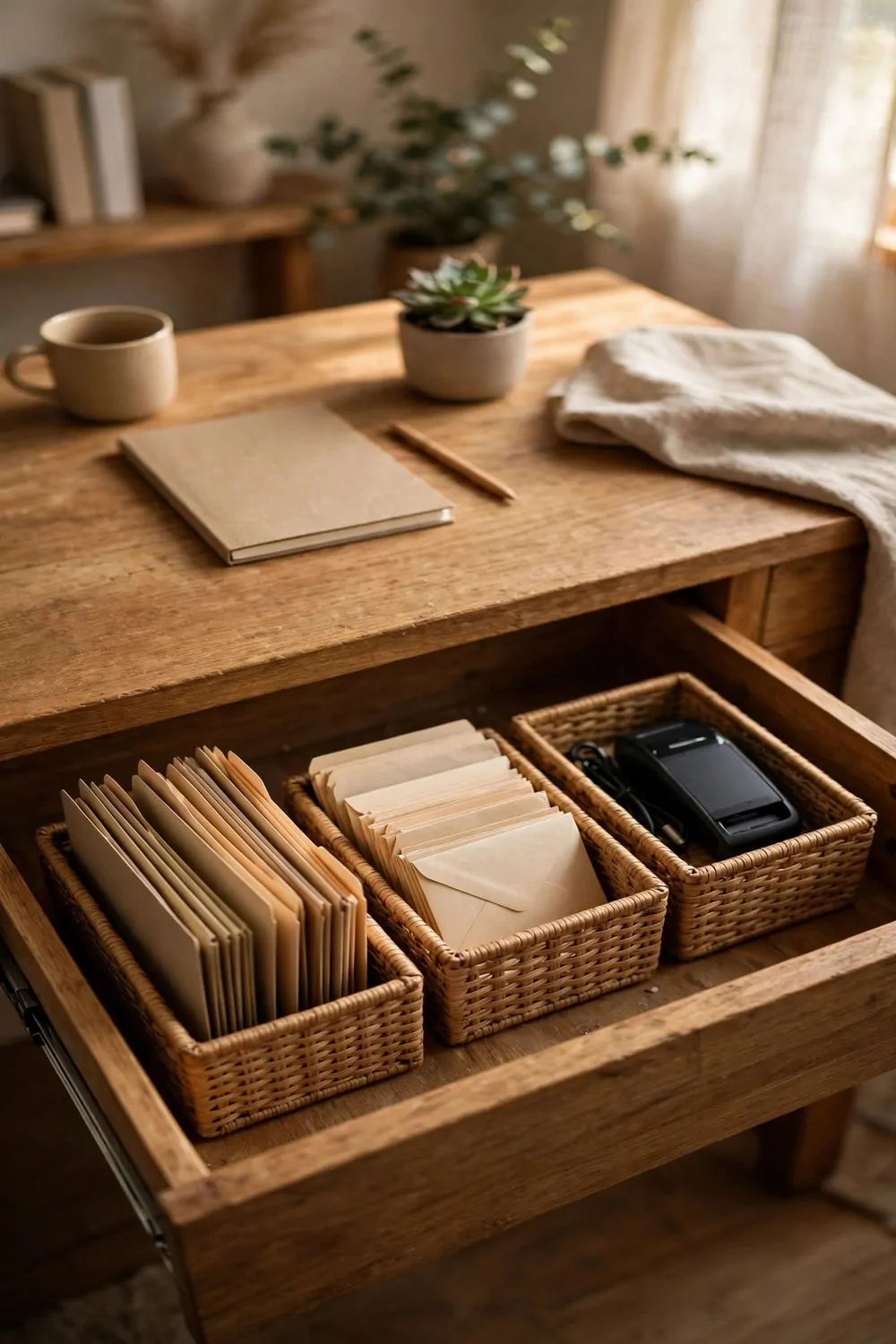
Every business has a drawer where the money lives. Receipts, cash, the card reader, the tax papers. If that drawer is a mess, the money is a mess too.
Give the money one drawer and keep it locked. Not because you do not trust anyone. Because a locked drawer means the money has one home, and nobody moves it by accident. One drawer, one key, and the money stays where you put it.
Sort the drawer with three small boxes inside it. One for cash in. One for receipts to file. One for papers the accountant needs. Three boxes, no more. A drawer with three boxes is a system. A drawer with loose papers is a lucky dip.
Empty the receipt box every Friday. Every receipt gets logged in the notebook or the app, then filed or shredded. A receipt you log on Friday is a receipt you can find in April. A receipt you leave for months is a receipt you lose.
Keep the card reader in the drawer, charged and ready. A reader with a dead battery is a sale you cannot take. Plug it in every night, the same way you charge your phone. A charged reader is a business that is open.
Count the cash once a week, on the same day, at the same time. Sunday evening works well. Count it, write it down, and put it in the bank on Monday. A weekly count takes five minutes and stops small gaps from becoming big ones.
Keep a spare key for the drawer in a different room. A locked drawer with a lost key is a drawer you have to break open. A spare key in the kitchen drawer saves the whole system.
This is the drawer for owners who want their money tidy. One locked drawer, three small boxes, and a Friday habit. The money stops disappearing, and the tax season stops being scary.
The Big Week Board
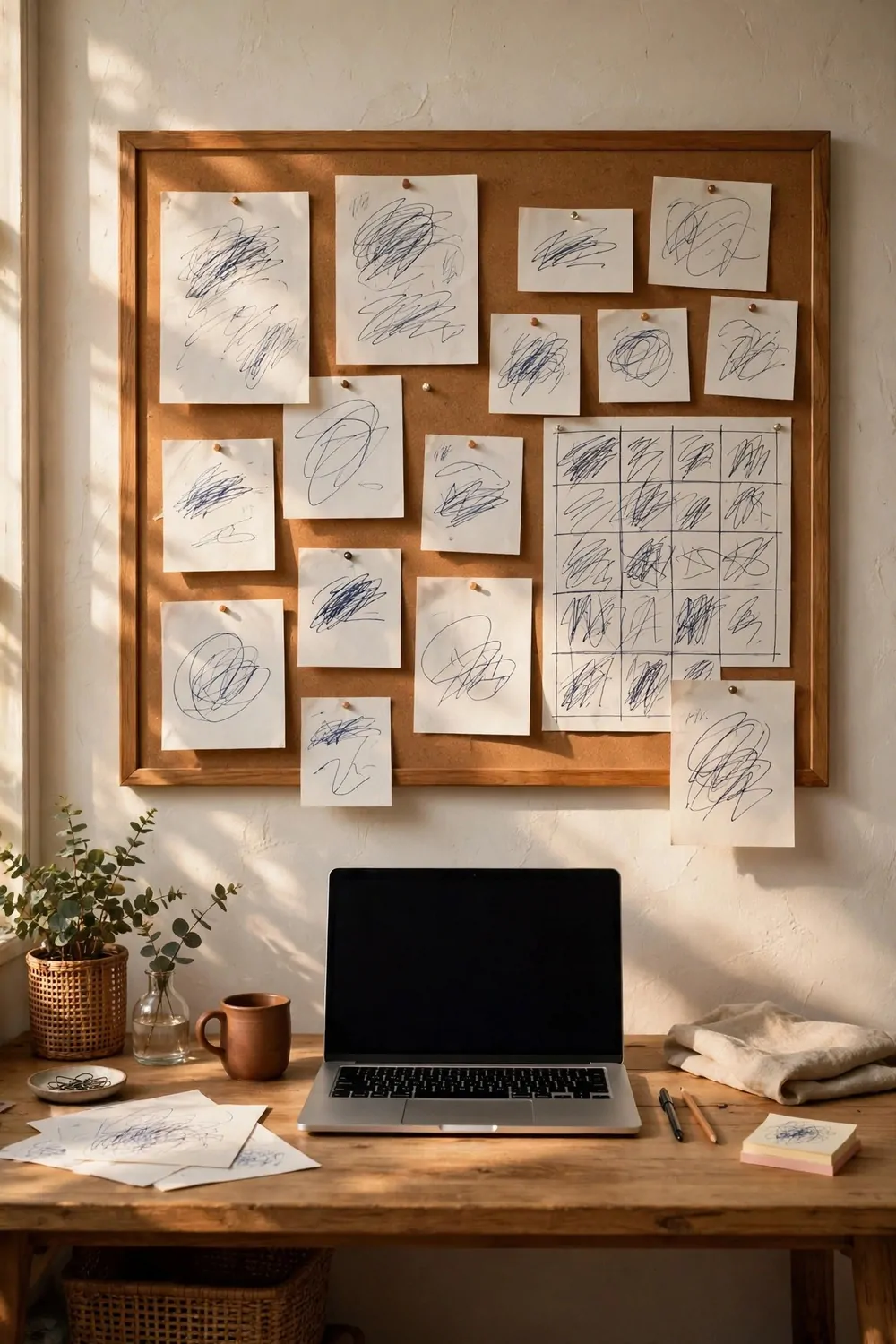
A business owner holds too much in their head. Orders, deadlines, calls, deliveries, all of it spinning at once. A board on the wall holds it instead.
Hang a board where you can see it from your desk. Not across the room. Right there, at eye level, where your eyes land when you look up from the screen. A board you cannot see is a board you never use.
Write the week on it in big letters. Monday to Sunday, one line each. Three jobs per day, no more. A board with three jobs per day is a plan. A board with twenty jobs is a wall of worry, and worry does not get work done.
Move the jobs with pins or magnets, not with rewriting. A job that moves from Tuesday to Wednesday is one pin moved. A job you rewrite is a job you forget. Pins make the week flexible, and a flexible week survives real life.
Wipe the board clean every Sunday night. Last week’s jobs come down, this week’s jobs go up. A fresh board on Monday feels like a fresh start. A board full of last week’s jobs feels like homework you never finished.
Put one happy thing on the board too. A good review. A kind message from a client. A number you are proud of. Business is hard, and a board that only holds chores makes the week feel heavier. One good thing on the board reminds you why you started.
Take a photo of the board every Monday morning. A photo is a backup of the week, and if the board gets wiped by mistake, the photo brings it back in seconds.
This is the board for owners who juggle too much alone. One wall, one week, three jobs a day. The head gets quieter, and the work gets done in order.
The Two-Screen Sprint

Some jobs need two screens. One for the order, one for the email. One for the design, one for the client notes. Two screens cut the switching, and switching is where time leaks away.
Set the second screen beside the laptop, not behind it. Side by side, at the same height, so your eyes move left and right without your neck bending. A screen at the wrong height gives you a sore neck by lunch. A screen at eye level disappears into the work.
Use the second screen for the thing you look at most. The inbox, the order list, the notes. The laptop holds the thing you are making. One screen makes, one screen watches. That split keeps your hands on the work and your eyes on the facts.
Keep the cables behind the desk, not across it. One short run from the screen to the laptop, tucked behind the desk leg. Cables across the desk get pulled, tangled, and knocked over. Cables behind the desk are forgotten, which is exactly where they belong.
Turn the second screen off when the job is done. Two glowing screens at night make the room feel like an office that never closes. One click, and the desk goes back to being a desk. Your brain gets the message too. Work is over.
Match the brightness of the two screens before you start. A bright screen beside a dim one strains your eyes, and tired eyes slow the whole afternoon down.
Keep the second screen clean. A dusty screen beside a clean one looks twice as bad, and a quick wipe on Monday morning keeps both looking new.
This is the setup for owners who live in two windows at once. Two screens, side by side, at eye level. The switching stops, the day gets shorter, and the work gets done faster.
The Spare Chair
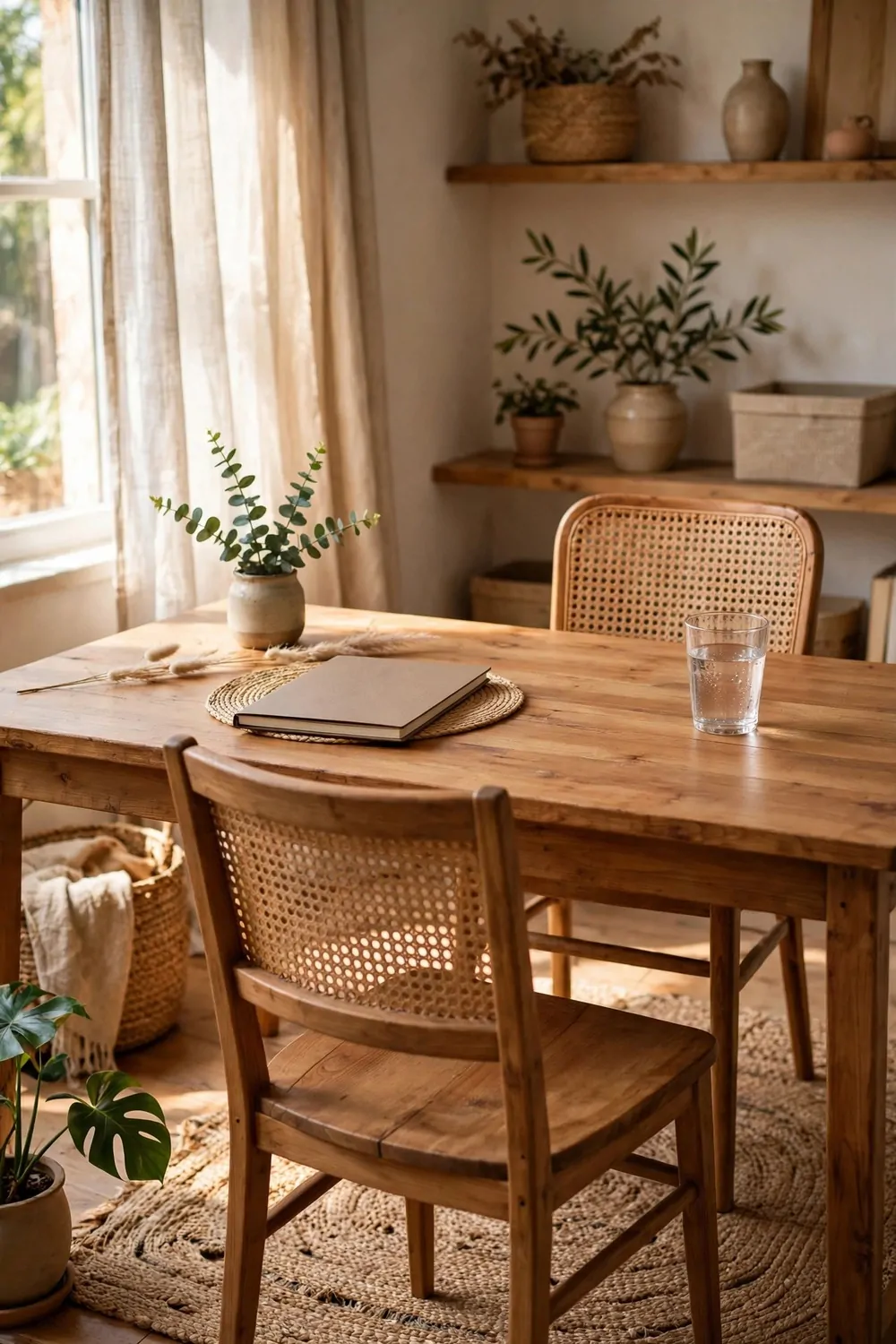
A client who visits your home office needs a chair. Not your chair. Their chair. A chair that says you were expecting them.
Put a simple chair beside the desk, facing you across the work. Not behind you, not in the corner. Across from you, where a person sits when they mean business. Two chairs facing each other turn a desk into a meeting table.
Keep the visitor chair clear. No coats on it, no boxes on it, no papers piled on the seat. A chair with stuff on it tells the visitor they were not expected. A clear chair tells them they were. That message matters more than any pitch.
Offer water when they sit down. A glass on the desk, poured before they arrive. Water is a small kindness, and small kindnesses make clients relax. A relaxed client listens better and decides faster.
Keep a notebook and a pen on their side of the desk. A client with a pen takes notes. A client with notes remembers the meeting. A client who remembers the meeting calls you back. One pen can be worth a whole order.
Walk them to the door when they leave. Do not shout goodbye from the desk. Stand up, walk with them, and thank them at the door. A good goodbye is the last thing they remember, and it costs you thirty seconds.
Keep a small bin beside the visitor chair. A client with a coffee cup needs somewhere to put it, and a bin beside the chair stops cups from piling up on your desk.
This is the chair for owners who meet people at home. One spare chair, one glass of water, one pen. The visit feels professional, and the client leaves thinking about the work, not the room.
The End-of-Day Shutdown
A business that never closes will close you down instead. Every owner needs a shutdown, a short routine that ends the day and gives the evening back.
Pick a shutdown time and write it on a card on the desk. Five o’clock, six o’clock, whatever fits your life. When the time comes, the work stops. Not slows down. Stops. A time you keep is a promise to yourself.
Close the laptop first. Lid down, screen dark. A closed laptop is a closed shop. An open laptop on the desk at eight in the evening is a shop with its lights on, and you will walk back into it.
Clear the desk in three minutes. Papers into the tray, mug into the kitchen, pen into the pot. A desk with three things on it shuts down fast. A desk with thirty things on it never shuts down at all.
Write tomorrow’s first job on a card and leave it on the desk. One job, the most important one. When you sit down tomorrow, you do not have to think. You read the card and start. A morning without decisions is a morning that starts fast.
Step away from the desk and shut the door. A shut door is the end of the working day. The room stays behind it, and your evening belongs to you again. That door is the best boundary a home business can have.
Put your phone on charge in another room when you shut down. A phone charging beside the desk buzzes all evening, and a phone in the kitchen lets the evening belong to you.
This is the shutdown for owners who work too late too often. One time, one closed laptop, one card for tomorrow. The business rests, and so do you.
The First-Week Checklist

The first week in a new home office decides everything. Get it right and the office works for years. Get it wrong and you spend months fixing it.
Write the checklist before you build anything. Not in your head. On paper, where you can see it. A paper list is a plan. A list in your head is a wish.
Here is the checklist that matters most.
- Desk and chair in place, with the laptop plugged in and working.
- Lamp on the desk, with a warm bulb that lights your work.
- Three trays for paper, labelled and sitting on the desk.
- One box for the money papers, near the desk and easy to reach.
- A plug within reach of the desk, with no cables crossing the floor.
- A board on the wall with this week’s three jobs on it.
Work through the list in order, one item at a time. Do not skip ahead to the pretty things. A lamp you can see by matters more than a picture on the wall. A tray for paper matters more than a plant. Pretty comes last, after the office works.
Tick each item off with a pen when it is done. A ticked list is proof the office is ready. An unticked list is a reminder of what is still missing. Tick it, and the week starts clean.
Keep the checklist on the wall for the first month. When something breaks or goes missing, the list tells you what to fix. After a month, take it down. By then the office runs itself, and the list has done its job.
Ask a friend to walk through the office when the list is done. Fresh eyes spot the wobbly chair and the dark corner you stopped noticing. One walk-through finds the fixes you missed.
This is the checklist for owners starting from zero. Six items, one week, and a working office at the end of it. No guessing, no shopping sprees, just a short list done in order.
The Grow-With-You Desk
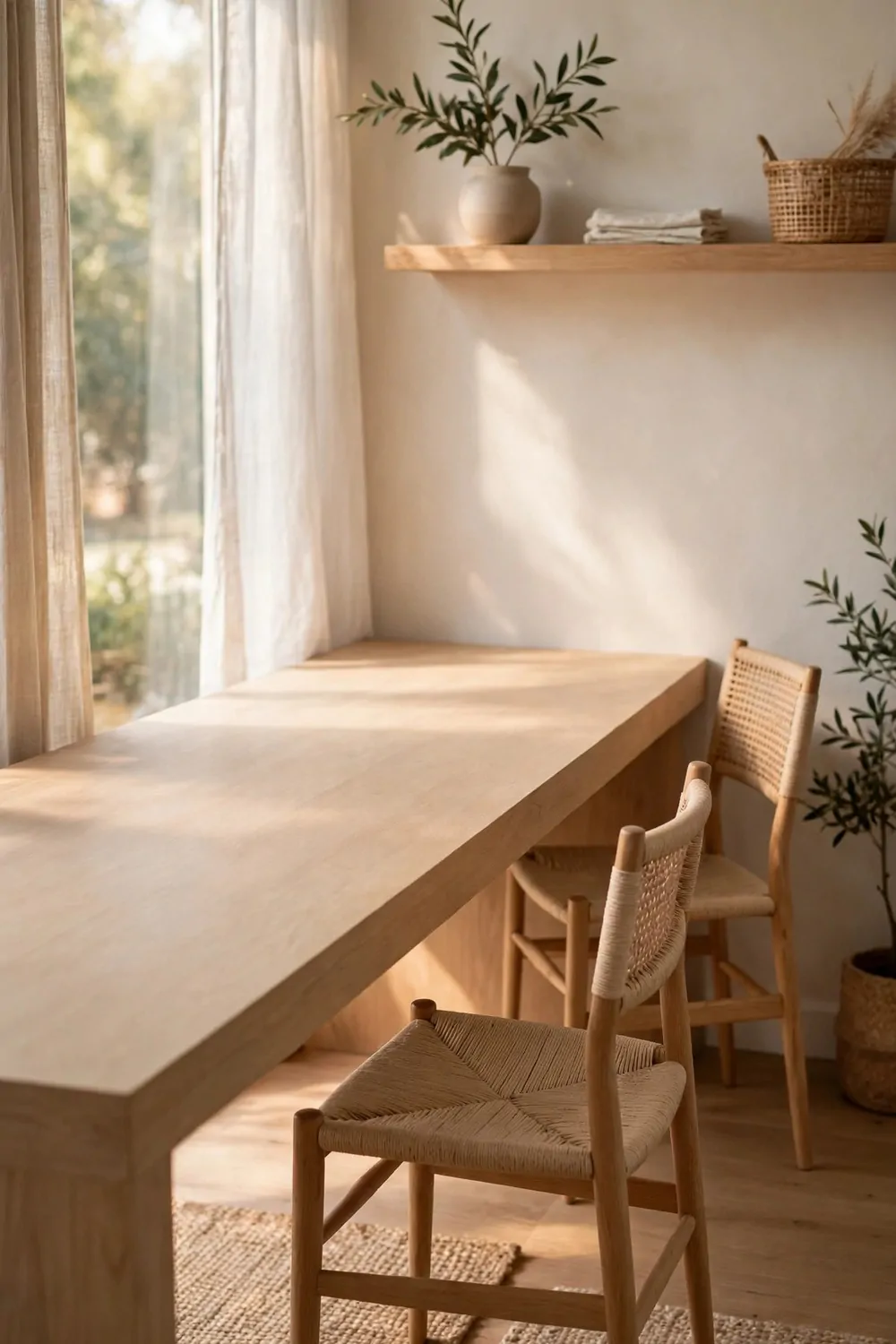
A small business grows. The desk should grow with it, not hold it back.
Buy a desk you can make bigger. A plain top that can take another board beside it. A desk with room on one side for a second surface later. A desk that grows by adding, not by replacing, saves you buying twice.
Leave one side of the desk empty on purpose. That empty side is where the growth goes. A second screen. A printer. A packing tray. An empty side is not wasted space. It is room for the business to grow into.
Add one piece at a time, when the work asks for it. A shelf when the papers pile up. A drawer when the tools spread out. A second chair when the clients start visiting. Each piece answers a real need, and no piece sits unused.
Move the desk when the business outgrows the corner. A desk on wheels, or a light desk two people can lift, moves in an afternoon. A heavy desk bolted to the wall traps the business in one spot. Light and movable beats big and fixed for a growing business.
Keep the cords loose enough to move. A desk that cannot move because of its cables is a desk that owns you. Leave slack in every cable, and the desk can shift, grow, and follow the business wherever it goes.
Take a photo of the desk setup every time you add a piece. A photo shows how the office grew, and it helps you plan the next addition without guessing what fits where.
This is the desk for owners who plan to grow. One plain top, one empty side, and room to add. The business gets bigger, and the desk keeps up without a single big spend.
The Sunday Stock Check
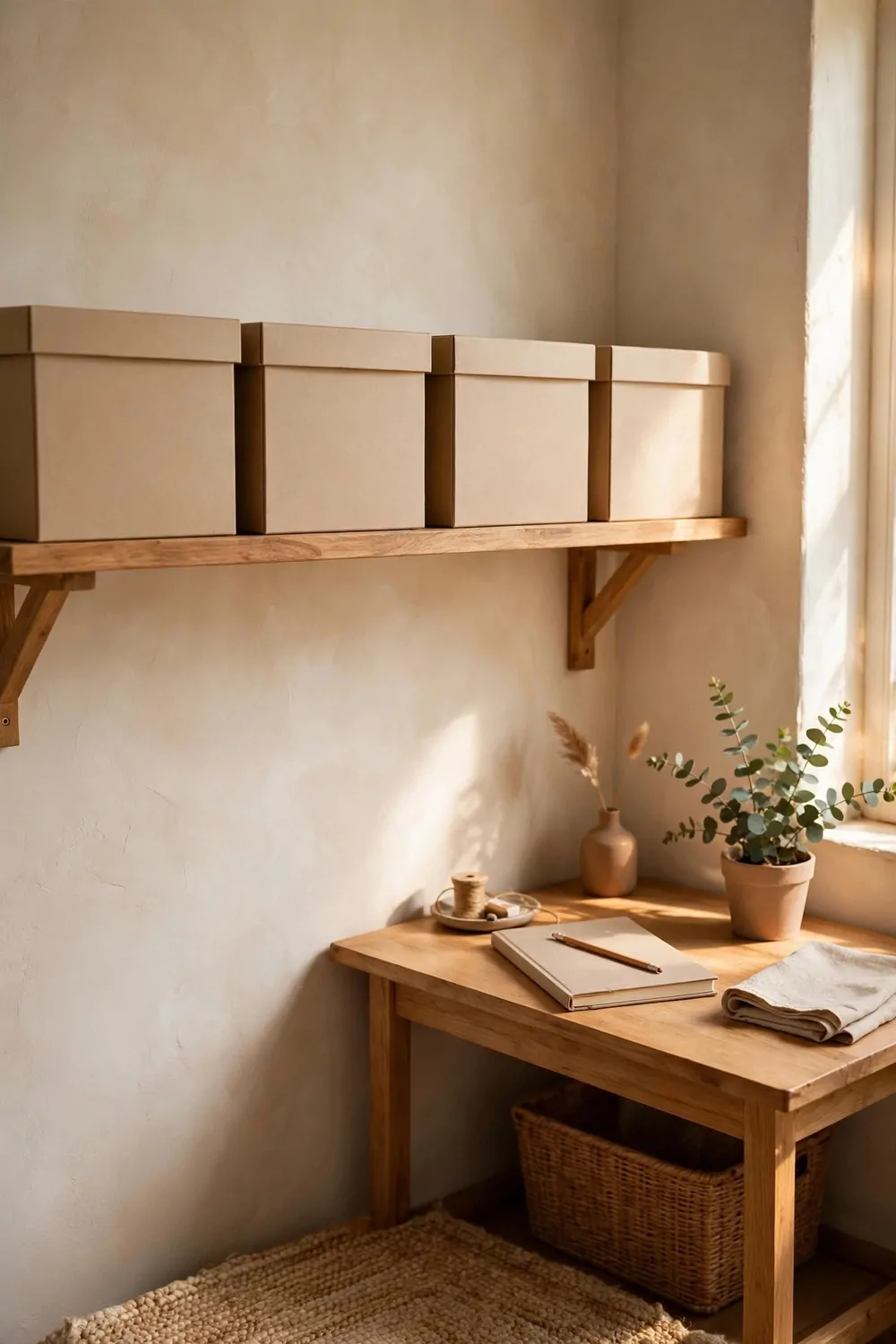
Sunday is the quietest day in a small business. Use twenty minutes of it to count what you have, so Monday starts with answers instead of questions.
Walk to the stock shelf with a notebook and a pen. No phone, no laptop. Just your eyes and the shelf. Count what is there, line by line. Write the numbers down as you go. A count you write down is a count you can trust.
Mark the lines that are low. Anything with fewer than five left gets a star in the notebook. Five is the line. Below five, you order on Monday. Above five, you leave it alone. One rule, no thinking.
Here is the Sunday check in one place.
| What to check | What to count | Order when |
|---|---|---|
| Best sellers | How many are left on the shelf | Fewer than five left |
| Packing supplies | Boxes, tape, labels, and bags | Fewer than ten left |
| Slow lines | What has not moved in a month | Never reorder, move it forward |
Check the packing supplies too. Boxes, tape, labels, bags. Count them the same way. A business that runs out of boxes cannot ship, and a business that cannot ship cannot earn. Boxes are as important as stock.
Look for the lines that have not moved in a month. A line that sits for a month is a line nobody wants. Move it to the front of the shelf, cut the price in your head, or bundle it with a best seller. Stock that sits is money that sleeps.
Write the Monday order list before you close the notebook. Three lines, no more. The three lines that need ordering most. Monday morning, you send that list and the week starts moving.
This is the check for owners who sell things from home. Twenty minutes on Sunday, one notebook, and a Monday that starts with a plan. The stock stays honest, and the orders never wait.
The Desk by the Door
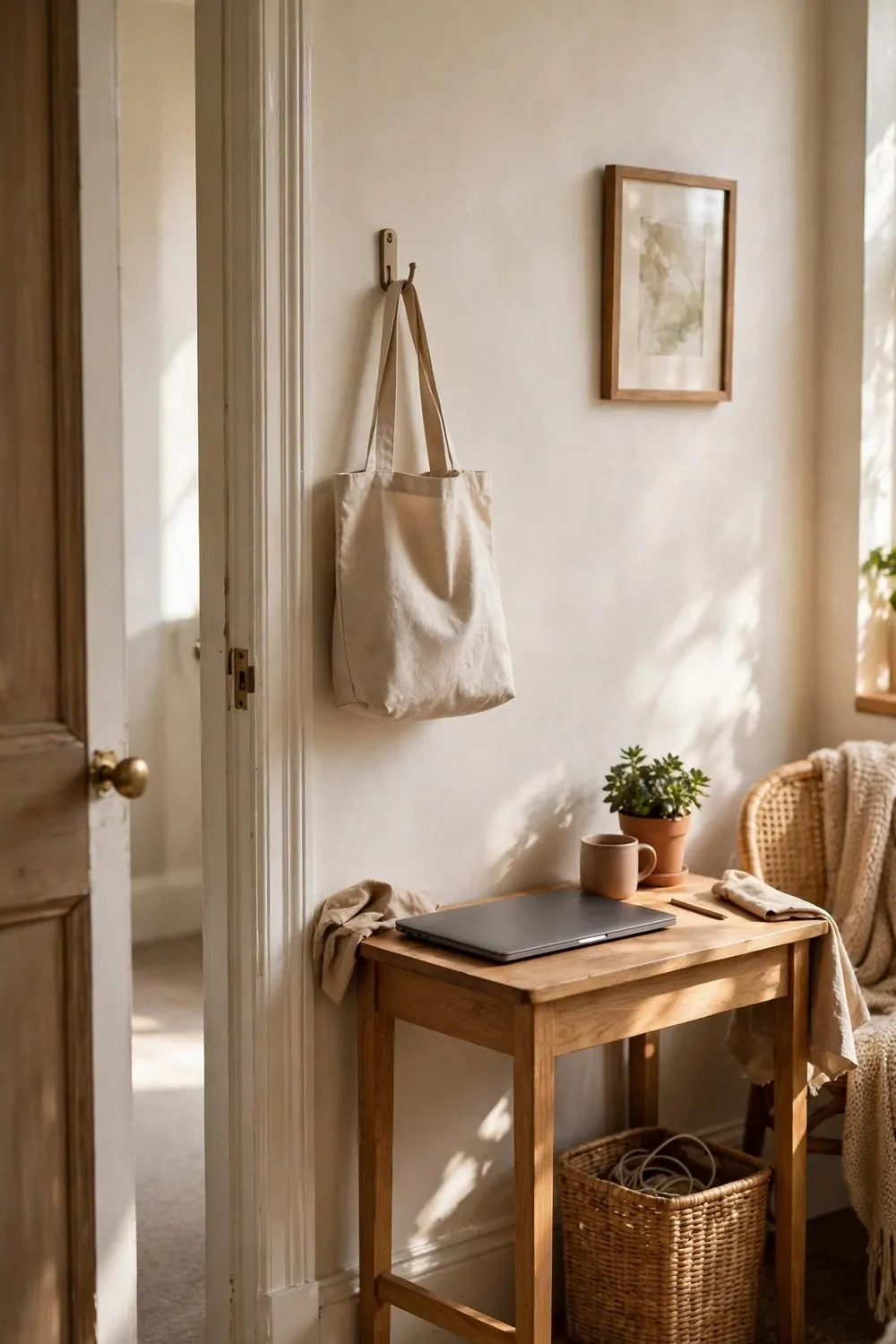
The desk by the door is the fastest office in the house. You walk in, you sit down, and you are working before the kettle boils.
Put a small desk right inside the door of the room you work in. Not deep in the room. Right by the door, where you pass it every time you walk in. A desk you walk past is a desk you use. A desk hidden in the far corner is a desk you forget.
Keep the door desk for quick jobs only. Emails, orders, short calls. The big work happens at the main desk. The door desk is for the ten-minute jobs that would otherwise wait all day. Quick jobs done fast keep the business moving.
Hang a hook beside the desk for your bag and your keys. Bag on the hook, keys on the hook, laptop open on the desk. Everything in one spot, ready to go. A hook by the door saves the five minutes you spend hunting for your bag every morning.
Keep the door desk clear at all times. No papers left on it overnight. No mug, no clutter. A clear desk by the door is an invitation to sit down. A messy desk by the door is a reason to walk straight past it.
Put a small mat under the door desk. A mat catches the dirt from shoes that stop at the desk, and it keeps the floor clean where you sit.
Keep a clock on the wall above the door desk. Quick jobs need a quick eye on the time, and a clock stops ten minutes from turning into an hour.
This is the desk for owners who steal minutes between jobs. One small desk, one hook, and a clear top. The quick jobs stop piling up, and the day feels lighter by lunch.
Keep Reading
If you liked these fast business office ideas, these closet and bedroom office ideas will give you even more ways to make a small space work hard.
- 21 Office Space in Bedroom Setups That Don’t Feel Cramped
- 18 Desk in Closet Ideas for a Hidden Workspace
- 20 Walk in Closet Office Setups With Serious Wow Factor
A fast office is the kindest thing you can build for your business. It works all day, it sets up in a weekend, and it grows with you. Pick your favourite idea from this list, build it this week, and let your business surprise you.