25 Home Gym Design Ideas for a Gym You’ll Actually Use

The hardest part of a workout is not the workout. It is the drive there.
Think about your last month. You packed a bag. You drove somewhere. You looked for parking. You waited for a machine. By the time you started, you were already tired. And on the busy days you just skipped it, because the whole trip felt like too much.
So I started asking a different question. What if the gym stopped asking you to travel? What if it sat right inside your home, in a room you actually enjoy walking into? That is what this list is about.
These 25 Home Gym Design Ideas are not about buying the fanciest gear. They are about rooms that pull you in. Rooms with good light, clear zones and smart storage. Rooms that make a twenty minute workout easy instead of a big event.
Pick the ideas that fit your home. You only need a few of them to build a gym you will actually use.
1. Turn Your Garage Into a Zone-Based Gym
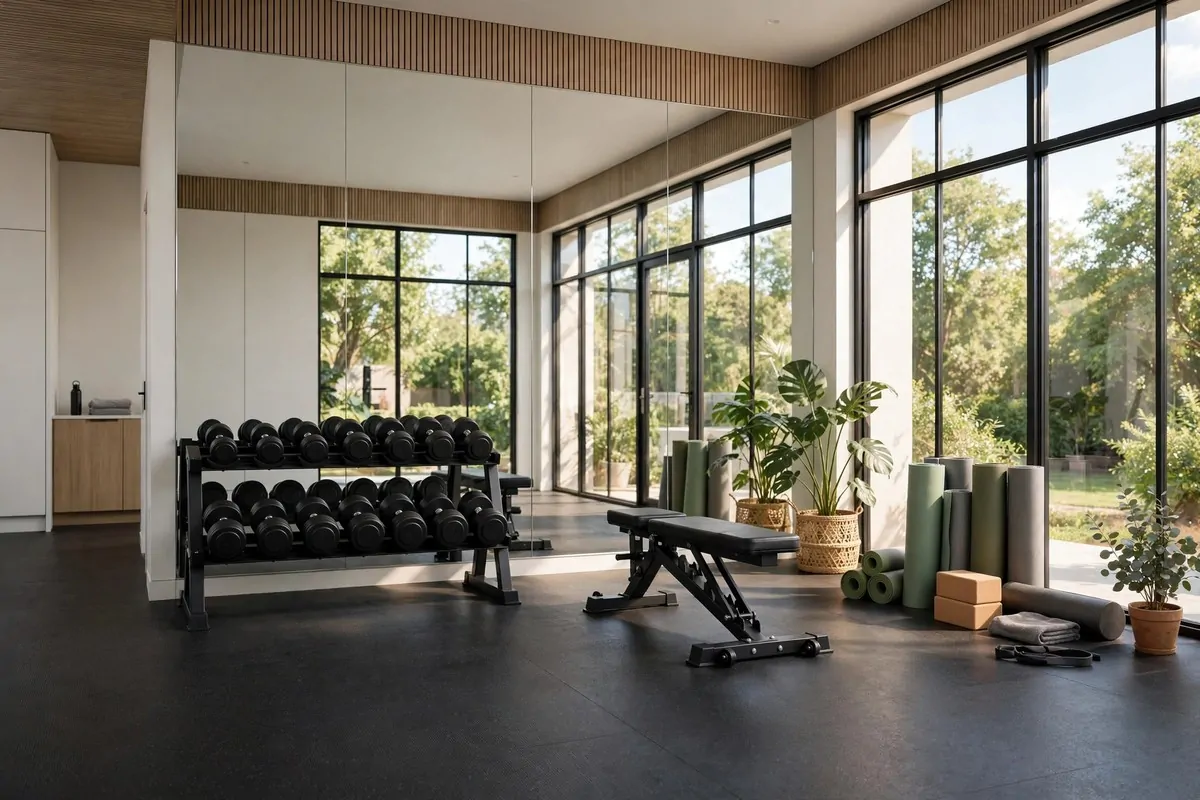
Your garage is probably the biggest empty room you own. You just use it for boxes right now. Clear a space and it becomes a full gym.
Honestly, this is where most real home gyms start. Garages have high ceilings and tough floors, and nobody minds a bit of noise down there.
The trick is zones. Tape or paint lines on the floor to mark each area: one zone for cardio, one for strength, and one for stretching.
That sounds small, but it changes everything. You walk in and you know exactly where each part of your workout lives.
Keep the cardio zone near the door. Treadmills and bikes like fresh air. Open the garage door on nice days and you get an indoor-outdoor workout for free.
Put the strength zone against the back wall. A squat rack, a bench and a dumbbell rack fit nicely along one wall. Rubber mats under the weights protect the concrete and keep things quiet.
Storage goes on the walls, not the floor. Hooks for bands and shelves for small gear. A clean floor makes the whole garage feel like a real gym instead of a cluttered shed.
Add a small fan or two. Garages get warm fast when you start moving. Good airflow makes summer workouts possible without suffering.
2. Convert the Basement Into a Bright Workout Room
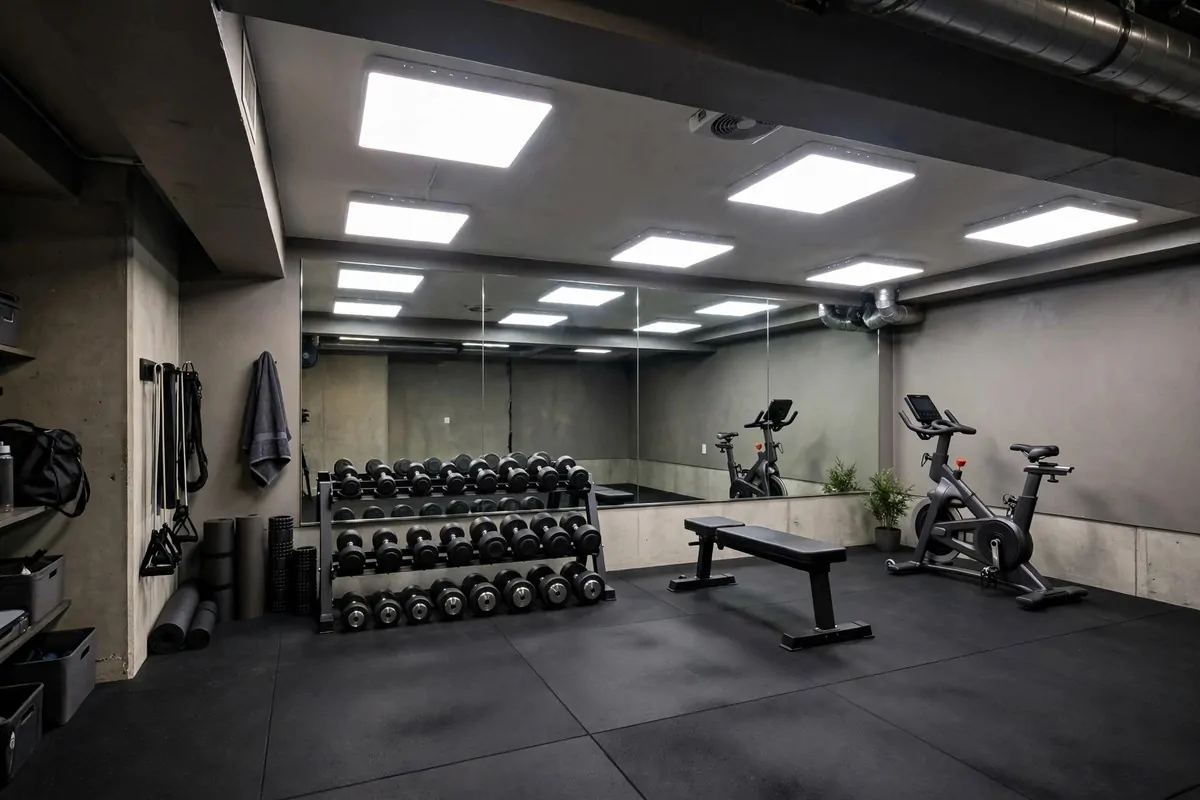
Basements scare people because they feel dark. A few bright lights fix that completely. Good lighting turns a basement into the best gym room in the house.
I love basements for gyms because they are private. Nobody walks through on the way to the kitchen. You can leave your gear out and nobody cares.
Start with the ceiling. Flat LED panels give clean, even light with no dark corners. Basements need more light than you think, so do not be shy here.
Paint the walls white or a very light colour. Light walls bounce the LED light around the room. The whole space feels twice as big when it is bright.
Rubber flooring is a must down here. It protects the floor and softens the sound of dropped weights. Your family upstairs will thank you.
A wall of mirrors does two jobs. It helps you check your form. And it makes a basement feel open instead of boxed in.
Keep a dehumidifier running if your basement feels damp. Wet air makes workouts feel harder. Dry air keeps your gear in better shape too.
This room works all year round. It stays cool in summer. And in winter it is warm and waiting, while the thought of driving to a gym feels impossible.
3. Build a Sunroom Gym Full of Natural Light
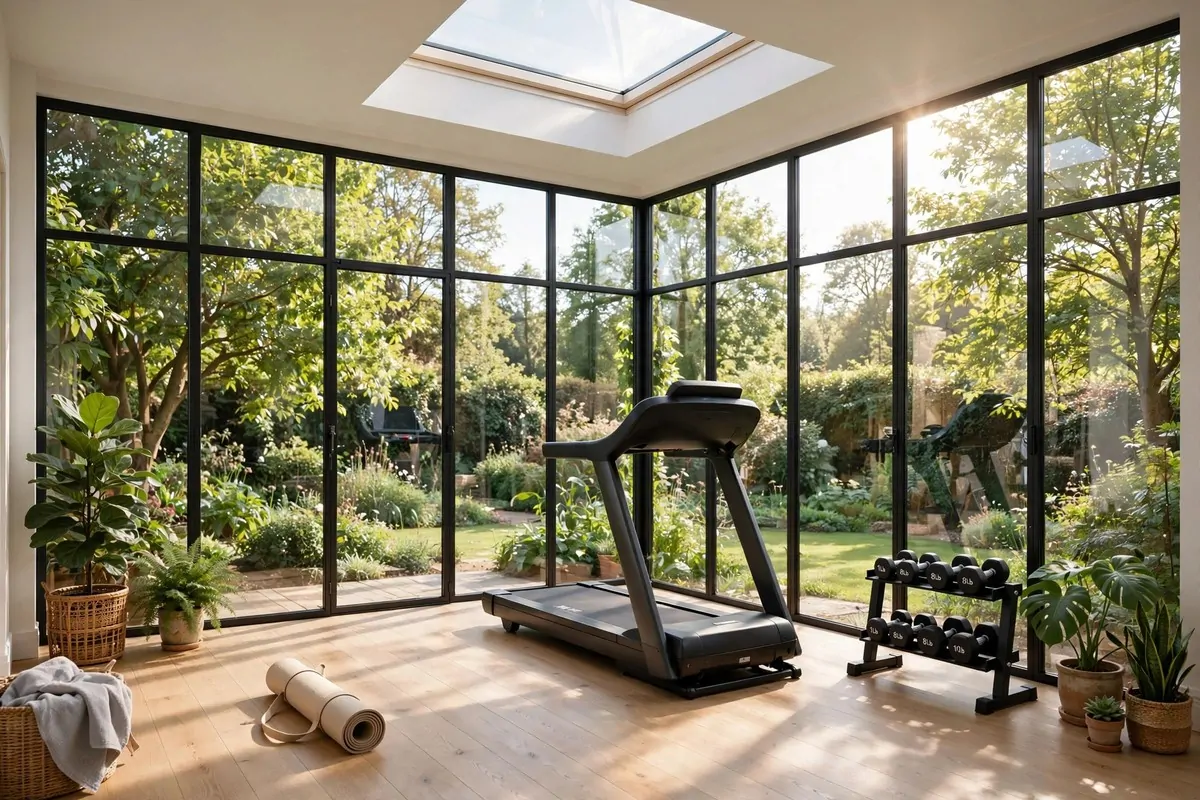
A sunroom might be the happiest gym spot in any home. Walls of glass, sky above you, and your workout gear right in the middle of it all.
I have seen people put a treadmill facing the garden and never skip a morning walk again. There is something about moving your body in daylight that feels right.
Keep the gear light here: a treadmill or a bike, a small dumbbell rack, and a rolled yoga mat in the corner. Sunrooms are for feel-good workouts, not heavy lifting.
Plants love this room too. A few green plants around your gear make the space feel alive. They also give you something nice to look at between sets.
Watch out for heat in summer. Glass rooms get warm fast. A standing fan and a habit of morning workouts keep it comfortable.
Put a small shelf for towels and water near the door. You will not want to walk back inside the house dripping with sweat to grab a towel.
The floor matters here. Light wood or vinyl cleans up easy. Rubber mats under the treadmill protect the floor from scratches and vibration.
If you have a sunroom sitting empty, this is your sign. It was always meant to be a room you move in.
4. Make a Spare Bedroom Do Double Duty
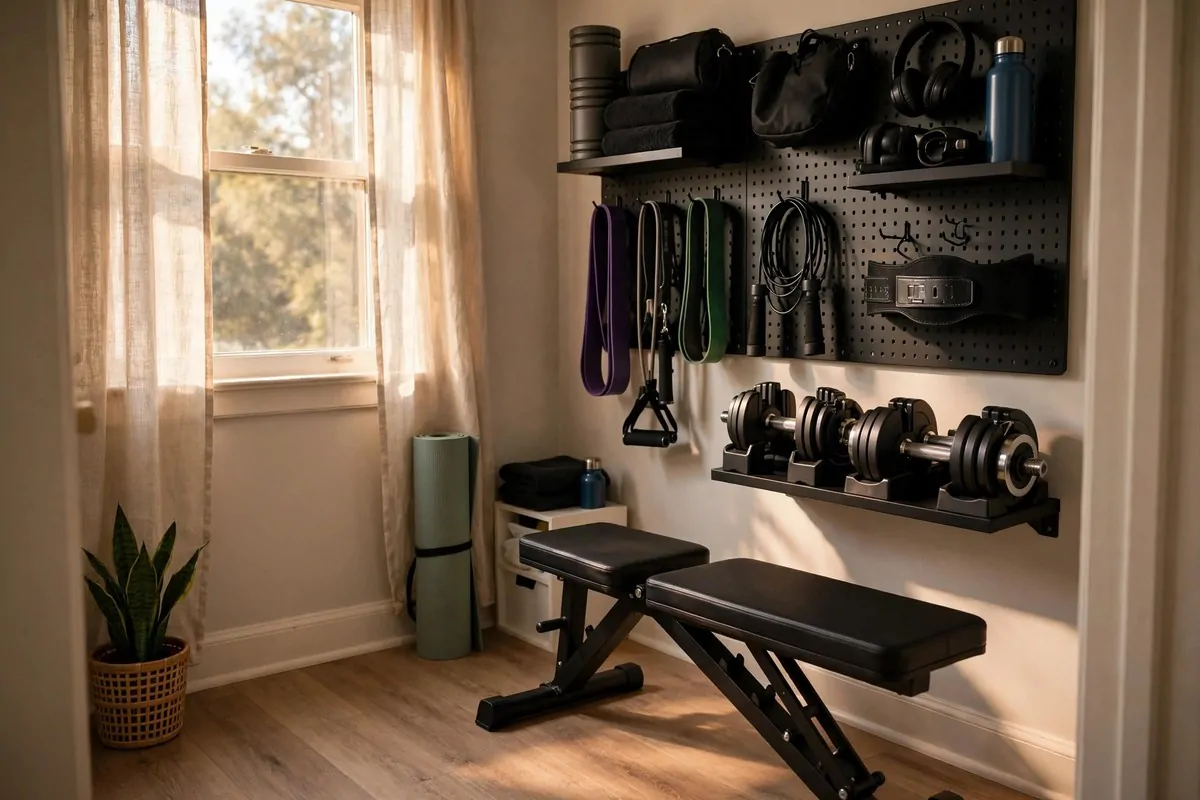
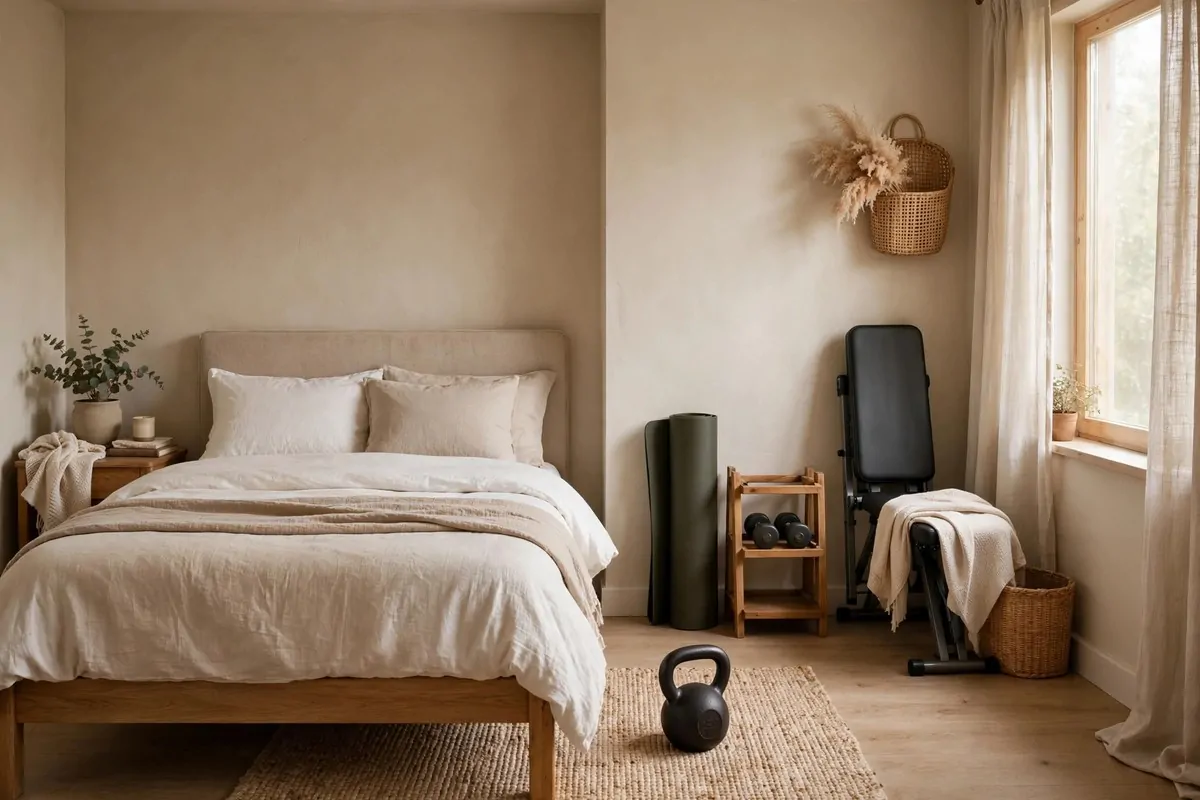
Most spare bedrooms sit empty for eleven months a year. That is a lot of wasted space. A gym setup turns that room into something you use daily.
You do not need to gut the room. Keep it simple and tidy with a foldable bench, adjustable dumbbells, and a yoga mat that rolls up into the corner.
The secret is storage that disappears. When guests come, the gear goes into the closet. The room looks normal again in ten minutes.
A nice rug under the equipment makes it feel like a real room, not a storage unit. It also protects the floor when you set weights down.
Use the closet for the small stuff. Bands, jump ropes and ankle weights all fit on hooks inside the door. Out of sight, but right there when you need them.
One mirror on the wall helps with form. You do not need a full wall of glass in a small room. A single large mirror does the job.
Keep the room calm and bright. Paint it a light colour and let the daylight in. You want this room to feel like a treat, not a chore.
Guests will still have a place to sleep. And the other 350 days of the year, that room earns its keep.
5. Combine a Home Office and a Gym in One Room
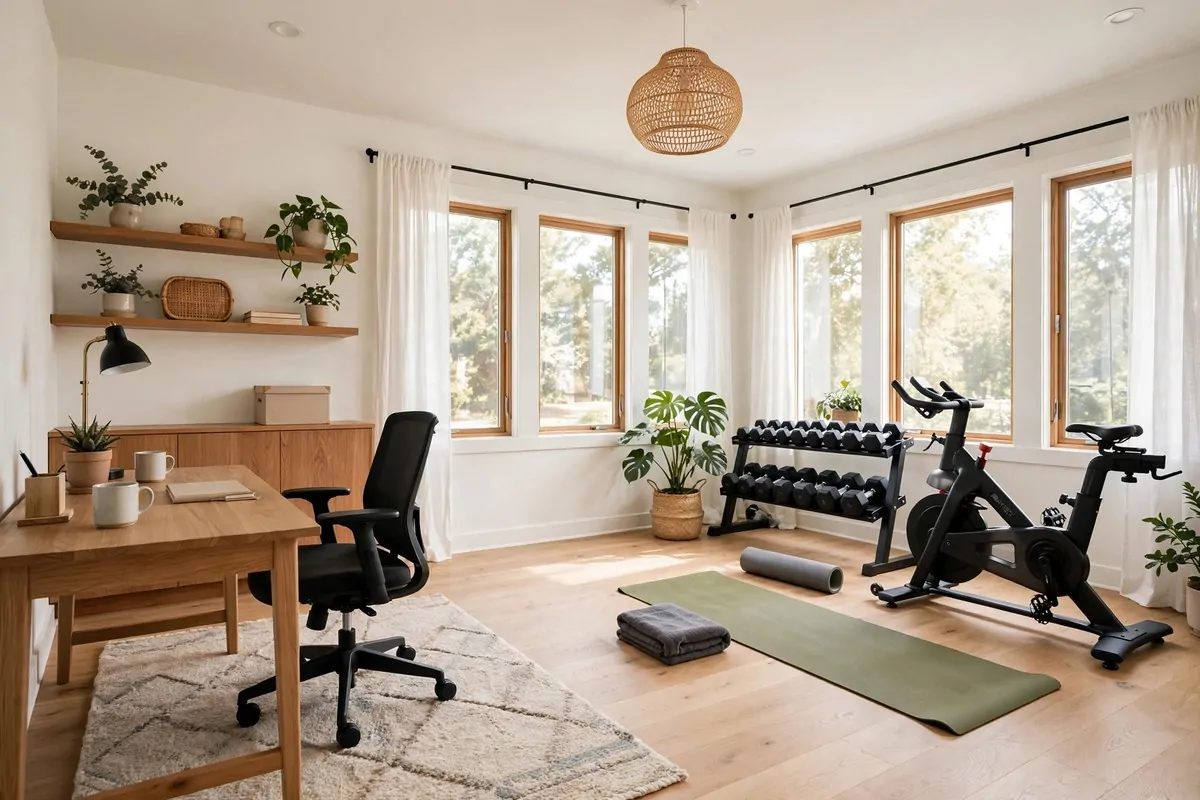
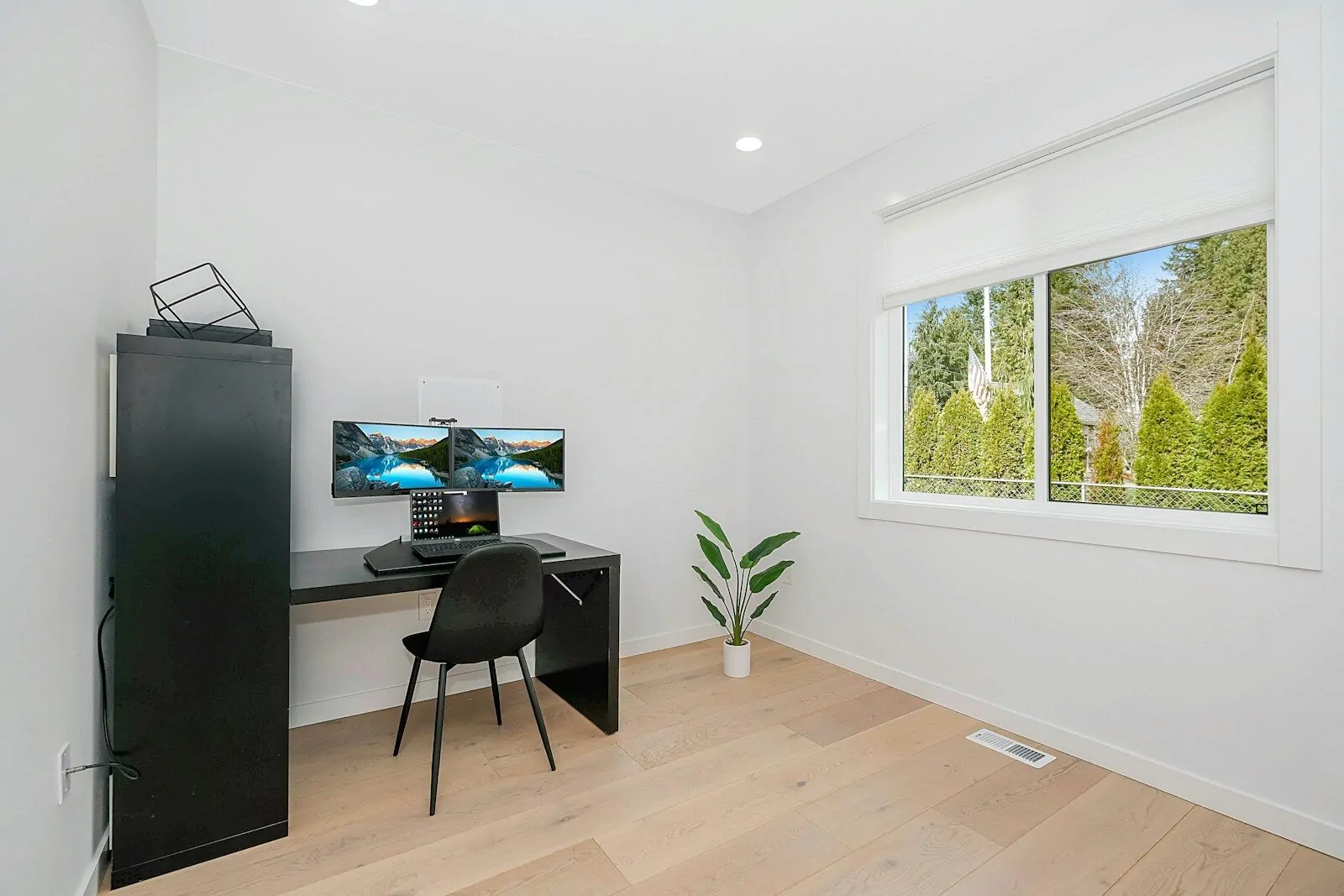
Only got one spare room? Use it twice. A home office by day and a gym by evening is one of the smartest setups I know.
The trick is a clear line between the two sides. A rug under the desk marks the office zone while the open floor marks the gym zone. Your brain learns the difference fast.
Keep the desk side tidy and calm with just papers, laptop and a good chair. Then the gym side holds the gear: a dumbbell rack, a mat, and maybe a small bike.
Storage furniture does the heavy lifting here. A bench with hidden storage holds bands and small weights. It looks like normal furniture, which matters in a shared room.
Work from home people love this setup. Your lunch break becomes a twenty minute workout. No commute to the office and no commute to the gym either.
Noise matters when one room does two jobs. Rubber mats under everything keep the floor quiet. Your downstairs neighbours will never know you were training.
A room divider or a tall plant can split the space visually. You do not need a wall. Just a hint that this side is for work and that side is for moving.
At the end of the day, close the laptop and pick up the dumbbells. The room changes its job in seconds.
6. Lay Down Rubber Flooring to Protect Your Floors
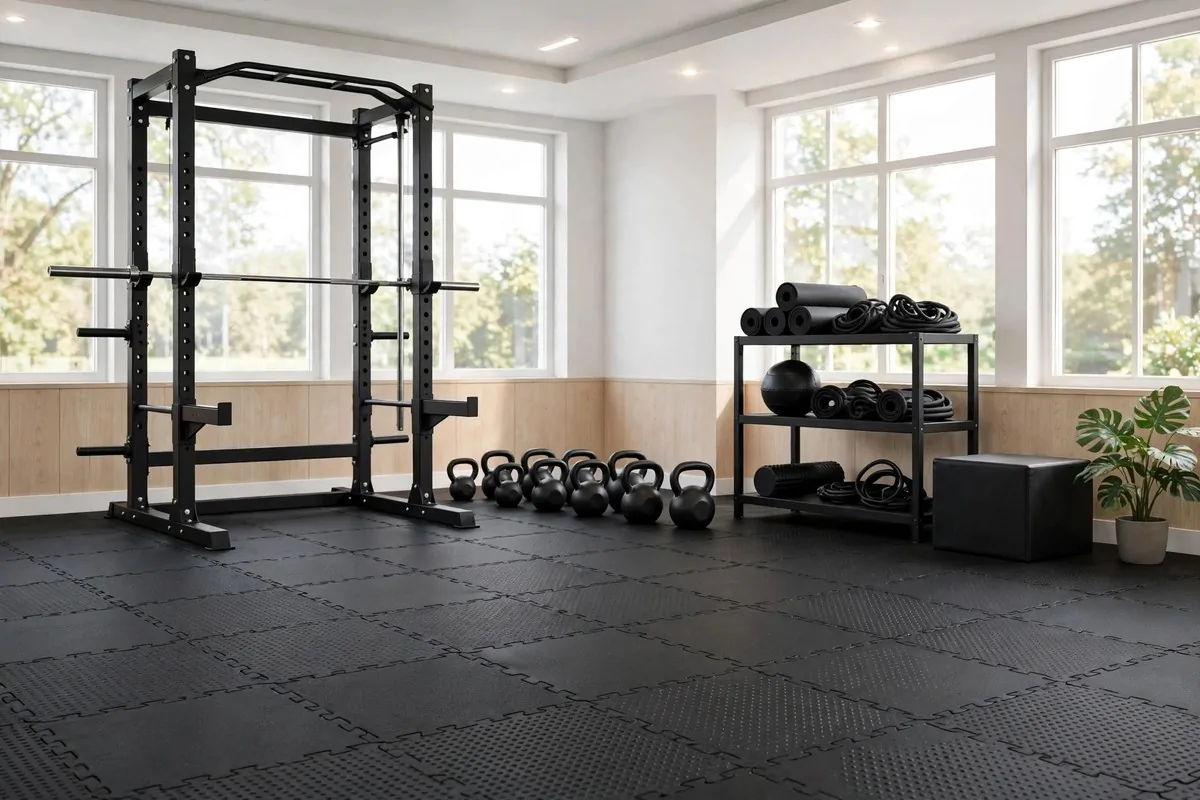
The floor is the first thing to fix in any gym room. Good flooring protects your house and makes workouts safer and quieter.
Rubber mats are the classic choice. They are thick and tough. They take the hit when you set down heavy dumbbells.
Interlocking tiles are easy to lay yourself. They click together like puzzle pieces. You can cover a whole room in an afternoon with no tools.
Foam tiles work for lighter workouts. They feel soft under your feet. But they are not made for heavy weights, so know your style before you buy.
A big win is noise. Rubber eats the sound of footsteps and dropped gear. If your gym is above a bedroom, this is not optional.
Cleaning is simple too. Rubber and vinyl wipe clean with a damp cloth. Sweat, dust and chalk marks come off in seconds.
Pick the flooring that fits your workout:
- Rubber tiles or mats for lifting and heavy gear
- Foam tiles for yoga, stretching and bodyweight moves
- Vinyl for easy cleaning in multi-use rooms
- Low pile carpet tiles for a softer, warmer feel
Cover the whole floor if you can. A half-covered room still lets weights dent the bare spots. Full coverage looks better and works better.
7. Mount a Big Mirror Wall for Form Checks
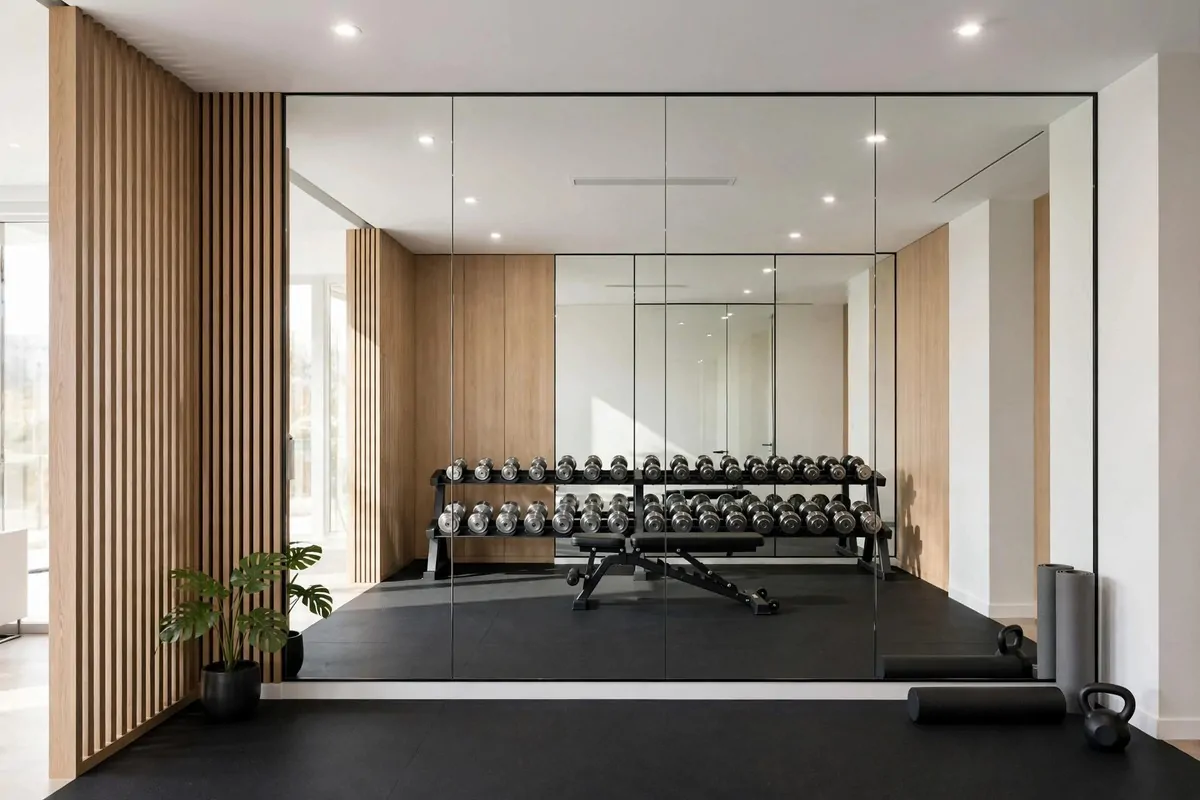
One big mirror changes a gym room more than almost anything else. You can check your form. And the room looks twice as big.
You do not need mirrors on every wall. One large mirror on the main wall is enough. Put it where you do most of your exercises.
Form checks matter. A quick look tells you if your back is straight during a row. Small fixes like that keep you safe over time.
The space trick is real too. Mirrors bounce light around the room. A small dark gym suddenly feels open and bright.
Large framed mirrors from home stores work fine. Or use mirrored tiles stuck to the wall in a grid. Both look clean and cost less than custom glass.
Mount them low enough to see your feet. You want to watch your whole body, not just your face. Measure before you drill anything.
Keep the mirror clean with a quick wipe once a week. Fingerprints and dust dull the effect fast. A clean mirror keeps the room feeling fresh.
And if you do yoga or stretching, a mirror helps you hold poses better. You see your line and you adjust. It is like having a quiet coach on the wall.
8. Choose a Colour Scheme That Pushes You to Move
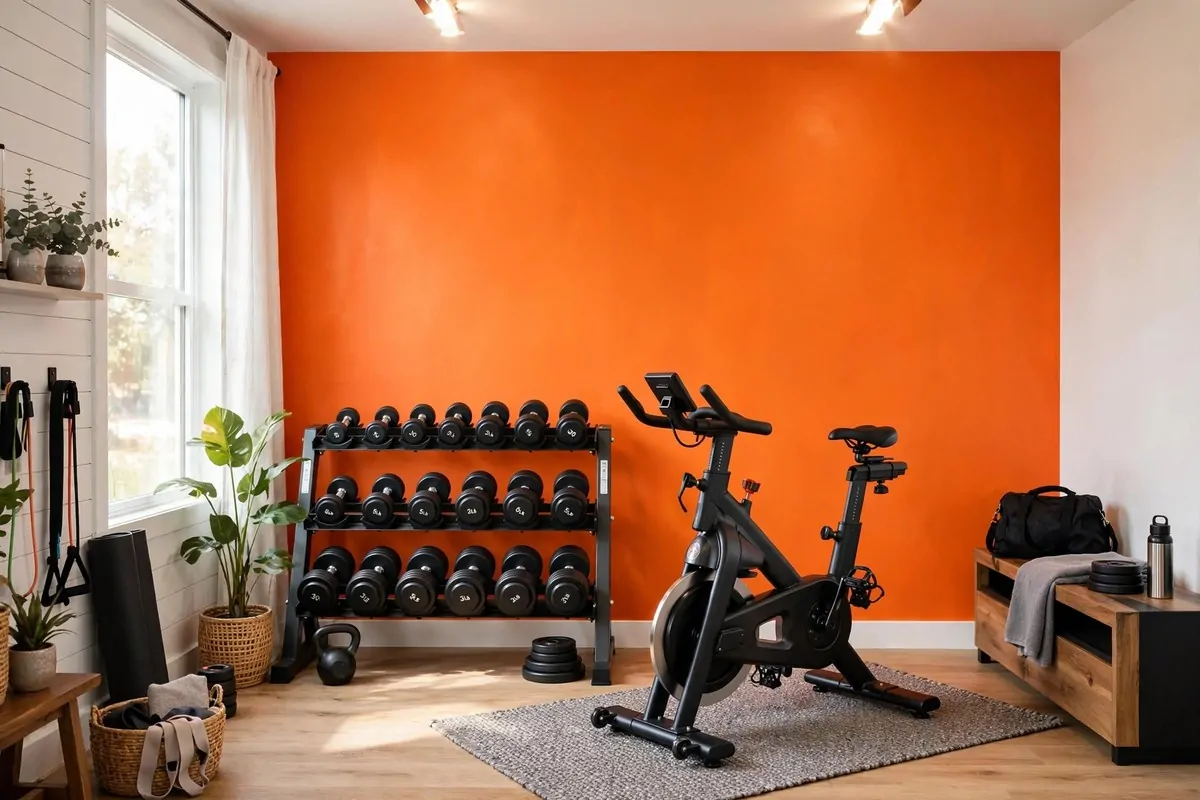
Colour changes how a room feels. A grey box says boring. A room with energy in its walls pulls you in before you even start.
Bold colours work for high-energy workouts. Red, orange and bright yellow wake you up. One accent wall is enough to lift the whole room.
Calm colours suit yoga and stretching spaces. Soft green, warm beige and light blue keep your heart rate low. The room tells your body to slow down.
Dark and moody suits strength training. Deep grey or navy walls feel serious. They make a small gym feel like a private training studio.
You do not need to repaint the whole room. Try one accent wall behind your main equipment. It becomes the visual focus of the space.
Match your gear to the scheme if you can. Black and grey equipment fits any colour. Wood tones warm up a modern room nicely.
Here is a quick guide to picking your gym colours:
| Workout style | Best colours | Mood it creates |
|---|---|---|
| High energy and cardio | Red, orange, bright yellow | Awake and ready to move |
| Strength training | Deep grey, navy, black | Serious and focused |
| Yoga and stretching | Soft green, beige, light blue | Calm and relaxed |
| Mixed workouts | White walls with one bold accent | Clean with a spark of energy |
Paint is cheap, and a single tin can remake a whole room in a weekend. A room that looks the part gets used more. That is the whole point.
9. Go Vertical With Wall Storage for Weights
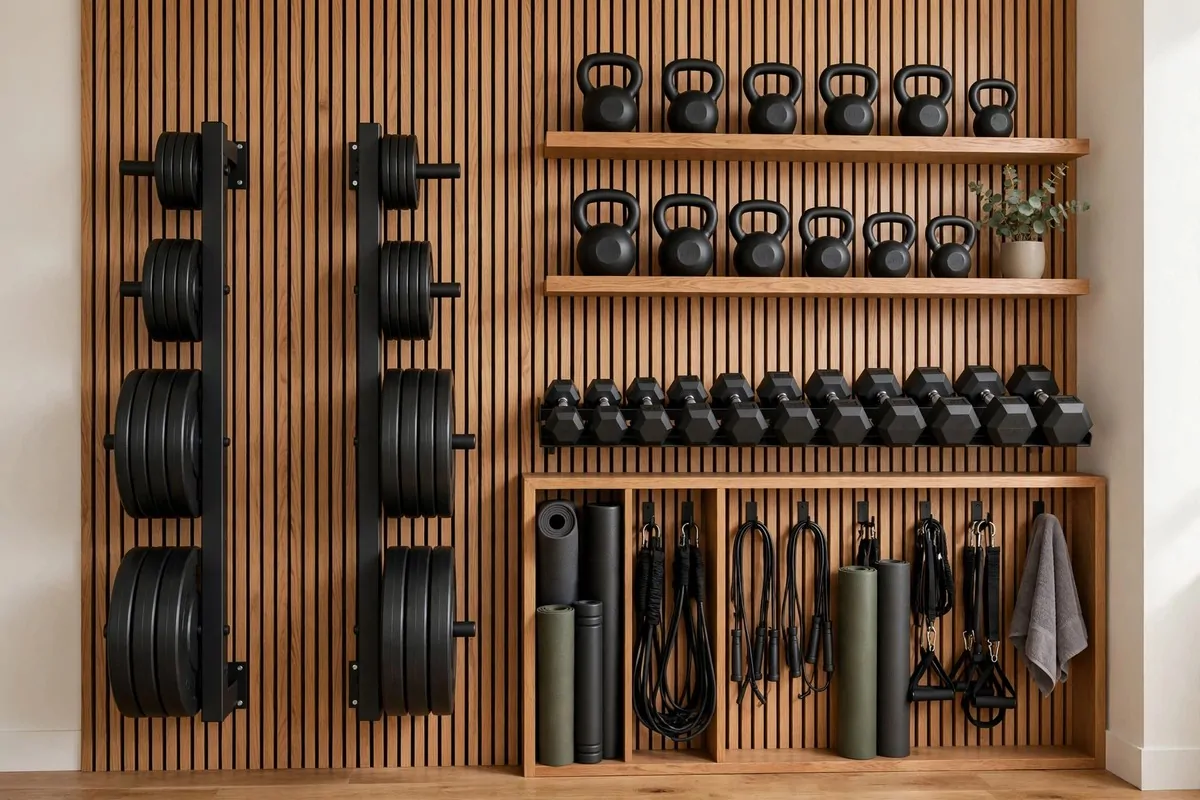
Floor space is the most precious thing in a home gym. Every square metre counts. So get your gear off the floor and onto the walls.
Wall-mounted plate holders keep heavy plates right where you need them. They hold the weight safely. And they free up a shocking amount of floor space.
A vertical dumbbell rack uses one slim strip of wall. It holds a full set in the space of a bookshelf. Compare that to a wide horizontal rack and the win is clear.
Kettlebells sit nicely on sturdy wall shelves. Put the heavy ones low and the lighter ones up high. You should never lift a heavy bell down from above your head.
Shelves also work for medicine balls and foam rollers. Big hooks hold them in a row. Everything visible, everything grabbable.
Think of your wall like a toolbox. Every tool hangs in its spot, so you reach for it, use it, and put it back. No mess grows.
Make sure you mount into studs or solid wall anchors. Heavy gear needs a strong hold. A plate holder that pulls out of the wall is dangerous.
Once the walls do the storing, the floor stays open. Open floors invite workouts. Cluttered floors invite excuses.
10. Hang a Pegboard for Bands, Ropes and Small Gear
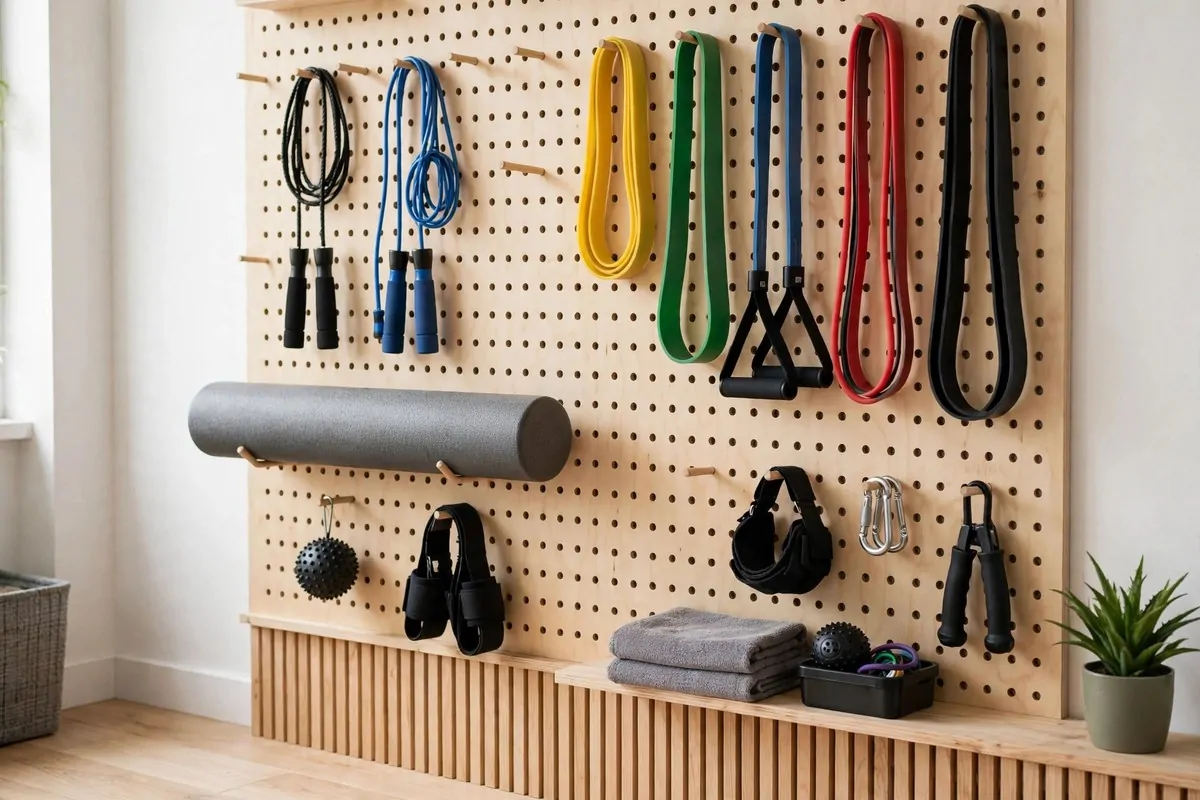
Small gear is the messiest part of any gym. Bands tangle, ropes knot, and gloves vanish. A pegboard solves all of it in one cheap panel.
Pegboards cost very little and hang in minutes. A sheet of pegboard and some hooks is all you need. Paint it a fun colour to match your room.
Hang resistance bands by their handles. Each band gets its own hook. No more digging through a tangled pile before every workout.
Jump ropes hang in loose loops. Foam rollers sit on two wide hooks. Small baskets clipped to the board hold gloves, grips and sweatbands.
The best part is the visual reset. When everything has a hook, you see at a glance what is missing. Tidying takes thirty seconds, not ten minutes.
Put the pegboard near your stretching zone. That is where you reach for bands and rollers most. Short walks between gear keep your workout flowing.
Kids like pegboards too. Give them a low row of hooks for their own skipping rope. They feel included, and your hooks stay organised.
Honestly, this is one of those ideas that costs almost nothing and pays off every single day. Hang it on a Saturday morning and thank yourself all year.
11. Set Up a Strength Training Zone
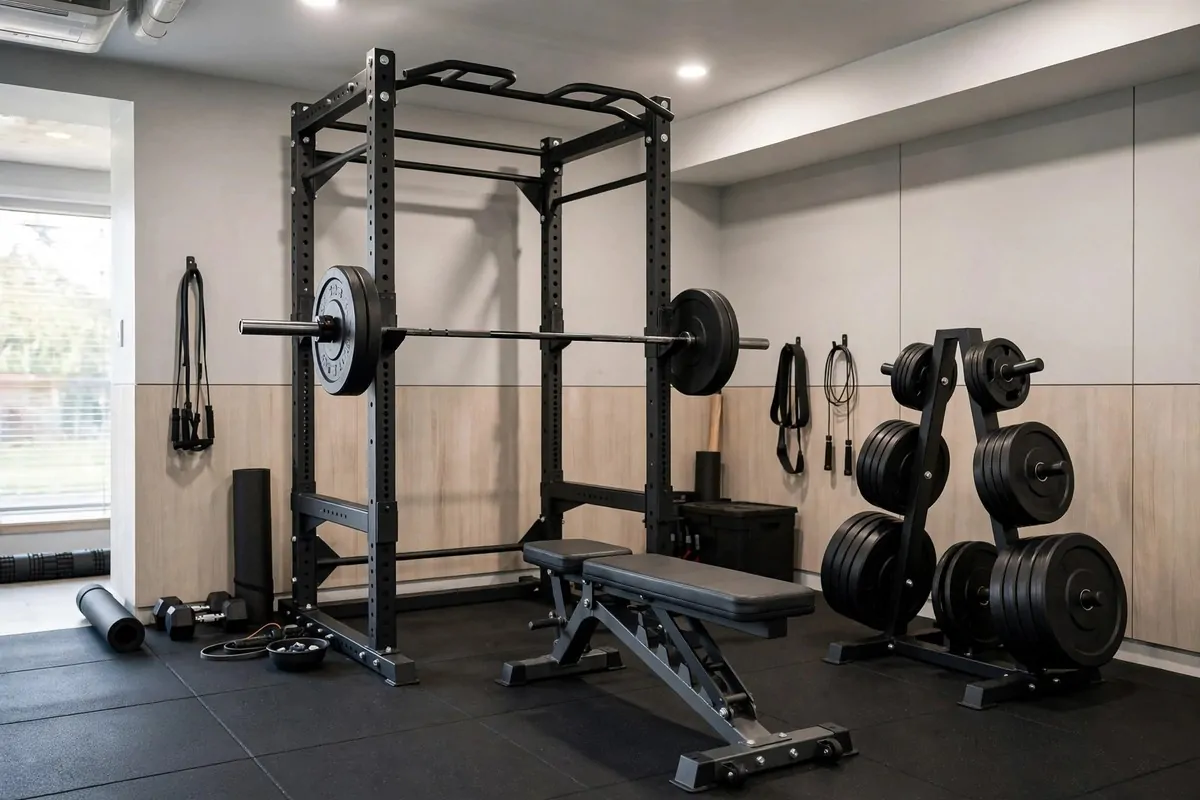
A strength zone is the heart of many home gyms. Give it its own corner. Keep everything you need for lifting within arm’s reach.
The power rack is the big piece here. It lets you squat and press safely on your own, since the safety bars catch the bar if you fail a rep. That matters when you train alone.
Add an adjustable bench next to the rack. Flat, incline and decline positions cover most lifts. One good bench does the job of three machines.
A plate tree or weight tree keeps plates tidy and off the floor. Stack them by size. Heavy plates on the bottom pegs, light ones on top.
Rubber mats under the whole zone are non-negotiable. Dropped plates can crack tile and dent wood. Thick mats take the hit and keep the noise down.
Leave clear space around the bench. You need room to walk around it with a loaded bar. Crowded lifting feels unsafe, and your body knows it.
Good light over this zone helps you see your setup clearly. A bright overhead light or two removes shadows where you grip and step.
Keep a towel and water within reach. Strength workouts have rest between sets. Having what you need nearby keeps you in the zone instead of wandering off.
12. Design a Dedicated Cardio Corner
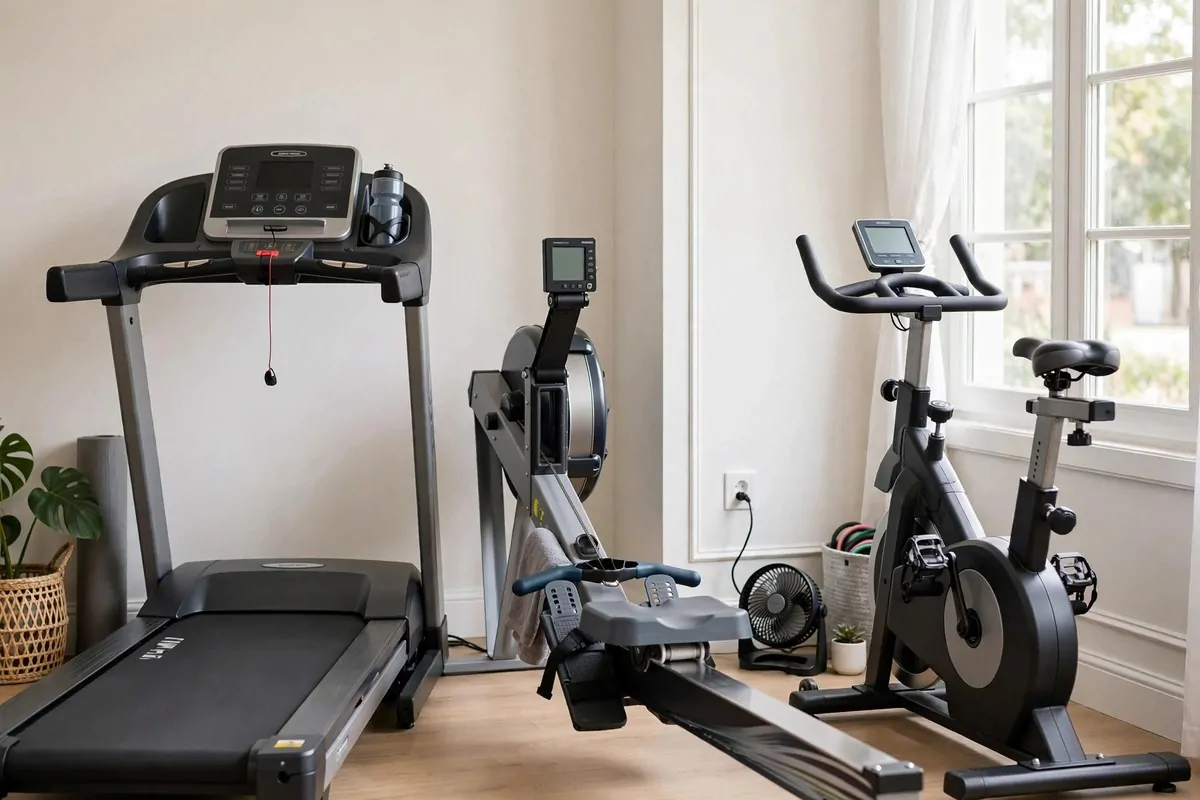
Cardio machines are big and hungry for space. Group them together in one corner. That keeps the rest of your gym open and calm.
Put this corner near a power outlet. Treadmills need power, and bikes with screens need power too. Plan the cord routes before you place anything heavy.
A treadmill, a bike and a rower cover almost every cardio mood. Running, cycling and rowing use your body in different ways. Variety keeps you coming back.
Face the machines toward something nice. A window, a TV, or even a poster you love. Staring at a blank wall for thirty minutes kills motivation fast.
These machines move a lot of air around them. Give each one a bit of breathing room. You do not want handlebars hitting the wall on every stroke.
Put a small fan in this corner. Cardio makes you hot fast. A fan pointed at your face makes the same workout feel ten times easier.
Keep a towel rail or basket right here. You will sweat more in this corner than anywhere else. Towels close by mean no drips across the floor.
Wipe machines down after use. Sweat eats into screens and handles over time. A quick wipe keeps your gear working for years.
13. Create a Calm Yoga and Stretching Nook
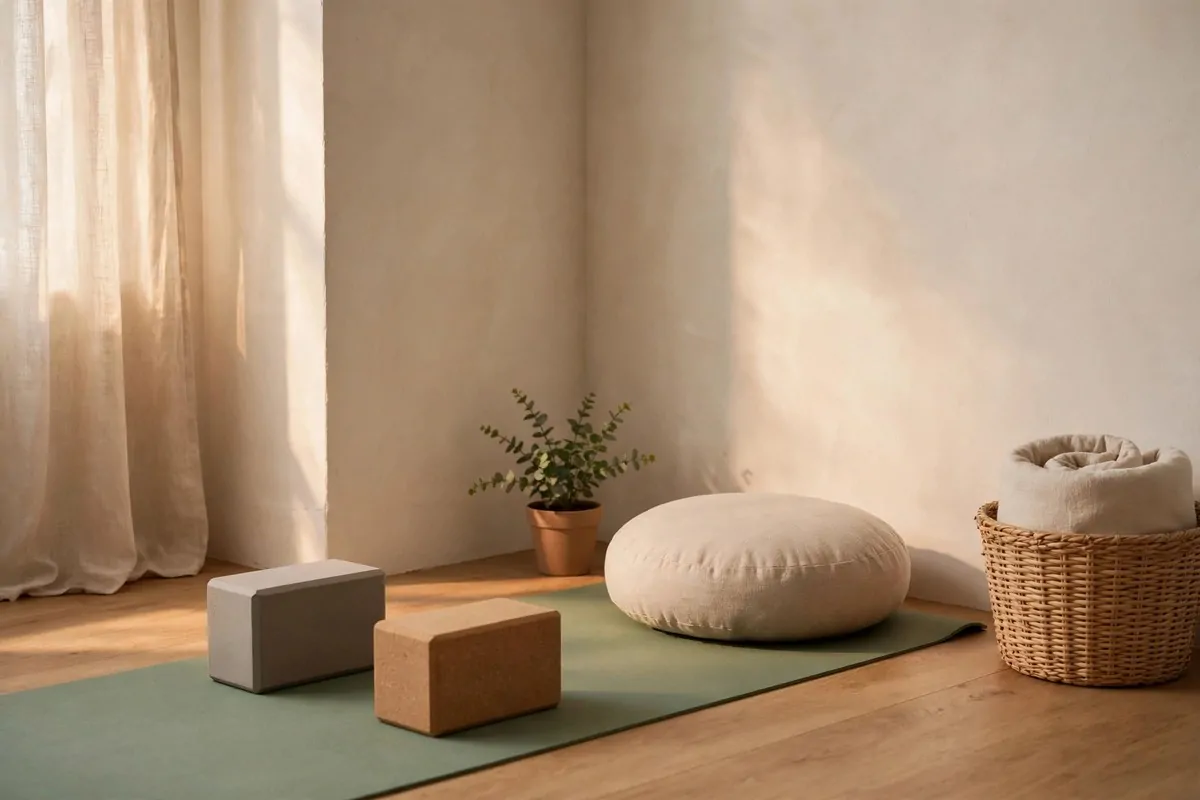
Every gym needs a quiet corner. A place for stretching, yoga and slow breathing. This nook costs almost nothing and gets used every day.
All you need is open floor space. Enough room to stretch your arms out in every direction. A yoga mat marks the spot.
Keep it calm: soft colours on the wall, warm light instead of harsh white, and a small plant in the corner. This corner should feel different from the lifting zone.
Store your extras in a basket. Yoga blocks, a strap and a folded blanket. Tuck them beside the mat so the corner stays tidy.
Use this nook before workouts too. Five minutes of stretching warms your body up. It also tells your brain that workout time has started.
A cushion or bolster invites longer holds. When the corner feels cosy, you stay for the cool-down. Skipping the cool-down is how stiff mornings happen.
Keep this corner clear of heavy gear. No dumbbells rolling into your stretching space. Boundaries keep the calm corner calm.
Even if you never do full yoga, you will use this nook. Stretching after a hard session feels like a reward. Your body will ask for it.
14. Add a TV and Speakers for Guided Workouts
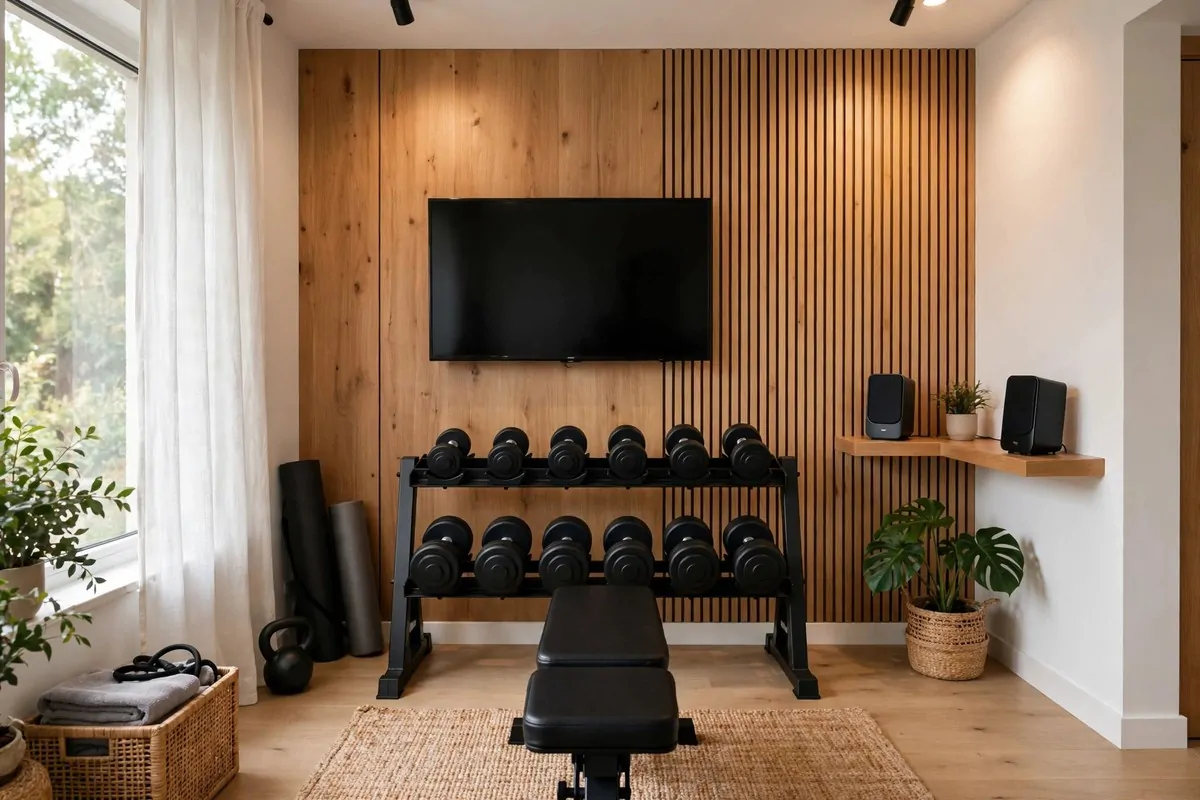
A screen in your gym changes everything. Follow-along workouts, music videos, or your favourite show. Time flies when your eyes have something to do.
Wall-mount the TV to save floor space. A flat screen on the wall costs you zero floor area. Tilt it slightly down toward your workout spot.
Put it at eye level for your main position. If you mostly use a bike, mount it in front of the bike. If you lift, face it toward the bench.
Speakers matter as much as the screen. A small Bluetooth speaker fills the room with sound. Music pushes you through the hard sets when your brain wants to quit.
Keep the remote in a fixed spot. A little shelf or basket by the door works. Hunting for the remote mid-workout breaks your rhythm completely.
Streaming workout apps turn your room into a class. Yoga, boxing, dance, strength. An instructor on screen keeps your form honest and your pace steady.
Hide the cables. Cord covers stick to the wall and keep things tidy. Loose cables across the floor are a trip hazard you do not need.
And on easy days, just watch something fun while you walk on the treadmill. Easy workouts still count. The screen makes them fly by.
15. Keep the Air Moving With a Fan or Vents
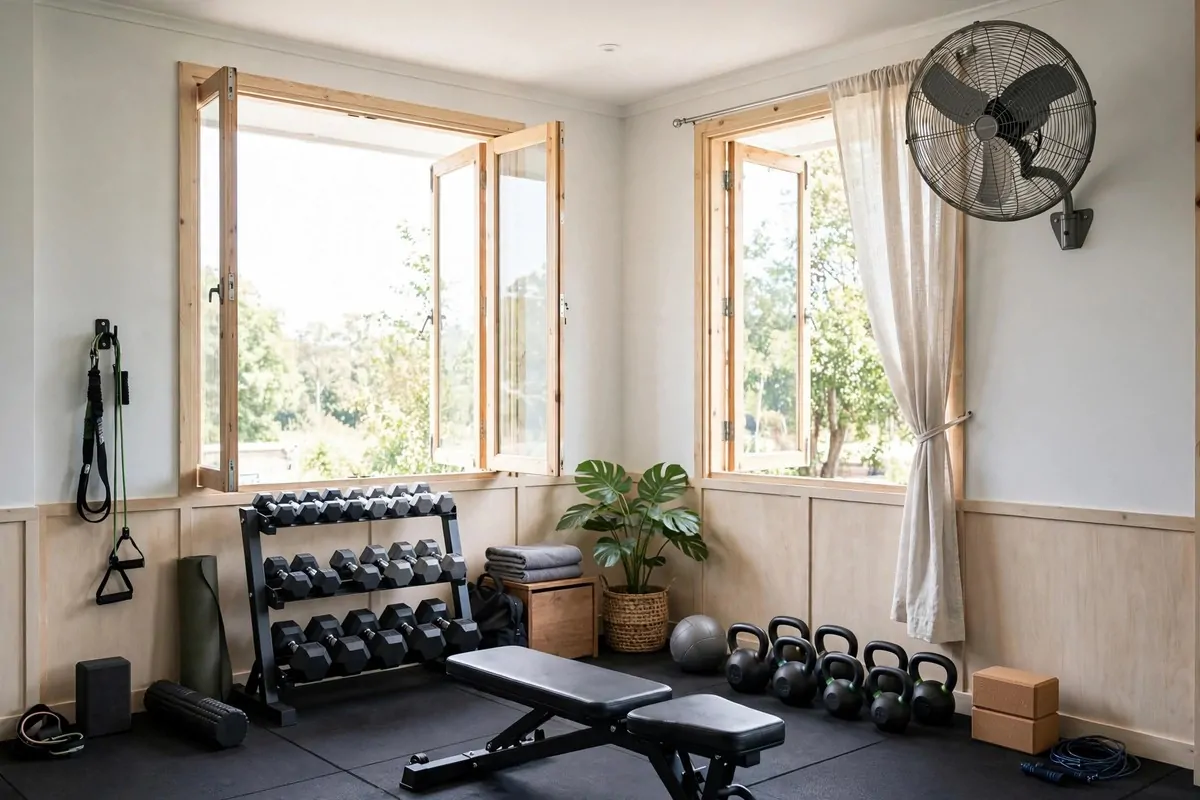
Stale air kills workouts. You heat up, the room heats up, and suddenly everything feels twice as hard. Moving air fixes it fast.
A wall-mounted fan is the best gym fan. It blows over the whole room and uses zero floor space. And it keeps running while you move around.
A ceiling fan works too if your ceiling is high enough. Check the height first. You do not want your hands hitting blades during overhead presses.
Open windows when the weather allows. Fresh air feels amazing mid-workout. Even a small crack in the window changes the whole room.
If your gym is in a basement, add a vent fan. Basements trap warm damp air. A vent fan pulls the stale air out and keeps the room dry.
Air conditioning helps in hot months. You do not need it freezing. Just cool enough that you can keep moving without overheating.
Watch out for dust with fans. Wipe the blades now and then. Dusty fans blow dusty air, and nobody wants to breathe that in deep.
Good airflow is invisible when it works. You only notice it when it is gone. Set it up once and forget about it.
16. Pick Foldable Equipment for Small Spaces
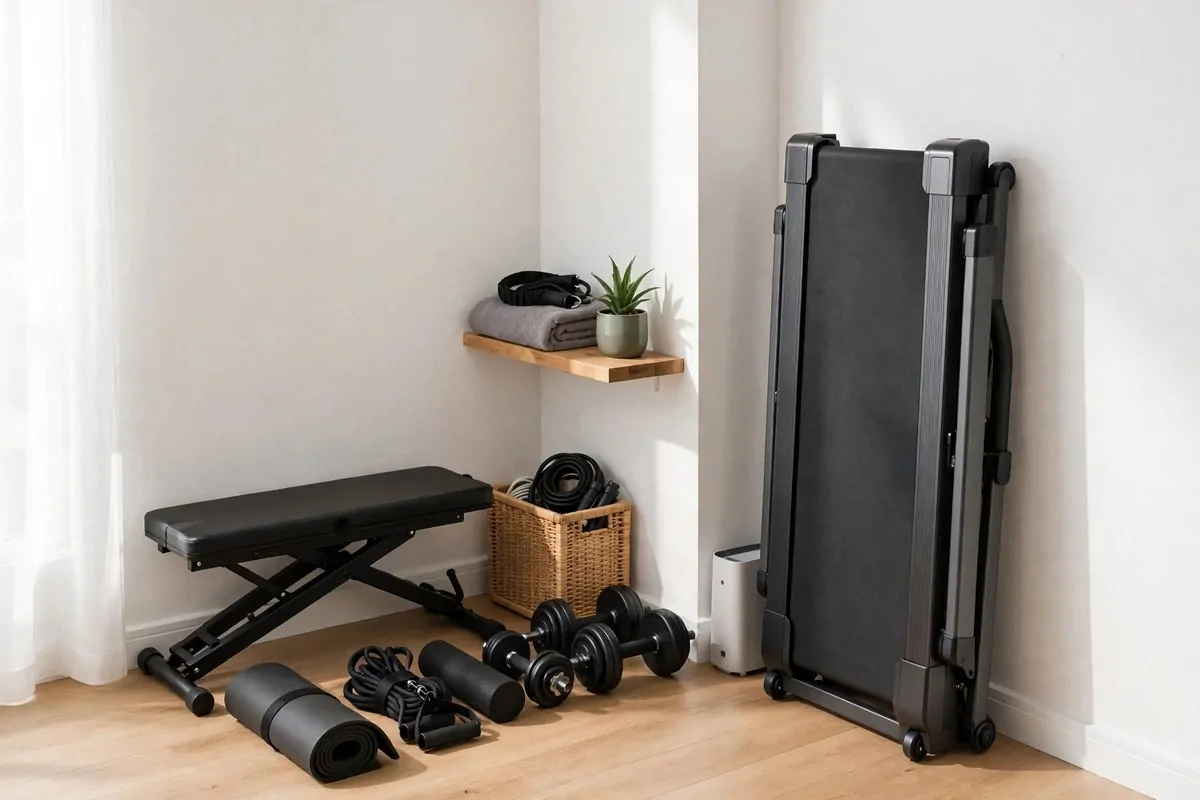
Small space? Foldable gear is your best friend. It sets up in seconds and vanishes when you are done.
A folding bench is the star here: flat for presses, upright for seated moves, and folded flat against the wall when guests come over.
Foldable treadmills slide under a bed or stand behind a door. You get real cardio without giving up half your room to it.
Adjustable dumbbells replace a whole rack. One pair twists from light to heavy. They take up about as much space as a shoebox.
Suspension trainers hang from a door frame. They use your body weight for resistance. When you finish, the straps roll up into a drawer.
The rule for small gyms is simple. If it does not fold, shrink or stack, think twice. Every piece should earn its floor space.
Keep a clear setup spot marked on the floor. A rug or mat outline shows where the bench goes. Setup takes seconds when the spot is ready.
Folding gear means your room can change its job. Bedroom by night, gym by morning. That flexibility is what makes a small gym actually work.
17. Install a Fold-Down Wall-Mounted Bench
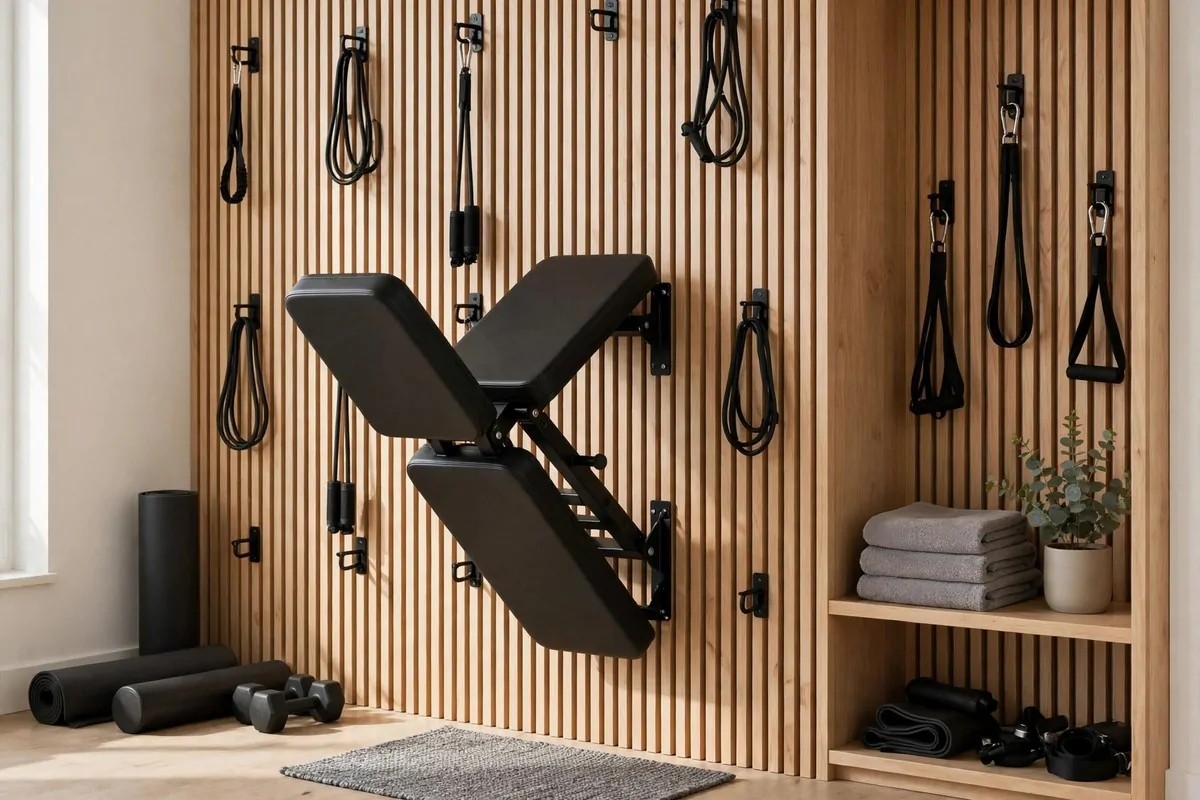
This one feels like magic the first time you see it. A bench that folds flat against the wall. Down for workouts, gone in seconds.
Wall-mounted benches lock into place when you pull them down. They feel solid and safe. When you fold them up, the wall is flat again.
Pair it with wall-mounted band anchors. Hooks at different heights give you pull and push options. The whole setup lives on one wall.
This is perfect for tiny rooms and rented flats. You drill a few solid anchor points. The rest of the room stays untouched and normal.
Add a small shelf above for your water and phone. When the bench is down, everything you need is right there at hand height.
Check the weight rating before you buy. A good wall bench holds a heavy lifter with room to spare. Cheap ones wobble, so read the details.
Mount it into studs, never just plaster. This is the one rule you cannot skip. Solid mounting keeps the bench safe for years.
When friends visit, fold it up and the room looks like any other room. Nobody would guess a full workout station hides on that wall.
18. Turn a Garden Shed Into a Gym Hideaway
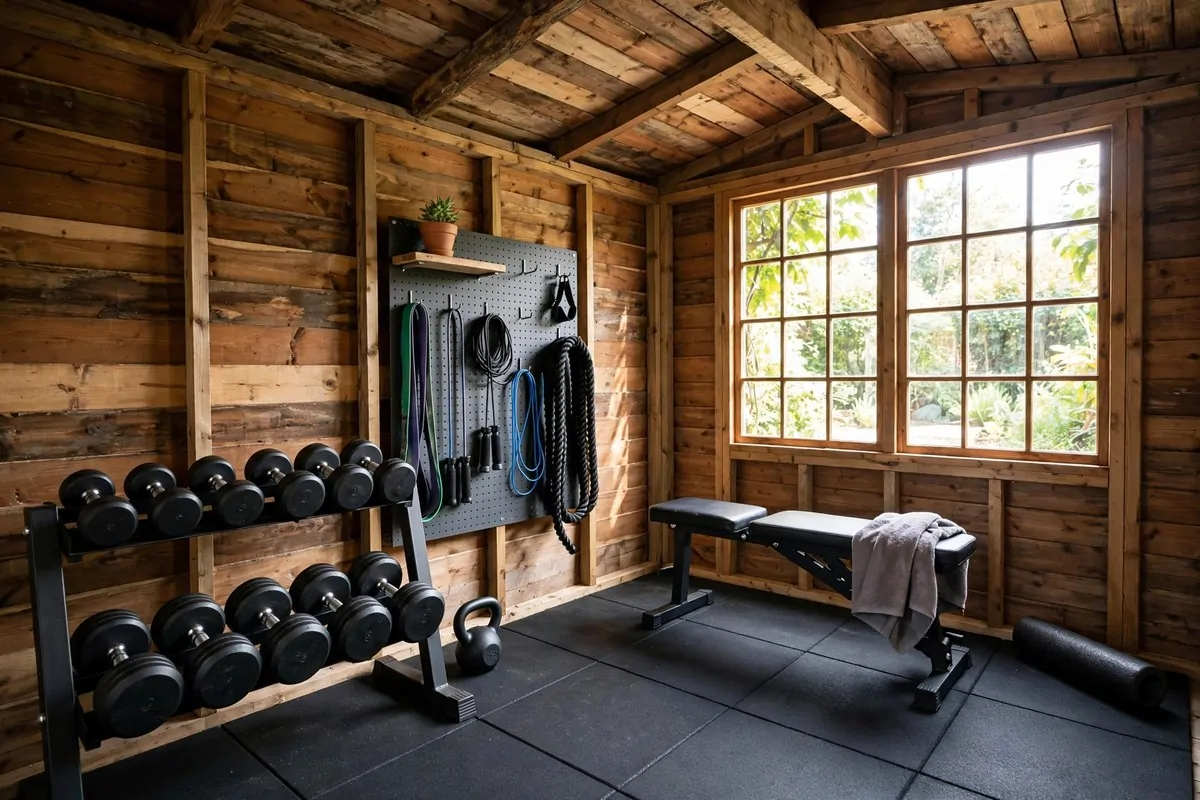
No spare room inside? Look outside. A garden shed makes a brilliant little gym: separate, quiet and all yours.
Start with the floor. Rubber mats protect the shed floor and deaden sound. They also make the space feel like a real gym instantly.
Add shelving along one wall. Shelves hold small weights, bands and towels. Keep the floor clear for moving around.
A pegboard on the back of the door uses dead space. Hang your ropes, gloves and jump ropes there. Everything visible, nothing tangled.
Light matters in a shed. A window is ideal. If yours has none, bright battery lights or a wired LED strip fix it cheaply.
Ventilation keeps it fresh. A small vent or a cracked window stops it feeling stuffy. Summer workouts need moving air.
In winter, a small safe heater takes the edge off. You do not need it warm. Just warm enough that your muscles loosen up.
Walking out to your shed gym feels like going somewhere. That little trip separates workout time from home time. And your house stays quiet and tidy.
19. Open Up an Indoor-Outdoor Workout Corner
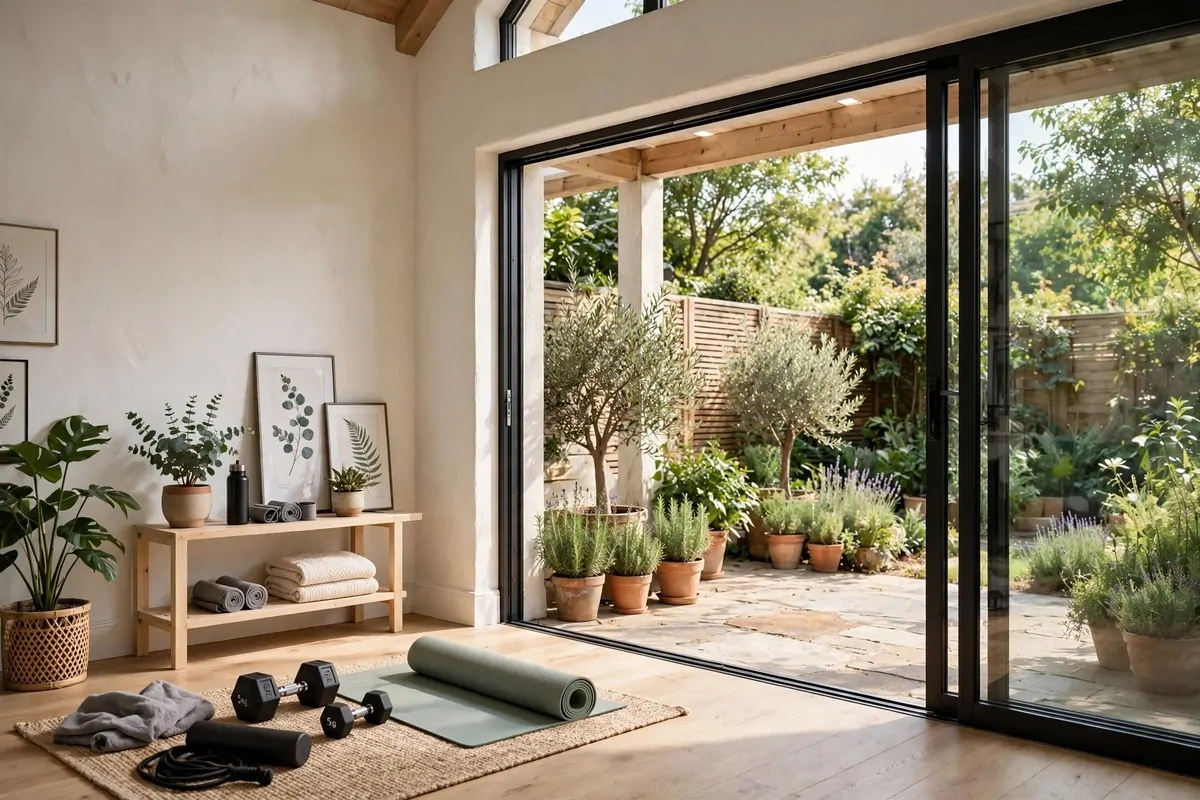
Some rooms can open right up to the outside. If yours can, use it. Fresh air makes every workout feel easier and nicer.
Sliding doors are the dream setup. Open them wide and your gym doubles in size. The patio becomes your stretching and bodyweight zone.
Keep the indoor part for gear. Dumbbells, bench and bike stay inside. Mats and bands travel outside with you on nice days.
A covered patio extends the season. A simple roof or awning keeps rain off. You can train outside in light rain and love it.
Put hooks on the outside wall too. Hang a mat and bands under the cover. Your outdoor kit lives right where you use it.
Plants around the doorway make the space feel alive. Green leaves and fresh air together calm your mind before a hard session.
Sweep the patio into your cleaning routine. Leaves and dust blow in through open doors. A quick sweep keeps the floor safe for bare feet.
This setup gives you the best of both worlds: shelter when you need it, sky when you want it. Workouts stop feeling like a box.
20. Add Wall Art and Photos That Keep You Going
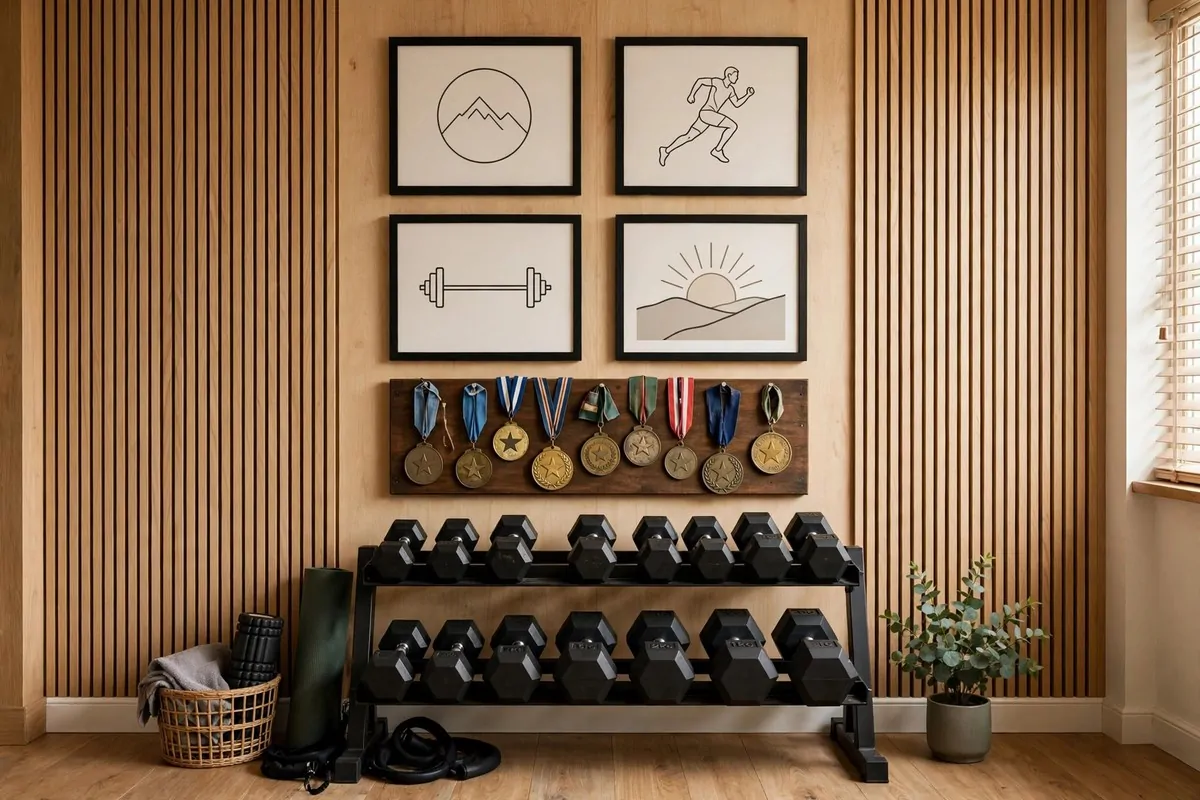
Bare walls are boring. And boring rooms get skipped. Put things on your gym walls that make you want to walk in.
Motivational prints are the easy win. A few strong words in a nice frame. Pick quotes that actually mean something to you, not just random gym talk.
Old medals and race bibs make great decor. Hang them where you see them mid-workout. They remind you what you are capable of.
Photos of places you love work too: a mountain trail, a beach run. Your eyes land on them during hard sets and your legs keep going.
A chalkboard wall is fun and practical. Write your workout plan on it each week, then wipe it clean and start fresh. It feels like your own training studio.
Keep the frames simple and sturdy. Glass frames can break if a band snaps. Lightweight frames or canvas prints are safer choices.
Do not cover every inch. A few strong pieces beat a cluttered wall. White space lets the good pieces stand out.
Your gym should feel like your room, not a shop display. Personal touches make it yours. And your room is a room you will actually use.
21. Make a Recovery Corner With a Mat and Foam Roller
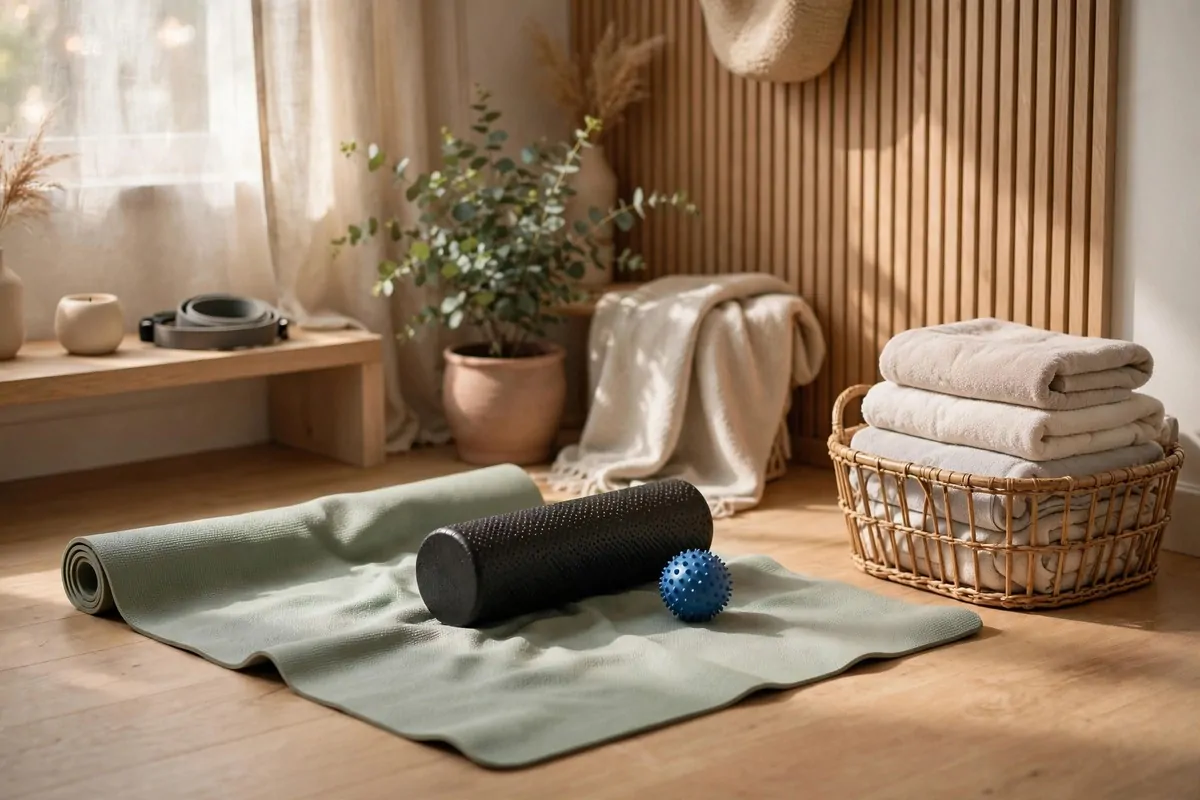
Workouts are only half the story. Recovery is the other half. Give it a proper corner and you will actually do it.
A mat, a foam roller and a small ball cover most recovery needs. Roll out tight legs, loosen your back, and enjoy five quiet minutes after training.
Keep a basket of clean towels here. Fresh towels invite you to stay and stretch. A sweaty old towel does the opposite.
Soft light makes this corner inviting. A small lamp or a warm bulb instead of bright overheads. Your body reads the light and starts to slow down.
Put it slightly apart from the main workout area. Even a metre of space helps. The corner should feel like a rest stop, not part of the circuit.
A timer or clock on the wall keeps you honest. Set five minutes and roll. Without a clock, recovery mysteriously shrinks to thirty seconds.
Add a water bottle spot. Sipping water while you stretch is a small habit. Small habits stack up into real recovery.
Treat this corner as part of your workout, not an extra. Plan it into your session. Your muscles will feel the difference the next morning.
22. Add a Small Hydration Station
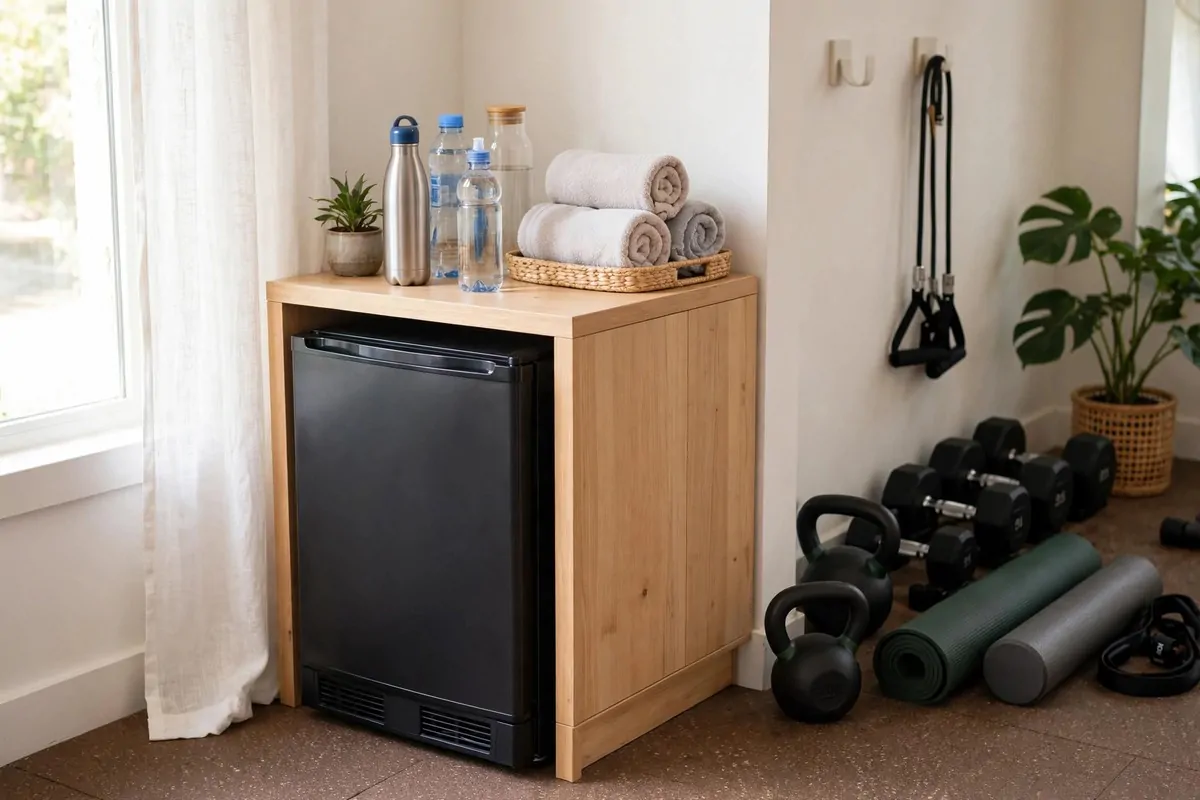
Walking to the kitchen for water breaks your flow. A tiny hydration station in the gym keeps you moving and drinking.
A small fridge is the heart of it. Cold water bottles waiting for you. On hot days, an ice-cold drink between sets feels like heaven.
A tray or small shelf holds the extras: towels, a spare water bottle, and maybe some fruit for after the workout. Keep it simple.
Put the station near the door or the stretching zone. You pass it naturally between exercises. Easy access means you actually drink enough.
A bin for empty bottles keeps it tidy. One small bin, emptied weekly. No bottles rolling around the floor.
If a fridge feels like too much, start with a jug. A big water jug with a tap costs little. Refill it every couple of days.
Keep the station clean. Wipe the shelf weekly, since sticky bottles attract dust and bugs. A clean station feels like a treat.
Little comforts add up. Cold water, a fresh towel, no trip to the kitchen. Your gym starts to feel like it was built just for you.
23. Build a Climbing and Play Corner for Kids
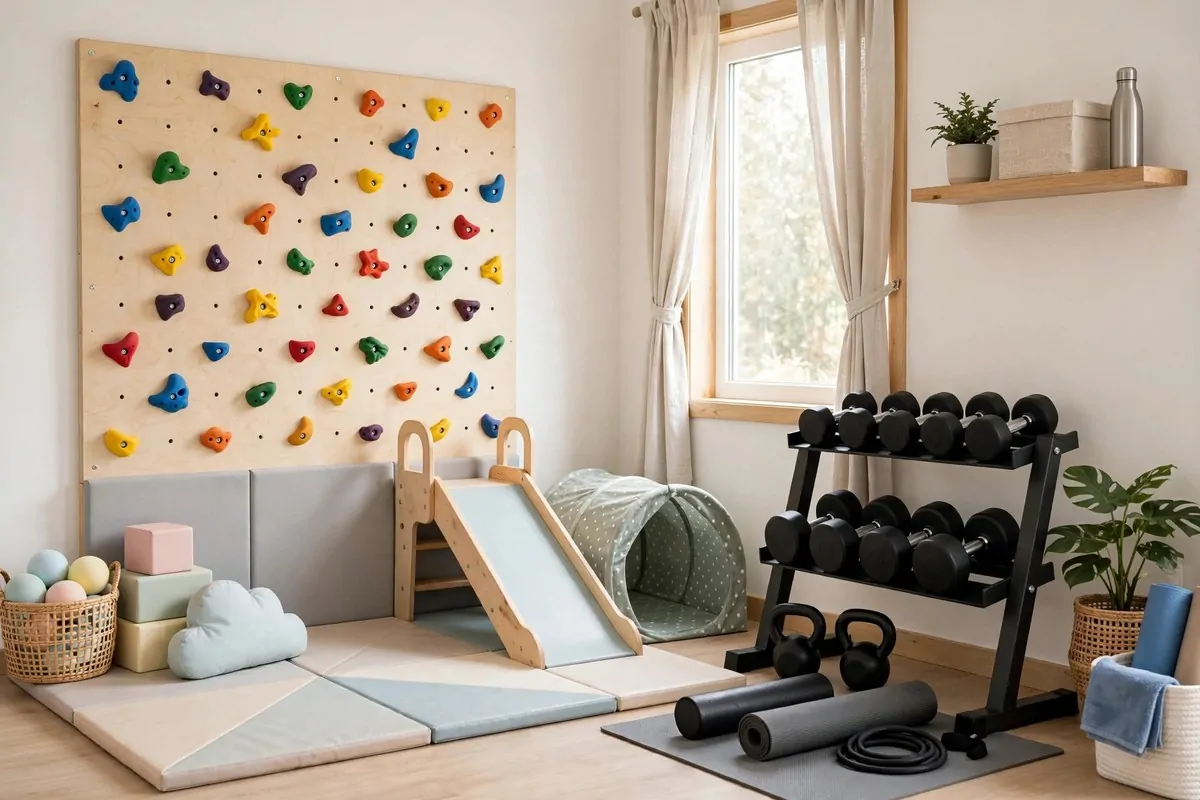
Kids copy what they see. If they see you training, they want to move too. A small play corner keeps them active while you work out.
A mini climbing wall is the star. Low holds on a padded wall. Kids climb, hang and build strength without even knowing it.
Add soft mats underneath. Thick crash mats make the corner safe. Kids fall, mats catch them, everyone stays happy.
Keep kid gear separate from yours. A small basket for their ropes and balls. Your heavy weights stay on your side, out of their reach.
A little basketball hoop on the wall works too. Or a rope to climb. Pick what fits your space and your kids’ ages.
Safety first here. Anchor everything solidly and check bolts and holds now and then. Kid gear takes a beating.
This corner does something lovely. It turns your workout time into family time. You train, they play, everyone moves.
And you never have to choose between your workout and watching the kids. The room handles both at once.
24. Repurpose a Coat Rack for Resistance Bands
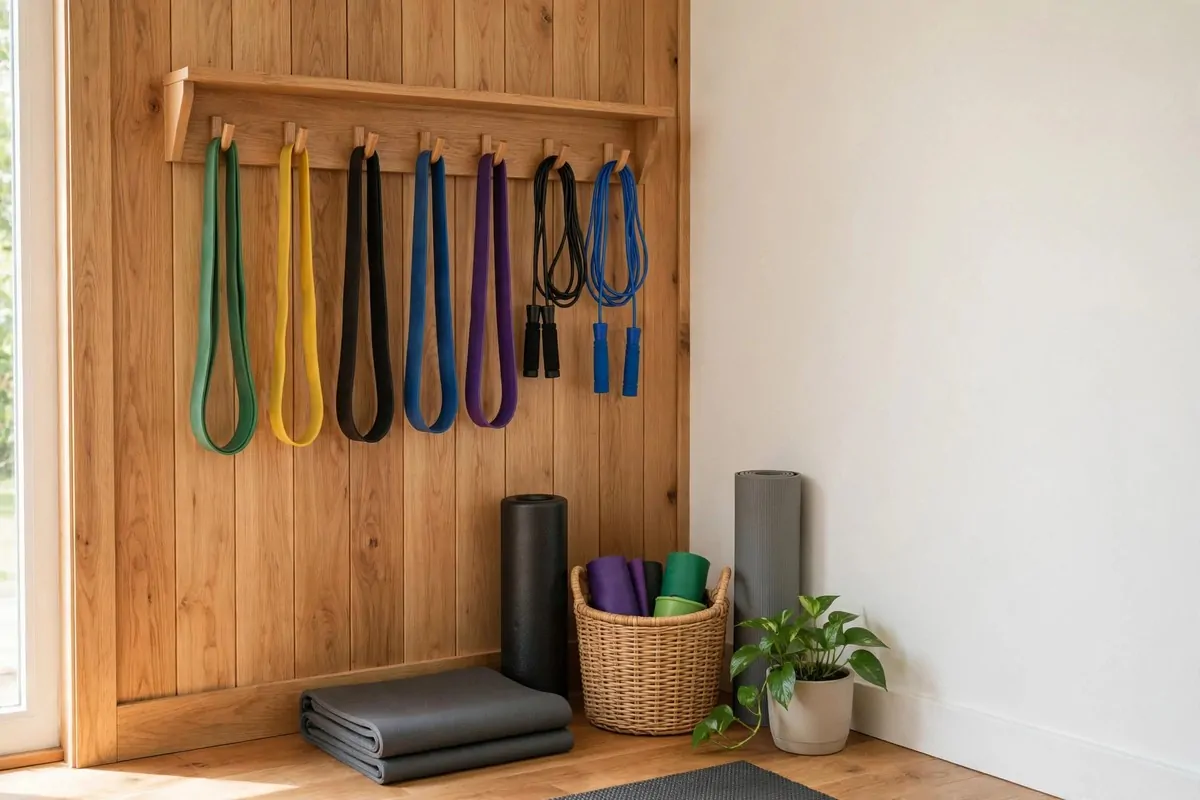
Here is a hack I love. A simple wall-mounted coat rack becomes perfect storage for resistance bands and ropes.
Coat hooks are strong and cheap. Screw one rack to the wall near your stretching zone. Each hook holds a band by its handle.
Bands hang straight and untangled. You grab the one you want in one second. No more knots, no more digging through a drawer.
Jump ropes hang nicely too. Loop them over a hook and they stay neat. Gloves and wrist wraps can hang beside them.
Pick a wooden rack to match your room. It looks like normal home decor. Nobody walking past would guess it is gym storage.
Put it at a height you can reach easily. Too high and you will stop using it. Waist to shoulder height is the sweet spot.
Label the hooks if you have many bands. Light, medium, heavy. Little tags save you from testing three bands every workout.
It costs almost nothing and takes ten minutes to mount. Small hacks like this keep a gym tidy. And tidy gyms get used.
25. Convert an Attic Into an Airy Fitness Room
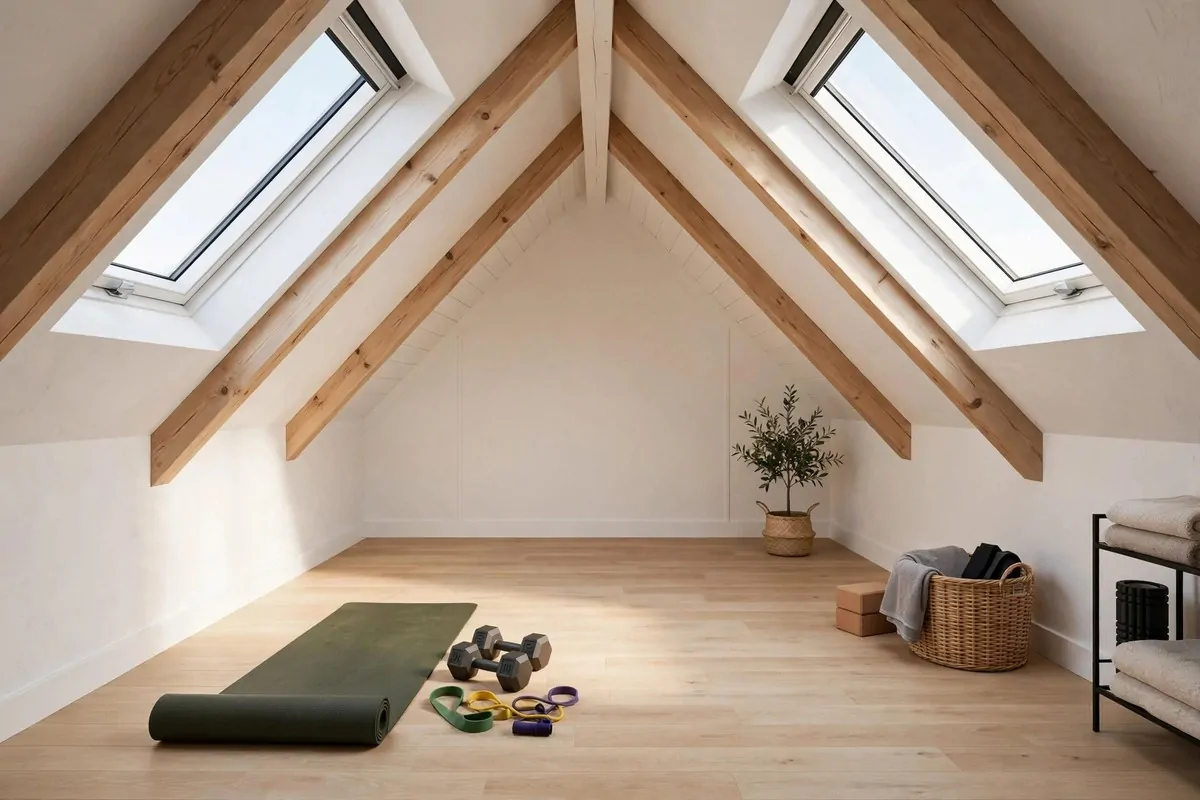
Attics are the forgotten rooms of the house. Sloped ceilings, quiet, full of light from skylights. They make wonderful gyms.
Keep the gear light up here. Yoga mats, dumbbells, bands and a balance ball. Attics suit calm workouts better than heavy lifting.
Light wood floors keep the space bright. Pale finishes bounce the skylight glow around. The room feels bigger than it is.
Check the floor strength before adding heavy gear. Attic floors are not all built the same. Light equipment is the safe choice here.
A small speaker fills the space with music. Sound carries nicely in an attic. Soft tunes make stretching sessions feel dreamy.
Keep it uncluttered. Attics feel cramped fast when they fill up. A few well-chosen pieces beat a crowded room every time.
Add a fan for warm days. Heat rises, so attics run warm. A fan or an open skylight keeps the air moving.
Walking up those attic stairs becomes part of the ritual. By the time you arrive, you are already warmed up. And the quiet up there is all yours.