16 Half Closet Office Ideas That Save Space and Storage

Half a closet is not half an office. It is a whole office with a roommate, and the roommate is your clothes.
I used to think I had to pick one. Either the closet held my clothes, or it held my desk. Then I tried splitting it down the middle, and both sides got along just fine.
These Half Closet Office Ideas all start with that split. One half works, one half stores, and neither side steals from the other. You keep your clothes, you keep your storage, and you still get a real place to sit and work.
You do not need a big closet for this to work. A standard reach in closet, the kind with one rod and one shelf, is enough. A walk in closet makes it easier, but it is not required.
I will walk you through all 16 ideas, from the split itself to the little reset you do at night. Each one is small, cheap, and easy to undo if you change your mind.
Start by standing in front of your closet and picking your half. Left or right, it does not matter much. Pick the side with the better light, or the side nearest the door. That is your office now.
The Half and Half Split That Keeps Your Clothes
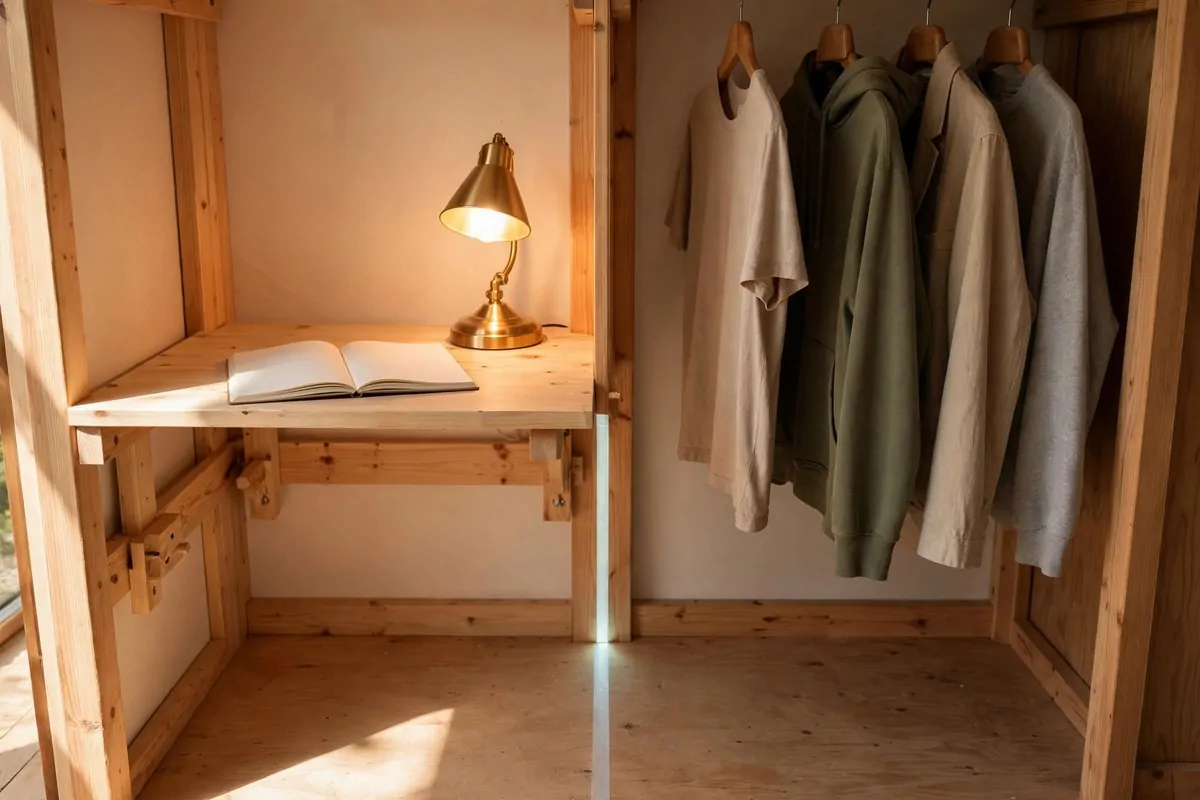
The split is the first decision, and it is the only one that matters a lot.
Draw a line down the middle of your closet in your head. One side is work, one side is clothes. That line is your border, and you defend it like a fence.
I picked the left half for my desk because the light from the bedroom window hit that side first in the morning. My clothes took the right half, and they never complained once.
Measure both halves before you move anything. Write the numbers down. A half closet is often wider than you think, and knowing the real width stops you buying a desk that will not fit.
Keep the split honest. If work papers start drifting onto the clothes side, the split is failing. Pull them back once a week, and the border holds.
Use the back wall as shared ground if you need to. A shelf across the whole back can hold boxes for both sides, work on one end and clothes on the other. It is the one place where sharing works.
Talk to the other people in your house about the split if you share the closet. When everyone knows which half is the office, nobody hangs a coat over your monitor by mistake.
Put a small mark on the floor where the split falls. A strip of tape works fine. It sounds silly, but that little line keeps your chair on your side and your shoes on theirs.
A good split feels fair to both sides. Your clothes still have room to breathe, and your desk still has room to work. That balance is the whole idea.
The Desk That Takes Only One Side
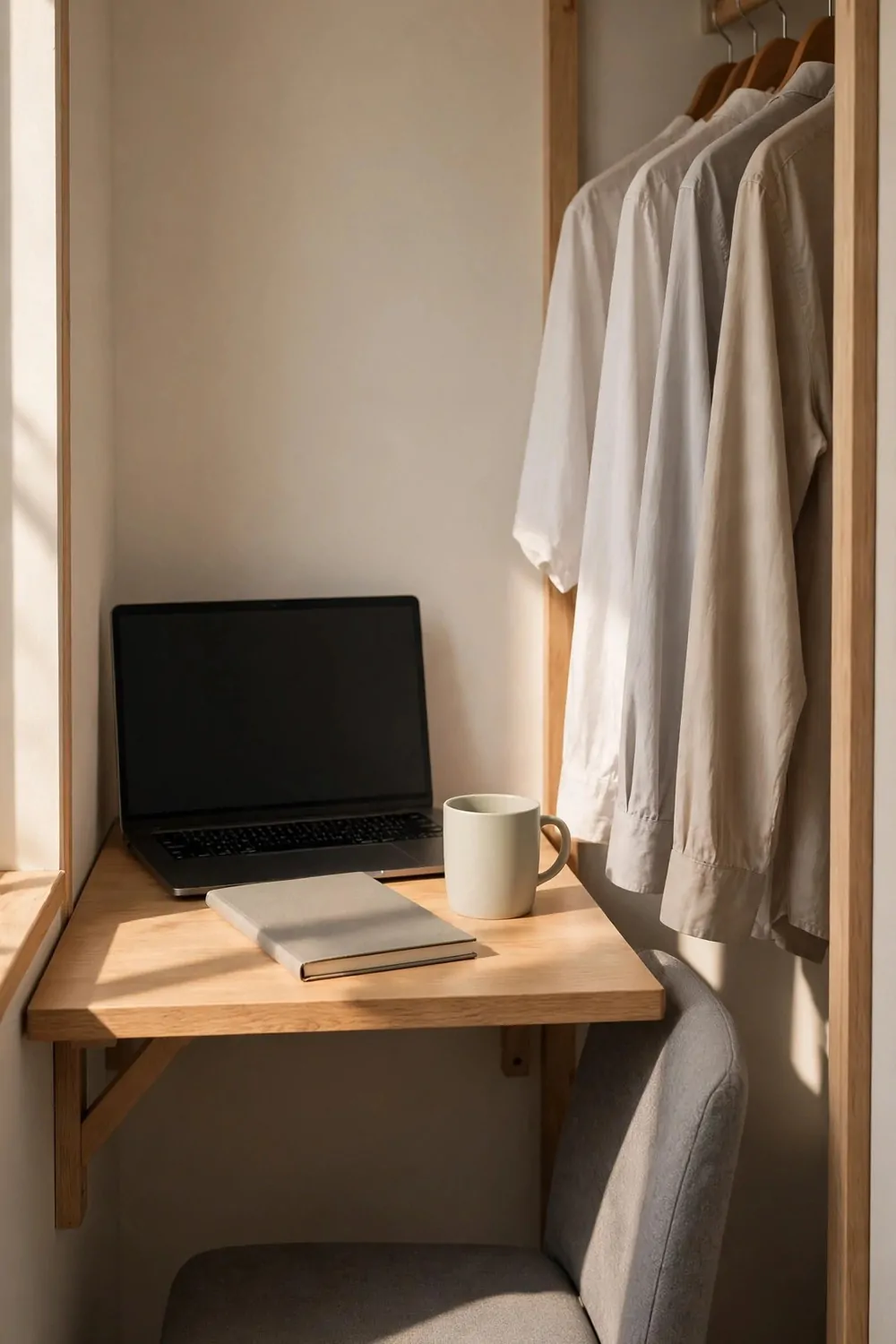
A half closet desk is a small desk, and that is fine.
Pick a desk that fits your half with room to spare on each side. You need to slide your chair in and out without bumping the clothes rail, and you need to stand up without hitting your head on a shelf.
A board fixed to the wall works best here. Two cleats, one board, and you have a desk that uses no floor at all. The floor under it stays free for a bin or a pair of shoes.
I used a pine board about 16 inches deep. That gave me room for my laptop and a notebook, and my knees still fit under it with space to spare.
Keep the desk top to three things. Laptop, notebook, mug. Everything else goes on a shelf or in a drawer, because a half closet desk has no room for clutter.
Set the height so your elbows rest easy when you type. For most people that is a little lower than a kitchen counter. Test it with your chair before you fix anything in place.
Leave a gap between the desk and the clothes side. Even six inches of air between your work and your shirts makes the split feel real, and it stops sleeves brushing your screen.
A freestanding desk works too, if it is narrow enough. Pick one with no thick frame, because a thick frame eats inches you do not have in half a closet.
The right desk for half a closet is the smallest one you can work at happily. Not the biggest one you can squeeze in, just the right one.
The Shelf Above the Rod
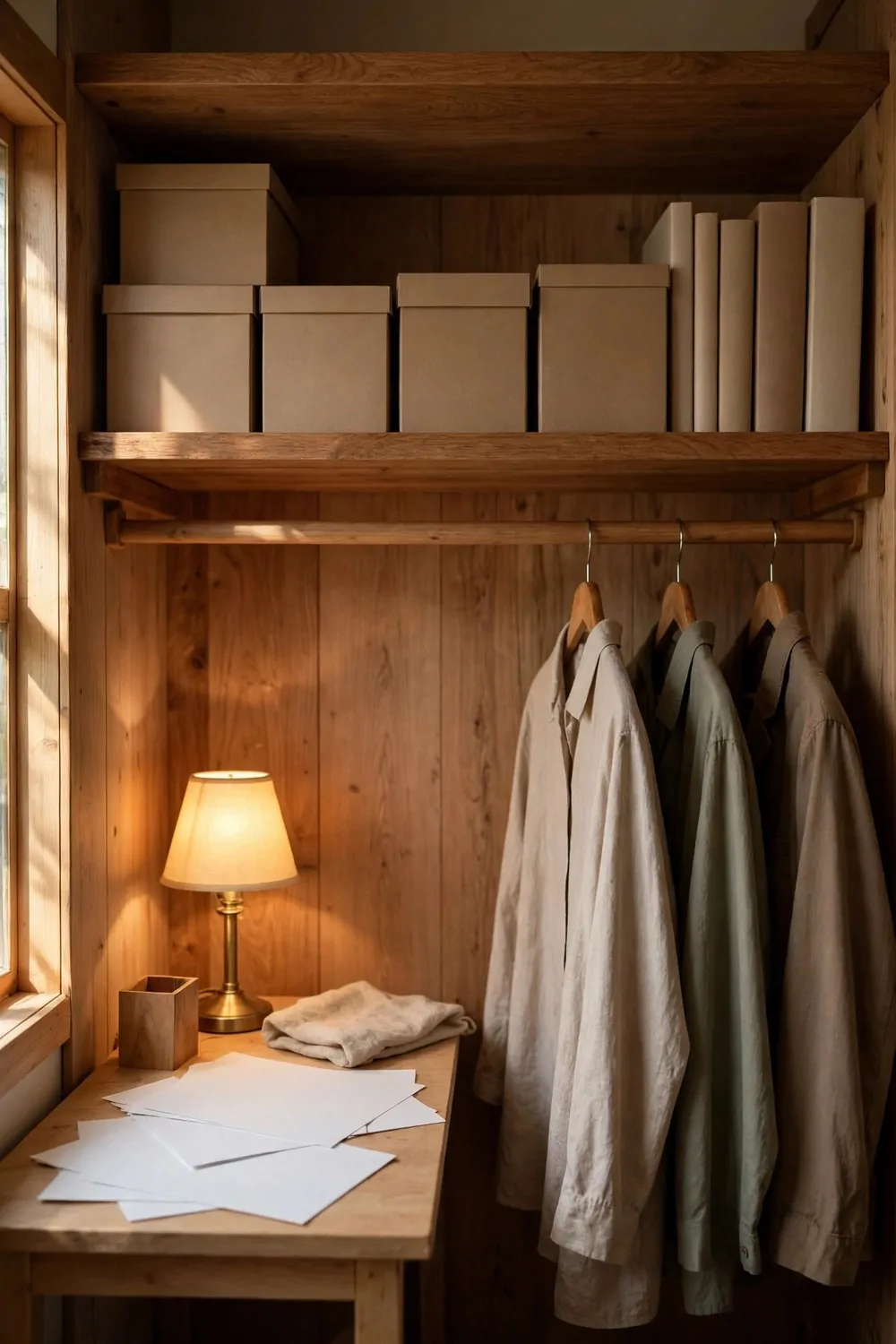
The shelf above the rod is the most wasted space in any closet, and in a half closet it is gold.
That high shelf runs the full width of most closets. In a half closet, your half of it becomes your office storage, and the other half stays with your clothes.
Put boxes on your half of the high shelf. Plain boxes with big labels work best, because you will be reaching up to find things and you want to read the label at a glance.
Keep the heavy boxes low and the light boxes high. A heavy box on a high shelf is a risk every time you pull it down, and a half closet gives you no room to dodge.
Use the shelf for things you need once a week, not every day. Daily things belong on your desk or on a low shelf. Weekly things can live up high without slowing you down.
| Shelf spot | What goes there | Why it works |
|---|---|---|
| Above your desk | Daily notebooks and pen cup | Easy reach while seated |
| Above the clothes rail | Seasonal clothes and spare bedding | Out of the way but close |
| High back shelf | Boxes you rarely open | Uses dead space at the top |
Label the edge of the shelf with tape if you share the closet. A small strip that says work on one end and clothes on the other stops mix ups before they start.
Do not pile things loose on the high shelf. Loose piles slide, and a sliding pile in a half closet lands on your desk or your head. Boxes keep everything still.
Stand on a sturdy stool to reach the high shelf, never on your chair. Chairs roll, and a rolling chair under a reaching person is a fall waiting to happen.
One high shelf, split down the middle, doubles your storage without costing you one inch of floor. That is the kind of math I like.
The Curtain Divider Between Work and Clothes
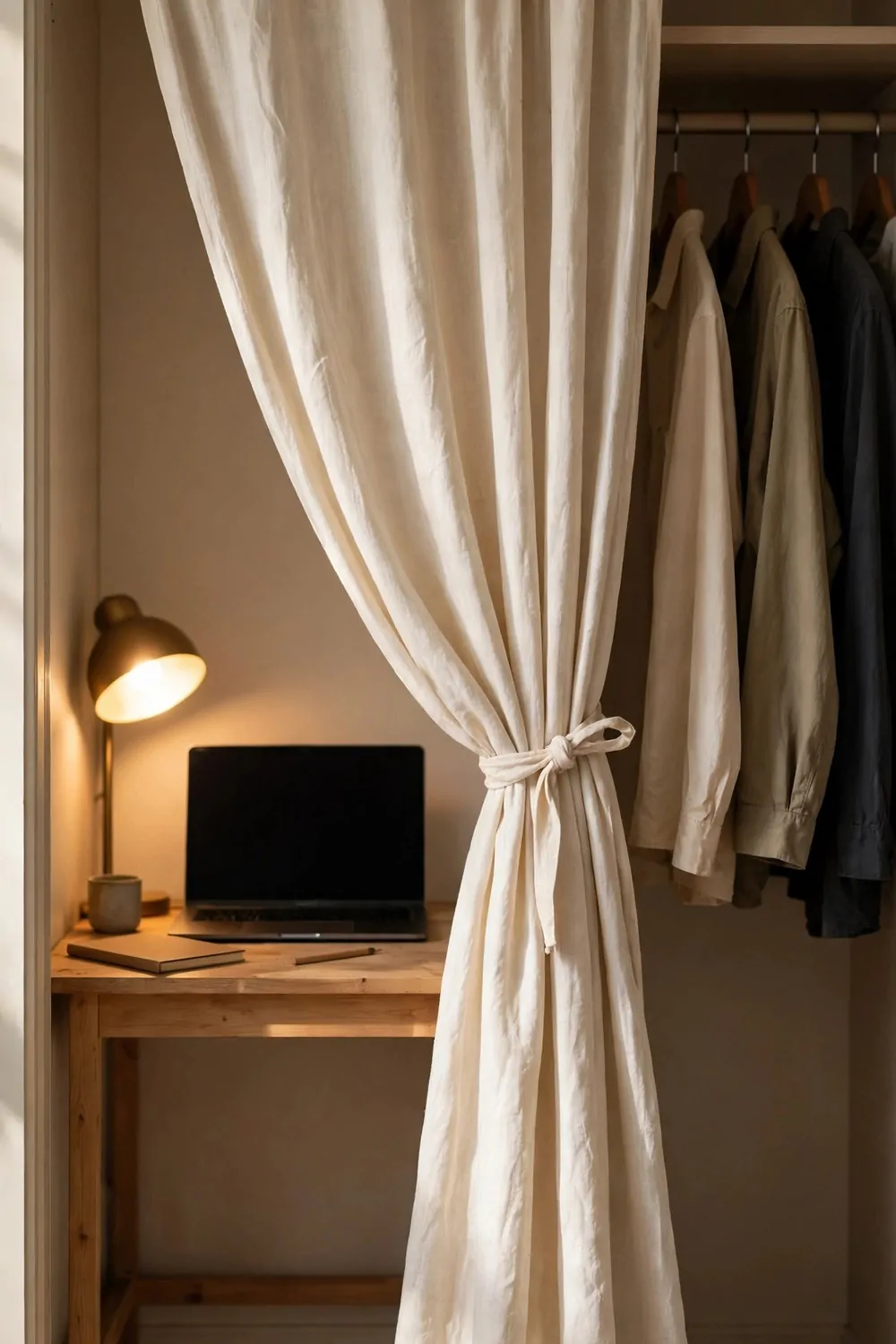
A curtain down the middle of a closet is the cheapest wall you will ever hang.
Hang a tension rod from the top of the closet, right on the split line. A plain curtain drops from it, and your office hides behind fabric while your clothes stay on their side.
I used a cream curtain that matched my bedroom walls. When it hangs closed, my closet looks like a normal closet. When I pull it back, my office is right there, ready to go.
Pick a light fabric that lets a little air through. A heavy curtain in a small closet can feel stuffy, and it blocks the light your desk needs.
Let the curtain reach the floor, or stop it just above the floor if you have a rug. A curtain that drags will catch on your chair wheels every single day.
Tie the curtain to one side while you work, with a simple fabric tieback. You get light from the room, and you still have privacy when you need it on a video call.
Pull the curtain closed at the end of the day. That one move hides your work, and it tells your brain that the office is shut. It is a small ritual, but it works.
Wash the curtain once a month if your closet is dusty. A clean curtain smells fresh, and it stops dust settling on your desk while you sleep.
A curtain divider costs almost nothing, needs no drilling, and comes down in seconds if you change your mind. It is the most forgiving wall in the world.
The Rolling Cart That Lives in the Other Half
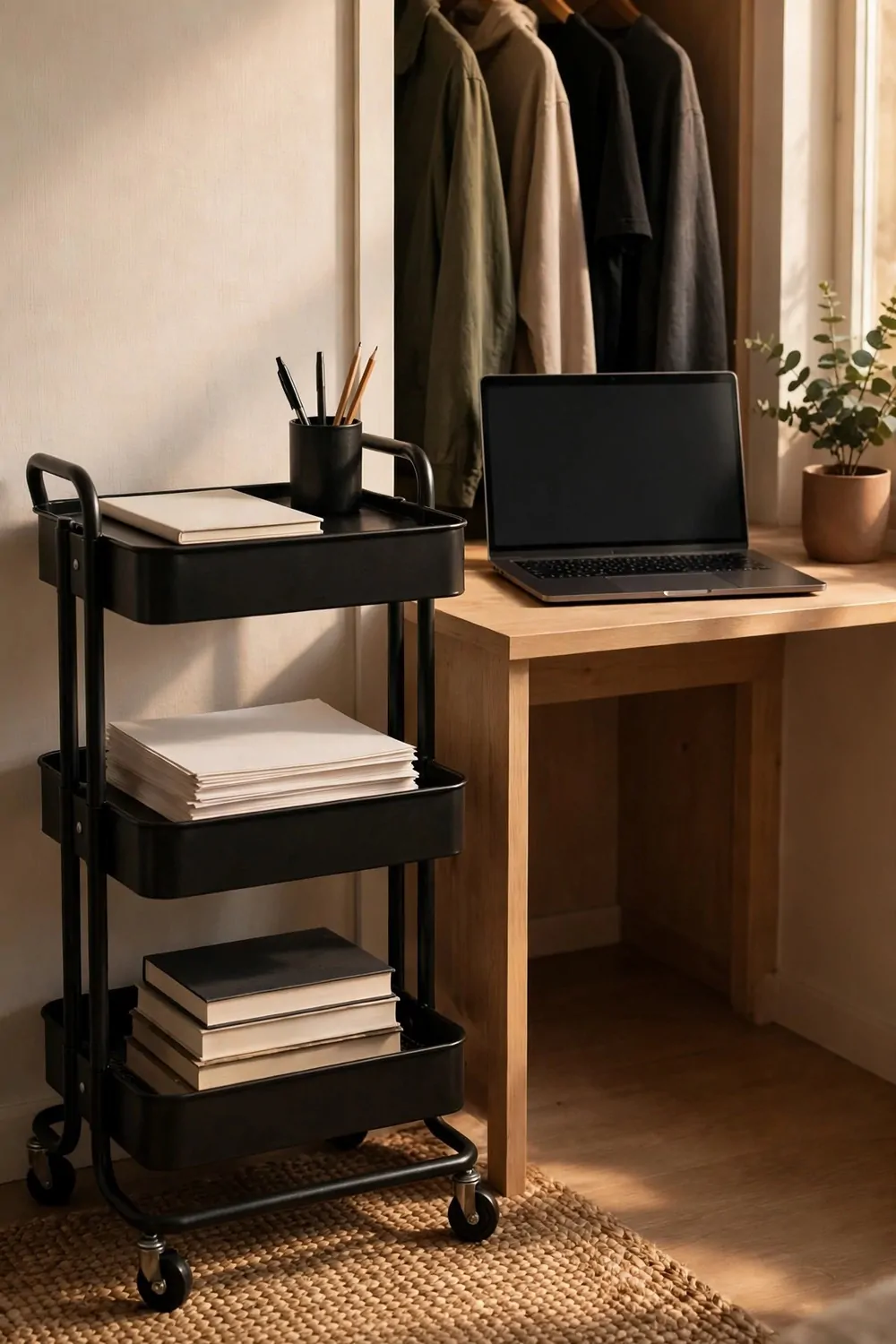
A rolling cart is the one thing in a half closet that is allowed to cross the border.
Park the cart on the clothes side when you are not working. Roll it over to your desk side when you sit down. It carries your supplies back and forth, and it never takes up desk space.
Pick a slim cart with three tiers. Three small tiers hold a lot, and the cart still slides into the gap between your desk and the clothes rail.
- Top tier for daily pens, notebook, and charger
- Middle tier for papers and folders
- Bottom tier for books and heavier items
- Locking wheels so the cart stays put while you work
Lock the wheels when you sit down. A cart that drifts away mid typing is funny once, and annoying every time after that.
Keep the cart light on top and heavier at the bottom. That stops it from tipping when you pull it out fast to grab a notebook.
Use the cart for things you need every day, not for long term storage. Long term storage belongs on the high shelf, where it does not get in the way.
Clear one tier each week if the cart starts to fill up. Carts collect clutter fast, and a weekly clear out keeps it useful instead of messy.
When work ends, roll the cart back to the clothes side and shut the door. Your office packs away in ten seconds, and the closet looks normal again.
A rolling cart is the bridge between your two halves. It respects the split, and it still lets both sides help each other out.
The Vertical Shelf Tower in the Middle
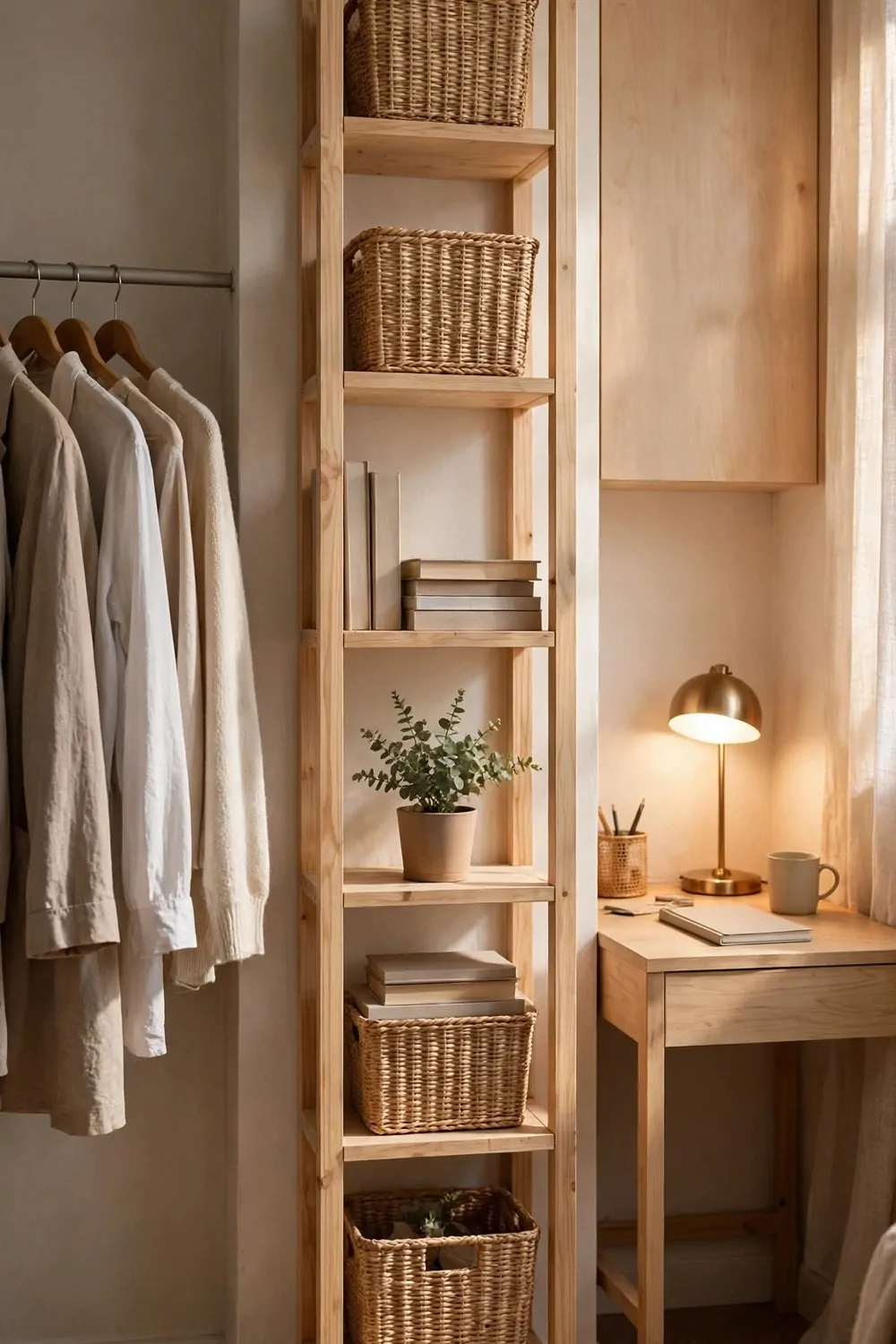
A narrow shelf tower standing right on the split line can serve both halves at once.
Pick a tower no wider than 12 inches. It should fit in the gap between your desk and the clothes rail without crowding either side.
Face one side of the tower toward your desk and the other side toward your clothes. Work supplies go on the desk side, folded clothes and shoes go on the clothes side.
Fix the tower to the wall with one small bracket at the top. A tall narrow tower can tip forward if a heavy shelf is pulled, and one bracket stops that for good.
Keep the heaviest things on the bottom shelves. Books and files go low, light boxes and notebooks go high. That keeps the tower steady when you pull things out.
Use baskets on the tower shelves to keep small things tidy. A basket stops pens and clips sliding off the edge and landing behind the tower where you cannot reach them.
Leave one shelf empty on purpose. That empty spot is for the project you are working on right now, and it stops the tower filling up with stuff you do not need.
Label the work side shelves with tape if you share the closet. A small label stops someone else putting sweaters on your notebook shelf by mistake.
A shelf tower on the split line is like a fence that also holds things. It marks the border, and it earns its keep at the same time.
The Light That Serves Both Halves
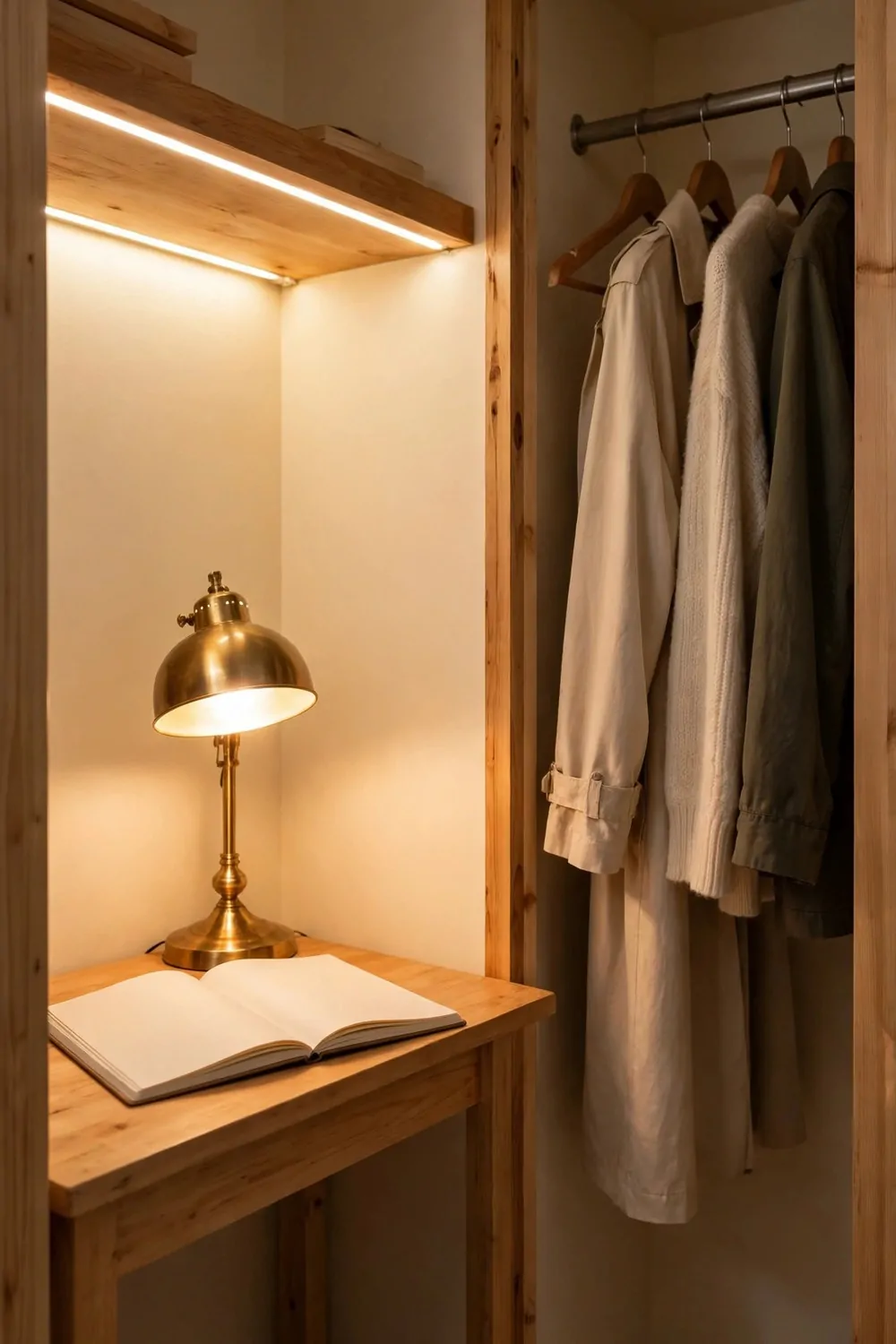
Light in a half closet has two jobs, and one ceiling bulb rarely does both well.
Start with the main closet light, and make sure it actually works. A dead bulb in a closet stays dead for months because nobody looks up. Check it today.
Add a desk lamp on your work half, for close work. A lamp you can move lets you point light at your notebook without lighting up the whole closet and waking the clothes side.
Pick warm white light for both halves. Warm light makes clothes look true to color, and it makes your desk feel like a room you want to sit in. Cool harsh light makes everything look like a storage room.
Put a strip light under a shelf if your desk feels dark. That strip hits your work right where your hands are, and it leaves the clothes side soft and calm.
| Light | Best spot | Good to know |
|---|---|---|
| Ceiling light | Center of the closet | Fills both halves at once |
| Desk lamp | On your desk, near your work | Easy to move and aim |
| Shelf strip light | Under a shelf above the desk | Lights the desk, not the clothes |
| Clip light | Clipped to a shelf edge | Cheap and simple to move |
Check for glare on your screen before you settle on a lamp spot. Move the lamp a little to the side, and the shine on the screen goes away.
Use more than one light if the closet feels gloomy. Two soft lights beat one harsh light, and they make shadows less sharp on both sides.
Keep a spare bulb close by. A closet with one light goes very dark when that light fails, and you do not want to hunt for a bulb in the dark.
Turn the lights on and stand in the doorway. If both halves look warm and clear from outside, your lighting is doing its job.
The Fold Down Desk That Frees the Floor
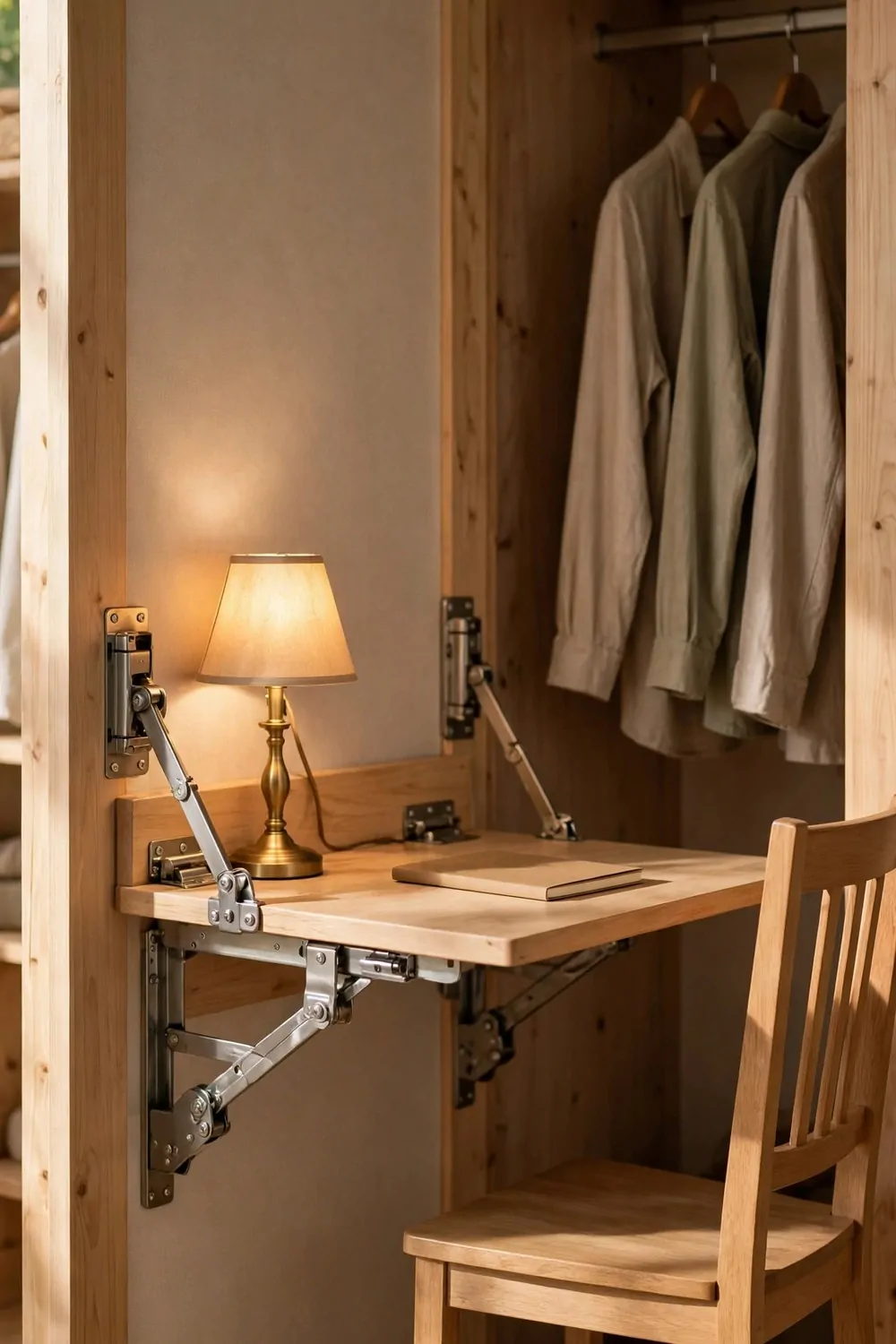
A fold down desk is the best friend of a half closet, because it gives the floor back when you are done.
Fix the desk to the wall on your half with strong hinges and a solid latch. It holds your laptop while you work, and it folds flat when you fold it up.
This desk is perfect if the clothes side needs the floor space sometimes. Fold the desk up, and the whole closet floor is free for a suitcase or a laundry basket.
Pick a board that is light but firm. A heavy board is hard to lift with one hand, and a flimsy board will bounce when you type.
Keep the top clear when you fold it up. If you leave a mug on it, you will learn that lesson once, and you will not forget it.
Add a small shelf above the folded desk for your laptop. Close the desk, put the laptop away, and the whole workday is packed up in seconds.
Check the fold down height with your chair before you fix it in place. Too high and your shoulders ache, too low and your knees hit the front edge.
Use a fold down desk if your closet door closes well. The closed door hides the desk completely, and guests never know it is there.
I love the small click of the latch at the end of the day. It is a clear end to work, and it makes the evening feel like my own again.
The Shoe Storage That Stays Put
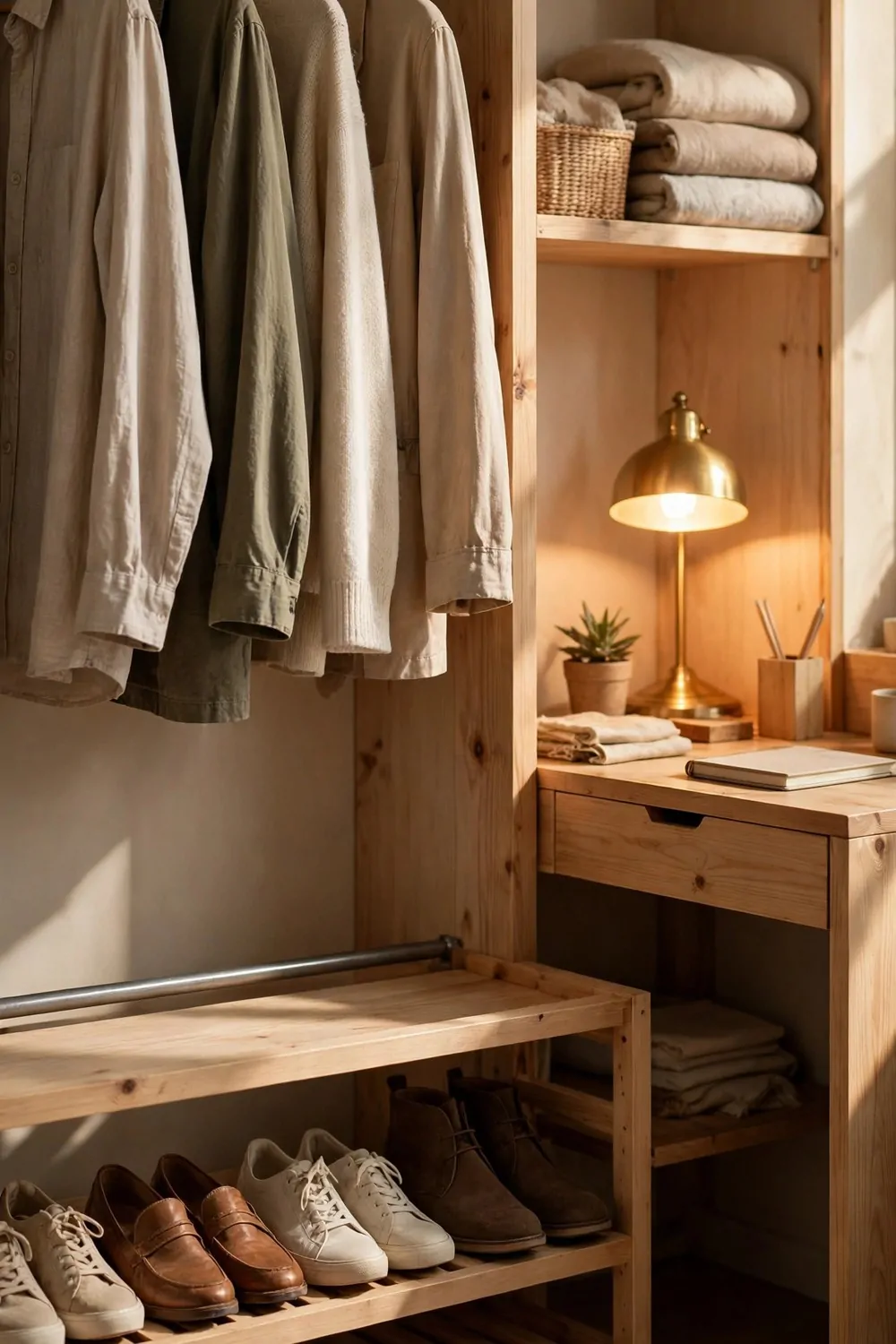
Shoes are the one thing in a half closet that always tries to cross the border.
Give shoes a fixed home on the clothes side, and keep them there. A low rack or a shallow tray under the hanging clothes works well, and it keeps shoes off your office floor.
Keep only the shoes you wear most in the closet. Daily shoes belong close at hand, and special shoes can live higher up or in another room entirely.
Pick a rack with open sides so shoes can air out. Closed boxes under hanging clothes can trap damp, and that smell will linger in a small closet.
- Low open rack for flat shoes and trainers
- Shallow tray for one or two daily pairs
- Slim drawer unit for shoes plus small items
- Over the door pockets for sandals and flats
Measure the space under the clothes rail before you buy a rack. Boots need more height than flat shoes, and a rack that is too tall will bump the hanging clothes above it.
Keep the shoe area tidy with a quick shake out each week. Dust and small stones collect on closet floors fast, and a quick clean keeps the whole closet fresh.
Do not let shoe storage creep onto the office side. Your chair wheels and a stray shoe are a trip waiting to happen in a tight space.
Put a small mat under the rack if your closet floor is pale. It catches dirt from shoes, and you can shake the mat out in seconds.
When shoes have a neat home on their own side, the whole closet feels calmer. That one tidy spot lifts the whole room.
The Pegboard on the Shared Wall
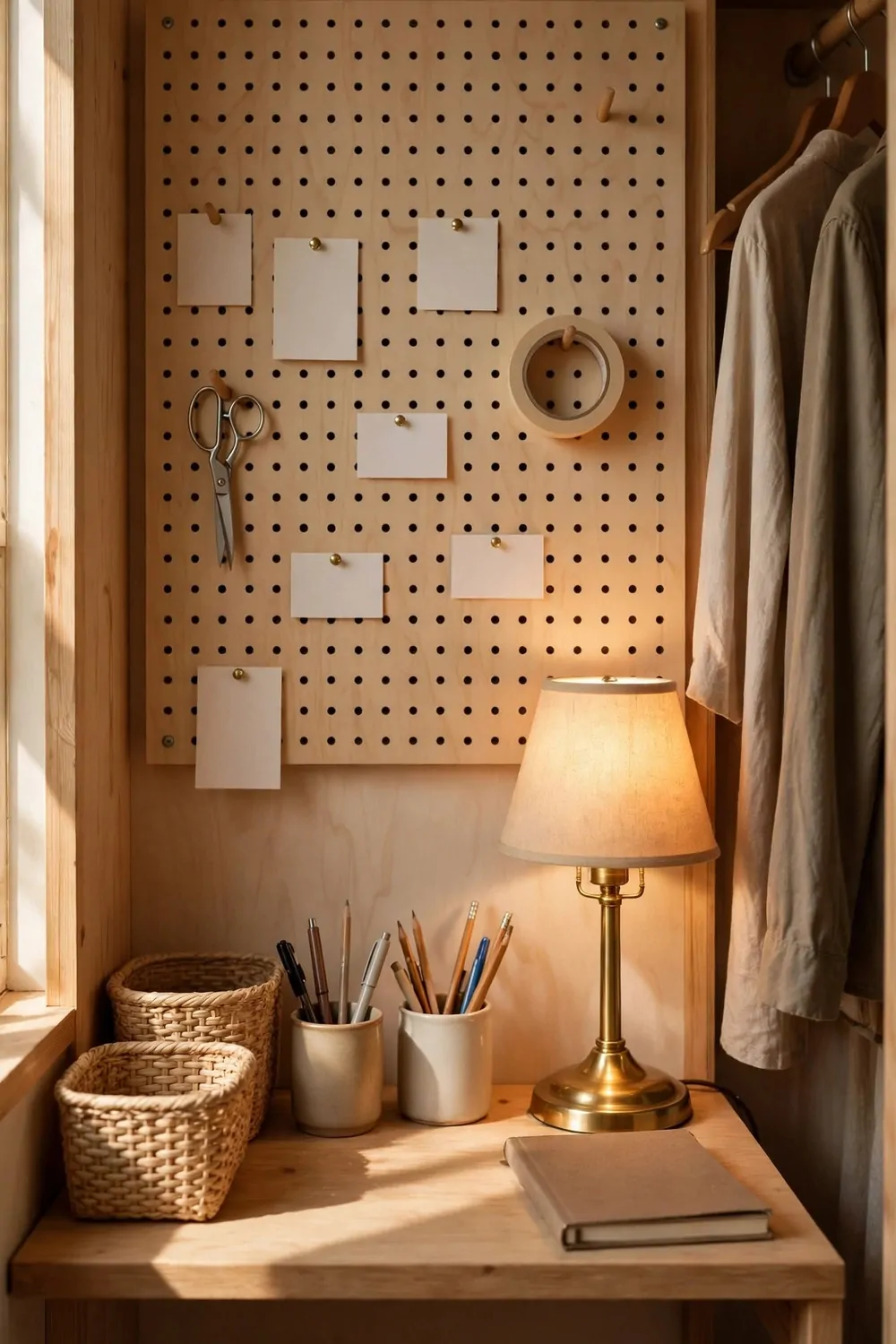
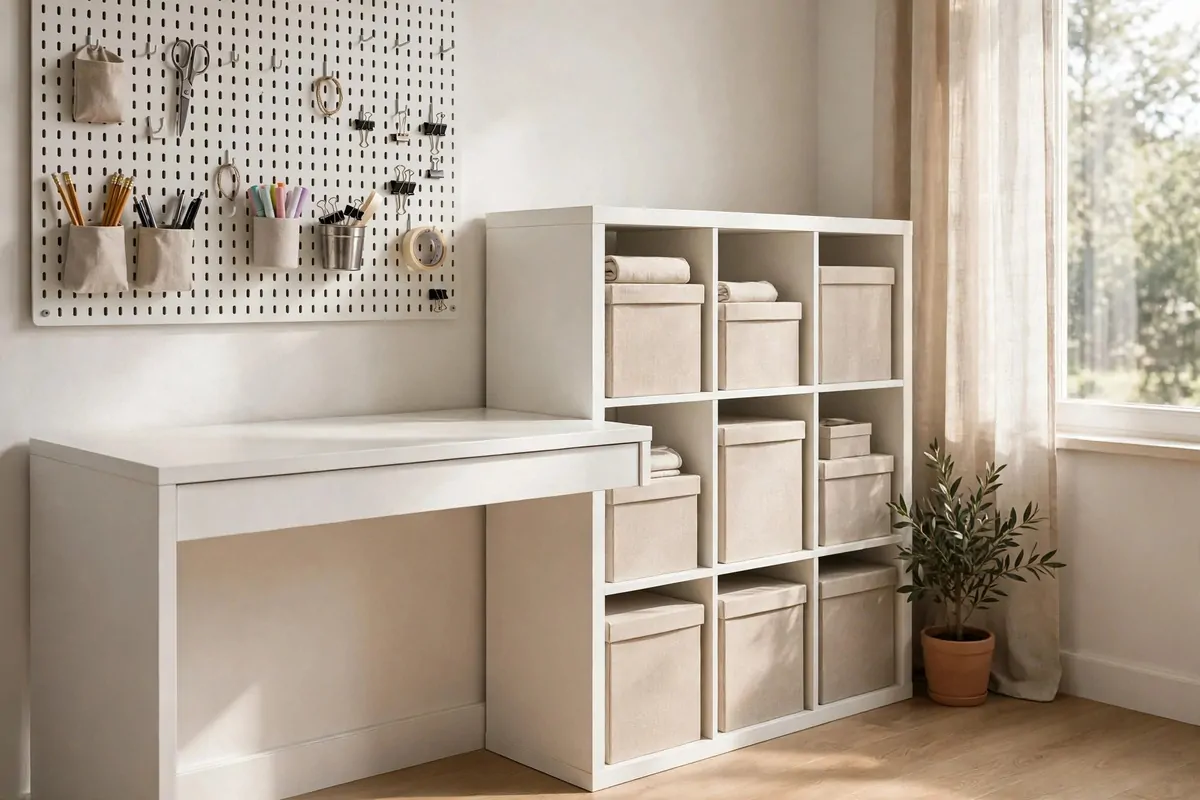
A pegboard on the wall your two halves share can hold things for both sides at once.
Fix the pegboard on the back wall or the side wall of your work half, where your hands can reach it while you sit. That spot is perfect for pens, scissors, tape, and little notes.
Use hooks, small cups, and tiny shelves on the board. Each hook holds one kind of thing, so you always know where it lives, even in a small space.
Keep the board simple at first. A few hooks and one cup is enough to start, and you can add more as you learn what you reach for most.
Hang your headphones on a wide hook so the cord does not tangle. A narrow hook can kink the cord, and that gets annoying fast when the sound starts cutting out.
Put work things on the desk side of the board and clothes things on the other end. A hook for your keys on one end and a hook for a lint roller on the other keeps both halves happy.
Leave some empty holes on the board. An empty spot is room to grow, and a board that is full to the edges feels busy and hard to use.
Paint the pegboard the same color as the wall if you want it to blend in. Paint it a soft accent color if you want it to be a feature in the closet.
Step back and check the board from the doorway. If you can spot your pens and your scissors in one glance, the pegboard is doing its job.
The Slim Chair That Slides Away
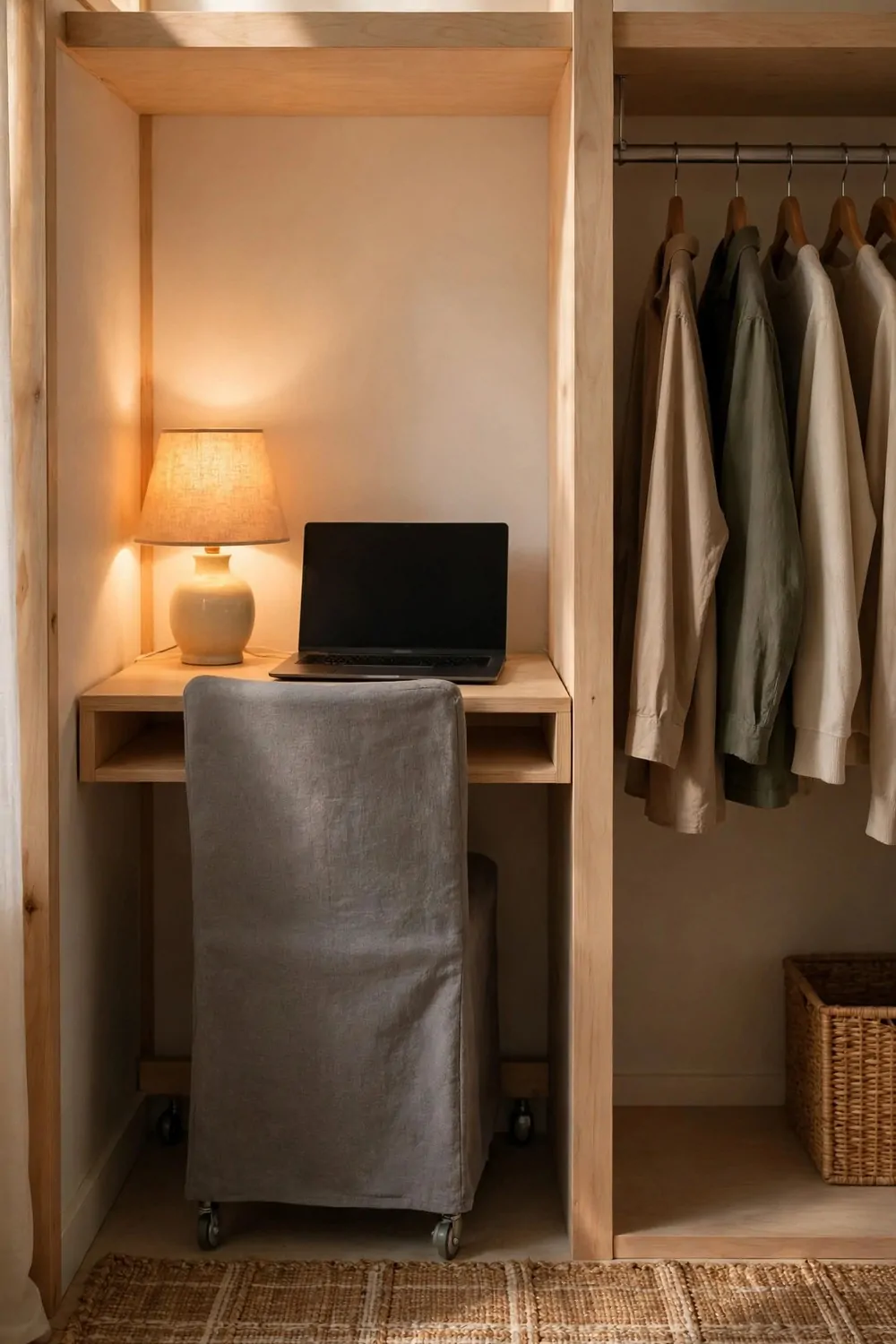
Your chair can make or break a half closet office, because the chair has to share the floor with everything else.
Measure the chair the same way you measured the desk. Width matters most, and armrests can add inches that a half closet does not have.
A chair with no arms is often the best pick for a half closet. It slides right under the desk, and it saves a lot of room when you stand up.
Look for a chair with a low back if the closet is very small. A low back leaves the wall visible above it, and the room feels less crowded.
Try the chair in the closet before you keep it, if you can. Sit, type, reach for a shelf, and stand up. If any of those moves feel tight, the chair is too big.
Add a small cushion for long work days. A thin cushion adds comfort without adding bulk, and you can take it off when you need the chair to slide away.
Pick a chair with smooth wheels if your closet floor is hard. Wheels that stick will make you push and twist, and your back will feel it by lunch.
Keep a soft throw on the chair for cold mornings. It makes the closet feel cozy, and it is easy to fold away when the day warms up.
The best half closet chair is one you forget about while you work. If you notice the chair all day, it is not the right one for your space.
The Cable Box That Hides the Mess
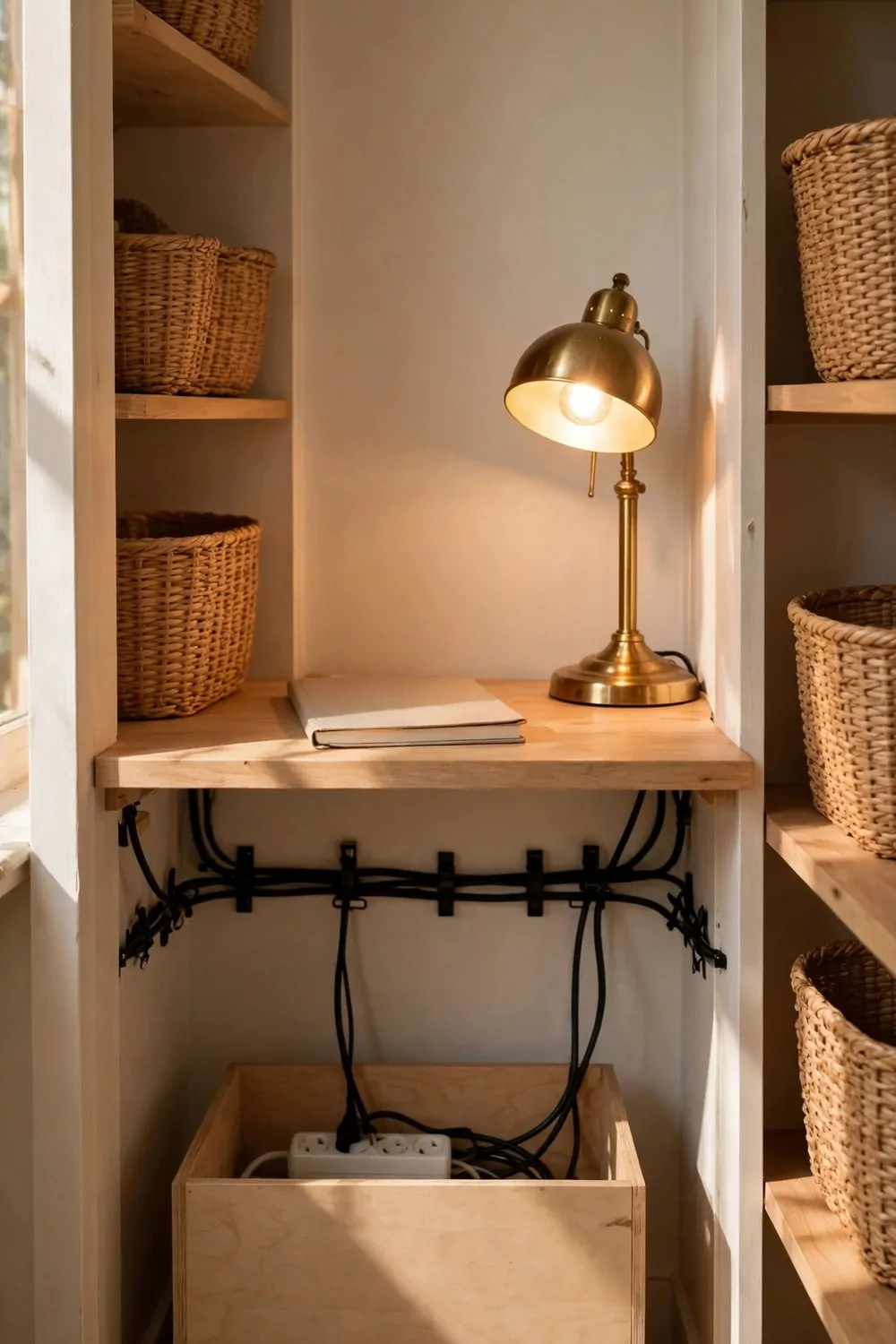
Cables in a half closet have nowhere to hide, because the space is small and the clothes are right there. A cable box gives them a home.
Start with a power strip fixed under the desk or on the wall of your half. Keep it off the floor, where feet and chair wheels cannot catch it.
Plug in only what you use each day. A laptop charger, a lamp, and a phone charger are enough for most half closet offices.
Use small clips to run cables along the back edge of the desk. The clips keep cables neat, and they stop cords from sliding off the desk onto the clothes side.
Put the power strip inside a plain box with holes cut for the cables. The box hides the strip, and the closet looks tidy from the doorway. It also stops dust settling on the plugs.
| Cable fix | What it does | Cost and effort |
|---|---|---|
| Cable box | Hides the power strip and plugs | Cheap, ten minutes |
| Clip strip | Runs cables along the desk edge | Very cheap, five minutes |
| Cord cover | Covers a cable run down the wall | Cheap, half an hour |
Label each plug if you have more than three things plugged in. A tiny label saves you from unplugging the wrong thing in a hurry.
Keep the cable box where you can reach the switch. Turning everything off at the end of the day is easy, and it gives work a clear end.
Do not run cables across the walking path in the closet. A cable on the floor is a trip risk, and in a small space you will step on it sooner or later.
Check your cables once a month for wear. A frayed cable in a tight closet is a risk, and it is easy to miss when it hides behind a desk.
When the cables are hidden, the desk looks bigger and the closet feels calmer. That quiet look is worth the half hour it takes to tidy them.
The Plant That Softens the Split

A plant on the split line softens the border between work and clothes in a way no curtain can.
Pick a plant that likes low light, because most closets get little sun. A plant that needs bright sun will droop fast, and that feels sad in a work space.
One small plant on the desk is enough to start. A tiny pot by your screen gives your eyes a rest, and it does not steal work space.
Hang a trailing plant from a high shelf if you have one. The leaves fall softly down the wall, and they make the closet feel taller and less boxy.
Use a plant that you can water once a week. A thirsty plant in a closet is easy to forget, and a weekly drink suits a busy work routine.
- Pothos for a trailing plant that forgives missed waterings
- Snake plant for a dark corner that gets almost no light
- Small succulent for a bright spot near the door
- Fake plant if your closet has no light at all
Keep plants away from papers and plugs. Water and work do not mix well, and a spill on a notebook is a bad start to a morning.
Put a plant near the door if you want a friendly welcome. You see green the second you walk in, and the office feels less like a storage room.
Plants do not need to be big to change a room. One small pot, cared for well, can make a half closet feel like a place you want to be.
Keep the plant on your half of the split. If it creeps onto the clothes side, it will drip on a shirt sooner or later, and that is a mess nobody wants.
The Mirror That Makes Half Feel Whole
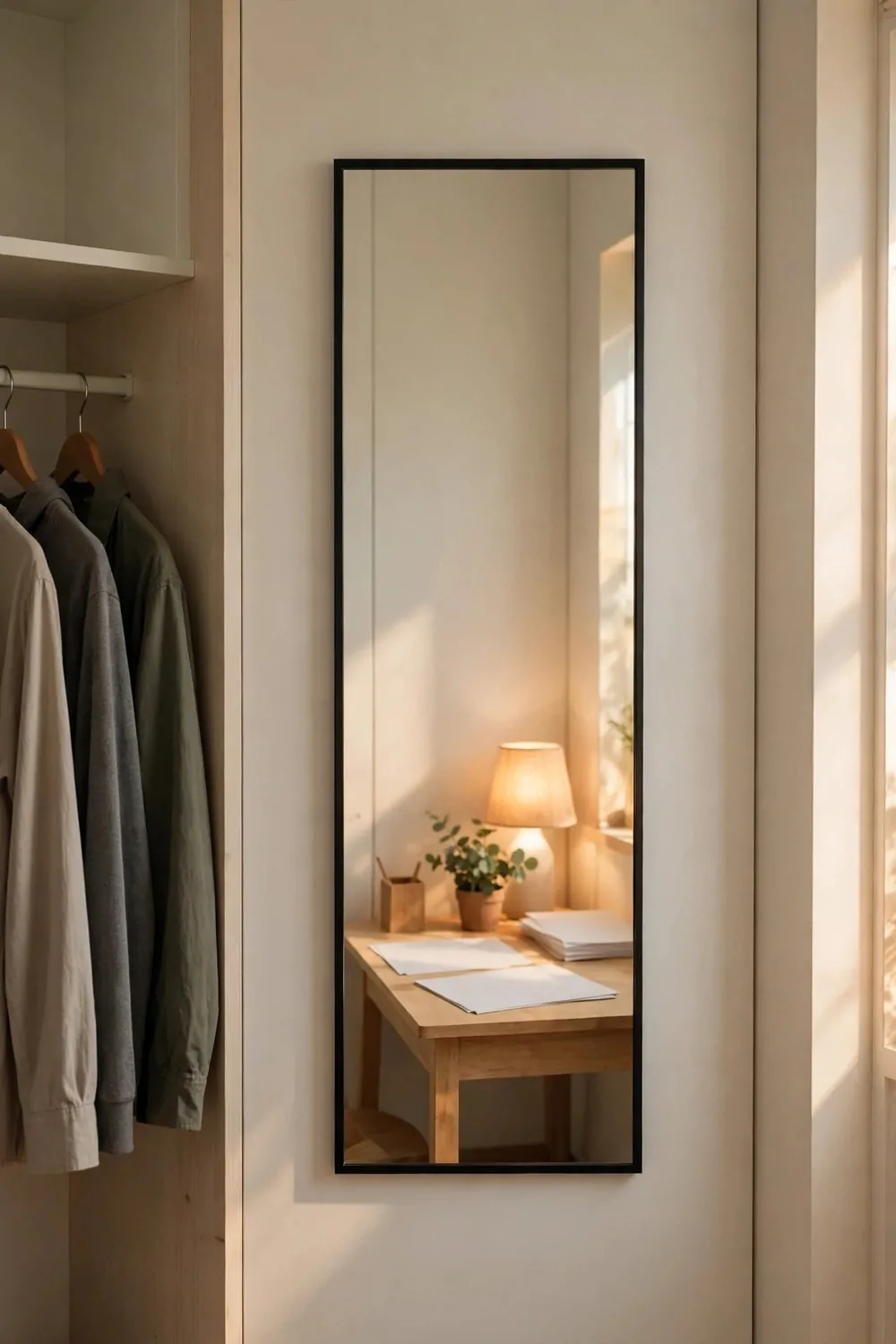
A mirror makes a half closet feel twice as big, and it is the cheapest trick in this whole list.
Hang a mirror on the wall opposite your desk if you can. It bounces light around, and it gives your eyes somewhere to travel beyond the walls.
Pick a mirror that fits the wall without crowding it. A tall narrow mirror suits a closet well, and it doubles as a quick check before a video call.
Keep the mirror clean, because a dusty mirror in a small space shows up fast. A quick wipe each week keeps the light bright and clear.
Do not put the mirror where it catches direct glare from your lamp. A bright spot in the mirror can shine right into your eyes while you work.
Angle the mirror a little if the reflection feels too direct. A slight tilt can send light toward the ceiling, and the room feels softer.
A mirror with a thin frame looks light and modern in a closet. A heavy frame can feel bulky, and it takes up wall space you need for shelves.
Use the mirror to check your light too. If the mirror looks dark, your closet needs more light. If it glows, your lighting is working well.
Stand in the doorway and look at the mirror. If the closet feels wider from that spot, you have placed it right, and your little office will feel open.
A mirror also helps you get dressed, which is handy when your office shares a closet with your clothes. One mirror, two jobs, no extra space used.
The One Bin Rule for the Shared Closet
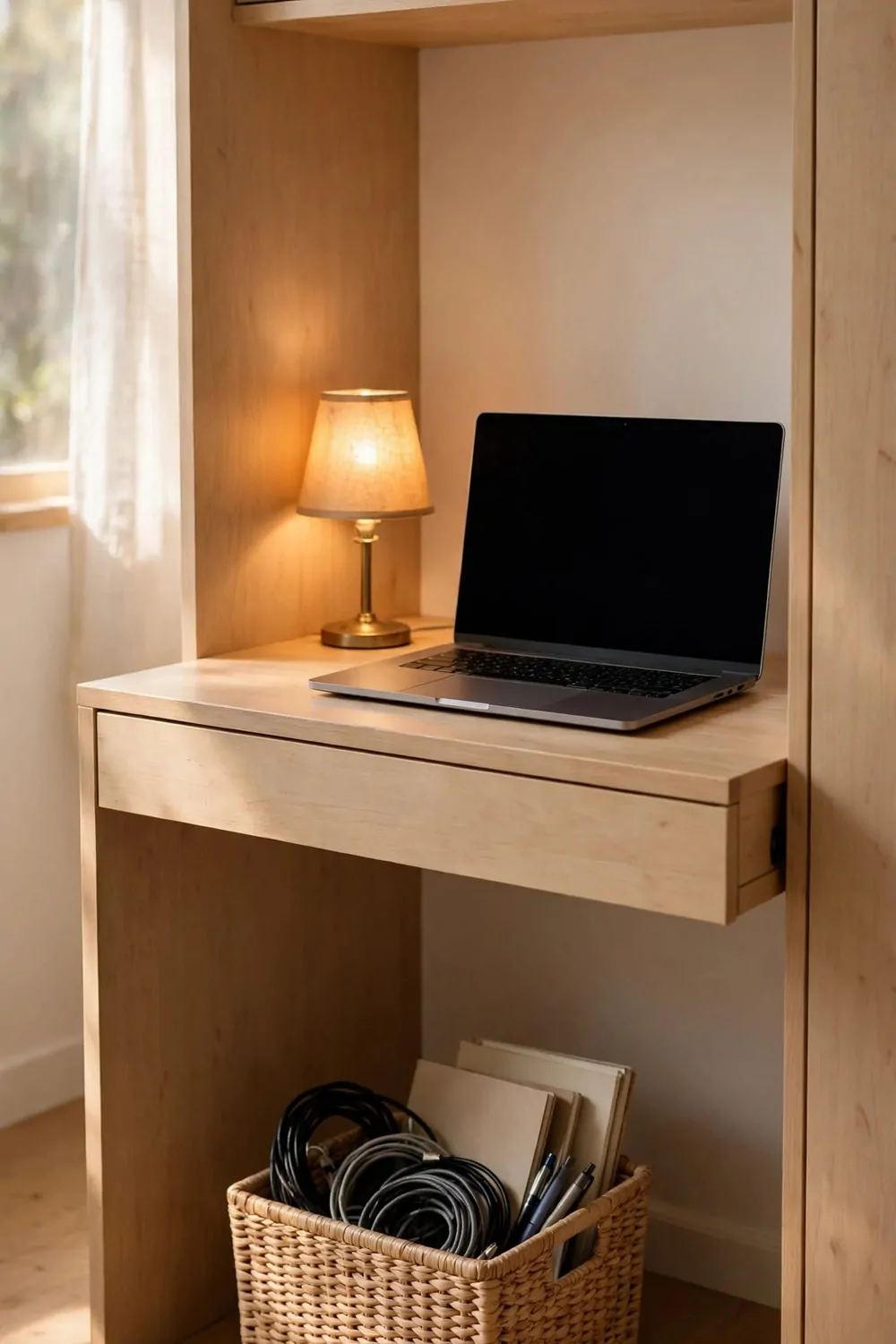
The one bin rule is simple, and it matters double in a shared closet. You get one bin for all the loose stuff that does not have a home, and when the bin is full, something has to go.
Pick a bin that fits under your desk or on one shelf, no bigger. A bin about the size of a shoe box is right for a half closet.
Put the bin on your half of the split, not on the clothes side. Your loose stuff should never migrate onto the clothes side, or the split starts to fail.
Once a week, open the bin and put each thing away or throw it out. That weekly check is the whole secret, and it takes less than ten minutes.
Do not buy a second bin when the first one fills up. A second bin is how a half closet turns into a storage room, and your office space will shrink a little more each month.
Label the bin “in between” so you know it is not long term storage. If something sits in the bin for a month and you never touch it, let it go.
Keep the bin easy to reach, but out of sight if you can. Under the desk works well, and it stays tidy without a daily effort.
Empty the bin before a big project starts, so you start clean. A tidy closet office is not about being perfect, it is about having one small rule you can keep.
One bin, one rule, and the shared closet stays a shared closet instead of turning into a dumping ground for both halves.
The Close the Door Reset at Night
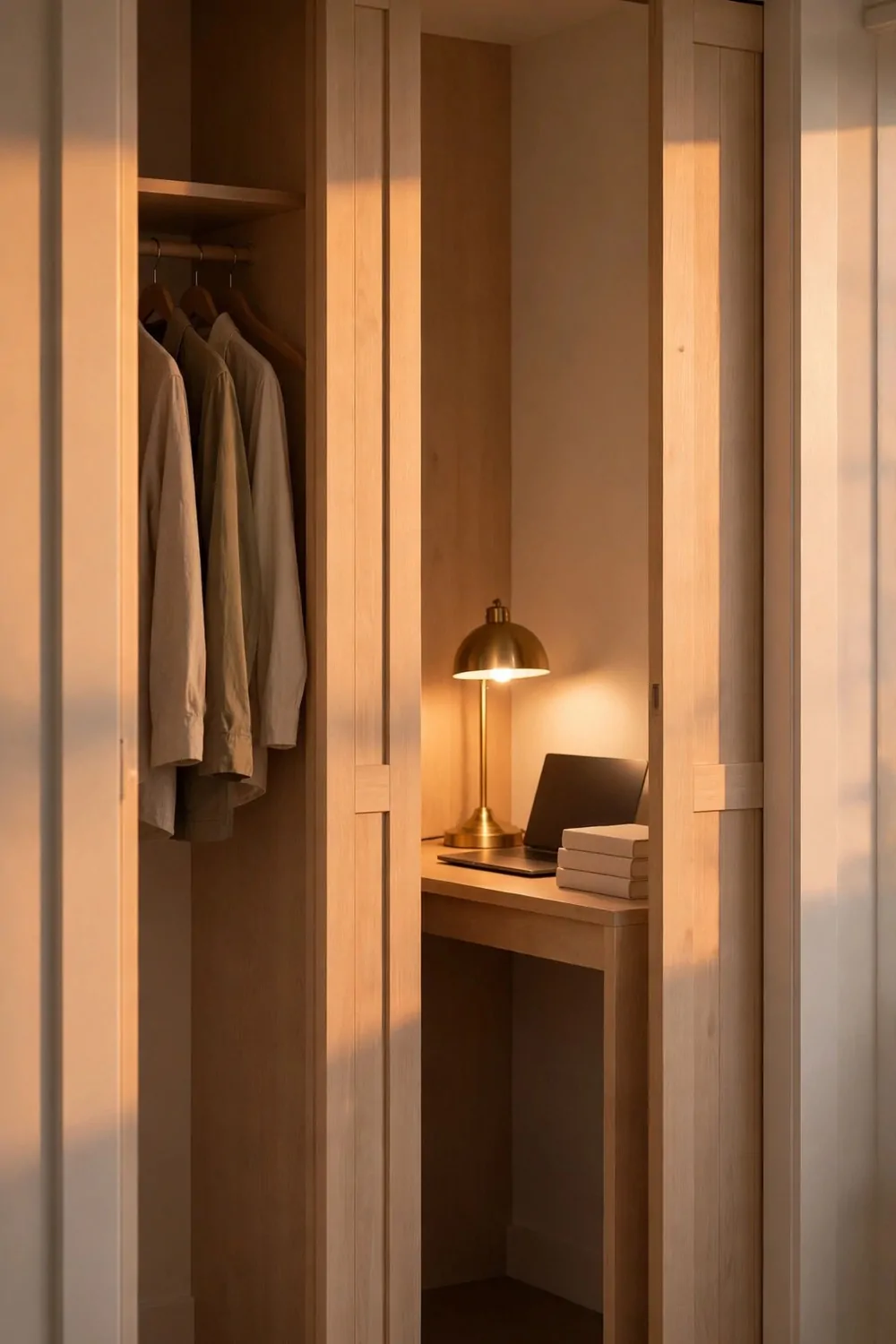
The best part of a half closet office is the door, because closing it ends the workday for both halves at once.
Keep the door in good working order. A door that sticks or squeaks will annoy you twice a day, and a smooth door makes the ritual feel good.
Clear the door track or hinges once in a while. Dust builds up in closet tracks fast, and a quick clean keeps sliding doors gliding well.
Do not block the door with boxes or a cart. The door needs to close fully, or the office will peek out and the tidy trick will not work.
Close the door at the end of each workday, even if the desk is a little messy inside. Out of sight means out of mind, and your evening feels freer.
Open the door in the morning like you are opening a shop. That small habit tells your brain that work has started, and it sets the day up well.
If your closet has no door, a curtain does the same job. The point is a clear cover, not a fancy door. Pull it across, and the office is gone.
Use the inside of the door if you can. A slim board, a few hooks, or a small pocket organizer adds storage without taking floor space from either half.
Do the reset in the same order every night. Chair under the desk, cart parked, curtain pulled, door closed. It takes one minute, and it turns a shared closet back into a calm bedroom corner.
A half closet office that hides away is a gift for small homes. Your work has a home, your clothes have their home, and both live happily behind one door.