17 Small Business Studio Spaces That Impress Clients

I lost a client once before the meeting even started. She walked in, took one look around my little studio, and I could feel the doubt settle on her face.
She stayed for the coffee. She listened to the whole pitch. But her eyes kept drifting to the wobbly table, the bare walls, and the stack of boxes in the corner. Two days later she went with a bigger company. I never got a real reason, but I did not need one.
That hurt taught me something I will never forget. Clients judge your Small Business Studio before you say a single word. The room speaks first.
So I rebuilt my space piece by piece, one small change at a time. Here are the 17 ideas that made the biggest difference. Every one is simple. Every one is real.
1. A Front Desk That Says Hello First

The first thing your client touches with their eyes is the desk at the front. Make it kind.
You do not need a big reception counter. A simple wooden desk does the job. Keep the top clear except for two or three things.
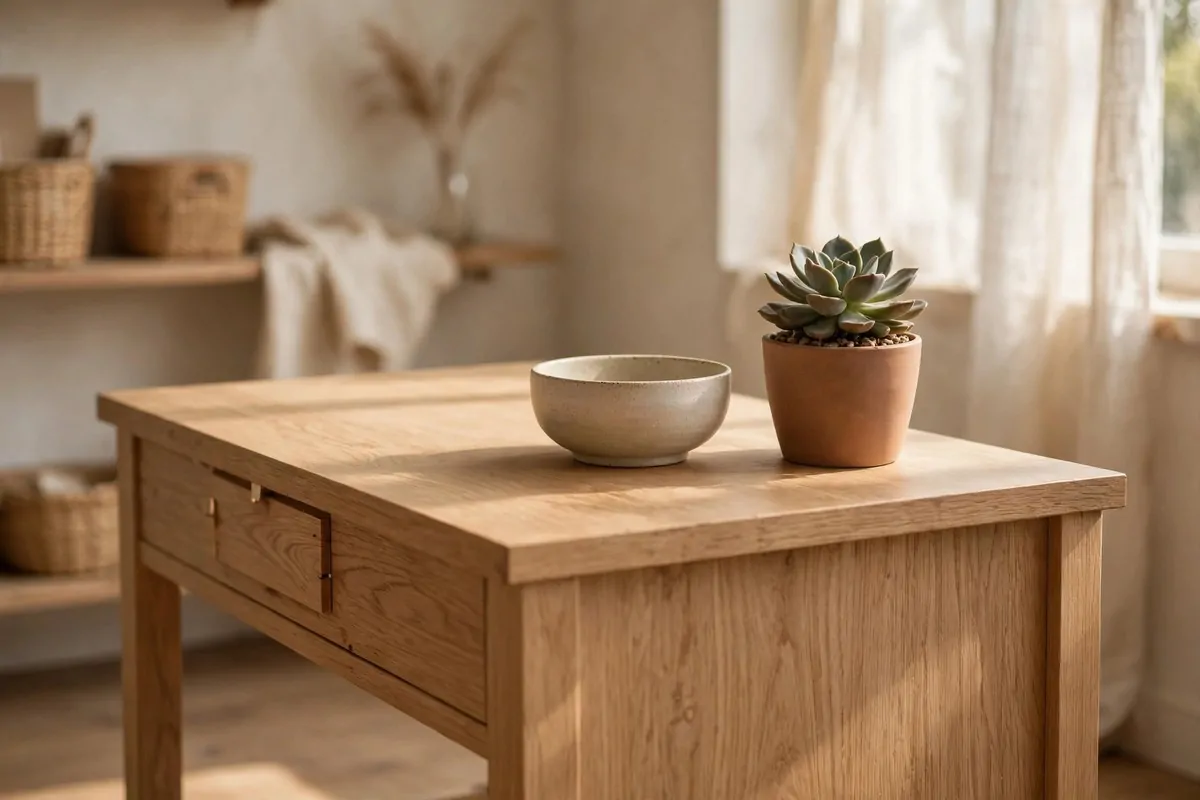
I put a small plant and a plain ceramic bowl on mine. That is it. The bowl holds nothing. It just looks calm.
A clear desk tells your client one thing. This person is in control. And when you feel in control, your client relaxes.
Skip the piles of paper. Skip the old mail. Skip the charging cables snaking everywhere.
If the desk has a front panel, you can slide the messy bits behind it. Nobody needs to see your printer.
A low desk works better than a tall one in a small space. Tall counters feel like a wall. A low desk feels like a welcome.
Wipe it down before every client visit. I keep a small cloth in the drawer. It takes twenty seconds.
The desk is the handshake of your Small Business Studio. Make it a good one.
2. Your Logo on the Wall Behind You
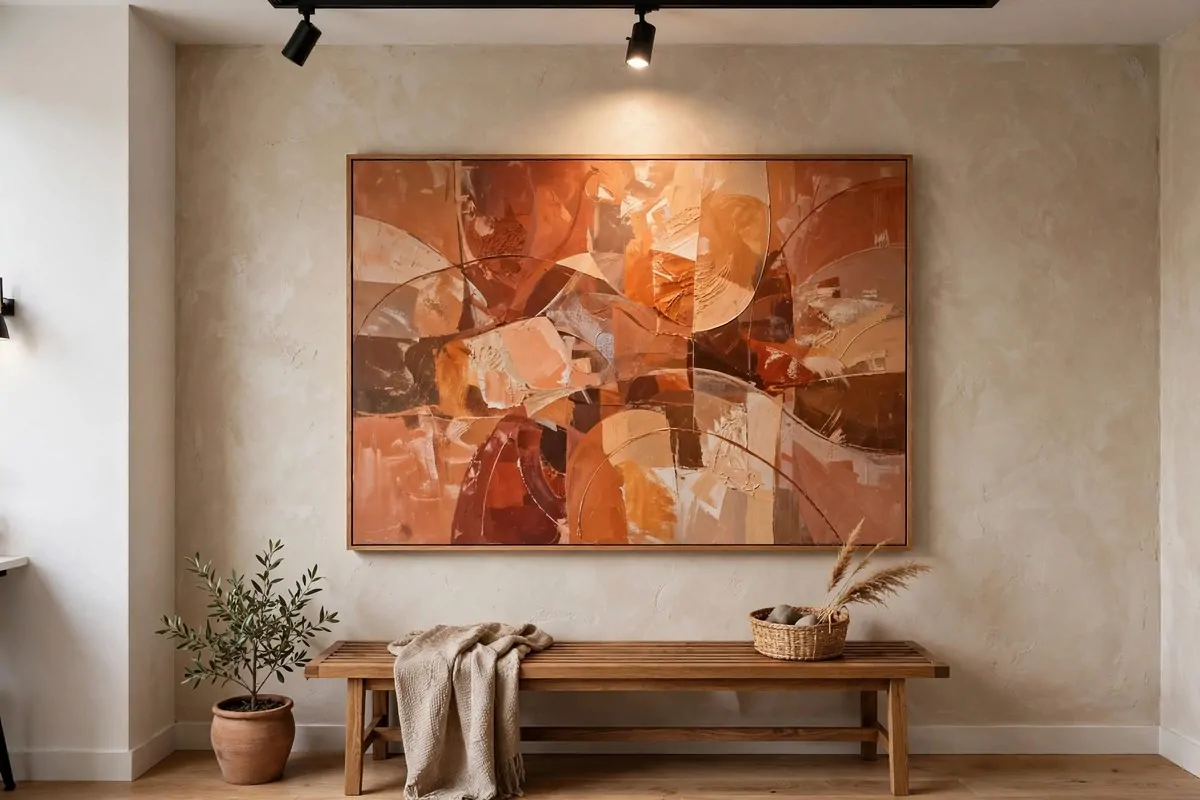
When your client sits down, where do their eyes land? Usually the wall behind your chair. So put your story there.
A simple logo on the wall changes everything. It can be a decal, a painted sign, or even a wooden board you made yourself.
You do not need a designer for this. A local sign shop can print a wall decal for very little money. Mine cost less than a dinner out.
One strong brand mark beats ten small posters. Keep it to one. Let the wall breathe around it.
If you do not have a logo yet, hang your best piece of work in a big frame. Let the work be the brand for now.
Paint that wall a soft color so the logo pops. Warm white or pale gray both work well.
Spotlights help too. A cheap clip-on light aimed at the logo makes it look expensive. I use one from a discount store.
Your client will photograph that wall. I am serious. They will snap a picture when you are not looking. Make it worth their phone storage.
A branded wall says you are a real business. Not a hobby. Not a side project. Real.
3. A Drink Waiting for Them
Offer water before you offer anything else. That is my rule.
A little drink corner costs almost nothing. A glass carafe of water, a few clean cups, and a small jar of coffee or tea bags.
You do not need a fancy machine. A simple kettle and a French press look warm and honest. Clients like that.
Keep the glasses clean and upside down on a small tray. It looks neat even when nobody drinks.
Tea bags in a little wooden box feel thoughtful. I keep three kinds. It takes up no space at all.
Wipe the tray every morning. Nothing kills trust like a dusty mug. Your client notices these things even when they pretend they do not.
My little drink list is simple. And simple wins.
- Fresh water in a glass carafe
- Coffee, with real milk, not just the powder stuff
- Two or three kinds of tea
- Wrapped mints on a small plate
A short list of drinks on a small card is a nice touch. “Water, coffee, tea, ask for anything else.” Simple words. Big warmth.
My client once said my studio felt like a friend’s kitchen. I took it as the best compliment of the year.
This small corner tells people they matter to you. Drinks do that. They say, sit down, stay a while.
4. Warm Light, Not Office Light
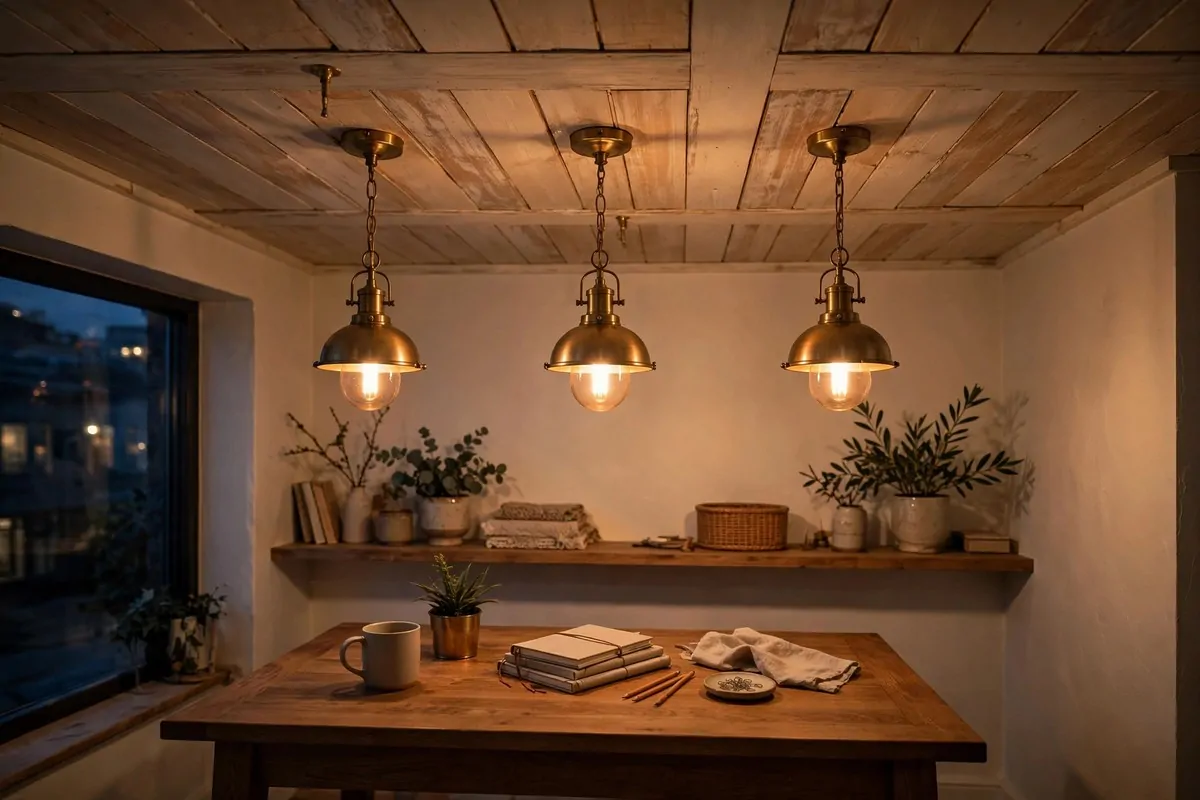
I once walked into my own studio and hated it. Then I realized it was the light. The cold white tubes made everything look tired.
Warm light is the cheapest makeover you will ever buy. Swap the white bulbs for warm ones. That is step one.
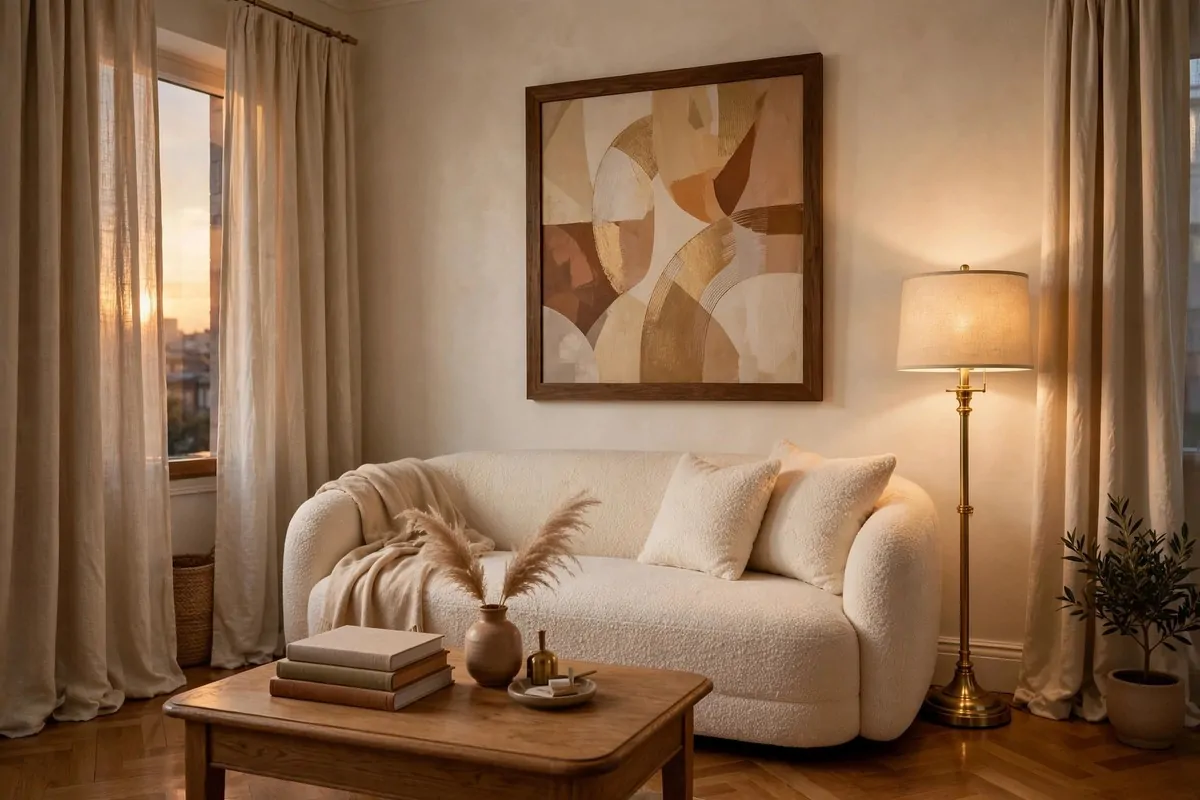
Step two is lamps. A small table lamp or two beats one big ceiling light. Pools of warm light feel calm.
Pendant lights over your meeting table look fantastic. Three small ones in a row. They make the table feel like the center of the world.
Keep the daylight too. Pull the blinds open wide during the day. Natural light makes small rooms feel bigger and kinder.
Dimmers are worth every penny. Turn the light down a little in the evening. The room turns soft.
Avoid bare bulbs pointing straight at chairs. They make people squint. Aim light at walls instead. It bounces and glows.
Here is the quick bulb guide I give every friend who asks.
| Spot | Bulb to Use | Why It Works |
|---|---|---|
| Meeting table | Warm white, 2700K | Faces look kind and relaxed |
| Waiting corner | Soft glow lamp | Feels like a living room, not an office |
| Work desk | Daylight, 4000K | Keeps you sharp while you work |
| Feature wall | Spotlight, warm | Makes your logo or art pop |
One warm lamp in the corner can change how a whole Small Business Studio feels. I keep mine on all day, every day.
Light is mood. And mood is what your client remembers when they walk out the door.
5. A Place to Sit That Is Not a Desk Chair
Nobody falls in love with a desk chair. It is for work. The chair where your client waits should feel like a hug.
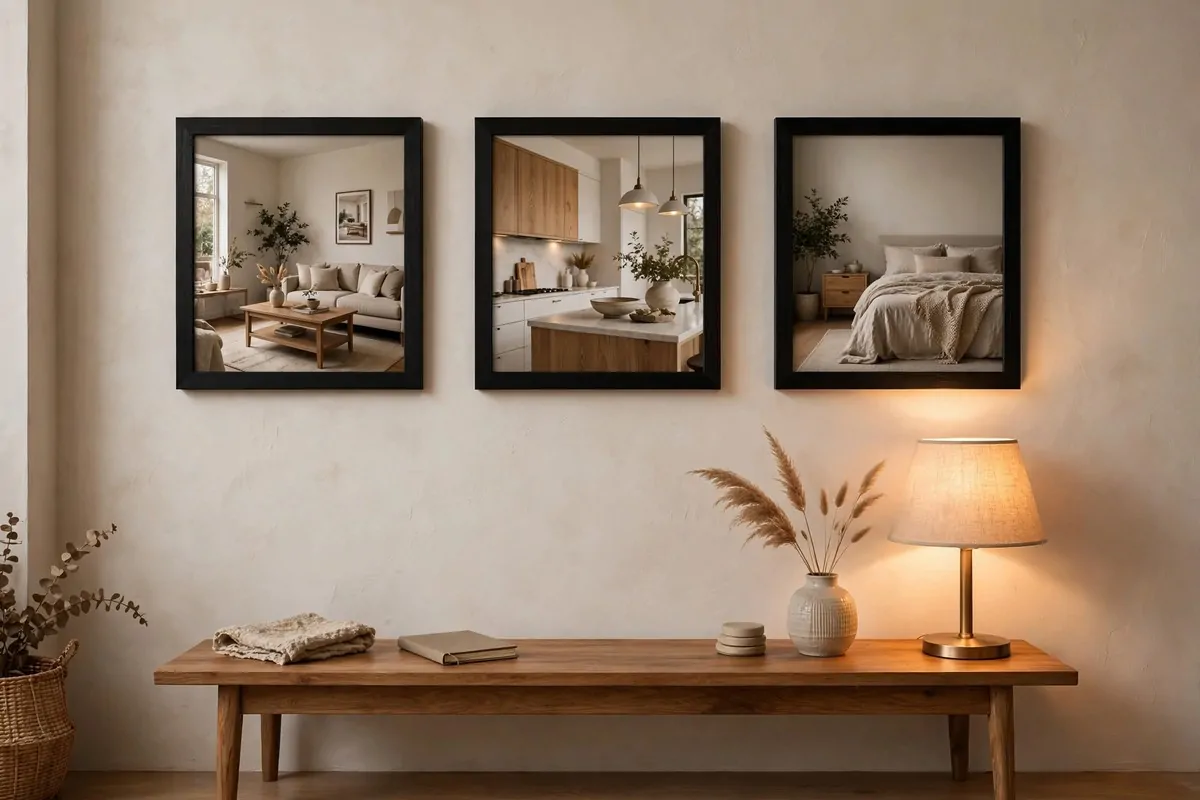
Two soft armchairs in a corner work magic. They do not need to match perfectly. Close enough is fine.
I found mine second hand. One is green, one is cream. People always ask where I got them. They look expensive. They were not.
Put a small table between the chairs. A little lamp on top. Suddenly you have a waiting corner that feels like a cafe.
A stack of real magazines on the table helps. Pick ones about your field. Clients flip through them. It starts conversations.
Add a soft throw over one armrest. It sounds silly. It works. People touch it and smile.
Keep this corner away from your work desk if you can. A few steps of distance feels private. Clients relax faster.
Even a tiny studio can fit this. My corner is only about six feet wide. It does the job every single day.
6. Your Best Work on the Walls
Clients believe what they see. So show them your best work the moment they walk in.
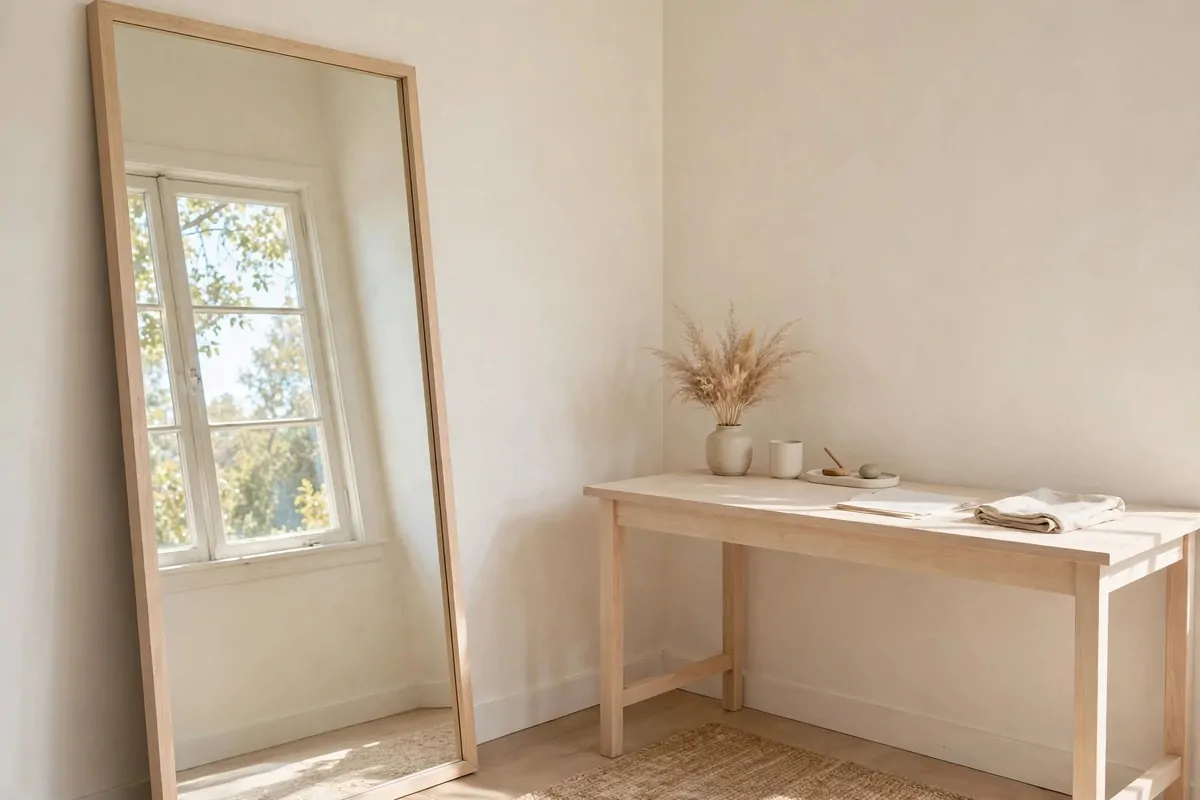
Pick three to five finished projects. Print them big. Frame them all the same way. Hang them in a neat row.
Same frames matter more than expensive frames. A row of matching black frames looks like a gallery. It makes the work look important.
I rotate mine every few months. Fresh work keeps the wall alive. Old work goes into a binder on the shelf.
Label each one with a tiny card. Just the project name. Nothing more. It feels like a museum.
Photos of real results beat promises. Your client thinks, she did that for them, she can do it for me.
If your work is not visual, frame happy client quotes. Big words. Clean cards. Same effect.
Hang them at eye level. Too high and people crane their necks. Too low and nobody looks.
This wall does your selling for you. While you pour the coffee, your work is already talking.
7. Light Walls and One Good Mirror
Small rooms feel small when the walls are dark. It is that simple.
Paint the walls a light warm color. Cream, soft white, pale gray. The room will feel twice as big overnight.
I painted my studio on a Saturday. It took four hours. By Sunday morning the room felt like a different place.
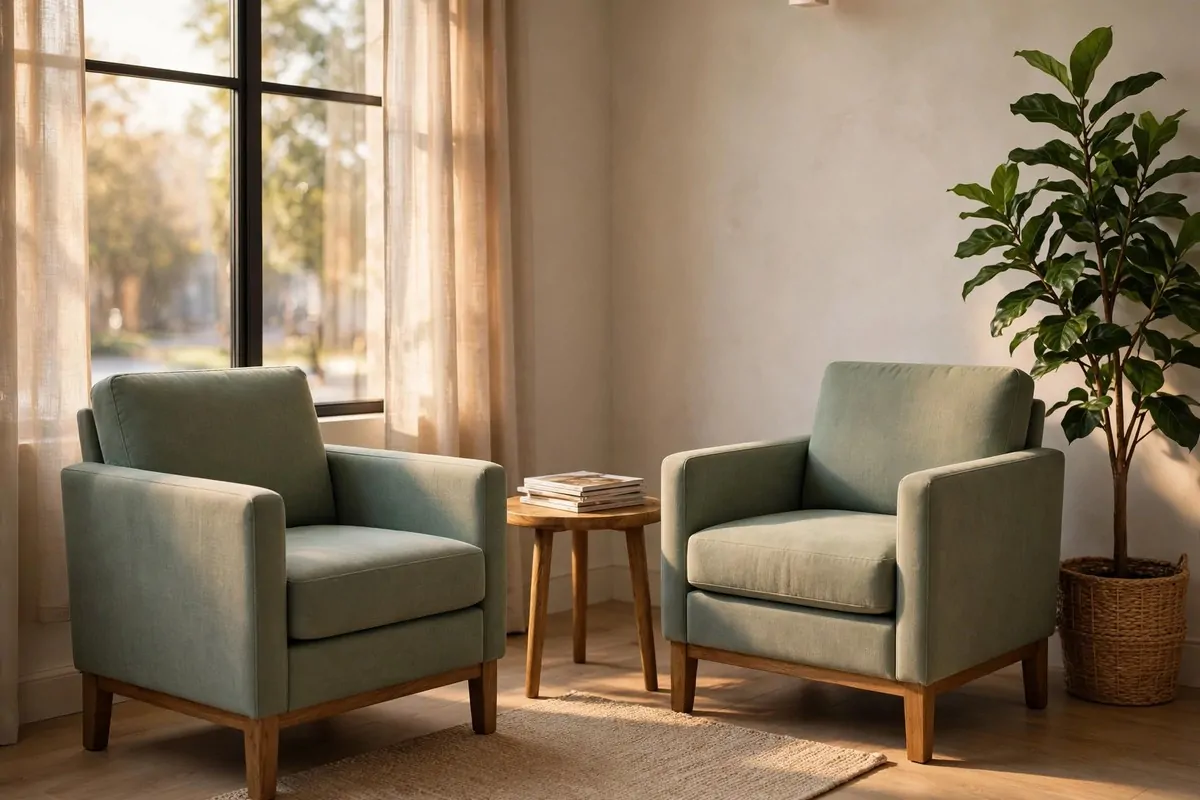
Then add a mirror. A tall one leaning against the wall. It bounces light around and doubles what your client sees.
Put the mirror where it catches the window. Not where it catches your clutter. This matters more than the mirror itself.
Mirrors also let clients check themselves before the meeting. They love that. Nobody wants to sit down with hair gone wild.
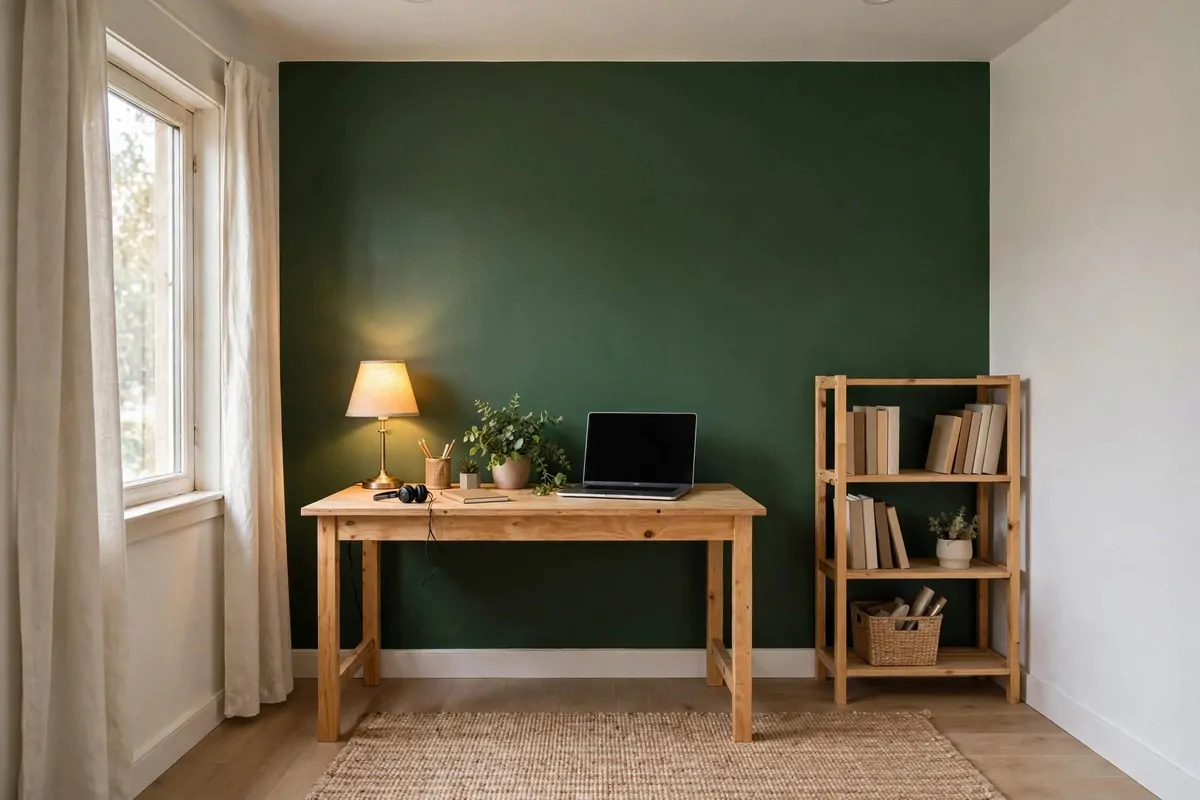
Keep one wall as a gentle accent. A soft sage or warm beige. Just one. The rest stays light and calm.
Small does not mean dark. Small can mean bright, open, and airy. The paint and the mirror do most of the work.
8. A Welcome Note With Their Name on It
This one takes two minutes. And it works every single time.
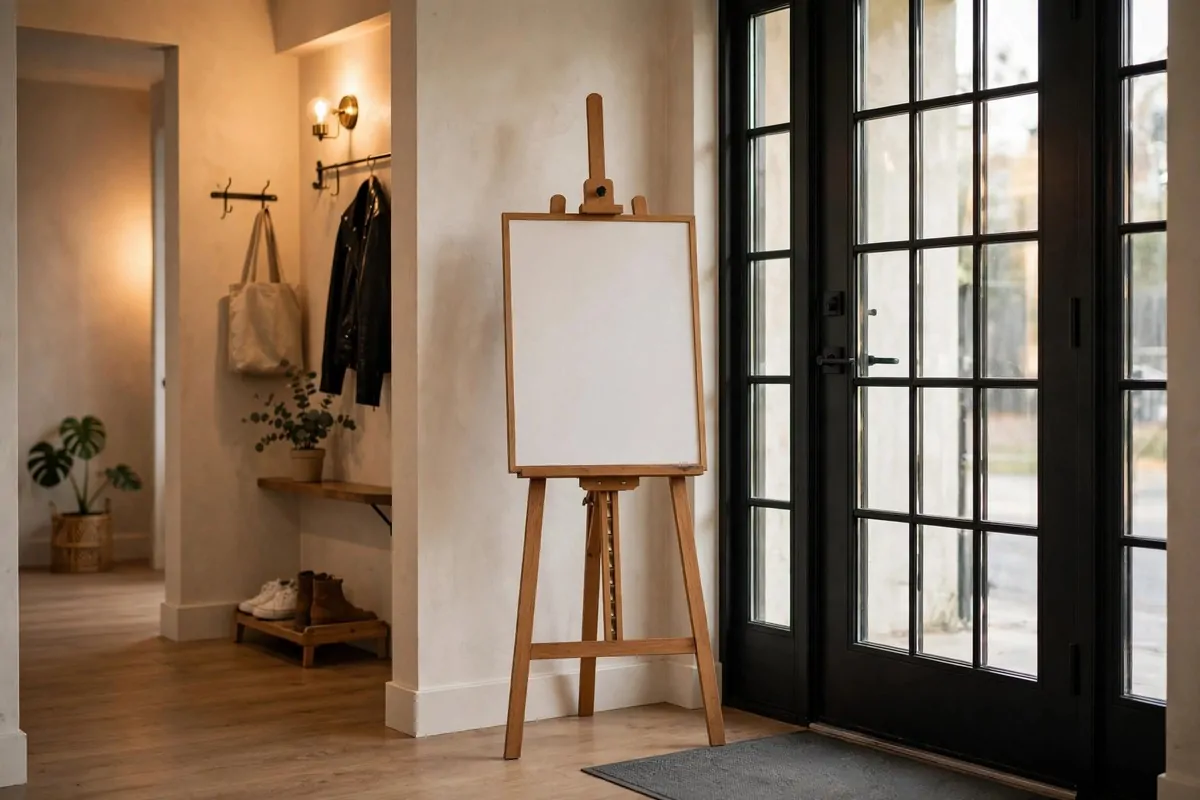
Write your client’s name on a small sign by the door. “Welcome, Anna.” That is it.
I use a little chalkboard on a wooden easel. I write the name fresh each morning. It takes less time than making coffee.
The first time I did this, my client laughed. A happy laugh. She took a photo of it.
People feel important when they see their name. It says I was expecting you. It says you are not just anyone.
You can use a printed card if you prefer. Slide it into a small frame. Same warm feeling.
Change it for every visit. Never leave an old name up. That would be worse than no sign at all.
This costs you nothing. But your client will remember it long after they forget the rest of the meeting.
A name on a sign turns a room into a welcome. Try it once. You will do it forever.
9. A Meeting Table People Actually Enjoy
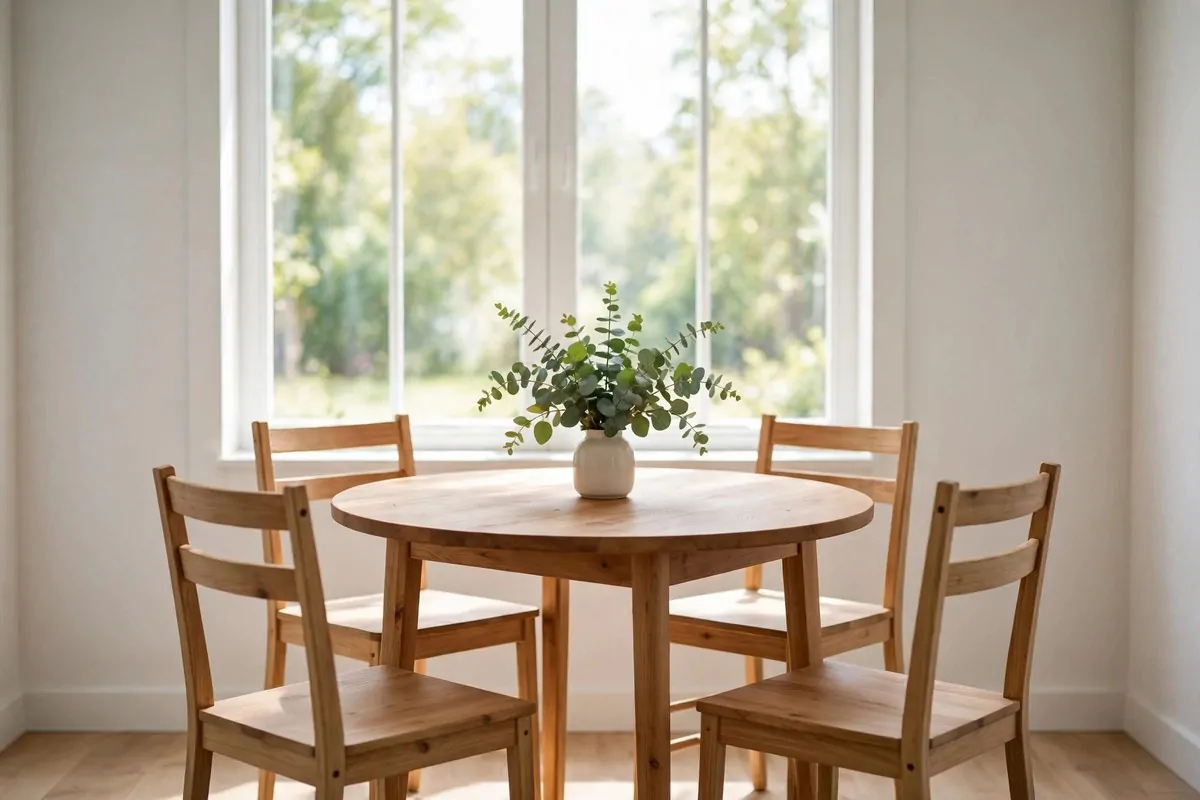
Rectangles have a head and a foot. That means someone sits in the wrong seat. Rounds do not.
A round table makes everyone feel equal. Nobody is the boss of the table. Conversations flow better.
You do not need a big one. A four person round table fits in most small studios. I measure mine and smile every time it works.
Wood feels warmer than glass. Glass shows every fingerprint. Wood hides life. It looks better after a year of use.
Put something green in the middle. A small vase. A little plant. Not tall. You need to see faces over it.
Keep paper and pens ready on the table. A clean notepad for each person. It feels prepared without feeling stiff.
Sit near the window if you can. Daylight on faces makes people look kinder. It makes the whole meeting feel easier.
Chairs matter too. Pick ones that do not squeak. I learned this the hard way. Squeaks make everyone nervous.
The table is where deals happen. Give it the best spot in the room. It earns its place.
10. A Shelf of Things They Can Touch
Clients love to touch things. Let them.
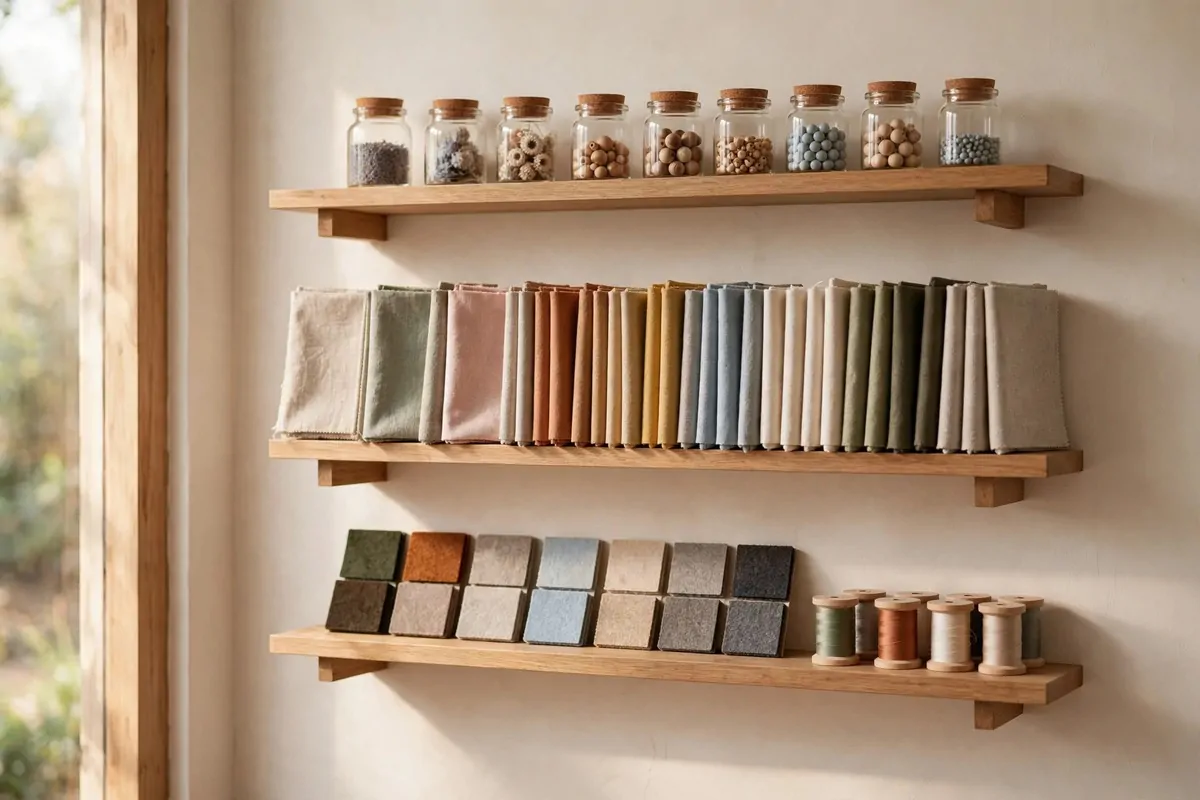
Set up a small shelf with samples of what you use. Fabric swatches. Color cards. Material pieces. Whatever your work involves.
Touching makes it real. A screen shows. A sample proves. Your client will hold a swatch and start dreaming.
Keep the shelf tidy. Line things up. Sort by color. A neat shelf looks smart. A messy one looks like a junk drawer.
I keep small trays for little pieces. Wood, paper, fabric. Clients pick them up one by one. It starts the best conversations.
Labels help. Small tags with simple words. “Linen.” “Oak.” “Cotton.” Nothing fancy.
Restock the shelf when samples run out. An empty tray tells a sad story. Full trays tell a busy, successful one.
If your work has no samples, use a binder of photos. Thick pages. Big images. Clients flip through them like a magazine.
This shelf is your silent assistant. It answers questions before your client even asks them.
11. Proof That People Trust You
New clients are nervous. They wonder if you are any good. Show them you are.
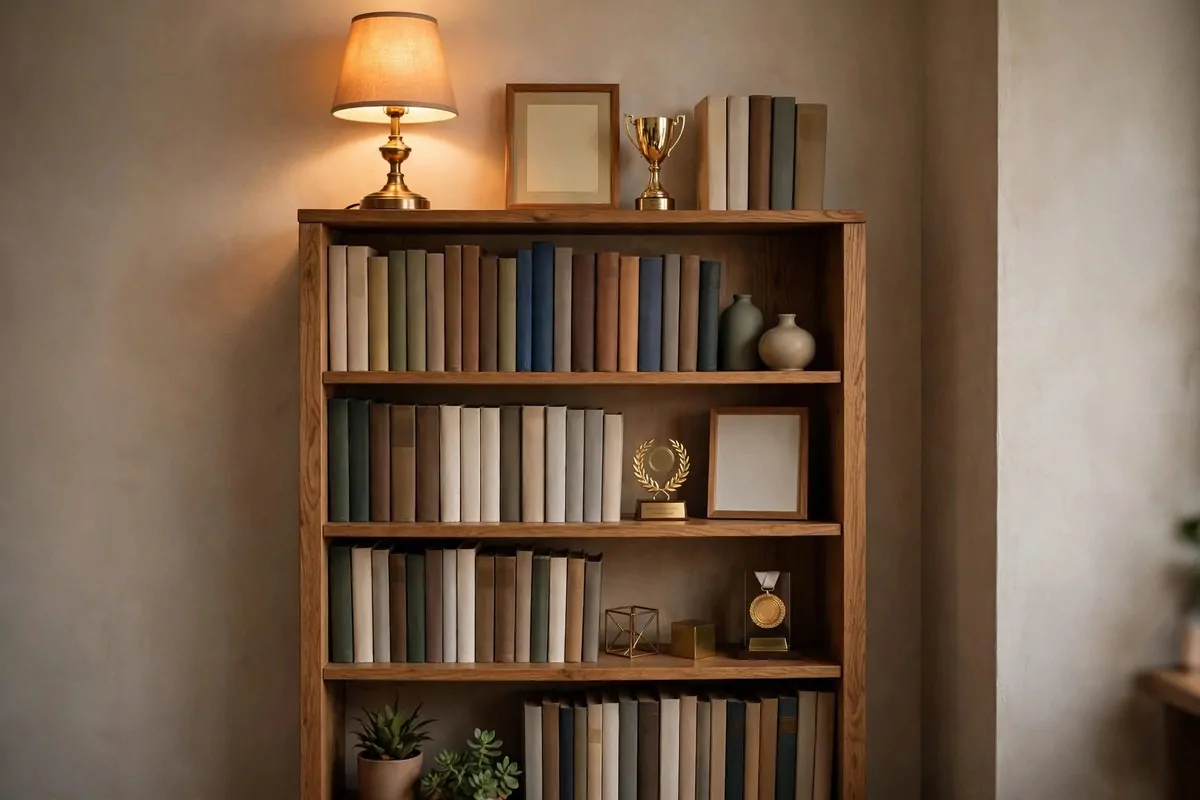
A small shelf of proof calms those nerves. Framed certificates. A small award. A photo with a happy client.
Do not overdo it. Three or four pieces beat thirty. Too many and it looks like bragging.
Books about your craft help too. A row of well worn books says you take your work seriously.
I keep a little guest book on mine. Clients write one line after a good meeting. New visitors read it and smile.
Testimonials printed on thick cards work well. Big letters. Short words. One quote per card.
Keep this shelf near where clients sit. Let them browse while they wait. Waiting time becomes trust building time.
Dust it weekly. Dusty proof tells the opposite story. Clean proof shines.
Trust is hard to build and easy to show. This shelf shows it quietly, without you saying a word.
12. Soft Sounds and Soft Floors
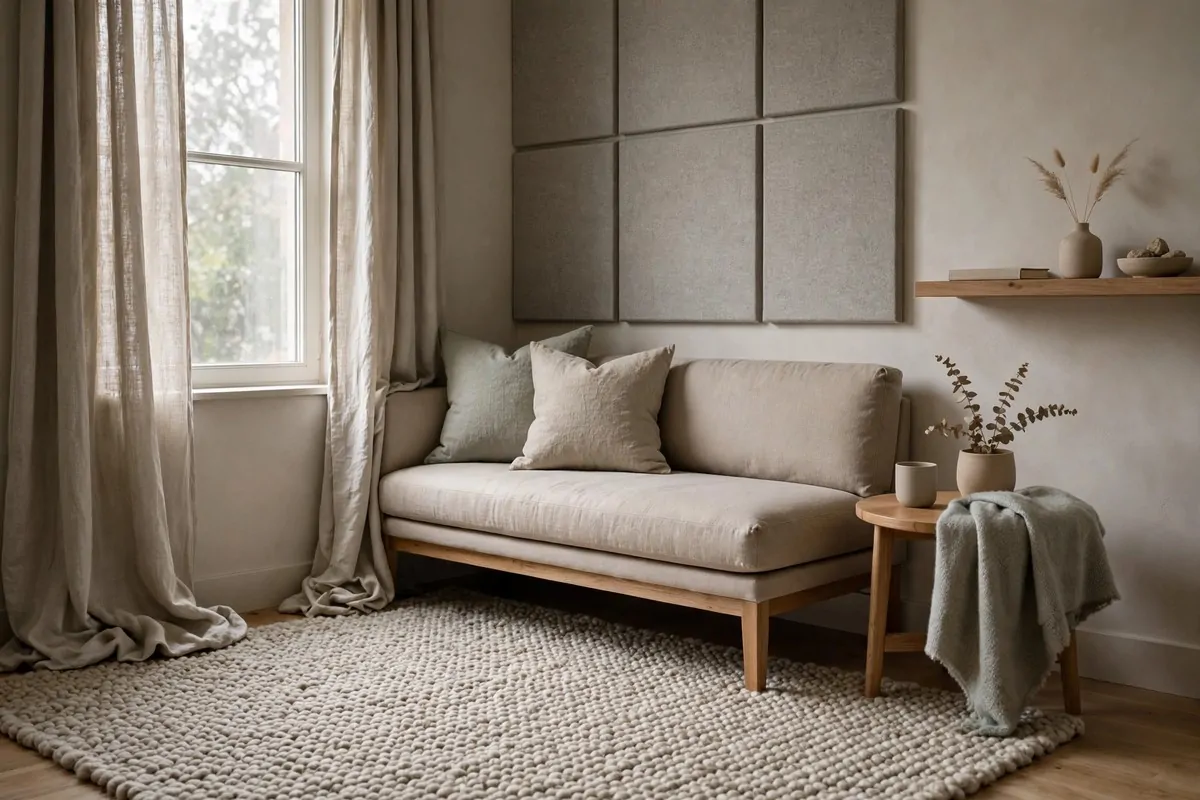
Loud rooms make people tense. They just do. A room that echoes feels cold, even when it is warm.
A thick rug changes the sound at once. Footsteps get soft. Voices stop bouncing. The room feels gentle.
I added a rug under my meeting table and the whole studio calmed down. My client even said so. “It is so quiet in here.”
Curtains help too. Heavy fabric on the windows eats the street noise. Light colors keep the room bright.
If the walls are bare, hang one soft textile. A woven piece. A simple tapestry with no words. It drinks up sound.
Carpet tiles work in rentals. You can lift them when you leave. No damage. No lost deposit.
Play soft music low in the background. Very low. Barely there. It fills the silence so the silence does not feel awkward.
A calm room makes calm deals. People say yes more easily when they feel at ease. Sound is half of ease.
13. No Cables Anywhere in Sight
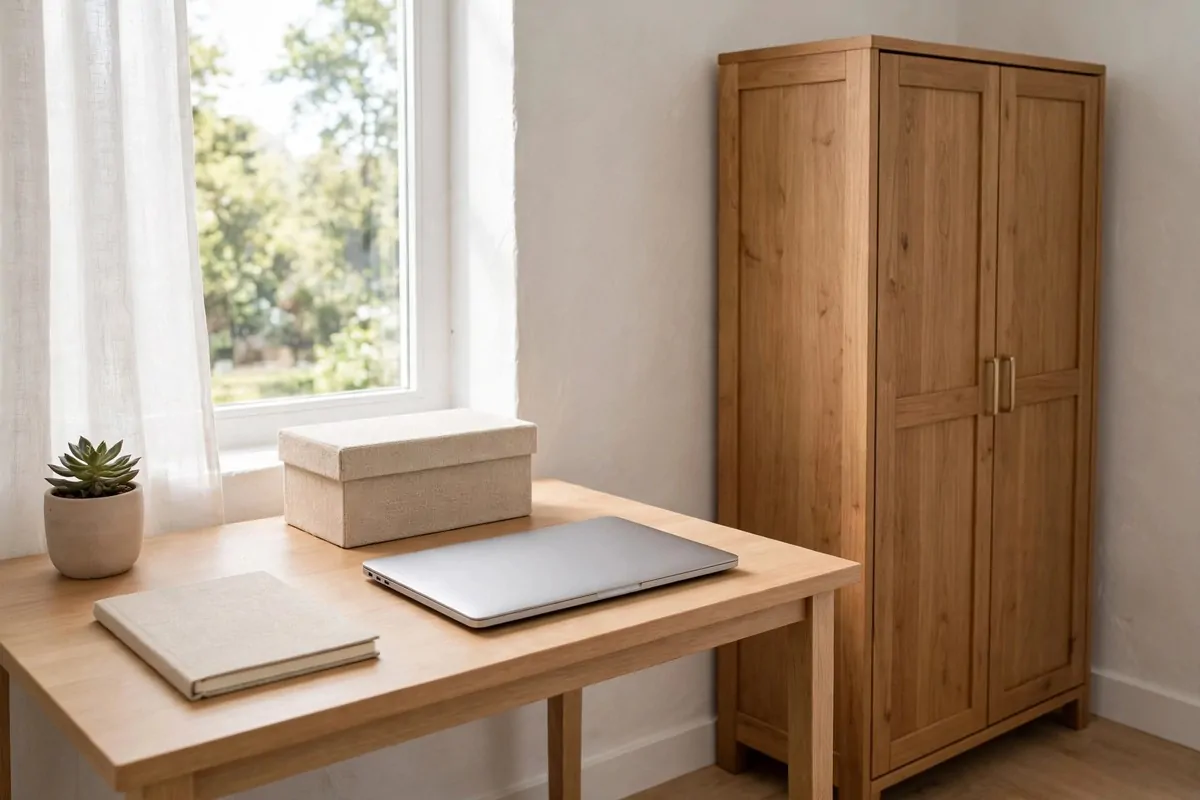
Cables are the fastest way to make a smart studio look messy. One tangled nest and your client thinks you are chaotic.
Hide every cable you can. A small box with a lid hides the power strip. They cost very little.
Cable clips stick under the desk. They hold the wires along the wood. Invisible from the front.
I did this on a Sunday afternoon. It took one hour. The desk looked twice as professional after.
Chargers go in a drawer. Not on the desk. Pull them out when needed. Put them back after.
The printer sits in a closed cabinet. Printers are ugly. We all know it. Hide yours.
My Sunday cable hide list looked like this, and it still works for me.
- One lidded box for the power strip
- Cable clips under the desk edge
- Chargers in the top drawer
- Printer inside a closed cabinet
- No cables crossing the floor, ever
Keep the floor cable free too. Your client will walk around. A cable on the floor is a trip and an eyesore.
Clean surfaces say clean work. It is a small detail. But small details are what clients remember.
14. Your Colors in Small Doses
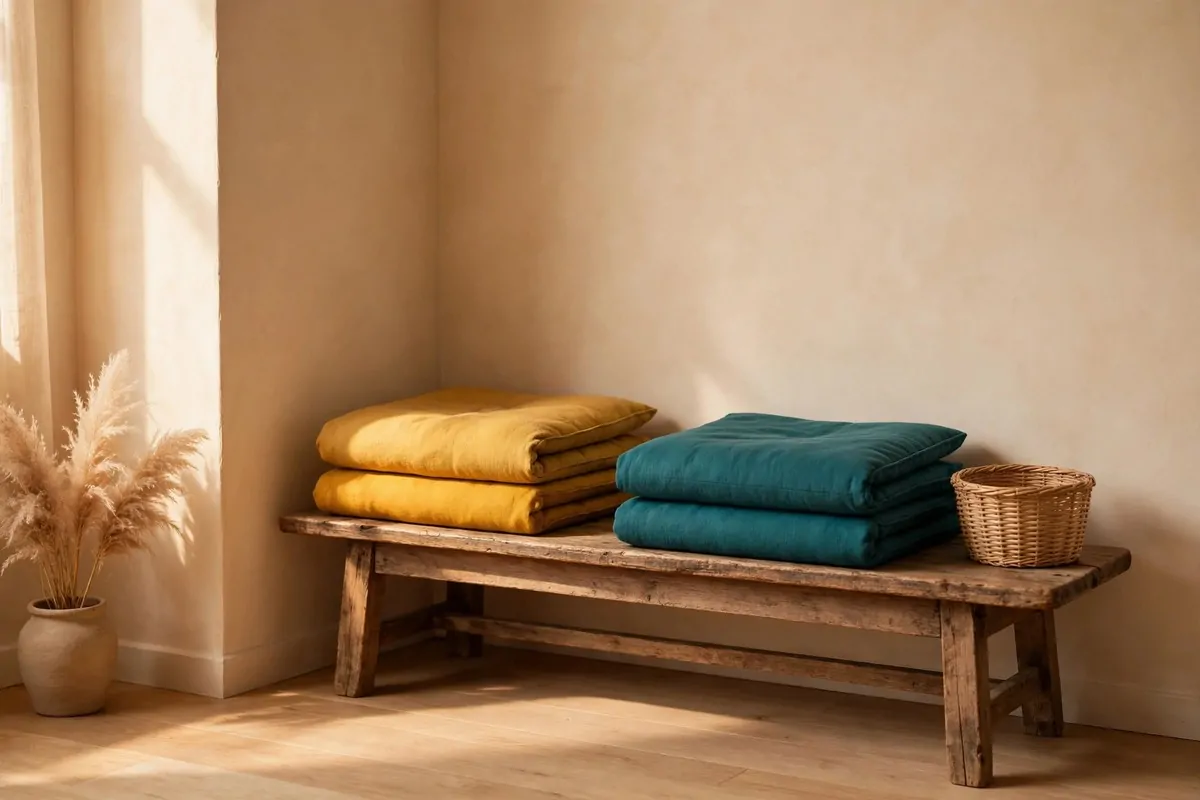
Your brand has colors. Put them in the room. But gently.
One mustard cushion. One teal throw. A small vase in your shade of green. Small doses. Big effect.
Too much brand color feels like a costume. A little feels like a signature. You want signature.
I picked my colors from my logo. Two shades. They show up in the cushions, the plant pots, and the notebook I hand out.
Repeat each color twice in the room. Twice is enough. Your eye connects the dots without thinking.
A rug with a hint of your color ties the whole room together. It does not need to be loud. A border is enough.
Change the flowers to match sometimes. A small bunch in your brand shade on the desk. Clients notice. They always notice.
Color makes your studio feel designed on purpose. Not random. Not accidental. Thought through.
15. A Modern Check-In Touch
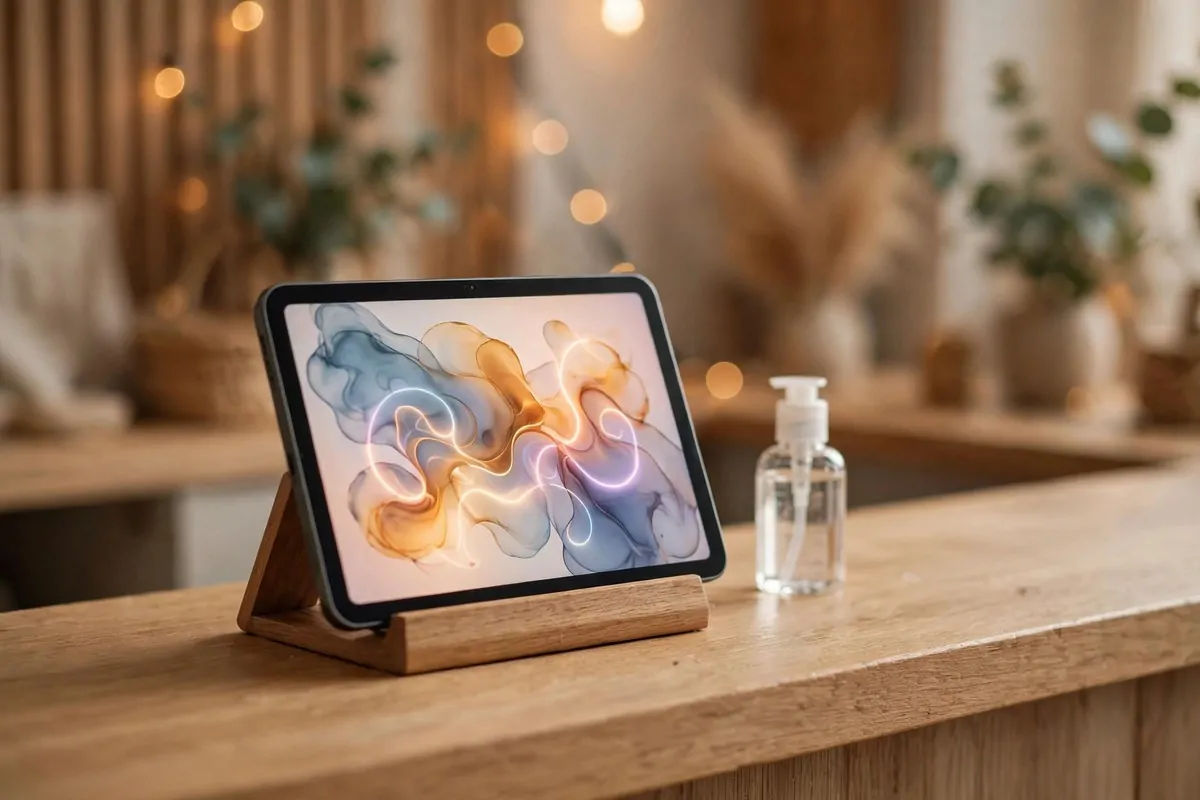
A little tech in the right place says you are current. It does not need to be big.
A small tablet on the counter works as a welcome screen. It can show your name, your logo, the time of their visit.
I use mine to show a rotating set of my best photos. Clients glance at it while they wait. It is a silent portfolio.
Keep the screen clean. A fingerprinty screen looks worse than no screen at all. Wipe it each morning.
A charging spot for their phone is a sweet touch. One cable. One little sign. “Help yourself.”
Guest wifi on a small printed card. Clean card. Thick paper. Your client will be grateful.
Do not fill the room with screens. One is plenty. Two is the limit. More feels like a shop, not a studio.
Modern touches tell your client you keep up. And keeping up matters when someone trusts you with their money.
16. A Smell That Says Calm
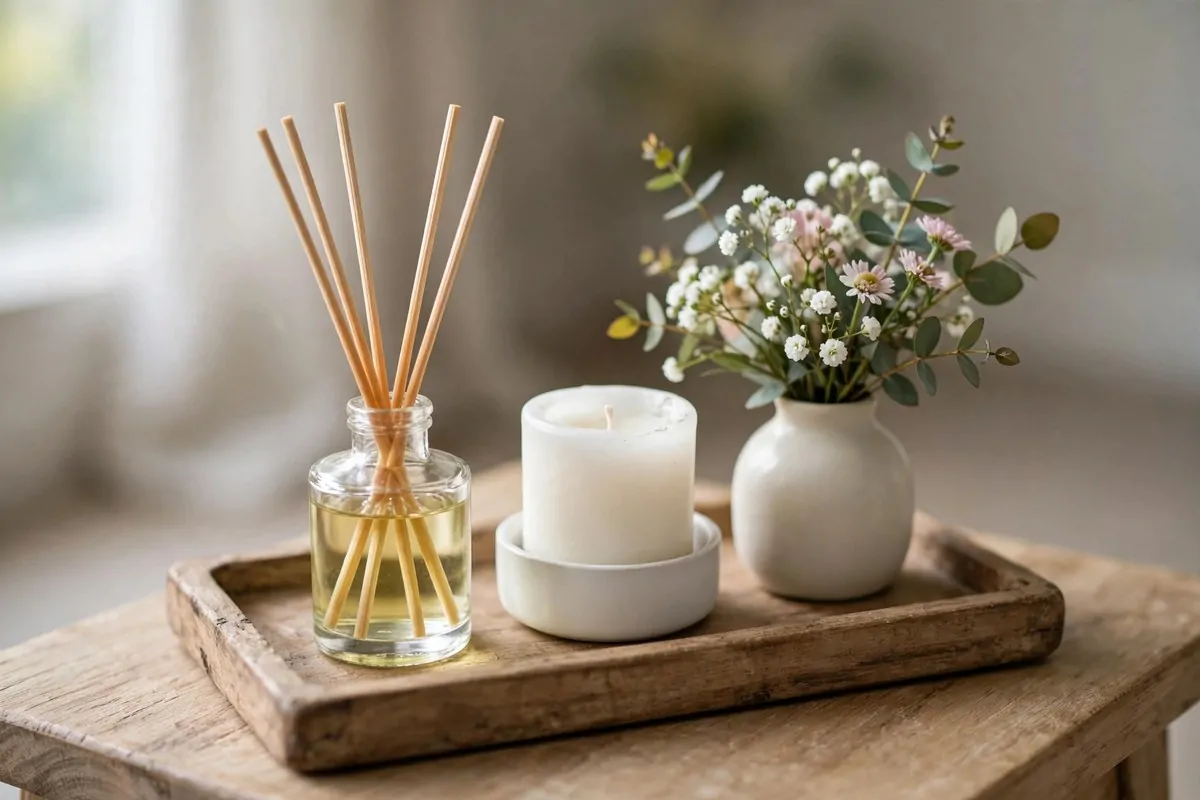
People remember how a place smells. They really do. Long after they forget your words.
Open the windows before a client comes. Ten minutes of fresh air clears the whole room.
A reed diffuser on the side table works quietly all day. Pick something soft. Light linen. Gentle citrus. Nothing heavy.
Candles look lovely but check your building rules first. Some places say no open flames. A diffuser is safer.
I once baked bread before a morning meeting. Over the top? Maybe. But that client signed the same day.
Avoid strong sprays. They smell like you are hiding something. Soft and natural wins.
A small vase of fresh flowers adds a real, living smell. Eucalyptus is my favorite. It lasts for weeks.
Keep the kitchen smells out. If you cook lunch in the studio, air the room after. Onion is not a brand scent.
Smell is invisible branding. Get it right and your client feels at home before they even sit down.
17. Little Comforts for the Wait
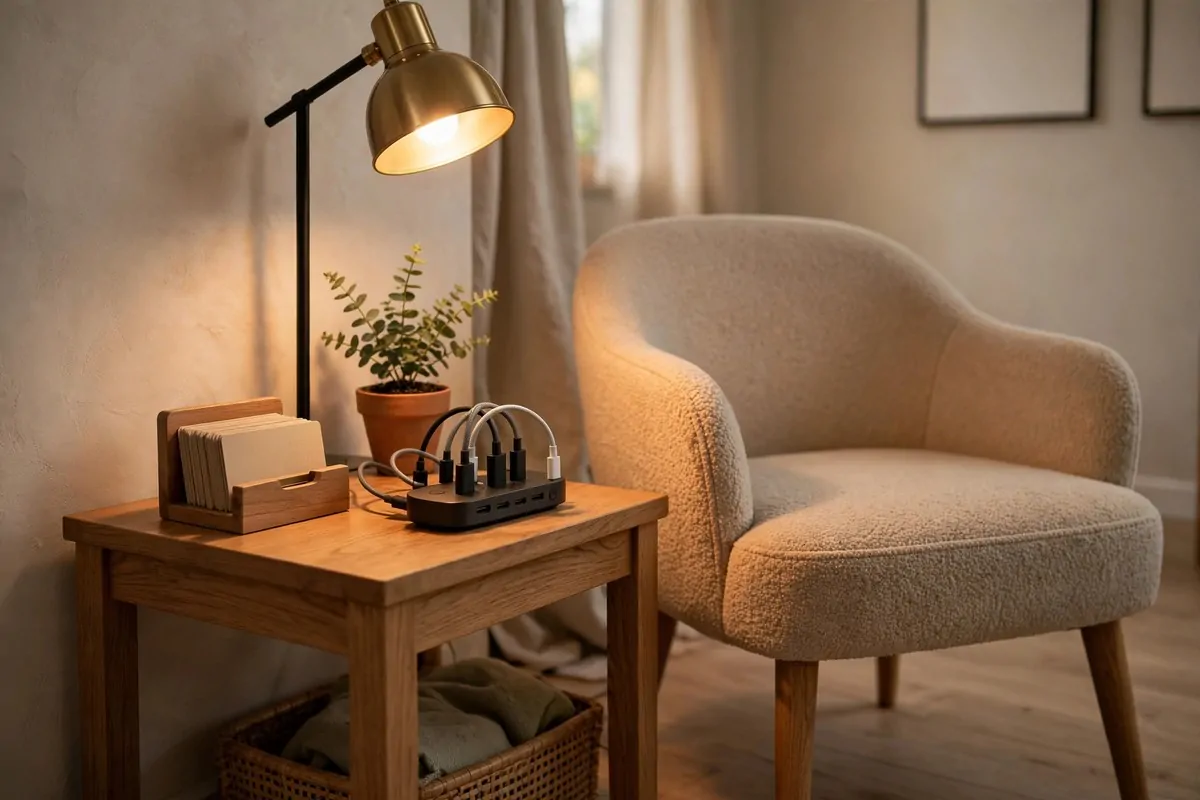
Sometimes you run five minutes late. It happens. The wait should still feel good.
A small sign with the guest wifi password saves the day. Clients hate asking for it twice.
A charging spot by the chair is pure gold. One fast charger. Short cable. Done.
Keep a little basket with a few snacks. Nothing messy. Wrapped mints. Small biscuits. Dry things only.
A coat hook by the door matters more than you think. Nobody wants to drape their jacket on their lap.
Tissues on the side table. Clean ones. In a plain box. Hay fever is real and clients get embarrassed.
A wall clock they can see. Waiting feels shorter when you can see time moving. A pretty clock helps.
These little comforts say you thought about them. Not just the meeting. Them.
The wait is part of the visit. Make it the best part.