22 Autumn Kitchen Ideas With Warm Colors and Cosy Touches

The first cool evening I made soup on the stove, my kitchen still felt like plain old summer. The walls looked pale and the counters looked bare. I knew the room needed a warm touch before the cold days set in.
Autumn in the kitchen is not about big work or big money. It is about warm colours, soft light, and small touches that make the room feel calm. A rust runner here and a warm light there can change the whole mood.
You do not need to redo your kitchen to make it feel like autumn. Most of the ideas in this post use things you may already own, or things that cost very little. A bowl of fruit, a warm throw, or a few jars can do the job.
Warm colours do most of the work for you. Amber, rust, deep gold, and soft brown make a plain kitchen feel snug in minutes. These shades sit well next to wood, white walls, and plain counters.
Cosy touches matter just as much as colour. A soft cushion on a chair, a warm tray for morning tea, or a knit throw over a seat makes the room feel lived in. These are the bits you notice when you sit down with a hot drink.
Start small and pick one idea for this weekend. Try the runner, or the bowl of apples, or the warm lights above the island. Once you see how good one change looks, the next one feels easy.
All 22 ideas are in this one post for you, with no part two and nothing held back.
1. Warm Amber Pendant Lights Above the Island
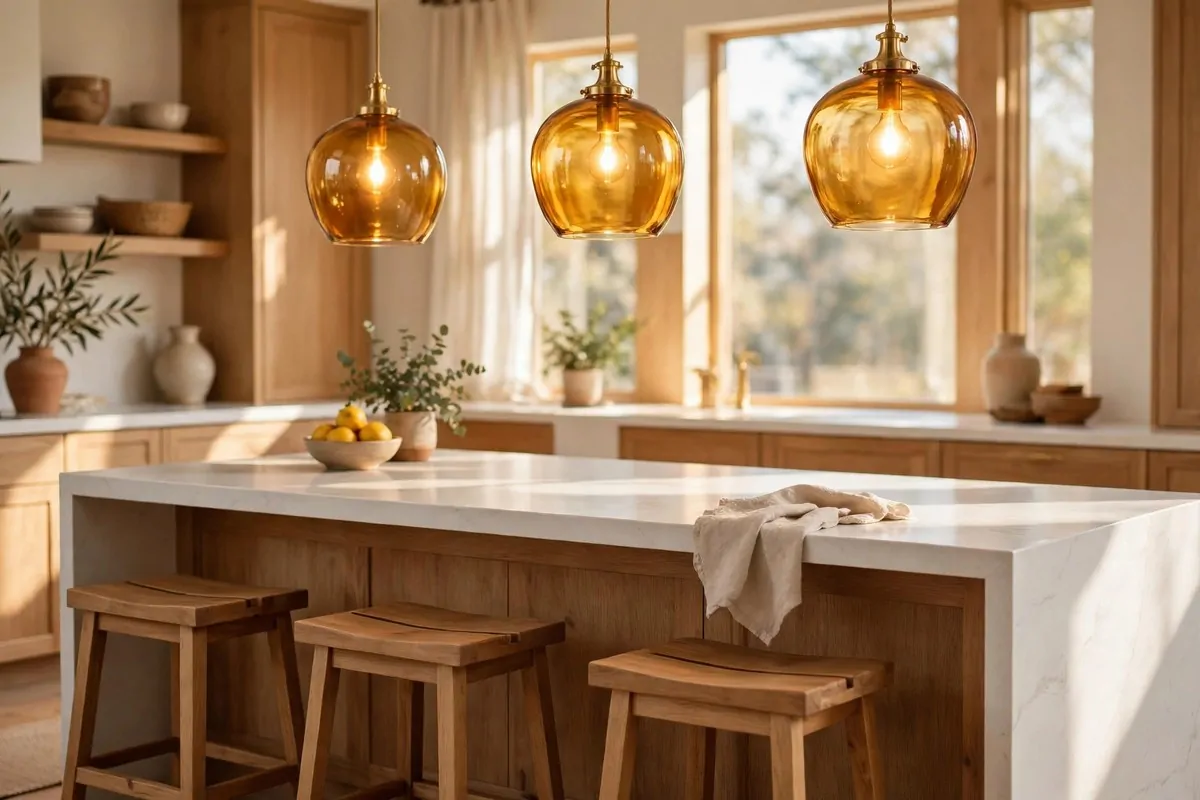
My island used to sit under a cold white light that made everything look flat. The room felt more like a work bench than a place to sit and eat. A warm amber glow fixed that in one evening.
Amber glass softens the light and spreads it in a gentle pool over the counter. It makes bread, fruit, and cheese look rich and fresh. Even a plain bowl of pasta looks good under it.
A warm amber pendant light runs $30 to $70. You can hang one over a small island or two over a long one. The price stays low when you pick a plain shade and a warm bulb.
Hang the lights low enough to light the counter but high enough that you can see across the room. About an arm’s length above the worktop is a good place to start. Step back and check the glow before you fix them in place.
Pick a warm bulb, not a bright white one. The bulb does half the work here, and a cool bulb will wash out the amber glass. A soft warm glow makes evening meals feel slow and calm.
These lights change how the whole kitchen feels at night. The corners go soft, the wood looks deeper, and the room feels like a place to linger. I leave mine on low while I wash up after dinner.
If your island is small, one pendant is plenty. A single shade over the middle of the counter gives you light where you chop and stir. Two shades suit a long island where two people cook side by side.
Keep the cord or chain plain and short. A long dangling cord can get in the way when you reach for a pan. A neat short drop looks tidy and keeps the light where you need it.
Wipe the glass now and then so the amber stays clear. Dust dulls the glow faster than you would think. A quick wipe with a dry cloth once a week keeps the light warm and bright.
2. A Rust-Orange Runner on the Kitchen Table
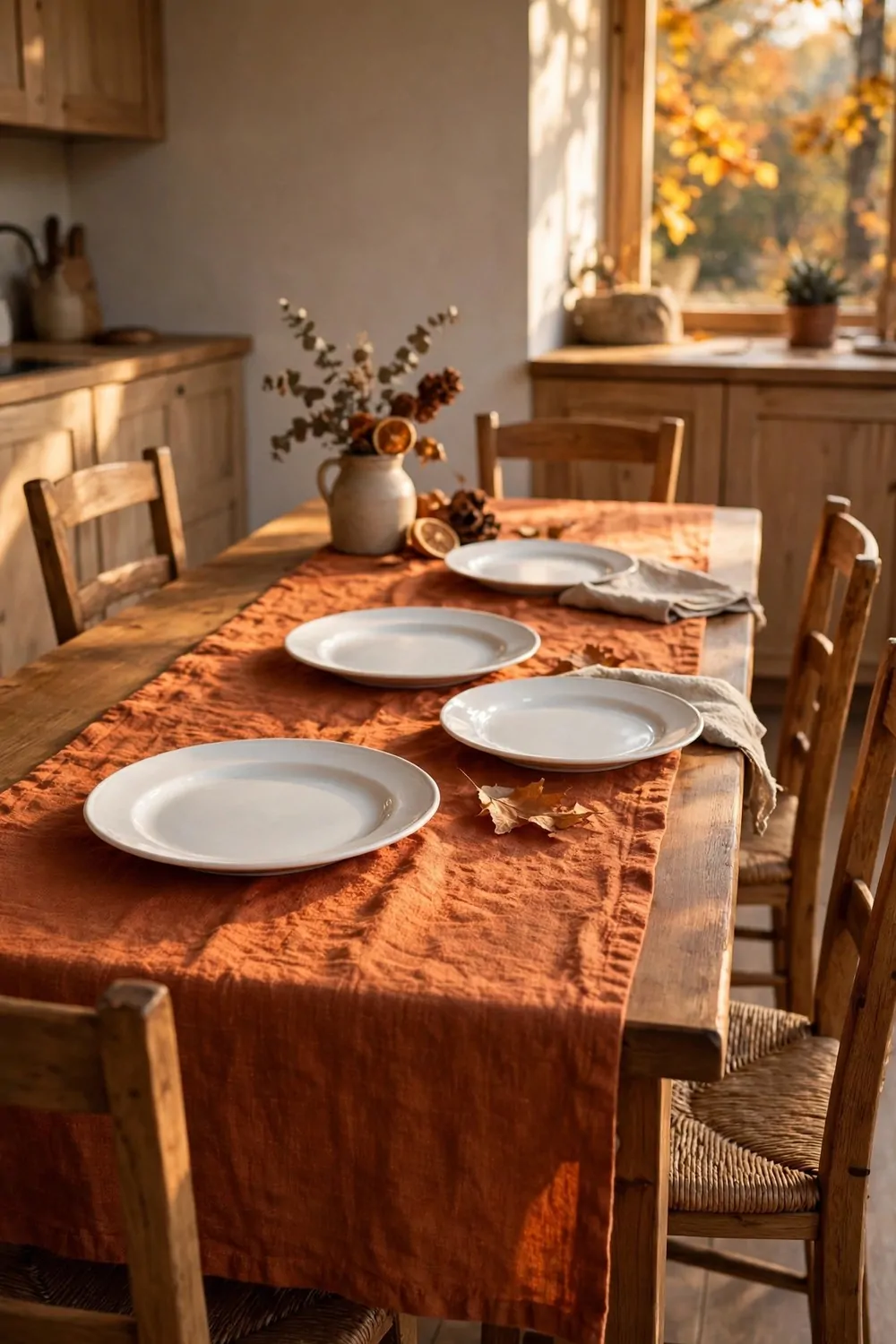
My kitchen table looked bare for most of the year, just wood and a few marks from daily use. A rust-orange runner changed it in a minute. The table suddenly looked dressed for the season.
Rust orange sits well next to wood, white plates, and plain mugs. It warms up the whole table without shouting for attention. It also hides small marks and rings between washes.
A rust-orange table runner runs $12 to $28. Look for cotton or linen in a plain weave. A simple runner costs little and lasts through many autumns if you wash it with care.
Lay it down the middle of the table with a little hanging over each end. The overhang should look even on both sides. A crooked runner draws the eye for the wrong reason.
Set a small bowl or a plain vase in the middle of the runner. The runner frames it and stops the table from looking empty. Keep the centrepiece low so you can talk across the table.
This is one of the fastest swaps in the whole post. You can put the runner on before breakfast and take it off for a big messy cooking day. It takes less than a minute either way.
Pair it with plain napkins in cream or soft brown. The mix feels calm and warm without looking fussy. Bright patterns fight with the rust colour, so keep the rest of the table plain.
When the runner gets a splash of sauce or jam, wash it soon. A quick rinse stops the mark from setting in. Let it dry flat so the edges stay straight.
Fold it away at the end of the season and it will be ready next year. A clean dry fold in a drawer keeps it fresh. I pull mine out again the first week the evenings turn cool.
3. Copper Pots on a Rail by the Stove
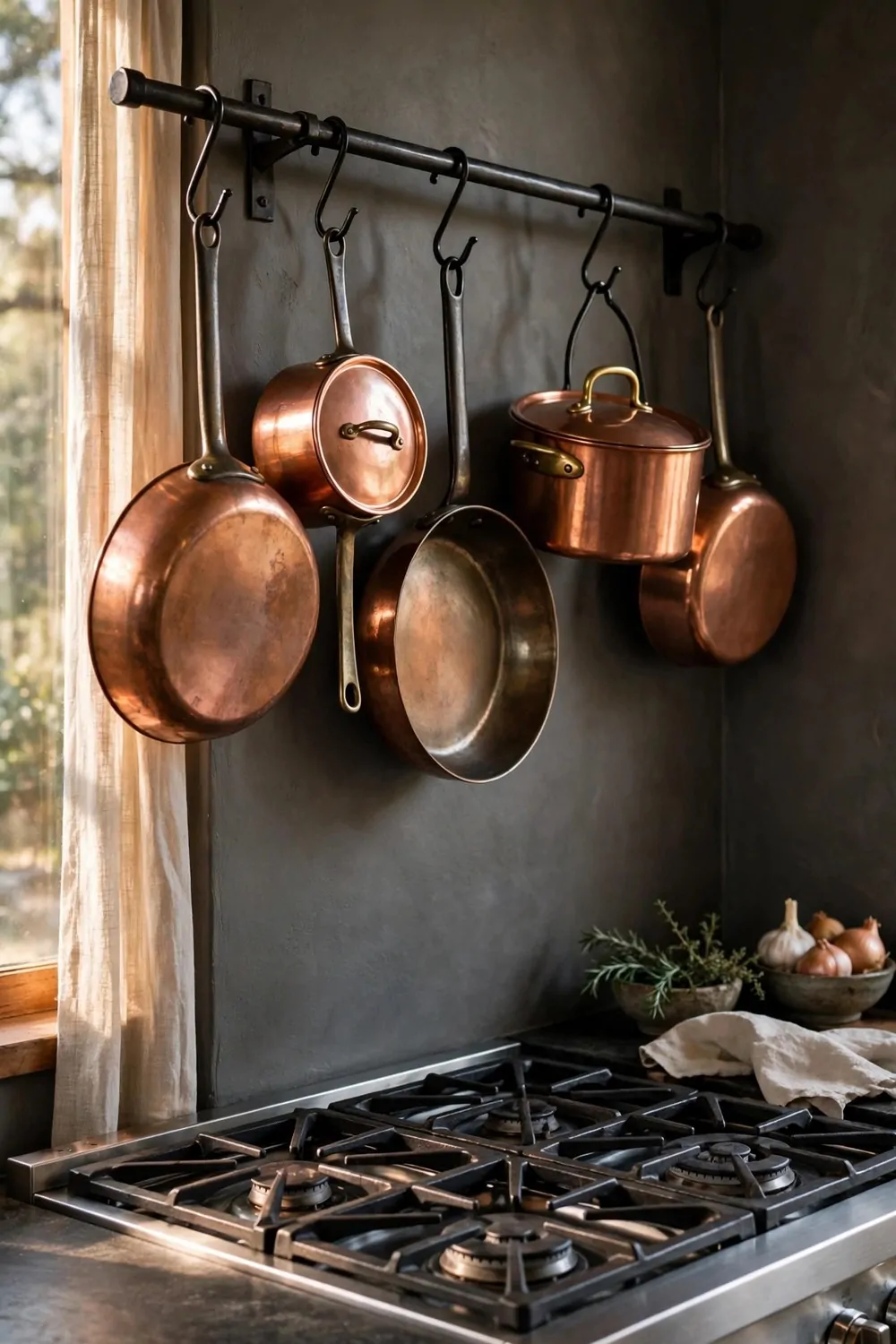
My copper pots used to live in a dark cupboard where I forgot about them. I hung them on a rail by the stove instead. Now they glow in the light and I reach for them every day.
Copper brings a warm shine that plain steel never gives. The soft orange glow suits autumn and makes the cooking corner feel rich. Even two or three pots make a real difference.
A copper pot rail runs $40 to $90. The rail itself is a plain bar with hooks, and you add the pots you already own. Buy the rail first and hang what you have before you buy more.
Fix the rail where you can reach it without stretching. Just above the counter and to one side of the stove works well. Keep the pots clear of the flames so the handles stay cool.
Hang the pots you use most often at the front. A small pan for eggs, a pot for soup, and a pan for vegetables cover most meals. The rest can stay in the cupboard.
Polish the copper now and then with a soft cloth. A little shine goes a long way, and dull copper looks tired. You do not need a perfect mirror finish, just a warm glow.
Leave a little space between each pot so they do not clank together. Hooks that hold one pot each keep things tidy. I slide mine along the rail until the spacing feels right.
This rail frees up cupboard space too. The pots that used to pile up in a stack now hang in plain sight. The cupboard below holds lids, boards, and the bits I use less often.
Stand back after you hang the last pot and look at the wall. The row of warm copper turns a plain patch of wall into a feature. It is the kind of change guests notice straight away.
4. A Bowl of Apples and Small Pumpkins on the Table
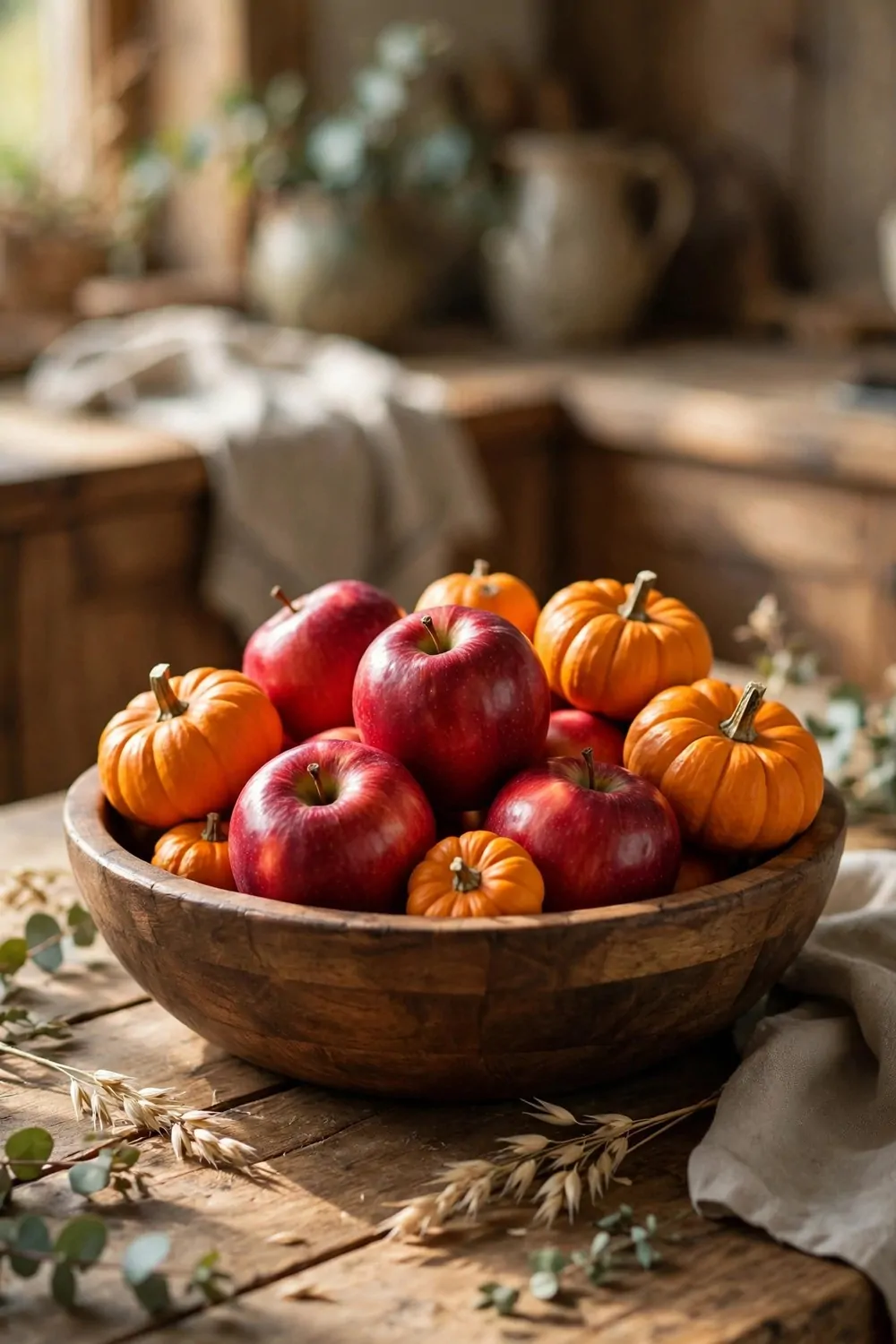
Some autumn ideas need no tools and no fuss at all. A bowl of apples and small pumpkins is one of them. I set mine on the table and the room felt like autumn at once.
Red apples and small orange pumpkins make a lovely mix. The colours sit well together and the shapes feel natural. Nothing in the bowl needs to match perfectly.
A bowl of apples and small pumpkins runs $8 to $18. Use a bowl you already own and buy just the fruit and the small pumpkins. The market stall is often the cheapest place to find them.
Pick a bowl that is wide and low so the fruit sits in one layer. A deep bowl hides the good colours at the bottom. A wide bowl lets everyone see the apples and reach them easily.
Put the biggest pumpkin in the middle and tuck the apples around it. The pumpkins hold their shape for weeks, so they make a steady base. Swap out any apple that softens before the rest.
Keep the bowl where people pass by, not tucked in a corner. The middle of the table or the end of the counter works best. A bowl you can see is a bowl you will use.
This centrepiece doubles as a snack bowl. The family grabs an apple on the way past, and the bowl slowly empties through the week. Top it up at the market and it stays fresh.
Wash the apples before you put them in the bowl. A quick rinse and a dry with a cloth makes them shine. Leave the pumpkins as they are, since their skin looks best dry.
When the season ends, eat the apples and compost the pumpkins. Nothing goes to waste and the bowl is free for the next idea. I like that this one costs almost nothing and still changes the room.
5. Warm Wooden Boards Leaning on the Backsplash
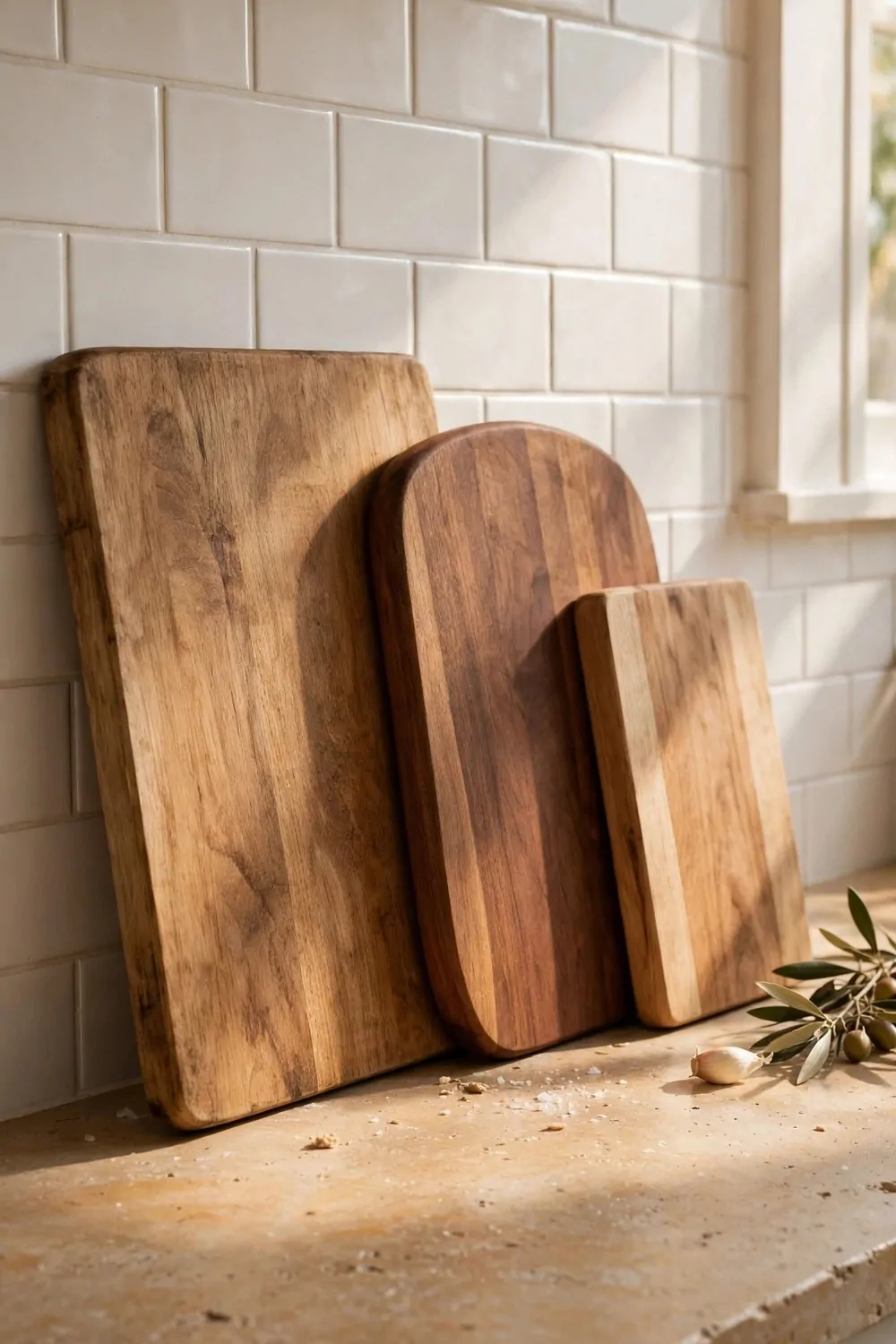
My backsplash looked plain and cold, a flat stretch of tile with nothing on it. I leaned three warm wooden boards against it. The wall suddenly had depth and the counter felt less bare.
Wood brings a soft brown tone that tile never gives on its own. The grain shows through and the boards glow softly in the light. They make the cooking area feel warm and calm.
A warm wooden board runs $15 to $35. Pick boards in different sizes so they look natural together. A tall board at the back and a shorter one in front is a good mix.
Lean them at a slight angle so they rest firm against the wall. The bottom edge should sit flat on the counter. Give each board a small nudge to check it will not slip.
Use the boards for serving as well as for show. A board holds bread, cheese, and fruit nicely at meal times. Bring it to the table, then lean it back when you are done.
Keep the boards away from the wettest part of the sink. Water marks wood faster than you would think. A dry spot near the stove or the corner of the counter suits them best.
Rub a little plain oil into the wood once a month to keep it looking rich. The oil feeds the grain and brings out the warm colour. Wipe off any extra so the board does not feel greasy.
Mix round and square boards if you like the look. A round board in front of a tall square one gives the wall a soft shape. The mix looks collected, not bought in one go.
These boards are easy to move when you need the counter space. Lift them aside for a big cooking day and lean them back after. That easy move is why I reach for them year after year.
6. A Cosy Breakfast Nook with Plaid Cushions
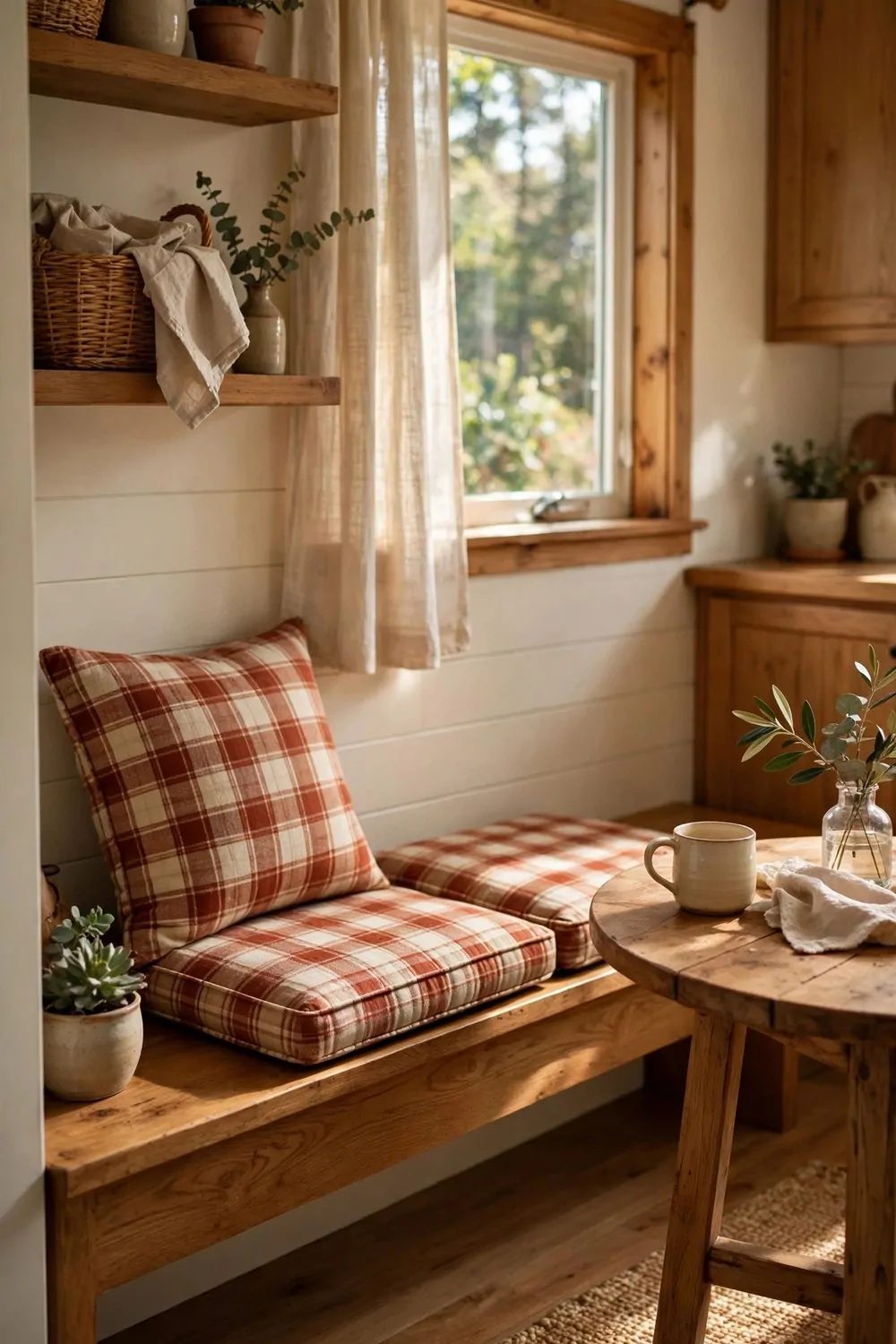
My breakfast nook was just a hard bench and a cold wall, not a place anyone wanted to sit. Plaid cushions changed that. Now the family lingers over toast and tea instead of rushing off.
Plaid in warm red and cream feels like autumn without trying too hard. The pattern adds a bit of charm and the colours tie in with the rest of the kitchen. It suits wood benches best of all.
A plaid cushion set runs $18 to $40. Two or three cushions are enough for a small nook. Pick covers you can wash, since breakfast crumbs find their way everywhere.
Put a firm cushion on the seat first, then softer ones against the wall. The seat cushion takes the weight, so it needs to be thick. The back cushions just need to feel soft when you lean back.
Add a small cushion in a plain colour to break up the pattern. A cream or soft brown cushion stops the plaid from looking too busy. The mix feels calm and settled.
Keep the nook clear of clutter so it stays inviting. A clear table and a free bench make people sit down. I clear the school books and the post off the bench each night.
Morning light suits this corner best of all. If your nook sits by a window, let the light fall on the plaid in the morning. The colours look their warmest in soft daylight.
Fluff the cushions each morning so they hold their shape. A quick shake brings them back after a night of sitting. Flat cushions make the nook look tired, even when it is clean.
This nook has become the best seat in the house on cold mornings. A warm drink, a plaid cushion, and a quiet few minutes before the day starts. That small comfort is worth every penny.
7. Amber Glass Jars for Pasta and Grains
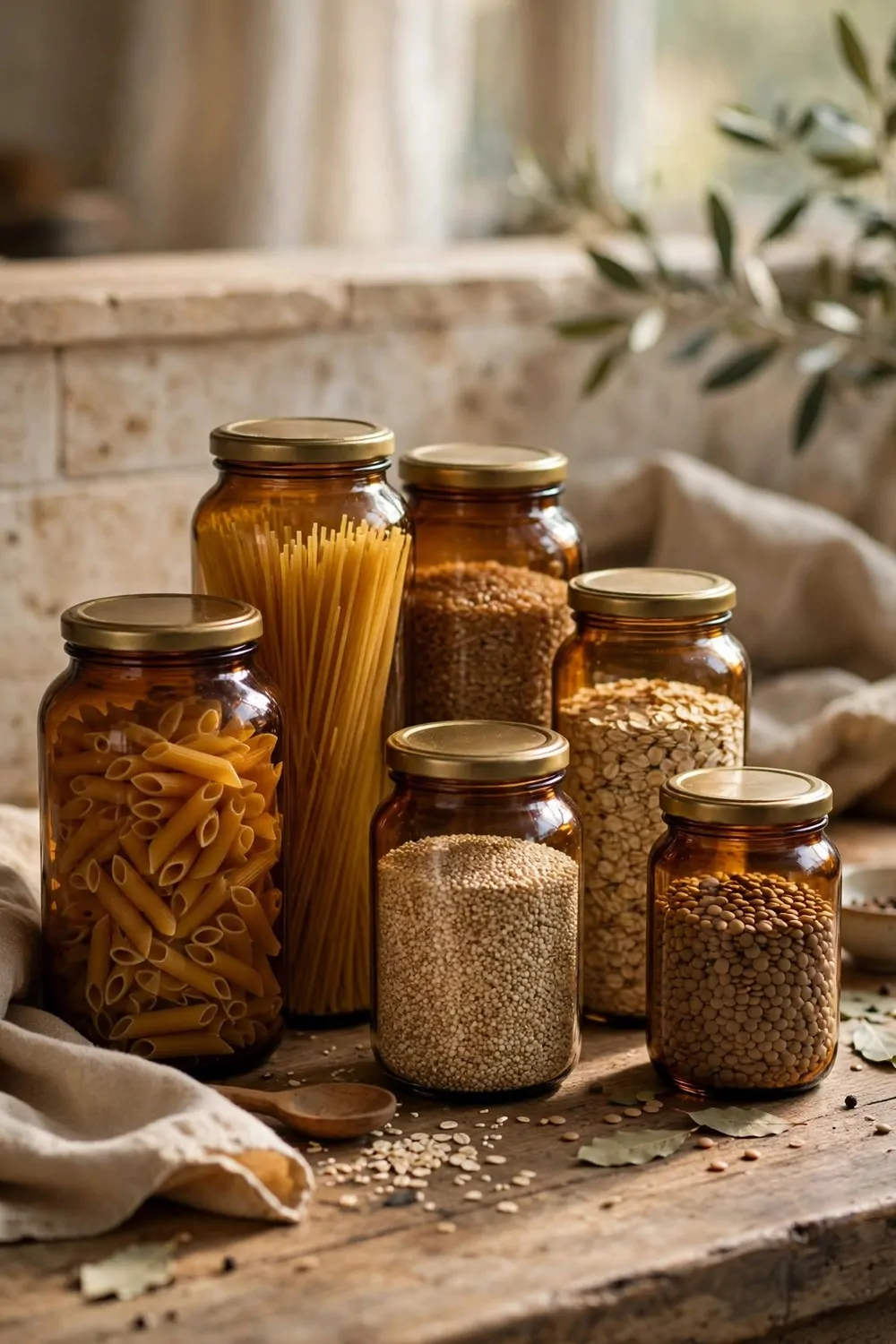
My pasta and grains used to hide in bags that tore and spilled. Amber glass jars fixed the mess and made the shelf look lovely. The warm glass turns plain food into part of the decor.
Amber glass softens the light and gives the shelf a golden glow. You can still see what is inside, so you know when the rice is low. The jars look tidy in a row and feel good to pick up.
A set of amber glass jars runs $10 to $24. Start with three or four in different sizes. Tall jars suit pasta, and short wide jars suit rice, beans, and grains.
Fill each jar with one dry food and nothing else. Pasta, rice, beans, and grains all keep well in glass. Keep the jars away from the stove so the food stays cool and dry.
Label each jar with a small tag or a plain sticker. A simple word on the front saves you opening every jar to find the rice. Write the date you filled it on the back of the tag.
Use a tight lid that seals well. A good seal keeps the food fresh and keeps crumbs out of the cupboard. Check the lids now and then, since a loose lid lets damp air in.
Line the jars up on an open shelf or a clear stretch of counter. The row of warm glass looks better than a jumble of bags. Leave a little gap between jars so you can lift one out easily.
Refill the jars from the big bags and keep the bags out of sight. The jars hold a week or two of food, which is plenty for daily cooking. A quick top up on shopping day keeps the shelf full.
These jars have made my cooking faster as well as prettier. I can see the pasta, grab the jar, and pour what I need in seconds. A tidy shelf makes the whole kitchen feel calmer.
8. A Spice Shelf with Warm Amber Jars
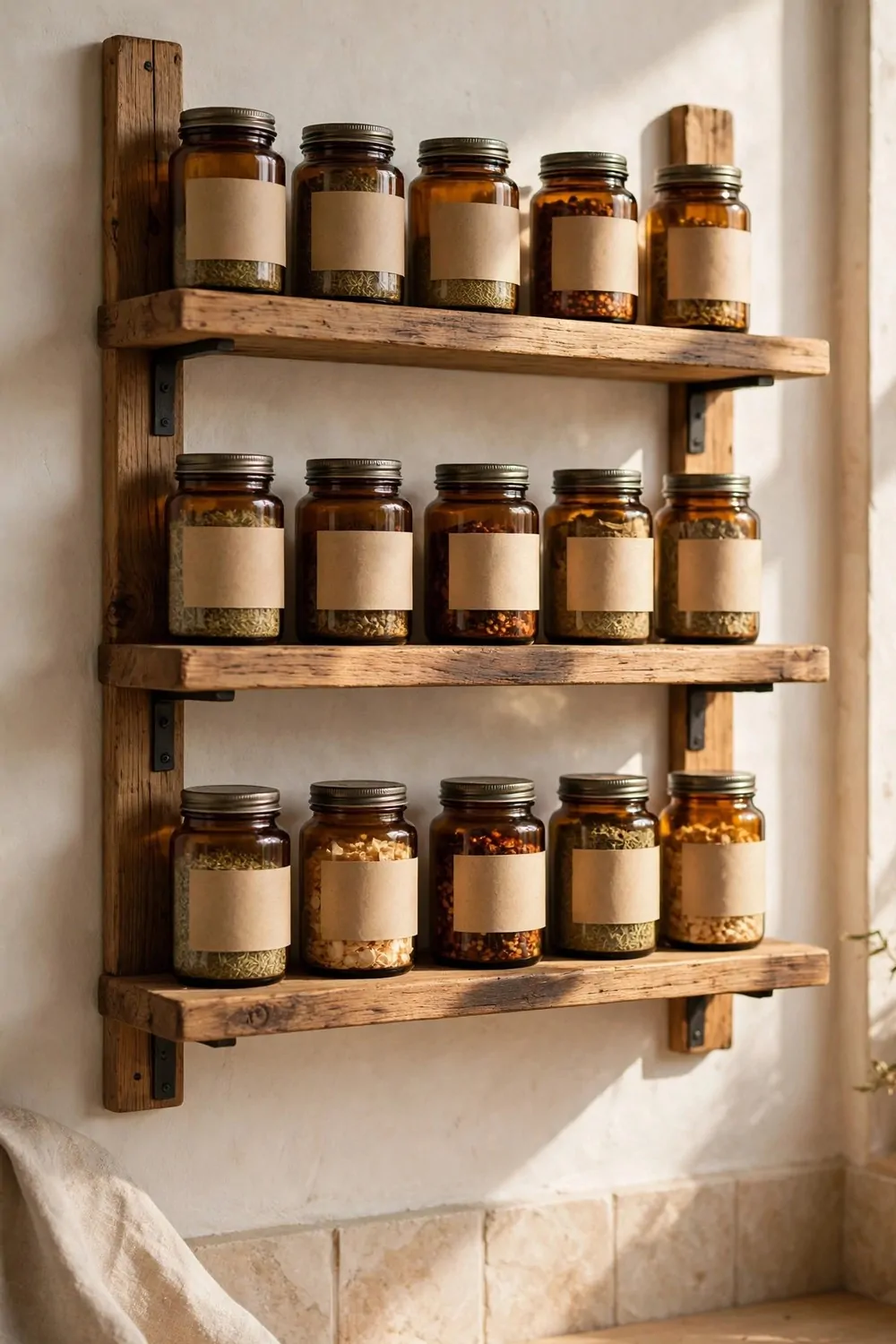
My spices used to live in a jumble at the back of a cupboard, and I never knew what I had. A small shelf with warm amber jars changed that. Now I can see every spice at a glance.
Amber jars suit spices because the warm glass keeps the light soft. The shelf glows a little in the kitchen light, and the row of jars looks neat and warm. It turns a plain wall into a useful feature.
A spice shelf with warm amber jars runs $12 to $26. A short wooden shelf and a set of small jars is all you need. Pick jars that are all the same size so the row looks even.
Hang the shelf near the stove but not right above the heat. You want to reach the spices while you cook without the jars getting too warm. An arm’s reach to one side of the stove is just right.
Fill the jars with the spices you use most. Cinnamon, paprika, cumin, and dried herbs cover most autumn cooking. Keep the rare spices in the cupboard and the daily ones on the shelf.
Label the front of each jar in clear plain letters. A small label saves you sniffing every jar when the sauce is on the stove. I write the name big enough to read from a step back.
Keep the lids tight so the spices stay strong. Loose lids let the scent drift away and the spice goes flat. A quick twist after each use keeps the flavour in the jar.
Wipe the shelf once a week so dust does not settle on the jars. A dry cloth is enough for the wood and the glass. Clean jars glow better in the light and the spice names stay easy to read.
This shelf has made my cooking bolder because the spices are right there. I reach for cinnamon in the porridge and paprika in the soup without thinking twice. A shelf you can see is a shelf you will use.
9. A Soft Knit Throw over a Kitchen Chair
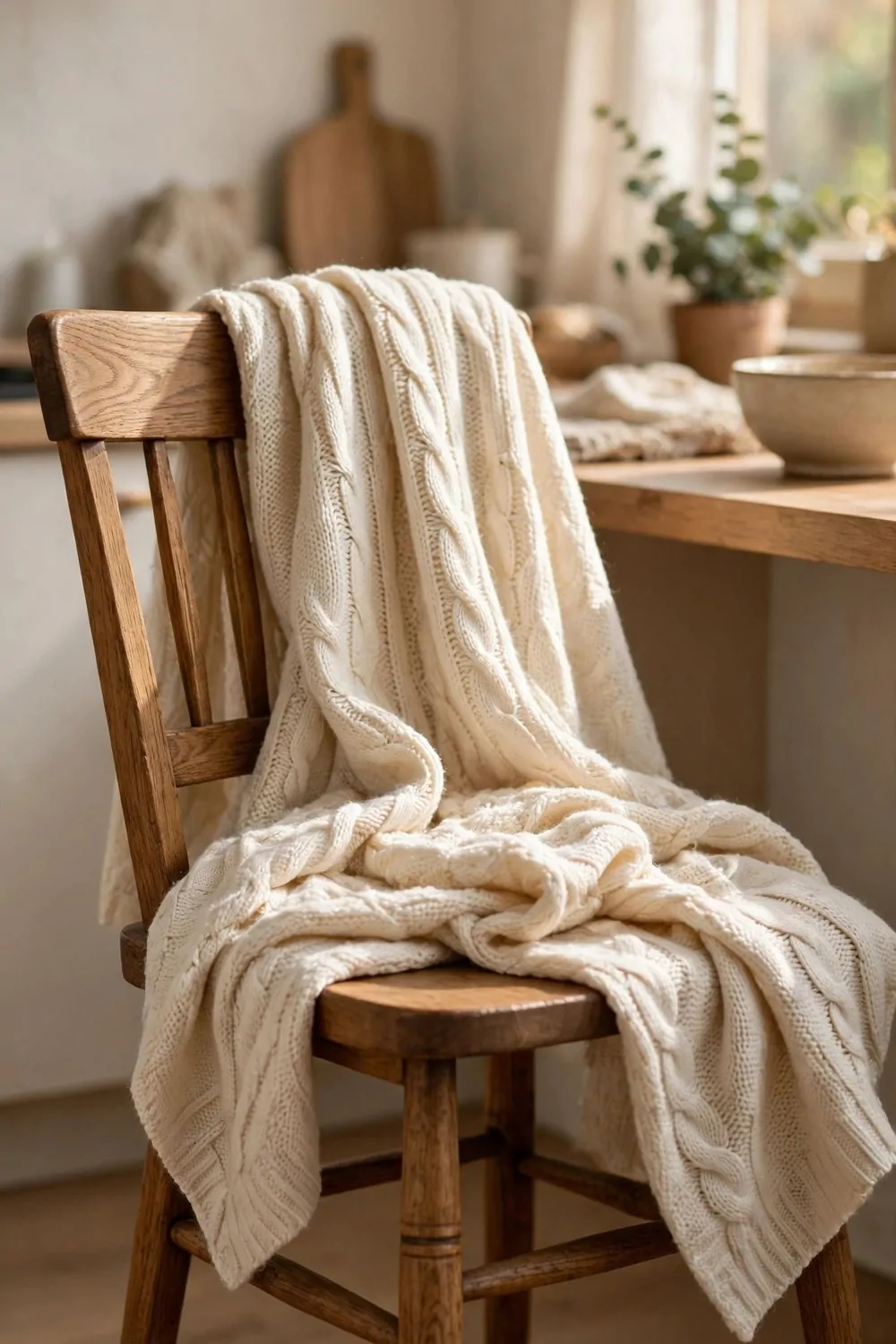
My kitchen chairs are hard wood, fine for a quick meal but cold on a long morning. A soft knit throw over one chair fixed that. The chair looks warm and feels warm too.
Knit fabric adds a soft texture that wood and tile never give. The loops and folds glow softly in the light and make the corner feel gentle. A cream or soft brown throw suits an autumn kitchen best.
A soft knit throw runs $15 to $35. Pick one that is easy to wash, since kitchen throws pick up crumbs. A medium size that drapes over the chair back is plenty.
Drape the throw over the back of the chair you sit in most. Let one end hang down the front and the other rest on the seat. The fold should look loose and easy, not neat and stiff.
Use the throw on cold mornings when you sit with tea or coffee. Pull it over your knees while the toast cooks. It turns a quick breakfast into a slow calm start.
Keep the throw off the floor so it stays clean. A chair by the table is a better home than a chair by the door. If it slips, fold it over the chair back again.
Wash the throw on a gentle cycle when it needs it. Let it dry flat so the knit keeps its shape. A stretched throw looks tired, so treat it with a little care.
Match the throw to a cushion or a runner in the same warm tones. The link between the pieces makes the kitchen feel planned. You do not need an exact match, just a shared warm colour.
This small soft touch has made the kitchen my favourite morning spot. A warm chair, a hot drink, and a quiet minute before the house wakes up. Sometimes the smallest change is the one you feel most.
10. Terracotta Pots with Herbs on the Windowsill
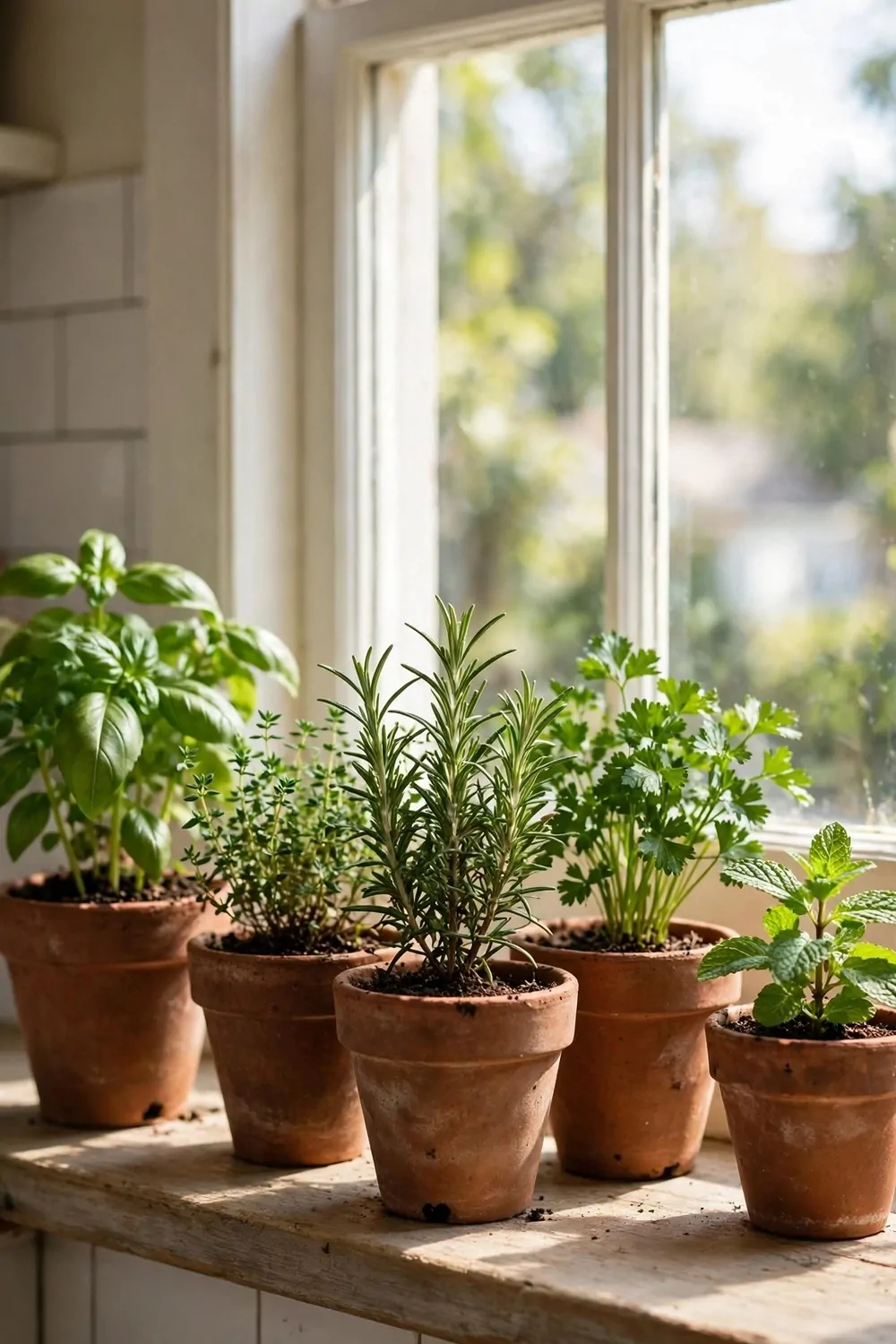
My windowsill used to hold nothing but dust and a spare mug. Terracotta pots with herbs gave it life. The warm orange pots and green leaves suit the autumn light so well.
Terracotta has a soft earthy colour that fits the season. The pots feel warm next to the glass and the herbs add a fresh green lift. The mix of orange and green is simple and lovely.
A terracotta pot with herbs runs $10 to $22. Small pots are cheap and easy to find at the market. Start with two or three and add more once you see how they grow.
Plant herbs you cook with every week. Basil, mint, and parsley cover most meals, and chives are handy for eggs and cheese. Fresh leaves beat dried ones in a simple sauce.
Set the pots where the sun reaches them in the morning. A kitchen window that gets a few hours of light is enough. Turn the pots once a week so the plants grow straight.
Water the herbs a little and often, not in big floods. The soil should feel damp, not wet. A small jug by the sink makes watering part of the morning routine.
Snip the leaves with scissors instead of pulling them off. A clean snip keeps the plant healthy and the leaves come back fast. Take from the top so the plant stays bushy.
Keep a small tray under the pots to hold any drips. The tray stops water from marking the sill. A plain tray also keeps the pots in a neat row.
These pots bring the garden into the kitchen even as the days cool down. A snip of fresh herbs in the soup, and the whole pot smells like the garden. That fresh touch is why I keep them going all year.
| Idea | Main change | Typical cost |
|---|---|---|
| Warm amber pendant lights | light the island with warm amber | $30 to $70 |
| Rust-orange table runner | warms the table with soft orange | $12 to $28 |
| Copper pots on a rail | put warm copper by the stove | $40 to $90 |
| Bowl of apples and small pumpkins | bring autumn fruit to the table | $8 to $18 |
| Warm wooden boards | lean warm wood on the backsplash | $15 to $35 |
| Plaid cushions for the breakfast nook | make the nook cosy with plaid | $18 to $40 |
| Amber glass jars | hold pasta and grains on the counter | $10 to $24 |
| Spice shelf with warm amber jars | keep spices in warm amber jars | $12 to $26 |
| Soft knit throw | softens a kitchen chair with knit | $15 to $35 |
| Terracotta pots with herbs | green the windowsill with herbs | $10 to $22 |
11. A Warm Wooden Tray for Tea and Morning Cups
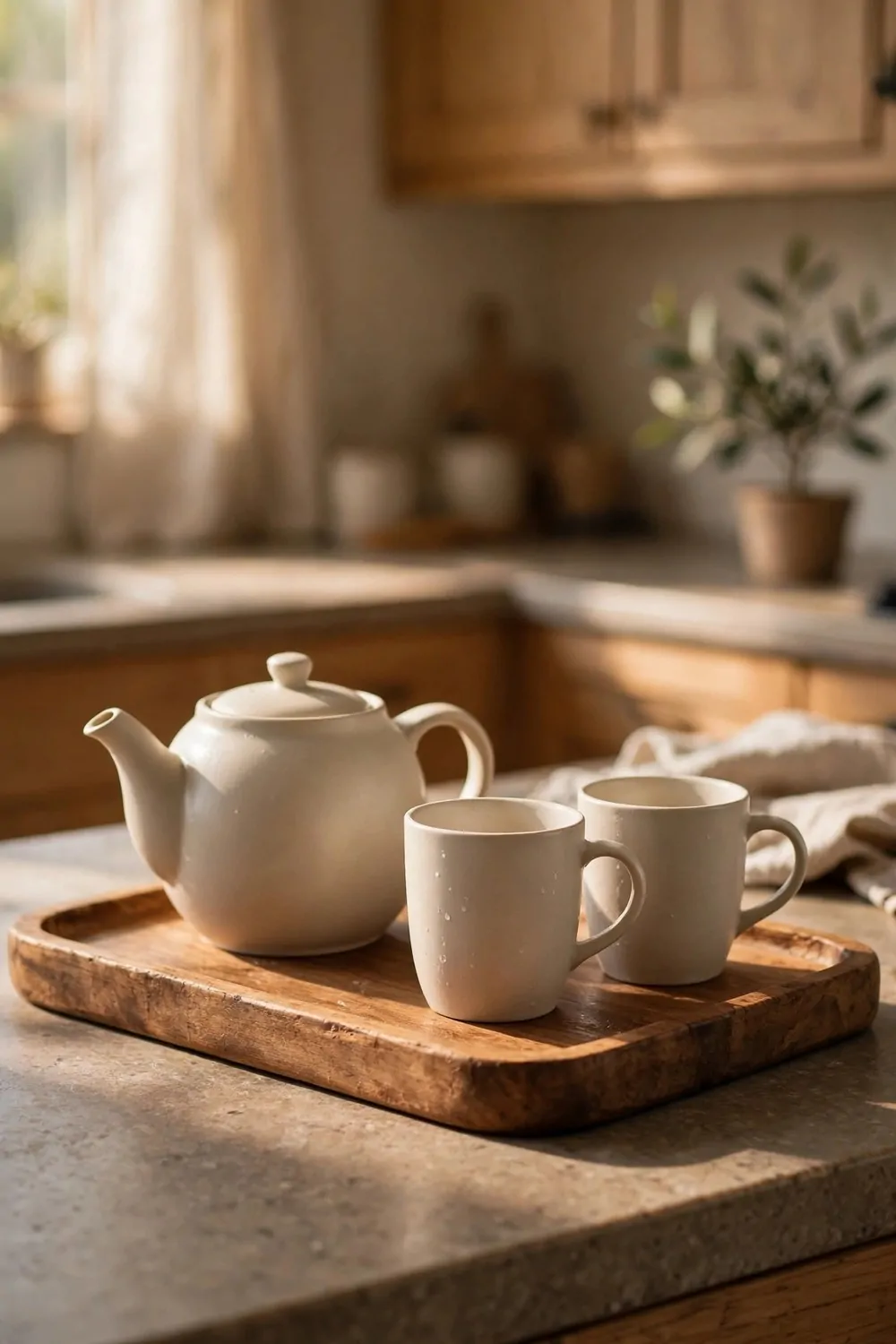
Mornings in my kitchen used to mean mugs and spoons spread all over the counter. A warm wooden tray pulled it all together. Now the tea things live in one tidy spot.
Wood suits the morning because it feels warm to touch and looks calm. The tray holds the cups and the teapot in one place. The counter stays clear and the morning feels slower.
A warm wooden tray runs $12 to $25. Pick one with low sides so the cups are easy to lift. A tray that fits two mugs and a small pot is the right size for most kitchens.
Set the tray near the kettle so the morning flow is short. Fill the kettle, set the cups on the tray, and wait for the water. Everything you need is within one reach.
Keep the tray simple with just the daily things on it. Two mugs and a small teapot are enough. Extra bits creep in fast, so clear them off each night.
Use the tray to carry tea to the table in one trip. The low rim keeps things steady on the way. I carry mine to the breakfast nook on slow mornings.
Wipe the tray after any spills of tea or milk. A damp cloth and a quick dry keeps the wood looking good. Sticky rings set fast on wood, so a quick wipe saves a scrub later.
Leave the tray out all day, not packed away in a cupboard. A tray you can see is a tray you will use. It also looks warm sitting on the counter between meals.
This tray has made my mornings feel more settled and less rushed. Tea, toast, and a quiet minute before the day starts. A small wooden tray holds all of that in one calm place.
12. A Basket of Root Vegetables by the Door
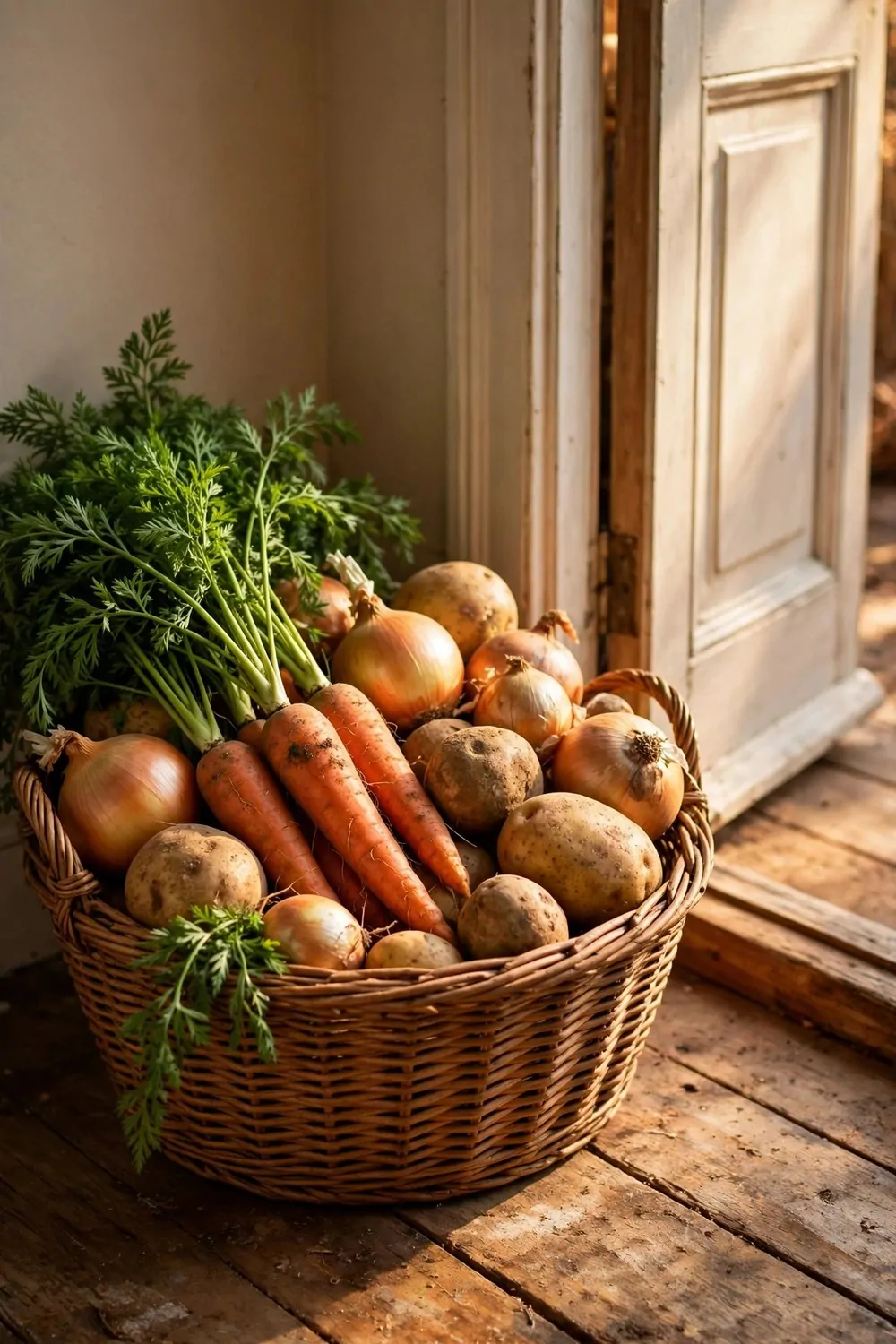
The door is the first spot I see when I walk into my kitchen in the morning. A low basket there makes the whole room feel ready for autumn. It looks warm before I even turn on the light.
Root vegetables fit this spot so well because they look plain and honest. I put carrots with their green tops at one side of the basket. Onions and potatoes sit next to them in a soft pile.
A wide flat basket works best by the door because it does not tip over. I chose one with low sides so I can see all the vegetables at once. The handles make it easy to lift when I need to sweep the floor.
I keep the basket a small step away from the door so nobody trips on it. The cool air near the door helps the vegetables stay firm for a few days. I check them each morning and take out any soft ones.
A basket of root vegetables runs $6 to $14.
Washing comes later, right before I cook, not when I fill the basket. A little soil on the skins is normal and it brushes off with a dry cloth. Clean vegetables look tidy but they spoil faster in the basket.
My kids like to pick a carrot from the basket when they come home from school. It gives them a small job and it makes the basket feel used. I refill the empty spot the same evening so the basket never looks bare.
A folded cloth under a basket like this can keep the floor clean and stop it from sliding. A plain cloth in a warm brown tone also softens the look of the basket against a hard floor.
When the basket gets low, I add a few onions and a small squash on top. The mix of shapes and colours makes the door corner look full again. It is a small change but I notice it every time I come in.
13. Warm Linen Napkins in Rust and Gold
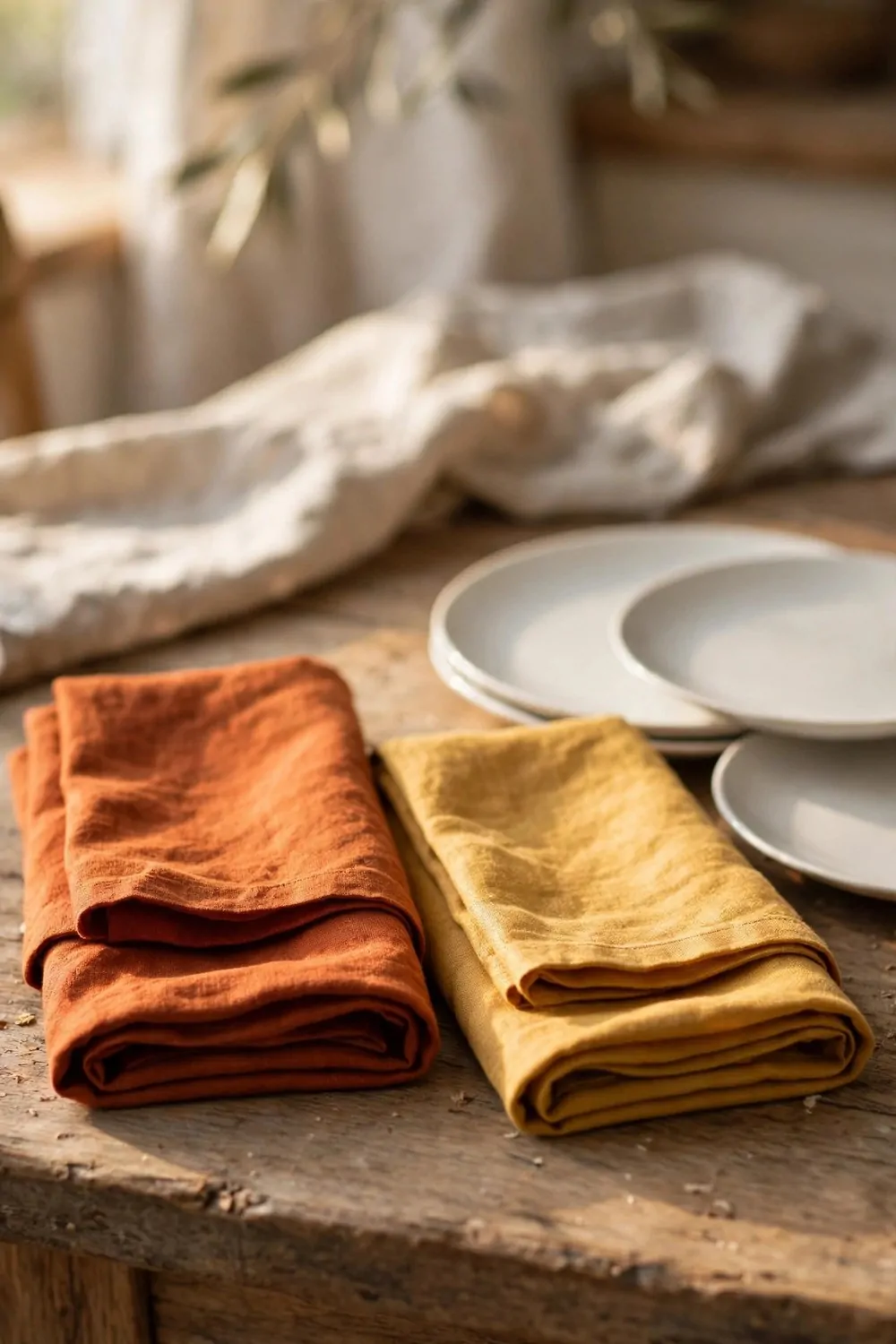
Linen napkins change the table more than I thought they would. Rust and gold feel warm even on a grey day. I fold them in a simple square and lay one at each plate.
The fabric feels soft after a few washes and it does not shine like new cloth. I like the small wrinkles because they make the table look lived in. A napkin that looks too neat feels cold to me.
Rust goes with my plain plates and my wooden table without any fight. Gold adds a soft glow next to a bowl of soup or a plate of bread. Together they make a normal meal feel a bit special.
I wash them with my normal towels and I hang them to dry in the kitchen. They dry fast and they do not need much care. A quick shake is enough before I fold them again.
A set of warm linen napkins in rust and gold runs $8 to $18.
For a family meal I put out four napkins and keep two spare in a drawer. Guests get the gold ones and we use the rust ones most days. The mix keeps the table from looking too matched.
A napkin ring is not needed with linen because the fold holds its shape. I sometimes tuck a small leaf from the garden under the fold. It falls off by the end of the meal and that is fine.
Stains from tomato sauce wash out if I rinse the napkin soon after the meal. I soak a bad stain in warm water with a little soap. The colour stays strong even after many washes.
I store the napkins in a small stack on a shelf near the table. They are easy to reach and I can see the rust and gold edges. That little stack of colour makes me smile when I set the table.
14. A Warm Soup Pot on the Stove
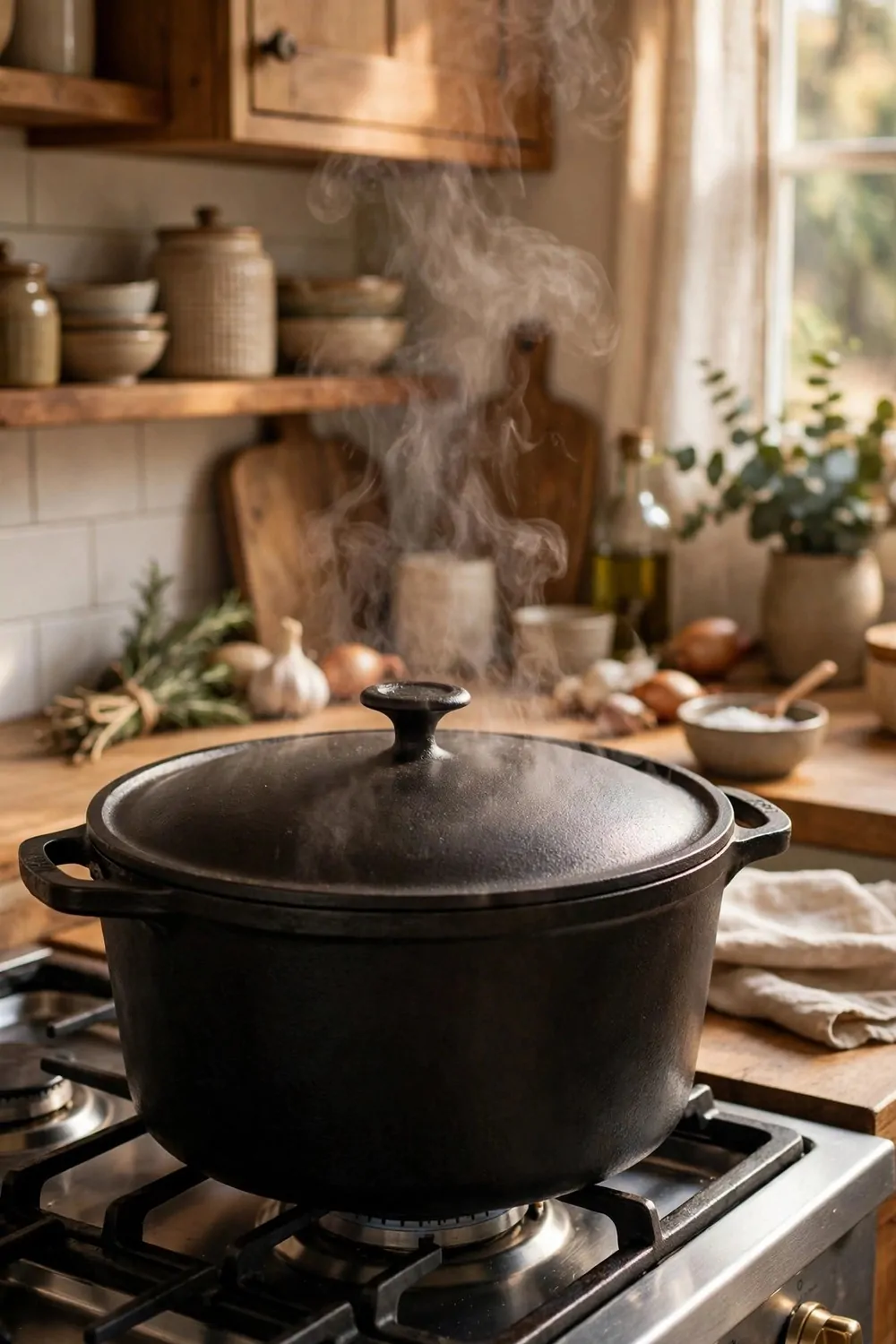
A soup pot on the stove is the heart of my autumn kitchen. Steam rises slow and the whole room smells of vegetables and herbs. I leave the lid on and the smell still moves around the room.
A heavy pot holds heat well and it cooks soup in a calm even way. I use a pot with two short handles so I can lift it with both hands. The lid fits tight and it keeps the soup hot for a long time.
My favourite soup starts with onions, carrots and beans in a little oil. I add stock and let it cook slow while I tidy the kitchen. A pot of soup like that feeds us for two days.
The pot stays on the front burner when it is not in use. It looks good there and I do not need to find a place for it in a cupboard. A wooden spoon rests in a small bowl close by and I grab it when I need to stir.
A warm soup pot runs $25 to $60.
I wash the pot with warm water and a soft cloth after each use. Food comes off easy if I soak it for ten minutes first. I dry it well before I put it back on the stove.
Soup tastes better the next day, so I make a big pot on Sunday. We eat it with bread and cheese on Monday night. It saves me time and it saves washing up too.
A pot with a light inside colour helps me see when the soup is ready. I can tell if the carrots are soft just by looking. A dark pot hides the colour of the soup and I have to lift the lid more often.
If you buy one pot, pick a size that fits your family and your stove. A pot that is too big takes too long to heat. A pot that is too small means you cook twice, and that wastes time.
15. A Woven Basket for Bread and Rolls
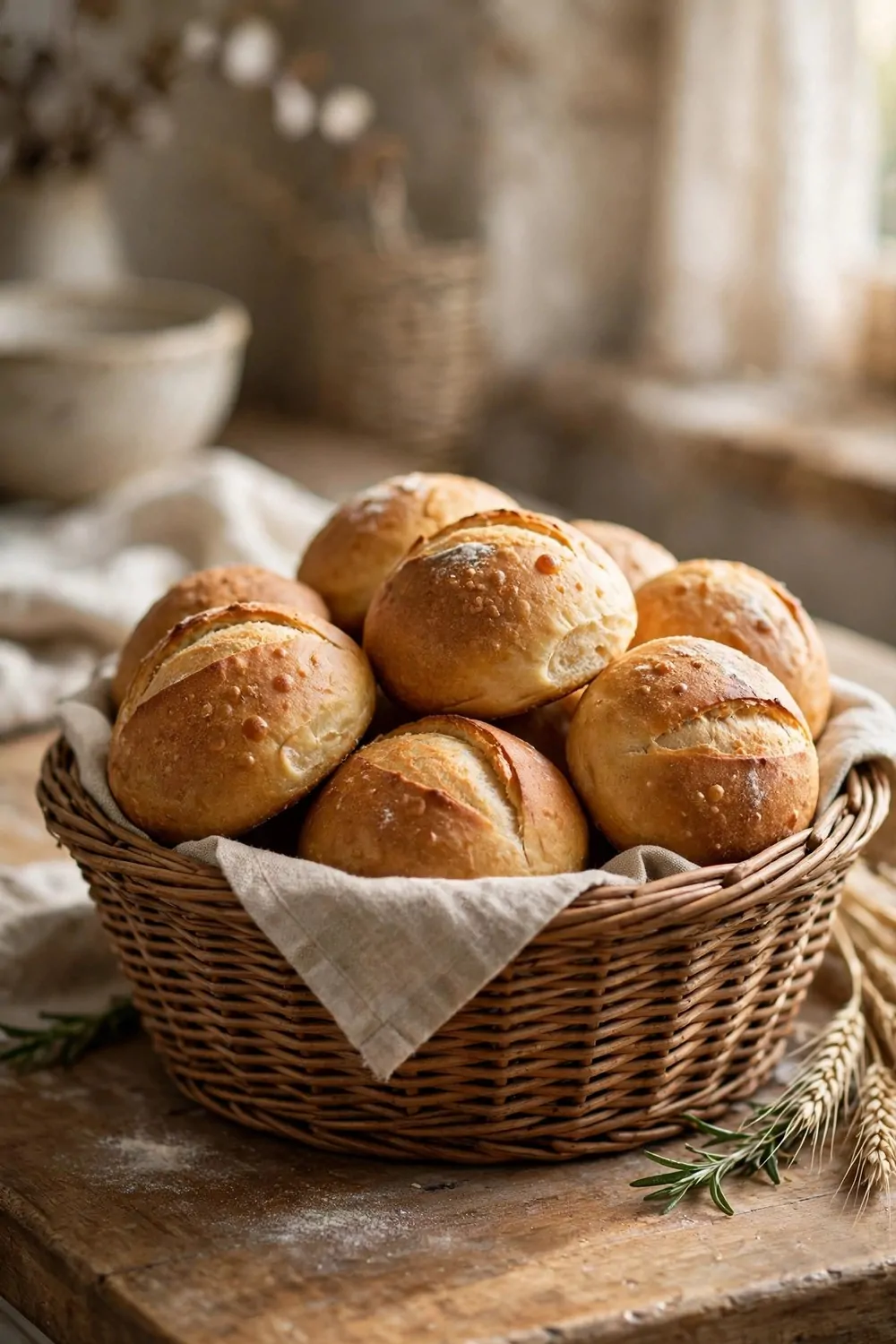
Fresh bread needs a home on the counter, and a woven basket is mine. The weave lets air move around the loaf so the crust stays crisp. A closed box would make the bread soft and damp.
I line the basket with a clean plain cloth before I put the bread in. The cloth keeps crumbs in one place and it stops the bread from drying out. I shake the cloth out after each meal.
Rolls sit in a soft pile in the basket. A round roll sits on top where I can reach it first. The basket holds enough bread for one meal without looking crowded.
The basket lives near the toaster so morning toast is quick. I cut slices at the counter and put the rest back in the basket. It saves me a trip across the kitchen when my hands are full.
A woven basket for bread and rolls runs $10 to $22.
I brush crumbs out of the weave once a week with a dry brush. A damp cloth would leave the weave wet and it takes too long to dry. Dry care keeps the basket strong for years.
When friends come for tea, I put the basket in the middle of the table. Everyone can reach the bread without asking. It makes the meal feel shared and easy.
A basket with low sides is best because tall sides hide the bread. I can see at a glance if I need to buy more bread. The open top also lets the smell of fresh bread fill the room.
I keep a small bread knife in the drawer right under the basket. The knife stays sharp and it cuts clean slices every time. A good basket and a good knife make bread time simple.
16. Warm String Lights Along a Shelf
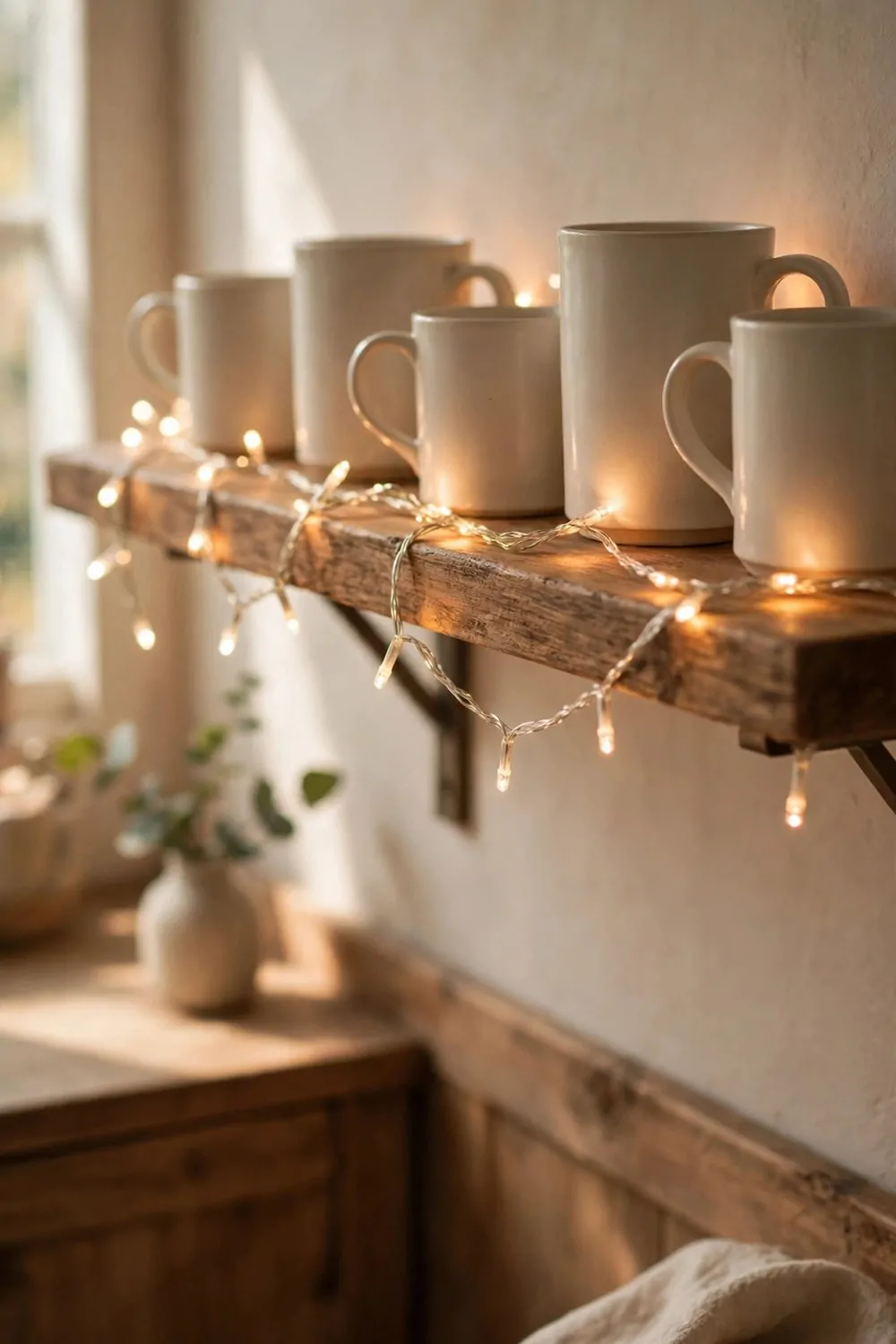
A shelf can look flat and dull in the evening, so I added warm string lights. The soft glow makes my jars and mugs look warm and kind. I turn them on when I start to cook dinner.
I run the lights along the front edge of the shelf so the glow falls on the wall. The wire dips down in soft loops at the front and the warm bulbs glow against the wood. A small hook at each end holds the wire in place.
Warm white is the colour I like best because it feels like candle light. Cool white feels too bright and it makes the kitchen look cold. Warm light suits wood and cream walls so well.
I plug the lights into a socket near the counter and I use a small timer. The timer turns them off late at night so I do not forget. In the morning the shelf is dark again and ready for the day.
A pack of warm string lights runs $8 to $18.
The lights are safe near my shelf because they stay cool to touch. I still keep them away from paper and dry leaves. I check the wire once a month for any worn spots.
My shelf holds plain mugs in a neat row. The lights make each one stand out a little more. Even a plain mug looks nice with a warm glow behind it.
I tried the lights in a straight line first and it looked too stiff. A soft wave along the shelf looks more natural to me. I let the wire dip a little between the hooks.
When guests come in the evening, they always look at the shelf first. The lights make the kitchen feel calm and welcome. It is a small change that I enjoy every single night.
17. A Wooden Crate of Autumn Squash by the Counter
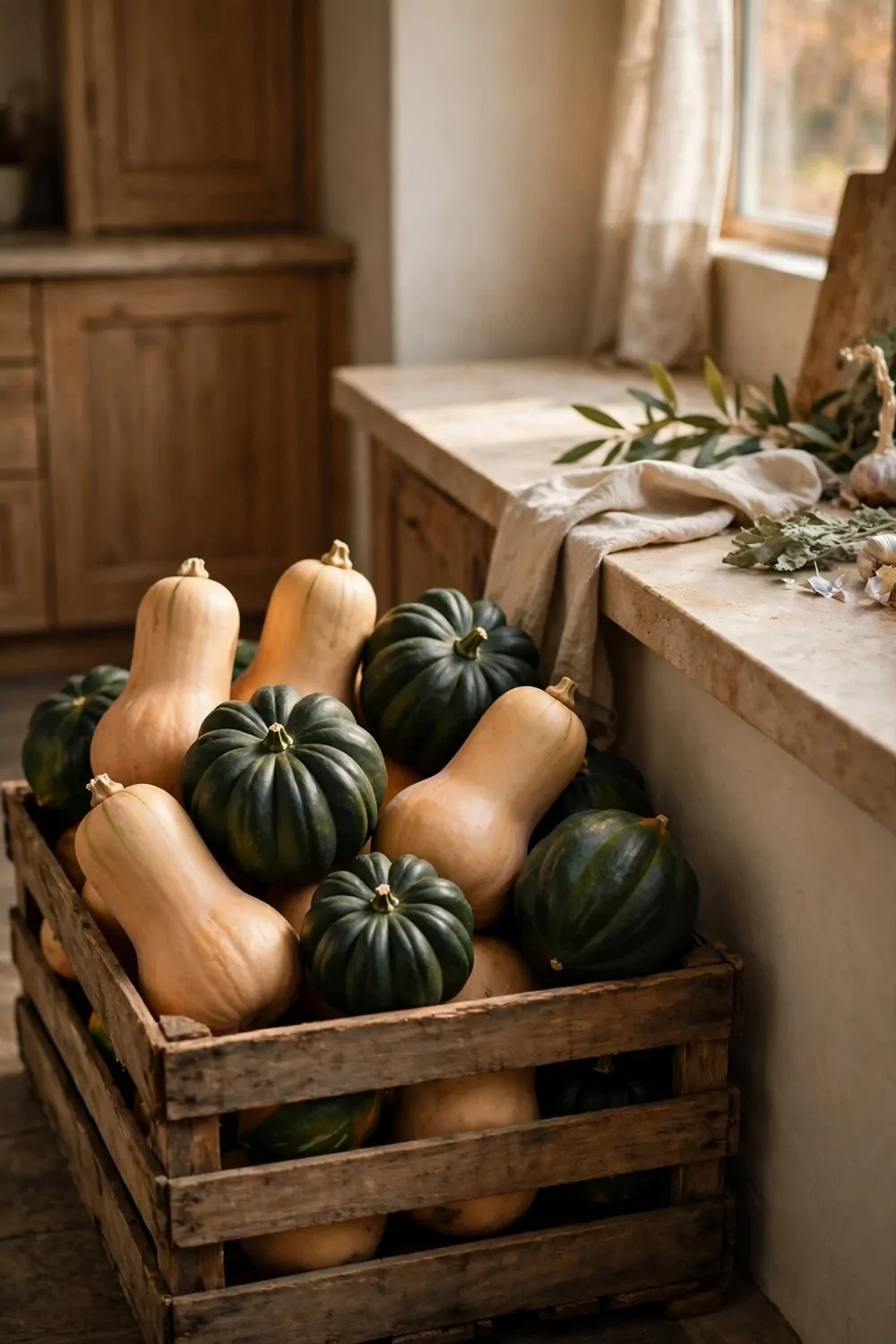
A wooden crate by the counter holds my autumn squash in one tidy place. The squash pile looks warm with green and cream skins. I see it every time I walk past to make tea.
A crate with gaps between the slats works best for squash. Air can move through the gaps and the squash stay dry and firm for weeks. A solid box would trap damp air and the squash would spoil sooner.
Big and small squash sit mixed in the crate where I can reach them first. The pile holds steady, and I turn each squash once a week so no side sits damp for long.
I keep the crate on the floor next to the counter, not on top of it. The floor spot is cool and the crate does not block my work space. I can still reach down and lift a squash with one hand.
A wooden crate of autumn squash runs $7 to $15.
When I cook squash, I cut it on a board on the counter right above the crate. The short trip from crate to board keeps the floor clean. I put the cut pieces in a bowl and the seeds go in a small dish.
A few leaves from the garden near the crate add a soft autumn touch. I change the leaves when they dry out and turn brown. The crate still looks plain and natural without them.
My family knows the crate means soup and roast vegetables are near. The kids point at the big pale squash and ask what we will make. It makes the kitchen feel like autumn has moved in.
If the crate gets empty, I fill it again at the market on Saturday. I pick squash with hard skins and no soft spots. A full crate by the counter makes the whole kitchen feel ready for the cold days.
18. A Warm Plaid Tea Towel on the Oven Handle
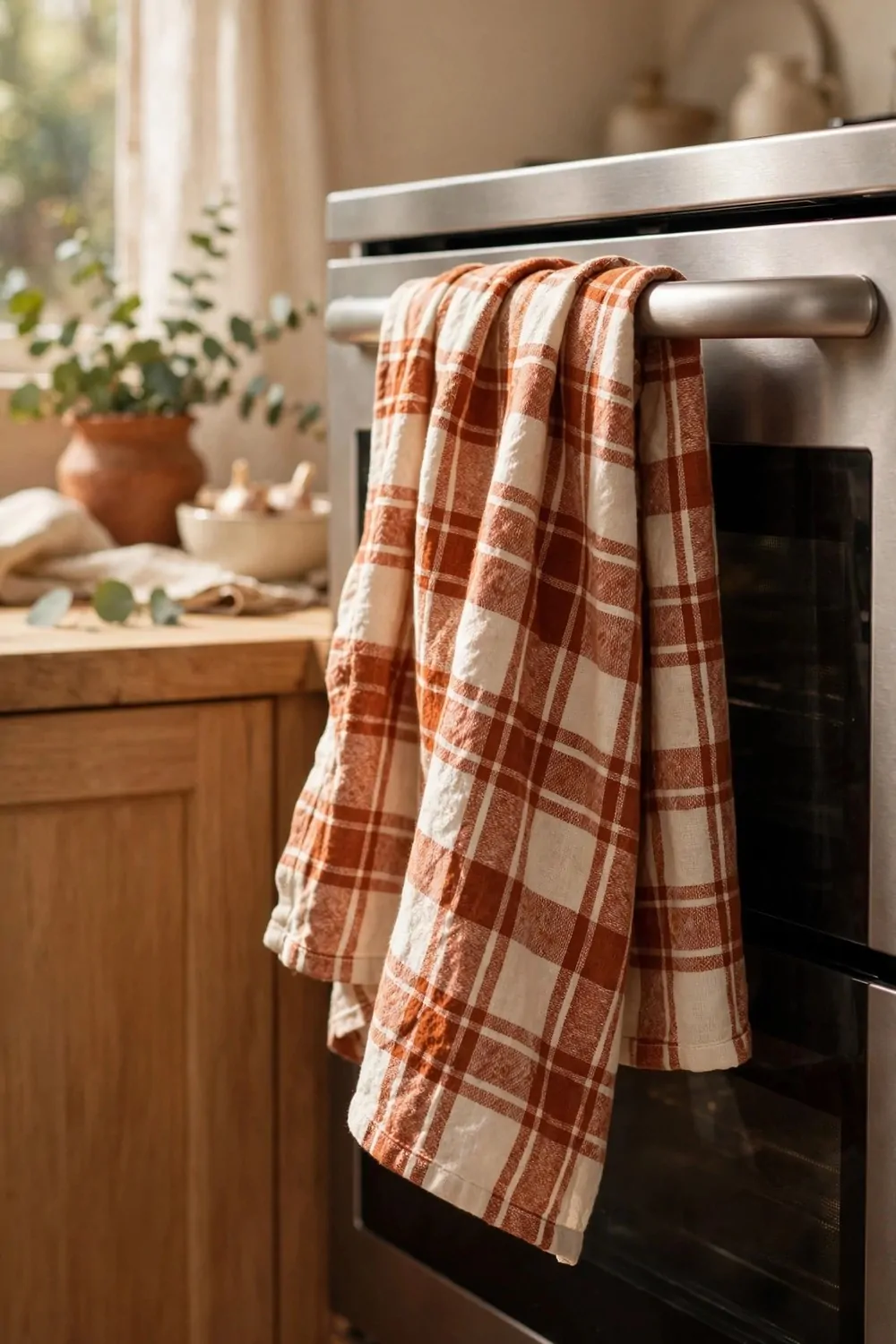
A plaid tea towel on the oven handle adds colour at eye level in my kitchen. The warm rust checks stand out when I walk in. It makes the plain oven door look cared for.
I hang the towel by folding it over the handle. The fold sits loose and one end hangs a little lower than the other. A towel hung like that does not slip to the floor.
Plaid suits autumn because the colours match leaves and wood. I use a towel with rust and cream in the checks. It goes with my other kitchen cloths without any clash.
The towel is always close when I need to dry my hands. I reach for it after I wash vegetables at the sink. It dries fast on the warm oven door between uses.
A warm plaid tea towel runs $5 to $12.
I wash the towel with my other kitchen cloths twice a week. A quick wash keeps it fresh and it stops smells from building up. I hang it back on the handle while it is still a little damp.
A dry towel also works as a thick pad to lift a hot tray. I fold it twice and hold the tray with both ends. It protects my hands and it saves me looking for a glove.
I keep a spare plaid towel in the drawer under the oven. When one towel is in the wash, the spare goes on the handle. The oven never looks bare and I always have a towel close by.
Small stains from tomato sauce wash out with a soak in warm water. I do not worry if a faint mark stays after many washes. A used towel looks honest and it shows the kitchen is loved.
19. A Ceramic Jug with Dried Wheat Stems
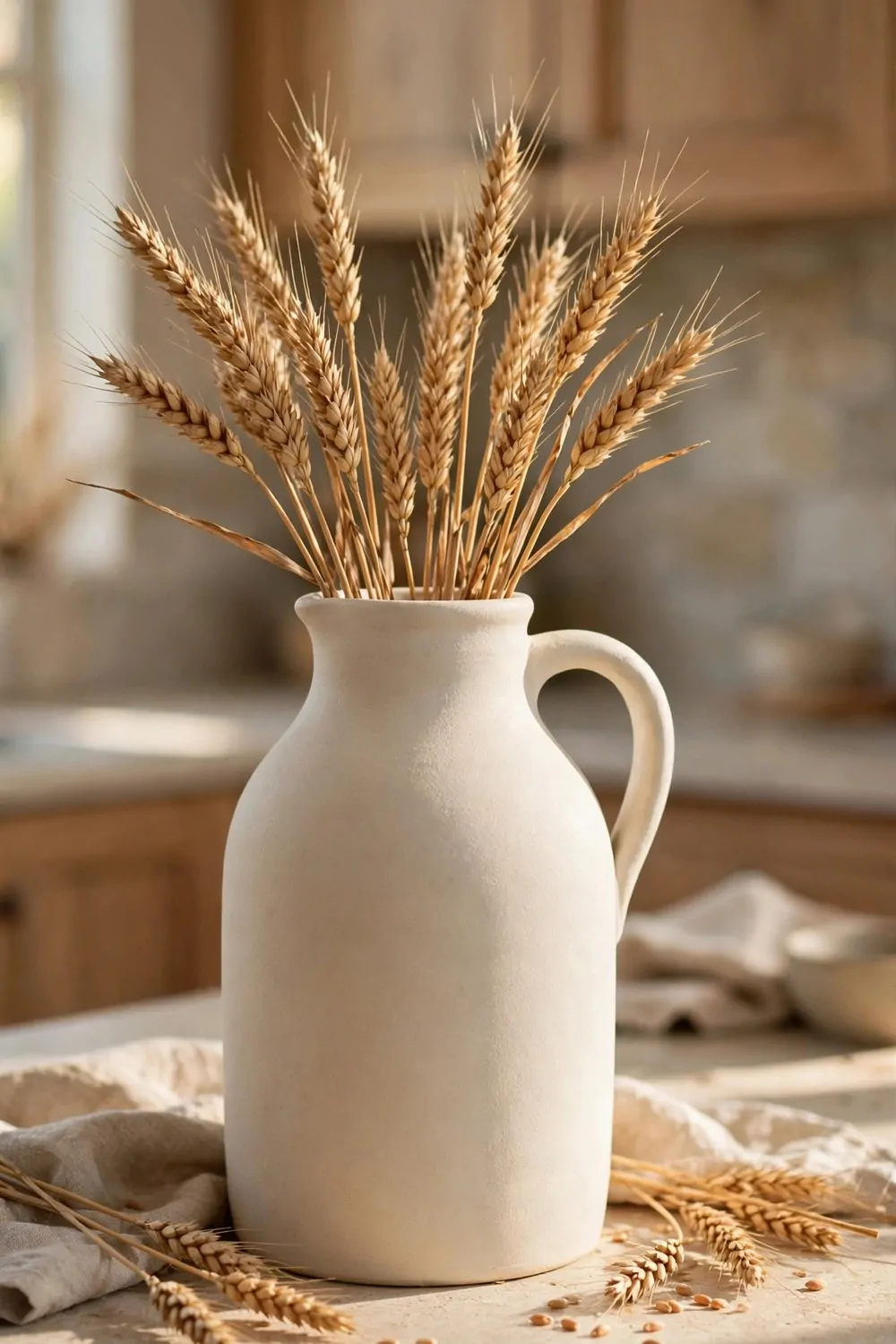
A ceramic jug on the counter holds dried wheat stems in a tall soft bunch. The gold heads lean out in all directions and they move a little when I walk past. It brings a field feeling into the kitchen without any fuss.
The jug is plain cream with a wide mouth and a steady base. A wide mouth lets me spread the stems out so they do not crowd. A steady base means the jug will not tip when I bump the counter.
Dried wheat lasts for months and it needs no water at all. I dust the stems once a week with a soft dry cloth. The jug stays dry inside and it never smells damp.
I place the jug at the back of the counter near the wall. It stays out of the way when I chop vegetables and make lunch. The tall stems still show above the counter and I can see them from the door.
A ceramic jug with dried wheat stems runs $9 to $20.
If a stem bends or breaks, I trim it short and put it back in the jug. A mix of tall and short stems looks more natural to me. I do not throw the whole bunch away for one bent stem.
The jug also works as a vase for fresh flowers in spring. I wash it out and fill it with clean water for a new bunch. For now it holds wheat and it suits the autumn kitchen so well.
My jug came from a small shop and it has a tiny mark on the rim. The mark does not bother me at all. It makes the jug feel real and not like a copy from a big store.
When I set the table for dinner, I move the jug to the middle of the table. The wheat stems rise above the plates and they make the meal feel warm. I move it back to the counter after we eat.
20. A Warm Rug Runner in Front of the Sink
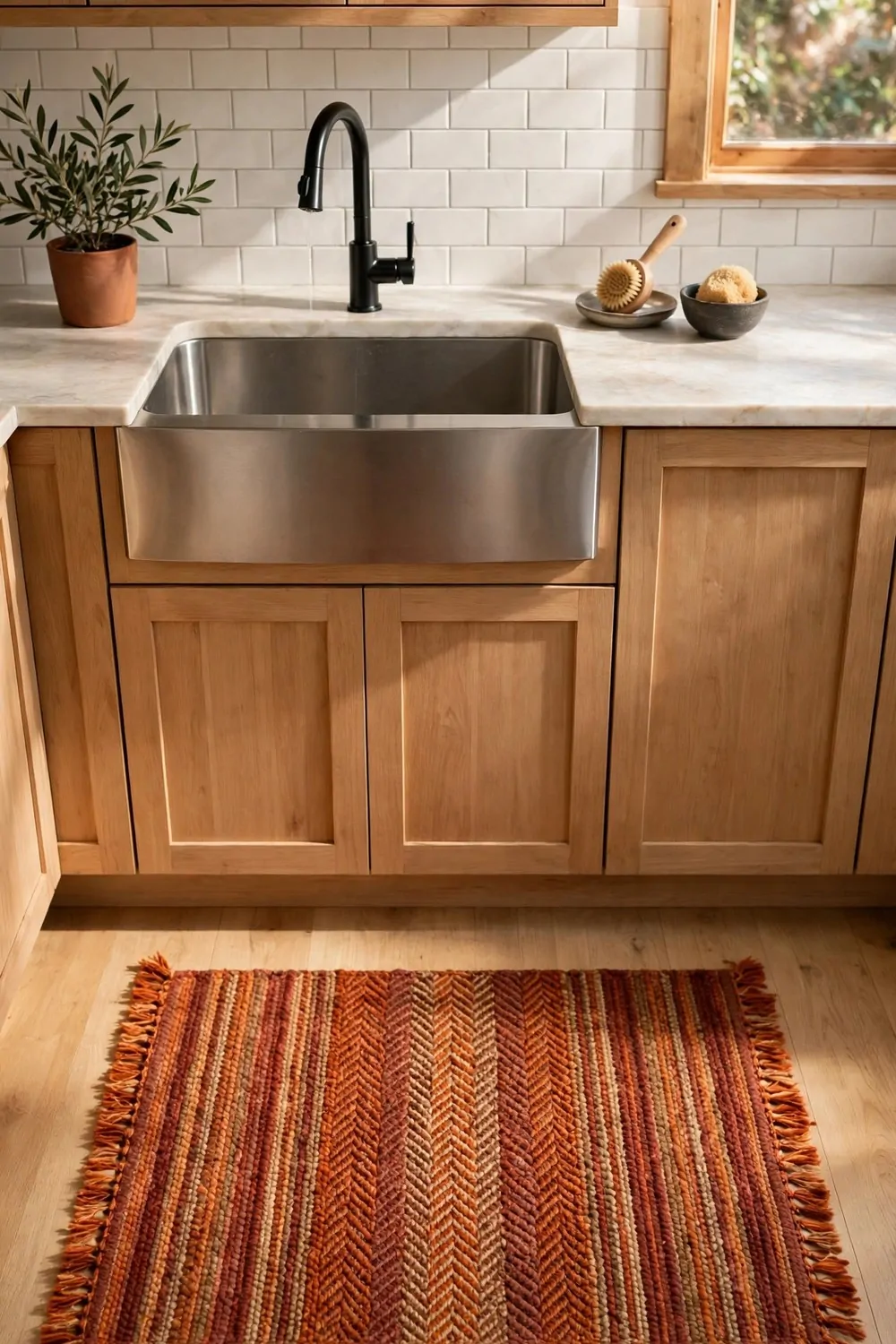
The floor in front of the sink is cold in the morning, so I laid down a warm rug runner. My feet feel soft and warm while I wash vegetables and fill the kettle. It makes a dull job feel a bit nicer.
A runner with a flat weave is best because it does not trip me up. I can step on and off it without lifting my feet high. The flat weave also dries fast after a splash of water.
Warm tones in the rug match the wood floor and the cream cupboards. My rug has rust and soft brown in the pattern. It ties the sink area to the rest of the kitchen.
I shake the runner outside once a week to get the crumbs out. A quick wash in the machine keeps it fresh when it looks dull. I hang it over a chair to dry and it is ready by night.
A warm rug runner runs $20 to $45.
The runner stays in place with a thin mat under it. The mat stops the rug from sliding on the smooth floor. I check the corners each week and I smooth them flat again.
Water splashes from the sink land on the rug and not on the cold floor. The rug soaks up small splashes and my socks stay dry. A big spill still needs a cloth, but small splashes are no trouble.
My kids stand on the runner to wash their hands after school. It gives them a warm spot and it keeps their feet off the cold tiles. I like that the rug has a job and not just a pretty look.
If you buy a runner, measure the space in front of your sink first. A runner that is too long will bunch up near the cupboards. A runner that fits well looks neat and it feels good under your feet.
21. A Shelf of Plain Mugs in Warm Tones
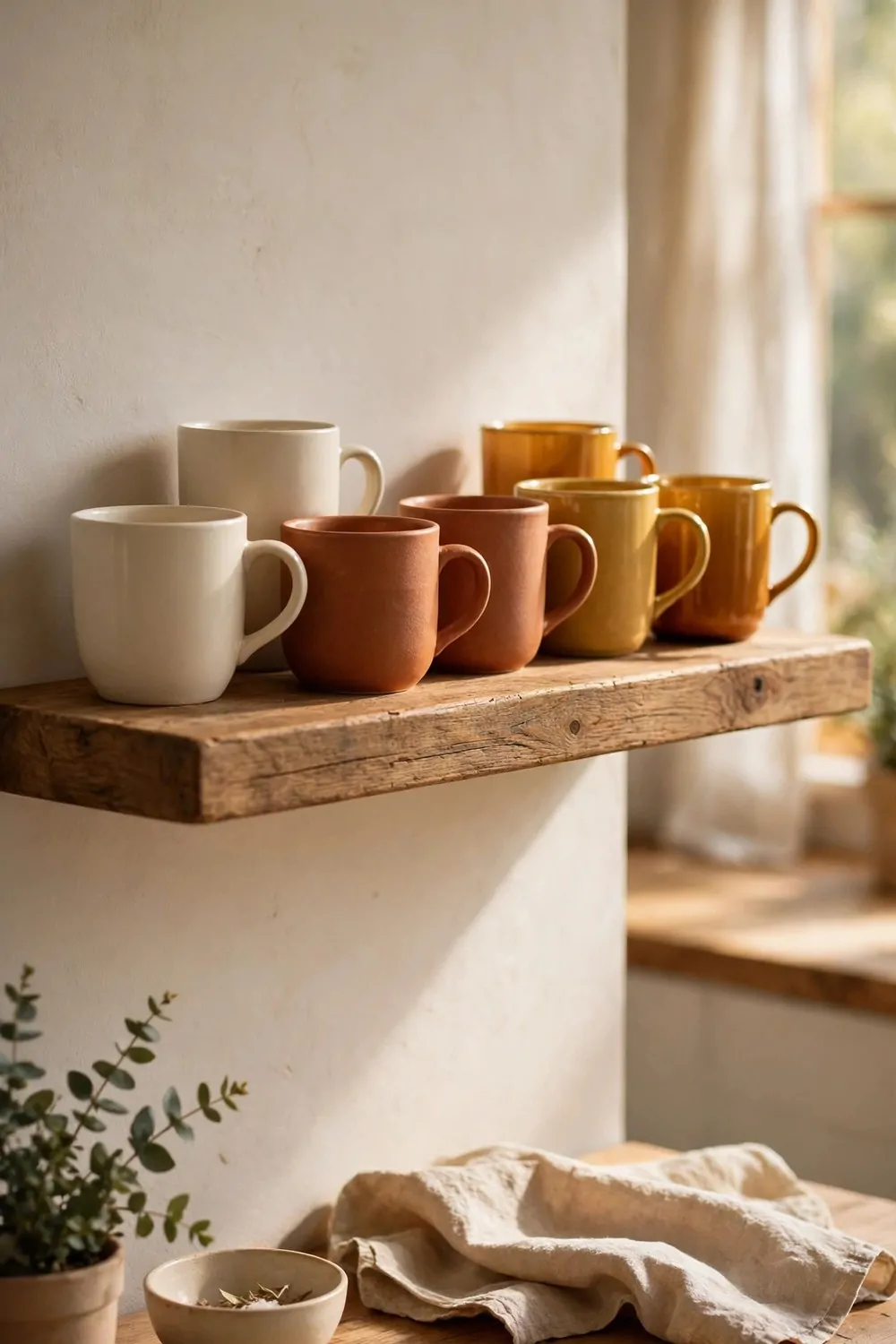
A shelf of plain mugs in warm tones makes my morning cup feel calm. Cream, rust and warm gold mugs sit in a neat row. I reach for a different colour each day and it feels like a small treat.
Plain mugs suit the shelf because they do not fight with each other. A busy pattern on every mug would look loud from across the room. Plain colours let the warm tones speak for themselves.
I set the mugs in a neat row with a little space between them. The shelf looks full but not crowded. I can lift one mug out without moving the others.
Each mug has a job in my house, and I know them all by colour. The big rust mug is for tea in the morning. The small cream mug is for milk in the evening.
A shelf of plain mugs in warm tones runs $15 to $30.
I wash the mugs by hand when I have time so the colours stay soft. The dishwasher is fine too, but hand washing keeps the rims smooth. I dry each mug and put it back on the shelf right away.
A chipped mug leaves the shelf and goes in the bin. A chip can cut a lip and it spoils a calm morning cup. I replace it with a plain mug in the same warm tone.
Guests always pick their own mug from the shelf when they visit. They like to choose a colour that feels like them. It starts a small chat and it makes them feel at home.
I keep the shelf near the kettle so tea time is quick. I lift a mug, fill the kettle and wait for the boil. The warm mugs on the shelf make the whole corner feel ready.
| Idea | Main change | Typical cost |
|---|---|---|
| Warm wooden tray | holds tea and cups in one place | $12 to $25 |
| Basket of root vegetables | keep root vegetables by the door | $6 to $14 |
| Warm linen napkins | dress the table in rust and gold | $8 to $18 |
| Warm soup pot | simmers soup on the stove | $25 to $60 |
| Woven basket for bread | holds bread and rolls on the counter | $10 to $22 |
| Warm string lights | glow along the shelf at night | $8 to $18 |
| Wooden crate of autumn squash | hold squash by the counter | $7 to $15 |
| Warm plaid tea towel | hang on the oven handle | $5 to $12 |
| Ceramic jug with dried wheat stems | bring wheat stems to the counter | $9 to $20 |
| Warm rug runner | warm the floor in front of the sink | $20 to $45 |
| Shelf of plain mugs | hold mugs in warm tones | $15 to $30 |
22. One-Weekend Autumn Kitchen Plan

This plan fits into one weekend and it needs no big tools. I buy six small items and I do the small jobs one by one. By Sunday night the kitchen feels warm and ready for autumn.
On Saturday morning I start with the smallest swap first. I put the new napkins on the table and I hang the plaid tea towel on the oven handle. Those two quick changes make the room look different at once.
Next I set the spice rack on the counter and I move my jars into it. The rack keeps the spices in one tidy row and it frees space in the cupboard. I wipe the counter clean before I put the rack down.
The amber glass storage jar goes on a shelf where I can see it. I fill it with rice or dried beans and I put the lid on tight. It looks warm in the light and it keeps the food dry.
On Saturday afternoon I hang the string lights along the shelf. I fix a small hook at each end and I let the wire dip a little in the middle. I plug them in and I check the glow before I move on.
The three new mugs go on the shelf near the kettle. I wash them first and I dry each one before I put it up. I leave a little space between them so I can lift one out with ease.
On Sunday I walk through the kitchen and I look at each change in turn. I move a mug or a jar a little to the left if it looks off. Small moves like that make the whole plan feel finished.
I finish by wiping the counters and setting the table for a simple meal. The napkins, the towel, the lights and the mugs all work together now. I sit down with a cup of tea and I enjoy the warm room.
My one-weekend autumn kitchen plan cost $49 to $86 in total: a set of two rust-orange linen napkins $8 to $14, a small amber glass storage jar $6 to $11, a warm plaid tea towel $5 to $9, a small plain wooden spice rack $10 to $18, a pack of warm white string lights $8 to $14, and a set of three plain ceramic mugs $12 to $20. Start with the smallest swap on this list this weekend and your kitchen will feel warm every time you walk in.
| Idea | Main change | Typical cost |
|---|---|---|
| Set of two rust-orange linen napkins | dress the table for autumn meals | $8 to $14 |
| Small amber glass storage jar | holds dry goods on the counter | $6 to $11 |
| Warm plaid tea towel | hangs on the oven handle for cosy colour | $5 to $9 |
| Small plain wooden spice rack | keeps spice jars in one neat row | $10 to $18 |
| Pack of warm white string lights | glows along the kitchen shelf at night | $8 to $14 |
| Set of three plain ceramic mugs | warm up morning tea and cocoa | $12 to $20 |
| Total | $49 to $86 |
Keep Reading
If you liked these ideas, you will love these posts too.
- 33 Spring Bedroom Refresh Ideas for Lighter Mornings
- 25 Fall Entryway Ideas That Feel Warm and Welcoming
- 31 Cosy Autumn Living Room Ideas for Chilly Evenings
- 28 Spring Living Room Refresh Ideas That Brighten Your Home
- 31 Furniture Painting Ideas for Beginners
- 27 Flea Market Finds That Make Homes Feel Unique
Each post has more simple ideas you can try at home this weekend.