22 Work Office Inspiration Ideas for a Desk You’ll Love

Your desk knows your workday better than your calendar does. Your calendar says meetings and deadlines. Your desk shows the real story. The coffee that went cold. The notes you wrote in a hurry. The pen you always reach for first.
I think that is why a desk matters so much. You spend hours there. You think there. You worry there. You get good news there and bad news there too. A desk that feels wrong makes the whole day feel longer. A desk that feels right makes hard work feel a little bit lighter.
You do not need a big room to get that feeling. You do not need a fancy desk either. I have worked at desks that cost very little and felt wonderful. I have also worked at desks that looked perfect in photos and felt cold the minute I sat down. I have sat at a desk with a wobbly leg and a chair that squeaked, and I have sat at a plain desk by a bright window, and the plain one won every time because it felt calm and easy to use.
The difference was never the price tag. It was the light. It was the space for my elbows. It was having a place for my notebook and a place for my mug. It was feeling like the desk belonged to me and not to some office catalog.
This list has 22 Work Office Inspiration ideas to help you find that feeling. Some are for small corners. Some are for shared rooms. Some are bright and simple. Some are dark and calm. All of them are about desks you will actually love to sit at.
Read through them slowly. Notice the ones that make you picture your own room. Pick one idea to try first. You can always add more later. Your desk does not need to change all at once.
The Desk That Faces the Window
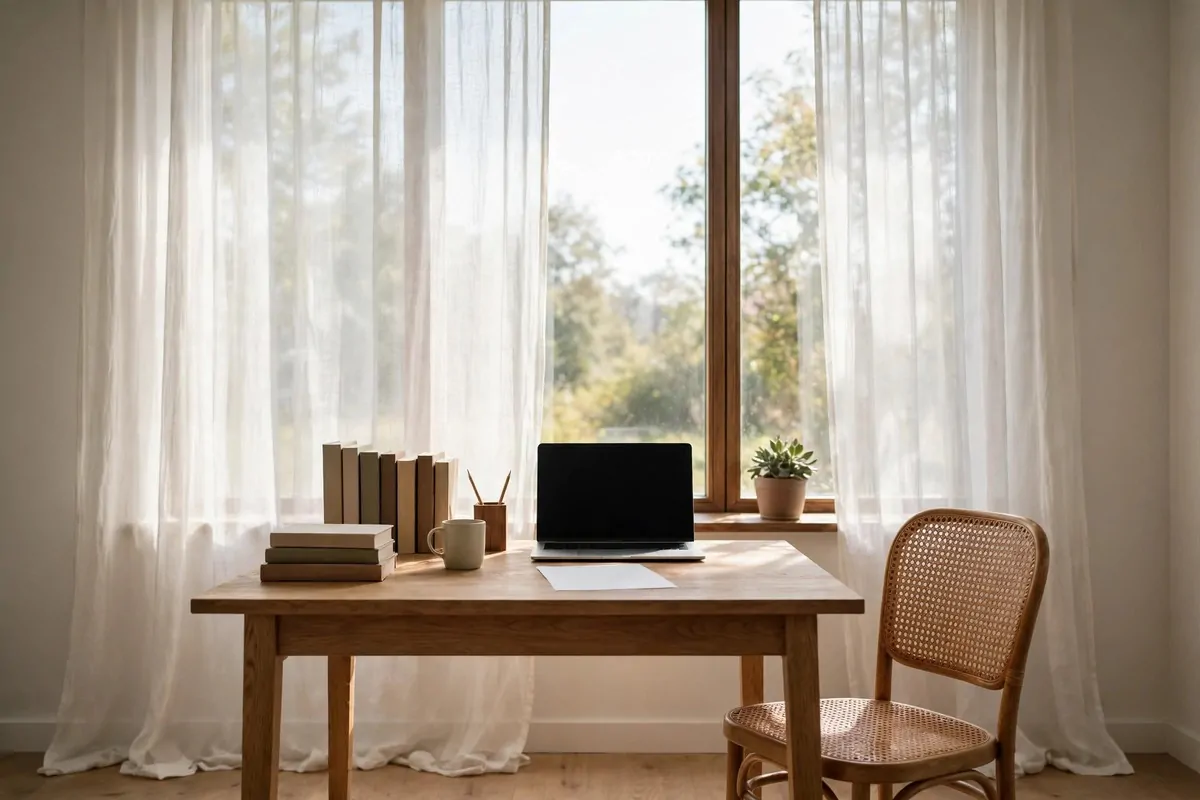
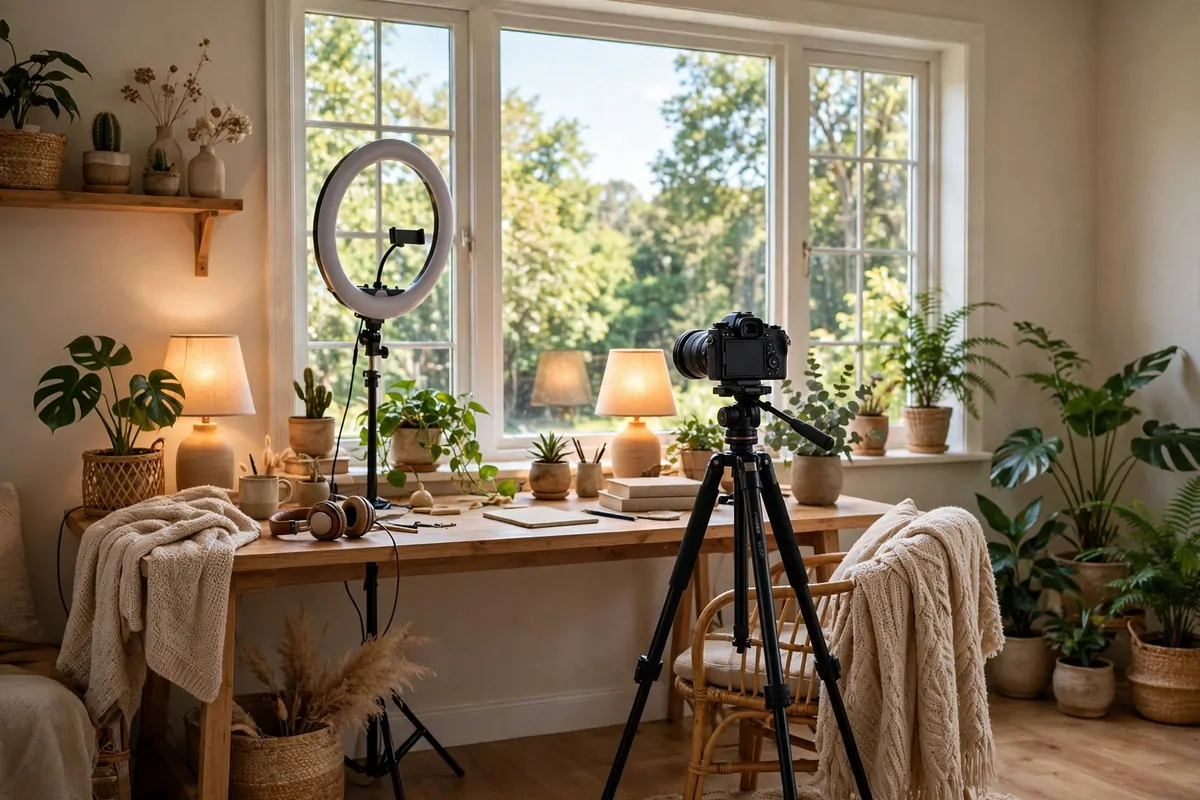
A desk by the window changes your whole workday. You look up and you see sky. You see trees. You see life moving outside while you work.
I love how the light falls on the desk in the morning. It is soft and clear. It makes my notebook look warm. It makes my screen easier to read too, and my eyes feel less tired by lunch.
Put your desk so you face the window if you can. If the sun is too strong, a light curtain helps a lot. You still get the view. You just lose the glare. A sheer curtain softens the brightest part of the day without hiding the trees, and you can still watch the light change while you work through a long list of small tasks.
Keep the window sill clear. A small plant looks lovely there. A stack of papers does not. I learned that the hard way, and my plant nearly fell off twice before I moved the papers.
You will notice the weather more at this desk. Rain sounds closer. Sun feels warmer. Even a gray day feels calm when you can watch the clouds move while you type.
Try a chair that turns easily at this desk. Then you can face the window for a thinking break. You can turn back to your screen when you are ready. It feels like a small reset.
Your mug will find a sunny spot on this desk, I promise you. Mine always does. I move it away from the papers and it still ends up in the light.
Watch out for drafts in the cold months. A warm blanket on your chair helps. A small rug under your feet helps too. You want the window view, not cold toes.
This desk is for you if you stare at a screen all day and need a break for your eyes. Look up often. Let your eyes rest on something far away. Your head will thank you.
The Warm Wood Desk With Soft Light
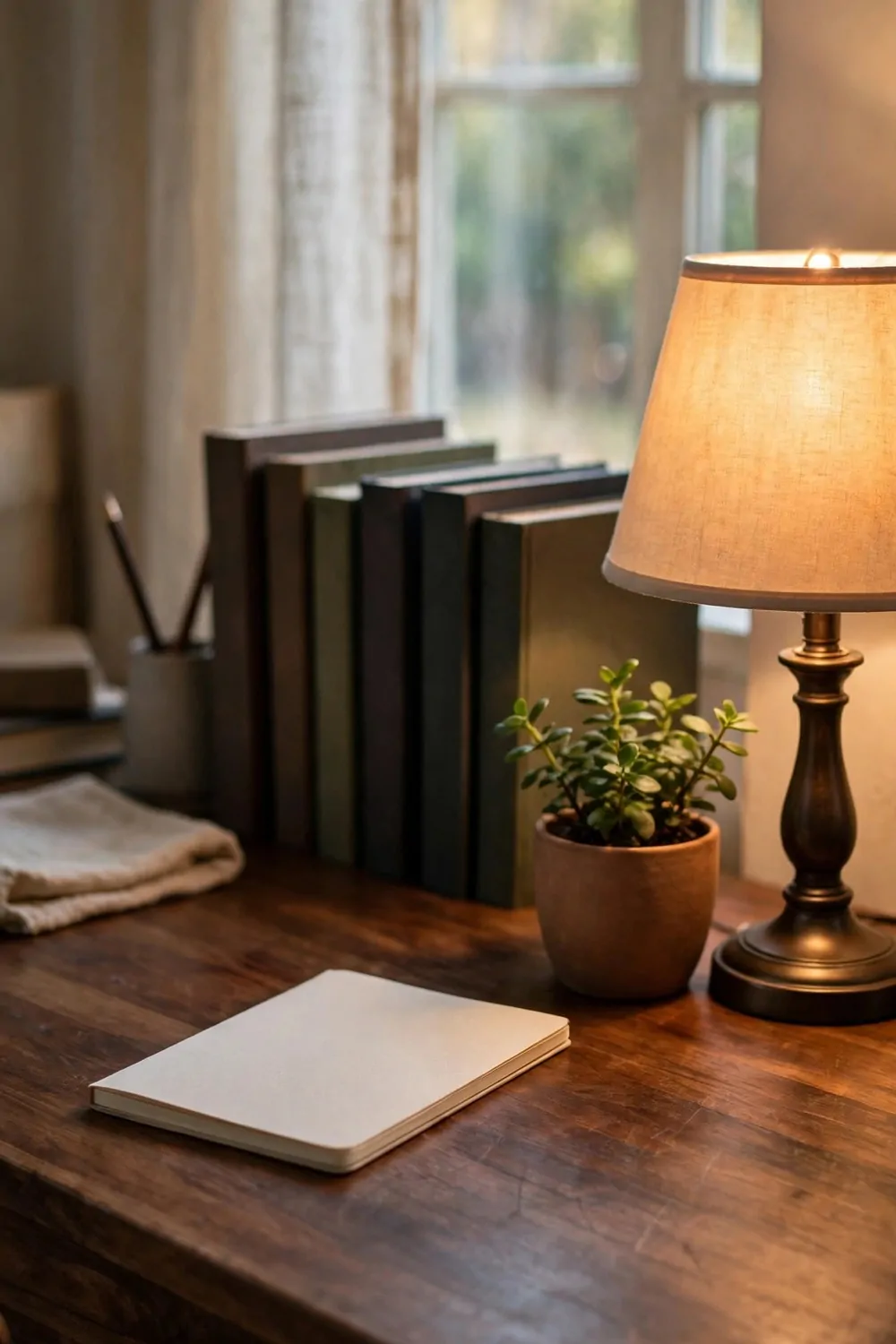
Warm wood makes a desk feel kind. It is not cold like metal. It is not stark like white plastic. It has a color that feels like home.
I love a wood desk with soft light above it. A warm lamp in the corner. A small glow that makes the grain of the wood show up. It feels calm the minute you sit down.
Pick a lamp with a warm bulb, not a cold white one. Cold light can make wood look gray. Warm light makes it glow. You will feel the difference right away. I keep a small spare bulb in the drawer now, because a lamp that goes dark in the middle of a long evening can turn a cozy desk into a cold corner in seconds.
Keep the top simple on a wood desk. A notebook. A pen cup. Your laptop. That is enough. The wood is the star here, so let it show.
A wood desk pairs well with a soft chair. A cushion helps. A throw over the back of the chair helps too. I like how it softens the whole corner.
You can add a small wooden tray for loose things. Keys. Clips. A spare charger. The tray keeps them tidy without hiding them. I lose less stuff this way.
Watch the wood near a sunny window. Strong sun can fade the color over time. A curtain or a mat under your laptop helps protect the top.
This desk suits slow mornings and long projects. It feels steady. It feels honest. It does not rush you, and that is a gift on a busy day.
If your room feels cold or plain, warm wood is a good first fix. Start with the desk. Add warm light. The rest of the room will follow.
The White Desk That Keeps Things Bright
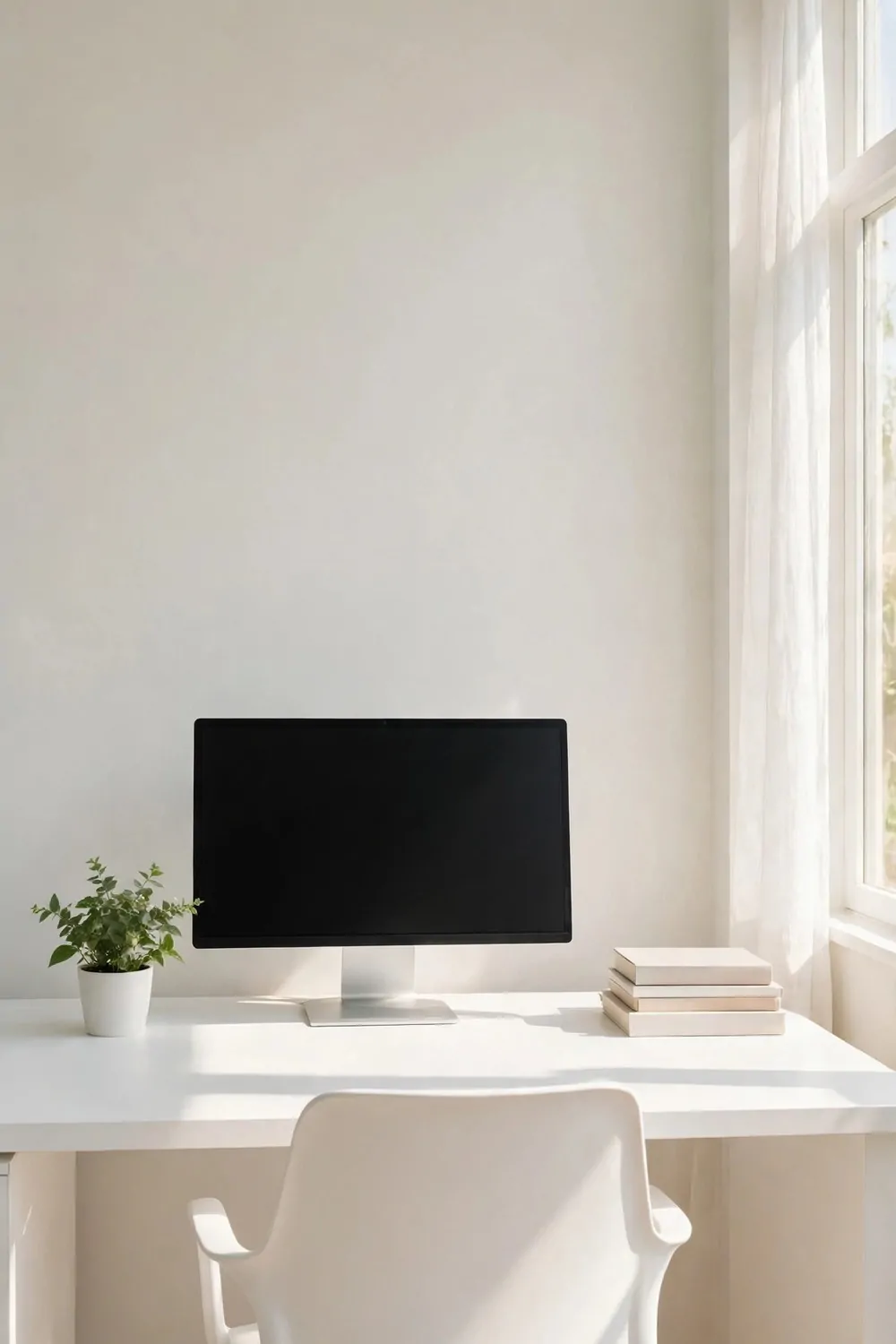
A white desk can wake up a whole room. It bounces light around. It makes a small space feel bigger. It feels clean and fresh.
I like white desks in rooms with little natural light. The white top catches what light there is. It stops the corner from feeling dark and heavy.
Keep the white top clear, or it will show every mark. A mug ring shows up fast. A pen mark shows up faster. I wipe mine down at the end of the day, and it takes one minute. I also keep a small cloth in the drawer, so a quick wipe takes seconds and the white top still looks fresh when a friend drops by for a chat.
Add color with small things, not big ones. A green plant. A blue notebook. A warm wood chair. Those little pops of color look lovely against white.
A white desk works well with a white wall, but it needs one warm touch. A wood frame. A woven basket. A soft rug. Without that, the room can feel a bit cold.
- A small plant for a touch of green
- A warm wood chair to soften the white
- A colored notebook or pen cup for personality
- A soft rug under the chair for warmth
White desks hide dust less than dark desks do. I notice crumbs right away. That is not all bad. It keeps me tidier than I would be otherwise.
Try a white desk if your room feels small or dark. It will not fix everything on its own. But it gives you a bright base to build on.
This desk is for you if you like a fresh start each morning. Clear top. Clean lines. Bright light. Sit down and begin again.
Just remember to keep a coaster close by. Your future self will thank you when the white top still looks new months from now.
The Standing Desk That Moves With You
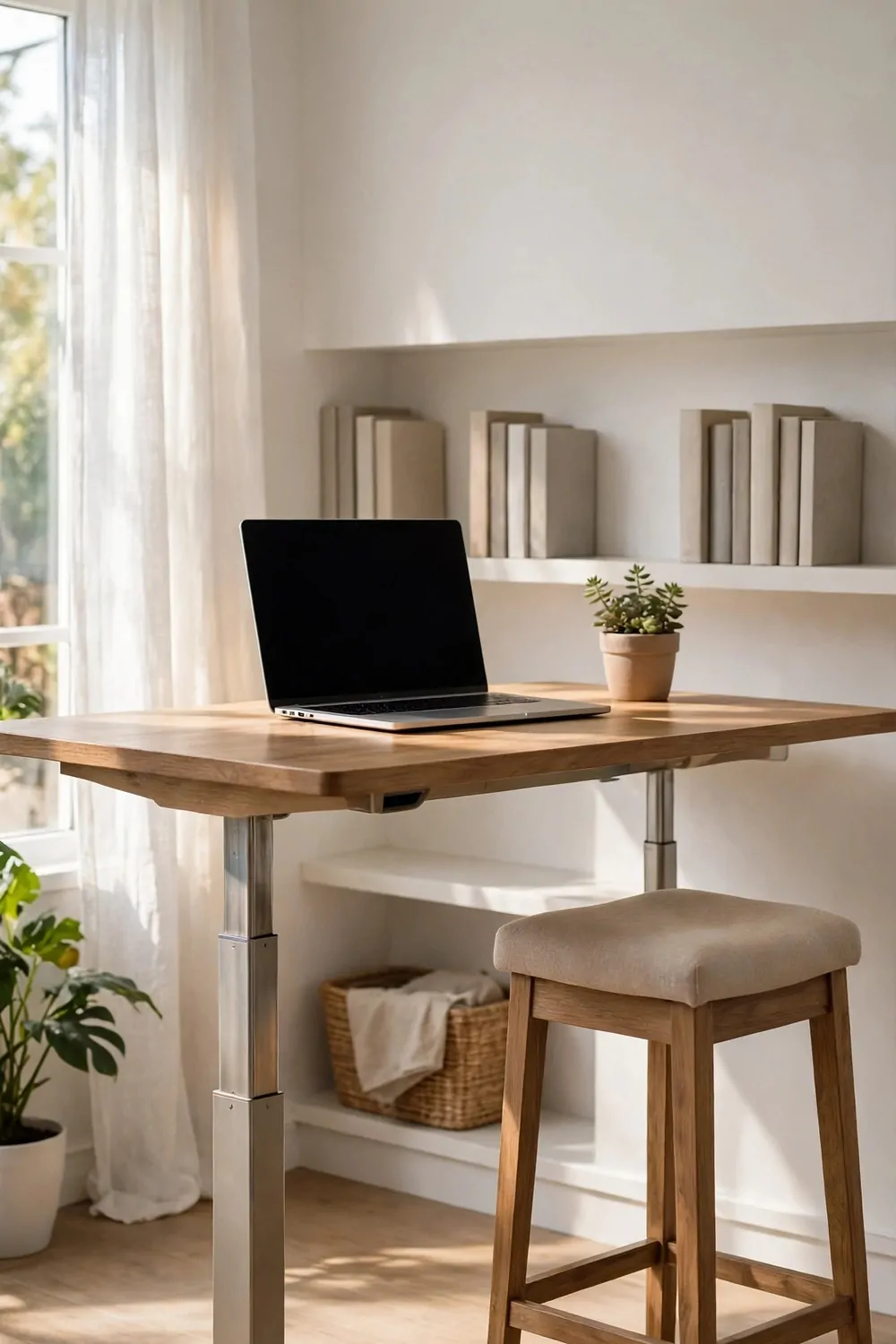
A standing desk moves with you through the day. You sit for a while. You stand for a while. You change position when your body asks you to.
I love how it breaks up a long day at the screen. Sitting all day makes my back ache. Standing all day makes my feet ache. Moving between the two feels just right.
Start slow with a standing desk. Stand for short bursts first. Ten minutes here. Twenty minutes there. Your legs need time to get used to it. I set a quiet reminder on my phone at first, just to stand for a few minutes after lunch, and soon I did it on my own without thinking about it at all.
Keep your screen at eye level when you stand. If the screen is too low, your neck will hurt. Raise the desk until your eyes look straight ahead. That is the sweet spot.
A soft mat under your feet helps a lot when you stand. I stand on a small rug and it makes a big difference. Hard floors get tiring fast.
Put the things you use most within easy reach. Your notebook. Your water. Your pen. When the desk moves up and down, loose things can slide. Keep them steady.
A standing desk suits people who fidget a little. I shift my weight. I stretch. I move from foot to foot. The desk lets me do that without leaving my work.
Do not feel you must stand all day to make it worth it. Even one or two standing breaks help. Your body likes change. Give it some.
This desk is for you if you feel stiff by mid-afternoon. Try standing for your next call. See how it feels. You might not go back.
The Corner Desk That Hugs the Room
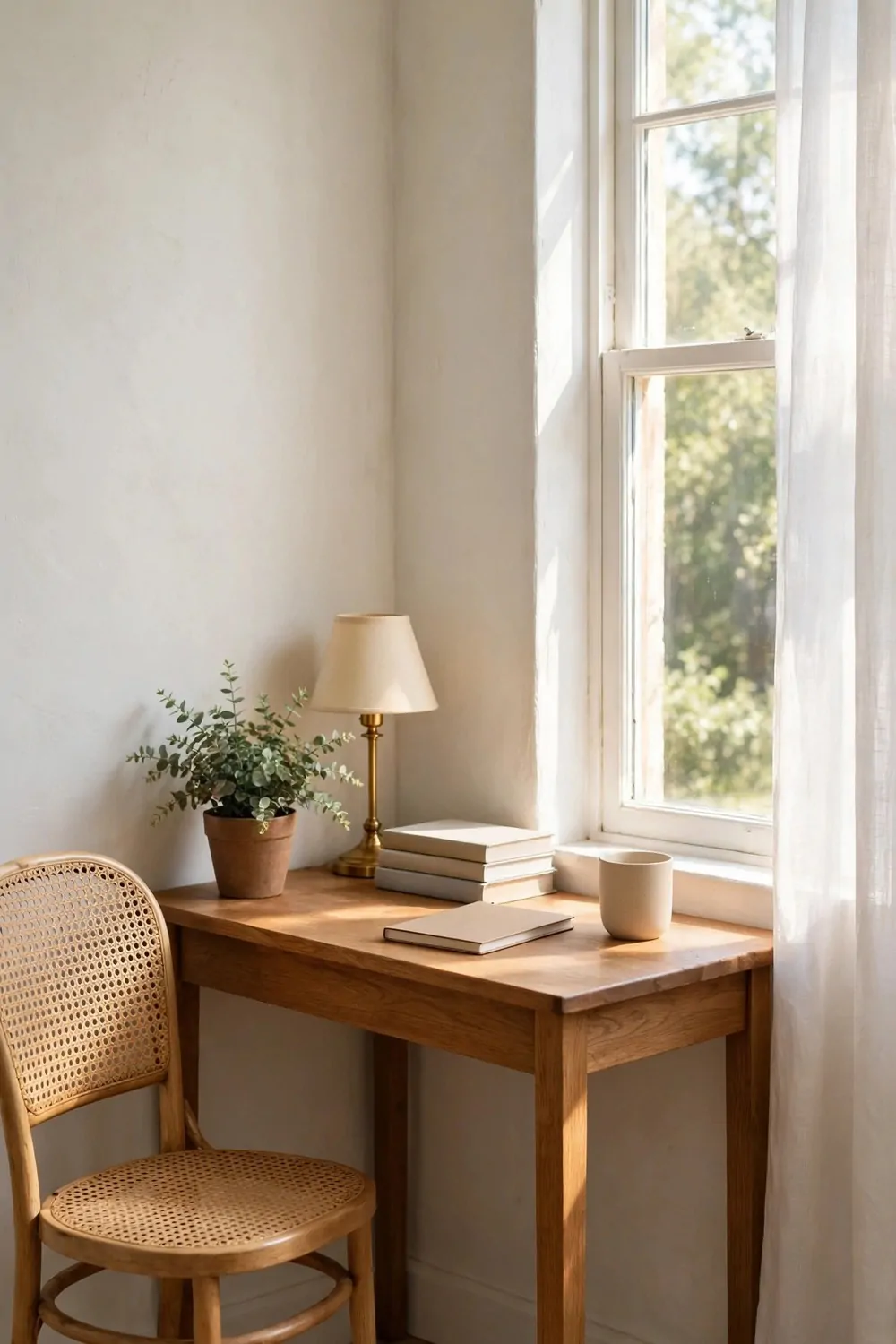
A corner desk hugs the room in the best way. It tucks into a spot that often goes to waste. It turns a dead corner into a real workspace.
I love corner desks in small rooms. They use the walls well. They leave the middle of the room open. The room still feels big enough to walk around in.
Measure your corner before you buy or build anything. Corners look bigger than they are. A desk that is too deep will push your chair out into the room. I bring a tape measure and a notebook when I shop for a corner desk, and I write the corner size down twice, because guessing in a shop has let me down more than once.
Put your monitor in the corner point if you can. Then your chair sits in the middle of the desk curve. It feels snug and focused, like a little nest for work.
Use the wall space above a corner desk for storage. A small shelf on each wall works well. Keep the shelves light. Heavy shelves in a corner can feel like they are closing in.
| Desk style | Best for | Watch out for |
|---|---|---|
| Corner desk | Small rooms and unused corners | A desk that is too deep for the corner |
| Straight desk | Long walls and open rooms | Wasted space at the ends |
| Floating desk | Very tight spots and renters | Limited weight on the wall fixings |
A corner desk can feel closed in if the walls are dark. Paint the corner light. Add a lamp. Keep the top tidy. Light and space will do the rest.
I like a corner desk with a round chair that spins. You can turn to one side for your notebook. You can turn to the other side for your screen. It feels easy and natural.
This desk is for you if you have a corner that holds nothing but dust right now. Give it a job. It might become your favorite spot in the house.
Start with a simple corner desk and a good lamp. Add shelves later. You will learn what you need once you start working there every day.
The Vintage Desk With a Story
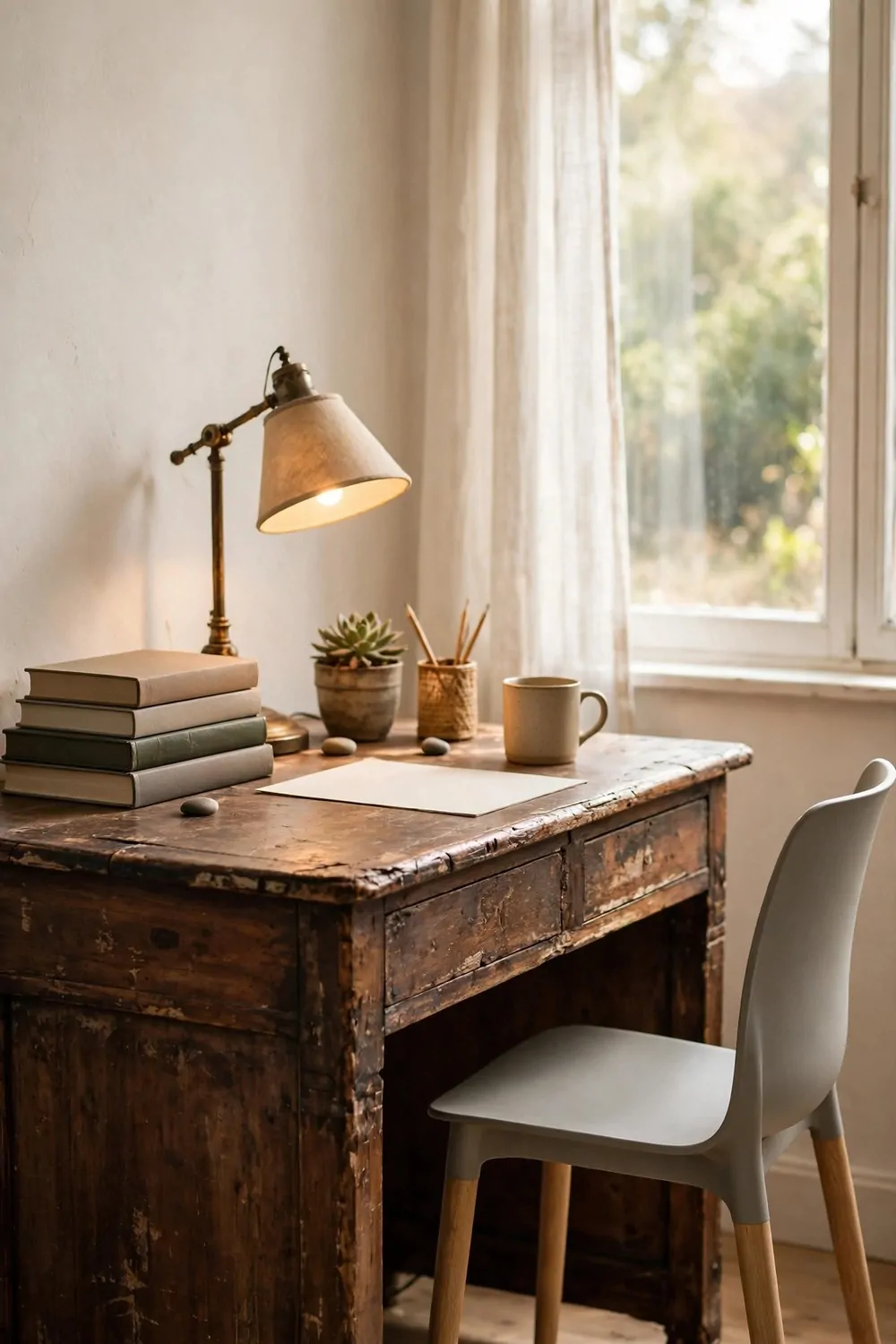
A vintage desk comes with a story, even if you do not know all of it. The worn edges. The old handles. The little marks that show someone worked there before you.
I love desks like this because they feel lived in. They do not need to be perfect. A scratch here and there just adds to the charm. It feels like the desk has earned its place.
Look for a vintage desk with a solid top and drawers that still slide well. Looks matter, but a drawer that sticks will annoy you every single day. Test it before you bring it home. I open and close every drawer twice in the shop, and I listen for a smooth slide, because a drawer that sticks will bother you far more than a small scratch on the top.
Pair a vintage desk with a simple modern chair. The mix looks fresh. An old desk with an old chair can feel like a museum. A new chair keeps it alive.
Keep the top simple so the desk itself can shine. A small lamp. A notebook. A cup of pens. Let the wood and the details do the talking.
A vintage desk often has small drawers that are perfect for work tools. Pens in one. Clips in another. Stamps and notes in a third. I love that kind of order.
Check the height before you fall in love with one. Old desks can sit a little low or a little high. Sit at it if you can. Your knees and elbows will tell you the truth.
This desk suits people who love things with character. It is not plain. It is not new. It has a past, and it makes your work feel rooted somehow.
If you find one you love, take your time with it. Clean it gently. Oil the wood if it looks dry. A little care brings an old desk right back to life.
The Minimal Desk With One Drawer
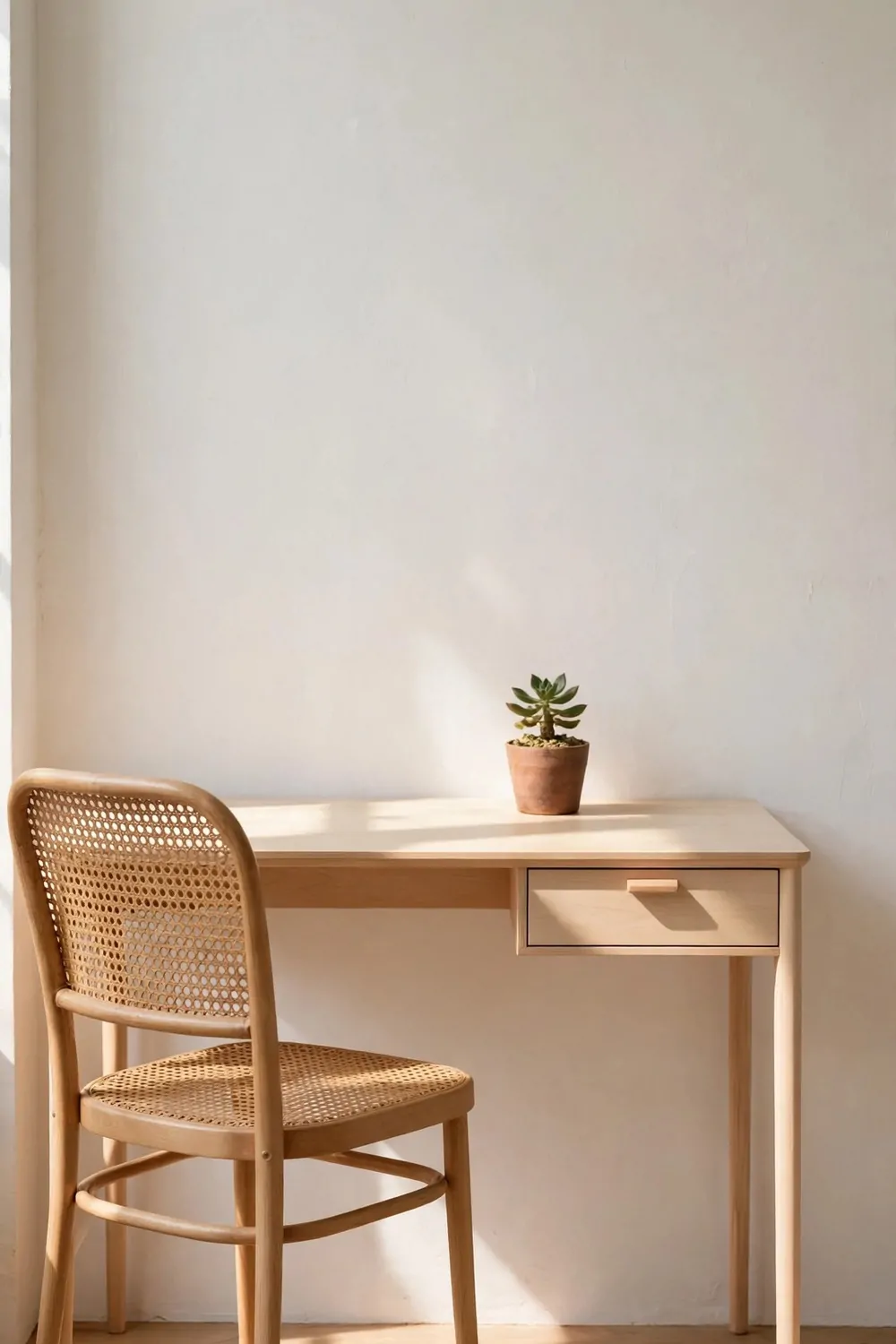
A minimal desk has almost nothing on it, and that is the whole point. One drawer. One clean top. Space to think.
I love how a minimal desk calms my brain. When the top is clear, my thoughts feel clearer too. There is nothing to fidget with. Nothing to tidy first.
The one drawer does a lot of work on this desk. Keep it for the things you use every day. Pens. A notebook. Your charger. Everything else lives somewhere else. I once kept a whole drawer full of old chargers I no longer used, and clearing them out felt so good that I now check the drawer at the start of every month.
Be honest about what belongs in that drawer. If you have not used it in a month, it does not belong there. Move it out. The drawer stays light and useful.
A minimal desk needs a home for papers, or papers will pile up on top. A small tray on a shelf nearby works well. I file papers at the end of each day, and it takes two minutes.
- One drawer for daily tools only
- A clear top with room for your arms and notebook
- A small tray nearby for papers waiting to be filed
- A single lamp for warm, focused light
Pick a chair that matches the calm feel. A simple chair with no fuss. No bright colors shouting for attention. The room should feel quiet.
Minimal does not mean cold. Add one soft thing. A cushion. A small plant. A warm rug. One soft touch is enough to make it feel human.
This desk is for you if clutter makes you feel stressed. Start with less. You can always add one thing at a time, and you will know right away if it earns its place.
Try it for one week. Clear top each night. One drawer only. See how your mornings feel. I think you will like the quiet.
The L-Shaped Desk for Spreading Out
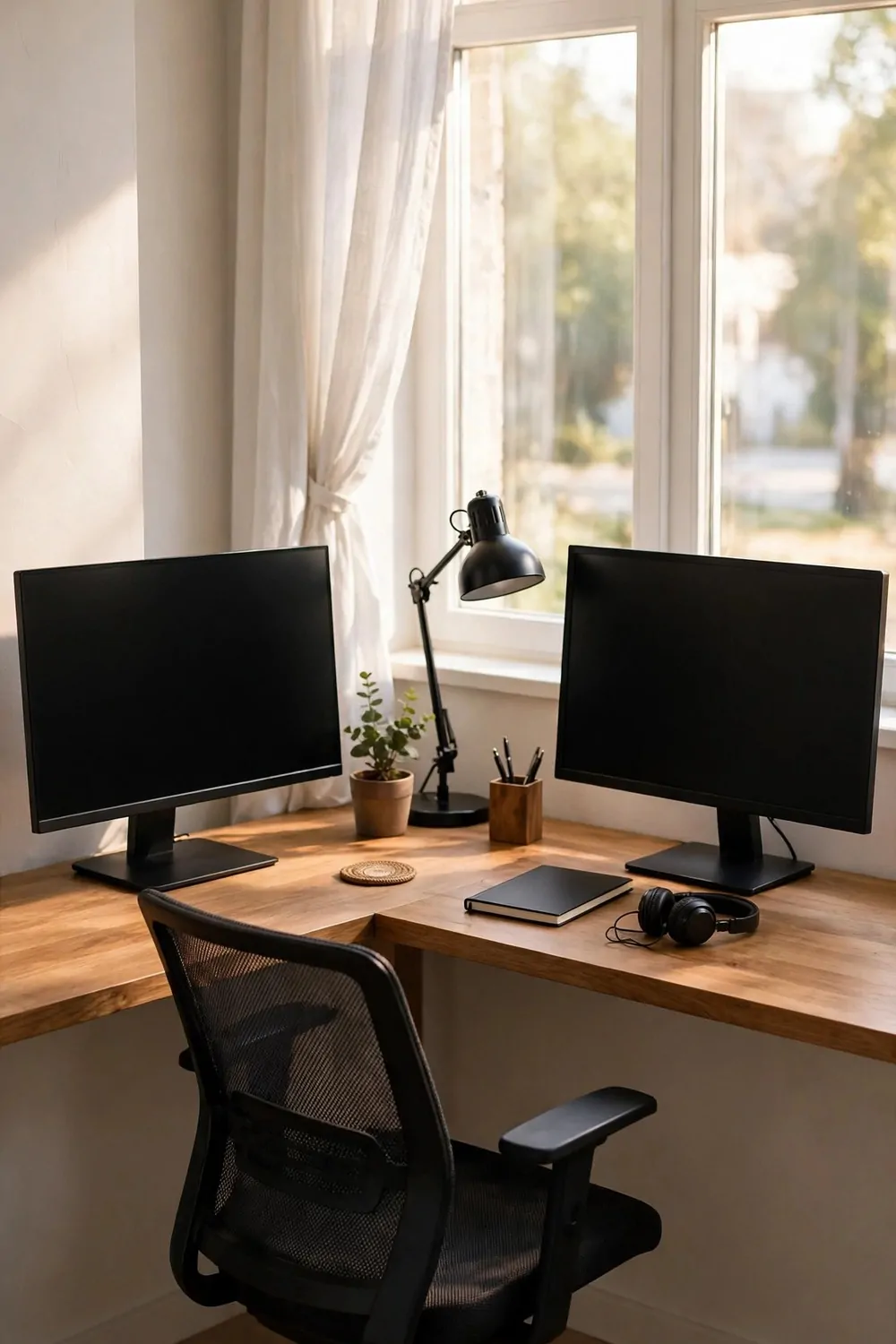
An L-shaped desk gives you room to spread out. One side for your screen. One side for papers. One side for thinking. You never feel squeezed.
I love L-shaped desks for big projects. You can lay out notes on one wing. You can keep your laptop on the other. Everything stays in sight, and nothing gets buried.
Put the long side against the wall if you want a focused feel. Put the short side out into the room if you want to feel more open. Both ways work, and you can try both. I like to sit in the chair and pretend to work for a minute, reaching for the lamp and the notebook, because that small test shows you what will annoy you later.
Keep the corner of the L for things you reach for often. Your lamp. Your notebook. Your water. The corner is the easiest spot to reach from your chair.
An L-shaped desk can take over a small room fast. Measure twice. Leave room for your chair to roll back. Leave room for the door to open. Space to move matters.
| L-desk setup | How to use it | Good for |
|---|---|---|
| Screen on the long side | Papers and books on the short side | Writing and research work |
| Screen in the corner | Supplies on both wings | Craft and design projects |
| Two work zones | One side for work, one for planning | People who juggle two tasks |
Give each wing a job, or both wings will fill up with the same mess. One wing for doing. One wing for planning. It sounds simple, and it really helps.
I like an L-shaped desk with a chair that moves well. You will turn a lot. A chair that rolls and spins makes the whole desk feel easy to use.
This desk is for you if you always run out of room. If your papers slide onto the floor. If your mug fights your notebook for space. The L shape gives you breathing room.
Start with one wing clear each night. The other wing can hold the project you are in the middle of. That balance keeps the desk useful without feeling messy.
The Desk With a Built-In Bookshelf
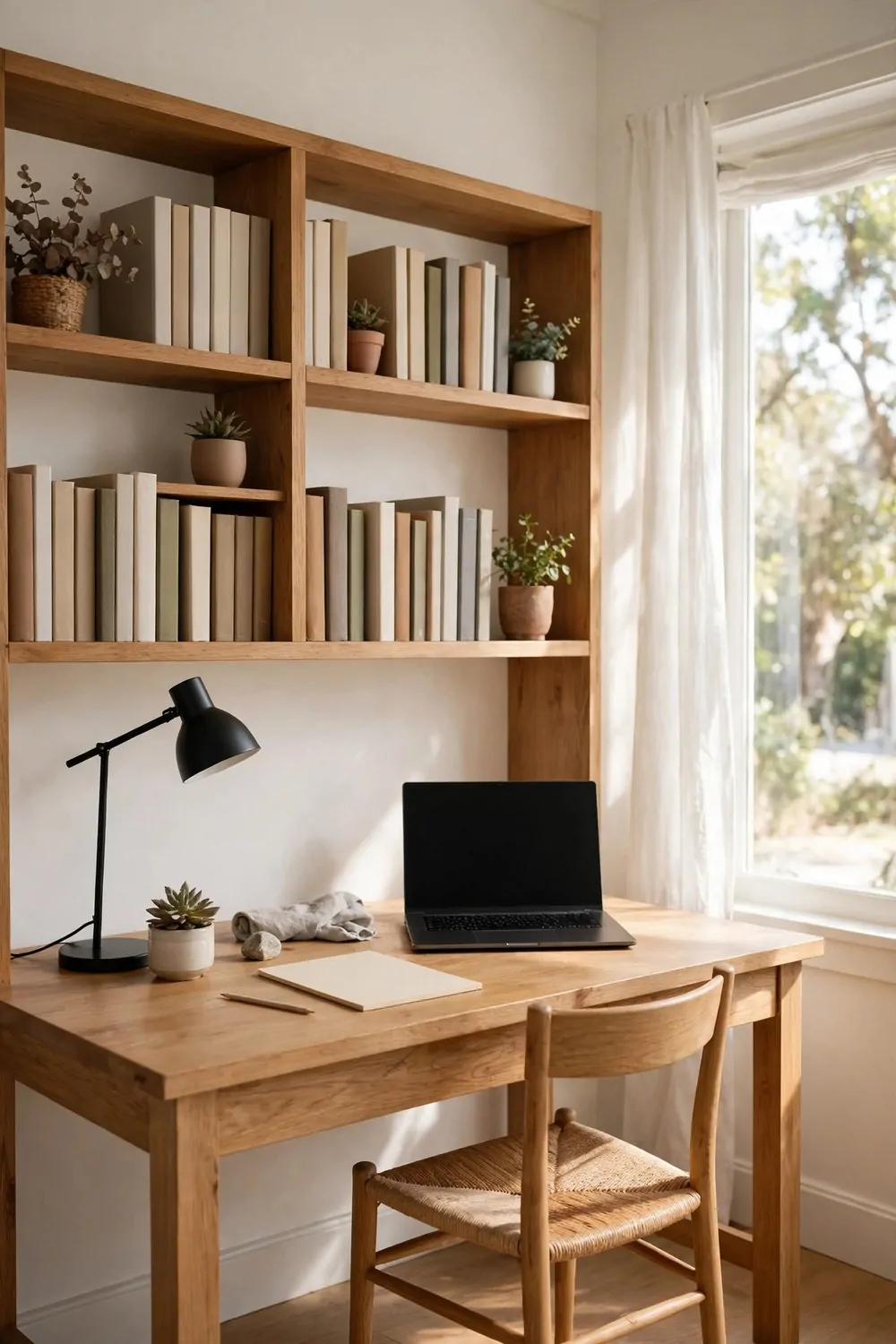
A desk with a built-in bookshelf keeps your books where you need them. You reach. You grab. You put it back. No getting up. No hunting through another room.
I love this desk for people who work with books and notes. Writers. Students. Planners. Your reference books sit right at your elbow, and that saves so much time.
Keep the shelf near the desk tidy and light. A few books you use often. A small box for pens. A plant on top if there is room. Too many books will make the desk feel heavy. I keep my most-used book on its side so I can read the title fast, and the books I rarely touch stand upright on the higher shelf where they still look lovely.
Put the books you use most on the shelf closest to your hand. The ones you rarely touch go higher up. I learned to stop putting heavy books on the top shelf, because they are hard to reach.
A built-in bookshelf can also hide clutter if you use boxes. A plain box looks neat. A labeled box looks even better. I label mine in big, clear writing so I can find things fast.
Watch the weight on a built-in shelf. Books are heavy. Spread them out. Do not pack one shelf full while the others sit empty. Balance keeps the desk steady.
This desk makes a small room feel like a study. It feels smart. It feels calm. It tells you that work happens here, and books are part of the job.
Add a small lamp that lights both the desk and the shelf. Then you can read titles easily in the evening. A dark shelf is a shelf you will never use.
If you love books, this desk is a joy. Your favorite books stay close. Your work stays close too. It all lives in one happy corner.
The Glass Desk That Feels Light
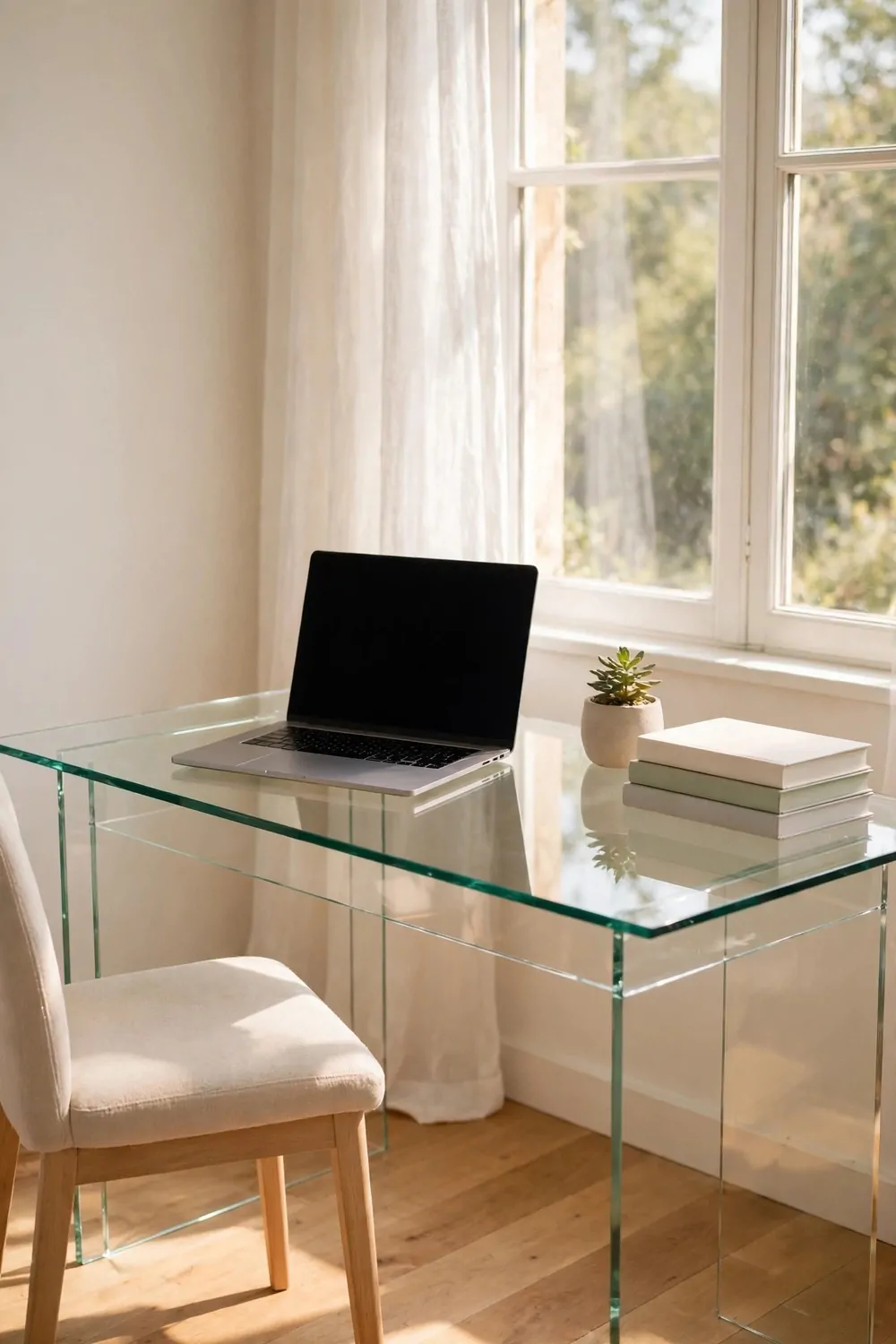
A glass desk feels light in a way no other desk does. You can see through it. The room feels bigger. The desk almost disappears.
I love glass desks in small, bright rooms. They do not block the light. They do not chop the room in half. Your eye moves right past them, and the space feels open.
Keep the area under a glass desk tidy, because you will see it. Cables show. Boxes show. Dust shows too. I keep a small basket under mine for the things I need to hide. I chose a mat in a soft, pale color, and it stops the glass from feeling cold while it gives my wrists a smooth, steady place to rest all day.
Use a desk mat on a glass top. It protects the glass. It gives your arms a soft place to rest. It also stops your notebook from sliding around while you write.
A glass desk pairs well with a simple chair and clean lines. Too many busy patterns will fight with the glass. Keep the look calm and the desk will shine.
Glass can feel cold to the touch, especially in winter. A mat helps. A warm rug under your feet helps too. Small comforts make a big difference here.
Clean a glass desk often, but gently. A soft cloth works best. I wipe mine down when I finish work, and it stays clear and bright without much effort.
This desk suits people who like airy rooms and simple shapes. It feels modern. It feels fresh. It never makes a room feel crowded.
Try a glass desk if your room feels heavy or dark. It will not add weight to the space. It will let the light do its work.
The Dark Desk With Brass Touches
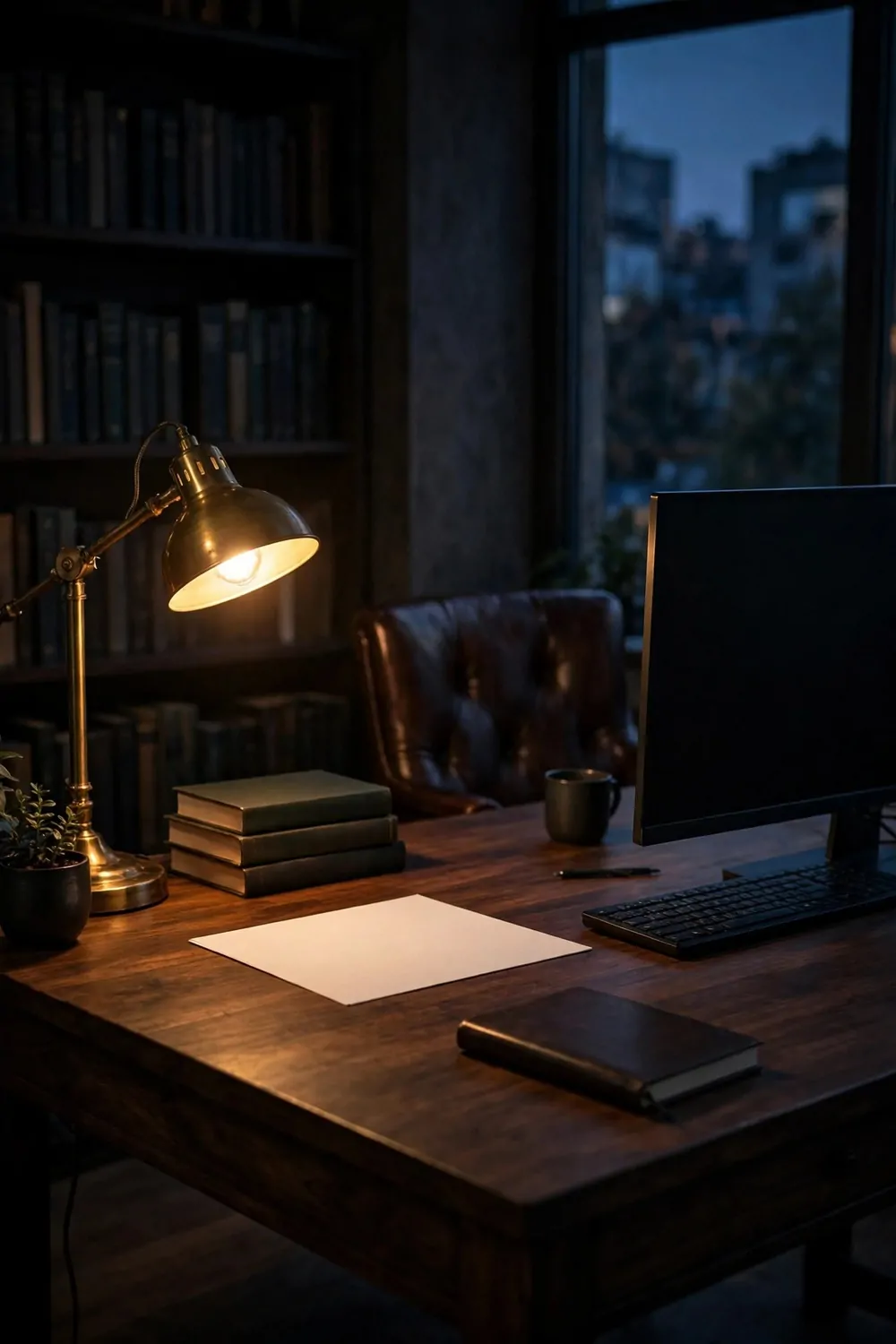
A dark desk with brass touches feels rich and calm. Deep wood. Warm metal. Soft light. It is the kind of desk that makes you want to slow down and focus.
I love brass handles and a brass lamp on a dark desk. The metal catches the light. It glows a little. It stops the dark wood from feeling too heavy.
Keep brass touches small and few. A lamp. Two handles. A small tray. Too much brass can look loud. A little brass looks smart. I keep the brass lamp on a low setting in the evening, and the warm glow makes the dark wood look richer while the rest of the room feels calm and quiet.
Pair a dark desk with warm light, never cold light. Cold light makes dark wood look gray and dull. Warm light brings out the depth in the wood.
A dark desk hides marks well. Mug rings show less. Pen marks show less. I still use a coaster, but I worry less about every little spot.
Add a light chair or a light rug to balance the dark desk. Without that balance, the corner can feel too dark. A pale cushion does the trick for me.
This desk works well in a room with books and art. It feels like a study. It feels grown up. It makes long, quiet work feel good.
Keep the top tidy on a dark desk. Clutter shows up in a different way here. It breaks the calm mood. A clear top keeps the rich feel intact.
If you love deep colors and quiet rooms, this desk is for you. It feels steady. It feels warm. It feels like a place for serious, happy work.
The Desk Under a Gallery Wall
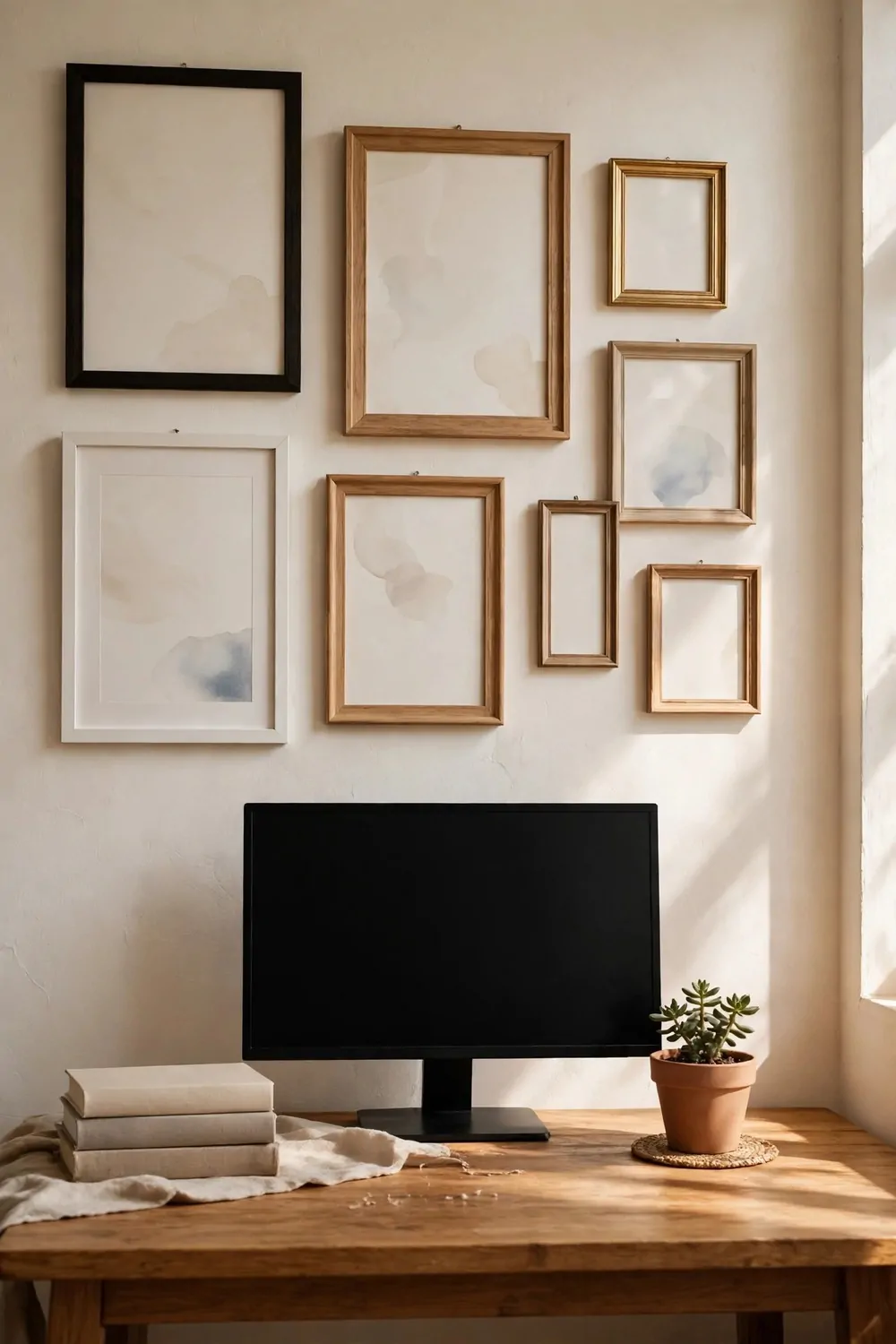
A desk under a gallery wall feels inspiring the minute you sit down. You look up and see art you love. Photos. Prints. Little pieces that make you smile.
I love gallery walls because they make a desk feel personal. No two look the same. Yours will show what you care about, and that matters when you work there all day.
Start with a few frames, not a whole wall at once. Three or four is enough to begin. You can add more over time. A wall that grows slowly feels more honest. I lay the frames out on the floor first, and I move them around until the mix feels right, because holes in the wall are much harder to undo than a floor plan.
Hang the art so you can see it from your chair. Too high and you will crane your neck. Too low and your screen will block it. Eye level from your seat is just right.
Mix frame sizes and shapes for a relaxed look. Big and small together. Square and tall together. Keep one color thread through them, like all wood frames or all black frames.
Leave a little space between frames. Crowded frames can feel busy. A small gap lets each piece breathe. I step back and look from the door to check the balance.
A gallery wall above a desk needs to be fixed well. Use proper hooks. Heavy frames need strong fixings. The last thing you want is a frame falling onto your laptop.
Change one piece now and then to keep it fresh. Swap a photo for a new print. Move a frame to a new spot. Small changes keep the wall feeling alive.
This desk is for you if blank walls make you feel bored. Fill the wall with what you love. Your work will feel more like yours.
The Rustic Farmhouse Desk
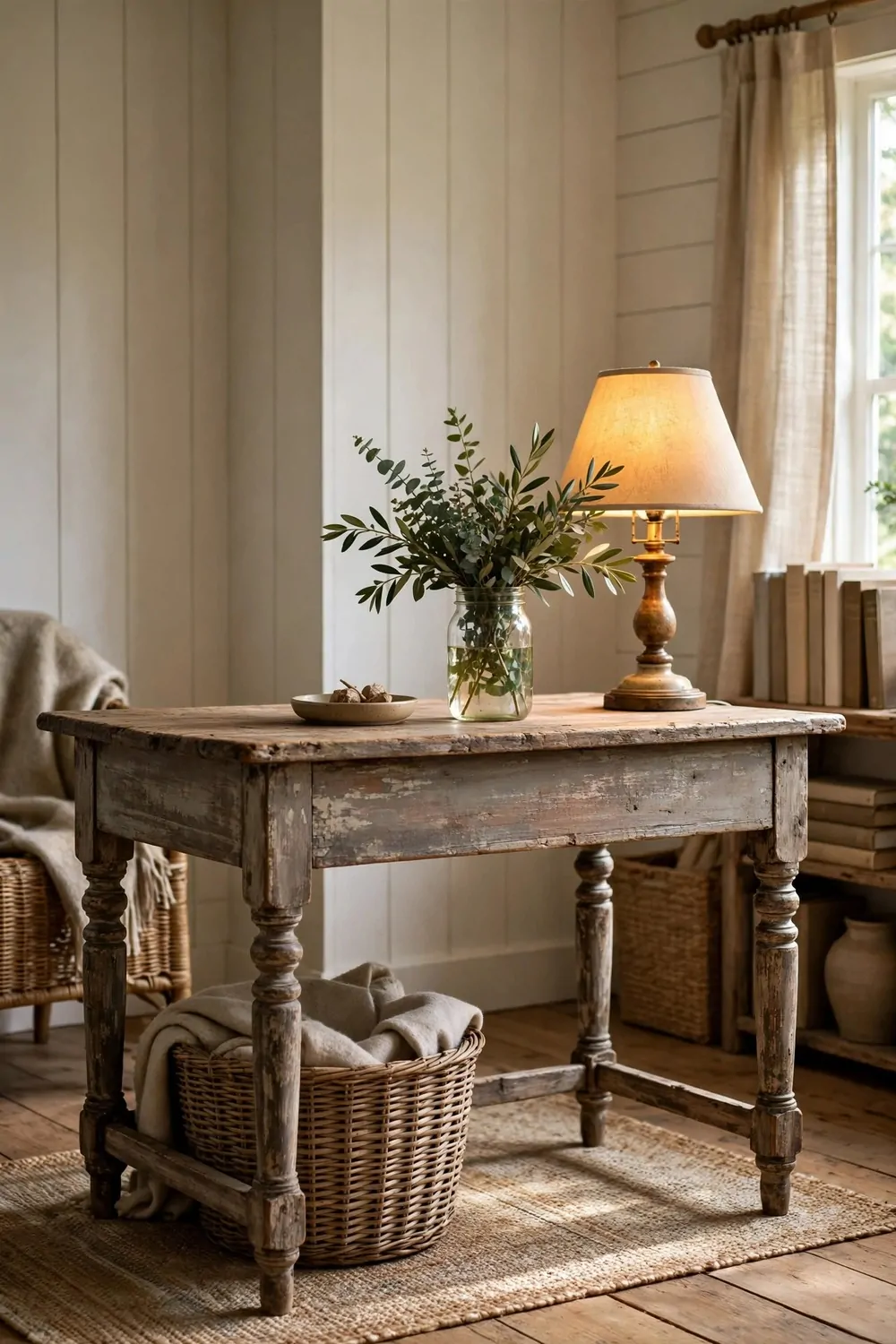
A rustic farmhouse desk feels warm and welcoming. Rough wood. Soft colors. Simple shapes. It looks like it belongs in a home, not an office block.
I love farmhouse desks with a chunky wood top and sturdy legs. They feel solid. They feel honest. They make the room feel cozy the minute you walk in.
Pair a farmhouse desk with a woven basket or two. Baskets hide clutter well. They hold papers. They hold chargers. They look soft and natural beside rough wood. I keep a soft cloth in the basket for dusting the wood, and a quick wipe once a week keeps the rough top looking warm instead of tired and gray.
Keep the colors soft around a farmhouse desk. Cream. Sage. Warm gray. Pale wood. Bright, harsh colors can fight with the calm farmhouse feel.
A farmhouse desk suits a room with natural light and plants. A plant on the corner. A small vase with fresh stems. Nature and farmhouse style go together so well.
Use a simple lamp with a fabric shade on this desk. A metal lamp can look too hard. A soft shade gives warm light that suits the wood.
Farmhouse desks often have room underneath for a basket or a stool. Use that space. It keeps the floor clear and the desk area tidy.
This desk is for you if you love cozy, lived-in rooms. It does not try to look perfect. It tries to feel like home, and it does a lovely job.
Add a soft cushion to your chair and a rug under the desk. Those two touches finish the look. Sit down, and you will not want to leave.
The Small Desk for a Tiny Corner
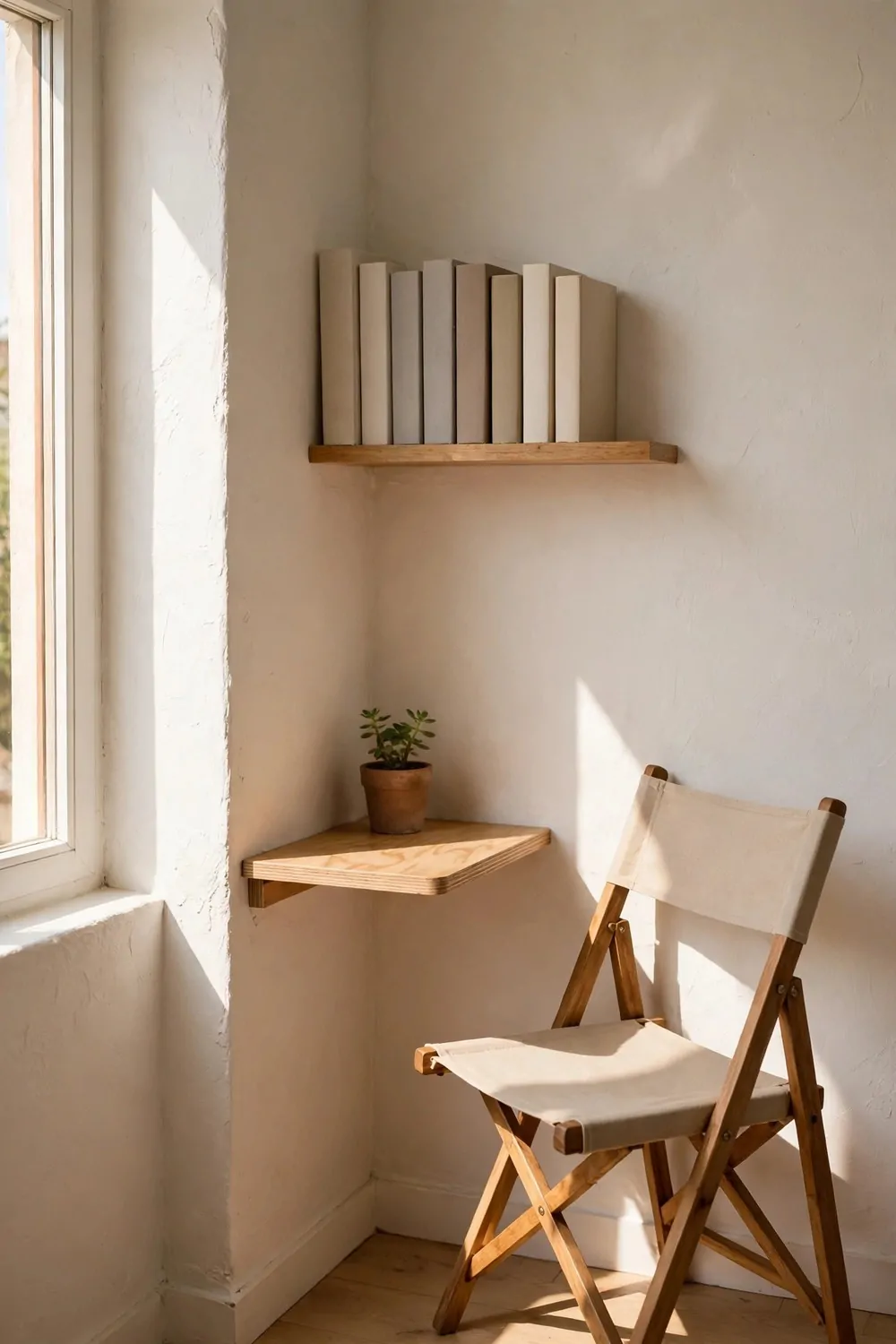
A small desk for a tiny corner proves that you do not need much space to work well. A little top. A good chair. A lamp. That can be enough.
I love tiny corner desks because they make use of space that would otherwise sit empty. A gap by the door. A nook by the stairs. A corner in the bedroom.
Measure the corner with care. A desk that is even a little too wide will block the walkway. You need room to pull your chair out and stand up with ease. I test the chair pull-out space with the door closed and the door open, because a desk that works in the morning can still block the way when someone walks past.
Go up, not out, with storage on a tiny desk. A wall shelf above. A hook on the side. A small caddy for pens. Vertical storage saves your precious desk top.
Keep only the daily essentials on a small desk. Laptop. Notebook. Lamp. Everything else needs a home nearby, or the tiny top will vanish under clutter.
- A wall shelf above the desk for books and boxes
- A hook for headphones or a small bag
- A narrow pen cup that leaves room for your arms
- A small lamp that clips on or sits in the corner
A small desk needs good light more than a big desk does. A dark tiny corner feels cramped. A bright tiny corner feels clever. Add a lamp you love.
Pick a chair that slides right under the desk when you finish. A chair left out in the room will block the space. A chair tucked away keeps the corner neat.
This desk is for you if you think you have no room for an office. Look again. There is a corner waiting. It just needs a small desk and a little light.
Start tiny and simple. You can add a shelf later. The best tiny desks grow slowly, one smart fix at a time.
The Desk With Plants All Around
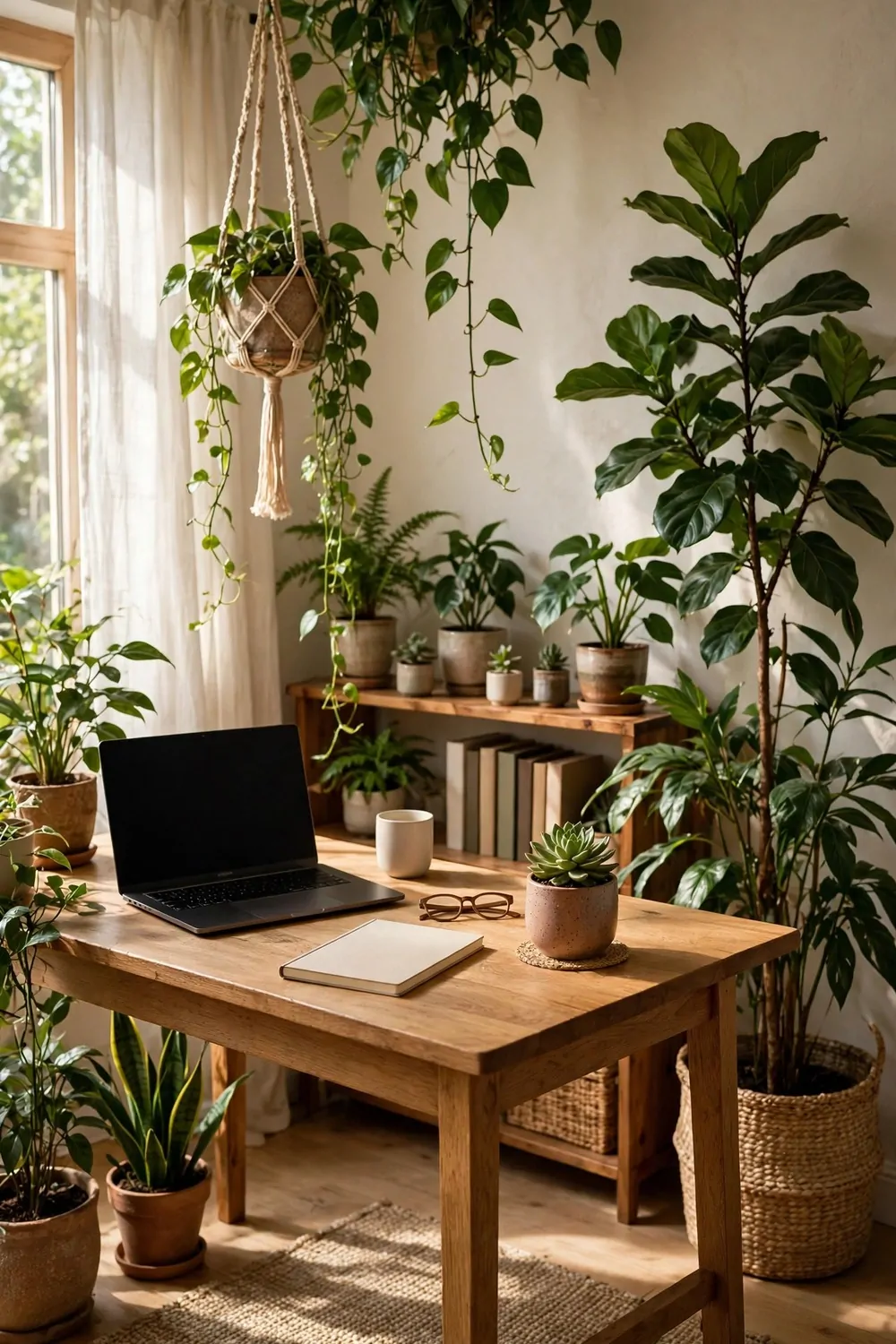
A desk with plants all around feels alive. Green leaves. Soft shadows. Fresh air. It turns a plain work spot into a little indoor garden.
I love plants on and around my desk. They soften the hard edges of the screen. They give my eyes something green to rest on. They make the room smell fresh too.
Start with one or two plants that are easy to care for. A small leafy plant on the desk. A taller one on the floor beside it. Easy plants build your confidence. I check the soil with my finger before I water, and I only water when the top feels dry, because most of my early plant mistakes came from too much love and too much water.
Put plants where they get light but not harsh sun. A spot near the window works well. A plant in a dark corner will droop, and you will feel bad every time you see it.
Keep plants off your main work area. A plant in the middle of the desk will get in the way. Put it in a corner of the desk, or on a shelf above.
Water plants on a set day so you do not forget. I water mine on the same morning each week. A little routine keeps them happy and keeps me from overwatering.
Use pots that match your desk style for a calm look. Plain pots in one or two colors look tidy. Too many bright pots can make the desk feel busy.
Plants can help a desk feel less lonely, especially if you work from home alone. They are quiet company. They grow while you work, and that feels hopeful.
This desk is for you if you love green things and fresh air. Add plants slowly. Let the desk turn green one pot at a time.
The Two-Person Desk for Sharing
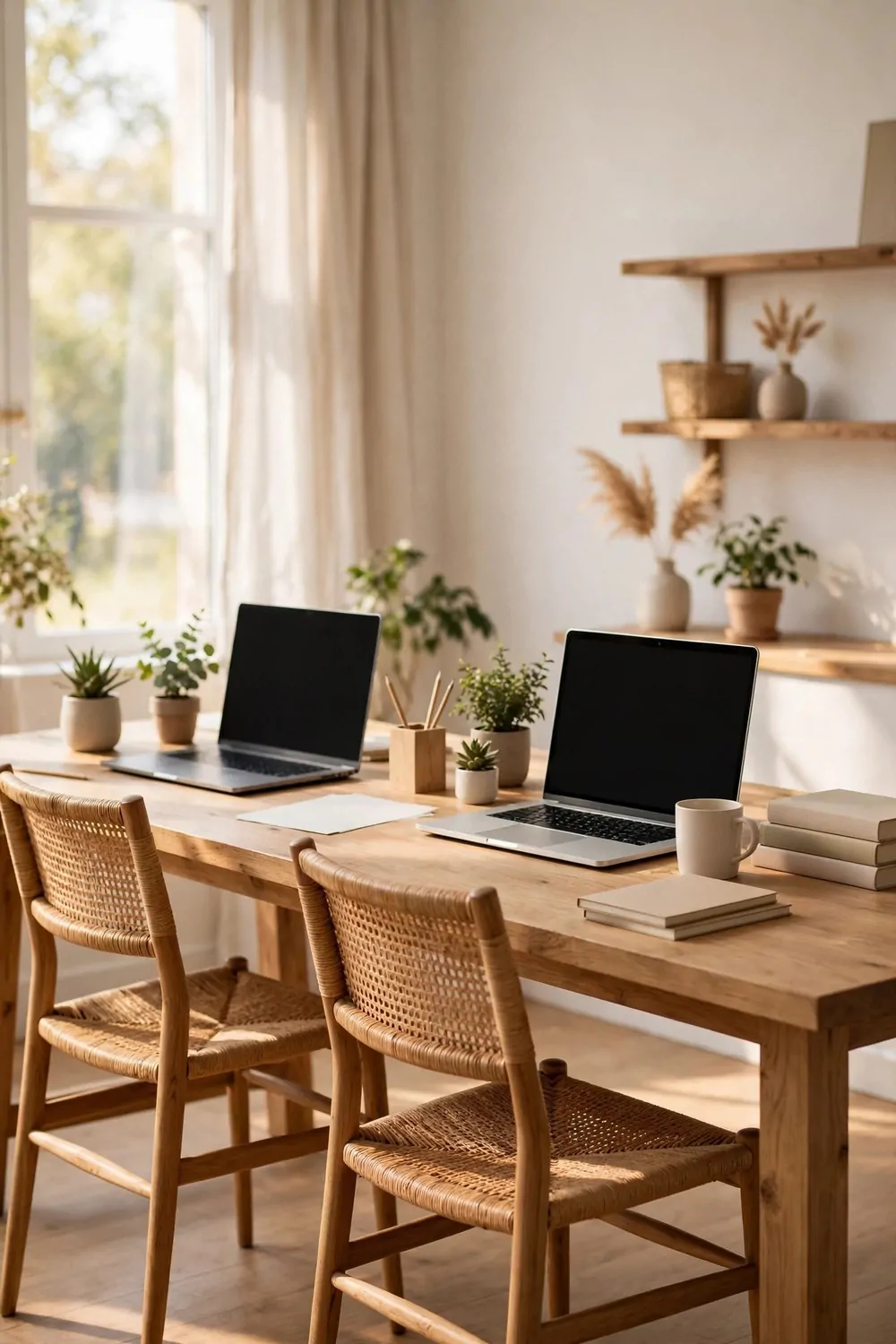
A two-person desk lets two people share one room without sharing one desk top. Each person gets a side. Each person gets space to work.
I love shared desks that face the same wall. You sit side by side. You can talk easily. You can also put headphones on and focus, and it still feels companionable.
Give each person a clear zone on a shared desk. A line down the middle helps, even if it is just in your head. My side. Your side. It stops little fights before they start. I also keep a small shared tray in the middle for pens and clips we both use, and refilling it together keeps the desk feeling fair for both people.
Each person needs their own light if possible. One lamp in the middle leaves one side too dark. Two small lamps keep things fair and bright.
Shared desks need shared rules about noise and calls. Agree on quiet hours. Agree on when calls are okay. A short chat about rules saves a lot of stress later.
Storage helps a shared desk stay calm. A drawer each. A box each. A shelf each. When everyone has a place for their things, the shared top stays clear.
Pick chairs that do not bump into each other. Measure the space for two chairs with room to roll. Elbow room matters more than desk length here.
A long shared desk can also work facing each other, with a divider in the middle. That suits people who like a little privacy while they work.
This desk is for you if you share your work space with a partner, a friend, or a family member. Plan the zones. Share the light. Keep it kind.
The Desk With a Pinboard Above
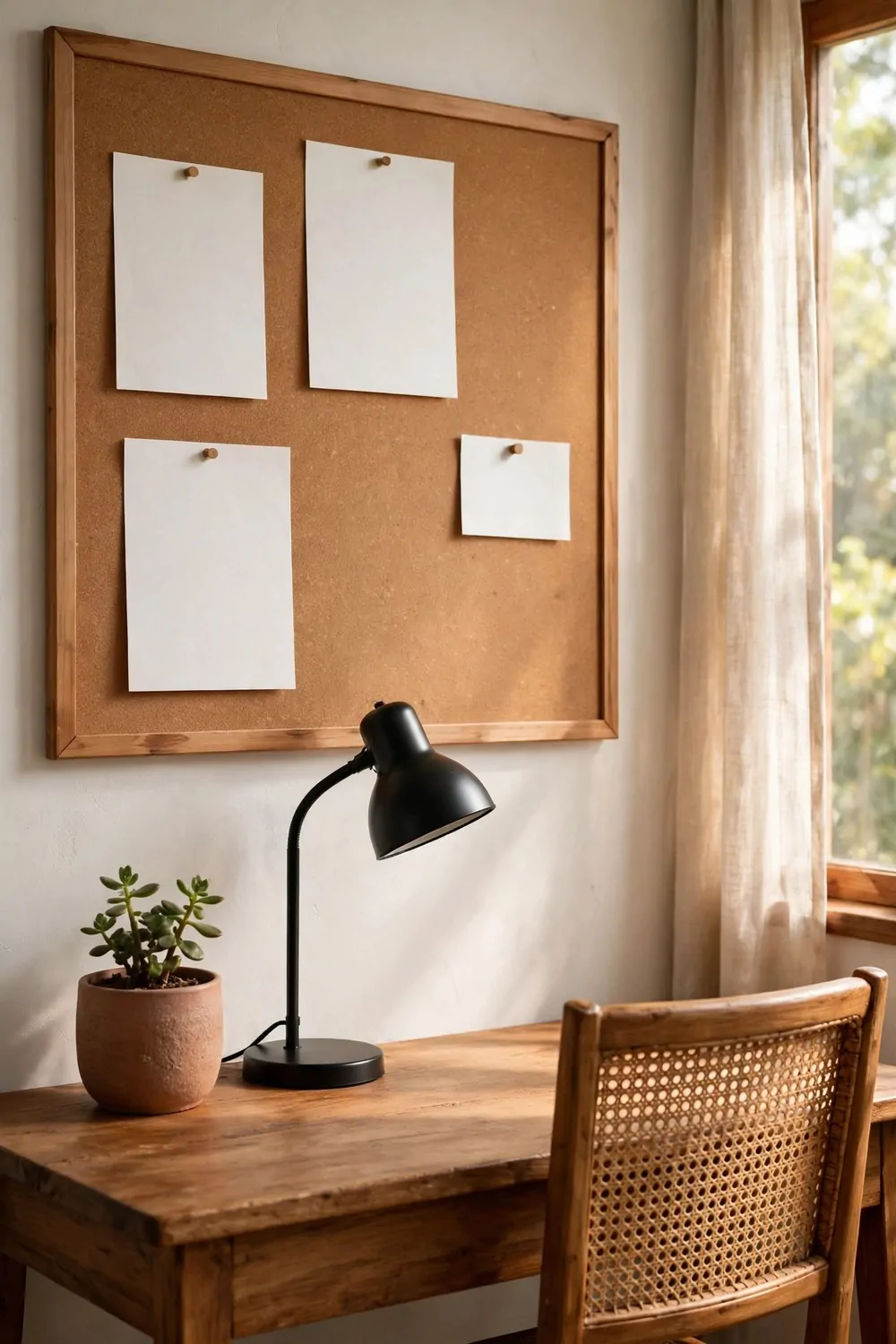
A desk with a pinboard above it keeps your ideas where you can see them. Notes. Photos. Lists. Little reminders that keep your work on track.
I love pinboards because they hold the messy middle of a project. The half-formed ideas. The dates you must not forget. The photo that sparked the whole thing.
Keep the pinboard close to your desk but not too crowded. If every inch is covered, you will stop looking at it. Leave space around the important notes. I take a photo of the board when a project ends, so I can clear it with confidence and still keep a record of the ideas that mattered most.
Use the pinboard for active work only. Old notes go in a folder. Finished lists come down. A pinboard should show today and this week, not last year.
Mix useful and lovely things on the board. A deadline card next to a photo you love. A color swatch next to a to-do list. Work feels better with a little beauty in it.
Pin things at a height you can reach and read from your chair. Too high and you will never change it. Too low and your screen will hide the bottom row.
A pinboard can be cork, fabric, or a metal grid. Pick the one that suits your room. I like cork because it feels warm and it holds pins well.
Change the board at the start of each new project. Clear it. Start fresh. That little ritual helps your brain switch gears and focus on what comes next.
This desk is for you if your ideas live on sticky notes all over the house. Give them one home above your desk. You will find them faster, I promise.
The Scandinavian Pale Wood Desk
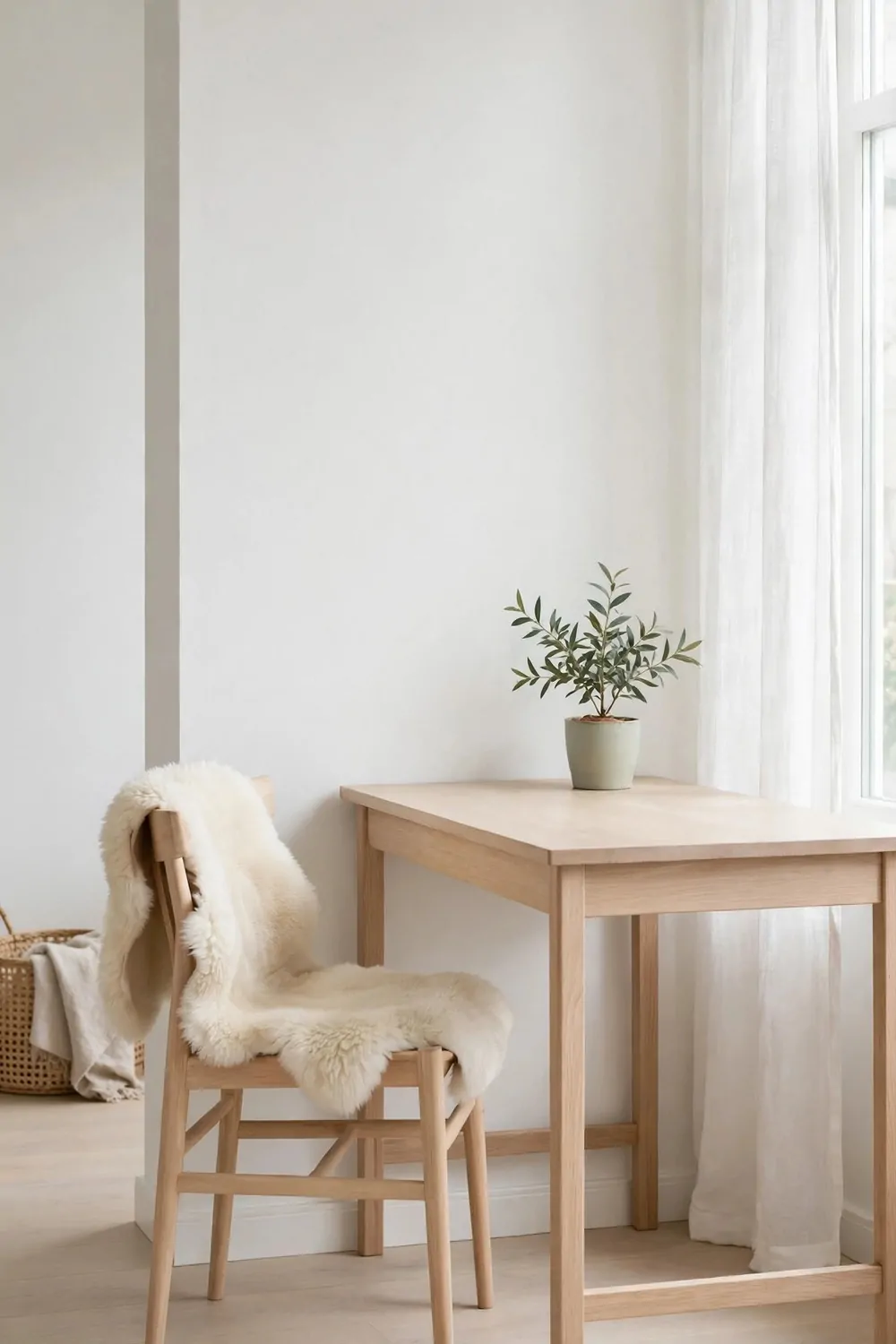
A Scandinavian pale wood desk feels light, calm, and clean. Pale wood. White walls. Soft light. Nothing shouts. Everything breathes.
I love pale wood because it makes a room feel bigger and brighter. It does not weigh the space down. It lets the light bounce around and do its quiet work.
Keep the top very simple on a pale wood desk. A laptop. A notebook. A small lamp. The pale wood looks best when you can see plenty of it. I keep the lamp cord tucked behind the desk leg, and the clean line from the lamp to the wall helps the whole pale desk feel calm and uncluttered.
Pair pale wood with white, gray, and soft green. Those colors feel calm together. A black chair can add a nice contrast, but keep it simple and slim.
Scandinavian style loves function. Every item on the desk should earn its place. If it does not help you work, it probably belongs in a drawer or on a shelf.
Add one soft textile for warmth. A wool cushion. A light throw. A soft rug under the desk. Pale rooms need one soft touch, or they can feel a little cool.
Good light matters most with pale wood. Natural light is best. A simple lamp with warm light works well in the evening. Avoid harsh overhead light if you can.
This desk suits people who feel calmer with less around them. It is clean. It is quiet. It helps you focus on one thing at a time.
If your room feels busy or dark, pale wood is a fresh start. Start with the desk. Keep the rest simple. Let the calm build from there.
The Desk Beside a Cozy Reading Chair
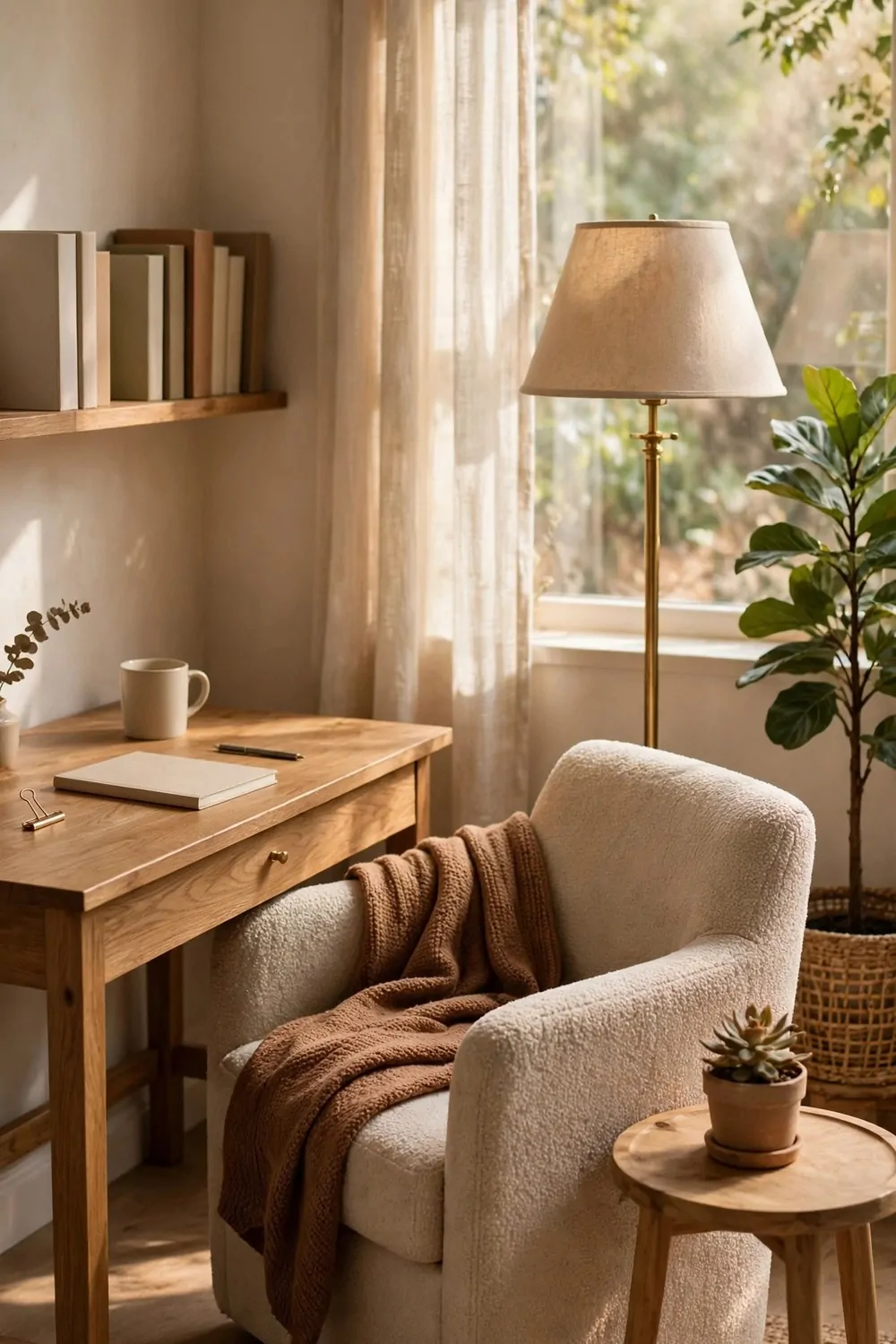
A desk beside a cozy reading chair gives you two work modes in one corner. Sit at the desk to focus. Move to the chair to think, read, or take a call.
I love this setup because it stops me from sitting in one place all day. I work at the desk for a while. Then I move to the chair with my notebook. My body feels better for the change.
Put a small table between the desk and the chair if you have room. It holds your mug. It holds your book. It bridges the two spots nicely. I keep a small basket beside the table for books I am reading now, and that one basket stops stray books from piling up on the desk and the chair.
Keep the chair cozy but not too soft. A chair that swallows you will make you sleepy. A firm cushion with a soft throw is just right for reading and thinking.
Give the chair its own light. A floor lamp beside it works well. Then you can read in the chair without turning on the bright desk lamp.
This corner works well in a living room or a bedroom. The desk does the work. The chair softens the room. Together they feel like a real part of the home.
Use the chair for calls and planning, and the desk for typing and writing. That split helps your brain know what mode you are in. It sounds small, and it helps a lot.
Keep a blanket on the chair for cold afternoons. I reach for mine more than I expected. A warm lap makes reading notes feel like a treat, not a chore.
This desk is for you if you like to move around while you think. Desk for doing. Chair for dreaming. Both in one lovely corner.
The Industrial Metal and Wood Desk
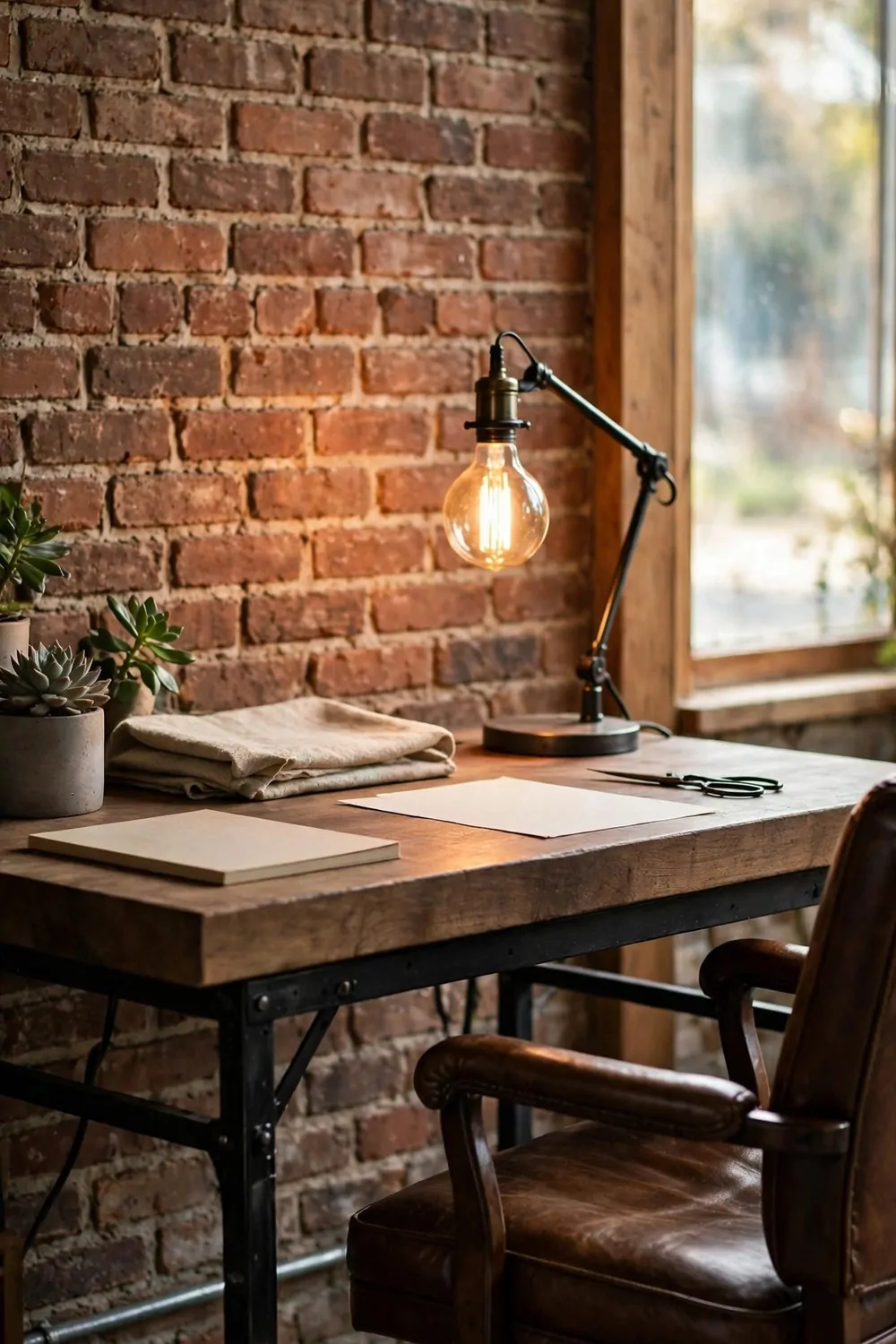
An industrial metal and wood desk feels strong and honest. Dark metal legs. A thick wood top. Simple lines. It looks like it can handle real work.
I love this desk for people who like a bold look without fuss. It is not delicate. It is not fancy. It just sits there, solid and ready, day after day.
Pair metal and wood with a simple chair that has clean lines. A leather chair looks great here. A plain metal chair works too. Keep the shapes simple. I keep a soft cloth near the lamp for dusting the metal frame, because fingerprints show up fast on dark metal and a quick wipe keeps it looking smart.
Use a lamp with a metal shade on this desk. It matches the frame. It gives focused light for reading and writing. A soft shade can look out of place here.
Industrial desks often have open legs, so you can see underneath. Keep that space tidy. A cable tray helps. A basket for bags helps too.
Add warmth with one or two soft touches. A rug under the desk. A cushion on the chair. Metal and wood can feel hard without a little softness.
This desk suits creative work and hands-on projects. It feels like a workbench for ideas. You can spread out. You can make a mess. You can clean it up fast.
Watch out for sharp metal edges on cheaper desks. Run your hand along the frame before you buy. Smooth edges matter when you bump your knee at the end of a long day.
If you love strong shapes and natural wood, this desk is a good match. It feels steady. It feels real. It will not go out of style in a hurry.
The Desk With Hidden Cable Storage
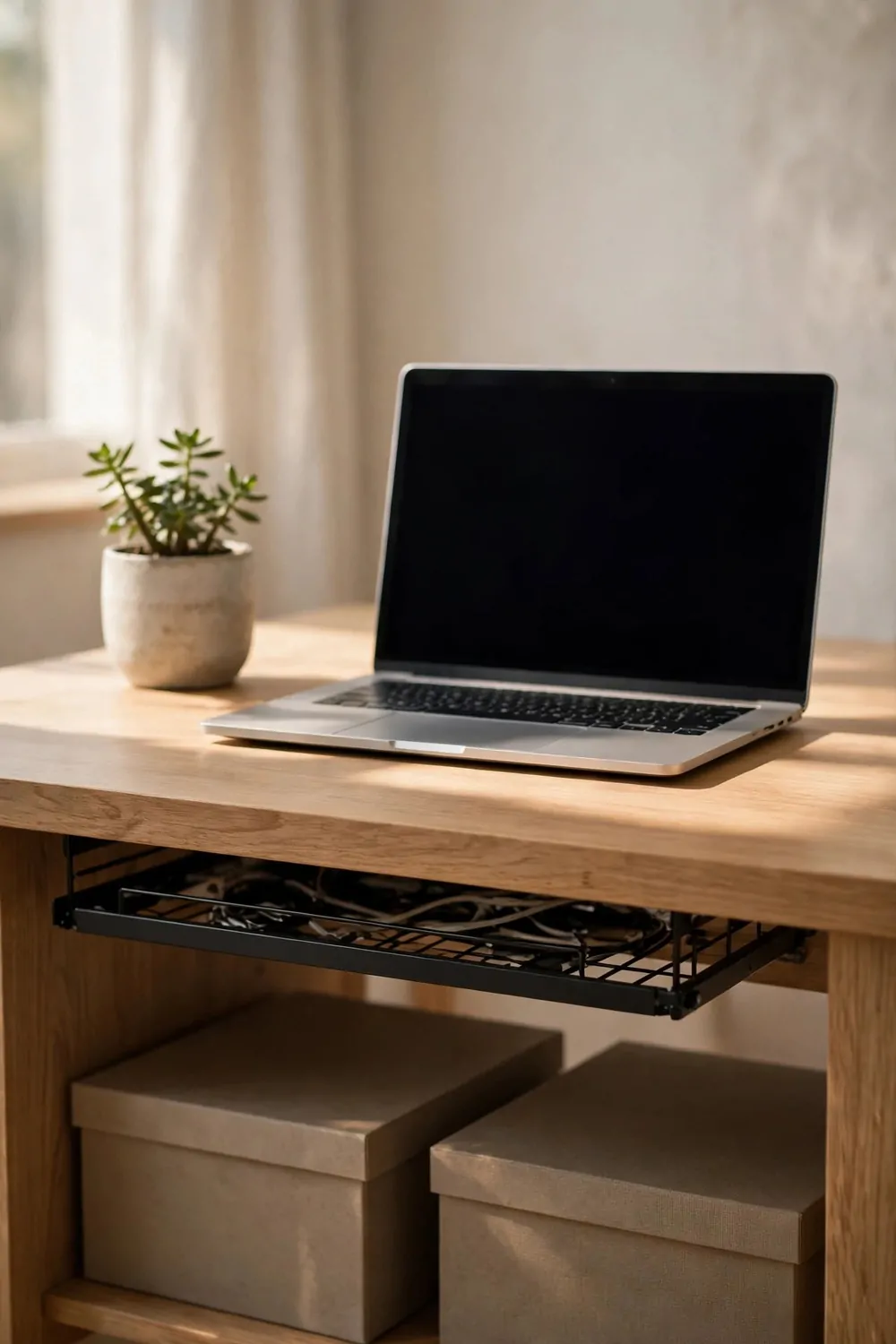
A desk with hidden cable storage looks calm because you cannot see the mess underneath. No tangled wires. No cables hanging like vines. Just a clean top.
I love hidden cable storage because cables stress me out more than I like to admit. I see a tangle and my brain feels tangled too. Hide the cables, and the whole desk feels lighter.
Use a cable tray under the desk to hold the power strip and spare cords. A tray keeps them off the floor. It also keeps them away from your feet and the vacuum. I use small clips along the back edge to guide each cable to the tray, and the clips stop the wires from slipping back onto the floor when I move the desk.
Run cables through a small hole or a clip at the back of the desk. One path for all the wires. When every cable follows the same path, they stop looking messy.
Label your cables if you have more than a few. A small tag on each one saves time later. I learned this after unplugging the wrong cable during a call. Never again.
| Cable storage option | Where it hides cables | Best for |
|---|---|---|
| Under-desk tray | Power strip and spare cords under the top | Desks with many chargers |
| Cable box on the desk | Strip and plugs inside a lidded box | Small desks with one main strip |
| Desk with a back channel | Wires run down a hidden channel at the back | A clean look with no visible wires |
Keep one cable easy to reach for your phone or laptop charger. Hidden does not mean hard to use. The cable you grab daily should sit in a small clip on the desk edge.
Check the hidden storage now and then. Dust gathers there. Old cables gather there too. A quick tidy once a month keeps it working well.
This desk is for you if cables drive you a little bit mad. Hide them well. Keep the top clear. Your desk will look calm, and so will you.
Start with a tray and a few clips. That is often enough. You do not need a perfect system. You just need cables out of sight and out of your way.
The Personal Desk That Feels Like You
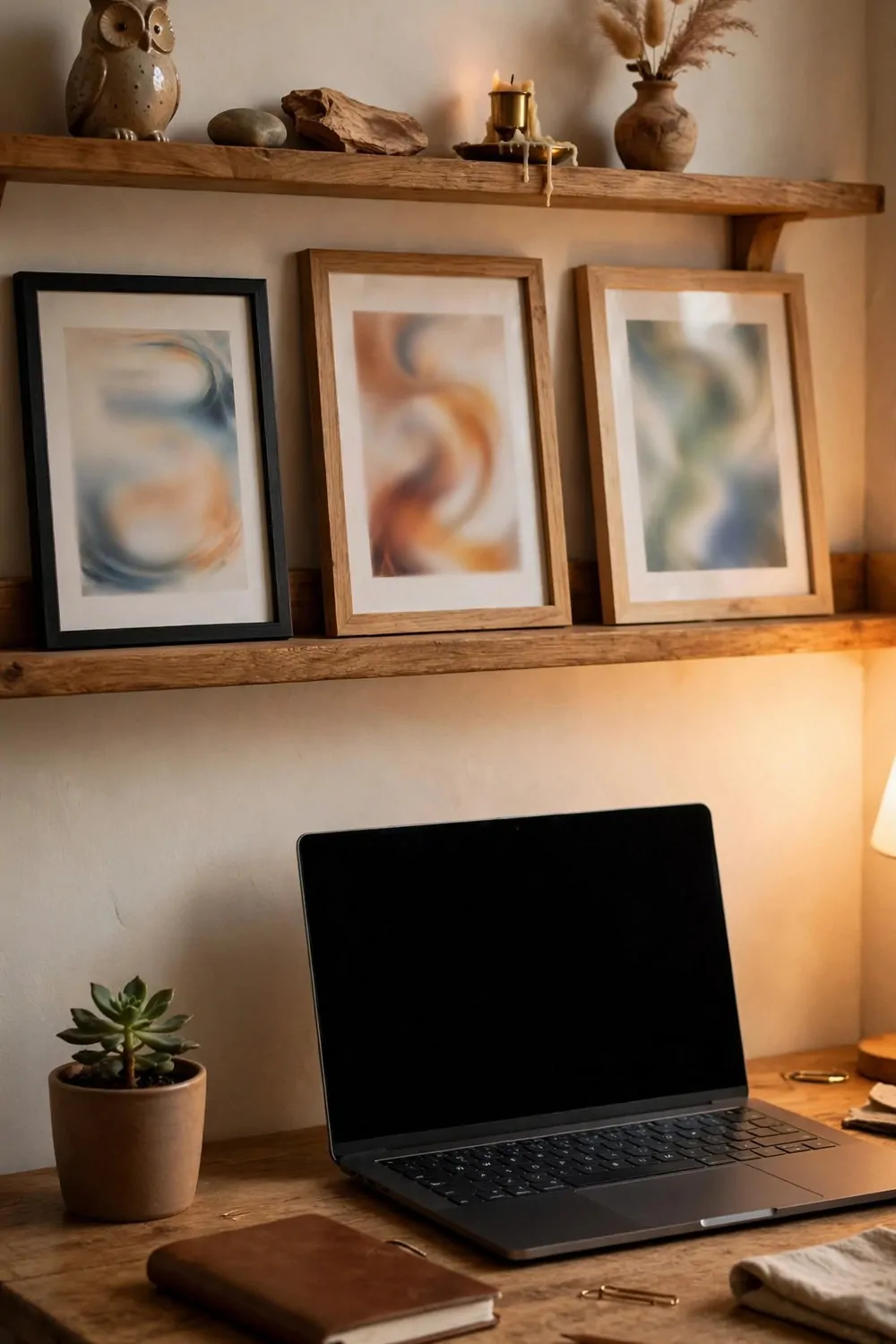
The personal desk that feels like you is the best desk of all. It does not follow a strict style. It follows you. Your colors. Your habits. Your little quirks.
I love personal desks because they tell the truth about the person who works there. A favorite mug. A photo that makes you smile. A notebook with a bent cover that you still love.
Start with what you reach for every day. Your pen. Your notebook. Your lamp. Put those in the best spots. Build the rest of the desk around them. I keep my favorite notebook on the left and my mug on the right, and that small habit means I can sit down and start work without hunting for anything.
Add one thing that is just for joy. Not for work. Not for looks. Just for you. A small stone from a walk. A card from a friend. A tiny plant with a funny name.
Let your desk change with the seasons and with your work. In winter, add a warm blanket. In summer, move the plant closer to the light. A personal desk is never finished.
- Your favorite mug in its own sunny spot
- One photo or card that makes you smile
- A notebook you actually love to open
- A small object that means something only to you
Do not copy someone else’s desk exactly, even if it looks perfect online. Their desk fits their life. Yours needs to fit yours. Take ideas, then make them your own.
A personal desk can mix styles, and that is fine. Wood with metal. Old with new. Bright with calm. If it feels like you, it works.
Keep the personal touches in a small zone so they do not take over the work top. A corner for joy. The rest for work. That balance keeps the desk both happy and useful.
This desk is for you if you have tried neat, perfect desks and they never felt right. Make it yours. Messy in the right places. Tidy in the right places. Just yours.