24 Small Home Office Inspiration Looks That Feel Spacious

Look up for a second. In most small offices the ceiling is just white paint and a light you forget about. I spent a year staring at my walls and my floor, trying to make my little office feel bigger, and I never once looked up. Then one afternoon I did, and that one look changed how I set up the whole room.
A small room feels tight when everything sits at one level. Your desk, your chair, your shelves, all crowded in the same band of space. Your eyes have nowhere to travel, so the walls feel closer than they are.
That is what this list is about. These 24 Small Home Office Inspiration looks do not ask you to knock down a wall or buy a bigger home. They use light, height, and simple choices to give a tiny workspace room to breathe.
I tried most of these ideas in my own small office, and I watched friends try the rest. Some cost nothing at all. Some take one weekend afternoon. All of them keep the room honest and easy to work in.
You do not need to do all 24. Read them slow, notice which one makes you nod, and start with that one. One good change can make the whole room feel new.
Keep your desk clear while you read if you can. Picture each idea in your own corner, with your own light and your own chair. By the end you will have a short list that fits your home, and a room that feels a lot more spacious than it did this morning.
The Light Wall That Opens the Room
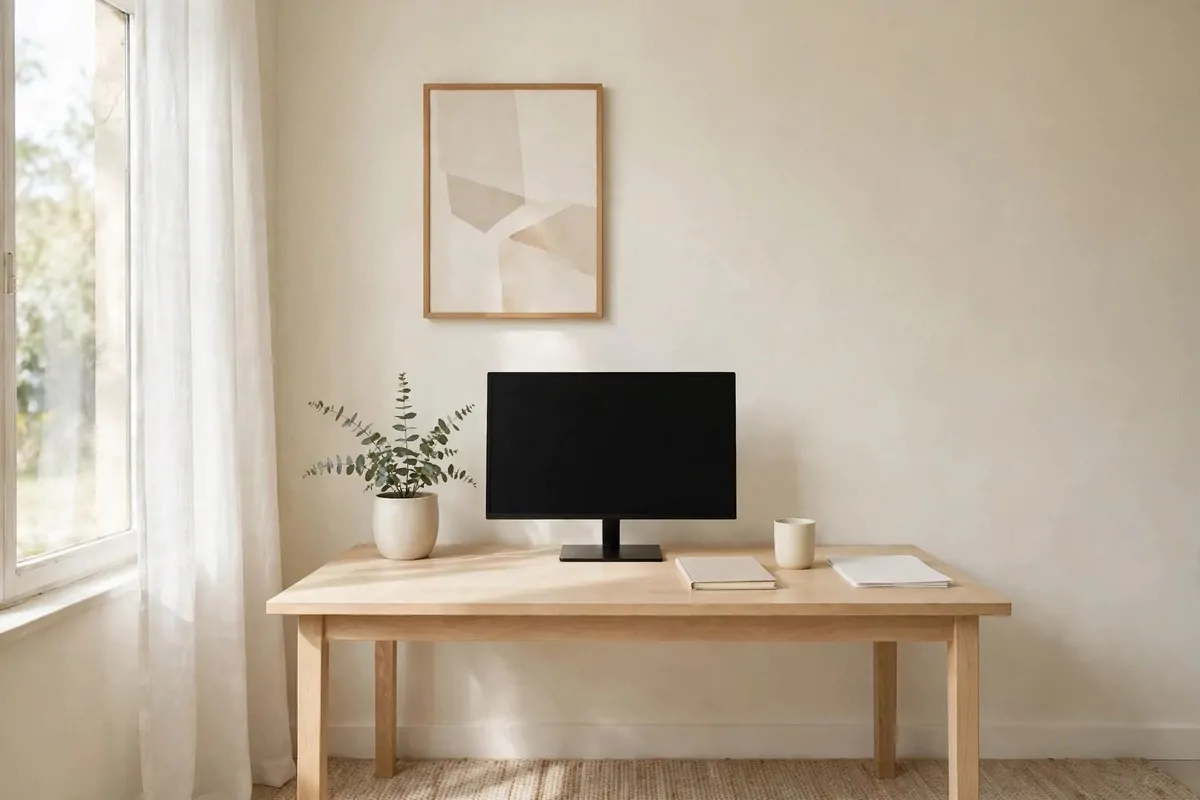
A pale wall can do more for a small office than a new desk can. Light bounces off it, and the whole corner feels wider.
I painted one wall in my office a soft warm white, and the room changed the same day. It was the same desk and the same chair. Only the wall was new, and it felt like I had gained a foot of space.
Pick a white with a little warmth in it. A cold stark white can feel hard under office lights. A soft cream white feels calm and bright at the same time.
Keep that wall mostly clear. One small frame is fine. A whole row of frames will chop the light up and make the wall feel busy again.
Your desk looks better against a light wall too. Dark wood stands out in a good way. Pale wood blends in, and that blend makes the desk feel lighter.
If you cannot paint, try a light curtain or a pale pin board. You get the same bright effect, and you can take it down when you move. I did this in a rental once, and it worked just as well.
Watch how the light moves on that wall during the day. Morning light is soft and cool. Afternoon light is warm. A light wall shows both, and the room feels alive.
Do not put a tall dark bookcase against your light wall. It eats the light and cuts the room in half. Put tall storage on a side wall, where it does less harm.
Stand back in the doorway and look. If the wall glows a little, you have it right. That glow is what makes a small office feel spacious.
The Floating Desk That Frees the Floor
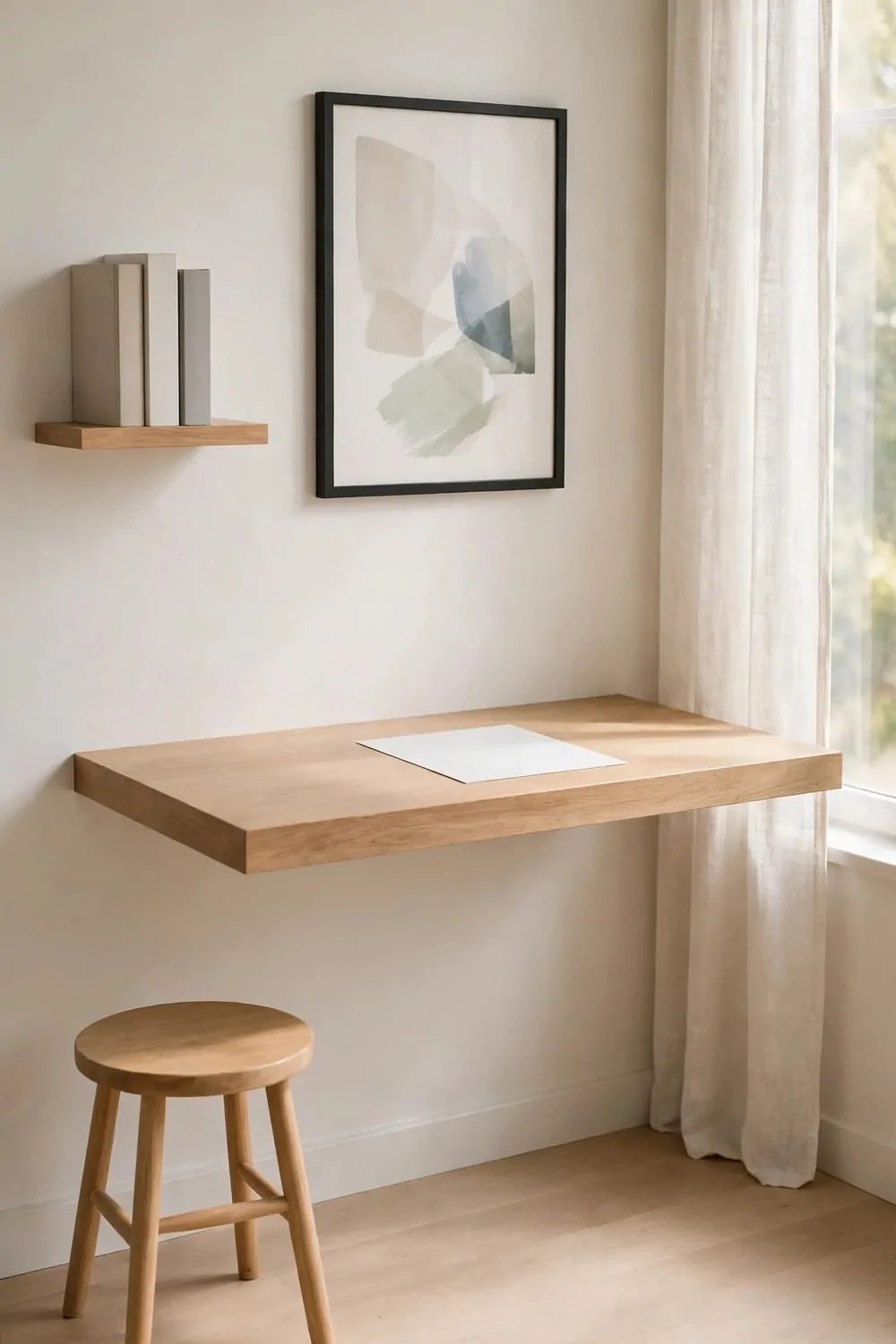
A floating desk leaves the floor clear underneath it. That clear floor tricks your eye, and the room feels bigger right away.
I love how you can see the floor run right under the desk to the wall. It makes the desk feel light, like it is hovering. A desk with thick legs and a heavy base does the opposite.
You need a strong wall and good fixings for a floating desk. Do not guess on this part. Ask someone who knows walls, and check that the desk will hold your screen and your arms.
Keep the top tidy, because a floating desk shows everything. One notebook, one lamp, and your screen is plenty. The rest can live on a shelf or in a drawer nearby.
A small drawer unit on wheels can sit under one end when you need it, and roll away when you do not. That way you get storage without losing the open feel.
Your chair matters here too. A chair with slim legs lets the floor show through. A big bulky chair will fill the space back up again.
I put a small rug under my floating desk once, and I took it away the next day. The rug broke up the floor and made the room feel smaller. Bare floor works better under a floating desk.
Cables are the enemy of a floating desk. A small cable tray under the desk keeps them out of sight. It takes ten minutes to fit, and it keeps the clean look.
If you share the room, a floating desk still works. It folds the work area into the wall, and the rest of the room stays free for the rest of life.
The Mirror That Doubles the Light
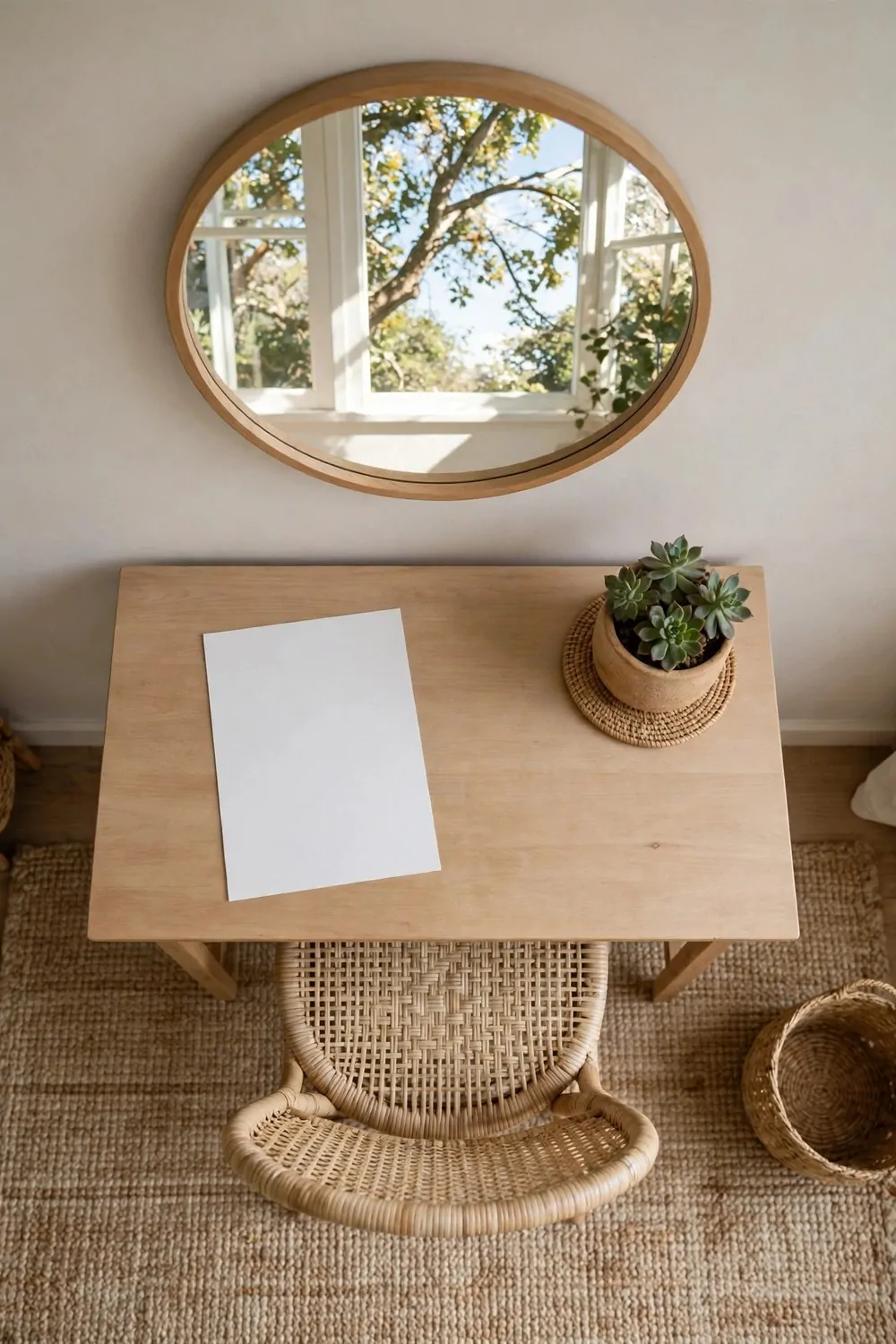
A mirror doubles the light in a small office, and it doubles the view too. One well placed mirror can make a tiny room feel twice as open.
Hang it where it catches a window, not where it catches your screen. You want it to throw daylight across the room. You do not want glare on your monitor all afternoon.
A big simple mirror works best. A small fancy mirror with a thick frame looks pretty, but it does less work. Go big and plain, and let the light do the talking.
I put a tall mirror on the wall across from my window, and my office felt brighter in minutes. It was the same window and the same sun. The mirror just gave the light a second chance.
Keep the mirror clean. Dust and marks show up fast when light hits glass. A quick wipe once a week keeps it bright.
Do not hang a mirror right behind your desk if it will distract you. You will catch your own movement out of the corner of your eye. Put it on a side wall instead, where it helps without nagging you.
A mirror over a low shelf looks smart. It lifts the eye up, and it gives you a spot for a plant or a small box. The shelf stays useful, and the wall stays open.
If you rent, a leaning mirror works too. Lean it safe against the wall, where it cannot slip. It gives the same open feel, and you can take it with you.
Step back and check the reflection. If you see window and wall, you have it right. If you see clutter, move the clutter first, then enjoy the mirror.
The Corner Desk That Uses Dead Space
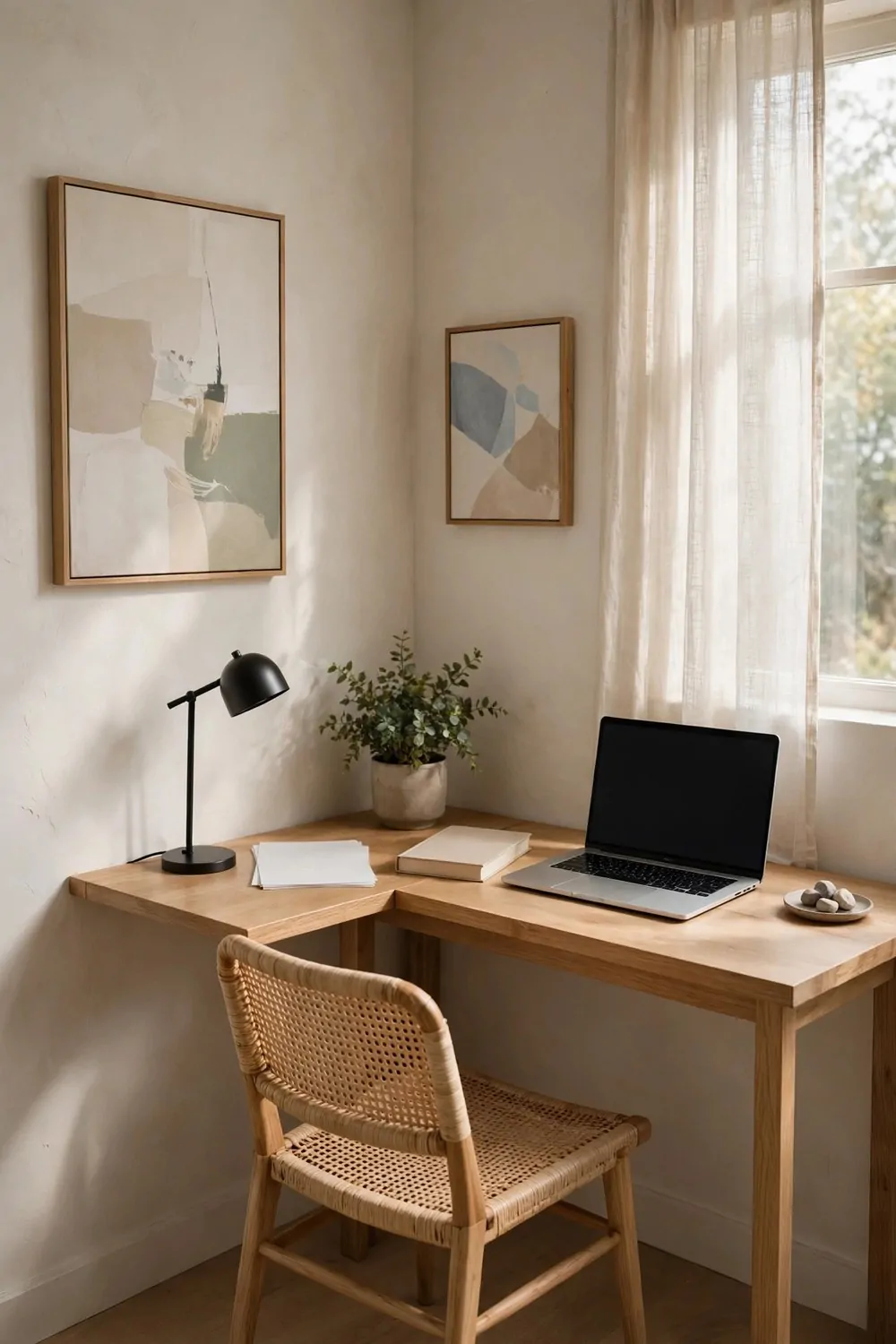
Corners are the most wasted space in a small home. We push a chair there, or a plant we forget, and we call it done.
A corner desk turns that dead space into your best work spot. It tucks into the angle, and it leaves the middle of the room free for walking and breathing.
I like a corner desk because it gives you two walls to work with. One wall holds your screen. The other wall holds a shelf or a small board. You turn a little, and everything is in reach.
Measure your corner twice before you buy. Corners are not always square, and old houses can be a little crooked. A desk that is too deep will poke out and steal floor space.
Keep the corner bright. A small lamp in the corner stops it feeling like a dark hole. Warm light in a corner feels cozy, not cramped.
Your chair needs room to roll back. Leave a clear patch behind you, even if it is small. If you hit the wall every time you stand, the corner will feel tight.
A corner desk works well for one screen, and it works well for papers too. The return side gives you room to spread out without taking over the whole room.
Do not fill both walls with tall shelves. One wall of storage is plenty. The other wall should stay open, so your eyes have somewhere to rest.
Try sitting in the corner for a full workday before you commit. If it feels calm and focused, keep it. If it feels boxed in, try a smaller desk or a lighter color.
| Feature | Corner desk | Straight desk |
|---|---|---|
| Floor space used | Uses the corner, leaves the middle free | Uses one full wall and more floor in front |
| Wall space used | Two short walls, good for shelves on one side | One long wall, shelves sit above the desk |
| Screen position | Screen sits in the angle, easy to turn to | Screen sits flat on the wall, simple and direct |
| Best for | Small rooms with a free corner | Rooms with one long free wall |
The Vertical Shelves That Climb the Wall
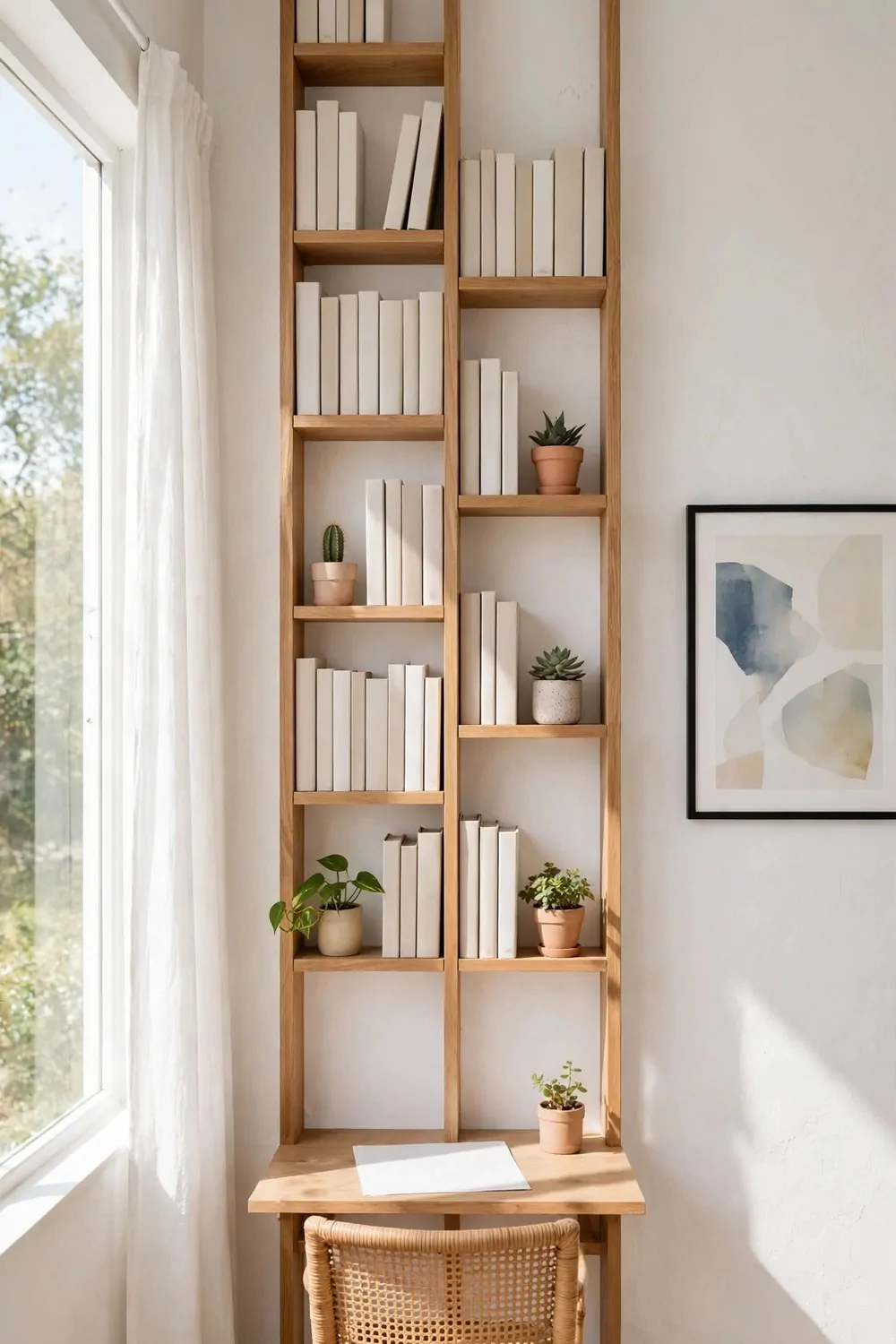
When the floor is full, go up. Your walls have space you are not using, and vertical shelves use it well.
I put shelves up high in my office, and I gained storage without losing a single inch of floor. Books, boxes, and plants all went up, and my desk stayed clear.
Start your shelves above desk height, so they do not crowd your head. You want to reach them standing, but you do not want them looming over your screen.
Keep heavy things low and light things high. Books are heavy, so they sit best on the lowest shelf. Plants and empty boxes can go up top, where they look light.
Leave gaps between shelves. A wall packed solid with shelves feels heavy. A wall with air between shelves feels tall and open.
Use the same shelf color as your wall if you want them to fade back. White shelves on a white wall almost disappear, and the things on them seem to float.
Label your boxes, even if you think you will remember. You will not remember in three weeks. A small plain label saves you digging through every box.
A step stool lives near my shelves, and I use it every week. Do not climb on your chair to reach a high shelf. It wobbles, and it is not worth the risk.
Stand back and look up. If the shelves draw your eye to the ceiling, they are doing their job. Height is what makes a small room feel spacious.
- Lowest shelf: books and heavy boxes you use often.
- Middle shelf: pens, paper, and daily supplies in plain boxes.
- High shelf: plants and light boxes you rarely need.
- Top gap: leave air above the last shelf so the wall feels tall.
The Glass Desk That Almost Disappears
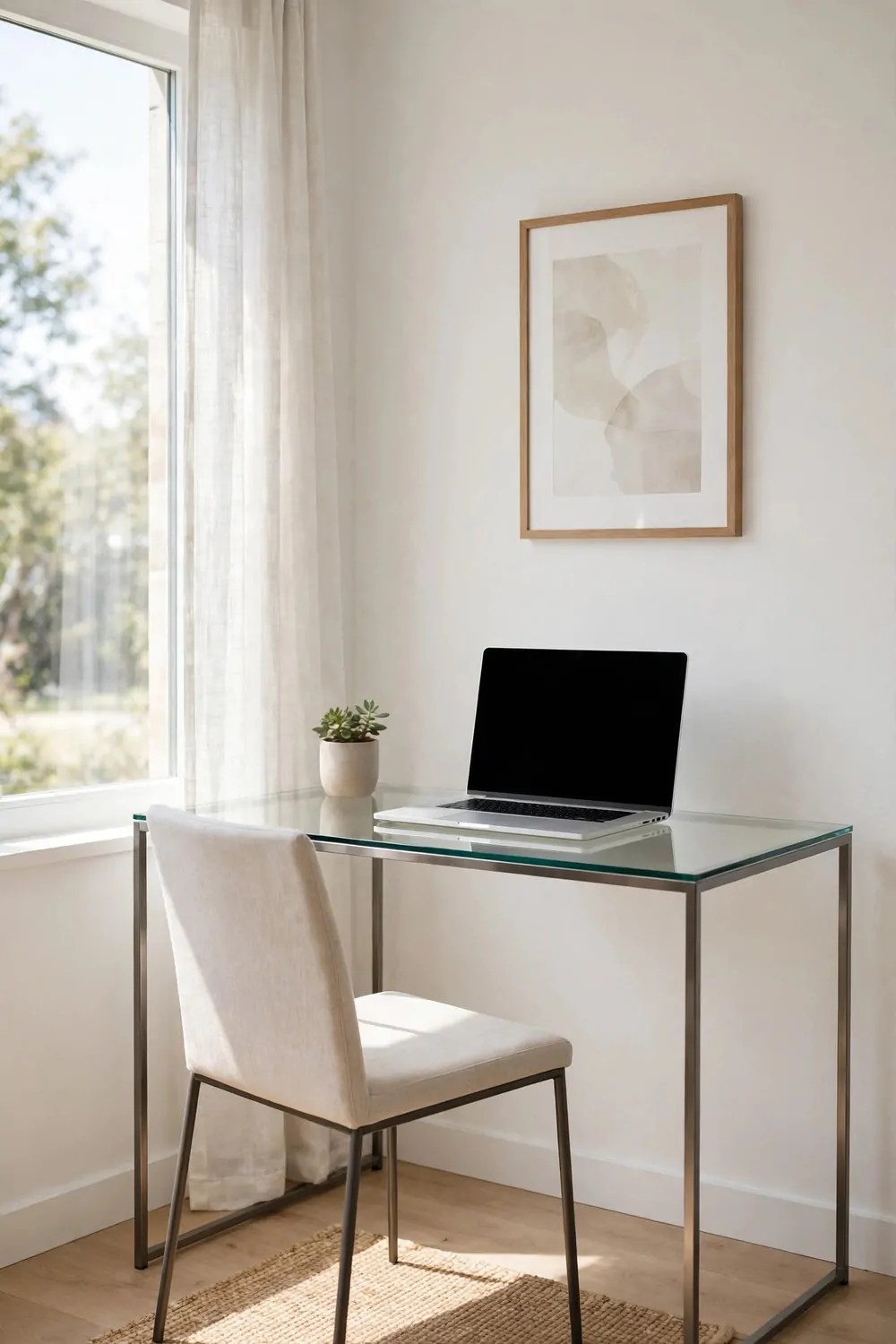
A glass desk almost disappears in a small room. You see through it to the floor and the wall, and your eye keeps moving.
I was unsure about glass at first. I thought it would feel cold, and I worried about marks. In a small office, though, the open look was worth it.
Keep the top of a glass desk very clear. Everything shows, even the underside. One screen, one small lamp, and a notebook is enough.
A glass desk shows cables badly, so hide them well. A cable tray or a small clip under the desk keeps the see-through look clean.
Use a soft cloth to wipe it each evening. Finger marks build up fast on glass. A quick wipe takes a minute, and it keeps the desk looking bright.
Pair glass with warm wood or soft fabric. A wood chair or a woven basket stops the desk feeling cold. The mix keeps the room cozy.
Glass works best in a bright corner. Daylight passes through it, and the room feels airy. In a dark corner, glass can look a bit stark.
Do not put heavy boxes or stacks of paper on a glass desk. It is made for light work, not storage. Give heavy things a shelf or a drawer nearby.
If you have small kids or pets, think twice. Glass needs care, and a bump can chip an edge. A wood desk may suit a busy house better.
The Fold-Down Desk That Folds Away
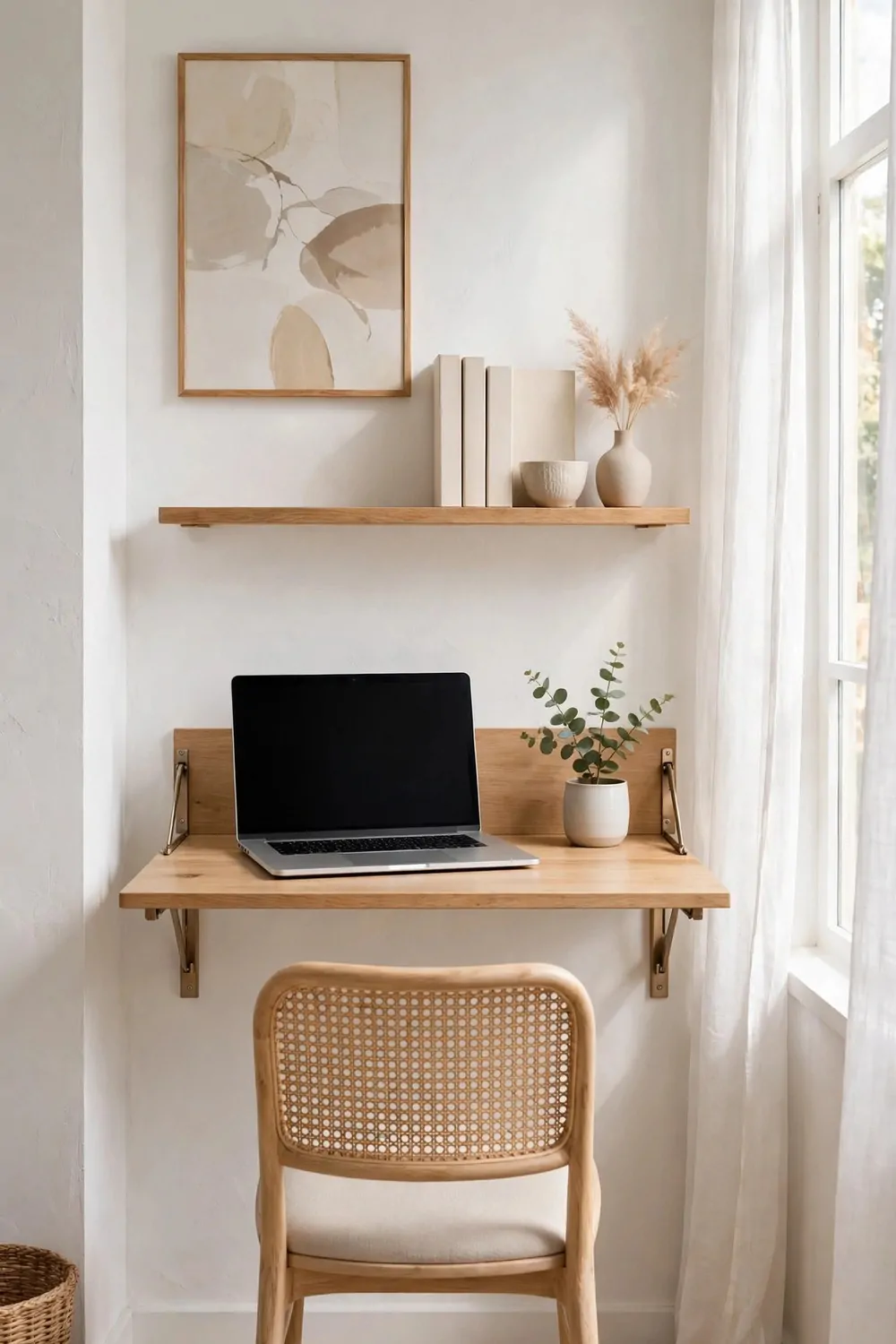
A fold-down desk is there when you work, and gone when you do not. That is a big win in a small home.
I love closing mine at the end of the day. One lift, one click, and my office turns back into a plain wall. My brain gets the message too. Work is done.
Fit it at the right height for your chair. Too high, and your shoulders ache. Too low, and your back complains. Sit, measure, then fit.
Keep only the basics on a fold-down desk. Your screen or laptop, a small lamp, and a notebook. Heavy books will strain the hinges over time.
Use the wall above it for a small shelf or a pin board. When the desk folds up, the shelf stays useful. When it folds down, everything is in reach.
Check the lock each week. A fold-down desk that drops on its own is no fun. A quick check keeps it safe and steady.
A fold-down desk suits a hallway, a bedroom wall, or a living room corner. Any wall that is free for a few hours a day can hold one.
Do not leave papers on it overnight if you plan to fold it up. Clear it at the end of work, and folding becomes a habit, not a chore.
Try it for a week before you judge it. The first day feels strange. By day five, most people love how much floor they get back.
The One-Color Palette That Calms the Eye
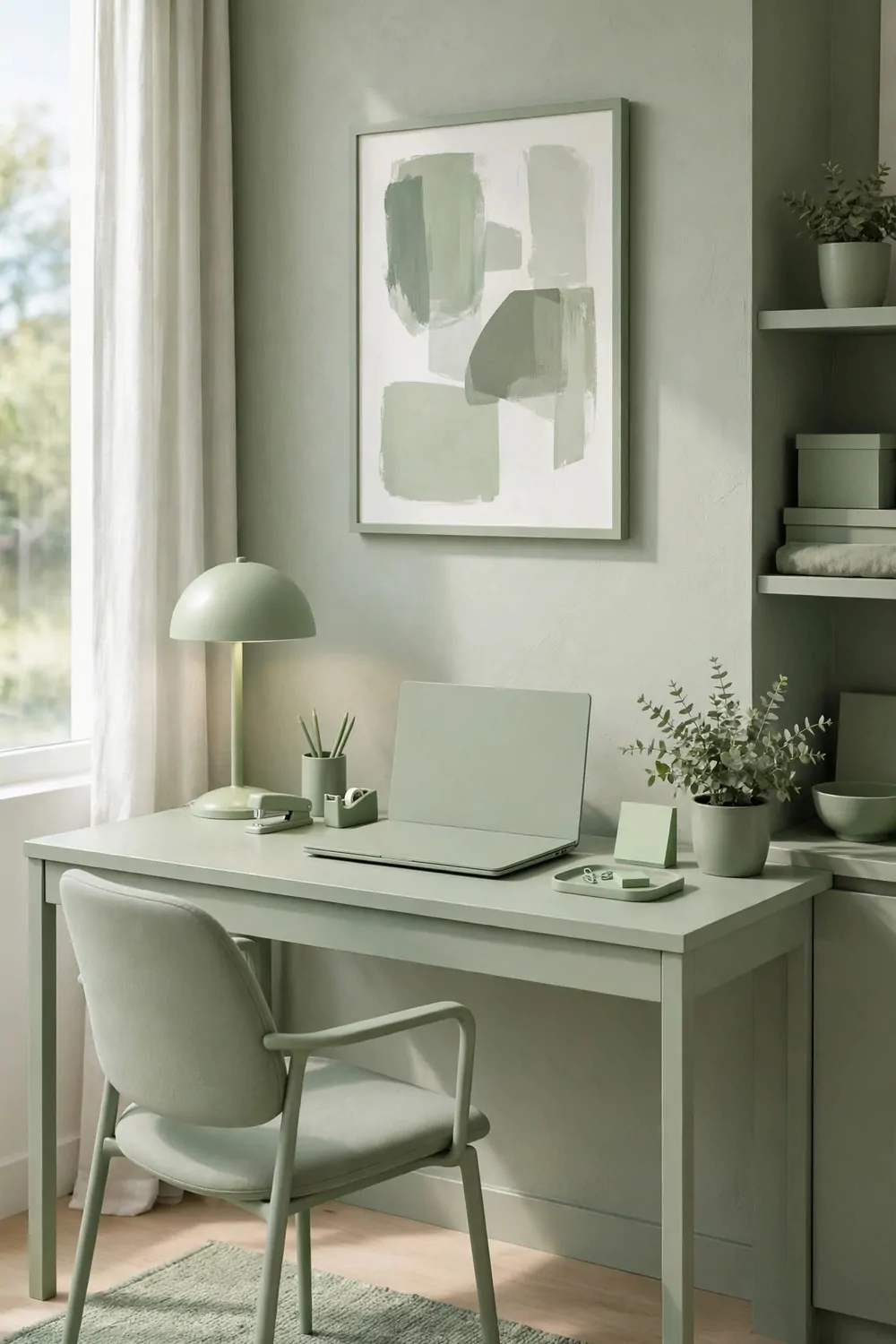
One color, used well, calms the eye. A small office with too many colors feels busy, even when it is tidy.
I picked soft sage for my office, and I used it on the wall, the chair cushion, and one small box. The room felt quieter the same week. It was the same size, but it felt calmer.
Pick a color you like looking at all day. Not a color you love for an hour. You will see it every workday, so it needs to be easy on your eyes.
Use light and dark shades of the same color. Pale walls, a mid-tone chair, and one darker shelf. That range gives depth without adding new colors.
Wood counts as a neutral here. Pale wood, warm wood, it sits well with almost any one-color plan. Let the wood add warmth while the color adds calm.
Keep your screen background simple too. A busy photo behind your work fights the calm palette. A plain soft background helps more than you think.
Add texture instead of color when you want interest. A woven basket, a linen cushion, a rough wood shelf. Texture gives the eye something to enjoy without noise.
Do not be afraid of a little white. White breaks up the color and gives the room air. A white ceiling and white trim keep a one-color room from feeling flat.
If you get bored, change one small thing, not the whole room. A new cushion or a new plant pot is enough. The calm palette stays, and the room stays fresh.
The Slim Rolling Cart for Storage
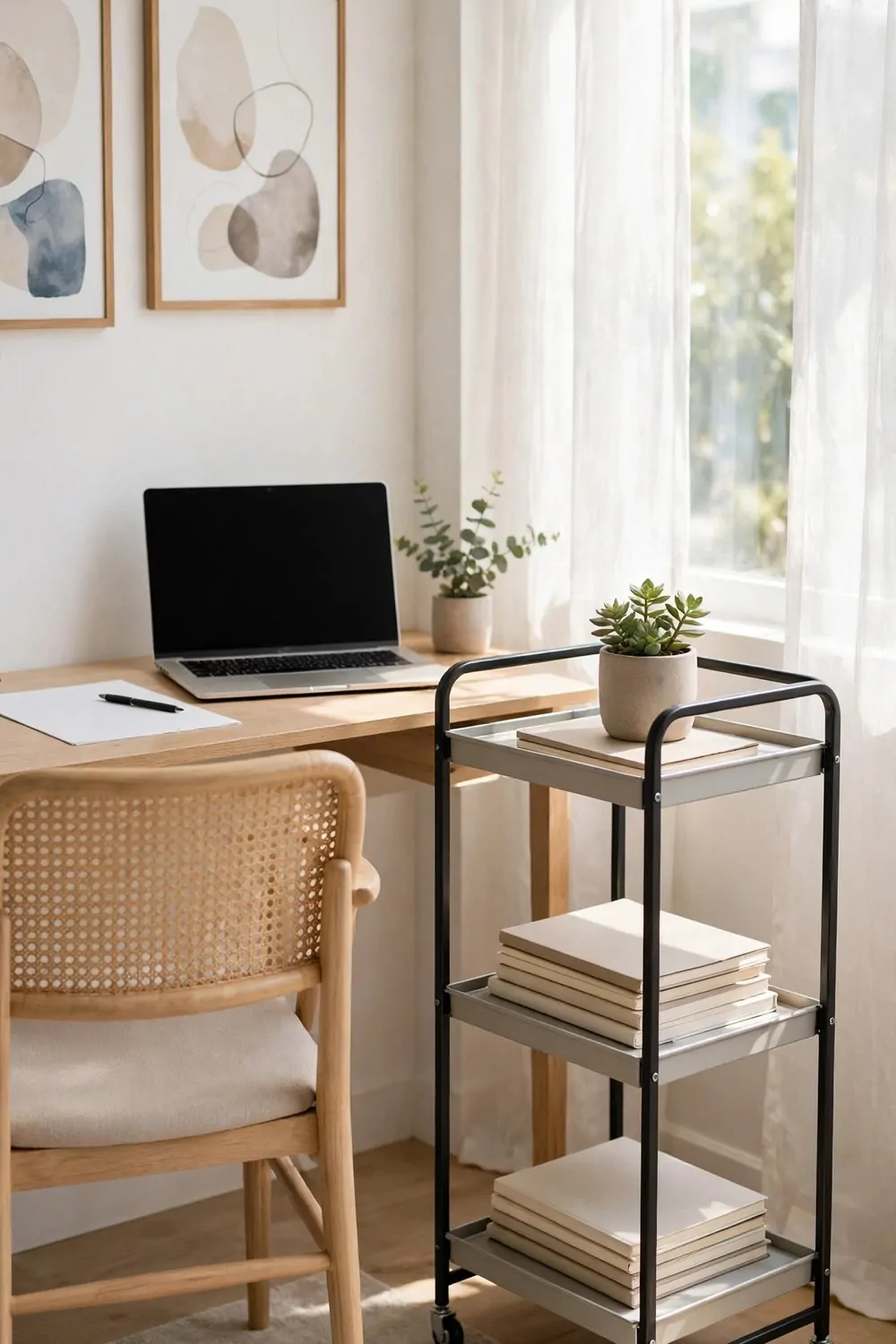
A slim rolling cart is storage that moves with you. It slides into a gap, and it rolls out when you need it.
I keep mine beside my desk, in a gap about as wide as a book. It holds pens, paper, chargers, and snacks. When I need floor space, I roll it into the closet.
Pick a cart that is narrow and tall, not wide and low. A tall slim cart uses wall height, and it leaves your floor mostly clear.
Give each shelf one job. Top shelf for daily things. Middle shelf for paper. Bottom shelf for heavy things that need a low home.
Wheels with locks are worth it. You do not want the cart rolling away when you lean on it. Lock the wheels when you work, unlock them when you move.
Keep the cart light enough to move with one hand. If it is too heavy, you will stop moving it, and it will just become another piece of furniture.
A cart works well in a shared room too. You can roll your work away at night, and the room goes back to being a living room or a bedroom.
Do not let the cart become a junk shelf. Check it once a week, and take out what you do not use. A slim cart only stays slim if you keep it honest.
Look for a cart with a lip on each shelf. Small things roll off flat shelves. A small lip keeps pens and clips where they belong.
- Top shelf: pens, notes, and your phone charger.
- Middle shelf: paper, folders, and envelopes.
- Bottom shelf: heavy books and spare cables in a box.
- Side hook: headphones and a small bag, off the desk.
The Window Desk With a View
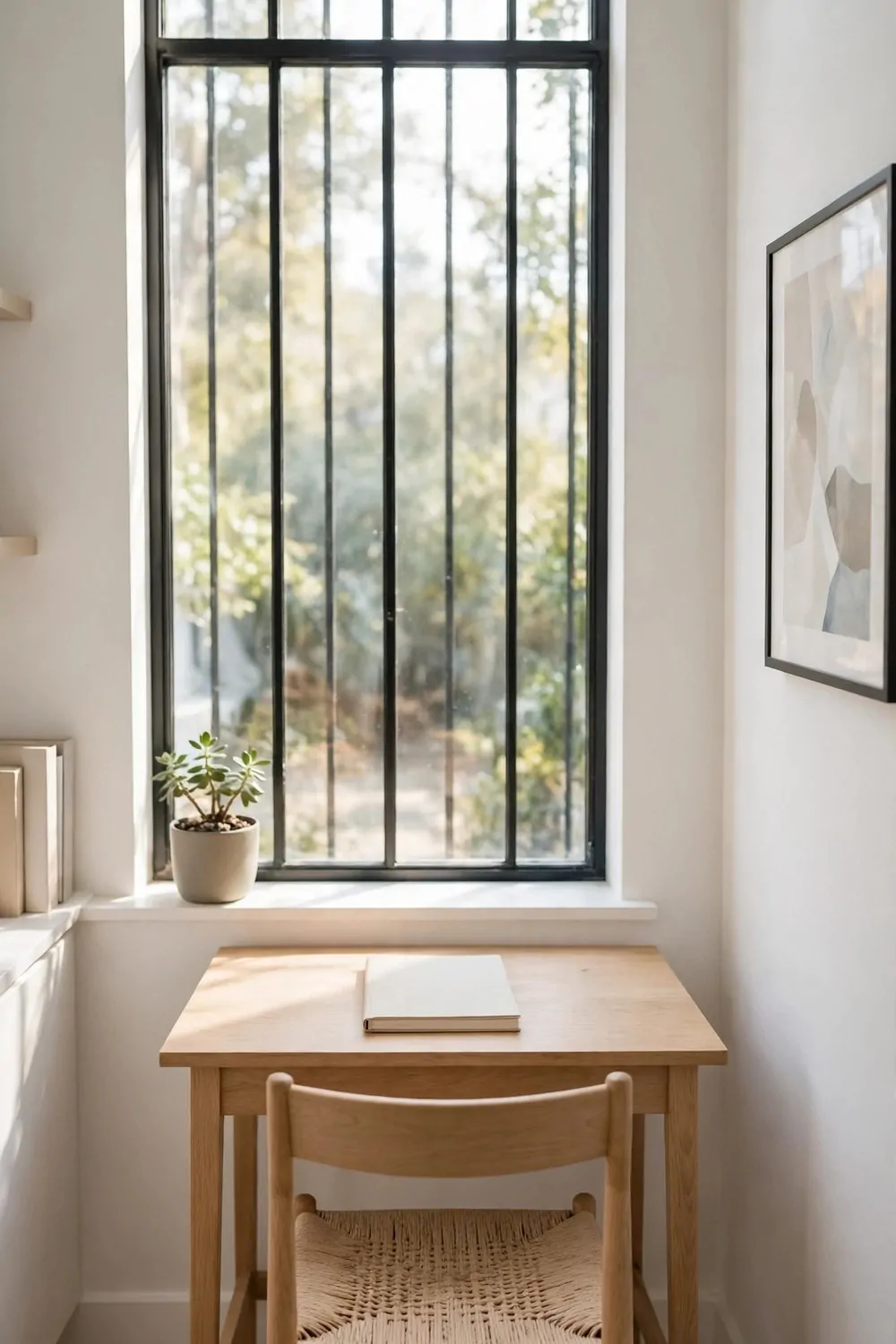
A desk by a window gives you the best light in the house, and the best view too. Work feels lighter when you can look up and see the sky.
I moved my desk to the window one winter morning, and I never moved it back. The daylight helped my eyes, and the view gave my brain a break between tasks.
Put your screen at a right angle to the window if you can. Facing the window gives you glare. Facing away gives you a dark screen. Side light is the kindest light.
Use a light curtain or a sheer blind. You want soft light, not harsh sun on your screen. A sheer curtain cuts glare and keeps the view.
Keep the windowsill clear. A plant or two is lovely. A row of boxes will block light and make the window feel small.
Watch for drafts in cold months. A cold draft on your back makes a window desk hard to enjoy. A small draft stop or a thicker curtain helps a lot.
A window desk suits a small room because the window is already there. You do not need to build anything. You just turn your desk to face the light.
Do not block the window with tall shelves. Let the light come in low and wide. Shelves belong on the side wall, not across the glass.
Take a minute each day to look out and rest your eyes. It is good for you, and it reminds you why the window desk was worth the move.
The Under-Desk Drawers That Hide Clutter
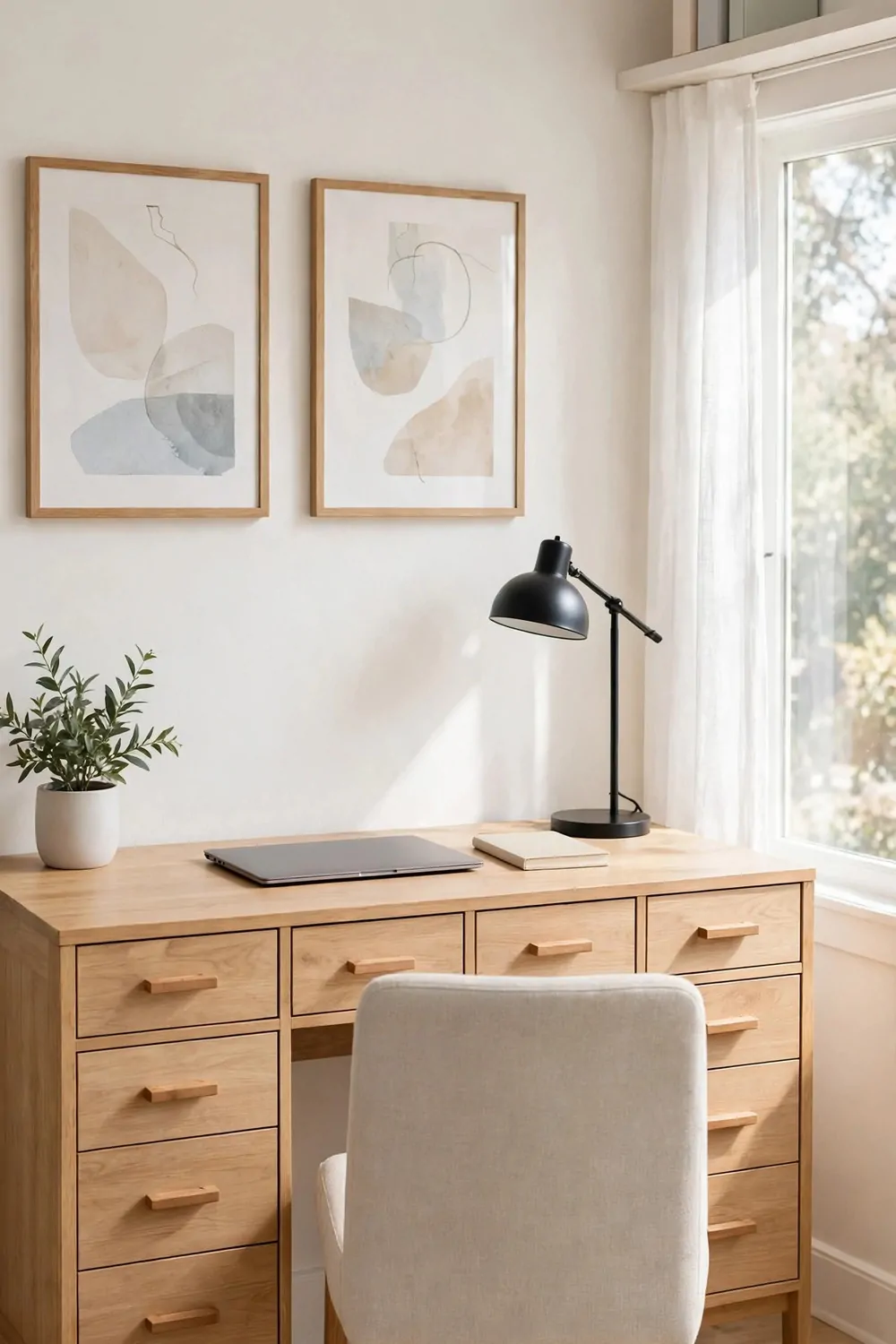
Clutter makes a small office feel smaller. Under-desk drawers hide that clutter, and they keep your work surface clear.
I fitted two shallow drawers under my desk, and my desktop changed overnight. Papers went in a drawer. Cables went in a drawer. The top stayed clean.
Shallow drawers work better than deep ones. Deep drawers become a pit where things vanish. Shallow drawers let you see everything at a glance.
Give each drawer one job, and label it in your head. One for paper. One for tech bits. One for personal things. When everything has a drawer, nothing piles up.
Keep the top drawer for things you use every day. Pens, notes, chargers. The lower drawers can hold things you use once a week.
Do not overfill the drawers. A drawer that sticks is worse than no drawer at all. If it will not close smooth, take something out.
A drawer unit on wheels can work if you rent. It slides under the desk, and it moves with you. Just check it fits under your desk height first.
Soft-close drawers are a small luxury that feels big in a small room. No bangs, no rattles, just a quiet close at the end of the day.
Clear one drawer each month. Old papers and dead pens creep back in. A quick clear keeps the system working, and the room feeling spacious.
The Open Shelving That Breathes
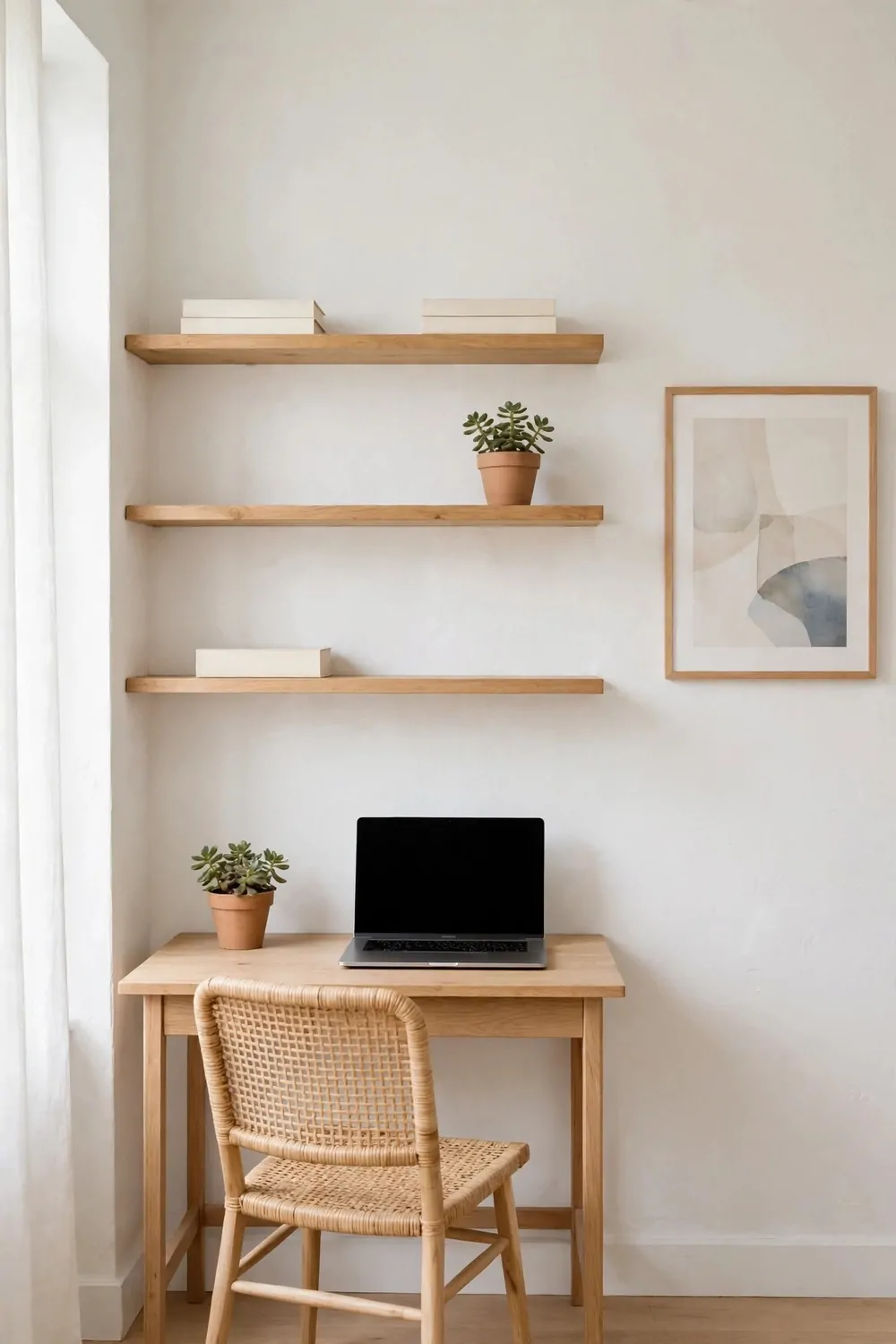
Open shelves can make a small office feel airy, if you leave them room to breathe. Packed shelves feel heavy. Shelves with gaps feel light.
I learned to leave one empty spot on every shelf. It sounds wasteful, but it works. That empty spot gives your eye a rest, and the shelf looks calm.
Mix books with empty space and one small object. A plant, a box, a small frame. Too many objects fight each other. A few objects tell a story.
Keep the shelves at one depth, and keep them neat at the front. Books lined up flush look tidy. Books pushed back at odd angles look messy.
Use boxes to hide the messy stuff. Plain boxes in one color keep the shelves calm. The clutter is still there, but you do not have to look at it.
Dust open shelves once a week. Dust shows fast on open shelves, and it dulls the look. A quick wipe keeps them bright.
Do not put everything you own on open shelves. Keep the daily things out, and store the rest behind a door. Open shelves are for display, not for storage of everything.
A shelf with a plant trailing down softens the hard lines. The green breaks up the wood and the books, and it makes the wall feel alive.
Step back and squint at your shelves. If you see clear blocks of color and space, you have it right. If you see a wall of stuff, take a third away.
The Compact L Desk for Two Screens
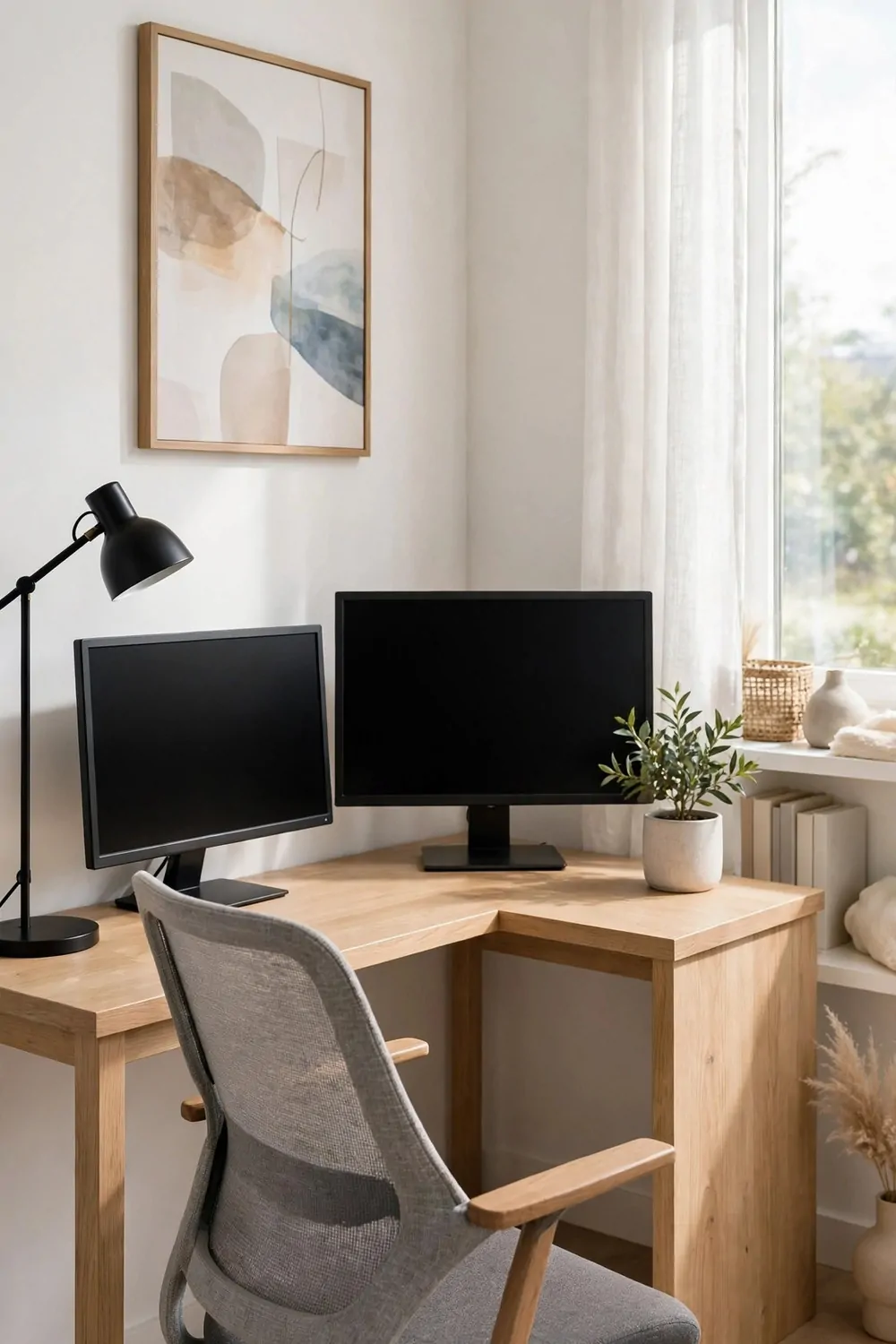
Two screens need more desk than one, but they do not need a huge room. A compact L desk gives you two work surfaces in a small footprint.
I use the long side for my main screen, and the short side for notes and a second screen. I turn a little, and I am there. No reaching across a wide desk.
Measure both arms of the L before you buy. The short arm is often too short for a screen and a keyboard. You need room for your elbows, not just the screen.
Put the L in a corner if you can. Corners love L desks, and the desk loves corners back. The room keeps its middle clear, and you get a cozy work nook.
Cable control matters double with two screens. Two power cables, two video cables, and a charger can turn into a nest fast. A tray under the desk keeps it tame.
Keep the second screen at the same height as the first. A screen that sits low makes your neck bend all day. A small stand or a monitor arm fixes it in minutes.
Use one side for focused work, and the other for reference. Papers, a notebook, a tablet. When each side has a job, you stop shuffling things around.
A compact L desk still needs a good chair. You will turn more than you think, so a chair that swivels smooth is worth it. Test the turn before you settle in.
If two screens feel like too much, try one screen and a laptop stand. You get the same L benefit, with less bulk and less cable fuss.
| Setup | Screens | Desk space needed | Best for |
|---|---|---|---|
| Laptop plus monitor | Two, with a laptop stand | Small L desk, short arm for the laptop | Mixed work and calls |
| Dual monitors | Two matching monitors | Compact L desk, one screen per arm | Design and data work |
| One wide screen | One wide monitor | One straight run, no corner needed | Simple setups with fewer cables |
The Rug That Marks the Zone
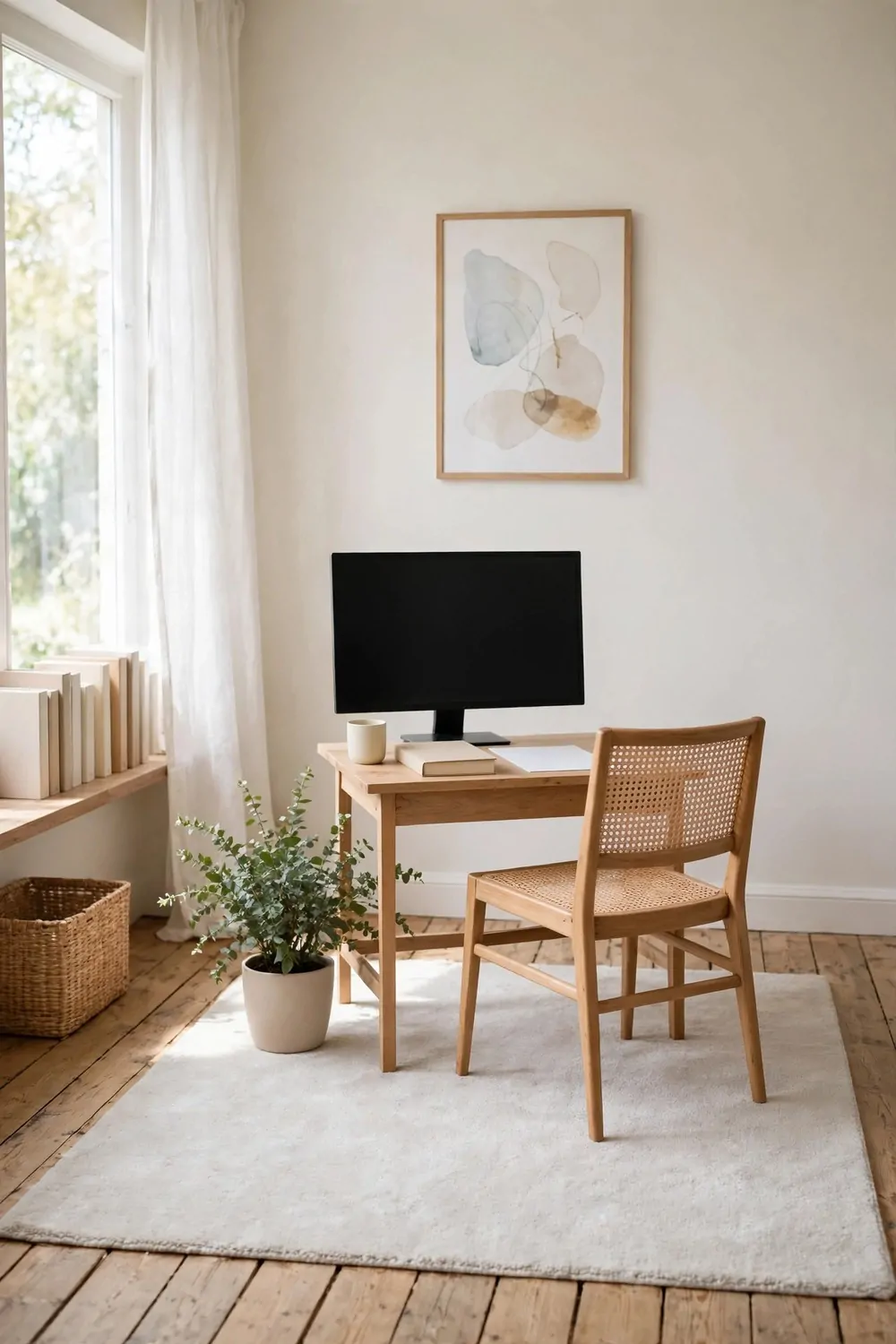
A rug can mark your office zone without a single wall. In an open room, that mark matters. It tells your brain, this patch is for work.
I put a small rug under my desk and chair, and the corner felt like a real office for the first time. Before that, my desk just floated in the living room.
Pick a rug just big enough for your chair to roll on. Too small, and the chair legs catch the edge. Too big, and the rug eats the whole room.
A flat low rug works best under a desk. Thick shaggy rugs fight your chair wheels. A flat weave lets you roll smooth, and it is easy to clean.
Use a light color or a simple pattern. A dark heavy rug can make a small zone feel smaller. A pale rug lifts the floor and opens the space.
Keep the rug clean and flat. A curled corner trips you up, and it looks untidy. A rug pad underneath keeps it still.
A rug also softens sound. In a small room with hard floors, every chair move echoes. A rug takes the edge off, and work feels calmer.
Do not layer rugs in a tiny office. One rug is a zone. Two rugs is a pile. Keep it simple, and let the one rug do the job.
When work ends, the rug still marks the zone. That is good. It keeps the office feeling like its own place, even inside a bigger room.
The Wall Lamp That Saves Desk Space
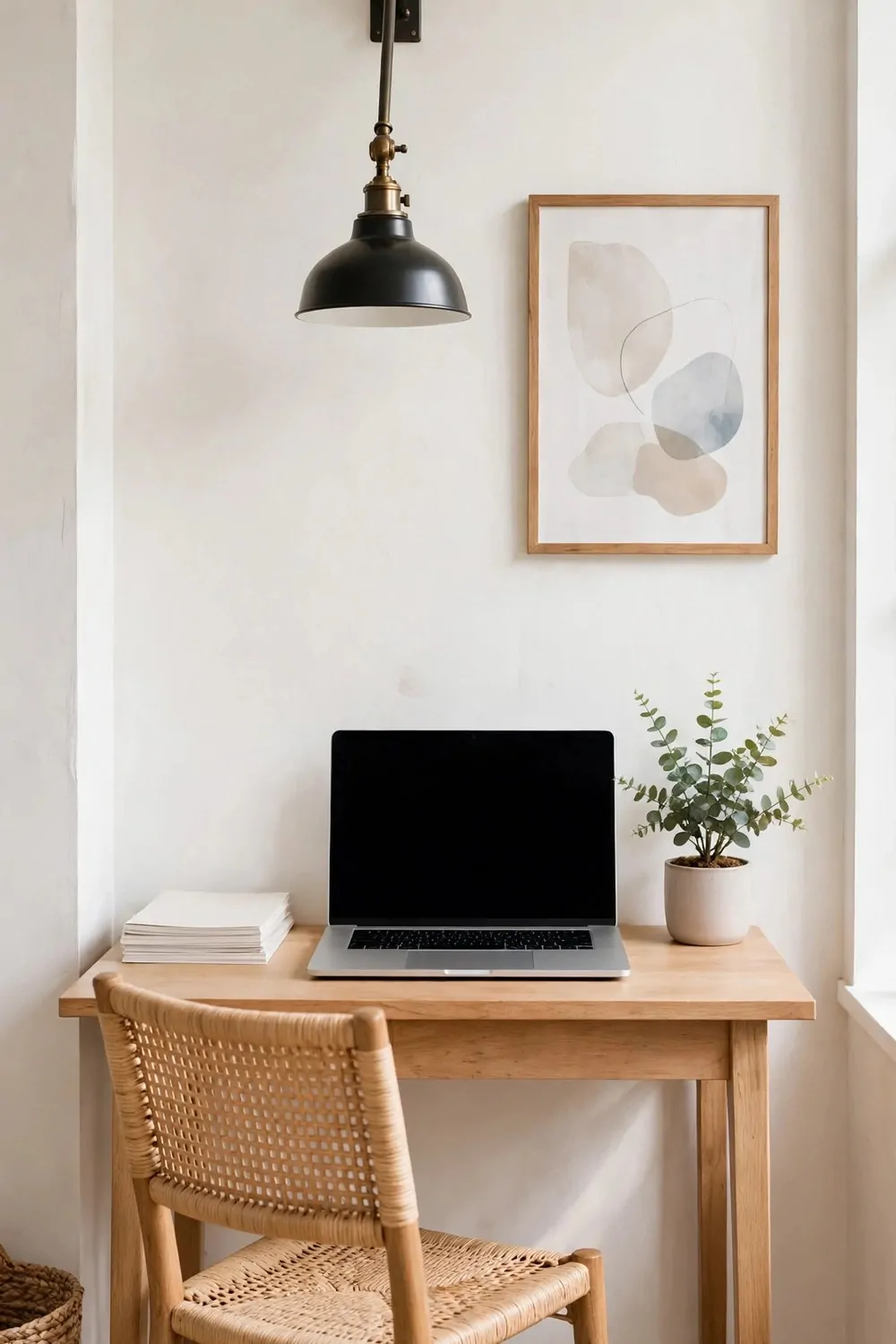
A desk lamp eats desk space. A wall lamp gives it back. That trade is gold in a small office.
I swapped my desk lamp for a wall lamp, and I gained a whole corner of desk. My notebook finally had a home, and my screen had room to breathe.
Fit the wall lamp above and a little to the side of your desk. You want light on your work, not in your eyes. A lamp that points down is kindest.
Pick a lamp with an arm you can move. Some days you need light on papers. Some days you need it off your screen. A moving arm lets you choose.
Warm light works best for evening work. Cool bright light can feel harsh in a small room at night. A warm bulb keeps the corner cozy.
A wall lamp with a plug is easy to fit, and you can take it when you move. A hardwired lamp looks neater, but it needs an electrician. Pick what suits your home.
Keep the cord tidy. A cord hanging down the wall ruins the clean look. A small cord cover, painted to match the wall, hides it well.
Pair the wall lamp with daylight when you can. Daylight in the morning, wall lamp in the evening. The mix keeps the room feeling natural all day.
Test the lamp at night before you call it done. Sit, work, read a page. If your eyes feel relaxed, the lamp is in the right spot.
- Plug-in wall lamp: easy to fit, easy to move, cord needs a cover.
- Swing-arm wall lamp: moves with you, best for papers and reading.
- Fixed wall lamp: neatest look, needs a good spot picked first.
- Warm bulb: soft evening light that keeps a small room cozy.
The Closet Office That Closes at Night
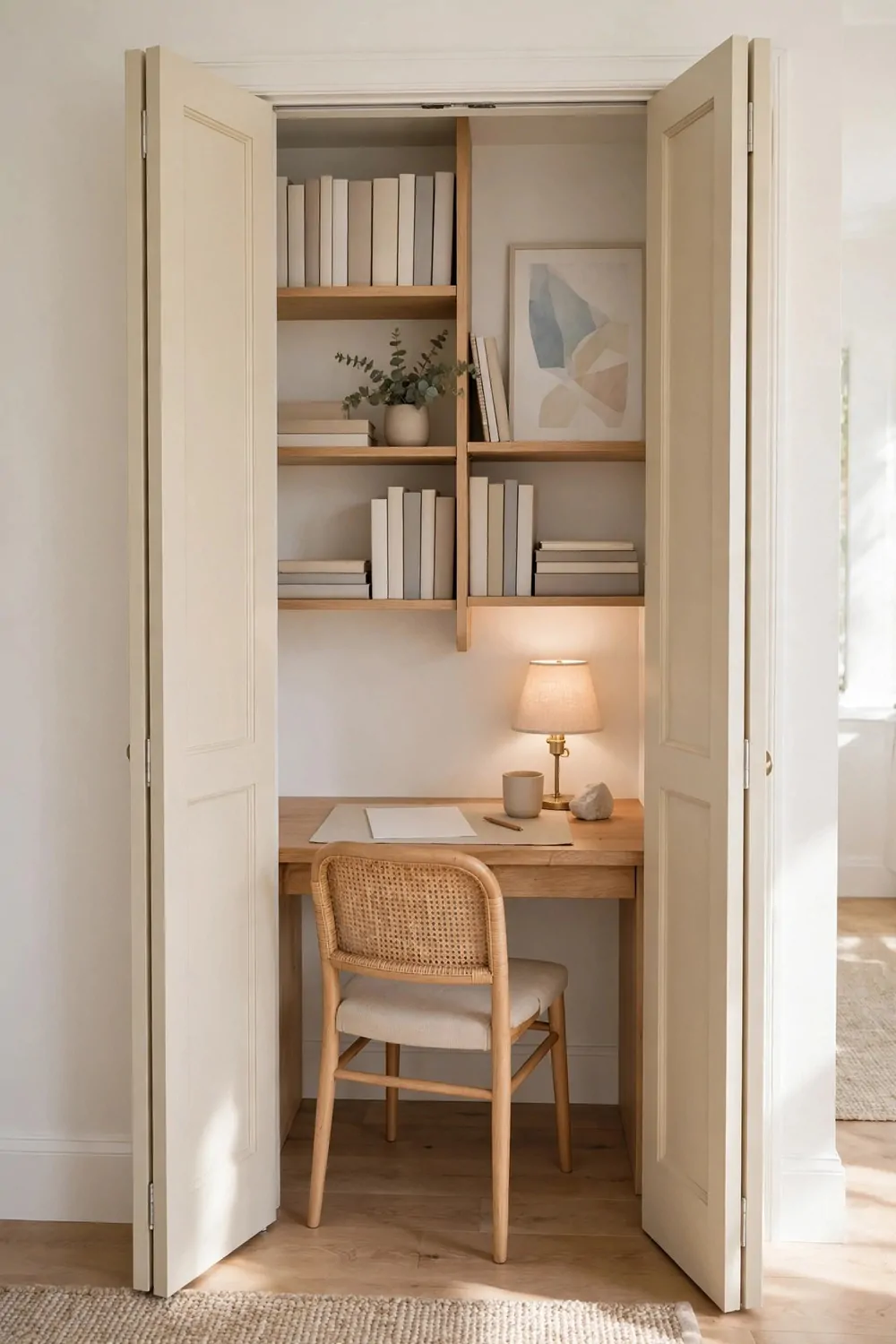
A closet office closes at night, and that is its magic. You shut the doors, and work disappears.
I turned a spare closet into my office one weekend, and it changed how I slept. No laptop staring at me from the corner. No papers on show. Just closed doors.
Clear the closet first, and be honest about what stays. If you have not touched it in a year, it does not need closet space. Give it away, and give your office room.
Light is the big job in a closet office. Closets are dark by nature. A bright wall lamp and a light wall color keep it from feeling like a cupboard.
Fit a desk board across the closet width. It uses the full width, with no wasted gaps. A board cut to fit looks built in, and it costs very little.
Use the wall above the desk for shelves. That vertical space is free, and it holds books and boxes. Keep the shelves shallow, so they do not crowd your head.
Air matters in a small closet. Leave the doors open while you work, if you can. Fresh air keeps the space feeling open, not stuffy.
Keep a small fan or a vent in mind if the closet gets warm. A warm closet office is hard to sit in for long. A little airflow makes a big difference.
Close the doors at the end of the day, every day. That small ritual tells your brain work is over. It is the best part of a closet office.
The Slim Bookshelf Room Divider
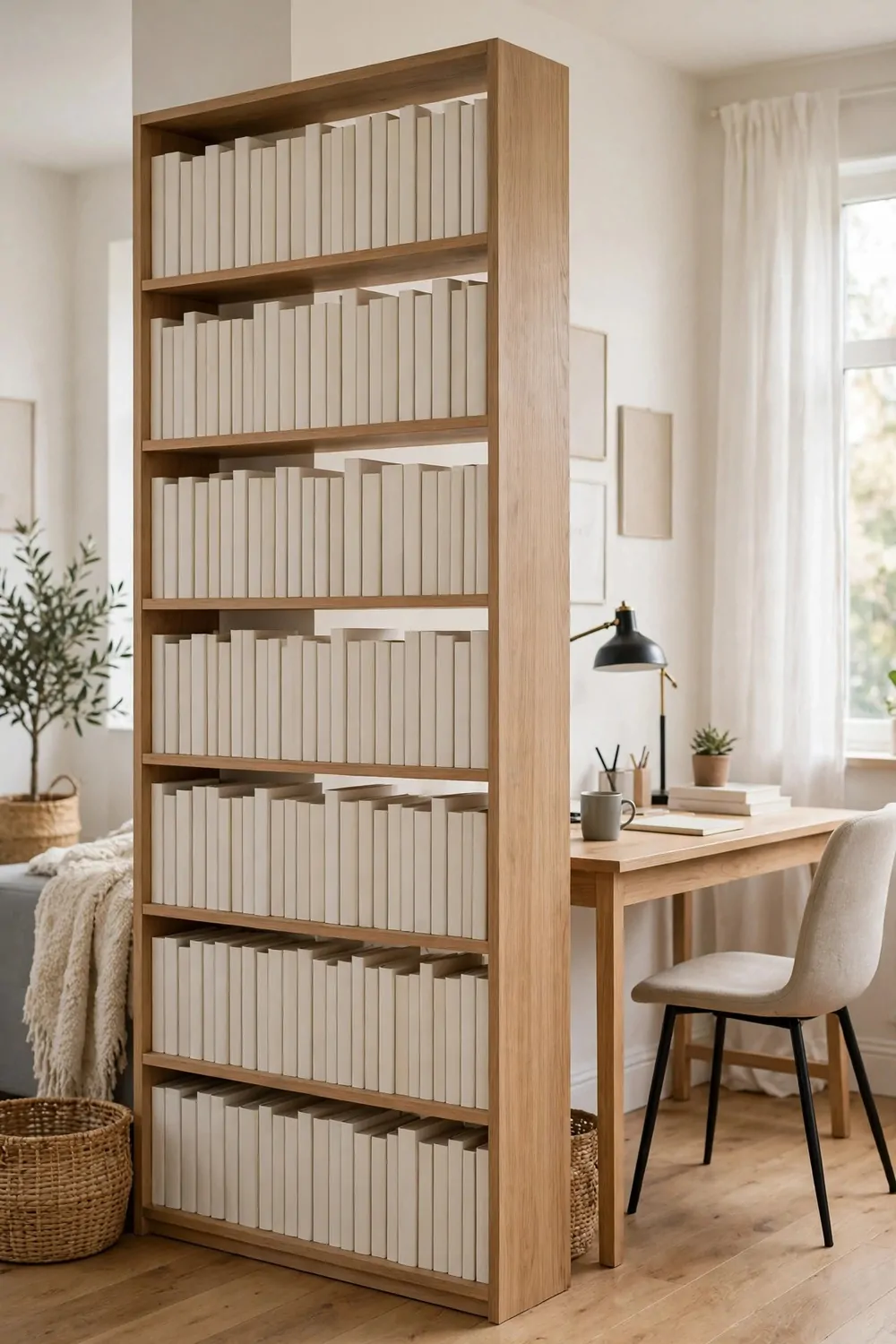
A slim bookshelf can divide a room without building a wall. It gives your office a back, and it gives the rest of the room its own space.
I used a low bookshelf as a divider, and my office felt separate for the first time. I could still see over it, so the room did not feel cut in half.
Pick a shelf that is open on both sides. You can reach books from the office side and the living side. It works twice as hard, and it looks light.
Keep the shelf low if you want light to pass over it. A tall shelf blocks light and makes both sides feel smaller. A low shelf marks the zone and keeps the air moving.
Anchor the shelf to the wall or the floor if it is tall. A divider that wobbles is not safe. A small anchor keeps it steady, and you will forget it is there.
Style both sides of the shelf. The office side can hold work books and boxes. The other side can hold plants and pretty things. Both sides should look good.
Leave some shelves partly empty. A divider packed solid becomes a wall. A divider with gaps lets light through, and the room stays open.
A slim shelf is better than a deep one for a divider. Deep shelves eat floor space on both sides. Slim shelves give you storage without stealing the room.
Walk around your divider and check both sides. If both sides feel calm and useful, you have it right. If one side feels like a back alley, restyle it.
The All-White Office That Glows
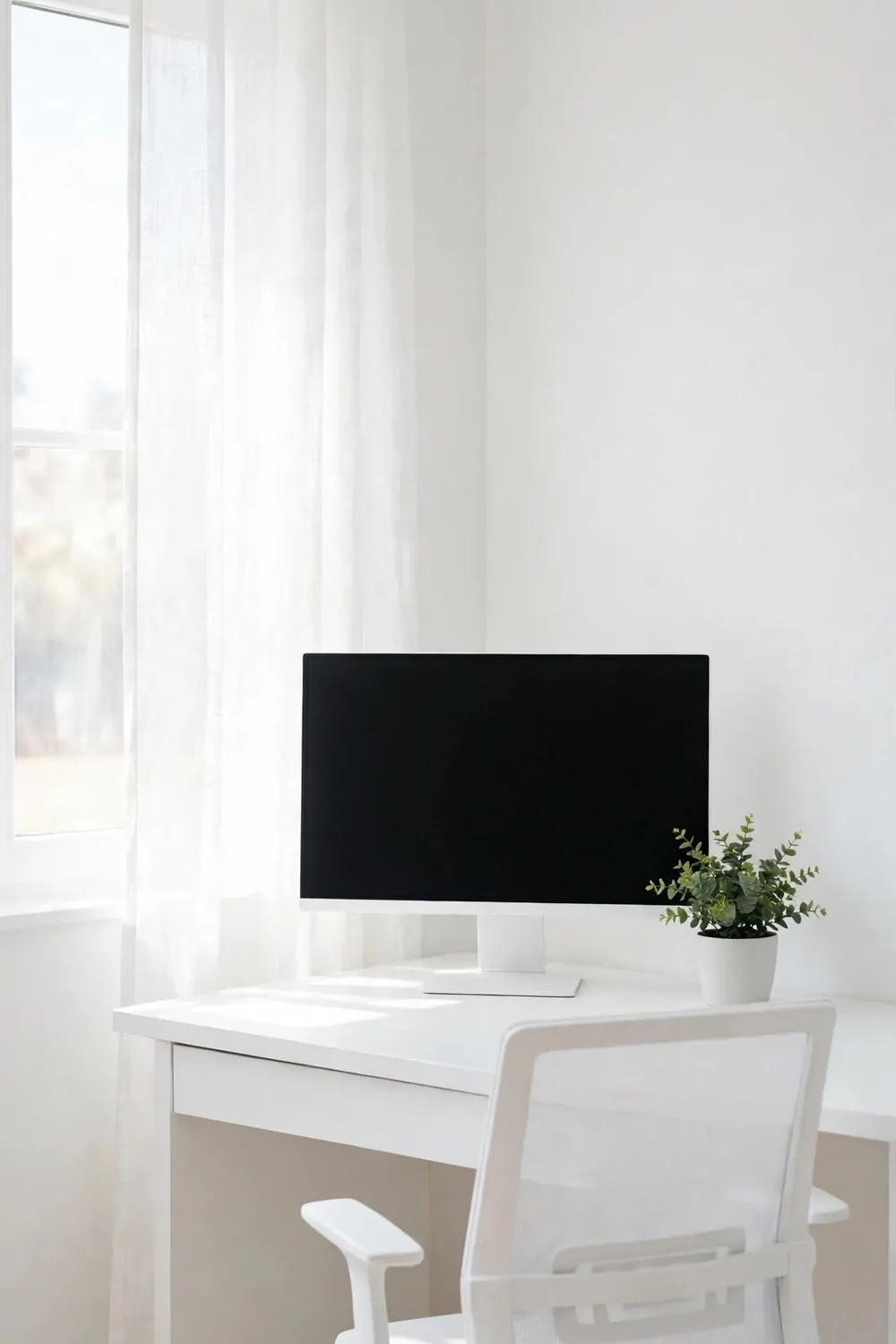
An all-white office glows. White walls, a white desk, and white shelves bounce light around until the whole room feels bright.
I was scared white would feel cold. It did not, because I added warm wood and soft fabric. The white gave light. The wood and fabric gave warmth.
Use different whites, not one flat white. Warm white walls, bright white desk, soft cream chair. The small differences keep the room from looking flat.
White shows marks, so wipe surfaces often. A mark on a white desk shows fast. A quick wipe at the end of the day keeps it fresh.
Add one plant for green, and one wood tone for warmth. That is enough. Too many colors will break the white glow, and the room will lose its calm.
White works best with good daylight. If your room is dark, white alone will not save it. Add a warm lamp, and keep the white bright with light.
Keep cables white or hidden. Black cables stand out hard against white furniture. White cable covers or a tray underneath keeps the look clean.
A white office suits a small room because it has no visual weight. Dark furniture looks heavy. White furniture looks light, and the room feels bigger.
Do not be precious about it. White is meant to be lived in. A scuff here and there is fine. The glow matters more than perfect white.
The Plant Shelf That Softens Corners
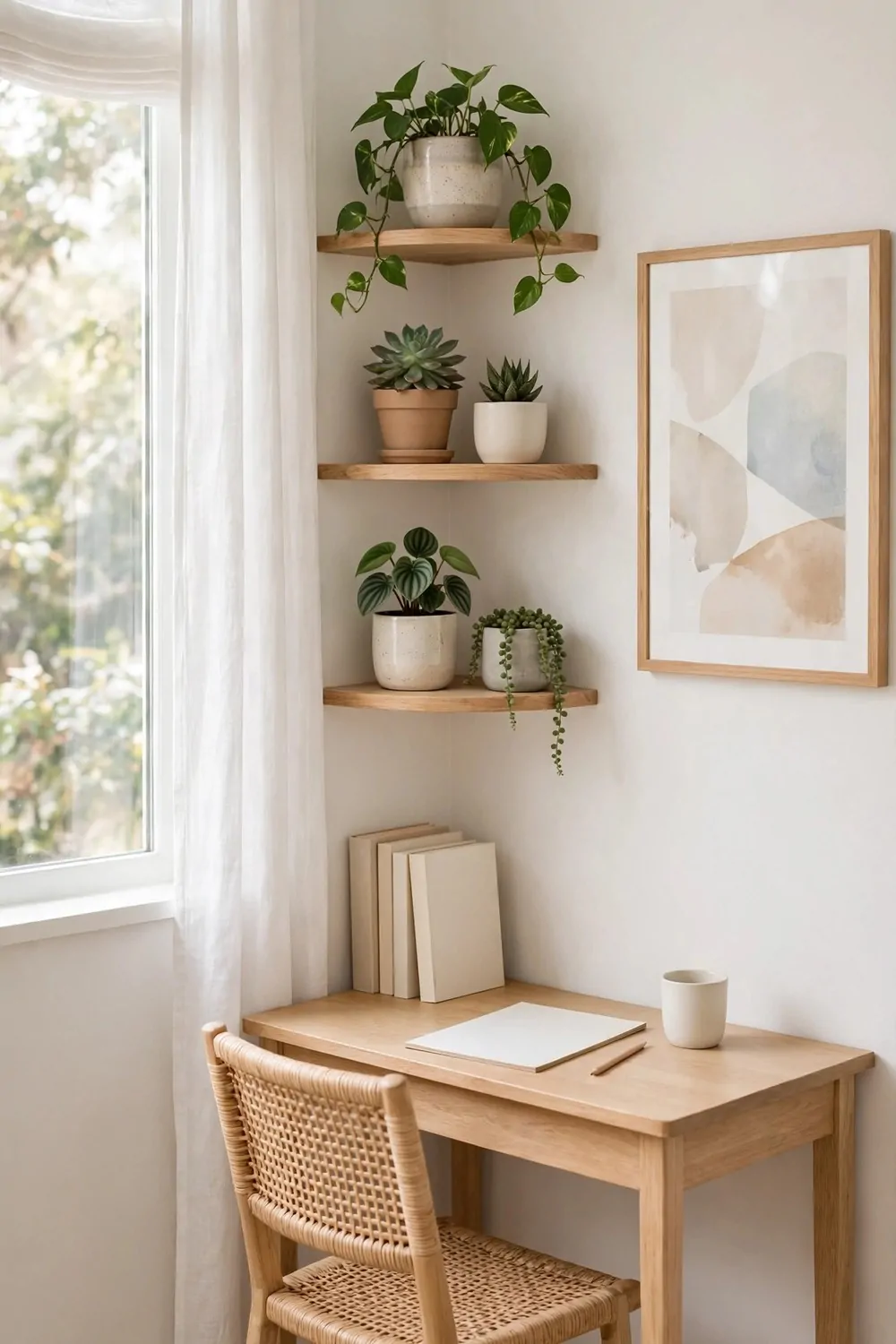
A plant shelf softens the hard corners of a small office. Green leaves break up straight lines, and the room feels alive.
I put one shelf just for plants above my desk, and the whole wall changed. It went from plain and hard to soft and calm, with very little effort.
Pick plants that like your light. A plant that needs full sun will sulk in a dark corner. Ask at the plant shop, and match the plant to your window.
Use small pots, and keep them light. A shelf full of heavy pots can sag. Small pots look neat, and they are easy to move when you water them.
Mix trailing plants with upright ones. Trailing leaves soften the shelf edge. Upright leaves give height. The mix looks natural, not staged.
Water on a set day, and use a tray under each pot. Water on a shelf ruins wood fast. A tray catches drips, and it saves your shelf.
Do not crowd the shelf. Three plants with space between them look better than seven plants fighting for room. Let each plant breathe.
A plant shelf near the window is best, but not right on the glass. Too much direct sun can burn leaves. A little back from the window is just right.
If plants die on you, try one tough plant first. A hardy plant that forgives missed watering will build your trust. Then add more when you feel ready.
The Pegboard Wall That Holds Everything
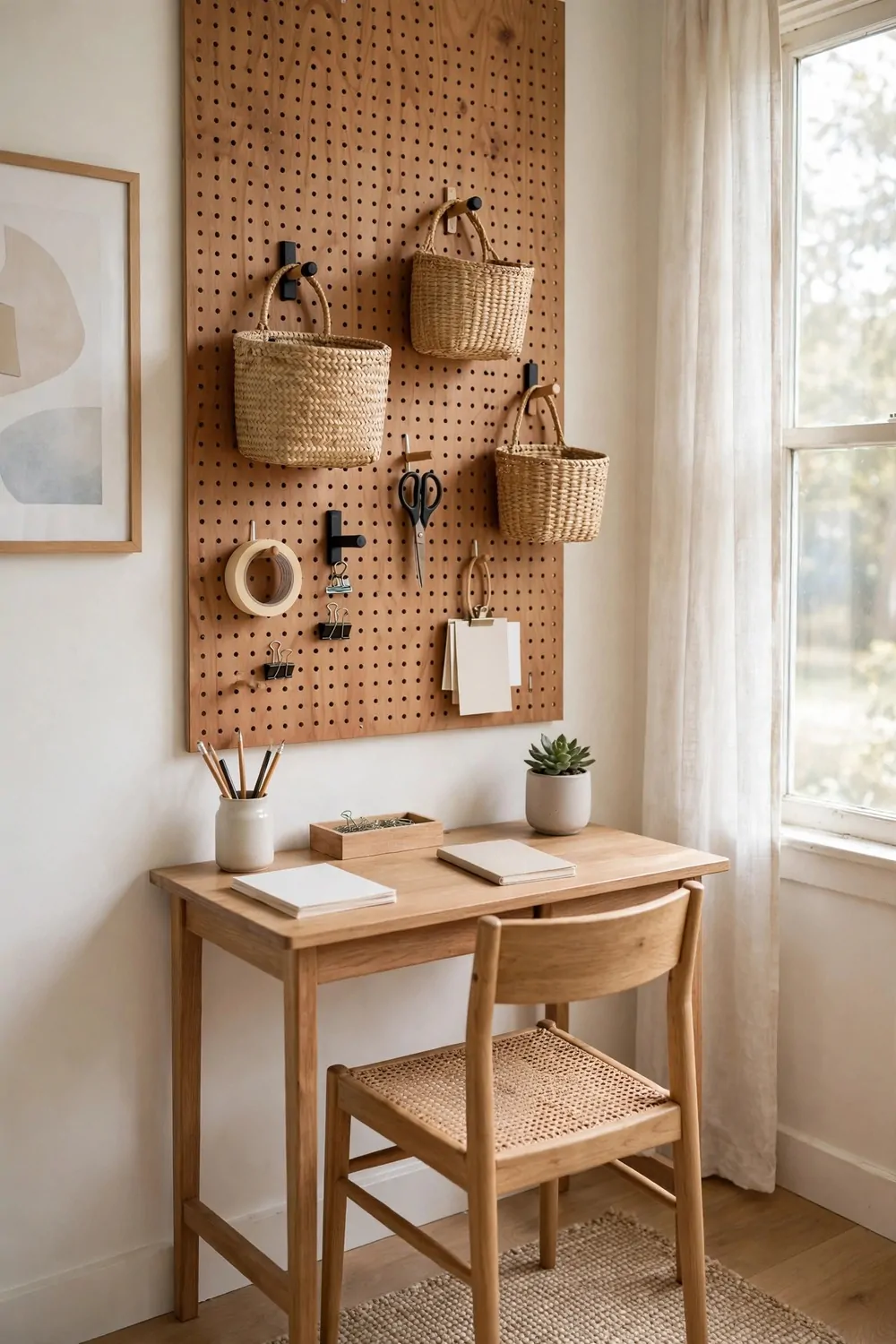
A pegboard wall holds everything, and it keeps your desk clear. Hooks, shelves, and small bins all hang in one tidy grid.
I love pegboard because I can move things without tools. A hook moves in seconds. A shelf shifts up or down. The wall grows with how I work.
Paint the pegboard the same color as your wall. It blends in, and the things on it stand out. A dark pegboard on a light wall can look heavy.
Keep heavy things low on the board, and light things high. Scissors and tape can go high. Heavy boxes should sit low, near the desk.
Do not fill every hole. A pegboard packed edge to edge looks busy. Leave gaps, and your eye can find what you need fast.
Use small bins for pens, clips, and cables. Loose small things fall off hooks. A bin keeps them together, and it looks tidy.
Hang a small clock or a photo if you like, but keep it to one or two personal things. A pegboard is for work first. Too many personal bits turn it into a collage.
Check the fixings once a month. Pegboard holds a lot, and screws can loosen over time. A quick tighten keeps it safe.
Stand back and look at the board like a map. If you can see zones at a glance, it is working. If it looks like a jumble, take a third off and try again.
| Pegboard zone | What goes there | Why it works |
|---|---|---|
| Top zone | Light tools, tape, and scissors | Easy to see, hard to knock down |
| Middle zone | Pens, notes, and daily bins | In reach while you sit at the desk |
| Low zone | Heavy boxes and cable bins | Low weight stays safe and steady |
| Side zone | Headphones and one small photo | Off the desk, still close at hand |
The Daybed Office That Doubles as Guest Space
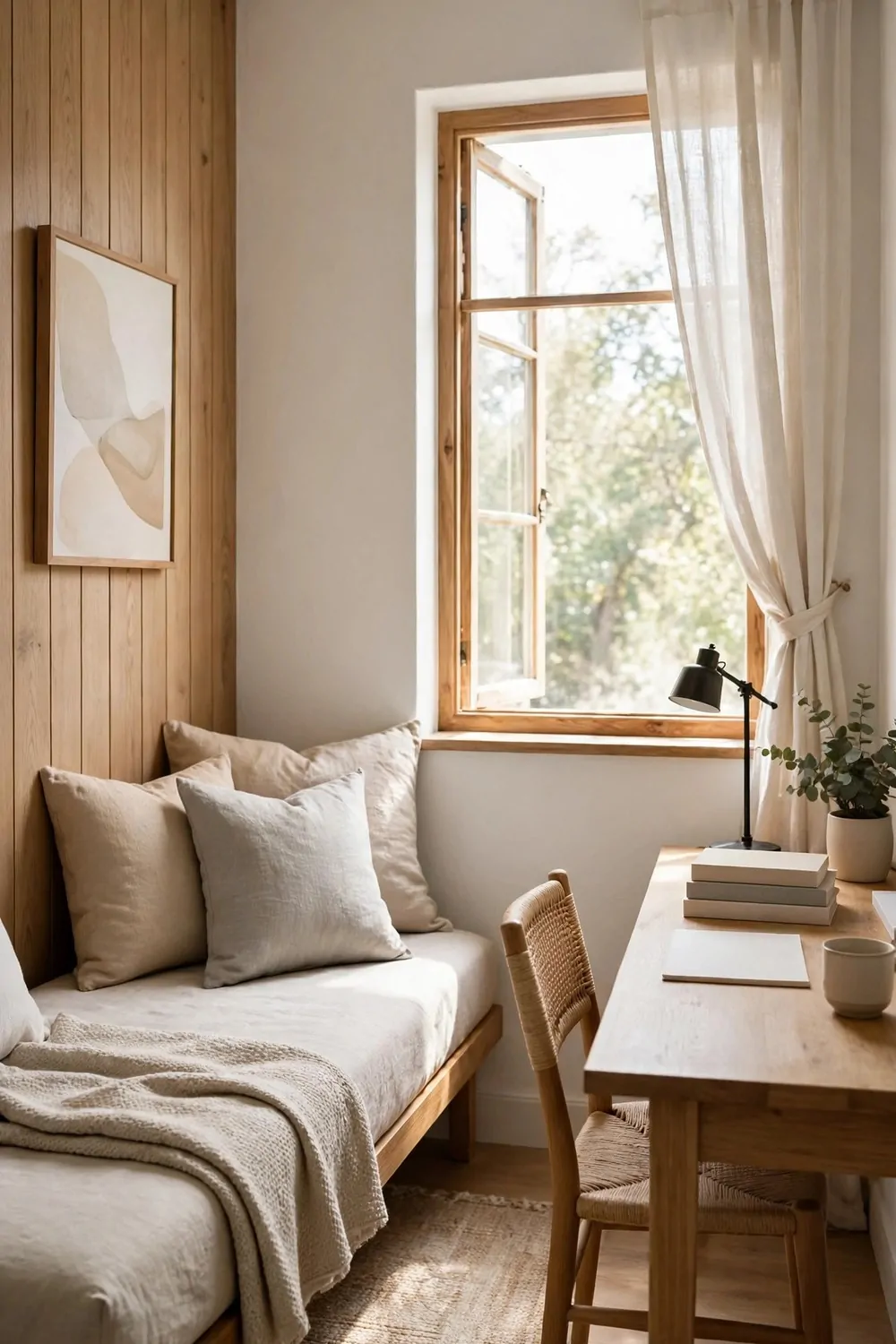
A daybed office does two jobs. By day it is your office. By night it is a guest bed. That is smart use of a small room.
I set up a daybed along one wall, with my desk across from it. Guests sleep well, and I work well. Neither job steals space from the other.
Pick a daybed with storage underneath if you can. Bedding, extra pillows, and office supplies can live under it. The room stays tidy, and nothing piles up.
Keep the daybed made with a neat cover during work hours. A messy bed in your office makes work feel messy too. A tidy cover makes it look like a sofa.
Use cushions to mark the daybed as a sitting spot in the day. Two or three cushions is enough. Too many cushions turn it back into a bed.
Put your desk where you can see the door, not with your back to it. You will feel more relaxed, and guests will feel welcome when they arrive.
A small side table between the daybed and the desk works for both jobs. By day it holds a notebook. By night it holds a glass of water and a book.
Keep guest bedding in one box, ready to go. When a guest comes, you pull the box out, make the bed, and you are done. No hunting through closets.
Try the room both ways before you settle it. Work in it for a day. Sleep a guest in it for a night. If both feel good, the double job works.
The High Shelf Line Near the Ceiling
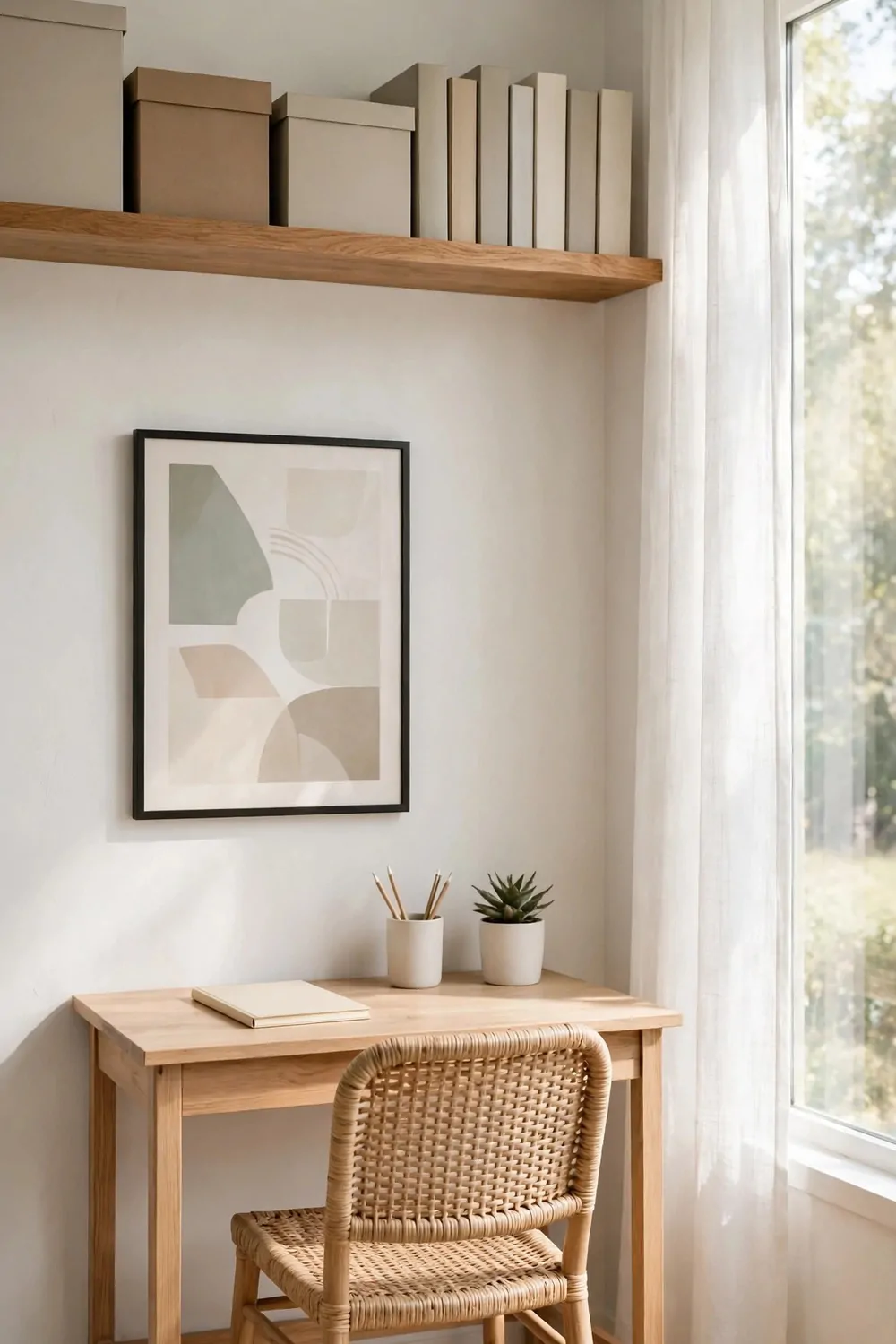
The strip of wall near the ceiling is wasted in most offices. A high shelf line turns it into storage, and it draws the eye up.
I ran one long shelf high around my office, and the room felt taller at once. My eye traveled up, and the walls seemed to stretch.
Use the high shelf for things you rarely need. Old files, spare boxes, books you keep but do not read daily. Daily things belong lower, where you can reach them.
Keep the shelf line neat and even. A wobbly line near the ceiling looks wrong. Use a level, and take your time fitting it.
Paint the shelf the same color as the wall or the ceiling. It will blend in, and the things on it will look like they belong there.
Do not overload a high shelf. Heavy boxes up high are hard to lift and risky to drop. Keep it light, and keep it safe.
A step stool is a must for a high shelf. Do not climb on furniture to reach it. Keep the stool nearby, and use it every time.
Leave gaps along the shelf line. A solid run of boxes looks heavy. Gaps with a plant or an empty stretch keep it light and airy.
Look up when you walk in. If the shelf line makes the ceiling feel higher, it is working. That lift is what makes a small office feel spacious.
The Minimal Desk With One Drawer
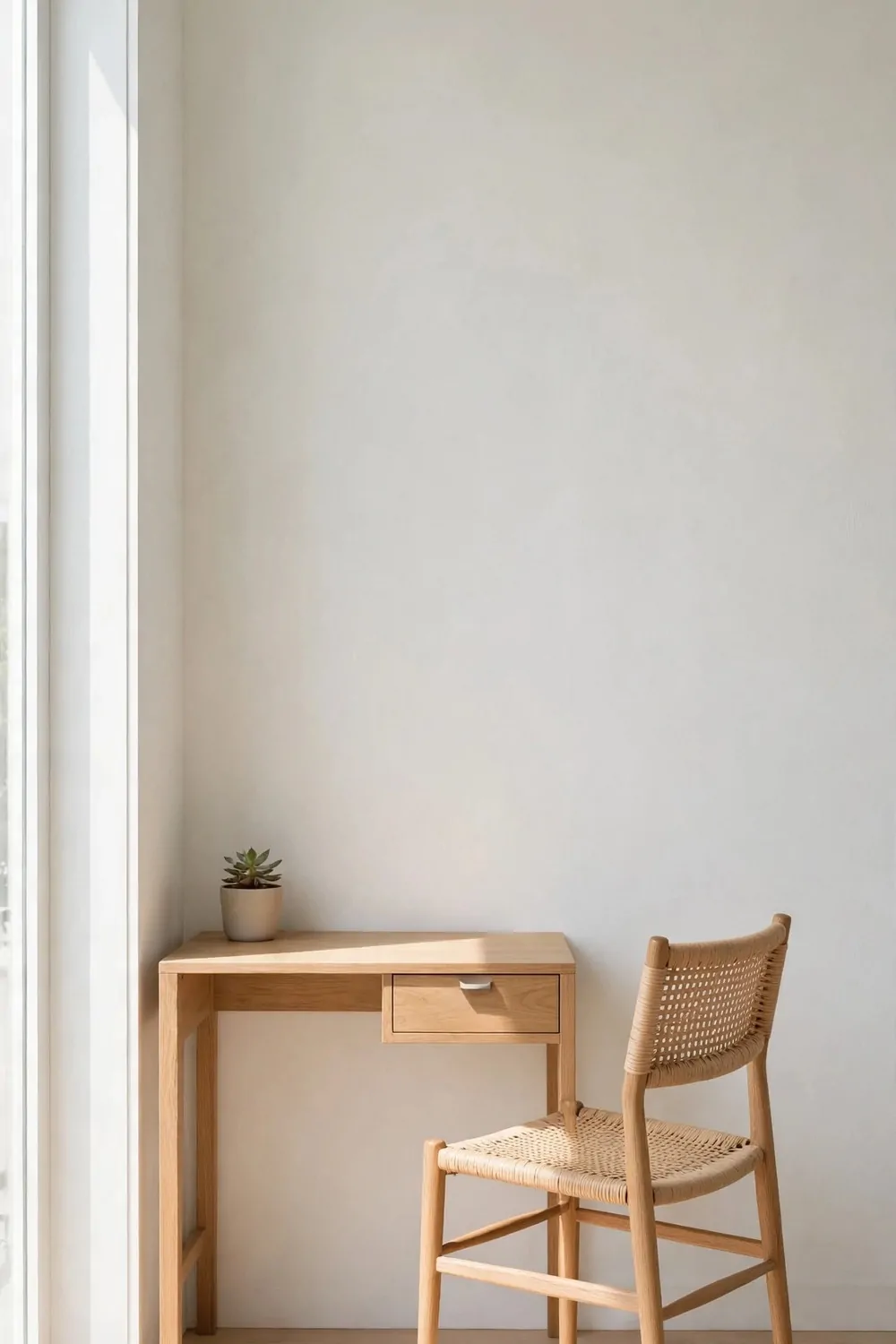
One drawer is enough, if it is the right drawer. A minimal desk with one drawer forces you to keep only what matters.
I switched to a desk with one drawer, and my clutter dropped fast. I had nowhere to hide junk, so I stopped keeping junk. My desk stayed clear.
Use the drawer for your daily essentials only. Pens, a notebook, chargers, and one small personal thing. If it does not fit, it does not belong on the desk.
Keep the desktop almost empty. A screen, a lamp, and space to write. That empty space is what makes a minimal desk feel spacious.
A minimal desk needs a home for the rest of your stuff. A shelf or a small box nearby holds the overflow. The desk stays minimal because the rest has a place.
Pick a desk with clean lines and slim legs. Thick legs and heavy panels add visual weight. Slim lines keep the room feeling open.
Wipe the desk at the end of each day. A minimal desk shows dust and marks fast. A clean desk in the morning makes work feel fresh.
Do not add a second drawer unit under a minimal desk. It defeats the point. If you need more storage, put it on the wall, not under the desk.
Try minimal for two weeks. The first week feels bare. The second week feels calm. Most people never go back to a cluttered desk after that.
The Reading Nook Beside the Desk
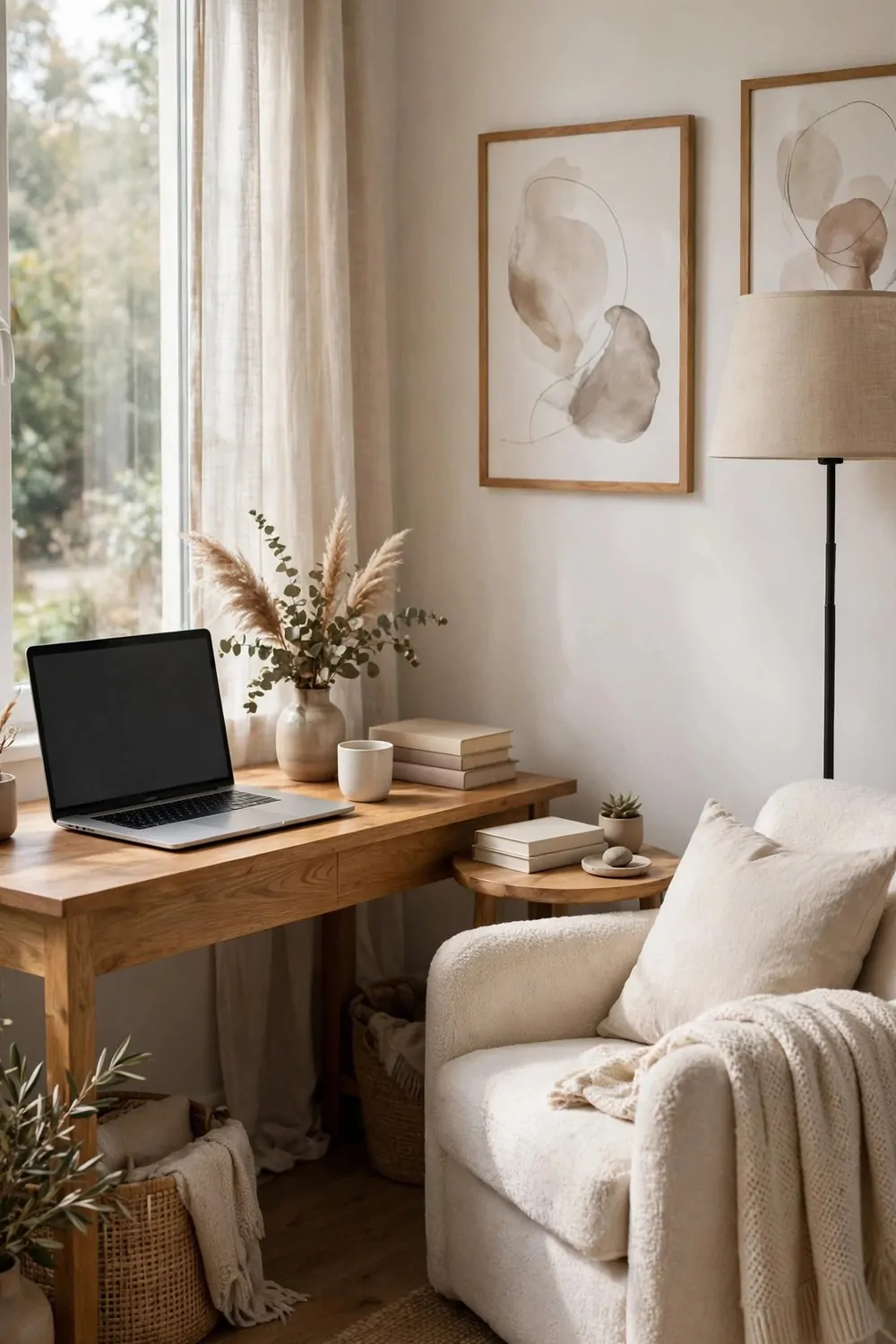
A reading nook beside your desk gives your brain a second spot. You work at the desk, and you think in the nook.
I put a small chair and a lamp in the corner beside my desk, and I use it every day. I read notes there. I plan there. I rest my eyes there between tasks.
Keep the nook small. One chair, one lamp, one small table. A big nook will eat your office. A small nook fits beside the desk and stays useful.
Pick a chair you can sit in for twenty minutes, not two hours. This is a thinking spot, not a sofa. A firm small chair keeps you alert.
A warm lamp makes the nook inviting. A cold bright light makes it feel like part of the desk. Warm light marks it as a rest spot.
Keep a small basket for books and notes in the nook. Papers piled on the chair ruin the calm. A basket keeps them tidy and in reach.
Put the nook near a window if you can. Natural light is kind for reading, and the view gives your eyes a break from the screen.
Do not put a screen in the nook. No tablet, no second monitor. The nook is for paper and thought. Screens belong at the desk.
Use the nook at least once a day, even for five minutes. A nook you never use is just furniture. A nook you use becomes the best corner in the room.