25 Laundry Folding Station Ideas for Organized Homes

Last Tuesday I walked past my bed and saw it again. A big pile of clean clothes sat right in the middle of it. The shirts were folded in my head, but not in real life.
I had washed them two days before. I had even carried the basket upstairs like a good plan. Then life got in the way, and the pile just stayed there, getting taller every time I walked past it.
That night I sat on the edge of the bed and folded the whole pile while a show played in the background. It took me nine minutes. Nine minutes, and I had been putting it off for two days.
That is when I knew the problem was not the folding. The problem was that I had no good spot to do it. A folding station changes all of that, and this list is full of simple ideas that make folding feel easy.
A Countertop Over Front-Load Machines
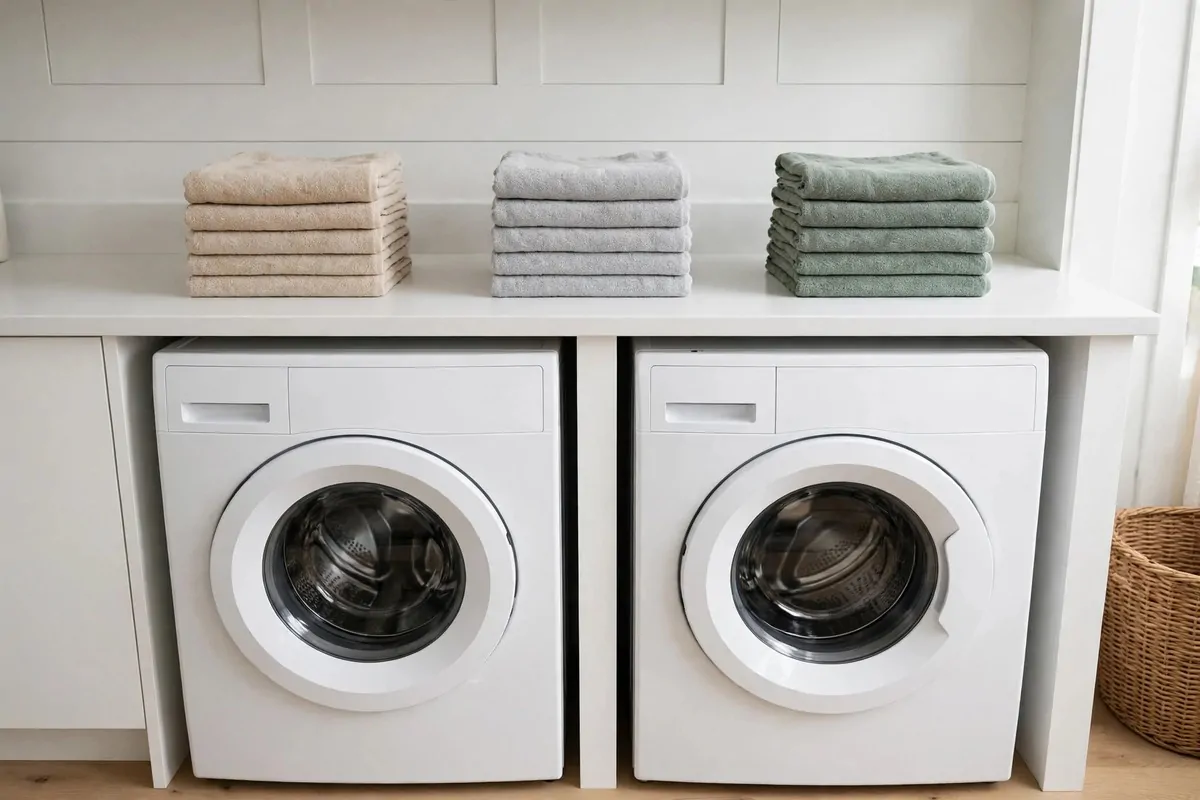
I love a countertop over my front-load machines. It gives me a flat place to fold right where the clothes come out.
You do not need a fancy top to make it work.
I keep the top clear when I start a load. That way I have room when the dryer buzzes.
Folding on top of the machines saves my back. I do not have to bend down to a low table or carry a big pile to another room.
I stack shirts in one pile and pants in another pile. It feels so calm when each pile has its own spot.
You can leave a small basket at one end for socks. I toss the odd socks in there and match them later. It works well for me.
The countertop also holds my folding board when I am not using it. I slide it flat against the wall behind the machines.
I wipe the top once a week. Lint and dust can build up fast in a laundry room.
When friends ask me where to start, I tell them to start here. A flat top over the machines makes folding feel easy.
A Fold-Out Wall Table That Disappears
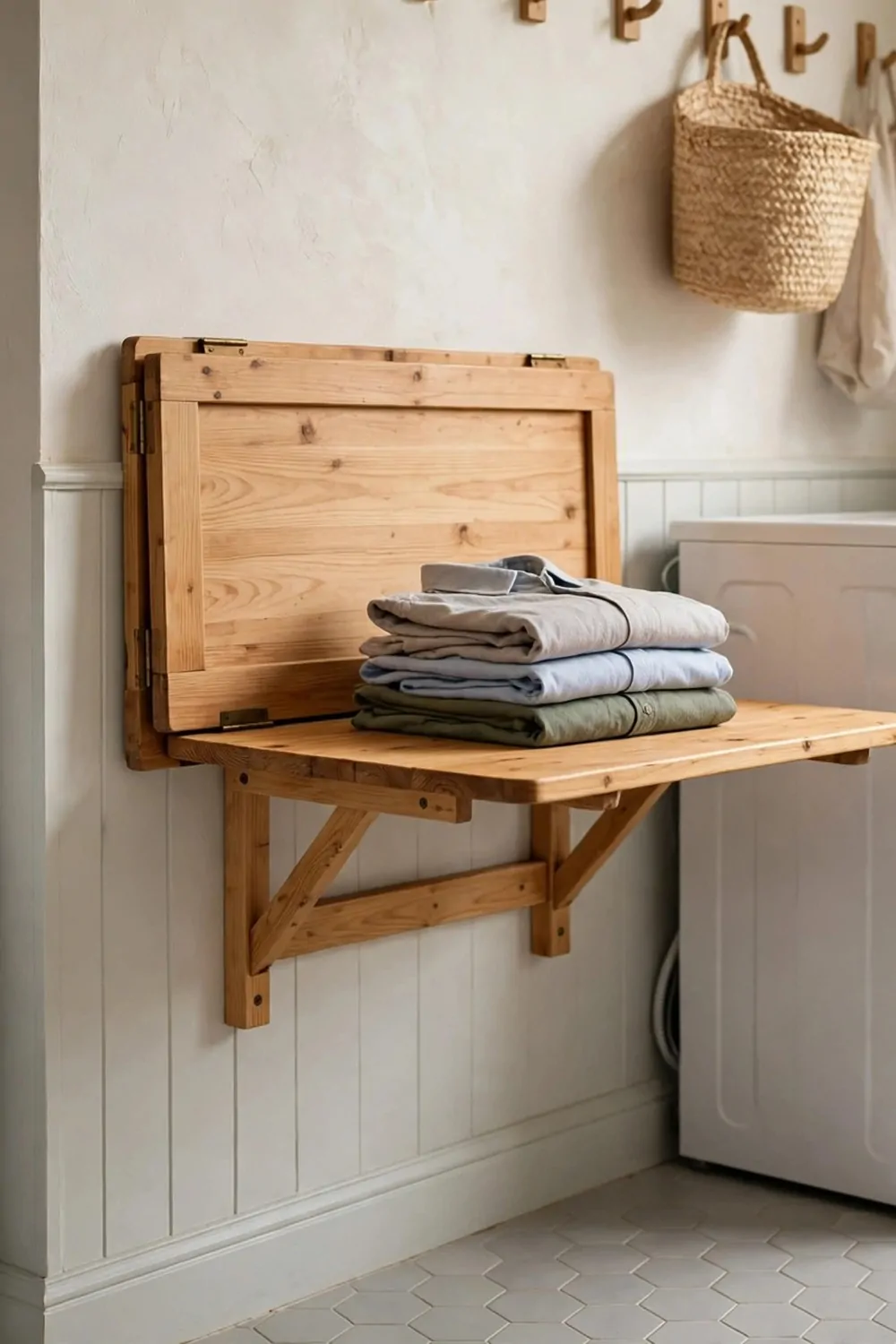
I like a table that folds away when I am done. It saves space and it keeps the room open.
You pull it down when you need it.
I use mine for big loads. Towels and sheets need more room than a small counter can give.
The table sits at a good height for me. I do not have to hunch over to fold a shirt.
You can add a small hook under it for a bag. I hang a mesh bag there for items that need a second wash.
I keep a spray bottle nearby for wrinkles. A quick spray helps the fabric lie flat. It works well for me.
When the table is up, the room feels bigger. I can walk past it with a full basket with no trouble.
My kids know the rule. If the table is down, folding is happening, so they leave the piles alone.
I oil the hinge once in a while. It keeps the table smooth and quiet when I fold it up.
Sorting Bins in Three Colors
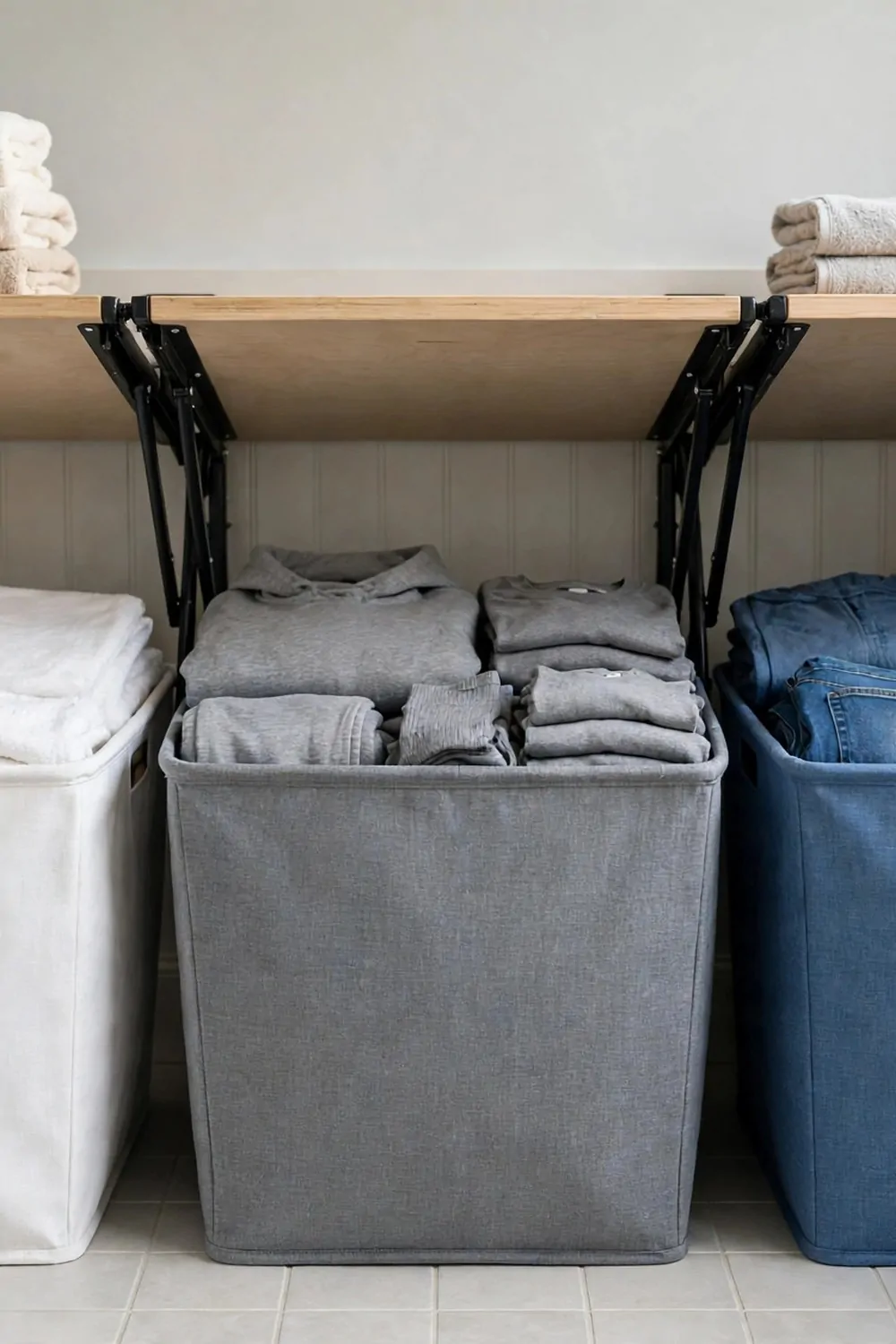
I sort my laundry into three bins before I fold. It makes the whole job feel less messy.
One bin is for dark clothes.
You can pick any three colors you like. I picked blue, white, and green because they are easy to see.
I label each bin with a small tag. My family knows where each load goes now.
Sorting first means I fold in small groups. I do the darks, then the lights, then the colors.
It also helps me spot a stain early. I can treat it before it sets in the wash. It works well for me.
I keep the bins on a low shelf so I can reach them. Heavy bins on a high shelf are no fun at all.
Here is how I use my three bins each week.
| Bin color | What goes inside | When I fold it |
|---|---|---|
| Blue | Dark shirts and pants | Right after the dryer stops |
| White | Light towels and sheets | While the next load washes |
| Green | Bright colors and soft items | Last, when I have quiet time |
The bins also teach my kids to help. They can sort their own clothes by color with no fuss.
A Hanging Rod for Fresh Shirts
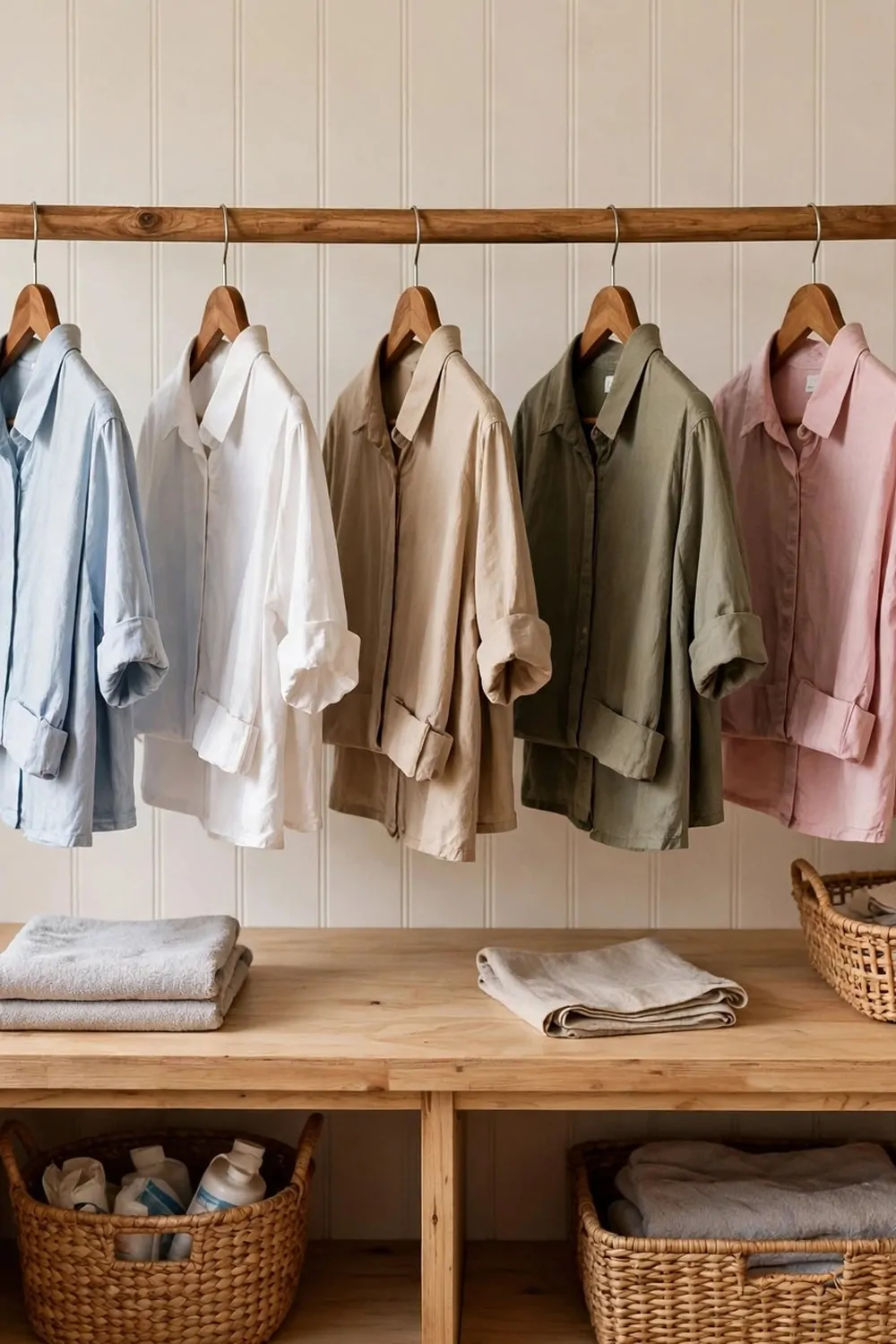
I hang my shirts right after I fold the rest. A rod in the laundry room makes that so easy.
You do not need a big closet rod.
I keep empty hangers on one end of the rod. That way I never have to hunt for one.
Shirts dry with fewer wrinkles when they hang. I love how they look when I take them down.
I hang work shirts first. Then I hang the soft shirts my family wears at home.
You can add a small shelf above the rod for folded pants. I stack them in neat rows up there. It works well for me.
I check each shirt for a spot before I hang it. A quick look saves me from a surprise later.
The rod also holds items that need to air dry. I hang them with space between each one.
When the rod is full, I know I am done for the day. It feels good to see a row of clean shirts ready to go.
A Tall Shelf Tower Beside the Dryer
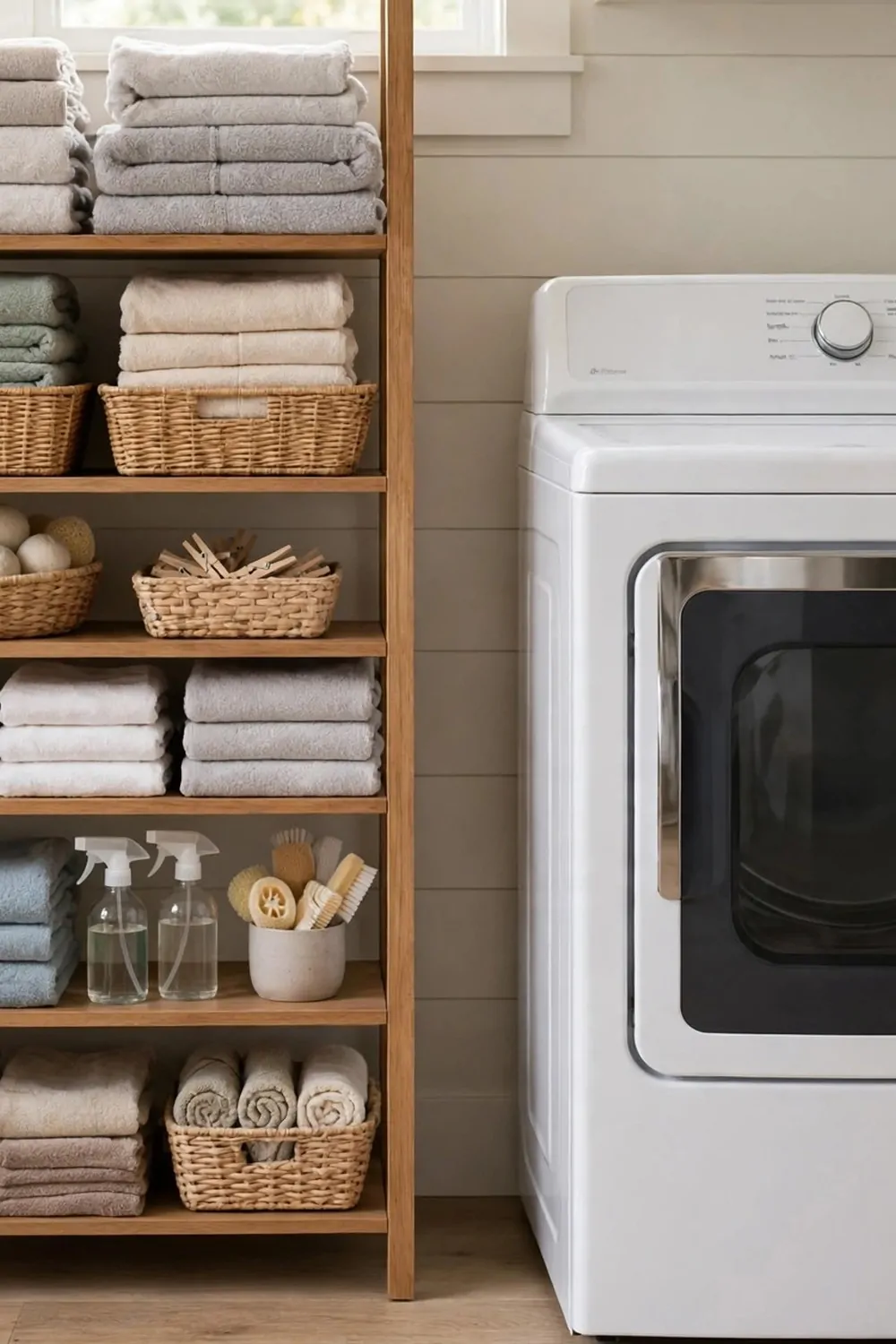
I keep a tall shelf tower right beside my dryer. It holds all my folding supplies in one place.
You can reach everything without walking across the room.
I put folded towels on the top shelf. I put clean sheets on the middle shelf.
The bottom shelf holds my baskets. I pull one out when I need to carry a load to a bedroom.
I keep a small jar of clothespins on one shelf. They are handy for items that need to hang.
You can use bins on the shelves to hide the mess. I use plain bins so the tower looks calm. It works well for me.
I dust the shelves once a week. Laundry rooms get dusty fast, and I like a clean look.
The tower also holds my folding board. I slide it in sideways so it does not fall over.
When I am done folding, I step back and look at the tower. Everything has a spot, and that makes me smile.
A Rolling Cart That Parks Under the Counter
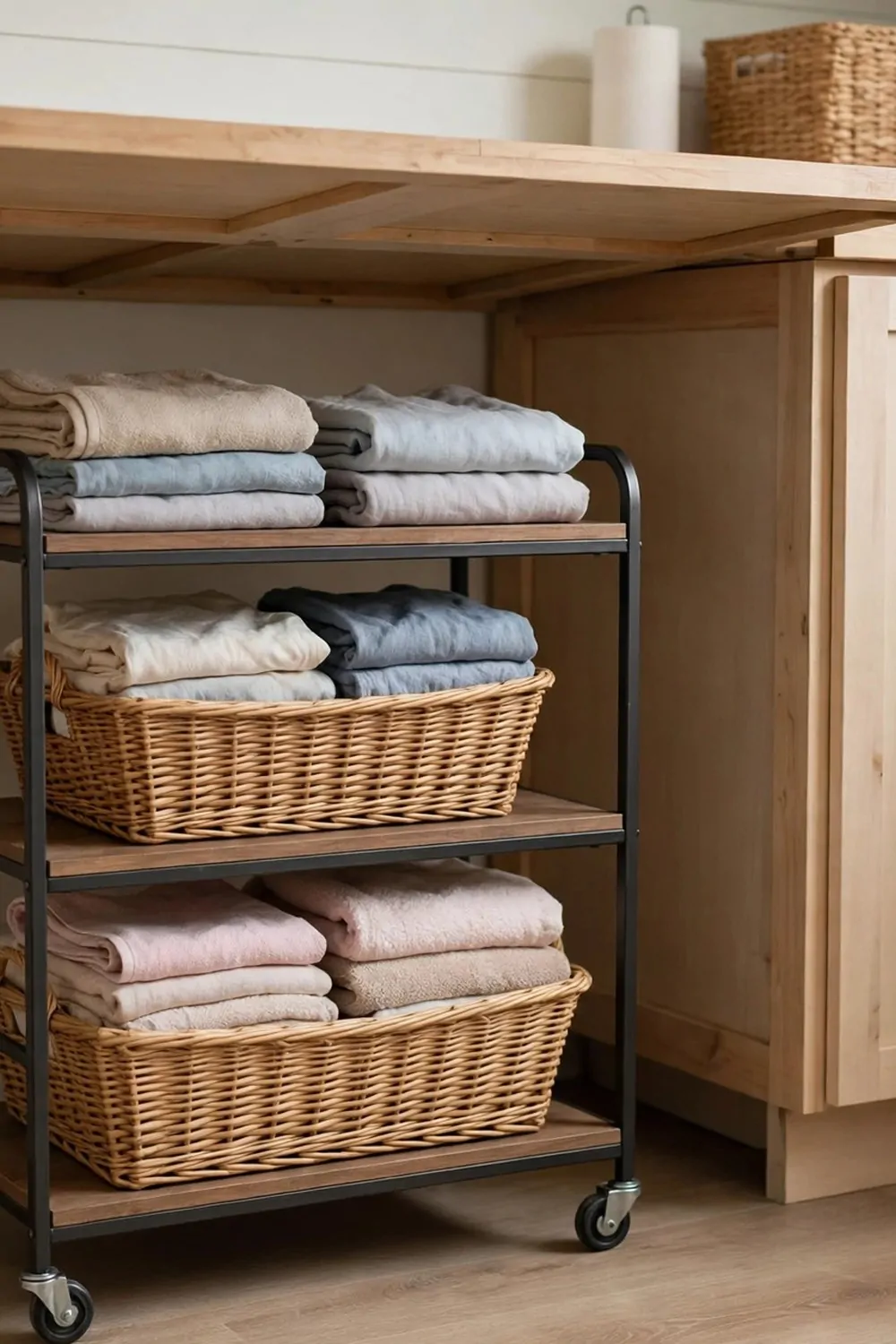
I love a rolling cart that parks under my counter. It rolls out when I need it and hides when I do not.
You can load it with folded clothes and roll it to the right room.
I use the top shelf for shirts. I use the middle shelf for pants and shorts.
The bottom shelf holds towels. They are heavy, so I like them low.
You can park the cart under the counter between loads. It stays out of the way and out of sight.
I put small wheels on mine so it moves smooth. Big wheels can catch on the floor. It works well for me.
I keep a small bag on the side for lint. I toss lint in there as I fold.
When the cart is full, I roll it to the hallway. My family takes their own piles from it.
I wipe the cart down after wash day. It keeps the wheels clean and the shelves fresh.
A Basket Shelf for Each Family Member
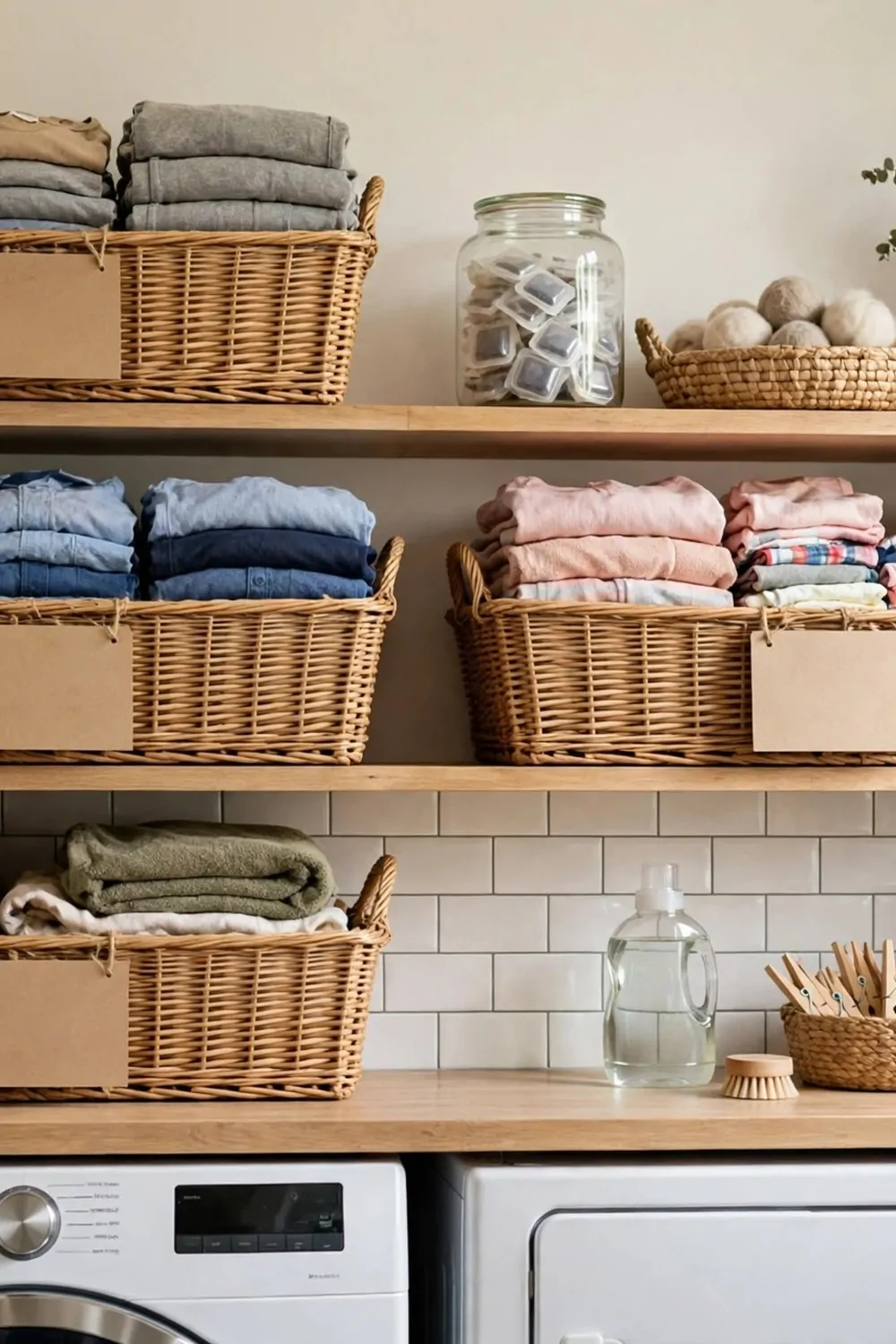
I give each person in my home their own basket on a shelf. It makes folding feel fair and simple.
You fold the clothes, then you drop them in the right basket.
I use a different basket for each person. The baskets sit in a row on one shelf.
My kids know their basket by its spot. They can grab it and take it to their room.
I fold small items first and put them at the bottom. Then I lay shirts on top so they stay flat.
You can add a small name tag to each basket. I use plain tags so I can change them if I need to. It works well for me.
I check each basket before bedtime. If one is still full, I remind that person to put the clothes away.
The shelf keeps the baskets off the floor. That helps me sweep and mop with no trouble.
When a basket is empty, I smile. It means the folding is done and the room is ready for the next load.
A Steam and Press Corner
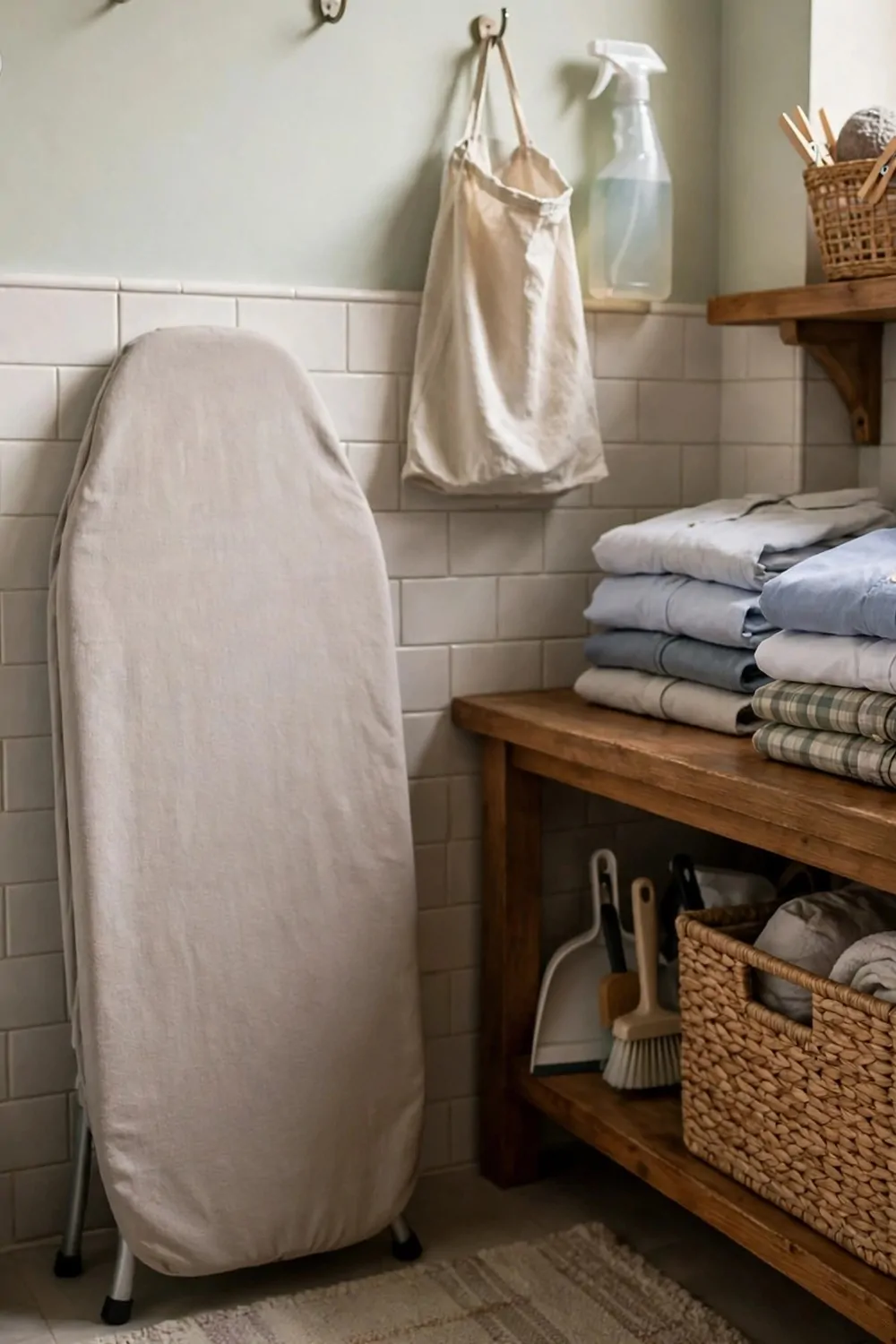
I set up a small corner for steam and press. It is just a board and a steamer, but it helps a lot.
You can smooth a shirt in less than a minute.
I keep the board folded flat against the wall. I pull it out when I need it.
The steamer sits on a small shelf nearby. I fill it with water before I start.
I press collars first. Then I press the sleeves and the front.
You can steam a dress while it hangs. I love how soft it looks after a quick steam. It works well for me.
I keep a small spray bottle there too. A light spray helps stiff fabric relax.
I always unplug the steamer when I am done. Safety comes first in my laundry room.
When the corner is tidy, I feel ready for the week. Clean shirts and smooth pants make mornings easier.
A Drying Rack That Folds Flat
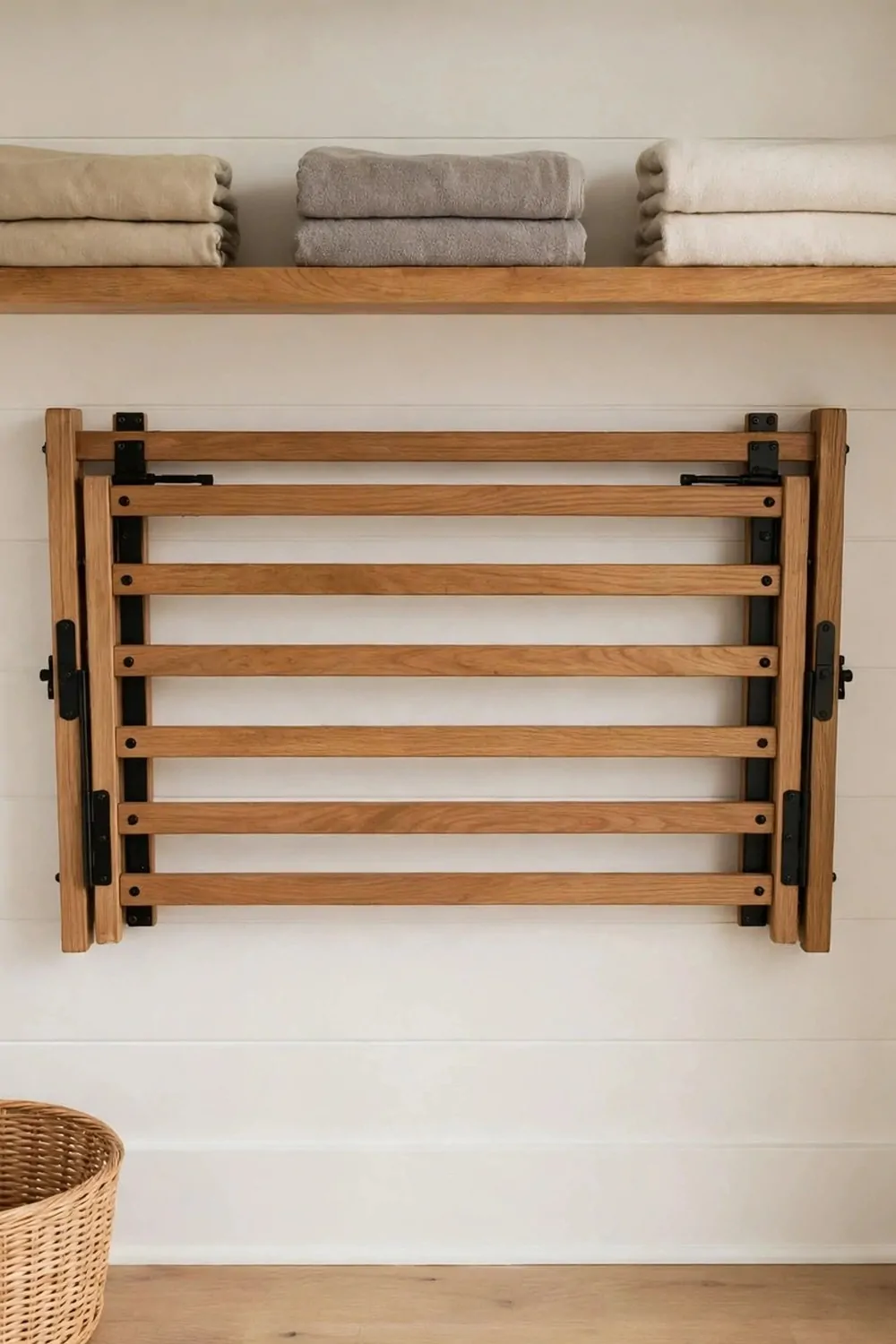
I use a drying rack that folds flat against the wall. It gives me air space when I need it and floor space when I do not.
You open it up for wet items.
I hang socks and small items on the bars. They dry fast with air all around them.
The rack is great for items that should not go in the dryer. I lay them flat on the bars.
You can put the rack near a window if you have one. Fresh air helps clothes dry and smell nice.
I wipe the bars once a week. Dust can stick to damp clothes if I forget. It works well for me.
When the rack is up, I keep the room door open. Air moves better that way.
I fold the rack flat after every use. It keeps the room safe to walk through.
My favorite part is how simple it is. No fuss, no mess, just clean clothes drying in the air.
A Pegboard for Small Laundry Tools
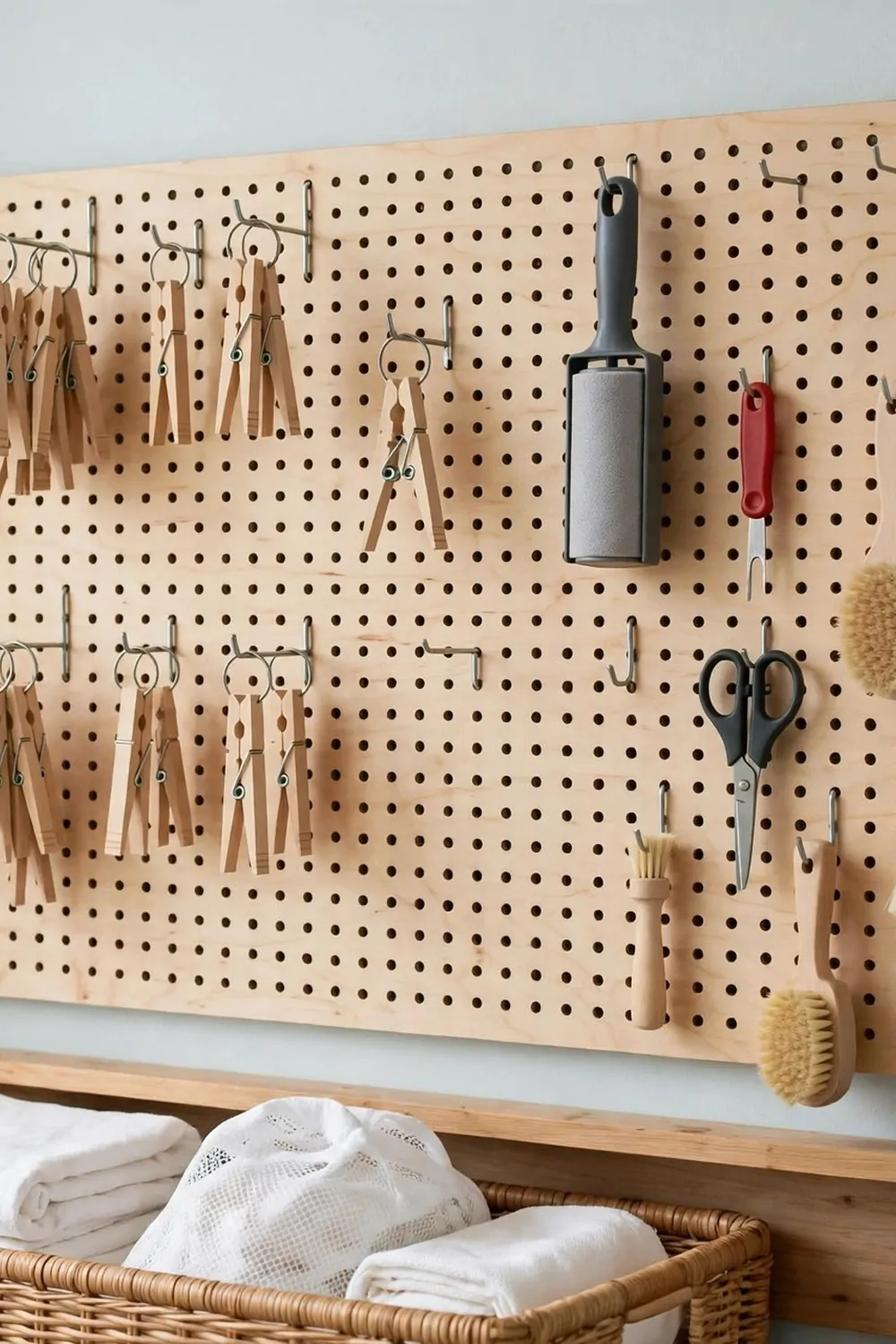
I hang a pegboard on my laundry wall for small tools. It keeps them off the counter and easy to find.
You can hang hooks for scissors and clips.
I keep my stain brush on the pegboard. I keep my lint roller there too.
The board holds my measuring cup for soap. I never have to dig in a drawer for it now.
You can move the hooks around as you like. I change mine when I add a new tool.
I label each hook with a small tag. My family knows where each tool lives. It works well for me.
The pegboard also holds a small bag for lost buttons. I toss them in when I find one in a pocket.
I dust the board once a month. It stays clean and looks nice on the wall.
When I look at the board, I feel calm. Every tool has a home, and I can grab it in a second.
A Drawer for Socks and Small Things
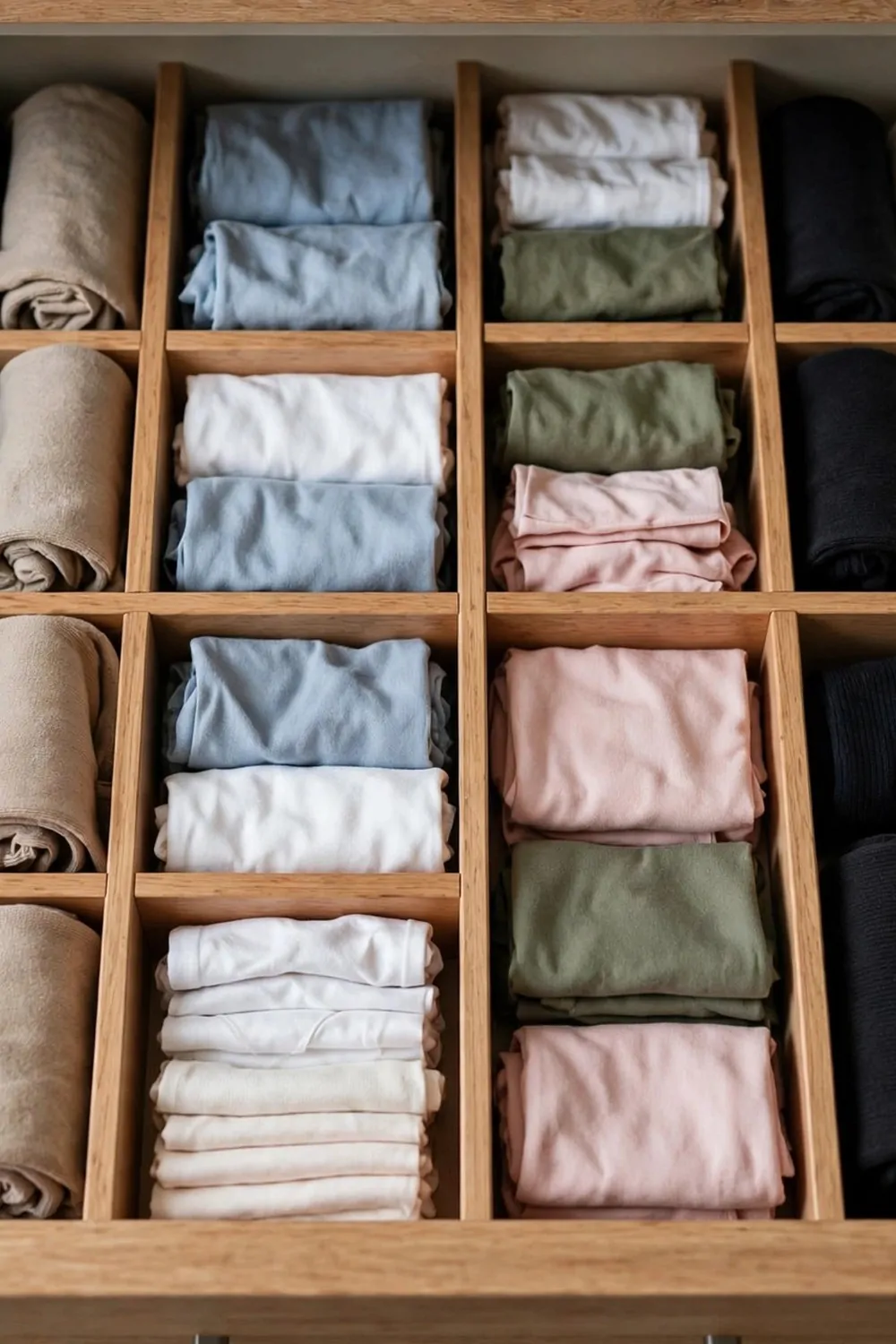
I keep one drawer just for socks and small things. It stops the tiny items from getting lost in big piles.
You can use dividers inside the drawer.
One spot is for socks. One spot is for soft cloths. One spot is for small items that need a match.
I fold socks in pairs before I put them away. It takes a second, but it saves time later.
You can toss single socks in a small cup inside the drawer. I check the cup once a week for matches.
I keep the drawer near my folding counter. That way I can drop small items in as I fold. It works well for me.
The drawer also holds hair ties I find in pockets. I put them in a tiny jar at the back.
I clean the drawer once a month. I take everything out and wipe it down.
When the drawer is neat, folding feels done. Small things have a home, and nothing gets lost.
A Label System So Everyone Knows Where Things Go
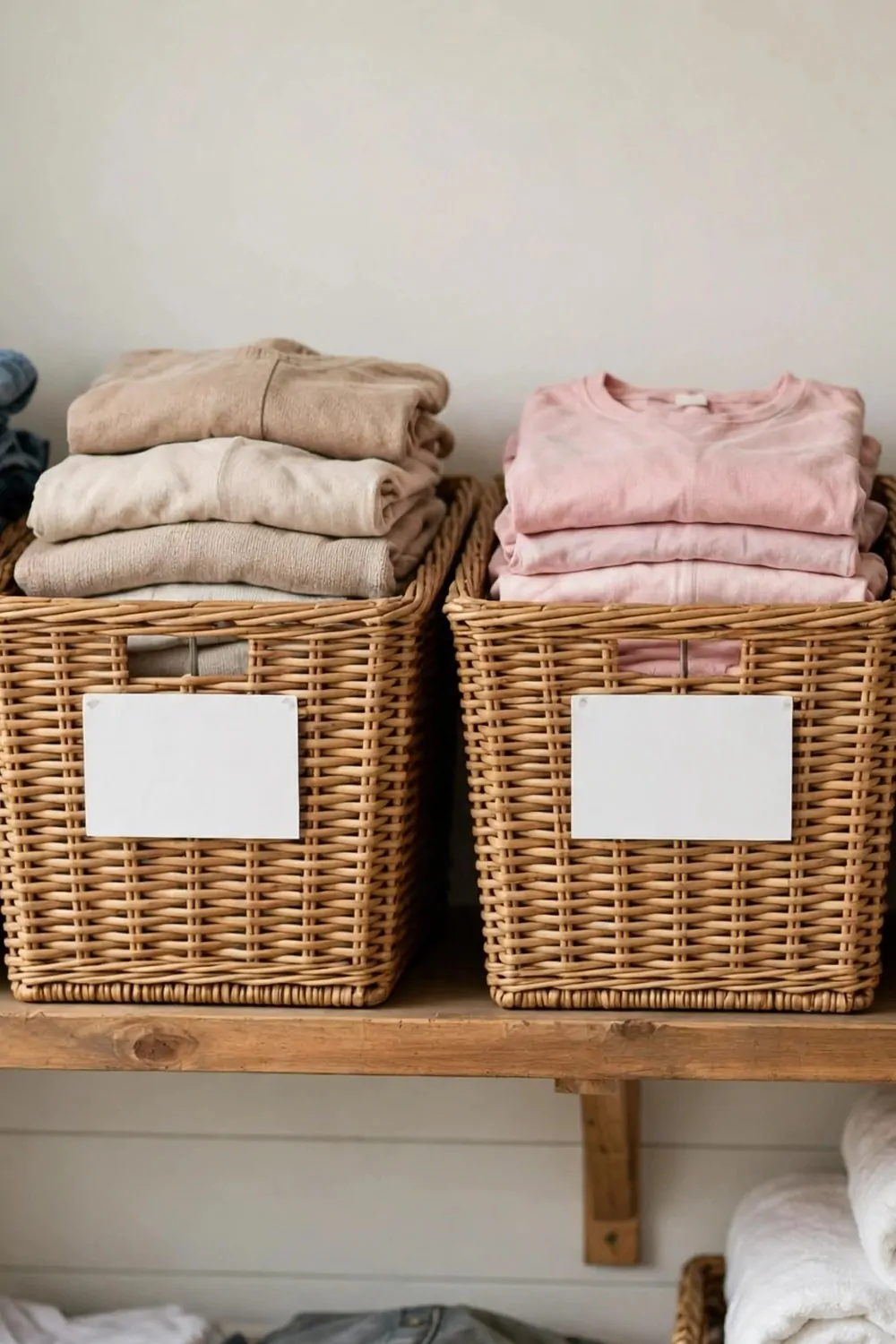
I use labels all over my laundry room. They tell everyone where each thing goes.
You do not need fancy labels.
I label my baskets first. Each basket has a name on it so no one mixes them up.
Then I label my shelves. One shelf is for towels, one is for sheets, and one is for clothes.
You can label your bins by color too. I add a small tag to each bin so the color means something.
My kids can read the labels and help me fold. They know where to put each pile now. It works well for me.
I keep the labels short and clear. Long words can confuse a young helper.
Here is the simple label plan I use in my laundry room.
| Place | Label I use | What it holds |
|---|---|---|
| Top shelf | Towels | Bath towels and hand towels |
| Middle shelf | Sheets | Clean sheets and pillow cases |
| Bottom basket | Socks | Paired socks and small items |
I check my labels when seasons change. If a basket holds new items, I change the tag.
Labels save me time each week. I do not have to answer the same question twice.
A Spot for Stain Spray and Brushes
I keep a small spot just for stain spray and brushes. It is near my folding counter so I can reach it fast.
You spot a stain while you fold.
I keep two spray bottles on a small tray. One is for food spots and one is for dirt spots.
The brushes sit in a small cup beside the tray. I use a soft brush for soft fabric.
You can add a clean cloth to the spot too. I dab the stain first, then I spray it.
I check the tray once a week. If a bottle is low, I fill it or I add it to my list. It works well for me.
My kids know not to play with the sprays. They stay on a high shelf when little hands are near.
I wipe the tray after each use. Spray drips can get sticky if I leave them.
When the spot is tidy, I feel ready. Stains get treated fast, and my clothes stay fresh and clean.
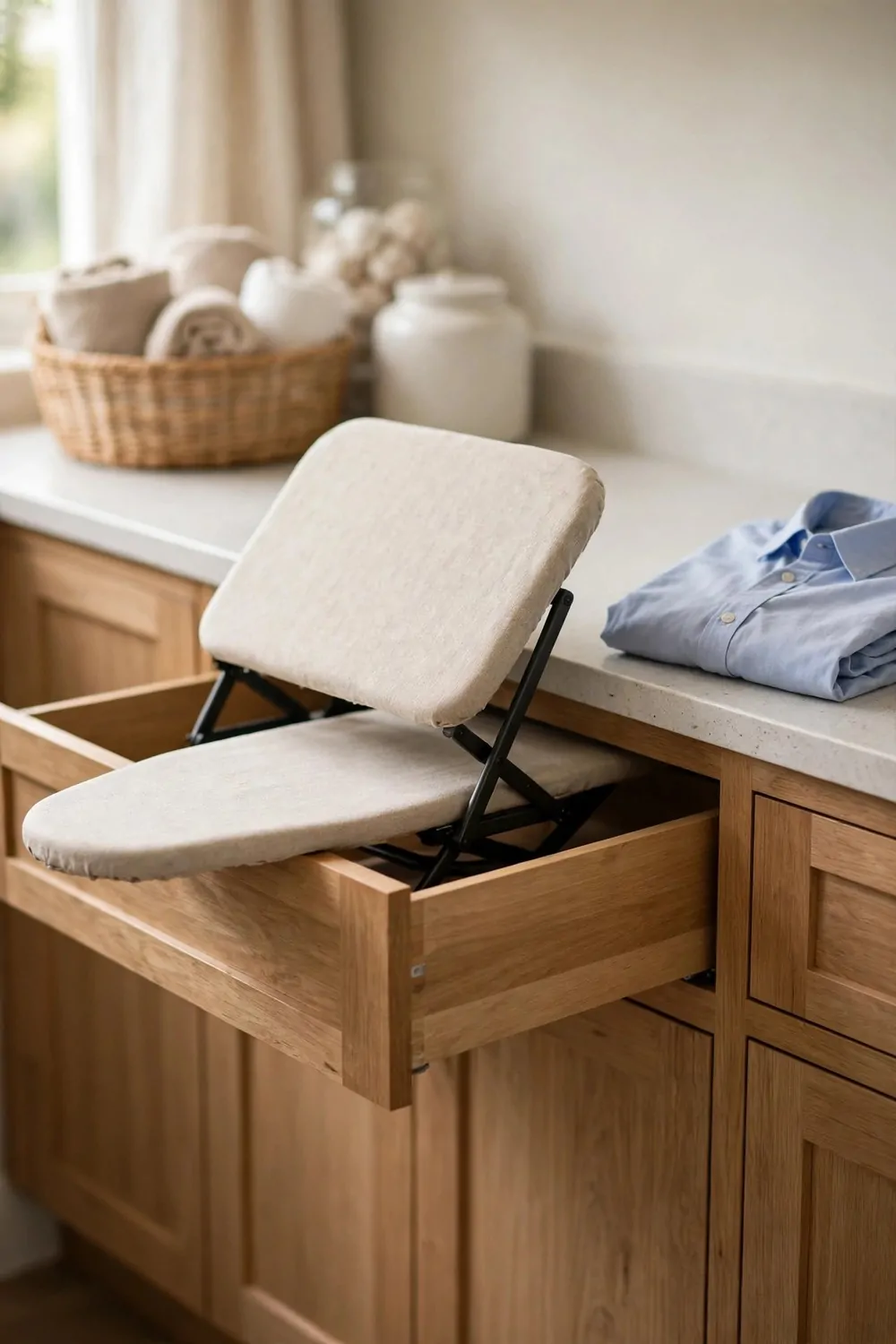
A Fold-Down Ironing Board in a Drawer
I used to keep my ironing board leaning against the wall. It fell over more times than I can count. One day it slid down and scared the cat, and that was the end of that spot.
A fold-down board that lives in a drawer is such a small change. You pull it out, you press a shirt, and you slide it back in. The whole thing takes seconds, and nothing is left leaning anywhere.
I like to keep mine in the drawer right under the folding counter. That way I can fold a shirt, spot a wrinkle, and fix it on the spot. I do not have to walk across the room or set anything up.
The drawer keeps the board flat and safe. It does not get dusty like a board that stands in a corner. It does not get bent by things leaning on it. It just waits quietly until I need it.
If you iron a lot, put a small spray bottle in the same drawer. A little water on a wrinkle works wonders. I also keep a tiny cloth in there for wiping the board down once in a while.
The best part is how it makes the room look. There is no big board in the way. The room feels open, and I can move around the counter without bumping into anything.
Some people worry a drawer board is too small. I thought that too at first. But most shirts and pants fit fine, and I just turn the bigger things around and press them in two parts.
I fold the freshly pressed shirt right on the counter next to the drawer. It goes from board to stack in one smooth move. That tiny flow saves me more time than I expected.
If you only have a small laundry room, this idea is a gift. You get a full ironing spot without giving up any floor space. I wish I had done it years ago.
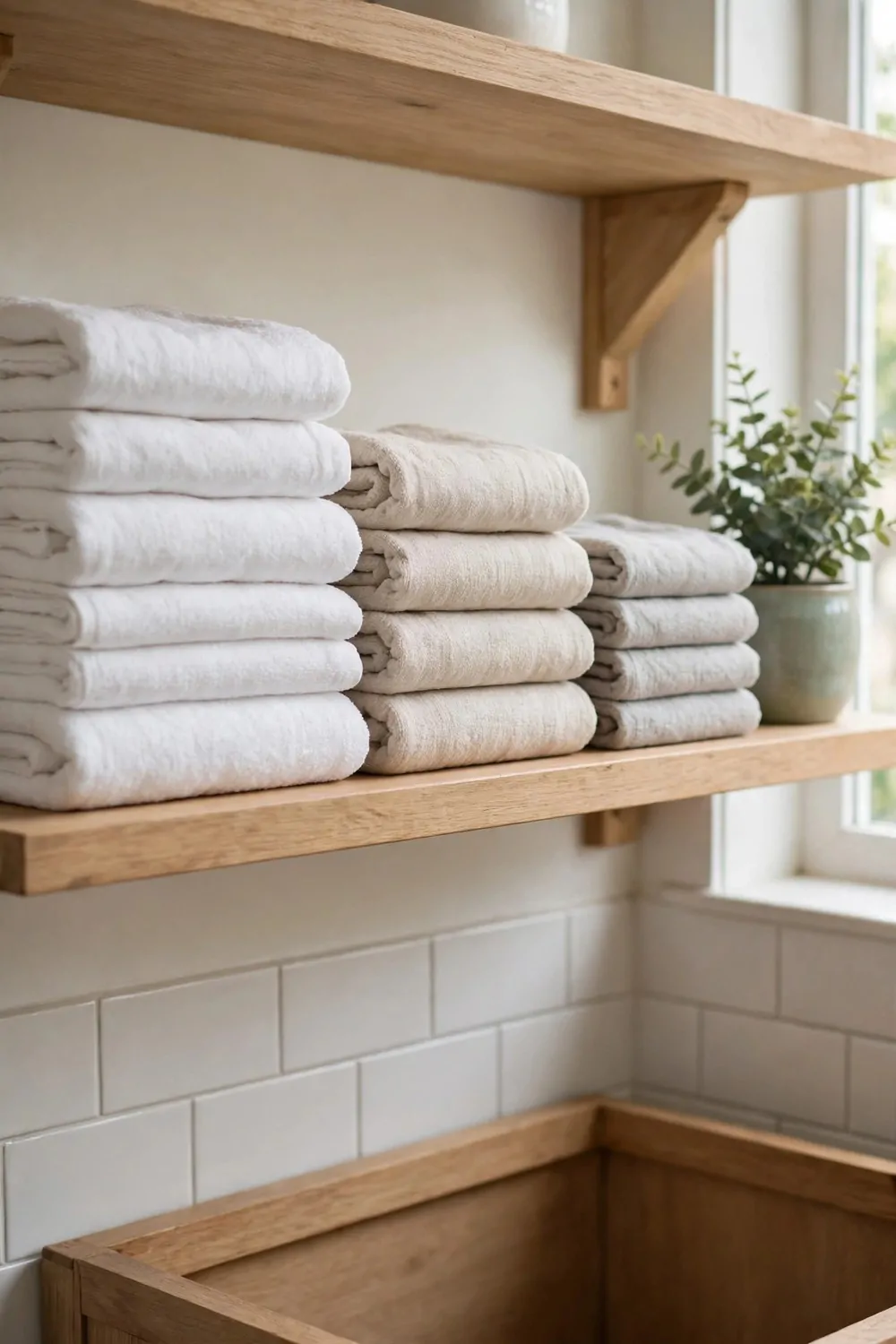
A Shelf for Clean Towels Only
Towels used to live in a mixed-up pile in my house. Clean towels sat next to old rags, and nobody could tell which was which. Guests would open the shelf and just stare.
So I gave clean towels their very own shelf. Nothing else is allowed on it. No rags, no cleaning cloths, no half-used rolls of paper towel. Just fresh towels, folded neat.
I fold them all the same way now, in thirds, so the stacks look even. It sounds fussy, but it makes the shelf so much nicer to look at. And when the stacks are even, I can see at a glance when I am running low.
I keep bath towels on the bottom shelf and hand towels on top. Washcloths go in a small basket beside them. That order never changes, so my hands know where to go without thinking.
The rule in our house is simple. If a towel is clean and dry, it goes on this shelf. If it is damp or dirty, it goes in the hamper. There is no middle ground, and that is what keeps the shelf working.
I also learned to leave a little space at the end of the shelf. That empty space is for the fresh towels coming out of the dryer. They have a landing spot, so they never end up on the bed or the couch.
This shelf taught me something funny. When towels have a home, people put them away. When they do not, they end up everywhere. The shelf is small, but the habit it builds is big.
Kids can use it too. My youngest knows exactly which stack is hers. She grabs her towel, and she puts it back folded after her shower. I did not teach her that with a lecture. The shelf taught her.
If your linen closet is far from the laundry room, this shelf saves a lot of trips. You fold the towels, you put them on the shelf, and you are done. The whole job stays in one room.
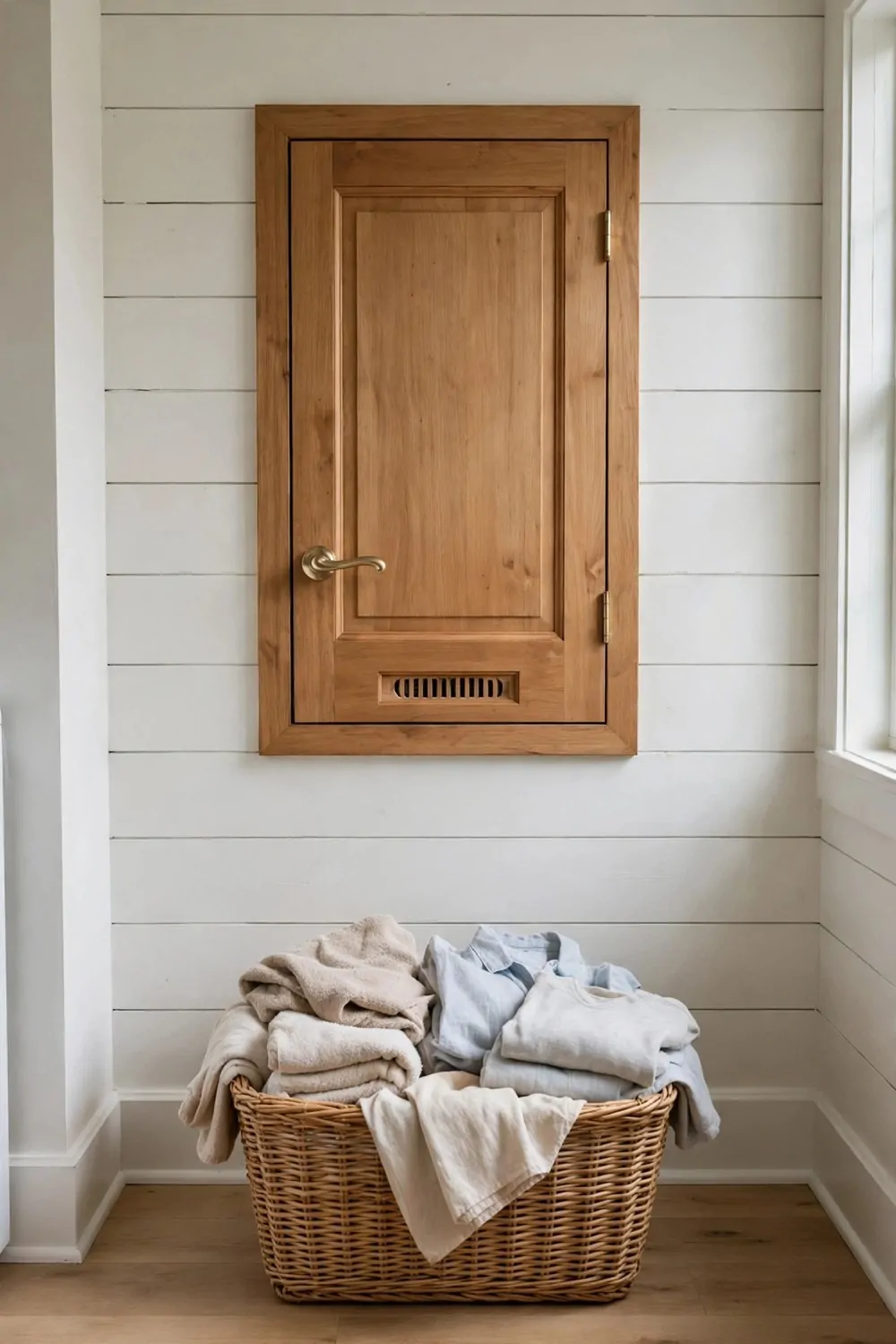
A Drop Chute From the Floor Above
A drop chute sounds fancy, but it is really just a hole with a door. Dirty clothes go in upstairs, and they land in a basket down in the laundry room. It feels a bit like magic the first time you use it.
I remember the first week we had ours. My kids dropped socks down it like it was a game. They actually wanted to put their laundry away, which had never happened before in this house.
The chute needs a basket right under it. That basket catches everything, and it keeps the floor clear. I use a big basket on wheels so I can roll it straight to the washer when it gets full.
One thing I learned fast is to check the chute door stays shut. If it hangs open, warm air moves between the floors. A small latch or a magnet keeps it closed, and the problem goes away.
I also put a little sign on the upstairs door. It just says laundry, in plain letters. Guests do not need to guess, and the kids know exactly what the door is for. Simple labels stop a lot of questions.
The best part of the chute is what it does to my mornings. I used to walk around the house collecting dirty clothes from bedroom floors. Now most of them are already downstairs waiting for me.
If you live in a one floor home, you do not need a chute. But if you have stairs, it is worth thinking about. It turns a chore that used to take ten minutes into a chore that takes ten seconds.
Some people worry things will get stuck. In our house that has only happened once, with a big blanket that was too wide. Now we know blankets go down the stairs, and everything else goes down the chute.
I keep a small basket upstairs too, for the things that should not go down the chute. Delicates and hand wash items stay in that basket. That way nothing precious takes a tumble it should not take.
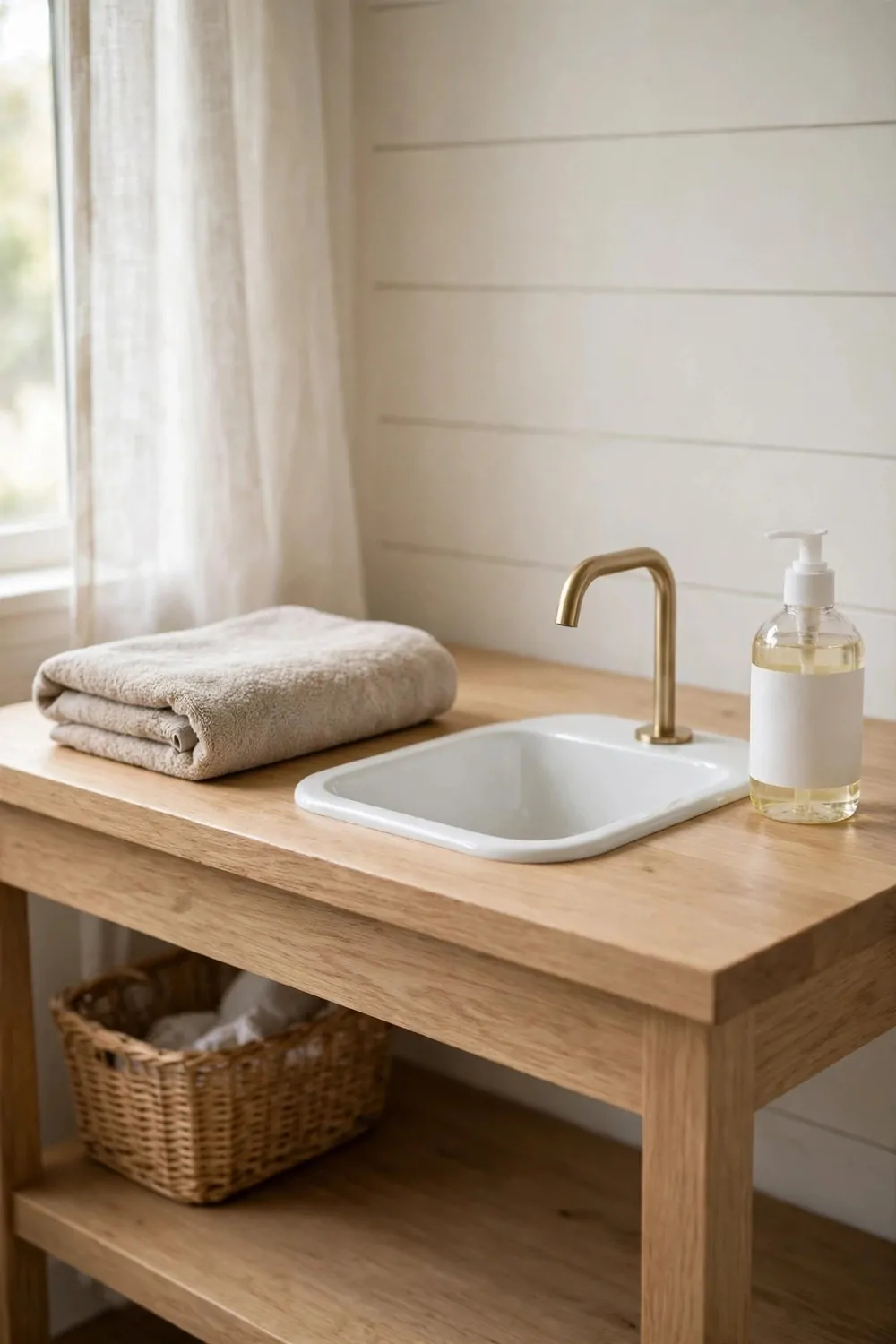
A Counter With a Built-In Sink
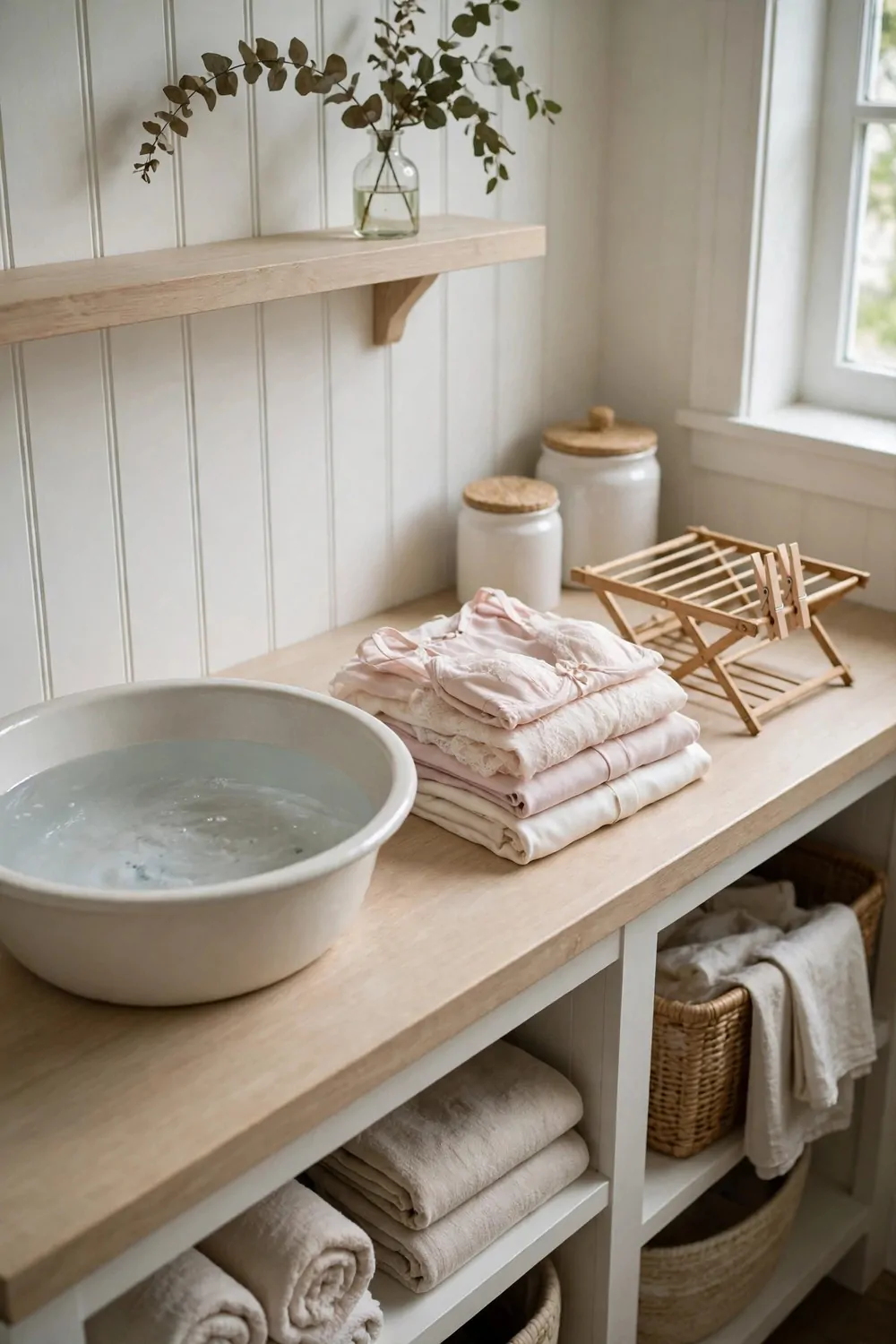
A folding counter with a sink built right into it is one of those ideas that sounds small and feels huge. You can soak a stain, rinse a cloth, and fold the laundry all in the same spot.
I use the sink for hand wash items most of all. I fill it with cool water, add a drop of soap, and let a soft sweater soak while I fold the rest of the load. By the time I am done folding, the sweater is ready to rinse.
The sink also saves my kitchen sink from laundry duty. I used to soak stained shirts in the kitchen, and it always felt wrong. Now the laundry mess stays in the laundry room, where it belongs.
I keep a small basket under the sink for the things that are soaking. A mesh bag works well too. It keeps little socks from slipping down the drain, which is a lesson I learned the hard way.
The counter space next to the sink is my folding zone. I fold on the dry side, and the wet side stays wet. That split keeps my clean stacks dry, and it keeps me from having to wipe the counter all the time.
If the sink is deep, it can hold a whole bucket of water for a big soak. If it is shallow, it still works fine for spot cleaning. Either way, having water right there changes how the room works.
I also keep a scrub brush and a stain stick in a little cup by the sink. They are always within reach, so I actually use them. Before, they lived in a cabinet, and I forgot they existed.
One tip is to keep a towel hanging on the side of the counter. Your hands get wet a lot at this sink, and a towel right there means you are not dripping water across the room.
This setup is my favorite for busy wash days. I can treat a stain, fold a load, and rinse a cloth without taking a single step away from the counter. It makes the whole job feel smooth.
A Spot for Delicates and Hand Wash
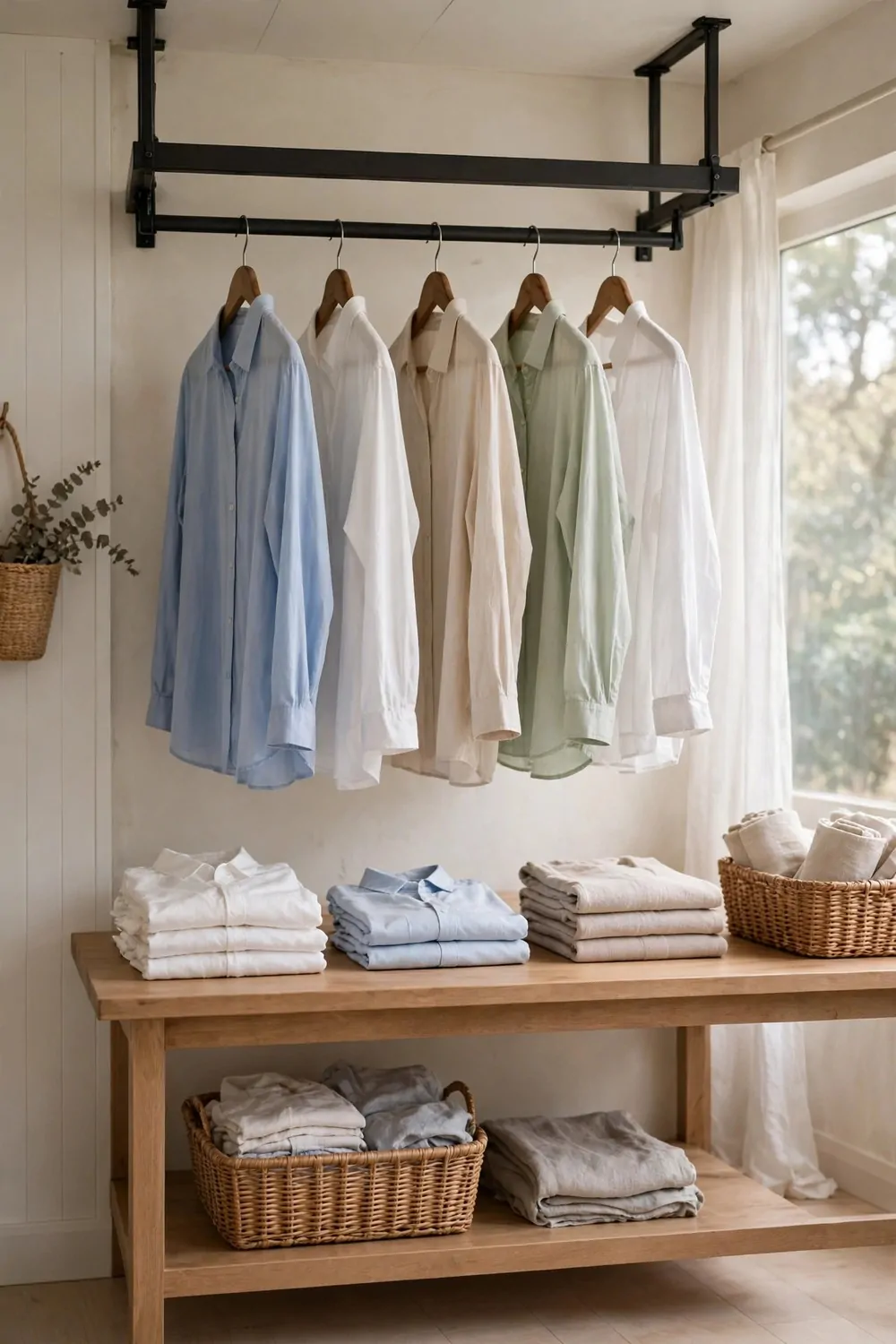
Delicates used to get lost in my house. A soft top would end up in a hot wash, and it would come out looking sad. I knew I needed a special spot, so I made one.
I use a small basket on the counter, just for hand wash items. It has a different color from all the other baskets. That color is the signal. Everyone in the house knows what the basket means.
The spot sits right next to the sink. That way the hand wash things go straight from basket to water. They never get mixed into a regular load by mistake, because they never sit in the same place.
I also keep a mesh bag hanging on a hook above the spot. Little things like thin straps and soft socks go in the bag. The bag keeps them safe in the machine when they can be washed gently.
A drying rack fits right under the counter in this spot. After I wash the delicates, I lay them flat on the rack. They dry slow and safe, and they keep their shape.
The rule I made for myself is simple. If a tag says hand wash, it goes in this basket. I do not guess, and I do not hope for the best. The tag is the boss, and the basket is its home.
This spot also helps me fold better. When delicates are separate, I fold them with more care. I fold them flat, I stack them light, and I put them away right after they dry.
I learned to check the basket every night before bed. If something is in it, I wash it then or first thing in the morning. A small daily habit beats a big pile of ruined clothes.
If you have kids, teach them the basket color too. My daughter knows her soft dance top goes in the special basket. She puts it there herself now, and I do not have to rescue it from the wash anymore.
A Hanging Rail Over the Folding Counter
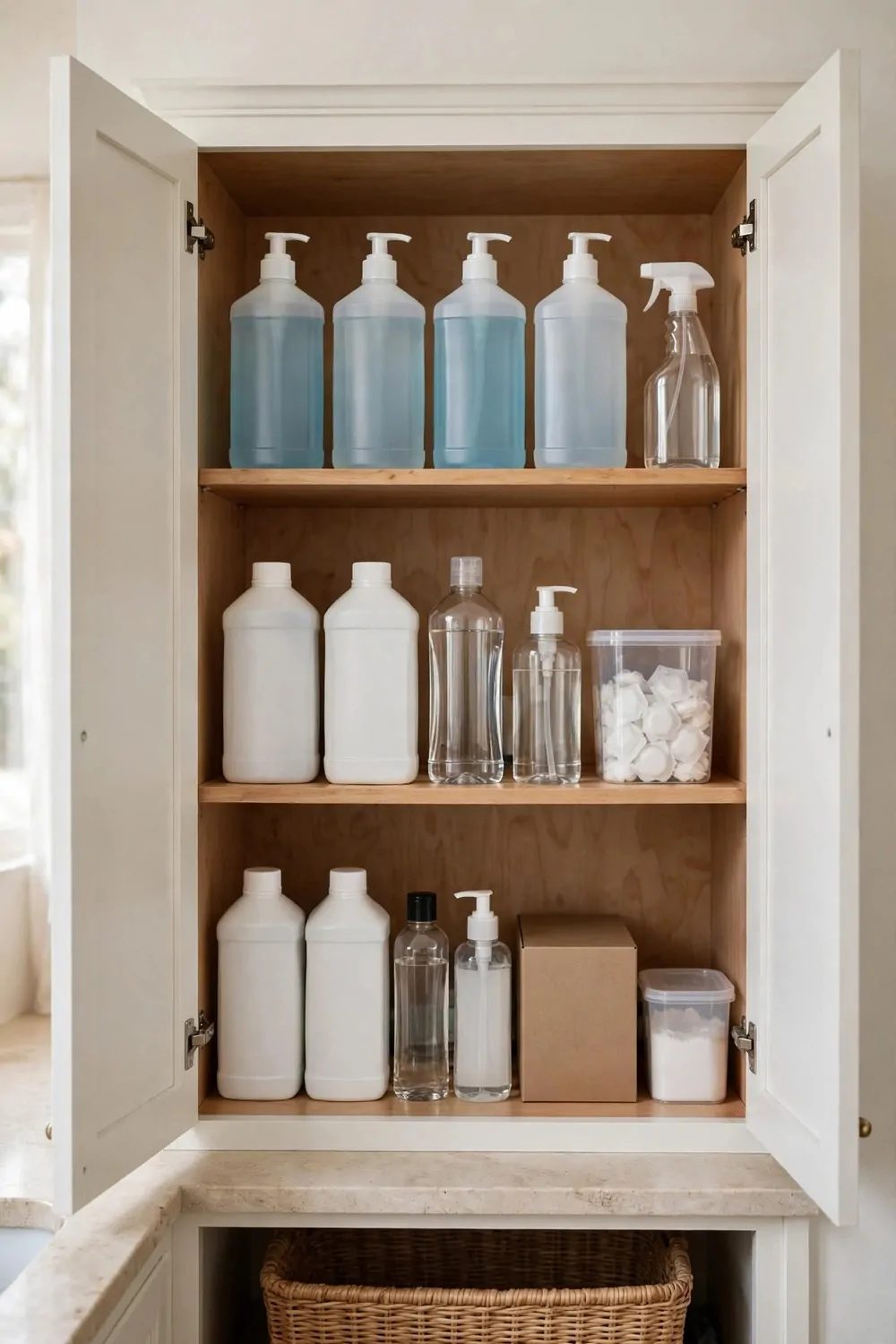
A rail over the counter is one of my favorite small upgrades. You fold a shirt, you hang it, and it never gets wrinkled again. It is that simple, and it works every single time.
I put my rail right above the folding counter so the move is short. Fold, lift, hang. My hands barely travel. On a big wash day, that short move saves my shoulders a lot of work.
The rail holds the clothes that wrinkle fast. Dress shirts, soft blouses, and pants with a crease all go up there. T-shirts and pajamas go in the stacks, because they do not mind a fold.
I keep a row of matching hangers on the rail at all times. When the hangers all look the same, the rail looks tidy even when it is full. It is a tiny thing, but it makes the room feel calm.
The rail also gives wet clothes a place to drip for a few minutes. I hang a damp shirt, let it drip into the sink below, and then move it to the dryer or the drying rack. No puddles on the floor.
One thing I learned is to leave a little gap at the end of the rail. That gap is for the next load. If the rail is packed full, I have nowhere to put the fresh shirts, and they end up on the counter in a pile.
I use the rail for outfits too. If I need to pick clothes for tomorrow, I hang the whole outfit on one hanger. In the morning I just grab it and go. It makes busy mornings feel a lot less rushed.
Kids can reach the low end of the rail if you hang it at a kind height. I put a small lower rail on one side for my youngest. She hangs her own shirts, and she is so proud of it.
If your counter is under a shelf, a rail can still fit. A short rail on the side wall works just as well. The point is not the size of the rail. The point is that hanging is one easy step from folding.
A Cabinet for Detergent and Supplies
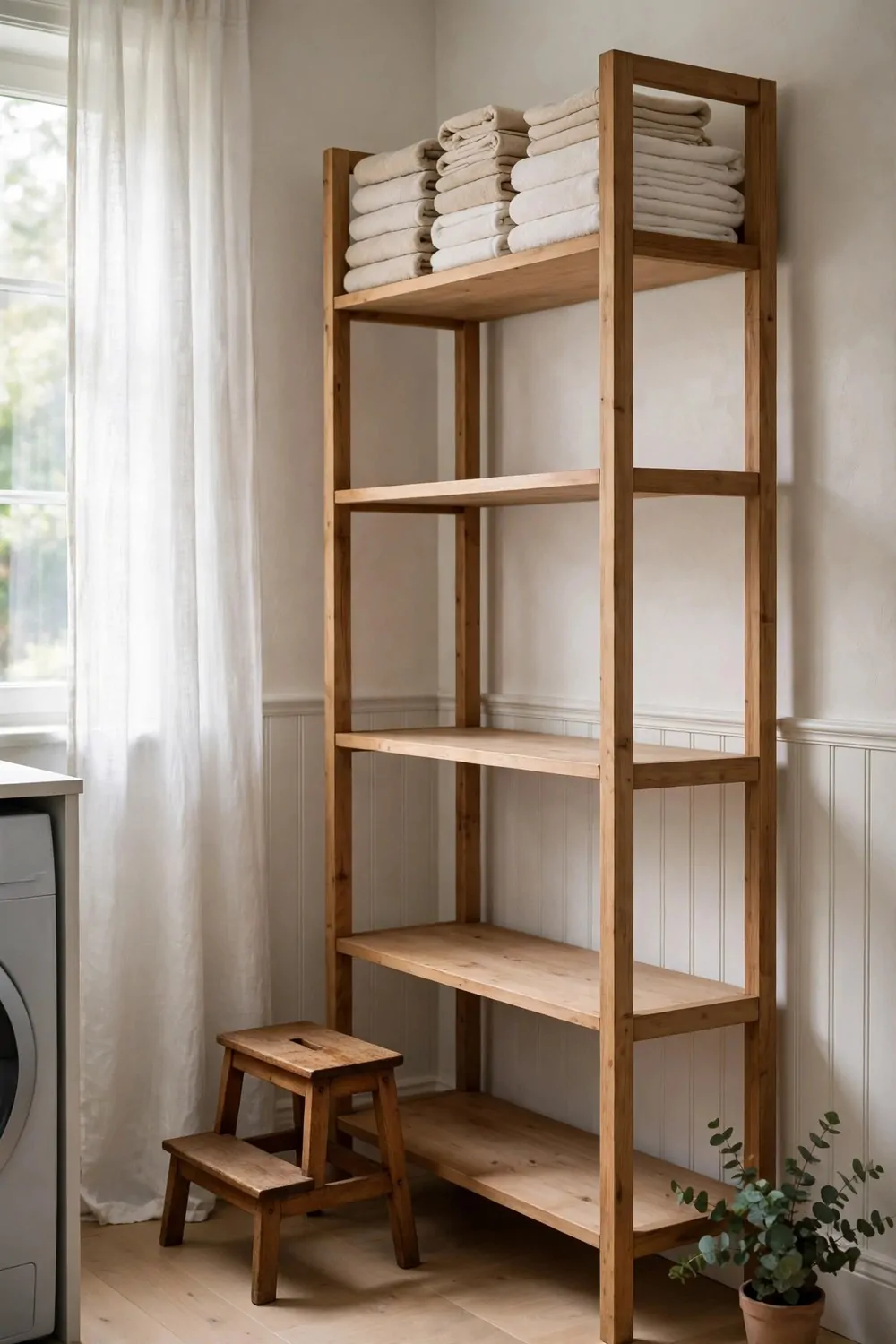
Detergent bottles used to live on my folding counter. They took up space, they tipped over, and they made folding feel cramped. Moving them into a cabinet fixed all of that in one day.
I keep my cabinet right above the washer. I open the door, I grab what I need, and I close it again. The counter stays clear for folding, and that is the whole point.
Inside the cabinet, I use small bins to group things. One bin holds detergent and softener. One bin holds stain sticks and sprays. One bin holds dryer sheets and scent beads. Everything has a group, so I never dig around.
I also keep a little scoop in the detergent bin. It stays in the same place, so I am not hunting for it with wet hands. Small habits like that make wash day run smooth.
The cabinet door has a hook on the inside for a measuring cup. It hangs there out of the way, and it drips into a tiny tray below. I learned that trick after a cup left a sticky ring on the shelf.
Safety matters here too. If you have little kids, put the cabinet high and add a simple latch. Detergent is not a toy, and a latch is a small price for peace of mind. I keep mine latched even now.
I label the bins with plain words on tape. It looks simple, and it works. Anyone in the house can find the stain spray without asking me, and that is a small win I love.
I check the cabinet once a week to see what is running low. That quick look stops the mid-load panic of an empty detergent bottle. I add what I need to the shopping list right then.
The best part is the clear counter. When the supplies live in the cabinet, the whole counter is mine for folding. It feels bigger, and folding feels easier. That clear space is worth more than any fancy product.
A Small Step Stool for High Shelves
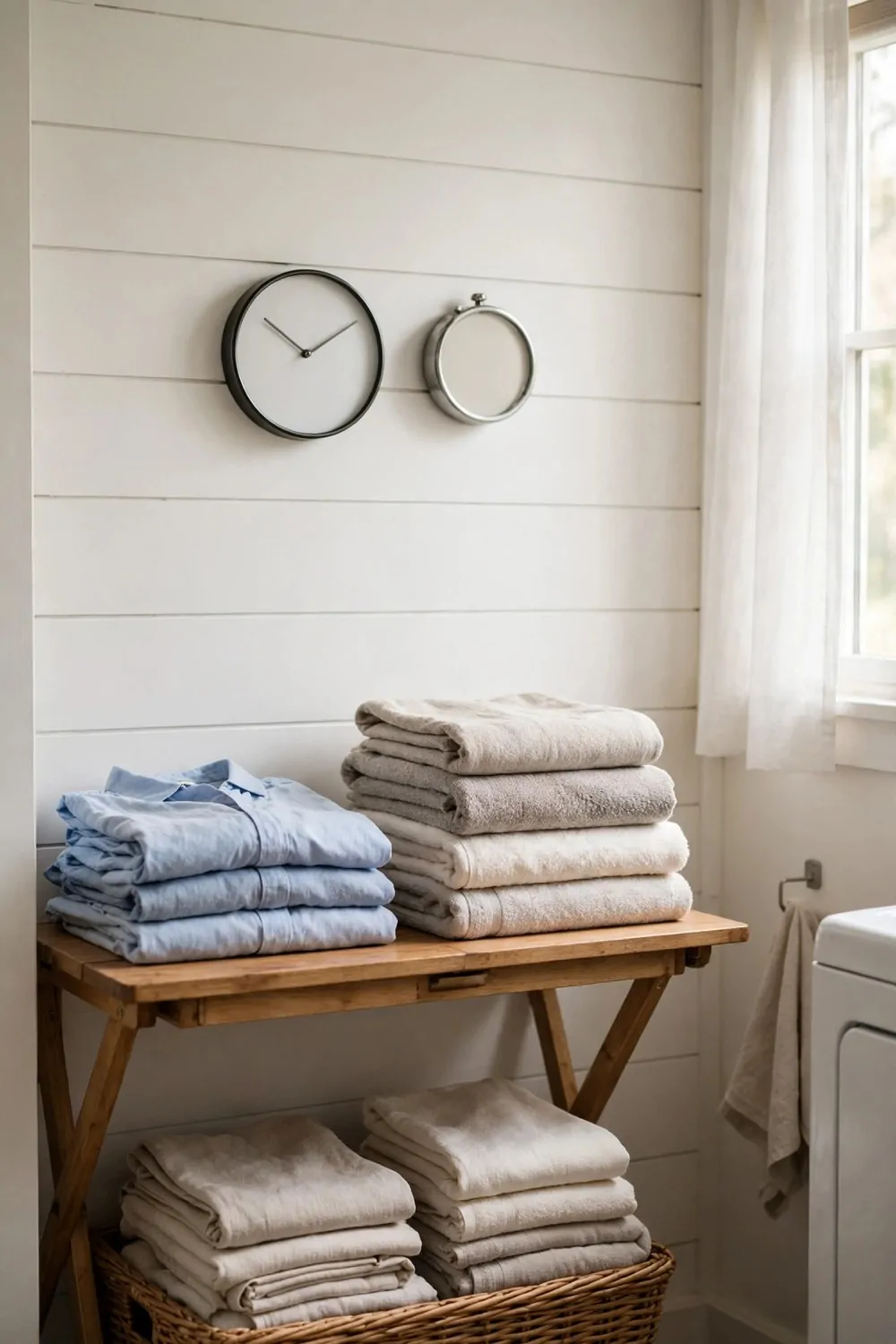
High shelves are great for storage, but they are no help if you cannot reach them. I kept standing on my toes and stretching, and it never felt safe. A small step stool fixed that in one day.
I keep my stool right beside the counter, tucked in a little gap. It is always there, so I actually use it. Before, the stool lived in another room, and I would just stretch instead of going to get it.
The stool I use has a wide top and rubber feet. It does not wobble, and it does not slide on the tile floor. Those two things matter a lot when your hands are full of folded towels.
I use the stool to reach the top shelf where the spare sheets live. I fold the sheets on the counter, step up, and put them away. The whole move takes seconds, and my back thanks me for it.
Kids love the stool too. My youngest uses it to reach her own shelf of folded clothes. She can put her things away by herself, and that small bit of freedom makes her feel so grown up.
I also use the stool as a little seat on long folding days. I pull it up to the counter, sit down, and fold a big load at a slow pace. It is not fancy, but it works, and my feet get a rest.
One tip is to pick a stool that folds flat. A flat stool can hang on a hook on the wall when you need the floor clear. Mine hangs by the door, and it is out of the way in seconds.
The stool has saved me from more than one wobble. I used to climb on a chair, and chairs tip. A low stool with a wide base is much safer, and I wish I had switched sooner.
If your shelves are high, do not fight them. A stool is cheap, it is simple, and it turns a hard reach into an easy one. Your folding station should work for your body, not against it.
A Timer and a Little Clock on the Wall
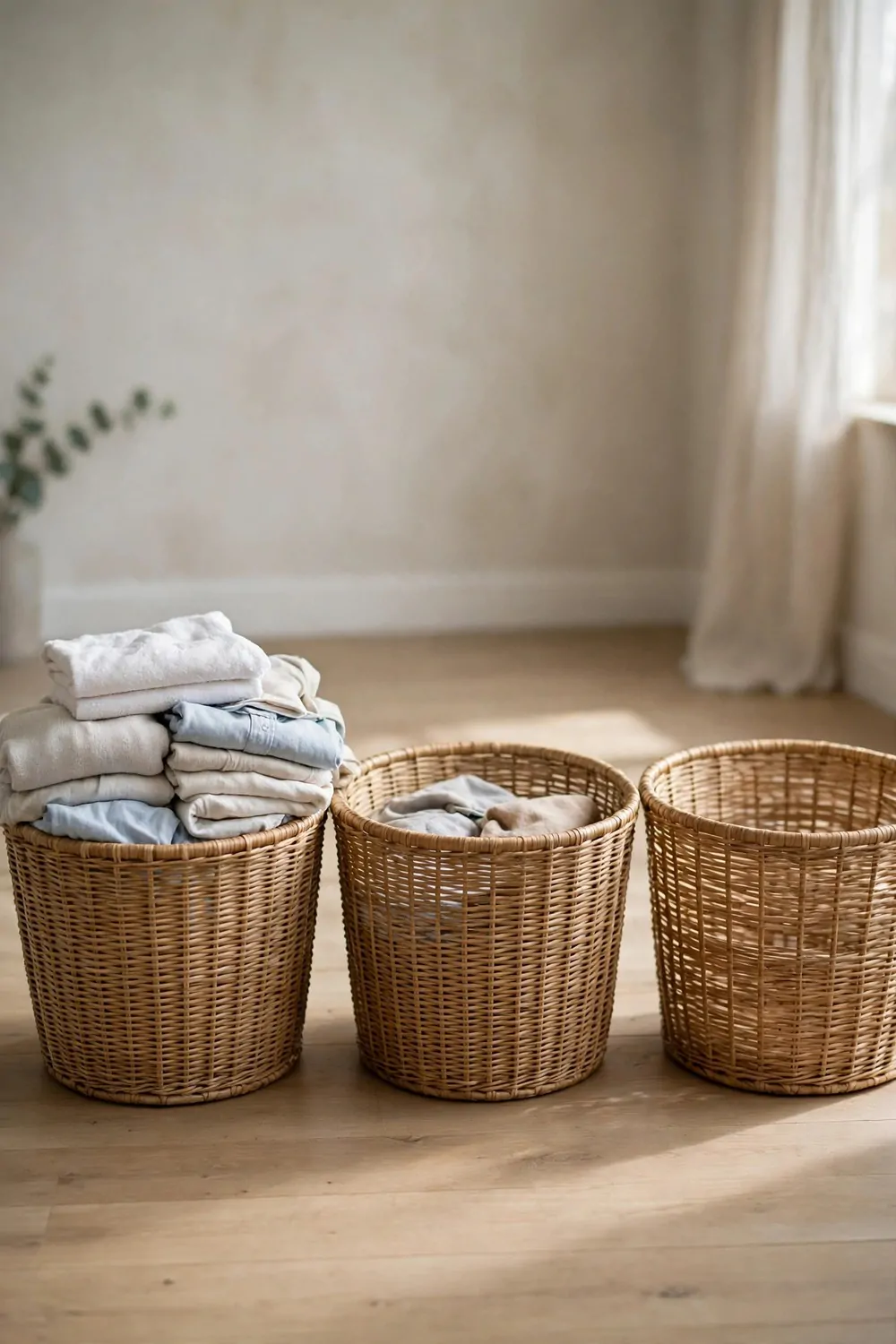
I used to forget laundry in the washer all the time. I would start a load, walk away, and remember it three hours later. A timer on the wall ended that habit for good.
I keep a small kitchen timer on the shelf by the counter. When I start a load, I set it for the wash time. When it rings, I go move the clothes. It is a simple trick, and it works every day.
The wall clock helps too. I glance at it and I know how long the dryer has left. I can plan my folding time around it. If the dryer ends at four, I fold at four, and the clothes never sit and wrinkle.
I like a clock with big, plain numbers. I can read it from across the room with my hands full. A fancy clock looks nice, but a plain one is easier to use when you are busy.
The timer also helps me fold in short bursts. I set it for ten minutes and I fold until it rings. Ten minutes is enough for a whole load most days, and it feels like a game instead of a chore.
My kids like the timer too. They race me to see who can fold more before it rings. It is a silly game, but it gets the folding done, and we laugh while we do it.
I also use the timer for soaking stains. I set it for fifteen minutes, and the stain soaks while I fold other things. When it rings, I rinse and move on. Nothing gets forgotten in the sink.
One thing I learned is to keep the timer in the same spot every time. If it moves around, I waste time looking for it. Now it lives on a hook by the clock, and my hand finds it without thinking.
A clock and a timer cost almost nothing, but they bring order to the whole room. Laundry runs on time, folding happens on time, and the pile on the bed is gone for good.
A Basket Rotation System
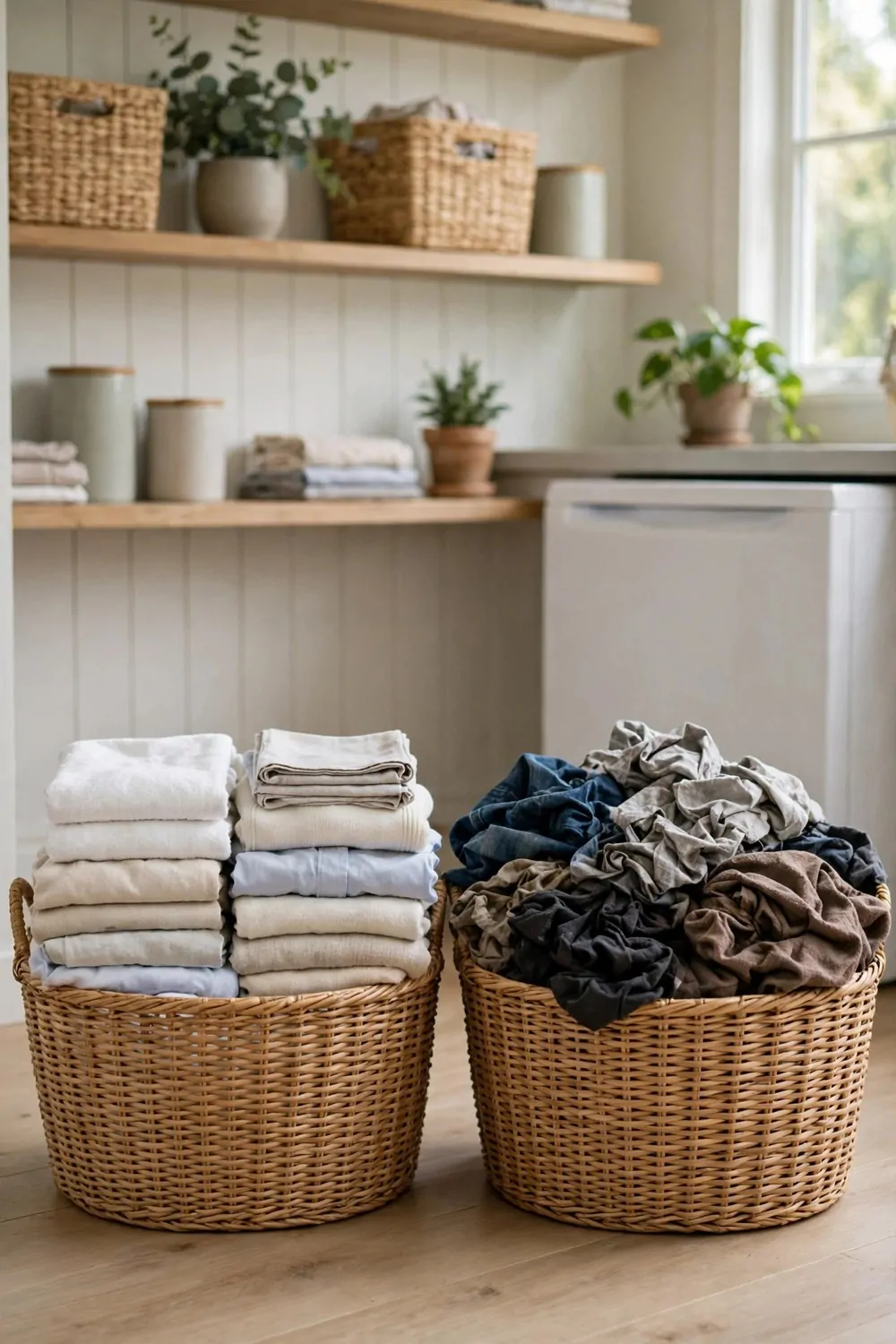
A basket rotation system sounds big, but it is really just a simple plan. Each person in the house gets a basket, and the baskets take turns going through the wash. No basket is ever left behind.
I use four baskets in our house, one for each of us. Each basket has a name tag on it, written in plain letters. When a basket is full, it goes to the laundry room. When it is empty, it goes back to the bedroom.
The rotation keeps the folding fair too. I fold one basket at a time, and I put it away before I start the next one. That way no basket sits unfolded for days while another one gets all my attention.
I keep the baskets on a low shelf by the counter. They are easy to grab, easy to carry, and easy to put back. When the shelf is full of baskets, I know the laundry is caught up. When it is empty, I know it is wash day.
The system also stops the mix-ups. Before, socks from four people ended up in one big pile, and sorting took forever. Now each basket holds one person’s clothes, and sorting takes half the time.
I wash the baskets themselves once a month. A quick rinse in the tub keeps them fresh and clean. A dirty basket makes clean clothes smell funny, and nobody wants that.
Kids do well with this system because it is clear. Their basket is theirs, and they know when it is their turn. My son brings his basket down on his wash day without me asking. That still surprises me.
| Day | Whose Basket | What I Do |
|---|---|---|
| Monday | Mine | Wash, fold, and put away |
| Tuesday | My husband’s | Wash, fold, and put away |
| Wednesday | My daughter’s | Wash, fold, and put away |
| Thursday | My son’s | Wash, fold, and put away |
| Friday | Towels and sheets | Wash, fold, and stack on the shelf |
If your house is smaller, two baskets are enough. One for darks and one for lights, or one for adults and one for kids. The number does not matter. The rotation is what matters.
The best part of the system is the calm it brings. I never wonder whose clothes are in the pile. I never wonder what to wash next. The baskets tell me, and I just follow the plan.
A Clean and Dirty Basket Pair
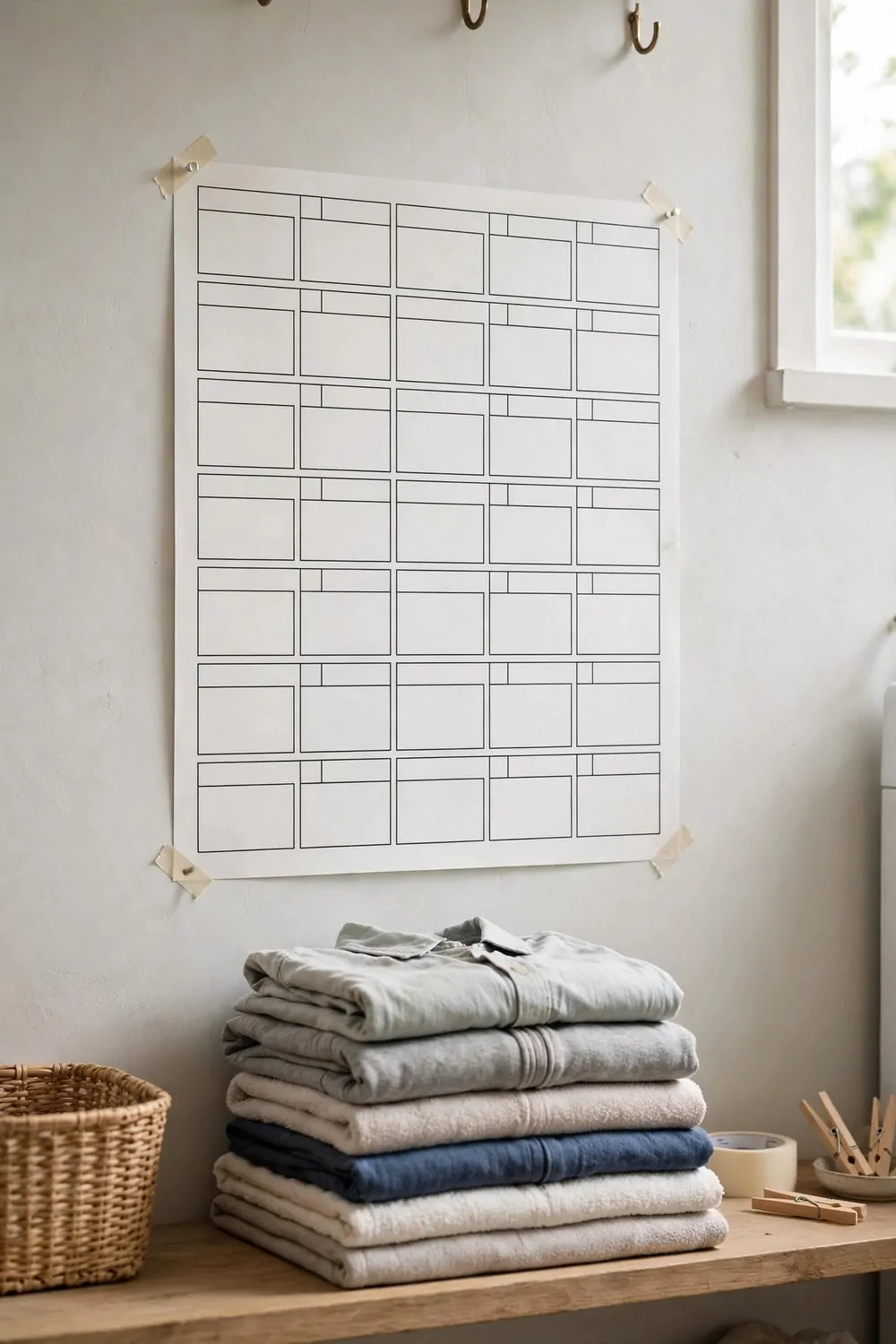
Two baskets sit side by side in my laundry room. One says clean, and one says dirty. It sounds too simple to matter, but this pair has saved me from more mix-ups than anything else in the room.
The dirty basket is where clothes land when they come off. It sits by the door, so it is the first thing you see when you walk in. Dirty clothes go in, and the floor stays clear.
The clean basket is where folded clothes wait. It sits by the counter, right where I fold. I fold a shirt, I put it in the clean basket, and it stays neat until I carry it upstairs.
The pair works because the two baskets look different. Mine are two colors, one light and one dark. The light one is clean, and the dark one is dirty. Nobody has to read a label. The color tells the story.
I learned this lesson after a bad day. I once put a pile of clean towels into the dirty basket by mistake, and I washed them all over again. That wasted water, soap, and a whole hour. Two clear baskets fixed that for good.
The clean basket also helps on put-away day. I carry one basket upstairs, and everything in it is clean and folded. I do not have to sort or check. I just open drawers and put things in.
Kids get it fast too. My daughter knows her dirty clothes go in the dark basket. She does it without thinking now, and her bedroom floor is much cleaner than it used to be.
I keep the pair near the washer, but not in front of it. They need to be close enough to grab, but they should never block the washer door. A little space between them and the machine works best.
If you only have room for one basket, use two smaller ones instead. Small baskets fit in tight spots, and the pair still does its job. The size is less important than the split.
This pair is the simplest idea in this whole list, and it might be the most useful. Clean stays clean, dirty stays dirty, and my folding never gets undone by a mix-up.
A Weekly Folding Routine That Sticks
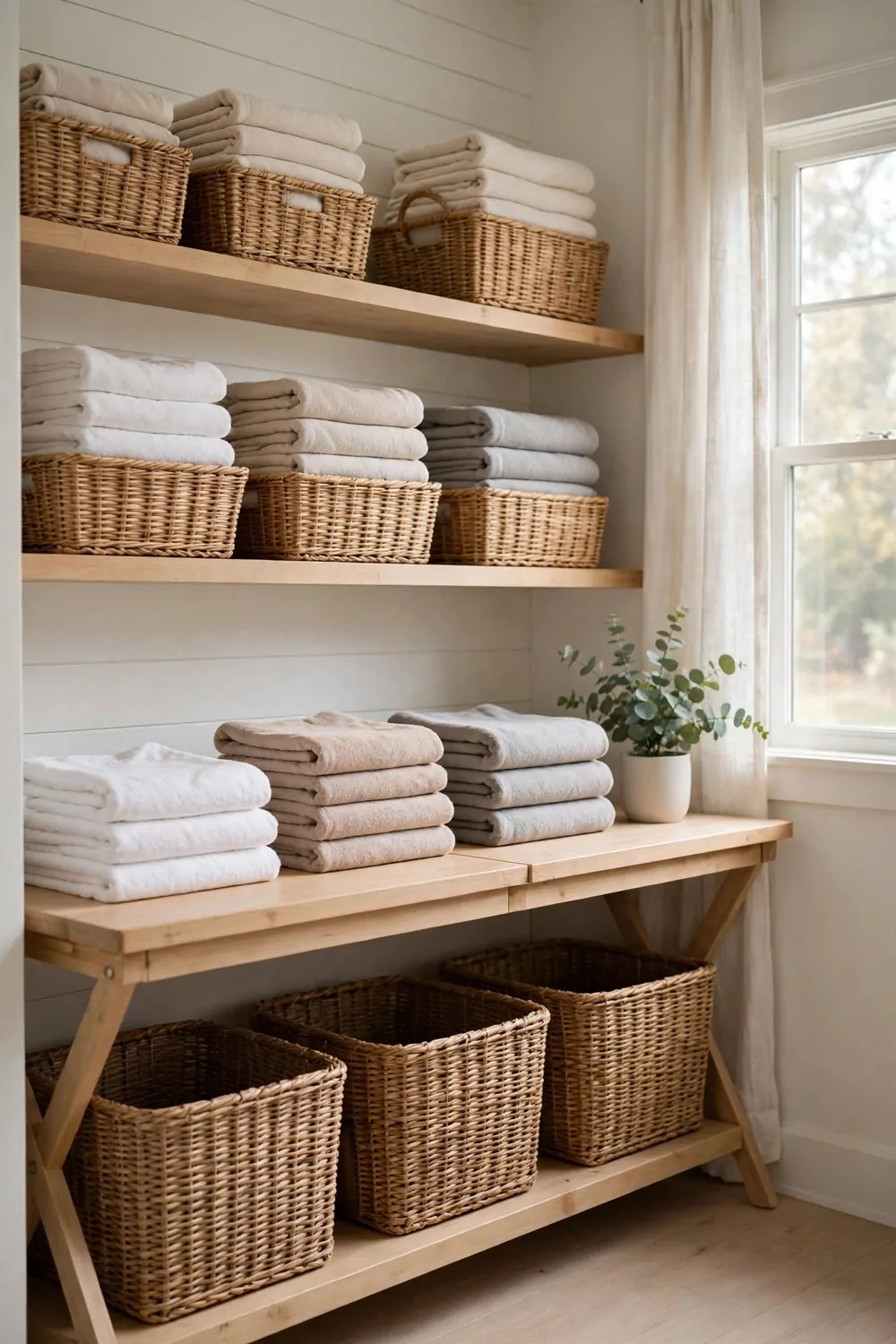
A routine is just a plan you repeat until it feels easy. My folding routine happens every Sunday night, and it has stuck for over a year now. That is a small miracle in this house.
I start by gathering every basket from around the house. I bring them all to the laundry room and line them up by the counter. Seeing them all in one place shows me exactly how much folding I have to do.
Then I wash what needs washing, and I fold what is already dry. I fold one basket at a time, and I put each one away before I move to the next. That rule keeps the counter clear and my head clear too.
I play music while I fold. It is always the same soft playlist, and hearing it tells my brain that it is folding time. That little cue makes it easier to start, and starting is the hardest part.
The routine takes about thirty minutes most weeks. Some weeks it is faster, and some weeks it is slower. But it always ends the same way, with empty baskets, full drawers, and a clear counter.
I keep a small notebook on the counter for the routine. I write down what ran low that week, like socks or towels. That list goes with me to the store, and I never forget the small things anymore.
The best part of a weekly routine is the quiet it brings to the rest of the week. I do not fold in a panic on Wednesday. I do not find a pile on the bed on Friday. The work is done, and the week feels calm.
If Sunday does not work for you, pick any day. The day does not matter. What matters is that it is the same day every week, so your family knows the plan and your brain stops fighting it.
Start small if a full routine feels big. Fold one basket on your chosen day, and let the rest wait. Next week, fold two. In a month, the whole routine will feel normal, and you will wonder why it took so long to start.
A routine that sticks is not about being perfect. It is about showing up on the same day, doing the folding, and letting the small habit carry the whole house. That is how a pile on the bed turns into a tidy home.
Keep Reading
If you liked these folding station ideas, you will love these other posts too. They are full of the same kind of simple storage ideas for laundry rooms, closets, and kitchens.
- 22 Laundry Room Organization Ideas That Actually Stick
- 19 Girl Closet Ideas for a Neat Pretty Space
- 41 Custom Kitchen Cabinet Organization Ideas Worth Stealing
- 25 Small Kitchen Ideas You’ll Wish You Knew Sooner
A good folding station makes laundry feel lighter, and a tidy home makes every day feel a little calmer. Pick one idea from this list, try it this week, and see how much easier folding can feel.