32 Mudroom Locker Ideas That Keep Busy Families Organized

Our front door used to say hello with a pile of shoes.
Shoes by the door. Shoes under the bench. Shoes in the hallway. I tripped over them every single morning, and I am not even joking a little bit.
The coats were just as bad. They hung on one hook, three deep, and half of them slid off onto the floor before lunch. My kids would yell that they could not find their hats, and I would find them later in the garage, under a bike helmet.
Then we put in lockers, real ones, with a spot for each person and a hook that belonged to them. It sounds small, I know. But our mornings got calm in a way I did not think was possible for our house.
Now the door opens and things have a place. Shoes go in cubbies. Coats go on hooks. Bags go up high where they belong. And I want to show you every idea that helped us get there, one locker at a time.
One Locker for Every Person in the House
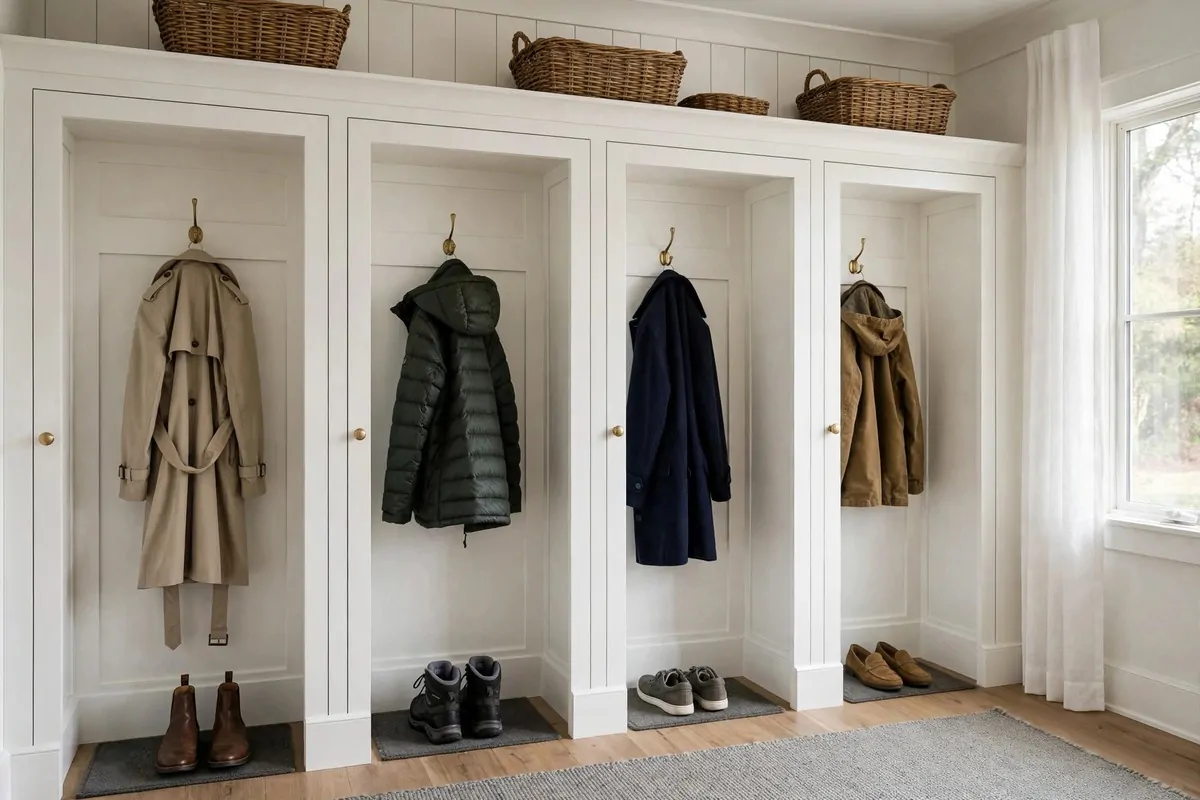
I gave each person their own locker and it changed everything for us.
Before that, all the coats lived on the same hooks and nobody knew whose was whose. My son wore my husband’s jacket to school one day and came home wondering why the sleeves covered his hands.
A locker is just a tall, narrow spot with a hook, a shelf, and a place for shoes at the bottom. That is all it is. But when it has your name on it, it feels like yours, and you use it.
I painted ours white so the little room would feel bright. White shows dirt fast, I will be honest about that, but a quick wipe on a Sunday keeps them looking fresh.
My husband’s locker holds his work coat and his boots. My locker holds my coat, my scarf, and my bag. The kids each got a locker too, and they picked their own colors for the inside.
The best part is the quiet. Nobody yells “where is my coat” anymore because the coat is always in the same spot. I cannot tell you how much I love that sentence.
We built ours with simple boards and a bit of patience. You do not need a fancy carpenter. A few shelves, a few hooks, and a Saturday afternoon is enough to start.
If your space is tight, even two or three lockers beat one big pile. Start with what fits your wall. You can always add more later when you have the time.
The shoe spot at the bottom matters more than I thought it would. Shoes used to wander all over the house, and now they stay put because the locker gives them a home.
I also put a small basket on the top shelf of each locker. It holds gloves, hats, and the little things that used to vanish every single week.
Give it a try with just one locker per person. You will see the mess shrink in a few days, and your mornings will feel a whole lot easier.
Open Cubbies With a Hook for Each Coat
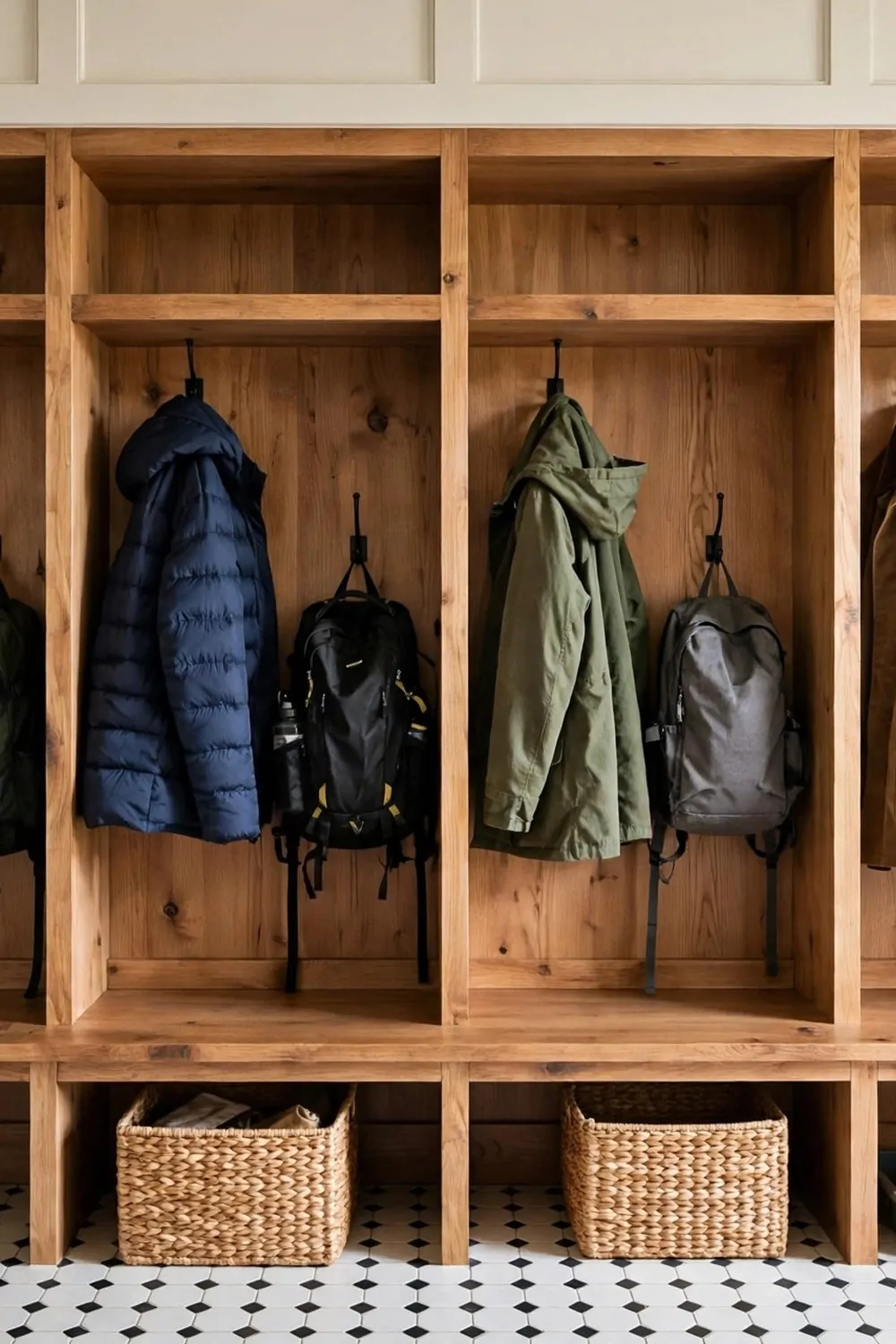
Open cubbies are the simplest lockers there are, and they work so well.
There are no doors to open and close. No doors to slam. No doors for little fingers to get caught in. You just reach in and grab what you need.
Each cubby has one hook for a coat and one hook for a bag. That is the whole rule in our house. One coat, one bag, one cubby, and nothing else goes in there.
I made ours from plain wood and left it natural, no paint. The wood looks warm and it hides scuff marks better than white paint does. That matters with kids, believe me.
My daughter hangs her school bag in her cubby the second she walks in. It took about a week of reminding her, and then it just became her habit. Now she does it without thinking.
The open design helps me see what is missing. If a cubby is empty at bedtime, I know someone left a coat at school or in the car. I can ask before it becomes a morning panic.
I put a small shelf at the top of each cubby for hats and gloves. It keeps the little things up high where they do not fall on the floor.
You can build open cubbies with crates stacked on their sides if money is tight. I have seen families do it with old wooden boxes and it looks just as good.
The trick is to keep the cubbies the right size for your family. Too big and they fill with junk. Too small and the coats will not fit. Measure your biggest coat first and go from there.
I wipe the cubbies out once a week because dust collects fast in open spaces. It takes five minutes and it keeps the whole entry looking tidy.
Open cubbies made our mudroom feel bigger too. No doors means no blocked walkway, and the room feels open even when it is full of coats and bags.
A Bench With Shoe Cubbies Underneath
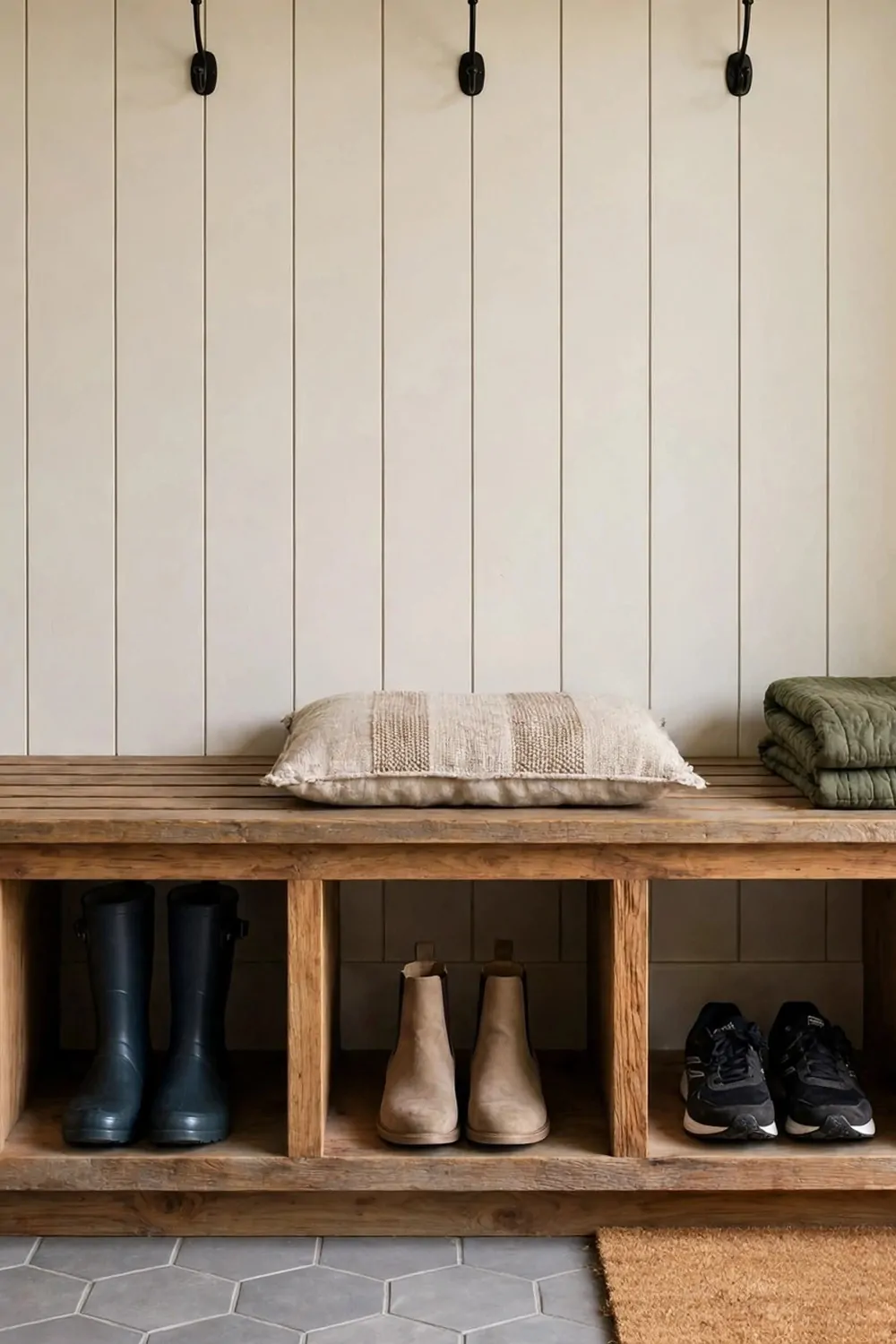
A bench with shoe cubbies underneath is my favorite seat in the whole house.
You sit down to put your shoes on. You sit down to take them off. And when you stand up, the shoes are already tucked away under you. It is that simple.
I built ours from thick wood boards and it is strong enough for all of us to sit on at once. My kids sit on it to tie their shoes every morning, and it has never wobbled once.
Each cubby under the bench holds one pair of shoes. That is the rule. If a pair does not fit in a cubby, it goes in the closet, not on the floor by the door.
We have a cubby for sneakers, a cubby for boots, and a cubby for the shoes my husband wears to work. When I look under the bench, I can see at a glance what is there and what is missing.
The bench top is also a great spot to set down a bag or a lunch box while you get ready. I keep a little tray on one end for keys and mail, so nothing gets lost.
I put a cushion on top of the bench because hard wood is not fun to sit on in the morning. The cushion is washable, which is a very good thing with muddy kids.
Kids love the cubbies because they are low and easy to reach. My youngest can put her own shoes away without help, and she is so proud of it every single time.
If you have tall boots, make one or two cubbies taller than the rest. I learned that the hard way when my rain boots would not fit anywhere and ended up by the door again.
This bench cost us less than a new pair of shoes per person, and it saved us from buying a shoe rack that would have taken up the same space anyway.
I sweep under the bench once a week because dust and dirt collect down low. It is a small job, but it keeps the whole mudroom feeling clean.
A Basket for Each Family Member
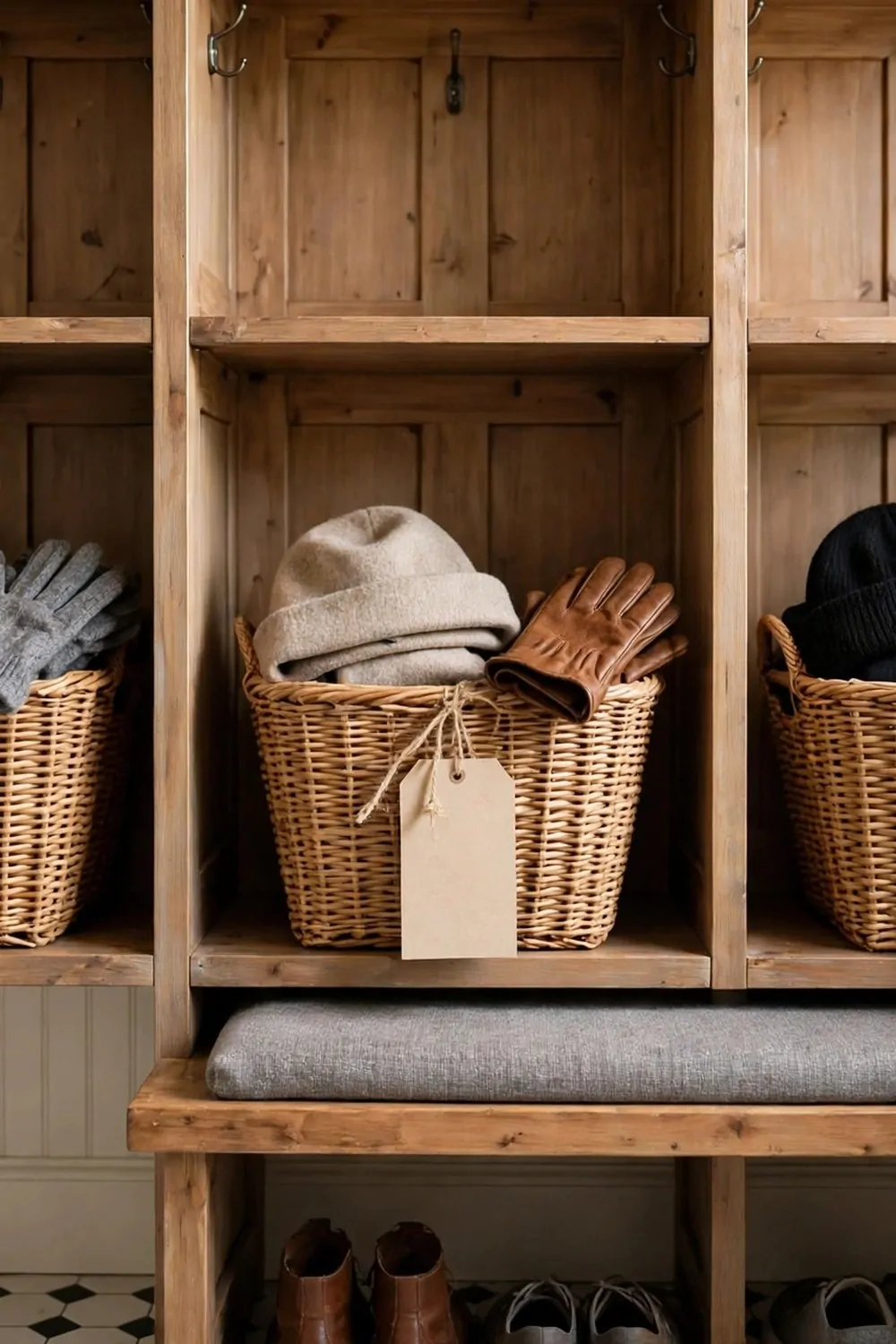
Every person in our house has their own basket, and it keeps the little things from vanishing.
Hats, gloves, scarves, and sunglasses all live in baskets now. Before the baskets, those things lived in a big pile on the bench, and nobody could find anything when it was cold outside.
I bought plain woven baskets and put a paper tag on each one. The tags have our names on them, written in my best handwriting, which is not great but it works just fine.
My son’s basket holds his baseball cap and his gloves. My daughter’s basket holds her headbands and her favorite scarf. Mine holds my sunglasses and my winter gloves.
The baskets sit on the locker shelves where everyone can reach them. The kids’ baskets are low, mine and my husband’s are up higher. That way nobody has to climb or ask for help.
I love that baskets hide the mess. Even when the gloves are all tangled up inside, the basket looks neat from the outside. The mudroom looks tidy even on a bad day.
We wash the baskets once a month because they collect dust. A quick shake outside and a wipe with a damp cloth does the job.
If a basket gets full, it is time to clean it out. I go through them at the start of each season and pull out the things we do not use anymore. It keeps them from turning into junk drawers.
You can use any basket you like. I used woven ones because they look soft and warm, but plastic bins work just as well and they are easier to wash.
The tags help the kids a lot. Even my youngest, who cannot read very well yet, knows her basket by the color of her tag.
One basket per person is the rule, and it works. Give it a try and watch how fast the little things stop getting lost.
Hooks Hung Low Enough for Kids
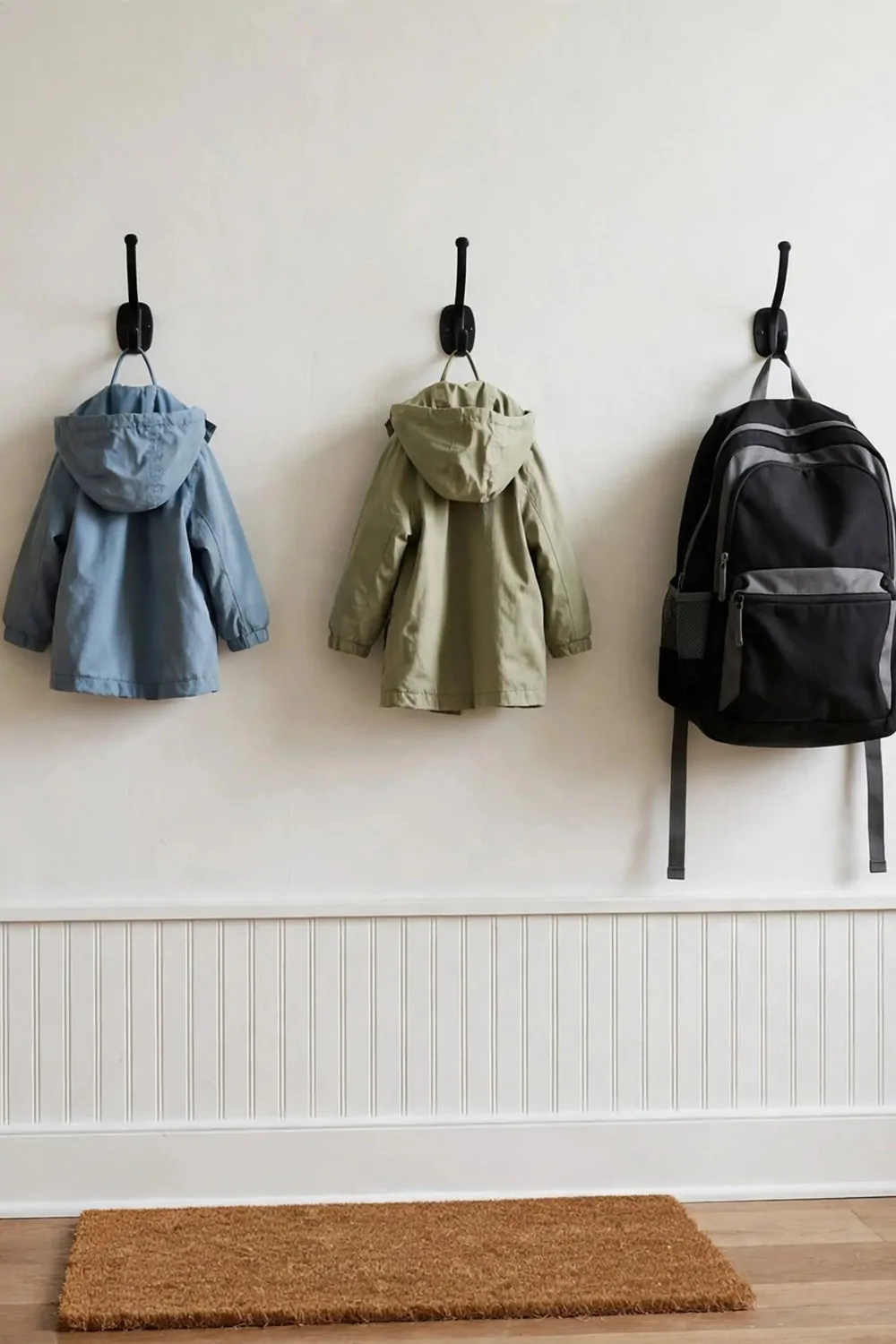
Hooks hung low enough for kids changed the way my children use the mudroom.
Before we lowered the hooks, my kids could not reach them at all. They would drop their coats on the floor and walk away, and I would pick them up every single night.
I put a row of hooks at their height, about as high as their shoulders. Now they hang their own coats up without being asked. It is a small thing, but it makes me smile every time I see it.
The hooks are black metal and they are strong. My son hangs his heavy school bag on one and it holds just fine. I tested them myself before I let the kids use them.
I spaced the hooks far apart so the coats do not bunch up on each other. When coats are too close, they fall off, and then we are back to the floor pile again.
Each child has their own hook with their name above it. I used little wooden letters that I painted, and the kids love seeing their names on the wall.
The low hooks also work for visitors with small children. When my niece comes over, she hangs her coat on the lowest hook and feels very grown up about it.
I put a second row of hooks up higher for the adults. That way our coats do not crowd the kids’ hooks, and everyone has a spot that fits them.
The wall behind the hooks gets scuffed sometimes from bags bumping into it. I painted it with washable paint, so a damp cloth fixes it in seconds.
If you rent your home, you can use strong sticky hooks instead of screws. They hold a coat just fine and they come off clean when you move.
Low hooks teach kids to take care of their own things. That is a lesson worth more than any fancy locker, and it starts with one small hook at their height.
A Boot Tray That Catches the Mud
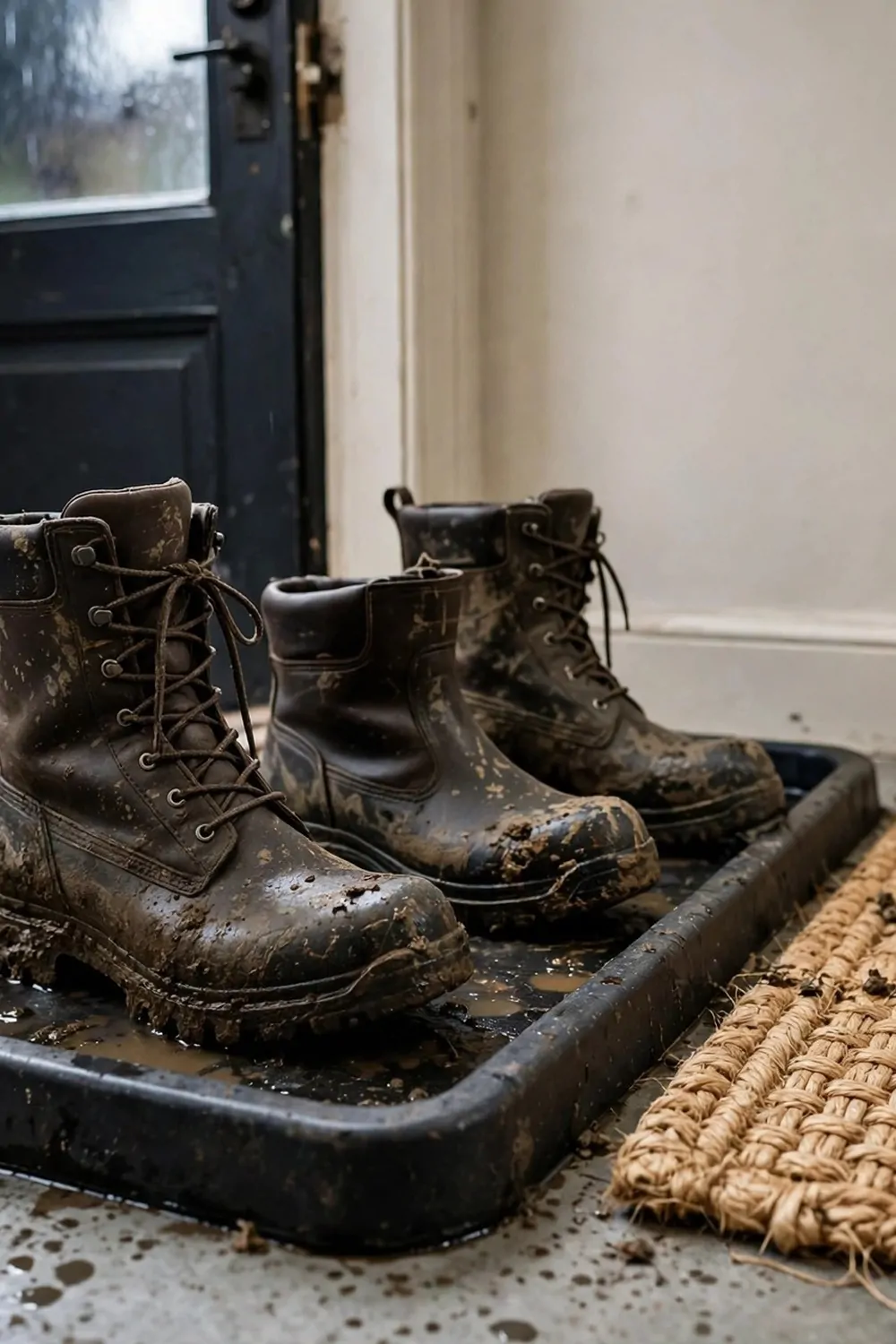
A boot tray by the door catches all the mud before it walks through my house.
I put a dark rubber tray right inside the front door, and the rule is simple. Boots go in the tray, not on the floor. Everyone knows it, even the dog seems to know it by now.
The tray has a little lip around the edge so the mud and water stay inside it. When it rains, the tray fills with puddles, and the floor stays dry. I empty it out once a day and it takes ten seconds.
Before the tray, muddy footprints went all the way to the kitchen. I mopped the floor three times a week and it still looked dirty. Now I mop once a week and the floor looks clean.
I keep a woven doormat next to the tray for wiping shoes. The kids wipe their feet on the mat first, then step into the tray to take their boots off. It works better than I thought it would.
The tray is big enough for two pairs of boots at a time. When guests come over, I pull out a second tray so their shoes have a place too.
I rinse the tray outside with the garden hose when it gets really dirty. It dries in the sun in about an hour, and then it goes right back by the door.
Dark rubber hides the dirt well, which is why I picked it. A light colored tray would show every speck of mud, and I would be cleaning it all day long.
This is one of the cheapest things in our whole mudroom, and it saves me the most cleaning time. A tray and a mat, that is all it takes.
If you have snow where you live, a boot tray is even more important. Wet boots melt all over the floor without one, and that is a slipping hazard for little feet.
Put the tray down, make the rule, and stick to it for a week. After that, everyone will do it without thinking, and your floors will thank you.
Labeled Bins for Hats and Gloves
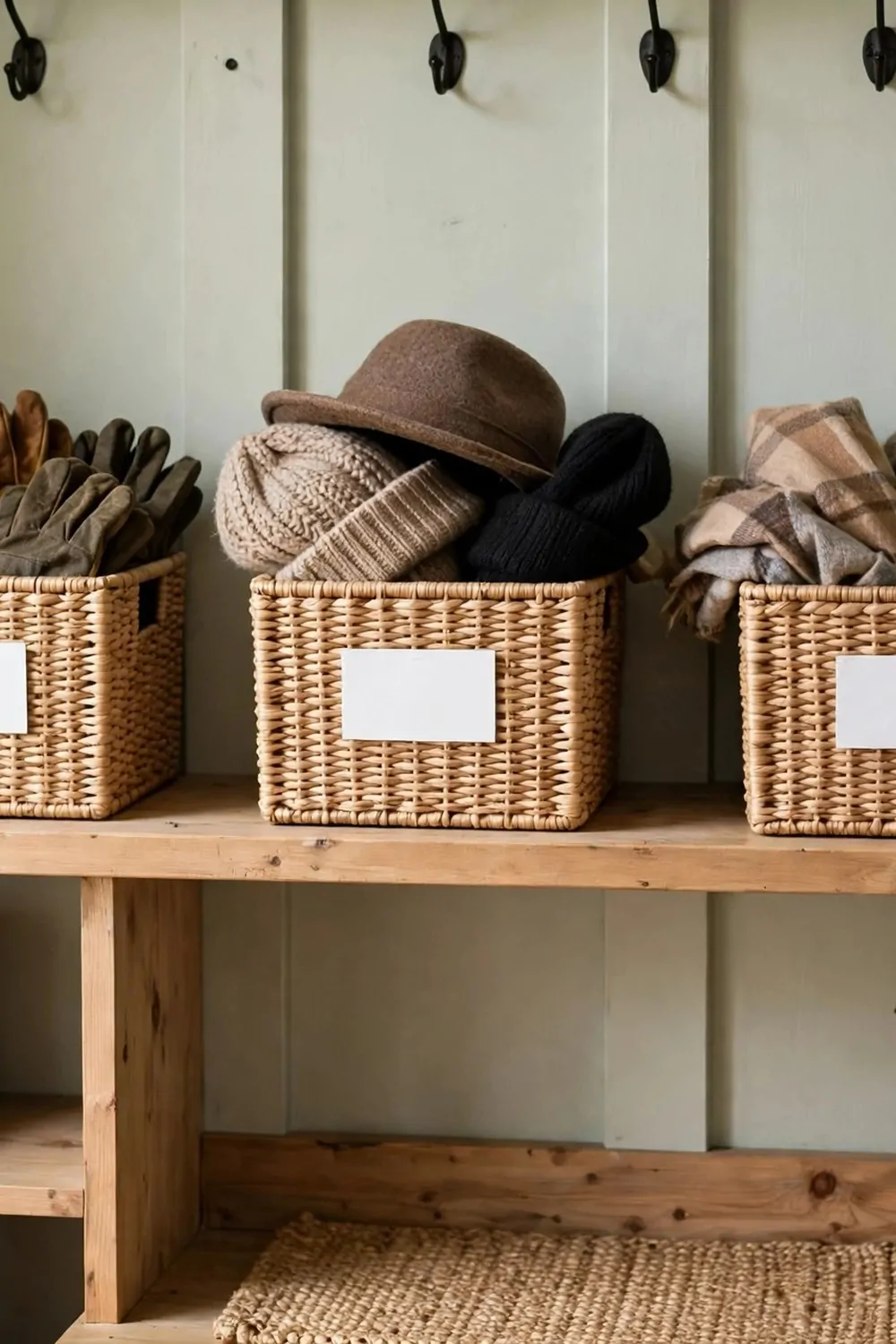
Labeled bins for hats and gloves keep the small stuff from turning into a big mess.
I used to have one big box for all the hats and gloves, and it was chaos. My daughter would dig through it for her pink gloves and pull everything out onto the floor.
Now each bin has a label. One says hats. One says gloves. One says scarves. The kids can read the labels, and they put things back where they belong.
I used small bins that fit on one shelf, and I wrote the labels with a marker on white stickers. It is not fancy, but it is clear, and clear is what matters.
The bins sit at the kids’ eye level so they can reach them without help. If a bin is too high, the kids will just leave things on the bench instead, and we are back to the pile.
At the start of winter, I fill the bins with the warm things. At the start of summer, I swap them out for sun hats and light caps. The labels stay the same, but the contents change with the season.
I count the gloves once a month because one always goes missing. If a glove has no match, it goes in a small bag at the back of the shelf until its partner shows up.
The bins also help when we are in a rush. I can grab the glove bin, hand each kid a pair, and we are out the door in two minutes. No digging, no yelling, no tears.
You do not need to buy new bins to try this. I started with old food containers and paper labels, and it worked just as well.
The best part is that the kids feel proud when they find their own things. My son told me last week that he can get ready all by himself now, and he said it like it was the biggest news in the world.
Label your bins, put them where little hands can reach, and watch the morning rush get a little bit calmer.
Chalkboard Name Tags on Every Locker
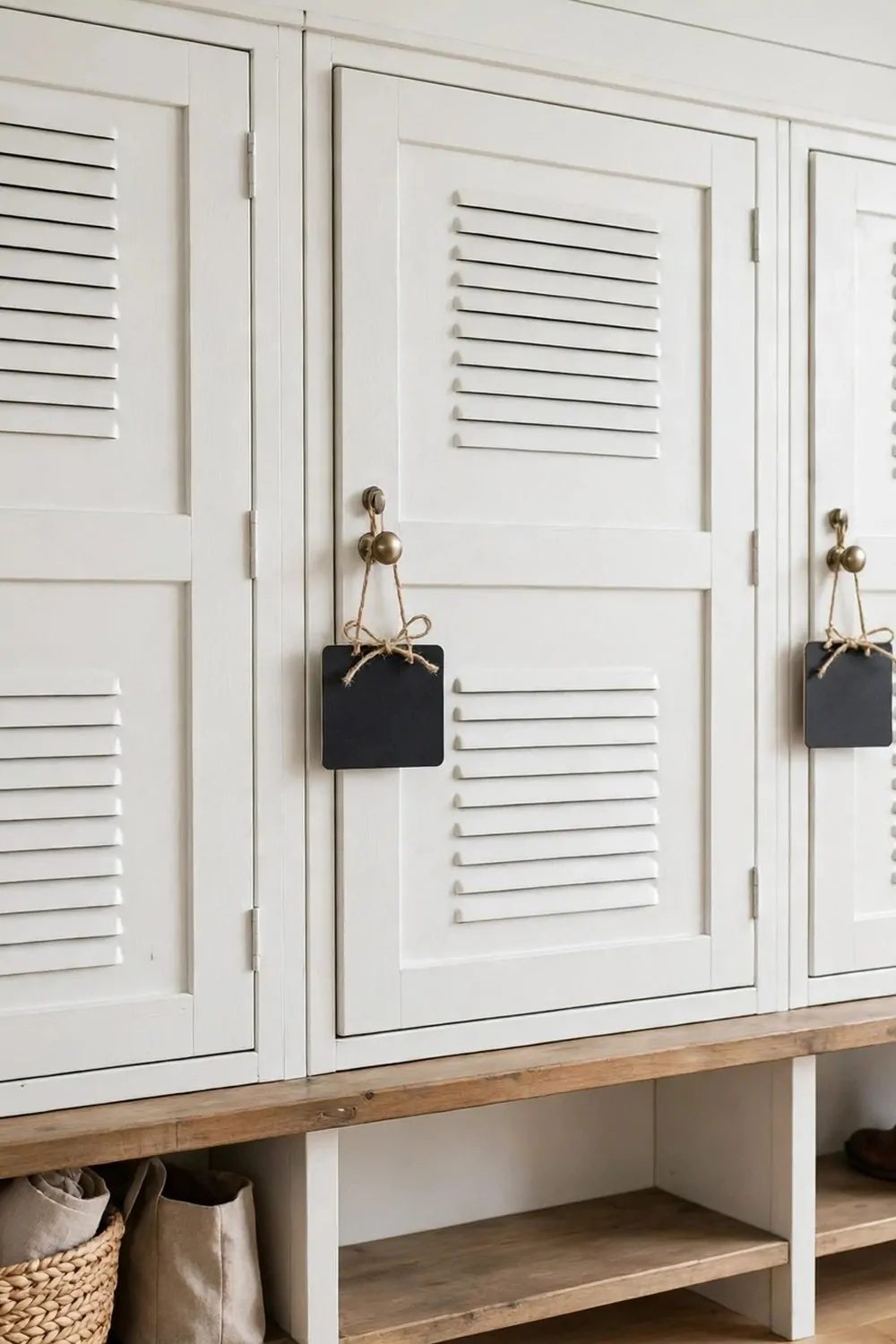
Chalkboard name tags on every locker make the mudroom feel personal and fun.
I tied a small black tag to each locker door with twine, and I wrote each person’s name on it in chalk. The kids loved it the second they saw it.
The tags are easy to change. When my daughter decided she wanted to be called by her nickname, I wiped the tag clean and wrote the new name. It took ten seconds.
Chalkboard tags also let the kids draw on their own lockers. My son drew a little car on his tag, and my daughter drew a star on hers. It makes the lockers feel like they belong to them.
I use regular chalk, the kind you buy for a few coins at the store. It wipes off with a damp cloth, and it does not leave marks on the locker doors.
The tags help guests too. When friends come over, they can see right away which locker is free and which ones belong to our family.
I hang the tags at eye level for the kids so they can read them. If a tag is too high, little ones cannot see their own name, and that takes the fun out of it.
You can buy chalkboard tags at any craft store, or you can make them from small pieces of wood and black paint. I made mine in an afternoon with paint I already had.
Every few weeks, I wipe the tags clean and rewrite the names. The chalk fades a little over time, and fresh writing keeps them looking neat.
This is a tiny detail, but it makes a big difference in how the mudroom feels. It stops being just a hallway with storage and starts being a part of our home.
Try chalkboard tags if your kids need a little push to use their lockers. A name on the door makes it theirs, and theirs is a place they will use.
A Bench Seat That Lifts Up for Storage
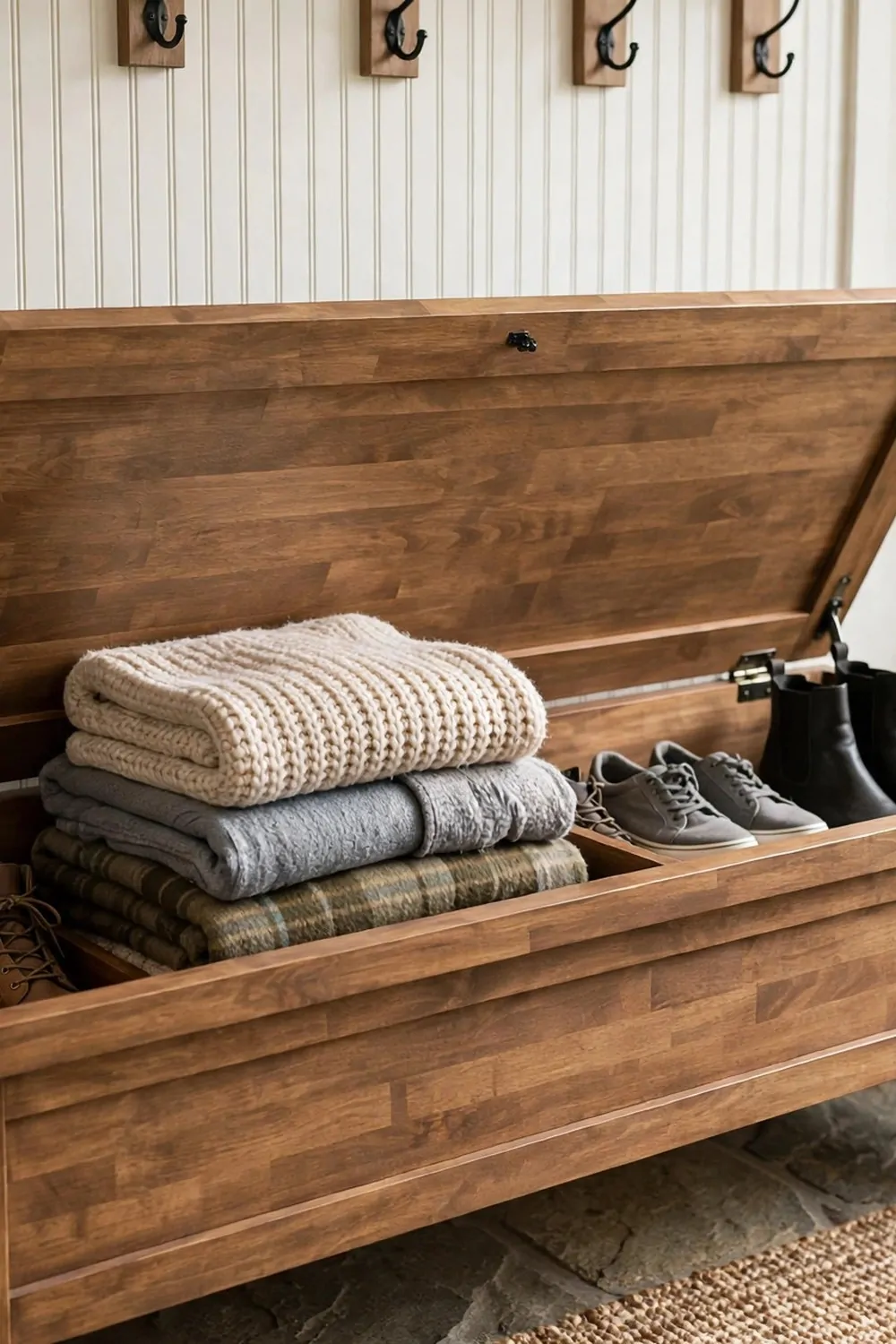
A bench seat that lifts up gives you secret storage right under where you sit.
I built our bench with a hinged top, so the whole seat lifts open like a big box. Inside, we keep the things we do not need every day but still want close by.
We keep extra blankets in there for cold nights, and a pair of spare shoes for each person. It is the kind of storage you forget about until you need it, and then you are so glad it is there.
The lid is heavy, so I added a slow hinge that keeps it from slamming shut. Little fingers are safe, and I do not have to worry about anyone getting hurt.
My kids love the lift up bench because it feels like a secret hiding spot. They open it to get their rain boots, and they close it like it is a treasure chest.
I put a handle on the front edge of the lid so it is easy to lift. Without a handle, the lid is hard to grab, and nobody will use the storage inside.
The inside of the bench is painted white so it is easy to see what is in there. A dark box would hide everything, and things would get lost at the bottom.
I keep a small basket inside the bench for the dog’s extra leashes and towels. It keeps the pet stuff out of sight but still right by the door where we need it.
This bench took a little more work to build than a plain one, but it was worth it. The extra storage means one less box in the garage and one less pile in the hallway.
If you buy a bench instead of building one, look for one with a lift up seat and a slow hinge. Ask the store to show you how it opens before you buy it.
A lift up bench is storage and a seat in one piece of furniture. It saves space, it hides clutter, and it gives your mudroom a tidy look without any extra work.
Overhead Cabinets for Out of Season Gear
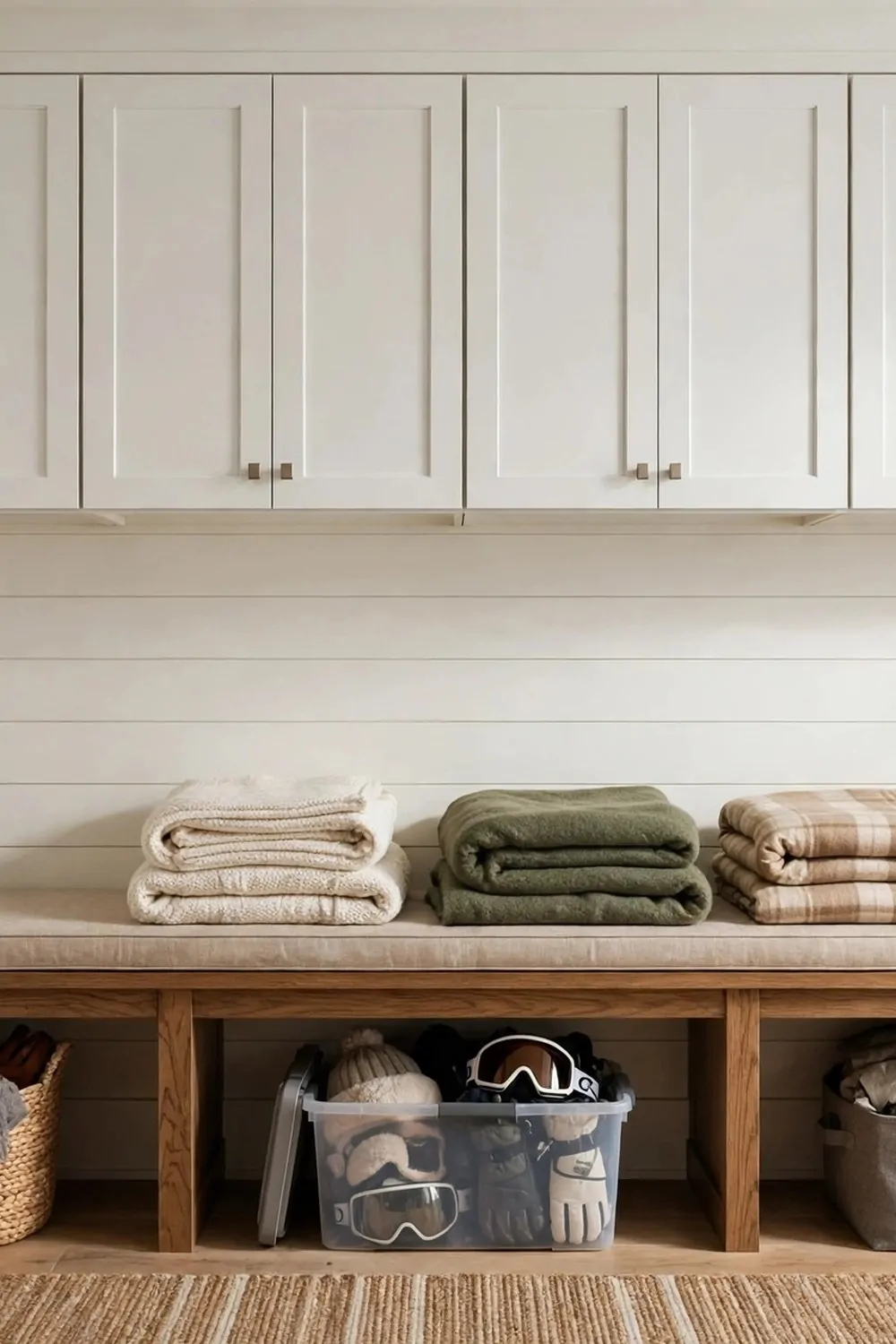
Overhead cabinets hold all the out of season gear that clutters up the lockers.
I put white cabinets above the bench, up high where the kids cannot reach. They hold our heavy winter coats in summer and our light jackets in winter.
The cabinets have doors, so everything inside stays hidden and dust free. I love opening a clean cabinet instead of looking at a pile of stuff on a shelf.
Each cabinet has a bin inside it with a label. One bin says winter hats. One says summer hats. One says rain gear. When the season changes, I swap the bins and the mudroom is ready again.
| Season | Store up top | Keep within reach |
|---|---|---|
| Winter | Heavy coats and snow boots | Hats, gloves, and scarves |
| Summer | Beach bags and sun hats | Water bottles and light jackets |
| All year | Spare bags and party gear | Keys, mail, and dog leashes |
I keep a small step stool in the mudroom so I can reach the cabinets without climbing on the bench. The stool folds flat and tucks behind the door when I am done.
The cabinets also hold the things we only use sometimes, like picnic blankets and beach towels. They used to live in the garage, and we forgot about them every time we needed them.
I painted the cabinets the same white as the lockers so the whole wall looks like one piece. It makes the mudroom feel built in and tidy, not pieced together.
If your ceiling is low, you can use shorter cabinets or open shelves instead. The point is to use the space up high, because that space is wasted otherwise.
I go through the cabinets twice a year, once in spring and once in fall. I pull out what we do not use anymore and make room for what we need next.
Overhead cabinets keep the lockers free for the things we use every day. The daily stuff stays low and easy to reach, and the seasonal stuff waits up high until we need it.
Use the space above your bench. It is free storage, and it keeps your mudroom from feeling crowded at eye level.
Backpack Hooks in a Neat Row
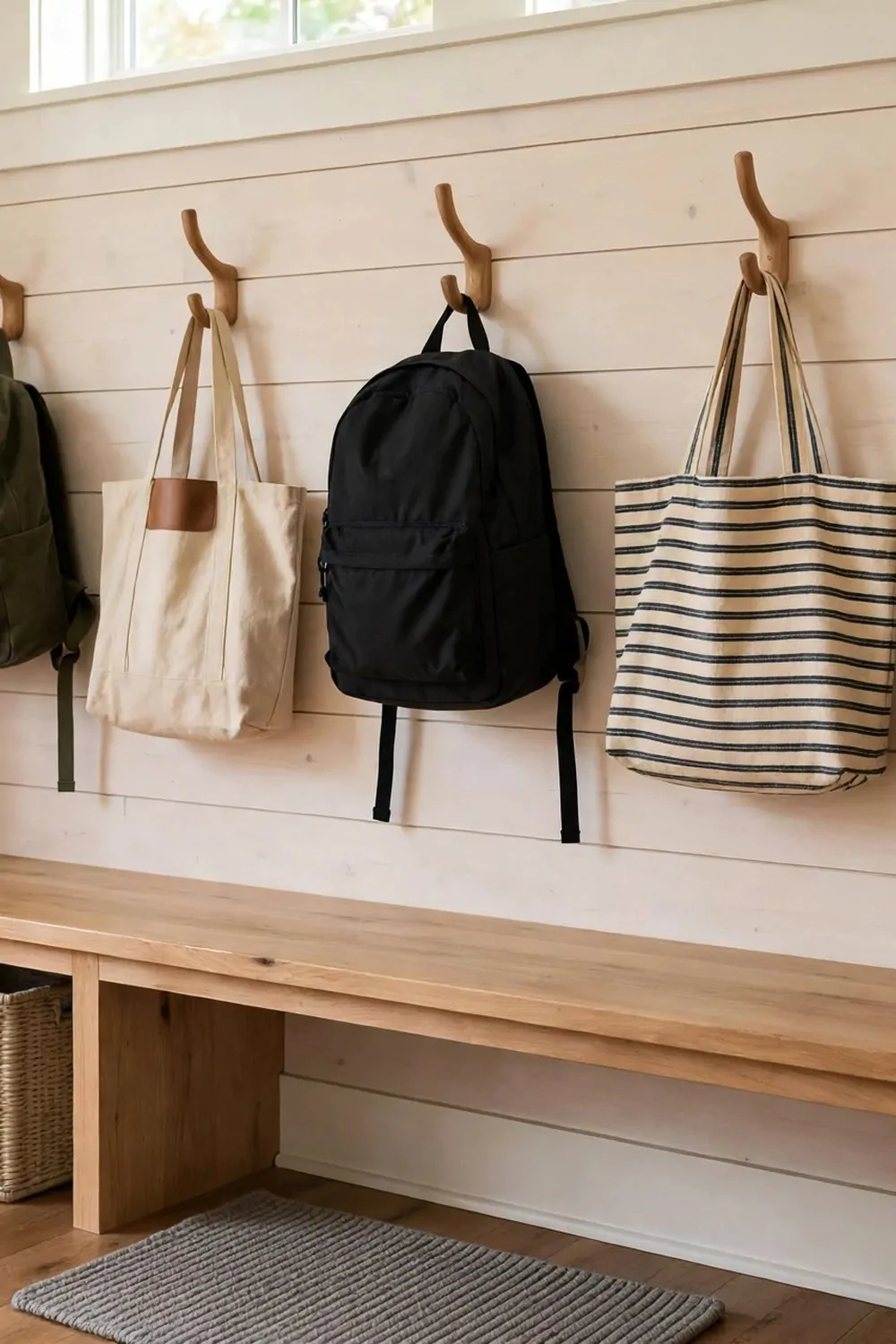
Backpack hooks in a neat row keep the bags off the floor and ready to grab.
Every morning, my kids used to leave their backpacks by the front door in a heap. I tripped over them more times than I can count, and one of them spilled lunch all over the floor once.
Now each backpack has its own hook on the wall, in a straight line. The kids hang their bags up when they get home, and they grab them on the way out. It is that easy.
I put the hooks at a height the kids can reach without stretching. If a hook is too high, the bag ends up on the floor, and the whole system falls apart.
The hooks are wooden and round, and they are strong enough to hold a full school bag. I screwed them into the wall studs so they would not pull out, and they have held for two years now.
I spaced the hooks wide apart so the bags do not bump into each other. When bags are too close, they knock each other off, and then we have a pile on the floor again.
Each hook has a little name plate under it. My daughter’s hook is first, my son’s is second, and mine is third for my tote bag. The order never changes, so everyone knows where to look.
The row of hooks also works for tote bags, gym bags, and shopping bags. Anything with a handle or a strap can hang there, and it keeps the bench clear.
I wipe the hooks once a week because they collect dust. It takes one minute, and it keeps the wall looking clean.
If you have a lot of bags, add a second row of hooks lower down for the kids and a higher row for the adults. Two rows hold twice as many bags in the same wall space.
A neat row of hooks is one of the simplest ideas in this whole list, and it might be the one that saves you the most time in the morning.
An Umbrella Stand by the Door
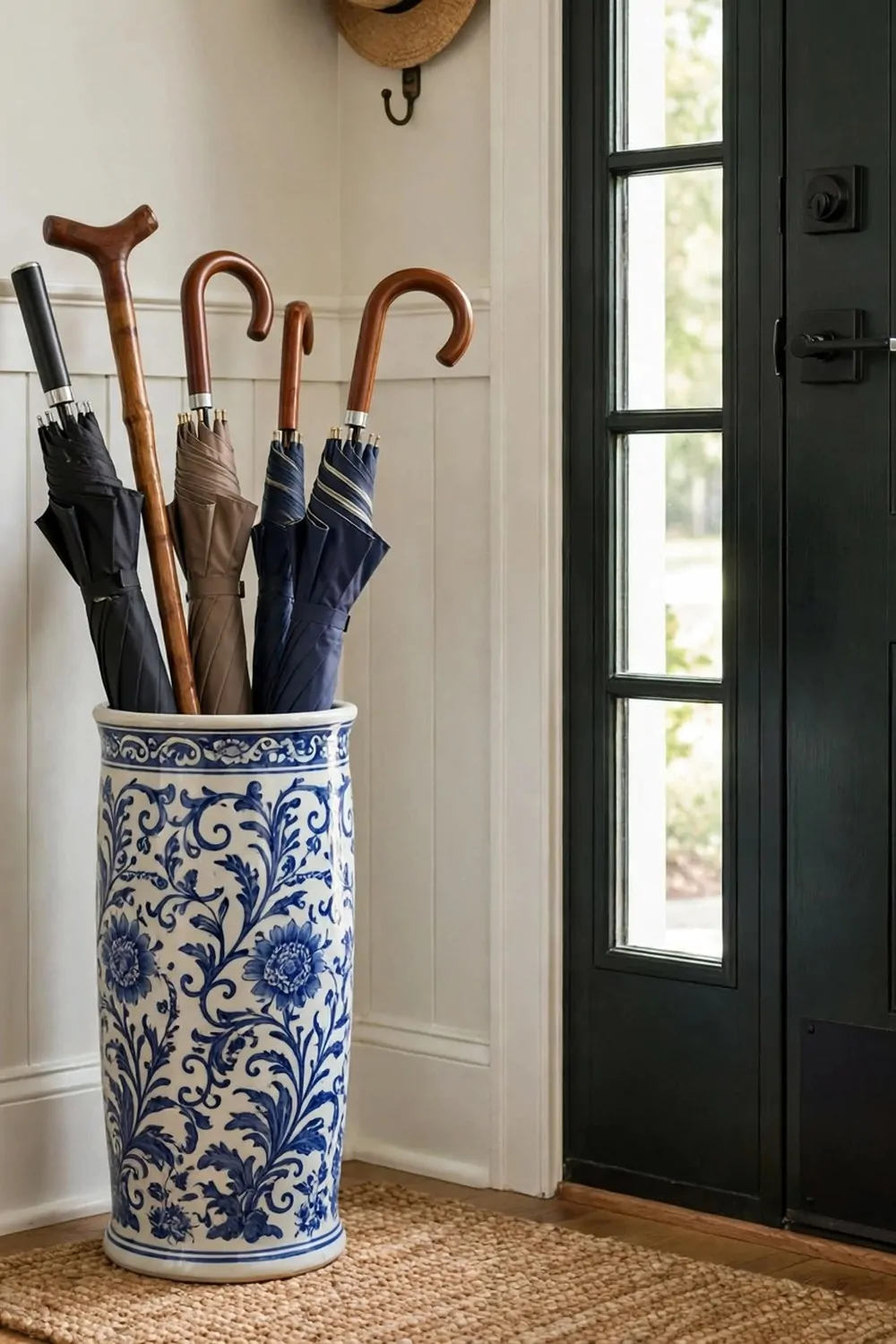
An umbrella stand by the door means we never hunt for an umbrella in the rain again.
I put a tall ceramic stand right next to the front door, and it holds all our umbrellas in one place. When it starts to rain, we grab one and go. No searching, no panic.
Before the stand, our umbrellas lived in a closet down the hall. By the time we found one, we were already wet. It was silly, and I am glad we fixed it.
The stand is heavy, so it does not tip over when the kids bump into it. That matters in a busy house where everyone is rushing out the door at the same time.
I keep one big umbrella for me, one for my husband, and two small ones for the kids. The stand holds them all with room to spare, and there is even a walking stick in there for my mother when she visits.
Wet umbrellas drip into the stand instead of onto the floor. I empty the water out once a week, and the floor by the door stays dry and safe.
I picked a ceramic stand because it looks nice and it is easy to wipe clean. A metal stand works too, but it can rust if water sits in it for a long time.
The stand also holds a few reusable shopping bags, rolled up tight. They are right by the door, so I never forget them when I go to the store.
If you do not have much floor space, a wall mounted umbrella holder works just as well. It holds fewer umbrellas, but it keeps them off the floor and out of the way.
Put the stand by the door, put the umbrellas in it, and make it a habit. The next rainy morning, you will be glad you did.
A Spot for Leashes and Dog Gear
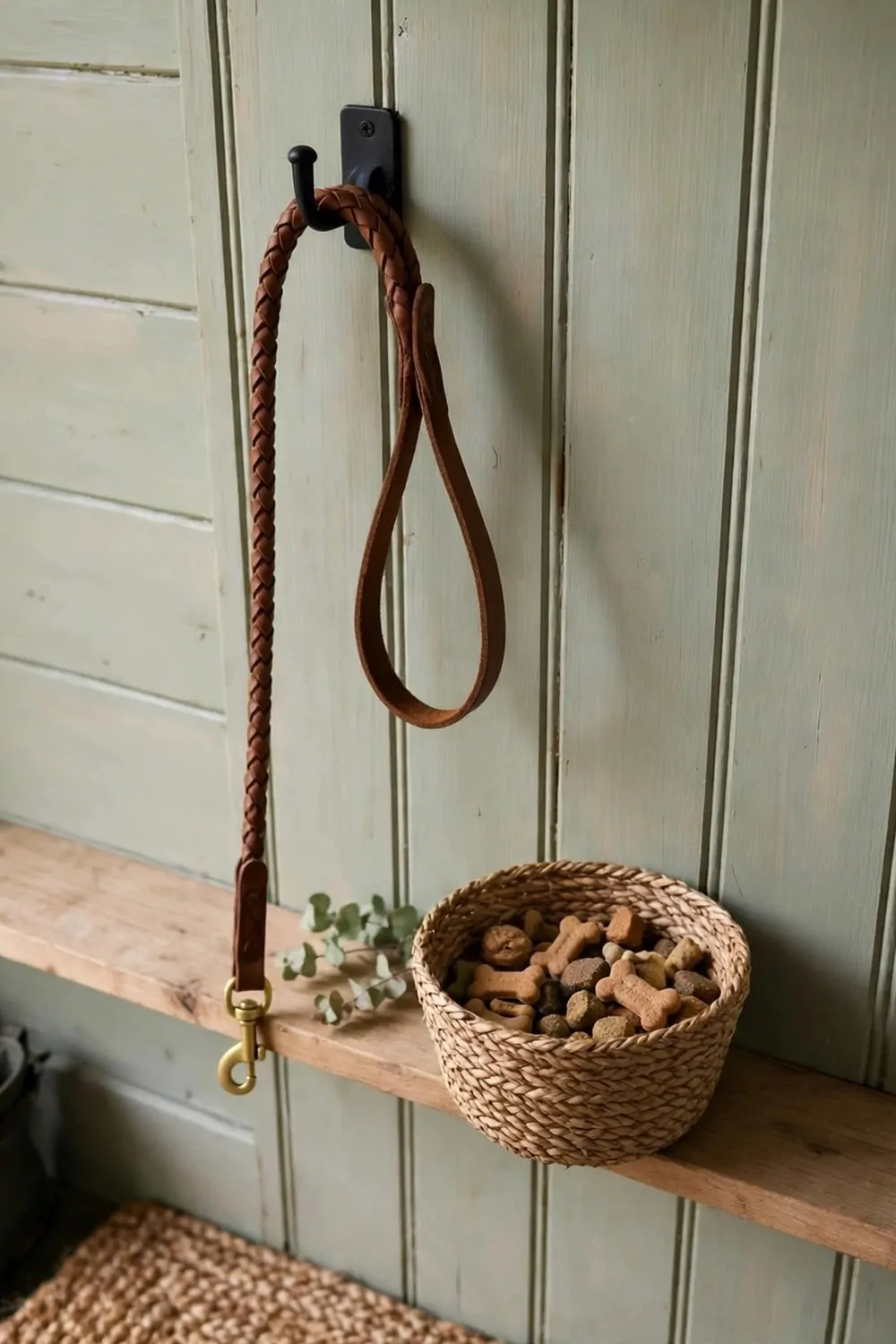
Our dog has his own spot in the mudroom now, and it makes walk time so much easier.
I hung a hook by the door just for his leash, and I put a small basket on the shelf below it for his treats and his extra collar. Everything he needs is right there.
Before this, the leash lived on a chair, or on the kitchen counter, or in the car. We wasted five minutes looking for it before every single walk, and the dog would bark the whole time.
Now the leash hangs on its hook, and I grab it on my way out. The dog knows the sound of the hook now, and he runs to the door before I even say the word walk.
The basket holds his treats, his waste bags, and a small towel for wiping his paws. Muddy paws used to mean muddy floors, but the towel fixes that in seconds.
I put the hook low enough that my kids can reach the leash too. They love taking the dog out, and now they can do it without asking me to find the leash first.
The basket is small, so it does not take up much shelf space. It holds just what we need for a walk, and nothing extra, which keeps it tidy.
I wash the towel once a week and refill the treat basket when it gets low. It is a small job, but it keeps the dog’s spot ready all the time.
If you have a cat, the same idea works for their carrier and their treats. Any pet gear that you use every day deserves a spot by the door.
Give your pet a hook and a basket. It takes five minutes to set up, and it will save you time and barking every single day.
A Charging Drawer for Phones and Tablets
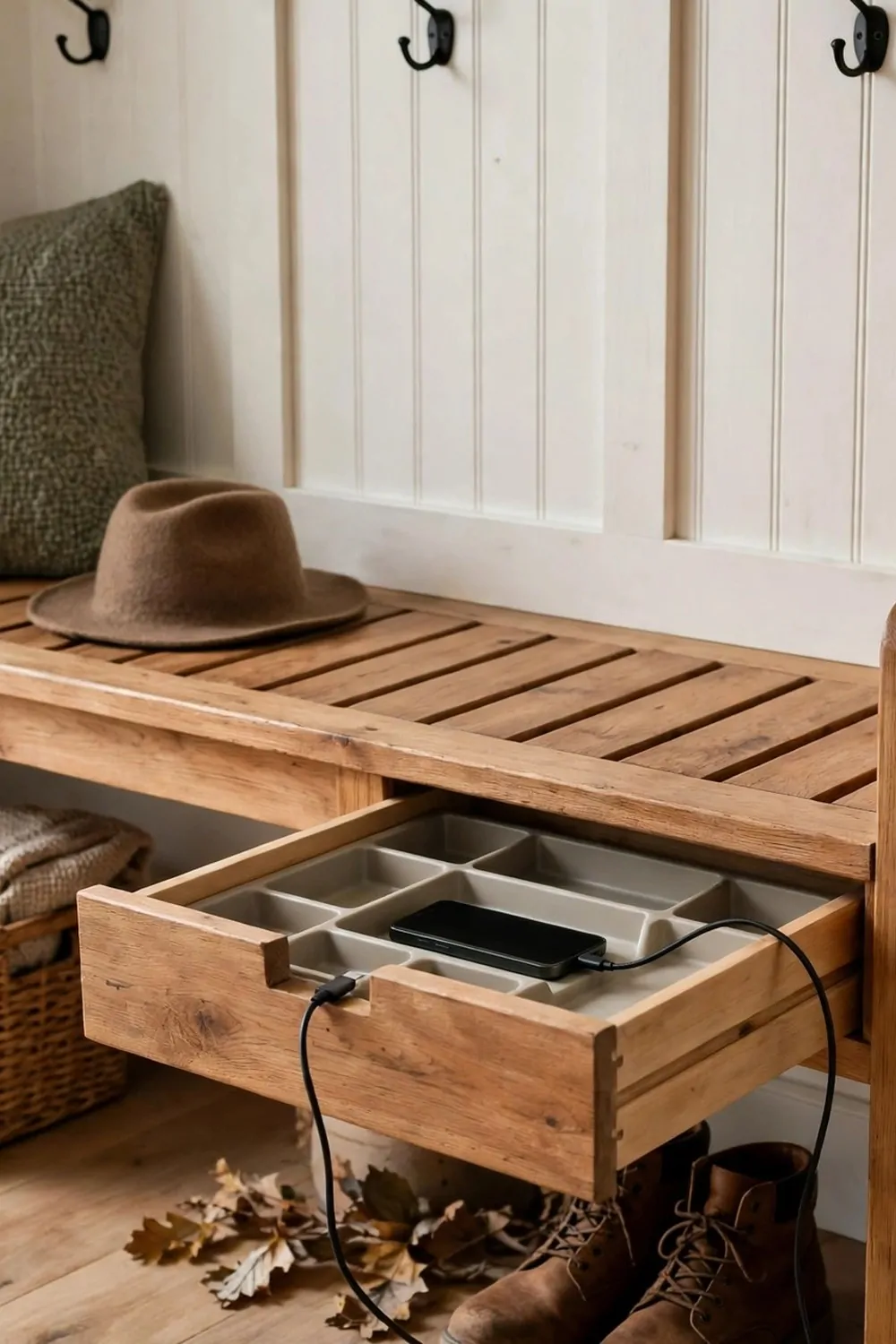
A charging drawer in the mudroom keeps our phones and tablets charged and out of the way.
I put a small drawer in the bench with a power strip inside it, and now everyone plugs in their phone when they walk through the door. The cables stay hidden, and the bench top stays clear.
Before the drawer, phones charged all over the house. One on the kitchen counter, one on the couch, one lost under a pile of laundry. Nobody knew where their phone was when it was time to leave.
Now the phones live in the drawer. The kids put their tablets in there after school, and by dinner time they are fully charged and ready to go.
The drawer has a little tray inside to keep the cables neat. Each cable has its own spot, so they do not tangle up into a knot every week.
I drilled a small hole in the back of the drawer for the power cord. It was a little scary to drill into my nice bench, but it worked out fine, and the cord is hidden behind the bench.
The drawer is not big, and that is on purpose. It holds four phones and two tablets, and nothing else. If it were bigger, it would fill up with junk like every other drawer in our house.
I made a rule that phones go in the drawer when we get home and stay there until we leave. It also means less screen time at the dinner table, which is a nice bonus I did not expect.
If you do not want to drill a hole, you can use a small charging station on top of the bench instead. It does the same job, and you can move it whenever you like.
A charging drawer is a small upgrade that makes a big difference. Try it, and you will wonder how you lived with cables all over the house.
A Mirror Above the Bench
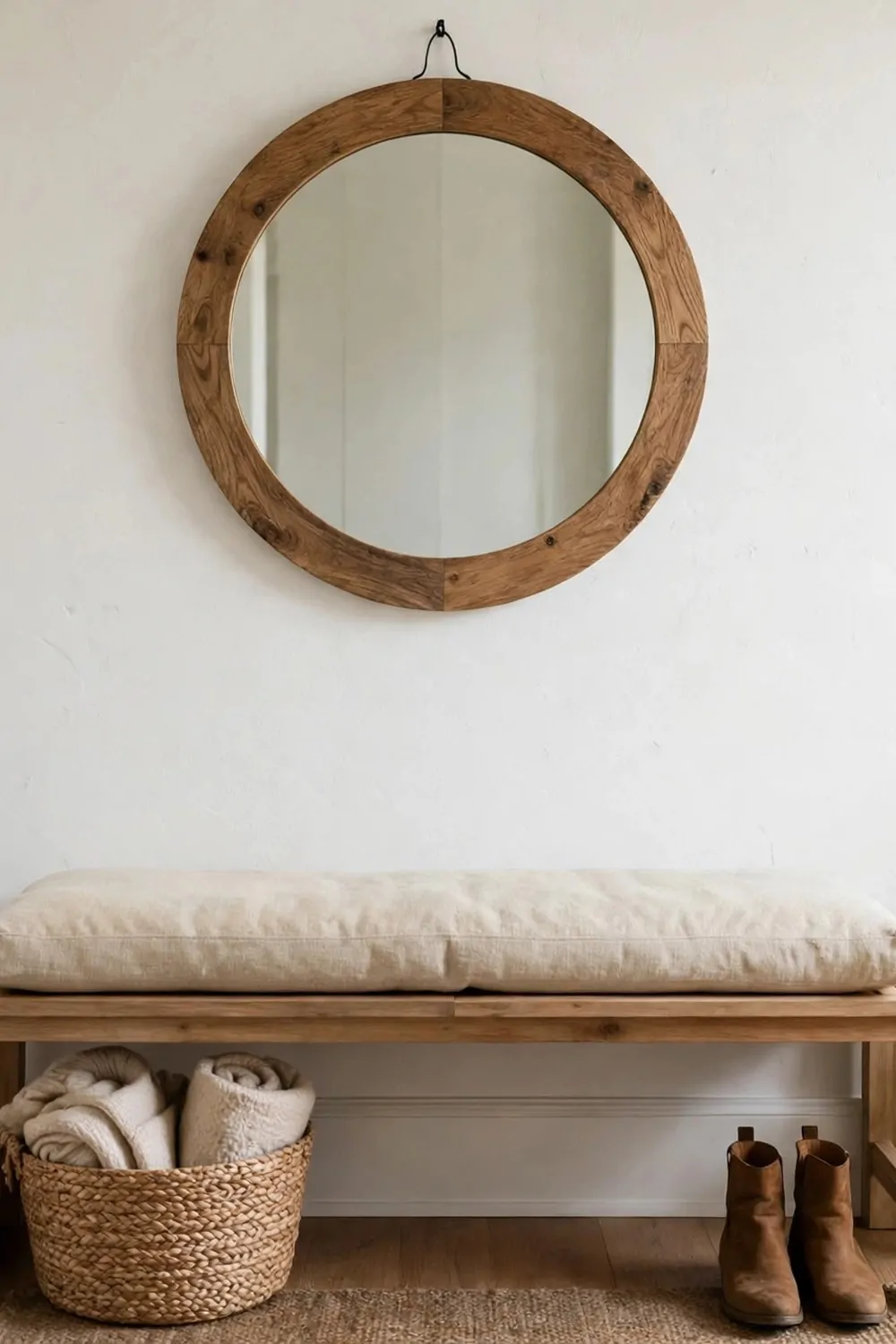
A mirror above the bench is the last thing we check before we walk out the door.
I hung a round mirror with a wooden frame right above the bench, at a height where everyone can see themselves. My daughter checks her hair in it every morning, and my son checks his teeth after breakfast.
The mirror makes the mudroom feel bigger too. It bounces the light around the little room, and the whole space feels brighter, even on a cloudy day.
I picked a round mirror because it softens all the straight lines of the lockers and the bench. The wood frame matches the bench, so it looks like it belongs there.
The mirror is hung with strong screws into the wall, not just sticky hooks. It is heavy, and I did not want it falling down on anyone, especially not on my kids.
I wipe the mirror once a week because little fingers leave marks on it. A quick spray and a cloth, and it looks new again.
The mirror also helps me see the kids behind me when I am tying my shoes on the bench. I can check that they have their bags and their coats without turning around.
If your mudroom is dark, a mirror helps more than a new light. It catches whatever light comes through the door and spreads it around the room.
You do not need a big mirror to get the effect. Even a small one above the bench will make the space feel open and bright.
Hang a mirror above your bench and watch how much it changes the room. It is a simple touch, and it makes the mudroom feel finished.
Boot Trays With Raised Edges
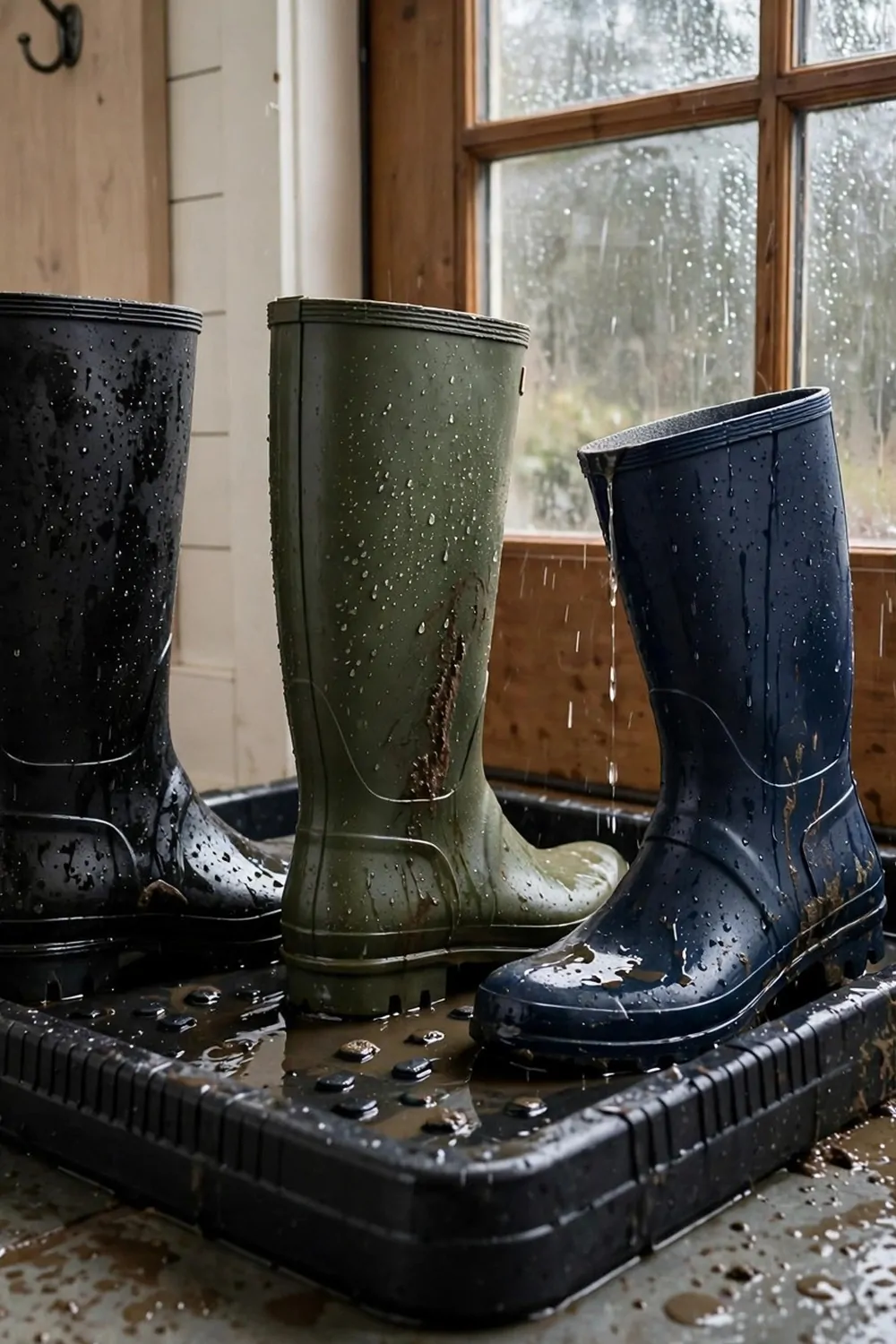
Boot trays with raised edges keep the wet mess inside the tray and off my floor.
The raised edge is the whole point. Water and mud stay in the tray because the edge is high enough to hold them. A flat mat just lets the water run off onto the floor.
I use black trays because they hide the dirt, and the raised edges are about an inch tall. That is enough to hold a good puddle after a rainy walk home.
Each person in our house has their own tray by the door. The kids’ trays are smaller, mine and my husband’s are bigger for our boots. The trays sit in a neat line, and the floor stays dry.
When the boots are really muddy, I let them dry in the tray first, then I tap the mud off outside. The tray catches the loose dirt, and the floor never sees any of it.
I rinse the trays with the hose once a week, and they dry in the sun in no time. They are tough, and they have lasted through two winters without cracking.
The trays also work for wet shoes in summer after the kids play in the garden. Muddy sneakers go in the tray, and the kitchen floor stays clean.
I tried flat mats first, and they did not work at all. The water ran right off the edge and pooled on the floor, which is exactly what I was trying to stop.
If you buy trays, check that the edges are high enough to hold water. Some trays look nice but the edge is too low to do any good.
Raised edges are a small detail, but they make the tray actually work. Put one by your door and your floors will stay clean, even on the wettest days.
Seasonal Swap Bins You Rotate Twice a Year
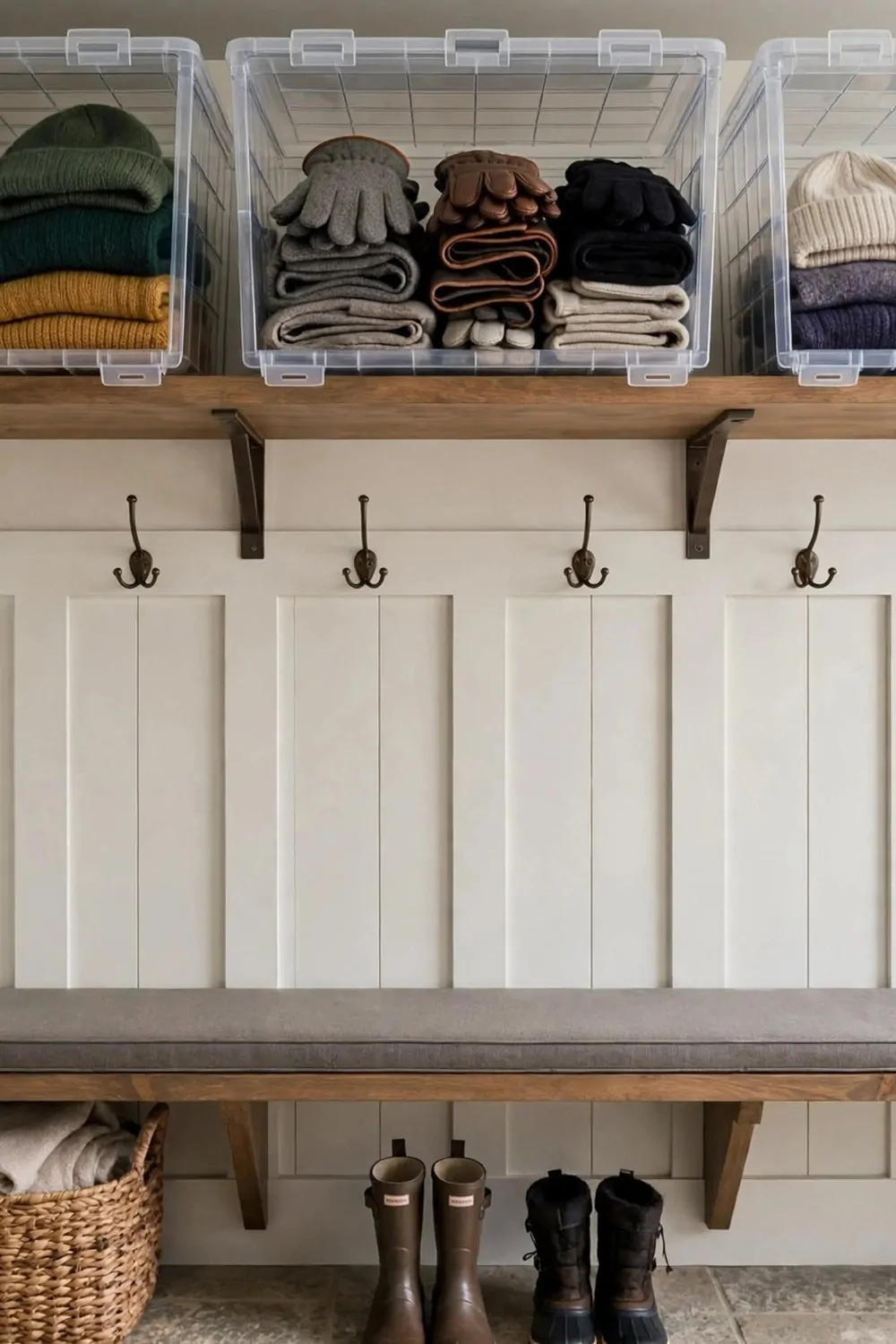
I keep two sets of bins up high, and I only touch them twice a year.
One set holds cold weather gear. The other set holds warm weather gear.
When the seasons change, I swap them. It takes me less than an hour, and the mudroom feels fresh again.
I label each bin in big clear letters. My kids can read the labels, so they know what goes where.
| Swap time | Pack away | Bring out |
|---|---|---|
| Start of cold weather | Sun hats and light jackets | Heavy coats, hats, and gloves |
| Start of warm weather | Heavy coats and snow boots | Light jackets and rain gear |
| Twice a year | Anything no one used last season | The gear for the season ahead |
I fold hats and gloves small so they fit neat. I roll scarves instead of folding them, and that saves a lot of space.
I put the off season bins on the top shelf. That way they are out of the way but still easy to reach with a small step stool.
I check each bin before I pack it away. If a glove lost its pair, I toss it. If a hat is too small now, I pass it on.
I keep one small bin for things we use all year, like thin rain hats and light gloves. That bin stays down low where we can grab it fast.
My mudroom stays calm because of this one habit. Nothing piles up, and nothing gets lost in a big jumble.
A Small Shelf for Keys and Mail
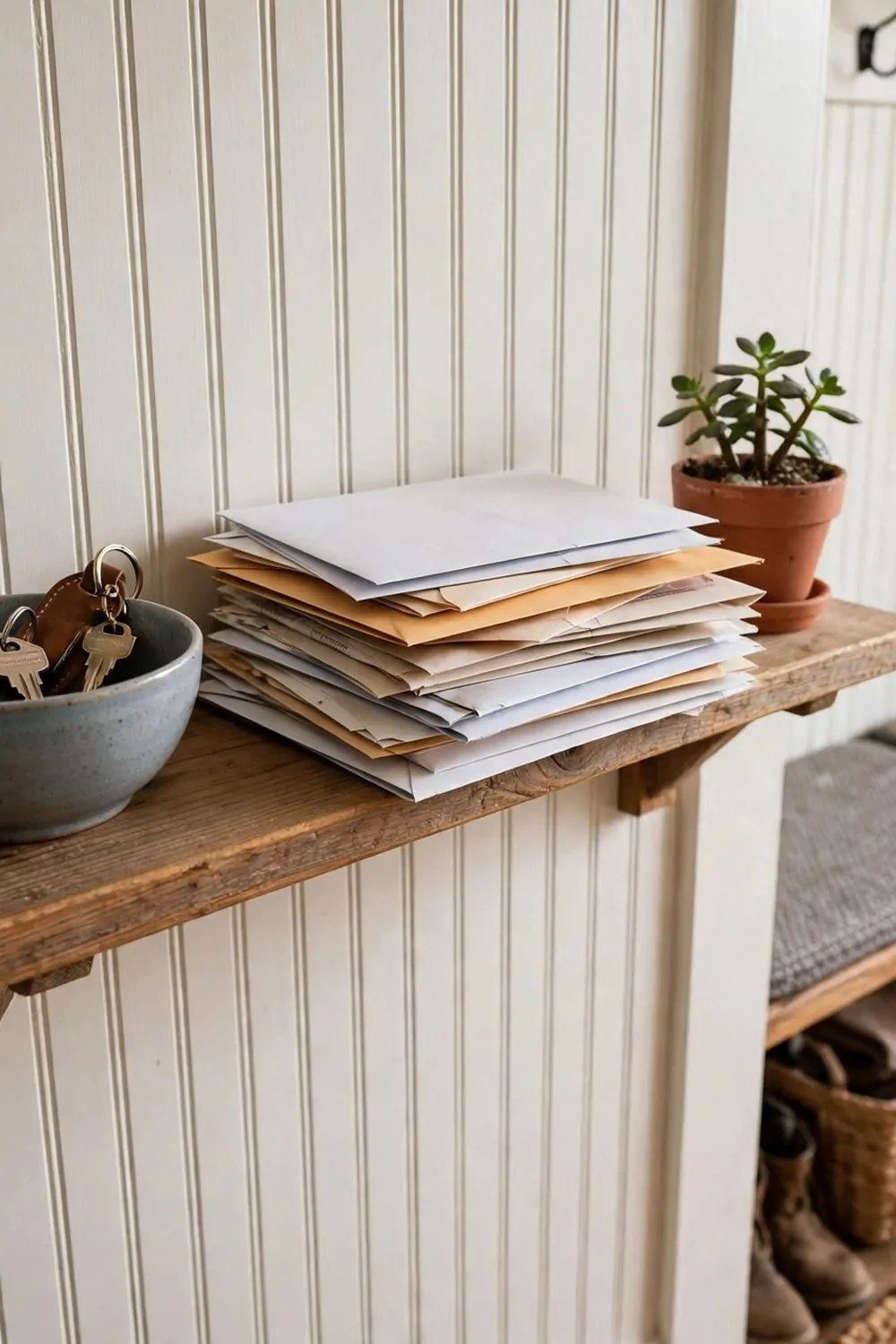
I put a small shelf right by the door, and it changed our mornings a lot.
The shelf holds a little bowl for keys. I drop mine in the bowl the second I walk in.
I sort the mail on the same shelf. Bills go in one small pile, and fun mail goes in another pile.
I added a tiny plant to the shelf too. It makes the spot feel warm, and it reminds me to slow down for a second.
My kids know not to pile school papers on this shelf. I gave them their own spot, so this one stays clear.
I wipe the shelf once a week. Dust builds up fast by a door, and a quick wipe keeps it looking nice.
I picked a shelf with a small lip at the front. That lip stops keys and mail from sliding off when the door slams.
I love that I can see everything at a glance. I grab my keys, I grab the mail I need, and I walk out the door.
This small shelf saves me from that frantic search for keys. You know the one, when you are already late and your bag is a mess.
A Rail for Sunglasses and Small Bits
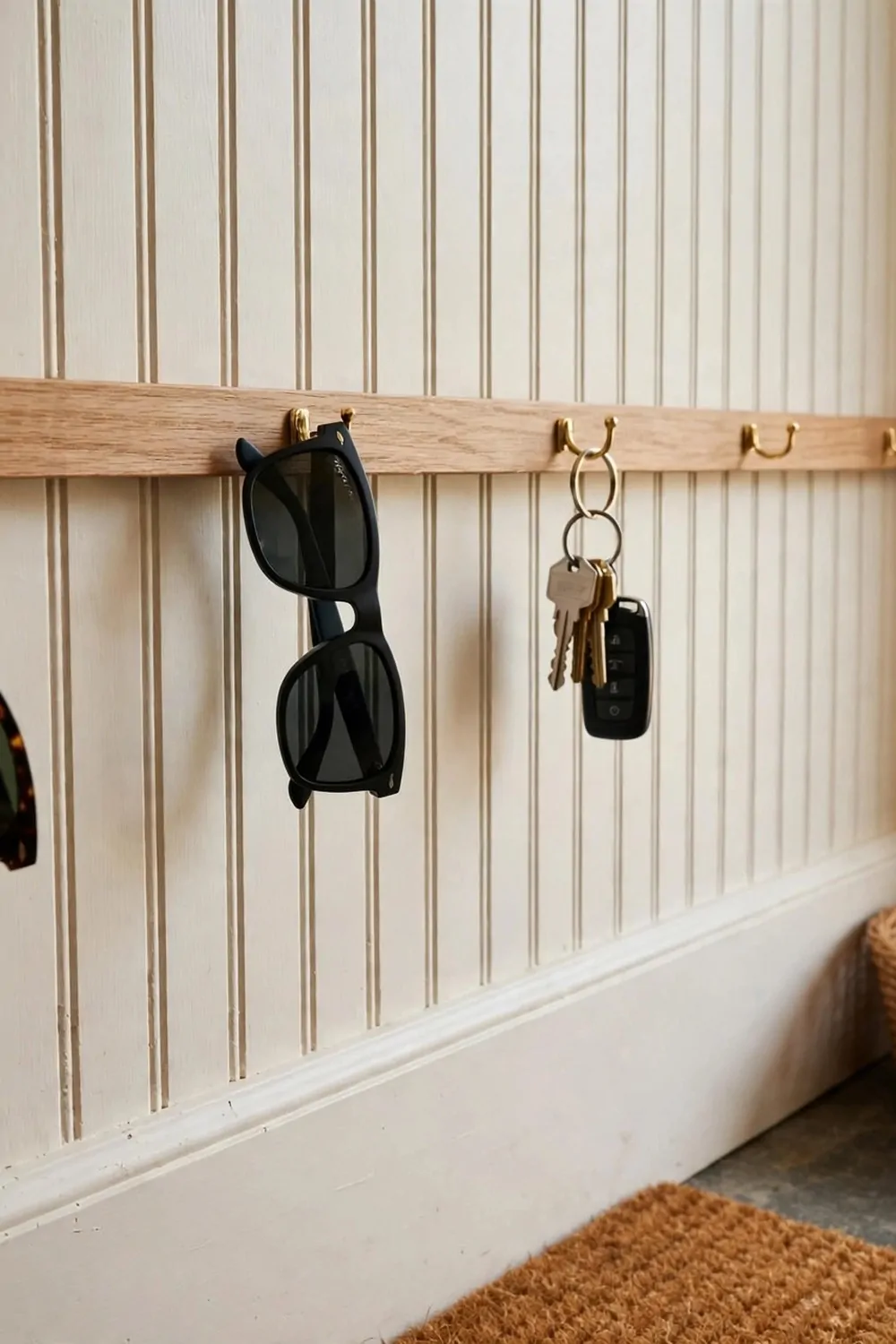
I fixed a slim rail to the wall, and now all our small bits have a home.
Sunglasses hang on the little hooks. I can see each pair, so I pick the one I want in seconds.
I hang spare keys on the end hook. I put a small tag on them so I know which key is which.
I added a tiny pouch to the rail for coins and hair ties. Small things used to vanish in pockets, and now they stay put.
My kids hang their small bags and lanyards here too. It keeps the hooks by the door free for coats.
I keep the rail at a height we can all reach. My youngest can hang her own sunglasses, and she loves that.
I clean the rail now and then with a damp cloth. Dust likes to sit on wood, and a quick wipe keeps it fresh.
I like how neat it looks. The wall feels tidy, and nothing is piled on the bench below.
This rail is small, but it does a big job. It stops the little stuff from taking over the whole mudroom.
Wicker Baskets for Scarves and Hats
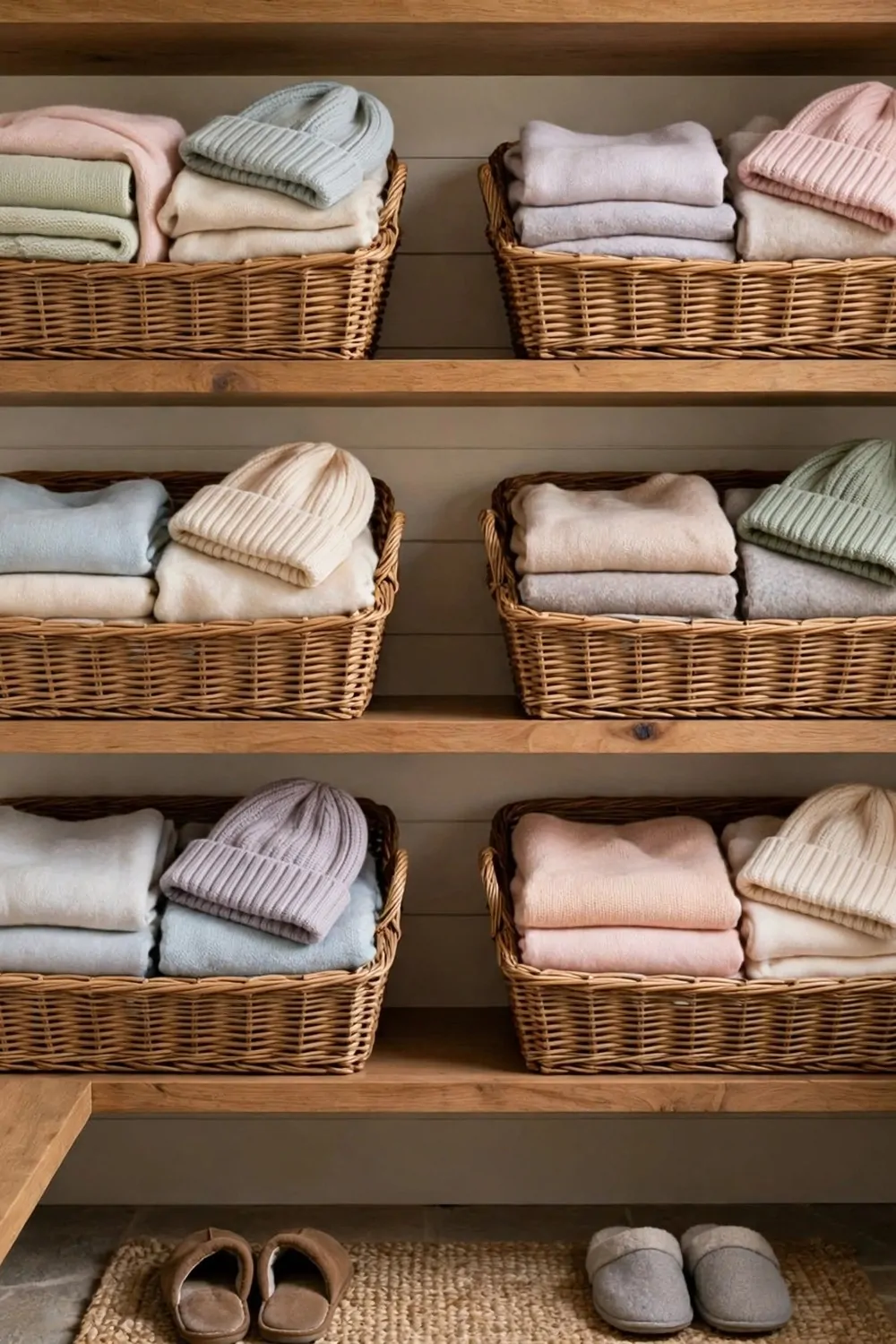
I love wicker baskets in a mudroom. They look soft, and they hide a lot of mess.
I give each person one basket for scarves and hats. That way no one digs through someone else’s stuff.
I fold scarves flat and lay them in neat stacks. Hats sit on top, so I can see them right away.
I pick baskets with handles on the sides. I can pull a basket down, fill it, and slide it back in one move.
I keep the baskets on open shelves at eye level. Closed doors would hide them, and we would forget what is inside.
I shake out the baskets once a month. Little bits of fluff and dust collect at the bottom, and a quick shake fixes it.
I use soft colors for the scarves and hats inside. The baskets look calm, and the mudroom feels warm when I walk in.
My kids drop their hats in the basket when they come home. It is an easy habit, and it keeps the floor clear.
I think wicker is perfect here because it breathes. Damp hats dry out, and they do not smell musty the next day.
A Color for Each Child
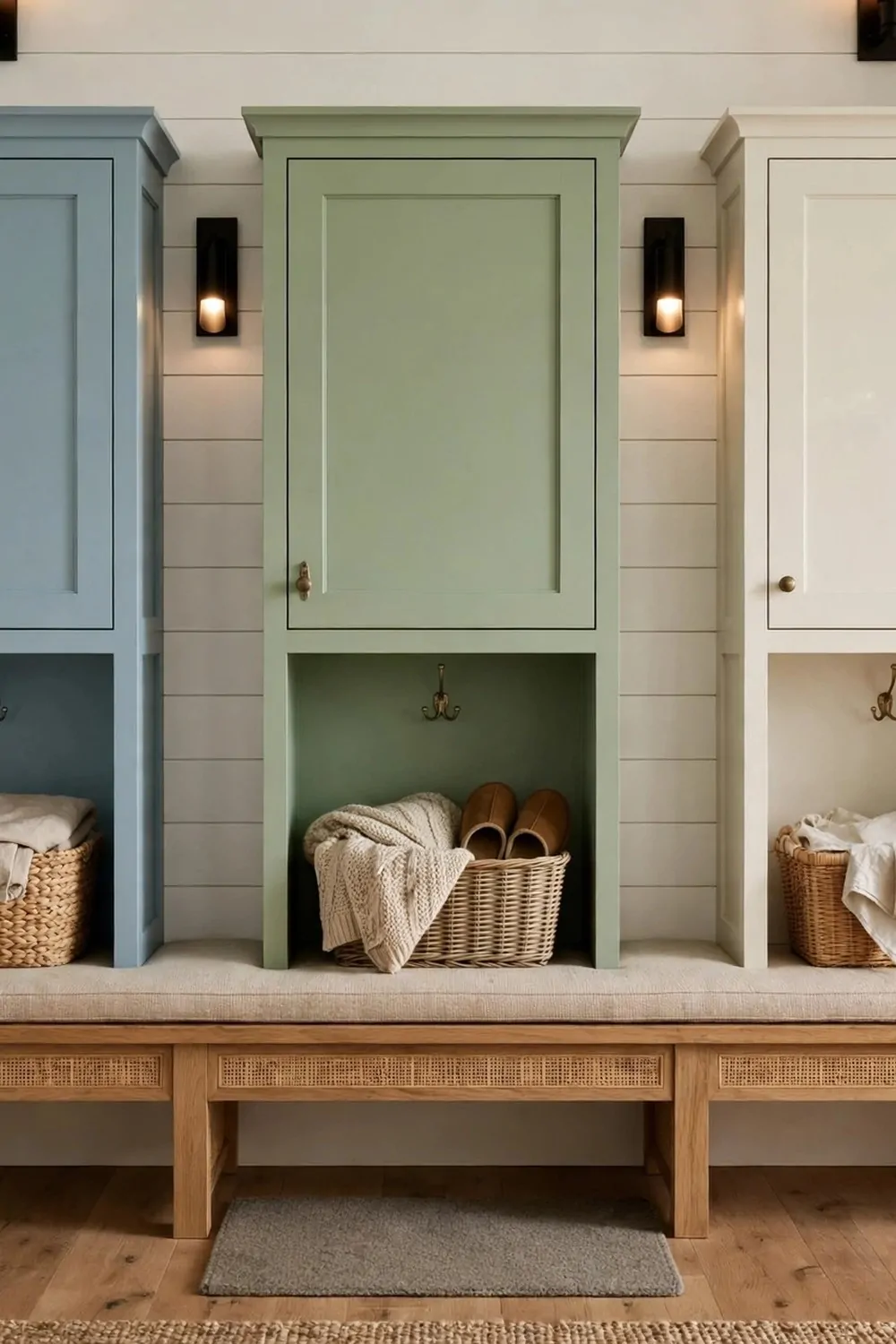
I painted each locker a soft color, and my kids picked their own.
One chose blue. One chose green. One chose cream, and I smiled because it suits her so well.
Each child knows their color by heart. They walk in, they find their locker, and they hang up their things without asking me.
I put a small name tag on each locker too. The color helps, but the name makes it theirs in a clear way.
I keep the colors soft and calm. Bright colors can feel loud in a small room, and soft colors feel easy on the eyes.
I match each basket to the locker color. It sounds like a small thing, but it makes the whole wall look neat and planned.
I let my kids help paint their locker. They felt proud, and now they take better care of their own space.
I wipe the painted doors with a damp cloth when they get marks. Fingerprints show up fast, but they wipe off just as fast.
This color trick ended most of our mudroom fights. No one grabs the wrong hook now, and no one blames the wrong sister for a missing coat.
A Pull Out Drawer for Sports Gear
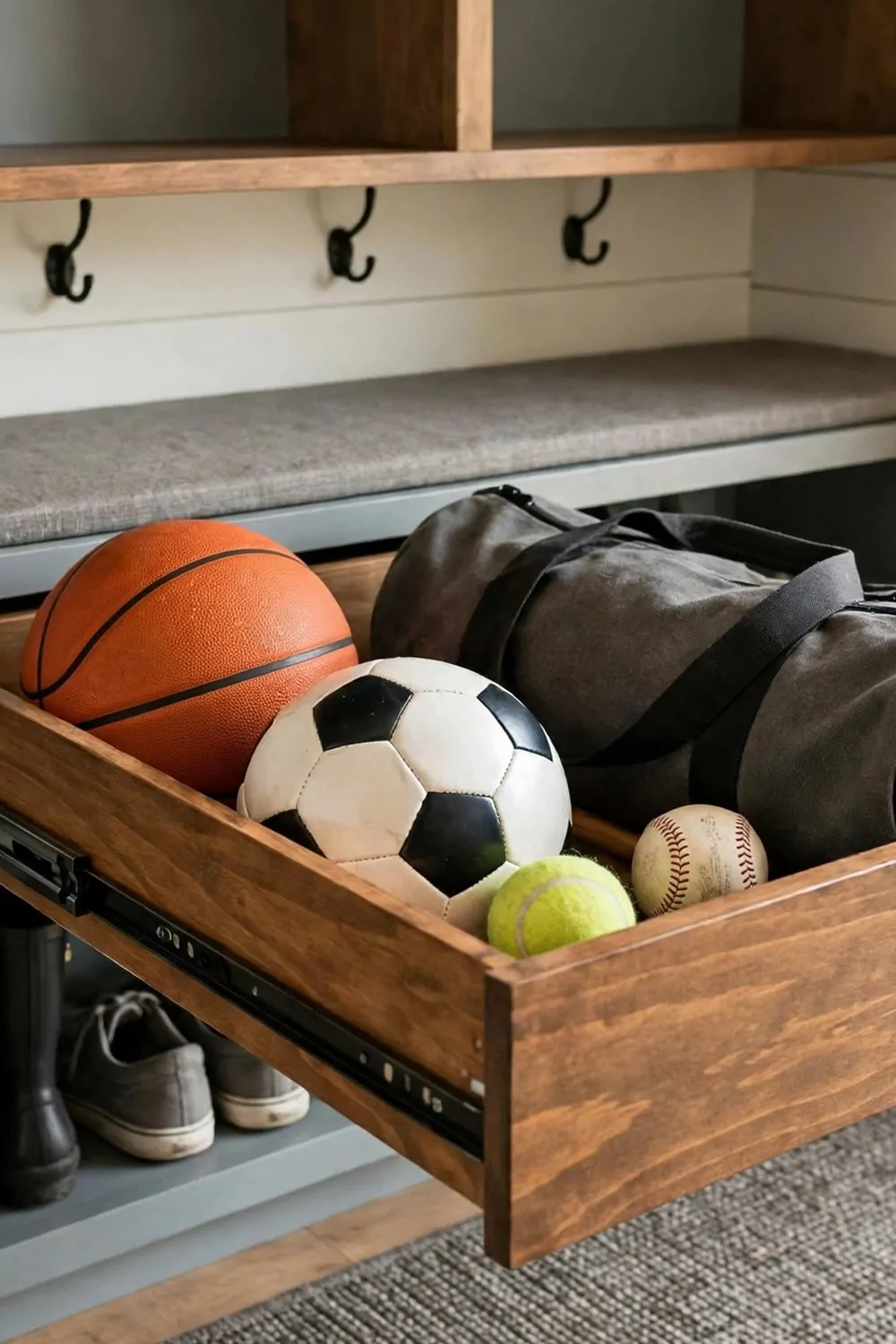
I added a deep drawer under the bench, and it holds all our sports gear in one place.
Balls fit in the drawer with room to spare. I put the big ones at the back and the small ones at the front.
I roll gym bags tight before I slide them in. Rolled bags take up less room, and I can fit more in the drawer.
I keep a small towel in the drawer too. Sweaty gear goes in the towel first, so the drawer stays dry.
My kids pull the drawer out with one hand. The runners are smooth, so even my youngest can open it on her own.
I sort the gear by sport in small piles. Soccer stuff sits on one side, and swim stuff sits on the other side.
I air the drawer out on sunny days. I pull it open wide and let fresh air in for a while.
I check the drawer each Sunday night. If a ball is flat or a bag is torn, I fix it then and not on a busy morning.
This drawer keeps sports gear off the floor. The mudroom looks tidy, and we find what we need before practice.
Shoe Cubbies With Air Holes
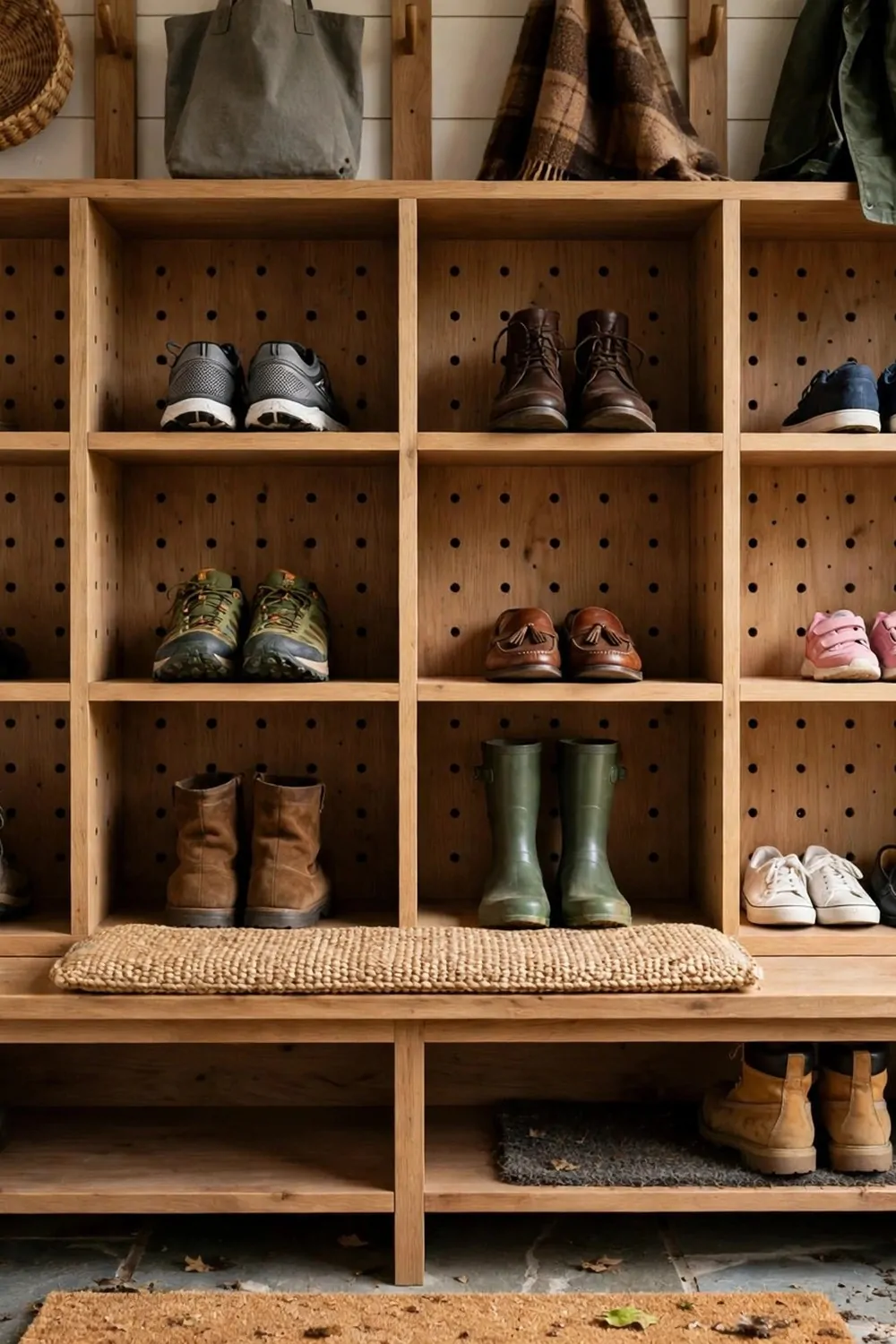
I picked shoe cubbies with small round holes in the back, and I am so glad I did.
The holes let air move through. Shoes dry faster, and the mudroom smells much fresher.
I give each person two cubbies. One holds the shoes they wear most, and one holds a spare pair.
I keep muddy shoes on the bottom row. Mud drips down, not onto clean shoes below.
I teach my kids to point the toes in first. That way the shoes slide in neat and do not stick out.
I wipe the cubbies with a damp cloth each week. Dust and bits of dirt collect in the corners if I skip it.
I like that the cubbies are open. I can see every pair at a glance, and no one has to dig around in a dark box.
I put a small mat in front of the cubbies. Wet shoes sit on the mat for a bit before they go into their cubby.
These air holes are a tiny detail, but they make a big change. Our shoes last longer, and the room feels clean.
A Fold Down Seat for Small Mudrooms
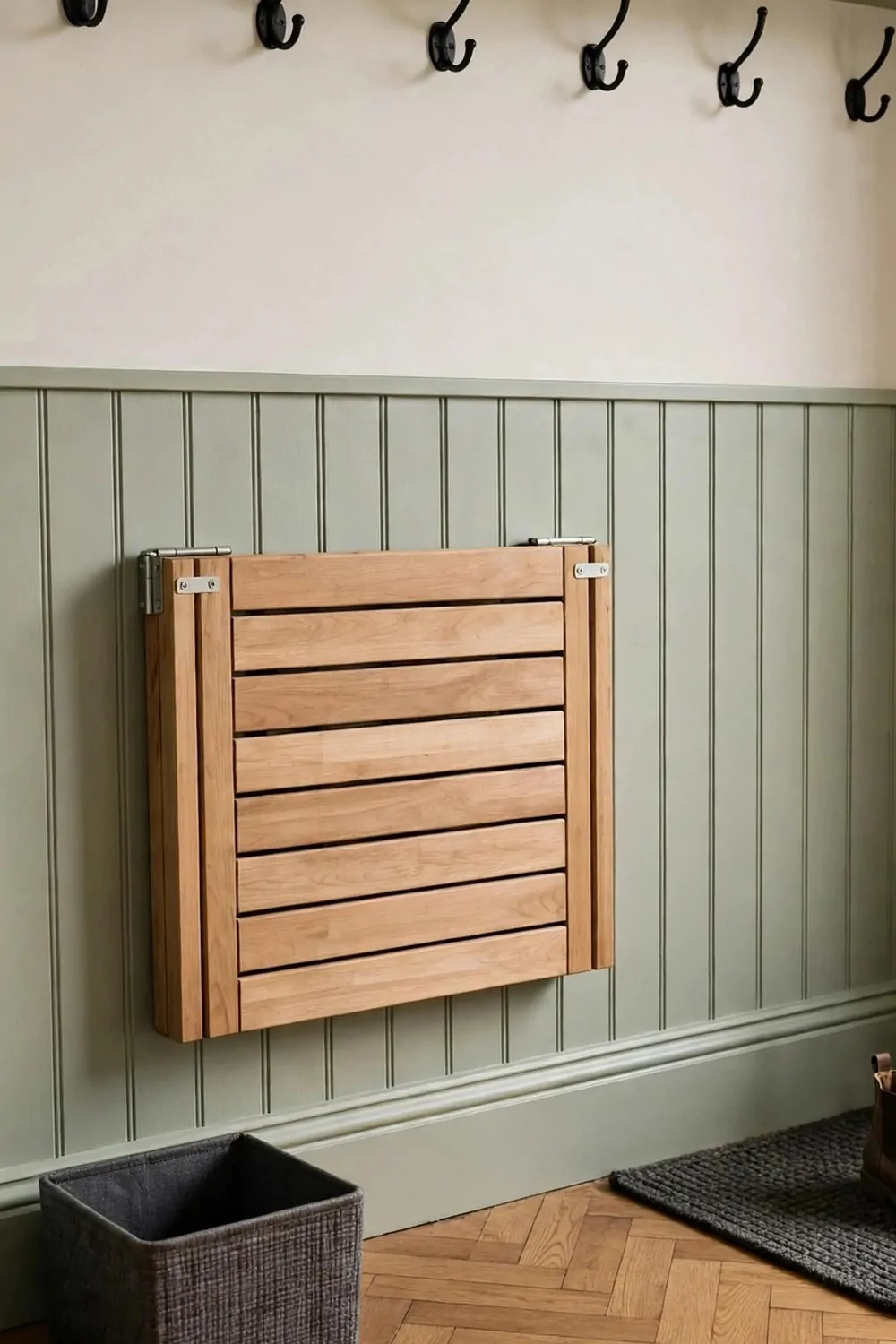
I have a small mudroom, so a fold down seat was the perfect fix.
The seat folds flat against the wall when we do not need it. The floor stays clear, and we can walk past with ease.
When I need to sit, I pull it down with one hand. It locks in place, and it feels strong under me.
I use it to put on my shoes in the morning. I sit, I tie my laces, and I stand up ready to go.
My kids use it too. They sit to pull off muddy boots, and the boots stay by the door, not tracked through the house.
I picked wood that matches the rest of the mudroom. It looks like part of the wall, not like an extra piece stuck on.
I check the hinges now and then to make sure they are tight. A loose hinge would wobble, and I want the seat to feel safe.
I keep the space under the seat clear. When the seat folds up, nothing blocks it from closing flat.
This seat proves a small room can still work hard. It gives us a place to sit without taking up floor space all day.
A Full Row of Hooks for Coats Hats and Bags
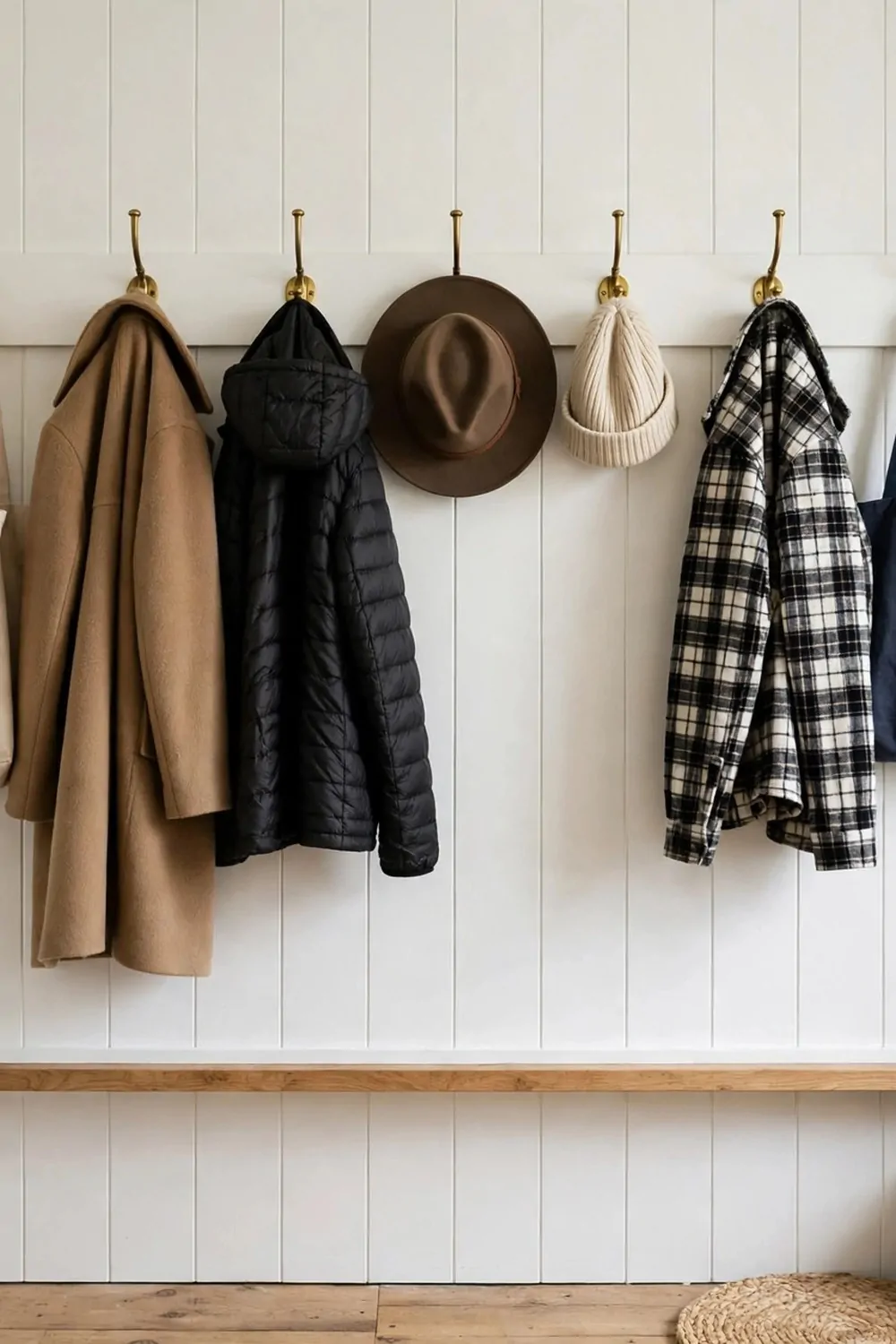
I put a full row of hooks across the wall, and it holds more than I thought it would.
Brass hooks look pretty against white walls. They feel strong, and they do not bend under heavy coats.
I space the hooks wide enough for thick winter coats. If hooks are too close, coats bunch up and fall off.
I hang hats on the top of the hooks and bags below them. That way I use each hook twice without making a mess.
I give each person at least two hooks. One holds a coat, and one holds a bag or a hat.
I teach my kids to hang things up the right way. A coat on a hook dries well, but a coat on the floor just gets dirty.
I wipe the hooks with a soft cloth now and then. Brass can dull a bit, but a quick wipe brings back the shine.
I keep the row at a height my kids can reach. If they cannot reach it, they will drop things on the floor instead.
This row of hooks is the hardest working spot in our mudroom. It holds our whole day, and it keeps the floor clear.
Baskets Under the Bench for Shoes
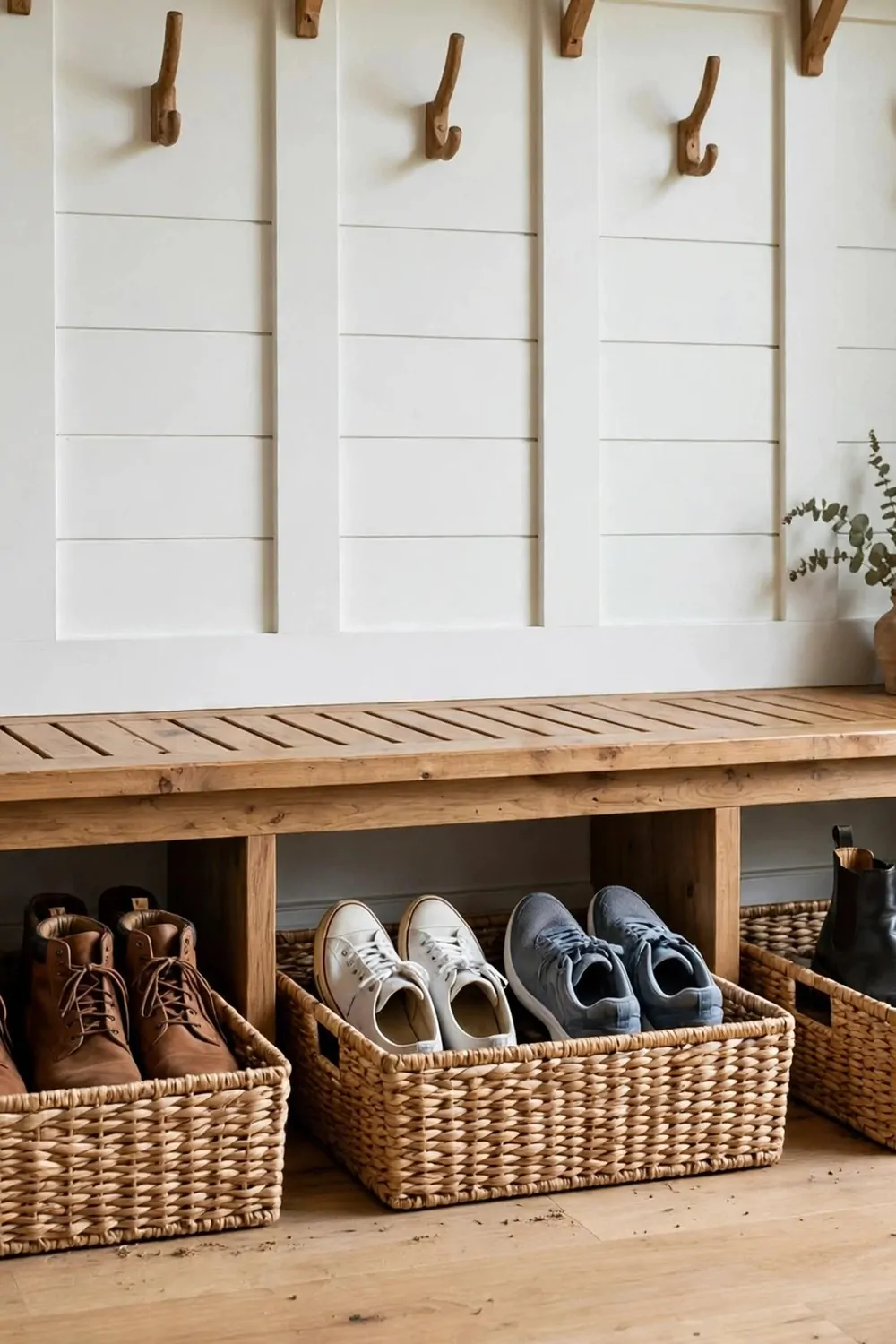
I slid woven baskets under the bench, and our shoes finally have a neat home.
Each basket holds two or three pairs. I keep one pair per person in their own basket when I can.
I pick baskets that are low and wide. Tall baskets tip over, but low ones slide in and out with ease.
I put a small label on the front of each basket. My kids read the label and slide their shoes into the right spot.
I shake the baskets out on the porch once a month. Sand and small stones hide at the bottom, and a good shake clears them.
I like how the woven texture looks under the bench. It softens the hard wood and makes the room feel warm.
I keep wet shoes out of the baskets until they dry a bit. Wet shoes in a closed basket can smell by morning.
I teach my kids to line shoes up toe first in the basket. Neat rows fit more pairs, and they look tidy too.
These baskets hide the shoe mess without hiding the shoes. I can pull one out, find a pair, and slide it back in seconds.
Wall Cubbies for Lunch Boxes and Water Bottles
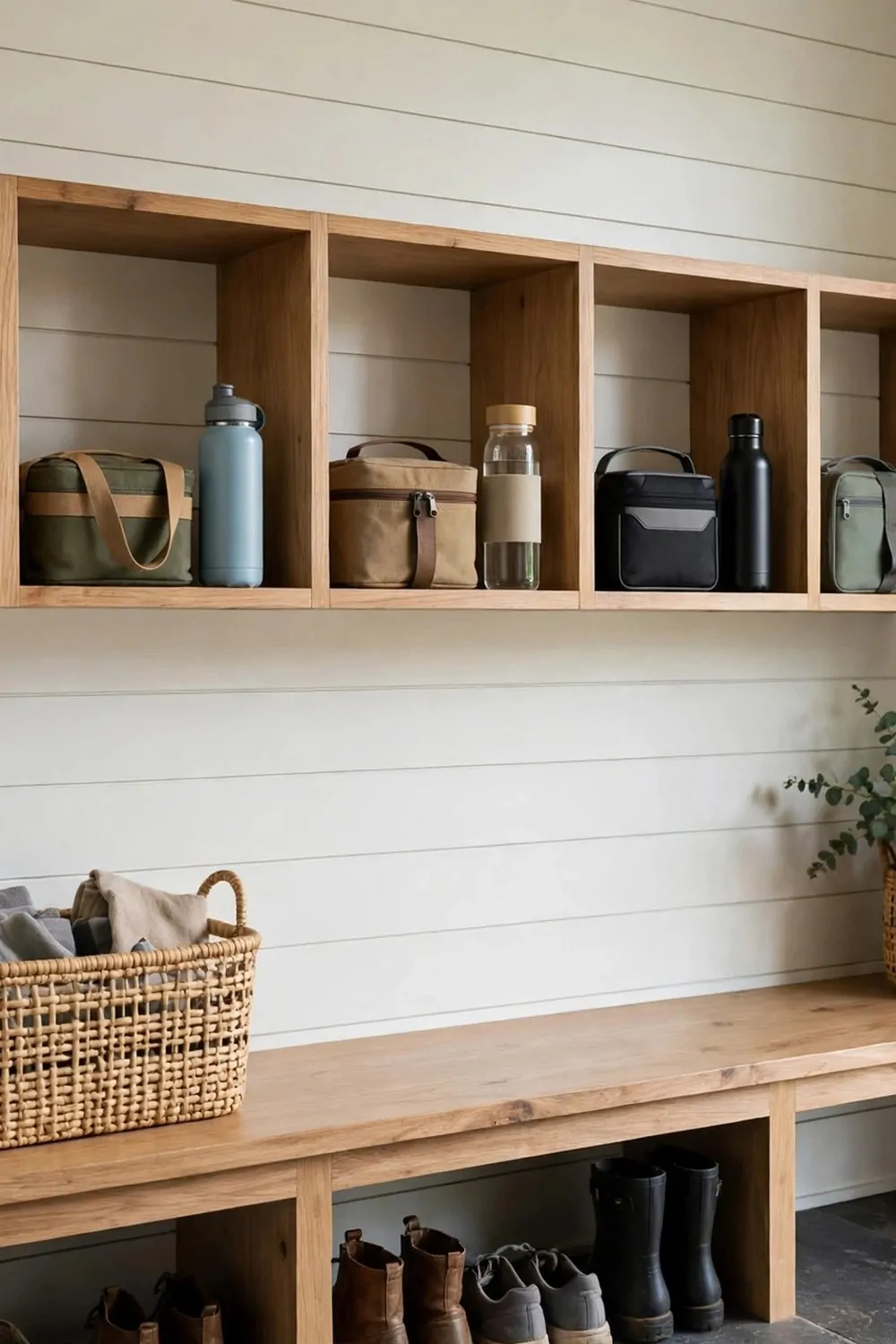
I mounted small cubbies on the wall for lunch boxes and water bottles, and mornings got easier.
Each child has one cubby. They pack their lunch the night before and slide it into their cubby.
Water bottles stand upright in the cubby. They do not tip over, and they do not leak onto the bench.
I keep the cubbies at kid height. My kids can reach their lunch without climbing or asking me for help.
I wipe the cubbies each night after school. Crumbs and sticky spots build up fast, and a quick wipe keeps them clean.
I add a small label under each cubby with a name. It stops mix ups, and no one takes the wrong lunch by mistake.
I keep spare water bottles in a basket below. If one bottle is in the wash, the spare is ready to go.
I love that lunch stuff stays out of the kitchen rush. We grab it on the way out, and we do not crowd the counter.
These wall cubbies are small, but they save us time every single school day.
A Washable Rug by the Door
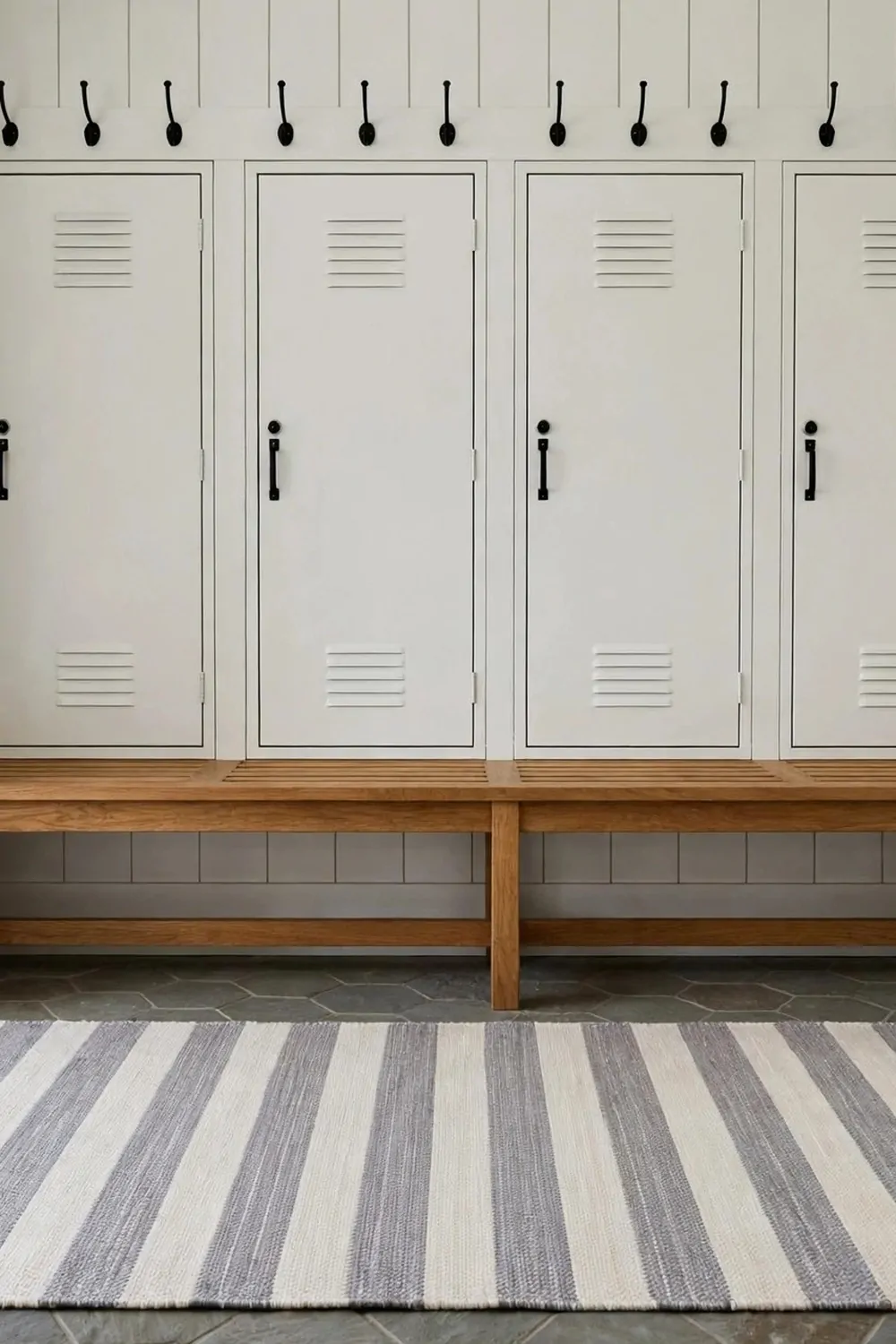
I put a washable rug by the door, and it catches most of the dirt before it spreads.
The stripes look cheerful in front of white lockers. I picked soft colors so the rug feels calm, not loud.
I shake the rug outside twice a week. A good shake gets rid of dust and bits of leaves from shoes.
I wash it in the machine when it looks dirty. It dries fast on the line, and I put it back the same day.
I pick a rug with a grip back so it does not slide. A sliding rug by a door is a trip risk, and I do not want that.
My kids wipe their feet on the rug without thinking now. It is a habit, and it keeps the rest of the floor cleaner.
I keep a spare rug in the closet. When one is in the wash, the spare goes down so the floor is never bare.
I choose a rug that is big enough for two people to stand on. Small rugs get missed, and feet land on bare floor instead.
This rug is one of my best mudroom buys. It is pretty, it is easy to clean, and it works hard every day.
A Locker Door With a Small Mirror Inside
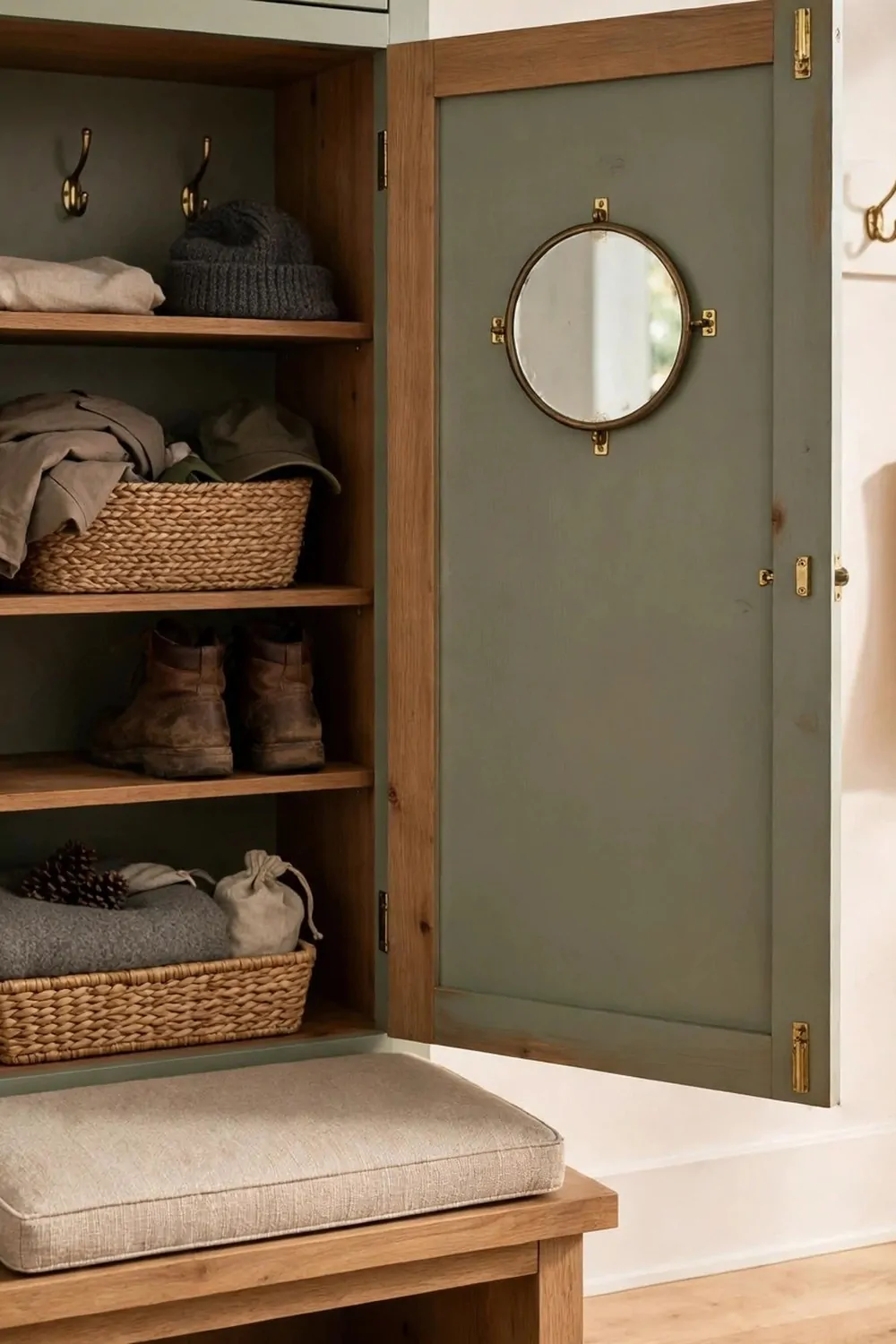
I fixed a small round mirror inside a locker door, and it is so handy.
I check my face before I leave. I fix my hair, I check for smudged lipstick, and I feel ready for the day.
My kids use the mirror too. They check their hair before school, and they love having their own little mirror.
I picked a mirror that is light and safe. It is fixed tight to the door, so it does not wobble or fall off.
I keep the mirror clean with a quick wipe. Fingerprints show up fast, but a soft cloth clears them in seconds.
I like that the mirror hides when the door closes. The mudroom stays neat, and the mirror is there only when we need it.
I put the mirror at a height that works for me and my older kids. My youngest stands on tiptoe, and she thinks that is fun.
I added a tiny hook beside the mirror for a hairbrush. The brush stays in the locker, and it is always where I left it.
This small mirror makes our last check easy. We open the door, we look, and we walk out feeling good.
A Pet Station With Bowls and Towels
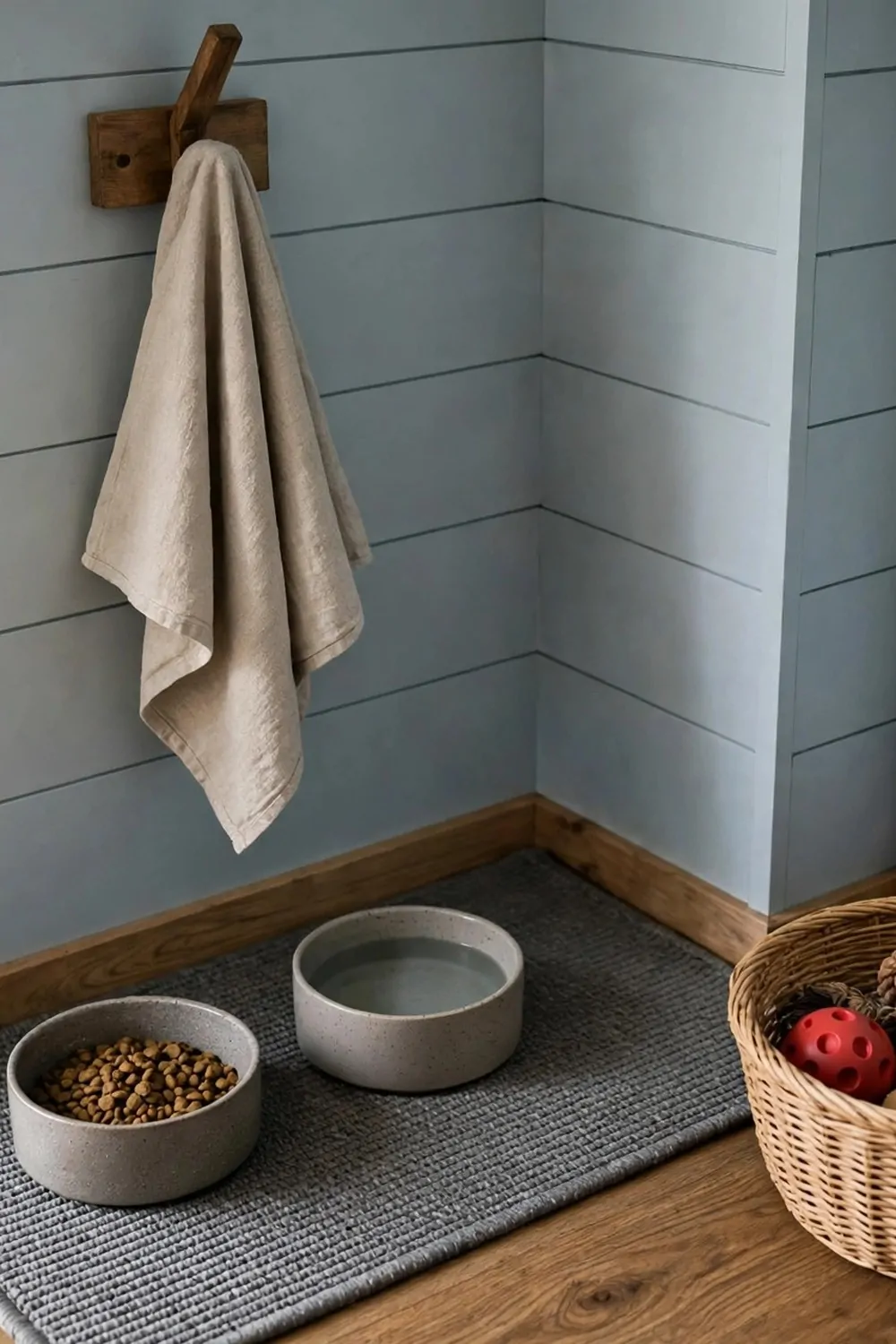
I made a small pet station in the corner of the mudroom, and our dog loves it.
Food and water bowls sit on a mat. The mat catches spills, so the floor stays dry and clean.
I hang a towel on a hook just above the bowls. I wipe muddy paws with it after walks, and it is always close by.
I keep a basket of pet toys beside the bowls. Toys stay in one place, and they do not roll all over the house.
I wash the bowls every day. Fresh water matters, and clean bowls keep our dog healthy.
I store extra pet food in a sealed bin nearby. The bin keeps food fresh, and it keeps the smell out of the room.
I teach my kids to help with the pet station. They fill the water bowl, and they feel proud to care for our dog.
I wipe the mat once a week. It picks up a lot of dirt, but a quick wash makes it fresh again.
This pet corner keeps pet mess in one spot. The mudroom stays tidy, and our dog has a place that is just hers.
A Slim Cabinet for Cleaning Supplies
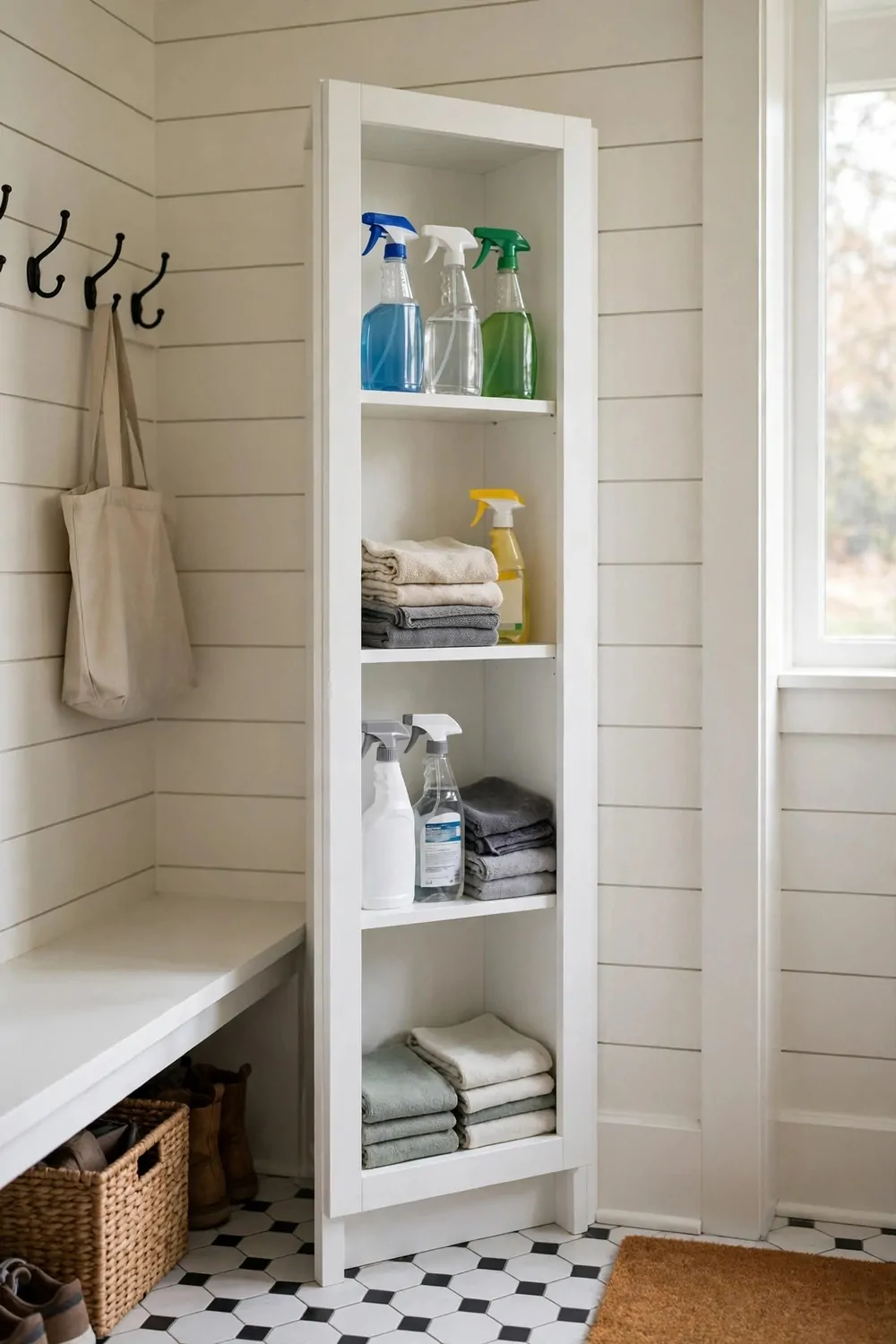
I added a slim cabinet in the mudroom, and now cleaning supplies are close but out of sight.
Spray bottles stand on narrow shelves inside. I can see each label, so I grab the right one fast.
I keep cloths folded in a neat stack on the bottom shelf. Clean cloths sit on one side, and dirty ones go straight to the wash.
I pick a slim cabinet because the mudroom is not wide. It fits in a gap by the door that we never used before.
I put a child lock on the cabinet door. Cleaning sprays are not safe for little hands, and the lock gives me peace of mind.
I label the shelves inside with small tags. One shelf holds floor cleaners, and one holds glass and surface sprays.
I wipe the shelves once a month. Sprays can drip a little, and a quick wipe keeps the cabinet fresh.
I keep a small dustpan and brush in the cabinet too. Quick clean ups happen right where the mess is.
This slim cabinet saves me trips to the kitchen. I clean a spill in seconds, and the mudroom stays neat.
A Grab and Go Shelf for Busy Mornings
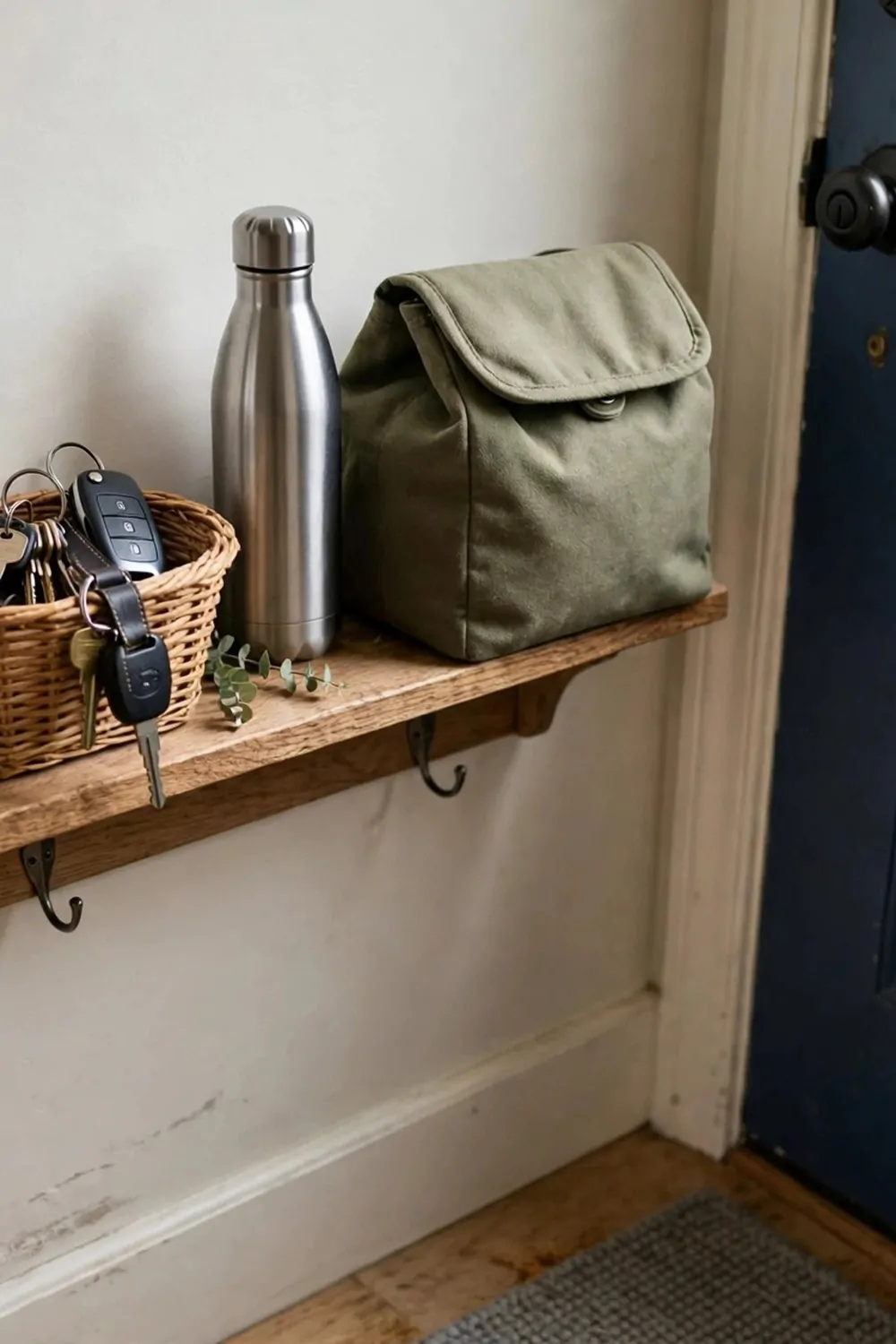
I set up a grab and go shelf by the door, and it saves us on busy mornings.
A basket on the shelf holds keys, a water bottle, and a packed lunch bag. Everything we need sits in one place.
I pack the basket the night before. Mornings are calmer when the hard work is already done.
I keep the shelf clear of extra stuff. If junk piles up, the basket gets buried, and the whole idea falls apart.
| Tonight | Put on the shelf | Morning grab |
|---|---|---|
| Pack lunches | Lunch bags and water bottles | Grab the bags and go |
| Lay out clothes | Coats on hooks by the door | Coats, shoes, and bags |
| Charge devices | Phones in the charging drawer | Phones, keys, and mail |
My kids know to check the shelf before they leave. They grab their lunch, they grab their bottle, and they are out the door.
I wipe the shelf each week. Dust settles fast by a door, and a clean shelf makes the basket look neat.
I add a small hook under the shelf for a bag. The bag hangs ready, and I do not have to hunt for it.
I love how simple this shelf is. It is just a shelf and a basket, but it makes our mornings feel smooth.
This is the spot I check last before I lock the door. If the basket is full, I know we are ready for the day.
Keep Reading
I hope these mudroom locker ideas give you a good place to start. A mudroom does not need to be big to work well for a busy family.
Pick the ideas that fit your space and your family best. Small changes add up fast, and your mudroom will feel calmer in just a few days.
- 41 Custom Kitchen Cabinet Organization Ideas Worth Stealing
- 28 Luxury Walk-In Pantry Ideas That Make Every Kitchen Look Expensive
- 25 Small Kitchen Ideas You’ll Wish You Knew Sooner
- 26 Modern Home Decor Updates That Look Instantly Fresh
Pick one idea today and start with it. Your mudroom will thank you, and your mornings will feel a little easier.